

Submitted:
25 November 2024
Posted:
26 November 2024
You are already at the latest version
Abstract
Energy resources are considered a primary factor in the sustainable social and economic development of nations. Among the currently utilized energy sources, oil and natural gas constitute the largest portion. It is well established that the production, processing, transportation, and consumption of these fossil energy resources significantly impact environmental ecosystems and the atmosphere, leading to various environmental issues. The petroleum industry encompasses a broad range of activities characterized by substantial reserves and high volumes of production, processing, and consumption. In this context, the negative effects of the sector’s various operational processes on the environment are addressed through the implementation of environmental management systems aimed at mitigating or eliminating these impacts. To evaluate the environmental protection approaches and practices of petroleum enterprises based on their operational domains, a survey was conducted, and the collected data underwent statistical analysis. According to the results of the statistical data analysis, it has been determined that enterprises in the Turkish petroleum sector have adopted an approach known as green management or environmentally conscious entrepreneurship. In line with the objectives of this study and the statistical findings obtained, a "green management model" has been proposed for enterprises in the Turkish petroleum industry, taking into consideration global practices and aligning with the principles of environmentally responsible green entrepreneurship.
Keywords:
energy
; crude oil
; petroleum industry
; refinery
; environmental problems
; green ma- nagement
1. Introduction
Since the second half of the 18th century, developments in nearly all aspects of social and economic life resulting from the Industrial Revolution have increased dependency on energy sources. Undoubtedly, energy production, provision, and utilization have become one of the foremost needs, particularly in both developed and developing countries. In contemporary society, hydrocarbons, specifically petroleum (oil) and natural gas, are among the most essential energy sources, fulfilling indispensable roles in various sectors, including industry, transportation, residential heating, and lighting. According to 2023 data, petroleum, having the largest share in the primary energy requirement in the world, meets 31.7% of the world's energy consumption and 23.3% of natural gas [1].
The global petroleum industry represents an integrated sector that encompasses both national and multinational enterprises involved in exploration and production, transportation, refining and marketing activities. This study conceptualizes activities related to crude oil production and refining within the framework of the "petroleum industry."
For Türkiye, petroleum is a key component of its energy mix, despite limited domestic production. Türkiye's strategic location, between major oil-producing regions and consumer markets, makes it an important player in global energy transit. However, the country faces a series of challenges, including a high dependency on imported oil, fluctuating geopolitical tensions, increasing pressure to transition towards renewable energy sources and growing environmental concerns. There are 11 domestic and foreign crude oil production companies and five refineries, four refineries within TÜPRAŞ and Star İzmir refinery within SOCAR operating in Türkiye. Turkish Petroleum Corporation (TPAO) remains the largest and most influential player in petroleum industry. As a state-owned entity, TPAO is responsible for the majority of exploration and production activities. Unfortunately, domestic production meets only 7% of Turkey's crude oil consumption and just 1% of its natural gas consumption. Türkiye's refining sector is also significant, with large refineries of TÜPRAŞ and Star playing key role in processing imported crude oil [2].
The petroleum industry is distinguished from other sectors by its substantial scale of production and processing. The emissions, as well as the solid and liquid waste generated during production and refining processes, are significant, with their environmental impacts reaching critical levels. Consequently, the implementation of environmentally responsible green management practices has become increasingly vital within the petroleum industry to mitigate the adverse effects of waste generated by these processes and to foster a healthier environment [3].
2. The Emergence of Green Management Approaches in Petroleum Industry
According to 2023 data, fossil fuels still account for significant portions of global energy consumption, with 31.0% from oil, 26.5% from coal and 23.3% from natural gas [1]. The consumption of fossil fuels and the energy derived from them in industrial activities, as well as their use in transportation and heating, lead to substantial emissions that are released into the atmosphere. These emissions consist of various gases and compounds, including carbon dioxide (CO2), methane (CH4), nitrogen oxides (N2Ox), hydrofluorocarbons (HFCs), sulfur compounds, volatile organic compounds (VOCs), dust and water vapor. These gases and particulates impact the physical and chemical properties of the atmosphere and the energy balance, contributing to the increased retention of heat rays reflected from the Earth's surface. Global warming, and consequently climate change, is primarily driven by the excessive accumulation of these gases and particulates in the atmosphere that enhance the greenhouse effect beyond their natural levels. The principal source of these emissions stems from the production and processing activities of fossil fuels. In this context, emissions derived from oil, coal, and natural gas are critical determinants of global warming [4,5,6].
In order to raise awareness and seek solutions for the challenges posed by climate change globally, significant conferences were held in Rio in 1992 and in Kyoto in 1997. These gatherings aimed to reduce emissions in order to maintain global warming below 2°C. However, the increase in global emissions that caused this problem could not be stopped and the proposed measures have not been implemented effectively. In 2005 and 2006, the agenda once again highlighted the importance of limiting the global temperature rise to 2°C. This target was formally agreed at the Copenhagen Summit in 2009, with the participation of 192 countries. The idea of reducing emissions was based on the idea that fossil energy reserves were kept underground, not operated and never used. Accordingly, one third of all oil reserves, half of natural gas reserves and 80% of coal should not be extracted. Achieving these targets necessitated a strong political commitment [7,8,9,10,11]. Despite being signed with broad consensus at international meetings, no significant success has been achieved in the fight against climate change.
The Paris Agreement, considered a turning point in the global fight against climate change, entered into force on 4 November 2016, as a result of meeting the condition that at least 55 parties which accounts for 55% of global greenhouse gas emissions, ratified the agreement as of October 5, 2016. Regarding emissions reduction, the Paris Agreement encourages developed countries to maintain absolute emissions reduction targets, while urging developing countries to enhance their emissions reduction goals. This involves adopting new, more ambitious targets that encompass their entire economies over time, tailored to their respective national circumstances. The Paris Agreement was ratified by Türkiye on October 7, 2021, through a Presidential Decree. Under the Paris Agreement, Türkiye has established a target to reduce emissions by 41% from projected increases by 2030 [12].
The petroleum industry generates a large volume of emissions and waste due to its huge production scale and processing activities, resulting in significant global environmental impacts. These emissions and wastes contribute significantly to environmental pollution and, consequently, global warming. In order to minimize the effects of the environmental problems caused during the production and refining stages of the petroleum industry, there are methods and practices to reduce pollution at the source, recycle waste, control emissions and bring them down to acceptable levels [13,14,15]. In the context of implementing international agreements, standards, and regulations related to environmental protection and emissions reduction, petroleum companies have been compelled to take corrective actions. As a result, petroleum companies are increasingly recognizing the importance of fulfilling their environmental responsibilities, prompting them to adopt green management practices.
3. Materials and Methods
In this study, a survey was conducted to evaluate the green management approaches of petroleum companies in Türkiye. This survey targeted all existing crude oil exploration, production, and processing (refining) enterprises throughout the country. Given the absence of prior research on green management approaches within the petroleum industry in Türkiye, a questionnaire was developed. Prior to the implementation of the survey, ethical approval was granted by the Ethics Committee of Ankara University, under decision number 237 dated June 21, 2021. It was assured that all information obtained from the research would be utilized exclusively for scientific purposes and that all personal data, including survey results, would be kept confidential. The data were collected through online questionnaires. The research questions were analyzed and verified based on an analysis of these data. The time span of data collection was from August to October 2021 [15].
3.1. Research Questions
The attitudes of crude oil and refining companies operating in the petroleum industry in Türkiye towards environmental protection and compliance with international treaties and environmental legislation, as well as their sensitivity towards the environment, have been evaluated and tested within the framework of the following research questions [15]:
Research Question 1: Is there a dominant environmentally conscious green management approach in oil companies?
Research Question 2: Are there close relationships and collaborations among departments regarding green management practices in oil companies?
Research Question 3: Are production and other activities in oil companies conducted in accordance with the understanding of green management?
Research Question 4: Does the understanding of green management positively affect the activities of oil companies in Türkiye?
Research Question 5: Is there a high level of understanding of green management among managers in oil companies?
Research Question 6: Has the green management approach been integrated into the business culture of oil companies within the context of social responsibility?
The perspectives of business managers who responded to the questionnaire regarding their environmental sensitivity were evaluated in conjunction with the findings obtained from the analysis of the surveys. Consequently, an effort was undertaken to assess the environmental management practices and environmental sensitivity of firms within the Turkish petroleum industry.
3.2. Preparation of the Questionnaire and Data Collection
The attitudes and decisions of business managers are crucial for addressing the environmental impacts and issues arising from the activities of the petroleum industry through a green management approach. In this context, it is anticipated that the positive attitudes and approaches of business managers towards environmental issues will effectively enhance the environmental behaviors of all employees. During the preparation phase of the questionnaire used in this study, a literature review was conducted, developments related to green management practices in oil companies were examined.
The aim was to collect primary data through a survey applied to senior managers and department heads of oil production companies operating in various regions of Tür-kiye, as well as to refineries processing crude oil in Türkiye. As of 2021, a total of 16 companies were identified, including 10 companies engaged in crude oil production and five refineries processing crude oil. The online questionnaire link was sent via email to the managers of TPAO, domestic and foreign companies involved in crude oil production, as well as the four refineries under TÜPRAŞ and the Star refinery under SOCAR. An official letter from the Ethics Committee of Ankara University was also shared with the managers of the companies from which data collection was planned, along with the questionnaire. 92 respondents completed their questionnaires. It is assumed that this sample size represents all business managers in the sector. Therefore, the population size and target group for the purpose of the study comprise the managers of oil production companies and refineries operating in Türkiye.
The questionnaire used in this study, which includes questions about the environmental management strategies of businesses operating in the petroleum industry in Tür-kiye and the attitudes and thoughts of managers regarding this issue, consists of five sections. The first section addresses the general and demographic characteristics of the business, the second section pertains to the company's environmental strategy, the third section focuses on managers' attitudes and approaches towards the environment in light of the activities within the company, the fourth section examines the impact of environmental protection and green management practices on business success, and the fifth section addresses the extent to which managers agree with the changes and advantages provided by green management practices in the business. Additionally, demographic information regarding the respondent's age, gender, education level, and position within the company are also provided [15].
4. Statistical Analysis of the Data and Results
To determine the construct validity of the scales used in the research, exploratory factor analysis was conducted. To assess whether the scales were suitable for factor analysis, the Kaiser-Meyer-Olkin (KMO) measure and Bartlett's test were performed. The KMO coefficient is calculated to test the adequacy of the sample size, while the normality condition is examined through Bartlett's test. In this context, the KMO test should yield a measurement result of 0.50 or higher, and the result of Bartlett's test should be statistically significant [16]. During the factor analysis process, the factor loadings were examined to determine the assignment or removal of scale items to/from the factors.
The Cronbach's alpha coefficient indicates the reliability level of the scale. This coefficient ranges from 0 to 1. The reliability of the scale is interpreted according to the following thresholds based on the alpha (α) coefficient [17] (p. 248):
.00 ≤ α < .40 indicates that the scale is not reliable,
.40 ≤ α < .60 suggests that the reliability of the scale is low,
.60 ≤ α < .80 indicates that the scale is reasonably reliable,
.80 ≤ α < 1.00 signifies that the scale is highly reliable.
4.1. Results of the Factor Analysis for the Organizational Activities Scale
In the factor analysis conducted for the scale, the KMO value was calculated to be 0.759. This indicates that the sample size is appropriate for factor analysis (KMO > 0.500). Under Bartlett's test, the chi-square (X²) value was computed as 633.531, which was found to be statistically significant (p < 0.05). Thus, the condition of normality was satisfied. Based on the results of the KMO and Bartlett tests, it was concluded that the data are suitable for factor analysis (Table 1).
To determine the factor structure of the scale, the Scree Plot graph, which illustrates the dispersion of eigenvalues, was examined (Figure 1).
It has been determined that the scale demonstrates a unidimensional structure. To establish the distribution of the questions within the single factor, an analysis was conducted, and the distribution of the questions along with their factor loadings is presented in the table. According to the analysis results, the sixth question was removed from the scale, and it was concluded that the scale consists of 15 questions and a single factor.
The scale comprises a factor consisting of 15 items with factor loadings ranging from 0.471 to 0.671. The total variance explained by the factor is 35.44%, and the Cronbach's Alpha coefficient is calculated to be 0.858 (Table 2).
4.2. Results of the Factor Analysis for the Green Management Strategies Scale
In the factor analysis conducted for the scale, the KMO value was calculated to be 0.893. Accordingly, the sample size is suitable for factor analysis (KMO > 0.500). The X² value was calculated as 1005.797 in the Bartlett test and was found to be statistically significant (p < 0.05). Therefore, the condition for normal distribution is met. Based on the results of the KMO and Bartlett tests, it was concluded that the data are suitable for factor analysis (Table 3).
To determine the factor structure of the scale, the Scree Plot graph showing the distribution of eigenvalues was examined (Figure 2).
It has been determined that the scale demonstrates a unidimensional structure. An analysis was conducted to ascertain the distribution of the items across the factors, and the distribution of the items along with their factor loadings is presented in the table. According to the analysis results, two items were removed from the scale, resulting in a final scale consisting of 13 items and a single factor.
The first factor of the scale consists of 13 items with factor loadings ranging from 0.667 to 0.868. The total variance explained by the factor is 60.46%, and the Cronbach's Alpha coefficient is calculated to be 0.943 (Table 4).
In this study, 92 questionnaires were analyzed and evaluated. Additionally, the analysis of the questionnaire data was conducted using the SPSS (Statistical Package for Social Sciences) version 24.0 software to derive the results.
The scale scores were calculated, and the skewness and kurtosis coefficients were examined to determine the suitability of the scores for a normal distribution. It is considered sufficient for normal distribution that the kurtosis and skewness values obtained from the scales fall between +3 and -3 [18,19,20,21].
Upon examining the values in Table 5, it is observed that the kurtosis and skewness coefficients for each score fall between -3 and +3. Based on this finding, it can be concluded that the scores exhibit a normal distribution. Due to the normal distribution of the scores, parametric test techniques were employed in the study. The t-test and ANOVA were used to analyze whether the scale scores differed based on demographic characteristics. The t-test was utilized for the analysis of demographic variables with 2 groups, while the ANOVA test was used for the analysis of variables with k groups (k > 2).
According to the results derived from Table 6:
- The score for business activities shows a statistically significant difference regarding the presence of supported environmental social responsibility projects within the organization (p < 0.05). According to the average scores, businesses that support projects have higher scores than those without social responsibility projects.
- The presence of a unit responsible for environmental protection and green management practices in businesses shows a statistically significant difference (p < 0.05). Based on average scores, businesses with a green management unit have higher scores than those without.
- There is a statistically significant difference in the continuous implementation of processes related to environmental protection and green management practices among existing departments and managers in businesses (p < 0.05). The average scores of businesses with continuous green management practices are higher than those without.
- Regular reporting of performance regarding environmental protection and green management practices shows a statistically significant difference in implementation (p < 0.05). According to average scores, those who approve of reporting performance related to green management practices have higher scores than those who do not have an opinion on this matter.
- The widespread sharing of business performance results regarding green management among departments shows a statistically significant difference (p < 0.05). Based on average scores, those who approve of the widespread sharing of green management performance have higher scores than those who do not have an opinion.
- The existence of close relationships and collaborative practices among departments regarding green management practices in businesses shows a statistically significant difference (p < 0.05). According to average scores, those who approve of close relationships and collaboration among departments have higher scores than those who do not.
- The provision of training to employees regarding green management practices shows a statistically significant difference in implementation (p < 0.05). According to average scores, businesses that provide training have higher scores than those that do not.
- The presence of an advanced database for monitoring green management practices in businesses shows a statistically significant difference (p < 0.05) and has higher average scores compared to those without a database.
- The use of environmentally friendly new technologies instead of outdated technologies that harm the environment shows a statistically significant difference (p < 0.05). According to average scores, those who approve of using environmentally friendly new technologies have higher scores than those who do not have an opinion on the matter (Table 6).
According to the results derived from Table 7:
- The score for green management strategies and practices shows a statistically significant difference regarding the presence of a unit responsible for environmental protection and green management practices in businesses (p < 0.05). According to the average scores, businesses with a green management unit have higher scores than those without.
- There is a statistically significant difference in the continuous application of processes related to green management principles among existing departments and managers in businesses (p < 0.05). Based on average scores, the presence of continuous applications related to green management principles has higher scores than those without continuous applications.
- In the same context, the regular preparation of reports regarding the results of green management practices in businesses shows a statistically significant difference (p < 0.05). According to average scores, the score for preparing reports related to green management practices is higher than the score for not preparing such reports.
- The widespread sharing of performance results related to green management among departments in businesses shows a statistically significant difference (p < 0.05). According to average scores, the score for sharing performance results related to green management among departments is higher than the score for not sharing them.
- The existence of close relationships and collaboration between the responsible unit and managers and departments regarding green management practices in businesses shows a statistically significant difference (p < 0.05). Based on average scores, the score for having close relationships and collaboration between the responsible unit and managers and departments is higher than the score for not having such relationships and collaboration (Table 7).
3.3. Findings Related to the Research Questions
A "Correlation Analysis" was conducted to explain and test the research questions. The Correlation Analysis examined whether business activities are related to environmental protection and green management practices. It was concluded that there is a positive relationship between the business activity score and the score for green management practices and strategies (r = 0.247) (Table 8).
In this study, green management practices were considered a new understanding and approach in environmental management. Managers are responsible for the environmental activities and implementation of strategies in oil companies. Therefore, in the conducted survey, business managers were considered the target audience. The sensitivity of the responding business managers regarding environmental issues, their awareness levels, and their thoughts on green management practices were evaluated within the context of the research questions.
Research Question 1: The understanding of environmentally conscious green management in oil companies in Türkiye has increased, with participants providing a positive response rate of 90.2% in this regard.
Research Question 2: There are close relationships and collaborations among the green management unit heads, managers, and departments regarding green management practices in oil companies. According to average scores, those who confirm the existence of close relationships and collaboration among departments scored (4.10), while those who did not confirm scored (2.74).
Research Question 3: Production and other activities (refining) in oil companies are conducted in accordance with the understanding of green management. The percentage of those who approve of the continuous application of practices related to green management principles in businesses is 64.1%, while the percentage of those responding “No” or “No Opinion” is 35.9%.
Research Question 4: It has been determined that the understanding of green management positively affects the activities of oil companies. According to the participants' views, green management practices have led to a 42.4% increase in the companies' image, improved efficiency by 38.0%, increased competitiveness by 35.0%, and resulted in a 31.5% rise in energy savings.
Research Question 5: It is understood that managers in oil companies have a high level of understanding regarding green management, based on their approaches to green management strategies and practices. Indeed, the business managers indicated that they agreed by 91.4% that green management practices positively affect environmental ecology and expressed that it is possible to reduce environmental pollution and greenhouse gas emissions through green management practices.
Research Question 6: The green management approach has been integrated into the business culture in oil companies within the context of social responsibility. According to the responses from participants, it is accepted by 90.2% that green management approaches and practices significantly contribute to achieving sustainable development, that green management increases clean and safe production by 90.2%, and that production and processing activities carried out without considering the environment threaten the future of the world and humanity, as expressed by 93.5%.
As a result, based on the statistical results obtained from the conducted survey, the activities and green management practices related to environmental management and protection in oil companies in Türkiye are the responsibility of the managers. Therefore, business managers were taken as the target audience in the study. It was determined that the majority of the managers hold positions as Managers and Chiefs, while others are Directors, Department Heads and Assistant Department Heads. All participant managers have completed undergraduate and postgraduate education. As responsible individuals in managerial positions, they play an effective role in the green management approach and practices related to the environment.
In terms of environmental activities in oil companies in Türkiye, it has been concluded that environmental impacts are highly evaluated in production and processing processes, that resources are allocated from the annual budget for taking environmental measures, and that “Environmental Teams” or an “Environmental Unit” are established within businesses. Responsible managers in oil companies provided positive responses to the survey questions regarding green management strategies and practices. The 92 participating managers who answered the survey accepted the idea that green management practices would be effective in achieving sustainable development and that oil production and processing activities conducted without considering the environment would adversely affect the world and humanity, and they acknowledged the importance of establishing a unit related to green management practices.
5. A Proposed Green Management Model for Turkish Petroleum Industry
The petroleum industry encompasses highly complex production, processing, and refining processes and these activities generate a large volume of emissions and waste. The increase in greenhouse gas emissions in the atmosphere have led to global warming and, consequently, climate change, elevating environmental issues to a global scale. Therefore, it is becoming increasingly important for companies in the petroleum industry to conduct their operations in a way that minimizes adverse environmental effects. Implementing green management practices that protect the environment and natural resources across all stages of the petroleum industry represents the most rational course of action. Green management embodies an environmentally conscious management philosophy framed within specific goals and principles. The primary goal of green management practices is to minimize all forms of environmental impact in alignment with the organization’s strategic management framework, facilitate production and refining processes using environmentally sustainable technologies, enhance waste management strategies, ensure effective coordination among different organizational divisions, and foster a green business environment.
Given the substantial quantities of raw materials (i.e., oil and natural gas), heavy machinery, and diverse chemicals utilized throughout the exploration, production, and refining processes, the sector is inherently linked to emissions of gases and particulates, as well as the generation of waste. In this context, the green management approach and its associated practices serve as a guiding framework for environmental preservation, energy management, and the effective management of clean water and waste. The proposed green management model for Türkiye's petroleum industry has been designed with the following foundational elements:
- Objective: To foster sustainable development within the overarching policies of petroleum enterprises, ensuring the rational and efficient utilization of all resources, the maintenance of environmental quality, and a proactive approach to environmental issues.
- Environment: The management of emissions, pollution, and waste in all activities, in harmony with the environmental components of the operational area and its dimensions, alongside the continuous improvement of environmental impacts.
- Production and Products: The application of advanced technologies for environmentally sustainable production, eco-friendly refining processes, and the manufacturing of environmentally responsible green products.
- Communication and Organization: Integrated collaboration between the green management unit and the production and refining departments, facilitating participatory engagement at all hierarchical levels.
To establish a green management model within the operational processes of the petroleum industry, it is essential to first comprehend the underlying environmental issues. A dedicated unit (Green Management Unit) should be constituted to collaborate with various departments and assume responsibility for environmental management within the context of the organization’s comprehensive strategic plan. This unit should function primarily as a green management implementation team, aligned with the environmental expectations articulated by both management and employees.
The members of the green management team, responsible for facilitating inter-departmental cooperation within the organization, should comprise individuals with specialized training in areas such as environmental protection, energy efficiency, emissions management, and waste management. Following the establishment of the green management team, a structured framework outlining operational methodologies should be developed, detailing the topics of focus, as well as the roles and responsibilities of team members. A visioning session should be convened involving senior management, departmental leaders, and consultants from organizations providing environmental management services to establish clear objectives and goals. For instance, information may be solicited from experts at ISO 14001 consultancy firms regarding certification processes. This organizational structuring is crucial for laying the groundwork for effective green management and for developing strategic initiatives aimed at achieving environmental targets, thereby facilitating the systematic monitoring of the organization's environmental protection and management activities over time. Ultimately, the endeavors of the green management team will serve to instill a green identity within the organization.
To achieve results from green management practices, it is essential to understand the environmental and social connections of the enterprise. The following considerations should be taken into account:
- Environmental issues directly influenced by the enterprise,
- The relationship between environmental issues supported by the enterprise and its operational activities,
- The value added or to be added by green management practices to the enterprise,
- The support of the organizational culture for green management practices, as well as relationships with NGOs and local media.
Once these factors are identified, applications that support the objectives of the proposed green management model can be developed. The following five fundamental steps should be followed for environmental practices aligned with the green management model (Figure 3).
Step 1: Data Collection and Documentation of Environmental Issues
In this phase, the green management implementation team identifies the environmental elements affected by the enterprise and investigates the relevance of the resulting impacts to the operational activities. The causes of environmental issues, the specific environmental elements most impacted, and the degree and stages of these impacts are examined. Once environmental problems are meticulously identified, the collected data is documented for analysis in light of the green management vision.
Step 2: Identification and Analysis of Issues
During this phase, the collected data is analyzed to assess the scale of environmental and local social impacts and to determine the actions to be taken for the improvement of environmental issues. After identifying the environmental problems based on the data analysis, the findings are prepared in report form for presentation to senior management.
Step 3: Presentation of the Report to Senior Management
The involvement of senior management is crucial in green management practices. In this phase, the report detailing the identified environmental issues, along with proposed solutions and associated costs, is submitted to senior management for review. This report informs management of the environmental challenges facing the enterprise and the proposed strategies to overcome them. Additionally, the report outlines the implementation plan, timeline, and financial implications, pending the approval of senior management.
Step 4: Implementation
This phase marks the transformation of the green management concept into action and assesses the potential outcomes of the initiatives. Continuous monitoring, measurement, and evaluation throughout the process are essential for achieving positive results. The expertise and contributions of ISO 14001 specialists are utilized during implementation. The activities conducted are monitored, measurements are taken, and compliance with environmental regulations is ensured, leading to corrective actions where necessary.
Step 5: Analysis of Results and Final Report Preparation
In this final phase, a final report is presented to senior management detailing the positive outcomes achieved, unresolved issues, and any outstanding matters that require attention following the implementation. If deemed necessary, a joint meeting can be convened with senior management, ISO 14001 consulting experts, the green management team, departmental managers, and representatives from NGOs to discuss and clarify the results obtained from the initiatives. Such collaboration fosters opportunities for partnership, facilitates learning and information sharing, and enhances community support and satisfaction. Consequently, this phase evaluates the adequacy and effectiveness of the implementation.
The objective of the green management model is to develop an effective, healthy, and safe working vision through collaboration integrated with the internal dynamics of the enterprise. In green management practices, in addition to having advanced technologies, interdepartmental communication and collaboration, employee participation, and the adoption of initiatives are of great importance.
Author Contributions
Conceptualization and methodology Ö.K. and Ö.A.; supervision Ö.A. and C.Z; writing—original draft preparation, Ö.K.; writing—review and editing, Ö.K., Ö.A. and C.Z. All authors have read and agreed to the published version of the manuscript.
Funding
This research received no external funding.
Conflicts of Interest
The authors declare no conflicts of interest.
References
- Energy Institute. Statistical Review of World Energy. Available online: https://www.energyinst.org/statistical-review (accessed on 9 October 2024).
- Atay, Ö.; Koçman, Ö. The situation of women in Turkish petroleum industry. Uluslararası Sosyal Bilimler ve Eğitim Dergisi (USBED) 2024, 6(11), 426-438.
- Kocman, O.; Atay, O. A Comparative Study of the Petroleum Industry Environmentally-Responsible Green Management Implementations. Journal of Global Strategic Management 2021-December, 15, 5-18. [CrossRef]
- Altunok, A. E.; Altunok, E. AB İklim Değişikliği Politikaları. Denetişim Dergisi 2016, 12, 45-55.
- Güner, E.D.; Turan, E. S. Yenilenebilir Enerji Kaynaklarının Küresel İklim Değişikliği Üzerine Etkisi. Doğal Afetler ve Çevre Dergisi 2017, 3 (1), 48-55.
- Erinç, S. Klimatoloji ve Metodları, İstanbul Üniversitesi Yayınları: İstanbul, 1984.
- Kuban, B. İklim değişikliği ile mücadele ve Paris 2015. Cumhuriyet Bilim Teknoloji Dergisi 2015, 1456, 13. [Google Scholar]
- Kuban, B. İklim değişikliği: Finans kapitalin gözü mü açıldı? Cumhuriyet Bilim Teknoloji Dergisi 2015, 1486, 11. [Google Scholar]
- Oksay, R. İklim Değişikliği İle Mücadelede Çözüm Arayışları: Küresel Isınmanın Baş Sorumluları Şimdi Çözüm Peşinde. Cumhuriyet Bilim Teknoloji Dergisi 2015, 1499, 10–11. [Google Scholar]
- Oksay, R. Paris İklim Zirvesi’nden Antlaşma Çıktı: Küresel Isınmayı Durdurmak İçin Son Şans. Cumhuriyet Bilim Teknoloji Dergisi 2015, 1501, 10–11. [Google Scholar]
- Karakaya, E. Paris İklim Anlaşması: İçeriği ve Türkiye Üzerine Bir Değerlendirme. Adnan Menderes Üniversitesi Sosyal Bilimler Enstitüsü Dergisi 2016, 3(1), 1-12.
- Republic of Türkiye Ministry of Foreign Affairs. Paris Agreement. Available online: https://www.mfa.gov.tr/paris-anlasmasi.tr.mfa (accessed on 4 November 2024).
- O’Rourke, D.; Connolley, S. Just Oil? The Distribution of Oil Production and Comsumption. Annual Review of Environmental Resources 2003, 28, 587–617. [Google Scholar] [CrossRef]
- Kadafa, A.A. Environmental Impacts of Oil Exploration and Explotation in the Niger Delta of Nigeria. Global Journal of Science Frontier Resarch Environment and Earth Sciences 2012, 12(3), 18–28. [Google Scholar]
- Koçman, Ö. Dünyada ve Türkiye’de Petrol Sektöründe Yeşil Yönetim- Türkiye İçin Bir Model Önerisi, PhD Thesis, Ankara Üniversitesi Sosyal Bilimler Enstitüsü, Ankara, 2022. [Google Scholar]
- Jeong, J. Analysis of The Factors and The Roles of Hrd in Organizational Learning Styles as Identified by Key Informants at Selected Corporations in The Republic of Korea. Dissertation for Doctor of Philosopy, Texas A&M University, USA, 2004. [Google Scholar]
- Nunnally, J. C. Psychometic Theory, 1st ed.; McGraw-Hill, Inc.: New York, 1967; p. 248. [Google Scholar]
- Groeneveld, R.A.; Meeden, G. Measuring Skewness and Kurtosis. The Statistician 1984, 33, 391–399. [Google Scholar] [CrossRef]
- Moors, J. J. A. The Meaning of Kurtosis: Darlington Reexamined. The American Statistician 1986, 40, 283–284. [Google Scholar] [CrossRef]
- Hopkins, K.D.; Weeks, D.L. Tests for Normality and Measures of Skewness and Kurtosis: Their Place in Research Reporting. Educational and Psychological Measurement 1990, 50, 717–729. [Google Scholar] [CrossRef]
- De Carlo, L.T. On the Meaning and Use of Kurtosis. Psychological Methods 1997, 2, 292–307. [Google Scholar] [CrossRef]
Figure 1.
Scree Plot of the Organizational Activities Scale
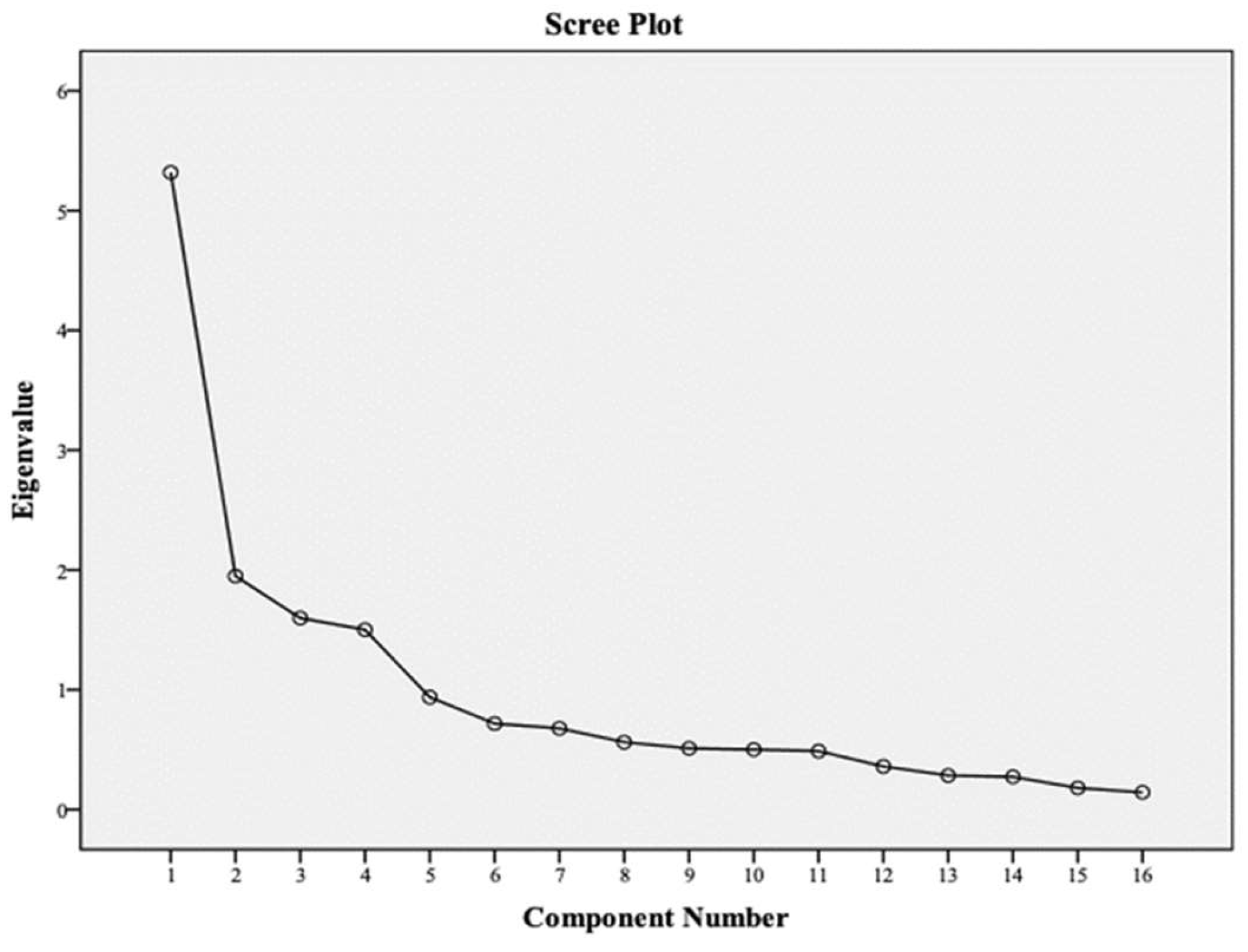
Figure 2.
Scree Plot of the Organizational Activities Scale
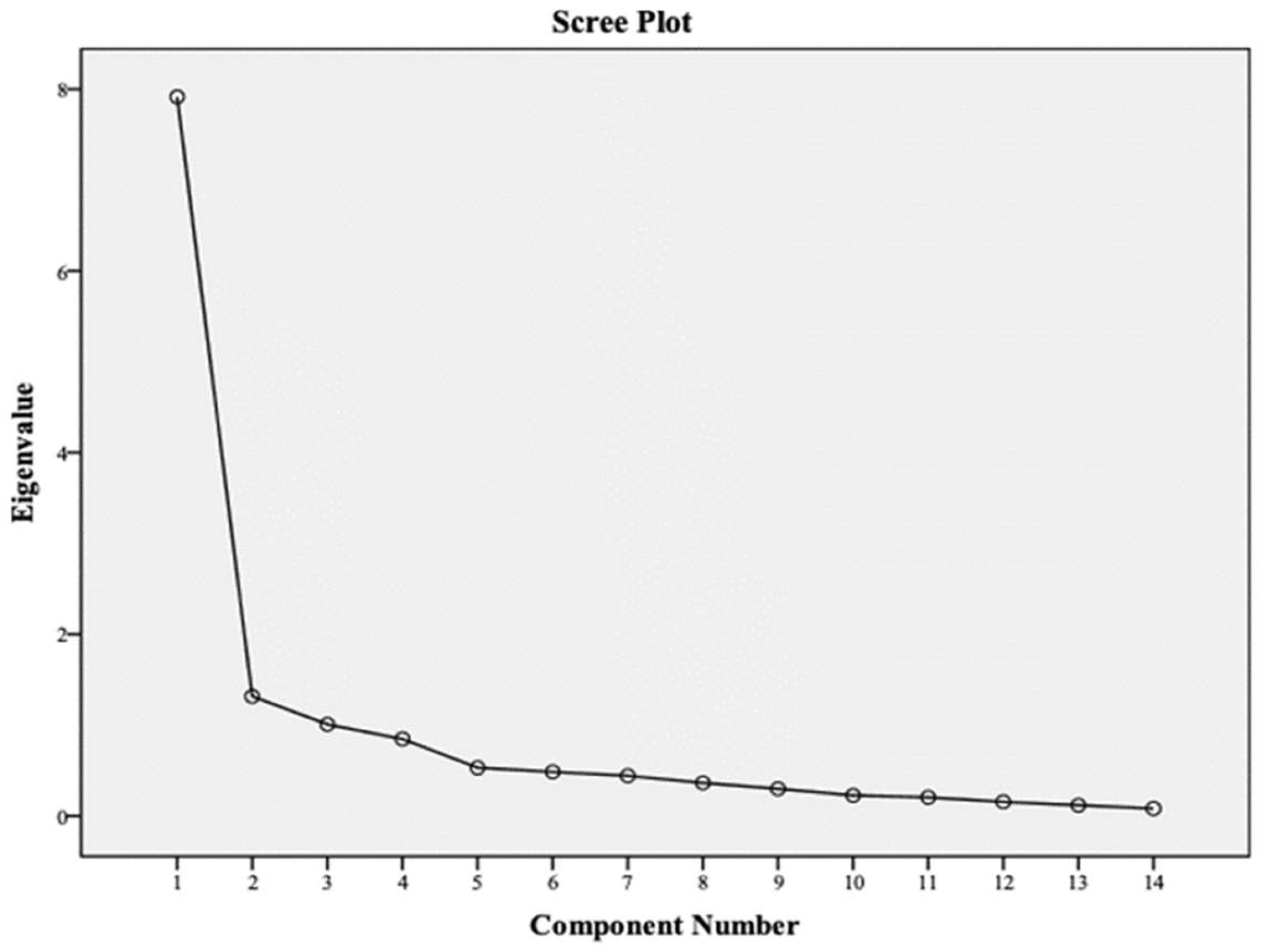
Figure 3.
Schematic Representation of the Green Management Implementation Model in the Petroleum Sector
Figure 3.
Schematic Representation of the Green Management Implementation Model in the Petroleum Sector
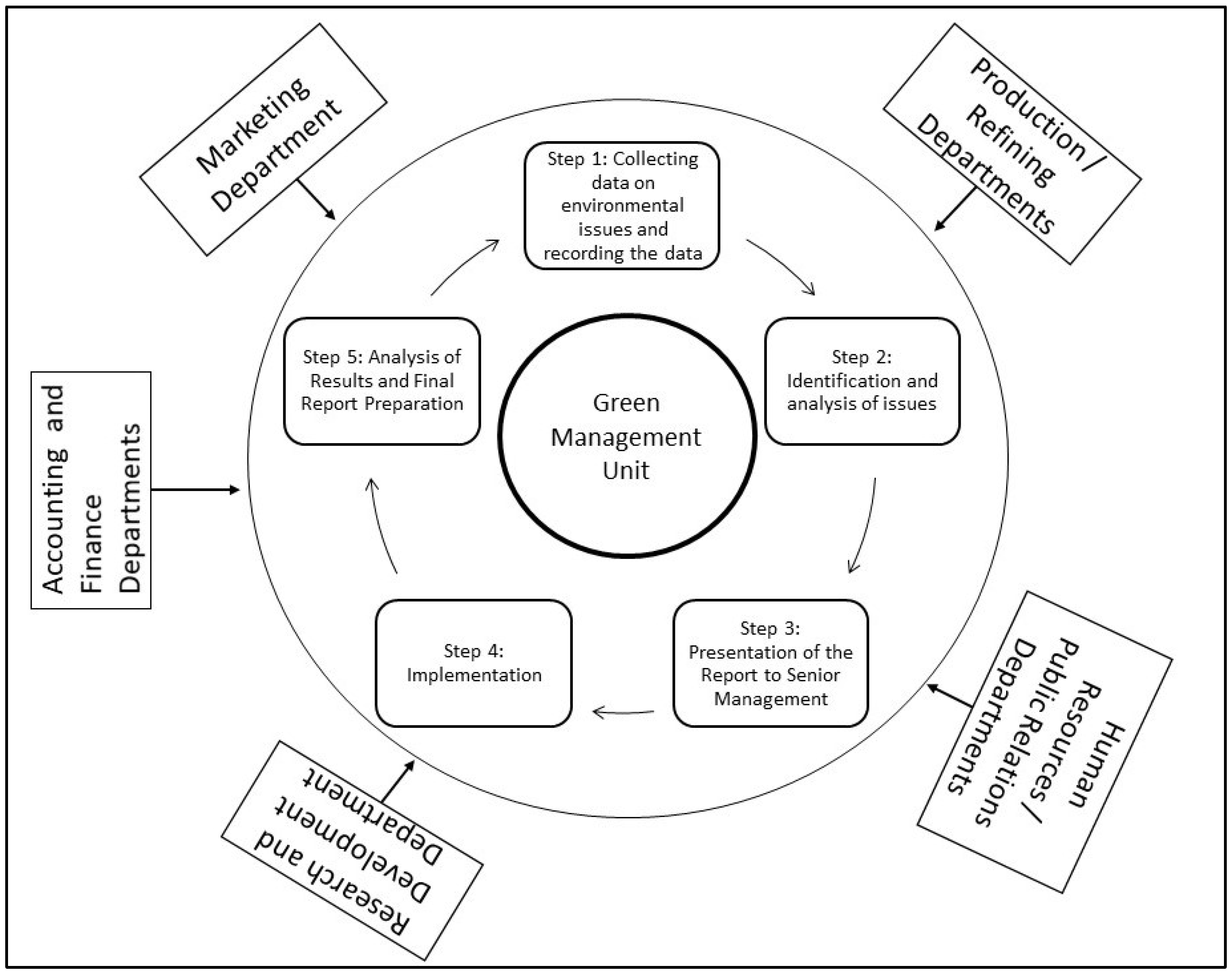

Table 1.
KMO and Bartlett's Test Values
| KMO | 0,759 | |
|---|---|---|
| Bartlett Test | X2 | 633,531 |
| sd | 120 | |
| p | 0,000 | |
Table 2.
Analysis Results Relating to the Factors of the Organizational Activities Scale
| Factor 1 | Explained Variance | Cronbach's Alpha | ||
|---|---|---|---|---|
| 9. Creative ideas regarding the reduction of environmental impacts are discussed in meetings held by the Environmental Teams/Environmental Unit within our organization. | 0,671 | 35,442 | 0,858 | |
| 14. Resources are allocated from the annual budget for environmental-related expenditures in our organization. | 0,667 | |||
| 16. Efforts are being made within our organization to achieve energy savings. | 0,661 | |||
| 11. A system has been established for our employees to convey their environmental ideas to management. | 0,650 | |||
| 1. The environmental impacts of raw materials/products produced or processed within our organization are evaluated. | 0,643 | |||
| 2. Measures are taken within our organization to prevent/reduce energy consumption. | 0,635 | |||
| 10. The Environmental Teams/Environmental Unit assists all departments in our organization in fostering environmental awareness. | 0,632 | |||
| 3. Preventive measures against soil and air pollution are implemented within our organization. | 0,631 | |||
| 15. Resources are allocated for environmental protection activities in our organization’s R&D Department. | 0,577 | |||
| 8. Awareness-raising activities are conducted and an environmental bulletin board is established to inform all our employees about environmental sensitivity. | 0,576 | |||
| 13. The costs incurred to ensure that our raw materials or products do not harm the environment are recorded in a separate account in the Standard Accounting Plan. | 0,549 | |||
| 4. Efforts are being made to reduce waste within our organization. | 0,522 | |||
| 5. Wastewater is treated before being discharged in our organization. | 0,503 | |||
| 7. Waste is recycled within our organization or in other businesses. | 0,482 | |||
| 12. Messages are conveyed in our publishing and advertising activities that our organization and our products are environmentally friendly. | 0,471 |
Table 3.
KMO and Bartlett's Test Values
| KMO | 0,893 | |
| Bartlett Test | X2 | 1005,797 |
| sd | 91 | |
| p | 0,000 | |
Table 4.
Analysis Results Related to the Factors of the Green Management Strategies Scale
| Factor 1 | Explained Variance | Cronbach's Alpha | ||
|---|---|---|---|---|
| 9. The "Green Management" practices of businesses positively impact environmental ecology. | 0,868 | 60,458 | 0,943 | |
| 11. Businesses' "Green Management" practices play a significant role in solving environmental problems. | 0,857 | |||
| 8. The "Green Management" practices of businesses will enhance clean and safe production. | 0,853 | |||
| 13. Employees of businesses must be aware and educated about environmental issues. | 0,798 | |||
| 12. Preventing or reducing waste generated during production is one of the important responsibilities of businesses. | 0,794 | |||
| 10. It is possible to reduce environmental pollution and greenhouse gas emissions through "Green Management" practices. | 0,785 | |||
| 6. New technological advancements support "Green Management." | 0,779 | |||
| 3. Traditional production processes that do not consider the environment threaten the future of the world and humanity. | 0,765 | |||
| 1. The implementation of "Green Management" practices greatly contributes to achieving sustainable development. | 0,755 | |||
| 14. There is a need for a separate green management unit within businesses. | 0,738 | |||
| 4. Environmentally conscious business practices provide a competitive advantage. | 0,738 | |||
| 5. Health and safety concerns are increasingly growing due to environmental pollution. | 0,683 | |||
| 7. National and international laws and regulations have increased the understanding of "Green Management." | 0,667 |
Table 5.
Kurtosis and Skewness Values along with Reliability Coefficient
| n | Skewness | Kurtosis | |
| Organizational Activities | 92 | -0,669 | -0,469 |
| Green Management Strategies | 92 | -1,144 | 1,602 |
Table 6.
Differences in Organizational Activities Scores Based on Relevant Characteristics
| Organizational Activities | Test Statistics | p Value | ||||
| X | ss | Median | ||||
| Is there a foreign partner in the organization? | No | 3,50 | 1,10 | 3,67 | 0,269 | 0,789 |
| Yes | 3,42 | 1,35 | 3,47 | |||
| Are there any supported environmental social responsibility projects in your organization? | Yes | 3,76 | 1,08 | 4,00 | 3,183 | 0,002* |
| No | 2,98 | 1,20 | 3,03 | |||
| 1. Is there a department responsible for environmental protection and "Green Management" practices in your organization? | Yes | 3,70 | 0,99 | 3,93 | 9,603 | 0,000* |
| I don't know / I have no opinion | 2,80 | 1,65 | 2,93 | |||
| No | 2,43 | 0,97 | 2,40 | |||
| 2. Are procedures related to environmental protection and "Green Management" principles continuously implemented among the existing business units and managers in your organization? | Yes | 3,90 | 0,91 | 4,13 | 20,335 | 0,000* |
| I don't know / I have no opinion | 2,59 | 1,20 | 2,67 | |||
| No | 2,41 | 0,86 | 2,40 | |||
| 3. Is the performance of your organization's environmental protection and "Green Management" practices reported regularly? | Yes | 3,97 | 0,88 | 4,23 | 18,757 | 0,000* |
| I don't know / I have no opinion | 2,59 | 1,16 | 2,60 | |||
| No | 2,92 | 1,11 | 3,00 | |||
| 4. Are the results of your organization's performance regarding "Green Management" widely shared among the departments? | Yes | 4,13 | 0,87 | 4,33 | 15,814 | 0,000* |
| I don't know / I have no opinion | 2,89 | 1,28 | 2,93 | |||
| No | 2,93 | 0,90 | 3,07 | |||
| 5. Is there close collaboration and cooperation between departments regarding "Green Management" practices in your organization? | Yes | 4,10 | 0,78 | 4,27 | 19,451 | 0,000* |
| I don't know / I have no opinion | 2,88 | 1,32 | 3,00 | |||
| No | 2,74 | 0,96 | 2,67 | |||
| 6. Are training programs related to "Green Management" provided to employees in your organization? | Yes | 4,10 | 0,79 | 4,30 | 18,049 | 0,000* |
| I don't know / I have no opinion | 3,28 | 1,28 | 3,67 | |||
| No | 2,63 | 0,99 | 2,60 | |||
| 7. Does your organization have an advanced database for monitoring "Green Management" practices? | Yes | 4,19 | 0,83 | 4,37 | 14,864 | 0,000* |
| I don't know / I have no opinion | 3,30 | 1,19 | 3,60 | |||
| No | 2,74 | 1,02 | 3,00 | |||
| 8. Are old technologies that harm the environment being replaced with environmentally friendly technologies in your organization? | Yes | 3,72 | 1,00 | 3,93 | 13,241 | 0,000* |
| I don't know / I have no opinion | 2,46 | 1,18 | 2,67 | |||
| No | 2,15 | 1,29 | 1,93 | |||
*p<0,05
Table 7.
Differences in Green Management Strategies and Practices Based on Relevant Characteristics
| Green Management Strategies | Test Statistics | p Value | ||||
| X | ss | Median | ||||
| Is there a foreign partner in the organization? | No | 4,29 | 0,60 | 4,38 | -0,498 | 0,620 |
| Yes | 4,37 | 0,57 | 4,46 | |||
| Are there any supported environmental social responsibility projects in your organization? | Yes | 4,33 | 0,56 | 4,38 | 1,122 | 0,265 |
| No | 4,19 | 0,66 | 4,31 | |||
| 1. Is there a department responsible for environmental protection and "Green Management" practices in your organization? | Yes | 4,36 | 0,54 | 4,46 | 4,228 | 0,018* |
| I don't know / I have no opinion | 4,20 | 0,57 | 4,31 | |||
| No | 3,85 | 0,76 | 4,00 | |||
| 2. Are procedures related to environmental protection and "Green Management" principles continuously implemented among the existing business units and managers in your organization? | Yes | 4,39 | 0,52 | 4,46 | 5,043 | 0,008* |
| I don't know / I have no opinion | 4,14 | 0,61 | 4,31 | |||
| No | 3,79 | 0,78 | 4,00 | |||
| 3. Is the performance of your organization's environmental protection and "Green Management" practices reported regularly? | Yes | 4,46 | 0,46 | 4,50 | 9,690 | 0,000* |
| I don't know / I have no opinion | 4,15 | 0,59 | 4,31 | |||
| No | 3,75 | 0,76 | 4,00 | |||
| 4. Are the results of your organization's performance regarding "Green Management" widely shared among the departments? | Yes | 4,49 | 0,54 | 4,58 | 5,007 | 0,009* |
| I don't know / I have no opinion | 4,12 | 0,59 | 4,31 | |||
| No | 4,09 | 0,60 | 4,08 | |||
| 5. Is there close collaboration and cooperation between departments regarding "Green Management" practices in your organization? | Yes | 4,44 | 0,55 | 4,54 | 3,745 | 0,027* |
| I don't know / I have no opinion | 4,06 | 0,60 | 4,00 | |||
| No | 4,17 | 0,62 | 4,19 | |||
| 6. Are training programs related to "Green Management" provided to employees in your organization? | Yes | 4,41 | 0,55 | 4,50 | 2,197 | 0,117 |
| I don't know / I have no opinion | 4,11 | 0,64 | 4,00 | |||
| No | 4,20 | 0,61 | 4,23 | |||
| 7. Does your organization have an advanced database for monitoring "Green Management" practices? | Yes | 4,35 | 0,55 | 4,46 | 0,470 | 0,626 |
| I don't know / I have no opinion | 4,23 | 0,61 | 4,23 | |||
| No | 4,22 | 0,64 | 4,31 | |||
| 8. Are old technologies that harm the environment being replaced with environmentally friendly technologies in your organization? | Yes | 4,34 | 0,53 | 4,38 | 2,649 | 0,076 |
| I don't know / I have no opinion | 4,04 | 0,73 | 4,27 | |||
| No | 3,92 | 0,87 | 4,08 | |||
*p<0,05
Table 8.
Correlation Analysis
| Organizational Activities | Green Management Strategies | |||
|---|---|---|---|---|
| Organizational Activities | R | 1 | ||
| P | ||||
| N | 92 | |||
| Green Management Strategies | R | ,247* | 1 | |
| P | 0,017 | |||
| N | 92 | 92 | ||
*p<0,05.
Disclaimer/Publisher’s Note: The statements, opinions and data contained in all publications are solely those of the individual author(s) and contributor(s) and not of MDPI and/or the editor(s). MDPI and/or the editor(s) disclaim responsibility for any injury to people or property resulting from any ideas, methods, instructions or products referred to in the content. |
© 2024 by the authors. Licensee MDPI, Basel, Switzerland. This article is an open access article distributed under the terms and conditions of the Creative Commons Attribution (CC BY) license (http://creativecommons.org/licenses/by/4.0/).
Copyright: This open access article is published under a Creative Commons CC BY 4.0 license, which permit the free download, distribution, and reuse, provided that the author and preprint are cited in any reuse.


