

Submitted:
25 November 2024
Posted:
25 November 2024
You are already at the latest version
Abstract
This study delves into the intricate interplay between mindfulness, the Mediterranean lifestyle, burnout, job satisfaction, and well-being among employees, offering compelling insights for workplace interventions. Through a cross-sectional survey comprising 407 employees in Greece, we unravel the profound associations among these variables, shedding light on novel pathways to mitigate burnout and enhance overall employee satisfaction and health. Our findings unveil not only the negative associations between mindfulness, the Mediterranean lifestyle, and burnout but also the pivotal role of mindfulness as a predicting factor of burnout. Moreover, our research underscores the significant impact of burnout on job satisfaction, emphasizing the need for organizational strategies to address employee well-being. Notably, our mediation analyses illuminate the potential benefits of mindfulness and the Mediterranean lifestyle on burnout, accentuating the importance of fostering a workplace culture that embraces holistic well-being practices. With practical implications for designing evidence-based workplace wellness programs, our study advocates for the integration of mindfulness techniques and the adoption of Mediterranean lifestyle principles to cultivate resilient, engaged employees and foster thriving organizational cultures. By delving into these dynamic relationships, our research not only advances theoretical frameworks but also offers actionable strategies to navigate burnout and promote flourishing in the modern workplace.
Keywords:
Burnout
; Mindfulness
; Mediterranean lifestyle
; well-being
; job satisfaction
; organizational psychology
; mental health
1. Introduction
Burnout has become a prevalent issue in modern workplaces, affecting individuals across various professions and industries [1]. Defined as a state of emotional, physical, and mental exhaustion caused by excessive and prolonged stress, burnout not only detrimentally impacts individual well-being but also carries significant consequences for organizational productivity and effectiveness [2,3]. Amidst growing concerns about burnout, there is an increasing recognition of the importance of exploring factors that may mitigate its onset and alleviate its effects.
Mindfulness, characterized by present-moment awareness and nonjudgmental acceptance of one's experiences, has garnered attention as a potential resilience-building strategy against burnout [4]. Studies have suggested that mindfulness practices can enhance psychological well-being, reduce stress, and promote adaptive coping mechanisms [5,6]. Furthermore, the Mediterranean lifestyle, encompassing dietary patterns rich in fruits, vegetables, whole grains, and olive oil, along with regular physical activity, sleep quality, nature relatedness, and social engagement, has been associated with numerous health benefits, including reduced risk of cardiovascular diseases and improved mental health outcomes [7,8].
While existing research has independently examined the relationships between burnout, mindfulness, job satisfaction, and lifestyle factors such as the Mediterranean diet, there remains a gap in understanding how these variables interact within the context of workplace well-being. Controversies exist regarding the efficacy of mindfulness interventions in workplace settings, with some studies reporting significant improvements in stress management and job satisfaction, while others suggest more modest effects [9,10]. Similarly, although observational studies have highlighted the health-promoting effects of the Mediterranean lifestyle, questions remain regarding its applicability to diverse populations and its specific mechanisms of action [11,12].
Considering these considerations, this cross-sectional study aims to investigate the mediating role of mindfulness and the Mediterranean lifestyle in fostering job satisfaction and well-being among employees. By examining the interplay between burnout, mindfulness, lifestyle choices, and workplace outcomes, this research seeks to contribute to a deeper understanding of the mechanisms underlying employee well-being. It is anticipated that the findings of this study will shed light on potential interventions and strategies to mitigate burnout and enhance job satisfaction in organizational settings. Ultimately, by promoting employee well-being, organizations can cultivate a healthier and more productive workforce, thereby fostering a positive organizational culture and achieving long-term success.
This study aims to address the gap in existing literature by elucidating the mediating pathways through which mindfulness and the Mediterranean lifestyle influence job satisfaction and well-being in the workplace. By integrating perspectives from psychology, nutrition, and organizational behavior, this research seeks to offer valuable insights into the complex dynamics of burnout and workplace well-being.
2. Materials and Methods
2.1. Design and Procedure
The study's design and procedure involved the implementation of a cross-sectional research design, utilizing an online survey conducted in both Greek and English languages through the Sogolytics online survey tool [13]. The initial two survey questions acted as criteria for inclusion and exclusion, ensuring participants' acknowledgment of the study's terms and conditions and confirming their age fell within the specified range of 18 to 65 years. Distribution of the survey occurred through direct messaging on various social media platforms, supplemented with follow-up reminders to enhance participant engagement and facilitate addressing any inquiries or concerns regarding the study. This combined approach leverages the benefits of both web-based and e-mailed questionnaires [14-16].
Before initiating the data collection process, the research's objectives and hypotheses were clearly delineated, providing a comprehensive framework for subsequent analysis and interpretation of the research findings. The final sample meeting the inclusion-exclusion criteria consisted of 407 adults.
2.2. Scales
2.2.1. Mindfulness Attention Awareness Scale (MAAS-15)
The Mindful Attention Awareness Scale (MAAS-15) is a well-regarded and extensively used instrument for measuring mindfulness [17]. Developed by Kirk Warren Brown and Richard M. Ryan, this self-report tool focuses on an individual's attentive awareness of present-moment experiences [18]. Comprising 15 items, the MAAS captures key aspects of mindfulness, particularly attention and awareness in daily life. Unlike traditional mindfulness scales, it assesses the natural capacity for sustained attention across various activities rather than concentrating solely on meditation or specific mindfulness practices. This broad approach makes the MAAS a versatile and comprehensive assessment suitable for diverse contexts and populations. Its strong psychometric properties, including high internal consistency, test-retest reliability, and construct validity, underscore its reliability as a measure of mindfulness. The scale's clear and straightforward language ensures it is accessible to respondents regardless of their prior knowledge of mindfulness concepts. Its widespread application across different cultural and demographic groups highlights its cross-cultural relevance, which is essential for assessing subjective experiences [19]. Additionally, the MAAS-15 has been validated in Greek [20]. In our study, the MAAS-15 demonstrated a reliable internal consistency index (Cronbach’s α) of 0.896.
2.2.2. Mediterranean Diet Adherence Scale (14-MEDAS)
The 14-MEDAS scale, developed by Schroeder et al. [21] within the framework of the PREDIMED study, is a 14-item tool designed to evaluate adherence to the Mediterranean diet. An example question from the 14-MEDAS is, "Do you use olive oil as your main culinary fat?" Each question is scored from 0 to 1, resulting in a total 14-MEDAS score ranging from 0 to 14 points. Scores of 0 to 5 indicate low adherence, 6 to 9 signify moderate adherence, and 10 to 14 represent high adherence [21]. The scale has been validated in various countries and languages, including Greek. The Greek version of the 14-MEDAS demonstrated substantial concordance (81.2 ± 10.7%) with the Food Frequency Questionnaire (FFQ) in a study by García-Conesa et al. [22], confirming its validity and reliability as a research instrument for assessing adherence to the Mediterranean diet within the Greek population.
2.2.3. Burnout Assessment Tool (BAT-12)
The BAT-12 was utilized to measure burnout levels among participants in this study. The BAT-12, a concise version of the original BAT [23], encompasses 12 items that evaluate core dimensions of burnout, including exhaustion, mental distance, cognitive impairment, and emotional impairment. Each item is rated on a 5-point Likert scale, ranging from 1 ("never") to 5 ("always"), allowing for a detailed assessment of burnout symptoms. The BAT-12 has demonstrated robust psychometric properties, including high internal consistency and construct validity, making it a reliable instrument for assessing burnout across various occupational groups [24]. This tool’s concise nature ensures ease of administration while maintaining comprehensive coverage of the burnout construct, which is essential for accurate and efficient data collection in large-scale studies. This scale has been validated in Greek [25], and in our study had an excellent internal consistency index (Cronbach’s α) of 0.904.
2.2.4. Single Item Job Satisfaction Scale
Job satisfaction was assessed individually using a single-item tool, where participants rated their satisfaction with their current job. This item was scored on a four-point Likert scale, with the options being satisfied, fairly satisfied, fairly dissatisfied, and dissatisfied, and was reverse scored so that higher scores indicated greater satisfaction. Adapted from the Brief Job Stress Questionnaire, developed with funding from a Japanese Ministry of Labor research grant, this item has been widely used in previous studies to measure workplace job satisfaction. In the validation study by Nakata et al. (2013), this scale demonstrated significant test-retest reliability over one year, with a correlation coefficient of r=0.468 for job satisfaction (p<0.001), making this single item scale an acceptable tool for measuring job satisfaction [26].
2.2.5. Single Item Sleep Quality Scale (SQS)
The SQS is a validated, single-item sleep quality scale intended to offer a straightforward and practical assessment of sleep quality. Participants respond to a single question about their sleep quality over the past 7 days, using a 0-10 visual analogue scale. Although the single-item format of the SQS enables individuals to rate their own sleep quality, the inclusion of a discretized visual analogue scale enhances the measurement’s sensitivity [27]. This scale is recognized as a valid tool for evaluating sleep quality in healthy adults [28].
2.2.6. The EuroQol 5-Dimension 5-Level Questionnaire (EQ-5D-5L)
The EQ-5D-5L is a tool for assessing health-related quality of life (HRQoL), offering a comprehensive and multidimensional evaluation. Developed by the EuroQol Group, this standardized measure evaluates health status across five domains: mobility, self-care, usual activities, pain/discomfort, and anxiety/depression. The EQ-5D-5L is noted for its simplicity and ease of administration; respondents rate their health state on each dimension using a five-level scale, providing a more nuanced and refined assessment compared to its predecessor, the EQ-5D-3L. This improved granularity allows for a more precise quantification of health states, enhancing sensitivity to subtle changes in health conditions and treatment outcomes [29]. Additionally, the EQ-5D-5L has been validated in Greek [30]. Its versatility and brevity make it suitable for various applications, including clinical trials, population health surveys, and economic evaluations in healthcare. This standardized measure facilitates cross-comparisons across different health conditions and interventions, enabling healthcare professionals, researchers, and policymakers to make informed decisions based on a robust assessment of HRQoL [31]. Despite its widespread use and applicability, the EQ-5D-5L has limitations, such as its generic nature, which may not capture condition-specific nuances. Nonetheless, its ability to succinctly capture multidimensional aspects of HRQoL, its simplicity in administration, and its adaptability across diverse populations solidify its position as an indispensable tool for assessing health outcomes and guiding healthcare interventions [32]. The EQ-5D-5L score (EQ Index) is calculated by converting responses on the five dimensions of health (mobility, self-care, usual activities, pain/discomfort, and anxiety/depression) into a single index using country-specific value sets, typically ranging from -0.594 to 1, where 1 represents full health and values less than 0 indicate health states worse than death [33].
2.3. Demographics, Anthropometrics, and Lifestyle
To minimize survey dropout rates [34], questions related to demographic and anthropometric data were placed at the end of the survey. Demographic inquiries included education, employment status, marital status, and gender. Participants were asked to provide their height and weight for the calculation of their Body Mass Index (BMI). Although self-reported height and weight may not provide the most accurate data regarding respondents' body composition, it remains a valid method for calculating BMI in adult populations across diverse socio-demographic groups [35]. Based on established guidelines [36], individuals' BMIs were classified into subcategories, including underweight, normal weight, overweight, and obesity. The lifestyle of the participants was assessed through yes-or-no questions concerning their physical activity, proximity to nature, and social interactions. The thresholds for each activity were established based on existing literature [37-39]. High levels of physical activity, frequent social interactions, and proximity to nature are regarded as integral components of the Mediterranean lifestyle. [40-42].
2.4. Statistical Analysis
A comprehensive examination of the data was undertaken to detect any potential exclusions. Instances where participants abruptly terminated the questionnaire (Missing Completely at Random) led to the exclusion of the corresponding data from the analysis [43]. In cases of inadvertent omissions (Missing at Random), missing data points were substituted with the mean value derived from all respondents' responses.
The data were exported in a format compatible with importing and processing in SPSS v28. Data analysis and visualization were conducted using the statistical analysis software SPSS v28 along with SRplot free online platform. Before subjecting the data to statistical tests, a regularity check was performed to ensure their distribution met predefined criteria. It is recommended in the literature to conduct the regularity test before proceeding with statistical analyses. To ensure the most precise and reliable evaluation of regularity, a combination of visual inspection and the Shapiro-Wilk test was employed [44]. Statistical analysis involved Pearson’s correlation, independent samples t-test, and one-way ANOVA for continuous variables determined to follow a normal distribution using the Kolmogorov-Smirnov test. Multinomial logistic regression analysis was conducted to assess the impact of mindfulness on HRQoL in individuals with IBD, adjusting for potential confounders. The predetermined level of statistical significance was set at p<0.05.
3. Results
3.1. Participant Demographics
Initially, the survey included 497 individuals. Following the exclusion of 75 respondents who failed to meet the survey's inclusion criteria and 15 whose responses were either incomplete (answering less than 50% of total questions) or sporadic (items answered in less than 3 minutes), the final cohort comprised 407 adults. Among these, 68.3% identified as women, 31% as men, and 0.7% as non-binary. Notably, a significant discrepancy (p<0.05) in MAAS-15 and 14-MEDAS means, was observed across educational status, with highly educated individuals exhibiting higher scores. The majority of participants (61.6%) fell within the 18-to-29 age bracket.
3.2. HRQoL Correlations
Using Pearson’s correlation analysis, statistically significant relationships (p < 0.05) were identified between several lifestyle factors and health-related quality of life (HRQoL). Specifically, mindfulness, physical activity, sleep quality, and sociality demonstrated positive correlations with HRQoL, while burnout showed a significant negative correlation. The strongest positive correlation was observed with mindfulness (Figure 1).
3.3. Burnout Correlations
To investigate the potential associations between BAT-12, MAAS-15, 14-MEDAS, and the EQIndex of the participants, Pearson’s correlation coefficients were calculated. The statistical analysis revealed a significant negative correlation of BAT-12 with MAAS-15, 14-MEDAS, and the EQIndex. Additionally, a positive correlation of the EQIndex with MAAS-15, and 14-MEDAS was observed (Table 1).
3.4. Burnout and the Mediterranean Lifestyle
Apart from the negative correlation with Mindfulness, HRQoL and the Mediterranean diet, the analysis revealed significant negative correlations between burnout and various components of the Mediterranean lifestyle, including sleep quality, proximity to nature, physical activity, and sociality (Figure 2). Specifically, higher levels of sleep quality were associated with lower levels of burnout (r = -0.45, p < 0.01), indicating that participants who reported better sleep quality experienced fewer symptoms of burnout. Similarly, proximity to nature was inversely correlated with burnout (r = -0.38, p < 0.01). This suggests that individuals who had more frequent access to natural environments reported lower burnout levels. Physical activity also showed a significant negative correlation with burnout (r = -0.42, p < 0.01). Participants engaging in regular physical activity reported less burnout, underscoring the protective role of exercise against stress and exhaustion. Lastly, sociality was found to be negatively correlated with burnout (r = -0.40, p < 0.01). Higher levels of social interaction and support were associated with reduced burnout symptoms, highlighting the importance of social connections in mitigating burnout (Figure 2).
3.5. Burnout, Mindfulness, and the Mediterranean Diet
A one-way analysis of variance (ANOVA) was performed to assess the impact of burnout levels (low, medium, and high) on mindfulness (MAAS-15 scores) and adherence to the Mediterranean diet (MEDAS-14 scores). For mindfulness (MAAS-15), the results indicated a statistically significant effect of burnout levels on mindfulness scores, p < 0.05. This suggests that burnout levels had a significant impact on participants' mindfulness scores. Similarly, for adherence to the Mediterranean diet (MEDAS-14), a one-way ANOVA also revealed a statistically significant effect of burnout levels, p < 0.05. This indicates that burnout levels significantly influenced adherence to the Mediterranean diet (Figure 3).
A multinomial logistic regression analysis was performed to examine the association between burnout levels (low, medium, and high) and mindfulness as the outcome variable. Odds ratios (OR) and p-values are presented for each burnout level, with the high burnout group used as the reference category. For the low burnout score, there was a statistically significant association with mindfulness, with an odds ratio of 1.216 (95% CI: 1.153–1.283), p = 0.001. This indicates that participants with low burnout were significantly more likely to report higher mindfulness levels compared to those with high burnout. Similarly, the medium burnout score was also significantly associated with mindfulness, with an odds ratio of 1.098 (95% CI: 1.059–1.138), p = 0.002. This suggests that individuals with medium burnout were more likely to exhibit higher mindfulness than those in the high burnout group. As the reference category, the high burnout score showed an odds ratio of 1.000 (95% CI: 1.000–1.000), p = 1.000, indicating no difference in mindfulness within this group (Figure 4).
3.6. Burnout, and Job Satisfaction
After conducting multinomial logistic regression analysis, this figure illustrates the hazard ratios (HR) for burnout associated with varying levels of job satisfaction, with "Satisfied" as the reference category. The analysis reveals that individuals who are “Fairly unsatisfied” (HR = 1.189, p = 0.001) and “Unsatisfied” (HR = 1.237, p = 0.001) face significantly elevated risks of burnout compared to those in the satisfied group. Meanwhile, the “Fairly satisfied” group shows a non-significant increase in burnout risk (HR = 1.042, p = 0.054). These results underscore the protective role of job satisfaction in mitigating burnout, with lower satisfaction levels correlating with a heightened burnout risk (Figure 4).
4. Discussion
In this study, we investigated the interplay between mindfulness, the Mediterranean lifestyle, burnout, job satisfaction, and health-related quality of life among employees in Greece. Our findings shed light on the intricate relationships among these variables, offering valuable insights into how fostering mindfulness and adopting elements of the Mediterranean lifestyle can mitigate burnout and enhance overall well-being in the workplace.
The negative associations observed between mindfulness, the Mediterranean lifestyle, and burnout align with previous research highlighting the beneficial effects of mindfulness practices and healthy lifestyle choices on psychological well-being. Our findings corroborate studies demonstrating that mindfulness interventions can reduce burnout symptoms by promoting stress reduction and enhancing emotional regulation [45]. Similarly, adherence to the Mediterranean lifestyle, characterized by a diet rich in fruits, vegetables, and omega-3 fatty acids, combined with regular physical activity and social engagement, has been linked to lower levels of stress and improved mental health outcomes [46].
Furthermore, our identification of burnout as a predicting factor of job satisfaction echoes the findings of numerous studies indicating that burnout negatively impacts job satisfaction and organizational commitment [47]. The inverse relationship between mindfulness and burnout underscores the importance of incorporating mindfulness-based interventions in workplace wellness programs to foster employee satisfaction and retention.
Our hypothesis that mindfulness and the Mediterranean lifestyle would be negatively associated with burnout was supported by the data. The mediating role of mindfulness in mitigating burnout suggests that cultivating present-moment awareness and non-judgmental acceptance can buffer individuals against the detrimental effects of chronic workplace stressors. Similarly, adherence to the Mediterranean lifestyle, encompassing dietary habits, physical activity, social connectedness, and adequate sleep, appears to act as a protective factor against burnout, possibly by bolstering resilience and promoting overall health and well-being.
The predictive relationship between mindfulness and burnout reinforces the notion that individuals with higher levels of mindfulness are better equipped to manage stressors and maintain psychological equilibrium in demanding work environments. Moreover, our finding that burnout predicts job satisfaction underscores the far-reaching implications of burnout on organizational outcomes, highlighting the imperative for employers to prioritize employee well-being initiatives.
Our study presents some limitations. The cross-sectional design precludes causal inferences, and the reliance on self-report measures may introduce response bias. Additionally, sampling bias inherent in online survey recruitment and limited generalizability of findings to broader populations are notable concerns. However, despite these limitations, our study boasts several strengths. We integrated multiple constructs, including mindfulness, the Mediterranean lifestyle, burnout, job satisfaction, and health-related quality of life, providing a comprehensive understanding of their interrelationships in the workplace. Moreover, through mediation analyses, we elucidated the mediating role of mindfulness in the relationship between the Mediterranean lifestyle and burnout, offering valuable insights into potential pathways for intervention.
The implications of our findings extend beyond the workplace to broader public health and policy domains. By elucidating the role of mindfulness and lifestyle factors in mitigating burnout and enhancing job satisfaction, our study underscores the importance of holistic approaches to employee well-being that address not only job-related stressors but also lifestyle behaviors.
Future research endeavors may delve deeper into the mechanisms underlying the relationship between mindfulness, the Mediterranean lifestyle, and burnout, employing longitudinal designs to examine causal pathways and potential moderators. Additionally, exploring the effectiveness of workplace interventions targeting mindfulness training and lifestyle modifications in reducing burnout and improving job satisfaction could provide valuable insights for organizational stakeholders.
In conclusion, our study contributes to the burgeoning literature on workplace well-being by highlighting the salutary effects of mindfulness and the Mediterranean lifestyle in mitigating burnout and promoting job satisfaction among employees. By fostering a culture of mindfulness and supporting healthy lifestyle choices, organizations can cultivate resilient, engaged workforce conducive to sustainable productivity and flourishing.
Author Contributions
Conceptualization, Efstratios Christodoulou; Data curation, Efstratios Christodoulou, Maroula-Eleni Dimitriadou and Tsambika Mpali; Formal analysis, Efstratios Christodoulou; Investigation, Efstratios Christodoulou, Maroula-Eleni Dimitriadou and Tsambika Mpali; Methodology, Efstratios Christodoulou, Maroula-Eleni Dimitriadou and Tsambika Mpali; Project administration, Antonios Koutelidakis; Resources, Maroula-Eleni Dimitriadou, Tsambika Mpali and Antonios Koutelidakis; Software, Efstratios Christodoulou; Supervision, Antonios Koutelidakis; Validation, Efstratios Christodoulou; Visualization, Efstratios Christodoulou and Antonios Koutelidakis; Writing – original draft, Efstratios Christodoulou; Writing – review & editing, Antonios Koutelidakis.All authors have read and agreed to the published version of the manuscript.
Funding
This research received no external funding.
Institutional Review Board Statement
This study adhered to the principles outlined in the Declaration of Helsinki and received approval from the University of the Aegean’s ethics and deontology committee (approval no. 17715/09.09.2021).
Informed Consent Statement
All participants provided informed consent prior to their involvement in this study. Consent has also been obtained from the patient(s) for the publication of this paper.
Data Availability Statement
The data presented in this study are available upon request from the corresponding author.
Acknowledgments
The authors extend their gratitude to all individuals who participated in this study.
Conflicts of Interest
The authors declare no conflicts of interest.
References
- Edú-Valsania S, Laguía A, Moriano JA. Burnout: A Review of Theory and Measurement. Int J Environ Res Public Health. 2022, 19, 1780. [Google Scholar] [CrossRef]
- Amer SAAM, Elotla SF, Ameen AE, Shah J, Fouad AM. Occupational Burnout and Productivity Loss: A Cross-Sectional Study Among Academic University Staff. Front Public Health. 2022, 10, 861674. [Google Scholar] [CrossRef]
- De Hert, S. Burnout in Healthcare Workers: Prevalence, Impact and Preventative Strategies. Local Reg Anesth. 2020, 13, 171–183. [Google Scholar] [CrossRef] [PubMed]
- Luken M, Sammons A. Systematic Review of Mindfulness Practice for Reducing Job Burnout. Am J Occup Ther. 2016, 70, p1–p7002250020. [Google Scholar] [CrossRef]
- Wang Q, Wang F, Zhang S, Liu C, Feng Y, Chen J. Effects of a mindfulness-based interventions on stress, burnout in nurses: a systematic review and meta-analysis. Front Psychiatry. 2023, 14, 1218340. [Google Scholar] [CrossRef]
- Malik H, Annabi CA. The impact of mindfulness practice on physician burnout: A scoping review. Front Psychol. 2022, 13, 956651. [Google Scholar] [CrossRef]
- Damigou E, Chrysohoou C, Vafia C, Barkas F, Kravvariti E, Vlachopoulou E, Kyrili K, Tsioufis C, Pitsavos C, Liberopoulos E, et al. Mediterranean Diet and Cardiovascular Disease: The Moderating Role of Adequate Sleep—Results from the ATTICA Cohort Study (2002–2022). Nutrients. 2024, 16, 12. [Google Scholar] [CrossRef]
- Christodoulou E, Deligiannidou G-E, Kontogiorgis C, Giaginis C, Koutelidakis AE. Natural Functional Foods as a Part of the Mediterranean Lifestyle and Their Association with Psychological Resilience and Other Health-Related Parameters. Applied Sciences. 2023, 13, 4076. [Google Scholar] [CrossRef]
- Hilton LG, Marshall NJ, Motala A, et al. Mindfulness meditation for workplace wellness: An evidence map. Work. 2019, 63, 205–218. [Google Scholar] [CrossRef]
- Williams EC, Polito V. Meditation in the Workplace: Does Mindfulness Reduce Bias and Increase Organisational Citizenship Behaviours? Front Psychol. 2022, 13, 747983. [Google Scholar] [CrossRef]
- Montero-Sandiego E, Ferrer-Cascales R, Ruiz-Robledillo N, Costa-López B, Alcocer-Bruno C, Albaladejo-Blázquez N. Assessment Strategies to Evaluate the Mediterranean Lifestyle: A Systematic Review. Nutrients. 2022, 14, 4179. [Google Scholar] [CrossRef]
- Katsagoni, C. N. , Psarra, G., Georgoulis, M., Tambalis, K., Panagiotakos, D. B., Sidossis, L. S., & ΕΥΖHΝ Study Group High and moderate adherence to Mediterranean lifestyle is inversely associated with overweight, general and abdominal obesity in children and adolescents: The MediLIFE-index. Nutrition research (New York, N.Y.) 2020, 73, 38–47. [Google Scholar] [CrossRef]
- Christodoulou E, Meca A, Koutelidakis AE. Herbal Infusions as a Part of the Mediterranean Diet and Their Association with Psychological Resilience: The Paradigm of Greek Mountain Tea. Nutraceuticals. 2023, 3, 438–450. [Google Scholar] [CrossRef]
- Menon V, Muraleedharan A. Internet-based surveys: relevance, methodological considerations and troubleshooting strategies. Gen Psychiatr. 2020, 33, e100264. [Google Scholar] [CrossRef] [PubMed]
- Saeedbakhsh M, Omid A, Khodadoostan M, Shavakhi A, Adibi P. Using instant messaging applications to promote clinical teaching of medical students. J Educ Health Promot. 2022, 11, 254. [Google Scholar] [CrossRef]
- Christodoulou E, Mpali T, Dimitriadou M-E, Koutelidakis AE. Mindfulness, Gut–Brain Axis, and Health-Related Quality of Life: The Paradigm of IBD Patients. Healthcare. 2024, 12, 1209. https://doi.org/10.3390/healthcare12121209Osman A, Lamis DA, Bagge CL, Freedenthal S, Barnes SM. The Mindful Attention Awareness Scale: Further Examination of Dimensionality, Reliability, and Concurrent Validity. J Pers Assess. 2016, 98, 189-199. [CrossRef]
- Osman A, Lamis DA, Bagge CL, Freedenthal S, Barnes SM. The Mindful Attention Awareness Scale: Further Examination of Dimensionality, Reliability, and Concurrent Validity Estimates. J Pers Assess. 2015, 98, 189–199. [Google Scholar] [CrossRef]
- Brown KW, Ryan RM. The benefits of being present: mindfulness and its role in psychological well-being. J Pers Soc Psychol. 2003, 84, 822–848. [Google Scholar] [CrossRef]
- Poorebrahim A, Lin CY, Imani V, et al. Using Mindful Attention Awareness Scale on male prisoners: Confirmatory factor analysis and Rasch models. PLoS One. 2021, 16, e0254333. [Google Scholar] [CrossRef]
- Mantzios, M. , Wilson, J.C. & Giannou, K. Psychometric Properties of the Greek Versions of the Self-Compassion and Mindful Attention and Awareness Scales. Mindfulness 2015, 6, 123–132. [Google Scholar] [CrossRef]
- Schröder H, Fitó M, Estruch R, et al. A short screener is valid for assessing Mediterranean diet adherence among older Spanish men and women. J Nutr. 2011, 141, 1140–1145. [Google Scholar] [CrossRef] [PubMed]
- García-Conesa MT, Philippou E, Pafilas C, et al. Exploring the Validity of the 14-Item Mediterranean Diet Adherence Screener (MEDAS): A Cross-National Study in Seven European Countries around the Mediterranean Region. Nutrients. 2020, 12, 2960. [Google Scholar] [CrossRef]
- Schaufeli WB, Desart S, De Witte H. Burnout Assessment Tool (BAT)-Development, Validity, and Reliability. Int J Environ Res Public Health. 2020, 17, 9495. [Google Scholar] [CrossRef]
- Hadžibajramović E, Schaufeli W, De Witte H. Shortening of the Burnout Assessment Tool (BAT)-from 23 to 12 items using content and Rasch analysis. BMC Public Health. 2022, 22, 560. [Google Scholar] [CrossRef]
- Androulakis GS, Georgiou DA, Lainidi O, Montgomery A, Schaufeli WB. The Greek Burnout Assessment Tool: Examining Its Adaptation and Validity. Int J Environ Res Public Health. 2023, 20, 5827. [Google Scholar] [CrossRef]
- Nakata A, Irie M, Takahashi M. A single-item global job satisfaction measure is associated with quantitative blood immune indices in white-collar employees. Ind Health. 2013, 51, 193–201. [Google Scholar] [CrossRef]
- Snyder E, Cai B, DeMuro C, Morrison MF, Ball W. A New Single-Item Sleep Quality Scale: Results of Psychometric Evaluation in Patients With Chronic Primary Insomnia and Depression. J Clin Sleep Med. 2018, 14, 1849–1857. [Google Scholar] [CrossRef]
- Dereli M, Kahraman T. Validity and reliability of the Turkish version of single-item Sleep Quality Scale in healthy adults. Sleep Med. 2021, 88, 197–203. [Google Scholar] [CrossRef]
- Herdman M, Gudex C, Lloyd A, et al. Development and preliminary testing of the new five-level version of EQ-5D (EQ-5D-5L). Qual Life Res. 2011, 20, 1727–1736. [Google Scholar] [CrossRef]
- Yfantopoulos JN, Chantzaras AE. Validation and comparison of the psychometric properties of the EQ-5D-3L and EQ-5D-5L instruments in Greece. Eur J Health Econ. 2017, 18, 519–531. [Google Scholar] [CrossRef]
- Wadasadawala T, Mohanty SK, Sen S, et al. Health-Related Quality of Life (HRQoL) Using EQ-5D-5L: Value Set Derived for Indian Breast Cancer Cohort. Asian Pac J Cancer Prev. 2023, 24, 1199–1207. [Google Scholar] [CrossRef]
- Feng YS, Kohlmann T, Janssen MF, Buchholz I. Psychometric properties of the EQ-5D-5L: a systematic review of the literature. Qual Life Res. 2021, 30, 647–673. [Google Scholar] [CrossRef] [PubMed]
- McClure NS, Sayah FA, Xie F, Luo N, Johnson JA. Instrument-Defined Estimates of the Minimally Important Difference for EQ-5D-5L Index Scores. Value Health. 2017, 20, 644–650. [Google Scholar] [CrossRef]
- Jones TL, Baxter MA, Khanduja V. A quick guide to survey research. Ann R Coll Surg Engl. 2013, 95, 5–7. [Google Scholar] [CrossRef] [PubMed]
- Hodge JM, Shah R, McCullough ML, Gapstur SM, Patel AV. Validation of self-reported height and weight in a large, nationwide cohort of U.S. adults. PLoS One. 2020, 15, e0231229. [Google Scholar] [CrossRef]
- Nuttall, FQ. Body Mass Index: Obesity, BMI, and Health: A Critical Review. Nutr Today. 2015, 50, 117–128. [Google Scholar] [CrossRef]
- Dunlop DD, Song J, Lee J, et al. Physical Activity Minimum Threshold Predicting Improved Function in Adults With Lower-Extremity Symptoms [published correction appears in Arthritis Care Res (Hoboken). 2018, 70, 144. https://doi.org/10.1002/acr.23488]. Arthritis Care Res (Hoboken). 2017, 69, 475–483. [CrossRef]
- Holland I, DeVille NV, Browning MHEM, et al. Measuring Nature Contact: A Narrative Review. Int J Environ Res Public Health. 2021, 18, 4092. [Google Scholar] [CrossRef]
- Wickramaratne PJ, Yangchen T, Lepow L, et al. Social connectedness as a determinant of mental health: A scoping review. PLoS One. 2022, 17, e0275004. [Google Scholar] [CrossRef]
- Christodoulou E, Deligiannidou G-E, Kontogiorgis C, Giaginis C, Koutelidakis AE. Fostering Resilience and Wellness: The Synergy of Mindful Eating and the Mediterranean Lifestyle. Applied Biosciences. 2024, 3, 59–70. [Google Scholar] [CrossRef]
- Montero-Sandiego E, Ferrer-Cascales R, Ruiz-Robledillo N, Costa-López B, Alcocer-Bruno C, Albaladejo-Blázquez N. Assessment Strategies to Evaluate the Mediterranean Lifestyle: A Systematic Review. Nutrients. 2022, 14, 4179. [Google Scholar] [CrossRef]
- Christodoulou E, Deligiannidou G-E, Kontogiorgis C, Giaginis C, Koutelidakis AE. Natural Functional Foods as a Part of the Mediterranean Lifestyle and Their Association with Psychological Resilience and Other Health-Related Parameters. Applied Sciences. 2023, 13, 4076. [Google Scholar] [CrossRef]
- Kwak SK, Kim JH. Statistical data preparation: management of missing values and outliers. Korean J Anesthesiol. 2017, 70, 407–411. [Google Scholar] [CrossRef]
- Ghasemi A, Zahediasl S. Normality tests for statistical analysis: a guide for non-statisticians. Int J Endocrinol Metab. 2012, 10, 486–489. [Google Scholar] [CrossRef]
- Shapiro SL, Brown KW, Thoresen C, Plante TG. The moderation of Mindfulness-based stress reduction effects by trait mindfulness: results from a randomized controlled trial. J Clin Psychol. 2011, 67, 267–277. [Google Scholar] [CrossRef]
- Sánchez-Villegas A, Delgado-Rodríguez M, Alonso A, et al. Association of the Mediterranean dietary pattern with the incidence of depression: the Seguimiento Universidad de Navarra/University of Navarra follow-up (SUN) cohort. Arch Gen Psychiatry. 2009, 66, 1090–1098. [Google Scholar] [CrossRef]
- Maslach C, Schaufeli WB, Leiter MP. Job burnout. Annu Rev Psychol. 2001, 52, 397–422. [Google Scholar] [CrossRef]
Figure 1.
Correlation between HRQoL and Lifestyle/Health-Related Variables.
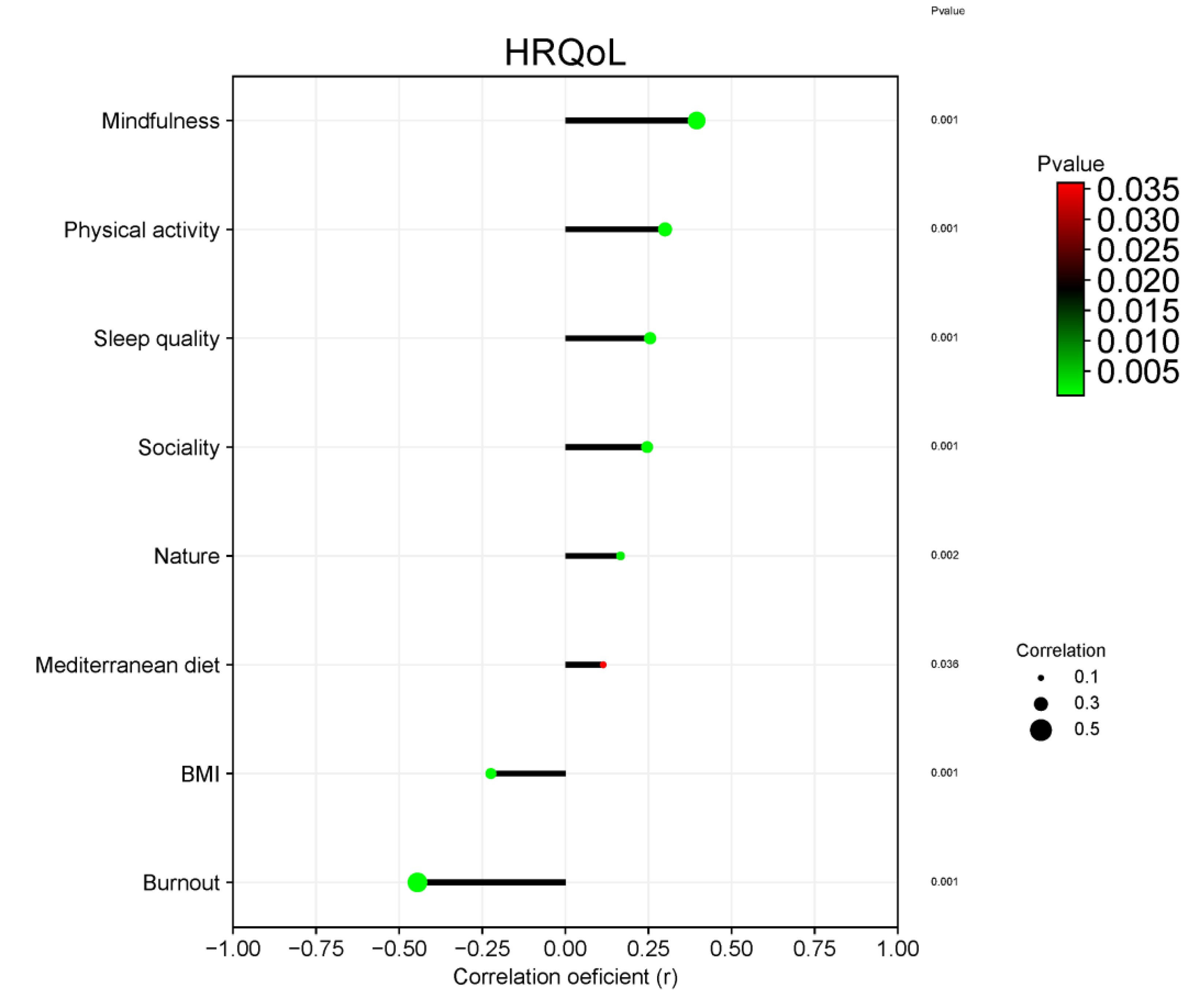
Figure 2.
Correlation between Burnout and Lifestyle/Health-Related Variables.
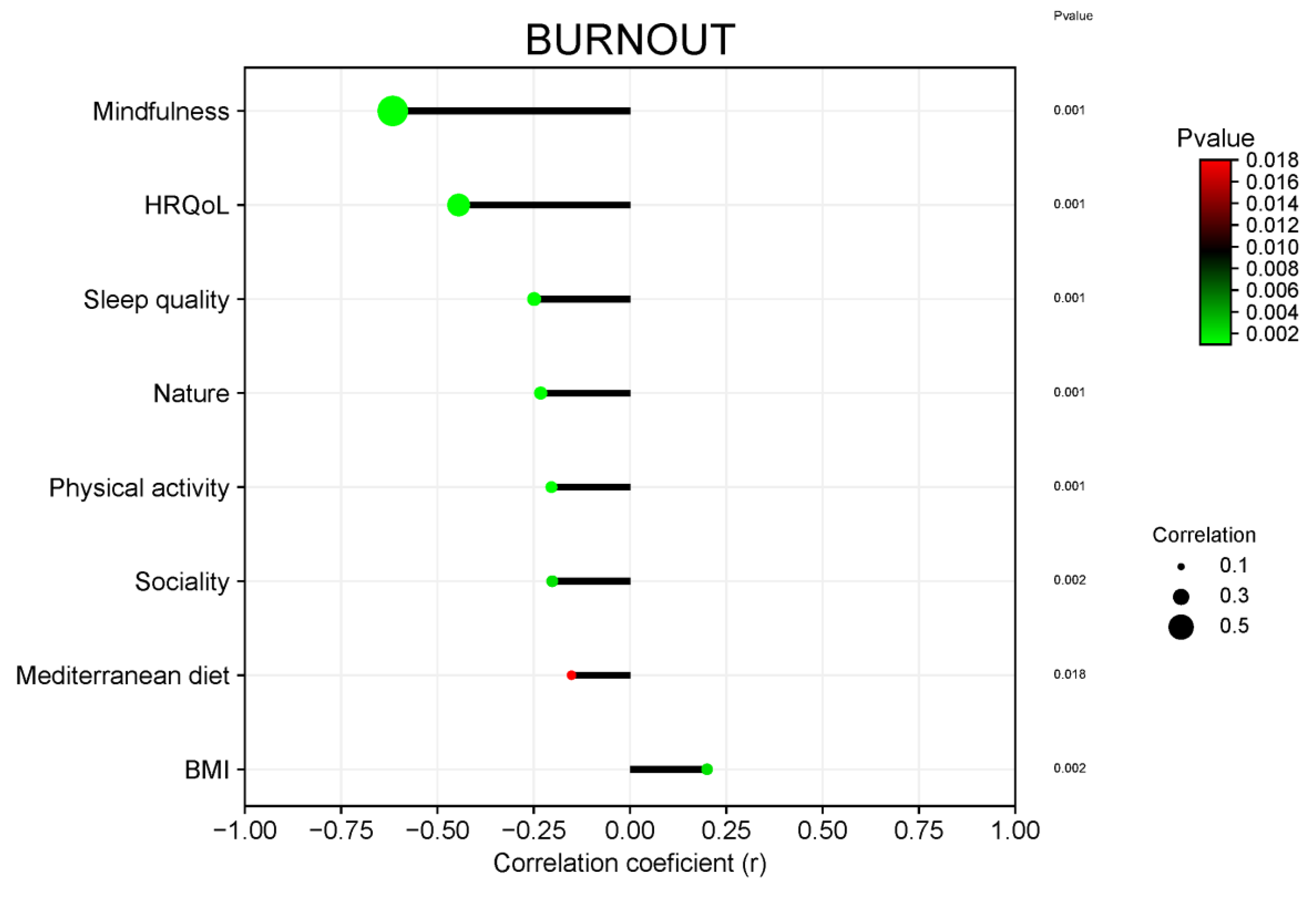
Figure 3.
Relationship between Burnout levels and mean scores for Mindfulness (MAAS-15) and Mediterranean Diet Adherence (14-MEDAS).
Figure 3.
Relationship between Burnout levels and mean scores for Mindfulness (MAAS-15) and Mediterranean Diet Adherence (14-MEDAS).
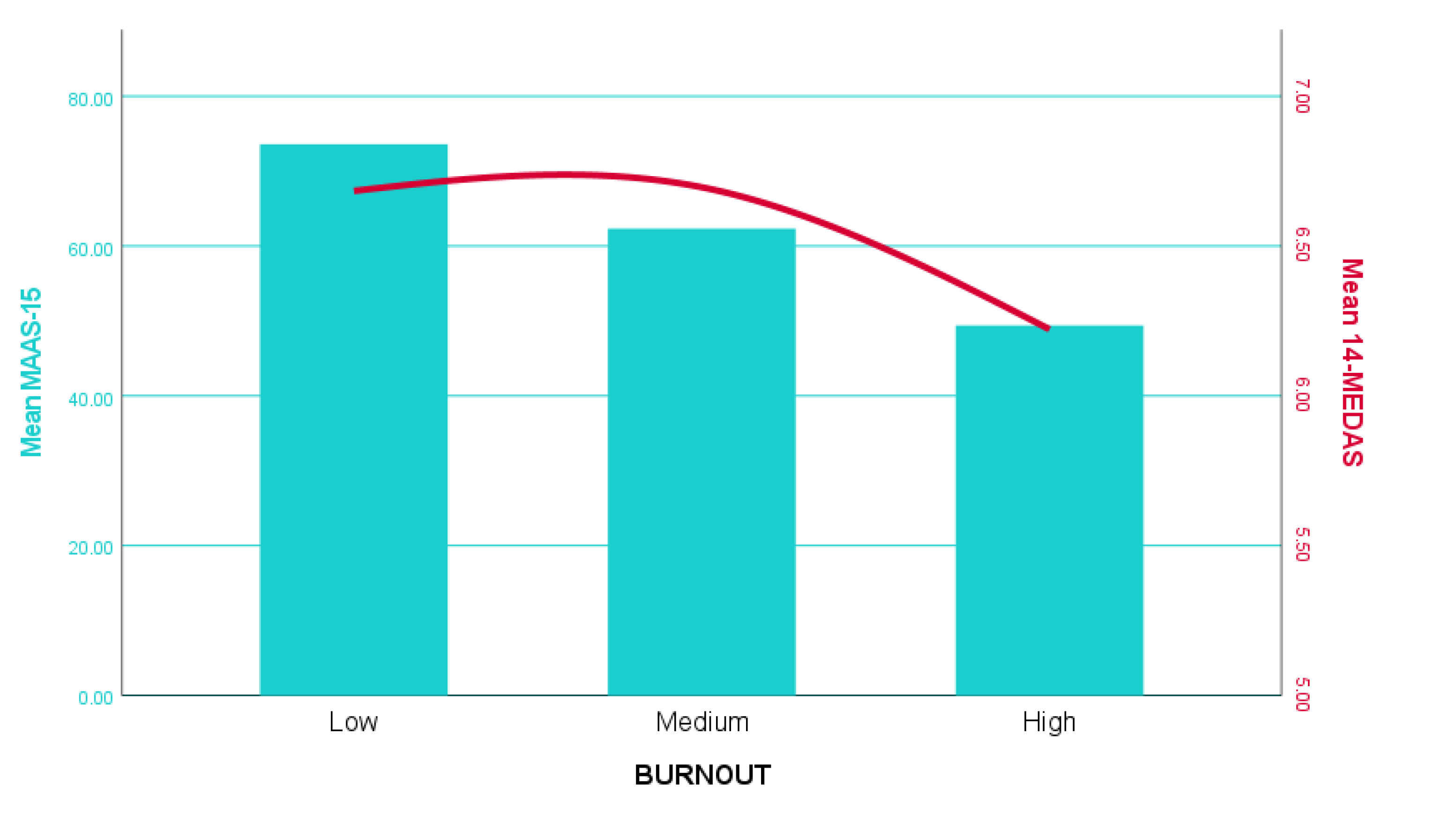
Figure 4.
Odds Ratios for Mindfulness across levels of Burnout.
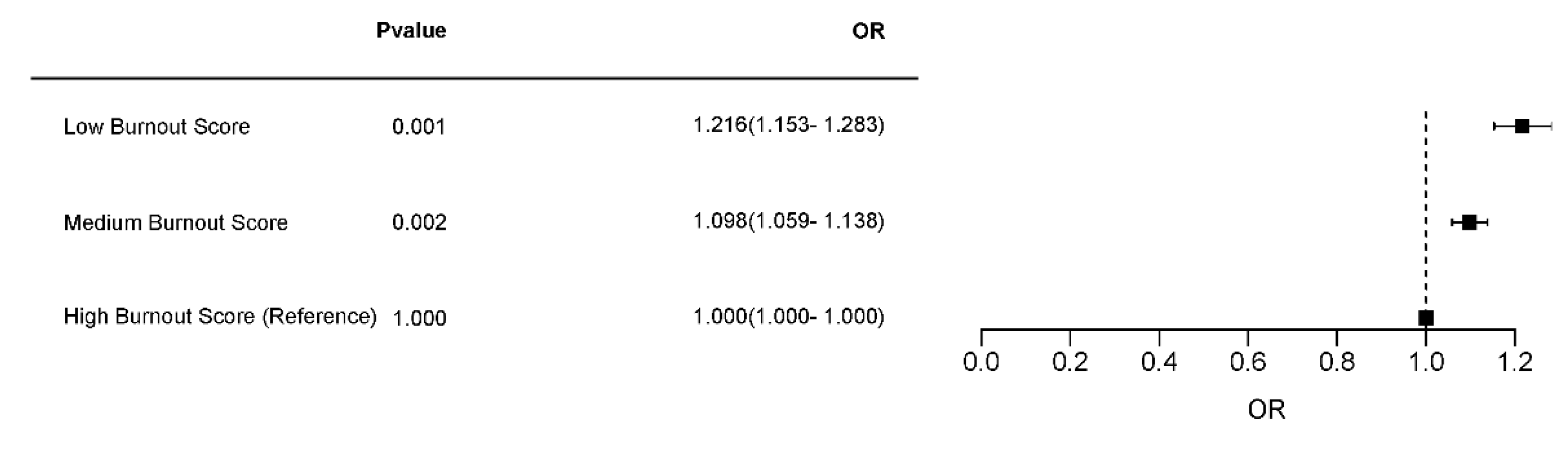
Figure 4.
Hazard Ratios for Burnout across levels of Job Satisfaction.
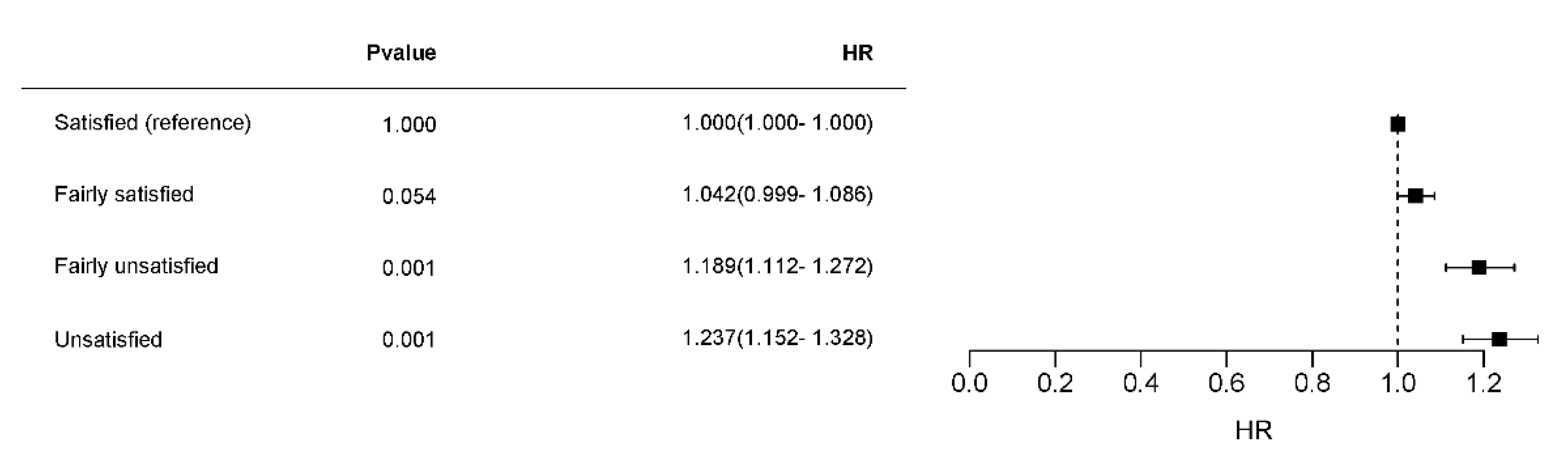

Table 1.
Correlations between Burnout, Mindfulness, Mediterranean diet and HRQoL.
| BAT-12 | MAAS-15 | 14-MEDAS | EQIndex | |
|---|---|---|---|---|
| BAT-12 | 1 | -0.616** | -0.152* | -0.445** |
| MAAS-15 | -0.616** | 1 | 0.077 | 0.395** |
| 14-MEDAS | -0.152* | 0.077 | 1 | 0.114** |
| EQIndex | -0.445** | 0.395** | 0.114** | 1 |
*Correlation is significant at the p<0.05 level. **Correlation is significant at the p<0.001 level.
Disclaimer/Publisher’s Note: The statements, opinions and data contained in all publications are solely those of the individual author(s) and contributor(s) and not of MDPI and/or the editor(s). MDPI and/or the editor(s) disclaim responsibility for any injury to people or property resulting from any ideas, methods, instructions or products referred to in the content. |
© 2024 by the authors. Licensee MDPI, Basel, Switzerland. This article is an open access article distributed under the terms and conditions of the Creative Commons Attribution (CC BY) license (http://creativecommons.org/licenses/by/4.0/).
Copyright: This open access article is published under a Creative Commons CC BY 4.0 license, which permit the free download, distribution, and reuse, provided that the author and preprint are cited in any reuse.


