Preprint
Review

This version is not peer-reviewed.

Targeting Cytokine-Mediated Inflammation in Brain Disorders: Developing New Treatment Strategies

A peer-reviewed article of this preprint also exists.

Submitted:

22 November 2024

Posted:

25 November 2024

You are already at the latest version

Abstract

Cytokine-mediated inflammation is becoming recognized as a vital role in the pathophysiology of a wide range of brain illnesses, including neurodegenerative, psychiatric, and neurodevelopmental problems. Pro-inflammatory cytokines such as interleukin-1 (IL-1), tumor necrosis factor-alpha (TNF-α), and interleukin-6 (IL-6) cause neuroinflammation, alter brain function, and accelerate disease development. Despite progress in understanding these pathways, effective medicines to target brain inflammation are still limited. Traditional anti-inflammatory and immunomodulatory drugs are effective in peripheral inflammatory illnesses. Still, they confront substantial hurdles when used on the central nervous system, such as the blood-brain barrier and unwanted systemic effects. The review highlighted the developing treatment techniques for modifying cytokine-driven neuroinflammation, focusing on advances that selectively target critical cytokines involved in brain pathology. Novel approaches, including cytokine-specific inhibitors, antibody-based therapeutics, gene and RNA-based interventions, and sophisticated drug delivery systems like nanoparticles, promise to lower neuroinflammation with greater specificity and safety. Furthermore, developments in biomarker discoveries and neuroimaging techniques improve our ability to monitor inflammatory responses, allowing for more accurate and personalized treatment regimens. Preclinical and clinical trial data demonstrate the therapeutic potential of these tailored techniques. However, significant challenges remain, such as improving delivery across the blood-brain barrier and reducing off-target effects. As research advances, the creation of personalized, cytokine-centered therapeutics has the potential to alter the therapy landscape for brain illnesses, giving patients hope for better results and a higher quality of life.

Keywords: 
;  ;  ;  ;  

Introduction

Cytokine-mediated inflammation has emerged as a critical mechanism in the pathogenesis of a variety of brain disorders, including neurodegenerative diseases, psychiatric problems, and neurodevelopmental disorders. Cytokines are essential signaling molecules in the central nervous system (CNS). They govern immunological responses, neuronal function, and tissue homeostasis. Under normal circumstances, cytokine production is closely controlled, producing a delicate balance of pro-inflammatory and anti-inflammatory signals. However, in certain neurological disorders, dysregulation of cytokine signaling can lead to persistent neuroinflammation, contributing to disease initiation, progression, and poor prognosis (Heneka et al., 2015; Tansey & Goldberg, 2010).
Pro-inflammatory cytokines like interleukin-1 (IL-1), tumor necrosis factor-alpha (TNF-α), and interleukin-6 (IL-6) have been linked to neuroinflammation in illnesses such as Alzheimer's, Parkinson's, depression, and multiple sclerosis (Bourgognon & Cavanagh, 2020; Yijun Chen & Yu, 2023; T. W. Liu, Chen, & Chang, 2022; W. Zhang, Xiao, Mao, & Xia, 2023). Elevated levels of cytokines such as IL-1 and TNF-α in the brain have been related to synaptic dysfunction, neurodegeneration, and behavioral changes, emphasizing their crucial role in brain health (Bourgognon & Cavanagh, 2020). In addition to these chronic neurodegenerative disorders, acute brain lesions such as stroke and traumatic brain injury (TBI) cause a powerful cytokine response that exacerbates neuronal damage and hampers recovery (Schimmel, Acosta, & Lozano, 2017; Simon et al., 2017).
Despite advances in our understanding of cytokine involvement in brain diseases, current treatment approaches to neuroinflammation remain restricted. Traditional anti-inflammatory therapies, such as nonsteroidal anti-inflammatory medications (NSAIDs) and corticosteroids, frequently fail to penetrate the blood-brain barrier (BBB) and can have systemic adverse effects, limiting their clinical relevance in treating CNS illnesses (Solanki, Karande, & Ranganathan, 2023; Vieira et al., 2024). More recent approaches have centered on developing targeted medicines that directly control cytokine signaling pathways, promising better selectivity and fewer off-target effects. These include cytokine-specific inhibitors, monoclonal antibodies, and small molecule antagonists (S. Kumari, Dhapola, Sharma, Singh, & Reddy, 2023; Ramesh, Maclean, & Philipp, 2013; Yi et al., 2024).
The article's primary goal is to summarize the most recent advances in targeting cytokine-mediated inflammation as a treatment strategy for brain diseases.The important roles of cytokines in brain pathology, present and emerging therapeutics, and the obstacles to targeting neuroinflammation in the CNS are also presented. We also highlighted emerging medication delivery technologies, such as nanotechnology and gene-based approaches, boosting the ability to modulate brain inflammation selectively. Finally, we discuss biomarkers' potential to monitor inflammatory responses and guide treatment methods in personalized medicine techniques.

Cytokine-Mediated Inflammation in the Brain

Cytokine-mediated inflammation is an integral part of the immune response in the CNS, acting as both a protective mechanism and a potential cause of pathology. In healthy settings, the CNS maintains a balanced immune milieu, primarily governed by microglia, the brain's resident immune cells, astrocytes, and peripheral immune cells that respond to various neurological distress signals. Cytokines, a varied set of signaling molecules that includes interleukins, chemokines, and tumor necrosis factors, play critical roles in the immunological signaling network. They perform a dual role of either boosting neuroprotection and repair or, when dysregulated, generating chronic inflammation and neurodegeneration (Qin, Ma, Chen, & Shu, 2023; Rodríguez-Gómez et al., 2020; Sochocka, Diniz, & Leszek, 2017; W. Zhang et al., 2023).
Pro-inflammatory cytokines, including IL-1β, TNF-α, and IL-6, are crucial in triggering and maintaining neuroinflammatory reactions (Figure 1). High levels of IL-1β have been associated with neuronal excitability, oxidative stress, and neuronal death in disorders like Alzheimer's, Parkinson's, and multiple sclerosis (Kuwabara, Ishikawa, Kondo, & Kakiuchi, 2017; Leal, Casabona, Puntel, & PITOSSI, 2013; W. Y. Wang, Tan, Yu, & Tan, 2015). TNF-α, a key cytokine in neuroinflammation, impairs synaptic plasticity, causing cognitive deficits and memory impairments in neurodegenerative and psychiatric illnesses (Bourgognon & Cavanagh, 2020; Lecca et al., 2022).
Cytokines regulate brain function through diverse and multiple processes. Cytokines trigger intracellular signaling cascades, including nuclear factor-kappa B (NF-κB) and Janus kinase/signal transducer and activator of transcription (JAK/STAT), which influence gene expression and produce inflammatory mediators. This leads to a self-reinforcing cycle of inflammation, which can cause long-term anatomical and functional abnormalities in the brain (Ageeva, Rizvanov, & Mukhamedshina, 2024; Hu, li, Fu, Zhao, & Wang, 2021; Yan et al., 2024). Furthermore, cytokines can impair BBB integrity, enabling peripheral immune cells and more cytokine input, so aggravating CNS inflammation (Archie, Al Shoyaib, & Cucullo, 2021; Kadry, Noorani, & Cucullo, 2020; Zhao et al., 2022).
The transition from acute to chronic neuroinflammation is critical for disease progression in many brain illnesses. For example, in Alzheimer's disease, cytokine-driven inflammation increases amyloid-beta aggregation and tau hyperphosphorylation, both of which disrupt synaptic transmission and lead to neuronal death (Wong-Guerra, Calfio, Maccioni, & Rojo, 2023; W. Zhang et al., 2023). Cytokines like IL-6 and TNF-α affect neurogenesis and synaptic plasticity in mental illnesses like depression, linking immune dysregulation to mood and cognitive loss (Branchi et al., 2024; Corrigan, O’Rourke, Moran, Fletcher, & Harkin, 2023; Rhie, Jung, & Shim, 2020). Table 1 summarizes the role of cytokines in brain disorders.
Understanding cytokine-mediated inflammation in the brain has provided insights highlighting the promise of targeted anti-cytokine therapy. While cytokine responses are necessary for beginning immune responses and facilitating repair, their dysregulation in chronic brain diseases emphasizes the importance of treatment techniques that can selectively control these signals without impairing general immune function. By investigating the many roles of cytokines in neuroinflammation, new strategies are being developed to attenuate their detrimental consequences, which may eventually delay or even reverse disease progression in CNS illnesses.

Brain Disorders Associated with Cytokine Dysregulation

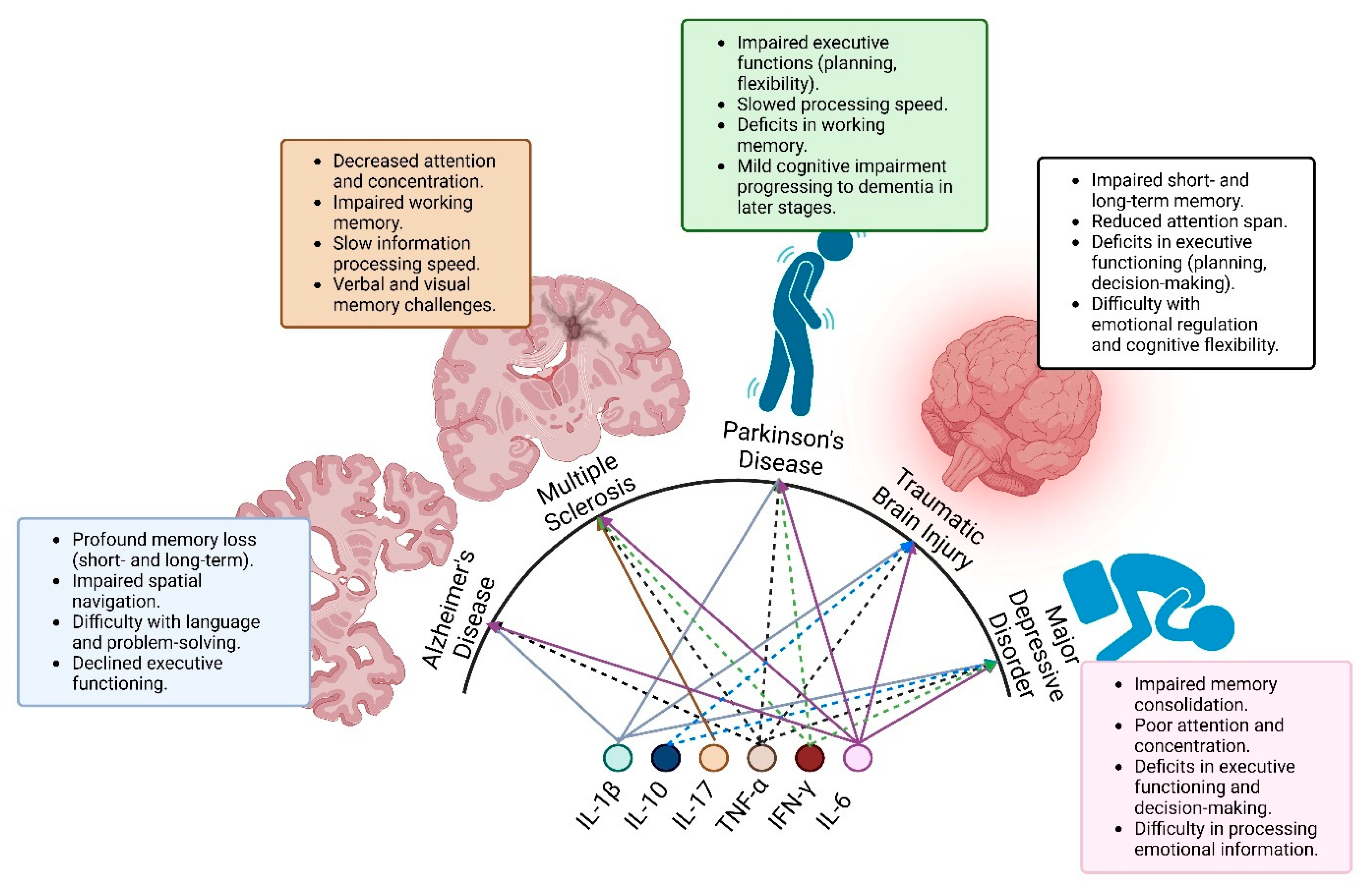
Cytokine dysregulation is a feature of many brain illnesses, including neurodegenerative, psychiatric, neurodevelopmental, and acute brain injury problems (Figure 2). In these illnesses, abnormal cytokine signaling contributes not only to the progression of neuronal damage but also to symptom manifestation, compromising cognitive, motor, and emotional functioning. Understanding the function of cytokine dysregulation across different brain illnesses has brought fresh insights into prospective treatment targets. Cytokines are closely involved in pathways leading to neuroinflammation, neurodegeneration, and neuronal circuit disruption (Jellinger, 2010; Kip & Parr-Brownlie, 2023; W. Zhang et al., 2023).

1. Neurodegenerative Disorders

Neurodegenerative illnesses including Alzheimer's disease (AD) and Parkinson's disease (PD) are strongly connected to chronic neuroinflammation caused by cytokine imbalance. Elevated levels of pro-inflammatory cytokines, such as IL-1β, IL-6, and TNF-α, in Alzheimer's disease cause amyloid-beta (Aβ) plaque deposition and tau hyperphosphorylation, leading to synaptic dysfunction and neuronal death (S. Kumari et al., 2023; W. Zhang et al., 2023). Excessive microglia activation in PD creates a pro-inflammatory milieu that worsens dopaminergic neuron loss in the substantia nigra. TNF-α and IL-1β play critical roles in neurodegeneration and motor impairment (Badanjak, Fixemer, Smajić, Skupin, & Grünewald, 2021; Isik, Yeman Kiyak, Akbayir, Seyhali, & Arpaci, 2023).

2. Psychiatric Disorders

Cytokine dysregulation has emerged as a critical component linking immune system dysfunction to changes in mood, cognition, and behavior in psychiatric diseases such as major depressive disorder (MDD) and schizophrenia. Depression is associated with elevated levels of IL-6 and TNF-α, which may affect neurogenesis, synaptic plasticity, and neurotransmitter balance, especially in the hippocampus and prefrontal cortex (Kouba, de Araujo Borba, Borges de Souza, Gil-Mohapel, & Rodrigues, 2024; Poletti, Mazza, & Benedetti, 2024; Y. Zhang et al., 2023). Pro-inflammatory cytokines in schizophrenia are linked to impaired brain connection and neurodevelopment, which may contribute to cognitive deficiencies and unpleasant symptoms (Dawidowski et al., 2021; J. Y. Liu et al., 2020). These findings emphasize the inflammatory nature of psychiatric diseases, implying that cytokine modulation could be used as an additional treatment technique.

3. Neurodevelopmental Disorders

Cytokine dysregulation has also been linked to neurodevelopmental diseases, specifically autism spectrum disorder (ASD). Research suggests that greater maternal levels of cytokines like IL-6 during pregnancy are related to an increased risk of ASD in offspring, implying that prenatal immune activation may influence early brain development (Jones et al., 2017). Elevated levels of IL-1β, IL-6, and other inflammatory markers in children with ASD may contribute to impaired synapse development, brain circuit construction, and behavioral symptoms (Goines & Ashwood, 2013; Noori, Rajabi, Sargolzaei, & Alaghmand, 2024).

4. Acute Brain Injuries

Acute brain traumas, such as stroke and traumatic brain injury (TBI), cause an immediate and powerful cytokine response, which can worsen damage and slow recovery. In acute stroke, high levels of IL-1β and TNF-α cause cell death and blood-brain barrier disruption. In TBI, cytokines, including IL-6 and IL-8, increase secondary damage mechanisms such as oxidative stress and edema (Bouras, Asehnoune, & Roquilly, 2022; Freire et al., 2023; Postolache et al., 2020). Prolonged inflammation after these injuries may cause chronic neuroinflammatory states, increasing the chance of developing dementia and other neurodegenerative disorders later in life (Ahmad et al., 2022; Brett, Gardner, Godbout, Dams-O’Connor, & Keene, 2022).

5. Multiple Sclerosis (MS) and Autoimmune Disorders

Multiple sclerosis (MS), an autoimmune condition defined by immune-mediated myelin breakdown, is another brain disorder strongly influenced by cytokine dysregulation. Cytokines like IL-17 and interferon-gamma (IFN-γ) drive immune cells to the CNS and assault myelin sheaths, causing demyelination and neurological dysfunction (Amoriello, Memo, Ballerini, & Ballerini, 2024; Danikowski, Jayaraman, & Prabhakar, 2017; Krishnarajah & Becher, 2022). This inflammatory milieu not only triggers MS flare-ups but also promotes neurodegeneration and cognitive loss as the disease develops.
Cytokine dysregulation is a common thread connecting various brain illnesses, each with unique patterns of cytokine activity that influence disease pathogenesis, symptom manifestation, and clinical outcomes. The involvement of cytokines in these disorders shows their therapeutic potential, with preclinical and clinical research indicating that therapies focused at regulating cytokine levels or blocking specific pro-inflammatory pathways are promising. Understanding cytokine dynamics in each disease environment may lead to personalized, cytokine-based therapeutics that reduce neuroinflammatory damage and enhance patient outcomes.

Current Therapeutic Approaches for Inflammation in Brain Disorders

Treatments for inflammation in brain diseases have progressed dramatically, with efforts now extending beyond typical anti-inflammatory medications to include targeted immunomodulators. Given the significance of cytokines in neuroinflammation, current therapies seek to attenuate pro-inflammatory signaling, restore immunological balance, and alleviate the detrimental effects of chronic inflammation on neuronal function and survival. Here, we discuss the various classes of anti-inflammatory medications used in brain disorders and the hurdles and recent breakthroughs that show hope for improving outcomes in neuroinflammatory diseases.

1. Nonsteroidal Anti-Inflammatory Drugs (NSAIDs)

NSAIDs are commonly used because of their ability to suppress cyclooxygenase (COX) enzymes, which reduce prostaglandin production and, as a result, inflammation. Long-term usage of NSAIDs has been proven to lessen the risk of Alzheimer's disease, probably due to their impact on neuroinflammation (Gunaydin & Bilge, 2018; Wongrakpanich, Wongrakpanich, Melhado, & Rangaswami, 2018). However, clinical trials on the efficacy of NSAIDs in slowing neurodegeneration have yielded mixed results, most likely due to the inability of many NSAIDs to effectively cross the BBB and their associated side effects in chronic use, such as gastrointestinal and cardiovascular risks (Kaduševičius, 2021; Vieira et al., 2024). This has limited their clinical application in CNS illnesses, especially over long periods.

2. Corticosteroids

Corticosteroids, such as prednisone and dexamethasone, are powerful anti-inflammatory medications that suppress immune responses via glucocorticoid receptor signaling. They are frequently used in autoimmune disorders and acute neuroinflammatory situations, such as multiple sclerosis relapses and traumatic brain injury, to reduce swelling and immune activation (Coutinho & Chapman, 2011; Goodin, 2014; Reichardt et al., 2021). Chronic corticosteroid use, however, is associated with a variety of adverse effects, including immunosuppression, osteoporosis, and metabolic abnormalities, limiting their effectiveness in the long-term therapy of neurodegenerative illnesses. Furthermore, corticosteroids frequently have a nonspecific effect, decreasing pro-inflammatory and anti-inflammatory responses, which might be detrimental in conditions requiring specialized modulation of immune pathways (Reichardt et al., 2021; Taylor & Kokiko-Cochran, 2024).

3. Cytokine-Specific Inhibitors and Monoclonal Antibodies

Targeted therapy using monoclonal antibodies (mAbs) or small molecule inhibitors against specific cytokines, such as TNF-α, IL-1β, and IL-6, offers a more precise way to control neuroinflammation. Anti-TNF-α treatments, such as infliximab and adalimumab, have shown benefits in systemic inflammatory illnesses such as rheumatoid arthritis and Crohn's disease. Their potential for neuroinflammatory conditions is being investigated (Evangelatos, Bamias, Kitas, Kollias, & Sfikakis, 2022; Jung & Kim, 2022; Yi et al., 2024). Anakinra, an IL-1β antagonist, has shown neuroprotective effects in preclinical stroke and traumatic brain damage studies. However, outcomes in chronic neurodegenerative illnesses are inconsistent (Alam et al., 2020; Lindblad, Rostami, & Helmy, 2023). Despite these advancements, many cytokine inhibitors suffer difficulties crossing the BBB, and their systemic immunosuppressive effects raise questions regarding infection risks and long-term safety (X. Huang, Hussain, & Chang, 2021).

4. Small Molecule Inhibitors

Small molecule inhibitors that target intracellular signaling pathways involved in cytokine generation, such as the JAK/STAT pathways, provide another option for controlling neuroinflammation. JAK inhibitors, such as tofacitinib and ruxolitinib, have been used successfully in autoimmune illnesses and are being studied for their capacity to reduce neuroinflammation in disorders such as MS and AD (Hu et al., 2021; Schwartz et al., 2017; Shawky, Almalki, Abdalla, Abdelazeem, & Gouda, 2022). These inhibitors have the advantage of oral delivery and easier BBB penetration than bigger biologic compounds. However, like with other immunosuppressive medications, they increase the risk of opportunistic infections and may have off-target effects on other immune-regulatory mechanisms, necessitating careful dose management and monitoring in clinical settings (He et al., 2018; Pardridge, 2020; K. Wang, Zhu, Liu, Zhu, & Ouyang, 2024).

5. Emerging Therapies: Nanotechnology and Gene-Based Approaches

Recent advancements in the delivery of drugs and molecular biology have created new opportunities for targeting neuroinflammation with high accuracy. Nanotechnology-based delivery systems, such as liposomes, polymeric nanoparticles, and lipid nanoparticles, can be designed to cross the BBB, allowing anti-inflammatory medicines or cytokine inhibitors to be delivered directly to inflamed brain regions. These techniques increase drug stability, reduce off-target effects, and improve therapeutic efficacy (Ekhator et al., 2023; Nady, Bakowsky, & Fahmy, 2023).
Gene therapy and RNA interference (RNAi) are also emerging as promising approaches to controlling cytokine activity in the CNS. These techniques use viral vectors or RNA molecules to transfer genes that boost anti-inflammatory signaling or inhibit specific pro-inflammatory cytokines, enabling for long-term control of the inflammatory response (A. Kumari, Kaur, & Aggarwal, 2023; D. Wang, Tai, & Gao, 2019; Wong et al., 2023). Preclinical findings suggest that utilizing RNAi to mute TNF-α and IL-1β production can reduce neuroinflammation and preserve neuronal integrity in neurodegenerative models (Yvonne Chen et al., 2024; Gao, Jiang, Tan, & Chen, 2023). While these therapies are still experimental, they provide a promising horizon for precise and long-term treatment in neuroinflammatory diseases.

6. Personalized Medicine and Biomarker-Guided Therapy

Personalized medicine, which tailors therapy based on an individual's distinct inflammatory profile, is a growing trend in neuroinflammatory treatment. Biomarkers such as C-reactive protein (CRP), cytokine levels, and inflammation-related neuroimaging measurements are employed to identify individuals who could benefit from focused anti-inflammatory therapy. Personalized techniques can enhance therapeutic results by targeting interventions to patients most likely to benefit from cytokine regulation (Chi & Lee, 2021; Hampel et al., 2020; Litman, 2019).
Current techniques to controlling inflammation in brain illnesses show a trend toward more precise, focused therapies that reduce systemic adverse effects while effectively modifying neuroinflammatory pathways. From classic anti-inflammatory drugs to new cytokine inhibitors and cutting-edge delivery technologies, these treatments are at the forefront of combating the immune-driven disorders that underpin many CNS diseases. As new technology and biomarker-guided medicines advance, there is the possibility for more effective and individualized treatment regimens that address both the complexity and chronicity of neuroinflammation in brain illnesses.

Emerging Treatment Strategies for Cytokine-Mediated Inflammation

Recent advancements in neuroscience and immunology have opened the door to new therapeutic methods for cytokine-mediated inflammation in brain diseases. These developing techniques aim to tune the immune response more precisely, reduce systemic adverse effects, and deliver long-term therapeutic advantages. These approaches, from biologics to advanced gene-editing methods, represent an increasing awareness of the complex link between the immune system and neurological health.

1. Biologics Targeting Cytokine Pathways

Biologics, such as mAbs and receptor antagonists, offer a transformational approach to targeting specific cytokines involved in neuroinflammation. Adalimumab and etanercept, TNF-α inhibitors, are being repurposed for neurological uses. Preclinical and clinical investigations indicate promise in decreasing inflammation-associated neuronal damage (Guo et al., 2024; Rider, Carmi, & Cohen, 2016; Sedger & McDermott, 2014). Similarly, IL-6 inhibitors (e.g., tocilizumab) and IL-1 receptor antagonists (e.g., anakinra) are being studied in diseases such as MS, AD, and stroke (Pignataro, Cataldi, & Taglialatela, 2022; Ridker & Rane, 2021). These medicines provide accuracy in modulating specific inflammatory pathways but require optimization to overcome obstacles such as BBB permeability and off-target effects.

2. Nanotechnology-Based Drug Delivery

Nanotechnology has transformed anti-inflammatory therapy delivery, allowing medications to be transported across the BBB more precisely. Nanoparticles, liposomes, and polymer-based carriers can be designed to encapsulate cytokine inhibitors, lowering systemic exposure and improving medication stability. Lipid nanoparticles were employed to deliver RNA-based medicines targeting TNF-α and IL-1β, demonstrating potential anti-inflammatory benefits in animal models of neurodegenerative disorders (Naqvi, Panghal, & Flora, 2020). These methods also allow for controlled medication release, which ensures long-term modulation of neuroinflammatory processes.

3. RNA-Based Therapies

RNA-based therapeutics, such as RNAi and antisense oligonucleotides (ASOs), provide highly targeted strategies for lowering cytokine expression. RNA-based techniques can reduce neuroinflammation and protect neurons by silencing genes that produce pro-inflammatory cytokines, including IL-1β and TNF-α. For example, ASO treatment targeting SOD1 has demonstrated efficacy in lowering neuroinflammation and slowing disease progression in amyotrophic lateral sclerosis (ALS) (Chery, 2016; Egli & Manoharan, 2023; Winkle, El-Daly, Fabbri, & Calin, 2021). These medications are still experimental, but they have tremendous potential for treating inflammation-driven brain diseases.

4. Gene Editing and CRISPR Technology

Gene-editing tools, particularly CRISPR-Cas9, are being investigated for their potential to change genes implicated in cytokine production and inflammatory pathways. CRISPR can decrease pro-inflammatory signaling for an extended period by targeting cytokine genes or their upstream regulators. Early preclinical research indicated the feasibility of utilizing CRISPR to reduce neuroinflammation in models of Alzheimer's disease and traumatic brain injury (Allemailem et al., 2023; Khoshandam, Soltaninejad, Mousazadeh, Hamidieh, & Hosseinkhani, 2024; T. Yuan et al., 2023). However, issues such as off-target effects and safe delivery techniques must be solved before these ideas can be put into clinical practice.

5. Modulation of the Gut-Brain Axis

The gut-brain axis, a bidirectional communication network that includes the immunological, neurological, and endocrine systems, is crucial in regulating neuroinflammation (Mallick et al., 2024). Dysbiosis of the gut microbiota has been associated with increased cytokine production and the worsening of brain illnesses such as PD and depression (Ashique et al., 2024; Suganya & Koo, 2020). Emerging therapeutics, such as probiotics, prebiotics, and fecal microbiota transplantation, aim to restore gut balance. These techniques have shown potential in modifying systemic and central inflammation by lowering circulating pro-inflammatory cytokines and increasing anti-inflammatory responses.

6. Neuroprotective Peptides and Small Molecules

Small compounds and neuroprotective peptides are being produced to combat the adverse effects of cytokines in the brain. For example, cytokine receptor peptides can operate as decoys, binding pro-inflammatory cytokines and blocking them from interacting with cellular targets (Smith, Das, Ray, & Banik, 2012; Turner, Nedjai, Hurst, & Pennington, 2014). Furthermore, small molecule inhibitors of JAK pathways, such as baricitinib, are being explored for their capacity to block intracellular cytokine signaling, bringing fresh hope to patients with autoimmune and neurodegenerative illnesses (Hu et al., 2021; Schwartz et al., 2017).

7. Cellular Therapies

Cell-based therapies, particularly the utilization of mesenchymal stem cells (MSCs), have received attention due to their immunomodulatory capabilities. MSCs produce anti-inflammatory cytokines, promote tissue healing, and inhibit the generation of pro-inflammatory mediators in the CNS. Clinical investigations have shown that MSCs can reduce neuroinflammation and improve functional results in disorders like multiple sclerosis and stroke (Han et al., 2022; Zhuang et al., 2021). Advancements in stem cell engineering may improve their therapeutic efficacy and specificity.

8. Personalized and Biomarker-Guided Therapies

The increasing availability of biomarkers that represent cytokine activity in the CNS enables the development of tailored treatment regimens. Biomarker-guided techniques would allow clinicians to adapt medicines based on an individual's inflammatory profile, increasing efficacy while reducing side effects. Cytokine profiling in cerebrospinal fluid (CSF) and advanced neuroimaging modalities can help identify patients who will benefit most from specific anti-inflammatory therapies (Bustin & Jellinger, 2023; Małkowska & Sawczuk, 2023). These tailored techniques are beneficial in diverse disorders like depression and schizophrenia, where inflammation varies significantly between individuals.
Emerging therapy methods for cytokine-mediated inflammation in brain diseases mark a shift in how we approach these complex problems. These technologies, which range from biologics and RNA-based therapeutics to nanotechnology and gene editing, seek to deliver precise, targeted, and long-lasting answers to neuroinflammation-related difficulties. As research advances, integrating these methods into clinical practice offers enormous potential for improving the lives of individuals suffering from inflammation-driven brain illnesses.

Novel Approaches to Drug Delivery in the Brain

The efficient treatment of brain illnesses frequently meets a fundamental challenge: overcoming the BBB. This carefully regulated barrier shields the brain from dangerous compounds while restricting the entry of therapeutic medicines, such as those targeting cytokine-mediated inflammation. Traditional drug delivery strategies are typically ineffective due to inadequate BBB penetration and systemic adverse effects. In response, novel ways to improve drug delivery to the brain have emerged, allowing for more precise and effective therapies.

1. Nanotechnology-Based Drug Delivery

Nanotechnology has transformed CNS drug delivery by allowing therapeutic substances to traverse the BBB in a regulated and targeted manner. Nanoparticles, liposomes, dendrimers, and micelles are among the most extensively researched systems for brain-targeted drug delivery. These nanoscale carriers can encapsulate cytokine inhibitors, biologics, or small compounds, preserving them from degradation while increasing their solubility and bioavailability (Mittal et al., 2022). Lipid nanoparticles have successfully delivered anti-inflammatory medicines, including siRNA targeting TNF-α, in animal models of neurodegenerative disorders (Yonezawa, Koide, & Asai, 2020).
Functionalizing nanoparticles with ligands such as transferrin, apolipoproteins, or antibodies enables receptor-mediated transport across the BBB, enhancing selectivity and minimizing off-target effects. Furthermore, nanoparticles can be tailored for sustained release, which ensures a prolonged therapeutic impact and reduces the frequency of delivery.

2. Ultrasound-Enhanced Delivery

Focused ultrasound (FUS), in combination with microbubbles, has emerged as a powerful approach for temporarily and noninvasively opening the BBB, allowing for localized medication delivery to the brain. FUS causes mechanical stresses to breach the tight connections of endothelial cells, allowing therapeutic medicines to penetrate brain tissue (Burgess, Shah, Hough, & Hynynen, 2015). This technique has been used in preclinical and early clinical research to deliver anti-inflammatory medicines and monoclonal antibodies targeting cytokines such as IL-1β and TNF-α in neurodegenerative illnesses like Alzheimer's.
FUS provides the advantage of precise geographic targeting, reducing systemic side effects and off-target repercussions. Ongoing clinical trials are studying its potential to improve the delivery of biologics, RNA-based medicines, and nanocarriers to specific brain regions.

3. Intranasal Drug Delivery

Intranasal delivery bypasses the BBB by delivering the drug directly to the brain via the olfactory and trigeminal neurons. This pathway has received attention due to its ability to directly provide cytokine inhibitors and other therapeutic medicines to CNS inflammatory locations (Su et al., 2020). For example, intranasal administration of IL-1 receptor antagonists has been effective in preclinical models of traumatic brain damage and stroke (Lee et al., 2017; Rosenzweig, Lei, & Burd, 2014).
The noninvasive intranasal technique provides quick drug administration, making it ideal for acute diseases. Formulation advancements, such as using mucoadhesive nanoparticles or gels, have increased medication retention in the nasal cavity and brain-targeted administration.

4. Exosome-Based Delivery

Exosomes, naturally occurring nanovesicles released by cells, have emerged as attractive drug delivery carriers due to their biocompatibility, capacity to traverse the BBB, and intrinsic cell-targeting capabilities. Exosomes can be designed to deliver cytokine inhibitors, RNA-based therapies, or neuroprotective medicines directly to inflamed brain areas (Fu, Wang, Xia, & Zheng, 2020; Haney et al., 2015; Sen, Xavier, Kumar, Ahmad, & Ranjan, 2023). Preclinical studies have demonstrated that exosome-mediated delivery of anti-inflammatory medicines can reduce neuroinflammation and enhance outcomes in animal models of multiple sclerosis and Parkinson's disease.
One significant advantage of exosomes is their capacity to avoid immune recognition, lowering the chance of unwanted reactions. Furthermore, exosome engineering enables targeting specific cell types, such as microglia or astrocytes, which play critical roles in cytokine-mediated inflammation.

5. Polymer-Based Drug Delivery Systems

Biodegradable polymers, such as poly(lactic-co-glycolic acid) (PLGA), are used to create implanted or injectable devices for continuous drug administration in the brain. These polymers can encapsulate anti-inflammatory drugs and release them over time, ensuring consistent therapeutic doses while reducing systemic exposure. Implantable polymer wafers filled with cytokine inhibitors were investigated for treating glioblastoma-associated inflammation (Alsaab et al., 2022).
In addition to implants, injectable hydrogels of biocompatible polymers can be given directly to inflamed brain areas, providing targeted treatment with low systemic damage. These methods are up-and-coming for chronic neuroinflammatory illnesses that need long-term cytokine regulation.

6. Gene-Delivery Systems

Gene therapy techniques involving viral vectors, such as adeno-associated viruses (AAVs) or lentiviruses, are being developed to transfer genes that encode anti-inflammatory cytokines or cytokine inhibitors. These vectors can have long-term therapeutic effects by increasing the production of therapeutic proteins in the CNS (Chang, 2020; J.-H. Wang, Gessler, Zhan, Gallagher, & Gao, 2024). For example, AAVs that carry IL-10, an anti-inflammatory cytokine, have shown promise in lowering neuroinflammation in animal models of PD and MS.
Nonviral gene delivery technologies, such as lipid nanoparticles and electroporation techniques, are also being investigated to address safety concerns about viral vectors. These methods allow for temporary gene expression, which provides flexibility in modulating therapeutic effects.

7. Combination Strategies

Emerging evidence suggests that combining delivery strategies can improve therapeutic efficacy. To improve BBB penetration and target specificity, nanoparticles containing anti-inflammatory drugs can be delivered intranasally or by FUS. Similarly, exosomes functionalized with ligands for receptor-mediated transport can increase the delivery of RNA-based medicines to specific brain areas.
Drug delivery technology advancements alter the therapy landscape for brain illnesses caused by cytokine-mediated inflammation. By circumventing the BBB's obstacles, these innovative techniques enable precise, targeted, and effective therapeutic administration while decreasing systemic toxicity and improving clinical outcomes. As these tactics progress, they can transform the management of neuroinflammatory illnesses and enhance patients' lives.

Potential Biomarkers for Monitoring Inflammatory Response

The discovery of reliable biomarkers for monitoring inflammatory responses in brain illnesses is essential in improving diagnosis, therapy efficacy, and disease management. Biomarkers that reflect the dynamics of cytokine-mediated inflammation in the CNS can inform individualized therapy tactics, allowing for early intervention and real-time assessment of treatment effects. Advances in proteomics, transcriptomics, and neuroimaging have increased the repertory of possible biomarkers for inflammatory brain diseases.

1. Cytokines and Chemokines in Cerebrospinal Fluid (CSF) and Plasma

Cytokines and chemokines are critical mediators of neuroinflammation and direct indications of immunological activity in the CNS. Pro-inflammatory cytokines, including TNF-α, IL-6, and IL-1β, are continuously elevated in multiple sclerosis, Alzheimer's disease, and depression (Ramesh et al., 2013). These cytokines can be tested in CSF or blood, but CSF frequently provides a more accurate depiction of CNS-specific inflammation.
Anti-inflammatory cytokines, such as IL-10, can also be used as biomarkers to indicate the activation of compensatory mechanisms to reduce inflammation (Iyer & Cheng, 2012). The pro- and anti-inflammatory cytokines balance can provide insight into disease development and therapy responses.

2. Microglial and Astrocytic Activation Markers

Microglia and astrocytes are significant causes of neuroinflammation, and their activation can be detected via soluble biomarkers or imaging techniques. Soluble triggering receptor expressed on myeloid cells 2 (sTREM2), a microglial activation marker, can be detected in CSF and corresponds with neuroinflammatory activity in disorders including AD and PD (Kwon & Koh, 2020; Lin et al., 2024). Similarly, glial fibrillary acidic protein (GFAP), a marker of astrocytic activation, has been found as a possible biomarker for neuroinflammatory illnesses such as traumatic brain injury and MS (Abdelhak et al., 2022; Benninger, Glat, Offen, & Steiner, 2016).

3. Neurofilament Light Chain (NfL)

Neurofilament light chain (NfL) is a structural protein released into the cerebrospinal fluid and bloodstream following neuronal injury, typically induced by inflammation. Elevated NfL levels have been linked to axonal damage in neuroinflammatory diseases, including MS, ALS, and HIV-associated neurocognitive deficits (Alirezaei et al., 2020; Meeker et al., 2022). NfL is a promising non-invasive biomarker for monitoring disease progression and medication efficacy, thanks to ultrasensitive detection techniques as single-molecule array (SIMOA) tests.

4. Immune-Cell-Derived Extracellular Vesicles

Immune cells, such as microglia and macrophages, secrete extracellular vesicles (EVs) containing cytokines, chemokines, and other inflammatory molecules. These vesicles can pass the blood-brain barrier and be identified in peripheral blood, offering a non-invasive way to monitor CNS inflammation (Cabrera-Pastor, 2024; Kumar et al., 2024). The molecular cargo of EVs, which contains particular miRNAs, can reflect the brain's inflammatory state and provide valuable insights into the mechanisms behind neuroinflammatory diseases.

5. Metabolites and Lipid Mediators

Metabolites and lipid mediators involved in the inflammatory cascade are being identified as biomarkers of neuroinflammation. For example, kynurenine, a tryptophan metabolite involved with the immune response, has been linked to depression and schizophrenia, demonstrating that the kynurenine pathway is activated in response to inflammation (Mithaiwala, Santana-Coelho, Porter, & O’connor, 2021; S. Pathak et al., 2024). Similarly, lipid mediators such as prostaglandins and resolvins indicate pro- and anti-inflammatory activity and can be tested in CSF and plasma.

6. Neuroimaging Biomarkers

Imaging breakthroughs such as positron emission tomography (PET) and magnetic resonance imaging (MRI) have identified neuroinflammation biomarkers in vivo. PET tracers targeting translocator protein 18 kDa (TSPO), a marker of activated microglia, allow for spatial and temporal resolution of inflammatory processes in the brain (Dupont et al., 2017; Kim et al., 2020; Uzuegbunam, Rummel, Librizzi, Culmsee, & Hooshyar Yousefi, 2023; R. Zhou et al., 2021). Furthermore, MRI-based assessments of brain volume, white matter abnormalities, and iron deposition are used as indirect indicators of persistent neuroinflammation in illnesses like MS and AD.

7. Genomic and Transcriptomic Markers

Genomic and transcriptome profiling have revealed gene expression patterns linked to inflammatory responses in brain diseases. Transcriptomic analysis of peripheral blood mononuclear cells (PBMCs) has revealed inflammatory gene signatures, including those encoding cytokines, chemokines, and their receptors, that are associated with disease activity in disorders such as schizophrenia and bipolar disorder (Tamura et al., 2023; Y. H. Yuan et al., 2021). These fingerprints have the potential to identify patient subgroups and predict therapy responses.

8. The Gut-Brain Axis Biomarkers

The gut-brain axis is becoming more widely recognized for regulating CNS inflammation. Dysbiosis of the gut microbiota has been linked to increased systemic and CNS pro-inflammatory cytokine levels (Mallick et al., 2024). Biomarkers such as lipopolysaccharides (LPS) and short-chain fatty acids (SCFAs) can shed light on how the gut contributes to neuroinflammatory illnesses like PD and depression (Buga et al., 2023; Suganya & Koo, 2020).
Identifying and validating biomarkers for cytokine-mediated inflammation in brain illnesses has significant potential for improving precision medicine. These biomarkers are substantial tools for coping with the issues posed by neuroinflammatory illnesses because they provide insights into disease mechanisms, guide therapeutic options, and enable therapy efficacy monitoring. Future research should focus on integrating several biomarker modalities to capture the complexities of inflammatory processes and improve therapeutic outcomes.

Preclinical and Clinical Trials

The development of therapeutics targeting cytokine-mediated inflammation in brain diseases has made significant progress thanks to rigorous preclinical and clinical trials. These studies evaluate the safety, efficacy, and mechanisms of developing medicines, giving crucial information about their therapeutic potential. This section summarizes significant discoveries from preclinical investigations and clinical trials investigating cytokine regulation in neuroinflammatory disorders.

1. Preclinical Studies

Preclinical research is the foundation of therapeutic discovery, providing essential insights into disease mechanisms and the efficacy of new therapies in animal models.
  • Cytokine Inhibitors: Animal models of AD, PD and MS have shown that cytokine inhibitors effectively reduce neuroinflammation. In transgenic mouse models of AD, monoclonal antibodies targeting TNF-α improved cognitive deterioration (Wong-Guerra et al., 2023). IL-1β inhibitors improved motor function and reduced glial activation in animal models of PD (Godoy, Tarelli, Ferrari, Sarchi, & Pitossi, 2008).
  • Gene Therapy: Preclinical experiments using adeno-associated viral (AAV) vectors to transmit anti-inflammatory cytokines such as IL-10 have shown promise in chronic neuroinflammatory disorders, including ALS and Huntington's disease, by lowering microglial activation and neuronal damage (Parambi et al., 2022).
  • Nanoparticle-Based Delivery: In preclinical studies, nanoparticle-based delivery methods improved the CNS bioavailability of cytokine inhibitors. For example, lipid nanoparticles containing siRNA targeting IL-6 dramatically reduced inflammatory indicators and neuronal death in stroke models (Y. Huang et al., 2024).

2. Clinical Trials

Clinical trials are critical for turning preclinical results into safe and effective treatments for patients. Several clinical trials have examined cytokine-modulating therapy in a variety of brain diseases.
  • TNF-α Inhibitors: TNF-α inhibitors like infliximab and etanercept, once used for autoimmune illnesses including rheumatoid arthritis, are now utilized to treat CNS disorders. A pilot study of etanercept in post-stroke patients found that it improved motor function and mood by reducing neuroinflammation (Sedger & McDermott, 2014). However, larger randomized controlled trials are necessary to corroborate these findings.
  • IL-1β Antagonists: Anakinra, an IL-1 receptor antagonist, was tested in TBI patients and found to reduce systemic inflammatory markers while improving clinical outcomes in early-phase trials (Lindblad et al., 2023). Ongoing trials are evaluating its potential in neurodegenerative illnesses such as AD.
  • IL-6 Blockade: Tocilizumab, an IL-6 receptor antagonist, has been studied in depression and schizophrenia. A randomized trial in treatment-resistant depression discovered improvements in depressive symptoms, corresponding with lower peripheral inflammatory markers (Girgis et al., 2018; Knight et al., 2021).
  • Combination Therapies: Clinical investigations have indicated that combining anti-inflammatory medicines with neuroprotective techniques can be effective. A phase II trial with minocycline and an IL-1β inhibitor in MS patients found a synergistic benefit, lowering lesion development and neuroinflammatory indicators (Mallah et al., 2020).

3. Immune Modulation in Specific Disorders

  • Alzheimer’s Disease: Several trials have investigated immune-modulating drugs in AD. Solanezumab, an anti-amyloid monoclonal antibody that does not directly target cytokines, has shown promise in decreasing neuroinflammatory indicators in CSF (Honig et al., 2018; J. Zhang et al., 2024). Trials that combine amyloid-targeting treatments with anti-inflammatory medications are ongoing.
  • Multiple Sclerosis: Phase III trials have proven that therapies that modify cytokine signaling pathways, such as fingolimod and siponimod, significantly reduce relapse rates and lesion volume in MS patients (Piehl, 2021).
  • Traumatic Brain Injury: Clinical investigations of stem cell therapy have revealed that mesenchymal stem cells can reduce cytokine-mediated inflammation and increase recovery in TBI patients. These benefits are believed to be mediated by the release of anti-inflammatory cytokines such as IL-10 (R. Zhang et al., 2013).
Table 2 summarizes clinical trials targeting cytokine pathways. Despite promising outcomes, many clinical trials encounter obstacles such as patient heterogeneity, biomarker variability, and drug penetration through the BBB. To overcome these problems, ongoing trials are looking into stratified patient populations based on inflammatory biomarkers and improved drug delivery technologies such as nanoparticles and targeted ultrasound (Mitchell et al., 2021; Piehl, 2021).
Emerging medicines that target larger cytokine networks and incorporate precision medicine approaches show promise for improving clinical outcomes. Furthermore, adaptive trial designs and the utilization of real-world data are expected to hasten the development of successful cytokine-targeting medicines. Table 3 summarizes current and emerging therapies.
The translational research pipeline for cytokine-modulating therapeutics has advanced significantly, with multiple preclinical and clinical trials showing efficacy in lowering neuroinflammation and improving clinical outcomes. Continued efforts to enhance drug delivery, validate biomarkers, and integrate novel therapeutic techniques should pave the path for successful treatments for brain illnesses defined by cytokine-mediated inflammation.

Future Directions and Perspectives

The changing landscape of cytokine-mediated inflammation research in brain diseases provides an opportunity to create novel treatments and enhance patient outcomes. Despite tremendous progress, other hurdles remain, including as understanding the complexities of cytokine networks, overcoming medication delivery barriers, and identifying specific biomarkers to guide therapy. This section discusses significant topics of future research and developing viewpoints in the discipline.

1. Expanding the Understanding of Cytokine Pathways

Understanding cytokine signaling pathways and their functions in neuroinflammatory disorders is critical. Future study should focus on understanding the complex relationships between cytokines, glial cells, and neurons. Advanced single-cell and spatial transcriptomics can provide insights into cell-specific cytokine responses, allowing the identification of new therapeutic targets (D. Pathak & Sriram, 2023; W. Zhang et al., 2023; Zipp, Bittner, & Schafer, 2023).

2. Precision Medicine Approaches

Treatments tailored to individual patients based on their inflammatory profiles show significant promise. Advances in omics technologies, such as proteomics, genomes, and metabolomics, can help stratify individuals into subgroups with different cytokine dysregulation patterns. Machine learning algorithms used for multi-omics data may allow the prediction of therapy responses, paving the door for precision medicine in neuroinflammatory illnesses (Babu & Snyder, 2023; Guthridge, Wagner, & James, 2022; Z. Zhou et al., 2024).

3. Novel Therapeutic Targets and Agents

Identifying novel therapeutic targets beyond TNF-α and IL-6 is crucial for further research. Emerging targets include anti-inflammatory pathways, such as the IL-37 and IL-38 cytokines, which have protective effects in preclinical models of neuroinflammation (Bhol et al., 2024; Shi, Riese, & Shen, 2020; Vilotić et al., 2022; Yi et al., 2024). Small compounds targeting upstream regulators, such as NF-κB and JAK/STAT pathways, are being developed to modify cytokine signaling further.

4. Innovative Drug Delivery Systems

Meeting the challenge of delivering cytokine-modulating medicines across the BBB remains a high goal. Focused ultrasound, lipid nanoparticles, and receptor-mediated transport systems are potential technologies for improving CNS medication delivery (Y. Huang et al., 2024; Mittal et al., 2022; Wu, Hernandez, Miyasaki, & Kwon, 2023). Combining these technologies with real-time imaging may increase precision targeting of inflamed brain areas. Table 4 summarizes novel drug delivery technologies.

5. Biomarkers for Real-Time Monitoring

Creating dynamic and reliable biomarkers is essential for determining disease progression and therapy efficacy. Future research should verify non-invasive biomarkers, such as blood-based cytokine profiles and extracellular vesicle-derived inflammatory mediators, as real-time monitoring tools (Zakari et al., 2024). Furthermore, combining biomarker data with neuroimaging results may provide a more thorough knowledge of neuroinflammatory processes. Table 5 summarizes biomarkers in neuroinflammation.

6. Combination Therapies

Given the diverse nature of neuroinflammation, combination treatments that target many cytokines or pathways at once may be more effective. Anti-inflammatory medications, for example, might be used with neuroprotective therapies, such as antioxidants or synaptic modulators, to synergistically target both inflammation and neuronal damage (Turner et al., 2014; Valera & Masliah, 2016). Future clinical trials should investigate and evaluate these combinations' long-term safety and efficacy.

7. Role of the Gut-Brain Axis

The gut-brain axis is increasingly recognized as a key regulator of neuroinflammation. Research into microbiome-targeted therapeutics, such as probiotics, prebiotics, and fecal microbiota transplantation, is quickly expanding. These treatments try to balance the gut microbiota and reduce systemic inflammation, contributing to CNS diseases (Ullah et al., 2023). Researching the impact of gut-derived cytokines on brain health is a critical future direction.

8. Neuroimmune Crosstalk and Aging

Aging is a significant risk factor for several neuroinflammatory illnesses, including Alzheimer's and Parkinson's. Understanding how age affects neuroimmune interaction and predisposes the brain to chronic inflammation is critical. Research on immunosenescence and age-associated alterations in cytokine signaling may guide strategies to decrease age-related neuroinflammation (Aiello et al., 2019; Li et al., 2023).

9. Regulatory and Ethical Considerations

As sophisticated medicines like gene editing and cytokine-based biologics enter clinical trials, ethical and regulatory issues must be addressed. Critical challenges include ensuring equal access, monitoring long-term hazards, and developing robust frameworks for gene therapy in brain illnesses. Collaboration among scientists, doctors, regulators, and patient advocates is crucial for properly developing and implementing these therapies (Brokowski & Adli, 2019; Desine et al., 2020; Mattar, Chew, & Lai, 2024).
The future of cytokine-mediated inflammation in brain illnesses depends on interdisciplinary collaboration and the integration of cutting-edge technologies. By tackling drug delivery, biomarker discovery, and patient heterogeneity, researchers might pave the road for more effective and tailored treatments. Continuous investment in preclinical and clinical research, combined with improvements in precision medicine and medication delivery, has enormous potential to change the management of neuroinflammatory diseases.

Conclusion

Cytokine-mediated inflammation is critical in the pathophysiology of many brain disorders, including neurodegenerative diseases, psychiatric problems, and acute traumas. Advances in understanding cytokines' complicated interplay inside the CNS have shown their dual role as mediators of neuroprotection and neurodegeneration. This finding emphasizes the ability of cytokine-targeting therapy to control inflammation and restore neuronal function.
Preclinical and early clinical trials have shown promise for emerging therapeutic techniques such as cytokine inhibitors, immune-modulating biologics, and small compounds targeting inflammatory signaling pathways. Drug delivery innovations, such as nanoparticle-based systems and targeted ultrasound, have made it more feasible to transport therapeutic drugs across the BBB. Meanwhile, identifying and validating biomarkers, such as cytokine profiles and imaging modalities, advance the capacity to monitor disease progression and therapy responses in real-time.
Despite these advances, difficulties remain. Patient population heterogeneity, difficulty in transferring preclinical findings to clinical settings, and the complexities of CNS-specific inflammation all call for a more personalized approach. Precision medicine, guided by multi-omics and machine learning methods, provides a road to tailored therapeutic approaches. Furthermore, combining neuroinflammation research with insights into the gut-brain axis, aging, and neuroimmune interaction could lead to new therapeutic strategies.
Collaboration across disciplines will become increasingly important as the area advances. Collaborations between researchers, physicians, and industry stakeholders can speed up the translation of findings into successful medicines. Ethical considerations and fair access to modern therapies must also inform the development and implementation of novel interventions.
In conclusion, while hurdles remain, the expanding corpus of data on cytokine-mediated inflammation in brain diseases signals a new era in treating these debilitating conditions. The potential to revolutionize patient outcomes and improve quality of life is within grasp by harnessing emerging technology and encouraging interdisciplinary collaboration.

Abbreviations

BBB: Blood-brain barrier; CNS: central nervous system; NF-κB: nuclear factor-kappa B; MAPK: mitogen-activated protein kinase; AD: Alzheimer's disease; PD: Parkinson's disease; MS: multiple sclerosis; MDD: major depressive disorder; IL-1: interleukin-1; TNF-α: tumor necrosis factor-alpha; IL-6: interleukin-6; TBI: traumatic brain injury; NSAID: nonsteroidal anti-inflammatory drug; NF-κB: nuclear factor-kappa B; JAK/STAT: Janus kinase/signal transducer and activator of transcription; Aβ: amyloid-beta; MDD: major depressive disorder; ASD: autism spectrum disorder; TBI: traumatic brain injury; IFN-γ: interferon-gamma; NSAID: Nonsteroidal anti-inflammatory drug; COX: cyclooxygenase; mAb: monoclonal antibody; RNAi: RNA interference; CRP: C-reactive protein; ASO: antisense oligonucleotide; ALS: amyotrophic lateral sclerosis; MSC: mesenchymal stem cell; CSF: cerebrospinal fluid; FUS: Focused ultrasound; PLGA: poly(lactic-co-glycolic acid); sTREM2: Soluble triggering receptor expressed on myeloid cells 2; GFAP.glial fibrillary acidic protein; NfL: Neurofilament light chain; SIMOA: single-molecule array; EV: extracellular vesicle; PET: positron emission tomography; MRI: magnetic resonance imaging; TSPO: translocator protein 18 kDa; PBMC: peripheral blood mononuclear cell; LPS: lipopolysaccharide; SCFA: short-chain fatty acid.

References

  1. Abdelhak, A., Foschi, M., Abu-Rumeileh, S., Yue, J. K., D’Anna, L., Huss, A., … Tumani, H. (2022). Blood GFAP as an emerging biomarker in brain and spinal cord disorders. Nature Reviews Neurology, Vol. 18. [CrossRef]
  2. Ageeva, T., Rizvanov, A., & Mukhamedshina, Y. (2024). NF-κB and JAK/STAT Signaling Pathways as Crucial Regulators of Neuroinflammation and Astrocyte Modulation in Spinal Cord Injury. Cells, 13(7), 581. [CrossRef]
  3. Ahmad, M. A., Kareem, O., Khushtar, M., Akbar, M., Haque, M. R., Iqubal, A., … Alhajri, N. (2022). Neuroinflammation: A Potential Risk for Dementia. International Journal of Molecular Sciences, Vol. 23. [CrossRef]
  4. Aiello, A., Farzaneh, F., Candore, G., Caruso, C., Davinelli, S., Gambino, C. M., … Accardi, G. (2019). Immunosenescence and its hallmarks: How to oppose aging strategically? A review of potential options for therapeutic intervention. Frontiers in Immunology, Vol. 10. [CrossRef]
  5. Alam, A., Thelin, E. P., Tajsic, T., Khan, D. Z., Khellaf, A., Patani, R., & Helmy, A. (2020). Cellular infiltration in traumatic brain injury. Journal of Neuroinflammation, Vol. 17. [CrossRef]
  6. Alirezaei, Z., Pourhanifeh, M. H., Borran, S., Nejati, M., Mirzaei, H., & Hamblin, M. R. (2020). Neurofilament Light Chain as a Biomarker, and Correlation with Magnetic Resonance Imaging in Diagnosis of CNS-Related Disorders. Molecular Neurobiology, Vol. 57. [CrossRef]
  7. Allemailem, K. S., Alsahli, M. A., Almatroudi, A., Alrumaihi, F., Abdulmonem, W. Al, Moawad, A. A., … Khan, A. A. (2023). Innovative Strategies of Reprogramming Immune System Cells by Targeting CRISPR/Cas9-Based Genome-Editing Tools: A New Era of Cancer Management. International Journal of Nanomedicine, Vol. 18. [CrossRef]
  8. Alsaab, H. O., Alharbi, F. D., Alhibs, A. S., Alanazi, N. B., Alshehri, B. Y., Saleh, M. A., … Alzhrani, R. M. (2022). PLGA-Based Nanomedicine: History of Advancement and Development in Clinical Applications of Multiple Diseases. Pharmaceutics, Vol. 14. [CrossRef]
  9. Amoriello, R., Memo, C., Ballerini, L., & Ballerini, C. (2024). The brain cytokine orchestra in multiple sclerosis: from neuroinflammation to synaptopathology. Molecular Brain, Vol. 17. [CrossRef]
  10. Archie, S. R., Al Shoyaib, A., & Cucullo, L. (2021). Blood-brain barrier dysfunction in cns disorders and putative therapeutic targets: An overview. Pharmaceutics, Vol. 13. [CrossRef]
  11. Ashique, S., Mohanto, S., Ahmed, M. G., Mishra, N., Garg, A., Chellappan, D. K., … Kahwa, I. (2024). Gut-brain axis: A cutting-edge approach to target neurological disorders and potential synbiotic application. Heliyon, 10(13), e34092. [CrossRef]
  12. Babu, M., & Snyder, M. (2023). Multi-omics profiling for health. Molecular and Cellular Proteomics, 22(6). [CrossRef]
  13. Badanjak, K., Fixemer, S., Smajić, S., Skupin, A., & Grünewald, A. (2021). The contribution of microglia to neuroinflammation in parkinson’s disease. International Journal of Molecular Sciences, Vol. 22. [CrossRef]
  14. Benninger, F., Glat, M. J., Offen, D., & Steiner, I. (2016). Glial fibrillary acidic protein as a marker of astrocytic activation in the cerebrospinal fluid of patients with amyotrophic lateral sclerosis. Journal of Clinical Neuroscience, 26. [CrossRef]
  15. Bhol, N. K., Bhanjadeo, M. M., Singh, A. K., Dash, U. C., Ojha, R. R., Majhi, S., … Jena, A. B. (2024). The interplay between cytokines, inflammation, and antioxidants: mechanistic insights and therapeutic potentials of various antioxidants and anti-cytokine compounds. Biomedicine & Pharmacotherapy, 178, 117177. [CrossRef]
  16. Bouras, M., Asehnoune, K., & Roquilly, A. (2022). Immune modulation after traumatic brain injury. Frontiers in Medicine, Vol. 9. [CrossRef]
  17. Bourgognon, J.-M., & Cavanagh, J. (2020). The role of cytokines in modulating learning and memory and brain plasticity. Brain and Neuroscience Advances, 4. [CrossRef]
  18. Branchi, I., Viglione, A., Vai, B., Cirulli, F., Benedetti, F., & Poggini, S. (2024). Breaking free from the inflammatory trap of depression: Regulating the interplay between immune activation and plasticity to foster mental health. Neuroscience Applied, 3. [CrossRef]
  19. Brett, B. L., Gardner, R. C., Godbout, J., Dams-O’Connor, K., & Keene, C. D. (2022). Traumatic Brain Injury and Risk of Neurodegenerative Disorder. Biological Psychiatry, Vol. 91. [CrossRef]
  20. Brokowski, C., & Adli, M. (2019). CRISPR Ethics: Moral Considerations for Applications of a Powerful Tool. Journal of Molecular Biology, Vol. 431. [CrossRef]
  21. Buga, A. M., Padureanu, V., Riza, A. L., Oancea, C. N., Albu, C. V., & Nica, A. D. (2023). The Gut–Brain Axis as a Therapeutic Target in Multiple Sclerosis. Cells, Vol. 12. [CrossRef]
  22. Burgess, A., Shah, K., Hough, O., & Hynynen, K. (2015). Focused ultrasound-mediated drug delivery through the blood-brain barrier. Expert Review of Neurotherapeutics, Vol. 15. [CrossRef]
  23. Bustin, S. A., & Jellinger, K. A. (2023). Advances in Molecular Medicine: Unravelling Disease Complexity and Pioneering Precision Healthcare. International Journal of Molecular Sciences, Vol. 24. [CrossRef]
  24. Cabrera-Pastor, A. (2024). Extracellular Vesicles as Mediators of Neuroinflammation in Intercellular and Inter-Organ Crosstalk. International Journal of Molecular Sciences, 25(13), 7041. [CrossRef]
  25. Chang, J. W. (2020). The potential role of gene therapy for the treatment of neuropathic pain. Molecular Pain, 16.
  26. Chen, Yijun, & Yu, Y. (2023). Tau and neuroinflammation in Alzheimer’s disease: interplay mechanisms and clinical translation. Journal of Neuroinflammation, Vol. 20. [CrossRef]
  27. Chen, Yvonne, Mateski, J., Gerace, L., Wheeler, J., Burl, J., Prakash, B., … Adams, B. D. (2024). Non-coding RNAs and neuroinflammation: implications for neurological disorders. Experimental Biology and Medicine, Vol. 249. [CrossRef]
  28. Chery, J. (2016). RNA therapeutics: RNAi and antisense mechanisms and clinical applications. Postdoc Journal, 4(7). [CrossRef]
  29. Chi, S., & Lee, M. S. (2021). Personalized medicine using neuroimmunological biomarkers in depressive disorders. Journal of Personalized Medicine, Vol. 11. [CrossRef]
  30. Corrigan, M., O’Rourke, A. M., Moran, B., Fletcher, J. M., & Harkin, A. (2023). Inflammation in the pathogenesis of depression: a disorder of neuroimmune origin. Neuronal Signaling, Vol. 7. [CrossRef]
  31. Coutinho, A. E., & Chapman, K. E. (2011). The anti-inflammatory and immunosuppressive effects of glucocorticoids, recent developments and mechanistic insights. Molecular and Cellular Endocrinology, Vol. 335. [CrossRef]
  32. Danikowski, K. M., Jayaraman, S., & Prabhakar, B. S. (2017). Regulatory T cells in multiple sclerosis and myasthenia gravis. Journal of Neuroinflammation, Vol. 14. [CrossRef]
  33. Dawidowski, B., Górniak, A., Podwalski, P., Lebiecka, Z., Misiak, B., & Samochowiec, J. (2021). The role of cytokines in the pathogenesis of schizophrenia. Journal of Clinical Medicine, 10(17). [CrossRef]
  34. Desine, S., Hollister, B. M., Abdallah, K. E., Persaud, A., Hull, S. C., & Bonham, V. L. (2020). The Meaning of Informed Consent: Genome Editing Clinical Trials for Sickle Cell Disease. AJOB Empirical Bioethics, 11(4). [CrossRef]
  35. Dupont, A. C., Largeau, B., Ribeiro, M. J. S., Guilloteau, D., Tronel, C., & Arlicot, N. (2017). Translocator protein-18 kDa (TSPO) positron emission tomography (PET) imaging and its clinical impact in neurodegenerative diseases. International Journal of Molecular Sciences, Vol. 18. [CrossRef]
  36. Egli, M., & Manoharan, M. (2023). Chemistry, structure and function of approved oligonucleotide therapeutics. Nucleic Acids Research, 51(6). [CrossRef]
  37. Ekhator, C., Qureshi, M. Q., Zuberi, A. W., Hussain, M., Sangroula, N., Yerra, S., … Pendyala, P. R. (2023). Advances and Opportunities in Nanoparticle Drug Delivery for Central Nervous System Disorders: A Review of Current Advances. Cureus. [CrossRef]
  38. Evangelatos, G., Bamias, G., Kitas, G. D., Kollias, G., & Sfikakis, P. P. (2022). The second decade of anti-TNF-a therapy in clinical practice: new lessons and future directions in the COVID-19 era. Rheumatology International, Vol. 42. [CrossRef]
  39. Freire, M. A. M., Rocha, G. S., Bittencourt, L. O., Falcao, D., Lima, R. R., & Cavalcanti, J. R. L. P. (2023). Cellular and Molecular Pathophysiology of Traumatic Brain Injury: What Have We Learned So Far? Biology, Vol. 12. [CrossRef]
  40. Fu, S., Wang, Y., Xia, X., & Zheng, J. C. (2020). Exosome engineering: Current progress in cargo loading and targeted delivery. NanoImpact, Vol. 20. [CrossRef]
  41. Gao, C., Jiang, J., Tan, Y., & Chen, S. (2023). Microglia in neurodegenerative diseases: mechanism and potential therapeutic targets. Signal Transduction and Targeted Therapy, Vol. 8. [CrossRef]
  42. Girgis, R. R., Ciarleglio, A., Choo, T., Haynes, G., Bathon, J. M., Cremers, S., … Brown, A. S. (2018). A Randomized, Double-Blind, Placebo-Controlled Clinical Trial of Tocilizumab, An Interleukin-6 Receptor Antibody, for Residual Symptoms in Schizophrenia. Neuropsychopharmacology, 43(6). [CrossRef]
  43. Godoy, M. C. P., Tarelli, R., Ferrari, C. C., Sarchi, M. I., & Pitossi, F. J. (2008). Central and systemic IL-1 exacerbates neurodegeneration and motor symptoms in a model of Parkinson’s disease. Brain, 131(7). [CrossRef]
  44. Goines, P. E., & Ashwood, P. (2013). Cytokine dysregulation in autism spectrum disorders (ASD): Possible role of the environment. Neurotoxicology and Teratology, 36. [CrossRef]
  45. Goodin, D. S. (2014). Glucocorticoid treatment of multiple sclerosis. In Handbook of Clinical Neurology (Vol. 122). [CrossRef]
  46. Gunaydin, C., & Bilge, S. S. (2018). Effects of nonsteroidal anti-inflammatory drugs at the molecular level. Eurasian Journal of Medicine, Vol. 50. [CrossRef]
  47. Guo, Q., Jin, Y., Chen, X., Ye, X., Shen, X., Lin, M., … Zhang, J. (2024). NF-κB in biology and targeted therapy: new insights and translational implications. Signal Transduction and Targeted Therapy, Vol. 9. [CrossRef]
  48. Guthridge, J. M., Wagner, C. A., & James, J. A. (2022). The promise of precision medicine in rheumatology. Nature Medicine, Vol. 28. [CrossRef]
  49. Hampel, H., Caraci, F., Cuello, A. C., Caruso, G., Nisticò, R., Corbo, M., … Lista, S. (2020). A Path Toward Precision Medicine for Neuroinflammatory Mechanisms in Alzheimer’s Disease. Frontiers in Immunology, Vol. 11. [CrossRef]
  50. Han, Y., Yang, J., Fang, J., Zhou, Y., Candi, E., Wang, J., … Shi, Y. (2022). The secretion profile of mesenchymal stem cells and potential applications in treating human diseases. Signal Transduction and Targeted Therapy, Vol. 7. [CrossRef]
  51. Haney, M. J., Klyachko, N. L., Zhao, Y., Gupta, R., Plotnikova, E. G., He, Z., … Batrakova, E. V. (2015). Exosomes as drug delivery vehicles for Parkinson’s disease therapy. Journal of Controlled Release, 207. [CrossRef]
  52. He, Q., Liu, J., Liang, J., Liu, X., Li, W., Liu, Z., … Tuo, D. (2018). Towards improvements for penetrating the blood-brain barrier—recent progress from a material and pharmaceutical perspective. Cells, Vol. 7. [CrossRef]
  53. Heneka, M. T., Carson, M. J., Khoury, J. El, Landreth, G. E., Brosseron, F., Feinstein, D. L., … Kummer, M. P. (2015). Neuroinflammation in Alzheimer’s disease. The Lancet Neurology, Vol. 14. [CrossRef]
  54. Honig, L. S., Vellas, B., Woodward, M., Boada, M., Bullock, R., Borrie, M., … Siemers, E. (2018). Trial of Solanezumab for Mild Dementia Due to Alzheimer’s Disease. New England Journal of Medicine, 378(4). [CrossRef]
  55. Hu, X., li, J., Fu, M., Zhao, X., & Wang, W. (2021). The JAK/STAT signaling pathway: from bench to clinic. Signal Transduction and Targeted Therapy, Vol. 6. [CrossRef]
  56. Huang, X., Hussain, B., & Chang, J. (2021). Peripheral inflammation and blood–brain barrier disruption: effects and mechanisms. CNS Neuroscience and Therapeutics, 27(1). [CrossRef]
  57. Huang, Y., Guo, X., Wu, Y., Chen, X., Feng, L., Xie, N., & Shen, G. (2024). Nanotechnology’s frontier in combatting infectious and inflammatory diseases: prevention and treatment. Signal Transduction and Targeted Therapy, Vol. 9. [CrossRef]
  58. Isik, S., Yeman Kiyak, B., Akbayir, R., Seyhali, R., & Arpaci, T. (2023). Microglia Mediated Neuroinflammation in Parkinson’s Disease. Cells, Vol. 12. [CrossRef]
  59. Iyer, S. S., & Cheng, G. (2012). Role of interleukin 10 transcriptional regulation in inflammation and autoimmune disease. Critical Reviews in Immunology, 32(1). [CrossRef]
  60. Jellinger, K. A. (2010). Basic mechanisms of neurodegeneration: A critical update. Journal of Cellular and Molecular Medicine, 14(3). [CrossRef]
  61. Jones, K. L., Croen, L. A., Yoshida, C. K., Heuer, L., Hansen, R., Zerbo, O., … Van De Water, J. (2017). Autism with intellectual disability is associated with increased levels of maternal cytokines and chemokines during gestation. Molecular Psychiatry, 22(2). [CrossRef]
  62. Jung, S. M., & Kim, W. U. (2022). Targeted Immunotherapy for Autoimmune Disease. Immune Network, Vol. 22. [CrossRef]
  63. Kadry, H., Noorani, B., & Cucullo, L. (2020). A blood–brain barrier overview on structure, function, impairment, and biomarkers of integrity. Fluids and Barriers of the CNS, Vol. 17. [CrossRef]
  64. Kaduševičius, E. (2021). Novel applications of nsaids: Insight and future perspectives in cardiovascular, neurodegenerative, diabetes and cancer disease therapy. International Journal of Molecular Sciences, Vol. 22. [CrossRef]
  65. Khoshandam, M., Soltaninejad, H., Mousazadeh, M., Hamidieh, A. A., & Hosseinkhani, S. (2024). Clinical applications of the CRISPR/Cas9 genome-editing system: Delivery options and challenges in precision medicine. Genes and Diseases, Vol. 11. [CrossRef]
  66. Kim, K., Kim, H., Bae, S. H., Lee, S. Y., Kim, Y. H., Na, J., … Youn, H. (2020). [18F]CB251 PET/MR imaging probe targeting translocator protein (TSPO) independent of its Polymorphism in a Neuroinflammation Model. Theranostics, 10(20). [CrossRef]
  67. Kip, E., & Parr-Brownlie, L. C. (2023). Healthy lifestyles and wellbeing reduce neuroinflammation and prevent neurodegenerative and psychiatric disorders. Frontiers in Neuroscience, Vol. 17. [CrossRef]
  68. Knight, J. M., Costanzo, E. S., Singh, S., Yin, Z., Szabo, A., Pawar, D. S., … Drobyski, W. R. (2021). The IL-6 antagonist tocilizumab is associated with worse depression and related symptoms in the medically ill. Translational Psychiatry, 11(1). [CrossRef]
  69. Kouba, B. R., de Araujo Borba, L., Borges de Souza, P., Gil-Mohapel, J., & Rodrigues, A. L. S. (2024). Role of Inflammatory Mechanisms in Major Depressive Disorder: From Etiology to Potential Pharmacological Targets. Cells, Vol. 13. [CrossRef]
  70. Krishnarajah, S., & Becher, B. (2022). TH Cells and Cytokines in Encephalitogenic Disorders. Frontiers in Immunology, Vol. 13. [CrossRef]
  71. Kumar, M. A., Baba, S. K., Sadida, H. Q., Marzooqi, S. Al, Jerobin, J., Altemani, F. H., … Bhat, A. A. (2024). Extracellular vesicles as tools and targets in therapy for diseases. Signal Transduction and Targeted Therapy, Vol. 9. [CrossRef]
  72. Kumari, A., Kaur, A., & Aggarwal, G. (2023). The emerging potential of siRNA nanotherapeutics in treatment of arthritis. Asian Journal of Pharmaceutical Sciences, Vol. 18. [CrossRef]
  73. Kumari, S., Dhapola, R., Sharma, P., Singh, S. K., & Reddy, D. H. K. (2023). Implicative role of cytokines in neuroinflammation mediated AD and associated signaling pathways: Current progress in molecular signaling and therapeutics. Ageing Research Reviews, Vol. 92. [CrossRef]
  74. Kuwabara, T., Ishikawa, F., Kondo, M., & Kakiuchi, T. (2017). The Role of IL-17 and Related Cytokines in Inflammatory Autoimmune Diseases. Mediators of Inflammation, 2017. [CrossRef]
  75. Kwon, H. S., & Koh, S. H. (2020). Neuroinflammation in neurodegenerative disorders: the roles of microglia and astrocytes. Translational Neurodegeneration, Vol. 9. [CrossRef]
  76. Leal, M., Casabona, J., Puntel, M., & PITOSSI, F. (2013). Interleukin-1β and tumor necrosis factor-α: reliable targets for protective therapies in Parkinson’s Disease? . Frontiers in Cellular Neuroscience , 7.
  77. Lecca, D., Jung, Y. J., Scerba, M. T., Hwang, I., Kim, Y. K., Kim, S., … Greig, N. H. (2022). Role of chronic neuroinflammation in neuroplasticity and cognitive function: A hypothesis. Alzheimer’s and Dementia, 18(11). [CrossRef]
  78. Lee, J. H., Kam, E. H., Kim, J. M., Kim, S. Y., Kim, E. J., Cheon, S. Y., & Koo, B. N. (2017). Intranasal administration of interleukin-1 receptor antagonist in a transient focal cerebral ischemia rat model. Biomolecules and Therapeutics, 25(2). [CrossRef]
  79. Li, X., Li, C., Zhang, W., Wang, Y., Qian, P., & Huang, H. (2023). Inflammation and aging: signaling pathways and intervention therapies. Signal Transduction and Targeted Therapy, 8(1), 239. [CrossRef]
  80. Lin, C., Kong, Y., Chen, Q., Zeng, J., Pan, X., & Miao, J. (2024). Decoding sTREM2: its impact on Alzheimer’s disease – a comprehensive review of mechanisms and implications. Frontiers in Aging Neuroscience, 16. [CrossRef]
  81. Lindblad, C., Rostami, E., & Helmy, A. (2023). Interleukin-1 Receptor Antagonist as Therapy for Traumatic Brain Injury. Neurotherapeutics, Vol. 20. [CrossRef]
  82. Litman, T. (2019). Personalized medicine—concepts, technologies, and applications in inflammatory skin diseases. APMIS, Vol. 127. [CrossRef]
  83. Liu, J. Y., Chen, H. Y., Lin, J. J., Lu, M. K., Tan, H. P., Jang, F. L., & Lin, S. H. (2020). Alterations of plasma cytokine biomarkers for identifying age at onset of schizophrenia with neurological soft signs. International Journal of Medical Sciences, 17(2). [CrossRef]
  84. Liu, T. W., Chen, C. M., & Chang, K. H. (2022). Biomarker of Neuroinflammation in Parkinson’s Disease. International Journal of Molecular Sciences, Vol. 23. [CrossRef]
  85. Małkowska, P., & Sawczuk, M. (2023). Cytokines as Biomarkers for Evaluating Physical Exercise in Trained and Non-Trained Individuals: A Narrative Review. International Journal of Molecular Sciences, Vol. 24. [CrossRef]
  86. Mallah, K., Couch, C., Borucki, D. M., Toutonji, A., Alshareef, M., & Tomlinson, S. (2020). Anti-inflammatory and Neuroprotective Agents in Clinical Trials for CNS Disease and Injury: Where Do We Go From Here? Frontiers in Immunology, Vol. 11. [CrossRef]
  87. Mallick, R., Basak, S., Das, R. K., Banerjee, A., Paul, S., Pathak, S., & Duttaroy, A. K. (2024). Roles of the gut microbiota in human neurodevelopment and adult brain disorders. Frontiers in Neuroscience, 18.
  88. Mattar, C. N. Z., Chew, W. L., & Lai, P. S. (2024). Embryo and fetal gene editing: Technical challenges and progress toward clinical applications. Molecular Therapy Methods and Clinical Development, Vol. 32. [CrossRef]
  89. Meeker, K. L., Butt, O. H., Gordon, B. A., Fagan, A. M., Schindler, S. E., Morris, J. C., … Ances, B. M. (2022). Cerebrospinal fluid neurofilament light chain is a marker of aging and white matter damage. Neurobiology of Disease, 166. [CrossRef]
  90. Mitchell, M. J., Billingsley, M. M., Haley, R. M., Wechsler, M. E., Peppas, N. A., & Langer, R. (2021). Engineering precision nanoparticles for drug delivery. Nature Reviews Drug Discovery, Vol. 20. [CrossRef]
  91. Mithaiwala, M. N., Santana-Coelho, D., Porter, G. A., & O’connor, J. C. (2021). Neuroinflammation and the Kynurenine pathway in CNS disease: Molecular mechanisms and therapeutic implications. Cells, Vol. 10. [CrossRef]
  92. Mittal, K. R., Pharasi, N., Sarna, B., Singh, M., Rachana, Haider, S., … Jha, N. K. (2022). Nanotechnology-based drug delivery for the treatment of CNS disorders. Translational Neuroscience, Vol. 13. [CrossRef]
  93. Nady, D. S., Bakowsky, U., & Fahmy, S. A. (2023). Recent advances in brain delivery of synthetic and natural nano therapeutics: Reviving hope for Alzheimer’s disease patients. Journal of Drug Delivery Science and Technology, Vol. 89. [CrossRef]
  94. Naqvi, S., Panghal, A., & Flora, S. J. S. (2020). Nanotechnology: A Promising Approach for Delivery of Neuroprotective Drugs. Frontiers in Neuroscience, Vol. 14. [CrossRef]
  95. Noori, A. S., Rajabi, P., Sargolzaei, J., & Alaghmand, A. (2024). Correlation of biochemical markers and inflammatory cytokines in autism spectrum disorder (ASD). BMC Pediatrics, 24(1), 696. [CrossRef]
  96. Parambi, D. G. T., Alharbi, K. S., Kumar, R., Harilal, S., Batiha, G. E. S., Cruz-Martins, N., … Mathew, B. (2022). Gene Therapy Approach with an Emphasis on Growth Factors: Theoretical and Clinical Outcomes in Neurodegenerative Diseases. Molecular Neurobiology, Vol. 59. [CrossRef]
  97. Pardridge, W. M. (2020). Blood-Brain Barrier and Delivery of Protein and Gene Therapeutics to Brain. Frontiers in Aging Neuroscience, Vol. 11. [CrossRef]
  98. Pathak, D., & Sriram, K. (2023). Molecular Mechanisms Underlying Neuroinflammation Elicited by Occupational Injuries and Toxicants. International Journal of Molecular Sciences, Vol. 24. [CrossRef]
  99. Pathak, S., Nadar, R., Kim, S., Liu, K., Govindarajulu, M., Cook, P., … Moore, T. (2024). The Influence of Kynurenine Metabolites on Neurodegenerative Pathologies. International Journal of Molecular Sciences, Vol. 25. [CrossRef]
  100. Piehl, F. (2021). Current and emerging disease-modulatory therapies and treatment targets for multiple sclerosis. Journal of Internal Medicine, Vol. 289. [CrossRef]
  101. Pignataro, G., Cataldi, M., & Taglialatela, M. (2022). Neurological risks and benefits of cytokine-based treatments in coronavirus disease 2019: from preclinical to clinical evidence. British Journal of Pharmacology, Vol. 179. [CrossRef]
  102. Poletti, S., Mazza, M. G., & Benedetti, F. (2024). Inflammatory mediators in major depression and bipolar disorder. Translational Psychiatry, 14(1), 247. [CrossRef]
  103. Postolache, T. T., Wadhawan, A., Can, A., Lowry, C. A., Woodbury, M., Makkar, H., … Stiller, J. W. (2020). Inflammation in traumatic brain injury. Journal of Alzheimer’s Disease, Vol. 74. [CrossRef]
  104. Qin, J., Ma, Z., Chen, X., & Shu, S. (2023). Microglia activation in central nervous system disorders: A review of recent mechanistic investigations and development efforts. Frontiers in Neurology, Vol. 14. [CrossRef]
  105. Ramesh, G., Maclean, A. G., & Philipp, M. T. (2013). Cytokines and chemokines at the crossroads of neuroinflammation, neurodegeneration, and neuropathic pain. Mediators of Inflammation, 2013. [CrossRef]
  106. Reichardt, S. D., Amouret, A., Muzzi, C., Vettorazzi, S., Tuckermann, J. P., Lühder, F., & Reichardt, H. M. (2021). The role of glucocorticoids in inflammatory diseases. Cells, Vol. 10. [CrossRef]
  107. Rhie, S. J., Jung, E. Y., & Shim, I. (2020). The role of neuroinflammation on pathogenesis of affective disorders. Journal of Exercise Rehabilitation, Vol. 16. [CrossRef]
  108. Rider, P., Carmi, Y., & Cohen, I. (2016). Biologics for Targeting Inflammatory Cytokines, Clinical Uses, and Limitations. International Journal of Cell Biology, Vol. 2016. [CrossRef]
  109. Ridker, P. M., & Rane, M. (2021). Interleukin-6 Signaling and Anti-Interleukin-6 Therapeutics in Cardiovascular Disease. Circulation Research, Vol. 128. [CrossRef]
  110. Rodríguez-Gómez, J. A., Kavanagh, E., Engskog-Vlachos, P., Engskog, M. K. R., Herrera, A. J., Espinosa-Oliva, A. M., … Burguillos, M. A. (2020). Microglia: Agents of the CNS Pro-Inflammatory Response. Cells, Vol. 9. [CrossRef]
  111. Rosenzweig, J. M., Lei, J., & Burd, I. (2014). Interleukin-1 receptor blockade in perinatal brain injury. Frontiers in Pediatrics, Vol. 2. [CrossRef]
  112. Schimmel, S., Acosta, S., & Lozano, D. (2017). Neuroinflammation in traumatic brain injury: A chronic response to an acute injury. Brain Circulation, 3(3). [CrossRef]
  113. Schwartz, D. M., Kanno, Y., Villarino, A., Ward, M., Gadina, M., & O’Shea, J. J. (2017). JAK inhibition as a therapeutic strategy for immune and inflammatory diseases. Nature Reviews Drug Discovery, Vol. 16. [CrossRef]
  114. Sedger, L. M., & McDermott, M. F. (2014). TNF and TNF-receptors: From mediators of cell death and inflammation to therapeutic giants - past, present and future. Cytokine and Growth Factor Reviews, Vol. 25. [CrossRef]
  115. Sen, S., Xavier, J., Kumar, N., Ahmad, M. Z., & Ranjan, O. P. (2023). Exosomes as natural nanocarrier-based drug delivery system: recent insights and future perspectives. 3 Biotech, Vol. 13. [CrossRef]
  116. Shawky, A. M., Almalki, F. A., Abdalla, A. N., Abdelazeem, A. H., & Gouda, A. M. (2022). A Comprehensive Overview of Globally Approved JAK Inhibitors. Pharmaceutics, Vol. 14. [CrossRef]
  117. Shi, Y., Riese, D. J., & Shen, J. (2020). The Role of the CXCL12/CXCR4/CXCR7 Chemokine Axis in Cancer. Frontiers in Pharmacology, Vol. 11. [CrossRef]
  118. Simon, D. W., McGeachy, M. J., Baylr, H., Clark, R. S. B., Loane, D. J., & Kochanek, P. M. (2017). The far-reaching scope of neuroinflammation after traumatic brain injury. Nature Reviews Neurology, Vol. 13. [CrossRef]
  119. Smith, J. A., Das, A., Ray, S. K., & Banik, N. L. (2012). Role of pro-inflammatory cytokines released from microglia in neurodegenerative diseases. Brain Research Bulletin, Vol. 87. [CrossRef]
  120. Sochocka, M., Diniz, B. S., & Leszek, J. (2017). Inflammatory Response in the CNS: Friend or Foe? Molecular Neurobiology, Vol. 54. [CrossRef]
  121. Solanki, R., Karande, A., & Ranganathan, P. (2023). Emerging role of gut microbiota dysbiosis in neuroinflammation and neurodegeneration. Frontiers in Neurology, Vol. 14. [CrossRef]
  122. Su, Y., Sun, B., Gao, X., Dong, X., Fu, L., Zhang, Y., … Han, B. (2020). Intranasal Delivery of Targeted Nanoparticles Loaded With miR-132 to Brain for the Treatment of Neurodegenerative Diseases. Frontiers in Pharmacology, 11. [CrossRef]
  123. Suganya, K., & Koo, B. S. (2020). Gut–brain axis: Role of gut microbiota on neurological disorders and how probiotics/prebiotics beneficially modulate microbial and immune pathways to improve brain functions. International Journal of Molecular Sciences, Vol. 21. [CrossRef]
  124. Tamura, T., Cheng, C., Chen, W., Merriam, L. T., Athar, H., Kim, Y. H., … Kim, E. Y. (2023). Single-cell transcriptomics reveal a hyperacute cytokine and immune checkpoint axis after cardiac arrest in patients with poor neurological outcome. Med, 4(7). [CrossRef]
  125. Tansey, M. G., & Goldberg, M. S. (2010). Neuroinflammation in Parkinson’s disease: Its role in neuronal death and implications for therapeutic intervention. Neurobiology of Disease, Vol. 37. [CrossRef]
  126. Taylor, M. A., & Kokiko-Cochran, O. N. (2024). Context is key: glucocorticoid receptor and corticosteroid therapeutics in outcomes after traumatic brain injury. Frontiers in Cellular Neuroscience, Vol. 18. [CrossRef]
  127. Turner, M. D., Nedjai, B., Hurst, T., & Pennington, D. J. (2014). Cytokines and chemokines: At the crossroads of cell signalling and inflammatory disease. Biochimica et Biophysica Acta - Molecular Cell Research, Vol. 1843. [CrossRef]
  128. Ullah, H., Arbab, S., Tian, Y., Liu, C. Q., Chen, Y., Qijie, L., … Li, K. (2023). The gut microbiota–brain axis in neurological disorder. Frontiers in Neuroscience, Vol. 17. [CrossRef]
  129. Uzuegbunam, B. C., Rummel, C., Librizzi, D., Culmsee, C., & Hooshyar Yousefi, B. (2023). Radiotracers for Imaging of Inflammatory Biomarkers TSPO and COX-2 in the Brain and in the Periphery. International Journal of Molecular Sciences, Vol. 24. [CrossRef]
  130. Valera, E., & Masliah, E. (2016). Combination therapies: The next logical Step for the treatment of synucleinopathies? Movement Disorders, Vol. 31. [CrossRef]
  131. Vieira, C. P., Lelis, C. A., Ochioni, A. C., Rosário, D. K. A., Rosario, I. L. S., Vieira, I. R. S., … Junior, C. A. C. (2024). Estimating the therapeutic potential of NSAIDs and linoleic acid-isomers supplementation against neuroinflammation. Biomedicine & Pharmacotherapy, 177, 116884. [CrossRef]
  132. Vilotić, A., Nacka-Aleksić, M., Pirković, A., Bojić-Trbojević, Ž., Dekanski, D., & Jovanović Krivokuća, M. (2022). IL-6 and IL-8: An Overview of Their Roles in Healthy and Pathological Pregnancies. International Journal of Molecular Sciences, Vol. 23. [CrossRef]
  133. Wang, D., Tai, P. W. L., & Gao, G. (2019). Adeno-associated virus vector as a platform for gene therapy delivery. Nature Reviews Drug Discovery, Vol. 18. [CrossRef]
  134. Wang, J.-H., Gessler, D. J., Zhan, W., Gallagher, T. L., & Gao, G. (2024). Adeno-associated virus as a delivery vector for gene therapy of human diseases. Signal Transduction and Targeted Therapy, 9(1), 78. [CrossRef]
  135. Wang, K., Zhu, Y., Liu, K., Zhu, H., & Ouyang, M. (2024). Adverse events of biologic or small molecule therapies in clinical trials for inflammatory bowel disease: A systematic review and meta-analysis. Heliyon, 10(4). [CrossRef]
  136. Wang, W. Y., Tan, M. S., Yu, J. T., & Tan, L. (2015). Role of pro-inflammatory cytokines released from microglia in Alzheimer’s disease. Annals of Translational Medicine, Vol. 3. [CrossRef]
  137. Winkle, M., El-Daly, S. M., Fabbri, M., & Calin, G. A. (2021). Noncoding RNA therapeutics — challenges and potential solutions. Nature Reviews Drug Discovery, Vol. 20. [CrossRef]
  138. Wong, B., Birtch, R., Rezaei, R., Jamieson, T., Crupi, M. J. F., Diallo, J. S., & Ilkow, C. S. (2023). Optimal delivery of RNA interference by viral vectors for cancer therapy. Molecular Therapy, Vol. 31. [CrossRef]
  139. Wong-Guerra, M., Calfio, C., Maccioni, R. B., & Rojo, L. E. (2023). Revisiting the neuroinflammation hypothesis in Alzheimer’s disease: a focus on the druggability of current targets. Frontiers in Pharmacology, Vol. 14. [CrossRef]
  140. Wongrakpanich, S., Wongrakpanich, A., Melhado, K., & Rangaswami, J. (2018). A comprehensive review of non-steroidal anti-inflammatory drug use in the elderly. Aging and Disease, Vol. 9. [CrossRef]
  141. Wu, J. R., Hernandez, Y., Miyasaki, K. F., & Kwon, E. J. (2023). Engineered nanomaterials that exploit blood-brain barrier dysfunction for delivery to the brain. Advanced Drug Delivery Reviews, Vol. 197. [CrossRef]
  142. Yan, M., Sun, Z., Zhang, S., Yang, G., Jiang, X., Wang, G., … Tian, X. (2024). SOCS modulates JAK-STAT pathway as a novel target to mediate the occurrence of neuroinflammation: Molecular details and treatment options. Brain Research Bulletin, 213, 110988. [CrossRef]
  143. Yi, M., Li, T., Niu, M., Zhang, H., Wu, Y., Wu, K., & Dai, Z. (2024). Targeting cytokine and chemokine signaling pathways for cancer therapy. Signal Transduction and Targeted Therapy, 9(1), 176. [CrossRef]
  144. Yonezawa, S., Koide, H., & Asai, T. (2020). Recent advances in siRNA delivery mediated by lipid-based nanoparticles. Advanced Drug Delivery Reviews, Vol. 154–155. [CrossRef]
  145. Yuan, T., Tang, H., Xu, X., Shao, J., Wu, G., Cho, Y. C., … Liang, G. (2023). Inflammation conditional genome editing mediated by the CRISPR-Cas9 system. IScience, 26(6). [CrossRef]
  146. Yuan, Y. H., Liu, J., You, Y. G., Chen, X. H., Yuan, L. C., Wen, Y., … Zhang, Y. (2021). Transcriptomic Analysis of Mycobacterium leprae-Stimulated Response in Peripheral Blood Mononuclear Cells Reveal Potential Biomarkers for Early Diagnosis of Leprosy. Frontiers in Cellular and Infection Microbiology, 11. [CrossRef]
  147. Zakari, S., Niels, N. K., Olagunju, G. V., Nnaji, P. C., Ogunniyi, O., Tebamifor, M., … Ogunlana, O. O. (2024). Emerging biomarkers for non-invasive diagnosis and treatment of cancer: a systematic review. Frontiers in Oncology, 14. [CrossRef]
  148. Zhang, J., Zhang, Y., Wang, J., Xia, Y., Zhang, J., & Chen, L. (2024). Recent advances in Alzheimer’s disease: mechanisms, clinical trials and new drug development strategies. Signal Transduction and Targeted Therapy, 9(1), 211. [CrossRef]
  149. Zhang, R., Liu, Y., Yan, K., Chen, L., Chen, X. R., Li, P., … Jiang, X. D. (2013). Anti-inflammatory and immunomodulatory mechanisms of mesenchymal stem cell transplantation in experimental traumatic brain injury. Journal of Neuroinflammation, 10. [CrossRef]
  150. Zhang, W., Xiao, D., Mao, Q., & Xia, H. (2023). Role of neuroinflammation in neurodegeneration development. Signal Transduction and Targeted Therapy, Vol. 8. [CrossRef]
  151. Zhang, Y., Wang, J., Ye, Y., Zou, Y., Chen, W., Wang, Z., & Zou, Z. (2023). Peripheral cytokine levels across psychiatric disorders: A systematic review and network meta-analysis. Progress in Neuro-Psychopharmacology and Biological Psychiatry, Vol. 125. [CrossRef]
  152. Zhao, Y., Gan, L., Ren, L., Lin, Y., Ma, C., & Lin, X. (2022). Factors influencing the blood-brain barrier permeability. Brain Research, 1788. [CrossRef]
  153. Zhou, R., Ji, B., Kong, Y., Qin, L., Ren, W., Guan, Y., & Ni, R. (2021). PET Imaging of Neuroinflammation in Alzheimer’s Disease. Frontiers in Immunology, Vol. 12. [CrossRef]
  154. Zhou, Z., Zhang, R., Zhou, A., Lv, J., Chen, S., Zou, H., … Liu, Z. (2024). Proteomics appending a complementary dimension to precision oncotherapy. Computational and Structural Biotechnology Journal, 23, 1725–1739. [CrossRef]
  155. Zhuang, W. Z., Lin, Y. H., Su, L. J., Wu, M. S., Jeng, H. Y., Chang, H. C., … Ling, T. Y. (2021). Mesenchymal stem/stromal cell-based therapy: mechanism, systemic safety and biodistribution for precision clinical applications. Journal of Biomedical Science, Vol. 28. [CrossRef]
  156. Zipp, F., Bittner, S., & Schafer, D. P. (2023). Cytokines as emerging regulators of central nervous system synapses. Immunity, Vol. 56. [CrossRef]
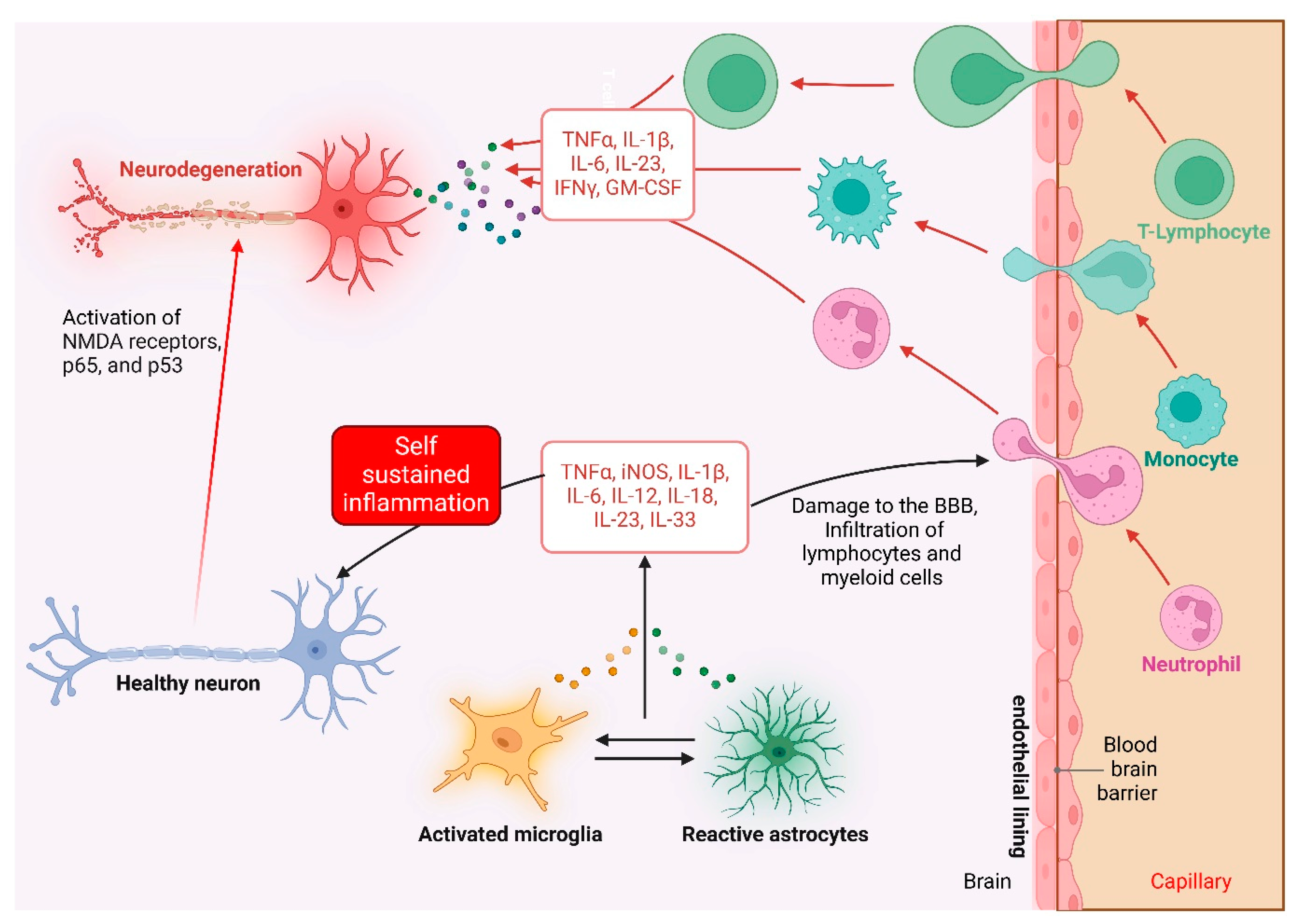
Figure 1. Cytokine Pathways in Neuroinflammation. In neurodegenerative conditions, stromal cells (e.g., astrocytes) and microglia release proinflammatory cytokines in response to homeostatic imbalances. Early cytokine release may aid repair, but chronic secretion leads to neuronal damage and loss of tissue function. In addition, leukocyte infiltration and BBB disruption contribute to neuroinflammatory conditions. Lymphocytes and myeloid cells drive inflammation through cytokines like IL-1β and IL-6, affecting neurons. IL-23 amplifies T cell pathogenicity, while GM-CSF activates monocyte-derived cells, exacerbating tissue damage. Other key players include IFNγ and TNFα, which fuel the inflammatory cascade.
Preprints 140587 g001
Figure 2. Brain Disorders and Cytokine Dysregulation. Cytokines are closely linked to cognitive impairments in neurological disorders. Notably, IL-6 and TNF-α are common cytokine contributing to cognitive dysfunction across all disorders.
Preprints 140587 g002
Table 1. Overview of Cytokine Roles in Brain Disorders.
Disorder Key Cytokines Pathophysiological Role Potential Therapeutic Target
AD IL-1β, TNF-α, IL-6 Promotes amyloid aggregation, neurotoxicity Anti-TNF therapies (e.g., infliximab)
MS IFN-γ, IL-17, TNF-α, IL-6 Activates immune cells, demyelination Anti-IL-17 monoclonal antibodies
MDD IL-6, TNF-α, IFN-γ, IL-17, IL-10, IL-1β Induces HPA axis dysregulation, neuronal apoptosis Anti-IL-6 agents (e.g., tocilizumab)
PD IL-1β, TNF-α, IL-6, IFN-γ Microglial activation, dopaminergic neuron loss Microglia inhibitors
TBI IL-1β, IL-10, TNF-α, IL-6 Acute inflammation, secondary injury cascade Cytokine modulators
Table 2. Clinical Trials Targeting Cytokine Pathways.
Therapy Condition Phase Key Findings
Tocilizumab Depression Phase II Reduced inflammatory markers, improved mood
Infliximab AD Phase II Attenuated neuroinflammation, early efficacy
JAK Inhibitors (Tofacitinib) MS Phase I Reduced immune cell infiltration
IL-17 Monoclonal Antibody MS Phase III Decreased relapse rates
Microbiome Therapies PD Phase I Modulation of systemic inflammation
Table 3. Summary of Current and Emerging Therapies.
Therapy Type Example Agents Targeted Cytokines Status (Preclinical/Clinical)
Biologics Infliximab, Tocilizumab TNF-α, IL-6 Clinical Phase II–III
Small Molecules JAK inhibitors (ruxolitinib) JAK/STAT pathway Clinical Phase I–II
Antisense Oligonucleotides N/A IL-1β Preclinical
Gene Therapy CRISPR/Cas9 TNF-α and IL-6 Preclinical
Microbiome Therapies Probiotics, Prebiotics Gut-derived cytokines Clinical Phase I
Table 4. Novel Drug Delivery Technologies.
Technology Mechanism Advantages Challenges
Nanoparticles Targeted drug release High specificity, BBB penetration Variability in BBB uptake
Focused Ultrasound Temporary BBB disruption Non-invasive, real-time control Risk of tissue damage
Liposomes Encapsulation of drugs Reduced systemic toxicity Limited CNS targeting
Receptor-Mediated Transport Ligand-receptor interaction Enhanced BBB transport Requires specific ligand design
Hydrogels Localized release Sustained delivery at target site Limited mobility for CNS-wide effects
Table 5. Biomarkers in Neuroinflammation.
Biomarker Type Source (CSF/Blood) Diagnostic Use Current Status
Cytokines (IL-6, IL-1β) Blood Monitor systemic inflammation Validated for clinical use
Extracellular Vesicles CSF/Blood Indicator of CNS injury Experimental
Neurofilament Light (NFL) CSF/Blood Axonal damage detection Approved for Alzheimer’s monitoring
Proteomic Signatures Blood/CSF Disease-specific inflammatory profile Under investigation
Imaging Biomarkers PET scans, MRI Visualization of neuroinflammation Validated for research
Disclaimer/Publisher’s Note: The statements, opinions and data contained in all publications are solely those of the individual author(s) and contributor(s) and not of MDPI and/or the editor(s). MDPI and/or the editor(s) disclaim responsibility for any injury to people or property resulting from any ideas, methods, instructions or products referred to in the content.
Copyright: This open access article is published under a Creative Commons CC BY 4.0 license, which permit the free download, distribution, and reuse, provided that the author and preprint are cited in any reuse.
Prerpints.org logo

Preprints.org is a free preprint server supported by MDPI in Basel, Switzerland.

Subscribe

Disclaimer

Terms of Use

Privacy Policy

Privacy Settings

© 2025 MDPI (Basel, Switzerland) unless otherwise stated