Preprint
Article

This version is not peer-reviewed.

Forecasting and Intervention Time Series Analysis Using Autoregressive Integrated Moving Average (ARIMA) Models: Evaluating the impact of 2018 and 2021 Rift Valley Fever Outbreaks on Kenyan food Price Index

A peer-reviewed article of this preprint also exists.

Submitted:

21 November 2024

Posted:

25 November 2024

You are already at the latest version

Abstract

The Rift Valley fever (RVF) disease, a climate-sensitive zoonosis, causes 100% abortions and death in infected animals. This shock has an immediate impact on food prices, particularly for animal-sourced foods. This study used an Interrupted Time Series (ITS) approach and an Autoregressive Integrated Moving Average (ARIMA) model to assess the effects of economic disruptions, specifically the RVF outbreak on Kenya's food price index during two consecutive RVF outbreaks in 2018 and 2021. Data from several Kenyan cities, including Nairobi, Kisumu, Eldoret, and Mombasa, were analyzed to identify inflation trends across different markets. The findings show significant price index fluctuations, with inflation escalating following critical intervention periods, particularly during the outbreak. The ARIMA model successfully identified these changes, highlighting the distinct effects across all regions, with some areas exhibiting significant forecasting inaccuracies. This analysis generates new knowledge, provides critical insights into market dynamics, and presents a predictive framework for dealing with future economic disruptions in Kenya and elsewhere. Policymakers can use these findings to create targeted strategies for stabilizing food prices and ensuring economic resilience.

Keywords: 
;  ;  ;  ;  ;  

1. Introduction

In recent years, there has been an increase in the number of infectious disease outbreaks in sub-Saharan Africa, which poses a threat to the food security [1]. Food security pillars; availability, access, utilization, and stability are central to economic sustainability, especially in regions susceptible to agricultural shocks [2]. Many countries in Africa are not able to effectively control these infectious disease outbreaks due to their limited capacity to predict and manage the risks using the most appropriate intervention measures, and Kenya is not an exception in this case [3]. Kenya, a country with diverse climatic regions and varying access to markets, faces food price volatility influenced by environmental factors, market dynamics, and external shocks like infectious disease outbreaks [4]. The first outbreak of RVF was first reported in Kenya in 1930 [5] , and since then, there have been several outbreaks, the most recent of which occurred in 2015/2016, 2018 and 2021. Being a zoonotic disease, RVF outbreaks are significant events to food security. RVF impacts livestock health, restricts market access, and drives up food prices, affecting food security and household economic stability [6].
Multiple RVF outbreaks have occurred in Kenya, where the agricultural sector contributes largely to the economy's growth [7]. These outbreaks have adverse effects on the food prices of commonly consumed items, especially animal-based foods [8]. Proper and timely interpretations of the food price dynamics are crucial for the key policymakers and stakeholders who work towards taking mitigation measures to control such shocks in the economy [9]. Several studies have used ARIMA and intervention time series methodologies to forecast food prices and disease outbreaks both in Kenya and beyond. For instance, [11] used the intervention time series approach to investigate the impact of Free Maternal Health Care on the child’s infant mortality. During the COVID-19 era, [12] did a study on the interruption time series analysis of the impact of COVID-19 on the epidemic trend of gonorrhea in China using ARIMA model. [13] Used an Artificial-Intelligence-Based Time-Series Intervention Model to assess the impact of the COVID-19 pandemic on tomato supply and prices in Hyderabad, India.
This study uses an ARIMA time series modeling approach to analyze food price trends across various Kenyan towns and assess the impact of the RVF outbreak on market prices. Time series data, including historical price indices, were collected for the major towns in Kenya. Following data validation and stationarity testing, ARIMA models were developed for each town's food price index to understand both baseline price trends and the influence of RVF on price fluctuations. Intervention analysis was applied to evaluate the extent of the outbreak's impact on food prices, providing insights into both the immediate and longer-term effects on food markets.
This research aimed at using the commonly used ARIMA model to forecast a two-year food price index with close consideration to the most recent RVF outbreaks in Kenya. To quantify and analyze the effect of RVF outbreaks on food prices, the study further employed the intervention time series model to measure the impact of the 2018 and 2021 RVF outbreaks [10]. The integration of the two time series approaches was expected to yield a more robust model to evaluate the impact of the RVF outbreaks on food prices. This study also aimed at informing policy strategies to improve food price stability in the face of recurring shocks. The findings from this study will add new knowledge to existing methodologies and provide policy makers with insights on ways to stabilize food prices during disease outbreak periods.

2. Materials and Methods

2.1. Data Collection and Preparation

Data was collected from the World Bank Micro data library for 62 markets, available at https://microdata.worldbank.org/index.php/catalog/6167/get-microdata; The dataset included time series data on food price indices for multiple Kenyan major towns; Mombasa, Nairobi, Eldoret, Kisumu, Nyeri and Kitui spanning from 2007 to 2024. The key descriptive statistics were computed for each town’s food price index, including minimum, first quartile, median, mean, third quartile, and maximum values.

2.2. Stationarity Testing

To ensure suitability for time series modeling, stationarity tests were conducted for each town’s food price index data using the Augmented Dickey-Fuller (ADF) test [14], considering level constant and trend. Most variables were found to be integrated at order zero, \ (I (0) \), confirming stationarity and justification for ARIMA modeling.

2.3. ARIMA Model Specification and Estimation

For forecasting, ARIMA model was specified for each town’s time series. The selection of ARIMA parameters \((p, d, q)\) was guided by the Akaike Information Criterion (AIC), corrected AIC (AICc), and Bayesian Information Criterion (BIC) [15]. The model performance was assessed through the metrics; Mean Absolute Error (MAE), Root Mean Squared Error (RMSE), Mean Absolute Scaled Error (MASE), and Mean Percentage Error (MPE) [16] , which indicated the fit quality of the model across different towns

2.4. Intervention Analysis

An intervention analysis (also referred to as interrupted time series analysis), which is one of the most valuable tool for measuring the impact of an intervention [17], was performed to assess the impact of the RVF outbreak on food price indices. This analysis involved comparing the forecasted food prices with actual values post-intervention to identify deviations likely attributable to the RVF outbreak. The intervention effect was measured through metrics such as Absolute Effect and Relative Effect (%) to quantify the outbreak’s impact on price dynamics.

2.5. Forecasting

Using the final ARIMA models, forecasts were generated for the subsequent periods, projecting food prices for each town until 2026, e.g., two years after the most recent RVF outbreak. The forecasted values provided insights into potential trends in the absence of further interventions.

2.6. Model Validation

The model’s forecasting accuracy was validated through comparison between observed and predicted values over an in-sample period [18]. This involved calculating Absolute Effect and Relative Effect (%) [19] to quantify discrepancies between predicted and true values across towns such as Hola (Tana River), Shonda (Mombasa), and Kitui.

3. Results

3.1. Descriptive Analysis

Table 1 below represents the desciptive analysis of selected markets in Kenya.
In Dadaab town, the lowest recorded value was -15.120, 25% of the observations were below -4.875, the middle value was 2.250, the average value was 6.507, 75% of the observations are below 14.830, and the highest recorded value was 51.630. In Dagahaley (Daadab), the lowest recorded value was -19.980, 25% of the observations were below -6.782, the middle value was 1.705, the average value was 5.347, 75% of the observations were below 13.033, and the highest recorded value was 53.540.
In Eldoret town (Uasin Gishu), the lowest recorded value was -17.750, 25% of the observations were below -3.257, the middle value was 5.180, the average value was 6.767, 75% of the observations were below 14.755, and the highest recorded value was 57.180. Hola (Tana River), the lowest recorded value was -14.890, 25% of the observations were below -3.647, the middle value was 2.315, the average value was 6.121, 75% of the observations were below 13.730, and the highest recorded value was 51.290.
Kakuma 3, the lowest recorded value was -14.590, 25% of the observations were below -5.140, the middle value was 1.430, the average value was 5.807, 75% of the observations were below 12.643, and the highest recorded value was 52.200. Karatina (Nyeri), the lowest recorded value was -16.090, 25% of the observations are below -4.780, the middle value is 1.965, the average value is 5.597, 75% of the observations are below 10.883, and the highest recorded value was 52.160. Kibra (Nairobi), the lowest recorded value was -14.970, 25% of the observations were below -4.527, the middle value was 2.475, the average value was 6.014, 75% of the observations were below 10.742, and the highest recorded value was 51.450.
Kibuye (Kisumu), the lowest recorded value was -14.300, 25% of the observations were below -4.805, the middle value was 2.280, the average value was 6.292, 75% of the observations were below 13.672, and the highest recorded value was 52.310. Kisumu, the lowest recorded value was -19.860, 25% of the observations were below -5.800, the middle value was 4.930, the average value was 6.752, 75% of the observations were below 14.825, and the highest recorded value was 62.910.
Kitui, the lowest recorded value was -20.930, 25% of the observations were below -3.868, the middle value was 4.615, the average value was 6.353, 75% of the observations were below 12.845, and the highest recorded value was 61.500. Mukuru (Nairobi), the lowest recorded value was -16.000, 25% of the observations were below -5.000, the middle value was 1.865, the average value was 5.412, 75% of the observations are below 10.360, and the highest recorded value was 50.870.
Shonda (Mombasa), the lowest recorded value was -15.670, 25% of the observations were below -4.870, the middle value was 1.900, the average value was 5.698, 75% of the observations were below 12.170, and the highest recorded value was 51.420. Tala Centre Market, the lowest recorded value was -15.920, 25% of the observations were below -4.798, the middle value is 2.035, the average value is 5.688, 75% of the observations are below 10.815, and the highest recorded value was 52.890.
Wajir town, the lowest recorded value was -14.590, 25% of the observations were below -4.875, the middle value was 1.230, the average value was 6.507, 75% of the observations were below 13.707, and the highest recorded value was 13.707.

3.2. Test for Stationarity

The Table 2 below presents the results of an Augmented Dickey-Fuller (ADF) test performed on the variables representing various towns. The ADF test is commonly used to check for the presence of a unit root, which indicates whether a time series is stationary or not [20]. A time series is stationary if its statistical properties (like mean and variance) do not change over time [21]. Most p-values were significant at the 5% level, suggesting strong evidence against the null hypothesis of a unit root, implying that the data series are stationary. In conclusion, all the variables are stationary at level (I (0)), and none of them require differencing to achieve stationarity. This implies that the data exhibits consistent statistical properties over time without a need for further transformations.

3.3. Autocorrelation (ACF) and Partial Autocorrelation Plots (PACF)

Plot Data

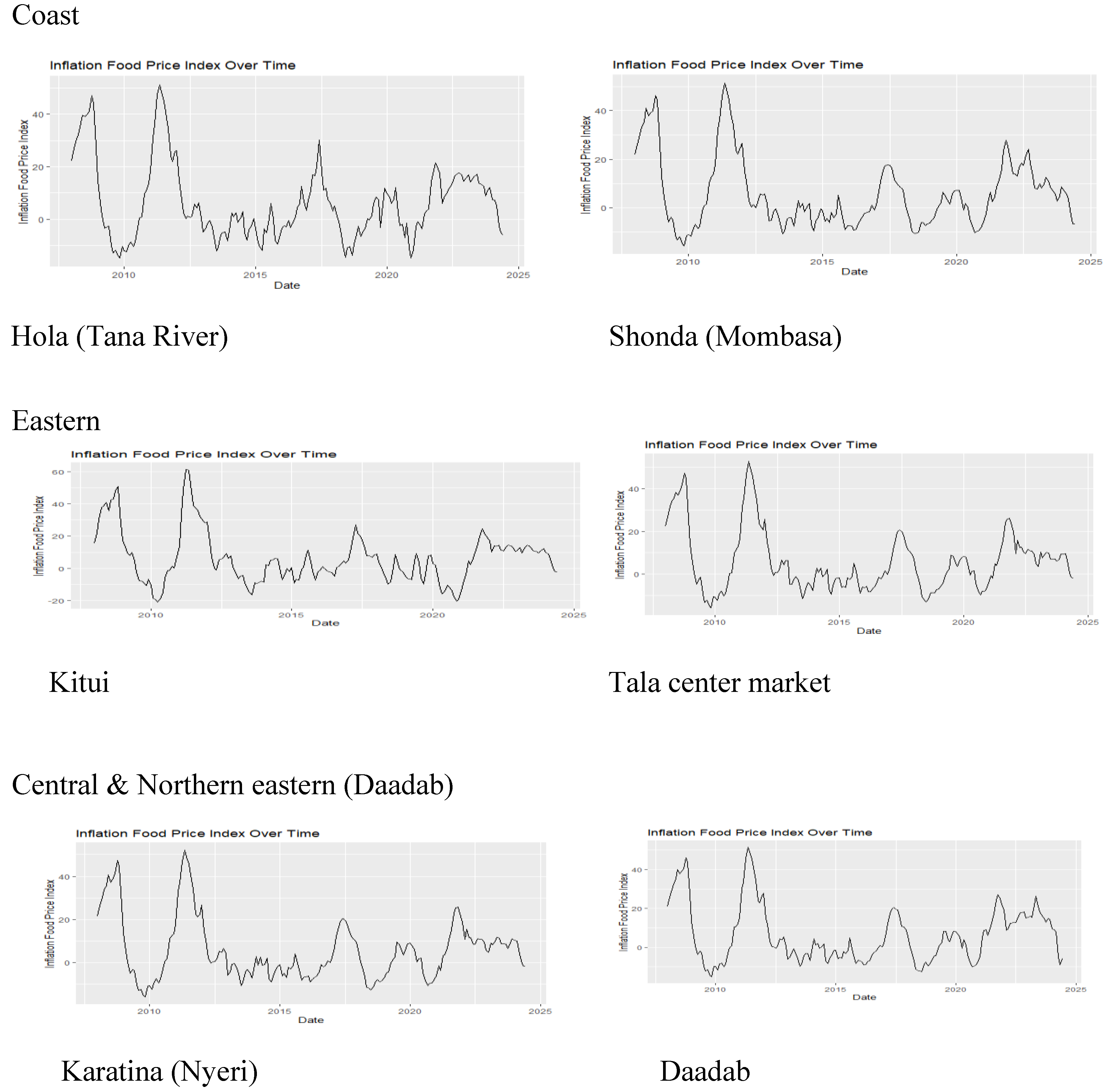
Figure 1 below illustrates the monthly food price index data for Kenya from January 2007 to June 2024. The pre-intervention period covers January 2007 to December 2014, while the post-outbreak period started from January 2017. As depicted in Figure below, there was a marked increase in food prices during the early stages of the 2015/16 outbreak, followed by fluctuations and eventual stabilization. The data also exhibit clear periodic and trends over the period from January 2007 to June 2024. However, all the figures indicate that the data are stationary, meaning no observable trends were present across the series. This suggests that the variables remained stable over time, without significant long-term shifts, which is essential for accurate forecasting and analysis for outbreaks on food prices index.

3.4. Autocorrelation (ACF) and Partial Autocorrelation Plots (PACF)

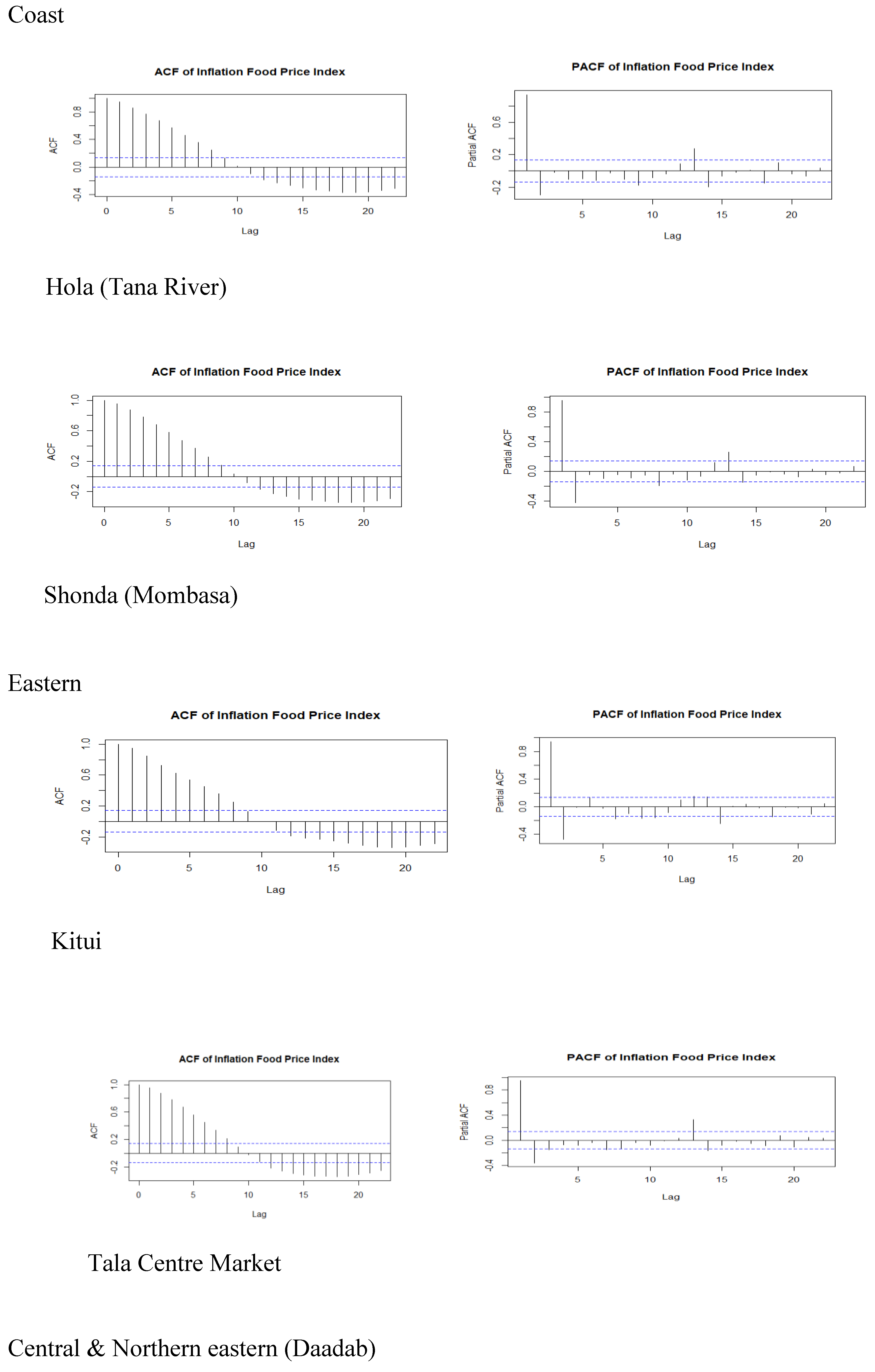
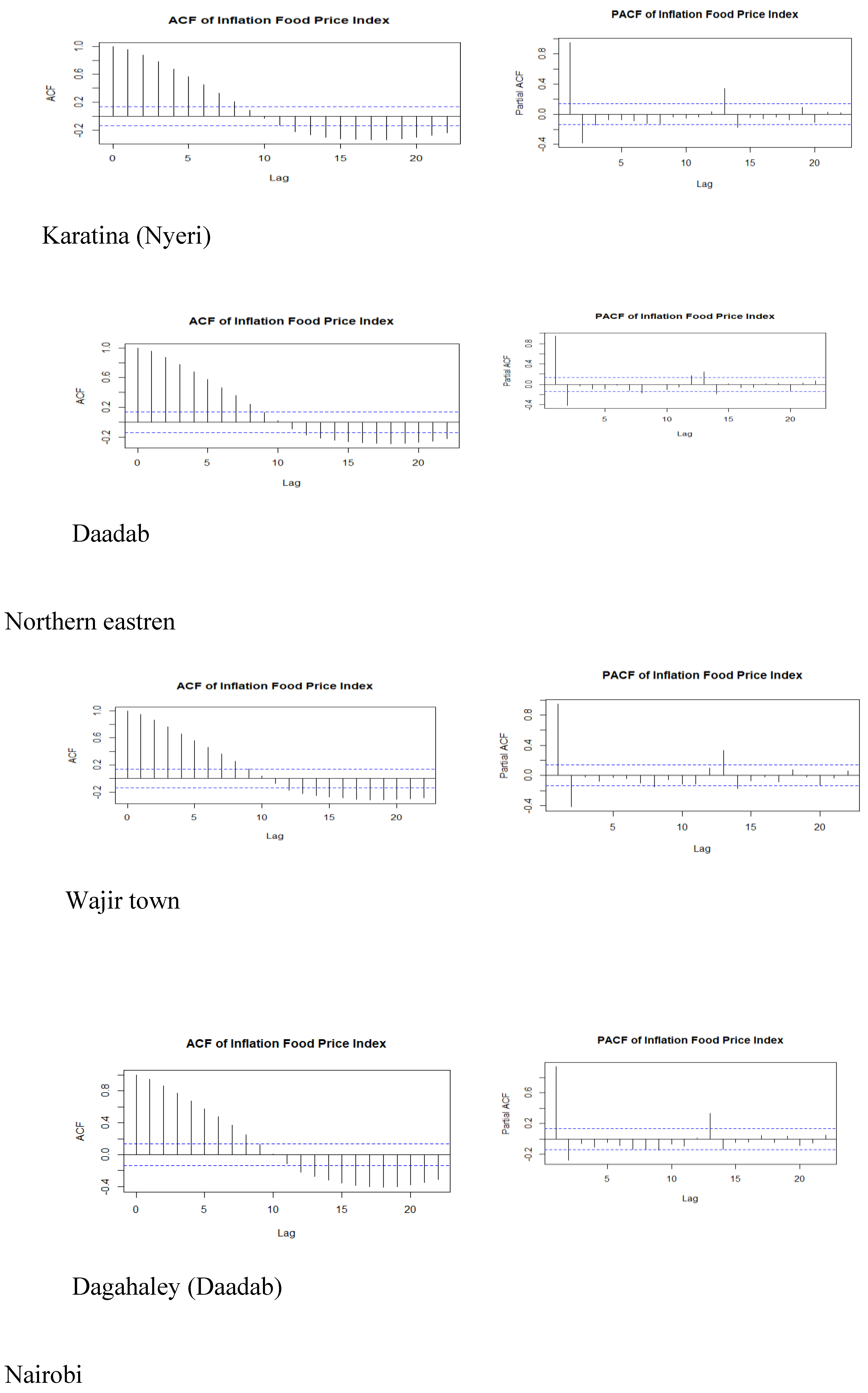
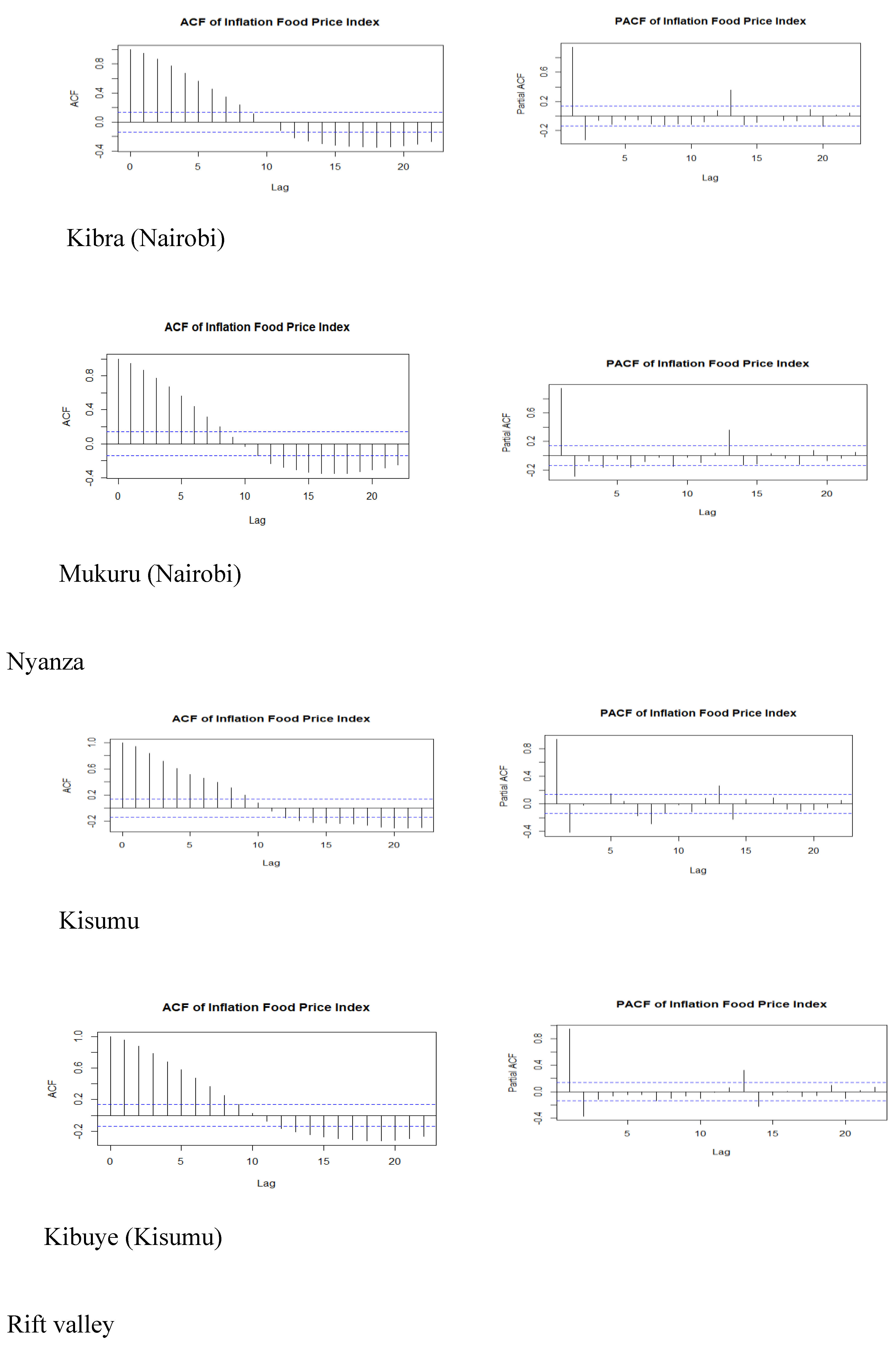
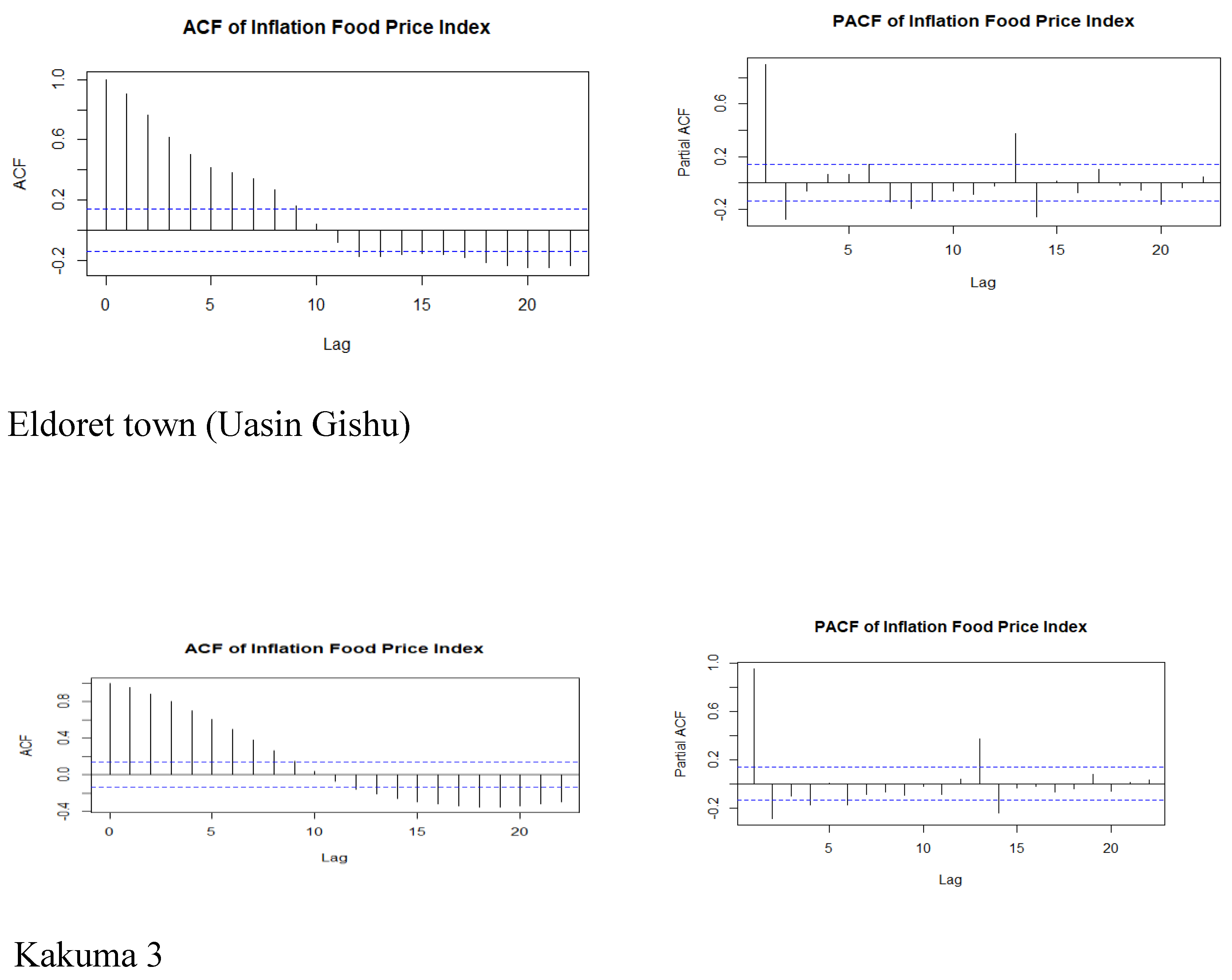
The ACF (Autocorrelation Function) and PACF (Partial Autocorrelation Function) graphs are key tools for determining the AR (autoregressive) and MA (moving average) components of an ARIMA model [22]. ACF helps identify MA terms by showing correlations between the series and its lags, while PACF pinpoints AR terms by isolating the direct effect of each lag. These plots guide model selection by highlighting significant lags, helping to fine-tune the ARIMA parameters for accurate forecasting. Figure 2 below shows the ACF and PACF plots of different regions used in this study
The optimal model, as shown in Table 3 below was selected by minimizing both the AIC and prediction variance. To determine the ARIMA model components, we utilized the automated auto.arima() function from the prediction package in R [23]. This algorithm systematically explores various ARIMA models to identify the one with the lowest AIC or BIC.
The auto.arima() function was applied to model inflation food price index data from January 2007 to June 2024. Following the execution of the algorithm, the best-fitting ARIMA model was identified, incorporating step and pulse changes for the respective towns.
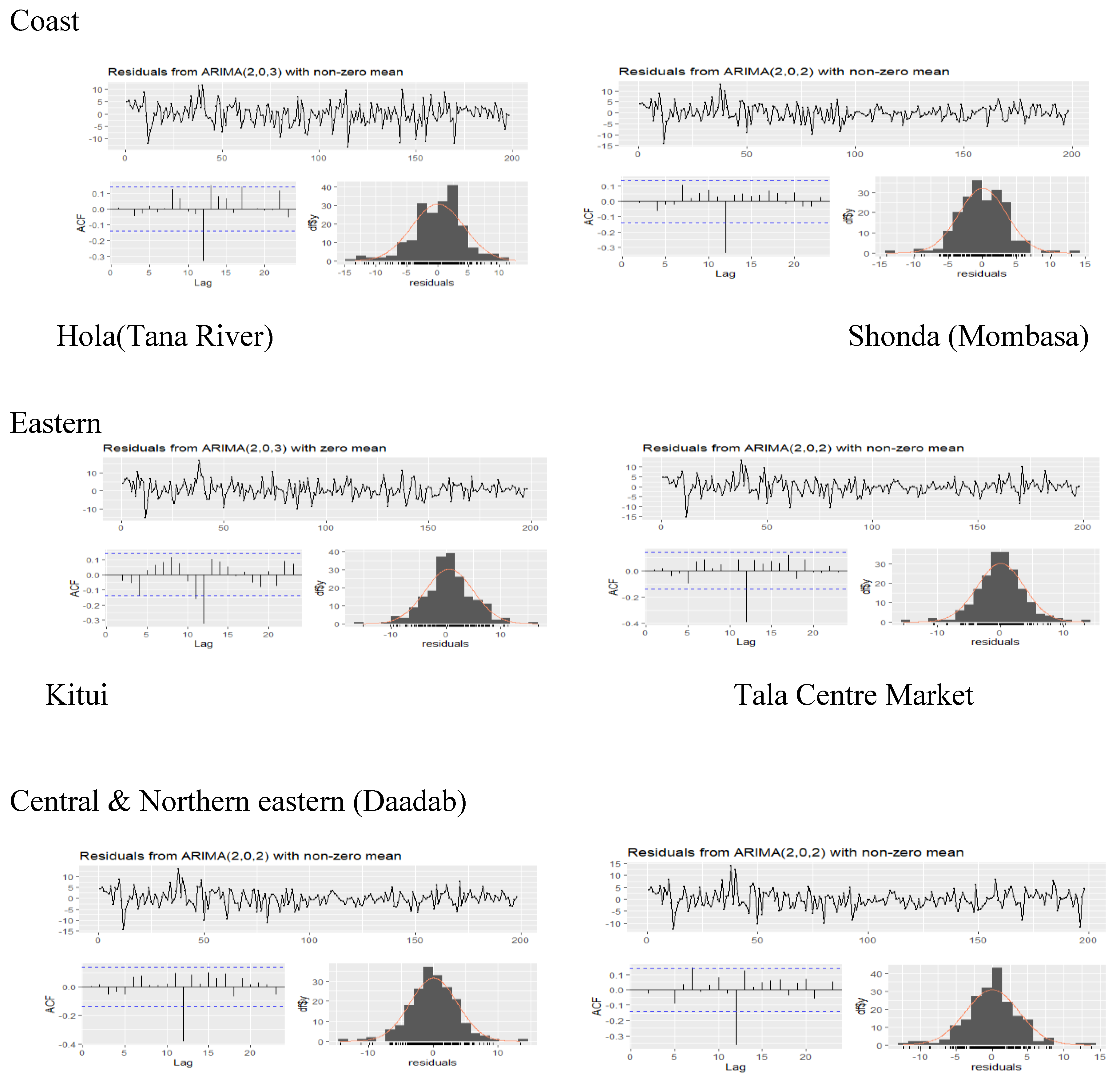
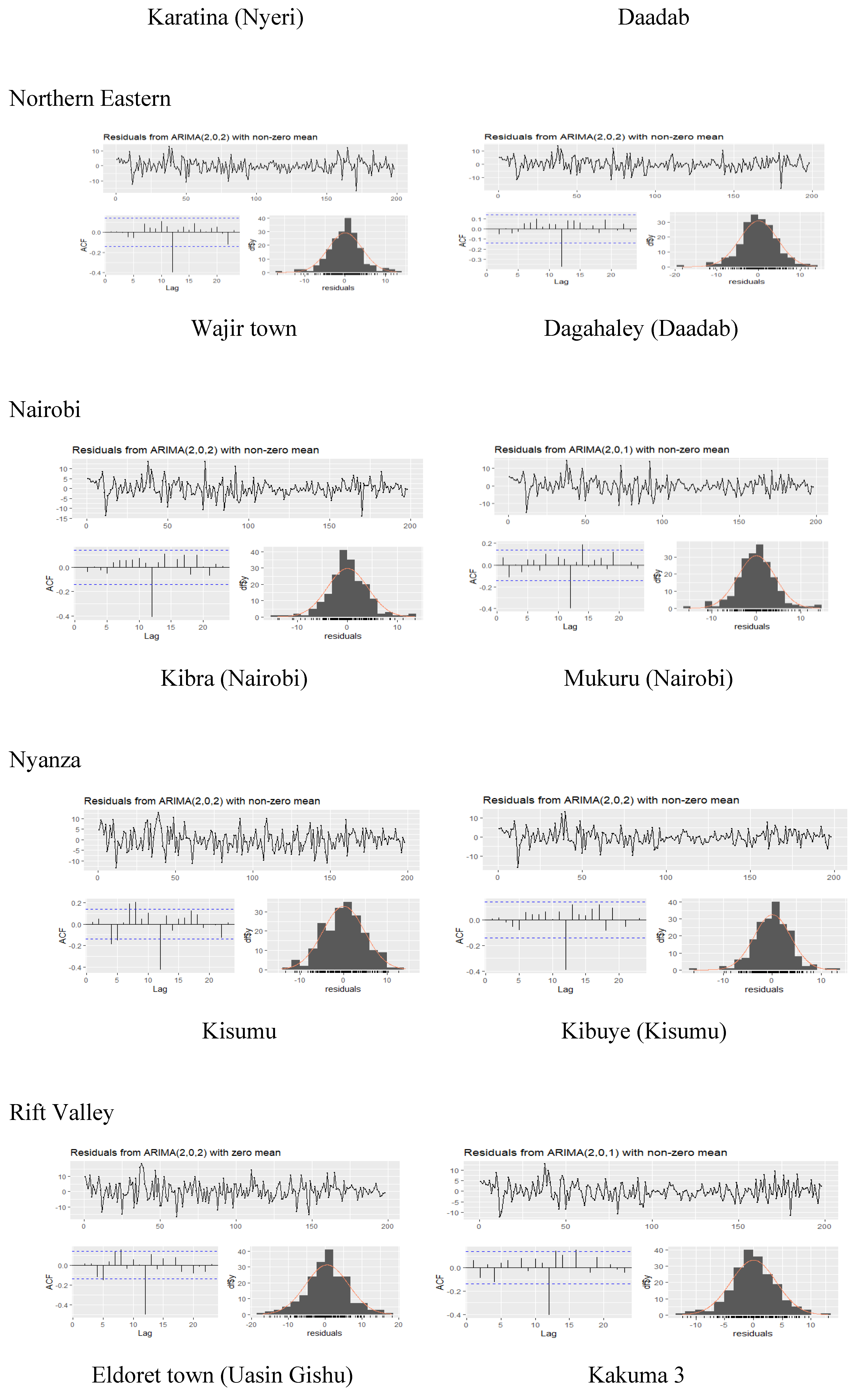
Residual checks, as shown in the Figure 3 below, indicate a stable variance with a mean close to zero. No noticeable patterns or significant autocorrelation were detected in the residuals, suggesting that they follow a normal distribution. These findings confirm a good fit for the selected model.

3.4. Comparison of the Forecasted and Actual Values at Various Response Levels Using the ITS-ARIMA Model from June 2018 to February 2021

The Table 4 compares the true values (actual data) and predicted values using the ITS-ARIMA model to evaluate the impact of inflation on food price indices across various markets in Kenya from June 2018 to February 2021. The absolute effect reflects the difference between the predicted and actual values, while the relative effect shows this difference as a percentage [24].
Predictions in Hola (Tana River) and Shonda (Mombasa) varied significantly, with large errors in both under- and over-estimations, especially in April 2019 and February 2021. For instance, in April 2019, Hola showed a 102.29% relative error, indicating severe model misestimation, while Shonda showed a 94.69% error. Kitui's predictions were consistently underestimated, with errors peaking at 66.75% in February 2021. Tala Centre's forecast in November 2020 had a massive 311.09% overestimation, highlighting significant volatility. Karatina exhibited extreme deviations, especially in June 2018, with a 317.18% relative error. Daadab’s predictions were more stable, with the largest relative error being 136.36% in February 2021.
Predictions for Wajir showed significant discrepancies, particularly in February 2021, where there was a 170.01% relative error. Dagahaley’s predictions were generally closer to actual values, except for November 2020, which saw an 81.99% overestimation. Kibra’s predictions were substantially underestimated in June 2018 by 397.58%, reflecting large deviations. Mukuru exhibited moderate errors, with the most significant being 88.71% in February 2021. Kisumu's forecast errors ranged from moderate to large, with an extreme overestimation of 110.98% in February 2021. Kibuye also showed large deviations, particularly in June 2018, with a 431.44% error. Predictions in Eldoret were more accurate, though there was a notable underestimation of 130.82% in April 2019. Kakuma's predictions showed moderate accuracy, with errors typically under 100%.
The ITS-ARIMA model exhibited varying prediction accuracy, with some markets experiencing large forecasting errors, especially during key periods of inflation fluctuations. The results indicate that inflation impacted different regions unevenly, and the model struggled to consistently predict these variations accurately.
Table 5 (attached in the supplementary material) displays the forecasted values for various markets in Kenya over time, focusing on different towns and markets, from July 2024 to June 2026. The values are a mix of positive and negative numbers, which reflect the predicted fluctuations in the economic or market variable being analyzed (likely related to food prices given the context).
Dadaab Town and Dagahaley, both towns begin with similar negative values in 2024, indicating a possible downturn or negative pressure on the index being measured. However, they gradually show recovery and positive growth by 2026. Kakuma 3 and Kibra (Nairobi), these towns start with positive forecasts, indicating some stability or improvement from the outset, and this continues to grow over time. However Kitui and Karatina exhibit an initial negative trend that turns positive around early 2025, suggesting a recovery from the earlier downturn.
In Eldoret Town starting with slightly negative values, Eldoret shows the smallest fluctuations among the towns, maintaining a moderate downward trend, but with smaller negative shifts than other locations. By the middle of 2025, most of the locations show positive values, with slight fluctuations around that period. The positive numbers indicate a forecast of economic improvement or market recovery in these areas. Exception in Kitui consistently records relatively high negative values in 2024 (-2.500 to -3.576), but there is a turning point in mid-2025 when the forecast starts improving. Shonda (Mombasa) started with a large negative value (-6.522 in July 2024), this town shows a steady positive improvement, reaching 9.157 by May 2026. This indicates a significant recovery or growth, perhaps linked to infrastructure or economic recovery.
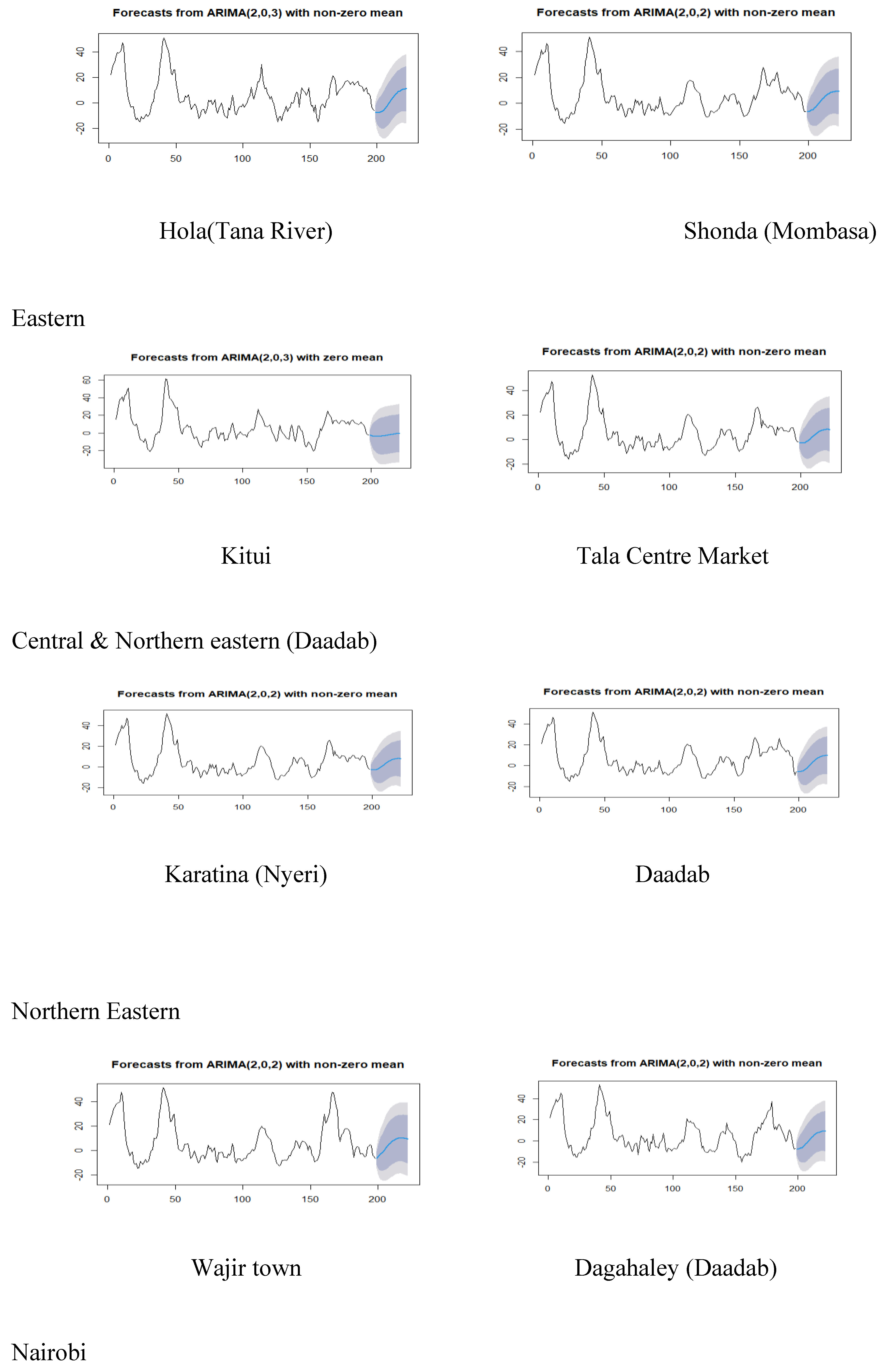
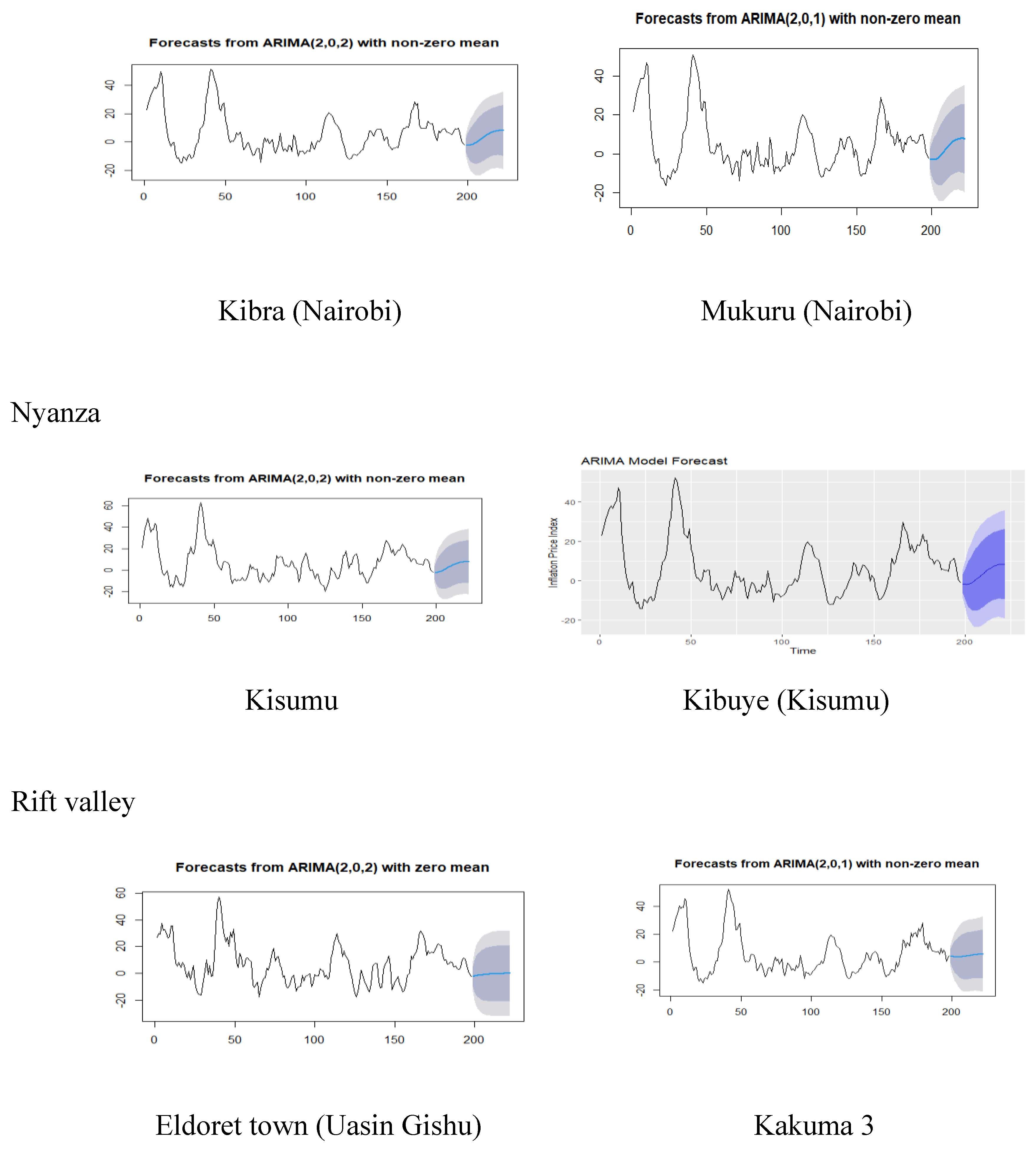
Wajir Town also exhibits similar improvements, starting with -6.209 in July 2024 and recovering steadily to 9.223 in June 2026. This suggests a gradual but significant improvement. This forecasting Table projects gradual economic recovery across the towns in Kenya from mid-2024 to 2026. While most locations begin with negative values (indicating downturns or economic difficulties), there is a noticeable improvement as time progresses. By 2026, almost all towns show positive values, forecasting potential economic stability or growth across these regions. The forecasts could help policymakers and stakeholders in these regions prepare for and manage economic changes, possibly tied to food price indices or related market variables. The non-zero mean forecasts are illustrated in Figure 4.

4. Discussion

The intervention time series (ITS) analysis, with its flexibility in modeling various impacts, serves as a crucial tool for assessing the effectiveness of interventions [25]. The results unveils significant regional variability in the inflationary impact of unavoidable disruptions, such as the RVF outbreak, on Kenya’s food price index. The ARIMA model successfully identified trends in most markets, though forecast errors were notable in regions like Kisumu, Kibra, and Karatina, where inflation predictions deviated substantially from actual values. These discrepancies suggest that certain areas experienced more volatile market responses, possibly due to supply chain disruptions, market dynamics and localized economic factors
For instance, Kisumu and Kibuye showed extreme deviations, with forecast errors as high as 431%, indicating significant high volatility in food prices. This skyrocket could be attributed to the disruption of agricultural activities and transportation, especially in areas dependent on local markets. Conversely, regions like Dagahaley and Eldoret exhibited more stable trends, with relatively lower forecast errors, suggesting more resilience to economic shocks and disruptions.
These results stresses on the importance of tailored interventions to stabilize food prices across all the regions. Policymakers should prioritize infrastructure investments in volatile markets and strengthen supply chains to mitigate the impact of future disruptions. Additionally, the ITS-ARIMA model offers a valuable tool for continuous monitoring and forecasting of market trends, enabling proactive decision-making to maintain economic stability.
These findings underscore the critical role of thorough research by the regional dynamics and global organizations in shaping economic outcomes and the need for localized strategies to address inflation and food security challenges in Kenya.

5. Conclusion

In the context of our study, the ITS-ARIMA model has been utilized to evaluate the influence of RVF outbreaks on Kenya's inflation price index. This model, known for its proficiency in trend assessment and adjustment for serial correlation and seasonal impact, has been instrumental in predicting the inflation price index's trajectory, thereby providing a solid basis for effective economic strategies.
Our study indicates a consistent rise in the inflation price index since the start of outbreak in June 2018, April 2019, November 2020 and February 2021. This increase is not solely attributable to the direct effects of the RVF outbreaks but is also influenced by factors such as shifts in consumer behavior and market dynamics [26]. As we navigate the easing of restrictions, it becomes imperative to prioritize economic recovery measures and promote strategies that can effectively manage inflation and stabilize the economy. These findings provide valuable insights for policymakers and stakeholders in making informed decisions and strategies to manage inflation and stabilize the economy during and after the RVF outbreaks.

Supplementary Materials

The following supporting information can be downloaded at the website of this paper posted on Preprints.org; and the log in details into my kaggle account will be available upon request.

Author Contributions

Conceptualization, D.M., B.K. and B.B. Methodology, G.M. and D.M.; software, D.M.; validation, D.M., B.B. and B.K.; formal analysis, D.M.; investigation, D.M.; resources, B.B.; data curation, D.M.; writing—original draft preparation, D.M.; writing—review and editing D.M., B.B. and B.K.; visualization, D.M.; supervision, B.B., G.M. and B.K. All authors have read and agreed to the published version of the manuscript.

Funding

This study was funded by the Regional Scholarship and Innovation Fund (RSIF) of the Partnership for Skills in Applied Sciences, Engineering and Technology (PASET) (Project Grant No. P165581) grant to SACIDS Africa Centre of Excellence for Infectious Diseases of Humans and Animals in Southern and East Africa (SACIDS-ACE) at the Sokoine University of Agriculture (SUA). The study also received additional support from USAID; Operational research to improve policies and practices on the use of Rift Valley fever vaccines in East Africa, Contract Number 720FDA19IO00102.

Data Availability Statement

All the data used in this study is available at All the data used in this study is available at https://microdata.worldbank.org/index.php/catalog/6167/get-microdata; and the csv file will be available upon request.

Acknowledgments

The authors extend their appreciation to their Universities for supporting their research work.

Conflicts of Interest

The authors declare no conflicts of interest. The funders had no role in the design of the study; in the collection, analyses, or interpretation of data; in the writing of the manuscript; or in the decision to publish the results.

References

  1. P. Bonnet, M. Tibbo, A. Workalemahu, and M. Gau, “Rift Valley Fever an emerging threat to livestock trade and food security in the Horn of Africa : a review,” Proceedings of the 9th National Conference of the Ethiopian Society of Animal Production (ESAP). 30-31 August 2001. Addis Ababa, Ethiopia. Accessed: Oct. 23, 2024. [Online]. Available: https://agritrop.cirad.fr/559463/.
  2. “Food Security in an Era of Economic Volatility - Naylor - 2010 - Population and Development Review - Wiley Online Library.” Accessed: Oct. 26, 2024. [Online]. Available: https://onlinelibrary.wiley.com/doi/abs/10.1111/j.1728-4457.2010.00354.x.
  3. D. Manheim, M. Chamberlin, O. Osoba, R. Vardavas, and M. Moore, Improving Decision Support for Infectious Disease Prevention and Control: Aligning Models and Other Tools with Policymakers’ Needs. RAND Corporation, 2016. [CrossRef]
  4. C. Meyimdjui, “Food Price Shocks and Government Expenditure Composition: Evidence from African Countries.” Feb. 06, 2017. Accessed: Oct. 26, 2024. [Online]. Available: https://shs.hal.science/halshs-01457366.
  5. M. O. Nanyingi et al., “A systematic review of Rift Valley Fever epidemiology 1931–2014,” Infection Ecology & Epidemiology, Jan. 2015. [CrossRef]
  6. E. Omosa, B. Bett, and B. Kiage, “Climate change and Rift Valley fever disease outbreak: implications for the food environment of pastoralists,” The Lancet Planetary Health, vol. 6, p. S17, Oct. 2022. [CrossRef]
  7. K. N. Gerken et al., “Exploring potential risk pathways with high risk groups for urban Rift Valley fever virus introduction, transmission, and persistence in two urban centers of Kenya,” PLOS Neglected Tropical Diseases, vol. 17, no. 1, p. e0010460, Jan. 2023. [CrossRef]
  8. R. Espinosa, D. Tago, and N. Treich, “Infectious Diseases and Meat Production,” Environ Resource Econ, vol. 76, no. 4, pp. 1019–1044, Aug. 2020. [CrossRef]
  9. I.F. P. Research Institute (Ifpri), “2011 Global Hunger Index The Challenge of Hunger: Taming price spikes and excessive food price volatility,” International Food Policy Research Institute, Washington, DC, 2011. [CrossRef]
  10. “A SIMPLIFIED TIME-SERIES ANALYSIS FOR EVALUATING TREATMENT INTERVENTIONS - Tryon - 1982 - Journal of Applied Behavior Analysis - Wiley Online Library.” Accessed: Oct. 23, 2024. [Online]. Available: https://onlinelibrary.wiley.com/doi/abs/10.1901/jaba.1982.15-423.
  11. J. Kisabuli, J. Ong’ala, and E. Odero, “Intervention Time Series Modeling of Infant Mortality: Impact of Free Maternal Health Care,” AJPAS, pp. 38–47, Sep. 2020. [CrossRef]
  12. Y. Li, X. Liu, X. Li, C. Xue, B. Zhang, and Y. Wang, “Interruption time series analysis using autoregressive integrated moving average model: evaluating the impact of COVID-19 on the epidemic trend of gonorrhea in China,” BMC Public Health, vol. 23, no. 1, p. 2073, Oct. 2023. [CrossRef]
  13. G. Chitikela et al., “Artificial-Intelligence-Based Time-Series Intervention Models to Assess the Impact of the COVID-19 Pandemic on Tomato Supply and Prices in Hyderabad, India,” Agronomy, vol. 11, no. 9, Art. no. 9, Sep. 2021. [CrossRef]
  14. “MACROECONOMIC VARIABLES AND FOOD PRICE INFLATION IN NIGERIA (1980-2018).” Accessed: Oct. 26, 2024. [Online]. Available: https://ageconsearch.umn.edu/record/313621?v=pdf.
  15. C. Han, “Cross-validation for autoregressive models.,” University of Louisville, 2022. [CrossRef]
  16. S. Ali, S. Bogarra, M. N. Riaz, P. P. Phyo, D. Flynn, and A. Taha, “From Time-Series to Hybrid Models: Advancements in Short-Term Load Forecasting Embracing Smart Grid Paradigm,” Applied Sciences, vol. 14, no. 11, Art. no. 11, Jan. 2024. [CrossRef]
  17. “Interrupted time series regression for the evaluation of public health interventions: a tutorial | International Journal of Epidemiology | Oxford Academic.” Accessed: Oct. 26, 2024. [Online]. Available: https://academic.oup.com/ije/article/46/1/348/2622842.
  18. Y. K. Lee, E. Mammen, J. P. Nielsen, and B. U. Park, “Operational Time and in-Sample Density Forecasting,” The Annals of Statistics, vol. 45, no. 3, pp. 1312–1341, 2017.
  19. D. G. Mayer and D. G. Butler, “Statistical validation,” Ecological Modelling, vol. 68, no. 1, pp. 21–32, Jul. 1993. [CrossRef]
  20. A. Hall, “Testing for a Unit Root in Time Series With Pretest Data-Based Model Selection,” Journal of Business & Economic Statistics, vol. 12, no. 4, pp. 461–470, Oct. 1994. [CrossRef]
  21. .
  22. “Autocorrelation and partial autocorrelation functions to improve neural networks models on univariate time series forecasting.” Accessed: Oct. 23, 2024. [Online]. Available: https://ieeexplore.ieee.org/abstract/document/6252470.
  23. T. M. Awan and F. Aslam, “Prediction of Daily Covid-19 Cases in European Countries Using Automatic Arima Model,” Journal of Public Health Research, vol. 9, no. 3, p. jphr.2020.1765, Jul. 2020. [CrossRef]
  24. M. Noordzij, M. van Diepen, F. C. Caskey, and K. J. Jager, “Relative risk versus absolute risk: one cannot be interpreted without the other,” Nephrology Dialysis Transplantation, vol. 32, no. suppl_2, pp. ii13–ii18, Apr. 2017. [CrossRef]
  25. S. Gilmour, L. Degenhardt, W. Hall, and C. Day, “Using intervention time series analyses to assess the effects of imperfectly identifiable natural events: a general method and example,” BMC Med Res Methodol, vol. 6, no. 1, p. 16, Dec. 2006. [CrossRef]
  26. Y. Li, X. Liu, X. Li, C. Xue, B. Zhang, and Y. Wang, “Interruption time series analysis using autoregressive integrated moving average model: evaluating the impact of COVID-19 on the epidemic trend of gonorrhea in China,” BMC Public Health, vol. 23, no. 1, p. 2073, Oct. 2023. [CrossRef]
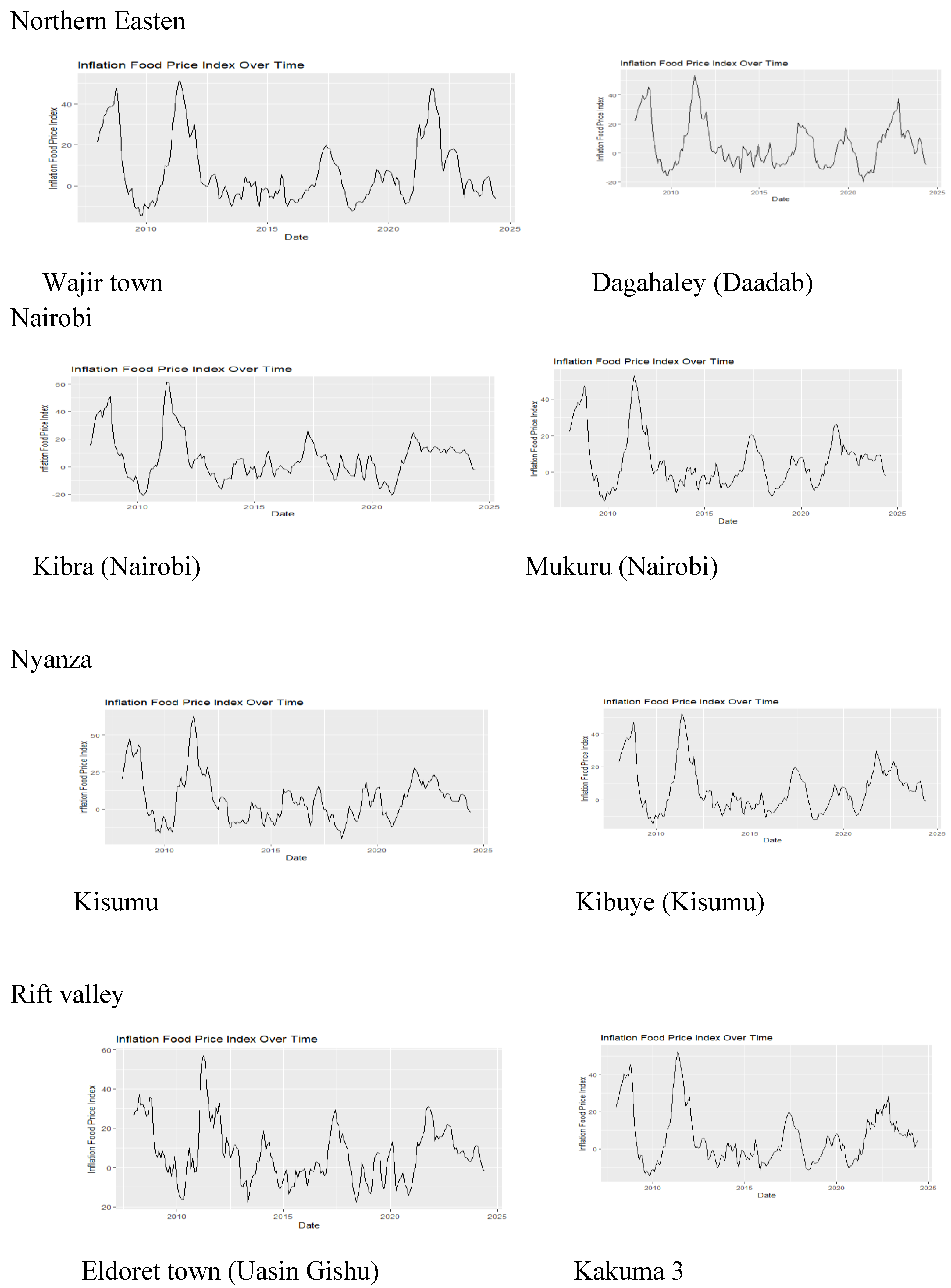
Figure 1. Monthly food price index.
Preprints 140473 g001aPreprints 140473 g001b
Figure 2. ACF and PACF plots.
Preprints 140473 g002aPreprints 140473 g002bPreprints 140473 g002cPreprints 140473 g002d
Figure 3. Residual checks.
Preprints 140473 g003aPreprints 140473 g003b
Figure 4. The non-zero mean forecasts.
Preprints 140473 g004aPreprints 140473 g004bPreprints 140473 g004c
Table 1. Descriptive statistics of the regions.
Town Min 1st Qu Median Mean 3rd Qu Max
Dadaab town -15.120 -4.875 2.250 6.507 14.830 51.630
Dagahaley (Daadab) -19.980 -6.782 1.705 5.347 13.033 53.540
Eldoret town (Uasin Gishu) -17.750 -3.257 5.180 6.767 14.755 57.180
Hola (Tana River) -14.890 -3.647 2.315 6.121 13.730 51.290
Kakuma 3 -14.590 -5.140 1.430 5.807 12.643 52.200
Karatina (Nyeri) -16.090 -4.780 1.965 5.597 10.883 52.160
Kibra (Nairobi) -14.970 -4.527 2.475 6.014 10.742 51.450
Kibuye (Kisumu) -14.300 -4.805 2.280 6.292 13.672 52.310
Kisumu -19.860 -5.800 4.930 6.752 14.825 62.910
kitui -20.930 -3.868 4.615 6.353 12.845 61.500
Mukuru (Nairobi) -16.000 -5.000 1.865 5.412 10.360 50.870
Shonda (Mombasa) -15.670 -4.870 1.900 5.698 12.170 51.420
Tala Centre Market -15.920 -4.798 2.035 5.688 10.815 52.890
Wajir town -14.590 -4.875 1.230 6.507 13.707 13.707
Table 2. Test for stationarity.
Variables Level constant and trend Order of integration
Dadaab town 3.9662 (0.01205) I (0)
Dagahaley (Daadab) 3.955 (0.0126) I (0)
Eldoret town (Uasin Gishu) 3.0076 (0.0542) I (0)
Hola(Tana River) 4.2242 (0.01) I (0)
Kakuma 3 4.3431 (0.01) I (0)
Karatina (Nyeri) 4.3561 (0.01) I (0)
Kibra (Nairobi) 4.01 (0.01) I (0)
Kibuye (Kisumu) 3.9031 (0.01517) I (0)
Kisumu 3.0422 (0.0397) I (0)
kitui 3.8492 (0.01783) I (0)
Mukuru (Nairobi) 4.5872 (0.01) I (0)
Shonda (Mombasa) 4.1248 (0.01) I (0)
Tala Centre Market 4.1018 (0.01) I (0)
Wajir town 3.6841 (0.02688) I (0)
Table 3. AIC and prediction variance.
Town ARIMA model AIC AICc BIC log likelihood ME RMSE MAE MPE MAPE MASE
Dadaab town (2,0,2) 1096.370 1096.810 1116.100 -542.180 0.026 3.711 2.740 91.702 152.494 0.893
Dagahaley (Daadab) (2,0,2) 1174.44 1174.880 1194.170 -581.220 0.042 4.523 3.409 -14.849 93.261 0.938
Eldoret town (Uasin Gishu) (2,0,2) 1273.590 1273.900 1290.030 -631.790 0.543 5.850 4.395 168.852 236.118 0.940
Hola (Tana River) (2,0,3) 1149.270 1149.860 1172.280 -567.630 0.045 4.222 3.240 82.171 146.802 0.910
Kakuma 3 (2,0,1) 1116.790 1117.000 1133.230 -553.390 0.027 3.929 2.994 372.182 455.883 0.940
karatina (Nyeri) (2,0,2) 1090.080 1090.520 1109.810 -539.040 0.032 0.652 2.734 -0.821 133.018 0.895
Kibra (Nairobi) (2,0,2) 1131.120 1131.560 1150.850 -559.560 0.038 4.054 2.942 -189.803 372.409 0.910
Kibuye (Kisumu) (2,0,2) 1100.320 1100.760 1120.050 -544.160 0.021 3.749 2.808 42.283 124.218 0.916
Kibuye (2,0,2) 1196.940 1197.380 1216.670 -592.470 0.034 4.790 3.775 -4.965 94.614 0.923
kitui (2,0,3) 1163.470 1163.910 1183.200 -575.730 0.561 4.398 3.323 16.768 90.581 0.872
Mukuru (Nairobi) (3,0,3) 1142.450 1142.760 1158.890 -566.220 0.039 4.193 3.127 -Inf Inf 0.920
Shonda (Mombasa) (2,0,2) 1074.370 1074.810 1094.100 -531.190 0.027 3.509 2.682 -119.254 204.903 0.875
Tala Centre Market (1,0,2) 1096.380 1096.820 1116.110 -542.190 0.030 3.711 2.724 5.992 83.252 0.894
Wajir town (2,0,2) 1145.370 1145.810 1165.100 -566.690 0.028 4.201 3.133 30.240 119.462 0.922
Table 4. Comparison of the forecasted and actual values at various response levels using the ITS-ARIMA model from June 2018 to February 2021.
Hola (Tana River) Shonda (Mombasa)
Time True values Predict values Absolute effect Relative effect (%) True values Predict values Absolute effect Relative effect (%)
Jun-18 -14.65 -12.7492 -1.90082 14.90934 -10.47 -11.8966 1.426618 -11.9918
Apr-19 0.3 -13.1118 13.41177 -102.288 -0.66 -12.426 11.76604 -94.6886
Nov-20 -10.88 -13.1118 2.231787 -17.0212 -9.34 -12.4261 3.08612 -24.8358
Feb-21 -2.83 -13.1118 10.28179 -78.4164 -2.46 -12.4261 9.96612 -80.203
Kitui Tala Centre Market
Time True values Predict values Absolute effect Relative effect (%) True values Predict values Absolute effect Relative effect (%)
Jun-18 -9.72 -22.135 12.41497 -56.0876 -11.97 -11.8966 -0.07338 0.616827
Apr-19 -7 -22.135 15.13497 -68.3758 -0.65 -12.426 11.77604 -94.769
Nov-20 -20.33 -22.135 1.804968 -8.15438 26.23 -12.4261 38.65612 -311.088
Feb-21 -7.36 -22.135 14.77497 -66.7494 9.45 -12.4261 21.87612 -176.049
Karatina (Nyeri) Daadab
Time True values Predict values Absolute efect Relative efect (%) True values Predict values Absolut effect Relative effect (%)
Jun-18 -12.08 -2.8956 -9.1844 317.1844 -11.89 -13.741 1.850991 -13.4706
Apr-19 -0.39 3.030979 -3.42098 -112.867 -0.55 -14.3007 13.75066 -96.154
Nov-20 25.65 5.521694 20.12831 364.5314 -7.53 -14.3008 6.770756 -47.3454
Feb-21 10.64 4.462524 6.177476 138.4301 5.2 -14.3008 19.50076 -136.362
Wajir Town Dagahaley (Daadab)
Time True values Predict values Absolute effect Relative effect (%) True values Predict values Absolute effect Relative effect (%)
Jun-18 -11.23 -13.5801 2.350065 -17.3053 -10.61 -10.8507 0.240678 -2.21809
Apr-19 -0.9 -14.0976 13.19758 -93.6159 -2.17 -10.9787 8.808729 -80.2345
Nov-20 -7.86 -14.0976 6.237631 -44.246 -19.98 -10.9787 -9.00127 81.98827
Feb-21 9.87 -14.0976 23.96763 -170.012 -12.39 -10.9787 -1.41127 12.85459
Kibra (Nairobi) Mukuru (Nairobi)
Time True values Predict values Absolute effect Relative effect (%) True values Predict values Absolute effect Relative effect (%)
Jun-18 -11.46 -2.30316 -9.15684 397.5782 -11.31 -22.135 10.82497 -48.9044
Apr-19 -0.57 3.717389 -4.28739 -115.333 -0.36 -22.135 21.77497 -98.3736
Nov-20 -4.54 6.332951 -10.873 -171.689 -10.27 -22.135 11.86497 -53.6028
Feb-21 1.87 5.481701 -3.6117 -65.8865 -2.5 -22.135 19.63497 -88.7057
Kisumu Kibuye (Kisumu)
Time True values Predict values Absolute effect Relative effect (%) True values Predict values Absolute effect Relative effect (%)
Jun-18 -15.91 -22.135 6.224968 -28.1228 -12.24 -2.30316 -9.93684 431.4447
Apr-19 2.84 -22.135 24.97497 -112.83 -0.56 3.717389 -4.27739 -115.064
Nov-20 -7.24 -22.135 14.89497 -67.2916 -8.02 6.332951 -14.353 -226.639
Feb-21 2.43 -22.135 24.56497 -110.978 11.47 5.481701 5.988299 109.2416
Table 5. Forecasted values.
Eldoret Town (Uasin Gishu) Kakuma 3
Time True values Predict values Absolute effect Relative effect (%) True values Predict values Absolute effect Relative efect (%)
Jun-18 -17.75 -15.848 -1.90201 12.00155 -11.03 -12.7366 1.706641 -13.3995
Apr-19 4.9 -15.8978 20.79778 -130.822 -1.05 -13.3087 12.25874 -92.1104
Nov-20 -14.01 -15.8978 1.887776 -11.8745 -9.24 -13.3088 4.068846 -30.5725
Feb-21 -1.25 -15.8978 14.64778 -92.1373 -5.21 -13.3088 8.098846 -60.8531
Disclaimer/Publisher’s Note: The statements, opinions and data contained in all publications are solely those of the individual author(s) and contributor(s) and not of MDPI and/or the editor(s). MDPI and/or the editor(s) disclaim responsibility for any injury to people or property resulting from any ideas, methods, instructions or products referred to in the content.
Copyright: This open access article is published under a Creative Commons CC BY 4.0 license, which permit the free download, distribution, and reuse, provided that the author and preprint are cited in any reuse.
Prerpints.org logo

Preprints.org is a free preprint server supported by MDPI in Basel, Switzerland.

Subscribe

Disclaimer

Terms of Use

Privacy Policy

Privacy Settings

© 2026 MDPI (Basel, Switzerland) unless otherwise stated