

Submitted:
27 April 2026
Posted:
29 April 2026
You are already at the latest version
Abstract
It has been more than 25 years since the introduction of the Hallmarks of cancer by Hanahan D et al., in which they foresaw cancer research developing into a logical science based on its underlying principles. No doubt, since then, treatment approaches have evolved into personalized medicine, offering excellent benefits to a select patient population. However, three major underlying components of heterotypic interactions in cancer, i.e., the mutational evolution of cancer stem cells, epithelial-mesenchymal plasticity (EMP), and cancer remodeled extracellular matrix, remain vexing issues even today in patients who have failed therapy. Further, Epithelial-mesenchymal plasticity (EMP) is a set of to-and-fro transitions between mesenchymal & epithelial features, with interconnected signaling pathways across space and time, yielding hybrid phenotypes of evolutionary heterogeneity. The EMP, in turn, is embedded in the heterogeneous web of vascular, metabolic, mutational, and immune-suppressive reprogramming of the tumor microenvironment (TME) induced by the Hypoxia-ROS-HEF1α-TGFβ labyrinthine. Countering each hallmark of cancer requires a multiphase strategy with reprogramming/ reversion of transitional states. Incorporating epigenetic modifiers into the treatment protocol is the present frontier in oncology. Consequently, this review proposes a phased anti-hallmark-of-cancer protocol in a comprehensive Combination, Timing, and Sequencing (CTS) approach to improve outcomes while minimizing toxicities.
Keywords:
tumor-hetergeniety
; hallmark of cancer
; epithelial-mesenchymal transition
; mesenchymal-epithelial transition
; cellular plasticity
; ROS-HIF1α-TGFβ signaling
; epigenetic therapy
; in situ vaccine
; immune editing
Introduction
Tumor heterogeneity is fundamental to cancer cell survival and hence the primary factor in therapy resistance. Major components of this include mutational cancer stem cell heterogeneity, drawn from the intricate human genome, and the tumor-protective microenvironment (TME), with a complex, heterogeneous extracellular matrix. These changes begin with ROS accumulation due to increased cellular stress leading to HIF1-α stabilization, and are modulated by hypoxia, with one powering the other. Adding to this complexity, embedded within this heterogeneity lie epithelial–mesenchymal transition (EMT) and its reverse, the mesenchymal–epithelial transition (MET), which transition to-and-fro, resulting in epithelial–mesenchymal plasticity (EMP) in cancer [1,2,3]. EMT, MET, and EMP are key regulators that underlie normal embryonic development and resurface in certain pathological conditions [4]. In cancer, polarized epithelial cells acquire a mesenchymal phenotype during EMT, characterized by loss of apical basal polarity as well as cell–cell adhesion, reduced expression of epithelial markers, and increased production of mesenchymal proteins. Tumor cells with enhanced mesenchymal traits acquire a migratory phenotype that promotes disease progression by breaching the basement membrane, driving tissue infiltration, invading the vasculature, and ultimately metastasis. Beyond facilitating invasion, EMT confers stem cell-like properties and broad-spectrum resistance to chemotherapy, radiotherapy, and targeted agents [5].
After establishing a niche at the distant site in a favorable microenvironment, cancer cells with mesenchymal characteristics must undergo an evolutionary reversion to epithelial cells to proliferate at the site of seeding. This process occurs through MET, in which mesenchymal cells revert to a more epithelial-like state, gaining characteristics such as apical-basal polarity, enhanced adhesion, and reduced motility. MET thus plays a critical role in the establishment of secondary tumors by restoring the proliferative capabilities necessary for metastatic outgrowth at distant seeded sites [6]. In this process, EMT and MET are not binary transitions but represent a spectrum of intermediate phenotypes that profoundly influence cancer cell behavior. This epithelial-mesenchymal plasticity (EMP) enables cancer cells to dynamically adapt to changing microenvironmental conditions. Also, therapy usually eliminates more susceptible epithelial cells, potentially exerting selective pressure on mesenchymal-type cells to evolve mutationally [7].
This review focuses on the dynamic interplay between EMT and MET in driving tumor invasion, stemness, and drug resistance within the hallmarks of cancer and in the context of tumor heterogeneity. By examining the molecular triggers and functional consequences of these transitions, we explore the mechanisms underlying progression, metastasis, and therapeutic failure. The aim is to identify strategies to target tumor heterogeneity and adaptive EMT/MET plasticity in cancer cell populations, while simultaneously disrupting invasion-promoting EMT and MET-dependent proliferation dynamics [6,8,9]. The article also explores the processes of epigenetic reversion, differentiation, regression, and reprogramming [10]. These phenomena require not only epigenetic reversions, as seen in MET, but also normalizing the TME to mimic embryonic microenvironments, without leaving an “epigenetic damage scar” [11,12].
1. Cancer Initiation, Progression, Transition, Stemness, and Ecological Evolution
1.1. Primary Drivers of Tumor Heterogeneity and EMP
The cascading molecular cellular stress process is the reason for the initiation and progression of cancer; understanding of which becomes essential in targeting and epigenetic reversion of cancer.
1.1.1. ROS – Hypoxia Stress
Due to cellular oxidative stress, excessive accumulation of Reactive Oxygen Species (ROS) is triggered, leading to stabilization of hypoxia-inducible factor-1 alpha (HIF-1α) (Figure 1). Stabilized HIF-1α in this pseudohypoxic state affects mitochondrial and glucose metabolism [13,14]. Figure 1 maps the subsequent events [15]. The onset of hypoxia, downstream effects of aberrant vasculature (including co-option/vascular mimicry), metabolic reprogramming, the acquisition of cancer stem cell traits, the induction of CAFs, and immune dysregulation, leading to cancer heterogeneity with core-resistant phenotypes. Cancer cells maintain a state of "partial EMT," initially characterized by retention of some epithelial characteristics while acquiring increased migratory capabilities, eventually leading to EMT infiltration [16,17]. Hypoxia affects pericyte coverage, promoting the invasiveness of EMT cancer cells [18,19]. With the onset of EMT/EMP/metastasis, secondary mutational resistance sets in [20,21]. Tumor hypoxia also induces angiogenic dormancy, autophagy, and lymphangiogenesis, with increasing therapy resistance [15].
1.1.2. Metabolic and Mitochondrial Stress
The heterodimer of HIF-1α and HIF-1β (Figure 1) promotes the expression of a series of target genes, including glucose transporters (GLUTs) and the glycolytic enzyme lactate dehydrogenase A (LDHA). LDHA accelerates the conversion of pyruvate to lactate, the Warburg effect, facilitating the proliferation of cancer cells [22]. Lactate, a byproduct of glycolysis, diffuses into the tumor microenvironment (TME) extracellularly, leading to an increasingly acidic pH. This increasing extracellular acidosis promotes immunosuppression, rendering several anticancer drugs ineffective. The acidic pH also fosters genomic mutations and further fuels tumor growth and the development of resistant phenotypic subclones (Figure 1) [23, 24. As the metabolic stress increases, proliferating cancer cells run out of nutrients, prompting them to undergo Transforming Growth Factor-beta (TGF-β) - induced EMT, thereby moving away from nutrient-depleted locations [25].
1.1.3. Immune Editing Stress & Avoiding Immune Destruction (Hallmark of Cancer - Enabling Factor)
Immunoediting theory describes a three-step process of immunosurveillance, equilibrium, and immune escape, involving the avoidance of T cell homing and immune destruction [26,27]. Cytotoxic CD8+ T cells initially effectively eliminate proliferating cancer cells during immunosurveillance and later reach equilibrium if the stress increases. The process provides decipherable cues about the dialectics in cross-talk among malignant cells, the Extracellular Matrix (ECM), soluble cues (cytokines/growth factors), and neighboring cells. If the carcinogenesis process continues, within this immune editing loop, Cytotoxic T cells are reprogrammed into immunosuppressive cells that allow cancer cells to evade immune destruction (immune escape), leading to proliferation and the acquisition of greater stemness and therapy resistance [28,29].
1.1.4. Inflammatory Stress and Role of TGF-β
An inflammatory microenvironment (iTME) stress drives carcinogenesis, immune escape, and progression, exacerbated by oxidative stress (ROS). A variety of transcription factors, kinases, and chemokines are involved in this process. The primary factor identified is multifunctional cytokine TGF-β, which initially plays a role in tumor suppression but later becomes fundamental to tumor progression, EMT, and stemness. The less understood “TGF-β switch” activates the Snail and Smad pathways, leading to EMT (Figure 2). In addition, over time, TGF-β acquires multiple tumor-promoting effects, increasing ECM fibrosis and rigidity and preventing immunological cross-talk. Subsequently, cells like CAFs, TAMs, T helper 17 (Th17), Treg cells, and proinflammatory cytokines such as IL-6 and IL-8 sustain EMT [30]. JAK/STAT and NF-κB pathways have also been implicated in maintaining mesenchymal traits and supporting EMT-driven tumor progression [16,17,31].
1.1.5. Spatial Stress (Hypoxia, Compaction, and Nutrient Deprivation)
Proliferation of cancer cells within the given space leads to compressive pressure on each other. Stagnant blood flow, decreased lymphatic drainage, and CAF proliferation, which increase interstitial pressure, create physical barriers [7]. ECM and the cell-stromal communication system change in response to stiffness and altered shear forces. This is an example of mechanotransduction, in which mechanical cues are sensed and transmitted, and these signals are converted into biochemical impulses that promote tumor invasion and metastasis through EMT [32]. The reduction in spatial stress due to treatment intervention and the clearance of dead cancer cells significantly disrupts mechanical barriers and improves ECM softness [33].
Figure 1 depicts the various stress mechanisms that lead to the initiation and multistage, multipathway progression of cancer, including EMT.
1.1.6. Evolutionary Mutational Stress and Therapeutic “Predator – Prey” Game
Secondary resistance can develop during treatment itself, and the predator-prey dynamic could favor the “prey” (cancer), armed with access to the vast information in the human genome [34]. Within the tumor ecosystem, cancer cells exhibit ecological, spatial, and temporal Darwinian dynamics of natural selection, leading to the emergence of diverse cell subpopulations before and after anticancer therapy. The evolutionary changes involve heritable genomic mutations such as chromosomal rearrangements, gene duplication, and aneuploidy [34].
This “evolutionary rescue” can occur even in a small, rapidly declining population of cancer cells, after the lysis and clearance of the bulk of sensitive cells. Secondly, due to the respite these cells receive to recover (for example, due to inappropriate dosing, timing, or a drug holiday). Thirdly, due to exposure to sublethal drug concentrations that facilitate acclimatization (e.g., inadequate drug delivery to the tumor microenvironment (TME)), or following which adoptive drug eflux by cancer cells. At the molecular level, membrane extrusion pumps may amplify suboptimal drug concentrations, leading to multidrug resistance (MDR). A classic example of success in addressing these issues is the consistent sequencing of multiple drugs in pediatric lymphoma to overcome MDR. However, these eco-evolutionary aspects are less thoroughly explored in the literature [34,35].
1.2. Molecular Drivers of EMT-MET Heterogeneity
1.2.1. Key signaling Pathways
These play a critical role in driving preventable EMT processes. Among the most significant is the Transforming Growth Factor-beta (TGF-β) signaling pathway, a well-established inducer of EMT across various cancer types. TGF-β activates Smad proteins, which enter the nucleus and regulate the transcription of EMT-related genes, thereby leading to cytoskeletal reorganization and increased cellular motility [36]. Other targetable influential pathways are depicted in Figure 2. [37,38].
1.2.2. Transcription Factors
EMT-TFs (transcription factors) are instrumental in orchestrating the EMT process. The Snail family (SNAI1 and SNAI2), ZEB family (ZEB1 and ZEB2), and TWIST1 are prominent transcriptional regulators that inhibit the expression of E-cadherin, upregulate N-cadherin, and promote mesenchymal gene expression [39].
1.2.3. Role of MicroRNA
MicroRNA-200c (miR-200c) exerts context-dependent actions that enhance apoptosis, inhibit tumor growth, reduce cellular inflammation, and suppress pyroptosis. In other situations, it can influence EMT promotion, modulate the TME via M2 phenotypic macrophage polarization, the density of TILs, PDL1 expression, CTL exhaustion, and the cancer cell exosomal load. MiR-200c can thus act as both a biomarker and an EMT reversion factor [9,40,41].
1.3. Mechanisms and Impact of MET
Although the exact molecular mechanism remains to be understood, the EMT-MET transition is accompanied by the reestablishment of cell-cell junctions and the regain of epithelial markers, thereby providing an environment essential for regaining proliferation in the new tissues [42,43]. Agents that induce MET can restore epithelial characteristics in cancer cells at the primary site, potentially reduce metastatic potential, and enhance treatment sensitivity [44]. Repressed E-cadherin expression, a hallmark of EMT, is restored upon re-establishment of cell-cell junctions and chromatin accessibility, thereby impairing the migratory capabilities of cancer cells and promoting sensitivity [44]. Reversible surface E-cadherin and cellular gene expression dynamics are closely related to TGF-β levels during an in vitro study [45].
The dynamic interplay between EMT and MET enables them to adapt to various microenvironments throughout cancer progression. Circulating tumor cells have epithelial and mesenchymal markers, indicating a hybrid population. [46,47]. Thus, EMT, when the milieu is stressful (infiltration and metastasis), and MET, when the milieu is fertile (proliferation), are the foundational survival mechanisms by which cancer cells adapt, progress, evolve, and metastasize. In vitro studies show that the addition of bone morphogenetic protein 7 (BMP7), the reduction of TGF-β, and reduced hypoxia encourage MET [48]. EMT-MET connections are spatially separated during the metastatic process and undergo multiple pathophysiological and epigenetic changes, indicating whether MET is truly a reversal of EMT or a transitional process [49]. Therefore, “Reversion” may be a more appropriate term than “reversal”, since cancer cells may not return to their true original state of all epithelial characteristics via MET [10]. During this interim period, MET reversion at the metastatic site can also exhibit higher stemness, being more resistant than that of primary epithelial cells, yet sharing predominantly similar characteristics [47]. Not only MET epithelial restoration, but also normalizing the tumor microenvironment (TME) is a key strategy for cancer reversion, as it restores the functional relationships with normal cells. As recently observed, senescent cells, considered irreversibly phenotypic, can be reactivated to secrete promigratory cytokines or re-enter the cell cycle under detoriating TME [35].
1.4. EMT-MET Spectrum: Epithelial-Mesenchymal Plasticity (EMP) Characterization
The cancer mass has a spectrum of cells spanning the EMT-MET profile, considered epithelial-mesenchymal plasticity (EMP). EMP hybrid EMT/MET features of cancer make it a diverse, shifting target as part of tumor aggressiveness and therapeutic resistance [50,51]. Although EMP accounts for only a fraction of the total number of cancer cells, its complexity is rife with controversy due to a lack of irrefutable evidence. Additionally, several terms dot the literature analysis, like partial EMP (not committed to, thus exploiting both polar states), incomplete EMP (just short of), both referring to not fully transitioning to either way, resulting in a hybrid state (coexpression of both), Transient de-differentiation (EMT)–re-differentiation (MET) switch states, or metastable (relatively fixed somewhere in the EMP axis spectrum). Characterization of EMT and MET, thus, provides invaluable insights into cancer biology [52,53].
Additionally, the interconnected roles of EMT-related transcription factors and cancer stem cell (CSC) markers (e.g., CD44, ALDH) hint at a complex regulatory network that underscores not only the plasticity but also the adaptability of carcinoma cells [42]. Epithelial markers such as E-cadherin, cytokeratins, and occludins are often diminished in advanced cancer stages. In contrast, mesenchymal markers, including vimentin, N-cadherin, and fibronectin, gain prominence, indicating a different profile for evaluation across cancer stages [41,54]. Immunohistochemical profiling of these markers can provide insights into tumor EMT status, assisting prognostic evaluations and therapeutic decisions [55].
The other features in cancer cell evolution include dedifferentiation and redifferentiation, as well as changes in cancer stem cell resetting. The term transdifferentiation refers to another process of MET, in which cells acquire favorable features of different lineages, such as breast cancer cells transforming into adipocytes upon targeted induction [56].
Figure 3.
Mesenchymal Epithelial Transition (MET) cancer cell pathways of initiation, invasion, dissemination (1); and seeding/colonization (2); and development of epithelial-mesenchymal plasticity (EMP) (3); reversion to MET of seeded EMT/EMP cells (4a,b) or at primary site (5). DMC = DNA methylation changes; CSC = Cancer Stem Cell; CC = Cell competition – Spatial stress; MCC = Mutated Colorectal Cancer Oncogene; TGFβ = Transforming Growth Factor; DTPs = Drug-Tolerant Persister cells. Created in BioRender. Swamy, K. (2026) https://BioRender.com/0288ysz .
Figure 3.
Mesenchymal Epithelial Transition (MET) cancer cell pathways of initiation, invasion, dissemination (1); and seeding/colonization (2); and development of epithelial-mesenchymal plasticity (EMP) (3); reversion to MET of seeded EMT/EMP cells (4a,b) or at primary site (5). DMC = DNA methylation changes; CSC = Cancer Stem Cell; CC = Cell competition – Spatial stress; MCC = Mutated Colorectal Cancer Oncogene; TGFβ = Transforming Growth Factor; DTPs = Drug-Tolerant Persister cells. Created in BioRender. Swamy, K. (2026) https://BioRender.com/0288ysz .
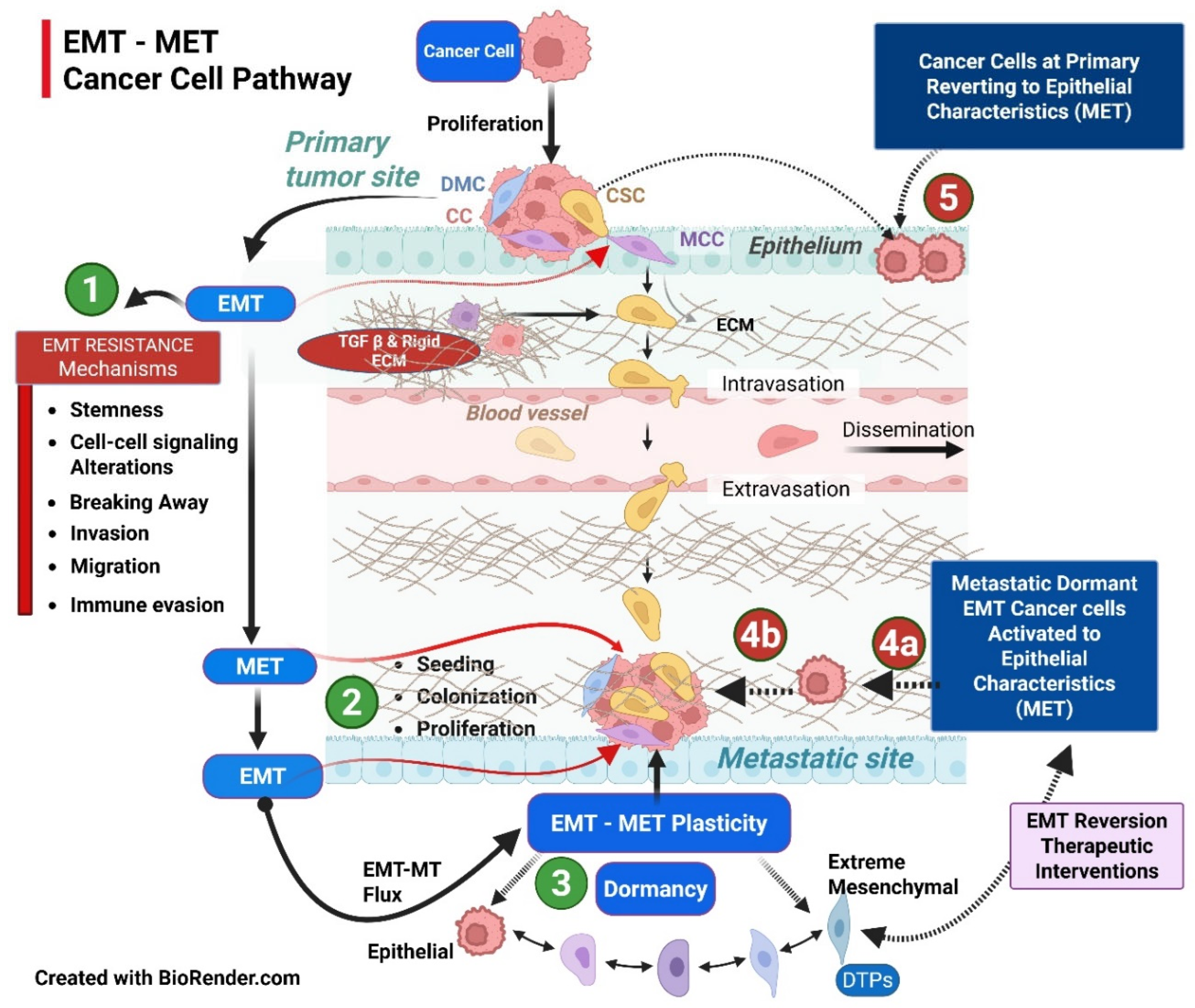
Figure 4.
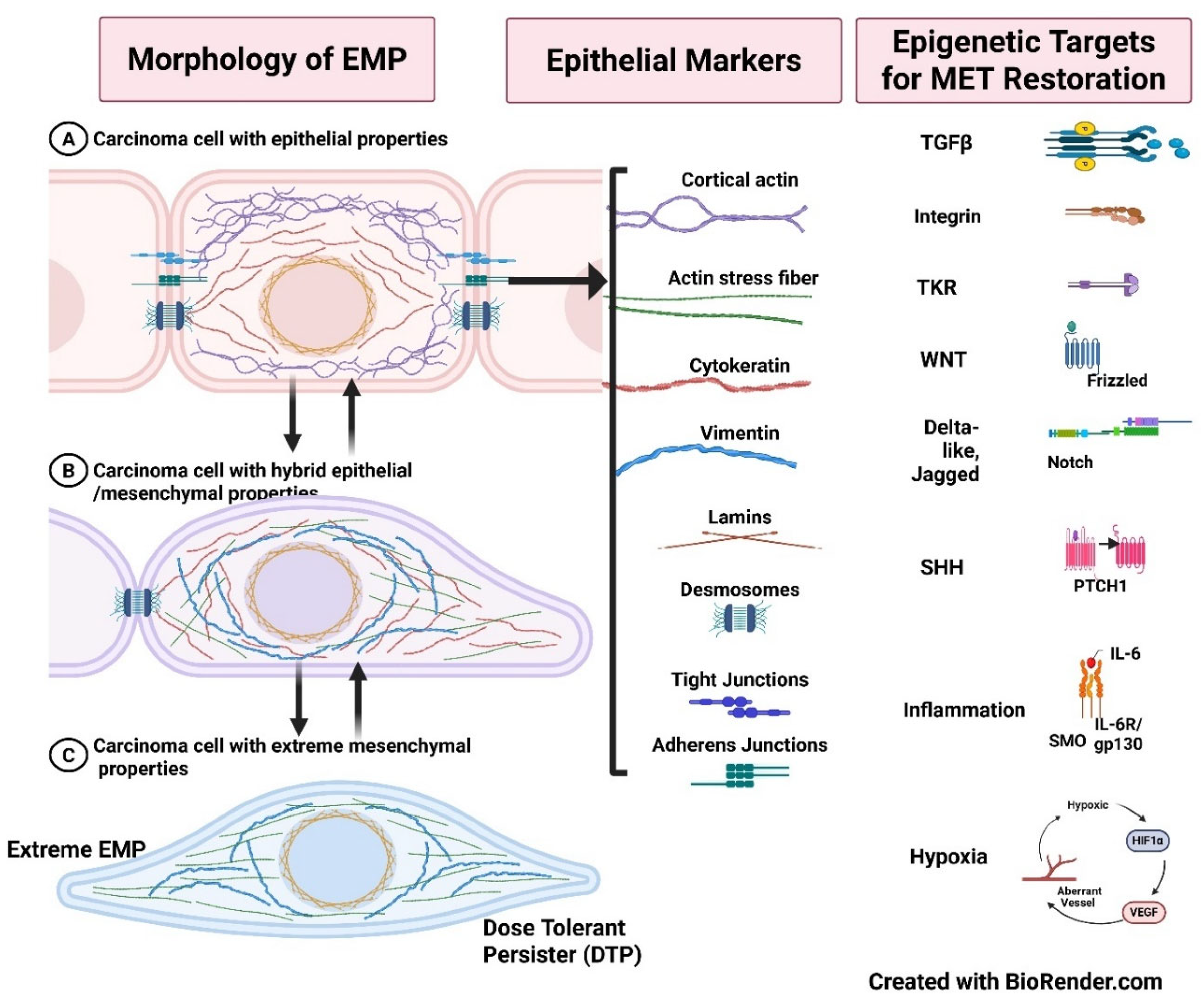
Morphology of Epithelial-Mesenchymal Plasticity (EMP) and topography of vulnerability for restoration of mesenchymal cells with more therapy-sensitive epithelial characteristics - Identifiable targets for Epigenetic modifiers in restoring cell junctions and signaling pathways. TGFβ = Transforming Growth Factor-Beta; TKR = Tyrosine Kinase Receptors; WNT "Wingless/Integrated" family of genes; SHH = Sonic Hedgehog - PTCH1 = Patched-1 Protein - SMO = Smoothened, frizzled family receptor; IL = Interleukin – GP = Glycoprotein. Created in BioRender. Swamy, K. (2026) https://BioRender.com/u5n2djs.
Figure 4.
Morphology of Epithelial-Mesenchymal Plasticity (EMP) and topography of vulnerability for restoration of mesenchymal cells with more therapy-sensitive epithelial characteristics - Identifiable targets for Epigenetic modifiers in restoring cell junctions and signaling pathways. TGFβ = Transforming Growth Factor-Beta; TKR = Tyrosine Kinase Receptors; WNT "Wingless/Integrated" family of genes; SHH = Sonic Hedgehog - PTCH1 = Patched-1 Protein - SMO = Smoothened, frizzled family receptor; IL = Interleukin – GP = Glycoprotein. Created in BioRender. Swamy, K. (2026) https://BioRender.com/u5n2djs.
2. Clinical Implications of EMP
1. The presence of EMP post-therapy, compared with pre-therapy, is a poor prognostic factor [52]. Evaluating EMP and stemness before neoadjuvant therapy and in postoperative surgical specimens would indicate an effective/better protocol.
2. Caution needs to be exercised in encouraging EMT to MET transition, as it may inadvertently induce MET proliferation of cancer cells, including the cancer stem cells. Therefore, MET-induction should simultaneously target proliferating MET cells and sensitize cancer EMT/stem cells, underscoring the importance of targeting the epigenetic regulators of interconversion between EMT and MET cellular plasticity in a continuum. The other dimension is to cause extreme EMT reversion to terminal differentiation/apoptosis, which is possible with epigenetic modifiers [6].
3. The advantage of the MET reversion strategy upfront is that it can improve the sensitivity before timed standard therapy CT/RT/Stereotactic Body Radiotherapy (SBRT), and prevent EMT induction by the standard therapies [4,57]. thus targeting the double bind situation of progression by MET versus metastases with EMT.
4. The ECM is as critical as cancer cell features in EMP/stemness and needs to be normalized for better therapy response. The stromal component plays a significant role in MET in addition to intrinsic factors [58].
5. Therefore, all the features of therapy resistance require an appropriate combination, timing, and sequence. Fundamentally, the drug that can sensitize should precede the next one that gets complemented in the scheduled protocol. Additionally, an exploratory analysis is necessary to identify the regimen likely to result in the lowest incidence of partial EMP or DTPs, thereby being most beneficial.
3. Tumor Heterogeneity, CSCs, and EMP – Clonal Cooperation
Cancer cells hide within the compartmentalized TME, with varied types of barriers that provide the ground for the development of multiple layers of resistance to therapeutic interventions. EMP, with its own multifaceted profile, is embedded in this complex, multifactorial network. Additionally, cancer cell-protective dynamic evolutions with unlimited mutational capacity, in which each factor feeds on the others, form a web of therapy-escape-resistant mechanisms (Figure 5 and Figure 6). Additionally, this inhomogeneity can become more complicated with each unsuccessful line of therapy [2,59].
In this highly resilient and dynamic cancer ecosystem, cancer stem cells (CSCs) and EMT are tightly interconnected, with phenotypic switching. EMT can drive a non-stem cell state into a stem cell state, conferring drug resistance [60].
4. Targeting Tumor Heterogeneity and EMP by Combinations, Timing, and Sequencing (CTS) Strategy
The dynamic interplay between EMT, which promotes metastasis, and MET, which drives proliferation, represents a double-bind situation yet a therapeutic opportunity for an advanced, adaptive approach [61]. This biological necessity provides a compelling therapeutic rationale: pharmacologically inducing MET can reprogram aggressive, mesenchymal-like cancer cells to revert to a more differentiated, less motile, and therapeutically susceptible epithelial state primed for timed chemosensitization [62]. The deepest evasive action and the most difficult to eliminate come from DTPs with diverse resistance mechanisms that await the appropriate microenvironmental conditions to re-proliferate [34,63], long after standard therapy ends and presumed cure is achieved. Instead, the pleiotropic, transitioning, and interconversion unstable states should be used to push them toward terminal (trans) differentiation into adipocytes or toward apoptosis, as demonstrated in breast and pancreatic cancers, respectively [6,56,64], using a clear therapeutic window [65] (Figure 7 and Figure 8).
Recent advances in incorporating epigenetic modifiers into treatment protocols could help break this impasse. Appropriate non-cross-resistant combination therapies, in a complementary timing and sequencing (CTS) strategy through personalized monitoring approaches [66], thus exploiting tumor-specific transitional states (EMP) using epigenetic modifiers, state-of-the-art technologies, tumor micro- and macro-environmental immunity-inducing factors, and leveraging advanced artificial intelligence and nanotechnology, form the foundation of this approach. [67,68,69]. Kwon et al. (2021) also detail the “right” timing, combination, sequencing, and delivery of immunotherapy in combination with other treatments. These authors favor using immunotherapy as a priming therapy preceding other anticancer therapies [70].
4.1. Epigenetic Modifiers
4.1.1. Eribulin - A Clinical Proof-of-Concept for Use of Epigenetic Modifiers
The most definitive clinical validation of therapeutic MET induction comes from studies of eribulin mesylate, an FDA-approved microtubule dynamics chromatin remodeling inhibitor used in metastatic breast cancer. Beyond its primary antimitotic function, eribulin possesses a unique, non-mitotic mechanism of action that reverses EMT, normalizes vasculature, reverses tissue hypoxia, and remodels ECM [71,72]. Preclinical work in triple-negative breast cancer (TNBC) models and patient-derived orthotopic xenograft (PDOX) models demonstrated that eribulin causes a profound phenotypic shift from a mesenchymal to an epithelial state. This is characterized by the upregulation of epithelial markers, such as E-cadherin, and the downregulation of mesenchymal markers, including vimentin and the key EMT transcription factor ZEB1. Therefore, to manage this EMT-MET double bind, eribulin can be used as pre-priming therapy before the emergence of chemoresistance and metastatic progression in breast cancer [67,73,74].
4.1.2. Multitargeted-Epigenetic-Therapy (MTET)
The strategy here was to reverse the partial EMT to full MET status by targeting the epigenetic modifiers of the SNAIL, SLUG, and Wnt pathways with a combination of polyphenols to modify epigenomic signatures. The multidrug approach includes GnRH agonists, growth hormone blockers, somatostatin analogs, quinolone-based drugs, the off-label drug Riluzole, several small-molecule TKI inhibitors, C-Met inhibitors to reverse EGFR resistance, and MEK inhibitors targeting various pathways, as depicted in Figure 2 and Figure 4. The authors note that metformin and celecoxib can be context-dependent and should be used cautiously under response monitoring for fear of triggering PI3k, which induces EMT. Plasma VEGF, IGF-1, and TGF-beta 1, imaging, & CTC were used as tumor response markers, with good quality of life in the patients treated [66].
4.1.3. Miscellaneous Epegenetic Modifiers
Histone deacetylase inhibitors (HDACis) can reprogram gene expression to favor an epithelial state [68]. Direct EMT-TF inhibitors restore p53's function in K-Ras-mutated preclinical models [75]. Other compounds, such as Co(III)-Ebox, prevent Snail1 from binding to the E-cadherin promoter, thereby blocking its primary repressive function [76]. In pancreatic adenocarcinoma, suppression of EMT with the nontoxic, low-dose ML210 chemical compound, in combination with gemcitabine, prevented cell migration [77]. In an animal study, systemically administered nanoparticle therapy, which releases siDANCR after endosomal escape at low pH, degrades cellular DANCR through the RNA-Induced Silencing Complex (RISC), thereby preventing EMT and phosphorylation [78]. Repurposed Agents, such as metformin, inhibit EMT via mTORC/TGF-β signaling [79]. Salinomycin, as an AMPK inhibitor, reverses doxorubicin-induced EMT by upregulating E-cadherin and can induce mitochondrial dysfunction and autophagy [80,81]. c-MET inhibitors such as crizotinib resensitize small-cell lung cancer cells to CT by blocking EMT [82]. Restoring miR-200 function using therapeutic mimics can induce MET, upregulate E-cadherin, and reduce motility [83].
4.1.4. General Classification of Epigenetic Modifiers
A growing body of preclinical and clinical evidence has identified several pharmacological agents mentioned above that can be categorized under five categories of epigenetic modifiers: 1. One that acts by preventing EMT and invasive ability [61]. 2. Those that sensitize the cancer cells with MET conversion for subsequent CT/RT/targeted therapy/immunotherapy, requiring proper timing and sequencing in any combination [73,74]. 3. Push the cancer cells to a susceptible EMT/EMP state or lethal ROS when the cancer cells dwell in the DTP, senescence, or dormancy states [84]. 4. Keep the cancer cells frozen “blocked”, in a cell cycle phase away from resistant phenotype evolution [10]. 5. The fifth type is the least explored, reverting the cells to a normalized, evolutionarily suppressed, relatively stable, or benign (trans)differentiation state [10,34]. This emphasizes the mechanism-based classification in the present article that outlines where Epigenetic Modifiers should be integrated into the CTS Strategy.
4.2. Two Concepts for One Strategy
The first conventional concept and foundation of modern anticancer therapy is to eliminate as many cancer cells as possible in the shortest time possible, which is considered to maximize the chance of a cure. Cancer therapies are administered at the maximum tolerated dose (MTD), a foundational concept in phase I clinical trials, and are subsequently translated into other phases of trials, and are a well-established approach. The two premises of MTD approaches are: one, to eliminate cancer cells before resistance develops; and two, that resistant mutations are likely to arise from a large rather than a small population of cancer cells [34,35].
According to the second concept, evolutionary-based therapy (EBT), the conventional MTD approach is the antithesis of Darwinian evolutionary dynamics. According to this proposal, the resistance trait is already encoded as partial resistance at a low frequency in a small subpopulation. When it repopulates after MTD, it progresses into a whole resistance population. In colorectal cancer, a preexisting inherent resistant phenotype has been identified for checkpoint inhibitors, osimertinib, and BET inhibitors. In the second mechanism, cancer cells with phenotypic plasticity, characterized by a spectrum of stem cell, dormant, or poly-aneuploid features, survive the MTD and evolve into a more acquired resistant state. In the evolutionary cascade, gene duplication, loss, and gain-of-function are used to access the entire human genome epigenetically, even in tissues alien to their origin, thereby releasing them from competition with sensitive cancer cells and promoting proliferation. Currently, EBT is in the exploratory phase, focused on monitoring the proliferation of a small resistant population through dose adjustments and epigenetic marker monitoring as part of a dynamic treatment process. In advanced cancers, this approach maintains a good quality of life without toxicity, and no attempt is made to eradicate all cancer cells. The multidisciplinary group implements this approach as an evolutionary-informed therapy option [34,35].
The following perspectives aim to unify these two concepts, based on the understanding that, in principle, they are not mutually exclusive. But they are two dimensions of the complex heterogeneity of cancer.
5.0. HYPOTHESIS – Anti-Hallmark Combinations, Timing, and Sequencing (CTS) Strategy
Hypothesis One: In cancer therapy, normalization of the vasculature and TME is the sine qua non for the predictability of cancer elimination.
Hypothesis Two: Cancer therapy resistance is mediated by tumor heterogeneity, along with epithelial-mesenchymal plasticity, and can be overcome through a well-structured anti-hallmark Combinations, Timing, and Sequencing (CTS) strategy. Additionally, this strategy should deactivate immune-escape signaling in the TME/ECM and restore immune editing by invoking cascading virtuous cycles of antigenicity and adjuvanticity.
It has been more than 26 years since the introduction of hallmarks of cancer by Douglas Hanahan and Robert A. Weinberg in January 2000. They enumerated that tumorigenesis is a multistep process that ultimately culminates in a malignant phenotype, yet it can be simplified to six biological capabilities. Reiterating their concept in 2011, they foresaw “cancer research as an increasingly logical science, in which myriad phenotypic complexities are manifestations of a small set of underlying organizing principles”, despite the charting of clear, detailed intercommunication signaling within tumors in the future [85]. Revisiting the Hanahan et al. principles, we have designed a hypothesis to counter this multistep process using a systematic mult-phase protocol. We want to propose this approach as an anti-hallmark (hallmark-degradation) hypothesis (Figure 7). Table 1 depicts the proposed protocol matching the anti-hallmark concept.
Hypothesis One and related aspects are detailed elsewhere [86]. Hypothesis Two is addressed in the present article, based on the mechanism that counters the specific hallmark of cancer (anti-hallmark mechanisms), thereby helping to place any treatment (present or future) in a particular Phase of the CTS strategy. The heterogeneity across cell populations in various phases of cancer hallmarks necessitates the use of a non-cross-resistant combination at safe, optimal doses [87].
Figure 8 depicts all desirable endpoints in cancer therapy that should serve as the basis for incorporating any drug into the current mechanism-based protocol.
5.1.1. The Prerequisite – Countering Tumor Aberrant Angiogenesis and Hypoxia - Optimum Delivery of the Drug/Activated Immune Cells to the Intended Target Cancer Cell
Due to deficient and aberrant vasculature, increased interstitial pressure, and the mechanotransduction barriers, effective drug delivery into all three compartments of the cancer TME, the cancer cell microenvironment, i.e., intercellular space (CCME), and the intracellular location (ICS) is hindered [7,70]. This patchy distribution of effective drug concentrations results in suboptimal response and invites the evolution of resistant pathways. E.g., Taxanes, which bind to β-tubulin, and anthracyclines, which interact with topo-II, require an effective concentration at target sites (to overcome ABC proteins reducing intracellular drug levels by efflux) [87]. Additionally, loss of stemness by anti-EMT therapy decreases the expression of ATP-binding cassette (ABC) proteins, thereby reducing drug efflux and improving the efficacy of chemotherapy [4].
5.1.2. The Sensitization Flow – Disabling Replicative Immortality and Resisting Cell Death:
In the planned sequencing, the targeted drug and epigenetic modifiers that tend to sensitize subsequent therapy should be placed in the earlier Phase of the protocol. Mesenchymal cells are sensitive to the AXL inhibitor SGI-7079. TGF-β inhibitor SB-431542 or receptor antibodies increase sensitivity to carboplatin. EMT signature showed better control with erlotinib in NSLC but not in other therapies. EMP showed resistance to EGFR and PI3K/AKT inhibitors, irrespective of mutational status. However, when these inhibitors are followed by chemotherapy, they demonstrate greater sensitivity than when either is used alone, in the presence of EMP [88]. Standard anticancer treatments, such as Chemotherapy, targeted therapy, and radiation, can promote oncogenic type III EMT, leading to immune evasion and anoikis resistance via Snail- and Slug-mediated inhibition of p53-induced apoptosis [89,90,91]. After CT/RT, specifically DTPs are believed to constitute a reservoir, eventually leading to irreversible genetic mutations [92]. RT is generally indicated in 50-70% of cancer patients and is known to induce EMT through the TGF-β, Notch, and ERK pathways [93]. RT induced EMT can be overcome with timed epigenetic modifiers. Combining Icotinib with intensity-modulated RT (Trial NCT01534585) in Nasopharyngeal carcinomas inhibits EMT [44] Wang X, Xue. Vactosertib, a TGF-β/ALK5 inhibitor, reduces oxidative stress, fibrosis, and stemness, thereby inhibiting EMT, and also exerts an independent antitumor effect [94]. DNA methyltransferase (DNMT) inhibitor, decitabine, sensitized cancer cells for RT, and resensitized ovarian cancer cells for cisplatin/carboplatin. Bromodomain protein 4 (BRD4) inhibitors enhance sensitivity to chemo-RT and prevent PD-L1 upregulation by RT in NSLC [95]. The synergistic effect of the multimodal approach, combined with advances in nanomaterial-based in situ vaccination technology, awaits proper integration [96].
5.1.3. Managing Immune Destruction Avoidance and Persistent Signaling
Cancer cells employ several mechanisms to evade targeting and immune destruction. One is the transdifferentiation of malignant phenotypes to different embryonic components. In prostate cancer, the development of a hormone-independent neuroendocrine phenotype can be prevented by anti-IL-6 monoclonal antibody siltuximab and JAK kinase inhibitor ruxolitinib, laying the strategic foundation for intercepting EMP at junctional points. Transformed SCLCs in NSCLC respond better to taxanes than de novo ones and are resistant to immunotherapy [97]. DTPs require transitioning from a predominantly MTD schedule to a maintenance schedule complemented with targeted epigenetic reversion therapy. DTPs are vulnerable to bromodomain and extraterminal domain (BET) protein inhibitors, especially when re-entering the cell cycle, which induces lethal levels of ROS-induced apoptosis [84]. The other mechanisms are dedifferentiation/undifferentiation, in which the cells become more aggressive and less responsive to immunotherapy [98]. Conversely, epigenetic forward differentiation of cancer cells terminates malignant proliferation signaling. (Figure 8) [99].
5.1.4. Prevention of Genome Instability and Reduction of Tumor-Promoting Inflammation
It is also essential that any drugs/treatments in the flow “should not leave the epigenetic damage scar,” with altered epigenetic marks influencing inheritable transcriptional effects on surrounding genes. These changes can derail cell identities and could be a reason for late recurrences, making this field a fascinating area for further study. A related phenomenon is therapy-induced stromal senescence, which can induce inflammation in fibroblasts [12,100].
5.1.5. Drugs with Multilevel Antihallmark Action
The critical role of drugs in acting at multiple levels of the pathways, e.g., Eribulin mesylate, a MET inducer, chemosensitizer, and vascular promoter, or TGFβ blockers, with immune-enhancing anti-inflammatory actions (e.g., Vactosertib), has excellent potential in the therapeutic landscape [73,74,94]. Drugs with multispecific and secondary actions that TGFβ blockade would add value to in preventing late recurrences [101]. Valsartan, used routinely as an antihypertensive angiotensin II receptor blocker, has multiple levels of action and blocks TGFβ, ATR1, etc. It acts both as a chemotherapeutic sensitizer and reduces inflammation and ECM deposition, and improves ECM immune cross-talk, thereby preventing fibrosis in animal models [102,103]. In a phase II trial, the other TGFβ blocker, losartan, in combination with FOLFIRINOX, followed by chemoradiotherapy, was clinically beneficial in pancreatic cancer [7]. The other mechanism with potential to impact multiple hallmark levels is restoring “eat me” signals using phagocytosis checkpoint immunotherapy [104].
5.2. Philosophy of the CTS approach
A cure is feasible with the MTD approach in the patient group in which resistant traits have not yet been established. In other cases, phenotypic resistance can evolve during MTD. The current article proposes a CTS strategy that combines both MTD and evolutionary principles to preempt cancer cell resistance, supported by an understanding of the dynamics of cancer cell EMT-MET. The importance of long-term antitumor defense in the simultaneous multi-hit tripartite approach, which reduces tumor load, increases immunogenicity, and reverses immunosuppression, is documented in the literature [105].
This strategy targets the resistant cell population, one after another, in a systematic protocol, with equal focus on epigenetic reversion serving as the backbone of the therapeutic schedule (Figure 7). Simultaneously, downstream oncogenic drivers are eliminated through the logical sequencing of trimodal Chemotherapy, radiotherapy, or immunotherapy along with targeted therapy [97]. The present protocol design simultaneously enhances the immune cycle and the pool of memory cells, restoring/ resetting immune editing. In view of the intensity of combinations, the endpoint should also include minimal or acceptable toxicity. The basis of the present protocol is the mechanism of action of a particular therapeutic modality, and it would be easy to integrate/ substitute any future modality into the protocol based on these principles.
Ros, HIF-1α, and TGFβ are the three primary theoretical targets. However, the limitations lie in the fact that they also play a crucial role in normal body homeostasis, requiring fine targeting. Surgical excision of residual lesions or pulsar/cyclical SBRT boost should be timed to remove/eliminate core DTPs, dormant, and stem cells (Figure 9).
5.3. Supporting Evidence for the Strategy
This hypothesis diverges from conventional approaches by viewing tumor heterogeneity and EMP not as barriers to treatment but as targetable vulnerabilities when approached with appropriate combinations, timing, and sequencing. The Following are some of the existing supporting evidence.
- Combination synergy: TGF-β inhibitors combined with checkpoint inhibitors, which simultaneously block EMT and improve immune cell infiltration [106].
- Importance of timing: Pemetrexed given over a prolonged period before cisplatin prevents EMT-induced resistance, while concurrent administration promotes it [5]. Eribulin before standard chemotherapy sensitizes subsequent chemotherapy [73,74]. Establishing effective multidrug combinations, timing, and sequencing, followed by systematic risk-adapted stratification approaches in clinical trials for pediatric malignancies, is a classic example of a process for controlling cancer and reducing toxicities. [107].
- Clinical evidence: Even with the availability of an extensive list of targeted therapies in lung cancer, the clinical approach is presently veering towards combining with chemotherapy at least to improve the progression-free survival (PFS). The NEJ009 trial showed a higher objective response rate (84%) than that of EGFR-TKI monotherapy (67%), with delayed resistance, manageable toxicity, and improved PFS in advanced (stage III-N2) EGFR-mutated NSCLC.[108]. Improved overall survival was observed with first-line osimertinib-chemotherapy compared with osimertinib alone in the updated phase III FLAURA2 trial, published in January 2026, albeit with an increased risk of reversible adverse events [109].
- Vascular Disruption versus vascular normalization SBRT: A vascular normalization strategy with SBRT is strongly debated against the vascular disruption strategy to this day. The listed criticisms of vascular normalization are: a) The dynamicity of VN and its window period make it challenging in clinical implementation, b) varies with tumor type, c) patient-dependent intratumoral variation, d) dose-dependency (low dose vs moderate dose vs regular dose of AAGs), e) enigma of “normalization window”. However, immunosuppressive signals, including the induction of the TREX1 pathway, HIF-1α, TGF-β, Interleukin-10, and Myeloid Suppressor cells, are acknowledged in the vascular disruption approach [110,111], which may be a critical factor in the present-day immunotherapy-oriented era.
Given the critical importance of reducing hypoxia and improving drug delivery, we propose monitoring serum to detect vascular changes and optimally synchronize AAGs before standard therapies. Also, using this monitoring, we propose, as mapped in Figure 10, the strategy for extending the normalization window program indefinitely. The paradigm-changing concept of vascular normalization was proposed in 2001 by Jain R. K., in the context of the existing concept of vascular disruption [112]. Working on this concept, Goel et al. have provided a reasonable rationale for the normalization window period and its closure, based on patients on AAG drug holidays [113], requiring further refinement. Further, limiting the SBRT dose per fraction to 8 -10 Gy prevents damage to the ECM, preventing the immune suppressive island of epigenetic damage scar recurrence-prone area, whose importance is gaining ground [12]. Further, SBRT doses exceeding 10 Gy per fraction cause endothelial disruption and immune-suppressive ECM changes in a sarcoma model, all of which are unfavorable for long-term control (literally converting SBRT into a palliative type). [114]. With the increasing role of immunotherapy in all cancers, the importance of avoiding epigenetic ECM scars [12] favors a normalization approach that simultaneously retains the immunogenic benefits of SBRT at 7-10 Gy per fraction. Improvement of immune cross-talk not only enhances the efficacy of immunotherapy but also reduces toxicity [115]. Also, cyclical SBRT enhances the long-term “memory cell bank” to prevent recurrence, generating an in situ vaccine effect that can be complemented by in vitro/ex vivo vaccines [Figure 9] [116]. Lesions that no longer respond to immunotherapy combinations may exhibit enhanced antitumor immunity and an in situ vaccine effect, potentially through cancer cell kill, phagocytosis, decreased interstitial pressure, re-oxygenation, and improved drug delivery [7,117]. In the KEYNOTE-01 trial in non-small-cell lung cancer, even at a median of 9.5 months after RT, the immunotherapy group with a previous history of RT had longer progression-free and overall survival [118]. Cyclical SBRT can enhance immunotherapy effects, provided it precedes (rather than follows) each immunotherapy cycle. Clinical benefits of SBRT (3 × 8 Gy) followed by pembrolizumab have been reported in patients with solitary lung cancer metastases [118,119,120]. Induction of immunogenic cell death improves the “hotness” of tumors and immune cell infiltrates [121], Sordo-Bahamonde. This ICD dose range induces mutational neoantigen in the in vivo KP sarcoma model, sensitizing it to immunotherapy when the hot tumor replaces a cold tumor [122].
- Support of advances in monitoring technology: Monitoring therapy with plasma VEGF, IGF-1, and TGF-beta [66]. This is promising for the routine adoption of the proposed protocol. Also, plasma immunopeptidome mining could make it a significant biomarker for follow-up monitoring and ultra-specific therapy targeting method in the coming years [124].
5.4. Methodology of Implementation CTS Strategy & Proposed Protocol
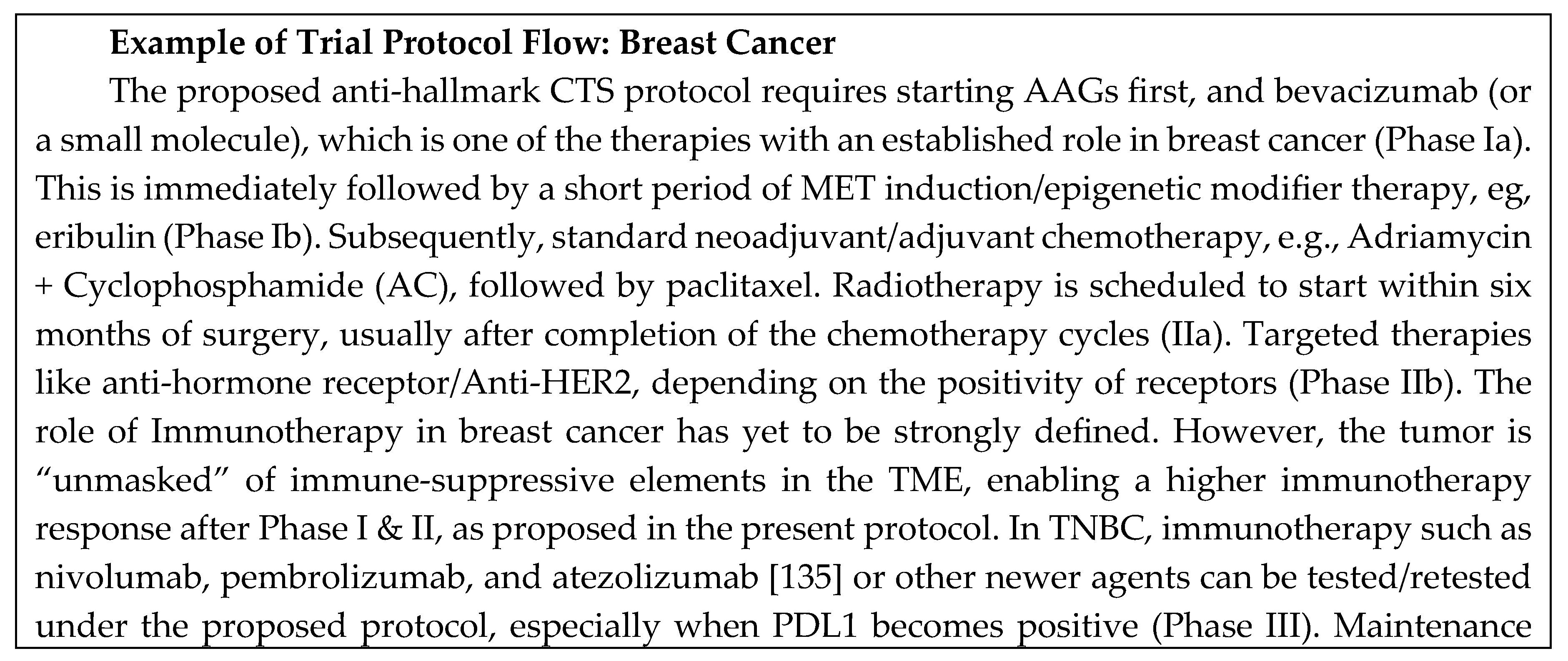
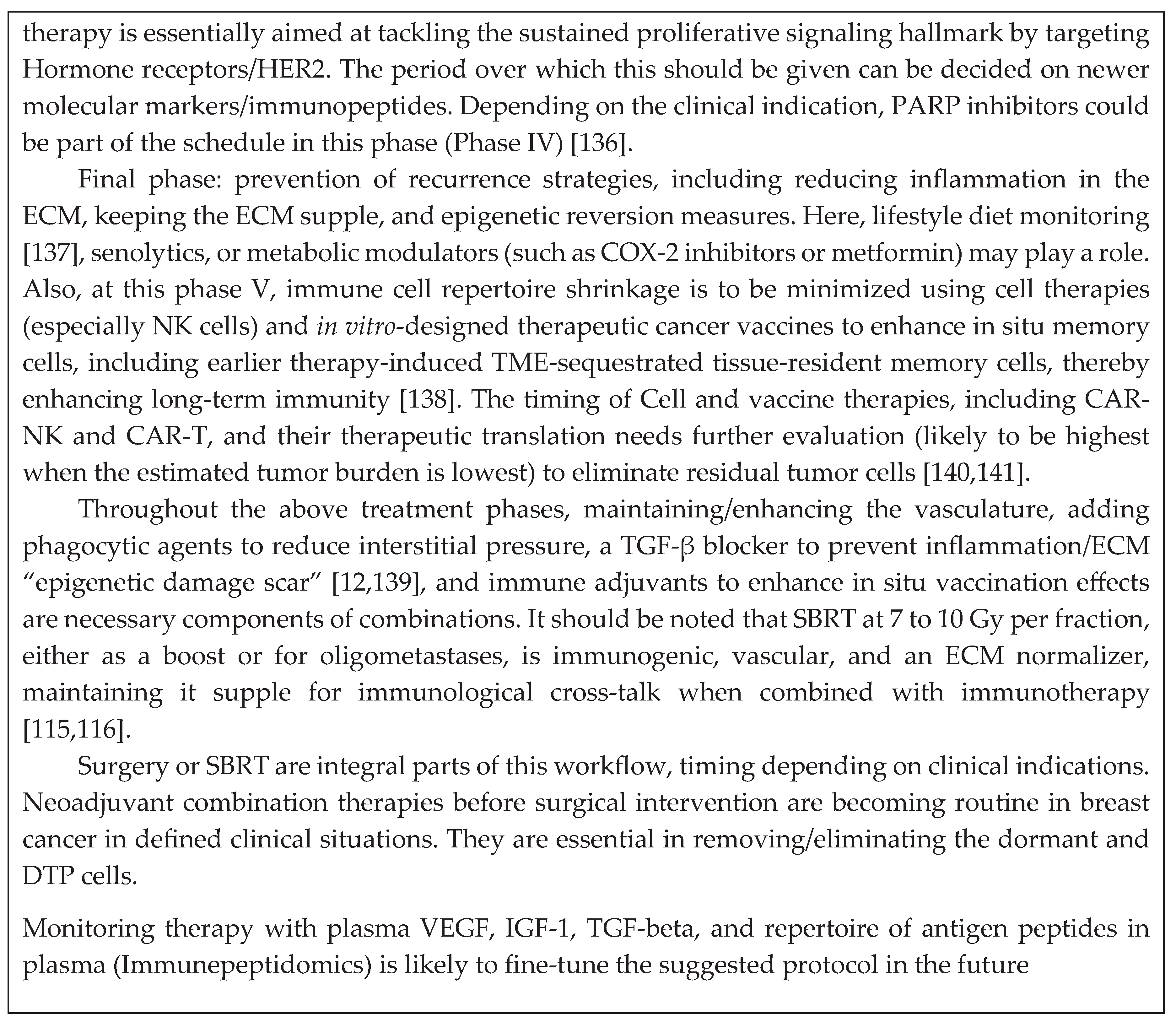
Based on the review above, the proposed strategy comprises FIVE phases that must be implemented systematically. The first step is normalization of the vasculature, which will improve delivery of drugs/cytotoxic cells (to TME, CCME, and ICS) and reduce hypoxia, targeting the primary factor in the genesis of cancer. Other steps immediately follow this. (Table 1).
Several publications highlight the significance of vascular normalization as a precondition for integrating it with other established anticancer therapies, including immunotherapy [131,132,133,134]. Figure 10 illustrates the sum concept of literature to Extended Vascular Normalization across phases I to III [113].
6. Limitations
The perspectives outlined in the CTS protocol presented in this article may fall short of achieving a definitive cure in all patients initiated on this protocol. Essentially, the reversion hypothesis suggests that reversing epigenetic changes and associated pathways in transformed, malignant cells may not restore them to their original normal status. EMP finally leaves residual malignant features in one of the forms, such as DTPs cells, Dormancy, Senescent cells, or “normalized state” (almost normal), which can always have the potential to get reactivated to proliferate and induce recurrence with an evolutionarily more resistant population. Thus, using the CTS strategy to prevent the formation of DTPs, enforcing reversion/differentiation [65], and activating in situ vaccine effects [119] become relevant. A combination-drug intermittent “hit and run” approach strategy is valid in phase V, as senescent cells can take weeks to accumulate again once depleted [149].
Therefore, in addition to the steps outlined in phase V of Table 1, further steps beyond the CTS strategy need to be considered. Finally, when we presume the cancer is cleared and the current routine evaluation indicates no evidence of disease, it is imperative to plan the next level of intelligence against a much more battle-hardened, evolutionarily waiting, hidden tripwire [150]. At this phase, the complexity of managing heterogeneous, profoundly adoptable DTPs, with intricate feed-forward loops, necessitates Systematic Monitoring and Rational Therapeutic targeting (SMART) approaches, which is another subject of in-depth study. The available targeting window is dynamic and should coincide with the detection of entry into or exit from the cancer cell cycle, as detected by yet-to-evolve dependable molecular methods. The evolution of technological breakthroughs in molecular monitoring of the entire spectrum of dormancy (enumerated in the “future directions” sections above) should become a standard [66,144].
6. Future Research Directions to Unravel Complexities and Improve Therapeutic Strategies
Clinical trials are limited in EMP, despite the vast amount of clinical data [142]. Therefore, any effective strategy should include, as enumerated in the present article, the epigenetic modifiers—"currently the most clinically advanced strategy" [61] —as a potential model shift in targeting cancer cell plasticity and tumor heterogeneity. Monitoring plasma VEGF, IGF-1, and TGF-beta levels is promising for adopting Epigenetic modifiers in clinical practice and for evolving innovative approaches that are found effective in the lab [66,101]. Mathematical models are designed given the pivotal role of microRNAs and various signaling pathways in these transitions [143]. The emergence of the ability to evaluate repertoire of antigen peptides in plasma (Immunepeptidomics) offers another explosive frontier for both monitoring therapy and interventional strategies. [144,145]. A comprehensive analysis of these components may reveal potential biomarkers for patient stratification and treatment monitoring proposed in the present protocol. Integrating into the spectrum of these developments, SBRT has the potential to be part of a personalized radiation-in situ-vaccine-immunotherapy accelerated by nanomaterials to overcome the hallmark of genomic instability [146,147].
Single-cell sequencing technologies to map the EMT-MET continuum across different cancer types will provide insights into tumor cell population heterogeneity and the influence of varying microenvironments on these transitional states [37,148].
The lack of routine adoption of EMT pathological characterization, integration into clinical practice, and standardized protocols, despite a vast body of experimental research results and a promising list of drugs, makes its incorporation into the clinical pipeline paramount [[142].
The inexorable advances are in the refinement of trimodal radio-chemo-immunotherapies. The combination therapies are awaiting an aggressive, risk-stratified approach (proven in pediatric malignancies) due to the driving forces of continued technological advances in precision radiation oncology, targeting, and the unraveling of sensitization/resistance molecular mechanisms. [141].
An earlier version of the present article is available as a Preprint.org [151].
Conclusions
Currently, it is a difficult choice between earlier, broad-spectrum, nontargeted approaches with higher toxicity and more recent, increasingly limited-pathway-targeted personalized approaches with excellent response rates in a selected group of patients. Both can increase the risk of resistance evolving in subsequent treatment lines on recurrence. This article explores whether the CTS strategy can combine the best of both.
The hypothesis presented here is that tumor heterogeneity and EMP can be therapeutically exploited through strategic Combinations, Timing, and Sequencing, using both broad-spectrum therapies initially and a personalized approach, thereby representing a paradigm shift from EMP as a barrier to recognizing it as a targetable vulnerability. The prerequisite is to synchronize cancer cell populations through pharmacological MET induction, normalize the tumor microenvironment, and prevent evolutionary escape through timed, sequential, non-cross-resistant therapies. The CTS strategy offers a rational approach to fulfilling these conditions, overcoming tumor heterogeneity and the EMT-MET double-bind that underlie treatment failure by effectively targeting primary and preventing secondary resistance. As mentioned earlier, the recently reported improvement in overall survival, achieved by combining chemotherapy (even when targetable receptors were present) with the initiation of osimertinib, exemplifies the combination of broad-spectrum therapy with targeted therapy.
“Cancer is a myriad phenotypic complexities that are manifestations of a small set of underlying organizing principles,” as conceptualized by Hanahan, D., and Weinberg, R.A., 25 years ago. This requires a systematic anti-hallmark approach using contemporary logical science, as they predicted. The article focuses on reducing the tumor burden through effective cancer cell killing, “unmasking” the tumor, preparing the ground for immunotherapy, and being opportunistic throughout the entire therapy program, moving towards the restoration of the immune editing as enunciated by Dunn GP, Old LJ & Robert D. Schreiber. In due course, with the accumulated experience of the above protocol proposed by the present authors, it is possible to reduce the intensity and duration of therapy. This will potentially eliminate toxicities when the risk-stratification approach is adopted, taking the leaf out of the evolution of pediatric malignancy therapy programs.
Author Contributions
All authors contributed equally to conceptualization and writing.
Funding
“This research received no external funding.”.
Institutional Review Board Statement
Not applicable.
Informed Consent Statement
Not applicable.
Data Availability Statement
Not applicable.
Acknowledgments
Nil.
Conflicts of Interest
The authors declare no conflicts of interest.
References
- Eun, K.; Ham, S. W.; Kim, H. Cancer stem cell heterogeneity: origin and new perspectives on CSC targeting. In BMB Reports; Korean Society for Biochemistry and Molecular Biology - BMB Reports, 31 March 2017. [Google Scholar] [CrossRef]
- Finger, A.M.; Hendley, A.M.; Figueroa, D.; Gonzalez, H.; Weaver, V.M. Tissue mechanics in tumor heterogeneity and aggression. Trends Cancer 2025, 11(8), 806–824. [Google Scholar] [CrossRef]
- Mansoori, B.; Mohammadi, A.; Davudian, S.; Shirjang, S.; Baradaran, B. The Different Mechanisms of Cancer Drug Resistance: A Brief Review. Adv. Pharm. Bull. 2017, 7(3), 339–348. [Google Scholar] [CrossRef]
- Huang, Y.; Hong, W.; Wei, X. The molecular mechanisms and therapeutic strategies of EMT in tumor progression and metastasis. J. Hematol. Oncol. 2022, 15(1), 129. [Google Scholar] [CrossRef]
- Tièche, C.C.; Peng, R.W.; Dorn, P.; Froment, L.; Schmid, R.A.; Marti, T.M. Prolonged pemetrexed pretreatment augments persistence of cisplatin-induced DNA damage and eliminates resistant lung cancer stem-like cells associated with EMT. BMC Cancer 2016, 16, 125. [Google Scholar] [CrossRef]
- Lu, W.; Kang, Y. Epithelial-Mesenchymal Plasticity in Cancer Progression and Metastasis. Dev. Cell. 2019, 49(3), 361–374. [Google Scholar] [CrossRef]
- Glaviano, A.; Lau, H.S.H.; Carter, L.M.; et al. Harnessing the tumor microenvironment: targeted cancer therapies through modulation of epithelial-mesenchymal transition. J. Hematol. Oncol. 2025, 18, 6. [Google Scholar] [CrossRef]
- Kogure, A.; Yoshioka, Y.; Ochiya, T. Extracellular vesicles in cancer metastasis: potential as therapeutic targets and materials. Int. J. Mol. Sci. 2020, 21(12), 4463. [Google Scholar] [CrossRef]
- Gregory, P.; Bracken, C.; Smith, E.; Bert, A.; Wright, J.; Roslan, S.; et al. An autocrine tgf-β/zeb/mir-200 signaling network regulates establishment and maintenance of epithelial-mesenchymal transition. Mol. Biol. Cell. 2011, 22(10), 1686–1698. [Google Scholar] [CrossRef] [PubMed]
- Pensotti, A.; Bizzarri, M.; Bertolaso, M. The phenotypic reversion of cancer: Experimental evidences on cancer reversibility through epigenetic mechanisms (Review). Oncol. Rep. 2024, 51(3), 48. [Google Scholar] [CrossRef] [PubMed]
- Ingber, D.E. Can cancer be reversed by engineering the tumor microenvironment? Semin Cancer Biol. 2008, 18(5), 356–64. [Google Scholar] [CrossRef] [PubMed]
- Rouault, C.D.; Charafe-Jauffret, E.; Ginestier, C. The interplay of DNA damage, epigenetics, and tumor heterogeneity in driving cancer cell fitness. Nat. Commun. 2025, 16(1), 8733. [Google Scholar] [CrossRef]
- Qiu, G. Z.; Jin, M. Z.; Dai, J. X.; Sun, W.; Feng, J. H.; Jin, W. L. Tumor in the Hypoxic Niche: The Emerging Concept and Associated Therapeutic Strategies G. Trends Pharmacol. Sci. 2017, 38(8), 669–686. [Google Scholar] [CrossRef]
- Park, H.K.; Hu, S.; Kim, S.Y.; et al. Pseudohypoxic stabilization of HIF1α via cyclophilin D suppression promotes melanoma metastasis. Sig Transduct. Target Ther. 2025, 10, 231. [Google Scholar] [CrossRef] [PubMed]
- Montemagno, C.; Pagès, G. Resistance to Antiangiogenic Therapies: A Mechanism Depending on the Time of Exposure to the Drugs. Front. Cell. Dev. Biol. 2020, 8, 584. [Google Scholar] [CrossRef] [PubMed]
- Ye, X.; Weinberg, R. Epithelial--mesenchymal plasticity: a central regulator of cancer progression. Trends Cell. Biol. 2015, 25(11), 675–686. [Google Scholar] [CrossRef]
- Suarez-Carmona, M.; Bourcy, M.; Lesage, J.; Leroi, N.; Syne, L.; Blacher, S.; et al. Soluble factors regulated by epithelial--mesenchymal transition mediate tumour angiogenesis and myeloid cell recruitment. J. Pathol. 2015, 236(4), 491–504. [Google Scholar] [CrossRef] [PubMed]
- Haibe, Y.; Kreidieh, M.; El Hajj, H.; et al. Resistance Mechanisms to Antiangiogenic Therapies in Cancer. Front. Oncol. 2020, 10, 221. [Google Scholar] [CrossRef]
- Ayoub, N.M.; Jaradat, S.K.; Al-Shami, K.M.; Alkhalifa, A.E. Targeting Angiogenesis in Breast Cancer: Current Evidence and Future Perspectives of Novel Antiangiogenic Approaches. Front Pharmacol. 2022, 13, 838133. [Google Scholar] [CrossRef]
- Kathrine S. R, Thomas H. L. Y., Michail S. Chemoradiotherapy in Cancer Treatment: Rationale and Clinical Applications. Anticancer Res. 2021, 41(1), 1–7. [CrossRef]
- Clarke, J. M.; Hurwitz, H. I. Understanding and targeting resistance to antiangiogenic therapies. J. Gastrointest. Oncol. 2013, 4(3), 253–263. [Google Scholar] [CrossRef]
- Wegiel, B.; Vuerich, M.; Daneshmandi Sand Seth, P. Metabolic Switch in the Tumor Microenvironment Determi[nes Immune Responses to Anticancer Therapy. Front. Oncol. 2018, 8, 284. [Google Scholar] [CrossRef]
- Wu, Weihua; Zhao, Shimin. Metabolic changes in Cancer: beyond the Warburg effect. Acta Biochim. Et. Biophys. Sin. 2013, Volume 45(Issue 1), Pages 18–26. [Google Scholar] [CrossRef] [PubMed]
- Liberti, M.V.; Locasale, J.W. The Warburg Effect: How Does it Benefit Cancer Cells? Trends Biochem Sci. Erratum in: Trends Biochem Sci. 2016 Mar;41(3):287. Erratum in: Trends Biochem Sci. 2016 Mar;41(3):287. https://doi.org/10.1016/j.tibs.2016.01.004. 2016, 41(3), 211–218. [Google Scholar] [CrossRef]
- Liaghat, M.; Ferdousmakan, S.; Mortazavi, S.H.; et al. The impact of epithelial-mesenchymal transition (EMT) induced by metabolic processes and intracellular signaling pathways on chemo-resistance, metastasis, and recurrence in solid tumors. Cell. Commun. Signal 2024, 22(1), 575. [Google Scholar] [CrossRef]
- Dunn, G.P.; Old, L.J.; Schreiber, R.D. The immunobiology of cancer immunosurveillance and immunoediting. Immunity 2004, 21(2), 137–48. [Google Scholar] [CrossRef] [PubMed]
- Galassi, C.; Chan, T.A.; Vitale, I.; Galluzzi, L. The hallmarks of cancer immune evasion. Cancer Cell. 2024, 42(11), 1825–1863. [Google Scholar] [CrossRef] [PubMed]
- Sistigu, A.; Di Modugno, F.; Manic, G.; Nisticò, P. Deciphering the loop of epithelial-mesenchymal transition, inflammatory cytokines and cancer immunoediting. Cytokine Growth Factor Rev. 2017, 36, 67–77. [Google Scholar] [CrossRef] [PubMed]
- Romeo, E.; Caserta, C.A.; Rumio, C.; Marcucci, F. The Vicious Cross-Talk between Tumor Cells with an EMT Phenotype and Cells of the Immune System. Cells 2019, 8(5), 460. [Google Scholar] [CrossRef]
- Saitoh, M. Epithelial-mesenchymal transition is regulated at post-transcriptional levels by transforming growth factor-β signaling during tumor progression. Cancer Sci. 2015, 106(5), 481–8. [Google Scholar] [CrossRef]
- Taniguchi, K.; Karin, M. NF-κB, inflammation, immunity and cancer: coming of age. Nat. Rev. Immunol. 2018, 18, 309–324. [Google Scholar] [CrossRef] [PubMed]
- Horta, C.A.; Doan, K.; Yang, J. Mechanotransduction pathways in regulating epithelial-mesenchymal plasticity. Curr. Opin. Cell. Biol. 2023, 85, 102245. [Google Scholar] [CrossRef] [PubMed]
- Zhao, Y.; Yu, X.; Li, J. Manipulation of immune‒vascular cross-talk: new strategies towards cancer treatment. Acta Pharm. Sin. B 2020, 10(11), 2018–2036. [Google Scholar] [CrossRef]
- Gatenby, R.A.; Brown, J.S. The Evolution and Ecology of Resistance in Cancer Therapy. Cold Spring Harb. Perspect. Med. 2020, 10(11), a040972. [Google Scholar] [CrossRef] [PubMed]
- Škarková, A.; Bizzarri, M.; Janoštiak, R.; Mašek, J.; Rosel, D.; Brábek, J. Educate, not kill: treating cancer without triggering its defenses. Trends Mol. Med. 2024, 30(7), 673–685. [Google Scholar] [CrossRef] [PubMed]
- Miyake, Y.; Nagaoka, Y.; Okamura, K.; Takeishi, Y.; Tamaoki, S.; Hatta, M. SNAI2 is induced by transforming growth factor-β1, but is not essential for epithelial-mesenchymal transition in human keratinocyte HaCaT cells. Exp. Ther. Med. 2021, 22(4), 1124. [Google Scholar] [CrossRef]
- Deshmukh, A.; Vasaikar, S.; Tomczak, K.; Tripathi, S.; Hollander, P.; Arslan, E.; et al. Identification of emt signaling cross-talk and gene regulatory networks by single-cell rna sequencing. Proc. Natl. Acad. Sci. U S A 2021, 118(19), e2102050118. [Google Scholar] [CrossRef]
- Frey, P.; Devisme, A.; Schrempp, M.; Andrieux, G.; Boerries, M.; Hecht, A. Canonical bmp signaling executes epithelial-mesenchymal transition downstream of snail1. Cancers 2020, 12(4), 1019. [Google Scholar] [CrossRef]
- Wang, J.Q.; Yan, F.Q.; Wang, L.H.; Yin, W.J.; Chang, T.Y.; Liu, J.P.; Wu, K.J. Identification of new hypoxia-regulated epithelial-mesenchymal transition marker genes labeled by H3K4 acetylation. Genes. Chromosom. Cancer 2020, 59(2), 73–83. [Google Scholar] [CrossRef]
- Guo, H.; Zhang, N.; Huang, T.; Shen, N. MicroRNA-200c in Cancer Generation, Invasion, and Metastasis. Int. J. Mol. Sci. 2025, 26, 710. [Google Scholar] [CrossRef]
- Zhang, L.; Hung, G.C.; Meng, S.; Evans, R.; Xu, J. LncRNA MALAT1 Regulates Hyperglycemia Induced EMT in Keratinocyte via miR-205. Noncoding RNA 2023, 9(1), 14. [Google Scholar] [CrossRef]
- Chang, H.; Liu, Y.; Xue, M.; Liu, H.; Du, S.; Zhang, L.; et al. Synergistic action of master transcription factors controls epithelial-to-mesenchymal transition. Nucleic Acids Res. 2016, 44(6), 2514–2527. [Google Scholar] [CrossRef]
- Tong, J.; Shen, Y.; Zhang, Z.; Hu, Y.; Zhang, X.; Han, L. Apigenin inhibits epithelial-mesenchymal transition of human colon cancer cells through nf-κb/snail signaling pathway. Biosci. Rep. 2019, 39(5), BSR20190452. [Google Scholar] [CrossRef]
- Wang, X.; Xue, X.; Pang, M.; Yu, L.; Qian, J.; Li, X.; Tian, M.; Lyu, A.; Lu, C.; Liu, Y. Epithelial-mesenchymal plasticity in cancer: signaling pathways and therapeutic targets. MedComm (2020) 2024, 5(8), e659. [Google Scholar] [CrossRef]
- Johnson, K.S.; Hussein, S.; Chakraborty, P.; Muruganantham, A.; Mikhail, S.; Gonzalez, G.; Song, S.; Jolly, M.K.; Toneff, M.J.; Benton, M.L.; Lin, Y.C.; Taube, J.H. CTCF Expression and Dynamic Motif Accessibility Modulates Epithelial-Mesenchymal Gene Expression. Cancers 2022, 14(1), 209. [Google Scholar] [CrossRef]
- Ribatti, D.; Tamma, R.; Annese, T. Epithelial-Mesenchymal Transition in Cancer: A Historical Overview. Transl. Oncol. 2020, 13(6), 100773. [Google Scholar] [CrossRef] [PubMed]
- Liao, T.T.; Yang, M.H. Revisiting epithelial-mesenchymal transition in cancer metastasis: the connection between epithelial plasticity and stemness. Mol. Oncol. 2017, 11(7), 792–804. [Google Scholar] [CrossRef]
- Iwatsuki, M.; Mimori, K.; Yokobori, T.; Ishi, H.; Beppu, T.; Nakamori, S.; Baba, H.; Mori, M. Epithelial-mesenchymal transition in cancer development and its clinical significance. Cancer Sci. 2010, 101(2), 293–9. [Google Scholar] [CrossRef] [PubMed]
- Moustakas, A.; de Herreros, A.G. Epithelial-mesenchymal transition in cancer. Mol. Oncol. 2017, 11(7), 715–717. [Google Scholar] [CrossRef]
- Aiello, N.M.; Maddipati, R.; Norgard, R.J.; Balli, D.; Li, J.; Yuan, S.; Yamazoe, T.; Black, T.; Sahmoud, A.; Furth, E.E.; Bar-Sagi, D.; Stanger, B.Z. EMT Subtype Influences Epithelial Plasticity and Mode of Cell Migration. Dev. Cell. 2018, 45(6), 681–695.e4. [Google Scholar] [CrossRef]
- Knutsen, E.; Das Sajib, S.; Fiskaa, T.; Lorens, J.; Gudjonsson, T.; Mælandsmo, G.M.; Johansen, S.D.; Seternes, O.M.; Perander, M. Identification of a core EMT signature that separates basal-like breast cancers into partial- and post-EMT subtypes. Front Oncol. 2023, 13, 1249895. [Google Scholar] [CrossRef] [PubMed]
- Williams, E.D.; Gao, D.; Redfern, A.; Thompson, E.W. Controversies around epithelial-mesenchymal plasticity in cancer metastasis. Nat. Rev. Cancer 2019, 19(12), 716–732. [Google Scholar] [CrossRef]
- Lin, W.H.; Chang, Y.W.; Hong, M.X.; Hsu, T.C.; Lee, K.C.; Lin, C.; Lee, J.L. STAT3 phosphorylation at Ser727 and Tyr705 differentially regulates the EMT-MET switch and cancer metastasis. Oncogene 2021, 40(4), 791–805. [Google Scholar] [CrossRef]
- Addison, J.B.; Voronkova, M.A.; Fugett, J.H.; et al. Functional Hierarchy and Cooperation of EMT Master Transcription Factors in Breast Cancer Metastasis. Mol. Cancer Res. 2021, 19(5), 784–798. [Google Scholar] [CrossRef] [PubMed]
- Puram SV, Tirosh I, Parikh AS, ett al. Single-Cell Transcriptomic Analysis of Primary and Metastatic Tumor Ecosystems in Head and Neck Cancer. Cell 2017, 171(7), 1611–1624.e24. [CrossRef] [PubMed]
- Ishay-Ronen, D.; Diepenbruck, M.; Kalathur, R.K.R.; et al. Gain Fat-Lose Metastasis: Converting Invasive Breast Cancer Cells into Adipocytes Inhibits Cancer Metastasis. Cancer Cell. 2019, 35(1), 17–32.e6. [Google Scholar] [CrossRef]
- Bhatia, Sugandha; Monkman, James; Toh, Alan Kie Leong; Nagaraj, Shivashankar H.; Thompson, Erik W. Targeting epithelial–mesenchymal plasticity in cancer: clinical and preclinical advances in therapy and monitoring. Biochem J. 2017, 474(19), 3269–3306. [Google Scholar] [CrossRef]
- Del Pozo Martin, Y.; Park, D.; Ramachandran, A.; Ombrato, L.; Calvo, F.; Chakravarty, P.; Spencer-Dene, B.; Derzsi, S.; Hill, C.S.; Sahai, E.; Malanchi, I. Mesenchymal Cancer Cell-Stroma Crosstalk Promotes Niche Activation, Epithelial Reversion, and Metastatic Colonization. Cell. Rep. 2015, 13(11), 2456–2469. [Google Scholar] [CrossRef]
- Jacquemin, V.; Antoine, M.; Dom, G.; Detours, V.; Maenhaut, C.; Dumont, J.E. Dynamic Cancer Cell Heterogeneity: Diagnostic and Therapeutic Implications. Cancers 2022, 14, 280. [Google Scholar] [CrossRef]
- Zhang, H.; Steed, A.; Co, M.; Chen, X. Cancer stem cells, epithelial-mesenchymal transition, ATP and their roles in drug resistance in cancer. Cancer Drug. Resist. 2021, 4, 684–709. [Google Scholar] [CrossRef]
- Thompson, E.W.; Redfern, A.D.; Brabletz, S.; et al. EMT and cancer: what clinicians should know. Nat. Rev. Clin. Oncol. 2025, 22, 711–733. [Google Scholar] [CrossRef] [PubMed]
- Bagheri, M.; Mohamed, G.A.; Mohamed Saleem, M.A.; Ognjenovic, N.B.; Lu, H.; Kolling, F.W.; Wilkins, O.M.; Das, S.; LaCroix, I.S.; Nagaraj, S.H.; Muller, K.E.; Gerber, S.A.; Miller, T.W.; Pattabiraman, D.R. Pharmacological induction of chromatin remodeling drives chemosensitization in triple-negative breast cancer. Cell. Rep. Med. 2024, 5(4), 101504. [Google Scholar] [CrossRef]
- Ramirez, M.; Rajaram, S.; Steininger, R.; et al. Diverse drug-resistance mechanisms can emerge from drug-tolerant cancer persister cells. Nat. Commun. 2016, 7, 10690. [Google Scholar] [CrossRef]
- David, C.J.; Huang, Y.H.; Chen, M.; Su, J.; Zou, Y.; Bardeesy, N.; Iacobuzio-Donahue, C.A.; Massagué, J. TGF-β Tumor Suppression through a Lethal EMT. Cell 2016, 164(5), 1015–30. [Google Scholar] [CrossRef] [PubMed]
- Voon, D.C.; Huang, R.Y.; Jackson, R.A.; Thiery, J.P. The EMT spectrum and therapeutic opportunities. Mol. Oncol. 2017, 11(7), 878–891. [Google Scholar] [CrossRef]
- Nezami, M.; Hager, S.; Garner, J. EMT and Anti-EMT Strategies in Cancer. J. Cancer Ther. 2015, 6, 1013–1019. [Google Scholar] [CrossRef]
- Sánchez-Tilló, E.; Lázaro, A.; Torrent, R.; et al. ZEB1 represses E-cadherin and induces an EMT by recruiting the SWI/SNF chromatin-remodeling protein BRG1. Oncogene 2010, 29(24), 3490–3500. [Google Scholar] [CrossRef] [PubMed]
- Connolly, E.P.; Sun, Y.; Hei, T.K. Eribulin mesylate promotes a mesenchymal-epithelial transition (MET) and effectively radio-sensitizes triple-negative breast cancer cells. Cancer Res. 2015, 75((9) Suppl, P6-02-04. [Google Scholar] [CrossRef]
- Meidhof, S.; Brabletz, S.; Stemmler, M.P.; et al. ZEB1-associated drug resistance in cancer cells is reversed by the class I HDAC inhibitor mocetinostat. EMBO Mol. Med. 2015, 7(6), 832–847. [Google Scholar] [CrossRef]
- Kwon, M.; Jung, H.; Nam, G.H.; Kim, I.S. The right Timing, right combination, right sequence, and right delivery for Cancer immunotherapy. J. Control Release 2021, 331, 321–334. [Google Scholar] [CrossRef]
- Bo, T.; Yasui, H.; Shiga, T.; et al. Eribulin improves tumor oxygenation demonstrated by 18F-DiFA hypoxia imaging, leading to radio-sensitization in human cancer xenograft models. Eur. J. Nucl. Med. Mol. Imaging 2022, 49, 821–833. [Google Scholar] [CrossRef]
- Funahashi, Y.; Okamoto, K.; Adachi, Y.; et al. Eribulin mesylate reduces tumor microenvironment abnormality by vascular remodeling in preclinical human breast cancer models. Cancer Sci. 2014, 105(10), 1334–42. [Google Scholar] [CrossRef] [PubMed]
- Yoshida, T.; Ozawa, Y.; Kimura, T.; et al. Eribulin mesilate suppresses experimental metastasis of breast cancer cells by reversing phenotype from epithelial-mesenchymal transition (EMT) to mesenchymal-epithelial transition (MET) states. Br. J. Cancer 2014, 110(6), 1497–1505. [Google Scholar] [CrossRef]
- Lim, H.I.; Yamamoto, J.; Inubushi, S.; et al. A Single Low Dose of Eribulin Regressed a Highly Aggressive Triple-negative Breast Cancer in a Patient-derived Orthotopic Xenograft Model. Anticancer Res. 2020, 40(5), 2481–2485. [Google Scholar] [CrossRef]
- Lee, S.H.; Shen, G.N.; Jung, Y.S.; et al. Antitumor effect of novel small chemical inhibitors of Snail-p53 binding in K-Ras-mutated cancer cells. Oncogene. 2010, 29(32), 4576–4587. [Google Scholar] [CrossRef] [PubMed]
- Vistain, L.F.; Yamamoto, N.; Rathore, R.; Cha, P.; Meade, T.J. Targeted Inhibition of Snail Activity in Breast Cancer Cells by Using a Co(III) -Ebox Conjugate. Chembiochem 2015, 16(14), 2065–72. [Google Scholar] [CrossRef]
- Takemura, K.; Ikeda, K.; Miyake, H.; Sogame, Y.; Yasuda, H.; Okada, N.; Iwata, K.; Sakagami, J.; Yamaguchi, K.; Itoh, Y.; et al. Epithelial–Mesenchymal Transition Suppression by ML210 Enhances Gemcitabine Anti-Tumor Effects on PDAC Cells. Biomolecules 2025, 15, 70. [Google Scholar] [CrossRef] [PubMed]
- Vaidya, A.M.; Sun, Z.; Ayat, N.; Schilb, A.; Liu, X.; Jiang, H.; Sun, D.; Scheidt, J.; Qian, V.; He, S.; Gilmore, H.; Schiemann, W.P.; Lu, Z.R. Systemic Delivery of Tumor-Targeting siRNA Nanoparticles against an Oncogenic LncRNA Facilitates Effective Triple-Negative Breast Cancer Therapy. Bioconjug Chem. 2019, 30(3), 907–919. [Google Scholar] [CrossRef]
- Cheng, K.; Hao, M. Metformin Inhibits TGF-β1-Induced Epithelial-to-Mesenchymal Transition via PKM2 Relative-mTOR/p70s6k Signaling Pathway in Cervical Carcinoma Cells. Int. J. Mol. Sci. 2016, 17, 2000. [Google Scholar] [CrossRef]
- Zhou, Y.; Liang, C.; Xue, F.; Chen, W.; Zhi, X.; Feng, X.; Bai, X.; Liang, T. Salinomycin decreases doxorubicin resistance in hepatocellular carcinoma cells by inhibiting the β-catenin/TCF complex association via FOXO3a activation. Oncotarget 2015, 6(12), 10350–65. [Google Scholar] [CrossRef]
- Lyakhovich, A.; Lleonart, M.E. Bypassing Mechanisms of Mitochondria-Mediated Cancer Stem Cells Resistance to Chemo- and Radiotherapy. Oxid. Med. Cell. Longev. 2016, 2016, 171634. [Google Scholar] [CrossRef]
- Cañadas, I.; Rojo, F.; Taus, Á.; Arpí, O.; Arumí-Uría, M.; Pijuan, L.; Menéndez, S.; Zazo, S.; Dómine, M.; Salido, M.; Mojal, S.; García de Herreros, A.; Rovira, A.; Albanell, J.; Arriola, E. Targeting epithelial-to-mesenchymal transition with Met inhibitors reverts chemoresistance in small cell lung cancer. Clin. Cancer Res. 2014, 20(4), 938–50. [Google Scholar] [CrossRef]
- Hill, L.; Browne, G.; Tulchinsky, E. ZEB/miR-200 feedback loop: at the crossroads of signal transduction in cancer. Int. J. Cancer 2013, 132(4), 745–54. [Google Scholar] [CrossRef] [PubMed]
- Chen, M.; Mainardi, S.; Lieftink, C. Targeting of vulnerabilities of drug-tolerant persisters identified through functional genetics delays tumor relapse. Cell. Rep. Med. 2024, 5(3), 101471. [Google Scholar] [CrossRef] [PubMed]
- Hanahan, D.; Weinberg, R.A. Hallmarks of cancer: the next generation. Cell 2011, 144(5), 646–74. [Google Scholar] [CrossRef] [PubMed]
- Swamy, K. Vascular-Immuno-Phenotypic (VIP) Model for Locally Advanced and Oligo-Metastatic Cancer: A Hypothesis. Med. Hypotheses 2021, 152, 110618. [Google Scholar] [CrossRef]
- Jiang, M.; Wang, J.; Li, Y.; Zhang, K.; Wang, T.; Bo, Z.; Lu, S.; Rodríguez, R.A.; Wei, R.; Zhu, M.; Nicot, C.; Sethi, G. EMT and cancer stem cells: Drivers of therapy resistance and promising therapeutic targets. Drug. Resist Updat. 2025, 83, 101276. [Google Scholar] [CrossRef]
- Celià-Terrassa, T.; Kang, Y. How important is EMT for cancer metastasis? PLoS Biol. 2024, 22(2), e3002487. [Google Scholar] [CrossRef]
- Bangarh, R.; Saini, R.V.; Saini, A.K.; Singh, T.; Joshi, H.; Ramniwas, S.; Shahwan, M.; Tuli, H.S. Dynamics of epithelial-mesenchymal plasticity driving cancer drug resistance. Cancer Pathog. Ther. 2024, 3(2), 120–128. [Google Scholar] [CrossRef]
- Kurrey, N.K.; Jalgaonkar, S.P.; Joglekar, A.V.; Ghanate, A.D.; Chaskar, P.D.; Doiphode, R.Y.; Bapat, S.A. Snail and slug mediate radioresistance and chemoresistance by antagonizing p53-mediated apoptosis and acquiring a stem-like phenotype in ovarian cancer cells. Stem Cells 2009, 27(9), 2059–68. [Google Scholar] [CrossRef]
- Fontana, R.; Mestre-Farrera, A.; Yang, J. Update on Epithelial-Mesenchymal Plasticity in Cancer Progression. Annu Rev. Pathol. 2024, 19, 133–156. [Google Scholar] [CrossRef]
- Lotsberg, Maria L. Decoding cancer’s camouflage: epithelial-mesenchymal plasticity in resistance to immune checkpoint blockade. [CrossRef]
- Srinivasan, D.; Balakrishnan, R.; Chauhan, A.; Kumar, J.; Girija, D.M.; Shrestha, R.; Shrestha, R.; Subbarayan, R. Epithelial-Mesenchymal Transition in Cancer: Insights Into Therapeutic Targets and Clinical Implications. MedComm (2020) 2025, 6(9), e70333. [Google Scholar] [CrossRef]
- Park, J.; Choi, J.; Cho, I.; Sheen, Y.Y. Radiotherapy-induced oxidative stress and fibrosis in breast cancer are suppressed by vactosertib, a novel, orally bioavailable TGF-β/ALK5 inhibitor. Sci. Rep. 2022, 12(1), 16104. [Google Scholar] [CrossRef]
- Wang, Y.; Han, Y.; Jin, Y.; He, Q.; Wang, Z. The Advances in Epigenetics for Cancer Radiotherapy. Int. J. Mol. Sci. 2022, 23(10), 5654. [Google Scholar] [CrossRef]
- Liu, N.; Wang, X.; Wang, Z.; et al. Nanomaterials-driven in situ vaccination: a novel frontier in tumor immunotherapy. J. Hematol. Oncol. 2025, 18, 45. [Google Scholar] [CrossRef] [PubMed]
- Bhat, G.R.; Sethi, I.; Sadida, H.Q.; Rah, B.; Mir, R.; Algehainy, N.; Albalawi, I.A.; Masoodi, T.; Subbaraj, G.K.; Jamal, F.; Singh, M.; Kumar, R.; Macha, M.A.; Uddin, S.; Akil, A.S.A.; Haris, M.; Bhat, A.A. Cancer cell plasticity: from cellular, molecular, and genetic mechanisms to tumor heterogeneity and drug resistance. Cancer Metastasis Rev. 2024, 43(1), 197–228. [Google Scholar] [CrossRef]
- Li, Jinyang; Stanger, Ben Z. How Tumor Cell Dedifferentiation Drives Immune Evasion and Resistance to Immunotherapy. Cancer Res. 2020, 80(19), 4037–4041. [Google Scholar] [CrossRef] [PubMed]
- Enane, F.O.; Saunthararajah, Y.; Korc, M. Differentiation therapy and the mechanisms that terminate cancer cell proliferation without harming normal cells. Cell. Death Dis. 2018, 9, 912. [Google Scholar] [CrossRef] [PubMed]
- Pardella, E.; Pranzini, E.; Nesi, I.; Parri, M.; Spatafora, P.; Torre, E.; Muccilli, A.; Castiglione, F.; Fambrini, M.; Sorbi, F.; et al. Therapy-Induced Stromal Senescence Promoting Aggressiveness of Prostate and Ovarian Cancer. Cells 2022, 11, 4026. [Google Scholar] [CrossRef]
- Sim, H.J.; Kim, M.R.; Song, M.S.; Lee, S.Y. Kv3.4 regulates cell migration and invasion through TGF-β-induced epithelial-mesenchymal transition in A549 cells. Sci. Rep. 2024, 14(1), 2309. [Google Scholar] [CrossRef]
- Asgharzadeh, F.; Mostafapour, A.; Ebrahimi, S.; et al. Inhibition of angiotensin pathway via valsartan reduces tumor growth in models of colorectal cancer. Toxicol. Appl. Pharmacol. 2022, 440, 115951. [Google Scholar] [CrossRef]
- Pinter, M.; Jain, R.K. Targeting the renin-angiotensin system to improve cancer treatment: Implications for immunotherapy. Sci. Transl. Med. 2017, 9(410), eaan5616. [Google Scholar] [CrossRef]
- Liu, Y.; Wang, Y.; Yang, Y.; Weng, L.; Wu, Q.; Zhang, J.; Zhao, P.; Fang, L.; Shi, Y.; Wang, P. Emerging phagocytosis checkpoints in cancer immunotherapy. Signal Transduct. Target Ther. 2023, 8(1), 104. [Google Scholar] [CrossRef] [PubMed]
- Joshi, S.; Durden, D.L. Combinatorial Approach to Improve Cancer Immunotherapy: Rational Drug Design Strategy to Simultaneously Hit Multiple Targets to Kill Tumor Cells and to Activate the Immune System. J. Oncol. 2019, 2019, 5245034. [Google Scholar] [CrossRef] [PubMed]
- Yi, M.; Zhang, J.; Li, A.; et al. The construction, expression, and enhanced anti-tumor activity of YM101: a bispecific antibody simultaneously targeting TGF-β and PD-L1. J. Hematol. Oncol. 2021, 14, 27. [Google Scholar] [CrossRef]
- Saletta, F.; Seng, M.S.; Lau, L.M. Advances in paediatric cancer treatment. Transl. Pediatr. 2014, 3(2), 156–82. [Google Scholar] [CrossRef]
- Xu, Y.; Ji, H.; Zhang, Y.; et al. Combination of EGFR-TKI and Chemotherapy Versus EGFR-TKI Monotherapy as Neoadjuvant Treatment of Stage III-N2 EGFR-Mutant Non-Small Cell Lung Cancer. Oncologist 2024, 29(7), e932–e940. [Google Scholar] [CrossRef]
- Jänne, P.A.; Planchard, D.; Kobayashi, K. Survival with Osimertinib plus Chemotherapy in EGFR-Mutated Advanced NSCLC. N Engl. J. Med. 2026, 394(1), 27–38. [Google Scholar] [CrossRef]
- Song, Chang W.; Song, C.; Sloan, L.; Terezakis, S.; et al. Historical Review of the Role of Indirect Cell Death in High-Dose Per Fraction Radiation Therapy. Adv. Radiat. Oncol. 2025, 11. [Google Scholar] [CrossRef] [PubMed]
- Gómez-Escudero, J.; Berlana-Galán, P.; Guerra-Paes, E.; Torre-Cea, I.; Marcos-Zazo, L.; Carrera-Aguado, I.; Cáceres-Calle, D.; Sánchez-Juanes, F.; Muñoz-Félix, J.M. Vascular Disruption Therapy as a New Strategy for Cancer Treatment. Int. J. Mol. Sci. 2025, 26, 10085. [Google Scholar] [CrossRef]
- Jain, R.K. Normalisation of tumor vasculature: an emerging concept in antiangiogenic therapy. Science 2005, 307(5706), 58–62. [Google Scholar] [CrossRef] [PubMed]
- Goel, S.; Duda, D.G.; Xu, L.; Munn, L.L.; Boucher, Y.; Fukumura, D.; Jain, R.K. Normalisation of the vasculature is needed to treat cancer and other diseases. Physiol. Rev. 2011, 91(3), 1071–121. [Google Scholar] [CrossRef] [PubMed]
- Moding, E.J.; Castle, K.D.; Perez, B.A.; Oh, P.; Min, H.D.; Norris, H.; et al. Tumor Cells, But Not Endothelial Cells, Mediate Eradication of Primary Sarcomas by Stereotactic Body Radiation Therapy. Sci. Trans. Med. 2015, 7(278), 278ra34–278ra3. [Google Scholar] [CrossRef]
- Qian, C.; Liu, C.; Liu, W.; Zhou, R.; Zhao, L. Targeting vascular normalization: a promising strategy to improve immune–vascular crosstalk in cancer immunotherapy. Front. Immunol. 2023, 14, 1291530. [Google Scholar] [CrossRef]
- Swamy, K. Stereotactic Body Radiotherapy Immunological Planning—A Review With a Proposed Theoretical Model. Front. Oncol. 2022, 12, 729250. [Google Scholar] [CrossRef]
- Shibamoto, Y.; Miyakawa, A.; Otsuka, S.; Iwata, H. Radiobiology of hypofractionated stereotactic radiotherapy: what are the optimal fractionation schedules? J. Radiat. Res. 2016, 57 Suppl 1 (Suppl 1), i76–i82. [Google Scholar] [CrossRef]
- Breen, W.G.; Leventakos, K.; Dong, H.; Merrell, K.W. Radiation and immunotherapy: emerging mechanisms of synergy. J. Thorac. Dis. 2020, 12(11), 7011–7023. [Google Scholar] [CrossRef]
- He, K.; Barsoumian, H.B.; Sezen, D.; Puebla-Osorio, N.; Hsu, E.Y.; Verma, V.; Abana, C.O.; Chen, D.; Patel, R.R.; Gu, M.; Cortez, M.A.; Welsh, J.W. Pulsed Radiation Therapy to Improve Systemic Control of Metastatic Cancer. Front Oncol. 2021, 11, 737425. [Google Scholar] [CrossRef] [PubMed]
- Spaas, M.; Lievens, Y. Is the Combination of Immunotherapy and Radiotherapy in Non-small Cell Lung Cancer a Feasible and Effective Approach? Front Med. 2019, 6, 244. [Google Scholar] [CrossRef]
- Sordo-Bahamonde, C.; Lorenzo-Herrero, S.; Gonzalez-Rodriguez, A.P.; Martínez-Pérez, A.; Rodrigo, J.P.; García-Pedrero, J.M.; Gonzalez, S. Chemo-Immunotherapy: A New Trend in Cancer Treatment. Cancers 2023, 15, 2912. [Google Scholar] [CrossRef]
- Lussier, D.M.; Alspach, E.; Ward, J.P.; Miceli, A.P.; Runci, D.; White, J.M.; Mpoy, C.; Arthur, C.D.; Kohlmiller, H.N.; Jacks, T.; et al. Radiation-induced neoantigens broaden the immunotherapeutic window of cancers with low mutational loads. Proc. Natl. Acad. Sci. USA 2022, 119, e2102611118. [Google Scholar] [CrossRef]
- Appleton, E.; Hassan, J.; Hak, C.C.W.; Sivamanoharan, N.; Wilkins, A.; Samson, A.; Ono, M.; Harrington, K.J.; Melcher, A.; Wennerberg, E. Kickstarting Immunity in Cold Tumours: Localised Tumour Therapy Combinations With Immune Checkpoint Blockade. Front. Immunol. 2021, 12, 754436. [Google Scholar] [CrossRef]
- Hickman, H.D.; Yewdell, J.W. Mining the plasma immunopeptidome for cancer peptides as biomarkers and beyond. Proc. Natl. Acad. Sci. U S A 2010, 107(44), 18747–8. [Google Scholar] [CrossRef]
- Heldin, C.H.; Rubin, K.; Pietras, K.; Ostman, A. High interstitial fluid pressure - an obstacle in cancer therapy. Nat. Rev. Cancer 2004, 4(10), 806–13. [Google Scholar] [CrossRef]
- Lecoultre, M.; Chliate, S.; Espinoza, F.I.; Tankov, S.; Dutoit, V.; Walker, P.R. Radio-chemotherapy of glioblastoma cells promotes phagocytosis by macrophages in vitro. Radiother. Oncol. 2024, 190, 110049. [Google Scholar] [CrossRef]
- Ura, B.; Di Lorenzo, G.; Romano, F.; Monasta, L.; Mirenda, G.; Scrimin, F.; Ricci, G. Interstitial Fluid in Gynecologic Tumors and Its Possible Application in the Clinical Practice. Int. J. Mol. Sci. 2018, 19(12), 4018. [Google Scholar] [CrossRef] [PubMed]
- Feng, K.; Zhang, X.; Li, J.; Han, M.; Wang, J.; Chen, F.; Yi, Z.; Di, L.; Wang, R. Neoantigens combined with in situ cancer vaccination induce personalized immunity and reshape the tumor microenvironment. Nat. Commun. 2025, 16(1), 5074. [Google Scholar] [CrossRef] [PubMed]
- Short, S.; Fielder, E.; Miwa, S.; von Zglinicki, T. Senolytics and senostatics as adjuvant tumour therapy. EBioMedicine 2019, 41, 683–692. [Google Scholar] [CrossRef] [PubMed]
- Carpenter, V.J.; Saleh, T.; Gewirtz, D.A. Senolytics for Cancer Therapy: Is All that Glitters Really Gold? Cancers 2021, 13, 723. [Google Scholar] [CrossRef]
- Yang, T.; Xiao, H.; Liu, X.; Wang, Z.; Zhang, Q.; Wei, N.; Guo, X. Vascular Normalization: A New Window Opened for Cancer Therapies. Front Oncol. 2021, 11, 719836. [Google Scholar] [CrossRef]
- Liu, Z.; Zhao, Q.; Zheng, Z.; Liu, S.; Meng, L.; Dong, L.; Jiang, X. Vascular normalization in immunotherapy: A promising mechanisms combined with radiotherapy. Biomed. Pharmacother. 2021, 139, 111607. [Google Scholar] [CrossRef] [PubMed]
- Magnussen, A.L.; Mills, I.G. Vascular normalisation as the stepping stone into tumour microenvironment transformation. Br. J. Cancer 2021, 125(3), 324–336. [Google Scholar] [CrossRef]
- Guo, Z.; Lei, L.; Zhang, Z.; Du, M.; Chen, Z. The potential of vascular normalization for sensitization to radiotherapy. Heliyon 2024, 10(12), e32598. [Google Scholar] [CrossRef] [PubMed]
- Dvir, K.; Giordano, S.; Leone, J.P. Immunotherapy in Breast Cancer. Int. J. Mol. Sci. 2024, 25(14), 7517. [Google Scholar] [CrossRef] [PubMed]
- Tung, N.; Garber, J.E. PARP inhibition in breast cancer: progress made and future hopes. Npj Breast Cancer 2022, 8, 47. [Google Scholar] [CrossRef]
- Marino, P.; Mininni, M.; Deiana, G.; Marino, G.; Divella, R.; Bochicchio, I.; Giuliano, A.; Lapadula, S.; Lettini, A.R.; Sanseverino, F. Healthy Lifestyle and Cancer Risk: Modifiable Risk Factors to Prevent Cancer. Nutrients 2024, 16(6), 800. [Google Scholar] [CrossRef]
- Lauret Marie Joseph, E.; Kirilovsky, A.; Lecoester, B.; El Sissy, C.; Boullerot, L.; Rangan, L.; et al. Chemoradiation triggers antitumor Th1 and tissue resident memory-polarized immune responses to improve immune checkpoint inhibitors therapy. J. Immunother. Cancer 2021, 9, e002256. [Google Scholar] [CrossRef]
- Zhang, M.; Zhang, B. Extracellular matrix stiffness: mechanisms in tumor progression and therapeutic potential in cancer. Exp. Hematol. Oncol. 2025, 14(1), 54. [Google Scholar] [CrossRef]
- Chen, X.; Jiang, L.; Liu, X. Natural killer cells: the next wave in cancer immunotherapy. Front Immunol. 2022, 13, 954804. [Google Scholar] [CrossRef]
- Kerr, M.D.; McBride, D.A.; Chumber, A.K.; Shah, N.J. Combining therapeutic vaccines with chemo- and immunotherapies in the treatment of cancer. Expert Opin. Drug. Discov. 2021, 16(1), 89–99. [Google Scholar] [CrossRef]
- Giordanengo, L.; Proment, A.; Botta, V.; Picca, F.; Munir, H.M.W.; Tao, J.; Olivero, M.; Taulli, R.; Bersani, F.; Sangiolo, D.; et al. Shifting Shapes: The Endothelial-to-Mesenchymal Transition as a Driver for Cancer Progression. Int. J. Mol. Sci. 2025, 26, 6353. [Google Scholar] [CrossRef] [PubMed]
- Jia, D.; Jolly, M.K.; Boareto, M.; Parsana, P.; Mooney, S.M.; Pienta, K.J.; Levine, H.; Ben-Jacob, E. OVOL guides the epithelial-hybrid-mesenchymal transition. Oncotarget 2015, 6(17), 15436–48. [Google Scholar] [CrossRef]
- Shapiro, I.E.; Bassani-Sternberg, M. The impact of immunopeptidomics: From basic research to clinical implementation. Semin Immunol. 2023, 66, 101727. [Google Scholar] [CrossRef]
- Vadevoo, S.M.P.; Gurung, S.; Lee, H.S.; et al. Peptides as multifunctional players in cancer therapy. Exp. Mol. Med. 2023, 55, 1099–1109. [Google Scholar] [CrossRef]
- Chen, H.H.W.; Kuo, M.T. Improving radiotherapy in cancer treatment: Promises and challenges. Oncotarget 2017, 8(37), 62742–62758. [Google Scholar] [CrossRef] [PubMed]
- Liu, N.; Wang, X.; Wang, Z.; Kan, Y.; Fang, Y.; Gao, J.; Kong, X.; Wang, J. Nanomaterials-driven in situ vaccination: a novel frontier in tumor immunotherapy. J. Hematol. Oncol. 2025, 18(1), 45. [Google Scholar] [CrossRef]
- Zheng, X.; Dai, F.; Feng, L.; Zou, H.; Feng, L.; Xu, M. Communication Between Epithelial-Mesenchymal Plasticity and Cancer Stem Cells: New Insights Into Cancer Progression. Front Oncol. 2021, 11, 617597. [Google Scholar] [CrossRef] [PubMed]
- Kirkland, J.L.; Tchkonia, T. Senolytic drugs: from discovery to translation. J. Intern Med. 2020, 288(5), 518–536. [Google Scholar] [CrossRef]
- Liu, S.; Jiang, A.; Tang, F.; Duan, M.; Li, B. Drug-induced tolerant persisters in tumor: mechanism, vulnerability and perspective implication for clinical treatment. Mol. Cancer 2025, 24(1), 150. [Google Scholar] [CrossRef]
- Swamy, K.; Arakeri, G.; Veena, R.; Vagata Srinivas, A.; Ram, A.; Basavalingaiah S, A. Review of Epithelial-Mesenchymal Plasticity (EMP) in Cancer: Targeting EMT-MET Double-Bind by Combinations, Timing, and Sequencing (CTS) Strategy. Preprints 2024, 2024111830. [Google Scholar] [CrossRef]
Figure 1.
Evolution of Heterogeneity: In a normoxic situation, Enzyme prolyl hydroxylases (PHDs) hydroxylate HIF-1α to relieve the free radicals superoxide anion (O2·−), among others, generated by ROS stress. Von Hippel-Lindau (VHL) protein marks for degradation. In a hypoxic environment, PHDs are inhibited, HIF-1α stabilizes without degradation, and accumulates in the cytosol. Stabilized HIF-1α enters the nucleus, forming a dimer with HIF-1β, and that binds to DNA motifs, influencing numerous homeostatic genes and leading to cascading effects in cancer progression. (1) Shift to anaerobic metabolism—Warburg effect: lactate production alters pH levels, resulting in acidity. (2) Vascular Endothelial Growth Factor (VEGF) transcription stimulates angiogenesis, resulting in abnormal neoangiogenesis, exacerbating hypoxia, and establishing a vicious HIF-1α and proangiogenic factors cycle. (3) Activation of genomic mutations that drive cancer progression and the formation of diverse clones and subclones with phenotypically resistant populations of cancer cells. (4) Accumulation of various types of immunosuppressive cells, cancer-associated fibroblasts (CAFs), and cytokines in the tumor microenvironment (TME). (5) Cumulative milieu stress conditions lead to Epithelial -mesenchymal transition (EMT) and other pathways of stemness, metastases, and resistance. a1-a2-a3: ROS-HIF-1α-TGF-β foundational axis. Created in BioRender. Swamy, K. (2026) https://BioRender.com/mvvzkpi.
Figure 1.
Evolution of Heterogeneity: In a normoxic situation, Enzyme prolyl hydroxylases (PHDs) hydroxylate HIF-1α to relieve the free radicals superoxide anion (O2·−), among others, generated by ROS stress. Von Hippel-Lindau (VHL) protein marks for degradation. In a hypoxic environment, PHDs are inhibited, HIF-1α stabilizes without degradation, and accumulates in the cytosol. Stabilized HIF-1α enters the nucleus, forming a dimer with HIF-1β, and that binds to DNA motifs, influencing numerous homeostatic genes and leading to cascading effects in cancer progression. (1) Shift to anaerobic metabolism—Warburg effect: lactate production alters pH levels, resulting in acidity. (2) Vascular Endothelial Growth Factor (VEGF) transcription stimulates angiogenesis, resulting in abnormal neoangiogenesis, exacerbating hypoxia, and establishing a vicious HIF-1α and proangiogenic factors cycle. (3) Activation of genomic mutations that drive cancer progression and the formation of diverse clones and subclones with phenotypically resistant populations of cancer cells. (4) Accumulation of various types of immunosuppressive cells, cancer-associated fibroblasts (CAFs), and cytokines in the tumor microenvironment (TME). (5) Cumulative milieu stress conditions lead to Epithelial -mesenchymal transition (EMT) and other pathways of stemness, metastases, and resistance. a1-a2-a3: ROS-HIF-1α-TGF-β foundational axis. Created in BioRender. Swamy, K. (2026) https://BioRender.com/mvvzkpi.
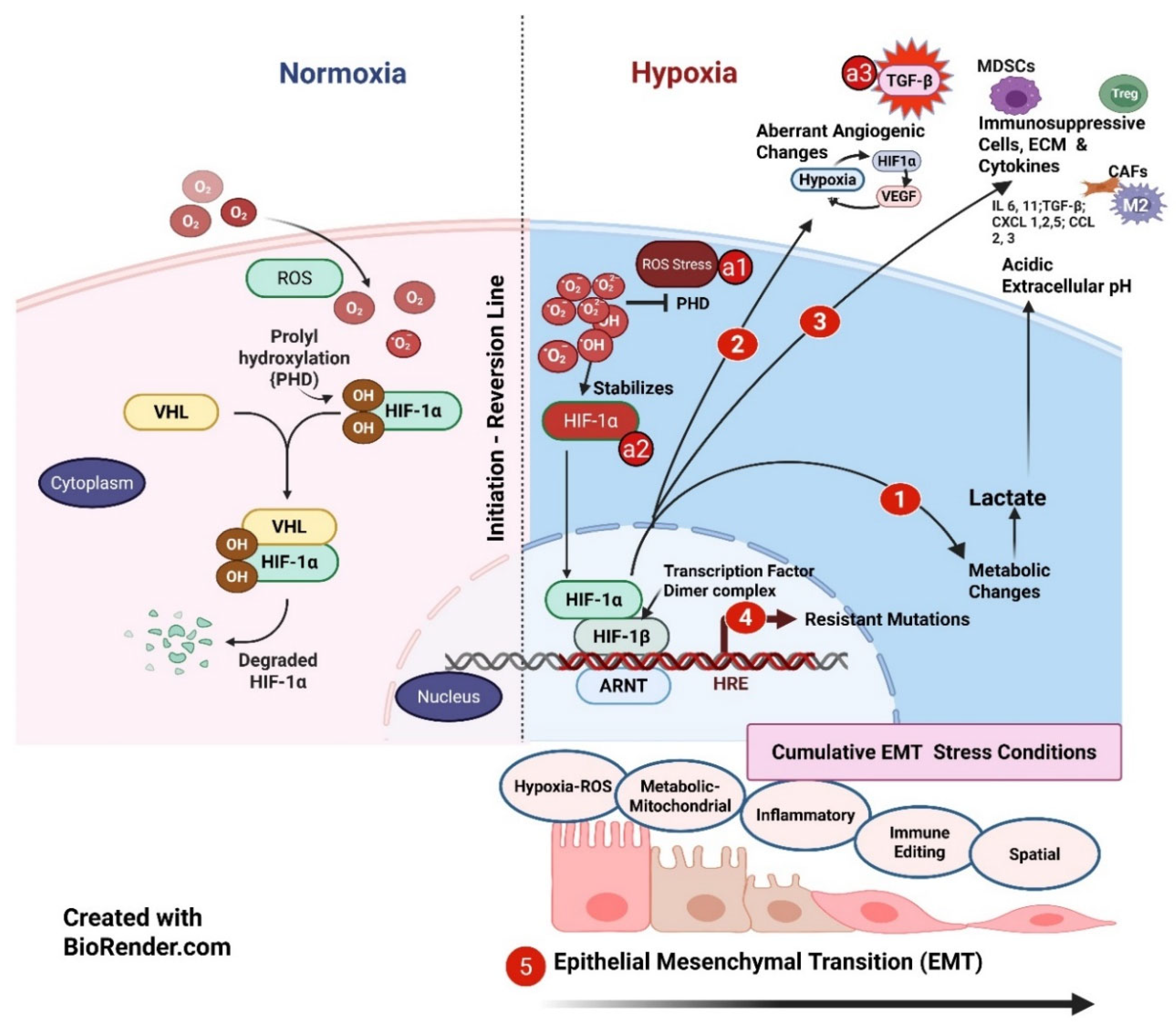
Figure 2.
Signaling pathways of TGFβ activation, EMT, and Progression. ECM = Extracellular Matrix; TGFβ = Transforming Growth Factor-Beta; TKR = Tyrosine Kinase Receptors; WNT = "Wingless/Integrated" family of genes; SHH = Sonic Hedgehog - PTCH1 = Patched-1 Protein - SMO = Smoothened, frizzled family receptor; IL = Interleukin; GP = Glycoprotein; Downstream = Transcription Factors (see Text). Created in BioRender. Swamy, K. (2026) https://BioRender.com/19zifb7.
Figure 2.
Signaling pathways of TGFβ activation, EMT, and Progression. ECM = Extracellular Matrix; TGFβ = Transforming Growth Factor-Beta; TKR = Tyrosine Kinase Receptors; WNT = "Wingless/Integrated" family of genes; SHH = Sonic Hedgehog - PTCH1 = Patched-1 Protein - SMO = Smoothened, frizzled family receptor; IL = Interleukin; GP = Glycoprotein; Downstream = Transcription Factors (see Text). Created in BioRender. Swamy, K. (2026) https://BioRender.com/19zifb7.
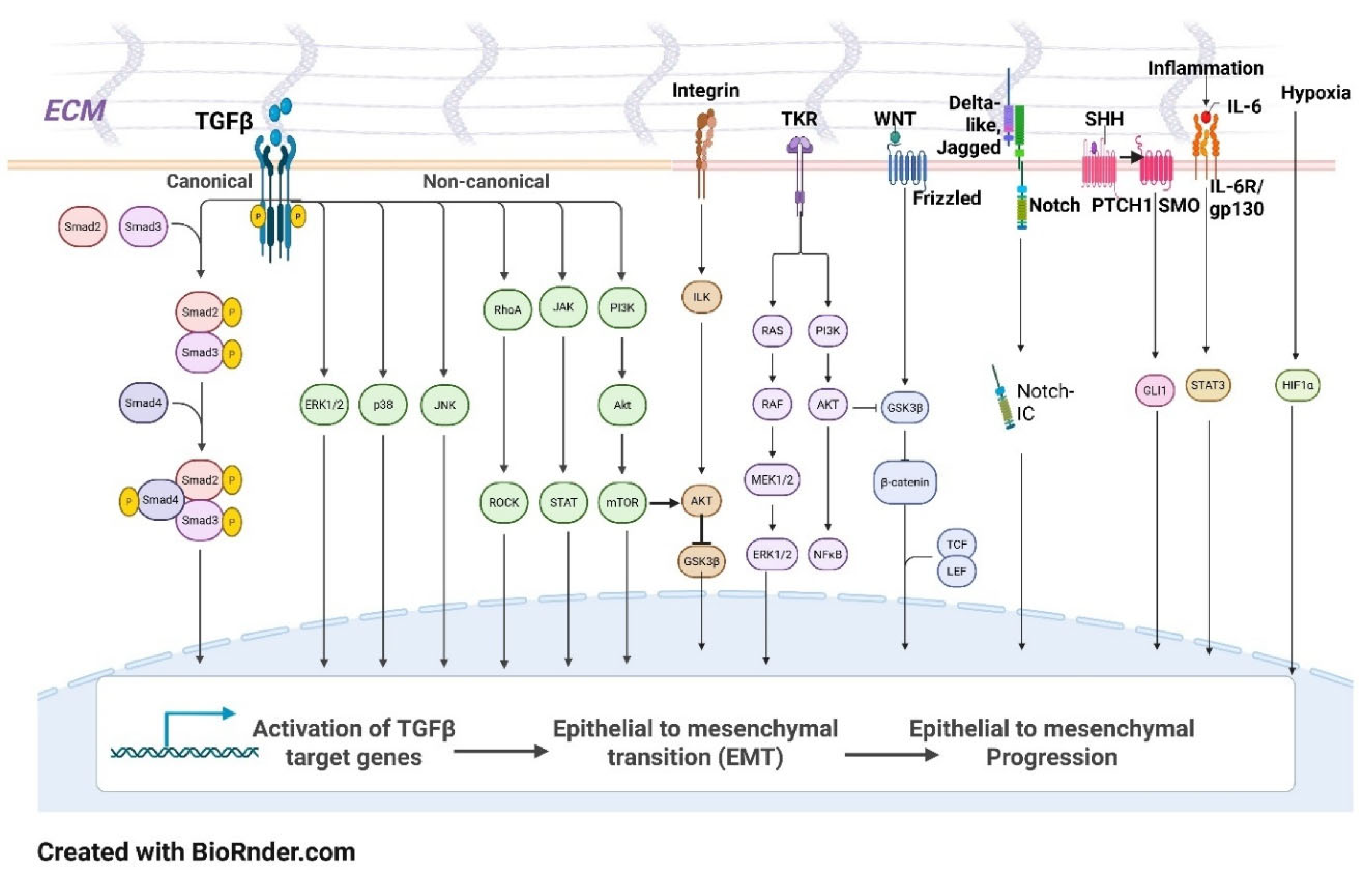
Figure 5.
Diverse Cancer Heterogeneity Compartments: The evolutionary mechanisms drawn from the human genome from which it arises are adopted by the cancer cells to develop a labyrinthine heterogeneous edifice for survival, as depicted in this figure. TILs = Tumor Infiltrating Lymphocytes; ECM = Extracellular Matrix; EMT = Epithelial-Mesenchymal Transition. Created in BioRender. Swamy, K. (2026) https://BioRender.com/n1q5ulq.
Figure 5.
Diverse Cancer Heterogeneity Compartments: The evolutionary mechanisms drawn from the human genome from which it arises are adopted by the cancer cells to develop a labyrinthine heterogeneous edifice for survival, as depicted in this figure. TILs = Tumor Infiltrating Lymphocytes; ECM = Extracellular Matrix; EMT = Epithelial-Mesenchymal Transition. Created in BioRender. Swamy, K. (2026) https://BioRender.com/n1q5ulq.
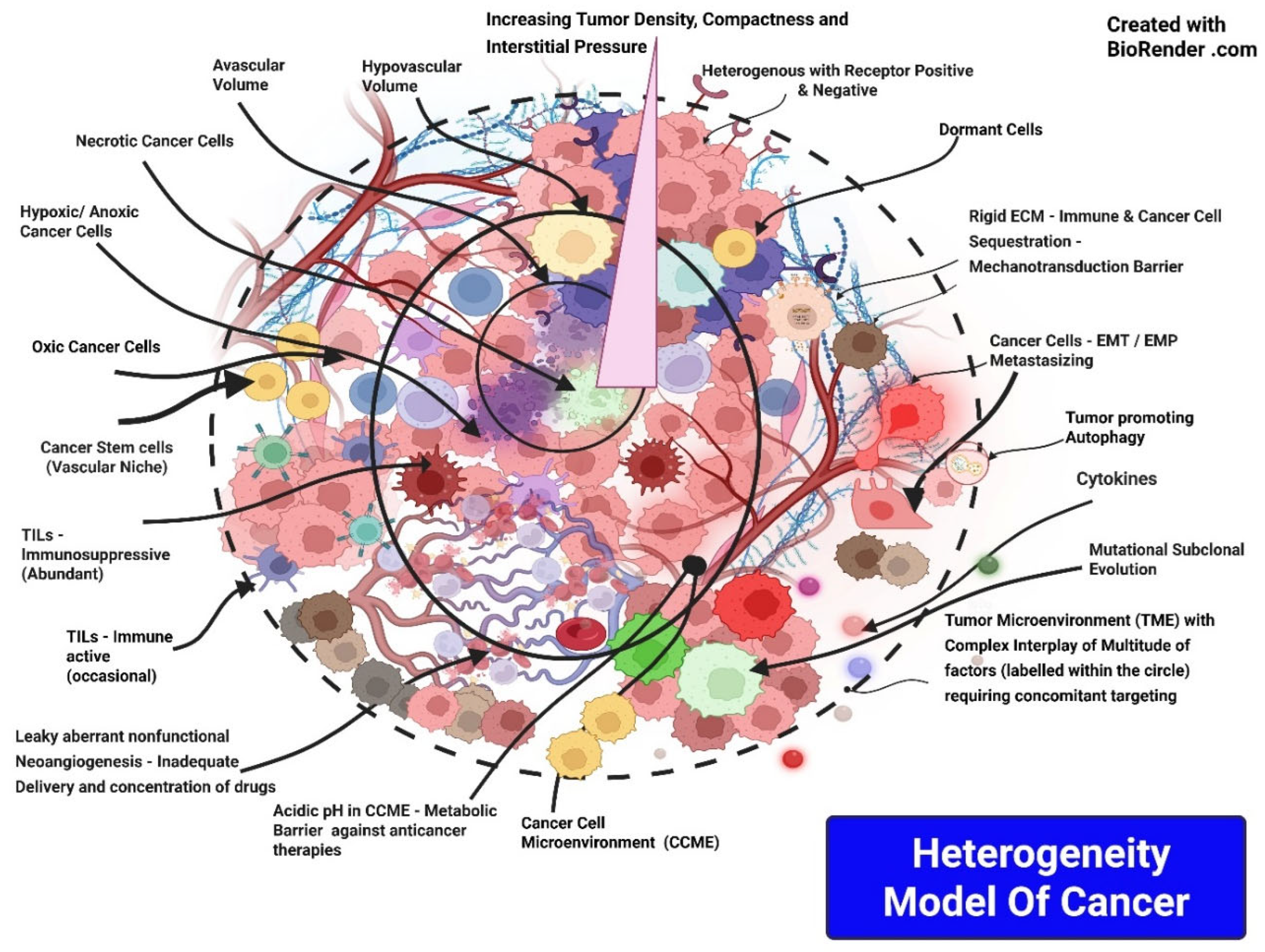
Figure 6.
Cancer Heterogeneity Matrix. The established web of pathways (one pathway nurturing the other in a feedback loop that drives tumor propagation) is responsible for both primary and secondary resistance. EMT and plasticity (EMP) remain embedded in and promote it. The treatment strategies should encompass EMP and the full spectrum of multilayer protective mechanisms of cancer cells, using a structured, feedback-analytical approach. Created in BioRender. Swamy, K. (2026) https://BioRender.com/blqfhrh .
Figure 6.
Cancer Heterogeneity Matrix. The established web of pathways (one pathway nurturing the other in a feedback loop that drives tumor propagation) is responsible for both primary and secondary resistance. EMT and plasticity (EMP) remain embedded in and promote it. The treatment strategies should encompass EMP and the full spectrum of multilayer protective mechanisms of cancer cells, using a structured, feedback-analytical approach. Created in BioRender. Swamy, K. (2026) https://BioRender.com/blqfhrh .
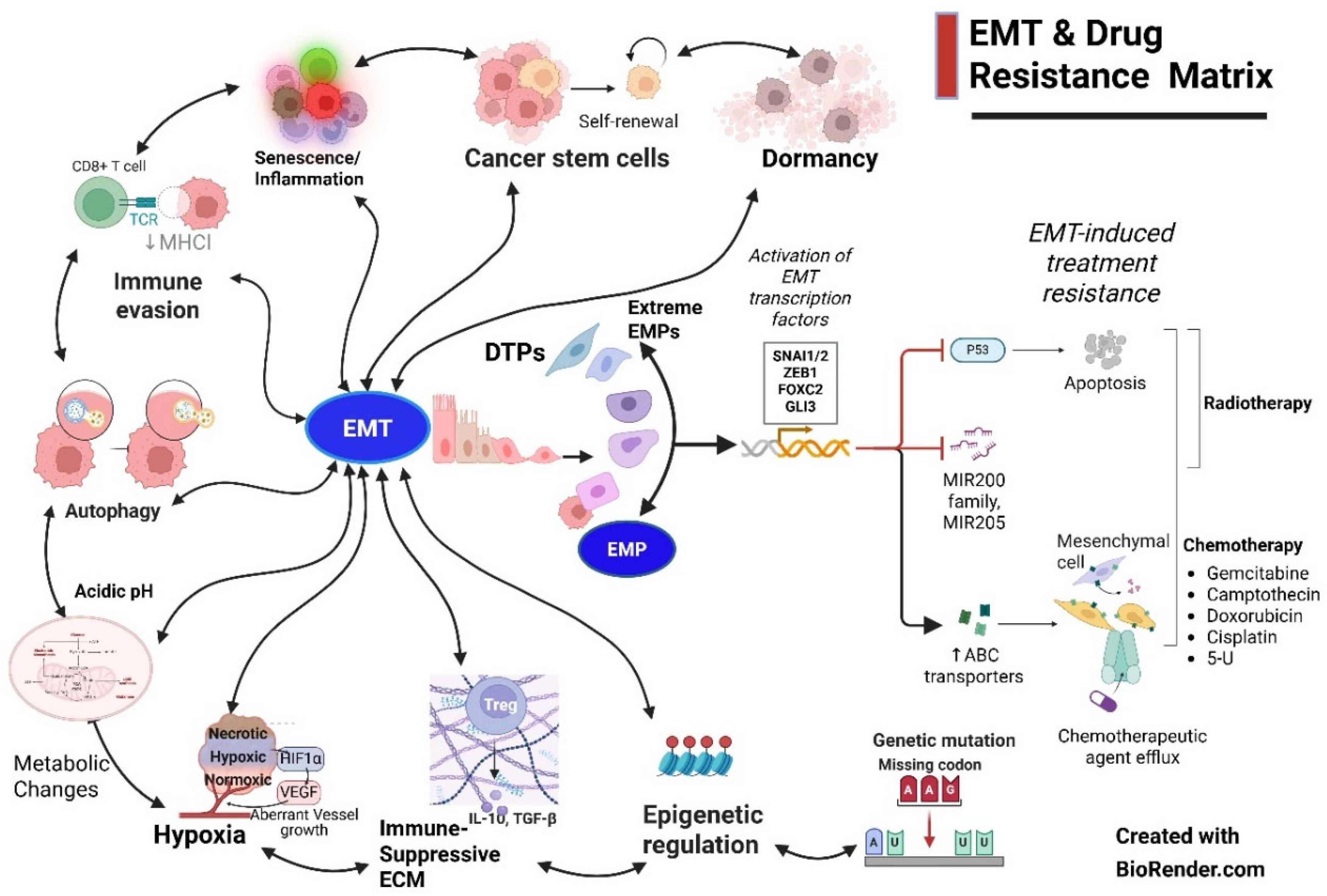
Figure 7.
Principles of Anti-Hallmark Targeting Mechanisms of Heterogeneity and EMP Resistance Network. Created in BioRender. Swamy, K. (2026) https://BioRender.com/z0ik8o2.
Figure 7.
Principles of Anti-Hallmark Targeting Mechanisms of Heterogeneity and EMP Resistance Network. Created in BioRender. Swamy, K. (2026) https://BioRender.com/z0ik8o2.
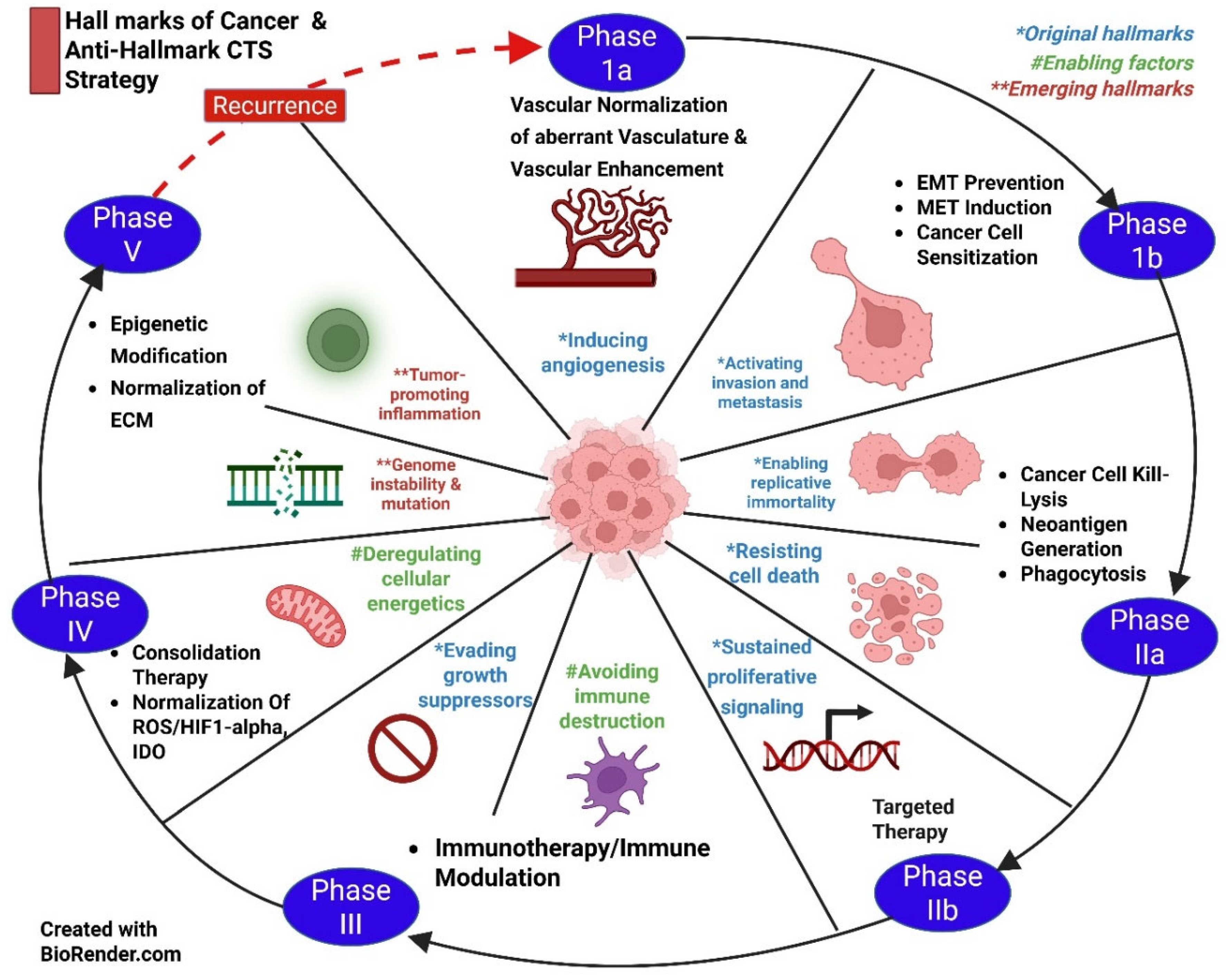
Figure 8.
Strategic End Points for successful anticancer therapies. Phenomena 1-8 present the steps toward a molecular cure for cancer. Focusing on A represents an increase in in situ effects, driven by improvements in the memory cell pool, primarily through antigenicity and adjuvanticity, restoring immune editing, preventing recurrence, and achieving long-term control. *Less explored phenomenon of Trans-differentiation by epigenetic modifiers to benign adipose tissue/neuron/endocrine cells, depending on the type of cancer/ site of origin. Created in BioRender. Swamy, K. (2026) https://BioRender.com/0125y0q .
Figure 8.
Strategic End Points for successful anticancer therapies. Phenomena 1-8 present the steps toward a molecular cure for cancer. Focusing on A represents an increase in in situ effects, driven by improvements in the memory cell pool, primarily through antigenicity and adjuvanticity, restoring immune editing, preventing recurrence, and achieving long-term control. *Less explored phenomenon of Trans-differentiation by epigenetic modifiers to benign adipose tissue/neuron/endocrine cells, depending on the type of cancer/ site of origin. Created in BioRender. Swamy, K. (2026) https://BioRender.com/0125y0q .
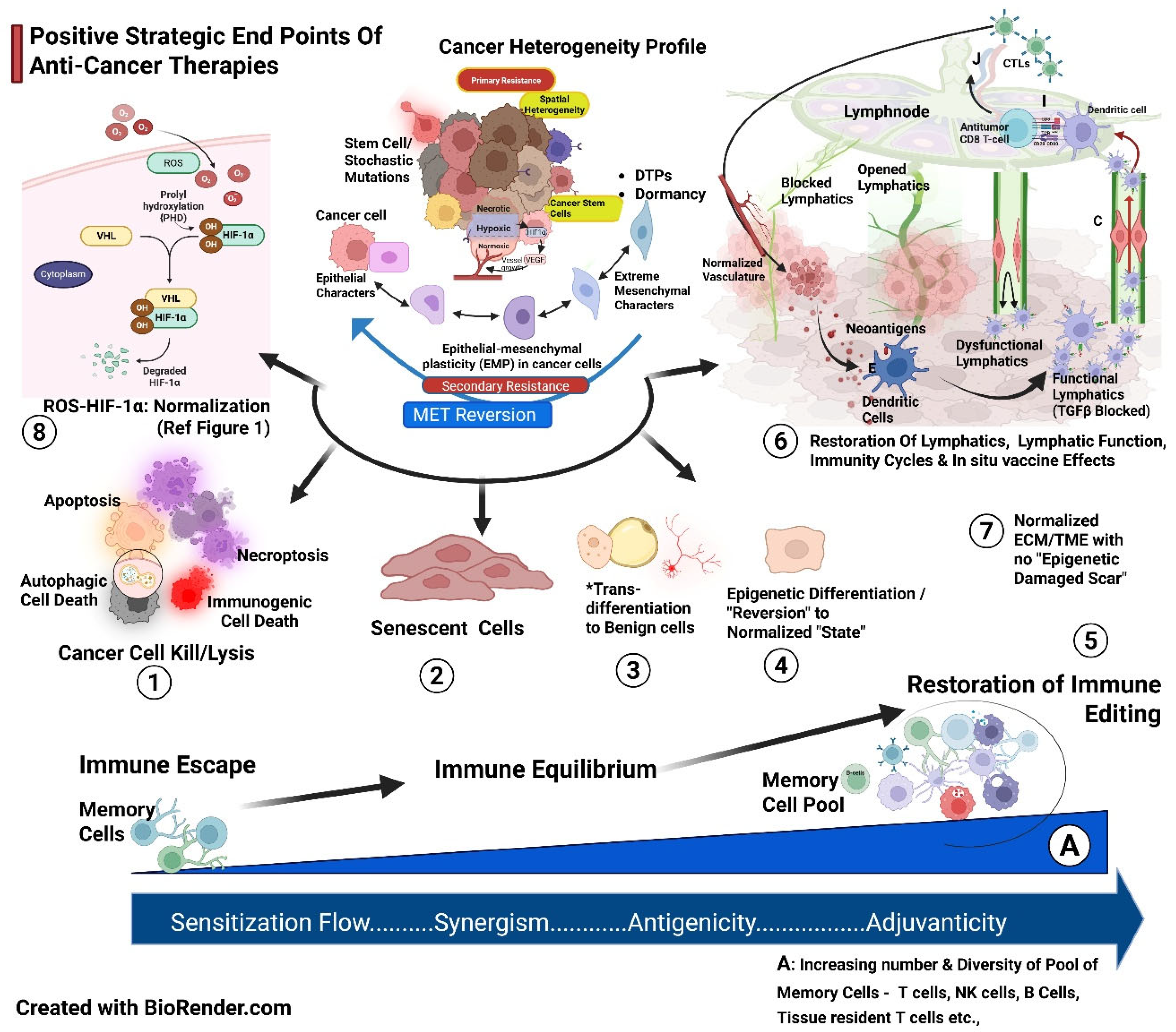
Figure 9.
Figurative representation of in situ vaccination using pulsed/boost immunogenic dose SBRT: Synchronized pulsed SBRT and immunotherapy optimize immune cycles. 1. A hypoxic or anoxic lesion during the first pulse of SBRT generates an initial wave of neoantigens. 2. A better-oxygenated subclonal tumor mass during the second pulse, following the response to the first dose, produces a second set of altered neoantigens. 3. Normoxic or near-normoxic residual tumors harbor potentially resistant clones that persist after the first and second pulses during the third pulse of SBRT, generating neoantigens from these resistant clones. These changes enhance radiation sensitivity stepwise (following normalization of the vasculature, improved oxygenation, recruitment of dormant cells into susceptible phases of the cell cycle, decreased interstitial pressure, etc.), cause immunogenic cell deaths, and expand the tumor-specific T cell and memory cell repertoire with immunotherapy [7,121]. Created in BioRender. Swamy, K. (2026) https://BioRender.com/84wka6v.
Figure 9.
Figurative representation of in situ vaccination using pulsed/boost immunogenic dose SBRT: Synchronized pulsed SBRT and immunotherapy optimize immune cycles. 1. A hypoxic or anoxic lesion during the first pulse of SBRT generates an initial wave of neoantigens. 2. A better-oxygenated subclonal tumor mass during the second pulse, following the response to the first dose, produces a second set of altered neoantigens. 3. Normoxic or near-normoxic residual tumors harbor potentially resistant clones that persist after the first and second pulses during the third pulse of SBRT, generating neoantigens from these resistant clones. These changes enhance radiation sensitivity stepwise (following normalization of the vasculature, improved oxygenation, recruitment of dormant cells into susceptible phases of the cell cycle, decreased interstitial pressure, etc.), cause immunogenic cell deaths, and expand the tumor-specific T cell and memory cell repertoire with immunotherapy [7,121]. Created in BioRender. Swamy, K. (2026) https://BioRender.com/84wka6v.
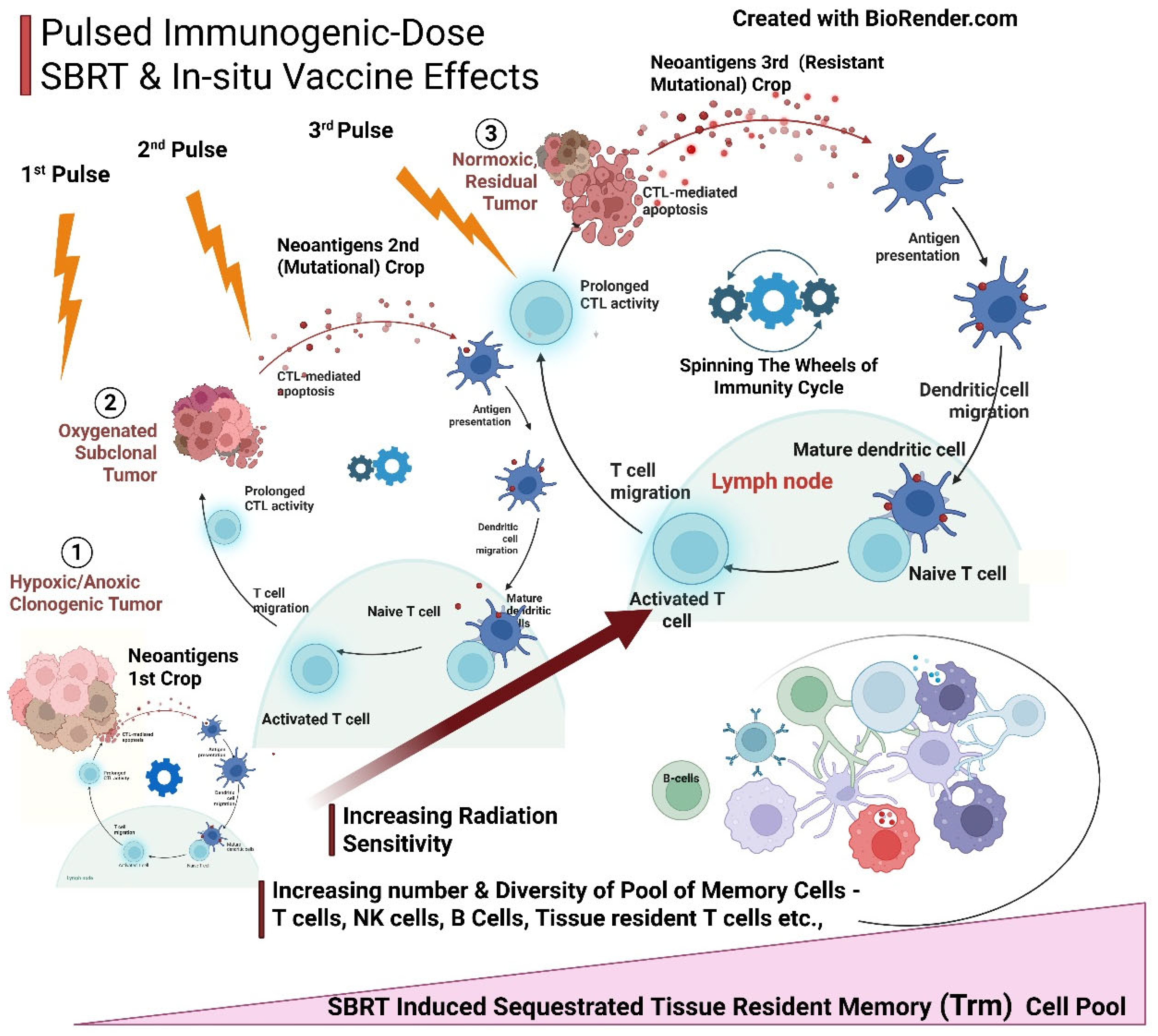
Figure 10.
Extended Vascular Normalization Concept: (1) Normal Angiogenesis covered with pericytes (2). Tumor angiogenesis is elongated and distorted, with weak, displaced pericytes. (3). Within hours of starting antiangiogenics (Day 0), the normalization process of tumor angiogenesis begins. These vascular normalization features persist from Day 0 to Day 28. (4). Around day 28, the vascular trimming phase begins, leading to the reemergence of Hypoxia. (5). Cyclical AAGs dosage: On stoppage of Antiangiogenics on Day 28, drug withdrawal vasculature's normalization phase again, lasting about four weeks. Restarting antiangiogenics repeats the normalization process (as on Day 0) and lasts until Day 28 [113] [Goel S] (6). Theoretical Perspective: 3 weeks on and 3 weeks off, AAGs are likely to create an extended normalization phenomenon (AAGs are given on and off in the clinical setting to reduce toxicity). Created in BioRender. Swamy, K. (2026) https://BioRender.com/6p85x2g .
Figure 10.
Extended Vascular Normalization Concept: (1) Normal Angiogenesis covered with pericytes (2). Tumor angiogenesis is elongated and distorted, with weak, displaced pericytes. (3). Within hours of starting antiangiogenics (Day 0), the normalization process of tumor angiogenesis begins. These vascular normalization features persist from Day 0 to Day 28. (4). Around day 28, the vascular trimming phase begins, leading to the reemergence of Hypoxia. (5). Cyclical AAGs dosage: On stoppage of Antiangiogenics on Day 28, drug withdrawal vasculature's normalization phase again, lasting about four weeks. Restarting antiangiogenics repeats the normalization process (as on Day 0) and lasts until Day 28 [113] [Goel S] (6). Theoretical Perspective: 3 weeks on and 3 weeks off, AAGs are likely to create an extended normalization phenomenon (AAGs are given on and off in the clinical setting to reduce toxicity). Created in BioRender. Swamy, K. (2026) https://BioRender.com/6p85x2g .
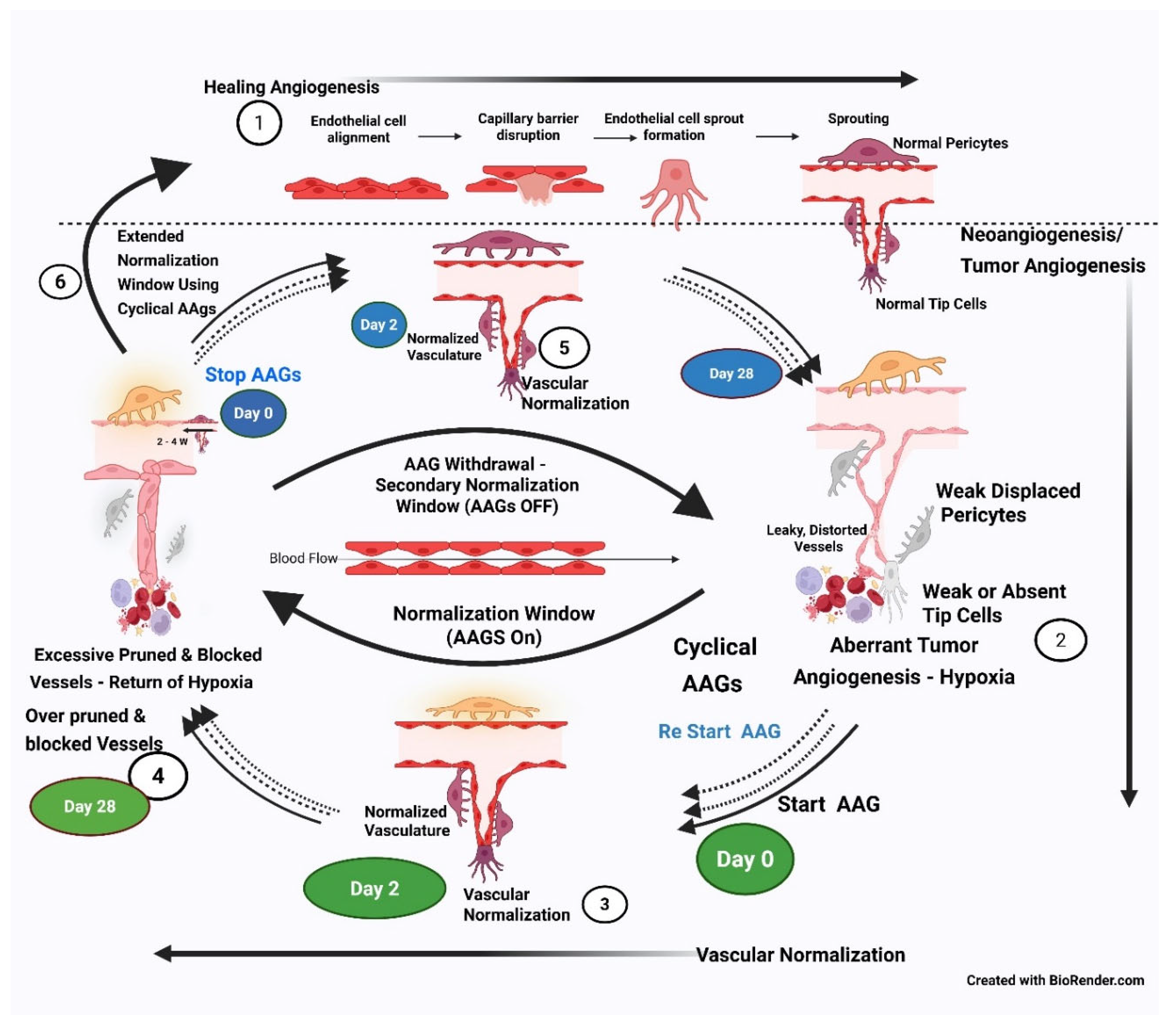

Table 1.
Schema of Anti-hallmark Combinations, Timing, and Sequencing (CTS) Protocol. Please refer to the Text Box for management of breast carcinoma as an example. # The phagocytosis checkpoint in immunotherapy, which overcomes “don’t eat me” signals from cancer cells, complements T-cell responses and marks the beginning of a new era in immunotherapy [7,125,126,127,128]. *Epigenetic modifications for reducing inflammation and recurrence can be explored using senolytics/senostatics, although their clinical effectiveness is not yet firmly established [129,130].
Table 1.
Schema of Anti-hallmark Combinations, Timing, and Sequencing (CTS) Protocol. Please refer to the Text Box for management of breast carcinoma as an example. # The phagocytosis checkpoint in immunotherapy, which overcomes “don’t eat me” signals from cancer cells, complements T-cell responses and marks the beginning of a new era in immunotherapy [7,125,126,127,128]. *Epigenetic modifications for reducing inflammation and recurrence can be explored using senolytics/senostatics, although their clinical effectiveness is not yet firmly established [129,130].
| Phases Sequence |
Strategy & Mechanisms |
Timing | Objective | References |
| Phase I a |
Primary Prepriming therapy: Vascular Normalization a. With AAGs / Small molecules to initiate vascular normalization & hypoxia targeting (3 weeks on 3 weeks off) |
Start: Day 0 3 Weeks on & 3 Weeks off for extended normalization |
1. NV is Essential for effective chemo-immunotherapy delivery. It also improves TME & sensitivity to RT/SBRT. 2. Extended NV: enhancement & stabilization |
Vascular Normalization (Figure 10): a. Goel S et al., 2011 [113]; b. Jain RK et al. 2005 [112]; c. Yang T et al, 2021 [131]; d. Liu Z, et al., 2021 [132]; e. Magnussen AL et al, 2021. [133] f. Guo Z,et al., 2024. [134] |
| Phase 1b |
Prepriming therapy: a) Epigenetic Therapy as a CT/RT sensitizer: With epigenetic modifiers for subsequent CT/ RT in Phase II. b) Epigenetic Therapy as MET Inducer – MET Reversion Push the cells to EMT cells to gain Epithelial features using the MET pathway |
Starts in the 1st week of AAGs (> Day 2) | Epigenetic Modifiers have the potential to reverse epigenetic changes; reduce glycolysis in tumor cells; make TILs nutrition-rich; reduce drug efflux; prevent EMT and stemness; thus sensitizing cancer cells to CT/RT. To facilitate Mesenchymal cells in acquiring more epithelial characteristics and reducing stemness. |
Epigenetic Modifiers: a. Guo H et al., 2025 [40]. ; b. Bagheri M et al., 2024 [62]; c. Huang Y et al., 2022. [4]; d. Connolly EP et al., 2015 [68]; e. Meidhof S, et al., 2015 [69]; f. Yoshida T et al., 2014, [73]; g. Lim HI et al., 2020, [74]; h. Park J et al., 2022 [94]. MET Iducers . Eribulin: Connolly EP et al., 2015 [68] ; Yoshida T et al., 2017 [73]; Lim HI et al., 2020 [74] ; .E-cadherin & TGFβ Targeting: -Johnson KS, et al., 2022 [45] .Targeting EMT signaling: Ribatti et al., 2020 [46] |
| Phase II |
Priming therapy: Primarily, selective cancer cell kill and reduction of interstitial pressure (ISP). a. MTD strategy: Cytotoxic therapy and activation of CTLs to prime the cancer for concurrent or subsequent targeted/ immunotherapy even in cold and PDL1-negative tumors. b. Enhance Professional Phagocytosis; c. Decrease ISP; d. Increase Antigenicity & Adjuvanticity; f. Activate Lymphatic normalization g. In situ vaccination effect; h. Nanoparticle therapy; i. Added in vitro vaccine therapy. Epigenetic therapy (ET) |
Start CT/RT (SBRT) in the 1st week of Phase I (Day 2 -7) | Cancer cell lysis (preferably by ICD); Create waves of neoantigen generation; Immune suppressive/ exhausted cell depletion in TME; decrease ISP; enhanced normalized vascularity (vascular promotion) and oxygenation, improved lymphatic drainage for neoantigen presentation in the lymph nodes, and reinvigorating the Immunity cycle; enhanced fresh TME CTLs infiltration. | .EMP Prevention: - Wang X et al., 2020 [44]; Park J et al., 2022 [94] .RT/CT & EMT: -Chen HHW. 2017 [146] . Phagocytosis #- Lecoultre M et al, 2024. [126]; Heldin CH et al., 2004 [125]; Feng K et al., 2025 [128]; Glaviano A et al., 2025 [7]. . ISP -Heldin CH, et al., 2004, [125] - Ura B, et al., 2018 [127] -[Glaviano A et al, 2025 [7] . Lymphatic function normalization Goel S et al, 2011 [113] . Antigenicity & Adjuvanticity -Appleton, E., et al. 2021. [123] . In situ Vaccination: -Feng K, et al, 2025, [128] . Nanoparticle therapy - Liu N, et al., [147]; Vaidya AM et al., 2019 [78] .Vaccine therapy -Kerr MD, et al., 2022, [141] . Integrating Epigenetic Therapy: -Bangarh R et al. 2024 [89]; Kurrey NK et al. 2009 [90] |
| Phase III |
a. Primary therapy Optimizing targeted/ immunotherapy. Additionally; b. Timed/Pulsed SBRT/SBRT Boost for the residual gross disease. Figure 9. c. Immune adjuvants d. Phagocytosis checkpoints e. In situ vaccination f. Nanoparticle therapy g. Epigenetic therapy |
2 to 3 weeks after Neoadjuvant CT/RT (SBRT) Or after Surgery |
1. The stage is set for optimizing the response to the targeted/ immunotherapy. Here, the cancer cells are unmasked and CCME/ICS-modulated for effective drug concentrations. 2. Integrated SBRT Boost/Pulsed/Pulsar, for dynamic in-situ vaccination effect and to improve memory cell pool. |
Immunotherapy Optimization: -Sordo-Bahamonde et al., 2023, [121] -Lussier DM et al., 2022 [122] . Timed SBRT $: -Breen, WG et al., 2020 [118] -He K et al., 2021 [119]. - Spaas M, et al., 2019 [120] . SBRT Oxygenation & Timing: -Shibamoto, Y et al., 2016 [117] - Swamy K, 2022 [116] . Professional Phagocytic Check Points # -Spaas M et al., 2019 [120] . In situ vaccination: -Feng K. et al., 2025; [128] -He K. et al., 2021. [119] . Nanoparticle-Immunotherapy: - Liu N et al., 2025 [147]; Vaidya AM et al., 2019 [78] . Concurrent Epigenetic therapy: Joshi S et al. (2019). [105] |
| Phase IV |
Post-Primary therapy: Primarily about eliminating MRD/Dormancy/DTPs/ Senescence a. Consolidation Therapy of Immunotherapy Effects, Normalization of ECM and Immune Activated TILs. b. Anti-evolutionary resistance strategy & epigenetic modifiers, e.g., (BET) protein inhibitors c. Normalized soft ECM |
2 to 3 weeks After Primary Therapy. Maintenance Immunotherapy / Targeted therapy as per the guidelines |
1. Design the maintenance therapy with the least long-term side effects. 2. Develop anticancer/repurposed drugs suitable for long-term medications to prevent the recurrence/ eliminate dormant cells, like any other chronic disease. |
. Supple ECM: - Zhao Y, et al., 2020 [33]; Zhang M, et al., 2025 [139] -Targeting TGF-β, Matrix metallo-proteinases, Integrins,@ etc.: -Zhang M, et al, 2025 [139] .Targeting DTPs ^: -Lu W et al, 2019 [6; Williams ED et al, 2019 [52] ; Chen M et al, 2024 [84] -BET inhibitors – Lethal ROS-induced apoptosis : - Chen M et al., 2024 [84] .Epigenetic Reversion/ dedifferentiation/trans-differentiation -Pensotti A et al., 2024 [10] . Monitoring: -Nezami et al., 2015 [66] |
| Phase V |
Probative therapy: Primarily consolidation therapy. Also, to abate inflammation, mitigate epigenetic scar, and restore immune editing. Presently Exploratory – EMP Intervention Strategy. Reprogramming of the ECM/Cancer reversion. Prevents late recurrences. Effective molecular Monitoring is required. |
Starts from the point when patients are apparently cured/ unacceptable toxicity,/ Progression |
1. To keep the ECM supple. Secondly, to target HIF1-α and ROS to reset the ECM towards normalization and eliminate dormant cells. 2. Reducing inflammation by maintenance therapy, senolytics, and lifestyle modifications or combinations thereof. 3. Evolutionary Infomed Therapy (EIT) or MTET strategy. |
.Reducing ROS/ HIF-1α: Chen M, et al 2024 [84] .Targeting Senescence *: -Škarková A et al., 2024 [35]; Short S, et al., 2019 [129]; Kirkland JL et al., 2020 [149] . Lifestyle: -Marino P. et al. 2024 [137]; Liu S, et al., 2025 [150] . Evolutionary Focussed Therapies: - Gatenby et al., 2020 [34]; Nezami. et al., 2015. [66]; Škarková A, et al., 2024 [35] . Advanced Monitoring & Immunopeptidomics -Nezami. Et al. 2015 [66]; -Shapiro IE et al., 2023 [144]; Vadevoo et al. 2023 [145] |
Disclaimer/Publisher’s Note: The statements, opinions and data contained in all publications are solely those of the individual author(s) and contributor(s) and not of MDPI and/or the editor(s). MDPI and/or the editor(s) disclaim responsibility for any injury to people or property resulting from any ideas, methods, instructions or products referred to in the content. |
© 2026 by the authors. Licensee MDPI, Basel, Switzerland. This article is an open access article distributed under the terms and conditions of the Creative Commons Attribution (CC BY) license (http://creativecommons.org/licenses/by/4.0/).
Copyright: This open access article is published under a Creative Commons CC BY 4.0 license, which permit the free download, distribution, and reuse, provided that the author and preprint are cited in any reuse.