Preprint
Article

This version is not peer-reviewed.

Evaluating the Impact of Sensorimotor Training on the Physical Capacities of the Elderly

Submitted:

21 November 2024

Posted:

25 November 2024

You are already at the latest version

Abstract

Background: Physical activity (PA) plays a crucial role in improving the quality of life (QoL) in the elderly, particularly by enhancing balance and movement coordination. Objective: This study aimed to assess the effects of sensorimotor training intervention in older adults. Methods: 90 participants, divided into a Control Group (N=44) and Experimental Group (N=46) were involved in a 24-week period sensorimotor training program. Participants were evaluated both before and after the intervention period. Strength and flexibility were measured using the Rikli and Jones protocol (1999), while agility and speed were assessed through timed-up-and-go tests. A descriptive analysis of the sample was performed to characterize the data using the mean and standard deviation considering the gender of the participants. Student’s T test was performed to compare the differences between groups according to the first and second data collection moments (before and after the intervention). Jamovi software was used to develop the statistical analysis, with a value of p<0.05 to determine the statistical significance. Results: The Experimental Group showed significant improvements across all analyzed variables following the intervention (p < 0.005), indicating substantial gains in physical capacities. In contrast, the Control Group exhibited no significant changes in any variable, with the lowest p-value observed in the “Sitting and Reaching” test (p = 0.155), highlighting the lack of improvement without intervention. The results showed significant differences in all the analyzed variables before and after intervention. Individually, in the “reach behind your back (left)” test largest effect size was observed. Conclusions: In conclusion, the sensorimotor training program demonstrated significant improvements in various physical capacities, though flexibility did not show notable progress. Developing PA programs tailored to the elderly is essential for enhancing their QoL and reducing the risk of falls, injuries, and illnesses. These interventions play a crucial role in promoting overall health, independence, and well-being among older adults.

Keywords: 
;  ;  ;  ;  ;  

1. Introduction

Nowadays, physical activity (PA) is an essential factor, directly influencing the quality of life (QoL) of the elderly [1,2], as well as improving balance control and coordination in movements [3]. PA has been proven to positively impact the QoL of older individuals, including their physical health, mental health, functional capacity, individual autonomy, and pain management [4]. For example, studies such as the one by Goodarzi et al. [5] show that regular PA not only benefits cardiovascular health but also significantly reduces symptoms of anxiety and depression in older adults, which contributes to an overall sense of well-being. In addition, PA increases mobility, strengthens muscles, and improves joint flexibility, which allows individuals to carry out daily activities more independently and reduces the need for external support [6]. Although improvements in physical health are often emphasized, PA also promotes emotional resilience and increases social interaction, with older people who exercise regularly reporting fewer feelings of loneliness and greater satisfaction with life [7]
Inactivity is associated with weakness and negative health outcomes in middle-aged and older adults [8]. Due to the current lifestyles, the population tends to be more sedentary than active [9]. Inactivity is one of the main factors that can be modified to prevent the risk of mortality [10] and suffering from cardiovascular diseases [11]. Nowadays, the male population shows superior physical function and QoL, whereas physically active individuals demonstrate better physical function and QoL [2]. To decrease the sedentary lifestyles of elderly people and reduce the impact of obesity on their QoL, programs for promoting PA must be carried out with the highest frequency because they show benefits in mental health and reduce the risk of diseases [12] and cardiovascular problems [13].
These programs should focus on maintaining a minimum level of PA in elderly individuals through balance, coordination, and strength exercises to prevent falls and enhance movement control [14]. A minimum of 20 minutes of daily PA [15], or 150 minutes per week of moderate-intensity activity can offer optimal cardiovascular benefits in later life, reducing the risk of chronic disease, cognitive decline, and mortality [16]. Exercise programs positively affect mental health [17], well-being [18] and the QoL of the elderly [19]. Including and developing programs focused on improving the physical fitness of this collective allows for acquiring improvements in lower and upper limb strength, aerobic endurance, lower and upper limb flexibility, and agility [20].
The measurement of the functional capacity of the elderly can contribute to adapting healthcare and increasing the QoL, preventing falls, and evaluating the needs of this population [21]. The functional capacity of an old person should be evaluated according to three dimensions or factors: mental, physical, and functional [21]. To evaluate and determine the level of physical fitness in the elderly, different tests can be carried out, such as the “Timed Up and Go” (TUG) test, which helps to evaluate the spatiotemporal and kinematics parameters [22], as well as can be used as a predictor of mortality in short terms [23]. In this line, muscular endurance and upper and lower limb strength are essential to develop daily routines and activities [24], and this information can be monitored using an isokinetic dynamometer [25], through the evaluation of torque [26] and power [27] to determine the lower limb strength. To evaluate upper limb strength different tests can be useful, such as the “Sit-to-stand Test” [28] or "Chair Stand Test" [29], because they can offer an excellent insight into the characteristics and risks of falls in this group. Flexibility is an ability that decreases due to the absence of regular PA, according to this, it can be measured using the “Sit and Reach” test [30,31] for the lower limbs, and “Behind the Back Reach” test for the upper limbs [32,33]. Evaluate and analyzing strength and flexibility help to improve the motor abilities and functional capacity of the elderly, and in general, their QoL [34].
In short, PA is one of the fundamental pillars for improving the functional capacity and QoL of the elderly [35]. Several health benefits are associated with physical exercise, making it essential to improve our approach to evaluate and control physical activities. This is necessary to ensure that practitioners can continue their activities minimizing the risk of injuries, dropouts, or lack of motivation [36]. Hence, this study aimed to address a gap in the research by assessing various physical abilities in a group of elderly individuals before and after a sensorimotor training intervention. The study hypothesis was defined as follows: Is sensorimotor training effective in improving the physical abilities of older adults? To test this, we evaluated the effects of the intervention on the participants' physical capacities and performance.

2. Materials and Methods

2.1. Design

A parallel-group randomized controlled trial was conducted, including a 6-month intervention phase and a 1-year follow-up period. For both groups (control and experimental), assessments were performed at baseline (before starting the intervention) and after the intervention period [37].

2.2. Participants

The study analyzed 90 participants aged between 55 and 80 years old, divided into two groups, the Control Group (CG) (72.40 ± 6.88 years) and the Experimental Group (EG) (72.40 ± 6.88 years), randomly assigned to the experimental group. Assessments were carried out at the beginning (before starting the intervention) and immediately after the end of the intervention for both groups. The CG did not perform any type of activity or physical program throughout the intervention period. Table 1 shows the characteristics of the EG to contextualize and framework the sample of the study.
N Age (year) Weight (kg) Height (m) BMI
Mean SD Mean SD Mean SD Mean SD
Control Group 44 73.70 6.08 70.10 12.70 1.58 0.08 28.10 4.69
Experimental Group 46 72.40 6.88 68.40 14.20 1.58 0.09 27.40 5.03
Note. Kg: kilograms; m: meters, BMI: Body Mass Index; SD: Standard deviation.
Participants should previously meet the following inclusion criteria: (1) age between 55 and 80 years old; (2) without dentures (except dental prosthesis); and (3) who have not been involved in surgical intervention 6 months before the study. Exclusion criteria: (1) musculoskeletal diagnosis; (2) problems in locomotion; (3) psychiatric diseases and neurological disorders; and (4) clinical cardiovascular diagnosis.

2.3. Ethics

The Ethics Committee of the University of Évora approved this project (approval number: 21040). The study was registered with the Clinical Trials.gov PRS Protocol Registration and Results System (Registration Number: NCT05398354; https://www.clinicaltrials.gov/ct2/show/NCT05398354?term=NCT05398354&draw=2&rank=1. Each participant provided informed consent before participating, according to the Helsinki Declaration for Human Studies.

2.4. Intervention

The sensorimotor training program was conducted for 6 months, with a frequency of twice a week. The duration of the sessions was 45 minutes in total. The training volume consisted of 8 exercises, where each participant performed the maximum number of repetitions within 50 seconds, completing 4 sets. As the program progressed, the load was progressively increased. To achieve this, the session was divided into three levels of intensity: easy (no external load during the first eight weeks), intermediate (application of external load: elastic bands, shin guards, and free weights, from the 9th to the 16th week) and advanced (increase in external load for the previous level, from the 17th to the 24th week). Each month a different type of session was developed. However, despite prescribing a structured training program with progressions for all participants, we consistently considered each individual's unique progression. Recognizing that participants had different levels of initial physical fitness, we tailored the plan to suit each person's capabilities, ensuring that the exercises were accordingly adjusted to match their individual needs and optimize their development throughout the intervention. Each session was divided into three phases: the initial phase (10 minutes), consisting of a 5-minute walk followed by a joint warm-up; and the fundamental phase (25 minutes), where the patients worked on a corresponding circuit of exercises. This circuit consisted of 4 cycles, with eight exercises each (50 seconds on, 15 seconds off); and a return to calm (10 minutes), where muscle stretching was performed [1] (Figure 1).
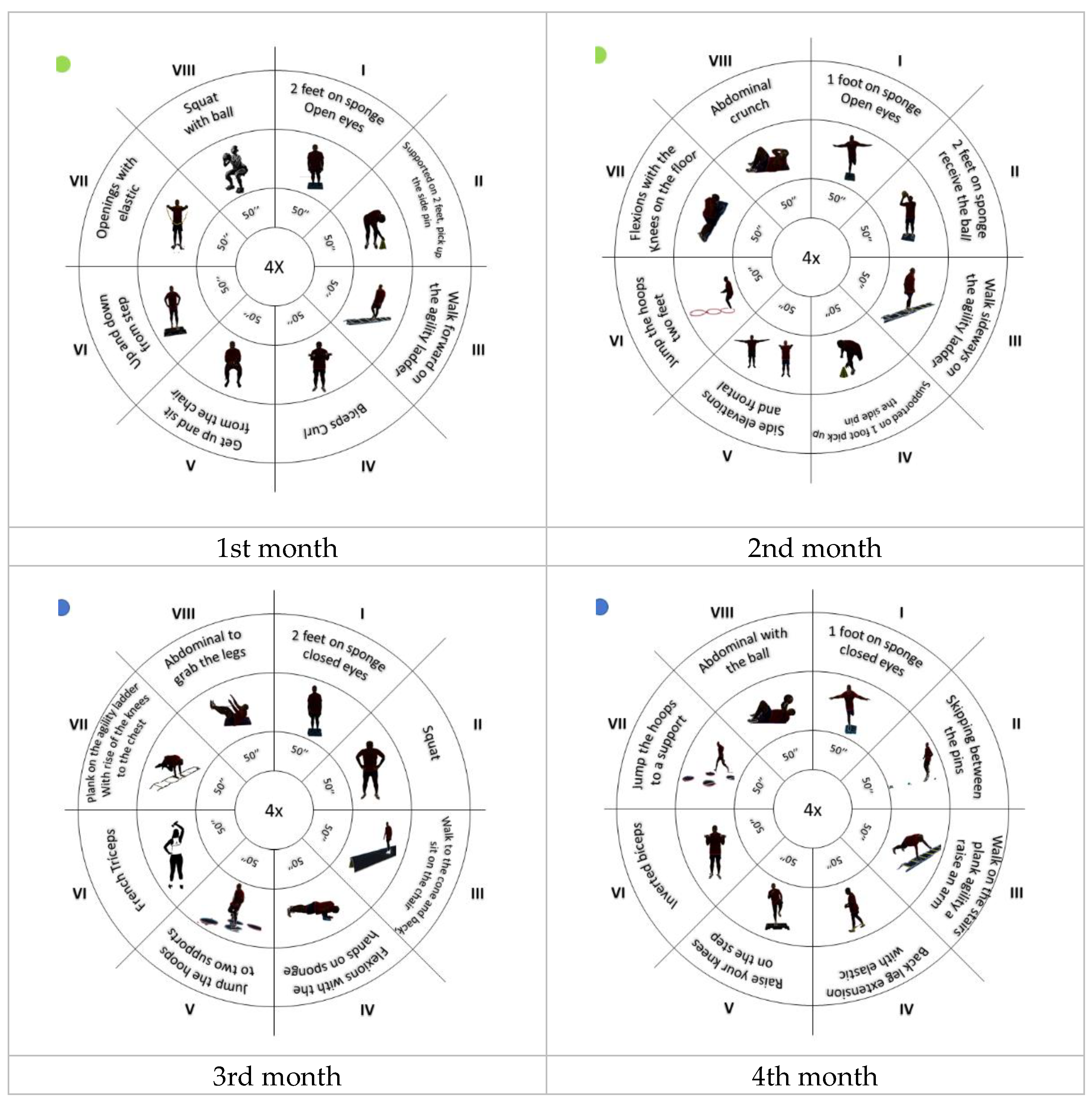
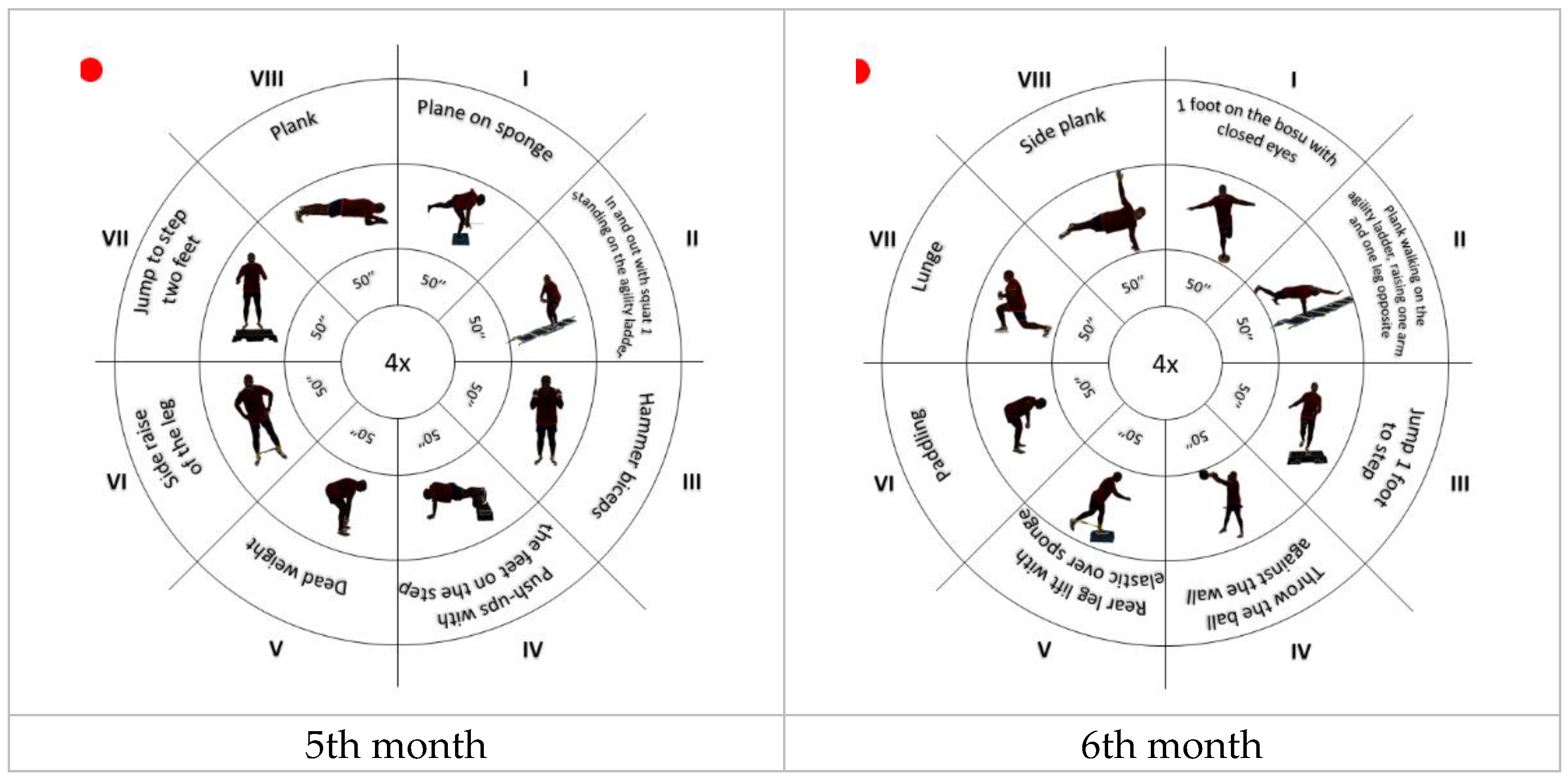
Figure 2 shows the main exercises carried out during the intervention, with a short explanation of them [38].
A variety of tools was used for the assessments under study. All measures were taken at baseline and at the end of the intervention. Before the first measurement, all participants were involved in a familiarization phase to adapt themselves to the different instruments and assessments associated with this project.

Main Evaluations:

To assess the physical fitness of the participants, they wore a tracksuit bottom and were asked to remove accessories and any objects in their pockets. The following procedures were carried out:
  • Bodyweight and height. Before the measurements, participants were asked to remove their shoes, socks, and heavy clothing (coats, sweaters, coats, etc.). They were also asked to empty their pockets and remove belts and other accessories (bands, pendants, etc.). Height was measured using a stadiometer (Seca 22, Hamburg, Germany). This instrument was placed on a vertical surface with the measuring scale perpendicular to the ground. Participants were positioned in a standing position, with their shoulders balanced, and their arms relaxed along their body. Height was determined in cm and rounded to the nearest mm. Body weight was measured using a scale. Body weight was registered in kg and the BMI was calculated using the formula: weight (Kg)/height2.
  • Agility and execution speed were assessed through the TUG test, which consisted of getting up from a chair, walking in a straight line three meters away, and walking back and sitting down again [2].
  • Muscular endurance was evaluated by rising from the chair or bending and straightening for 30 seconds, during which the strength of the lower limbs involving the vastus medialis obliquus (VMO) and the vastus lateralis (VL) was also calculated [3].
  • Upper limb strength was determined by the number of times that a determined weight can be lifted by performing a flexion–extension of the arms for 30 seconds [3].
  • Lower limb flexibility was assessed using the "Sit and Reach" test, in which the participants, from a seated position with one leg extended, slowly bent over, sliding their hands down the extended leg until they touched (or passed) their toes [3].
  • Upper limbs flexibility was assessed using the "behind the back reach", which consisted of measuring with a ruler the distance between (or the overlap of) the middle fingers behind the back [3].

2.5. Statistical Analysis

To identify the normality of the sample, Kolgomorov-Smirmov’s test was considered, identifying a p-value higher than 0.05, therefore normality was assumed [39]. Parametric models were used to test the study's hypotheses [40]. A descriptive analysis of the sample was performed to characterize the data using the mean and standard deviation (M±SD), considering the gender of the participants.
Afterward, a Student’s T test was applied to compare the differences between groups considering the first and second data collection (before and after the intervention). The effect size (ES) was calculated through Cohens d, having been considered trivial (0-0.2), small (0-2-0.6), moderate (0.6-1.2), large (1.2-2), very large (2-4), and extremally large (>4) [41].
The statistical analyses were performed with Jamovi (Desktop version 2.5.2.0) Statistical significance was determined at p < 0.05.

3. Results

Table 2 shows the main results according to the pre-and post-intervention values. All the analyzed variables showed improvement from pre to post-intervention, particularly the "Reach Behind your Back (right)" and "Reach Behind your Back (left)", variables which presented the high values of ES.
Considering the values of the control group, Table 3 shows no differences in any of the variables studied. It is identified that the variable with the lower p-values was “Sitting and reaching” (p=0.155). These values show that the group control didn’t improve their capacities as the intervention group.
The effect sizes (ES) of the differences, along with their corresponding confidence intervals, are presented in Table 4. These metrics provide a clearer understanding of the magnitude of the observed changes between the pre-and post-intervention assessments. By analyzing the ES, we can gauge the practical significance of the intervention's impact on various physical abilities, beyond mere statistical significance.
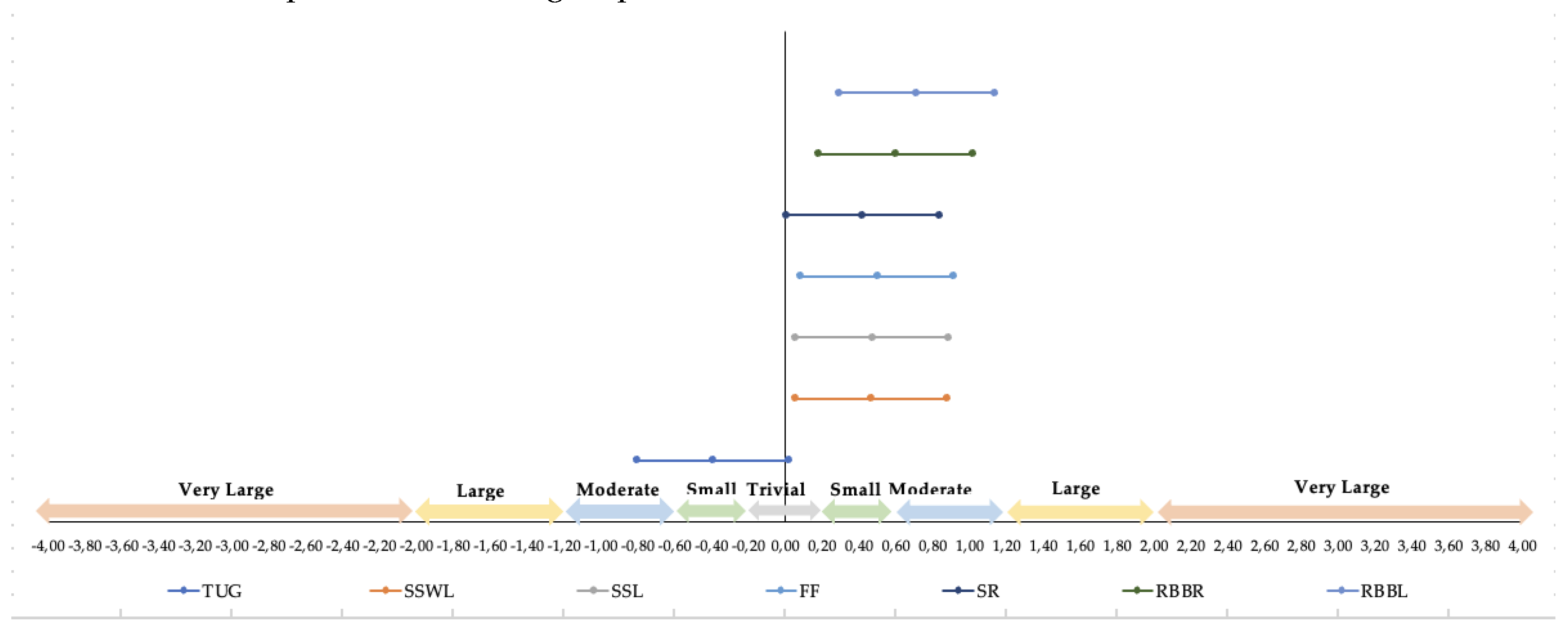
Figure 3 increases the comprehensive interpretation of the Table 3 data considering the proposal to interpret the ES values [41]. This figure highlights that the TUG test had a negative and moderate ES. On the other hand, “Reach Behind your Back (right)” and “Reach Behind your Back (left)” were the variables that presented the largest positive ES.

4. Discussion

This study aimed to examine the impact of a sensory-motor training program on the physical capacities of elderly participants. The subjects shared similar characteristics in age, weight, height, and BMI revealed that both the male and female groups were classified as overweight based on the values obtained.
The discussion of tests assessing functional mobility and physical capacity in older adults can offer valuable insights into their effectiveness, sensitivity, and real-world application. The tests used— TUG, SSWL, SSL, FF, SR, RBBR, RBBL —each measure specific components of physical function, with relevance to the elderly population.
The timed standing and walking test, commonly represented by the TUG test, is widely utilized to assess balance, mobility, and risk of falls in older adults. It involves standing up from a chair, walking a short distance (typically 3 meters), turning around, and returning to sit down. This test is simple to administer and reflects real-life tasks, such as getting up from a chair and walking, which are fundamental for independence in daily activities. Research suggests that prolonged completion times are associated with an increased risk of falls and mobility impairments in older adults [42]. Furthermore, the TUG test is recommended by geriatric guidelines as a screening tool for fall risk [43]. Based on the results of this study, the participants' average time was 7.26 seconds, which decreased to 6.85 seconds following the intervention. These values align with the average found in other studies [44,45,46].
Standing and sitting tests, particularly when performed on flat surfaces and inclined planes, assess lower body strength, balance, and coordination. These movements mimic activities of daily living, such as getting in and out of chairs or beds, and are indicative of an individual’s functional independence, challenging balance, and muscle control. The 30-second chair stand test (30s-CST), which measures how many times an individual can rise to a full standing position from sitting within 30 seconds, is commonly used to evaluate lower limb strength. It has been shown to have moderately high reliability and validity in community-dwelling older adults [47]. According to the reference values provided by Batista and Sardinha [48], participants in the lower limb strength test ranked between the 75th and 90th percentiles. Our results indicate that participants demonstrated excellent strength both initially and after the intervention, with noticeable improvements in the measured values. Additionally, since one key factor in enhancing lower limb proprioception is the learning effect, progressively increasing the difficulty of sensory-motor exercises contributes to improved proprioception.
The performance in these tests correlates with an individual’s ability to perform essential tasks, such as ascending stairs or rising from lower seating, which tend to decline with age due to reduced muscle mass and balance [49]. The standing and sitting tests, both with and without inclination, offer a useful measure of functional ability and strength in different real-world conditions.
Forearm flexion, typically measured through the handgrip strength test, is a strong predictor of overall muscular strength and health status in older adults. It has been widely accepted as a marker for physical limitations and is associated with mortality, frailty, and disability in older populations [50]. The handgrip test is practical, simple to perform, and provides an objective measure of upper body strength. It is particularly valuable in settings where comprehensive fitness tests are not feasible and serves as a standalone indicator of health and functional ability. Assuming the reference values of Batista and Sardinha [48], participants in our study and considering the lower limb strength test ranked between the 75th and 90th percentiles, and their performance improved from the first assessment to the second.
Tests assessing flexibility and range of motion, such as sitting and reaching or reaching behind the back, are crucial for evaluating the upper body and spinal flexibility in older adults. These movements reflect the ability to perform daily tasks like dressing, grooming, or reaching for objects on shelves. As flexibility declines with age, so does the ability to perform these tasks comfortably and independently [51]. These tests help clinicians to assess the degree of joint and muscle stiffness and guide interventions aimed at improving flexibility and preventing further declines in functional capacity. The participants' results were analyzed and compared with Ruivo [52], revealing that they fell between the 50th and 75th percentiles. In the upper limb flexibility test, however, participants ranked between the 10th and 35th percentiles. Thus, contrasting their strength results, their flexibility scores were lower compared to the age-specific reference values. Nevertheless, participants showed improvement in both tests following the intervention [53]. Together, these tests provide a comprehensive assessment of the critical physical abilities of older adults’ independence. The tests range from those that measure strength (e.g., handgrip, chair stands) and balance (e.g., TUG) to those that evaluate flexibility and mobility (e.g., reaching, sitting). The application of these tests in clinical and research settings supports the identification of declines in physical function, planning interventions, and tracking the progress of older adults. Each test offers valuable insights into specific aspects of functional mobility, helping to tailor interventions that address the physical limitations associated with aging.
The analysis of the control group data in Table 3 reveals no statistically significant improvements across any of the measured variables, indicating that physical capacities remained stable without intervention. The variable "Sitting and Reaching," with a p-value of 0.155, showed the smallest difference, though still not statistically significant, suggesting minimal variation even in flexibility. These results underscore the effectiveness of targeted physical interventions, as the control group did not experience the gains observed in the intervention group. The findings highlight the critical role that structured exercise programs, such as sensorimotor training, play in enhancing balance, strength, and flexibility, which are essential for maintaining independence and reducing fall risk in older adults. This study reaffirms that routine physical activity, especially interventions focused on balance and functional mobility, is crucial for preserving and improving physical function as individuals age.
One limitation of this study was the need to conduct the intervention during the COVID-19 pandemic, which required additional precautions to ensure safety. This included increasing space for participants and providing extra materials for hygiene. Travel to the location where the program was conducted also posed a challenge.
In the future, it would be valuable to extend the study to include a wider range of age groups, including those who are still actively employed. This broader assessment would provide a more comprehensive understanding of sensorimotor behavior across the lifespan, not just during aging. Early intervention could be implemented to improve the analyzed skills in this study, promoting healthier outcomes over time.

5. Conclusions

The increasing number of older adults underscores the critical need for tailored PA programs to support aging populations. As aging often comes with increased susceptibility to disease and cardiovascular issues, primarily due to reduced activity levels, well-designed interventions can profoundly improve QoL for this demographic.
This study demonstrates the substantial benefits of sensorimotor training, especially in enhancing balance, strength, and overall physical function, which are essential for minimizing fall risk and promoting independence. Although flexibility showed less improvement, incorporating targeted balance, coordination, and strength exercises proved effective in meeting the broader physical needs of older adults. The intervention group displayed significant gains in physical capacities, while the control group showed no comparable changes, reinforcing the impact of structured PA.
Regular assessments of functional mobility are crucial for adapting PA programs to ensure both effectiveness and real-world applicability. Supporting an active lifestyle through such programs can help elderly individuals maintain autonomy, reduce injury risk, and improve overall well-being. These findings advocate for the integration of sensorimotor-focused exercise interventions as a pivotal part of healthy, active aging initiatives.

Author Contributions

Conceptualization, C.A.C. and V.H-B.; methodology, C.A.C; C.M and V.H-B.; software, C.A.C; validation, O.F; M.C.E and J.M.G; formal analysis, C.A.C. and V.H-B; investigation, V.H-B and M.C.E; data curation, C.M; J.M.G.; and J.A.P ; writing—original draft preparation, C.A.C. and V.H-B; writing—review and editing, C.M; O.F; M.C.E; J.M.G; and J.A.P; visualization, M.C.E; J.M.G and J.A.P; supervision, O.F and J.A.P All authors have read and agreed to the published version of the manuscript.

Funding

This study has been partially supported by national funds through the Foundation for Science and Technology, under the project UIDP/04923/2020.

Institutional Review Board Statement

The study was approved by the Ethics Committee of the University of Évora (approval number: 21040).

Informed Consent Statement

Informed consent was obtained from all subjects involved in the study.

Data Availability Statement

Not applicable.

Acknowledgments

The author C.A.C. thanks the Municipality of Almada for the availability of material and human resources.

Conflicts of Interest

The authors declare no conflict of interest.

References

  1. Choi, J.I.; Cho, Y.H.; Kim, Y.J.; Lee, S.Y.; Lee, J.G.; Yi, Y.H.; Tak, Y.J.; Hwang, H.R.; Lee, S.H.; Park, E.J.; et al. The Relationship of Sitting Time and Physical Activity on the Quality of Life in Elderly People. Int J Environ Res Public Health 2021, 18, 1459. [Google Scholar] [CrossRef] [PubMed]
  2. Prasad, L.; Fredrick, J.; Aruna, R. The Relationship between Physical Performance and Quality of Life and the Level of Physical Activity among the Elderly. J Educ Health Promot 2021, 10, 68. [Google Scholar] [CrossRef] [PubMed]
  3. Dunsky, A. The Effect of Balance and Coordination Exercises on Quality of Life in Older Adults: A Mini-Review. Front Aging Neurosci 2019, 11. [Google Scholar] [CrossRef] [PubMed]
  4. Vagetti, G.C.; Barbosa Filho, V.C.; Moreira, N.B.; Oliveira, V. de; Mazzardo, O.; Campos, W. de Association between Physical Activity and Quality of Life in the Elderly: A Systematic Review, 2000-2012. Revista Brasileira de Psiquiatria 2014, 36, 76–88. [Google Scholar] [CrossRef]
  5. Goodarzi, S.; Teymouri Athar, M.M.; Beiky, M.; Fathi, H.; Nakhaee, Z.; Omran, S.P.; Shafiee, A. Effect of Physical Activity for Reducing Anxiety Symptoms in Older Adults: A Meta-Analysis of Randomized Controlled Trials. BMC Sports Sci Med Rehabil 2024, 16, 153. [Google Scholar] [CrossRef]
  6. Pfeifer, C.E.; Ross, L.M.; Weber, S.R.; Sui, X.; Blair, S.N. Are Flexibility and Muscle-Strengthening Activities Associated with Functional Limitation? Sports Medicine and Health Science 2022, 4, 95–100. [Google Scholar] [CrossRef]
  7. Lindsay Smith, G.; Banting, L.; Eime, R.; O’Sullivan, G.; van Uffelen, J.G.Z. The Association between Social Support and Physical Activity in Older Adults: A Systematic Review. International Journal of Behavioral Nutrition and Physical Activity 2017, 14, 56. [Google Scholar] [CrossRef]
  8. Ghram, A.; Briki, W.; Mansoor, H.; Al-Mohannadi, A.S.; Lavie, C.J.; Chamari, K. Home-Based Exercise Can Be Beneficial for Counteracting Sedentary Behavior and Physical Inactivity during the COVID-19 Pandemic in Older Adults. Postgrad Med 2021, 133, 469–480. [Google Scholar] [CrossRef]
  9. Woessner, M.N.; Tacey, A.; Levinger-Limor, A.; Parker, A.G.; Levinger, P.; Levinger, I. The Evolution of Technology and Physical Inactivity: The Good, the Bad, and the Way Forward. Front Public Health 2021, 9. [Google Scholar] [CrossRef]
  10. Fletcher, G.F.; Landolfo, C.; Niebauer, J.; Ozemek, C.; Arena, R.; Lavie, C.J. Reprint of: Promoting Physical Activity and Exercise. J Am Coll Cardiol 2018, 72, 3053–3070. [Google Scholar] [CrossRef]
  11. Rizwan Sajid, M.; Muhammad, N.; Shahbaz, A.; Zakaria, R. A Statistical Study on the Prevalence of Physical Inactivity among Cardiovascular Diseases Patients: The Predictive Role of Demographic and Socioeconomic Factors. Res J Pharm Technol 2021, 3679–3684. [Google Scholar] [CrossRef]
  12. Cabo, C.A.; Hernández-Beltrán, V.; Gamonales, J.M.; Parraca, J.A.; Fernandes, O.; Espada, M.C. Evolution of Research Related to How a Sedentary Lifestyle Influences the Aging Process: A Bibliometric Review. J Public Health (Bangkok) 2024. [Google Scholar] [CrossRef]
  13. Ciumărnean, L.; Milaciu, M.V.; Negrean, V.; Orășan, O.H.; Vesa, S.C.; Sălăgean, O.; Iluţ, S.; Vlaicu, S.I. Cardiovascular Risk Factors and Physical Activity for the Prevention of Cardiovascular Diseases in the Elderly. Int J Environ Res Public Health 2021, 19, 207. [Google Scholar] [CrossRef] [PubMed]
  14. Nikitas, C.; Kikidis, D.; Bibas, A.; Pavlou, M.; Zachou, Z.; Bamiou, D.-E. Recommendations for Physical Activity in the Elderly Population: A Scoping Review of Guidelines. J Frailty Sarcopenia Falls 2022, 07, 18–28. [Google Scholar] [CrossRef] [PubMed]
  15. Fabris, E.; Sinagra, G. Physical Activity in Older People: Better Late than Never, but Better Early than Late. Heart 2022, 108, 328–329. [Google Scholar] [CrossRef]
  16. McGarrigle, L.; Todd, C. Promotion of Physical Activity in Older People Using MHealth and EHealth Technologies: Rapid Review of Reviews. J Med Internet Res 2020, 22, e22201. [Google Scholar] [CrossRef]
  17. Musdalifah Ahmad, S. A Systematic Review of the Impact of Physical Activity on Elderly Mental Health. J Psychiatr Nurs 2023, 248–255. [Google Scholar] [CrossRef]
  18. Carvalho, W.V. de; Katakura, E.A.L.B.; Carvalho, T.L.R.B. de; Koga, P.M.; Kawamoto, A.B.S.S.; Cardoso, R.B.C.M.; Tashima, C.M.; Alarcon, M.F.S. Benefit of Pleasurable Physical Activity for the Elderly: An Integrative Review. In A LOOK AT DEVELOPMENT; Seven Editora, 2023.
  19. Fiorilli, G.; Buonsenso, A.; Centorbi, M.; Calcagno, G.; Iuliano, E.; Angiolillo, A.; Ciccotelli, S.; di Cagno, A.; Di Costanzo, A. Long Term Physical Activity Improves Quality of Life Perception, Healthy Nutrition, and Daily Life Management in Elderly: A Randomized Controlled Trial. Nutrients 2022, 14, 2527. [Google Scholar] [CrossRef]
  20. Mueller, D.; Redkva, P.E.; Fernando de Borba, E.; Barbosa, S.C.; Krause, M.P.; Gregorio da Silva, S. Effect of Mat vs. Apparatus Pilates Training on the Functional Capacity of Elderly Women. J Bodyw Mov Ther 2021, 25, 80–86. [Google Scholar] [CrossRef]
  21. Wróblewska, Z.; Chmielewski, J.P.; Florek-Łuszczki, M.; Nowak-Starz, G.; Wojciechowska, M.; Wróblewska, I.M. Assessment of Functional Capacity of the Elderly. Annals of Agricultural and Environmental Medicine 2023, 30, 156–163. [Google Scholar] [CrossRef]
  22. Donisi, L.; Coccia, A.; Amitrano, F.; Mercogliano, L.; Cesarelli, G.; D’Addio, G. Backpack Influence on Kinematic Parameters Related to Timed Up and Go (TUG) Test in School Children. In Proceedings of the 2020 IEEE International Symposium on Medical Measurements and Applications (MeMeA); IEEE, June 2020; pp. 1–5. [Google Scholar]
  23. Chua, K.Y.; Lim, W.S.; Lin, X.; Yuan, J.-M.; Koh, W.-P. Handgrip Strength and Timed Up-and-Go (TUG) Test Are Predictors of Short-Term Mortality among Elderly in a Population-Based Cohort in Singapore. J Nutr Health Aging 2020, 24, 371–378. [Google Scholar] [CrossRef] [PubMed]
  24. Parraca, J.A.; Adsuar, J.C.; Domínguez-Muñoz, F.J.; Barrios-Fernandez, S.; Tomas-Carus, P. Test-Retest Reliability of Isokinetic Strength Measurements in Lower Limbs in Elderly. Biology (Basel) 2022, 11, 802. [Google Scholar] [CrossRef] [PubMed]
  25. Li, R.C.; Jasiewicz, J.M.; Middleton, J.; Condie, P.; Barriskill, A.; Hebnes, H.; Purcell, B. The Development, Validity, and Reliability of a Manual Muscle Testing Device With Integrated Limb Position Sensors. Arch Phys Med Rehabil 2006, 87, 411–417. [Google Scholar] [CrossRef] [PubMed]
  26. Perrin, D.H.; Robertson, R.J.; Ray, R.L. Bilateral Isokinetic Peak Torque, Torque Acceleration Energy, Power, and Work Relationships in Athletes and Nonathletes. Journal of Orthopaedic & Sports Physical Therapy 1987, 9, 184–189. [Google Scholar] [CrossRef]
  27. Janssen, J.C.; Le-Ngoc, L. Intratester Reliability and Validity of Concentric Measurements Using a New Hand-Held Dynamometer. Arch Phys Med Rehabil 2009, 90, 1541–1547. [Google Scholar] [CrossRef]
  28. Takai, Y.; Ohta, M.; Akagi, R.; Kanehisa, H.; Kawakami, Y.; Fukunaga, T. Sit-to-Stand Test to Evaluate Knee Extensor Muscle Size and Strength in the Elderly: A Novel Approach. J Physiol Anthropol 2009, 28, 123–128. [Google Scholar] [CrossRef]
  29. Cho, K.H.; Bok, S.K.; Kim, Y.-J.; Hwang, S.L. Effect of Lower Limb Strength on Falls and Balance of the Elderly. Ann Rehabil Med 2012, 36, 386. [Google Scholar] [CrossRef]
  30. Teraoka, K.; Tsuji, T.; Jindo, T.; Tokunaga, S.; Okura, T. Changes in the Physical Fitness of Elderly People in the COVID-19 Pandemic: An Examination Using Performance Tests. Nippon Ronen Igakkai Zasshi. Japanese Journal of Geriatrics 2022, 59, 59.491. [Google Scholar] [CrossRef]
  31. Shirazi, F.; Jaberi, A.; Zahedian Nasab, N. Effect of a Technology-Based Exercise Program on Physical Fitness and Activities of Daily Living in the Elderly With Balance Impairment: A Clinical Trial. Salmand 2023, 18, 178–191. [Google Scholar] [CrossRef]
  32. Correa, L. da P.; Bento, T.P.F.; Guariglia, D.A.; Rodrigues, G.F.; Conti, M.H.S. De Effects of Functional Training on Pain and Functional Capacity in Elderly Women. Fisioterapia em Movimento 2022, 35. [Google Scholar] [CrossRef]
  33. de Oliveira, F.N.; Damião, E.P.; dos Santos, L.; Galvão, L.L.; Machado, H.R.; Silva, R.R.; Tribess, S.; Virtuoso Júnior, J.S.; de Assis Teles Santos, D. Prevalence and Factors Associated with Low Functional Mobility in Older Adults. Aging Medicine 2024, 7, 292–300. [Google Scholar] [CrossRef] [PubMed]
  34. Melchiorri, G.; Triossi, T.; Viero, V.; Marroni, S.; D’Arcangelo, G.; Tancredi, V. A Study about a New Standardized Method of Home-Based Exercise in Elderly People Aged 65 and Older to Improve Motor Abilities and Well-Being: Feasibility, Functional Abilities and Strength Improvements. Geriatrics 2022, 7, 134. [Google Scholar] [CrossRef] [PubMed]
  35. Cabo, C.A.; Hernández-Beltrán, V.; Gamonales, J.M.; Fernandes, O.; Espada, M.C.; Parraca, J.A. Evolution of Documents Related to the Influence of Physical Activity and Functional Capacity throughout the Aging Process: A Bibliometric Review. Front Physiol 2024, 15. [Google Scholar] [CrossRef] [PubMed]
  36. Warburton, D.E.; Bredin, S.S. Health Benefits of Physical Activity: A Systematic Review of Current Systematic Reviews. Curr Opin Cardiol 2017, 32, 541–556. [Google Scholar] [CrossRef] [PubMed]
  37. Montero, I.; León, O.G. A Guide for Naming Research Studies in Psychology. International Journal of Clinical and Health Psychology 2007, 7, 847–862. [Google Scholar]
  38. Cabo, C.A.; Fernandes, O.; Mendoza-Muñoz, M.; Barrios-Fernandez, S.; Muñoz-Bermejo, L.; Gómez-Galán, R.; Parraca, J.A. An Active Retirement Programme, a Randomized Controlled Trial of a Sensorimotor Training Programme for Older Adults: A Study Protocol. Healthcare 2022, 11, 86. [Google Scholar] [CrossRef]
  39. Field, A. Discovering Statistics Using IBM SPSS Statistics.; Sage Publications.: Londres, Reino Unido, 2013. [Google Scholar]
  40. O’Donoghue, P. Statistics for Sport and Exercise Studies; Routledge: London, 2012. [Google Scholar]
  41. Hopkins, W.G.; Marshall, S.W.; Batterham, A.M.; Hanin, J. Progressive Statistics for Studies in Sports Medicine and Exercise Science. Med Sci Sports Exerc 2009, 41, 3–12. [Google Scholar] [CrossRef]
  42. Podsiadlo, D.; Richardson, S. The Timed “Up & Go”: A Test of Basic Functional Mobility for Frail Elderly Persons. J Am Geriatr Soc 1991, 39, 142–148. [Google Scholar] [CrossRef]
  43. Barry, E.; Galvin, R.; Keogh, C.; Horgan, F.; Fahey, T. Is the Timed Up and Go Test a Useful Predictor of Risk of Falls in Community Dwelling Older Adults: A Systematic Review and Meta- Analysis. BMC Geriatr 2014, 14, 14. [Google Scholar] [CrossRef]
  44. Martinez, B.P.; Santos, M.R. dos; Simões, L.P.; Ramos, I.R.; Oliveira, C.S. de; Forgiarini Júnior, L.A.; Camelier, F.W.R.; Camelier, A.A. Segurança E Reprodutibilidade Do Teste Timed Up And Go Em Idosos Hospitalizados. Revista Brasileira de Medicina do Esporte 2016, 22, 408–411. [Google Scholar] [CrossRef]
  45. Andrade, L.C.A.; Costa, G.L. dos A.; Diogenes, L.G.B.; Pimentel, P.H.R. Timed Up and Go Teste Na Avaliação Do Risco de Quedas Em Idosos: Uma Revisão de Literatura. Research, Society and Development 2021, 10, e321101321615. [CrossRef]
  46. Bretan, O.; Elias Silva, J.; Ribeiro, O.R.; Corrente, J.E. Risk of Falling among Elderly Persons Living in the Community: Assessment by the Timed up and Go Test. Braz J Otorhinolaryngol 2013, 79, 18–21. [Google Scholar] [CrossRef] [PubMed]
  47. Rikli, R.E.; Jones, C.J. Development and Validation of a Functional Fitness Test for Community-Residing Older Adults. J Aging Phys Act 1999, 7, 129–161. [Google Scholar] [CrossRef]
  48. Baptista, F.; Sardinha, L.B. Avaliação Da Aptidão Física e Do Equilíbrio de Pessoas Idosas – Baterias de Fullerton; Faculdade de Motricidade Humana: Cruz Quebrada, 2005. [Google Scholar]
  49. Lord, S.R.; Sherrington, C.; Menz, H.B.; Close, C.T. Falls in Older People: Risk Factors and Strategies for Prevention.; Cambridge University Press: Cambridge, 2002. [Google Scholar]
  50. Pan, Y.; Zhang, Y.; Tian, X.; Zhang, Z.; Zheng, C.; Zhang, T. Low Handgrip Strength and Mortality Risk among Older People: A Systematic Review and Meta-Analysis. Age Ageing 2022, 51. [Google Scholar]
  51. La Greca, S.; Rapali, M.; Ciaprini, G.; Russo, L.; Vinciguerra, M.G.; Di Giminiani, R. Acute and Chronic Effects of Supervised Flexibility Training in Older Adults: A Comparison of Two Different Conditioning Programs. Int J Environ Res Public Health 2022, 19, 16974. [Google Scholar] [CrossRef]
  52. Ruivo, R. Manual de Avaliação e Prescrição de Exercício; Self, 2015.
  53. Jones, J.; Rikli, R.E. Measuring Functional. The journal on Active Aging 2022, 25–30. [Google Scholar]
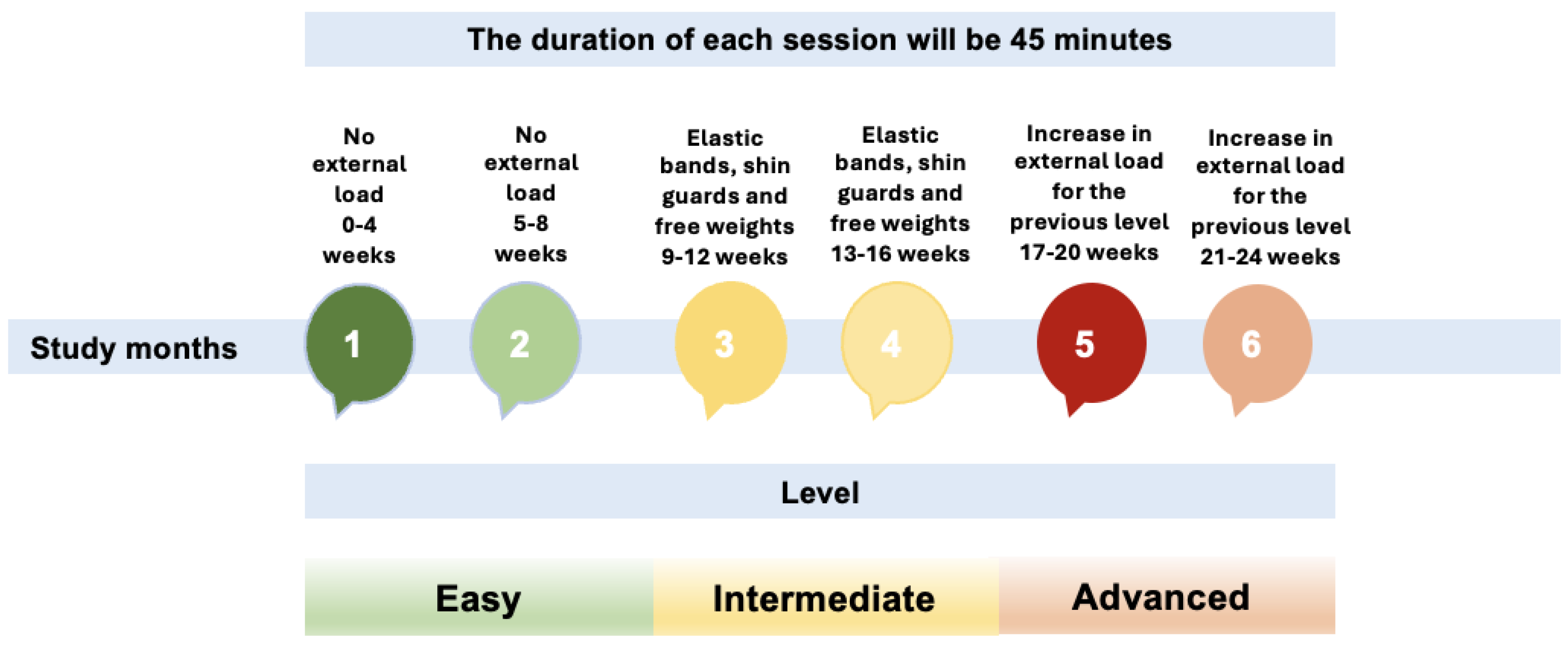
Figure 1. Study timeline graph.
Preprints 140453 g001
Figure 2. Intervention used for sensorimotor training.
Preprints 140453 g002aPreprints 140453 g002b
Figure 3. Interpretation of the effect size considering the analyzed variables. Note. Timed up and Go (TUG); Stand and sit with leaning (SSWL); Stand and sit without leaning (SSL); Forearm flexion (FF); Sitting and reaching (SR); Reach behind your back (right) (RBBR); Reach behind your back (left) (RBBL). ES is considered trivial (0-0.2), small (0.2-0.6), medium (0.6-1.2), large (1.2-2), very large (2-4), and extremely large (>4) (Cohen´s d).
Preprints 140453 g003
Table 2. Descriptive and inferential analysis of the pre-and post-intervention values.
Variables Mean SD Student’s T test Mean
differences
Df p
Timed up and go (pre) (s) 7.26 ±1.23 3.90 0.416 45.0 < .001
Timed up and go (post) (s) 6.85 ±0.810
Stand and sit with leaning (pre) (rep) 13.00 ±2.30 -3.64 -1.043 45.0 < .001
Stand and sit with leaning (post) (rep) 14.00 ±1.97
Stand and sit without leaning (pre) (rep) 15.30 ±2.95 -5.04 -1.370 45.0 < .001
Stand and sit without leaning (post) (rep) 16.60 ±2.57
Forearm flexion (pre) (rep) 17.30 ±5.83 -3.33 -2.522 45.0 0.002
Forearm flexion (post) (rep) 19.80 ±4.04
Sitting and reaching (pre) (rep) -2.54 ±8.70 -4.43 -3.565 45.0 < .001
Sitting and reaching (post) (rep) 1.02 ±8.24
Reach behind your back (right) (pre) (m) -13.80 ±11.7 -7.29 -6.261 45.0 < .001
Reach behind your back (right) (post) (m) -7.50 ±9.12
Reach behind your back (left) (pre) (m) -18.50 ±11.0 -8.97 -7.391 45.0 < .001
Reach behind your back (left) (post) (m) -11.20 ±9.43
Note. s: seconds; rep: repetitions; m: meter; SD: Standard deviation; Df: Degree of freedom; p < 0.005.
Table 3. Descriptive and inferential analysis of the pre-and post-values considering the control group.
Variables Mean SD Student’s T test Mean
differences
Df p
Timed up and go (pre) (s) 8.15 ±2.89 0.763 0.076 43.0 0.450
Timed up and go (post) (s) 8.08 ±2.94
Stand and sit with leaning (pre) (rep) 13.5 ±3.42 -0.947 -0.318 43.0 0.349
Stand and sit with leaning (post) (rep) 13.8 ±2.96
Stand and sit without leaning (pre) (rep) 15.5 ±4.31 -0.120 -0.045 43.0 0.905
Stand and sit without leaning (post) (rep) 15.6 ±3.63
Forearm flexion (pre) (rep) 18.3 ±4.69 1.007 0.386 43.0 0.319
Forearm flexion (post) (rep) 17.9 ±4.11
Sitting and reaching (pre) (rep) -0.614 ±9.97 1.446 1.204 43.0 0.155
Sitting and reaching (post) (rep) -1.82 ±9.37
Reach behind your back (right) (pre) (m) -9.32 ±12.5 1.100 2.636 43.0 0.277
Reach behind your back (right) (post) (m) -12.0 ±20.4
Reach behind your back (left) (pre) (m) -15.8 ±12.9 -1.310 -1.056 43.0 0.197
Reach behind your back (left) (post) (m) -14.8 ±11.9
Note. s: seconds; rep: repetitions; m: meter; SD: Standard deviation; Df: Degree of freedom; p < 0.005.
Table 4. Analysis of the effect size considering the pre-and post-intervention.
Variables Pre-intervention Post-intervention ES σ 95% IC
M SD n M SD n LL UL
Times up and go 7.26 1.23 46 6.85 0.81 46 -0.39 0.210524737 -0.81 0.02
Stand and sit with leaning 13.00 2.3 46 14.00 1.97 46 0.47 0.211337371 0.05 0.88
Stand and sit without leaning 15.30 2.95 46 16.60 2.57 46 0.47 0.211372433 0.06 0.88
Forearm flexion 17.30 5.83 46 19.80 4.04 46 0.50 0.211727587 0.08 0.91
Sitting and reaching -2.54 8.7 46 1.02 8.24 46 0.42 0.210802398 0.01 0.83
Reach behind your back (right) -13.80 11.7 46 -7.50 9.12 46 0.60 0.213163448 0.18 1.02
Reach behind your back (left) -18.50 11 46 -11.20 9.43 46 0.71 0.215029136 0.29 1.13
Note. M: mean; SD: Standard deviation; ES: Effect size; CI: Confidence Interval; LL: Lower limit; UP: Upper limit; p < 0.005.
Disclaimer/Publisher’s Note: The statements, opinions and data contained in all publications are solely those of the individual author(s) and contributor(s) and not of MDPI and/or the editor(s). MDPI and/or the editor(s) disclaim responsibility for any injury to people or property resulting from any ideas, methods, instructions or products referred to in the content.
Copyright: This open access article is published under a Creative Commons CC BY 4.0 license, which permit the free download, distribution, and reuse, provided that the author and preprint are cited in any reuse.
Prerpints.org logo

Preprints.org is a free preprint server supported by MDPI in Basel, Switzerland.

Subscribe

Disclaimer

Terms of Use

Privacy Policy

Privacy Settings

© 2025 MDPI (Basel, Switzerland) unless otherwise stated