Preprint
Article

This version is not peer-reviewed.

Antimicrobial Properties of Monomeric and Dimeric Catanionic Surfactants System

A peer-reviewed article of this preprint also exists.

Submitted:

20 November 2024

Posted:

21 November 2024

You are already at the latest version

Abstract

Cationic gemini surfactants are used due to their broad spectrum of activity, especially surface, anticorrosive and antimicrobial properties. Mixtures of cationic and anionic surfactants are also increasingly described. In order to investigate the effect of anionic additive on antimicrobial activity, experimental studies were carried out to obtain MIC (minimal inhibitory concentration) against E. coli and S. aureus bacteria. Two gemini surfactants (12-6-12 and 12-O-12) and two single quaternary ammonium salts (DTAB and DDAC) were analyzed. The most commonly used commercial compounds of this class, i.e. SDS and SL, were used as anionic additives. In addition, computer quantum-mechanical studies were also carried out to confirm the relationship between the structure of the mixture and the activity.
Keywords: 
;  ;  ;  

1. Introduction

Surfactants are key elements in various, complex industrial applications, in processes and in consumer products. First of all, by lowering the surface tension of aqueous solutions, they can serve as cleaning, foaming or wetting agents, as well as dispersants, solubilizers, emulsifiers, demulsifiers or additives and viscosity modifiers [1,2,3,4]. In addition, thanks to the ability to accumulate at the interface, they exhibit antimicrobial, antistatic or anticorrosive properties. Surfactant blends can form mixed micellar aggregates that are usually superior in achieving better technical and economic advantages from those of individual components. These properties make surfactants substances that are used in almost every area of ​​life and industry [1,5,6,7,8,9,10]. The innovative applications of surfactants in medicine or pharmacology are also worth special attention. It is estimated that the global annual production of surfactants reached $ 41.84 billion in 2022. It is also predicted to increase to about $ 60 billion by 2030 [11].
Over the past few decades, significant efforts have been made to create new surface-active agents called gemini. Compared to conventional single-chain surfactants, gemini surfactants use spacer groups to connect two single-chain surfactant molecules [12,13,14,15]. The most commonly obtained and used dimeric surfactants are double quaternary ammonium salts. The unique molecular structure reinforces the interaction between the hydrophobic chains and relieves the repulsive force between the hydrophilic groups; therefore, gemini surfactants exhibit excellent surface/interfacial properties [16,17,18,19].
Catanionic surfactant (i.e. mixtures of cationic and anionic surfactants) is a new solution in the world of surfactants [20,21,22,23]. When comparing surface activity, the most useful parameter is critical micelle concentration (CMC). Catanionic surfactants have one of the desired systems with extremely low CMC, which is one or two orders of magnitude lower than single ionic surfactants [24]. The development of this class of surfactants undoubtedly began with Kaler's publication [25], considerable efforts have been endeavored to study the self-assembling behavior of catanionic surfactants. Initially, only systems consisting of single cationic surfactants mixed with anionic ones were described. Currently, much attention is focused on systems composed of double cationic surfactants [26,27]. It is worth mentioning that in the case of surface activity catanionic surfactants show synergistic effect. It is exhibited significantly lower critical micelle concentration, faster diffusion rates, and superior wetting capability compared to single surfactants The micellization process of both mixed systems is spontaneously enthalpy-driven, and the diffusion-adsorption process is consistent with the mixed diffusion-kinetic mechanism [27]. Since interactions between ionic surfactants are caused by the electrostatic forces between their head groups, it will be expected that such interaction would be stronger for surfactants having two ionic groups [28,29,30]. Binary mixtures of gemini surfactants with single tail anionic surfactants have greater probability of exhibiting synergism although the degree of synergism is caused by the head group variations and also by chain length variations. Wang et al reported that surfactant mixtures not only reduce the application costs by decreasing the amount of gemini surfactant but also improve the performance of the surfactant through synergy between different surfactants [31]. Owing to the various applications and difference in properties of mixed systems and individual components, a research of mixed systems of gemini and conventional surfactants must be very important for both practical and fundamental aspects as their properties will be dictated by their aggregation behavior and composition [28].
The most useful property of gemini surfactants is their antimicrobial activity. These compounds exhibit biocidal activity against a wide range of microorganisms: Gram-positive and Gram-negative bacteria, yeasts and molds [32,33,34,35,36,37]. Recent literature reports indicate the antiviral activity of these compounds [38]. This article is a response to the very small number of reports on the effect of anionic surfactant addition on the antimicrobial activity of the catanionic system. Awareness of how the addition of anionic surfactant affects the activity of a preparation whose main component is a quaternary ammonium salt seems to be extremely important. For this reason, in the article we present conclusions on how the addition of anionic surfactant affects the antibacterial activity of single and double ammonium salts. We also attempted to explain this phenomenon using DFT calculations.

2. Results and Discussion

2.1. Preparation of Solutions of Catanionic Mixtures

We obtained eight series of mixtures of catanionic surfactants. Gemini surfactants were obtained in our laboratory from a preparation recipe consistent with the previously published one, [11] for 12-6-12 and [39] for 12-O-12. Single quaternary ammonium salts used to prepare the mixtures are commercially available. The formulas and abbreviations of the single and double quaternary ammonium salts used are presented in Figure 1.
In order to obtain catanionic mixtures we used sodium dodecyl sulfate (SDS) and sodium dodecanoate (SL). The initial surfactant concentration was 1 mM. Detailed amounts of individual surfactants used to prepare the mixtures are given in Table 1.

2.2. Antimicrobial Activity

The difference in the mechanisms of action of cationic as well as anionic surfactants on Gram negative and Gram positive bacteria at the molecular level is mainly due to differences in the structure and composition of their cell membranes, including the presence of an outer cell membrane in gram-negative bacteria and a thick cell wall in gram-positive bacteria.
The cell wall of Gram-positive bacteria is much thicker than that of Gram-negative bacteria, and its structure contains teichoic acids. The forces of electrostatic attraction determine the binding of positively charged surfactants to the available negatively charged phosphate groups in the teichoic acid chains. This bonding leads to a reduction in cell wall stability and affects its integrity. The change in cell wall structure can weaken bacteria, making them more susceptible to external agents, including other chemicals. Cationic surfactants can also affect proteins in the membrane, which have transport functions or are involved in signal transduction, among other things. Damage to proteins through electrostatic interactions often leads to destabilization of the membrane structure and increases its permeability. The membrane also contains phospholipids, which are its main component. Interaction of these negatively charged compounds with positively charged surfactant groups can destabilize the lipid bilayer, resulting in increased membrane permeability and even cell lysis. Changes in the cytoplasmic membrane affect ion transport, and as a result, membrane potential and energy production are disrupted.
The action of cationic surfactants on Gram negative bacteria, on the other hand, at the cellular level is more complex than that of Gram positive bacteria, due to the presence of an outer membrane that surrounds the cell and provides an additional barrier. This membrane contains lipopolysaccharides (LPS) consisting of a lipid (lipid A) and polysaccharide part. Cationic surfactants can interact with negatively charged phosphate groups in the lipid part of the LPS, which contributes to a change in the external structure. Subsequently, after destabilization of the membrane, these compounds can reach the inner membrane, causing disruption of its structure and increasing permeability. With membrane damage, membrane proteins are disrupted, ion transport and cellular metabolism are disrupted. The result of such action is an increase in membrane permeability, loss of ionic homeostasis, and consequently death of the bacterial cell [40,41,42,43].
Cationic surfactants are more effective in destroying bacteria, especially Gram-positive bacteria, while anionic surfactants show weaker activity, especially against Gram-negative bacteria.
As mentioned above, the cell wall of Gram positive bacteria contains teichoic acids. They have structures not only with a negative charge, but also fragments with a positive charge such as amino groups. It is with them that anionic surfactants bind, which often leads to disruption of the cell wall and increased permeability. These compounds can also interact with proteins responsible for the biosynthesis of the peptidoglycan contained in the cell wall, damage transport and enzyme proteins, and affect the energy capacity of the cell by affecting ATP-ases. In the cell of Gram negative bacteria, anionic surfactants interact with lipopolysaccharides (LPS) contained in the cell wall, specifically with their amphoteric fragments. This leads to destabilization of the inner membrane and an increase in its permeability. The outer membrane also contains porin proteins, the configuration and function of which may be altered by the action of anionic surfactants, resulting in the opening of transport channels. Changes in the structure of proteins contained in the outer structures of the cell also affect the mechanisms of adhesion, stress response or biofilm production. Anionic surfactants also disrupt ionic equilibrium, contribute to the release of lytic enzymes, and consequently damage to DNA structures can be observed. These compounds can also induce oxidative stress, which further contributes to cell death [44,45,46].
The combination of the action of cationic compounds with anionic ones may produce a synergistic effect and enhance the antimicrobial action, but it may also be weakened by the mutual suppression of the effect of the charges. In addition to the influence of the surfactant charge itself, antimicrobial activity also depends on other components such as the number and length of hydrocarbon chains, the structure of the hydrophilic component, the so-called head, the number of repeated hydrophilic and hydrophobic segments. Nowadays, an increasing number of publications deal with gemini surfactants, which possess a broad spectrum of biocidal activity [32,35,39,47].
All obtained series of catanionic surfactant mixtures were subjected to tests to determine the activity against Gram positive bacteria – Staphylococuc aureus and Gram negative bacteria – Escherichia coli. The obtained values of the minimum inhibitory concentration are listed in Table 2 and Table 3 for double and single catanionic mixtures, respectively.
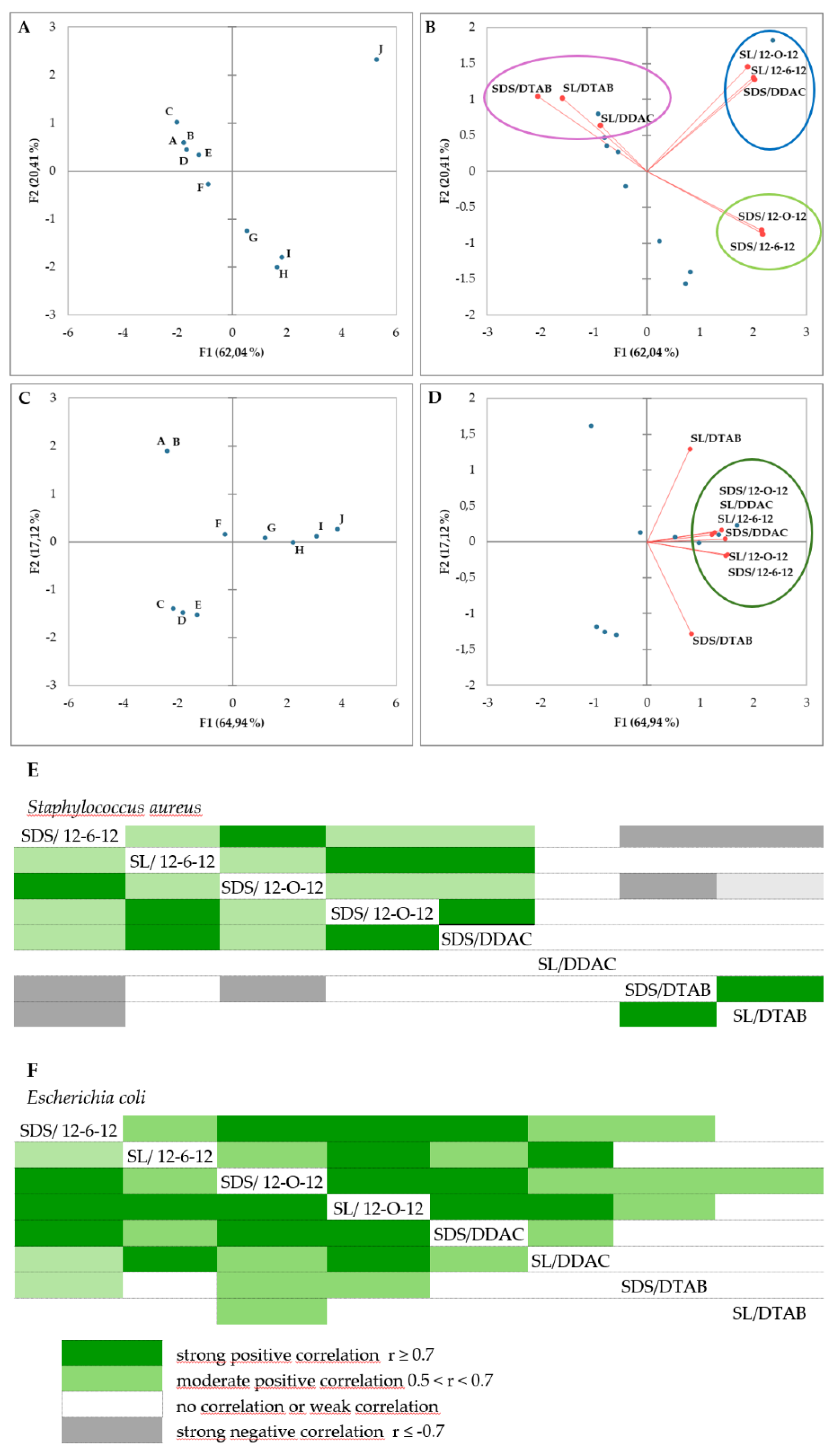
A biplot via PCA indicated the configuration of MIC distributions of eight surfactant mixtures in 10 different ratios for S. aureus, as shown in Figure 2A,B. The directions of the vectors shown in the graph indicate whether they are positively or negatively correlated. All compounds, for Gram-positive bacteria, were divided into three sets. In each, the mixtures tested are positively correlated with each other, meaning that the sensitivity of cells to these mixtures may be similar.
Correlation matrix analysis showed that MICs of mixtures containing (a) gemini surfactants and SDS; (b) gemini surfactants and SL, as well as the monomeric surfactant DDAC in a mixture with SDS are strongly positively correlated (r>0.9), indicating a more similar mechanism of action on S. aureus compared to the other compounds. Comparing SDS/12-O-12 and SDS/12-6-12 samples with compounds containing the monomeric surfactants SDS/DTAB and SL/DTAB, on the other hand, strong negative correlations (r>0.7) are evident (Figure 2E). Comparing the MIC results for these cases (Table 2 and Table 3), it can be seen that as the concentration of anionic compounds increases for the first group -containing gemini surfactants- the values increase, and for the second group - they decrease.
In the case of E.coli, only mixtures containing DTAB in their composition are outside the common set. The other vectors corresponding to individual surfactant mixtures lie close to each other on the biplot (Figure 2C,D) and are positively correlated. This means that the variables change in the same direction in principal component space. Comparing individual compound pairs with each other, a strong positive correlation (r>0.8, Figure 3F) is also evident in many cases.
The antibacterial properties of the catanionic mixtures have been determined as a function of the mixing ratio. As a general trend, the antibacterial activity increases by increasing the cationic charge density in the mixtures. Our results are in agreement with those described by Perez et al. [48] whose reported that the antibacterial activity of the catanionic mixtures depends on both the proportion of cationic surfactant and the microorganism tested. Results (Table 2 and Table 3 and Figure 2) indicate that the bactericidal activity of the catanionic mixtures resulted in a lack of synergism with respect to the surfactant alone. With the increase in the concentration of anionic surfactant, the MIC values ​​increase, i.e. the antibacterial activity decreases. This suggests that the activity of these systems is governed by the concentration of cationic compound. For the rich anionic mixture the positive charge of the cationic surfactant is totally neutralized and the MIC values increase.

2.3. Quantum Mechanical Calculations

An attempt to link the antibacterial activity with the structure of the studied systems was made based on the inquiry of frontier molecular orbitals. Analysis of the HOMO and LUMO orbitals can provide valuable information on the reactivity of molecules and possible charge transfer interactions. These properties are characterized by the energy ΔEgap, equal to the difference in the orbital energies ELUMO and EHOMO (ΔEgap=ELUMO-EHOMO) (Table 4). The smaller the energy gap, the higher the probability of the charge transfer process [49,50]. Thus, high reactivity is associated with a small HOMO-LUMO gap. An attempt was made to estimate the reactivity of the studied three systems: (1) containing only a cationic surfactant molecule (2) a cationic surfactant molecule with an anionic surfactant molecule (SDS or SL) and (3) a cationic surfactant molecule and two SDS or SL molecules, respectively.
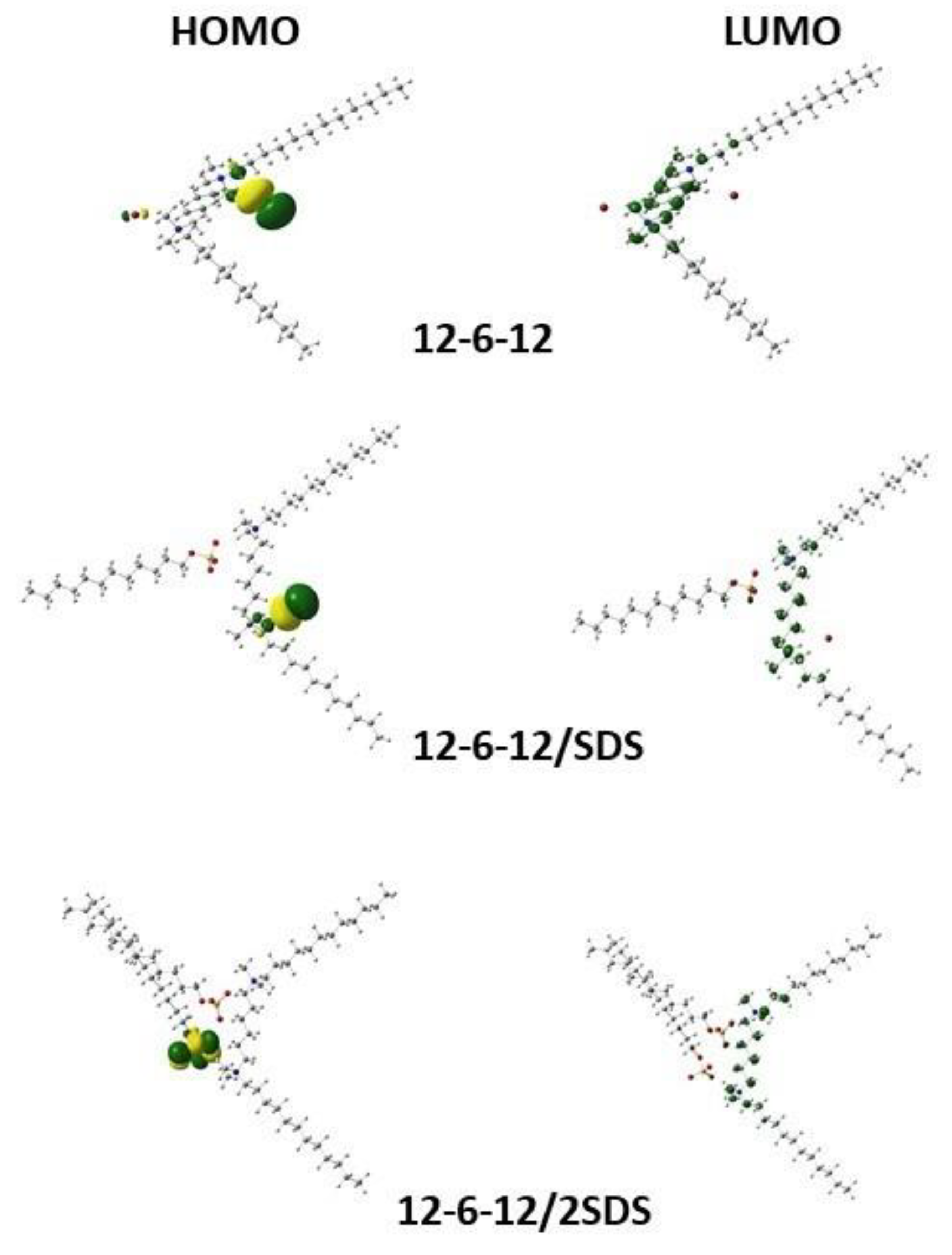
For 12-6-12, it was observed that the ΔEgap values are almost equal when moving from a surfactant molecule alone to a system containing one 12-6-12 molecule and one SDS molecule. When adding a second SDS molecule, the ΔEgap value grows significantly. A similar trend was detected for the 12-O-12 system with SDS. In the case of systems 12-6-12 and 12-O-12 to which anionic surfactant SL was added, the differences in ΔEgap values are small. For DTAB and DDAC, there is an increase in the ΔEgap value after adding the first molecule of anionic surfactant SDS to the studied systems. Frontier molecular orbitals calculated for 12-6-12 and other systems are shown in Figure 3 and S1, respectively. In the 12-6-12 set the HOMO is distributed mainly on the quaternary nitrogen atom, bromine anion, or the head of SDS while the LUMO is primarily dispersed over the spacer of the cationic surfactant.
Figure 3. Frontier molecular orbitals of 12-6-12, 12-6-12/SDS and 12-6-12/2SDS.
Preprints 140365 g003
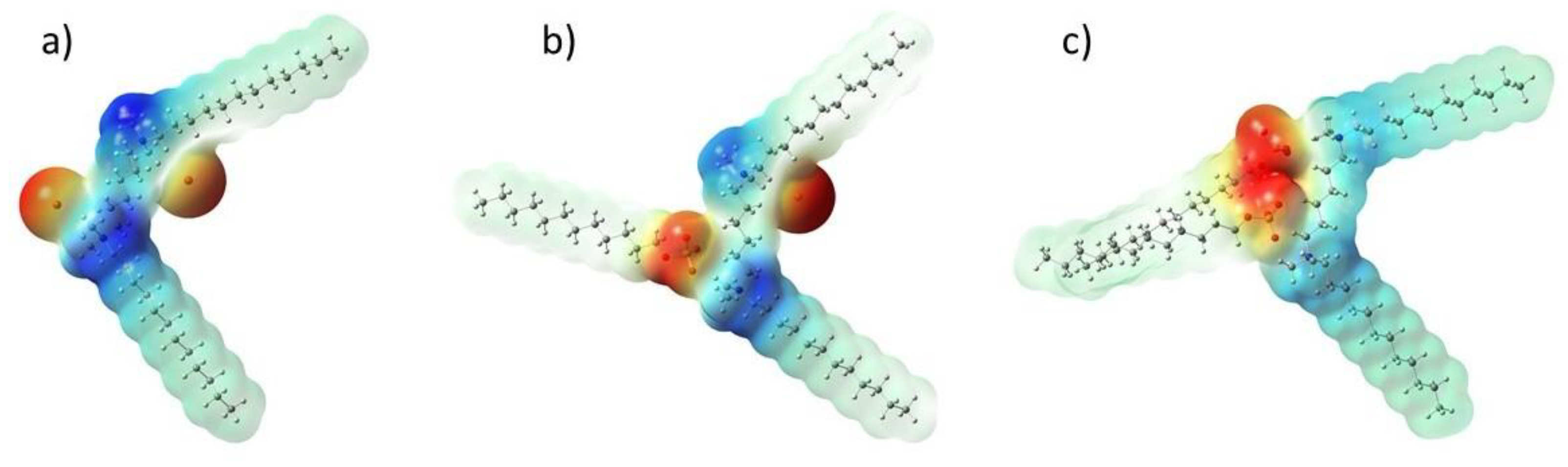
The electrostatic potential generated in the space around a molecule can be analyzed to predict the reactive behavior of molecules [51]. The electrostatic potential maps were calculated for the surfactant 12-6-12 and the systems containing 12-6-12 and one or two SDS molecules, respectively (Figure 4). Colors reflect areas of different values of the electrostatic potential. The area marked in red is characteristic of the most electronegative molecular fragments, while the most electropositive are represented by blue color. In this respect, the blue space around the quaternary nitrogen atoms in 12-6-12 stands out, which may be important in the context of the interaction of the surfactant molecule with bacterial cell membranes. As SDS molecules are added and interact with the surfactant molecules, it is observed disappearance of the blue color around the quaternary nitrogen atoms and along the six-carbon linker, which is associated with decreasing electrophilic properties of the system.

3. Materials and Methods

3.1. Materials

Dodecyldimethylammonium chloride (99%), dodecyltrimethylammonium bromide (98%), sodium dodecyl sulfate (97%) and sodium dodecanoate (99%) were obtained from Merck (Poznan, Poland). Gemini surfactants were obtained and analyzed according to the procedure developed in our laboratory, [11] for 12-6-12 and [39] for 12-O-12.

3.2. Antimicrobial Activity

The catanionic mixtures were tested for antimicrobial activity against bacteria: Escherichia coli ATCC 10536 and Staphylococcus aureus ATCC 6538. The MIC values for all microorganisms were determined by a tube standard two-fold dilution method [52]. Each of microorganisms was resuspended in physiological salt solution and diluted to 107 cfu/mL. In the next step, 1 mL of microorganism suspension was mixed with 1 mL of media: TSB (MERCK) containing serial dilutions of the tested mixtures. All samples were incubated at 37 °C for 24h. As a growth control, a suspension of microorganisms in a medium without the biocides was used. The MICs were defined as the lowest concentration of the mixtures in which there was no visible growth. All tests were repeated three times.
The principal component analysis (PCA) for MICs value of the eight different substances was performed using XLSTAT (Lumivero). P < 0.05 was considered statistically significant.

3.3. Computational Quantum Mechanical Modelling Method

DFT calculations were performed using the GAUSSIAN16 [53] program package with the APF-D functional [54,55] and the 6-311++g(d,p) basis set [56]. The APF-D functional was chosen because it provides an excellent compromise between accuracy and computational cost. In the first step, geometry optimization was performed for 12-6-12, 12-O-12, DDAC and DTAB. Then, the optimized geometry of these cationic surfactants was frozen during optimization with the addition of one and two molecules of SDS or SL, respectively. The calculations were performed for molecules surrounded by water, which was achieved using the conductive screening solvation model. In this model, the solvent is treated as a structureless dielectric continuum [57]. The HOMO and LUMO energy values from a.u. were converted to eV (1 a.u. = 27.2114 eV).

4. Conclusions

We obtained 8 series of catanionic surfactants mixtures in different cationic/anionic molar ratios. It was found that the addition of anionic additives adversely affects the antibacterial activity in case of both Gram (+) and Gram (-) bacteria of cationic ammonium microbicides. With a small addition of anionic surfactant to gemini surfactants, antimicrobial activity is preserved. This conclusion is very important from an economic point of view, in the case of creating surfactant compositions to reduce the population of microorganisms on an industrial scale. Quantum mechanical tests confirm that the anionic additive reduces the behavior of molecules, which is in good correlation with experimental microbiological data.

Author Contributions

Conceptualization, B.B. and I.K.; methodology, I.K.; software, A.S.; validation, A.K. and I.K.; formal analysis, A.K.; investigation, B.B.; resources, I.K.; data curation, A.S.; writing—original draft preparation, A.S., A.K.; writing—review and editing, B.B. and I.K.; visualization, A.K.; supervision, I.K.; project administration, B.B.; funding acquisition, I.K. All authors have read and agreed to the published version of the manuscript.

Funding

It has been supported by the subsidy from the Faculty of Chemistry, Adam Mickiewicz University for maintaining research potential.

Institutional Review Board Statement

Not applicable

Informed Consent Statement

Not applicable.

Data Availability Statement

The data presented in this study are available in the article..

Conflicts of Interest

The authors declare no conflicts of interest.

References

  1. Schramm, L.L.; Stasiuk, E.N.; Marangoni, D.G. 2 Surfactants and Their Applications. Annu Rep Prog Chem Sect C Phys Chem 2003, 99, 3–48. [CrossRef]
  2. Babajanzadeh, B.; Sherizadeh, S.; Hasan, R. Detergents and Surfactants: A Brief Review. Open Access J. Sci. 2019, 3, 94–99. [CrossRef]
  3. Hasan, J.; Crawford, R.J.; Ivanova, E.P. Antibacterial Surfaces: The Quest for a New Generation of Biomaterials. Trends Biotechnol. 2013, 31, 295–304. [CrossRef]
  4. Polarz, S.; Kunkel, M.; Donner, A.; Schlötter, M. Added-Value Surfactants. Chem. - Eur. J. 2018, 24, 18842–18856. [CrossRef]
  5. Roy, A. A Review on the Biosurfactants: Properties, Types and Its Applications. J. Fundam. Renew. Energy Appl. 2018, 08. [CrossRef]
  6. Ghosh, S.; Ray, A.; Pramanik, N. Self-Assembly of Surfactants: An Overview on General Aspects of Amphiphiles. Biophys. Chem. 2020, 265, 106429. [CrossRef]
  7. Kumar, N.; Tyagi, R. Industrial Applications of Dimeric Surfactants: A Review. J. Dispers. Sci. Technol. 2014, 35, 205–214. [CrossRef]
  8. Lavanya, M.; Machado, A.A. Surfactants as Biodegradable Sustainable Inhibitors for Corrosion Control in Diverse Media and Conditions: A Comprehensive Review. Sci. Total Environ. 2024, 908, 168407. [CrossRef]
  9. Kralova, I.; Sjöblom, J. Surfactants Used in Food Industry: A Review. J. Dispers. Sci. Technol. 2009, 30, 1363–1383. [CrossRef]
  10. Nazdrajic, S.; Bratovcic, A. The Role of Surfactants in Liquid Soaps and Its Antimicrobial Properties. Int. J. Adv. Res. 2019, 7, 501–507. [CrossRef]
  11. Brycki, B.; Szulc, A.; Brycka, J.; Kowalczyk, I. Properties and Applications of Quaternary Ammonium Gemini Surfactant 12-6-12: An Overview. Molecules 2023, 28, 6336. [CrossRef]
  12. Menger, F.M.; Keiper, J.S. Gemini Surfactants. Angew. Chem. Int. Ed. 2000, 39, 1906–1920. [CrossRef]
  13. Menger, F.M.; Littau, C.A. Gemini-Surfactants: Synthesis and Properties. J. Am. Chem. Soc. 1991, 113, 1451–1452. [CrossRef]
  14. Rosen, M.J.; Tracy, D.J. Gemini Surfactants. J. Surfactants Deterg. 1998, 1, 547–554. [CrossRef]
  15. Alami, E.; Beinert, G.; Marie, P.; Zana, R. Alkanediyl-α,ω-Bis(Dimethylalkylammonium Bromide) Surfactants. 3. Behavior at the Air-Water Interface. Langmuir 1993, 9, 1465–1467. [CrossRef]
  16. Han, Y.; Wang, Y. Aggregation Behavior of Gemini Surfactants and Their Interaction with Macromolecules in Aqueous Solution. Phys. Chem. Chem. Phys. 2011, 13, 1939–1956. [CrossRef]
  17. Mirgorodskaya, A.B.; Kudryavtseva, L.A.; Pankratov, V.A.; Lukashenko, S.S.; Rizvanova, L.Z.; Konovalov, A.I. Geminal Alkylammonium Surfactants: Aggregation Properties and Catalytic Activity. Russ. J. Gen. Chem. 2006, 76, 1625–1631. [CrossRef]
  18. Chang, H.; Cui, Y.; Wang, Y.; Li, G.; Gao, W.; Li, X.; Zhao, X.; Wei, W. Wettability and Adsorption of PTFE and Paraffin Surfaces by Aqueous Solutions of Biquaternary Ammonium Salt Gemini Surfactants with Hydroxyl. Colloids Surf. A 2016, 506, 416–424. [CrossRef]
  19. Pisárčik, M.; Jampílek, J.; Devínsky, F.; Drábiková, J.; Tkacz, J.; Opravil, T. Gemini Surfactants with Polymethylene Spacer: Supramolecular Structures at Solid Surface and Aggregation in Aqueous Solution. J. Surfactants Deterg. 2016, 19, 477–486. [CrossRef]
  20. Chen, Y.; Qiao, F.; Fan, Y.; Han, Y.; Wang, Y. Interactions of Cationic/Anionic Mixed Surfactant Aggregates with Phospholipid Vesicles and Their Skin Penetration Ability. Laqngmuir 2017, 33, 2760–2769. [CrossRef]
  21. Wang, R.; Yan, H.; Ma, W.; Li, Y. Complex Formation between Cationic Gemini Surfactant and Sodium Carboxymethylcellulose in the Absence and Presence of Organic Salt. Colloids Surf. Physicochem. Eng. Asp. 2016, 509, 293–300. [CrossRef]
  22. Wang, C.; Cao, X.-L.; Guo, L.-L.; Xu, Z.-C.; Zhang, L.; Gong, Q.-T.; Zhang, L.; Zhao, S. Effect of Molecular Structure of Catanionic Surfactant Mixtures on Their Interfacial Properties. Colloids Surf. Physicochem. Eng. Asp. 2016, 509, 601–612. [CrossRef]
  23. Varade, D.; Carriere, D.; Arriaga, L.R.; Fameau, A.-L.; Rio, E.; Langevin, D.; Drenckhan, W. On the Origin of the Stability of Foams Made from Catanionic Surfactant Mixtures. Soft Matter 2011, 7, 6557. [CrossRef]
  24. Jiang, S.; Qi, W.; Ma, C.; Wu, T.; Li, X.; Chen, X.; Gao, S.; Qi, J.; Yan, Y.; Huang, J. The High-Concentration Stable Phase: The Breakthrough of Catanionic Surfactant Aqueous System. Colloids Surf. Physicochem. Eng. Asp. 2022, 648, 129120. [CrossRef]
  25. Kaler, E.W.; Murthy, A.K.; Rodriguez, B.E.; Zasadzinski, J.A.N. Spontaneous Vesicle Formation in Aqueous Mixtures of Single-Tailed Surfactants. Science 1989, 245, 1371–1374. [CrossRef]
  26. Akpinar, E.; Uygur, N.; Topcu, G.; Lavrentovich, O.D.; Figueiredo Neto, A.M. Gemini Surfactant Behavior of Conventional Surfactant Dodecyltrimethylammonium Bromide with Anionic Azo Dye Sunset Yellow in Aqueous Solutions. J. Mol. Liq. 2022, 360, 119556. [CrossRef]
  27. Hou, S.; Li, J.; Wang, Y.; Jiang, Y.; Wang, Z.; Geng, T. Synergistic Effects of Gemini Cationic Surfactants with Multiple Quaternary Ammonium Groups and Anionic Surfactants with Long EO Chains in the Mixed Systems. J. Mol. Liq. 2023, 376, 121427. [CrossRef]
  28. Azum, N.; Rub, M.A.; Asiri, A.M.; Khan, A.A.P.; Khan, A. Physico-Chemical Investigations of Mixed Micelles of Cationic Gemini and Conventional Surfactants: A Conductometric Study. J. Surfactants Deterg. 2013, 16, 77–84. [CrossRef]
  29. La Mesa, C.; Risuleo, G. Surface Activity and Efficiency of Cat-Anionic Surfactant Mixtures. Front. Chem. 2021, 9, 790873. [CrossRef]
  30. Ghosh, S.; Ray, A.; Pramanik, N.; Ambade, B. Can a Catanionic Surfactant Mixture Act as a Drug Delivery Vehicle? Comptes Rendus Chim. 2016, 19, 951–954. [CrossRef]
  31. Wang, G.; Liu, L.; He, D.; Lu, R.; Xie, Y.; Lai, L. Cationic-Anionic Surfactant Mixtures Based on Gemini Surfactant as a Candidate for Enhanced Oil Recovery. Colloids Surf. Physicochem. Eng. Asp. 2023, 677, 132297. [CrossRef]
  32. Brycki, B.E.; Kowalczyk, I.H.; Szulc, A.; Kaczerewska, O.; Pakiet, M. Multifunctional Gemini Surfactants: Structure, Synthesis, Properties and Applications. In Application and Characterization of Surfactants; Najjar, R., Ed.; InTech, 2017 ISBN 978-953-51-3325-4.
  33. Zhao, X.; Li, Y.; Yuan, H.; Yin, J.; Hu, M. Antibacterial Mechanism of Octamethylene-1,8-Bis(Dodecyldimethylammonium Bromide) Against E. Coli. J. Surfactants Deterg. 2017, 20, 717–723. [CrossRef]
  34. Jennings, M.C.; Buttaro, B.A.; Minbiole, K.P.C.; Wuest, W.M. Bioorganic Investigation of Multicationic Antimicrobials to Combat QAC-Resistant Staphylococcus Aureus. ACS Infect. Dis. 2015, 1, 304–309. [CrossRef]
  35. Zhang, S.; Ding, S.; Yu, J.; Chen, X.; Lei, Q.; Fang, W. Antibacterial Activity, in Vitro Cytotoxicity, and Cell Cycle Arrest of Gemini Quaternary Ammonium Surfactants. Langmuir 2015, 31, 12161–12169. [CrossRef]
  36. Kralova, K.; Kallova, J.; Loos, D.; Devinsky, F. Correlation between Biological Activity and the Structure of N,N’-Bis(Alkyldimethyl)-1,6-Hexanediammonium Dobromides. Antibacterial Activity and Inhibition of Photochemical Activity of Chloroplasts. Pharmazie 1994, 49, 857–858.
  37. Devínsky, F.; Kopecka-Leitmanová, A.; Šeršeň, F.; Balgavý, P. Cut-off Effect in Antimicrobial Activity and in Membrane Perturbation Efficiency of the Homologous Series of N,N-Dimethylalkylamine Oxides. J. Pharm. Pharmacol. 1990, 42, 790–794. [CrossRef]
  38. Khodsiani, M.; Kianmehr, Z.; Brycki, B.; Szulc, A.; Mehrbod, P. Evaluation of the Antiviral Potential of Gemini Surfactants against Influenza Virus H1N1. Arch. Microbiol. 2023, 205, 184. [CrossRef]
  39. Brycki, B.E.; Szulc, A.; Kowalczyk, I.; Koziróg, A.; Sobolewska, E. Antimicrobial Activity of Gemini Surfactants with Ether Group in the Spacer Part. Molecules 2021, 26, 5759. [CrossRef]
  40. Zakharova, L.Y.; Pashirova, T.N.; Doktorovova, S.; Fernandes, A.R.; Sanchez-Lopez, E.; Silva, A.M.; Souto, S.B.; Souto, E.B. Cationic Surfactants: Self-Assembly, Structure-Activity Correlation and Their Biological Applications. Int. J. Mol. Sci. 2019, 20, 5534. [CrossRef]
  41. Zhou, Ch.; Wang, Y. Structure–activity relationship of cationic surfactants as antimicrobial agents. Current Opinion in Colloid & Interface Science 2020, 45, 28–43. [CrossRef]
  42. Colomer, A.; Pinazo, A.; Manresa, M. A.; Vinardell, M. P.; Mitjans, M.; Infante, M. R.; Pérez L. Cationic Surfactants Derived from Lysine: Effects of Their Structure and Charge Type on Antimicrobial and Hemolytic Activities. Journal of Medicinal Chemistry 2011 54 (4), 989-1002. [CrossRef]
  43. Ahmady, A.R.; Hosseinzadeh, P., Solouk, A.; Akbari, S.;. Szulc, A.M.; Brycki, B.E. Cationic gemini surfactant properties, its potential as a promising bioapplication candidate, and strategies for improving its biocompatibility: A review. Advances in Colloid and Interface Science 2022, 299, 102581. [CrossRef]
  44. Sharma, P.; Vaiwala, R.; Parthasarathi, S.; Patil, N.; Verma, A.; Waskar, M.; Raut, J.S.; Basu, J.K. Ayappa. K.G. Interactions of Surfactants with the Bacterial Cell Wall and Inner Membrane: Revealing the Link between Aggregation and Antimicrobial Activity. Langmuir 2022, 38, 15714-15728. [CrossRef]
  45. Falk N.A., Surfactants as Antimicrobials: A Brief Overview of Microbial Interfacial Chemistry and Surfactant Antimicrobial Activity. J Surfact Deterg 2019, 22, 1119–1127. [CrossRef]
  46. Cserha´ti, T.; Forga´cs, E.; Oros G. Biological activity and environmental impact of anionic surfactants. Environment International 2002, 28, 337 – 348. [CrossRef]
  47. Brycki, B. Gemini Alkylammonium Salts as Biodeterioration Inhibitors. Pol. J. Microbiol. 2010, 59, 227–231. [CrossRef]
  48. Pérez, L.; Pinazo, A.; Morán, M.C.; Pons, R. Aggregation Behavior, Antibacterial Activity and Biocompatibility of Catanionic Assemblies Based on Amino Acid-Derived Surfactants. Int. J. Mol. Sci. 2020, 21, 8912. [CrossRef]
  49. Nagabalasubramanian, P.B.; Karabacak, M.; Periandy, S. Vibrational Frequencies, Structural Confirmation Stability and HOMO–LUMO Analysis of Nicotinic Acid Ethyl Ester with Experimental (FT-IR and FT-Raman) Techniques and Quantum Mechanical Calculations. J. Mol. Struct. 2012, 1017, 1–13. [CrossRef]
  50. Kirishnamaline, G.; Magdaline, J.D.; Chithambarathanu, T.; Aruldhas, D.; Anuf, A.R. Theoretical Investigation of Structure, Anticancer Activity and Molecular Docking of Thiourea Derivatives. J. Mol. Struct. 2021, 1225, 129118. [CrossRef]
  51. Politzer, P.; Laurence, P.R.; Jayasuriya, K. Molecular Electrostatic Potentials: An Effective Tool for the Elucidation of Biochemical Phenomena. Environ. Health Perspect. 1985, 61, 191–202. [CrossRef]
  52. Brycki, B.; Kowalczyk, I.; Kozirog, A. Synthesis, Molecular Structure, Spectral Properties and Antifungal Activity of Polymethylene-α,ω-Bis(N,N-Dimethyl-N-Dodecyloammonium Bromides). Molecules 2011, 16, 319–335. [CrossRef]
  53. Frisch, M.J.; Trucks, G.W.; Schlegel, H.B.; Scuseria, G.E.; Robb, M.A.; Cheeseman, J.R.; Scalmani, G.; Barone, V.; Petersson, G.A.; Nakatsuji, H.; et al. Gaussian 16, Revision C.01 2016.
  54. Austin, A.; Petersson, G.A.; Frisch, M.J.; Dobek, F.J.; Scalmani, G.; Throssell, K. A Density Functional with Spherical Atom Dispersion Terms. J. Chem. Theory Comput. 2012, 8, 4989–5007. [CrossRef]
  55. Foresman, J.B.; Frisch, A. Exploring Chemistry with Electronic Structure Methods, Third Ed; Gaussian, Inc: Wallingford, CT USA, 2015., 2015;
  56. Hehre, W.J.; Radom, L.; Schleyer, P. v R.; Pople, J.A. Ab Initio Molecular Orbital Theory; Wiley: New York, 1986; Vol. 7;.
  57. Tomasi, J.; Mennucci, B.; Cammi, R. Quantum Mechanical Continuum Solvation Models. Chem. Rev. 2005, 105, 2999–3094. [CrossRef]
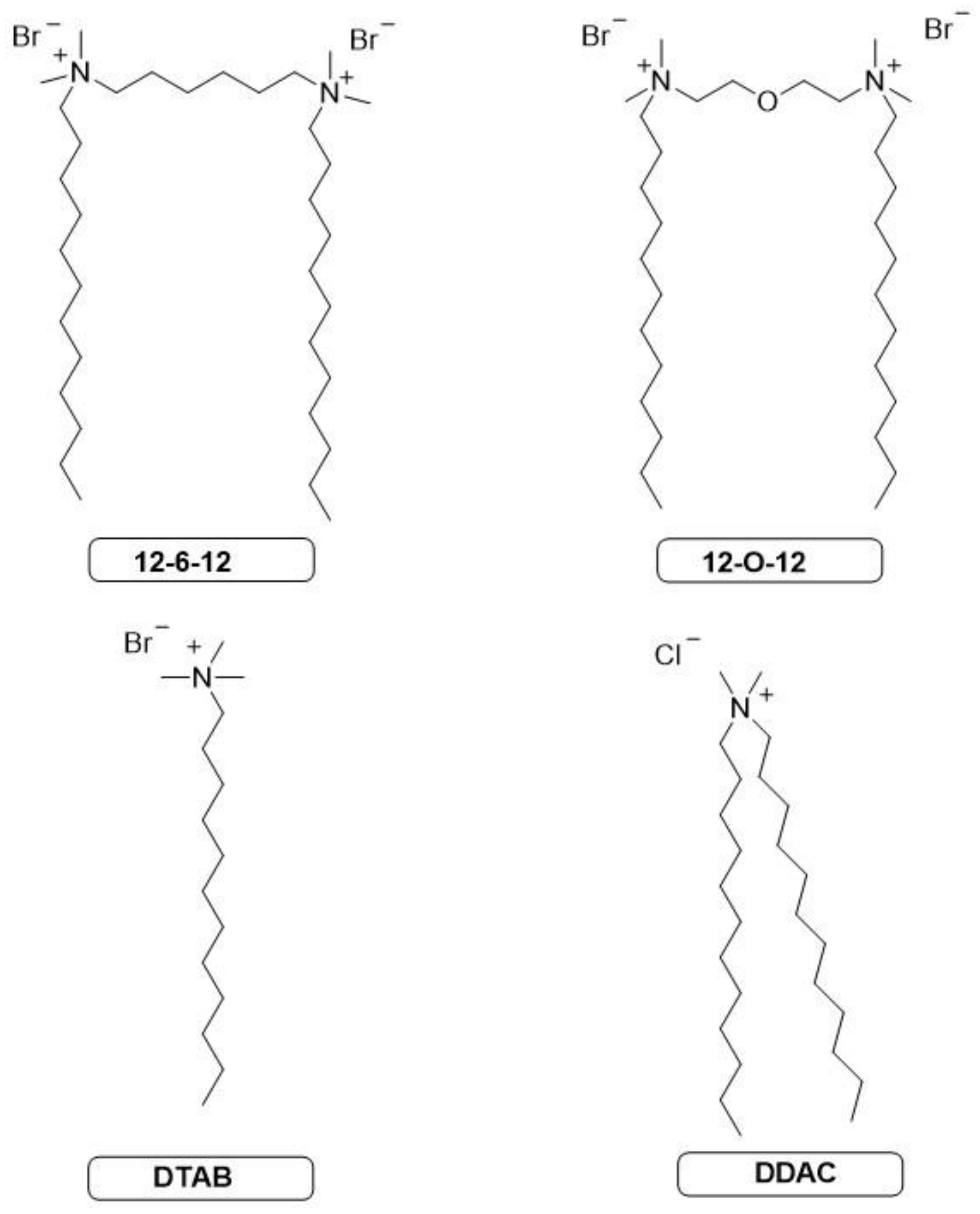
Figure 1. Structures and abbreviations of cationic surfactants.
Preprints 140365 g001
Figure 2. Principal component analysis for the minimum inhibitory concentrations (MICs) of eight substances in ten variants for Staphylococcus aureus (A-B) and Escherichia coli (C-D). Composition variants are shown as blue dot, while substances as red lines with red dots. E and F correlation matrix for mixtures of surfactants (MICs) for respectively Staphylococcus aureus and Escherichia coli.
Preprints 140365 g002
Figure 4. Molecular electrostatic potential maps for (a) 12-6-12; (b) 12-6-12/SDS and (c) 12-6-12/2SDS.
Preprints 140365 g004
Table 1. Amounts of particular cationic (A1) and anionic (B1) surfactants used to create a catanionic mixtures.
No volume of solutions [ml] molar ratio
A11 B12 H2O A1/B1 B1/A1
0 25 0 75 - -
1 25 1 74 25 0.04
2 25 2 73 12.5 0.08
3 25 5 70 5 0.2
4 25 10 65 2.5 0.4
5 25 20 55 1.25 0.8
6 25 30 45 0.83 1.2
7 25 40 35 0.625 1.6
8 25 50 25 0.50 2
9 25 60 15 0.42 2.4
10 25 75 0 0.33 3
1 12-6-12, 12-O-12, DTAB or DDAC, 2 SDS or SL.
Table 2. MIC values (mM) for gemini catanionic mixtures with increasing amount of anionic surfactant.
No SDS/ 12-6-12 SL/ 12-6-12 SDS/ 12-O-12 SL/ 12-O-12
S. aureus E. coli S. aureus E. coli S. aureus E. coli S. aureus E. coli
0 0.007813 0.03125 0.007813 0.03125 0.007813 0.03125 0.007813 0.03125
1/A 0.007813 0.007813 0.007813 0.015625 0.007813 0.03125 0.007813 0.015625
2/B 0.007813 0.007813 0.007813 0.015625 0.007813 0.03125 0.007813 0.015625
3/C 0.007813 0.015625 0.007813 0.015625 0.015625 0.03125 0.007813 0.015625
4/D 0.007813 0.015625 0.007813 0.015625 0.015625 0.03125 0.007813 0.03125
5/E 0.015625 0.03125 0.007813 0.015625 0.015625 0.03125 0.007813 0.03125
6/F 0.015625 0.03125 0.007813 0.015625 0.015625 0.0625 0.007813 0.03125
7/G 0.03125 0.0625 0.007813 0.015625 0.03125 >0.0625 0.007813 0.03125
8/H >0.0625 >0.0625 0.007813 0.03125 0.0625 >0.0625 0.007813 0.0625
9/I >0.0625 >0.0625 0.015625 0.03125 >0.0625 >0.0625 0.007813 0.0625
10/J >0.0625 >0.0625 0.0625 >0.0625 >0.0625 >0.0625 0.03125 >0.0625
Table 3. MIC values (mM) for monomeric ammonium catanionic mixtures with increasing amount of anionic surfactant.
No SDS/DDAC SL/DDAC SDS/DTAB SL/DTAB
S. aureus E. coli S. aureus E. coli S. aureus E. coli S. aureus E. coli
0 0.009766 0.039063 0.009766 0.039063 0.15625 0.3125 0.15625 0.3125
1/A 0.009766 0.039063 0.009766 0.039063 0.15625 0.3125 0.15625 0.625
2/B 0.009766 0.039063 0.009766 0.039063 0.15625 0.3125 0.15625 0.625
3/C 0.009766 0.039063 0.019531 0.039063 0.15625 >0.625 0.15625 0.3125
4/D 0.004883 0.039063 0.009766 0.039063 0.15625 >0.625 0.15625 0.3125
5/E 0.019531 0.15625 0.019531 0.078125 0.15625 >0.625 0.078125 0.3125
6/F 0.009766 0.039063 0.009766 0.039063 0.15625 >0.625 0.078125 0.625
7/G 0.019531 0.625 0.009766 0.078125 0.078125 >0.625 0.078125 0.625
8/H 0.019531 >0.625 0.009766 0.039063 0.078125 >0.625 0.078125 >0.625
9/I 0.019531 >0.625 0.009766 >0.625 0.078125 >0.625 0.078125 >0.625
10/J 0.15625 >0.625 0.009766 >0.625 0.078125 >0.625 0.078125 >0.625
Table 4. Values of ELUMO, EHOMO and ΔEgap of cationic surfactants and theirs mixture with SDS and SL.
Mixture EHOMO [eV] ELUMO [eV] ΔEgap [eV]
12-6-12 -6.5721 -0.1355 6.4366
12-6-12/SDS -6.5650 -0.1268 6.4382
12-6-12/2SDS -7.3441 -0.1020 7.2420
12-6-12/SL -6.3631 -0.1268 6.2363
12-6-12/2SL -6.3128 -0.0952 6.2175
12-O-12 -6.6418 -0.1461 6.4956
12-O-12/SDS -6.6208 -0.1298 6.4910
12-O-12/2SDS -7.4225 -0.1094 7.3131
12-O-12/SL -6.4162 -0.1314 6.2847
12-O-12/2SL -6.3729 -0.1238 6.2491
DDAC -6.8790 -0.0566 6.8224
DDAC/SDS -7.4777 -0.0463 7.4314
DDAC/2SDS -7.4366 -0.1902 7.2464
DDAC/SL -6.2970 -0.0906 6.2064
DDAC/2SL -6.2769 -0.1902 6.0866
DTAB -4.9987 -0.9129 4.0858
DTAB/SDS -6.2788 -0.7644 5.5144
DTAB/2SDS -7.1465 -0.4874 6.6592
DTAB/SL -5.4806 -0.6370 4.8436
DTAB/2SL -5.3759 -1.2969 4.0790
ΔEgap=ELUMO-EHOMO.
Disclaimer/Publisher’s Note: The statements, opinions and data contained in all publications are solely those of the individual author(s) and contributor(s) and not of MDPI and/or the editor(s). MDPI and/or the editor(s) disclaim responsibility for any injury to people or property resulting from any ideas, methods, instructions or products referred to in the content.
Copyright: This open access article is published under a Creative Commons CC BY 4.0 license, which permit the free download, distribution, and reuse, provided that the author and preprint are cited in any reuse.
Prerpints.org logo

Preprints.org is a free preprint server supported by MDPI in Basel, Switzerland.

Subscribe

Disclaimer

Terms of Use

Privacy Policy

Privacy Settings

© 2025 MDPI (Basel, Switzerland) unless otherwise stated