Preprint
Article

This version is not peer-reviewed.

Prevalence, Molecular Epidemiology, and Clinical Characteristics of Human Bocavirus Among Patients with Acute Gastroenteritis in Northern Brazil During 2017–2022

A peer-reviewed article of this preprint also exists.

Submitted:

18 November 2024

Posted:

19 November 2024

You are already at the latest version

Abstract

Acute gastroenteritis (AG) is a major illness in early childhood. Recent studies suggest a potential association between Human Bocavirus (HBoV) and AG. HBoV, a non-enveloped virus with a single-strand DNA genome, belongs to the Parvoviridae family. This study aimed to describe the frequency of HBoV in Northern Brazil using samples from AG patients collected between 2017 and 2022. Fecal samples from the viral gastroenteritis surveillance network at the Evandro Chagas Institute (IEC) were analyzed. Fecal suspensions (20%) were prepared, and the viral genome was extracted. PCR and Nested-PCR were employed to detect HBoV, followed by nucleotide sequencing to identify viral types. Out of 692 samples, HBoV positivity was 9.2% (69/693). Genotypes HBoV-1, HBoV-2, HBoV-3, and HBoV-4 were found in 42.5% (17/40), 22.5% (9/40), 33.5% (13/40), and 2.5% (1/40) of the specimens, respectively. Co-infections with HBoV and other enteric viruses occurred in 48.43% (31/64) of cases, with RVA being the most frequent (72.41% or 21/29). The study concludes that HBoV circulates significantly in Northern Brazil and is associated with co-infections. Further research is needed to clarify HBoV role as a causative agent of AG in the region.

Keywords: 
;  ;  ;  

1. Introduction

Globally, acute gastroenteritis (AG) is a clinical condition that represents one of the main morbidity and mortality causes in children under five years old [1]. Annually, AG is responsible for 443.832 deaths of children under five years old, and 50.851 deaths in children between 5 and 9 years old [2]. It is characterized by an inflammation of the gastrointestinal tract, resulting in symptoms such as diarrhea, vomiting, and abdominal pain [3].
Rotavirus group A (RVA), norovirus (NoV), astrovirus (HAst), sapovirus (SaV), and enteric adenovirus (types 40/41) (HAdV) are the pathogens most associated with this condition. However, Human Bocavirus (HBoV) has emerged as a potential pathogen associated with AG [4].
HBoV is a non-enveloped, icosahedral virus that belongs to the Parvoviridae family, Parvovirinae subfamily, and Bocaparvovirus genus. It consists of a single-stranded DNA (ssDNA) genome of 4.7–5.7 kilobases that encodes five nonstructural proteins (NS1 to NS4 and NP1) and three structural capsid proteins (VP1, VP2, and VP3) based on HBoV-1 structure [5]. HBoV was first described in 2005, and initially linked to respiratory infections, but subsequent research also identified its presence in fecal samples, suggesting a possible connection with AG [6,7,8]. In Brazil, the first HBoV detection in fecal samples occurred in 2007, since then many studies have been conducted better to understand its prevalence and impact on human health [9,10,11].
HBoV is classified into four distinct species that can affect humans: HBoV-1, HBoV-2, HBoV-3, and HBoV-4. HBoV-1 is closely related to respiratory diseases, as several reports are linking it to asthma, colds, pneumonia, and other respiratory diseases [12,13]. On the other hand, HBoV-2, HBoV-3, and HBoV-4 species are commonly detected in AG cases but rarely found in respiratory samples [14,15,16].
Although the relationship between HBoV and AG is not well established, this agent has been frequently detected in stool samples from patients with diarrhea symptoms, especially in children aged between 6 and 24 months. Worldwide, Guido et al. (2016) [17] estimated 5.9% of HBoV total prevalence in gastrointestinal infections, and HBoV frequency in fecal samples ranged from 1.3% to 63%, depending on the geographical region. Thus, it is suggested that this virus may be an etiological agent of AG [9,15,16,18].
The identification of HBoV as a significant etiological agent in AG can lead to improvements in the diagnosis and clinical management of the disease. Understanding the prevalence and role of HBoV can enhance the accuracy of laboratory tests and guide more effective treatment strategies, resulting in a reduction of mortality and morbidity rates associated with gastroenteritis, particularly in vulnerable populations such as children under five years old [19,20].
In this context, it is essential to understand the role of HBoV in AG for a better understanding of the agent as a causative factor of the disease and its circulation pattern in the population. In this context, this study aimed to evaluate the prevalence, clinical features, and genotypes distribution of HBoV in seven states from the Northern Region of Brazil, in patients with AG, collected in the period between 2017 and 2022.

2. Materials and Methods

2.1. Clinical Specimens and Ethical Aspects

For this cross-sectional study, 692 fecal samples from children and adult patients from the Northern Region of Brazil with AG symptoms (diarrhea, vomiting, and fever for longer than 7 days) were collected between January 2017 to December 2022. Fecal samples were collected by sentinels’ sites at States Central Laboratories, from seven Brazilian states and sent to Evandro Chagas Institute, a National Rotavirus Reference Laboratory from the Brazilian Ministry of Health and had already been previously tested for RVA and NoV.

2.2. Nucleic Acid Extraction

Viral nucleic acids (DNA and RNA viruses) were extracted from 10% fecal suspensions with Tris-calcium buffer (pH = 7.2) using the isothiocyanate-silica method [21]. The isolated nucleic acid was kept frozen at −70 °C until the molecular analysis was carried out. In each extraction procedure, RNAse/DNAse-free water was used as a negative control.

2.3. HBoV Molecular Detection

HBoV detection was performed by a PCR, followed by a nested PCR, using two sets of primers that targeted a variable VP1/VP2 region, as described previously [4]. The PCR products were detected by electrophoresis on 1.5% agarose gel. The presence of HBoV was determined through a specific-sized amplicon corresponding to the second round of nested PCR of 576 bp, after being stained with a nucleic acid staining solution and visualized with a UV transilluminator.

2.4. Molecular Characterization and Phylogenetic Analysis

The amplicon products were purified using a QIAquick PCR Purification Kit (QIAGEN, Valencia, CA, USA). Sequencing reactions were performed with the same primers from Nested-PCR using BigDye™ Terminator v. 3.1 Cycle Sequencing Kit (Applied Biosystems, Foster City, CA, USA) [22]. Subsequently, reactions were purified, and they were run on an ABI Prism 3130xl genetic analyzer (Applied Biosystems, Foster City, CA, USA).
The obtained sequences were aligned and edited using Geneious Prime software (v.7) (Biomatters Ltd., Auckland, New Zealand) [23]. The sequence alignment, together with other related sequences available on GenBank (www.ncbi.nlm.nih.gov), was performed using the Basic Local Alignment Search Tool (BLAST) to confirm the genotypes in terms of closest homology sequence. The phylogenetic trees of the HBoV partial VP1/VP2 genes were constructed using the maximum likelihood method using FastTree software (v.2.1.11), including the GTR+Gamma+F nucleotide substitution model. Bootstrap values of the nodes indicate support of 1000 replicas, obtaining reproducible results and awarding greater reliability to the clusters. Partial nucleotide sequences from this study were deposited in the NCBI GenBank database under the access numbers PQ553014-PQ553053.

2.5. Statistical Analysis

Statistical analyses were performed using Jamovi Software (The Jamovi Project, 2024. Version 2.5). Bivariate analysis was carried out to verify the association between independent variables and HBoV infection using the chi-square test (x2). A p-value ≤ 0.05 was considered statistically significant.

3. Results

3.1. HBoV Detection

Between 2017 and 2022, HBoV DNA was detected in 64 out of 692 patients (9,2%). The detection rate ranged according to the year: 12,6% (26/206) in 2017; 8,9% (13/146) in 2018; 17,2% (20/116) in 2019; 6,7% (1/15) in 2020; 0,8% (1/116) in 2021; and 3,2% (3/93) in 2022. Regarding monthly distribution, HBoV frequency fluctuated between 1,5% to 17,9%, with the highest rates (10% to 17.9%) detected in January to June, as demonstrated in Figure 1.

3.2. Epidemiological and Clinical Characteristics of HBoV Infections

HBoV infection was slightly higher in males (57,8%) than in females (42,2%). Among HBoV positive cases, 70.3% were between 0 and 24 months old, and 15.6% were between 25 and 60 months old. Concerning clinical symptoms, 54,7% had fever; 67,2% vomiting; and 90,6% diarrhea (Table 1). No significant relationship was observed between HBoV infections and clinical and epidemiological features.

3.3. Coinfection Between HBoV and Other Gastroenteric Viruses

Initially, the samples investigated had already performed a screening process to identify other AG-causing viruses (RVA and NoV), since they are part of an epidemiological surveillance network. The single infections of HBoV were detected in 51.6% (33/64) of cases. Coinfection ratio between HBoV and other enteric viruses was reported in 48.4% (31/64) of positive samples. The most predominant HBoV coinfection was with RVA, detected in 31.2% (20/64) of cases, followed by NoV in 15.6% (10/64). A triple infection with all these agents was present in one specimen (1.6%, 1/64).

3.4. HBoV Genotypes

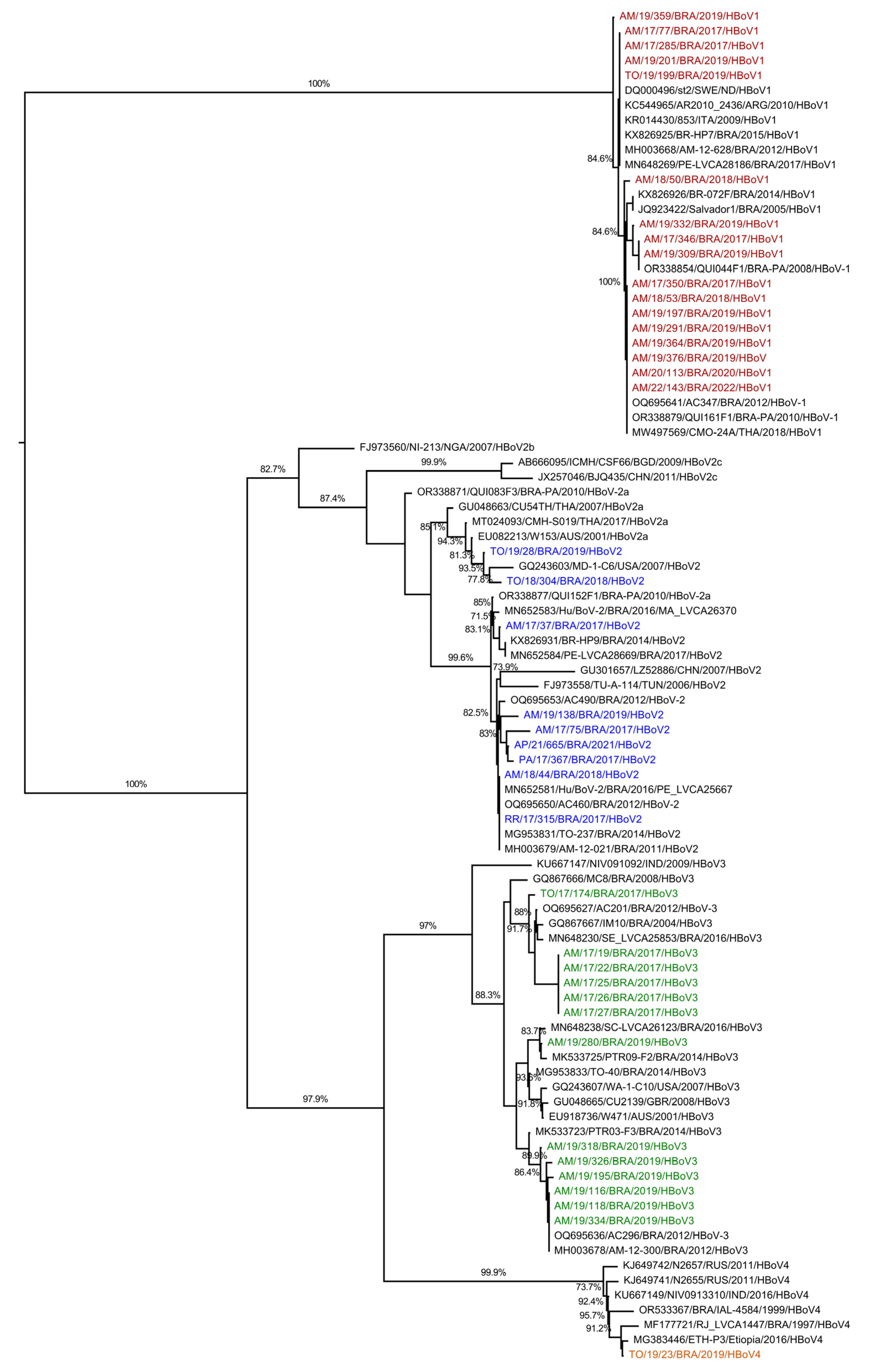
From the 64 detected positive HBoV DNA specimens, 40 (62.5%) samples were successfully genotyped. HBoV-1 was the most frequent species detected, responsible for 42.5% (17/40) of cases, followed by HBoV-3 (32.5%, 13/40), HBoV-2 (22.5%, 9/40), and HBoV-4 (2.5%, 1/40) (Figure 2). Phylogenetic inference of VP1/VP2 gene demonstrated that HBoV-1 strains had high nucleotide similarities (99.3-100%) with strains from Europe, South America and Asia. Regarding HBoV-2 specimens, they clustered into lineage A with nucleotide similarities ranging from 93.4%-99.8%. HBoV-3 samples were grouped into specimens from India, EUA, Australia, United Kingdom and Brazil (nt similarity 96.1%-100%). One rare HBoV-4 was detected and had a high similarity (98.5%-99.6%) with strains detected in Russia, India, Brazil and Ethiopia.

4. Discussion

Studies on HBoV detection in fecal samples from individuals with AG have gained importance worldwide and aimed to comprehend its role in this kind of infection [16,24,25]. In the present study, a detection rate of 9,2% was observed for HBoV among patients with AG symptoms in Northern Brazil. Similar data have been reported in Brazil and other settings with AG symptomatic patients. Kachooei et al. (2023) [26] in a study with hospitalized children in Iran between 2021 and 2022, reported a positivity rate of 14%. In Brazil, a study published by Malta et al. (2020) [27] described an HBoV frequency of 12.4% in children up to two years of age. Trindade et al. (2023) [28] found a positivity rate of 10% in children with and without diarrhea symptoms in Acre during 2012.
Other studies reported lower frequencies. In Taiwan, HBoV was detected in 2.4% of samples from AG outbreaks that occurred between 2018 and 2022 [29]. In Thailand, the detection rate was 5,2% in pediatric patients with the same clinical condition (AG) during 2012-2018 [15]. In Brazil, Viana et al. (2024) [16] reported an HBoV positivity of 5,8% when analyzing retrospective AG samples from 1998 to 2005.
The HBoV positivity varies among studies, which can be explained by different influence factors: (i) different methodologies applied; (ii) time and period for fecal sample collection; (iii) geographical disparity; (iv) individual immunologic and nutritional aspects. These can directly contribute to the discrepancies related to detection rates [15,28].
Regarding the temporal distribution of HBoV cases, a decline in detection rates was observed during the COVID-19 pandemic (2019-2022). There was a significant overload on the public health surveillance system, with an almost exclusive focus on COVID-19 cases, which resulted in underreporting of other diseases, such as gastroenteritis, as reported by Gutierrez et al. (2023) [30] when investigating the diversity and prevalence of RVA genotypes in children and adults presenting with AG symptoms in Brazil during the COVID-19 pandemic between 2020 and 2022.
Between 2017 and 2022, HBoV was detected in every month of the year, with the highest rates (10 to 17.9%) during the January to June period. These results are consistent when compared to Sousa et al. (2012) [31] who also identified monthly HBoV presence in the Central-West region of Brazil. It is important to note that the seasonality of HBoV is not well defined, highlighting the lack of consensus and significant correlation regarding specific seasonal patterns for this virus. However, several studies indicate an increase in HBoV cases during the rainy season, both in respiratory and AG infections, like other viral infections, as noted in the current analysis [27,32,33].
On epidemiological features, HBoV was more frequent among male patients, accounting for 57.8% of cases. This trend aligns with the findings by Trindade et al. (2023)[28] who reported a higher incidence of HBoV among males (52.1%) in a study conducted in Acre state, Northern Brazil in children with or without AG symptoms in 2012. Similarly, Kachooei et al. (2023) [26] reported a higher HBoV incidence among males (64%). No significant association was found between HBoV infection and gender in these findings, suggesting a need to conduct more studies with larger sample sizes.
Concerning age groups, we found that the highest prevalence of HBoV infections was observed in children aged 0 to 5 years, representing 85.9% of cases. These results agree with Viana et al. (2024) [16] who identified the highest positivity rates in this age group when analyzing historical HBoV samples collected between 1998 and 2005 in Brazil. Soares et al. (2019) [11] also observed that HBoV was found in 50.6% of acute AG cases among children under five years in Northern Brazil from 2011 to 2012. A similar finding was reported by Chiu et al. (2024) [29] in Taiwan, where the highest infection rate occurred in individuals under three years old, with a prevalence of 46.6% during the period from 2018 to 2022. The higher incidence of HBoV cases in this age group (< 5 years) may be due to the decline of maternal antibodies overlaps the exposure to HBoV during infancy and early childhood [15].
With respect to clinical features, in the present study we observed the classic triad of AG symptoms in most patients infected with HBoV (90.6% presented diarrhea, 67.2% vomiting, and 54.7% fever). These findings are consistent with other studies worldwide. Rikhotso et al. (2020) [14] identified symptoms such as diarrhea (100%), fever (27%), vomiting (27%), dehydration (16%), respiratory tract infection (15%), and abdominal pain (15%) in outpatient children infected with HBoV from rural communities in South Africa. Sharif et al. (2020) [34] reported similar symptoms, with diarrhea (100%) and vomiting (57%) in HBoV-infected patients with gastroenteritis in Bangladesh from 2015 to 2019. Likewise, Soares et al. (2019) [11] observed fever (21.8%) and vomiting (17%) when analyzing the presence of HBoV in children under 10 years in Northern Brazil between 2011 and 2012. Trindade et al. (2023) [28] also reported symptoms such as diarrhea, fever, and vomiting in 39.6%, 37.5%, and 16.7% of children infected with HBoV, with or without gastroenteritis symptoms. These symptoms are commonly observed in individuals with positive HBoV cases, often involving coinfection with other enteric viruses.
Coinfection between HBoV and other gastroenteric viruses was reported in 48.4% of cases, with HBoV+RVA the most prevalent association detected in 31.2%. Previous studies have also demonstrated coinfection between HBoV and other viral agents. Malta et al. (2020) [27] observed that only 20.9% of samples had HBoV as a single infection, while 23.7% were associated with NoV, 11% with RVA, and 2.7% with all three viruses. Soares et al. (2019) [11] also highlighted coinfection between HBoV and RVA in 50.0% (27/54) of the samples in their study on the molecular epidemiology of HBoV in children with gastroenteritis in Northern Brazil. However, it is important to note that in the present study mono-infection involving HBoV was detected in 51.6% of cases. Further studies are needed to assess the true role of HBoV in gastroenteritis cases, particularly analyses involving asymptomatic patients, as well as viral detection in respiratory specimens due to its potential role in respiratory infections, which may only be excreted through the gastrointestinal tract [31].
Although HBoV-1 is frequently identified in respiratory tract infections, it was the most common genotype identified in the fecal samples of this study (42.5%). Its association with gastroenteritis remains unclear, once this genotype can be shed in feces for months after infection [12,24,35]. However, several studies have reported its presence in diarrhea cases. In a study conducted by Chiu et al. (2024) [29] in Taiwan HBoV-1 was also the most species reported, responsible for 41.1% of AG cases. HBoV-1 was the most genotype (79.7%) detected in historical fecal samples collected between 1998 to 2005 in Brazil [16].
On the other hand, HBoV-2 and HBoV-3 are commonly identified in fecal samples from patients with AG, while their presence is rare in respiratory infections. The detection rate of HBoV-2 and HBoV-3 in this analysis was also significant, representing 22.5% and 33.5% of cases, respectively, corroborating with several studies pointing to the high incidence of these genotypes in AG cases [24,26,28,29].
It is important to note that HBoV-4 was detected in only one sample in the current analysis. HBoV-4 was first identified in 2010 during a multicenter study with fecal samples [4]. In Brazil, as well as in other countries around the world, its detection is uncommon. This species was first reported in Goias to a child with symptoms of AG and respiratory tract infection with a soft tissue tumor in the submandibular region [36]. More recently, a report associated this genotype with gastroenteritis cases in a specimen collected in Brazil in 1999 [16].

5. Conclusions

Gathering information about the prevalence of HBoV can be a tool for increasing the lab tests accuracy, and efficiently directing treatment strategies, which can result in lower rates of AG, particularly in vulnerable populations, especially children under five years. The current study presented some limitations: the need for information on respiratory symptoms; testing for other enteric pathogens; and asymptomatic cases to correlate HBoV association. Despite this, the study presented robust information on epidemiological and molecular data of HBoV to expand the current understanding of AG infection.

Author Contributions

Y.G.S.S., L.S.S. conceived and designed the experiments; Y.G.S.S., C.C.M., J.V.S.R., S.F.S.G. performed the experiments; C.A.M., P.S.L., K.C.P., H.R.R. analyzed the data; Y.G.S.S., D.M.T., J.A.M.S., L.D.S. collected the clinical data; Y.G.S.S. and L.S.S. contributed to the writing of the manuscript. All authors have read and agreed to the published version of the manuscript.

Funding

This research received no external funding. This work was supported by Evandro Chagas Institute, Secretariat of Health Surveillance and Environment, Brazilian Ministry of Health and by the Coordination for the Improvement of Higher Education Personnel (CAPES). The sponsor did not participate in the collection, analysis and interpretation of data, nor in writing the manuscript.

Institutional Review Board Statement

The study was conducted according to the guidelines of the Declaration of Helsinki and approved by the Ethics Committee and Research of the Evandro Chagas Institute (protocol number 6.696.561 3.383.249).

Informed Consent Statement

Patient-informed consent was waived by the Ethics Committee and Research of the Evandro Chagas Institute, and patients’ data were maintained anonymously and securely.

Data Availability Statement

The datasets presented in this study can be found in online repositories. The names of the repository/repositories and accession numbers can be found in https://www.ncbi.nlm.nih.gov/genbank/, PQ553014-PQ553053.

Acknowledgments

We thank the staff of Virology Section of Evandro Chagas Institute and State Central Laboratories involved in the study and coordinated by the General Coordination of Public Health Laboratories, Brazilian Ministry of Health.

Conflicts of Interest

We thank the staff of Virology Section of Evandro Chagas Institute and State Central Laboratories involved in the study and coordinated by the General Coordination of Public Health Laboratories, Brazilian Ministry of Health.

References

  1. Hartman, S.; Brown, E.; Loomis, E.; Russell, H.A. Gastroenteritis in Children. Am Fam Physician 2019, 99, 159–165. [Google Scholar]
  2. Diarrhoeal Disease. Available online: https://www.who.int/news-room/fact-sheets/detail/diarrhoeal-disease (accessed on 26 October 2024).
  3. Tarris, G.; de Rougemont, A.; Charkaoui, M.; Michiels, C.; Martin, L.; Belliot, G. Enteric Viruses and Inflammatory Bowel Disease. Viruses 2021, Vol. 13, Page 104 2021, 13, 104. [Google Scholar] [CrossRef] [PubMed]
  4. Kapoor, A.; Simmonds, P.; Slikas, E.; Li, L.; Bodhidatta, L.; Sethabutr, O.; Triki, H.; Bahri, O.; Oderinde, B.S.; Baba, M.M.; et al. Human Bocaviruses Are Highly Diverse, Dispersed, Recombination Prone, and Prevalent in Enteric Infections. J Infect Dis 2010, 201, 1633–1643. [Google Scholar] [CrossRef] [PubMed]
  5. Ning, K.; Zhao, J.; Feng, Z.; Park, S.Y.; McFarlin, S.; Cheng, F.; Yan, Z.; Wang, J.; Qiu, J. N6-Methyladenosine Modification of a Parvovirus-Encoded Small Noncoding RNA Facilitates Viral DNA Replication through Recruiting Y-Family DNA Polymerases. Proc Natl Acad Sci U S A 2024, 121, 2–11. [Google Scholar] [CrossRef] [PubMed]
  6. Allander, T.; Tammi, M.T.; Eriksson, M.; Bjerkner, A.; Tiveljung-Lindell, A.; Andersson, B. Cloning of a Human Parvovirus by Molecular Screening of Respiratory Tract Samples. Proc Natl Acad Sci U S A 2005, 102, 12891–12896. [Google Scholar] [CrossRef]
  7. Arthur, J.L.; Higgins, G.D.; Davidson, G.P.; Givney, R.C.; Ratcliff, R.M. A Novel Bocavirus Associated with Acute Gastroenteritis in Australian Children. PLoS Pathog 2009, 5. [Google Scholar] [CrossRef]
  8. Kapoor, A.; Slikas, E.; Simmonds, P.; Chieochansin, T.; Naeem, A.; Shaukat, S.; Alam, M.M.; Sharif, S.; Angez, M.; Zaidi, S.; et al. A New Bocavirus Species in Human Stool. J Infect Dis 2009, 199, 196. [Google Scholar] [CrossRef]
  9. Campos, G.S.; Silva Sampaio, M.L.; Menezes, A.D.L.; Tigre, D.M.; Moura Costa, L.F.; Chinalia, F.A.; Sardi, S.I. Human Bocavirus in Acute Gastroenteritis in Children in Brazil. J Med Virol 2016, 88, 166–170. [Google Scholar] [CrossRef]
  10. Carolina, M.; Albuquerque, M.; Rocha, L.N.; Benati, F.J.; Soares, C.C.; Maranhão, A.G.; Ramírez, M.L.; Erdman, D.; Santos, N. Human Bocavirus Infection in Children with Gastroenteritis, Brazil. Emerg Infect Dis 2007, 13, 1756. [Google Scholar] [CrossRef]
  11. Soares, L.S.; Lima, A.B.F.; Pantoja, K.C.; Lobo, P.S.; Cruz, J.F.; Guerra, S.F.S.; Bezerra, D.A.M.; Bandeira, R.S.; Mascarenhas, J.D.P. Molecular Epidemiology of Human Bocavirus in Children with Acute Gastroenteritis from North Region of Brazil. J Med Microbiol 2019, 68, 1233–1239. [Google Scholar] [CrossRef]
  12. Jartti, T.; Hedman, K.; Jartti, L.; Ruuskanen, O.; Allander, T.; Söderlund-Venermo, M. Human Bocavirus-the First 5 Years. Rev Med Virol 2012, 22, 46–64. [Google Scholar] [CrossRef] [PubMed]
  13. Salbetti, M.B.C.; Boggio, G.A.; Abbiatti, G.; Sandoz, A.M.; Villarreal, V.; Torres, E.; Pedranti, M.; Zalazar, J.A.; Moreno, L.; Adamo, M.P. Diagnosis and Clinical Significance of Human Bocavirus 1 in Children Hospitalized for Lower Acute Respiratory Infection: Molecular Detection in Respiratory Secretions and Serum. J Med Microbiol 2022, 71, 001595. [Google Scholar] [CrossRef]
  14. Rikhotso, M.C.; Khumela, R.; Kabue, J.P.; Traoré-Hoffman, A.N.; Potgieter, N. Predominance of Human Bocavirus Genotype 1 and 3 in Outpatient Children with Diarrhea from Rural Communities in South Africa, 2017-2018. Pathogens 2020, 9. [Google Scholar] [CrossRef]
  15. Nantachit, N.; Kochjan, P.; Khamrin, P.; Kumthip, K.; Maneekarn, N. Human Bocavirus Genotypes 1, 2, and 3 Circulating in Pediatric Patients with Acute Gastroenteritis in Chiang Mai, Thailand, 2012-2018. J Infect Public Health 2021, 14, 179–186. [Google Scholar] [CrossRef]
  16. Viana, E.; França, Y.; de Azevedo, L.S.; Medeiros, R.S.; Guiducci, R.; Guadagnucci, S.; Luchs, A. Genotypic Diversity and Long-Term Impact of Human Bocavirus on Diarrheal Disease: Insights from Historical Fecal Samples in Brazil. J Med Virol 2024, 96, e29429. [Google Scholar] [CrossRef]
  17. Guido, M.; Tumolo, M.R.; Verri, T.; Romano, A.; Serio, F.; De Giorgi, M.; De Donno, A.; Bagordo, F.; Zizza, A. Human Bocavirus: Current Knowledge and Future Challenges. World J Gastroenterol 2016, 22. [Google Scholar] [CrossRef] [PubMed]
  18. Lasure, N.; Gopalkrishna, V. Molecular Epidemiology and Clinical Severity of Human Bocavirus (HBoV) 1-4 in Children with Acute Gastroenteritis from Pune, Western India. J Med Virol 2017, 89, 17–23. [Google Scholar] [CrossRef]
  19. Mijač, M.; Meštrović, T.; Ivković-Jureković, I.; Tot, T.; Vraneš, J.; Ljubin-Sternak, S. The Role of Quantitative PCR in Evaluating the Clinical Significance of Human Bocavirus Detection in Children. Viruses 2024, 16, 1637. [Google Scholar] [CrossRef]
  20. Zhirakovskaia, E.; Tikunov, A.; Tymentsev, A.; Sokolov, S.; Sedelnikova, D.; Tikunova, N. Changing Pattern of Prevalence and Genetic Diversity of Rotavirus, Norovirus, Astrovirus, and Bocavirus Associated with Childhood Diarrhea in Asian Russia, 2009–2012. Infection, Genetics and Evolution 2019, 67, 167–182. [Google Scholar] [CrossRef]
  21. Boom, R.; Sol, C.J.A.; Heijtink, R.; Wertheim-van Dillen, P.M.E.; Van der Noordaa, J. Rapid Purification of Hepatitis B Virus DNA from Serum. J Clin Microbiol 1991, 29, 1804–1811. [Google Scholar] [CrossRef]
  22. Sanger, F.; Nicklen, S.; Coulson, A.R. DNA Sequencing with Chain-Terminating Inhibitors. Proc Natl Acad Sci U S A 1977, 74, 5463–5467. [Google Scholar] [CrossRef] [PubMed]
  23. Kearse, M.; Moir, R.; Wilson, A.; Stones-Havas, S.; Cheung, M.; Sturrock, S.; Buxton, S.; Cooper, A.; Markowitz, S.; Duran, C.; et al. Geneious Basic: An Integrated and Extendable Desktop Software Platform for the Organization and Analysis of Sequence Data. Bioinformatics 2012, 28, 1647–1649. [Google Scholar] [CrossRef] [PubMed]
  24. Castro, L.R.P.; Calvet, F.C.; Sousa, K.L.; Silva, V.P.; Lobo, P.S.; Penha, E.T.; Guerra, S.F.S.; Bezerra, D.A.M.; Mascarenhas, J.D.P.; Pinheiro, H.H.C.; et al. Prevalence of Rotavirus and Human Bocavirus in Immunosuppressed Individuals after Renal Transplantation in the Northern Region of Brazil. J Med Virol 2019, 91. [Google Scholar] [CrossRef] [PubMed]
  25. Vicente, D.; Cilla, G.; Montes, M.; Pérez-Yarza, E.G.; Pérez-Trallero, E. Human Bocavirus, a Respiratory and Enteric Virus. Emerg Infect Dis 2007, 13, 636–637. [Google Scholar] [CrossRef] [PubMed]
  26. Kachooei, A.; Karbalaie Niya, M.H.; Khales, P.; Sabaei, M.; Fard, S.R.; Hamidzade, M.; Tavakoli, A. Prevalence, Molecular Characterization, and Clinical Features of Human Bocavirus in Children under 5 Years of Age with Acute Gastroenteritis Admitted to a Specialized Children’s Hospital in Iran: A Cross-Sectional Study. Health Sci Rep 2023, 6, e1591. [Google Scholar] [CrossRef]
  27. Malta, F.C.; Varella, R.B.; Guimarães, M.A.A.M.; Miagostovich, M.P.; Fumian, T.M. Human Bocavirus in Brazil: Molecular Epidemiology, Viral Load and Co-Infections. Pathogens 2020, 9, 1–14. [Google Scholar] [CrossRef]
  28. Trindade, F.D.T.B.; Ramos, E.S.F.; Lobo, P.S.; Cardoso, J.F.; Penha Júnior, E.T.; Bezerra, D.A.M.; Neves, M.A.O.; Andrade, J.A.A.; Moraes Silva, M.C.; Mascarenhas, J.D.P.; et al. Epidemiologic and Clinical Characteristics of Human Bocavirus Infection in Children with or without Acute Gastroenteritis in Acre, Northern Brazil. Viruses 2023, 15. [Google Scholar] [CrossRef]
  29. Yu, Y.-C.; Chiu, S.-C.; Liao, L.-M.; Chen, Y.-H.; Lu, Y.-A.; Lin, J.-H. Human Bocavirus Circulating in Patients With Acute Gastroenteritis in Taiwan, 2018-2022. 2024. [CrossRef]
  30. Gutierrez, M.B.; de Assis, R.M.S.; Andrade, J. da S.R. de; Fialho, A.M.; Fumian, T.M. Rotavirus A during the COVID-19 Pandemic in Brazil, 2020–2022: Emergence of G6P[8] Genotype. Viruses 2023, Vol. 15, Page 1619 2023, 15, 1619. [Google Scholar] [CrossRef]
  31. de Sousa, T.T.; Souza, M.; Fiaccadori, F.S.; Borges, A.M.T.; da Costa, P.S.; Cardoso, D. das D. de P. Human Bocavirus 1 and 3 Infection in Children with Acute Gastroenteritis in Brazil. Mem Inst Oswaldo Cruz 2012, 107, 800–804. [Google Scholar] [CrossRef]
  32. Moura, F.E.A.; Perdigão, A.C.B.; Ribeiro, J.F.; Florêncio, C.M.G.D.; Oliveira, F.M.S.; Pereira, S.A.R.; Botosso, V.F.; Siqueira, M.M.; Thomazelli, L.M.; Caldeira, R.N.; et al. Respiratory Syncytial Virus Epidemic Periods in an Equatorial City of Brazil. Influenza Other Respir Viruses 2013, 7, 1128–1135. [Google Scholar] [CrossRef]
  33. Calvo, C.; García-García, M.L.; Pozo, F.; Carballo, D.; Martínez-Monteserín, E.; Casas, I. Infections and Coinfections by Respiratory Human Bocavirus during Eight Seasons in Hospitalized Children. J Med Virol 2016, 88, 2052–2058. [Google Scholar] [CrossRef] [PubMed]
  34. Sharif, N.; Parvez, A.K.; Haque, A.; Talukder, A.A.; Ushijima, H.; Dey, S.K. Molecular and Epidemiological Trends of Human Bocavirus and Adenovirus in Children with Acute Gastroenteritis in Bangladesh during 2015 to 2019. J Med Virol 2020, 92, 3194–3201. [Google Scholar] [CrossRef] [PubMed]
  35. Christensen, A.; Kesti, O.; Elenius, V.; Eskola, A.L.; Døllner, H.; Altunbulakli, C.; Akdis, C.A.; Söderlund-Venermo, M.; Jartti, T. Human Bocaviruses and Paediatric Infections. Lancet Child Adolesc Health 2019, 3, 418–426. [Google Scholar] [CrossRef] [PubMed]
  36. Sousa, T.T. de; Almeida, T.N.V.; Fiaccadori, F.S.; Souza, M.; Badr, K.R.; Cardoso, D. das D. de P. Identification of Human Bocavirus Type 4 in a Child Asymptomatic for Respiratory Tract Infection and Acute Gastroenteritis – Goiânia, Goiás, Brazil. The Brazilian Journal of Infectious Diseases 2017, 21, 472. [Google Scholar] [CrossRef]
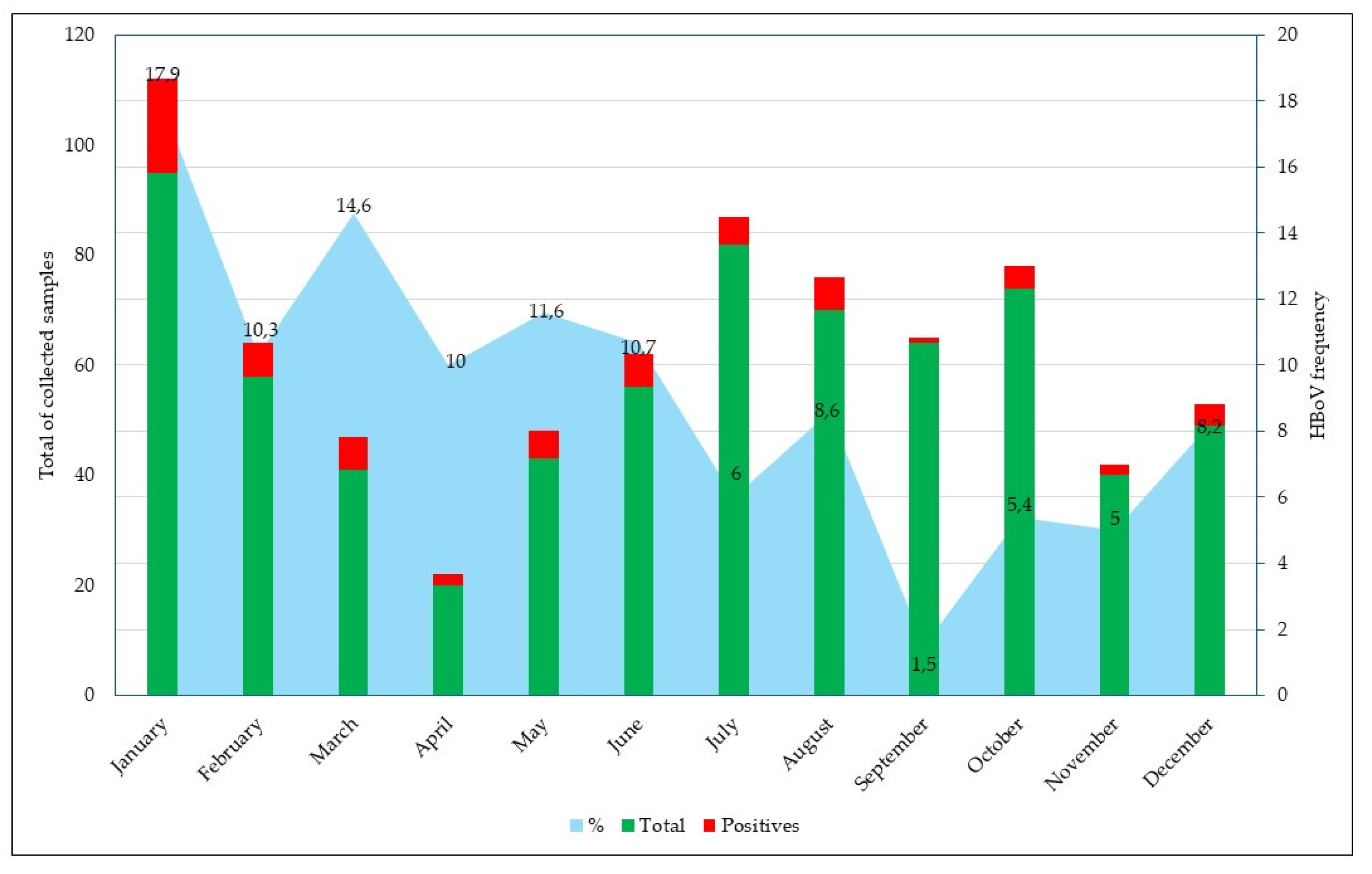
Figure 1. Monthly distribution of HBoV infection among patients with AG in Northern Brazil, between 2017 and 2022.
Preprints 140046 g001
Figure 2. Phylogenetic tree analyses based on VP1/VP2 gene of HBoV strains from Northern region of Brazil (2017-2022). HBoV strains analysed in the present study are marked in red (HBoV-1), blue (HBoV-2), green (HBoV-3) and orange (HBoV-4). References GenBank samples were included and accessed according to their reference numbers. The analysis was inferred by using the Maximum Likelihood method, including the GTR+Gamma+F nucleotide substitution model.
Preprints 140046 g002
Table 1. Epidemiological and clinical characteristics of HBoV-positive and negative patients with acute gastroenteritis in Northern region of Brazil (2017-2022).
Features HBoV infection
Negative (n=628) Positive (n=64) Total (n=692) p value
N (%) N (%) N (%)
Gender
Female 303 48.2 27 42.2 330 47.7 0.35
Male 325 51.8 37 57.8 362 52.2
Age group (months)
0 – 24 375 59.7 45 70.3 420 60.7 0,15
25 – 60 115 18.3 10 15.6 125 18.1
>61 136 21.7 8 12.5 144 20.8
NI* 2 0.3 1 1.6 3 0.4
Clinical symptoms
Diarrhea 570 90.,8 58 90.6 628 90.7 0.62
Vomiting 405 64.5 43 67.2 448 64.7 0.75
Fever 323 51.4 35 54.7 358 51.7 0.47
Disclaimer/Publisher’s Note: The statements, opinions and data contained in all publications are solely those of the individual author(s) and contributor(s) and not of MDPI and/or the editor(s). MDPI and/or the editor(s) disclaim responsibility for any injury to people or property resulting from any ideas, methods, instructions or products referred to in the content.
Copyright: This open access article is published under a Creative Commons CC BY 4.0 license, which permit the free download, distribution, and reuse, provided that the author and preprint are cited in any reuse.
Prerpints.org logo

Preprints.org is a free preprint server supported by MDPI in Basel, Switzerland.

Subscribe

Disclaimer

Terms of Use

Privacy Policy

Privacy Settings

© 2025 MDPI (Basel, Switzerland) unless otherwise stated