

Submitted:
15 November 2024
Posted:
18 November 2024
You are already at the latest version
Abstract
Critical factors in marketing both raw and processed meats include addressing bacterial spoilage and ensuring safety. Nitrites and nitrates are widely used in the meat industry to enhance color and flavor and extend shelf life. However, health concerns linked to their use make reducing nitrites and nitrates in meat production a significant challenge with potential benefits for both the food industry and consumer health. This challenge has been addressed with the use of biopreservatives, i.e., substances extracted from natural sources or produced by fermentation, which can enhance food quality and safety. In this article, we assess the use of live biopreservatives (LBs), defined here as microorganisms that produce antimicrobial substances, to preserve and extend the shelf life of food. Moreover, the potential synergistic effects of LBs with bacteriophages and biodegradable food packaging for meat is also explored. Overall, the inclusion of LBs extends the shelf life of meat products through bacteriostatic mechanisms, whereas bacteriophages offer direct (lytic) action against pathogens. Enhancing meat preservation and safety with mixed microbe-mediated strategies requires deeper empirical and theoretical insights and further revision of laws and ethical considerations.
Keywords:
Live Biopreservatives
; Bacteriophages
; Lactic Acid Bacteria
; Meat Safety
; Nitrites
; Bacteriocins
; Natural Antimicrobials
; Biodegradable food packaging
; Foodborne Pathogens
; Environmental Microbes
; Microevolutionary Models
; Interaction models
1. Introduction
The food industry faces a significant challenge in controlling foodborne pathogens in meat and meat products [1]. Bacterial spoilage and safety are critical considerations in the marketing of both raw and processed meats [2]. The use of nitrites and nitrates as preservatives in the meat industry has been associated with various functions, such as enhancing color and flavor and extending shelf life [1]. However, there are concerns regarding their safety due to the formation of potentially carcinogenic compounds called N-nitrosamines [1]. The European Food Safety Authority (EFSA)'s 2023 report warned about the potential DNA-damaging and carcinogenic effects of 10 nitrosamine substances, predominantly present in processed and cured meat products [3]. However, technological changes are necessary to eliminate nitrate/nitrite and ensure the production of high-quality salamis while lowering the ripening temperature to ensure microbiological safety [4]. Thus, natural sources and new technologies are being explored to develop alternative additives [5]. Reducing the use of nitrites and nitrates in meat production is a major challenge that should substantially benefit the food industry and consumer health.
It has been suggested that these challenges can be successfully addressed by strategically utilizing biopreservatives [1], i.e., natural substances derived from bacteria, fungi, plants or animals, with the aim of extending the shelf life of food products while guaranteeing their safety [6]. Natural preservatives offer a promising alternative to combat microbial resistance [7] and mitigate the adverse effects associated with certain synthetic compounds [6]. Moreover, studies on the mechanism of action, safety evaluations, and establishment of appropriate regulations of natural preservatives are needed before they are used [1].
2. Use of Biopreservatives to Enhance Food Quality and Safety
Biopreservatives are antimicrobial substances extracted from natural sources or produced by fermentation that enhance food quality and safety [8]. Bacteriocins are biologically active compounds with peptide structures that exhibit antimicrobial activity [9]. Bacteriocins are naturally produced by certain bacterial strains; however, their use as additives may be limited by their high cost and limited effectiveness against specific pathogenic microorganisms in the final product [1]. Among all the purified bacteriocins tested thus far, nisin (E-234) stands out as the sole one permitted as a food additive in the European Union, as stated by the European Commission in 2011 [1,6]. Although nisin has relatively broad-spectrum antimicrobial properties, including the inhibition of the overgrowth of sporulated bacteria, these agents are not effective in meat production [2]. The use of bacteriocins and bacteriocin-producing bacteria has been proposed for these bacteria as potential natural preservatives [10]. However, the major effect of bacteriocins on food is obtained when they are combined with other preservation techniques [11] such as essential oils (EOs). A wide range of EO applications, such as incorporation in active packaging or edible films and direct encapsulation, have been described [11]. The combined use of EOs and bacteriocins or bacteriocin-producing bacteria can not only improve food safety and the shelf life of meat and meat products but also stabilize sensory and nutritional quality [11,12].
3. Live Biopreservatives (LBs)
Live Biopreservatives (LBs) are defined here as microorganisms capable of secreting antimicrobial substances that can be utilized as a way of preserving food and extending its shelf life (Figure 1). LBs have a bacteriostatic effect; i.e., they prevent the growth of bacteria. LBs possess diverse characteristics beyond their antimicrobial properties [13]. These include minimal potential for pathogenic activity in compliance with regulatory protocols; limited impact on product characteristics, such as sensory attributes and color [13]; biopreservation action spanning a wide range of temperatures and pH levels [9,14]; and versatile activity against a spectrum of microorganisms [15]. LBs also exhibit resistance through mechanisms of action that impede microbial adaptation [16]. Furthermore, LBs may have a lower impact on the gut microbiota than synthetic preservatives [17]. The potential for a decreased impact on beneficial bacteria in the gut makes LBs an attractive option for those concerned about the effects of food preservatives on overall gut health.
4. Lactic Acid Bacteria to Enhance Meat Product Safety
Research on meat protection has focused on the selection of lactic acid bacteria (LAB) that do not cause meat spoilage or enhance product safety [2]. However, the use of LAB is controversial because several authors argue that a cohort of this microbial species contributes to spoilage (through the generation of harmful metabolites and the subsequent organoleptic downgrading of meat) or serves as a bioprotective agent for strains causing no fluctuations [18]. In addition to LAB, Pseudomonas species have been suggested to be key organisms for consideration when evaluating the impact of specific chilling durations and temperature conditions on the growth of spoilage bacteria [19]. Certain probiotics have also been utilized as LBs in the preservation of fermented meat products [20,21,22].
LAB protect meats by outcompeting other microorganisms and producing inhibitory substances such as lactic and acetic acids and bacteriocins [2,23]. LAB preservation methods, such as spray drying, are effective methods that allow products to be obtained at a low cost compared with lyophilization [24]. Ongoing scientific efforts have led to the emergence of a growing market for food products that incorporate protective cultures to enhance food safety and extend shelf life [25]. Notably, the Lactobacillales order, which includes various genera, plays a significant role in this context; for example, a starter culture (Latilactobacillus sakei CTC494) has been investigated for its ability to protect against Listeria monocytogenes in two varieties of chicken-based dry-fermented sausages during fermentation and ripening [26]. Moreover, mathematical models are also utilized in anti-Listeria biopreservation strategies [27].
Several studies have tested the effectiveness of combining different LAB or their metabolites with novel preservative techniques, such as gas packing, natural extracts, essential oils, and bacteriocins, to create more selective and defensive systems to overcome pathogenic and spoilage microorganisms [28] while also enhancing the physicochemical and sensory properties of the bacteria. Specifically, mixed methods such as the adoption of higher concentrations of bioprotective starter cultures, along with a low sugar concentration, have been shown to improve textural features and reduce oxidation levels in salamis subjected to challenges with Listeria innocua, Salmonella enterica, and Clostridium botulinum [4]. Furthermore, LAB can promote the decomposition of proteins and lipids to produce flavor precursor substances such as free amino acids or free fatty acids, give food a unique flavor, and have a certain positive impact on the overall flavor of the finished product (and flavor improvement along with product preservation and, ultimately, the extension of the shelf life [29]). LAB play a key role in the production of fermented meat products, resulting in texture and flavor improvement, product preservation and, ultimately, the extension of shelf life [28].
5. Bacteriophages to Enhance Food Safety
Bacteriophages, also known as phages, are the most abundant organisms in the biosphere and replicate in bacterial cells [30]. Bacteriophages are naturally occurring predators of bacteria and are presumably harmless to humans and animals; thus, they have been utilized as antimicrobial agents in food products [31,32,33,34,35]. Lytic bacteriophages, with their strict host specificity, are promising biocontrol agents for specifically targeting and controlling pathogenic bacteria in the food industry [36]. Moreover, genetically modified bacteriophages may also play a future role in meat preservation [10]. The role of bacteriophages includes the control of bacterial pathogens: (1) Listeria monocytogenes, bacteriophages have recently been used commercially for pathogen biocontrol in the food industry (in meat and poultry products) [31] and (2) Salomonella sp., bacteriophages have also been used in ground beef [37], ground pork [37] and fresh-cut fruits under different storage temperatures. Furthermore, bacteriophages have been employed as effective biomarkers for fecal contamination at various processing stages in poultry meat and beef [32].
While recent advancements in biological interventions suggest the potential use of bacteriophages as effective microbial regulators, further research is needed to optimize their use as antimicrobial agents [32]. This includes determining the threshold level of hosts necessary for efficient bacteriophage replication and identifying the optimum temperature conditions that enhance bacteriophage performance [32]. A common practice in phage therapy, i.e., for the treatment of pathogenic bacterial infection, is to use phage therapy in combination with antibiotics that can interact synergistically [38]. This requires incorporating bacteriophages into mixed strategies for food preservation, combining the use of LBs to prolong shelf life through bacteriostatic mechanisms and bacteriophages to provide direct (lytic) action against pathogens. However, a more comprehensive empirical and theoretical understanding of microbe-mediated strategies, specifically incorporating LBs and bacteriophages, is necessary to effectively address meat preservation challenges.
Beyond technical considerations, addressing safety issues is crucial for ensuring the optimal and appropriate use of bacteriophages for maximum efficacy [10], in addition to the necessity for further legal revisions and ethical considerations. Bacteriophages are at the forefront of major innovations in biotechnology (e.g. as biopreservatives within the food industry [32]) and biomedicine (e.g. phage therapy represents a promising field of research to overcome antibiotic resistance [39]). However, significant regulatory bodies in the EU and the United States have not overseen the utilization of bacteriophages in the fields of biomedicine and biotechnology [40]. Furthermore, consumers are not yet fully aware of the potential impact of these technologies. Although a limited recent survey in the United Kingdom showed that the lay public has a moderate level of acceptance for phage therapy [41], future wider studies on public acceptance are still needed.
6. Biodegradable Food Packaging for Meat Products
Spoilage control in meat and meat products is one of the critical challenges in the food industry due to the high water content, water activity, pH and nutrient source [28]. For this reason, specific packaging materials are needed to ensure food safety and product stability in terms of water content and oxidation. A gas-permeable film with a gas barrier is needed to maintain a fresh meat color to prevent lipid and protein oxidation [42]. However, petroleum-derived materials used for meat packaging are becoming obsolete due to their non-environmental sustainability since the European Union (EU) adopted the strategy of making all plastic packing recyclable or reusable in the EU market by 2030. The plastic strategy aims to protect our environment and reduce marine litter and greenhouse gas emissions, and dependence on fossil fuels is considered a key element for Europe’s transition to a carbon-neutral and circular economy [43].
Furthermore, environmental awareness has increased in recent years. Consumers demand new ecologically friendly and sustainable ways of preserving food [1]. In this context, biodegradable materials obtained from natural sources represent an alternative in meat production and packaging, although they do not have enough mechanical and barrier properties. These biopolymers can be categorized based upon the source of the material. The most well-known natural biopolymers are polysaccharides and proteins such as starch, cellulose, chitosan and gelatin [42]. On the other hand, synthetic biopolymers could be generated by fermentation (PHA or PHB) or chemical synthesis from biomass such as polylactic acid (PLA) [42].
Current research on natural biopolymers is focused on developing biodegradable materials from agrifood byproducts as a strategy to reduce environmental impact and contribute to a circular economy. This provides an opportunity for agricultural and food industries to revalorize byproducts and create added value in the market. Although biodegradable food packaging for meat [44,45,46] has been used for a long time, the use of microbial biopreservatives [18] represents an unexplored challenge in the field. In this context, LAB are highly interesting due to their ability to be encapsulated by extrusion to produce antimicrobial films [15]. Therefore, as soon as biodegradable materials overcome current technical limitations, additional studies will be needed to validate the integration of microbial bioprotectors in emergent materials.
7. Future Perspectives
7.1. Scaling Up: Use of LAB and Bacteriocins in Real Meat Products
The future integration of lactic acid bacteria (LAB) and bacteriocins in real meat products holds substantial promise for revolutionizing the food industry (Figure 2C). Despite their proven efficacy in in vitro settings, the full potential of these natural antimicrobial agents in real meat applications remains largely untapped due to complexities inherent in meat matrices [1]. Despite the approval of nisin as a purified bacteriocin additive in European and US food regulations [1], the commercial availability of crude extracts such as Pediocin PA-1 from bacteriocin-producing strains [47] underscores its potential.
Advancements in understanding the behavior of LAB and bacteriocins in different meat environments are shaping tailored approaches. For instance, Pseudomonas species thrive in aerobic environments, while LAB flourish in anaerobic settings, such as in vacuum-packed meat [19]. This knowledge aids in optimizing the effectiveness of these products against specific spoilage or pathogenic microorganisms present in different meat types. Moreover, the combined use of LAB cocktails or synergistic combinations of bacteriocins has the potential to create robust antimicrobial systems that can combat a broader spectrum of microbes, ensuring product safety and quality of meat products, as well as prolonging shelf life and preserving sensory attributes [6,48]. Innovations in processing technologies, such as controlled fermentation temperatures, targeted bioprotective starter cultures, and emerging techniques such as high-pressure processing (HPP), are also proving instrumental in harnessing the antimicrobial capabilities of LAB and bacteriocins [15].
Looking ahead, the future landscape of meat preservation and safety is likely to witness a shift toward greater reliance on natural antimicrobial agents such as LAB and bacteriocins. As research and technological advancements continue to unfold, the effective integration of these natural compounds in meat processing is advised to address food safety concerns, extend shelf life, and satisfy consumer demands for cleaner labels and natural preservatives in meat products. This evolution represents a paradigm shift toward sustainable and innovative food preservation methodologies in the meat industry.
7.2. Uses of LBs and Bacteriophages with Biodegradable Packaging for Meat
Active packaging or microencapsulation techniques are considered valuable alternatives for ensuring microbiological food safety and enhancing the quality of food products [28,49]. The application of antimicrobial and active compounds allows persistent migration to the food matrix during storage. In this regard, the application of these materials has various advantages, not only by controlling spoilage; restricting the growth of pathogenic microorganisms; reducing lipid, protein and pigment oxidation; and preventing off-odors [50]. Moreover, the incorporation of LAB and their metabolites in active packaging for meat and meat products is more efficient than their direct application [28]. However, to date, there are a limited number of studies that combine LBs [18] in sustainable/biodegradable food packaging for meat [44,45]. Some studies have shown the effectiveness of plantaricin BM-1 and pediocin BA-1/AcH for pork meat as coatings in new biocomposite films [1]. All the treatments reduced the population of Listeria monocytogenes by approximately 1.5-2 log units after 14 days of storage at 4 °C [1].
Even though the combination of different microencapsulation techniques, natural extracts, and LAB cocktails with novel techniques such as MAP, HPP or active packaging increases the preservative effect [28], the synergistic potential of these combinations with bacteriophages in biodegradable materials has not yet been tested (Figure 2A). Moreover, biodegradable plastic packing is exposed to the action of environmental plastic-degrading microorganisms [51], leading to potential interactions with LBs and bacteriophages.
7.3. Assessment of the Potential Impact of LBs on Antimicrobial Resistance
Antimicrobial resistance is a complex and emerging global health challenge characterized by the ability of microorganisms to withstand the effects of antimicrobial agents. The extensive utilization of antibiotics and other chemicals has the potential to induce multiresistant microbes [52]. Horizontal gene transfer (i.e., the exchange of genetic material between different species) of antimicrobial resistance genes is a major source of antimicrobial resistance [53]. Thus, suitable LBs must not only exhibit the general characteristics outlined earlier in the text but also be free from antimicrobial resistance genes. Moreover, considering the interlinked mechanisms of bacterial resistance [52], further investigation is needed into the potential impact of employing LBs in meat production on the ongoing arms race of antimicrobial resistance [7] (Figure 2D).
7.4. Computational Models for Assessing the Use of LBs and Bacteriophages
Computational models may play a crucial role in evaluating the potential synergistic effect of LBs and bacteriophages on meat safety and preservation. Predictive microbiology relies on the use of deterministic and stochastic models based on the idea that the responses of microbial populations to environmental elements can be replicated [54]. Thus, the application of predictive microbiology techniques allows for determining the potential behavior of pathogens under diverse conditions within a certain degree of probability. Utilizing predictive biological models through databases with trained models offers a robust mechanism for enhancing quality support and ensuring food safety measures in the food industry [55]. These models, grounded in evidence, signify progress in the effective evaluation and management of food safety [55].
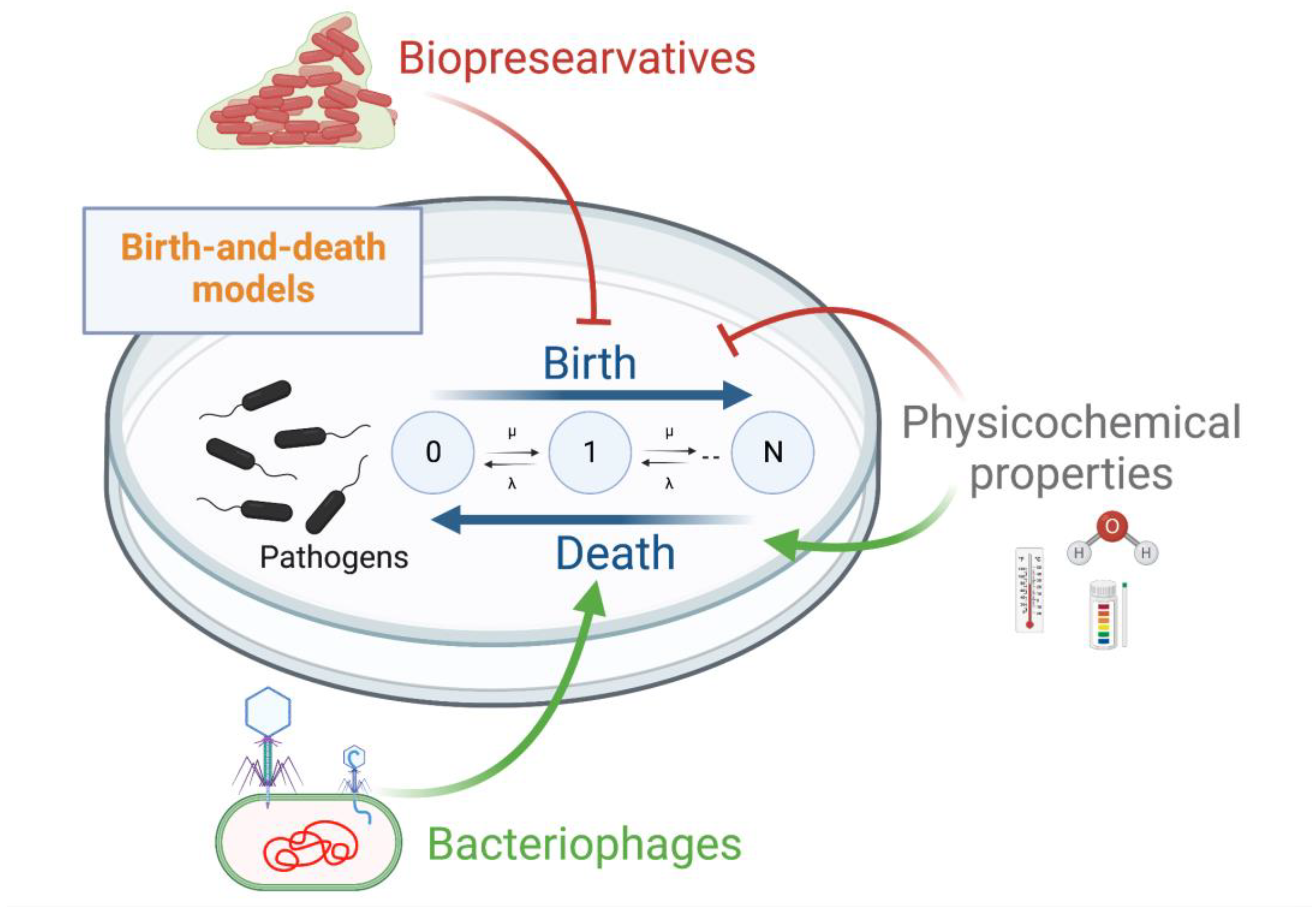
Counting models of pathogen growth can be written as a general birth-death process (Figure 3) [56]. Birth-and-death models focus on the internal dynamics of the size of a single population over time. These models offer versatility in their representations, allowing for diverse forms that encompass a wide spectrum of microevolutionary scenarios [57]. Nevertheless, birth-and-death models require a minimum of two parameters, λ (birth rate) and μ (death rate), to determine the effect of LBs and bacteriophages on pathogen growth. Thus, the population of a bacterial pathogen of size n increases at a rate of nλ and decreases at a rate of nμ, with the parameters (λ,μ) being different for each microbe and environmental condition.
Modeling interactions among a bacterial pathogen, LB, bacteriophage and the physicochemical properties of meat production and storage can be achieved by combining aspects of competitive growth models and predator-prey dynamics, based on the classic Lotka-Volterra equations [58] and the Monod and logistic growth models [59,60]. The concentration of the bacterial pathogen at time t, S(t), can be measured using Equation 1; the concentration of the LB at time t, B(t), can be measured using Equation 2; and the concentration of a bacteriophage targeting the pathogen at time t, P(t), can be measured using Equation 3. Furthermore, stochastic versions of these equations can account for real-world randomness, which is important for understanding population dynamics in small or variable populations.
Equation 1. Pathogen growth.
Where ν is the growth rate of the pathogen, K is the carrying capacity of the environment for bacteria, γ is the competition rate from B (LB) to S (pathogen), φ is the phage adsorption rate, and i is the interaction with environmental properties including temperature (it), humidity (ih), pH (ipH), material (im), and other potential factors (ix).
Equation 2. Live biopreservative (LB) growth
Where ω is the growth rate of the LB, α is the competition coefficient from (S) pathogen to B (LB), and j is the interaction with environmental properties including temperature (jt), humidity (jh), pH (jpH), material (jm), and other potential factors (jx).
Equation 3. Bacteriophage growth
Where β is the burst size (number of new phages produced per lysed host cell), δ is the natural decay rate of the phage, P is the bacteriophage concentration, and Kp is the carrying capacity of the environment for the bacteriophage.
7.5. Economic and Environmental Implications of LBs
The integration of LBs in food preservation processes has significant economic and environmental implications, reshaping the landscape of food safety and sustainability. Economically, these natural preservatives offer a potential solution to industries where substantial financial losses are incurred due to product contamination [1]. By implementing biopreservation strategies, companies can potentially reduce waste, minimize recalls, and extend shelf life, leading to cost savings and improved profitability [25]. Research in this area not only aims at combating foodborne pathogens such as L. monocytogenes [27] but also addresses critical environmental concerns by potentially curbing greenhouse gas emissions associated with food waste [25]. Moreover, the adoption of bioprotective starter cultures and other natural preservation methods can streamline production processes, reducing the reliance on synthetic additives and simplifying labeling, meeting consumer preferences for clean and natural ingredients (Figure 2B). This shift aligns with market demands for healthier, minimally processed foods, potentially enhancing market competitiveness for food producers [61]. For example, the implementation of higher concentrations of bioprotective starter cultures combined with low sugar concentrations has shown tangible benefits, such as improved textural qualities and reduced oxidation levels in products such as salamis, even when faced with challenges from various harmful bacteria, such as L. innocua] , S. enterica, and C. botulinum [4]. Finally, the emergence of metagenomic techniques in food safety, particularly in identifying and characterizing environmental microorganisms in food processing chains, represents a promising avenue for further investigation [1]. Such approaches not only enhance our understanding of food preservation processes but also contribute to refining biopreservation strategies for better food quality and safety.
8. Conclusions
The emerging field of combining LBs and bacteriophages promises enhanced meat preservation and longevity. By adding LBs, meat products will have an extended shelf life due to bacteriostatic mechanisms, whereas bacteriophages provide more direct (lytic) action against pathogens. However, achieving meat preservation with LBs and bacteriophages requires further empirical and theoretical understanding of these microbe-mediated strategies (box 1). Moreover, the utilization of microbe-mediated approaches prompts a need for additional revisions in law and ethical considerations.
Box 1. Outstanding questions.
- • Is the combination of LBs (bacteriostatic) and bacteriophages (bacteriolytic) the most suitable strategy to improve quality and meat safety?
- • What is the impact of combining LBs and bacteriophages on the physicochemical, technological, and sensory properties of both fresh and fermented meat?
- • How do LBs and bacteriophages perform in real meat products considering food complexities?
- How does a combination of LBs with biodegradable food packaging improve meat safety and sustainability?
- • What potential interactions can occur between LBs (and bacteriophages) on biodegradable plastic packaging materials with environmental plastic-degrading microbes?
- • Is the use of LBs (and bacteriophages) a potential risk for the spread of antimicrobial resistance?
- • May mixed strategies involving LBs and bacteriophages effectively address the issue of reducing nitrites and nitrates in meat preservation?
Author Contributions
For research articles with several authors, a short paragraph specifying their individual contributions must be provided. Conceptualization, PP and CRM; methodology, CRM and PP.; computational model, PP; investigation, PP, CRM and CDC; resources, NOO, CRM and PP; writing—original draft preparation, PP and CRM; writing—review and editing, CRM, CDC, MN, NOO and PP; writing the final version of the manuscript, PP. All authors have read and agreed to the published version of the manuscript.
Acknowledgments
We thank members of the Eurecat’s Nutrition and Health Unit for their helpful discussions.
Conflicts of Interest
The authors declare no conflict of interest.
References
- Barcenilla, C.; Ducic, M.; López, M.; Prieto, M.; Álvarez-Ordóñez, A. Application of lactic acid bacteria for the biopreservation of meat products: A systematic review. Meat Sci. 2022, 183, 108661. [Google Scholar] [CrossRef] [PubMed]
- McMULLEN, L.M.; Stiles, M.E. Potential for Use of Bacteriocin-Producing Lactic Acid Bacteria in the Preservation of Meats. J. Food Prot. 1996, 59, 64–71. [Google Scholar] [CrossRef] [PubMed]
- EFSA Panel on Contaminants in the Food Chain (EFSA CONTAM Panel); Schrenk, D. ; Bignami, M.; Bodin, L.; Chipman, J.K.; Del Mazo, J.; Hogstrand, C.; Ron Hoogenboom, L.; Leblanc, J.-C.; Nebbia, C.S.; Nielsen, E.; Ntzani, E.; Petersen, A.; Sand, S.; Schwerdtle, T.; Vleminckx, C.; Wallace, H.; Romualdo, B.; Cristina, F.; Stephen, H.; Grasl-Kraupp, B. Risk assessment of N-nitrosamines in food. EFSA J. 2023, 21, e07884. [Google Scholar] [CrossRef]
- Tabanelli, G.; Barbieri, F.; Soglia, F.; Magnani, R.; Gardini, G.; Petracci, M.; Gardini, F.; Montanari, C. Safety and technological issues of dry fermented sausages produced without nitrate and nitrite. Food Res. Int. 2022, 160, 111685. [Google Scholar] [CrossRef]
- Shakil, M.H.; Trisha, A.T.; Rahman, M.; Talukdar, S.; Kobun, R.; Huda, N.; Zzaman, W. Nitrites in cured meats, health risk issues, alternatives to nitrites: A review. Foods 2022, 11. [Google Scholar] [CrossRef]
- Pisoschi, A.M.; Pop, A.; Georgescu, C.; Turcuş, V.; Olah, N.K.; Mathe, E. An overview of natural antimicrobials role in food. Eur. J. Med. Chem. 2018, 143, 922–935. [Google Scholar] [CrossRef]
- Romero, J.L.; Grande Burgos, M.J.; Pérez-Pulido, R.; Gálvez, A.; Lucas, R. Resistance to Antibiotics, Biocides, Preservatives and Metals in Bacteria Isolated from Seafoods: Co-Selection of Strains Resistant or Tolerant to Different Classes of Compounds. Front. Microbiol. 2017, 8, 1650. [Google Scholar] [CrossRef]
- Muthuvelu, K.S.; Ethiraj, B.; Pramnik, S.; Raj, N.K.; Venkataraman, S.; Rajendran, D.S.; Bharathi, P.; Palanisamy, E.; Narayanan, A.S.; Vaidyanathan, V.K.; Muthusamy, S. Biopreservative technologies of food: an alternative to chemical preservation and recent developments. Food Sci. Biotechnol. 2023, 32, 1337–1350. [Google Scholar] [CrossRef]
- Silva, C.C.G.; Silva, S.P.M.; Ribeiro, S.C. Application of bacteriocins and protective cultures in dairy food preservation. Front. Microbiol. 2018, 9, 594. [Google Scholar] [CrossRef]
- Singh, V.P. Recent approaches in food bio-preservation - a review. Open Vet. J. 2018, 8, 104–111. [Google Scholar] [CrossRef]
- Bukvicki, D.; D’Alessandro, M.; Rossi, S.; Siroli, L.; Gottardi, D.; Braschi, G.; Patrignani, F.; Lanciotti, R. Essential Oils and Their Combination with Lactic Acid Bacteria and Bacteriocins to Improve the Safety and Shelf Life of Foods: A Review. Foods 2023, 12. [Google Scholar] [CrossRef] [PubMed]
- Turgis, M.; Vu, K.D.; Dupont, C.; Lacroix, M. Combined antimicrobial effect of essential oils and bacteriocins against foodborne pathogens and food spoilage bacteria. Food Res. Int 2012, 48, 696–702. [Google Scholar] [CrossRef]
- Lee, N.-K.; Paik, H.-D. Status, antimicrobial mechanism, and regulation of natural preservatives in livestock food systems. Korean Journal for Food Science of Animal Resources 2016, 36, 547–557. [Google Scholar] [CrossRef] [PubMed]
- Kasimin, M.E.; Shamsuddin, S.; Molujin, A.M.; Sabullah, M.K.; Gansau, J.A.; Jawan, R. Enterocin: promising biopreservative produced by enterococcus sp. Microorganisms 2022, 10. [Google Scholar] [CrossRef] [PubMed]
- Ma, J.; Yu, W.; Hou, J.; Han, X.; Shao, H.; Liu, Y. Characterization and production optimization of a broad-spectrum bacteriocin produced by Lactobacillus casei KLDS 1.0338 and its application in soybean milk biopreservation. International Journal of Food Properties 2020, 23, 677–692. [Google Scholar] [CrossRef]
- Webb, L.; Ma, L.; Lu, X. Impact of lactic acid bacteria on the control of Listeria monocytogenes in ready-to-eat foods. Food Quality and Safety 2022. [Google Scholar] [CrossRef]
- Li, P.; Li, M.; Wu, T.; Song, Y.; Li, Y.; Huang, X.; Lu, H.; Xu, Z.Z. Systematic evaluation of antimicrobial food preservatives on glucose metabolism and gut microbiota in healthy mice. npj Sci. Food 2022, 6, 42. [Google Scholar] [CrossRef]
- Pothakos, V.; Devlieghere, F.; Villani, F.; Björkroth, J.; Ercolini, D. Lactic acid bacteria and their controversial role in fresh meat spoilage. Meat Sci. 2015, 109, 66–74. [Google Scholar] [CrossRef]
- EFSA Panel on Biological Hazards (BIOHAZ) Growth of spoilage bacteria during storage and transport of meat. EFSA Journal 2016, 14. [CrossRef]
- Sirini, N.; Loyeau, P.; Ruiz, M.; Stegmayer, M.; Soto, L.; Werning, M.; Frizzo, L.; Ordoñez, V.; Fernández-López, J.; Rosmini, M. Development of Probiotic Fermented Sausages and Viability Monitoring of Supplemented Lactiplantibacillus plantarum BFL Strain. Fermentation 2022, 8, 526. [Google Scholar] [CrossRef]
- WO2015048899A1 - Use of probiotics in meat - Google Patents. Available online: https://patents.google.com/patent/WO2015048899A1/en (accessed on 13 June 2023).
- Rouhi, M.; Sohrabvandi, S.; Mortazavian, A.M. Probiotic fermented sausage: viability of probiotic microorganisms and sensory characteristics. Crit. Rev. Food Sci. Nutr. 2013, 53, 331–348. [Google Scholar] [CrossRef] [PubMed]
- Bachtarzi, N.; Gomri, M.A.; Meradji, M.; Gil-Cardoso, K.; Ortega, N.; Chomiciute, G.; Del Bas, J.M.; López, Q.; Martínez, V.; Kharroub, K. In vitro assessment of biofunctional properties of Lactiplantibacillus plantarum strain Jb21-11 and the characterization of its exopolysaccharide. Int. Microbiol. 2023. [Google Scholar] [CrossRef]
- Vera Peña, M.Y.; Cortés Rodríguez, M.; Valencia-García, F.E. Secado por atomización de bacterias ácido lácticas: una revisión. ing.cienc. 2019, 15, 179–213. [Google Scholar] [CrossRef]
- Fischer, S.W.; Titgemeyer, F. Protective cultures in food products: from science to market. Foods 2023, 12. [Google Scholar] [CrossRef]
- Austrich-Comas, A.; Serra-Castelló, C.; Jofré, A.; Gou, P.; Bover-Cid, S. Control of Listeria monocytogenes in chicken dry-fermented sausages with bioprotective starter culture and high-pressure processing. Front. Microbiol. 2022, 13, 983265. [Google Scholar] [CrossRef]
- Serra-Castelló, C.; Costa, J.C.C.P.; Jofré, A.; Bolívar, A.; Pérez-Rodríguez, F.; Bover-Cid, S. A mathematical model to predict the antilisteria bioprotective effect of Latilactobacillus sakei CTC494 in vacuum packaged cooked ham. Int. J. Food Microbiol. 2022, 363, 109491. [Google Scholar] [CrossRef]
- Kaveh, S.; Hashemi, S.M.B.; Abedi, E.; Amiri, M.J.; Conte, F.L. Bio-Preservation of Meat and Fermented Meat Products by Lactic Acid Bacteria Strains and Their Antibacterial Metabolites. Sustainability 2023, 15, 10154. [Google Scholar] [CrossRef]
- Zhang, K.; Zhang, T.-T.; Guo, R.-R.; Ye, Q.; Zhao, H.-L.; Huang, X.-H. The regulation of key flavor of traditional fermented food by microbial metabolism: A review. Food Chemistry: X 2023, 19, 100871. [Google Scholar] [CrossRef]
- Clokie, M.R.; Millard, A.D.; Letarov, A.V.; Heaphy, S. Phages in nature. Bacteriophage 2011, 1, 31–45. [Google Scholar] [CrossRef]
- García, P.; Martínez, B.; Obeso, J.M.; Rodríguez, A. Bacteriophages and their application in food safety. Lett. Appl. Microbiol. 2008, 47, 479–485. [Google Scholar] [CrossRef]
- Ishaq, A.; Ebner, P.D.; Syed, Q.A.; Ubaid ur Rahman, H. Employing list-shield bacteriophage as a bio-control intervention for Listeria monocytogenes from raw beef surface and maintain meat quality during refrigeration storage. LWT 2020, 132, 109784. [Google Scholar] [CrossRef]
- A mini-review on the role of bacteriophages in food safety. CyTA - Journal of Food.
- Garvey, M. Bacteriophages and Food Production: Biocontrol and Bio-Preservation Options for Food Safety. Antibiotics (Basel) 2022, 11. [Google Scholar] [CrossRef] [PubMed]
- Ranveer, S.A.; Dasriya, V.; Ahmad, M.F.; Dhillon, H.S.; Samtiya, M.; Shama, E.; Anand, T.; Dhewa, T.; Chaudhary, V.; Chaudhary, P.; Behare, P.; Ram, C.; Puniya, D.V.; Khedkar, G.D.; Raposo, A.; Han, H.; Puniya, A.K. Positive and negative aspects of bacteriophages and their immense role in the food chain. npj Sci. Food 2024, 8, 1. [Google Scholar] [CrossRef]
- Moon, S.H.; Waite-Cusic, J.; Huang, E. Control of Salmonella in chicken meat using a combination of a commercial bacteriophage and plant-based essential oils. Food Control 2020, 110, 106984. [Google Scholar] [CrossRef]
- Yeh, Y.; Purushothaman, P.; Gupta, N.; Ragnone, M.; Verma, S.C.; de Mello, A.S. Bacteriophage application on red meats and poultry: Effects on Salmonella population in final ground products. Meat Sci. 2017, 127, 30–34. [Google Scholar] [CrossRef]
- Grygorcewicz, B.; Gliźniewicz, M.; Olszewska, P.; Miłek, D.; Czajkowski, A.; Serwin, N.; Cecerska-Heryć, E.; Rakoczy, R. Response Surface Methodology Application for Bacteriophage-Antibiotic Antibiofilm Activity Optimization. Microorganisms 2023, 11. [Google Scholar] [CrossRef]
- Wang, M.; Zhang, J.; Wei, J.; Jiang, L.; Jiang, L.; Sun, Y.; Zeng, Z.; Wang, Z. Phage-inspired strategies to combat antibacterial resistance. Crit. Rev. Microbiol. 2024, 50, 196–211. [Google Scholar] [CrossRef]
- Yang, Q.; Le, S.; Zhu, T.; Wu, N. Regulations of phage therapy across the world. Front. Microbiol. 2023, 14, 1250848. [Google Scholar] [CrossRef]
- McCammon, S.; Makarovs, K.; Banducci, S.; Gold, V. Phage therapy and the public: Increasing awareness essential to widespread use. PLoS ONE 2023, 18, e0285824. [Google Scholar] [CrossRef]
- Kandeepan, G. Biodegradable nanocomposite packaging films for meat and meat products: A review. J Package Technol Res 2021, 5, 143–166. [Google Scholar] [CrossRef]
- Matthews, C.; Moran, F.; Jaiswal, A.K. A review on European Union’s strategy for plastics in a circular economy and its impact on food safety. J. Clean. Prod. 2021, 283, 125263. [Google Scholar] [CrossRef]
- Dörnyei, K.R.; Uysal-Unalan, I.; Krauter, V.; Weinrich, R.; Incarnato, L.; Karlovits, I.; Colelli, G.; Chrysochou, P.; Fenech, M.C.; Pettersen, M.K.; Arranz, E.; Marcos, B.; Frigerio, V.; Apicella, A.; Yildirim, S.; Poças, F.; Dekker, M.; Johanna, L.; Coma, V.; Corredig, M. Sustainable food packaging: An updated definition following a holistic approach. Front. Sustain. Food Syst. 2023, 7. [Google Scholar] [CrossRef]
- Herbes, C.; Beuthner, C.; Ramme, I. How green is your packaging—A comparative international study of cues consumers use to recognize environmentally friendly packaging. Int. J. Consum. Stud. 2020, 44, 258–271. [Google Scholar] [CrossRef]
- (23) A critical review on biodegradable food packaging for meat: Materials, sustainability, regulations, and perspectives in the EU | Request PDF. Available online: https://www.researchgate.net/publication/371534548_A_critical_review_on_biodegradable_food_packaging_for_meat_Materials_sustainability_regulations_and_perspectives_in_the_EU (accessed on 15 June 2023).
- Back, A.; Borges, F.; Mangavel, C.; Paris, C.; Rondags, E.; Kapel, R.; Aymes, A.; Rogniaux, H.; Pavlović, M.; van Heel, A.J.; Kuipers, O.P.; Revol-Junelles, A.-M.; Cailliez-Grimal, C. Recombinant pediocin in Lactococcus lactis: increased production by propeptide fusion and improved potency by co-production with PedC. Microb. Biotechnol. 2016, 9, 466–477. [Google Scholar] [CrossRef]
- Camargo, A.C.; Todorov, S.D.; Chihib, N.E.; Drider, D.; Nero, L.A. Lactic Acid Bacteria (LAB) and Their Bacteriocins as Alternative Biotechnological Tools to Control Listeria monocytogenes Biofilms in Food Processing Facilities. Mol. Biotechnol. 2018, 60, 712–726. [Google Scholar] [CrossRef]
- Sharma, S.; Perera, K.Y.; Jaiswal, A.K.; Jaiswal, S. Natural antimicrobials from fruits and plant extract for food packaging and preservation. In Food packaging and preservation; Elsevier, 2024; pp. 133–152 ISBN 9780323900447.
- Umaraw, P.; Munekata, P.E.S.; Verma, A.K.; Barba, F.J.; Singh, V.P.; Kumar, P.; Lorenzo, J.M. Edible films/coating with tailored properties for active packaging of meat, fish and derived products. Trends Food Sci. Technol. 2020, 98, 10–24. [Google Scholar] [CrossRef]
- Yang, X.-G.; Wen, P.-P.; Yang, Y.-F.; Jia, P.-P.; Li, W.-G.; Pei, D.-S. Plastic biodegradation by in vitro environmental microorganisms and in vivo gut microorganisms of insects. Front. Microbiol. 2022, 13, 1001750. [Google Scholar] [CrossRef]
- Puigbò, P.; Leino, L.I.; Rainio, M.J.; Saikkonen, K.; Saloniemi, I.; Helander, M. Does glyphosate affect the human microbiota? Life (Basel) 2022, 12. [Google Scholar] [CrossRef]
- Tao, S.; Chen, H.; Li, N.; Wang, T.; Liang, W. The spread of antibiotic resistance genes in vivo model. Can. J. Infect. Dis. Med. Microbiol. 2022, 2022, 3348695. [Google Scholar] [CrossRef]
- Ross, T.; McMeekin, T.A. Predictive microbiology. Int. J. Food Microbiol. 1994, 23, 241–264. [Google Scholar] [CrossRef]
- González, S.C.; Possas, A.; Carrasco, E.; Valero, A.; Bolívar, A.; Posada-Izquierdo, G.D.; García-Gimeno, R.M.; Zurera, G.; Pérez-Rodríguez, F. “MicroHibro”: A software tool for predictive microbiology and microbial risk assessment in foods. Int. J. Food Microbiol. 2019, 290, 226–236. [Google Scholar] [CrossRef] [PubMed]
- Crawford, F.W.; Ho, L.S.T.; Suchard, M.A. Computational methods for birth-death processes. Wiley Interdiscip. Rev. Comput. Stat. 2018, 10. [Google Scholar] [CrossRef] [PubMed]
- Puigbò, P.; Lobkovsky, A.E.; Kristensen, D.M.; Wolf, Y.I.; Koonin, E.V. Genomes in turmoil: quantification of genome dynamics in prokaryote supergenomes. BMC Biol. 2014, 12, 66. [Google Scholar] [CrossRef] [PubMed]
- Shim, H.; Fishwick, P.A. Visualization and interaction design for ecosystem modeling. In Encyclopedia of Ecology; Elsevier, 2008; pp. 3685–3693 ISBN 9780080454054.
- Wachenheim, D.E.; Patterson, J.A.; Ladisch, M.R. Analysis of the logistic function model: derivation and applications specific to batch cultured microorganisms. Bioresour. Technol. 2003, 86, 157–164. [Google Scholar] [CrossRef] [PubMed]
- Xu, P. Analytical solution for a hybrid Logistic-Monod cell growth model in batch and continuous stirred tank reactor culture. Biotechnol. Bioeng. 2020, 117, 873–878. [Google Scholar] [CrossRef]
- Souza, L.V.; Martins, E.; Moreira, I.M.F.B.; de Carvalho, A.F. Strategies for the development of bioprotective cultures in food preservation. Int. J. Microbiol. 2022, 2022, 6264170. [Google Scholar] [CrossRef]
Figure 1.
Main characteristics of live biopreservatives (LBs). LBs are microbial strains that can be utilized as food preservatives, because they have the capacity to secrete antimicrobial substances. Furthermore, they need to present the following desirable characteristics: antimicrobial properties, absence of pathogenicity elements, limited impact on product characteristics, biopreservation action spanning a wide range of temperatures, humidity and pH levels, and lower impact on the gut microbiota.
Figure 1.
Main characteristics of live biopreservatives (LBs). LBs are microbial strains that can be utilized as food preservatives, because they have the capacity to secrete antimicrobial substances. Furthermore, they need to present the following desirable characteristics: antimicrobial properties, absence of pathogenicity elements, limited impact on product characteristics, biopreservation action spanning a wide range of temperatures, humidity and pH levels, and lower impact on the gut microbiota.
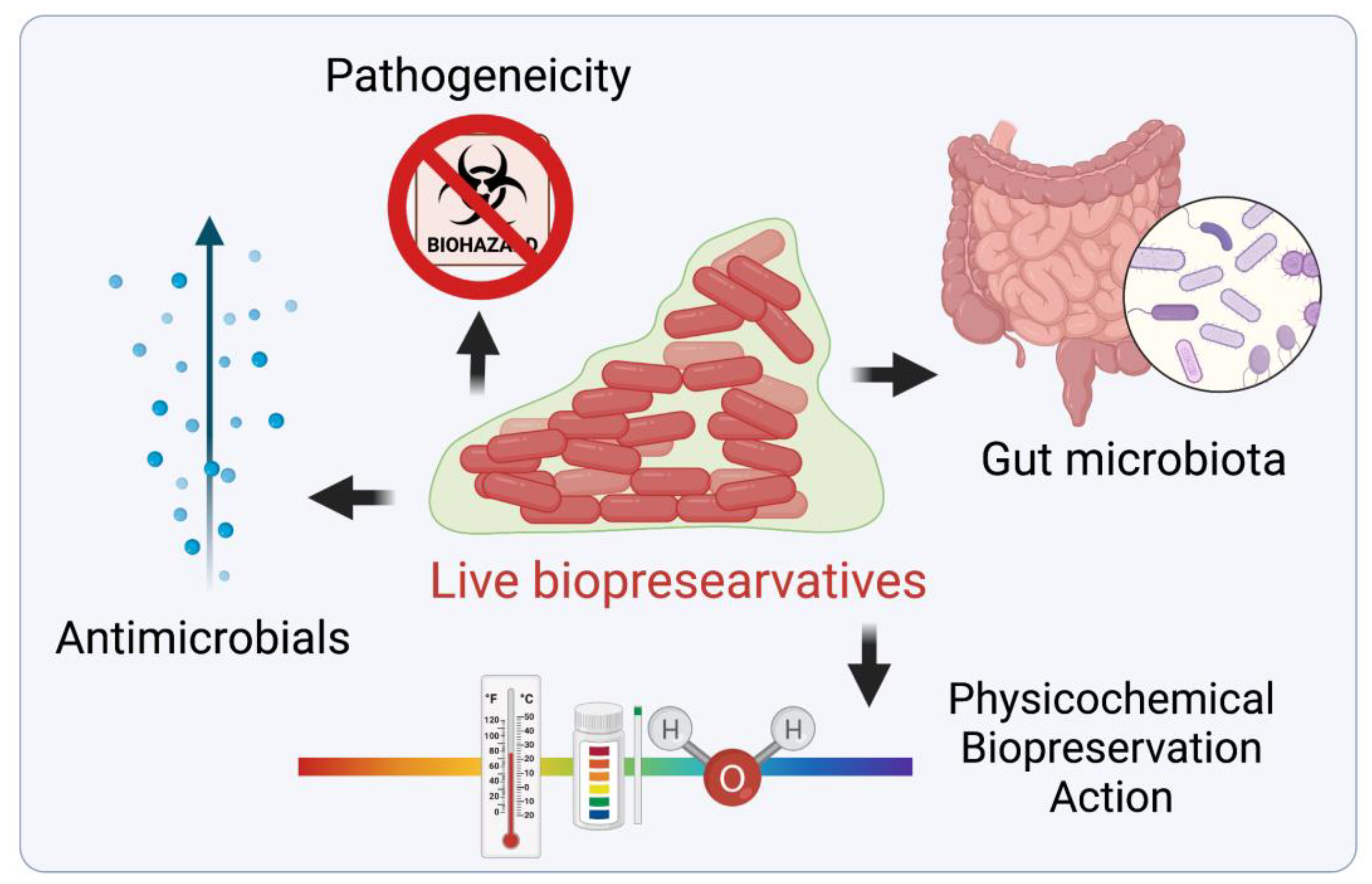
Figure 2.
Future perspectives. The utilization of live biopreservatives (LBs) as bacteriostatic agents, combined with lytic bacteriophages, poses future research and innovation challenges for the meat industry. A) The use of biodegradable food packaging has been in the market for a few years already. However, potential interactions with LBs are not yet fully understood. Moreover, the combination of LBs (bacteriostatic effect), bacteriophages (bacteriolytic effect) and biodegradable food packaging has never been tested. B) Reduction of nitrites and nitrates will bring potential benefits to the food industry, the environment and consumer health. However, before reaching the market, the use of LBs requires further investigations on economical challenges. Furthermore, bacteriophages are not yet regulated as biopreservatives by the major regulatory agencies, including those in the European Union and the United States. C) Lactic acid bacteria and bacteriocins have performed well in controlled settings. However, antimicrobial agents need to scale up to demonstrate the usability in highly complex meat matrices. D) Antimicrobial resistance is a major global challenge. Interspecific horizontal gene transfer (HGT) is pervasive in bacteria, including the exchange of antimicrobial resistance genes. Future experiments on the use of LBs and bacteriophages need to explore the potential highways of HGT that can be created between LBs and environmental microbes.
Figure 2.
Future perspectives. The utilization of live biopreservatives (LBs) as bacteriostatic agents, combined with lytic bacteriophages, poses future research and innovation challenges for the meat industry. A) The use of biodegradable food packaging has been in the market for a few years already. However, potential interactions with LBs are not yet fully understood. Moreover, the combination of LBs (bacteriostatic effect), bacteriophages (bacteriolytic effect) and biodegradable food packaging has never been tested. B) Reduction of nitrites and nitrates will bring potential benefits to the food industry, the environment and consumer health. However, before reaching the market, the use of LBs requires further investigations on economical challenges. Furthermore, bacteriophages are not yet regulated as biopreservatives by the major regulatory agencies, including those in the European Union and the United States. C) Lactic acid bacteria and bacteriocins have performed well in controlled settings. However, antimicrobial agents need to scale up to demonstrate the usability in highly complex meat matrices. D) Antimicrobial resistance is a major global challenge. Interspecific horizontal gene transfer (HGT) is pervasive in bacteria, including the exchange of antimicrobial resistance genes. Future experiments on the use of LBs and bacteriophages need to explore the potential highways of HGT that can be created between LBs and environmental microbes.
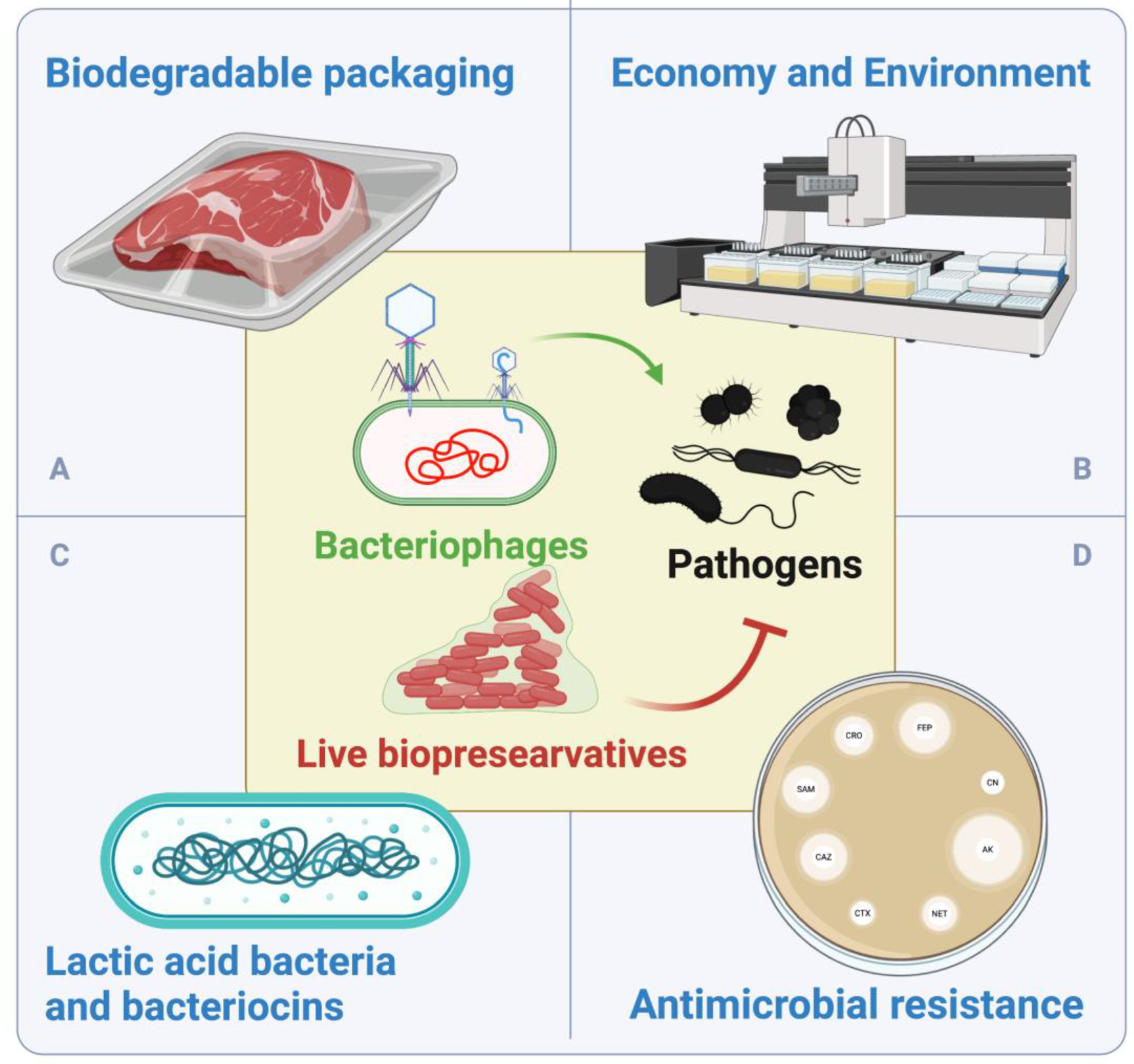
Figure 3.
Hypothetical synergy model of the action of live biopreservatives (LBs) and bacteriophages. Birth-and-death models for assessing the effect of LBs and bacteriophages on meat production. λ: birth rate and μ: death. The parameters (λ, μ) vary based on the microbe and experimental conditions (physicochemical properties, bacteriophages, and LBs).
Figure 3.
Hypothetical synergy model of the action of live biopreservatives (LBs) and bacteriophages. Birth-and-death models for assessing the effect of LBs and bacteriophages on meat production. λ: birth rate and μ: death. The parameters (λ, μ) vary based on the microbe and experimental conditions (physicochemical properties, bacteriophages, and LBs).
Disclaimer/Publisher’s Note: The statements, opinions and data contained in all publications are solely those of the individual author(s) and contributor(s) and not of MDPI and/or the editor(s). MDPI and/or the editor(s) disclaim responsibility for any injury to people or property resulting from any ideas, methods, instructions or products referred to in the content. |
© 2024 by the authors. Licensee MDPI, Basel, Switzerland. This article is an open access article distributed under the terms and conditions of the Creative Commons Attribution (CC BY) license (http://creativecommons.org/licenses/by/4.0/).
Copyright: This open access article is published under a Creative Commons CC BY 4.0 license, which permit the free download, distribution, and reuse, provided that the author and preprint are cited in any reuse.


