Preprint
Article

This version is not peer-reviewed.

The Practices of an Integrated Infrastructure Planning in Ethiopian Metropolitan Cities, the Case of Addis Ababa and Sheger Cities

Submitted:

13 November 2024

Posted:

15 November 2024

You are already at the latest version

Abstract

Integrated infrastructure planning between two cities is a coordinated approach that aligns infrastructure systems such as transportation networks, waste management, water supply, and digital connectivity across municipal boundaries. This type of regional planning creates synergy between neighboring cities, helping achieve broader economic, environmental, and social objectives. In particular, it emphasizes improved connectivity, resource sharing, and resilience, all of which support regional growth, reduce redundancies, and ensure that infrastructure systems work efficiently for both cities. On the other hand, disjointed approaches to infrastructure development could lead to unsustainable urban sprawl, traffic jams, poor public service delivery, environmental degradation, inefficiencies, and inequality. The study used a mixed-methods approach, using convenience sampling techniques and collected data through questionnaires, surveys, interviews, and focus group discussions, which was analyzed using Microsoft Excel, ArcGIS, and SPSS. The study examines infrastructure systems and planning practices in Addis Ababa and Sheger, focusing on efficiency improvements in sewerage and drainage management, waste management, and transportation networks. It also analyzes challenges and provides recommendations for effective inter-city coordination.

Keywords: 
;  ;  ;  ;  ;  ;  ;  ;  

Introduction

Growing cities increasingly recognize urban infrastructure planning as a critical element in their sustainable development [1]. As cities' populations grow, they face increased demands on transportation, water supply, energy, sanitation, and telecommunications networks [2,3]. In the face of rapid urbanization, aging infrastructure and growing environmental challenges, siloed planning and fragmented decision-making are losing to integrated infrastructure planning, a comprehensive and sustainable approach to forward-thinking corridor development [4,5]. Integrated infrastructure planning (IIP), a comprehensive approach to infrastructure planning, coordinates a variety of infrastructure systems to ensure the efficient use of resources, reduce environmental impacts, and establish cohesive urban environments[6]. This holistic perspective encourages cities to align their infrastructure goals with broader societal objectives, such as economic growth, social equity, and environmental sustainability, providing a robust framework for long-term urban development [7,8]. Rather than planning each system in isolation, integration aims to connect them, creating efficiencies and improving service delivery. In urban contexts, integration also extends to considering the interdependencies between infrastructure and land use, social services, and economic development [9,10].
The integration of infrastructure systems offers significant benefits in terms of resource efficiency, environmental impact reduction, and economic viability[11,12]. When infrastructure planning is integrated, it promotes synergies that reduce redundancies such as shared energy grids or water management systems thereby lowering costs. Environmental benefits also arise when integrated systems help reduce emissions, decrease land disturbance, and conserve resources[13]. Economically, integration can foster innovation, create jobs, and increase the appeal of cities to investors[14].
Ethiopia's capital, Addis Ababa, and Sheger are collaborating to address urban expansion, population growth and interdependencies. They are implementing integrated planning to address shared concerns like transportation networks, water resources, and waste management. The goal is to create a balanced urban development trajectory that aligns with both cities' goals. Public transportation initiatives aim to reduce traffic congestion, improve accessibility, and enhance mobility. Road network developments support economic activities and smoother travel between the two cities. There are also efforts underway to enhance water supply infrastructure, including the expansion of wastewater treatment plants and distribution networks, ensuring reliable access to clean water and proper sanitation facilities, water distribution networks, wastewater treatment, parks, green spaces, and urban forestry initiatives that are integrated into urban planning for residents.
In metropolitan regions where cities are physically or economically interconnected, the concept of integration takes on a regional dimension[15-17]. Integration across urban boundaries implies that cities collaborate to manage shared resources and develop joint infrastructure solutions[18,19]. This is crucial in areas where urban expansion has led to overlapping infrastructure needs, such as transportation corridors or water systems. In the case of Addis Ababa and Sheger, regional integration enables both cities to manage growth more effectively, addressing issues like traffic congestion, environmental degradation, and resource scarcity. Cross-boundary integration enhances the resilience of the region by allowing for more coordinated responses to challenges that affect both cities [20,21]. Despite ongoing efforts to address integrated infrastructure needs, there are concerns about the effectiveness of integrated infrastructure planning and collaboration between Addis Ababa and Sheger metropolitan cities. Fragmented approaches to development and infrastructure investment could lead to inefficiencies, inequality, and unsustainable urban expansion [22].
Therefore, we chose Addis Ababa and Sheger, Ethiopia's capital and peri-urban area, for a study on integrated infrastructure planning due to their strategic importance, rapid urbanization, and interconnected development needs. These cities form an essential urban corridor, addressing challenges like housing shortages, transportation congestion, water supply, and waste management. Integrated planning can create economic synergies, reduce commuting times, facilitate trade, and improve job market access. Addressing the lack of integrated infrastructure planning requires a collaborative framework between policymakers, urban planners, and stakeholders.
This study underscored the potential of integrated infrastructure planning to enhance sustainable urban development and resilience between Addis Ababa and Sheger. By investigating the practice and feasibility of coordinated infrastructure approaches, this study seeks to pave the way for improved urban management and inter-city cooperation that can serve as a model for other regions facing similar growth challenges. Therefore, the aim of this article is to create cohesive, sustainable, and well-connected urban environments that benefit the public across both metropolitan regions on three different cases, namely transport and road networks, sewerage and drainage systems, and solid waste management”

2. Materials and method

2.1. Study area

Addis Ababa, as Ethiopia's capital city, serves as its political, economic, and cultural hub [23] and [24]. According to the latest estimates, the population of Addis Ababa, the capital city of Ethiopia, is approximately 5,704,000[25]. The city has experienced rapid growth in recent years, driven by urbanization, economic development, and migration from rural areas[26,27]. However, population numbers can vary depending on the source, as official censuses may lag behind real-time growth. Rapid population growth has created opportunities for economic development in the developing world, but it has also created social, environmental, and cultural challenges, leading to a mismatch between the demand and the supply of services [23]. Understanding the dynamics of urbanization and infrastructure development in Addis Ababa is crucial for assessing the effectiveness of integrated planning efforts.
Its social and physical infrastructure has increased quantitatively in the past few decades, but it is still in need of significant improvement in terms of quality and distribution [24]. The government's strategies behind its extensive urban investments, which integrate the improvement of the urban environment with the creation of economic opportunities, especially for urban youth, have shown some promising results [24]. However, we need to evaluate, modify, or replace the policies and strategies based on their contribution to alleviating the chronic problems of the city [24].
Sheger, like the Addis Ababa metropolitan area, is experiencing significant population growth and urban expansion, leading to increased pressure on infrastructure and services. Examining the integration of planning processes and infrastructure investments across the Sheger Metropolitan Area provides insights into regional development dynamics and interdependencies. It consists of several satellite cities and towns that surround the capital. The Oromia Spatial Planning Team estimates Sheger City's total population at 1,657,228 (2022). It is one of the Oromia National Regional State's late-established cities and consists of 12 sub cities and towns. From this, we purposefully selected three of these sub cities, namely Burayu, Sebeta/Furi, and Galan, as case study sites (Figure 1). We selected these cities because they are the economic powerhouses in Ethiopia and Oromia regions, are actively expanding their gray infrastructure to support the economy, and are experiencing rapid population growth, which is placing significant pressure on green spaces.

2.2. Research Methodology

We conducted the investigation using a descriptive methodology. In order to acquire a thorough understanding of the practice of integrated infrastructure planning in the study area, the investigation implemented a mixed-methods approach that integrated both qualitative and quantitative research methodologies [28,29]. We analyzed the practice of integrated urban infrastructure in the studied areas using descriptive and explanatory research designs. We developed the study design as a comprehensive framework to direct the research activities while taking into account the objectives. The nature of the research, the identified problems, and the available data are the primary determinants of the types of data and tools used to capture relevant information. The research aimed to answer the following four fundamental questions.
  • What is the current state of infrastructure and planning practices in Addis Ababa and Sheger, and where are the critical points of interdependence?
  • How can integrated infrastructure planning contribute to resource efficiency and service improvement in both cities?
  • What are the main challenges to implementing integrated infrastructure planning, especially regarding governance and policy coherence?
  • How can Addis Ababa and Sheger practically adopt a framework for coordinated infrastructure planning, and what best practices could be adapted from other regions?

2.3. Data Types and sources

We used questionnaires, key informant interviews (KII), focus group discussions (FGDs), and document analysis as data sources to collect both primary and secondary data in the study areas. We collected primary data through surveys KII and FGDs. We extracted secondary data from research findings, books, review articles, published and unpublished reports, and field observation.

2.4. Sampling techniques and determining sample size

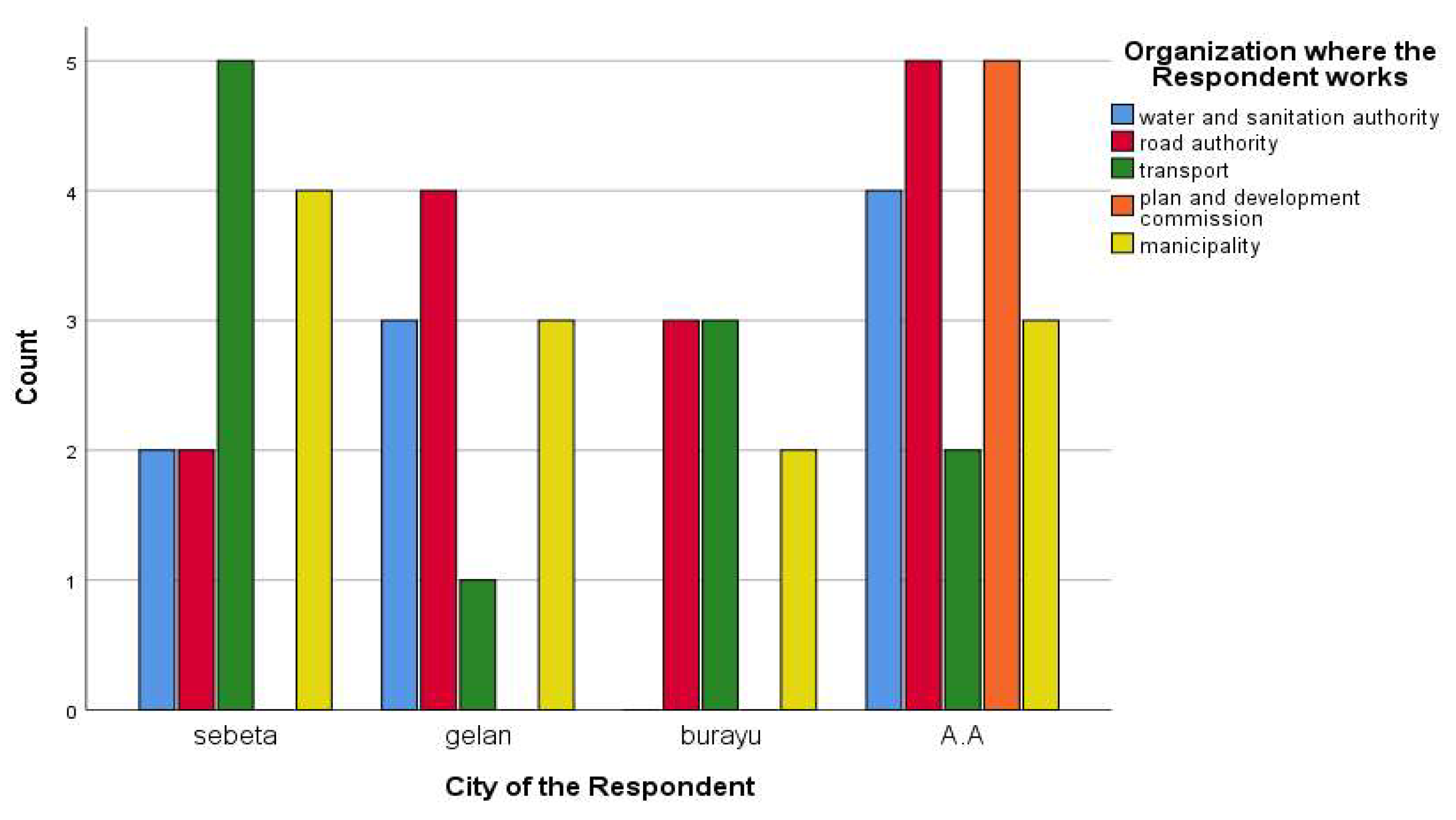
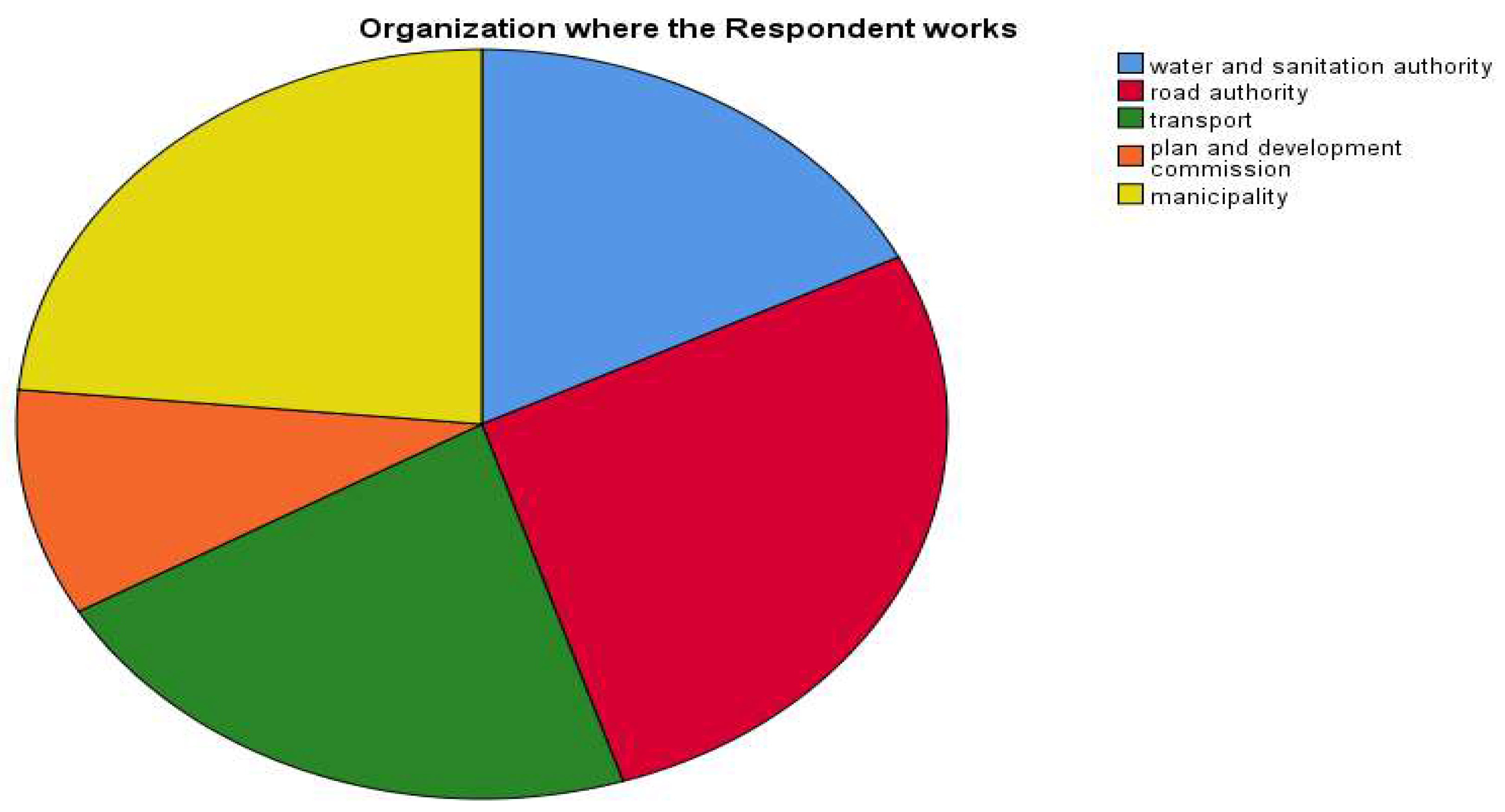
We selected convenient sampling techniques for surveys, KII and FGDs based on their availability and accessibility, especially when targeting specific groups or populations. We selected experts from five sectors the cities based on their experience and educational level. This helps to provide sufficient information about the integrated infrastructure planning in the study areas shown in Figure 1 and Figure 2
According to [30] the number of participants in the FGD session was 40. For fair representation, 10 participants participated in each case study area.

2.5. Data Collection Methods

We gathered both qualitative and quantitative data for the present research through a survey, structured and semi-structured interviews, and focus group discussions ([31]; [32]. Therefore, we conducted interviews with officials, professionals, community representatives, and relevant stakeholders. Furthermore, as [33,34] employed during his data collection, we extensively used participant observations to capture typologies of development on the ground and modalities of the infrastructure through photographs, note-taking, and typo morphological mapping. Furthermore, during the data collection process, we conducted extensive participant observations to document the infrastructure modalities and development typologies present on the ground. Based on this, the researcher employed the following data collection methods in our study. We provided both closed-ended and open-ended questionnaires to the respondents. We employed the questionnaire to gather insights from the sector expertise of various infrastructure providers.
2.6 Data Analyses
We edited, coded, classified, and encoded all the gathered data into a computer for analysis using Microsoft Excel, AutoCAD, ArcGIS, and Statistical Package for Social Science (SPSS) Version 22 software. We analyzed and presented the qualitative data in a non-numerical form. We first transcribed these into text, and then categorized them based on the frequency of ideas. We used each coded response category as a variable in SPSS for subsequent statistical analyses.

2.7. Data Presentation

Presentations of the analyzed data include tables, graphs, charts, and percentages. Additionally, we have integrated GIS and CAD figures along with field surveys.

3. Results and discussions

3.1. Sewerage system

For a variety of reasons, a sizable majority of respondents (85.7%) in the study areas indicated that there was no integrated sewerage system between the two cities under study, as revealed in Table 1 below.
The findings suggest that the lack of an integrated sewerage system between cities has serious implications for public health, environmental sustainability, and regional development. Key obstacles such as administrative disagreements, boundary disputes, absence of compensation mechanisms, and lack of a legal framework hinder collaborative infrastructure projects [35,36]. This can lead to inefficient waste management, increased pollution, and strained inter-city relations, highlighting the need for cohesive policies and legal framework to support sustainable urban development
The issue of lack of sewerage integration between urban centers, as reported by the respondents, aligns with findings from various studies across both developing and developed countries[37,38]. Similar issues emerged in a Lagos, Nigeria, study, where municipalities struggled to integrate sewerage disposal due to a lack of cohesive planning frameworks and institutional cooperation [39,40]. This aligns with the respondents who noted the absence of an integrated sewerage disposal site, pointing to complex barriers that make inter-city coordination challenging. Findings from Southeast Asian cities [41,42] echo the structural and political challenges in developing such systems, including the absence of agreement among cities. For instance, historical disputes or unclear jurisdictional delineations in Latin America often lead to boundary-related conflicts in many metropolitan areas [43,44]. Additionally, inadequate compensation mechanisms can impede waste management initiatives, as affected communities and municipalities often demand assurances of equitable resource allocation and compensation [45]. From all, the absence of a legal framework is crucial for successful inter-city infrastructure projects, as it provides guidelines, standards, and enforceable measures for collaboration. In Kenya, legal ambiguities in environmental and sanitation policies have led to stalled waste management initiatives between cities [46,47]. The absence of a legal structure may exacerbate existing disputes and complicate resource allocation, further delaying essential infrastructure development.
According to the study, (30.9%) stated that there is a common sewerage disposal area, while (69.1%) stated that there is no such common disposal site. The result suggests that the majority (69.1%) perceives an absence of a shared disposal site, indicating potential challenges in waste management and environmental health due to fragmented disposal practices. This lack of a unified system can lead to increased pollution, inefficient resource use, and possible health risks for surrounding communities[48,49]. Establishing a common disposal site could improve coordination and promote sustainable waste management across the cities involved.
The majority of respondents indicated the absence/inadequate of a common disposal site, which is consistent with other rapidly urbanizing regions where waste management infrastructure often lags behind population growth, like in Dhaka, Bangladesh [50]. The minority reported the existence of a common disposal site, potentially due to isolated efforts by certain neighborhoods or sectors, consistent with similar patterns observed in Jakarta, Indonesia [51,52]. The lack of inter municipal coordination and planning may also contribute to confusion and inefficiency in waste management, which is consistent with studies in metropolitan areas like Mumbai, India [53-55].

3.2. Drainage system

When asked whether the cities have common storm water master plan, 17.4 percent of respondents indicated that cities have a common drainage master plan. While 82.6 percent of respondents stated that cities do not have a common storm water master plan. The lack of a common drainage master plan, as indicated by respondents, implies significant risks for the cities, including increased vulnerability to flooding, water pollution, and infrastructure damage[56,57]. This absence of coordinated planning could result in costly repairs, environmental degradation, and health risks for residents. Developing a shared drainage management strategy is crucial for enhancing urban resilience and mitigating these risks, especially as climate change intensifies extreme weather events.
The lack of a common drainage master plan in urban areas, as reported by respondents, is a significant gap in urban water management. Studies from other rapidly urbanizing areas, like Nairobi, Kenya, have reported similar findings, highlighting how the lack of an integrated drainage management system between neighboring jurisdictions has exacerbated flood risks, damaged infrastructure, and contributed to water contamination [58,59]. The small percentage of respondents acknowledging a shared drainage plan suggests isolated agreements or fragmented efforts. In urban regions like Johannesburg, South Africa, partial or fragmented drainage management initiatives within city sections often create inconsistencies, failing to address broader drainage issues and placing isolated neighborhoods at higher risk during heavy rainfall [60,61]. A coordinated approach to drainage management across cities can reduce flood risk, protect ecosystems, and improve urban resilience. Adopting a shared drainage master plan could offer environmental and economic benefits, reducing the need for costly repairs and providing better protection for residents[62,63]. It also, underlies issues in inter-city governance, as seen in case studies from metropolitan areas in Asia. For example, in the Pearl River Delta region in China, studies have shown that competing priorities and inadequate policy alignment between neighboring cities often hinder the development of regional water management plans [64,65]. Similarly, research in Latin America demonstrates that a coordinated approach to drainage management across cities can reduce flood risk, protect ecosystems, and improve urban resilience [66,67].
Regarding strategies for flood protection in lower reaches, 16% of respondents reported the existence of strategies to protect people in lower reaches from floods. And 81.3% of respondents stated that there were no strategies in place to protect people in lower reaches from floods. The lack of flood protection strategies for lower-lying areas, as reported by 81.3% of respondents, suggests the high vulnerability of these communities to flood risks [68-70]. This absence of protective measures increases the likelihood of severe damage to homes, infrastructure, and public health in these flood-prone areas.
. The study illustrates a critical vulnerability in urban flood management in lower-lying areas, which are increasingly susceptible to flooding due to their proximity to waterways and their location. This absence of strategic intervention, which is also evident in other rapidly urbanizing regions, such as Dhaka, Bangladesh [71], places low-lying areas at a high risk of flooding due to inadequate protective infrastructure and inadequate urban planning. In urban areas like Manila, Philippines, the small percentage of respondents who acknowledge the existence of flood protection strategies may suggest that these strategies are isolated initiatives or pilot programs that are specific to specific communities rather than a comprehensive municipal plan [72,73]. This fragmented approach can result in disparate levels of protection, which places the most vulnerable communities at a higher risk. Fragmented policies, resource limitations, and a lack of intergovernmental cooperation frequently impede the development of comprehensive flood protection measures in urban resilience literature, particularly in Lagos, Nigeria [74,75]). [76,77] conducted comparative studies in New Orleans, USA, demonstrating that the implementation of sturdy flood protection systems, such as levees and storm surge barriers, significantly reduces the risk of catastrophic damage in vulnerable areas. Additionally, the absence of flood protection strategies for the lower reaches may impact the urban ecosystem [78,79].
The overwhelming majority of respondents (78.3%) indicated that their organization intends to establish shared institutions with other cities in the future. However, a smaller proportion of respondents (17.4%) indicated that they do not or intend to prioritize such coordinating efforts at this time. The strong interest in establishing shared institutions suggests a significant desire for collaboration and coordinated governance among cities, which could enhance resource sharing and improve service delivery[80,81].
The finding of respondents express an intention to establish shared institutions with other cities signals a robust interest in collaborative governance as a means to address shared challenges. For instance, studies in the context of metropolitan governance in North America demonstrate that shared institutions can lead to improved service delivery, increased efficiency, and better alignment of regional development goals [82]. However, the of respondents who do not prioritize establishing shared institutions highlight a significant minority perspective that warrants attention. This contrasts with the majority’s enthusiasm and suggests potential barriers or concerns regarding collaborative efforts [83,84]. For example, in metropolitan areas like Los Angeles, attempts to create regional governance structures have faced challenges due to entrenched local interests and skepticism about the benefits of cooperation [85,86].
Furthermore, the desire for shared institutions may not always translate into effective collaboration without addressing the underlying governance structures and processes. As noted in the literature, establishing shared institutions requires careful negotiation of governance frameworks that delineate responsibilities, authority, and accountability among participating entities [87,88]. The presence of a sizable minority who are not prioritizing coordination efforts suggests that there may be unresolved questions or concerns about how such shared institutions would function in practice. Moreover, this division in perspectives may also reflect varying levels of readiness or capacity among organizations to engage in collaborative governance. For instance, a study of inter municipal cooperation in Europe indicated that local governments with limited administrative capacity were less likely to engage in collaborative initiatives, opting instead to focus on internal improvements [89,90].
Regarding the existence of rules, frameworks, or other legal circumstances that support institutional integration among stakeholders, the survey's results showed that (47.8%) of respondents said "yes." (51.2%) of respondents, on the other hand, indicated that they did not have such laws or rules in place. The survey results reveal a significant gap in legal and regulatory structures necessary for effective collaboration among stakeholders, respondents acknowledging the existence of supportive rules or frameworks for institutional integration. The majority who indicate the absence of such support suggest challenges in fostering inter-organizational cooperation, potentially hindering efforts to address shared urban issues. This underscored the need for the development and implementation of clear legal frameworks that facilitate collaboration, enhance governance, and promote resource sharing among stakeholders to improve overall institutional integration.
In line with other research on urban governance [91], survey respondents indicate a significant lack of the legal framework required for effective integrated infrastructure. In many urban settings, the absence of such frameworks can lead to fragmented efforts, undermining the potential benefits of integrated governance. For instance, studies on regional governance in the United States have demonstrated that clear legal guidelines can facilitate partnerships between municipalities, resulting in more coordinated responses to complex urban challenges [92,93]. The fact that a slight majority of respondents indicated that there are no supportive laws or rules in place suggests a significant obstacle to the institutional integration that many urban areas seek. This finding is consistent with research from metropolitan regions like Los Angeles, California; for instance, a lack of inter-jurisdictional agreements has led to inefficiencies in addressing regional issues like transportation and challenges in achieving integrated governance and environmental management [94,95].
Lack of legal frameworks in urban regions like Nairobi, Kenya, exacerbates governance capacity and institutional trust issues, leading to mistrust and reluctance to cooperate [96,97]. The study areas may exhibit a lack of trust among stakeholders, exacerbated by unclear legal frameworks, which may hinder the establishment of shared institutions for integrated governance [98,99]. The Greater Toronto Area in Canada has successfully implemented inter-city cooperation due to the presence of supportive legal frameworks among municipalities [100]. The cities under study stand to gain from the development of these frameworks, as they can foster collaboration and improve governance outcomes.
Regarding whether cities have collaborative projects through shared finance, (53.8%) of respondents said "yes," while (65.3%) said "no." Focus group discussions and interviews verified that cities do, in fact, currently have collaborative projects underway. The survey results underscored a discrepancy between perceptions and actuality in the context of intercity collaboration. Despite the existence of ongoing projects, a substantial number of stakeholders may not fully understand or participate in these initiatives. The implication is that it is imperative to improve the communication and visibility of these collaborative endeavors in order to encourage a broader base of support and participation. Furthermore, addressing the concerns of who perceive a lack of collaboration could enhance trust and investment in shared financial initiatives among cities.
The survey findings highlight the complexity of fostering inter-city cooperation, as effective collaboration often hinges not only on the presence of projects but also on stakeholders' awareness and engagement with these initiatives [101-103]. In the context of the study cities, the perceived lack of collaboration could hinder the potential benefits of shared financial projects, indicating a need for improved outreach and education about existing initiatives. The discrepancy between the survey results and the verified existence of collaborative projects underscored the challenges inherent in promoting inter-organizational cooperation. For instance, studies in metropolitan regions like São Paulo, Brazil, demonstrate that even when collaborative projects are in place, local stakeholders may remain unaware due to insufficient communication strategies from governing bodies [104,105]. This suggests that, for the cities under study, enhancing communication strategies and providing clear information about collaborative initiatives is critical to bridging the gap between perception and reality. To address this issue, it is essential for city leaders to engage a broader range of stakeholders in discussions about ongoing projects, thereby fostering a sense of ownership and increasing awareness of shared financial initiatives.
Furthermore, the majority of respondents indicated "no collaboration," which may indicate structural or governance issues hindering the success of shared finance initiatives and requiring strong governance structures and mutual benefit commitments, as noted by [106]. Successful collaborative finance projects in regions such as the European Union rely on the establishment of clear agreements, mutual trust, and equitable resource sharing among diverse stakeholders [107,108]. For the cities under study, addressing governance challenges and ensuring equitable frameworks for collaboration will be crucial for increasing both the visibility and effectiveness of shared financial initiatives.
In response to a question concerning a project's funding source, participants gave the following breakdown: (19.2%) identified municipal funds, (30.8%) stated special savings, and (34.6%) confirmed government loans. The funding breakdown, identifying government loans as the primary source, indicates a reliance on external financial support for projects, which may impact sustainability and long-term planning. The significant portion suggests some proactive financial management at the local level, while the smaller percentage relying on municipal funds may reflect constraints in local budgets or priorities. These findings imply a need for diversified funding strategies to reduce dependency on government loans, enhance local fiscal capacity, and ensure the sustainability of projects.
Participants identified government loans as the primary funding source, highlighting a significant reliance on external financial support for project implementation. This is consistent with trends observed in urban infrastructure financing to bridge funding gaps, particularly in developing regions [109-111]. For example, research on urban development in South Africa shows that excessive reliance on loans can lead to unsustainable debt levels, impacting future budgetary flexibility [112,113]. In contrast, the respondents citing special savings as a funding source suggest some degree of proactive financial management among local stakeholders. Studies show that municipalities that establish dedicated savings funds for infrastructure projects can achieve greater financial stability and flexibility in funding decisions [114]. However, the management practices employed and the adequate support from broader fiscal policies will determine the effectiveness of these savings mechanisms.
A minor percentage (3.8%) of respondents answered affirmatively to the question of whether the topography of the cities impedes the integration infrastructure, while the majority (77.7%) answered negatively. The small percentage of respondents suggests that local entities do not perceive geographical factors as a significant barrier to collaboration. In contrast, the majority indicates that topography does not impede integration; rather, other factors, such as governance structures or community engagement, may play a more critical role in facilitating or hindering integration.
The survey results suggest that geographical features are not seen as significant barriers to integration of infrastructure. This perspective aligns with literature that highlights the adaptability of urban systems to geographic constraints through innovative land-use planning, creative engineering solutions and infrastructure development [9]. The respondents’ overwhelming majority believe that topography does not impede integration indicates a recognition of the potential for strategic planning to mitigate geographical obstacles, thereby fostering inter-city collaboration.

3.3 Solid waste management

The survey revealed that a mere (24%) reported the existence of a common solid waste disposal site in the study area, while a substantial majority (76%) reported the absence of such a facility. The survey results reveal that the lack of a centralized disposal facility may lead to increased environmental degradation and public health concerns, as improper waste disposal practices could become prevalent in the absence of a designated site [115,116]. The findings imply a pressing need for local authorities to prioritize the establishment of a common solid waste disposal facility to enhance waste management efforts, promote sustainability, and protect community health. Additionally, the issue of stakeholder engagement and awareness in the planning and implementation of waste management solutions suggests that improving communication and collaboration among community members and local governments is essential for effective waste management strategies.
The survey results reveal a significant gap in the perception of solid waste disposal sites in a region, with respondents recognizing the existence of a common site and asserting its absence. This disparity suggests that many people may be unaware of existing facilities or that they may not be effectively serving the community's needs. Inadequate waste disposal facilities can have serious implications for public health and environmental sustainability, contributing to pollution, vector-borne diseases, and negative health outcomes[117,118]. The lack of a common disposal site suggests an urgent need for local authorities to develop effective waste management strategies that prioritize community health and environmental protection. The text emphasizes the significance of infrastructure investment and planning in addressing solid waste management issues, emphasizing the need for effective waste management strategies and stakeholder engagement[119,120].
As indicated in Table 2, these results mean that fixing inefficient administrative processes, creating an integrated waste management plan, and setting up ways for people to get paid will be needed to make it easier to build a common solid waste disposal area and improve waste management in the region as a whole.
Administrative problems pose a significant challenge in governance and management structures, contributing to the lack of a common solid waste disposal area. These issues, such as poor coordination, unclear responsibilities, and inadequate regulatory frameworks, often hinder effective waste management[121,122]. Additionally, the lack of an integrated plan, a gap in strategic planning, can impede collaborative waste management efforts. Compensation mechanisms, which ensure equitable resource distribution and incentivize participation from various stakeholders, can enhance collaboration and facilitate the development of a common solid waste disposal area[123,124]. The survey findings highlight the need for improved governance, strategic planning, equitable resource distribution, and stakeholder engagement in waste management initiatives.
When asked about the existence of integrated solid waste management plan, only 18% of respondents answered yes, while a substantial majority of 82% answered no. These findings highlighted a lack of coordinated and future-oriented planning for solid waste management infrastructure. Administrative challenges can hinder effective decision-making, resource allocation, and coordination among municipal authorities, leading to gaps in infrastructure planning and implementation.
The survey results highlight a critical gap in integrated strategic planning for waste management; comprehensive waste management plans are essential for effective and sustainable waste disposal practices[120,125]. Without a formalized plan, cities may struggle with waste collection, recycling, and disposal, leading to increased environmental pollution and public health risks. The absence of integrated solid waste management plan can significantly impede the effectiveness of waste management initiatives, as it requires an integrated approach that includes planning, financing, implementation, and monitoring[126,127]. The findings also highlight the importance of developing a participatory approach in the formulation of integrated solid waste management plans, involving residents, businesses, and community organizations[128,129].
The alternative questions about who should assume responsibility for joint cooperation received, representation from the mayor's committee (30%), a newly established institute (13%), and no institute (57%). The survey results highlight that without a clear coordinating body, there is a risk of disorganization and missed opportunities for effective collaboration, necessitating urgent attention from local authorities to facilitate cooperation in waste management efforts.
The survey results reveal the lack of designated leadership can lead to fragmented efforts and inefficiencies, inhibiting effective collaboration and the implementation of comprehensive waste management strategies. The lack of a designated institute may contribute to ineffective waste management practices and failure to address urban waste challenges[130,131]. The respondents' suggestion of a newly established institute as a coordinator presents an opportunity for innovation in waste management governance, but it requires clear mandates and sufficient resources.
When asked if cities need new solid waste disposal sites, the survey results show that a majority (98%) of respondents agreed. Conversely, a small minority (2%) expressed that there is no need for additional waste disposal facilities. The survey results indicate that cities require new solid waste disposal sites, underscored the necessity of acknowledging the deficiencies in current waste management infrastructure, and recommend that local authorities prioritize the development of additional waste disposal sites to address the increasing waste management challenges. This highlighted fears about the potential for environmental degradation, public health dangers, and the inefficiencies of current facilities.
The survey results show that respondents believe cities need new solid waste disposal sites, highlighting the need for improved waste management infrastructure. This is in line with urban environmental studies, which show that inadequacies in waste disposal capacity can lead to environmental degradation, public health risks, and operational challenges[132,133]. The need for new sites indicates a critical awareness of the unsustainable nature of current waste management practices. The overwhelming support for new waste disposal sites may also reflect a desire for modern and sustainable waste management practices, such as recycling, composting, and waste-to-energy technologies[134,135]. It also suggests that local authorities should engage in comprehensive planning and community involvement in waste management decision-making processes.
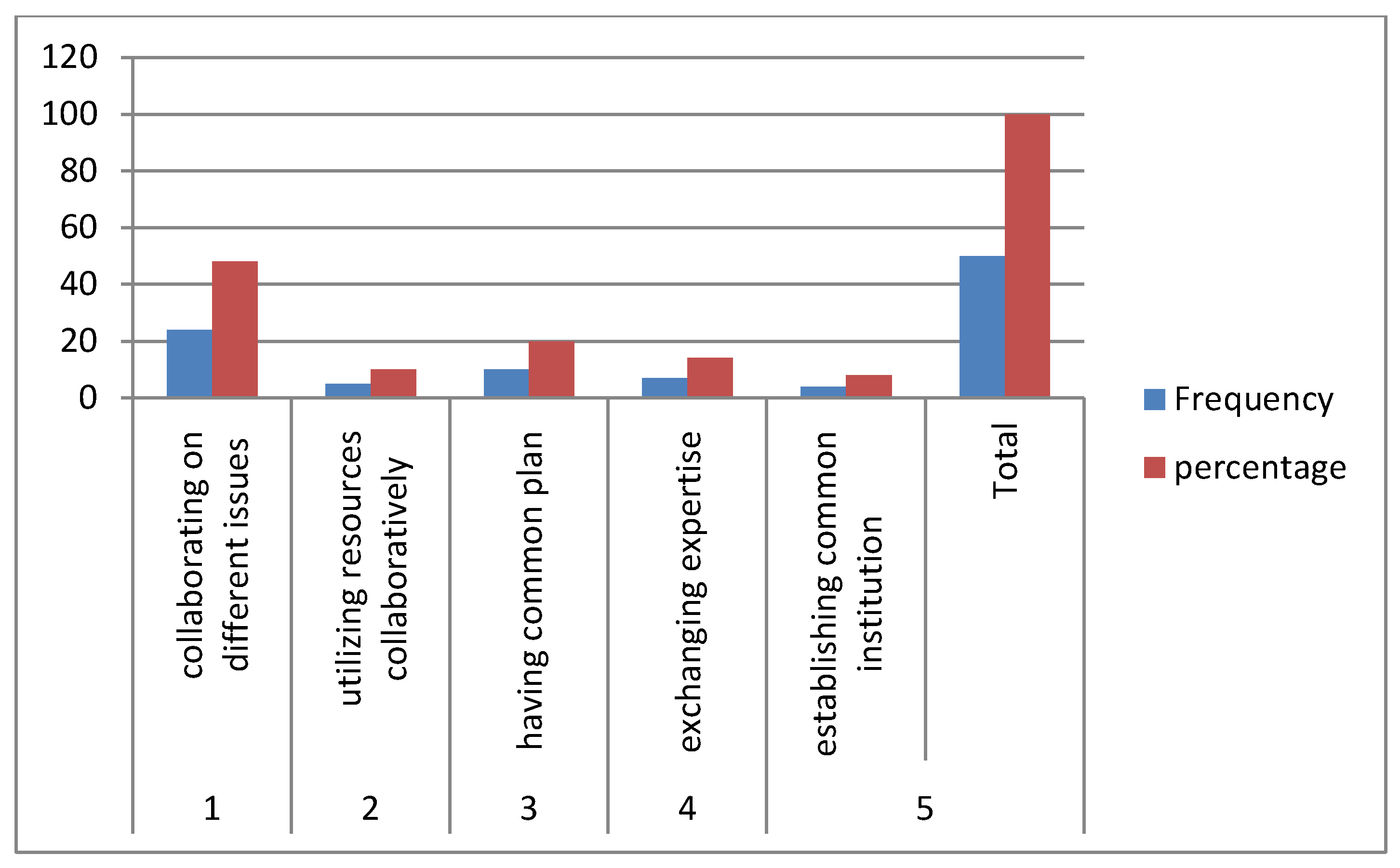
The implicational findings of Figure 4 suggest that cooperation between cities primarily focuses on collaborative efforts and joint planning, as these accounts for a significant portion of the responses (48% and 20%, respectively). This indicates that cities see the value in aligning goals and strategies to address shared challenges and opportunities. Additionally, the aspects of using resources together, exchanging experts, and establishing shared institutions highlight a broader understanding that effective cooperation requires resource sharing, knowledge exchange, and potentially formalized partnerships. These insights suggest that policymakers should prioritize the development of collaborative frameworks and planning mechanisms to ensure successful intercity cooperation.
The survey responses reveal a diverse approach to inter-city cooperation that aligns with research suggesting collaboration across cities is essential for addressing common urban challenges, such as waste management, infrastructure, and environmental issues [136]. The preference for informal collaboration suggests that respondents may view flexibility as critical in building effective partnerships. Resource-sharing is a strategy that urban governance literature supports as a means of achieving cost savings and efficiency gains[137,138]. Respondents support joint planning, acknowledging the advantages of coordinated urban development[139]; respondents support [140]. A formalized approach to collaboration is supported by those who advocate for the establishment of a shared institution. These preferences align with literature emphasizing the benefits of flexible, informal arrangements in fostering effective partnerships while also highlighting the potential of structured approaches in certain contexts[119,141].

3.4 Transport and road network system

The results of the survey show that 34.6% of participants said "yes," indicating that there are sufficient parking lots, bus terminals, and other forms of transportation to link the two cities. On the other hand, 65.4% of respondents said "no," indicating deficiencies in the infrastructure of transportation connecting the cities. The survey results of respondents indicated insufficient transportation infrastructure (parking lots, bus terminals, etc.) connecting the two cities, implying significant logistical and accessibility challenges for intercity movement. This deficiency likely hampers efficient commuting, economic activity, and urban integration between cities[142,143]. The lack of adequate infrastructure can lead to increased congestion, longer travel times, and limited options for residents and businesses relying on inter-city connections[144,145].
The survey results reveal a significant lack of transportation infrastructure between two cities, highlighting the need for systemic improvements. The majority of respondents believe that adequate transportation facilities are crucial for urban integration and regional economic growth. Inadequate infrastructure can lead to increased congestion, reduced accessibility, and impeded economic flows, contributing to urban inefficiency[144,146]. The lack of connectivity can restrict labor mobility and limit access to essential services, exacerbate socioeconomic disparities, and contribute to environmental degradation. The survey also highlights the importance of sustainable urban planning, which emphasizes the role of efficient public transport systems in reducing traffic congestion, emissions, and resource consumption[147-149].
The results showed that 26.9% of people rated the state and condition of the transportation infrastructure as good, 53% as medium, and 49.2% as terrible. The varied survey responses imply significant concerns about infrastructure quality and performance. The medium opinions suggest that while some areas or aspects of the infrastructure may meet basic standards, a substantial portion is perceived as subpar. This range of perspectives highlights the need for targeted improvements to enhance the reliability, safety, and accessibility of transportation infrastructure.
The survey results reveal significant disparities in perceived quality of transportation infrastructure in growing cities. The majority rated the infrastructure as "medium," suggesting that the transportation network is functional but may lack critical features of high-quality infrastructure, such as reliability, accessibility, and efficiency. This rating implies that while residents can navigate the current infrastructure, improvements are necessary to elevate its effectiveness, especially as cities expand and demand increases. The high percentage rating the infrastructure as terrible highlights a serious concern, pointing to fundamental deficiencies such as inadequate capacity, poor maintenance, or lack of integration in the transport network[150,151]. This disparity suggests that infrastructure quality may be inconsistent across different locations within the cities, with some areas enjoying better conditions than others. The mixed ratings of infrastructure quality are consistent with common challenges faced by rapidly urbanizing regions, where transportation systems often struggle to keep pace with population growth and demand[152,153].
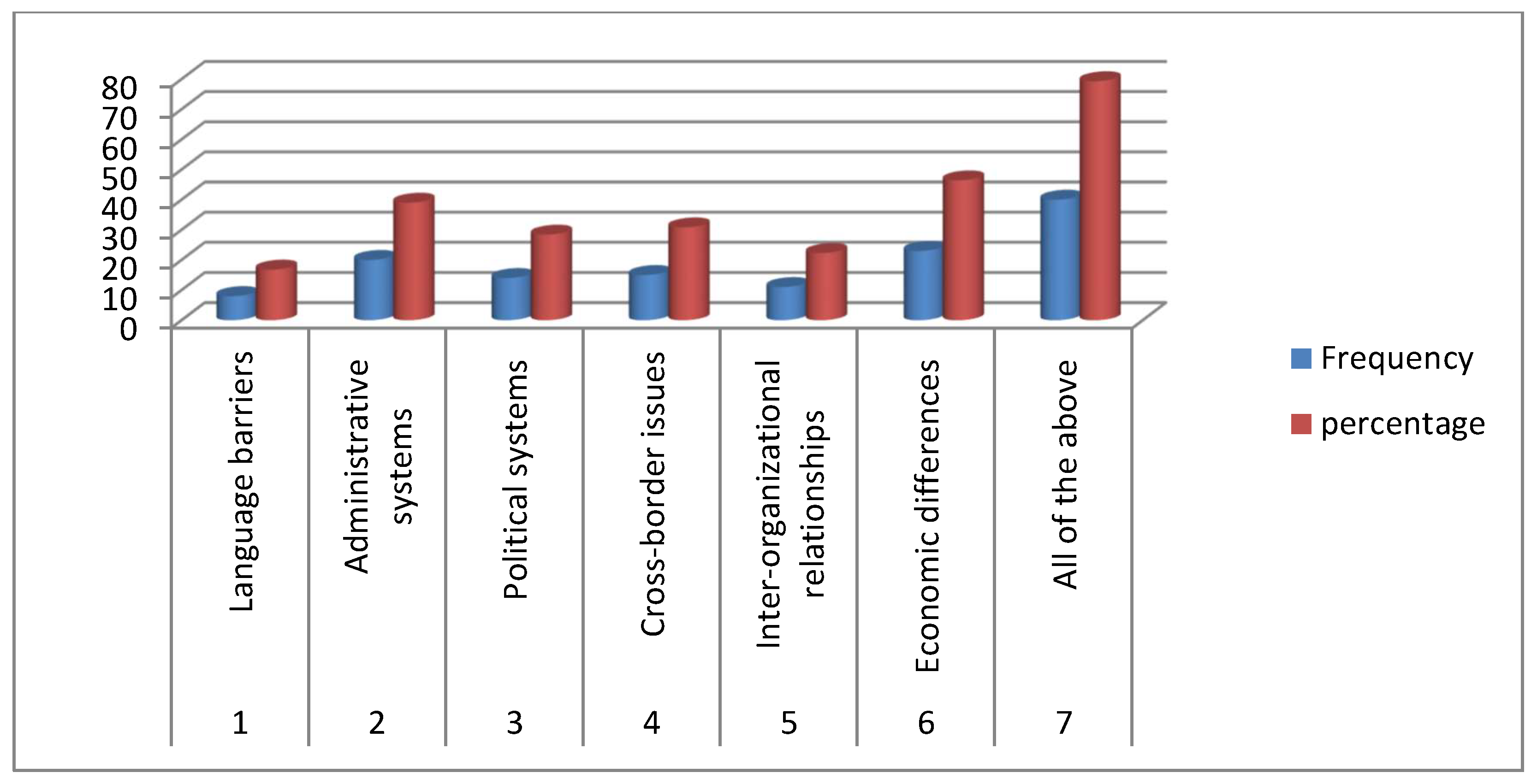
As the findings indicate in Figure 5, participants in focus groups and interviews reiterated similar arguments and added other elements influencing integration. Respondents acknowledge a complex array of factors that hinder integration efforts. Economic disparities, administrative systems, and cross-border issues particularly underscored the multi-layered challenges to integration. This implies that successful integration requires a holistic approach, addressing economic inequalities, harmonizing administrative and political systems, and fostering inter-organizational collaboration[154]. Without a coordinated strategy that tackles these interwoven factors, integration efforts may be limited, with fragmented progress across different areas.
The survey results reveal a complex landscape of factors influencing integration efforts, with respondents identifying all these as barriers[154,155]. Economic differences were the most commonly cited factor, highlighting economic inequality as a significant barrier to collaborative efforts across regions. The study also identified administrative systems and political systems as obstacles, underscoring institutional and governance-related barriers. The study identified cross-border issues as a significant barrier, necessitating logistical coordination and legal frameworks to account for shared resources and responsibilities. Organizational relations and inter-organizational relationships were significant, reflecting the importance of trust, communication, and collaboration among organizations. Despite being a minor factor, language barriers can still impede integration, especially when diverse linguistic groups are involved. The survey results emphasize the need for an integrated, multi-level strategy that addresses economic disparities, harmonizes administrative and political systems, and fosters strong inter-organizational relationships. Tailored solutions that incorporate both structural reforms (such as aligning regulatory frameworks) and relational strategies (such as building trust among organizations) are likely necessary to overcome these complex barriers and realize successful integration.
Table 3's survey result highlights that Population growth significantly influences infrastructure planning; increasing demand and necessitating open financing and collaborative management, according to the survey. 83.1% of respondents acknowledge the combined impact of these factors, suggesting that infrastructure planning needs adjustments to facilitate sustainable growth. This means cities need integrated approaches that include resource sharing, transparent financial strategies, and coordinated efforts to meet increasing demands. Ignoring any of these factors could result in strained resources and inadequate infrastructure to support population expansion effectively.
Respondents indicated increased demand for infrastructure, indicating that urban population surges often outpace adequate development[153,156]. This can strain existing systems, necessitating a reevaluation of infrastructure planning strategies. 48% of respondents noted the need for collaborative management, highlighting the importance of integrated approaches in addressing complexities introduced by population growth[157]. 58.4% of respondents emphasized [158]. 83.1% of respondents acknowledged the interconnectedness of demand, collaboration, and financing, highlighting the need for a comprehensive strategy that considers social, economic, and environmental factors[159,160]. These findings underscored the critical need for coordinated efforts and innovative funding mechanisms to ensure sustainable infrastructure development for urban areas.
Table 3's results indicate that the most significant obstacles to integrated infrastructure planning are a lack of attention and leadership. This suggests that effective planning requires both strong, visionary leadership and priority-setting. The absence of support from policymakers and stakeholder hesitancy further underscores the necessity for increased political commitment and confidence among all parties involved. This implies that policymakers and planners must take proactive measures to secure policy support and engage stakeholders, thereby mitigating hesitation and promoting integrated infrastructure planning. Additionally, they will need to increase their focus and leadership.
The survey results reveal several barriers to integrated infrastructure planning, including stakeholder hesitancy, lack of support from policymakers, a lack of leadership, and lack of attention. Stakeholder hesitancy can stem from fears of losing control over decision-making, resource allocation concerns, or apprehensions about the efficacy of collective efforts. Policymakers play a crucial role in facilitating or obstructing collaborative efforts, and advocacy for policy reforms that promote integrated planning and allocate resources can help overcome these challenges[161]. A clear strategic vision is also essential, as without a unified focus; stakeholders may become disengaged, leading to fragmented initiatives. Increasing awareness of the long-term benefits of integrated planning can address the institutional bias towards siloed planning efforts reflected in the lack of attention to integrated planning[162,163].
Within the infrastructure-provider sectors, we observe the following patterns of coordination: There are three different levels of coordination: strong (26.9%), weak (57.7%), and unknown (11.5%). This indicates that people generally perceive infrastructure suppliers to be poorly coordinated. This can lead to inefficiencies and challenges in managing intricate, interdependent services. A dominant approach with weak coordination leads to a fragmented approach, where providers operate in silos. This fragmentation can lead to higher costs, duplicated efforts, and slow response times during crises, underscoring the need for standardized practices and improved communication.
Research on coordination in the infrastructure-provider sector reveals challenges and tendencies towards weak coordination. [164,165]. This lack of cohesion can hinder service reliability and reduce operational costs. Addressing these issues could help improve data transparency and develop more rigorous assessment tools. Public administration literature, which emphasizes the difficulties in cross-sector coordination due to competing objectives and limited incentives for alignment, aligns with the perception of poorly coordinated infrastructure suppliers.

4. Conclusion and recommendations

4.1. Conclusion

Lack of an integrated sewerage system between cities is a global issue, involving issues such as disagreement, boundary disputes, inadequate compensation, and lack of a legal framework. This highlights the need for cohesive policies and cooperative governance to improve urban living conditions and environmental health. The survey results also reveal a significant gap in coordinated drainage management, highlighting the need for cities to prioritize collaborative efforts in developing and implementing shared drainage management strategies. The lack of flood protection for vulnerable populations in lower reaches also highlights the need for urgent development and implementation of flood protection strategies. The majority of respondents express a positive outlook toward collaboration among cities and sub-cities, but significant minorities do not prioritize these efforts. The survey results also highlight a significant challenge in institutional integration among stakeholders, emphasizing the need for clear legal structures that promote collaboration and enhance inter-agency coordination. The survey also reveals a critical gap in the perception of solid waste disposal facilities, with a majority indicating the absence of a common site. The findings call for local authorities to prioritize the development of effective waste management strategies, improve stakeholder engagement, and invest in necessary infrastructure.
The survey results reveal significant challenges in strategic planning and stakeholder engagement in urban areas, with only a few respondents recognizing the existence of a solid waste management plan. The lack of a specific institute for coordinating joint cooperation in solid waste management suggests the need for local authorities to establish formal governance structures for effective waste management. The respondents assert the necessity for new solid waste disposal sites, underscoring a deficiency in waste management infrastructure. The majority of respondents favor collaboration on various issues, with smaller groups advocating for resource sharing, joint planning, knowledge exchange, and institutional establishment. Transportation infrastructure gaps hinder economic and social integration, and the majority view existing facilities as adequate. The survey results emphasize the need for an integrated, multi-level strategy that addresses economic disparities, harmonizes administrative and political systems, and fosters strong inter-organizational relationships. Tailored solutions, incorporating structural reforms and relational strategies, are likely necessary to overcome complex barriers and achieve successful outcomes. The survey findings resonate with existing literature on integrated infrastructure planning in the context of population growth.

4.2. Recommendations

We propose the following recommendations to improve the integrated infrastructure planning practices between Addis Ababa and Sheger metropolitan cities, based on the study's findings and conclusions.
The concerned body, particularly the cities administration should establish a legal framework for cooperation
The cities administration planning institutes should develop integrated infrastructure plan for well-coordinated infrastructure management
The cities Road Authority should expand flood protection and stormwater management
The Federal Government and the cities administration should create institutional support for ongoing collaboration
The cities administration should encourage public and political support for integration
The cities administration and concerned body should improve transportation connectivity and infrastructure quality.
The Federal Government and the cities administration should address economic, political, and administrative barriers to integration.
The cities administration and concerned body should enhance infrastructure coordination levels

Declarations

The authors declare no conflict of interests
Author contribution statement
GeremewWorku:- Comprehended and designed the experiments; executed the experiments; analyzed and interpreted the data; contributed components, materials, analysis tools or data; and wrote the paper.
DagnachewAdugna:- comprehended and designed the experiments; executed the experiments; analyzed and interpreted the data; contributed components, materials, analysis tools or data; and wrote the paper.
Funding statement
This research did not receive any specific grant from funding agencies in the public, commercial, or not-for-profit sectors.
Data availability statement
No additional data except in the paper is attached as supplementary material.
The authors declare no conflict of interest.
Additional information
The authors declare that they have no known competing financial interests or personal relationships that could have appeared to influence the work reported in this paper. Supplementary content related to this article has been published online at [URL]. Acknowledgements
The authors acknowledge the research participants for their partaking of their insights, and the University for giving me a chance to join it.

References

  1. Bhattacharya, A.; Oppenheim, J.; Stern, N. Driving sustainable development through better infrastructure: Key elements of a transformation program. Brookings Global Working Paper Series 2015. [Google Scholar]
  2. Shahidehpour, M.; Li, Z.; Ganji, M. Smart cities for a sustainable urbanization: Illuminating the need for establishing smart urban infrastructures. IEEE Electrification magazine 2018, 6, 16–33. [Google Scholar] [CrossRef]
  3. Pinderhughes, R. Alternative urban futures: Planning for sustainable development in cities throughout the world; Rowman & Littlefield: 2004.
  4. Li, E. Governing Collaborative Planning Initiatives for Equitable Transit-oriented Development: A Case Study of the Purple Line Corridor Coalition in Maryland. Technische Universität Berlin, 2023.
  5. Brown, H. Next generation infrastructure; Springer: 2014.
  6. Silva, B.N.; Khan, M.; Han, K. Towards sustainable smart cities: A review of trends, architectures, components, and open challenges in smart cities. Sustainable cities and society 2018, 38, 697–713. [Google Scholar] [CrossRef]
  7. Suárez, E.L. Assessment of transport infrastructure plans: A strategic approach integrating efficiency, cohesion and environmental aspects. Madrid University of Politics, Madrid, Spain, 2007. [Google Scholar]
  8. Adshead, D.; Thacker, S.; Fuldauer, L.I.; Hall, J.W. Delivering on the Sustainable Development Goals through long-term infrastructure planning. Global Environmental Change 2019, 59, 101975. [Google Scholar] [CrossRef]
  9. Suzuki, H.; Cervero, R.; Iuchi, K. Transforming cities with transit: Transit and land-use integration for sustainable urban development; World Bank Publications: 2013.
  10. Cervero, R. Linking urban transport and land use in developing countries. Journal of transport and land use 2013, 6, 7–24. [Google Scholar] [CrossRef]
  11. Liu, J.; Mooney, H.; Hull, V.; Davis, S.J.; Gaskell, J.; Hertel, T.; Lubchenco, J.; Seto, K.C.; Gleick, P.; Kremen, C. Systems integration for global sustainability. Science 2015, 347, 1258832. [Google Scholar] [CrossRef]
  12. Baleta, J.; Mikulčić, H.; Klemeš, J.J.; Urbaniec, K.; Duić, N. Integration of energy, water and environmental systems for a sustainable development. Journal of cleaner production 2019, 215, 1424–1436. [Google Scholar] [CrossRef]
  13. Dooley, K.; Kartha, S. Land-based negative emissions: risks for climate mitigation and impacts on sustainable development. International Environmental Agreements: Politics, Law and Economics 2018, 18, 79–98. [Google Scholar] [CrossRef]
  14. Storper, M. Keys to the city: How economics, institutions, social interaction, and politics shape development; Princeton University Press: 2013.
  15. Hall, P.V.; Hesse, M. Cities, regions and flows; Routledge Londres/Nueva New York: 2013; Vol. 439.
  16. Ravetz, J. City-region 2020: Integrated planning for a sustainable environment; Routledge: 2016.
  17. Davoudi, S. Conceptions of the city-region: a critical review. Proceedings of the Institution of Civil Engineers-Urban Design and Planning 2008, 161, 51–60. [Google Scholar] [CrossRef]
  18. Agranoff, R. Managing collaborative performance: Changing the boundaries of the state? Public Performance & Management Review 2005, 29, 18–45. [Google Scholar]
  19. Cleophas, C.; Cottrill, C.; Ehmke, J.F.; Tierney, K. Collaborative urban transportation: Recent advances in theory and practice. European Journal of Operational Research 2019, 273, 801–816. [Google Scholar] [CrossRef]
  20. Quick, K.S.; Feldman, M.S. Boundaries as junctures: Collaborative boundary work for building efficient resilience. Journal of public administration research and theory 2014, 24, 673–695. [Google Scholar] [CrossRef]
  21. Margerum, R.D. Beyond consensus: Improving collaborative planning and management; Mit Press: 2011.
  22. Stebek, E.N. Vol. 10 No. 1: The Constitutional Right to Enhanced Livelihood in Ethiopia: Unfulfilled Promises and the Need for New Approaches. 2016.
  23. Weldeghebrael, E.H. Addis Ababa: City Scoping Study. African Cities Research Consortium, The University of Manchester: Manchester, UK, 2021. [Google Scholar]
  24. Erena, D.; Berhe, A.; Hassen, I.; Mamaru, T.; Soressa, Y. City profile: Addis Ababa. Report prepared in the SES (Social Inclusion and Energy Management for Informal Urban Settlements) project, funded by the Erasmus+ Program of the European Union. 2017.
  25. YARED, A.A. QUALITY ASSESSMENT OF RAW AND PASTEURIZED MILK AMONG DAIRY PRODUCT VENDORS, ADDIS ABABA, ETHIOPIA. 2024.
  26. Woldeamanuel, M. Urban Issues in Rapidly Growing Cities: Planning for Development in Addis Ababa; Routledge: 2020.
  27. Kasa, L.; Zeleke, G.; Alemu, D.; Hagos, F.; Heinimann, A. Impact of urbanization of Addis Abeba city on peri-urban environment and livelihoods. Sekota Dry land Agricultural Research Centre of Amhara Regional Agricultural Research Institute: Addis Ababa, Ethiopia, 2011. [Google Scholar]
  28. Guetterman, T.C.; Fetters, M.D.; Creswell, J.W. Integrating quantitative and qualitative results in health science mixed methods research through joint displays. The Annals of Family Medicine 2015, 13, 554–561. [Google Scholar] [CrossRef] [PubMed]
  29. Almalki, S. Integrating Quantitative and Qualitative Data in Mixed Methods Research--Challenges and Benefits. Journal of education and learning 2016, 5, 288–296. [Google Scholar] [CrossRef]
  30. Badiee, M.; Wang, S.C.; Creswell, J.W. Designing community-based mixed methods research. 2012.
  31. Akyıldız, S.T.; Ahmed, K.H. An overview of qualitative research and focus group discussion. International Journal of Academic Research in Education 2021, 7, 1–15. [Google Scholar] [CrossRef]
  32. Hofisi, C.; Hofisi, M.; Mago, S. Critiquing interviewing as a data collection method. Mediterranean Journal of Social Sciences 2014, 5, 60–64. [Google Scholar] [CrossRef]
  33. Yoshikawa, H.; Weisner, T.S.; Kalil, A.; Way, N. Mixing qualitative and quantitative research in developmental science: uses and methodological choices. 2013.
  34. Schensul, J.J.; LeCompte, M.D. Essential ethnographic methods: A mixed methods approach; Rowman Altamira: 2012.
  35. Wehrmann, B. Land conflicts: A practical guide to dealing with land disputes; GTZ Eschborn: 2008.
  36. Kliot, N.; Shmueli, D.; Shamir, U. Institutions for management of transboundary water resources: their nature, characteristics and shortcomings. Water Policy 2001, 3, 229–255. [Google Scholar] [CrossRef]
  37. Andersson, K.; Dickin, S.; Rosemarin, A. Towards “sustainable” sanitation: challenges and opportunities in urban areas. Sustainability 2016, 8, 1289. [Google Scholar] [CrossRef]
  38. TuCCi, C.E. Urban waters. estudos avançados 2008, 22, 97–112. [Google Scholar] [CrossRef]
  39. Aiyewunmi, T. Challenges and potential solutions to pluvial flood risk in urban tropical African communities, a case study using Ijebu-Ode, in South West Nigeria. University of Liverpool, 2023.
  40. Wahab, S. The role of social capital in community-based urban solid waste management: case studies from Ibadan metropolis, Nigeria. 2012.
  41. Duc, N.H.; Kumar, P.; Long, P.T.; Meraj, G.; Lan, P.P.; Almazroui, M.; Avtar, R. A Systematic Review of Water Governance in Asian Countries: Challenges, Frameworks, and Pathways Toward Sustainable Development Goals. Earth Systems and Environment 2024, 8, 181–205. [Google Scholar] [CrossRef]
  42. Nicolaisen, F.S. The Politicization of Mobility Infrastructures in Vietnam-The Hanoi Metro Project at the Nexus of Urban Development, Fragmented Mobilities, and National Security. Advances in Southeast Asian Studies 2023, 16, 209–231. [Google Scholar]
  43. Anebo, L.N. Assessing the efficacy of African boundary delineation law and policy: The case of Ethio–Eritrea boundary dispute settlement. 2016.
  44. Mumme, S.P. Border Water: The Politics of US-Mexico Transboundary Water Management, 1945–2015; University of Arizona Press: 2023.
  45. Swallow, B.; Kallesoe, M.; Iftikhar, U.; van Noordwijk, M.; Bracer, C.; Scherr, S.; Raju, K.; Poats, S.; Duraiappah, A.; Ochieng, B. Compensation and Rewards for Environmental Services in the Developing World.
  46. Muthama, R.W. A Research Paper on Solid Waste Management in Kenya: an Analysis of Legal and Institutional Frameworks. University of Nairobi, 2021.
  47. Muriithi, F.L. The Effects of Informal Urban Sprawl on the Provision of Infrastructure in Makongeni Neighbourhood of Thika Municipality, Kiambu County, Kenya. University of Nairobi, 2022.
  48. Keraita, B.; Drechsel, P.; Amoah, P. Influence of urban wastewater on stream water quality and agriculture in and around Kumasi, Ghana. Environment and Urbanization 2003, 15, 171–178. [Google Scholar] [CrossRef]
  49. Daley, K.; Castleden, H.; Jamieson, R.; Furgal, C.; Ell, L. Water systems, sanitation, and public health risks in remote communities: Inuit resident perspectives from the Canadian Arctic. Social Science & Medicine 2015, 135, 124–132. [Google Scholar]
  50. Cele, A. An Assessment of the Effectiveness of Water Quality Monitoring and Drinking Water Quality Compliance by Environmental Health Practitioners at Selected Metropolitan and District Municipalities in South Africa during 2013-2014. 2018.
  51. Paramita, K.D. Space of Maintenance: A Situated Understanding of Maintenance Practices in Jakarta Contested Neighbourhoods. University of Sheffield, 2019.
  52. Lalasati, N.A. Sustainable Sanitation for Small Island Cities. 2022.
  53. Slack, E. Metropolitan governance: Principles and practice. 2019.
  54. Raju, K.; Ravindra, A.; Manasi, S.; Smitha, K.; Srinivas, R. Urban Environmental Governance in India. P. o. Springer International Publishing 2018. [Google Scholar]
  55. Sarpotdar, A. Spatial Information Support for Inclusive and Integrative Planning in India A case study of Mumbai; The University of Manchester (United Kingdom): 2021.
  56. Francesch-Huidobro, M.; Dabrowski, M.; Tai, Y.; Chan, F.; Stead, D. Governance challenges of flood-prone delta cities: Integrating flood risk management and climate change in spatial planning. Progress in planning 2017, 114, 1–27. [Google Scholar] [CrossRef]
  57. Yazdanfar, Z.; Sharma, A. Urban drainage system planning and design–challenges with climate change and urbanization: a review. Water Science and Technology 2015, 72, 165–179. [Google Scholar] [CrossRef] [PubMed]
  58. Ran, J.; Nedovic-Budic, Z. Integrating spatial planning and flood risk management: A new conceptual framework for the spatially integrated policy infrastructure. Computers, Environment and Urban Systems 2016, 57, 68–79. [Google Scholar] [CrossRef]
  59. Gikundi, J. Planning for sustainable utilization and conservation of urban river corridors in Kenya: A Case Study of the Nairobi River. University of Nairobi, 2014.
  60. Mguni, P. Sustainability Transitions in the Developing World: Exploring the Potential for Integrating Sustainable Urban Drainage Systems in the Sub-Saharan Cities. University of Copenhagen, Faculty of Science, Department of Geosciences and …, 2015.
  61. Mguni, P.; Herslund, L.; Jensen, M.B. Sustainable urban drainage systems: examining the potential for green infrastructure-based stormwater management for Sub-Saharan cities. Natural Hazards 2016, 82, 241–257. [Google Scholar] [CrossRef]
  62. Jiménez Ariza, S.L.; Martínez, J.A.; Muñoz, A.F.; Quijano, J.P.; Rodríguez, J.P.; Camacho, L.A.; Díaz-Granados, M. A multicriteria planning framework to locate and select sustainable urban drainage systems (SUDS) in consolidated urban areas. Sustainability 2019, 11, 2312. [Google Scholar] [CrossRef]
  63. Dhakal, K.P.; Chevalier, L.R. Managing urban stormwater for urban sustainability: Barriers and policy solutions for green infrastructure application. Journal of environmental management 2017, 203, 171–181. [Google Scholar] [CrossRef]
  64. Nadin, V.; Meng, M. Territorial Governance and Spatial Planning in Europe: The Relevance for Flood Risk Management in the Chinese Pearl River Delta. In Adaptive Urban Transformation: Urban Landscape Dynamics, Regional Design and Territorial Governance in the Pearl River Delta, China, Springer International Publishing Cham: 2023; pp. 63-80.
  65. Knopman, D.S.; Zmud, J.; Ecola, L.; Mao, Z.; Crane, K. Quality of life indicators and policy strategies to advance sustainability in the Pearl River Delta; Rand Corporation: 2015.
  66. Vásquez, A.; Giannotti, E.; Galdámez, E.; Velásquez, P.; Devoto, C. Green infrastructure planning to tackle climate change in Latin American cities. Urban Climates in Latin America 2019, 329–354. [Google Scholar]
  67. Lamond, J.; Stanton-Geddes, Z.; Bloch, R.; Proverbs, D. Cities and Flooding: Lessons in resilience from case studies of integrated urban flood risk management. Proceedings of CIB 2013 World Congress, Special Conference Session on Making Cities More Resilient, Brisbane, Australia.
  68. Song, J.; Yang, R.; Chang, Z.; Li, W.; Wu, J. Adaptation as an indicator of measuring low-impact-development effectiveness in urban flooding risk mitigation. Science of the Total Environment 2019, 696, 133764. [Google Scholar] [CrossRef] [PubMed]
  69. Müller, A.; Reiter, J.; Weiland, U. Assessment of urban vulnerability towards floods using an indicator-based approach–a case study for Santiago de Chile. Natural Hazards and Earth System Sciences 2011, 11, 2107–2123. [Google Scholar] [CrossRef]
  70. Lebel, L.; Sinh, B.T. Risk reduction or redistribution? Flood management in the Mekong region. Asian Journal of Environment and Disaster Management 2009, 1. [Google Scholar] [CrossRef]
  71. Ahmed, F.; Moors, E.; Khan, M.S.A.; Warner, J.; Van Scheltinga, C.T. Tipping points in adaptation to urban flooding under climate change and urban growth: The case of the Dhaka megacity. Land Use Policy 2018, 79, 496–506. [Google Scholar] [CrossRef]
  72. Espina Jr, N.B. Planning for Climate Resilient Barangays in the Philippines: The Case of Barangay Tumana in Marikina City, Metro Manila. Consilience 2018, 130–162. [Google Scholar]
  73. Yarina, L. Your sea wall won’t save you. Places Journal 2018. [Google Scholar] [CrossRef]
  74. Unegbua, H.; Yawasa, D.S.; Dan-asabea, B.; Alabia, A.A. Sustainable Urban Planning and Development: A Systematic Review of Policies and Practices in Nigeria. Journal of Sustainable 2024, 1, 38–53. [Google Scholar] [CrossRef]
  75. Kasim, O. Urban dynamics and vulnerability to disasters in Lagos State, Nigeria (1982–2012). 2014.
  76. Abbott, M.J.O. Fragile New Orleans, Fortress New Orleans: Navigating Flood Risk Management in a Below-Sea-Level City. Cornell University, 2024.
  77. Ferdinand, K. GOVERNANCE CONSIDERATIONS IN FLOOD MANAGEMENT: A CASE STUDY OF NEW ORLEANS. Chulalongkorn University, 2015.
  78. Cea, L.; Costabile, P. Flood risk in urban areas: Modelling, management and adaptation to climate change. A review. Hydrology 2022, 9, 50. [Google Scholar] [CrossRef]
  79. Berndtsson, R.; Becker, P.; Persson, A.; Aspegren, H.; Haghighatafshar, S.; Jönsson, K.; Larsson, R.; Mobini, S.; Mottaghi, M.; Nilsson, J. Drivers of changing urban flood risk: A framework for action. Journal of environmental management 2019, 240, 47–56. [Google Scholar] [CrossRef]
  80. Ansell, C.; Gash, A. Collaborative platforms as a governance strategy. Journal of Public Administration Research and Theory 2018, 28, 16–32. [Google Scholar] [CrossRef]
  81. van de Meene, S.; Bettini, Y.; Head, B.W. Transitioning toward sustainable cities—Challenges of collaboration and integration. Sustainability 2020, 12, 4509. [Google Scholar] [CrossRef]
  82. Gertler, M.S.; Wolfe, D.A. Local social knowledge management: Community actors, institutions and multilevel governance in regional foresight exercises. Futures 2004, 36, 45–65. [Google Scholar] [CrossRef]
  83. Cumming, G.S.; Epstein, G.; Anderies, J.M.; Apetrei, C.I.; Baggio, J.; Bodin, Ö.; Chawla, S.; Clements, H.; Cox, M.; Egli, L. Advancing understanding of natural resource governance: a post-Ostrom research agenda. Current Opinion in Environmental Sustainability 2020, 44, 26–34. [Google Scholar] [CrossRef]
  84. Ostrom, E.; Ostrom, V. Choice, rules and collective action: The Ostrom's on the study of institutions and governance; ECPR Press: 2014.
  85. Vogel, R.K.; Savitch, H.; Xu, J.; Yeh, A.G.; Wu, W.; Sancton, A.; Kantor, P.; Newman, P.; Tsukamoto, T.; Cheung, P.T. Governing global city regions in China and the West. Progress in Planning 2010, 73, 1–75. [Google Scholar] [CrossRef]
  86. Thibert, J. Governing urban regions through collaboration: A view from North America; Routledge: 2016.
  87. Koppell, J.G. World rule: Accountability, legitimacy, and the design of global governance; University of Chicago Press: 2010.
  88. Koppell, J.G. Global governance organizations: Legitimacy and authority in conflict. Journal of Public Administration Research and Theory 2008, 18, 177–203. [Google Scholar] [CrossRef]
  89. Goldsmith, M.J.; Page, E.C. Changing government relations in Europe: from localism to intergovernmentalism; Routledge: 2010; Vol. 67.
  90. Bailey, N. Local strategic partnerships in England: the continuing search for collaborative advantage, leadership and strategy in urban governance. Planning Theory & Practice 2003, 4, 443–457. [Google Scholar]
  91. Lienert, J.; Schnetzer, F.; Ingold, K. Stakeholder analysis combined with social network analysis provides fine-grained insights into water infrastructure planning processes. Journal of environmental management 2013, 125, 134–148. [Google Scholar] [CrossRef]
  92. Brenner, N. Decoding the newest “metropolitan regionalism” in the USA: A critical overview. Cities 2002, 19, 3–21. [Google Scholar] [CrossRef]
  93. Bengston, D.N.; Fletcher, J.O.; Nelson, K.C. Public policies for managing urban growth and protecting open space: policy instruments and lessons learned in the United States. Landscape and urban planning 2004, 69, 271–286. [Google Scholar] [CrossRef]
  94. Jonas, A.E.; Pincetl, S. Rescaling regions in the state: the new regionalism in California. Political Geography 2006, 25, 482–505. [Google Scholar] [CrossRef]
  95. Barbour, E.S. Regional sustainability planning by metropolitan planning organizations; University of California, Berkeley: 2016.
  96. Omenya, A.; Lubaale, G. Understanding the tipping point of urban conflict: the case of Nairobi, Kenya. 2012.
  97. Ståhlberg, T. COLLECTIVE ACTION DILEMMAS IN PUBLIC TRANSPORT REFORMS: A qualitative study of government officials and bus companies willingness and attitudes in Nairobi, Kenya and Kigali, Rwanda. 2024.
  98. Stensaker, B.; Vabø, A. Re-inventing shared governance: Implications for organisational culture and institutional leadership. Higher Education Quarterly 2013, 67, 256–274. [Google Scholar] [CrossRef]
  99. DeCaro, D.A.; Chaffin, B.C.; Schlager, E.; Garmestani, A.S.; Ruhl, J. Legal and institutional foundations of adaptive environmental governance. Ecology and society: A journal of integrative science for resilience and sustainability 2017, 22, 1. [Google Scholar] [CrossRef] [PubMed]
  100. Wolfe, D.A. Innovating in urban economies: economic transformation in Canadian city-regions; University of Toronto Press: 2014.
  101. Latham, J. Inter-city Cooperation on Local and Regional Development: A Comparative Study of Liverpool, Manchester and the Randstad; The University of Manchester (United Kingdom): 2007.
  102. Wei, Q.; Yang, W. Addressing uneven development through state-steered intercity cooperation? Insights from Shenzhen–Ganzhou cooperation plan-making. Regional Studies 2024, 1–13. [Google Scholar] [CrossRef]
  103. Irvine, S.; Bai, X. Positive inertia and proactive influencing towards sustainability: Systems analysis of a frontrunner city. Urban Transformations 2019, 1, 1. [Google Scholar] [CrossRef]
  104. Follador, D. Institutional arrangements & collaborative governance in urban planning processes: a comparative case study of Curitiba, Brazil, and Montreal, Canada. Université Laval, 2017.
  105. Pfeffer, K.; Baud, I.; Denis, E.; Scott, D.; Sydenstricker-Neto, J. Participatory spatial knowledge management tools: empowerment and upscaling or exclusion? Information, Communication & Society 2013, 16, 258–285. [Google Scholar]
  106. May, P.J.; Winter, S.C. Collaborative service arrangements: Patterns, bases, and perceived consequences. Public Management Review 2007, 9, 479–502. [Google Scholar] [CrossRef]
  107. Davies, A.L.; White, R.M. Collaboration in natural resource governance: Reconciling stakeholder expectations in deer management in Scotland. Journal of environmental management 2012, 112, 160–169. [Google Scholar] [CrossRef]
  108. Goedkoop, F.; Devine-Wright, P. Partnership or placation? The role of trust and justice in the shared ownership of renewable energy projects. Energy Research & Social Science 2016, 17, 135–146. [Google Scholar]
  109. Foster, V.; Rana, A.; Gorgulu, N. Understanding Public Spending Trends for Infrastructure in Developing Countries. Policy Research Working Paper 2022, 9903. [Google Scholar]
  110. Bluhm, R.; Dreher, A.; Fuchs, A.; Parks, B.; Strange, A.; Tierney, M.J. Connective financing: Chinese infrastructure projects and the diffusion of economic activity in developing countries. 2018.
  111. Serageldin, M.; Jones, D.; Vigier, F.; Solloso, E.; Bassett, S.; Menon, B.; Valenzuela, L. Municipal financing and urban development; United Nations Human Settlements Programme: 2008.
  112. Sachs, M. Fiscal dimensions of South Africa's crisis; Southern Centre for Inequality Studies, University of Witwatersrand: 2021.
  113. Kamutiba, F. Investigating the appropriateness of consolidation loans to mitigate household over-indebtedness in South Africa. Stellenbosch: Stellenbosch University, 2020.
  114. Floater, G.; Dowling, D.; Chan, D.; Ulterino, M.; Braunstein, J.; McMinn, T.; Ahmad, E. Global review of finance for sustainable urban infrastructure. Coalition for Urban Transitions: Washington, DC, USA.
  115. Regassa, N.; Sundaraa, R.D.; Seboka, B.B. Challenges and opportunities in municipal solid waste management: The case of Addis Ababa city, central Ethiopia. Journal of human ecology 2011, 33, 179–190. [Google Scholar] [CrossRef]
  116. Ferronato, N.; Torretta, V. Waste mismanagement in developing countries: A review of global issues. International journal of environmental research and public health 2019, 16, 1060. [Google Scholar] [CrossRef] [PubMed]
  117. Nor Faiza, M.; Hassan, N.A.; Mohammad Farhan, R.; Edre, M.; Rus, R. Solid waste: its implication for health and risk of vector borne diseases. Journal of Wastes and Biomass Management (JWBM) 2019, 1, 14–17. [Google Scholar]
  118. Krystosik, A.; Njoroge, G.; Odhiambo, L.; Forsyth, J.E.; Mutuku, F.; LaBeaud, A.D. Solid wastes provide breeding sites, burrows, and food for biological disease vectors, and urban zoonotic reservoirs: a call to action for solutions-based research. Frontiers in public health 2020, 7, 405. [Google Scholar] [CrossRef] [PubMed]
  119. McAllister, J. Factors influencing solid-waste management in the developing world. 2015.
  120. Batista, M.; Caiado, R.G.G.; Quelhas, O.L.G.; Lima, G.B.A.; Leal Filho, W.; Yparraguirre, I.T.R. A framework for sustainable and integrated municipal solid waste management: Barriers and critical factors to developing countries. Journal of Cleaner Production 2021, 312, 127516. [Google Scholar] [CrossRef]
  121. Marshall, R.E.; Farahbakhsh, K. Systems approaches to integrated solid waste management in developing countries. Waste management 2013, 33, 988–1003. [Google Scholar] [CrossRef]
  122. Walters, J.P.; Véliz, K.; Vargas, M.; Busco, C. A systems-focused assessment of policies for circular economy in construction demolition waste management in the Aysén region of Chile. Sustainable Futures 2024, 7, 100186. [Google Scholar] [CrossRef]
  123. Spoann, V.; Fujiwara, T.; Seng, B.; Lay, C.; Yim, M. Assessment of public–private partnership in municipal solid waste management in Phnom Penh, Cambodia. Sustainability 2019, 11, 1228. [Google Scholar] [CrossRef]
  124. Bong, C.P.C.; Ho, W.S.; Hashim, H.; Lim, J.S.; Ho, C.S.; Tan, W.S.P.; Lee, C.T. Review on the renewable energy and solid waste management policies towards biogas development in Malaysia. Renewable and Sustainable Energy Reviews 2017, 70, 988–998. [Google Scholar] [CrossRef]
  125. Wilson, D.C.; Velis, C.A.; Rodic, L. Integrated sustainable waste management in developing countries. In Proceedings of Proceedings of the Institution of Civil Engineers-Waste and Resource Management; pp. 52–68.
  126. Memon, M.A. Integrated solid waste management based on the 3R approach. Journal of Material Cycles and Waste Management 2010, 12, 30–40. [Google Scholar] [CrossRef]
  127. Zurbrügg, C.; Caniato, M.; Vaccari, M. How assessment methods can support solid waste management in developing countries—a critical review. Sustainability 2014, 6, 545–570. [Google Scholar] [CrossRef]
  128. Yukalang, N.; Clarke, B.; Ross, K. Solid waste management solutions for a rapidly urbanizing area in Thailand: Recommendations based on stakeholder input. International journal of environmental research and public health 2018, 15, 1302. [Google Scholar] [CrossRef] [PubMed]
  129. Sinthumule, N.I.; Mkumbuzi, S.H. Participation in community-based solid waste management in Nkulumane suburb, Bulawayo, Zimbabwe. Resources 2019, 8, 30. [Google Scholar] [CrossRef]
  130. Zurbrugg, C. Urban solid waste management in low-income countries of Asia how to cope with the garbage crisis. Presented for: Scientific Committee on Problems of the Environment (SCOPE) Urban Solid Waste Management Review Session, Durban, South Africa 2002, 6, 1–13. [Google Scholar]
  131. Lissah, S.Y.; Ayanore, M.A.; Krugu, J.K.; Aberese-Ako, M.; Ruiter, R.A. Managing urban solid waste in Ghana: Perspectives and experiences of municipal waste company managers and supervisors in an urban municipality. PloS one 2021, 16, e0248392. [Google Scholar] [CrossRef]
  132. Guerrero, L.A.; Maas, G.; Hogland, W. Solid waste management challenges for cities in developing countries. Waste management 2013, 33, 220–232. [Google Scholar] [CrossRef]
  133. Agbor, A.A. The ineffectiveness and inadequacies of international instruments in combatting and ending the transboundary movement of hazardous wastes and environmental degradation in Africa. African Journal of Legal Studies 2016, 9, 235–267. [Google Scholar] [CrossRef]
  134. Das, S.; Lee, S.-H.; Kumar, P.; Kim, K.-H.; Lee, S.S.; Bhattacharya, S.S. Solid waste management: Scope and the challenge of sustainability. Journal of cleaner production 2019, 228, 658–678. [Google Scholar] [CrossRef]
  135. Uyarra, E.; Gee, S. Transforming urban waste into sustainable material and energy usage: The case of Greater Manchester (UK). Journal of cleaner production 2013, 50, 101–110. [Google Scholar] [CrossRef]
  136. Robb, K.A.; LaPointe, M.; Hemsing, K.; Anderson, G.; Anderson, J.; de Jong, J. Inter-city collaboration: Why and how cities work, learn and advocate together. Global Policy 2023, 14, 663–675. [Google Scholar] [CrossRef]
  137. Szmelter-Jarosz, A.; Rześny-Cieplińska, J.; Jezierski, A. Assessing resources management for sharing economy in urban logistics. Resources 2020, 9, 113. [Google Scholar] [CrossRef]
  138. Dollery, B.; Akimov, A. Are shared services a panacea for Australian local government? A critical note on Australian and international empirical evidence. International Review of Public Administration 2007, 12, 89–102. [Google Scholar] [CrossRef]
  139. Hall, P.; Tewdwr-Jones, M. Urban and regional planning; Routledge: 2019.
  140. Cyril Eze, U.; Guan Gan Goh, G.; Yih Goh, C.; Ling Tan, T. Perspectives of SMEs on knowledge sharing. Vine 2013, 43, 210–236. [Google Scholar] [CrossRef]
  141. Oh, J.; Hettiarachchi, H. Collective action in waste management: A comparative study of recycling and recovery initiatives from Brazil, Indonesia, and Nigeria using the institutional analysis and development framework. Recycling 2020, 5, 4. [Google Scholar] [CrossRef]
  142. Lyons, G.; Mokhtarian, P.; Dijst, M.; Böcker, L. The dynamics of urban metabolism in the face of digitalization and changing lifestyles: Understanding and influencing our cities. Resources, Conservation and Recycling 2018, 132, 246–257. [Google Scholar] [CrossRef]
  143. de Andrade, J.B.S.O.; Ribeiro, J.M.P.; Fernandez, F.; Bailey, C.; Barbosa, S.B.; da Silva Neiva, S. The adoption of strategies for sustainable cities: A comparative study between Newcastle and Florianópolis focused on urban mobility. Journal of Cleaner Production 2016, 113, 681–694. [Google Scholar] [CrossRef]
  144. Niger, M. Deficiencies of existing public transport system and a proposal for integrated hierarchical transport network as an improvement options: a case of Dhaka city. IOSR Journal of Mechanical and Civil Engineering 2013, 5, 42–53. [Google Scholar] [CrossRef]
  145. Diao, M.; Zhu, Y.; Zhu, J. Intra-city access to inter-city transport nodes: The implications of high-speed-rail station locations for the urban development of Chinese cities. Urban Studies 2017, 54, 2249–2267. [Google Scholar] [CrossRef]
  146. Zhu, Z. Inter-city passenger transport connectivity: measurement and applications. University of British Columbia, 2017.
  147. Pojani, D.; Stead, D. Sustainable urban transport in the developing world: beyond megacities. Sustainability 2015, 7, 7784–7805. [Google Scholar] [CrossRef]
  148. Wey, W.-M.; Huang, J.-Y. Urban sustainable transportation planning strategies for livable City's quality of life. Habitat International 2018, 82, 9–27. [Google Scholar] [CrossRef]
  149. Letnik, T.; Marksel, M.; Luppino, G.; Bardi, A.; Božičnik, S. Review of policies and measures for sustainable and energy efficient urban transport. Energy 2018, 163, 245–257. [Google Scholar] [CrossRef]
  150. Bofinger, H. Africa's transport infrastructure: Mainstreaming maintenance and management; World Bank Publications: 2011.
  151. Sohail, M.; Maunder, D.; Cavill, S. Effective regulation for sustainable public transport in developing countries. Transport policy 2006, 13, 177–190. [Google Scholar] [CrossRef]
  152. Bhattarai, K.; Conway, D.; Bhattarai, K.; Conway, D. Urban growth. Contemporary Environmental Problems in Nepal: Geographic Perspectives.
  153. Seto, K.C.; Dhakal, S.; Bigio, A.; Blanco, H.; Carlo Delgado, G.; Dewar, D.; Huang, L.; Inaba, A.; Kansal, A.; Lwasa, S. Human settlements, infrastructure, and spatial planning; 2014.
  154. Manda, M.I. Towards “Smart Governance” through a multidisciplinary approach to E-government integration, interoperability and information sharing: A case of the LMIP project in South Africa. Proceedings of Electronic Government: 16th IFIP WG 8.5 International Conference, EGOV 2017, St. Petersburg, Russia, 2017, Proceedings 16, September 4-7; p. 36.
  155. Contu, A.; Girei, E. NGOs management and the value of ‘partnerships’ for equality in international development: What’s in a name? Human Relations 2014, 67, 205–232. [Google Scholar] [CrossRef]
  156. Siedentop, S.; Fina, S. Urban sprawl beyond growth: the effect of demographic change on infrastructure costs. Flux 2010, 90–100. [Google Scholar] [CrossRef]
  157. Bryson, J.M.; Crosby, B.C.; Stone, M.M. Designing and implementing cross-sector collaborations: Needed and challenging. Public administration review 2015, 75, 647–663. [Google Scholar] [CrossRef]
  158. Ng, A.; Loosemore, M. Risk allocation in the private provision of public infrastructure. International journal of project management 2007, 25, 66–76. [Google Scholar] [CrossRef]
  159. Chen, W.; Wang, L. The Global Economic Trends and Their Impact on National Economies. International Journal of Accounting, Finance, and Economic Studies 2024, 2. [Google Scholar]
  160. Bhattacharyay, B.N. Infrastructure development for ASEAN economic integration; ADBI Working Paper: 2009.
  161. Benner, C.; Pastor, M. Collaboration, conflict, and community building at the regional scale: Implications for advocacy planning. Journal of Planning Education and Research 2015, 35, 307–322. [Google Scholar] [CrossRef]
  162. Ganeshu, P.; Fernando, T.; Keraminiyage, K. Barriers to, and enablers for, stakeholder collaboration in risk-sensitive urban planning: a systematised literature review. Sustainability 2023, 15, 4600. [Google Scholar] [CrossRef]
  163. Frick, K.T.; Chapple, K.; Mattiuzzi, E.; Zuk, M. Collaboration and equity in regional sustainability planning in California: Challenges in implementation. California Journal of Politics and Policy 2015, 7. [Google Scholar] [CrossRef]
  164. Roehrich, J.K.; Selviaridis, K.; Kalra, J.; Van der Valk, W.; Fang, F. Inter-organizational governance: a review, conceptualisation and extension. Production planning & control 2020, 31, 453–469. [Google Scholar]
  165. Wood, L. Effective Horizontal Coordination: Bridging the Barriers to Effective Supply Chain Management. ResearchSpace@ Auckland, 2010.
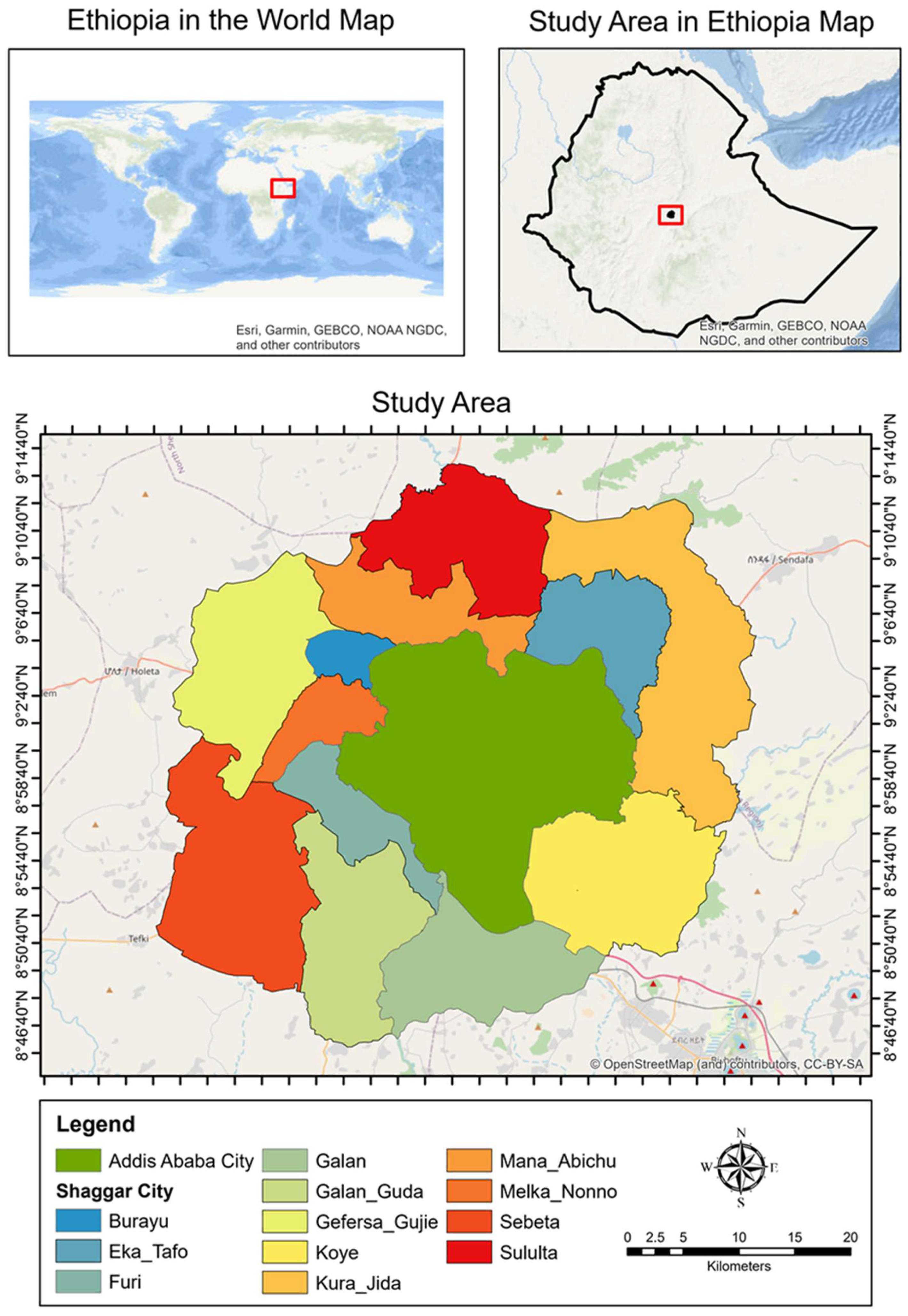
Figure 1. Location map of the study area .
Preprints 139519 g001
Figure 2. - City of the Respondent .
Preprints 139519 g002
Figure 3. Organization of the Respondent .
Preprints 139519 g003
Figure 4. Methods of collaboration between the citie.s.
Preprints 139519 g004
Figure 5. Factors influence integration.
Preprints 139519 g005
Table 1. The absence of integrated sewerage system.
S/N Issues Frequency percentage
1 Lack of agreement between the cities 7 24
2 Disagreements on boundaries 4 13.2
3 Lack of a compensation mechanism 6 20
4 Lack of a legal framework 12 42.9
Total 29 100
Source(s): Expertise survey, 2023.
Table 2. The reason for the lack of a common solid waste disposal area.
S/N Issues Frequency percentage
1 Lack of an integrated plan 17 34
2 Lack of agreement 1 2
3 Lack of Compensation mechanism 8 16
4 administrative problems 24 48
Total 50 100
Source(s): Expertise survey, 2023.
Table 3. Effects of population growth on integrated infrastructure planning.
S/N Issues Frequency percentage
1 increased demand for infrastructure 25 50
2 the need for collaborative management 24 48
3 necessity of open finance 29.2 58.4
4 all these impacts were possible 41.6 83.1
Total
Source(s): Expertise survey, 2023.
Table 3. The reasons for the absence of integrated infrastructure planning.
S/N Issues Frequency percentage
1 Hesitancy among stakeholders 5 10
2 Lack of support from policymakers 11 21.2
3 Lack of leadership 16 31.2
4 Lack of attention 18 36.1
Total 50 100
Source(s): Expertise survey, 2023.
Disclaimer/Publisher’s Note: The statements, opinions and data contained in all publications are solely those of the individual author(s) and contributor(s) and not of MDPI and/or the editor(s). MDPI and/or the editor(s) disclaim responsibility for any injury to people or property resulting from any ideas, methods, instructions or products referred to in the content.
Copyright: This open access article is published under a Creative Commons CC BY 4.0 license, which permit the free download, distribution, and reuse, provided that the author and preprint are cited in any reuse.
Prerpints.org logo

Preprints.org is a free preprint server supported by MDPI in Basel, Switzerland.

Subscribe

Disclaimer

Terms of Use

Privacy Policy

Privacy Settings

© 2025 MDPI (Basel, Switzerland) unless otherwise stated