

Submitted:
13 November 2024
Posted:
15 November 2024
You are already at the latest version
Abstract
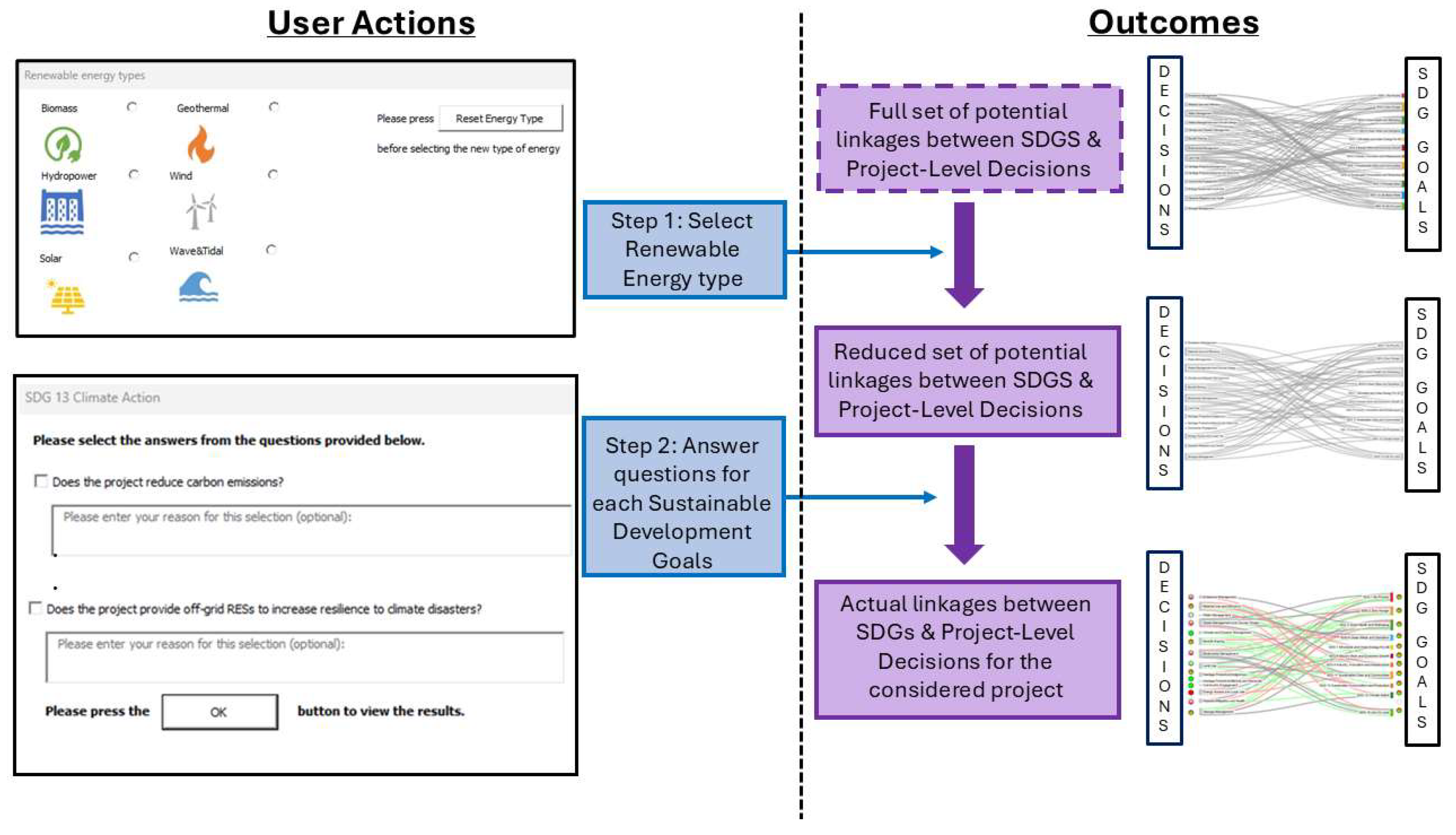
The imperative of achieving net zero carbon emissions is driving the transition to renewable energy sources. However, this often leads to carbon tunnel vision, overlooking broader sustainability impacts. To enable these broader impacts to be considered, we have developed a generic approach to assist renewable energy project proponents and assessors with evaluating how project-level decisions (e.g., emissions management, water management, land use) impact the Sustainable Development Goals (SDGs). This is achieved via “yes/no” answers to a set of approximately 60 diagnostic survey questions, resulting in an assessment of (i) which SDGs are impacted by a proposed renewable energy project and (ii) which project-level decisions impact each SDG and whether this impact is positive, negative or neutral, highlighting any areas of concern and opportunities for improvement. To maximise the usefulness and impact of the approach, it is designed to cater to all major renewables (biomass, hydropower, solar, geothermal, wind, wave and tidal) and is implemented in a user-friendly ex-ante assessment tool in MS Excel that is freely available on GitHub. The utility of the approach and tool are illustrated via three case studies, including a large-scale solar farm, biogas production from wastewater plants, and an offshore wind farm. Results show that the case study projects impact the SDGs in different and unique ways and that different project-level decisions are most influential, highlighting the value of the proposed approach and tool to provide insight into specific projects and their sustainability implications, as well as which actions can be taken to increase project sustainability.
Keywords:
1. Introduction
- Multi-Criteria Decision Making (MCDM) tools to assist communities in ranking alternative local renewable energy sources (RESs) during the pre-feasibility stage by considering factors such as the ability of RESs to enhance energy security [8];
- A framework and Excel-based tool (the SDG-IAE framework) designed to help practitioners understand the interactions between energy projects and the SDGs and to inform conversations among stakeholders [9]; and
- The Energy Scenario Evaluation (ESE) framework for assessing the sustainability and public acceptability of energy transition scenarios, which includes a questionnaire consisting of five critical questions [10].
- Developing an approach for identifying the project-level decisions made during the development of renewable energy projects that have an influence on the SDGs.
- Developing an approach and tool for identifying the relationships between the project-level decisions identified in Objective 1 and the SDGs for specific renewable energy projects in a consistent, transparent and user-friendly fashion.
- Illustrating the application and benefits of the approach developed in Objective 1 and the tool developed in Objective 2 by applying it to three case studies that are based on proposed renewable energy projects in Australia, each with different attributes (e.g., type of renewable technology, location, local demand, and other contextual factors).
2. Materials and Methods
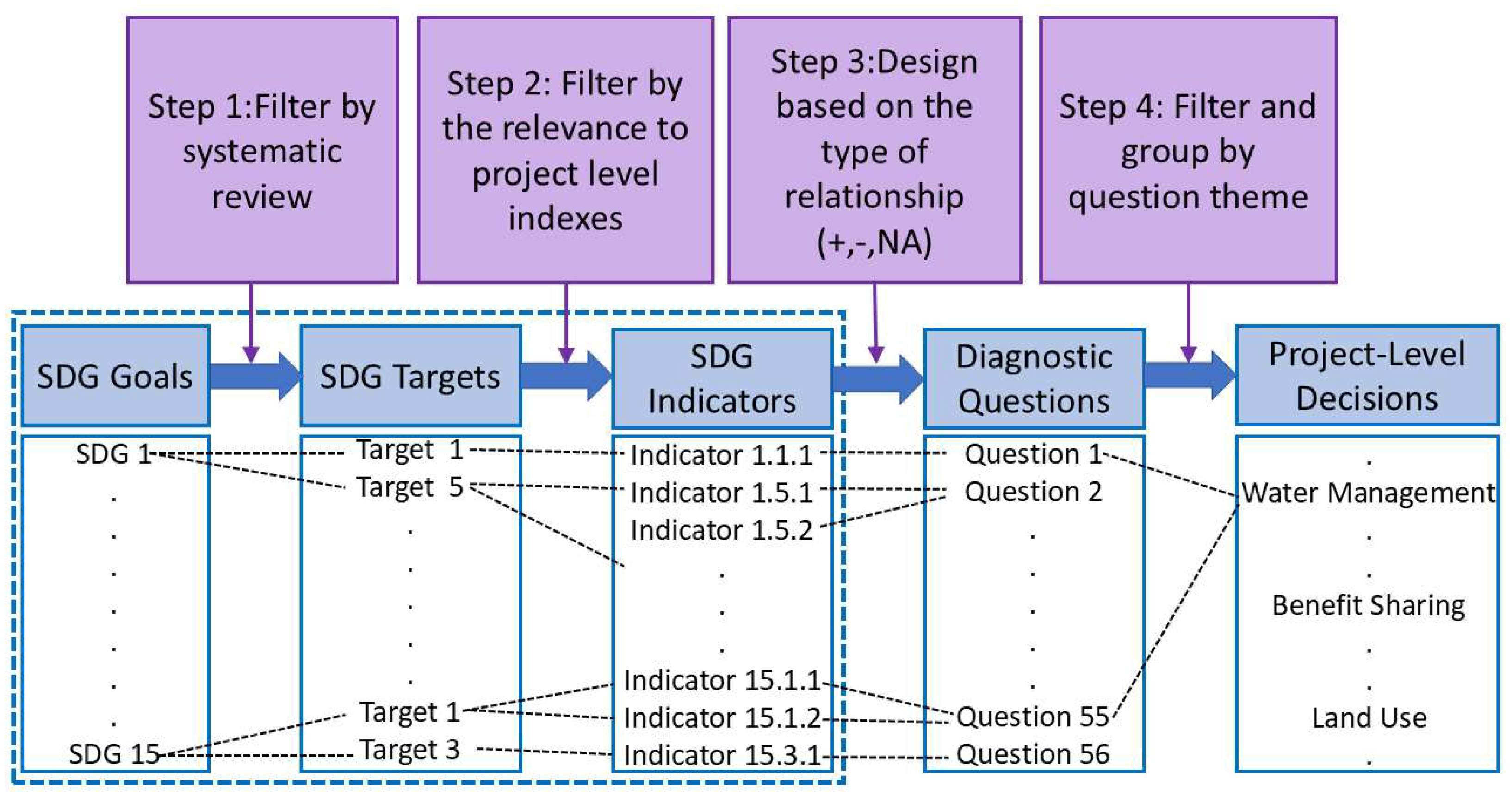
2.1. Identification of Relevant Project-Level Decisions
- 4.
- Material Use and Efficiency
- 5.
- Water Management
- 6.
- Waste Management and Circular Design
- 7.
- Climate and Disaster Management
- 8.
- Benefit Sharing
- 9.
- Biodiversity
- 10.
- Land Use
- 11.
- Heritage Protection (Natural and Historical)
- 12.
- Heritage Protection (Indigenous)
- 13.
- Community Engagement
- 14.
- Energy Access and Local Use
- 15.
- Hazard Mitigation and Health
- 16.
- Storage Management
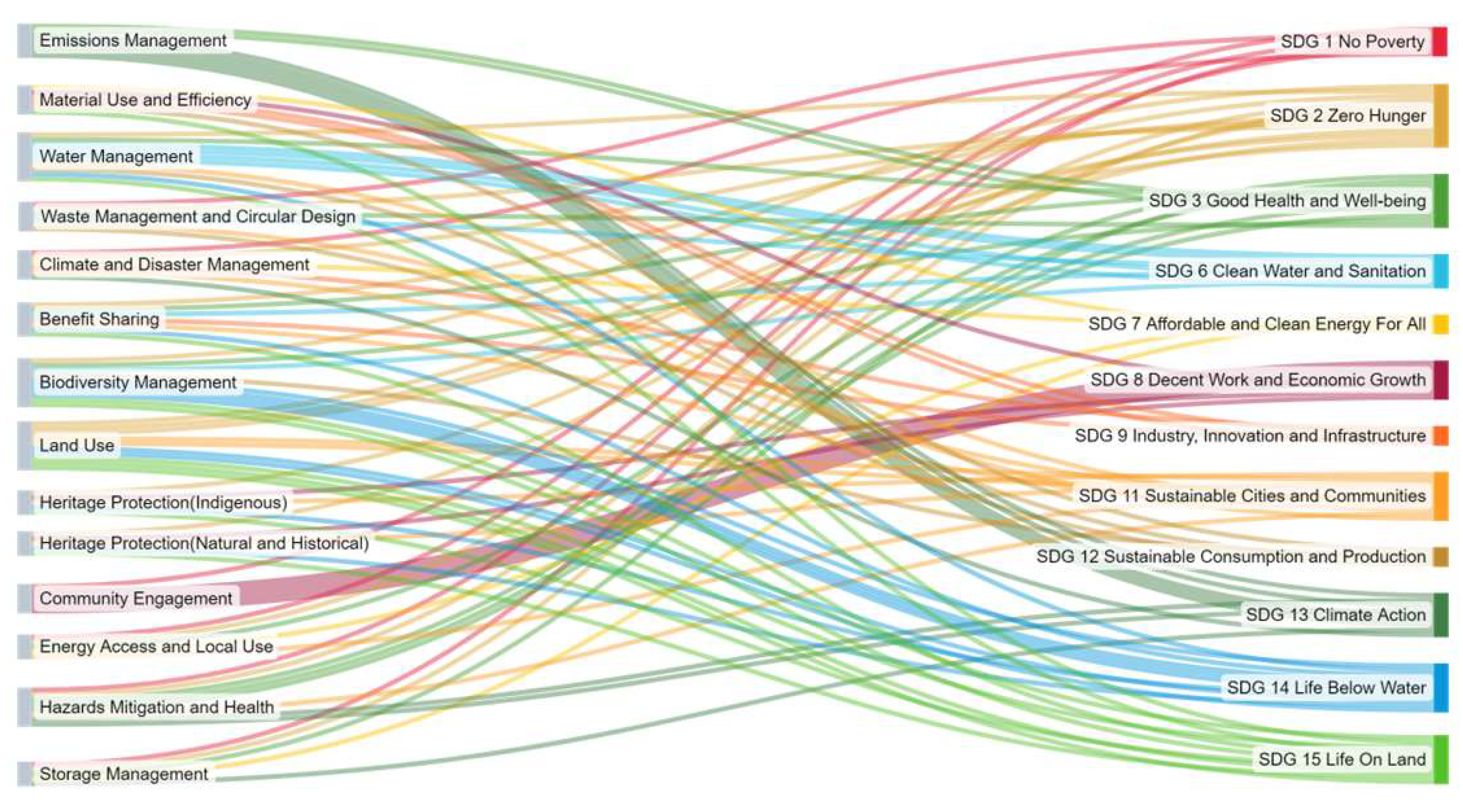
2.2. Identification of Relationship between SDGs and Project-Level Decision Themes
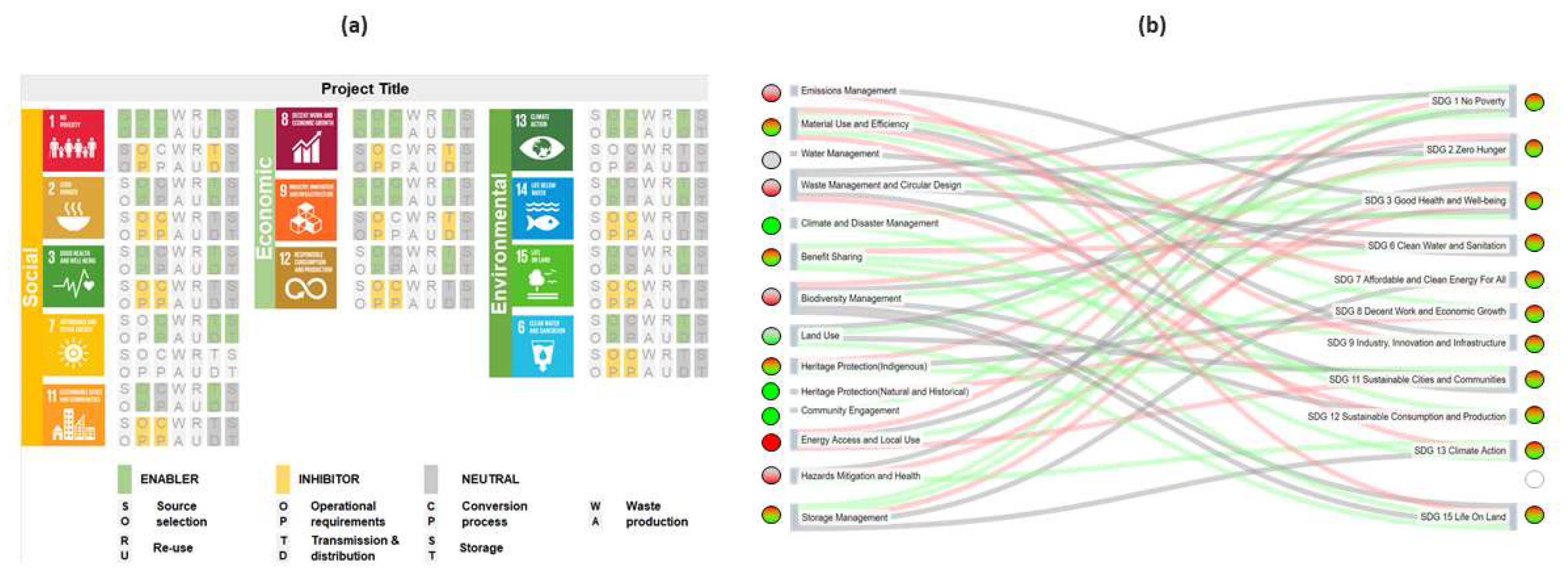
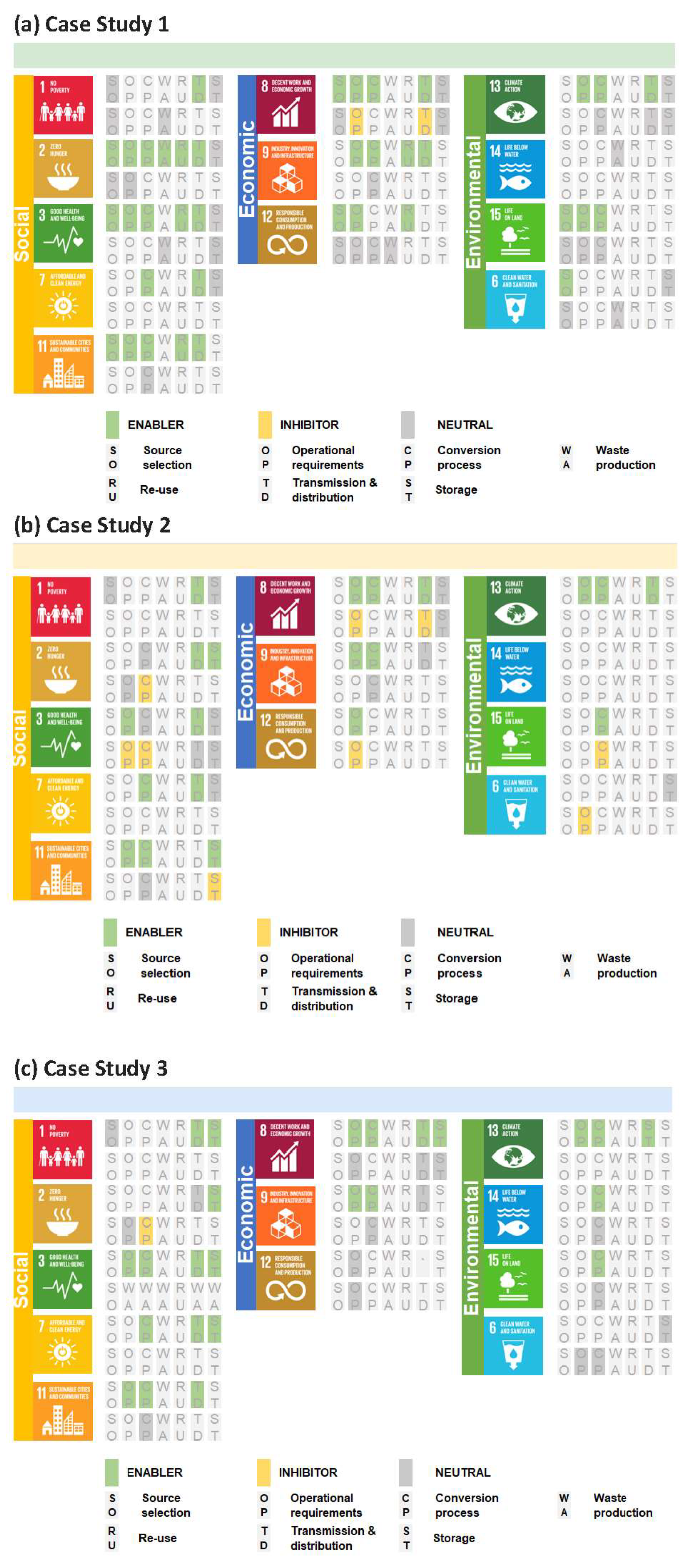
- High-level sustainability assessments (Figure 4a): This consists of a plot indicating whether the renewable energy project under consideration has a positive (enabler - green), negative (inhibitor - yellow) or neutral (grey) impact on relevant SDGs for the seven aforementioned aspects of renewable energy production projects identified by Tian et al. (2024) (i.e., source selection, operational requirements, conversion process, waster production, re-use, transmission and distribution, storage). This provides a high-level assessment of the sustainability impacts of projects under consideration, which are likely to be different for different projects due to differences in their specific contexts (e.g., type of renewable energy source, location, etc.). Information on enabling impacts can be used to support the development of business cases and inhibiting impacts to identify areas that require attention.
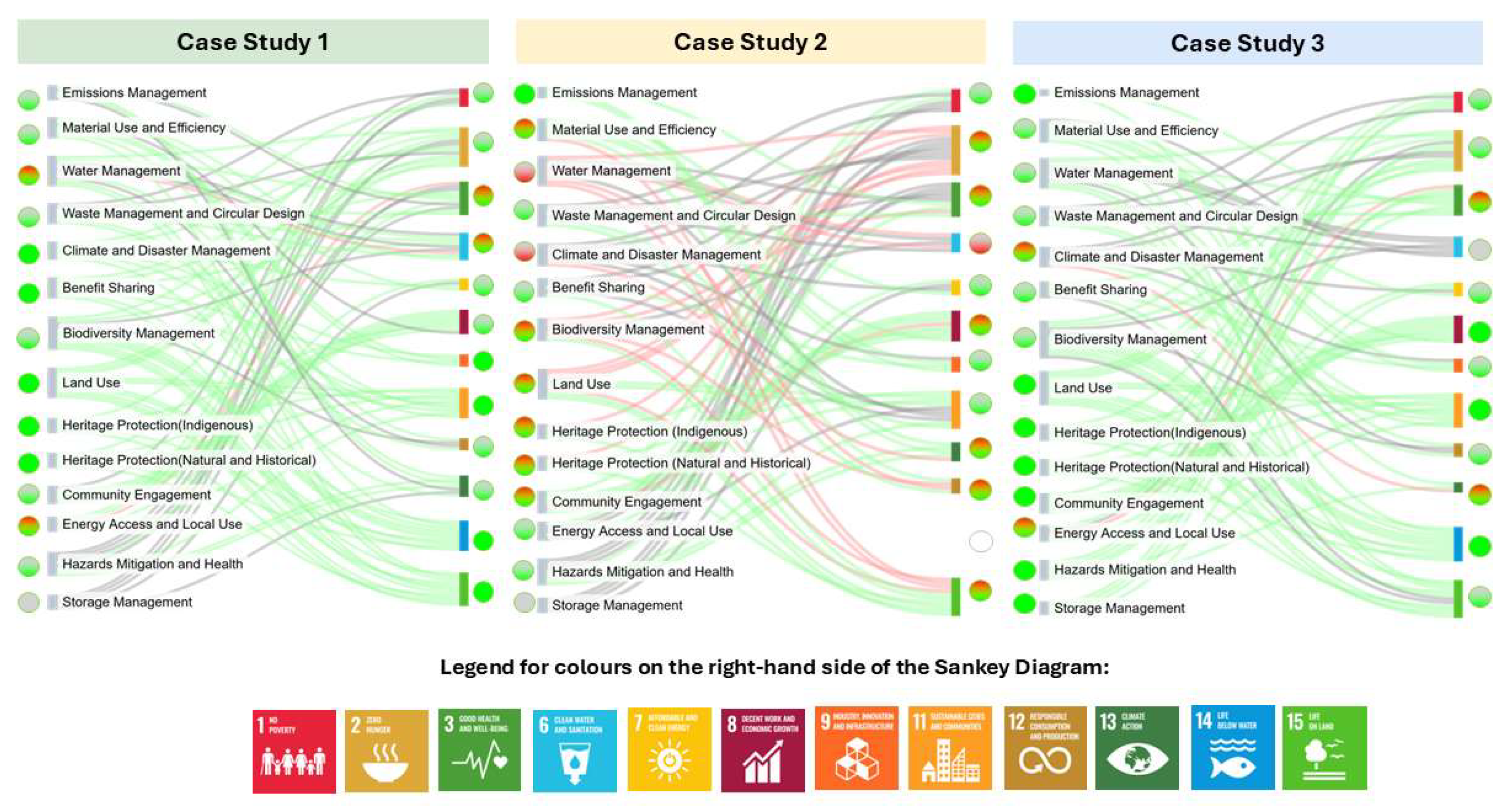
- Identification of project actions most suited to increasing sustainability (Figure 4b): This consists of a Sankey diagram showing whether the project-level decisions have an enabling, inhibiting or neutral impact on each of the SDGs, as shown by green, red and grey connecting lines, respectively, in the sub-figure. This provides an indication of which project-level decision(s) require attention to ensure proposed renewable energy projects are sustainable. The “traffic light” indicators on the right-hand side of the sub-figure summarise the impact on a particular SDG due to project-level decisions based on the survey responses provided (i.e., a complete green traffic light indicates that all impacts on this SDG are enabling, a completely red traffic light indicates that all impacts on this SDG are inhibiting, a completely grey traffic light indicates that there is no impact on this SDG and a traffic light with a mixture of colours indicates at least one type of impact for each colour shown). The traffic light indicators on the left-hand side of the figure summarise the contribution of a particular Project-Level Decision Theme to the overall impact of the proposed renewable energy project on a particular SDG based on the survey responses provided (i.e., a completely green traffic light indicates that all project-level decisions belonging to this theme only have enabling impacts on affected SDGs, a completely red traffic light indicates that all project-level decisions belonging to this theme only have inhibiting impacts on affected SDGs, a completely grey traffic light indicates that all project-level decisions belonging to this theme do not have any impacts on the SDGs and a traffic light with more than one colour indicates that project-level decisions belonging to this theme have at least one type of impact for each colour shown).
3. Case Studies
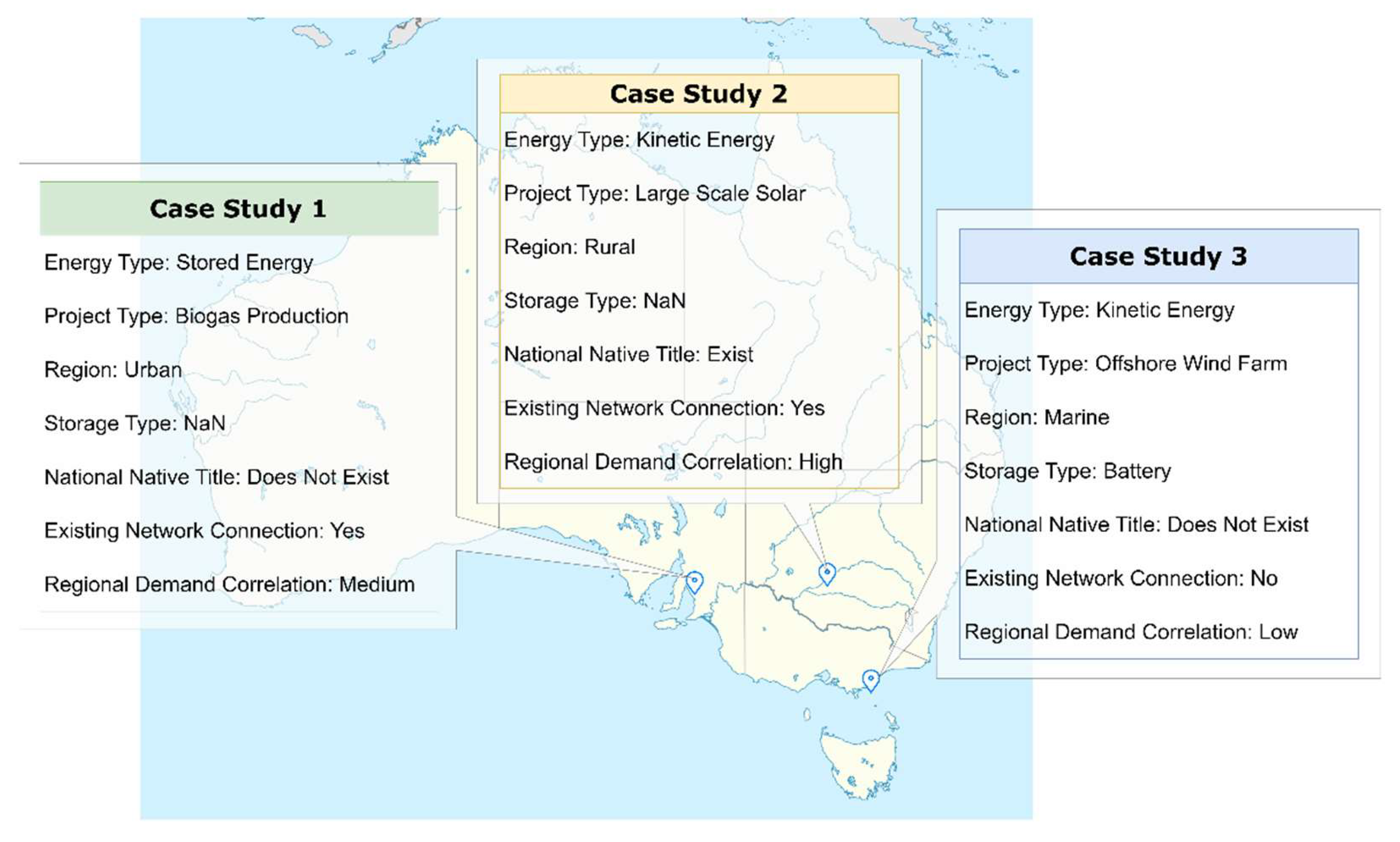
- Energy Type: Stored energy versus kinetic energy. These energy types have different geographical impacts during source selection, distinct land impacts during the conversion processes, and varying requirements for overcoming intermittency in storage and distribution [36]. Case Study 1 involves stored energy (the storage of wastewater), while Case Studies 2 and 3 involve kinetic energy (i.e., capturing readily available solar and wind energy).
- Region: Urban versus rural versus marine environments. The location of RESs plays a decisive role in local energy utilisation, influences the development status of existing infrastructure, and affects local populations differently [37]. Case Study 1 is located in an urban area, Case Study 2 is in a rural area, and Case Study 3 is in a marine area.
- Storage Type: Different storage methods, such as batteries. According to Environmental Impact Statement (EIS) assessments, when the capacity of battery storage exceeds certain thresholds, which vary by country, there are potential health and hazard impacts that need to be addressed [38]. For example, according to the Australian Standards [18], if a project includes battery energy storage with a capacity of more than 30 MW, the developer must undertake a preliminary hazard analysis. To investigate such potential impacts, it is assumed Case studies 1 and 2 do not have storage onsite, whereas Case Study 3 has a battery Energy Storage System (BESS).
- National Native Title: Recognition of Indigenous land rights. Surveys conducted by the Australian Ministry of Energy (AMOE) indicate that many RESs in Australia are being built on traditional lands [39]. Recognising First Nations' titles and protecting the land-use rights of Indigenous peoples should therefore be included in the development process of RESs. Also, engaging with local communities can boost the process of achieving public backing or certification, known as a "social license to operate" (SLO) [40]. For Case Studies 1 and 3, the projects are not located on traditional land. For Case Study 2, the project is constructed on the land of First Nations’ people and there is a high possibility that the people living in this land may face relocation due to the construction of the project [41].
- Existing Network connection: Infrastructure and material footprint. The existing network connections are a critical factor influencing the material footprint during the construction of RESs. For example, offshore wind farms face substantial upfront costs and are criticised for lacking integration, necessitating additional supporting infrastructure to connect and transmit energy to the national grid [42]. For Case Studies 1 and 2, both projects are connected to the existing energy grid. However, for Case Study 3, a new connection to the grid needs to be built.
- Regional demand correlation: Local energy demand. According to classifications adapted from [39], a higher degree of regional demand correlation indicates a greater need for local clean energy supply. As previously mentioned, the location of RES plants directly influences regional energy needs, affecting the share of green electricity supplied to the area. For Case Study 1, as the plant is located in an urban area within close proximity of the existing grid, the local demand for green electricity is medium. For Case Study 2, the plant is located in a rural area and the correlation with demand for local energy is considered high. For Case Study 3, as the location is offshore and the main purpose of green energy generation is to support and supply the national grid, there is negligible correlation between local demand and use for this type of renewable energy, hence it is classified as low.
4. Results and Discussion
4.1. Impact of Renewable Energy Projects on SDGs
4.2. Impact of Renewable Energy Project on SDG
5. Summary and Conclusions
Supplementary Materials
Author Contributions
Funding
Institutional Review Board Statement
Data Availability Statement
Conflicts of Interest
Appendix A
Appendix B
Appendix C
Appendix D
Appendix E
Appendix F
Appendix G
Appendix H
References
- Konietzko, D. J., Moving Beyond Carbon Tunnel Vision With a Sustainability Data Strategy. Forbes, April 2022, 7.
- Fuso Nerini, F.; Tomei, J.; To, L. S.; Bisaga, I.; Parikh, P.; Black, M.; Borrion, A.; Spataru, C.; Castán Broto, V.; Anandarajah, G. , Mapping synergies and trade-offs between energy and the Sustainable Development Goals. Nature Energy 2018, 3(1), 10–15. [Google Scholar] [CrossRef]
- Sachs, J.; Kroll, C.; Lafortune, G.; Fuller, G.; Woelm, F., Sustainable development report 2022. Cambridge University Press: 2022.
- Colglazier, W., Sustainable development agenda: 2030. Science 2015, 349, (6252), 1048-1050.
- Bisaga, I.; Parikh, P.; Tomei, J.; To, L. S. , Mapping synergies and trade-offs between energy and the sustainable development goals: A case study of off-grid solar energy in Rwanda. Energy Policy 2021, 149, 112028. [Google Scholar] [CrossRef]
- Tian, J.; Culley, S. A.; Maier, H. R.; Zecchin, A. C. Is renewable energy sustainable? Potential relationships between renewable energy production and the Sustainable Development Goals. npj Climate Action 2024, 3(1), 35. [Google Scholar] [CrossRef]
- Di Lucia, L.; Slade, R.; Khan, J. Decision-making fitness of methods to understand Sustainable Development Goal interactions. Nature Sustainability 2022, 5(2), 131–138. [Google Scholar] [CrossRef]
- Nigim, K.; Munier, N.; Green, J. Pre-feasibility MCDM tools to aid communities in prioritizing local viable renewable energy sources. Renewable energy 2004, 29(11), 1775–1791. [Google Scholar] [CrossRef]
- Castor, J.; Bacha, K.; Nerini, F. F. SDGs in action: A novel framework for assessing energy projects against the sustainable development goals. Energy research & social science 2020, 68, 101556. [Google Scholar]
- Delafield, G.; Donnison, C.; Roddis, P.; Arvanitopoulos, T.; Sfyridis, A.; Dunnett, S.; Ball, T.; Logan, K. G. Conceptual framework for balancing society and nature in net-zero energy transitions. Environmental Science & Policy 2021, 125, 189–201. [Google Scholar]
- Statistics, U. Global indicator framework for the sustainable development goals and targets of the 2030 agenda for sustainable development. Developmental Science and Sustainable Development Goals for Children and Youth 2019, 439. [Google Scholar]
- Woods, M. The global reporting initiative. The CPA journal 2003, 73(6), 60. [Google Scholar]
- Calabrese, A.; Costa, R.; Gastaldi, M.; Ghiron, N. L.; Montalvan, R. A. V. Implications for Sustainable Development Goals: A framework to assess company disclosure in sustainability reporting. Journal of Cleaner Production 2021, 319, 128624. [Google Scholar] [CrossRef]
- Morgan, R. K. Environmental impact assessment: the state of the art. Impact assessment and project appraisal 2012, 30(1), 5–14. [Google Scholar] [CrossRef]
- Henzler, K.; Maier, S. D.; Jäger, M.; Horn, R. SDG-based sustainability assessment methodology for innovations in the field of urban surfaces. Sustainability 2020, 12(11), 4466. [Google Scholar] [CrossRef]
- Blix, T. B.; Myhr, A. I. A sustainability assessment framework for genome-edited salmon. Aquaculture 2023, 562, 738803. [Google Scholar] [CrossRef]
- Act, E. Environment protection and biodiversity conservation act. Commonwealth of Australia 1999. [Google Scholar]
- Large-Scale Solar Energy Guideline. Available online: https://shared-drupal-s3fs.s3.ap-southeast-2.amazonaws.com/master-test/fapub_pdf/Lisa+Drupal+Documents/16007_DPIE+Large+Scale+Solar+Energy+Guidelines_26-9-22.pdf (accessed on 28 June 2024).
- Taylor, M. Planning the energy transition: a comparative examination of large-scale solar energy siting on agricultural land in Australia. Utrecht Law Review 2022, 18(2), 70–86. [Google Scholar] [CrossRef]
- Liu, Z. Sustainable tourism development: A critique. Journal of sustainable tourism 2003, 11(6), 459–475. [Google Scholar] [CrossRef]
- Goni, F. A.; Gholamzadeh Chofreh, A.; Estaki Orakani, Z.; Klemeš, J. J.; Davoudi, M.; Mardani, A. Sustainable business model: A review and framework development. Clean Technologies and Environmental Policy 2021, 23, 889–897. [Google Scholar] [CrossRef]
- Soundararajan, K.; Ho, H. K.; Su, B. Sankey diagram framework for energy and exergy flows. Applied energy 2014, 136, 1035–1042. [Google Scholar] [CrossRef]
- Bakkaloglu, S.; Cooper, J.; Hawkes, A. Methane emissions along biomethane and biogas supply chains are underestimated. One Earth 2022, 5(6), 724–736. [Google Scholar] [CrossRef]
- Wilkinson, J.; Pearce, M.; Cromar, N.; Fallowfield, H., Audit of the quality and quantity of treated wastewater discharging from Wastewater Treatment Plants (WWTPs) into the marine environment. 2005.
- Breed, W. G.; Hatch, J. H.; Rogers, C.; Brooker, W.; Breed, A. C.; Marklund, M. H.; Roberts, H.; Breed, M. F. Bolivar Wastewater Treatment Plant provides an important habitat for South Australian ducks and waders. Australian Field Ornithology 2020, 37, 190–199. [Google Scholar] [CrossRef]
- Food or energy? The battle over the future of Australia's prime agricultural land. Available online: https://www.abc.net.au/news/rural/2019-05-23/battle-over-the-future-of-prime-australian-agricultural-land/11140144 (accessed on 26 July 2024).
- Longest running solar farm contract dispute finally settled after more than two years. Available online: https://reneweconomy.com.au/longest-running-solar-farm-contract-dispute-finally-settled-after-more-than-two-years/ (accessed on 28 June 2024).
- Sunraysia solar farm finally complete and at full capacity, but legal dispute remains. Available online: https://reneweconomy.com.au/sunraysia-solar-farm-finally-complete-and-at-full-capacity-but-legal-dispute-remains/ (accessed on 28 June 2024).
- RE: Sunraysia Solar Farm, Balranald LGA. Available online: https://majorprojects.planningportal.nsw.gov.au/prweb/PRRestService/mp/01/getContent?AttachRef=SSD-7680%2120190513T232207.075%20GMT (accessed on 25 June 2024).
- Re: NSW Solar Farm - Water Usage During Construction. Available online: https://majorprojects.planningportal.nsw.gov.au/prweb/PRRestService/mp/01/getContent?AttachRef=SSD-7680%2120190227T235409.272%20GMT (accessed on 25 June 2024).
- Sunraysia Solar Farm (SSD 7680). Available online: https://majorprojects.planningportal.nsw.gov.au/prweb/PRRestService/mp/01/getContent?AttachRef=SSD-7680%2120190227T235438.469%20GMT (accessed on 25 June 2024).
- Shields, M. A.; Woolf, D. K.; Grist, E. P.; Kerr, S. A.; Jackson, A.; Harris, R. E.; Bell, M. C.; Beharie, R.; Want, A.; Osalusi, E. Marine renewable energy: The ecological implications of altering the hydrodynamics of the marine environment. Ocean & coastal management 2011, 54(1), 2–9. [Google Scholar]
- Bolivar Wastewater Treatment Plant. Available online: https://watertalks.sawater.com.au/bolivarwwtp (accessed on 9 September 2024).
- Sunraysia Solar Farm: 255MWDC utility-scale solar PV project. Available online: https://sunraysiasolarfarm.com.au/ (accessed on 25 June 2024).
- Star of the South. Available online: https://www.starofthesouth.com.au/ (accessed on 13 August 2024).
- Kwasinski, A.; Krishnamurthy, V.; Song, J.; Sharma, R. Availability evaluation of micro-grids for resistant power supply during natural disasters. IEEE Transactions on Smart grid 2012, 3(4), 2007–2018. [Google Scholar] [CrossRef]
- Warner, K. J.; Jones, G. A. A population-induced renewable energy timeline in nine world regions. Energy Policy 2017, 101, 65–76. [Google Scholar] [CrossRef]
- Conzen, J.; Lakshmipathy, S.; Kapahi, A.; Kraft, S.; DiDomizio, M. Lithium ion battery energy storage systems (BESS) hazards. Journal of Loss Prevention in the Process Industries 2023, 81, 104932. [Google Scholar] [CrossRef]
- 2024 ISP Consultation. Available online: https://aemo.com.au/energy-systems/major-publications/integrated-system-plan-isp/2024-integrated-system-plan-isp (accessed on 16 August 2024).
- Nelsen, J. L., Social license to operate. In Taylor & Francis: 2006; Vol. 20, pp 161-162.
- Rahman, A.; Farrok, O.; Haque, M. M. Environmental impact of renewable energy source based electrical power plants: Solar, wind, hydroelectric, biomass, geothermal, tidal, ocean, and osmotic. Renewable and Sustainable Energy Reviews 2022, 161, 112279. [Google Scholar] [CrossRef]
- Ali, S. W.; Sadiq, M.; Terriche, Y.; Naqvi, S. A. R.; Mutarraf, M. U.; Hassan, M. A.; Yang, G.; Su, C.-L.; Guerrero, J. M. Offshore wind farm-grid integration: A review on infrastructure, challenges, and grid solutions. Ieee Access 2021, 9, 102811–102827. [Google Scholar] [CrossRef]
Disclaimer/Publisher’s Note: The statements, opinions and data contained in all publications are solely those of the individual author(s) and contributor(s) and not of MDPI and/or the editor(s). MDPI and/or the editor(s) disclaim responsibility for any injury to people or property resulting from any ideas, methods, instructions or products referred to in the content. |
© 2024 by the authors. Licensee MDPI, Basel, Switzerland. This article is an open access article distributed under the terms and conditions of the Creative Commons Attribution (CC BY) license (https://creativecommons.org/licenses/by/4.0/).