Preprint
Article

This version is not peer-reviewed.

Resource Characterisation and Biogas Potential Determination of Cassava, Yam and Plantain Peel Mixtures Using Theoretical Models and Hbt Based Experiments

Submitted:

14 November 2024

Posted:

19 November 2024

You are already at the latest version

Abstract

This research aimed to evaluate the comparative biogas yields of waste (peels) of selected relevant fibrous materials from the West African region: Cassava, plantain, a mixture of cassava, plantain and yam. Three models: The Boyle model, the Modified Boyle’s model, and the Buswell and Müller’s model were used to determine the theoretical maximum biomethane potentials (TMBP), while the Hohenheim biogas yield test (D-HBT) was used to undertake a batch test of anaerobic digestion. With an operating temperature of 37±0.5 , the samples were co-digested with digested sewage sludge (DSS) for 39 days. Comparisons are drawn between the TBMPs and the experimental results, the experimental results of the different substrates and the experimental results and figures reported in literature. From the experimental results, plantain peels had the highest biogas yield (468±72 ml/g oTS), followed by a mixture of yam, cassava and plantain peels (362±31 ml/g oTS) and cassava peels obtained the least biogas yield (218±19 ml/g oTS). TMBPS of 204.04, 209.03 and 217.45 CH4 ml/g oTS were obtained for plantain peels, a mixture of yam, cassava and plantain peels and cassava peels respectively, evaluated using the Boyle’s model. For all the samples, the TMBPS (205.56, 209.03 and 218.45 CH4 ml/g oTS respectively) obtained using the Buswell and Mueller model were slightly higher than those obtained by both the Boyle and the modified Boyle’s model (163.23, 167.22 and 174.76 CH4 ml/g oTS respectively).

Keywords: 
;  ;  ;  ;  

1. Introduction

Energy security, environmental sustainability and climate change challenges drive transition to low-carbon and clean energy sources [1,2,3,4,5,6,7,8,9,10]. While fossil fuels have accounted for the biggest part of energy use of the world, their use is associated with the release of greenhouse gases (GHGs). Urbanisation for instance is causing a rapid increase in energy demand: thus intensifying the associated GHG emission and as well, a faster depletion of fossil fossils [11,12]. There is a current and continuous drive for research in energy generation from biomass feedstock as a result [12]. Particularly for emerging economies, waste treatment using anaerobic digestion presents a high potential for clean energy resource generation [12]. Economic and environmental benefits of anaerobic digestion is causing its growth globally, along the production of clean energy product [13]. Biogas generation provides environmental and socio-economic benefits for players in the value chain: improvement of local economic capabilities, job safeguard in rural settings, increased regional purchasing power, improved living standards, and contribution to economic and social development [14,15].
Anaerobic digestion is a conversion technology that utilises the anaerobic bacterial breakdown of materials (biodegradable) to produce biogas, a gas mainly consisting of methane and carbon dioxide, reducing greenhouse gases in comparison with disposal methods such as incineration or composting when captured and used energetically [14,16,17,18,19,20,21,22,23]. The process could be natural or engineered [20]. Anaerobic digestion of organic substrates (solid) is a widely used technology for energy production [13,24]. It is an effective conversion process of biomass to methane (CH4). The process involves four intermediate stages: hydrolysis, acidogenesis, acetogenesis, and methanogenesis. Although methane production occurs in the neutral conditions of latter stages, the early stages need acidic conditions for operation [14,25]. The methanogenesis stage takes products from the acetogenesis and acidogenesis stages: H2, CO2, acetate to produce biogas. It does so by either breaking the acids to CH4 and CO2 or reducing CO2 and H2. CO formate, methanol, mythylamine are potentially utilised to produce CH4. The resulting combustible gas consists of 60-70% methane (CH4), 30-40% of carbon dioxide (CO2), and N2, H2, H2S, NH3, water vapour as other components [1,14,26,27]. As the slowest biochemical in the anaerobic digestion process, methanogenesis is a critical step in the AD. Once a biomaterial contain carbohydrate, proteins, fats, cellulose, and hemicellulose as the key components, it is an appropriate feedstock for biogas generation [14].
Studies on biogas potential of solid substrates from organic matter are both prominent and prospective. Acknowledging the biogas generation challenges that are linked to feedstock choice, assessing the biogas potential of feedstock from diverse perspectives is relevant for its suitability evaluation [28]. Biogas is a comparatively attractive resource because it is producible from different feedstock and it is more flexible. This varied feedstock include biomass that contains different fractions of carbohydrates, lipids and proteins. It is applicable for feedstock such as cattle manure, sludge, municipal waste and other biomass materials [16,18,29,30].Very important components of biogas discussions are: sectorial actors (agriculture, forestry, aquatics, waste management), socio-technological linkage (energy, transportation, waste), production and use [28].
Fibrous materials such as cassava, plantain, yam etc. are very relevant in both domestic and industrial set-ups in developing countries [31]. It is reported that African region contributed 55% of global cassava production in 2017. That is, 121 million tonnes: with a significant 25-37% released as waste in a form of peels and pulp. 60,000 l of effluent is generated per tonne of cassava tuber processed. More important is that the key producers (small and medium farmers) of these fibrous materials do not have the capacity to treat the associated waste. The results is usually pollution of waters and degradation of the environment: relatable to large heaps that are not treated. Challenges with disposal of some waste waters of fibrous materials is imminent. Aside from that, the need for a clean reliable energy supply for the energy industry is an important discussion. For developing countries, organic pollution and eutrophication are associated with the handling of food processing industries [31].
Achi et al. (2020) recognized the challenges with waste from cassava processing and the need for energy (sustainable) supply for such industries. Thus, the use of co-digestion in treating cassava wastewater and generating energy with it was explored. The study affirms the potential of co-digestion in improving AD performance of cassava waste water [32].
The effect of pre-treatment (thermal, alkali and extrusion) on lignin-rich peduncle of banana has been studied. For the raw peduncle of banana, with a lignin content of 14.25%, hemicellulose content of 19.83% and 53.44% of cellulose, the BMP measured was 184.32 ml/ g oT. The BMPs increased to 377.60 ml/g oTS, 298.9 ml/g oTS and 248.02 ml/g oTS for thermal pretreatment, alkali pretreatment and extrusion pretreatment in that respect [33].
[34]The biomethane potential (BMP), biodegradability index (BI) and competitiveness index (CI) of cassava vinasse (CV) has been studied. A 247.10 ml/g oTS obtained establishes that CV is a bioenergy resource. Additionally, BI of 82% and CI of above 12 % obtained indicate that 82% of organic component of CV is biodegrable and devoid of competition between sulphate-reducing bacteria and methanogenic bacteria in AD [35].
Makinde and Odokuma (2015) studied the potential of yam peels and plantain peels with cow-dung co-digestion. A better susceptibility of yam peels is suggested due to a higher volume of biogas produced. Additionally, the co-digestion of the substrates produced better yields than their individual substrates [36].
Lucas (2024) studied the BMP of potato peels, and the BMP from their pre-treated variants (chemical, mechanical and thermal pre-treatments), under mesophilic conditions. While the pretreated variants had better yields, chemical pre-treatment, particularly, alkali pretreatment produced better yields than the other pretreatment methods; suggesting a suitability to enhance bioavailability of potato peels for AD [37].
Tielkes et al. (2017) evaluated the BMP of cassava peels and pulp. The trace element requirements for biogas producing bacteria was critically looked at. A D-HBT system was used in the BMP evaluation; producing BMP values of 225 ml/g oTS and 224 ml/g oTS for cassava peels and pulp respectively. It is recommended from the study that necessary trace elements addition is essential for stable AD process of cassava waste. Thus, signaling the need for co-digestion with animal waste [38].
Poultry waste, yam peels, cassava peels were co-digested in a ratio of 2:1:1. The feedstock employed were crushed. A highly flammable gas constituting 310, 1352 and 2264 ppm in respect of liquefied petroleum gas (LPG), carbon dioxide (CO2) and smoke [39].
A comparative study is done on the biogas potential of domestic waste, which include plantain peel, yam peel among others in one substrate and another composing yam peel and cassava peel s another substrate. An average of 0.65 kg of biogas was produced from each substrate, per an average substrate mass of 80 kg.
Olugunde et al. (2022) obtained theoretical biogas potential of 400 LCH4 (kgTS)-1 for yam peels, 380 LCH4 (kgTS)-1 for cassava peels, and 380 LCH4 (kgTS)-1 for plantain peels, using Buswell’s formular [39].
Louh et al. (2024) studied biogas generation potential from cassava peels, yam peels, plantain peels. While there is good potential from these resources, the use is associated with challenges of acidification: pH and C/N ratio related. The pH adjustment was enhanced by the use of AD of cow dung as inoculum, as well as urine and cassava effluent as neutralizer [40].
This research sought to evaluate the comparative biogas potentials of selected relevant fibrous materials: cassava peels, plantain peels, a mixture of cassava peels, plantain peels and yam peels using the Hohenheim Biogas Yield Test (D-HBT) and theoretical models. It first compares the experimentally determined yields with the theoretically predicted yields; which are largely dependent on elemental compositions, giving an indication of the biodegradability of the studied samples. A comparison is also made between literature existing studies from experiments other than the D-HBT and as well, the relative performance of the single feedstock and their digestion.

2. Materials and Methods

2.1. Inoculum

Inoculum used in the anaerobic trial was DSS (digested sewage sludge) obtained at a local municipal sewage plant located at Rottenburg-Kiebingen, Germany. This facility treats wastewater through aerobic and anaerobic stages. The VDI 4630 guideline was followed in collecting the inoculum [41]. Further details are similar to what is reported in literature [42].

2.2. Samples

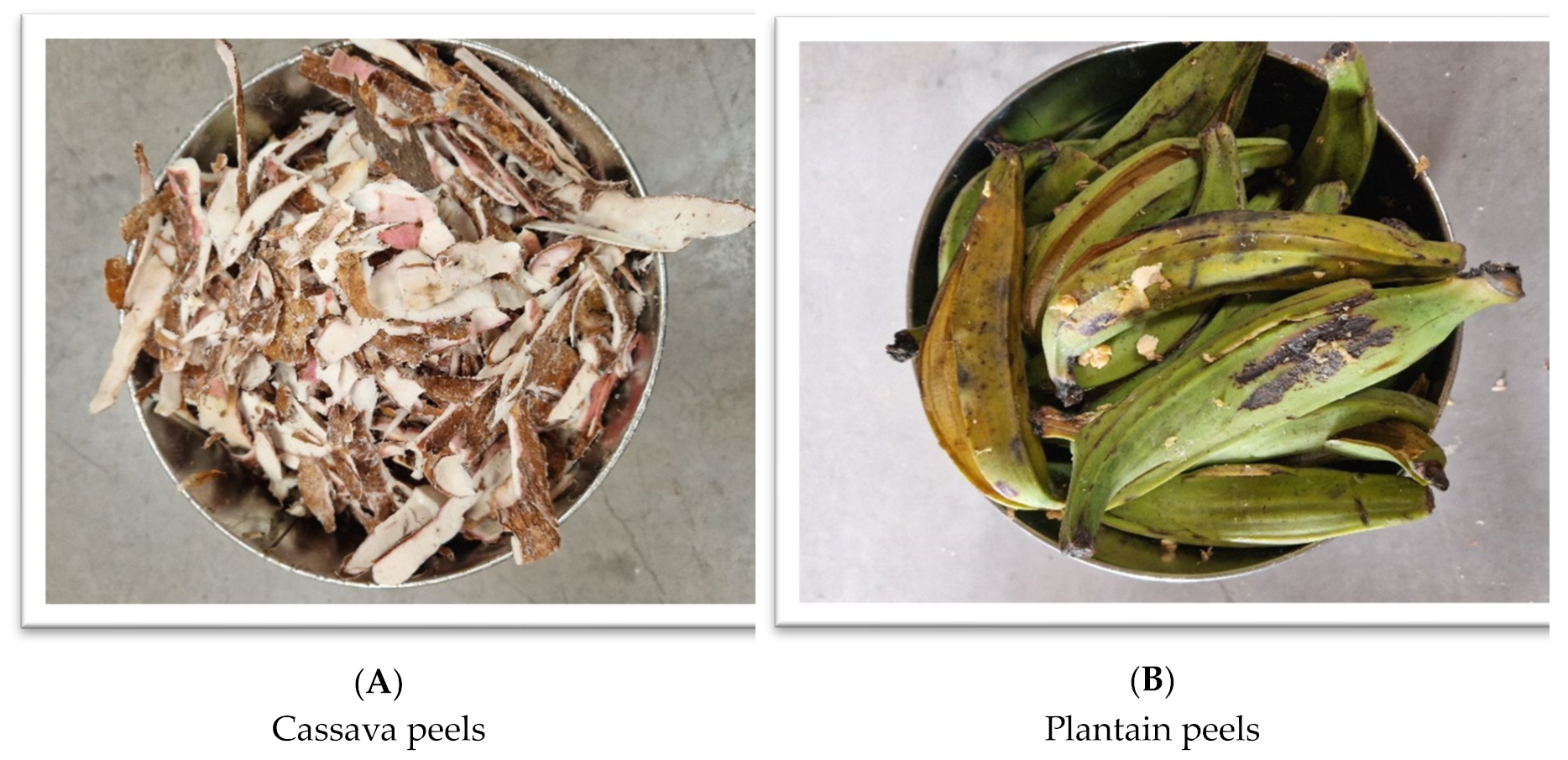
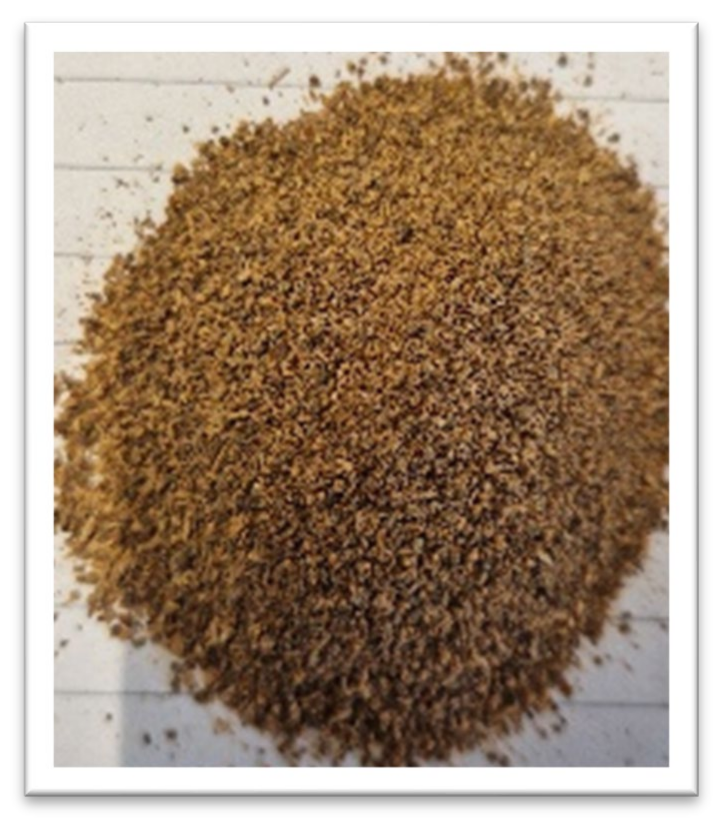
The main materials for the study are fibrous waste materials obtained by peeling fibrous fruits from Ghana. These fruits are tubers of yam and cassava and fingers of plantain, purchased from Afro and Asian shops in Baden-Württemberg of Germany. The fruits were peeled to mimic a typical peel generation in Ghana. They were collected and prepared for characterization and anaerobic digestion (AD) trial. Three different samples were then obtained as cassava peels (CP); yam peels (YP) and plantain peels (PP). YCPM was obtained by mixing different portions of CP, YP, and PP in a ratio determined using an experiential formulation: to mimic the naturally occurring natures of fibrous waste in Ghana. This resulted in fractions of 45 parts of CP, 30 parts of YP and 25 parts of PP (each expressed as by weight). The mixture was stirred thoroughly to obtain a practical homogeneity. The fresh samples were characterized while the dried portions of it were ground to obtain a better homogeneity and practical mixing in the case of AD with D-HBTs. The grinding was done with a sieve size of 1 mm. With a limited quantity of obtainable YP, it was not separately considered for AD.
In the instances of cassava peels and plantain peels, feedstock was initially dried and
Preprints 139653 i001
Plate 1: Plantain and cassava peels
Preprints 139653 i002
Plate 2: Picture of a Ground sample

2.3. Analytical methods

Characterisation and other analytical methods presented in this paper were done at the main laboratory of the University of Applied Forest Sciences, Rottenburg-Germany. The VDI 4630 and the relevant standards were followed in these determinations for most instances [41].

3. Characterisation of Inoculum and Samples

TS and oTS Determination

The total solid fractions were determined from moisture content measurements for both inoculum and all samples. The determinations were done in replicates, and according to VDI guidelines. In accordance with ISO 3310-1, the samples were milled with a sieve size of 1 mm to achieve homogeneity [41]. In the case of inoculum however, milling was not done since it already had a good uniformity. Measured samples (5 g for inoculum, 10 g for samples) were oven dried until mass constancy was achieved. The constant mass of dry masses obtained was expressed as a fraction of the masses of FM used. The oTS for both inoculum and samples was determined according to ISO 21656 and VDI 4630 standards. The dried materials were kept in a muffle furnace for 24 hours and set to operate with heating ramps up to 550 ℃, according to DIN EN ISO 18122: 2016-03 [3,43] . The ash obtained after this process was cooled down in a desiccator and weighed. The oTS was calculated as a fraction of the TS.

4. Elemental Analysis (EA)\

0.08 g of milled and dried YP, CP, PP and YCP samples were used per repetition for CHN determination in a LECO CHN828 (LECO Instrumente GMBH, Mönchengladbach Germany). The VDI 4630 was conformed in the determination of CHN [41,43]. The fraction of oxygen was calculated by difference in the total composition of all elements (100%) and the measured CHN organic fractions of ash content. However, the fraction of sulphur was ignored. For all samples, the EA was carried out in replicates of four (n=4).

5. Calorimetry & Ion Chromatography

Calorimetry was employed to determine the higher heating values (HHVs) of the study samples. The lower heating values (LHVs) on the other hand were determined using calculation according to literature, taking account the determined H content [45]. For each sample, 1 g was measured and prepared in accordance with ISO 14780. Tablets were produced from the measured samples in accordance with ISO 1834:03 [46]. A bomb calorimeter measured the gross calorific values by burning the tablets in oxygen atmosphere, according to DIN EN 14918 [3]. A fixed heat transfer amount between the bomb and water was ensured by the presence of a jacket. The gross calorific values were determined using IKA C6000 ISOPERIBOL (IKA-Werke GmbH & Co. KG, Staufen, Germany).
Chloride and sulphate anions were measured using double diluted water collected from the bomb jackets in calorimetry. Ion chromatography using a Metrohm 883 Basic IC Plus (Metrohm Deutschland GmbH & Co. KG, Filderstadt, Germany).

6. Theoretical Determination of Biomethane Potentials

Three different models were used in estimating the theoretical maximum biomethane potentials (TBMP) of the studied samples. The Buswell and Müller model estimates the TBMP using elemental compositions of the various samples (C, H, N, and O). The Boyle’s model estimates TBMP from the Buswell and Müller model with the introduction of sulphur; S and related products (C, H, N, O, and S). The modified Boyle’s model applies a correction factor; f (=80%), to the Boyle’s model. This correction is based on the assumption of perfect mixing, constant temperature, ideal bacteria conditions, input waste of C, H, O, N, S only, products of CH4, CO2, NH3, H2S only, no ash accumulation [12,47,48,49,50]. Equations 1-3 describe the different models employed. The biodegradability (BDI) of each sample was determined using equation 4 while equation 5 was used to estimate the percentage error in each instance [12,51].
C x H y O z + x y 4 z 2 H 2 O x 2 + y 8 z 4 CH 4 + x 2 y 8 + z 4 CO 2
1 Buswell and Müller equation
C a H b O c NdS e + a b 4 c 2 + 3 d 4 + e 2 H 2 O a 2 + b 8 c 4 3 d 8 e 4 CH 4 + a 2 b 8 + c 4 + 3 d 8 + e 4 CO 2 + dNH 3 + eH 2 S
2 Boyle’s equation
TBMP   ( ml   CH 4   g   oTS - 1 ) = 22.4   x   a 2 + b 8 c 4 3 d 8 e 4 12.017 a + 1.0079 b + 15.999 c + 14.0067 d + 32.065 e
3 Equation of TMBMP based on Boyle’s model [48]
BDI   ( % ) = M E a s u r e d   B M P T B M P × 100
4 Equation for estimating BDI [11]
%   error = M e a s u r e d   B M P T B M P M e a s u r e d   B M P
5 Equation for estimating percentage error [12]

7. Anaerobic Digestion Trials

The ground samples (Plate 2) gives an outlook of ground samples) were used to carry out a 39-day anaerobic digestion trial at the central laboratory of the Rottenburg University of Applied Forest Sciences (HFR). The D-HBT (Hohenheim Biogas Yield Test) was used in undertaking the AD trials: this involved the use of 100 ml digester systems, with 30 ml of inoculum in each instance. The structure and operation of the D-HBT is described in detail in literature [52]. As much as practicable (organic total solid ratio of sample to inoculum was not obeyed; trial was not terminated using the 0,5% criterion), the VDI 4630 [41] was followed in this experiment, at a temperature of 37±0.5. The digestion was carried out in triplicates, except in the case of YCPM, which was carried out in four replicates. Measured volumes of biogas were transformed to biogas yields in ml/g oTS and ml/ g TS. Due to small volumes involved, there was no correction of gas measurements. Table 1 summarises substrates combinations with inoculum for AD. In analysing the data however, inconsistent values identified led to the elimination of data of affected digesters. These inconsistent values identified appear to have resulted from leakage of substrates. Python was used to evaluate statistically describe the experimental results.

8. Results and Discussions

8.1. Characterisation

8.1.1. TS and oTS

Table 2 provides the TS and oTS of the inoculum and the studied samples.

8.1.2. Elemental composition

Table 3 provides the elemental compositions of the study samples.
Elemental compositions
Table 4 reports the AC and C/N ratios of the DSS and the studied samples.
AC and C/N ratios

8.1.3. Trace element concentration 8.1.4. Gross and net calorific values

Table 5 reports the gross and net calorific values of the studied samples while Figure 1 is a Van Krevelen diagram of the studied samples.

8.2. Theoretical Biomethane Potentials (TMBP) and Experimental Biogas yields

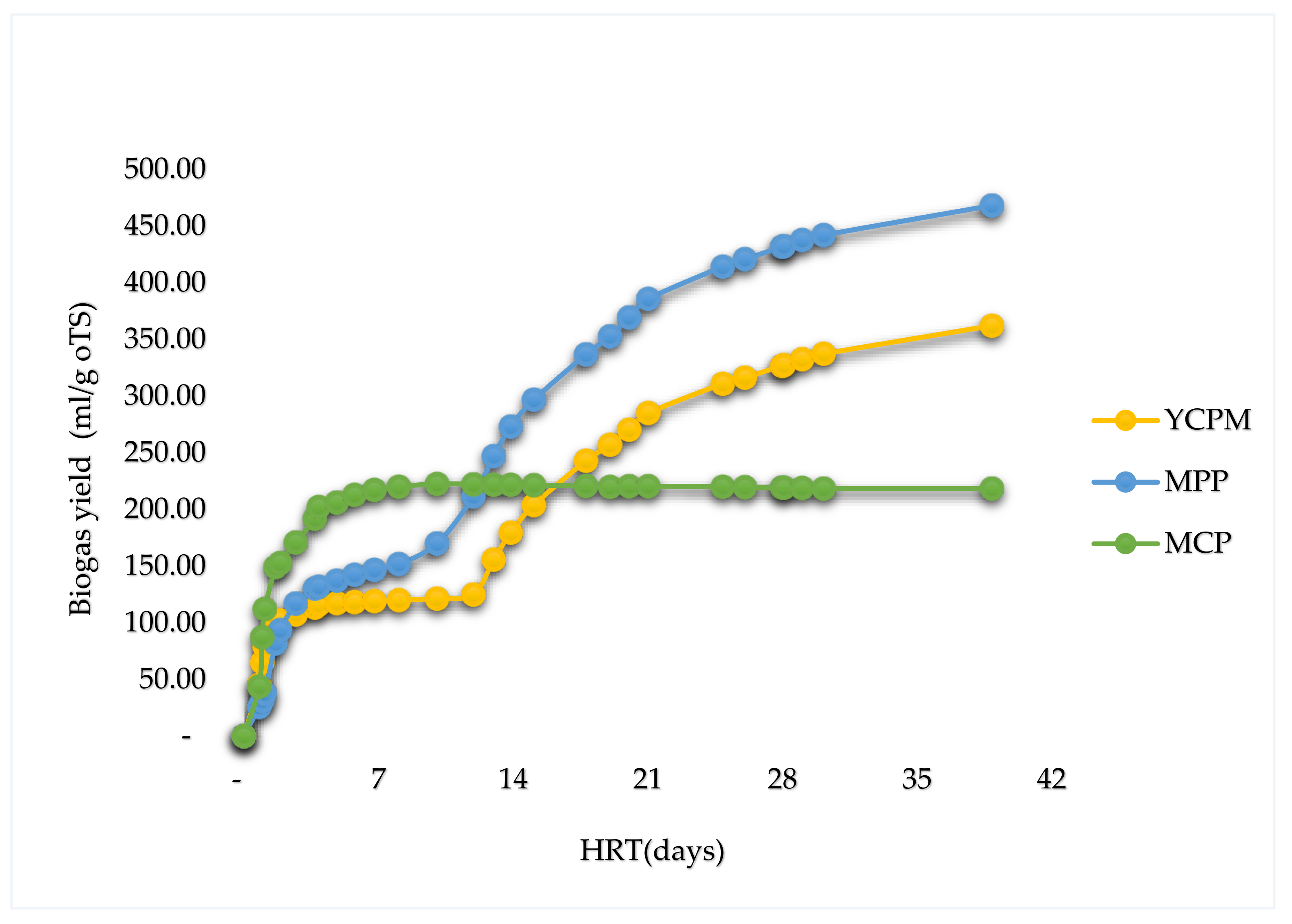
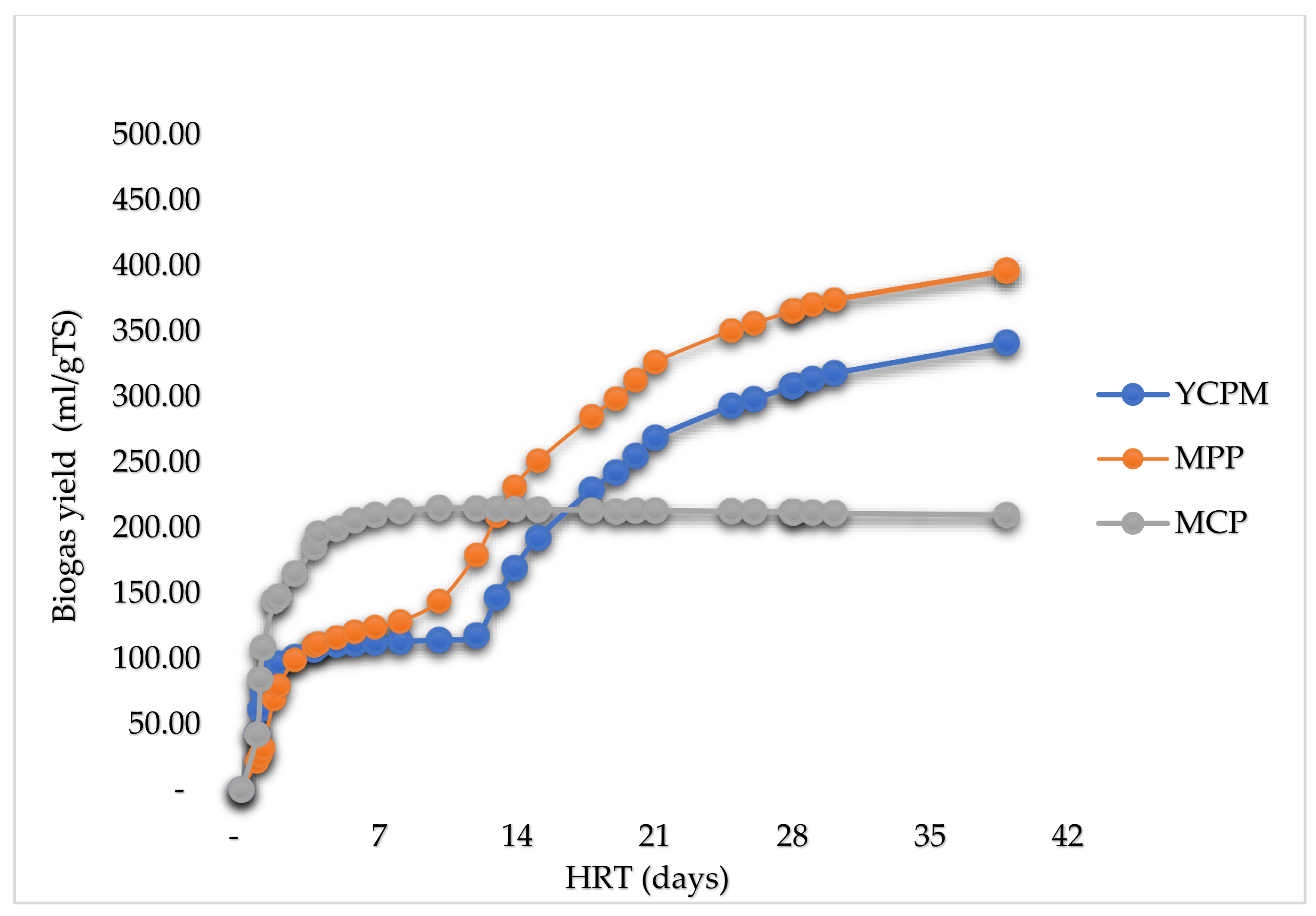
Biogas yields were determined experimentally using the Hohenheim biogas yield tests (H-DBTs) while three different models (Boyle’s, modified Boyle’s and Buswell and Müller models) were applied to estimate the theoretical maximum biogas potential (TMBP). Table 6 presents the theoretical Biomethane potentials of the studied samples, based on the Buswell and Müller, Boyle, and modified Boyle’s models. The biodegradability index of each sample and percentage errors are calculated, with reference to the different models. Figure 2 and Figure 3 show the biogas yields of studied samples in ml/g oTS and ml/g TS respectively. Table 6 summarises the biogas yields determined experimentally and the corresponding TMBP. The highest biogas yield is obtained by MPP (468±72 ml/g oTS), followed by YCPM (362±31 ml/g oTS), and the least by MCP (218±19 ml/g oTS). These correspond to 396, 341, and 209 in ml/g TS respectively. Applying a methane fraction of 55% ([53,54,55]) results in BMPs of 243, 185 and 120 ml/g oTS respectively. The TMBPs obtained from the modified Boyle’s model are 175, 167 and 163 ml/g oTS respectively.
For MPP and YCPM, there are evidences of first or early peaks, after which there were hikes in their biogas yields, with no normalisation before the trial was discontinued. In the case of MCP, the biogas generation profile has only one peak, which normalised along the generation process. At HRT of 8 days and a yield of 217 ml/g oTS the generation profile of MCP peaked. The remaining days resulted in 1 ml/g oTS extra yield, corresponding to 0.46%. For MPP, a first peak of 151 ml/g oTS coincided with an HRT of 8, with a subsequent continuous hike afterwards. While the second part of the profile did not peak, the difference in yield between the peak at day 8 and the final reading at day 39 is 317 ml/g oTS, corresponding to 68%. At HRT of 3 days, a peak of 117 ml/g oTS is produced in the case of YCPM. This steadily increases until after an HRT of 12 days, where there is a continuous hike until the last day of the trial. Like the MPP, the new profile did not normalise up until the end of the digestion period. The approximate difference between the first peak and the digestion termination is 245 ml/g oTS, corresponding to 68%.
In the case of MCP, which is cassava peels, the one-peak generation pattern and the relatively early high biogas potential can be explained by the high amounts of starch, which is readily available for digestion. MPP, which is plantain peels, contain both starch and fibre. The starch component could have resulted in an early peaking, while a lag occurred, to result in a later peak due to the digestion of fibre [53]. In the case of YCPM, it is naturally expected to have two peaks as in the case of the MPP because of the presence of plantain peels. However, the presence of other components, cassava and yam peels (which are less fibrous) limited the peak levels. The amount of cassava and yam however, will probably serve as the rate limiting steps. Important to mention is that in each case, samples were ground, an exercise that increases the efficiency and effectiveness of anaerobic digestion. It presupposes that the use of similar feedstock without grinding may produce differing trends: rates, yields and peaks.
It can be deduced that plantain peels would normally require at least 30 days for its fibre content to decompose. While it is practically not applicable to finely ground such samples, the use of mechanical separation will be a reasonable approach as the starch fraction could be readily available after the pressing. A more resourceful approach as opposed to the use of plantain peels in their originally generated form will be to include proper internal mixing or milling.
For all samples, the difference in TBMP w.r.t Boyle and Buswell models are slightly different, of course, due to the consideration of sulfur in the case of the Boyle’s model. Whereas the TBMPs for the studied samples do not differ much, MCP had the highest, followed by YCPM and finally, MPP. This is in defiance of the trend of experimental generation. Whereas the TBMPs do not consider the biodegradability of the materials, the experimental value is strongly dependent on the biodegradable fraction [12,56]. This could have resulted in the reverse trend as plantains peels have more fibre content than cassava and yam peels; which rather constitute a more biodegradable component, starch. For MCP and YCPM, the measured BMPs are lower than the TMBP obtained using the Boyle’s model, confirming the state of the art [12]. However, in the case of MPP, the measured BMP is higher than the TMBP obtained using the Boyle’s model. This is probably because the actual methane content is lower than 55%, as adopted for estimations in this study. Again, experimental errors could be the reason for this negative observation [12,56].
The biodegradable index (BDI) of MCP is about 55%, in the instances of both models, with a percentage error of 0.82 w.r.t Boyle’s model and 0.45 w.r.t Buswell and Müller’s model. This indicates that cassava peels has a 55% biodegradable fraction (of course, with an assumption that the BMP is only 55% of the total biogas produced). Cassava peels are generally high-level starchy materials; hence, the BDI of cassava peels is expected to be higher. Tielkes (2017) obtained a 10% lignin content, which confirms the hypothesis drawn in this analysis [57]. The material equally reports a BMP of 225 ml/g oTS for cassava root peels, a figure which is about a double of that obtained in this study. The difference could have resulted from a more efficient stirring and reduced errors in experimental implementation [57]. The Boyle’s modified model, which corrects the TBMP derived from elemental composition by applying a factor of 80%, achieved a TBMP of 174.76 ml/g oTS. Consequently, extracting energy from cassava peels as a waste materials using anaerobic digestion is a valuable potential resource. The use of theoretical models especially for the case of planning purposes promises to be effective, having in mind that there is always an overestimation, which needs to be resolved with a correction factor [12,56].
The BDI of YCPM w.r.t Boyle’s model is 88.72 % and that w.r.t Buswell & Müller’s model is 88.08%. The TBMPs obtained are far higher than what (117.39 CH4 ml/g oTS) Yasim (2023) [12] obtained for uncooked food waste, which the authors suggest that experimental errors could have resulted in same. This observation in the first place is validated by the consistency and the low error margins of 0.13 and 0.12. For MPP, BDIs (126.10 % w.r.t Boyle’s model and 125.17 % w.r.t Buswell and Müller’s model) more than 100% obtained are similar to what (200.59 % with an error of 0.50) Yasim (2023) obtained. This can be related to experimental errors, especially as the error margins are not too high (0.21 w.r.t Boyle’s model and 0.25 w.r.t Buswell and Müller’s model).
Wobiwo (2017) reports a BMP range of 208-303 ml/g oTS for green peels. This had a methane content of 56-60% [58]. The BMP of plantain peels obtained in this study conforms to this. The BMP obtained for cassava is far lower than 280 ml/g oTS obtained by Jekayinka. (2013) .This was 42% of the total biogas potential for 30 days under the same operating temperature [59]. Longjan et al. (2020) obtained biogas yields of 437 ml/g oTS for cassava peels, and 470 ml/g oTS for plantain peels under identical generation conditions [53]. In the case of plantain peels, the result is identical to that obtained in this study while it is not identical in the case of cassava peels. This could be resulting from experimental and measuring errors in relation to the use of the D-HBTs, which are more prone to errors, due to small volumes involved. Ununiformed mixing could have contributed to this difference as that stirring was only done manually (by hand rotation after daily measurements): within limited radius. For the study by Longjan et al. (2020), the biodegradabilities achieved are 59.3% for cassava peels (which is similar to the biodegradability of this study) and 73.4% for plantain peels.

9. Conclusions

Biogas yields of cassava peels, plantain peels, and a mixture of cassava, plantain and yam peels have been experimentally measured using the Hohenheim biogas yield tests (D-HBTs) while three different elemental composition-based theoretical models have been applied to estimate the theoretical maximum biogas potential (TMBP) of these bio-waste materials.
The study finds that theoretical modeling (using Boyle’s and Müller and Buswell’s models) based on chemical composition of fibrous materials, are good tools for biogas evaluation despite having overestimation tendencies. These however could be corrected for instance by applying factors that take into account, particularly, biodegradability indices.
Plantain peels had the highest experimental biogas yield of 468 ml/g oTS (with biodegradability of 126%), while cassava peels had the lowest biogas yield of 218 ml/g oTS (with biodegradability of 88%). Biogas yield of fibrous peels mixture (yam, cassava, plantain peels) produced a reasonable average yield of the two studied individual materials; 362 ml/g oTS (with biodegradability of 55 %). While the study result is sufficient to say that generating biogas from fibrous waste materials in its mixture form is a valuable approach, it is not sufficient to conclude that the use of these waste materials in its naturally occurring mixture form; technically for co-digestion has an added advantage over their individual potentials. However, future studies could explore this possibility with different fractions of the mixture with view to optimising generation. Supposing this turns out to be positive, the practicality will be to actually cost-effective ways of obtaining feedstock, which conform to that state-of-the-art.
It is well noting that plantain peels would normally require an HRT of 30 days for its fibre content to decompose. While it is practically not applicable to finely ground such samples, the use of mechanical separation will be a reasonable approach as the starch fraction could be readily available after the pressing. A more resourceful approach as opposed to the use of plantain peels in their originally generated form will be to include proper internal mixing or milling.

Author Contributions

Conceptualization, J.Y. and F.E.; methodology, J.Y, F.E and R.K.; software, J.Y.; validation, S.P, R.M and J.P.; formal analysis, J.Y.; investigation, J.Y. and F.E.; resources, S.P., J.P. and F.E.; data curation, J.Y.; writing—original draft preparation, J.Y.; writing—review and editing, J.Y., F.E., R.M.; S.P.; F.A. N.A; visualization, J.Y.; supervision, S.P, N.A, J.P. and F.A.; project administration, S.P.; funding acquisition, S.P. All authors have read and agreed to the published version of the manuscript.

Funding

This research was carried out in the context of ‘Level-Up CLIENT II joint project Climate Protection: “Upgrading local markets through the use of biogenic residues”: Funded by the German Federal Ministry of Education and Research (FKZ: 01LZ1905A)’ and support from the Regional Centre for energy and Environmental Sustainability (RCEES) as well as the DAAD contributions to the author’s stay in Rottenburg.

Data Availability Statement

The data relevant to this research is a part of this research. Data that are more detailed will be provided on request.

Acknowledgments

We would like to thank the laboratory staff at the Rottenburg University of Applied Sciences for their support.

Conflicts of Interest

The authors declare no conflicts of interest.

References

  1. Mignogna, D.; Ceci, P.; Cafaro, C.; Corazzi, G.; Avino, P. Production of Biogas and Biomethane as Renewable Energy Sources: A Review. Applied Sciences 2023, 13, 10219. [Google Scholar] [CrossRef]
  2. Yang, R.; Wang, F.; Rao, Z.; Shen, C.; Li, D. Advancing Sustainable Energy Solutions: Innovations in Clean Energy Applications and Conventional Energy Efficiency Upgrade. Energies 2024, 17, 2441. [Google Scholar] [CrossRef]
  3. Paczkowski, S.; Sarquah, K.; Yankyera, J.; Sarfo Agyemang Derkyi, N.; Empl, F.; Jaeger, D.; Pelz, S. Hydrothermal treatment (HTT) improves the combustion properties of regional biomass waste to face the increasing sustainable energy demand in Africa. Fuel 2023, 351, 128928. [Google Scholar] [CrossRef]
  4. Djimtoingar, S.S.; Derkyi, N.S.A.; Kuranchie, F.A.; Yankyera, J.K. A review of response surface methodology for biogas process optimization. Cogent Engineering 2022, 9. [Google Scholar] [CrossRef]
  5. Deepanraj. Biogas generation through anaerobic digestion process – an overview. Res. J. Chem. Environ. 2014, 18, 80.
  6. Emebu, S.; Pecha, J.; Janáčová, D. Review on anaerobic digestion models: Model classification & elaboration of process phenomena. Renewable and Sustainable Energy Reviews 2022, 160, 112288. [Google Scholar] [CrossRef]
  7. Feiz, R.; Ammenberg, J. Assessment of feedstocks for biogas production, part I—A multi-criteria approach. Resources, Conservation and Recycling 2017, 122, 373–387. [Google Scholar] [CrossRef]
  8. Moriarty, P.; Honnery, D. What is the global potential for renewable energy? Renewable and Sustainable Energy Reviews 2012, 16, 244–252. [Google Scholar] [CrossRef]
  9. Sárvári Horváth, I.; Tabatabaei, M.; Karimi, K.; Kumar, R. Recent updates on biogas production - a review. BRJ 2016, 3, 394–402. [Google Scholar] [CrossRef]
  10. Sawyerr, N.; Trois, C.; Workneh, T.; Okudoh, V.I. An Overview of Biogas Production: Fundamentals, Applications and Future Research; EJ EconJournals, 2019. Available online: http://digitalknowledge.cput.ac.za/bitstream/11189/6944/1/Sawyerr_N_Trois_C_Workneh_T_Okudoh_V_AppSci_2019.pdf.
  11. Singh, A.; Prajapati, P.; Vyas, S.; Gaur, V.K.; Sindhu, R.; Binod, P.; Kumar, V.; Singhania, R.R.; Awasthi, M.K.; Zhang, Z.; et al. A Comprehensive Review of Feedstocks as Sustainable Substrates for Next-Generation Biofuels. Bioenerg. Res. 2023, 16, 105–122. [Google Scholar] [CrossRef]
  12. Yasim, Nurzulaifa Shaheera Erne Mohd; Buyong, F. Comparative of experimental and theoretical biochemical methane potential generated by municipal solid waste. Environmental Advances 2023, 11, 100345. [CrossRef]
  13. Angelidaki, I.; Alves, M.; Bolzonella, D.; Borzacconi, L.; Campos, J.L.; Guwy, A.J.; Kalyuzhnyi, S.; Jenicek, P.; van Lier, J.B. Defining the biomethane potential (BMP) of solid organic wastes and energy crops: a proposed protocol for batch assays. Water Sci. Technol. 2009, 59, 927–934. [Google Scholar] [CrossRef] [PubMed]
  14. Jingura, R.M.; Kamusoko, R. Methods for determination of biomethane potential of feedstocks: a review. Biofuel Res. J. 2017, 4, 573–586. [Google Scholar] [CrossRef]
  15. The future of anaerobic digestion and biogas utilization.
  16. Anaerobic Digestion - an overview | ScienceDirect Topics. Available online: https://www.sciencedirect.com/topics/earth-and-planetary-sciences/anaerobic-digestion (accessed on 8 July 2024).
  17. Yan, J.; Salman, C.A. Chapter 2 - Waste-to-energy (WtE): Current technologies and their future potential. In WASTE BIOREFINERIES: Advanced design concepts for integrated waste to energy processes; YAN, J.S.C.A., Ed.; ELSEVIER - HEALTH SCIENCE: S.l., 2022; pp 25–61. ISBN 978-0-323-91761-2.
  18. Uddin, M.M.; Wright, M.M. Anaerobic digestion fundamentals, challenges, and technological advances. Physical Sciences Reviews 2023, 8, 2819–2837. [Google Scholar] [CrossRef]
  19. Meegoda, J.N.; Li, B.; Patel, K.; Wang, L.B. A Review of the Processes, Parameters, and Optimization of Anaerobic Digestion. International Journal of Environmental Research and Public Health 2018, 15. [Google Scholar] [CrossRef]
  20. Nikolausz, M.; Kretzschmar, J. Anaerobic Digestion in the 21st Century. Bioengineering (Basel) 2020, 7. [Google Scholar] [CrossRef]
  21. El Asri, O. Handbook of Biodegradable Materials; Springer International Publishing, 2022. Available online: https://link.springer.com/content/pdf/10.1007/978-3-030-83783-9_4-1.pdf.
  22. El Asri, O. Handbook of Biodegradable Materials; Springer International Publishing, 2022. Available online: https://link.springer.com/content/pdf/10.1007/978-3-030-83783-9_4-1.pdf.
  23. Uddin, M.M.; Wright, M.M. Anaerobic digestion fundamentals, challenges, and technological advances. Physical Sciences Reviews 2023, 8, 2819–2837. [Google Scholar] [CrossRef]
  24. Balać, M.; Janković, B.; Manić, N. Theoretical Assessment of Agro-Waste for Biogas Production Based on Novel Methodology Related to Biochemical Potential. Processes 2024, 12, 2440. [Google Scholar] [CrossRef]
  25. Teghammar, A. Biogas production from lignocelluloses: Pretreatment, substrate characterization, co-digestion, and economic evaluation. Zugl.: Göteborg, Univ., Diss., 2013; Chalmers Univ. of Technology: Göteborg, 2013. ISBN 9789173858465.
  26. Kwietniewska, E.; Tys, J. Process characteristics, inhibition factors and methane yields of anaerobic digestion process, with particular focus on microalgal biomass fermentation. Renewable and Sustainable Energy Reviews 2014, 34, 491–500. [Google Scholar] [CrossRef]
  27. Náthia-Neves, G.; Berni, M.; Dragone, G.; Mussatto, S.I.; Forster-Carneiro, T. Anaerobic digestion process: technological aspects and recent developments. Int. J. Environ. Sci. Technol. 2018, 15, 2033–2046. [Google Scholar] [CrossRef]
  28. Ammenberg, J.; Feiz, R. Assessment of feedstocks for biogas production, part II—Results for strategic decision making. Resources, Conservation and Recycling 2017, 122, 388–404. [Google Scholar] [CrossRef]
  29. Mourshed, M.; Kamal, M.; Masuk, N.I.; Chowdhury, S.A.; Masud, M.H. Anaerobic Digestion Process of Biomass; Elsevier, 2023.
  30. Liebetrau, J.; Sträuber, H.; Kretzschmar, J.; Denysenko, V.; Nelles, M. Anaerobic Digestion. Adv. Biochem. Eng. Biotechnol. 2019, 166, 281–299. [Google Scholar] [CrossRef] [PubMed]
  31. Achi, C.G.; Hassanein, A.; Lansing, S. Enhanced Biogas Production of Cassava Wastewater Using Zeolite and Biochar Additives and Manure Co-Digestion. Energies 2020, 13, 491. [Google Scholar] [CrossRef]
  32. Achi, C.G.; Hassanein, A.; Lansing, S. Enhanced Biogas Production of Cassava Wastewater Using Zeolite and Biochar Additives and Manure Co-Digestion. Energies 2020, 13, 491. [Google Scholar] [CrossRef]
  33. Benish, P.M.R.; Mozhiarasi, V.; Nagabalaji, V.; Weichgrebe, D.; Srinivasan, S.V. Optimization of process parameters for enhanced methane production from banana peduncle by thermal pretreatment. Biomass Conv. Bioref. 2023, 13, 15251–15265. [Google Scholar] [CrossRef]
  34. Kasinath, A.; Fudala-Ksiazek, S.; Szopinska, M.; Bylinski, H.; Artichowicz, W.; Remiszewska-Skwarek, A.; Luczkiewicz, A. Biomass in biogas production: Pretreatment and codigestion. Renewable and Sustainable Energy Reviews 2021, 150, 111509. [Google Scholar] [CrossRef]
  35. Ibrahim, T.H.; Oyedele, J.O.; Betiku, E.; Solomon, B.O.; Dahunsi, S.O.; Gidado, R.S. Biomethane potential and physicochemical characterization of cassava vinasse from ethanol distillery. Current Research in Green and Sustainable Chemistry 2022, 5, 100338. [Google Scholar] [CrossRef]
  36. Makinde, O.; Odokuma, L. Comparative Study of the Biogas Potential of Plantain and Yam Peels. BJAST 2015, 9, 354–359. [Google Scholar] [CrossRef]
  37. Carlos. Lucas_2014.
  38. Future agriculture socio-ecological transitions and bio-cultural shifts: Tropentag 2017, International Research on Food Security, Natural Resource Management, and Rural Development book of abstracts; Tielkes, E., Ed.; Cuvillier Verlag: Göttingen, 2017. ISBN 9783736996120.
  39. OLOGUNDE, C.A.; OLADIPO, O.O. Biogas production using poultry wastes, yam and plantain peels. GSC Biol. and Pharm. Sci. 2022, 19, 288–296. [Google Scholar] [CrossRef]
  40. Sahi Louh, Theophile Roch Ori, Kamenan Blaise Koua, and Prosper Gbaha. Production of biogas with household peelings in households and estimation of energy potential in Côte d’Ivoire 2024, 42, 338–351.
  41. VDI 4630. Fermentation of Organic Materials—Characterisation of the Substrate, Sampling, Collection of Material Data, Fermentation Tests. 2016. Available online: https://www.scirp.org/(S(351jmbntv-nsjt1aadkposzje))/reference/referencespapers.aspx?referenceid=2950958 (accessed on 28 March 2023).
  42. Sailer, G.; Eichermüller, J.; Poetsch, J.; Paczkowski, S.; Pelz, S.; Oechsner, H.; Müller, J. Optimizing anaerobic digestion of organic fraction of municipal solid waste (OFMSW) by using biomass ashes as additives. Waste Manag. 2020, 109, 136–148. [Google Scholar] [CrossRef]
  43. Sailer, G.; Empl, F.; Kuptz, D.; Silberhorn, M.; Ludewig, D.; Lesche, S.; Pelz, S.; Müller, J. Characteristics and Anaerobic Co-Digestion of Press Water from Wood Fuel Preparation and Digested Sewage Sludge. Fermentation 2022, 8, 37. [Google Scholar] [CrossRef]
  44. 2008.
  45. Hensgen, F.; Bühle, L.; Donnison, I.; Heinsoo, K.; Wachendorf, M. Energetic conversion of European semi-natural grassland silages through the integrated generation of solid fuel and biogas from biomass: energy yields and the fate of organic compounds. Bioresource Technology 2014, 154, 192–200. [Google Scholar] [CrossRef] [PubMed]
  46. Shehab, M.; Stratulat, C.; Ozcan, K.; Boztepe, A.; Isleyen, A.; Zondervan, E.; Moshammer, K. A Comprehensive Analysis of the Risks Associated with the Determination of Biofuels’ Calorific Value by Bomb Calorimetry. Energies 2022, 15, 2771. [Google Scholar] [CrossRef]
  47. Balać, M.; Janković, B.; Manić, N. Theoretical Assessment of Agro-Waste for Biogas Production Based on Novel Methodology Related to Biochemical Potential. Processes 2024, 12, 2440. [Google Scholar] [CrossRef]
  48. Achinas, S.; Euverink, G.J.W. Theoretical analysis of biogas potential prediction from agricultural waste. Resource-Efficient Technologies 2016, 2, 143–147. [Google Scholar] [CrossRef]
  49. Rodrigues, R.P.; Rodrigues, D.P.; Klepacz-Smolka, A.; Martins, R.C.; Quina, M.J. Comparative analysis of methods and models for predicting biochemical methane potential of various organic substrates. Sci. Total Environ. 2019, 649, 1599–1608. [Google Scholar] [CrossRef]
  50. Pererva, Y.; Miller, C.D.; Sims, R.C. Existing Empirical Kinetic Models in Biochemical Methane Potential (BMP) Testing, Their Selection and Numerical Solution. Water 2020, 12, 1831. [Google Scholar] [CrossRef]
  51. Анжелика. Evaluationofbiogasproductionpotential-1.
  52. Hülsemann, B.; Zhou, L.; Merkle, W.; Hassa, J.; Müller, J.; Oechsner, H. Biomethane Potential Test: Influence of Inoculum and the Digestion System. Applied Sciences 2020, 10, 2589. [Google Scholar] [CrossRef]
  53. Longjan, G.G.; Dehouche, Z. Biogas production potential of co-digested food waste and water hyacinth common to the Niger Delta. Biofuels 2020, 11, 277–287. [Google Scholar] [CrossRef]
  54. Kouame, K.K.R.; Abolle, A.; Kouakou, A.R.; Gbangbo, K.R.; Ehouman, A.D.; Yao, B. Biogas Production from Plantain and Yam Peels: Modelling using Response Surface Methodology. 1 2023, 11, 105–119. [CrossRef]
  55. YOUNSSI, M. IJIAS-23-289-08.
  56. Zhou, Y.; Huang, K.; Jiao, X.; Stanisavljevic, N.; Li, L.; Vujovic, S.; Peng, X.; Wang, X. Anaerobic co-digestion of organic fractions of municipal solid waste: Synergy study of methane production and microbial community. Biomass and Bioenergy 2021, 151, 106137. [Google Scholar] [CrossRef]
  57. Tropentag 2017: Future Agriculture: Socio-ecological transitions and bio-cultural shifts; Tielkes, E., Ed., 1st ed.; Cuvillier Verlag: Göttingen, 2017. ISBN 9783736986121.
  58. Wobiwo, F.A.; Emaga, T.H.; Fokou, E.; Boda, M.; Gillet, S.; Deleu, M.; Richel, A.; Gerin, P.A. Comparative biochemical methane potential of some varieties of residual banana biomass and renewable energy potential. Biomass Conv. Bioref. 2017, 7, 167–177. [Google Scholar] [CrossRef]
  59. Jekayinfa, S.O.; Scholz, V. Laboratory Scale Preparation of Biogas from Cassava Tubers, Cassava Peels, and Palm Kernel Oil Residues. Energy Sources, Part A: Recovery, Utilization, and Environmental Effects 2013, 35, 2022–2032. [Google Scholar] [CrossRef]
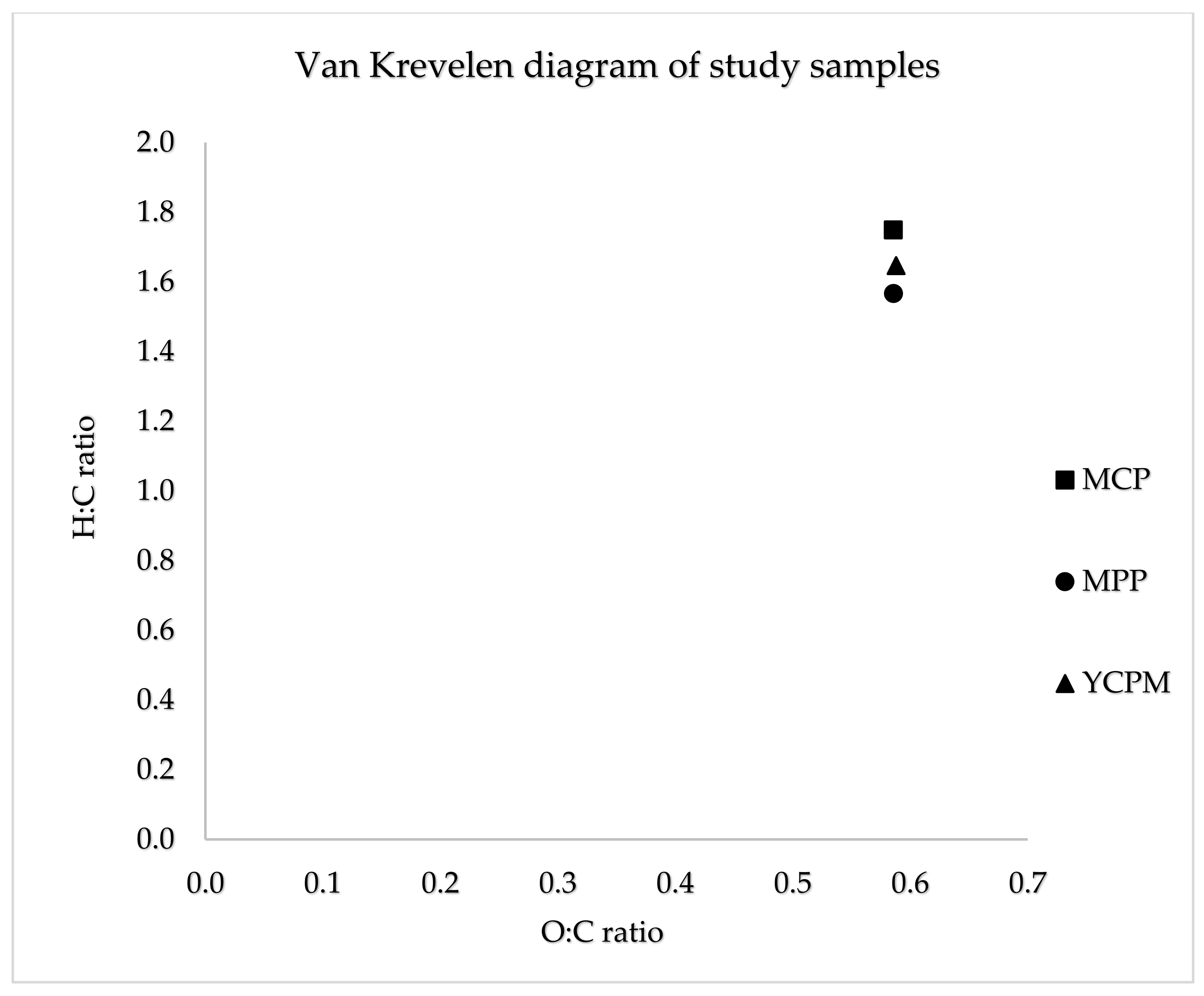
Figure 1. Van krevelen diagram of study samples.
Preprints 139653 g001
Figure 2. Biogas yield for substrates in ml/g oTS.
Preprints 139653 g002
Figure 3. Biogas yield for substrates in ml/g TS.
Preprints 139653 g003
Table 1. Biogas trial set-up combinations.
Substrate Volume of inoculum (ml FM) Mass of sample (g TS) pH
DSS 30.0 -
DSS 30.0 -
DSS 30.0 -
DSS + YCPM 29.5 2.00 7.50
DSS + YCPM 28.5 2.00 7.45
DSS + YCPM 29.5 1.99 7.44
DSS + YCPM 29.5 2.00 -
DSS + MPP 28.0 1.99 7.44
DSS + MPP 29.0 1.99 7.46
DSS + MPP 29.5 2.00 7.46
DSS + MCP 31.5 2.01 7.62
DSS + MCP 31.5 2.01 7.66
DSS + MCP 30.0 2.00 7.63
Table 2. TS and oTS of inoculum and studied samples.
Sample TS [%] oTS [% TS]
DSS 3.75±0.000 47.19±0.00
YCP 25.37±0.01 94.27±0.00
CP 31±0.01 97±0.00
PP 10±0.00 85±0.02
Table 3. Elemental composition of studied samples.
Sample C [% TS] H [% TS] N [% TS] O [% TS] S [% TS] Cl [% TS]
YCP 48.10±0.16 6.60±0.03 1.15±0.03 44.10 ± ±
CP 49.73±0.23 7.25±0.04 0.70±0.02 38.83 0.50±0.03 0.54±0.16
PP 43.45± 0.15 5.67±0.02 1.53±0.01 33.94 0.40± 0.04 0.14±0.01
Table 4. AC and C/N ratios.
Sample AC [% TS] C:N Ratio
DSS 52.81 n.d.
YCP 5.73 41.92
CP 3.00 83.38
PP 15.00 33.08
n.d: not determined .
Table 5. Gross and net calorific values of substrates.
Sample HHV (kJ/g TS) HHV (kWh/kg TS) LHV (kJ/kg TS) LHV (kWh/kg TS)
YPCM 19.77±71.01 5.49±71.01 18.41±71.01 5.11±71.01
MCP 22.02±47.56 6.12±47.56 20.53±47.56 5.70±47.56
MPP 19.70±41.96 5.47±41.96 18.53±41.96 5.15±41.96
Table 6. Summary of BMP determined theoretically and experimentally.
Substrate Biogas Yield (ml/g oTS) Biogas Yield (ml/g TS) BMP (55%) TBMP w.r.t Boyle model (ml/g oTS) BDI (w.r.t Boyle) (%) % error (w.r.t Boyle) TBMP w.r.t Modified Boyle (ml/g oTS) Buswell & Müller (ml/g oTS) BDI (w.r.t Buswell & Müller) (%) % error (w.r.t Buswell & Müller)
YCPM 337.17±30.50 317.85±30.50 185.4435±30.50 209.03 88.72 - 0.13 167.22 210.55 88.08 - 0.12
MPP 467.82±71.65 374.03±71.65 257.30±71.65 204.04 126.10 0.21 163.23 205.56 125.17 0.25
MCP 218.30±18.75 210.93±18.75 120.07±18.75 218.45 54.96 - 0.82 174.76 220.14 54.54 - 0.45
w.r.t: with respect to BDI: Biodegradability index TBMP: Theoretical Biomethane potential.
Disclaimer/Publisher’s Note: The statements, opinions and data contained in all publications are solely those of the individual author(s) and contributor(s) and not of MDPI and/or the editor(s). MDPI and/or the editor(s) disclaim responsibility for any injury to people or property resulting from any ideas, methods, instructions or products referred to in the content.
Copyright: This open access article is published under a Creative Commons CC BY 4.0 license, which permit the free download, distribution, and reuse, provided that the author and preprint are cited in any reuse.
Prerpints.org logo

Preprints.org is a free preprint server supported by MDPI in Basel, Switzerland.

Subscribe

Disclaimer

Terms of Use

Privacy Policy

Privacy Settings

© 2025 MDPI (Basel, Switzerland) unless otherwise stated