

Submitted:
11 November 2024
Posted:
13 November 2024
You are already at the latest version
Abstract
This study integrates STEM principles to explore the impact of fluoride toothpaste and acidic beverages on enamel-like structures using chicken eggshells as a model. Leveraging X-ray diffraction (XRD), the research examines the crystallographic changes in untreated, fluoride-treated, and Coca-Cola-exposed eggshells, representing key scientific and mathematical applications. Results show that fluoride forms a protective calcium fluoride layer, while acids erode this defense, mirroring dental decay processes. The experiment highlights the technological role of XRD in material analysis and demonstrates an engineering approach to modeling real-world biological effects. Additionally, the study promotes STEM education by encouraging hands-on experimentation in classrooms.
Keywords:
STEM education
; Bragg experiment
; X-ray
; diffraction
; XRD pattern
1. Introduction
“ABCD in the morning brush your teeth … .” I assume, most of the readers likely associate the lyrics of this song with childhood. Nevertheless, according to The World Health Organization’s 2022 estimate, 2 billion people suffer from tooth decay of permanent teeth and 514 million children suffer from tooth decay of primary teeth [1]. Genetic predispositions and age, but also inadequate diet and improper oral hygiene, are among the causes of tooth decay. Scientists agree that the primary culprit for tooth decay is simple sugars, which, under favourable conditions quickly transform into acids that have a destructive effect on enamel and other parts of the teeth (see the Figure 1). Research has shown that enamel fully matures only around the age of 25, which is why it’s so important for children to take care of their oral hygiene from the first tooth [2].
The aim of the article is to understand qualitatively and quantitatively, the compounds that deposit on enamel. In the experiment, chicken eggshells will serve as tooth substitute. The eggshells are frequently used as a model for studying processes that occur in teeth, especially in experiments focused on the impact of acids and sugars on mineral structures. This is because of the similarities in the mineral composition of both structures and their responses to acid exposure. Tooth enamel is primarily composed of hydroxyapatite, a form of calcium phosphate, while eggshells are mainly made up of calcium carbonate. Both, teeth and eggshells, consist of multiple layers and contain proteins that reinforce their structure. In teeth, proteins like amelogenins assist in enamel mineralization, while in eggshells, proteins such as ovomucins contribute to the stability of their mineral framework. These structures are formed through a mineralization process, where proteins and minerals work in tandem to create a robust protective layer. The enamel and eggshells are vulnerable to demineralization in acidic environments – resulting in tooth decay for teeth and a weakening of the eggshell’s structure [3].
2. Materials and Methods
Due to the structure of the tooth and the eggshells, the X-ray diffraction (XRD) on a powder sample will be used as a research technique. This technique (currently being the primary research method in condensed matter spectroscopy) enables a very precise understanding of the crystal structure of the sample under investigation (both crystalline and extent amorphous).
2.1. Physical Background of Experimental Method
Max von Laue discovered in 1912 that crystalline substances act as three-dimensional diffraction gratings for X-ray wavelengths similar to the spacing of planes in a crystal lattice [8]. Following von Laue’s research, Lawrence and Henry (father and son) Bragg developed a law, which connects the scattering with evenly spaced planes within a crystal (which is known in the literature as the Bragg’s law or the Bragg formulation of X-ray diffraction). X-ray diffraction is based on constructive interference of monochromatic X-rays on a crystalline sample. These rays are generated by a cathode ray tube. The monochromatic radiation is collimated and directed toward the sample (see the Figure 2).
The interaction of the incident rays with the sample produces constructive interference when conditions satisfy Bragg’s Law (see the Figure 3):
The wavelength of electromagnetic radiation λ is related to the diffraction angle θ and the lattice spacing d in a crystalline sample and the n is the diffraction order. This experimental method uses the powder XRD, where the sample is crushed an pulverized. By scanning the sample through a range of 2θ angles, all diffraction directions of the lattice should be attained due to the random orientation of the sample. Because each material has a set of unique d-spacings, conversion of the diffraction peaks to d-spacings allows identification of the mineral [9]. Multiple peaks at specific angles indicate a single crystal structure. If more than one crystal structure is present then separate peaks will appear for each crystal structure that there may be overlap.
2.2. Experiment
The goal is to simulate tooth decay using eggshells and demonstrate how XRD can be employed to compare the crystal structure before and after treatment. Let’s assume that one happy hen lay eggs with shells that are structurally identical and sufficiently homogeneous for our needs. The samples of a powder eggshells for the research were prepared as follows:
- The half of the shell, of the first egg, served as the reference pattern. After removing the egg white and yolk, along with the membrane, the shell was ground into a powder in a mortar. In the experiment an agate mortar and pestle are utilized, as they are less likely to introduce impurities compared to a ceramic mortar and pestle.
- The second half of the first eggshell was coated with toothpaste. The paste containing 1400 ppm fluoride (typical children’s toothpaste) was rubbed into the shell for about 3 minutes. Next the shell was ground in the agate mortar.
- The second eggshell was half coated with paste (following the procedure from point 2), while the other half was left clean. Then, the shells were entirely submerged for about 5 minutes in a glass containing Coca-Cola. Afterward, the part coated with paste and the clean part were ground separately in two agate mortars.
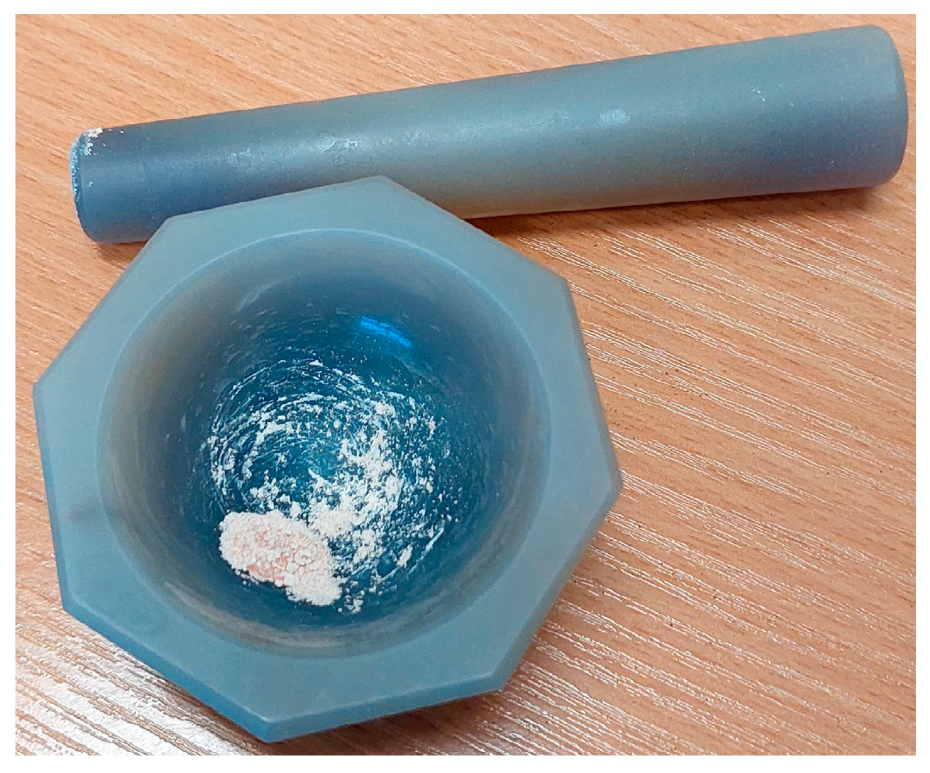
Figure 3.
The eggshell grounded into a powder in agate mortar and pestle.
Prepared samples were investigated by the X-ray diffraction method using BRUKER D2PHASER equipment employing Cu Kα radiation (λ = 1.54 Å) and operated at 30 kV and 10 mA. The XRD patterns were recorded at a scanning step of 0.02° and a counting time of 0.4 s per step. The semi-quantitative phase analysis was performed using DIFFRAC.EVA V4.1 evaluating an application from BRUKER and the ICDD PDF-4 database (released in 2021).
3. Results
The radiograms, with intensity proportional to the count levels of diffracted radiation as a function of angle [°], were normalized to 1, relative to the peak with the highest intensity. Figure 5 shows the X-ray diffraction pattern of the pure eggshell (the reference pattern). The measured pattern matches very well to the desired phase of CaCO3 – it is the main component of the eggshells (see Table 1). The remaining 28.5 % (according to BRUKER and the ICDD PDF-4 database ) shows the presence of carbon, magnesium, graphite or calcite doped with magnesium.
Results indicate that the examined eggshell is not a monocrystal of calcium carbonate, but rather a conglomerate of calcium carbonate crystals and other compounds. This may affect further analysis of the obtained results.
Knowing the chemical compounds of the eggshell, now we can proceed with the measurement when the half of the second eggshell is coated with toothpaste. The toothpaste used in the experiment contained 1400 ppm fluoride (typical children’s toothpaste). Fluoride preparations were introduced to dentistry in response to scientific findings regarding the anti-caries effects of fluoride ions F– with the aim of reducing the amount of degradation to the surface. The practice of water fluoridation, aimed at preventing tooth decay, commenced in the USA in 1950, quickly spreading to Europe. However, it became evident that a safer approach involved topical application, such as using fluoride-enriched toothpaste for brushing or applying fluoride-containing agents through rubbing, rinsing, or coating tooth surfaces such as performed in dental offices [10]. The chemical reaction for this case can be written as follows:
As a result of rubbing toothpaste into the eggshell, the signal intensity (see Figure 6) coming from calcite decreased slightly compared to the result presented in Figure 5.
The XRD pattern indicate the presence of the calcium fluoride structure in the sample, recorded for 2θ = 29.087o (intensity about 70%) and 2θ = 47.195o (intensity about 10%). The change in the red peal as compared to the black peak indicates increased fluoride compounds in the eggshell due to the surface treatment with fluoride toothpaste so likely at the surfaces. The next step was to obtain experimental data, how Coca-Cola effects on the eggshell. Result obtained for pure eggshell submerged in Coca-Cola is presented in the Figure 7, and detailed phase analysis is in the Table 2. The chemical reactions in this case can be written as follows:
The XRD pattern indicates the presence of the Tricalcium Phosphate structure in the sample, recorded, but the intensity is about 5% – 10%. The peaks of CaCO3 recorded for2θ = 47.78o and 2θ = 48.945o decreased (see Figure 5, Table 1).
Beyond to the chemical reactions, it can be inferred that the beverage used in the experiment contains preservatives, phosphoric acid, and artificial colorants. Such an excess of harmful substances will not immediately lead to the dissolution of tooth enamel, however, it may contribute to the occurrence of acidic erosion of enamel. Additionally, the flushing out of elements such as magnesium, iron, or calcium from the body can weaken the bone-mineral system. Furthermore, caffeine added by the manufacturer to the beverage is beneficial in small doses, but in larger ones, it can become an addictive substance. Bassiouny in paper [11] showed, that human teeth react as poorly to contact with excessive amounts of Cola as they do with methamphetamine, crack, or cocaine. It is clear from this that drinking Coca-Cola in large quantities can make our teeth look like those of a drug addict.
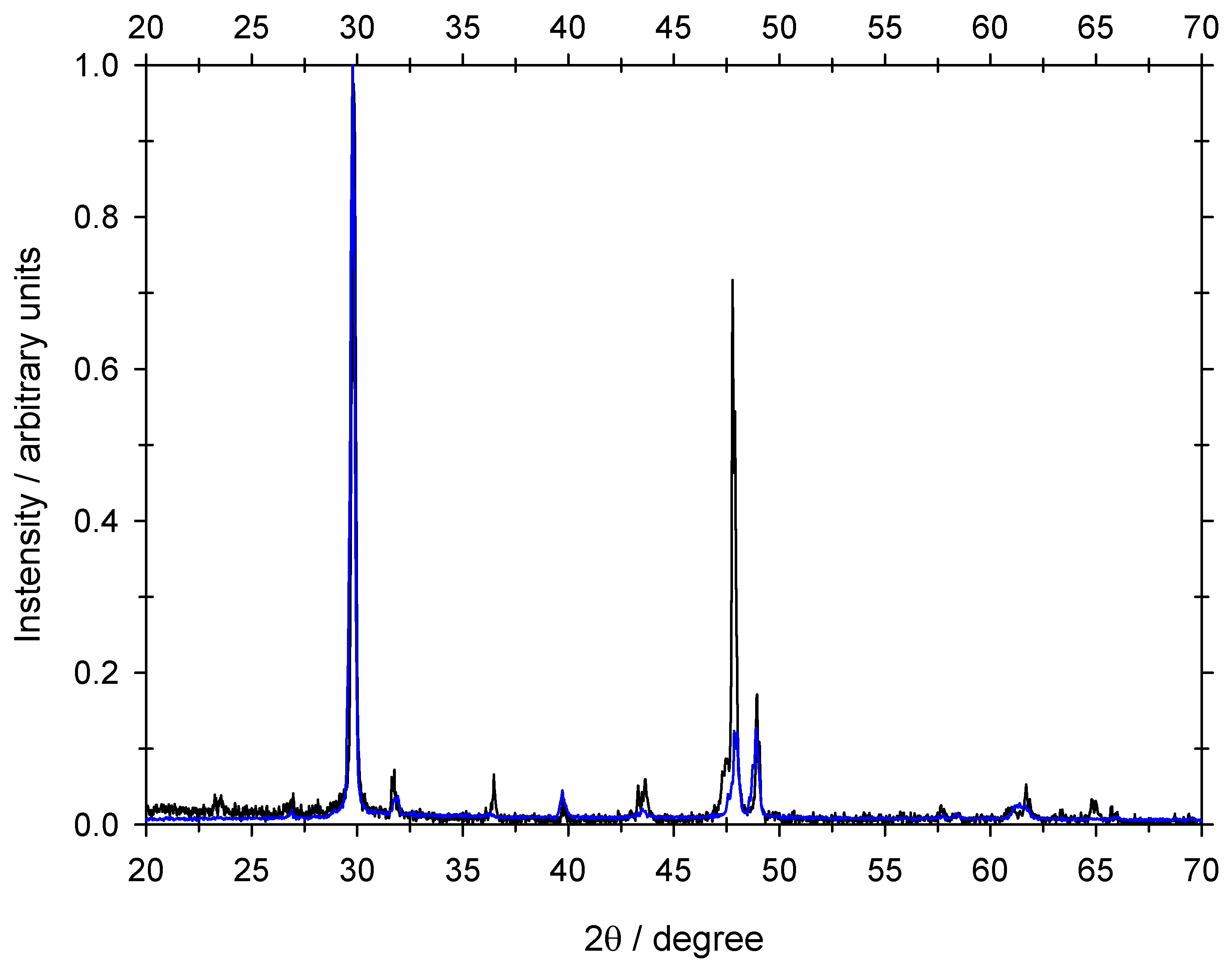
The XRD pattern presented in Figure 8, obtained for an eggshell rubbed with paste and immersed in a Coca-Cola was not so surprising. The pattern does not indicate any presence of the protective calcium fluoride structure, which was observed in Figure 6 (2θ = 29.0873o and 2θ = 47.1957o). The chemical reaction in this case can be written as follows:
Figure 8.
XRD of eggshell brushed with toothpaste and left for 5 minutes in Coca-Cola (blue line). Black line is the reference XRD of pure eggshell.
Figure 8.
XRD of eggshell brushed with toothpaste and left for 5 minutes in Coca-Cola (blue line). Black line is the reference XRD of pure eggshell.
4. Discussion
To explain the above result, the following interaction mechanism can be assumed. Rubbing the surface of the eggshell (ultimately teeth) causes fluoride to incorporate into the enamel and form fluorapatite (hydroxyapatite in teeth can lose OH– group that can be replaced by fluorine). Additionally, on the outer surface of the tooth, it creates calcium fluoride, which serves as a fluoride reservoir. Consuming meals, drinking sugary beverages leads to a decrease in oral cavity pH. This contributes to the release of stored fluoride ions, which then incorporate into the enamel in the form of the aforementioned fluorapatite. Fluoride blocks bacterial enzymes that convert sugar into acids, preventing them from negatively affecting tooth enamel. Furthermore, fluoride disrupts the transport of carbohydrates into bacterial cells, preventing bacterial growth and reproduction, thus acting bacteriostatically [12].
5. Conclusions
Derived from the experiment, a pivotal conclusion arises – physics and chemistry, combined with modern technology, can significantly contribute to understanding how to improve human health. The obtained results has shoved both toothpaste and Coca-Cola modify the structure of the eggshell, but even short-term brushing of teeth with toothpaste causes the deposition of fluoride on their surface. This has a positive effect on the protective mechanism of enamel.As a result of the interaction between the eggshell, the tooth paste and Coca-Cola, also organic compounds are formed.
The second purpose of the article is educational – to spark curiosity among readers in accordance with STEM methodology:
-
Science (S):
- o
- The article explores scientific principles, particularly in chemistry (the reactions between acids, fluoride, and calcium carbonate) and physics (X-ray diffraction and crystal structures).
- o
- The discussion of dental health problems like tooth decay is rooted in biological science, as it examines the interactions of sugars, acids, and fluoride with enamel.
-
Technology (T):
- o
- The use of X-ray diffraction (XRD) technology to analyze the crystal structure of eggshells and observe the effects of different substances mirrors technological advances in experimental physics and material analysis.
- o
- The article mentions the equipment used, such as the BRUKER D2PHASER for XRD measurements, highlighting the role of technological tools in scientific investigations.
-
Engineering (E):
- o
- The preparation of samples (crushing eggshells, treating them with toothpaste, and exposing them to Coca-Cola) involves experimental engineering, as it requires designing and conducting a controlled experiment to model the effects of substances on teeth.
- o
- The emphasis on the design of experiments is a key aspect of engineering methodology, ensuring reproducibility and consistency.
-
Mathematics (M):
- o
- The article references Bragg’s Law in X-ray diffraction, which is a mathematical equation used to describe the relationship between wavelength, diffraction angle, and lattice spacing.
- o
- Mathematical analysis is employed in interpreting the XRD data, such as calculating the d-spacings and diffraction patterns to understand the structure of materials.
A range of educational kits is now commercially available, offering varying levels of complexity, which support not only the execution of the Bragg experiment but also enable detailed analysis of measurement data and interpretation of results, with access to integrated databases for enhanced accuracy and insight. The author’s intention is to encourage teachers to replicate the experiment and involve students in preparing the samples themselves (e.g., crushing eggshells, applying toothpaste, adding Coca-Cola or vinegar, measuring the pH of eggshells etc.), measurements and detailed data analysis. Students could then present the results of their work.
Author Contributions
Conceptualization; investigation; resources; methodology; writing—original draft preparation; validation; writing—review and editing; formal analysis; supervision; project administration; data curation, P. Kamiński.
Funding
This research received no external funding.
Institutional Review Board Statement
Not applicable.
Informed Consent Statement
Not applicable.
Data Availability Statement
The datasets used and/or analysed in the current study are available from the corresponding author on reasonable request.
Acknowledgments
P. Kamiński wish to thank dr N. Górecka and dr K. Szczodrowski (Division of Condensed Matter Spectroscopy, Faculty of Mathematic Physics and Informatics University of Gdańsk) for their technical support during measurements.
Conflicts of Interest
The author declare no conflict of interest.
References
- t; Team T W 2022 Global oral health status report: towards universal health coverage for oral health by 2030 100.
- P; Jańczuk, Zbigniew;Kaczmarek, Urszula; Lipski M 2014 Stomatologia zachowawcza z endodoncją / [Conservative Dentistry and Endodontics] (Warszawa: PZWL Wydawnictwo Lekarskie).
- Olencka A 2019 Chemistry in the Kitchen: The Egg Bull. Warsaw Univ. Technol. 1.
- Onwubu S, Mduli P, Singh S and Bharuth V 2018 An in vitro examination on the effectiveness of commercial toothpastes in the prevention of tooth decay, using eggshell as a substitute for human tooth material South African Dent. J. 73. [CrossRef]
- Azarian M H and Sutapun W 2022 Biogenic calcium carbonate derived from waste shells for advanced material applications: A review Front. Mater. 9. [CrossRef]
- Stefanello C, Santos T C, Murakami A E, Martins E N and Carneiro T C 2014 Productive performance, eggshell quality, and eggshell ultrastructure of laying hens fed diets supplemented with organic trace minerals Poult. Sci. 93 104–13. [CrossRef]
- Ketta M and Tůmová E 2016 Eggshell structure, measurements, and quality-affecting factors in laying hens: a review Czech J. Anim. Sci. 61 299–309.
- Asimov I 1984 History of Physics (Walker Publishing Company).
- Kittel C 2005 Introduction to Solid State Physics ed S Johnson (John Wiley & Sons, Inc.).
- Meler, Jan; Meler G 2006 FLUORIDATION OF DRINKING WATER – ADVANTAGES AND DISADVANTAGES J. Elem. 11 379–87.
- Bassiouny M A 2013 Dental erosion due to abuse of illicit drugs and acidic carbonated beverages. Gen. Dent. 61 38–44.
- M; Dorota U O-K, Joanna S and Jańczuk 2017 WSPÓŁCZESNA STOMATOLOGIA WIEKU ROZWOJOWEGO / [Comprehensive dentistry of developmental age] (Otwock: Med Tour Press International).
Figure 1.
Diagram of a healthy human molar (a) and eggshell (b). Picture downloaded from Microsoft Word online image database, Creative Commons License.
Figure 1.
Diagram of a healthy human molar (a) and eggshell (b). Picture downloaded from Microsoft Word online image database, Creative Commons License.
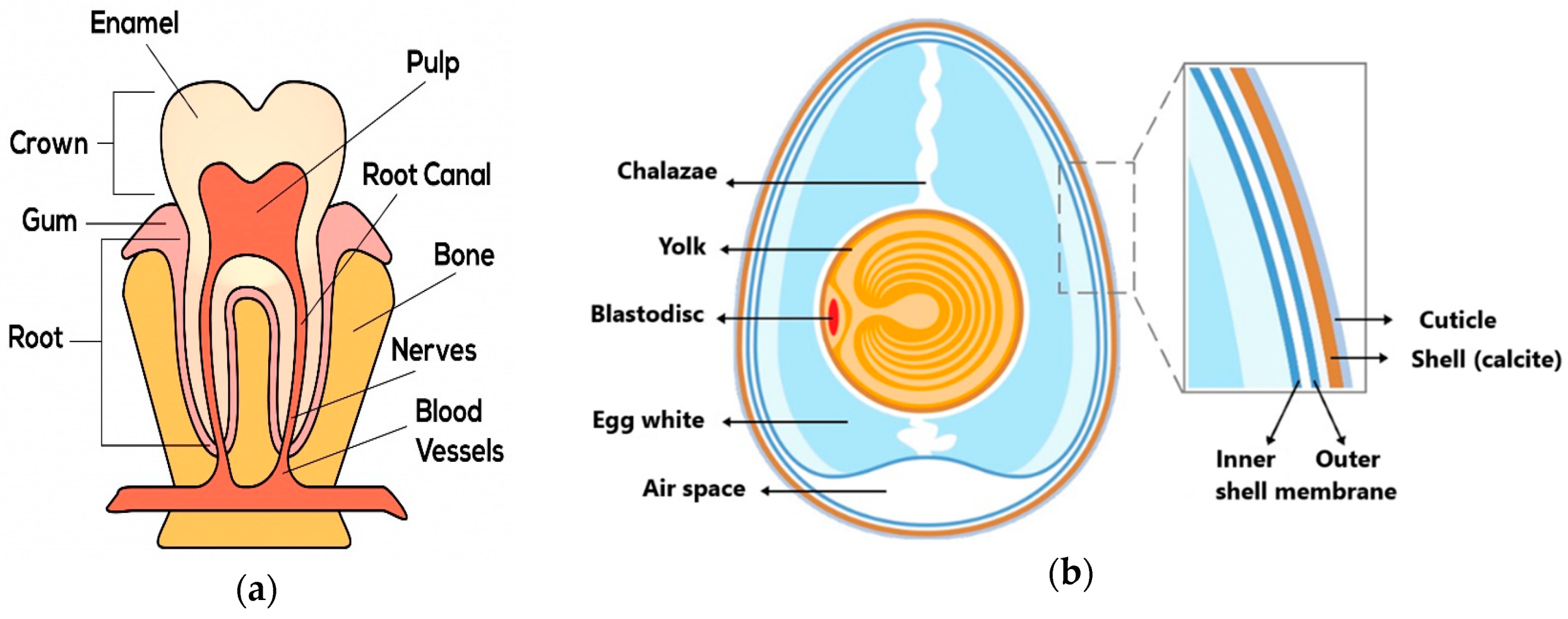
Figure 2.
Idea of X-ray diffraction machine and measurement (not in scale).
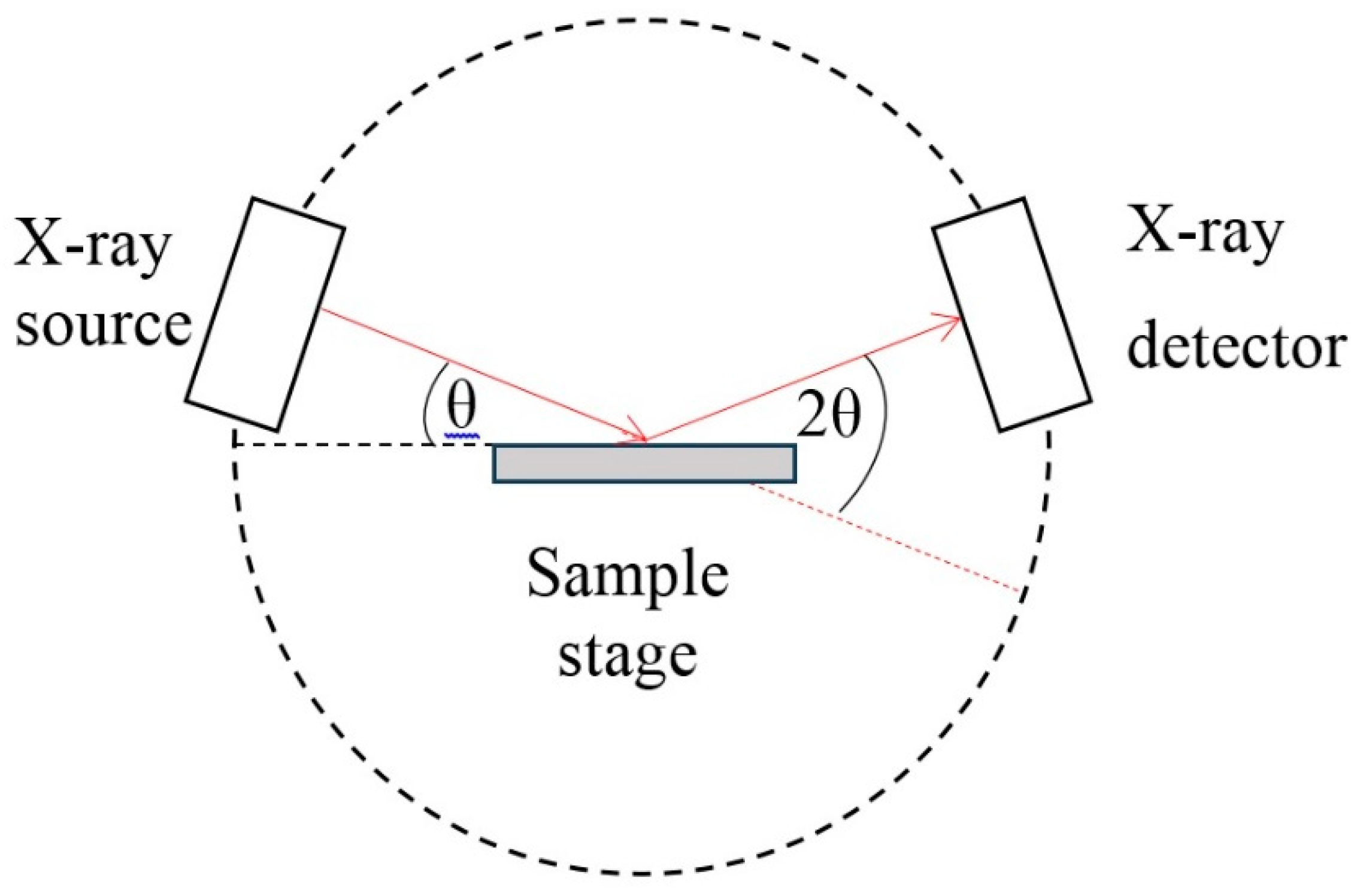
Figure 3.
Bragg condition of X-rays constructive diffraction on a layered structure.
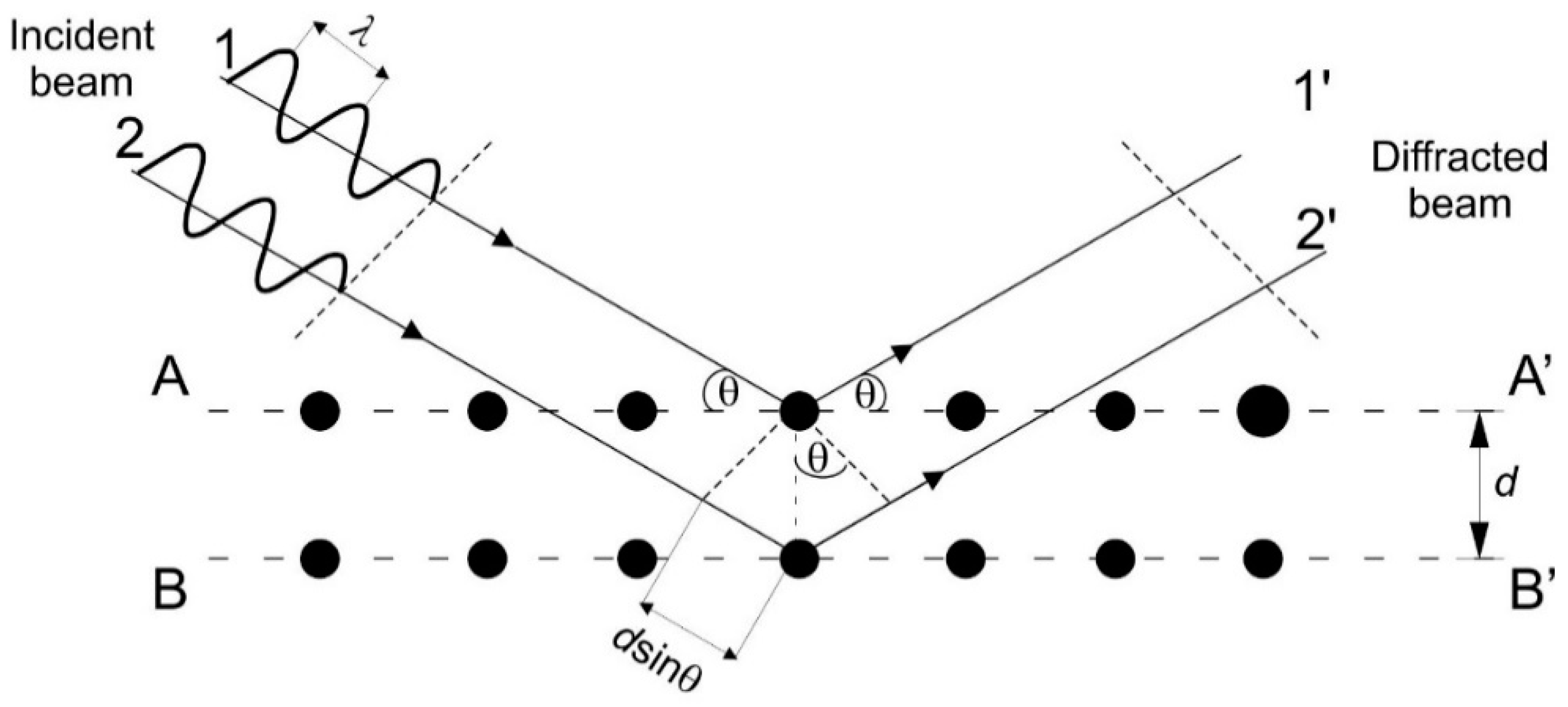
Figure 5.
XRD of pure eggshell, used in the experiment as the reference signal.
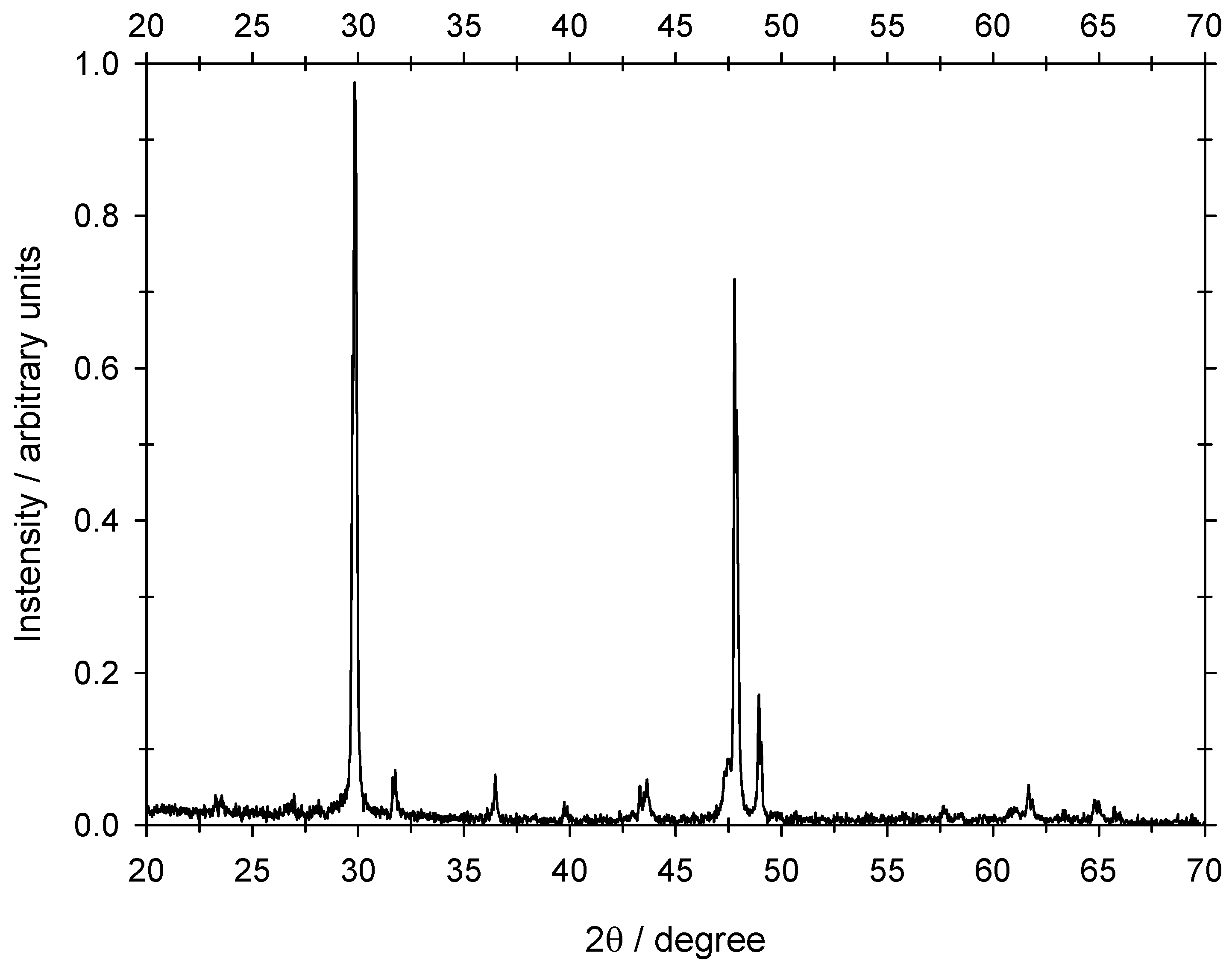
Figure 6.
The XRD pattern of eggshell brushed with fluoride toothpaste (red line). Black line is the reference XRD of pure eggshell.
Figure 6.
The XRD pattern of eggshell brushed with fluoride toothpaste (red line). Black line is the reference XRD of pure eggshell.
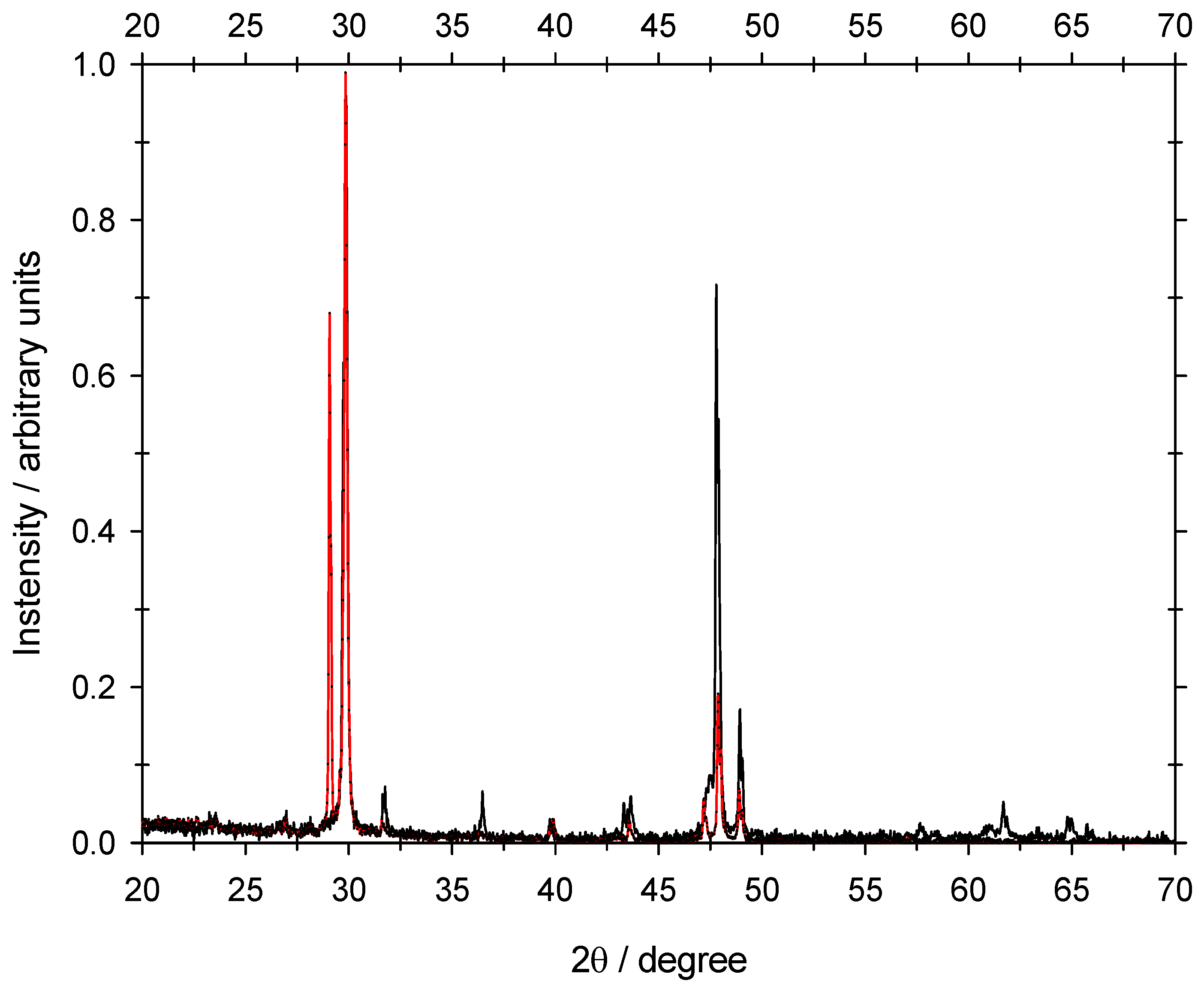
Figure 7.
XRD of eggshell left for 5 minutes in Coca-Cola (green line). Black line is the reference XRD of pure eggshell.
Figure 7.
XRD of eggshell left for 5 minutes in Coca-Cola (green line). Black line is the reference XRD of pure eggshell.
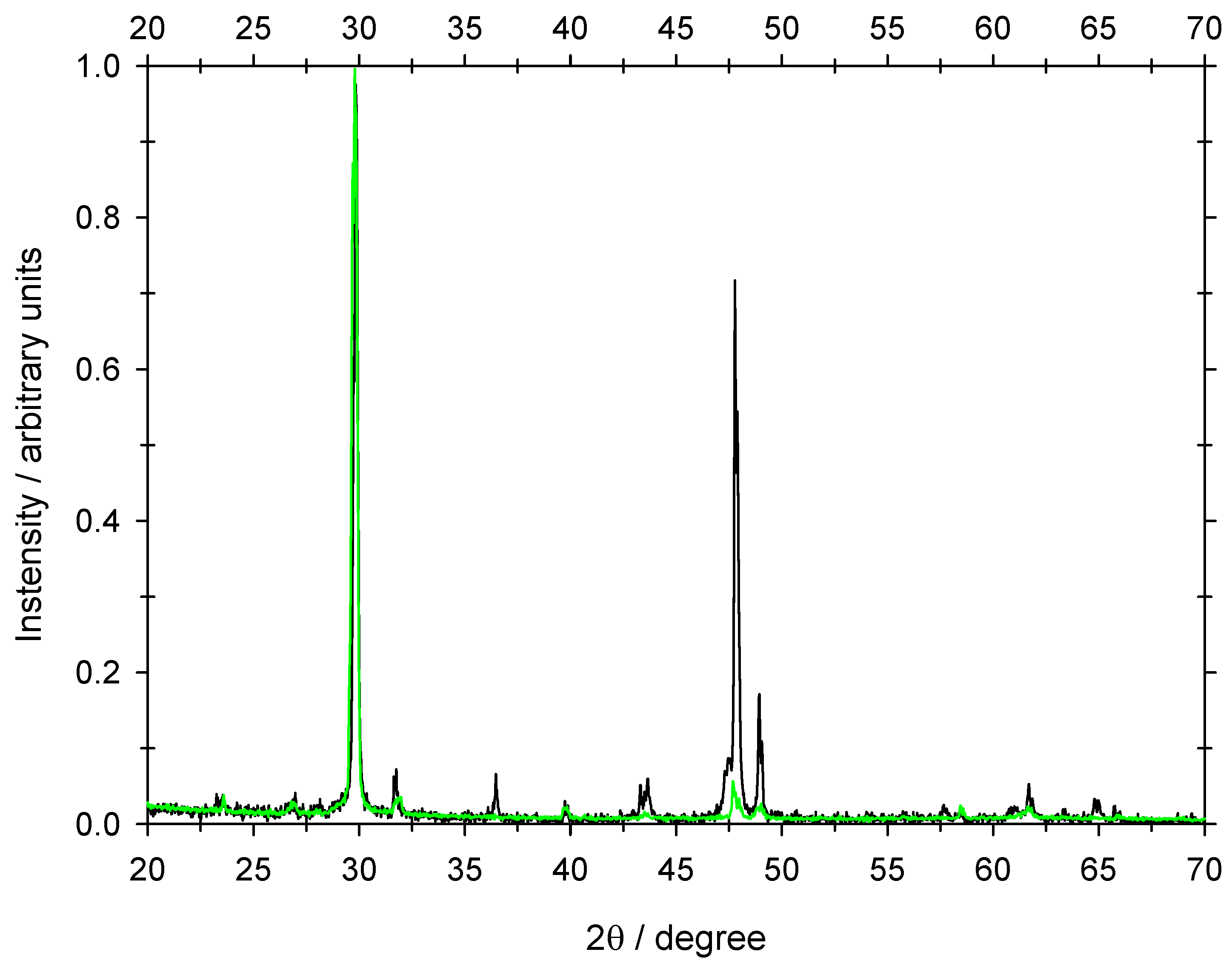

Table 1.
Chemical composition of eggshell used in the experiment.
| 2θ / degree | Chemical Composition |
|---|---|
| 23.065 | CaCO3 |
| 29.840 | CaCO3 |
| 31.773 | CaCO3 |
| 36.493 | CaCO3 |
| 39.708 | CaCO3 |
| 43.3095 | CaCO3 |
| 47.7857 | CaCO3 |
| 48.9454 | CaCO3 |
| 64.7953 | CaCO3 |
| 65.7960 | CaCO3 |
Table 2.
Chemical composition of pure eggshell left in Coca-Cola.
| 2θ / degree | Chemical Composition |
|---|---|
| 23.610 | Tricalcium Phosphate |
| 43.760 | Tricalcium Phosphate |
| 47.684 | Tricalcium Phosphate |
| 58.467 | Tricalcium Phosphate |
Disclaimer/Publisher’s Note: The statements, opinions and data contained in all publications are solely those of the individual author(s) and contributor(s) and not of MDPI and/or the editor(s). MDPI and/or the editor(s) disclaim responsibility for any injury to people or property resulting from any ideas, methods, instructions or products referred to in the content. |
© 2024 by the authors. Licensee MDPI, Basel, Switzerland. This article is an open access article distributed under the terms and conditions of the Creative Commons Attribution (CC BY) license (http://creativecommons.org/licenses/by/4.0/).
Copyright: This open access article is published under a Creative Commons CC BY 4.0 license, which permit the free download, distribution, and reuse, provided that the author and preprint are cited in any reuse.


