

Submitted:
11 November 2024
Posted:
12 November 2024
You are already at the latest version
Abstract
The synthesis of natural and unconventional compounds with carbohydrate structures is of great interest to glycochemists due to their vital biological roles. In recent years, there has been significant progress in developing direct and indirect synthetic strategies for constructing sugar moieties. Among these methods, the Prins reaction, employing homoallylic alcohols and carbonyl compounds, has proven invaluable for directly creating sugar skeletons. This review discusses approaches for crafting carbohydrate frameworks using the Prins reaction, utilizing both carbohydrate and non-carbohydrate starting materials.
Keywords:
carbohydrates
; prins reaction
; 2-deoxysuagrs
; homoallylic alcohols
; rare sugars
1. Introduction
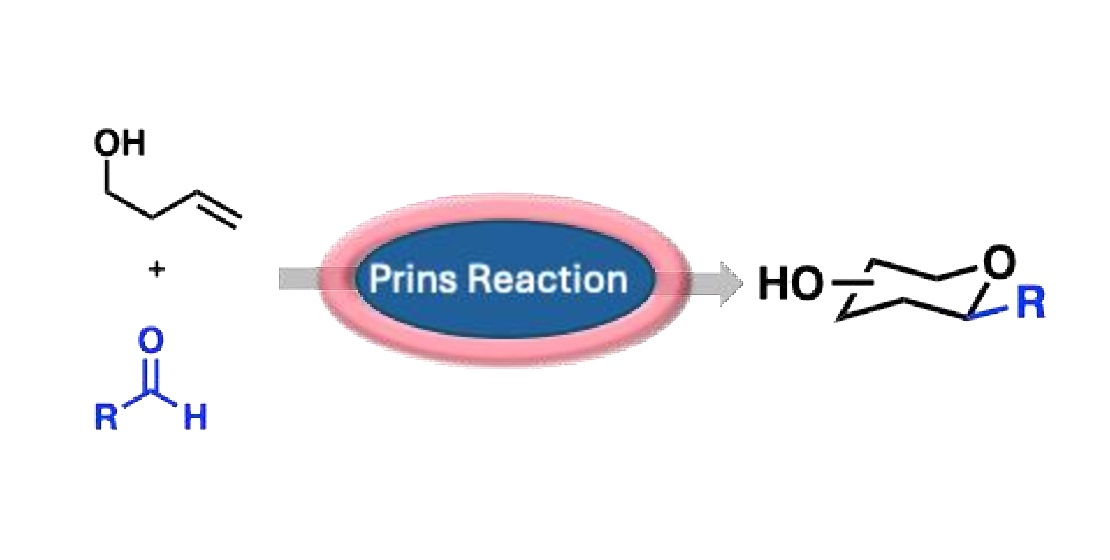
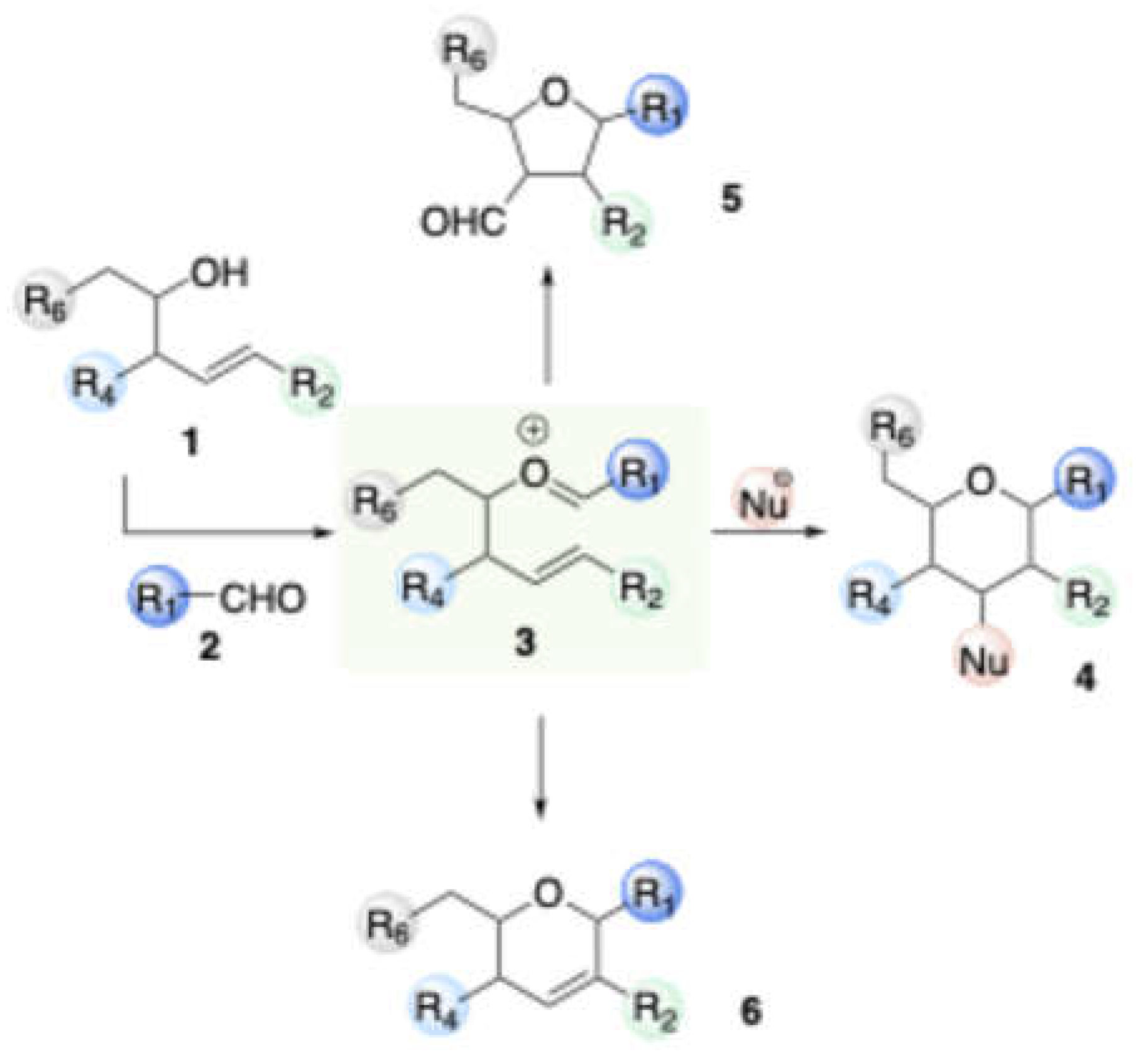
Common sugars like glucose and galactose, along with rare sugars such as altrose and allose found in bacteria, possess distinctive characteristics like deoxygenation, amino groups, and branched carbon structures. Developing synthesis methods for these rare sugars is essential to harness their biological potential in natural products.[1] The Prins reaction has (Figure 1) seen a renewed interest in recent years for synthesizing various tetrahydrofurans and pyrans and they lead to carbohydrate scaffolds.[2] Although there may be slight variations in reaction mechanisms due to different conditions, a Scheme 1 can be outlined. The Prins reaction involves homoallylic alcohols 1 and carbonyl compounds 2 in the presence of an acid catalyst, resulting in the formation of the oxocarbenium ion 3 intermediate. This intermediate then undergoes π-cation cyclization, followed by the addition of nucleophiles, leading to the formation of highly reactive tetrahydropyran intermediate and the synthesis of multifunctionalized tetrahydropyran 4. The high stereoselectivity of the product is attributed to axial-axial interactions of the tetrahydropyran cation intermediate with incoming nucleophiles. Alternatively, oxocarbenium ion 3 can participate in a pinacol-type rearrangement, yielding tetrahydrofuran 5 or even directly producing product 6.
This review aims to provide an overview of the main strategies for accessing carbohydrate moieties. It is organized into several sections based on how the extended carbohydrate core is constructed and the number of bonds created during the critical construction step.
2. Result and Discussion
There is currently a wealth of inter and intra molecular Prins reactions are available within the modern synthetic chemist’s ‘toolbox’. However, among the most prevalent Prins reaction types is the addition of a nucleophiles to a secondary carbocation (typically alkenes or alkynes), Pinacol type rearrangement, Sakurai Prins reaction and
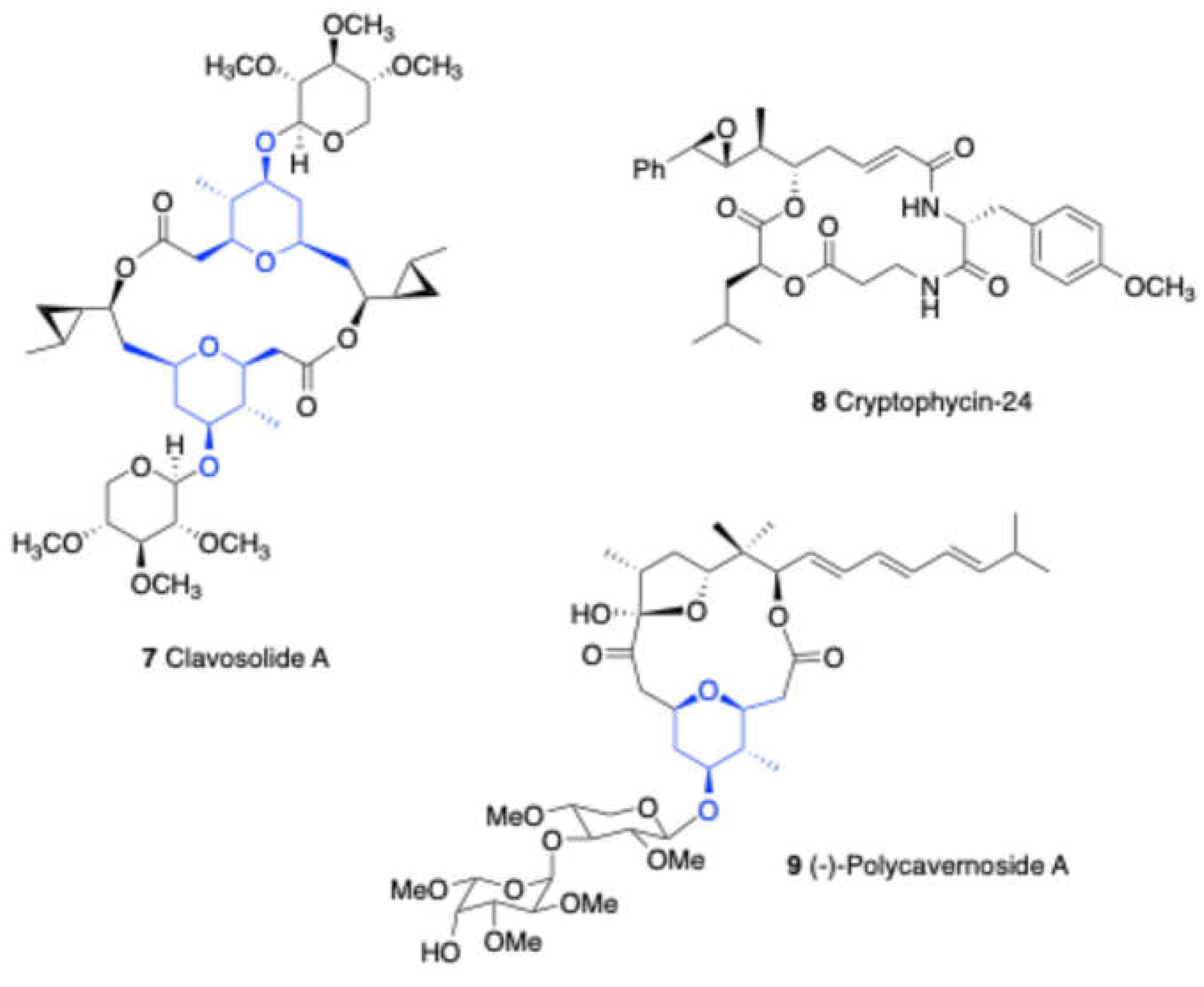
Figure 1.
Synthesis of natural products by using Prins reaction.
Ritter Prins reaction. Within the context of sugar moiety synthesis via Prins cyclization and based on the origin synthon of homoallylic alocohols, these reactions are divided into two distinct subclasses: those in which a synthesis of carbohydrate scaffolds from carbohydrate synthons (1.1) and those in which a carbohydrate scaffolds from non-carbohydrate synthons (2.2).
2.1. Carbohydrate Synthons to Carbohydrate Scaffolds
This section summarizes research that focuses on generating valuable carbohydrate scaffolds or structural units using carbohydrate-derived starting materials, particularly carbohydrate-derived homoallylic alcohols, through a process called Prins cyclization. In this specific study conducted by Yadav and colleagues, they reported [3] the synthesis of a sugar-annulated iodotetrahydropyran compound 12 by employing Prins cyclization. They combined a D-glucose-derived homoallylic alcohol 10 with an aldehyde 11 in their synthetic approach (Scheme 2). The researchers explored the use of a variety of aromatic and aliphatic aldehydes as reactants in their experiments. Importantly, they successfully obtained the desired products in moderate to good yields, indicating the effectiveness of their synthesis method. The authors of this study proposed a reaction mechanism that involves an intermediate X and a highly reactive carbocation Y. This carbocation Y is subsequently captured by an iodide ion, resulting in the formation of the sugar-annulated iodotetrahydropyran compound 12.
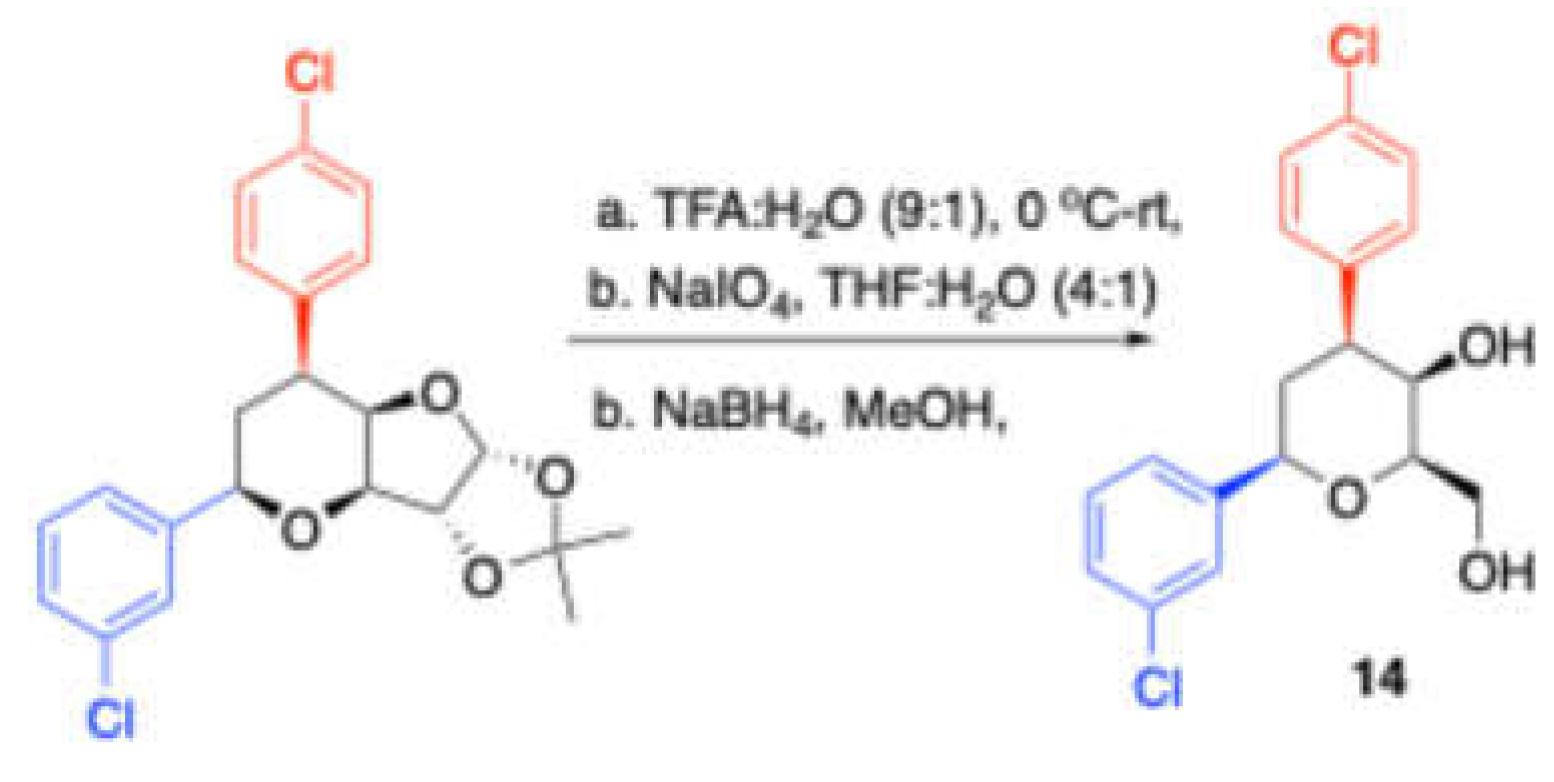
In a subsequent study, the same research group[4] delved deeper into the Prins reaction of homoallylic alcohol 10, as shown in Scheme 3. They investigated this reaction with various carbonyl compounds 11, employing BF3·OEt2 as a catalyst and various arene solvents. This reaction led to the formation of sugar-fused diaryl hexahydro-2H-furo[3,2-b]pyran 13 via intermediate III. Notably, the researchers examined different arene solvents, including benzene, toluene, o-xylene, and anisole. The reaction proved compatible with a variety of aryl and alkyl aldehydes as well as cyclohexanone. Interestingly, one of the product further converted into diaryl dihydroxytetrahydropyara 14 (Scheme 4).
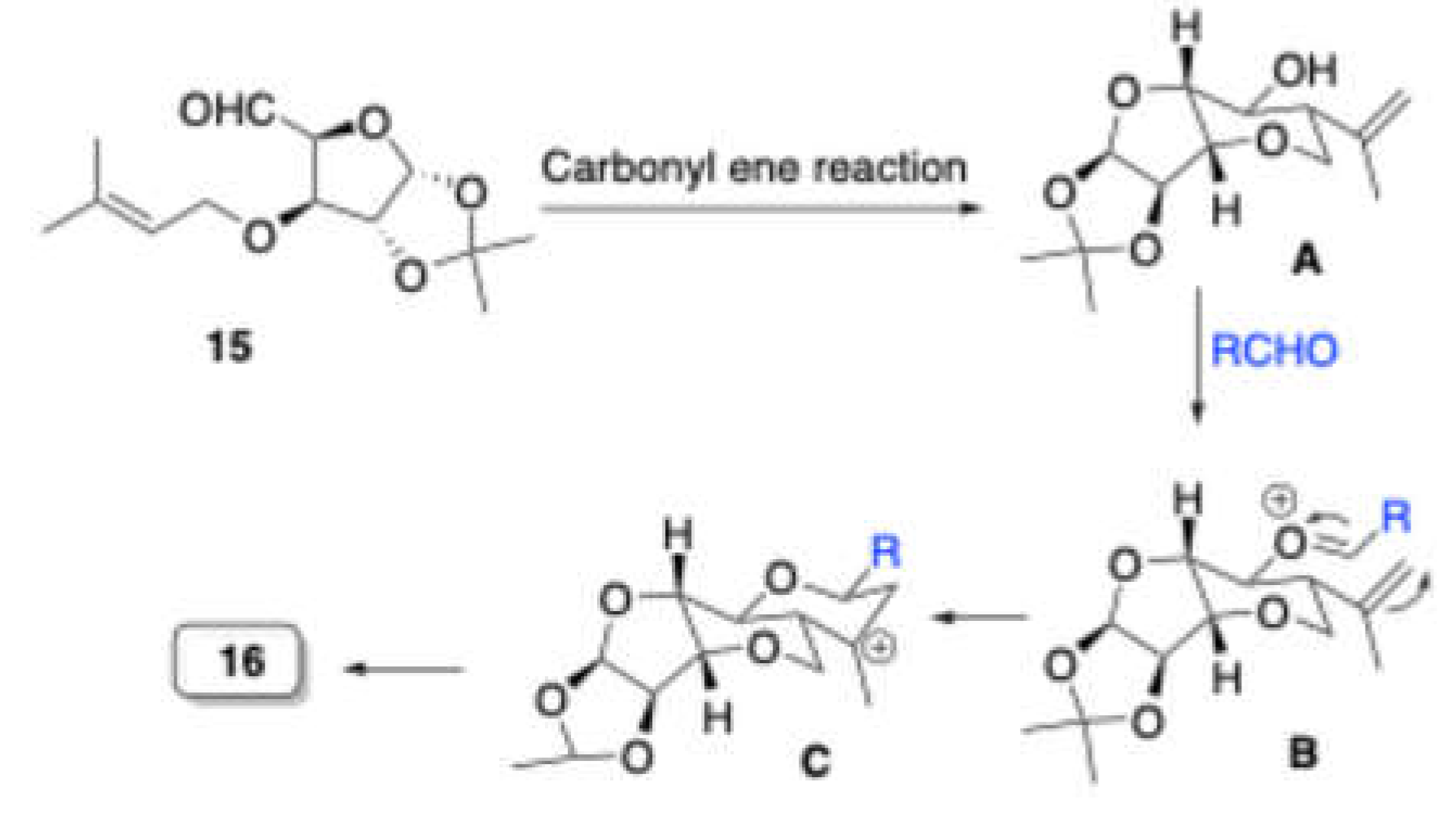
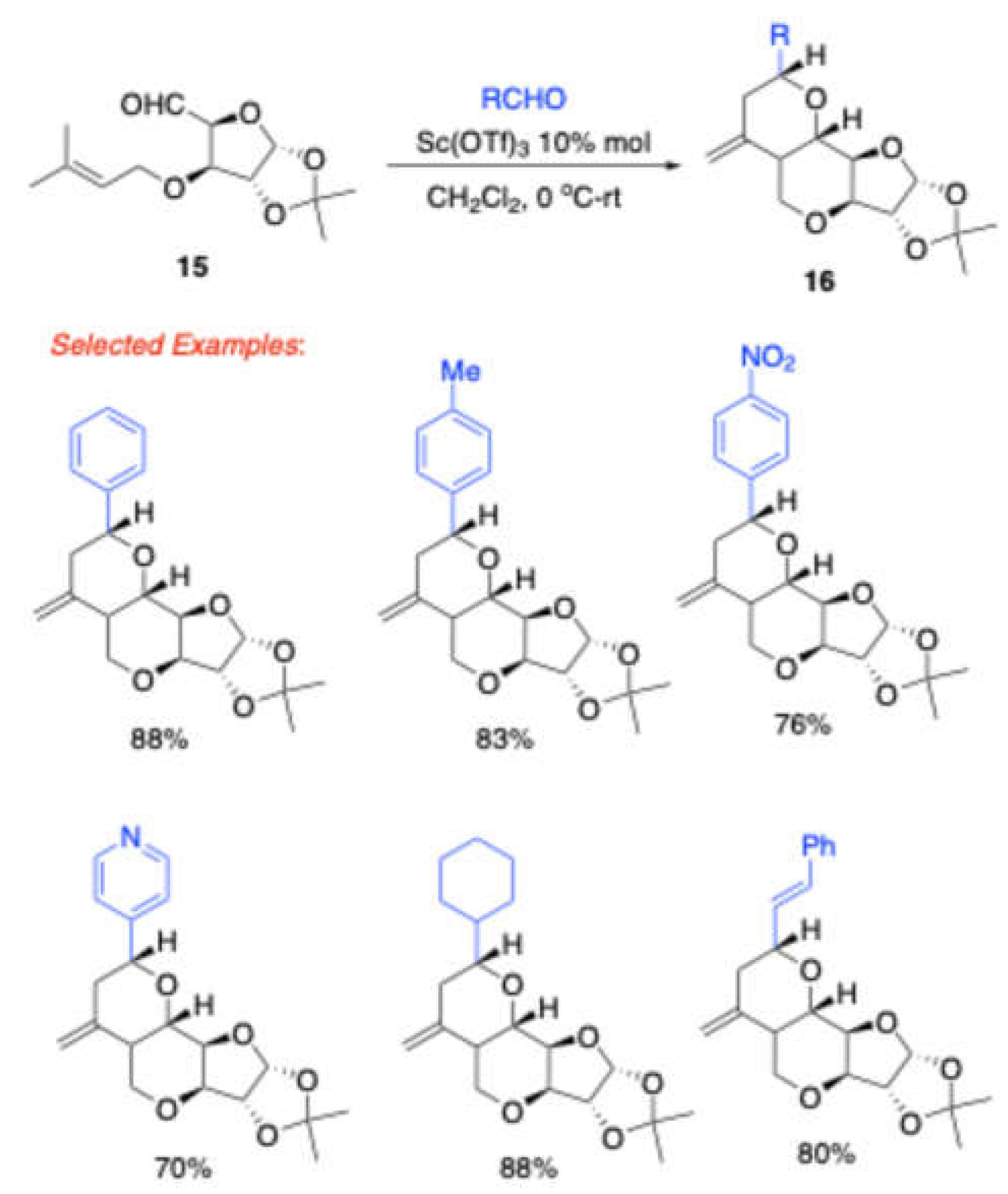
Reddy et al. reported[5] the synthesis of the hexahydro-2H-furo[3,2-b]pyranopyran scaffold 16 from O-prenyl tethered carbohydrate derived aldehyde 15 with various aldehydes in the presence of 10 mol% Sc(OTf)3 in dichloromethane at 0 oC to room temperature (Scheme 5). Further, this reaction was studied with a variety of aryl and alkyl aldehydes. Eventually, this reaction was quite successful with p-bromobenzaldehyde and cyclohexylidene protected O-prenyl tethered carbohydrate derived aldehyde to furnish the product tricyclic sugar derivative 16 (Scheme 7).
First, cyclization of O-prenyl tethered carbohydrate derived aldehyde 15 is proposed, facilitated by carbonyl ene reaction and led to homoallylic alcohol A, with this being the prins reaction defining step. Then A condes with aldehyde in presence of Sc(OTf)3 could give tertioary carbocation C via oxocarbonioum ion B. Further C could eliminate proton from methyl group and led to product 16.
Scheme 6.
Mechanism for the formation of hexahydro-2H-furo[3,2-b]pyranopyran.
In 2014, Lumba and Mukherjee[6] developed a practical protocol for the conversion of tri-O-acetyl-D-glucal derived 2-C-branched sugars 17 to the corresponding cis-1-oxadecalines 18. By using FeCl3 as a catalyst system at room temperature, the target molecules could be afforded [Scheme 8]. The advantages of this protocol are the use of a variety of 2-C-branched sugars.
Padrón and co-workers[7] reported a simple preparation method for trans-fused bicyclic tetrahydropyran 21 by a iron(lll) catalyzed tandem reaction using tri-O-acetyl-D-glucal derived homoallylic alcohol 16 and iso-valeraldehyde [Scheme 9]. This reaction was further studied with more complex molecule 19, which is derived from α-methyl-D-glucopyranoside with aldehydes and led to the trans-fused bicyclic tetrahydropyrans 20. Here, the features are the good substrate generality and the mild reaction conditions.
Cis-fused heterobicyclic systems are very important substrates in neuronally active agents such as marine-derived dysiherbaine and their analogues IKM-159 and MC-27. Oikawa and co-workers[8] reported a BF3·OEt2 catalyzed condensation reaction between glucose derived enetiomerically pure homoallylic alcohol 22 with aldehydes 11 and nitrile solvent 23; the intended cis-fused 4-amidotetrahydropyrans 24 were obtained in a one-pot manner under relatively mild conditions (Scheme 10). Based on these results and the scope was extended to substrate 24 with variety of aldehydes and nitrile solvent via Prins-Ritter reaction to obtained cis-fused heterobicyclics 24 which were further subjected to acid hydrolysis led to the formation for novel glutamates 25.
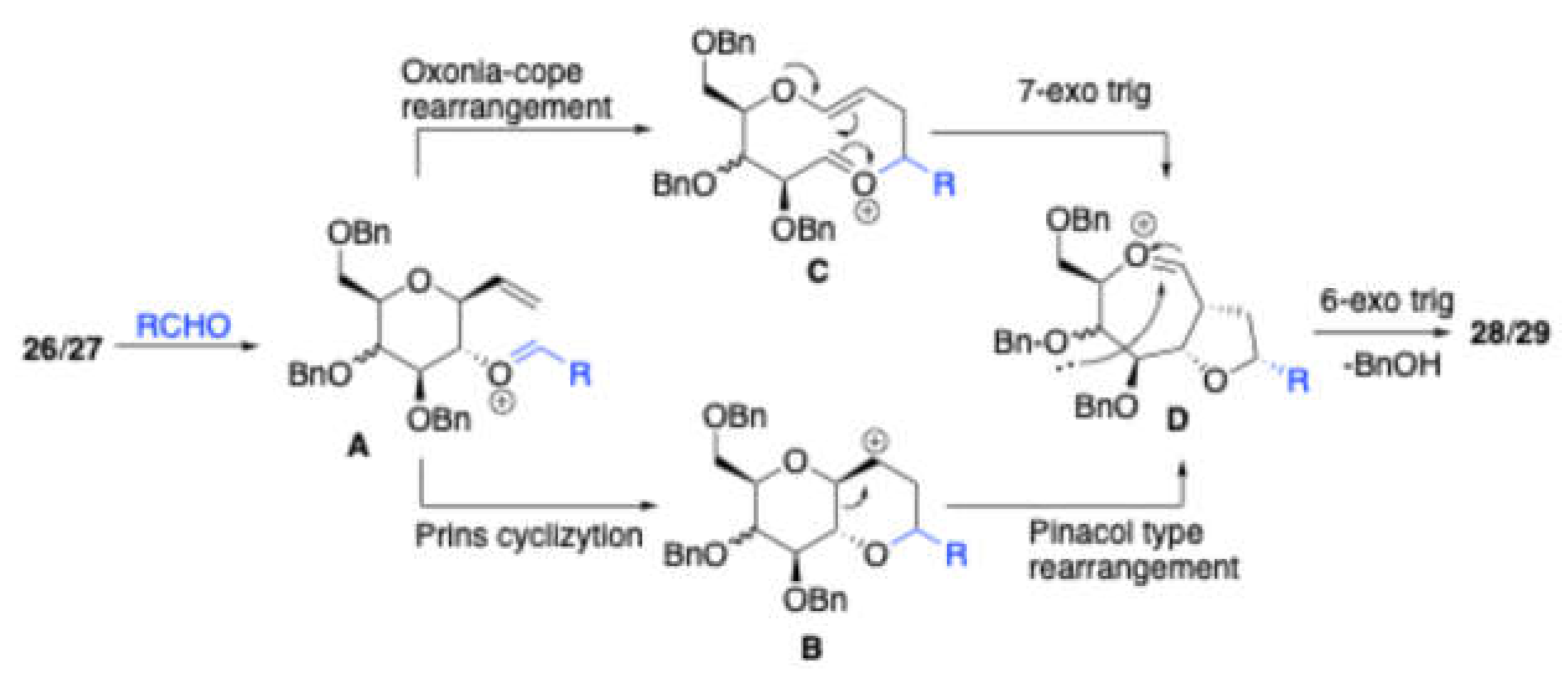
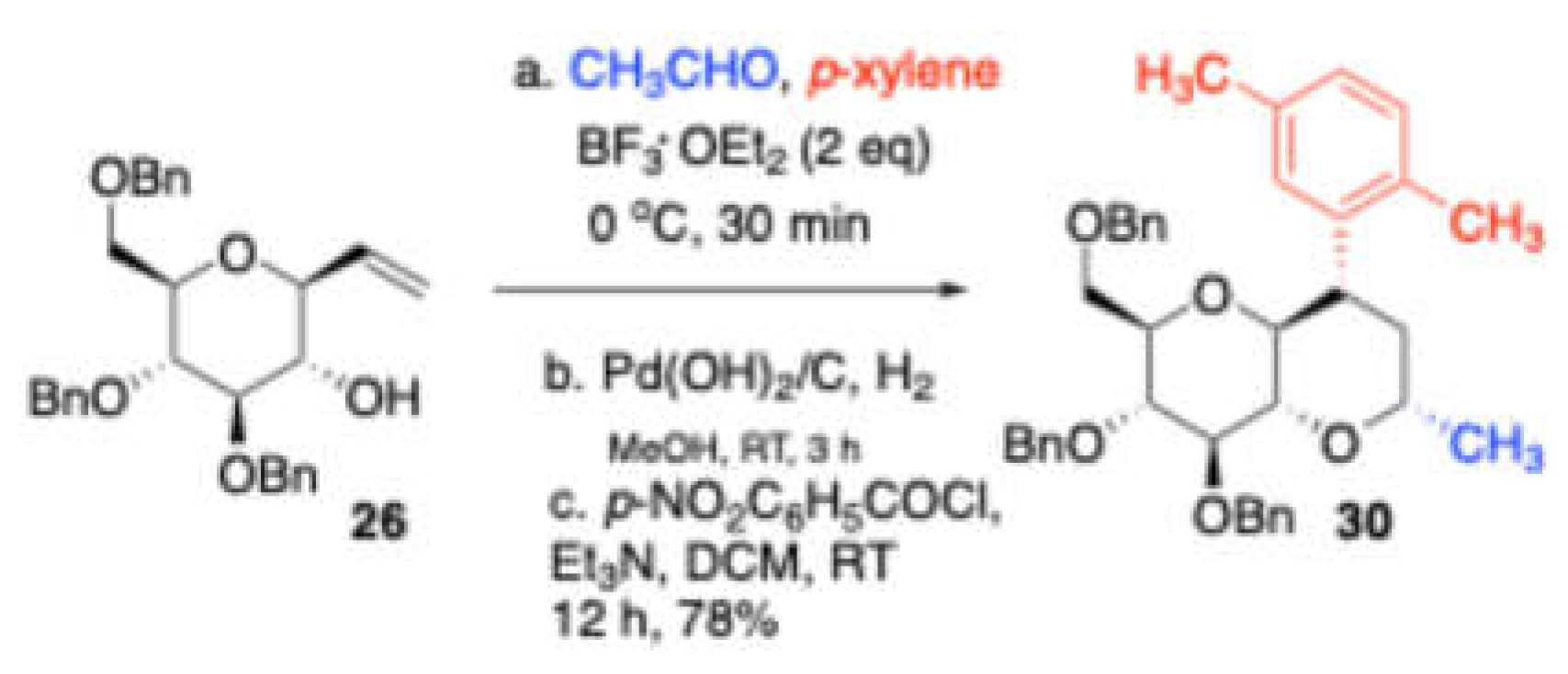
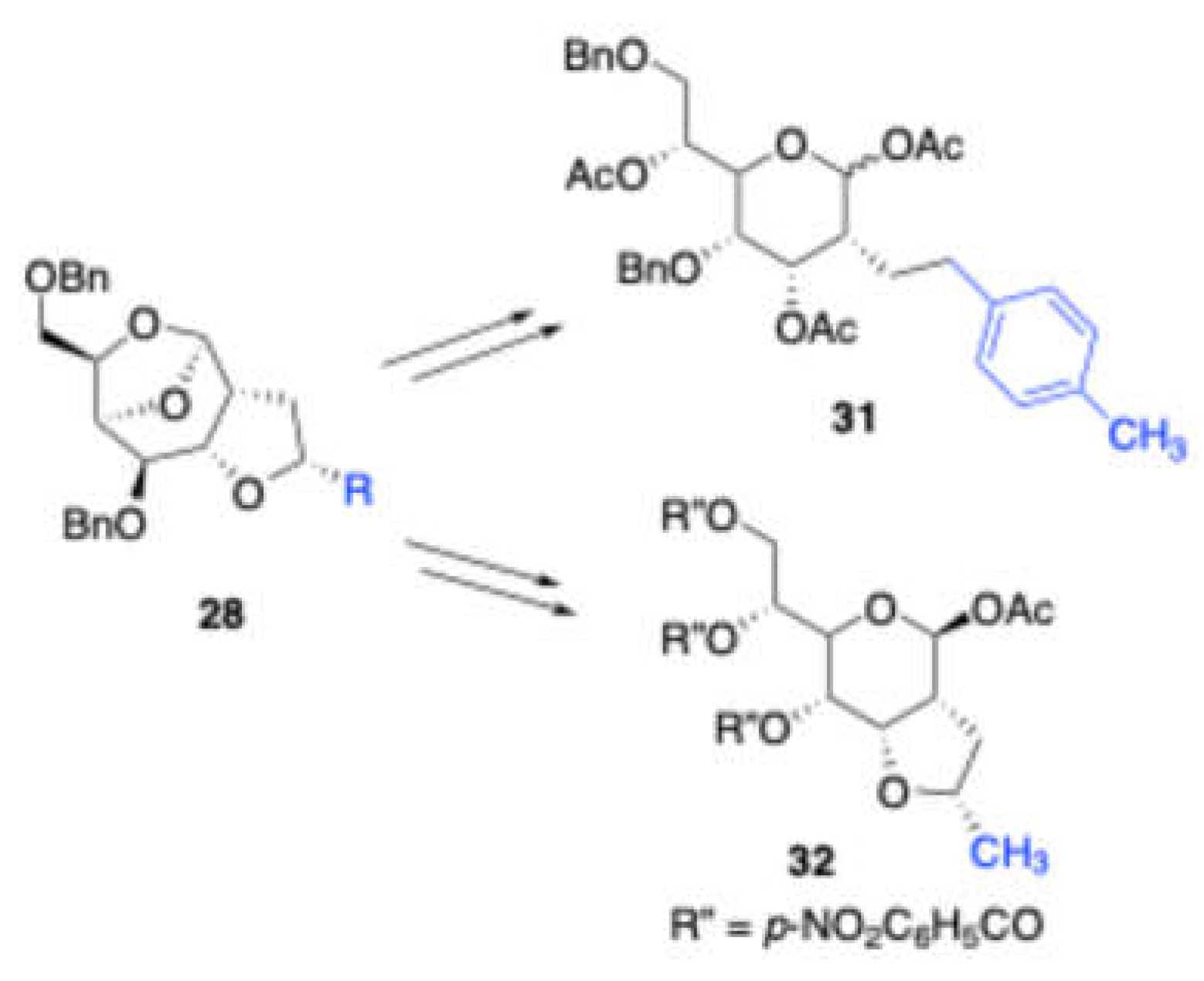
Vankar and co-workers[9] developed an efficient synthesis of bridged tricyclic ketals 28/29 with good substrate generality starting from homoallylic alcohols 26/27 derived from 1,2-anhydro and aldehydes; they used BF3·OEt2 as catalyst [Scheme 11]. Here, the main advantages include the stereoselectivity and good yields. They proposed the plausible mechanism for the formation of bridged tricyclic ketals 28/29 shown in the Scheme 12. It is presumed that after initial formation of the oxocarbenium ion A, it can either undergo Oxonia-Cope rearrangement to form B, or simply a π-cation cyclization to form C. Both of these intermediates will then undergo 7-exo trig cyclization or pinacol-type rearrangement via the transition state D, followed by cleavage of the C4-OBn participation resulting into to form bridged tricyclic ketals 28/29. To get further insight into the proposed mechanism they tested homoallylic alcohol 26 with acetaldehyde and p-xylene as nucleophile observed the p-xylene trapped prins product 30 (Scheme 13). p-xylene trapped prins product was further hydrogenolysis with Pd(OH)2/C followed by benzoylation of the resulting alcohol with p-nitrobenzoylchloride/Et3N to give the corresponding annulated sugar 32. Later, these bridged tricyclic ketals were converted to (Scheme 14) tetrahydrofuran ring fused heptose 31 and 2C-branched heptose 32.
Scheme 10.
Cis-fused 4-amidotetrahydropyrans towards a precursor for possible neuronal receptor ligands via Prins-Ritter reaction.
Scheme 10.
Cis-fused 4-amidotetrahydropyrans towards a precursor for possible neuronal receptor ligands via Prins-Ritter reaction.

Scheme 11.
Synthesis of bridged tricyclic ketals 28/29 thorugh Prins-Pinacol type rearrangement and C4-OBn participation.
Scheme 11.
Synthesis of bridged tricyclic ketals 28/29 thorugh Prins-Pinacol type rearrangement and C4-OBn participation.
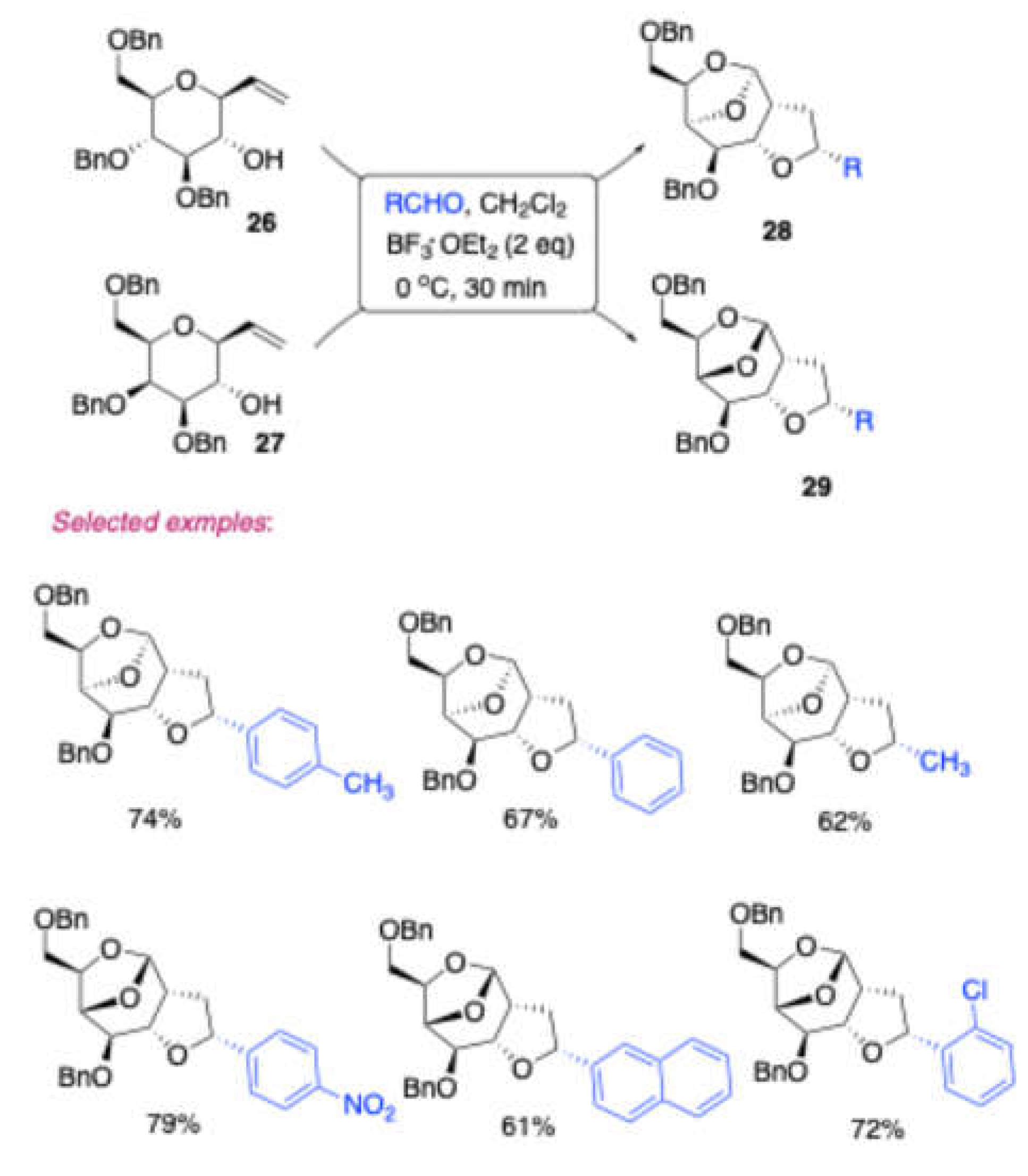
Scheme 12.
Mechanism for the formation of bridged tricyclic ketals 30/31.
Scheme 13.
Trapping with p-xylene.
Scheme 14.
Derivitization of bridged tricyclic ketal.
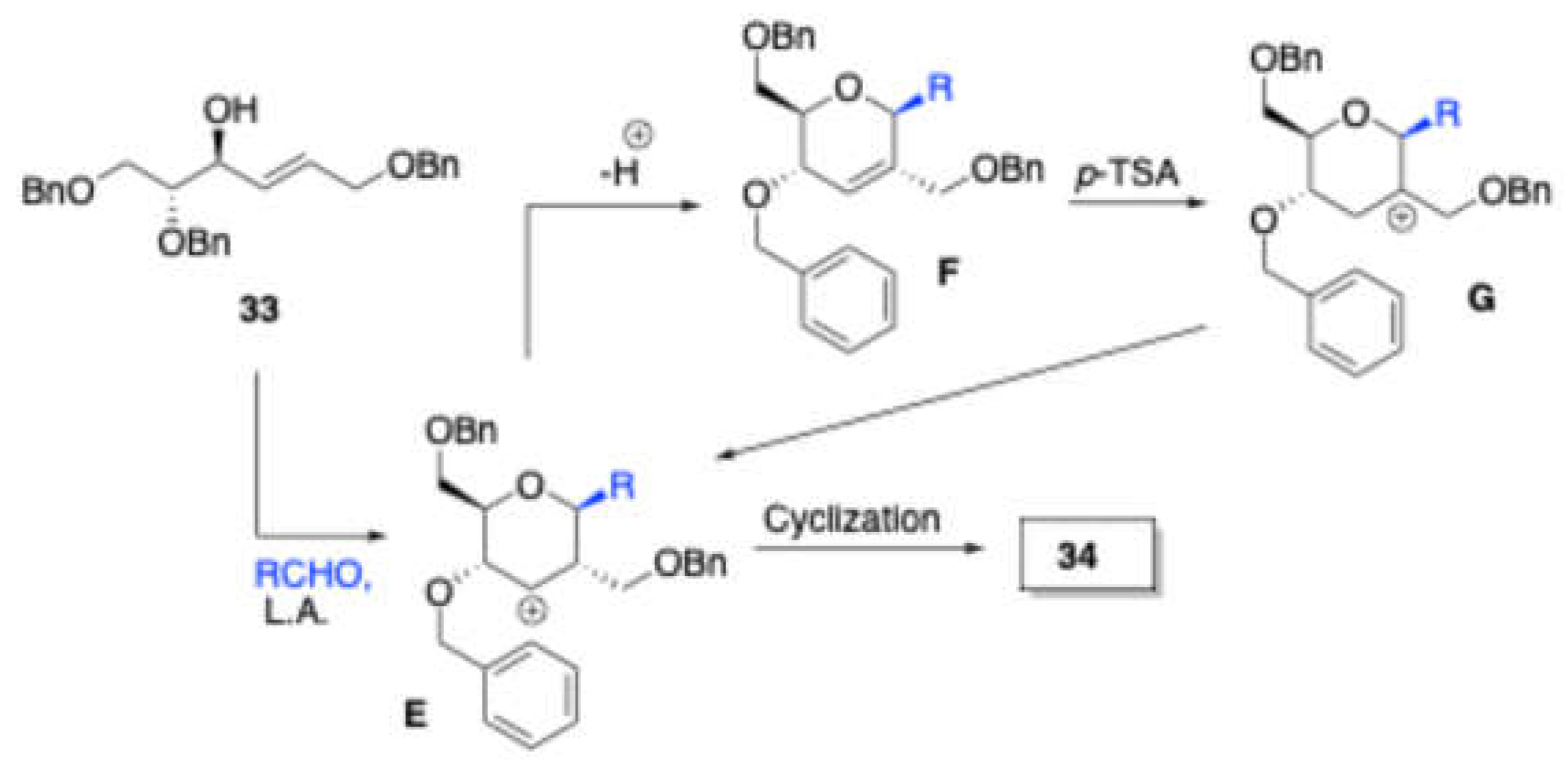
In 2017, Vankar et al. [10] reported a very effective synthetic route by using BF3·OEt2 to synthesize 1C-aryl/alkyl 2C-branched sugar fused isochroman derivatives 34 from 2C-formyl glucal derived homoallylic alcohol 33 and aldehydes, in a moderate
Scheme 16.
Mechanism for the formation of 1C-aryl/alkyl 2C-branched sugar fused isochroman derivatives.
Scheme 16.
Mechanism for the formation of 1C-aryl/alkyl 2C-branched sugar fused isochroman derivatives.
Later, Dubbu and Vankar strategically synthesized[11] a series of 2-deoxy-3,4-fused-C-aryl/alkylglycosides through a cascade Prins cyclization of a D-mannitol-derived homoallylic alcohol, using BF₃·OEt₂ as a catalyst. Initially, (Scheme 17) the D-mannitol-reaction time (1 h) in 60–70 % yields (Scheme 15).
In the presence of the BF3·OEt2, substrate 33 and aldehyde were condensed to produce intermediate E, which would undergo elimination of adjacent proton and generate dihydropyran F. This dihydropyran F treated with PTSA gives tertiary carbocation G, which is equilibrium with intermediate E. then intermediate E may directly give the product 34.
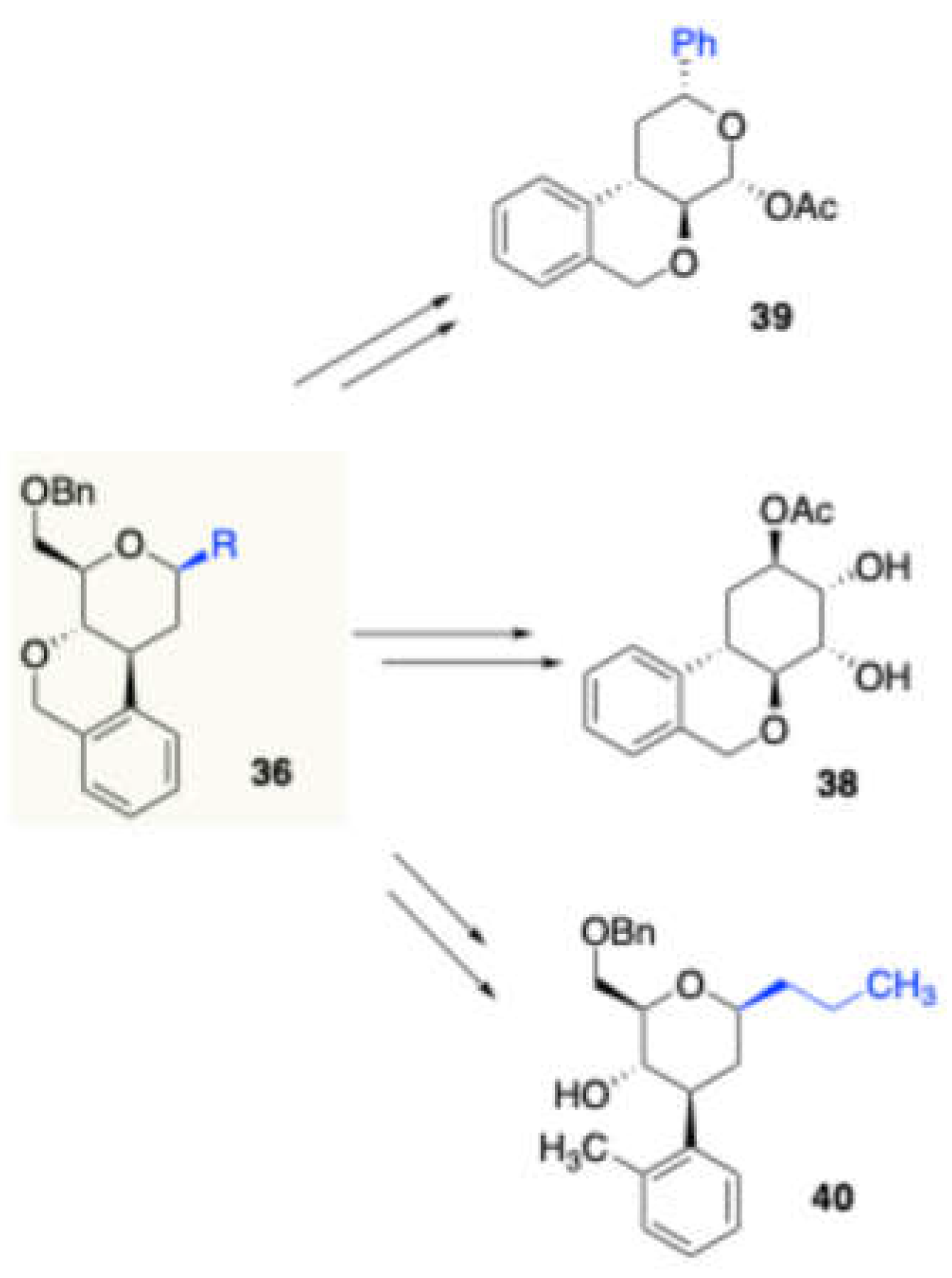
derived homoallylic alcohol 35 was treated with various carbonyl compounds in the presence of BF₃·OEt₂ in DCM, yielding 2-deoxy-3,4-fused isochroman derivatives 36/37 in good to excellent yields. The authors further modified these products to obtain potentially bioactive scaffolds 38, 39, and 40 (Scheme 18).
Scheme 17.
Synthesis of 1C-aryl/alkyl fused isochroman derivatives.
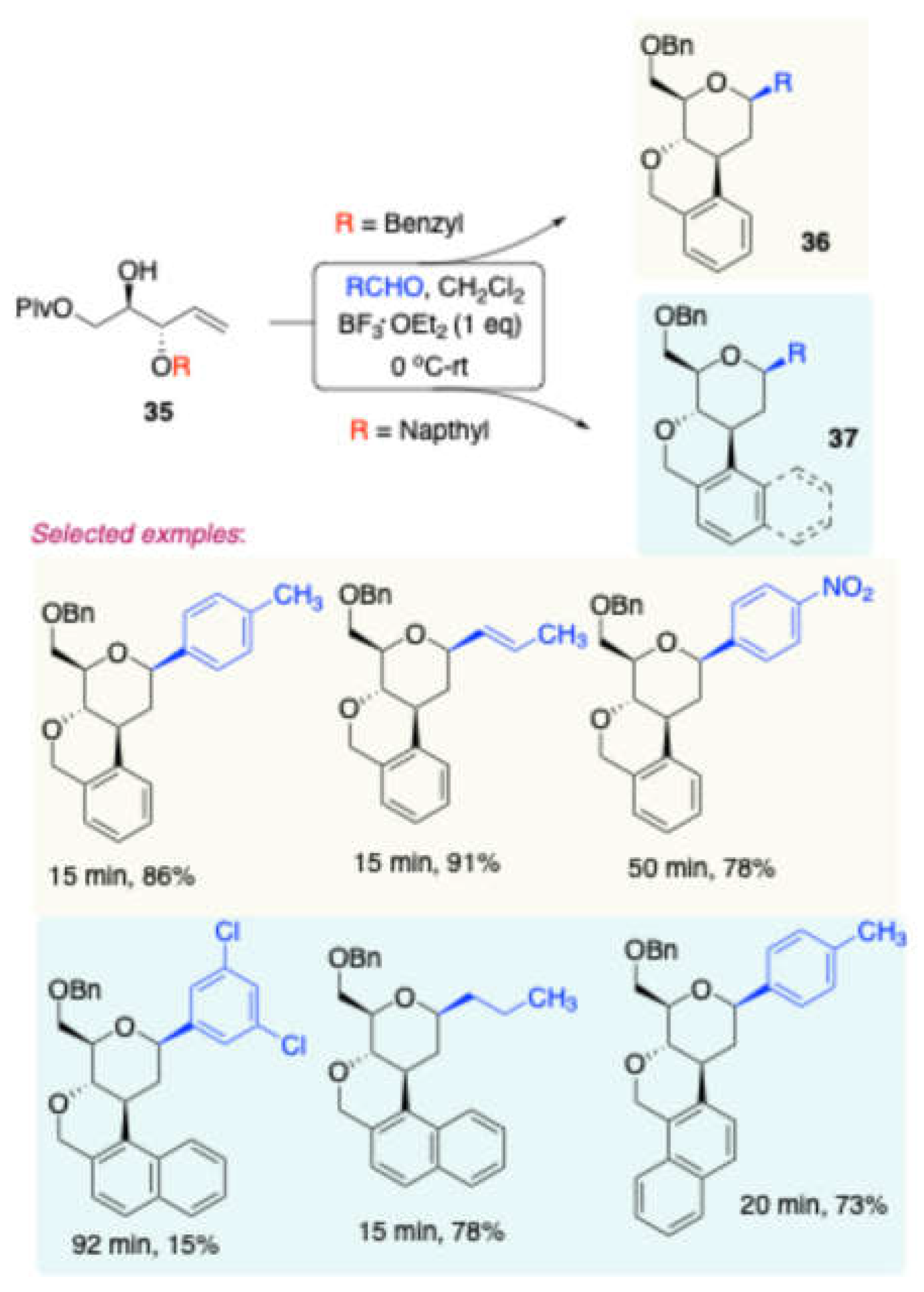
Scheme 18.
Derivatization of sugar fused isochroman derivatives.
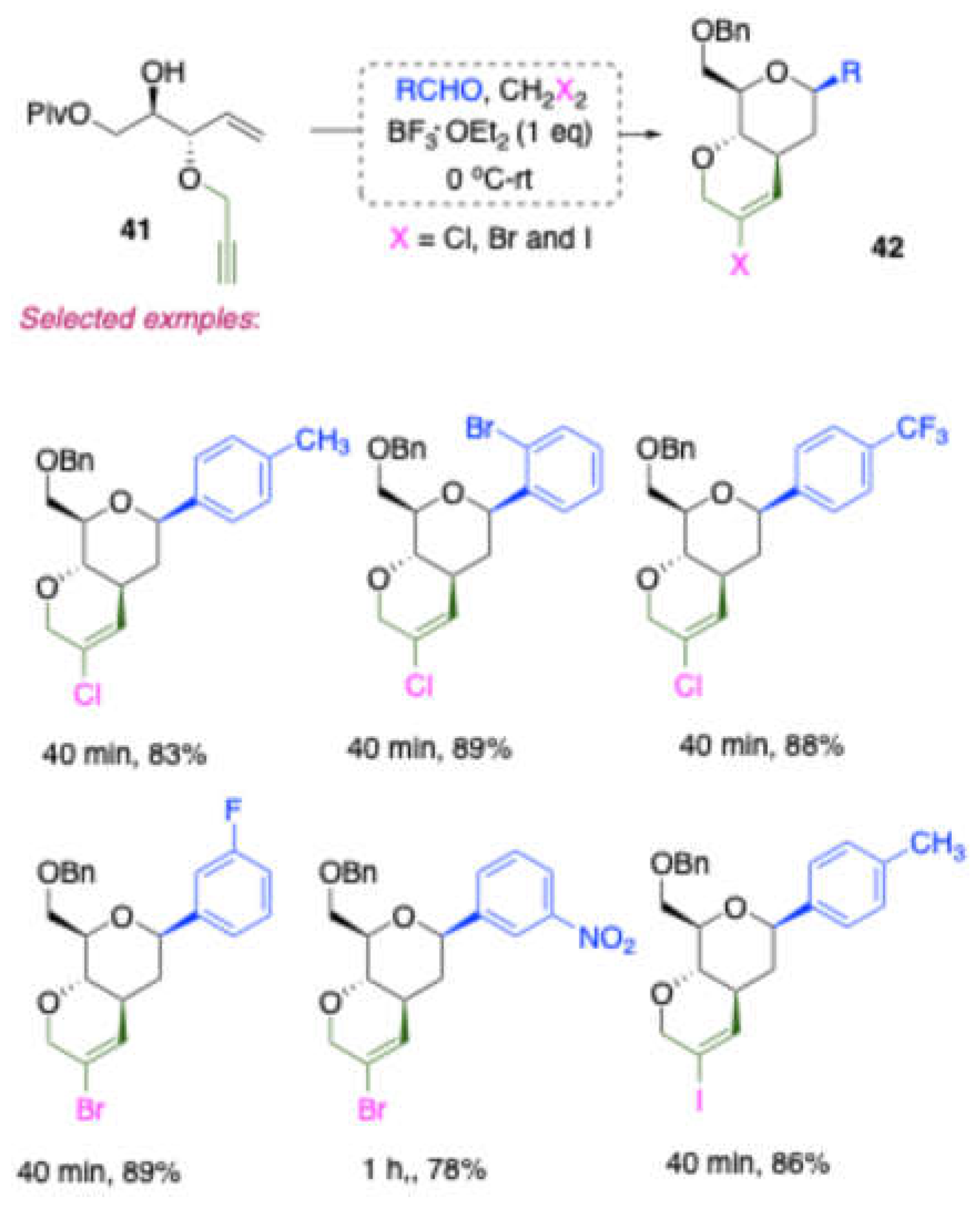
Using similar reaction conditions, but with a D-mannitol-derived homoallylic alcohol protected with a propargyl group, Dubbu and Vankar obtained [11] 1C-aryl/alkyl-fused bicyclic vinyl halide derivatives 42 in good to excellent yields x. The halogen abstraction was achieved through the use of halogenated solvents. Depending on the solvent used—CH₂Cl₂, CH₂Br₂, CH₃I, etc.—the products obtained were 1C-aryl/alkyl-fused bicyclic vinyl chloride, vinyl bromide, or vinyl iodide derivatives, respectively.
Scheme 19.
Synthesis of 1C-aryl/alkyl fused bicyclic vinyl halide derivatives.
By applying similar reaction conditions, Dubbu and Vankar further transformed[11] the D-mannitol-derived homoallylic alcohol 35, protected with allyl and substituted allyl groups, to synthesize 1C-aryl/alkyl-fused bicyclic fluorine-substituted tetrahydropyran and furan derivatives 43/44, achieving good to excellent yields (Scheme 20).
In 2019, Vankar reported the stereoselective synthesis of 3-deoxy-3C-formyl β-C-aryl/alkyl furanosides 46 (Scheme 21) through a cascade Prins reaction followed by a pinacol-type rearrangement. [12] This transformation involved an –OTBDPS-protected homoallylic alcohol 45, derived from D-mannitol, reacting with various carbonyl compounds in the presence of BF₃·OEt₂ in DCM. The reaction provided excellent yields and high selectivity.
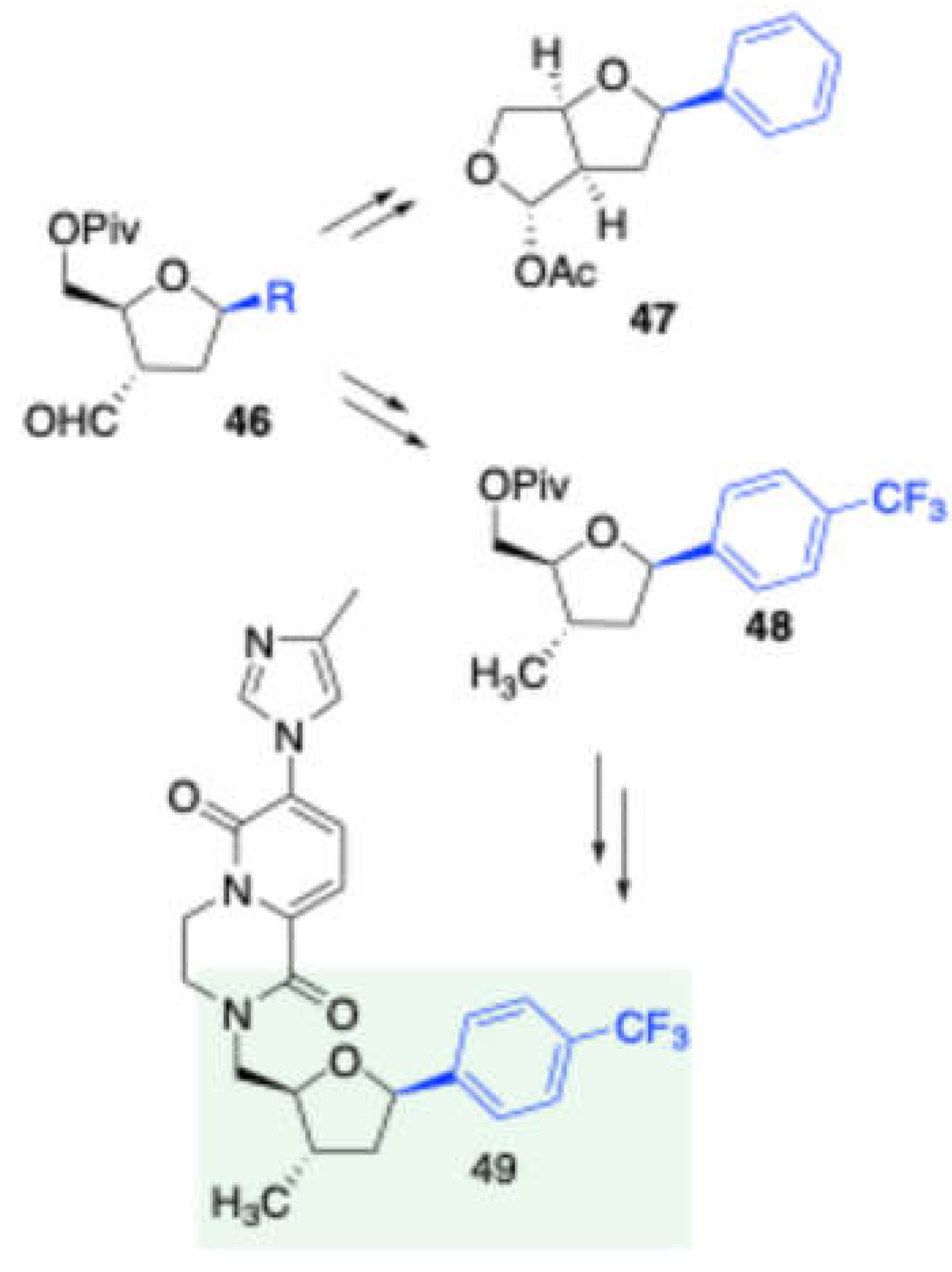
Furthermore, (Scheme 22) this method was effectively applied to synthesize a fused-bicyclic β-C-aryl furanoside moiety 47 and a 2,3-dideoxy-3C-methyl β-C-aryl furanoside 48, both of which are found in the core structures of bioactive molecules.
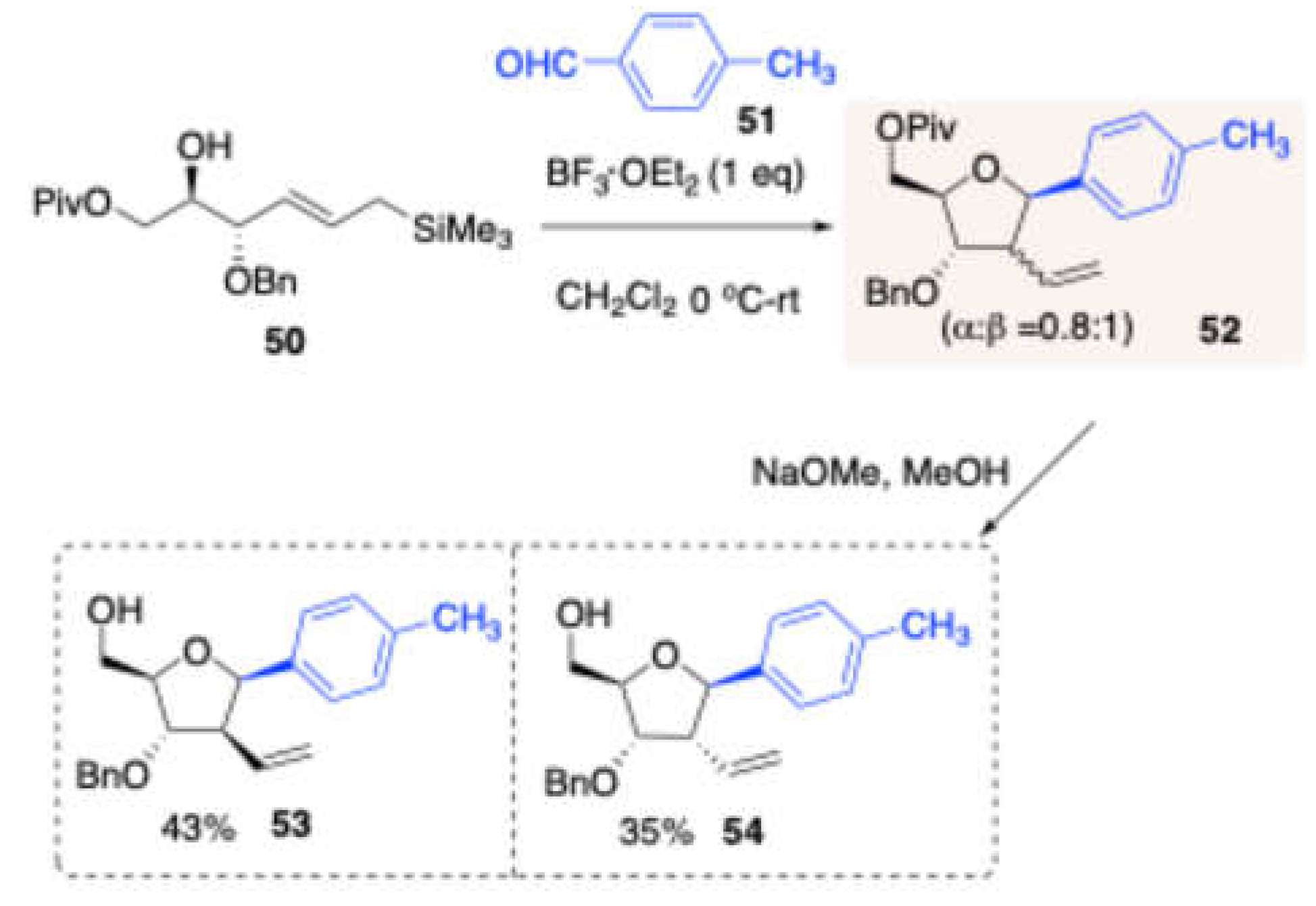
Later, Vankar and co-workers optimized (Scheme 23) the Sakurai-Prins reaction of a D-mannitol-derived homologated allylsilane homoallylic alcohol 48 with p-tolualdehyde 51 in the presence of BF₃·OEt₂.[12] This reaction yielded 2-deoxy-2C-branched β-C-aryl furanosides in good yield (84%) as an inseparable diastereomeric mixture (α:β = 0.8:1 ratio) (Scheme 9). To separate the stereoisomers, compound 48 was subsequently deprotected at the –OPiv group using NaOMe/MeOH, resulting in diastereomers 53 and 54, which were then separated by column chromatography with yields of 43% and 35%, respectively.
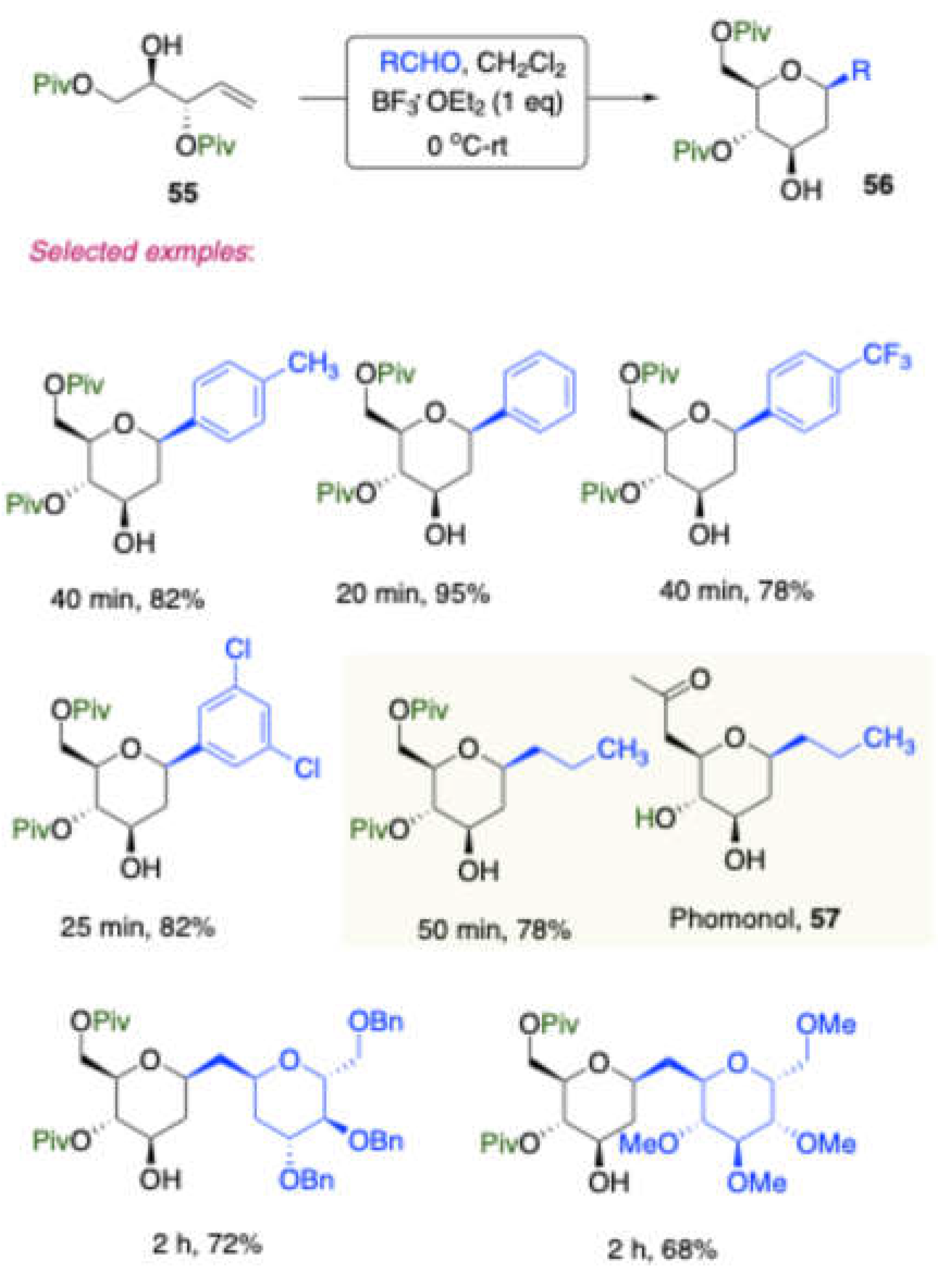
Vankar and co-workers further synthesized[13] a non-participating protecting group at allylic position of D-mannitol derived homoallylic alcohol 55 and
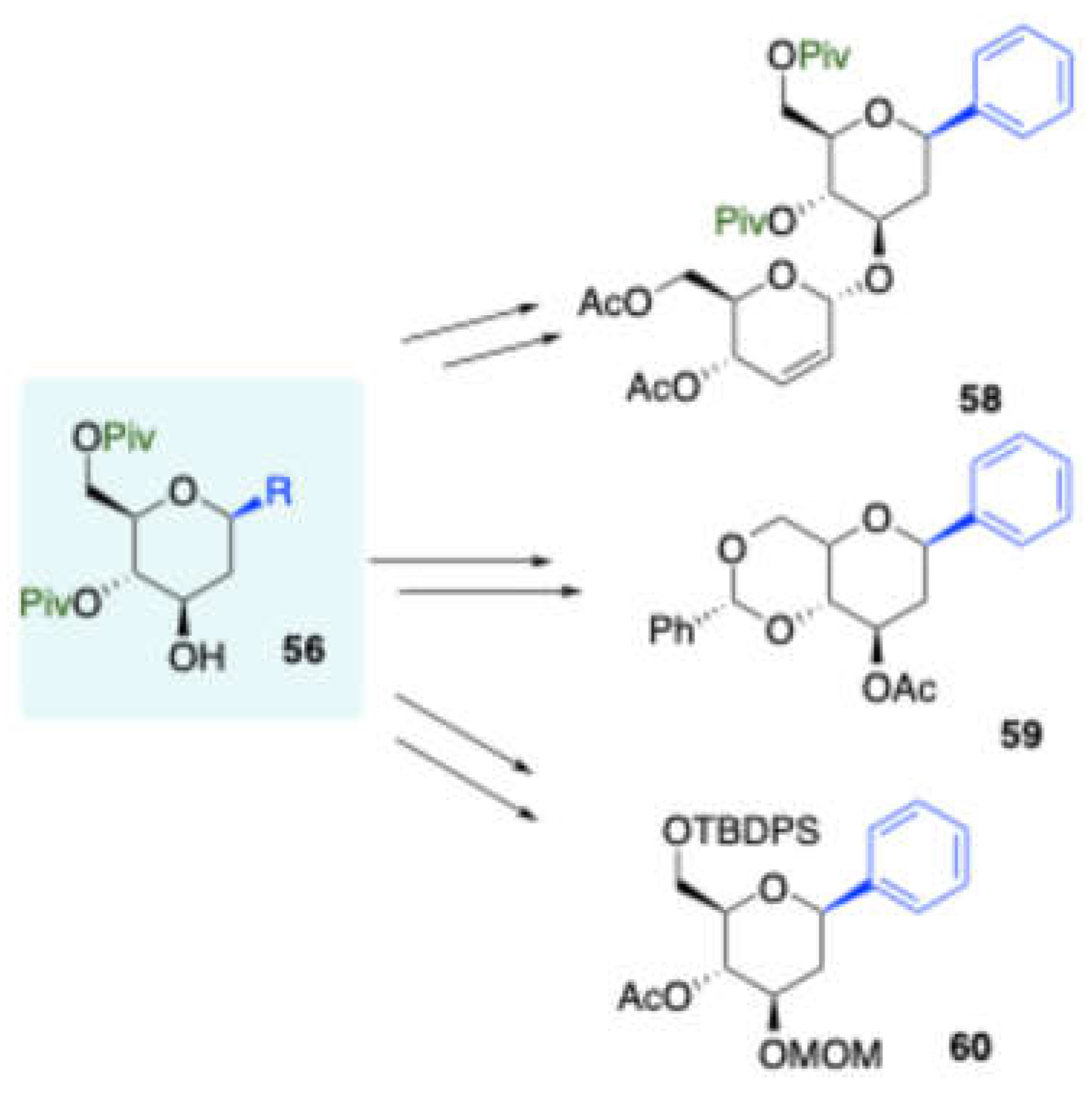
which was subjected to the Prins reaction with a vairy of aldehydes in the presence of BF3·OEt2 as a catalyst and led to stereoselective 2-deoxy-C-aryl/alkyl glycosides 56 (Scheme 24). The synthetic versatility of this approach has been demonstrated in the synthesis of C-disaccharide and O-linked disaccharides 58, and differently protected 2-deoxy-β-C-aryl glycosides 59,60 (Scheme 25).
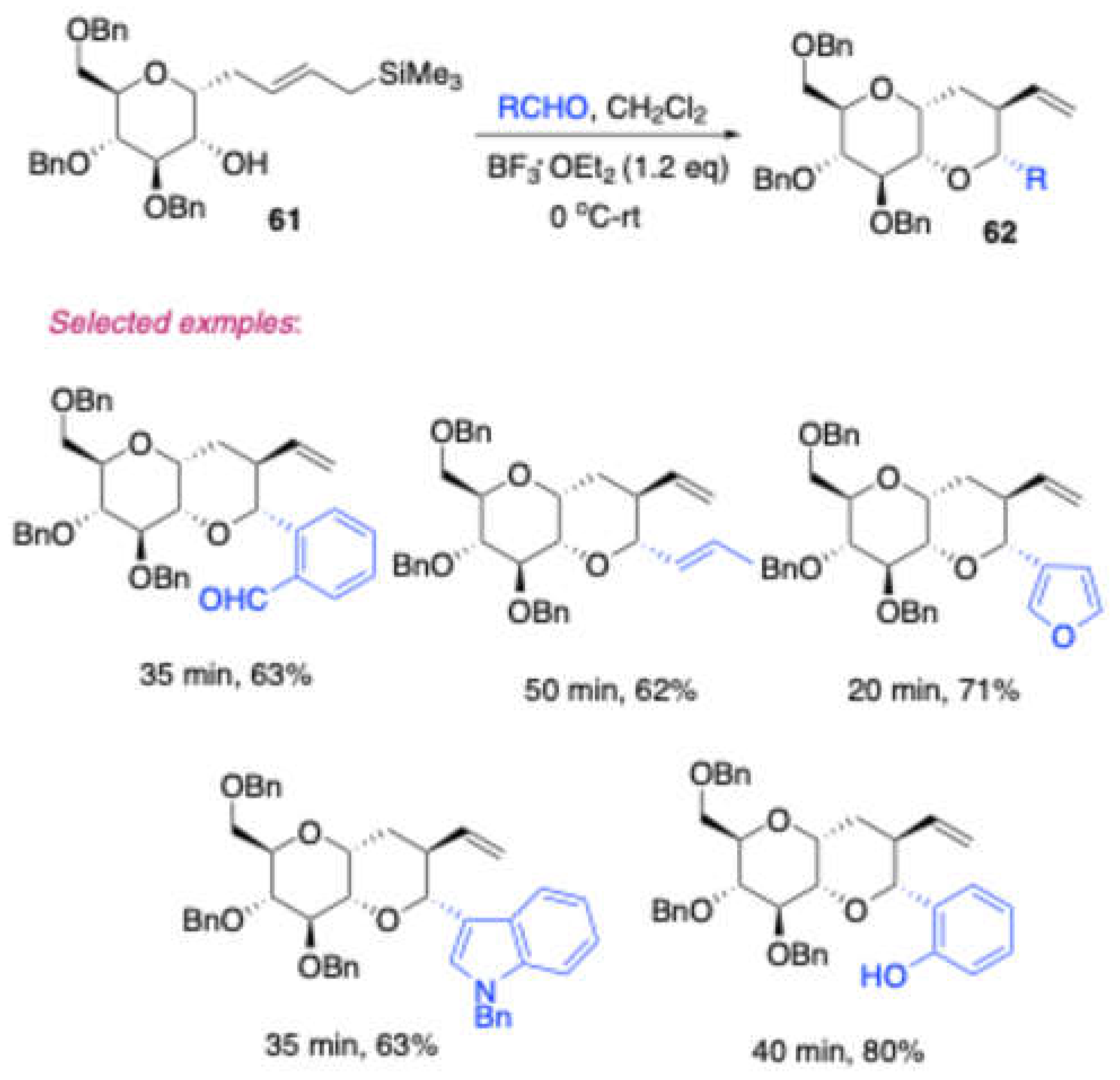
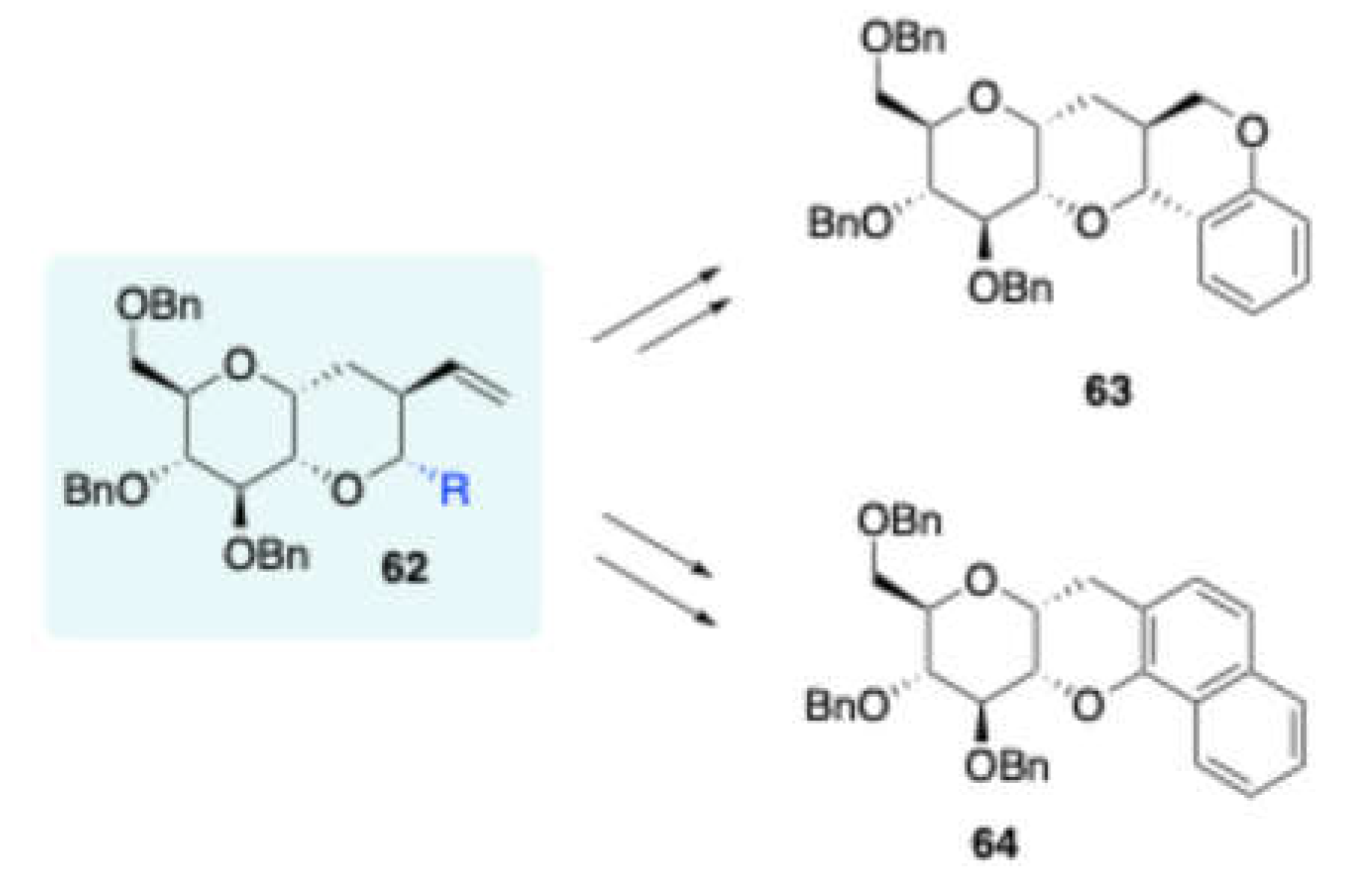
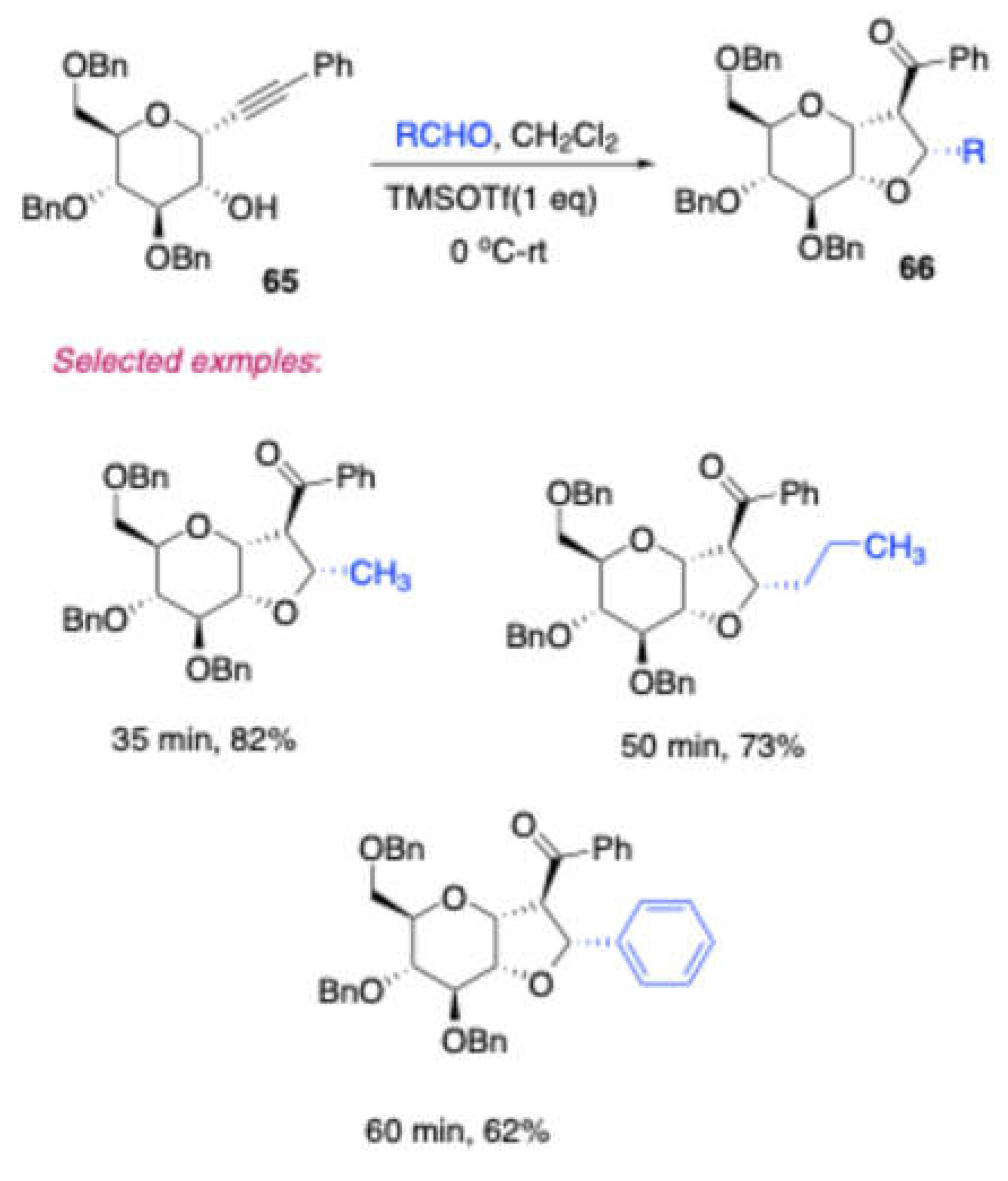
tetrahydropyran fused sugar derivaties 62 by the reaction of a D-glucose derived alcohol 61 with various carbonyl compounds in the presence of BF3 ∙ Et2O, via Prins cyclization. The obtained products were converted to more useful scaffolds cis-sugar fused pyrano[3,2-c][1]benzopyran 63 and cis-sugar fused 4H-naptho [1,2-b] pyran 64 (Scheme 27). Further studied that in the presence of TMSOTf, 1,2-annulated tetrahydrofuran fused sugar derivatives were obtained in moderate to excellent yields from D-glucose derived homopropargyl alcohol 65 and few aldehydes (Scheme 28).
2.2. Non-Carbohydrate Synthons to Carbohydrate Scaffolds
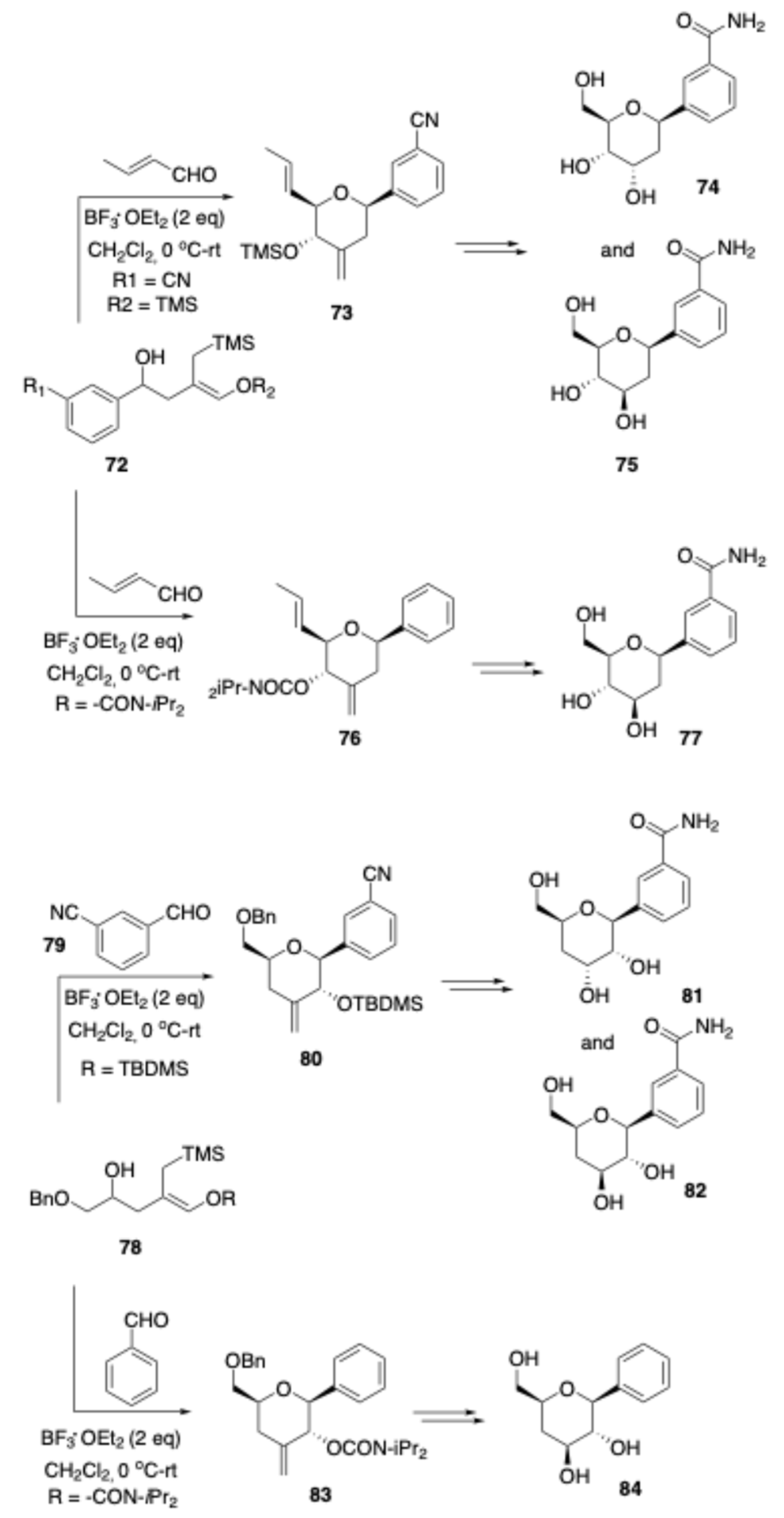
Besides exhibiting excellent biological activities, the carbohydrate-derived deoxy-C-aryl glycosides were found to be versatile substrates for the synthesis of various skeletal frameworks. Deoxy-C-aryl glycoside is a common structural motif found in a number of biologically relevant compounds, such as aquayamycin Adriamycin, pluramycin A, and kidamycin. An efficiently non-carbohydrate synthons source to sugar sketons by applying Prins reaction is a topic which has seen extensive study since the midtwentieth century.[32] Within this reaction manifold, Migaud and co-workers reported [16] stereoselective synthesis of noncarbohydrate-based core sugar skeleton 73 via sakuri Prins cyclization of alcohol 72 with crotanaldehyde. The core sugar skeleton 73 further, the hydroxyl groups at C-6 and C-3 were introduced by oxidative cleavage of the alkenes in 73 followed by reduction of the dicarbonyl intermediate. Subsequent acetylation of these hydroxyls, purification, and acetyl removal then yielded the final C-nucleosides 74 and 75. Following the same reaction sequences and protocols, the synthesis of deoxy-C-aryl glycosides 77, 81, 82 and 84 were achieved using alcohol 72, 78 as a building block respectively.
Scheme 30.
Synthesis of deoxy-C-aryl glycosides from noncarbohydrate-based starting materials.
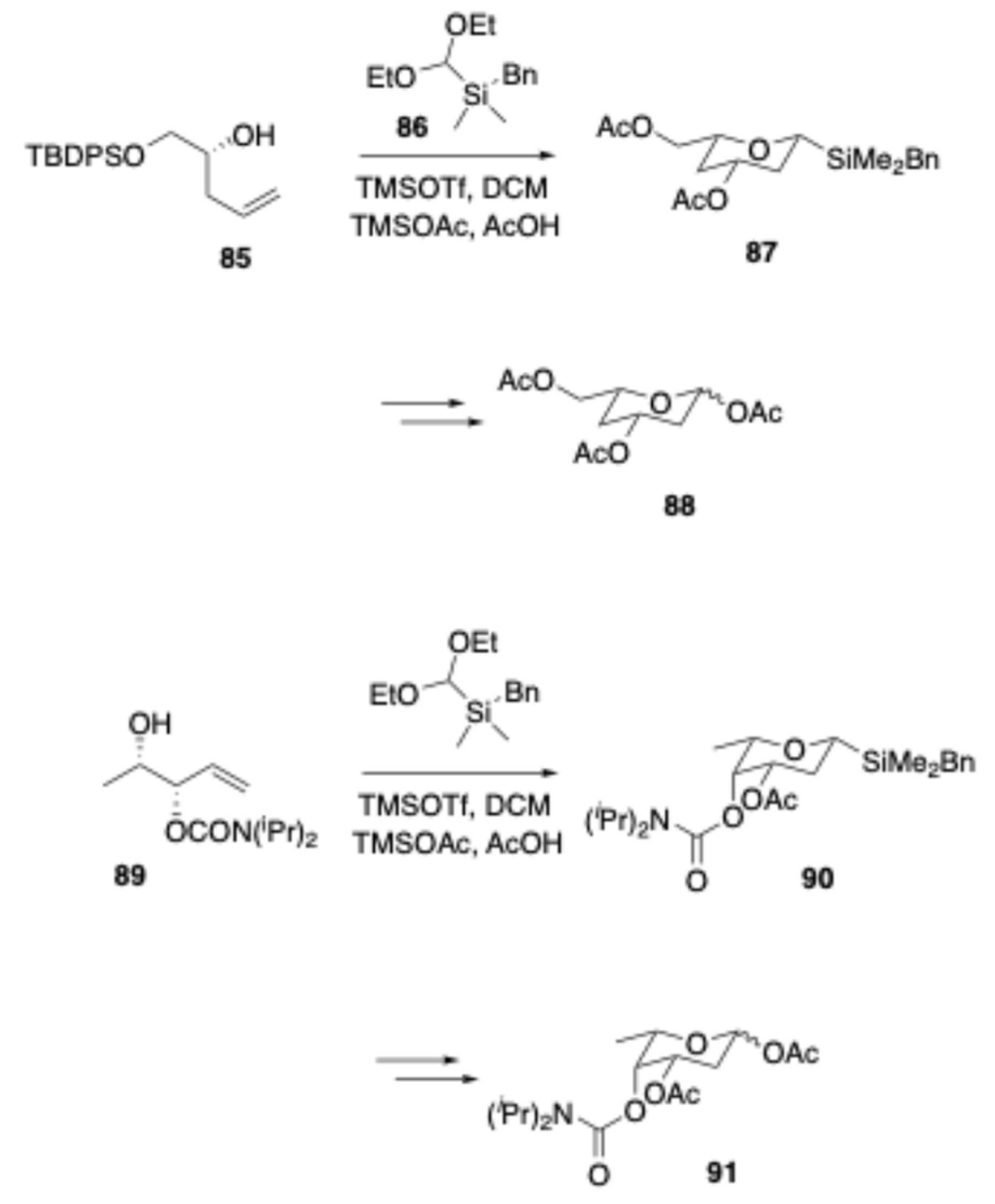
In 2016, Galan and coworkers reported[17] a de novo approach for the rapid construction of orthogonally protected L- and D-deoxysugars and analogues via Prins cyclization. In this approach, homoallylic alcohol 85 was treated with aldehyde 86 in the presence of TMSOTf and TMSOAc/AcOH, resulting in the formation of silyltetrahydropyran 87 in good to excellent yield. This compound was subsequently subjected to Tamao–Fleming oxidation, leading to the formation of 2,4-dideoxysugar 88. By applying a similar reaction, compound 89 was converted into the 2,6-dideoxysugar 91.
Scheme 31.
Synthesis of dideoxysugars from silyltetrahydropyrans and noncarbohydrate-based starting materials via Prins reaction.
Scheme 31.
Synthesis of dideoxysugars from silyltetrahydropyrans and noncarbohydrate-based starting materials via Prins reaction.
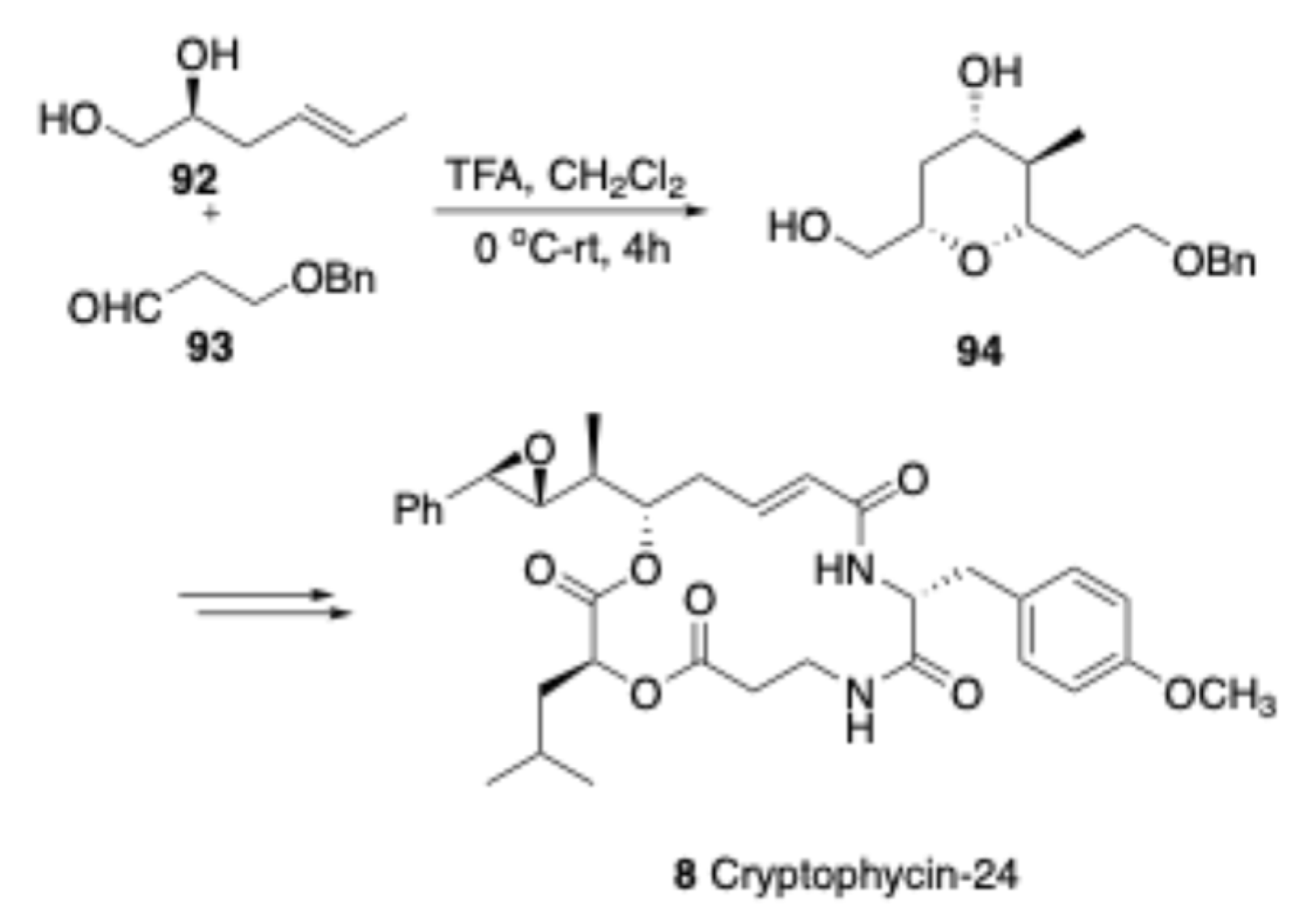
In 2016, Yadav and co-workers[18] demonstrated a diastereoselective formal synthesis of cryptophycin-24. The key step for constructing the core center involved a Prins cyclization of homoallylic alcohol 92 with aldehyde 93 in the presence of TFA in DCM, yielding core sugar skeleton 94. Furthermore, this methodology was extended for the total synthesis of the natural product cryptophycin-24.
Scheme 32.
Synthesis of cryptophycin-24 from noncarbohydrate-based starting materials via Prins reaction.
Scheme 32.
Synthesis of cryptophycin-24 from noncarbohydrate-based starting materials via Prins reaction.
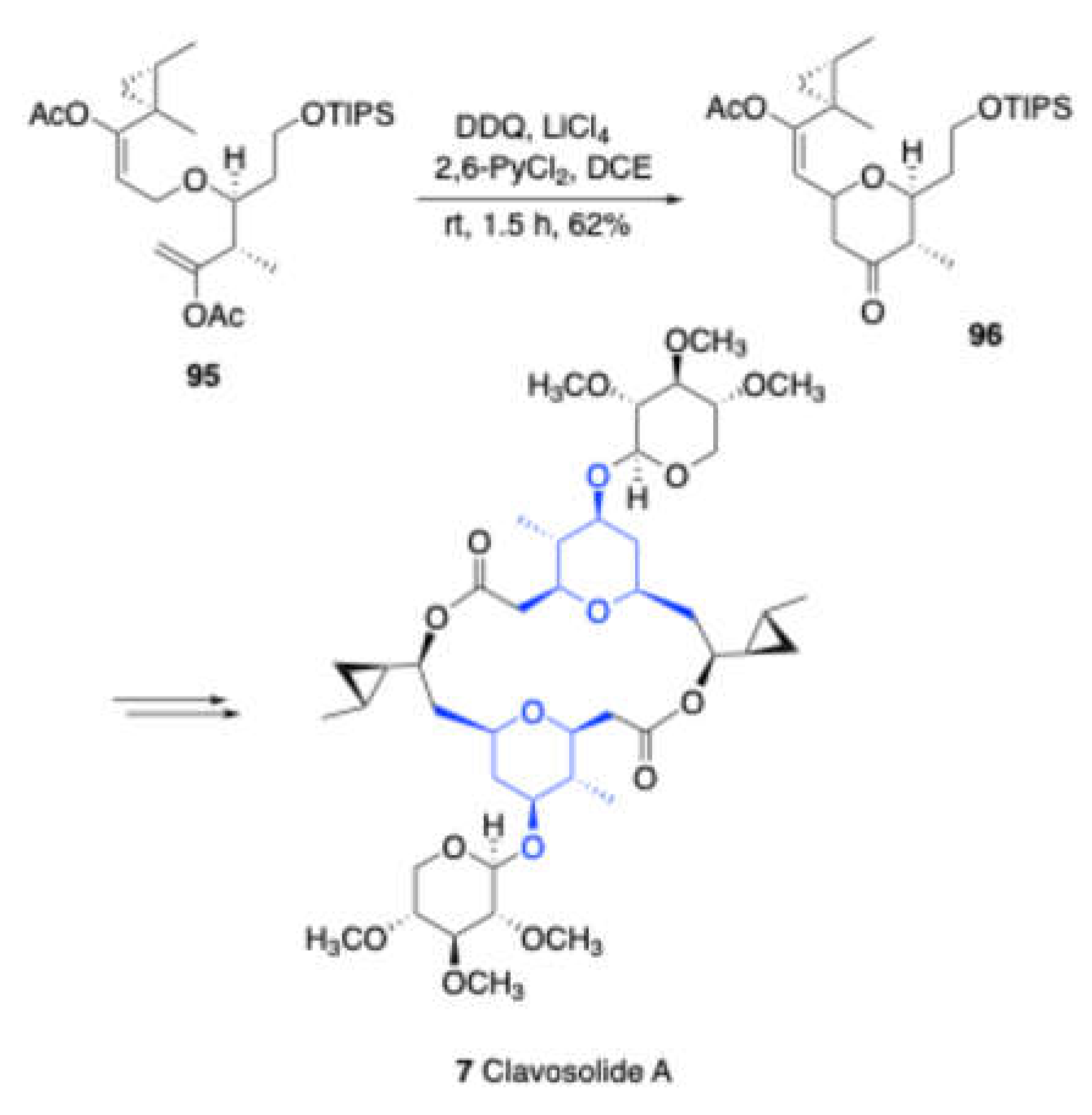
In 2012, Floreancig and Peh reported[19] a DDQ-mediated oxidative intramolecular Prins cyclization of compound 95, yielding sugar core 96 in moderate yield (Scheme 33). This reaction proceeds via a diene-type intermediate.
In 2010, Lee and Woo reported[20]a intramolecular prins reaction of 97 in the presence of TMSOTf and
Scheme 34.
Total synthesis of (-)-Polycavernoside A 9 via Prins reaction.
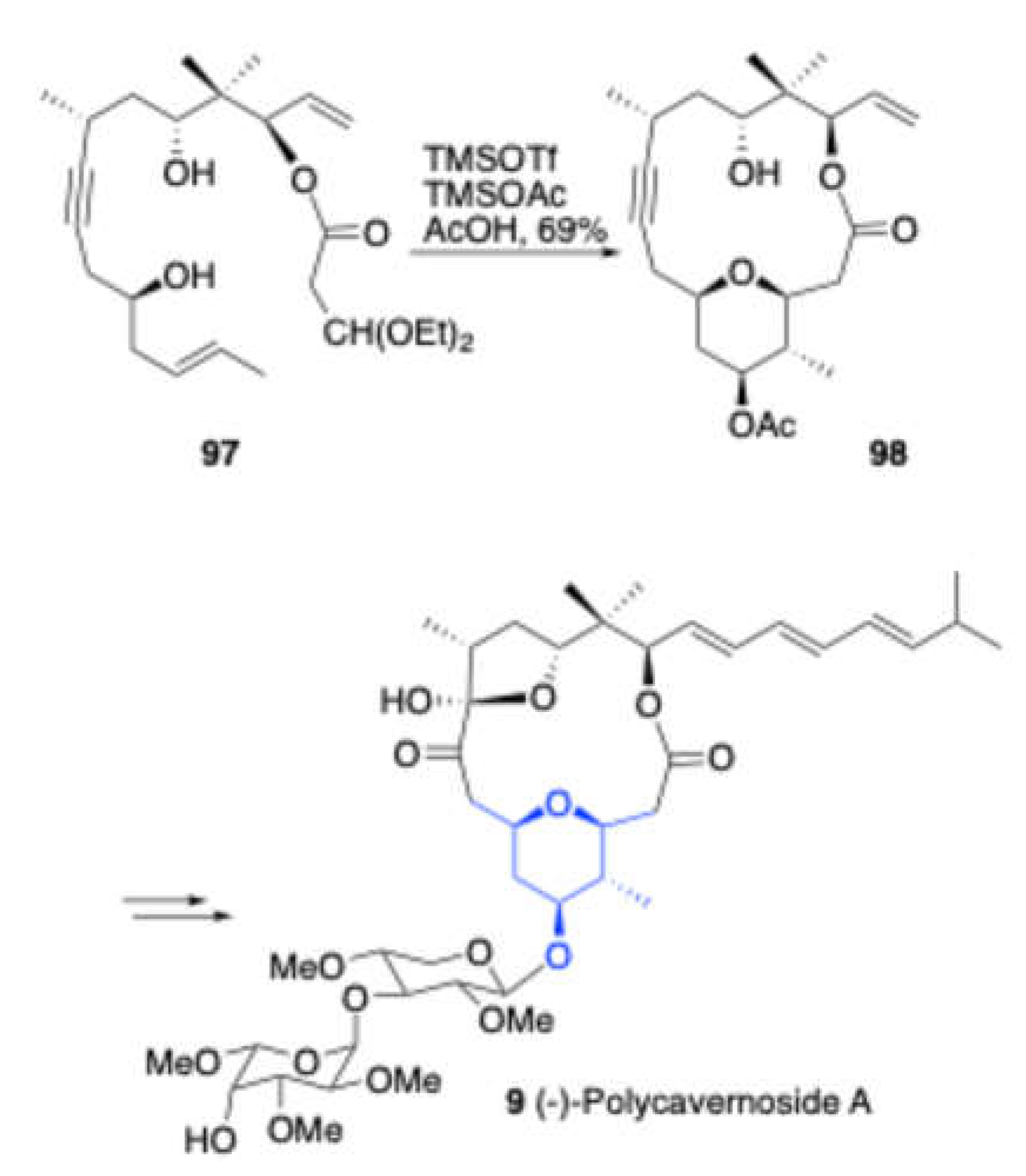
TMSOAc/AcOH, resulting in the formation of sugar core 98 in good yield. This compound was further subsequently used for the total synthesis of (-)-Polycavernoside A 7.
3. Conclusions
Carbohydrate-based structures are of high interest in glycochemistry due to their crucial roles in biological systems. Recent innovations have introduced both direct and indirect methods to synthesize sugar moieties effectively. Notably, the Prins reaction—a process involving homoallylic alcohols and carbonyl compounds—has become a valuable approach for constructing sugar backbones. This review delves into various Prins reaction techniques for assembling carbohydrate frameworks, highlighting the use of both traditional carbohydrate precursors and alternative non-carbohydrate starting materials.
Author Contributions
SD Writing – review & editing, Writing – original draft, Visualization, Supervision, Methodology, Conceptualization. SJ Writing – review & editing, Writing – original draft.
Acknowledgments
SD gratefully acknowledge the University of Illinois Urbana-Champaign for infrastructure. SJ gratefully acknowledge The University of British Columbia.
References
- Biswas, S. Ghotekar, B.K. Kulkarni, S.S. Org. Lett., 2021, 23, 15, 6137-6142. b) Paul, A. Kulkarni, S.S. Chem. Rec., 2021, 21, 1-15. c) P, Luong. Antara, G. Karen D. Moulton, S.S. Kulkarni, Danielle, H. D, ACS Infect. Dis. 2022, 8, 4, 889–900.
- Doro, F. Akeroyd, N. Schiet, F. Narula, A. Angew. Chem., Int. Ed 2019, 58, 7174−7179. (b) Diez-Poza, C.; Barbero, A. Eur. J. Org. Chem. 2017, 4651−4665. c) SubbaReddy, B.V. Nair, P.N.; Antony, A.; Lalli, C.; Gree, R. Eur. J.Org. Chem. 2017, 1805−1819. d) Snider, B.B., In Comprehensive Organic Synthesis II, 2nd ed.; Knochel, P., Ed.; Elsevier: Amsterdam, 2014; pp 148−191. Ellis, J.M.; Crimmins, M.T. Chem. Rev. 2008, 108, 5278−5298. e) Clarke, P.A.; Santos, S. Eur. J. Org. Chem. 2006, 2045−2053. f) Overman, L.E.; Pennington, L.D.J. Org. Chem. 2003, 68, 7143−7157.
- Yadava, J.S.; Reddy, B.V. S.; Singh, A.P.; Dudhmal, N.C.; Deepak, C.; Kunwar, A.C. Tetrahedron Lett. 2010, 51, 1475–1478. [CrossRef]
- Reddy, B.V.S.; Dudhmal, N.C.; Yadava, J.S.; Deepak, C.; Kunwar, A.C. Tetrahedron Lett. 2011, 52, 2961–2964. [CrossRef]
- Reddy, B.V.S.; Ganesh, A.; Siva Krishna, V.A.; Narayana Kumar, G.G.K.S.; Yadav, J.S. Tetrahedron Lett. 2011, 52, 3342–3344. [CrossRef]
- Lambua, M.R.; Mukherjee, D. RSC Adv. 2014, 4, 37908. [CrossRef]
- Pérez, S.J.; Miranda, P.O.; Cruz, D.A.; Fernández, I.; Martín, V.S.; Padrón, J.I. Synthesis 2015, 47, 1791–1798.
- Manami, C.; Yuichi, I.; Ryuichi, S.; Masato, O. ACS Comb. Sci. 2016, 18, 399–404.
- Parasuraman, R.; Govind, P.S.; Mohammad, H.; Yashwant, D.V. Chem. Eur. J. 2016, 22, 18383–18387.
- Parasuraman, R.; Yakkala, M.; Yashwant, D.V. Synlett 2017, 28, 1346–1352.
- Sateesh, D.; Yashwant, D.V. Eur. J. Org. Chem. 2017, 5986–6002.
- Sateesh, D.; Anirban, B.; Ande, C.; Yashwant, D.V. Eur. J. Org. Chem. 2018, 6800–6808.
- Sateesh, D.; Ande, C.; Ashish, K.V.; Yashwant, D.V. Carbohydrate Res. 2018, 468, 64–68.
- Ande, C.; Sateesh, D.; Kadigachalam, P.; Yashwant, D.V. Eur. J. Org. Chem. 2018, 6706–6713.
- Oriel, H.; Hiyori, I.; Manami, C.; Taiki, N.; Yuichi, T.; Kei, M.; Ryuichi, S.; Yuichi, I.; Masato, O. HETEROCYCLES 2018, 96, 453–460.
- Philip, R.; Simon, M.; Migaud, M.E. Org. Lett. 2008, 10, 3323–3326.
- Ryan, J.B.; Thomas, W.H.; Craig, G.; Galan, M.C.; Christine, L.W. Chem. Sci. 2016, 7, 2743.
- Yadav, J.S.; Purnima, K.V.; Reddy, B.V. S.; Nagaiah, K.; Ghamdi, A.K. Tetrahedron Let. 2011, 52, 6709–6712. [CrossRef]
- Peh, G.R.; Floreancig, P.E. Org. Lett. 2012, 14, 5614–5617. [CrossRef] [PubMed]
- Sang, K.; Woo, E.L.J. Am. Am. Chem. Soc. 2010, 132, 4564–4565.
Scheme 1.
General mechanism for the synthesis of carbohydrate skeleton through Prins reaction.
Scheme 2.
Synthesis of sugar annulated iodotetrahydropyrons.
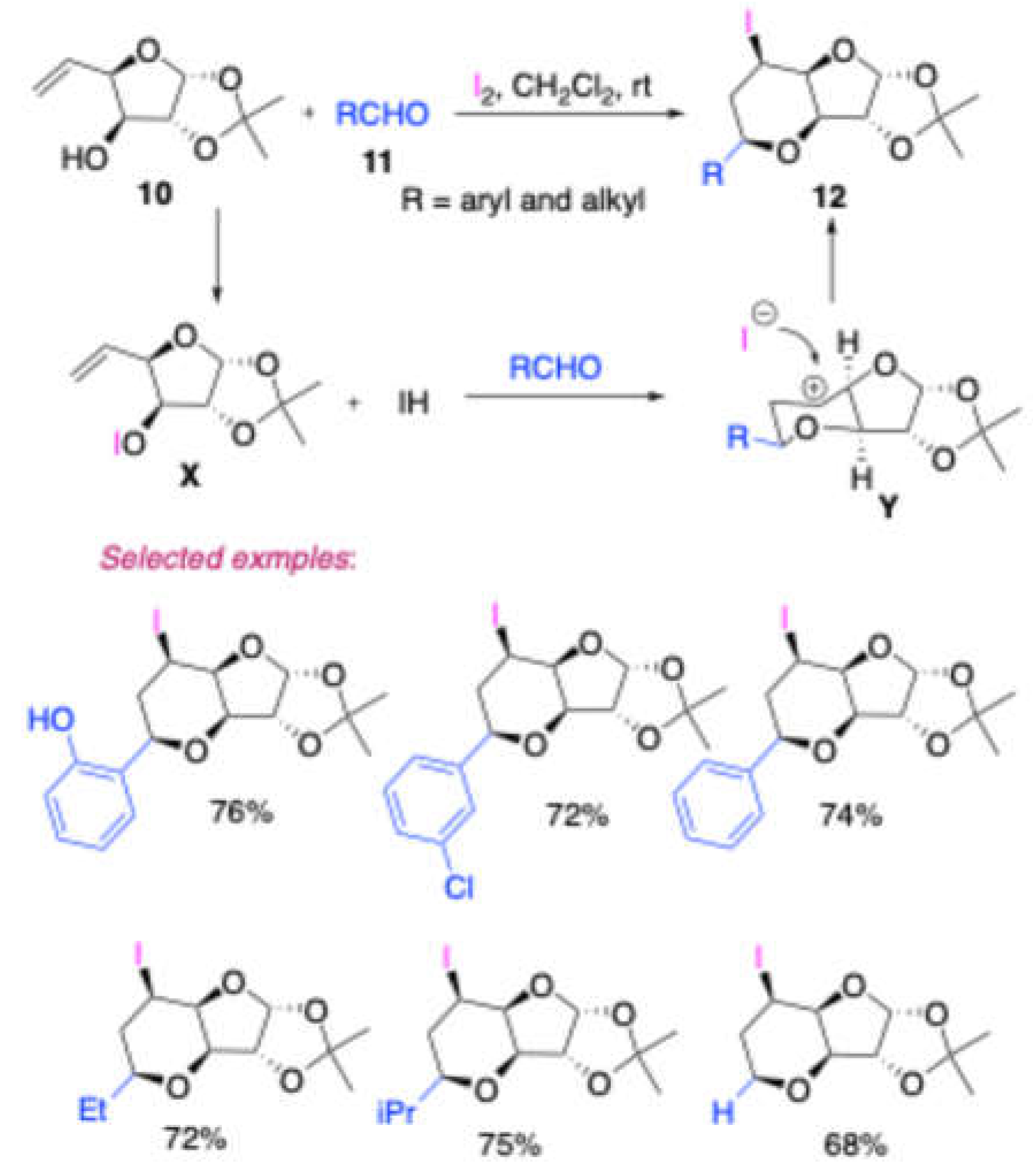
Scheme 3.
Synthesis of sugar-fused diaryl hexahydro-2H-furo[3,2-b]pyran.
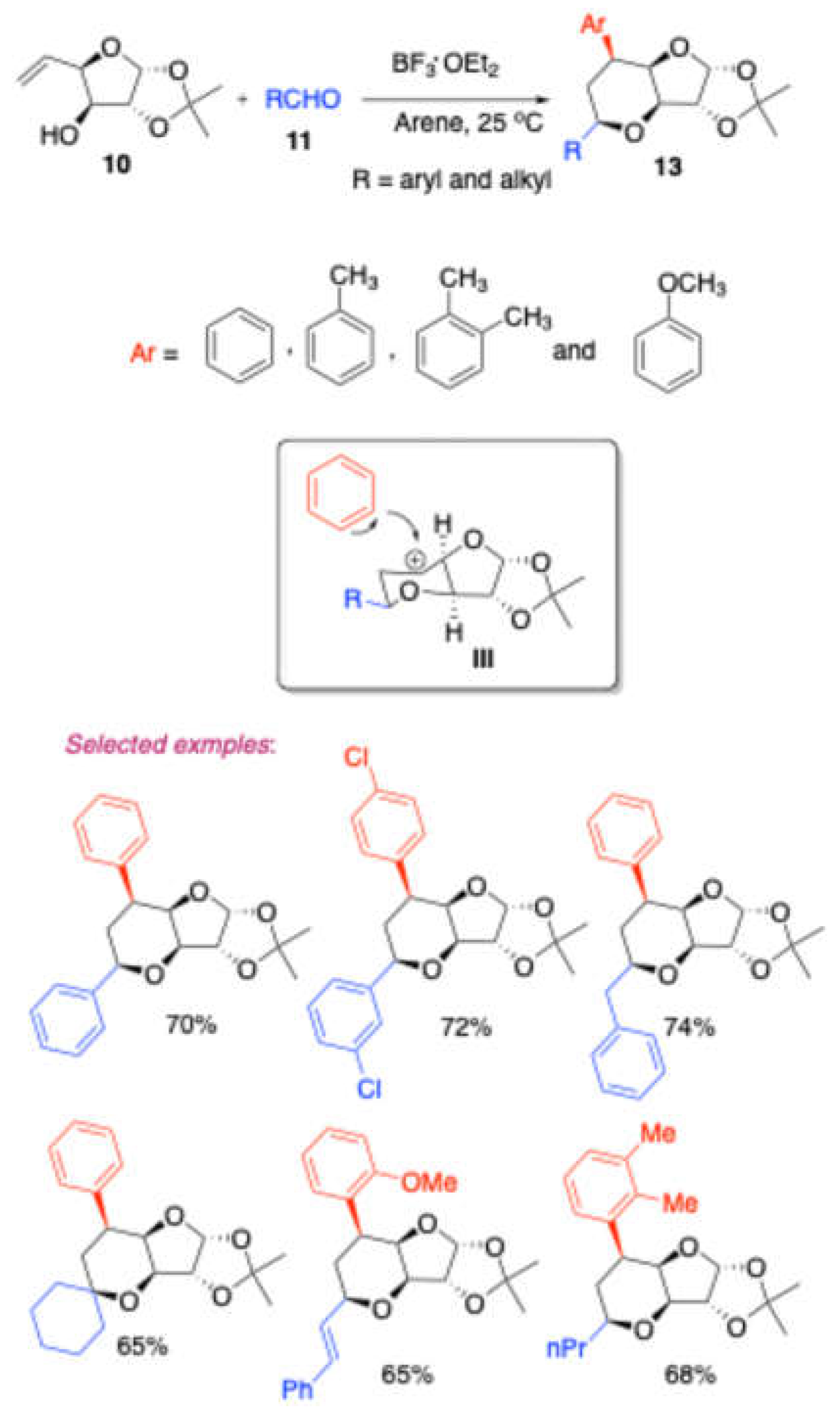
Scheme 4.
Synthesis of sugar fused diaryl hexahydro-2H-furo[3,2-b] pyran 14.
Scheme 5.
Synthesis of hexahydro-2H-furo[3,2-b]pyranopyran scaffold.
Scheme 8.
Synthesis of cis-1-oxadecalines 17 from 2-C-branched sugar 18.
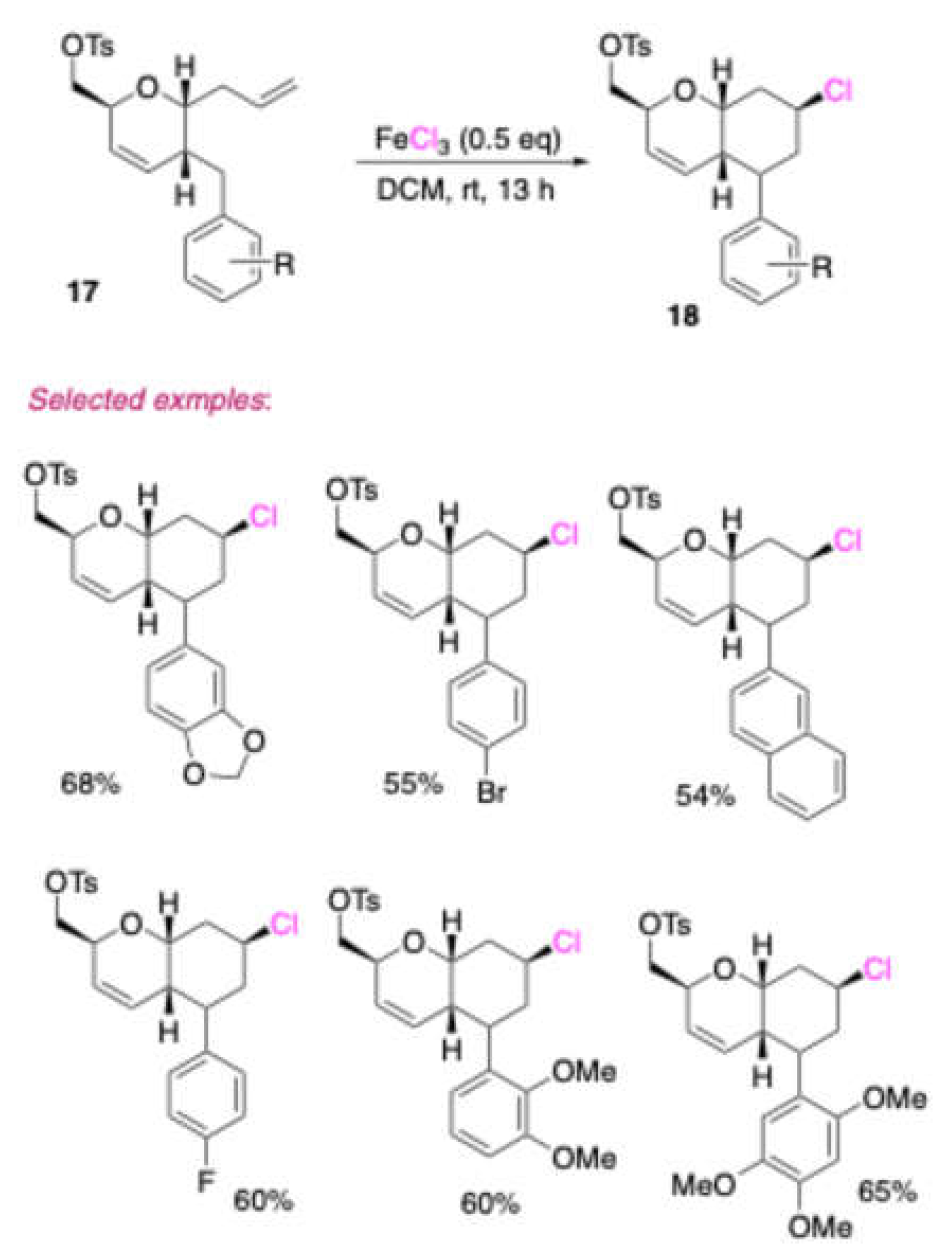
Scheme 9.
Synthesis of trans-fused bicyclic tetrahydropyrans 21 from tri-O-acetyl-D-glucal and α-methyl-D-glucopyranoside.
Scheme 9.
Synthesis of trans-fused bicyclic tetrahydropyrans 21 from tri-O-acetyl-D-glucal and α-methyl-D-glucopyranoside.
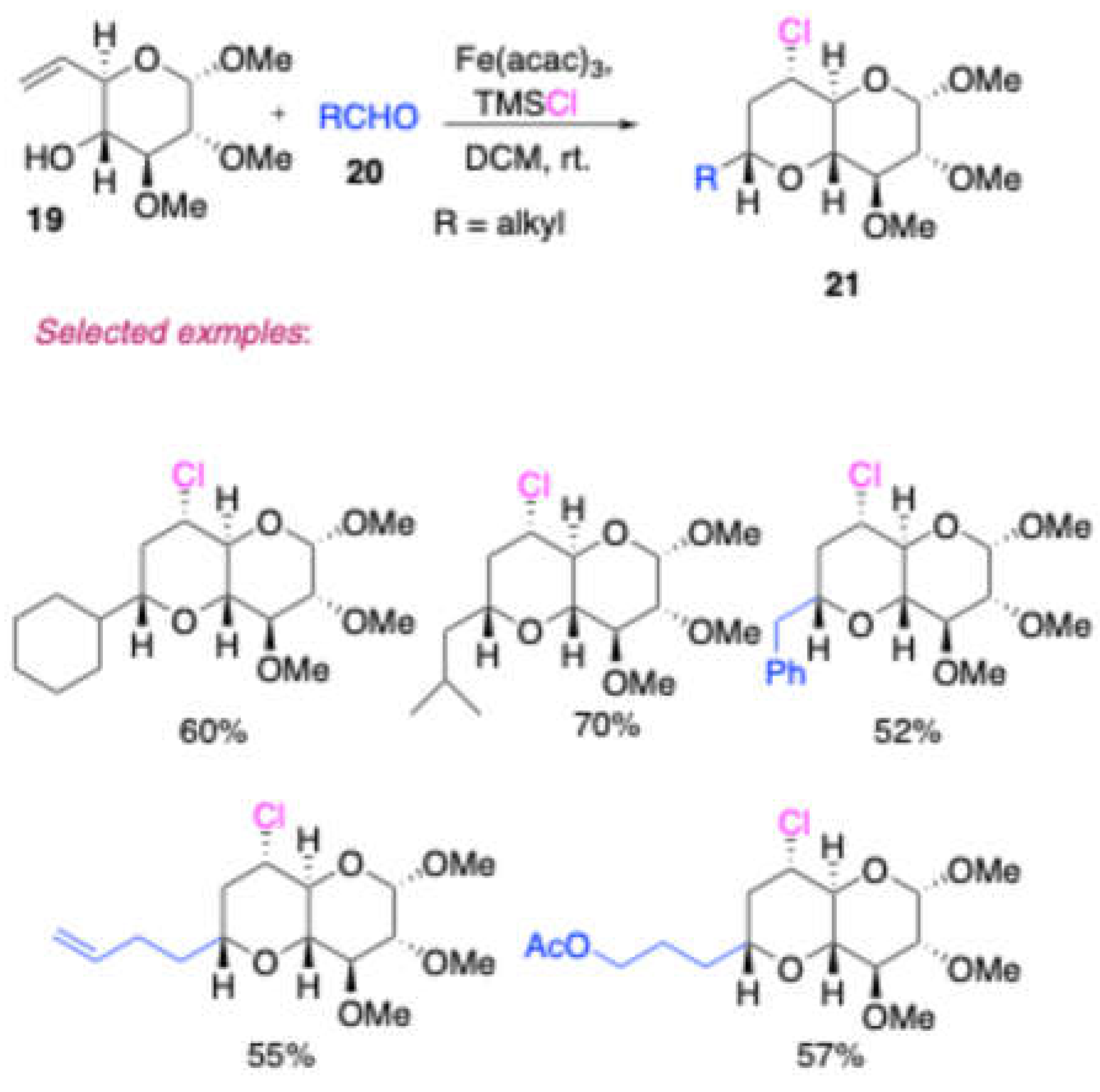
Scheme 15.
Synthesis of 1C-aryl/alkyl 2C-branched sugar fused isochroman derivatives.
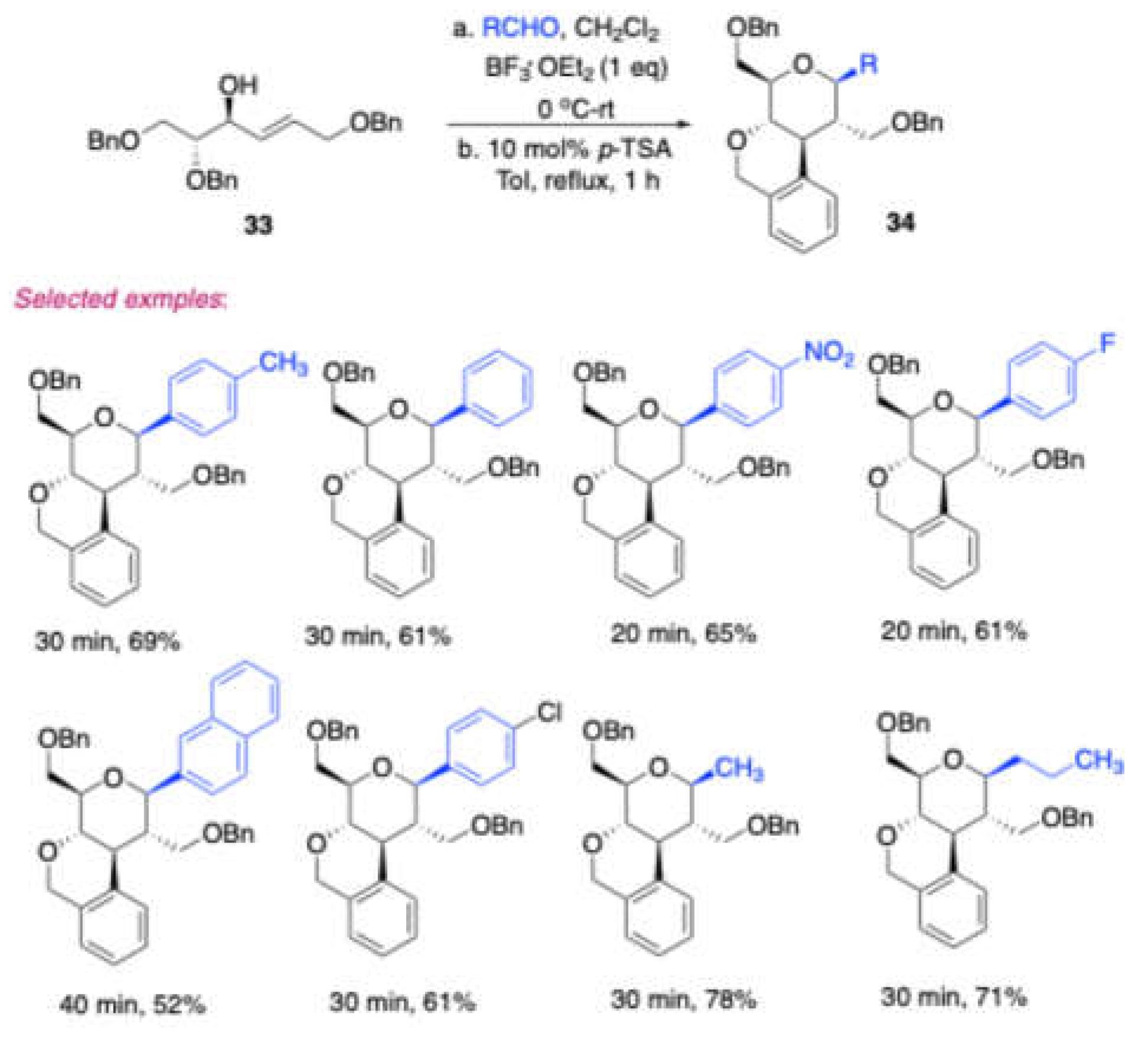
Scheme 20.
Synthesis of 1C-aryl/alkyl fused bicyclic fluorine substituted tetrahydropyrans and furan derivatives.
Scheme 20.
Synthesis of 1C-aryl/alkyl fused bicyclic fluorine substituted tetrahydropyrans and furan derivatives.
Scheme 21.
Synthesis of 2,3-dideoxy-3C-formyl β-C-aryl/alkyl furanosides 48.
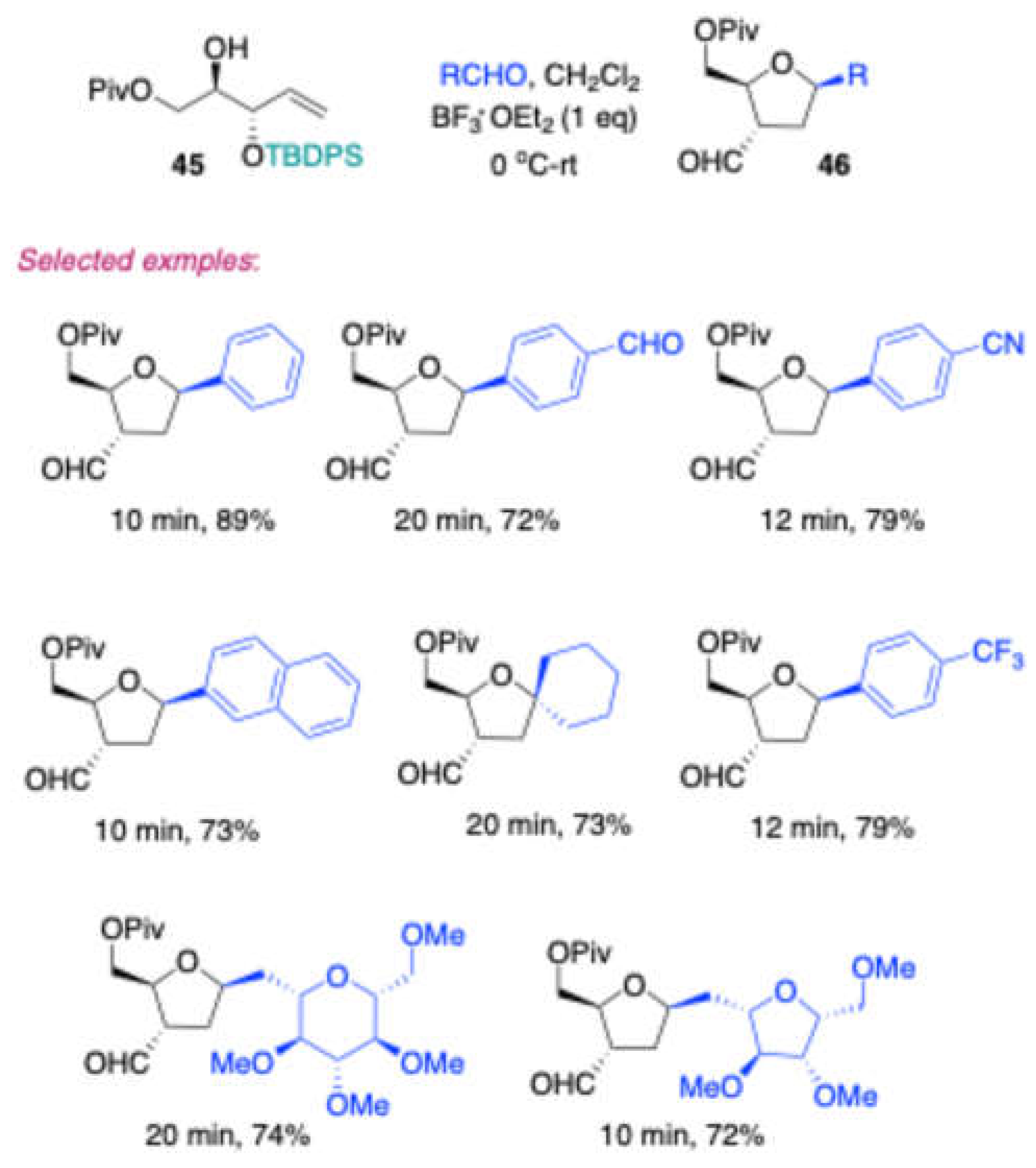
Scheme 22.
Derivatization of 2,3-dideoxy-3C-formyl β-C-aryl/alkyl furanosides.
Scheme 23.
Synthesis of 2-deoxy-2C-branched β-C-aryl furanosides 53 and 54.
Scheme 24.
Synthesis of 2-deoxy-β-C-aryl glycosides 52 from D-mannitol derived homoallylic alcohol 51.
Scheme 24.
Synthesis of 2-deoxy-β-C-aryl glycosides 52 from D-mannitol derived homoallylic alcohol 51.
Scheme 25.
Derivatization of 2-deoxy-β-C-aryl glycosides 56.
Scheme 26.
Synthesis of 1,2-annulated Sugars having substituted tetrahydropyrans 62.
Scheme 27.
Synthesis of cis-sugar fused pyrano[3,2-c][1]benzopyran 63 and cis-sugar fused 4H-naptho [1,2-b] pyran 64.
Scheme 27.
Synthesis of cis-sugar fused pyrano[3,2-c][1]benzopyran 63 and cis-sugar fused 4H-naptho [1,2-b] pyran 64.
Scheme 28.
Synthesis of 1,2-annulated Sugars having substituted tetrahydrofurans 66.
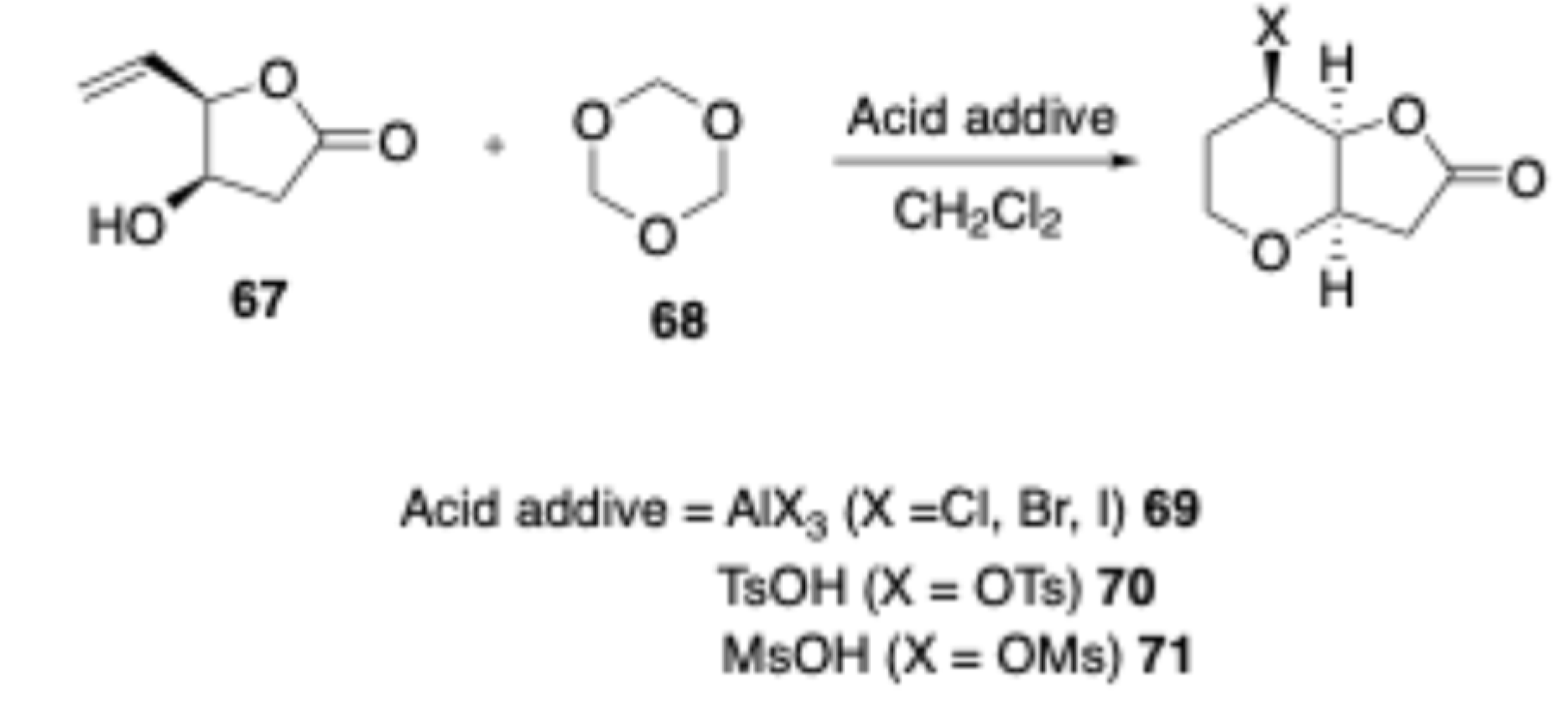
Scheme 29.
Synthesis of trisubstituted cis-fused hexahydro-2H-furo[3,2-b]pyran derivatives 69-71.
Scheme 33.
Total synthesis of Clavosalidde A 7 via Prins reaction.
Disclaimer/Publisher’s Note: The statements, opinions and data contained in all publications are solely those of the individual author(s) and contributor(s) and not of MDPI and/or the editor(s). MDPI and/or the editor(s) disclaim responsibility for any injury to people or property resulting from any ideas, methods, instructions or products referred to in the content. |
© 2024 by the authors. Licensee MDPI, Basel, Switzerland. This article is an open access article distributed under the terms and conditions of the Creative Commons Attribution (CC BY) license (http://creativecommons.org/licenses/by/4.0/).
Copyright: This open access article is published under a Creative Commons CC BY 4.0 license, which permit the free download, distribution, and reuse, provided that the author and preprint are cited in any reuse.


