Preprint
Review

This version is not peer-reviewed.

The Sustainable Power of Herbal Medicine: Bridging Tradition and Ecology

Submitted:

11 November 2024

Posted:

12 November 2024

You are already at the latest version

Abstract

The classic definition of sustainability, disclosed by international organizations, highlights the ability of human actions to meet the present needs without compromising the ability of future generations to meet their own needs. However, sustainability is, in fact, a multidimensional space that covers several important areas for health and the environment. This is because, for millennia, the medicine of traditional peoples is interconnected with nature. The destruction of forests often brings conflicts for land, resources and cultural survival. Another aspect to be considered is that herbal medicine is a sustainable action that is inserted in the dimension of sustainability space. Thus, the purpose of this article is to present, discuss and analyze the contribution of herbal medicines to sustainability, to consider the interdependence between the environmental, social and economic dimensions.

Keywords: 
;  ;  ;  ;  ;  

1. Introduction

Forests are much more than the lungs of the earth, as well as the planet maintaining the ecological balance is also a comfort and spiritual peace of cultural meaning for many communities around the world. In a way, forests control various dimensions of sustainability and human health, and their conservation is fundamental to environmental sustainability and medicinal plants [1].
Throughout history, medicinal plants have played a crucial role not only in healing but also in the formation of the course of human events, sometimes even leading to conflicts and wars. The value of these healing plants was very targeted by the profits that made them much sought after. Ancient and modern empires and civilizations, such as China, Egypt, the Middle East, the USA, and Japan, recognized the importance of certain plants for the treatment of diseases that even arrived at war to conquer them [2,3].
Sustainability is a vast multidimensional space that permeates environmental, social and economic spheres, with hunger, misery and other human factors being inserted in this space, and each action in this space plays a crucial role in the search for the restoration of the health of the planet Earth [4]. We can visualize sustainability as a permeable, dynamic and flexible “membrane” that welcomes and integrates many positive initiatives [5]. This “membrane” is susceptible to continuous growth, accommodating new initiatives and acting as a filter that selects the entry only of truly sustainable practices [6]. The membrane permeability represents the ability to adapt, or resilience, and the necessary evolution to face the environmental and social challenges, constantly changing with time. Each action for sustainability, regardless of its size, is a brick in building a sustainable future, a living cell contributing to the health of a global organism. Thus, individual awareness, community efforts, government policies, and technological innovations form an intricate ecosystem of sustainable practices.
Forests only bring good for climate regulation, maintaining biodiversity and the supply of essential resources, such as medicinal plants. It is noticeable that forest destruction and biodiversity loss are driven by voracious consumption, stimulated by irrational economic growth, resulting in great genetic erosion, altering and weakening ecosystems [7]. These deleterious actions resulted in significant losses of forests around the world, such as biodiversity, mineral resources and marine fauna decline, also boosting global warming and aggravating extreme climate events. The phytotherapeutic use and phytocosmetics, obtained sustainably, promote practices that do not compromise the health of forests.
In addition to environmental losses, forest degradation aggravates social and economic disparities that threaten fragile host ecosystems crucial plants for human well-being. For numerous indigenous populations and rural communities, forests are more than sources of resources, they are sacred spaces that incorporate the essence of their own lives. Plants, rivers and animals present in these ecosystems are closely linked to the identities, traditions and spiritual beliefs of these communities. The survival of the original peoples is strictly linked to the conservation of forests, and the peaceful and harmonic relations developed between them result in mutual gains, such as environmental preservation and knowledge related to medicinal plants. Therefore, the destruction of forests often brings conflicts for land, resources and struggle for sociocultural survival.
The history of human health has always been intertwined with medicinal plants, ancestral knowledge and cultural traditions. Ancestral wisdom suggests observing animal behavior as a guide to safety, identifying the differences between toxic and non-toxic plants, and this comes from deep “roots” in evolutionary interactions between plants and animals. This perspective, based on the observation that fruits are not consumed by other animals, possibly because they carry undesirable properties, is a fascinating manifestation of coevolution between species [8].
Knowledge, practices and techniques of planting and conservation of medicinal plants should be valued by health professionals and programs, which often have little knowledge about the therapeutic indications of traditional medicine, ignoring the herbal production chain. Thus, the objective of this article was to discuss and analyze the contribution of herbal medicines to sustainability, to consider the interdependence between the environmental, social and economic dimensions.

History of the Use of Medicinal Plants

Knowledge preserved in the culture of Indigenous peoples and traditional communities is a great source of consultation for the location of new healing plants or the suggestion of pharmacological activity, thus acting as a "filter” kind [9]. Cultivation, extractive practices, and copy selection present in the history of these populations also contribute to the selection of efficient and sustainable practices.
The range of applications to medicinal plants is wide, covering virtually all known diseases, including those recently identified, until religious rituals.
The first to recognize the medicinal properties of plants were shamans, healers, woodsmen, apothecaries, and traditional doctors, depending on culture, that is, traditional knowledge, with records on the preparation and use of medicines from medicinal plants dating approximately 5,000 years old [10,11]. Today, we understand that many of these medicinal properties are related to substances such as alkaloids (nitrogen), flavonoids (phenolic), terpenes and other bioactive substances, which have specific physiological effects [12,13].
However, much of this knowledge succumbed to the advancement of modernity and the new knowledge introduced by the pharmaceutical industries. Until the late nineteenth century, medicines were predominantly based on medicinal plants, with a world scenario test from the early twentieth century, with prototypes based on natural products, moving to the postwar period with the discovery of new drugs, occurring to occur through chemical syntheses. The practicality of large-scale production, the standards based on quality control and reproducibility of reliable chemical parameters, low investment in research to standardize plant extracts and regulatory legislation are reasons for the preference of the pharmaceutical industry produced in laboratory compounds.
The “synthetic medicine” industries have benefited from many of the traditional knowledge, producing or using many of these products extracted from plants. Some remain in use to the present day, such as quinine, morphine, ergotamine, reserpine, while others have been produced by synthetic, semi-synthetic or biosynthetic routes. Currently, part of consumers prefers more natural drugs, leading to the redirection of pharmaceutical industries in search of medicinal plants, to provide natural products. However, the biggest challenge, on the side of the offer, is the construction of a regulatory framework that can harmonize the interests of an extensive production chain, from cultivation to sustainable plant management, research and development (R&D), the production, distribution and use of herbal medicines [14].
This is a work that aims to demonstrate how the preservation of the environment and other dimensions that make up sustainability are beneficial to medicinal plants and, consequently, for herbal products' viability in medical practice and human health.

2. Methodology

The methodology applied in this paper was the narrative review [15] seeking publications about the importance of herbal medicines and their relationship with sustainability-containing approaches in the conservation of biodiversity and use of herbal medicines; the medicinal plants and conservation of forests; Herbal medications, health and sustainability; Study of cases involving phytotherapy. The resulting research exposes the interconnection between the different dimensions of sustainability and plant biodiversity preservation, crucial to the quality of human life.

3. Results and Discussion

Applying the chosen methodology, it was possible to gather official documents published by government agencies, documents released in wide circulation communication vehicles and academic works published in specialized journals. The documents were distributed in three groups: a) conservation of biodiversity and use of phytotherapeutic and phytocosmetics; b) the medicinal plants and government policies; c) Case study involving the obtaining of phytotherapeutic and social and environmental impacts. United, the three groups make up a broad scenario that deals with forest conservation effects on social, cultural and economic impacts, driven by medicinal plants presence in these environments.

3.1. Conservation of Biodiversity and Use of Phytotherapeutic and Phytocosmetics

The next generations will classify the post-industrial post-revolution era to the present day as the most laundering period of the exploitation of non-renewable natural resources on our planet, with Geoffrey Cordell classifying this period as the “Era of Indescribable Waste” [16]. It is essential to question our actions and consider viable alternatives to a transition to more sustainable practices, such as research projects involving biotechnological application in the production and preparation of plants that are herbal sources [17].
The potential of a plant to provide herbal or phytocosmetic plays a crucial role in the sustainable exploitation of these natural resources so that they do not involve deforestation (Figure 1). As an example, cocoa (Theobroma cacao) can grow only inside the forests, with the sustainable expansion of cocoa cultivation being quite beneficial to biomes such as the Amazon and the Atlantic Forest [18]. Environmental conservation also improves the quality of life of communities that inhabit forests, by integrating the generation of jobs and income with the preservation of the forest. Therefore, many medicinal plants could go the same path as cocoa and encourage the conservation of forests, often deforested to practice illegal activities.
The search for plants obtained from plants has grown as people become more aware of the side effects of synthetic medications and the advantages of using medicinal plant-based products. The expansion of the population, along with the increase in the prevalence of chronic diseases, is another market factor that impacts market growth [19]. The size of the herbal medicine market was valued at USD 70.57 billion in 2023 and is expected to grow at a compound rate of annual growth (CAGR) 20.91% during the forecast period (2024 – 2030). CAGR in the plaintiff’s market will increase due to consumers' preferences for natural products. They are very popular and as health spending changed the preference for their use has increased. The elderly are the most economically affected and use herbal medicines to maintain their living conditions.
It is necessary to remember that many of these synthetic medications if not prepared and properly discarded, following sustainable standards, may have an environmental impact. Similarly, the cultivation and harvesting of medicinal plants, when performed responsibly and sustainably, combined with sustainable processing methods, generate jobs, protect forests and decrease ecological footprint, reducing environmental damage associated with the manufacture of conventional medicines. These are essential practices for the preservation of the variety of plant and animal species in their original habitats, ensure the continuity of herbal practices and contribute to global socio-ecological stability, bringing peace to areas affected by conflicts that mainly harm the most vulnerable, such as the original peoples and the rural populations.

3.2. Medicinal Plants and Government Policies

Peace and public health are two essential pillars for the well-being and development of any society [20,21]. The promotion of peace is not just about the presence of conflicts, but also to the promotion of justice, equity and respect for human rights and the earth [22]. Phytotherapy forms a vital link in the promotion of individual and collective well-being [23]. In a peaceful environment, public health can flourish, providing communities access to various treatments and therapies, providing a holistic and balanced approach to human health and well-being care [24,25]. By valuing the richness of plant biodiversity and protecting forests, we can promote more sustainable practices in many ways [26]. The variety of herbal medicines that offer natural and renewable alternatives to synthetic medicines fully allows the elaboration of a more sustainable health promotion policy.
The growing public awareness of the advantages of herbal medicines is part of herbal medicines with primary health care. Bankruptcy of treatments advocated by modern medicine against serious diseases has attracted the interest of many patients to alternative medicine, but this result is also related to the medicine prices and their distribution to needy people [27]. Her herbal integration with medicinal plants that grow in forests is not just a pragmatic solution for environment conservation, it is a way to satisfy global aspirations inserted in the sustainable development objectives (SDGs) and the endorsement of herbal medicines by the World Organization of Health.
Traditional Chinese medicine is the one that most uses herbal medicines and healthy food systems, in a holistic approach to preventing diseases while making proper use of organic and herbal products, stimulating the growth of small family farmers [28,29]. The marketing of fresh medicinal plants is not subject to the same tests and rigorous regulations as industrialized medicines, as it is viewed as a popular trade, is part of the people's culture.
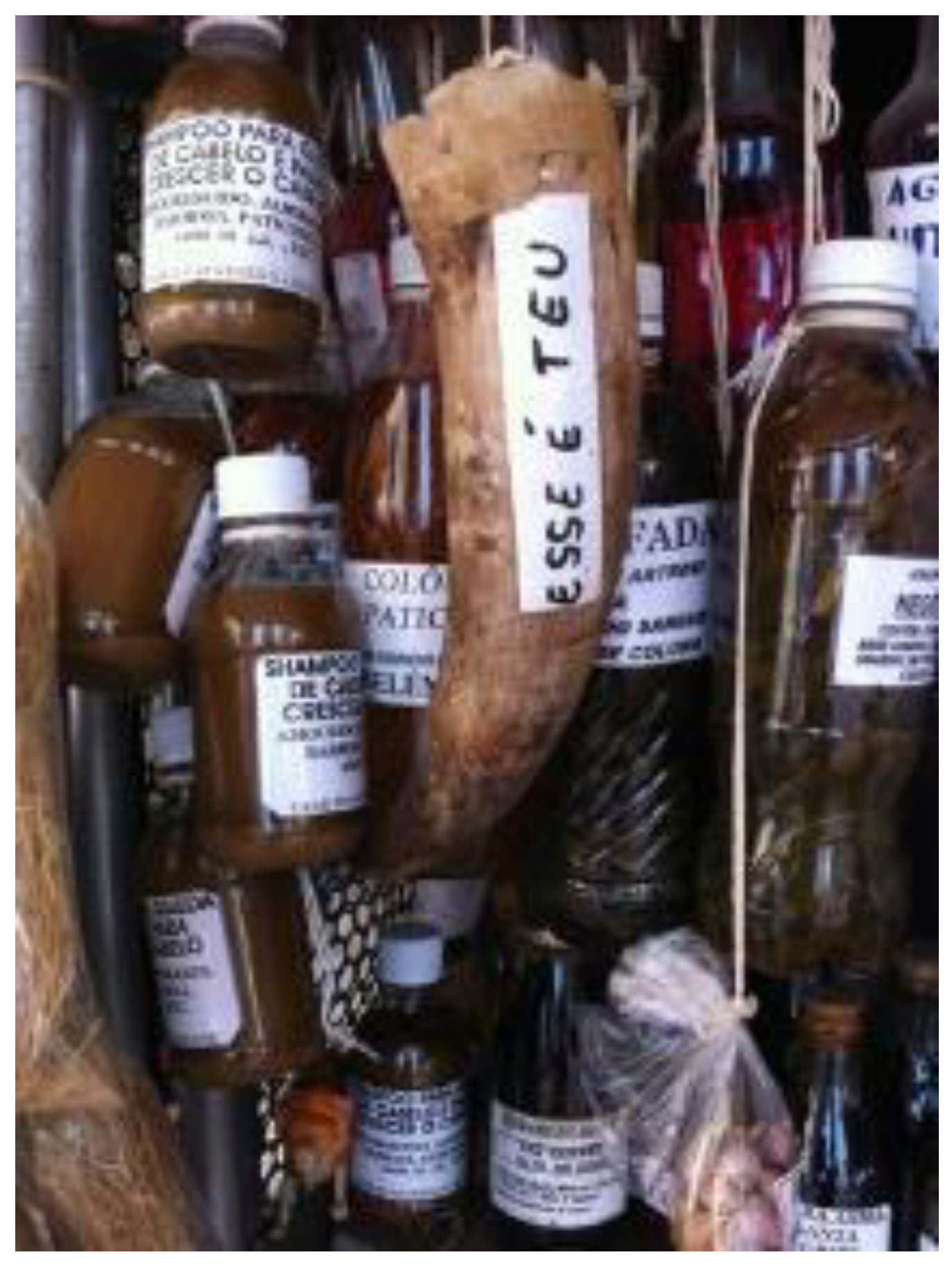
Great examples of how medicinal and herbal plants can evolve from simple popular remedies to health promotion policies come from Brazil. The well-known medicinal “bottles”, smelling baths and perfumes of the Ver-o-Peso market in Belém do Pará-Brazil, are an example of a tradition that lasts centuries (Figure 2). This type of trade can be found in many other markets and fairs worldwide, usually in underdeveloped or developing countries. Bottle merchants are called curb, popular sages that recommend oils and phytotherapeutic essences based on the translational knowledge about the plants obtained from forests. It is a well-known and respected letter in the northern region of Brazil, with its bases dating back to the traditional knowledge of the native peoples of the Amazon region [30].
Another example is the "Viva Pharmacies Program" which pioneered pharmaceutical social assistance in Brazil. It is a scientific initiative based on medicinal and herbal plants' use of recognized popular use, lasting to the present day. This project maintains a collection of 139 certified species booting, playing a crucial role in the dissemination and preservation of medicinal plants and their biomes [31,32,33]. Practitioners produced under this program, derived from plants with proven therapeutic activity, are distributed in the public health network [34].
In 2006, in Brazil was created the National Policy of Medicinal and Phytotherapeutic Plants with the objective “to ensure the Brazilian population the insurance and sustainable access to the rational use of medicinal and herbal plants, promoting an important dimension of biodiversity-related sustainability, development of the production chain and the medicine industry” [35,36]. The Ministry of Health, a Brazilian government agency, also provides incentives for living pharmacies for herbal medicines production units of vivid pharmacies throughout Brazil.
When the origin of herbal medicine is a threatened species of extinction, Brazilian law requires that there is the IBAMA (Brazilian Institute of Environment and Renewable Natural Resources) authorization for its commercialization. However, many species listed as threatened appear as exported products to the world [37].

3.3. Study of Cases Involving the Obtaining of Phytotherapeutics and Social and Environmental Impacts

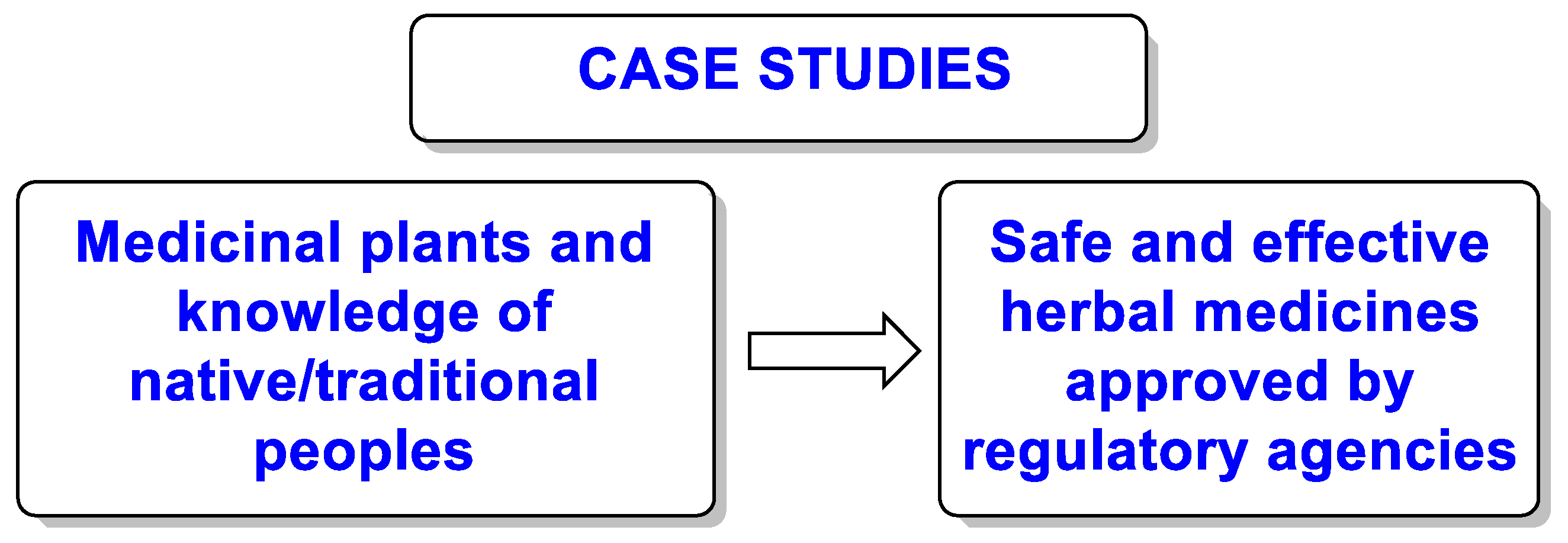
Many modern drugs have origins in plant-isolated compounds and herbal medicines production also involves standardization and quality control of plant raw materials and the preparation of formulations that allow safe and effective administration (Figure 3). It is noteworthy that, like other types of medicines, herbal medicines should undergo rigorous clinical tests to evaluate their effectiveness and safety before being made available for use.
Examples from around the world about the combination of medicinal plants and Indigenous knowledge that have evolved into herbal or allopathic medicines are as full as important for modern medicine [38]. Inspired by successful cases such as these, research and records of new herbal medicines are growing, with the greatest exponents in this practice being traditional Chinese medicine, Ayurveda, and Unani [39]. In Brazil, Anvisa (National Health Surveillance Agency), a government agency responsible for the sanitary control of the production and consumption of products and services submitted to health surveillance, recognizes and authorizes the use of eighty-five plant and thirty-six plant species, most are derived from imported plants [40].
In this follow-up, some of the best-known herbal medicines, originating from traditional medicinal plants, applied in modern medicine, will be used as examples that have had a major impact on health, both in the global and regional sphere.
The white willow (Salix alba) has been used for millennia by man in different parts of the world, being present in the therapies of various ancient civilizations, such as Egyptian, Greek, Roman and Indiana, being the source of the rustic principle of the first medicine produced allopathic: salicylic acid [41]. Originally from the Old World, more precisely from central and southern Europe, Central Asia and Northeast Africa, white willow was taken to the United States in the 16th century, adapting and spreading very well by the temperate regions of the new environment [42]. Its medicinal properties recorded and proven as analgesic, antipyretic and anti-inflammatory dating back to ancient Greece, being present in texts of the Greek physician Hippocrates, and its activity is due to the presence of salicylic acid, a substance isolated only in the nineteenth-century, by pharmaceutical chemicals German Bayer, and marketed worldwide as Aspirin®. White willow-based herbal medicines are obtained from the shell of youth plants (2 to 3 years), and sold under different formulations, such as extracts, coated and compressed capsules [30].
Also of European origin, the true arnica root (Mountain Arnica) originates in the Swiss mountains and Siberia and is widely used worldwide [43]. Its use dates back to Roman times, being used in ointments associated with Calendula, such as healing, anti-inflammatory, analgesic and antiseptic, effects promoted by phenols, flavonoids and present terpenes [44]. In their pharmaceutical preparations, flowers are mainly used, but the roots can also be used as ointments and topical solutions [44]. Recent reports describe the decrease in the natural environment, with the risk of extinction, and problems in the commercial cultivation of this plant [45].
Valerian root (Valerian officinalis) has a natural habitat in the woods and slopes of the Alps and the Apennines (Europe) [46]. Historically, valerian root has been used in Chinese medicine in Ayurvedic and different African and European societies to treat mainly anxiety, nervousness and epilepsy [46]. Currently, the anxiolytic properties of Valerian are confirmed because of the synergism of sesquiterpenes, alkaloids and monoterpene derivatives. The recognized and registered valerian herbal medicines are extracts, dyes and essential oils obtained from the plant roots, indicated for mild anxiety of insomnia treatment [47].
From the mountainous forests of China, ginkgo (Ginkgo biloba) has an important role not only in medicine but in the culture of Asian peoples for millennia [48]. The use of ginkgo biloba in traditional Chinese medicine had as its therapeutic justification the increase in cognitive and concentration capacities, cardiac and pulmonary tonic and, being also used in the topical treatment of wounds and gastrointestinal problems, achieved from preparations made with dry leaves [48]. Workers exposed to radiation, such as accidents such as Chornobyl, are also treated with this species, taking advantage of their antioxidant activities [49]. The active principles present in Ginkgo Biloba include terpenoids, flavonoids, ginkgolides and bilobalides [50]. The therapeutic recommendation currently accepted for ginkgo biloba is for the senility treatment, with oral administration of dry extract, in the form of coated tablets or capsules [51]. Considered extinct in a natural environment for a long time, ginkgo biloba was rediscovered in a province of China and, from that moment it became a protected species, gaining the status of Forest Conservation symbol [52].
Like ginkgo biloba, ginger (Zingiber officinalis) is from China, currently cultivated by everyone, has been used by traditional medicine of various societies around the world for centuries [53]. The medicinal uses of ginger preparation are diverse. Accepted ginger-derived herbal medicines are solid preparations made from roots, indicated for the prevention of nausea and vomiting in motion sickness and the symptomatic treatment of complaints of light gastrointestinal spasms, including swelling and flatulence [54], thanks to the action defeonols, such as gingorals, shoogols, and sesquiterpenes such as bisapolena, zingibereno, zingiberol, sesquifelandrena and curcurmeno [53].
Known and used worldwide, ipecac (Psychotria ipecacuanha), which is currently called Carapixea ipecacuanha, as it presented taxonomic rearrangements by molecular systematics [Psychotria ipecacuanha (Brot.) Stokes; Cephaelis ipecacuanha (Brot) A. Rich] [55,56]. It is one of the most famous examples of a medicinal plant transformed into herbal medicine, based on the knowledge of native peoples. Originating from the American humid tropical forests, was used by native peoples due to its alleged emetic and anti-inflammatory properties, and this knowledge was passed on to the Portuguese colonizers and spread throughout Europe, North America and Asia [57]. The most important proven pharmacological ipecac properties are emetic, expectorant and amoebicide, due to alkaloid presence, such as emetine and cephalin, in its roots [42]. Due to its importance, from the eighteenth century onwards the extraction of ipecacuanha was massified, mainly for export, a process that to the decrease of natural stocks and the near extinction of this plant, categorized as "Vulnerable" (VU) in the Red Book of the Flora of Brazil [58]. which led to the prohibition of predatory exploitation. The commercialization of ipecac roots in Brazil requires licensing by IBAMA [59]. Successful experimental projects were developed as a strategy for the development of Ipecacuanha cultivation [60,61]. There are reports that many experimental crops have been tried in South and Southeast Asia, but without success. Ipecac is highly valued by the pharmaceutical industry for emetic syrup preparation and expectorants, resulting in new approaches such as agroforestry cultivation and artificial cultivation, similar to vegetables, that have emerged as a viable alternative to ensure the supply of this plant [62]. In this way, the maintenance of forest cultivation areas and the income of small producers is guaranteed, since the commercialization is made by root sales between producers and large pharmaceutical laboratories.
The Maytenus ilicifolia is a native of Southern Brazil [63]. Its cultivation and use were disseminated throughout the continent by the Indigenous peoples of Brazil, Argentina, Paraguay and Peru, who used this plant against ulcers, indigestion, gastritis, belly aches and as a healing agent [63]. Over time, the gastroprotective, anti-inflammatory, antispasmodic, antiacid, healing and antiulcer properties of Maytenus ilicifolia were proven, attributed to the presence of chemical compounds such as tannins, flavonoids and triterpenes, being approved for the production of herbal medicines marketed in the form of extract, capsules or leaves for teas and compresses [64].
Highlighted as a milestone and example of success for the Brazilian pharmaceutical industry, Cordia curassavica gave rise to the first Brazilian herbal medicine produced from a native medicinal plant: Acheflan (5 mg/g cream), from the pharmaceutical company Aché [65]. A component species of the Atlantic Forest, this plant can be found almost all along the Brazilian coast, and is widely used by coastal communities, the caiçaras, for its anti-inflammatory properties, indicated to treat tendinitis, muscle pain and painful inflammatory conditions associated with limb trauma, sprains and bruises [65]. Its anti-inflammatory action is related to substances presence such as α-humulene and β-caryophyllene, with herbal medicines based on yerba being available in ointment form, creams, tinctures and essential oils [66]. In addition to its medicinal effects, yerba has also been indicated for planting in agroecological models, in processes of recovery of degraded areas and in legal plantations in protected areas [65].
A plant native to the Amazon rainforest, the Pilocarpus microphyllus has its use originally reported in religious rituals practiced by indigenous peoples of the region [67,68]. Its name means "plant that makes you sweat and drool", a property that is directly related to the presence of an imidazole alkaloid pilocarpine, found mainly in its leaves [67,69]. Taken to Europe, as it is a salivation stimulant, over time other properties were discovered and then explored, being today used mainly in the treatment of glaucoma, the largest cause of blindness in the world, and against hair loss [68]. Jaborandi-based herbal medicines can be found in different forms, such as extracts, essential oils, tea leaves, and cosmetics such as hair lotions and shampoos. Due to its intense exploitation, as it is the largest known source of pilocarpine, and the deforestation of the areas where it is found, the jaborandi is threatened with extinction, but measures aimed at reversing this situation have been having an effect, such as encouraging the creation of sustainable extractivism cooperatives [70,71]. This organization has as positive results the conservation and maintenance of the jaborandi, and its areas of occurrence, as well as the socioeconomic development of the residents of the communities in these areas.
Originally from the southern region of the Andes, mainly from Chile, the Peumus boldus was commonly used Against rheumatic pain and dislocations by the native peoples of the region, who called it "peumos" [72]. In Europe, it began to be used as a stomachic, hepatoprotective, and anti-inflammatory. The herbal medicines obtained from boldo-do-chile can be marketed in the form of capsules of dry extract of the leaves, being indicated in treatments against poor digestion and other digestive and liver disorders, thanks to the action related to the alkaloid boldina [72,73].
Present throughout the American continent, the genre Passiflora sp. comprises about 520 different species, with 150 species in Brazil alone, being used for millennia as a medicinal plant, with the main species used being the Passionflower incarnata [74,75]. Its medicinal use originates from the indigenous peoples of North America, mainly for its calming/relaxing and sedative properties [74]. Passionflower is widely used in disorders of origin in the central nervous system, such as irritation, insomnia and mild anxiety, in the form of extracts or capsules obtained from the dried leaves [76]. The pharmacological action of Passionflower incarnata is attributed to the action of flavonoids, mainly to Vitexin, in synergism with indole alkaloids and glycosides.

4. Conclusions

The traditional practices erosion not only endangers the wealth of knowledge codified over generations, but also biodiversity in the face of escalating economic interests. This study draws attention to the consequences of the uncontrolled exploitation of biomes, such as the risk of extinction of medicinal plants essential for maintaining the production of herbal medicines and for new herbal medicines development.
The examples present in this study prove that herbal medicines are a natural and accessible therapeutic alternative for millions of people around the world and a pillar for the basis of policies aimed at sustainable development, through the correct management of natural resources, the preservation of native peoples and their cultures, the insertion of traditional communities in globalized economic cycles and the promotion of care for these societies. It is important to highlight the importance of applying a holistic approach to sustainability, considering the interdependence between the environmental and socioeconomic dimensions, forest preservation and the valorization of medicinal plants, as it should not be limited only to environmental protection.
Herbal medicines represent a fundamental investment in public health and quality of life, and it is essential to implement urgent and comprehensive measures to combat illegal deforestation, promote sustainable agriculture and livestock, and encourage scientific research and environmental education to value biodiversity. People's peace, in this context, is linked to their ability to live in harmony with nature. Protecting medicinal plants ensures access to a good quality of life for future generations. It is not just an environmental issue: it is a human need.

Funding

We would like to thank the scholarships granted by Faperj CNE E-26/202.800/2017, CNE E-26/200.911/2021, CNPq grant 1A 301873/2019-4 and the FAPERJ projects under number E-26/010.101106/2018, Pensa Rio E-26/010/00168/2015, SEI-260003/001178/2020 (Temático).

References

  1. Forezi, L.D.S.M.; Ferreira, P.G.; Hüther, C.M.; da Costa Santos, W.; da Silva, F.D.C.; Ferreira, V.F. What are the Advantages of Conserving Forests? Rev. Virtual Quim. 2024, 1–9. [Google Scholar]
  2. Dettweiler, M.; Lyles, J.; Nelson, K.; Dale, B.; Reddinger, R.; Zurawski, D.; Quave, C.L. American Civil War plant medicines inhibit growth, biofilm formation, and quorum sensing by multidrug-resistant bacteria. Sci. Rep. 2019, 9, 7692. [Google Scholar] [CrossRef] [PubMed]
  3. Akram, M.; Michael, O.S.; Saeed, M.; Adetunji, C.O.; Zahid, R.; Adetunji, J.B.; Laila, U.; Mtewa, A.G.; Ozolua, P.; Egbuna, C. Ethnopharmacological properties of Asian medicinal plants during conflict-related blockades. In Phytotoxins and Natural Defenses; Mtewa, A.G., Egbuna, C., Eds.; Elsevier, 2021; pp. 53–68. [Google Scholar] [CrossRef]
  4. Santos, W.C.; Hüther, C.M.; Ferreira, V.F. The dimension of hunger and misery within sustainability. Conjecturas 2022, 22, 741–765. [Google Scholar]
  5. Souza, A.S.; Ferreira, P.G.; Jesus, I.S.; Carvalho, A.S.; Futuro, D.O.; Ferreira, V.F. Sustainability, Sustainable Development, Sustainable Chemistry, And Green Chemistry: Parallels and Interconnections. Quim. Nova 2024, 47, e-20240049. [Google Scholar] [CrossRef]
  6. Torresi, S.I.C.; Pardini, V.L.; Ferreira, V.F. What is sustainability? Quim. Nova 2022, 33, 5. [Google Scholar]
  7. Ferreira, V.F.; Hüther, C.M.; Santos, W.C. The costs of unequal and unsustainable environments. Conjecturas 2022, 22, 191–213. [Google Scholar]
  8. Fowler, M.E. Plant poisoning in free-living wild animals: a review. J. Wildl. Dis. 1983, 19, 34–43. [Google Scholar] [CrossRef] [PubMed]
  9. Rezende, E.A.; Ribeiro, M.T.F. Conhecimento tradicional, plantas medicinais e propriedade intelectual: biopirataria ou bioprospecção? Rev. Bras. Pl. Med. 2005, 7, 37–44. [Google Scholar]
  10. Petrovska, B.B. Historical review of medicinal plants' usage. Pharmacogn. Rev. 2012, 6, 1–5. [Google Scholar] [CrossRef]
  11. Kelly, K. History of medicine; Facts on file: New York, 2009; pp. 29–50. [Google Scholar]
  12. Matos, F.J.A. Medicinal Plants, 3rd ed.; University Press: Fortaleza, 2007. [Google Scholar]
  13. Taiz, L.; Zeiger, E. Vegetal physiology, 5th ed.; Artemed: Porto Alegre, 2013; 954p. [Google Scholar]
  14. Hasenclever, L.; Paranhos, J.; Costa, C.R.; Cunha, G.; Vieira, D. The Brazilian herbal medicine industry: challenges and opportunities. Cien. Saude Colet. 2017, 22(8), 2559–2569. [Google Scholar] [CrossRef]
  15. a) Rother, E.T. Systematic literature review X narrative review. Acta Paul. Enferm. 2007, 20(2), v–vi; b) Sukhera, J. Narrative Reviews: Flexible, Rigorous, and Practical. J. Grad. Med. Educ. 2022, 14(4), 414–417.
  16. Cordell, G.A. Sustainable Medicines and Global Health Care. Planta Med. 2011, 77, 1129–1138. [Google Scholar] [CrossRef]
  17. Araujo, H.F.L.; Silva, A.M.D.; Silva, V.J.D. Plant Biotechnology in the Development of Human Disease Therapy. Multidiscip. J. Educ. Research 2021, 2(3), 53. [Google Scholar]
  18. ONU promove produção de cacau sem desmatamento e beneficia 1,6 mil famílias na Bahia. Available online: https://news.un.org/pt/story/2024/04/1830266 (accessed on 10 October 2024).
  19. Herbal Medicine Market Size & Trends. Available online: https://www.grandviewresearch.com/industry-analysis/herbal-medicine-market-report (accessed on 10 October 2024).
  20. Levy, B.; Sidel, V. Documenting the Effects of Armed Conflict on Population Health. Annu. Rev. Public Health 2016, 37, 205–218. [Google Scholar] [CrossRef] [PubMed]
  21. Abuelaish, I.; Goodstadt, M.; Mouhaffel, R. Interdependence between health and peace: a call for a new paradigm. Health Promot. Int. 2020, 35, 1590–1600. [Google Scholar] [CrossRef] [PubMed]
  22. Namer, Y.; Wandschneider, L.; Middleton, J.; Davidovitch, N.; Razum, O. How can Schools of Public Health Actively Promote Peace? PHRS 2021, 42, 1604459. [Google Scholar] [CrossRef]
  23. Parisa, N.; Kamaluddin, M.T.; Saleh, M.I.; Lusiana, E.; Tamzil, N.S.; Abi Wicaksono, B.; Nashif, A.A. Counseling of the Use of Herbal Medicine for Health Care to the Community. Indonesian Community Empowerment Journal 2022, 2, 80–86. [Google Scholar] [CrossRef]
  24. Silveira, D.; Prieto, J.M.; Freitas, M.M.; Mazzari, A.L.D.A. Herbal Medicine and Public Healthcare: Current and Future Challenges. In Natural Products as Source of Molecules with Therapeutic Potential; Cechinel Filho, V., Ed.; Springer: Cham, 2018; pp. 495–515. [Google Scholar] [CrossRef]
  25. Forezi, L.S.M.; Ferreira, P.G.; Hüther, C.M.; da Silva, F.C.; Ferreira, V.F. There is Chemistry Here: Part IV. Terpenes in perfumery. Rev. Virtual Quim. 2022, 14, 1005–1024. [Google Scholar] [CrossRef]
  26. Forezi, L.S.M.; Ferreira, P.G.; Hüther, C.M.; Santos, W.C.; da Silva, F.C.; Ferreira, V.F. What are the Advantages of Conserving Forests? Rev. Virtual Quim. 2024, 16, 585–603. [Google Scholar]
  27. Qadir, S.U.; Raja, V. Chapter 5—Herbal medicine: Old practice and modern perspectives. In Phytomedicine; Bhat, R.A., Hakeem, K.R., Dervash, M.A., Eds.; Academic Press, 2021; pp. 149–180. [Google Scholar] [CrossRef]
  28. Shahrajabian, M.H.; Sun, W.; Cheng, Q. Traditional Chinese medicine and agriculture; organic life and sustainability for future. GSC Biol. Pharm. Sci. 2019, 71, 91–95. [Google Scholar] [CrossRef]
  29. Efferth, T. Perspectives for Globalized Natural Medicines. Chin. J. Nat. Med. 2011, 9, 1–6. [Google Scholar] [CrossRef]
  30. Dantas, C.F.N.; Ferreira, R.S. The traditional knowledge of the herbalists of the Ver-o-Peso Fair (Belém, Pará, Brazil): a look from the perspective of Information Science. Perspect. Ciênc. Inf. 2013, 18(2), 105–125. [Google Scholar] [CrossRef]
  31. Matos, F.J.A. Farmácias Vivas, 3rd ed.; University Press: Fortaleza, Brazil, 2002. [Google Scholar]
  32. Matos, F.J.A. Farmácias Vivas: system for the use of medicinal plants designed for small communities, 3rd ed.; Editora da UFC: Fortaleza, 1998. [Google Scholar]
  33. Programa Farmácia Viva. Available online: https://hortodeplantasmedicinais.ufc.br/pt/programa-farmacia-viva/ (accessed on 12 October 2024).
  34. Revista do Farmacêutico 121 - Farmácias vivas do Ceará: histórico e evolução. Available online: https://www.crfsp.org.br/revista/474-revista-121/6610-revista-do-farmaceutico-121-farmacias-vivas.html (accessed on 12 October 2024).
  35. National Policy and Program of Medicinal Plants and Herbal Medicines. Available online: https://www.gov.br/saude/pt-br/acesso-a-informacao/acoes-e-programas/plantas-medicinais-e-fitoterapicos (accessed on 12 October 2024).
  36. Brazil. Ministry of Health. Secretariat of Science, Technology and Strategic Inputs. Department of Pharmaceutical Services. National Policy and Program of Medicinal Plants and Herbal Medicines / Ministry of Health, Secretariat of Science, Technology and Inputs. Strategic Department, Department of Pharmaceutical Services. Ministry of Health – Brasília, Brazil, 2016; pp. 190.
  37. Plantas Medicinais do Brasil: Aspectos Gerais Sobre Legislação e Comércio. Available online: http://150.165.254.38/nephf/contents/documentos/artigos/fitoterapia/plantas-medicinais-do-brasil.pdf (accessed on 12 October 2024).
  38. Traditional medicine has a long history of contributing to conventional medicine and continues to hold promise. Available online: https://www.who.int/news-room/feature-stories/detail/traditional-medicine-has-a-long-history-of-contributing-to-conventional-medicine-and-continues-to-hold-promise (accessed on 15 October 2024).
  39. Khan, A.; Sajjad, M. Herbal Medicine: Current Trends and Future Prospects. New Look Phytomed. 2019, 3–13. [Google Scholar] [CrossRef]
  40. Anvisa atualiza Formulário de Fitoterápicos na 2ª Edição da Farmacopeia Brasileira. Available online: https://www.gov.br/anvisa/pt-br/assuntos/noticias-anvisa/2024/anvisa-atualiza-formulario-de-fitoterapicos-na-2a-edicao-da-farmacopeia-brasileira (accessed on 15 October 2024).
  41. Azeez, T.B.; Lunghar, J. Chapter 14: Supplements and diets for antiinflammation. In Inflammation and Natural Products; Gopi, S., Amalraj, A., Kunnumakkara, A., Thomas, S., Eds.; Elsevier, 2021; pp. 315–332. [Google Scholar] [CrossRef]
  42. Monograph of the Species Salix alba (White Willow). Ministry of Health, 2015.
  43. Sugier, P.; Sugier, D.; Sozinov, O.; Kołos, A.; Wołkowycki, D.; Plak, A.; Budnik, O. Characteristics of plant communities, populations feature, and edaphic conditions of Arnica montana L. populations in pine forest of mid-Eastern Europe. Acta Soc. Bot. Pol. 2019, 88, 1–13. [Google Scholar] [CrossRef]
  44. Shahane, K.; Kshirsagar, M.; Tambe, S.; Jain, D.; Rout, S.; Ferreira, M.K.M.; Mali, S.; Amin, P.; Srivastav, P.P.; Cruz, J.; Lima, R.R. An Updated Review on the Multifaceted Therapeutic Potential of Calendula officinalis L. Pharmaceuticals 2023, 16(4), 611. [Google Scholar] [CrossRef]
  45. Hollmann, V.; Donath, T.W.; Grammel, F.; Himmighofen, T.; Zerahn, U.; Leyer, I. From nutrients to competition processes: Habitat specific threats to Arnica montana L. populations in Hesse, Germany. PLoS One. 2020, 15(5), e0233709. [Google Scholar] [CrossRef]
  46. Murthy, K.; Kaushik, M.; Sangwan, Y.; Kausil, A. Pharmacological Properties of Valeriana officinalis—A Review. Pharmacologyonline 2011, 3, 641–646. [Google Scholar]
  47. Valerianae radix - herbal medicinal product. Available online: https://www.ema.europa.eu/en/medicines/herbal/valerianae-radix (accessed on 28 October 2024.).
  48. Ginkgo biloba: aplicações terapêuticas e produtos no mercado. Available online: https://hdl.handle.net/10316/32197 (accessed on 29 October 2024).
  49. Emerit, I.; Oganesian, N.; Sarkisian, T.; Arutyunyan, R.; Pogosian, A.K.; Asrian, K.; Levy, A.; Cernjavski, L. Clastogenic Factors in the Plasma of Chernobyl Accident Recovery Workers: Anticlastogenic Effect of Ginkgo biloba Extract. Radiation Research 1995, 144(2), 198–205. [Google Scholar] [CrossRef]
  50. Talreja, S. An In-Depth Exploration of Ginkgo Biloba: A Review. Int. J. in Pharm. Sci. 2023, 1(7), 326–334. [Google Scholar]
  51. Ginkgo leaf. Available online: https://www.ema.europa.eu/en/documents/herbal-summary/ginkgo-leaf-summary-public_en.pdf (accessed on 30 October 2024).
  52. Tang, C.Q.; Yang, Y.C.; Ohsawa, M.; YI, S.-R.; Momohara, A.; Su, W.-H.; Wang, H.-C.; Zhang, Z.-Y.; Peng, M.-C.; Wu, Z.-L. Evidence for the persistence of wild Ginkgo biloba (Ginkgoaceae) populations in the Dalou Mountains, southwestern China. Am. J. Bot. 2012, 99(8), 1408–1414. [Google Scholar] [CrossRef]
  53. Shahrajabian, M.H.; Sun, W.; Cheng, Q. Pharmacological Uses and Health Benefits of Ginger (Zingiber officinale) in Traditional Asian and Ancient Chinese Medicine, and Modern Practice. Not. Sci. Biol. 2019, 11(3), 309–319. [Google Scholar] [CrossRef]
  54. Zingiberis rhizoma - herbal medicinal product. Available online: https://www.ema.europa.eu/en/medicines/herbal/zingiberis-rhizoma (accessed on 30 October 2024).
  55. Hüther, C.M.; Santos, W.C.; Silva, F.C.; Forezi, L.S.M.; Ferreira, P.G.; Ferreira, V.F. Here we have Chemistry. Part IX. The Alkaloids of the Forests. Rev. Virtual Quim. 2024, 16(2), 195–222. [Google Scholar]
  56. Oliveira, L.O.; Venturini, B.A.; Rossi, A.A.B.; Hastenreiter, S.S. Clonal diversity and conservation genetics of the medicinal plant Carapichea ipecacuanha (Rubiaceae). Genet. Mol. Biol. 2010, 33, 86–93. [Google Scholar] [CrossRef] [PubMed]
  57. Cultivo da Ipecacuanha [Psychotria ipecacuanha (Brot.) Stokes]. Available online: https://ainfo.cnptia.embrapa.br/digital/bitstream/item/27896/1/Circ.tec.28.pdf (accessed on 31 October 2024).
  58. Zappi, D.; Jardim, J.; Souza, E.B.; Di Maio, F.R.; Barbosa, M.R.; Valente, A.S.M.; Santos, L.A.F.; Filho, N.P.M. Rubiaceae. In Livro vermelho da flora do Brasil, 1st ed.; Jakobsson, A., Ed.; CIP: Rio de Janeiro, Brasil, 2013; p. 1100. [Google Scholar]
  59. Silva, S.; Pinheiro, E.N.; Assunção, L.M.; Silva, E.L.; Rodrigues, D.C.; Ferreira, F.F.; Marinho, V.R.P.; Astolfi-Filho, S. In vitro propagation of Psychotria ipecacuanha (Brot.) Stokes under different concentrations of Indoleacetic Acid. Rev. Fitos 2018, 12, 263–268. [Google Scholar] [CrossRef]
  60. Ipecac root has high value due to its medicinal properties. Available online: https://g1.globo.com/economia/agronegocios/noticia/2013/06/raiz-de-ipeca-tem-alto-valor-devido-suas-propriedades-medicinais.html. (accessed on 31 October 2024).
  61. Santos, C.M.P.P.; Huther, C.M.; Borella, J.; Ribeiro, F.N.S.; Duarte, G.C.A.; Carvalho, L.F.; Oliveira, E.; Lameira, A.O.; Pinho, C.F.; Machado, T.B.; Pereira, C.R. Season and shading affect emetine and cephal in production in Carapichea ipecacuanha plants. Plant Biosyst. 2020, 1–14. [Google Scholar] [CrossRef]
  62. Ipeac. Available online: https://www.ncbi.nlm.nih.gov/books/NBK448075/ (accessed on 31 October 2024).
  63. Garcia, J.S.; de Oliveira, C.J.F., Jr. Espinheira-Santa: Do Extrativismo À Produção Sustentável. Nativa Sinop 2021, 9(4), 401–412. [Google Scholar] [CrossRef]
  64. Vasconcelos, E.C.; Santos, M.H.P. Uso de medicamento fitoterápico espinheira santa no tratamento da doença gastrointestinal gastrite. Res. Soc. Dev. 2023, 12(4), e9412441023. [Google Scholar] [CrossRef]
  65. Hartwig, B.R.; Rodrigues, D.S.; de Oliveira, C.J.F., Jr. Black sage: a real possibility of sociobiodiversity for sustainable production models. Holos 2020, 36(3), e9409. [Google Scholar]
  66. Fernandes, E.S.; Passos, G.F.; Medeiros, R.; da Cunha, F.M.; Ferreira, J.; Campos, M.M.; Pianowski, L.F.; Calixto, J.B. Anti-inflammatory effects of compounds alpha-humulene and (−)-trans-caryophyllene isolated from the essential oil of Cordia verbenácea. Eur. J. Pharmaco. 2007, 569(3), 228–236. [Google Scholar] [CrossRef]
  67. Duas histórias e um herói, o Jaborandi. Available online: https://www.itv.org/imprensa/duas-historias-e-um-heroi-o-jaborandi/ (accessed on 02 November 2024).
  68. Pinheiro, C.U.B. Chapter 13. Extractivism, Domestication, and Privatization of a Native Plant Resource: The Case of Jaborandi (Pilocarpus microphyllus Stapf ex Holmes) in Maranhão, Brazil". In Human Impacts on Amazonia: The Role of Traditional Ecological Knowledge in Conservation and Development; Posey, D.A., Balick, M.J., Eds.; Columbia University Press: West Sussex, United States of America, 2006; pp. 210–221. [Google Scholar] [CrossRef]
  69. Braga, F.C. Brazilian traditional medicine: Historical basis, features and potentialities for pharmaceutical development. J. Tradit. Chin. Med. Sci. 2021, 8, S44–S50. [Google Scholar] [CrossRef]
  70. Caldeira, C.F.; Giannini, T.C.; Ramos, S.J.; Vasconcelos, S.; Mitre, S.K.; Pires, J.P.A.; Ferreira, G.C.; Ohashi, S.; Mota, J.A.; Castilho, A.; Siqueira, J.O.; Neto, A.E.F. Sustainability of Jaborandi in the eastern Brazilian Amazon. Perspect. Ecol. Conserv. 2017, 15, 161–171. [Google Scholar] [CrossRef]
  71. Carajás investe no uso sustentável do jaborandi. Available online: https://www.gov.br/icmbio/pt-br/assuntos/noticias/ultimas-noticias/carajas-investe-no-uso-sustentavel-do-jaborandi (accessed on 02 November 2024).
  72. Lanhers, M.C.; Joyeux, M.; Soulimani, R.; Fleurentin, J.; Sayag, M.; Mortier, F.; Younos, C.; Pelt, J.-M. Hepatoprotective and Anti-Inflammatory Effects of a Traditional Medicinal Plant of Chile, Peumus boldus. Planta Med. 1991, 57(2), 110–115. [Google Scholar] [CrossRef] [PubMed]
  73. Memento Fitoterápico Farmacopeia Brasileira. Available online: http://www.farmacia.pe.gov.br/sites/farmacia.saude.pe.gov.br/files/memento_fitoterapico.pdf (accessed on 02 November 2024).
  74. Miroddi, M.; Calapai, G.; Navarra, M.; Minciullo, P.L.; Gangemi, S. Passiflora incarnata L.: Ethnopharmacology, clinical application, safety and evaluation of clinical trials. J. Ethnopharmacol. 2013, 150, 791–804. [Google Scholar] [CrossRef] [PubMed]
  75. Pereira, S.M.T. The Medicinal Use of Passiflora incarnata L. Monograph carried out within the scope of the Curricular Internship unit of the Integrated Master's Degree in Pharmaceutical Sciences, Faculty of Pharmacy of the University of Coimbra, 2014.
  76. Passion flower Passiflora incarnata L., herba. European Medicines Agency. Available online: https://www.ema.europa.eu/en/documents/herbal-summary/passion-flower-summary-public_en.pdf (accessed on 02 November 2024).
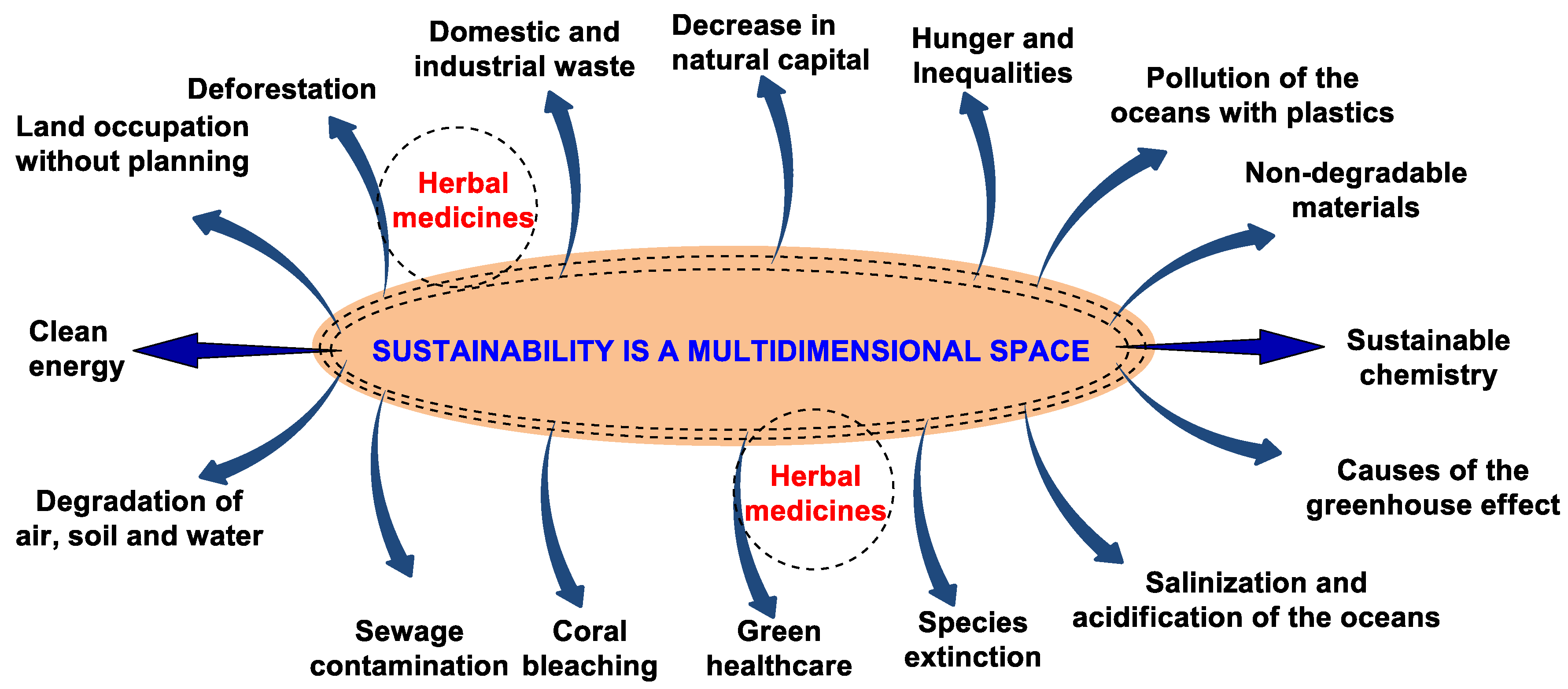
Figure 1. Herbal medicines within the space of Sustainability.
Preprints 139236 g001
Figure 2. Examples of bottles of medicinal plants found in Brazilian popular markets.
Preprints 139236 g002
Figure 3. Planning used for case studies of herbal users.
Preprints 139236 g003
Disclaimer/Publisher’s Note: The statements, opinions and data contained in all publications are solely those of the individual author(s) and contributor(s) and not of MDPI and/or the editor(s). MDPI and/or the editor(s) disclaim responsibility for any injury to people or property resulting from any ideas, methods, instructions or products referred to in the content.
Copyright: This open access article is published under a Creative Commons CC BY 4.0 license, which permit the free download, distribution, and reuse, provided that the author and preprint are cited in any reuse.
Prerpints.org logo

Preprints.org is a free preprint server supported by MDPI in Basel, Switzerland.

Subscribe

Disclaimer

Terms of Use

Privacy Policy

Privacy Settings

© 2026 MDPI (Basel, Switzerland) unless otherwise stated