
Submitted:
11 November 2024
Posted:
12 November 2024
You are already at the latest version
Abstract
In the context of high fossil fuel consumption and inefficiency within China's energy systems, effective demand-side management is essential. This study examines the thermal characteristics of various building types across different functional areas, utilizing the concept of body coefficient to integrate their unique structural and energy use traits into a demand response framework supported by real-time pricing. We developed a Stackelberg game-based bi-level optimization model that captures the dynamic interplay of costs and benefits between integrated energy providers and users. This model is formulated into a Mixed Integer Linear Programming (MILP) problem using Karush-Kuhn-Tucker (KKT) conditions and linearized with the Big M method, subsequently solved using MATLAB and CPLEX. This approach enables distinctive management of heating loads in public and residential areas, optimizing energy efficiency while balancing the interests of both providers and users. Furthermore, the study explores how the proportion of different area types affects the potential for reducing heat loads, providing insights into the scalability and effectiveness of demand response strategies in integrated energy systems. This analysis not only highlights the economic benefits of such strategies but also their potential in reducing dependency on traditional energy sources, thus contributing to more sustainable energy system practices.
Keywords:
integrated energy systems
; stackelberg game theory
; thermal load management
; real-time energy pricing
; demand-side energy management
0. Introduction
In the context of increasing industrial development and escalating environmental pollution issues, China has set goals to achieve carbon neutrality and peak carbon emissions [1,2,3]. These goals drive the increase in the proportion of renewable energy in energy consumption to promote clean and efficient energy usage. Through multi-energy complementary strategies, integrated electric and thermal energy systems can flexibly utilize resources across different times and spatial scales to meet the demands for electricity and thermal comfort [4,5].
Several studies focus on utilizing the thermal characteristics of centralized heating networks to enhance the operational flexibility of systems, particularly focusing on the dynamic thermal performance (PDTP) of heating network pipelines and the buildings’ thermal inertia (BTI) [7,8,9,10]. Considering PDTP involves accounting for the thermal losses in pipelines and the time delay of water temperature from the heat source to the heat loads [11]. Research on BTI explores the potential of buildings as thermal storage devices [12]. Literature [13] applies scale transformation to the simulation results of individual buildings, treating the average behavior of a building ensemble as the behavior of individual buildings, where all building spaces are heated simultaneously. Literature [14] establishes a planning model for energy stations in mixed-use areas based on bi-level programming, with examples focused on mixed-use areas where all nodes are mixed-load nodes, though it does not explicitly establish a characteristic model for the electrical and thermal loads of mixed-use areas. However, the aforementioned literature does not consider the differences in thermal storage capacities among buildings of different functional types nor the differences in heating demand periods [15,16,17,18].
Demand response can allocate loads as needed, enabling reasonable resource allocation. Literature [19] studies optimization strategies for load demand response under real-time electricity pricing, aiming to balance user thermal comfort with minimizing electricity costs. This strategy balances user comfort against cost reduction. Literature [20] has established a day-ahead stochastic optimization scheduling model that incorporates demand response and wind power, effectively generating optimal operational strategies for residential mixed energy systems and day-ahead scheduling plans for power systems. Literature [21] constructs a bi-level optimization model for integrated energy systems, considering the heating costs for residents and the generation costs for the system, utilizing the Karush-Kuhn-Tucker (KKT) optimality conditions to transform the nonlinear bi-level model into a Mixed Integer Linear Programming (MILP) equation, transforming the lower-level objectives into constraints for the upper-level objectives. Literature [22] proposes a strategy based on user-side demand response, combining the energy management of a single microgrid with the collaborative optimization of multiple microgrids to address the imbalance between supply and demand sides effectively. This strategy can effectively alleviate the imbalance issues while enhancing the operational cost efficiency of microgrids, with greater user participation yielding better optimization results.
Building on existing research, this paper addresses the diversity of heating demand periods for different functional types of buildings, constructing a bi-level optimization model that also considers the energy costs for users and the overall benefits for the system. By applying KKT optimality conditions, this complex problem is simplified into an MILP model. This approach allows for more effective adjustment of heating temperature thresholds across different types of buildings, thereby enhancing the system's thermal efficiency and flexibility.
1. Integrated Energy System
This study focuses on an integrated energy system that combines electricity and thermal energy, comprising generation units, energy conversion, and storage facilities to support the demands for electricity and thermal energy. The model described in this paper (see Figure 1 below) depicts a multi-energy system that includes wind and solar energy as well as electricity purchased from the grid. Electricity is sourced from distributed generation and combined heat and power (CHP) facilities, while thermal energy is provided by CHP and electric boilers. The electrical and thermal networks are coupled through these facilities, allowing electric boilers to coordinate the grid integration of wind power during peak electricity and heating periods. On the demand side, through demand response mechanisms, users can adjust their load reduction or shift according to the peak and trough differences in electricity and thermal demands, thereby optimizing the overall coordination of the system and enhancing energy efficiency.
2. Multi-Regional Thermal Demand Variability Modeling
In winter, approximately 80% to 90% of thermal energy is used for heating various types of buildings. Utilizing the thermal storage characteristics of buildings can effectively mitigate the problem of wind power curtailment under the "heat-driven electricity" mode [23,24,25]. Buildings in different functional areas use a "body coefficient" to describe their structural differences due to their administrative properties and construction differences. Larger buildings have a lower body coefficient, while smaller buildings have a higher one [26], with public areas having a body coefficient of 0.2 and residential buildings a coefficient of 0.4.
Here, S represents the external surface area of the building exposed to the outdoor atmosphere, and V is the volume of the building.
Energy supply needs differ significantly between functional areas. For example, public buildings have cyclical and adjustable heating demands. During working hours, the indoor temperature is adjusted according to human needs to maintain comfort; at night, only a minimum temperature is maintained to prevent equipment damage due to low temperatures [27,28,29,30]. In contrast, residential buildings require uniform heating throughout the day. However, due to the subjectivity and ambiguity of thermal sensation, residential heating systems also need to be flexible. Therefore, indoor temperature thresholds are set based on time-segmented thermal comfort considerations to meet varying heat demands at different times.
2.1. Setting Indoor Heating Temperatures Based on Thermal Comfort in Residential Areas
The thermal load for residential heating is determined based on human comfort with temperature, which varies with different levels of activity throughout the day [31,32,33]. As activity increases, so does human heat dissipation, requiring stricter comfort levels regarding ambient temperature; during the night, when the body is at rest, sensitivity to temperature decreases. To meet these dynamic needs, a segmented heating strategy is adopted, allowing for moderate lowering of temperature settings to reduce thermal energy consumption and increase wind power utilization. This method not only optimizes energy use but also enhances the overall efficiency of the system [34].
Factors affecting indoor human comfort include temperature, airspeed, and relative humidity, among others. In engineering practice, a simplified formula is generally used that ignores airspeed and humidity [35,36,37]:
In this formula, tm represents the average skin surface temperature, taken as 33.5°C; tin is the indoor temperature; M is the metabolic rate, taken as 80 watts per square meter; Icl is the clothing insulation. The PMV varies within the range of [−0.5,0.5][-0.5, 0.5][−0.5,0.5], where humans do not easily notice temperature changes, and within [−1,1][–1,1][−1,1] it also meets indoor temperature requirements for winter, hence PMV is set differently for different times: [−1,1][-1, 1][−1,1] between 8:00 and 22:00, and [−0.5,0.5][-0.5, 0.5][−0.5,0.5] during other periods.
2.2. Setting Indoor Heating Temperatures in Public Areas
Public areas and residential areas implement different heating strategies, mainly because the usage times in public areas are more fixed [38]. During non-operational hours, heating can be reduced to maintain a minimum "on-duty" temperature (usually set above 5°C). Thus, during operational hours in public areas, the indoor temperature is set within the [−0.5,0.5][-0.5, 0.5][−0.5,0.5] range based on the PMV index to ensure comfort; during non-operational hours, it is adjusted to stay above the on-duty temperature, effectively saving energy while meeting basic needs [39,40].
2.3. Heating Load Model
By maintaining indoor temperatures that satisfy resident satisfaction, the amount of heat provided to buildings can be appropriately reduced, making the demand for heat loads more flexible. According to the transient heat balance equation of buildings, the effect of the provided heat amount on indoor temperature changes is as follows [41,42]:
In this equation, and are the indoor and outdoor temperatures at time t, respectively; is the heating power; K, S, and V are the building's heating coefficient, surface area, and volume respectively; and are the specific heat capacity and density of air. From this, the relationship between heating load power and indoor temperature can be derived:
3. Stackelberg Game Optimization Model Considering Thermal Load Demand Variability
This study constructs a Stackelberg game optimization scheduling model where the integrated energy provider acts as the leader, and the consumers serve as the followers. This model accounts for the variable demand response of thermal loads [43,44,45]. The upper level of the model is controlled by the integrated energy service provider, aiming to maximize their profits by setting tiered electricity and heat prices, while the lower level allows consumers to choose their energy usage times based on these prices to minimize their energy costs and feedback their electricity usage plans to the energy provider. The structure of this model is shown in Figure 2.
3.1. Profit Model for the Operator
The objective function of this paper is to maximize the profit after deducting the total operating costs of the system, expressed as:
Where: C represents the profit amount of the integrated energy provider; represents the operational costs of the system; represents the total sale prices of electricity and thermal energy sold by the integrated energy provider.
3.2. Economic Dispatch Costs of the System
The economic dispatch of the integrated energy system considers the operational costs of the units, standby costs of the units, and penalties for curtailed wind, expressed in the objective function as:
Where: , represent the fuel costs of CHP and conventional thermal power units at time ttt, respectively; , represent the outputs of wind and solar power compared to actual grid power, respectively; , represent the charging and discharging power of electrical and thermal storage, respectively; is the spinning reserve capacity; is the penalty coefficient for curtailed wind and solar; is the cost coefficient for charging and discharging; represents the reserve coefficients for units and energy storage; NNN is the number of CHP units; MMM is the number of conventional thermal units; SSS includes wind and solar renewable energy sources; LLL encompasses electrical and thermal storage; KKK includes CHP units, conventional thermal units, and electrical storage.
Where: , , and are the fuel cost coefficients for CHP units, and , , are for conventional thermal units.
3.3. Integrated Energy Operator's Profit Amount
The above formula represents the revenue from selling electricity and heat to consumers, where andare the real-time electricity and heat prices at time t.
3.4. Upper-Level Model Constraints
(1) Power Balance Constraint
Electricity is used as it is generated and cannot be stored in large quantities. To meet the load requirements and ensure system stability, it is necessary to maintain the balance of electric power at every node of the system at every moment [46].
The thermal system must also satisfy the thermal power balance, as follows:
Where: is the electrical load; and are the heating loads for residential and public building areas, respectively.
(2) Price Constraints
To stabilize electricity and heat prices within a reasonable range and ensure the interests of the consumers are not harmed, the price range is set as follows [47,48]:
(3) Other Standard Constraints.
Unit output/ramping constraints and storage constraints are not detailed here but can be found in references [49-51].
3.5. Consumer Layer Objective Function
The consumer layer's objective function aims to minimize the cost of energy used, considering penalties for thermal comfort losses, including costs for electricity and heating.
Where: , are the unit prices for electricity and heat, respectively, and is the coefficient for thermal comfort losses. and represent the thermal comfort losses in residential and public areas, respectively, derived from deviations in heat load from the most comfortable temperatures [52].
3.6. Consumer Layer Model Constraints
(1) Reducible Electric Load Constraint
Where: is the electric load after reduction at time t, is the electric load before reduction at time t, is the reduced electric load, and is the state variable for reduced electric load [53].
(2) Reducible Thermal Load
Based on the indoor temperature constraints for heating in residential and public areas (sections 2.1 and 2.2), combined with equation (4), the boundaries for reducible thermal loads can be derived.
4. Solution of the Game Optimization Model
This paper considers the demand response to variability in thermal loads and uses a leader-follower game approach for solving. The solution steps are listed as follows:
Step 1: Input initial parameters such as wind and solar output data, unit parameters, and temperature data.
Step 2: Establish the upper-level optimization model for the integrated energy operator.
Step 3: Construct the network model.
Step 4: Establish the follower game model at the consumer level.
Step 5: Based on the Predicted Mean Vote (PMV) index, solve for the upper and lower limits of the residential heating load for each time period.
Step 6: For working hours, use the PMV index to establish heating load thresholds for public areas for each time period, ensuring temperatures meet the minimum 'on-duty' requirements during non-working hours.
Step 7: Use the KKT conditions to transform the bi-level leader-follower game model into a single-level model, and apply the Big M method to linearize the nonlinear constraints.
Step 8: Use MATLAB and Yalmip programming combined with CPLEX to solve the constructed model.
Step 9: Output the final optimization results and analyze the outcomes.
5. Case Study Analysis
This paper's test system employs an improved IEEE 30-bus system with two separate 6-node thermal networks, operating within the same electrical grid but as independent thermal networks, as shown in Figure 3. The output of wind and solar power, along with outdoor temperature data, is shown in Figure 4. The scheduling duration is 24 hours with a 1-hour time step.
To reasonably assess the economic impact of the proposed methods on the operation of the integrated electric-thermal energy system, the paper designs the following different modes:
- Mode 1: Both residential and public areas maintain indoor temperatures within the specified range of thermal comfort at all times.
- Mode 2: Both residential and public areas operate at optimal temperatures.
- Mode 3: The residential area operates according to thermal comfort temperatures, and the public area operates at optimal temperatures.
- Mode 4: The residential area operates at optimal temperatures, and the public area operates within the thermal comfort range.
- Mode 5: The residential area operates according to thermal comfort temperatures, and the public area operates differently during working and non-working hours.
5.1 Economic Analysis: From an economic perspective, the proposed strategies are evaluated as shown in Table 1, analyzing from both the integrated energy service provider and user dimensions in terms of their revenue and cost relationships.
Model 5's integrated energy application provider's net revenue is at a mid-level, operating costs are relatively low, energy costs are the minimum among the proposed strategies, comfort loss is the highest, and user total costs are on the lower side. These results demonstrate the appropriateness of the non-cooperative Stackelberg strategy applied here, balancing the benefits and costs between upper and lower layer integrated energy service providers and users [54].
5.2. Unit Output Analysis
Based on Figure 5 below, there are clear differences in the thermal output of CHP units; among these, Model 5 has the least thermal output of CHP units, while the electrical outputs of CHP units are relatively even across all five models. This indicates that the proposed strategies significantly reduce the thermal output of CHP units, thereby reducing the use of fossil energy [55].
5.3. Comprehensive Demand Response Analysis
(1) Time-Shifted Electrical Loads As controllable loads under real-time electricity pricing incentives, the time period for energy usage shifts, keeping the total electricity usage unchanged. By following the fluctuations in electricity prices, it seeks the most economical times to charge, thereby reducing user energy costs and also playing a role in peak shaving. As shown in Figure 6, during the hours from 9:00 to 19:00, there is a reduction in peak loads. Other periods see an increase in electrical load, coinciding with high wind output, which significantly reduces curtailed wind power.
(2) Reducible Thermal Load As shown in Figure 7, Model 1 uses public and residential areas set according to human comfort levels and regulated by real-time heat prices, showing that when heat prices are low, reducible heat loads are small; when high, reducible heat loads are large. In Model 5, there is a negative correlation between heat prices and reducible amounts. Comparing Modes 1 and 5, the strategies proposed in this paper can more advantageously reduce heat loads, using less energy and thus reducing system energy consumption.
As shown in Figure 8, comparing Models 1, 3, 4, and 5, the strategies proposed in this paper achieve the greatest reduction in thermal loads. Models 3 and 4 maintain optimal temperatures in residential and public areas, respectively, but are less flexible in reducing heat loads compared to Models 1 and 5. Between 0:00 to 7:00 and 22:00 to 24:00, Models 1 and 5 achieve significant heat reductions, with Model 5 being particularly notable.
5.4. Sensitivity Analysis
As shown in Figure 9, analyzing the proportion of heating volume in residential areas to the total heating volume at K=0.4, 0.5, and 0.6, with 0.5 where public and residential heating volumes are equal, discusses the sensitivity of the proportion. When the public area proportion is greater than the residential area, more heat load can be reduced, which suggests that increasing the public area proportion in urban planning can relatively save energy.
From Table 2 above, it is evident that the smaller the residential area proportion, the smaller the net revenue of the integrated energy system application provider, and the smaller the energy and operating costs, but the larger the comfort loss.
6. Conclusion
This paper investigates the physical and energy characteristics of buildings in public and residential areas and applies these insights to the demand-side management of thermal loads. By constructing a network model based on the IEEE 30-node system and two independent 6-node thermal networks operating under a unified electrical grid, the study pioneers a comprehensive demand response Stackelberg game optimization model. This model is innovatively steered by real-time electricity and heat prices, offering new insights into energy management dynamics. The analysis yields several noteworthy conclusions:
(1) Efficiency of Stackelberg Game Model: The Stackelberg game optimization model applied facilitates a Nash equilibrium between integrated energy suppliers and users, significantly reducing the energy usage costs for users. This model demonstrates the utility of game-theoretical approaches in real-world energy systems for balancing complex multi-stakeholder interests.
(2) Advantages of Thermal Demand Response: The thermal demand response strategies, tailored to the unique physical and energy characteristics of each building type, provide distinct advantages. These strategies enable more substantial reductions in thermal loads and lessen dependency on "heat-driven electricity" approaches, which traditionally lead to the curtailment of renewable sources like wind power.
(3) Impact of Area Proportions on Energy Use: Sensitivity analysis concerning the proportion of residential areas indicates that increasing the proportion of public areas within the thermal load management system can lead to greater heat reductions, thereby improving the overall energy efficiency of the system.
Despite its contributions, this study has several acknowledged limitations: Scalability is a concern, as the models and strategies proposed are tested using a specific network configuration, and their adaptability to larger or differently configured networks remains untested. The deployment of deep reinforcement learning (DRL) could significantly enhance our model's capability to handle complex and variable operational conditions [58]. Future research prospects include expanding to larger models to validate the scalability and robustness of the findings, integrating more diverse energy sources such as geothermal or bioenergy to provide a more comprehensive view of integrated energy systems, developing advanced predictive models to better anticipate renewable power generation [59], and conducting detailed economic and environmental impact analyses of these demand response strategies at a larger scale [60,61]. By addressing these limitations and exploring these research avenues, future work can build on the foundational insights provided in this study to further enhance the management and efficiency of integrated energy systems.
References
- Huang Yuhuan, Ding Tao, Li Yuting, et al. A Review of Low-Carbon Energy Technologies under the Carbon Neutrality Context and their Implications for the Development of New Power Systems [J]. Proceedings of the Chinese Society for Electrical Engineering, 2021, 41, 28–51. [Google Scholar]
- Diao Hanbin, Li Peiqiang, Wang Jifei, et al. Optimization Scheduling of Integrated Energy Systems Considering Complementary Coordination of Electrical/Thermal Energy Storage [J]. Transactions of China Electrotechnical Society, 2020, 35, 4532–4543. [Google Scholar]
- Lin Li, Gu Jia, Wang Qian. Joint Electric and Thermal Optimization Scheduling Oriented towards Wind Power Consumption Considering Characteristics of Thermal Networks and Thermal Comfort Elasticity [J]. Power System Technology, 2019, 43, 3648–3661. [Google Scholar]
- Sun Peng, Teng Yun, Leng Ouyang, et al. Coordinated Optimization of Electric and Heating Systems Considering Multiple Thermal Inertias of Heating Systems [J]. Proceedings of the Chinese Society for Electrical Engineering, 2020, 40, 6059–6071. [Google Scholar]
- Wang L, Wang S, Wang N, et al. Low carbon optimal scheduling of integrated energy system considering waste heat utilization under the coordinated operation of incineration power plant and P2G[J]. Acta Energiae Solaris Sinica, 2024, 1–9. [Google Scholar]
- Pan Z, Guo Q, Sun H. Feasible region method based integrated heat and electricity dispatch considering building thermal inertia[J]. Applied Energy, 2017, 192, 395–407. [Google Scholar] [CrossRef]
- Jia Chen, Wu Cong, Zhang Chao, et al. Optimization Configuration of Energy Stations in Urban Commercial and Residential Mixed Areas Based on Joint Planning of Electric and Thermal Systems [J]. Power System Protection and Control, 2017, 45, 30–36. [Google Scholar]
- Iwafune Y, Yagita Y. High-resolution determinant analysis of Japanese residential electricity consumption using home energy management system data[J]. Energy & Buildings, 2016, 116, 274–284. [Google Scholar]
- Wang L, Liu X, et al. Low-carbon optimal dispatch of integrated energy system considering demand response under the tiered carbon trading mechanism[J]. Electric Power Construction, 2024, 45, 102–114. [Google Scholar]
- Wu C, Gu W, Xu Y, et al. Bi-level optimization model for integrated energy system considering the thermal comfort of heat customers[J]. Applied Energy, 2018, 232, 607–616. [Google Scholar] [CrossRef]
- Zhang Qiaolai, Ma Yundong, Wang Yu. Research on Interconnected Microgrids Based on User-Side Demand Response [J]. Electrical Measurement & Instrumentation, 2019, 56, 34–39. [Google Scholar]
- Hou Jin. Research on Energy-Saving Design of Building Morphology Based on Green Energy-Saving Concepts [J]. Building Technology Development, 2019, 46, 142–143. [Google Scholar]
- Dong Yutong, Wang Yansong, Ni Chengbo, et al. Combined Heat and Power Optimization Scheduling Considering Elasticity of Thermal Comfort [J]. Power System Protection and Control, 2021, 49, 26–34. [Google Scholar]
- Li Peng, Yuan Zhiyong, Yu Li, et al. Optimization Price Model for Residential Photovoltaic Clusters Considering Resident Comfort [J]. Acta Energiae Solaris Sinica, 2022, 42, 59–66. [Google Scholar]
- Hu Junjie, Tong Yuxuan, Liu Xuetao, et al. Multi-Time Scale Robust Optimization Strategy for Integrated Energy Systems Considering Detailed Hydrogen Energy Utilization [J]. Transactions of China Electrotechnical Society, 2024, 39, 1419–1435. [Google Scholar]
- Li X, Wu N. A two-stage distributed robust optimal control strategy for energy collaboration in multi-regional integrated energy systems based on cooperative game[J]. Energy, 2024, 305, 132221. [Google Scholar] [CrossRef]
- Cheng Shan, Chen Nuo, Xu Jianyu, et al. Optimization of Energy Management for Building Integrated Energy Systems Considering Comprehensive Demand Response [J]. Electric Power Engineering Technology, 2023, 42, 155–162. [Google Scholar]
- Zhou B, Li E. Multi-Regional Integrated Energy Economic Dispatch Considering Renewable Energy Uncertainty and Electric Vehicle Charging Demand Based on Dynamic Robust Optimization[J]. Energies, 2024, 17, 2453. [Google Scholar] [CrossRef]
- Li Y, Yang Z, Li G, et al. Optimal scheduling of an isolated microgrid with battery storage considering load and renewable generation uncertainties[J]. IEEE Transactions on Industrial Electronics, 2019, 66, 1565–1575. [Google Scholar] [CrossRef]
- Yu Zhongan, Ma Jingyao. Coordinated Scheduling Strategy for Multi-Regional Integrated Energy Systems with Wind Power Coupled Hydrogen Production Using a Leader-Follower Game [J]. Electrical Technology, 2023, 24, 1–10. [Google Scholar]
- Wei Zhenhua, Wang Lili, Zheng Yafeng, et al. Operation Strategy of Integrated Energy Systems Including Electric Vehicles Based on a Leader-Follower Game [J]. Science Technology and Engineering, 2022, 22, 12417–12423. [Google Scholar]
- Liu Chang, Liu Wenxia, Gao Xueqian, et al. Coordinated Planning of Distribution Networks and Multi-Energy Systems Based on a Leader-Follower Game [J]. Electric Power Automation Equipment, 2022, 42, 144–152. [Google Scholar]
- Wang Y, Dong P, Xu M, et al. Research on collaborative operation optimization of multi-energy stations in regional integrated energy system considering joint demand response[J]. International Journal of Electrical Power & Energy Systems, 2024, 155, 109507. [Google Scholar]
- Li Y, Bu F, Li Y, et al. Optimal scheduling of island integrated energy systems considering multi-uncertainties and hydrothermal simultaneous transmission: A deep reinforcement learning approach[J]. Applied Energy, 2023, 333, 120540. [Google Scholar] [CrossRef]
- Su S, Hu G, Li X, et al. Electricity-Carbon Interactive Optimal Dispatch ofMulti-Virtual Power Plant Considering Integrated Demand Response[J]. Energy Engineering, 2023, 120. [Google Scholar]
- Wu Y, Wang C, Wang Y. Cooperative game optimization scheduling of multi-region integrated energy system based on ADMM algorithm[J]. Energy, 2024, 302, 131728. [Google Scholar] [CrossRef]
- Wang C, Liu C, Zhou X, et al. Hierarchical Optimal Dispatch of Active Distribution Networks Considering Flexibility Auxiliary Service of Multi-community Integrated Energy Systems[J]. IEEE Transactions on Industry Applications, 2024.
- Xiong Yufeng, Si Yang, Zheng Tianwen, et al. Optimization Configuration of Hydrogen Energy Storage in Industrial Park Integrated Energy Systems Based on a Leader-Follower Game [J]. Transactions of China Electrotechnical Society, 2021, 36, 507–516. [Google Scholar]
- Zhao Haipeng, Miao Shihong, Li Chao, et al. Research on Optimization Operation Strategy of Park Integrated Energy Systems Considering Coupled Response Characteristics of Cold, Heat, and Electricity Demands [J]. Proceedings of the Chinese Society for Electrical Engineering, 2022, 42, 573–589. [Google Scholar]
- Wang Xuechun, Chen Hongkun, Chen Lei. Multi-agent Interactive Decision Model to Enhance the Operational Flexibility of Regional Integrated Energy Systems [J]. Transactions of China Electrotechnical Society, 2021, 36, 2207–2219. [Google Scholar]
- Zhang G, Niu Y, Xie T, et al. Multi-level distributed demand response study for a multi-park integrated energy system[J]. Energy Reports, 2023, 9, 2676–2689. [Google Scholar] [CrossRef]
- Li Y, Wang C, Li G, et al. Improving operational flexibility of integrated energy system with uncertain renewable generations considering thermal inertia of buildings[J]. Energy Conversion and Management, 2020, 207, 112526. [Google Scholar] [CrossRef]
- Chen Minghao, Sun Yi, Xie Zhiyuan. Multi-time Scale Optimization Management of Park Integrated Energy Systems Based on Bi-level Deep Reinforcement Learning [J]. Transactions of China Electrotechnical Society, 2023, 38, 1864–1881. [Google Scholar]
- Wu Mengkai, Shi Jinping, Wang Kai, et al. Demand Response Strategy for Integrated Energy Systems Considering Electricity-Hydrogen Energy Storage under Carbon Market [J]. Modern Electric Power, 2023, 40, 947–956. [Google Scholar]
- Wang X, Li M, Chen S, et al. Optimization of Regional Integrated Energy System Cluster Based on Multi-agent Game[C]//2022 IEEE/IAS Industrial and Commercial Power System Asia (I&CPS Asia). IEEE, 2022, 533-538.
- Li Y, Han M, Shahidehpour M, et al. Data-driven distributionally robust scheduling of community integrated energy systems with uncertain renewable generations considering integrated demand response[J]. Applied Energy, 2023, 335, 120749. [Google Scholar] [CrossRef]
- Chen Cen, Wu Chuantao, Lin Xiangning, et al. Energy Buying and Selling Strategy of Park Integrated Energy Traders Considering Upstream and Downstream Markets [J]. Transactions of China Electrotechnical Society, 2022, 37, 220–231. [Google Scholar]
- Chen L, Li Y, Huang M, et al. Robust dynamic state estimator of integrated energy systems based on natural gas partial differential equations[J]. IEEE Transactions on Industry Applications, 2022, 58, 3303–3312. [Google Scholar] [CrossRef]
- Zhao Shuai, Han Aoyang, Zhou Shengqi, et al. Integrated Energy Optimization Scheduling Based on Stackelberg Leader-Follower Multi-Objective Game Model [J]. Journal of Electrical Engineering, 2023, 18, 341–347. [Google Scholar]
- Luo Shigang, Zhang Wei, Li Weiwu, et al. Day-Ahead Coordinated Optimization Operation Strategy of Integrated Energy Systems and Prosumers Considering Flexible Economic Regulation of Electric/Thermal Energy Storage [J]. Energy Storage Science and Technology, 2023, 12, 486. [Google Scholar]
- Wu Y, Wang C, Wang Y. Cooperative game optimization scheduling of multi-region integrated energy system based on ADMM algorithm[J]. Energy, 2024, 302, 131728. [Google Scholar] [CrossRef]
- Li Y, Han M, Yang Z, et al. Coordinating flexible demand response and renewable uncertainties for scheduling of community integrated energy systems with an electric vehicle charging station: A bi-level approach[J]. IEEE Transactions on Sustainable Energy, 2021, 12, 2321–2331. [Google Scholar] [CrossRef]
- Sun Wenjie, Wu Jiahui, Zhang Qiang. Optimization Scheduling Strategy Considering Multi-regional Integrated Energy System Interactions under an Active Distribution Network [J]. Science Technology and Engineering, 2024, 24, 539–548. [Google Scholar]
- Li Xianshan, Li Chenjie, Zhang Lei. Bi-level Game Stochastic Optimization Scheduling Strategy for Hydrogen-Coupled Regional Integrated Energy System Clusters [J]. Electric Power Automation Equipment, 2023, 43, 201–210. [Google Scholar]
- Li Y, Wang B, Yang Z, et al. Optimal scheduling of integrated demand response-enabled community-integrated energy systems in uncertain environments[J]. IEEE Transactions on Industry Applications, 2021, 58, 2640–2651. [Google Scholar]
- Zhang S, et al. A critical review of data-driven transient stability assessment of power systems: principles, prospects and challenges[J]. Energies, 2021, 14, 7238. [Google Scholar] [CrossRef]
- Wang Liying, Lin Jialin, Dong Houqi, et al. Optimization Scheduling of Integrated Energy Systems Considering Tiered Carbon Trading [J]. Journal of System Simulation, 2022, 34, 1393–1402. [Google Scholar]
- Cheng Yu, Guo Quanli. Bi-level Optimization Scheduling Strategy for Multi-agent Integrated Energy Systems Considering Dynamic Energy Prices and Shared Energy Storage Stations [J]. Modern Electric Power, 2024, 41, 10–20. [Google Scholar]
- Li Y, Wang B, Yang Z, et al. Hierarchical stochastic scheduling of multi-community integrated energy systems in uncertain environments via Stackelberg game[J]. Applied Energy, 2022, 308, 118392. [Google Scholar] [CrossRef]
- Zhang Jingyi, Yu Yongjin, Li Yujun. Integrated Energy System Optimization Scheduling Based on an Improved Grey Wolf Algorithm [J]. Science Technology and Engineering, 2021, 21, 8048–8056. [Google Scholar]
- Ma L, Xie L, Ye J, et al. An Optimal Dispatch Strategy for Integrated Energy Systems in the Energy Market Environment[C]//2024 6th International Conference on Energy Systems and Electrical Power (ICESEP). IEEE, 2024, 321-327.
- Li Y, Bu F, Gao J, et al. Optimal dispatch of low-carbon integrated energy system considering nuclear heating and carbon trading[J]. Journal of Cleaner Production, 2022, 378, 134540. [Google Scholar] [CrossRef]
- Yan N, Li X, Wu Z, et al. Low-carbon economic scheduling with demand-side response uncertainty in regional integrated energy system[J]. International Journal of Electrical Power & Energy Systems, 2024, 156, 109691. [Google Scholar]
- Liu Bijin. Integrated Energy System Optimization Scheduling Based on Deep Reinforcement Learning [J]. Modern Electric Power, 2024, 41, 710–717. [Google Scholar]
- Zhang Tao, Wang Jin, Mei Xin, et al. Multi-agent Multi-park Cooperative Game Optimization Scheduling Considering Carbon-Green Certificates [J]. Electric Power Automation Equipment, 2024, 44, 350–357. [Google Scholar]
- Li Y, Wang C, Li G, et al. Optimal scheduling of integrated demand response-enabled integrated energy systems with uncertain renewable generations: A Stackelberg game approach[J]. Energy Conversion and Management, 2021, 235, 113996. [Google Scholar] [CrossRef]
- Zhang L, Ruan Z, Li S, et al. Cooperative operation optimization for rural multi-microgrid and county-integrated energy operators considering typical energy scenarios[J]. Journal of Renewable and Sustainable Energy, 2024, 16. [Google Scholar]
- Gao J, et al. Multi-microgrid collaborative optimization scheduling using an improved multi-agent soft actor-critic algorithm[J]. Energies, 2023, 16, 3248. [Google Scholar] [CrossRef]
- Tang Z, Meng Q, Cao S, et al. Wind power ramp prediction algorithm based on wavelet deep belief network[J]. ACTA Energiae Solaris Sinica, 2019, 40, 3213–3220. [Google Scholar]
- Cui J, Gao M, Zhou X, et al. Demand response method considering multiple types of flexible loads in industrial parks[J]. Engineering Applications of Artificial Intelligence, 2023, 122, 106060. [Google Scholar] [CrossRef]
- Zhang G, Niu Y, Xie T, et al. Multi-level distributed demand response study for a multi-park integrated energy system[J]. Energy Reports, 2023, 9, 2676–2689. [Google Scholar] [CrossRef]
Figure 1.
An integrated electric heating energy system model considering the difference of multi-district heating.
Figure 1.
An integrated electric heating energy system model considering the difference of multi-district heating.
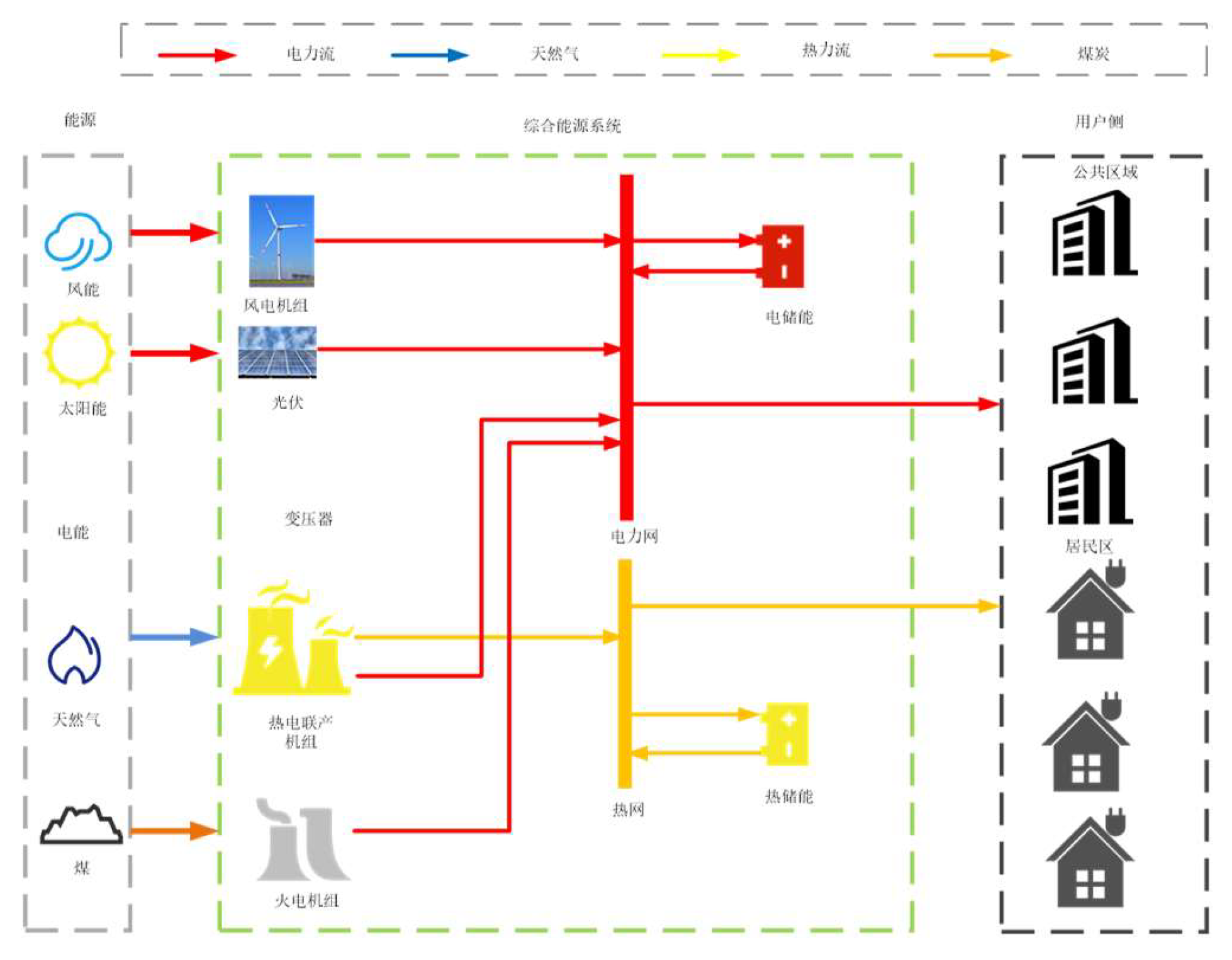
Figure 2.
Schematic diagram of game model.
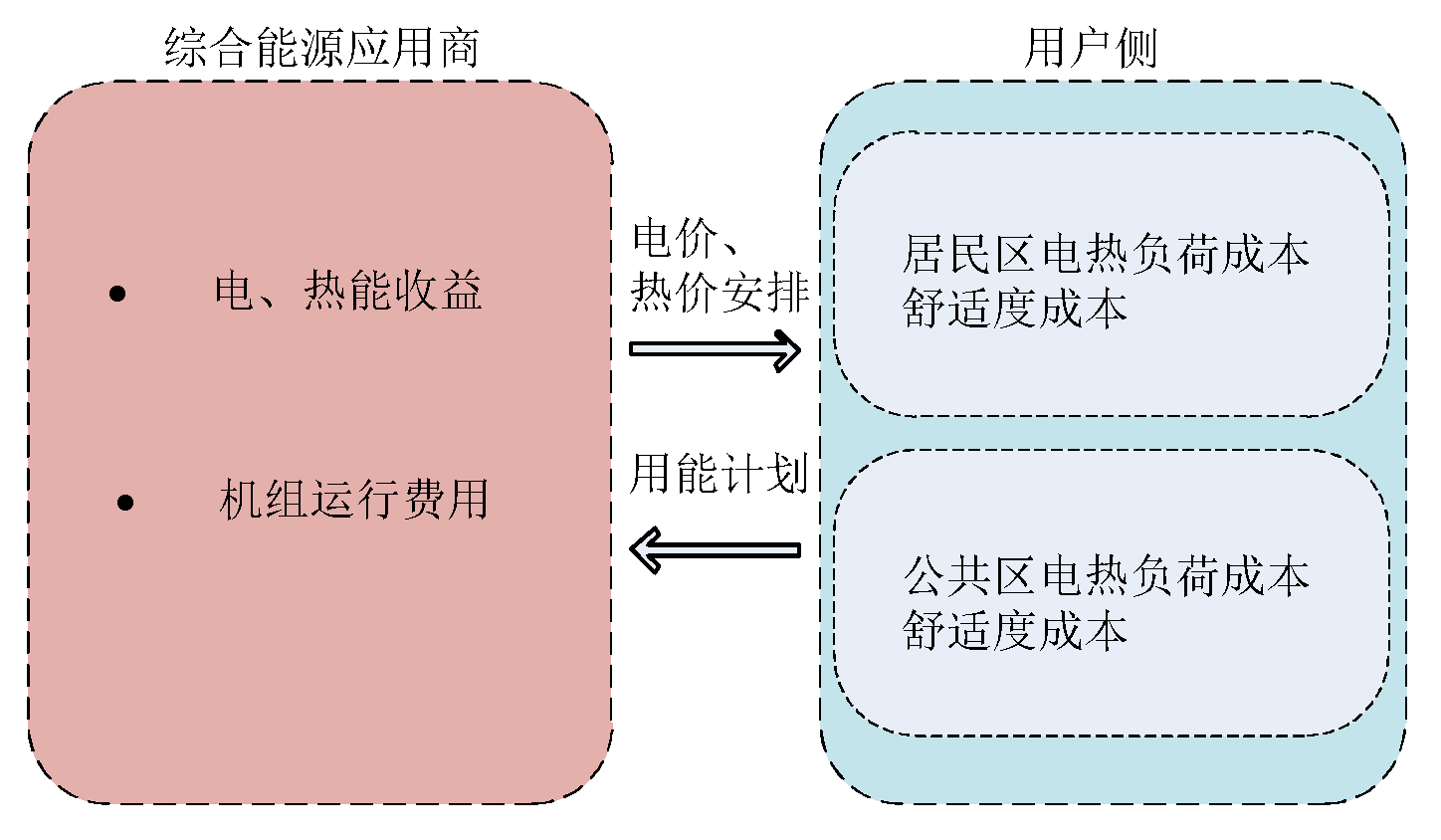
Figure 3.
System Structure Diagram.
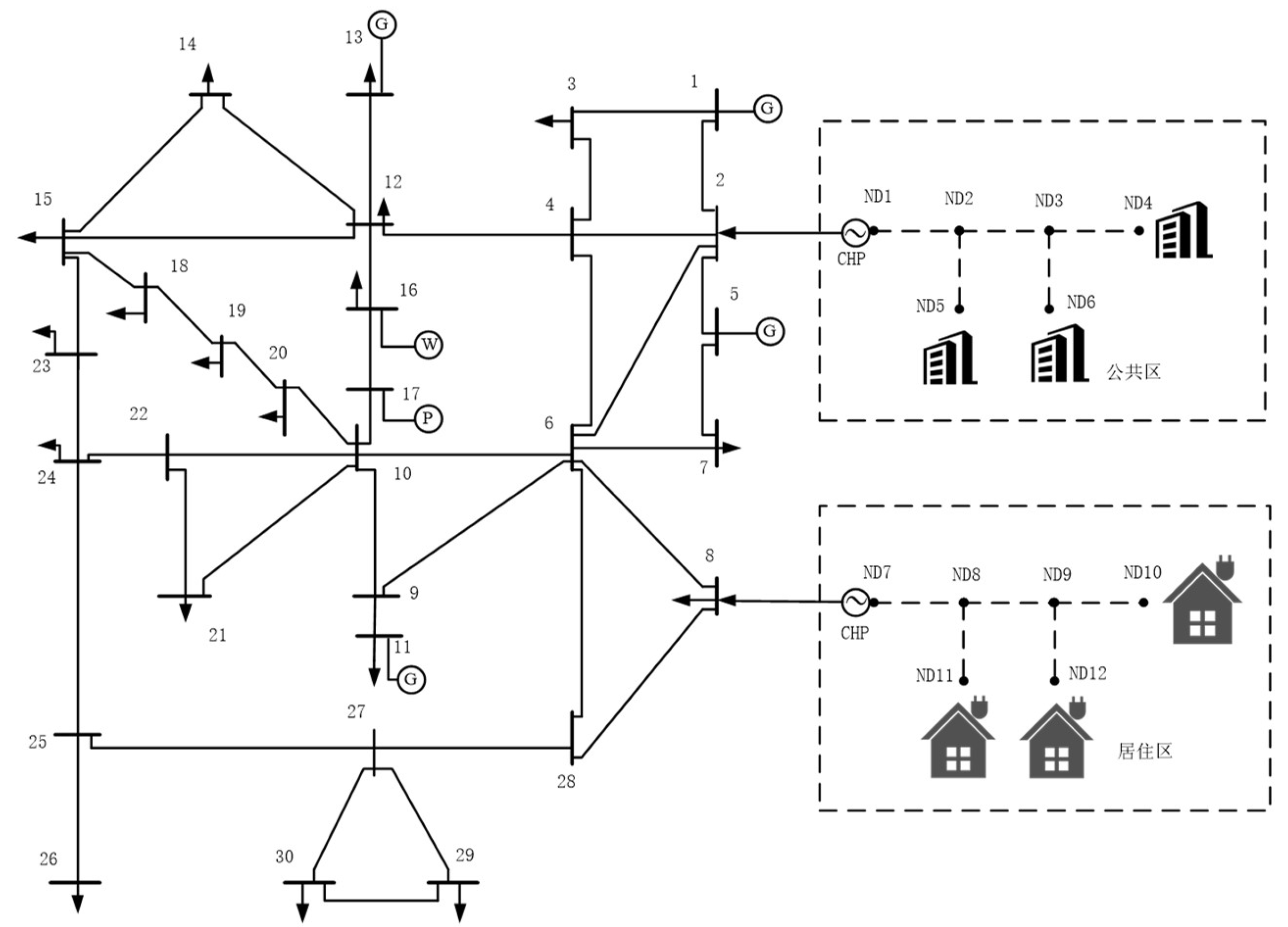
Figure 4.
Curve of Wind and Solar Output and Outdoor Temperature.
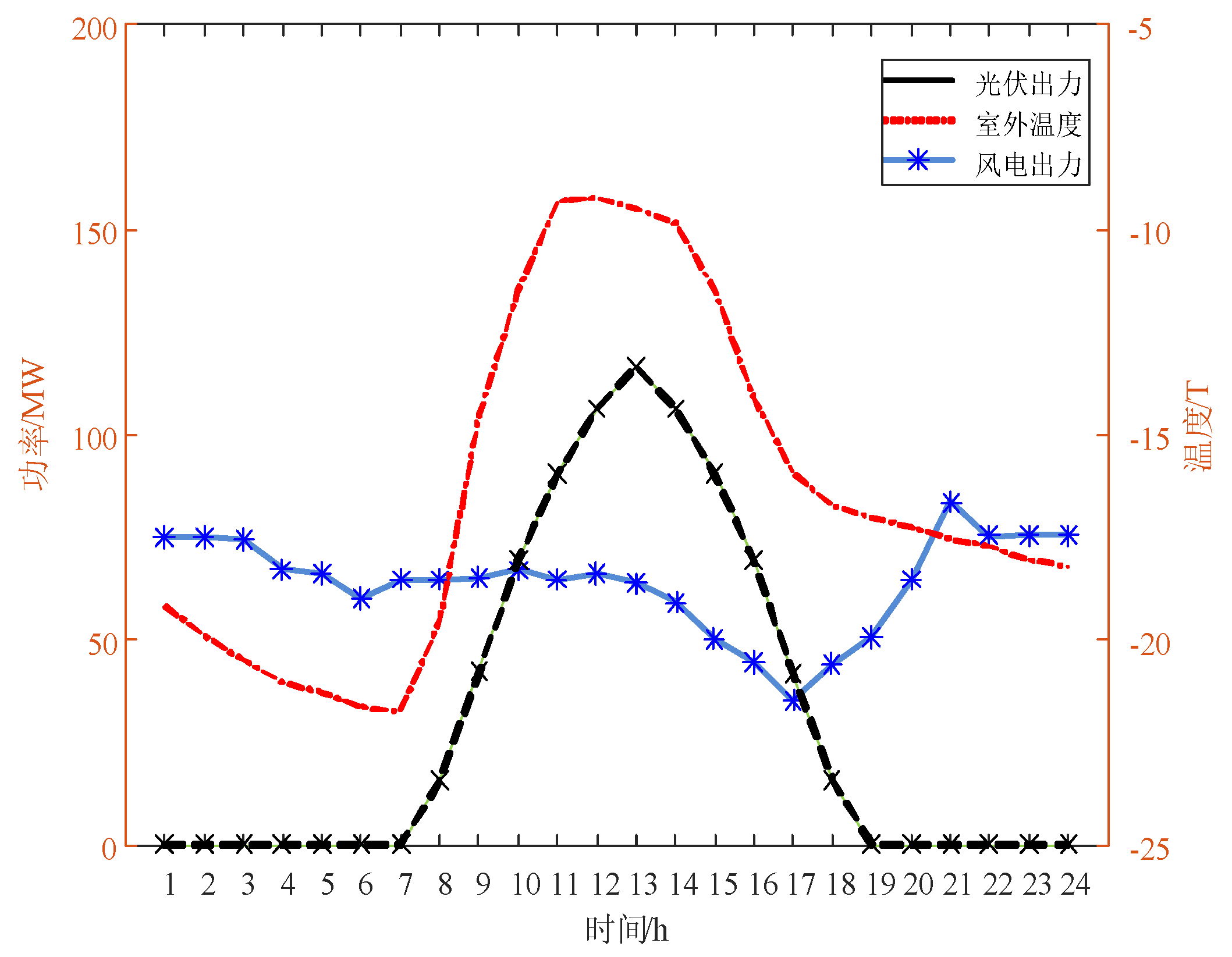
Figure 5.
Electric and Thermal Output of Five Model CHP Units.
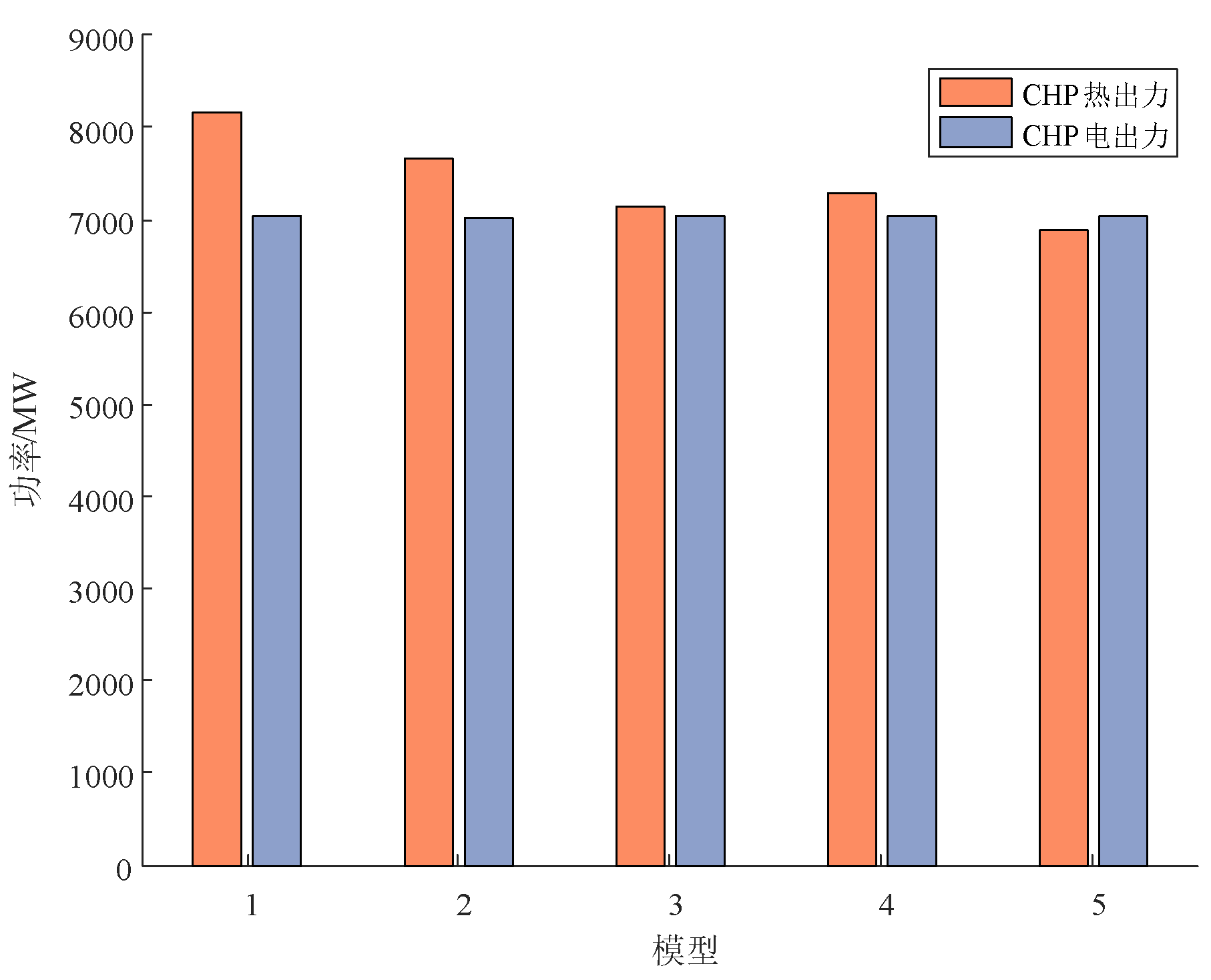
Figure 6.
Time-Shifting Load.
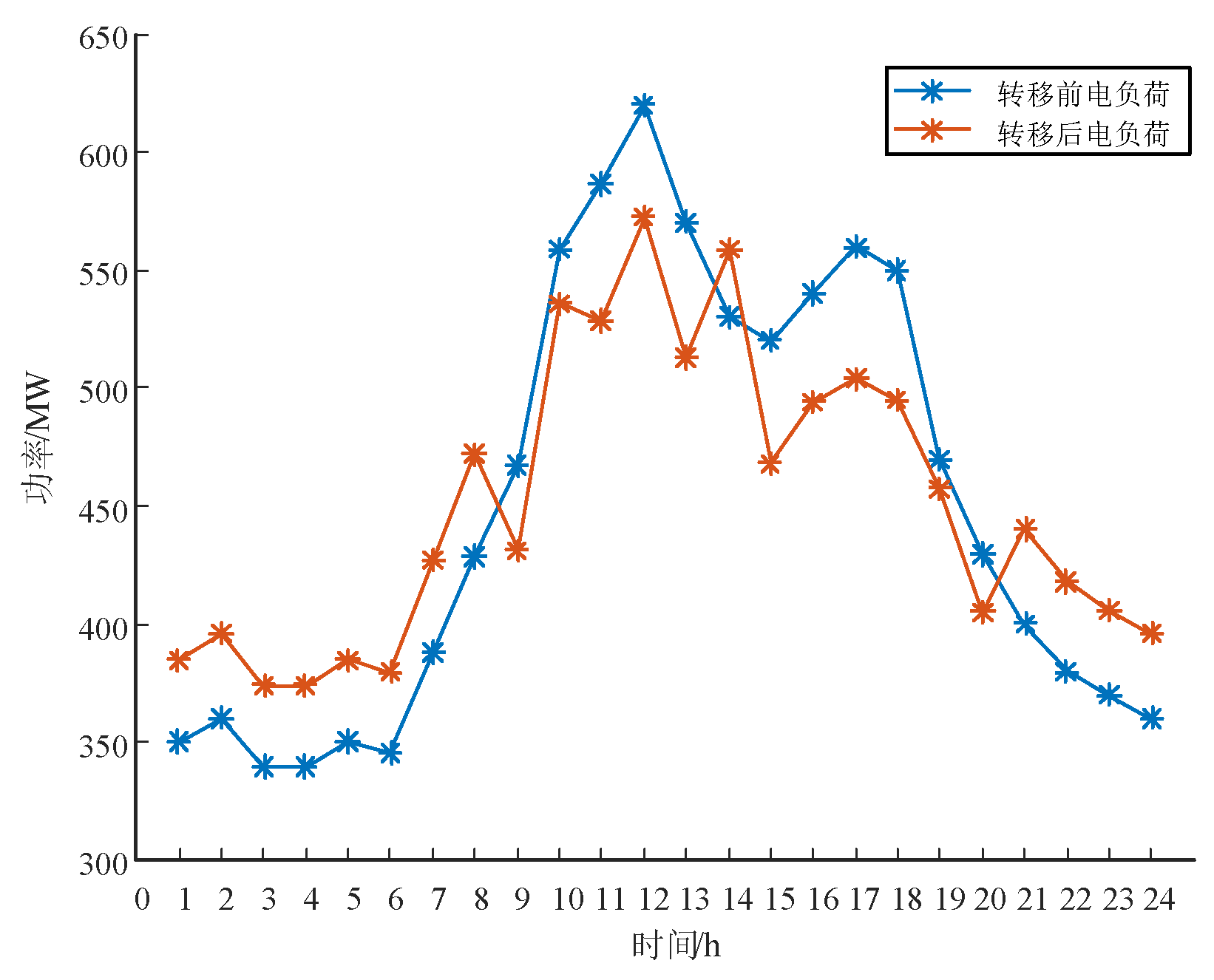
Figure 7.
Comparison and Real-Time Heat Price of Reducible Heat Load between Model 1 and Model 5.
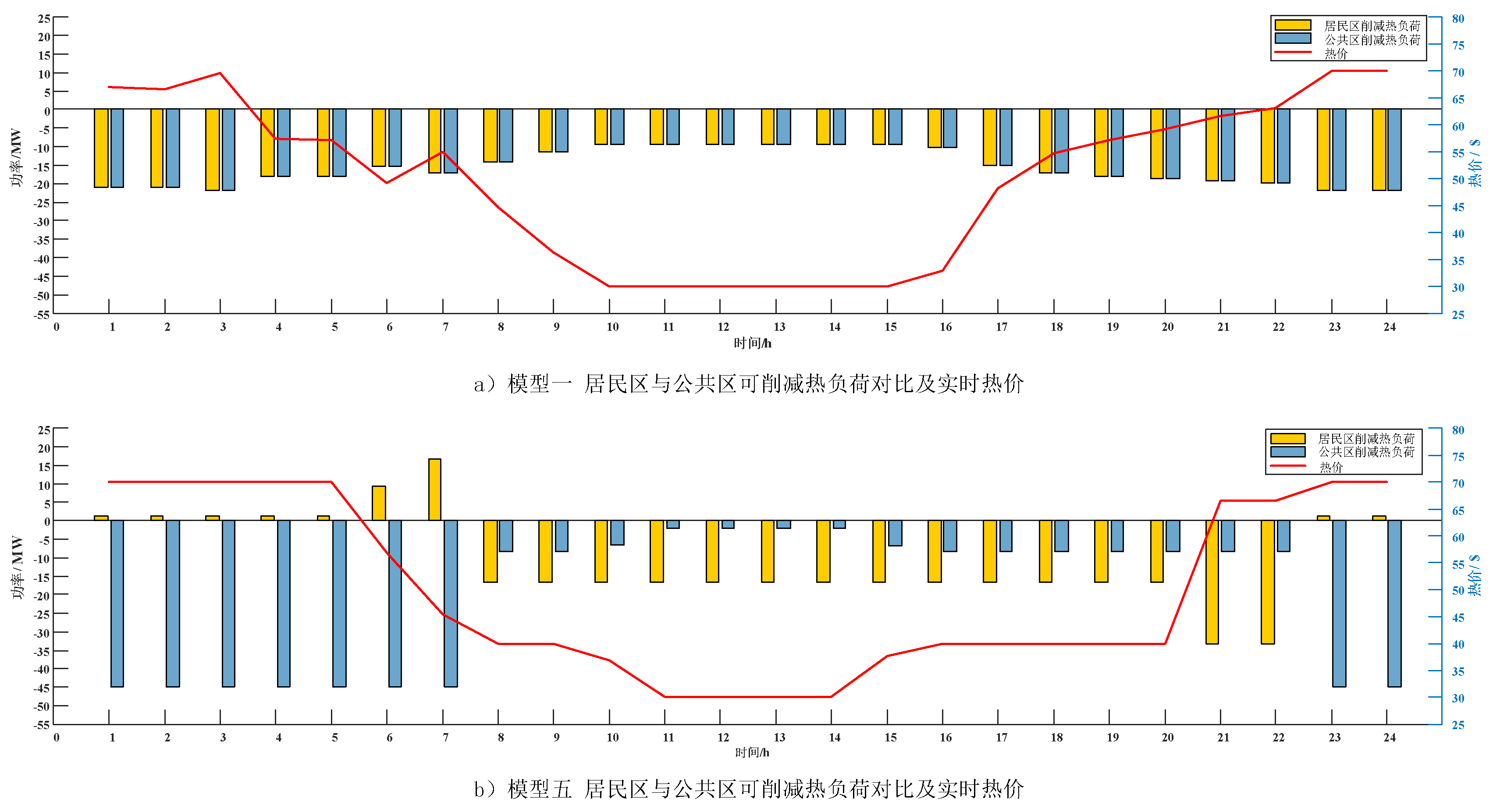
Figure 8.
Thermal Load Reduction of Models 1, 3, 4, and 5.
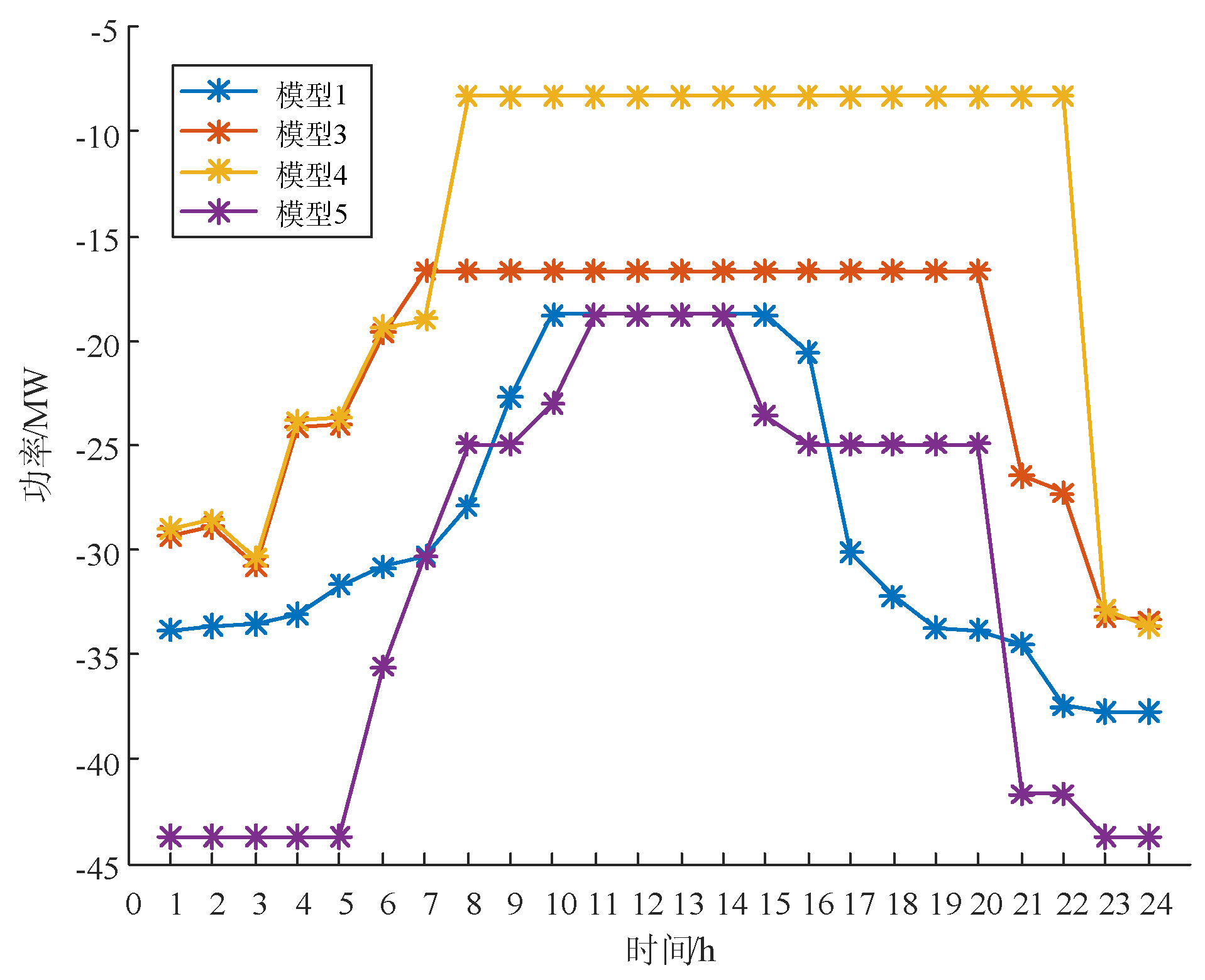
Figure 9.
Analysis of Total Heat Reduction versus Residential Area Proportion.
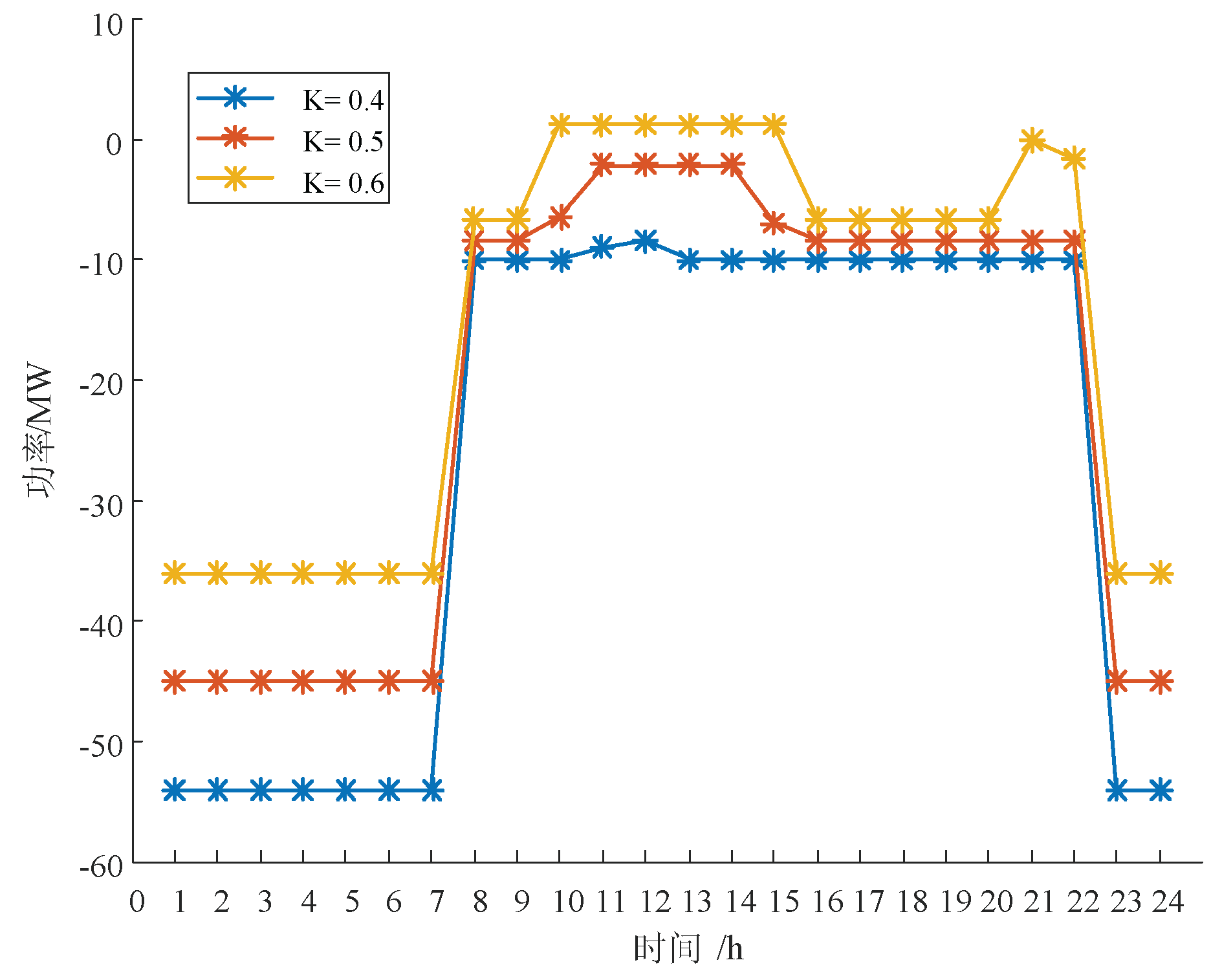

Table 1.
Revenue and User Cost Analysis of Integrated Energy Applications.
| IES Operator | Users | ||||||
| Model | Net Revenue/$ | Revenue/$ | Operating Cost/$ | Energy Cost/$ | Comfort Loss/$ | Total Cost/$ | |
| 1 | 957709.2 | 1123614 | 156230.8 | 1123614 | 10196.81 | 1111134 | |
| 2 | 935227.2 | 1099309 | 154635.3 | 1099309 | 0 | 1099309 | |
| 3 | 904993.1 | 1065153 | 151018.7 | 1065153 | 9383.637 | 1053046 | |
| 4 | 926553.9 | 1075803 | 149249.3 | 1075803 | 6270.972 | 1082074 | |
| 5 | 924042.6 | 1054377 | 150474.1 | 1054377 | 20139.69 | 1074517 | |
Table 2.
Sensitivity Analysis of Residential Area Proportion.
| IES Operator | Users | |||||
| K | Net Revenue/$ | Revenue/$ | Operating Cost /$ | Energy Cost /$ | Comfort Loss /$ | Total Cost /$ |
| 0.1 | 854678.1 | 947419.4 | 143194 | 947419.4 | 50452.68 | 997872.1 |
| 0.2 | 868351.2 | 978642.1 | 150078.1 | 978642.1 | 39787.17 | 1018429 |
| 0.3 | 899139.2 | 1011068 | 146347.5 | 1011068 | 34418.82 | 1045487 |
| 0.4 | 916758.9 | 1042311 | 152975.6 | 1042311 | 27423.95 | 1069734 |
| 0.5 | 924042.6 | 1054377 | 150474.1 | 1054377 | 20139.69 | 1074517 |
| 0.6 | 948115.8 | 1087124 | 155925.5 | 1087124 | 16917.75 | 1104041 |
| 0.7 | 995421.6 | 1127939 | 156325.7 | 1127939 | 23808.32 | 995421.6 |
| 0.8 | 1043279 | 1170367 | 155358.2 | 1170367 | 28269.84 | 1198637 |
| 0.9 | 1116348 | 1244473 | 163343.8 | 1244473 | 35218.55 | 1279691 |
Disclaimer/Publisher’s Note: The statements, opinions and data contained in all publications are solely those of the individual author(s) and contributor(s) and not of MDPI and/or the editor(s). MDPI and/or the editor(s) disclaim responsibility for any injury to people or property resulting from any ideas, methods, instructions or products referred to in the content. |
© 2024 by the authors. Licensee MDPI, Basel, Switzerland. This article is an open access article distributed under the terms and conditions of the Creative Commons Attribution (CC BY) license (http://creativecommons.org/licenses/by/4.0/).
Copyright: This open access article is published under a Creative Commons CC BY 4.0 license, which permit the free download, distribution, and reuse, provided that the author and preprint are cited in any reuse.


