

Submitted:
02 November 2024
Posted:
11 November 2024
You are already at the latest version
Abstract
This study provides a scientometric analysis of research focused on energy theft detection and load profiling in smart grid networks. Data were retrieved from the Web of Science and Scopus databases, covering publications from 2003 to April 2024. Using the Bibliometrix package and VOSviewer software, we analyzed trends in publications, author productivity, collaborative networks, and key journals. The study highlights significant growth in the research field, with China and the USA emerging as the most productive countries, with strong international collaboration. Nadeem Javaid is identified as a leading author, contributing to publications with a strong focus on the application of deep learning techniques for energy consumption analysis in smart grids. Key journals such as IEEE Access, Applied Energy, and Energies were found to be central to this research area. Our findings highlighted the importance of this area, as smart grid technologies continue to evolve, requiring advanced methodologies to detect non-technical losses and analyze consumption patterns. This research supports the United Nations’ (UN) Sustainable Development Goals (SDGs), particularly goals related to sustainable energy and infrastructure development, by emphasizing the importance of technological innovation and collaboration in tackling energy theft.
Keywords:
scientometric analysis
; Web of science database
; scopus database
; bibliometrix
; VOSViewer
; electricity theft
; energy consumption categorization
; household units
1. Introduction
The categorization of energy consumption and the detection of energy theft in smart grids are problems that need to be addressed, given the current widespread deployment of smart energy meters. These meters provide for the utilities with a real-time consumption of their residential, industrial and commercial costumers [1]. Approaches about electricity consumption dynamics include, for example: load profile clustering [2,3,4], forecasting [5,6,7], database balancing [8,9,10], dimensionality reduction [11,12,13], big data analytics [14,15,16] and electricity theft detection [17,18,19]. As a result, governments, power companies and the scientific community are focused on these issues in order to better treat and analyze data, providing a better understanding of usage patterns.
Energy theft in smart grids presents a significant challenge worldwide, affecting the efficiency of power systems and resulting substantial economic losses. It is a critical issue for utilities and policymakers as it affects not only the revenue of electricity providers but also the stability of grid operations. Smart meters and advanced metering infrastructures (AMI) are increasingly being deployed to tackle these issues by providing real-time monitoring of consumption data from residential, industrial, and commercial users [1]. In 2004, electricity theft in India resulted in estimated annual losses of US$ 4.5 billion, which represented approximately 1.5% of the country’s nominal Gross Domestic Product (GDP) [20]. Arango et al. [21] used the TAROT model, with real-word data from the Brazilian National Agency of Electric Energy (ANEEL), and determined that with energy theft values greater than 79.715% it is not possible for the utility to obtain a regulated tariff, because that revenue cannot cover the costs. According to Jain, Choksi and Pindoriya [22] . In 2023, NTL (which energy theft is included) accounted for 6.7% (38.2 TWh) of the energy injected into the Brazilian grid, leading to an average financial loss of R$ 6.9 billion (US$ 1.3 billion) [23,24].
Several studies on electricity theft are available in the literature and this article brings a small portion of them. Al-Ghaili et al. [25] reviewed the anomaly detection techniques in AMI for detecting data manipulation, emphasizing challenges in handling the large volume of smart meter data and digital vulnerabilities. Jokar, Arianppoo and Leung [26] purposed a consumption pattern-based energy theft detection method using SVM and anomaly detection in AMI, emphasizing robustness against non-malicious variations and privacy preservation. Punmiya and Choe [27], inspired by the research of [26], introduced a gradient boosting-based theft detector focusing on feature engineering to improve detection accuracy and reduce false positive rates in smart grid environments. Yao et al. [28] presented a Convolutional Neural Network (CNN)-based approach for detecting energy theft while preserving user privacy using homomorphic encryption, ensuring accurate theft detection without compromising data security. Gunturia and Sarkar [29] presented ensemble machine learning models for detecting energy theft in smart grids, demonstrating the effectiveness of bagging methods like random forest in achieving high accuracy and reducing false positives. Wen et al. [17] purposed the FedDetect, a federated learning framework for energy theft detection, focusing on privacy preservation through local differential privacy and secure protocols, achieving high detection accuracy using a Temporal Convolutional Network (TCN).
In contrast, the topic of energy consumption profiling brings clear insights as well. Philips and Jayakumar [30] presented a literature review in order to make a discussion and some comparisons between specific approaches, strategies and data analysis applications. Das et al [31] presented a profile-based method for assessing the trustworthiness of smart meters that does not rely on assumptions about energy consumption patterns, continuously updating it with new observations. Ullah et al. [32] developed a clustering-based method to classify electricity consumption into distinct levels, by the use of a deep autoencoder and an adaptive self-organizing map (SOM), where the model identified usage patterns, which were visualized for utilities to support energy management decisions. Csoknyai et al. [33] examined how much energy was used for heating, hot water, and electricity in more than 150 residential residences in France and Spain, as well as the results of a serious game intervention. The findings demonstrated changes in energy consumption and user behavior after the intervention. Sepehr et al. [34] highlighted the importance of modeling consumer behavior in demand-side management (DSM) for smart grid optimization, proposing a method to predict residential energy consumption for supporting sustainable energy planning and resource allocation. Czétány et al. [35] analyzed electric load data from nearly a thousand Hungarian households to develop energy consumption profiles using clustering methods. Four distinct user profiles were identified, enabling more accurate simulations of building energy demand and seasonal heating and cooling requirements.
There are methodological distinctions among bibliometric, informetric, and scientometric analyses, but there is confusion about their terminology [36]. Scientometrics studies all aspects of the aforementioned topics, based on the metadata of the scientific documents that match with the topics to be assessed. In fact, it examines the quantitative aspects of the production, dissemination, and application of scientific knowledge to better understand the dynamics of research as a socially driven activity [37]. According to Mingers and Leydesdorff [38], the scientometric analysis emphasizes the quantitative study of science as a communication system, primarily through the citation analysis, which plays a role in tracking scientific development and assessing research performance. In summary, scientometric analysis is characterized by its quantitative approach to evaluating scientific processes, focusing on knowledge production, communication, and impact measurement. This type of analysis is crucial for highlighting research trends, identifying influential contributions, and providing an evidence-based foundation for assessing the progress and significance of research. Such evaluations support the justification for the publication of studies, ensuring their relevance and value to the scientific community.
So, this article aims to present a scientific mapping analysis to assess research patterns and trends, identify key authors and journals, and explore collaboration networks in the field of electricity theft detection and load profiling. Specifically, it seeks to answer the following questions:
- What quantitative information relates to data, scientific documents, and collaboration between authors?
- Who are the most productive authors, and how has their productivity changed over time?
- What are the dynamics exist between authors, journals and keywords?
- Which journals are the most relevant?
- How do authors and countries collaborate?
- Which countries produce the highest number of articles?
This article is structured into five sections. Section 1 corresponds to the introduction. Section 2 highlights the contributions to the field. Section 3 describes the methodology used. Section 4 presents the results obtained. Finally, Section 5 offers the final considerations and suggests proposals for future research.
2. Contributions to the Field
Despite the extensive body of studies that cover these topics, as a small portion highlighted in Section 1, the research conducted by the authors of this article did not identify any scientific publications that provide a scientometric analysis specifically aimed at quantifying the research front as undertaken in this article. Previous works, such as those focusing on energy theft detection methodologies [19,39,40,41,42] and energy consumption load profiling in smart grids [43,44,45,46,47], predominantly emphasize technical aspects or thematic reviews, rather than comprehensive scientometric evaluations.
The key contribution of this article lies in addressing this gap by employing a set of reproducible methodological procedures, utilizing article databases and open-access software tools, as will be detailed in subsequent sections. Therefore, our propose is to present the results of a scientometric analysis workflow designed to explore the research frontiers in load profile categorization and energy theft detection. This workflow includes publications retrieved from two major academic databases, a flow diagram for article screening and eligibility, and the use of the Bibliometrix package in R along with VOSViewer software.
Furthermore, this study aligns with the United Nations’ Sustainable Development Goals (SDGs), aiming to expand infrastructure and modernize technologies to provide sustainable and modern energy services to developing countries, in line with their respective programs [48]. Finally, this work also supports the SDGs related to industry, innovation, and infrastructure, with a focus on promoting technological development, research, and national innovation in developing countries, while fostering a supportive political environment [49].
3. Materials and Methods
3.1. Database Survey
We obtained publications from 2003 to April 2024, on subjects related to energy theft detection frameworks and consumption patterns in consumer units connected to smart energy grids. These documents were gathered from the databases Scopus (https://www.scopus.com/) and ISI Web of Science - WoS (https://www.webofscience.com) databases. Scopus and WoS were selected for this study due to their comprehensive coverage of peer-reviewed articles in the field of smart grid technologies and both are world-leading citation databases [50] . These databases are considered reliable sources for scientometric analysis in engineering and energy-related research.
The search terms were chosen based on a preliminary literature review, ensuring that the keywords adequately covered the main topics of energy consumption profiling and energy theft detection in smart grid networks. Boolean operators (AND, OR) were employed to combine terms, ensuring a broad yet focused search. Furthermore, no time restrictions were applied during the search process, and only peer-reviewed journal articles were considered. So, the following keywords and Boolean operators were used to retrieve the data: “electricity consumption profile” OR “electricity consumption pattern” OR “electricity consumption data” OR “energy consumption profile” OR “energy consumption pattern” OR “energy consumption data” OR “residential load pattern” OR “building load pattern” OR “residential load profile” OR “building load profile” OR “energy use” OR “electricity use” OR “advanced metering infrastructure” OR “AMI”, combined with (AND) “smart meter” OR “smart grid”.
Articles published in periodicals were the scientific documents of interest. Literature reviews, meta-analyses, technical notes, books (including chapters) and conference papers and other documents were excluded throughout the acquisition process. The search yielded 7799 results. We merged the articles from both databases and removed the duplicates using Bibliometrix 4.1.3 [51] package implemented in R 4.3.2 (R Core Team 2023), resulting in 5032 records. Titles, keywords list and abstracts were manually reviewed to ensure relevance to the themes of energy theft detection and load profiling in smart grids. Articles focusing on unrelated topics, such as industrial energy management or non-residential load profiles, were excluded. Consequently, the final dataset comprised 478 documents. In order to organize and visualise this process, the adapted PRISMA (Preferred Reporting Items for Systematic reviews and Meta-Analyses) 2020 flow diagram shows in Figure 1 the flowchart of the task aforementioned task [52].
3.2. Scientometric Analysis
In order to answer the research questions (1 – 4 and 6) presented in the Introduction, the R package Bibliometrix 4.1.3 was used to analyse the following results:
- Annual production of articles;
- Productivity of authors;
- Author productivity over time;
- The most productive authors;
- Three-field plot;
- The core journals according the theme investigated;
- Production journals over time;
- The most productive countries.
4. Results
4.1. Annual Production of Articles and Author’s Productivity
From 2003 to April 2024, a total of 478 articles (Appendix A1), were published in 183 different journals, with an average of 32.96 citations per document. We detected 1556 authors which 14 of them has produced single-authored documents and, on the other hand, 22.8% of the authors produced articles with international co-authorship. The mean of co-authors per document was 3.85, showing the preference to build a work in group and consequently get collaboration of their peers. These information give support to answer Question 1 in Section 1.
The annual growth rate of publications is 17.39% and there is a tendency to increase exponentially over time, with exponential growth parameters: , , (Appendix B). Based on this trend and according to Figure 3a (both of them help to answer Question 1 in Section 1), it is expected that 107 articles will be published until the end of 2024. In addition, this figure illustrates the dynamics of the annual article production and the curve for predicting the number of articles published over the entire period.
With the aim to answer Question 2 in Section 1, Figure 3b shows the scientific production according to Lotka’s law [54], as well as the observed productivity ratio over the retrieved articles with respect to the theme of the study. Lotka’s law helps in modeling the distribution of scientific productivity across a field, highlighting the concentration of publications of a small productive set of authors and provides a framework to quantify and interpret the distribution of scientific productivity. It’s significant that both distributions in Figure 3b have similar shapes and then it’s important to check that both curves have the same distribution, in order to confirm that the observed distribution follows the Lotka’s Law. In order to achieve this goal, a two-sample Kolmogorov-Smirnov (KS) test was performed, which resulted in constants and , with and (Appendix C). Thus, these results showed that the observed distribution follows the Lotka’s Law.
Figure 4 shows the 10 most productive authors, over time, where the size of each circle is proportional to the number of articles published in that year. The color intensity of each circle represents the times that each article has been cited (Times Cited - TC) in the respective year (Appendix D). In the same way, this figure answer Question 2 in Section 1, showing the productivity (in a temporal manner) of these authors who occupies the lowest frequency of authors region, according to Figure 3b.
During the last 4 years the most productive author was Nadeem Javaid, who published 12 articles. Furthermore, according to Table 1, Javaid contributed 2.5% of the total number of the articles published. It means that Nadeem Javaid is an emerging reference and author to be well considered by the other researchers who study the theme electricity theft and load consumption profiling in household units. In turn, the dominance factor (DF) is the proportion of multi-authored articles in which a researcher appears as the first author [55]. Thus, Nadeem Javaid is the first author in 18% of his articles written in collaboration. Finally, Nadeem Javaid’s h-index means that 7 of his 12 publications have, at least, 7 citations (Appendix E).
4.2. Three-Field Plot, Core Journals and Journal’s Production
The three-field plot (or Sankey diagram) [56], shown in Figure 5, presents the connections between authors, keywords, and journals (Appendix F) according to the articles retrieved as indicated in Section 3.1 and answers Question 3 in Section 1. This figure reveals how the scientific production is concentrated in the top 10 highlighted journals, especially in IEEE Access, where the detected keywords can be observed in the middle field. Additionally, this information is important as it highlights the journals that attract the most interest from authors aiming to publish articles on the themes that guide the scientometric analysis conducted in this text.
In this plot it is possible to see that Nadeem Javaid, the most productive author in the set of detected articles (see Table 1), focused his publications in IEEE Access and his articles were directed in deep learning techniques applied in smart grid context in order to understand the energy consumption data obtained from smart meters. Note that Journal Sustainability is on the top 10 journals, indicating that this journal can be considered in future submissions, if the article adheres to the SDGs.
The Bradford’s Law [57] (Appendix G) revealed the group of 6 most relevant journals, called as Core Sources, as shown in Figure 6. These journals published the most articles related to the topic of load profile categorization and the energy theft detection and it answers Question 4 in Section 1.
Indeed, Figure 6 corroborates with the the information presented in Figure 5, in terms of the list of journals, not necessarily in the same order as seen in the Three-feild plot (or Sankey diagram). The Core Source seen in Bradford’s Law is associated with the number of articles found in these journals (and that was related to the theme covered in this article), while in Sankey diagram the sequence of journals is associated with the use of the keywords presented in that diagram.
Question 4 is also answered by the Figure 7 (in a temporal manner), that shows how the ranking of the top 5 journals related to the topic of energy theft detection frameworks and consumption patterns in consumer units connected to smart grids has changed since 2003 (Appendix H).
Only Energy and Buildings published articles related to the topic mentioned above between 2003 and 2012. However, from the moment that other journals started to accept and publish articles on this topic, Energy and Buildings lost the lead to the journal Energy in 2014 and briefly regainined the lead between 2018 and 2019. Another point that should be noted is how fast was the production in the journals Applied Energy, Energies and especially IEEE Access, whose the first article was published in 2017. It is worth mentioning that this is a new topic, with an exponential increase in articles published since 2018.
4.3. Scientific Production and Collaborations
This Subsection intends to answer Questions 5 and 6 in Section 1. Figure 8 illustrates the network collaboration between countries where (Appendix I): (i) The closeness of the circles represents the magnitude of the collaboration; (ii) The diameter of the circle corresponds to the magnitude of productivity; (iii) The thickness of the link indicates the frequency of collaboration and (iv) Each color represents a cluster (1–6), or a community of countries. Cluster 5 (purple node) represents Australia and Singapore.
So, China and USA are the most productive countries and has the strongest collaboration in the network. Moreover, both countries are connected to all clusters which emphasizes a prolific international collaboration, resulting in a huge number of cited references. Although China and the USA are highly productive, according to Table 1 the most productive author is from Pakistan, a country assigned to group 3. To corroborate with these observations, Figure 9 (Appendix J) illustrates the top 10 most productive countries in terms of SCP (Single Country Publications) and MCP (Multiple Country Publications or International Collaboration).
Therefore, this graph reinforces China and the USA as the most productive countries and the links between the nodes seen in Figure 8 are represented by the MCP quantities in Figure 9. These collaborations diversify the approaches to electricity theft detection and result in solutions that are globally applicable. This is reinforced by the high citation rates of publications from the USA and China (see Table 2 and Appendix J), which are often used as a foundation for implementing smart metering technologies in different energy contexts around the world.
The USA and China appear as the most productive countries in the field of electricity theft and consumption profiling in smart grid networks, reflecting their large economies and significant investments in research and development of advanced energy technologies. The total number of publications originating from these two countries is significantly higher than in other regions, with an exponentially higher annual growth rate in publications, which can be attributed to robust funding and industry-academia collaborations. Furthermore, the strong international collaboration of these countries, as evidenced by the high proportion of MCP articles, indicates that research is not carried out in isolation but in partnership with other nations.
It is important to note that Pakistan and Saudi Arabia have a MCP value higher than the SCP, indicating s a strong international collaboration in terms of scientific production in this topic, including collaborations between them, China and USA. Figure 10 shows the same network as in Figure 8, but with nodes in different colors where the blue tone represents the countries with articles published a longer time than those in yellow. For instance, England and the USA have been publishing for longer than China, which in turn has been publishing for longer than Pakistan and Saudi Arabia.
The collaboration network of the authors is illustrated in Figure 11, where Nadeem Javaid (“javaid, n”) is the most productive author in the main group. The analysis of the co-authorship network using VOSviewer revealed a notable pattern in the relationships between the clusters. Specifically, Cluster 1 has a considerable number of connections with Clusters 4, 9, 10 and 11. This observation suggests a high degree of intellectual or collaborative proximity between the researchers within these clusters, indicating potential interdisciplinary interactions or thematic overlaps. Such a finding is significant, as it underlines the key role of Cluster 1 in bridging research efforts across multiple thematic areas, thereby enhancing the overall cohesion and integrative nature of the research network. Figure 12 illustrates the same network, now with a termporality manner (Appendix K).
The temporal analysis of the co-authorship network provides further insights into the collaborative dynamics within Cluster 1. The node representing Nadeem Javaid, who has the highest number of publications within this cluster, is colored green, indicating that his significant contributions to a particular research topic started around 2021. Interestingly, the collaboration patterns reveal the emergence of connections with authors whose representative nodes are shaded in yellow, suggesting that their collaborative engagement with Javaid began around 2023. This observation may imply that Javaid has either mentored these researchers or that they, having reached a level of academic maturity, initiated collaborative efforts with him in recent years. This finding is indicative of a potential mentorship or academic influence exerted by Javaid within this research domain.
4.4. Emerging Trends from Scientometric Analysis in Energy Theft Detection and Consumption Profiling Research
The scientometric analysis reveals several emerging trends that are expected to shape future research in the fields of electricity theft detection and energy consumption profiling. By analyzing the patterns in all outputs, we can make predictions about the directions that this field may take in the coming years.
4.4.1. Exponential Growth in the Research Field
As illustrated in Figure 3a, the production of articles published in the field of energy theft detection and energy consumption profiling has been increasing at an annual growth rate of 17.39%. This trend is particularly pronounced after 2018, which saw a significant increase in publications, likely due to the rapid adoption of smart grid technologies and the implementation of Advanced Metering Infrastructure (AMI).
The rapid expansion of smart grids worldwide is expected to sustain this trend. As utilities increasingly rely on real-time data to monitor consumption and detect anomalies, researchers will need to develop more advanced methodologies for handling large amounts of data. This is expected to entail a more profound integration of artificial intelligence (AI) methods, including deep learning and reinforcement learning, which Sakey Plot (Figure 5) has already highlighted as key areas of interest. These technologies offer promising methods for improving both the accuracy and efficiency of energy theft detection systems, especially in complex and variable settings.
4.4.2. Strengthening of International Collaborations
Figure 8 and Figure 9 provide a clear picture of the strong international collaboration present in this field. Countries such as China and the USA not only lead in terms of total publication output, but also play a central role in fostering international research partnerships. The Multiple Country Publications (MCP) metric showed that a significant portion of research in this domain is produced through collaborative efforts, with China and the USA forming key nodes in global research networks.
This trend toward greater international collaboration is expected to continue, especially as the challenges associated with electricity theft become more global in nature. Future research should see even more international partnerships, particularly between countries with advanced technological infrastructures and those facing energy theft problems, such as Pakistan [58]. As shown in Figure 9, these countries already exhibit a high level of collaboration, and their involvement in global research networks is likely to increase as they contribute to the development of context-specific solutions for energy theft detection.
One potential future direction for collaboration lies in the adaptation of advanced technologies, such as AI and big data analytics, to address the specific needs of developing nations. These countries often face unique challenges related to infrastructure, regulatory environments, and consumer behavior, making it essential to develop solutions that are both technologically robust and adaptable to local conditions. The forms of strenghten of international collaborations can be understood by the study of Conrad and Kotska Conrad and Kostka [59]: "since 2011, Europe has witnessed an astonishing surge in Chinese foreign direct investment (FDI), which hit a high in 2015 as Chinese investments totalled more than EUR 20 billion". Also, according Dollar [60], while bilateral direct investment between the USA and China offers significant economic benefits, such as fostering growth and technological collaboration, it also brings a range of challenges. These challenges include political and regulatory issues, national security concerns, and economic competition. In addition to the partnership between these countries on the path to becoming developing economies, Asif [61] highlights the cooperation between the Kingdom of Saudi Arabia (KSA) and the United Arab Emirates (UAE) through the Gulf Cooperation Council (GCC) to implement public policies for sustainable buildings.
4.4.3. Emergence of Specialized Journals and Changing Publication Dynamics
Bradford’s Law analysis of core journals (see Figure 6) reveals a select group of highly productive journals, such as IEEE Access, Applied Energy, and Energies, that are leading the discipline.. The emergence of these journals, particularly IEEE Access, which began publishing relevant articles in 2017, reflects the increasing specialization of the field. As the number of publications continues to grow, we expect to see the rise of new specialized journals focused exclusively on energy theft detection, smart grid security, and energy consumption analytics.
This shift toward specialization is driven by the need for platforms that address to the interdisciplinary nature of smart grid research. Researchers working on energy theft detection often draw on expertise from fields such as electrical engineering, computer science, and data analytics. As a result, future journals will likely encourage the publication of studies that integrate these diverse perspectives, thereby fostering collaboration between traditionally separate research communities. Figure 5 shows how the top authors, keywords, and journals are interrelated, suggesting a trend toward consolidation of knowledge in a few key outlets.
4.4.4. Increased Contribution from Emerging Economies
Emerging economies, particularly Pakistan and Saudi Arabia, play an significant role in research, as evidenced by their high MCP scores in Figure 9. These countries have established strong collaborations with leading research nations, such as China and the USA, positioning them as important contributors to future developments in the field.
As energy theft becomes a more pressing issue in rapidly urbanizing regions, we expect to see an increase in both the quantity and quality of research coming out of from these countries. Pakistan, in particular, has already produced the most prolific author in the field, Nadeem Javaid, who is highlighted in the co-authorship network (Figure 11). His research, which focuses on the application of AI to energy theft detection, exemplifies the type of high-impact work that is emerging from these regions.
In the future, we anticipate that emerging economies will take on a leadership role in developing innovative solutions tailored to their specific needs. These countries face unique challenges, such as limited infrastructure and regulatory hurdles that require adaptive approaches to energy theft detection. As a result, future research from these regions is likely to focus on cost-effective and scalable solutions that can be implemented in diverse settings.
4.4.5. Integration of AI and Big Data for Energy Theft Detection
The growing importance of AI and big data in this field is evident from the frequent use of related keywords in the three-field plot (Figure 5). As smart meters continue to generate massive amounts of data, future research will increasingly rely on AI-driven techniques to process and analyze this data in real time. Machine learning methods, including deep neural networks and reinforcement learning algorithms, can greatly improve both the accuracy and efficiency of energy theft detection systems.
Advantages like high accuracy and efficiency, adaptability to complex data, capacity to process large datasets and consistent decision making are attractive factors to use the AI. On the other hand, the risk of overfitting, high computational costs, complex structure and configuration, slow training process and maintanance are some drawbacks on using this technique [62,63,64,65,66].
In addition to improving detection capabilities, AI can predict future theft trends and optimize the distribution of energy networks [67]. For example, predictive analytics, can be identify areas at a high risk of theft, allowing utilities to distribute their resources more effectively [68]. As these technologies advance, we expect to see deeper integration of AI and big data analytics into the heart of smart grid operations. Furthermore, cloud computing and distributed systems will be essential in managing the vast amounts of data generated by smart grids [69]. These technologies will enable researchers and practitioners process data at scale and improve real-time theft detection across vast and complex energy networks.
With respect to the influence of energy theft, Arango et al. [21] address the impact of energy theft on energy bills by emphasizing how theft and other non-technical losses have a direct effect on power firms’ earnings. Companies are forced to modify tariffs and economic models in order to preserve financial stability as a result of this income loss. In particular, billed revenue decreases as the percentage of energy theft rises, while operational expenses grow since more energy is needed to make up for losses. The authors also point out that utilities may have trouble establishing regulated prices that strike a balance between revenue and expenses when theft becomes significant. As a result, paying consumers may see a rise in tariffs. In other words, if theft increases, genuine customers may pay more for energy in order to make up the difference caused by unbilled stolen energy. According to the authors, energy theft can have an indirect impact on consumer finances in addition to hurting the company’s economic worth because the costs of maintaining business operations and regulatory compliance are passed on to the paying user base.
4.4.6. Conformity with the Sustainable Development Goals (SDGs)
Ultimately, the worldwide focus on sustainability, especially emphasized by the United Nations’ Sustainable Development Goals (SDGs), is expected to influence the future trajectory of research in this area. Specifically, SDG 7 (Affordable and Clean Energy) and SDG 9 (Industry, Innovation, and Infrastructure) are closely related to the goals of minimizing non-technical losses and increasing energy efficiency within smart grids.
The need for energy theft detection research will increase as nations strive to reach these sustainability standards. Achieving these goals will largely depend on the development of technologies that reduce losses and increase the reliability of energy distribution networks. Future studies are likely to focus on the nexus between policy formulation and technology innovation, examining how smart grid technologies might support both environmental sustainability and economic growth.
5. Conclusions
This article presented a scientometric analysis of electricity theft and a framework for categorizing residential consumer units connected to smart grid networks. Articles from English-language journals were obtained from the ISI Web of Science (WoS) and Scopus databases. After merging both databases and eliminating duplicate articles (using the Bibliometrix 4.1.3 package implemented in R 4.3.2), screening and removal of out-of-scope articles was carried out according to the adapted PRISMA flow. This resulted in a database of 478 articles was compiled.
Subsequently, exploratory analyses were conducted using Bibliometrix and collaborative networks between countries and authors were mapped using VOSviewer 1.6.20 in order to answer the following questions, which are listed in the Introduction:
- Q: What quantitative information relates to data, scientific documents, and collaboration between authors?
- A: Between 2003 and April 2024, our findings show an exponential increase in the number of published articles, culminating in 2024 with a total of 107 articles. This indicates a growing interest among researchers in the two themes that constitute the subject of this study. Additionally, out of 1556 authors, only 14 produced single-authored articles, indicating a strong synergy in collaborative work among authors from the same or different countries.
- Q: Who are the most productive authors, and how has their productivity changed over time?
- A: The most productive authors are primarily from Pakistan, followed by South Korea, Saudi Arabia, India, China, Palestine, and Bangladesh. Nadeem Javaid was identified as the most productive author, with 12 articles among the 478 in the database created for this study. His first two works, published in 2020, have received a total of 101 citations. The majority of his publications appear in the IEEE Access journal.
- Q: What are the dynamics exist between authors, journals and keywords?
- A: Using the Sankey diagram and Bradford’s Law, it was discovered that the top 10 productive authors concentrated their publications in journals such as Applied Energy, Energies, IEEE Access, Energy and Buildings, Energy, and IEEE Transactions on Smart Grid. The most common keywords used by these authors relate to deep learning, smart meters, smart grids, machine learning, and clustering.
- Q: Which journals are the most relevant?
- A: According to Bradford’s Law, the most relevant journals, in descending order, are Applied Energy, Energies, IEEE Access, Energy and Buildings, Energy, and IEEE Transactions on Smart Grid. This result guides researchers interested in publishing their findings to the most relevant journals for reporting discoveries related to electricity theft and energy consumption categorization in smart grids.
- Q: How do authors and countries collaborate?
- A: The research showed significant collaboration among authors, as less than 1% of the articles were single-authored. Since the oldest article in the database was published in 2003, it was observed that the research groups have been in existence for just over 20 years, with considerable interaction between groups. Regarding collaborations between countries, China and the USA are the countries with the most collaboration with other countries, and with the exception for Pakistan, the two leading publishing countries have a higher number of articles co-authored by researchers affiliated with institutions in these respective countries.
- Q: Which countries produce the highest number of articles?
- A: China and the USA are the countries that have published the most articles between 2003 and April 2024. They also have a strong collaboration network with other countries identified in this research. The year 2021 has the highest number of publications, due to the increase of research groups with publications related to that year and the increase of partnerships and publications from China.
This study revealed that research in this field is expected to expand, increasing its relevance. Electric utilities need to consider this issue to understand user consumption patterns and develop strategies to detect and prevent electricity theft. Such non-technical losses are accounted for and distributed in electricity bills, underscoring the importance of addressing this challenge. The field of energy theft detection and energy consumption profiling is positioned for significant growth in the coming years.
The trends identified in this study (exponential growth in research output, increased international collaboration, the emergence of specialized journals, greater contributions from emerging economies, and the integration of AI and big data) point to a vibrant and rapidly evolving field. As smart grid technologies continue to advance, researchers will play a crucial role in developing solutions that address both technical challenges and global sustainability goals.
Future research should continue to monitor the emerging trends in collaboration between highly productive countries such as China and the USA and the increasing contribution of emerging economies, such as Pakistan and Saudi Arabia. These collaborations are important in addressing energy theft, especially as they reflect a global effort to address a common challenge through diverse approaches. Additionally, the integration of AI and machine learning technologies, as highlighted by the Sankey plot, will likely play a central role in future research, particularly in improving real-time detection systems. Scientometric data indicate that the volume of research in this domain is growing rapidly, and further exploration of how collaborative efforts between different countries can drive innovation in technological solutions should remain a priority.
Author Contributions
“Conceptualization, J.A.M.R. and O.S.M.G.; methodology, J.A.M.R. and O.S.M.G.; software, J.A.M.R.; validation, J.A.M.R., R.G.L.J. and O.S.M.G.; formal analysis, J.A.M.R. and R.G.L.J.; investigation, J.A.M.R.; writing—original draft preparation, J.A.M.R.; supervision, R.G.L.J. and O.S.M.G. All authors have read and agreed to the published version of the manuscript.
Funding
This research received no external funding.
Institutional Review Board Statement
Not applicable.
Informed Consent Statement
Not applicable.
Data Availability Statement
This Github link contains all the appendices mentioned throughout this text: https://github.com/joserezende/scientometric-analysis.
Conflicts of Interest
The authors declare no conflicts of interest.
Abbreviations
The following abbreviations are used in this manuscript:
| AI | Artificial Intelligence |
| AMI | Advanced Metering Infrastructure |
| ANEEL | The Brazilian National Agency of Electric Energy |
| CNN | Convolutional Neural Network |
| DF | Dominance Factor |
| DSM | Demand-Side Management |
| IEEE | Institute of Electrical and Electronics Engineers |
| KS | Kolmogorov-Smirnov |
| KSA | Kingdom of Saudi Arabia |
| MCP | Multiple Country Publications |
| NTL | Non-Technical Losses |
| PRISMA | Preferred Reporting Items for Systematic reviews and Meta-Analyses |
| RNN | Recurrent Neural Network |
| SCP | Single Country Publications |
| SDG | Sustainable Development Goals |
| SOM | Self-Organizing Map |
| TC | Total of Citations |
| TCN | Temporal Convolutional Network |
| TWh | Terawatt hours |
| UAE | United Arab Emirates |
| UN | United Nations |
| USA | United States of America |
| WoS | Web of Science |
References
- Dileep, G. A survey on smart grid technologies and applications. Renewable Energy 2020, 146, 2589–2625. [Google Scholar] [CrossRef]
- Satre-Meloy, A.; Diakonova, M.; Grünewald, P. Cluster analysis and prediction of residential peak demand profiles using occupant activity data. Applied Energy 2020, 260, 114246. [Google Scholar] [CrossRef]
- Khan, A.N.; Iqbal, N.; Rizwan, A.; Ahmad, R.; Kim, D.H. An ensemble energy consumption forecasting model based on spatial-temporal clustering analysis in residential buildings. Energies 2021, 14, 3020. [Google Scholar] [CrossRef]
- Zhang, X.; Ramírez-Mendiola, J.L.; Li, M.; Guo, L. Electricity consumption pattern analysis beyond traditional clustering methods: A novel self-adapting semi-supervised clustering method and application case study. Applied Energy 2022, 308, 118335. [Google Scholar] [CrossRef]
- Shi, H.; Xu, M.; Li, R. Deep learning for household load forecasting - a novel pooling deep RNN. IEEE Transactions on Smart Grid 2018, 9, 5271–5280. [Google Scholar] [CrossRef]
- Massaoudi, M.; others. A novel stacked generalization ensemble-based hybrid LGBM-XGB-MLP model for Short-Term Load Forecasting. Energy 2021, 214, 118874. [Google Scholar] [CrossRef]
- Ghimire, S.; Nguyen-Huy, T.; AL-Musaylh, M.S.; Deo, R.C.; Casillas-Pérez, D.; Salcedo-Sanz, S. A novel approach based on integration of convolutional neural networks and echo state network for daily electricity demand prediction. Energy 2023, 275, 127430. [Google Scholar] [CrossRef]
- Ullah, A.; Javaid, N.; Javed, M.U.; Pamir.; Kim, B.S.; Bahaj, S.A. Adaptive Data Balancing Method Using Stacking Ensemble Model and Its Application to Non-Technical Loss Detection in Smart Grids. IEEE Access 2022, 10, 133244–133255. [Google Scholar] [CrossRef]
- Pamir.; Javaid, N.; Almogren, A.; Adil, M.; Javed, M.U.; Zuair, M. RFE Based Feature Selection and KNNOR Based Data Balancing for Electricity Theft Detection Using BiLSTM-LogitBoost Stacking Ensemble Model. IEEE Access 2022, 10, 112948–112963. [Google Scholar] [CrossRef]
- Naeem, A.; others. A novel data balancing approach and a deep fractal network with light gradient boosting approach for theft detection in smart grids. Heliyon 2023, 9, E18928. [Google Scholar] [CrossRef]
- Kuang, L.; Yang, L.T.; Chen, J.; Hao, F.; Luo, C. A Holistic Approach for Distributed Dimensionality Reduction of Big Data. IEEE Transactions on Cloud Computing 2018, 6, 506–518. [Google Scholar] [CrossRef]
- Wen, L.; Zhou, K.; Yang, S.; Li, L. Compression of smart meter big data: A survey. Renewable and Sustainable Energy Reviews 2018, 91, 59–69. [Google Scholar] [CrossRef]
- Pourmirza, Z. S..B.J. Data reduction algorithm for correlated data in the smart grid. IET Smart Grid 2021, 4, 474–488. [Google Scholar] [CrossRef]
- Hossain, E.; Khan, I.; Un-Noor, F.; Sikander, S.S.; Sunny, M.S.H. Application of Big Data and Machine Learning in Smart Grid, and Associated Security Concerns: A Review. IEEE Access 2019, 7, 13960–13988. [Google Scholar] [CrossRef]
- Oprea, S.V.; Bâra, A.; Tudorică, B.G.; Călinoiu, M.I.; Botezatu, M.A. Insights into demand-side management with big data analytics in electricity consumers’ behaviour. Computers & Electrical Engineering 2021, 89, 106902. [Google Scholar] [CrossRef]
- Syed, D.; Zainab, A.; Ghrayeb, A.; Refaat, S.S.; Abu-Rub, H.; Bouhali, O. Smart Grid Big Data Analytics: Survey of Technologies, Techniques, and Applications. IEEE Access 2021, 9, 59564–59585. [Google Scholar] [CrossRef]
- Wen, M.; Xie, R.; Lu, K.; Wang, L.; Zhang, K. FedDetect: A Novel Privacy-Preserving Federated Learning Framework for Energy Theft Detection in Smart Grid. IEEE Internet of Things Journal 2022, 9, 6069–6080. [Google Scholar] [CrossRef]
- El-Toukhy, A.T.; others. Electricity Theft Detection Using Deep Reinforcement Learning in Smart Power Grids. IEEE Access 2023, 11, 59558–59574. [Google Scholar] [CrossRef]
- Kgaphola, P.M.; Marebane, S.M.; Hans, R.T. Electricity Theft Detection and Prevention Using Technology-Based Models: A Systematic Literature Review. Electricity 2024, 5, 334–350. [Google Scholar] [CrossRef]
- Bhatia, B.; Gulati, M. Reforming the power sector: controlling electricity theft and improving revenue. Available at: https://openknowledge.worldbank.org/handle/10986/10430, 2004. Accessed on 11-07-2024.
- Arango, L.o. Theft impact on the economy of a regulated electricity company. Journal of Control, Automation and Electrical Systems 2017, 28, 567–575. [Google Scholar] [CrossRef]
- Jain, S.; Choksi, K.A.; Pindoriya, N.M. Rule-based classification of energy theft and anomalies in consumers load demand profile. IET Smart Grid 2019, 2, 612–624. [Google Scholar] [CrossRef]
- ANEEL. Electric Energy Losses in the Distribution. Available online: https://git.aneel.gov.br/publico/centralconteudo/-/raw/main/relatorioseindicadores/tarifaeconomico/Relatorio_Perdas_Energia.pdf (accessed on 26 August 2024). (in Portuguese).
- ANEEL. Electric Energy Losses Report. Available at: https://portalrelatorios.aneel.gov.br/luznatarifa/perdasenergias, 2024. Accessed on 08-26-2024 (in Portuguese).
- Al-Ghaili, A.M.; others. A review of anomaly detection techniques in advanced metering infrastructure. Bulletin of Electrical Engineering and Informatics 2021, 10, 266–273. [Google Scholar] [CrossRef]
- Jokar, P.; Arianpoo, N.; Leung, V.C.M. Electricity Theft Detection in AMI Using Customers’ Consumption Patterns. IEEE Transactions on Smart Grid 2016, 7, 216–226. [Google Scholar] [CrossRef]
- Punmiya, R.; Choe, S. Energy Theft Detection Using Gradient Boosting Theft Detector With Feature Engineering-Based Preprocessing. IEEE Transactions on Smart Grid 2019, 10, 2326–2329. [Google Scholar] [CrossRef]
- Yao, D.; Wen, M.; Liang, X.; Fu, Z.; Zhang, K.; Yang, B. Energy Theft Detection With Energy Privacy Preservation in the Smart Grid. IEEE Internet of Things Journal 2019, 6, 7659–7669. [Google Scholar] [CrossRef]
- Gunturia, S.K.; Sarkar, D. Ensemble machine learning models for the detection of energy theft. Electric Power Systems Research 2020, 192, 106904. [Google Scholar] [CrossRef]
- Philips, A.; Jayakumar, J. Data analytics in metering infrastructure of smart grids: a review. Journal of Green Engineering 2020, 10, 11205–11232. [Google Scholar]
- Das, R.; Karmakar, G.; Kamruzzaman, J.; Chowdhury, A. Measuring Trustworthiness of Smart Meters Leveraging Household Energy Consumption Profile. IEEE Journal of Emerging and Selected Topics in Industrial Electronics 2022, 3, 289–297. [Google Scholar] [CrossRef]
- Ullah, A.; Haydarov, K.; Ul Haq, I.; Muhammad, K.; Rho, S.; Lee, M.; Baik, S.W. Deep Learning Assisted Buildings Energy Consumption Profiling Using Smart Meter Data. Sensors 2020, 20. [Google Scholar] [CrossRef]
- Csoknyai, T.; Legardeur, J.; Akle, A.A.; Horváth, M. Analysis of energy consumption profiles in residential buildings and impact assessment of a serious game on occupants’ behavior. Energy and Buildings 2019, 196, 1–20. [Google Scholar] [CrossRef]
- Sepehr, M.; Eghtedaei, R.; Toolabimoghadam, A.; Noorollahi, Y.; Mohammadi, M. Modeling the electrical energy consumption profile for residential buildings in Iran. Sustainable Cities and Society 2018, 41, 481–489. [Google Scholar] [CrossRef]
- Czétány, L.; Vámos, V.; Horváth, M.; Szalay, Z.; Mota-Babiloni, A.; Deme-Bélafi, Z.; Csoknyai, T. Development of electricity consumption profiles of residential buildings based on smart meter data clustering. Energy and Buildings 2021, 252, 111376. [Google Scholar] [CrossRef]
- Hood, W.; Wilson, C. Literature of bibliometrics, scientometrics, and informetrics. Scientometrics 2001, 52, 291–314. [Google Scholar] [CrossRef]
- Chellappandi, P.; Vijayakumar, C. Bibliometrics, scientometrics, webometrics / cybermetrics, informetrics and altmetrics - An emerging field in library and information science research. International Journal of Education 2018, 7, 5–8. [Google Scholar] [CrossRef]
- Mingers, J.; Leydesdorff, L. A review of theory and practice in scientometrics. European Journal of Operational Research 2015, 246, 1–19. [Google Scholar] [CrossRef]
- Messinis, G.M.; Hatziargyriou, N.D. Review of non-technical loss detection methods. Electric Power Systems Research 2018, 158, 250–266. [Google Scholar] [CrossRef]
- Stracqualursi, E.; Rosato, A.; Di Lorenzo, G.; Panella, M.; Araneo, R. Systematic review of energy theft practices and autonomous detection through artificial intelligence methods. Renewable and Sustainable Energy Reviews 2023, 184, 113544. [Google Scholar] [CrossRef]
- Badr, M.M.; others. Review of the Data-Driven Methods for Electricity Fraud Detection in Smart Metering Systems. Energies 2023, 16. [Google Scholar] [CrossRef]
- Kim, S.; others. Data-driven approaches for energy theft detection: a comprehensive review. Energies 2024, 17. [Google Scholar] [CrossRef]
- Gassar, A.A.A.; Cha, S.H. Energy prediction techniques for large-scale buildings towards a sustainable built environment: A review. Energy and Buildings 2020, 224, 110238. [Google Scholar] [CrossRef]
- Zhao, Y.; others. A review of data mining technologies in building energy systems: Load prediction, pattern identification, fault detection and diagnosis. Energy and Built Environment 2020, 1, 149–164. [Google Scholar] [CrossRef]
- Sun, Y.; Haghighat, F.; Fung, B.C. A review of the-state-of-the-art in data-driven approaches for building energy prediction. Energy and Buildings 2020, 221, 110022. [Google Scholar] [CrossRef]
- Aliero, M.S.; Asif, M.; Ghani, I.; Pasha, M.F.; Jeong, S.R. Systematic Review Analysis on Smart Building: Challenges and Opportunities. Sustainability 2022, 14. [Google Scholar] [CrossRef]
- Benítez, I.; Díez, J.L. Automated Detection of Electric Energy Consumption Load Profile Patterns. Energies 2022, 15. [Google Scholar] [CrossRef]
- Nations, U. Goal 7 - Ensure access to affordable, reliable, sustainable and modern energy for all. Available online: https://sdgs.un.org/goals/goal7 (accessed on 27 August 2024).
- Nations, U. Goal 9 - Build resilient infrastructure, promote inclusive and sustainable industrialization and foster innovation. Available online: https://sdgs.un.org/goals/goal9 (accessed on 27 August 2024).
- Zhu, J.; Liu, W. A tale of two databases: the use of Web of Science and Scopus in academic papers. Scientometrics 2020, 123, 321–335. [Google Scholar] [CrossRef]
- Aria, M.; Cuccurullo, C. Bibliometrix: An R-tool for comprehensive science mapping analysis. Journal of Informetrics 2017, 11, 959–975. [Google Scholar] [CrossRef]
- Page, M.J.; others. The PRISMA 2020 statement: an updated guideline for reporting systematic reviews. BMJ 2021, 372. [Google Scholar] [CrossRef]
- van Eck, N.; Waltman, L. Software survey: VOSviewer, a computer program for bibliometric mapping. Scientometrics 2010, 84, 523–538. [Google Scholar] [CrossRef]
- Lotka, A.J. The frequency distribution of scientific productivity. Journal of the Washington Academy of Sciences 1926, 16, 317–323. [Google Scholar]
- Kumar, S.; Kumar, S. Collaboration in research productivity in oil seed research institutes of India. Proceedings of Fourth International Conference on Webometrics, Informetrics and Scientometrics, 2008.
- Schmidt, M. The Sankey Diagram in Energy and Material Flow Management. Journal of Industrial Ecology 2008, 12, 82–94. [Google Scholar] [CrossRef]
- Bradford, S.C. Sources of information on specific subjects. Journal of Information Science 1934, 10, 176–180. [Google Scholar] [CrossRef]
- Sajid, Z.; Javaid, A. A Stochastic Approach to Energy Policy and Management: A Case Study of the Pakistan Energy Crisis. Energies 2018, 11, 2424. [Google Scholar] [CrossRef]
- Conrad, B.; Kostka, G. Chinese investments in Europe’s energy sector: Risks and opportunities? Energy Policy 2017, 101, 644–648. [Google Scholar] [CrossRef]
- Dollar, D. United States-China two-way direct investment: Opportunities and challenges. Journal of Asian Economics 2017, 50, 14–26. [Google Scholar] [CrossRef]
- Asif, M. Growth and sustainability trends in the buildings sector in the GCC region with particular reference to the KSA and UAE. Renewable and Sustainable Energy Reviews 2016, 55, 1267–1273. [Google Scholar] [CrossRef]
- Wang, K.; others. Generative adversarial networks: introduction and outlook. IEEE/CAA Journal of Automatica Sinica 2017, 4, 588–598. [Google Scholar] [CrossRef]
- Nasir, V.; Sassani, F.A. A review on deep learning in machining and tool monitoring: methods, opportunities, and challenges. The International Journal of Advanced Manufacturing Technology 2021, 115, 2683–2709. [Google Scholar] [CrossRef]
- Poudel, S.; Dhungana, U.R. Artificial intelligence for energy fraud detection: a review. International Journal of Applied Power Engineering (IJAPE) 2022. [Google Scholar] [CrossRef]
- Rana, N.P.; others. Understanding dark side of artificial intelligence (AI) integrated business analytics: assessing firm’s operational inefficiency and competitiveness. European Journal of Information Systems 2022, 31, 364–387. [Google Scholar] [CrossRef]
- Cuomo, S.; others. Scientific machine learning through Physics–Informed Neural Networks: where we are and what’s next. Journal of Scientific Computing 2022, 92. [Google Scholar] [CrossRef]
- Wong, L.A.; others. Review on the optimal placement, sizing and control of an energy storage system in the distribution network. Journal of Energy Storage 2019, 21, 489–504. [Google Scholar] [CrossRef]
- Xie, R. An energy theft detection framework with privacy protection for smart grid. 2023 International Joint Conference on Neural Networks (IJCNN), 2023, pp. 1–7. [CrossRef]
- Olivares-Rojas, J.C.; others. A multi-tier architecture for data analytics in smart metering systems. Simulation Modelling Practice and Theory 2020, 102, 102024. [Google Scholar] [CrossRef]
| 1 | This Github link contains all the appendices mentioned throughout this article: https://github.com/joserezende/scientometric-analysis. |
Figure 1.
Adapted PRISMA 2020 flow diagram for the scientometric evaluation.
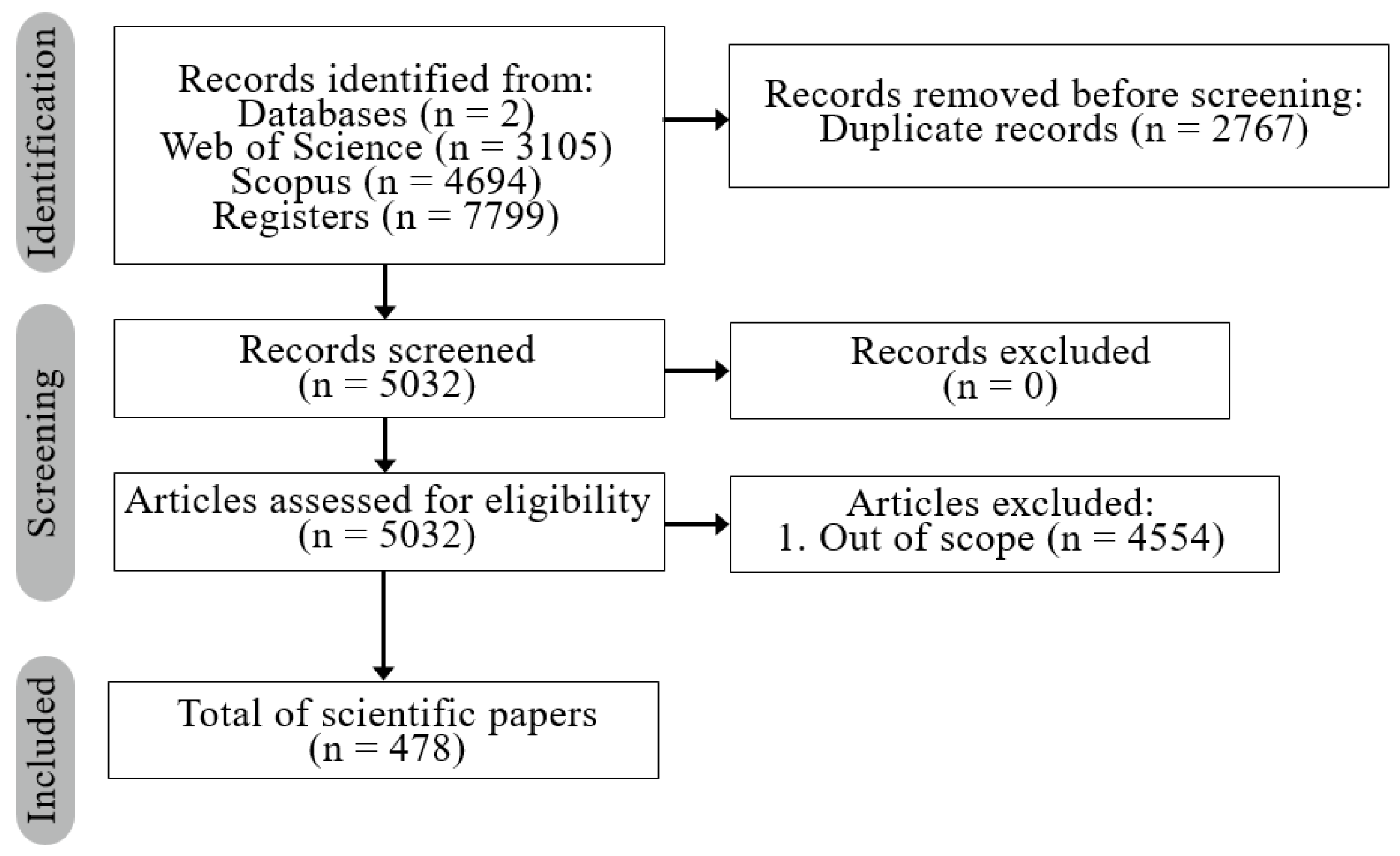
Figure 2.
Methodology workflow.
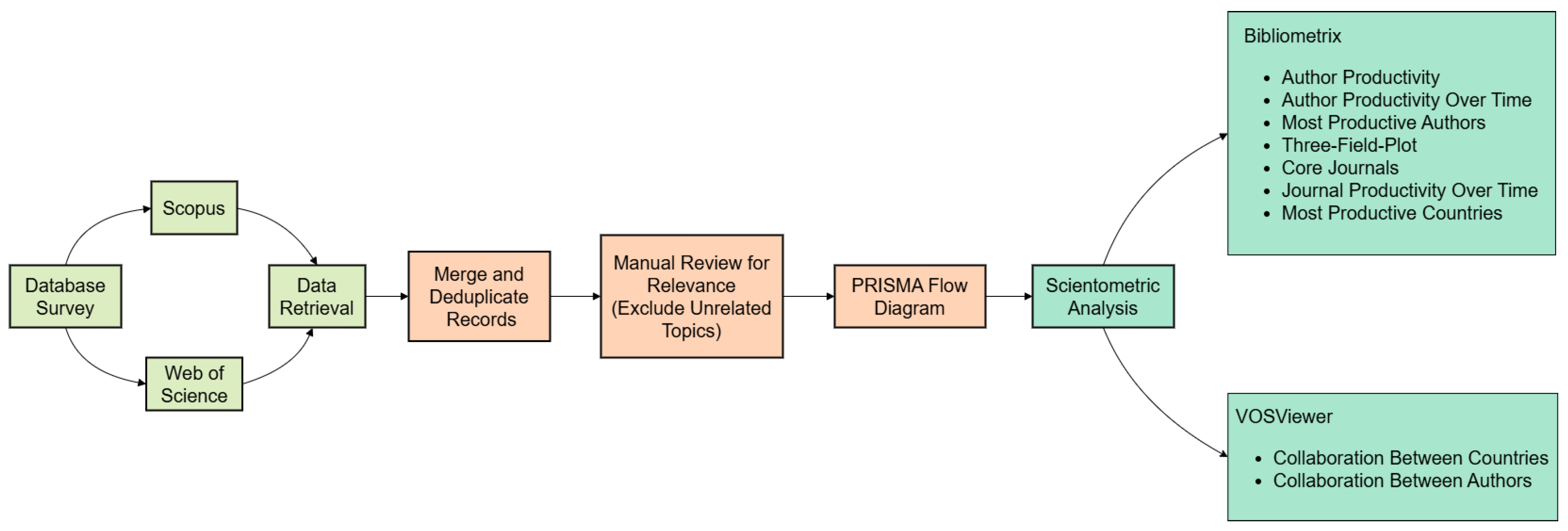
Figure 3.
(a) Annual productivity of articles. (b) Author’s productivity according Lotka’s Law.
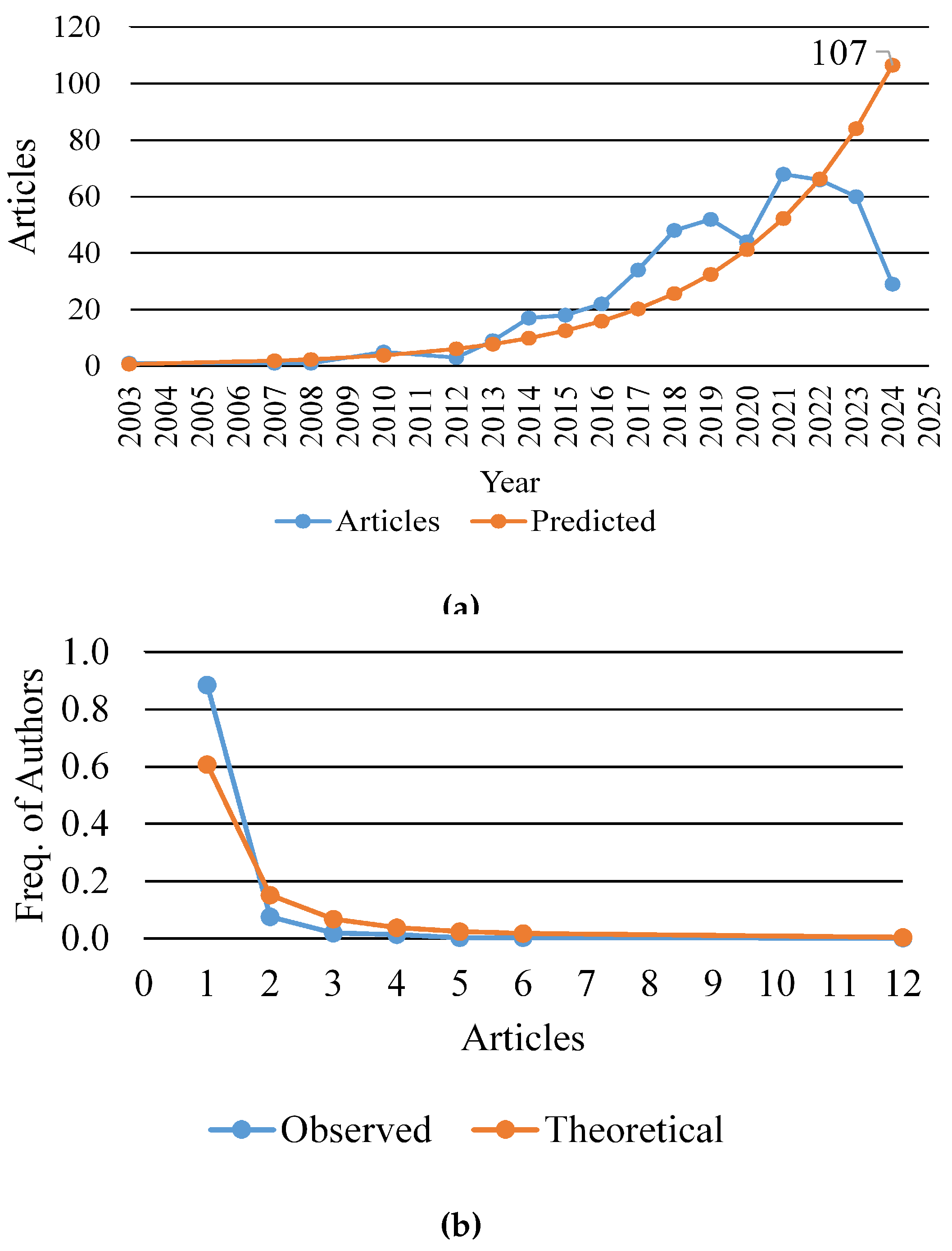
Figure 4.
Top 10 author production over time.
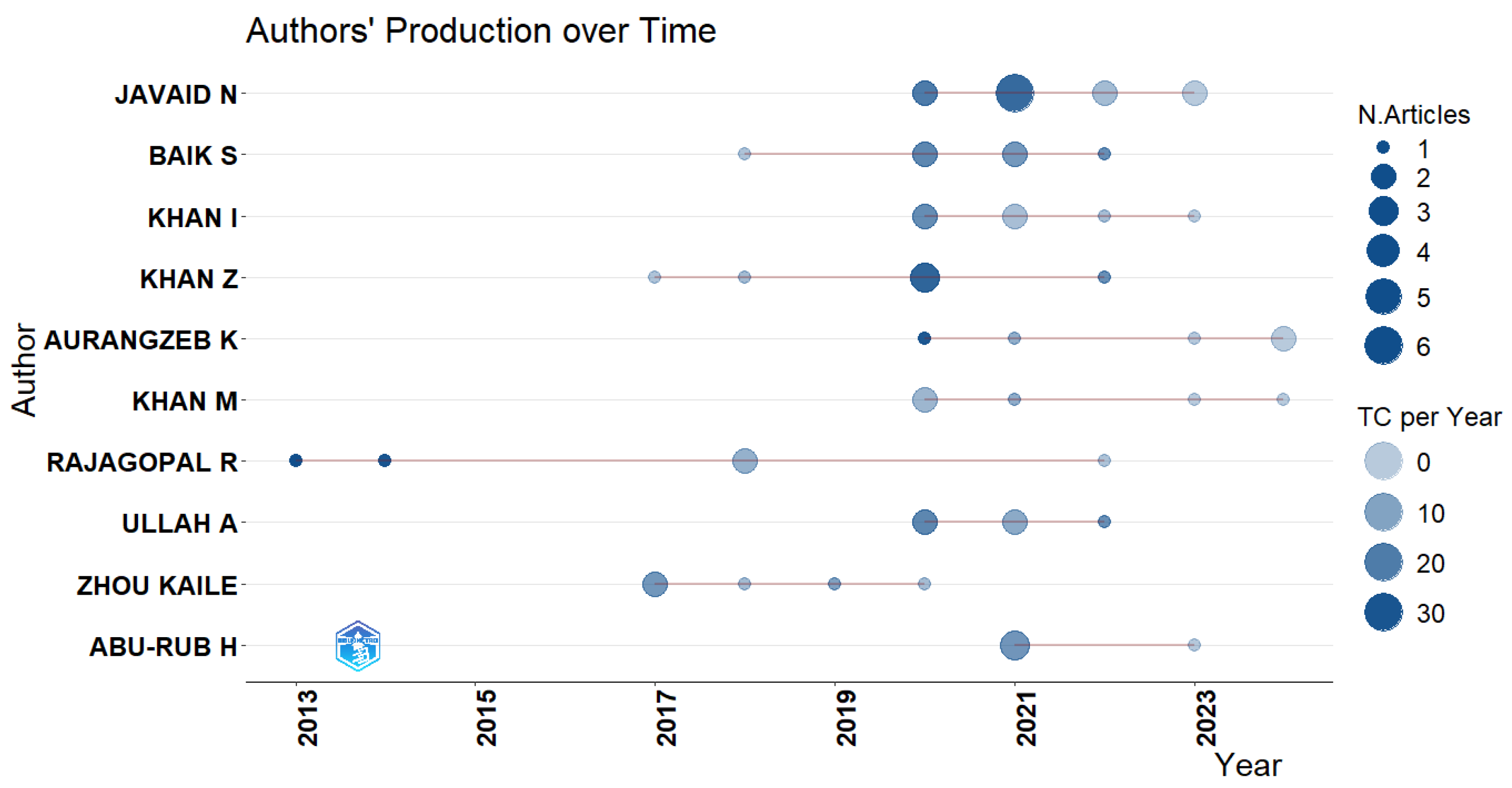
Figure 5.
Connections between authors (left), keywords (middle), and journals (right) of original articles on from 2003 to April 2024.
Figure 5.
Connections between authors (left), keywords (middle), and journals (right) of original articles on from 2003 to April 2024.
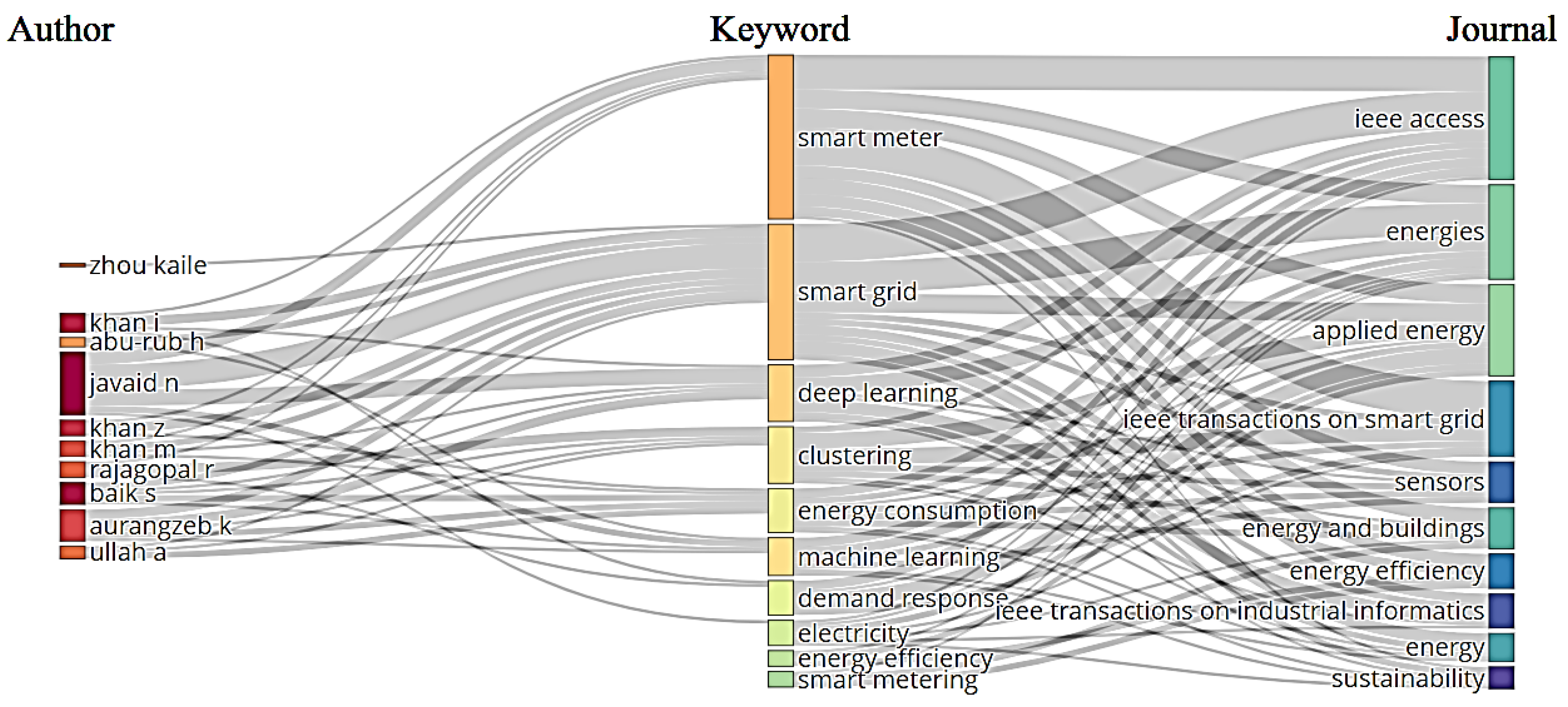
Figure 6.
Core journals according Bradford’s Law.
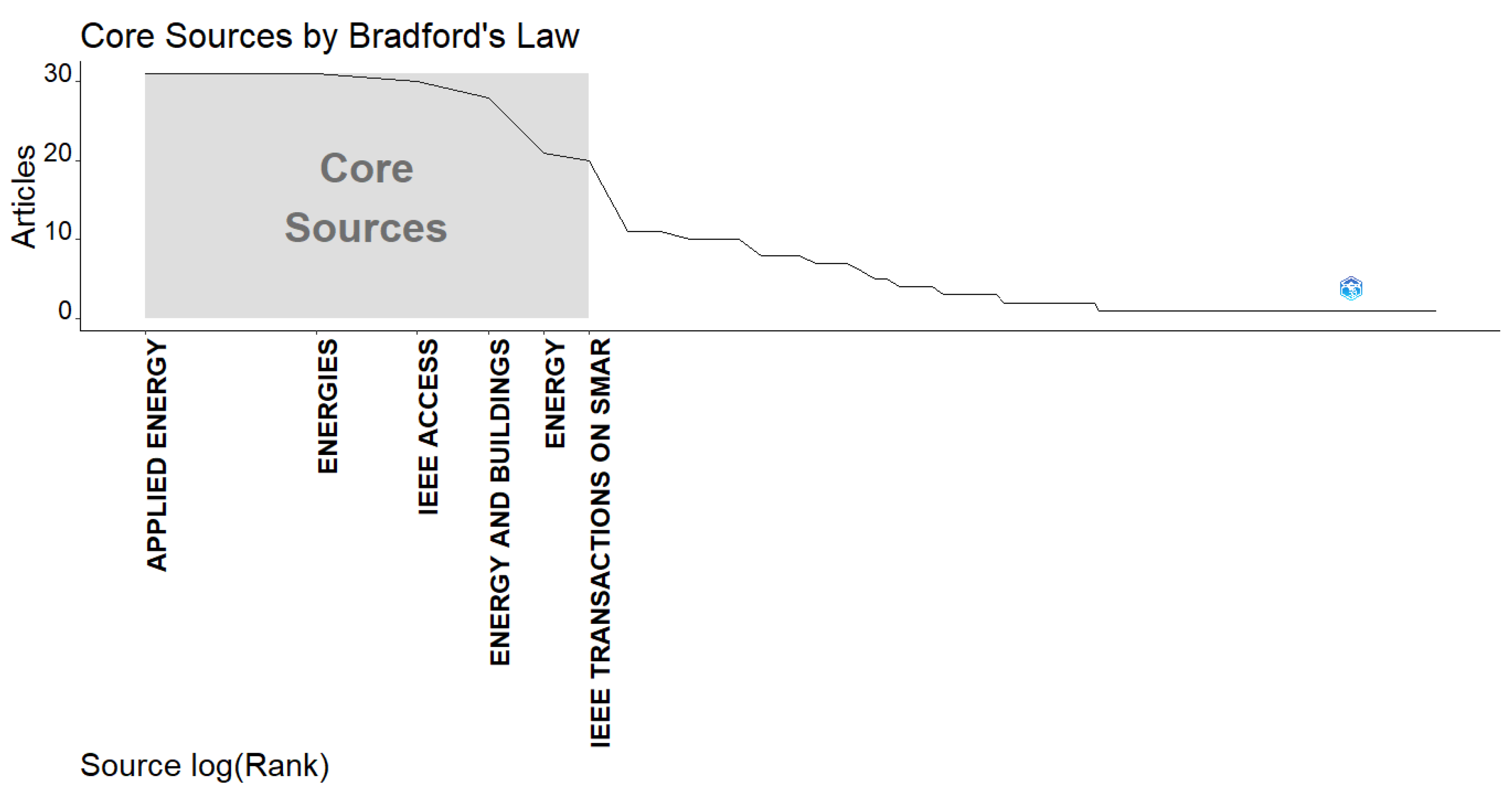
Figure 7.
Top 5 journals production over time.
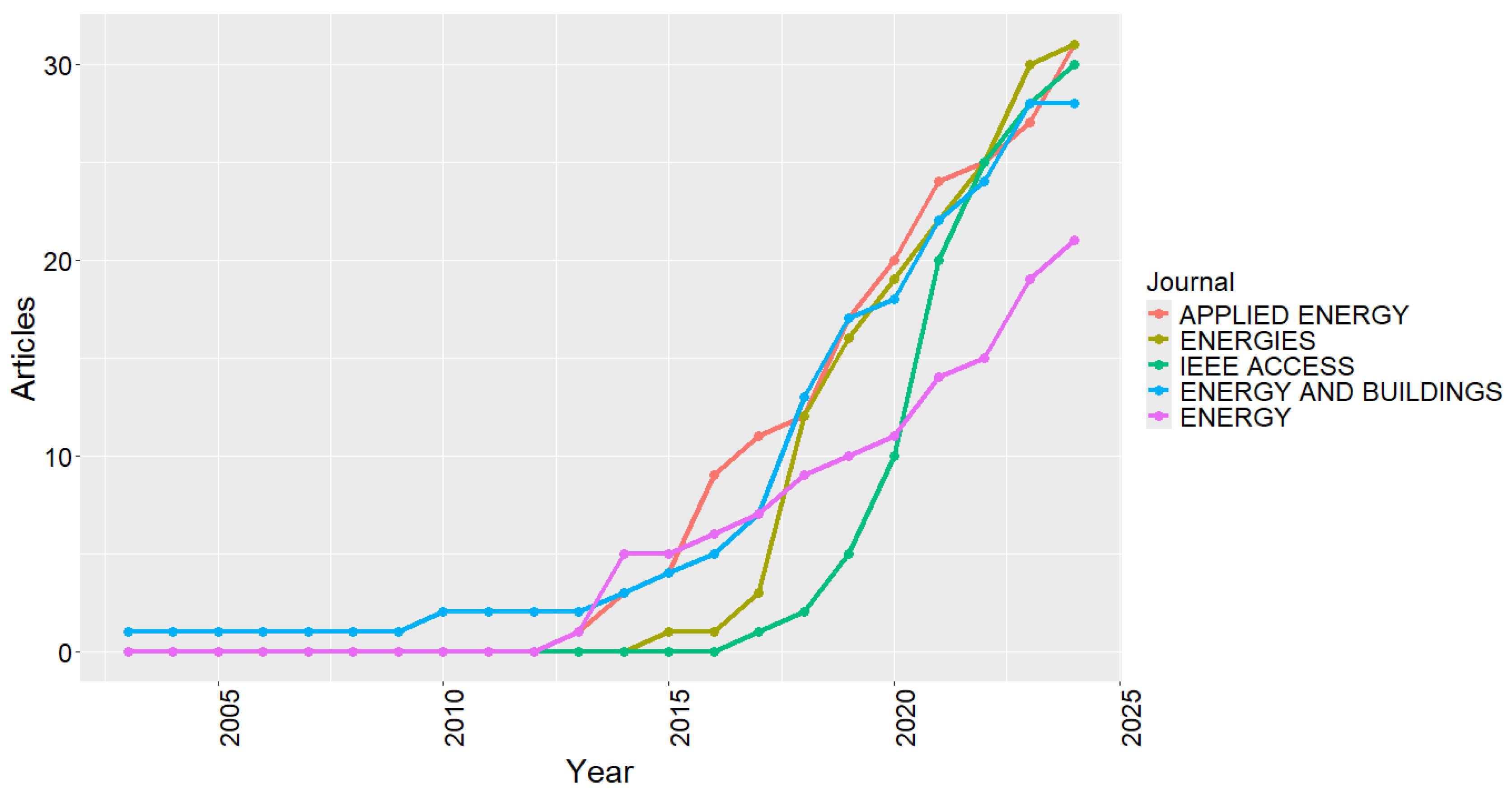
Figure 8.
Collaboration between countries.
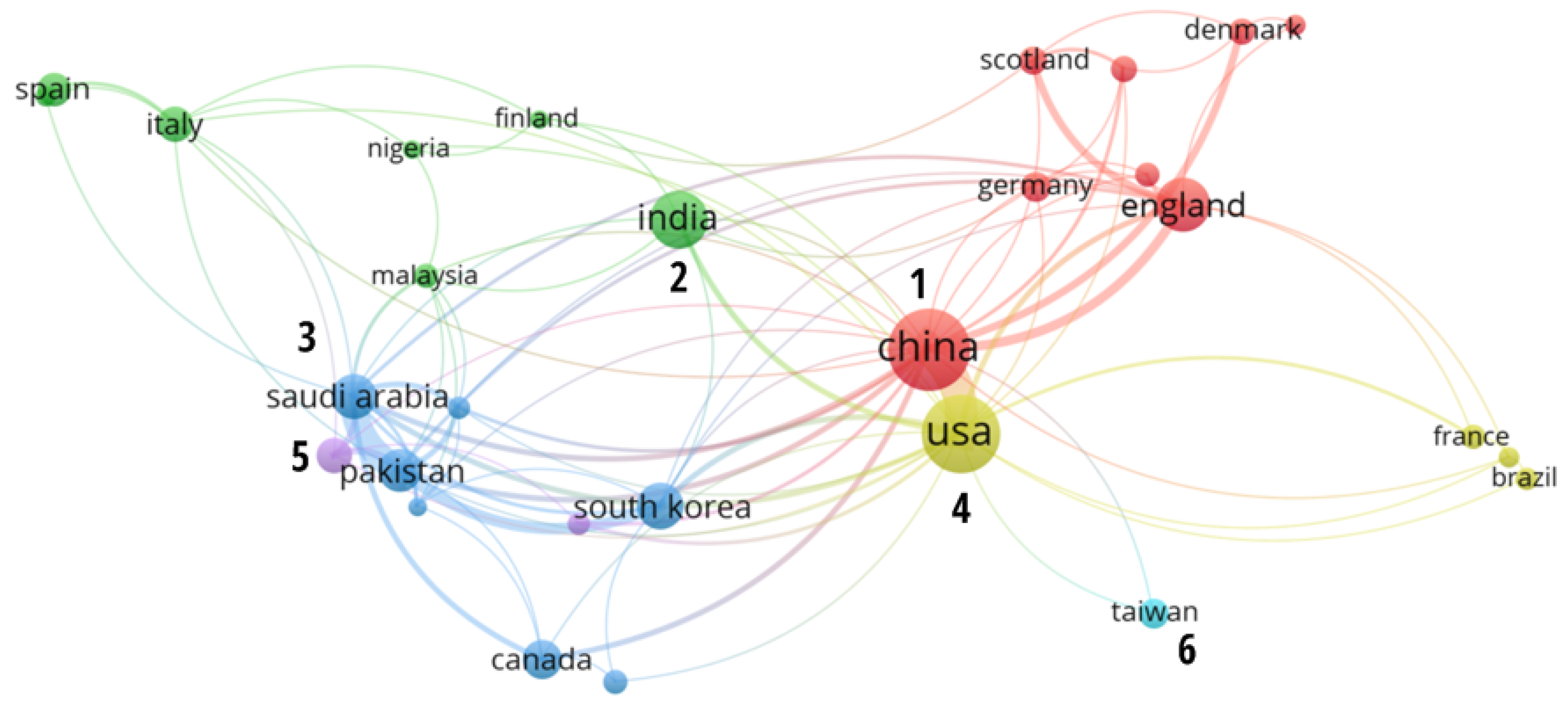
Figure 9.
Top 10 most productive countries and their collaboration in terms of SCP and MCP.
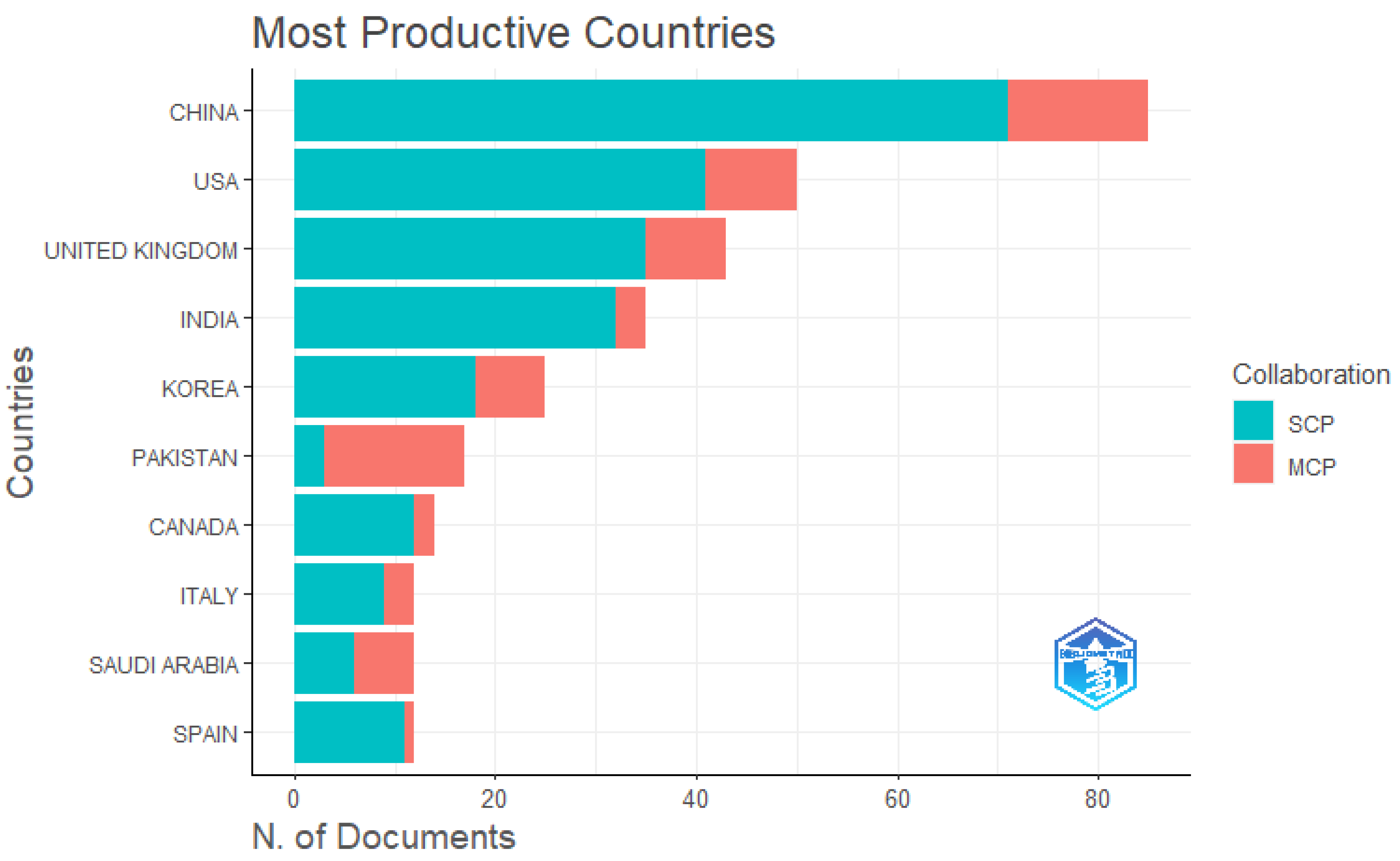
Figure 10.
Collaboration between countries (timespan).
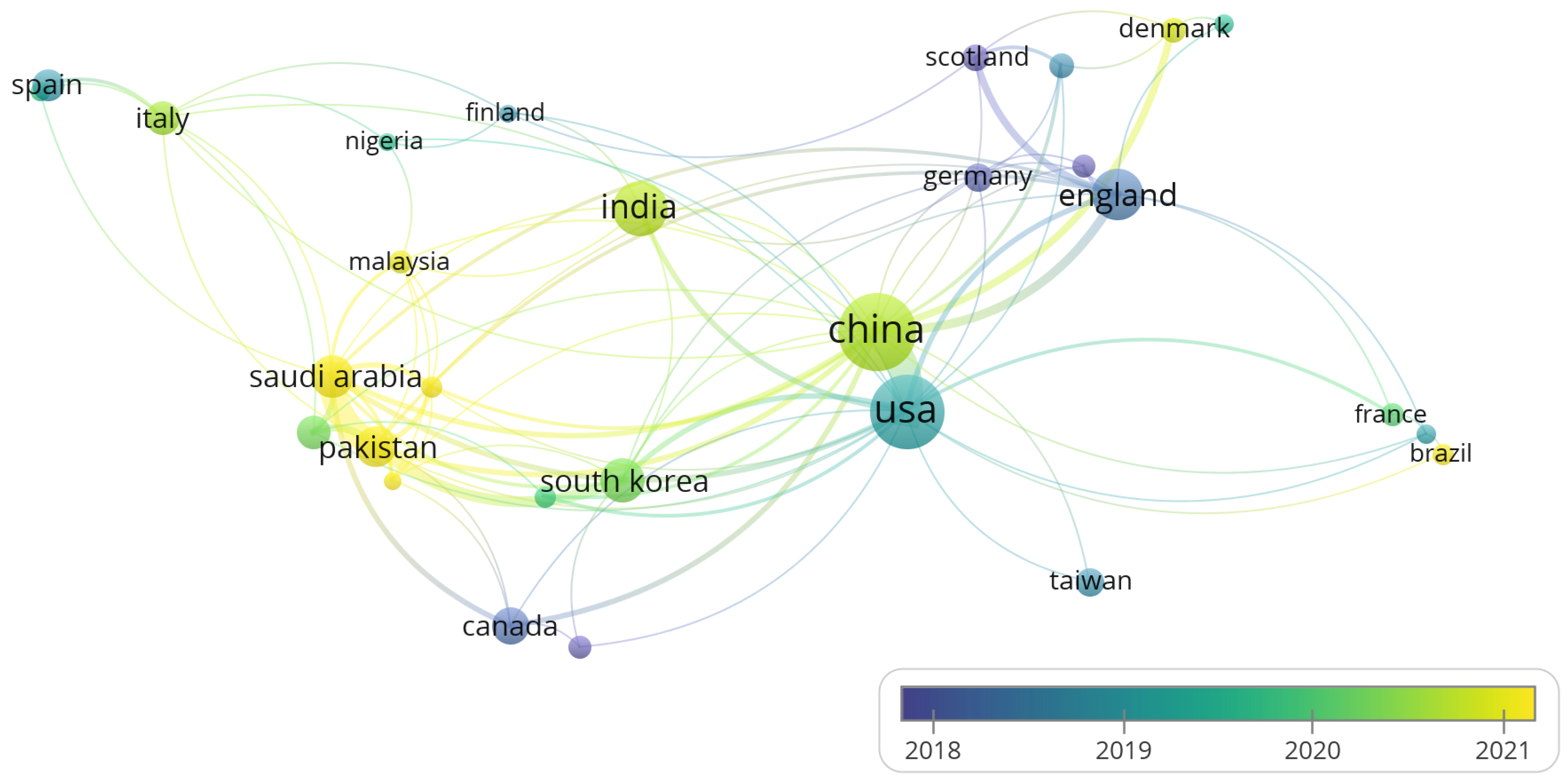
Figure 11.
Collaboration between authors.
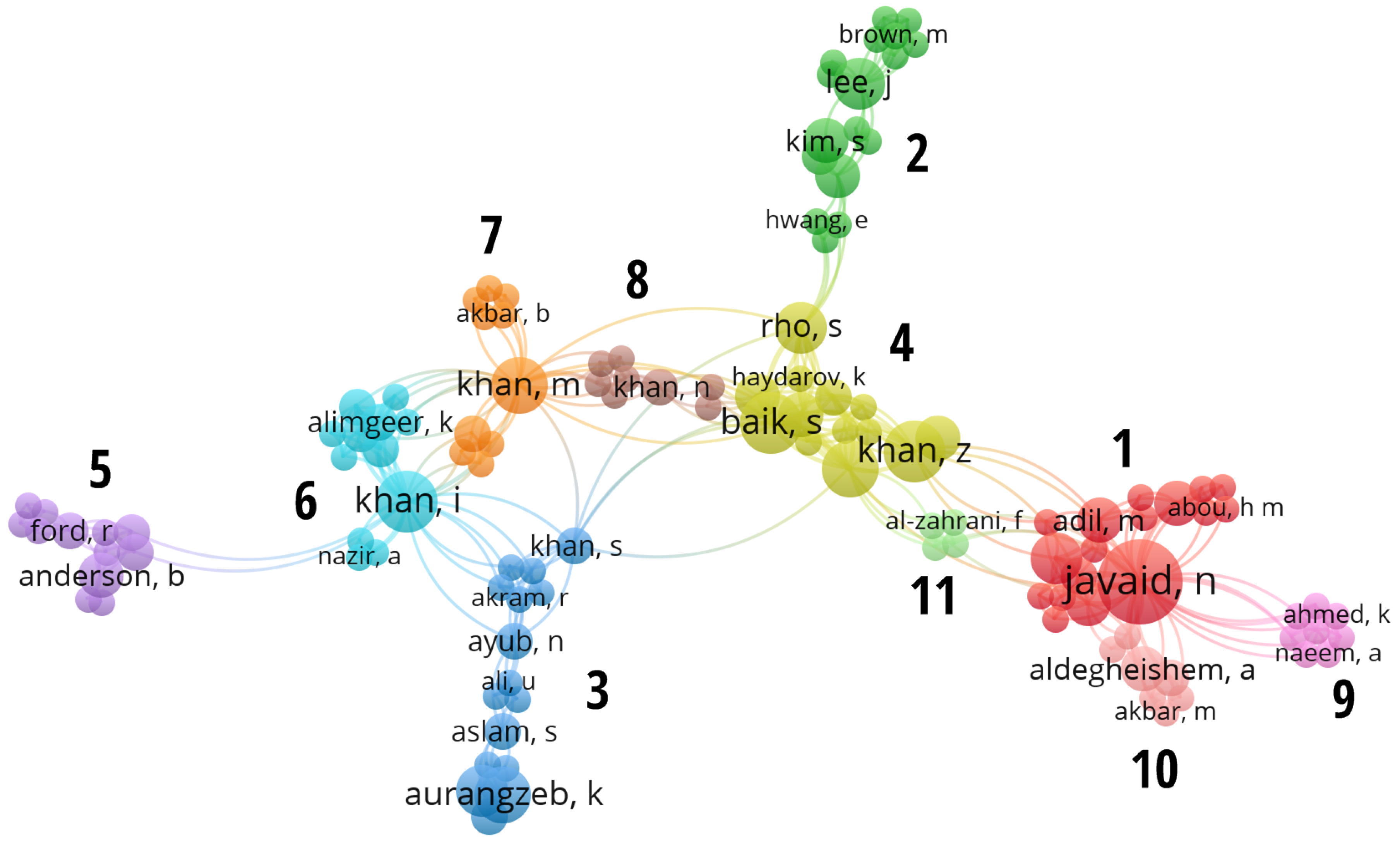
Figure 12.
Collaboration between authors (timespan).
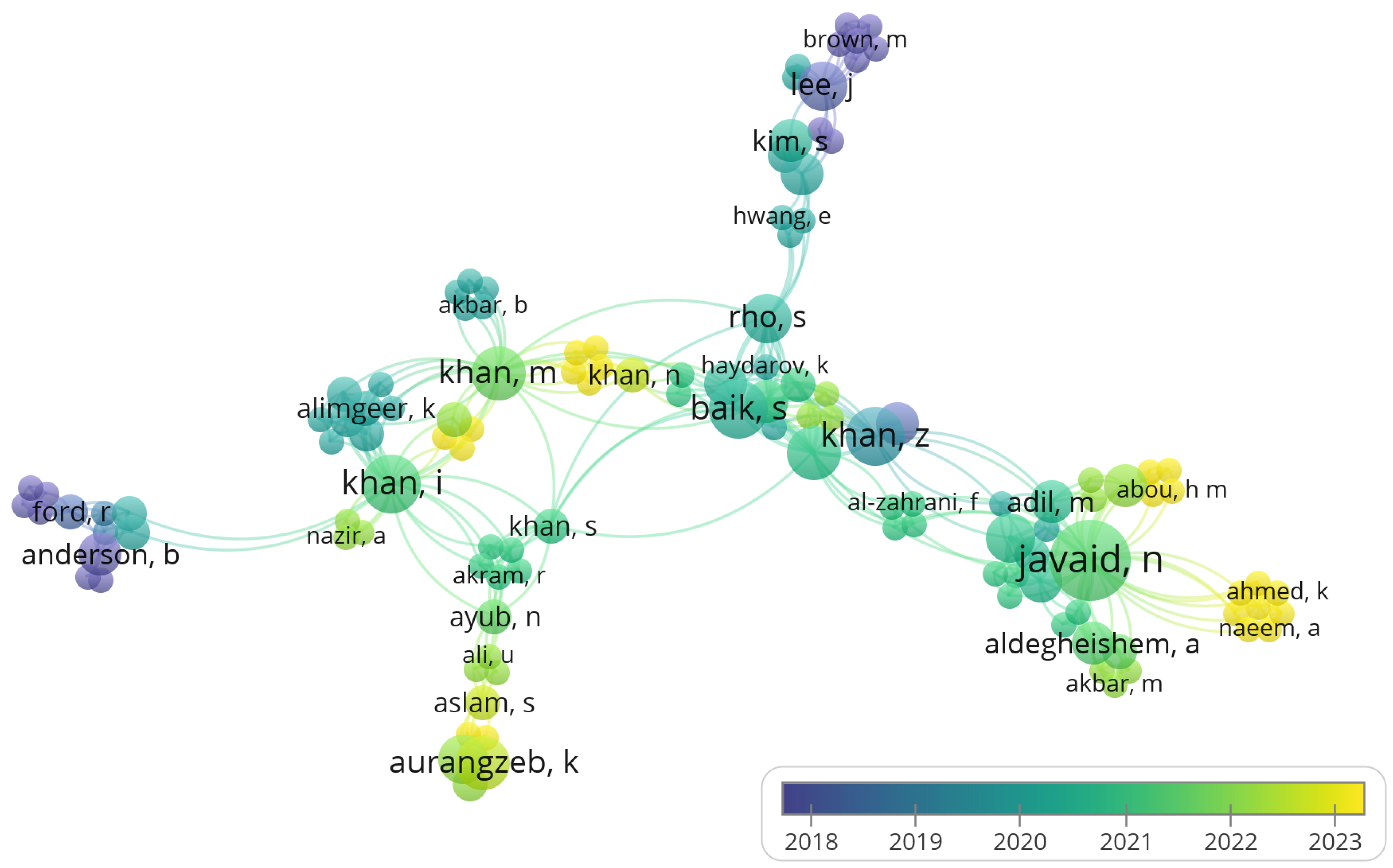

Table 1.
Top 10 authors, productivity metrics and country.
| Rank | Author | Articles(%) | Dominance Factor | H-index | Country |
|---|---|---|---|---|---|
| 1 | Nadeem Javaid | 12 (2.5) | 0.18 | 7 |  |
| 2 | Sung Wook Baik | 6 (1.3) | 0.17 | 6 |  |
| 3 | Imran Khan | 6 (1.3) | 0.17 | 5 |  |
| 4 | Zulfiqar Ahmad Khan | 6 (1.3) | 1.00 | 6 | |
| 5 | Khursheed Aurangzeb | 5 (1.0) | 0.50 | 2 |  |
| 6 | Muhammad Asad Khan | 5 (1.0) | 0.00 | 3 | |
| 7 | Ram Rajagopal | 5 (1.0) | 0.00 | 4 |  |
| 8 | Amin Ullah | 5 (1.0) | 0.40 | 4 | |
| 9 | Kaile Zhou | 5 (1.0) | 0.40 | 5 |  |
| 10 | Haitham Abu-Rub | 4 (0.8) | 0.00 | 3 |  |
Table 2.
Top 10 most cited countries.
| Rank | Country | Total citations | Articles | Average article citations | Rank | Country | Total citations | Articles | Average article citations |
|---|---|---|---|---|---|---|---|---|---|
| 1 |  |
2920 | 50 | 58.40 | 6 | |
649 | 35 | 18.50 |
| 2 | |
2482 | 85 | 29.20 | 7 |  |
476 | 3 | 158.7 |
| 3 |  |
1789 | 43 | 41.60 | 8 | |
440 | 12 | 36.70 |
| 4 |  |
1037 | 14 | 74.10 | 9 |  |
406 | 4 | 101.50 |
| 5 | |
704 | 25 | 28.20 | 10 |  |
350 | 7 | 43.80 |
Disclaimer/Publisher’s Note: The statements, opinions and data contained in all publications are solely those of the individual author(s) and contributor(s) and not of MDPI and/or the editor(s). MDPI and/or the editor(s) disclaim responsibility for any injury to people or property resulting from any ideas, methods, instructions or products referred to in the content. |
© 2024 by the authors. Licensee MDPI, Basel, Switzerland. This article is an open access article distributed under the terms and conditions of the Creative Commons Attribution (CC BY) license (http://creativecommons.org/licenses/by/4.0/).
Copyright: This open access article is published under a Creative Commons CC BY 4.0 license, which permit the free download, distribution, and reuse, provided that the author and preprint are cited in any reuse.


