
Preprint
Article

This version is not peer-reviewed.

Association of Physical Fitness and Diet with Body Weight in Austrian Adolescents

A peer-reviewed article of this preprint also exists.

Submitted:

08 November 2024

Posted:

11 November 2024

You are already at the latest version

Abstract

Background/Objectives: Physical fitness and diet along with body weight are key determinants of health. Excess body weight, poor dietary choices, and low physical fitness, however, are becoming increasingly prevalent in adolescents. In order to develop adequate intervention strategies additional research on potential interaction effects of these entities is needed. Therefore, this study examined the combined association of physical fitness and diet with body weight in Austrian adolescents. Methods: A total of 164 (56% male) adolescents between 11 and 14 years of age completed the German Motor Test, which consists of 8 items that assess cardiorespiratory endurance, muscular endurance and power, speed and agility, flexibility and balance, along with body weight and height measurements. Additionally, participants completed a standardized food frequency questionnaire. Results: Spearman correlation analyses showed an inverse association between physical fitness and processed foods consumption (rho = -0.25, p<0.01), while sweet consumption was positively associated with physical fitness (rho = 0.17, p=0.03). No significant interaction effects between diet and physical fitness on body weight were observed. However, both higher physical fitness and greater sweet consumption were associated with lower body weight (p<0.01). Conclusions: The present study emphasizes the independent and combined interactions of key correlates of health. It also suggests that high fitness may offset detrimental effects of poor dietary choices. In order to address potential health risks early in life and facilitate future health and well-being, it is important to monitor and control physical fitness, diet and body weight during adolescence.

Keywords: 
;  ;  ;  ;  ;  

1. Introduction

Low levels of physical fitness and poor dietary habits are associated with various detrimental health outcomes, including excess body weight and non-communicable diseases (NCDs)[(1]. While chronic health issues typically manifest in adulthood, their development often begins in childhood or adolescence [1,2]. The rising prevalence of obesity among children and adolescents is particularly concerning [3,4], as excess body weight in youth is difficult to reverse later in life [5]. Individuals with excess body weight early in life face heightened risk for psychological disorders, social difficulties, as well as morbidity and mortality of various non-communicable diseases such as cardio-vascular and metabolic diseases, respiratory problems and some cancers [6,7]. Given the lack of success in tackling the obesity epidemic along with the significant impact at the individual level as well as the health care system [8], it is considered one of the greatest public health challenges of the 21st century. Even though obesity is a multifactorial chronic disease [9], lifestyle choices play a key role in excess body weight [10,11]. Particularly, alterations in global food supply and a reduction of physical activity at work and during leisure time, are central to the increasing prevalence of obesity [12,13,14] .
Physical fitness is another important indicator of both health and health-related quality of life [15,16], as low physical fitness during adolescence has been associated with various chronic disease risk factors that can persist into adulthood [17,18]. In fact, cardio-respiratory fitness has been shown to be a more powerful predictor of mortality risk than many other common health risk factors [19,20,21]. High physical fitness during childhood and adolescence, therefore, is crucial for the prevention of chronic diseases and maintenance of overall health [15]. Given its association with physical activity [20,22], physical fitness is further considered an important indicator for adolescents’ lifestyle. Similarly, dietary habits have been associated with quality of life and overall health [23,24,25]. Nevertheless, available data indicates poor diet in children and adolescents along with low levels of physical activity and physical fitness [26,27,28].
Adolescence presents a critical window of opportunity to influence long-term health and well-being. This period is marked by significant psychological and physiological changes, and it is well established that many health behaviors formed during childhood and adolescence persist into adulthood [29,30]. Food intake during childhood and adolescence, for example, is a significant predictor of food intake in adulthood [31,32]. Similarly, physical fitness has been shown to track from young ages into adulthood [33]. Adopting healthy habits during childhood and adolescence, therefore, can help with the prevention of excess body weight and associated comorbidities later in life [34,35,36]. In order to develop adequate health promotion strategies in this pivotal time of life, it is necessary to enhance the understanding of the interaction between key correlates of future health. Therefore, the aim of this paper is to examine associations of physical fitness, dietary patterns and body weight in adolescents. This knowledge can help in determining whether health-related behaviors can be addressed individually or should be addressed in a combined effort.

2. Materials and Methods

The present study uses a cross-sectional design. Nine classes from grades six to eight were selected from Austrian middle schools, resulting in 172 eligible participants aged 11 to 14 years, all without cognitive, physical or motor limitations. Parents received information about the nature of the study and provided written informed consent; participants provided oral assent at the time of data collection. The study protocol was approved by the Institutional Review Board of the University of Innsbruck (approval number: 31/2022) and the school board of the Federal State of Tyrol, Austria. All study procedures followed the ethical standards of the 2008 Declaration of Helsinki.
Body weight (kg) and height (cm) were measured during a physical education class by trained technicians according to standard procedures with participants being barefoot and wearing gym clothes. Body weight was measured to the nearest 0.1 kg with a gauged body scale (SECA® 803, Seca, Hamburg, Germany) and height was measured to the nearest 0.1 cm with a mobile stadiometer (SECA® 217, Seca, Hamburg, Germany). Subsequently, body mass index (BMI, kg/m²) was calculated and converted to BMI percentiles (BMIPCT) based on the German reference system [37]. Participants with a BMIPCT above the 90th percentile were considered overweight/obese and participants with a BMIPCT below the 10th percentile were considered underweight.
Following anthropometric measurements, participants completed the German motor test (DMT6-18), which has been validated for children and adolescents between 6 and 18 years of age [38]. The DMT6-18 consists of eight test items that measure cardio-respiratory endurance, muscular endurance, muscular power, speed, agility, balance and flexibility, which are the main components of health-related fitness [39]. Specifically, participants performed a 6-minute run, push ups, sit ups, a standing long jump, a 20m sprint, sideways jumping, backwards balancing and a stand-and-reach test during a single test session. All tests were administered following the guidelines provided in the test manual. The 20m sprint was completed at the beginning and the 6-minute run was completed at the end of the test session. The remaining 6 tests were completed in random order with sufficient break time between tests in order to avoid undue fatigue. Raw performance measurements were converted into age- and sex-normalized scores (Z-scores), with values between 97 and 103 indicating average performance for the corresponding age and sex [38]. The average of all Z-scores was used as indicator for total fitness. Subsequently, sample specific tertiles for total fitness were established for further analyses (low fitness: Z≤100, moderate fitness: 100<Z<108, high fitness: Z≥108)
Dietary information was obtained via a standardized food frequency questionnaire that has been used previously in Austrian adolescents [40]. The questionnaire was administered during regular class time by trained personnel. The participants were asked to report the frequency (days/week) of consumption of 42 foods, which were subsequently grouped into 17 food categories. These food categories were used in a principal component analysis, which identified six dietary factors with Eigenvalues > 1, explaining 64.0% of the total variance of dietary intake. Based on individual factor scores participants were subsequently categorized as having a high or low score using median split.
The factors were characterized by high loadings of the following food categories:
  • Factor 1 (processed foods): frozen & fast food, energy drink, alcohol (Eigenvalue=4.12; explains 24.23% of variance)
  • Factor 2 (plant-based diet): fruits, nuts, soy milk (Eigenvalue=2.01; explains 11.84% of variance)
  • Factor 3 (healthy mixed diet): rice, bread/noodles, fish, vegetables, water (Eigenvalue=1.49; explains 8.75% of variance)
  • Factor 4 (animal-based diet): meat, eggs, milk (Eigenvalue=1.14; explains 6.72% of variance)
  • Factor 5 (sweets): sweets, jam (Eigenvalue=1.08; explains 6.37% of variance)
  • Factor 6 (supplements): dietary supplements (Eigenvalue=1.04; explains 6.11% of variance)
Statistical analysis. Normal distribution was assessed using z-scores for kurtosis and skewness between ± 3.29 to determine normality [41]. Descriptive statistics are presented as means with standard deviation for continuous variables and as prevalence for categorical variables. Chi-Square tests were performed to assess associations between categorical variables (i.e. sex distribution, across dietary categories, weight categories and total fitness tertiles). Due to the lack of normal distribution for some physical fitness variables, Spearman correlation analyses were used to examine the association between dietary factor scores and physical fitness. The association of dietary factors and physical fitness tertiles with BMIPCT was examined using a 2 (diet factor) x 3 (physical fitness) ANOVA since BMIPCT followed a normal distribution. Additionally, logistic regression was performed to assess the association of dietary factors and physical fitness with the likelihood of being overweight/obese. All statistical analyses were conducted for the total sample and separately for boys and girls using SPSS 27.0 (IBM, Armonk, NY), with the statistical significance set at p < 0.05.

3. Results

A total of 164 adolescents (55.5% male) with an average age of 12.9±1.2 years provided complete data. The prevalence of overweight/obesity was 18.9% (n=31), while the prevalence of underweight was 7.9% (n=13). Compared to girls, boys were significantly older (p<0.01), which led to significant sex differences in body weight and height (Table 1). However, no significant sex differences were found in BMIPCT and the prevalence of overweight/obesity (16.4% in girls and 20.9% in boys).
The mean Z-score for total fitness across the entire sample indicated above average fitness levels. Specifically, mean scores for push-ups, long jump, sideways jumping, 20m sprint and balance were above average, while mean scores for the 6-minute run and sit ups were below average. Stand-and-reach performance was average based on the sample mean. Girls outperformed boys in sit ups and the stand-and-reach test, while boys achieved better results in the 20m sprint (Table 1). However, there was no significant difference in total physical fitness between boys and girls and sex distribution did not differ across total fitness tertiles (chi square = 3.25; p=0.21).

3.1. Diet Factors and Physical Fitness

Girls displayed a significantly higher factor score for a plant-based diet compared to boys (0.19±1.1 vs. -0.16±0.9; p=0.03) while their factor scores for processed foods and animal-based diet were lower (-0.26±0.88 vs. 0.21±1.0 and -0.26±1.1 vs. 0.21±0.9; p<0.01, respectively). No sex differences were observed for the factor scores healthy mixed diet, sweets and supplements. In line with these results, the prevalence of boys was significantly higher in the high processed food group and the high animal-based diet group (chi square = 4.17; p=0.04 for both), while no sex differences were observed in the other dietary factor groups (Table 2).
Correlation analyses between dietary factors and physical fitness in the whole sample indicated a significant inverse association of total physical fitness with processed foods (Spearman’s rho = -0.25, p<0.01), and a significant positive association with the factor sweets (Spearman’s rho = 0.17, p=0.03). More specifically, processed foods consumption was inversely associated with the 6-minute run, push-ups, sit-ups, sideways jumping and balancing while sweets consumption was positively associated with sprint performance (Table 3). In addition, a higher factor score for plant-based diet was associated with better 6-minut run performance, while a higher factor score for animal-based diet was associated with lower sit-ups performance. No significant associations were found between physical fitness and factor scores for a healthy mixed diet, or supplements.
Sex-specific correlation analyses revealed significant inverse associations of total physical fitness with processed foods in boys (Spearman’s rho = -0.26, p=0.01). Specifically, performance at the 6-minute run (Spearman’s rho = -0.27, p<0.01), push-ups (Spearman’s rho = -0.30, p<0.01) and sideways jumping (Spearman’ rho = -0.34, p<0.01) were inversely associated with processed foods. Sweet consumption, on the other hand, was positively associated with total physical fitness (Spearman’s rho = 0.33, p<0.01) among boys. Specifically, there was a positive association with the 6-minute run (Spearman’s rho = 0.30, p<0.01), push-ups (Spearman’s rho = 0.23, p<0.05), sit-ups (Spearman’s rho = 0.23, p<0.05), sprint (Spearman’s rho = 0.30, p<0.01) and balance (Spearman’s rho=0.22, p<0.05). No other, significant associations between dietary factors and physical fitness were observed in boys. Among girls no significant associations between dietary factors and total physical fitness were observed. Nevertheless, higher factor scores for processed foods were significantly associated with lower balance performance (Spearman’s rho = -0.25, p = 0.03).

3.2. Association of Dietary Factors and Physical Fitness with Body Weight

There were no significant interaction effects observed between diet and physical fitness on BMIPCT for the whole sample. For dietary factors a significant main effect on BMIPCT was observed for sweets with higher sweets consumption being associated with lower BMIPCT. There was also a significant main effect of physical fitness on BMIPCT with participants with high and moderate physical fitness levels displaying significantly lower BMIPCT than their peers with a low physical fitness (p <0.01) (Table 4). These results were essentially the same in boys, while no significant interaction or main effects for dietary factors and physical fitness on BMIPCT were observed in girls (Figure 1).
The results of logistic regression further showed an increased risk for overweight/obesity with lower physical fitness in boys (β = -0.82; p<0.01) while there were no significant associations with diet factors. No significant associations between overweight//obesity and diet factors or total fitness were found in girls.

4. Discussion

The present study examined the association of diet, physical fitness and body weight in Austrian adolescents and found several significant results. Among the entire sample population (i) cardio-respiratory endurance and strength were inversely associated with diets high in processed foods and animal-products, (ii) a plant-based diet was associated with higher cardio-respiratory endurance, (iii) higher physical fitness was associated with lower body weight, and (iv) high sweet consumption was associated with lower body weight. Despite significant main effects of diet and physical fitness on body weight there were no significant interaction effects. Significant results were evident particularly among boys, where total physical fitness, cardio-respiratory fitness, muscular strength and agility were found to be inversely related with a diet high in processed foods while these components of physical fitness were positively associated with sweet consumption along with speed and balance.
As in this study, potential beneficial influences of specific dietary patterns on physical fitness have been reported in previous studies. For example, adherence to the Mediterranean diet, which is based on plant-based foods and limited intake of processed foods, has been associated with higher physical fitness - particularly cardiorespiratory fitness - in children and adolescents [42,43,44,45] with stronger effects observed in boys compared to girls [46]. A review on the adherence to the Mediterranean diet in children and adolescents further showed a direct association with physical activity [47], which is a key correlate of physical fitness [48,49]. However, our study also showed a positive association between sweet consumption and physical fitness, which is in contrast to the previous studies [50,51]. A possible explanation may be that higher fitness is associated with increased PA, particularly of higher intensities [52,53], which could offset potential detrimental effects of high sweet consumption due to a higher demand for carbohydrates. This was aspect was shown by a study where preference for sweet foods increased after physical exercise [54]. Similarly, sports participation has been associated with a higher consumption of sports drinks [55,56], which usually contain a considerable amount of sugar.
The direct association between sweet consumption and physical fitness observed in this study may also help explain the inverse relationship between body weight and sweet consumption. Previous research by Lahoz-Garica et al. also showed that cardiorespiratory fitness mediates potential negative effects of diet on body fat [57], which may have contributed to the lack of an association between other dietary factors and body weight in this study. Even though high sugar intake is generally associated with an increased body weight, such research focused predominantly on sugar-sweetened beverages [58,59], whereas consumption of sweet bakery has been associated with a lower risk of overweight/obesity [59]. Other studies also reported no association between dietary patterns and body weight in adolescents [42,43] and a study by Wilkie et al. even found an increased risk for overweight or obesity with a high healthy diet score [60]. A recent review, therefore, concluded that the ideal macronutrient composition for weight management remains unclear, and that total caloric intake in relation to energy expenditure has a greater impact on body weight rather than a specific diet composition [61]. Accordingly, engaging in physical activity and limiting the use of electronic devices have been recommended as the most potent modifiable behaviors for weight management in adolescents [62]. It should also be considered that adolescents engaging in regular physical activity, may be more likely to consume snacks due to lack of time for full meals [63]. Snacking behavior, which potentially contributes to higher sweet consumption, however, has not been associated with higher body weight either and may even reduce the risk for obesity [64].
Consistent with our findings, low physical fitness has been regularly associated with higher body weight [65] and particularly high fat mass has been associated with lower physical fitness [46]. This is particularly important because maintaining sufficient physical fitness at young ages is considered essential for long-term health and well-being [15], especially as low physical fitness levels tend to track into adulthood [33]. High physical fitness during adolescence has also been associated with better self-rated health [66,67], and it facilitates engagement in physical activity later in life [68,69]. Similarly, higher physical fitness, as observed in the present study, may be attributed to increased levels of physical activity [70,71], underscoring the importance of physical fitness for adolescent health. However, it should, be considered that many fitness tests require individuals to move their own body weight, which puts heavier subjects at a disadvantage and may contribute to lower fitness scores. On the other hand, daily activities also require movement of one’s body weight, so fitness scores adjusted for body weight may not provide adequate information on individual’s functional capacity. Nevertheless, it is evident that a well-established physical fitness is an important contributor to current and future health [39]. Higher physical fitness has been associated with better self-rated health in adolescents [66,67] and particularly cardiorespiratory fitness has a stronger association with mortality risk than other well-established risk factors, including lipid abnormalities, smoking and hypertension [20,21,72].
There are some limitations of the present study that should be considered when interpreting the findings. Given the cross-sectional nature of the study, causal relationships cannot be determined. The homogenous sample and limited number of participants may also limit generalizability of these findings, particularly as the majority of the participants displayed average-to-above average fitness levels. Dietary information was obtained vial self-report, which holds an inherent risk for reporting bias. The questionnaire also focused on frequency of consumed foods rather than the amount. Accordingly, there was no information on caloric intake, which is critical in weight management. Physical fitness, however, was assessed with a validated and widely used test battery and body weight and height were measured according to standard procedures. Additional research, nevertheless, is needed to enhance the understanding of the role of physical fitness and diet in weight management. Accordingly, recent reviews emphasized the need to further explore the clustering of heath behaviors, such as physical activity, sleep and diet [73,74].

5. Conclusions

This research underscores the critical role of physical fitness in weight management during childhood and adolescence, suggesting it may even mitigate the effects of poor dietary choices. The associations between specific dietary patterns, physical fitness, and body weight further emphasize the interconnectedness of these important health correlates. Given that many adolescents are displaying poor health behaviors, there is a need to continue evaluation and monitoring of body composition, physical fitness and dietary habits at young ages in order to develop adequate preventive measures to ensure future health and well-being.

Author Contributions

Conceptualization, C.D. and K.G.; methodology, K.G. and MC.G.; formal analysis, C.D. and G.F.; writing—original draft preparation, C.D.; writing—review and editing, G.F., T. M., MC.G. and K.G.; project administration, K.G. All authors have read and agreed to the published version of the manuscript.

Funding

This research received no external funding.

Institutional Review Board Statement

The study was conducted in accordance with the Declaration of Helsinki, and approved by the Institutional Review Board of the University of Innsbruck, AUSTRIA (approval number: 31/2022).

Informed Consent Statement

Written informed consent was obtained from legal guardians of the participants and all subjects involved in the study provided oral assent.

Data Availability Statement

The data presented in this study are available on request from the corresponding author.

Conflicts of Interest

The authors declare no conflicts of interest.

References

  1. Candari CJ, Cylus J, Nolte E. Assessing the economic costs of unhealthy diets and low physical activity: An evidence review and proposed framework. Copenhagen, Denmark. 2017.
  2. Balagopal PB, de Ferranti SD, Cook S, Daniels SR, Gidding SS, Hayman LL, et al. Nontraditional risk factors and biomarkers for cardiovascular disease: mechanistic, research, and clinical considerations for youth: a scientific statement from the American Heart Association. Circulation 2011, 123(23), 2749-69.
  3. NCD Risk Factor Collaboration (NCD-RisC). Worldwide trends in underweight and obesity from 1990 to 2022: a pooled analysis of 3663 population-representative studies with 222 million children, adolescents, and adults. Lancet 2024, 403(10431), 1027-50. [CrossRef]
  4. Ng M, Fleming T, Robinson M, Thomson B, Graetz N, Margono C, et al. Global, regional, and national prevalence of overweight and obesity in children and adults during 1980-2013: a systematic analysis for the Global Burden of Disease Study 2013. Lancet 2014, 384(9945), 766-81.
  5. Simmonds M, Llewellyn A, Owen CG, Woolacott N. Predicting adult obesity from childhood obesity: a systematic review and meta-analysis. Obes Rev 2016, 17(2), 95-107. [CrossRef]
  6. Apovian, CM. Obesity: definition, comorbidities, causes, and burden. Am J Manag Care 2016, 22(7 Suppl), s176–85. [Google Scholar]
  7. Finer, N. Medical consequences of obesity. Medicine 2014, 43(2), 88–93. [Google Scholar] [CrossRef]
  8. Spieker EA, Pyzocha N. Economic Impact of Obesity. Prim Care 2016, 43(1), 83–95. [Google Scholar] [CrossRef] [PubMed]
  9. NCD Risk Factor Collaboration (NCD-RisC). Worldwide trends in body-mass index, underweight, overweight, and obesity from 1975 to 2016: a pooled analysis of 2416 population-based measurement studies in 128·9 million children, adolescents, and adults. Lancet 2017, 390(10113), 2627-42.
  10. Wang ZH, Zou ZY, Dong YH, Xu RB, Yang YD, Ma J. A Healthy Lifestyle Offsets the Increased Risk of Childhood Obesity Caused by High Birth Weight: Results From a Large-Scale Cross-Sectional Study. Front Nutr 2021, 8, 736900. [CrossRef]
  11. Grigorakis DA, Georgoulis M, Psarra G, Tambalis KD, Panagiotakos DB, Sidossis LS. Prevalence and lifestyle determinants of central obesity in children. Eur J Nutr 2016, 55(5), 1923-31. [CrossRef]
  12. Popkin BM, Duffey K, Gordon-Larsen P. Environmental influences on food choice, physical activity and energy balance. Physiol Behav 2005, 86(5), 603-13. [CrossRef]
  13. Waters E, de Silva-Sanigorski A, Hall BJ, Brown T, Campbell KJ, Gao Y, et al. Interventions for preventing obesity in children. Cochrane Database Syst Rev 2011, 5(12), CD001871. [CrossRef]
  14. Wolfenden L, Jones J, Williams CM, Finch M, Wyse RJ, Kingsland M, et al. Strategies to improve the implementation of healthy eating, physical activity and obesity prevention policies, practices or programmes within childcare services. Cochrane Database Syst Rev 2016, 10(10), CD011779. [CrossRef]
  15. Ortega FB, Ruiz JR, Castillo MJ, Sjöström M. Physical fitness in childhood and adolescence: a powerful marker of health. Int J Obes (Lond), 2008, 32(1), 1-11.
  16. Evaristo S, Moreira C, Lopes L, Oliveira A, Abreu S, Agostinis-Sobrinho C, et al. Muscular fitness and cardiorespiratory fitness are associated with health-related quality of life: Results from labmed physical activity study. J Exerc Sci Fit 2019, 17(2), 55-61. [CrossRef]
  17. Högström G, Nordström A, Eriksson M, Nordström P. Risk factors assessed in adolescence and the later risk of stroke in men: a 33-year follow-up study. Cerebrovasc Dis 2015, 39(1), 63-71. [CrossRef]
  18. Högström G, Nordström A, Nordström P. High aerobic fitness in late adolescence is associated with a reduced risk of myocardial infarction later in life: a nationwide cohort study in men. Eur Heart J 2014, 35(44), 3133-40. [CrossRef]
  19. Harber MP, Peterman JE, Imboden M, Kaminsky L, Ashton REM, Arena R, et al. Cardiorespiratory fitness as a vital sign of CVD risk in the COVID-19 era. Prog Cardiovasc Dis 2023, 76, 44-8. [CrossRef]
  20. Ross R, Blair SN, Arena R, Church TS, Després JP, Franklin BA, et al. Importance of Assessing Cardiorespiratory Fitness in Clinical Practice: A Case for Fitness as a Clinical Vital Sign: A Scientific Statement From the American Heart Association. Circulation 2016, 134(24), e653-e99. [CrossRef]
  21. Kokkinos P, Faselis C, Samuel IBH, Pittaras A, Doumas M, Murphy R, et al. Cardiorespiratory Fitness and Mortality Risk Across the Spectra of Age, Race, and Sex. J Am Coll Cardiol 2022, 80(6), 598-609. [CrossRef]
  22. Myers J, McAuley P, Lavie CJ, Despres JP, Arena R, Kokkinos P. Physical activity and cardiorespiratory fitness as major markers of cardiovascular risk: their independent and interwoven importance to health status. Prog Cardiovasc Dis 2015, 57(4), 306-14. [CrossRef]
  23. López-Gil JF, Martínez-López MF. Clustering of Dietary Patterns Associated with Health-Related Quality of Life in Spanish Children and Adolescents. Nutrients. 2024, 16(14), 2308. [CrossRef]
  24. Serra-Majem L, Román-Viñas B, Sanchez-Villegas A, Guasch-Ferré M, Corella D, La Vecchia C. Benefits of the Mediterranean diet: Epidemiological and molecular aspects. Mol Aspects Med 2019, 67, 1-55. [CrossRef]
  25. Yu X, Zou Z. Dietary, Lifestyle, and Children Health. Nutrients 2023, 15(10), 2242.
  26. Rosi A, Paolella G, Biasini B, Scazzina F, SINU Working Group on Nutritional Surveillance in Adolescents. Dietary habits of adolescents living in North America, Europe or Oceania: A review on fruit, vegetable and legume consumption, sodium intake, and adherence to the Mediterranean Diet. Nutr Metab Cardiovasc Dis 2019, 29(6), 544-60.
  27. Guthold R, Stevens GA, Riley LM, Bull FC. Global trends in insufficient physical activity among adolescents: a pooled analysis of 298 population-based surveys with 1·6 million participants. Lancet Child Adolesc Health 2020, 4(1), 23-35.
  28. Tomkinson GR, Lang JJ, Tremblay MS. Temporal trends in the cardiorespiratory fitness of children and adolescents representing 19 high-income and upper middle-income countries between 1981 and 2014. Br J Sports Med 2019, 53(8), 478-86. [CrossRef]
  29. Sawyer SM, Afifi RA, Bearinger LH, Blakemore SJ, Dick B, Ezeh AC, et al. Adolescence: a foundation for future health. Lancet 2012, 379(9826), 1630-40. [CrossRef]
  30. Craigie AM, Lake AA, Kelly SA, Adamson AJ, Mathers JC. Tracking of obesity-related behaviours from childhood to adulthood: A systematic review. Maturitas 2011, 70(3), 266-84. [CrossRef]
  31. Lake AA, Mathers JC, Rugg-Gunn AJ, Adamson AJ. Longitudinal change in food habits between adolescence (11-12 years) and adulthood (32-33 years): the ASH30 Study. J Public Health (Oxf) 2006, 28(1), 10-6. [CrossRef]
  32. Mikkilä V, Räsänen L, Raitakari OT, Pietinen P, Viikari J. Consistent dietary patterns identified from childhood to adulthood: the cardiovascular risk in Young Finns Study. Br J Nutr 2005, 93(6), 923-31.
  33. García-Hermoso A, Izquierdo M, Ramírez-Vélez R. Tracking of physical fitness levels from childhood and adolescence to adulthood: a systematic review and meta-analysis. Transl Pediatr 2022, 11(4), 474-86. [CrossRef]
  34. Twig G, Yaniv G, Levine H, Leiba A, Goldberger N, Derazne E, et al. Body-Mass Index in 2.3 Million Adolescents and Cardiovascular Death in Adulthood. N Engl J Med 2016, 374(25), 2430-40. [CrossRef]
  35. Loef M, Walach H. The combined effects of healthy lifestyle behaviors on all cause mortality: a systematic review and meta-analysis. Prev Med 2012, 55(3), 163-70. [CrossRef]
  36. de Mello GT, Minatto G, Costa RM, Leech RM, Cao Y, Lee RE, et al. Clusters of 24-hour movement behavior and diet and their relationship with health indicators among youth: a systematic review. BMC Public Health 2024, 24(1), 1080. [CrossRef]
  37. Kromeyer-Hauschild K, Wabitsch M, Kunze D, Geller F, Geiß H, Hesse V, et al. Perzentile für den Body-mass-Index für das Kindes- und Jugendalter unter Heranziehung verschiedener deutscher Stichproben. Monatsschr Kinderheilkd 2001, 49, 807-18. [CrossRef]
  38. Bös K, Schlenker L, Büsch D, Lämmle L, Müller H, Oberger J, et al. Deutscher Motorik-Test 6-18 (DMT6-18) [German motor abilities test 6-18 (DMT6-18)]. Hamburg, Germany: Czwalina; 2009.
  39. Ruiz JR, Castro-Piñero J, Artero EG, Ortega FB, Sjöström M, Suni J, et al. Predictive validity of health-related fitness in youth: a systematic review. Br J Sports Med 2009, 43(12), 909-23.
  40. Greier K, Ruedl G, Weber C, Thöni G, Riechelmann H. Ernährungsverhalten und motorische Leistungsfähigkeit von 10- bis 14-jährigen Jugendlichen. E & M - Ernährung und Medizin 2016, 31, 166-71.
  41. Mishra P, Pandey CM, Singh U, Gupta A, Sahu C, Keshri A. Descriptive statistics and normality tests for statistical data. Ann Card Anaesth 2019, 22(1), 67-72. [CrossRef]
  42. Galan-Lopez P, Ries F, Gisladottir T, Domínguez R, Sánchez-Oliver AJ. Healthy Lifestyle: Relationship between Mediterranean Diet, Body Composition and Physical Fitness in 13 to 16-Years Old Icelandic Students. Int J Environ Res Public Health 2018, 15(12), 2632. [CrossRef]
  43. Galan-Lopez P, Sánchez-Oliver AJ, Ries F, González-Jurado JA. Mediterranean Diet, Physical Fitness and Body Composition in Sevillian Adolescents: A Healthy Lifestyle. Nutrients 2019, 11(9), 2009. [CrossRef]
  44. Manzano-Carrasco S, Felipe JL, Sanchez-Sanchez J, Hernandez-Martin A, Clavel I, Gallardo L, et al. Relationship between Adherence to the Mediterranean Diet and Body Composition with Physical Fitness Parameters in a Young Active Population. Int J Environ Res Public Health 2020, 17(9), 3337. [CrossRef]
  45. Muros JJ, Cofre-Bolados C, Arriscado D, Zurita F, Knox E. Mediterranean diet adherence is associated with lifestyle, physical fitness, and mental wellness among 10-y-olds in Chile. Nutrition 2017, 35, 87-92. [CrossRef]
  46. Manzano-Carrasco S, Felipe JL, Sanchez-Sanchez J, Hernandez-Martin A, Gallardo L, Garcia-Unanue J. Weight Status, Adherence to the Mediterranean Diet, and Physical Fitness in Spanish Children and Adolescents: The Active Health Study. Nutrients 2020, 12(6), 1680. [CrossRef]
  47. Iaccarino Idelson P, Scalfi L, Valerio G. Adherence to the Mediterranean Diet in children and adolescents: A systematic review. Nutr Metab Cardiovasc Dis 2017, 27(4), 283-99. [CrossRef]
  48. Tapia-Serrano M, López-Gil JF, Sevil-Serrano J, García-Hermoso A, Sánchez-Miguel PA. What is the role of adherence to 24-hour movement guidelines in relation to physical fitness components among adolescents? Scand J Med Sci Sports 2023, 33(8), 1373-83.
  49. Tigerstrand Grevnerts H, Delisle Nyström C, Migueles JH, Löf M. Longitudinal associations of meeting the WHO physical activity guidelines and physical fitness, from preschool to childhood. Scand J Med Sci Sports 2024, 34(4), e14624. [CrossRef]
  50. Eslami O, Zarei M, Shidfar F. The association of dietary patterns and cardiorespiratory fitness: A systematic review. Nutr Metab Cardiovasc Dis 2020, 30(9), 1442-51. [CrossRef]
  51. Tambalis KD, Panagiotakos DB, Psarra G, Sidossis LS. Association of cardiorespiratory fitness levels with dietary habits and lifestyle factors in schoolchildren. Appl Physiol Nutr Metab 2019, 44(5), 539-45. [CrossRef]
  52. Beltran-Valls MR, Adelantado-Renau M, Moliner-Urdiales D. Reallocating time spent in physical activity intensities: Longitudinal associations with physical fitness (DADOS study). J Sci Med Sport 2020, 23(10), 968-72. [CrossRef]
  53. Ruiz JR, Rizzo NS, Hurtig-Wennlöf A, Ortega FB, Wärnberg J, Sjöström M. Relations of total physical activity and intensity to fitness and fatness in children: the European Youth Heart Study. Am J Clin Nutr 2006, 84(2), 299-303. [CrossRef]
  54. Gauthier AC, Guimarães RF, Namiranian K, Drapeau V, Mathieu ME. Effect of Physical Exercise on Taste Perceptions: A Systematic Review. Nutrients 2020, 12(9), 2741. [CrossRef]
  55. Larson N, DeWolfe J, Story M, Neumark-Sztainer D. Adolescent consumption of sports and energy drinks: linkages to higher physical activity, unhealthy beverage patterns, cigarette smoking, and screen media use. J Nutr Educ Behav 2014, 46(3), 181-7. [CrossRef]
  56. Ranjit N, Evans MH, Byrd-Williams C, Evans AE, Hoelscher DM. Dietary and activity correlates of sugar-sweetened beverage consumption among adolescents. Pediatrics 2010, 126(4), e754-61. [CrossRef]
  57. Lahoz-García N, García-Hermoso A, Milla-Tobarra M, Díez-Fernández A, Soriano-Cano A, Martínez-Vizcaíno V. Cardiorespiratory Fitness as a Mediator of the Influence of Diet on Obesity in Children. Nutrients 2018, 10(3), 358. [CrossRef]
  58. Abbasalizad Farhangi M, Mohammadi Tofigh A, Jahangiri L, Nikniaz Z, Nikniaz L. Sugar-sweetened beverages intake and the risk of obesity in children: An updated systematic review and dose-response meta-analysis. Pediatr Obes 2022, 17(8), e12914. [CrossRef]
  59. Jakobsen DD, Brader L, Bruun JM. Association between Food, Beverages and Overweight/Obesity in Children and Adolescents-A Systematic Review and Meta-Analysis of Observational Studies. Nutrients 2023, 15(3), 764. [CrossRef]
  60. Wilkie HJ, Standage M, Gillison FB, Cumming SP, Katzmarzyk PT. Multiple lifestyle behaviours and overweight and obesity among children aged 9-11 years: results from the UK site of the International Study of Childhood Obesity, Lifestyle and the Environment. BMJ Open 2016, 6(2), e010677. [CrossRef]
  61. Zandvakili I, Pulaski M, Pickett-Blakely O. A phenotypic approach to obesity treatment. Nutr Clin Pract 2023, 38(5), 959-75. [CrossRef]
  62. Carpena Lucas PJ, Sánchez-Cubo F, Vargas Vargas M, Mondéjar Jiménez J. Influence of Lifestyle Habits in the Development of Obesity during Adolescence. Int J Environ Res Public Health 2022;19(7), 4124. [CrossRef]
  63. Diehl K, Yarmoliuk T, Mayer J, Zipfel S, Schnell A, Thiel A, et al. Eating patterns of elite adolescent athletes: Results of a cross-sectional study of 51 Olympic sports. Dtsch Z Sportmed 2013, 64, 126-31. [CrossRef]
  64. Larson N, Story M. A review of snacking patterns among children and adolescents: what are the implications of snacking for weight status? Child Obes 2013, 9(2), 104-15. [CrossRef]
  65. Rauner A, Mess F, Woll A. The relationship between physical activity, physical fitness and overweight in adolescents: a systematic review of studies published in or after 2000. BMC Pediatr 2013, 13, 19. [CrossRef]
  66. Joensuu L, Tammelin TH, Syväoja HJ, Barker AR, Parkkari J, Kujala UM. Physical activity, physical fitness and self-rated health: cross-sectional and longitudinal associations in adolescents. BMJ Open Sport Exerc Med 2024, 10(1), e001642. [CrossRef]
  67. Padilla-Moledo C, Fernández-Santos JD, Izquierdo-Gómez R, Esteban-Cornejo I, Rio-Cozar P, Carbonell-Baeza A, et al. Physical Fitness and Self-Rated Health in Children and Adolescents: Cross-Sectional and Longitudinal Study. Int J Environ Res Public Health 2020, 17(7), 2413. [CrossRef]
  68. Jaakkola T, Yli-Piipari S, Huotari P, Watt A, Liukkonen J. Fundamental movement skills and physical fitness as predictors of physical activity: A 6-year follow-up study. Scand J Med Sci Sports 2016, 26(1), 74-81. [CrossRef]
  69. Glenmark B, Hedberg G, Jansson E. Prediction of physical activity level in adulthood by physical characteristics, physical performance and physical activity in adolescence: an 11-year follow-up study. Eur J Appl Physiol Occup Physiol 1994, 69(6), 530-8. [CrossRef]
  70. Silva G, Andersen LB, Aires L, Mota J, Oliveira J, Ribeiro JC. Associations between sports participation, levels of moderate to vigorous physical activity and cardiorespiratory fitness in childrenand adolescents. J Sports Sci 2013, 31(12), 1359-67. [CrossRef]
  71. Hui SS, Zhang R, Suzuki K, Naito H, Balasekaran G, Song JK, et al. Physical activity and health-related fitness in Asian adolescents: The Asia-fit study. J Sports Sci 2020, 38(3), 273-9. [CrossRef]
  72. Kokkinos P, Faselis C, Samuel IBH, Lavie CJ, Zhang J, Vargas JD, et al. Changes in Cardiorespiratory Fitness and Survival in Patients With or Without Cardiovascular Disease. J Am Coll Cardiol 2023, 81(12), 1137-47. [CrossRef]
  73. Liberali R, Del Castanhel F, Kupek E, Assis M. Latent Class Analysis of Lifestyle Risk Factors and Association with Overweight and/or Obesity in Children and Adolescents: Systematic Review. Child Obes 2021, 17(1), 2-15. [CrossRef]
  74. Pereira L, Hinnig P, Matsuo L, Di Pietro P, de Assis M, Vieira F. Association between lifestyle patterns and overweight and obesity in adolescents: a systematic review. Br J Nutr 2023, 129(9), 1626-44. [CrossRef]
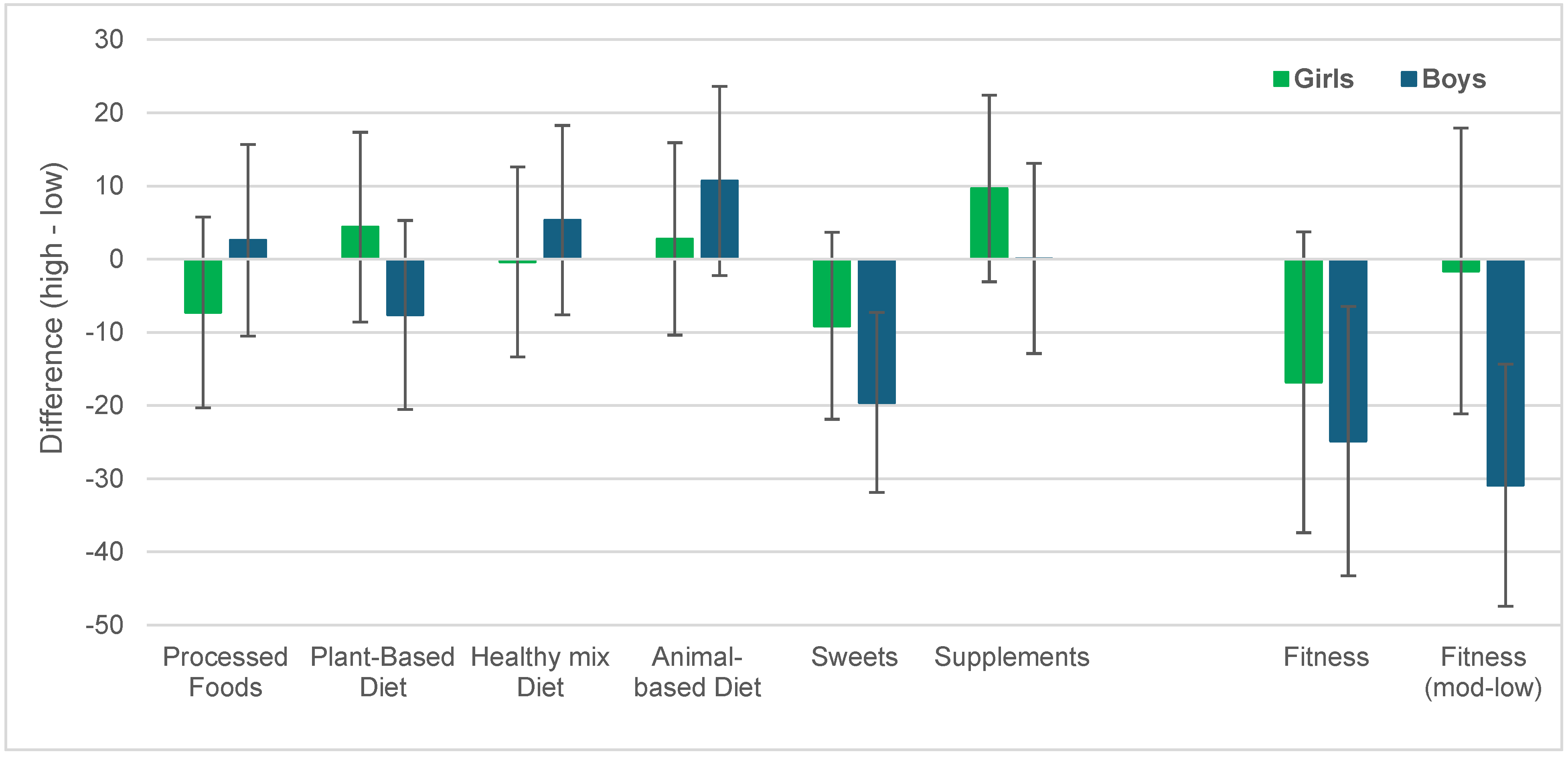
Figure 1. Difference in BMIPCT between high and low dietary factor scores and high and low and as well as moderate and low fitness scores among girls and boy. Values are mean differences with 95% CI.
Preprints 138981 g001
Table 1. Anthropometric characteristics and physical fitness for the total sample and separately for girls and boys. Values are means with standard deviation.
Total Sample
(N = 164)
Girls
(N = 73)
Boys
(N = 91)
Age (years) ** 12.9 ± 1.2 12.7 ± 1.1 13.1 ± 1.2
Height (cm) ** 161.3 ± 8.9 158.7 ± 6.7 163.4 ± 9.9
Body weight (kg) * 53.8 ± 14.4 51.3 ± 10.0 55.9 ± 16.9
BMI Percentile 59.6 ± 29.4 61.3 ± 27.5 58.2 ± 31.0
6 Min Run (Z) 94.1 ± 11.2 99.1 ± 8.6 90.2 ± 11.5
Push Ups (Z) 108.1 + 11.2 109.9 + 10.0 106.6 ± 11.9
Sit Ups (Z) * 95.2 ± 8.7 97.2 ± 6.9 93.6 ± 9.7
Longjump (Z) 103.3 ± 11.7 103.6 ± 10.6 102.9 ± 12.5
Side Jumps (Z) 113.7 ± 10.9 114.3 10.9 113.2 ± 10.9
20m Sprint (Z) * 105.8 ± 12.4 103.3 ± 12.5 107.8 ± 12.1
Balance (Z) 105.2 ± 10.0 105.4 ± 8.4 105.0 ± 11.2
Stand and Reach (Z) * 99.9 ± 11.5 102.5 ± 10.8 97.9 ± 11.7
Total Fitness (Z) 103.3 ± 7.7 104.6 ± 7.0 102.3 ± 8.1
* significant sex difference at p < 0.05; ** significant sex difference at p < 0.01.
Table 2. Prevalence of boys and girls in high and low dietary factor groups.
Processed Foods Plant-based Diet Healthy mixed Diet Animal-based Diet Sweets Supple-ments
Boys High 57.1 % 46.2 % 47.3 % 57.1 % 50.5 % 51.6 %
Low 42.9 % 53.8 % 52.7 % 42.9 % 49.5 % 48.4 %
Girls High 41.1 % 53.4 % 53.4 % 41.1 % 49.3 % 47.9 %
Low 58.9 % 46.6 % 46.6 % 58.9 % 50.7 % 48.4 %
Table 3. Association between dietary factors and components of physical fitness (expressed in z-scores). Values are Spearman’s rho. .
6 Min run Push Ups Sit Ups Long Jump Side Jumps Sprint Balance Flexibility
Processed Foods -0.33** -0.24** -0.17* -0.11 -0.25* -0.03 -0.16* -0.04
Animal-based diet -0.14 -0.12 -0.17* -0.02 -0.06 -0.12 0.04 -0.07
Plant-based diet 0.18* 0.02 0.04 0.05 0.05 0.04 0.05 0.05
Sweets 0.12 0.11 0.10 0.12 0.08 0.19** 0.15 0.06
* significant correlation at p<0.05; ** significant correlation at p≤0.01 .
Table 4. BMIPCT by dietary factor and physical fitness group. Values are means ± SD.
High Moderate Low p-value
Processed Foods 58.5 ± 29.7 N / A 60.7 ± 29.3 0.63
Plant-based Diet 58.6 ± 28.8 N / A 60.6 ± 30.2 0.66
Healthy mixed Diet 61.1 ± 30.3 N / A 58.1 ± 28.7 0.52
Animal-based Diet 62.8 ± 27.9 N / A 56.3 ± 30.7 0.16
Sweets 52.1 ± 30.7 N / A 67.1 ± 26.2 <0.01
Supplements 61.7 ± 30.6 N / A 57.5 ± 28.3 0.36
Physical Fitness 50.9 ± 25.5 54.7 ± 28.7 73.1 ± 29.3 <0.01
Disclaimer/Publisher’s Note: The statements, opinions and data contained in all publications are solely those of the individual author(s) and contributor(s) and not of MDPI and/or the editor(s). MDPI and/or the editor(s) disclaim responsibility for any injury to people or property resulting from any ideas, methods, instructions or products referred to in the content.
Copyright: This open access article is published under a Creative Commons CC BY 4.0 license, which permit the free download, distribution, and reuse, provided that the author and preprint are cited in any reuse.
Prerpints.org logo

Preprints.org is a free preprint server supported by MDPI in Basel, Switzerland.

Subscribe

Disclaimer

Terms of Use

Privacy Policy

Privacy Settings

© 2025 MDPI (Basel, Switzerland) unless otherwise stated
