
Submitted:
28 October 2024
Posted:
30 October 2024
You are already at the latest version
Abstract
This article reports the preparation of a novel functionalized magnetic nanoadsorbent through an addition reaction between Fe3O4 nanoparticles coated with allyl silica gel and 4-pyridinyl ethylene, detailed characterization of Fe3O4@SiO2-yl-VP was conducted. Among them, in the infrared spectrum, we can easily see that the absorption peak of C=C stretching vibration at 1660 cm-1 in the raw material disappears after the addition reaction, indicating the successful grafting of polymer on the surface of silica gel. The appearance of N element in the EDS spectrum also proves the successful completion of the addition reaction and the successful synthesis of Fe3O4@SiO2-yl-VP. At pH=5 and pH=7, it only takes half an hour for Fe3O4@SiO2-yl-VP to achieve maximum adsorption capacities of 85.06 and 73.78 mg/g for Hg (II) and Pb (II), respectively. The adsorption process conforms to the Langmuir model and pesudo first and pesudo second order kinetic models, and can be reused 11 times, demonstrating excellent reusability.
Keywords:
functionalized magnetic nanoadsorbent
; adsorbent
; Adsorption of Hg (II) and Pb (II)
; adsorption performance
; heavy metal ion adsorbent
1. Introduce
With the rapid development of modern metallurgy, battery and energy industries, some heavy metals such as lead and mercury have entered the water bodies, causing serious environmental pollution. In order to cope with this challenge, countries all over the world have taken measures to strengthen the investment of water restoration work, in order to improve the control capacity of heavy metal pollution.
At present, the treatment methods for heavy metal ions such as lead and mercury in industrial sewage include adsorption method, electrochemical method, microbial degradation method, membrane filtration method and other [1,2]. Among them, the adsorption method has been widely used with its advantages of low energy consumption, convenient operation [3,4], renewable and low cost. Commonly used adsorbents include natural porous materials, metal-organic frameworks, covalent organic frameworks, activated carbon, and nanoparticle materials like [5,6,7,8]. Generally speaking, high-performance adsorbents usually have the characteristics of large specific surface area, good pore structure matching, good stability and easy production, but in industrial wastewater treatment, the repeated recycling of adsorbent is an important index to evaluate its practicability [9]. The traditional filtration and centrifugal method is complicated, costly and less effective. Therefore, there is an urgent need to develop a viable adsorbent that can be separated from the environment and easily collected.
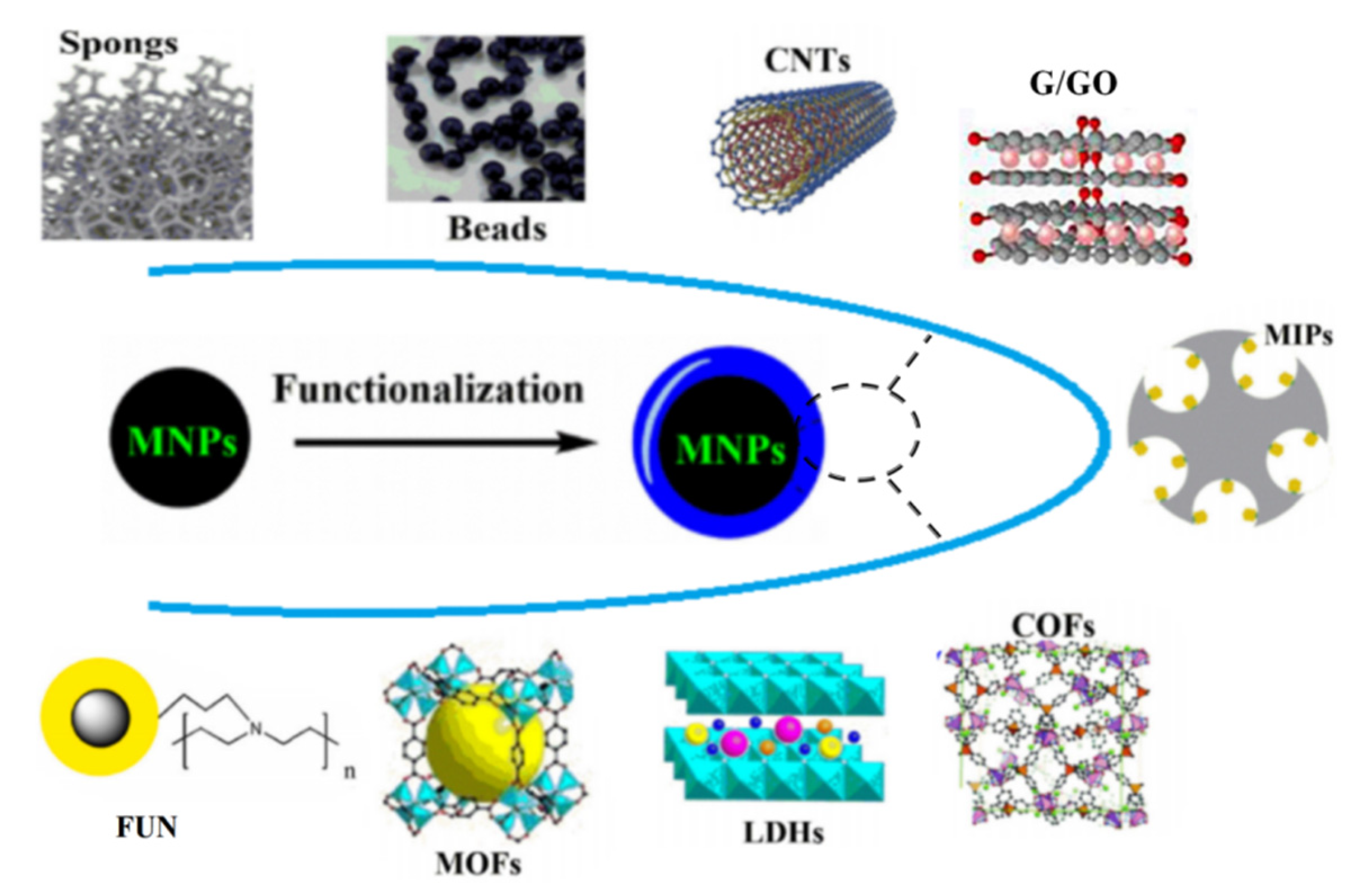
In recent years, the synthesis and application of magnetic nanoparticles (MNPs) with outstanding advantages such as supermagnetic performance, small toxicity, high specific surface area and easy to recover have attracted wide attention by researchers [10]. Researchers by modifying the surface of MNPs, not only improve its adsorption capacity, renewable ability, target selectivity and stability in acidic medium, and avoid the aggregation of magnetic particles, in the treatment of heavy metal ions and pollutants in water samples broad prospects (the application of magnetic nano adsorbent and detection method as shown in Figure 1). The modified materials include sponges, hydrogels, carbon nanotubes, graphene/graphene oxide, molecularly imprinted polymers, covalent organic frameworks, layered double hydroxides, metal organic frameworks, organic compounds containing functional groups, etc. The formed magnetic nano adsorbents are represented by Spoons, Beams, CNTs, G/GO, MIPs, COFs, LDHs, MOFs, and FUN, respectively, and their structures are shown in Figure 2.
Magnetic sponge (Spongs) is mainly used for oil pollution removal and oil-water separation, And the adsorbent is poorly functionalized in the preparation process, The application is limited to some extent [11]; Magnetic Beads (Beads) is mainly used for softening water, Preprocessing is required before its use, Procedure is too complicated [12]; Magnetic carbon nanotubes (CNTs) and graphene / graphene oxide (G / GO) are ideal for extracting and concentrating organic pollutants from various matrices, But the high preparation cost of this type of adsorbent, Poor dispersity of [13,14]; Magnetic molecular imprinted polymers (MIPs) can act as selective adsorbents for some compounds and ions, well suited for selective extraction of fluorine / chlorine compounds, herbicides, flavonoids. However, the disadvantage is that it is difficult to prepare and the functional groups are difficult to introduce [15,16]; Magnetic Covalent organic frameworks (COFs) has the advantages of selective and tunable porosity, easy functionalization, satisfactory chemical and thermal stability, and large specific surface area and ordered channels. However, the disadvantages are limitations in the rapid, intuitive and quantitative analysis of harmful substances [17,18,19]; Layard double hydroxides (LDHs) is suitable for water treatment and purification industry, but the disadvantages are obvious, one is the number of active sites is small, two is to enhance activity, can only increase the lateral size and thickness, resulting in excessive [20,21]; Magnetic metal organic frameworks (MOFs) have large surface area and different porosity, multiple functional groups in structure, high thermal stability, adjustable shape, size and selectivity. They are widely used to separate toxic substances in gases, liquids and environmental samples, and remove metal ions, polar and nonpolar organic matter. But such adsorbents are usually limited by pore size and are unstable [22,23,24].
The functional groups of magnetic nanoadsorbents (FUN) containing functional groups are generally efficient heavy metal ion coordination groups, which have good adsorption capacity for heavy metal ions. In addition, FUN has the advantages of large specific surface area, strong adsorption capacity, uniform dispersion, stable structure, renewability, and convenient recovery, and is widely used for adsorbing heavy metal ions in wastewater [25,26,27].
This article reports the preparation of a novel FUN adsorbent Fe3O4@SiO2-yl-VP through an addition reaction between Fe3O4 nanoparticles coated with allyl silica gel and 4-pyridine ethylene. Fe3O4@SiO2-yl-VP has shown excellent adsorption performance, renewable performance, and convenient recovery in extracting Hg(II) and Pb(II) from industrial wastewater, making it a promising heavy metal ion adsorbent.
2. Experimental
2.1. Synthesis of Fe3O4@SiO2-yl
Add 0.20 g of MNP and 30.00 mL of anhydrous ethanol to a 100mL three necked bottle, and sonicate for over 15 minutes. After the MNP is evenly dispersed, add 1.00 mL of allyl triethoxysilane and 1.00 mL of distilled water to a three necked bottle. Mechanical stirring for 6 hours under room temperature nitrogen protection. The product is separated by an external magnetic field, cleaned with anhydrous ethanol, and dried in a vacuum oven at 60 ° C for 6 hours.
2.2. Synthesis of Fe3O4@SiO2-yl-VP
Add 50 mL anhydrous toluene to a 100 mL three necked bottle, then add Fe3O4@SiO2-yl, excessive 4-vinylpyridine (4-VP), an appropriate amount of dioxane and azodiisobutyronitrile, mechanically stir, vacuum, and under nitrogen protection at 70 ℃ for 24 hours. Among them, the monomer concentration is 1 mol/L, and the initiator concentration is 0.005 mol/L. After the reaction is completed, the product is separated by an external magnet, washed repeatedly with anhydrous ethanol, and dried in a vacuum oven at 60°C for 6 hours to obtain the product Fe3O4@SiO2-yl-VP. The synthesis route is shown in Scheme 1.
3. Results and Discussion
3.1. Characterization
3.1.1. Infrared Spectrum Analysis of Fe3O4@SiO2-yl-VP
Figure 3 shows the IR spectrum of Fe3O4, Fe3O4@SiO2-yl, and Fe3O4@SiO2-yl-VP. The figure shows that 590 cm-1 is the stretching vibration peak [28] of O-Fe in Fe3O4. For Fe3O4@SiO2-yl, the strong absorption peak of 1096 cm-1 is the of the stretching vibration of Si-O-Si [29], and the absorption peak of 1660 cm-1 is the stretching vibration of C=C. For Fe3O4@SiO2-yl-VP, except for the characteristic peak of 590 cm-1 O-Fe and 1096cm-1 Si-O-Si, 1400~1600 cm-1 is the stretching vibration peak of the pyridine ring, and the stretching vibration absorption peak of 1660 cm-1 C=C disappears, indicating that the C=C of the allyl group in Fe3O4@SiO2-yl has been consumed by addition reaction, proving that Fe3O4@SiO2-yl-VP has been successfully synthesized.
3.1.2. EDS Spectrum Analysis of Fe3O4@SiO2-yl-VP
Figure 4 shows the EDS spectrum of Fe3O4@SiO2-yl-VP and its adsorption of Hg (II) or Pb (II). About Fe3O4@SiO2-yl-VP, it can be seen from the figure that it contains five elements: C, N, O, Si and Fe. The grafting of pyridine rings into the complex introduces a new element N, which also proves the smooth completion of the addition reaction, Fe3O4@SiO2-yl-VP synthesis successful. From the other two EDS spectrum, Hg (II) or Pb (II) can be clearly seen, indicating that Fe3O4@SiO2-yl-VP has a good adsorption performance for Hg (II) and Pb (II).
3.1.3. XRD Pattern Analysis of Fe3O4@SiO2-yl-VP
Figure 5 shows the XRD pattern of pure Fe3O4 and Fe3O4@SiO2-yl-VP, six characteristic peaks of pure Fe3O4, 2 ϴ = 30.1 º, 35.5 º, 43.3 º, 53.4 º, 57.2 º, and 62.5 º, these are related to the (220), (311), (400), (422), (511) and (440) planes of Fe3O4 spinel structure [30]. Fe3O4@SiO2-yl-VP also has the same characteristic peak, indicating that a has superparamagnetism and can be recovered through magnetic separation in aqueous solutions.
3.1.4. Thermogravimetric (TG) Analysis
Figure 6 is a thermogravimetric diagram of Fe3O4@SiO2-yl-VP. From the peak position, it can be divided into three stages: 0-150℃, 150-650℃, and 650-850℃. Corresponding to the thermogravimetric diagram analysis, in the first stage, there is weight loss of 3.5%, which may be caused by the volatilization of water and residual organic matter [31]. Weight loss of 15.2% in the second stage. The temperature range of 150-650℃ may be caused by the decomposition of polymers, including the decomposition of pyridine functional groups, the breaking of C-C, C-N, C-H bonds, and Si-O bonds, among other factors. Weight loss in the third stage is 4.0%, which may be due to the high-temperature conversion of the magnet [32]. From the fact that the maximum weight loss rate in the second stage is organic matter, it can be concluded that the polymer has been successfully grafted onto the surface of Fe3O4@SiO2.
3.1.5. SEM Analysis of Fe3O4@SiO2-yl-VP
In the scanning electron microscope image of Fe3O4@SiO2-yl-VP (Figure 7), we can clearly see the white foam spherical structure, and the spherical surface is rough, which is mainly because the black spherical MNP is wrapped by white silica gel and presents a white foam shape, and the silica gel surface is modified by organic molecules, which leads to the roughness of the silica gel surface structure, which also proves again Fe3O4@SiO2-yl-VP Successfully synthesized.
3.1.6. TEM Analysis of Fe3O4@SiO2-yl-VP
Figure 8 shows Fe3O4@SiO2-yl-VP transmission electron microscopy image. It can be clearly seen from the inside Fe3O4@SiO2-yl-VP, the structure is divided into two layers, the black ball in the inner layer is Fe3O4 nanospheres, the diameter of the ball is about 300nm, and the white foam gel covered in the outer layer is silica gel.
3.2. Research on Adsorption Performance
3.2.1. Saturated Adsorption Capacity and Thermodynamic Analysis
Take 0.02g Fe3O4@SiO2-yl-VP respectively and add it to 50 mL of solutions with different concentrations of heavy metal ions. Stir at room temperature for 1 hour to test the concentration of heavy metal ions in the filtrate after adsorption.
Under optimal conditions, the adsorption capacity of the adsorbent was investigated. It can be clearly seen from Figure 9 that the process of adsorption of Hg (II) or Pb (II) is basically the same, which may be related to the same mechanism of adsorption of these two metal ions by Fe3O4@SiO2-yl-VP. In the initial stage, the adsorbent has multiple adsorption sites, and the adsorption capacity increases with the initial concentration of Hg (II) or Pb (II) solution. In the later stage, the adsorption capacity tends to saturate as the adsorption sites are gradually occupied by metal ions. After calculation, the maximum adsorption capacities of Fe3O4@SiO2-yl-VP for Hg (II) and Pb (II) are 85.06 and 73.78mg/g, respectively.
Fit the adsorption isotherm models of Langmuir and Freundlich for Hg(II) and Pb(II), respectively. The adsorption isotherm equation is as follows [33].
In the formula, Qe is the equilibrium adsorption capacity (mg/g), Ce is the concentration of Hg(II) and Pb(II) ions after reaching equilibrium (mg/L), Qmax is the saturated adsorption capacity (mg/g), and b, kF, and n are constants.
The adsorption isotherms of Fe3O4@SiO2-yl-VP for Hg (II) and Pb (II) ions are shown in Figure 10. It can be seen that the Langmuir adsorption isotherm fits well with the scatter plot of Fe3O4@SiO2-yl-VP adsorption for Hg (II) and Pb (II), which can also be verified from Table 1. According to the Langmuir model, the theoretical values of saturated adsorption capacity are 83.86 and 71.79mg/g, which are very close to the experimental values of 85.06 and 73.78mg/g. The fitting coefficients of Langmuir for Hg (II) and Pb (II) ions are R2=0.9403 and 0.9980, respectively, which are larger than the corresponding Freundlich fitting coefficients R2=0.7006 and 0.9016. This indicates that the Langmuir model can be used to fit the experimental data for the adsorption process of Hg (II) and Pb (II) ions by Fe3O4@SiO2-yl-VP.
3.2.2. Effect of pH
From Figure 11, it can be seen that the process of Fe3O4@SiO2-yl-VP adsorbing Hg (II) or Pb (II) ions is influenced by pH value.Under strong acidic conditions, the N atom on the pyridine ring of Fe3O4@SiO2-yl-VP is prone to protonation, reducing the number of coordinated N atoms and resulting in low removal efficiency. As the pH value increases, the removal efficiency of Hg (II) and Pb (II) ions by Fe3O4@SiO2-yl-VP gradually increases, reaching adsorption equilibrium at pH=7 and pH=5, respectively, which is consistent with literature data [34,35]. If the pH value is too high, the precipitation loss of Hg (II) and Pb (II) ions is too large, which seriously affects the adsorption percentage and should not be considered.
3.2.3. Research on Adsorption Kinetics
Take 100 mL each of 50 mg/L of Hg (II) and Pb (II) water samples, add 0.02g Fe3O4@SiO2-yl-VP each, stir, and take samples at different times to determine the concentration of heavy metal ions. Calculate the corresponding adsorption amount Qt at the time.
The adsorption kinetics model is used to fit the adsorption process of Hg (II) and Pb (II) ions by Fe3O4@SiO2-yl-VP. Currently, the commonly used equations are the pseudo-first-order kinetic rate equation and the pseudo-second-order kinetic rate equation [36].
The linear form of the pseudo-first-order kinetic rate equation is as follows:
In the formula, Qt is the adsorption capacity at any time (mg/g), Qe is the equilibrium adsorption capacity (mg/g), and k1 (min-1) is the pseudo-first-order kinetic rate constant.
The linear form of the pseudo-second-order kinetic rate equation is as follows:
In the formula, Qt is the adsorption capacity at any time (mg/g), Qe is the equilibrium adsorption capacity (mg/g), k2 is the pseudo-second-order kinetic rate constants g/(mg·min).
As shown in Figure 12, the scatter plot analysis of the adsorption of Hg (II) and Pb (II) by Fe3O4@SiO2-yl-VP, the initial adsorption amount increases rapidly with time. This may be due to the fact that Fe3O4@SiO2-yl-VP has multiple functional groups and fully exposed adsorption sites, which improves the efficiency of Hg (II) and Pb (II). With the reduction of adsorption sites and the blockage of adsorbed heavy metal ions on sites, the adsorption amount decreases until reaching adsorption equilibrium at 25 minutes. Based on the fitting results in Table 2, it can be seen that the fitting coefficients of pseudo-first-order kinetic model and the pseudo-second-order kinetic model are both greater than 0.93. The theoretical maximum adsorption capacities of Hg (II) and Pb (II) at adsorption equilibrium are not significantly different from the experimental values of 85.06 and 73.78mg/g, both of which can well fit the adsorption process of Fe3O4@SiO2-yl-VP for Hg (II) and Pb (II). This may be due to the fact that the polymer grafted on VP silica gel has a large volume and a large number of functional groups, which can not only adhere metal ions from the adsorbent diffusion, but also form complexes with Hg (II) and Pb (II) through functional groups for chemical adsorption.
3.2.4. Selection of Eluents
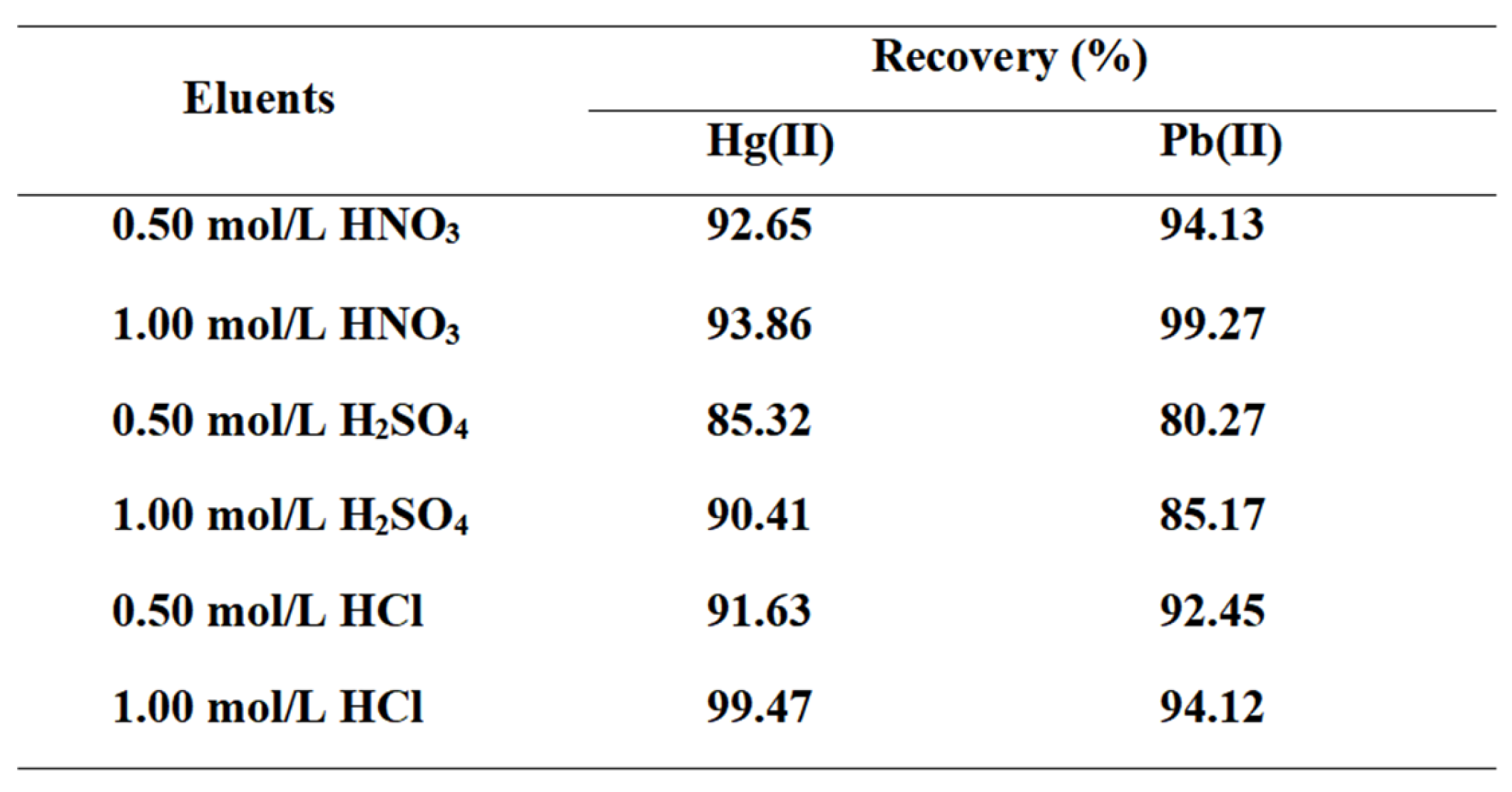
Desorb the adsorbents for Hg (II) and Pb (II) using acid solutions of different concentrations. The results are shown in Table 3. At room temperature, 1.00 mol/L HCl and 1.00 mol/L HNO3 have the best desorption effect on Hg (II) and Pb (II). Therefore, in this experiment, 1.00 mol/L HCl was selected to desorb Hg (II) and 1.00 mol/L HNO3 to desorb Pb (II).
3.2.5. Reusability of Adsorbents
After conducting 15 adsorption and elution experiments on Fe3O4@SiO2-yl-VP, the optimal number of repeated uses of Fe3O4@SiO2-yl-VP was found. As shown in Figure 10, after 11 repeated uses, the removal efficiency of Fe3O4@SiO2-yl-VP is generally above 90%, indicating that Fe3O4@SiO2-yl-VP has good reusability and stability. The number of repeated uses of Fe3O4@SiO2-yl-VP may be related to the relative stability of the polymer grafted through addition reactions.
4. Conclusion
(1) This article reports the preparation of a novel functionalized magnetic nanoadsorbent Fe3O4@SiO2-yl-VP by an addition reaction between Fe3O4 nanoparticles coated with allyl silica gel and 4-pyridylethylene. Fe3O4@SiO2-yl-VP was characterized by IR, EDS, XRD, TG-DTA, SEM, and TEM.
(2) Fe3O4@SiO2-yl-VP can achieve maximum adsorption capacities of 85.06 mg/g and 73.78 mg/g for Hg (II) and Pb (II) in just half an hour at pH=5 and pH=7, respectively. The adsorption process conforms to the Langmuir model, pseudo-first-order kinetic model and the pseudo-second-order kinetic model
(3) At room temperature, 1.00 mol/L HCl and 1.00 mol/L HNO3 have the best desorption effect on Hg (II) and Pb (II) adsorbed by Fe3O4@SiO2-yl-VP, which can be reused 11 times and has excellent reusability.
Author Contributions
Conceptualization, D.C.; writing—original draft preparation, D.C.; investigation, J.C.; resources, W.Z.; validation, A.S.;writing—review and editing, A.S. and J.C.; supervision, W.Z. All authors have read and agreed to the published version of the manuscript.
Funding
This work was supported by Natural Science Foundation of Xinjiang Uygur Autonomous Region(grant number, 2024D01A96).
Conflicts of Interest
The authors declare no conflict of interest.Jianxin Chen is an employee of Hongyuan Construction Group Co., Ltd. The paper reflects the views of the authors, not the company.
References
- Kotova, I.B.; Taktarova, Y.V.; Tsavkelova, E.A.; Egorova, M.A.; Bubnov, I.A.; Malakhova, D.V.; Shirinkina, L.I.; Sokolova, T.G.; Bonch-Osmolovskaya, E.A. Microbial Degradation of Plastics and Approaches to Make it More Efficient. Microbiology 2021, 90, 671–701. [CrossRef]
- Malinović, B.N.; Markelj, J.; Gotvajn, A..; Cigić, I.K.; Prosen, H. Electrochemical treatment of wastewater to remove contaminants from the production and disposal of plastics: a review. Environ. Chem. Lett. 2022, 20, 3765–3787. [CrossRef]
- Yu, Y.; Mo, W.Y.; Luukkonen, T. Adsorption behaviour and interaction of organic micropollutants with nano and microplastics – A review. Sci. Total. Environ. 2021, 797, 149140. [CrossRef]
- Novikau, R.; Lujaniene, G. Adsorption behaviour of pollutants: Heavy metals, radionuclides, organic pollutants, on clays and their minerals (raw, modified and treated): A review. J. Environ. Manag. 2022, 309, 114685. [CrossRef]
- Safaei, M.; Foroughi, M.M.; Ebrahimpoor, N.; Jahani, S.; Omidi, A.; Khatami, M. A review on metal-organic frameworks: Synthesis and applications. TrAC Trends Anal. Chem. 2019, 118, 401–425. [CrossRef]
- Zhou, T.; Ding, L.; Che, G.; Jiang, W.; Sang, L. Recent advances and trends of molecularly imprinted polymers for specific recognition in aqueous matrix: Preparation and application in sample pretreatment. TrAC Trends Anal. Chem. 2019, 114, 11–28. [CrossRef]
- Wang, J.; Li, J.; Gao, M.; Zhang, X. Recent advances in covalent organic frameworks for separation and analysis of complex samples. TrAC Trends Anal. Chem. 2018, 108, 98–109. [CrossRef]
- Chen, L.; Wu, Q.; Gao, J.; Li, H.; Dong, S.; Shi, X.; Zhao, L. Applications of covalent organic frameworks in analytical chemistry. TrAC Trends Anal. Chem. 2019, 113, 182–193. [CrossRef]
- Faraji, M.; Shirani, M.; Rashidi-Nodeh, H. The recent advances in magnetic sorbents and their applications. TrAC Trends Anal. Chem. 2021, 141, 116302. [CrossRef]
- Wang, Q. G. , Tian, H. , Lin, G. , Ya, L. , Wei, G. , Li, W. , Chun, W. , Zhi, W. , Qiu, H. Advances in magnetic porous organic frameworks for analysis and adsorption applications. Trends Anal. Chem. 2020, 132, 116048.
- Peng, M.; Zhu, Y.; Li, H.; He, K.; Zeng, G.; Chen, A.; Huang, Z.; Huang, T.; Yuan, L.; Chen, G. Synthesis and application of modified commercial sponges for oil-water separation. Chem. Eng. J. 2019, 373, 213–226. [CrossRef]
- Mohammadian, M. , Sahraei, R. , Ghaemy, M. Synthesis and fabrication of antibacterial hydrogel beads based on modified-gum tragacanth/poly (vinyl alcohol)/Ag0 highly efficient sorbent for hard water softening. Chemosphere 2019, 225, 259e269.
- Samadishadlou, M.; Farshbaf, M.; Annabi, N.; Kavetskyy, T.; Khalilov, R.; Saghfi, S.; Akbarzadeh, A.; Mousavi, S. Magnetic carbon nanotubes: preparation, physical properties, and applications in biomedicine. Artif. Cells, Nanomedicine, Biotechnol. 2017, 46, 1314–1330. [CrossRef]
- Kui, L. U. , Guixia, Z. , Xiangke, W. A brief review of graphene-based material synthesis and its application in environmental pollution management. Chin. Sci. Bull. 2012, 57, 1223e1234.
- Zhou, T.; Ding, L.; Che, G.; Jiang, W.; Sang, L. Recent advances and trends of molecularly imprinted polymers for specific recognition in aqueous matrix: Preparation and application in sample pretreatment. TrAC Trends Anal. Chem. 2019, 114, 11–28. [CrossRef]
- Leandro, L.G. de Oliveira , F. A. C. , Suquila , E. , Costa de Figueiredo , M. G. , Segatelli , C. R.T. Restricted access material-ion imprinted polymer based method for on-line flow preconcentration of Cd2+ prior to flame atomic absorption spectrometry determination. Microchem. J. 2020, 157, 105022.
- Wang, J.; Li, J.; Gao, M.; Zhang, X. Recent advances in covalent organic frameworks for separation and analysis of complex samples. TrAC Trends Anal. Chem. 2018, 108, 98–109. [CrossRef]
- Chen, L.; Wu, Q.; Gao, J.; Li, H.; Dong, S.; Shi, X.; Zhao, L. Applications of covalent organic frameworks in analytical chemistry. TrAC Trends Anal. Chem. 2019, 113, 182–193. [CrossRef]
- Rasheed, T. Covalent organic frameworks as promising adsorbent paradigm for environmental pollutants from aqueous matrices: Perspective and challenges. Sci. Total. Environ. 2022, 833, 155279. [CrossRef]
- Wang, Y.; Yan, D.; El Hankari, S.; Zou, Y.; Wang, S. Recent Progress on Layered Double Hydroxides and Their Derivatives for Electrocatalytic Water Splitting. Adv. Sci. 2018, 5, 1800064. [CrossRef]
- Silva, Ana Maria G.Pereira, Iaci M.Silva, Tamara, Ida Silva, Manoel R.Rocha, Renata A.Silva, Merces C. Magnetic foams from polyurethane and magnetite applied as attenuators of electromagnetic radiation in X band. J. Appl. Polym. Sci. 2021, 138, 49629.
- Malonzo, C. D. , Wang, Z. , Duan, J. , Zhao, W. , Webber, T. E. , Li, Z. Application and limitations of nanocasting in metaleorganic frameworks. Inorg. Chem. 2018, 57, 2782e2790.
- Bukhtiyarova, M. A review on effect of synthesis conditions on the formation of layered double hydroxides. J. Solid State Chem. 2018, 269, 494–506. [CrossRef]
- Shen, Z.; Kuang, Y.; Zhou, S.; Zheng, J.; Ouyang, G. Preparation of magnetic adsorbent and its adsorption removal of pollutants: An overview. TrAC Trends Anal. Chem. 2023, 167. [CrossRef]
- Chen, D.; Sawut, A.; Wang, T. Synthesis of new functionalized magnetic nano adsorbents and adsorption performance for Hg(II) ions. Heliyon 2022, 8, e10528. [CrossRef]
- Chen, J.-K.; Wang, Y.-X.; Huang, C.-F.; Liu, H.-W. Acceleration of adsorption of heavy metal ion micelles onto iron/polyvinyltetrazole adsorbents with dielectrophoresis force under polarization. J. Water Process. Eng. 2024, 58. [CrossRef]
- Wang, Y.; Nakano, T.; Chen, X.; Xu, Y.-L.; He, Y.-J.; Wu, Y.-X.; Zhang, J.-Q.; Tian, W.; Zhou, M.-H.; Wang, S.-X. Studies on adsorption properties of magnetic composite prepared by one-pot method for Cd(II), Pb(II), Hg(II), and As(III): Mechanism and practical application in food. J. Hazard. Mater. 2024, 466, 133437. [CrossRef]
- Figueira, P.; Lopes, C.; Daniel-Da-Silva, A.; Pereira, E.; Duarte, A.; Trindade, T. Removal of mercury (II) by dithiocarbamate surface functionalized magnetite particles: Application to synthetic and natural spiked waters. Water Res. 2011, 45, 5773–5784. [CrossRef]
- Du, G. H. , Liu, Z. L. , Xia, X. , Chu, Q. , Zhang, S. M. Characterization and application of Fe3O4 /SiO2, nanocomposites. Journal of Sol-Gel Science and Technology. 2006, 39, 285-291.
- Shao, M. , Ning, F. , Zhao, J. , Wei, M. , Duan, X. Preparation of Fe3O4@SiO2@layered double hydroxide core-shell microspheres for magnetic separation of proteins. Journal of the American Chemical Society. 2011, 134, 1071-1077.
- Chai, X. , Dong, H. , Zhang, Z. , Qi, Z. Y. , Chen, J. , Huang, Z. A novel Zr-MOF modified by 4,6-Diamino- 2-mercaptopyrimidine for exceptional Hg (II) removal. Journal of Water Process Engineering 2022, 46, 102606.
- Vajihe, N. , Islami, M. R. Adsorption capacity of heavy metal ions using sultonemodified magnetic activated carbon as a bio-adsorbent. Materials Science and Engineering 2019, 101, 42-52.
- Abdullah, N. , Mohd, F. A. , Jun, H. S. Recovery of waste cooking palm oil as a crosslinker for inverse vulcanized adsorbent to remove iron (Fe3+) ions. Journal of Environmental Chemical Engineering 2024, 12, 111853.
- Hania, A. , Ahmed, A. E. , Ahmed, E. , Hazim, Q. , Fares, A. A green route to the synthesis of highly porous activated carbon from walnut shells for mercury removal. Journal of Water Process Engineering 2024, 58, 104802.
- Hamouz, O. C. S. A. , Ali, S. A. Removal of heavy metal ions using a novel cross-linked polyzwitterionic phosphonate. Separation and Purification Technology 2012, 98, 94–101.
- Akar, T.; Alim, S.; Meltem, G.; Sayin, F.; Akar, S.T. A novel sustainable and eco-friendly biosourced hybrid sorbent for toxic Pb2+decontamination: Nano metal oxide functionalized salt-tolerant plant biomass. J. Clean. Prod. 2024, 439. [CrossRef]
Figure 1.
Diagram of application and detection methods of magnetic nanoadsorbebt.
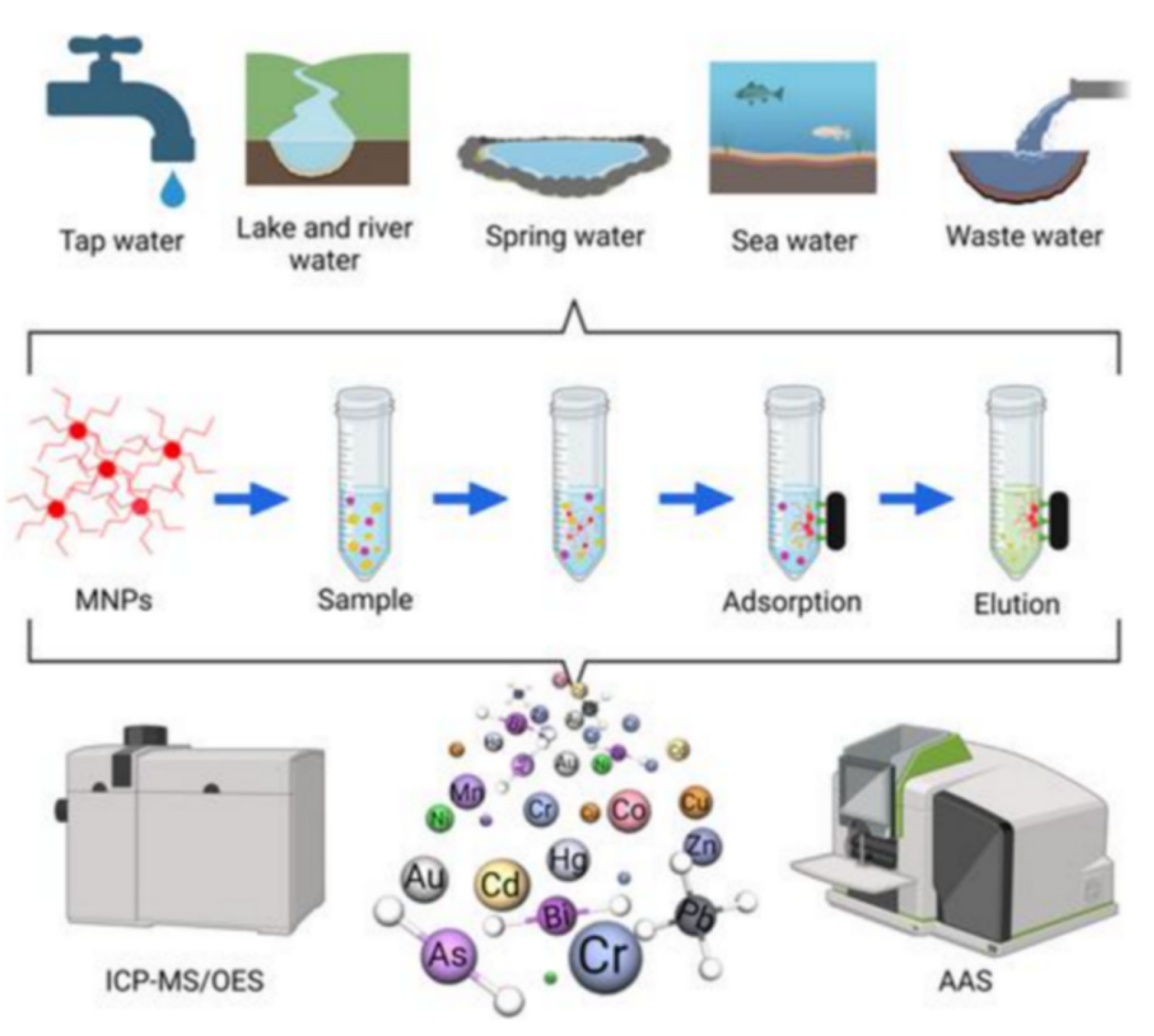
Figure 2.
Structural diagrams of different magnetic nano adsorbents.
Scheme 1.
The synthetic route of Fe3O4@SiO2-yl-VP.
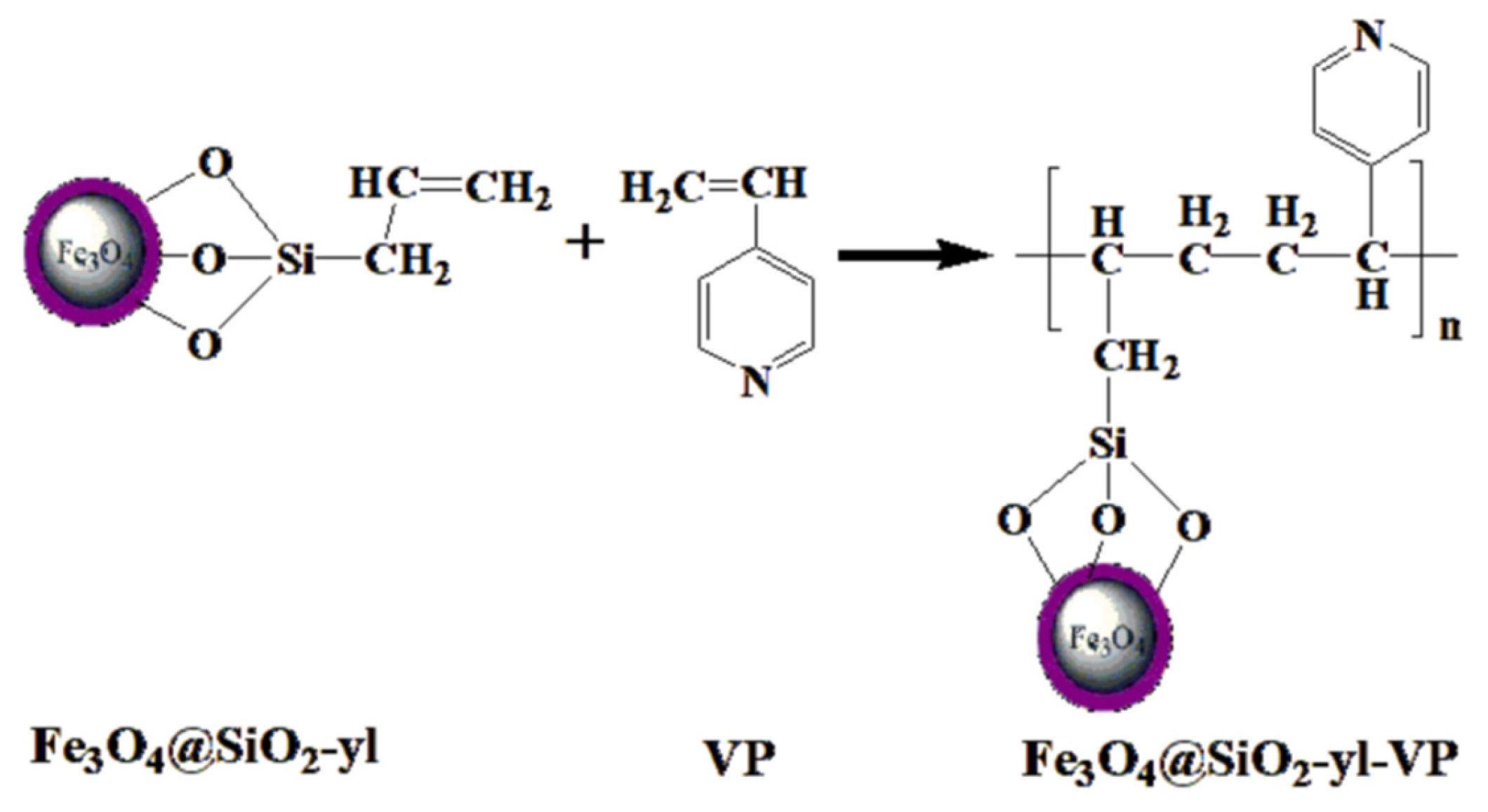
Figure 3.
The FT-IR spectra of Fe3O4, Fe3O4@SiO2-yl, Fe3O4@SiO2-yl-VP.
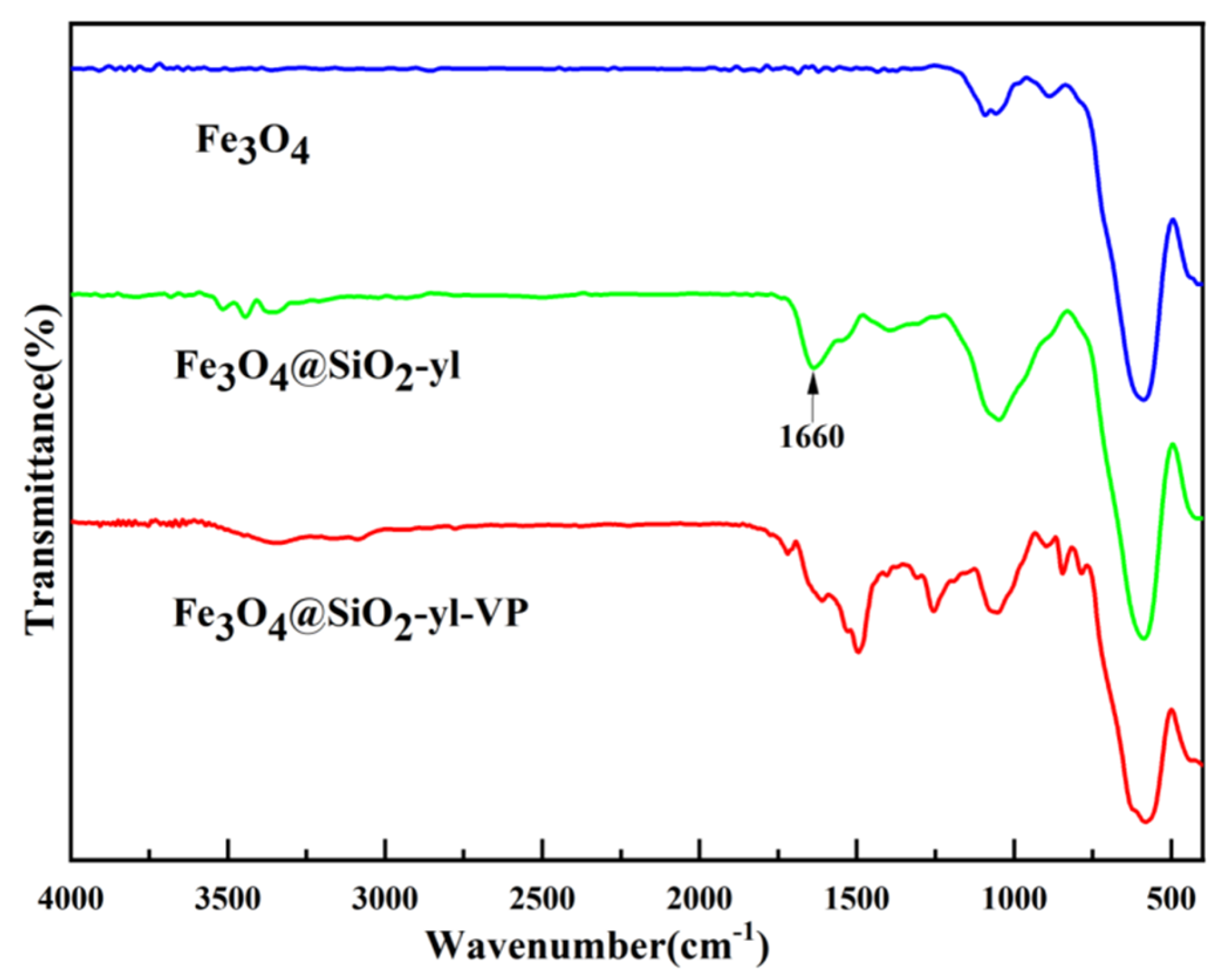
Figure 4.
EDS spectra of Fe3O4@SiO2-yl-VP itself and Fe3O4@SiO2-yl-VP adsorbing heavy metal ions.
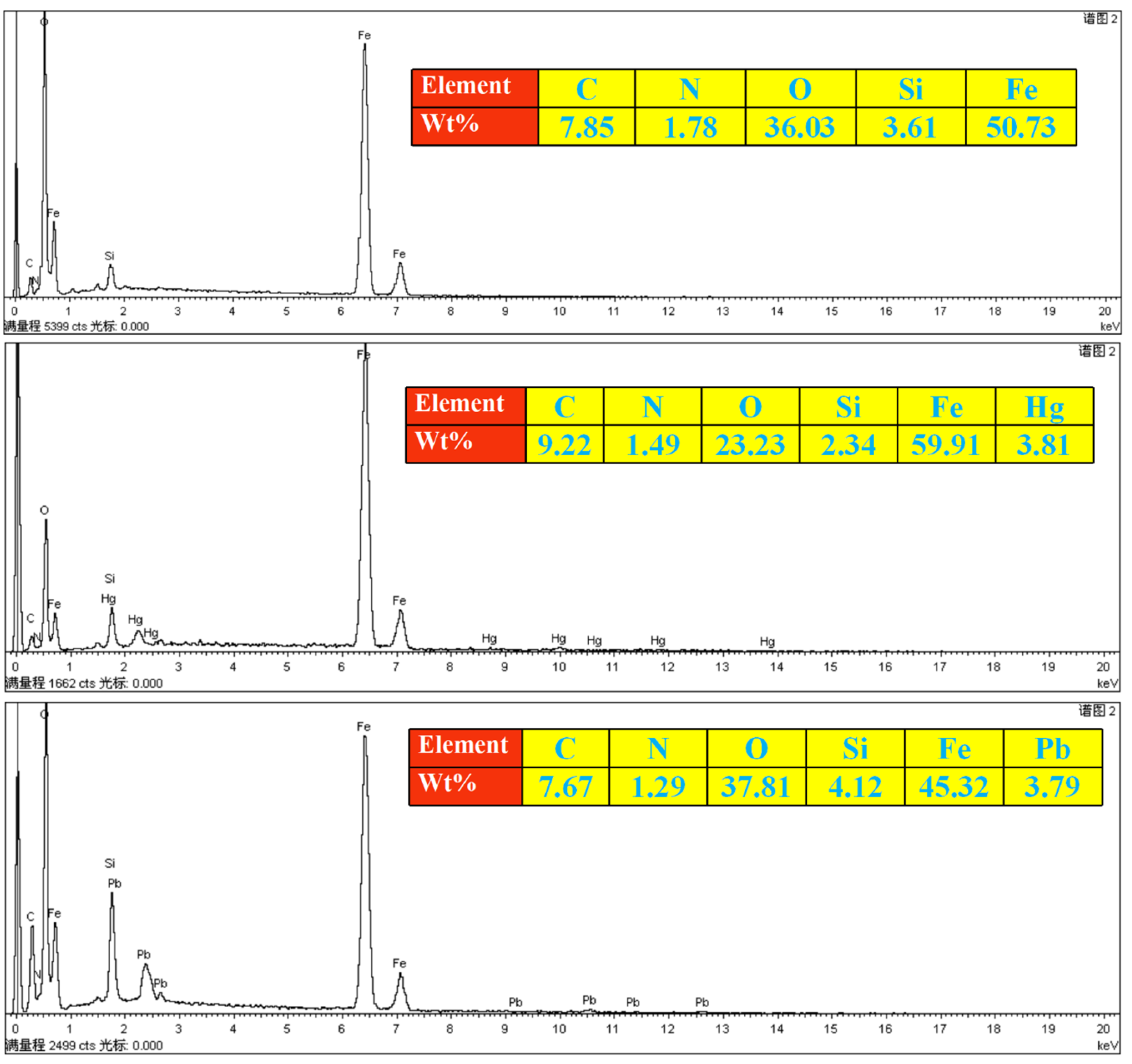
Figure 5.
XRD pattern of Fe3O4, Fe3O4@SiO2-yl-VP.
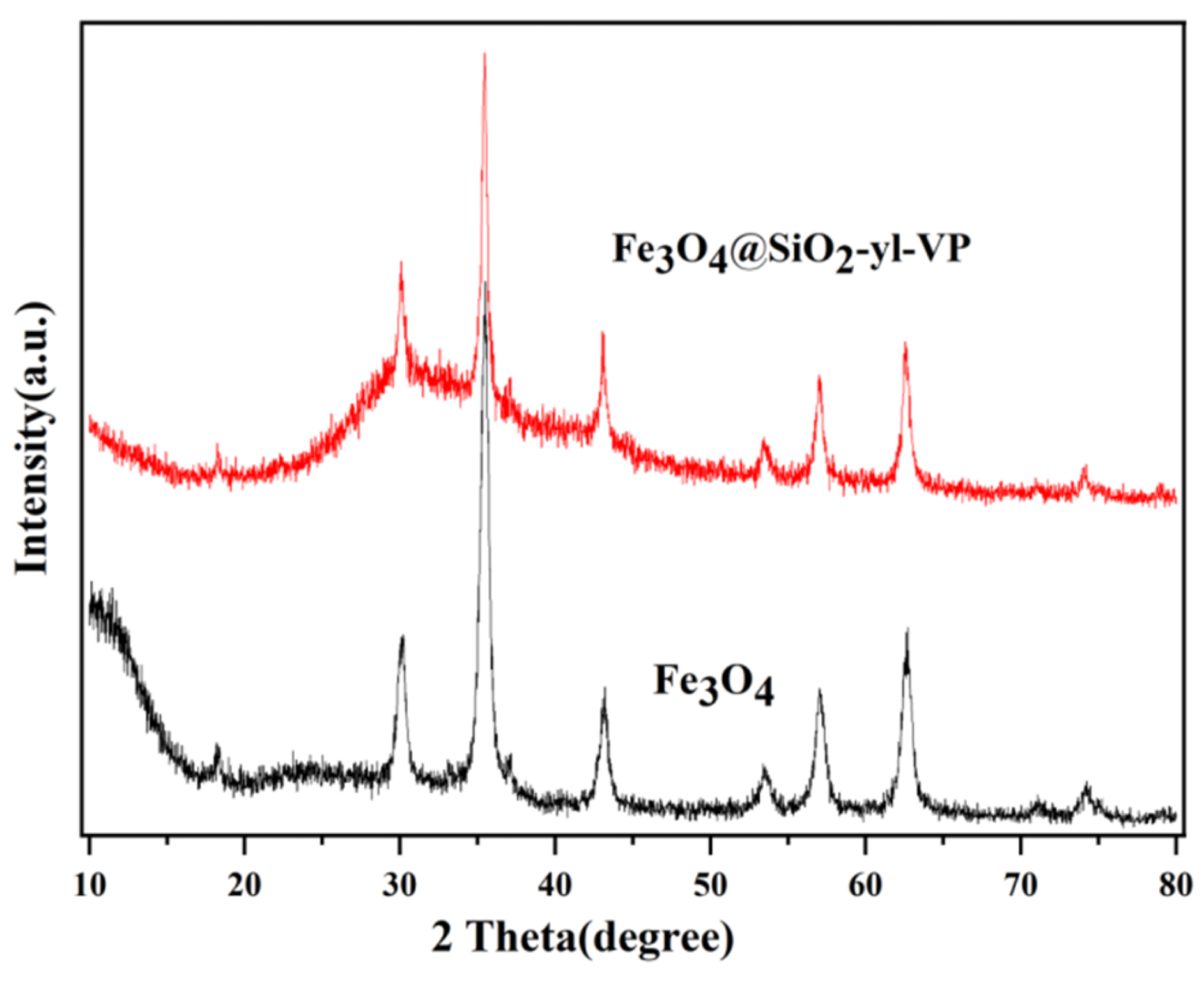
Figure 6.
TG curve of Fe3O4@SiO2-yl-VP.
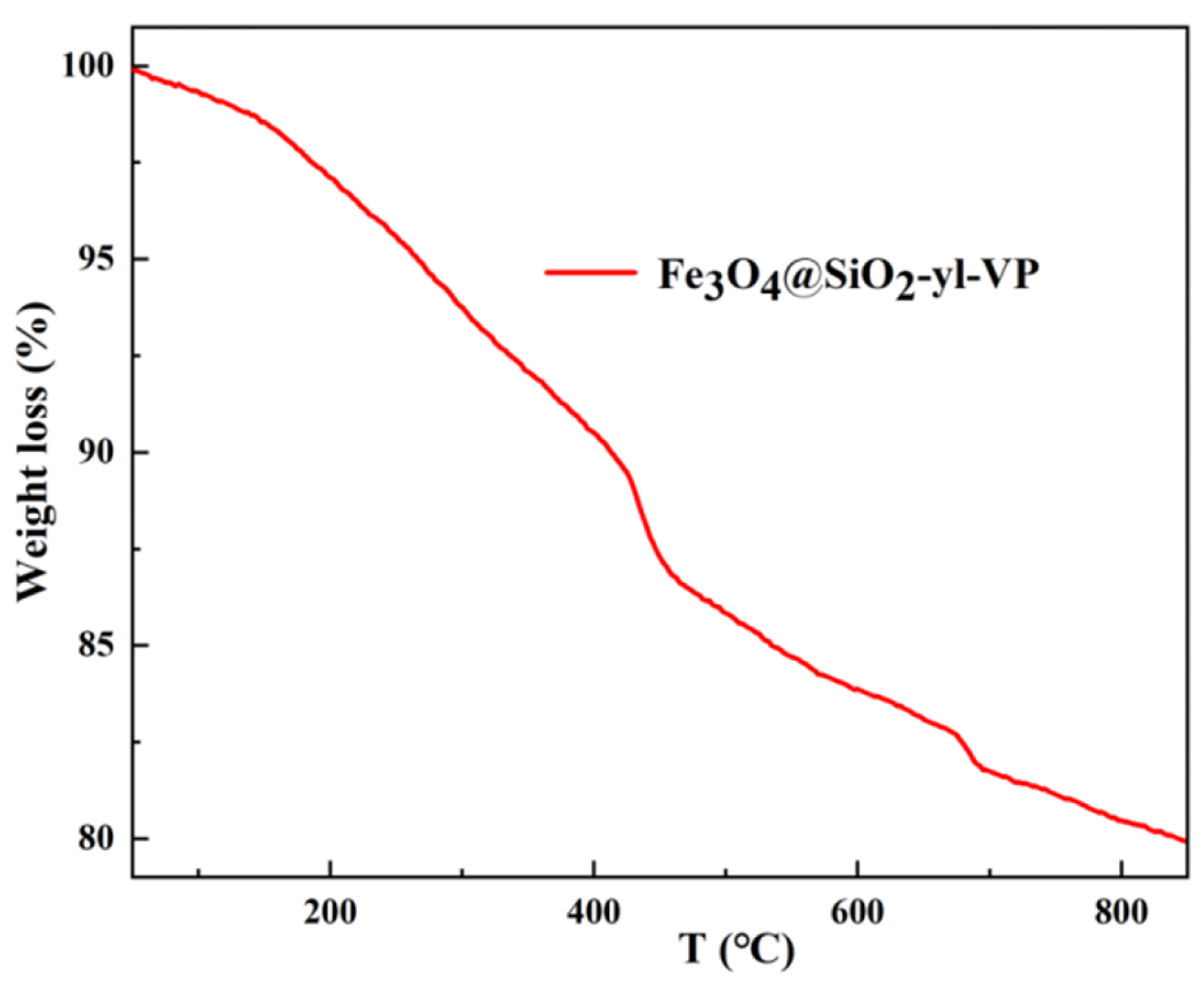
Figure 7.
SEM images of Fe3O4@SiO2-yl-VP.
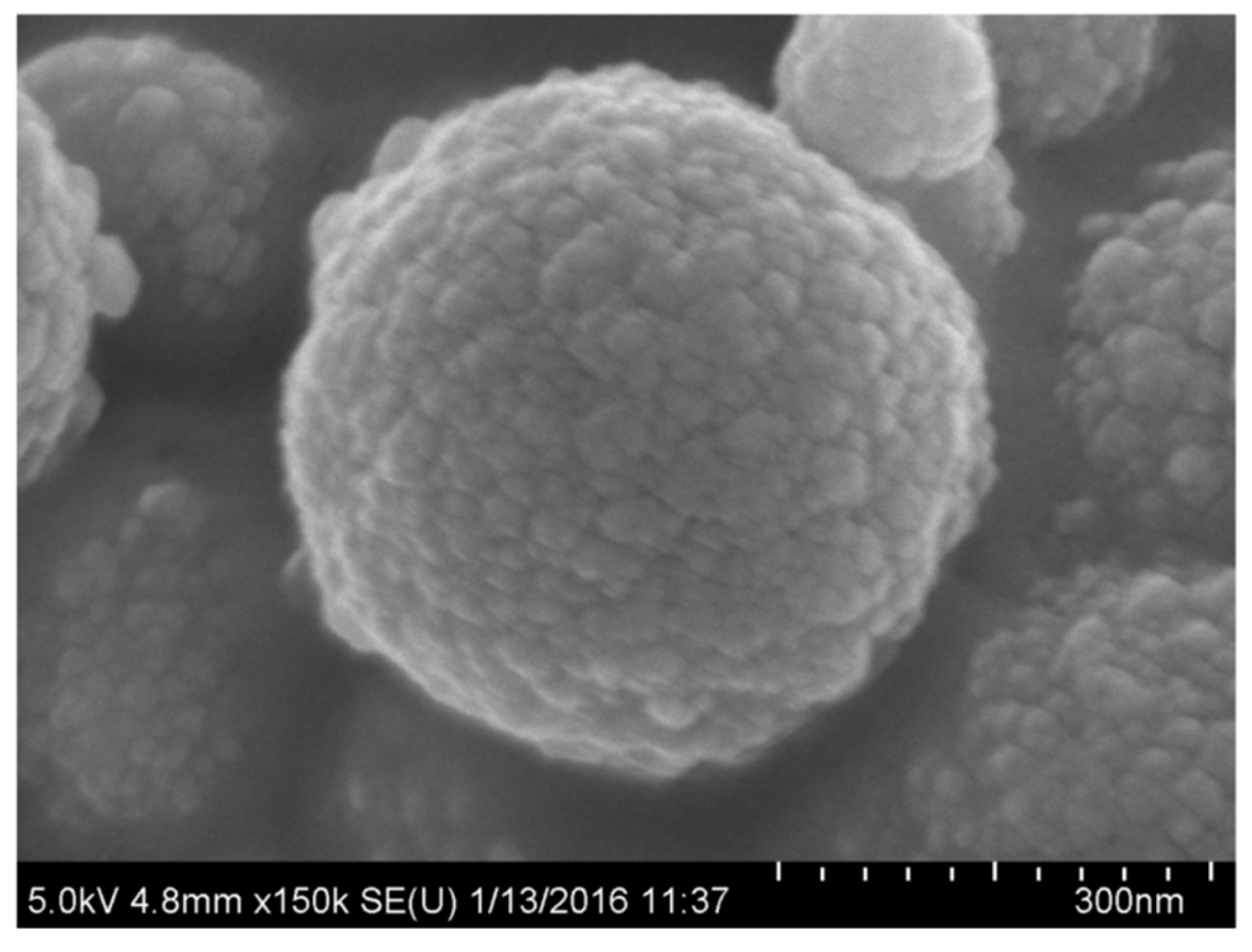
Figure 8.
TEM images of Fe3O4@SiO2-yl-VP.
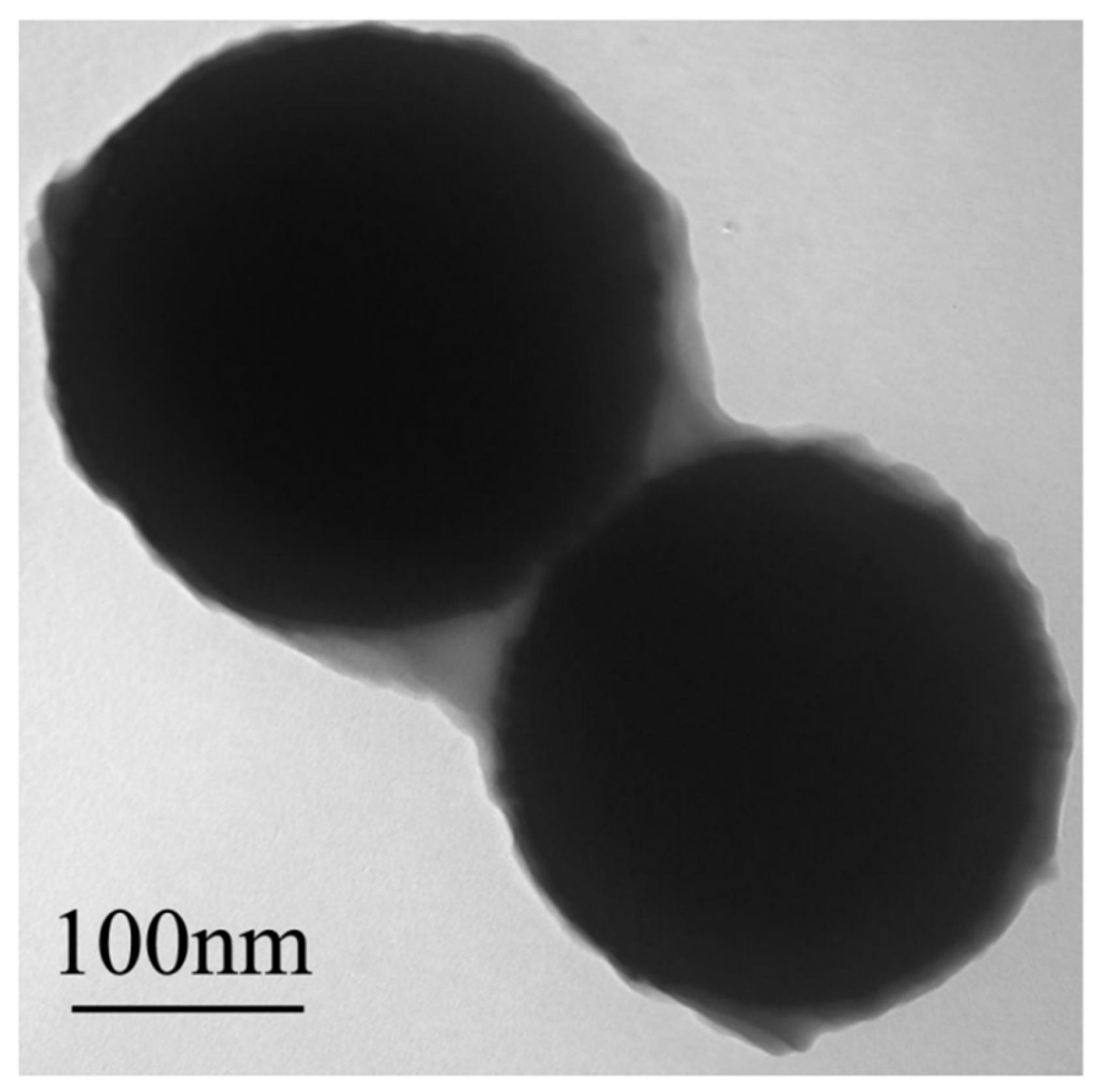
Figure 9.
The effect of initial concentration on the adsorption quantity.
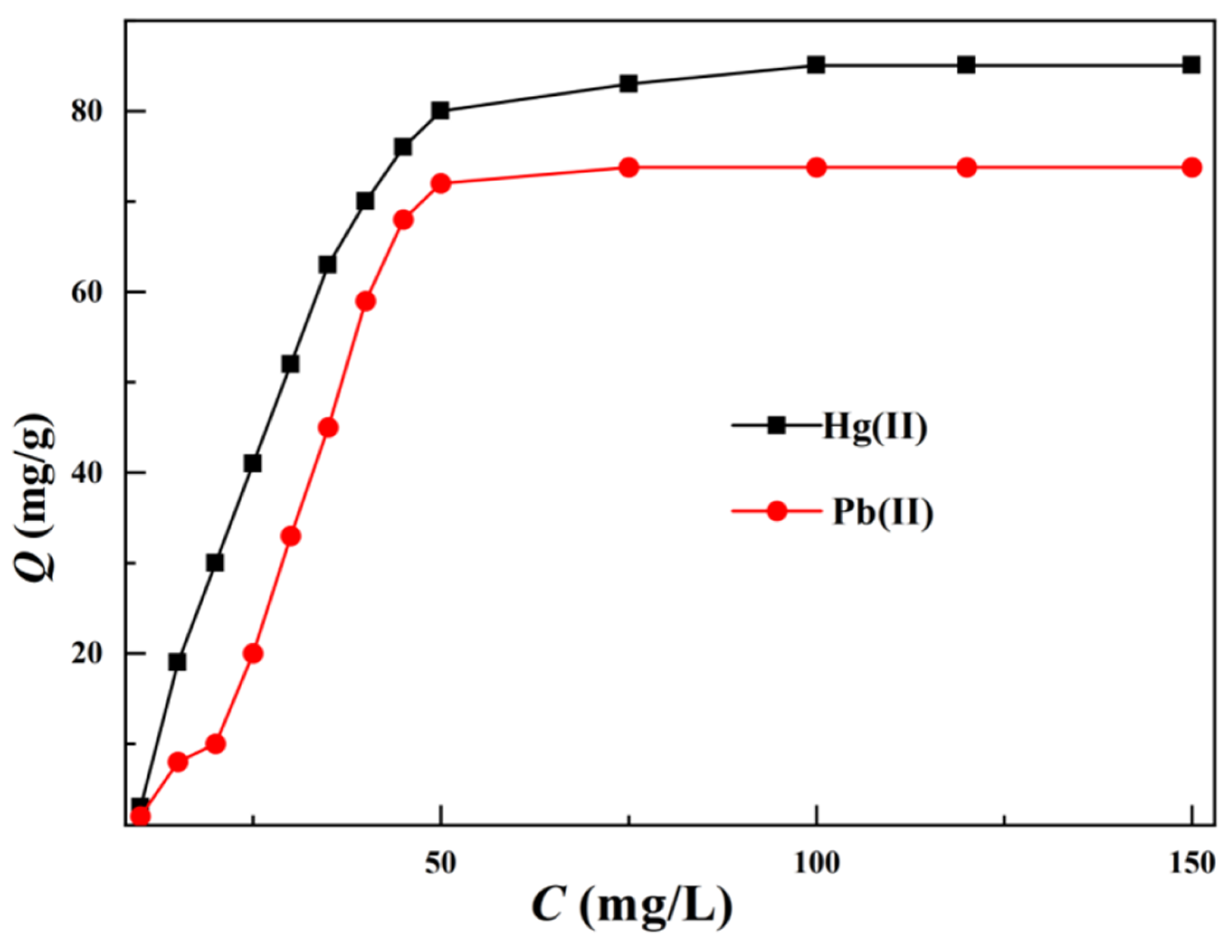
Figure 10.
Adsorption isotherms of Fe3O4@SiO2-yl-VP for HG(II) and Pb(II).
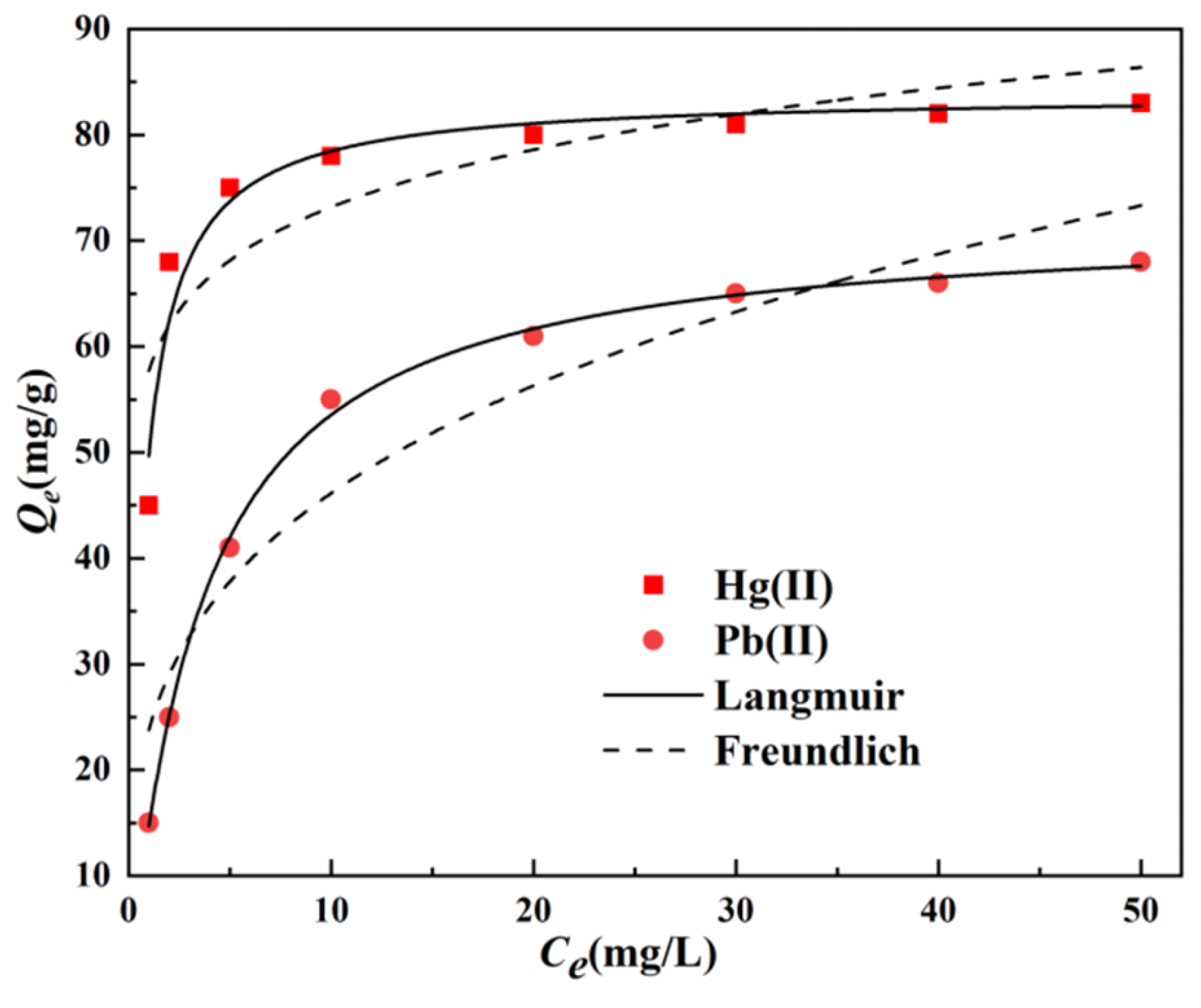
Figure 11.
The effect of pH on the removal efficiency of HG(II) and Pb(II) ions using Fe3O4@SiO2-yl-VP.
Figure 11.
The effect of pH on the removal efficiency of HG(II) and Pb(II) ions using Fe3O4@SiO2-yl-VP.
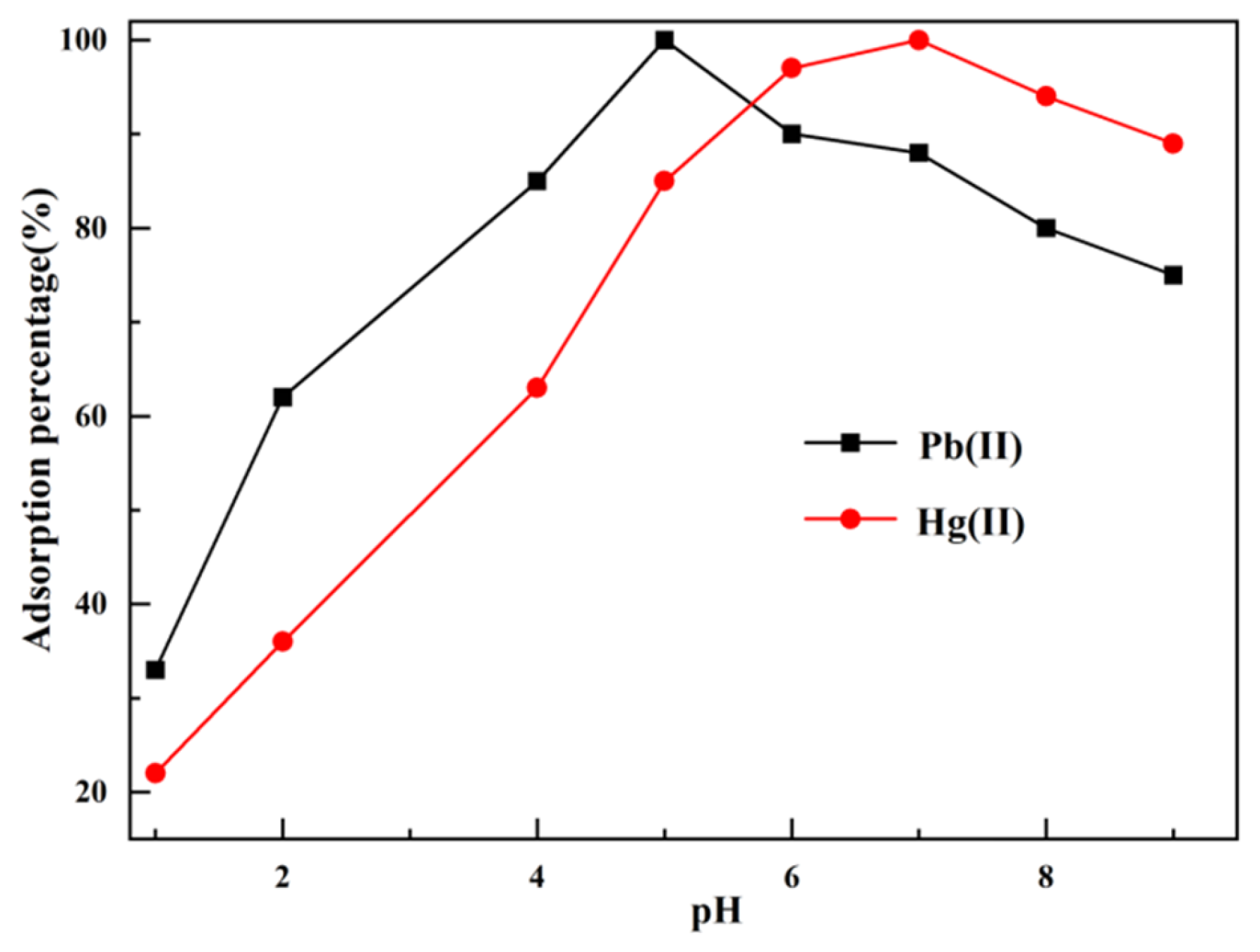
Figure 12.
Adsorption kinetic curves of Fe3O4@SiO2-yl-VP for Hg(II) and Pb(II).
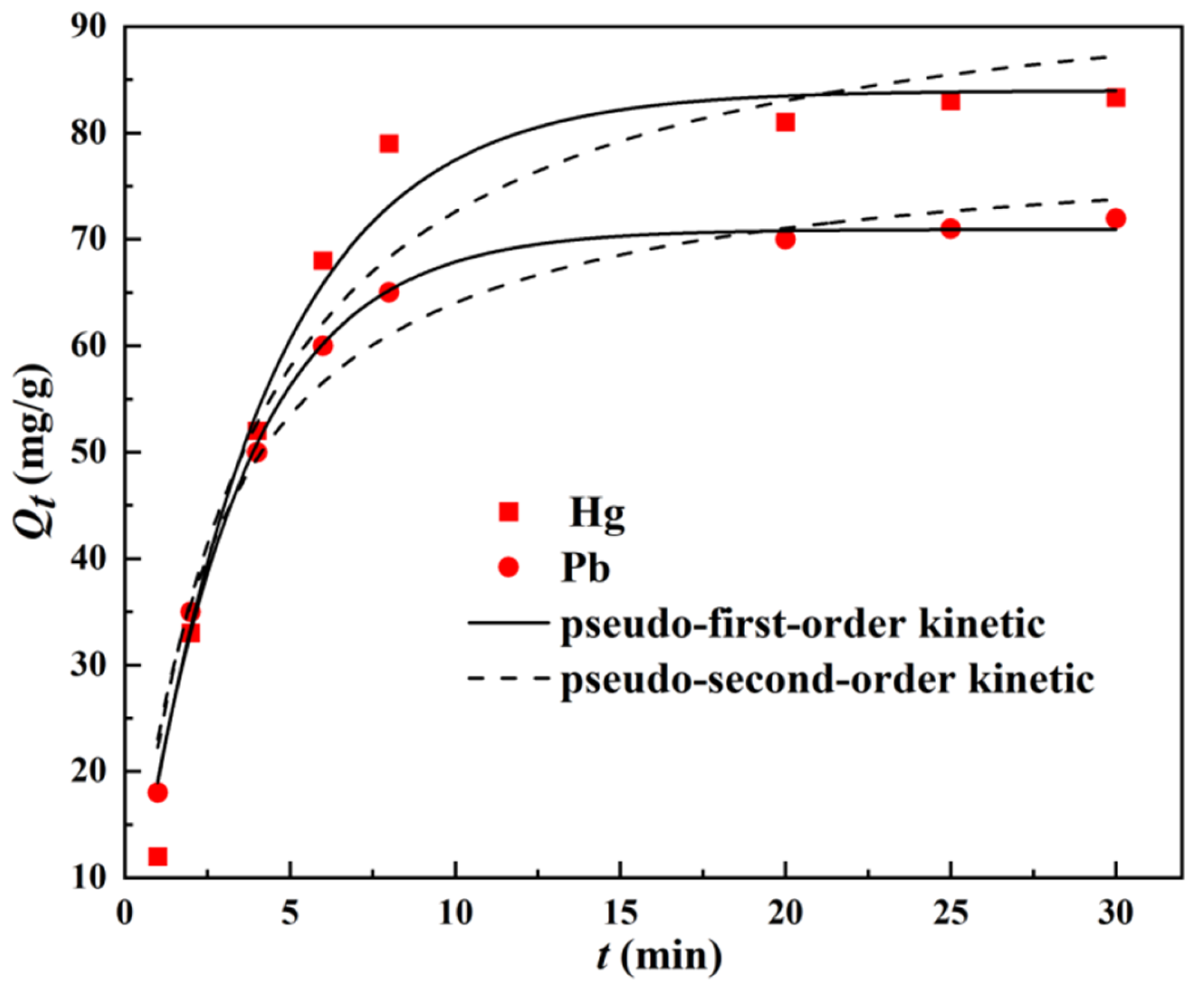
Figure 13.
The effect of reused times on the adsoption capacities.
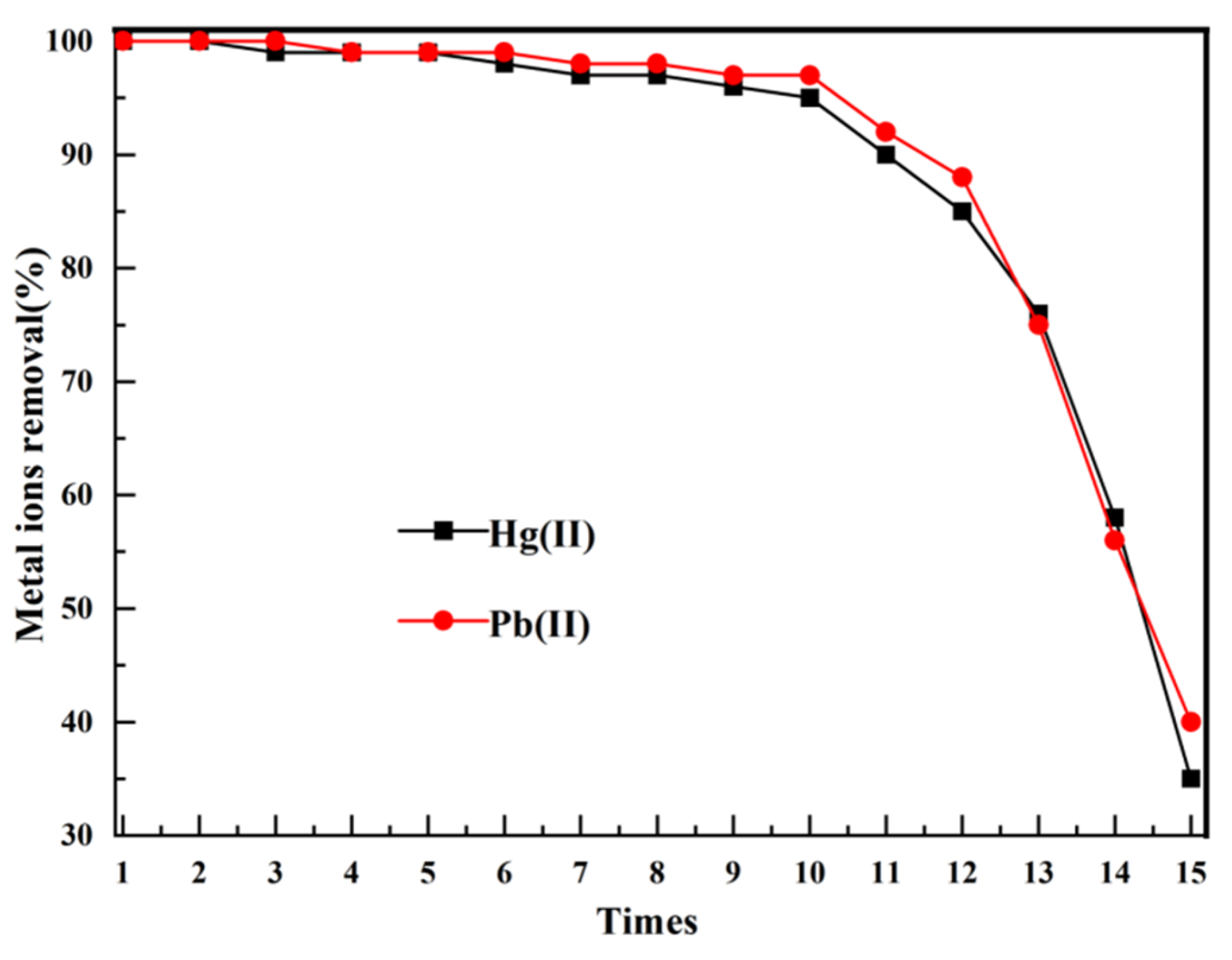

Table 1.
Isotherm parameters for the adsorption of Hg(II) and Pb(II) ions by Fe3O4@SiO2-yl-VP.
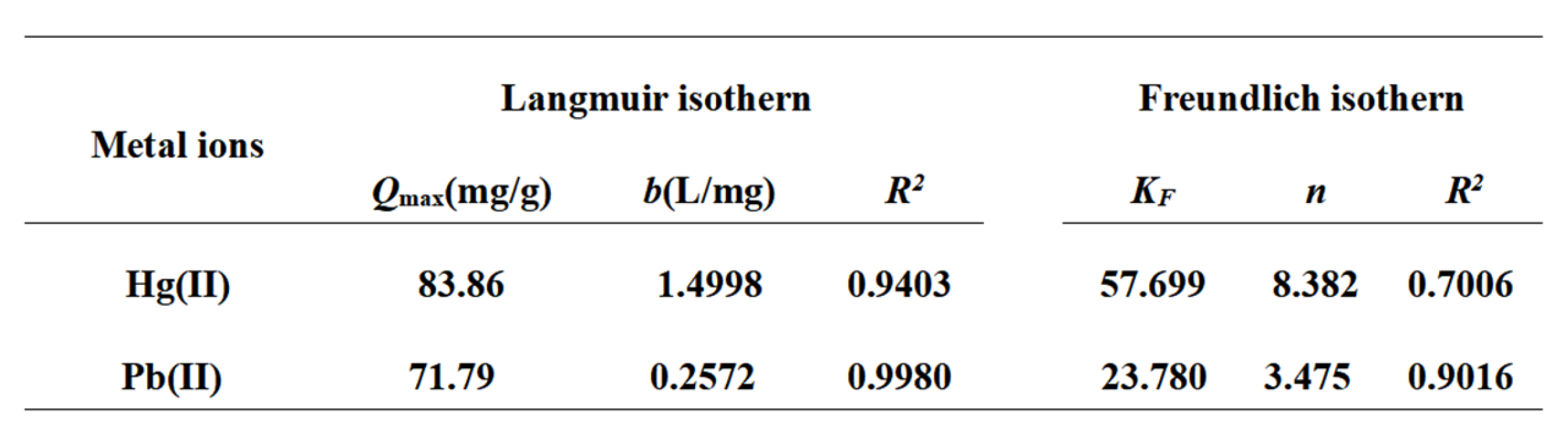
Table 2.
Kinetic parameters for the adsorption of Hg(II) and Pb(II) ions by Fe3O4@SiO2-yl-VP.
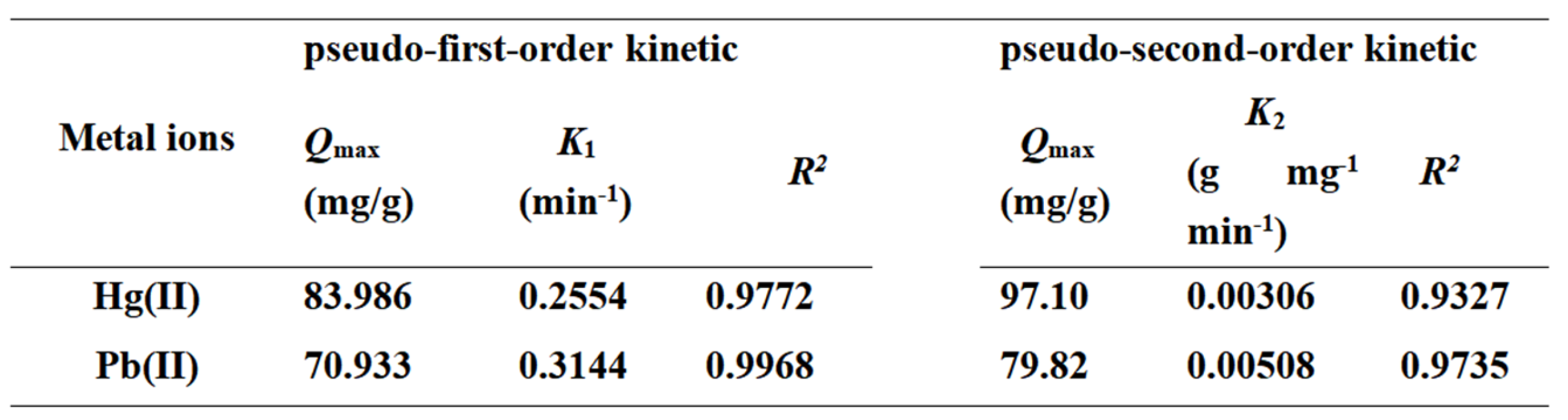
Table 3.
Recovery (%) of heavy metal ions using different eluents.
Disclaimer/Publisher’s Note: The statements, opinions and data contained in all publications are solely those of the individual author(s) and contributor(s) and not of MDPI and/or the editor(s). MDPI and/or the editor(s) disclaim responsibility for any injury to people or property resulting from any ideas, methods, instructions or products referred to in the content. |
© 2024 by the authors. Licensee MDPI, Basel, Switzerland. This article is an open access article distributed under the terms and conditions of the Creative Commons Attribution (CC BY) license (http://creativecommons.org/licenses/by/4.0/).
Copyright: This open access article is published under a Creative Commons CC BY 4.0 license, which permit the free download, distribution, and reuse, provided that the author and preprint are cited in any reuse.


