

Submitted:
25 October 2024
Posted:
28 October 2024
Read the latest preprint version here
Abstract
Cryptococcus neoformans is an opportunistic fungal pathogen that is a continuous global health concern especially for immunocompromised populations. The World Health Organization recognized C. neoformans as one of four critical fungal pathogens, thus emphasizing the need for increased research efforts and clinical resource expansion. Currently there are no fungal vaccines available for clinical use. Exciting new findings in cryptococcal vaccine development have identified whole cell-based and protein subunit-based vaccinations to help mitigate health risks and make commercialization attainable. Importantly, recent work has focused on how different cryptococcal cell wall antigens modified in these vaccine candidates allow us to manipulate their immunogenicity to produce a desired long term protective anti-fungal immune response. In this review we discuss the different cryptococcal cell immunogens, namely the polysaccharide capsule, glucans, chitin/chitosan, mannoproteins, and extracellular vesicles and their role in novel cryptococcal vaccination approaches. Additionally, we examine the immunological mechanisms responsible for protection in these vaccine candidates and the similar host response stimulation pathways induced through different immunogen exposure.
Keywords:
fungal vaccine
; fungal pathogenesis Cryptococcus neoformans Cryptococcus gattii anti fungal immunity
1. Introduction
Invasive fungal infections (IFIs) are a growing global health concern as rates of fungal infections rise while fungal drug and vaccine development stagnate. It is estimated that approximately 1.6 million people die from IFIs worldwide annually; the number of cases is expected to rise as risk factors like climate change, immunocompromised population, and anti-fungal drug resistance increase [1]. Due to the concern of increased IFIs and associated co-morbidities, the World Health Organization organized the first Fungal Priority Pathogens List in 2022 to address research needs of prevalent fungal pathogens [2]. Listed at the top of the critical priority group is Cryptococcus neoformans. C. neoformans is an encapsulated yeast that is the causative agent of cryptococcal meningoencephalitis and the fungal pathogen responsible for the largest percentage of fungal meningitis cases worldwide. Recently, Cryptococcus species complex has been divided into seven different species [3]. To simplify the writing, here we will use traditional C. neoformans and C. gattii to describe the species complex. While C. neoformans is responsible for ~19% of HIV/AIDS related deaths annually and immunocompromised populations are at the highest risk, sibling species C. gattii can also infect immunocompetent hosts [4]. Thus, C. gattii is a high-risk primary pathogen. A key point highlighted on the fungal pathogen priority list is the lack of a vaccine in the global anti-fungal arsenal.
As highlighted by Rivera and colleagues 2022 review, the rationale of slow fungal vaccine development is due to a complexity of issues including socioeconomic considerations, similarity of fungal and mammalian cellular machinery, lack of fungal immunological understanding, and difficulty in mass commercialization of fungal vaccine research for limited populations [5]. Particularly, the targeting of fungal wall antigens that may induce a desired protective immune response while minimizing off target effects in human hosts remains to be carefully defined and elucidated. The polysaccharide encapsulation of the Cryptococcus cell is unique in its anti-phagocytic properties and is considered a major immunogen masking component that contributes to immune evasion and ultimate dissemination throughout its host. Establishing methods to inhibit cryptococcal dissemination either by prophylaxis treatment or vaccination approaches prior to infection has proven difficult and is an area of active research in the field. In this review we focus on highlighting known cryptococcal fungal cell components, (namely the capsule, α/β-glucans, chitin/chitosan, mannoproteins, and extracellular vesicles) and how the immunogenicity of these antigens, or lack thereof, can be harnessed to shape and modulate the host immune response in novel cryptococcal vaccine approaches.
2. Cryptococcal Capsule
Pathogenic microorganisms containing a polysaccharide capsule have predominantly included bacteria (i.e Streptococcus pneumoniae, Haemophilus influenzae, Neisseria meningitis) [6], but are present on some fungi, most notably Cryptococcus. The Cryptococcus species complex has been historically well defined and identifiable by its unique encapsulation by a polysaccharide capsule that serves as a key virulence factor for survival in the host. The polysaccharide capsule of C. neoformans is connected to the cell wall as capsular polysaccharide or in a shed form identified as extracellular polysaccharide. These polysaccharides are comprised predominantly of glucuronoxylomannan (GXM) and galactoxylomannan (GalXM) at ratios of 90% to 10% respectively (Figure 1) [7]. GXM is structured by a mannan backbone with xylose and glucuronic acid substitutions while GalXM possesses a galactan backbone with mannose and galactose side chain substitutions which can furthermore by substituted with xylose and glucuronic acid residues [8,9]. In clinical settings cryptococcal meningitis is often diagnosed by the presence of cryptococcal capsule shedding in the spinal fluid or serum of patients [10,11]. The ability of the capsule to be continuously shed throughout the Cryptococcus cell lifespan and alter its size based on its environment greatly contributes to Cryptococcus survival and hijacking of host effector cells to migrate toward the central nervous system [12,13,14,15,16,17].
Understanding the structural basis of the capsule is key to further elucidating how we can modulate immunogenicity of the Cryptococcus cell. Namely, the GXM mannose backbone structural differences of capsule polysaccharide makeup have been utilized to classify serotypes of cryptococcal strains (serotypes A, B, C, D, and AD,) based on their antigenic differences [18]. In the past few decades studies have shown that highly immunogenic mannoproteins (MPs) constitute as a small fraction of the capsule makeup (~1-2% by mass) and reside in spatially different regions of the capsule [18]. MPs have not been shown experimentally to be covalently bound to the cryptococcal cell wall potentially due in part to their ability to be secreted outside of the cell and possession of GPI anchors to keep them bound to the cell wall [18]. Recently one predicted mannoprotein Krp1 in C. gattii was found to contribute to capsule structure as well as GXM shedding into the supernatant [19]. Whether there is a physical interaction between Krp1 and capsule remains to be determined. Additionally, loss of Krp1 resulted in diminished beta glucan synthesis. However, whether other mannoproteins contribute to altering capsule structure or synthesis remains to be seen and is discussed later in this review.
Studies on capsule synthesis and modification of capsule structure in nutrient limited host conditions have been key to elucidating the role of capsule in Cryptococcus virulence and insightful in progression of potential targets for vaccine development. Early studies by Kwon-Chung and Yang identified key capsule synthesis genes required for capsule synthesis (i.e CAP59, CAP60, CAP64, and CAP10). Loss of any of these single genes results in acapsular strains of Cryptococcus [7,20,21,22,23,24]. Defects in capsule synthesis will result in attenuation of virulence and loss of immune evasion from responding phagocytes [25]. Cryptococcal vaccine studies focused on role of capsule on a glycolipid sterylglucosidase deficient strain (sgl1D), showed that sterylglucoside accumulation in the sgl1D mutant alters the structural and physical properties of GXM. Consequentially, capsular GXM was required for complete host protection as the acapsular cap59D sgl1D strain failed to induce a TH1 protective inflammatory response. Similarly, the cryptococcal vaccine candidate (Znf2OE) that overexpresses a zinc finger transcription factor Znf2 also requires the capsule for vaccine protection [27]. This study utilized an acapsular strain deficient in both GalXM and GXM in the Znf2OE background. While the exact impact of Znf2 overexpression on GXM or GalXM was not defined, it was observed that sera from mice immunized with heat killed ZNf2OE contained IgG and IgM antibodies that bound to antigens highly abundant in the center of the Znf2OE capsule as compared to H99. Studies with various whole cell vaccine candidates that affect different molecular pathways, and subsequent cryptococcal cell antigens, also suggests that these mutants require the capsule to act as the carrier or as a prop to expose their immunogens and thus induce protective immunological responses [26,27]. However, the observations that there is no protection with cap59D vaccination strategies and that acapsular strains are rapidly cleared in the host upon challenge, suggest that exposure of immunogens in the cell wall alone are not sufficient for eliciting a protective immune response against cryptococcal infection.
The Cryptococcus capsule is known to be anti-phagocytic and to elicit T cell independent TH2 responses. The inability of GXM to induce memory T cell activation by the host or induce antibody affinity maturation and immunoglobulin class switching contributes to the poor immunogenic potential of GXM [28,29]. Nevertheless, antibodies against GalXM and GXM capsular components have been explored for fungal vaccine and therapeutic treatment uses. Casadevall and colleagues generated monoclonal anti-) to use as treatment for cryptococcosis and showed moderate neutralization of cryptococcal antigens in murine studies [30]. Phase 1 human clinical trials were conducted for the therapeutic treatment of cryptococcosis, and again treatment only showed moderate amelioration of symptoms [31].
Other GXM-based vaccine approaches have focused on conjugating a GXM mimicking peptide, P13, to immunogenic antigens such as tetanus toxin (P13-TT) [32,33,34]. In human immunoglobulin transgenic mice P13-TT immunization studies, subcutaneously vaccinated cohorts showed prolonged survival compared to controls [34]. This P13-TT protection was antibody mediated as vaccinated mice produced IgG2 and IgG4 antibodies against P13-TT and immunogenic idiotype-positive antibodies to GXM. Another antibody-based vaccine candidate is based on the predominant component of the capsule, namely GalXM, conjugated to antigenic carrier bovine serum albumin (GalXM-BSA) [35]. In GalXM-BSA vaccine studies, the BSA conjugated GalGXM complex was able to induce passive IgM and IgG antibodies but saw no induction of host defense against Cryptococcus infection between vaccinated and unvaccinated cohorts [35]. Modifications need to be implemented to prolong protection and induce CD4+ T cell protective immunity. Recently, semisynthetic glycoconjugate vaccines containing an identical synthetic decasaccharide M2 motif antigen bound to anthrax and CRM197 were found to induce protective antibodies against GXM but showed modest protection in murine models compared to controls [36]. Cryptococcal capsule based vaccine candidates are an active area of research. A better understanding of how capsule synthesis is regulated and altered while in different host conditions is important to move capsule-conjugated vaccine research forward. Moreover, identifying epitopes or synthetic modifications modelled off the capsule may chart a path forward for multivalent subunit-based pan-fungal vaccines.
3. Cryptococcal Glucans
The fungal cell wall is a critical surface structure that maintains cell integrity against biological, physical, and chemical stressors and decides the fate of the pathogen [37]. This rigid structure is also dynamic and flexible in nature to undergo morphologic changes during mating, budding or cellular interactions including the one with host cells [38].
The cryptococcal cell wall consists of glucans, chitin, chitosan, glycoproteins, melanin and lipids [39]. These components are major fungal pathogen-associated molecular patterns (PAMPs) and help fungi to sense their surroundings and contribute to survival inside the host. The synthesis of precursors of cell wall glucans involves the coordinated action of glycosyltransferase with donor sugar molecules, enzyme activities and the availability of acceptor substrates [40]. Unlike Saccharomyces cerevisiae, C. neoformans has abundant α-glucans and chitosan polymers followed by more β-1,6 linkages with minor levels of β-1,3 linkages [40,41,42].
The cryptococcal cell wall primarily consists of α-1,3-glucan linkages derived from membrane bound α-glucan synthase, Ags1p, primarily associated with the outer cell wall [41]. Loss of AGS1 results in loss of α-1,3-glucan and capsule followed by redistribution of β-glucans and chitin making the cells more fragile [43]. These findings show support of the association of α-1,3-glucan in binding of capsular polysaccharides. Although C. neoformans has a significantly lower percentage of β-1,3-glucan, the gene FKS1 encoding for β-1,3 glucan is essential [42]. The phenotypic defects observed in loss of FKS1 supports that β-1,3 glucan plays a critical role in cell viability and capsule organization. Inhibitors of β-1,3-glucan synthesis (i.e., Echinocandins) have no effect on cryptococcal β-1,3-glucan production possibly suggesting the presence of transporters to pump out the compounds or the exopolysaccharide capsule [42,44]. In comparison, the mechanism of synthesis for β-1,6-glucan is complex since no synthase enzyme has been identified. The synthesis depends on multiple genes with a dominant role played by KRE5 [45]. While there are 7 KRE genes in C. neoformans, deletion of KRE5 alone or KRE6 with SKN1 led to complete loss of β-1,6-glucan from the cell wall, resulting in compromised cell integrity rendering it avirulent in an animal inhalation model of infection as the yeast cells were unable to survive at host temperature [45].
Cell wall glucans not only play an important role in cell integrity but also induce immunomodulatory effects in the host. Basso et al. evaluated the immunostimulatory activity of β-1,3-glucan containing exopolysaccharide (EPS) isolated from the edible mushroom Auricularia auricula to phagocytes and to mice infected with C. neoformans [46]. Treatment with EPS resulted in the activation of innate cells like macrophages and dendritic cells after engagement of Dectin-1 receptor culminating in pro-inflammatory cytokine production and cell maturation via Syk-dependent pathway signaling. EPS treatment resulted in the upregulation of genes associated with host protection against C. neoformans, Dectin-1-mediated signaling in macrophages and enhanced the survival of C. neoformans infected mice [46].
Glucan particles (GP) can be used for dual purpose as a combined delivery system and an adjuvant for cryptococcal vaccine due to its ability to elicit protective immune responses. Glucan particles are recognized by complement and Dectin-1 receptors present on innate immune cells [47]. Mice immunized with GPs containing trapped ovalbumin resulted in TH1/TH17 CD4+T cell responses followed by robust antigen-specific antibody responses [48,49]. Based on these protective responses, Specht et al. recombinantly expressed six purified cryptococcal proteins (Cda1, Cda2, Cda3, Fpd1, Sod1, and MP88) in Escherichia coli, and loaded these antigens into GPs as a potential vaccine candidate [50]. Different mouse strains were vaccinated with these antigen-laden GPs and challenged with C. neoformans and C. gattii. The results showed varied protection depending upon the antigen, mouse strain and cryptococcal species [50]. Furthermore, vaccination with GP containing C. neoformans Cda1 and Cda2 induced robust TH1 and TH17 responses and pro-inflammatory cytokines (IFNγ, IL-1β, IL-6 or IL- 23) against experimental cryptococcosis in mice [51]. These studies emphasize the idea of employing cell wall protein antigens as novel vaccine adjuvant or delivery system against cryptococcosis.
4. Cryptococcal Chitin and Chitosan
Chitin is virtually present in all fungi; it is arranged into microfibrils to provide strength and rigidity. C. neoformans is chitin rich and produces 3-6 times more chitin which increases as the density of the culture progresses as compared to the model yeast S. cerevisiae. Membrane protein chitin synthase (CHS) encodes eight CHSs in different classes based on the protein sequence of the catalytic domain [52]. The enzymes in class I-III have seven transmembrane domains while class IV-VI has six predicted transmembrane domains [53]. Chs1 and Chs3 (class IV); Chs2 and Chs7 (class II); Chs4 and Chs5 (class V) and Chs6 and Chs8 (class I and II). Chitosan, the deacetylated form of chitin, is formed through enzymatic conversion of N-acetylglucosamine to glucosamine by chitin deacetylases (CDAs). Three chitin deacetylases genes are essential for chitosan production in C. neoformans. Chitosan is mainly produced during the vegetative phase of growth and increases with culture density. The coordinated activities of Cda1 and Cda2 are essential for cryptococcal virulence [54]. Deletion of genes associated with chitin and chitosan result in an array of phenotypes, including temperature sensitivity, lack of chitosan, altered cell wall integrity, budding defects, leaky melanin; and enlarged capsule thus rendering the cells avirulent [52,55].
Innate recognition of PAMPs induces a strong adaptive response [56]. Chitin is one of the PAMPs present in the cell wall which is required for virulence and chitosan deficiency alters the Th1-based protective host responses [57,58,59]. Upadhya et al. emphasized how different culture media and pH affects the amount of chitin and chitosan in the cell wall, in turn these changes alter the cell wall architecture and host response [60]. Vaccination with a chitosan-deficient cda1D2D3D (lacking all three chitin deacetylases) strain conferred protective immunity in mice to a subsequent challenge with a virulent wild-type C. neoformans infection. In contrast, mice infected with a chitosan deficient chs3D strain died within 36 hours post infection due to an aberrant hyperinflammatory response, thus highlighting the critical immunomodulatory role of chitosan [61]. Vaccination with a single Cda protein induced cross-reactive antibody and IFN-γ immune responses to other Cda protein family members [62]. In summary, the complex structure of chitin is buried in the cell wall, shielded by mannoproteins and glucans. The strong elicitation of host protective immune responses by chitosan suggests that this is an attractive vaccine candidate with adjuvant and antigenic properties [56,63,64].
5. Mannoproteins
Mannoproteins are glycoproteins with heavily glycosylated mannose sidechains that have been identified as potential fungal antigens that can be targeted for vaccine development based on their ability to activate both innate and adaptive arms of the immune response. Their structure has been characterized as relatively conserved, having a signal peptide on the N terminus and a Glycophosphoinositol (GPI) anchor toward the C terminus with multiple N-linked and O-linked glycosylation sites throughout [65,66,67]. Mannoproteins either end up being secreted into the external environment or lodged in the cell wall due to their GPI anchors. Furthermore, mannoprotein structure is characterized by having a Serine/Threonine rich region for extensive O-linked mannosylation.
Mannoproteins have been reported to be involved in fungal virulence and cell wall structural integrity in multiple fungal species [68,69,70]. For example, C. albicans mannoprotein MP-58 is located on the cell surface and has been found to elicit a strong IgG antibody response [68]. Monoclonal antibody treatment blocking the C terminal antibody binding region of MP-58 in C. albicans-infected mice reduced mortality as compared to the non-treated cohort. The secreted mannoprotein Mp1p was shown to be a key virulence factor in the thermal dimorphic fungus Talaromyces marneffei [69,70]. Loss of Mp1p attenuated T. marneffei virulence seen and resulted in reduced survival and proliferation in macrophages. As previously mentioned, predicted Cryptococcus mannoprotein Krp1 was found to alter some virulence factors including capsule thickness, cell wall integrity, and phagocytosis in vitro in C. gattii, but had no effect in murine cryptococcosis models [19]. In studies focused on determining GPI anchor containing mannoprotein MP-98, monoclonal antibodies against MP-98 were not able to bind to cryptococcal capsule in serotype A compared to serotype D suggesting mannoproteins are antigenically diverse throughout the serotypes of Cryptococci [18]. Most of the research on mannoproteins has focused on MP-84, MP-88 and MP-98. Over 40 potential mannoproteins in C. neoformans have yet to be characterized for function and contribution to cell physiology and virulence [65,71].
Fungal cell glycosylation differs from mammalian glycosylation in that mannose is used to extend the branched glycosylation sites. Mammalian cells use monosaccharaides and a multitude of glucotransferases to alter the N-glycan branching. A major difference between O-linked and N-linked glycosylation is the specificity of branching glycan sidechains added onto the amino acid Aspargine (N-linked) versus a linear addition of glycan sidechains to the hydroxyl group of Serine and Threonine amino acid saturated regions of the protein.
Glycosylation of mannoproteins is a key contributor to their enhanced immunogenicity in C. neoformans [66]. Mansour and Levitz characterized the initial findings of mannoproteins as immunogenic antigens of C. neoformans that can trigger protective host immunity [72]. This and subsequent studies found that mannoproteins MP-88 and MP-98 (Cda2) can stimulate TH1 protective cytokine production by CD4+ T cells [66,67,72]. Subsequent studies found that glycosylation of mannoproteins is key to the activation of dendritic cells triggered through danger associated molecular pattern receptors DC-SIGN that can subsequently induce T cell response [71]. Additionally, MP-84 (Cda3) and MP-115 were identified as important targets of antibodies as they react strongly with sera of cryptococcal meningoencephalitis AIDS patients [18,73]. De-glycosylated recombinant versions of these MPs in E. coli induced a significantly weaker response in AIDS patients sera as compared to the naturally heavily glycosylated versions [73]. Furthermore, the differences in O-linked versus N-linked glycosylation have been identified to play an important role in the immunogenicity of cryptococcal mannoproteins. Recently, Su-Bin Lee and colleagues found that when core N-glycan structures were truncated in C. neoformans MP-84 (Cda3) and to some extent MP-98 (Cda2) the capacity to induce the immune response of bone-marrow derived dendritic cells was reduced [74]. Interestingly, complete ablation of N-glycosylation on MP-84 enhanced adhesion to host epithelial cells and increased cytokine production compared to the wildtype N-glycans [74]. This study emphasized the importance of structure-dependent effects of N-glycans on the function of mannoproteins and lung cell interactions. In aggregate, these findings highlight the importance of glycosylation in mannoprotein immunogenicity.
Cryptococcal vaccination studies involving MP-98 (Cda2) and MP-84 (Cda3) are a prime example of mannoproteins being identified as novel targets for fungal vaccination [51,60,75]. As previously referenced, Upadhya et al. showed that the triple chitin deacytlase-deficient strain cda1D2D3D, contains cell wall integrity defects that contribute to its attenuated virulence and ability to induce protective cytokines in murine vaccination models [54]. Indeed, recent work aimed at developing multi-epitope subunit vaccines based on the chitin deacetylase (Cda1, Cda2, and Cda3) and MP-88, predicted that utilizing a combination of T cell and B cell epitopes together with adjuvants and linkers induced protective cytokine responses in silico [76]. While these findings would need to be validated and confirmed in both in vitro and in vivo models of C. neoformans infection, it highlights the novelty of “reverse vaccinology” utilizing an immunoinformatic approach to identify immunogenically favorable epitopes and test them in hypothetical models that reduce financial limitations and speed up vaccine screening approaches. Furthermore, recent work by Wang et al. has shown that a quadrivalent cryptococcal subunit vaccine (Cda1+Cda2+Blp4+cpd1Δ) combined with Cationic Adjuvant Formulation 01 (CAF01) can induce a robust TH1 and TH17 CD4+ T cell response for long term protection against Cryptococcus [77]. Modulation of these cryptococcal cell antigens or other fungal species are critical to creating novel cryptococcal vaccines and for the identification of new anti-fungal drug targets. While the chitin deacetylase mannoproteins have been elucidated to be key functional mannoproteins that are themselves immunogenic, it emphasizes the need to further expound other mannoproteins in Cryptococcus pathogenesis that may hold the potential for vaccine use.
Cytokine Inducing Glycoprotein 1 (Cig1) is another mannoprotein whose function is important for Cryptococcus survival in host and holds immunogenic potential for vaccination studies. Cig1 was named for its ability to induce protective cytokines from immune cells and to interact with antibodies from serum obtained from AIDS patients with cryptococcosis [78]. Additionally, Cig1 transcripts have been found to be shed in supernatant media during C. neoformans growth. The mannoprotein Cig1 mediates iron uptake from heme as a hemophore under iron starved host like conditions and contributes to virulence [79]. This impact on virulence is attenuated only when other proteins including Cfo1 that allot functional redundancy in the iron uptake regulatory system of C. neoformans is also deleted. Like other mannoproteins, Cig1 contains a GPI anchor as identified by Levitz and colleagues [65]. Cadieux et al. show that Cig1 is found excreted into the supernatant as previously described and that it is found towards the outside of the cryptococcal cell wall [79].
Interestingly, CIG1 transcripts are highly abundant in cerebral spinal fluid of cryptococcosis patients in clinical settings further suggesting that Cig1 plays an important role in survival in harsh host conditions [80]. O’Meara et al. showed that the PKA pathway regulates pH dependent transcription factor RIM101, which is known to regulate CIG1 gene expression [10,81]. The protein kinase A (PKA) signaling pathway is also involved in regulating CIG1 expression via RIM101. Further studies showed capsule structure is altered where the rim101D mutant is hypo capsular yet propagates a hypervirulent phenotype [82]. Meanwhile Geddes et al. showed the cAMP/PKA pathway also regulates extracellular secretion of Cig1 in a PKA1 dependent manner observed in the pka1D mutant compared to the wildtype [83]. Follow-up studies from Geddes and colleagues observed a connection between the PKA pathway and the Ubiquitin Proteolysis pathway where the PKA expression alters proteostasis of virulence-related genes and endoplasmic reticulum control in capsule production [84]. Recently, the SCF (Skp1, Cullins, F-box proteins) E3 ligase ubiquitin complex was identified to regulate Crk1, a CDK-related kinase in C. neoformans [85]. This study found that Crk1 is a substrate of F-box protein 1 and a downstream regulator of the cAMP/PKA pathway via phosphorylation of Gpa1 [85]. In the fbp1D mutant proper ubiquitin tagging and degradation is lost. This resulted in Crk1 accumulation and induction of titan cell formation. Furthermore, overaccumulation of Crk1 attenuated virulence and increase induction of TH1/TH17 cytokines by CD4+ T cells. The connection between Cig1 and the cAMP/PKA pathway via Rim101 combined with recent findings identifying Crk1 as a novel regulator of cAMP/PKA, suggest there could be a potential role of Cig1 as an immunogen in the whole cell heat-killed F-box protein deficient (HK-fbp1) vaccine candidate. While studies with Cig1 deletion mutants have focused on functionality in C. neoformans in iron uptake, the immunogenicity of Cig1 in the context of vaccination and ability to prime protective CD4+ T cells remain to be seen.
6. Extracellular Vesicles as Fungal Vaccine Platform
Extracellular vesicles (EV) are small, membrane bound particles released from cells (mammalian, plant, and fungal), that play an important role in cellular communication [86,87,88,89]. Fungal EVs are known to participate in many biological processes including transfer of virulence factors in C. neoformans to elicit a robust antigenic response in the host [89]. Cryptococcal EVs have been found to contain several membrane-bound protein families [90]. A recent study by Rizzo et al. suggested a new EV structural model, where the vesicular bilayer is decorated with mannoprotein-based fibrils surrounded by capsule polysaccharide as its outer layer [90]. Furthermore, authors identified (MP-88 and Vep1) were present on the surface, enabling its potential as a vaccine [90]. To test this idea, Rizzo et al. isolated EVs from WT and acapsular cap59 mutant strains and immunized BALB/c mice intraperitoneally. After three vaccine doses, mice were challenged with wildtype C. neoformans. EV-immunized mice survived longer than the non-immunized mice. Furthermore, EV cap59 immunized mice showed prolonged survival compared to the WT EV immunized mice [90]. A potential mechanism of conferred EV vaccine protection in this study is that EVs deliver the antigen directly to antigen presenting cells (APCs) and are easily engulfed by APCs to elicit a cascade of protective immune activation.
Another study by Colombo et al. explored the use of sgl1∆ mutant EV as a vaccination strategy for cryptococcosis utilizing invertebrate model of cryptococcal infection Galleria mellonella [91].The sgl1∆ lacks Sterylglucosides (SG) which leads to accumulation of SGs, acting as immunostimulatory glycolipids, inducing protection in murine model of cryptococcosis [91,92]. As EVs contain GXMs and SGs, using EVs as a vaccine strategy delayed acute lethality in Galleria mellonella. The possible reason for the success of sgl1∆ EV might be its composition and the larger size resulting increased interaction between host cell and EVs inducing a strong immune response. Though sgl1∆ protected the host from lethality in the beginning, but later all Galleria mellonella succumbed to death. While this was not shown in mammalian models of Cryptococcus infection, it highlights that while EVs might boost the host immune system yet failed to offer complete protection. Future studies should explore new vaccine strategy and implementing EVs as a vaccine adjunct to boost host immune response. Overall, the study highlighted potential use of Sgl1 and its enriched EVs as a cell-free vaccine formulation would be particularly attractive vaccine candidate.
In conclusion, advantages of EV based vaccines include the versatility with which this strategy can be modified to carry multiple antigens and is relatively biocompatible with minimal toxicity. The potential challenges in EV based vaccine could be the cost since the process of producing EVs and purifying is complex and time consuming compared to traditional vaccine platforms. Furthermore, depending on the origin, some EVs might have immunosuppressive effect thus affecting vaccine efficacy. Fungal EVs offer a promising vaccine candidate and innovative approach to deliver antigens effectively and stimulate robust immune responses. Future studies may focus on engineering the EVs by modifying their contents, and surface markers to boost host protective responses and overcome vaccine delivery challenges.
7. Immunological Responses of Current Whole Cell Cryptococcal Vaccine Candidates
Immunocompromised populations lacking either the adaptive or innate arm of the host immune response are highly susceptible to an array of fungal species (i.e., Cryptococcus, Aspergillus, Candida, Coccidioides, Histoplasma, and Blastomyces). This susceptibility will continue to rise with expanded use of immunosuppressant treatments to remedy other diseases. One of the defining risk factors for Cryptococcus infection is lack of CD4 T cell populations as observed in the high percentage (~19%) of Cryptococcus related deaths in HIV/AIDS patients [4]. Thus, an ideal vaccine candidate needs be able to circumnavigate the loss of this immune cell population and be able to induce long term protection [93]. Exciting developments in understanding both the innate and adaptive immunological mechanisms of protection in response to several whole cell-based vaccine candidates has greatly contributed to identifying how we can manipulate cryptococcal antigens to induce desired immune responses in vaccine development.
Currently reported whole cell based cryptococcal vaccine candidates include a human interferon γ producing genetically modified strain (H99γ) [94,95,96,97]; a sterylglucoside deficient strain (sgl1D); an overexpressed mating specific zinc finger transcription factor strain that restrains cryptococcal cells in a pseudo hyphal morphological stage (Znf2OE) [26,98,99]; an F-box protein deletion strain that alters SCF E3 ligase protein proteolysis pathway (fbp1D) [100,101,102,103,104]; and the chitin deacetylase triple mutant (cda1Dcda2Dcda3D) [54,58,59,61,75,105] (Table 1). Each of these strains have shown successful protection against C. neoformans challenge following vaccination in different mouse strain backgrounds. Furthermore, these strains appear to share somewhat conserved immunological mechanisms of action in protective anti-fungal responses.
8. Adaptive Immunity
The adaptive immune response plays a critical role in host defense against Cryptococcus species. Protection against C. neoformans infection is primarily mediated via IFNγ and IL-17A cytokine producing CD4+ T cells responses in immunocompetent settings [106]. Expansion of these CD4+ T cell populations while balancing the influx of TH1 and TH17 cytokines responses are also important for the host survival following vaccination and subsequent challenge. Importantly, the production of these cytokines must still be preserved in CD4+ T cell deficient settings in vaccination applications for C. neoformans. Protection against C. neoformans challenge by these TH1 and TH17 responses are similarly induced by all current cryptococcal vaccine candidates highlighted in this review (Figure 2). The live attenuated H99γ strain has been shown to confer protection in CD4+ and CD8+ T cell depletion models, but protection is lost when the mutant is in heat killed form [94,107,108]. However, many of the listed candidates can continue to confer protection in heat killed forms in CD4+ deficient host models so long as other T cell compartments are intact (Figure 2). For instance, the sgl1D vaccine can confer protection in either CD4+ or CD8+ deficient backgrounds, so long as one or the other is intact. In double CD4+/CD8+ T cell antibody depletion murine models, sgl1D vaccine protection is lost and mice succumb to infection following H99 challenge [109]. CD4+ T cells were found to be required for vaccine mediated protection against other cryptococcal strains including C. gattii, but it is unknown whether this vaccination can provide cross protection against other fungal pathogens. Interestingly, protection conferred by sgl1D vaccination is dependent on γδ T cells, that can produce key protective cytokines IFNγ and IL-17A [27]. In the HK-fbp1 vaccine candidate, RAGKO mice genetically lacking the entire adaptive immune response (CD4+, CD8+, and B cells) also succumb to infection following challenge [100,110]. Wang and colleagues identified that when CD4+ T cell compartment was depleted in the HK-fbp1 vaccination model, the CD8+ T cell compartment would expand and produce key protective cytokines to compensate for the other population’s loss [100]. Furthermore, the HK-fbp1 vaccine is the only cryptococcal vaccine candidate that has been shown to provide cross protection against other fungi such as Aspergillus and Candida. This protection against A. fumigatus infection was also surprisingly conferred in neutropenic murine model. In the context of Aspergillus infection where monocytes and neutrophils are critical innate immune cells that orchestrate anti-fungal immune responses [111,112,113], it was exciting to see vaccination with HK-fbp1 C. neoformans was able to provide heterologous protection against other fungal species [100]. In summary, these findings emphasize that while IFNγ and IL-17A production by both CD4+ or CD8+ T cells can confer protection in these models there may be a role for other sources of these protective cytokines (i.e γδ T cells) in some vaccine candidates. Further, vaccination with these strains may be able to induce cross-protection against other medically relevant fungal pathogens.
The role of B cell-mediated immunity in defense against Cryptococcus infection has been found to be moderate impact in both immunocompetent and compromised settings. Moreover, the impact of antibody-mediated protection has been found to vary based on Cryptococcus strain and murine models used to investigate humoral responses [114]. B cell-mediated immunity was dispensable for protection in live H99γ-vaccinated mice since B-cell deficient mice survived H99 challenge [108]. B cells are also found dispensable in the cda1∆cda2∆cda3∆ vaccination [115]. Studies on the impact of humoral response in sgl1D, vaccination models employed CD19-depleted murine models and found a minimal impact for B cells in this model [109]. In the Znf2OE vaccination model, IgG and IgM antibodies from Znf2OE vaccinated mice showed high intensity binding to Znf2OE C. neoformans cells compared to the H99 strain, indicating that antibody titers of vaccinated host are increased. However, the role of B cells in cryptococcal vaccination candidates Znf2OE and fbp1D, have not been explicitly investigated in either live or heat killed vaccination forms.
9. Innate Immunity and Trained Innate Immunity Responses
While the adaptive response is key to preventing dissemination in Cryptococcus infection, the role of the innate immune system cannot be underestimated. The innate immune arm comprised of first responder phagocytes (macrophages, monocytes, neutrophils) and professional antigen presenting dendritic cells are required for priming CD4+ T cell responses. Specifically, C-type lectin receptors (i.e., Dectin-1, Dectin-2, DC-SIGN, and Mincle) and Toll-like receptor (TLR2, TLR4, and TLR9) are established Pattern recognition receptors (PRRs) that play key roles in recognition of fungal antigens (i.e., mannans, β-glucans) that are required for priming and expanding TH1 and TH17 CD4+ T cells [116,117,118,119,120,121]. Furthermore, this priming of effector CD4+ and activation of cytolytic CD8+ T cells is required in vaccine mediated protection in multiple models for combating infectious disease [122]. Excitingly, the role of “trained immunity” where innate immune cells have the capacity to retain immunological memory originally thought to be retained only by T and B lymphocytes has been shown to play a role in anti-fungal vaccination [123,124,125]. For example, trained innate immunity of monocytes in transition to macrophages undergo STAT1-dependent epigenetic reprogramming driven by H99γ strain IFNγ production [95] (Figure 3). In this model, protection continued up to 70 days post H99 challenge in the absence of B cells, CD4+ T cells, neutrophils, and NK cells [95]. These findings emphasized the impact of trained innate immune memory against specific cryptococcal antigen independent of canonical antigen presentation by APCs to CD4+ T cells. However, these methods of protection are apparent only in live attenuated versions of this strain and protection is lost in the heat killed format. In recent studies, Wang and colleagues identified that monocytes and neutrophils are important producers of IFNγ after HK-fbp1 vaccination [102]. Furthermore, STAT1 expression in CD11c+ cells (alveolar macrophages, monocyte derived macrophages, and monocyte derived dendritic cells) is required for vaccine-induced protection [102]. Currently, other whole cell C. neoformans based vaccine candidates have shown correlations of increased inflammatory cytokine production in the lung milieu along with increased leukocytes following vaccination and subsequent live challenge (ref). However, evidence of epigenetic reprogramming of leukocytes attributed to innate immunity training in the remaining vaccine candidates has yet to be elucidated. In aggregate, current studies from several groups suggest trained innate immunity plays a critical role in cryptococcal vaccine candidate that future studies need to focus on as research pivots eventually to multi-valent subunit vaccine approaches.
10. Concluding Remarks
Cryptococcus neoformans is a serious fungal pathogen that continues to be a growing global health concern. Over the last 40 years the mycology field has made significant strides in elucidating the complexity of the cryptococcal cell wall and the antigens that induce protective host immunity. While multiple studies have worked to identify single immunogenic antigens that can be modulated or overexpressed for fungal vaccination candidates, it is unlikely a single antigen-based vaccine will be successful. The synergistic use of multiple fungal components – glucan, chitin, and chitosan will most likely lead to effective host protective responses. Fungal vaccine research is moving towards the development of multivalent peptide or subunit-based vaccines. Utilizing this approach would broaden protection by targeting multiple epitopes across fungal species and reduce safety concerns in comparison to attenuated or heat killed whole cell vaccines that may elicit unintended immune activation against cross-reactive host antigens. Excitingly, computational analysis and in silico approaches have been used to identify immunodominant MHC I and II and B cell epitopes against Coccidioides and Candida albicans antigens has led to viable multivalent peptide-based vaccine candidates [126,127].
With the increasing number of cryptococcal meningitis cases coupled with anti-fungal drug resistance, we need to translate our in vivo murine findings to human trials, as well as investigate adjuvants to enhance the immunogenicity of current fungal vaccine candidates. Overall, the versatility of fungal cell components in drug delivery and the ability to induce immunogenic response in combination therapies, can offer broader therapeutic anti-fungal applications. Indeed, we have seen progress in the recent novel drug delivery systems such as Dectisomes comprised of Amphotericin B loaded pegylated liposomes coated in Dectin-3 polypeptide. This drug delivery tool was first demonstrated by Chaudury and colleagues to bring Amphotericin B directly to fungal pathogens including Candida albicans, Rhizopus delemar, and Cryptococcus neoformans by utilizing the specificity of C-type lectin receptors to yeast α-mannans [128]. DectiSomes were later modified with Dectin-2 to effectively target cryptococcal cells in vivo following challenge [129]. Development of such integrative approaches in combination with harnessing immunogenic cryptococcal antigens that elicit protective immune responses is the next step forward in attaining a safe and effective cryptococcal vaccine for high-risk immunocompromised patients.
Disclosure Statement
The authors have no assets, memberships, or affiliations that disrupt the objectivity of this written review.
Acknowledgments
All figures were generated using BioRender.com. We thank Jeisac Guzman Rivera for technical support. This work is supported by NIH grants R01AI141368-01A and R01AI123315-06A1 and R01AI155647.
References
- Dao, A.; Kim, H.Y.; Garnham, K.; et al. Cryptococcosis—a systematic review to inform the world health organization fungal priority pathogens list. Medical Mycology 2024, 62. [Google Scholar] [CrossRef] [PubMed]
- WHO fungal priority pathogens list to guide research, development and public health action.
- Hagen, F.; Khayhan, K.; Theelen, B.; et al. Recognition of seven species in the Cryptococcus gattii/Cryptococcus neoformans species complex. Fungal genetics and biology 2015, 78, 16–48. [Google Scholar] [CrossRef] [PubMed]
- Rajasingham, R.; Govender, N.P.; Jordan, A.; et al. The global burden of HIV-associated cryptococcal infection in adults in 2020: A modelling analysis. The Lancet infectious diseases 2022, 22, 1748–1755. [Google Scholar] [CrossRef]
- Rivera, A.; Lodge, J.; Xue, C. Harnessing the immune response to fungal pathogens for vaccine development. Annu Rev Microbiol. 2022, 76, 703–726. [Google Scholar] [CrossRef]
- An, H.; Liu, Y.; Qian, C.; et al. Chapter 5 - bacterial capsules. Molecular medical microbiology 2024, 69–96. [Google Scholar]
- Boodwa-Ko, D.; Doering, T.L. A quick reCAP: Discovering Cryptococcus neoformans capsule mutants. Journal of Fungi 2024, 10. [Google Scholar] [CrossRef]
- Cherniak, R.; Reiss, E.; Slodki, M.E.; Plattner, R.D.; Blumer, S.O. Structure and antigenic activity of the capsular polysaccharide of Cryptococcus neoformans serotype A. Mol Immunol. 1980, 17, 1025–1032. [Google Scholar] [CrossRef]
- Merrifield, E.H.; Stephen, A.M. Structural investigations of two capsular polysaccharides from Cryptococcus neoformans. Carbohydr Res. 1980, 86, 69–76. [Google Scholar] [CrossRef]
- O’Meara, T.R.; Alspaugh, J.A. The Cryptococcus neoformans capsule: A sword and a shield. Clin Microbiol Rev. 2012, 25, 387–408. [Google Scholar] [CrossRef]
- Fonseca, F.L.; Reis, F.C.G.; Sena, B.A.G.; Jozefowicz, L.J.; Kmetzsch, L.; Rodrigues, M.L. The overlooked glycan components of the Cryptococcus capsule. Fungal Physiology and Immunopathogenesis 2019, 31–43. [Google Scholar]
- Bouklas, T.; Jain, N.; Fries, B.C. Modulation of replicative lifespan in Cryptococcus neoformans: Implications for virulence. Frontiers in microbiology 2017, 8, 98. [Google Scholar] [CrossRef] [PubMed]
- Tejas, B.; Ximo, P.; Goldman David, L.; Batya, E.; Aviv, B.; Fries Bettina, C. Old Cryptococcus neoformans cells contribute to virulence in chronic cryptococcosis. mBio 2013, 4, 10.1128/mbio.00455–13. [Google Scholar] [CrossRef]
- Al-Huthaifi, A.M.; Radman, B.A.; Al-Alawi, A.A.; Mahmood, F.; Liu, T. Mechanisms and virulence factors of Cryptococcus neoformans dissemination to the central nervous system. Journal of Fungi 2024, 10, 586. [Google Scholar] [CrossRef] [PubMed]
- Carolina, C.; Emma, C.; Antonio, S.; Alexandre, A.; Arturo, C. Intranasal inoculation of Cryptococcus neoformans in mice produces nasal infection with rapid brain dissemination. mSphere 2019, 4, 10.1128/msphere.00483-19. [Google Scholar] [CrossRef]
- Liu, Y.; Zhang, Y.; Zhao, X.; Lu, W.; Zhong, Y.; Fu, Y.V. Antifungal peptide SP1 damages polysaccharide capsule of Cryptococcus neoformans and enhances phagocytosis of macrophages. Microbiology Spectrum 2023, 11, 4562. [Google Scholar] [CrossRef]
- Zaragoza, O.; Chrisman, C.J.; Castelli, M.V.; et al. Capsule enlargement in Cryptococcus neoformans confers resistance to oxidative stress suggesting a mechanism for intracellular survival. Cell Microbiol. 2008, 10, 2043–2057. [Google Scholar] [CrossRef] [PubMed]
- De Jesus, M.; Moraes Nicola, A.; Chow, S.; et al. Glucuronoxylomannan, galactoxylomannan, and mannoprotein occupy spatially separate and discrete regions in the capsule of Cryptococcus neoformans. Virulence 2010, 1, 500–508. [Google Scholar] [CrossRef]
- Reuwsaat, J.C.V.; Motta, H.; Garcia, A.W.A.; et al. A predicted mannoprotein participates in Cryptococcus gattii capsular structure. Msphere 2018, 3, 10.1128/msphere.00023-18. [Google Scholar] [CrossRef]
- Chang, Y.C.; Cherniak, R.; Kozel, T.R.; et al. Structure and biological activities of acapsular Cryptococcus neoformans 602 complemented with the CAP64 gene. Infect Immun. 1997, 65, 1584–1592. [Google Scholar] [CrossRef]
- Chang, Y.C.; Kwon-Chung, K.J. Isolation, characterization, and localization of a capsule-associated gene, CAP10, of Cryptococcus neoformans. J Bacteriol. 1999, 181, 5636–5643. [Google Scholar] [CrossRef]
- Chang, Y.C.; Kwon-Chung, K.J. Isolation of the third capsule-associated gene, CAP60, required for virulence in Cryptococcus neoformans. Infect Immun. 1998, 66, 2230–2236. [Google Scholar] [CrossRef] [PubMed]
- Chang, Y.C.; Penoyer, L.A.; Kwon-Chung, K.J. The second capsule gene of Cryptococcus neoformans, CAP64, is essential for virulence. Infect Immun. 1996, 64, 1977–1983. [Google Scholar] [CrossRef] [PubMed]
- Chang, Y.C.; Kwon-Chung, K.J. Complementation of a capsule-deficient mutation of Cryptococcus neoformans restores its virulence. Mol Cell Biol. 1994, 14, 4912–4919. [Google Scholar] [PubMed]
- Kozel, T.R.; Gotschlich, E.C. The capsule of Cryptococcus neoformans passively inhibits phagocytosis of the yeast by macrophages. Journal of immunology (Baltimore, Md.: 1950) 1982, 129, 1675–1680. [Google Scholar] [CrossRef]
- Jianfeng, L.; Tuyetnhu, P.; Kenton, H.; Nathan, G.; Yumeng, F.; Xiaorong, L. Immunoprotection against cryptococcosis offered by Znf2 depends on capsule and the hyphal morphology. mBio 2022, 13, 2785. [Google Scholar] [CrossRef]
- Normile, T.G.; Chu, T.H.; Sheridan, B.S.; Del Poeta, M. Vaccine protection by Cryptococcus neoformans Δsgl1 is mediated by γδ T cells via TLR2 signaling. Mucosal Immunology 2022, 15, 1416–1430. [Google Scholar] [CrossRef]
- Datta, K.; Pirofski, L. Towards a vaccine for Cryptococcus neoformans: Principles and caveats. FEMS yeast research 2006, 6, 525–536. [Google Scholar] [CrossRef]
- Maitta Robert, W.; Kausik, D.; Qing, C.; et al. Protective and nonprotective human immunoglobulin M monoclonal antibodies to Cryptococcus neoformans glucuronoxylomannan manifest different specificities and gene use profiles. Infect Immun. 2004, 72, 4810–4818. [Google Scholar] [CrossRef] [PubMed]
- Casadevall, A.; Cleare, W.; Feldmesser, M.; et al. Characterization of a murine monoclonal antibody to Cryptococcus neoformans polysaccharide that is a candidate for human therapeutic studies. Antimicrob Agents Chemother. 1998, 42, 1437–1446. [Google Scholar] [CrossRef]
- Larsen, R.A.; Pappas, P.G.; Perfect, J.; et al. Phase I evaluation of the safety and pharmacokinetics of murine-derived anticryptococcal antibody 18B7 in subjects with treated cryptococcal meningitis. Antimicrob Agents Chemother. 2005, 49, 952–958. [Google Scholar] [CrossRef]
- Casadevall, A.; Mukherjee, J.; Devi, S.J.; Schneerson, R.; Robbins, J.B.; Scharff, M.D. Antibodies elicited by a Cryptococcus neoformans-tetanus toxoid conjugate vaccine have the same specificity as those elicited in infection. J Infect Dis. 1992, 165, 1086–1093. [Google Scholar] [CrossRef] [PubMed]
- Devi, S.J. Preclinical efficacy of a glucuronoxylomannan-tetanus toxoid conjugate vaccine of Cryptococcus neoformans in a murine model. Vaccine 1996, 14, 841–844. [Google Scholar] [CrossRef] [PubMed]
- Fleuridor, R.; Lees, A.; Pirofski, L. A cryptococcal capsular polysaccharide mimotope prolongs the survival of mice with Cryptococcus neoformans Infection1. J Immunol. 2001, 166, 1087–1096. [Google Scholar] [CrossRef] [PubMed]
- Chow, S.; Casadevall, A. Evaluation of Cryptococcus neoformans galactoxylomannan–protein conjugate as vaccine candidate against murine cryptococcosis. Vaccine 2011, 29, 1891–1898. [Google Scholar] [CrossRef]
- Crawford, C.J.; Liporagi-Lopes, L.; Coelho, C.; et al. Semisynthetic glycoconjugate vaccine candidates against Cryptococcus neoformans. ACS Infect Dis. 2024, 10, 2089–2100. [Google Scholar] [CrossRef]
- Doering, T.L. How sweet it is! cell wall biogenesis and polysaccharide capsule formation in Cryptococcus neoformans. Annu Rev Microbiol 2009, 63, 223–247. [Google Scholar] [CrossRef]
- Mukaremera, L. The Cryptococcus wall: A different wall for a unique lifestyle. PLOS Pathogens 2023, 19, e1011141. [Google Scholar] [CrossRef]
- Wang, Y.; Aisen, P.; Casadevall, A. Cryptococcus neoformans melanin and virulence: Mechanism of action. Infect Immun. 1995, 63, 3131–3136. [Google Scholar] [CrossRef]
- James, P.G.; Cherniak, R.; Jones, R.G.; Stortz, C.A.; Reiss, E. Cell-wall glucans of Cryptococcus neoformans cap 67. Carbohydr Res. 1990, 198, 23–38. [Google Scholar] [CrossRef]
- Reese, A.J.; Doering, T.L. Cell wall alpha-1,3-glucan is required to anchor the Cryptococcus neoformans capsule. Mol Microbiol. 2003, 50, 1401–1409. [Google Scholar] [CrossRef]
- Thompson, J.R.; Douglas, C.M.; Li, W.; et al. A glucan synthase FKS1 homolog in Cryptococcus neoformans is single copy and encodes an essential function. J Bacteriol. 1999, 181, 444–453. [Google Scholar] [CrossRef] [PubMed]
- Reese, A.J.; Yoneda, A.; Breger, J.A.; et al. Loss of cell wall alpha(1-3) glucan affects Cryptococcus neoformans from ultrastructure to virulence. Mol Microbiol. 2007, 63, 1385–1398. [Google Scholar] [CrossRef] [PubMed]
- Cannon, R.D.; Lamping, E.; Holmes, A.R.; et al. Efflux-mediated antifungal drug resistance. Clin Microbiol Rev. 2009, 22, 291–321. [Google Scholar] [CrossRef] [PubMed]
- Gilbert, N.M.; Donlin, M.J.; Gerik, K.J.; et al. KRE genes are required for β-1, 6-glucan synthesis, maintenance of capsule architecture and cell wall protein anchoring in Cryptococcus neoformans. Mol Microbiol. 2010, 76, 517–534. [Google Scholar] [CrossRef]
- Basso, A.M.M.; De Castro, R.J.A.; de Castro, T.B.; et al. Immunomodulatory activity of β-glucan-containing exopolysaccharides from auricularia auricular in phagocytes and mice infected with Cryptococcus neoformans. Medical Mycology 2019, 58, 227–239. [Google Scholar] [CrossRef]
- Huang, H.; Ostroff, G.R.; Lee, C.K.; et al. Relative contributions of dectin-1 and complement to immune responses to particulate β-glucans. J Immunol. 2012, 189, 312–317. [Google Scholar] [CrossRef]
- Specht, C.A.; Homan, E.J.; Lee, C.K.; et al. Protection of mice against experimental cryptococcosis by synthesized peptides delivered in glucan particles. mBio 2021, 13, e0336721. [Google Scholar] [CrossRef]
- Huang, H.; Ostroff, G.R.; Lee, C.K.; Specht, C.A.; Levitz, S.M. Robust stimulation of humoral and cellular immune responses following vaccination with antigen-loaded beta-glucan particles. mBio 2010, 1. [Google Scholar] [CrossRef]
- Specht, C.A.; Lee, C.K.; Huang, H.; et al. Vaccination with recombinant Cryptococcus proteins in glucan particles protects mice against cryptococcosis in a manner dependent upon mouse strain and cryptococcal species. mBio 2017, 8. [Google Scholar] [CrossRef]
- Wang, R.; Oliveira, L.V.N.; Lourenco, D.; et al. Immunological correlates of protection following vaccination with glucan particles containing Cryptococcus neoformans chitin deacetylases. npj Vaccines 2023, 8, 6. [Google Scholar] [CrossRef]
- Banks, I.R.; Specht, C.A.; Donlin, M.J.; Gerik, K.J.; Levitz, S.M.; Lodge, J.K. A chitin synthase and its regulator protein are critical for chitosan production and growth of the fungal pathogen Cryptococcus neoformans. Eukaryot Cell. 2005, 4, 1902–1912. [Google Scholar] [CrossRef] [PubMed]
- Bacon, J.; Jones, D.; Farmer, V.C.; Webley, D.M. The occurrence of α (1–3) glucan in Cryptococcus, schizosaccharomyces and polyporus species, and its hydrolysis by a streptomyces culture filtrate lysing cell walls of Cryptococcus. Biochimica et Biophysica Acta (BBA)-General Subjects 1968, 158, 313–315. [Google Scholar] [CrossRef]
- Upadhya, R.; Lam, W.C.; Maybruck, B.; Specht, C.A.; Levitz, S.M.; Lodge, J.K. Induction of protective immunity to cryptococcal infection in mice by a heat-killed, chitosan-deficient strain of Cryptococcus neoformans. mBio 2016, 7. [Google Scholar] [CrossRef]
- Baker, L.G.; Specht, C.A.; Donlin, M.J.; Lodge, J.K. Chitosan, the deacetylated form of chitin, is necessary for cell wall integrity in Cryptococcus neoformans. Eukaryot Cell. 2007, 6, 855–867. [Google Scholar] [CrossRef] [PubMed]
- Levitz, S.M.; Huang, H.; Ostroff, G.R.; Specht, C.A. Exploiting fungal cell wall components in vaccines. Seminars in Immunopathology 2015, 37, 199–207. [Google Scholar] [CrossRef]
- Baker Lorina, G.; Specht Charles, A.; Lodge Jennifer, K. Cell wall chitosan is necessary for virulence in the opportunistic pathogen Cryptococcus neoformans. Eukaryotic Cell. 2011, 10, 1264–1268. [Google Scholar] [CrossRef]
- Upadhya, R.; Baker, L.G.; Lam, W.C.; Specht, C.A.; Donlin, M.J.; Lodge, J.K. Cryptococcus neoformans Cda1 and its chitin deacetylase activity are required for fungal pathogenesis. mBio 2018, 9. [Google Scholar] [CrossRef]
- Lam, W.C.; Upadhya, R.; Specht, C.A.; et al. Chitosan biosynthesis and virulence in the human fungal pathogen Cryptococcus gattii. mSphere 2019, 4. [Google Scholar] [CrossRef]
- Upadhya, R.; Lam, W.C.; Hole, C.R.; Vasselli, J.G.; Lodge, J.K. Cell wall composition in Cryptococcus neoformans is media dependent and alters host response, inducing protective immunity. Frontiers in Fungal Biology 2023, 4, 1183291. [Google Scholar] [CrossRef]
- Hole, C.R.; Lam, W.C.; Upadhya, R.; Lodge, J.K. Cryptococcus neoformans chitin synthase 3 plays a critical role in dampening host inflammatory responses. MBio 2020, 11, 10.1128/mbio. 03373-19. [Google Scholar] [CrossRef]
- Hester, M.M.; Oliveira, L.V.N.; Wang, R.; et al. Cross-reactivity between vaccine antigens from the chitin deacetylase protein family improves survival in a mouse model of cryptococcosis. Front Immunol 2022, 13, 1015586. [Google Scholar] [CrossRef] [PubMed]
- Zaman, M.; Chandrudu, S.; Toth, I. Strategies for intranasal delivery of vaccines. Drug Deliv Transl Res. 2013, 3, 100–109. [Google Scholar] [CrossRef]
- Amidi, M.; Mastrobattista, E.; Jiskoot, W.; Hennink, W.E. Chitosan-based delivery systems for protein therapeutics and antigens. Adv Drug Deliv Rev. 2010, 62, 59–82. [Google Scholar] [CrossRef]
- Levitz, S.M.; Specht, C.A. The molecular basis for the immunogenicity of Cryptococcus neoformans mannoproteins. FEMS yeast research 2006, 6, 513–524. [Google Scholar] [CrossRef]
- Specht, C.A.; Nong, S.; Dan, J.M.; Lee, C.K.; Levitz, S.M. Contribution of glycosylation to T cell responses stimulated by recombinant Cryptococcus neoformans mannoprotein. J Infect Dis. 2007, 196, 796–800. [Google Scholar] [CrossRef]
- Levitz, S.M.; Nong, S.; Mansour, M.K.; Huang, C.; Specht, C.A. Molecular characterization of a mannoprotein with homology to chitin deacetylases that stimulates T cell responses to Cryptococcus neoformans. Proceedings of the National Academy of Sciences 2001, 98, 10422–10427. [Google Scholar] [CrossRef] [PubMed]
- Viudes, A.; Lazzell, A.; Perea, S.; et al. The C-terminal antibody binding domain of Candida albicans mp58 represents a protective epitope during candidiasis. FEMS Microbiol Lett. 2004, 232, 133–138. [Google Scholar] [CrossRef] [PubMed]
- Woo, P.C.; Lau, S.K.; Lau, C.C.; et al. Mp1p is a virulence factor in Talaromyces (penicillium) marneffei. PLoS neglected tropical diseases 2016, 10, e0004907. [Google Scholar] [CrossRef]
- Cao, L.; Chan, C.; Lee, C.; Sai-yin Wong, S.; Yuen, K. MP1 encodes an abundant and highly antigenic cell wall mannoprotein in the pathogenic fungus penicillium marneffei. Infect Immun. 1998, 66, 966–973. [Google Scholar] [CrossRef]
- Pietrella, D.; Corbucci, C.; Perito, S.; Bistoni, G.; Vecchiarelli, A. Mannoproteins from Cryptococcus neoformans promote dendritic cell maturation and activation. Infect Immun. 2005, 73, 820–827. [Google Scholar] [CrossRef]
- Mansour, M.K.; Schlesinger, L.S.; Levitz, S.M. Optimal T cell responses to Cryptococcus neoformans mannoprotein are dependent on recognition of conjugated carbohydrates by mannose receptors. The Journal of Immunology 2002, 168, 2872–2879. [Google Scholar] [CrossRef] [PubMed]
- Biondo, C.; Messina, L.; Bombaci, M.; et al. Characterization of two novel cryptococcal mannoproteins recognized by immune sera. Infect Immun. 2005, 73, 7348–7355. [Google Scholar] [CrossRef] [PubMed]
- Lee, S.; Mota, C.; Thak, E.J.; et al. Effects of altered N-glycan structures of Cryptococcus neoformans mannoproteins, MP98 (Cda2) and MP84 (Cda3), on interaction with host cells. Scientific Reports 2023, 13, 1175. [Google Scholar] [CrossRef] [PubMed]
- Upadhya, R.; Lam, W.C.; Hole, C.R.; et al. Cryptococcus neoformans Cda1 and Cda2 coordinate deacetylation of chitin during infection to control fungal virulence. The Cell Surface 2021, 7, 1183291. [Google Scholar] [CrossRef] [PubMed]
- Khan, M.A.S.; Miah, M.I.; Rahman, S.R. A comprehensive immunoinformatic analysis of chitin deacetylase’s and MP88 for designing multi-epitope vaccines against Cryptococcus neoformans. Journal of Biomolecular Structure and Dynamics 2023, 1–16. [Google Scholar] [CrossRef]
- Wang, R.; Oliveira, L.V.; Hester, M.M.; et al. Protection against experimental cryptococcosis elicited by cationic adjuvant formulation 01-adjuvanted subunit vaccines. bioRxiv 2024. [CrossRef]
- Biondo, C.; Mancuso, G.; Midiri, A.; et al. Identification of major proteins secreted by Cryptococcus neoformans. FEMS Yeast Res. 2006, 6, 645–651. [Google Scholar] [CrossRef]
- Cadieux, B.; Lian, T.; Hu, G.; et al. The mannoprotein Cig1 supports iron acquisition from heme and virulence in the pathogenic fungus Cryptococcus neoformans. J Infect Dis. 2013, 207, 1339–1347. [Google Scholar] [CrossRef]
- Yu Chen-Hsin Sephton-Clark Poppy Tenor Jennifer, L.; et al. Gene expression of diverse Cryptococcus isolates during infection of the human central nervous system. mBio 2021, 12, 2313. [Google Scholar] [CrossRef]
- O’Meara, T.R.; Norton, D.; Price, M.S.; et al. Interaction of Cryptococcus neoformans Rim101 and protein kinase A regulates capsule. PLoS pathogens 2010, 6, e1000776. [Google Scholar] [CrossRef]
- O’Meara, T.R.; Holmer, S.M.; Selvig, K.; Dietrich, F.; Alspaugh, J.A. Cryptococcus neoformans Rim101 is associated with cell wall remodeling and evasion of the host immune responses. MBio 2013, 4, 10.1128/mbio. 00522-12. [Google Scholar] [CrossRef]
- Geddes, J.M.; Croll, D.; Caza, M.; Stoynov, N.; Foster, L.J.; Kronstad, J.W. Secretome profiling of Cryptococcus neoformans reveals regulation of a subset of virulence-associated proteins and potential biomarkers by protein kinase A. BMC microbiology 2015, 15, 1–26. [Google Scholar] [CrossRef] [PubMed]
- Geddes, J.M.H.; Caza, M.; Croll, D.; Stoynov, N.; Foster, L.J.; Kronstad, J.W. Analysis of the protein kinase A-regulated proteome of Cryptococcus neoformans identifies a role for the ubiquitin-proteasome pathway in capsule formation. mBio 2016, 7, 10.1128/mbio.01862-15. [Google Scholar] [CrossRef] [PubMed]
- Cao, C.; Wang, K.; Wang, Y.; Liu, T.; Rivera, A.; Xue, C. Ubiquitin proteolysis of a CDK-related kinase regulates titan cell formation and virulence in the fungal pathogen Cryptococcus neoformans. Nature communications 2022, 13, 6397. [Google Scholar] [CrossRef] [PubMed]
- Buzas, E.I. The roles of extracellular vesicles in the immune system. Nature Reviews Immunology 2023, 23, 236–250. [Google Scholar] [CrossRef]
- Kalluri, R. The biology and function of extracellular vesicles in immune response and immunity. Immunity 2024, 57, 1752–1768. [Google Scholar] [CrossRef]
- Zhou, Q.; Ma, K.; Hu, H.; Xing, X.; Huang, X.; Gao, H. Extracellular vesicles: Their functions in plant–pathogen interactions. Molecular plant pathology 2022, 23, 760–771. [Google Scholar] [CrossRef]
- de Oliveira, H.C.; Castelli, R.F.; Reis, F.C.; Rizzo, J.; Rodrigues, M.L. Pathogenic delivery: The biological roles of cryptococcal extracellular vesicles. Pathogens 2020, 9, 754. [Google Scholar] [CrossRef]
- Rizzo, J.; Wong, S.S.W.; Gazi, A.D.; et al. Cryptococcus extracellular vesicles properties and their use as vaccine platforms. J Extracell Vesicles 2021, 10, e12129. [Google Scholar] [CrossRef]
- Colombo, A.C.; Rella, A.; Normile, T.; et al. Cryptococcus neoformans glucuronoxylomannan and sterylglucoside are required for host protection in an animal vaccination model. MBio 2019, 10, 10.1128/mbio. 02909-18. [Google Scholar] [CrossRef]
- Rella, A.; Mor, V.; Farnoud, A.M.; et al. Role of sterylglucosidase 1 (Sgl1) on the pathogenicity of Cryptococcus neoformans: Potential applications for vaccine development. Frontiers in microbiology 2015, 6, 836. [Google Scholar] [CrossRef]
- Del Poeta, M.; Wormley Floyd, L.; Lin, X., Jr. Host populations, challenges, and commercialization of cryptococcal vaccines. PLOS Pathogens 2023, 19, e1011115. [Google Scholar] [CrossRef]
- Wormley, F.L.J.; Perfect, J.R.; Steele, C.; Cox, G.M. Protection against cryptococcosis by using a murine gamma interferon-producing Cryptococcus neoformans strain. Infect Immun. 2007, 75, 1453–1462. [Google Scholar] [CrossRef]
- Leopold Wager, C.M.; Hole, C.R.; Campuzano, A.; et al. IFN-γ immune priming of macrophages in vivo induces prolonged STAT1 binding and protection against Cryptococcus neoformans. PLoS pathogens 2018, 14, e1007358. [Google Scholar] [CrossRef]
- Van Dyke, M.C.C.; Chaturvedi, A.K.; Hardison, S.E.; et al. Induction of broad-spectrum protective immunity against disparate Cryptococcus serotypes. Frontiers in Immunology 2017, 8, 1359. [Google Scholar] [CrossRef]
- Zhai, B.; Wozniak, K.L.; Masso-Silva, J.; et al. Development of protective inflammation and cell-mediated immunity against Cryptococcus neoformans after exposure to hyphal mutants. mBio 2015, 6, 1433. [Google Scholar] [CrossRef]
- Lin, J.; Zhao, Y.; Ferraro, A.R.; Yang, E.; Lewis, Z.A.; Lin, X. Transcription factor Znf2 coordinates with the chromatin remodeling SWI/SNF complex to regulate cryptococcal cellular differentiation. Communications Biology 2019, 2, 412. [Google Scholar] [CrossRef]
- Tuyetnhu, P.; Yeqi, L.; Wendy, W.; Xiaorong, L. Vaccination with a ZNF2oe strain of Cryptococcus provides long-lasting protection against cryptococcosis and is effective in immunocompromised hosts. Infect Immun. 2023, 91, 198. [Google Scholar] [CrossRef]
- Yina, W.; Keyi, W.; Masso-Silva Jorge, A.; Amariliz, R.; Chaoyang, X. A heat-killed Cryptococcus mutant strain induces host protection against multiple invasive mycoses in a murine vaccine model. mBio 2019, 10, 10.1128/mbio.02145–19. [Google Scholar] [CrossRef]
- Yina, W.; Keyi, W.; Amariliz, R.; Chaoyang, X. Development of a heat-killed fbp1 mutant strain as a therapeutic agent to treat invasive Cryptococcus infection. Microbiology Spectrum. 2023, 11, 4955. [Google Scholar] [CrossRef]
- Keyi, W.; Vanessa, E.; Yina, W.; et al. Innate cells and STAT1-dependent signals orchestrate vaccine-induced protection against invasive Cryptococcus infection. mBio 2024, 0, 1944. [Google Scholar] [CrossRef]
- Wang, Y.; Wang, K.; Masso-Silva, J.; Rivera, A.; Xue, C. A heat-killed Cryptococcus mutant strain induces host protection against multiple invasive mycoses in a murine vaccine model. mBio 2019, 10. [Google Scholar] [CrossRef] [PubMed]
- Masso-Silva, J.; Espinosa, V.; Liu, T.B.; Wang, Y.; Xue, C.; Rivera, A. The F-box protein Fbp1 shapes the immunogenic potential of Cryptococcus neoformans. mBio 2018, 9. [Google Scholar] [CrossRef] [PubMed]
- Hester, M.M.; Carlson, D.; Lodge, J.K.; Levitz, S.M.; Specht, C.A. Immune evasion by Cryptococcus gattii in vaccinated mice coinfected with C. neoformans. Frontiers in Immunology, 2024; 15. [Google Scholar] [CrossRef]
- Chen, J.; Shao, J.; Dai, M.; Fang, W.; Yang, Y. Adaptive immunology of Cryptococcus neoformans infections—an update. Frontiers in immunology, 2023; 14, 1174967. [Google Scholar]
- Wozniak, K.L.; Young, M.L.; Wormley Jr, F.L. Protective immunity against experimental pulmonary cryptococcosis in T cell-depleted mice. Clinical and Vaccine Immunology 2011, 18, 717–723. [Google Scholar] [CrossRef]
- Wozniak, K.L.; Ravi, S.; Macias, S.; et al. Insights into the mechanisms of protective immunity against Cryptococcus neoformans infection using a mouse model of pulmonary cryptococcosis. PloS one 2009, 4, e6854. [Google Scholar] [CrossRef]
- Normile, T.G.; Rella, A.; Del Poeta, M. Cryptococcus neoformans Δ sgl1 vaccination requires either CD4 or CD8 T cells for complete host protection. Frontiers in Cellular and Infection Microbiology 2021, 11, 739027. [Google Scholar]
- Masso-Silva, J.; Espinosa, V.; Liu, T.; Wang, Y.; Xue, C.; Rivera, A. The F-box protein Fbp1 shapes the immunogenic potential of Cryptococcus neoformans. MBio 2018, 9, 10.1128/mbio.01828-17. [Google Scholar] [CrossRef]
- Espinosa, V.; Dutta, O.; Heung, L.J.; et al. Cutting edge: Neutrophils license the maturation of monocytes into effective antifungal effectors. The Journal of Immunology 2022, 209, 1827–1831. [Google Scholar] [CrossRef]
- Espinosa, V.; Dutta, O.; McElrath, C.; et al. Type III interferon is a critical regulator of innate antifungal immunity. Science immunology 2017, 2, eaan5357. [Google Scholar] [CrossRef]
- Espinosa, V.; Jhingran, A.; Dutta, O.; et al. Inflammatory monocytes orchestrate innate antifungal immunity in the lung. PLoS pathogens 2014, 10, e1003940. [Google Scholar] [CrossRef]
- Mukaremera, L.; Nielsen, K. Adaptive immunity to Cryptococcus neoformans infections. Journal of fungi 2017, 3, 64. [Google Scholar] [CrossRef]
- Specht Charles, A.; Ruiying, W.; Oliveira Lorena, V.N.; et al. Immunological correlates of protection mediated by a whole organism, Cryptococcus neoformans, vaccine deficient in chitosan. mBio 2024, 15, 1746. [Google Scholar] [CrossRef]
- Hardison, S.E.; Brown, G.D. C-type lectin receptors orchestrate antifungal immunity. Nat Immunol. 2012, 13, 817–822. [Google Scholar] [CrossRef] [PubMed]
- Robinson, M.J.; Osorio, F.; Rosas, M.; et al. Dectin-2 is a syk-coupled pattern recognition receptor crucial for Th17 responses to fungal infection. J Exp Med. 2009, 206, 2037–2051. [Google Scholar] [CrossRef]
- Saijo, S.; Ikeda, S.; Yamabe, K.; et al. Dectin-2 recognition of α-mannans and induction of Th17 cell differentiation is essential for host defense against candida albicans. Immunity 2010, 32, 681–691. [Google Scholar] [CrossRef]
- Gringhuis, S.I.; den Dunnen, J.; Litjens, M.; van Het Hof, B.; van Kooyk, Y.; Geijtenbeek, T.B. C-type lectin DC-SIGN modulates toll-like receptor signaling via raf-1 kinase-dependent acetylation of transcription factor NF-κB. Immunity 2007, 26, 605–616. [Google Scholar] [CrossRef]
- Gringhuis, S.I.; Den Dunnen, J.; Litjens, M.; et al. Dectin-1 directs T helper cell differentiation by controlling noncanonical NF-κB activation through raf-1 and syk. Nat Immunol. 2009, 10, 203–213. [Google Scholar] [CrossRef] [PubMed]
- LeibundGut-Landmann, S.; Groß, O.; Robinson, M.J.; et al. Syk-and CARD9-dependent coupling of innate immunity to the induction of T helper cells that produce interleukin 17. Nat Immunol. 2007, 8, 630–638. [Google Scholar] [CrossRef]
- Rivera, A.; Siracusa, M.C.; Yap, G.S.; Gause, W.C. Innate cell communication kick-starts pathogen-specific immunity. Nat Immunol. 2016, 17, 356–363. [Google Scholar] [CrossRef]
- Cheng, S.; Quintin, J.; Cramer, R.A.; et al. mTOR-and HIF-1α–mediated aerobic glycolysis as metabolic basis for trained immunity. Science 2014, 345, 1250684. [Google Scholar] [CrossRef]
- Netea, M.G.; Joosten, L.A.; Latz, E.; et al. Trained immunity: A program of innate immune memory in health and disease. Science 2016, 352, aaf1098. [Google Scholar] [CrossRef]
- Divangahi, M.; Aaby, P.; Khader, S.A.; et al. Trained immunity, tolerance, priming and differentiation: Distinct immunological processes. Nat Immunol. 2021, 22, 2–6. [Google Scholar] [CrossRef] [PubMed]
- Tarang, S.; Kesherwani, V.; LaTendresse, B.; Lindgren, L.; Rocha-Sanchez, S.M.; Weston, M.D. In silico design of a multivalent vaccine against candida albicans. Scientific Reports 2020, 10, 1066. [Google Scholar] [CrossRef] [PubMed]
- Tarcha Eric, J.; Venkatesha, B.; Hung Chiung-Yu Gardner Malcolm, J.; Cole Garry, T. Multivalent recombinant protein vaccine against coccidioidomycosis. Infect Immun. 2006, 74, 5802–5813. [Google Scholar] [CrossRef] [PubMed]
- Choudhury, Q.J.; Ambati, S.; Link, C.D.; Lin, X.; Lewis, Z.A.; Meagher, R.B. Dectin-3-targeted antifungal liposomes efficiently bind and kill diverse fungal pathogens. Mol Microbiol. 2023, 120, 723–739. [Google Scholar] [CrossRef]
- Pham, T.; Shi, R.; Ambati, S.; Meagher, R.; Lin, X. All hands on dec: Treating cryptococcosis with dectin decorated liposomes loaded with antifungals. iScience 2024, 27. [Google Scholar] [CrossRef]
Figure 1.
Structure and composition of C. neoformans cell wall. Antigenic factors that influence the host immune response include melanin, chitin, chitosan and α and β-glucans, mannoprotein and the capsule.
Figure 1.
Structure and composition of C. neoformans cell wall. Antigenic factors that influence the host immune response include melanin, chitin, chitosan and α and β-glucans, mannoprotein and the capsule.
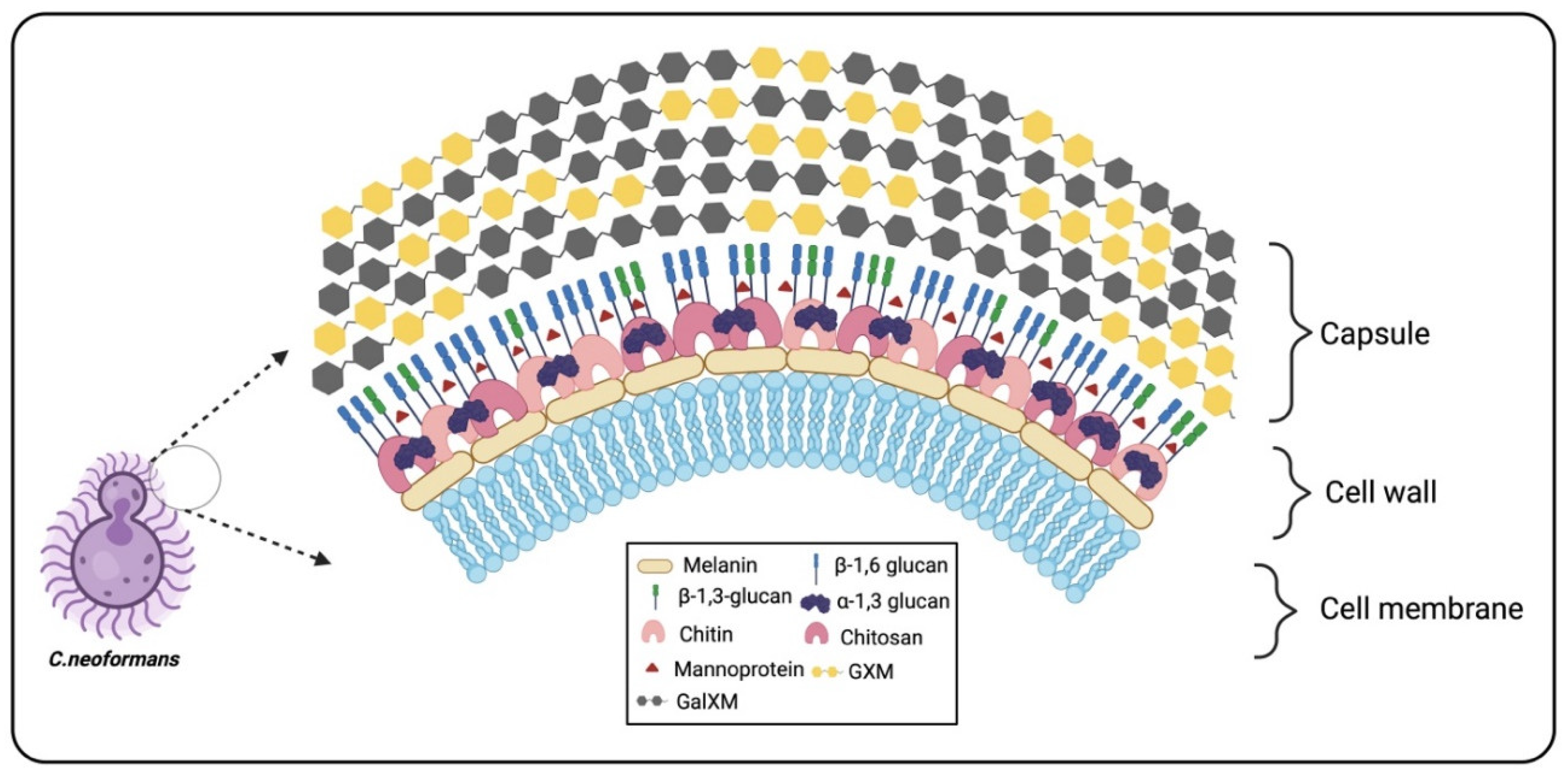
Figure 2.
Adaptive immune response to attenuated whole cell cryptococcal vaccine candidates.
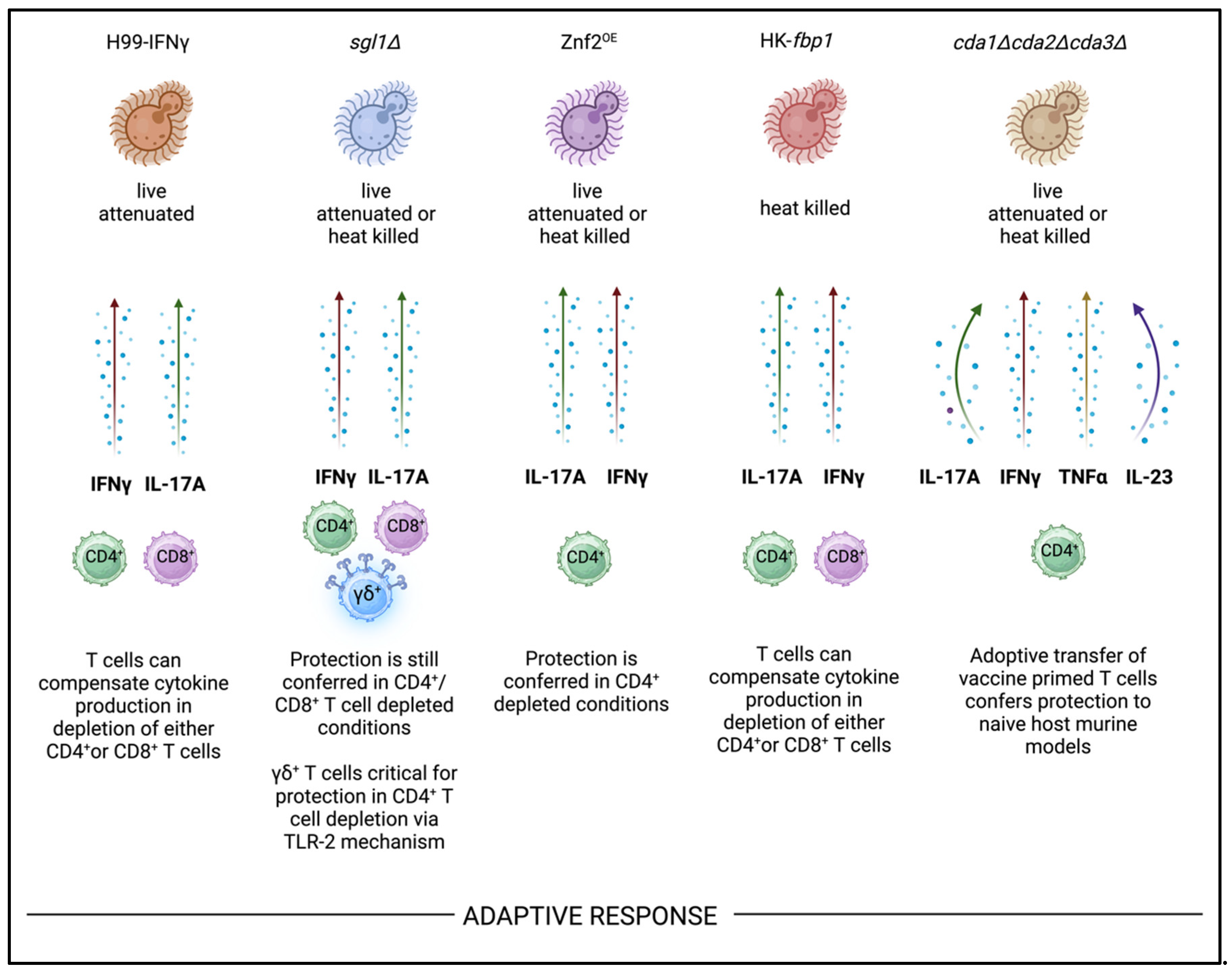
Figure 3.
Innate immune response to attenuated whole cell cryptococcal vaccine candidates.
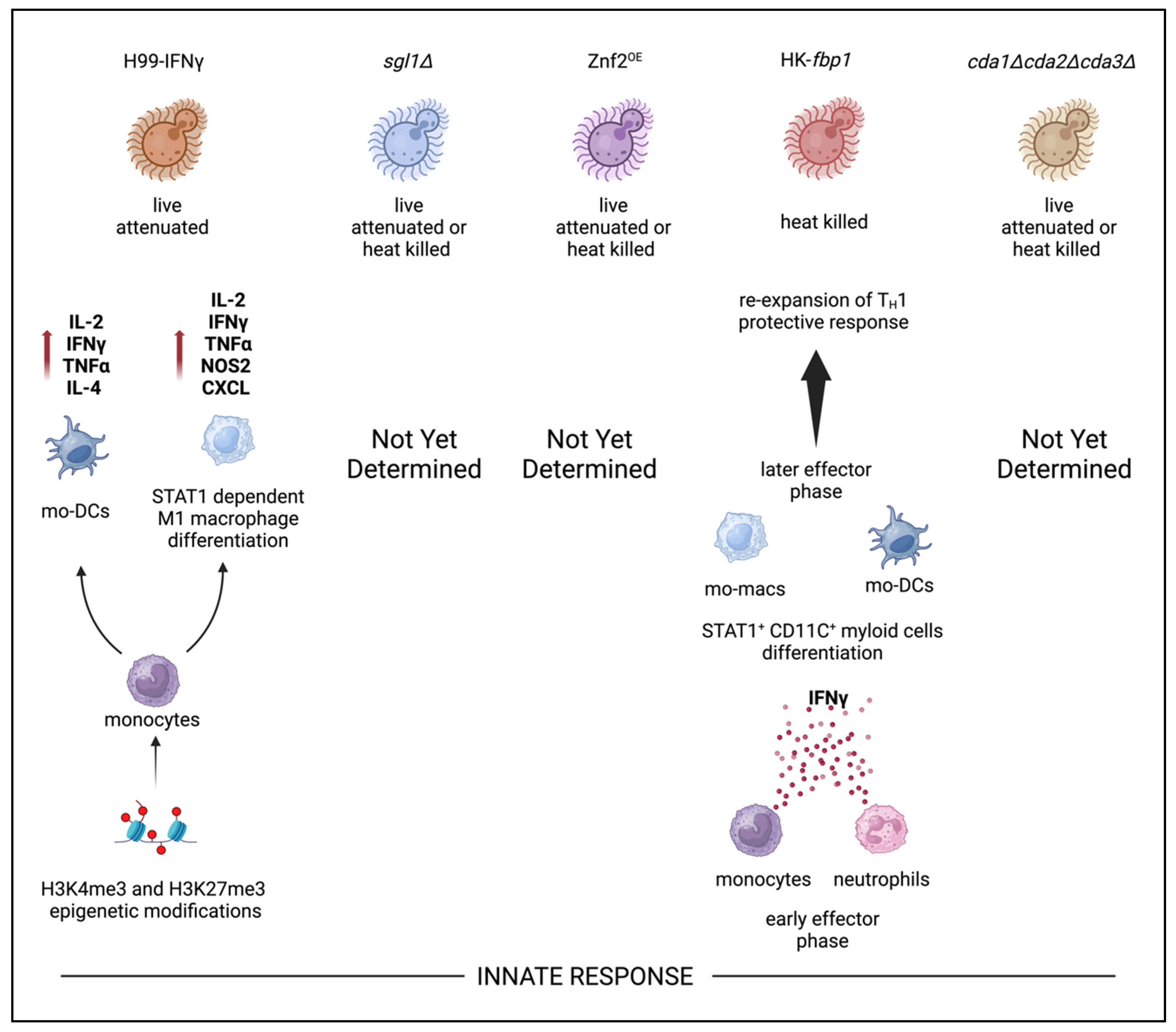

Table 1.
Cryptococcal vaccine candidates and their mechanism of action.
| Vaccine Candidate | Vaccination method | Mutant background | Vaccine Route Administration | Mechanism | Reference |
|---|---|---|---|---|---|
| sgl1D | Whole cell, live attenuated and heat killed | sterylglucosidase deficient strain | intranasal | IFN-g and IL-17A produced by gdT CD4+, and CD8+cells | (Normile et al., 2022) |
| H99g | Whole cell, live attenuated | Mouse IFN-g producing H99 strain | Intranasal | Th-1/proinflammatory cell response | (Wormley et al., 2007) |
| ZNf2OE | Whole cell, live attenuated and heat killed | zinc finger transcription factor 2 overexpressed | Intranasal | Th-1/Th-17 | (Zhai et al., 2015) |
| HK-fbp1D | Whole cell, heat killed | Disruption of SCF E3 ligase complex by deletion of F-box protein 1 | Intranasal | Th-1/Th-17 response | (Masso-Silva et al., 2018) (Wang et al., 2019) |
| cda1D2D3D | Whole cell, live attenuated and heat killed | Deletion of 3 chitin deacetylases | Intranasal | CD4+T cell response; proinflammatory cytokines IL-1b,IL-6, and IL-23 | (Upadhya et al., 2016b) |
| Glucan Particles (GP) | Protein subunit vaccine | Synthesized subunit protein | Intranasal | Antibody and T cell response | (Wang et al., 2023) (Specht et al., 2021) (Huang et al., 2010). |
| b-Glucan antibody | antibody based | monoclonal antibody | Intranasal | Antibody response | (Rachini et al., 2007) |
| Glucosylceramide antibody | antibody based | monoclonal antibody | Intranasal | Reduced pulmonary inflammation | (Rodrigues et al., 2007) |
| P13 (Peptide mimic of Cn GXM) | antibody based | Intranasal | Antibody response | (Fleuridor et al., 2001) | |
| GXM-TT | recombinant | Recombinant protein subunit | Intranasal | Antibody response | (Fleuridor et al., 2001) |
| GalXM-BSA | recombinant | Recombinant protein subunit | Intranasal | Antibody response | (Chow and Casadevall, 2011) |
| GXM antibody 18B7 | antibody based | monoclonal antibody | intranasal | Antibody responseClinical trial phase 1 | (Larsen et al., 2005) |
Disclaimer/Publisher’s Note: The statements, opinions and data contained in all publications are solely those of the individual author(s) and contributor(s) and not of MDPI and/or the editor(s). MDPI and/or the editor(s) disclaim responsibility for any injury to people or property resulting from any ideas, methods, instructions or products referred to in the content. |
© 2024 by the authors. Licensee MDPI, Basel, Switzerland. This article is an open access article distributed under the terms and conditions of the Creative Commons Attribution (CC BY) license (http://creativecommons.org/licenses/by/4.0/).
Copyright: This open access article is published under a Creative Commons CC BY 4.0 license, which permit the free download, distribution, and reuse, provided that the author and preprint are cited in any reuse.