

Submitted:
24 October 2024
Posted:
25 October 2024
You are already at the latest version
Abstract
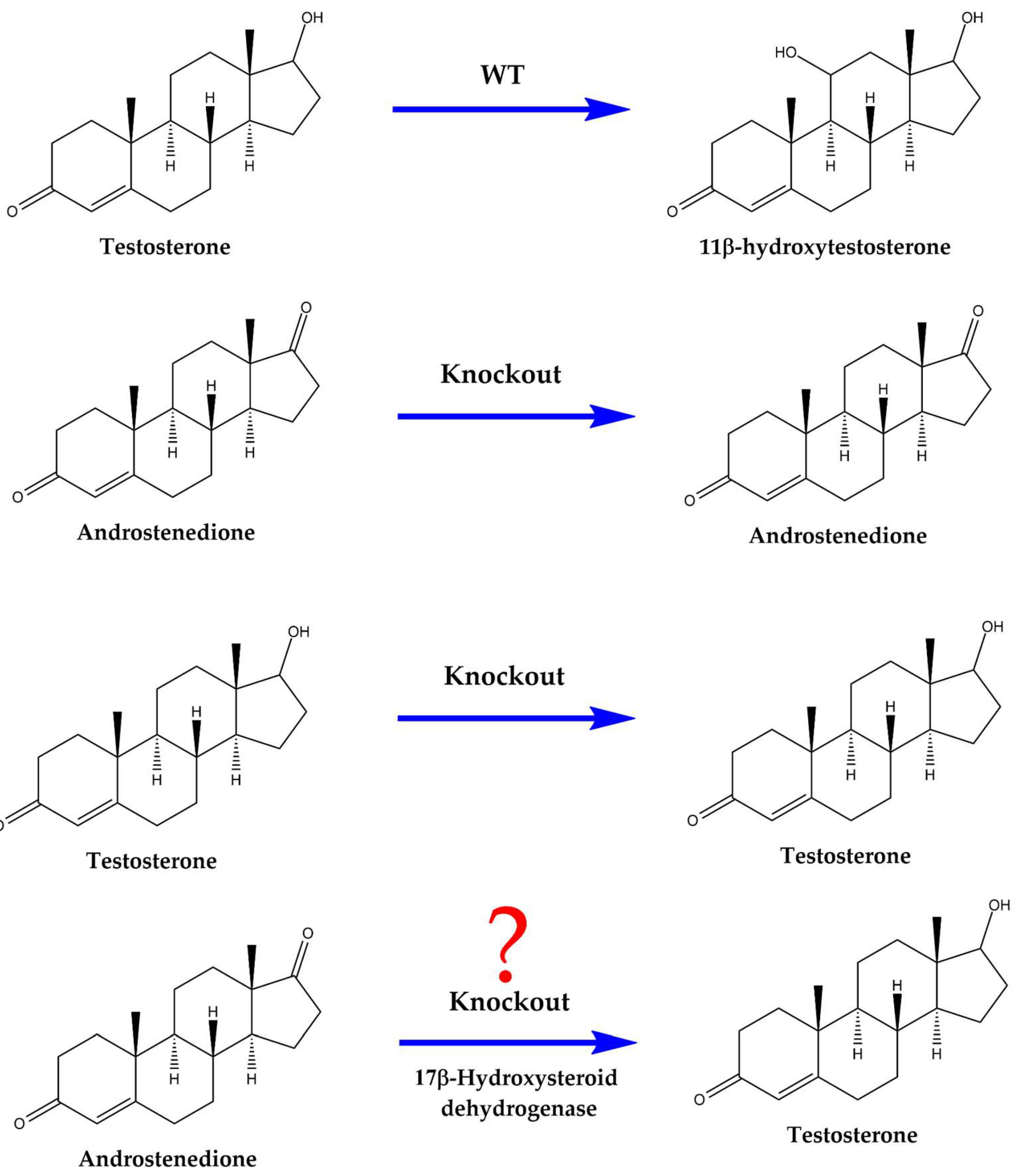
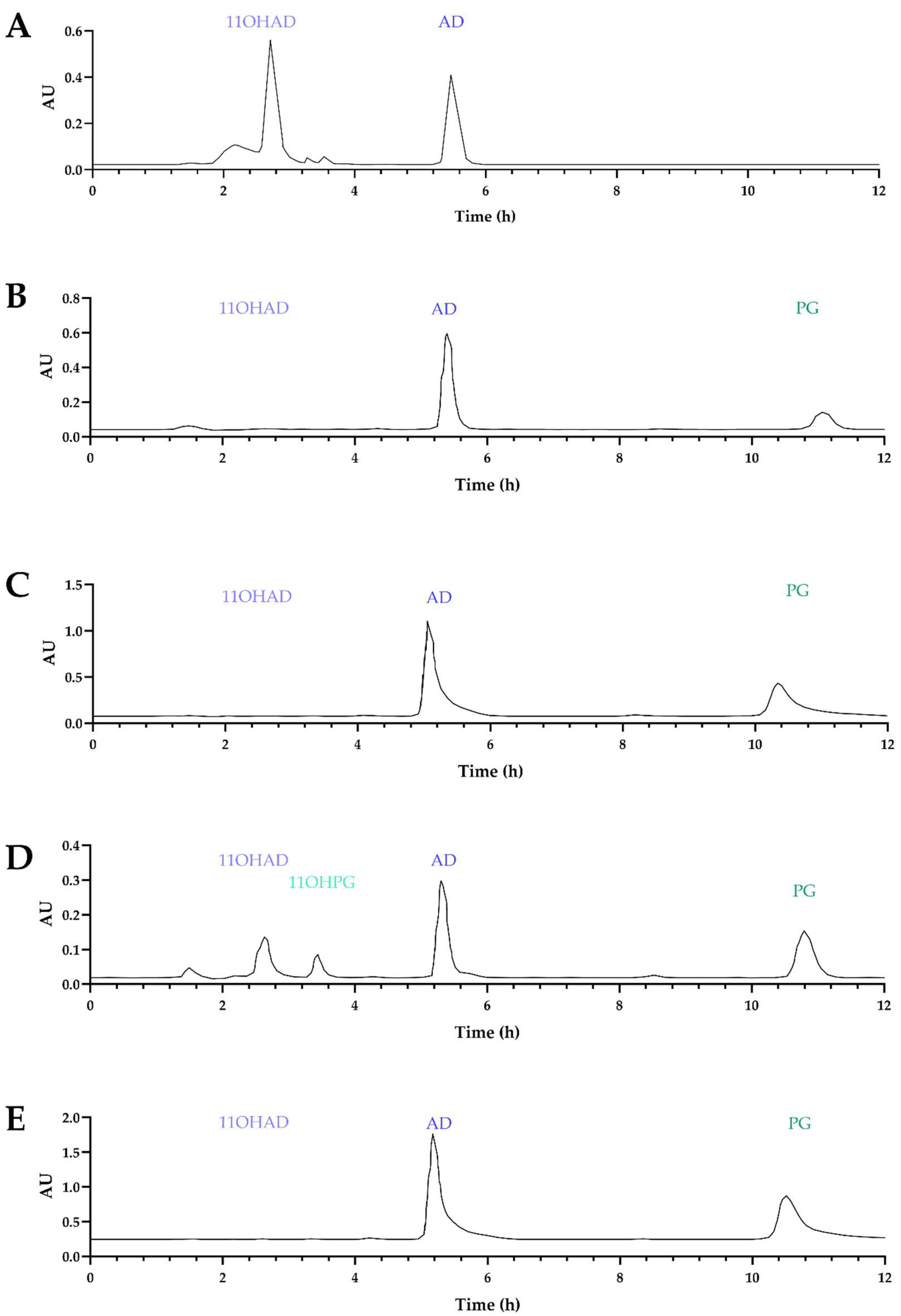
Testosterone holds significant medical and economic importance, with the global market for testosterone replacement therapies valued at approximately $1.9 billion in 2023. This hormone is essential for the development and maintenance of male sexual characteristics as well as bone and muscle health. It plays a key role in conditions such as hypogonadism, muscle disorders, and andropause. However, the industrial production of testosterone often involves complex chemical processes that result in low yields, high costs, and environmental damage. Microbial biotransformation of steroids presents an eco-friendly alternative to traditional chemical synthesis. A knockout strain of Aspergillus nidulans deficient in steroid 11-α-hydroxylase activity was developed, rendering it incapable of hydroxylating androstenedione, progesterone, and testosterone. In this strain, two newly identified CYP450 enzymes—CYP68L1 from A. nidulans and CYP68L8 from Aspergillus ochraceus—were expressed to confirm their roles as steroid 11-α-hydroxylases. These enzymes successfully hydroxylated steroids such as androstenedione, progesterone, and testosterone. The availability of these 11-α-hydroxylases represents significant progress toward achieving efficient single-step steroid fermentation. Furthermore, the A. nidulans knockout strain is proposed as an effective model for studying the conversion of androstenedione to testosterone owing to its inability to hydroxylate the testosterone produced during bioconversion.
Keywords:
1. Introduction
2. Materials and Methods
2.1. Chemical and Biochemical Reagents
2.2. Culture Conditions
2.3. DNA Manipulation
2.4. HPLC Analysis
2.5. Bioinformatic Analysis
3. Results
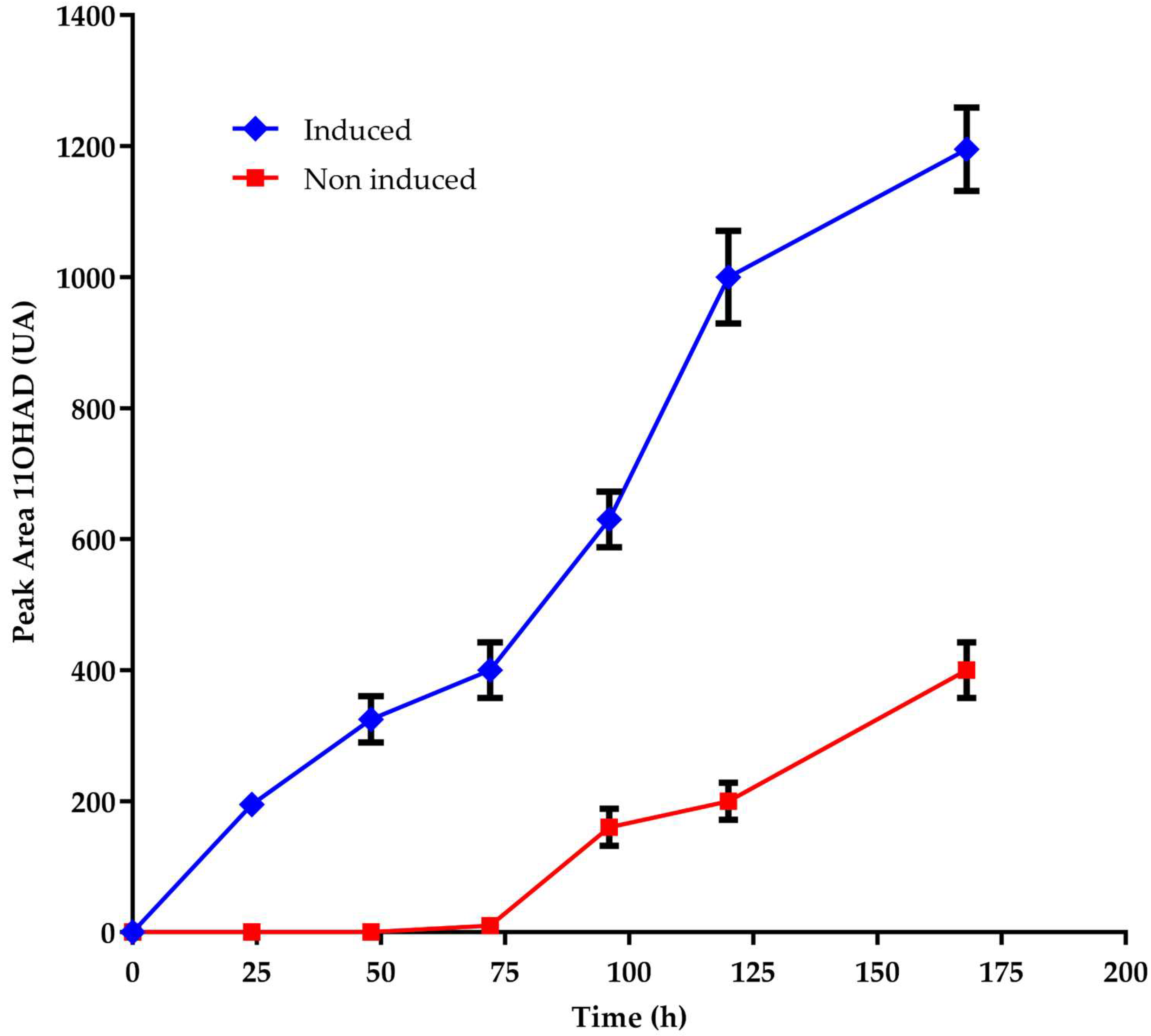
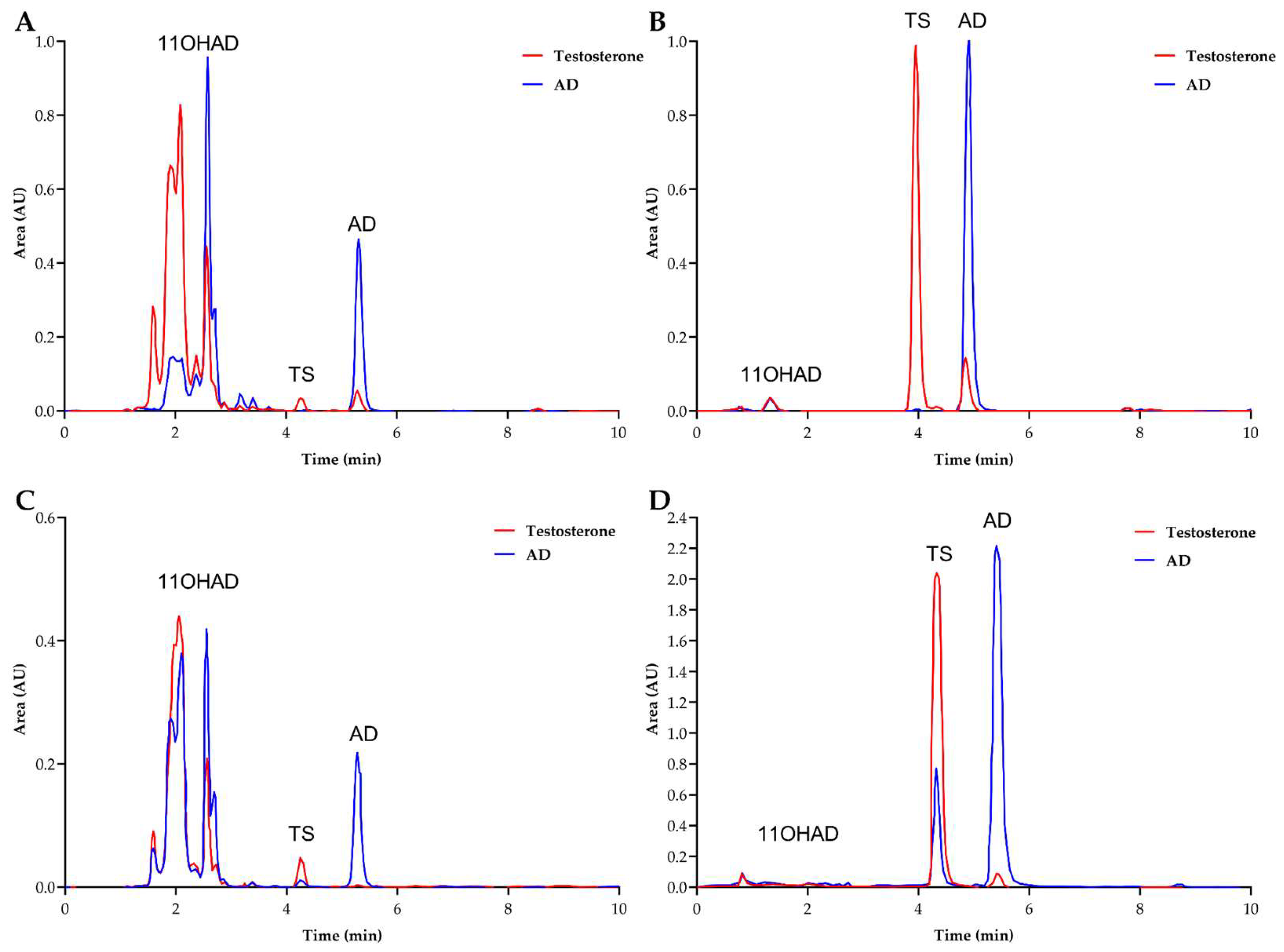
Aspergillus nidulans Exhibit an Inducible Steroid 11-α-Hydroxylase Activity That Is Not Replaced by CYP68J5 from Aspergillus ochraceus
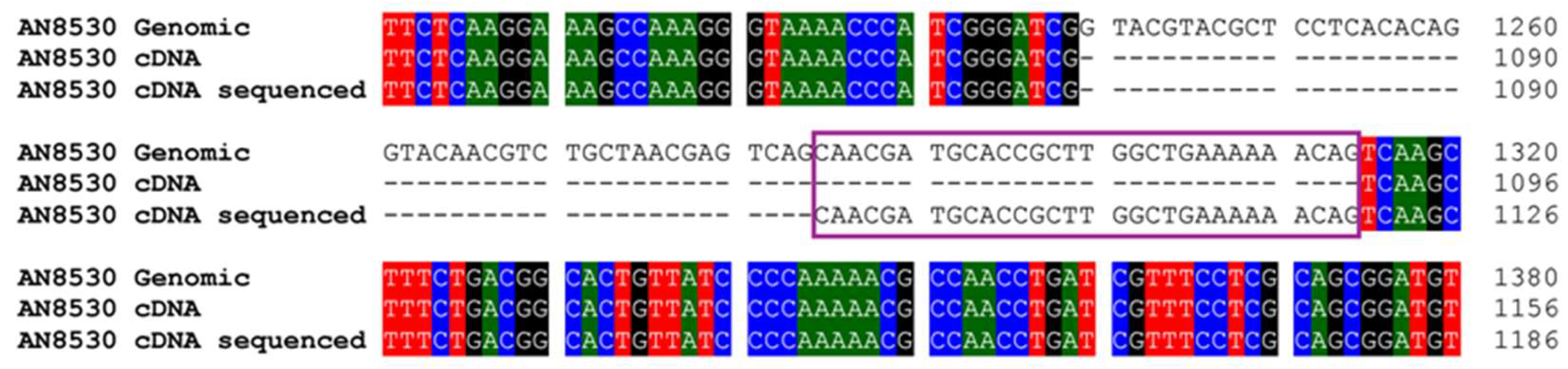
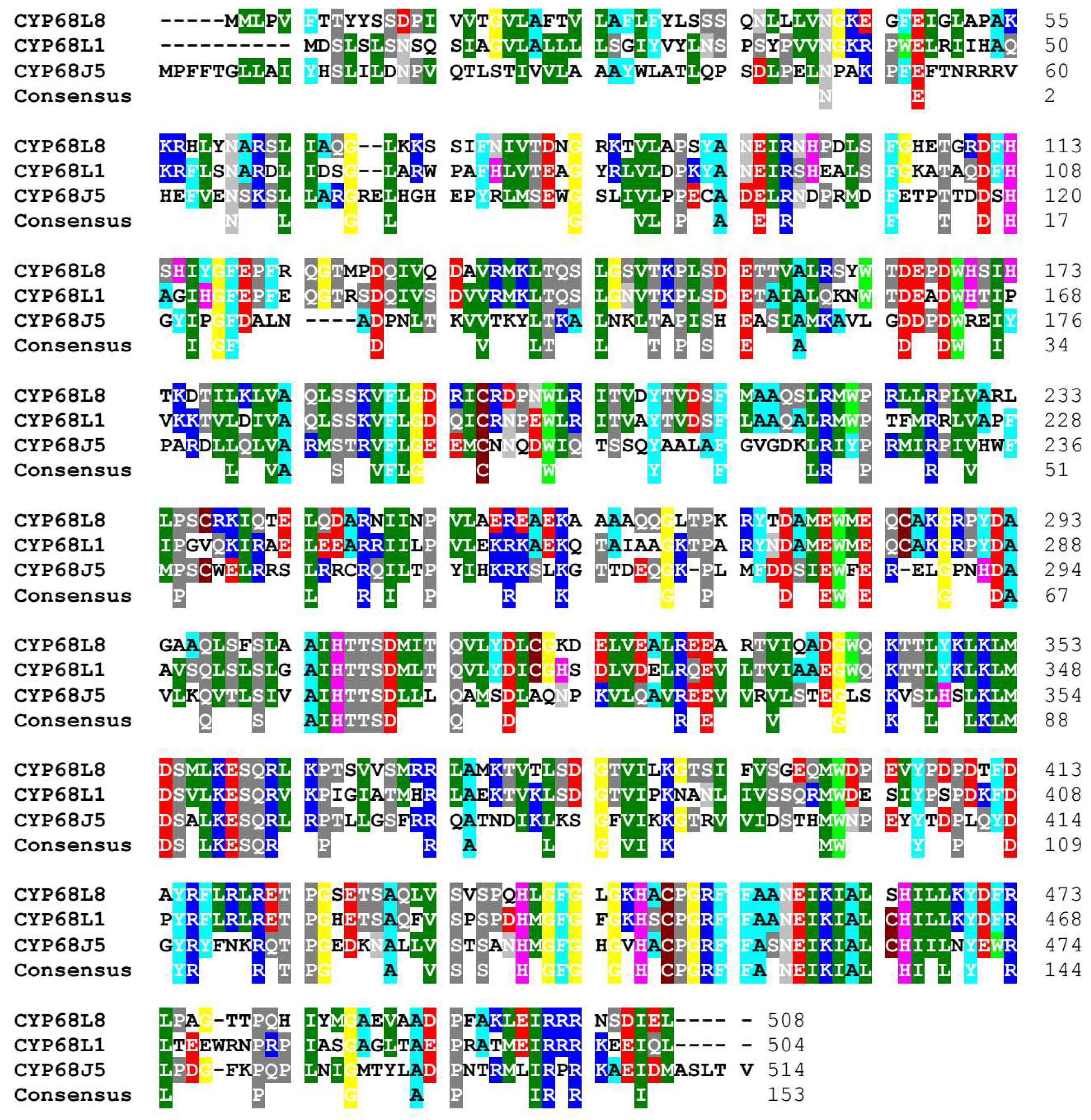
Identification of a New CYP450 with 11-α-Hydroxylase Activity in Aspergillus ochraceus
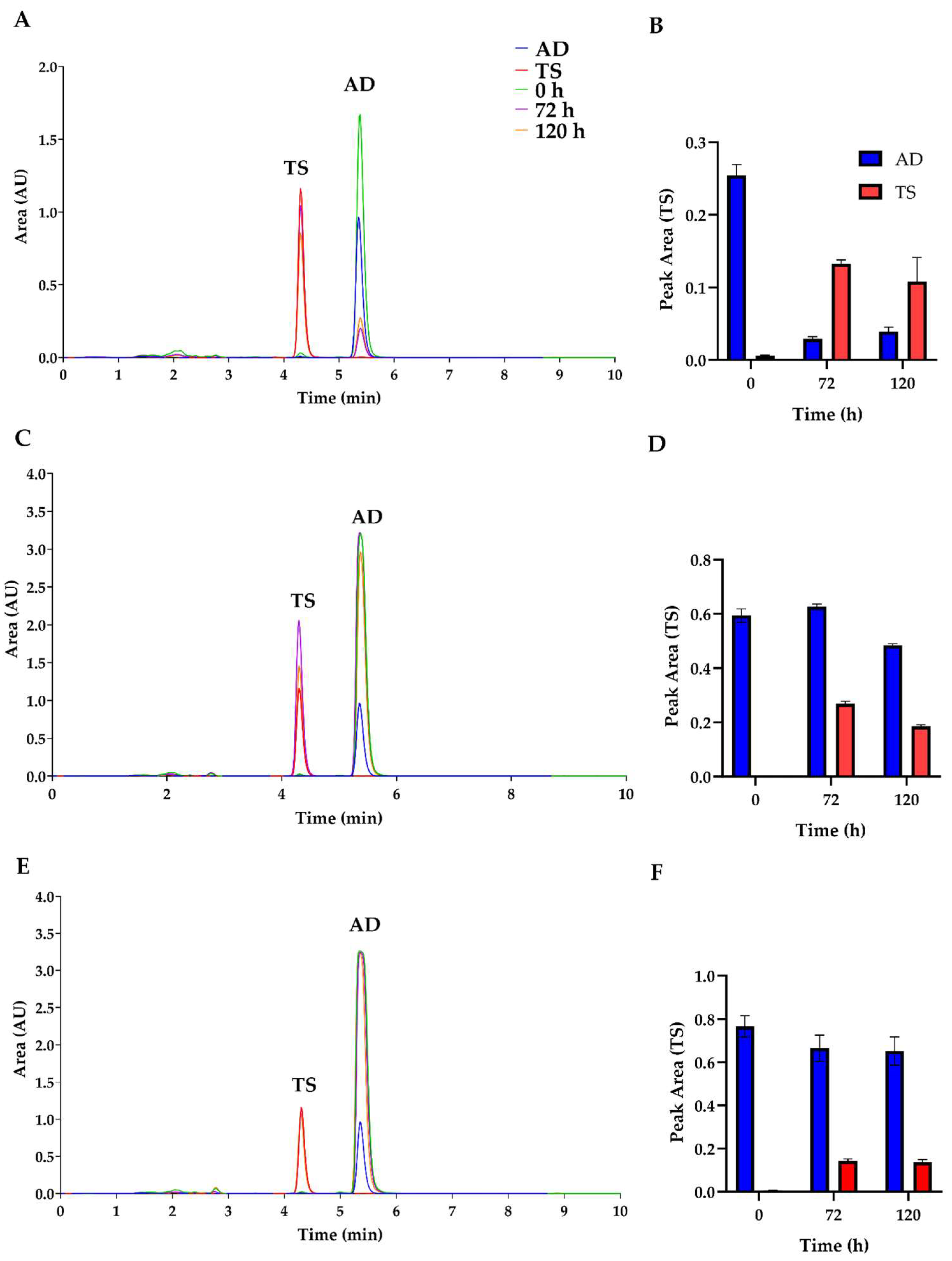
Production of Testosterone from the Steroid 11-α-Hydroxylase Knockout Strain of A. nidulans Expressing the Enzyme 17-β-Hydroxysteroid-Dehydrogenase (EC 1.1.1.51) from Cochliobolus lunatus (Curvularia lunata)
4. Discussion
5. Conclusion
Supplementary Materials
Author Contributions
Funding
Data Availability Statement
Acknowledgments
Conflicts of Interest
References
- Callow, R. The absorption spectra of oestrone and related compounds in alkaline solution. Biochem. J. 1936, 30, 906–908. [Google Scholar] [CrossRef]
- Watanabe, K.; Hamamura, N. Molecular and physiological approaches to understanding the ecology of pollutant degradation. Curr. Opin. Biotechnol. 2003, 14, 289–295. [Google Scholar] [CrossRef]
- Kitamura, H.; Takahashi, A.; Hotta, H.; Kato, R.; Kunishima, Y.; Takei, F.; Horita, H.; Masumori, N.; Oncology, S.M.U.U. Palonosetron with aprepitant plus dexamethasone to prevent chemotherapy-induced nausea and vomiting during gemcitabine/cisplatin in urothelial cancer patients. Int. J. Urol. 2015, 22, 911–914. [Google Scholar] [CrossRef]
- Donova, M.; Egorova, O. Microbial steroid transformations: current state and prospects. Appl. Microbiol. Biotechnol. 2012, 94, 1423–1447. [Google Scholar] [CrossRef]
- Sambyal, K.; Singh, R. Production aspects of testosterone by microbial biotransformation and future prospects. Steroids 2020, 159. [Google Scholar] [CrossRef]
- Testosterone Replacement Therapy (TRT) - Global Strategic Business Report. Available online: https://www.researchandmarkets.com/reports/1824157/testosterone_replacement_therapy_trt_global (accessed on 15 September 2024).
- Pendharkar, G.B.; Banerjee, T.; Patil, S.; Dalal, K.S.; Chaudhari, B.L. Biotransformation of Industrially Important Steroid Drug Precursors. In Industrial Microbiology and Biotechnology; Verma, P., Ed.; Springer: Singapore, 2022; pp. 307–333. [Google Scholar]
- Batth, R.; Nicolle, C.; Cuciurean, I.; Simonsen, H. Biosynthesis and Industrial Production of Androsteroids. Plants-Basel 2020, 9. [Google Scholar] [CrossRef]
- Carballeira, J.; Quezada, M.; Hoyos, P.; Simeó, Y.; Hernaiz, M.; Alcantara, A.; Sinisterra, J. Microbial cells as catalysts for stereoselective red-ox reactions. Biotechnol. Adv. 2009, 27, 686–714. [Google Scholar] [CrossRef]
- Yao, K.; Wang, F.; Zhang, H.; Wei, D. Identification and engineering of cholesterol oxidases involved in the initial step of sterols catabolism in Mycobacterium neoaurum. Metab. Eng. 2013, 15, 75–87. [Google Scholar] [CrossRef]
- Capek, A.; Tadra, M.; Hanc, O. Microbial Transformations Of Steroids.21. Microbial preparation of 1,4-androstadiene derivatives. Folia Microbiol. 1963, 8, 120. [Google Scholar]
- Fernandes, P.; Cruz, A.; Angelova, B.; Pinheiro, H.; Cabral, J. Microbial conversion of steroid compounds: recent developments. Enzym. Microb. Technol. 2003, 32, 688–705. [Google Scholar] [CrossRef]
- Petric, S.; Hakki, T.; Bernhardt, R.; Zigon, D.; Cresnar, B. Discovery of a steroid 11α-hydroxylase from Rhizopus oryzae and its biotechnological application. J. Biotechnol. 2010, 150, 428–437. [Google Scholar] [CrossRef]
- Ortega-de los Ríos, L.; Luengo, J.; Fernández-Cañón, J. Steroid 11-Alpha-Hydroxylation by the Fungi Aspergillus nidulans and Aspergillus ochraceus. Microb. Steroids: Methods Protoc. 2017, 1645, 271–287. [Google Scholar] [CrossRef]
- Diatchenko, L.; Lau, Y.; Campbell, A.; Chenchik, A.; Moqadam, F.; Huang, B.; Lukyanov, S.; Lukyanov, K.; Gurskaya, N.; Sverdlov, E.; et al. Suppression subtractive hybridization: A method for generating differentially regulated or tissue-specific cDNA probes and libraries. Proc. Natl. Acad. Sci. United States Am. 1996, 93, 6025–6030. [Google Scholar] [CrossRef]
- Fernández-Cañon, J.; Peñalva, M. Fungal Metabolic Model For Human Type-I Hereditary Tyrosinemia. Proc. Natl. Acad. Sci. United States Am. 1995, 92, 9132–9136. [Google Scholar] [CrossRef]
- Bolton, S.; Clayton, R.; Easton, A.; Engel, L.; Messing, D.; Suzanne, B.L.; Clayton, R.A.; Easton, A.M.; Engel, L.C.; Messing, D.M.; et al. New isolated Aspergillus ochraceus 11 alpha-hydroxylase or oxidoreductase, for bioconversion of steroid substances to their 11 alpha hydroxy counterparts in heterologous cells. WO200246386-A2; AU200241768-A; US2003148420-A1; EP1352054-A2; MX2003003809-A1; CN1531590-A; US2005003473-A1; JP2005512502-W; BR200115245-A; US7033807-B2; IN200300632-P4; US7238507-B2; MX245674-B; WO200246386-A3.
- Qian, M.; Zeng, Y.; Mao, S.; Jia, L.; Hua, E.; Lu, F.; Liu, X. Engineering of a fungal steroid 11α-hydroxylase and construction of recombinant yeast for improved production of 11α-hydroxyprogesterone. J. Biotechnol. 2022, 353, 1–8. [Google Scholar] [CrossRef]
- Fernández-Cabezón, L.; Galán, B.; García, J. Engineering Mycobacterium smegmatis for testosterone production. Microb. Biotechnol. 2017, 10, 151–161. [Google Scholar] [CrossRef]
- Ferrer-Sevillano, F.; Fernández-Cañón, J. Novel phacB-encoded cytochrome P450 monooxygenase from Aspergillus nidulans with 3-hydroxyphenylacetate 6-hydroxylase and 3,4-dihydroxyphenylacetate 6-hydroxylase activities. Eukaryot. Cell 2007, 6, 514–520. [Google Scholar] [CrossRef]
- Miller, E.M.; Nickoloff, J.A. Escherichia coli Electrotransformation. In Electroporation Protocols for Microorganisms, Nickoloff, J.A., Ed.; Humana Press: Totowa, NJ, 1995; pp. 105–113. [Google Scholar]
- Tilburn, J.; Scazzocchio, C.; Taylor, G.; Zabickyzissman, J.; Lockington, R.; Davies, R. Transformation by integration in Aspergillus-nidulans. Gene 1983, 26, 205–221. [Google Scholar] [CrossRef]
- Pantazopoulou, A.; Peñalva, M. Organization and Dynamics of the Aspergillus nidulans Golgi during apical extension and mitosis. Mol. Biol. Cell 2009, 20, 4335–4347. [Google Scholar] [CrossRef]
- Camacho, C.; Coulouris, G.; Avagyan, V.; Ma, N.; Papadopoulos, J.; Bealer, K.; Madden, T.L. BLAST+: architecture and applications. BMC Bioinform. 2009, 10, 421. [Google Scholar] [CrossRef]
- Hall, T.A. BioEdit: a user-friendly biological sequence alignment editor and analysis program for Windows 95/98/NT. 1999, 95-98.
- Cytochrome P450 Homepage: https://drnelson.uthsc. 2024.
- Tang, W.; Xie, C.; Wang, Z.; Wu, S.; Feng, Y.; Wang, X.; Wang, J.; Gong, J. Solubility of androstenedione in lower alcohols. Fluid Phase Equilibria 2014, 363, 86–96. [Google Scholar] [CrossRef]
- Wang, X.; Yang, X.; Jia, X.; Jin, P.; Wang, Z.; Lu, F.; Liu, X. Determination of steroid hydroxylation specificity of an industrial strain Aspergillus ochraceus TCCC41060 by cytochrome P450 gene CYP68J5. Ann. Microbiol. 2020, 70. [Google Scholar] [CrossRef]
- Yang, X.; Wu, F.; Hou, X.; Lin, B.; Wang, R.; Lu, F.; Wang, Z.; Zeng, B.; Liu, X. Engineering of industrial Aspergillus ochraceus strains for improved steroid 11-α-hydroxylation efficiency via overexpression of the 11-α-hydroxylase gene CYP68J5. Proceedings Of The Advances In Applied Biotechnology, 2018; 2018-01-01; pp. 203–212. [Google Scholar]
- Ward, O.P.; Qin, W.M.; Dhanjoon, J.; Ye, J.; Singh, A. Physiology and Biotechnology of Aspergillus. In Advances in Applied Microbiology, Laskin, A.I., Bennett, J.W., Gadd, G.M., Sariaslani, S., Eds.; Academic Press: 2005; Volume 58, pp. 1-75.
- Fernandez-Cañon, J.; Granadino, B.; Beltrán-Valero de Bernabé, D.; Renedo, M.; Fernandez-Ruiz, E.; Peñalva, M.; Rodríguez de Córdoba, S. The molecular basis of alkaptonuria. Nat. Genet. 1996, 14, 19–24. [Google Scholar] [CrossRef]
- Espeso, E.; Tilburn, J.; Arst, H.; Penalva, M. Ph regulation is a major determinant in expression of a fungal penicillin biosynthetic gene. Embo J. 1993, 12, 3947–3956. [Google Scholar] [CrossRef]
- Kristan, K.; Rizner, T. Steroid-transforming enzymes in fungi. J. Steroid Biochem. Mol. Biol. 2012, 129, 79–91. [Google Scholar] [CrossRef]

| Strain | Description | Reference |
|---|---|---|
| Aspergillus nidulans FGSC A4 | Wild-type strain | Fungal Genetics Stock Center |
| Aspergillus nidulans ΔCYP68L1 (KO strain) | ΔnkuA, pyroA4, ΔCYP68L1 | [14] |
| Aspergillus ochraceus CECT 2093 | Wild type strain | Colección Española de Cultivos Tipo (CECT) |
|
Cochliobolus lunatus (Curvularia lunata is the anamorph) CECT2130 |
Wild type strain | Colección Española de Cultivos Tipo (CECT) |
| Rhizopus oryzae ATCC10404 | Wild type strain | Colección Española de Cultivos Tipo (CECT) |
| Escherichia coli XL-1 blue | recA1, endA1, gyrA96, thi-1, hsdR17, supE44, lac, F’, proAB, laclqZΔM15, Tn10, TcR | Stratagene |
| Gen | Forward | Reverse |
|---|---|---|
| CYP68L1 | 5’-cattaccatggatagcctttcgttatcaaactccatggatagcctttcgttatcaaactcc-3´ | 5´-gcgggaattcctataactgaatttcctcttttctgcg-3´ |
| CYP68L8 | 5´-cattaccatggtgctcccagtattcacgacg-3´ | 5´-gcgggaattctcatagttcaatgtcggagttttctccg-3´ |
| CYP68J5 | 5´-cattaccatggccttcttcactgggct-3´ | 5´-gcgggaattctcagcatcctggtattg-3´ |
| AN6450 | 5´-gacttccatggcgctcgccggaaaa-3´ | 5´-gcgggaattcctatgccattcccccgt-3´ |
| 17β-HSDCl | 5´-gactcccatggcgcacgtggagaacgcct-3´ | 5´-gcgggaattcttaggcggcgccgccgtcca-3´ |
Disclaimer/Publisher’s Note: The statements, opinions and data contained in all publications are solely those of the individual author(s) and contributor(s) and not of MDPI and/or the editor(s). MDPI and/or the editor(s) disclaim responsibility for any injury to people or property resulting from any ideas, methods, instructions or products referred to in the content. |
© 2024 by the authors. Licensee MDPI, Basel, Switzerland. This article is an open access article distributed under the terms and conditions of the Creative Commons Attribution (CC BY) license (http://creativecommons.org/licenses/by/4.0/).