

Submitted:
22 October 2024
Posted:
25 October 2024
You are already at the latest version
Abstract
As digital technologies continue to evolve; small and medium enterprises (SMEs) are increasingly adopting Virtual Collaboration and Communication Technologies (VCCTs) to enhance performance in a competitive business landscape. This systematic review aims to assess the impact of VCCTs on SME performance metrics, such as operational efficiency, employee engagement, and customer satisfaction, by analyzing 41 studies selected from an initial pool of 662,422 records. The review also explores factors influencing VCCT implementation and barriers to adoption. Studies from 2014 to 2024 were reviewed, comprising journal articles (92.68%) and conference papers (7.32%). After rigorous screening, 41 studies met the inclusion criteria. The selection process included a risk bias assessment to ensure the reliability of the findings. The analysis revealed that operational efficiency improvements were the most frequently reported (68.29% of studies), followed by employee engagement (41.46%) and customer satisfaction (43.9%). Scalability was the most measured IT performance metric (41.46%), while user engagement appeared in 39.02% of the studies. Business sustainability and competitive advantage were highlighted in 46.34% and 41.46% of studies, respectively. Factors such as digital skills, organizational culture, and IT infrastructure were identified as critical for effective VCCT implementation. Nonetheless, financial constraints and employee resistance were prominent barriers. This review underscores the transformative potential of VCCTs in enhancing SME performance, particularly in operational efficiency and stakeholder engagement. A balanced focus on technological and human factors is crucial, with strategic planning and investment in digital capabilities driving success. Future research should focus on developing tailored models to maximize VCCT benefits, especially in cost-efficiency, sustainability, and innovation.
Keywords:
performance
; virtual collaboration
; communication technologies
; small and medium-sized enterprises (SMEs)
; operational efficiency
; digital transformation
; systematic review
1. Introduction
In an increasingly digital landscape, Small and Medium Enterprises (SMEs) face unprecedented pressures to innovate, adapt, and grow. Virtual Collaboration and Communication Technologies (VCCTs) have emerged as essential tools that can transform how these businesses operate, interact, and compete in the global market. These technologies encompass a wide range of tools, from video conferencing platforms to sophisticated project management and workflow automation solutions, offering SMEs potential solutions to overcome resource and size-related limitations. The COVID-19 pandemic accelerated the adoption of VCCTs across various sectors, compelling SMEs to embrace remote work and digital operations as part of their new reality. However, the impact of these technologies on SME performance is not always straightforward or uniformly beneficial. While certain studies demonstrate substantial gains in operational efficiency, productivity, and market expansion due to VCCT adoption [9], other research indicates challenges in strategic execution, cultural adaptation, and deriving tangible benefits [1]. The assumption that merely adopting VCCTs will automatically enhance SME performance oversimplifies a complex reality. The relationship between VCCT implementation and performance improvement depends on a combination of factors, including organizational culture, digital skills, and the strategic alignment of technology initiatives. This complexity challenges the conventional "one-size-fits-all" approach often promoted in business literature and underscores the need for context-specific strategies that cater to individual organizational needs.
Moreover, while VCCTs are frequently championed as leveling the playing field for SMEs against larger corporations, the practical challenges involved in financial investments, technical expertise, and change management pose significant barriers [2,3,4,5]. These obstacles raise pertinent questions regarding the accessibility and effectiveness of VCCTs across different industries, geographic locations, and economic contexts. The ongoing discourse around the long-term impact of VCCT adoption on SME growth is characterized by divergent viewpoints. Some scholars argue that these technologies promote innovation, stronger stakeholder relationships, and improved business agility [6,7,8,9,10]. Conversely, other studies highlight potential drawbacks, such as negative effects on work-life balance, employee well-being, and organizational cohesion, which can counteract the intended performance benefits. This inconsistency suggests the need for a more nuanced understanding of the enduring effects of VCCTs on SME performance. Current research also identifies critical knowledge gaps in understanding how SMEs can efficiently implement VCCTs. While technology adoption has been extensively studied in the context of large enterprises, there remains a lack of comprehensive, inclusive frameworks that address the unique challenges and opportunities faced by smaller businesses [11]. Furthermore, the absence of practical, detailed guidelines for selecting, implementing, and optimizing VCCTs tailored to the specific needs of SMEs highlights a significant area for further investigation.
To address these challenges and gaps, this systematic review provides a detailed examination of the role of VCCTs in enhancing SME efficiency. Table 1 outlines the key findings from previous reviews, highlighting both major discoveries and conflicting perspectives, which emphasize the need for a fresh review to address unresolved questions and uncertainties. In synthesizing a range of studies, including bibliometric analyses [2,10], case studies [7], and empirical investigations across different industries and regions, this review aims to bridge the gap between theoretical insights and practical applications. The objective is to furnish research-based knowledge that can shape future studies and guide the development of effective strategies for VCCT implementation in SMEs, ensuring these businesses can achieve sustainable growth in a rapidly evolving digital environment.
1.1. Research Questions
Numerous studies on VCCTs in SMEs conducted in recent years present a mixed landscape regarding the impact on performance. Some studies showed positive effects on productivity, efficiency, and decision-making, while others have raised concerns about potential challenges such as technological barriers and employee disengagement. This highlights the absence of a well-defined framework that explains how aspects such as productivity, employee engagement, and operational efficiency interrelate when influenced by VCCTs. It also indicates the need for a comprehensive view of the VCCTs adoption process in SMEs, from challenges in implementation to their long-term effects. To address these gaps, this systematic review proposes the following research questions:
- What are the primary performance improvements associated with adopting VCCTs in SMEs?
- What factors influence the effectiveness of VCCTs in driving performance improvements in SMEs?
- What are the barriers to the implementing and utilization of VCCTs in SMEs?
- What are the best practices for SMEs to maximize the benefits of VCCTs?
- What are the long-term effects of sustained use of virtual collaboration and communication technologies on the growth and performance of SMEs?
1.2. Research Rationale
As the business environment increasingly embraces digital transformation, SMEs face heightened competition and distinct challenges in maintaining their competitiveness and ensuring sustainable growth. Unlike large corporations, SMEs typically operate with limited resources, making the effective adoption of Virtual Collaboration and Communication Technologies (VCCTs) essential for enhancing performance. To navigate this dynamic landscape, SMEs must strategically leverage VCCTs to boost operational efficiency, productivity, and market reach, which are critical for their survival and growth.
VCCTs present a unique opportunity for SMEs to transform their decision-making processes and optimize business operations, allowing for more agile and data-driven responses to market changes. Understanding the diverse ways in which VCCTs shape these decision-making processes can offer valuable insights into how SMEs can better harness these technologies to drive business success. The increasing complexity of global markets, coupled with the rapid evolution of technology, requires SMEs to adopt solutions that can bridge resource gaps and enhance their ability to compete.
This systematic review aims to examine the role of VCCTs in driving performance improvements across different economic contexts, including emerging markets, developed economies, and transition economies. It will also explore the technologies’ impact on diverse industries and geographic regions to understand how contextual factors influence the success of VCCT adoption. By doing so, the study seeks to offer a more comprehensive view of the conditions that facilitate or hinder the transformative potential of VCCTs.
1.3. Research Objectives
The primary objective of this systematic review is to analyze the role of VCCTs in reshaping the operational landscape of SMEs and to assess their impact on workplace dynamics, productivity metrics, and overall business resilience. By examining various implementations across different SME sectors, this review aims to identify patterns of successful adoption as well as potential pitfalls that could impede effective integration. The study also investigates the relationship between VCCTs and organizational culture and explores how these technologies can either foster or hinder innovation within SMEs.
Additionally, the review examines the economic impact of VCCT adoption, balancing short-term costs against long-term benefits to provide a holistic evaluation of the technologies’ effectiveness. Through a thorough analysis of the available literature, this review seeks to generate a deeper understanding of the transformative power of VCCTs in the SME context, offering evidence-based insights that can guide future digital strategies in this vital business sector.
1.4. Research Contributions
The contributions of this study include a comprehensive systematic review of the effects of VCCTs on SME performance, with an emphasis on the deployment challenges and strategies for overcoming them. This review offers a detailed analysis of productivity and efficiency outcomes, identifying benefits, limitations, and decision-making insights that are critical for informed strategy development. By synthesizing the existing literature, the review highlights key gaps in technology integration across business processes and pinpoints areas for further research and innovation. Furthermore, the study proposes a framework to evaluate the effectiveness of VCCTs, considering cost-benefit analysis, human factors, and decision-making processes. This framework aims to offer a structured approach for SMEs to optimize digital transformation initiatives, thereby improving their operations and competitiveness. Through these contributions, the research aims to provide valuable insights for both academic scholars and practitioners involved in SME digital transformation.
The organization of this systematic review is structured as follows: Section 1 establishes the foundation of the study by identifying key factors and offering background on previous research related to VCCTs. Section 2 describes the materials and methods used to conduct the systematic review. Section 3 discusses the results derived from the peer-reviewed literature. Section 4 provides a broader discussion based on the findings, synthesizing key insights, and highlighting practical recommendations. Section 5 concludes the review by summarizing the findings and suggesting directions for future research.
2. Materials and Methods
This section details the systematic methodology used to conduct a literature review on the performance improvements associated with Virtual Collaboration and Communication Technologies (VCCTs) in SMEs, encompassing the period from 2014 to 2024. The aim was to explore the rapid evolution of digital technologies and their adoption in enhancing business performance for SMEs. Figure 1 illustrates the step-by-step process followed, ensuring a comprehensive and rigorous approach to identify, select, and analyze relevant studies.
The proposed methodology provides a visual representation of the following key stages in the review process:
- The initial step involved selecting reliable and extensive bibliographic databases, including SCOPUS, Web of Science, and Google Scholar, to ensure comprehensive coverage across multiple disciplines.
- Specific keywords related to VCCTs and SME performance improvements were used to refine search results. Variations of keywords were applied to maximize the inclusion of relevant studies.
- Eligibility Criteria - The inclusion and exclusion criteria were set to focus on studies published in English from 2014 to 2024. Papers had to discuss VCCTs in the context of SMEs and performance metrics such as operational efficiency, productivity, and employee engagement.
- The studies underwent title and abstract screening to assess relevance, followed by a full-text review for studies that met the eligibility criteria.
- Data Extraction - Data points such as the publication year, research type, industry context, sample characteristics, and performance metrics were systematically extracted and tabulated.
- The final stage involved synthesizing the findings to identify patterns, gaps, and key insights related to VCCT adoption and its impact on SME performance.
The systematic literature review followed a structured approach, combining both qualitative and quantitative methods to evaluate the adoption of VCCTs in SMEs over a 10-year period. This comprehensive review allowed for a detailed understanding of the factors influencing the effectiveness of VCCTs in various industries and geographic regions. By analyzing the selection process, eligibility criteria, and data extraction methods, the review ensured a rigorous evaluation of the evidence, paving the way for a nuanced understanding of how digital tools can reshape the operational landscape for SMEs. The methodology is structured to ensure that the findings are robust and applicable across different business contexts, addressing the challenges and opportunities associated with integrating VCCTs into SME operations. Through this detailed approach, the study aims to bridge the gap between theoretical insights and practical applications, providing valuable guidance for future research and digital strategy development in SMEs.
2.1 Eligibility Criteria
To ensure a focused and relevant review, a set of eligibility criteria was established for selecting the literature on performance improvements from Virtual Collaboration and Communication Technologies (VCCTs) in SMEs. The search was conducted to identify studies that meet specific criteria, aiming to include research that effectively addresses the relationship between VCCT adoption and SME performance. The criteria focused on several aspects, including the topic relevance, research framework, language, publication period, and technology adoption context, as shown in Table 2 [71,72,73,74,75,76,77,78,79,80,81,82,83,84,85,86,87,88,89]. Only studies that presented a clear methodological approach relevant to the performance of VCCTs in SMEs were considered for inclusion. The review was limited to literature published in English between 2014 and 2024, ensuring that the analysis reflected the most recent developments in this rapidly evolving field.
The inclusion criteria aimed to filter studies that provide insights into SME performance improvements through the adoption of VCCTs, while the exclusion criteria removed any irrelevant or outdated literature. By adhering to these criteria, the review ensured that the selected studies offered a robust and up-to-date analysis of how VCCTs impact various aspects of SME operations, such as efficiency, productivity, and employee engagement. This approach allowed for a comprehensive review that captures the trends and challenges associated with integrating VCCTs in SMEs, reflecting their evolving needs in a digital business landscape. Table 2 thus provides a structured foundation for selecting literature that meets the objectives of this systematic review, ensuring relevance and methodological rigor in addressing the research questions.
2.2. Information Sources
The literature for this systematic review was sourced from three reputable databases: SCOPUS, Web of Science, and Google Scholar, which are well-regarded for their extensive coverage of peer-reviewed research across various disciplines. SCOPUS and Web of Science were chosen due to their recognition as two of the largest bibliographic databases, ensuring a comprehensive collection of relevant studies. These platforms provide a wide array of literature from different fields, thereby enabling a broad understanding of Virtual Collaboration and Communication Technologies (VCCTs) in the context of SME performance. Google Scholar was included for its ability to rank articles similarly to the way researchers evaluate the quality and relevance of literature [71,72,73,74,75,76,77,78,79,80,81,82,83,84,85,86,87,88,89]. Its ranking algorithm provides additional insights into the impact and importance of studies based on citation counts and other metrics, complementing the more structured database searches offered by SCOPUS and Web of Science. To ensure that the literature aligned with the eligibility criteria (as detailed in Table 2), a systematic search strategy was applied, incorporating keywords related to VCCTs and SME performance. This approach facilitated a rigorous and focused collection of studies, enhancing the reliability and applicability of the findings. The methodology ensured a diverse and comprehensive view of existing research, forming a solid foundation for subsequent analysis.
2.3. Search Strategy
To systematically identify relevant literature on Virtual Collaboration and Communication Technologies (VCCTs) in SMEs, a comprehensive search strategy was implemented across the databases identified in the previous subsection. The strategy was designed to ensure thorough coverage and capture all relevant studies within the specified criteria. Figure 2 presents an overview of the search strategy, illustrating the structured process from database identification to the refinement of search results. The search process involved the following steps [71,72,73,74,75,76,77,78,79,80,81,82,83,84,85,86,87,88,89]:
- Primary keywords such as "performance improvements," "virtual collaboration," and "SMEs" were used. To enhance search precision, logical operators like ‘AND’ and ‘OR’ were applied. For example, "performance improvements AND SMEs" ensured both terms appeared in results, while synonyms and related terms such as "efficiency improvement" and "remote collaboration" broadened the search scope.
- An asterisk (‘*’) was employed to account for variations in word forms, capturing results for "business" as well as "businesses."
- Synonyms and related terms were included to ensure comprehensive search results, covering various terminologies relevant to VCCTs and SME performance.
- The searches were limited to papers published from 2014 to 2024. Additional filters, such as language restrictions to English and research area specifications like Business Economics, were applied on the Web of Science.
Figure 2 illustrates the workflow from database identification, keyword selection, filters application, to data refinement, ensuring the identification of studies that met the eligibility criteria. The structured search strategy utilized various techniques to ensure a comprehensive and focused literature collection. By combining specific keywords, synonyms, logical operators, and database-specific filters, the process enabled the identification of a diverse set of studies that align with the objectives of this review. The systematic approach ensured that the studies included provided valuable insights into the impact of VCCTs on SME performance, setting a strong foundation for analysis and synthesis in the review.
2.4 Selection Process
The selection process was carried out meticulously to refine the initial pool of studies and ensure that the final set was both relevant and high quality for this systematic review. A comprehensive search yielded 12,422 results across three databases: Google Scholar, SCOPUS, and Web of Science (Table 3). The multi-step selection process is summarized in Figure 3, which outlines the systematic filtering steps to identify studies that align with the review’s key themes—performance improvements, virtual collaboration, communication technologies, and SMEs. The initial screening involved assessing titles and abstracts for relevance. At this stage, studies not clearly linked to the main topics were excluded. Following this, a full-text review of the remaining articles was conducted to evaluate their methodologies, findings, and alignment with the review objectives. Criteria specified in Table 2 guided this process to ensure consistency in the selection of relevant studies [71,72,73,74,75,76,77,78,79,80,81,82,83,84,85,86,87,88,89]. Information on the selected studies, such as authors, year, design, and other critical details, was systematically extracted and organized using Excel for analysis. Table 3 presents the number of results obtained from each database. The largest proportion came from Google Scholar, followed by Web of Science, and SCOPUS.
Figure 3 visually summarizes the stepwise selection process, beginning with database identification, initial filtering based on titles and abstracts, and moving through to a detailed full-text review. This process ensured a structured approach to narrowing down the vast number of studies and building a strong foundation for the review.
The systematic selection process allowed for efficient refinement from over 12,422 initial records to a more manageable and relevant final set of studies. This approach ensured that the included studies adhered to the set inclusion criteria, enhancing the quality and reliability of the findings for this systematic review.
2.5. Data Collection Process
The data collection process for this systematic review was designed to ensure a structured and comprehensive approach to extracting information from the selected studies. The process involved multiple stages, beginning with the identification of key parameters for extraction, which included study characteristics, methodologies, key variables, and outcomes relevant to performance improvements from VCCTs in SMEs. Data extraction was conducted using a predefined framework to maintain consistency across studies. Figure 4 [71,72,73,74,75,76,77,78,79,80,81,82,83,84,85,86,87,88,89] provides an overview of the data collection procedure, illustrating the flow from data extraction to results reporting. Once the data was extracted, it was organized and analyzed using Microsoft Excel, allowing for the identification of patterns, trends, and key insights. The synthesized data was then structured into tables and charts, enhancing the clarity of findings and facilitating comparison across studies. This process ensured that the results were robust and could be easily interpreted to inform the conclusions and recommendations presented in the review.
The systematic approach detailed in this section facilitated a coherent and comprehensive synthesis of the literature. By visually representing the key findings, the data collection process not only supports transparency but also highlights the various dimensions explored in the included studies. This foundation enables a structured discussion of the results in subsequent sections, offering a more nuanced understanding of VCCTs’ impact on SME performance.
2.6. Data Items
In assessing the performance improvements associated with virtual collaboration and communication technologies (VCCTs) in SMEs across various domains, multiple data items were extracted to comprehensively understand their impact on IT and business initiatives. The main outcomes of interest were classified into four categories: IT performance metrics, business performance metrics, organizational outcomes, and long-term impacts. IT performance metrics focused on evaluating the technical effectiveness of VCCTs implementations, including system uptime, user engagement, scalability, and ease of use. These metrics provided insights into the operational reliability and user satisfaction with the technologies used in SMEs. Business performance metrics covered financial and operational aspects, such as revenue growth, operational efficiency, and cost savings, offering a broader perspective on business health and effectiveness. Organizational outcomes measured employee-related factors like engagement and productivity, giving a sense of the technologies’ impact on human capital. Long-term impacts assessed strategic changes and sustained improvements over extended periods. Table 4 [71,72,73,74,75,76,77,78,79,80,81,82,83,84,85,86,87,88,89] presents the detailed list of data items that were collected and analyzed from each study, including research characteristics, methodology details, performance indicators, and outcomes. By ensuring the extraction of well-defined data parameters, the review aimed to maintain a high level of reliability and validity in interpreting the findings.
The systematic extraction of these data items enabled the identification of patterns and facilitated a thorough analysis of VCCTs’ role in improving SME performance. The collected parameters supported the synthesis of findings across different study contexts, enhancing the reliability of conclusions drawn in this systematic review.
2.7. Study Risk of Bias Assessment
Evaluating the methodological quality and potential biases in the reviewed studies is essential for ensuring the reliability of this systematic review on the impact of Virtual Collaboration and Communication Technologies (VCCTs) in SMEs. The risk of bias assessment allows for a critical appraisal of the studies’ validity and informs the weighting of the evidence used in the analysis. Table 5 [71,72,73,74,75,76,77,78,79,80,81,82,83,84,85,86,87,88,89] outlines the key biases assessed across the included studies, including reporting bias, sample size bias, social desirability bias, measurement bias, and time lag bias. Reporting bias reflects the tendency to selectively report favorable outcomes while omitting unfavorable results, potentially skewing the study’s conclusions. Sample size bias addresses the issue of smaller sample sizes which may limit the generalizability of the findings. Social desirability bias is introduced when participants provide responses they perceive as socially acceptable rather than their true thoughts. Measurement bias occurs when non-validated or inappropriate tools are used to gather data, while time lag bias considers the impact of delays between study conduct and publication, which may affect the relevance of the findings.
The overall authenticity score in Table 5 indicates the robustness of each study, with higher scores representing lower levels of bias across these categories. This structured approach to assessing risk of bias not only enhances the transparency of the systematic review process but also aids in identifying methodological gaps and areas for future research. The table below summarizes the biases and overall authenticity scores for the studies included.
The structured risk of bias assessment helps to uncover methodological limitations in the current body of literature on VCCTs in SMEs. Notably, studies with lower authenticity scores often suffer from issues related to smaller sample sizes or unvalidated measurement tools, which can diminish the strength of their conclusions. Conversely, studies with higher scores exhibit lower levels of bias, providing more reliable evidence for assessing the performance impact of VCCTs on SMEs. This assessment ensures a nuanced interpretation of the evidence base, allowing for a balanced synthesis of findings that supports robust conclusions.
2.8. Synthesis Methods
The systematic literature review focused on assessing performance improvements from virtual collaboration and communication technologies (VCCTs) in SMEs, applying a comprehensive and structured approach. As illustrated in Figure 5 [71,72,73,74,75,76,77,78,79,80,81,82,83,84,85,86,87,88,89], the synthesis process involved several critical stages: establishing study eligibility criteria, preparing data for synthesis, systematic data charting, and presenting findings in a coherent format. This step-by-step methodology ensured that the review encompassed a wide range of high-quality studies while accounting for diverse contexts and study designs. A central aspect of the synthesis was the examination of variability across studies, reflecting different economic and industry-specific contexts where VCCTs were implemented. The review adopted sensitivity analyses to assess the robustness of the results, testing how findings withstood variations in assumptions and data subsets. This approach was essential for developing a nuanced understanding of how VCCTs influence various aspects of SME operations, such as productivity, employee engagement, and organizational efficiency.
Figure 5 outlines the key components of the synthesis process, which included aggregating data for systematic information layout, conducting detailed sensitivity analyses, and incorporating variability assessments to draw reliable conclusions. This thorough process supported a holistic view of the impacts of VCCTs on SMEs, laying the foundation for strategic recommendations and future research directions.
The outlined approach to synthesis methods not only ensured rigorous data handling but also enhanced the overall reliability of the findings, facilitating the identification of key themes and gaps in the existing literature on VCCTs and SME performance.
2.8.1. Criteria for Study Eligibility for Synthesis
The eligibility criteria for studies included in the synthesis were rigorously established to ensure a comprehensive and accurate representation of the relationship between Virtual Collaboration and Communication Technologies (VCCTs) and SME performance. The analysis focused on empirical research published between 2014 and 2024, prioritizing highly cited and peer-reviewed studies that offered robust evidence on the implementation and outcomes of VCCTs in SMEs. Key aspects evaluated included the types of collaboration tools used, their impact on different performance metrics, the challenges encountered during implementation, strategies for technology adoption, and comparisons with larger businesses’ approaches to similar technologies. This focus aimed to provide a well-rounded understanding of how SMEs can strategically leverage digital communication tools to enhance their operational and financial performance.
2.8.2. Data Preparation and Management
In preparing data for synthesis, a meticulous data management approach was adopted to ensure the accuracy and consistency of information across studies. The preparation process included collaborative data review, de-duplication using Excel’s built-in tools, and standardization of text formats. Records with significant missing data that could not be estimated or filled in reliably were excluded from the final dataset. Labeling gaps as "Not Specified" helped identify areas where information was lacking, providing insights into potential research gaps in the literature. This careful approach to data preparation formed a solid foundation for further analysis of the role of VCCTs in enhancing SME performance.
The visual representation in Figure 6 emphasizes each step in the systematic data preparation and management process, which involved identifying duplicate records, standardizing formats, and ensuring data integrity before proceeding to analysis.
2.8.3. Results Presentation
The results were presented using various data visualization techniques, such as line charts, bar graphs, and other graphical formats, which helped identify patterns, trends, and inconsistencies within the dataset. Pivot tables played a crucial role in organizing the data, allowing for a more streamlined review and minimizing the risk of human error. The visual approach facilitated a clearer understanding of how digital communication tools impact SME performance metrics like operational efficiency, employee engagement, and financial outcomes. The rigorous presentation of data through visual aids not only enhanced the reliability of the synthesis but also allowed for a deeper exploration of the evolution and trajectory of research interest in VCCTs and SMEs over time, establishing a comprehensive understanding of their impact on the digital business landscape.
2.8.4. Results Synthesis and Rationale
The synthesis of results followed a tiered classification system to categorize studies based on various attributes, including publication year, research type, and performance metrics examined. Figure 7 summarizes the systematic process employed, which helped identify overarching patterns and key research areas. This synthesis approach offered a nuanced perspective on how VCCTs reshape SME performance.
2.8.5. Sensitivity Analysis
A comprehensive sensitivity analysis was conducted to examine the robustness of findings across studies. As Figure 7 shows, the analysis covered various research methodologies, sample sizes, data collection methods, and technological contexts. This approach ensured that the results accounted for the diversity in research designs, helping to draw reliable conclusions about VCCTs’ effects on SMEs.
2.9. Reporting Bias Assessment
In this systematic review, a detailed evaluation was conducted to identify potential reporting biases that could influence the conclusions about the impact of virtual collaboration and communication technologies (VCCTs) on SME performance. Reporting bias occurs when studies selectively report results, often exaggerating benefits while downplaying limitations or challenges. To address this concern, a systematic approach was implemented to assess the alignment between each study’s methodology, stated objectives, and reported findings. During the review, special attention was paid to whether studies included comprehensive data on the impacts of VCCTs on SMEs. Both positive and negative outcomes were considered essential to provide a balanced view. Instances of incomplete reporting, such as missing data on challenges faced or inconsistencies between objectives and results, were identified and factored into the assessment of each study’s overall quality. To mitigate the possibility of publication bias—where studies with favorable outcomes are more likely to be published—this review intentionally included a diverse range of sources, including peer-reviewed articles, conference proceedings, and less-cited studies. This approach ensured a more comprehensive overview of VCCTs’ impact across different contexts.
Table 7 provides a summary of each study’s quality based on three criteria: Selection, Comparability, and Outcome/Exposure. The Outcome/Exposure criterion specifically evaluates the transparency of reporting on VCCT implementation and its effects on SMEs. Studies that provided detailed results, including limitations and challenges, received higher ratings, whereas studies with incomplete outcome reporting were rated lower. Lower-rated studies were scrutinized more closely to determine if their conclusions could be affected by potential reporting bias.
This methodical evaluation contributes to a balanced synthesis of the evidence, ensuring that the review reflects a realistic understanding of VCCTs’ role in enhancing SME performance, while accounting for potential biases that could skew the findings. The inclusion of diverse study types and transparent evaluation criteria reinforces the validity of the conclusions drawn in this systematic review.
2.10. Certainty Assessment
In evaluating the literature on virtual collaboration and communication technology’s impact on small and medium enterprises (SMEs), it is crucial to assess the reliability and robustness of the gathered evidence. The certainty assessment ensures that the conclusions drawn about these technologies’ effects on various performance metrics, including operational efficiency, business growth, and financial outcomes, are well-founded and credible. To systematically assess the quality of evidence, a five-question framework was developed (Table 6). The questions cover key aspects such as the clarity of research aims, the appropriateness of methods, the depth of analysis regarding VCCT’s impact, and the novelty of insights offered by the studies. Each study was rated on a scale from 0 (low quality) to 1 (high quality), with intermediate scores reflecting adequate quality (0.5). This rating system provided a uniform approach to evaluate the evidence’s strength across different studies, enabling a straightforward comparison of their contributions to understanding how VCCTs enhance SME performance.

Table 6.
Research Quality Questions.
| Question | Research Quality Questions |
|---|---|
| Q1 | Is the research aim clearly stated and well defined? |
| Q2 | Is the research method well explained? |
| Q3 | How well does the study analyze VCCT’s impact on SME performance? |
| Q4 | Are data collection methods for virtual collaboration in SMEs appropriate and well described? |
| Q5 | Does the study offer new insights on virtual collaboration in SMEs? |
Studies were assigned a total score ranging from 0 to 5 points based on these criteria, with Table 7 summarizing the quality assessment findings. Higher scores indicated more comprehensive and reliable studies, allowing for a more accurate interpretation of the technologies’ impact on SMEs. The quality assessment not only provided a measure of confidence in the findings but also helped identify potential areas for future research by highlighting gaps or methodological weaknesses in the existing literature. For instance, studies scoring lower on criteria Q3 or Q4 pointed to a need for more detailed analyses or improved data collection methods in future research.
Table 7.
Quality Assessment Findings.
| Ref. | Q1 | Q2 | Q3 | Q4 | Q5 | Total | % Grading |
|---|---|---|---|---|---|---|---|
| [42] | 0.5 | 1 | 0 | 1 | 0.5 | 3 | 60 |
| [36] | 0 | 0.5 | 1 | 1 | 0.5 | 3 | 60 |
| [35] | 0.5 | 1 | 0.5 | 1 | 0.5 | 3.5 | 70 |
| [26] | 0.5 | 0.5 | 1 | 1 | 0.5 | 3.5 | 70 |
| [62] | 0.5 | 1 | 0.5 | 0.5 | 1 | 3.5 | 70 |
| [52] | 1 | 0 | 0.5 | 1 | 1 | 3.5 | 70 |
| [56] | 0.5 | 0.5 | 0.5 | 1 | 1 | 3.5 | 70 |
| [39] | 0 | 1 | 0.5 | 1 | 1 | 3.5 | 70 |
| [53] | 1 | 1 | 1 | 1 | 0 | 4 | 80 |
| [60] | 1 | 1 | 1 | 0.5 | 0.5 | 4 | 80 |
| [48] | 1 | 1 | 0.5 | 1 | 0.5 | 4 | 80 |
| [32,34,37] | 0.5 | 1 | 1 | 1 | 0.5 | 4 | 80 |
| [58] | 1 | 1 | 0.5 | 0.5 | 1 | 4 | 80 |
| [1] | 1 | 0.5 | 0.5 | 1 | 1 | 4 | 80 |
| [28,50,54,59] | 0.5 | 1 | 0.5 | 1 | 1 | 4 | 80 |
| [24] | 1 | 0 | 1 | 1 | 1 | 4 | 80 |
| [25] | 0.5 | 0.5 | 1 | 1 | 1 | 4 | 80 |
| [55] | 0 | 1 | 1 | 1 | 1 | 4 | 80 |
| [31] | 1 | 1 | 0.5 | 1 | 0.5 | 4 | 80 |
| [46,47,61,63] | 1 | 1 | 1 | 1 | 0.5 | 4.5 | 90 |
| [27,29,33,49] | 1 | 1 | 1 | 0.5 | 1 | 4.5 | 90 |
| [41,44,51,57] | 1 | 1 | 0.5 | 1 | 1 | 4.5 | 90 |
| [30] | 1 | 0.5 | 1 | 1 | 1 | 4.5 | 90 |
| [43] | 0.5 | 1 | 1 | 1 | 1 | 4.5 | 90 |
| [38,40,45] | 1 | 1 | 1 | 1 | 1 | 5 | 100 |
The findings from Table 7 demonstrate the variability in quality across studies, with some exhibiting high methodological rigor while others showed areas for improvement. This systematic approach to certainty assessment ensures a balanced and fair evaluation of the evidence, allowing for more nuanced conclusions about the effectiveness of virtual collaboration technologies in SMEs.
3. Results
This section provides the description of the results including their interpretation, as well as some conclusions that can be drawn from these results.
3.1. Study Selection
The process of study selection for this systematic review is illustrated in the PRISMA flowchart shown in Figure 8. The initial search identified a total of 12,422 studies across three major databases: Google Scholar (2,000 studies), SCOPUS (2,207 studies), and Web of Science (8,215 studies). Following the identification stage, 12,422 studies were excluded before the screening process due to ineligibility, as determined by automation tools. These studies were removed because they did not meet the predefined criteria or were duplicates. During the screening stage, 42 studies were selected based on title and abstract relevance, while 12,380 were excluded because they did not align with the core themes of virtual collaboration, communication technologies, or SME performance improvements. Of the 42 studies sought for full-text retrieval, one was not retrievable, resulting in 41 studies being assessed for eligibility.
After a thorough eligibility review, all 41 studies met the criteria for inclusion in the final systematic review. This rigorous selection process ensured that only relevant, high-quality research contributed to the synthesis of findings, providing a robust foundation for understanding the impact of virtual collaboration technologies on SME performance. The study selection approach was instrumental in achieving a balanced and comprehensive overview of the existing literature, facilitating a meaningful analysis of the effectiveness and challenges associated with the adoption of VCCTs in various SME contexts.
3.2. Study Characteristics
The analysis of the characteristics of studies included in this systematic review reveals a detailed picture of the research landscape concerning the use of Virtual Collaboration and Communication Technologies (VCCTs) in Small and Medium Enterprises (SMEs). As illustrated in Figure 9, the studies were collected from three major databases: Google Scholar (29%), SCOPUS (25%), and Web of Science (46%). The predominance of studies from Web of Science indicates its critical role in offering extensive and reliable research sources for this review.
Figure 10 shows the publication trends from 2014 to 2024, highlighting significant growth in the number of studies. The most notable increases occurred in 2017, 2022, and 2023, reflecting a rising interest in digital communication tools among SMEs. The surge in 2024 is particularly remarkable, with the number of publications approximately tripling compared to 2023. This trend suggests an increasing focus on adapting digital collaboration technologies due to evolving business needs, accelerated by factors such as remote work and digital transformation, especially post-pandemic.
As shown in Figure 11, the research types reviewed were predominantly journal articles, accounting for 92.68% of the total studies. Conference papers made up 7.32%, indicating a limited representation of the most recent or ongoing developments in the field. This distribution highlights the well-established nature of VCCT research in academic literature but suggests a need for incorporating more contemporary findings through conference contributions.
Figure 12 and Figure 13 provide insights into the geographic and economic contexts of the studies. Most research originated from Italy and Indonesia, with significant contributions also coming from Germany, China, Finland, and the United Kingdom. This distribution reflects a mix of developed and developing countries, suggesting a broad interest in the topic across various economic environments. However, there is a slight tilt towards developed nations, possibly due to better access to research funding and technology infrastructure. The economic comparison underscores the importance of contextualizing the findings to address both advanced and emerging market challenges faced by SMEs in adopting VCCTs.
To facilitate a structured comparison and synthesis of the existing research, key information from relevant studies has been compiled into Table 8 below. This table encompasses four critical aspects of each study: the reference sample size, performance indicators utilized, mechanisms introduced, and key contributions. By organizing the literature in this manner, we aim to provide a clear overview of the current state of research, identify prevalent trends and patterns, and highlight potential gaps in our understanding of how virtual collaboration tools can enhance SME performance. This tabular presentation will serve as a foundation for in-depth analysis and discussion, enabling us to draw meaningful insights and guide future research directions in this rapidly evolving field.
3.3. Risk of Bias in Studies
Figure 14 displays the usage of research methods in studies on this subject, emphasizing the potential bias risks linked to each method. A variety of approaches such as case studies, surveys, and experimental designs have been utilized, each having their strengths and weaknesses when addressing inquiries about how virtual collaboration influences SMEs. The data presented in the chart illustrates that surveys are the most utilized method, accounting for 63% of the studies. Surveys offer a broad view and efficiently gather extensive data, but they can introduce biases due to self-reporting and the challenges of capturing complex interactions within SMEs using virtual collaboration tools. Case studies, making up 15% of the research, provide in-depth insights but may lack generalizability due to their focus on specific contexts of virtual collaboration implementation. Experimental and quasi-experimental designs, comprising 5% and 3% respectively, offer robust approaches to establishing causality between virtual collaboration technology adoption and SME performance improvements. However, they might have limited external validity in real-world SME settings. The utilization of longitudinal studies provides valuable insights into the long-term effects of virtual collaboration on SMEs, while mixed methods offer a more comprehensive understanding by combining qualitative and quantitative approaches.
3.4. Results Individual Studies
Our findings demonstrated a diverse focus across several key discipline areas. Notably, most research papers focused on communication technologies and SME performance, with each category representing 31.71% of the overall studies as shown in Figure 15, signifying a strong emphasis or interest in understanding how communication tools impact the performance of SMEs. The other discipline areas identified from the studies are business technology and virtual collaboration, which account for 19.51% and 17.07% of the total studies, respectively. The emphasis on business technology and virtual collaboration indicates a broader interest in how technology influences business outcomes.
Further analysis into these discipline areas identified collaboration technologies, as demonstrated by Figure 16. Collaborative software, project management tools, and video conferencing constituted 43.9%, 9.76%, and 12.2% of the total studies, respectively. The remaining 34.15% pertained to unspecified collaboration software.
The technology implementation model serves as a roadmap for businesses looking to adopt new technologies. Figure 17 outlines these implementation models which are cloud-based, with 36.59%, hybrid, 29.27%, technology implemented on-premises, with 9.76%. of studies. These results suggest a strong leaning towards cloud and hybrid solutions, with technologies implemented on-premises by SMEs losing some ground. The unspecified results of the studies mean studies were not clear in specifying where technology was implemented, however, this might also be highlighting opportunities for further education or tailored solutions.
As shown in Figure 18, scalability was the most frequently measured IT performance metric, appearing in 41.46% of the studies. This reflects the growing importance of flexibility and adaptability for SMEs in the digital era. User engagement was also significant, featured in 39.02% of the studies, indicating the critical role of customer and employee interactions in performance improvement. Conversely, uptime, present in only 12.20% of the studies, suggests a potential gap in evaluating system reliability. This imbalance may point to an underestimation of the importance of consistent system availability in overall performance evaluations.
In addition to IT metrics, the reviewed studies also highlighted key business performance metrics, which focused on measuring the organizational success of SMEs. These metrics included cost savings, operational efficiency, and revenue growth, as detailed in Figure 19. Operational efficiency was the most emphasized metric, cited by 68.29% of the studies, underscoring its centrality to SME performance. Revenue growth was featured in 24.39% of the studies, indicating its role as a significant but secondary measure. Surprisingly, cost savings appeared in only 2.44% of the studies, suggesting that this critical aspect of financial performance is often overlooked. This gap highlights the need for a greater focus on cost-saving strategies to provide a more comprehensive view of SME performance.
Organizational outcomes were measured using two key metrics: customer satisfaction and employee satisfaction. As shown in Figure 20, customer satisfaction was the most frequently measured outcome, appearing in 43.9% of the studies. Employee satisfaction closely followed, appearing in 41.46% of the studies. This near parity suggests that SMEs are taking a balanced approach to managing stakeholder relationships, recognizing the importance of both customer and employee well-being in driving business success. The remaining 14.63% of studies did not specify which outcomes were measured, indicating room for improvement in the clarity of performance assessments.
Finally, the long-term impacts of VCCT adoption were analyzed in terms of business sustainability and competitive advantage, as shown in Figure 21. Business sustainability was featured in 46.34% of the studies, reflecting a strong focus on ensuring long-term organizational resilience. Competitive advantage, present in 41.46% of the studies, indicates that many SMEs are leveraging VCCTs to differentiate themselves in the marketplace. However, 12.2% of studies did not specify their focus on long-term impacts, suggesting a need for further research in this area to explore how VCCTs can provide lasting benefits.
In conclusion, the analysis of performance metrics reveals a strong emphasis on operational efficiency, scalability, and customer and employee satisfaction as key drivers of SME success. However, the limited focus on cost savings and uptime indicates potential areas for improvement in future research. A more balanced evaluation of financial performance and system reliability could provide SMEs with a clearer understanding of how to maximize the benefits of VCCTs in both the short and long term.
3.5. Reporting Biases
The array of methodologies depicted in Figure 22 highlights the complexity involved in studying virtual collaboration’s influence on SMEs, each carrying its own risk of bias. The prevalence of surveys and case studies suggests a dependence on context-specific data that could introduce bias into the results. To address these risks, it is suggested that upcoming studies focus on utilizing a mix of research approaches, including increased use of longitudinal studies and mixed methods. This approach can help improve the accuracy and dependability of conclusions made regarding the impact of virtual collaboration and communication technology on the performance of small and medium-sized enterprises.
4. Discussion
4.1. Key Findings and Strategic Implications for Business Leaders
As virtual collaboration and communication technologies (VCCTs) gain traction, their impact on small and medium enterprises (SMEs) has become increasingly significant. The adoption of these technologies offers various performance improvements, but strategic insights are essential for maximizing benefits and addressing challenges. This section summarizes key findings from the systematic review and provides strategic implications for business leaders across different industries. Table 9 outlines the opportunities, challenges, and strategic drivers associated with VCCTs, emphasizing their relevance to this review. The goal is to equip decision-makers with actionable insights that align technology adoption with organizational goals for sustainable growth and competitive advantage. The findings demonstrate that VCCTs can significantly enhance operational efficiency, employee engagement, and customer satisfaction. For example, industries such as manufacturing and retail showed distinct gains in productivity and digital skills development, while sectors like healthcare highlighted the role of VCCTs in improving service delivery. However, adoption challenges like financial constraints and employee resistance persist across various industries. The following table summarizes these findings and provides strategic implications for business leaders, helping them navigate the complexities of VCCT implementation.
In summary, Table 9 illustrates that VCCTs hold significant potential to transform industries by driving operational efficiency, enhancing customer experiences, and fostering innovation. The adoption of these technologies can provide SMEs with strategic advantages, but leaders must carefully navigate challenges such as high implementation costs and data security risks. By aligning technology investments with key drivers like workforce development, agile practices, and customer-centric strategies, business leaders can maximize the expected outcomes of VCCT adoption and achieve long-term success.
4.2. Decision-Making Framework for Implementation
Implementing Enterprise Social Platforms (ESPs) in small and medium enterprises (SMEs) requires a structured approach to ensure successful adoption and maximize the potential benefits. A step-by-step decision-making framework provides a practical guide for business leaders, enabling them to align ESP implementation with organizational goals and address industry-specific challenges. This section presents a five-step framework for implementing ESPs across various industries, focusing on needs analysis, platform selection, pilot testing, full integration, and ongoing optimization. The framework highlights essential considerations for each step, emphasizing key features, strategic drivers, and expected outcomes. Table 10 provides a comprehensive overview, detailing the specific focus for each industry, from manufacturing and retail to education and finance. By tailoring the framework to the unique requirements of different sectors, the goal is to facilitate a smooth transition to ESP adoption while ensuring alignment with organizational objectives and strategic initiatives
In summary, Table 10 presents a structured decision-making framework for ESP implementation across various industries. It emphasizes a step-by-step approach tailored to industry-specific needs, focusing on strategic drivers such as digital skills development, regulatory compliance, and customer experience. By following this framework, business leaders can ensure a smooth transition to digital platforms and achieve the expected outcomes, such as enhanced operational efficiency, customer satisfaction, and long-term sustainability.
4.3. Proposed Best Practices for Successful Study Implementation
To ensure the successful implementation of virtual collaboration and communication technologies (VCCTs) in small and medium enterprises (SMEs), it is crucial to adopt best practices tailored to industry-specific needs. These practices address unique operational challenges while driving strategic initiatives and achieving desired outcomes. This section outlines the proposed best practices for different SME types across industries, focusing on overcoming common obstacles, aligning with strategic drivers, and maximizing the impact of VCCTs. Table 11 provides a detailed summary of recommended best practices for each industry, with an emphasis on how they can address operational challenges, leverage strategic drivers, and deliver measurable impacts. By adopting these best practices, business leaders can enhance the effectiveness of VCCTs and align their implementation with organizational objectives.
In summary, Table 11 outlines best practices tailored to different industries to overcome specific operational challenges and leverage strategic drivers for successful VCCT implementation in SMEs. The recommendations emphasize strategies such as digital training, data analytics, and agile methodologies to improve digital skills, customer satisfaction, and operational efficiency. These best practices align with the systematic review findings, providing practical insights for business leaders to enhance the adoption and impact of VCCTs across diverse sectors.
4.4. Metrics and KPIs for Measuring Performance
To effectively assess the impact of virtual collaboration and communication technologies (VCCTs) on small and medium enterprises (SMEs), industry-specific performance metrics and key performance indicators (KPIs) are essential. These metrics enable organizations to measure progress toward strategic objectives, identify areas for improvement, and ensure alignment with long-term goals. This section outlines the proposed metrics and KPIs for various industries, detailing measurement focus, strategic drivers, expected outcomes, and their relevance to the systematic review findings. Table 12 presents a comprehensive list of metrics and KPIs tailored to different sectors, emphasizing the most critical measurement areas. By prioritizing these metrics, business leaders can ensure that performance evaluations accurately reflect the impact of VCCTs on operational efficiency, employee engagement, and customer satisfaction.
In summary, Table 12 outlines key metrics and KPIs that can help SMEs across various industries measure the performance impact of VCCTs. These metrics focus on areas such as operational efficiency, customer satisfaction, and digital engagement, aligning with the systematic review’s findings on scalability, user engagement, and long-term impacts. Prioritizing these metrics enables organizations to evaluate the effectiveness of technology adoption, optimize their strategies, and achieve sustainable growth.
4.5. Real-World Case Studies Related to the Proposed Systematic Review
This section presents real-world case studies from various industries to illustrate the successful implementation and impact of Virtual Collaboration and Communication Technologies (VCCTs) on Small and Medium Enterprises (SMEs). The selected case studies highlight practical applications, strategic implementations, and outcomes that align with the systematic review’s focus on performance improvements in SMEs. These examples provide insights into how businesses across different sectors leverage VCCTs to enhance operational efficiency, customer engagement, and innovation.
The case studies presented in Table 13 illustrate how SMEs in various industries successfully implemented VCCTs, leading to notable operational improvements. For example, Siemens achieved a significant reduction in unplanned downtime in manufacturing through predictive maintenance, while Walmart’s retail digital transformation enhanced inventory management and customer engagement.
4.6. Proposed Roadmap for SMEs Businesses and Policy Recommendations
To ensure the successful adoption and impact of Virtual Collaboration and Communication Technologies (VCCTs) in Small and Medium Enterprises (SMEs), a structured roadmap and policy recommendations are necessary. This roadmap provides critical steps that SMEs need to follow to achieve optimal digital transformation, while also aligning with relevant policy frameworks. Table 14 outlines the roadmap focus, policy frameworks linked to each industry, and the necessary strategic drivers to achieve expected outcomes. Additionally, it provides timelines for when these steps should be undertaken and how long they are estimated to take, along with the roles of key champions responsible for driving the initiatives within the organization.
In summary, Table 14 provides a structured roadmap for SMEs across various industries, detailing critical steps, policy frameworks, strategic drivers, expected outcomes, and timelines for implementation. The roadmap emphasizes skills development, digital infrastructure, and continuous improvement to align with systematic review findings on operational efficiency, customer satisfaction, and long-term sustainability.
7. Discussion
This section discusses how the systematic review addressed the proposed research questions regarding the impact of Virtual Collaboration and Communication Technologies (VCCTs) on the performance of Small and Medium Enterprises (SMEs). The discussion integrates findings from the study, including statistical insights, practical recommendations, and proposed frameworks for successful implementation. Each research question is answered based on the synthesis of the results, key findings, and relevant literature.
7.1. What are the Primary Performance Improvements Associated with Adopting VCCTs in SMEs?
The systematic review revealed that the most frequently reported performance improvements from adopting VCCTs in SMEs were related to operational efficiency (cited in 68.29% of studies), employee engagement (41.46%), and customer satisfaction (43.9%). These findings suggest that VCCTs primarily enhance business processes by streamlining operations, improving workforce productivity, and fostering better customer interactions. The use of predictive maintenance systems in manufacturing, for instance, led to a 50% reduction in unplanned downtime, while retail cases showed significant sales growth through the integration of omnichannel strategies. The review supports implementing digital skills training, particularly in industries like manufacturing and healthcare, to drive operational efficiency. For example, digital literacy programs for healthcare staff can improve service delivery outcomes. Additionally, the adoption of omnichannel strategies in retail and the use of IoT for inventory management are recommended for improving customer engagement and stock management efficiency. These practices align with the roadmap for SMEs, emphasizing digital skills development and predictive maintenance as priority steps for digital transformation.
7.2. What Factors Influence the Effectiveness of VCCTs in Driving Performance Improvements in SMEs?
Several factors were identified as critical to the successful implementation of VCCTs, including digital skills, organizational culture, and IT infrastructure. The analysis indicated that 41.46% of studies emphasized the need for digital skills, suggesting that employees’ technological competencies significantly impact the success of VCCT implementations. Organizational culture was also found to play a crucial role, as firms with a culture of continuous learning were more likely to realize sustained benefits from digital tools. Additionally, the choice of technology implementation models (cloud-based, on-premises, or hybrid) influenced outcomes, with 36.59% of studies showing a preference for cloud-based solutions due to their scalability and cost-effectiveness. Hybrid models, adopted by 29.27% of studies, were suitable for firms that needed a balance between local control and cloud integration. To optimize the effectiveness of VCCTs, SMEs should focus on creating a supportive organizational culture that encourages innovation and continuous learning. IT infrastructure investments, such as cloud adoption and enhanced network capabilities, are also recommended. The decision-making framework provided in the review outlines five steps to guide SMEs through the VCCT adoption process, ensuring that these factors are systematically addressed to improve outcomes.
7.3. What are the Barriers to Implementing and Utilizing VCCTs in SMEs?
The review identified financial constraints and employee resistance to change as the most significant barriers, appearing in over 30% of the studies. These barriers limit SMEs’ ability to adopt advanced technologies, leading to partial or delayed digital transformation. Financial limitations hinder investments in IT infrastructure, while resistance from employees, often due to inadequate digital skills or fear of job displacement, slows the adoption process. Reporting biases were also evident in the findings, where 63% of studies relied on surveys, introducing potential self-reporting bias. This indicates a need for more diverse research methodologies to capture a broader range of implementation challenges. Addressing these barriers requires a multi-faceted approach, including financial support policies for technology adoption, and training programs aimed at easing employees’ transition to digital tools. The proposed roadmap suggests starting digital skills development initiatives early, along with securing funding for digital projects through government grants or subsidies aligned with national digital strategies.
7.4. What are the Best Practices for SMEs to Maximize the Benefits of VCCTs?
The review proposed several best practices for maximizing the benefits of VCCTs, which were categorized into digital literacy programs, process optimization strategies, and technology alignment. Implementing digital literacy initiatives and fostering a culture of innovation emerged as best practices for industries such as healthcare and education, which face rapid technological changes. In manufacturing and retail, process optimization through predictive maintenance and omnichannel strategies was recommended to achieve cost savings and improve customer experiences. The table on best practices suggests industry-specific approaches for implementing VCCTs, ensuring that SMEs tailor their strategies to their operational needs. For instance, retail firms should integrate social media with e-commerce to boost customer engagement, while healthcare providers should adopt telehealth solutions to expand patient care.
7.5. What are the Long-term Effects of Sustained Use of Virtual Collaboration and Communication Technologies on the Growth and Performance of SMEs?
The review indicated that sustained use of VCCTs led to enhanced business sustainability and competitive advantage, with 46.34% of studies highlighting long-term benefits such as improved resilience and market positioning. SMEs that integrated digital tools into their core operations experienced ongoing performance improvements, including higher employee satisfaction and lower operational costs. However, 12.2% of studies did not specify the long-term impacts, signaling the need for future research to explore how VCCTs can provide sustainable benefits beyond immediate efficiency gains. These findings support the need for a continuous improvement approach that evolves with changing business dynamics. The roadmap emphasizes continuous assessment and optimization as part of the long-term strategy for VCCT adoption. By continuously refining their digital strategies, SMEs can maintain growth and adapt to market shifts. Strategic drivers such as agile methodologies and data-driven decision-making should be incorporated into their operational plans to sustain the benefits of digital transformation over time.
5. Conclusions
This systematic review examined the impact of Virtual Collaboration and Communication Technologies (VCCTs) on the performance of Small and Medium Enterprises (SMEs), focusing on operational efficiency, employee engagement, and customer satisfaction. By synthesizing findings from 41 studies published between 2014 and 2024, this review provided a comprehensive understanding of the factors influencing VCCT effectiveness, barriers to implementation, best practices, and long-term outcomes for SMEs. The findings demonstrated that VCCTs offer significant performance improvements for SMEs, with operational efficiency cited in 68.29% of studies, indicating it as the most prominent benefit. The use of digital tools facilitated better process optimization, resource management, and workforce productivity, contributing to enhanced business outcomes. Employee engagement (41.46%) and customer satisfaction (43.9%) were also prominent improvements linked to VCCT adoption, underscoring the role of digital transformation in shaping stakeholder experiences. Factors such as digital skills, organizational culture, and IT infrastructure were identified as key enablers of successful VCCT implementation. SMEs that invested in digital literacy programs and fostered a culture of continuous learning were more likely to experience sustained benefits from these technologies. However, barriers including financial constraints and employee resistance hindered wider adoption, highlighting the need for supportive policies and training initiatives. Best practices recommended in this review include industry-specific strategies such as predictive maintenance in manufacturing, telehealth solutions in healthcare, and omnichannel strategies in retail. These approaches ensure that SMEs can tailor their digital transformation efforts to their unique operational needs, thereby maximizing the impact of VCCTs. Long-term, sustained use of VCCTs was associated with enhanced business sustainability (46.34%) and competitive advantage (41.46%), demonstrating that digital transformation is not merely a short-term solution but a strategic imperative for growth. SMEs that continuously optimize their digital tools and processes can achieve resilience and maintain market competitiveness.
At large, this review highlights the transformative potential of VCCTs in SMEs, while also acknowledging the challenges and complexities of digital adoption. Future research should focus on developing frameworks that integrate cost-efficiency, sustainability, and innovation to guide SMEs in leveraging VCCTs for long-term success. Additionally, there is a need for more diverse research methodologies to capture the varied experiences of SMEs across different economic contexts. The practical recommendations, proposed roadmaps, and decision-making frameworks provided in this review offer a pathway for SMEs to navigate their digital transformation journey, ensuring that they can capitalize on the benefits of VCCTs while addressing the associated challenges.
Author Contributions
U.P.S., P.W.Z. and H.A.S., carried out the data collection, and investigations, wrote and prepared the article under the supervision of B.AT. B.A.T. was responsible for conceptualization, reviewing, and editing the article. All authors have read and agreed to the published version of the manuscript.
Funding
This research did not receive any external funding.
Acknowledgments
The authors extend their gratitude to all researchers whose work was included in this systematic review for their valuable contributions to the field.
Conflicts of Interest
The authors declare no conflicts of interest.
References
- Barragán-Hernández, Andrés David and Aguilar-Fernández, Mario, "Strategic Dimensions of Eco-Innovation Adoption in Manufacturing SMEs in the Context of Mexico City," Systems, vol. 12, no. 7, 2024.
- Z. Ahmed, "Explaining the unpredictability: A social capital perspective on ICT intervention," International Journal of Information Management, vol. 38, no. 1, pp. 175-186, 2018.
- Abarca, Victor M. Garro, Palos-Sanchez, Pedro R. and Rus-Arias, Enrique, "Working in Virtual Teams: A Systematic Literature Review and a Bibliometric Analysis," IEEE Access, vol. 8, pp. 168923-168940, 2020.
- Zahoor, Nadia, Al-Tabbaa, Omar, Khan, Zaheer and Wood, Geoffrey, "Collaboration and Internationalization of SMEs: Insights and Recommendations from a Systematic Review," International Journal of Management Reviews, vol. 22, no. 4, pp. 427-456, 2020.
- D. Alfaro-Serrano, T. Balantrapu, R. Chaurey, A. Goicoechea and Verhoogen, Eric, "Interventions to promote technology adoption in firms: A systematic review," Campbell Systematic Reviews, vol. 17, no. 4, 2021.
- T. Al-Khaled, N. G. Valikodath, S. N. Patel, E. Cole, M. Chervinko, C. E. Douglas, A. S. H. Tsai, W.-C. Wu, J. P. Campbell, M. F. Chiang and R. V. Paul Chan, "Addressing the third epidemic of retinopathy of prematurity through telemedicine and technology: A systematic review," Journal of Pediatric Ophthalmology & Strabismus, vol. 58, no. 4, pp. 261-269, 2021.
- K. G. Priyashantha, "Disruptive technologies for human resource management: a conceptual framework development and research agenda," Journal of Work-Applied Management, vol. 15, no. 1, pp. 21-36, 2023.
- Galizia, Francesco Gabriele, Bortolini, Marco and Calabrese, Francesca, "A cross-sectorial review of industrial best practices and case histories on Industry 4.0 technologies," Systems Engineering, vol. 26, no. 6, pp. 908-924, 2023.
- H. N. S. Aldin, M. R. Ghods, F. Nayebipour and M. N. Torshiz, "A comprehensive review of energy harvesting and routing strategies for IoT sensors sustainability and communication technology," Sensors International, vol. 5, p. 100258, 2024.
- Yuwono, Tri, Suroso, Agus and Novandari, Weni, "Information and communication technology in SMEs: a systematic literature review," Journal of Innovation and Entrepreneurship, vol. 13, no. 1, p. 31, 2024.
- T. Kimura, "Virtual Teams: A Smart Literature Review of Four Decades of Research," Human Behavior and Emerging Technologies, pp. 1-20, 2024.
- Sagala, Gaffar Hafiz and Őri, Dóra, "Toward SMEs digital transformation success: a systematic literature review," Information Systems and e-Business Management, 2024.
- "The top list of academic research databases," [Online]. Available: https://paperpile.com/. [Accessed Sep 2024].
- S. Pedada, "The Knowledge House For Research: Academic Databases Guide," 12 Oct 2023. [Online]. Available: https://mindthegraph.com/. [Accessed Sep 2024].
- "About Google Scholar," [Online]. Available: https://scholar.google.com/. [Accessed Sep 2024].
- S. Rohn, "Maximizing IT Performance: 11 Metrics and KPIs to Monitor," 28 Feb 2023. [Online]. Available: https://whatfix.com/. [Accessed Aug 2024].
- V. Beal and N. Medleva, "What is Uptime? Definition, Types & Examples Techopedia," 17 May 2024. [Online]. Available: https://www.techopedia.com/. [Accessed Aug 2024].
- "What is User Engagement Analysis? Top 9 Metrics to Track," 07 Mar 2024. [Online]. Available: https://userpilot.com/. [Accessed Aug 2024].
- Hayes, "Scalability: What a Scalable Company Is and Examples," 23 Jul 2024. [Online]. Available: https://www.investopedia.com/. [Accessed Aug 2024].
- D. Luther, "Performance Metrics: Definition, Types & Examples," 30 May 2024. [Online]. Available: https://www.netsuite.com/. [Accessed Aug 2024].
- SolveXia, "Mastering Operational Efficiency Metrics," 10 Jul 2024. [Online]. Available: https://www.solvexia.com/. [Accessed Aug 2024].
- "Organizational outcome definition," [Online]. Available: https://www.lawinsider.com/. [Accessed Aug 2024].
- B. Belcher and M. Palenberg, "Outcomes and Impacts of Development Interventions: Toward Conceptual Clarity," American Journal of Evaluation, vol. 39, no. 4, pp. 478-495, 2018.
- Hvorecký, Jozef and Dávideková, Monika, "Building virtual team’s collaboration environment using social media," in Proceedings of the 4th European Conference on Social Media, ECSM 2017, 2017.
- Brien, Emma O. and Hamburg, Ileana, "Supporting Sustainable Strategies for SMEs through Training, Cooperation and Mentoring," Higher Education Studies, vol. 4, no. 2, 2014.
- E. D. Lestari, "The Role of Virtual Collaboration and Social Capital In the Development of New Products (Case Study: Use of Yammer in XYZ Company)," Asia-Pacific Management and Business Application, vol. 4, no. 2, 2015.
- Kallmuenzer, Andreas, Mikhaylov, Alexey, Chelaru, Mihaela and Czakon, Wojciech, "Adoption and performance outcome of digitalization in small and medium-sized enterprises," Review of Managerial Science, 2024.
- ndt, Charlotte, Adam, Martin, Benlian, Alexander and Kraus, Sascha, "Let’s Connect to Keep the Distance: How SMEs Leverage Information and Communication Technologies to Address the COVID-19 Crisis," Information Systems Frontiers, vol. 24, no. 4, pp. 1061-1079, 2022.
- Corvello, Vincenzo, Verteramo, Saverino, Nocella, Isabella and Ammirato, Salvatore, "Thrive during a crisis: the role of digital technologies in fostering antifragility in small and medium-sized enterprises," Journal of Ambient Intelligence and Humanized Computing, vol. 14, no. 11, pp. 14681-14693, 2023.
- Keivanpour, Samira, "Sustainability Balanced Scorecard Approach to Internet of Things Enabled Logistics Systems," EMJ - Engineering Management Journal, vol. 34, no. 3, pp. 450-474, 2022.
- R. B. Easmon, A. N. A. Kastner, C. Blankson and M. A. Mahmoud, "Social capital and export performance of SMEs in Ghana: the role of firm capabilities," African Journal of Economic and Management Studies, vol. 10, no. 3, pp. 262-285, 2019.
- Rozak, Hasan Abdul, Adhiatma, Ardian, Fachrunnisa, Olivia and Rahayu, Tina, "Social Media Engagement, Organizational Agility and Digitalization Strategic Plan to Improve SMEs’ Performance," IEEE Transactions on Engineering Management, vol. 70, no. 11, p. 3766–3775, 2023.
- M. Peterhansl, "Remote Control of a Collaborative Robot with Virtual Reality and Joystick in a 5G Network," in 2023 13th International Conference on Advanced Computer Information Technologies (ACIT), 2023.
- L. G. d. A. Guimarães, P. Blanchet and Y. Cimon, "Collaboration among Small and Medium-Sized Enterprises as Part of Internationalization: A Systematic Review," Administrative Sciences, vol. 11, no. 4, p. 153, 2021.
- da Silva, Rosalia Maria, Tarigan, Zeplin Jiwa Husada and Siagian, Hotlan, "The influence of supplier competency on business performance through supplier integration, vendor-managed inventory, and supply chain collaboration in Fuel Station: An evidence from Timor Leste," Uncertain Supply Chain Management, vol. 12, no. 1, pp. 207-220, 2024.
- Fready, Samby, Vel, Prakash and Nyadzayo, Munyaradzi W., "Business customer virtual interaction: enhancing value creation in B2B markets in the post-COVID-19 era – an SME perspective," Journal of Business & Industrial Marketing, vol. 37, no. 10, 2022.
- Cardinali, Silvio, Sharma, Piyush, Cedrola, Elena, Giovannetti, Marta and Pillai, Kishore Gopalakrishna, "Buying centers and emerging developments: the SME perspective," Journal of Business & Industrial Marketing, vol. 39, no. 5, pp. 995-1007, 2024.
- García-Salirrosas, E.E. and Millones-Liza, D.Y., "Aceptación de la tecnología y su relación con el desempeño laboral de los teletrabajadores," Revista Venezolana de Gerencia, vol. 28, no. 9, pp. 199-214, 2023.
- Dung, Luu Tien and Dung, Tran Thi Hoang, "Businesses model innovation: a key role in the internationalisation of SMEs in the era of digitalisation," Journal of Innovation and Entrepreneurship, vol. 13, no. 1, p. 48, 2024.
- Shahadat, M. M. Hussain, Nekmahmud, Md., Ebrahimi, Pejman and Fekete-Farkas, Maria, "Digital Technology Adoption in SMEs: What Technological, Environmental and Organizational Factors Influence in Emerging Countries?," Global Business Review, 2023.
- M. Türkeș, "Driving Success: Unveiling the Synergy of E-Marketing, Sustainability, and Technology Orientation in Online SME," Journal of Theoretical and Applied Electronic Commerce Research, vol. 19, no. 2, pp. 1411-1441, 2024.
- Larbi-Siaw, Otu, Xuhua, Hu, Owusu, Ebenezer, Owusu-Agyeman, Abigail, Fulgence, Brou Ettien and Frimpong, Samuel Akwasi, "Eco-innovation, sustainable business performance and market turbulence moderation in emerging economies," Technology in Society, vol. 68, p. 101899, 2022.
- Kamariotou, Maria and Kitsios, Fotis, "Information systems and strategy-as-practice in the digital era: an artificial neural network model for SMEs," Operational Research, vol. 24, no. 3, 2024.
- Bradač Hojnik, Barbara and Huđek, Ivona, "Small and Medium-Sized Enterprises in the Digital Age: Understanding Characteristics and Essential Demands," Information, vol. 14, no. 11, p. 606, 2023.
- AlDreabi, Hanadi, Halalsheh, Niveen, Alrawashdeh, Maissa N., Alnajdawi, Ann Mousa, Alsawalqa, Rula Odeh and Al-Shboul, Muhannad, "Sustainable digital communication using perceived enjoyment with a technology acceptance model within higher education, in Jordan," Frontiers in Education, vol. 8, 2023.
- Murphy, L., "Wellbeing in the age of virtual teams and workplace automation – a systematic review and future research agenda," International Journal of Organizational Analysis, 2024.
- Lee Yee Lin, Khoo Terh Jing, Ha Chin Yee and Lee Ray Re, "Challenges of BIM Software Implementation in Quantity Surveying Consultancy Firms: The Difference Between Large Firms and Small-and-Medium Enterprises (SMEs)," Journal of Advanced Research in Applied Sciences and Engineering Technology, vol. 34, no. 2, pp. 169-186, 2023.
- Huang, Liang, Zhao, Decheng and Zhou, Shike, "Examining principal instructional leadership effects on the rural-urban instructional quality gap in China: The mechanism of teacher professional learning," Studies in Educational Evaluation, vol. 81, 2024.
- Sharma, Vinod, Mahajan, Yogesh and Kapse, Manohar, "From outreach to outcome: exploring the impact of integrated marketing communication on the performance of small and medium-sized enterprises," Cogent Business & Management, vol. 11, no. 1, 2024.
- Briones-Peñalver, Antonio Juan, Campuzano-Bolarin, Francisco, Acosta Hernández, Francisco and Córdoba-Pachón, José Rodrigo, "Towards a Digital Relational Administration Model for Small and Medium Enterprise Support via E-Tutoring in Spain," Systems, vol. 12, no. 3, p. 81, 2024.
- L. Mangifera, F. Wajdi, F. Amalia and A. U. Khasah, "The Role of Digital Innovation in SMEs: A Financial Performance," Jurnal Manajemen Universitas Bung Hatta, vol. 17, no. 2, 2022.
- Singh, Brijesh, "Measures to accelerate the sustainable growth of small sectors: A literature review," in IOP Conference Series: Materials Science and Engineering, 2019.
- Gomes de Siqueira, Alexandre, Feijóo-García, Pedro Guillermo, Stuart, Jacob and Lok, Benjamin, "Toward Facilitating Team Formation and Communication Through Avatar Based Interaction in Desktop-Based Immersive Virtual Environments," Frontiers in Virtual Reality, vol. 2, 2021.
- Papulová, Zuzana, Gažová, Andrea, Šlenker, Maroš and Papula, Jan, "Performance Measurement System: Implementation Process in SMEs," Sustainability, vol. 13, no. 9, p. 4794, 2021.
- Olanrewaju, Abdus-Samad Temitope, Hossain, Mohammad Alamgir, Whiteside, Naomi and Mercieca, Paul, "Social media and entrepreneurship research: A literature review," International Journal of Information Management, vol. 50, pp. 90-110, 2020.
- A. Villa and T. Taurino, "From industrial districts to SME collaboration frames," International Journal of Production Research, vol. 56, no. 1-2, pp. 974-982, 2018.
- Moeuf, S. Lamouri, R. Pellerin, R. Eburdy and S. Tamayo, "Industry 4.0 and the SME: a technology-focused review of the empirical literature," in 7th International Conference on Industrial Engineering and Systems Management IESM, Saarbrücken, 2017.
- Tassabehji, Rana, Mishra, Jyoti L. and Dominguez-Péry, Carine, "Knowledge sharing for innovation performance improvement in micro/SMEs: an insight from the creative sector," Production Planning & Control, vol. 30, no. 10-12, pp. 935-950, 2019.
- W. Mekhum, "Effect of supply chain cultural competence on Thai SMEs performance with mediating role of supply chain technology," International Journal of Supply Chain Management, vol. 9, no. 1, pp. 215-224, 2020.
- Camilleri, Mark Anthony, "The SMEs’ technology acceptance of digital media for stakeholder engagement," Journal of Small Business and Enterprise Development, vol. 26, no. 4, pp. 504-521, 2019.
- Asiaei, Arash and Ab. Rahim, Nor Zairah, "A multifaceted framework for adoption of cloud computing in Malaysian SMEs," Journal of Science and Technology Policy Management, vol. 10, no. 3, pp. 708-750, 2019.
- Wang, Guangbin, Lu, Hao, Hu, Wenan, Gao, Xinghua and Pishdad-Bozorgi, Pardis, "Understanding Behavioral Logic of Information and Communication Technology Adoption in Small- and Medium-Sized Construction Enterprises: Empirical Study from China," Journal of Management in Engineering, vol. 36, no. 6, 2020.
- Cortellazzo, L., Bruni, E. and Zampieri, R., "The Role of Leadership in a Digitalized World: A Review," Frontiers in Psychology, vol. 10, 2019.
- D. I. Costa Melo, Queiroz, Geandra Alves, Alves Junior, Paulo Nocera, Sousa, Thales Botelho de, Yushimito, Wilfredo F and Pereira, Jorge, "Sustainable digital transformation in small and medium enterprises (SMEs): A review on performance," Heliyon, vol. 9, no. 3, 2023.
- P. S. Aithal, "How to create business value through technogical innovations using ICCT Underlying Technologies," International Journal of Applied Engineering and Management Letters, vol. 7, no. 2, pp. 232-292, 2023.
- S. A. A. S. Ahmed and M. A. Isak, "Factors Affect Cyber Security Readiness and Performance of SMEs: A Case Study of Mogadishu, Somalia," International Journal of Innovative Science and Research Technology, vol. 9, no. 7, pp. 1059-1069, 2024.
- M. Wibawa, I. Baihaqi, N. Nareswari, R. R. Mardhotillah and F. Pramesti, "UTILIZATION OF SOCIAL MEDIA AND ITS IMPACT ON MARKETING PERFORMANCE: A CASE STUDY OF SMEs IN INDONESIA," International Journal of Business and Society, vol. 23, no. 1, pp. 19-34, 2022.
- J. Mohos, A. Zeuge, C. Ressing, B. Niehaves and P. Moog, "Stay Connected - On the Role of Organizational Commitment for Virtual Collaboration in SMEs," in COLLA 2023: The Thirteenth International Conference on Advanced Collaborative Networks, Systems and Applications, Barcelona, 2023.
- N. S. Majama and T. I. ’Teddy’ Magang, "Strategic Planning in Small and Medium Enterprises (SMEs): A case study of Botswana SMEs," Journal of Management and Strategy, vol. 8, no. 1, 2017.
- L. R. Mahmutaj and N. Jusufi, "The importance of digital skills in firms’ innovation: the case of Western Balkans," Journal of Technology Management & Innovation, vol. 18, no. 3, pp. 98-102, 2023.
- Tsiu, S.; Ngobeni, M.; Mathabela, L.; Thango, B. Applications and Competitive Advantages of Data Mining and Business Intelligence in SMEs Performance: A Systematic Review. Preprints 2024, 2024090940. [Google Scholar] [CrossRef]
- Mkhize, A.; Mokhothu, K.; Tshikhotho, M.; Thango, B. Evaluating the Impact of Cloud Computing on SMEs Performance: A Systematic Review. Preprints 2024, 2024090882. [Google Scholar] [CrossRef]
- Kgakatsi, M.; Galeboe, O.; Molelekwa, K.; Thango, B. The Impact of Big Data on SME Performance: A Systematic Review. Preprints 2024, 2024090985. [Google Scholar] [CrossRef]
- Molete, O.B.; Mokhele, S.E.; Ntombela, S.D.; Thango, B.A. The Impact of IT Strategic Planning Process on SME Performance: A Systematic Review. Preprints 2024, 2024091024. [Google Scholar] [CrossRef]
- Mothapo, M.; Thango, B.; Matshaka, L. Tracking and Measuring Social Media Activity: Key Metrics for SME Strategic Success – A Systematic Review. Preprints 2024, 2024091757. [Google Scholar] [CrossRef]
- Ngcobo, K.; Bhengu, S.; Mudau, A.; Thango, B.; Matshaka, L. Enterprise Data Management: Types, Sources, and Real-Time Applications to Enhance Business Performance - A Systematic Review. Preprints 2024, 2024091913. [Google Scholar] [CrossRef]
- Mohlala, T. T.; Mehlwana, L. L.; Nekhavhambe, U. P.; Thango, B.; Matshaka, L. Strategic Innovation in HRIS and AI for Enhancing Workforce Productivity in SMEs: A Systematic Review. Preprints 2024, 2024091996. [Google Scholar] [CrossRef]
- Chabalala, K.; Boyana, S.; Kolisi, L.; Thango, B. A.; Matshaka, L. Digital Technologies and Channels for Competitive Advantage in SMEs: A Systematic Review. Preprints 2024, 2024100020. [Google Scholar] [CrossRef]
- Ndzabukelwako, Z.; Mereko, O.; Sambo, T. V.; Thango, B. The Impact of Porter’s Five Forces Model on SMEs Performance: A Systematic Review. Preprints 2024, 2024100119. [Google Scholar] [CrossRef]
- Maswanganyi, N. G.; Fumani, N. M.; Khoza, J. K.; Thango, B. A.; Matshaka, L. Evaluating the Impact of Database and Data Warehouse Technologies on Organizational Performance: A Systematic Review. Preprints 2024, 2024100059. [Google Scholar] [CrossRef]
- Gumede, T. T.; Chiworeka, J. M.; Magoda, A. S.; Thango, B. Building Effective Social Media Strategies for Business: A Systematic Review. Preprints 2024, 2024100379. [Google Scholar] [CrossRef]
- Myataza, A.; Mafunga, M.; Mkhulisi, N. S.; Thango, B. A. A Systematic Review of ERP, CRM, and HRM Systems for SMEs: Managerial and Employee Support. Preprints 2024, 2024100384. [Google Scholar] [CrossRef]
- Mudau, M. C.; Moshapo, L. W.; Monyela, T. M.; Thango, B. A. The Role of Manufacturing Operations in SMEs Performance: A Systematic Review. Preprints 2024, 2024100539. [Google Scholar] [CrossRef]
- Khanyi, M.; Xaba, S.; Mlotshwa, N.; Thango, B.; Matshaka, L. The Role of Data Networks and APIs in Enhancing Operational Efficiency in SME: A Systematic Review. Preprints 2024, 2024100848. [Google Scholar] [CrossRef]
- Skosana, S.; Mlambo, S.; Madiope, T.; Thango, B. Evaluating Wireless Network Technologies (3G, 4G, 5G) and Their Infrastructure: A Systematic Review. Preprints 2024, 2024101331. [Google Scholar] [CrossRef]
- Mtjilibe, T.; Rameetse, E.; Mgwenya, N.; Thango, B. Exploring the Challenges and Opportunities of Social Media for Organizational Engagement in SMEs: A Comprehensive Systematic Review. Preprints 2024, 2024101438. [Google Scholar] [CrossRef]
- Nethanani, R.; Matlombe, L.; Vuko, S.; Thango, B. Customer Relationship Management (CRM) Systems and their Impact on SMEs Performance: A Systematic Review. Preprints 2024, 2024101538. [Google Scholar] [CrossRef]
- Muraba, J.; Mamogobo, M.; Thango, B. The Balanced Scorecard Methodology: Performance Metrics and Strategy Execution in SMEs: A Systematic Review. Preprints 2024, 2024101598. [Google Scholar] [CrossRef]
- Mankge, F.; Pogiso, K.; Ndaba, Z.; Thango, B. A Systematic Review of Success Factors and Failure Reasons in Enterprise Systems for Executive, Managerial, and Operational Support. Preprints 2024, 2024101670. [Google Scholar] [CrossRef]
Figure 1.
Proposed Methodology Outline.

Figure 2.
Proposed Search Strategy Outline.
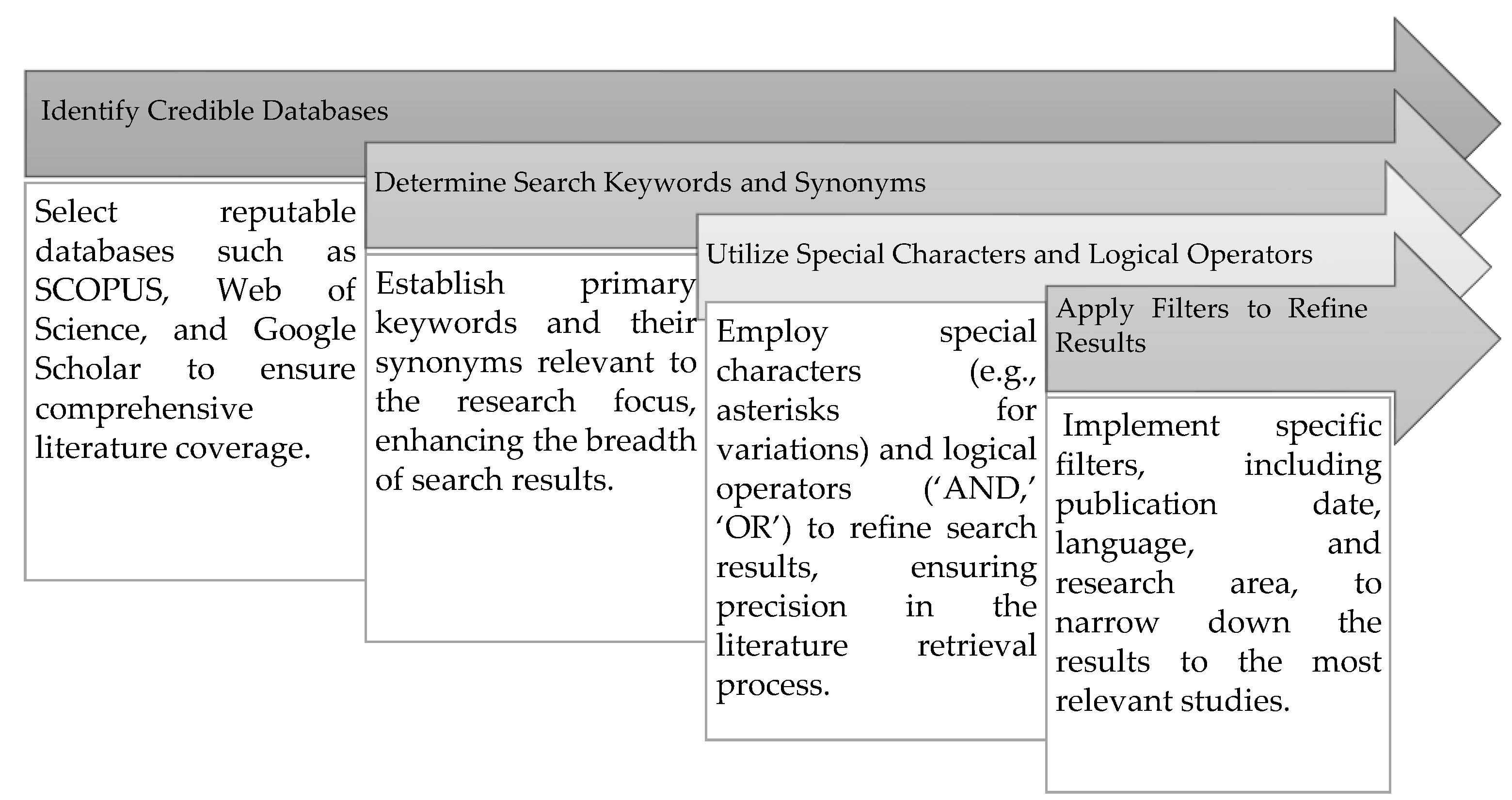
Figure 3.
Proposed Selection Process.

Figure 4.
Proposed Procedure for Data Collection.

Figure 5.
Proposed Synthesis Process.
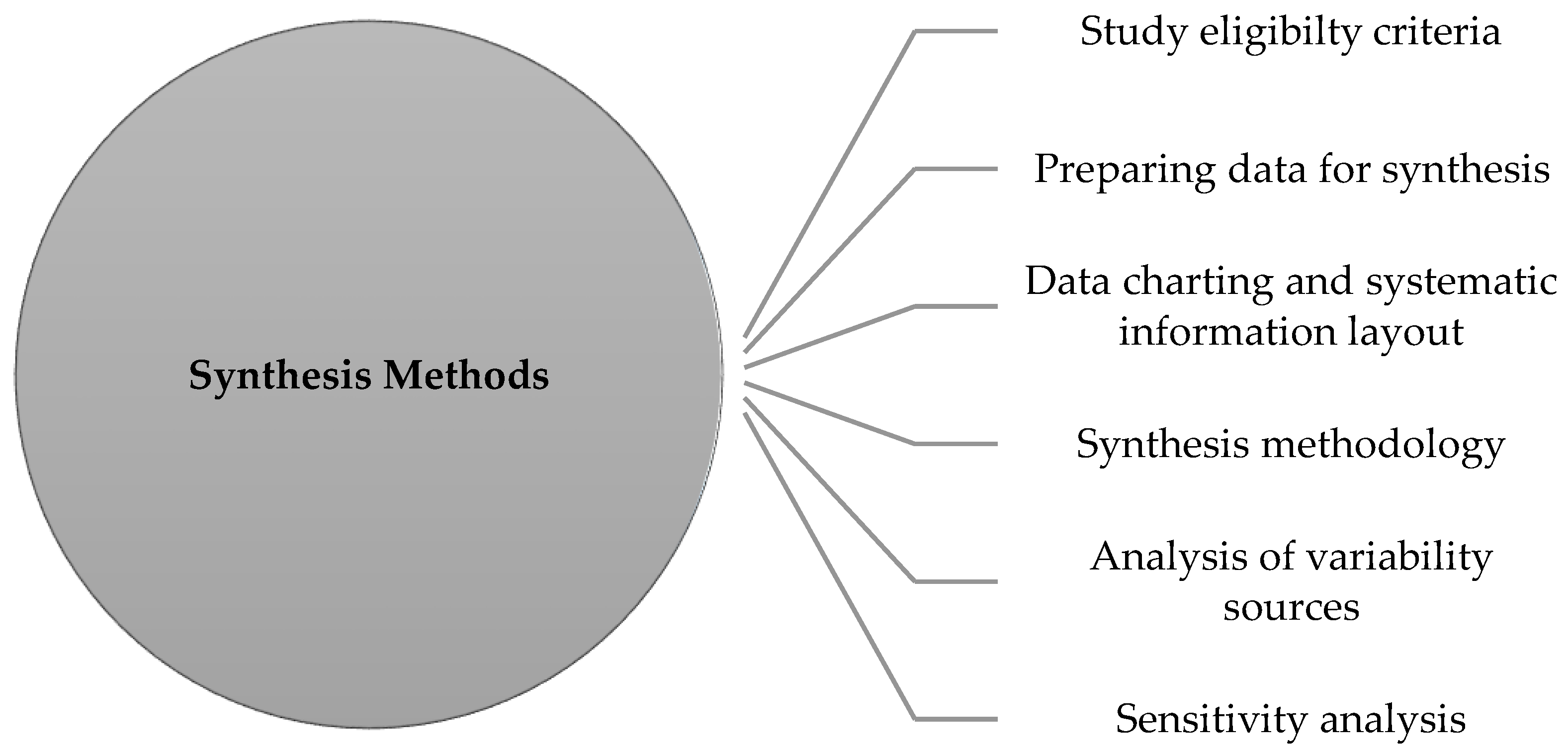
Figure 6.
Data Preparation Process.
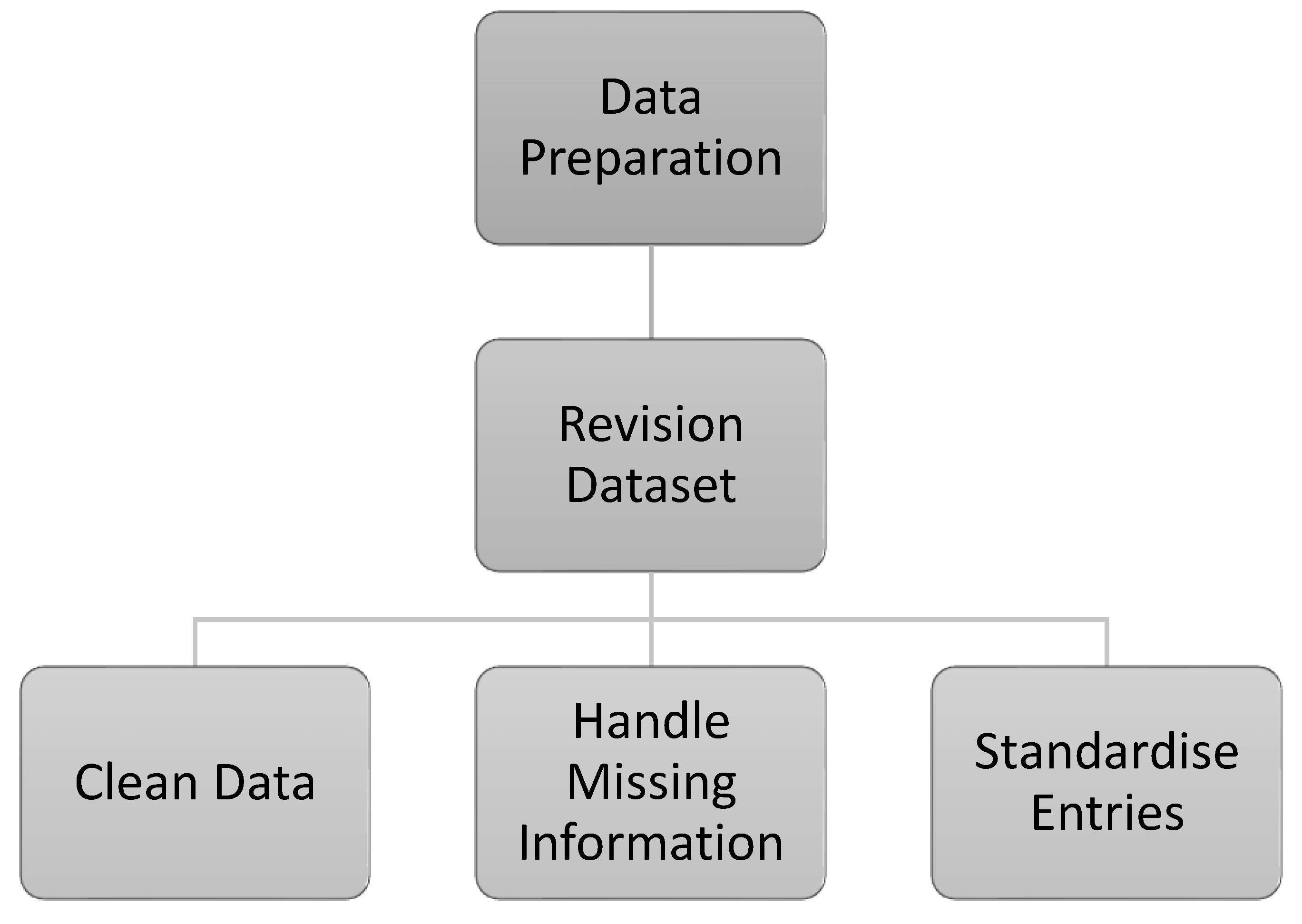
Figure 7.
Sensitivity Analysis Process.
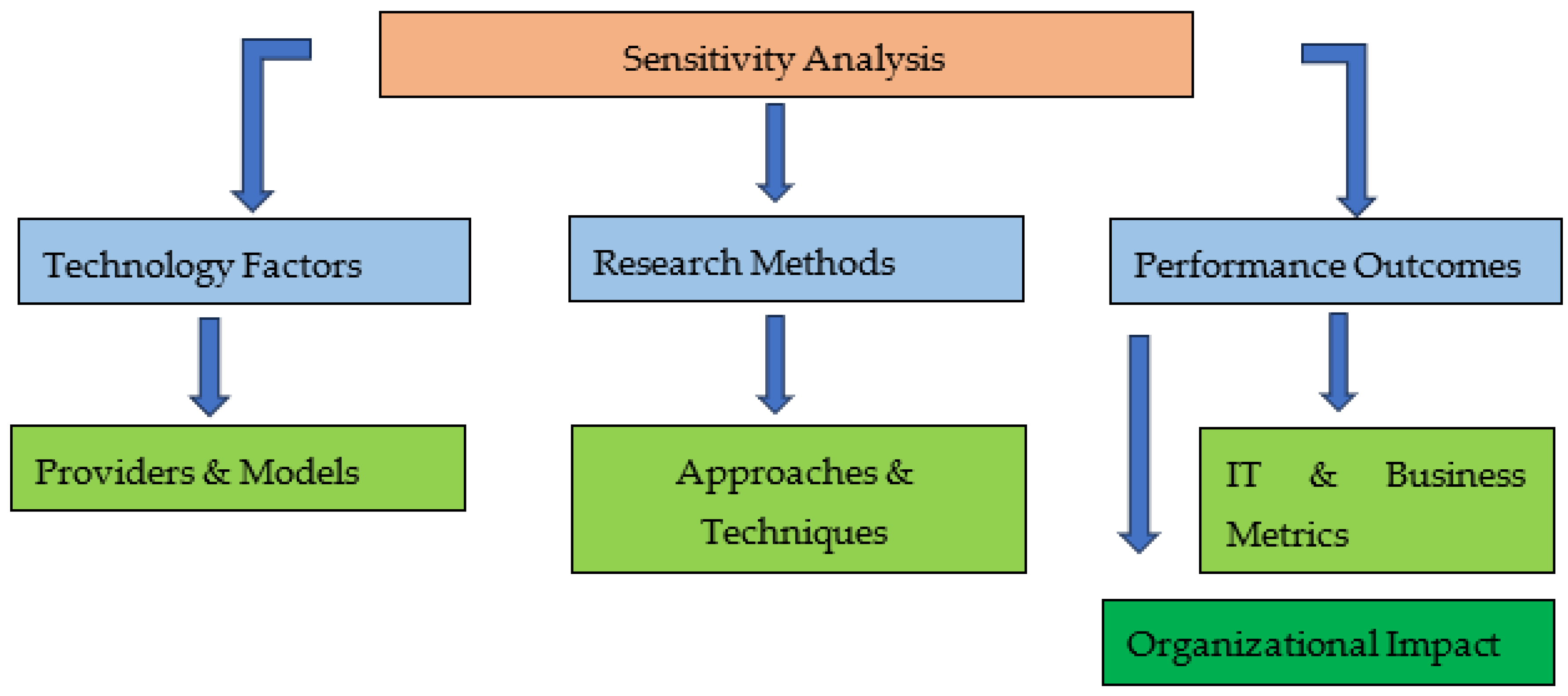
Figure 8.
Proposed PRISMA Flowchart.
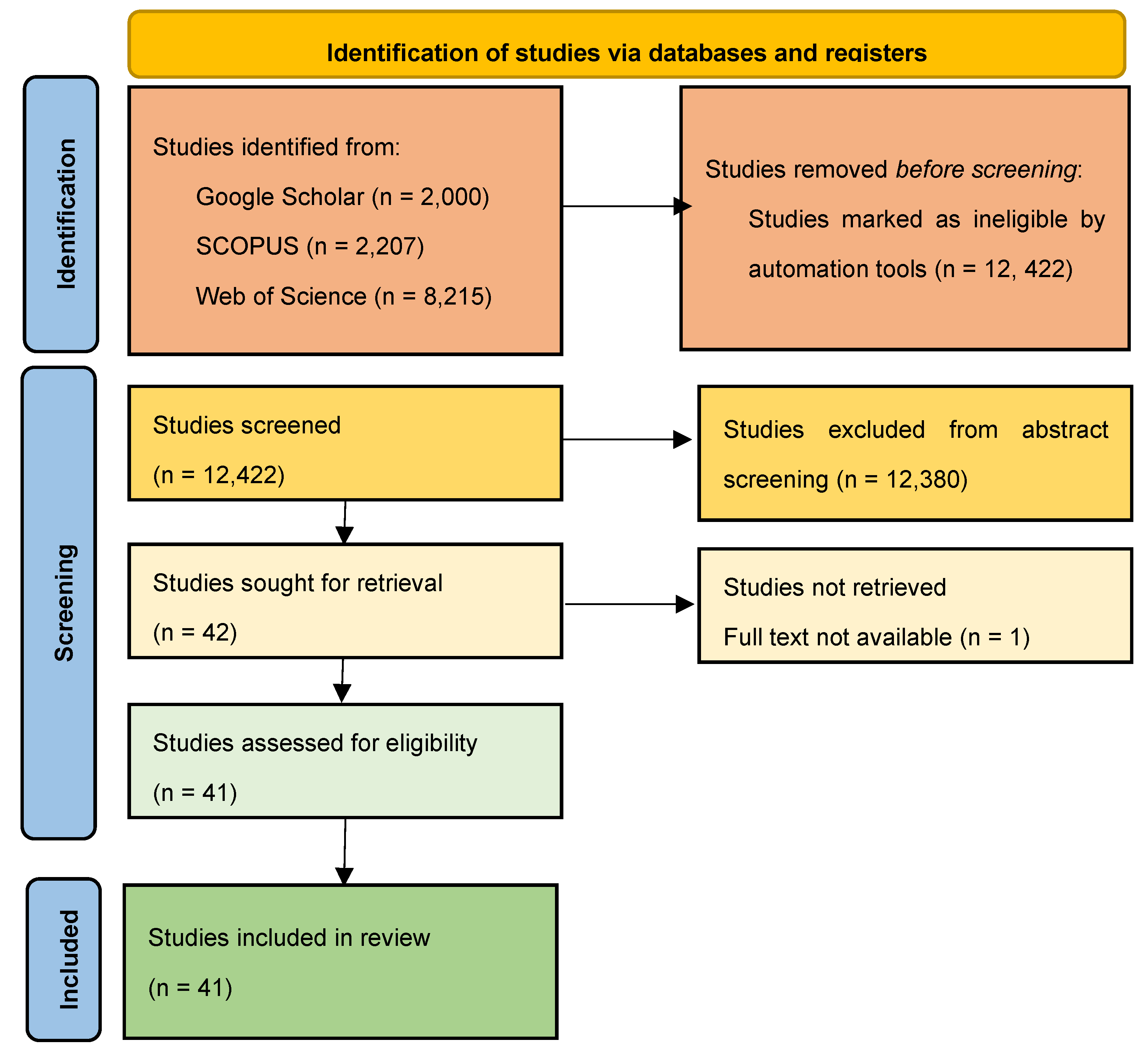
Figure 9.
Research Distribution by Online Information Sources.
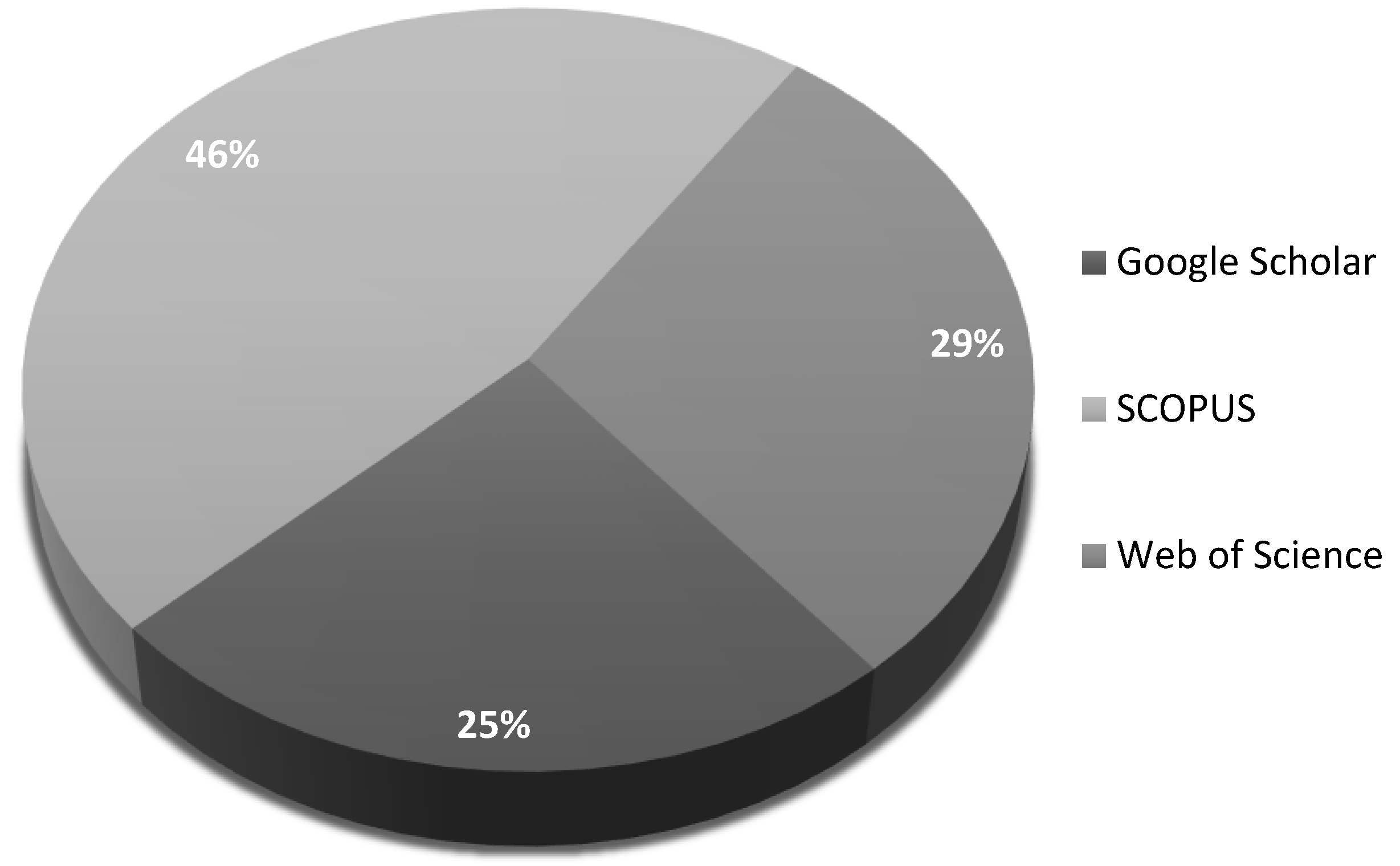
Figure 10.
Research Distribution by Published Studies.
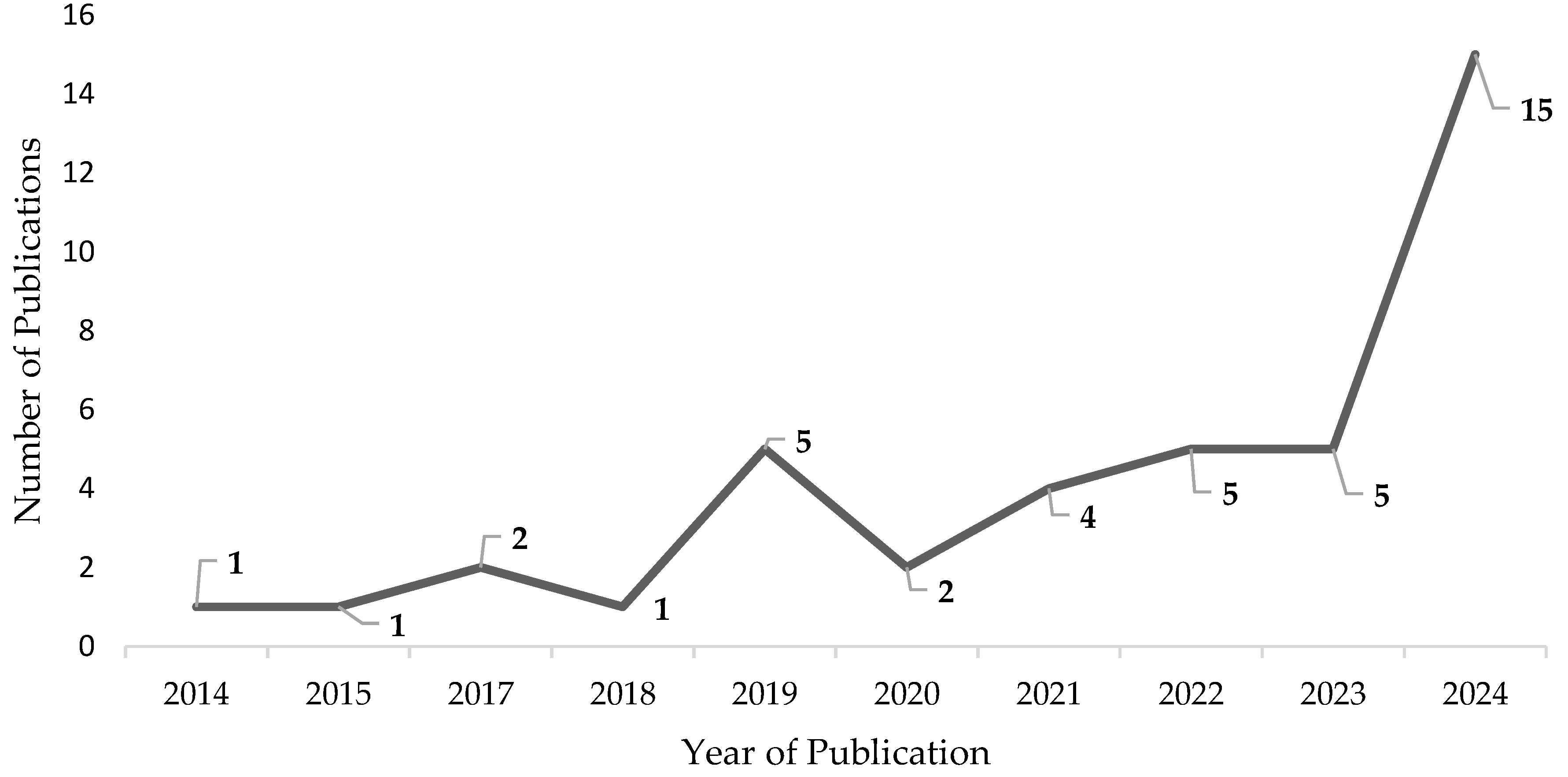
Figure 11.
Research Distribution by Research Type.
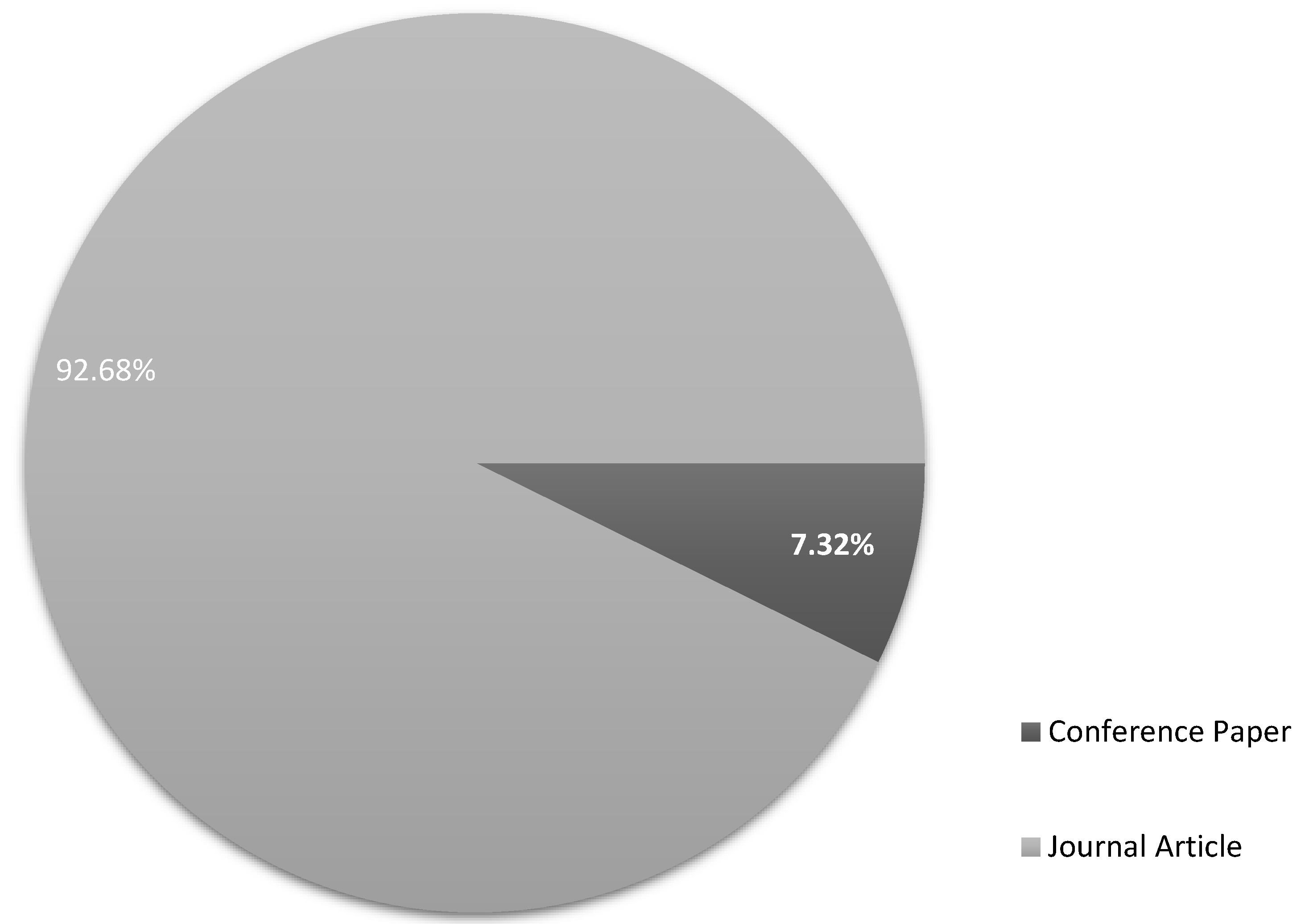
Figure 12.
Research Distribution by Countries.
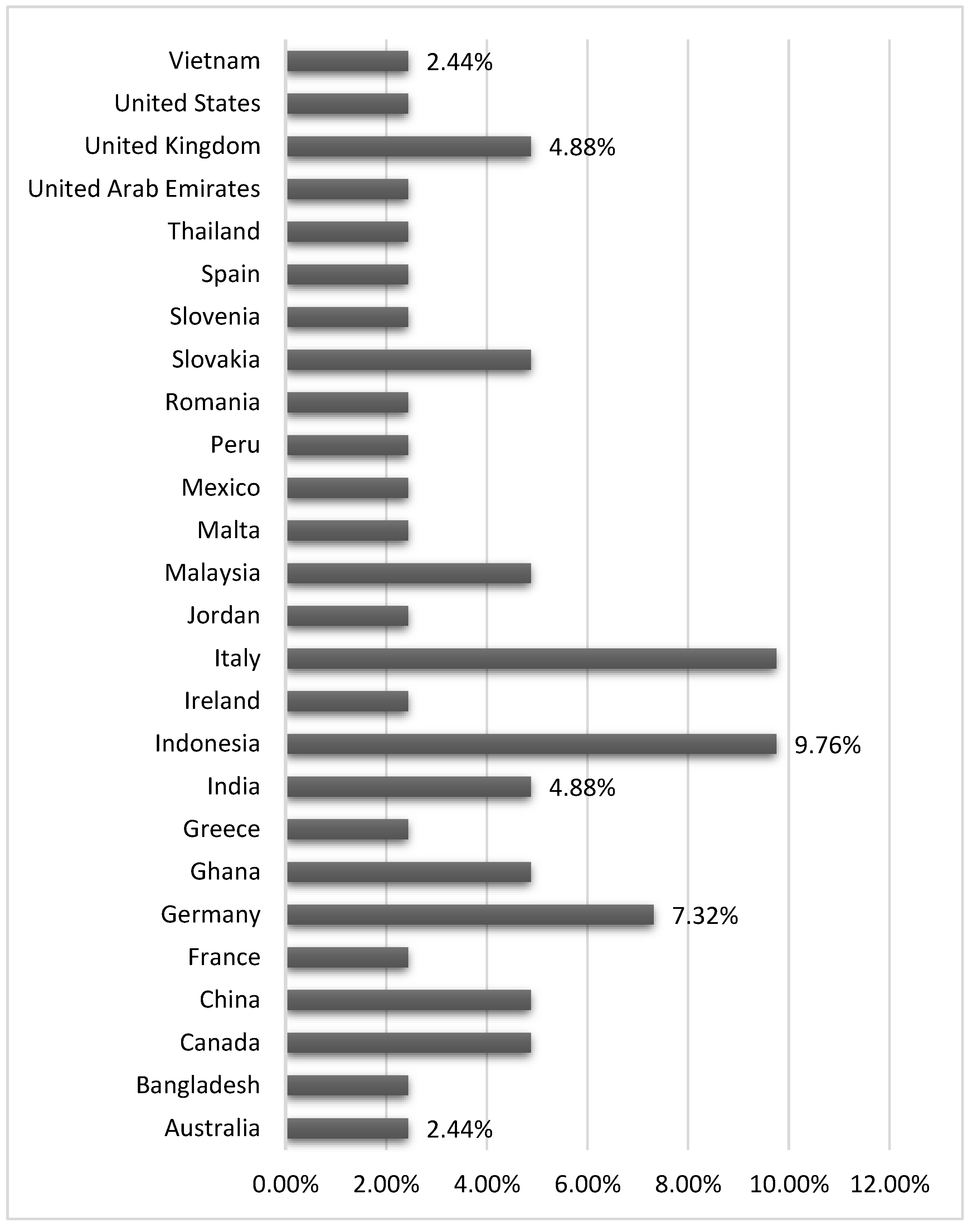
Figure 13.
Research Distribution by Economic Context.
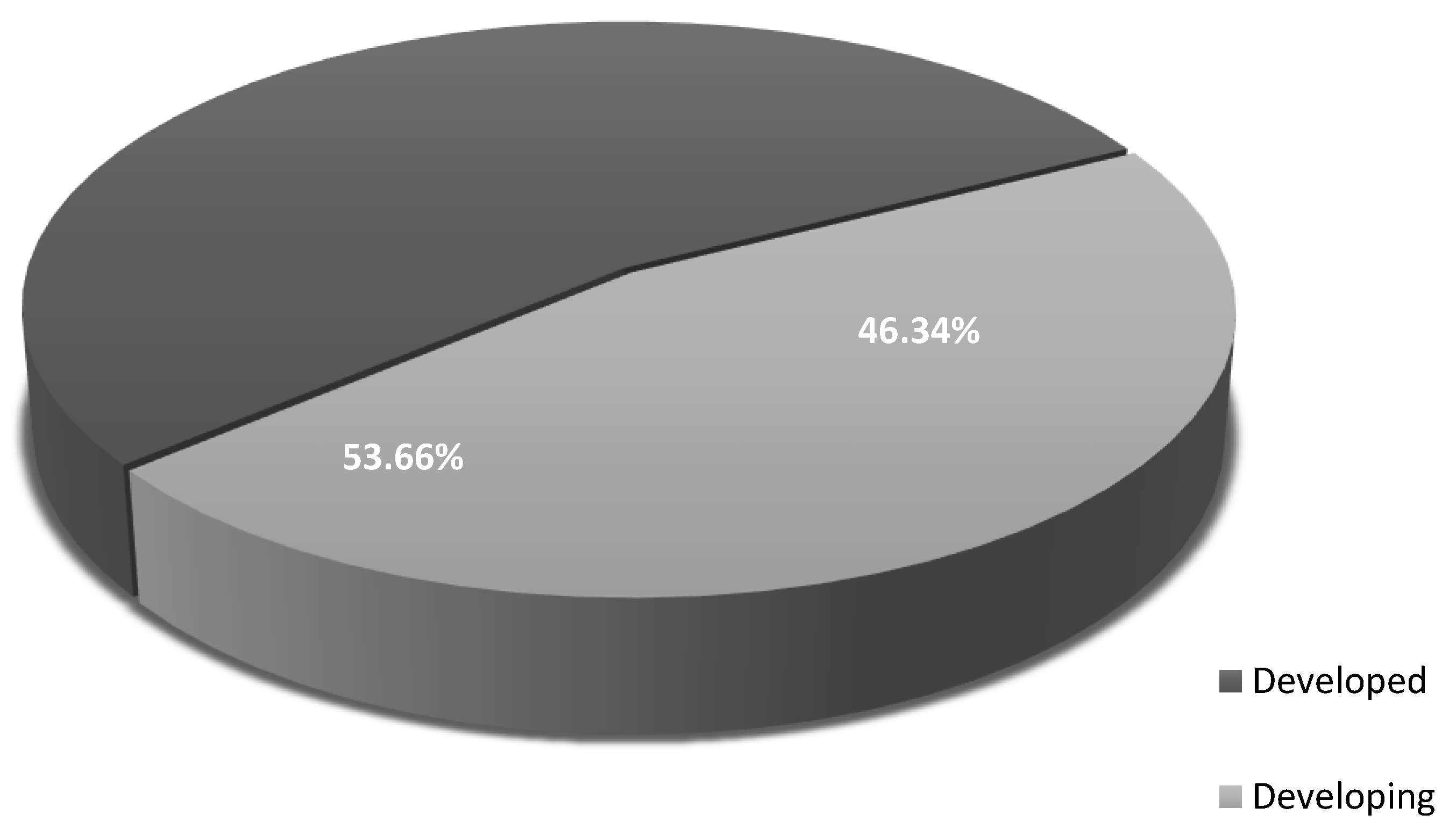
Figure 14.
Research Distribution by Research Design.
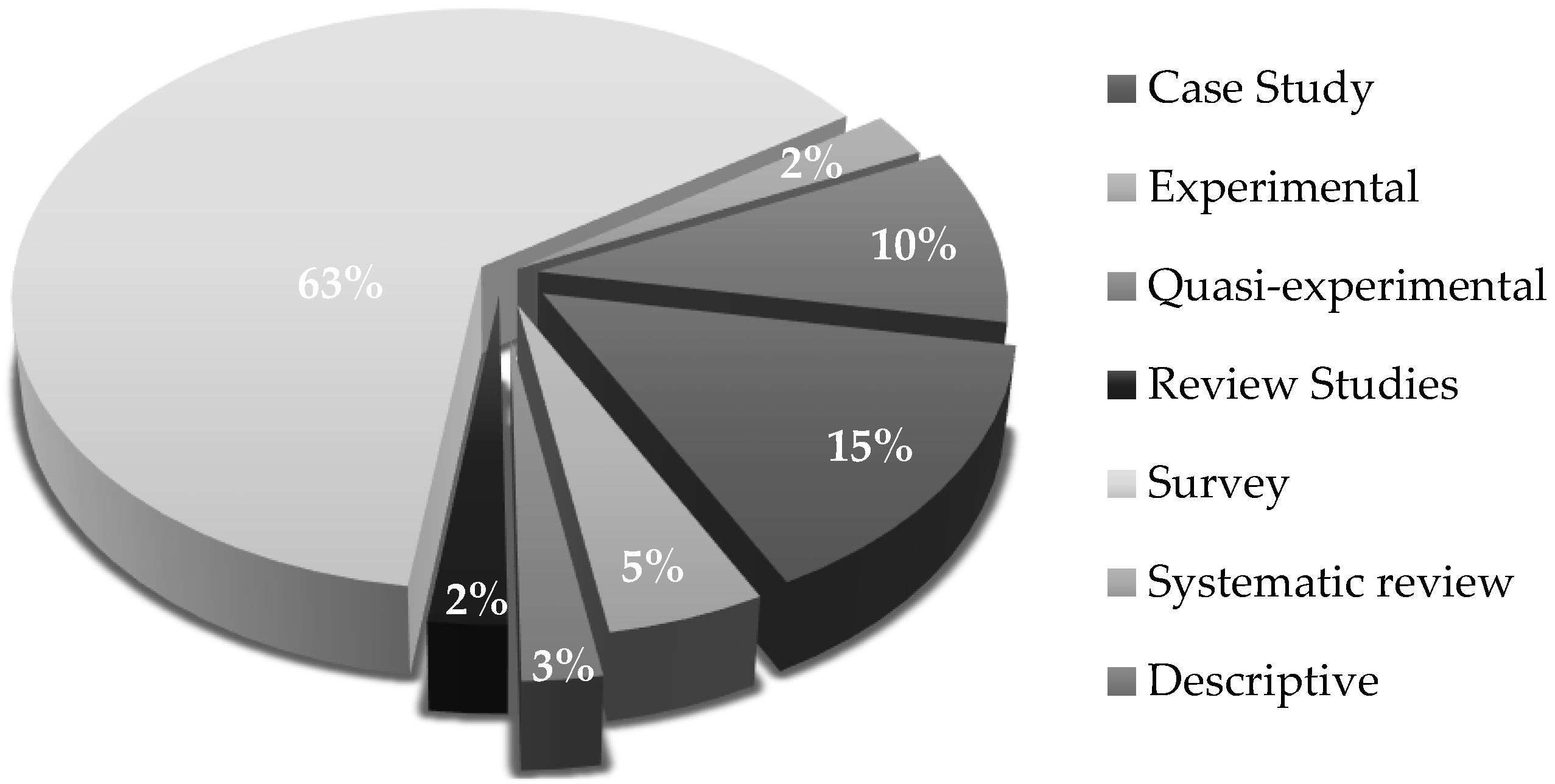
Figure 15.
Research Distribution by Area of Discipline.
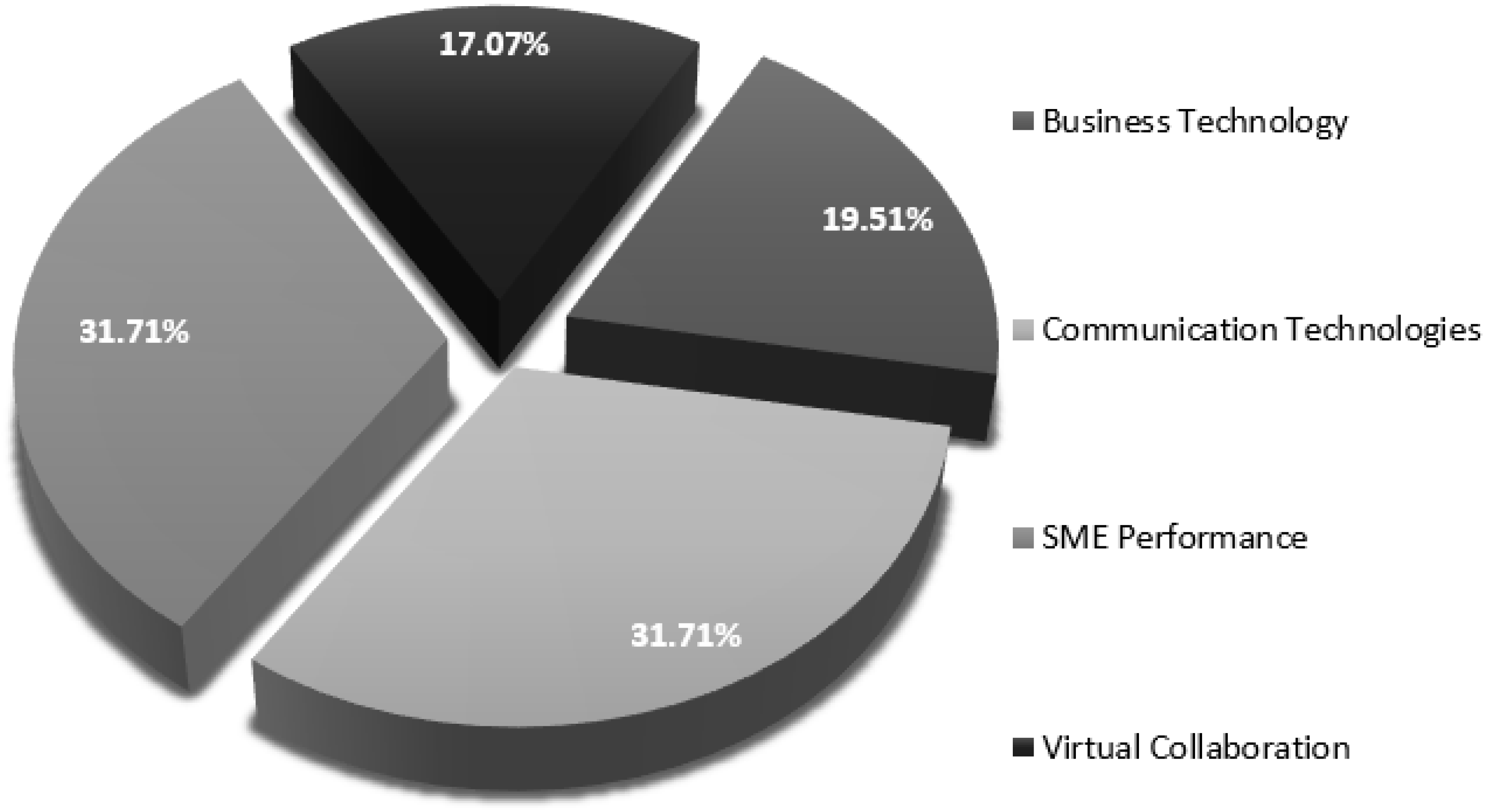
Figure 16.
Research Distribution by Virtual Collaboration Technologies.
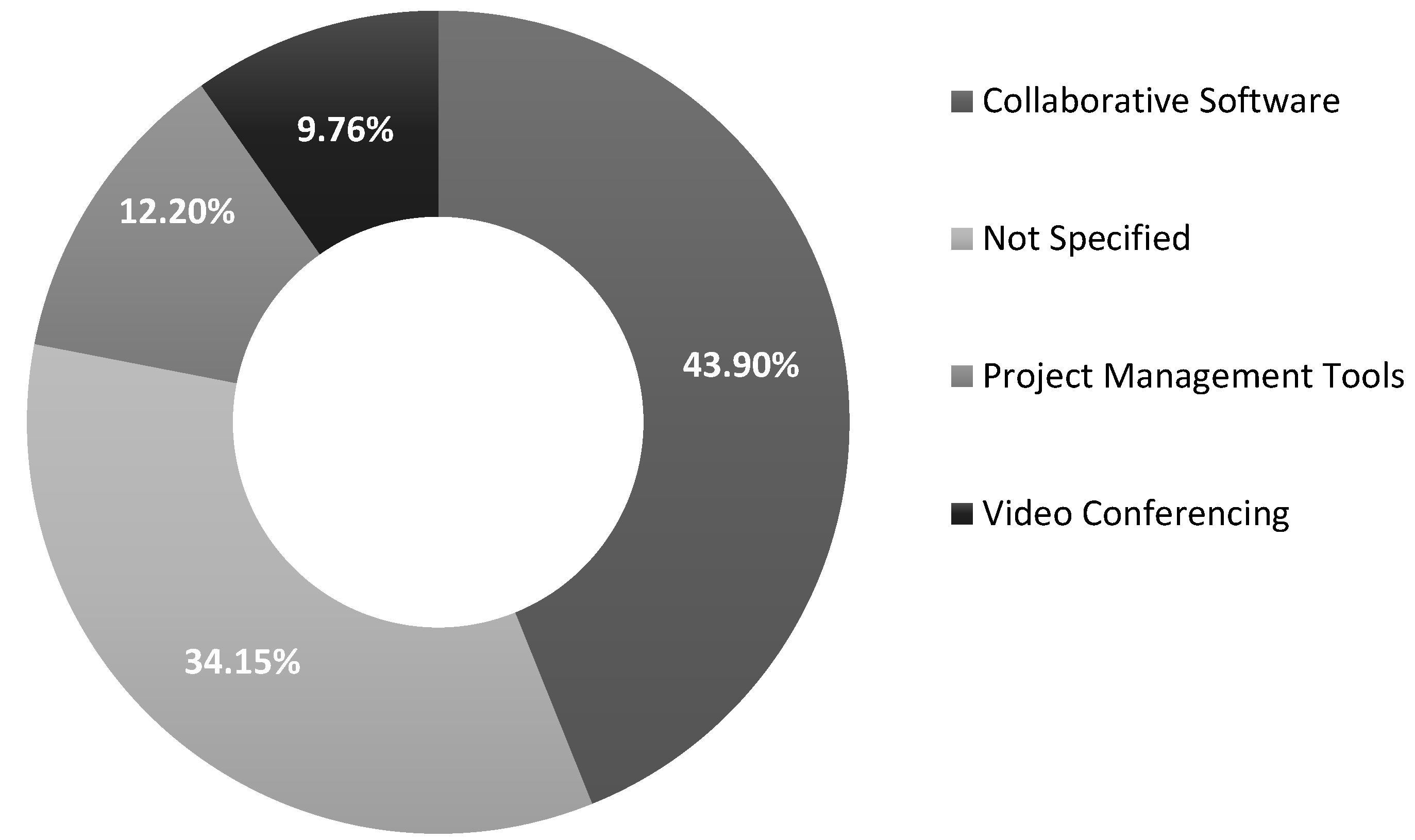
Figure 17.
Research Distribution by Technology Implementation Models.
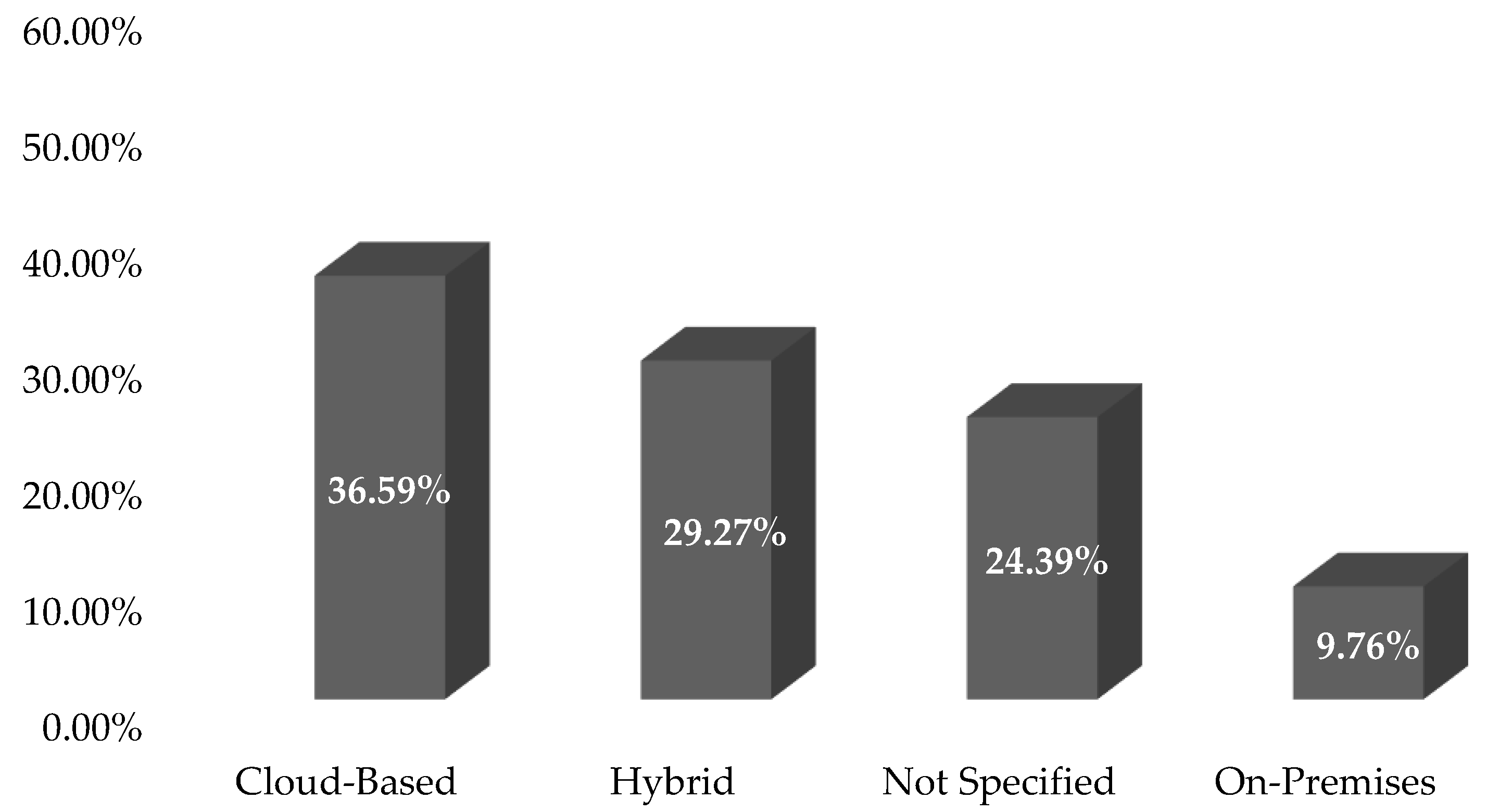
Figure 18.
Research Distribution by IT Performance Metrics.
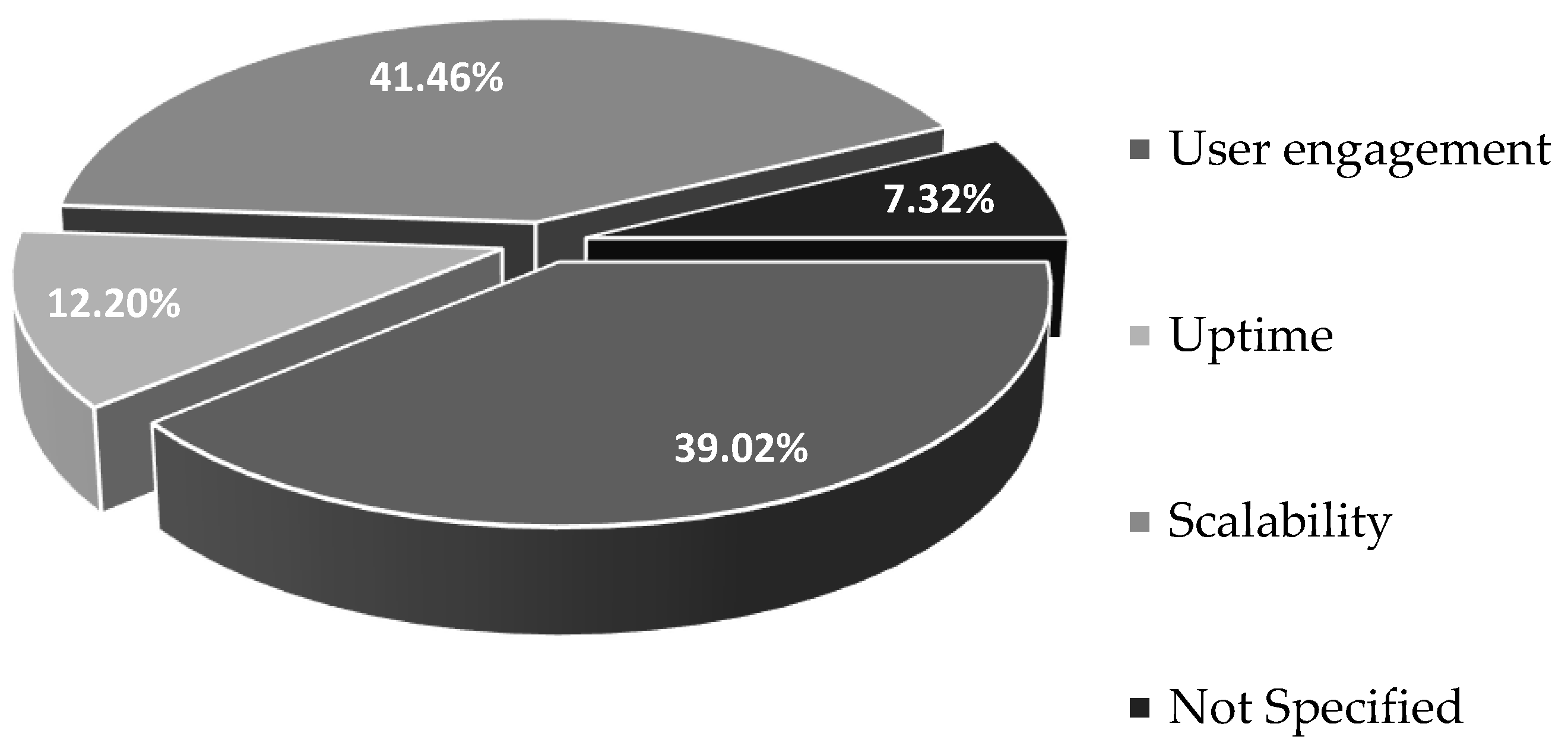
Figure 19.
Research Distribution by Business Performance Metrics.
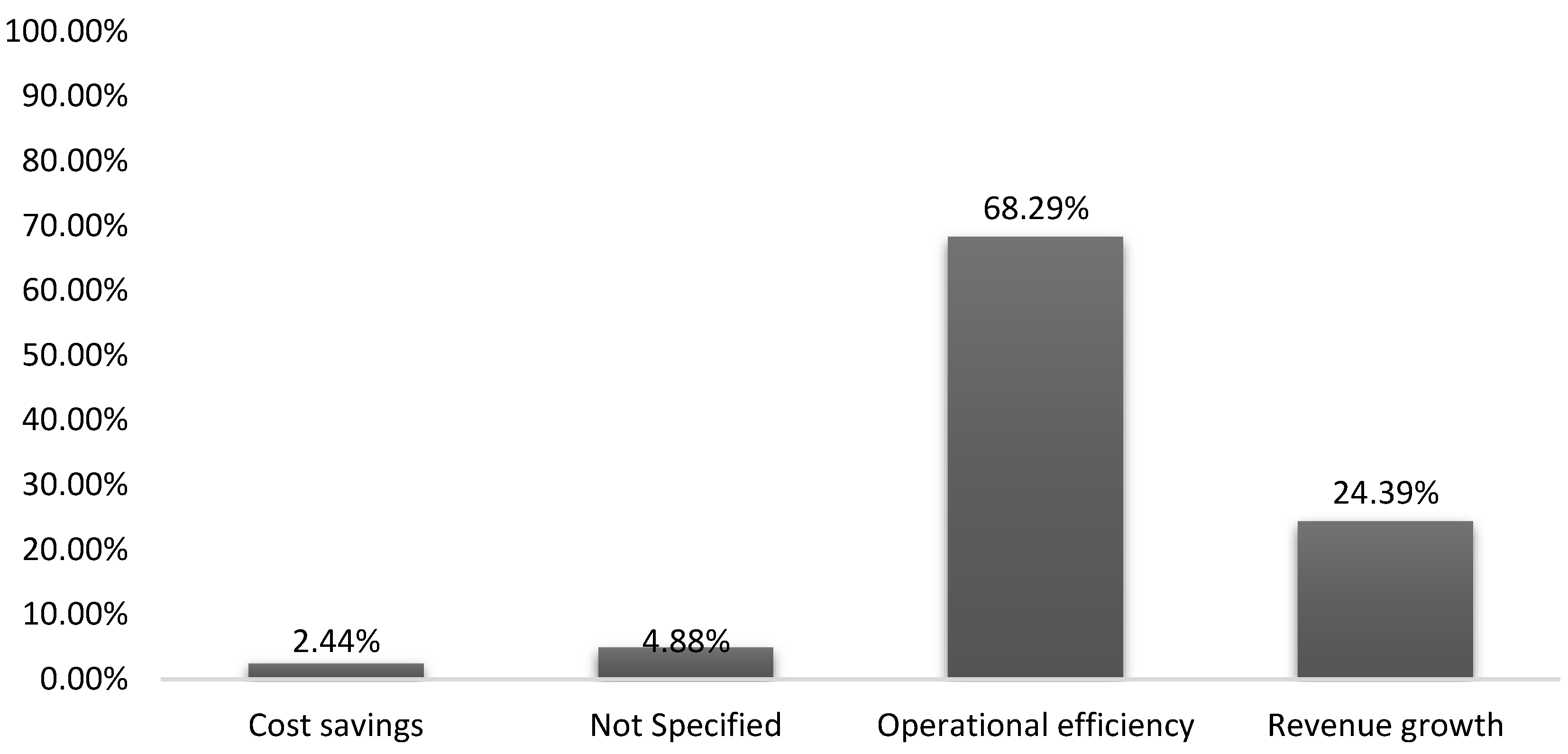
Figure 20.
Research Distribution by Organizational Outcomes.
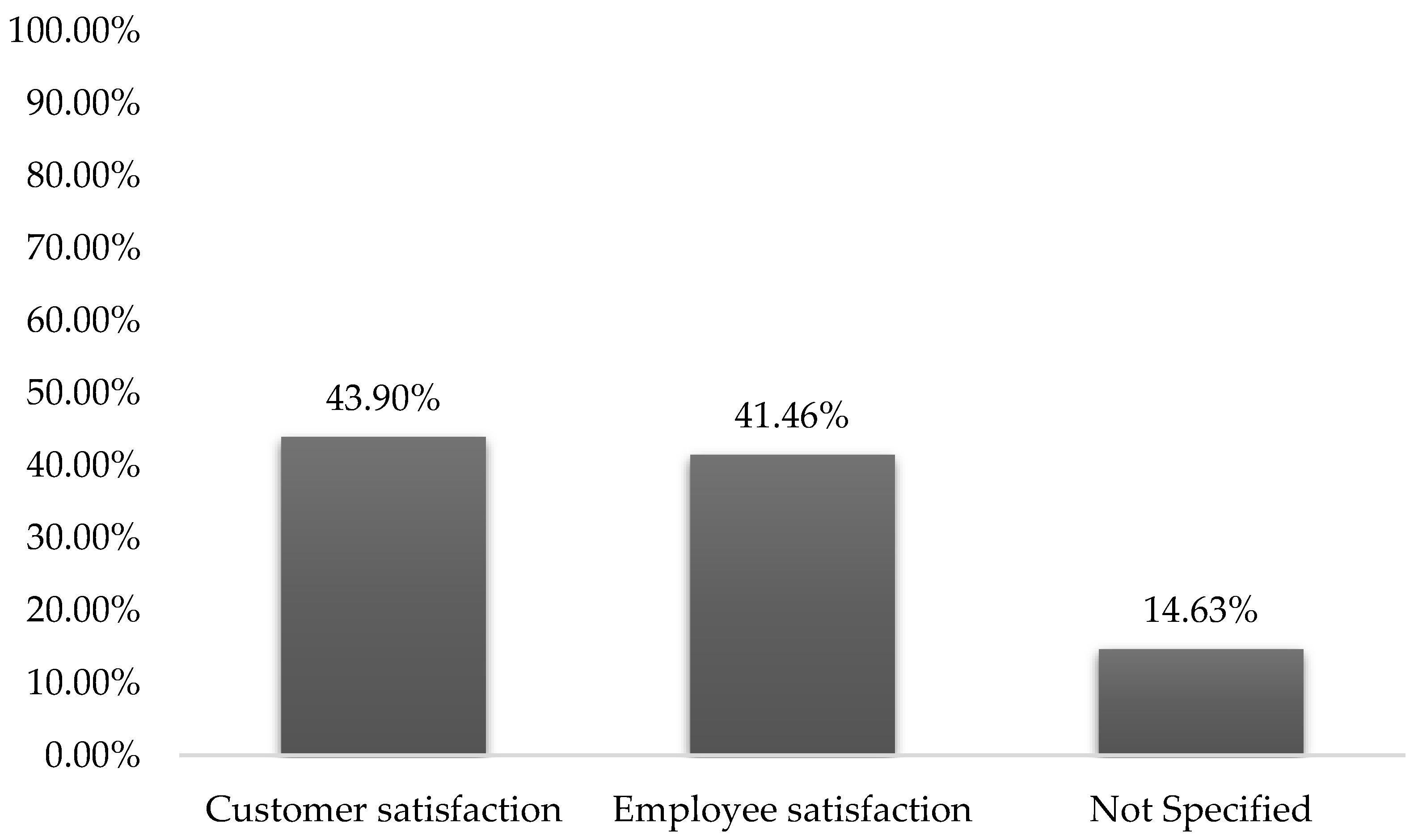
Figure 21.
Research Distribution by Long-Term Impacts on SMEs.
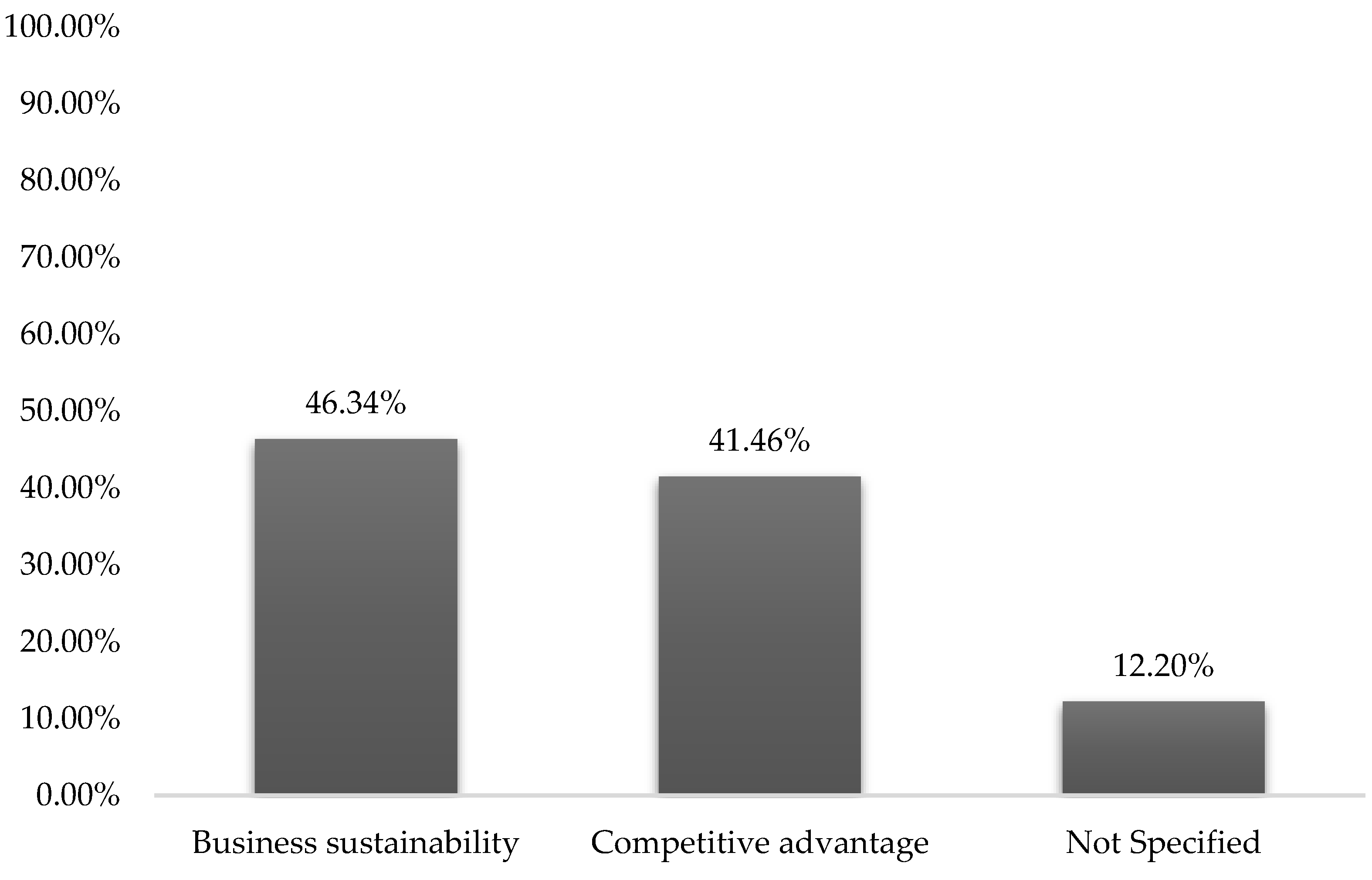
Figure 22.
Research Distribution by Study Type.
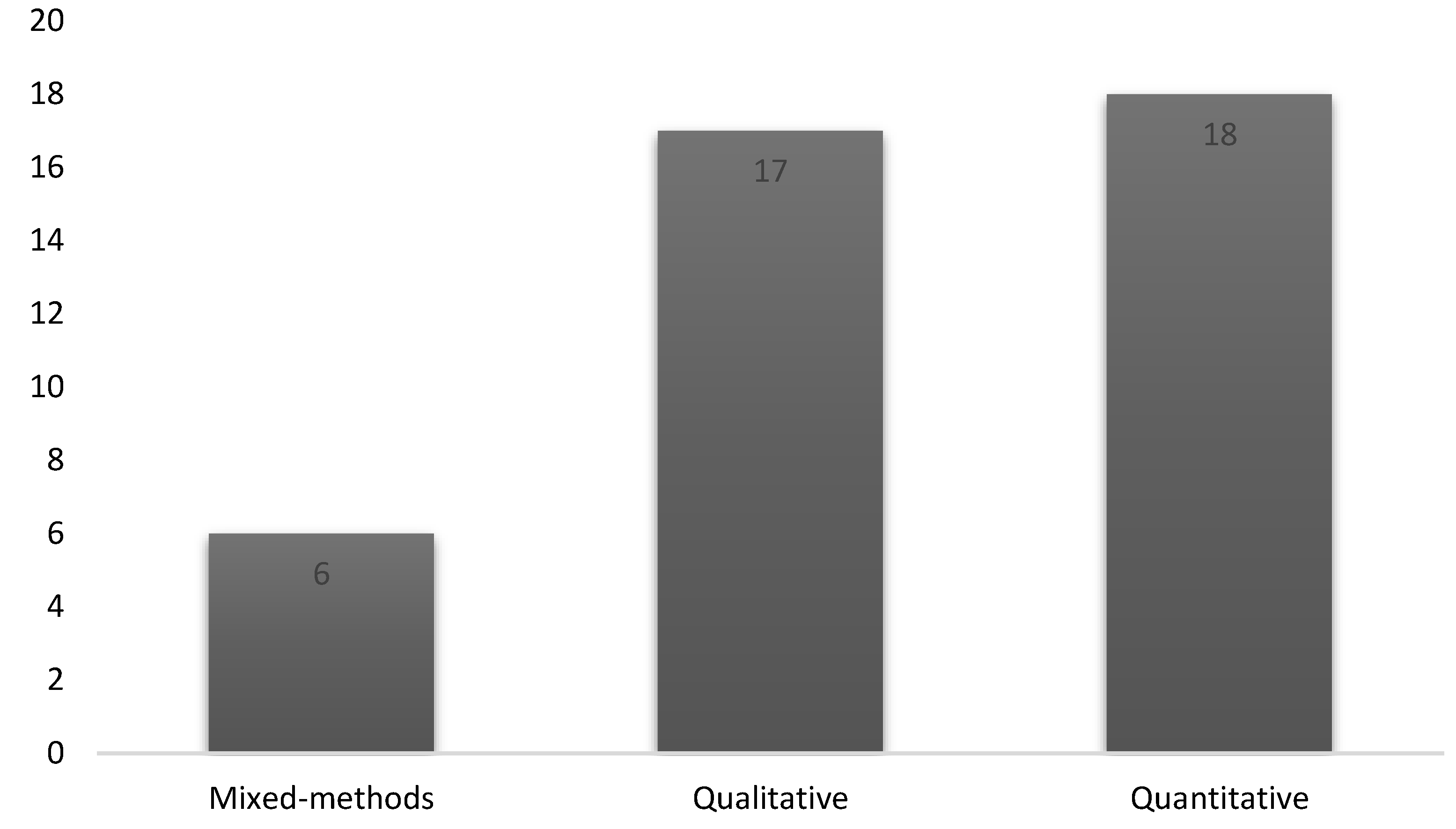
Table 1.
Comparative Analysis of the Existing Review Works and Proposed Systematic Review on Performance Improvements of Virtual Collaboration and Communication Technologies in SMEs.
Table 1.
Comparative Analysis of the Existing Review Works and Proposed Systematic Review on Performance Improvements of Virtual Collaboration and Communication Technologies in SMEs.
| Ref. | Cites | Year | Contribution | Pros | Cons |
|---|---|---|---|---|---|
| [2] | 13 | 2018 | Analyzed the role of social capital in the effectiveness of ICT interventions. | Building strong networks through these technologies can foster long-term growth by improving relationships between internal teams and external partners. | ICT interventions do not always produce predictable results. VCCTs outcomes like improved collaboration or enhanced productivity may not be guaranteed due to varying organizational cultures, structures, or social dynamics found within SMEs. |
| [3] | 48 | 2020 | Reviewed 2354 studies and conducted a bibliometric analysis on virtual team dynamics. | Thoroughly reviews many studies, offering a broad understanding of virtual teams. | Focuses on peer-reviewed articles, potentially excluding relevant non-peer-reviewed work. |
| [4] | 81 | 2020 | Reviews collaborative internalization in SMEs, categorizing existing literature into themes and developing a framework that specifies key antecedents, mediators, moderators, and outcomes. | Highlights the importance of inter-organizational collaboration in overcoming resource limitations and establishing legitimacy for SMEs in international markets. | The research is fragmented and lacks clarity on how SMEs achieve internationalization. Additionally, environmental factors and post-entry growth or survival are under-investigated. |
| [5] | 8 | 2021 | Identifies and summarizes evidence on the effects of interventions that shape firms’ incentives to adopt new technologies. | Some interventions effectively increased technology adoption across various sectors, with credible results due to rigorous methodologies. | The effects are context-specific and hard to generalize, with mixed results on other firm performance measures like profits and productivity. |
| [6] | 16 | 2021 | The use of primary internet access for telemedicine in low-resource settings demonstrates how even minimal technological tools can significantly impact performance. | Virtual collaboration technologies (VCTs) in SMEs, telemedicine is highlighted as a cost-effective method to improve access and service delivery. | Telemedicine in low-income countries faces challenges due to slow internet speeds and high costs. |
| [7] | 8 | 2023 | The study found empirically proven determinants of E-HRM intention and communication technology support impact E-HRM adoption, which results in many positive outcomes. | The review’s development of a conceptual framework helps synthesize key antecedents that can guide SMEs in adopting virtual communication and collaboration technologies. | Although disruptive technologies offer many benefits, their adoption requires overcoming barriers related to effort expectancy, social influence, and perceived innovativeness. |
| [8] | 1 | 2023 | Analyses 40 case studies on Industry 4.0 technologies in various sectors. | Provides valuable insights for researchers and practitioners on current implementation levels and trends. | Highlights barriers like a lack of a skilled workforce, data security issues, and financial constraints, especially in SMEs. |
| [9] | 9 | 2024 | Efficient Communication Protocols and scalability through wireless communication networks and IoT systems. | Diverse primary applications applicable in various environments, providing valuable data while improving operational efficiency. | Data transmission over wireless networks introduces risks of unauthorized access. |
| [10] | 75 | 2024 | Develops a framework that outlines the key factors influencing the adoption and impact of virtual collaboration and communication technologies in SMEs. | Virtual collaboration tools can significantly improve operational efficiency by streamlining communication and coordination within SMEs. | SMEs often face financial constraints that hinder the adoption and effective use of virtual collaboration technologies. |
| [11] | 0 | 2024 | Uses AI techniques like NLP and BER Topic to analyze trends in virtual team research over four decades, identifying 16 distinct topics | Efficiently processes large datasets, provides objective and reproducible insights, and captures evolving research trends. | Requires human interpretation for topic naming, and some documents were classified as outliers, potentially missing relevant insights. |
| [12] | 0 | 2024 | Review on the digital transformation of SMEs, identifying core success factors. | Covers various aspects of digital transformation, including organizational, information systems, and financial facets. | Most reviewed studies are from European and Asian countries, with limited data on developing countries. |
| Proposed systematic review | The review consolidates findings from 41 studies to assess the impact of VCCTs on SMEs performance and identifies key performance metrics. | It provides timely insights into the role of VCCTs in enhancing operational efficiency and employee engagement while offering practical best practices for SMEs. | The review includes a relatively small number of studies of 41 from an initial pool of 662,422 records, which may limit the generalizability of the findings. | ||
Table 2.
Proposed Inclusion and Exclusion Criteria of Collecting Literature.
| Criteria | Inclusion | Exclusion |
|---|---|---|
| Topic | Papers focused on performance improvements in SMEs using VCCTs. | Papers not explicitly related to SMEs, large enterprises, or unrelated technologies. |
| Research Framework | Clear frameworks or methodologies related to VCCTs performance. | Papers lacking a research framework or methodology relevant to VCCTs. |
| Language | Papers written in English. | Papers not written in English. |
| Publication Period | Papers published between 2014 and 2024. | Papers published before 2014. |
| Technology Adoption | Papers focusing on technology or ICT adoption, even if indirectly related. | Papers not addressing technology adoption or unrelated to VCCTs. |
Table 3.
Keyword Search Results.
| Online Database | Number of Results |
|---|---|
| Google Scholar | 2,000 |
| SCOPUS | 2,207 |
| Web of Science | 8,215 |
| Total | 12,422 |
Table 4.
Collected Parameters Definition.
| Parameter | Description |
|---|---|
| Title | The name of the article or study. |
| Year | The year the study was published. |
| Online Database | The digital platform or repository where the research was accessed. |
| Journal Name | The specific academic journal in which the research was published. |
| Research Type | The general approach taken in the study (e.g., quantitative, qualitative). |
| Discipline or Subject Area | The academic field or area of study to which the research pertains. |
| Industry Context | The specific industry or sector addressed in the study. |
| Geographic Location | The region or country where the research was conducted or focused. |
| Economic Context | The economic environment or conditions relevant to the study. |
| Types of Collaboration Technologies | The technologies used for collaboration purposes in the studies. |
| Types of Communication Technologies | The technologies employed for communication in the research. |
| Technology Providers | Companies or organizations supplying the technologies in the studies. |
| Technology Implementation Model | The framework or approach for implementing the technologies. |
| Research Design | The overall strategy for conducting the research, including data collection and analysis. |
| Type of Study | The specific classification of the study (e.g., case study, survey). |
| Sample Size | The number of participants or data points included in the research. |
| Sample Characteristics | Demographic and other relevant details about the participants. |
| Data Collection Methods | Techniques used to gather data, such as surveys or interviews. |
| Data Analysis Techniques | Methods applied for analyzing the collected data. |
| IT Performance Metrics | Indicators measuring the effectiveness and efficiency of IT systems. |
| Business Performance Metrics | Measures used to evaluate overall business performance, such as revenue growth and efficiency. |
| Organizational Outcomes | The effects of the research findings on the organization, including employee engagement. |
Table 5.
Proposed Risk of Bias in Studies.
| Ref. | Reporting Bias | Sample Size Bias | Social Desirability Bias | Measurement Bias | Time Lag Bias | Overall Authenticity |
|---|---|---|---|---|---|---|
| [24] | Low | High | High | Low | High | 4 |
| [25] | Low | High | Low | Low | High | 6 |
| [26] | Moderate | High | Moderate | Low | High | 4 |
| [27,28,29] | Low | High | High | Low | Low | 6 |
| [30] | Moderate | High | High | Low | Low | 5 |
| [31,32] | Low | Low | High | Low | Low | 8 |
| [33] | Moderate | Low | High | Low | Low | 7 |
| [34] | Low | Moderate | High | Low | Low | 7 |
| [35] | Moderate | Moderate | High | Low | Low | 6 |
| [36] | High | High | Low | Low | Low | 6 |
| [1,37] | Low | High | Low | Low | Low | 8 |
| [38,39,40,41,42,43,44,45,46] | Low | Low | Low | Low | Low | 10 |
| [47,48,49,50] | Moderate | Low | Low | Low | Low | 9 |
| [51] | Low | Moderate | Low | Low | Low | 9 |
| [52,53] | Low | High | Moderate | Low | Low | 7 |
| [54] | Low | Low | Moderate | Low | Low | 9 |
| [55] | Low | Moderate | Moderate | Low | Low | 8 |
| [56,57] | Low | High | High | Low | Moderate | 5 |
| [58] | Low | High | Low | Low | Moderate | 7 |
| [59,60] | Low | Low | Low | Low | Moderate | 9 |
| [61] | Moderate | Low | Low | Low | Moderate | 9 |
| [62] | Moderate | Moderate | Low | Low | Moderate | 7 |
| [63] | High | Low | Moderate | Low | Moderate | 6 |
Table 8.
Contribution of Individual Studies.
| Ref. | Sample Size | Performance Indicators | Mechanisms Introduced | Contributions |
|---|---|---|---|---|
| [42] | 683 | Efficiency | Market turbulence as a moderator. | Inform SMEs and policymakers about the potential benefits and challenges of adopting eco-innovation strategies. |
| [36] | Customer Satisfaction | Use of CRM systems. | Offers practical tips for using virtual platforms and suggests policy improvements for digital tool adoption. | |
| [35] | 71 | Efficiency | The study may have advocated for implementing systems that allow suppliers to manage inventory levels more effectively. | The research could inform policymakers in developing strategies to support SMEs and promote economic growth. |
| [26] | Quality of Work | Avatar-based interaction, Immersive virtual environments. | Advises using virtual tools to improve teamwork, learning, and innovation processes. | |
| [62] | 177 | Productivity | Theory of Planned Behavior, Organizational Learning Culture. | Practical guidelines for ICT adoption in SMCEs. |
| [52] | Cost-effectiveness | AMT to address the challenges faced by MSMEs. | Provides evidence for the importance of investing in technology and infrastructure to support MSMEs. | |
| [56] | Cost-effectiveness | ICT adoption, Remote work policies. | Offers insights on how SME clusters can enhance collaboration and efficiency and suggests a general model for optimizing cluster performance. | |
| [39] | 495 | Productivity | Cloud-computing | Prioritize digital adoption. Invest in infrastructure and skills. Focus on BMI. Cultivate a digital culture. Address managerial challenges. Strategically integrate BM |
| [53] | 49 | Quality of Work | Avatar-based interaction, Immersive virtual environments. | Guidelines for building virtual rooms, Practical applications in education and remote work. |
| [60] | 202 | Customer Satisfaction | Technology Acceptance Model, Pace of technological innovation, Corporate Social Responsibility. | Practical guidelines for digital media use, Policy recommendations for enhancing stakeholder engagement. |
| [48] | 2274 | Employee Satisfaction | Professional learning mechanism. | Study challenges the notion that there is a one-size-fits-all approach to principal leadership. |
| [37] | 5 | Productivity | Automation technologies. | Policies that empower virtual-hybrid relations. |
| [34] | 76 | Cost-effectiveness | Social media platforms. | Provides practical guidelines for SMEs on using networks and collaboration for international growth; suggests policy support for network-building. |
| [32] | 239 | Productivity | Digital skills, ICT utilization, social media engagement, Organizational agility. | Practical insights for SMEs, Policy recommendations for digital adoption. |
| [58] | 27 | Quality of Work | Digital technology adoption, Teamwork platforms. | Suggests improving knowledge management could benefit project success. |
| [1] | Cost-effectiveness | Study uses the VSM to analyze eco-innovation. | It contributes to the ongoing debate about the role of government policies and incentives in promoting eco-innovation. | |
| [59] | 218 | Cost-effectiveness | mediating role of supply chain technology adoption. | Policies that support SMEs in building strong supply chain capabilities and adopting innovative technologies. |
| [28] | 10 | Employee Satisfaction | Adoption of ICT tools, Remote work policies, Virtual collaboration platforms. | Practical applications for crisis management, Policy recommendations for ICT adoption. |
| [54] | 336 | Cost-effectiveness | Performance Measurement Systems (PMS), Key Success Factors. | Practical guidelines for PMS implementation, Policy recommendations for SMEs. |
| [50] | 236 | Cost-effectiveness | E-tutoring, Relational administration, ICT integration. | Improved SME resilience, Policy recommendations for public administrations. |
| [24] | Quality of Work | Social media as collaboration tools. | Virtual teams affect work-life balance. | |
| [25] | Employee Satisfaction | Technology Acceptance Model, Pace of technological innovation. | Advises SMEs on training approaches to improve sustainability and productivity. Highlights the role of mentors and collaboration for success. | |
| [55] | 160 | Productivity | Extension or additions features introduced to platforms. | Developed framework the explores SM use within other business contexts. |
| [31] | 297 | Cost-effectiveness | New resource-based view and SC theories. | Managers of exporting firms should build stronger relationships with their customers and suppliers. |
| [61] | 209 | Productivity | Control elements that influence cloud adoption. | Value creation policies and strategies in cloud computing services, and more digital inclusion. |
| [47] | 393 | Employee Satisfaction | Cloud -based solutions, collaboration platforms. | Policy recommendations. |
| [63] | 790 | Customer Satisfaction | development of new leadership skills for managing virtual teams. | Strategies for building effective virtual teams. |
| [46] | 500 | Customer Satisfaction | Introduction of tools and technologies for virtual collaboration. | strategies for building effective virtual teams or mitigating the negative impacts of automation. |
| [33] | 12000 | Productivity | Digital skills, ICT utilization. | Advises SMEs on choosing the best 5G network for robot control. Recommends exploring 5G with AI, blockchain, and IoT. |
| [27] | 7 | Productivity | Use of CRM systems, social media platforms, Cloud applications, POS systems. | Practical insights for SME managers, Policy recommendations for digital transformation support. |
| [49] | 845 | Customer Satisfaction | Integrated Marketing Communication, Market Orientation, Resource-Based View. | Practical guidelines for IMC strategies, Policy recommendations for SMEs. |
| [29] | 6 | Efficiency | Digital technologies, Strategic agility, Relations with research institutions. | Practical guidelines for SMEs, Policy recommendations for digital adoption. |
| [41] | 976 | Customer Satisfaction | Synergy of e-marketing, sustainability, and technology orientation. | Policies that support SMEs in adopting digital technologies and sustainable practices. |
| [57] | 34 | Efficiency | Virtual collaboration platforms, Adoption of ICT tools. | SMEs could benefit more from cheaper collaborative and optimization tools. More research is needed to make these tools better for SMEs. |
| [51] | 188 | Cost-effectiveness | Technology Acceptance Model. | Stresses the need for SMEs to enhance digital skills and technology use to boost performance and sustainability. |
| [44] | 474 | Quality of Work | Digital technology adoption, Online communication, Teamwork platforms. | Policy recommendations for digital transformation, Practical insights for SMEs. |
| [30] | Customer Satisfaction | A simulation model using MATLAB to demonstrate the framework’s applicability. | The study has implications for developing policies related to sustainable logistics and the adoption of Industry 4.0 technologies. | |
| [43] | 294 | Customer Satisfaction | framework emphasizes the importance of practical application of IS strategy. | Policies or initiatives to promote the adoption of strategic IS planning among SMEs. |
| [38] | 308 | Employee Satisfaction | Technology acceptance. | Policies that empower employees with technological skills and resources. |
| [40] | 535 | Efficiency | ICT adoption, Government support, Top management support. | Practical applications for managers, Policy recommendations for digital transformation. |
| [45] | 239 | Employee Satisfaction | Digital technologies, Strategic agility. | Advises SMEs to focus on developing digital skills to leverage ICT and social media for better performance and agility. |
Table 10.
Proposed Decision-Making Framework for Implementing Enterprise Social Platforms (ESPs).
| Industry | Step | Framework Focus | Key Features | Strategic Drivers | Expected Outcome | Ties to Proposed Study |
|---|---|---|---|---|---|---|
| Manufacturing | Step 1: Needs Analysis | Identify operational inefficiencies and communication gaps. | Assess existing processes, worker needs, and technology usage. | Operational efficiency, digital skills development. | Better understanding of pain points and requirements. | Aligns with findings on operational efficiency (68.29%). |
| Step 2: Select Platform | Choose an ESP that integrates with manufacturing systems (e.g., ERP, SCM). | Focus on platforms with IoT capabilities and process automation. | Technology investment, process optimization. | Enhanced integration with existing systems. | Relevant to scalability and digital skills development (41.46%). | |
| Step 3: Pilot Testing | Implement ESP in a specific production unit to evaluate its impact. | Monitor key performance indicators (KPIs) such as uptime and efficiency. | Employee engagement, technology usability testing. | Insights on system performance and user feedback. | Supports findings on user engagement and system reliability. | |
| Step 4: Full Integration | Roll out ESP across all departments with necessary customizations. | Provide training sessions, set up support systems. | Workforce training, change management strategies. | Comprehensive adoption and improved operational workflows. | Consistent with full integration practices highlighted in the study. | |
| Step 5: Optimization | Continuously monitor ESP performance and make necessary adjustments. | Use analytics for ongoing improvements and automation. | Continuous improvement, data-driven decision-making. | Sustained productivity gains and system scalability. | Reflects the importance of long-term impact (41.46%). | |
| Retail | Step 1: Needs Analysis | Evaluate customer interaction processes and digital engagement strategies. | Identify existing communication channels and marketing needs. | Customer-centric strategies, digital marketing. | Clear understanding of engagement gaps and customer preferences. | Ties to findings on customer satisfaction (43.9%). |
| Step 2: Select Platform | Choose an ESP that supports omnichannel marketing and CRM integration. | Platforms should enable personalized marketing and analytics. | Data analytics, customer experience enhancement. | Better alignment with customer engagement strategies. | Relates to the study’s emphasis on customer interaction. | |
| Step 3: Pilot Testing | Conduct a pilot with selected stores or online channels to assess customer response. | Track customer satisfaction and conversion rates. | User acceptance testing, customer feedback. | Evidence-based insights for broader implementation. | Relevant to findings on digital engagement and scalability. | |
| Step 4: Full Integration | Deploy ESP across all retail operations, ensuring consistent branding. | Standardize procedures for customer service and feedback loops. | Brand consistency, operational alignment. | Streamlined operations and enhanced customer experience. | Consistent with digital transformation principles. | |
| Step 5: Optimization | Refine marketing strategies based on data insights from the ESP. | Utilize AI and machine learning for predictive analytics. | Digital marketing optimization, real-time insights. | Increased customer retention and sales growth. | Supports findings on continuous improvement and innovation. | |
| Healthcare | Step 1: Needs Analysis | Assess current communication practices and service delivery methods. | Evaluate the efficiency of existing health IT systems. | Health IT innovation, patient outcomes. | Clear understanding of system limitations and areas for improvement. | Ties to user engagement and digital skills development findings. |
| Step 2: Select Platform | Choose a secure and compliant ESP tailored to healthcare needs (e.g., telehealth). | Focus on data security, patient privacy, and interoperability. | Regulatory compliance, data protection. | Secure and scalable platform selection. | Aligns with findings on scalability and user engagement. | |
| Step 3: Pilot Testing | Implement ESP in selected departments or clinics to evaluate service delivery. | Monitor patient satisfaction and service response times. | Quality improvement, user feedback. | Insights into patient and staff acceptance. | Relevant to the study’s focus on operational efficiency. | |
| Step 4: Full Integration | Expand ESP usage to all health services, integrating with electronic health records. | Standardize protocols for telehealth and remote consultations. | Process standardization, technology adoption. | Improved healthcare accessibility and operational efficiency. | Supports findings on long-term impacts and sustainability (46.34%). | |
| Step 5: Optimization | Regularly update the ESP with new features based on patient and staff feedback. | Implement continuous training programs for staff. | Continuous improvement, technology innovation. | Enhanced patient outcomes and service quality. | Consistent with findings on digital transformation. | |
| Information Technology | Step 1: Needs Analysis | Identify areas where collaboration and project management can be improved. | Evaluate current tools and communication workflows. | Agile practices, digital collaboration. | Comprehensive assessment of communication needs. | Relates to findings on productivity (41.46%). |
| Step 2: Select Platform | Choose an ESP that supports agile project management and remote collaboration. | Ensure compatibility with development tools (e.g., Git, JIRA). | Continuous integration, project management optimization. | Improved project coordination and tracking. | Supports findings on agile methodologies. | |
| Step 3: Pilot Testing | Run a pilot project involving cross-functional teams to evaluate ESP’s impact. | Track project timelines, productivity, and team satisfaction. | User testing, productivity metrics. | Evidence-based insights for broader rollout. | Relevant to digital skills development findings. | |
| Step 4: Full Integration | Fully integrate the ESP across all teams, incorporating agile workflows. | Provide training on new practices and tools. | Change management, employee training. | Streamlined processes and enhanced collaboration. | Supports findings on full integration strategies. | |
| Step 5: Optimization | Continuously improve the platform’s functionalities based on user feedback. | Use data analytics to track project performance trends. | Continuous improvement, agile practices. | Faster project delivery and increased innovation. | Ties to long-term outcomes and innovation capacity. | |
| Education | Step 1: Needs Analysis | Assess the existing digital infrastructure and learning management practices. | Identify gaps in digital literacy and access to learning tools. | Digital literacy, inclusive education. | Clear understanding of digital needs for students and educators. | Aligns with digital skills development and user engagement (39.02%). |
| Step 2: Select Platform | Choose an ESP that supports virtual classrooms and e-learning features. | Prioritize platforms with interactive and multimedia capabilities. | Digital engagement, educational technology. | Enhanced student and teacher experience. | Relevant to the study’s focus on digital literacy. | |
| Step 3: Pilot Testing | Conduct a pilot with specific courses to test the ESP’s impact on learning outcomes. | Track student engagement and learning satisfaction. | Feedback collection, course adjustments. | Evidence-based improvements to digital teaching methods. | Ties to findings on user engagement and scalability. | |
| Step 4: Full Integration | Implement the ESP across all courses, integrating with existing educational tools. | Provide training for educators and students on platform usage. | Teacher training, curriculum alignment. | Broader access to flexible and interactive learning. | Consistent with findings on educational technology adoption. | |
| Step 5: Optimization | Update the ESP based on feedback to include new features that enhance learning. | Continuously adapt to technological changes in education. | Ongoing development, learning technology innovation. | Improved learning outcomes and accessibility. | Reflects the importance of long-term impacts (46.34%). | |
| Finance | Step 1: Needs Analysis | Identify current inefficiencies in financial services and advisory processes. | Evaluate existing customer service workflows and technology use. | Customer service, financial advisory improvement. | Clear identification of gaps in service delivery. | Aligns with findings on operational efficiency (68.29%). |
| Step 2: Select Platform | Choose an ESP with secure transaction and remote advisory capabilities. | Focus on platforms that prioritize data security and compliance. | Regulatory compliance, customer experience. | Improved digital financial services. | Relevant to findings on user engagement and scalability (41.46%). | |
| Step 3: Pilot Testing | Implement the ESP in selected service areas to evaluate its effect on customer experience. | Monitor client feedback and service response times. | User acceptance, service improvement. | Data-driven insights for broader implementation. | Ties to findings on customer satisfaction and user engagement. | |
| Step 4: Full Integration | Expand ESP to all financial services, integrating with existing digital platforms. | Standardize processes for remote advisory services. | Service consistency, employee training. | Enhanced customer experience and operational resilience. | Consistent with findings on digital transformation. | |
| Step 5: Optimization | Regularly update the ESP to include advanced financial advisory tools. | Implement continuous monitoring of service quality. | Ongoing innovation, customer retention strategies. | Sustained customer satisfaction and service growth. | Supports findings on long-term impact and continuous improvement. |
Table 11.
Proposed Best Practices for Successful Study Implementation.
| Industry | Best Practice | SME Type | Operational Challenge | Strategic Drivers | Expected Impact | Ties to Systematic Review Findings |
|---|---|---|---|---|---|---|
| Manufacturing | Implement digital training programs. | Manufacturing SMEs focused on production. | Low digital skills and resistance to technology adoption among workers. | Workforce development, technology adoption. | Improved digital skills, reduced downtime due to automation. | Aligns with findings on digital skills development and operational efficiency (68.29%). |
| Establish a cross-functional digital team. | Medium-sized manufacturers with multiple departments. | Siloed communication between departments and fragmented workflows. | Cross-functional collaboration, process optimization. | Enhanced communication and streamlined production processes. | Supports findings on employee engagement and efficiency (41.46%). | |
| Use predictive maintenance tools. | Small-scale manufacturers with limited resources. | Unplanned downtime and high maintenance costs. | Predictive analytics, data-driven decision-making. | Lower maintenance costs and improved operational continuity. | Relevant to findings on user engagement and system reliability. | |
| Retail | Leverage customer data analytics. | Online retailers or brick-and-mortar stores transitioning to digital. | Lack of personalized marketing and customer insights. | Customer-centric strategies, data analytics. | Increased customer satisfaction and sales growth. | Ties to findings on customer satisfaction and digital engagement (43.9%). |
| Develop omnichannel customer service strategies. | SMEs with physical and online stores. | Inconsistent customer experience across different channels. | Brand consistency, customer service quality. | Improved brand loyalty and customer retention. | Supports findings on user engagement and customer satisfaction. | |
| Integrate e-commerce platforms with social media. | Retailers looking to expand online presence. | Difficulty reaching target audiences through traditional channels. | Digital marketing, social media engagement. | Expanded market reach and increased online sales. | Relevant to the study’s emphasis on digital engagement and scalability (41.46%). | |
| Healthcare | Adopt secure telehealth platforms. | Small clinics or specialized healthcare providers. | Compliance with data protection regulations and patient privacy. | Health IT innovation, regulatory compliance. | Enhanced patient satisfaction and service quality. | Ties to findings on long-term impacts and user engagement (46.34%). |
| Train staff on digital health tools. | Medium-sized healthcare facilities with a diverse workforce. | Varying levels of digital literacy among healthcare workers. | Continuous professional development, technology adoption. | Improved service delivery and patient outcomes. | Aligns with findings on digital skills development. | |
| Implement remote monitoring for patient care. | Specialized healthcare providers focused on chronic conditions. | Difficulty in providing continuous care and monitoring. | Patient-centric strategies, digital health solutions. | Better patient management and reduced hospital visits. | Supports findings on scalability and continuous improvement. | |
| Information Technology | Use agile methodologies for project management. | IT service providers or software development firms. | Difficulty in adapting to rapid changes in project requirements. | Agile practices, project management optimization. | Faster project delivery and higher client satisfaction. | Consistent with findings on productivity and digital skills (41.46%). |
| Foster a culture of continuous learning. | Small IT firms looking to upskill their workforce. | Outdated skills and limited training resources for employees. | Workforce development, continuous improvement. | Increased employee productivity and innovation capacity. | Relevant to findings on user engagement and digital transformation. | |
| Implement DevOps practices. | Medium-sized IT companies with complex development cycles. | Siloed development and operations teams, leading to delays. | DevOps integration, process automation. | Streamlined workflows and improved deployment frequency. | Ties to findings on system reliability and operational efficiency. | |
| Education | Integrate digital tools into curricula. | Educational institutions or training providers. | Varying levels of digital adoption among educators. | Digital literacy, inclusive education policies. | Enhanced student engagement and learning outcomes. | Aligns with findings on digital skills and user engagement (39.02%). |
| Develop blended learning strategies. | Schools or training centers transitioning to online education. | Inconsistent learning experiences between in-person and online classes. | Hybrid learning models, student-centric strategies. | Better learning outcomes and increased course completion rates. | Supports findings on educational technology adoption. | |
| Use analytics for student performance tracking. | Higher education institutions or vocational training providers. | Difficulty in identifying struggling students early on. | Data-driven decision-making, continuous improvement. | Early intervention and improved student performance. | Relevant to findings on scalability and long-term impacts (46.34%). | |
| Finance | Enhance cybersecurity measures. | Financial advisory firms or fintech companies. | High risk of data breaches and compliance issues. | Data protection, regulatory compliance. | Improved data security and client trust. | Ties to findings on operational efficiency and scalability (41.46%). |
| Use virtual advisory services. | Small financial firms expanding digital service offerings. | Limited client access to in-person advisory services. | Customer service enhancement, digital financial solutions. | Expanded service reach and increased client satisfaction. | Supports findings on user engagement and operational resilience. | |
| Implement AI for financial forecasting. | Medium-sized firms looking to optimize financial strategies. | Difficulty in predicting market trends and customer behavior. | AI integration, data analytics. | Improved financial decision-making and reduced risks. | Relevant to findings on continuous improvement and long-term sustainability. |
Table 12.
Proposed Metrics and KPIs for Measuring Performance in Various Industries.
| Industry | Key Metrics/KPIs | Measurement Focus | Strategic Drivers | Expected Outcome | Ties to Systematic Review Findings | Priority (1 = Highest, 2 = Medium, 3 = Low) |
|---|---|---|---|---|---|---|
| Manufacturing | Productivity Rate | Measure the output per employee or unit produced. | Workforce efficiency, automation. | Increased production capacity and operational efficiency. | Relevant to findings on operational efficiency (68.29%). | 1 |
| Maintenance Costs | Track the reduction in maintenance expenses due to predictive tools. | Predictive maintenance, cost savings. | Lower maintenance costs and fewer unexpected downtimes. | Ties to findings on system reliability. | 2 | |
| Downtime Duration | Measure the time taken for machine repairs or process interruptions. | Equipment reliability, process optimization. | Reduced downtime and improved production continuity. | Consistent with the focus on operational efficiency. | 1 | |
| Retail | Customer Retention Rate | Track the percentage of customers who make repeat purchases. | Customer loyalty, personalized marketing. | Higher customer retention and increased lifetime value. | Relevant to findings on customer satisfaction (43.9%). | 1 |
| Conversion Rate | Measure the percentage of website visitors who make a purchase. | Digital engagement, e-commerce strategy. | Increased sales and online revenue. | Supports findings on digital engagement and scalability (41.46%). | 1 | |
| Social Media Engagement | Track likes, shares, and comments on social media posts. | Brand awareness, digital marketing. | Enhanced brand visibility and customer interaction. | Aligns with findings on customer interaction. | 2 | |
| Healthcare | Patient Satisfaction Score | Measure patient feedback on the quality of healthcare services. | Health IT innovation, patient outcomes. | Improved patient experiences and service delivery. | Ties to findings on user engagement and long-term impacts (46.34%). | 1 |
| Readmission Rates | Track the percentage of patients returning for the same condition. | Quality of care, patient management. | Reduced readmission rates and better patient management. | Consistent with findings on operational efficiency and sustainability. | 1 | |
| Telehealth Utilization Rate | Measure the adoption of telehealth services for consultations. | Remote care, accessibility. | Expanded healthcare access and service efficiency. | Relevant to findings on scalability and user engagement. | 2 | |
| Information Technology | Project Delivery Time | Measure the time taken to complete projects against deadlines. | Agile practices, project management. | Faster project completion and client satisfaction. | Supports findings on productivity and digital skills (41.46%). | 1 |
| User Acceptance Testing Results | Track the percentage of users who adopt new systems. | Change management, technology adoption. | Higher adoption rates and smoother technology integration. | Ties to findings on system reliability. | 2 | |
| Bug Resolution Time | Measure the time taken to fix software bugs after detection. | Continuous improvement, software quality. | Reduced bug resolution time and higher product quality. | Relevant to findings on continuous improvement. | 2 | |
| Education | Student Engagement Score | Measure student participation in online and in-person classes. | Digital literacy, interactive learning. | Improved student engagement and learning outcomes. | Aligns with findings on digital skills and user engagement (39.02%). | 1 |
| Course Completion Rate | Track the percentage of students who complete courses. | Curriculum alignment, hybrid learning. | Higher course completion rates and better academic outcomes. | Supports findings on educational technology adoption. | 1 | |
| Digital Resource Utilization | Measure the frequency of digital tool usage by students and teachers. | Digital infrastructure, blended learning. | More effective use of educational technology. | Ties to findings on long-term impacts and scalability. | 2 | |
| Finance | Customer Satisfaction Index | Measure client feedback on financial advisory services. | Customer service, digital financial solutions. | Higher client satisfaction and retention. | Relevant to findings on user engagement (41.46%). | 1 |
| Transaction Error Rate | Track the number of errors in financial transactions. | Data accuracy, risk management. | Fewer transaction errors and improved data integrity. | Consistent with findings on system reliability and operational efficiency. | 2 | |
| Financial Forecast Accuracy | Measure the accuracy of financial predictions against actual outcomes. | Data analytics, financial planning. | Better financial decision-making and risk management. | Supports findings on continuous improvement and sustainability. | 2 |
Table 13.
Real Case Studies from Various Industries and Their Outcomes.
| Industry | Case Study | Implementation | Outcome | Reference |
|---|---|---|---|---|
| Manufacturing | Siemens | Integrated AI for predictive maintenance and process optimization | Reduced downtime by 50%, increased efficiency by 20% | [LINK] |
| Healthcare | IBM Watson Health | AI-driven cancer diagnosis and treatment collaboration with Memorial | Improved accuracy in treatment recommendations | [LINK] |
| Retail | Walmart | Omnichannel strategy including IoT-based inventory management | Enhanced customer experience, increased sales, reduced stockouts and overstock costs | [LINK] |
| Finance | HSBC | AI-powered risk management and fraud detection | Reduced fraud incidents, significantly decreased document review times | [LINK] |
| Education | Adobe Creative Cloud | Cloud-based learning and collaboration tools | Improved access to creative tools, fostered a global collaboration | [LINK] |
| Agriculture | John Deere | AI-driven precision farming | Optimized use of resources such as fertilizers and pesticides | [LINK] |
| Digital Health | ReMiND (Reducing Maternal and Newborn Deaths) in India | mHealth for maternal and infant care improvement | Significant decrease in maternal and infant mortality rates in rural areas | [LINK] |
Table 14.
Proposed Roadmap for SMEs Businesses and Policy Recommendations Linked to Policy Frameworks.
Table 14.
Proposed Roadmap for SMEs Businesses and Policy Recommendations Linked to Policy Frameworks.
| Industry | Roadmap Focus | Policy Framework | Strategic Link | Strategic Drivers | Expected Outcome | Ties to Proposed Study | When to Undertake | Estimated Time) | Champion |
|---|---|---|---|---|---|---|---|---|---|
| Manufacturing | Digital Skills Development for Workforce | National Skills Development Strategy | Workforce empowerment | Training and skill-building programs | Enhanced productivity and operational efficiency | Aligns with digital skills focus | Initiate within 6 months | 12 months | HR Manager and Training Coordinator |
| Implement Predictive Maintenance Systems | Industry 4.0 Policy Guidelines | Technology-driven predictive maintenance | Data-driven decision-making | Reduced unplanned downtime and maintenance costs | Ties to operational efficiency improvements | Start in the first quarter | 9 months | Operations Manager and IT Team | |
| Streamline Supply Chain through Digital Tools | Supply Chain Modernization Framework | Efficiency in logistics and inventory management | Supply chain digitalization | Better inventory management and faster time-to-market | Consistent with findings on scalability | Begin in the second year | 18 months | Supply Chain Manager and IT Specialist | |
| Retail | Omnichannel Strategy Development | E-commerce Policy and Consumer Act | Customer-centric approach to digital and physical retail | Digital engagement and personalized marketing | Increased sales, customer satisfaction, and retention | Relevant to customer satisfaction and digital engagement | Implement immediately | 12-18 months | Marketing Manager and Customer Experience Lead |
| Integrate Social Media with E-commerce | Digital Marketing Framework | Customer outreach and engagement | Social media engagement and e-commerce integration | Enhanced brand visibility and higher online sales | Aligns with the systematic review’s digital marketing focus | Begin within 3 months | 6-9 months | Social Media Manager and E-commerce Lead | |
| Inventory Optimization using IoT | National IoT Policy | Data-driven inventory management | IoT-enabled real-time monitoring | Reduced stockouts, lower holding costs | Ties to findings on inventory management | Start in the next fiscal year | 12 months | Operations Manager and IoT Specialist | |
| Healthcare | Adopt Telehealth Solutions | Health Information Technology Policy | Remote patient care and improved access | Health IT infrastructure | Expanded reach of healthcare services, patient satisfaction | Consistent with long-term impact findings | Initiate within the first 6 months | 9-12 months | Medical Director and Digital Health Coordinator |
| Train Healthcare Staff in Digital Tools | Continuous Professional Development Framework | Skills enhancement for better technology adoption | Professional development and training | Higher quality of care and service efficiency | Ties to findings on digital skills and technology adoption | Ongoing initiative | Continuous | Training Manager and HR Department | |
| Implement Remote Monitoring for Chronic Care | Telemedicine Policy | Continuous care through digital tools | Patient-centric strategies | Better health outcomes and reduced hospital visits | Aligns with findings on scalability | Initiate in the first year | 12-15 months | Clinical Operations Manager and IT Team | |
| Information Technology | Use Agile Practices in Project Management | IT Governance Framework | Flexible and adaptive project management | Agile methodologies and continuous improvement | Faster project completion and higher client satisfaction | Consistent with productivity and process optimization | Start immediately | 6-12 months | Project Manager and Agile Coach |
| Foster a Culture of Continuous Learning | National Digital Skills Framework | Lifelong learning and skills development | Workforce development | Improved innovation capabilities and employee retention | Ties to findings on employee engagement | Ongoing initiative | Continuous | HR Manager and Learning and Development Specialist | |
| Implement DevOps Practices | Software Development and Operations Policy | Integrated development and operations for seamless delivery | DevOps automation and cloud services | Improved software quality and reduced deployment times | Relevant to system reliability and operational efficiency | Initiate in the first year | 12 months | DevOps Manager and IT Infrastructure Lead | |
| Education | Develop Blended Learning Strategies | Blended Learning Policy | Combination of traditional and digital education methods | Hybrid learning and curriculum flexibility | Improved learning outcomes and student satisfaction | Aligns with findings on educational technology adoption | Start in the next academic year | 18-24 months | Academic Dean and Digital Learning Coordinator |
| Use Data Analytics for Student Performance | Data-Driven Education Framework | Early intervention and continuous improvement in education | Data-driven decision-making | Better identification of at-risk students | Ties to findings on data analytics and student outcomes | Initiate within 6 months | 12-15 months | Academic Data Analyst and Student Affairs Officer | |
| Integrate Digital Tools into All Courses | National Education Technology Plan | Broad adoption of digital tools for teaching and learning | Digital literacy and curriculum enhancement | More interactive learning and increased course completion rates | Relevant to findings on scalability and long-term impacts | Ongoing initiative | Continuous | Curriculum Director and Faculty Training Specialist | |
| Finance | Strengthen Cybersecurity Measures | Financial Cybersecurity Policy | Protecting sensitive data and regulatory compliance | Data protection and risk management | Improved data security and client trust | Consistent with findings on system reliability | Initiate immediately | 6-9 months | Chief Information Security Officer and IT Security Team |
| Enhance Digital Financial Advisory Services | Fintech Regulatory Framework | Remote financial advisory and customer engagement | Digital service delivery and customer support | Higher client satisfaction and service reach | Ties to findings on user engagement and digital transformation | Start in the first quarter | 9-12 months | Financial Advisor and Digital Services Coordinator | |
| Use AI for Predictive Financial Analytics | AI in Finance Policy | Data-driven financial planning and market analysis | AI integration and predictive analytics | Improved financial forecasting and risk management | Aligns with findings on long-term improvement and sustainability | Begin in the next fiscal year | 12-18 months | Chief Data Officer and AI Specialist |
Disclaimer/Publisher’s Note: The statements, opinions and data contained in all publications are solely those of the individual author(s) and contributor(s) and not of MDPI and/or the editor(s). MDPI and/or the editor(s) disclaim responsibility for any injury to people or property resulting from any ideas, methods, instructions or products referred to in the content. |
© 2024 by the authors. Licensee MDPI, Basel, Switzerland. This article is an open access article distributed under the terms and conditions of the Creative Commons Attribution (CC BY) license (https://creativecommons.org/licenses/by/4.0/).
Copyright: This open access article is published under a Creative Commons CC BY 4.0 license, which permit the free download, distribution, and reuse, provided that the author and preprint are cited in any reuse.


