

Submitted:
16 October 2024
Posted:
17 October 2024
Read the latest preprint version here
Abstract
This exploratory study investigates the use of Generative Artificial Intelligence (GenAI) tools in developing strategy practices for nanostores —i.e., small independent grocery retailers— to enhance their competitiveness while contributing to community sustainability. Nanostores, particularly in emerging countries, face intense competition and rapidly changing trends. By leveraging their proximity to local neighbourhoods, these stores adopt various strategies, such as offering complementary services, integrating technology, and adapting business models. While existing literature highlights the broader economic, social, and environmental roles of nanostores, there is limited comprehensive research on how they may simultaneously contribute to their competitiveness and communities’ sustainability. This study employs a 'thing ethnography' approach, using GenAI tools —i.e., ChatGPT 3.5 and Microsoft Copilot— to explore potential strategy practices for these shops, and reflect on their potential use for strategy ideation and implementation. Key findings suggest that prioritising local sourcing, understanding local preferences, flexible inventory management, efficient retail operations, in-store sustainable practices, promoting healthy lifestyles, and diverse community engagement are crucial for success. However, the study also acknowledges the limitations of GenAI tools, including possible bias and the need for result validation. By aligning with these evolving requirements, nanostores can decisively promote sustainable communities.
Keywords:
Competitiveness
; Corner Shops
; Emerging Countries
; Generative Artificial Intelligence
; Nanostores
; Small Independent Grocery Retailers
; Strategy
; Sustainable Communities
1. Introduction
This paper delves into independent small-scale grocery retailers’ competitiveness —i.e. nanostores— and their role in promoting sustainable neighbourhoods in emerging countries [1]. Anchored in existing literature focusing on nanostores' customer service functions [2,3], this study goes beyond their economic significance, with the help of Generative Artificial Intelligence (GenAI), to unravel their broader social and environmental impact stemming from intricate interactions with community/neighbourhood members and supply chain stakeholders.
In emergent countries, nanostores play a prominent role in retailing consumer packaged goods (CPG) as the largest distribution channel because of their omnipresence, high market density, and high growth potential [1,3]. In navigating these complexities, nanostores demonstrate resilience by dynamically adjusting their product offerings and services to cater to diverse customer bases in diverse socioeconomic levels and geographies [4]. The fierce competition in retail landscapes influenced by factors, such as consumer preferences and behaviours, income levels, and contextual conditions, underscores their adaptability and responsiveness [5,6]. Proximity to customers, affordable pricing, small-scale transactions, empathetic customer engagement, and familiarity of shopkeepers enable nanostores to thrive in these environments [7]. This situation necessitates strategic and operational responses, leading nanostores to exhibit flexibility and undergo business model and retail operations adaptations over various locations [4].
Urban settings in emerging countries often host a scattered multitude of nanostores, resulting in highly concentrated and dispersed distributions across cities and communities [1]. This condition defines a significant supply challenge to consumer-packed goods (CPG) manufacturers, food producers, and retail distributors. Moreover, suppliers often seek to improve nanostores’ alignment through supply chain information transparency, and agility by optimising last-mile deliveries and promoting enhanced information sharing [3]. The supply distribution to nanostores requires delivery optimisation of cost and time, store coverage, product assortment, and inventory management while excelling in service level.
Additionally, nanostores experience fierce competition against markets, supermarkets, convenience stores, and other retail formats [5,6]. Competition adaptability is developed by expanding value-added services benefiting from nanostores’ dispersed distribution, customer proximity and familiarity. For instance, nanostores often provide customer services like home deliveries, extended service hours, personal loans, electronic orders and payments, and recently, pick-up collection points for e-commerce. In other cases, nanostores change their business models to respond to consumption preferences across different socioeconomic levels and consumer preferences [3,4]. These changes result in diverse nanostore configurations, involving shop facilities, layouts, materials, and equipment.
Beyond economic functions, nanostores actively contribute to neighbourhood dynamics, particularly regarding food accessibility, availability, and affordability [8,9]. Their role in complex food supply chains is pivotal, driven by rapid responsiveness to evolving customer demands, personal needs, and shifts in consumption patterns. While specialising in CPG small quantity presentations, nanostores display versatility by extending their offerings to include fresh produce, grains, meat, and frequently non-food consumables, adapting swiftly to changing consumer and competition dynamics in their narrow-focused geographies. This operational model enhances nanostores’ responsiveness to the local grocery supply needs of neighbourhoods, establishing them as agile and effective contributors to the overall retail landscape within their communities.
Moreover, nanostores are crucial in food environment structures regarding food security and nutritious food supply [8,9,10]. Accordingly, nanostores articulate food supply and demand in local areas to define food transportation, delivery times, inventory levels, product quality and assortments, service hours, retail point location, and food prices. These aspects affect what, where, when, and how to buy food products. Nanostores also influence food consumption patterns in the interaction between suppliers’ marketing efforts and consumers’ shopping, affecting, for instance, food preferences for nutritious food products and food waste, jeopardising consumers’ well-being and food security [11].
Nanostores also transcend their role as mere retail outlets [12,13,14]. Serving as more than just retail establishments, nanostores operate as platforms for home-based ventures that significantly impact communities’ daily survival and opportunities. This is attributed to their retail practices, emphasising small presentations, affordability, and the provision of informal credit, catering, for instance, to match the limited spatial reach of purchasing capacities within low-income households. Furthermore, nanostores operate as quasi-public spaces serving as central meeting or gathering points in neighbourhoods, contributing to the social construction of communities. They function as nodes within social communication networks, resonating with local agendas, affairs, and neighbourly dialogues; for instance, by displaying community news and offers on notice boards. In essence, nanostores are intricately intertwined with the livelihood of their residents, thereby contributing significantly to social inclusion, cohesion, and equity.
The environmental impact of nanostores is also highlighted [15], with links to logistical aspects of energy consumption, gas emissions, and solid waste generation [16]. The supply of nanostores presents an environmental challenge in reducing fossil fuel consumption and carbon footprint, in addition to addressing disruptions to vehicle traffic congestion and urban mobility. Solid waste generation is particularly pertinent to nanostores, involving materials, such as packaging materials, plastic foil, carry bags, cardboard, glass, bottles, and others [17]. Their role in the 3 R’s cycle —i.e., reduce, reuse, or recycle—highlights the need for an active environmental stance beyond their immediate retailing operational functions [18,19].
To address their competition challenges in their retail landscapes, nanostores may improve their functional offerings —e.g., merchandise selection, variety, prices and product quality— and customer service —e.g., convenience levels and time utility [20]. However, little work exists regarding the impact on community sustainability, involving, for instance, food security, responsible consumption, waste generation, and health and well-being [15,21,22].
Recognising the relevance of enhancing nanostores' competitiveness and sustainability impact on communities [2,3,23], this study identifies a critical gap, the nonexistence of an integrated perspective to guide their efforts. Existing works on nanostores, especially from a supply chain and retail operations perspective, lack comprehensive strategic and operational guidance to articulate their competitiveness and sustainability impact on communities. In response to this void, a research question (RQ) is formulated to shape the trajectory of this research endeavour.
RQ: What strategies can nanostores use to enhance their economic competitiveness in retail landscapes while implementing sustainable practices that positively impact their local communities in emerging countries?
This research question sets the stage for strategy ideation and exploring real-world challenges, context-specific solutions, alignment with sustainable development requirements, a practical orientation emphasising actionable strategies, an interdisciplinary lens, and the potential for innovative solutions reshaping nanostores' role in retail landscapes and community sustainability.
To address the research question, this study unfolds across five sections. Section 2 conducts a literature review on nanostores' competitiveness and sustainability impact in emerging countries. Section 3 outlines the methodological approach, integrating thing ethnography and GenAI tools (namely ChatGPT 3.5 and Microsoft Copilot) for ideation on nanostore strategizing. Section 4 presents research results from interviewing GenAI tools, while Section 5 discusses findings, limitations, and future avenues. Finally, Section 6 delivers concluding remarks, emphasising nanostores' significance in sustainable communities.
2. Background
2.Nanostores’ Strategies
Addressing the research question begins with clarifying the concepts of nanostore competitiveness and retail sustainability. Competitiveness involves adopting value-creation strategies distinct from competitors and sustainable over time, often rooted in factors like identity, context-specific reputation, business model uniqueness, and adaptability to environmental changes [24]. The inimitability of competitiveness in small, informally organised nanostores, and small businesses, arises from the socially complex nature of these strategies within informal contexts [25].
On the other hand, retail sustainability entails minimising harm to both the environment and individuals while contributing to long-term environmental and societal benefits [18,26]. This comprehensive approach considers the entire business lifecycle, from product acquisition to disposal, reuse, or recycling. It also involves ensuring the safety and well-being of staff and society throughout the business processes [18].
The current literature on nanostore strategies to enhance competitiveness and retail sustainability impact in emerging countries predominantly focuses on improving shop operations, supply chain management, and strengthening stakeholder relationships. A summary of proposed strategies in the literature is presented in Table 1.
In the context of small retailers, adopting strategies that differentiate them from competitors becomes crucial. The table's strategy approach and scope offer a well-rounded perspective, covering operational efficiency, supplier relations, customer engagement, collaboration, and neighbourhood involvement. However, sustainability —impact— is weakly covered in the literature and does not explicitly point to sustainable development aspects or community impact [38]. Therefore, these dimensions’ integration reflects a holistic but limited approach that addresses the multifaceted challenges and opportunities faced by nanostores as small retailers in emerging markets.
2.2. Strategizing in Nanostores
The nanostores’ strategies in the literature are grounded on their operations and stakeholder relationships, which can be seen as a platform to strengthen business results, competitiveness, and sustainability impact [39]. Small businesses often lack the needed resources, foresight and formalised decision-making structures; hence, their strategies combine planned and emergent actions jointly formed within their stakeholder interactions [40]. The focus is on strategy-making rather than just formal declarations of intentions or aspirations. A particular approach to understanding nanostore strategies' scope and limitations is looking at the strategizing process taking place in their informal small business settings [41]. Strategizing in this context, as strategy practice, equips businesses with profound and enduring sources of survival, growth, and competitive advantage. The concept of ‘strategy as practice’ views strategy as a situated, socially accomplished activity [41,42]. This perspective encompasses the multiple actors' actions, interactions, and negotiations alongside the situated practices they employ to achieve their strategic goals in small firms. Unlike traditional approaches that focus on organisational strategy from a macro perspective, 'strategy as practice' concentrates on the specific activities of individuals engaged in strategizing within small firms.
From this view, business performance and —sustainability— impact result from the myriad of interactions and practices firms (e.g., nanostores) sustain with others in/within their environments (e.g., communities and neighbourhoods). Through their interactions and practices, firms define their interests, take resources, deposit waste or emissions, produce and interchange products and services, co-participate with stakeholders in activities, and establish conversations and collaborations [43]. In this way, firms operationalise, improve, and build their business performance, citizenship, and economic, environmental and social contributions.
In small firms such as nanostores, the strategizing distinctiveness stems from the organisational and stakeholder contexts and the predominant influence of owners'/managers’ roles. Kearney et al. [42] assert that strategizing in micro firms evolves from the owner/manager's perceptions of the firm's internal and external environments. This strategizing process mirrors the inherent owner/manager's entrepreneurial motivation and capabilities.
Nanostore business practices involve retail operations such as merchandising, product selection and sourcing, pricing, inventory management, customer treatment and service, selling and marketing, and resupply, determining their products’ accessibility, availability, and affordability [9]. Stakeholders’ interactions amongst nanostore staff, CPG suppliers, customers, convenience stores, supermarkets, and neighbours, make up the social contexts in which nanostores —owners or shopkeepers— obtain their products, deliver their services, provide support, and act as community members, creating economic, social and environmental value. As nanostores can positively impact their surroundings through proximity, familiarity, affordable pricing, small-scale transactions, and empathetic customer engagement, their retail business role, community citizenship, and sustainability (i.e. economic, social, and environmental) impact are strengthened. From this view, nanostores —as small businesses— form a strategic sustainability orientation through collective agency and a human-centred perspective [40]. Figure 1 presents a framework that integrates (i) enacted nanostore practices in a context to meet their customer and neighbourhood requirements, and build self-reinforcing social exchange relationships; (ii) nanostores’ roles as retail business providers, community members and expert community advisors; and (iii) symbiotic reciprocity and trust building relations with stakeholders.
Accordingly, nanostore strategy-making might refer to the dynamic interaction of practices, roles, and interactions in which specific undertakings and arrangements are crafted (see Figure 1). Hence, suitable strategies, supported by the strategizing-making structure, are required to enhance nanostore competitiveness and their impact on community/neighbourhood sustainability. This proposition links to the RQ by describing how strategies are (re-)created and supported in small firms, leading to their definition in specific aspects of competitiveness and sustainability. The framework will later help in this work to discuss and make sense of any proposed strategies and their contribution to enhancing nanostores’ results and contributions.
3. Methodology
This research undertakes a distinctive ethnographic approach by using GenAI tools, specifically ChatGPT 3.5 and Microsoft Copilot, as research tools to ideate alternative nanostores’ strategies that enhance their competitiveness and sustainability impact [44]. GenAI tools can help to perform basic level activities like providing outlines, language correction and proofreading, and routinary text generation. However, they also can assist with idea generation, providing diverse perspectives and checking facts [45]. Recognising their unique capacity to process vast databases, generate human-like responses, and engage in seamless conversations with humans, this study applies a methodological framework termed ‘thing ethnography’ [46].
Employing GenAI tools as active participants in daily practices with users influences their interactions, enabling engagement and conversation [47]. As humans shape objects, these objects, in turn, shape and transform our practices reciprocally. Recognising this dynamic interplay between people and objects necessitates approaches that assign meaningful roles to both in human activities, fostering new methods for collectively defining and solving problems. In this context, GenAI tools are viewed as active participants in daily practices, challenging anthropocentric perspectives and providing novel insights into their impact on human interactions [46,48].
Hence, thing ethnography explores GenAI's interaction and participation in human activities, considering the tools' perspective [46,47]. Ethnographic research applies a cultural lens to study subjects’ views and perspectives in context by understanding their meanings and reports. Ethnography emphasises interpretation, understanding, and representation, adhering to a social constructionist approach where multiple descriptions or versions of ‘reality’ provide an authentic world portrayal [49]. The ethnographic process involves collecting data from diverse perspectives, representing participants on their own terms, and conducting thorough analysis and interpretation.
Thing ethnography involves gathering and interpreting perspectives from objects, using everyday data and the trajectories they reveal. This approach allows humans to conduct theory-based analyses to identify patterns and gain new insights into their socio-material interactions [46,48]. Accordingly, it involves stepping into the shoes of things, in this case, GenAI tools, to comprehend their attributes and experiences.
Previous interventions in thing ethnography have employed various objects and sensors to capture the perspectives of things [46,47,48,50]. Tools like cameras, microphones, and sensors are commonly used for thing-centred data collection, although ‘thing interviewing’ can also serve this purpose. Given the unique text-generation capabilities of chatbots, this study conducts interviews with GenAI tools through written conversations. Ethnographic interviews are typically conducted in specific social contexts, capturing experiences through interactions and declarative content. In thing ethnography, interviewing objects can uncover and illustrate their unique perspectives and agency by examining the specific qualities and contexts of their experiences [51]. These interviews prioritise the depth of insights and inspiration generated over the reliability and representativeness of the results.
The study specifically employs written conversations to interview ChatGPT 3.5 and Microsoft Copilot, due to its widespread use and accessibility, despite acknowledged limitations such as hallucinations and restricted access to internet databases [52]. In this work, GenAI tools are regarded as sources of ideation and conceptualisation for human inquiry and practice [53,54,55]. Previous studies in artificial intelligence (AI) demonstrate the potential of using ChatGPT and Microsoft Copilot for information elicitation and gaining insights into varied research topics [44,56,57,58,59].
The threefold process of interviewing the GenAI tools encompassed data collection through semi-structured interviews, incremental prompting to encourage engagement, and guiding outputs toward desired responses [51,60,61]. This iterative refinement process helped the GenAI tool understand nuanced subject matters, ensuring a focus on complex topics requiring deeper understanding, accuracy, and comprehensiveness in responses [53,59]. The interview process progressed through stages of conceptual clarification on nanostores and incremental prompts about strategies to enhance their competitiveness and sustainability impact on their communities in emergent countries, with an iterative refinement prompt if necessary for response clarification. The categories provided in Table 1 guided the interviewing process.
The subsequent stages involve data organisation and analysis, employing a deductive thematic analysis aligned with the study's theoretical approach to nanostores presented in Table 1 categories [62]. The final stage involves the interpretation of responses in the context of nanostores’ strategy, competitiveness, and sustainability impact literature to answer the research question, shedding light on how GenAI tools can help identify strategy alternatives [47].
The experimental setting, regarding data collection through thing interviewing and incremental prompting of ChatGPT 3.5 and Microsoft Copilot, considered the following steps.
- i.
- Input an initial prompt concerning conceptual clarification on nanostores as independent small grocery retailers in emerging countries to outline the general context and study topic;
- ii.
- Input an incremental prompt about nanostores’ strategy practices and ideation to enhance their competitiveness while positively impacting the sustainability of their communities in emerging countries. Gradually provide additional information and guidance to ChatGPT 3.5, if necessary. This stepwise input provided further background information or context;
- iii.
- Input an iterative refinement prompt based on the generated content to explore alternatives to nanostores’ strategies;
- iv.
- Obtain a comprehensive and contextualised final output by combining the incremental steps;
- v.
- Incorporate user feedback to refine the obtained responses for reporting, further exploration, clarification, or exemplification.
The animistic nature of GenAI tools is considered and interview results are compared with existing literature to address validity concerns [63]. Reliability is ensured through a step-by-step methodology for consistent data collection and reporting. However, the study acknowledges limitations in transferability, recognising that GenAI tools' views may not generalise to other contexts or subjects, necessitating further data collection and validation in diverse nanostore investigations [64].
4. Results
The results of the ChatGPT 3.5 and Microsoft Copilot interviewing process involved the following set of questions:
- i.
-
Conceptual clarification. Confirm the GenAI tool understands the topic being discussed.
- a.
- In the context of grocery retail, what are nanostores?
- b.
- What is the meaning of nanostores' economic competitiveness in grocery retail landscapes?
- c.
- Referring to nanostores, what are sustainable practices in their local communities?
- d.
- What is an emerging country?
- ii.
-
Research question.
- a.
- What strategies can nanostores use to enhance their economic competitiveness in retail landscapes while implementing sustainable practices that positively impact their local communities in emerging countries?
- b.
- Incremental questions regarding exemplifications.
- iii.
-
Reflective use of GenAI tools
- a.
- What is the contribution of GenAI tools to strategy ideation and implementation for nanostores’ competitiveness and sustainability impact?
ChatGPT 3.5 and Microsoft Copilot answers are summarised in Table 2 and Table 3, which describe nanostore strategy categories and examples (see full datasets for detailed descriptions [65,66]). Additionally, Table 4 presents GenAI tools’ answers on their contribution to strategy ideation and implementation as part of a reflective process to identify posibilities and limitations.
Referring to operations, ChatGPT 3.5 underscores technology integration for streamlining operations and improving efficiency. It also highlights energy efficiency and waste reduction to lower operating costs and environmental impact. Nanostore operations should also encompass innovating service delivery and distribution methods, as well as optimising store layout and design. These efforts aim to maintain agility in response to evolving market dynamics and consumer preferences. Therefore, these strategic alternatives build on top of ensuring stock availability and developing customer responsiveness as indicated in existing research works [27,28,29,30,32].
In the case of Microsoft Copilot, nanostore strategy practices regarding operations are suggested to focus on store layout optimisation to make efficient use of the shopfloor and provide customers with a satisfactory shopping experience. In addition, adopting digital tools might enhance inventory management efficacy and effectiveness in keeping up with customer demand and service levels, promoting product availability. Strategy practices are also suggested for sustainable operations by implementing water conservation, waste reduction/management, and energy-saving initiatives with a comprehensive environmental perspective according to responsible consumption and production in business activities [67,68,69].
ChatGPT 3.5 recommends that nanostores prioritise local sourcing and partnerships with suppliers to ensure a steady supply of high-quality goods, supporting the local economy and reducing environmental impact. Long-term relationships based on trust and mutual benefit can foster collaboration to optimise supply chain efficiency and ensure product availability. Nanostores should also partner with suppliers adhering to fair trade and ethical sourcing standards, promoting responsible practices. Collaborating with suppliers can also involve developing innovative solutions and services that meet customer needs and enhance competitiveness. Another option is engaging in suppliers' initiatives for energy and waste reduction. These options bolster nanostores' supply chain relationships, complementing supply optimisation, inventory management, personal relationships, and vertical integration, as outlined in the literature [69,70].
Similarly, Microsoft Copilot proposes enhancing nanostore-supplier relationships through collaborative efforts and local sourcing, which can significantly improve operations and customer satisfaction. By forming bulk purchasing agreements, securing exclusive product deals, collaborating on joint promotions, and utilising consignment arrangements, nanostores can reduce costs and differentiate themselves from competitors. Suppliers’ provision of staff training, shared logistics, and favourable credit terms further support these relationships, while feedback and vendor inventory management optimise stock levels. Additionally, local sourcing of fresh produce, dairy products, baked goods, meat, poultry, craft beverages, handmade goods, honey, spices, eco-friendly products, cultural items, and plants ensures fresher products and supports the local economy. These strategies enhance operational efficiency and customer appeal, and foster neighbourhood support and sustainability, helping nanostores thrive in a competitive market.
ChatGPT 3.5 recommends strategy options for small local shops, such as building strong customer relationships, offering products tailored to the community's needs, and ensuring accessibility and convenience for all community members. Personalised service can build trust and loyalty while technology integration can enhance the customer experience. Sustainability practices include promoting healthy options and habits, recycling and reusing materials, cultural inclusivity, and fair labour practices. These recommendations address gaps in existing literature, particularly regarding environmental stewardship and customer-focused strategies [14,34,36].
Microsoft Copilot highlights strengthening customer-nanostore relationships by diversifying product offerings and enhancing the overall customer experience. Expanding the range of products to include high-demand items and local specialities can draw in more customers and create a unique niche market. Offering a wide range of specialities, supplies, and products can set nanostores apart from larger competitors. Simultaneously, enhancing the customer experience is vital for building strong customer loyalty. Personalised service and convenience tailored to individual needs and preferences can make customers feel valued and satisfied, and encourage ongoing patronage. By combining diversified product offerings with a focus on custom-made, community-centred service, nanostores can cultivate a loyal customer base and thrive in a competitive market.
ChatGPT 3.5 proposes that nanostores can build strong relationships with local communities, create shared value, and position themselves as trusted and socially responsible businesses. Nanostores can take proactive measures such as waste reduction programs and recycling initiatives to benefit the community/neighbourhood and the ecosystem. Additionally, they can highlight local heritage, invest in development projects, and collaborate with community groups to address social and environmental challenges. By listening to and responding to community needs, nanostores can ensure relevance and meet customer expectations. These practices align with existing literature on fostering social interactions and incentivising healthy practices [10,14].
To enhance nanostore-community relationships, Microsoft Copilot suggests engaging actively with the local community through various initiatives. Participating in or sponsoring local environmental initiatives can foster a sense of unity and demonstrate a commitment to sustainability. These efforts benefit the community and create a supportive network to increase trust, commitment, unity, loyalty, and patronage. Through consistent and meaningful engagement, nanostores can establish themselves as community pillars, promoting social investment and a sense of togetherness and mutual support, becoming integral to their communities [14].
Finally, regarding the GenAI tools’ contribution to strategy ideation and implementation, the tools recognise different scopes and possibilities. ChatGPT 3.5 identifies differentiated contributions between ideation and implementation. For strategy ideation, the contributions point to the examination, analysis, and suggestion/recommendation of diverse courses of action for market and consumer insights (i.e., trend analysis and consumer behaviour), innovations (i.e., product development and business model innovation) and sustainability practices (i.e., eco-friendly practices and circular economy). Concerning strategy implementation, ChatGPT 3.5 focuses on the optimisation of operational efficiency (i.e., process flow and inventory management), alternatives for marketing and customer engagement (i.e., personalised marketing and customer interaction), financial management (i.e., cost control and budgeting and forecasting), and sustainability implementation (i.e., energy saving and sustainable sourcing). Moreover, ChatGPT 3.5 provides examples to illustrate these propositions, which provide further practical details.
Microsoft Copilot provides reduced descriptions for strategy ideation and implementation, involving enhanced data analysis, personalised marketing, operational efficiency, sustainability initiatives, strategic planning, and customer experience. Examples are provided for each strategy proposition referring to specific cities of emergent countries. In both cases, the Chat GPT 3.5 and Microsoft Copilot tools’ results align with their proposed strategy practice categories presented in Table 2 and Table 3. However, the emphasis here is on management functions rather than operations and stakeholders.
5. Discussion
Results indicate a contrast between the suggested nanostore strategy practices concerning competitiveness and sustainability impact and those in the literature [1,2,3,4,26,38,71]. Table 5 outlines the distinctions between the current literature and the results obtained from GenAI tools.
GenAI-ideated strategy practices for nanostores provide useful insights into business functioning considering an integrated perspective. These practices expand those already proposed in the literature (see Table 1) with broadly detailed practical examples to enrich their community roles and strengthen stakeholder relationships. Referring to the nanostore strategizing framework in Figure 1, we can identify enacted, responsive and responsible strategy practices as follows:
- Efficient and sustainable operations. The GenAI tools suggest shop floor optimisation, inventory management, and digital technology integration. However, shop floor optimisation and technological adoption are topics little explored in the nanostore literature, which requires further investigation to maximise operations’ efficiency, product visibility and consumer experience [30,72,73,74]. In contrast, the literature focuses on inventory availability, strengthening personal relationships and supply collaboration in the community [27,28,29,30]. The tools also highlight sustainable practices such as energy saving, water conservation, and waste management. Nevertheless, little work exists in nanostores [15].
- Supplier collaboration, agreements, and local sourcing. This proposition, specifically local sourcing, requires further investigation as it is limitedly explored in the nanostore literature. There is a need to evaluate possible impacts on product prices and availability as local small producers may have uncompetitive production capabilities and cost structures [70]. Nevertheless, supply strategies provide the most numerous alternatives in the supply chain management and logistics literature regarding sourcing, distribution, transportation and supplier relationships [27,29,30,31,32].
- Community engagement. Building trust, social contributions and promoting local development, in which nanostores can become active members of communities. Literature in the field proposes similar alternatives to improve community connections and resilience and create a positive impact, making nanostores an integral part of their communities [13,29,36,76].
- Finally, regarding government-related strategies, the GenAI tools did not provide any suggestions in their answers.
Continuing with the nanostores strategising framework, these practices involve nanostore stakeholders such as shopkeepers/staff, customers, suppliers, and community members performing transactional grocery supply, retail and consumption roles in a collective community effort. From this view, stakeholders take a participatory, collaborative, trust-building, and sustainability-driven perspective of mutual interdependency to benefit each other in the long term [40]. These interactions aim to competitively position nanostores in their retail landscapes against other retail formats while positively impacting environmental conservation and social development through grocery retailing. The strategy proposals consider inclusive and resilient neighbourhoods, food safety, circular economy, energy and water efficiency, and gas emission reduction in line with the Sustainable Development Goals (SDGs) [38,76,77]. However, further elaboration is required through specific real-world implementations to identify strengths, weaknesses, challenges and opportunities with particular stakeholders, roles, and in-context interactions.
The contribution of GenAI tools to strategy ideation and implementation in nanostores is multifaceted and recognizes various scopes and possibilities. Specifically, ChatGPT 3.5 delineates clear distinctions between its contributions to ideation and implementation. ChatGPT 3.5 and Microsoft Copilot provide differentiated and complementary insights across various strategic dimensions. The tools’ reflection on their contribution to strategy ideation and implementation emphasises the possibility of enhancing creativity, providing data-driven insights, improving operational efficiency, supporting sustainability practices, enabling contextual adaptation, and fostering long-term strategic thinking. There is also a possibility for complementary use of ChatGPT 3.5 and Microsoft Copilot. While ChatGPT provides creative insights and qualitative assessments, Microsoft Copilot can enhance data analysis and operational efficiency by using Microsoft software applications such as Excel. Data can be transferred, cleaned, and analysed to identify trends and patterns, produce reports, make automated calculations, undertake natural language queries, and generate recommendations. Together, they can equip nanostore owners/shopkeepers with the tools necessary for innovative thinking and practical execution.
Accordingly, the primary contribution of this work is a comprehensive perspective on the strategic practices of nanostores, illustrated by specific instances created by GenAI tools that advance answering this work’s RQ. Nanostores’ strategic practices can cover diverse aspects of their retail operations and stakeholder relationships. From this view, nanostores’ strategy practices, deployed through their enacted stakeholder interactions and enriched roles in their communities, can shape their retail profile, leveraging their competitiveness against other retail formats. For example, enhancing product accessibility, affordability, and availability, and improving customer service and experience [3,4,7]. Furthermore, nanostores can assess and contribute to community sustainability through retail functions and connections with their surroundings, promoting social development and environmental conservation beyond their fundamental economic business activities. This case involves initiatives that align with sustainable consumption and production [15].
5.1. Limitations and Future Work
However, limitations exist regarding these strategic propositions. First, they lack real-world validation, as they are based on GenAI ideation and synthesised information, and may lack empirical evidence of their effectiveness. For instance, the suggested novel strategies such as local sourcing, shop floor optimisation and technological adoptions to enhance operations, customer experience, community engagement and sustainability require further investigation on their applicability and feasibility validation as little work exists in the nanostore field. Second, biases in the training data or the model itself may influence these propositions, rendering them unsuitable for all nanostores and communities. As we address nanostores in emerging countries, limited work exists to derive further insights into the field. Third, limited contextual and practical understanding could lead to oversimplified, impractical, or overreaching suggestions that escape nanostores’ capabilities and restrictions. The provided GenAI strategies are generic and with no particular focus on emerging countries, leaving aside their contextual requirements, peculiarities, barriers and limitations [1,4,78]. Fourth, implementation challenges, such as resource constraints or cultural barriers in emerging countries, are not adequately considered, hindering their application. Fifth, reliance on AI-generated recommendations poses ethical and social implications, necessitating testing and validation in real contexts. Sixth, technology-driven practices and adoption require significant investments and effort, which may not be feasible or affordable for many nanostores—including owners/shopkeepers— in emerging countries. Finally, the focus on specific aspects may overlook other critical areas of nanostore management, such as regulatory compliance and financial characteristics, or stakeholders’ behavioural limitations and decision-making.
Concerning the RQ, the results provide strategy practices’ alternatives that coincide with those roles and expected contributions that nanostores play as service providers and community members. Furthermore, the suggested strategy practices relate to those identified categories in the literature pointing to nanostores’ operations and stakeholder relationships. The results extend the existing strategy practices, going beyond prevailing perspectives on their economic functioning. Therefore, the main contribution of this work underscores the strategy practices suggested by ChatGPT 3.5 and Microsoft Copilot, taking nanostores as the central study object, to enhance their competitiveness and sustainability impact on communities in emerging countries. This is a promising step forward in answering the RQ as no other comprehensive approach of this type exists in the literature.
Additionally, while GenAI tools present numerous opportunities for supporting strategy ideation and implementation, it is essential to recognize their limitations. By addressing data quality issues, contextual understanding, integration challenges, cost considerations, and ethical concerns, nanostores can better incorporate GenAI into their strategy practices. Balancing the use of technology with human insights and traditional business practices is crucial for maximizing strategy ideation and implementation. There is also a limitation in terms of GenAI tool adoption as a part of a formal strategy practice in nanostores. GenAI tools require an enactment as part of regular strategy practices, which poses an additional incorporation challenge.
Future work is required concerning further explorations with different GenAI tools, overcoming the limitations of this work, and assuring the responsible use of AI-generated content for strategy ideation, implementation, and the implications of nanostore competitiveness and sustainability impact. Accordingly, GenAI tools such as Google Gemini or Claude might be used to crosscheck and compare results. A research agenda might also identify possibilities and limitations to test and validate the proposed strategy practices in real-world settings, involving their suitability, feasibility, ethical and social implications, and technological barriers. Moreover, further work is required concerning the effectiveness, adoption, and use of GenAI tools for strategy adoption and implementation. Finally, other aspects of nanostores’ management might be considered to enrich their strategy definition and GenAI tool usage such as nanostore shopkeepers' motivations, purposes, digital literacy, store organisation, and operational decision-making.
6. Conclusions
GenAI tools usage for nanostores’ strategy ideation can result in valuable alternatives to face their competitiveness and sustainability challenges while navigating the complexities of retail landscapes in communities of emerging countries. Specifically, ChatGPT 3.5 and Microsoft Copilot provide the possibility of conceptual clarification and step-by-step prompting to obtain strategy practices, comprising the nanostores’ multi-stakeholder relationships and their dual role as service providers and community/neighbourhood members, favouring neighbourhood sustainability. These strategic alternatives, emerging from their unique interactions, roles, and practices, underpin their competitiveness against other retailers, and drive their economic, social, and environmental impact on their communities. Accordingly, this work offers a comprehensive perspective on nanostores’ strategy practices, beyond efficiency-based alternatives commonly found in the nanostore literature.
Furthermore, the use of thing ethnography provides the opportunity to support a reciprocal interaction between humans and AI to process and analyse large datasets that can be used for intelligent human decision-making and problem-solving. In this sense, decision-makers, academics, and practitioners can reflect on the potential of this technology to enhance diverse aspects of nanostores’ strategic and operational aspects. Accordingly, the methodology provides an alternative to engage with GenAI tools that address their perspective, possibilities, and limitations for offering strategy practices for nanostores’ competitiveness and positive sustainability impact.
While this work has laid the groundwork for comprehending the promise of GenAI tools in nanostores’ strategy ideation, we recognise the necessity of further practical implementation and real-world application to validate their validity and contributions. Nonetheless, it is essential to identify the utmost importance of the responsible use of GenAI tools. We must acknowledge the significance of adopting and employing GenAI effectively, asking precise questions to avert AI-generated inaccuracies and misinformation. Furthermore, we must conscientiously address the ethical considerations and potential risks associated with GenAI tools, ensuring that human agency remains at the forefront.
Institutional Review Board Statement
Ethical review and approval were waived for this study due to the review board deeming it “Research without risk,” i.e., studies using retrospective documentary research techniques and methods, as well as those that do not involve any intervention or intended modification of physiological, psychological, and social variables of study participants, among which the following are considered: questionnaires, interviews, review of clinical records, and others, in which they are not identified or sensitive aspects of their behaviour are not addressed.
Informed Consent Statement
Not applicable.
Conflicts of Interest
The authors declare no conflicts of interest. The funders had no role in the study design, in the collection, analyses, or interpretation of data, in the writing of the manuscript, or in the decision to publish the results.
References
- Fransoo, J.C.; Blanco, E.; Mejia-Argueta, C. Reaching 50 Million Nanostores: Retail Distribution in Emerging Megacities; CreateSpace Independent Publisher Platform, 2017; ISBN 978-1-975742-00-3.
- Escamilla González Aragón, R.; C. Fransoo, J.; Mejía Argueta, C.; Velázquez Martínez, J.; Gastón Cedillo Campos, M. Nanostores: Emerging Research in Retail Microbusinesses at the Base of the Pyramid. Academy of Management Global Proceedings 2020, 161.
- Escamilla, R.; Fransoo, J.C.; Tang, C.S. Improving Agility, Adaptability, Alignment, Accessibility, and Affordability in Nanostore Supply Chains. Prod Oper Manag 2021, 30, 676–688. [Google Scholar] [CrossRef]
- Rangel-Espinosa, M.F.; Hernández-Arreola, J.R.; Pale-Jiménez, E.; Salinas-Navarro, D.E.; Mejía Argueta, C. Increasing Competitiveness of Nanostore Business Models for Different Socioeconomic Levels. In Supply Chain Management and Logistics in Emerging Markets; Yoshizaki, H.T.Y., Mejía Argueta, C., Mattos, M.G., Eds.; Emerald Publishing Limited, 2020; pp. 273–298 ISBN 978-1-83909-333-3.
- Kin, B. Less Fragmentation and More Sustainability: How to Supply Nanostores in Urban Areas More Efficiently? Transportation Research Procedia 2020, 46, 117–124. [Google Scholar] [CrossRef]
- Soto-Peredo, R.; Sánchez-Lara, B.; Gómez-Eguiluz, M. Nanostores’ Density and Geographical Location: An Empirical Study Under Urban Logistics Approach. In Technological and Industrial Applications Associated With Industry 4.0; Ochoa-Zezzatti, A., Oliva, D., Hassanien, A.E., Eds.; Studies in Systems, Decision and Control; Springer International Publishing: Cham, 2022; Vol. 347, pp. 271–290 ISBN 978-3-030-68662-8.
- Chaniago, H. Understanding Purchase Motives to Increase Revenue Growth: A Study of Nanostores in Indonesia. Innovative Marketing 2021, 17, 1–12. [Google Scholar] [CrossRef]
- Granados-Rivera, D.; Mejía, G.; Tinjaca, L.; Cárdenas, N. Design of a Nanostores’ Delivery Service Network for Food Supplying in COVID-19 Times: A Linear Optimization Approach. In Production Research; Rossit, D.A., Tohmé, F., Mejía Delgadillo, G., Eds.; Communications in Computer and Information Science; Springer International Publishing: Cham, 2021; Vol. 1408, pp. 19–32 ISBN 978-3-030-76309-1.
- Salinas-Navarro, D.E.; Alanis-Uribe, A.; da Silva-Ovando, A.C. Learning Experiences about Food Supply Chains Disruptions over the Covid-19 Pandemic in Metropolis of Latin America. In Proceedings of the 2021 IISE Annual Conference; Ghate, A., Krishnaiyer, K., Paynabar, K., Eds.; 2021; pp. 495–500.
- Sharif, M.Z.; Albert, S.L.; Chan-Golston, A.M.; Lopez, G.; Kuo, A.A.; Prelip, M.L.; Ortega, A.N.; Glik, D.C. Community Residents’ Beliefs About Neighborhood Corner Stores in 2 Latino Communities: Implications for Interventions to Improve the Food Environment. Journal of Hunger & Environmental Nutrition 2017, 12, 342–351. [Google Scholar] [CrossRef]
- Sparks, L. Sustainable Development and Food Retailing: UK Examples. In Food Retailing and Sustainable Development; Lavorata, L., Sparks, L., Eds.; Emerald Publishing Limited, 2018; pp. 67–80 ISBN 978-1-78714-554-2.
- Coen, S.E.; Ross, N.A.; Turner, S. “Without Tiendas It’s a Dead Neighbourhood”: The Socio-Economic Importance of Small Trade Stores in Cochabamba, Bolivia. Cities 2008, 25, 327–339. [Google Scholar] [CrossRef]
- Haider, A. A Cultural History of the Beloved Corner Shop. Available online: https://www.bbc.com/culture/article/20200325-a-cultural-history-of-the-beloved-corner-shop (accessed on 12 October 2024).
- Everts, J. Consuming and Living the Corner Shop: Belonging, Remembering, Socialising. Social & Cultural Geography 2010, 11, 847–863. [Google Scholar] [CrossRef]
- Hidalgo-Carvajal, D.; Gutierrez-Franco, E.; Mejia-Argueta, C.; Suntura-Escobar, H. Out of the Box: Exploring Cardboard Returnability in Nanostore Supply Chains. Sustainability 2023, 15, 7804. [Google Scholar] [CrossRef]
- Dey, A.; LaGuardia, P.; Srinivasan, M. Building Sustainability in Logistics Operations: A Research Agenda. Management Research Review 2011, 34, 1237–1259. [Google Scholar] [CrossRef]
- Dey, P.K.; Malesios, C.; Chowdhury, S.; Saha, K.; Budhwar, P.; De, D. Adoption of Circular Economy Practices in Small and Medium-Sized Enterprises: Evidence from Europe. International Journal of Production Economics 2022, 248, 108496. [Google Scholar] [CrossRef]
- Vadakkepatt, G.G.; Winterich, K.P.; Mittal, V.; Zinn, W.; Beitelspacher, L.; Aloysius, J.; Ginger, J.; Reilman, J. Sustainable Retailing. Journal of Retailing 2021, 97, 62–80. [Google Scholar] [CrossRef]
- Salinas-Navarro, D.E.; Arias-Portela, C.Y.; González De La Cruz, J.R.; Vilalta-Perdomo, E. Experiential Learning for Circular Operations Management in Higher Education. Sustainability 2024, 16, 798. [Google Scholar] [CrossRef]
- Paswan, A.; Pineda, M. de los D.S.; Ramirez, F.C.S. Small versus Large Retail Stores in an Emerging Market—Mexico. Journal of Business Research 2010, 63, 667–672. [Google Scholar] [CrossRef]
- Blom, A.; Rosengren, S.; Perzon, J. Towards a Better Understanding of Sustainability Gaps in Retail Organizations. The International Review of Retail, Distribution and Consumer Research 2023, 33, 539–557. [Google Scholar] [CrossRef]
- Wolgast, H.; Halverson, M.M.; Kennedy, N.; Gallard, I.; Karpyn, A. Encouraging Healthier Food and Beverage Purchasing and Consumption: A Review of Interventions within Grocery Retail Settings. IJERPH 2022, 19, 16107. [Google Scholar] [CrossRef]
- Ortega-Jiménez, C.H.; Amador-Matute, A.; Parada López, J.; Zavala-Fuentes, D.; Sevilla, S. A Meta-Analysis of Nanostores: A 10-Year Assessment. In Proceedings of the Proceedings of the 2nd LACCEI International Multiconference on Entrepreneurship, Innovation and Regional Development (LEIRD 2022): “Exponential Technologies and Global Challenges: Moving toward a new culture of entrepreneurship and innovation for sustainable development”; Latin American and Caribbean Consortium of Engineering Institutions, 2022.
- Barney, J. Firm Resources and Sustained Competitive Advantage. Journal of Management 1991, 17, 99–120. [Google Scholar] [CrossRef]
- Pathak, A.A.; Kandathil, G. Strategizing in Small Informal Retailers in India: Home Delivery as a Strategic Practice. Asia Pac J Manag 2020, 37, 851–877. [Google Scholar] [CrossRef]
- Elkington, J. Cannibals with Forks: The Triple Bottom Line of 21st Century Business; Reprint.; Capstone: Oxford, 2002; ISBN 978-1-84112-084-3.
- Monnagaaratwe, K.F.; Motatsa, K.W. Enhancing Business Competitiveness of Medium-Sized Food Produce Retailers through Supply Chain Management. Journal of Transport and Supply Chain Management 2021, 15. [Google Scholar] [CrossRef]
- Didonet, S.; Simmons, G.; Díaz-Villavicencio, G.; Palmer, M. The Relationship between Small Business Market Orientation and Environmental Uncertainty. Marketing Intelligence & Planning 2012, 30, 757–779. [Google Scholar] [CrossRef]
- Sarkar, D.N.; Kundu, K.; Chaudhuri, H.R. Developing a Conceptual Model of Small Independent Retailers in Developing Economies: The Roles of Embeddedness and Subsistence Markets. AMS Rev 2016, 6, 176–193. [Google Scholar] [CrossRef]
- Baron, S.; Harris, K.; Leaver, D.; Oldfield, B.M. Beyond Convenience: The Future for Independent Food and Grocery Retailers in the UK. The International Review of Retail, Distribution and Consumer Research 2001, 11, 395–414. [Google Scholar] [CrossRef]
- Sangvikar, B.; Kolte, A.; Pawar, A. Competitive Strategies for Unorganised Retail Business: Understanding Structure, Operations, and Profitability of Small Mom and Pop Stores in India. International Journal on Emerging Technologies 2019, 10, 253–259. [Google Scholar]
- Monnagaaratwe, K.F.; Mathu, K. Supply Chain Management as a Competitive Advantage for Grocery Small and Medium-Sized Enterprises in Mahikeng, South Africa. Journal of Transport and Supply Chain Management 2022, 16. [Google Scholar] [CrossRef]
- Sun, S.; Zhang, B. Operation Strategies for Nanostore in Community Group Buying. Omega 2022, 110, 102636. [Google Scholar] [CrossRef]
- Lynch, M.; Graham, M.; Taylor, K.; Mah, C.L. Corner Store Retailers’ Perspectives on a Discontinued Healthy Corner Store Initiative. Community Health Equity Research & Policy 2023, 43, 421–429. [Google Scholar] [CrossRef]
- Haboush-Deloye, A.L.; Knight, M.A.; Bungum, N.; Spendlove, S. Healthy Foods in Convenience Stores: Benefits, Barriers, and Best Practices. Health Promotion Practice 2023, 24, 108S–111S. [Google Scholar] [CrossRef]
- Minkler, M.; Estrada, J.; Dyer, S.; Hennessey-Lavery, S.; Wakimoto, P.; Falbe, J. Healthy Retail as a Strategy for Improving Food Security and the Built Environment in San Francisco. Am J Public Health 2019, 109, S137–S140. [Google Scholar] [CrossRef]
- Kinlocke, R.; Thomas-Hope, E. Characterisation, Challenges and Resilience of Small-Scale Food Retailers in Kingston, Jamaica. Urban Forum 2019, 30, 477–498. [Google Scholar] [CrossRef]
- United Nations Transforming Our World: The 2030 Agenda for Sustainable Development; United Nations: New York, NY, 2015.
- D. E. Salinas Navarro Performance in Organisations, An Autonomous Systems Approach. Lambert Academic Publishing 2010.
- Luederitz, C.; Caniglia, G.; Colbert, B.; Burch, S. How Do Small Businesses Pursue Sustainability? The Role of Collective Agency for Integrating Planned and Emergent Strategy Making. Bus Strat Env 2021, 30, 3376–3393. [Google Scholar] [CrossRef]
- Kearney, A.; Harrington, D.; Kelliher, F. Strategizing in the Micro Firm: A ‘Strategy as Practice’ Framework. Industry and Higher Education 2019, 33, 6–17. [Google Scholar] [CrossRef]
- Kearney, A.; Harrington, D.; Kelliher, F. Exploiting Managerial Capability for Innovation in a Micro-Firm Context: New and Emerging Perspectives within the Irish Hotel Industry. European Journal of Training and Development 2013, 38, 95–117. [Google Scholar] [CrossRef]
- Espejo, R.; Stewart, N.D. Systemic Reflections on Environmental Sustainability. Syst. Res. 1998, 15, 483–496. [Google Scholar] [CrossRef]
- Iskender, A. Holy or Unholy? Interview with Open AI’s ChatGPT. EJTR 2023, 34, 3414. [Google Scholar] [CrossRef]
- Essien, A.; Bukoye, O.T.; O’Dea, C.; Kremantzis, M. The Influence of AI Text Generators on Critical Thinking Skills in UK Business Schools. Studies in Higher Education 2024, 1–18. [Google Scholar] [CrossRef]
- Giaccardi, E.; Cila, N.; Speed, C.; Caldwell, M. Thing Ethnography: Doing Design Research with Non-Humans. In Proceedings of the Proceedings of the 2016 ACM Conference on Designing Interactive Systems; ACM: Brisbane QLD Australia, June 4 2016; pp. 377–387.
- Giaccardi, E.; Speed, C.; Cila, N.; Caldwell, M.L. Things as Co-Ethnographers: Implications of a Thing Perspective for Design and Anthropology. In Design Anthropological Futures; Smith, R.C., Vangkilde, K.T., Kjærsgaard, M.G., Otto, T., Halse, J., Binder, T., Eds.; Routledge: London ; New York : Bloomsbury Academic, an imprint of Bloomsbury Publishing, Plc, [2016], 2020; pp. 235–248 ISBN 978-1-00-308518-8.
- Cila, N.; Giaccardi, E.; Tynan O’Mahony, F.; Speed, C.; Caldwell, M. Thing-Centered Narratives: A Study of Object Personas.; January 22 2015.
- Eriksson, P.; Kovalainen, A. Qualitative Methods in Business Research; 2nd edition.; SAGE: Los Angeles, 2016; ISBN 978-1-4462-7339-5.
- Rinaldo, R.; Guhin, J. How and Why Interviews Work: Ethnographic Interviews and Meso-Level Public Culture. Sociological Methods & Research 2022, 51, 34–67. [Google Scholar] [CrossRef]
- Chang, W.-W.; Giaccardi, E.; Chen, L.-L.; Liang, R.-H. “Interview with Things”: A First-Thing Perspective to Understand the Scooter’s Everyday Socio-Material Network in Taiwan. In Proceedings of the Proceedings of the 2017 Conference on Designing Interactive Systems; ACM: Edinburgh United Kingdom, June 10 2017; pp. 1001–1012.
- Rudolph, J.; Tan, S.; Tan, S. ChatGPT: Bullshit Spewer or the End of Traditional Assessments in Higher Education? JALT 2023, 6. [Google Scholar] [CrossRef]
- Salinas-Navarro, D.E.; Vilalta-Perdomo, E.; Michel-Villarreal, R.; Montesinos, L. Using Generative Artificial Intelligence Tools to Explain and Enhance Experiential Learning for Authentic Assessment. Education Sciences 2024, 14, 83. [Google Scholar] [CrossRef]
- Cui, Y. (Gina); Van Esch, P.; Phelan, S. How to Build a Competitive Advantage for Your Brand Using Generative AI. Business Horizons 2024, 67, 583–594. [Google Scholar] [CrossRef]
- Mariani, M.; Dwivedi, Y.K. Generative Artificial Intelligence in Innovation Management: A Preview of Future Research Developments. Journal of Business Research 2024, 175, 114542. [Google Scholar] [CrossRef]
- Asch, D.A. An Interview with ChatGPT About Health Care. Catalyst non-issue content 2023, 4. [Google Scholar]
- Karakose, T.; Demirkol, M.; Aslan, N.; Köse, H.; Yirci, R. A Conversation with ChatGPT about the Impact of the COVID-19 Pandemic on Education: Comparative Review Based on Human–AI Collaboration. EDUPIJ 2023, 12. [Google Scholar] [CrossRef]
- Tülübaş, T.; Demirkol, M.; Özdemir, T.Y.; Polat, H.; Karakose, T.; Yirci, R. An Interview with ChatGPT on Emergency Remote Teaching: A Comparative Analysis Based on Human–AI Collaboration. EDUPIJ 2023, 12. [Google Scholar] [CrossRef]
- Salinas-Navarro, D.E.; Vilalta-Perdomo, E.; Michel-Villareal, R.; Montesinos, L. Designing Experiential Learning Activities with Generative Artificial Intelligence Tools for Authentic Assessment. Interactive Technology and Smart Education 2024. [Google Scholar] [CrossRef]
- King, N.; Horrocks, C. Interviews in Qualitative Research; SAGE: Los Angeles, 2010; ISBN 978-1-4129-1256-3. [Google Scholar]
- Köhn, A. Incremental Natural Language Processing: Challenges, Strategies, and Evaluation. 2018. [CrossRef]
- Braun, V.; Clarke, V. Using Thematic Analysis in Psychology. Qualitative Research in Psychology 2006, 3, 77–101. [Google Scholar] [CrossRef]
- LeCompte, M.D.; Goetz, J.P. Problems of Reliability and Validity in Ethnographic Research. Review of Educational Research 1982, 52, 31–60. [Google Scholar] [CrossRef]
- Eisenhardt, K.M. Building Theories from Case Study Research. The Academy of Management Review 1989, 14, 532. [Google Scholar] [CrossRef]
- Salinas-Navarro, D.E. Nanostores’ Competitiveness and Sustainability Impact on Communities in Emerging Countries, An Interview with ChatGPT 3.5 2024.
- Salinas-Navarro, D.E. Nanostores’ Competitiveness and Sustainability Impact on Communities in Emerging Countries, An Interview with Microsoft Copilot 2024.
- Korneeva, E.; Skornichenko, N.; Oruch, T. Small Business and Its Place in Promoting Sustainable Development. E3S Web Conf. 2021, 250, 06007. [Google Scholar] [CrossRef]
- Bengtsson, M.; Alfredsson, E.; Cohen, M.; Lorek, S.; Schroeder, P. Transforming Systems of Consumption and Production for Achieving the Sustainable Development Goals: Moving beyond Efficiency. Sustain Sci 2018, 13, 1533–1547. [Google Scholar] [CrossRef]
- Ordonez-Ponce, E.; Clarke, A.; MacDonald, A. Business Contributions to the Sustainable Development Goals through Community Sustainability Partnerships. SAMPJ 2021, 12, 1239–1267. [Google Scholar] [CrossRef]
- Wagner, B.A.; Fillis, I.; Johansson, U. An Exploratory Study of SME Local Sourcing and Supplier Development in the Grocery Retail Sector. International Journal of Retail & Distribution Management 2005, 33, 716–733. [Google Scholar] [CrossRef]
- Elkington, J. 25 Years Ago I Coined the Phrase “Triple Bottom Line.” Here’s Why It’s Time to Rethink It. Harvard Business Review 2018, 25, 2–5. [Google Scholar]
- Gul, E.; Lim, A.; Xu, J. Retail Store Layout Optimization for Maximum Product Visibility. Journal of the Operational Research Society 2023, 74, 1079–1091. [Google Scholar] [CrossRef]
- Hirpara, S.; Parikh, P.J. Retail Facility Layout Considering Shopper Path. Computers & Industrial Engineering 2021, 154, 106919. [Google Scholar] [CrossRef]
- Delgado-de Miguel, J.-F.; Buil-López Menchero, T.; Esteban-Navarro, M.-Á.; García-Madurga, M.-Á. Proximity Trade and Urban Sustainability: Small Retailers’ Expectations Towards Local Online Marketplaces. Sustainability 2019, 11, 7199. [Google Scholar] [CrossRef]
- Langellier, B.A.; Garza, J.R.; Prelip, M.L.; Glik, D.; Brookmeyer, R.; Ortega, A.N. Corner Store Inventories, Purchases, and Strategies for Intervention: A Review of the Literature. Calif J Health Promot 2013, 11, 1–13. [Google Scholar] [CrossRef]
- Smith, D. Towards Marketplace Resilience: Learning from Trader, Customer and Household Studies in African, Asian and Latin American Cities. International Journal of Urban Sustainable Development 2020, 12, 14–33. [Google Scholar] [CrossRef]
- Sams, D.; Parker, J. The Perspective of Small Retailers on Sustainability: An Exploratory Study for Scale Development. In Let’s Get Engaged! Crossing the Threshold of Marketing’s Engagement Era; Obal, M.W., Krey, N., Bushardt, C., Eds.; Developments in Marketing Science: Proceedings of the Academy of Marketing Science; Springer International Publishing: Cham, 2016; pp. 605–609 ISBN 978-3-319-11814-7.
- Mora-Quiñones, C.; Cárdenas-Barrón, L.; Velázquez-Martínez, J. ; Karla Gámez-Pérez The Coexistence of Nanostores within the Retail Landscape: A Spatial Statistical Study for Mexico City. Sustainability 2021, 13, 10615. [Google Scholar] [CrossRef]
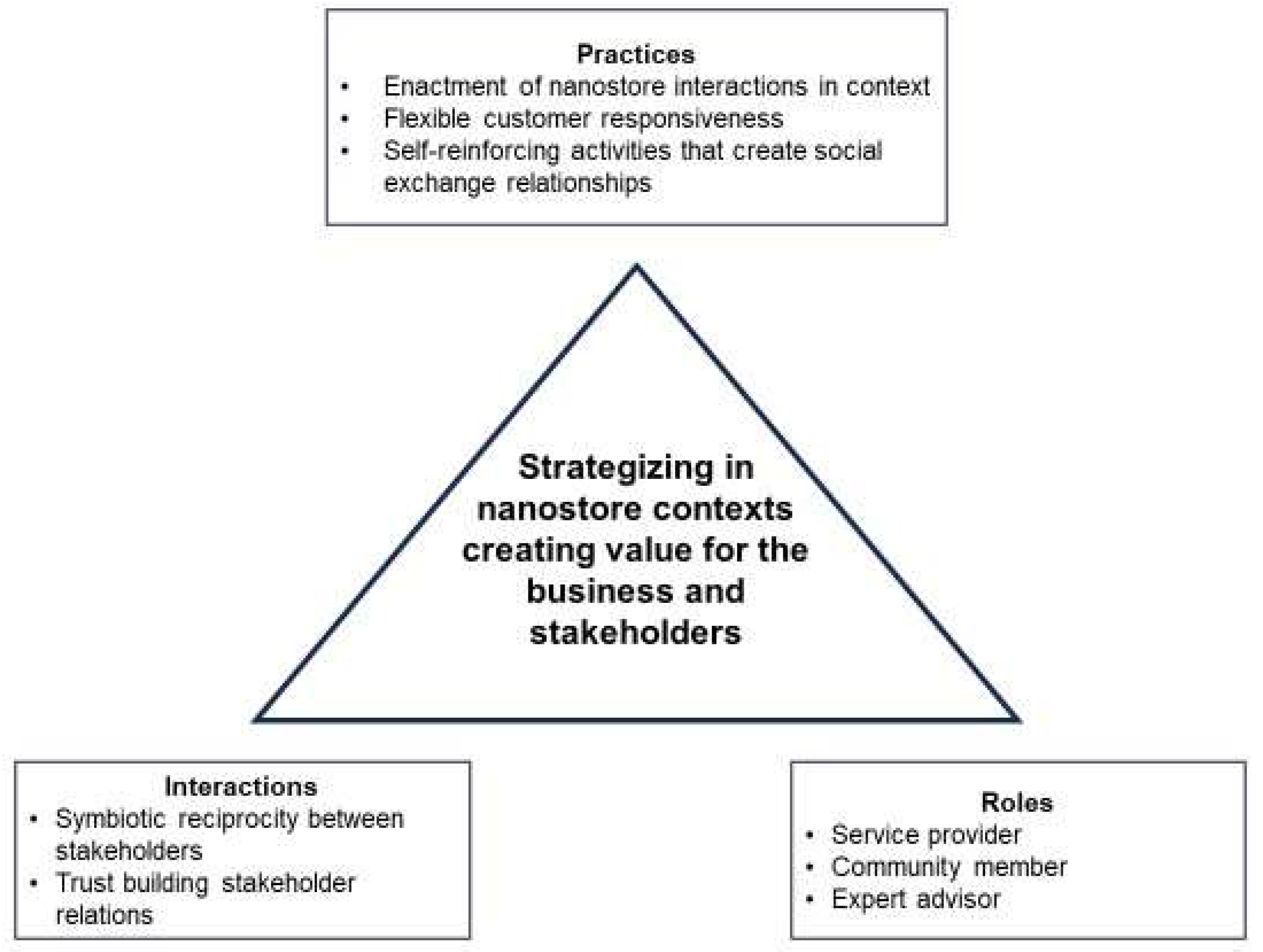

Table 1.
Nanostores’ Strategies for Competitiveness and Sustainability
| Category | Nanostore Strategies | Source |
|---|---|---|
| Operations |
|
[27] |
|
[28] | |
|
[29] | |
|
[30] | |
| Suppliers |
|
[29,31] |
|
[29] | |
|
[29] | |
|
[29] | |
|
[30] | |
|
[32] | |
|
[27] | |
|
[33] | |
| Customers |
|
[29] |
|
[29,31] | |
|
[20] | |
|
[30] | |
|
[30] | |
|
[27,31] | |
|
[27] | |
|
[34,35,36] | |
| Community |
|
[12,29] |
|
[36] | |
| Government |
|
[37] |
Table 2.
ChatGPT 3.5 nanostore strategy practices for competitiveness and sustainable impact.
| Strategy Category | Nanostore strategy practices | Examples |
|---|---|---|
| Operations | Energy efficiency and resource conservation: “Invest in energy-efficient appliances, lighting, and refrigeration systems to reduce energy consumption and lower operating costs. Implement water-saving measures and waste reduction strategies to minimize environmental impact.” | Energy-efficient lighting and appliances, insulation and sealing, energy-monitoring and management systems, renewable energy sources, water conservation measures, waste reductions and recycling, and reusable packaging and bagging. |
| Suppliers | Local sourcing and partnerships: “Source products locally from small-scale producers, farmers, and artisans to support the local economy and reduce transportation emissions. Establish partnerships with local suppliers to ensure a steady supply of high-quality goods.” | Partnerships with farmers' cooperatives, artisanal producers, community and school gardens, social enterprises, local breweries and wineries, and cultural/ethnic communities. |
| Customers | Diverse product offerings: “Offer a diverse range of products tailored to local preferences and needs, including staple foods, fresh produce, household essentials, and culturally relevant items. This enhances customer satisfaction and loyalty while promoting economic diversity.” | Fresh produce, staple foods, dairy and eggs, bakery and bread, meat and poultry, packed goods, snacks and beverages, household essentials, environmental-friendly products, cultural and ethnic foods, and seasonal and holiday items. |
| Affordable pricing and value proposition: “Maintain competitive pricing to attract customers from all socio-economic backgrounds. Emphasize the value proposition of nanostores, such as convenience, personalized service, and support for local communities, to differentiate from larger retailers.” | Basic essential bundles, daily deals and special offers, affordable meal kits, affordable private label brands, customer loyalty programs, convenient payment options, and free or discounted delivery services. | |
| Community | Community engagement and empowerment: “Engage with the local community through educational initiatives, workshops, and events focused on sustainability, health, and entrepreneurship. Empower residents by offering training programs, employment opportunities, and support for small businesses.” | Educational workshops and events, community garden sponsorships, youth employment programs, cultural celebrations, health and wellness programs, financial literacy programs, environmental clean-up and conservation efforts, and community outreach and advocacy. |
| Operations, customers, and suppliers | Technology integration: “Embrace technology to streamline operations, improve efficiency, and enhance customer experience. Implement digital payment systems, inventory management software, and online ordering platforms to increase convenience and accessibility.” | Point-of-sale systems, barcode scanners and inventory management software, digital payment solutions, online ordering platforms, automated reordering systems, digital marketing, customer feedback and reviews platforms, and remote monitoring systems. |
| Customers, suppliers, and community | Healthy lifestyle promotion: “Promote healthy eating habits and lifestyles by offering a variety of nutritious foods, promoting local produce, and providing information on healthy cooking and eating. Collaborate with healthcare providers and community organizations to raise awareness of health-related issues.” | Nutrition education workshops, healthy recipe demonstrations, fresh produce promotions, healthy snack options, labelling and signage, partnerships with health and wellness brands, and support for healthy habits. |
| Operations, customers, and suppliers | Waste reduction and recycling programs: “Implement recycling programs for packaging materials and encourage customers to bring their reusable bags and containers. Minimize food waste through smart inventory management, portion control, and donations to local charities.” | Comprehensive recycling stations, reusable packaging and bagging programs, food waste reduction strategies, composting initiatives, packaging material recycling, refill and reuse programs, electronics and battery recycling, and supplier packing reduction requests. |
| Customers, suppliers, and community | Social responsibility and ethical practices: “Operate ethically and transparently, adhering to fair labour practices, and supporting social causes that benefit the local community. Communicate values of social responsibility and environmental stewardship to customers and stakeholders.” | Fair labour practices, product quality and safety, ethical sourcing, and supply chain management, cultural sensitivity and inclusivity, transparency, and accountability, customer privacy and data protection, and promotion of social causes. |
| Operations, customers, and suppliers. | Adaptability and innovation: “Stay agile and responsive to changing market dynamics and consumer preferences. Innovate with new product offerings, services, or business models that align with sustainability goals and address emerging needs in the community.” | Agile pricing strategies, delivery and distribution innovation, product innovation and differentiation, continuous improvement, customer engagement and personalisation, adaptive store layout and design, and digital transformation and online presence. |
Table 3.
Microsoft Copilot nanostore strategy practices for competitiveness and sustainable impact.
| Strategy Category | Nanostore strategy practices | Examples |
|---|---|---|
| Operations | “Optimize Store Layout: Efficient use of space and attractive product displays can enhance the shopping experience and increase sales. Regularly updating the store layout based on customer preferences can keep the store appealing.” | Clear entrance and pathways, strategic product placement, eye-level displays, themed sections, end-cap promotions and featured presentations, checkout area optimisation, clear signage and labels, pleasant lighting and ambience, flexible shelving usage, customer flow analysis, and interactive displays. |
| “Energy Efficiency: Using energy-efficient lighting and appliances, and considering renewable energy sources like solar panels, can reduce energy consumption and costs.” | Led lighting, energy-saving appliances, smart thermostats, motion-sensor lighting, natural lighting, insulation and weatherproofing, solar panels, and window and door insulation. | |
| “Water Conservation: Installing water-saving fixtures and promoting water conservation practices can reduce water usage. Collecting rainwater for non-potable uses can also be beneficial.” | Low-flow fixtures, rain harvesting, water-efficient appliances, grey-water recycling, smart water meters, and water-saving landscaping. | |
| Suppliers | “Collaborate with Suppliers: Establishing strong relationships with suppliers can lead to better pricing, exclusive deals, and timely deliveries. Group purchasing with other nanostores can also help in negotiating better terms.” | Bulk purchasing agreements, exclusive product deals, joint promotions, consignment arrangements, shop training and support, shared logistics, feedback and product development, vendor inventory management, favourable credit terms, and waste reduction initiatives. |
| “Local Sourcing: Purchasing products from local farmers and producers can reduce transportation emissions and support the local economy. This also ensures fresher products for customers.” | Fresh produce, dairy products, baked goods, meat and poultry, craft beverages, hand-made goods, ham and honey, spices and condiments, eco-friendly products, cultural and traditional products, and flowers and plants. | |
| Customers | “Diversify Product Offerings: Expanding the range of products to include high-demand items and local specialties can attract more customers. Offering unique products that are not available in larger stores can create a niche market.” | Local and organic products, speciality foods, household essentials, seasonal products, prepared foods, health and wellness products, pet supplies, stationery and school supplies, eco-friendly products, cultural and religious items, technology accessories, and DIY and craft supplies. |
| “Enhance Customer Experience: Providing personalized service, loyalty programs, and community engagement activities can build strong customer loyalty. Understanding and catering to the specific needs of the local community is crucial.” | Personalised services, loyalty programmes, cleaned and organised store layout, customer feedback, convenient payment options, community events, online presence, home delivery services, special promotions and discounts, customer appreciation days, training staff, and a comfortable shopping environment. | |
| Community | “Community Engagement: Participating in or sponsoring local environmental initiatives, such as tree planting or clean-up drives, can strengthen community ties and promote sustainability.” | Local event support, workshops and classes, community boards, charity drives, school partnerships, health and wellbeing programmes, holiday celebrations, and support of local causes. |
| Operations and Community | “Waste Management: Implementing proper waste segregation and composting organic waste can minimize environmental impact. Partnering with local waste management services can enhance these efforts.” | Recycling, reuse, composting, waste source reduction, zero-waste initiatives, and support for waste-reduction community events. |
| Community and customers | “Promote Recycling and Reuse: Encouraging customers to bring their bags and containers, and reusing packaging materials can reduce waste. Setting up recycling bins for customers can also promote environmental responsibility.” | Reusable bags, recycling bins, packaging reuse, bottle returns, composting promotion, upcycling workshops, refill stations, customer environmental education, incentive programmes, and second-hand sales. |
| Operations and customers | “Leverage Technology: Implementing digital tools for inventory management, sales tracking, and customer relationship management can streamline operations and improve efficiency. Mobile payment systems can also enhance customer convenience.” | Point of sale systems, mobile payment solutions, inventory management software, customer relationship management tools, e-commerce platforms, social media marketing, digital loyalty programs, data analytics, cloud-based accounting software, and delivery and logistics apps. |
Table 4.
GenAI tools’ contribution to strategy ideation and implementation.
| ChatGPT 3.5 | Microsoft Copilot |
|---|---|
“Strategy Ideation
|
|
Table 5.
Nanostores’ Strategies Comparison.
| Category | Summarised literature-based strategies | Summarised GenAI strategies |
|---|---|---|
| Operations |
|
|
|
|
|
|
|
|
|
|
|
| Suppliers |
|
|
|
|
|
|
||
|
||
|
||
|
||
|
||
|
||
| Customers |
|
|
|
|
|
|
|
|
|
|
|
|
|
|
|
||
|
||
|
||
| Community |
|
|
|
|
|
| Government |
|
|
Disclaimer/Publisher’s Note: The statements, opinions and data contained in all publications are solely those of the individual author(s) and contributor(s) and not of MDPI and/or the editor(s). MDPI and/or the editor(s) disclaim responsibility for any injury to people or property resulting from any ideas, methods, instructions or products referred to in the content. |
© 2024 by the authors. Licensee MDPI, Basel, Switzerland. This article is an open access article distributed under the terms and conditions of the Creative Commons Attribution (CC BY) license (http://creativecommons.org/licenses/by/4.0/).
Copyright: This open access article is published under a Creative Commons CC BY 4.0 license, which permit the free download, distribution, and reuse, provided that the author and preprint are cited in any reuse.