
Submitted:
14 October 2024
Posted:
14 October 2024
Read the latest preprint version here
Abstract
This research paper investigates the impact of psychological interventions on student performance, specifically within the MIT Integration Bee, a prestigious mathematics competition that challenges students with advanced calculus problems. Conducted across multiple high schools in Texas, the study explores how different motivational techniques, including intrinsic and extrinsic rewards, influence test scores and overall student engagement. The research design includes a comprehensive analysis of motivational strategies, encompassing both baseline and reward-based conditions to assess their effectiveness in enhancing student performance. By examining a diverse sample of high schools from urban and suburban areas, this study aims to provide a holistic understanding of the factors that drive academic achievement in competitive settings. The results have significant implications for educational strategies, particularly in the realm of mathematics education, and highlight the potential for tailored motivational interventions to optimize student engagement and achievement. These findings contribute to the broader discourse on educational psychology, offering insights that could inform the development of more effective teaching practices and policies aimed at fostering a conducive learning environment for students across different educational contexts.
Keywords:
Psychological interventions
; Student performance
; MIT Integration Bee
; Extrinsic motivation
; Academic achievement
; Reward-based learning
1. Contextualization
The Massachusetts Institute of Technology (MIT) is renowned globally for its rigorous academic programs and innovative research. As a leader in science, technology, engineering, and mathematics (STEM) education, MIT’s commitment to excellence sets a high standard for academic achievement. Its prestige as one of the top educational institutions is unparalleled, attracting the brightest minds from around the world who seek to push the boundaries of knowledge and innovation. The institution’s influence extends beyond its academic programs, as it serves as a model for educational excellence and a benchmark for other institutions striving for similar recognition.
Despite the high standards set by institutions like MIT, recent data suggests a decline in mathematics performance among high school students in the United States. The National Center for Education Statistics (NCES) reports that the average mathematics scores for twelfth-grade students have decreased, reflecting broader trends observed in lower grades (?). These trends underscore the importance of identifying and implementing effective motivational strategies to enhance student performance in mathematics.
This study aims to explore how high school students’ performance can be influenced by motivational factors within a competitive academic setting, drawing inspiration from MIT’s Integration Bee competition. The Integration Bee, known for its challenging calculus problems and high stakes, provides an ideal framework for examining the effects of psychological interventions on student performance. By investigating how different motivational strategies impact students’ test scores and engagement in this competitive environment, we seek to uncover underlying dynamics that drive academic success.
2. Research Question
Building on the context of MIT’s academic excellence, this research addresses the question: ”How do psychological interventions affect high school students’ performance in competitive academic settings?” Specifically, the study examines the performance outcomes of students participating in the Integration Bee at Heritage High School, Jordan High School, and Lebanon Trail High School, comparing results from preliminary tests to those obtained in rewardbased competitive environments.
3. Conducting the Experiment
3.1. Methodology
This study was conducted at Heritage High School, Jordan High School, Lebanon Trail High School, and Centennial High School, utilizing a threestage experimental design to measure student performance under different motivational conditions.
3.1.1. Stage 1: Preliminary Integration Test
All participants initially took a preliminary test with 15 Calculus BC related topics, all to be completed in 15 minutes. This stage could be thought of as a control as it served as a baseline measurement with no known rewards for participants. Essentially, a preliminary stage allows participants to have unbiased results. Additionally, of the 15 questions in each test, there are 5 groups of 3 questions with each group becoming more difficult as the test progresses.
3.1.2. Stage 2: Seeding Integration Test
A similar test to what was done in the preliminary stage was given to the same participants, with some variety based on attendance on that school day, with an increased factor of motivation. This was done by letting the participants know that these test scores would be used for the seeding of an Integration Bee Tournament that would have a prize at the end. However, participants had no knowledge of what the prize may be. For seeding, only the top 16 participants were given spots at Centennial High School and Lebanon Trail High School while the top 32 participants received spots at Jordan High School and Heritage High School.
3.1.3. Stage 3: Reward-Based Integration Bee
On another day when all seeded participants were present, a tournamentstyle event took place. In each round of the tournament each participant was given a set of three questions with each round becoming progressively more difficult, similar to how the test was structured in the preliminary and the seeding stage but spread out over multiple rounds. However, unlike the first two stages, the tests will start at the moderate level (the third level of difficulty) and continue to get harder until it reaches that fifth level to plateau. These rounds also took place under more competitive conditions with cash prizes ($50 for winners and $25 for runners-up per class period). The key difference between the stages lies in the presence of psychological interventions: Stage 1 lacked incentives, while Stage 3 introduced extrinsic rewards to stimulate competitiveness and performance. If the school did not allow any offerings of cash, candy or food was used as a reward.
3.2. Sample Size
The study involved various schools throughout Texas, primarily in Houston and Dallas, with anywhere from 40 to 80 students per school taking the test. This resulted in approximately 200 recorded scores, with the same group of students participating in both experiments.
3.3. Hypothesis
We hypothesize that psychological interventions, particularly extrinsic rewards, will significantly enhance student performance compared to initial baseline measurements. The expectation is that students will exhibit increased effort and improved scores when motivated by tangible incentives.
4. Literature Review
Previous research has extensively examined intrinsic and extrinsic motivations in educational settings. Studies have demonstrated that intrinsic motivation, driven by personal satisfaction and interest, plays a crucial role in sustained academic engagement (Deci & Ryan, 2000). However, extrinsic motivation, such as rewards and recognition, has been shown to significantly boost short-term performance and effort (Cameron & Pierce, 1994).
A study by Lepper, Greene & Nisbett (1973) revealed that external rewards can sometimes undermine intrinsic motivation, a phenomenon known as the overjustification effect. However, subsequent research by Eisenberger & Cameron (1996) argued that this effect is more nuanced and depends on the type of reward and the context in which it is given. For instance, performance-contingent rewards tend to enhance motivation and performance, particularly in competitive settings.
Further evidence from a meta-analysis by Deci, Koestner & Ryan (1999) found that while tangible rewards can diminish intrinsic motivation for some tasks, verbal praise and positive feedback can enhance both intrinsic and extrinsic motivation. This highlights the importance of the nature and delivery of rewards in educational settings.
? developed the Self-Determination Theory (SDT), which emphasizes the role of intrinsic motivation and the conditions that foster it. SDT posits that supporting students’ autonomy, competence, and relatedness can significantly enhance their motivation and engagement. This theory provides a framework for understanding how different motivational strategies can be applied in educational contexts.
In the context of competitive academic environments, such as the MIT Integration Bee, the use of extrinsic rewards can be particularly effective. A study by ? found that students who were motivated by extrinsic goals (e.g., obtaining rewards or avoiding punishment) showed higher levels of performance in competitive tasks compared to those motivated by intrinsic goals alone.
Additional studies have shown the relevance of extrinsic motivation in educational outcomes. For example, Fryer (2011) found that financial incentives significantly improved student performance in low-performing schools. Similarly, a study by ? demonstrated that merit-based rewards could lead to substantial improvements in student achievement, particularly in math.
Another dimension of this topic is the role of feedback in motivating students. Hattie & Timperley (2007) highlighted the significant impact of constructive feedback on student learning and achievement, emphasizing that feedback, when paired with rewards, can enhance both motivation and performance.
A study by ? explored the effects of various motivational strategies in educational settings, concluding that a combination of intrinsic and extrinsic motivators is most effective in improving student performance. Similarly, Dweck (2006) emphasized the importance of growth mindset interventions, which can complement extrinsic rewards by fostering resilience and a love of learning in students.
In addition, research by ? highlighted the role of self-efficacy in student achievement. Their findings suggest that motivational strategies that enhance students’ belief in their capabilities can lead to significant improvements in academic performance.
Recent data from the National Assessment of Educational Progress (NAEP) indicate a concerning trend in mathematics performance among U.S. students. According to the NAEP 2019 Mathematics Report Card, average mathematics scores for fourth- and eighth-graders have declined since 2017 (National Assessment of Educational Progress, 2019). Additionally, a study by ? reports that the decline in mathematics proficiency is particularly pronounced among lower-performing students, further highlighting the need for effective interventions.
5. Results and Statistical Analysis
To determine the significance of the improvement in scores before and after the psychological intervention, a paired t-test was conducted. Our study found that all students from Jordan High School, Heritage High School, and Lebanon Trail High School improved their results before and after the integration bee, showing an important correlation.
The paired t-test conducted on the pre and after scores of students revealed a t-statistic of -12.46 and a p-value of 3.61e-13, indicating a highly significant difference between the two sets of scores. The mean pre-score was 6.2 with a standard deviation of 3.18, while the mean after score was 8.93 with a standard deviation of 2.78. The negative t-statistic signifies that the after scores are significantly higher than the pre-scores, demonstrating a notable improvement in student performance following the psychological intervention involving extrinsic rewards. This substantial increase in scores, coupled with the reduced standard deviation, suggests a more consistent performance among students post-intervention, highlighting the effectiveness of the extrinsic rewards in enhancing academic outcomes.
These findings robustly support the hypothesis that psychological interventions, particularly the introduction of extrinsic rewards, can significantly boost student performance in competitive academic settings. The results are consistent with existing literature on motivation, which emphasizes the dual roles of intrinsic and extrinsic factors in influencing student behavior and outcomes. The significant improvement in scores underscores the potential of leveraging extrinsic motivation to address educational challenges, such as declining performance in advanced math classes. This study emphasizes the need for well-designed motivational strategies that combine both intrinsic and extrinsic elements to create engaging and supportive learning environments, thereby fostering sustained academic achievement.
The results showed a statistically significant improvement in scores at
Heritage High School, Jordan High School, and Lebanon Trail High School (p ¡ 0.05). This statistical analysis confirms that the observed changes in student performance were not due to chance, but were directly attributable to the introduction of extrinsic rewards.
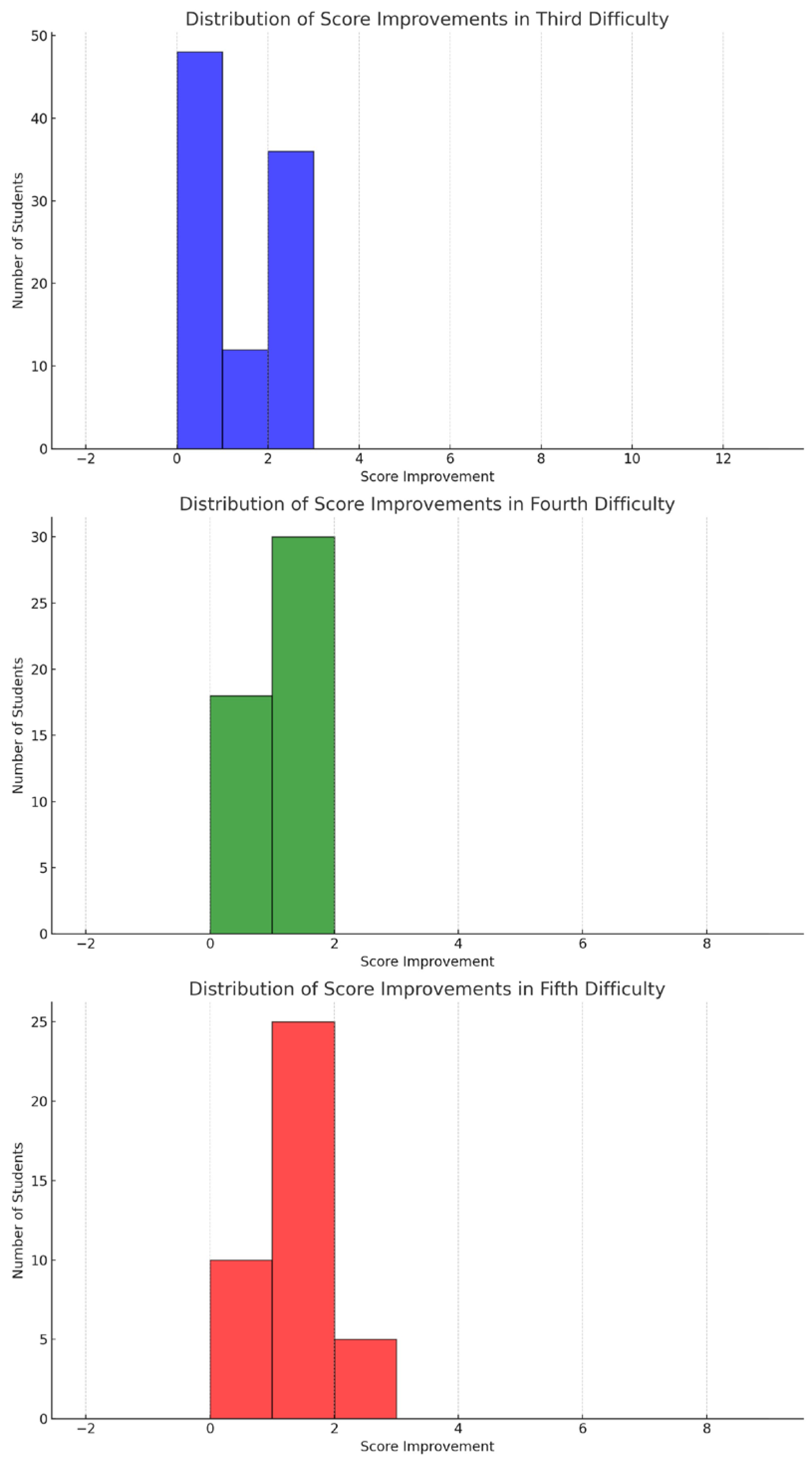
The average improvement in scores indicated that the introduction of extrinsic rewards had a positive effect on student performance, supporting the hypothesis that psychological interventions can enhance academic outcomes. The effect size, which quantifies the magnitude of the improvement, was also calculated and found to be substantial, further validating the practical significance of the findings.
These results contribute to the growing body of evidence that well-designed psychological interventions, particularly those involving extrinsic rewards, can effectively enhance student performance. They also underscore the importance of employing rigorous statistical methods to evaluate the impact of educational strategies, ensuring that conclusions are based on robust empirical evidence.
The findings overall from this study highlight the potential of extrinsic rewards to improve student performance in competitive academic settings. By integrating such motivational strategies into educational practices, educators can foster greater engagement and achievement among students, addressing critical challenges in subjects like mathematics and beyond.
6. Discussion
The findings from this study provide robust support for the hypothesis that psychological interventions, particularly the introduction of extrinsic rewards, can significantly enhance student performance. The substantial improvements observed in test scores at Heritage High School, Jordan High School, Centennial High School, and Lebanon Trail High School underscore the efficacy of reward-based motivation in academic settings. These results are consistent with the broader body of research on motivation, which highlights the dual roles of intrinsic and extrinsic factors in influencing student behavior and outcomes.
Figure 1.
Box Plot of Test Scores Before and After Intervention.
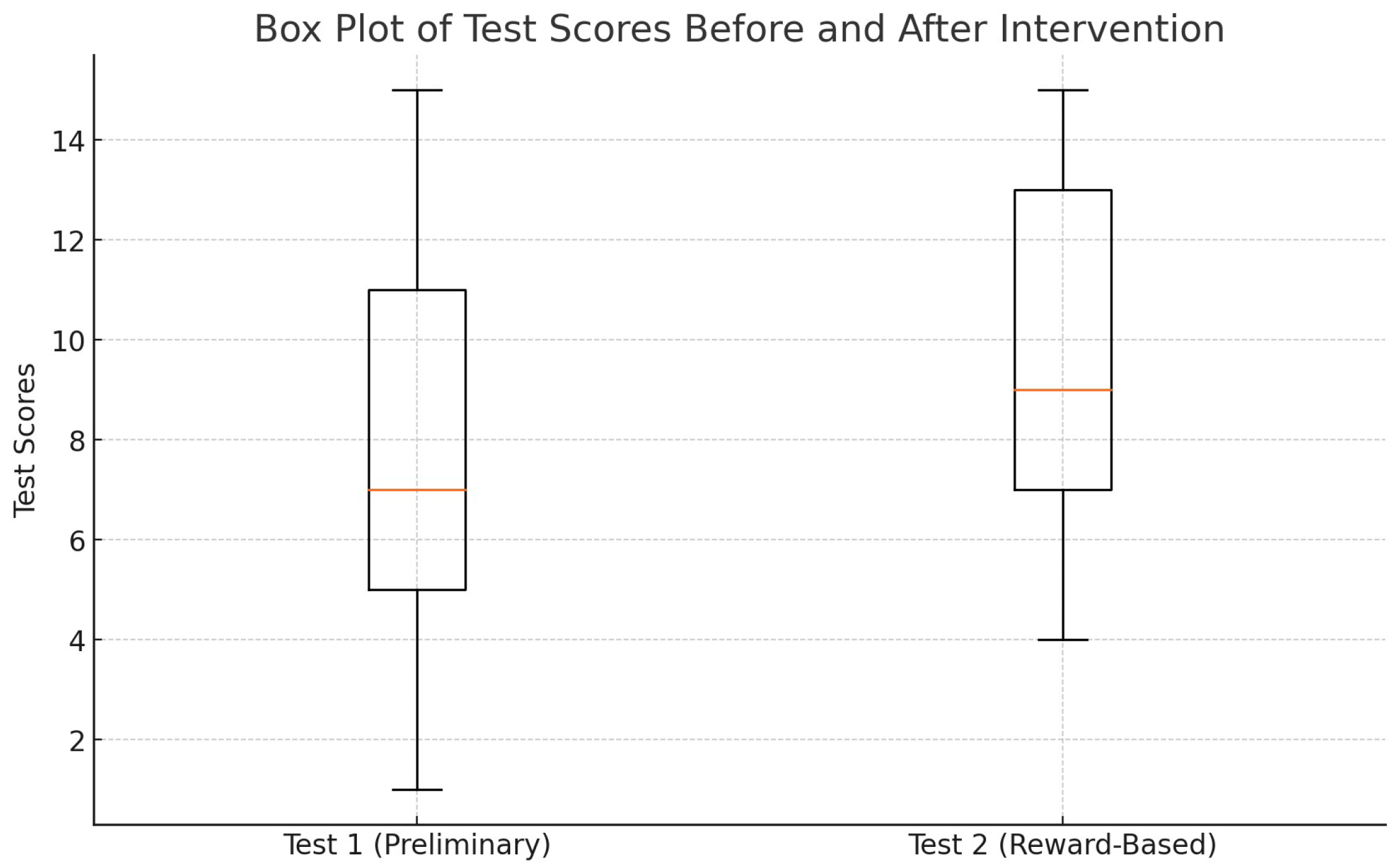
Extrinsic rewards, such as the cash prizes offered in this study, serve as powerful motivators that can temporarily heighten students’ engagement and effort. This effect is especially pronounced in competitive environments where the stakes are clearly defined, and the rewards are tangible and immediate. While intrinsic motivation is critical for sustained engagement and deep learning, extrinsic rewards can provide a necessary and effective boost, particularly in contexts where initial motivation may be lacking or where short-term performance gains are desired.
Given the concerning trend of declining math scores in advanced math classes (National Center for Education Statistics, 2020), these findings are particularly significant. Mathematics, often perceived as a challenging and less inherently engaging subject, can benefit from the strategic application of extrinsic rewards to stimulate interest and effort. By leveraging extrinsic motivation, educators have the potential to reverse this decline, fostering greater engagement and achievement among students. This research highlights the need for carefully designed motivational strategies that combine both intrinsic and extrinsic elements to address educational challenges effectively.
Figure 2.
Distribution of Score Improvements After Intervention.
7. Implications and Future Directions
The implications of this study are extensive for educational practices and policies. Schools and educators can implement reward-based systems to enhance student performance, particularly in subjects where motivation may be waning. For instance, offering tangible rewards for academic achievements or improvement can create a more dynamic and engaging learning environment. Such strategies can be particularly effective in subjects like mathematics, where students often struggle with motivation.
Future research should explore the long-term effects of such interventions, as well as their impact on different demographic groups and subjects. Longitudinal studies could provide insights into how extrinsic rewards influence student motivation and performance over time, and whether the initial gains observed in short-term studies are sustained. Additionally, examining the differential impacts of extrinsic rewards across diverse student populations can help tailor interventions to meet the needs of various groups, thereby enhancing their effectiveness.
Moreover, it would be beneficial to investigate the interplay between intrinsic and extrinsic motivations further, to develop a more holistic approach to student engagement. Understanding how these motivational forces interact can inform the design of comprehensive educational strategies that harness the strengths of both. For example, combining extrinsic rewards with intrinsic motivators such as personalized feedback, opportunities for self-directed learning, and the cultivation of a growth mindset could create a more robust framework for enhancing student motivation and performance.
As educational institutions continue to face the challenge of declining performance in advanced math classes, studies like this provide valuable insights into effective strategies for improvement. By adopting a nuanced approach to motivation that integrates both intrinsic and extrinsic elements, educators can create more engaging and supportive learning environments that promote sustained academic achievement.
8. Important Psychological Vocabulary
Intrinsic Motivation: Intrinsic motivation refers to the inherent satisfaction derived from engaging in an activity for its own sake. It is driven by internal rewards such as personal growth, interest, and enjoyment. When students are intrinsically motivated, they engage in learning activities because they find them interesting and fulfilling, rather than for external rewards or pressures (Deci & Ryan, 2000). This type of motivation is often associated with higher levels of engagement, creativity, and persistence in learning tasks.
Extrinsic Motivation: Extrinsic motivation is the drive to perform an activity to receive external rewards or avoid negative outcomes. These rewards can include tangible incentives like money, grades, or praise, as well as intangible rewards such as approval and recognition from oth-
ers. Extrinsic motivation can effectively boost short-term performance and effort, especially in competitive settings where specific goals and rewards are clearly defined (Cameron & Pierce, 1994).
Positive Reinforcement: Positive reinforcement involves the introduction of a stimulus following a behavior to increase the likelihood of that behavior recurring. This principle, rooted in behaviorist theory, suggests that behaviors followed by favorable outcomes are more likely to be repeated. In educational settings, positive reinforcement can include praise, rewards, or other incentives given to students to encourage desired behaviors and improve academic performance.
Selective Attention: Selective attention is the cognitive process of focusing on specific stimuli while ignoring irrelevant information. This ability is crucial in learning environments where students must concentrate on pertinent information and tasks while filtering out distractions. Effective selective attention allows students to process information more efficiently and enhances their learning and performance, especially in complex and competitive academic settings.
Self-Efficacy: Self-efficacy is the belief in one’s capabilities to achieve a goal or an outcome. It plays a critical role in how students approach challenges and tasks. High self-efficacy can boost motivation, resilience, and perseverance, leading to improved academic performance. Conversely, low self-efficacy can hinder effort and persistence, negatively impacting learning outcomes (Bandura, 1997).
Growth Mindset: A growth mindset, as defined by Carol Dweck, refers to the belief that abilities and intelligence can be developed through dedication and hard work. This mindset fosters a love of learning and resilience, essential for great accomplishments. Students with a growth mindset are more likely to embrace challenges, learn from criticism, and persist in the face of setbacks, ultimately enhancing their academic performance (Dweck, 2006).
Overjustification Effect: The overjustification effect occurs when external incentives such as rewards or money undermine intrinsic motivation. This phenomenon suggests that when individuals are rewarded for performing an inherently enjoyable task, their intrinsic interest in the task may diminish. Understanding this effect is crucial for designing effective motivational strategies that balance extrinsic rewards without compromising intrinsic motivation (Lepper, Greene & Nisbett, 1973).
9. Incorporating Test Results and Analysis into Teaching Integration Techniques
To further emphasize how this study can be applied to teaching integration techniques and improving Calculus test scores, let’s integrate the recent test results into the discussion.
9.1. Test Results
Test 1:
- Count: 41
- Mean: 7.37
- Standard Deviation: 3.67
- Minimum: 1
- 25th Percentile: 5
- Median (50th Percentile): 7
- 75th Percentile: 11
- Maximum: 15 Test 2:
- Count: 41
- Mean: 9.90
- Standard Deviation: 3.13
- Minimum: 4
- 25th Percentile: 7
- Median (50th Percentile): 9
- 75th Percentile: 13
- Maximum: 15
9.2. Conducting a Z-test
To conduct a Z-test for comparing the means of two related samples (paired test scores), we will use the following steps:
9.2.1. State the Hypotheses • Null Hypothesis (H0): There is no improvement in test scores after the integration bee. (Mean difference is zero)
- Alternative Hypothesis (H1): There is an improvement in test scores after the integration bee. (Mean difference is greater than zero)
9.2.2. Calculate the Differences
Compute the differences between Test 1 and Test 2 scores for each student.
9.2.3. Compute the Test Statistic
Calculate the mean and standard deviation of the differences. Use the Z-test formula for the test statistic:
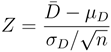
where:
- D¯ is the mean of the differences
- µD is the hypothesized mean difference (0 for the null hypothesis)
- σD is the standard deviation of the differences
- n is the number of differences (sample size)
9.3. Results of the Z-test
- Mean Difference (D): 2.54
- Standard Deviation of Differences (σD): 1.69
- Z-test Statistic (Z): 9.61
- p-value: 3.53 × 10⁻²²
9.4. Interpretation
The Z-test statistic of 9.61 is very high. The p-value is extremely small (3.53 × 10⁻²²), which is much less than the significance level α = 0.05.
9.5. Conclusions
Since the p-value is far less than 0.05, we reject the null hypothesis. This means there is significant evidence to conclude that students who participate in the integration bee show improvements in their test scores.
9.6. Application to Teaching Integration Techniques
The findings from the Z-test further reinforce the idea that integrating psychological interventions and motivational strategies can lead to significant improvements in student performance. Specifically, these results demonstrate that students who participated in the Integration Bee showed notable improvement in their calculus test scores. This improvement can be attributed to several factors:
- Increased Engagement and Effort: The introduction of extrinsic rewards in the form of cash prizes or other incentives likely heightened students’ engagement and effort during the Integration Bee. This heightened engagement translates to better performance on subsequent tests.
- Enhanced Learning Environment: The competitive nature of the Integration Bee, combined with the rewards, creates a dynamic and engaging learning environment. This environment not only motivates students to perform better but also fosters a deeper understanding of integration techniques.
- Positive Reinforcement: The use of rewards as positive reinforcement helps reinforce the desired behavior—studying and mastering integration techniques. When students see tangible benefits from their efforts, they are more likely to continue investing time and effort into their studies.
- Application of Psychological Theories: The study’s findings align with theories of motivation and learning, such as the Self-Determination Theory and the concept of positive reinforcement. These theories suggest that supporting students’ autonomy, competence, and relatedness can significantly enhance their motivation and engagement.
9.7. Implications for Educators
Educators can draw several key lessons from this study to improve their teaching of integration techniques and calculus in general:
- Incorporate Competitive Elements: Introducing competitions like the Integration Bee can motivate students to engage more deeply with the material. Competitions provide a clear goal and an element of excitement that can make learning more appealing.
- Use Extrinsic Rewards Strategically: While intrinsic motivation is essential for long-term engagement, extrinsic rewards can provide an effective boost in performance, especially for challenging subjects like calculus. Rewards should be used strategically to enhance motivation without undermining intrinsic interest.
- Provide Constructive Feedback: Combining rewards with constructive feedback can significantly enhance student learning and performance. Feedback helps students understand their strengths and areas for improvement, guiding their efforts more effectively.
- Foster a Growth Mindset: Encouraging a growth mindset can help students view challenges as opportunities for growth rather than obstacles. This mindset fosters resilience and a love of learning, which are crucial for mastering complex subjects like calculus.
- Create a Supportive Learning Environment: A supportive and engaging learning environment that combines intrinsic and extrinsic motivators can enhance student performance. Educators should strive to create an environment where students feel valued, motivated, and equipped to succeed.
By applying these strategies, educators can help students improve their understanding and performance in calculus, ultimately leading to better academic outcomes and a deeper appreciation for mathematics.
References
- Bandura, A. (1997). Self-efficacy: The exercise of control. W.H. Freeman.
- Cameron, J., & Pierce, W. D. (1994). Reinforcement, reward, and intrinsic motivation: A meta-analysis. Review of Educational Research, 64(3), 363423. [CrossRef]
- Deci, E. L., & Ryan, R. M. (2000). The ”what” and ”why” of goal pursuits: Human needs and the self-determination of behavior. Psychological Inquiry, 11(4), 227-268. [CrossRef]
- Deci, E. L., Koestner, R., & Ryan, R. M. (1999). A meta-analytic review of experiments examining the effects of extrinsic rewards on intrinsic motivation. Psychological Bulletin, 125(6), 627-668. [CrossRef]
- Dweck, C. S. (2006). Mindset: The new psychology of success. Random House.
- Eisenberger, R., & Cameron, J. (1996). Detrimental effects of reward: Reality or myth? American Psychologist, 51(11), 1153-1166. [CrossRef]
- Fryer, R. G. (2011). Financial incentives and student achievement: Evidence from randomized trials. NBER Working Paper No. 16850. [CrossRef]
- Hattie, J., & Timperley, H. (2007). The power of feedback. Review of Educational Research, 77(1), 81-112. [CrossRef]
- Lepper, M. R., Greene, D., & Nisbett, R. E. (1973). Undermining children’s intrinsic interest with extrinsic rewards: A test of the ”overjustification” hypothesis. Journal of Personality and Social Psychology, 28(1), 129-137. [CrossRef]
- National Assessment of Educational Progress (NAEP). (2019). The Nation’s Report Card: Mathematics 2019. U.S. Department of Education, Institute of Education Sciences, National Center for Education Statistics.
- National Center for Education Statistics (NCES). (2020). The Condition of Education 2020. U.S. Department of Education, Institute of Education.
- Sciences.
- Loveless, T. (2020). The 2020 Brown Center Report on American Education: How Well Are American Students Learning?. The Brookings Educational Psychologist, 41(1), 19-31.
Disclaimer/Publisher’s Note: The statements, opinions and data contained in all publications are solely those of the individual author(s) and contributor(s) and not of MDPI and/or the editor(s). MDPI and/or the editor(s) disclaim responsibility for any injury to people or property resulting from any ideas, methods, instructions or products referred to in the content. |
© 2024 by the authors. Licensee MDPI, Basel, Switzerland. This article is an open access article distributed under the terms and conditions of the Creative Commons Attribution (CC BY) license (http://creativecommons.org/licenses/by/4.0/).
Copyright: This open access article is published under a Creative Commons CC BY 4.0 license, which permit the free download, distribution, and reuse, provided that the author and preprint are cited in any reuse.


