
Submitted:
12 October 2024
Posted:
15 October 2024
You are already at the latest version
Abstract
Building or solar orientation, a key architectural design parameter, significantly influences energy consumption in buildings. Optimizing building orientation to harness passive solar benefits is a fundamental and cost-effective measure in designing energy-efficient buildings. The optimal orientation, however, varies with the geographical location, climatic conditions, and building type. Notably, Afghanistan’s building sector lack tailored energy efficiency regulations. Therefore, this study investigates the impact of building orientation on the energy performance of residential buildings across nine cities in Afghanistan, each characterized by distinct climatic conditions and geographic locations, employing BEoptTM energy simulation software. The findings reveal diverse optimal orientations, dividing the country into three distinct climatic zones: subarctic, continental, and hot arid, offering potential energy savings ranging from 25.6% to 48.9% compared to the least efficient orientations. These insights are crucial for formulating standardized building regulations in Afghanistan, emphasizing location-specific design approaches. This research also has implications for urban planning decisions that promote sustainable built environment.
Keywords:
Building Orientation
; Energy Efficiency
; Energy Simulation
; Residential Buildings
; Afghanistan
1. Introduction
Global warming, caused by the excessive use of energy derived from fossil fuels and resultant greenhouse gas emissions, primarily carbon dioxide (CO2), is one of the most alarming issues that humankind is facing today [1,2]. Notably, the built environment ranks amongst the leading energy consumers, accounting for 40% of global energy consumption and responsible for a substantial 33% of global CO2 emission [3,4,5]. The projected global population growth to 9.7 billion by 2050 will substantially increase housing demand, further exacerbating the urgency to reduce energy consumption and greenhouse gas emissions of the building sector [6].
In the modern era, reliance on mechanical systems for heating and cooling predominates, often overshadowing the potential benefits of passive solar design strategies [7,8,9]. This prevailing dependence on mechanical air conditioning has contributed to a regrettable increase in energy consumption and CO2 emissions within the building sector [10]. Over the past few decades, building energy consumption has witnessed a significant increase due to population growth, extended indoor time, high building appliances demands, and a growing emphasis on indoor environmental quality [11,12,13]. While many countries and organizations are progressing towards net-zero objectives by instituting rigorous energy efficiency standards and guidelines for building sector, the urgency of this issue is not being adequately addressed in Afghanistan.
In the context of Afghanistan, the challenge of building energy consumption and CO2 emissions from buildings is of significant importance, given the country's rapid population growth and urbanization [14,15]. Rapid urbanization has led to the emergence of numerous informal settlements in large cities. The urban housing stock is largely informal, with 86% classified as "slum" by UN-Habitat, indicating rapid, unplanned urban expansion [15]. The problem is further compounded by the country’s reliance on imported energy resulting in higher energy costs, limited access to electricity, frequent power outages [16,17,18,19]. Residential buildings in Afghanistan consume a significant portion of the country's electricity and still rely heavily on alternative heating sources such as Liquefied Petroleum Gas (LPG), wood, coal, and even waste, leading to environmental concerns and energy crises in major cities [15,19,20,21,22]. Despite the introduction of the Afghanistan Building Code (ABC) in 2012, which adopts the International Building Code (IBC), and the building bye-laws modification, there remains a notable absence of specific regulations or standards tailored to the diverse climatic conditions of cities in Afghanistan, crucial for enhancing building energy efficiency [23,24].
Afghanistan's housing stock is predominantly irregular, with detached or semi-detached houses comprising 54.5%, followed by regular detached housing (32.8%), hillside dwellings (7.5%), and apartment buildings (5.2%) [15,25]. The diversity in Afghanistan's climatic conditions, ranging from hot regions in the southwest to very cold regions in higher altitudes in the central and northeast, further underscores the necessity for a comprehensive study on building energy efficiency. Although there are a few studies on building energy efficiency in Afghanistan that consider building orientation, these studies typically focus on specific cities and building designs, making it difficult to generalize the results to the entire country [26,27].
Considering the recent efforts to redevelop the Afghanistan’s built-environment from the ground up and ongoing expansion of the urban areas, identifying energy-efficient design parameters for buildings that can endure for decades is critical to creating sustainable cities. Given the challenges, it is imperative to enhance building energy performance by embracing fundamental design principles at the initial stages, prioritizing the adoption of passive solar design strategies over energy-intensive mechanical services. Passive solar design integrates a combination of building features such as building or solar orientation, thermal mass, opening size and placement, solar apertures, shading devices, etc. to reduce or even eliminate the need for mechanical cooling, heating, and daytime artificial lighting [28]. To adopt passive solar design, architects meticulously consider the daily and annual trajectory of the sun, aiming to optimize the efficient utilization of solar radiation and minimize heating and cooling requirements within buildings. Importantly, this approach proves not only cost-effective but also yields significant energy savings and reductions in environmental pollution, all without incurring additional initial expenses [29,30].
Numerous studies demonstrate that the implementation of a variety of passive solar and energy-efficient design strategies can lead to a substantial reduction in energy demand in buildings, with potential savings of up to 90%, depending on geographical location and climatic conditions [28,31,32,33,34,35,36,37,38,39,40]. Building or solar orientation is a well-known passive solar parameter in energy efficient architectural design but has not been extensively explored in the context of buildings in urban cities across Afghanistan. Given that building orientation is a fundamental element of the architectural design process and justifies inclusion in building and planning regulations, it is of significant importance to investigate the influence of building orientation in the diverse climatic regions of cities across Afghanistan. Proper building orientation is particularly challenging in unplanned areas, and even in planned areas, buildings in various cities across Afghanistan often lack optimal orientation, reflecting a lack of resources and awareness about the importance of orientation for energy efficiency. Additionally, a study of post-2000 buildings in Kabul city has rated these buildings as significantly low in terms of sustainability, citing the lack of policies, regulations, and awareness as key contributing factors [41]. Therefore, this research is this research is crucial in addressing the existing research gap and providing general information to develop standardized building and urban planning regulations that prioritize sustainability and energy efficiency.
Figure 1 presents an aerial view of apartment buildings within a government-developed, planned residential area in 15th District of Kabul, Afghanistan. The buildings, highlighted in red, exhibit significant variation in orientation, as indicated by the black arrows. This diversity in building orientations, despite the formal and planned nature of the area, suggests that architectural and design considerations did not adequately consider proper building orientation. Such inconsistencies can adversely affect energy consumption by influencing factors such as solar gains, daylighting, and thermal comfort. Moreover, the situation is even more pronounced in unplanned regions, where the lack of regulatory oversight exacerbates the inefficiencies in building orientation.
Building or solar orientation is a critical aspect of passive solar design, significantly influencing building energy efficiency and overall performance. In the conception of a passive solar house, architects and builders meticulously consider the structure's alignment with respect to the sun's trajectory and prevailing winds, aiming to optimize natural heating, cooling, and lighting dynamics [42]. Given Afghanistan’s high solar potential, with an average 3000 hours of sunshine per year, it is imperative to maximize the use of passive solar energy through proper orientation to reduce building energy consumptions[43]. Precise solar orientation involves positioning the building to capture maximal solar heat at the appropriate time of the year when required (cold seasons), while mitigating direct sunlight exposure to prevent overheating during the hot seasons. The optimal orientation maximizes the efficacy of passive solar heating and cooling, thereby diminishing reliance on active heating and cooling systems and significantly enhancing energy efficiency.
2. Methods
This study employs a simulation-based approach utilizing advanced energy simulation software. Within the study’s scope, simulations are performed by modeling a rectangular room (6m x 3m x 2.75m – length * width * height) with consistent openings situated along a single façade, and uniform building materials are employed to isolate the impact of building orientation on energy consumption.
Building models and energy simulations are developed using BEoptTM energy simulation software, and the resulting data is processed, analyzed, and graphical illustrations are made in Microsoft Excel and R programming language. To determine the optimal building orientation for minimizing annual cooling and heating energy consumption in nine cities across Afghanistan, the models are systematically rotated to encompass all possible sixteen cardinal, intercardinal, and secondary intercardinal directions. These cities are situated between 31.5°N to 36.5°N latitude and 63°E to 69°E longitude, with elevations ranging from 357m (Mazar-e-Sharif) to 2550m (Bamian).
Figure 2 outlines the study flow chart, providing a brief overview of the methodology and results. To analyze energy consumption behaviors across different cities, a modular unit of a room with specified building materials and technical properties was selected. This approach was chosen to solely evaluate the impact of building orientation on energy consumption. Since building plans and designs vary significantly and various other aspects may influence the results, focusing on the modular unit with openings along one facade helped control variables and isolate the orientation effect.
Nine cities in various climatic zones and locations across Afghanistan were chosen to assess orientation impacts on energy needs. Due to incomplete climate data for Afghanistan, multiple sources were used to create the weather file for simulation. Additionally, Afghanistan lacks a specific climatic zoning classification for energy-efficient building design. Therefore, the Köppen-Geiger climate classification system was employed, with cities selected within the same climatic zones to validate or identify limitations of this classification for building energy simulation.
Section 3.1. and Section 3.2. provide a detailed analysis of the cooling, heating, and total energy consumptions of buildings with respect to all sixteen directions in various cities across Afghanistan. These findings facilitate the integration of various parameters that specifically affect cooling or heating load while considering building orientation, thereby enhancing building energy efficiency.
In section 3.3., the influence of building orientation on energy performance across the nine selected cities with diverse climatic conditions is compared. This section also discusses the differences in total energy consumption and the optimal orientation of buildings in various cities. Next, section 3.4. explores potential energy-savings achieved by orienting buildings towards the most efficient orientation, illustrated through graphs depicting the percentage of annual cooling and heating energy savings compared to other orientations.
Finally, 3.5. explains and analyzes the energy consumption patterns for optimal orientations in various cities to identify cities with minimal or maximal cooling, heating, and total energy requirements. This comprehensive examination aims to provide detailed insights into the interplay between building orientation, climatic factors, and energy consumption behavior, thereby contributing to informed decision-making in sustainable architectural design and urban planning contexts. Given that most cities in Afghanistan are unplanned, this detailed analysis of all sixteen orientations offers valuable guidance for architects and designers in selecting better building orientations.
2.1. Simulation Tool
Building Energy Simulation (BES) tools are essential for optimizing building systems at various stages, and their extensive use in research and industry has led to regular updates and new tools [44]. This study employs BEoptTM (Building Energy Optimization tool) version 2.8.0.0, a user-friendly energy simulation software specifically designed for evaluating residential buildings to identify optimal cost-efficiency and energy-saving strategies, ultimately striving for low or net-zero energy consumption [45,46,47]. A notable advantage of this program is its straightforward input interface, complete with a diverse range of predefined settings, enabling users to both design buildings and simulate their energy performance without requiring additional software.
BEoptTM, developed by the National Renewable Energy Laboratory (NREL) in alignment with the U.S. Department of Energy's Building America Program, that conducts comprehensive simulation-based analyses, factoring in specific house parameters such as size, architectural design, occupancy, vintage, location, and utility tariffs [46]. Furthermore, it can assess new construction and retrofits for existing homes, spanning both single and multi-family dwellings, employing various modes like single building designs, parametric sweeps, and cost-based optimizations.
BEoptTM harnesses the EnergyPlusTM platform, which serves as the Department of Energy's flagship simulation engine, ensuring robust and reliable simulations. The software's simulation assumptions are aligned with the Building America Housing Simulation Protocols [46].
2.2. Study Model
Given the diversities observed in the zoning and architectural design of solar passive buildings across distinct geographical regions and climatic conditions, our study concentrates on a singular unit within a building: a room with an attached bathroom. This unit serves as a fundamental and representative space in various building types.
Figure 3.
Study model (a) Plan; (b) 3D model.
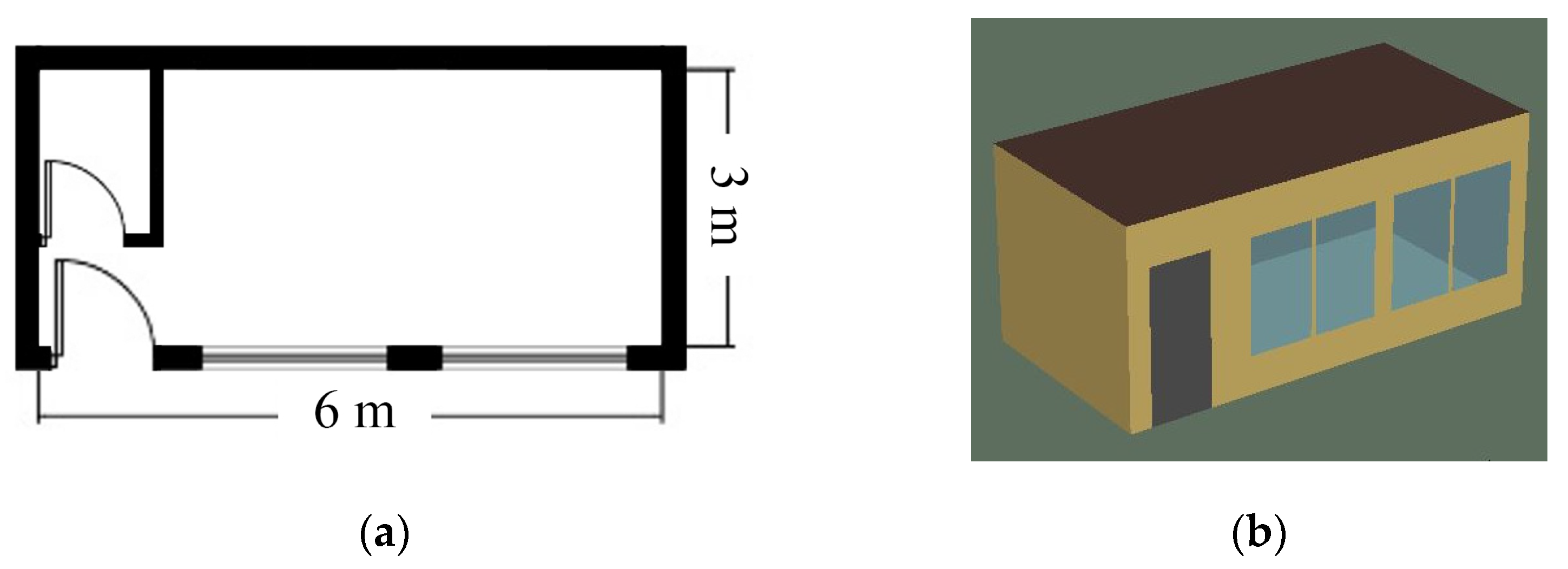
To establish a primary façade and mitigate the influence of solar radiation and wind on energy performance through various façades, all openings are provided on one façade while eliminated from the other façades. Moreover, the openings provided only on the longer façade further help in identifying the most energy-efficient orientation. The ceiling height is set at a standard 2.75m, typical for contemporary residential buildings in Afghanistan.
The construction materials selected for this study are typical of those employed in contemporary residential buildings. The layers composing the wall, roof, and floor assemblies, along with their respective thicknesses as detailed in Table 1, are presented in sequential order from exterior to interior. The window materials selected for the model in this research are non-metallic framed, featuring clear double glazing with an air-filled interlayer. These windows exhibit a U-value of 2.78 W/m2.K (0.49 Btu/h.ft2.F) and a Solar Heat-Gain Coefficient (SHGC) of 0.56. The specified window area is 5.85m2, corresponding to a Window-to-Wall Ratio (WWR) of 35%, with an openable window area of 1.95m2 intended to facilitate natural ventilation.
Natural ventilation through openable windows is restricted to only cooling months. Windows are opened based on specific criteria, which include the capacity of outdoor airflow to maintain the cooling set point, an outdoor humidity ratio below 0.0115, and an outdoor relative humidity lower than 70%. This method enables the utilization of lower outdoor temperatures during the early mornings and late evenings in the summer to mitigate indoor thermal comfort during the summer months. Windows are assumed to be closed once the indoor temperature exceeds 0.5°C above the heating set point, or if the air change rate exceeds 20 air changes per hour. Moreover, the simulation incorporates infiltration at a rate of 1-ACH50 (Air Changes per Hour at a 50 Pascal pressure difference) as other airflow source. These modeling assumptions aim to mitigate the influence of infiltration on building energy consumption. However, in the context of contemporary construction practices in Afghanistan, achieving an airtightness of 1 ACH50 proves challenging due to the lack of proper insulation materials, poor sealing, and implementation quality (Table 1).
For simplicity and a more precise focus on space energy consumption patterns, air conditioner with an average Energy Efficiency Ratio (EER) of 8.5, a 100% energy-efficient electric baseboard, and electrically operated ceiling fan which are all powered by electricity, are considered for conditioning purposes. Furthermore, the occupant’s heat gain is the only internal load considered in this study while neglecting the plug load, appliances, lighting etc. The occupants heat gains, both Sensible and Latent loads, are considered in accordance with ASHRAE - 2009 standards [48]. The study assumes a full occupancy of 16.5 hours per day, considering the occupant’s behavior and the area type.
Thermal comfort is a complex and individualized experience influenced by various environmental (air temperature, relative humidity, air velocity, and mean radiant temperature) and personal factors (clothing and activity), making it challenging to express within strict numerical parameters. Nonetheless, air temperature is a commonly used indicator, and the American Society of Heating, Refrigerating, and Air-Conditioning Engineers (ASHRAE) defines the operative temperature range of 20-23.5 °C in winter and 23-26°C in summer in order to maintain thermal comfort [49]. Personal factors, including clothing insulation and occupant’s physical activity, also significantly affect thermal comfort [50]. Clothing culture is especially relevant in specific regions. In Afghanistan, where traditional clothing covers the entire body, heating setpoints are typically maintained at a minimum of 20°C (68°F), aligning with local attire practices to ensure optimal thermal comfort for the majority of the population. Cooling set points are set at 24.4°C (76°F) for similar reasons.
2.3. Location and Climatic Condition
Afghanistan, a mountainous landlocked country in South/Central Asia, features diverse geographical elements, including fertile river valleys, rugged gorges, deserts, plateaus, and snow-capped mountains. The eastern region is separated by the imposing Hindu Kush and Pamir Mountain ranges, with peaks reaching around 7485 meters. These mountains divide the northern provinces from the rest of the country, with the highest peaks found in the northern Wakhan (Wakhan Corridor).
The cities selected for this study encompasses a variety of elevations and climatic conditions located across Afghanistan. The high-altitude cities of Bamian and Chaghcharan, located within the Hindu Kush and Pamir Mountain range in the central region, contrast with the lower-elevation city of Mazar-e-Sharif in northern Afghanistan (Figure 4). These diversity in geographic and climatic conditions provides a comprehensive basis for analyzing the impact of building orientation on energy performance, that contribute to the development of detailed and comprehensive rules and regulations for building energy efficiency across the country.
Afghanistan's climate experiences sharp variations, with cold, snowy winters and hot, arid summers. Temperature fluctuations occur from day to night, season to season, and region to region. For instance, in the capital city, Kabul, situated at an altitude of 1791m, summer temperatures can soar from 10°C at sunrise to 37.5°C by noon. In lower-lying areas like the Jalalabad Plains (575m) just 90km away from Kabul and the Southwestern regions, summer temperatures may reach as high as 46°C [51,52].
The predominant feature of Afghanistan's climate is a clear, blue sky with an average 300 days receiving sunlight per year [43]. Even in winter, the skies generally remain cloudless between snowfalls. Given the scarcity of rainfall between May and November, this period can be exceptionally dry and dusty, contributing to occasional droughts that impact agriculture in certain regions [53].
Unlike many countries that have specific climatic classification maps to facilitate the development of energy-efficient building designs, Afghanistan lacks such resources [43,54,55,56,57]. Consequently, this study has employed the Köppen-Geiger climate classification system, which is widely used in building energy performance research within the country. The Köppen-Geiger model categorizes areas into five main climatic groups (A to E) based on temperature, second letter indicates seasonal precipitation, and the third letter shows the heat level [58,59]. However, this classification may pose limitations for building energy simulations that require detailed parameters including humidity, air velocity, and radiant temperature. These elements are critical for accurately predicting building thermal behavior and designing systems to optimize building energy use.

Table 2.
Köppen-Geiger climate type, elevation, and Average minimum & maximum temperature of various cities in Afghanistan [52,60].
| Köppen climate type | City | Elevation (m) | Average annual temp. (°C) | |
|---|---|---|---|---|
| Min. | Max. | |||
| Dsb |
|
2550 | 1.3 | 14.3 |
|
2230 | 2.7 | 17.1 | |
| BSk |
|
2219 | 6.9 | 19.6 |
|
1791 | 7.7 | 21.2 | |
|
920 | 10.6 | 24.3 | |
|
357 | 14.1 | 24.3 | |
| BSh |
|
1010 | 13.1 | 27.6 |
| BWh |
|
575 | 13.8 | 25.3 |
|
750 | 14.7 | 29.9 | |
2.4. Weather File
In this study, climatic data were sourced from various institutions, including the Afghanistan Meteorological Department, the Ministry of Energy and Water, climate.onebuilding.org [61], and Climate Data Store [62]. The datasets provided by both the governmental sources were incomplete and limited to daily and monthly records of a few parameters, such as temperature, relative humidity, and precipitation. Consequently, for building energy simulations, there was a need for a more comprehensive hourly weather dataset. To address this requirement, we utilized EnergyPlus weather (epw) files obtained from climate.onebuilding.org. These files were cross-verified and adjusted using supplementary data from other sources to enhance their reliability. For the visual representation of the data, Figure 5 was prepared using Climate Consultant software, using the weather files adopted for the energy simulation.
Table 2, Figure 5, and Figure 6 provide a comprehensive overview of the diverse climatic conditions and varying elevations observed across the selected cities in Afghanistan, which lie within latitudes ranging from 31.6° to 36.5°. This study covers a wide range of climatic zones in Afghanistan, from the arid, desert, hot (BWh) climate in Farah to the cold, dry summer, warm summer (Dsb) climate in the city of Bamian.
3. Results and Discussion
This section presents the results illustrating the impact of various building or solar orientations on the cooling, heating, and total energy consumption of the study model across the diverse climatic conditions of nine cities in Afghanistan. Energy consumption is measured in kWh/m²/year, with the color gradient from light to dark indicating the range from minimum to maximum values.
3.1. Cooling and Heating Load
Figure 7 illustrates the impact of orientation variations on the cooling and heating energy performance of the buildings in Bamian, Chaghcharan (Ghor), Farah, and Jalalabad. Cooling loads are represented in blue, and heating loads are shown in orange, with a gradient from light to dark indicating the range from minimum to maximum values. As evident from the graphs in Table 2, Figure 5, and Figure 6, both Bamian and Chaghcharan (Ghor) are located in cold regions (Dsb climate), while Farah and Jalalabad fall within an arid, desert, hot (BWh climate) climate region. The results reveal a substantial contrast in energy demand patterns among these cities.
Figure 7 a and b, demonstrate that Southeast (SE)South-southeast (SSE), and East-southeast (ESE) orientations minimize heating energy consumption by maximum exposure to direct solar radiation throughout the year. Conversely, the North orientation, which lacks direct solar radiation, exhibits the highest heating energy consumption. The morning sun, penetrating from the Eastern façades, provides warmth during the cooler part of the day (morning), effectively heating the building naturally when it is most needed. In the afternoons, temperatures are generally higher, and additional solar radiation can lead to overheating and increased cooling load. Therefore, orientations from East (E) to South (S) are more energy efficient compared to orientations from South (S) to West (W). on the other hand, while a North orientation decreases cooling load significantly, its effectiveness is compromised in colder regions characterized by minimal or no cooling energy requirements, thereby amplifying the need for heating due to prevailing colder climatic conditions.
Conversely, in the hot climate regions of Farah and Jalalabad (BWh), the cooling load is predominant. The goal in these regions is to minimize cooling loads by limiting direct solar radiation throughout the day. Figure 7 (c) and (d) show that in Farah and Jalalabad, North-orientation exhibits the lowest cooling energy requirements, with maximum consumption observed in east-southeast (ESE) orientation due to significant solar exposure. North-facing windows receive minimal direct sunlight throughout the year, while South windows receive solar radiation for a brief period of time during summer. In contrast, East and West windows receive prolonged sunlight each day throughout the year, resulting in higher cooling load.
Figure 8 presents the annual cooling and heating energy consumption of the buildings located in the Arid, steppe, hot (BSh) climate of Kandahar in southwest Afghanistan. Similar to Farah and Jalalabad, Kandahar exhibits a cooling-dominant pattern, characterized by higher cooling energy demand than heating energy demand. In Kandahar, the North orientation presents the lowest cooling energy consumption followed by its two adjacent secondary intercardinal directions (NNW & NNE). On the other hand, South-southeast (SSE) followed by South and Southeast (SE) orientations have the lowest heating energy consumption.
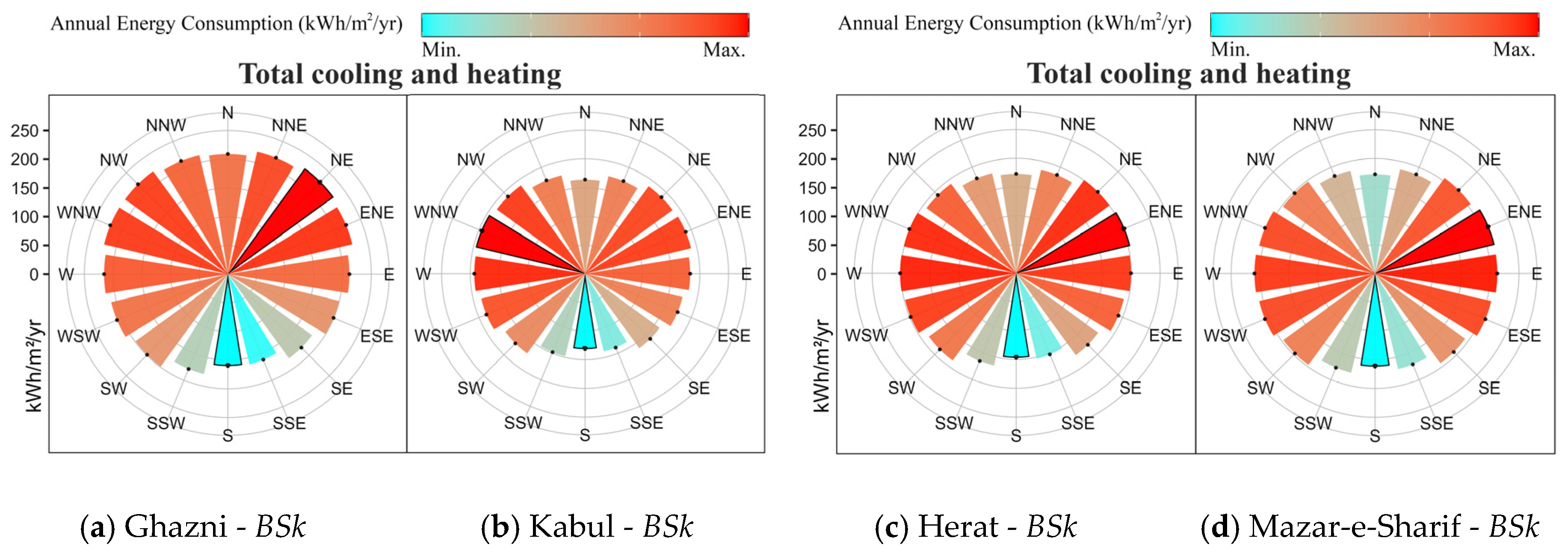
Figure 9 shows the annual cooling and heating energy consumption of buildings located in cities characterized by an Arid, steppe, cold (BSk) climate. The graphs in Figure 9 reveal a progressive decrease in heating energy consumption from Figure 9 (a)- Ghazni to Figure 9(d) – Mazar-e-Sharif alongside an increase in cooling energy requirements. This pattern indicates that heating loads predominate in Ghazni and Kabul, whereas Herat exhibits a balance between heating and cooling energy demand. In contrast, Mazar-e-Sharif is characterized as a cooling load dominant city, indicating a diverse energy consumption pattern within cities sharing the BSk climate classification.
To minimize solar gain and thus cooling load, the most efficient window orientation is the North, preventing direct solar radiation penetration, with the South orientation also performing relatively well in these cities. Northeast (NE) to Northwest (NW) orientations result in the highest heating load, while Southeast (SE) to South orientations exhibit the lowest heating energy consumption by maximizing direct solar radiation year-round.
This data highlights the unique heating and cooling energy consumption patterns of various cities, which underscores the importance of considering locations and climatic of buildings during the architectural design process in order to improve energy efficiency.
3.2. Total Cooling and Heating Load
Figure 10 (a & b) presents the annual total cooling and heating energy consumption of the study model in the cold mountainous region of central Afghanistan. To enhance building energy efficiency in this context, optimal orientation should maximize solar radiation in winter while minimizing it in summers. The findings highlight that in extremely cold climatic regions (Dsb), such as Bamian and Chaghcharan (Ghor), orientations ranging from South to ESE prove to be more energy efficient, capturing maximum solar heat throughout the year. Among these orientations, the optimal orientation is SSE with the lowest total annual energy consumption. The elevated altitude and consistently low temperatures in these regions contribute to their heating-dominant nature, making SSE followed by SE orientations advantageous for maximizing solar gains from the early hours of the day and providing passive heating. Moreover, the cold mornings experienced throughout the year in Bamian and Chaghcharan (Ghor), as indicated in Figure 4, emphasize the significance of SSE orientation, which maximizes solar heat gain early in the day and significantly reduces heating loads. Optimal orientation (SSE) results in annual energy savings of 32.5% in Bamian and 33.6% in Chaghcharan (Ghor) compared to the least favorable orientation (N). Moreover, there is a 4.7% and 7.5% increase in total energy consumption between optimal SSE and South orientation in Bamian and Chaghcharan-Ghor, respectively.
Figure 10 (c & d) illustrates the annual cooling and heating energy consumption of buildings in hot climatic regions like Farah and Jalalabad, falling under the Arid, desert, hot (BWh). Notably, both North and South orientations significantly reduce annual total cooling and heating loads. In Farah, the North orientation, followed by South and North-northwest (NNW) exhibits the least annual energy demand, with a slight 1.3% increase in total energy consumption between the South and North orientations. Conversely, in Jalalabad, South, North, and SSE orientations exhibit the lowest energy demand, respectively. The least favorable orientation in Farah is East, while in Jalalabad, it is West, associated with the highest annual energy consumption. Despite both cities being classified under the Arid, desert, hot (BWh) climactic region in the Köppen climate classification, Farah, with its prolonged and intense hot and dry season, differs from Jalalabad with higher humidity (Figure 11). Consequently, In BWh climatic regions of west and Southwest Afghanistan with less humidity, North orientation proves to be more energy-efficient, while in more humid eastern regions with milder climates and slightly more vegetation, South orientation performs better. To minimize the cooling energy demand in the hot regions, building openings should be protected from direct solar radiation. Therefore, the North orientation, which does not receive direct solar radiation, can yield annual energy savings of up to 25.6% in Farah compared to the least favorable East orientation. Additionally, optimizing building orientation in Jalalabad can result in energy savings of up to 30.4% when comparing the best (South) and worst (West) orientations
Figure 12 indicates that in the Arid, steppe, hot (BSh) climate of Kandahar city, orientations with the highest energy-saving potential are South, followed by North and South-southeast (SSE). As a cooling-dominant city, orientations that maximize solar radiation during summers, such as East, ENE, and ESE, lead to higher cooling loads and, consequently, elevated annual total energy consumption. Conversely, North-oriented windows, while minimizing heating loads, exhibit a substantial impact on increasing cooling energy demand, rendering them less energy-efficient when considering the overall cooling and heating energy requirements for buildings in Kandahar. South-oriented windows, receiving maximum solar radiation during winters significantly reduce the heating load, resulting in the lowest annual total energy consumption. The optimal South orientation can achieve maximum energy savings of 39.1% in Kandahar’s buildings compared to the worst orientation (East).
Figure presents the total annual cooling and heating energy consumption of buildings located in the Arid, steppe, cold (BSk) climatic regions of Afghanistan, characterized by distinct seasonal variations between cold, snowy winters and hot, dry summers. Despite Ghazni and Kabul being situated at higher elevations, experiencing a heating-dominant climate, and Herat and Mazar-e-Sharif being located at lower elevations with cooling-dominant climatic conditions, the South, SSE, and SSW orientations offer the most significant energy-saving potential.
Conversely, Northeast in Ghazni, West-northwest (WNW) in Kabul, and East-northeast (ENE) in Herat and Mazar-e-Sharif are the least favorable orientations in terms of energy efficiency. In these cities, South-oriented windows receive substantial amounts of direct solar radiation during winter, significantly reducing the annual heating energy demand and also total annual energy consumption. South-oriented windows prove to be the most energy-efficient compared to all other directions, despite a slight increase in the heating load compared to North-oriented windows. The most energy-efficient orientation (South) can result in energy savings of up to 42.5% in Ghazni, 48.9% in Kabul, 38.4% in Herat, and 31.6% in Mazar-e-Sharif compared to the worst orientation.
Figure 13.
Impact of orientation on total annual energy consumption in (a) Ghazni (b) Kabul (c) Herat (d) Mazar-e-Sharif.
Figure 13.
Impact of orientation on total annual energy consumption in (a) Ghazni (b) Kabul (c) Herat (d) Mazar-e-Sharif.
3.3. Comparison of the Total Cooling and Heating Load
Figure 14 illustrates the comparative annual cooling and heating energy consumption across various cities in Afghanistan. The data reveals a pronounced undulatory behavior in the energy demand correlating with building orientation. Starting from the north orientation, where energy consumption is low, there is a marked increase in energy demand as the orientation shifts toward the East, reaching a peak value. Moving from the East orientation, it steadily decreases until reaching its minimum value in the South orientation. As the orientation transitions from the South towards the West, a notable increase results in a secondary apex, followed by a decline towards the northwest orientation. Notably, the graphs for Bamian and Chaghcharan (Ghor) in Dsb climatic region, exhibit only a single peak at the North orientation and a corresponding valley at the South-southeast orientation. Moreover, the graph representing the annual cooling and heating energy demand of Farah in BWh region, initiates from the minimum value in the North and follows a pattern similar to that of most cities. Furthermore, the graphs demonstrate that energy demand in extreme cold regions is comparatively higher than the rest of the cities.
The optimal orientation for buildings in Afghanistan is predominantly found to be South, except for cities located in Dsb climatic regions, where SSE represents the optimal orientation, and Farah (BWh), where North is considered optimal. To illuminate this contrast, Figure 15a presents a comparative analysis of the daily energy consumption between buildings oriented to the South and SSE, representing the optimal orientation for Dsb climatic regions. The analysis is conducted within the context of Bamian city, characterized by Cold, dry summer, warm summer (Dsb) conditions. As shown in the graph, the South orientation is more energy efficient during winter months when the solar trajectory is low and solar penetration from the South orientation is at its peak, attributed to the sun's lower position in the northern hemisphere sky. However, for the period extending from March to December, SSE-oriented buildings, allowing for enhanced exposure to early morning solar radiation throughout the year, demonstrate a lower heating energy demand compared to South-oriented buildings. Despite a marginal increase in cooling load during this period, its impact on the overall energy consumption of buildings in extreme cold climatic conditions is negligible. Notably, SSE orientation achieves a more substantial reduction in heating energy consumption annually compared to South orientation, resulting in the minimum total heating and cooling energy consumption for buildings in Bamian. Consequently, the findings suggest that, overall, SSE orientation proves to be more energy efficient for the buildings in Dsb climatic regions compared to South-oriented buildings, as they ensure higher solar gain throughout the year.
Figure 15b depicts the daily cooling and heating energy consumption of buildings oriented to the South and North in Farah, situated within the BWh climatic region. In regions characterized by prolonged hot seasons, such as Farah, North orientation exhibits relatively lower cooling energy consumption compared to South-oriented buildings, as it effectively reduces solar radiation throughout the year. Although the North orientation proves to have higher heating energy demand compared to the South orientation, given the brief duration of the cold season in Farah, total of cooling and heating energy demand of North-oriented buildings remains lower than South-oriented buildings. While the South orientation benefits significantly from maximum solar radiation during winter, leading to a notable reduction in heating energy requirements, the penetration of solar radiation through south-facing windows during other seasons contributes to a heightened demand for cooling energy. Therefore, in hot climatic regions like Farah, the North orientation, which limits solar gain consistently throughout the year, emerges as a more energy-efficient choice. Furthermore, it is worth noting that the energy efficiency of the South orientation can be enhanced through the careful use of shading devices to prevent excessive solar penetration, particularly during the hot seasons.
The findings of this study underscore the critical importance of building orientation in architectural design and energy-efficient building strategies, particularly in the context of Afghanistan's diverse climatic zones. Optimal orientation, a crucial determinant of energy performance, exhibits variability across regions, influenced by factors such as altitude and local climate conditions. The results highlight the South orientation as optimal for cities classified as BSh and BSk according to the Köppen climate classification (Figure 3). However, in high-altitude regions characterized by very cold temperatures (classified as Dsb in the Köppen climate classification), South-Southeast (SSE) and Southeast (SE) orientations offer enhanced energy efficiency. In very hot climatic regions, characterized by Arid, desert, hot (BWh) climates, both North and South orientations prove to be energy-efficient choices with minimal annual energy demand. Furthermore, in these regions, the South orientation can perform better than the North if the openings on the southern orientation are adequately shaded during sweltering summer days in order to reduce the cooling load during summers and heating load during winters (further research on shading devices and opening shape and size is recommended).
3.4. Energy Saving Potential of the Optimal Orientation
The graphs in Figure 16 present the percentage of increase or decrease in cooling, heating, and total energy consumption compared to the optimal orientation. The results indicate that for buildings within Dsb climate zones, a South-Southeast (SSE) orientation emerges as the most energy efficient. Conversely, buildings located in BSk and BSh climate zones exhibit optimal energy performance when oriented due South, whereas those in BWh climate zones benefit from a Northern orientation. Recognizing the practical difficulties in achieving ideal orientation—stemming from urban planning irregularities or the prevalence of informal settlements—this study presents a series of graphical interpretations. These graphs are designed to support architects and construction professionals in approximating the ideal orientation to enhance energy efficiency when the ideal is not feasible due to situational constraints.
3.5. Cooling and Heating Load of the Optimal Orientation
The graphs in Figure 17 illustrate the distribution of annual energy consumption for cooling and heating of the building at their optimal orientation across selected cities, arranged in descending order of heating energy demand. It is evident that Bamian and Chaghcharan, which are among the coldest cities, exhibit a negligible demand for cooling energy. Conversely, Farah and Jalalabad stand out with their significant cooling requirements. A noteworthy observation is that cities experiencing extreme climatic conditions—represented by the Dsb (cold, dry-summer continental) climate in Bamian and the BWh (hot desert) climate in Farah—demonstrate a greater overall energy consumption than cities situated in milder BSk (cold semi-arid) and BSh (hot semi-arid) climatic zones. This disparity underscores the impact of climatic extremities on energy needs, with more energy being consumed to maintain comfortable indoor environments in areas of both severe cold and intense heat.
The results lead to the conclusion that the energy required to maintain thermal comfort for the same indoor volume in cold regions exceeds that of hot and moderate regions. Among the studied cities, Bamian has the highest energy demand, while Kabul exhibits the lowest, for conditioning indoor spaces of equivalent volume. Notably, major urban centers in Afghanistan, including Kabul, Herat, Mazar-e-Sharif, and Kandahar, endowed with favorable climatic conditions, demonstrate lower annual energy consumption and proper orientation can further reduce their annual energy requirements.
4. Conclusions
The findings of this study underscore the pivotal role of tailored building orientation in determining energy efficiency. Proper building orientation, as a key component of passive solar design, is essential for optimizing natural heating, cooling, and lighting. This approach enhances energy performance, reduces reliance on energy-intensive mechanical systems, and ultimately improves overall energy efficiency.
Simulation results for nine cities across Afghanistan, each characterized by distinct elevations and climatic conditions, reveal the intricate interaction between building orientation and energy usage. The findings indicate that regions with extreme cold temperatures (Dsb) exhibit the highest energy demands, followed by those with very hot climate (BWh) and then regions with more moderate climates (BSk and BSh). This underscores the critical importance of building orientation in effectively mitigating energy consumption.
Our study identifies the optimal orientations for various cities across Afghanistan, tailored to their specific climatic conditions and geographical locations. In cold, high-altitudes regions (subarctic) such as Bamian and Chaghcharan (Dsb climate), orientations from South to East-Southeast (SSE) are most energy-efficient, with SSE proving optimal by capturing maximum solar heat throughout the year. This orientation results in substantial annual energy savings compared to other directions. Conversely, in hot arid climates regions in western Afghanistan like Farah (BWh climate), North orientations is most effective in reducing total energy demands. The North orientation minimizes cooling loads due to reduced solar radiation exposure, especially beneficial in the extremely hot conditions of Farah.
For continental regions characterized by an arid, steppe, hot climate (BSh climate), such as Kandahar, the South orientation yields the lowest annual energy consumption by effectively reducing heating loads during winters. Meanwhile, in arid, steppe, cold climates (BSk climate), including Ghazni, Kabul, Herat, and Mazar-e-Sharif, South, SSE, and SSW orientations optimize energy savings by maximizing solar gain during winter months, with the South being the most optimal orientation.
The findings highlight that the optimal building orientation in cities across Afghanistan is predominantly South, except in Dsb climatic regions where SSE orientation is more advantageous, and in Farah (BWh), where North orientation is optimal. Moreover, the study suggests that, in very hot climatic regions, the energy efficiency of South-oriented buildings can be enhanced through appropriate shading devices to mitigate excessive solar gain during summer while maintaining heating efficiency in winter. In sum, optimizing building orientation in these cities can result in substantial annual energy savings ranging from 25.6% in Farah to as high as 48.9% in Kabul compared to the least favorable orientations.
Our analysis of the annual energy demand patterns across diverse climatic regions demonstrates the need for customized building orientation strategies. The results have critical implications for developing standardized building and urban planning codes and regulations that prioritize sustainability and energy efficiency in Afghanistan.
In short, the research highlights the potential of passive solar design strategies to significantly reduce energy consumption and carbon emissions in Afghanistan's building sector. Proper building orientation, along with other passive design principles, holds the key to creating more sustainable, energy-efficient cities in the face of climate change and growing urbanization. These findings have broader implications for energy-efficient building practices in regions with similar climatic and energy supply challenges worldwide.
Author Contributions
Conceptualization, all authors; methodology, M.K.; software, M.K.; validation, all authors; formal analysis, M.K.; investigation, M.K.; resources, M.K.; data curation, M.K.; writing—original draft preparation, M.K.; writing—review and editing, all authors; visualization, M.K.; supervision, T.C. and M.L.; project administration, T.C. and M.L.; funding acquisition, M.K. T.C. All authors have read and agreed to the published version of the manuscript.
Funding
This research received no external funding.
Institutional Review Board Statement
Not applicable
Informed Consent Statement
Not applicable
Data Availability Statement
Data is contained in the article.
Conflicts of Interest
The authors declare no conflicts of interest.
References
- J. Wu et al., “Time–frequency contained co-movement of renewable electricity production, globalization, and co2 emissions: A wavelet-based analysis in Asia,” Energy Reports, vol. 8, pp. 15189–15205, 2022. [CrossRef]
- S. Solomon, G.-K. Plattner, R. Knutti, and P. Friedlingstein, “Irreversible climate change due to carbon dioxide emissions,” Proceedings of the National Academy of Sciences, vol. 106, no. 6, pp. 1704–1709, 2009. [CrossRef]
- “Energy Efficiency 2020 – Analysis - IEA.” Accessed: Feb. 23, 2023. [Online]. Available: https://www.iea.org/reports/energy-efficiency-2020.
- R. Hingorani, N. Dittrich, J. Köhler, and D. B. Müller, “Embodied greenhouse gas emissions in structural materials for the German residential building stock—Quantification and mitigation scenarios,” Build Environ, p. 110830, Nov. 2023. [CrossRef]
- L. Huang, G. Krigsvoll, F. Johansen, Y. Liu, and X. Zhang, “Carbon emission of global construction sector,” Jan. 01, 2018, Elsevier Ltd. [CrossRef]
- U. Nations, D. of Economic, S. Affairs, and P. Division, “World Population Prospects 2019 Highlights.” Accessed: Feb. 23, 2024. [Online]. Available: https://population.un.org/wpp/publications/files/wpp2019_highlights.pdf.
- C. Ionescu, T. Baracu, G. E. Vlad, H. Necula, and A. Badea, “The historical evolution of the energy efficient buildings,” Sep. 01, 2015, Elsevier Ltd. [CrossRef]
- G.-L. Ionescu, “Passive House,” Journal of Applied Engineering Sciences, vol. 7, Mar. 2017. [CrossRef]
- Y. Zhang, W. Wang, Z. Wang, M. Gao, L. Zhu, and J. Song, “Green building design based on solar energy utilization: Take a kindergarten competition design as an example,” Energy Reports, vol. 7, pp. 1297–1307, Nov. 2021. [CrossRef]
- L. N. D. Pruitt and S. W. Kramer, “How Historical Solutions to Thermal Comfort Influenced Modern Construction Efforts,” in Procedia Engineering, Elsevier Ltd, 2017, pp. 880–887. [CrossRef]
- L. Pérez-Lombard, J. Ortiz, and C. Pout, “A review on buildings energy consumption information,” Energy Build, vol. 40, no. 3, pp. 394–398, 2008. [CrossRef]
- M. Santamouris and K. Vasilakopoulou, “Present and future energy consumption of buildings: Challenges and opportunities towards decarbonisation,” Jan. 01, 2021, Elsevier Ltd. [CrossRef]
- X. Cao, X. Dai, and J. Liu, “Building energy-consumption status worldwide and the state-of-the-art technologies for zero-energy buildings during the past decade,” Energy Build, vol. 128, pp. 198–213, Sep. 2016. [CrossRef]
- “Afghanistan Population 2023 (Live).” Accessed: Mar. 03, 2024. [Online]. Available: https://worldpopulationreview.com/countries/afghanistan-population.
- UN-Habitat, “State of Afghan Cities 2015,” 2015. [Online]. Available: https://unhabitat.org/soac2015.
- M. Majale, “Ministry of Urban Development and Housing Islamic Republic of Afghanistan,” Nairobi, 2017. Accessed: Feb. 23, 2024. [Online]. Available: https://unhabitat.org/sites/default/files/download-manager-files/Afghanistan%20Housing%20Profile-11October2017.pdf.
- F. Aminjonov, “Afghanistan’s energy security: Tracing Central Asian countries’ contribution,” Kabul, 2016. Accessed: Feb. 23, 2024. [Online]. Available: https://library.fes.de/pdf-files/bueros/kabul/12790.pdf.
- H. Nazire, M. Kita, S. A. Okyere, and S. Matsubara, “Effects of Informal Settlement Upgrading in Kabul City, Afghanistan: A Case Study of Afshar Area,” Current Urban Studies, vol. 04, no. 04, pp. 476–494, 2016. [CrossRef]
- Fahimi and P. Upham, “The renewable energy sector in Afghanistan: Policy and potential,” Wiley Interdiscip Rev Energy Environ, vol. 7, no. 2, p. e280, Mar. 2018. [CrossRef]
- R. Rostami, S. M. Khoshnava, H. Lamit, D. Streimikiene, and A. Mardani, “An overview of Afghanistan’s trends toward renewable and sustainable energies,” Renewable and Sustainable Energy Reviews, vol. 76, pp. 1440–1464, Sep. 2017. [CrossRef]
- N. A. Rahmany and M. Patmal, “Impact of solar heating technology installation on reduction of greenhouse gas emissions in Kabul city,” International Journal of Innovative Research and Scientific Studies, vol. 4, Feb. 2021. [CrossRef]
- Y. François and M. Gavaldão, “Integrating Avoided Emissions in Climate Change Evaluation Policies for LDC: The Case of Passive Solar Houses in Afghanistan,” in Evaluating Climate Change Action for Sustainable Development, J. I. Uitto, J. Puri, and R. D. van den Berg, Eds., Cham: Springer International Publishing, 2017, pp. 171–186. [CrossRef]
- Afghanistan National Standards Authority (ANSA), “Afghan Architectural Code (AAC).”.
- Ministry of Energy and Water (MoEW), “Afghanistan Energy Efficiency Policy,” 2016.
- Japan International Cooperation Agency (JICA), “Data Collection Survey on Urban Development in Afghanistan,” 2023. [Online]. Available: https://openjicareport.jica.go.jp/618/618/618_301_12373056.html.
- S. Yarramsetty, M. S. Rohullah, M. V. N. Sivakumar, and P. Anand Raj, “An investigation on energy consumption in residential building with different orientation: a BIM approach,” Asian Journal of Civil Engineering, vol. 21, no. 2, pp. 253–266, Mar. 2020. [CrossRef]
- S. Ahady, N. Dev, and A. Mandal, “Solar radiation control passive strategy for reduction of heating and cooling energy use in arid climate: Case of Afghanistan,” Indoor and Built Environment, vol. 31, no. 4, pp. 955–971, 2022. [CrossRef]
- S. Stevanović, “Optimization of passive solar design strategies: A review,” 2013. [CrossRef]
- F. Rashid, M. E. Hoque, K. Peash, and F. Faisal, “PERFORMANCE ANALYSIS AND INVESTIGATION FOR THE DEVELOPMENT OF ENERGY EFFICIENT BUILDING,” in International Conference on Mechanical Engineering and Renewable Energy 2017 (ICMERE2017) , 2017. [Online]. Available: https://www.researchgate.net/publication/322131648.
- K. Kruzner, K. Cox, B. Machmer, and L. Klotz, “Trends in observable passive solar design strategies for existing homes in the U.S.,” Energy Policy, vol. 55, pp. 82–94, Apr. 2013. [CrossRef]
- H. E. Zirnhelt and R. C. Richman, “The potential energy savings from residential passive solar design in Canada,” Energy Build, vol. 103, pp. 224–237, Jul. 2015. [CrossRef]
- V. Belpoliti, M. Calzolari, P. Davoli, H. Altan, and R. Nassif, “Design optimization to enhance passive energy strategies. the KNOW HOWse project for Solar Decathlon Middle East 2018,” in Procedia Manufacturing, Elsevier B.V., 2020, pp. 302–309. [CrossRef]
- Rakoto-Joseph, F. Garde, M. David, L. Adelard, and Z. A. Randriamanantany, “Development of climatic zones and passive solar design in Madagascar,” Energy Convers Manag, vol. 50, no. 4, pp. 1004–1010, Apr. 2009. [CrossRef]
- S. Nikoofard, V. I. Ugursal, and I. Beausoleil-Morrison, “Effect of external shading on household energy requirement for heating and cooling in Canada,” Energy Build, vol. 43, no. 7, pp. 1627–1635, Jul. 2011. [CrossRef]
- Y. Zhu, L. Liu, Y. Qiu, and Z. Ma, “Design of the passive solar house in Qinba mountain area based on sustainable building technology in winter,” Energy Reports, vol. 8, pp. 1763–1777, Jul. 2022. [CrossRef]
- H. Albayyaa, D. Hagare, and S. Saha, “Energy conservation in residential buildings by incorporating Passive Solar and Energy Efficiency Design Strategies and higher thermal mass,” Energy Build, vol. 182, pp. 205–213, Jan. 2019. [CrossRef]
- H. Al-Badi and S. N. Al-Saadi, “Toward energy-efficient buildings in Oman,” International Journal of Sustainable Energy, vol. 39, no. 5, pp. 412–433, May 2020. [CrossRef]
- S. M. Renuka, C. M. Maharani, S. Nagasudha, and R. Raveena Priya, “Optimization of energy consumption based on orientation and location of the building,” Mater Today Proc, vol. 65, pp. 527–536, Jan. 2022. [CrossRef]
- Y. Wang et al., “Effect of Orientation and Skylight Area Ratio on Building Energy Efficiency in the Qinghai–Tibet Plateau,” Buildings, vol. 14, no. 3, p. 755, Mar. 2024. [CrossRef]
- Q. Sabah Haseeb, S. Muhammed Yunus, A. Attellah Ali Shoshan, and A. Ibrahim Aziz, “A study of the optimal form and orientation for more energy efficiency to mass model multi-storey buildings of Kirkuk city, Iraq,” Alexandria Engineering Journal, vol. 71, pp. 731–741, May 2023. [CrossRef]
- N. R. Sabory, T. Senjyu, M. S. S. Danish, S. Maqbool Sayed, A. Ahmadi, and E. Saeedi, “Post-2000 Building Industry in Kabul City from Sustainability Perspective,” Sustainability, vol. 13, no. 14, 2021. [CrossRef]
- T. Mingfang, “Solar control for buildings,” 2002. [Online]. Available: www.elsevier.com/locate/buildenv.
- Geres, M. Faureau, C. Jarny, and E. Dezuari, Energy-efficient public buildings in Afghanistan, Geres. 2010. Accessed: Jul. 27, 2024. [Online]. Available: https://www.geres.eu/en/news/guides-and-studies/energy-efficient-public-buildings-in-afghanistan/.
- M. Magni, F. Ochs, S. de Vries, A. Maccarini, and F. Sigg, “Detailed cross comparison of building energy simulation tools results using a reference office building as a case study,” Energy Build, vol. 250, p. 111260, Nov. 2021. [CrossRef]
- J. D. Rhodes, W. H. Gorman, C. R. Upshaw, and M. E. Webber, “Using BEopt (EnergyPlus) with energy audits and surveys to predict actual residential energy usage,” Energy Build, vol. 86, pp. 808–816, 2015. [CrossRef]
- “BEopt: Building Energy Optimization Tool | Buildings | NREL.” Accessed: Feb. 26, 2024. [Online]. Available: https://www.nrel.gov/buildings/beopt.htm.
- C. Christensen, R. Anderson, S. Horowitz, A. Courtney, and J. Spencer, “BEopt(TM) Software for Building Energy Optimization: Features and Capabilities,” Golden, CO, Aug. 2006. [CrossRef]
- E. Wilson and S. Horowitz, “2016 Building America Housing Simulation Protocols DRAFT.” [Online]. Available: www.nrel.gov/publications.
- ANSI/ASHRAE Standard 55-2017, 2017th ed. American Society of Heating, Refrigerating and Air-Conditioning Engineers (ASHRAE, 2017. Accessed: Mar. 02, 2024. [Online]. Available: https://hogiaphat.vn/upload/docs/ASHRAE55-version2017.pdf.
- T. Ogulata, “The Effect of Thermal Insulation of Clothing on Human Thermal Comfort,” Fibres and Textiles in Eastern Europe, vol. 15, pp. 67–72, Mar. 2007.
- Wikimedia Foundation, “Geography of Afghanistan.” 2023. Accessed: Oct. 27, 2024. [Online]. Available: https://en.wikipedia.org/wiki/Geography_of_Afghanistan.
- Afghanistan Metrological Department, “Historical Climatic Data - Afghanistan,” Kabul, 2021.
- Ministry of Energy and Water, “Climatic Data,” Kabul, 2022.
- Ashrae, “ANSI/ASHRAE Addendum a to ANSI/ASHRAE Standard 169-2020,” 2021. [Online]. Available: www.ashrae.org.
- V. R. Salcido, Y. Chen, Y. Xie, and Z. T. Taylor, Energy Savings Analysis: 2021 IECC for Residential Buildings. 2021. [Online]. Available: https://www.ntis.gov/about.
- M. Evans, B. Shui, and T. Takagi, “Country Report on Building Energy Codes in Japan,” 2009. [Online]. Available: http://www.ntis.gov/ordering.htm.
- M. Rauschen, T. Ikaga, S. Thomas, H. Hoshi, J. Karwatzki, and B. Winterseel, “Energy efficiency in buildings, particularly for heating and cooling,” 2020.
- M. Kottek, J. Grieser, C. Beck, B. Rudolf, and F. Rubel, “World map of the Köppen-Geiger climate classification updated,” Meteorologische Zeitschrift, vol. 15, no. 3, pp. 259–263, Jun. 2006. [CrossRef]
- H. E. Beck, N. E. Zimmermann, T. R. McVicar, N. Vergopolan, A. Berg, and E. F. Wood, “Present and future köppen-geiger climate classification maps at 1-km resolution,” Sci Data, vol. 5, 2018. [CrossRef]
- Google Earth, “Google Earth.” Accessed: Mar. 27, 2024. [Online]. Available: https://earth.google.com/web/search/Afghanistan/@33.92546513,67.69616342,3753.32379183a,1975037.78414533d,35y,0h,0t,0r/data=CnYaTBJGCiUweDM4ZDE2ZWI2ZjhmZjAyNmQ6MHhmM2I1NDYwZGJlOTZkYTc4GVysqME0-EBAIZ0std5v7VBAKgtBZmdoYW5pc3RhbhgCIAEiJgokCR5iRhHuxD9AEWQNhzPkjj9AGW5XwKBiglBAIWh6oIxUYVBAOgMKATA.
- “climate.onebuilding.org.” Accessed: Mar. 31, 2024. [Online]. Available: https://climate.onebuilding.org/WMO_Region_2_Asia/AFG_Afghanistan/index.html.
- H. Hersbach et al., “ERA5 hourly data on single levels from 1940 to present. Copernicus Climate Change Service (C3S) Climate Data Store (CDS).” Accessed: Apr. 23, 2024. [Online]. Available: https://cds.climate.copernicus.eu/cdsapp#!/dataset/10.24381/cds.adbb2d47?tab=overview.
Figure 1.
Building orientation of some apartment housing developed in planned areas of Kabul - Afghanistan.
Figure 1.
Building orientation of some apartment housing developed in planned areas of Kabul - Afghanistan.
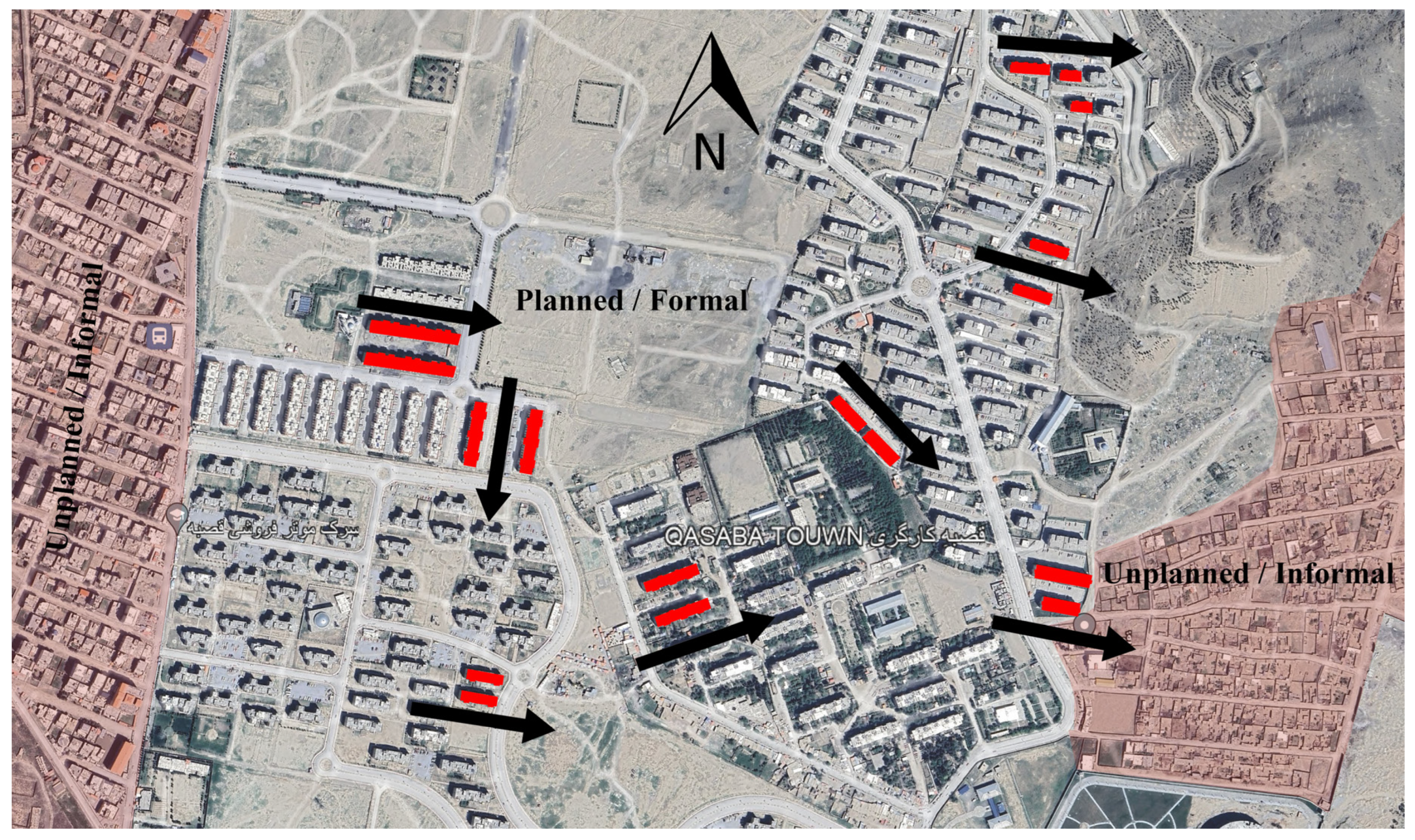
Figure 2.
Study flow chart.
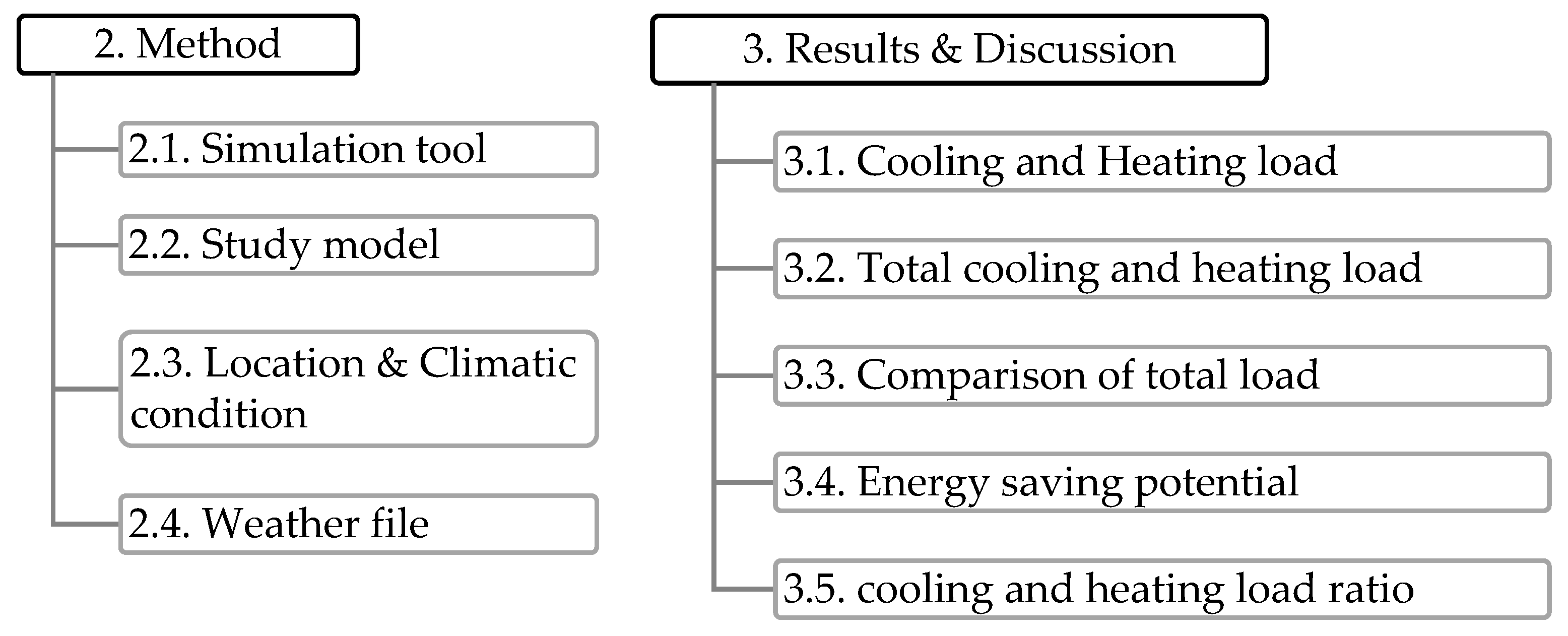
Figure 4.
Topographical and Köppen-Geiger climate map of Afghanistan [51].
Figure 4.
Topographical and Köppen-Geiger climate map of Afghanistan [51].
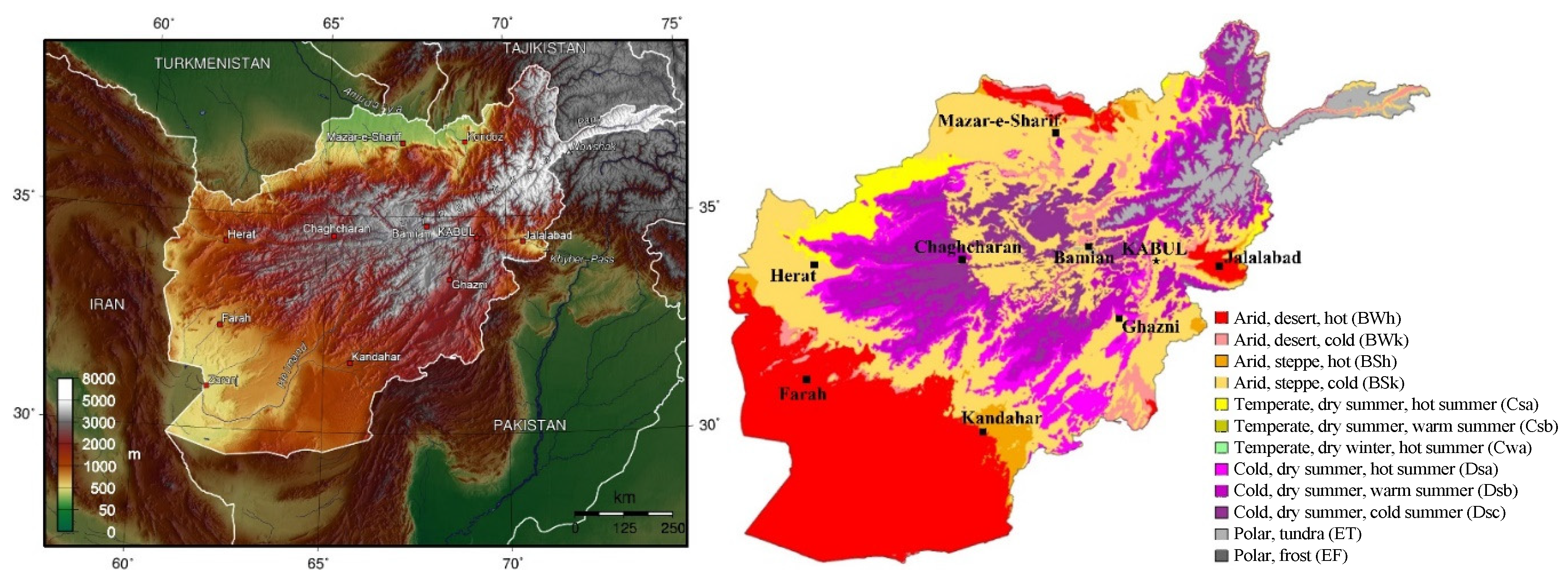
Figure 5.
Average daily temperature of various cities in Afghanistan.
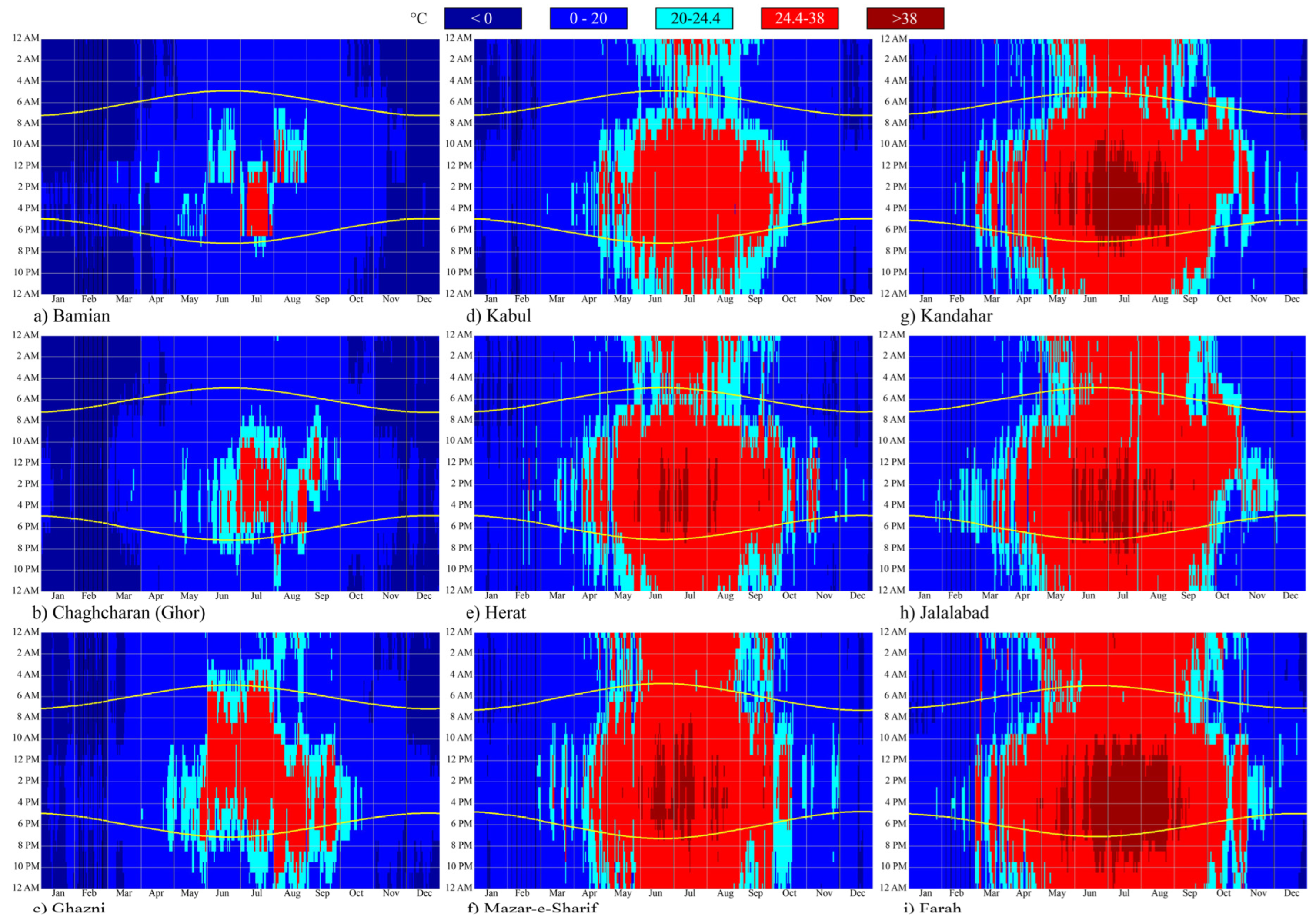
Figure 6.
Monthly average temperature.
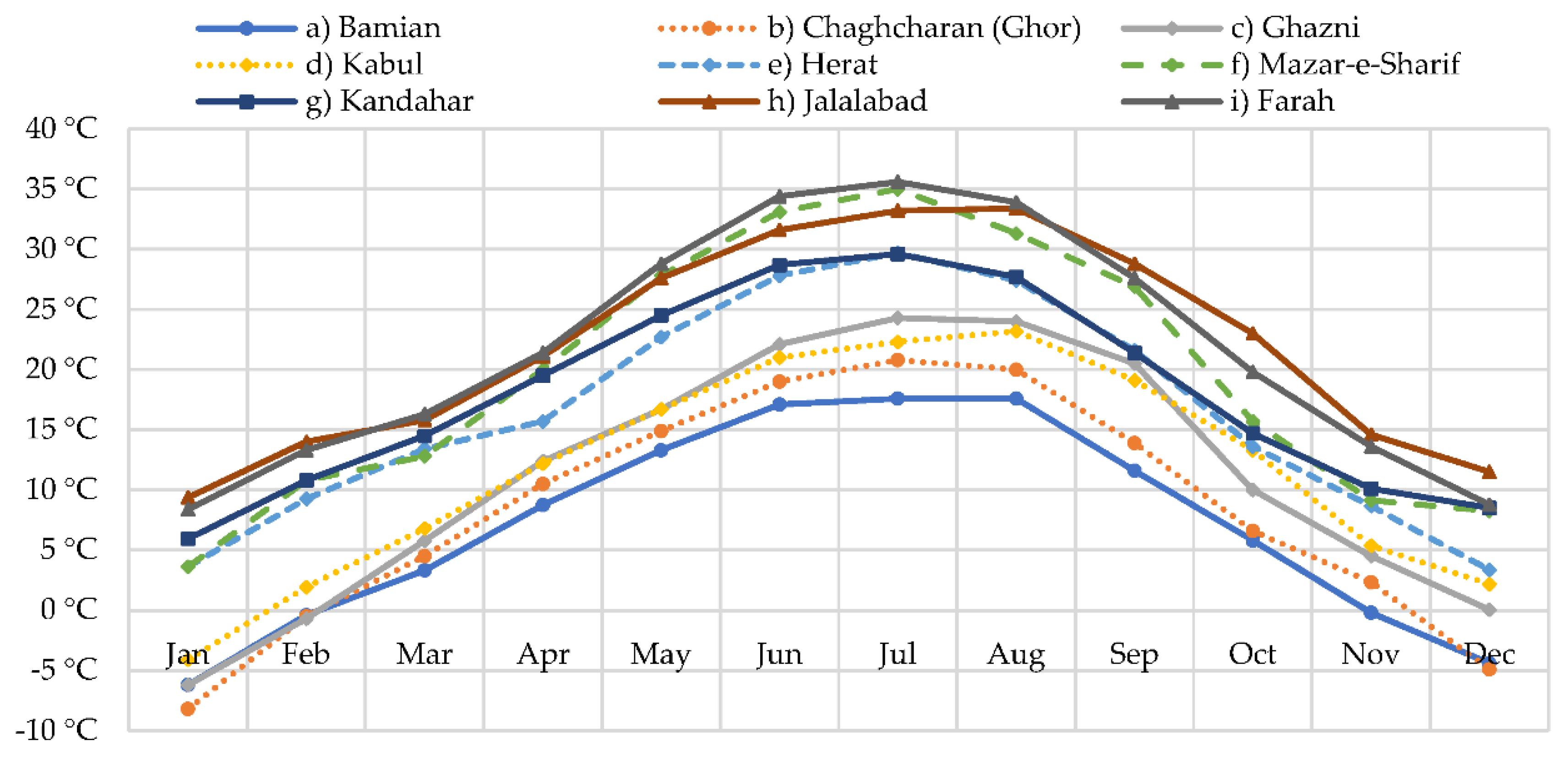
Figure 7.
Impact of orientation on annual cooling and heating energy consumption in (a) Bamian (b) Chaghcharan - Ghor (c) Farah (d) Jalalabad.
Figure 7.
Impact of orientation on annual cooling and heating energy consumption in (a) Bamian (b) Chaghcharan - Ghor (c) Farah (d) Jalalabad.
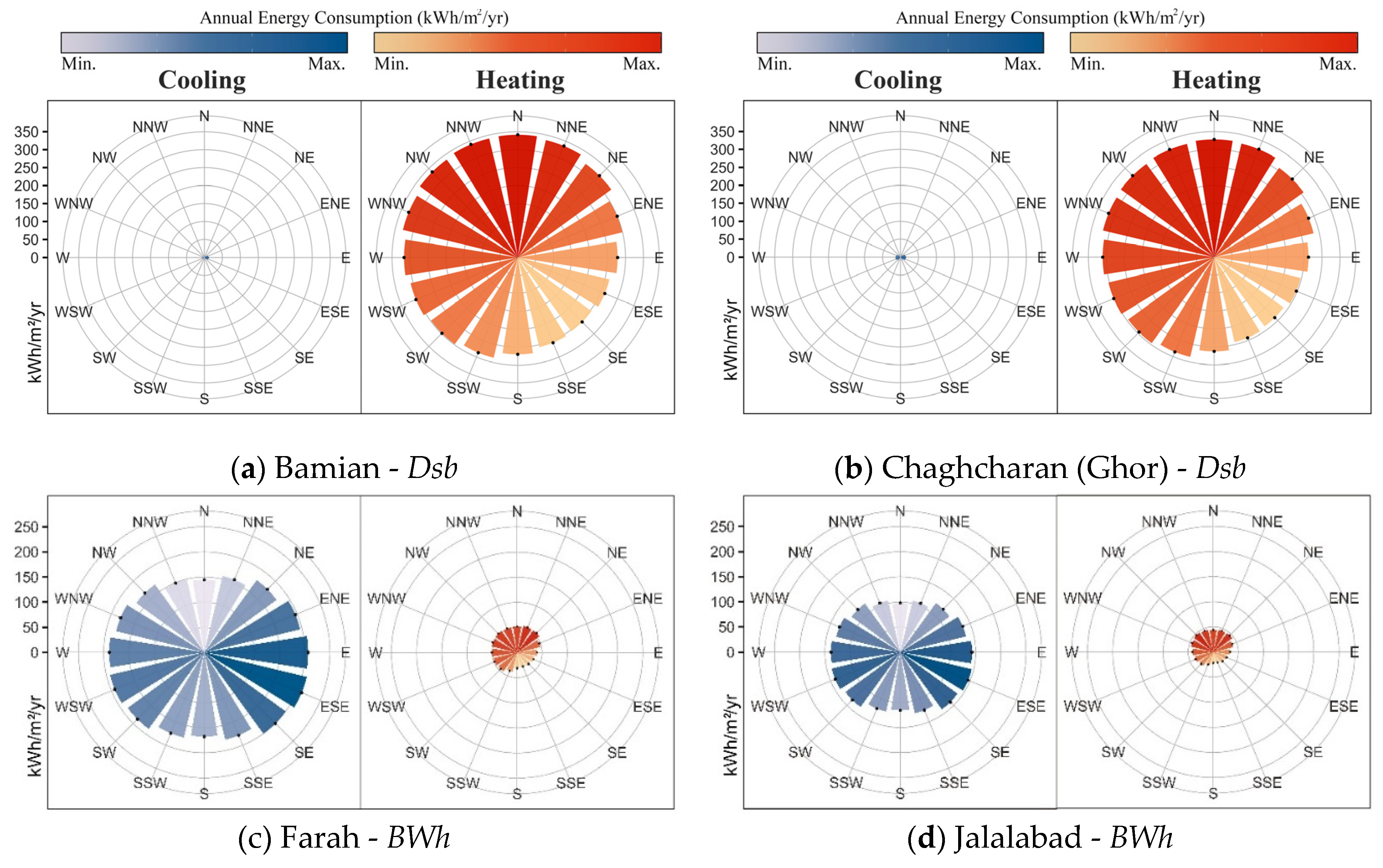
Figure 8.
Impact of orientation on annual cooling and heating energy consumption in Kandahar - BSh.
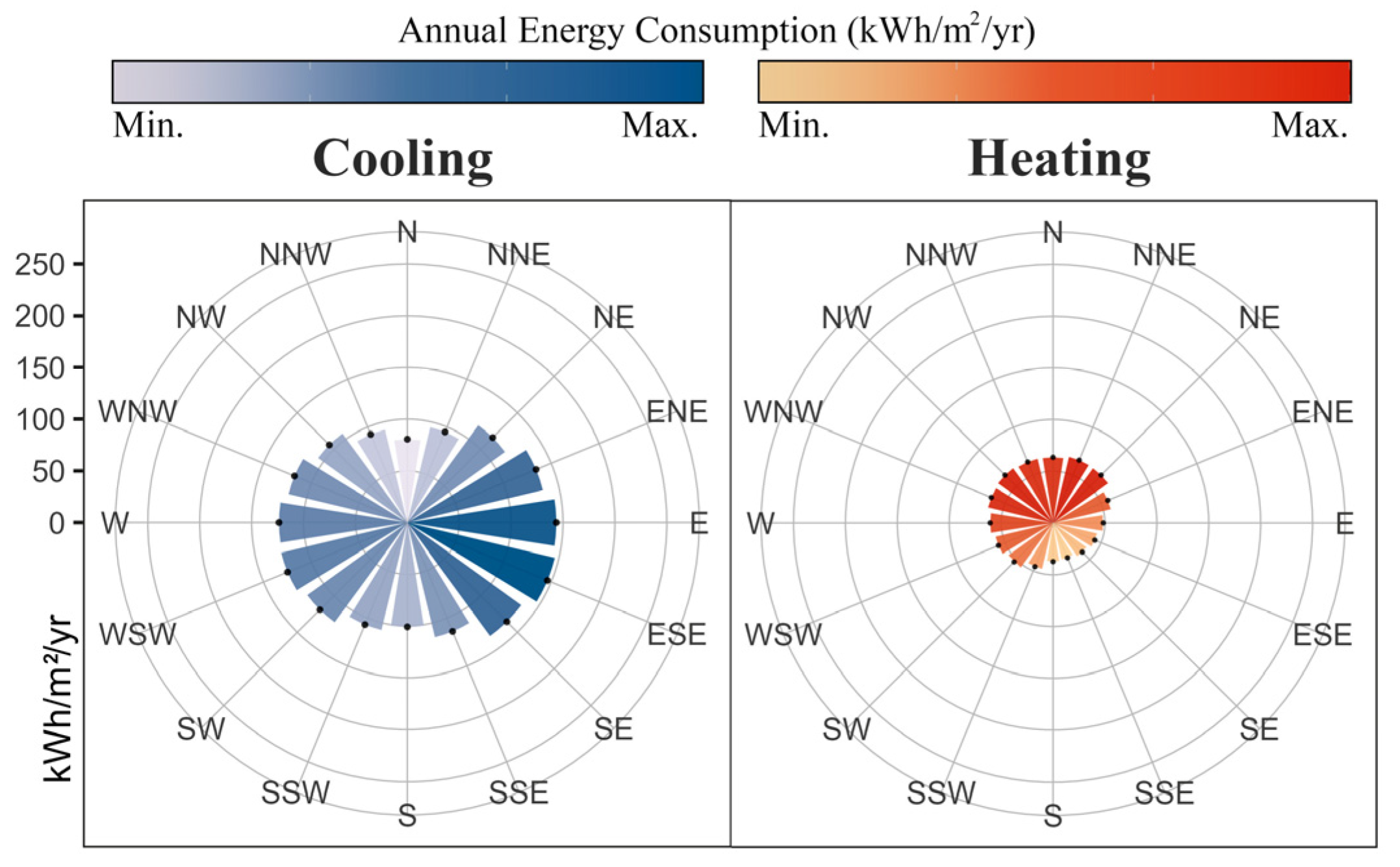
Figure 9.
Impact of orientation on annual cooling and heating energy consumption (a) Ghazni (b) Kabul (c) Heart (d) Mazar-e-Sharif.
Figure 9.
Impact of orientation on annual cooling and heating energy consumption (a) Ghazni (b) Kabul (c) Heart (d) Mazar-e-Sharif.
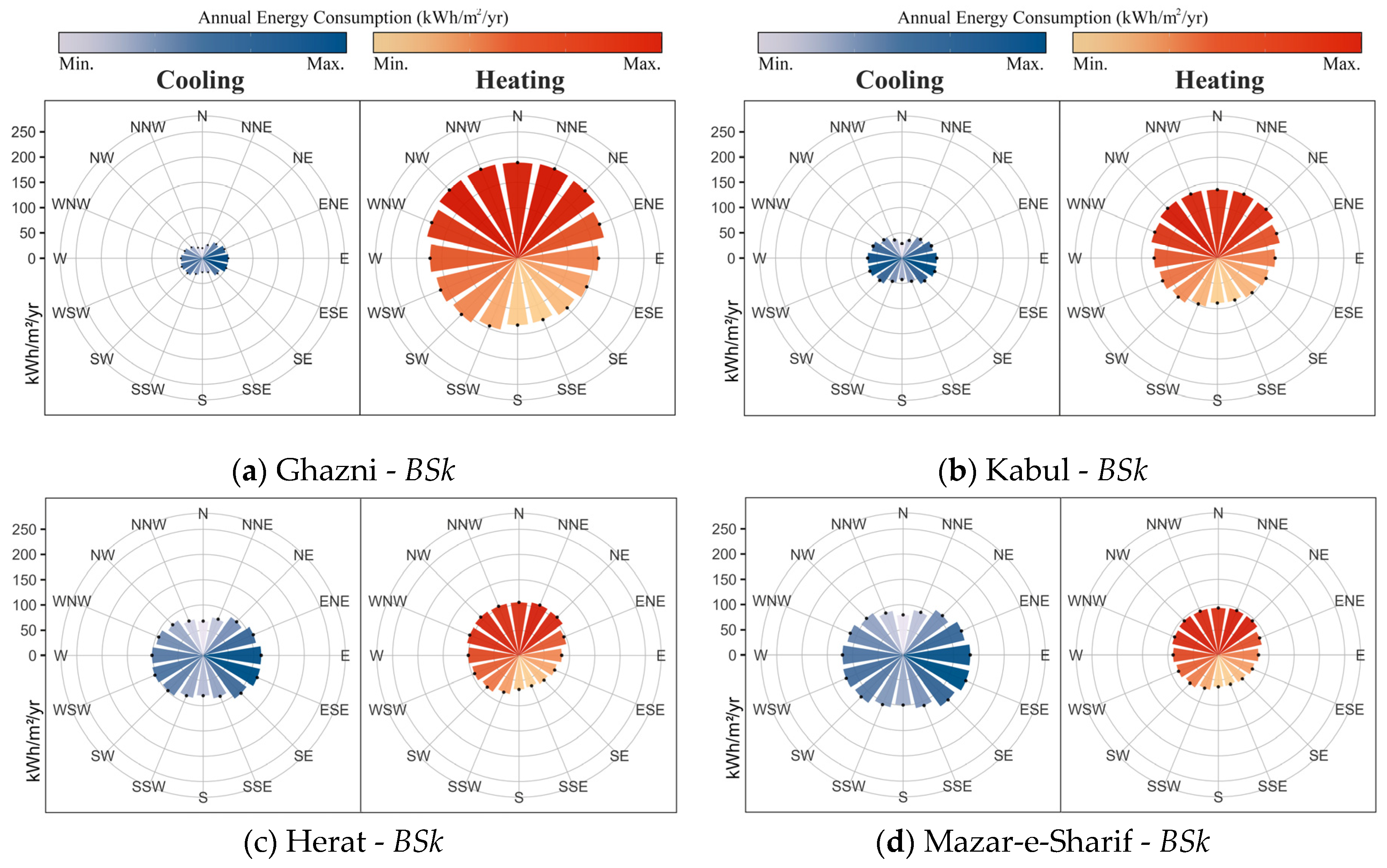
Figure 10.
Impact of orientation on total annual energy consumption in (a) Bamian (b) Chaghcharan – Ghor (c) Farah (d) Jalalabad.
Figure 10.
Impact of orientation on total annual energy consumption in (a) Bamian (b) Chaghcharan – Ghor (c) Farah (d) Jalalabad.
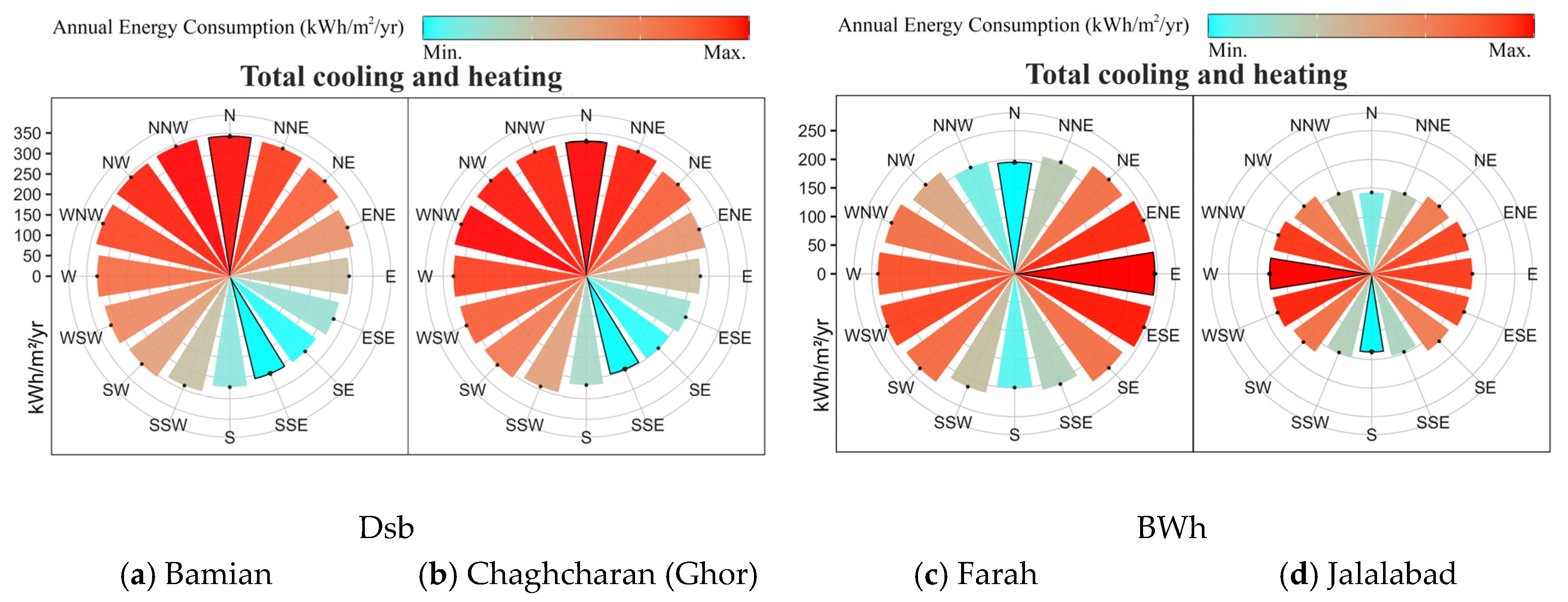
Figure 11.
Comparison of the average temperatures and relative humidity of Farah and Jalalabad.
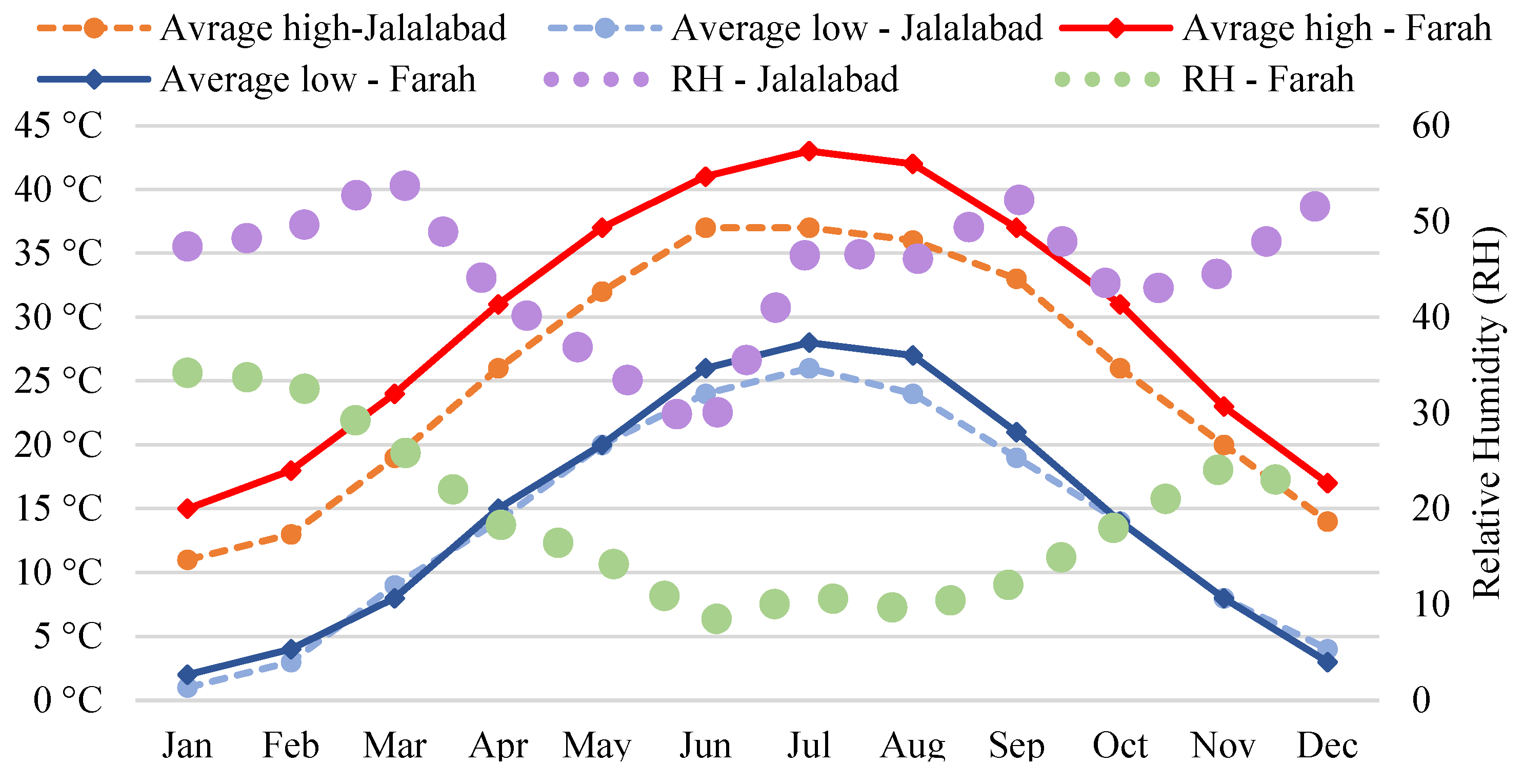
Figure 12.
Impact of orientation on total annual energy consumption in Kandahar - BSh.
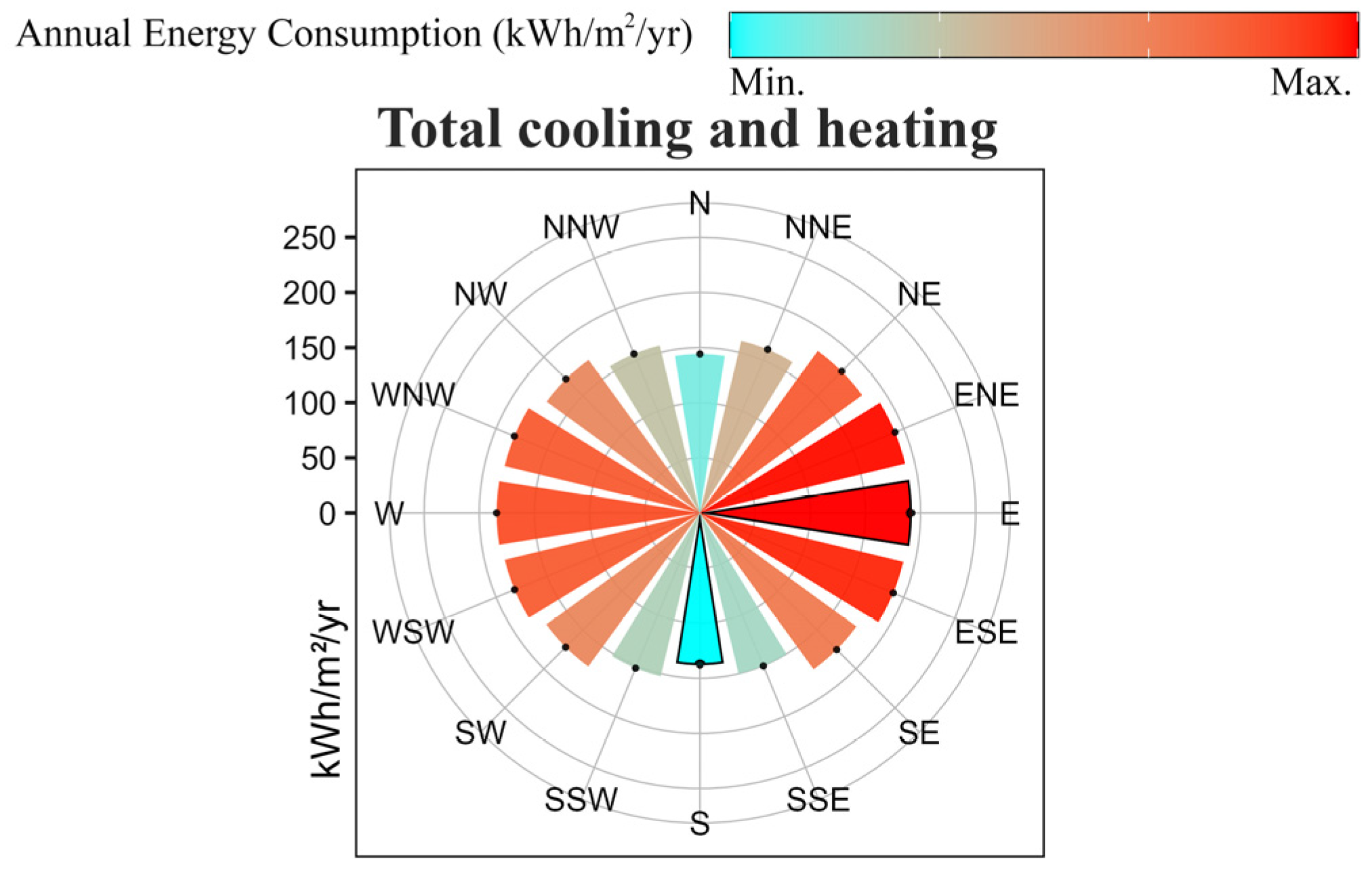
Figure 14.
Annual Energy Usage of Different Orientations in various cities across Afghanistan.
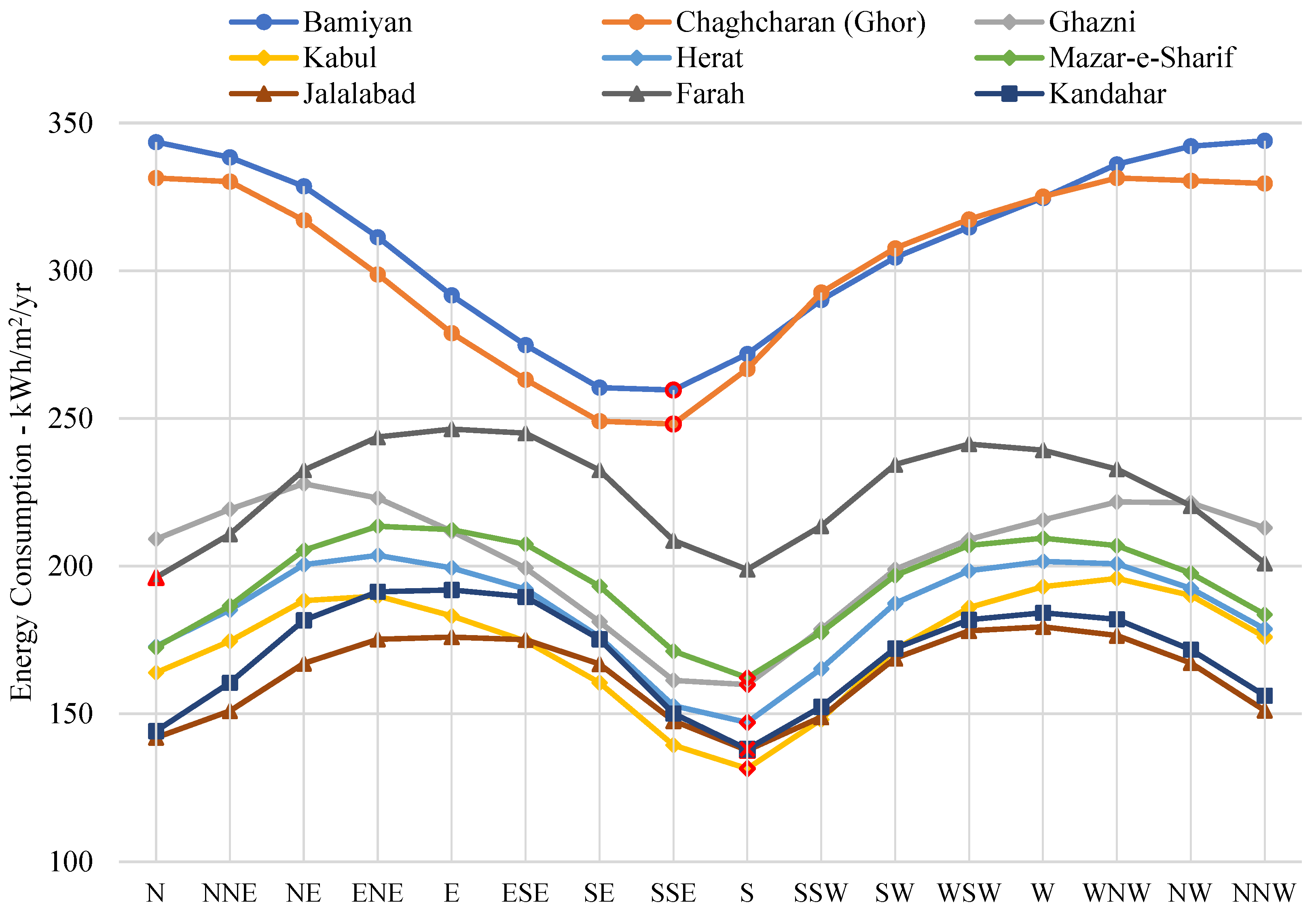
Figure 15.
Comparison of the daily energy consumption of best orientation to South orientations in (a) Bamian (b) Farah.
Figure 15.
Comparison of the daily energy consumption of best orientation to South orientations in (a) Bamian (b) Farah.
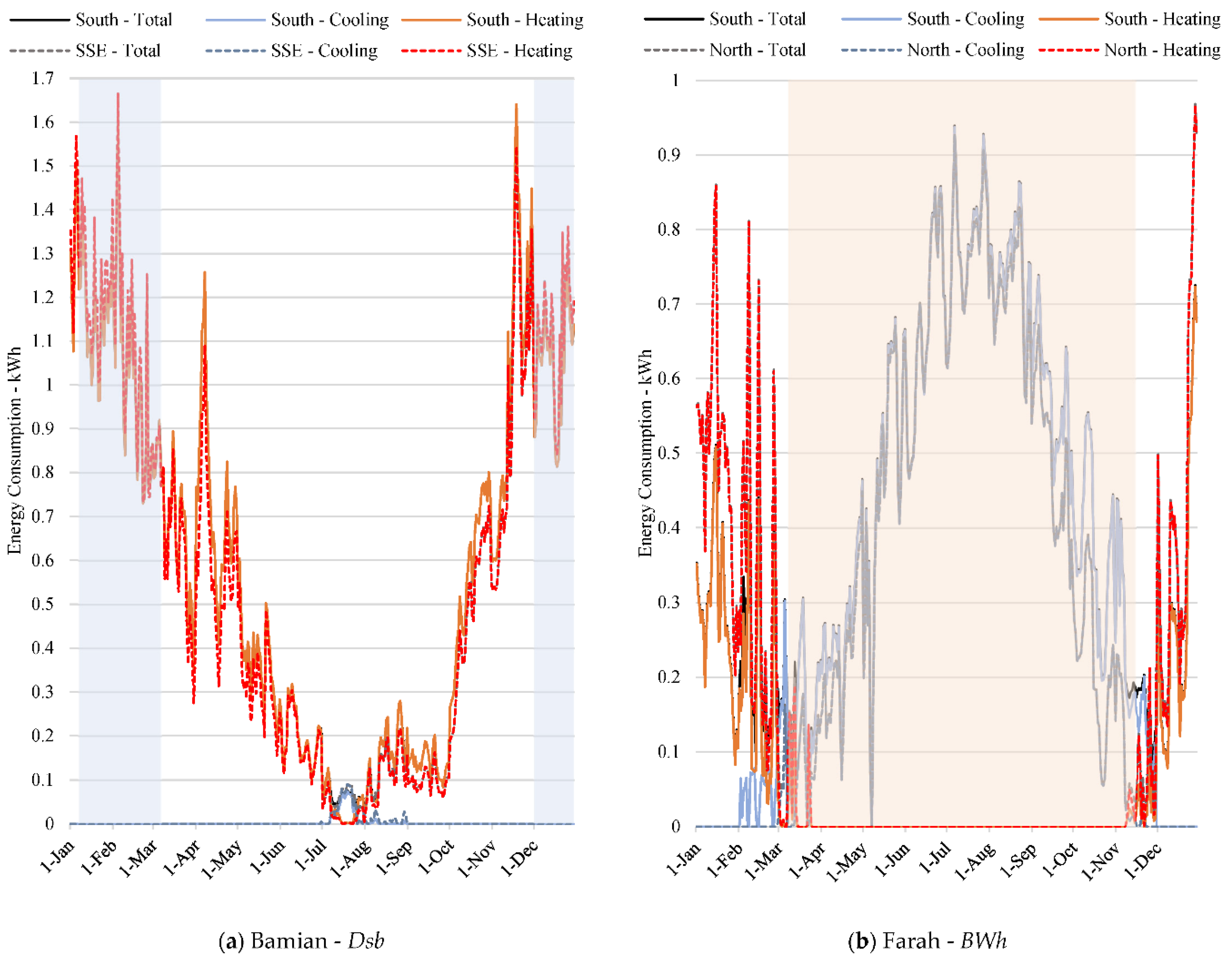
Figure 16.
Percentage increase or decrease in cooling, heating, and total energy consumption compared to the optimal orientation.
Figure 16.
Percentage increase or decrease in cooling, heating, and total energy consumption compared to the optimal orientation.
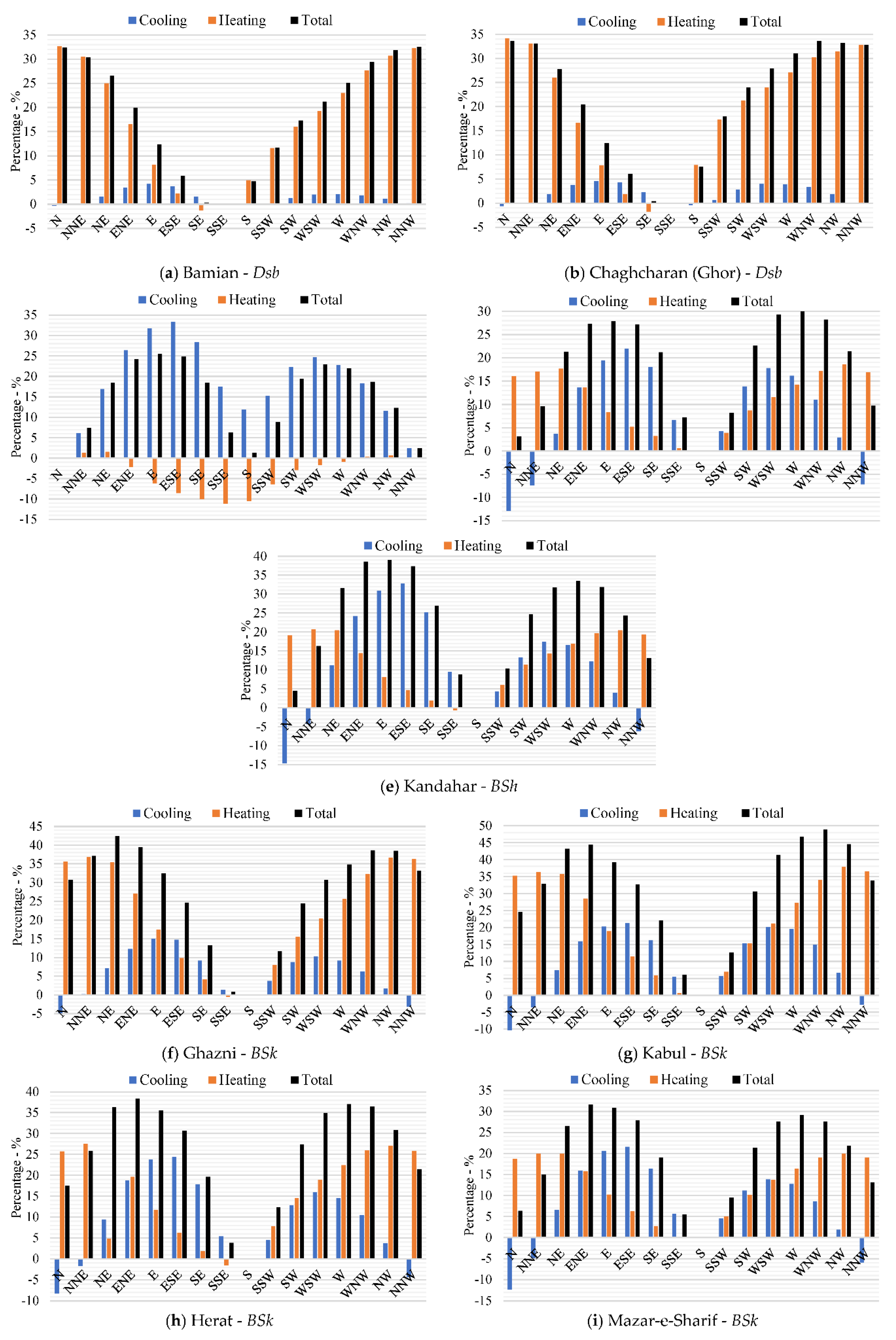
Figure 17.
Annual cooling and heating energy consumption in various cities.
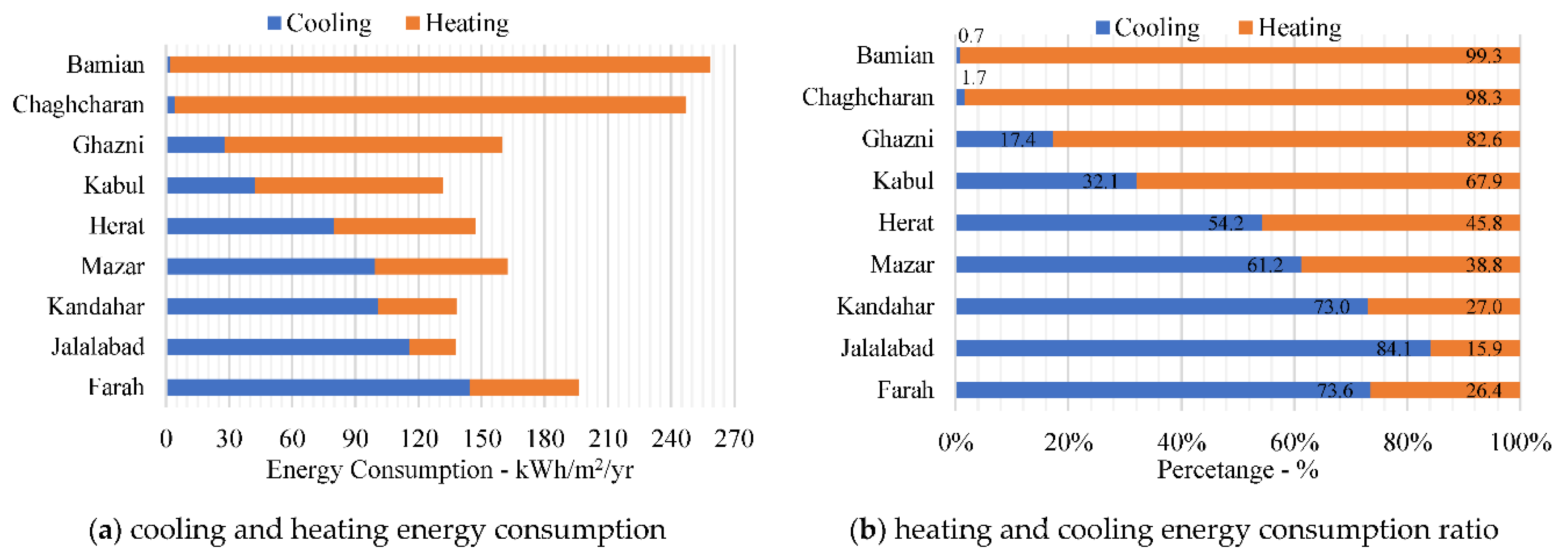
Table 1.
Technical properties and design parameters of study models.
| Main characteristics | Unit | Properties |
|---|---|---|
| Floor area | m2 | 18 |
| Ceiling height | m | 2.75 |
| Walls | - | Stucco 2.5cm + Hollow Concrete Masonry Unit (CMU) 20cm + Drywall 1.6cm |
| Roof – (flat) | - | Medium color Tiles + R-30C Fiberglass Batt + Drywall 1.6cm |
| Floor | - | Whole slab R10, R5 Gap Extruded Polystyrene Insulation (XPS) 10cm + 100% Carpet |
| Windows | - | Non-metal, Clear glass, Double glazing, Air |
| U-Value | 2.78 W/m2K | |
| WWR % | 35% – 5.85m2 | |
| Door | - | Wood |
| U-Value | 2.72 W/m2K | |
| m2 | 1.85 | |
| Cooling set point | °C | 24.4 = 76°F |
| Heating set point | °C | 20 = 68°F |
| Internal load | Occupants | 1.5 person |
| Sensible load | 232 kJ/person/h | |
| Latent load | 173 kJ/person/h | |
| Air Flow | Air leakage | 1 ACH50 |
| Natural Ventilation | Only cooling Months, Everyday | |
| Space Conditioning | AC | EER 8.5 |
| Electric Baseboard | 100% Efficiency | |
| Ceiling Fan | National Average |
Disclaimer/Publisher’s Note: The statements, opinions and data contained in all publications are solely those of the individual author(s) and contributor(s) and not of MDPI and/or the editor(s). MDPI and/or the editor(s) disclaim responsibility for any injury to people or property resulting from any ideas, methods, instructions or products referred to in the content. |
© 2024 by the authors. Licensee MDPI, Basel, Switzerland. This article is an open access article distributed under the terms and conditions of the Creative Commons Attribution (CC BY) license (http://creativecommons.org/licenses/by/4.0/).
Copyright: This open access article is published under a Creative Commons CC BY 4.0 license, which permit the free download, distribution, and reuse, provided that the author and preprint are cited in any reuse.