

Submitted:
08 October 2024
Posted:
09 October 2024
You are already at the latest version
Abstract
Abstract: Malnutrition in children aged 0-5 years is a significant public health concern in many societies and is influenced by various sociodemographic factors that, when understood, may improve intervention planning and results. Background. This study aimed to identify the sociodemographic determinants of malnutrition in rural and urban areas of Abia State, Nigeria. Methods. A cross-sectional observational study involving 842 children (aged 6-59 months) and their caregivers was conducted across selected rural and urban areas in Abia State, Nigeria. Data collected through semistructured questionnaires focused on sociodemographic information as well as anthropometric measurements such as weight, height, and mid-upper arm circumference (MUAC). The dietary diversity score (DDS) was also calculated for each child via a questionnaire that recorded the consumption of various food groups over a 7-day period. Chi-square tests were adopted for categorical variables, whereas binomial logistic regression was used to identify determinants of malnutrition and weight classification. Results. Marked sociodemographic differences were found between rural and urban caregivers, with urban caregivers being more likely to have higher knowledge of nutrition (p < 0.01) and education (p < 0.01). Malnutrition, indicated by global acute malnutrition (GAM), was significantly higher in rural areas (53.5%) than in urban areas (46.5%) (χ2 = 5.353, p = 0.021). Logistic regression revealed that children of caregivers in rural areas were more likely to have an abnormal BMI-for-age (AOR: 1.407, 95% CI: 1.001–1.978, p = 0.049), whereas children of caregivers in urban areas were less likely to be malnourished (COR: 0.565, 95% CI: 0.347–0.921, p = 0.022). Conclusion. Implementation scientists should focus on enhancing caregiver education, particularly in rural areas, to promote awareness of diets, thereby reducing malnutrition.
Keywords:
Malnutrition
; Nutritional deficiency
; under-5 children
; sociodemographic characteristics
; Nigeria
1. Introduction
Malnutrition in its various forms poses significant threats to child health in many parts of the world [1,2]. Defined as a pathological state resulting from inadequate or excessive nutrition, it includes undernutrition, overnutrition, and micronutrient deficiency [2,3,4,5]. As of 2013, undernutrition contributed to more than one-third of all child deaths globally, affecting at least 99 million children. Similarly, overnutrition has affected an estimated 42 million under-five children worldwide in the same year [3]; [6,7]. While micronutrients, as their names suggest, are vitamins and minerals that are useful in minute amounts in the human body, deficiency of these nutrients may cause serious health threats, such as prolonged reduction in bodily energy and negative impacts on mental clarity, among other challenges. Specifically, deficiencies in vitamin A and iron are the most prevalent of all known micronutrient deficiencies [8,9], with up to 500,000 vitamin A-deficient children eventually going blind every year and approximately 250,000 dying one year down the line [10]. Iron deficiency, on the other hand, affects more than 40% of children under-five children globally [11], with a significant number of these children suffering from anaemia, a disease that has been linked to poor educational attainment in mid and late school years [12].
As a nation in the Global South where malnutrition is predominant, Nigeria ranks as the country with the second highest burden of stunted children worldwide and the highest burden in Africa. With a national prevalence rate of 33.3% among children under-five years of age, approximately 2,300 children die daily due to malnutrition, with marked regional and urban-rural variations [13,14,15]. In the same vein, there is a growing trend toward overnutrition, which has resulted in 7% of children being recently reported to be overweight [16]. According to the World Bank [17], Nigeria loses approximately USD$1.5 billion annually to malnutrition and other health-related challenges associated with it, a situation that calls for urgent attention. On the basis of the current data on the prevalence of malnutrition and the worrying statistics associated with its impacts in Nigeria, there is a need for additional studies that offer improved understanding of the drivers of the disease, as well as methods of prevention, control, and management.
2. Related Literature
Some scholars have reported that malnutrition is influenced by the ability of a household to produce, purchase, and secure its own food [17,18,19]. This means that a household that is unable to achieve this goal may face the risk of malnutrition. As a result, detailed knowledge of malnutrition is required for a clear understanding of how the concept is measured vis-à-vis nutritional efforts made by a household. One popular way to measure malnutrition is through the use of a dietary diversity score (DDS) indicator, which assesses economic access to food but provides little information on the nutritional quality of a person’s diet. Originally developed to measure household food access, an essential component of food security, the DDS has been extensively applied in nutrition-related studies. In fact, research has demonstrated that dietary diversity is closely related to food security [21]. Nevertheless, since food availability does not necessarily equate to accessibility, evidence suggests that some households may struggle to acquire sufficient quantity or diversity of food [19,20].
Recently, malnutrition has also been measured using variables such as mid-upper arm circumference (MUAC) [22,23] and body mass index (BMI) for age percentile, both of which are useful in assessing the nutritional status of children [24,25]. The MUAC detects acute malnutrition, which can be classified as moderate acute malnutrition (MAM) with a MUAC between 115 mm and 125 mm, severe acute malnutrition (SAM) with a MUAC less than 115 mm, and global acute malnutrition (GAM), a combination of MAM and SAM [26,27,28]. On the other hand, BMI-for-age percentile identifies adiposity, which is classified as underweight (< 5th percentile), normal weight (5th-85th percentile), overweight (85th-95th percentile), or overweight (> 95th percentile) [29,30].
While the understanding of malnutrition measurement lays the foundation for scientific work in nutrition research, there are many studies on malnutrition in the Nigerian context. By adopting the probit model to analyse the Nigerian National Demographic Health Survey (NDHS) dataset, Ashadigigbi et al. [31] sought to determine how the nutritional status of a child is influenced by the gender and occupation of household heads in the northwestern part of Nigeria. The results revealed significant impacts of sex on nutritional status, as many male children in female-headed households experienced malnourishment. This was further exacerbated by residence in rural areas, where earnings from the occupation of the household head are barely enough to cater for the nutritional needs of the children. Stressing the dearth of literature on the impact of CO2 pollution on malnutrition, Egbon et al. [32] made research efforts to account for the spatio-temporal susceptibility to malnutrition in children, which is based on exposure to CO2. The scholars adopted the weighted spatial variation of the volume of emissions over a period of eighteen years (2001 to 2018). The Bayesian hierarchical statistical model embedded within a conditional auto-regressive (CAR) spatial model was used to analyse the NDHS dataset, alongside selected aspects of the Mongabay data with statistical adjustment for specific variables. The study results revealed that high CO2 concentrations can be linked to malnutrition in children, implying that regions with higher CO2 emissions are more likely to experience higher malnutrition prevalence. Nevertheless, a stand-out aspect of the results of the study was that while some areas of the northern part of Nigeria were markedcharacterized by lower concentrations of CO2, children in these areas remained at higher risk of malnutrition than those in other geopolitical zones [32]. This highlights the potential effects of other emission-related variables on malnutrition.
As a form of malnutrition, undernutrition has been extensively researched and found to be more prevalent in rural settings due to factors such as poverty and lower socioeconomic status [33], lower maternal education levels [34], higher rates of teenage pregnancy and increased parity [33], and poor sanitation and limited healthcare access, which contribute to higher burdens of infectious diseases [35]. This is the situation in southeastern Nigeria, where rural undernutrition is exacerbated by poverty, limited healthcare access, and low parental education. Unlike rural dwellings, urban areas tend to experience higher rates of overnutrition attributed to improved socioeconomic status and greater food accessibility, both of which are pointers to the consumption of energy-dense foods [36]. Additionally, urban populations often adopt westernized diets characterized by increased consumption of processed foods high in sugar, salt, and unhealthy fats [37]. Hence, without adequate parental or caregiver control, excessive intake of unhealthy foods by children in such areas may lead to obesity and overweight. In other words, rising overnutrition may be driven by lifestyle changes and socioeconomic factors [38,39,40].
Seeking to affirm the existing understanding of the rural-urban split with regards to malnutrition in southeastern Nigeria, Umeokonkwo et al. [41] surveyed over 700 children in Ebonyi State and reported that stunting was primarily associated with children residing in rural areas at a 19% rate and only 5% among those living in urban areas of the state. Furthermore, children who attended privately owned schools were either healthy or overweight than those who attended government-owned schools or lived in rural settings and were either underweight or stunted.
While there are several documented evidence of malnutrition in rural/urban settings, the challenge that one size does not always fit all in public health discourse implies that context may play a role in shaping factors that determine malnutrition. Even within similar geographical settings, social and economic differences create disparities in health outcomes, which affects how interventions are designed and implemented. On this basis, there is a need for continued efforts to better understand the drivers of malnutrition unique to separate societies, particularly in relation to sociodemographics differences. Against this background, this study aims to identify the sociodemographic determinants of malnutrition in rural and urban areas of Abia State, Nigeria, which is crucial for designing effective public health interventions to improve child health outcomes in the state.
3. Materials and Methods
3.1. Study Design
This research employs a cross-sectional study design, thereby allowing for data collection at a single point in time to examine the prevalence of malnutrition and its sociodemographic determinants in urban and rural settings. The MUAC score and BMI (for age) were adopted as the nutritional indicators, whereas the age of the caregiver, education level, years of marriage, maternal knowledge, occupation and DDS were the sociodemographic determinants. The study was conducted between October 15 and December 20, 2023.
3.2. Study Setting
This study was conducted in Abia State, southeastern Nigeria (Figure 1). According to the Nigeria Bureau of Statistics [42], Abia has a population of 3,841,943 inhabitants, with Aba being its largest city and commercial hub. Aba also acts as the industrial center, although Umuahia is the state capital. Abia is predominantly inhabited by the Igbo ethnic group, which are mostly Christians [7,43]. Industrial and agricultural activities exist in the state, with smallholder farmers cultivating crops such as rice, cassava, and yam. Mechanized farming activities are also popular, especially for oil palm cultivation, which is the economic mainstay for the state. With diverse manufacturing operations encompassing textiles, plastics, footwear, and pharmaceuticals, Abia state is recognized as one of the primary industrial hubs in the eastern part of Nigeria. Despite the growing economic activities in Abia State, challenges such as limited infrastructure, high population density, and pervasive nutritional issues—especially in rural areas—pose significant obstacles to development. The situation is further complicated by widespread poverty and limited access to healthcare, which exacerbates malnutrition. [44,45]. To gain firsthand knowledge on the nutritional status of infants as well as the level of malnutrition in the state, this study involved caregivers and their children (aged 6-59 months) who participated in the World Bank-funded Accelerating Nutrition Results in Nigeria (ANRiN) program implemented by Solina Health Limited [46].
3.3. Sample Size Estimation and Sampling Technique
According to the 2018 National Nutrition and Health Survey (NNHS) by the National Bureau of Statistics (NBS), the malnutrition status of children aged 0 to 59 months in Abia State was reported to be 0.49, 0.46 and 0.04 for global acute malnutrition (GAM), severe acute malnutrition (SAM), and moderate acute malnutrition (MAM), respectively [16]. Therefore, the sample size for this study was calculated using the Cochrane formula:
n = (Z^2 p(1-p))/d^2
Equation (1) applies to sample size estimation for cross-sectional studies in populations above 10,000 people [47]. The desired sample size, n, was calculated with a 95% confidence level (Z = 1.96), assuming a proportion of the target population with a GAM (p) of 0.49 [16], a complement proportion (1-p) of 0.51, and a sampling error (d) of 5% or 0.05. The minimum sample size calculated was 423 caregivers with children, accounting for 10% attrition. However, during field data collection, a total of 842 caregivers with children were sampled.
A stratified multistage random sampling technique was adopted to select participants from the selected Local Government Areas (LGAs) in the state. Specifically, two LGAs were surveyed: one rural LGA (Bende) with a high malnutrition rate and one urban LGA (Umuahia South) with a lower malnutrition rate. These LGAs were selected based on data from previous nutrition surveys and health records obtained from the State Ministry of Health, which confirmed the prevalence of malnutrition in each area. Within each LGA, six wards were randomly selected, followed by the random selection of six communities within each ward. In each community, only one child per household was included in the selection process. For households with multiple eligible children, simple random sampling was used to select one participant for caregiver interviews. Each community in rural areas had 12 children selected, whereas urban areas had 10 children selected. Caregivers who provided consent and had resided in the selected wards for more than six weeks were included in the study. Those on growth-affecting medication, unwilling participants, children with skeletal deformities or ages that could not be verified, caregivers without children in this age range (6–59 months), and those residing in the wards for less than six weeks were excluded.
3.4. Data Collection
MUAC measurement instruments and semistructured questionnaires (Appendix B) were used to collect data from caregivers and their children. Sociodemographic data of caregivers, including age, years of marriage, marital status, level of education, occupation, and knowledge of nutrition, were obtained. Data for children were collected following the DDS diet score [48,49,50,51], age, sex, and place of birth. Anthropometric measurements were directly collected using standardized tools: weight was recorded in kilograms to the nearest 0.1 kg with a standardized weighing scale, height/length was measured to the nearest 0.1 cm using a measuring board, and head circumference and MUAC were measured with a tape rule [52,53,54]. On the basis of the parameters collected, the children were classified into nutritional categories, including well-nourished (normal) and malnourished (underweight, overweight, stunted, or not stunted).
3.5. Description of Variables
In this study, the MUAC was adopted to assess nutritional status with the following classifications: normal (≥125 mm), moderate acute malnutrition (MAM, 115–124 mm), severe acute malnutrition (SAM, <115 mm), and global acute malnutrition (GAM, combining MAM and SAM) [55]. BMI-for-age based on the WHO cut-off points [56] using percentiles classified weight relative to height as follows; values: >95th percentile (overweight), 85th–95th percentile (at risk of overweight), 5th–85th percentile (normal), and <5th percentile (underweight). These values are age specific and differ from one age to another. BMI was calculated as weight (kg) divided by height (m) squared.
Food access was characterized using the DDS [57,58]. The DDS indicator assessed household economic access to food (i.e., its ability to produce, purchase or otherwise secure food for consumption by all household members). Dietary intake was assessed using a validated semiquantitative food frequency questionnaire over 7 days, scoring the consumption of cereals, roots, vegetables, fruits, meat, eggs, fish, legumes, dairy, and oils, with a score of 1 per group consumed, indicating better dietary diversity and nutritional status [59]. The DDS was calculated based on scoring to the 10-food group. Dietary diversity was classified into two categories: inadequate dietary diversity, defined as households consuming fewer than eight food groups, and adequate dietary diversity, defined as households consuming eight or more food groups [10,59].
3.6. Data Cleaning, Translation and Analysis
The original dataset consisted of 1,051 rows, of which 545 rows were urban data and 505 rows were rural data. The outliers from the BMI data were removed as part of the data cleaning process, which was performed to ensure the accuracy and reliability of the analysis. BMI values ≥40 kg/m² were considered outliers and removed from the dataset. The dataset was reduced to 842 rows. Of these, 500 rows matched the urban data, whereas 342 rows matched the rural data. To ensure reliable results, the analysis was performed using this cleaned dataset. The IBM Statistical Package for Social Sciences (SPSS) version 26.0 was used for data analysis. Chi-square tests were used in inferential analysis to examine associations for categorical variables. The study employed binomial logistic regression to identify the factors influencing both weight (BMI-for-age) and malnutrition status (MUAC), considering various sociodemographic factors. P-values < 0.05 were considered significant.
4. Results
4.1. Sociodemographic Characteristics of Caregivers and Children
The data presented in Table 1 show important differences between rural and urban caregivers with respect to their sociodemographic characteristics. Compared with their rural counterparts, a greater percentage of urban caregivers were aged 25–35 years (60.7% vs. 39.3%) and ≥35 years (61.4% vs. 38.6%), married for less than 10 years (64.2% vs. 35.8%), had completed higher education (81.8% vs. 18.2%), were employed (74.4% vs. 25.6%), and had adequate knowledge of nutrition (64.4% vs. 35.6%). These differences were statistically significant (p<0.05).
Table 2 presents the sociodemographic characteristics of the children of the caregivers. In urban areas, children are more likely to be born in a hospital (57.1%), while children are less likely to be born in a hospital in rural areas (42.9%), χ2 = 8.727, p = 0.003.
Also, a significantly higher GAM (χ2 = 5.353, p = 0.021) was observed for the children of caregivers in rural areas (53.5%) than for the children of caregivers in urban areas (46.5%).
4.2. Comparison of Malnutrition Status and Weight Classification with Sociodemographic Characteristics in Rural and Urban Areas
Table 3 compares the sociodemographic characteristics of rural and urban areas with the malnutrition status. There were significant differences in the malnutrition status in rural areas for caregivers with adequate nutritional knowledge (14.6% GAM vs. 85.4% normal, χ2 = 4.951, p = 0.026), children aged 0 to 24 months (17.1% GAM vs. 82.9% normal, χ2 = 9.324, p = 0.002), and those whose place of childbirth was not a hospital (20.9% GAM vs. 79.1% normal, χ2 = 4.801, p = 0.028). While other sociodemographic characteristics showed no statistically significant differences in GAM prevalence, significant associations were found for children aged 0 to 24 months (11.0% GAM vs. 89.0% normal, χ2 = 12.190, p < 0.01) and for children not born in a hospital (11.8% GAM vs. 88.2% normal, χ2 = 5.545, p = 0.019) in urban areas.
When comparing BMI-for-age and sociodemographic factors in rural and urban areas, Table 4 reveals significant differences in malnutrition status. A higher percentage of male children with abnormal BMI (63.6% abnormal vs. 36.4% normal, χ2 = 8.028, p = 0.005) were in rural areas, and a similar trend was observed in urban areas (65.6% abnormal vs. 34.4% normal, χ2 = 4.557, p = 0.033). Additionally, while other sociodemographic characteristics were not significantly different in terms of BMI-for-age between rural and urban settings, children with inadequate diet scores had a higher prevalence of abnormal BMI in urban areas (62.5% abnormal vs. 37.5% normal, χ2 = 3.881, p = 0.049).
4.3. Binary Logistic Regression Analysis of the Relationship between Sociodemographic Variables and Malnutrition Status
A comparative analysis of the sociodemographic determinants of malnutrition and BMI-for-age between rural and urban areas is presented in Figure 2. The analysis revealed that children in rural areas were more likely to have an abnormal BMI-for-age (AOR: 1.407, 95% CI: 1.001–1.978, p = 0.049), whereas children in urban areas were less likely to be malnourished (COR: 0.565, 95% CI: 0.347–0.921, p = 0.022) in terms of malnutrition status. There appears to be a protective effect, as caregivers with tertiary education were less likely to have children with an abnormal BMI-for-age (AOR: 0.322, 95% CI: 0.157–0.660, p = 0.002) and a COR: 0.471, 95% CI: 0.267–0.828, p = 0.009). An inadequate dietary score also increased the likelihood of malnutrition status (AOR: 0.489, 95% CI: 0.239–1.001, p = 0.050); however, there was no significant association between malnutrition status and abnormal BMI-for-age (COR: 1.290, 95% CI: 0.934–1.783, p = 0.123; AOR: 1.235, 95% CI: 0.871–1.749, p = 0.236).
4.4. Comparative Logistic Regression Analysis of Sociodemographic Determinants of Malnutrition Status in Both Urban and Rural Areas in Abia State
Figure 3 and Figure 4 show that there was no significant association between caregiver age, years of marriage, or occupation and nutritional status in urban areas. In contrast to secondary education, primary schooling was associated with a higher risk of malnutrition (OR: 1.151, 95% CI: 0.574–2.308, p = 0.692).
Figure 4 shows the regression model for the relationship between BMI and the sociodermographic characteristics of mothers. Compared with caregiver with secondary education, caregivers with primary education showed a higher risk of malnutrition (OR: 1.151, 95% CI: 0.574–2.308, p = 0.007), whereas mothers with tertiary education presented a significantly lower likelihood of malnutrition in rural areas (OR: 0.054, 95% CI: 0.009–0.336, p = 0.002). An inadequate dietary score was associated, but not significantly, with a higher likelihood of abnormal BMI-for-age in urban areas (OR: 1.518, 95% CI: 0.962–2.396, p = 0.073). In rural areas, no significant associations were found for sociodemographic variables or dietary score with BMI-for-age.
5. Discussion
Differences in the sociodemographic characteristics of caregivers and children were observed in both rural and urban areas in the present study. Caregivers aged 25–35 years (60.7%) and aged ≥35 years (61.4%) are more likely to reside in urban areas than in rural areas. Previous studies have reported that younger caregivers are more likely to reside in rural areas due to factors such as early marriage, family ties, and limited job prospects in urban settings [60,61,62,63,64,65].
Urbanization fosters lifestyle choices and family dynamics that encourage young individuals to marry and start families earlier, supported by readily available social networks and community resources [66,67,68]. Higher educational levels in urban areas, associated with greater socioeconomic opportunities, also contribute to earlier marriages and more stable family structures. Several studies have shown the existence of an interplay between socioeconomic status and food consumption, indicating the role of inequities in access to resources, privilege, or powerplay in shaping people’s dietary habits [69].
In this study, caregivers in rural areas were more likely to give birth to their children outside the hospital compared to those in urban areas; additionally, the children given birth to outside the hospital were more likely to have poorer nutritional status than those given birth to in a hospital. Olusanya and Renner [70] reported that home delivery serves as a significant marker for infants who are at a higher risk of experiencing severe acute and chronic malnutrition during early infancy. They attributed the tendency of rural caregivers to give birth outside hospitals to economic disadvantages, which hinder their ability to afford hospital or even traditional maternity home deliveries. Additionally, Adatara et al. [71] and Aynalem et al. [72] emphasized that cultural beliefs and the decision-making power of caregivers within households significantly influence childbirth practices and the choice of delivery location in rural areas. Caregivers who deliver outside of hospitals often lack access to essential postdelivery health education and support in newborn care, including feeding practices that are typically provided in hospital settings. This absence of support can further exacerbate the poorer nutritional status observed in this study [70,73]. These findings suggest that there is a link between socioeconomic inequality and nutritional status [45,74,75,76,77].
Nutritional and health challenges have been reported to be greater among children and caregivers in rural areas than in urban areas. This disparity can be linked to a combination of limited access to healthcare, household income, educational level, and dietary patterns. Sterling et al. [68] and Arsenault-Lapierre et al. [78] noted that limited access to healthcare services hinders rural caregivers’ ability to receive essential postnatal care and education on infant nutrition and care practices, resulting in poorer nutritional outcomes for their children. Additionally, Ibrahim et al. [79] identified a direct correlation between low household income and higher rates of malnutrition in rural areas, as families struggle to meet their basic dietary and healthcare needs. Also, Alaba et al. [80] reported that lower educational levels among caregivers in rural areas lead to significant knowledge gaps regarding proper infant feeding practices and nutrition, contributing to poorer nutritional status. Cultural practices, inadequate dietary diversity, which shows a shift towards higher calorie intake but lower consumption of protective micronutrients, and discriminatory food distribution within households further exacerbate malnutrition in rural settings [81].
Additionally, caregivers in rural areas with adequate knowledge of nutrition were more likely to have children with better nutritional status compared to those with inadequate knowledge. This may be due to the direct impact of their understanding of feeding practices and child care. Studies have indicated that caregivers’ nutritional knowledge significantly influences their ability to provide appropriate diets, which is crucial for optimal growth and development in children [82,83]. For example, mothers with higher nutritional knowledge scores demonstrated better breastfeeding and weaning practices, leading to improved nutritional outcomes for their infants [84]. Additionally, effective caregiving practices, which include proper feeding and health care, are essential for translating available food into good nutrition [83]. Furthermore, the correlation between maternal literacy and children’s nutritional status highlights that educated caregivers are more likely to implement beneficial practices, thereby reducing the risk of malnutrition [85]. Thus, adequate nutritional knowledge allows caregivers to make informed decisions that promote their children’s health and well-being. However, knowledge alone may not be sufficient to enhance outcomes, and other factors, such as socioeconomic conditions, play a crucial role [66]. While knowledge is essential, it should be complemented by supportive environments and empowerment to effectively improve child nutrition.
Although not significant, BMI was affected by inadequate diet in rural and urban areas and increased the risk of malnutrition. Dietary knowledge has been identified as a mediating factor affecting BMI, with urban‒rural disparities persisting despite improvements in dietary knowledge [86]. In rural communities, limited access to nutritious foods can lead to both undernutrition and obesity, increasing the vulnerability of these populations to malnutrition [86]. In urban areas, the abundance of unhealthy food options contributes to higher BMIs and a greater likelihood of malnutrition [87]. The prevalence of diets that are low in fibre but high in calories and sedentary lifestyles in cities further increases malnutrition risk compared with the generally healthier eating patterns found in rural settings [88,89].
Male children of caregivers were more likely to have an abnormal BMI-for-age, indicating higher rates of being either underweight or overweight. This trend was observed in both rural and urban areas, with a slightly higher prevalence in urban areas, whereas children of caregivers with inadequate diet scores were more likely to have an abnormal BMI-for-age than in rural areas. However, the strength of this relationship showed that while children in urban areas are less likely to be malnourished, children in rural areas are more likely to have an abnormal BMI-for-age. The observed trend of male children having an abnormal BMI-for-age, with a higher prevalence in urban areas, can be attributed to several interrelated factors. Urban children often face higher rates of overweight and obesity due to greater access to processed foods and sedentary lifestyles, as indicated by nutritional status studies in urban settings [66,90]. Conversely, rural children are more likely to experience underweight and stunting due to limited access to diverse and nutritious foods, as well as lower caregiver knowledge about nutrition [66,91]. Additionally, caregivers in rural areas may have less education and resources, which can negatively impact their children’s dietary practices and overall health [92]. The findings suggest that while urban environments may provide more food options, they can also lead to unhealthy dietary habits, whereas rural settings struggle with food insecurity and malnutrition, resulting in a complex interplay of factors affecting children’s BMI-for-age in both contexts [93].
We found that while children in rural areas are more likely to have an abnormal BMI-for-age, those in urban areas are less likely to be malnourished. Urban children often have better access to a wider variety of food options and markets, resulting in a more diverse diet and reduced malnutrition rates than their rural counterparts, who face higher levels of poverty and food insecurity [94,95]. Additionally, urban areas tend to have higher levels of maternal education and household wealth, which contribute positively to child nutrition [96]. However, urban areas also experience rising rates of overweight and obesity, indicating a shift in dietary patterns toward energy-dense foods [95]. In contrast, van Cooten et al. [97] and Qi et al. [98] reported that rural children are more likely to suffer from undernutrition due to inadequate health services, poor sanitation, and higher incidences of infections. Thus, while urban environments may reduce malnutrition, they also present new challenges related to diet-related diseases.
Education plays a pivotal role in determining the nutritional status of caregivers and, consequently, the individuals they care for. In the present study, caregivers with higher education levels were associated with a lower likelihood of malnutrition and abnormal BMI-for-age, especially in rural areas. Studies have shown that caregivers with higher education levels are more likely to engage in health-promoting behaviors [99,100], as they are often better equipped with knowledge about nutrition, health care practices, and the importance of proper feeding and hygiene, which translates into better care for children [101,102]. Additionally, higher education often correlates with improved household resources, which can mediate the relationship between caregiver education and child growth [102]. In contrast, caregivers with primary education were associated with a higher likelihood of malnutrition. This suggests that a lack of critical knowledge of nutrition can lead to inadequate dietary practices and increased risk of malnutrition [103].
Children of caregivers with inadequate dietary scores were more likely to have an increased risk of malnutrition; however, this had no significant effect on BMI-for-age in urban areas. Caregivers with inadequate dietary scores may not provide sufficient nutritional quality in complementary feeding, which is crucial for child growth and development, leading to an increased risk of malnutrition [104]). This inadequacy may not significantly affect BMI-for-age in urban areas, possibly due to other compensatory factors, such as access to diverse food sources or healthcare [96]. Conversely, children of caregivers with an adequate dietary score were less likely to have an abnormal BMI-for-age. This is because caregivers with adequate dietary scores are likely to provide better nutrition, which supports healthy growth patterns and reduces the likelihood of abnormal BMI-for-age [105]. Additionally, socioeconomic background and maternal education play critical roles in determining dietary practices and, consequently, children’s nutritional status [96]. In a study by Ameyaw et al. [106], increased dietary diversity was linked to lower rates of malnutrition, although its effect on BMI-for-age was moderated by factors such as physical activity and metabolic health. However, Olstad [107] reported that while a diverse diet can prevent undernutrition, the relationship between dietary quality and BMI is more complex and is often influenced by lifestyle factors, including physical activity levels and overall health status. Thus, the interplay of dietary quality, socioeconomic factors, and education significantly influences children’s growth outcomes.
The findings of this study emphasize the significant disparities in the sociodemographic determinants of malnutrition between urban and rural areas in Abia State, Nigeria. Policy interventions must address these urban‒rural disparities by focusing on tailored strategies for each setting. In rural areas, efforts should include economic empowerment through microfinance, improved access to healthcare, and targeted nutrition programs for vulnerable groups to mitigate higher rates of severe malnutrition. In urban areas, policies should focus on enhancing education and employment opportunities to leverage the better resources and healthcare access already present. Community awareness programs should be implemented to educate parents on family planning, child nutrition, and maternal care across both settings. Achieving the SDGs by 2030 requires a multisectoral approach that reduces malnutrition, enhances knowledge of complementary foods, and supports family planning to improve birth spacing and reduce the number of higher-order births, particularly those addressing the unique challenges faced by rural communities.
6. Conclusion
The study highlights the significant disparities in the sociodemographic factors influencing malnutrition between urban and rural areas in Abia State, Nigeria. Caregivers in rural areas, especially those with lower education and limited healthcare access, are more likely to give birth outside hospitals, which correlates with poorer nutritional outcomes for their children. Rural children are more vulnerable to undernutrition and stunting due to economic disadvantages and limited access to nutritious food and postnatal education. Conversely, while urban children benefit from dietery diversity and better healthcare access, they are also at higher risk of health challenges associated with weight gain due to greater exposure to processed foods and sedentary lifestyles. Nevertheless, regardless of the setting, promoting socioeconomic empowerment and improved access to healthcare services may be useful in improving general sociodemographic nutritional outcomes in the State. It is therefore recommended that health policy makers and development aid partners prioritize the design of interventions that can empower caregivers with the goal of improving their socioeconomic status. This may take the form of structured entrepreneurial training that may lead to the establishment of small businesses, the products of which can cater to their nutritional needs. Furthermore, improving access to healthcare services by ensuring proximity to facilities and equality in service delivery may also be useful in reducing disparities in nutritional outcomes between rural and urban areas.
Author Contributions
Conceptualization, M.A., A.S., U.I., D.O., R.I., and E.A.Jr. ; methodology, D.O., E.A.Jr., P.O.U., and I.A.; software, E.A.Jr., T.A., and P.O.; validation, E.A.Jr., and T.A.; formal analysis, P.O., and T.A.; investigation, C.C.E-R., I.A., I.N., and R.O.; resources, M.A., A.S., U.I., and D.O.; data curation, E.A.Jr., P.O., T.A., and P.O.U.; writing—original draft preparation, P.O.U., and O.F.; writing—review and editing, E.A.Jr., O.F., V.A., H.O-A., and O.A.; visualization, P.O., P.O.U., and T.A.; supervision, D.O., A.S., and E.A.Jr. ; project administration, C.C.E-R., I.A., P.O.U., and I.N.; funding acquisition, M.A., A.S., U.I., D.O. All authors have read and agreed to the published version of the manuscript.
Funding
This research was funded by SOLINA HEALTH LIMITED through the Grand Challenges Exploration grant from the World Bank and STAT (Grant Number: TF0A7516).
Institutional Review Board Statement
Ethical approval for this study was obtained from the Government of Abia State Ministry of Health, referencing ASMH/EC/23/019.
Informed Consent Statement
Informed consent was obtained from all the subjects involved in the study.
Data Availability Statement
The data used in this study can be made available to eligible researchers upon request to enable the replication of methods and findings. To request access, interested individuals should contact the corresponding author, Eric Aigbogun Jr. Access will be granted upon completing a data use agreement, outlining terms such as crediting data sources, adhering to ethical standards, safeguarding confidentiality, and restricting data dissemination.
Acknowledgements
We are deeply grateful to the Abia State Ministry of Health (ASMoH) and the Health Authorities of Umuahia South and Bende Local Governments. We extend heartfelt appreciation for the invaluable contributions of the leaders and participants from the selected settlements across Umuahia South and Bende Local Government Areas.
Conflicts of Interest
The authors declare no conflicts of interest.
Appendix A

Table A1.
Comparative binary logistic regression analysis of sociodemographic determinants of malnutrition in rural and urban areas in Abia State.
Table A1.
Comparative binary logistic regression analysis of sociodemographic determinants of malnutrition in rural and urban areas in Abia State.
| Variables |
Malnutrition Status | BMI for Age | |||
|---|---|---|---|---|---|
| COR [95%CI] (p-value) |
AOR [95%CI] (p-value) |
COR [95%CI] (p-value) |
AOR [95%CI] (p-value) |
||
| Area type | |||||
| Urban (ref) | 0.565 [0.347, 0.921] (0.022*) |
1.069 [0.588, 1.943] (0.828) |
0.806 [0.610, 1.065] (0.129) |
1.407 [1.001, 1.978] (0.049*) |
|
| Rural | |||||
| Caregiver age group | |||||
| ≤25 (ref) | 1.336 [0.542, 2.209] (0.801) |
1.306 [0.549, 3.107] (0.546) |
1.034 [0.677, 1.578] (0.878) |
1.110 [0.654, 1.886] (0.699) |
|
| 25 – 35 | |||||
| ≥35 | 1.501 [0.695, 3.245] (0.301) |
1.905 [0.685, 5.293] (0.217) |
0.965 [0.619, 1.502] (0.873) |
1.103 [0.609,1.998] (0.747) |
|
| Years of marriage | |||||
| Less than 10 (ref) |
1.166 [0.663, 2.050] (0.594) |
0.865 [0.448, 1.671] (0.666) |
1.101 [0.819, 1.478] (0.524) |
1.090 [0.751, 1.583] (0.651) |
|
| Above 10 | |||||
| Educational level | |||||
| Primary (ref) | 1.901 [1.041, 3.473] (0.037*) |
1.458 [0.631, 3.369] (0.378) |
0.782 [0.518, 1.180] (0.242) |
0.633 [0.364, 1.099] (0.104) |
|
| Secondary | |||||
| Tertiary | 2.165 [0.811, 5.783] (0.123) |
1.460 [0.437, 4.878] (0.539) |
0.471 [0.267, 0.828] (0.009*) |
0.322 [0.157, 0.660] (0.002*) |
|
| Occupation | |||||
| Unemployed (ref) | 1.587 [0.342, 7.360] (0.555) |
1.710 [0.360, 8.122] (0.500) |
0.656 [0.331, 1.303] (0.229) |
0.891 [0.407, 1.949] (0.773) |
|
| Employed | |||||
| Self Employed | 0.628 [0.221, 1.782] (0.382) |
0.907 [0.307, 2.681] (0.860) |
0.622 [0.363, 1.065] (0.084) |
0.724 [0.391, 1.341] (0.304) |
|
| Knowledge of nutrition | |||||
| Inadequate (ref) | 0.806 [0.483, 1.346] (0.410) |
1.056 [0.567, 1.968] (0.863) |
0.821 [0.618, 1.090] (0.172) |
0.760 [0.533, 1.084] (0.129) |
|
| Adequate | |||||
| Dietary score | |||||
| Adequate (ref) | 0.549 [0.297, 1.017] (0.056) |
0.489 [0.239, 1.001] (0.050) |
1.290 [0.934, 1.783] (0.123) |
1.235 [0.871, 1.749] (0.236) |
|
| Inadequate | |||||
NB: * indicates statistical significance at p-value < 0.001; Ref. signifies the reference category.
Table A2.
Comparative binary logistic regression analysis of sociodemographic determinants of malnutrition status in both urban and rural areas in Abia State.
Table A2.
Comparative binary logistic regression analysis of sociodemographic determinants of malnutrition status in both urban and rural areas in Abia State.
| Variables |
Malnutrition Status | BMI for Age | |||
|---|---|---|---|---|---|
| Urban [95%CI] (p-value) |
Rural [95%CI] (p-value) |
Urban [95%CI] (p-value) |
Rural [95%CI] (p-value) |
||
| Caregiver age group | |||||
| ≤25 (ref) | 1.182 [0.313, 4.465] (0.805) |
1.414 [0.439, 4.559] (0.562) |
1.024 [0.479, 2.192] (0.951) |
1.128 [0.524, 2.431] (0.758) |
|
| 25 - 35 | |||||
| ≥35 | 1.907 [0.428, 8.497] (0.397) |
1.528 [0.369, 6.328] (0.559) |
1.153 [0.499, 2.661] (0.739) |
1.005 [0.414, 2.440] (0.992) |
|
| Years of marriage | |||||
| Less than 10 (ref) |
0.632 [0.272, 1.471] (0.287) |
1.209 [0.431, 3.388] (0.719) |
1.024 [0.627, 1.672] (0.925) |
1.256 [0.690, 2.284] (0.456) |
|
| Above 10 | |||||
| Education | |||||
| Primary (ref) |
४ |
४ |
1.151 [0.574, 2.308] (0.692) |
0.245 [0.089, 0.676] (0.007*) |
|
| Secondary | |||||
| Tertiary | 0.642 [0.277, 1.486] (0.300) |
0.054 [0.009, 0.336] (0.002*) |
|||
| Occupation | |||||
| Unemployed (ref) | 1.774 [0.273, 11.524] (0.548) |
1.266 [0.070, 22.896] (0.873) |
0.796 [0.305, 2.081] (0.642) |
1.006 [0.249, 4.064] (0.994) |
|
| Employed | |||||
| Self Employed | 0.920 [0.255, 3.325] (0.899) |
0.564 [0.069, 4.584] (0.592) |
0.695 [0.320, 1.510] (0.358) |
0.723 [0.254, 2.060] (0.544) |
|
| Knowledge of nutrition | |||||
| Inadequate (ref) | 1.701 [0.751, 3.853] (0.203) |
0.628 [0.243, 1.624] (0.337) |
0.751 [0.459, 1.228] (0.253) |
0.759 [0.445, 1.295] (0.311) |
|
| Adequate | |||||
| Dietary score | |||||
| Adequate (ref) | 0.464 [0.182, 1.182] (0.108) |
0.444 [0.144, 1.371] (0.158) |
1.518 [0.962, 2.396] (0.073) |
0.988 [0.562, 1.738] (0.968) |
|
| Inadequate | |||||
NB: * indicates statistical significance at p-value < 0.01; Ref. signifies the reference category; ४: distribution too small for analytical inference.
Appendix B
List of Abbreviation
| BMI | Body mass index |
| DDS | Dietary diversity score |
| GAM | Global acute malnutrition |
| LGAs | Local Government Areas |
| LMICs | Low- and middle-income countries |
| MAM | Moderate acute malnutrition |
| MUAC | Mid-upper arm circumference |
| SAM | Severe acute malnutrition |
| SCIDaR | Solina Centre for International Development and Research |
Semistructured Questionnaire Used for the Study
- Section A: Sociodemographic Information of Caregivers
-
Age:
- ○ Less than 20 years
- ○ 20-29 years
- ○ 30-39 years
- ○ 40–49 years
- ○ 50 years and above
-
Marital Status:
- ○ Single
- ○ Married
- ○ Widowed
- ○ Divorced/separated
-
Years in Marriage:
- ○ Less than 5 years
- ○ 5-10 years
- ○ 11-15 years
- ○ 16-20 years
- ○ More than 20 years
-
Educational Qualifications:
- ○ No formal education
- ○ Primary education
- ○ Secondary education
- ○ Tertiary education
-
Occupation:
- ○ Unemployed
- ○ Farmer
- ○ Trader
- ○ Civil servant
- ○ Other (specify) __________
-
Knowledge of Nutrition:
- ○ Poor
- ○ Fair
- ○ Good
- ○ Excellent
- Section B: Information on Children
-
Age:
- ○ 0–6 months
- ○ 7–12 months
- ○ 13-24 months
- ○ 25–36 months
- ○ 37-48 months
- ○ 49-60 months
-
Sex:
- ○ Male
- ○ Female
-
Place of birth:
- ○ Home
- ○ Health facility
- ○ Other (specify) __________
-
Dietary Diversity Score (HDDS):(Please indicate the frequency of consumption over the past 7 days for the following food groups)
- ○ Cereals: __ days
- ○ Roots and tubers: __ days
- ○ Vegetables: __ days
- ○ Fruit: __ days
- ○ Meat: __ days
- ○ Eggs: __ days
- ○ Fish: __ days
- ○ Legumes: __ days
- ○ Milk and milk products: __ days
- ○ Oils and fats: __ days
- Section C: Anthropometric Measurements
- Weight (in kilograms): ______
- Height/Length (in centimeters): ______
- Head circumference (in centimeters): ______
- Mid-upper arm circumference (MUAC in centimeters): ______
References
- Amoadu, M.; Abraham, S.A.; Adams, A.K.; Akoto-Buabeng, W.; Obeng, P.; Hagan, J.E. , “Risk Factors of Malnutrition among In-School Children and Adolescents in Developing Countries: A Scoping Review,” Children, vol. 11, no. 4, Art. no. 4, Apr. 2024. [CrossRef]
- De, P.; Chattopadhyay, N. , “Effects of malnutrition on child development: Evidence from a backward district of India,” Clinical Epidemiology and Global Health, vol. 7, no. 3, pp. 439–445, Sep. 2019. [CrossRef]
- Organization, W.H. , Pocket Book of Hospital Care for Children: Guidelines for the Management of Common Childhood Illnesses. World Health Organization, 2013.
- Govender, I.; Rangiah, S.; Kaswa, R.; Nzaumvila, D. , “Malnutrition in children under the age of 5 years in a primary health care setting,” S Afr Fam Pract (2004), vol. 63, no. 1, p. 5337, Sep. 2021. [CrossRef]
- Tang, J.; et al. “Associations between maternal complications during pregnancy and childhood asthma: a retrospective cohort study in southern China,” Mar. 22, 2022, medRxiv. [CrossRef]
- Tzioumis, E.; Adair, L.S. , “Childhood Dual Burden of Under- and Overnutrition in Low- and Middle-income Countries: A Critical Review,” Food Nutr Bull, vol. 35, no. 2, pp. 230–243, Jun. 2014. [CrossRef]
- Jude, C.K.; Chukwunedum, A.U.; Egbuna, K.O. , “Under-five malnutrition in a South-Eastern Nigeria metropolitan city,” African Health Sciences, vol. 19, no. 4, Art. no. 4, 2019. [CrossRef]
- Georgieff, M.K.; Krebs, N.F.; Cusick, S.E. , “The Benefits and Risks of Iron Supplementation in Pregnancy and Childhood,” Annual Review of Nutrition, vol. 39, no. Volume 39, 2019, pp. 121–146, Aug. 2019. [CrossRef]
- Hombali, A.S.; Solon, J.A.; Venkatesh, B.T.; Nair, N.S.; Peña-Rosas, J.P. , “Fortification of staple foods with vitamin A for vitamin A deficiency,” 2019, Accessed: Aug. 30, 2024. [Online]. Available: https://www.cochranelibrary.com/cdsr/doi/10.1002/14651858.CD010068.pub2/full.
- Hassani, L. , “Relationship of household diversity dietary score with, caloric, nutriment adequacy levels and socio-demographic factors, a case of urban poor household members of charity, Constantine, Algeria.,” African Journal of Food Science, vol. Vol. 14, no. No. 9, pp. 295–303, 2020. [CrossRef]
- Adnan, N.A.; Breen, E.; Tan, C.A.; Wang, C.C.; Jalaludin, M.Y.; Lum, L.C.S. , “Iron deficiency in healthy, term infants aged five months, in a pediatric outpatient clinic: a prospective study,” BMC Pediatr, vol. 24, p. 74, Jan. 2024. [CrossRef]
- Camaschella, C. , “Iron-Deficiency Anemia,” New England Journal of Medicine, vol. 372, no. 19, pp. 1832–1843, May 2015. [CrossRef]
- Ezeh, O.K.; Agho, K.E.; Dibley, M.J.; Hall, J.J.; Page, A.N. , “Risk factors for postneonatal, infant, child and under-5 mortality in Nigeria: a pooled cross-sectional analysis,” BMJ Open, vol. 5, no. 3, p. e006779, Mar. 2015. [CrossRef]
- Ndamobissi, D.R.; et al. “Demonstrating evidence of relevance, coherence, effectiveness, efficiency, impact and resilience of five years’ multisectoral investment in child nutrition in Nigeria – UNICEF’s Country Programme of Cooperation (2018–2022),” Jul. 09, 2024. [CrossRef]
- Obasohan, P.E.; Walters, S.J.; Jacques, R.; Khatab, K. , “Socio-economic, demographic, and contextual predictors of malnutrition among children aged 6–59 months in Nigeria,” BMC Nutr, vol. 10, no. 1, p. 1, Jan. 2024. [CrossRef]
- Statistics, N.B.O. , “National Nutrition and Health Survey (NNHS) 2018,” National Bureau of Statistics, 2018. [Online]. Available: https://nigerianstat.gov.ng/elibrary/read/839.
- Bank, W. , “Nutrition at a Glance: Nigeria.” Accessed: Aug. 20, 2024. [Online]. Available: https://documents1.worldbank.org/curated/en/664181468290730623/pdf/771880BRI0Box0000Nigeria0April02011.
- Steyn, N.P.; Nel, J.H.; Nantel, G.; Kennedy, G.; Labadarios, D. , “Food variety and dietary diversity scores in children: are they good indicators of dietary adequacy?,” Public Health Nutrition, vol. 9, no. 5, pp. 644–650, Aug. 2006. [CrossRef]
- Cordeiro, L.S.; Wilde, P.E.; Semu, H.; Levinson, F.J. , “Household Food Security Is Inversely Associated with Undernutrition among Adolescents from Kilosa, Tanzania1,2,” The Journal of Nutrition, vol. 142, no. 9, pp. 1741–1747, Sep. 2012. [CrossRef]
- Huizar, M.I.; Arena, R.; Laddu, D.R. , “The global food syndemic: The impact of food insecurity, Malnutrition and obesity on the healthspan amid the COVID-19 pandemic,” Progress in Cardiovascular Diseases, vol. 64, pp. 105–107, Jan. 2021. [CrossRef]
- Mahmudiono, T.; Andadari, D.P.P.S.; Segalita, C. , “Difference in the Association of Food Security and Dietary Diversity with and without Imposed Ten Grams Minimum Consumption,” Journal of Public Health Research, vol. 9, no. 3, p. jphr.2020.1736, Jul. 2020. [CrossRef]
- Brito, N.B.; et al. “Relationship between Mid-Upper Arm Circumference and Body Mass Index in Inpatients,” PLOS ONE, vol. 11, no. 8, p. e0160480, Aug. 2016. [CrossRef]
- Amegovu, A.K. ; SusanJokudu; Chewere, T.; Mawadri, M., “Mid-Upper Arm Circumference (MUAC) Cut-Offs to Diagnose Overweight and Obesity among Adults,” JCCM, vol. 2, no. 3, pp. 184–190, Aug. 2020. [CrossRef]
- Bhattacharya, A.; Pal, B.; Mukherjee, S.; Roy, S.K. , “Assessment of nutritional status using anthropometric variables by multivariate analysis,” BMC Public Health, vol. 19, no. 1, p. 1045, Aug. 2019. [CrossRef]
- Shahid, A.; Saeed, M.S.; Kanwal, A.; Shahid, S. , “Frequency of Overweight and Obesity and its Associated Factors Amongst School Children in Lahore Pakistan,” Proceedings, vol. 36, no. 4, Art. no. 4, Oct. 2022. [CrossRef]
- Organization, W.H. , “WHO child growth standards and the identification of severe acute malnutrition in infants and children.” Accessed: Aug. 30, 2024. [Online]. Available: https://www.who.int/publications/i/item/9789241598163.
- Shinsugi, C.; Gunasekara, D.; Takimoto, H. , “Use of Mid-Upper Arm Circumference (MUAC) to Predict Malnutrition among Sri Lankan Schoolchildren,” Nutrients, vol. 12, no. 1, Art. no. 1, Jan. 2020. [CrossRef]
- Katoch, O.R. , “Determinants of malnutrition among children: A systematic review,” Nutrition, vol. 96, p. 111565, Apr. 2022. [CrossRef]
- Messiah, S.E.; et al. “Long-term immune response to SARS-CoV-2 infection and vaccination in children and adolescents,” Pediatr Res, vol. 96, no. 2, pp. 525–534, Jul. 2024. [CrossRef]
- Zierle, G.A.; Jan, A. , “Physiology, Body Mass Index,” Europe PMC, 2018.
- Ashagidigbi, W.M.; Ishola, T.M.; Omotayo, A.O. , “Gender and occupation of household head as major determinants of malnutrition among children in Nigeria,” Scientific African, vol. 16, p. e01159, Jul. 2022. [CrossRef]
- Egbon, O.A.; Somo-Aina, O.; Gayawan, E. , “Spatial Weighted Analysis of Malnutrition Among Children in Nigeria: A Bayesian Approach,” Stat Biosci, vol. 13, no. 3, pp. 495–523, Dec. 2021. [CrossRef]
- Oninla, S.O.; Owa, J.A.; Onayade, A.A.; Taiwo, O. , “Comparative Study of Nutritional Status of Urban and Rural Nigerian School Children,” Journal of Tropical Pediatrics, vol. 53, no. 1, pp. 39–43, Feb. 2007. [CrossRef]
- Senbanjo, I.O.; Olayiwola, I.O.; Afolabi, W.A.O. , “Dietary practices and nutritional status of under-five children in rural and urban communities of Lagos State, Nigeria,” Nigerian Medical Journal, vol. 57, no. 6, p. 307, Dec. 2016. [CrossRef]
- Mussa, R. , “A matching decomposition of the rural–urban difference in malnutrition in Malawi,” Health Econ Rev, vol. 4, no. 1, p. 11, Sep. 2014. [CrossRef]
- John, C.; et al. “Exploring disparities in malnutrition among under-five children in Nigeria and potential solutions: a scoping review,” Front. Nutr., vol. 10, Jan. 2024. [CrossRef]
- Amare, M.; Benson, T.; Fadare, O.; Oyeyemi, M. , “Study of the Determinants of Chronic Malnutrition in Northern Nigeria: Quantitative Evidence from the Nigeria Demographic and Health Surveys International Food Policy Research Institute (IFPRI) Working Paper 45 (17),” Food Nutr Bull, vol. 39, no. 2, pp. 296–314, Jun. 2018. [CrossRef]
- Asomugha, I.C.; Uwaegbute, A.C.; Ifeanyi, O.E. , “Food insecurity and nutritional status of mothers in Abia and Imo states, Nigeria.,” International Journal of Advanced Research in Biological Sciences, vol. 4, no. 10, pp. 62–77, 2017. [CrossRef]
- Igbokwe, O.; et al. “Socio-demographic determinants of malnutrition among primary school aged children in Enugu, Nigeria,” Pan African Medical Journal, vol. 28, no. 1, Art. no. 1, 2017. [CrossRef]
- Oguizu, A.D.; Nnate, G.E. , “Assessment of Malnutrition among Under-Five Children in Umuahia North Local Government Area Abia State, Nigeria,” Engineering and Scientific International Journal (ESIJ, vol. 10, no. 3, p. 39, 2023. [CrossRef]
- Umeokonkwo, A.A.; Ibekwe, M.U.; Umeokonkwo, C.D.; Okike, C.O.; Ezeanosike, O.B.; Ibe, B.C. , “Nutritional status of school age children in Abakaliki metropolis, Ebonyi State, Nigeria,” BMC Pediatr, vol. 20, no. 1, p. 114, Mar. 2020. [CrossRef]
- Statistics, N.B.O. , “Reports | National Bureau of Statistics.” Accessed: Aug. 30, 2024. [Online]. Available: https://nigerianstat.gov.ng/elibrary/read/1241207.
- Oguizu, A.; Nnadede, L. , “Nutritional Status of Children (2-5 Years) in Isiala Ngwa North L.G.A, Abia State, Nigeria,” The Indian Journal of Nutrition and Dietetics, vol. 53, p. 30, Mar. 2016. [CrossRef]
- Britannica, “Aba | Nigeria, Map, Population, & Facts | Britannica.” Accessed: Aug. 30, 2024. [Online]. Available: https://www.britannica.com/place/Aba-Nigeria.
- Beitze, D.E.; Malengera, C.K.; Kabesha, T.B.; Frank, J.; Scherbaum, V. , “Disparities in health and nutrition between semi-urban and rural mothers and birth outcomes of their newborns in Bukavu, DR Congo: a baseline assessment,” Primary Health Care Research & Development, vol. 24, p. e61, Jan. 2023. [CrossRef]
- Watch, N.H. , “Boosting the Gains of Accelerating Nutrition Results: Takeaways from the Third Annual ANRiN Conference,” Nigeria Health Watch. Accessed: Aug. 30, 2024. [Online]. Available: https://articles.nigeriahealthwatch.com/boosting-the-gains-of-accelerating-nutrition-results-takeaways-from-the-third-annual-anrin-conference/.
- Cochran, W.G. ; Sampling techniques., 1963.
- Rathnayake, K.M.; Madushani, P.; Silva, K. , “Use of dietary diversity score as a proxy indicator of nutrient adequacy of rural elderly people in Sri Lanka,” BMC Res Notes, vol. 5, no. 1, p. 469, Aug. 2012. [CrossRef]
- Worku, M.; Hailemicael, G.; Wondmu, A. , “Dietary Diversity Score and Associated Factors among High School Adolescent Girls in Gurage Zone, Southwest Ethiopia,” World Journal of Nutrition and Health, vol. 5, no. 2, Art. no. 2, Apr. 2017. [CrossRef]
- Nachvak, S.M.; et al. “Dietary Diversity Score and Its Related Factors among Employees of Kermanshah University of Medical Sciences,” Clin Nutr Res, vol. 6, no. 4, p. 247, 2017. [CrossRef]
- Handiso, Y.H.; Belachew, T.; Abuye, C.; Workicho, A. , “Low dietary diversity and its determinants among adolescent girls in Southern Ethiopia,” Cogent Food & Agriculture, vol. 6, no. 1, p. 1832824, Jan. 2020. [CrossRef]
- Fryar, C.D.; Carroll, M.D.; Gu, Q.; Afful, J.; Ogden, C.L. , “Anthropometric reference data for children and adults: United States, 2015-2018,” 2021, Accessed: Aug. 30, 2024. [Online]. Available: https://stacks.cdc.gov/view/cdc/100478.
- Fryar, C.D.; Gu, Q.; Ogden, C.L.; Flegal, K.M. Anthropometric Reference Data for Children and Adults: United States, 2011-2014. Vital Health Stat 3 Anal Stud, 2016; 39, 1–46. [Google Scholar] [PubMed]
- Casadei, K.; Kiel, J. , “Anthropometric Measurement,” in StatPearls, Treasure Island (FL): StatPearls Publishing, 2024. Accessed: Aug. 30, 2024. [Online]. Available: http://www.ncbi.nlm.nih.gov/books/NBK537315/.
- National Academies of Sciences, Engineering, and Medicine; Health and Medicine Division; Food and Nutrition Board; Committee on Scoping Existing Guidelines for Feeding Recommendations for Infants and Young Children Under Age 2, Feeding Infants and Children from Birth to 24 Months: Summarizing Existing Guidance. in The National Academies Collection: Reports funded by National Institutes of Health. Washington (DC): National Academies Press (US), 2020. Accessed: Aug. 30, 2024. [Online]. Available: http://www.ncbi.nlm.nih.gov/books/NBK559362/.
- de Onis, M.; Habicht, J. , “Anthropometric reference data for international use: recommendations from a World Health Organization Expert Committee,” The American Journal of Clinical Nutrition, vol. 64, no. 4, pp. 650–658, Oct. 1996. [CrossRef]
- Daniels, M.C. , “Dietary diversity as a measure of nutritional adequacy throughout childhood,” 2006.
- T., B.; Kennedy, M.D.D.G. T. B.; Kennedy, M.D.D.G., “Guidelines for measuring household and individual dietary diversity.”.
- Nutrition, A. , “Data4Diets: Building Blocks for Diet-Related Food Security Analysis | USAID Advancing Nutrition.” Accessed: Aug. 30, 2024. [Online]. Available: https://www.advancingnutrition.org/resources/data4diets-building-blocks-diet-related-food-security-analysis.
- Nuhu, F.; et al. “The burden experienced by family caregivers of patients with epilepsy attending the government psychiatric hospital, Kaduna, Nigeria,” Pan African Medical Journal, vol. 5, no. 1, Art. no. 1, 2010. [CrossRef]
- Hosseinpoor, A.R.; Bergen, N.; Chatterji, S. , “Socio-demographic determinants of caregiving in older adults of low- and middle-income countries,” Age and Ageing, vol. 42, no. 3, pp. 330–338, May 2013. 20. [CrossRef]
- Newman, K.; Chalmers, H.; Wang, A.Z.Y.; Ciotti, S.; Luxmykanthan, L.; Mansell, N. , “The Impact of Public Health Restrictions on Young Caregivers and How They Navigated a Pandemic: Baseline Interviews from a Longitudinal Study Conducted in Ontario, Canada,” International Journal of Environmental Research and Public Health, vol. 20, no. 14, Art. no. 14, Jan. 2023. [CrossRef]
- L’Heureux, T.; et al. “Rural Family Caregiving: A Closer Look at the Impacts of Health, Care Work, Financial Distress, and Social Loneliness on Anxiety,” Healthcare, vol. 10, no. 7, Art. no. 7, Jul. 2022. [CrossRef]
- Cohen, S.A.; Greaney, M.L. , “Aging in Rural Communities,” Curr Epidemiol Rep, vol. 10, no. 1, pp. 1–16, Mar. 2023. [CrossRef]
- Ibinaiye, T.; et al. “Urban–rural differences in seasonal malaria chemoprevention coverage and characteristics of target populations in nine states of Nigeria: a comparative cross-sectional study,” Malar J, vol. 23, no. 1, p. 4, Jan. 2024. [CrossRef]
- Sanni, T.A.; et al. “Nutritional status of primary school children and their caregiver’s knowledge on malnutrition in rural and urban communities of Ekiti State, Southwest Nigeria,” PLOS ONE, vol. 19, no. 5, p. e0303492, May 2024. [CrossRef]
- Henning-Smith, C.; Moscovice, I.; Kozhimannil, K. , “Differences in Social Isolation and Its Relationship to Health by Rurality,” The Journal of Rural Health, vol. 35, no. 4, pp. 540–549, 2019. [CrossRef]
- Sterling, M.R.; Cené, C.W.; Ringel, J.B.; Avgar, A.C.; Kent, E.E. , “Rural-urban differences in family and paid caregiving utilization in the United States: Findings from the Cornell National Social Survey,” The Journal of Rural Health, vol. 38, no. 4, pp. 689–695, 2022. [CrossRef]
- Azizi Fard, N.; De Francisci Morales, G.; Mejova, Y.; et al. On the interplay between educational attainment and nutrition: a spatially-aware perspective. EPJ Data Sci. 2021, 10, 18. [Google Scholar] [CrossRef]
- Olusanya, B.O.; Renner, J.K. , “Is home birth a marker for severe malnutrition in early infancy in urban communities of low-income countries?,” Maternal & child nutrition, vol. 8, no. 4, pp. 492–502, 2012. [CrossRef]
- Adatara, P.; Strumpher, J.; Ricks, E.; Mwini-Nyaledzigbor, P.P. , “Cultural beliefs and practices of women influencing home births in rural Northern Ghana,” International journal of women’s health, vol. 11, pp. 353–361, 2019. [CrossRef]
- Aynalem, B.Y.; Melesse, M.F.; Bitewa, Y.B. , “Cultural beliefs and traditional practices during pregnancy, childbirth, and the postpartum period in East Gojjam Zone, Northwest Ethiopia: A qualitative study,” Women’s health reports (New Rochelle, N.Y.), vol. 4, no. 1, pp. 415–422, 2023. [CrossRef]
- Nampijja, D.; et al. “Newborn care knowledge and practices among caregivers of newborns and young infants attending a regional referral hospital in Southwestern Uganda,” PloS one, vol. 19, no. 5, p. e0292766, 2024. [CrossRef]
- Senbanjo, I.O.; Olayiwola, I.O.; Afolabi, W.A.; Senbanjo, O.C. , “Maternal and child under-nutrition in rural and urban communities of Lagos state, Nigeria: the relationship and risk factors,” BMC Res. Notes, vol. 6, p. 286, 2013. [CrossRef]
- Suliga, E. , “Nutritional behaviours of pregnant women in rural and urban environments,” Ann. Agric. Environ. Med., vol. 22, no. 3, pp. 513–517, 2015. [CrossRef]
- Lukwa, A.T.; Siya, A.; Zablon, K.N.; Azam, J.M.; Alaba, O.A. , “Socioeconomic inequalities in food insecurity and malnutrition among under-five children: within and between-group inequalities in Zimbabwe,” BMC Public Health, vol. 20, no. 1, p. 1199, 2020. [CrossRef]
- Celhay, P.; Martinez, S.; Vidal, C. , “Measuring socioeconomic gaps in nutrition and early child development in Bolivia,” Int. J. Equity Health, vol. 19, no. 1, p. 122, 2020. [CrossRef]
- Arsenault-Lapierre, G.; et al. “Rural and urban differences in quality of dementia care of persons with dementia and caregivers across all domains: A systematic review,” BMC Health Serv Res, vol. 23, p. 102, 2023. [CrossRef]
- Ibrahim, M.; et al. “Influence of socioeconomic factors on the nutritional status of pupils aged 5 to 11 in rural areas in Cameroon: Case of the Nyambaka Municipality in the Adamawa Region,” Indian Journal of Public Health, vol. 66, no. 2, pp. 193–195, 2022. [CrossRef]
- Alaba, O.A.; et al. “Socio-Economic inequalities in the double burden of malnutrition among under-five children: Evidence from 10 selected sub-Saharan African countries,” International journal of environmental research and public health, vol. 20, no. 8, p. 5489, 2023. [CrossRef]
- Muhammad, A.; et al. “Malnutrition among children under 5 does not correlate with higher socio-economic status of parents in rural communities,” Open Access Library Journal, vol. 4, pp. 1–15, 2017. [CrossRef]
- Inayati, D.A.; et al. “Improved nutrition knowledge and practice through intensive nutrition education: A study among caregivers of mildly wasted children on Nias Island, Indonesia,” Food Nutr. Bull., vol. 33, no. 2, pp. 117–127, 2012. [CrossRef]
- Motebejana, T.T.; Nesamvuni, C.N.; Mbhenyane, X. , “Nutrition Knowledge of Caregivers Influences Feeding Practices and Nutritional Status of Children 2 to 5 Years Old in Sekhukhune District, South Africa,” Ethiop. J. Health Sci., vol. 32, no. 1, pp. 103–116, 2022. [CrossRef]
- Onyeneke, R.U.; et al. “Impacts of Caregivers’ Nutrition Knowledge and Food Market Accessibility on Preschool Children’s Dietary Diversity in Remote Communities in Southeast Nigeria,” Sustainability, vol. 11, no. 6, p. 1688, 2019. [CrossRef]
- Rezaeizadeh, G.; et al. “Maternal education and its influence on child growth and nutritional status during the first two years of life: a systematic review and meta-analysis,” EClinicalMedicine, vol. 71, p. 102574, 2024. [CrossRef]
- Ma, L.; Schlatter, P. , “Urban-rural disparity in body mass index: Is dietary knowledge a mechanism? Evidence from the China Health and Nutrition Survey 2004-2015,” J. Glob. Health, 2023. [CrossRef]
- Vuong, V.T.; et al. “The association between food environment, diet quality, and malnutrition in low- and middle-income adult populations across the rural-urban gradient in Vietnam,” J. Hum. Nutr. Diet., 2023. [CrossRef]
- Bose, C.; Syamal, A.K.; Bhattacharya, K. , “Pattern of dietary intake and physical activity among obese adults in rural vs urban areas in West Bengal: A cross-sectional study,” Res. J. Pharm. Technol., 2022. [CrossRef]
- Akob, F.A.; Pillay, K.; Wiles, N.L.; Siwela, M. , “A comparative study of the anthropometric status of adults and children in urban and rural communities of the North West Region of Cameroon,” BMC Nutr., 2023. [CrossRef]
- Rachmawati, R.; et al. “Factors for minimum acceptable diet practice among 6–23-month-old children in rural and urban areas of Indonesia,” Korean J. Fam. Med., 2024. [CrossRef]
- Cohen, S.A.; Nash, C.; Greaney, M.L. , “Place-based, intersectional variation in caregiving patterns and health outcomes among informal caregivers in the United States,” Front. Public Health, 2024. [CrossRef]
- Mebarak, M.; Mendoza, J.; Romero, D.; Amar, J. , “Healthy life habits in caregivers of children in vulnerable populations: A cluster analysis,” Int. J. Environ. Res. Public Health, 2024. [CrossRef]
- Hadley, S.T.; et al. “Changes in weight status of caregivers of children and adolescents enrolled in a community-based healthy lifestyle programme: Five-year follow-up,” Obes. Res. Clin. Pract., 2024. [CrossRef]
- Salsabila, D.; Lilik, H.; Yana, L. , “Pola Makan Dan Status Gizi Anak Usia Sekolah Dasar di Wilayah Pedesaan Dan Perkotaan,” Jurnal Riset Gizi, 2023. [CrossRef]
- Dave, J.M.; Chen, T.-A.; Castro, A.; White, M.A.; Onugha, E.; Zimmerman, S.; Thompson, D. , “Urban–Rural Disparities in Food Insecurity and Weight Status among Children in the United States,” Nutrients, 2024. [CrossRef]
- Khan, R.E.A.; Raza, M.A. Nutritional status of children in Bangladesh: Measuring composite index of anthropometric failure (CIAF) and its determinants. Res. Pap. Econ. 2014, 8, 11–23. [Google Scholar]
- van Cooten, M.H.; Bilal, S.M.; Gebremedhin, S.; Spigt, M. , “The association between acute malnutrition and water, sanitation, and hygiene among children aged 6-59 months in rural Ethiopia,” Matern. Child Nutr., vol. 15, no. 1, e12631, 2019. [CrossRef]
- Qi, X.; et al. “Socio-economic inequalities in children’s nutritional status in Democratic Republic of the Congo in 2017-2018: an analysis of data from a nationally representative survey,” Public Health Nutr., vol. 25, no. 2, pp. 257–268, 2022. [CrossRef]
- Herval, Á.M.; Oliveira, D.P.D.; Gomes, V.E.; Vargas, A.M.D. , “Health education strategies targeting maternal and child health: A scoping review of educational methodologies,” Medicine, vol. 98, no. 26, p. e16174, Jun. 2019. [CrossRef]
- Vikram, K.; Vanneman, R. , “Maternal education and the multidimensionality of child health outcomes in India,” Journal of Biosocial Science, vol. 52, no. 1, pp. 57–77, Jan. 2020. [CrossRef]
- Engle, P.L.; Pelto, G.H.; Bentley, P. Care for nutrition and development. J. Indian Med. Assoc. 2000, 98, 530–535. [Google Scholar] [PubMed]
- Bornstein, M.H.; Putnick, D.L.; Bradley, R.H.; Lansford, J.E.; Deater-Deckard, K. , “Pathways among caregiver education, household resources, and infant growth in 39 low- and middle-income countries,” Infancy, 2015. [CrossRef]
- Corrêa, B.; Leandro-Merhi, V.A.; Pagotto, K.C.; de Oliveira, M.R.M. , “Caregiver’s education level, not income, as determining factor of dietary intake and nutritional status of individuals cared for at home,” J. Nutr. Health Aging, 2009. [CrossRef]
- Palwala, M.; et al. “Nutritional quality of diets fed to young children in urban slums can be improved by intensive nutrition education,” Food Nutr. Bull., vol. 30, no. 4, 2009. [CrossRef]
- Ma, J.; Zhou, L.-L.; Hu, Y.-Q.; Liu, S.-S.; Sheng, X. , “Association between feeding practices and weight status in young children,” BMC Pediatr., 2015. [CrossRef]
- Ameyaw, R.; Ameyaw, E.; Agbenorhevi, J.K.; Hammond, C.K.; Arhin, B.; Afaa, T.J. , “Assessment of knowledge and socioeconomic status of caregivers of children with malnutrition at a district hospital in Ghana,” African Health Sciences, vol. 23, no. 1, Art. no. 1, Apr. 2023. [CrossRef]
- Olstad, D.L.; et al. “Prospective associations between diet quality and body mass index in disadvantaged women: the Resilience for Eating and Activity Despite Inequality (READI) study,” International Journal of Epidemiology, vol. 46, no. 5, pp. 1433–1443, Oct. 2017. [CrossRef]
Figure 1.
Schematic map of Nigeria showing Abia State.
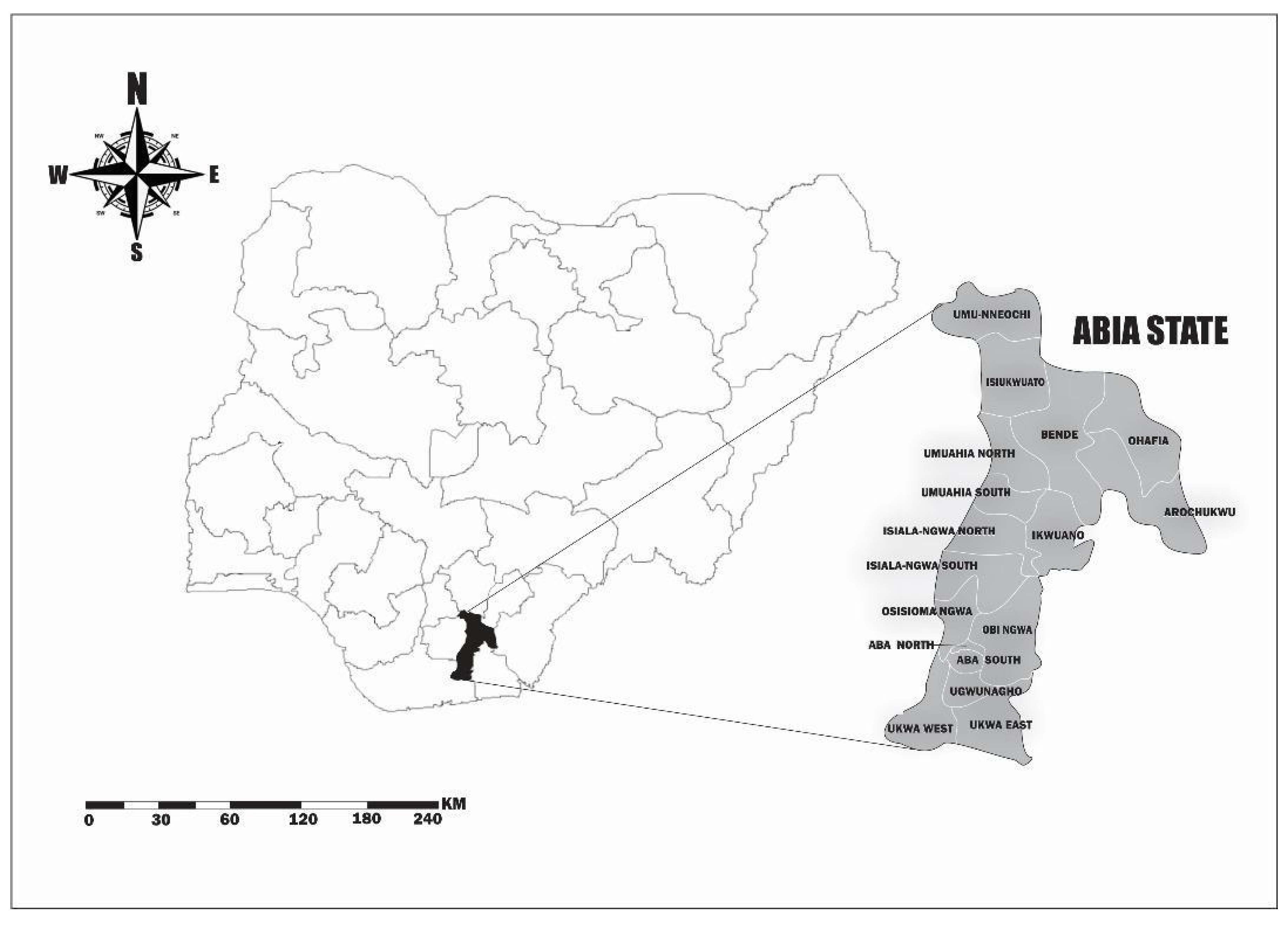
Figure 2.
Comparing malnutrition status (MUAC and BMI-for-age) in urban and rural areas. Children in rural areas were more likely to have an abnormal BMI-for-age (AOR: 1.407, 95% CI: 1.001–1.978, p = 0.049), an adequate dietary score was a significant predictor of malnutrition (AOR: 0.489, 95% CI: 0.239–1.001, p = 0.050) in urban areas, and tertiary education significantly reduced the risk of a lower BMI-for-age (AOR: 0.316, p = 0.002) in rural areas.
Figure 2.
Comparing malnutrition status (MUAC and BMI-for-age) in urban and rural areas. Children in rural areas were more likely to have an abnormal BMI-for-age (AOR: 1.407, 95% CI: 1.001–1.978, p = 0.049), an adequate dietary score was a significant predictor of malnutrition (AOR: 0.489, 95% CI: 0.239–1.001, p = 0.050) in urban areas, and tertiary education significantly reduced the risk of a lower BMI-for-age (AOR: 0.316, p = 0.002) in rural areas.
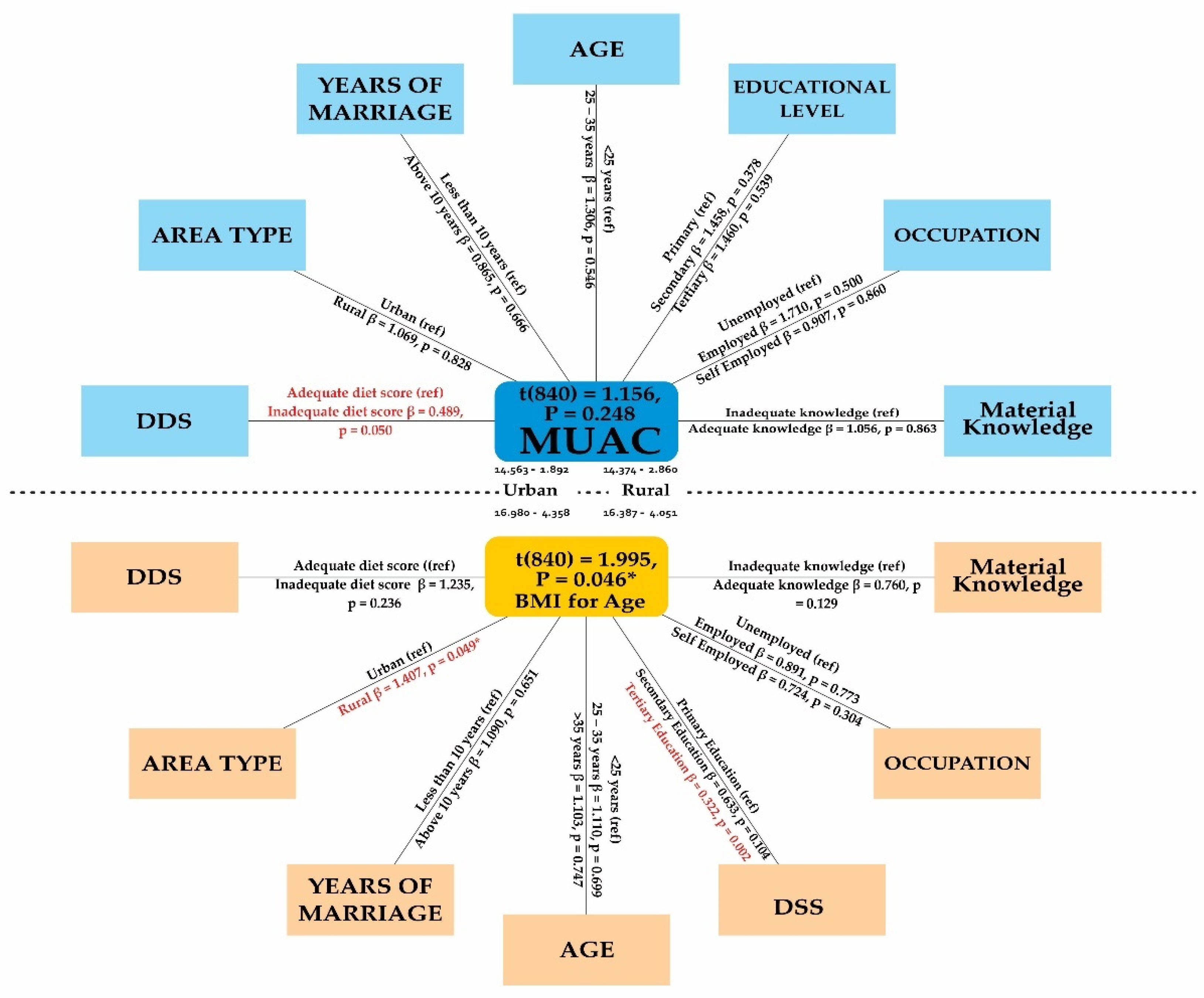
Figure 3.
Malnutrition status (MUAC) and sociodemographic variables in urban and rural areas.
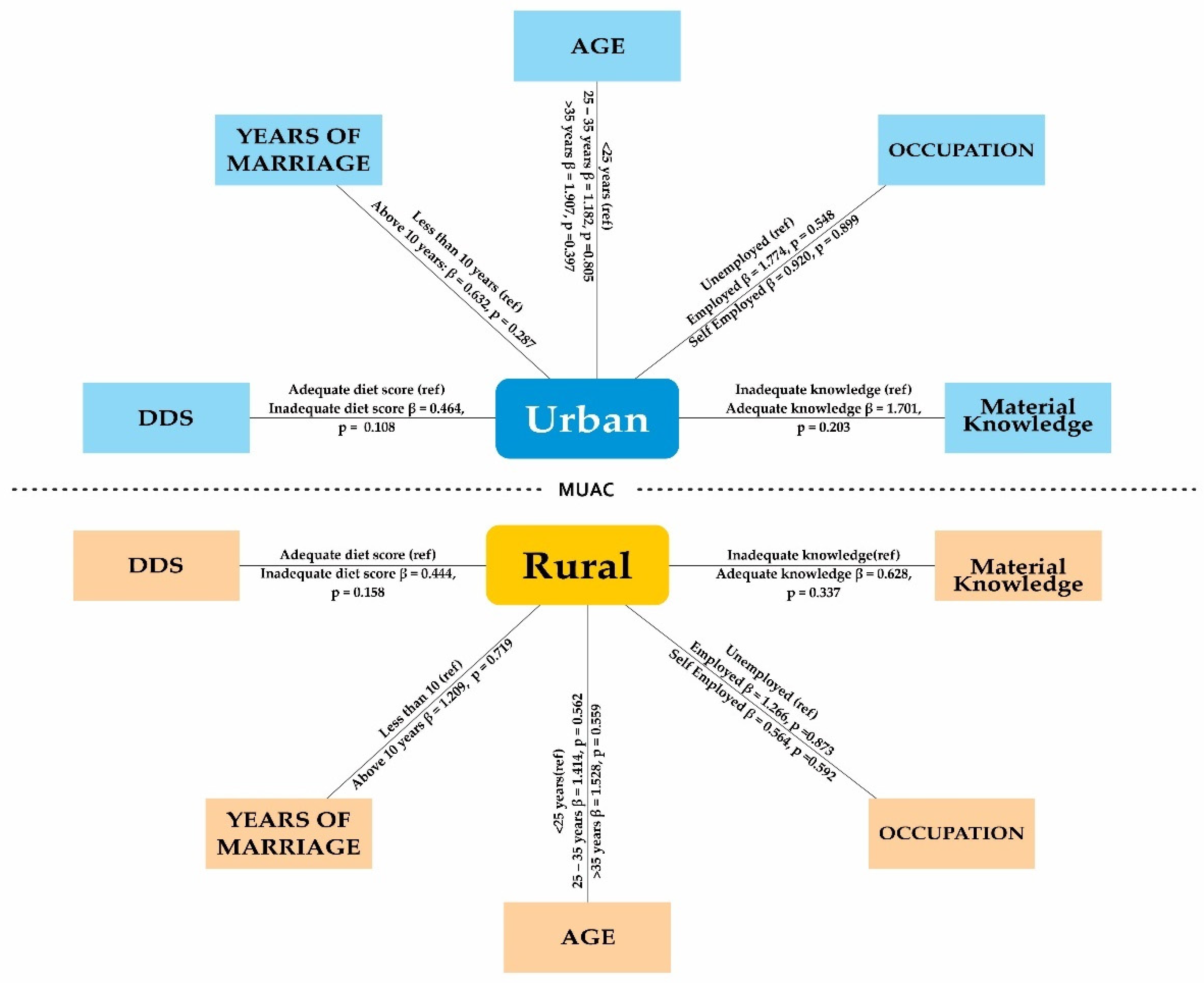
Figure 4.
Logistic regression analysis revealed that malnutrition status (BMI-for-age) in urban and rural areas with higher education levels was associated with a lower likelihood of having a higher BMI-for-age.
Figure 4.
Logistic regression analysis revealed that malnutrition status (BMI-for-age) in urban and rural areas with higher education levels was associated with a lower likelihood of having a higher BMI-for-age.
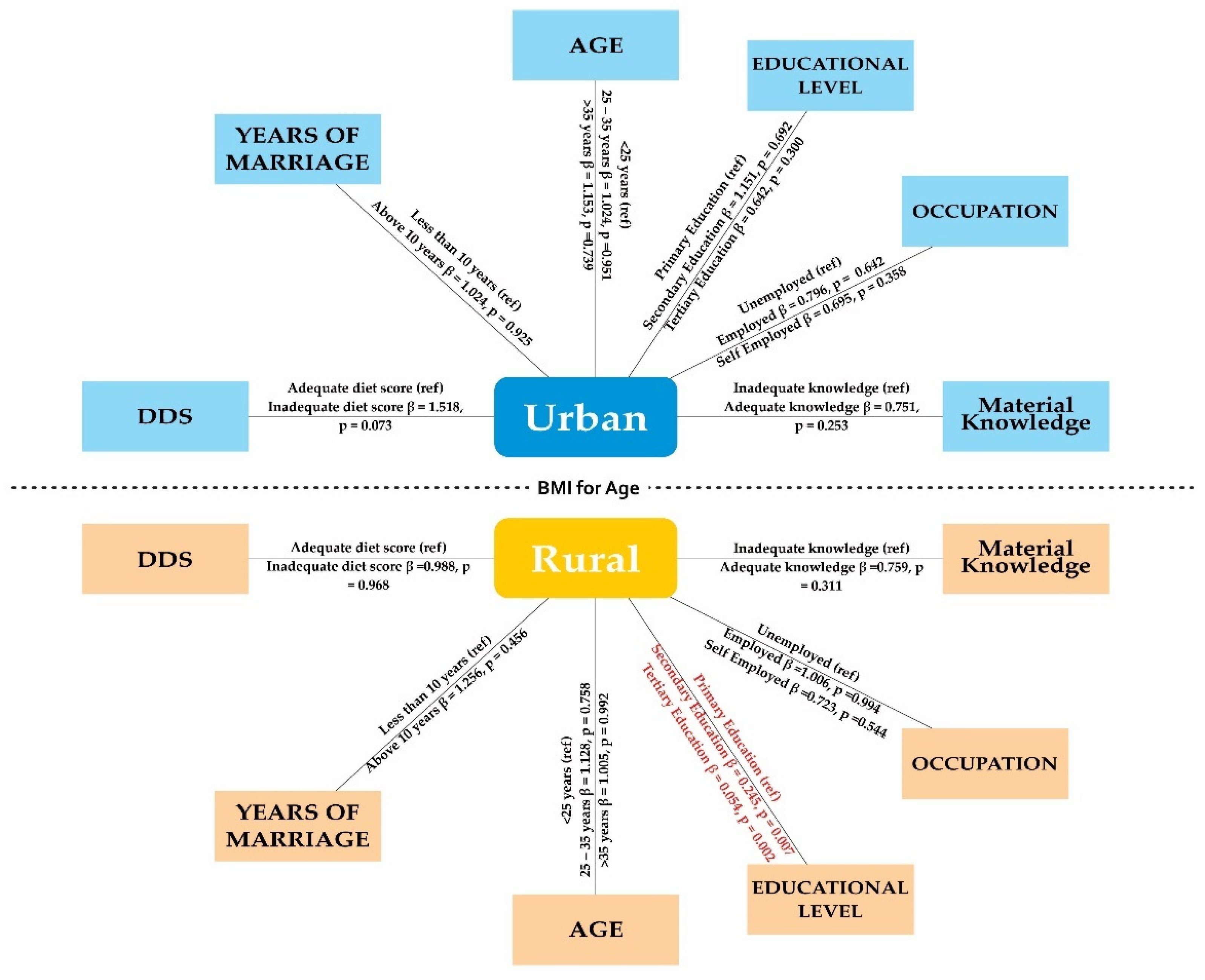
Table 1.
Sociodemographic characteristics of the caregivers.
| Variable | Rural (%) | Urban (%) | Total | χ2 | Variable">p-value |
|---|---|---|---|---|---|
| Age (years) | |||||
| ≤25 | 57 (51.4) | 54 (48.6) | 111 | 6.143 | 0.046* |
| 25-35 | 172 (39.3) | 266 (60.7) | 438 | ||
| ≥35 | 113 (38.6) | 180 (61.4) | 293 | ||
| Years of marriage | |||||
| Less than 10 | 170 (35.8) | 305 (64.2) | 475 | 3.899 | 0.048* |
| 10 and Above | 127 (42.9) | 169 (57.1) | 296 | ||
| Educational qualification | |||||
| Primary | 56 (47.9) | 61 (52.1) | 117 | 21.738 | <0.01* |
| Secondary | 270 (42.4) | 367 (57.6) | 637 | ||
| Tertiary | 16 (18.2) | 72 (81.8) | 88 | ||
| Occupation | |||||
| Unemployed | 21 (31.3) | 46 (68.7) | 67 | 11.548 | 0.003* |
| Employed | 20 (25.6) | 58 (74.4) | 78 | ||
| Self Employed | 301 (43.2) | 396 (56.8) | 697 | ||
| Knowledge of nutrition | |||||
| Adequate | 185 (35.6) | 334 (64.4) | 519 | 13.867 | <0.01* |
| Inadequate | 157 (48.6) | 166 (51.4) | 323 | ||
NB: * indicates statistical significance at a p-value < 0.05.
Table 2.
Sociodemographic characteristics of the children.
| Variable | Rural (%) | Urban (%) | Total | χ2 | p-value |
|---|---|---|---|---|---|
| Age (months) | |||||
| 0 to 24 months | 146 (40.1) | 218 (59.9) | 364 | 0.069 | 0.794 |
| 25 and above | 196 (41.0) | 282 (59.0) | 478 | ||
| Sex | |||||
| Male | 162 (39.9) | 244 (60.1) | 406 | 0.167 | 0.683 |
| Female | 180 (41.3) | 256 (58.7) | 436 | ||
| Place of Birth | |||||
| Hospital | 299 (42.9) | 398 (57.1) | 697 | 8.727 | 0.003* |
| Not Hospital | 43 (29.7) | 102 (70.3) | 145 | ||
| Diet Score (DDS) | |||||
| Adequate | 96 (43.4) | 125 (56.6) | 221 | 0.003 | 0.953 |
| Inadequate | 197 (43.2) | 259 (56.8) | 456 | ||
| Malnutrition Status | |||||
| GAM | 38 (53.5) | 33 (46.5) | 71 | 5.353 | 0.021* |
| Normal | 304 (39.4) | 467 (60.6) | 771 | ||
| BMI for Age | |||||
| Normal | 152 (43.7) | 196 (56.3) | 348 | 2.304 | 0.129 |
| Abnormal | 190 (38.5) | 304 (61.5) | 494 | ||
NB: * indicates statistical significance at a p-value < 0.05.
Table 3.
Comparison of malnutrition status and sociodemographic characteristics between rural and urban areas in Abia State.
Table 3.
Comparison of malnutrition status and sociodemographic characteristics between rural and urban areas in Abia State.
| Variable | Rural (%) | χ2 | p-value | Urban (%) | χ2 | p-value | ||
|---|---|---|---|---|---|---|---|---|
| GAM | Normal | GAM | Normal | |||||
| Caregiver age (years) | ||||||||
| ≤25 | 8 (14.0) | 49 (86.0) | 3 (5.6) | 51 (94.4) | 0.778 | 0.678 | ||
| 25-35 | 20 (11.6) | 152 (88.4) | 1.125 | 0.570 | 20 (7.5) | 246 (92.5) | ||
| ≥35 | 10 (8.8) | 103 (91.2) | 10 (5.6) | 170 (94.4) | ||||
| Years of marriage | ||||||||
| Less than 10 | 19 (11.2) | 151 (88.8) | 2.092 | 0.148 | 18 (5.9) | 287 (94.1) | 0.264 | 0.608 |
| Above 10 | 8 (6.3) | 119 (93.7) | 12 (7.1) | 157 (92.9) | ||||
| Educational qualification | ||||||||
| Primary | 10 (17.9) | 46 (82.1) | 3.301 | 0.192 | 6 (9.8) | 55 (90.2) | 1.268 | 0.530 |
| Secondary | 27 (10.0) | 243 (90.0) | 22 (6.0) | 345 (94.0) | ||||
| Tertiary | 1 (6.3) | 15 (93.8) | 5 (6.9) | 67 (93.1) | ||||
| Occupation | ||||||||
| Unemployed | 1(4.8) | 20 (95.2) | 1.833 | 0.400 | 3 (6.5) | 43 (93.5) | 1.077 | 0.584 |
| Employed | 1(5.0) | 19 (95.0) | 2 (3.4) | 56 (96.6) | ||||
| Self Employed | 36 (12.0) | 265 (88.0) | 28 (7.1) | 368 (92.9) | ||||
| Knowledge of nutrition | ||||||||
| Adequate | 27 (14.6) | 158 (85.4) | 4.951 | 0.026* | 20 (6.0) | 314 (94.0) | 0.611 | 0.434 |
| Inadequate | 11 (7.0) | 146 (93.0) | 13 (7.8) | 153 (92.2) | ||||
| Child age (months) | ||||||||
| 0 to 24 months | 25 (17.1) | 121 (82.9) | 9.324 | 0.002* | 24 (11.0) | 194 (89.0) | 12.190 | <0.01* |
| 25 and above | 13 (6.6) | 183 (93.4) | 9 (3.2) | 273 (96.8) | ||||
| Child Sex | ||||||||
| Male | 18 (11.1) | 144 (88.9) | 0.000 | 1.000 | 16 (6.6) | 228 (93.4) | 0.001 | 0.970 |
| Female | 20 (11.1) | 160 (88.9) | 17 (6.6) | 239 (93.4) | ||||
| Place of Birth | ||||||||
| Hospital | 29 (9.7) | 270 (90.3) | 4.801 | 0.028* | 21 (5.3) | 377 (94.7) | 5.545 | 0.019* |
| Not Hospital | 9 (20.9) | 34 (79.1) | 12 (11.8) | 90 (88.2) | ||||
| Diet Score (DDS) | ||||||||
| Adequate | 7 (7.3) | 89 (92.7) | 2.253 | 0.133 | 7 (5.6) | 118 (94.4) | 1.527 | 0.217 |
| Inadequate | 26 (13.2) | 171 (86.8) | 24 (9.3) | 235 (90.7) | ||||
NB: * indicates statistical significance at p-value < 0.05.
Table 4.
Comparison of BMI-for-age and sociodemographic characteristics between rural and urban areas in Abia State.
Table 4.
Comparison of BMI-for-age and sociodemographic characteristics between rural and urban areas in Abia State.
| Variable | Rural (%) | χ2 | p-value | Urban (%) | χ2 | p-value | ||
|---|---|---|---|---|---|---|---|---|
| Normal | Abnormal | Normal | Abnormal | |||||
| Caregiver age (years) | ||||||||
| ≤25 | 25 (43.9) | 32 (56.1) | 21 (38.9) | 33 (61.1) | 0.076 | 0.963 | ||
| 25-35 | 75 (43.6) | 97 (56.4) | 0.170 | 0.918 | 103 (38.7) | 163 (61.3) | ||
| ≥35 | 52 (46.0) | 61 (54.0) | 72 (40.0) | 108 (60.0) | ||||
| Years of marriage | ||||||||
| Less than 10 | 81 (47.6) | 89 (52.4) | 0.552 | 0.458 | 121 (39.7) | 184 (60.3) | 0.148 | 0.700 |
| Above 10 | 55 (43.3) | 72 (56.7) | 64 (37.9) | 105 (62.1) | ||||
| Educational qualification | ||||||||
| Primary | 19 (33.9) | 37 (66.1) | 4.756 | 0.093 | 22 (36.1) | 39 (63.9) | 5.278 | 0.071 |
| Secondary | 123 (45.6) | 147 (54.4) | 137 (37.3) | 230 (62.7) | ||||
| Tertiary | 10 (62.5) | 6 (37.5) | 37 (51.4) | 35 (48.6) | ||||
| Occupation | ||||||||
| Unemployed | 7 (33.3) | 14 (66.7) | 1.119 | 0.572 | 14 (30.4) | 32 (69.6) | 1.638 | 0.441 |
| Employed | 9 (45.0) | 11 (55.0) | 23 (39.7) | 35 (60.3) | ||||
| Self Employed | 136 (45.2) | 165 (54.8) | 159 (40.2) | 237 (59.8) | ||||
| Knowledge of nutrition | ||||||||
| Adequate | 90 (48.6) | 95 (51.4) | 2.885 | 0.089 | 134 (40.1) | 200 (59.9) | 0.357 | 0.550 |
| Inadequate | 62 (39.5) | 95 (60.5) | 62 (37.3) | 104 (62.7) | ||||
| Child age (months) | ||||||||
| 0 to 24 months | 56 (38.4) | 90 (61.6) | 3.824 | 0.051 | 90 (41.3) | 128 (58.7) | 0.705 | 0.401 |
| 25 and above | 96 (49.0) | 100 (51.0) | 106 (37.6) | 176 (62.4) | ||||
| Child sex | ||||||||
| Male | 59 (36.4) | 103 (63.6) | 8.028 | 0.005* | 84 (34.4) | 160 (65.6) | 4.557 | 0.033* |
| Female | 93 (51.7) | 87 (48.3) | 112 (43.8) | 144 (56.3) | ||||
| Place of birth | ||||||||
| Hospital | 128 (42.8) | 171 (57.2) | 2.575 | 0.109 | 158 (39.7) | 240 (60.3) | 0.203 | 0.652 |
| Not Hospital | 24 (55.8) | 19 (44.2) | 38 (37.3) | 64 (62.7) | ||||
| Diet score (DDS) | ||||||||
| Adequate | 44 (45.8) | 52 (54.2) | 0.011 | 0.916 | 60 (48.0) | 65 (52.0) | 3.881 | 0.049 |
| Inadequate | 89 (45.2) | 108 (54.8) | 97 (37.5) | 162 (62.5) | ||||
NB: * indicates statistical significance at a p-value < 0.05.
Disclaimer/Publisher’s Note: The statements, opinions and data contained in all publications are solely those of the individual author(s) and contributor(s) and not of MDPI and/or the editor(s). MDPI and/or the editor(s) disclaim responsibility for any injury to people or property resulting from any ideas, methods, instructions or products referred to in the content. |
© 2024 by the authors. Licensee MDPI, Basel, Switzerland. This article is an open access article distributed under the terms and conditions of the Creative Commons Attribution (CC BY) license (http://creativecommons.org/licenses/by/4.0/).
Copyright: This open access article is published under a Creative Commons CC BY 4.0 license, which permit the free download, distribution, and reuse, provided that the author and preprint are cited in any reuse.


