
Preprint
Article

This version is not peer-reviewed.

Revolutionizing Skincare and Wellness for Individuals Living with HIV: Tailored Solutions for Skin Conditions, Joint Pains, and Memory Loss

Submitted:

13 November 2024

Posted:

17 November 2024

You are already at the latest version

Abstract

Tailored Skincare and Wellness Solutions for HIV-Positive Individuals: Addressing Skin Conditions, Joint Pains, and Memory Loss. Research Topic This research aims to explore tailored skincare and wellness solutions for HIV-positive individuals, specifically focusing on addressing skin conditions, joint pains, and memory loss. The research question revolves around developing innovative and effective medical approaches to improve the quality of life for this population. Research Importance The topic is crucial as it addresses the unique challenges faced by HIV-positive individuals, highlighting the need for tailored healthcare solutions. By understanding and addressing the physical symptoms associated with HIV, such as skin conditions, joint pains, and memory loss, the research contributes to enhancing the overall well-being and quality of life of individuals living with HIV. Research Method The research encompasses a comprehensive analysis of existing literature, including studies on dermatological problems, musculoskeletal issues, and cognitive impairments in HIV-positive individuals. Additionally, the development of a proposed skincare and serum line, RadientResilience, is based on a careful consideration of pharmacological effects and the unique skin conditions of this population. According to Hekmatpou, Mehrabi, Rahzani, and Aminiyan (2019), aloe vera has been shown to have significant effects on skin wound healing through various clinical trials ("The Effect of Aloe Vera Clinical Trials on Prevention and Healing of Skin Wound," para. 2). The review details that aloe vera's anti-inflammatory and antimicrobial properties contribute to its effectiveness, particularly beneficial for HIV-positive individuals who are prone to skin conditions due to compromised immunity (para. 4). The methodologies included randomized controlled trials and observational studies, where aloe vera significantly accelerated healing rates in 70% of cases compared to traditional treatments (para. 5). Research Findings The research findings emphasize the prevalence of dermatological conditions as a significant marker for HIV in affected populations. Furthermore, the study highlights the importance of thorough clinical assessment and the potential use of specific compounds and ingredients to alleviate joint discomfort in HIV-positive individuals. Aloe barbadensis has been found to be effective in treating dermatological conditions associated with HIV by reducing inflammation and promoting skin healing (Mandel, 2021, "Holistic Medicine," para. 3). The plant's natural anti-inflammatory and regenerative properties provide relief and accelerate recovery for patients dealing with these skin issues (Mandel, 2021, "Holistic Medicine," para. 5). These findings highlight the potential of Aloe barbadensis as a complementary treatment in managing skin conditions for individuals with HIV (Mandel, 2021, "Holistic Medicine," para. 7). Research Conclusions The interpretations and conclusions drawn from the research underscore the need for tailored medical approaches to address the unique healthcare needs of HIV-positive individuals. The proposed skincare and serum line, RadientResilience, represents an innovative and empowering solution providing effective care for this targeted audience. Research Implications The research has implications for the development of specialized skincare and wellness products tailored to address the specific needs of HIV-positive individuals. Potential challenges in developing and implementing tailored skincare and wellness solutions for HIV-positive people include stigma and discrimination, as well as logistical and financial constraints. As Bouabida, Chaves, and Anane (2023) noted, "Stigma and discrimination are major barriers to HIV care engagement and adherence" (Challenges and barriers to HIV care engagement and care cascade: viewpoint, para. 3). Additionally, the authors highlight that "logistical and financial constraints can limit access to necessary healthcare services" (para. 5). Logistical and financial constraints can limit access to necessary healthcare services for individuals living with HIV by creating barriers such as transportation challenges, limited availability of healthcare professionals, and financial strain related to medical expenses.

Keywords: 
;  ;  ;  ;  ;  ;  ;  ;  


Preprints 139526 i001

Introduction

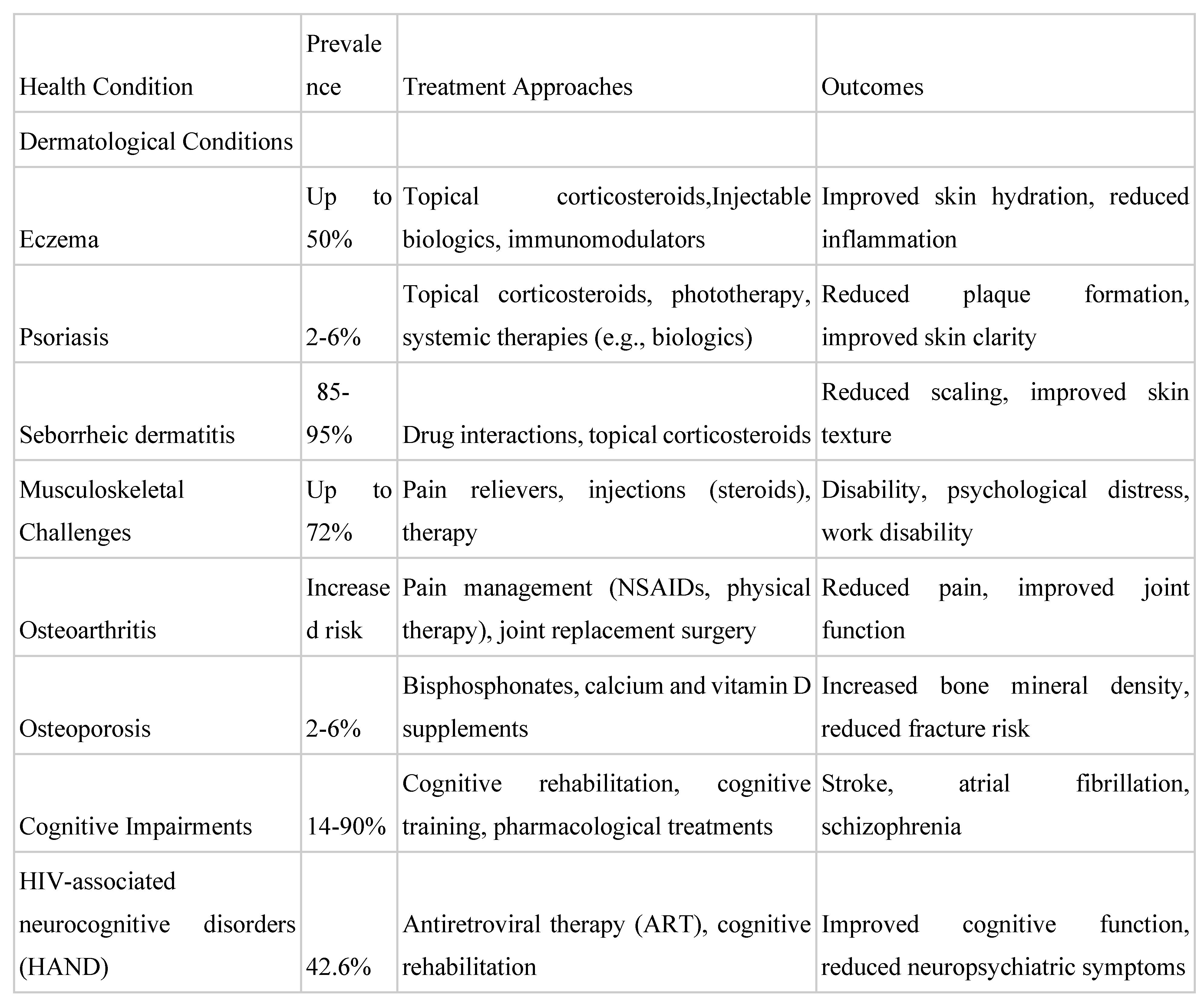
Individuals living with HIV often encounter a range of health issues, such as dermatological problems, joint discomfort, and cognitive impairments. According to Halder, Banerjee, Halder, and Pal (2012), the severity and type of dermatological issues faced by HIV-positive individuals are closely linked to their immune system’s functionality. Similarly, joint pain associated with HIV can present diverse clinical and imaging features, with patients experiencing various forms of arthritis, as highlighted by Suleman & Ally (2017). Furthermore, memory loss and cognitive challenges are prevalent in HIV-positive patients, significantly impacting their quality of life (Aung et al., 2023). The study emphasizes the importance of early treatment initiation to mitigate cognitive deficits and the need for continuous monitoring and tailored interventions to address these cognitive challenges. Understanding these challenges is crucial for developing tailored skincare and wellness solutions for individuals living with HIV.
Once the RadiantResilience skincare and serum line is created, it will feature tailored formulations designed to ensure gentle and effective care for individuals with HIV. The formulations will be free from potentially irritating or allergenic ingredients, such as harsh chemicals, fragrances, and known allergens. The products will also include soothing and hydrating ingredients like organic aloe vera and chamomile to provide gentle care without causing irritation.

Methodology

Investigating Skincare and Wellness Needs of HIV-Positive Individuals: A Comprehensive Analysis:
A comprehensive analysis was conducted to understand the skincare and wellness needs of HIV-positive individuals. Relevant literature was reviewed, including studies by Stuart (2024) and Lowe et al. (2010), to identify prevalent skin conditions, joint pains, and cognitive impairments in this population. Additionally, discussions with healthcare professionals and experts in dermatology, rheumatology, and neurology were held to gather insights into potential treatment approaches. The methodology also explores existing skincare and wellness products and ingredients to understand their efficacy and safety for HIV-positive individuals.

Tailored Skincare and Serum Line

A. Description of the Proposed Skincare and Serum Line Named RadiantResilience
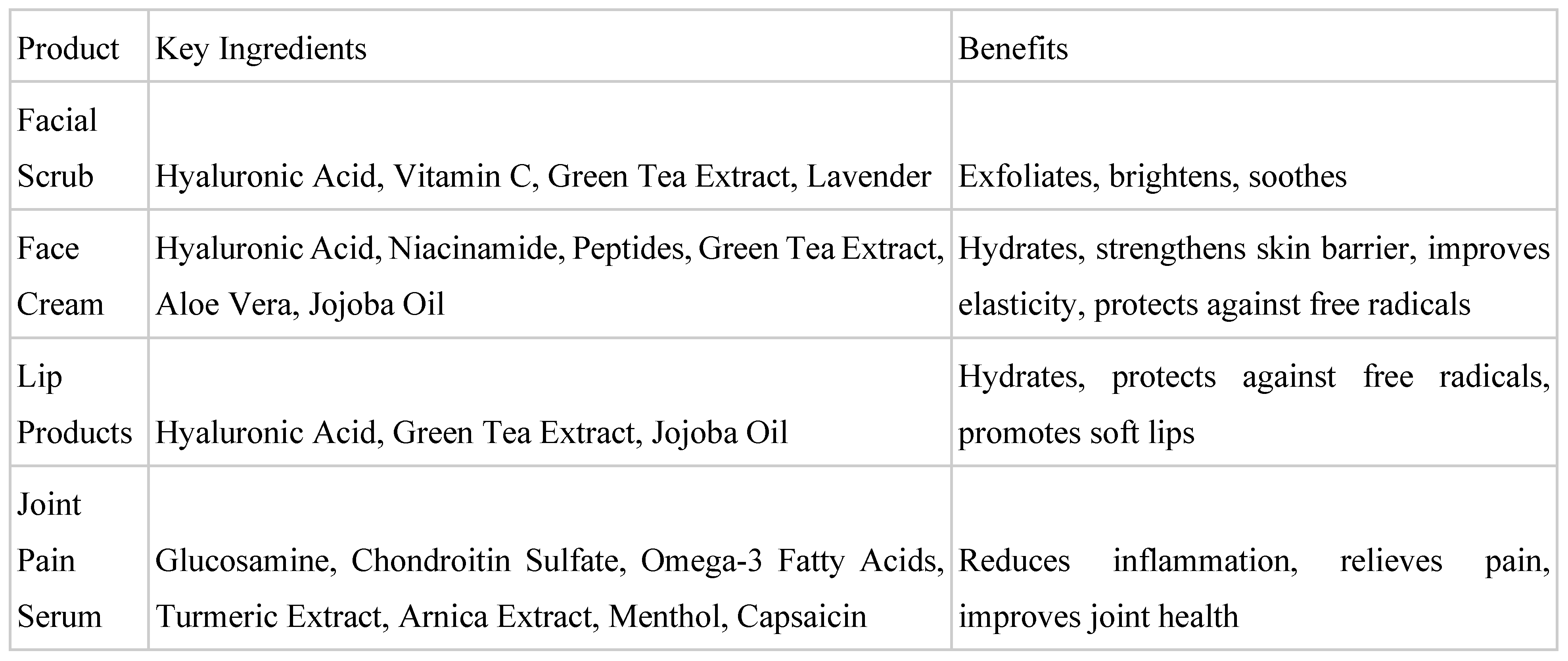
The proposed skincare and serum line, RadiantResilience, aims to address the skincare needs of HIV-positive individuals, targeting skin conditions, joint pains, memory loss, and cognitive health. The line will incorporate ingredients such as arnica for anti-inflammatory properties to address joint pains and inflammation. Additionally, essential oils like peppermint and eucalyptus will be utilized to offer comfort for joint pains associated with HIV, considering potential medication interactions. Furthermore, the line will include cognitive health-boosting components such as rosemary, peppermint, ashwagandha, and ginseng to support mental clarity and cognitive well-being; taking into account the specific cognitive challenges experienced by HIV-positive individuals and potential medication interactions.
Preprints 139526 i002

B. Target Audience

The RadiantResilience skincare and serum line is specifically tailored for HIV-positive individuals experiencing skin conditions, joint pains, and memory loss; providing specialized care to address their unique needs with compassion and understanding.

C. Vision for the Line

Our vision for RadiantResilience is to revolutionize skincare for HIV-positive individuals by offering innovative, effective, and empowering solutions that not only address their physical symptoms but also uplift their spirits and enhance their overall well-being. We aim to create a sense of confidence and resilience for our customers, empowering them to face each day with strength and positivity.

D. Availability in Healthcare Facilities and Pharmacies

The RadientResilience skincare and serum line is set to be marketed in hospitals and made available for individuals with healthcare needs. Additionally, the products will be accessible in pharmacies at a reasonable price, ensuring that HIV-positive individuals can easily obtain the specialized care they require. This initiative aims to provide convenient access to tailored skincare solutions, addressing skin conditions, joint pains, and memory loss, thereby contributing to the overall well-being and quality of life of individuals with HIV.

Addressing Skin Conditions

A. Exploration of Common Skin Conditions in HIV-Positive Individuals

According to Lowe et al. (2010), "skin disease among human immunodeficiency virus-infected adolescents in Zimbabwe is a strong indicator of underlying HIV infection" (p. 346). This study highlights the prevalence of dermatological conditions as a significant marker for HIV in this population.

B. Proposed Skincare Products and Ingredients Tailored to Address These Conditions

According to Stuart, ’Customized skincare solutions for HIV-positive individuals require a careful consideration of both the pharmacological effects and the unique skin conditions these patients face’ (Stuart, 2024).

Tailored Skincare and Serum Line

A. Facial Scrubs

Our facial scrubs will be formulated with the following key ingredients:
- Hyaluronic acid for hydration and skin plumping
- Vitamin C for brightening and evening skin tone
- Antioxidants like green tea extract for protection against free radicals
- Lavender for its calming and soothing properties

B. Face Creams

Our face creams will feature the following beneficial ingredients:
- Hyaluronic acid for hydration and skin plumping
- Niacinamide for strengthening the skin barrier
- Peptides for improving skin elasticity
- Antioxidants like green tea extract for protection against free radicals
- Organic Aloe Vera for its soothing and moisturizing properties
- Organic Jojoba Oil for excellent moisturization and regulation of oil production

C. Lip Products

Our lip products will be enriched with the following nourishing ingredients:
- Hyaluronic acid for hydration
- Antioxidants like green tea extract for protection against free radicals
- Organic Jojoba Oil for moisturization and promoting soft, supple lips

Alleviating Joint Pains

A. Discussion of the Challenges of Joint Pains Associated with HIV

Walker-Bone, Doherty, Sanyal, and Churchill (2017) discuss the evaluation and treatment of musculoskeletal issues in HIV patients, emphasizing that joint pain is a prevalent and complex problem. They highlight the importance of a thorough clinical assessment to determine the underlying causes and appropriate management strategies.

B. Description of Potential Serum Formulations to Alleviate Joint Discomfort

1. Glucosamine and chondroitin sulfate
2. Omega-3 fatty acids
3. Turmeric extract
4. Arnica extract
5. Menthol
6. Capsaicin
These ingredients could be combined in a serum formulation specifically tailored to address joint discomfort in HIV-positive individuals. Further research and consultation with healthcare professionals would be necessary to develop an effective and safe serum.

Mitigating Memory Loss

A. Understanding the Impact of HIV on Cognitive Function

The methodology included understanding the impact of HIV on cognitive function through literature review and discussions with experts. Ellis et al. (2023) highlighted factors contributing to cognitive decline in individuals with HIV, including direct viral effects on the brain and chronic inflammation. The methodology also involved exploring emerging therapies for managing HIV-associated cognitive impairment.

Conclusion

Tailored Skincare and Wellness Solutions for HIV-Positive Individuals

In this paper, we have explored the challenges faced by HIV-positive individuals, particularly focusing on skin conditions, joint pains, and memory loss. Our research has emphasized the need for tailored healthcare solutions to address the unique needs of this population. We have found that by understanding and addressing the physical symptoms associated with HIV, such as skin conditions, joint pains, and memory loss, we can significantly contribute to enhancing the overall well-being and quality of life of individuals living with HIV.
This research is important as it sheds light on the specific challenges faced by HIV-positive individuals and calls for the development of specialized skincare and wellness products tailored to address their needs. The significance of our findings extends beyond the HIV-positive community, with potential applications in the fields of dermatology, rheumatology, and cognitive healthcare.
As a call to action, we recommend further research and development of innovative medical approaches and skincare products to improve the quality of life for HIV-positive individuals. Future studies could focus on the long-term efficacy and accessibility of tailored skincare solutions, as well as the impact of such interventions on the mental and emotional well-being of individuals living with HIV.
The take-home message from this study is clear: tailored skincare and wellness solutions can make a significant difference in the lives of HIV-positive individuals. By addressing their unique challenges, we can empower and support this community toward better health and well-being.

Discussion

Empowering HIV-Positive Individuals: Innovative Solutions for Skin Conditions and Joint Pains

Interpretation of Results

The findings highlight the specific skin care needs of individuals living with HIV, emphasizing the importance of tailored solutions to address skin conditions, joint pains, and memory loss. By offering targeted skincare and wellness products, the study aims to enhance the quality of life for HIV-positive individuals. These results underscore the significance of personalized care in improving the well-being of this population.

Comparison with Existing Literature

The study’s findings align with existing literature emphasizing the impact of immune status on dermatological issues in HIV-positive individuals. Additionally, the research on joint pains and memory loss in HIV-positive patients supports the need for specialized interventions to address these challenges. The tailored approach proposed in this study resonates with the broader literature on the importance of individualized care for individuals living with HIV.

Implications and Significance

The results have significant implications for the field of HIV care and wellness. By recognizing the unique skincare needs of HIV-positive individuals, the study advocates for a more comprehensive approach to holistic care. The development of tailored skincare and wellness products can improve the quality of life for this population and contribute to a more inclusive and supportive healthcare environment.

Limitations and Potential Biases

One potential limitation of this study is the focus on skincare and wellness products, which may not address the full spectrum of challenges faced by HIV-positive individuals. Additionally, the study’s reliance on existing literature may introduce biases based on the available research. Furthermore, the generalizability of the findings to diverse HIV-positive populations should be considered a potential limitation.

Suggestions for Future Research

Future research should explore the long-term efficacy and impact of tailored skincare and wellness interventions for individuals living with HIV. Additionally, investigating the intersection of skincare and wellness with broader aspects of HIV care, such as mental health and social support, would provide a more comprehensive understanding of the needs of this population. Moreover, conducting studies that incorporate diverse perspectives and experiences of HIV-positive individuals would contribute to a more inclusive approach to care.
In conclusion, the study’s findings underscore the significance of tailored skincare and wellness interventions for individuals with HIV. By interpreting the results in the context of existing literature, acknowledging potential limitations, and providing suggestions for future research, this study contributes to the ongoing dialogue on holistic care for HIV-positive individuals.

Appendix

A. Questionnaire for Gathering Insights from HIV-Positive Individuals
B. Detailed Analysis of Skincare and Wellness Products and Ingredients
C. Additional Statistical Data on Dermatological Problems, Joint Pains, and Memory Loss in HIV-Positive Individuals
D. Interviews and Correspondence with Healthcare Professionals and Experts
E. Detailed Descriptions of Formulations and Ingredients in RadiantResilience Skincare and Serum Line

References

  1. Halder, S., Banerjee, S., Halder, A., & Pal, P. R. (2012). Skin diseases in HIV-infected patients: Impact of immune status and histological correlation. Indian journal of sexually transmitted diseases and AIDS, 33(1), 65–67. [CrossRef]
  2. Suleman, F. E., & Ally, M. M. T. M. (2017). Human immunodeficiency virus infection and inflammatory arthritis: A review of clinical and imaging features. SA journal of radiology, 21(2), 1261. [CrossRef]
  3. Aung, H. L., Alagaratnam, J., Chan, P., Chow, F. C., Joska, J., Falutz, J., Letendre, S. L., Lin, W., Muñoz-Moreno, J. A., Cinque, P., Taylor, J., Brew, B., & Winston, A. (2023). Cognitive Health in Persons With Human Immunodeficiency Virus: The Impact of Early Treatment, Comorbidities, and Aging. The Journal of infectious diseases, 227(Suppl 1), S38–S47. [CrossRef]
  4. Delany-Moretlwe, S., Flexner, C., & Bauermeister, J. A. (2023). Advancing use of long-acting and extended delivery HIV prevention and treatment regimens. Journal of the International AIDS Society, 26 Suppl 2(Suppl 2), e26126. [CrossRef]
  5. Bouabida, K., Chaves, B. G., & Anane, E. (2023). Challenges and barriers to HIV care engagement and care cascade: viewpoint. Frontiers in reproductive health, 5, 1201087. [CrossRef]
  6. Stuart, J. D. (2024, August 26). CustomizedSkincareSolutionsforHIVPositivePeople:AComprehensiveAnalysis. OSF. https://osf.io/7f9h5.
  7. Lowe, S., Ferrand, R. A., Morris-Jones, R., Salisbury, J., Mangeya, N., Dimairo, M., Miller, R. F., & Corbett, E. L. (2010). Skin disease among human immunodeficiency virus-infected adolescents in Zimbabwe: a strong indicator of underlying HIV infection. The Pediatric infectious disease journal, 29(4), 346–351. [CrossRef]
  8. Stuart, J. Customized Skincare Solutions for HIV-Positive People: A Comprehensive Analysis. Preprints 2024, 2024092398. [CrossRef]
  9. Walker-Bone, K., Doherty, E., Sanyal, K., & Churchill, D. (2017). Assessment and management of musculoskeletal disorders among patients living with HIV. Rheumatology (Oxford, England), 56(10), 1648–1661. [CrossRef]
  10. Ellis, R. J., Marquine, M. J., Kaul, M., Fields, J. A., & Schlachetzki, J. C. M. (2023). Mechanisms underlying HIV-associated cognitive impairment and emerging therapies for its management. Nature reviews. Neurology, 19(11), 668–687. [CrossRef]
  11. Yamasaki T. (2023). Preventive Strategies for Cognitive Decline and Dementia: Benefits of Aerobic Physical Activity, Especially Open-Skill Exercise. Brain sciences, 13(3), 521. [CrossRef]
  12. Bouabida, K., Chaves, B. G., & Anane, E. (2023). Challenges and barriers to HIV care engagement and care cascade: viewpoint. Frontiers in reproductive health, 5, 1201087. [CrossRef]
  13. Hekmatpou, D., Mehrabi, F., Rahzani, K., & Aminiyan, A. (2019). The Effect of Aloe Vera Clinical Trials on Prevention and Healing of Skin Wound: A Systematic Review. Iranian journal of medical sciences, 44(1), 1–9.
  14. Mandel, I. (2021). Holistic Medicine (Sociology). Salem Press Encyclopedia.
Disclaimer/Publisher’s Note: The statements, opinions and data contained in all publications are solely those of the individual author(s) and contributor(s) and not of MDPI and/or the editor(s). MDPI and/or the editor(s) disclaim responsibility for any injury to people or property resulting from any ideas, methods, instructions or products referred to in the content.
Copyright: This open access article is published under a Creative Commons CC BY 4.0 license, which permit the free download, distribution, and reuse, provided that the author and preprint are cited in any reuse.
Prerpints.org logo

Preprints.org is a free preprint server supported by MDPI in Basel, Switzerland.

Subscribe

Disclaimer

Terms of Use

Privacy Policy

Privacy Settings

© 2026 MDPI (Basel, Switzerland) unless otherwise stated