

Submitted:
30 September 2024
Posted:
07 October 2024
You are already at the latest version
Abstract
Background: Transportation logistics is undergoing a transformative shift driven by innovative technologies to overcome human-generated obstacles. Governments and city authorities are increasingly keen on these technological advancements because they can reduce traffic and carbon emissions despite logistical and legal hurdles. Methods: Employing a methodology grounded in IMRAD principles and the PRISMA framework, guided by seminal work of Paraskevas et al., this study critically reviews existing literature to examine and integrate advancements in road transportation and carbon emission reduction through intelligent technologies such as Artificial Intelligence (AI), Blockchain (BC), and Internet of Things (IoT). This study also considers other issues like eliminating traffic congestion, improving traffic control systems, incorporating cutting-edge logistical technologies, and transforming policies in light of the development of smart cities. Results: The findings shed light on strategies to expedite travel and streamline logistics, fostering economic equity by adopting innovative, cost-effective, sustainable, and environmentally friendly transport solutions. Conclusion: This research sets the stage for future studies to incorporate additional variables and conduct quantitative assessments, thus paving the way for optimized enhancements in modern city transportation systems.
Keywords:
smart transportation
; artificial intelligence
; sustainability
; carbon emission
; review
1.0. Introduction
The contemporary landscape of transportation infrastructure is marked by a confluence of challenges stemming from population growth, urban expansion, and the ever-increasing demands of human mobility. In response, city planners are turning to the concept of smart transportation, which integrates a suite of advanced technologies to optimize transportation networks and enhance service delivery [1]. These technologies encompass diverse innovations, including computer vision, wireless communication, location-based services, and cloud computing, all aimed at improving mobility and efficiency [2]. However, amidst the pursuit of efficiency, there is a pressing need for transportation technologies that are cost-effective and environmentally sustainable, ensuring the preservation of ecological biodiversity [3]. So, the consequences of unplanned urbanization, such as pollution, accidents, and traffic congestion [4,5], underscore the importance of integrating renewable energy sources with contemporary technological solutions to foster a greener urban environment [6,7,8].
On the other hand, the specter of climate change looms large over the transportation sector [9,10], with emissions from fossil fuel-powered vehicles significantly contributing to urban air pollution and exacerbating global warming [11]. While there is a growing recognition of the need for cleaner transportation solutions, the reality of economic progress [12] and the persistent reliance on fossil fuels pose formidable challenges [13,14]. For instance, the current congestion in the transportation system results from the 50-year surge in automobile demand [15], which is now expected to rise as long as the human population and technological development continue to increase [16,17,18]. However, 97% of the vehicles on the road currently are powered by combustion engines using liquid petroleum fuels [19], which significantly increases carbon dioxide emissions [20]. In contrast, by adopting smart transportation systems, cities can promote alternative transportation methods, acquire fuel-efficient vehicles, and implement strategies to minimize energy consumption and vehicle mileage [21]. Thus, by transitioning from fossil fuels to renewable energy sources such as wind and solar power, cities have the potential to significantly reduce carbon dioxide emissions and create a more sustainable urban environment [6,17].
Literally, integrating smart transport technologies into urban infrastructures offers a promising avenue for mitigating the environmental impact of transportation systems. As for solutions, the integration of AI algorithms and IoT devices enables cities to optimize transportation systems, enhance safety, and improve environmental compliance [22,23]. Furthermore, the Intelligent Transport System (ITS) exemplifies the transformative potential of smart transportation, offering real-time operational information and historical traffic statistics while simultaneously reducing traffic congestion [2]. By leveraging traffic management systems, real-time data analytics, and modern communication networks, cities can enhance transport network efficiency, reduce carbon emissions, and alleviate congestion [24]. Moreover, the incorporation of non-transportation technologies such as blockchain, IoT, and artificial intelligence into supply chain and logistics management further enhances transportation efficiency and promotes sustainability [25,26]. For instance, AI algorithms play a pivotal role in smart transportation, harnessing data from IoT devices and sensors to optimize traffic flow, enhance safety measures, and improve overall system performance [22]. Similarly, blockchain technology offers innumerable benefits for smart transportation systems, ranging from secure record-keeping to decentralized energy management [27,28].
Likewise, the intersection of AI, blockchain, and IoT holds immense promise for revolutionizing transportation systems driving progress towards sustainable urban mobility. These technologies optimize resource utilization, enhance operational efficiency, and improve air quality [29,30]. By leveraging AI algorithms, transportation systems can mitigate congestion, improve safety, and optimize route planning [31,32,33]. Moreover, AI-enabled applications enhance signal control, dynamic route guidance, and traffic demand modeling, facilitating smoother traffic flow and reducing emissions [34,35]. For instance, several GPS-enabled applications help alert drivers on over-speeding, sharp turns, and expeditions to make the road safer [35]. Other advances include trips, passenger regalement, and conveyance weight checking [36], except for cyber security difficulties and privacy [37,38,39]. In addition, IoT-compatible smart sensors help companies calculate their carbon footprint and flag areas that need immediate attention [40]. Thus, depending on the situation and current ambivalence, this article aims to idealize further ecological problems and the development of future effective, safe, and intelligent transportation systems focusing on carbon emissions. Also, this study explores the possibility of enhancing environmental protection by integrating smart technology into the sustainable transportation movement.
For a comprehensive literature review, in the following sections, this study focuses on evolving strategies and technologies for carbon emissions mitigation, laying the foundation for the construction of a predictive framework to guide the development of intelligent transportation systems. However, this study systematically evaluates relevant literature and conducts Bibliometric Studies to map the intellectual structure of the field for employing a robust research methodology integrated with the elements of the Preferred Reporting Items for Systematic Reviews and Meta-Analyses (PRISMA) framework and a Systematic Literature Review (SLR) approach, this study systematically evaluates relevant literature and conducts Bibliometric Studies to map the intellectual structure of the field. Seemingly, this approach facilitates a nuanced understanding of the extended roles of Blockchain, AI, and IoT in reducing carbon emissions and enhancing sustainability within transportation systems. Again, this endeavour will explore the synergistic effects of these technologies in optimizing transportation networks, enhancing route planning, and facilitating real-time monitoring of vehicle emissions. This study also quantifies the potential impact of these technologies, highlighting substantial reductions in carbon emissions and traffic congestion achievable through AI, IoT, and Blockchain integration. Moreover, this research explores emerging transportation technologies such as Maglev Trains, Aerial Taxis, Driverless Cars, Delivery Drones, Underground Roads, and Hyperloop, showcasing their potential to revolutionize transportation and contribute to a more sustainable future.
2.0. Materials and Methods
The study explores how recent technological advances in transportation, particularly smart systems, can lower carbon emissions and improve efficiency, highlighting the importance of integrating sustainable practices beyond transportation. It suggests that developing smart transportation is crucial for reducing carbon emissions, enhancing real-time information efficiency, and alleviating traffic congestion, emphasizing the significance of recent technological advancements in addressing current transportation challenges [41]. Along with a thorough literature review, a predictive framework based on the literature constructed and justified in this article under the development of the relevant technology for intelligent transportation systems. The following is the study's research question:
"What are the implications of integrating Artificial Intelligence, Internet of Things, and Blockchain technologies in smart transportation systems for mitigating carbon emissions and fostering sustainability in urban environments?"
The exploration of this research question concerning sustainable smart transportation systems and their impact on lowering carbon emissions is paramount for addressing contemporary environmental challenges. Initially, investigating the recent trends in research provides critical insights into the evolving strategies and technologies employed in mitigating carbon emissions within transportation networks. Understanding these trends not only informs current practices but also guides future research directions, fostering innovation and adaptation. Afterward, focusing on the construction of smart and sustainable transportation systems through modern technological advancements offers a pathway toward actionable solutions. By leveraging artificial intelligence, Internet of Things, and blockchain technologies, a comprehensive framework can be developed to optimize transportation efficiency, reduce emissions, and enhance overall sustainability. So, depending on the answer to the research question, this research serves as a foundational guide for policymakers, urban planners, and technologists in shaping a more sustainable future for transportation systems worldwide. These study topics are based on the limitations found in previous studies' integration of blockchain, artificial intelligence (AI), and Internet of Things (IoT) developments in highly intelligent delivery. Ultimately, this article will address these research issues by presenting citation-based trends in the conveyance system literature throughout time and by creating a thorough framework for an intelligent, sustainable conveyance system.
In this study, we employ a rigorous methodology combining elements of the Preferred Reporting Items for Systematic Reviews and Meta-Analyses (PRISMA) framework and a Systematic Literature Review (SLR) approach to examine the research question comprehensively. Research methodology involves systematically identifying, selecting, and analyzing relevant literature from various academic databases and sources. Additionally, we conduct a Bibliometric Study utilizing keyword co-occurrence clustering and co-citation network analysis techniques to map the intellectual structure of the field and identify key themes, trends, and relationships among scholarly publications. By employing a multidimensional approach, we aim to provide a comprehensive and nuanced understanding of the intersection between smart transportation technologies and carbon emission reduction strategies, focusing on the role of Artificial Intelligence, Internet of Things, and Blockchain in shaping a sustainable future.
2.1. Preferred Reporting Items for Meta-Analyses and Systematic Reviews (PRISMA)
This study employs a qualitative methodology and concentrates on technology-driven platforms, particularly blockchain, IoT, and AI-based adaptations for lowering carbon emissions in the transport sector. More specifically, this study follows the PRISMA concept to review systematically with careful attention from Ross et al. [42], Moher [43], and Kashem et al. [44]. The main focus of the early phases of this study was to identify and select potential and contributing publications for this review. Under the broad headings of abstracts, introduction, methodology, findings, debate, and finance, PRISMA components and key components were justified. In essence, the abstract screening is considered with underlying assumptions of the background, objectives, data sources, and other common elements. The eligibility parameters consider whether they are satisfied owing to the logical introduction, study questions, and clear goals. Specific keywords and criteria used to locate and reference research publications on intelligent transportation, including carbon emissions, technological use, and involvement. 76 publications out of 175 were selected to use the PRISMA and IMRAD techniques. The IMRAD framework (introduction, methodology, results, and discussion) improved the article's organization [45]. Last but not least, this PRISMA feature prioritized funded studies for systematic reviews (see Figure 1).
However, this study included the PRISMA framework over "narrative synthesis"—aside from meta-analysis—to optimize the review with the help of Endnote. In addition, this study registered the review process for record-keeping in the open Science Forum (OSF) [46]. Correspondingly, this study's limitation is that it does not consider meta-analysis using the PRISMA framework; this research continues the narrative review.
2.1.1. Inclusion Criteria:
i. Studies must focus on aspects related to smart transportation systems, including but not limited to traffic management, vehicle optimization, route planning, and public transit.
ii. Research should directly address the impact of smart transportation technologies on carbon emission reduction or mitigation strategies.
iii. Studies must investigate the role of AI, IoT, or Blockchain technologies in addressing carbon emission challenges within the context of smart transportation.
iv. Only articles published in peer-reviewed journals, conference proceedings, or reputable scholarly sources will be considered.
v. Research published within the last 10 years will be included to ensure relevance and currency of findings.
vi. Only studies published in the English language will be included to facilitate comprehension and analysis.
vii. Both empirical studies and review articles that provide comprehensive insights into the relationship between smart transportation, carbon emission, and AI, IoT, or Blockchain technologies will be considered.
2.1.2. Exclusion Criteria:
Studies that do not specifically address smart transportation or carbon emission reduction within the context of AI, IoT, or Blockchain technologies will be excluded.
ii. Duplicate studies or redundant data will be excluded to ensure the integrity and efficiency of the review process.
iii. Research published in non-peer-reviewed sources such as blogs, opinion pieces, or news articles will be excluded due to a potential lack of rigor and reliability.
iv. Studies published in languages other than English will be excluded to maintain consistency and facilitate comprehension.
v. Studies published before 1989 will be excluded to prioritize recent advancements and insights in the field.
vi. Studies that do not provide substantial insights or contributions to understanding smart transportation and carbon emission reduction strategies will be excluded.
vi. Studies with significant methodological flaws or limitations that may compromise the validity or reliability of findings will be excluded from the review.
2.2. Systematic Literature Search and Citation Metrics
The authors primarily focused on the scholarly articles from the Google Scholar dataset because it allows convenient citation and has a broad audience for all kinds of research [47]. Publications produced in languages other than English, exclusively technical studies, and works emphasizing legitimate factual contributions more than business are also disallowed. The author's names, publication titles, abstracts, keywords, and other information were collected and reviewed for the initial set of bibliometric data. A quick search of the Google Scholar and PubMed databases turned around 2111 papers on smart transportation. Moreover, the comprehensive review found that between 1989 and 2023, smart transportation and carbon-related papers have been included in other repositories like Scopus, OpenAlex, and Semantic Scholar. Again, the keywords were "transportation", "smart transportation", "smart transportation" AND "carbon" "smart transportation" AND "carbon emission" (Table 1). After concentrating on keywords, abstracts, and manuscripts, 76 articles were considered (Table 2).
Table 3 from the 1989-2023 citation study reveals that the average number of citations per document was 102.95, with 2.94 citations per paper, h-index of 254, g-index of 404 and hA-index of 60.
Moreover, this paper utilized this co-citation network analysis (Table 3) to enable the mapping of the intellectual structure of a research field by identifying frequently cited works and their relationships. Usually, this approach helps to understand the foundational literature and the flow of ideas within the field. For instance, Co-citation Network Analysis in Table 3 unveils the interconnected web of seminal works and influential authors, elucidating the intellectual lineage and the diffusion of ideas within the research ecosystem that have significantly shaped the discourse on smart transportation and carbon emission reduction.
2.4. Bibliometric Study
This bibliometric study aims to methodically evaluate and synthesize the existing body of information by exploring various academic publications, research papers, and conference proceedings. The main objective is to comprehend how blockchain, IoT, and AI technologies are utilized in smart transportation to reduce carbon emissions and contribute to a sustainable future (Figure 2 and Figure 3). These analyses make artificial intelligence essential for traffic management, predictive modeling, and route optimization in transportation system optimization [44,48,49]. On the other hand, this citation analysis (in Figure 2 and Figure 3) delves into the many AI-driven applications—like deep neural networks and machine learning algorithms—that improve the effectiveness of smart transportation systems [22,28,31,32].
Another important participant in this paradigm is the IoT, whose sensors and networked devices provide real-time information on traffic patterns, vehicle performance, and environmental variables [28,37,39]. By networking automobiles, buildings, and intelligent gadgets, the Internet of Things facilitates data-driven choices that lower carbon footprints [36,50,51,52,53]. The evaluation also clarifies the creative way in which blockchain technology is integrated, improving transaction security, transparency, and traceability in smart transportation networks [25,26,27,28,33,44,53,54,55,56,57,58]. The evaluation offers important insights into the existing state of research, identifies new trends, and recommends prospective directions for further investigation in pursuing a technologically sophisticated and sustainable transportation environment by examining citations across different disciplines.
In essence, the Keyword Co-occurrence Cluster Analysis unveils the synergistic interplay between advanced technologies, carbon emission reduction strategies, integration challenges, and regulatory frameworks within the realm of smart transportation. By leveraging AI, IoT, and Blockchain in tandem with effective policy interventions, a sustainable future characterized by reduced carbon emissions and efficient transportation systems becomes within reach [28]. This analysis dissects the intricate landscape of smart transportation's role in mitigating carbon emissions, revealing the distinct thematic clusters [19]. Each cluster unveils key focal points within the research domain, offering technical insights into the convergence of these technologies, which focus on smart transportation, carbon emission reduction strategies, integration and interoperability challenges and policy and regulatory frameworks [2,4,9,16,19,24,25,29,34,41]. Specifically, these cluster items encompass AI-driven solutions, IoT-enabled systems, and Blockchain applications with diverse approaches to mitigate carbon footprints, ranging from electrification to sustainable mobility solutions [28]. These items also include complexities surrounding the integration and the need for seamless interoperability, and the pivotal role of regulatory measures in shaping the trajectory of sustainable transportation initiatives [59].
4.0. Result
4.1. Smart Transportation, Carbon Emission and Artificial Intelligence, Blockchain and IoT
4.1.1. Artificial Intelligence:
In the realm of smart transportation, artificial intelligence (AI) is revolutionizing the way to reduce carbon emissions by enabling advanced predictive maintenance techniques [1,60]. By leveraging AI algorithms to analyze vehicle data, identify patterns, and predict potential failures before they occur, predictive maintenance optimizes vehicle performance, reduces unplanned downtime, and minimizes emissions associated with inefficient or malfunctioning vehicles [2,61]. This proactive approach to maintenance enhances vehicle reliability and safety and significantly reduces carbon emissions by ensuring that vehicles operate at peak efficiency [22]. On the other hand, AI-driven traffic management is another key solution for reducing carbon emissions in transportation systems [1,60]. By utilizing AI algorithms to analyze real-time traffic data, optimize traffic signal timings, and dynamically adjust traffic flow, AI-driven traffic management systems minimize congestion, reduce idling time, and optimize fuel efficiency [2]. These intelligent traffic management strategies improve overall traffic flow and safety and substantially reduce carbon emissions by minimizing the environmental impact of traffic congestion and inefficiencies [4,62].
Similarly, dynamic route planning, powered by AI algorithms and real-time traffic data, enables drivers to choose the most fuel-efficient routes and avoid congestion hotspots, thereby reducing carbon emissions associated with unnecessary fuel consumption and idling [22]. By considering factors such as traffic conditions, road topology, and vehicle characteristics, dynamic route planning algorithms optimize routes to minimize fuel usage and emissions, promoting eco-friendly driving behaviors and contributing to overall sustainability in transportation [2], even by avoiding unnecessary acceleration and deceleration [63]. In addition, eco-driving assistance systems provide drivers with feedback and recommendations to optimize their driving behaviors for maximum fuel efficiency and minimal emissions [2]. By analyzing driving patterns, traffic conditions, and environmental factors, eco-driving assistance systems coach drivers on techniques such as smooth acceleration, braking, and cruising speeds to reduce fuel consumption and emissions [21]. These systems help individual drivers save fuel, reduce emissions and contribute to broader environmental goals by promoting sustainable driving practices [60].
In addition, real-time vehicle diagnostics, enabled by AI algorithms and onboard sensors, continuously monitor vehicle health and performance to detect potential issues before they escalate, ensuring optimal vehicle operation and minimizing emissions [34]. By analyzing data such as engine performance, fuel consumption, and emissions levels in real-time, vehicle diagnostics systems identify maintenance needs and optimize engine efficiency to reduce emissions and fuel consumption [6]. These systems enhance vehicle reliability and longevity and contribute to environmental sustainability by minimizing emissions from inefficient or malfunctioning vehicles.
4.1.2. Blockchain
Blockchain technology holds significant promise in revolutionizing the way carbon emissions are tracked, reported, and managed within smart transportation systems [64]. By leveraging blockchain-based solutions, such as blockchain-based carbon emissions tracking is used to record and validate carbon emissions data from various sources, including vehicles, infrastructure, and industrial processes [65,66]. This tracking creates a transparent and tamper-proof emissions record, facilitating accurate measurement and accountability [22]. However, by tokenizing carbon credits on a blockchain network, carbon credits can be divided into smaller, tradable units, making it easier for stakeholders to buy, sell, and trade carbon credits [67]. This tokenization increases liquidity in carbon markets and incentivizes emission reduction efforts, as organizations can monetize their carbon reduction initiatives more efficiently [28]. Moreover, transparent and tamper-proof emissions reporting enabled by blockchain technology ensures that carbon credits are accurately accounted for and credited to the appropriate parties [25,62].
When predefined emission reduction targets are met, smart contracts for emission reduction incentives introduce automation and efficiency into carbon offset mechanisms within smart transportation systems, such as financial rewards or carbon credits [40]. This not only streamlines the process of incentives for emission reduction efforts but also ensures transparency and trust through the use of blockchain-enabled smart contracts [68]. Decentralized carbon offset mechanisms further enhance transparency and efficiency by removing intermediaries and enabling direct peer-to-peer transactions in carbon markets [28]. In addition, secure data sharing for emissions tracking allows stakeholders to securely and efficiently share emissions data across decentralized networks, enabling real-time monitoring and management of carbon emissions within smart transportation systems [28]. Last but not least, the traceability of emissions data facilitated by blockchain technology enables stakeholders to track the source and impact of carbon emissions throughout the supply chain, from production to consumption, streamlining transactions and reducing administrative overhead [25].
4.1.3. IoT
In smart transportation, Internet of Things (IoT) technologies play a pivotal role in reducing carbon emissions by enabling more efficient and sustainable transportation systems [2]. Real-time traffic monitoring, facilitated by IoT sensors and data analytics, allows transportation authorities to monitor traffic conditions in real-time, identify congestion hotspots, and implement dynamic traffic management strategies to alleviate congestion and reduce emissions [39]. By optimizing traffic flow and reducing idling time, real-time traffic monitoring can significantly lower carbon emissions associated with urban congestion [69,70,71]. On the other hand, intelligent traffic signal synchronization is another IoT-driven solution that contributes to carbon emission reduction by optimizing traffic flow and minimizing unnecessary stops and starts at intersections [38]. Intelligent traffic signal synchronization reduces traffic congestion, improves fuel efficiency, and decreases emissions from idling vehicles by dynamically adjusting traffic signal timing based on real-time traffic conditions [19]. This optimization enhances the overall efficiency of transportation networks and promotes smoother traffic flow, reducing carbon emissions [16].
Smart parking systems leverage IoT technology to enhance parking efficiency and reduce emissions associated with circling for parking [72]. By providing real-time information on parking availability and guiding drivers to vacant parking spots, smart parking systems minimize traffic congestion and reduce emissions from vehicles searching for parking [1]. Additionally, dynamic toll pricing, enabled by IoT sensors and smart infrastructure, incentivizes off-peak travel and mode shifting, leading to reduced congestion and lower carbon emissions during peak travel times [34]. Moreover, vehicle-to-infrastructure communication enables seamless communication between vehicles and transportation infrastructure, allowing for more efficient traffic management and emissions reduction [69,70,71]. By providing vehicles with real-time information on traffic conditions, road hazards, and optimal routes, vehicle-to-infrastructure communication enables drivers to make informed decisions that minimize fuel consumption and emissions [1,66]. This advancement in this technology also facilitates the implementation of dynamic lane management strategies, such as high-occupancy vehicle (HOV) lanes and express lanes, to improve traffic flow and reduce emissions [29].
Additionally, automated traffic management systems leverage IoT data and analytics to dynamically adjust traffic flow, reduce congestion, and minimize emissions on roadways and highways [34]. Additionally, real-time vehicle diagnostics, enabled by IoT sensors and telematics, allow for proactive maintenance and vehicle performance optimization, reducing emissions and improving fuel efficiency [34]. By continuously monitoring vehicle health and performance metrics, real-time vehicle diagnostics systems can identify potential issues before they escalate, ensuring that vehicles operate at peak efficiency and emit fewer pollutants [36]. Integration of ride-sharing services with public transit systems promotes multi-modal transportation options, reduces the number of single-occupancy vehicles on the road, and decreases overall carbon emissions from transportation [72,73] and IoT sensors for traffic density monitoring [74].
4.2. Extended Roles of Blockchain, AI and IoT in Reducing Carbon Emissions
Blockchain technology has the potential to play a significant role in reducing carbon emissions from the transportation sector ( in Table 4), which are as follows:
By providing secure, tamper-proof records, facilitating carbon credits trading, verifying and monitoring emissions reduction initiatives, low-carbon transportation, and improving transparency, blockchain can help to drive sustainable change in the transportation sector and reduce the environmental impact of transportation. Therefore, based on Table 4, we can conclude that blockchain technology transforms the techniques used by the transport sector to reduce carbon emissions by making it possible to securely record emissions from a variety of modes. Through tamper-proof verification and monitoring, this promotes company accountability and makes exact monitoring and evaluation easier. Additionally, blockchain promotes the use of sustainable transportation options by offering incentives for reducing emissions through the trading of carbon credits. Its increased transparency makes accurate reporting and analysis possible, which supports the development of a more sustainable and environmentally friendly transportation system.
4.3. Extended Roles of Artificial Intelligence on Smart Transportation for Reducing Carbon Emission and Traffic Congestion
Artificial intelligence (AI) emissions in smart transportation can reduce the transportation sector's carbon footprint by improving the efficiency and sustainability of transportation systems (Table 5). The following are the roles played by AI in reducing carbon emissions in smart transportation:
Thus, AI significantly reduces carbon emissions in smart transportation by optimizing traffic flow, routing, predictive maintenance, vehicle optimization, and the deployment of autonomous vehicles. These AI-powered solutions can potentially reduce carbon emissions and improve the sustainability of transportation systems, making the world a greener place for future generations.
4.4. Extended Roles of IoT on Smart Transportation for Reducing Carbon Emission and Traffic Congestion
Carbon emissions in smart transportation can be reduced using the Internet of Things (IoT) technologies (in Table 6). The following are the roles of IoT in reducing carbon emissions in smart transportation:
Finally, IoT technologies in smart transportation can significantly reduce carbon emissions by optimizing fleet operations, reducing congestion, encouraging alternative modes of transport, and supporting energy-efficient technologies, whereas the amount or percentage of carbon /GHG emission reduction is quite satisfactory (Table 7).
For Artificial Intelligence, the Table 7 indicates that up to 34% of carbon and GHG emissions could be reduced by the year 2050, as referenced in source [79]. This statistic underscores the significant role that AI-driven solutions play in optimizing various aspects of transportation and energy systems, leading to substantial emissions reductions over time. In the case of Internet of Things technologies, the table reveals a projection of 63.5 gigatons of carbon and GHG emission reduction by the year 2030, as cited in source [49]. This figure underscores the transformation impact of IoT-enabled smart transportation systems, which leverage real-time data and intelligent automation to enhance efficiency and reduce emissions across various sectors. For blockchain technology, the table highlights the potential to reduce over 99% of document-related emissions, as referenced in the source [57]. This statistic emphasizes the role of blockchain in streamlining processes, reducing paperwork, and minimizing the environmental footprint associated with traditional document management practices.
According to table 8(a), traffic congestion poses a significant challenge for urban areas globally, prompting the adoption of IoT and AI technologies in smart cities to mitigate the issue. Case studies such as Barcelona, Spain, demonstrate the efficacy of initiatives like CityOS, leveraging real-time data from connected cars to achieve notable reductions of 25% in traffic congestion and 21% in CO2 emissions. Similarly, Singapore's Intelligent Transport System (ITS) trial and Los Angeles' Advanced Traffic Management System (ATMS) showcase the potential of AI algorithms in predicting traffic conditions and optimizing traffic signal timings. These implementations have led to substantial improvements, including reductions in average travel time and waiting time at traffic signals, underscoring the importance of embracing IoT and AI for smarter urban transportation globally.\
Table 8(b,c) summarizes the impact of implementing improved traffic management and leveraging computer vision and blockchain technologies on reducing congestion and travel times in both the city center and residential areas. The reduction in congestion indices and travel times highlights the effectiveness of the proposed solution in enhancing mobility and driving experiences for users. Additionally, the consistent ten percent reduction in travel times across various trip types underscores the efficiency and predictability achieved through real-time traffic management adjustments.
Table 8(b,c) presents data on the impact of implementing improved traffic management, incorporating computer vision and blockchain technologies, on congestion levels and travel times in urban and residential areas. In the city center, the congestion index decreased from 0.75 to 0.56, resulting in a reduction of 25.33%, while in the residential zone, the index decreased from 0.62 to 0.47, indicating a reduction of 24.19%. This reduction in congestion indices correlates with an average 10% reduction in travel times for both short and long trips, exemplifying the effectiveness of the optimized traffic management system. Specifically, travel times decreased from 25 minutes to 22.5 minutes for short trips and from 45 minutes to 40.5 minutes for long trips, illustrating the consistent improvement in mobility and efficiency achieved by implementing advanced traffic management technologies.
4.5. Evolution of Transportation Technologies
With focusing on smart transportation systems in light of recent technological advancements, the evolution in transportation systems to investigate potential remedies for lowering carbon emission issues in current transportation systems are tabulated below:
According to the above Table 9, the evolution of transportation technologies from the 1880s to the 2030s highlights significant advancements to reduce emissions and enhance energy efficiency. In the late 19th and early 20th centuries, introducing electric trams and trains marked the first major shift, reducing reliance on horse-drawn carriages and coal-powered steam engines, lowering urban emissions. The 1970s saw the development of fuel-efficient internal combustion engines, which improved fuel economy and reduced emissions per mile driven. The 1990s introduced hybrid electric vehicles (HEVs), leading to significant reductions in fuel consumption and greenhouse gas emissions. The 2000s continued this trend with the emergence of battery electric vehicles (BEVs), which offered zero tailpipe emissions and reduced dependence on fossil fuels.
In the 2010s, several key innovations emerged, including advancements in plug-in hybrid electric vehicles (PHEVs) and the increased production of electric buses and trucks, further reducing emissions in both personal and public transport sectors. Hydrogen fuel cell vehicles (FCVs) were developed, emitting only water as a byproduct. The 2020s have focused on expanding electric vehicle (EV) charging networks to facilitate broader adoption of electric vehicles and introducing electric vertical takeoff and landing (eVTOL) aircraft for urban air mobility. The integration of renewable energy sources in transportation also began, aiming to decrease the carbon footprint by utilizing solar, wind, and other renewable energies. Looking forward, the 2030s are expected to see advancements in hyperloop and other high-speed rail systems, promising ultra-low emissions for long-distance travel and potentially replacing some air travel.
4.6. Emerging Technology for Transportation
Transportation improvements can improve the quality of life by reducing costs, stress, and fatalities. Here are the advances in transportation that are already in progress in Table 8, for example:

Table 9.
Future transportation technology and their impacts.
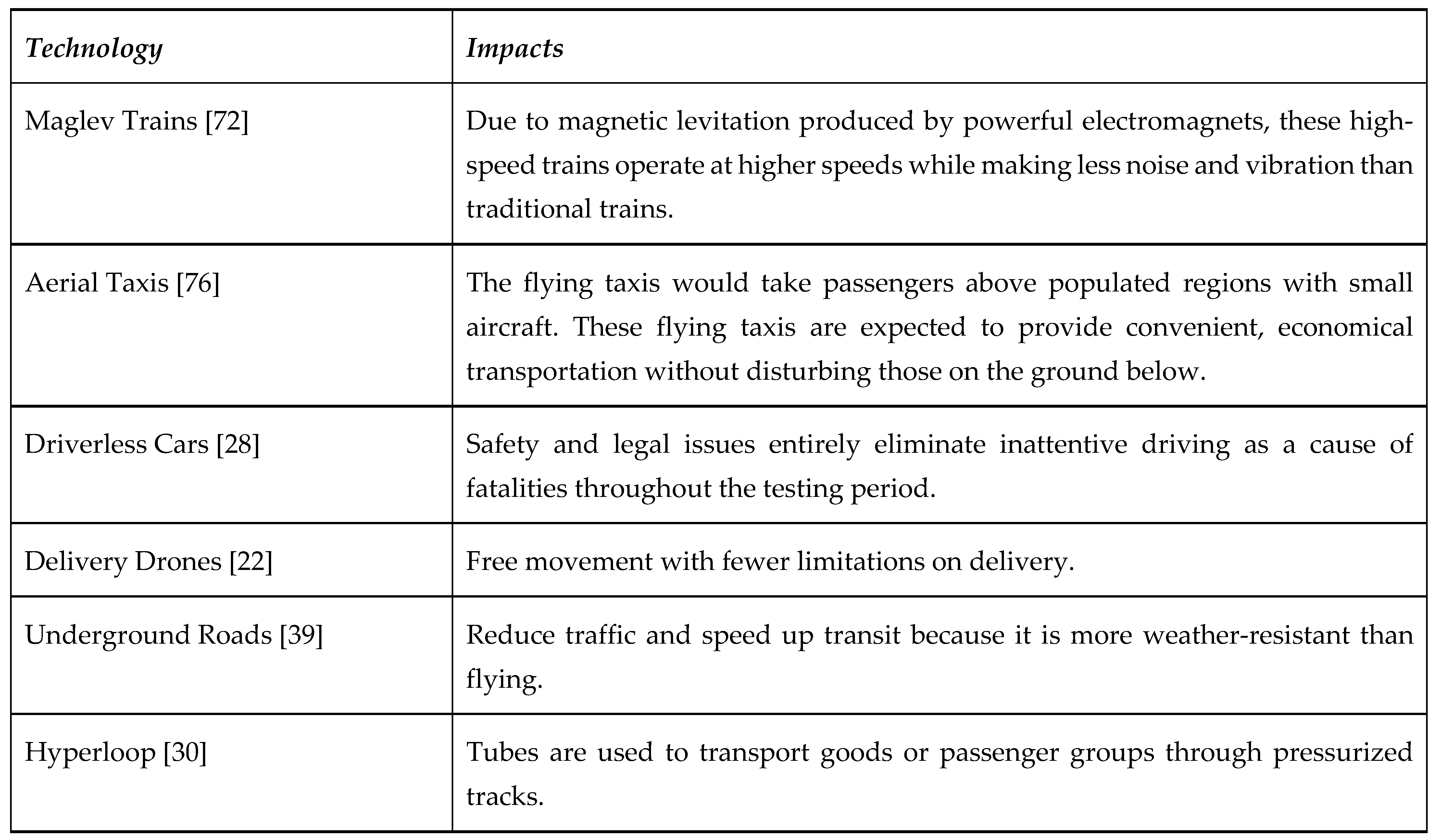 |
Therefore, according to Table 9, we can deduce that a number of cutting-edge technologies have the potential to transform the transportation industry significantly. With the use of magnetic levitation, Maglev trains provide fast transportation with little noise or vibration. Aerial taxis provide the potential to minimize ground impact while offering convenient and efficient transportation above inhabited regions. By removing distracted driving, Driverless cars improve safety in testing. Deliveries will have more mobility thanks to delivery drones, which might revolutionize logistics. Surface traffic congestion may be reduced by subterranean roads, which provide weatherproof transit choices. Last but not least, pressurized tubes are used in Hyper-loop technology, which has the potential to convey people and commodities quickly and effectively. All of these developments portend faster, safer, and more effective transport systems in the future.
5.0. Framework for New Transportation Technology
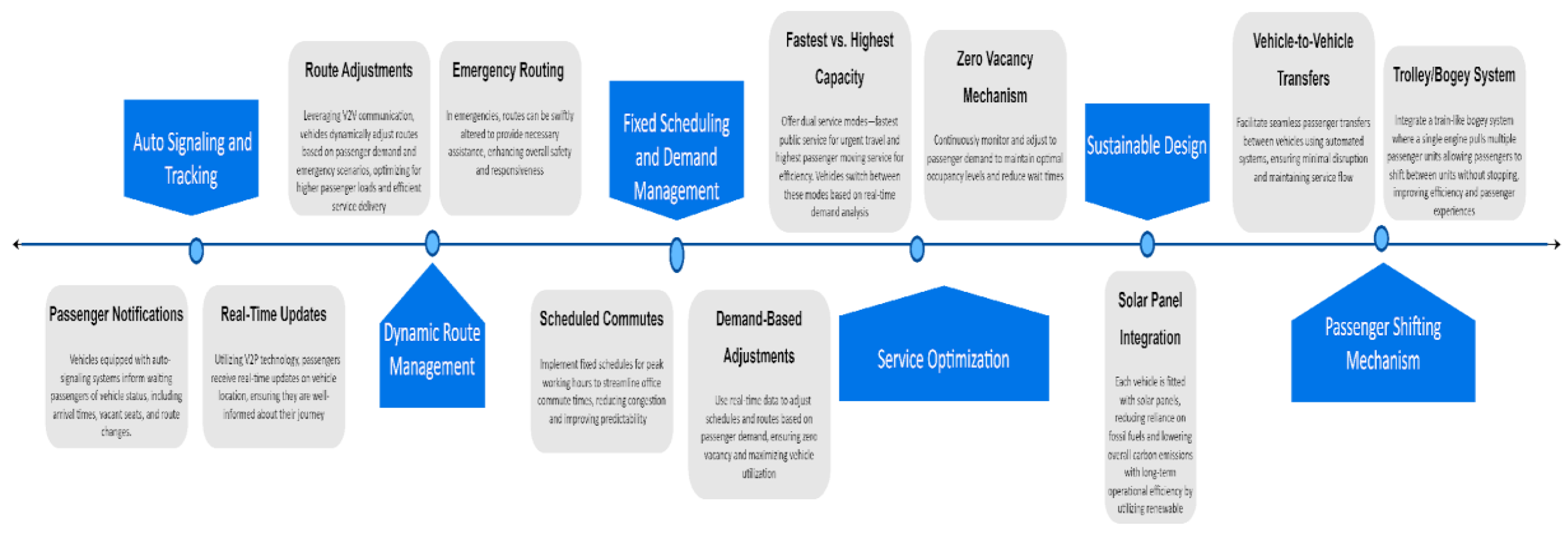
This framework outlines a new transportation technology designed to enhance efficiency, passenger convenience, and environmental sustainability. The system integrates advanced auto-signaling, vehicle-to-vehicle (V2V) and vehicle-to-passenger (V2P) communication, fixed scheduling, solar-powered vehicles, and flexible passenger shifting mechanisms (as in Fig. 4).
5.1. Key Components
1. Auto Signaling and Tracking:
- Passenger Notifications: Vehicles equipped with auto-signaling systems inform waiting passengers of vehicle status, including arrival times, vacant seats, and route changes.
- Real-Time Updates: Utilizing V2P technology, passengers receive real-time updates on vehicle location, ensuring they are well-informed about their journey.
2. Dynamic Route Management:
- Route Adjustments: Leveraging V2V communication, vehicles dynamically adjust routes based on passenger demand and emergency scenarios, optimizing for higher passenger loads and efficient service delivery.
- Emergency Routing: In emergencies, routes can be swiftly altered to provide necessary assistance, enhancing overall safety and responsiveness.
3. Fixed Scheduling and Demand Management:
- Scheduled Commutes: Implement fixed schedules for peak working hours to streamline office commute times, reducing congestion and improving predictability.
- Demand-Based Adjustments: Use real-time data to adjust schedules and routes based on passenger demand, ensuring zero vacancy and maximizing vehicle utilization.
4. Service Optimization:
- Fastest vs. Highest Capacity: Offer dual service modes—fastest public service for urgent travel and highest passenger moving service for efficiency. Vehicles switch between these modes based on real-time demand analysis.
- Zero Vacancy Mechanism: Continuously monitor and adjust to passenger demand to maintain optimal occupancy levels and reduce wait times.
5. Sustainable Design:
- Solar Panel Integration: Equip each vehicle with solar panels, reducing reliance on fossil fuels and lowering overall carbon emissions. This design enhances sustainability and operational efficiency.
6. Passenger Shifting Mechanism:
- Vehicle-to-Vehicle Transfers: Facilitate seamless passenger transfers between vehicles using automated systems, ensuring minimal disruption and maintaining service flow.
- Trolley/Bogey System: Integrate a train-like bogey system where a single engine pulls multiple passenger units allowing passengers to shift between units without stopping, improving efficiency and passenger experience.
Figure 4.
Framework for New Transportation Technology.
5.2. Implementation Strategy
1. Technology Integration:
- Develop and deploy V2V and V2P communication infrastructure.
- Implement auto-signaling and real-time tracking systems in all vehicles.
2. Operational Planning:
- Design fixed schedules for peak commuting hours and create dynamic adjustment protocols based on real-time data.
- Establish criteria for switching between fastest service and highest capacity modes.
3. Sustainability Measures:
- Retrofit existing vehicles with solar panel structures.
- Regularly monitor and optimize the energy efficiency of solar-powered systems.
4. Passenger Experience Enhancements:
- Train staff on new technologies and passenger shifting protocols.
- Implement user-friendly interfaces for passengers to receive updates and manage their commutes.
Ultimately, this comprehensive framework for new transportation technology aims to revolutionize urban mobility by integrating advanced auto-signaling, dynamic route management, fixed scheduling, sustainable design, and efficient passenger shifting mechanisms. By leveraging cutting-edge technologies and sustainable practices, this system promises to deliver an efficient, reliable, and eco-friendly transportation solution.
6.0. The Key Contributions of Emerging Technologies toward Smart Transportation
By seeing how residents react to new technologies, decision-makers in smart transportation may also learn about the variables and obstacles that prevent the adoption of various sensing technologies. More precisely, the emergence of developing technologies has transformed smart transportation as follows:
RFID, a key player in smart transportation applications, makes it possible to identify and transmit critical data and agent intelligence from any connecting object [28,82].
RFID has the potential to offer excellent reading rates, real-time and automatic recognition, and cost-effective operation. Such a capacity is viable for smart applications like smart parking and air pollution monitoring [1].
As a paper-based alternative to ticketing systems, RFID tags enable vehicles to navigate to their designated parking spots [78]. Additionally, they are increasingly being used to track the locations of various objects, including vehicles, products, buildings, and power plants.
Supporting the verticals of transportation, logistics, supply chain, construction, and energy can help shed more light on the safety benefits of these technologies in various smart transportation scenarios [72].
The transportation sector may leverage the Internet of Things (IoT) as a vast network of embedded sensors, actuators, smart objects, and other intelligent devices [51].
With the involvement of RFID, Smart grids enabled by the Internet of Things can automatically adjust to variations in electricity supply and demand and provide the data required to limit demand [52]. For instance, lighting control systems (in buildings and on the street), power generation, such as smart power meters, home security systems, and industrial automation, are all examples of Zigbee applications for the Internet of Things in the energy sector [46].
By using IoT devices like programmable devices and lighting systems to monitor a building's actual efficient energy usage techniques [43], facility managers can change the energy use schedule by some of the electronics in a building to lower demand during peak hours [42]. So, future connected technology will assist businesses in reducing shipping costs by enabling truckers to access information on weather, rest places, and parking lots [73].
Analysts can also predict fuel consumption depending on driving distance and road conditions to help decide the optimal routes and types of transportation [48]. Therefore, with the development of these technologies, smart transportation activities outperform the functionality of traditional transportation systems currently operating.
For accurate simulation of carbon emissions, sophisticated modeling tools, system dynamics, and different soft computing techniques can be used [83,84,85]. These regulations will extensively support the Net Zero Scenario, the desired temperature value for space cooling, and even speed reduction [86].
In light of artificial intelligence and blockchain development, smart transportation systems might contribute to carbon emissions using renewable energy, alternative fuels, and even electricity [48].
The connections between blockchain, IoT, and intelligent transportation movements may improve the security, dependability, transparency, and data flow authentication in smart urban environments [72].
Adopting policies against complex mechanisms of carbon emissions is more urgent in transportation. Because of the reliance on fossil fuels, interactions between technical and non-technical measures and carbon emissions are typically complicated and non-linear [11,87,88]. Based on the current research on carbon emissions and smart transportation systems, a realistic integration is developed to solve the study's challenge. Hence, this integration may adapt the transportation system in response to new technological advancements like artificial intelligence, blockchain, and IoT.
7.0. Theoretical and Practical Implications
AI, Blockchain, and IoT, the more effective and inspirational technologies, have significant effects on corporations, governments, and society at large with their dramatic expansion of applications. Despite growing interest and its critical significance on smart urban activities, only a few focused and thorough studies of this technology-integrated research have been published [22]. Therefore, evaluating the current state of the field and the knowledge gaps encourage the development of new research and increase worldwide scholarly production on AI, blockchain, IoT, and smart transportation. For instance, AI algorithms have the potency to forecast traffic patterns, modify traffic signals, minimize idle time at junctions, optimize delivery truck routes, minimize distance traveled, and minimize fuel consumption. However, AI works to improve electric car performance, increasing range and decreasing the need for charging stations.
On the other hand, traffic pattern monitoring, congestion reduction, safety enhancement, traffic flow monitoring, and traffic signal adjustment are all possible with the use of IoT. In order to lower the danger of collisions and breakdowns, IoT might even be put-upon to monitor vehicle performance and identify maintenance problems. Arguably, blockchain technology has the upside of reducing pollution, measuring carbon emissions securely and transparently, tracking credits for carbon reduction and enabling businesses to buy and sell credits depending on emissions. In order to make sure that the resources used in the manufacture of electric cars come from ethical and sustainable sources, blockchain technology is applied to build a system for monitoring their origin and cutting down on the number of cars on the road, lowering carbon emissions. Again, considering the effects of scale, structure, and technology in transportation, this study's findings contribute to the body of knowledge and have significant policy ramifications for advancing smart transportation and reducing carbon emissions in that industry and others [2,19,41,89,90]. Therefore, the integration of these emerging technologies will quicken the dynamic of smart transport in the direction of carbon-free mobility.
8.0. Conclusion
The results of this review are paired with a thorough, systematic assessment of the literature and a critical analysis of the works that form the basis of this research stream to comprehend the technology properly. This paper has articulated sustainable smart transportation, environmental concerns, and future technologies. For instance, urban residents, including drivers and passengers, are expected to work together to construct and build sustainable smart cities. Ultimately, the key contribution of this paper lies in its exploration of the intersection between transportation innovation, smart technology, and environmental sustainability, such as carbon emissions, traffic congestion, and related logistical and regulatory challenges. Numerous problems, such as device incompatibility, subpar topology design, constrained network coverage and capacity, security and privacy concerns, and legislative ambiguity, could make these emerging technologies less suitable for smart mobility. Therefore, future research on digitized energy systems might be able to determine who needs energy when and where and deliver it for the least amount of money, for example, demand and potentiality for electric vehicles and renewable energy in the future. Thus, the future world will see flying cars and so many things. Still, we need to plan from now on what future strategies would be for making this transportation sector safe, environmentally friendly, and economically viable to get immense positive customer responses as sustainable transports.
Funding
This research received no specific grant from any funding agency in the public, commercial, or not-for-profit sectors.
References
- Yuan, T., da Rocha Neto, W., Rothenberg, C. E., Obraczka, K., Barakat, C., & Turletti, T. (2022). Machine learning for next-generation intelligent transportation systems: A survey. Transactions on Emerging Telecommunications Technologies, 33(4), e4427. ISSN 2161-3915, Wiley Online Library.
- Lv, Zhihan, & Shang, Wenlong (2022). Impacts of intelligent transportation systems on energy conservation and emission reduction of transport systems: A comprehensive review. Green Technologies and Sustainability, 100002, ISSN 2949-7361, Elsevier.
- Yip, Ng Ming, Mohamad, Jamilah, & Ching, Goh Hong (2017). Indicators of sustainable housing development (SHD): a review and conceptual framework. International Journal of Scientific & Engineering Research, 8(9).
- Chatti, Walid, & Majeed, Muhammad Tariq (2022). Information communication technology (ICT), smart urbanization, and environmental quality: Evidence from a panel of developing and developed economies. Journal of Cleaner Production, 366, 132925, ISSN 0959-6526, Elsevier.
- Soriano-Gonzalez, R., Perez-Bernabeu, E., Ahsini, Y., Carracedo, P., Camacho, A., & Juan, A. A. (2023). Analyzing Key Performance Indicators for Mobility Logistics in Smart and Sustainable Cities: A Case Study Centered on Barcelona. Logistics, 7(4),.
- Ahmad, Tanveer, Zhang, Hongcai, & Yan, Biao (2020). A review on renewable energy and electricity requirement forecasting models for smart grid and buildings. Sustainable Cities and Society, 55, 102052, ISSN 2210-6707, Elsevier.
- Aloqaily, Moayad, Boukerche, Azzedine, Bouachir, Ouns, Khalid, Fariea, & Jangsher, Sobia (2020). An energy trade framework using smart contracts: Overview and challenges. IEEE Network, 34(4), 119-125, ISSN 0890-8044, IEEE.
- Zeng, Dan, Dong, Yan, Cao, Huajun, Li, Yuke, Wang, Jia, Li, Zhenbiao, & Hauschild, Michael Zwicky (2021). Are the electric vehicles more sustainable than the conventional ones? Influences of the assumptions and modeling approaches in the case of typical cars in China. Resources, Conservation and Recycling, 167, 105210, ISSN 0921-3449, Elsevier.
- Gao, Kai, Guo, Xin, Liu, Tingting, & Han, Rui (2022). Government Low-Carbon Policies Optimization for Smart Transportation Enterprises. Discrete Dynamics in Nature and Society, 2022, ISSN 1026-0226, Hindawi.
- Zhao, C. (2022). Is smart transportation associated with reduced carbon emissions? The case of China. Energy Economics, 105, ISSN 0140-9883. [CrossRef]
- Kinnon, Michael A Mac, Brouwer, Jacob, & Samuelsen, Scott (2018). The role of natural gas and its infrastructure in mitigating greenhouse gas emissions, improving regional air quality, and renewable resource integration. Progress in Energy and Combustion science, 64, 62-92, ISSN 0360-1285, Elsevier.
- Figueiredo, Lino, Jesus, Isabel, Machado, JA Tenreiro, Ferreira, Jose Rui, & Carvalho, JL Martins De (2001). Towards the development of intelligent transportation systems. ITSC 2001. 2001 IEEE intelligent transportation systems. Proceedings (Cat. No. 01TH8585), 1206-1211, ISSN 0780371941, IEEE.
- Sharvini, Siva Raman, Noor, Zainura Zainon, Chong, Chun Shiong, Stringer, Lindsay C, & Yusuf, Rafiu Olasunkanmi (2018). Energy consumption trends and their linkages with renewable energy policies in East and Southeast Asian countries: Challenges and opportunities. Sustainable Environment Research, 28(6), 257-266, ISSN 2468-2039, Elsevier.
- Mačiulis, A., Vasiliauskas, A. V., & Jakubauskas, G. (2009). The impact of transport on the competitiveness of national economy. Transport, 24(2), 93-99. ISSN 1648-4142, Taylor & Francis.
- Soto, Esteban A, Bosman, Lisa B, Wollega, Ebisa, & Leon-Salas, Walter D (2021). Peer-to-peer energy trading: A review of the literature. Applied Energy, 283, 116268, ISSN 0306-2619, Elsevier.
- Yi, Ming, Liu, Yafen, Sheng, Mingyue Selena, & Wen, Le (2022). Effects of digital economy on carbon emission reduction: New evidence from China. Energy Policy, 171, 113271, ISSN 0301-4215, Elsevier.
- Zhou, Nan, Price, Lynn, Yande, Dai, Creyts, Jon, Khanna, Nina, Fridley, David, Lu, Hongyou, Feng, Wei, Liu, Xu, & Hasanbeigi, Ali (2019). A roadmap for China to peak carbon dioxide emissions and achieve a 20% share of non-fossil fuels in primary energy by 2030. Applied Energy, 239, 793-819, ISSN 0306-2619, Elsevier.
- Kalghatgi, Gautam (2018). Is it really the end of internal combustion engines and petroleum in transport?. Applied energy, 225, 965-974, ISSN 0306-2619, Elsevier.
- Letnik, T., Marksel, M., Luppino, G., Bardi, A., & Božičnik, S. (2018). Review of policies and measures for sustainable and energy efficient urban transport. Energy, 163, 245-257.ISSN 0360-5442, Elsevier.
- Nurdiawansyah, Nurdiawansyah, & Lindrianasari, Lindrianasari (2018). Carbon emission issues in Indonesia. Review of Integrative Business and Economics Research, 7, 20-33, ISSN 2304-1013, GMP Press and Printing.
- Frey, H Christopher (2020). Trends in Transportation Greenhouse Gas Emissions. Advances in Carbon Management Technologies, 359-375, ISSN 042924360X, CRC Press.
- Yigitcanlar, Tan, Desouza, Kevin C, Butler, Luke, & Roozkhosh, Farnoosh (2020). Contributions and risks of artificial intelligence (AI) in building smarter cities: Insights from a systematic review of the literature. Energies, 13(6), 1473, ISSN 1996-1073, MDPI.
- Alahi, M. E. E., Sukkuea, A., Tina, F. W., Nag, A., Kurdthongmee, W., Suwannarat, K., & Mukhopadhyay, S. C. (2023). Integration of IoT-enabled technologies and artificial intelligence (AI) for smart city scenario: recent advancements and future trends. Sensors, 23(11), 5206.
- Rahman, Syed Masiur, Khondaker, AN, Hasan, Md Arif, & Reza, Imran (2017). Greenhouse gas emissions from road transportation in Saudi Arabia-a challenging frontier. Renewable and Sustainable Energy Reviews, 69, 812-821, ISSN 1364-0321, Elsevier.
- Wang, Michael, Wang, Bill, & Abareshi, Ahmad (2020). Blockchain technology and its role in enhancing supply chain integration capability and reducing carbon emission: A conceptual framework. Sustainability, 12(24), 10550, ISSN 2071-1050, MDPI.
- Ikpe V, Shamsuddoha M. Functional Model of Supply Chain Waste Reduction and Control Strategies for Retailers—The USA Retail Industry. Logistics. 2024; 8(1):22. [CrossRef]
- Alacam, S., & Sencer, A. (2021). Using blockchain technology to foster collaboration among shippers and carriers in the trucking industry: A design science research approach. Logistics, 5(2), 37.
- Singh, Saurabh, Sharma, Pradip Kumar, Yoon, Byungun, Shojafar, Mohammad, Cho, Gi Hwan, & Ra, In-Ho (2020). Convergence of blockchain and artificial intelligence in IoT network for the sustainable smart city. Sustainable Cities and Society, 63, 102364, ISSN 2210-6707, Elsevier.
- Li, Hui, Hao, Yilin, Xie, Chi, Han, Yuzhao, & Wang, Zhong-Ren (2022). Emerging technologies and policies for carbon-neutral transportation. International Journal of Transportation Science and Technology, ISSN 2046-0430, Elsevier.
- Yadav, Arun Kumar, & Szpytko, Janusz (2021). How to Connect Hyperloop Technology with the Smart City Transportation Concept. Electric Mobility in Public Transport-Driving Towards Cleaner Air, 201-216, Springer.
- Kashem, M. A., Shamsuddoha, M., Nasir, T., & Chowdhury, A. A. (2023). Supply Chain Disruption versus Optimization: A Review on Artificial Intelligence and Blockchain. Knowledge, 3(1), 80-96.
- Reis, J., Amorim, M., Cohen, Y., & Rodrigues, M. (2020, April). Artificial intelligence in service delivery systems: a systematic literature review. In World Conference on Information Systems and Technologies (pp. 222-233). Springer, Cham.
- Shamsuddoha, M., Kashem, M. A., & Koul, S. (2022a, December). Systemic Review of AI Reshaped Blockchain Applications. In International Conference on Advanced Network Technologies and Intelligent Computing (pp. 470-494). Springer Nature Switzerland.
- Hussein, Nehad Hameed, Yaw, Chong Tak, Koh, Siaw Paw, Tiong, Sieh Kiong, & Chong, Kok Hen (2022). A Comprehensive Survey on Vehicular Networking: Communications, Applications, Challenges, and Upcoming Research Directions. IEEE Access, 10, 86127-86180, ISSN 2169-3536, IEEE.
- Al-Rajab, Murad, Loucif, Samia, Kousi, Ossama, & Irani, Mohamad Bassem (2022). Smart Application for Every Car (SAEC).(AR Mobile Application). Alexandria Engineering Journal, 61(11), 8573-8584, ISSN 1110-0168, Elsevier.
- Sharma, Arunima, & Battula, Ramesh Babu (2022). The Internet of Things Solutions for Transportation. AI and IoT for Sustainable Development in Emerging Countries, 291-324, Springer.
- Abdulkader, Omar, Bamhdi, Alwi M, Thayananthan, Vijey, Jambi, Kamal, & Alrasheedi, Muasaad (2018). A novel and secure smart parking management system (SPMS) based on integration of WSN, RFID, and IoT. 2018 15th Learning and Technology Conference (L&T), 102-106, ISSN 1538648172, IEEE.
- Alias, C., Alarcón Olalla, F. E., Iwersen, H., Ollesch, J., & Noche, B. (2018). Identifying Promising Application Areas for Cyber-Physical and Complex Event Processing in Logistics Practice. Logistics, 2(4), 23.
- Zhang, Jun, Wang, Yichuan, Li, Shuyang, & Shi, Shuaiyi (2020). An architecture for IoT-enabled smart transportation security system: a geospatial approach. IEEE Internet of Things Journal, 8(8), 6205-6213, ISSN 2327-4662, IEEE.
- Freitag, Charlotte, Berners-Lee, Mike, Widdicks, Kelly, Knowles, Bran, Blair, Gordon S, & Friday, Adrian (2021). The real climate and transformative impact of ICT: A critique of estimates, trends, and regulations. Patterns, 2(9), 100340, ISSN 2666-3899, Elsevier.
- Wang, Y., Rodrigues, V. S., & Evans, L. (2015). The use of ICT in road freight transport for CO2 reduction–an exploratory study of UK’s grocery retail industry. The International Journal of Logistics Management, ISSN 0957-4093, Emerald Group Publishing Limited.ISSN 0957-4093, Emerald Group Publishing Limited.
- Ross, L. J., Wallin, S., Osland, E. J., & Memon, M. A. (2016). Commercial very low energy meal replacements for preoperative weight loss in obese patients: a systematic review. Obesity surgery, 26(6), 1343-1351.
- Moher, D., Liberati, A., Tetzlaff, J., Altman, D. G., Altman, D., Antes, G., ... & Tugwell, P. (2009). Preferred reporting items for systematic reviews and meta-analyses: the PRISMA statement (Chinese edition). Journal of Chinese Integrative Medicine, 7(9), 889-896.
- Kashem, M. A., Shamsuddoha, M., Nasir, T., & Chowdhury, A. A. (2022). The role of artificial intelligence and blockchain technologies in sustainable tourism in the Middle East. Worldwide Hospitality and Tourism Themes. [CrossRef]
- Day, R. A. (1989). The origins of the scientific paper: the IMRaD format. J Am Med Writers Assoc, 4(2), 16-18.
- OSF (2023). Available at : https://doi.org/10.17605/OSF.IO/XDVHE.
- Falagas, Matthew E, Pitsouni, Eleni I, Malietzis, George A, & Pappas, Georgios (2008). Comparison of PubMed, Scopus, web of science, and Google scholar: strengths and weaknesses. The FASEB journal, 22(2), 338-342, ISSN 0892-6638, Wiley Online Library.
- Chen, Cheng, Hu, Yuhan, Karuppiah, Marimuthu, & Kumar, Priyan Malarvizhi (2021). Artificial intelligence on economic evaluation of energy efficiency and renewable energy technologies. Sustainable Energy Technologies and Assessments, 47, 101358, ISSN 2213-1388, Elsevier.
- Abou El-Magd, L. M., Hassnien, A. E., & Darwish, A. (2023). The Role of Internet of Things in Mitigating the Effect of Climate Change: Case Study: An Ozone Prediction Model. The Power of Data: Driving Climate Change with Data Science and Artificial Intelligence Innovations, 157-172.
- Mrityunjaya, DH, Kumar, Naveen, Ali, Sameer, & Kelagadi, HM (2017). Smart transportation. 2017 International Conference on I-SMAC (IoT in Social, Mobile, Analytics and Cloud)(I-SMAC), 1-5, ISSN 1509032436, IEEE.
- Maraiya, Kiran, & Tripathi, Monika (2022). IoT and Its State of Art Applications: A Survey. Saudi J Eng Technol, 7(5), 211-217.
- Al-Obaidi, Karam M, Hossain, Mohataz, Alduais, Nayef AM, Al-Duais, Husam S, Omrany, Hossein, & Ghaffarianhoseini, Amirhosein (2022). A review of using IoT for energy efficient buildings and cities: A built environment perspective. Energies, 15(16), 5991, ISSN 1996-1073, MDPI.
- Singh, Madhusudan, & Kim, Shiho (2018). Branch based blockchain technology in intelligent vehicle. Computer Networks, 145, 219-231, ISSN 1389-1286, Elsevier.
- Ahram, Tareq, Sargolzaei, Arman, Sargolzaei, Saman, Daniels, Jeff, & Amaba, Ben (2017). Blockchain technology innovations. 2017 IEEE technology & engineering management conference (TEMSCON), 137-141, ISSN 1509011145, IEEE.
- Shamsuddoha, M., & Kashem, M. A. (2022). A revolutionary paradigm shift in supply chain management: The blockchain mechanism. Exploring the latest trends in management literature, 1, 15-33.
- Ahmad, Raja Wasim, Hasan, Haya, Jayaraman, Raja, Salah, Khaled, & Omar, Mohammed (2021). Blockchain applications and architectures for port operations and logistics management. Research in Transportation Business & Management, 41, 100620, ISSN 2210-5395, Elsevier.
- Pu, S., & Lam, J. S. L. (2021). Greenhouse gas impact of digitalizing shipping documents: Blockchain vs. centralized systems. Transportation Research Part D: Transport and Environment, 97, 102942.
- Appasani, Bhargav, Mishra, Sunil Kumar, Jha, Amitkumar V, Mishra, Santosh Kumar, Enescu, Florentina Magda, Sorlei, Nicu (2022). Blockchain-enabled smart grid applications: architecture, challenges, and solutions. Sustainability, 14(14), 8801, ISSN 2071-1050, MDPI.
- Rissman, Jeffrey, Bataille, Chris, Masanet, Eric, Aden, Nate, III, William R Morrow, Zhou, Nan, Elliott, Neal, Dell, Rebecca, Heeren, Niko, & Huckestein, Brigitta (2020). Technologies and policies to decarbonize global industry: Review and assessment of mitigation drivers through 2070. Applied Energy, 266, 114848, ISSN 0306-2619, Elsevier.
- Althabatah, Areej, Yaqot, Mohammed, Menezes, Brenno, & Kerbache, Laoucine (2023). Transformative Procurement Trends: Integrating Industry 4.0 Technologies for Enhanced Procurement Processes. Logistics, 7(3), 63, MDPI.
- Ferreira, Bárbara, and João Reis (2023). A Systematic Literature Review on the Application of Automation in Logistics. Logistics, 7(4), 80, MDPI.
- Alacam, S, & Sencer, A (2021). Using Blockchain Technology to Foster Collaboration among Shippers and Carriers in the Trucking Industry: A Design Science Research Approach. Logistics 2021, 5, 37. Blockchain-Based Digitalization of Logistics Processes, 107.
- Dong, Peng, Zhao, Junwei, and Liu, Xuewu, Wu, Jian, Xu, Xiangyang, Liu, Yanfang, Wang, Shuhan, & Guo, Wei (2022). Practical application of energy management strategy for hybrid electric vehicles based on intelligent and connected technologies: Development stages, challenges, and future trends. Renewable and Sustainable Energy Reviews, 170, 112947, ISSN 1364-0321, Elsevier.
- Badidi, E. (2022). Edge AI and blockchain for smart sustainable cities: promise and potential. Sustainability, 14(13), 7609.
- Singh, Rajesh, Akram, Shaik Vaseem, Gehlot, Anita, Buddhi, Dharam, Priyadarshi, Neeraj, & Twala, Bhekisipho (2022). Energy System 4.0: Digitalization of the energy sector with inclination towards sustainability. Sensors, 22(17), 6619, ISSN 1424-8220, MDPI.
- Khan, Salabat, Luo, Fei, Zhang, Zijian, Rahim, Mussadiq Abdul, Ahmad, Mubashir, & Wu, Kaishun (2022). Survey on issues and recent advances in vehicular public-key infrastructure (VPKI). IEEE Communications Surveys & Tutorials, 24(3), 1574-1601, IEEE.
- Sarkar, A. N., & Dash, S. (2011). Emissions trading and carbon credit accounting for sustainable energy development with focus on India. Asia Pacific Business Review, 7(1), 50-80.
- Li, J., & Kassem, M. (2021). Applications of distributed ledger technology (DLT) and Blockchain-enabled smart contracts in construction. Automation in construction, 132, 103955.
- Kanthavel, R, Sangeetha, SKB, & Keerthana, KP (2021). Design of smart public transport assist system for metropolitan city Chennai. International Journal of Intelligent Networks, 2, 57-63, ISSN 2666-6030, Elsevier.
- Amanullah, Mohamed Ahzam, Loke, Seng W, Chhetri, Mohan Baruwal, & Doss, Robin (2023). A taxonomy and analysis of misbehaviour detection in cooperative intelligent transport systems: a systematic review. ACM Computing Surveys, 56(1), 1-38, ACM New York, NY, USA.
- Van Der Heijden, R. W., Dietzel, S., Leinmüller, T., & Kargl, F. (2018). Survey on misbehavior detection in cooperative intelligent transportation systems. IEEE Communications Surveys & Tutorials, 21(1), 779-811, IEEE.
- Singh, Prashant, Elmi, Zeinab, Meriga, Vamshi Krishna, Pasha, Junayed, & Dulebenets, Maxim A (2022). Internet of Things for sustainable railway transportation: Past, present, and future. Cleaner Logistics and Supply Chain, 4, 100065, ISSN 2772-3909, Elsevier.
- Bhuiyan, Kamrul Hasan, Jahan, Israt, Zayed, Nurul Mohammad, Islam, Khan Mohammad Anwarul, Suyaiya, Sayma, Tkachenko, Olena, & Nitsenko, Vitalii (2022). Smart Tourism Ecosystem: A New Dimension toward Sustainable Value Co-Creation. Sustainability, 14(22), 15043, ISSN 2071-1050, MDPI.
- Mnyakin, M. (2023). Applications of ai, iot, and cloud computing in smart transportation: A review. Artificial Intelligence in Society, 3(1), 9-27.
- Kashem, M. A., Shamsuddoha, M., & Nasir, T. (2023). Smart Manufacturing: A Review Toward the Improvement of Supply Chain Efficiency, Productivity, and Sustainability. Advanced Technologies and the Management of Disruptive Supply Chains: The Post-COVID Era, 13-33.
- Mohamed, Nader, Al-Jaroodi, Jameela, Jawhar, Imad, Idries, Ahmed, & Mohammed, Farhan (2020). Unmanned aerial vehicles applications in future smart cities. Technological forecasting and social change, 153, 119293, ISSN 0040-1625, Elsevier.
- Verma, Piyush, Savickas, Romanas, Buettner, SM, Strüker, J, Kjeldsen, Ole, & Wang, Xiao (2020). Digitalization: Enabling the new phase of energy efficiency. Group of Experts on Energy Efficiency, GEEE-7, 2020-12.
- Bagula, Antoine, Castelli, Lorenzo, & Zennaro, Marco (2015). On the design of smart parking networks in the smart cities: An optimal sensor placement model. Sensors, 15(7), 15443-15467, ISSN 1424-8220, MDPI.
- Zawieska, J., & Pieriegud, J. (2018). Smart city as a tool for sustainable mobility and transport decarbonisation. Transport policy, 63, 39-50.
- Prasad,Vishwa (2023). Driving Towards a Smarter Future: How IoT & AI Can Ease Traffic Congestion in Smart Cities? Available at: https://www.linkedin.com/pulse/driving-towards-smarter-future-how-iot-ai-can-ease-traffic-prasad/ [Accessed on May 8, 2024].
- Jaramillo-Alcazar, A., Govea, J., & Villegas-Ch, W. (2023). Advances in the optimization of vehicular traffic in smart cities: Integration of blockchain and computer vision for sustainable mobility. Sustainability, 15(22), 15736.
- Shamsuddoha, M., Kashem, M. A., & Nasir, T. (2023). Revolutionizing Supply Chain Management: A Bibliometric Analysis of Industry 4.0 and 5.0. Advanced Technologies and the Management of Disruptive Supply Chains: The Post-COVID Era, 35-54.
- Azab, A., Park, J., & Mostafa, N. A. (2021). Smart mobile application for short-haul cargo transportation. Logistics, 5(2), 36.
- Safaei-Farouji, Majid, Thanh, Hung Vo, Dai, Zhenxue, Mehbodniya, Abolfazl, Rahimi, Mohammad, Ashraf, Umar, & Radwan, Ahmed E (2022). Exploring the power of machine learning to predict carbon dioxide trapping efficiency in saline aquifers for carbon geological storage project. Journal of Cleaner Production, 372, 133778, ISSN 0959-6526, Elsevier.
- Sankhye, S., & Hu, G. (2020). Machine learning methods for quality prediction in production. Logistics, 4(4), 35.
- Satola, Daniel, Wiberg, Aoife Houlihan, Singh, Manan, Babu, Sushanth, James, Ben, Dixit, Manish, Sharston, Ryan, Grynberg, Yann, & Gustavsen, Arild (2022). Comparative review of international approaches to net-zero buildings: Knowledge-sharing initiative to develop design strategies for greenhouse gas emissions reduction. Energy for Sustainable Development, 71, 291-306, ISSN 0973-0826, Elsevier.
- Markard, Jochen, & Rosenbloom, Daniel (2022). Phases of the net-zero energy transition and strategies to achieve it. Routledge Handbook of Energy Transitions, ISSN 1000806359, Taylor & Francis.
- Cui, Xiaohong, Peng, Binbin, Wang, Binrui, & Wang, Lina (2023). Event-triggered neural experience replay learning for nonzero-sum tracking games of unknown continuous-time nonlinear systems. International Journal of Robust and Nonlinear Control, 33(12), 6553-6575, Wiley Online Library.
- Martínez-Moya, J., Vazquez-Paja, B., & Maldonado, J. A. G. (2019). Energy efficiency and CO2 emissions of port container terminal equipment: Evidence from the Port of Valencia. Energy Policy, 131, 312-319.ISSN 0301-4215, Elsevier.
- Shamsuddoha, M., Kashem, M. A., & Nasir, T. (2023). Smart Transportation Logistics: Achieving Supply Chain Efficiency with Green Initiatives. Data Analytics for Supply Chain Networks, 243-258.
- Paraskevas, A., Madas, M., Zeimpekis, V., & Fouskas, K. (2024). Smart Ports in Industry 4.0: A Systematic Literature Review. Logistics, 8(1), 28.
Figure 1.
PRISMA Flow Diagram.
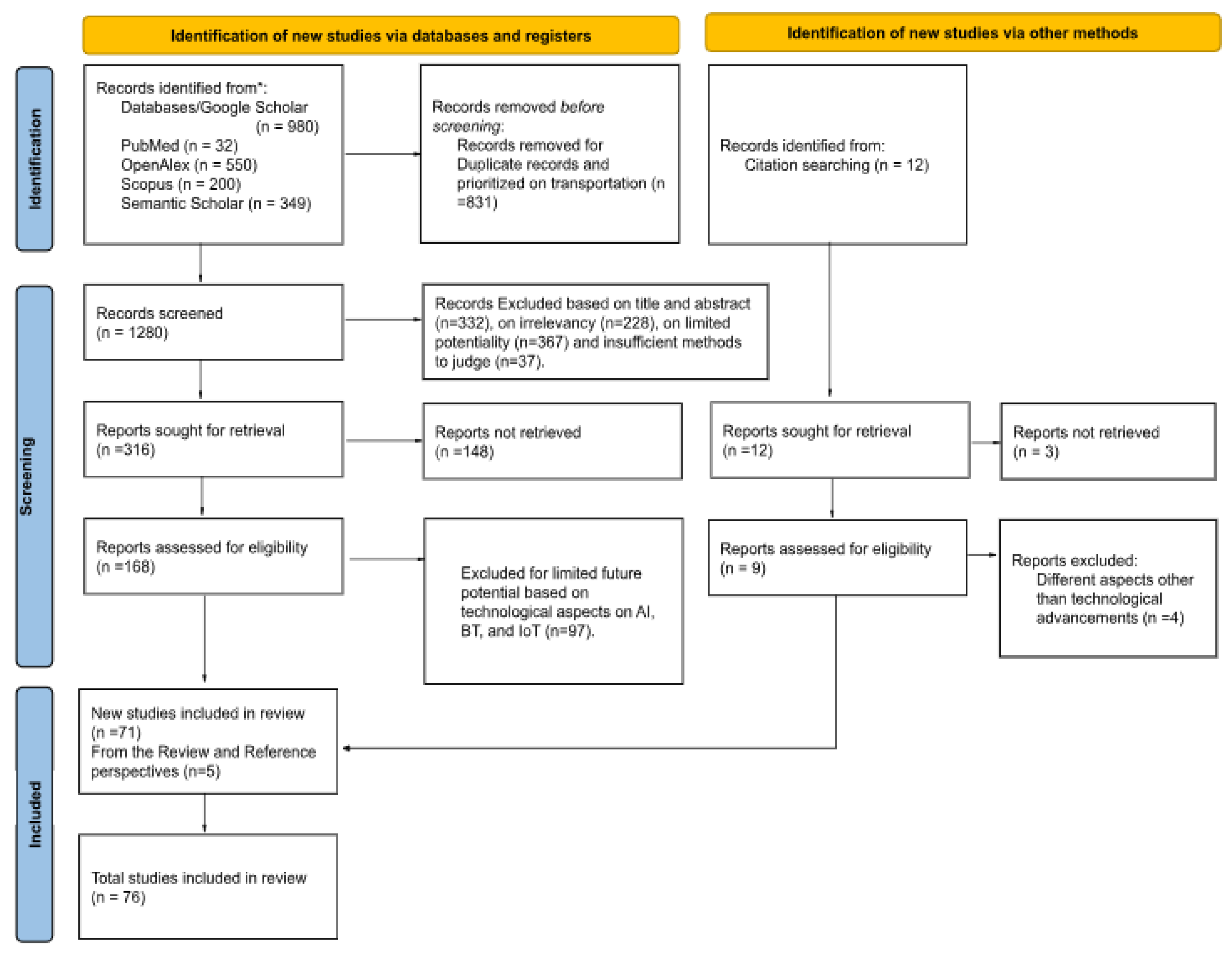
Figure 2.
Keyword Co-occurrence Cluster.
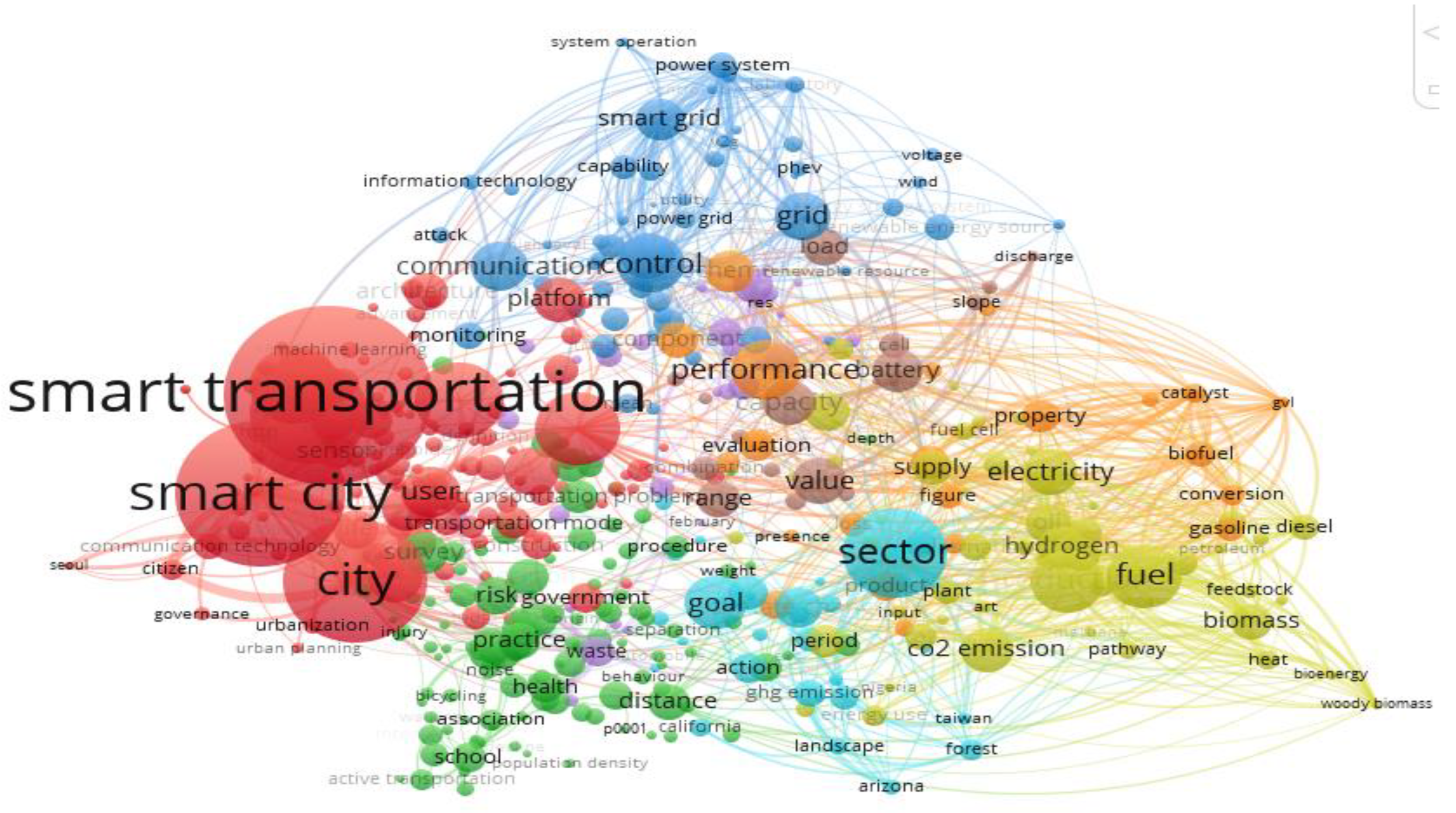
Figure 3.
Co-citation Network Analysis.
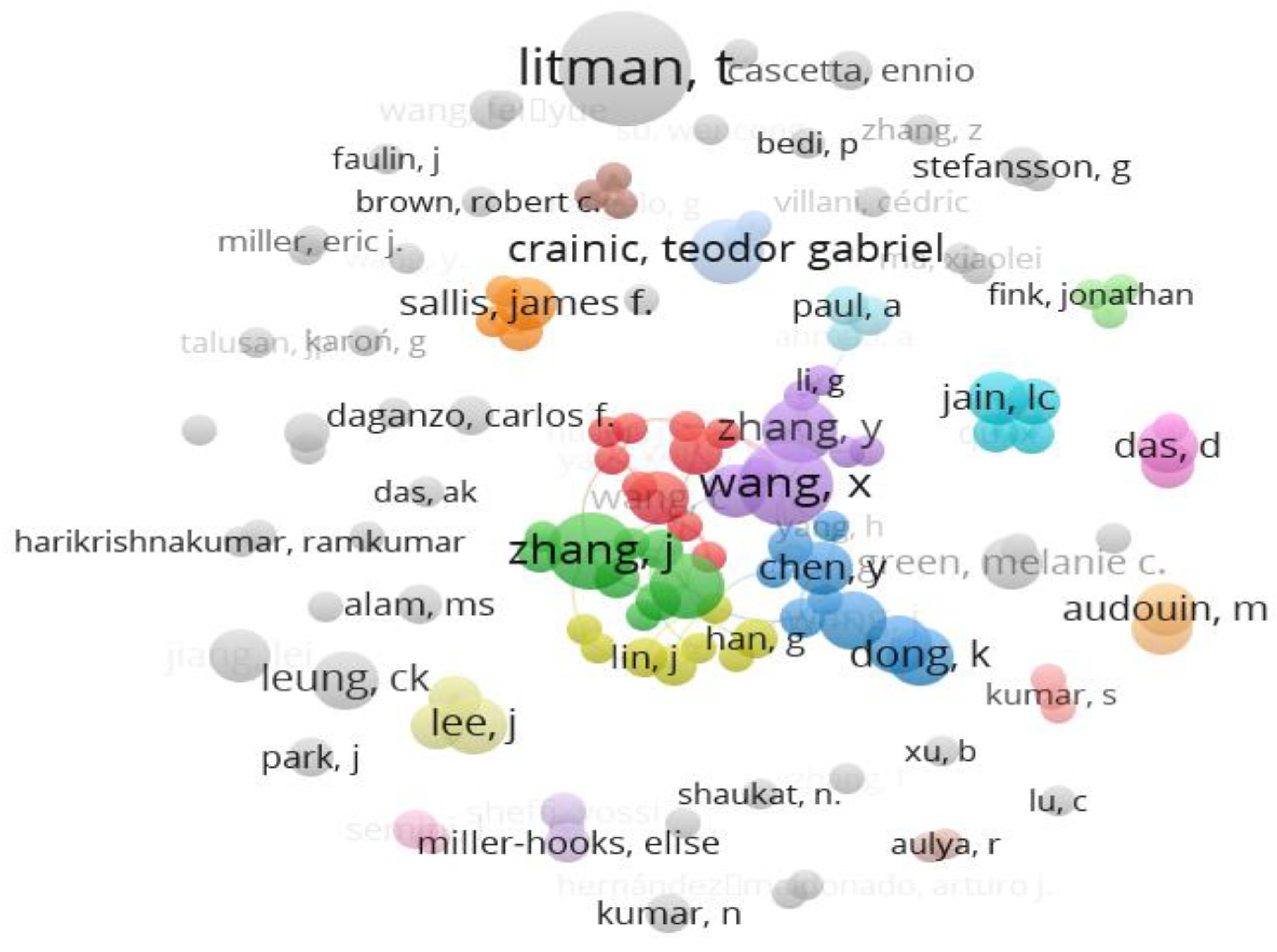
Table 1.
Systematic Literature Search and Bases of Inclusion and Exclusion.
| Keywords/ Search String | Search Engine | No. of papers | Inclusion and exclusion parameters |
|---|---|---|---|
| "smart transportation" | Google Scholar | 980 | In the Title Year: Any time |
| "smart transportation" And carbon” | Google Scholar | 3 | In the Title Year: Any time |
| “smart transportation” And carbon” | PubMed | 32 | In the title of the article Year: Any time |
| “smart transportation” | Scopus | 200 | In the title of the article |
| “smart transportation” And carbon emission” | Semantic Scholar | 349 | In the title of the article |
| “transportation” | OpenAlex | 550 | In the title of the article |
Table 2.
Number of selected papers published as per year 1989-2022.
| Year | 1989 | 2001 | 2008 | 2009 | 2015 | 2016 | 2017 | 2018 | 2019 | 2020 | 2021 | 2022 | 2023 |
|---|---|---|---|---|---|---|---|---|---|---|---|---|---|
| No. of Papers | 1 | 1 | 1 | 2 | 2 | 1 | 4 | 9 | 2 | 12 | 11 | 23 | 7 |
Table 3.
Citation Metrics.
| Publication Year | Papers | Citations | Cites/ Per year | Cites/ Paper | Author/paper | h-index | g-index | hA-index |
|---|---|---|---|---|---|---|---|---|
| 1989-2023 | 2111 | 217336 | 1993.91 | 102.95 | 2.94 | 254 | 404 | 60 |
Table 4.
Extended Roles of Blockchain on Smart Transportation for Reducing Carbon Emission and Traffic Congestion.
Table 4.
Extended Roles of Blockchain on Smart Transportation for Reducing Carbon Emission and Traffic Congestion.
| Extended Roles | Ways |
|---|---|
| Record Keeping | The blockchain creates a secure, decentralized ledger of all the carbon emissions produced by different transportation modes to track emissions from each vehicle and monitor emissions reduction over time [25]. |
| Carbon Credits Trading | Carbon credits are tradable certificates representing the right to emit a certain amount of greenhouse gases and trade carbon credits with each other [67]. |
| Verification and Monitoring | The blockchain's decentralized ledger provides a secure and tamper-proof record of the carbon emissions produced by different modes of transportation to monitor the progress of carbon emissions reduction initiatives and hold companies accountable for their emissions [7,53,55]. |
| Rewarding Low Carbon Transport | This BT can also provide low-carbon transportation by rewarding individuals and organizations adopting sustainable transportation modes [40]. |
| Improving Transparency | This technology can improve transparency by providing a secure and tamper-proof record of carbon emissions and other key data points, allowing more accurate reporting and analysis of emissions reduction initiatives [56,75]. |
Table 5.
Extended Roles of AI on Smart Transportation for Reducing Carbon Emission and Traffic Congestion.
Table 5.
Extended Roles of AI on Smart Transportation for Reducing Carbon Emission and Traffic Congestion.
| Extended Roles | Ways |
|---|---|
| Traffic Management | AI-powered systems can optimize traffic flow and reduce congestion by using real-time traffic data to reduce idling time and decrease carbon emissions [28,76] |
| Smart Routing | AI algorithms are used in developing smart routing systems that optimize vehicle routes [28]. This can help reduce the distance traveled, decreasing fuel consumption and carbon emissions [28,48]. |
| Predictive Maintenance | AI predicts when maintenance is required for vehicles and other transportation systems. This can help reduce downtime and minimize the need for unscheduled repairs, decreasing fuel consumption and carbon emissions [77]. |
| Vehicle Optimization | AI algorithms optimize the performance of vehicles, reducing fuel consumption and carbon emissions [2]. |
| Autonomous Vehicles | The deployment of autonomous vehicles (AVs) powered by AI can also help to reduce carbon emissions by improving the efficiency of transportation systems [22]. |
Table 6.
Extended Roles of IoT on Smart Transportation for Reducing Carbon Emission and Traffic Congestion.
Table 6.
Extended Roles of IoT on Smart Transportation for Reducing Carbon Emission and Traffic Congestion.
| Extended Roles | Ways |
|---|---|
| Monitoring and Optimizing Fleet Operations | IoT sensors can be installed in vehicles to monitor fuel consumption, engine performance, and driving behavior [28]. This data can be analyzed and used to optimize fleet operations to reduce fuel consumption and emissions [41]. |
| Predictive Maintenance | IoT predicts vehicle maintenance [22], reduces breakdowns and emissions [50,77], and improves efficiency and sustainability. |
| Intelligent Traffic Management | IoT sensors can gather real-time data on traffic patterns, improving traffic flow and reducing congestion [2]. |
| Encouraging Alternative Modes of Transport | IoT can be used to encourage the use of alternative modes of transportation, such as public transport, cycling, or walking [29]. |
| Smart Parking | IoT sensors can monitor the availability of parking spaces, reducing the time vehicles spend searching for a parking space [78]. |
| Carbon Offsetting | IoT can offset carbon emissions by supporting renewable energy sources and energy-efficient technologies [17,21]. |
Table 7.
Amount or Percentage of Carbon /GHG Emission Reduction.
| Metrics | Artificial Intelligence | Internet of Things | Blockchain |
|---|---|---|---|
| Amount or percentage of Carbon /GHG Emission Reduction | Up to 34% by 2050 [79] | 63.5 gigatons by the year 2030[49] | Reduce over 99% of document-related emissions [57] |
Table 8.
(a). Amount or Percentage of Traffic Congestion Reduction.
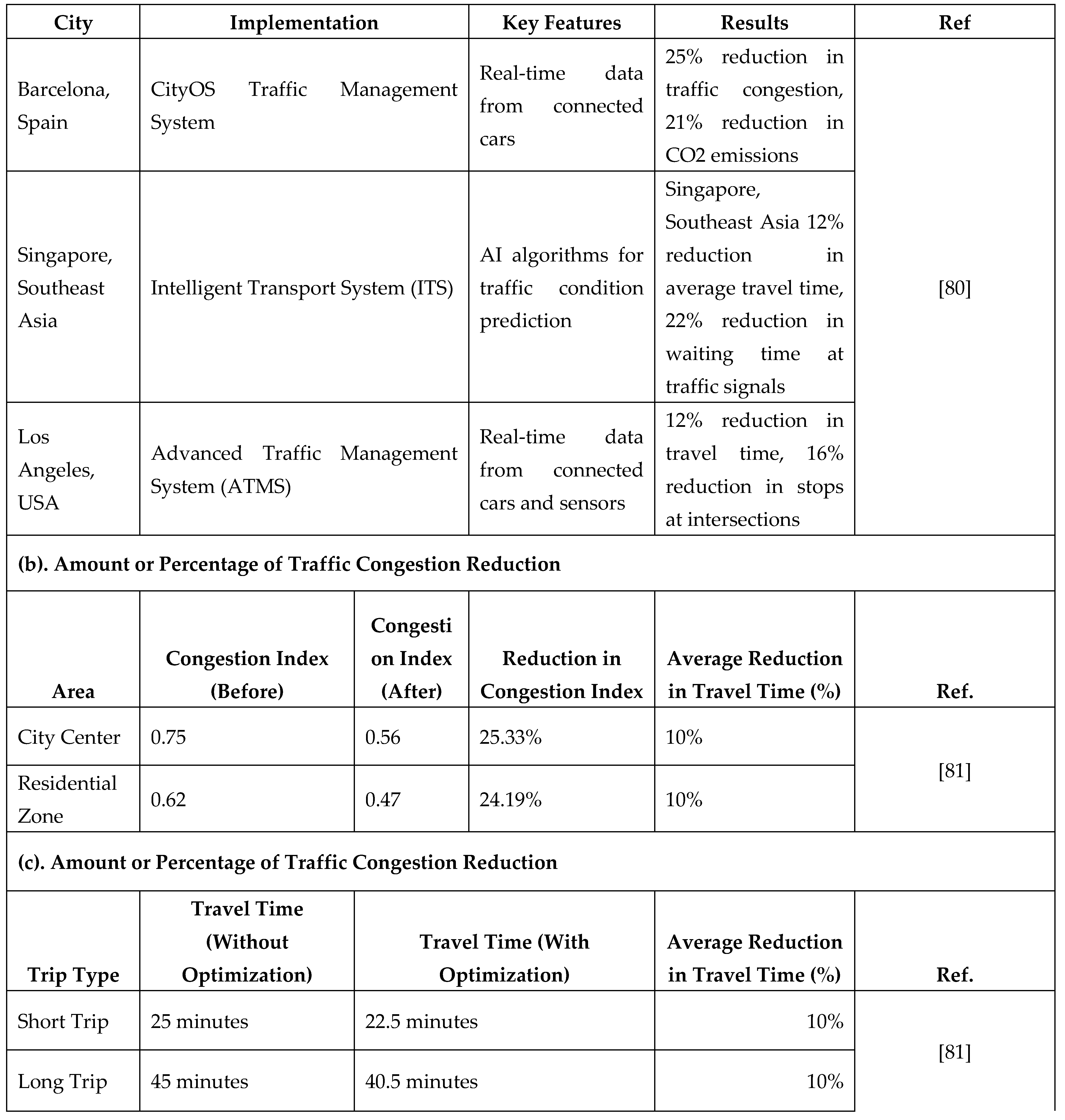 |
Table 9.
Evolution of Transportation Technologies.
 |
Disclaimer/Publisher’s Note: The statements, opinions and data contained in all publications are solely those of the individual author(s) and contributor(s) and not of MDPI and/or the editor(s). MDPI and/or the editor(s) disclaim responsibility for any injury to people or property resulting from any ideas, methods, instructions or products referred to in the content. |
© 2024 by the authors. Licensee MDPI, Basel, Switzerland. This article is an open access article distributed under the terms and conditions of the Creative Commons Attribution (CC BY) license (http://creativecommons.org/licenses/by/4.0/).
Copyright: This open access article is published under a Creative Commons CC BY 4.0 license, which permit the free download, distribution, and reuse, provided that the author and preprint are cited in any reuse.


