Preprint
Article

This version is not peer-reviewed.

Integrating ESG Principles into Smart Logistics:Toward Sustainable Supply Chains

Submitted:

15 November 2024

Posted:

19 November 2024

You are already at the latest version

Abstract

The integration of Environmental, Social, and Governance (ESG) principles into smart logistics represents a transformative approach to supply chain management, offering solutions that address 6 critical challenges in sustainability, ethical labor practices, and transparency. With the increasing awareness of climate change, social inequalities, and governance issues, companies worldwide are turning to advanced technologies such as artificial intelligence (AI), big data, blockchain, and the Internet of Things (IoT) to embed ESG principles into their logistics operations. This article explores the role of smart logistics in promoting sustainability and aligning supply chains with ESG goals. It highlights the environmental aspect by showcasing how AI and big data-driven route optimization can reduce fuel consumption and lower carbon emissions. The use of electric vehicles (EVs) and hybrid trucks is also discussed, particularly for last-mile deliveries, as part of efforts to minimize the carbon footprint of logistics operations. Additionally, smart warehouses equipped with IoT devices, automation, and AI-driven systems significantly contribute to improving energy efficiency and reducing waste, further advancing the sustainability agenda. Social responsibility in the context of ESG is equally emphasized, particularly regarding labor practices in global supply chains. Technologies such as blockchain enhance transparency by allowing companies to trace the origin of products and verify adherence to fair labor standards. AI and data analytics are also crucial for monitoring supplier compliance with social standards, reducing risks associated with unethical practices. Governance, the third pillar of ESG, plays a critical role in promoting transparency and accountability across supply chains. Smart technologies help improve oversight, ensure compliance with regulatory requirements, and mitigate risks related to corruption and fraud. In conclusion, the article underscores the importance of integrating ESG principles into smart logistics as a strategic imperative for companies looking to enhance their competitiveness, resilience, and long-term success in the global marketplace.

Keywords: 
;  ;  ;  

1. Introduction

1.1. The Rise of ESG in Global Supply Chains
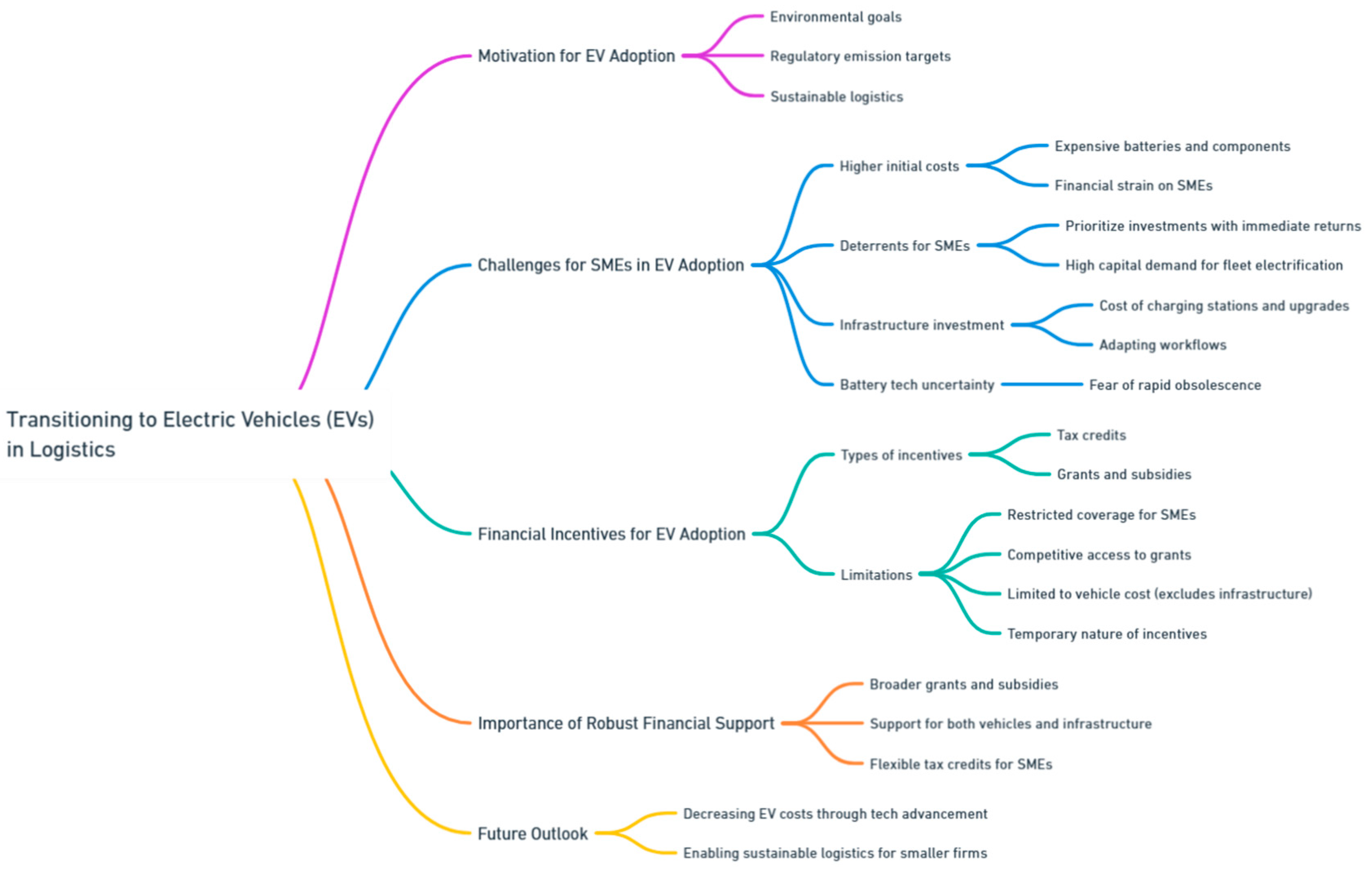
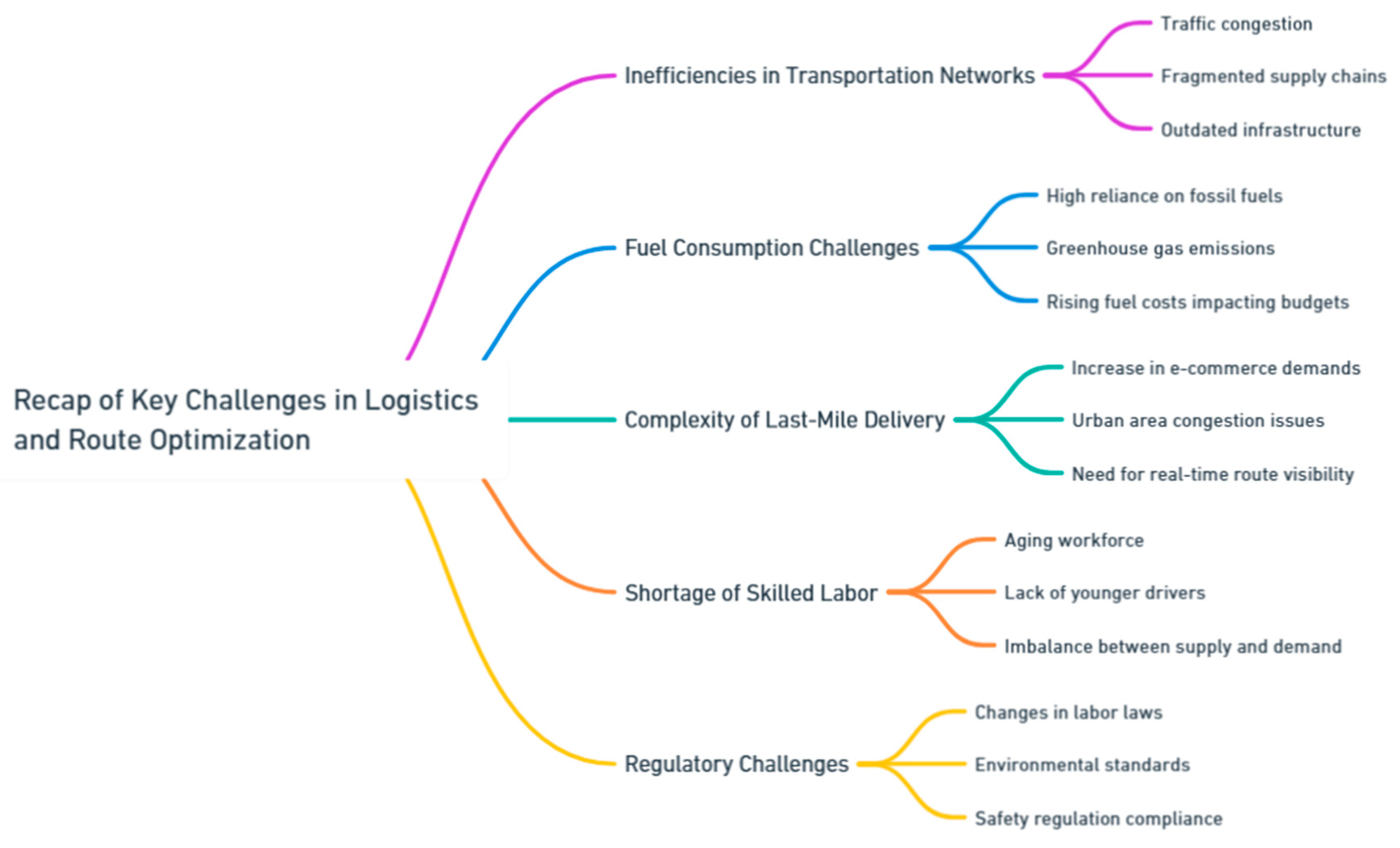
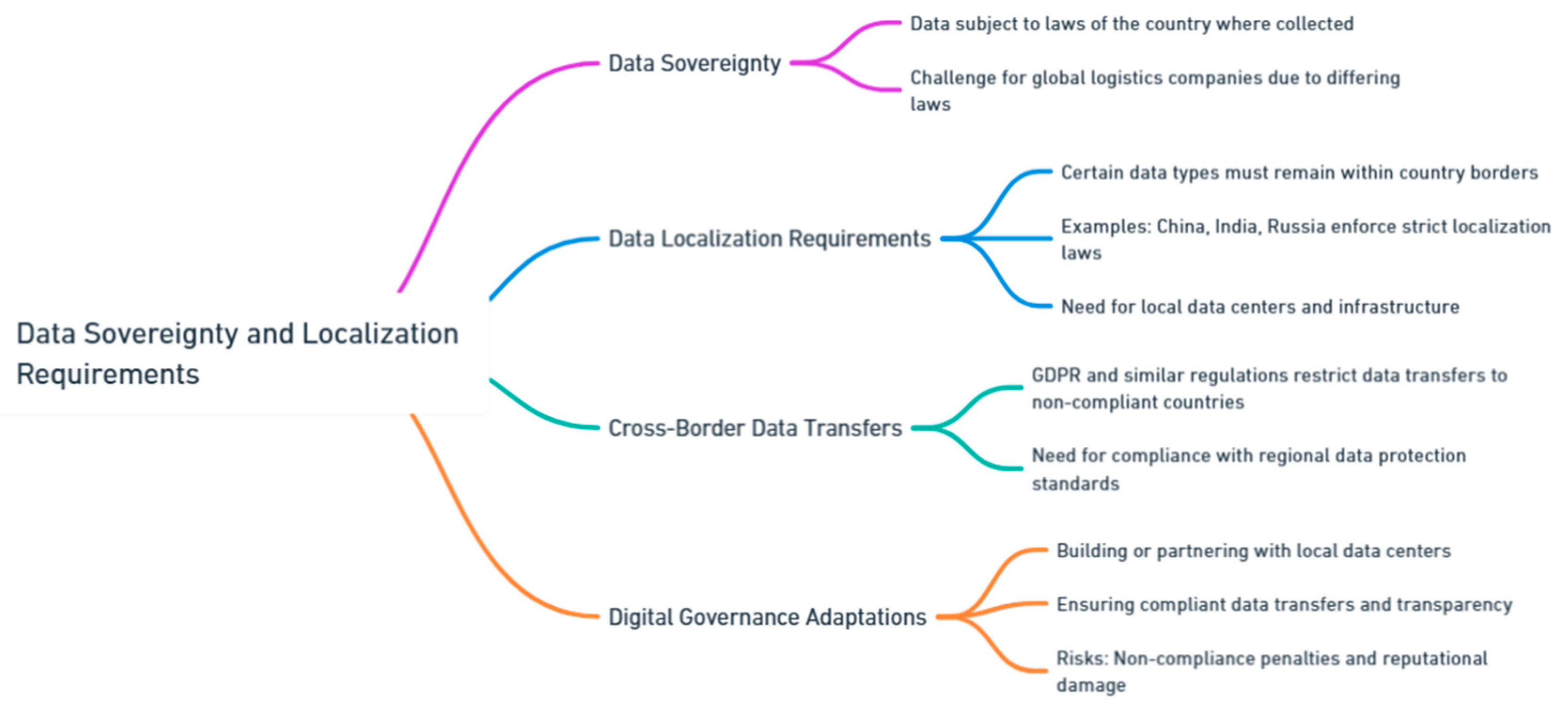
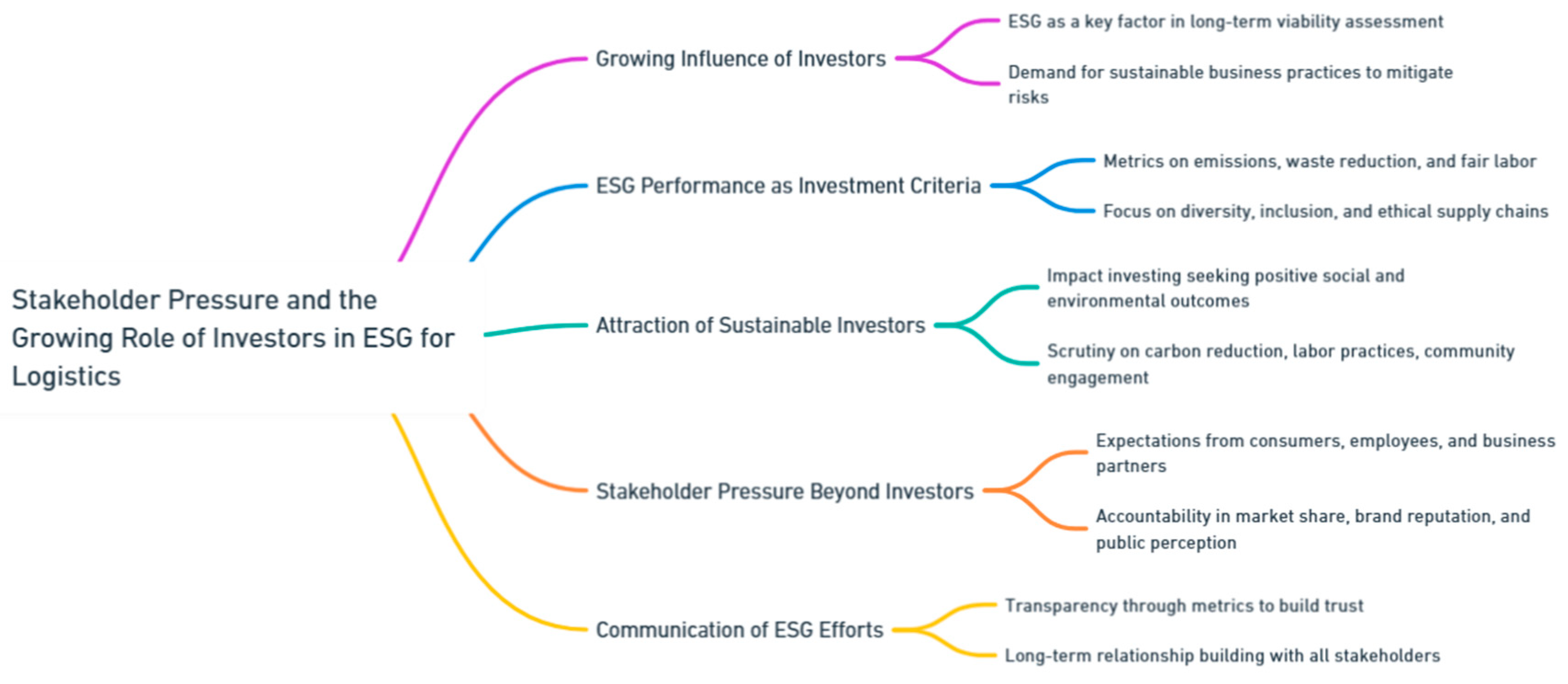
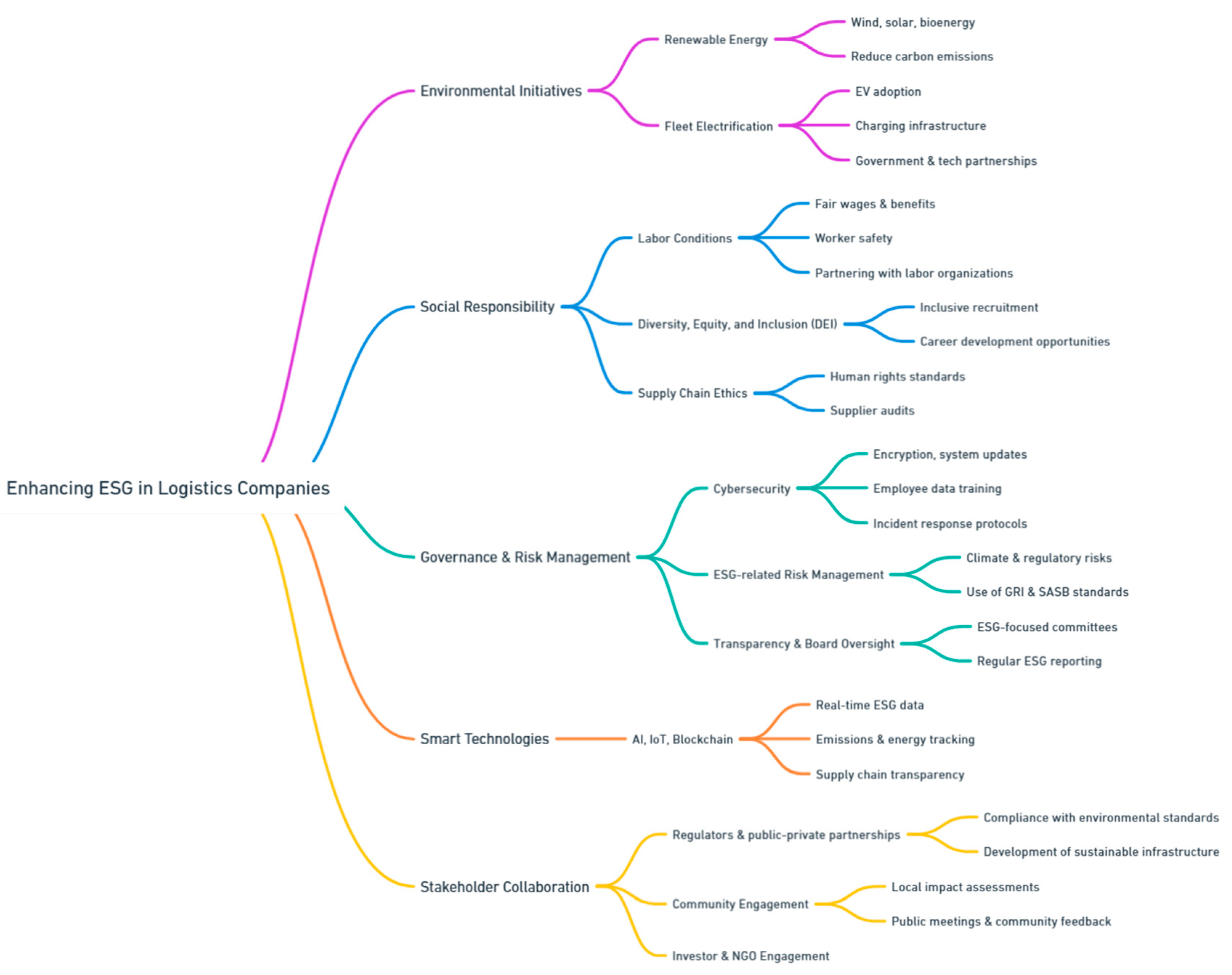
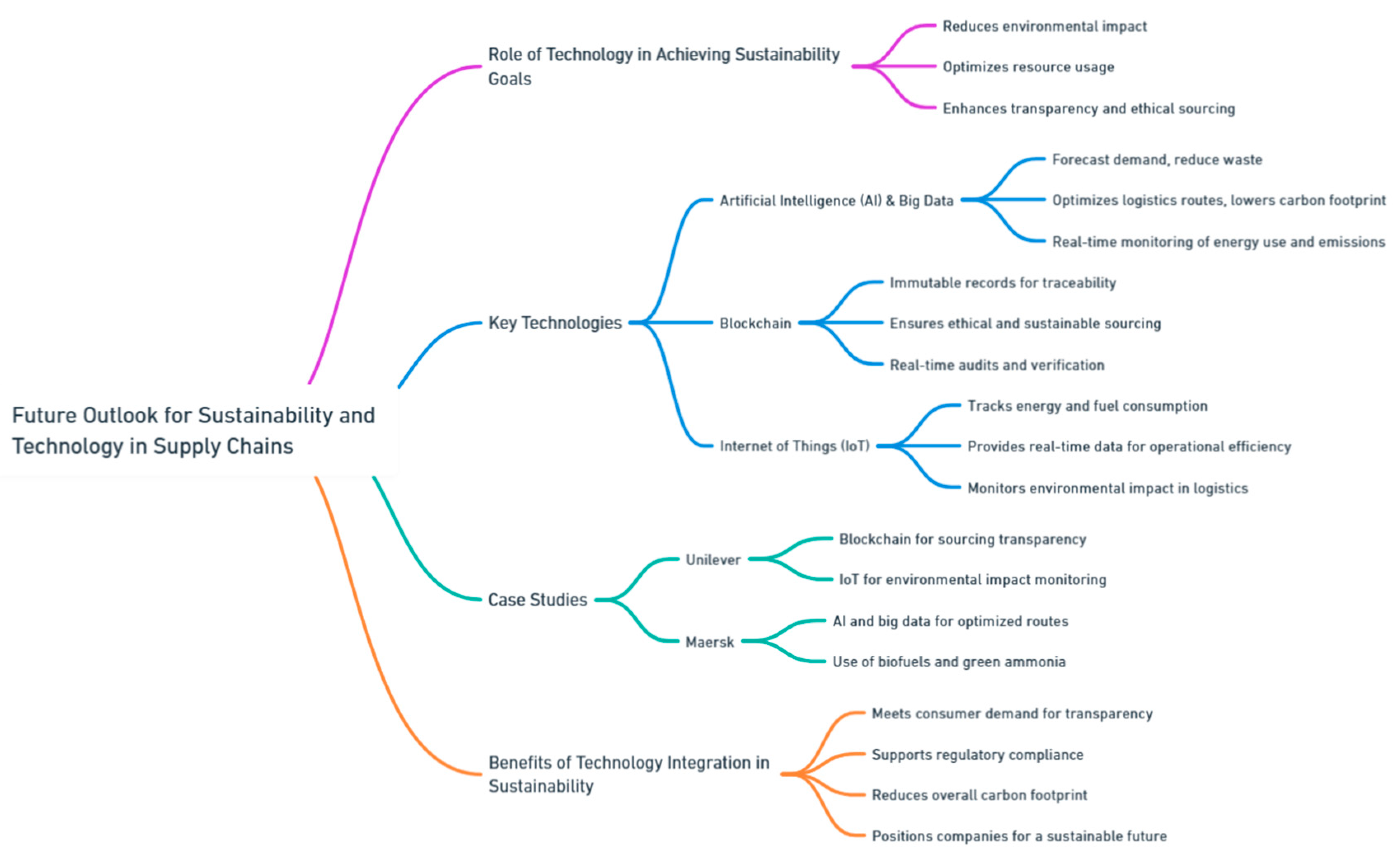
In recent years, Environmental, Social, and Governance (ESG) considerations have gained significant attention across industries worldwide. These factors, which were once peripheral to core business operations, have now become integral to how companies are expected to manage their supply chains. ESG represents a comprehensive approach to ensuring sustainability, ethical practices, and responsible governance, with its influence extending far beyond corporate boardrooms into the intricate global supply chains that connect businesses across continents. The rise of ESG in global supply chains is reshaping the way companies operate, and it reflects broader societal shifts toward sustainability, ethical labor practices, and transparency. Historically, supply chains were driven by cost optimization and efficiency, with companies prioritizing speed, price, and the ability to meet market demands with little regard for environmental or social impacts. However, growing awareness of climate change, social justice, and corporate responsibility has led to a fundamental shift in how businesses view their operations. Consumers, governments, and investors are increasingly demanding that companies adhere to ESG principles not only in their direct operations but also throughout their entire supply chain network. This shift is being accelerated by a combination of regulatory pressures, consumer activism, and the recognition by corporations themselves that long-term success is increasingly tied to sustainable and ethical practices. The environmental aspect of ESG in supply chains focuses on reducing the ecological footprint of business operations. With climate change becoming a critical global concern, companies are under pressure to reduce their carbon emissions, minimize waste, and adopt sustainable resource management practices. In supply chains, this means rethinking traditional manufacturing processes, optimizing transportation routes to reduce emissions, and encouraging suppliers to adopt renewable energy and resource-efficient practices. For example, many companies now assess the environmental impact of their suppliers and prioritize those that have adopted green technologies or sustainable sourcing practices. This change is particularly visible in industries such as fashion, technology, and consumer goods, where environmental footprints have historically been significant. One of the key drivers of this shift is the increasing regulatory framework aimed at curbing environmental damage. Many governments are introducing stricter regulations to ensure that businesses are held accountable for their environmental impact, not just within their own operations but across their entire supply chain. For instance, the European Union’s Green Deal and its associated regulations are pushing companies to focus on sustainable supply chain management, particularly in relation to carbon neutrality and resource conservation. These regulations are influencing companies to work more closely with suppliers, monitor their environmental practices, and ensure that their supply chain partners comply with environmental standards. Failure to comply can lead to significant financial penalties, reputational damage, and loss of market share, making ESG adherence a business imperative rather than just a moral choice. The social aspect of ESG addresses the human element within supply chains, focusing on issues such as labor rights, fair wages, working conditions, and community impact. In a globalized economy, many companies rely on suppliers from developing countries where labor laws may be less stringent, leading to potential exploitation of workers. This has prompted a growing concern about unethical labor practices, such as child labor, forced labor, and inadequate working conditions. High-profile cases of labor abuses in supply chains have led to increased scrutiny from the public, non-governmental organizations (NGOs), and governments. As a result, companies are now being held accountable for ensuring that their supply chains are free from exploitation and that workers are treated with dignity and respect. To address these concerns, many companies have adopted stringent supplier codes of conduct that outline expectations regarding labor practices, human rights, and workplace safety. These codes often require suppliers to provide evidence of fair wages, reasonable working hours, and safe working conditions. In some cases, companies conduct audits of their suppliers to ensure compliance with these standards. While this has led to improvements in certain areas, critics argue that voluntary codes of conduct are not enough and that more stringent regulations are needed to ensure that all suppliers adhere to fair labor practices. Additionally, the rise of technology is aiding in the social dimension of ESG, as blockchain and other digital tools are being used to trace the origins of goods and verify that ethical labor practices are being upheld throughout the supply chain. Governance, the third pillar of ESG, refers to the framework of rules, practices, and processes by which a company is directed and controlled. In the context of supply chains, governance involves ensuring transparency, ethical decision-making, and accountability throughout the supply chain network. As stakeholders demand greater transparency, companies are increasingly required to provide detailed reporting on their supply chain operations, including information on their environmental impact, social practices, and governance policies. Good governance in supply chains also means ensuring that suppliers adhere to anti-corruption laws, uphold ethical business practices, and engage in fair competition. A major challenge in implementing strong governance practices in global supply chains is the complexity and fragmentation of these networks. Many companies rely on a vast number of suppliers spread across multiple countries, making it difficult to ensure compliance with governance standards at every level. However, the rise of digital technology, such as supply chain management software and blockchain, is providing new ways to track, monitor, and enforce governance practices in real time. This technology enables companies to identify potential risks, such as fraud or corruption, early on and take corrective action before they escalate into larger problems. Moreover, investors are increasingly factoring governance into their decisions, prioritizing companies that demonstrate a commitment to ethical and transparent supply chain management. Investor pressure is one of the most significant forces driving the rise of ESG in supply chains. Institutional investors, such as pension funds and asset managers, are increasingly looking to invest in companies that demonstrate a strong commitment to ESG principles. They recognize that companies with sustainable, socially responsible, and well-governed supply chains are better positioned to mitigate risks, build brand loyalty, and ensure long-term profitability. ESG metrics are becoming a crucial part of investment analysis, and companies that fail to address ESG issues in their supply chains risk losing access to capital markets. This investor-driven shift is forcing companies to reevaluate their supply chains, prioritize ESG goals, and demonstrate measurable progress toward achieving these objectives. Consumers also play a pivotal role in the rise of ESG in supply chains. In an age of social media and heightened consumer awareness, brands are under intense scrutiny for their supply chain practices. Consumers are more informed than ever before, and many are choosing to support companies that align with their values, particularly in terms of sustainability and social responsibility. As a result, companies are investing in supply chain transparency, offering consumers greater visibility into the origin of products, and ensuring that their goods are produced in an ethical and sustainable manner. In conclusion, the rise of ESG in global supply chains represents a fundamental shift in how companies operate and engage with their suppliers. Driven by regulatory pressures, investor demands, and consumer expectations, businesses are increasingly recognizing that long-term success requires a commitment to sustainability, social responsibility, and ethical governance. This shift toward ESG-aligned supply chains is not just a passing trend but a critical transformation that will continue to shape the global business landscape in the years to come. Companies that fail to adapt to this new reality risk falling behind, while those that embrace ESG principles are likely to thrive in an increasingly competitive and values-driven market.
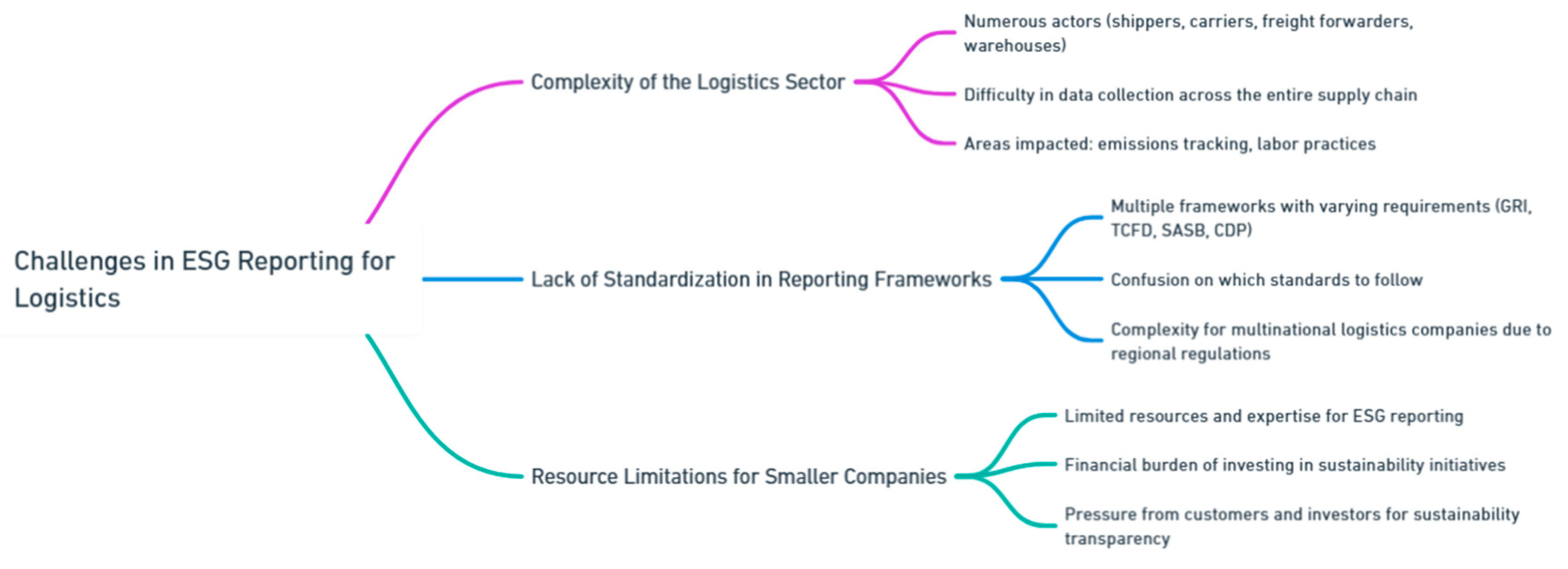
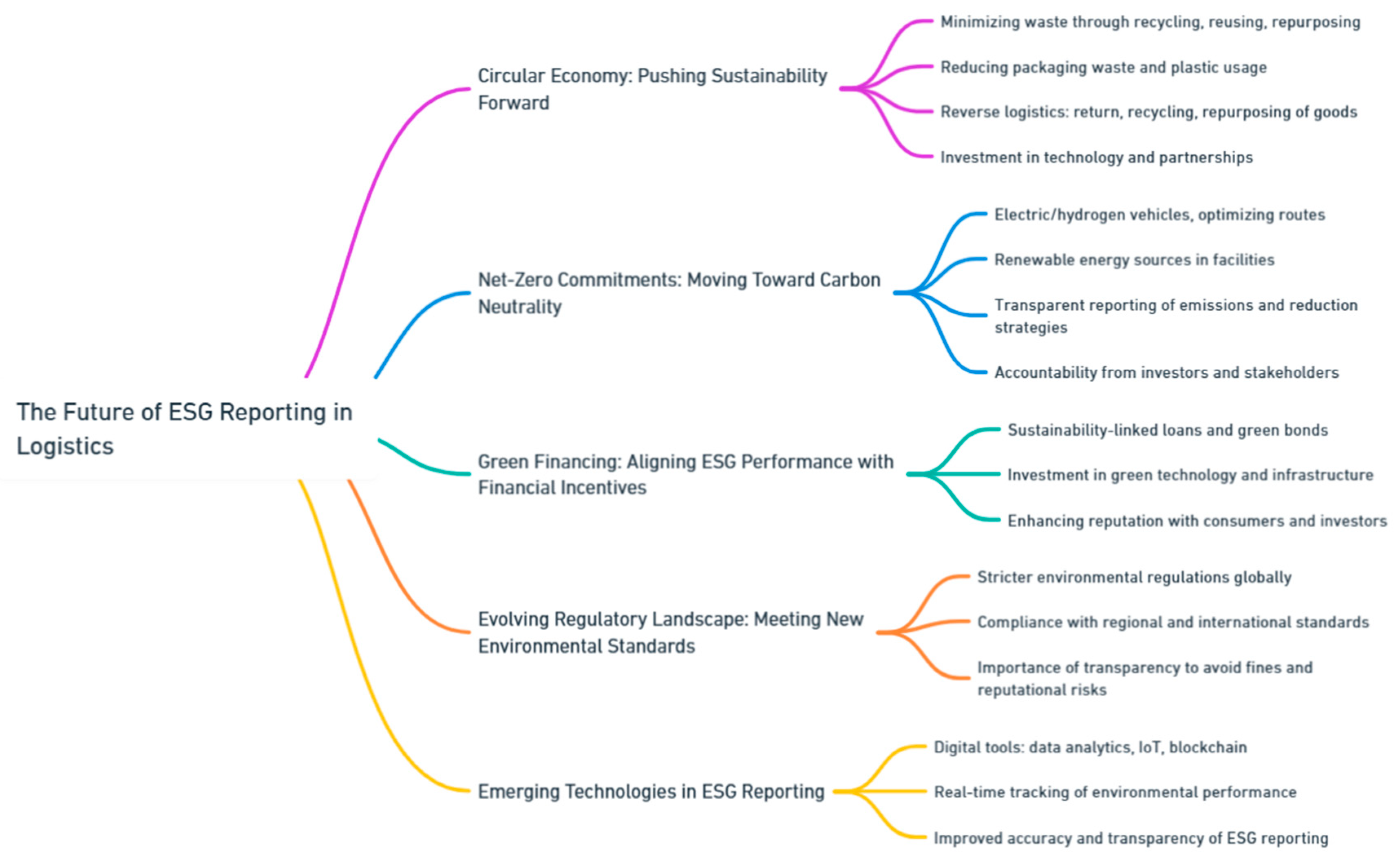
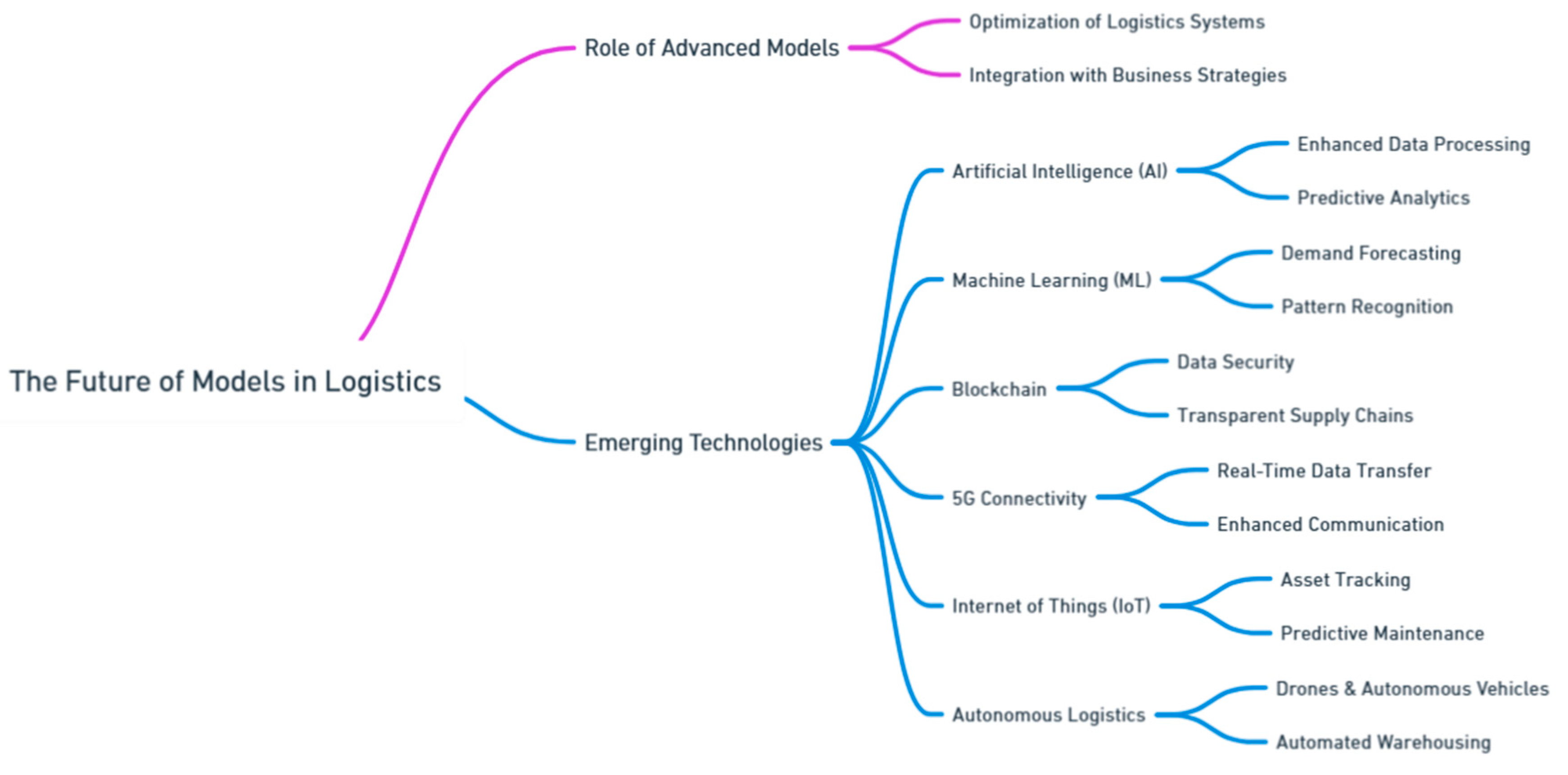
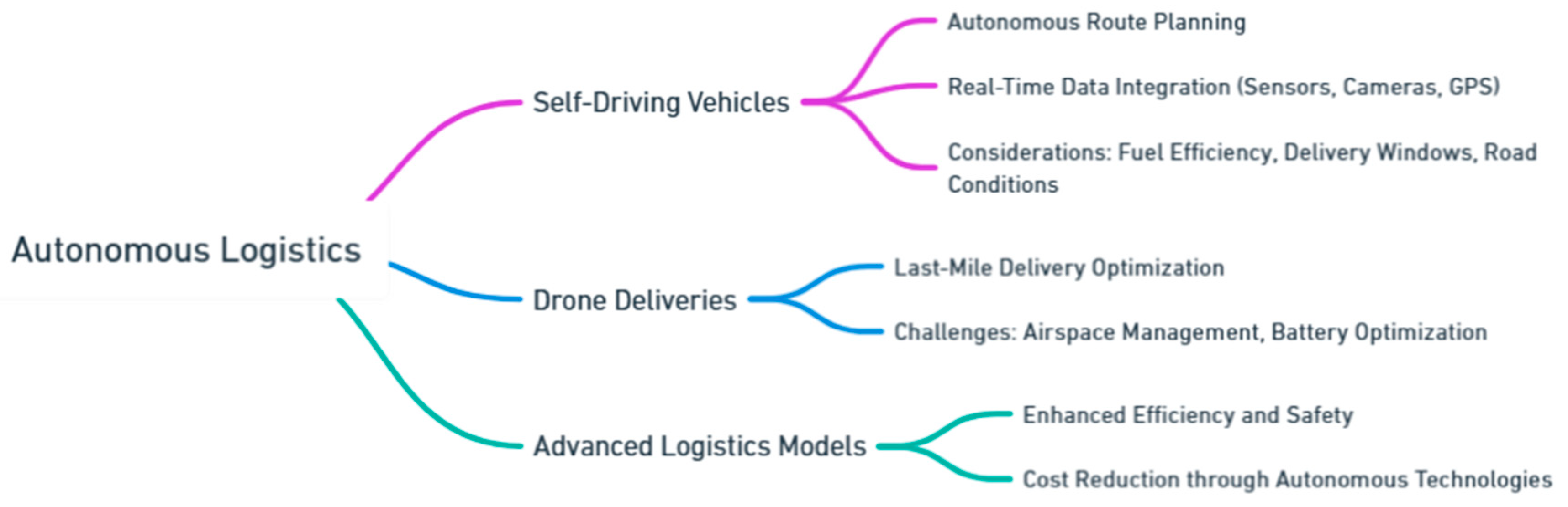
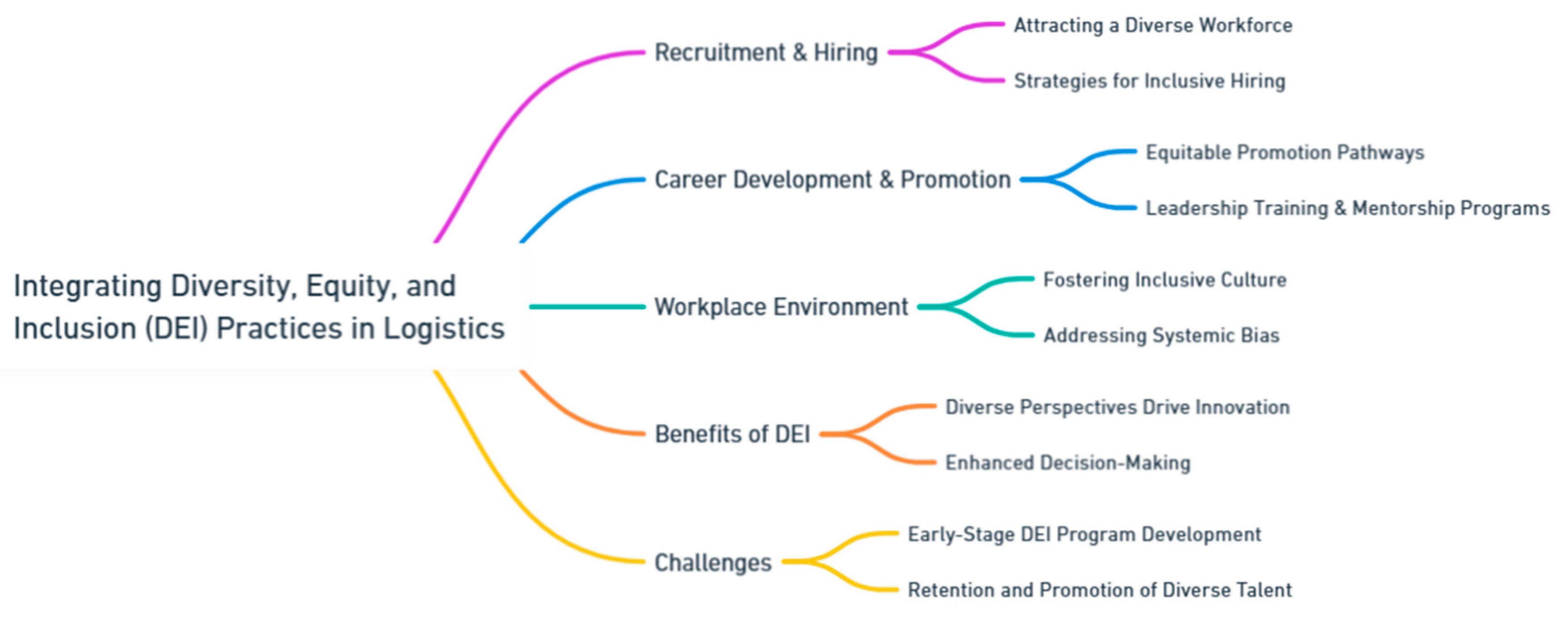
Preprints 139811 i001

1.2. Smart Logistics: An Overview of Technologies and Trends
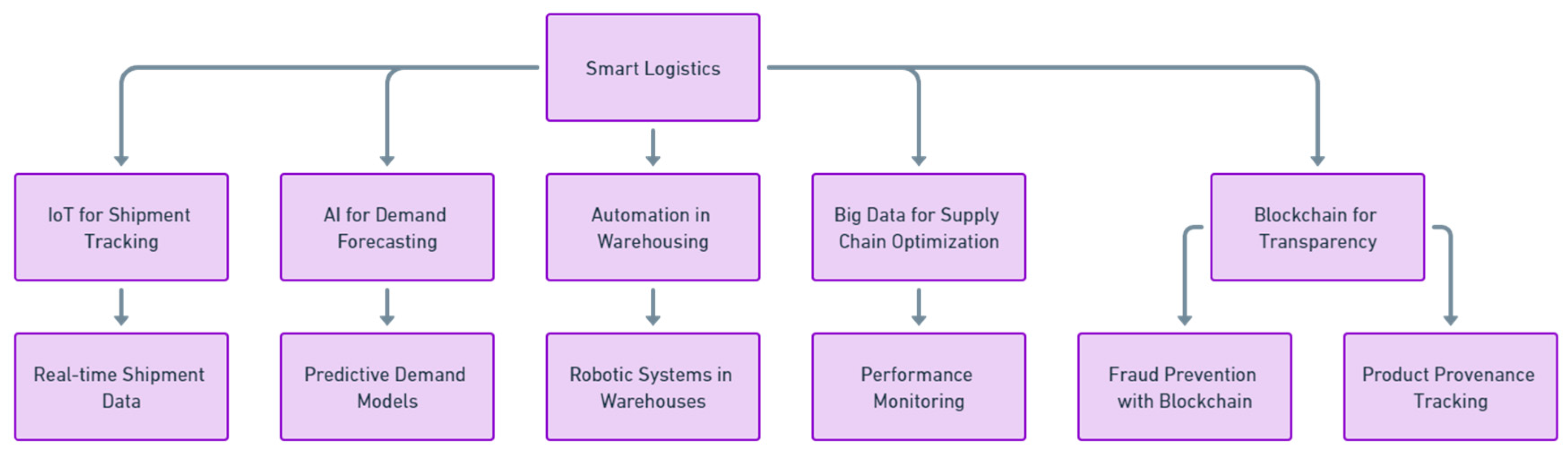
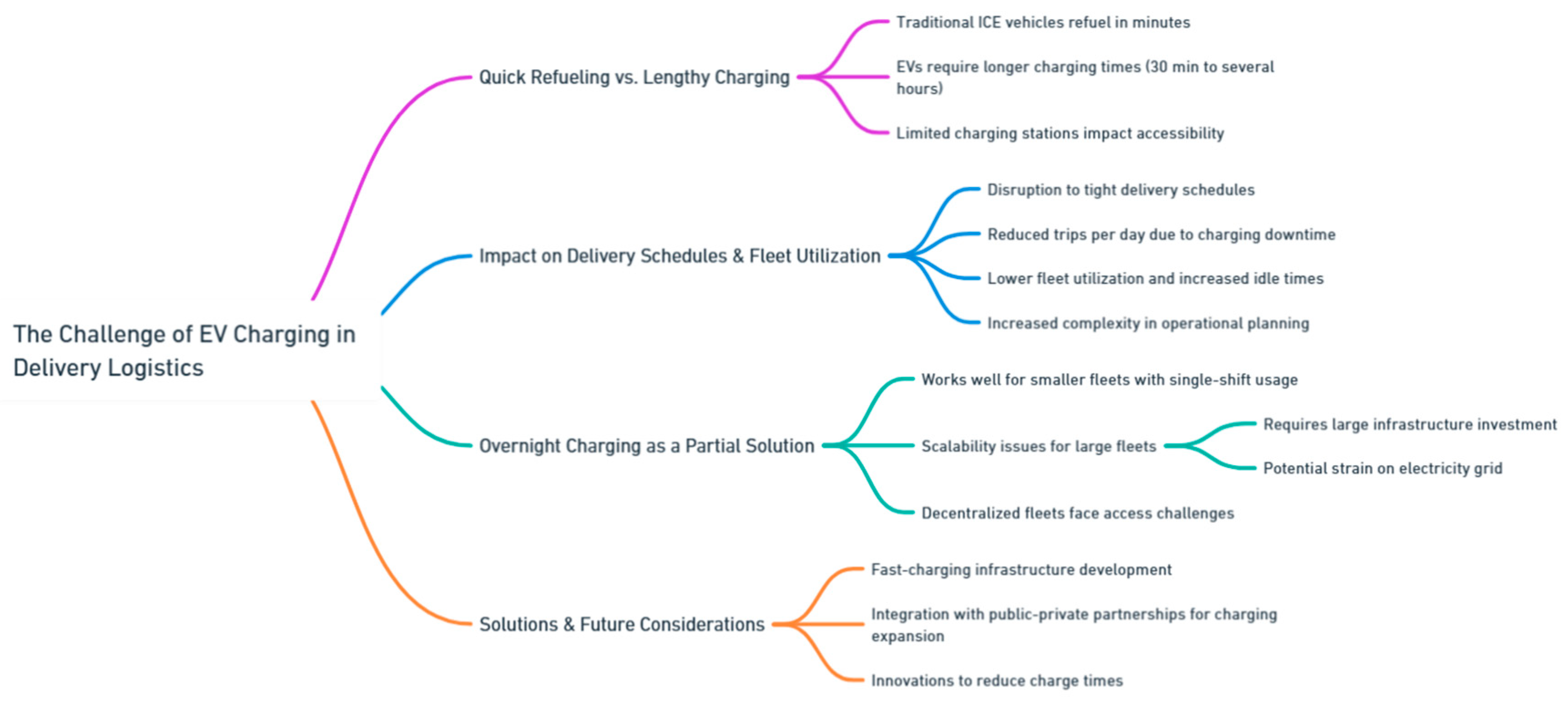
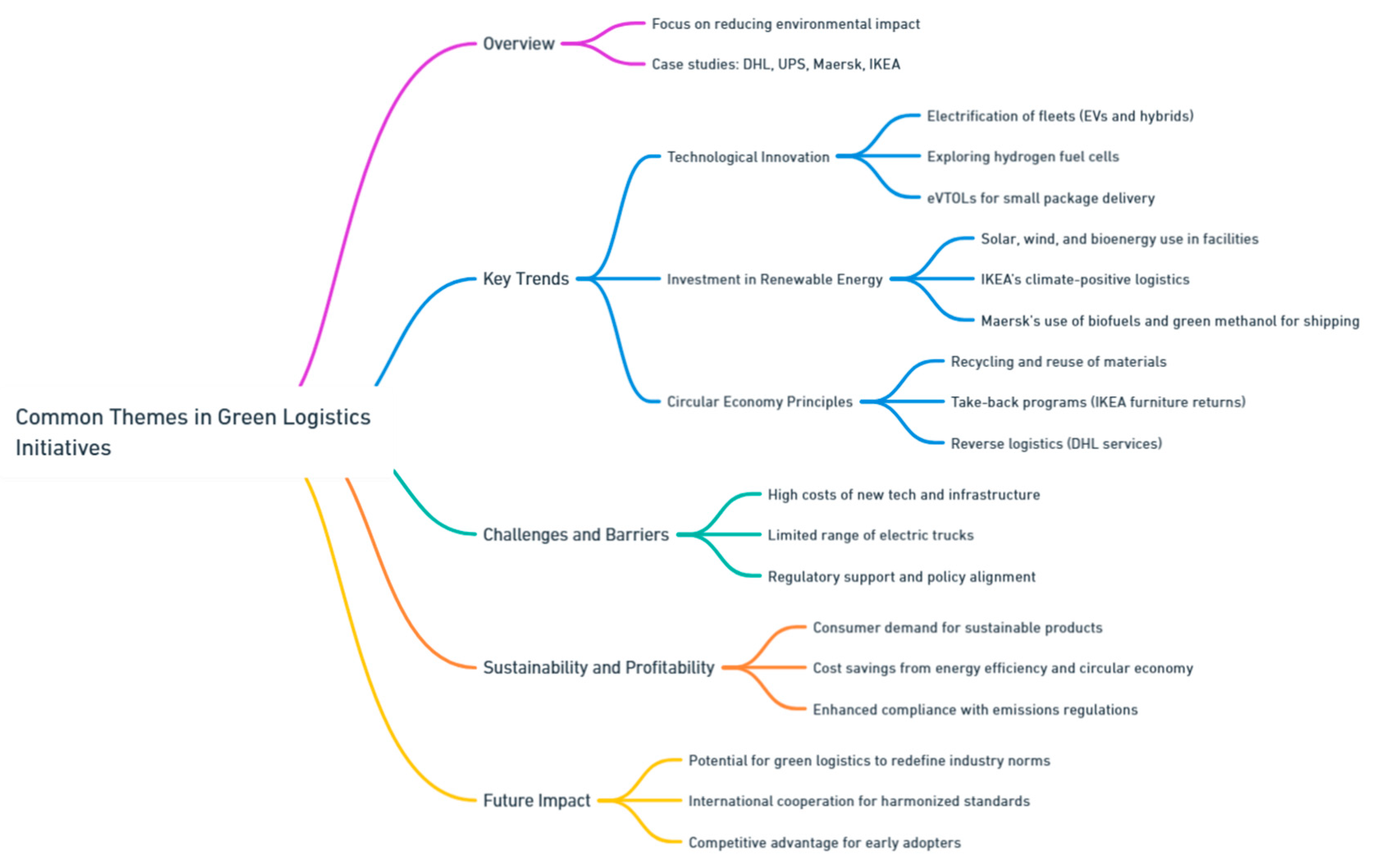
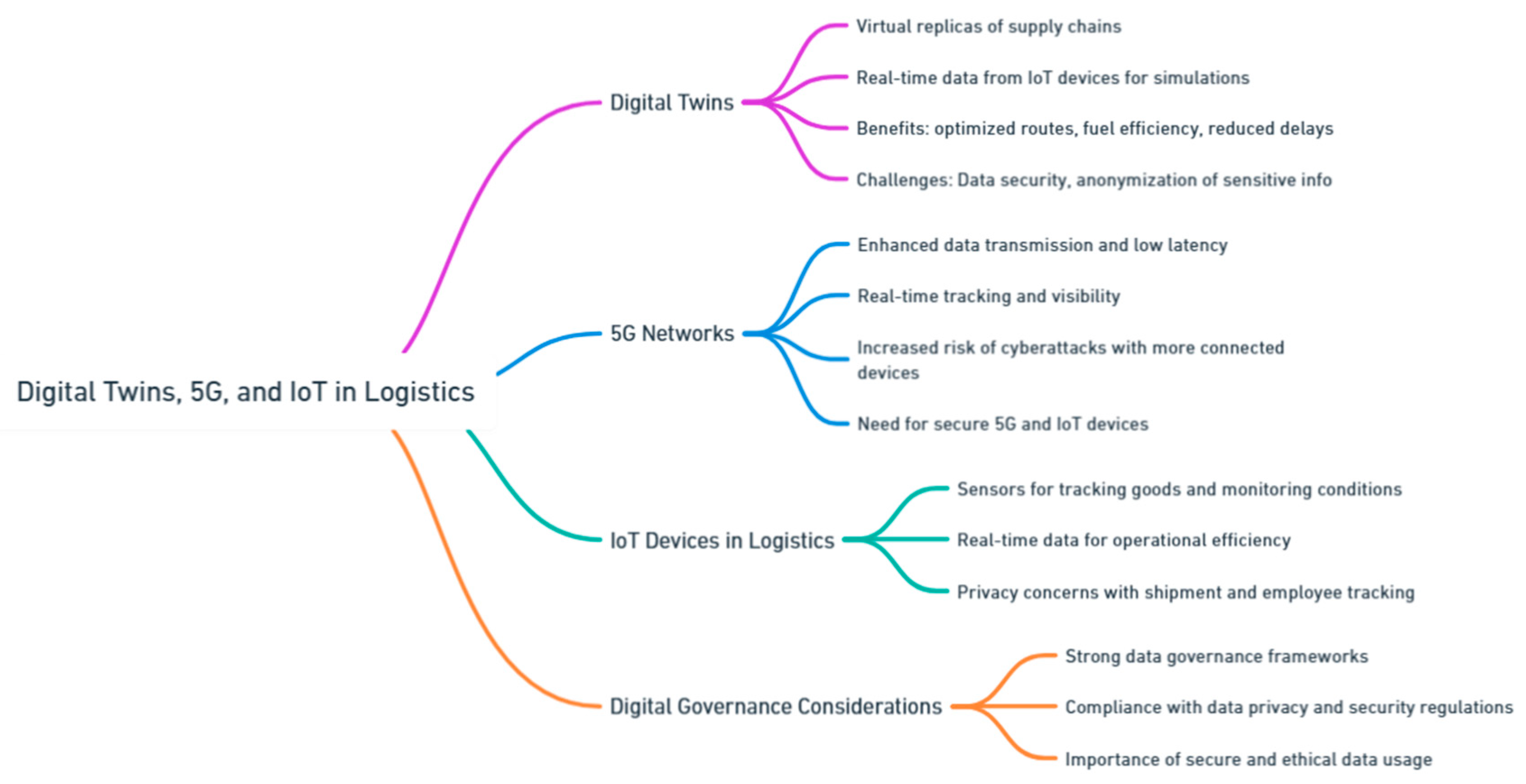
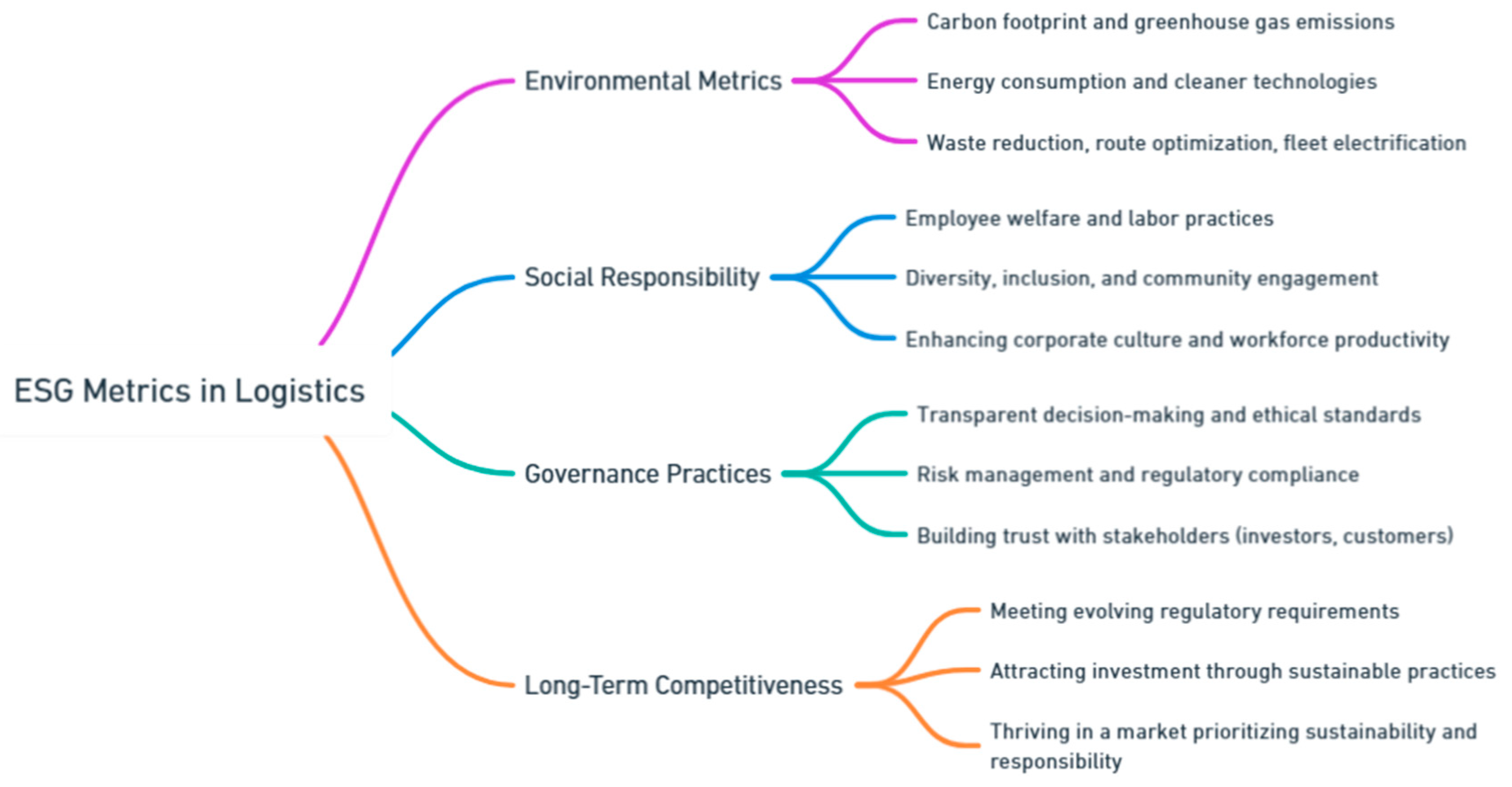
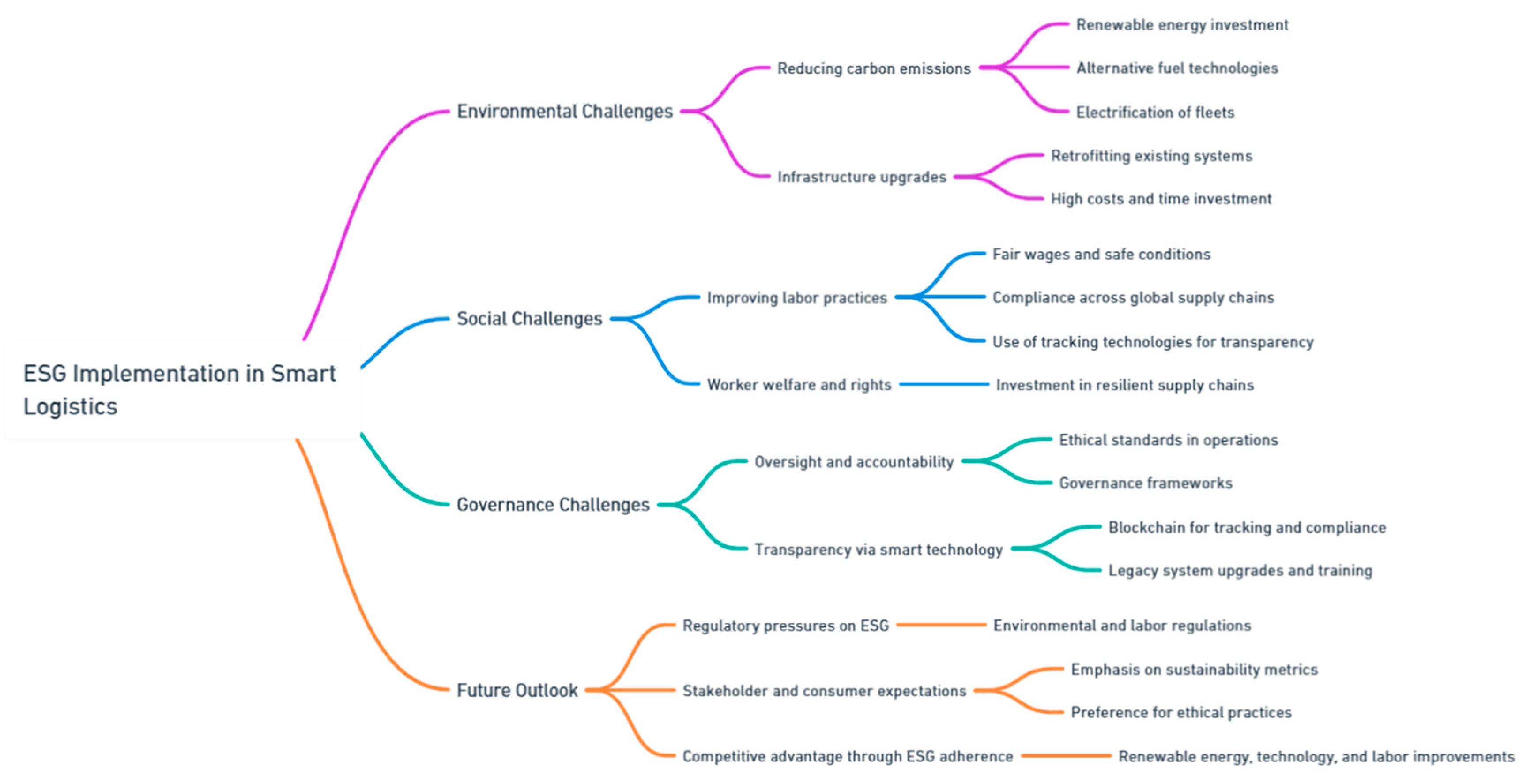
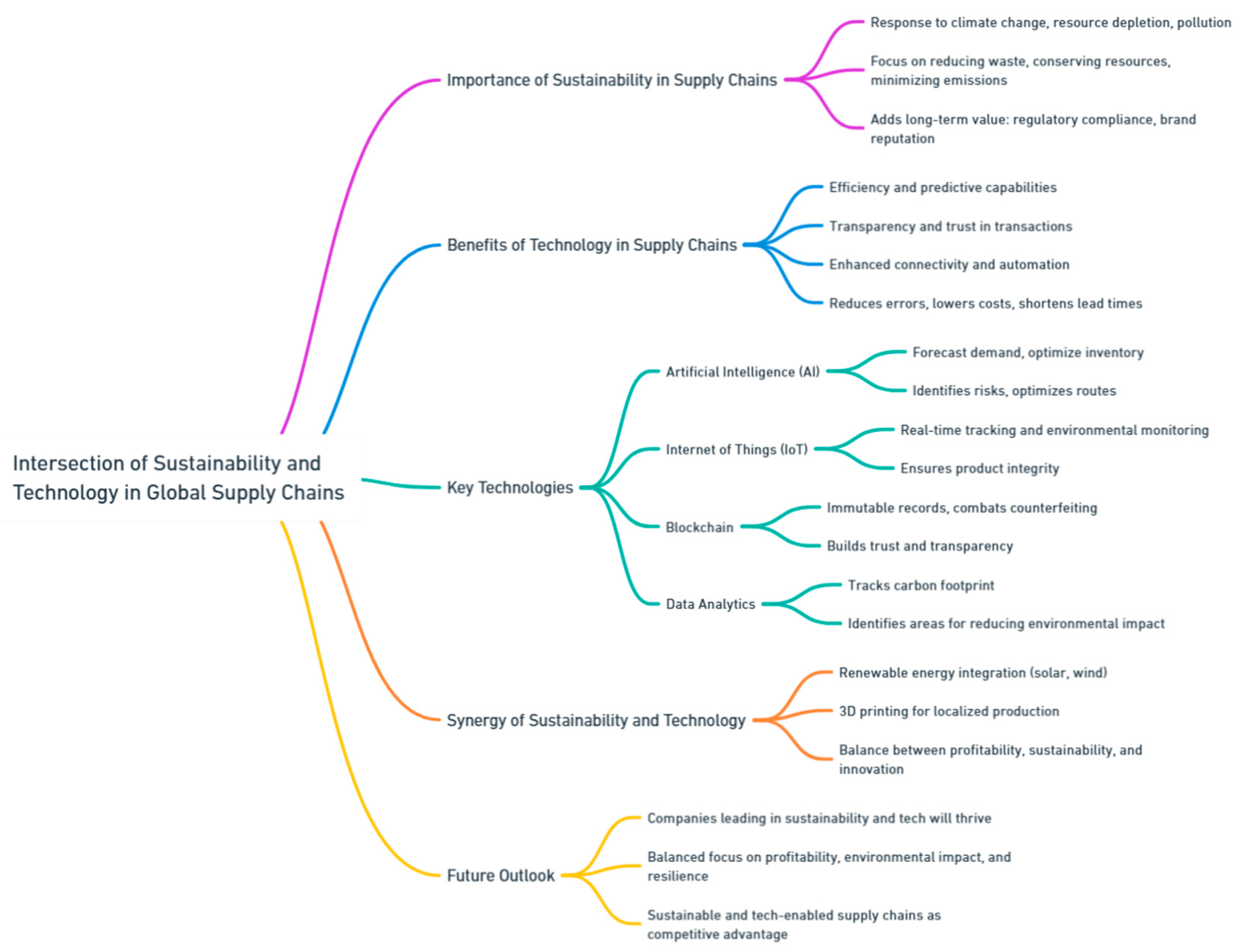
Smart logistics represents a significant shift in how goods are transported, stored, and managed across the global supply chain. The concept involves the integration of cutting-edge technologies and data-driven processes to optimize logistics operations, making them more efficient, responsive, and adaptable. In an increasingly interconnected world, where customer expectations for fast, reliable, and sustainable deliveries continue to rise, smart logistics has become a critical focus for companies aiming to stay competitive. This approach leverages advancements in automation, the Internet of Things (IoT), artificial intelligence (AI), and big data to transform traditional logistics systems into highly optimized, dynamic networks capable of responding to real-time conditions. One of the central technologies driving smart logistics is the IoT. IoT refers to the network of interconnected devices that communicate and share data over the internet. In logistics, IoT devices are used to track shipments, monitor conditions such as temperature and humidity, and optimize routes in real time. For example, sensors embedded in shipping containers can provide continuous updates on the location and condition of goods, enabling logistics managers to monitor the status of shipments as they move through the supply chain. This real-time visibility helps prevent issues such as delays, product spoilage, or theft, and allows for immediate corrective actions if problems arise. In addition to tracking and monitoring, IoT devices also play a key role in improving efficiency in warehouses and distribution centers. Smart warehouses equipped with IoT-enabled systems can automate tasks such as inventory management, reducing the need for manual intervention and minimizing errors. Automated guided vehicles (AGVs) and robotic arms, powered by IoT and AI, can move goods throughout the warehouse with precision, speeding up the process of picking, packing, and shipping. This level of automation not only increases productivity but also enhances accuracy and reduces the operational costs associated with human error. Another transformative technology in smart logistics is artificial intelligence. AI enables logistics companies to analyze large datasets and make data-driven decisions that optimize operations. Predictive analytics, a subset of AI, is particularly valuable in logistics, allowing companies to forecast demand, anticipate potential disruptions, and optimize supply chain strategies. For instance, AI algorithms can analyze historical shipping data to predict when and where delays might occur due to weather conditions, traffic congestion, or other factors. This allows companies to proactively adjust their logistics plans, reroute shipments, or allocate resources more effectively to ensure timely deliveries. AI also plays a critical role in optimizing inventory management and demand forecasting. By analyzing customer behavior, market trends, and external factors such as economic conditions, AI-driven systems can predict future demand with high accuracy. This helps companies maintain optimal inventory levels, reducing the costs associated with overstocking or stockouts. In addition, AI-powered chatbots and virtual assistants are increasingly being used to improve customer service in logistics, providing real-time updates on shipment status and resolving customer inquiries quickly and efficiently. Automation is another pillar of smart logistics, and its impact is particularly evident in warehouse operations and transportation management. Automated systems, such as conveyor belts, sorting machines, and drones, are revolutionizing the way goods are handled and moved within warehouses. In transportation, autonomous vehicles and drones are gaining traction as potential solutions to the challenges of last-mile delivery, which refers to the final leg of the delivery process from the warehouse to the customer’s door. Last-mile delivery is often the most expensive and time-consuming part of the logistics chain, but automation offers a way to reduce costs and improve efficiency. For example, companies like Amazon and Google have been experimenting with drone deliveries as a means of speeding up last-mile logistics. These drones can bypass traffic and deliver small packages directly to customers’ homes, reducing delivery times and fuel consumption. Similarly, autonomous delivery robots are being used in urban areas to transport goods over short distances. These robots are equipped with sensors and AI systems that allow them to navigate complex environments, such as city streets and sidewalks, without human intervention. Big data is another driving force behind the smart logistics revolution. The sheer volume of data generated by IoT devices, AI systems, and automation tools provides logistics companies with a wealth of information that can be used to enhance decision-making processes. Big data analytics allows companies to gain insights into every aspect of the supply chain, from supplier performance to customer satisfaction. For instance, by analyzing data on shipping times, fuel consumption, and delivery routes, companies can identify inefficiencies in their logistics operations and implement changes that improve overall performance. Furthermore, big data plays a crucial role in enhancing supply chain visibility, a key component of smart logistics. Supply chain visibility refers to the ability to track and monitor every stage of the logistics process in real time. This level of transparency is increasingly important in today’s globalized economy, where goods often pass through multiple countries, customs checks, and transportation modes before reaching their final destination. By leveraging big data, companies can gain a complete view of their supply chains, ensuring that shipments are on schedule, identifying bottlenecks, and improving overall reliability. In addition to improving efficiency and transparency, smart logistics is also helping companies meet growing demands for sustainability. The logistics industry is a significant contributor to global carbon emissions, and there is increasing pressure from governments, consumers, and investors for companies to reduce their environmental footprint. Smart logistics technologies provide a way to achieve this by optimizing transportation routes, reducing fuel consumption, and minimizing waste. For example, AI-powered route optimization tools can analyze traffic patterns, weather conditions, and fuel costs to identify the most efficient delivery routes, reducing both transit times and emissions. In addition, IoT-enabled sensors can monitor fuel usage in real time, allowing companies to make adjustments that reduce energy consumption. Electric and hybrid vehicles are also becoming more common in logistics fleets, further reducing the environmental impact of transportation. Another emerging trend in smart logistics is the use of blockchain technology. Blockchain, a decentralized and secure digital ledger, offers significant potential for improving transparency, security, and efficiency in logistics operations. In particular, blockchain can be used to create tamper-proof records of transactions, ensuring that every step of the supply chain is traceable and verifiable. This is especially important in industries such as pharmaceuticals and food, where the authenticity and safety of products are critical. By using blockchain, companies can provide customers with complete visibility into the provenance of their products, enhancing trust and reducing the risk of fraud or counterfeiting. In conclusion, smart logistics is transforming the global supply chain through the integration of advanced technologies such as IoT, AI, automation, big data, and blockchain. These technologies are enabling companies to optimize their operations, improve supply chain visibility, enhance customer satisfaction, and reduce their environmental impact. As the logistics industry continues to evolve, the adoption of smart logistics solutions will likely become even more widespread, offering companies a competitive edge in an increasingly fast-paced and demanding marketplace. The future of logistics is undoubtedly smart, and those companies that embrace these technologies and trends will be well-positioned to succeed in the years to come.
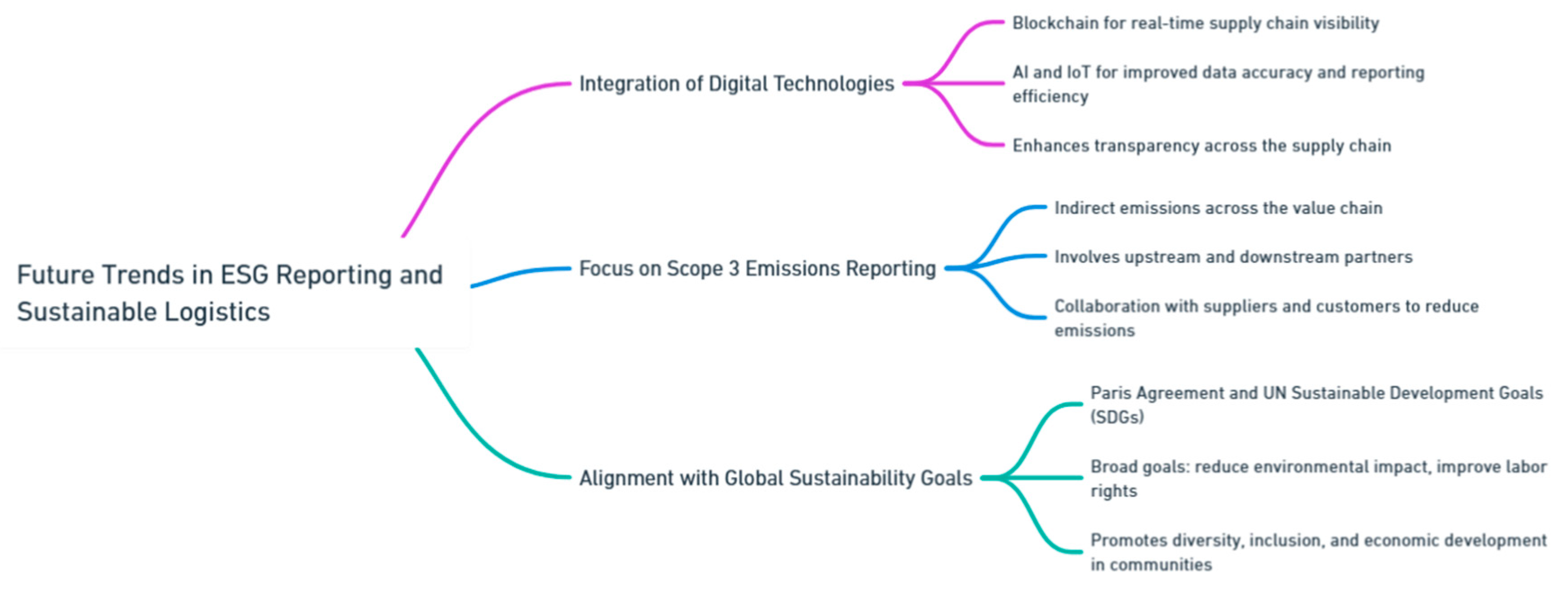
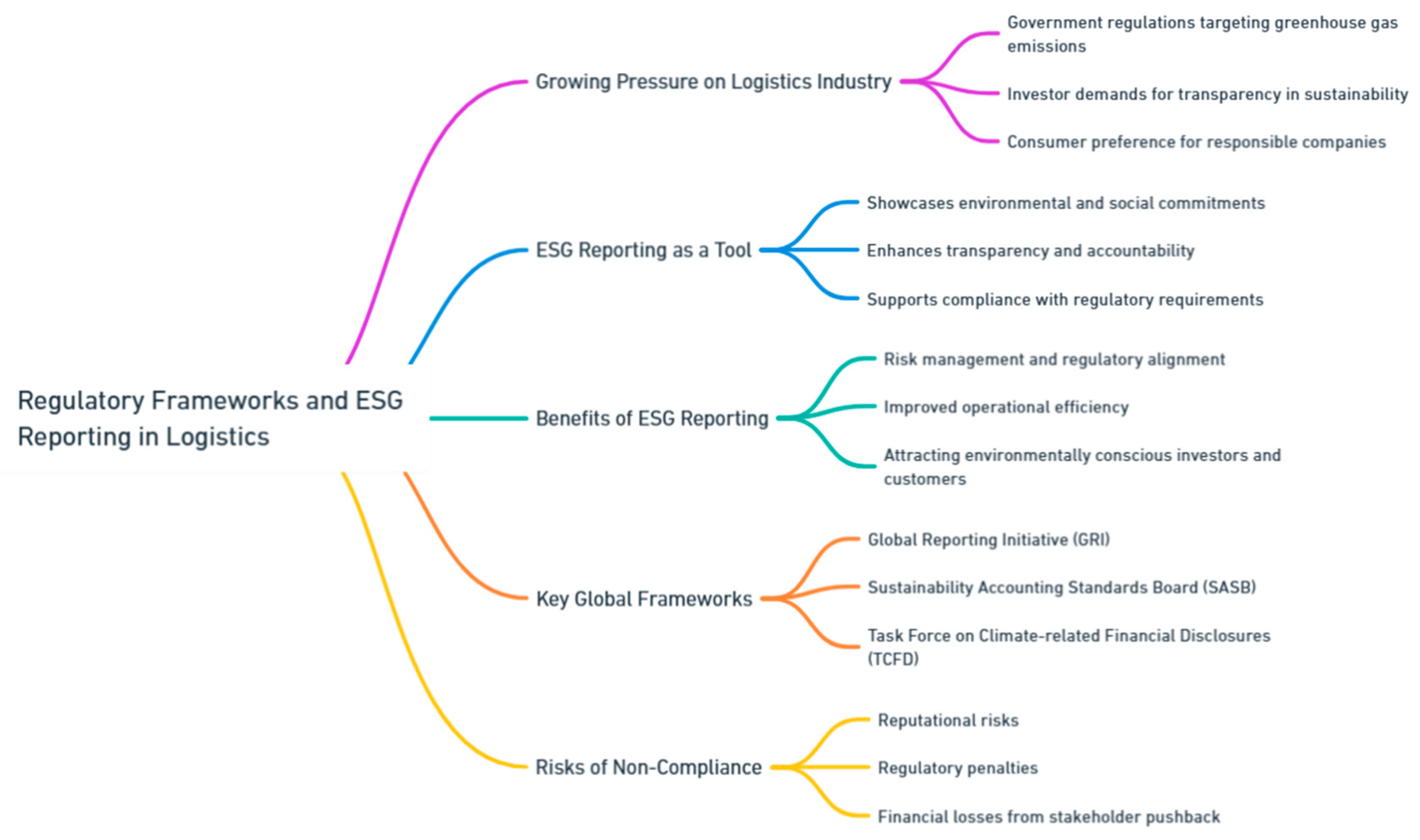
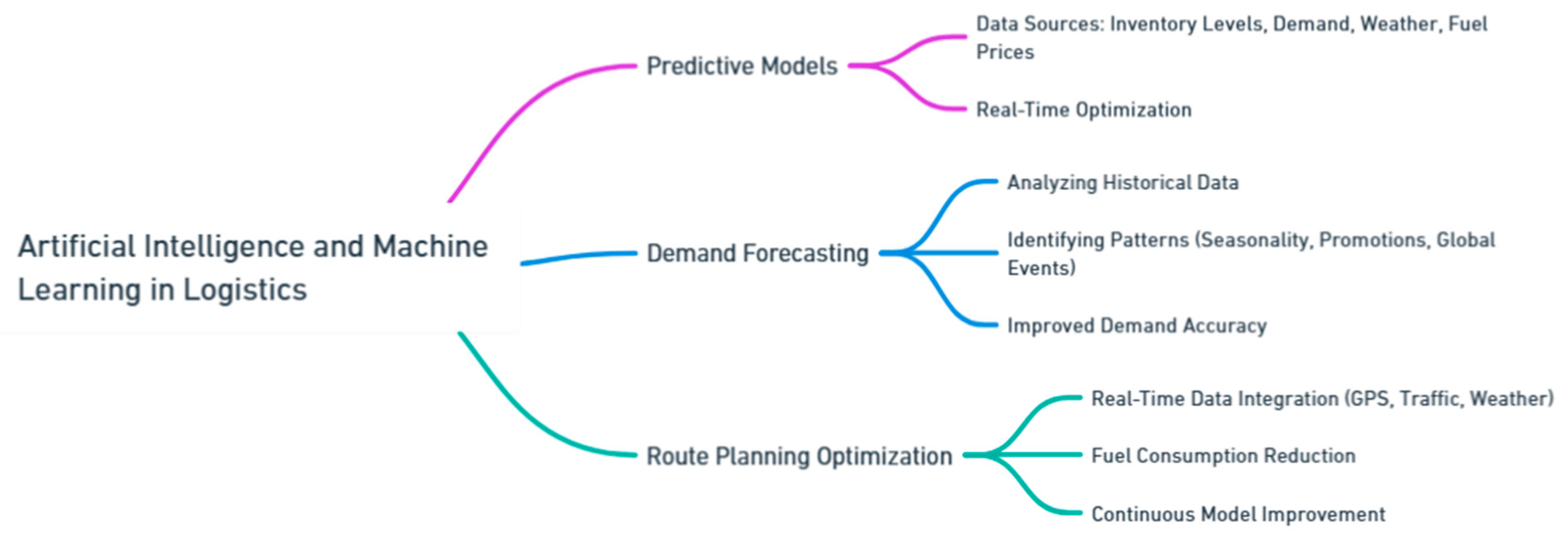
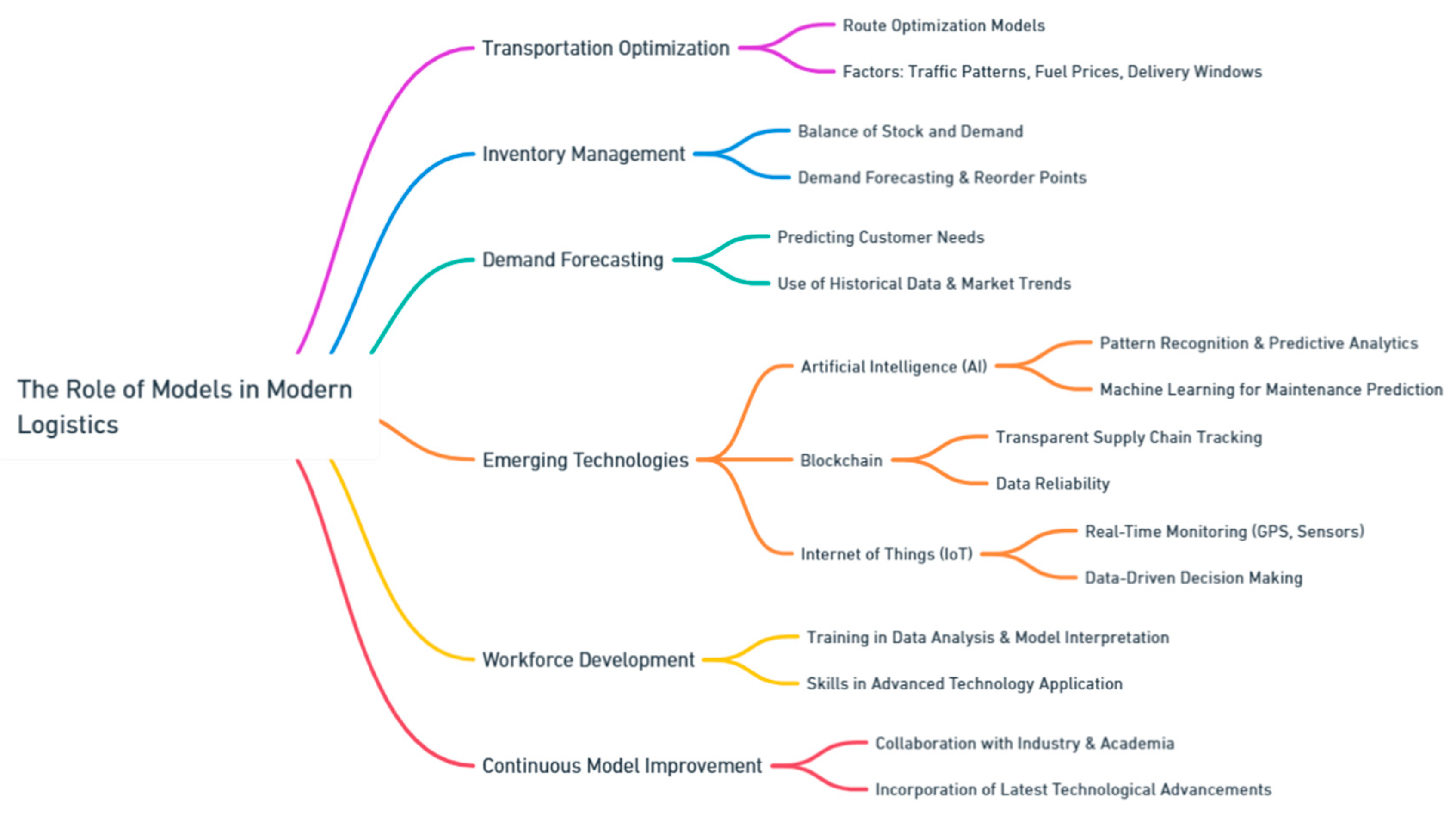
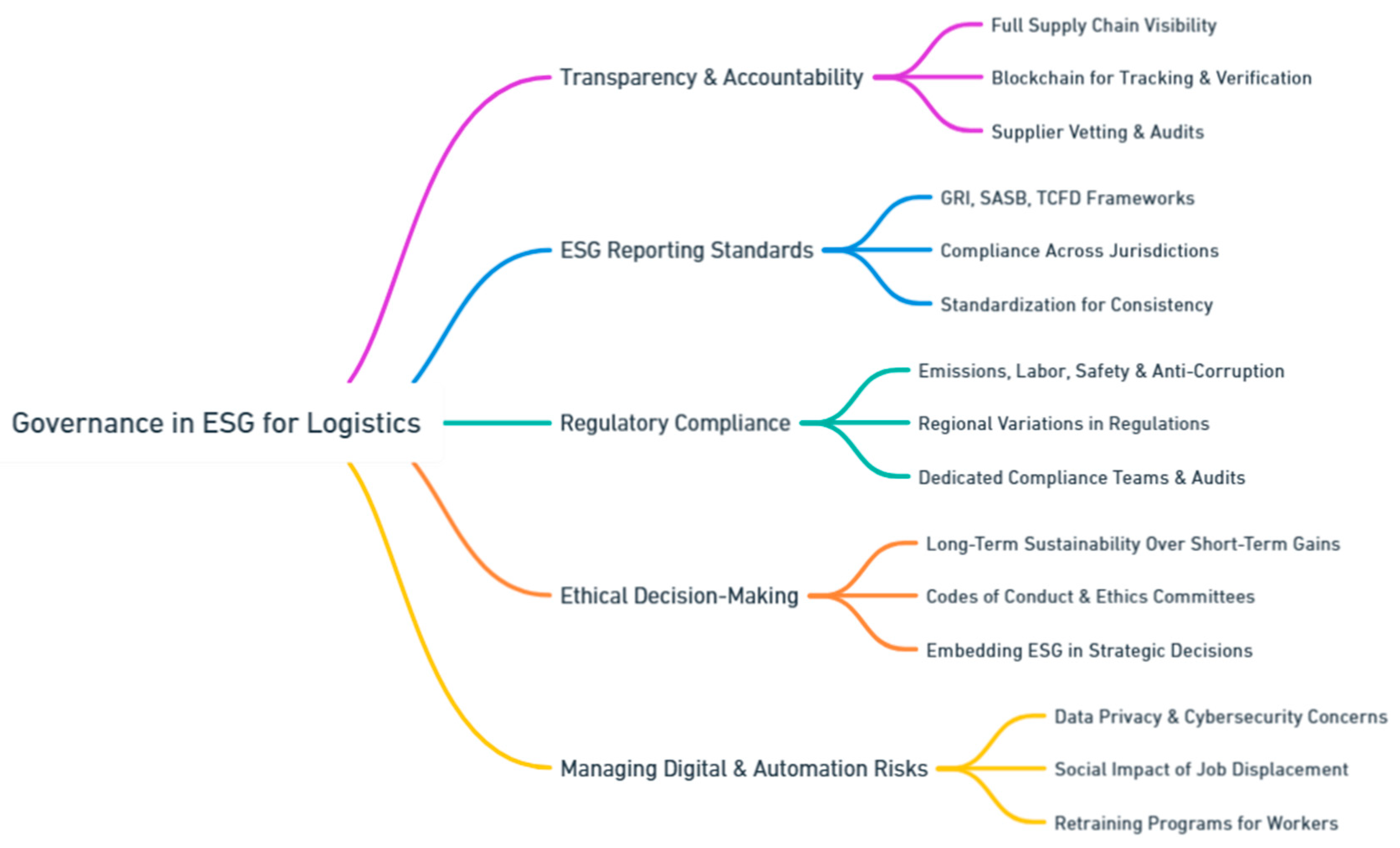
Preprints 139811 i002

1.3. Integrating ESG Principles into Smart Logistics

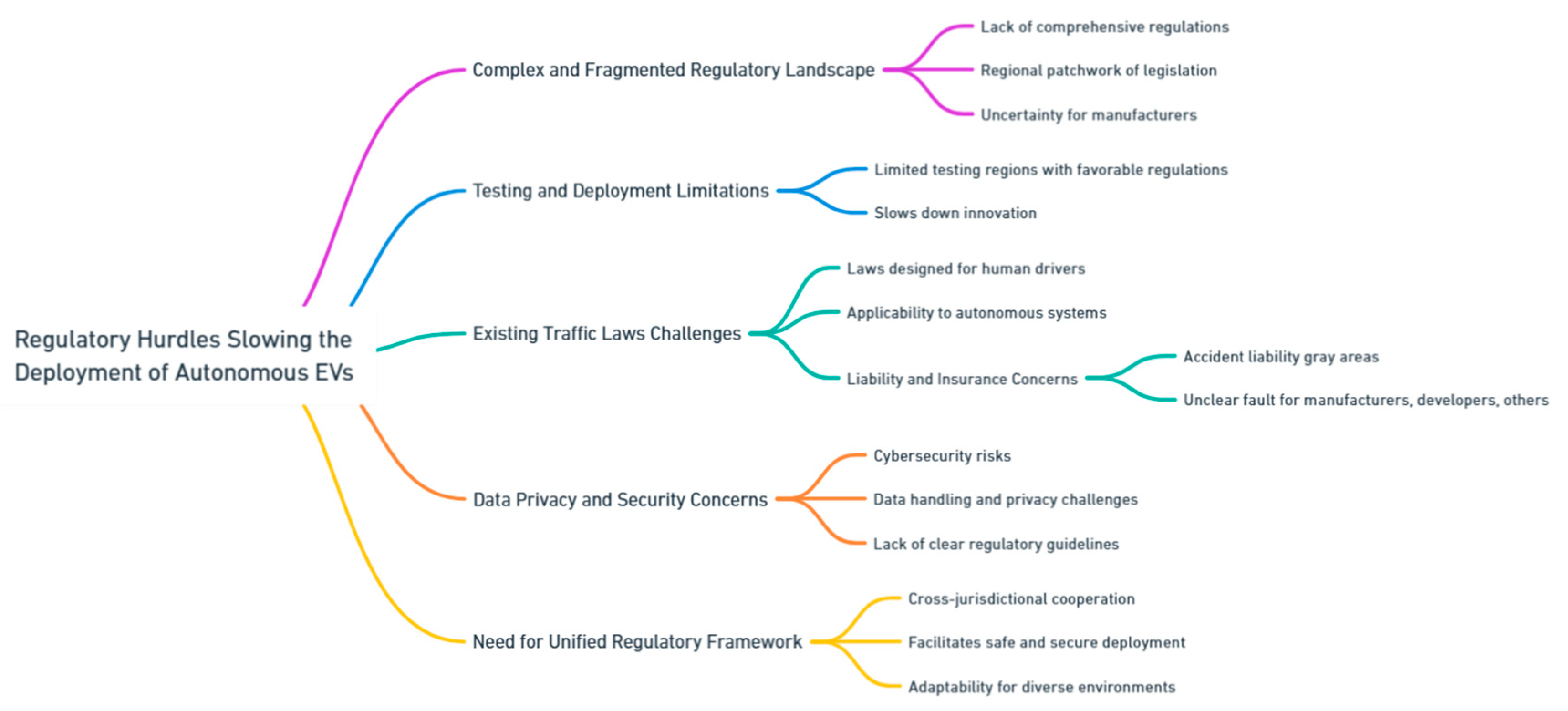
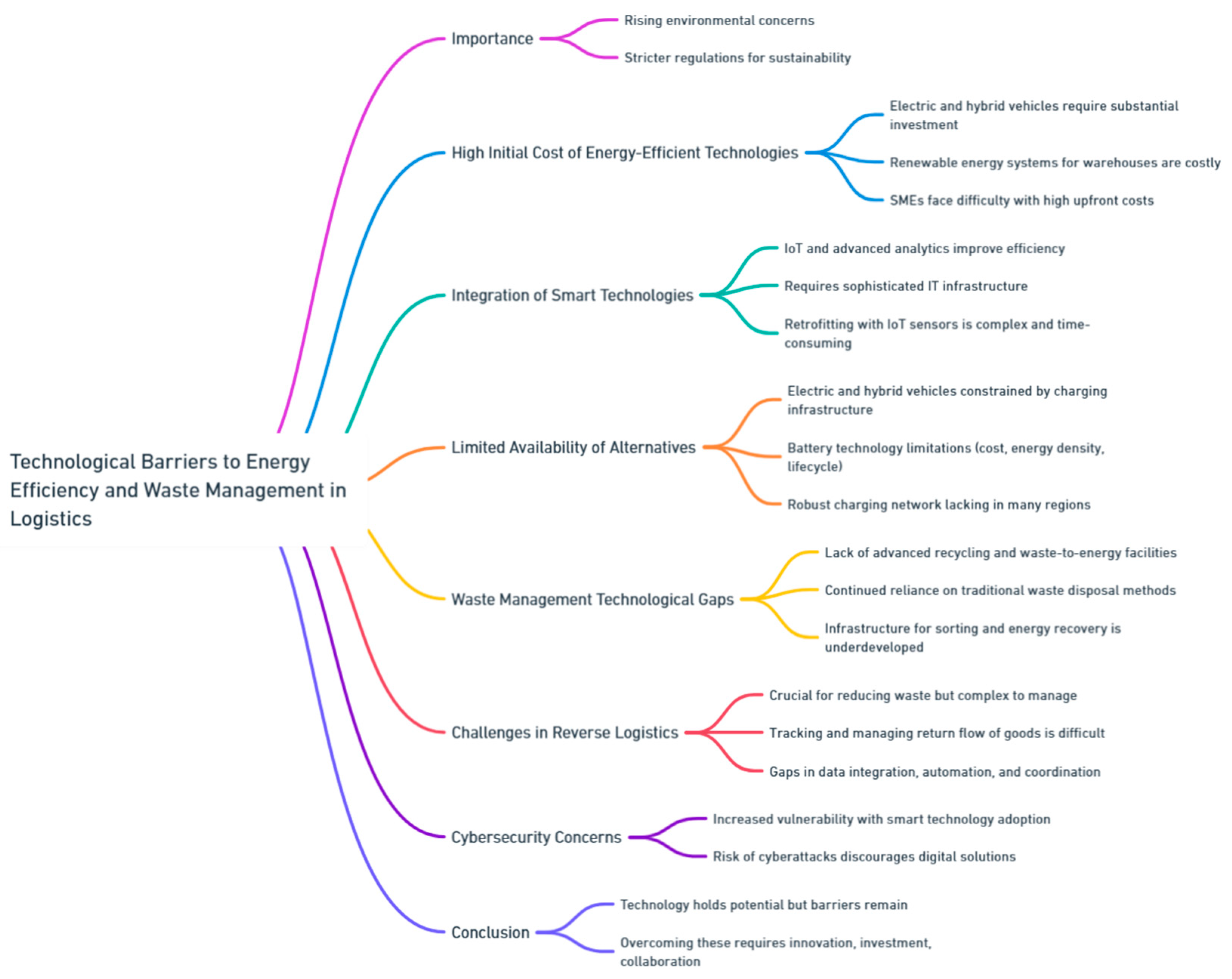
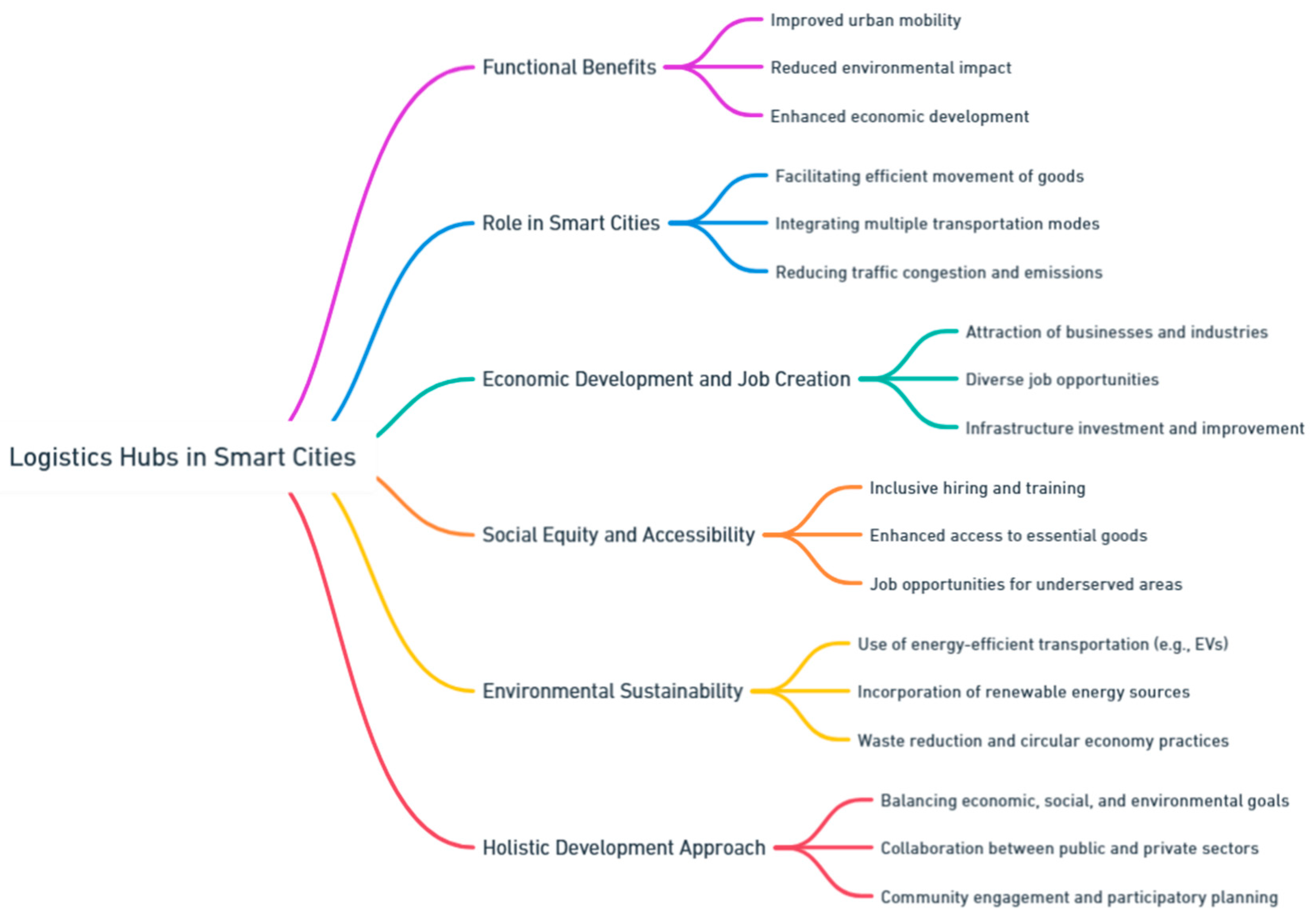
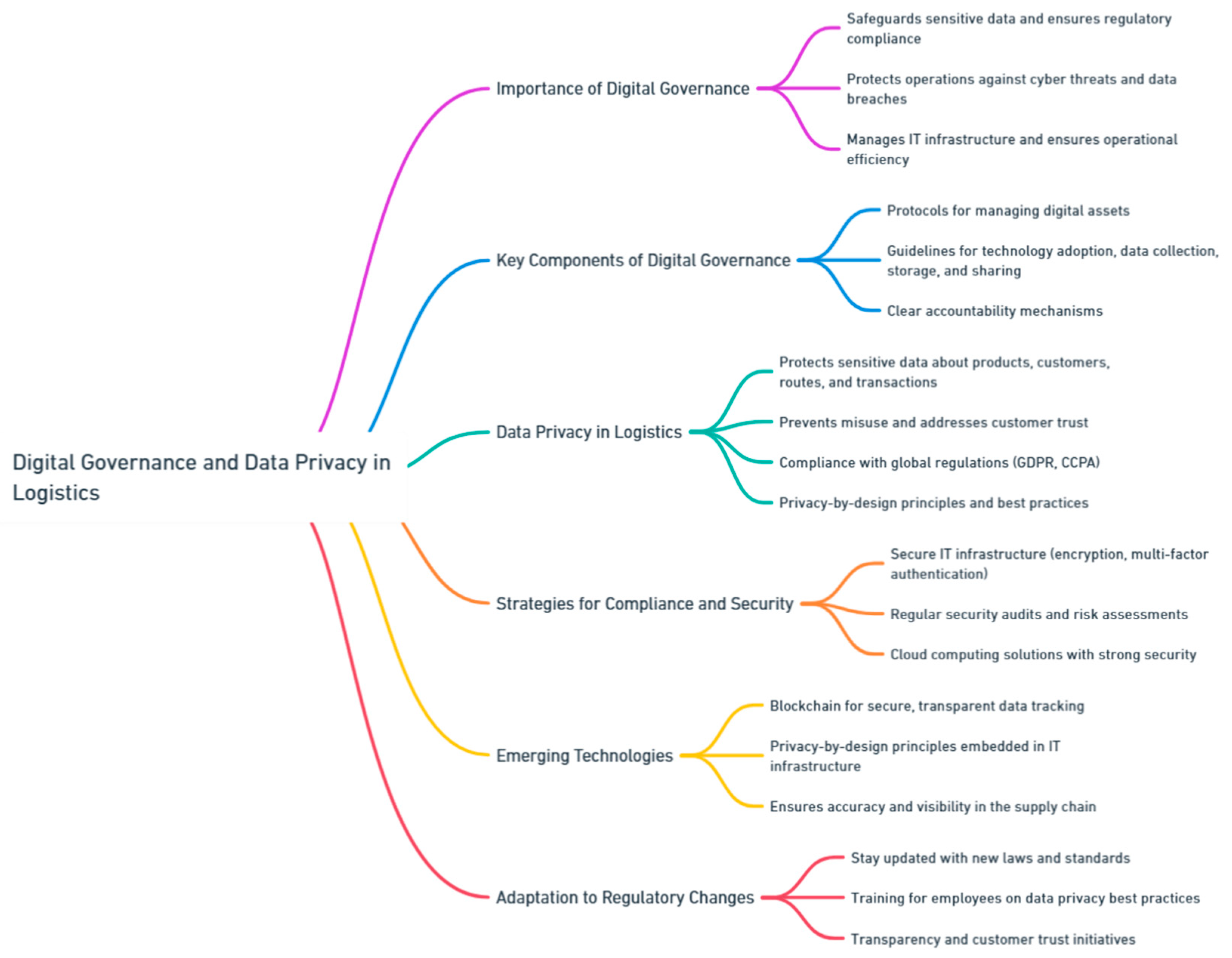
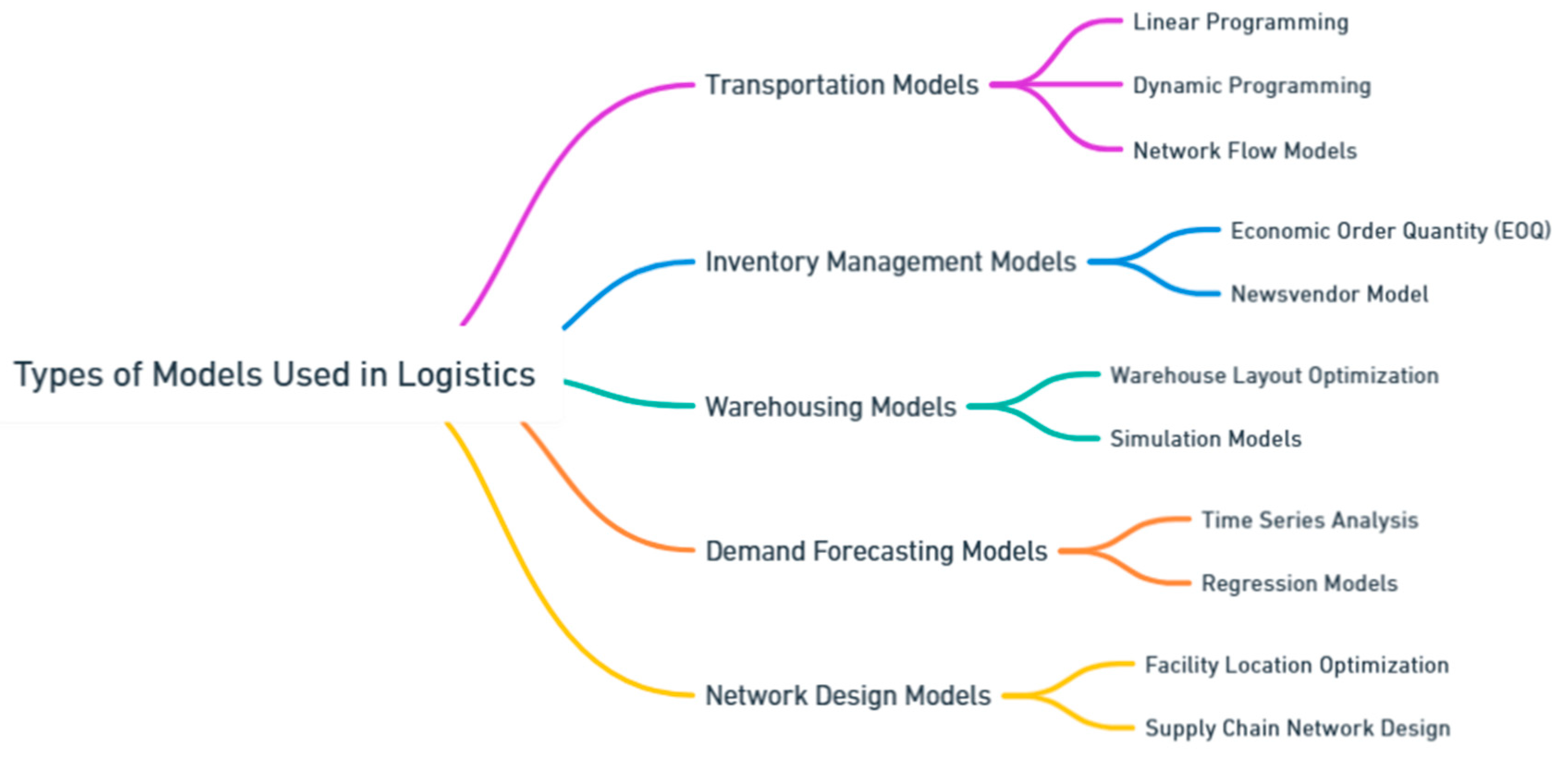
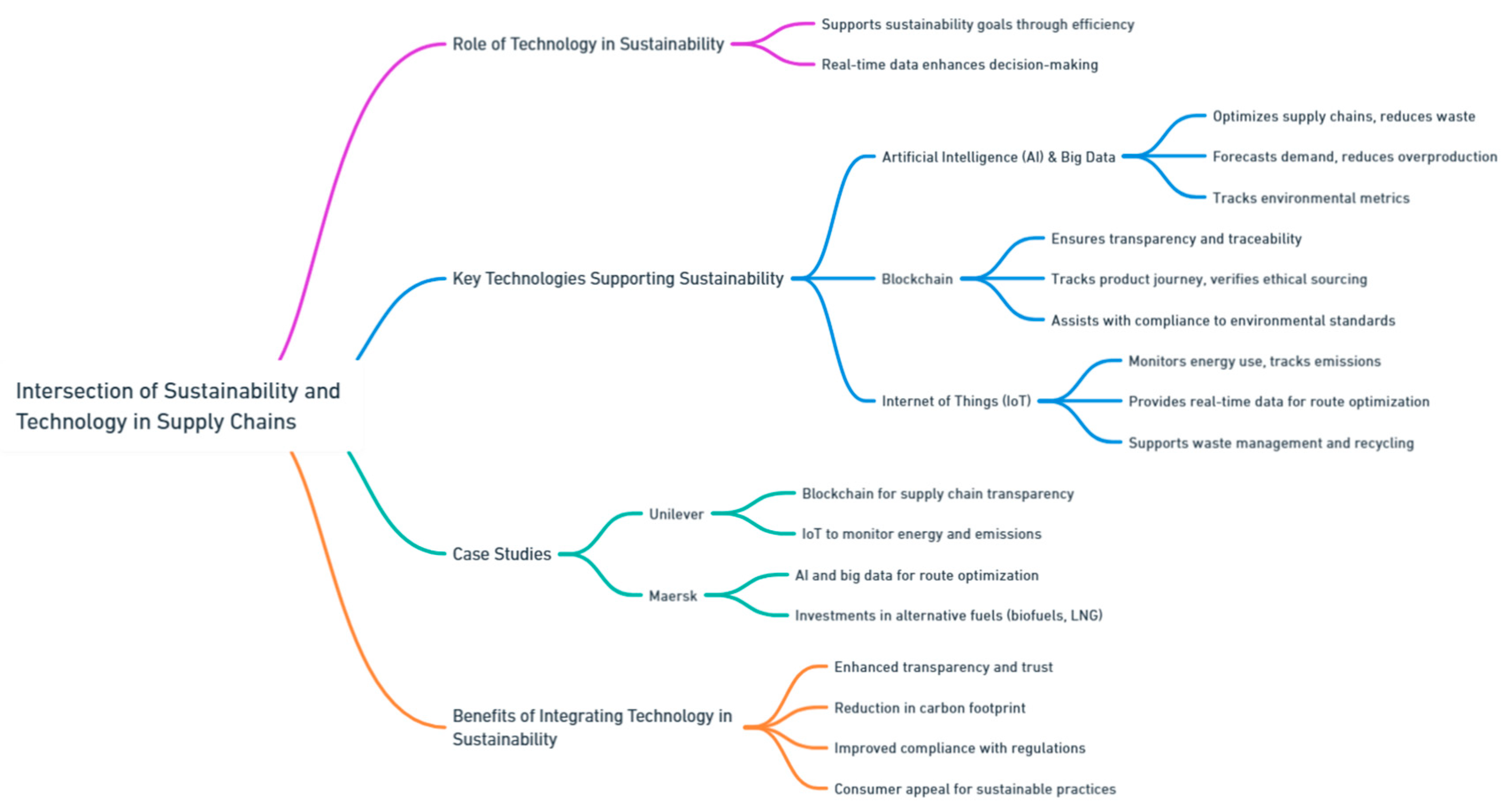
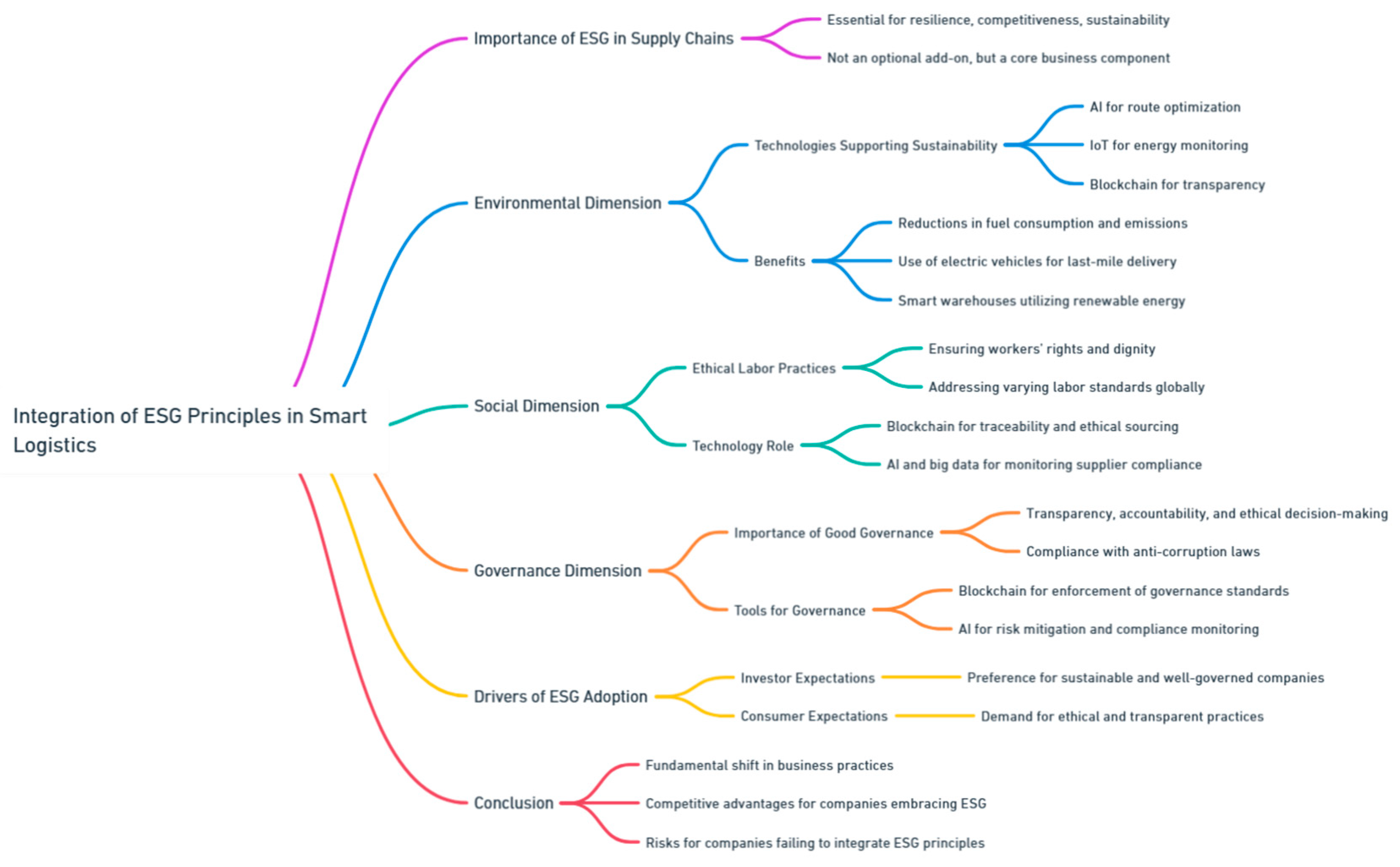
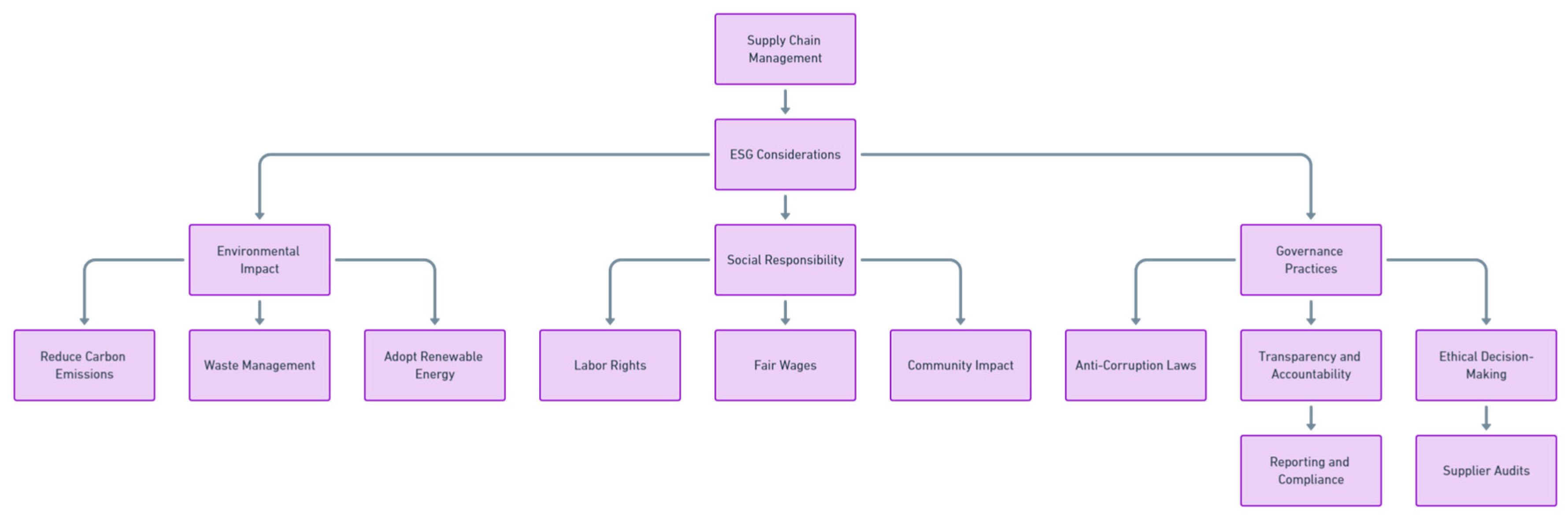
The integration of Environmental, Social, and Governance (ESG) principles into smart logistics represents a major transformation in how businesses operate in the global supply chain. In recent years, there has been a growing awareness that sustainability, ethical labor practices, and good governance are not only important for corporate reputation but are also essential for long-term business success. Companies are increasingly recognizing that addressing environmental and social issues within their logistics networks is critical for meeting stakeholder expectations, complying with evolving regulations, and mitigating risks associated with supply chain disruptions. Smart logistics, which leverages advanced technologies like artificial intelligence (AI), the Internet of Things (IoT), and big data, provides an ideal framework for embedding ESG principles into logistics operations, making supply chains more efficient, transparent, and sustainable. One of the key drivers behind the integration of ESG principles into smart logistics is the increasing pressure from consumers, governments, and investors for companies to reduce their environmental impact. The logistics industry, which encompasses transportation, warehousing, and distribution, is a major contributor to global carbon emissions, particularly due to its reliance on fossil-fuel-powered transportation. As climate change becomes an urgent global issue, companies are being called upon to reduce their greenhouse gas (GHG) emissions and adopt more sustainable practices. Smart logistics technologies offer solutions that can help companies achieve these environmental goals while maintaining operational efficiency. One way in which ESG is being integrated into smart logistics is through the use of AI and big data to optimize transportation routes and reduce fuel consumption. Route optimization tools analyze a wide range of factors, including traffic conditions, weather patterns, and fuel prices, to determine the most efficient delivery routes. By minimizing the distance traveled and avoiding traffic congestion, companies can significantly reduce the amount of fuel consumed and, consequently, lower their carbon emissions. For example, a logistics company might use AI-powered software to reroute trucks based on real-time traffic data, ensuring that deliveries are completed on time while using the least amount of fuel possible. In addition to optimizing transportation, companies are also exploring alternative, greener modes of transportation as part of their ESG initiatives. Electric vehicles (EVs) and hybrid trucks are becoming increasingly popular in logistics fleets, as they produce far fewer emissions than traditional diesel-powered vehicles. The use of EVs is particularly relevant in last-mile delivery, which refers to the final leg of the supply chain where goods are delivered to customers. Last-mile delivery is often the most carbon-intensive part of the logistics process, especially in urban areas where traffic congestion leads to increased fuel consumption and emissions. By incorporating electric delivery vehicles into their fleets, companies can reduce their environmental footprint while meeting consumer demand for faster, more efficient deliveries. Warehousing, another critical component of logistics, is also being transformed by the integration of ESG principles. Smart warehouses that utilize IoT devices, automation, and AI-driven systems can significantly improve energy efficiency and reduce waste. For instance, IoT-enabled sensors can monitor energy consumption in real time, allowing companies to identify areas where energy is being wasted, such as lighting or heating in unused areas of the warehouse. Automated systems, such as robotic pickers and conveyor belts, can be programmed to operate during off-peak hours when energy demand is lower, further reducing the carbon footprint of warehouse operations. Additionally, smart warehouses can implement circular economy practices by minimizing waste, reusing materials, and adopting eco-friendly packaging solutions, which not only reduce environmental impact but also contribute to cost savings. Another important aspect of integrating ESG principles into smart logistics is addressing social issues, particularly labor practices and working conditions throughout the supply chain. Many companies source their products from suppliers located in developing countries, where labor laws may be less stringent, and there is a greater risk of unethical practices such as forced labor, child labor, or unsafe working conditions. ESG principles require companies to take responsibility for ensuring that their entire supply chain adheres to fair labor standards and human rights protections. Technology plays a crucial role in enhancing supply chain transparency and ensuring compliance with social standards. Blockchain technology, for example, can be used to create an immutable record of every transaction and interaction within the supply chain, making it easier to trace the origins of products and verify that they were produced ethically. Blockchain can also be used to track the movement of goods, ensuring that workers are not subjected to unsafe or exploitative conditions during transportation and warehousing. By using blockchain, companies can provide greater transparency to their customers and stakeholders, demonstrating that they are committed to upholding social responsibility throughout their logistics operations. In addition to using blockchain, companies are increasingly relying on data analytics and AI to monitor supplier compliance with ESG standards. AI-powered systems can analyze vast amounts of data to identify potential risks in the supply chain, such as suppliers with poor labor practices or high environmental impacts. This allows companies to take proactive measures to address these issues, such as working with suppliers to improve their ESG performance or, if necessary, switching to more responsible suppliers. Moreover, smart logistics systems can automate the auditing process, ensuring that suppliers are regularly assessed for compliance with ESG criteria without the need for time-consuming manual inspections. Governance, the third pillar of ESG, focuses on the need for transparency, accountability, and ethical decision-making within a company’s operations. Good governance is essential for ensuring that ESG principles are not only adopted but also effectively implemented and enforced. In the context of smart logistics, governance involves creating systems and processes that promote ethical behavior, fair competition, and compliance with laws and regulations across the supply chain. One of the challenges in ensuring good governance in global supply chains is the complexity and fragmentation of these networks. Many companies work with a large number of suppliers, each operating in different regions with varying regulatory standards. This makes it difficult to ensure that all suppliers are adhering to the same governance standards. However, smart logistics technologies such as AI and big data analytics can help companies overcome this challenge by providing greater visibility and control over their supply chains. For example, AI systems can analyze supplier performance data to identify potential governance risks, such as corruption or fraud, allowing companies to address these issues before they escalate into larger problems. In addition to improving governance, smart logistics technologies also help companies meet regulatory requirements related to ESG. Governments around the world are increasingly introducing regulations that require companies to report on their ESG performance and ensure that their supply chains are aligned with sustainability goals. For instance, the European Union’s Corporate Sustainability Reporting Directive (CSRD) requires companies to disclose information on their environmental and social impacts, including data on their logistics operations. Smart logistics systems that collect and analyze ESG-related data can help companies meet these reporting requirements more easily and accurately, reducing the risk of regulatory non-compliance and associated penalties. In conclusion, integrating ESG principles into smart logistics is not only a moral and regulatory imperative but also a strategic advantage for companies looking to enhance their competitiveness in a rapidly evolving marketplace. The use of advanced technologies such as AI, IoT, blockchain, and big data is enabling companies to transform their logistics operations in ways that promote sustainability, social responsibility, and good governance. By embracing smart logistics and aligning their supply chains with ESG principles, companies can reduce their environmental impact, improve working conditions, and strengthen their reputation with customers, investors, and other stakeholders. As the world continues to grapple with the challenges of climate change, social inequality, and economic instability, the integration of ESG principles into smart logistics will become increasingly important for ensuring the long-term success and resilience of global supply chains.
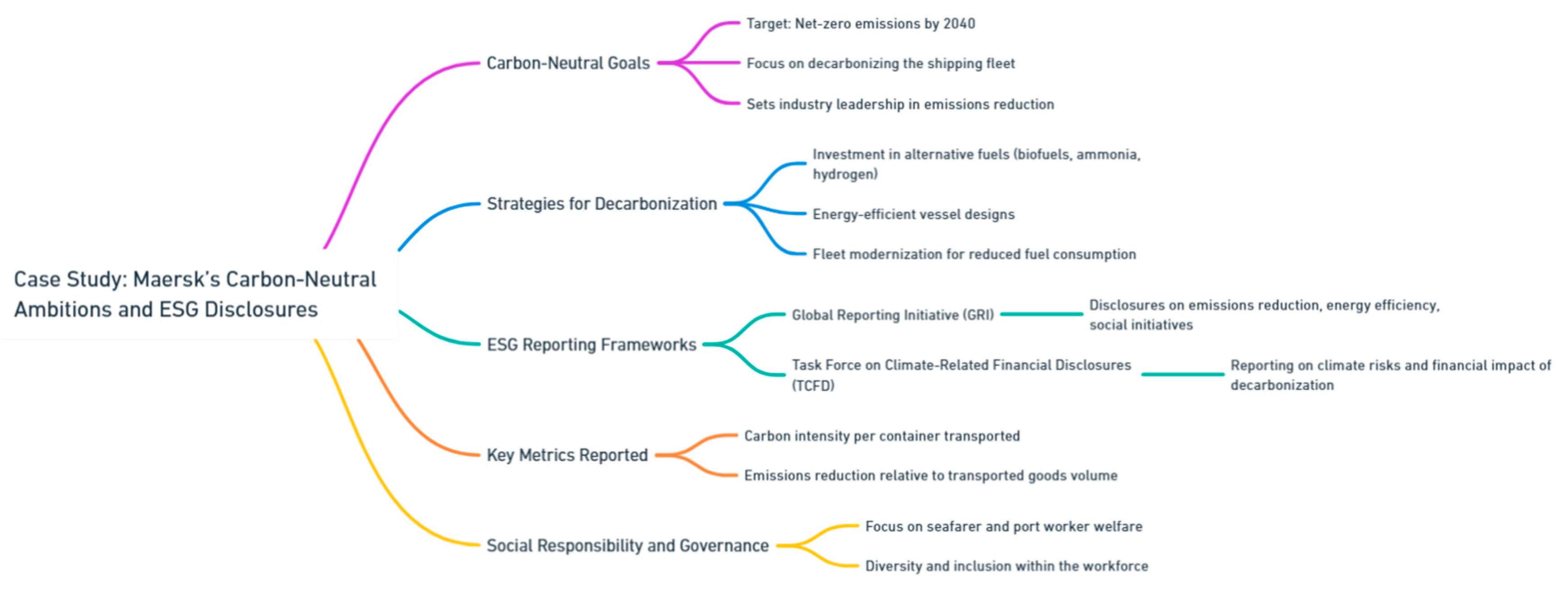
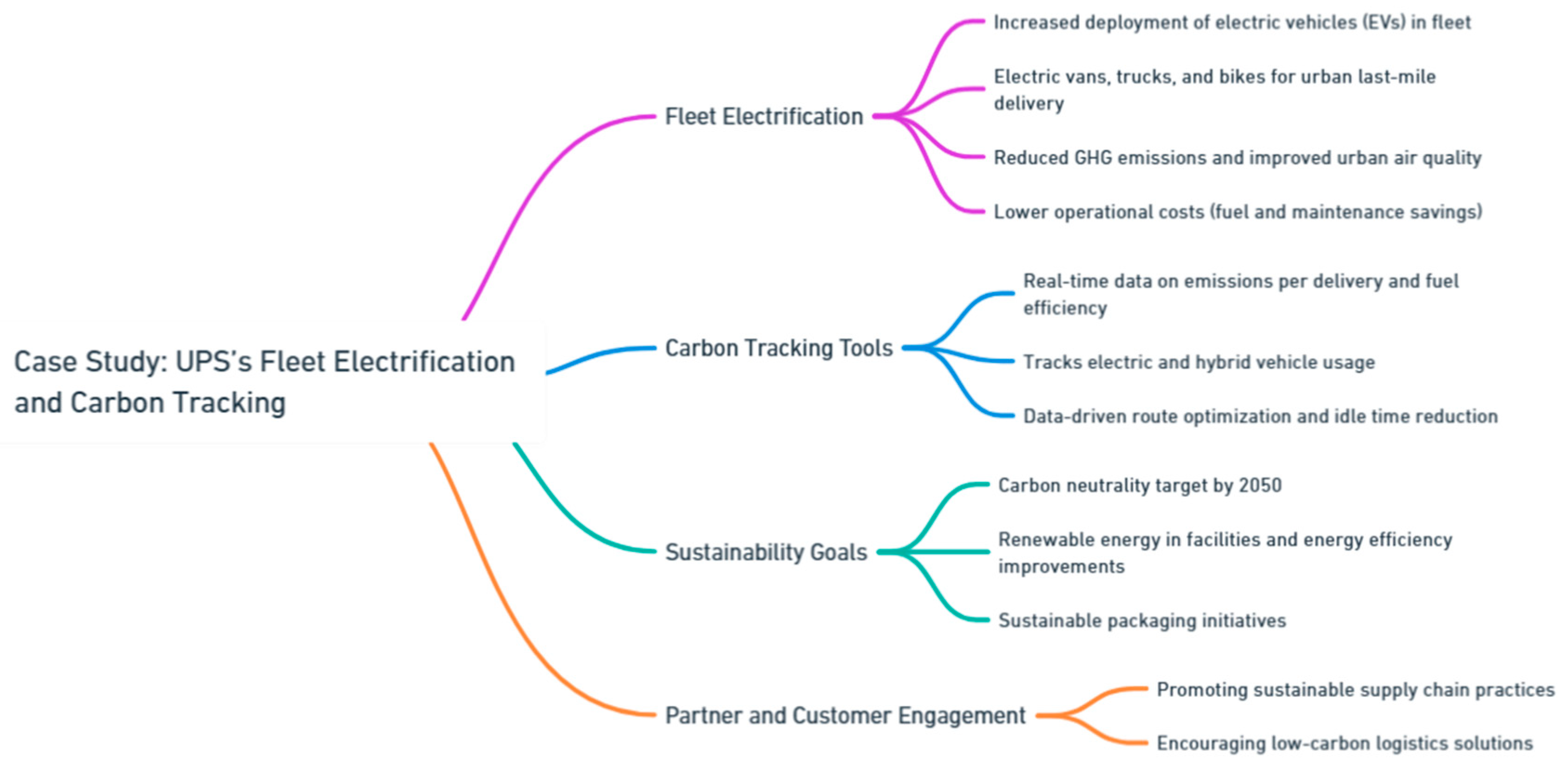
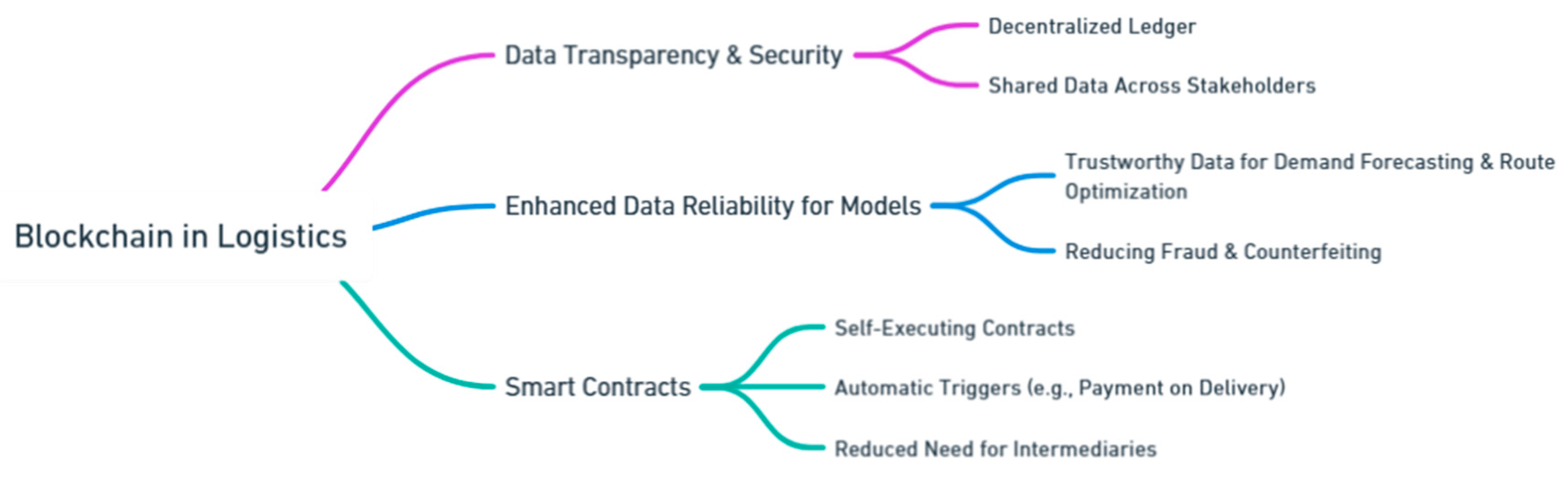
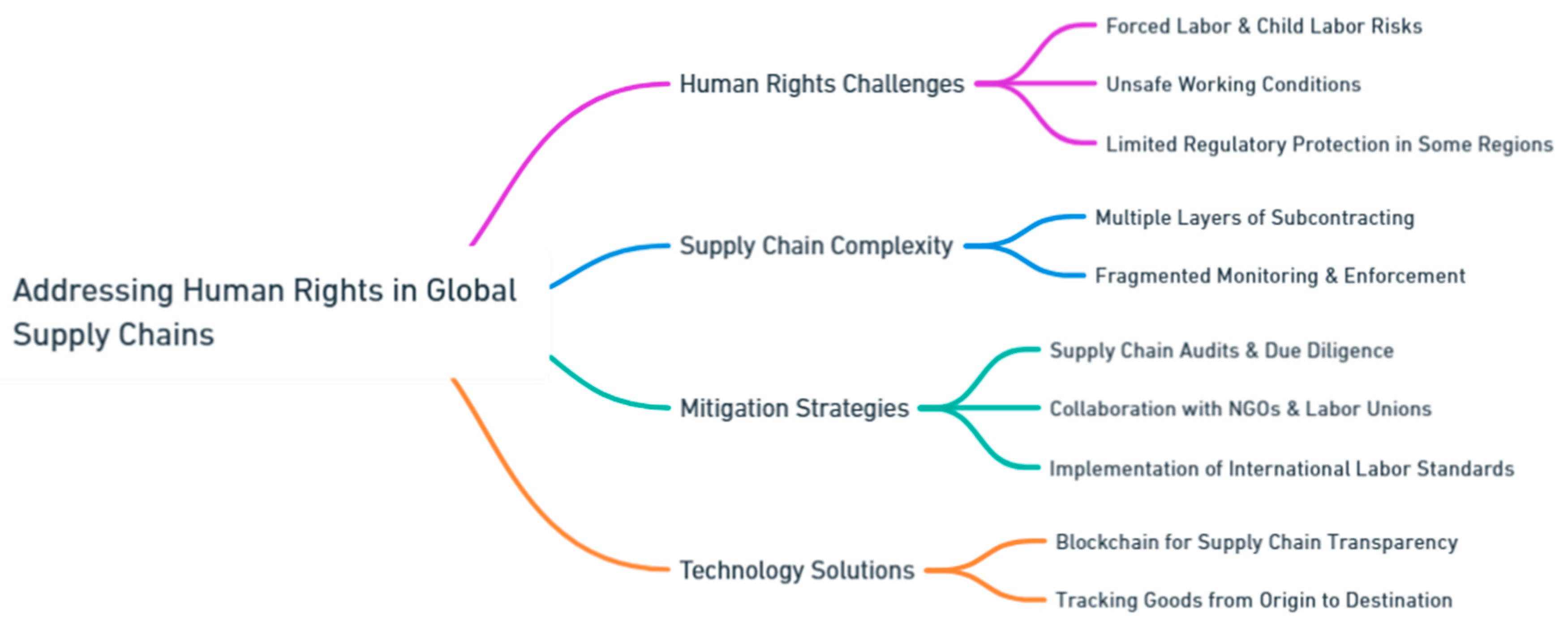
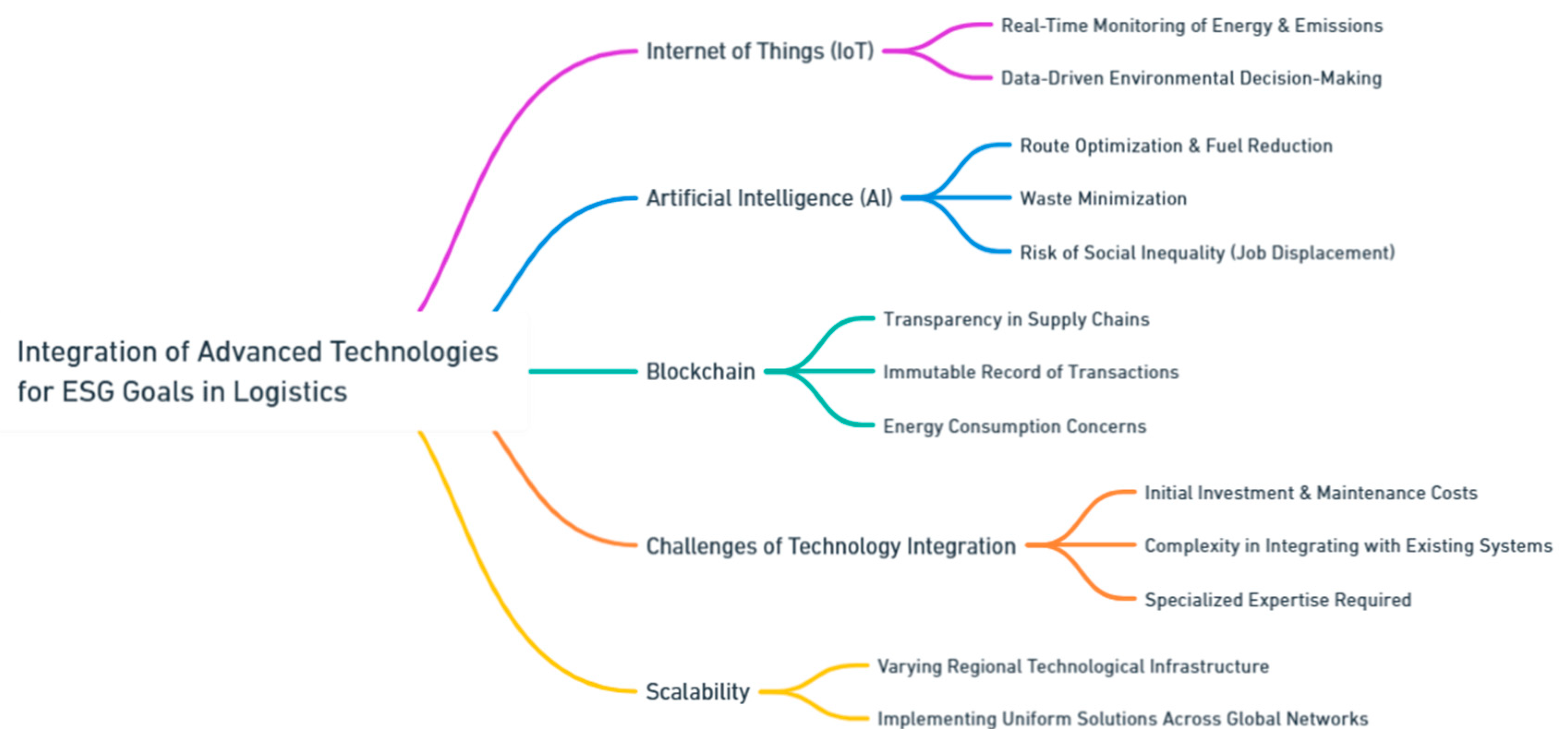
Preprints 139811 i003

2. Literature Review

2.1. ESG Frameworks: Environmental, Social, and Governance Dimensions

The selected articles provide valuable insights into the integration of Environmental, Social, and Governance (ESG) principles in global supply chains, highlighting how ESG considerations reshape supply chain management, corporate governance, and sustainability initiatives. Bisetti, She, and Zaldokas (2023) focus on ESG shocks and their impact on global supply chains, exploring how unexpected disruptions, such as environmental disasters or governance scandals, can propagate across interconnected supply chains, leading to significant operational disruptions. They emphasize the need for ESG risk management to enhance supply chain resilience. Similarly, Lu, Peng, Shin, and Yu (2023) examine how mandatory ESG disclosures are driving shifts in supply chain structures, with firms relocating operations based on regulatory pressures around ESG compliance, further illustrating how governance frameworks are reshaping supply chain geography. Sardanelli, Bittucci, Mirone, and Marzioni (2022) propose a shift from traditional financial-based supply chain ratings to ESG-based models, arguing that incorporating ESG metrics provides a more comprehensive understanding of a company's sustainability and risk profile. This approach enhances decision-making for investors and stakeholders by focusing on long-term sustainability. In line with this, Sharma, Shah, and Joshi (2023) model enablers for decarbonizing supply chains to achieve zero carbon emissions, highlighting the importance of renewable energy, green logistics, and supplier engagement as key drivers for reducing carbon footprints. Their research aligns with global sustainability goals and underscores the competitive advantage for companies that prioritize decarbonization. Ahmed and Shafiq (2022) explore the role of buyers in influencing supplier sustainability performance, revealing that a buyer’s legitimacy, power, and focus on ESG can drive suppliers toward more sustainable practices. This interconnected relationship between buyers and suppliers emphasizes that sustainability is a collective effort within global supply chains. Collectively, these articles demonstrate the increasing importance of integrating ESG into supply chain strategies, not only to promote sustainability but also to enhance resilience, competitiveness, and long-term success. Jia et al. (2024) explore how supply chain concentration—a situation where a few suppliers dominate—can improve sustainability performance by leveraging operational slack and information transparency. Operational slack, referring to the extra resources that firms maintain, provides flexibility, allowing firms to adapt to sustainability initiatives without major disruptions. Jia et al. argue that concentrated supply chains, when coupled with transparency, offer firms better control over sustainability practices and more efficient resource allocation. This study highlights that while concentration can have a positive impact on sustainability, it must be balanced with transparency to ensure stakeholders at all levels of the supply chain can access relevant information and align with sustainability goals. In a related study, Gualandris et al. (2021) examine the relationship between supply chain structure and transparency, with a large-scale empirical approach. Their research reveals that transparency is critical for ensuring that sustainability standards are upheld throughout the supply chain. They find that decentralized supply chains, while flexible, often lack transparency, making it harder to monitor and manage sustainable practices. On the other hand, centralized supply chains, with stronger control mechanisms, tend to be more transparent and therefore better equipped to manage sustainability initiatives. The article underscores the importance of designing supply chains that foster information sharing and openness, which are crucial for aligning sustainability strategies across different tiers of suppliers. Archer (2021) takes a more theoretical approach by discussing how data-driven sustainability and the increasing use of surveillance technologies in supply chains create “surveillable spaces.” This article posits that as companies strive to meet sustainability targets, they increasingly rely on data surveillance to monitor the environmental and social practices of their suppliers. Archer critiques the potential risks of these practices, including the possibility of infringing on workers' privacy or fostering power imbalances between corporations and suppliers. While data transparency is key to ensuring that sustainability goals are met, Archer’s work raises important ethical concerns about how these data are collected and used within global supply chains. Boersma et al. (2022) contribute to the discourse by focusing on labour risks in global value chains, using the Australian cotton industry as a case study. They highlight how downstream labour risks—issues faced by workers in lower tiers of the supply chain—are often overlooked by major companies. The authors argue that a lack of transparency and accountability for labour conditions can lead to significant sustainability risks, as poor working conditions undermine social sustainability. They emphasize the need for better oversight mechanisms to address these labour risks, which are often hidden in complex global value chains. This study highlights the social dimension of sustainability, urging companies to prioritize human rights and labour practices alongside environmental concerns. Bade et al. (2024) examine the pharmaceutical industry and assess how sustainability maturity—the extent to which sustainability practices are embedded in a company's operations—affects supply chain security. Their study shows that as pharmaceutical companies mature in their sustainability practices, their supply chains become more secure and resilient. This is particularly important in an industry where supply chain disruptions can have severe consequences for public health. Bade et al. emphasize that sustainability initiatives not only benefit the environment but also enhance supply chain security by fostering stronger relationships with suppliers and reducing the risks of disruptions.
Dai and Tang (2022) discuss the integration of Environmental, Social, and Governance (ESG) measures with supply chain management, highlighting research opportunities that have emerged in the wake of the COVID-19 pandemic. Their work points out how the pandemic revealed critical vulnerabilities in global supply chains, pushing businesses to rethink their strategies and prioritize sustainability. The authors argue that incorporating ESG principles can help companies build more resilient supply chains, capable of withstanding future disruptions. This integration of ESG into supply chain management is particularly crucial as firms seek to align their operational models with evolving stakeholder expectations and regulatory demands. Di Paola, Cosimato, and Vona (2023) take a broader approach, emphasizing the importance of resilience in achieving sustainability. Their research, published in the Journal of Cleaner Production, underscores the interconnection between resilience and sustainability in global supply chains. According to the authors, companies that focus on resilience today will be better equipped to implement sustainable practices in the future. The study presents different perspectives on how firms can navigate the complexities of global supply chains while balancing the need for sustainability and profitability. Di Paola et al. argue that resilience does not merely mean the ability to recover from disruptions but also involves proactively building systems that support long-term sustainability. This approach reflects a growing recognition of the need for adaptive, flexible supply chains that can handle both environmental and social challenges. De Góes, Kotabe, and Geleilate (2021) provide an empirical examination of corporate sustainability within global supply networks, focusing specifically on the automotive industry. Their research investigates the diffusion of sustainable practices across different levels of the supply chain, highlighting the role of institutional pressures in driving change. They argue that multinational corporations play a pivotal role in diffusing sustainability throughout their supply chains, particularly in complex industries like automotive manufacturing, where multiple suppliers must coordinate to achieve environmental goals. The authors emphasize that while top-tier companies often lead sustainability efforts, the impact of these efforts trickles down to lower-tier suppliers, promoting a broader shift toward sustainable practices across the industry. Eggert and Hartmann (2023) shift the focus to the global pandemic, exploring how sustainable supply chain management became a crucial factor for resilience during COVID-19. Their research points out that companies with more robust sustainability practices were better able to cope with pandemic-related disruptions, thanks to stronger relationships with suppliers and better risk management strategies. The authors argue that sustainability and resilience are mutually reinforcing concepts, with sustainable supply chain practices providing a foundation for long-term resilience. This insight is particularly relevant as companies prepare for future crises, underlining the importance of embedding sustainability into core supply chain operations. Lastly, Erhun, Kraft, and Wijnsma (2021) discuss the concept of sustainable triple-A supply chains—those that are agile, adaptable, and aligned. They argue that these attributes, traditionally valued for operational efficiency, are also essential for sustainability. Sustainable triple-A supply chains not only respond quickly to market changes but also prioritize environmental and social governance, aligning the interests of various stakeholders. Their research highlights that the integration of sustainability into supply chains requires a comprehensive approach, where agility and adaptability go hand in hand with responsible governance practices. This perspective aligns with the broader consensus in the literature that sustainability is no longer an add-on but a fundamental component of resilient and competitive supply chains.
Hryhorak, Trushkina, and Kitrish (2022) present a detailed examination of the organizational and economic mechanisms that industrial enterprises can employ to manage the sustainability of their supply chains strategically. The authors highlight that effective strategic management is crucial for enhancing the resilience and sustainability of supply chains, especially in the context of industrial sectors where environmental impact is significant. They argue that aligning organizational goals with sustainability principles through structured mechanisms allows enterprises to better navigate the challenges posed by fluctuating market conditions and regulatory pressures. This article underscores the importance of integrating both organizational and economic factors in fostering a sustainable supply chain. Laari et al. (2022) extend this conversation by focusing on the supply chain networks beyond corporate boundaries, using structural network analysis to explore how these networks can be leveraged for sustainability. Their study emphasizes the importance of collaboration and connectivity between different stakeholders in the supply chain, suggesting that sustainability efforts must extend beyond individual firms to include entire supply chain networks. This paper argues that companies need to adopt a holistic view of their supply chains, recognizing that sustainability cannot be achieved in isolation but requires coordinated efforts across various actors. By using network analysis, Laari et al. provide insights into how inter-firm relationships and structures impact the sustainability outcomes of entire supply chains. This perspective is particularly relevant in today’s globalized world, where supply chains are increasingly complex and interdependent. In a different context, Lèbre, Owen, Kemp, and Valenta (2022) focus on complex orebodies and the future supply of critical raw materials, particularly metals, which are essential for many industrial supply chains. Their work highlights the sustainability challenges associated with the extraction and supply of these materials, which are often fraught with environmental and social risks. The authors argue that as demand for metals continues to rise, there is a growing need to develop more sustainable and responsible mining practices to secure future supplies. The paper stresses the importance of sustainability in the global metal supply chain, where the impact of extraction on local communities and ecosystems is particularly acute. Their call for a more responsible approach to metal supply aligns with broader sustainability goals in the industry, advocating for strategies that balance the need for raw materials with environmental stewardship. Lee et al. (2021) conduct a comparative study of key supply chain management elements, examining how they are reported in sustainability reports. Their research reveals significant variations in how different companies approach sustainability in their supply chains, with some focusing more on environmental aspects while others emphasize social and governance dimensions. This study contributes to the understanding of how sustainability is framed and communicated by businesses, highlighting the need for standardization in reporting practices to ensure transparency and accountability across industries. The findings suggest that while many companies are adopting sustainability measures, the way these measures are implemented and reported remains inconsistent, which could hinder broader efforts to achieve sustainability goals. Liao and Pan (2021) explore the role of resilience and human rights in the green and digital transformation of supply chains, emphasizing the ethical dimensions of this transformation. Their work highlights the importance of ensuring that as supply chains transition towards greener and more digital operations, human rights must not be neglected. They argue that resilience in supply chains is not only about the capacity to recover from disruptions but also about protecting the rights and dignity of workers, particularly in industries undergoing rapid technological change. This article contributes to the growing recognition that sustainability in supply chains must encompass both environmental and social considerations, advocating for a balanced approach that incorporates both human rights and resilience in the pursuit of sustainable development.
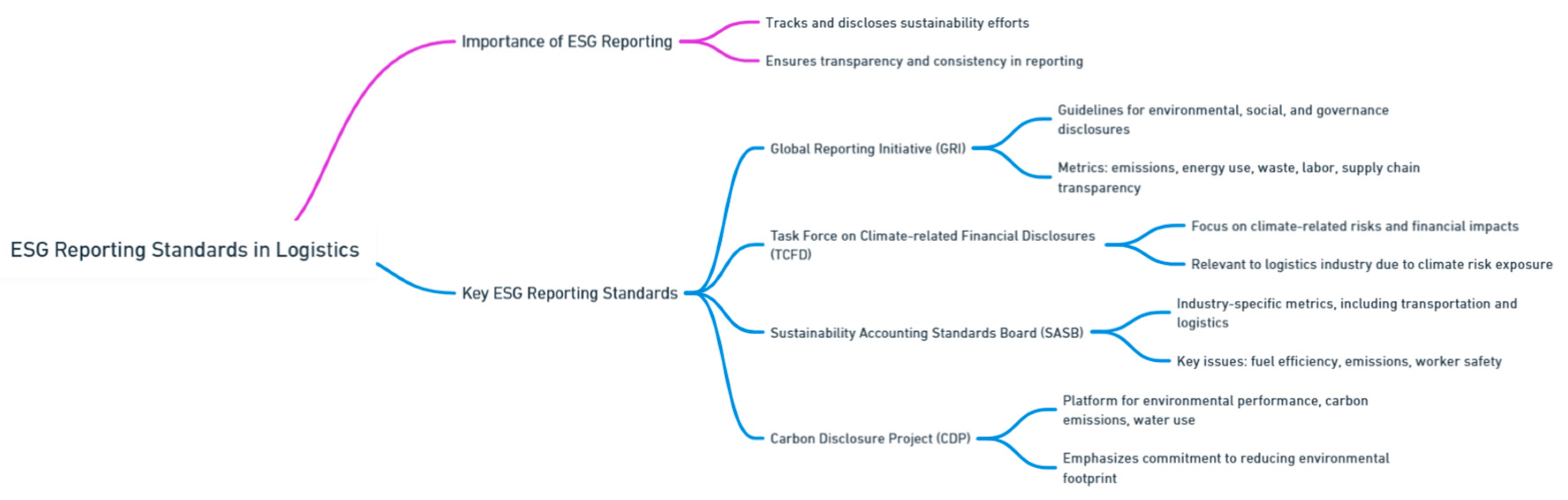
Nielsen (2023) provides an in-depth exploration of ESG reporting metrics, focusing on the concept of double materiality, which integrates both financial and non-financial performance indicators. This concept highlights the need for companies to not only report on how sustainability issues impact their financial performance but also how their activities affect society and the environment. Nielsen argues that the integration of ESG metrics into business strategies allows companies to align their operations with broader societal expectations, contributing to enhanced accountability and transparency. The article also underscores the growing significance of Key Performance Indicators (KPIs) in monitoring ESG performance, positioning these metrics as essential tools for companies seeking to demonstrate their commitment to sustainability. Building on the topic of sustainability, Sachin and Rajesh (2022) examine the relationship between supply chain sustainability and the financial performance of Indian firms. Their empirical study highlights the positive correlation between sustainable supply chain practices and financial outcomes, showing that firms investing in sustainability tend to perform better financially. The study reveals that companies with sustainable supply chains are more resilient and efficient, which leads to improved operational performance and cost savings in the long term. Additionally, the authors argue that adopting sustainable practices enhances a company's reputation, attracts more socially conscious investors, and reduces regulatory risks. Their research underscores the idea that sustainability is not just a regulatory requirement or a social responsibility but also a key driver of financial success for firms. Pérez et al. (2022), in their McKinsey Quarterly article, address the question of whether ESG really matters for businesses. The authors argue that ESG is increasingly becoming a critical factor in determining a company's long-term success. They emphasize that companies that prioritize ESG factors tend to outperform their peers, particularly in terms of risk management, reputation, and adaptability to regulatory changes. The article highlights several case studies demonstrating that firms with strong ESG commitments have been more resilient during economic downturns and have seen better financial returns in the long run. Pérez et al. argue that the integration of ESG into business strategies is no longer optional but essential for companies to remain competitive in the global market. Serafeim and Yoon (2022) provide further insights into the business relevance of ESG issues. Their research focuses on how ESG factors influence a company’s valuation and overall performance. They demonstrate that investors are increasingly considering ESG metrics in their investment decisions, as these factors are seen as indicators of long-term sustainability and risk management. Serafeim and Yoon argue that companies that fail to address ESG concerns may face declining investor confidence and increased regulatory scrutiny. Their work reinforces the notion that ESG is integral to a company’s financial health, as it influences both market perception and the ability to attract and retain capital.
Technological Integration in ESG and Supply Chains
Qian, Gao, and Chen (2023) present a green supply chain circular economy evaluation system that integrates the Industrial Internet of Things (IIoT) and blockchain technology under the ESG framework. Their study highlights how these advanced technologies can improve the sustainability of supply chains by providing real-time data and transparency. The integration of IIoT allows for better monitoring of environmental performance throughout the supply chain, while blockchain ensures the immutability of data, enhancing trust and accountability among stakeholders. The authors argue that the combination of these technologies not only supports more efficient and sustainable operations but also aligns with the principles of the circular economy, where resource use is minimized, and waste is reduced through recycling and reuse. This system offers a model for companies seeking to adopt greener practices while adhering to ESG guidelines, reinforcing the critical role of technology in driving sustainable supply chains. Liu et al. (2021) also focus on blockchain's role in ESG, specifically in the context of ESG reporting for sustainable supply chains. Their blockchain-enabled framework addresses the need for more transparent and accurate ESG disclosures. By using blockchain, companies can provide verifiable data on their sustainability efforts, thereby increasing the credibility of their ESG reports. Liu et al. highlight how this technology can overcome challenges in traditional reporting systems, such as data manipulation and lack of standardization. The authors suggest that blockchain’s decentralized nature ensures that all stakeholders have access to the same information, promoting trust and facilitating regulatory compliance. This study underscores the growing importance of digital tools in enhancing the quality and reliability of ESG reporting, which is becoming a key factor for investors and regulators. Zhang et al. (2023) introduce the concept of digital twins as a solution to improve ESG evaluation in vaccine logistics supply chains. Using an evolutionary game analysis, the authors demonstrate that digital twins, which create a real-time virtual representation of physical assets, can optimize supply chain performance while enhancing ESG outcomes. This technology enables companies to simulate various scenarios and predict potential ESG risks, such as environmental impacts or disruptions in vaccine distribution. Zhang et al. argue that digital twins provide a more dynamic and responsive approach to managing ESG performance, particularly in complex and high-stakes industries like pharmaceuticals. Their research highlights the potential of digital twins to enhance supply chain resilience and sustainability by improving decision-making processes and ensuring continuous monitoring. Asif, Searcy, and Castka (2023) explore the role of technology within the broader context of Industry 5.0 and its potential to enhance ESG disclosure. Industry 5.0 emphasizes human-centric technology and collaboration between humans and machines, which the authors argue can lead to more effective ESG reporting. By leveraging AI, machine learning, and other advanced technologies, businesses can automate ESG data collection and analysis, making the reporting process more efficient and reducing human error. The authors emphasize that as regulatory demands for ESG disclosures increase, companies must adopt these technologies to meet stakeholder expectations and remain competitive. This article highlights the importance of integrating technological advancements into the ESG framework to meet the evolving demands of the global market. Wang (2023) further extends the discussion by proposing a framework for digital technology-enabled governance in global value chains, emphasizing the role of digital tools in enhancing sustainability. Wang argues that technologies like blockchain, IoT, and big data analytics can improve governance by providing real-time visibility into supply chain operations. This transparency is essential for monitoring ESG compliance across different tiers of the supply chain. The author also identifies several future research opportunities, including the need to explore how these technologies can be scaled across industries and geographies. Wang’s framework reinforces the view that digital technology is not just a tool for operational efficiency but a critical enabler of sustainable governance in global supply chains.
Saxena et al. (2022) focus on the impact of Industry 4.0 technologies on ESG, demonstrating how innovations such as artificial intelligence (AI), machine learning, and the Internet of Things (IoT) are reshaping the landscape of corporate governance and sustainability. They argue that these technologies enable companies to monitor and improve their environmental and social performance more efficiently. The real-time data provided by IoT devices, for example, allows for continuous monitoring of energy consumption, emissions, and resource use, which can directly inform more sustainable practices. Additionally, AI-driven analytics can help businesses identify areas of inefficiency and predict future ESG risks, allowing for proactive management of social and environmental impacts. This research underscores how Industry 4.0 technologies serve as critical enablers of ESG integration, making sustainability more measurable, actionable, and transparent. Busco et al. (2020) provide a detailed analysis of the Sustainability Accounting Standards Board (SASB) reporting framework, which aims to standardize ESG disclosures. Their study examines the financial relevance of ESG metrics and the degree to which different industries disclose ESG-related information. The authors find that while many companies are increasingly recognizing the importance of ESG reporting, there is significant variability in the depth and focus of these disclosures. The financial intensity of ESG materiality, which refers to how closely ESG issues relate to a company's financial performance, also varies across sectors. Busco et al. argue that standardizing ESG reporting through frameworks like SASB is essential for improving transparency and ensuring that investors can make informed decisions based on consistent, comparable data. This research highlights the growing recognition of ESG as a financially material factor and emphasizes the need for more robust and standardized reporting mechanisms. Engel-Cox, Wikoff, and Reese (2022) shift the focus to clean energy technology supply chains, exploring the techno-economic, environmental, and social metrics that define their sustainability. Their study emphasizes the importance of measuring the full lifecycle impacts of clean energy technologies, from raw material extraction to manufacturing, use, and end-of-life disposal. The authors argue that understanding these metrics is crucial for developing supply chains that not only support the transition to clean energy but also align with broader ESG goals. By incorporating these measurements, companies can ensure that their clean energy technologies deliver both environmental and social benefits, contributing to a more sustainable energy future. This research is particularly relevant in the context of the global push toward decarbonization and highlights the challenges of balancing economic, environmental, and social factors in complex supply chains. Fatimah et al. (2023) examine the role of circular economy business models in improving sustainability performance, particularly in e-business applications. Their study demonstrates that by adopting circular economy principles—such as reducing waste, reusing materials, and designing products for longevity—businesses can significantly enhance their ESG performance. The authors argue that circular economy models not only reduce environmental impact but also offer economic benefits by lowering costs and creating new revenue streams from recycled or repurposed products. This research highlights the alignment between circular economy practices and ESG objectives, showing that sustainable business models can drive both environmental and financial performance. Kannan and Seki (2023) explore the use of natural language processing (NLP) techniques to extract textual evidence for ESG scores. Their work focuses on how AI-driven data analysis can improve the accuracy and comprehensiveness of ESG evaluations by processing large volumes of textual data from corporate reports, news articles, and other sources. By automating the extraction of relevant ESG information, NLP technologies can help investors, regulators, and other stakeholders access more detailed and up-to-date insights into a company's ESG performance. This research demonstrates the potential of advanced data analytics in enhancing ESG reporting and highlights the growing role of AI in the financial and sustainability sectors.
Khan et al. (2023) present a comprehensive analysis of blockchain-driven supply chain management and its role in enhancing supply chain sustainability. The authors argue that blockchain technology is a game-changer in supply chain management due to its ability to provide transparency, traceability, and security. By using blockchain, companies can ensure that each step in the supply chain—from raw material sourcing to product delivery—is tracked and verified, which helps in identifying inefficiencies, reducing fraud, and ensuring compliance with sustainability standards. This research highlights the potential of blockchain to improve not only operational performance but also the ethical dimensions of supply chains, such as fair labor practices and environmentally responsible sourcing. This is especially crucial for industries with complex supply chains that span multiple countries and regulatory environments. Similarly, Mugurusi and Ahishakiye (2022) delve into the blockchain needs specific to mineral supply chains, focusing on the responsible sourcing of cobalt. Given that cobalt is a critical resource in technologies like electric vehicles and batteries, ensuring its responsible sourcing is vital for sustainable development. The authors propose a blockchain framework that would allow stakeholders to track the origins of cobalt, ensuring that it is sourced ethically and in compliance with environmental standards. This framework is particularly relevant in the context of growing global concerns over human rights abuses and environmental degradation in mineral extraction. By applying blockchain technology, companies can gain greater visibility into their supply chains, ensuring that their practices align with ESG principles. Park and Li (2021) extend the discussion on blockchain’s impact on sustainability, demonstrating how the technology can improve overall supply chain performance. They argue that blockchain can lead to more sustainable practices by optimizing resource use and reducing waste. For example, by providing real-time data on inventory levels, blockchain can help companies avoid overproduction and reduce excess stock, thus minimizing environmental impact. The study emphasizes that blockchain not only enhances supply chain efficiency but also strengthens a company's commitment to sustainability, aligning with both regulatory requirements and consumer expectations for responsible business practices. Kumar et al. (2024) examine how ESG compliance can act as a moderator between Industry 4.0 technologies and green supply chain practices, with a focus on green servitization—a business model where companies combine product and service offerings with environmental sustainability goals. They argue that Industry 4.0, which includes advanced technologies like IoT, AI, and automation, can enhance supply chain performance, but only if ESG principles are integrated effectively. By incorporating ESG compliance into Industry 4.0 initiatives, companies can not only improve their green supply chain performance but also enhance their corporate reputation and reduce regulatory risks. The research underscores the need for a balanced approach where technological innovation is aligned with sustainability goals. Zhu and Zhang (2024) discuss the role of supply chain digitalization in improving corporate ESG performance. Their study focuses on how digital innovations, such as blockchain and IoT, can improve ESG reporting and compliance by providing accurate, real-time data. Digitalization allows companies to streamline their supply chain operations, making it easier to monitor and report on sustainability efforts. This study is particularly relevant as companies face increasing pressure from regulators, investors, and consumers to improve their ESG disclosures. The authors suggest that digital tools not only improve operational efficiency but also make it easier for companies to meet their sustainability goals. Zioło et al. (2023) explore the integration of ESG risks into business models, focusing on the energy sector. The authors argue that companies need to proactively incorporate ESG risks into their strategic planning to avoid financial and reputational damage. They provide case studies from the energy sector, showing how companies that fail to address ESG risks can face significant challenges, including regulatory penalties and loss of investor confidence. This research highlights the importance of embedding ESG considerations into the core of business strategies, particularly in industries with high environmental and social impact.
ESG Risk Management and Vulnerabilities in Supply Chains. Tsang et al. (2024) analyze the impact of the Russian-Ukrainian conflict on supply chain vulnerability, focusing on firms that prioritize ESG principles. Their research underscores how geopolitical events can exacerbate supply chain risks, particularly for companies committed to ESG standards. The authors argue that firms with strong ESG commitments face heightened vulnerabilities due to their reliance on ethical sourcing and transparent business practices, which are often disrupted in conflict zones. The study demonstrates how these companies can become particularly vulnerable when geopolitical instability compromises their ability to maintain sustainable and ethical practices, leading to potential reputational and operational risks. This work highlights the complex interplay between global conflict and supply chain resilience, emphasizing that companies need to develop strategies to mitigate ESG-related risks in unstable regions. Tang et al. (2023) explore the spillover effect of customers' ESG practices on their suppliers. Their study reveals how the sustainability efforts of a company can influence the behavior of its suppliers, leading to a positive cascade of ESG practices throughout the supply chain. The authors argue that customers who prioritize ESG standards can drive their suppliers to adopt similar practices in order to maintain business relationships and meet regulatory requirements. This finding is particularly important as it demonstrates the ripple effect that large firms can have on their supply chains, encouraging broader adoption of sustainability principles. The research also highlights the role of stakeholder pressure, showing that customers can act as catalysts for ESG adoption by demanding higher standards from their suppliers, thereby promoting sustainability throughout the supply chain ecosystem. Henrich et al. (2022) focus on future-proofing supply chains, particularly in light of the growing importance of ESG. The McKinsey report emphasizes that companies need to anticipate future disruptions—whether geopolitical, environmental, or regulatory—and incorporate ESG principles into their long-term supply chain strategies. The authors argue that ESG is no longer a peripheral concern but a core component of supply chain management, critical for ensuring resilience and competitiveness. By adopting more sustainable practices, companies can better navigate future uncertainties, avoid regulatory penalties, and align with evolving consumer expectations. The report stresses the importance of integrating ESG considerations into the broader framework of risk management, encouraging companies to view sustainability as a strategic asset rather than a regulatory burden. Redondo Alamillos and De Mariz (2022) investigate the impact of European ESG regulations on global businesses, exploring how these regulatory frameworks influence companies worldwide. Their analysis suggests that European regulations, which often set high standards for sustainability, can drive changes in global supply chains as multinational companies adjust their operations to comply with these regulations. The authors argue that even businesses outside of Europe are affected, as they are often part of supply chains that feed into European markets. The article underscores the global ripple effect of regional regulations, highlighting how Europe’s stringent ESG requirements can lead to widespread changes in business practices across industries and geographies. This research illustrates the growing power of regulatory frameworks in shaping global business strategies, particularly as more regions adopt similar ESG standards. Lawley et al. (2024) explore the use of geospatial data and deep learning to identify ESG risks in the supply of critical raw materials, focusing on lithium. Their research demonstrates how advanced technologies can enhance the monitoring of ESG risks, providing real-time insights into the environmental and social impacts of resource extraction. By applying geospatial data and AI-driven analysis, companies can more effectively manage risks associated with the sourcing of critical materials like lithium, which is essential for renewable energy technologies. The authors argue that this approach can help companies meet ESG compliance by improving transparency and enabling more sustainable sourcing practices. This research highlights the growing role of technology in advancing ESG goals, particularly in industries with complex and environmentally sensitive supply chains.
Mateska et al. (2023) focus on sustainability-related transgressions in global supply chains and their consequences for buying firms. The authors investigate the concept of legitimacy spillovers, where unethical or unsustainable practices by suppliers can negatively impact the reputation and legitimacy of the buying firms associated with them. Their research highlights how these spillovers hurt buying firms most when there is a high level of visibility and transparency in the supply chain. Companies that market themselves as socially and environmentally responsible are particularly vulnerable to such legitimacy risks. This study underscores the importance of rigorous supplier monitoring and ESG compliance to mitigate the risk of transgressions that could tarnish a firm’s reputation. It also stresses the need for greater due diligence in managing supply chains, as the behavior of a company’s suppliers is increasingly seen as a reflection of its own commitment to sustainability. Chen, Kuo, and Chen (2022) examine the impacts of climate change-related risks on both the ESG and financial performances of companies in the manufacturing industry. Their research shows a strong correlation between climate risks and a company’s ability to meet ESG standards, which, in turn, affects financial performance. Companies that proactively manage climate risks by reducing their carbon footprint or improving resource efficiency tend to perform better both in terms of ESG metrics and financially. This study highlights the growing recognition that addressing climate change is not only a moral imperative but also a key driver of financial success in the manufacturing sector. By integrating climate risk management into their business strategies, companies can enhance their resilience and appeal to environmentally conscious investors and consumers. Câmara (2022) delves into the systemic interaction between corporate governance and ESG, exploring how these two elements are interdependent. The author argues that effective corporate governance is essential for the successful implementation of ESG initiatives. Good governance structures ensure that ESG goals are integrated into a company’s overall strategy and that accountability mechanisms are in place to monitor progress. Câmara’s work emphasizes that ESG is not an isolated set of practices but must be embedded within the core governance frameworks of a company. This perspective aligns with the growing emphasis on stakeholder capitalism, where companies are expected to serve not only shareholders but also employees, communities, and the environment. Brewster (2022) addresses the issue of ESG accountability, particularly within corporate enterprises. Brewster argues that holding companies accountable for their ESG commitments requires more than voluntary disclosures; it necessitates legal and regulatory frameworks that enforce accountability. The article suggests that while many companies have made public commitments to sustainability, there is often a gap between these commitments and actual practices. Brewster advocates for stronger enforcement mechanisms to ensure that companies adhere to their ESG promises and contribute meaningfully to sustainability goals. This work highlights the need for regulatory interventions to close the gap between ESG rhetoric and reality, thereby fostering greater accountability in corporate ESG practices. Comoli, Tettamanzi, and Murgolo (2023) provide a systematic literature network analysis on the topic of ESG under disruptions. Their research explores how disruptions—whether environmental, social, or geopolitical—affect companies’ ability to maintain ESG standards. The authors argue that disruptions often expose weaknesses in a company’s ESG strategies, particularly when those strategies are not well-integrated into the company’s broader risk management frameworks. The study suggests that companies need to develop more robust ESG systems that can withstand external shocks, whether these are climate-related events or supply chain disruptions. This research is particularly timely in the context of global crises like the COVID-19 pandemic and the increasing frequency of climate disasters, which have highlighted the fragility of many companies’ ESG commitments.
Hu, Tu, Chen, and Huang (2023) analyze the relationship between enterprises' globalization and their ESG performance, highlighting how globalization can both enhance and challenge a firm's commitment to ESG principles. The authors argue that globalization exposes companies to a wider array of stakeholders, each with different expectations regarding environmental and social governance. As a result, multinational corporations are under greater pressure to adhere to ESG standards, especially in regions with stringent regulations and heightened public scrutiny. However, the study also points out that globalization can provide firms with the resources and market access needed to invest in sustainable practices. Firms that successfully integrate ESG into their global operations tend to outperform those that do not, both in terms of financial returns and reputational capital. The research underscores the complex interplay between globalization and ESG, suggesting that firms must navigate diverse regulatory environments and stakeholder expectations to maintain their sustainability commitments. Gassmann, Herman, and Kelly (2021) present a forward-looking perspective on the ESG revolution, discussing how companies must prepare for an era where ESG considerations are central to business strategy. Their article emphasizes that ESG is no longer a fringe concern but a core component of corporate risk management and competitive advantage. They argue that the "ESG revolution" is being driven by a combination of regulatory pressures, investor demands, and shifting consumer preferences, all of which are pushing companies to prioritize sustainability and ethical governance. The authors highlight the importance of corporate readiness for ESG, noting that firms that fail to adapt to this new landscape risk being left behind. This article is particularly relevant for companies that are still in the early stages of ESG adoption, as it offers practical insights into how businesses can align their strategies with emerging sustainability trends. Le Tran and Coqueret (2023) examine ESG news spillovers across the value chain, highlighting how negative or positive ESG-related news can affect not only the company in question but also its suppliers and business partners. Their research shows that ESG events, such as environmental violations or social controversies, can have a cascading effect throughout the value chain, impacting firms that are indirectly linked to the incident. For instance, a supplier's ESG violation can tarnish the reputation of the buying firm, even if the latter has a strong ESG record. The authors argue that this spillover effect underscores the importance of value chain transparency and rigorous ESG risk management. Companies need to ensure that their entire supply chain adheres to the same sustainability standards to avoid being negatively affected by the actions of their partners. This article adds to the growing body of literature that highlights the interconnected nature of global supply chains and the need for a holistic approach to ESG risk management. Kelly (2022) discusses the integration of ESG into corporate risk assessment, describing ESG as the "fifth element" of risk, alongside traditional factors such as financial, operational, strategic, and compliance risks. Kelly argues that ESG risks are distinct in that they often have long-term, systemic implications that can be difficult to quantify using traditional risk management tools. For example, environmental risks such as climate change may not have an immediate financial impact but can pose significant threats to a company's long-term viability. The article calls for companies to integrate ESG considerations into their risk assessment frameworks, ensuring that they account for both short-term and long-term risks associated with environmental, social, and governance factors. This research highlights the growing recognition of ESG as a critical dimension of corporate risk management, one that requires specialized tools and expertise to address effectively. Lin, She, Yoon, and Zhu (2023) focus on the implications of supply chain ESG risk management for shareholder value, examining how negative ESG incidents in the supply chain can affect a company's financial performance. Their research finds that firms that do not adequately manage ESG risks in their supply chains are more likely to experience negative financial outcomes, such as stock price declines and loss of investor confidence, following ESG-related incidents. The authors argue that ESG risk management should be viewed as a key driver of shareholder value, as companies that proactively address ESG risks in their supply chains tend to perform better financially over the long term. This study provides empirical evidence for the financial benefits of integrating ESG risk management into supply chain operations, particularly in industries with complex, global supply chains. Lepetit et al. (2021) analyze the performance of ESG investing in the context of major global events such as the COVID-19 pandemic and the Biden administration's policy changes. Their study finds that ESG investments have outperformed traditional investments during periods of crisis, suggesting that companies with strong ESG commitments are more resilient to economic shocks. The authors attribute this outperformance to several factors, including better risk management, stronger stakeholder relationships, and a focus on long-term value creation. The study also highlights the Biden effect, noting that the new administration's focus on sustainability and climate change has further bolstered the performance of ESG investments. This research provides compelling evidence for the financial benefits of ESG investing, particularly in uncertain economic environments. Van Assche and Narula (2023) explore the rising costs of cascading compliance in global value chains, emphasizing how companies are increasingly held accountable for the ESG practices of their suppliers and partners. The authors argue that as ESG regulations become more stringent, firms are facing higher costs to ensure that their entire supply chain complies with these standards. This phenomenon, known as cascading compliance, reflects the growing importance of supply chain transparency and accountability. The study suggests that companies must invest in robust monitoring and auditing systems to manage these compliance costs effectively, particularly as consumers and regulators demand higher levels of sustainability throughout the value chain. Vivoda and Matthews (2023) introduce the concept of "friend-shoring" as a solution to critical mineral supply chain vulnerabilities, particularly in the context of ESG concerns. Friend-shoring refers to the practice of sourcing materials from countries with similar values and regulatory standards, thereby reducing the risks associated with sourcing from politically unstable or environmentally unsustainable regions. The authors argue that friend-shoring can help companies mitigate ESG risks in their supply chains, particularly in industries such as renewable energy, which rely on critical minerals like lithium and cobalt. This article adds to the growing body of research on supply chain risk management, offering a practical solution to the ESG challenges posed by global sourcing. Trahan and Jantz (2023) provide a critical analysis of the "E" pillar of ESG, arguing that environmental concerns have often been prioritized at the expense of social and governance issues. The authors call for a more balanced approach to ESG, one that gives equal weight to all three pillars. They argue that while environmental sustainability is undoubtedly important, companies must also address social issues such as labor rights and governance concerns such as board diversity to achieve a truly holistic approach to ESG. This article offers a nuanced perspective on ESG, highlighting the need for companies to balance their sustainability efforts across all three pillars.
Social Responsibility, Green Finance, and ESG Reporting in Supply Chains. Baid and Jayaraman (2022) focus on amplifying the "S" in ESG investing, arguing for a stronger emphasis on social responsibility in supply chain financing. The article contends that social responsibility is often overshadowed by environmental and governance factors, yet it plays a crucial role in ensuring equitable and sustainable supply chains. By advocating for a more robust incorporation of social metrics, Baid and Jayaraman highlight the importance of labor rights, community engagement, and ethical sourcing in driving long-term business value. Their analysis emphasizes how socially responsible supply chain financing can improve risk management and strengthen stakeholder relationships, contributing to a more holistic view of sustainability. Li and Liu (2023) further expand the discussion by examining how social, environmental, and governance factors impact supply chain performance, with a particular focus on the mediating role of technology adoption. Their study explores how technological innovation can bridge the gap between ESG principles and operational efficiency. The authors find that ESG practices are increasingly linked to enhanced supply chain performance, as technology enables better monitoring and management of sustainability metrics. Li and Liu argue that technology acts as a catalyst for integrating ESG goals into everyday business operations, fostering transparency and efficiency. Their research adds a crucial dimension to the ESG discourse, showing how digital transformation can drive sustainable practices within supply chains. Park, Kim, and Lee (2022) provide a case study on green supply chain management (GSCM) in the electronics industry. Their research investigates the effects of first-tier suppliers' GSCM efforts on economic and business performance. The authors find that green practices, such as waste reduction, energy efficiency, and sustainable sourcing, positively influence both economic outcomes and supplier performance. The article underscores the tangible benefits of integrating environmental considerations into supply chain management, particularly in industries with significant environmental footprints. Park et al. suggest that GSCM not only enhances corporate reputation but also leads to cost savings and improved operational efficiency, making it a valuable strategy for businesses looking to balance profitability with sustainability. Wilburn and Wilburn (2020) explore the intersection of ESG reporting and the United Nations' Sustainable Development Goals (SDGs). Their article argues that the SDGs provide a comprehensive framework for businesses to report on ESG performance. By aligning ESG reporting with the SDGs, companies can better communicate their sustainability efforts to stakeholders and investors. The authors suggest that this alignment enhances transparency and accountability, helping firms demonstrate their commitment to global sustainability goals. This approach provides a structured method for integrating ESG factors into corporate strategies, fostering long-term value creation and societal impact. Lastly, Bril, Kell, and Rasche (2022) present an edited volume that rethinks how markets integrate ESG with a focus on sustainability, technology, and finance. This book offers a forward-looking perspective on how technological advancements and financial innovations are reshaping ESG integration. The editors argue that traditional approaches to ESG are no longer sufficient in the face of rapid technological change and evolving market dynamics. They propose that businesses must adopt more sophisticated tools and frameworks to stay competitive in a world where sustainability and technological innovation are becoming inextricably linked. Clark and Dixon's (2024) work, "Legitimacy and the extraordinary growth of ESG measures and metrics in the global investment management industry", provides a detailed analysis of the rise of ESG metrics in investment management. The authors emphasize how ESG's rapid adoption is driven by growing recognition of its legitimacy, linking financial performance with social responsibility. Their research highlights that investors are no longer solely motivated by financial returns but also by a firm’s ethical stance and its long-term sustainability practices. This paradigm shift has made ESG metrics an essential component of modern investment strategies, especially as societal expectations around corporate responsibility continue to rise. The article further discusses how this shift has forced companies to adopt more transparent and accountable practices, which in turn, impacts their global competitiveness. Bradley's (2021) book, "ESG investing for dummies", serves as an introductory text for those new to ESG investing. It outlines the fundamental principles of ESG investing and how these principles can be applied to create more ethical investment portfolios. Bradley breaks down the complexities of ESG into accessible concepts for beginners, providing practical steps for identifying and integrating ESG factors into investment decisions. This work is particularly useful for individual investors or newcomers to the field who seek to understand the impact of ESG on portfolio performance and corporate behavior. While comprehensive in its guidance, the book primarily caters to a general audience, lacking the depth and critical analysis seen in more academic texts. Chiu and Fong's (2023) chapter, "Recent trends of research and education in ESG and sustainability", shifts focus from the financial sphere to academia. It discusses the growing emphasis on ESG and sustainability in research and education, particularly within the healthcare sector. Their analysis points out that higher education institutions are increasingly incorporating ESG into their curricula, reflecting the broader societal shift towards sustainability. Moreover, the authors note that research on ESG is expanding beyond business to include fields like healthcare, where sustainability concerns are becoming more prominent. This work demonstrates how ESG is permeating various sectors, influencing not only corporate practices but also academic thought and public policy. In contrast, Dathe et al. (2024), in "Implementing Environmental, Social and Governance (ESG) Principles for Sustainable Businesses: A Practical Guide in Sustainability Management", offer a more pragmatic approach. Their book focuses on the practical application of ESG principles in business settings, providing tools and frameworks for companies looking to integrate sustainability into their operations. The guide is aimed at business leaders and managers, offering actionable steps to meet ESG criteria. It provides a bridge between theory and practice, highlighting the operational challenges and solutions for embedding ESG into corporate strategy. This practical orientation makes it particularly valuable for businesses seeking to enhance their sustainability credentials. Finally, Edunjobi’s (2024) article, "Sustainable supply chain financing models: Integrating banking for enhanced sustainability", explores the intersection of ESG and supply chain financing. The author argues that integrating ESG principles into supply chain financing models can promote sustainability across industries. By aligning financial incentives with ESG criteria, businesses can drive more sustainable practices in their supply chains. This article highlights the role of banking and financial institutions in supporting ESG initiatives through innovative financing models, offering insights into how supply chains can be leveraged to achieve broader sustainability goals.
Efthymiou, Kulshrestha, and Kulshrestha (2023) provide a focused analysis of ESG in India’s service sector, exploring the benefits, challenges, and future implications of adopting sustainable practices. They emphasize that businesses are increasingly recognizing the value of sustainability as a strategic priority, noting that ESG frameworks not only enhance a company's reputation but also lead to long-term financial gains. However, they also address the challenges, such as the lack of standardized ESG reporting practices, which can lead to inconsistent implementation across sectors. The authors point out that for the service sector in India, the integration of ESG principles is still in its early stages, but they predict a gradual shift towards more sustainable business models as regulatory and consumer pressures increase. De Hoyos Guevara and Dib (2022) take a broader view of ESG principles, discussing the global challenges and opportunities associated with ESG implementation. They argue that while ESG presents significant opportunities for value creation—such as access to new markets, improved risk management, and enhanced reputation—there are substantial challenges, particularly in terms of cost and complexity. The lack of global standards for ESG metrics and the difficulty in quantifying social and environmental impact are major obstacles for companies. Nonetheless, the authors remain optimistic that, as investors increasingly prioritize ESG, there will be greater demand for transparency and standardized reporting, which will drive more effective implementation of ESG frameworks. Hsu, Chen, and Chen (2022) focus on the supply chain and the role of corporate social responsibility (CSR) in creating value. They propose a model that illustrates how CSR initiatives in the supply chain can enhance a company's competitive advantage. Their research highlights the mechanisms by which CSR practices not only benefit the company internally but also generate positive externalities for the broader economy. By integrating CSR into the supply chain, companies can drive innovation, improve efficiency, and build stronger relationships with stakeholders. The study emphasizes that value-added through CSR is particularly crucial in industries where supply chains are complex and multinational. Jinga (2021) examines the increasing importance of ESG investing as a strategy for combating climate change. The study discusses how ESG investments are becoming a vital tool for directing capital towards sustainable projects, which are necessary to mitigate the effects of global warming. By aligning financial performance with sustainability objectives, ESG investing enables companies to play an active role in addressing environmental challenges. Jinga also stresses the need for stronger regulatory frameworks and international cooperation to ensure that ESG investing has a meaningful impact on global climate goals. Finally, Kandpal et al. (2024) provide an in-depth discussion on the redefinition of business in the twenty-first century through CSR and ESG reporting. They argue that sustainable business practices are no longer optional but essential for long-term success. The authors discuss how companies that integrate ESG reporting into their corporate strategies are better positioned to manage risks, improve stakeholder engagement, and enhance their reputation. They also note the growing importance of circular economy principles and sustainable financing in supporting ESG practices, which are critical for transitioning towards a more sustainable global economy.
Kaplan and Ramanna (2021) in their Harvard Business School paper argue for the need to reform ESG reporting to enhance its reliability and transparency. They note that despite the growing demand for ESG disclosures, the lack of standardized reporting frameworks leads to inconsistencies and makes it difficult for stakeholders to assess corporate sustainability practices accurately. Their proposed solution involves the creation of an independent body to develop uniform ESG reporting standards, similar to those used in financial reporting. This recommendation addresses a key problem faced by investors who struggle to compare ESG performance across companies due to varying methodologies and subjective criteria. Krishnamoorthy (2021) expands on this theme by examining the rise of ESG investing and its potential to deliver both financial returns and societal benefits. He emphasizes that ESG investing is not merely a trend but a strategic shift, where investors "do good to do well." However, Krishnamoorthy also points out the challenges in measuring the actual impact of ESG investments, as well as the risk of “greenwashing,” where companies make exaggerated or false claims about their sustainability efforts. This underscores the necessity of improved ESG reporting mechanisms as suggested by Kaplan and Ramanna (2021) to ensure that ESG investments lead to genuine social and environmental benefits. In a critical review, Lee et al. (2020) discuss the environmental and climate impacts of mineral supply chains, highlighting the complexities of assessing ESG factors in industries heavily reliant on resource extraction. Their analysis reveals that while ESG assessments often focus on end-products, they frequently overlook the environmental damages caused during the supply chain processes, particularly in mineral sourcing. The authors argue for a more holistic approach to ESG evaluations that includes the full lifecycle of products. This critique is essential for sectors like mining, where ESG assessments could otherwise mask significant environmental harms, presenting a false narrative of sustainability. Liu (2023) provides further insights into the challenges of ESG investing, noting that although ESG integration has grown significantly, many investors face difficulties in quantifying the impact of their investments. Liu also highlights the challenge of balancing short-term financial performance with long-term sustainability goals, a concern that echoes Kaplan and Ramanna's (2021) call for more rigorous ESG standards to reduce subjectivity and increase accountability in ESG reporting. Mohieldin et al. (2022) take the discussion to a strategic level, exploring how businesses can scale up their contributions to the United Nations Sustainable Development Goals (SDGs) by incorporating ESG principles into their core strategies. They argue that aligning ESG practices with SDG objectives can create synergies that benefit both companies and society. This perspective aligns with Krishnamoorthy's (2021) assertion that ESG investments can yield financial returns while advancing social and environmental progress, provided that businesses commit to authentic and measurable ESG integration.
McLachlan and Sanders (2023) in their book, "The Adventure of Sustainable Performance: Beyond ESG Compliance to Leadership in the New Era," argue that organizations must transcend mere ESG compliance to take a leadership role in sustainability. They emphasize that ESG should not be seen as a box-ticking exercise but as a pathway to innovation and long-term business resilience. According to the authors, leading companies go beyond compliance by integrating ESG into the core of their strategies, thus positioning themselves as pioneers in the shift toward a more sustainable economy. They suggest that sustainable performance will define future leaders and ensure that businesses remain competitive in a rapidly evolving global market. Similarly, López Sarabia, Rojas Padilla, and González Díaz (2021) examine the accelerated adoption of ESG standards due to the COVID-19 pandemic in industries such as garments and financial investments. Their chapter, "How Covid-19 Has Accelerated the Garment and Financial Investment Industries' Adoption of ESG Standards," highlights how the pandemic exposed vulnerabilities in global supply chains and corporate practices, pushing industries to adopt more resilient and responsible business models. They emphasize that companies which swiftly integrated ESG principles during the pandemic were better able to navigate disruptions. This trend is particularly significant in Latin America, where these sectors are critical to the region's economy and where ESG practices have become increasingly central to ensuring sustainable growth in the post-pandemic era. Saini et al. (2022) take a more analytical approach by examining the relationship between ESG disclosures and financial performance within the context of the sustainable value chain. Their study, "Environment-social-governance disclosures nexus between financial performance: A sustainable value chain approach," argues that ESG disclosures have a positive impact on a company’s financial performance when integrated into the entire value chain. The authors emphasize that businesses that are transparent about their ESG performance tend to have higher levels of stakeholder trust, which in turn fosters long-term financial stability. This study reinforces the idea that ESG is not just an ethical imperative but also a financial one, aligning profitability with sustainability. Patil, Ghisellini, and Ramakrishna (2021), in their work on circular economies, further elaborate on how ESG standards contribute to sustainable business strategies. In "Towards sustainable business strategies for a circular economy: environmental, social and governance (ESG) performance and evaluation," they suggest that integrating ESG into the circular economy can help businesses reduce waste and increase efficiency. The authors advocate for the adoption of sustainable practices that focus on resource conservation and the regeneration of natural systems, arguing that ESG is a key driver in the transition to circular economic models. Yang (2023) extends this discussion to the pharmaceutical industry in his article, "An environmental, social, and governance strategic model for managing pharmaceutical supply chains with financial obstacles." Yang proposes an ESG-based strategic model to help pharmaceutical companies navigate financial challenges while managing their supply chains sustainably. The pharmaceutical industry faces unique pressures, and Yang's model shows that ESG integration can enhance both operational efficiency and financial resilience. Finally, Wamane (2023), in his article, "A ‘new deal’ for a sustainable future: enhancing circular economy by employing ESG principles and biomimicry for efficiency," explores the potential of ESG principles combined with biomimicry to promote circular economy practices. He suggests that nature-inspired solutions, when aligned with ESG standards, can drive innovation and sustainability across industries.
Macro-theme Articles
Impact of ESG on Global Supply Chain Management Bisetti et al., (2023); Lu et al., (2023); Sardanelli, et al., (2022); Sharma, et al., (2023); Ahmed and Shafiq (2022); Jia, et al., (2024); Gualandris, et al. (2021); Archer (2021); Boersma, et al. (2022); Bade, et al. (2024); Dai and Tang, (2022); Di Paola, et al. (2023); de Góes, et al. (2021); Eggert and Hartmann, (2023); Erhun, et al. (2021); Hryhorak, et al. (2022); Laari, et al. 2022; Lèbre, et al. (2022); Lee, et al. (2021); Liao and Pan, (2021); Li, et al. (2023); Li, et al., (2023); Nielsen, (2023); Sachin and Rajesin, (2022); Pérez et al, (2022); Serafeim and Yoon (2022).
Technological Integration in ESG and Supply Chains Qian, et al. (2023); Liu, et al. (2021); Zhang, et al. (2023); Chen, et al. (2024); Zhang and Huang (2024), Asif, et al. (2023); Wang (2023); Saxena, et al. (2022); Busco, et al. (2020); Engel-Cox, et al. (2022); Fatimah, et al. (2023); Kannan, and Seki, (2023); Khan, et al. (2023); Kumar, et al. (2024); Li et al., (2022); Mugurusi and Ahishakiye, (2022); Park and Li, (2021); Zhu and Zhang; (2024); Zioło, et al. (2023).
ESG Risk Management and Vulnerabilities in Supply Chains Tsang, et al. (2024); Tang, et al. (2023); Henrich, et al. (2022); Redondo Alamillos and Mariz (2022); Lawley et al. (2024); Zhang, et al. (2024); Mateska et al. (2022); Chen, et al. (2022); Câmara, (2022); Brewster, (2022); Comoli et al., (2023); Hu, et al. (2023); Gassmann, et al. (2021); Le Tran and Coqueret, 2023; Kelly, (2022); Lin et al., (2023); Lepetit et al., (2021);
Van Assche and Narula, (2023); Vivoda and Matthews, (2023); Trahan and Jantz, (2023).
Social Responsibility, Green Finance, and ESG Reporting in Supply Chains Baid and Jayaraman (2022); Gao et al. (2023); Li and Liu (2023); Park, et al. (2022); Wilburn and Wilburn (2020); Bril, et al. (2022); Clark and Dixon (2024); Bhattacharya and Bhattacharya (2023); Bradley, (2021); Chiu and Fong, (2023); Dathe et al. (2024); Edunjobi, (2024), Efthymiou, et al. (2023); de Hoyos Guevara and Dib, (2022); Hsu, et al. (2022); Jinga, (2021); Kandpal, et al. (2024); Kaplan and Ramanna, (2021); Krishnamoorthy (2021), Kuntz (2024); Lee, et al. (2020); Liu (2023); Mohieldin, et al. (2022); McLachlan and Sanders, (2023); López Sarabia, et al. (2021); Saini, N., Antil, A., Gunasekaran, A., Malik, K., & Balakumar, S. (2022); Patil, et al. (2021); Yang, (2023); Wamane, (2023).

2.2. Smart Logistics Technologies: IoT, AI, Big Data, and Automation

The articles presented collectively highlight the intersection of modern technological advancements and sustainability principles in logistics and supply chain management, emphasizing the role of smart technologies, the Internet of Things (IoT), and environmental, social, and governance (ESG) criteria. Smart logistics and IoT are pivotal in improving efficiency, transparency, and sustainability in logistics, as discussed extensively in the works of Ding et al. (2021), Chung (2021), Song et al. (2020), and Golpîra et al. (2021). These technologies play a crucial role in the optimization of transportation systems and urban mobility, as explored by Paiva et al. (2021), making logistics systems more responsive and adaptive to real-time data. Concurrently, the role of ESG principles, circular economy, and sustainable business strategies in supply chain management is elaborated in the studies by Saini et al. (2022), Patil et al. (2021), Yang (2023), and Wamane (2023), which underscore the increasing importance of sustainability in corporate governance and strategic decision-making. The work of Ding et al. (2021) provides a comprehensive overview of how IoT technology is transforming logistics into a more dynamic and data-driven sector. It highlights the key benefits of IoT in enhancing operational efficiency and enabling real-time decision-making. Similarly, Chung (2021) reviews various smart technologies used in logistics and transportation, pointing out the extensive application of automation, machine learning, and IoT to streamline operations. These technologies are critical for handling complex logistics tasks, reducing errors, and minimizing delays, thereby improving overall productivity. Song et al. (2020) take a similar approach, offering a detailed examination of IoT applications in smart logistics, and emphasizing how the integration of IoT devices enables better inventory management, transportation monitoring, and real-time tracking of goods. This article goes further to show how IoT enhances the interaction between different stakeholders within the supply chain, contributing to a more transparent and connected system. Meanwhile, Golpîra et al. (2021) focus on the current trends and potential future research areas in IoT-based logistics, noting the rapid advancements in sensor technologies, data analytics, and AI that will further transform logistics into a more intelligent and self-regulating system. While smart technologies are vital for enhancing logistical efficiency, the articles by Saini et al. (2022), Patil et al. (2021), and Yang (2023) emphasize the critical role of ESG in promoting sustainability within supply chains. Saini et al. (2022) explore the relationship between ESG disclosures and financial performance, proposing that sustainable value chains can enhance both corporate governance and environmental stewardship. Patil et al. (2021) highlight the importance of adopting ESG principles within the circular economy framework, advocating for business strategies that reduce waste and encourage resource reuse. Yang (2023) delves into ESG considerations in pharmaceutical supply chains, addressing the financial challenges and proposing strategies for maintaining sustainability under economic constraints. Wamane (2023) proposes a "new deal" approach for a sustainable future by incorporating ESG principles and biomimicry into circular economy practices, suggesting that these principles can significantly improve efficiency and sustainability outcomes in supply chains. Jefroy, Azarian, and Yu (2022) examine the shift from Industry 4.0 to Industry 5.0, emphasizing the implications for smart logistics. Their research highlights the growing need to move beyond automation and digitalization towards a human-centric approach that integrates human creativity and decision-making with technological efficiency. The authors argue that while Industry 4.0 focuses primarily on automation through the Internet of Things (IoT) and artificial intelligence (AI), Industry 5.0 introduces a collaborative element between machines and humans. This transition is particularly relevant to smart logistics, where human oversight and adaptability play crucial roles in managing complex supply chains. The article outlines how Industry 5.0 will enhance the customization of logistics services, foster innovation, and potentially lead to more sustainable practices by combining human ingenuity with technological advances. Savin (2021) explores the concept of smart city transport and logistics systems, offering a comprehensive theoretical, methodological, and practical framework. Savin’s study is grounded in the premise that urbanization and technological advancements require a radical transformation of logistics systems within smart cities. The author proposes a holistic approach, integrating transport and logistics through IoT, big data analytics, and AI to optimize efficiency and reduce environmental impact. The research contributes to the field by focusing on the synergy between transport systems and logistics in smart cities, highlighting the importance of real-time data and adaptive systems in improving urban logistics management. Lagorio et al. (2022) provide a systematic literature review of innovative technologies adopted in logistics management. Their study covers various technologies, including blockchain, AI, IoT, and robotics, detailing their applications and potential benefits. The authors emphasize the importance of technological adoption in creating competitive advantages, improving efficiency, and reducing costs within logistics operations. They also identify gaps in current research, calling for further exploration into the integration of these technologies within different logistics contexts, such as small and medium-sized enterprises (SMEs) and emerging markets. This article serves as a valuable resource for understanding the breadth of technologies shaping the future of logistics management. Winkelhaus and Grosse (2020) focus on Logistics 4.0, conducting a systematic review of how digitalization is transforming logistics systems. They argue that the advent of IoT, AI, and cyber-physical systems is fundamentally altering logistics operations, creating what they term "Logistics 4.0." This concept represents the fusion of traditional logistics practices with advanced technologies to create more efficient, responsive, and interconnected logistics networks. Their review highlights the potential for improved transparency, automation, and real-time decision-making in logistics processes. The study also underscores the challenges of integrating these technologies, including issues related to data security, interoperability, and the need for new skill sets within the workforce. Woschank, Rauch, and Zsifkovits (2020) examine the future directions of AI, machine learning (ML), and deep learning (DL) in smart logistics. Their review outlines the current state of these technologies in logistics and offers insights into their potential future applications. The authors argue that AI, ML, and DL will continue to revolutionize logistics by enhancing predictive analytics, improving decision-making, and automating processes. However, they also point out that the successful implementation of these technologies requires addressing challenges such as data quality, algorithm transparency, and ethical considerations. Pan et al. (2021) investigate the role of smart cities in transforming urban freight logistics for sustainability. They focus on how urban freight logistics, when embedded into the infrastructure of smart cities, can be optimized for efficiency and sustainability. The authors argue that smart city technologies, such as the Internet of Things (IoT) and real-time data analytics, can enhance the flow of goods, reduce congestion, and minimize environmental impacts. The paper provides insights into how city logistics can align with sustainable development goals by addressing urbanization challenges and promoting efficient transport systems. The article also emphasizes collaboration among city stakeholders to achieve these objectives, which is critical for the successful integration of sustainable logistics into the urban framework. D’Amico et al. (2021) extend the discussion to port cities, proposing a framework for smart and sustainable logistics. Their research identifies key enabling factors, such as technological infrastructure and governance models, and examines their role in enhancing port city logistics. The article sheds light on the complex relationship between port operations and urban logistics, where sustainability goals intersect with the need for efficient supply chain management. The authors suggest that integrating smart technologies with sustainable practices can not only improve the efficiency of port logistics but also contribute to broader urban sustainability objectives, such as reducing carbon emissions and improving air quality. This framework is pivotal for understanding how smart logistics can reshape the dynamics of port cities, which are crucial hubs in the global supply chain. Humayun et al. (2020) focus on emerging technologies, particularly IoT and blockchain, in revolutionizing logistics and transportation systems. They highlight how IoT enables real-time tracking and monitoring of goods, while blockchain enhances transparency and security in supply chain operations. This article underscores the transformative potential of these technologies, arguing that they can address challenges related to inefficiencies and vulnerabilities in conventional logistics systems. The convergence of IoT and blockchain offers a robust solution for smarter, more resilient logistics, making the paper a valuable addition to the literature on technological innovations in logistics. Cano et al. (2021) conduct a comprehensive review of both disruptive and conventional technologies that support logistics processes. Their literature review explores how disruptive technologies such as automation, AI, and robotics are gradually integrating into traditional logistics systems to improve efficiency. This study provides an important contextual understanding of how logistics technologies evolve over time, with both conventional and emerging technologies playing complementary roles. The paper also highlights the ongoing need for technological adaptation to meet the growing demands of modern logistics systems. Finally, Sun et al. (2022) offer a systematic review of Industry 4.0 technologies in sustainable logistics. Their analysis from 2012 to 2020 uncovers how digitalization, automation, and other Industry 4.0 technologies have contributed to the development of greener logistics solutions. The authors emphasize the importance of future research in exploring the integration of these technologies to further sustainability goals. Their study serves as a roadmap for researchers and practitioners looking to advance the field of sustainable logistics through innovative technological applications.
Ren et al. (2020) conducted a systematic literature review on green and sustainable logistics, applying a bibliometric analysis to identify research trends and create a knowledge taxonomy. This study highlights the growing importance of sustainability in logistics, driven by increasing environmental concerns and regulatory pressures. The authors identified key research themes, such as carbon emissions reduction, energy efficiency, and green supply chain management, which have gained traction over the past decade. The study also emphasizes the need for more interdisciplinary research to address the complexity of sustainability in logistics, calling for integration between economic, environmental, and social dimensions. Kirimtat et al. (2020) surveyed the current state and future trends of smart city concepts, focusing on how logistics and other urban services are evolving in the context of smart city development. Their work underscores the potential of emerging technologies, such as the Internet of Things (IoT), big data, and artificial intelligence (AI), in transforming urban logistics. These technologies can improve traffic management, reduce congestion, and enhance last-mile delivery efficiency, contributing to more sustainable and livable cities. The article also discusses the challenges associated with smart city logistics, including privacy concerns, cybersecurity risks, and the need for robust data infrastructure. Kirimtat et al. argue that collaboration among public and private sectors is essential to successfully implement smart city initiatives, with logistics playing a pivotal role in urban mobility solutions. Liu et al. (2022) examined China's logistics development trends in the post-COVID-19 era, focusing on the pandemic's impact on the logistics industry. The study highlights how COVID-19 accelerated the adoption of digital technologies, such as e-commerce platforms, automation, and contactless delivery methods, reshaping China's logistics landscape. Liu et al. also emphasize the importance of supply chain resilience, as the pandemic exposed vulnerabilities in global supply chains. The study suggests that logistics firms in China and globally should prioritize investments in digitalization, automation, and risk management strategies to enhance their agility and ability to respond to future disruptions. Han et al. (2021) provided a comprehensive review of cold chain logistics for fresh agricultural products, identifying current challenges and future trends. Their study points out that maintaining the quality and safety of perishable products remains a significant challenge, particularly in developing regions where infrastructure is lacking. The article also highlights the environmental impact of cold chain logistics, as refrigeration contributes to energy consumption and greenhouse gas emissions. Han et al. suggest that future research should focus on improving energy efficiency and developing eco-friendly refrigeration technologies, alongside strengthening the regulatory framework for cold chain logistics. Lastly, Müßigmann et al. (2020) conducted a bibliometric review of blockchain technology in logistics and supply chain management. Their research shows the rapid growth of blockchain-related studies in logistics, driven by the potential for blockchain to improve transparency, traceability, and security in supply chains. The article highlights key applications of blockchain, such as tracking goods' provenance, preventing fraud, and enhancing contract management. However, the authors also note that challenges, such as scalability, interoperability, and regulatory uncertainty, need to be addressed before widespread adoption of blockchain in logistics can occur.
Rejeb et al. (2021) offer a bibliometric review on the application of blockchain technology in logistics and supply chain management. Their analysis reveals a growing interest in blockchain due to its ability to enhance transparency, security, and efficiency. The authors argue that blockchain has the potential to revolutionize supply chains by enabling real-time data sharing, improving traceability, and reducing fraud. However, they also note that the adoption of blockchain in logistics is still in its infancy, with many companies facing technological, regulatory, and scalability barriers. Their bibliometric approach shows how the academic focus on blockchain is rapidly expanding, particularly in terms of research collaboration between different sectors and disciplines. The review calls for further empirical studies to understand the practical implications of blockchain in real-world logistics scenarios. Tran-Dang et al. (2022) explore the role of IoT in logistics, emphasizing its application and the challenges it poses. The authors provide a detailed review of how IoT can optimize logistics operations by improving real-time tracking, monitoring, and data analysis. They discuss various IoT-enabled technologies, such as RFID and smart sensors, which can significantly improve the efficiency and responsiveness of supply chains. Nevertheless, the study highlights several challenges, including the need for robust infrastructure, data security concerns, and the high costs associated with IoT implementation. The article concludes that while IoT presents numerous opportunities for logistics, its full potential can only be realized when these technological and logistical hurdles are addressed. In a related study, Rejeb et al. (2020) conduct a bibliometric analysis of IoT research within supply chain management and logistics. Their findings indicate that IoT research is increasingly being integrated into supply chain management literature, driven by the need for smarter, more connected supply chains. Similar to their blockchain review, they underscore the importance of IoT in enabling better decision-making through real-time data collection and analysis. However, they also highlight a gap between theoretical research and practical application, pointing to the need for more case studies and pilot projects that demonstrate the effectiveness of IoT in diverse supply chain environments. Balafoutis et al. (2020) shift the focus to smart farming technologies, exploring their economic and environmental impacts. They analyze how precision farming tools, such as drones and autonomous tractors, can reduce labor costs, enhance resource efficiency, and minimize environmental harm. However, the study also notes that the adoption of these technologies is often hindered by high initial investment costs and a lack of technical expertise among farmers. The authors suggest that for smart farming technologies to be widely adopted, there needs to be greater support in terms of training and financial incentives. Finally, Jagtap et al. (2020) examine the concept of "Food Logistics 4.0," which involves leveraging Industry 4.0 technologies to improve food supply chains. They discuss the potential of IoT, blockchain, and big data to enhance food traceability, reduce waste, and improve sustainability. However, they also highlight the unique challenges in food logistics, such as the perishable nature of products and the need for stricter regulatory compliance. The authors conclude that while Food Logistics 4.0 offers significant opportunities, it requires concerted efforts from both industry and government to overcome regulatory, technological, and infrastructure challenges.
Zhang, Yang, and Yang (2023) examine smart supply chain management within Industry 4.0 in North America, focusing on how digital technologies and automation are reshaping the supply chain. The article provides an in-depth review of current strategies and outlines a research agenda aimed at addressing gaps in knowledge. It discusses the integration of technologies like the Internet of Things (IoT), blockchain, and artificial intelligence (AI) to enhance transparency, efficiency, and responsiveness in supply chains. The authors highlight the importance of real-time data analytics and predictive models in optimizing supply chain operations, noting the significant potential for improving operational resilience, particularly in the face of global disruptions such as the COVID-19 pandemic. The study’s regional focus on North America presents valuable insights into the implementation challenges and opportunities specific to this area. Li et al. (2024) explore the optimization of logistics and transportation efficiency using data science and deep learning models. The study emphasizes how advanced data analytics can be leveraged to enhance cargo tracking systems and streamline transportation logistics. Through the use of deep learning models, the authors suggest that logistics companies can predict transportation bottlenecks, reduce delays, and optimize routing. The focus on transportation efficiency is particularly relevant in the context of increasing global trade volumes and the rising demand for quicker, more reliable delivery systems. This research contributes to the broader field of logistics by demonstrating how machine learning can be applied to achieve more effective and efficient transportation networks. Cioffi et al. (2020) provide a comprehensive review of AI and machine learning applications in smart production. The article discusses current trends in smart manufacturing, highlighting the use of AI to automate production processes, improve product quality, and reduce operational costs. It details how machine learning models can predict equipment failures, optimize production schedules, and manage supply chains more effectively. The authors argue that the integration of AI into production is crucial for maintaining competitiveness in the rapidly evolving industrial landscape. This work is significant in emphasizing the sustainability benefits of AI, particularly in reducing waste and energy consumption in production processes. Díaz-Parra et al. (2022) discuss smart education and its future trends, focusing on how digital technologies are transforming the learning environment. The authors explore the potential of AI-driven educational tools to personalize learning experiences, enhance student engagement, and improve educational outcomes. They also identify challenges, such as digital inequality and the need for teacher training in new technologies, that must be addressed to fully realize the benefits of smart education. This research is essential for understanding how education systems must evolve to meet the demands of the digital age. Heidari, Navimipour, and Unal (2022) review the applications of machine learning and deep learning in smart cities. Their systematic literature review covers how these technologies can be used to manage urban infrastructures more efficiently, reduce energy consumption, and improve public services. They emphasize the role of AI in creating more sustainable and livable cities, particularly through smart traffic management and environmental monitoring systems. This research underscores the importance of AI in addressing the complex challenges faced by modern urban centers, providing a framework for future studies on the integration of AI in smart city management.
The articles by Alahi et al. (2023), Shafique et al. (2020), Nižetić et al. (2020), Tran et al. (2022), and Karnik et al. (2022) collectively explore the intersection of Internet of Things (IoT), artificial intelligence (AI), smart city innovations, 5G technologies, and Industry 4.0. These studies highlight recent advancements, current challenges, and future trends in leveraging technology to create more sustainable, efficient, and interconnected systems across various domains. Alahi et al. (2023) focus on the integration of IoT and AI in smart city scenarios, underlining the potential for these technologies to improve urban living. They present recent developments in AI-enabled IoT solutions and predict future trends, such as enhanced real-time data processing and more autonomous urban infrastructures. The authors emphasize the importance of these technologies in improving city services, such as transportation, energy management, and waste disposal, while also discussing challenges like data privacy, infrastructure costs, and the need for standardized protocols. Similarly, Shafique et al. (2020) delve into IoT's role in next-generation smart systems, with a particular emphasis on the 5G-IoT paradigm. Their review identifies the opportunities that 5G offers for advancing IoT applications by enabling faster data transmission, reduced latency, and greater device interconnectivity. However, they also acknowledge significant challenges, such as cybersecurity risks, the need for robust infrastructure, and the energy demands of widespread IoT deployments. Shafique et al. emphasize that overcoming these challenges will be critical for unlocking the full potential of IoT in domains like healthcare, transportation, and smart cities. Nižetić et al. (2020) explore the broader context of IoT's impact on creating a smart and sustainable future. They argue that IoT is central to addressing global sustainability challenges, particularly in energy consumption, pollution control, and resource management. However, they caution that IoT also presents new challenges, particularly in terms of cybersecurity and data management, echoing concerns raised by Shafique et al. (2020). The authors suggest that the development of more energy-efficient IoT devices and more robust data security protocols will be essential to maximizing IoT’s benefits while minimizing its environmental and social risks. Tran et al. (2022) discuss a specific application of IoT in their review of cloud-based smart battery management systems (SBMS) for lithium-ion batteries. Their work underscores the feasibility and logistical benefits of integrating cloud-based technologies into battery management, improving performance, extending battery life, and enhancing safety. This article highlights the role of IoT in monitoring and managing critical infrastructure, particularly in energy storage and electric vehicle sectors, while also touching on the challenges of scaling these systems, particularly regarding cloud infrastructure and real-time data management. Finally, Karnik et al. (2022) offer a comprehensive study of Industry 4.0, a movement deeply intertwined with IoT and AI. They identify key characteristics of Industry 4.0, such as the use of smart manufacturing technologies and cyber-physical systems, which leverage IoT and AI to create more efficient, data-driven industrial processes. Karnik et al. discuss both current enablers, such as advancements in connectivity and automation, and future trends, including more widespread adoption of AI and machine learning for predictive maintenance and production optimization.
Kim (2022) provides a comprehensive overview of the trends in smart city development, focusing on five countries and fifteen companies. This article underscores how urban environments are increasingly leveraging technologies to enhance sustainability, efficiency, and quality of life for their residents. The focus on different countries and companies illustrates a global movement toward digitalization, which spans infrastructure, governance, and urban planning. Kim’s analysis is particularly relevant in showing how public-private partnerships are driving innovations in smart city initiatives. The incorporation of big data, the Internet of Things (IoT), and artificial intelligence (AI) in urban settings has revolutionized the way cities function, improving public services and energy management. Similarly, Evjemo et al. (2020) explore trends in smart manufacturing, particularly emphasizing the balance between human roles and industrial robots in smart factories. This article identifies the increasing prevalence of robotics and automation in manufacturing settings and how they reshape production processes. However, the authors argue that despite the rise of automation, human workers remain essential for ensuring efficiency, quality control, and innovation in smart factories. The study’s focus on the interaction between humans and machines highlights the importance of maintaining a collaborative workforce where human insight and robotic precision work in tandem. Meindl et al. (2021) analyze a decade of research on Industry 4.0, focusing on what they refer to as the "four smarts" of this industrial revolution: smart products, smart processes, smart supply chains, and smart services. This framework provides a holistic view of how different aspects of production, logistics, and service delivery are being transformed through digitalization and automation. The authors offer future perspectives on how Industry 4.0 is likely to evolve, particularly with the ongoing integration of AI and machine learning into industrial processes. This article contributes to the growing body of research that positions Industry 4.0 as a critical factor in global economic competitiveness and innovation. Mourtzis et al. (2021) discuss the role of 5G and tactile internet in smart manufacturing within Industry 4.0. The authors highlight how 5G technology enhances the speed and reliability of communication between machines, allowing for real-time data processing and decision-making in manufacturing environments. This article identifies key applications of 5G, such as remote monitoring, predictive maintenance, and advanced robotics, which contribute to the overall efficiency and adaptability of manufacturing systems. The challenges discussed, including infrastructure costs and cybersecurity risks, are crucial for understanding the limitations and considerations involved in deploying 5G in industrial settings. Lastly, Nikseresht et al. (2024) provide a bibliometric analysis of sustainable green logistics and remanufacturing, outlining future research directions. This article emphasizes the importance of sustainability in modern logistics and production systems, focusing on how remanufacturing processes can reduce waste and promote circular economies. The analysis underscores the growing interest in environmentally friendly practices and how green logistics is becoming an integral part of sustainable industrial strategies. The authors point to future research opportunities in optimizing remanufacturing processes and integrating them into global supply chains.
Van Geest et al. (2021) delve into the design of a reference architecture for developing smart warehouses in Industry 4.0. Their study emphasizes the necessity of incorporating advanced technologies, such as IoT, big data, and cloud computing, to optimize the operational efficiency of warehouses. The authors argue that a well-designed reference architecture is crucial for addressing the complexity of smart warehouses, which are at the heart of supply chain automation. This paper highlights the potential of smart warehouses to enhance the visibility, traceability, and responsiveness of supply chains. The comprehensive reference architecture proposed could serve as a blueprint for organizations seeking to modernize their logistics operations in line with Industry 4.0 standards. Similarly, Akhigbe et al. (2021) investigate the role of IoT in livestock management, showcasing how these technologies can be leveraged for real-time monitoring and efficient resource management. Their review reveals that IoT has the potential to revolutionize livestock management by improving tracking, health monitoring, and production efficiency. The authors highlight the opportunities that IoT brings, such as data-driven decision-making and reduced operational costs, while also pointing out future trends such as increased automation and artificial intelligence (AI) integration in livestock farming. This review underscores the broad applicability of IoT technologies in agricultural sectors, which aligns with the digital transformation goals of Industry 4.0. In their article, Bag et al. (2020) address the relationship between Industry 4.0 and the circular economy in logistics. They explore how Industry 4.0 technologies can contribute to resource optimization, waste reduction, and sustainability within logistics systems. Their study demonstrates that by adopting technologies such as robotics, IoT, and blockchain, logistics companies can transition towards more sustainable practices. The integration of these technologies not only improves operational efficiency but also supports circular economy principles, thus promoting environmental and economic benefits. This research provides valuable insights into how the logistics industry can align itself with the sustainability goals of Industry 4.0. Agalianos et al. (2020) focus on discrete event simulation and digital twins in logistics, discussing the challenges and future potential of these technologies. Digital twins, in particular, are seen as critical tools for optimizing logistics operations by simulating and predicting the performance of complex systems in real-time. The authors identify key challenges such as data integration, real-time synchronization, and scalability, which need to be addressed for these technologies to be fully effective. Their review emphasizes the importance of continuous development in digital twins and simulation to enhance decision-making in logistics systems. Bigliardi et al. (2020) conduct a bibliographic analysis on the enabling technologies and impact of Industry 4.0. Their work synthesizes the trends in the adoption of Industry 4.0 technologies across various sectors, particularly in manufacturing. They note the growing importance of big data, AI, and IoT in reshaping industrial processes, which enhances productivity and flexibility. Their bibliographic analysis highlights both the widespread adoption and the areas requiring further research and development. Finally, Oyekanlu et al. (2020) review advancements in automated guided vehicle (AGV) technologies, focusing on their integration into smart manufacturing applications powered by 5G. The paper highlights the increasing role of AGVs in automating material handling within Industry 4.0 frameworks. The authors also address the challenges posed by integrating AGVs with emerging 5G technologies, such as latency and network reliability, which are crucial for the seamless operation of AGVs in smart manufacturing environments. The study concludes that further research into 5G integration will be essential to unlocking the full potential of AGV technologies in the future of manufacturing.
For instance, Sgarbossa et al. (2020) explore the integration of human factors into production and logistics systems of the future. The authors argue that as automation and digitalization become more prevalent, the human element remains critical. They emphasize the need for ergonomics and worker well-being in automated environments. The study provides a framework for incorporating human-centric approaches to enhance both productivity and safety. By focusing on human factors, such as cognitive load, fatigue, and interaction with machines, this research bridges the gap between advanced technologies and the human workforce. This is vital as it highlights that while technology evolves, human operators must be considered in the design and implementation of automated systems. Similarly, Xu and He (2024) discuss how blockchain technology can be utilized in modern logistics for information sharing. The article provides a thorough review of blockchain applications, highlighting the potential of this decentralized technology to enhance transparency, traceability, and efficiency in logistics networks. Through a case study analysis, the authors demonstrate how blockchain can address issues related to data security, trust, and collaboration among stakeholders. Blockchain’s ability to offer secure, immutable records makes it ideal for logistics, where accurate data sharing is essential for tracking goods and ensuring timely deliveries. The article also identifies challenges, such as scalability and regulatory concerns, which need to be addressed to fully realize the potential of blockchain in logistics. In the realm of robotics, da Costa Barros and Nascimento (2021) survey recent developments in robotic mobile fulfillment systems (RMFS). These systems are crucial in the growing field of warehouse automation, particularly in e-commerce and distribution. The authors explore the evolution of RMFS, focusing on the role of autonomous mobile robots in picking and transporting goods within warehouses. The study highlights the advantages of RMFS, such as improved efficiency, reduced labor costs, and increased flexibility. However, it also points out that further research is needed to address challenges related to robot coordination, scalability, and the integration of RMFS with other warehouse systems. Haque et al. (2022) take a broader view by discussing smart city applications, focusing on requirements, architecture, security issues, and emerging trends. Their article examines how smart city technologies can enhance urban infrastructure, improve energy efficiency, and promote sustainable development. The authors emphasize the importance of secure data management in smart cities, as these systems rely on interconnected networks of devices and sensors. Security concerns, such as data breaches and cyberattacks, are highlighted as key challenges that must be addressed to ensure the success of smart city initiatives. Lastly, Attaran (2020) reviews the role of digital technologies in supply chain management, focusing on enablers such as artificial intelligence (AI), the Internet of Things (IoT), and big data analytics. These technologies are seen as transformative, enabling more efficient and responsive supply chains. Attaran emphasizes how digital tools can enhance decision-making, improve forecasting, and optimize resource allocation. However, the article also notes the importance of overcoming barriers to digital adoption, such as costs and the need for skilled personnel.
Tang and Meng (2021) delve into the role of data analytics and optimization in smart industries, emphasizing how big data, artificial intelligence (AI), and machine learning (ML) are revolutionizing industrial processes. They argue that data-driven optimization is vital for enhancing operational efficiency, reducing costs, and driving innovation. Their analysis suggests that the integration of these technologies facilitates real-time decision-making, predictive maintenance, and supply chain optimization. However, they also note significant challenges, such as data privacy concerns, the complexity of data integration, and the need for interdisciplinary collaboration. This work provides a comprehensive framework for understanding the pivotal role of data analytics in the digital transformation of industries. Cheung, Bell, and Bhattacharjya (2021) examine cybersecurity within logistics and supply chain management, highlighting the vulnerabilities that arise due to increasing digitalization and interconnected systems. Their overview identifies cyber threats such as data breaches, ransomware, and cyber-espionage, all of which can significantly disrupt logistics operations. The authors argue for the development of robust cybersecurity frameworks that integrate risk management and technology solutions, such as blockchain and encryption techniques. Their research also points to the need for future studies that explore the balance between security and efficiency in digital supply chains, making a strong case for a proactive approach to cyber risk management. Radu (2020) offers a broad survey of disruptive technologies in the context of smart cities, identifying trends such as the Internet of Things (IoT), 5G networks, and AI. The paper underscores the potential of these technologies to enhance urban living by improving transportation systems, energy management, and public services. However, Radu also addresses several challenges, including infrastructure readiness, data governance, and the digital divide. The author emphasizes that while disruptive technologies offer transformative potential, their implementation in smart cities requires careful planning, stakeholder engagement, and policy development to avoid exacerbating existing inequalities. Mazumder et al. (2021) review current trends in power electronics within cyber-physical systems (CPS), focusing on innovations that support the integration of renewable energy sources and enhance system resilience. Their review covers a wide range of advancements, from smart grid technologies to energy storage systems, highlighting the importance of efficient power management in CPS. The authors identify key challenges, such as the need for improved power conversion techniques, system reliability, and cybersecurity measures in power grids. This article stands out for its technical depth and forward-looking perspective on how power electronics can support the sustainability goals of modern energy systems. Javed et al. (2022) explore the future of smart cities, offering insights into the requirements and challenges associated with their development. They discuss emerging technologies such as IoT, AI, and edge computing, which are essential for the efficient operation of smart city infrastructures. The authors also highlight the importance of addressing challenges such as data privacy, interoperability, and cybersecurity to ensure the successful deployment of smart city technologies. Their work provides a roadmap for future research and policy initiatives aimed at creating sustainable, livable urban environments.
Andronie et al. (2021) explore sustainable and smart technologies in cyber-physical manufacturing systems, offering a systematic literature review that highlights the integration of sensing technologies, artificial intelligence (AI), and the Internet of Things (IoT) in manufacturing. The authors emphasize that cyber-physical systems are critical for smart factories, where physical and digital systems interact in real-time, enhancing decision-making processes and sustainability. The paper underscores the potential of these systems to address sustainability challenges by reducing waste, energy consumption, and improving operational efficiency. The review, however, acknowledges the need for more research on the implementation and scalability of these technologies in diverse industrial contexts, as well as their long-term sustainability impact. Tan et al. (2020) propose a blockchain-based framework for green logistics in supply chains. The study highlights the significance of blockchain in improving transparency and reducing inefficiencies, such as carbon emissions and energy use, by ensuring real-time tracking and verification of products along the supply chain. The authors argue that blockchain technology facilitates trust among stakeholders, which is crucial for implementing green logistics practices. Moreover, they point out that blockchain can help overcome key challenges in green logistics, such as a lack of transparency and accountability in tracking environmental performance. The research supports blockchain as a tool for sustainable supply chain management but recognizes barriers to widespread adoption, including cost and technological complexity. Araújo et al. (2021) address the rise of Agriculture 4.0, characterizing the emerging trends, challenges, and opportunities in the agricultural sector. The paper emphasizes the potential of digital tools like IoT, AI, and machine learning to transform agriculture into a more data-driven, efficient, and sustainable practice. The authors identify key challenges, including data privacy, the digital divide, and the need for better infrastructure in rural areas. They also highlight opportunities for growth through precision farming, which can optimize resource use, reduce waste, and enhance productivity. The paper calls for more investment in research and development to fully realize the benefits of Agriculture 4.0 while also addressing its challenges. Orji et al. (2020) focus on blockchain adoption in the freight logistics industry, examining the factors that influence its implementation. Their study identifies trust, security, transparency, and cost as critical drivers for blockchain adoption in logistics. The research demonstrates that blockchain can enhance operational efficiency and reduce fraud in freight logistics by improving tracking and verification processes. However, the authors also highlight challenges such as technological readiness and regulatory uncertainties that may hinder blockchain’s adoption in this sector. They conclude that while blockchain presents significant advantages, overcoming the barriers requires collaborative efforts from both industry and regulatory bodies. Finally, Abdirad and Krishnan (2021) review Industry 4.0 technologies in logistics and supply chain management, offering insights into how these technologies can transform the sector. Their study emphasizes the role of automation, robotics, and data analytics in enhancing logistics operations and promoting sustainability. They argue that these technologies can reduce operational costs, improve decision-making, and enhance customer satisfaction. However, the authors note the importance of addressing cybersecurity concerns and ensuring that workforce skills evolve in tandem with technological advancements.
Przybysz et al. (2024) conducted a systematic literature review on integrating city master plans with sustainable and smart urban development, emphasizing how aligning traditional urban planning with smart city concepts can facilitate sustainable growth. The study highlights the need for cities to adopt a more holistic approach in planning, considering environmental, social, and technological factors to promote urban resilience. The integration of smart technologies in city planning ensures that cities can adapt to future challenges, including climate change, population growth, and resource scarcity, while promoting economic and social well-being. Ding et al. (2020) discuss the state of artificial intelligence (AI)-based monitoring in smart manufacturing. The article presents an overview of current trends in the application of AI for monitoring and diagnosing manufacturing processes. The authors argue that AI can enhance productivity, precision, and flexibility in smart manufacturing by providing real-time data analysis and predictive maintenance. By integrating AI into mechatronics systems, manufacturers can automate complex tasks, optimize operations, and reduce human error. The article further introduces a focused section that delves into the specific applications of AI in manufacturing, illustrating how these technologies can revolutionize the industry. Ahad et al. (2020) examine trends towards the adoption of 5G networks for smart healthcare using the Internet of Things (IoT). The authors review how the combination of 5G and IoT can transform healthcare by enabling real-time monitoring, remote patient care, and faster data transmission. The paper outlines the potential of 5G to support emerging technologies such as wearable devices, telemedicine, and robotics in healthcare. However, the authors also point out several challenges, including data privacy concerns, cybersecurity risks, and the need for robust infrastructure to support these innovations. Despite these challenges, 5G networks are positioned to significantly improve healthcare delivery and patient outcomes in the near future. Nikitas et al. (2020) explore the intersection of artificial intelligence, transport, and smart city development, defining the dimensions of a new mobility era. The article highlights how AI is reshaping transportation systems within smart cities, improving traffic management, reducing congestion, and promoting sustainable mobility. The authors emphasize that AI-driven transport solutions can enhance the efficiency of public transit systems, reduce emissions, and improve urban livability. The study further discusses the role of autonomous vehicles and intelligent traffic systems in creating more efficient and eco-friendly cities. By leveraging AI, cities can develop smarter, more adaptable transport networks that address the challenges of urbanization and climate change. Njoku et al. (2023) address the potential of the metaverse in intelligent transportation systems (ITS). The article investigates how data-driven ITS can benefit from the integration of virtual reality (VR) and augmented reality (AR) technologies within the metaverse. The authors discuss the prospects of using the metaverse for real-time traffic monitoring, simulation, and training purposes, which could revolutionize transportation management. However, they also acknowledge several challenges, including the high costs of implementing these technologies, privacy concerns, and the need for regulatory frameworks. Despite these obstacles, the metaverse presents exciting possibilities for the future of transportation.
Unhelkar et al. (2022) present a systematic review on the application of RFID technology and decision support systems (DSS) in the context of Industry 4.0 supply chains. Their work is grounded in the increasing complexity of modern supply chains and the need for real-time data processing to enhance performance. The article highlights how RFID, when combined with DSS, can improve operational visibility, inventory management, and decision-making processes. The authors emphasize the need for businesses to integrate these technologies to remain competitive in an environment that demands speed and accuracy. The study also points to future trends, such as the integration of artificial intelligence (AI) with RFID and DSS, which would further enhance decision-making capabilities in supply chain operations. Liu et al. (2020) investigate the application of IoT in laundry services, utilizing big data analytics, intelligent logistics management, and machine learning techniques. This article underscores how IoT transforms traditional service industries by enabling the automation and optimization of operational processes. Their case study on laundry services demonstrates how real-time data collection and analysis can improve logistics management and customer service. The article is particularly significant because it provides a concrete example of how big data analytics can be applied in niche markets to enhance service efficiency and reduce operational costs. Moreover, their findings support the broader argument that IoT is revolutionizing industries by facilitating intelligent, data-driven decision-making. Gad et al. (2022) offer a review of the emerging trends in blockchain technology and its applications, focusing on security, transparency, and decentralization. The article highlights how blockchain is not only relevant to financial services but is also increasingly being adopted across various sectors, including supply chain management, healthcare, and education. Blockchain’s ability to provide secure, immutable records makes it an ideal solution for industries that require stringent data verification and security protocols. The authors also address the challenges of integrating blockchain into existing systems, such as scalability and regulatory concerns, while providing a future outlook on the widespread adoption of blockchain technologies. Ren et al. (2022) focus on the critical issue of meat quality in cold chain logistics, providing a comprehensive review of technologies that ensure the safety and quality of perishable goods. They highlight how cold chain logistics, powered by sensors and IoT, can maintain precise temperature controls throughout the supply chain. Their findings are important in understanding how technological innovations can mitigate risks in food logistics, particularly in ensuring that products remain safe for consumption. This article emphasizes the intersection of logistics and food safety, showcasing the importance of technology in industries where quality assurance is critical. Pech et al. (2021) explore predictive maintenance and intelligent sensors within the framework of smart factories. Their research aligns with the broader movement towards Industry 4.0, where predictive maintenance systems, powered by AI and IoT, enable the early detection of equipment failures, thus reducing downtime and maintenance costs. This article reinforces the idea that smart sensors and data analytics are crucial for optimizing manufacturing processes, ensuring greater efficiency, and lowering operational risks.
The selected articles collectively highlight emerging technologies and innovations with the potential to transform various sectors, ranging from digital twins and sustainable logistics to 6G infrastructure and intelligent transportation systems. Mihai et al. (2022) provide an extensive review of digital twins, emphasizing how this technology enables the creation of virtual models of physical systems to optimize operations and predict future outcomes. The study identifies key enabling technologies such as the Internet of Things (IoT), artificial intelligence (AI), and cloud computing. Additionally, the authors highlight the challenges facing the widespread adoption of digital twins, such as data security concerns, integration with existing infrastructure, and the need for standardization. The paper also discusses future trends, including the use of digital twins in smart cities and healthcare, showcasing the vast potential of this technology in various industries. Bosona (2020) explores last-mile logistics within urban freight transportation, highlighting the challenges and opportunities that exist in creating sustainable logistics systems. The article emphasizes the importance of addressing urbanization, congestion, and environmental concerns in logistics, which are critical for achieving sustainability goals. Bosona suggests that new technologies, such as autonomous delivery systems, and collaboration between stakeholders could improve efficiency and reduce the environmental impact of urban logistics. The literature review also identifies opportunities to leverage data analytics for optimizing delivery routes and minimizing carbon footprints, proposing potential pathways for improving the sustainability of last-mile logistics. Imoize et al. (2021) focus on 6G-enabled smart infrastructure and its role in supporting sustainable societal development. The authors provide a comprehensive discussion of the opportunities and challenges of 6G technology, emphasizing its ability to support advanced applications such as autonomous vehicles, smart cities, and enhanced healthcare systems. They highlight how 6G networks can enable the efficient use of resources, leading to greater sustainability in urban infrastructure. However, the paper also points out significant challenges, including the need for significant investment in infrastructure, regulatory issues, and the potential for cybersecurity risks. The research roadmap proposed by the authors provides a clear direction for future studies on 6G technology and its implementation. Yang et al. (2020) review recent advancements in energy management strategies for hybrid electric vehicles (HEVs) and plug-in hybrid electric vehicles (PHEVs) within the context of intelligent transportation systems (ITS). The article discusses how intelligent energy management systems, combined with AI and IoT, can enhance the efficiency of HEVs and PHEVs by optimizing fuel consumption and reducing emissions. The study also addresses current challenges, such as battery efficiency and energy recovery, and highlights the importance of integrating ITS with energy management systems to create more efficient and environmentally friendly transportation solutions.
Hernandez-de-Menendez, Escobar Díaz, and Morales-Menendez (2020) offer a comprehensive review of the evolution of engineering education in the context of Industry 4.0 technologies. The paper emphasizes the need for curricula to evolve to meet the demands of smart technologies such as artificial intelligence (AI), the Internet of Things (IoT), and big data. The authors argue that there is a significant gap between the skills that current engineering graduates possess and the competencies required in a smart technology-driven world. Their work underscores the need for educational reforms that focus on hands-on learning and interdisciplinary collaboration, as well as the integration of digital technologies into educational programs. The article provides a robust foundation for understanding how education systems must adapt to facilitate innovation and workforce readiness in the era of Industry 4.0. In a related technological context, Lamssaggad et al. (2021) present a detailed survey on the security challenges within intelligent transportation systems (ITS). The authors highlight the increasing connectivity in ITS, which, while enhancing transportation efficiency, also opens the door to significant cybersecurity threats. The paper explores current vulnerabilities, such as attacks on vehicular communication systems, and discusses the need for robust encryption and data protection methods. The survey also emphasizes the importance of developing security frameworks that can evolve alongside the rapidly advancing technologies used in transportation, suggesting that without a solid cybersecurity infrastructure, the full potential of ITS cannot be realized. This article provides an important perspective on the critical role of security in the ongoing transformation of the transportation sector. Valaskova et al. (2022) focus on the role of Industry 4.0 wireless networks and cyber-physical systems (CPS) in boosting economic growth, particularly in the context of Slovak exports. The authors argue that these technologies are key drivers of value-added growth, offering competitive advantages in global markets. Their research highlights how advanced wireless networks and CPS are transforming manufacturing processes, enhancing operational efficiency and productivity. The article is particularly relevant for policymakers and businesses interested in leveraging smart manufacturing technologies to gain a competitive edge in international trade. This work also emphasizes the need for investments in digital infrastructure to fully capitalize on the potential of Industry 4.0. Bhushan et al. (2020) explore the integration of blockchain in the development of smart cities, offering a review of various architectures and trends. The paper discusses how blockchain can enhance transparency, security, and efficiency in urban management systems, such as energy distribution, public transportation, and waste management. The authors identify several challenges, including scalability and energy consumption, that need to be addressed for widespread adoption of blockchain in smart cities. The article also points to future research directions, particularly in the area of integrating blockchain with other technologies like IoT and AI, to build more resilient and efficient urban systems. Lastly, Almuhaya et al. (2022) provide a comprehensive review of LoRaWAN technology, focusing on its recent developments and future applications. LoRaWAN, a low-power, wide-area network (LPWAN) protocol, has shown significant promise for IoT applications, especially in scenarios requiring long-range communication and minimal energy consumption. The authors discuss various simulation tools and propose future research directions, particularly in improving scalability and security. This paper is particularly relevant in the context of smart city infrastructure, where energy-efficient, long-range communication is critical for IoT-based monitoring and management systems.
The study by Kredina et al. (2022) investigates the relationship between logistics and information and communication technologies (ICT) and their combined impact on Kazakhstan's economy. This research underscores the critical role of ICT in enhancing logistics operations, which is a vital sector for any economy. The integration of ICT in logistics improves efficiency, reduces costs, and enhances the overall competitiveness of national economies, especially in developing countries like Kazakhstan. The article's findings suggest that countries aiming for economic growth should prioritize the development of their ICT infrastructure to enable the efficient functioning of their logistics sector. This supports the idea that technological progress and economic development are increasingly intertwined, with logistics serving as a critical bridge for this relationship. In a similar vein, Mirza Alizadeh et al. (2021) explore the emerging field of intelligent packaging in dairy products. The authors review various trends and applications, focusing on how smart packaging technologies can enhance food safety, extend shelf life, and reduce waste in the dairy industry. This article highlights the importance of integrating technology into the food supply chain to improve product monitoring and quality control. By utilizing intelligent packaging, companies can better track the freshness of dairy products and detect potential spoilage, thereby reducing foodborne illnesses and improving consumer trust. The review points to a broader trend of digitalization within the food industry, where smart packaging serves as a tool for innovation and sustainability. Transportation and infrastructure also play a crucial role in the discussion of technology-driven advancements. Fernández Llorca et al. (2021) provide a comprehensive survey on vision-based vehicle speed estimation, emphasizing the role of artificial intelligence (AI) and machine learning in modern transportation systems. Their survey covers a wide range of techniques for estimating vehicle speed, which is essential for traffic management and accident prevention. Vision-based speed estimation systems represent an important application of AI in the transportation sector, contributing to the development of smarter, safer, and more efficient roadways. Similarly, Iyer (2021) discusses AI-enabled applications in intelligent transportation, reinforcing the importance of AI in optimizing transportation networks. The study emphasizes that AI has the potential to revolutionize transportation by improving traffic flow, reducing congestion, and enhancing road safety. Intelligent transportation systems (ITS) powered by AI can analyze real-time data, predict traffic patterns, and make automated decisions that enhance the overall efficiency of transportation networks. Lastly, the article by Apanaviciene et al. (2020) shifts focus to smart buildings and their integration into smart cities, proposing a new evaluation framework for smart building integration into urban environments. This study highlights the importance of smart infrastructure in creating sustainable and energy-efficient cities. The proposed framework provides a holistic approach to evaluating smart building integration, considering factors such as energy consumption, environmental impact, and user experience. The research supports the broader vision of smart cities, where interconnected systems work together to create more sustainable, livable urban environments.
Qazi et al. (2022) provide a comprehensive review of IoT-equipped and AI-enabled systems in next-generation smart agriculture, outlining both the current challenges and future trends. The authors emphasize that agriculture is increasingly integrating IoT and AI to enhance productivity, monitor crops, and reduce human labor. However, they note several key challenges, including cybersecurity concerns, high implementation costs, and the need for sophisticated infrastructure. Their review identifies critical future trends such as precision farming and automated monitoring systems. The article adds valuable insights into how IoT and AI can address the global food supply crisis and optimize agricultural production. Kaluarachchi (2022) shifts focus to smart cities, exploring data-driven applications that leverage IoT for urban development. This article provides practical insights into how cities can adopt IoT solutions to manage resources, traffic, and energy consumption more effectively. Kaluarachchi points out the importance of real-time data analytics, predictive maintenance, and citizen engagement in creating sustainable urban environments. However, challenges like privacy concerns and the digital divide persist. The research presents future cities as dependent on data-driven innovation, calling for collaborative efforts between the private and public sectors to successfully implement IoT-based smart city applications. De Alwis et al. (2021) present a broad survey on 6G telecommunications, which is expected to further integrate IoT and AI to facilitate communication systems. The authors discuss how 6G technologies will significantly impact multiple industries, from healthcare to transportation, enabling enhanced data transmission rates and ultra-low latency. A key aspect of their survey is the exploration of the requirements for 6G networks, including energy efficiency, security, and the use of artificial intelligence to optimize operations. The paper effectively outlines the potential applications of 6G, such as autonomous vehicles and real-time virtual reality experiences, while highlighting the technological advancements needed for its global deployment. Palmaccio et al. (2021) focus on the Internet of Things and its effect on corporate business models. Their systematic literature review reveals that IoT has led to significant transformations in business strategies, facilitating the transition to more customer-centered and data-driven models. The authors argue that IoT allows businesses to integrate real-time data into decision-making processes, improving operational efficiency and customer satisfaction. However, they also identify challenges, such as the need for advanced data analytics capabilities and the restructuring of traditional business models to incorporate IoT-enabled processes. Finally, Kiela et al. (2020) review the standards and frameworks of vehicle-to-everything (V2X) IoT applications in intelligent transportation systems (ITS). The authors provide a thorough analysis of how IoT frameworks can enhance vehicle communication, traffic management, and road safety. They emphasize the need for standardized communication protocols and robust cybersecurity measures to enable widespread V2X adoption. This paper offers valuable insights into the future of transportation and the critical role IoT will play in developing safer, more efficient traffic systems.
et al. (2022) provide an extensive review of the role IoT plays in smart cities, exploring both the current state of knowledge and identifying key gaps. They emphasize how IoT applications can improve urban management by enabling better resource allocation, real-time monitoring, and data-driven decision-making. However, they highlight that despite the promise, several challenges remain, such as privacy concerns, data security, and the need for scalable solutions. Rejeb et al. argue that more interdisciplinary research is required to bridge the technological advancements with the societal and ethical issues that come with IoT proliferation in smart city development. Building on the theme of smart cities, Pandya et al. (2023) take a more specialized look at the role of federated learning (FL) in this context. Their survey reveals that FL, a machine learning technique that trains algorithms across decentralized devices without compromising data privacy, is particularly suited to the privacy-sensitive environments of smart cities. The authors discuss how FL could be applied to various smart city systems, from energy management to traffic control, where data privacy is critical. They also acknowledge the challenges of implementing FL in smart cities, including communication overhead, resource constraints, and the need for robust security measures. The article concludes that FL is a promising approach to overcoming privacy issues while maintaining the efficiency and effectiveness of smart city infrastructures. Stübinger and Schneider (2020) approach the topic from a different perspective by offering a data-driven literature review on smart cities. Their analysis focuses on how data is central to understanding and implementing smart city concepts. They identify key trends, such as the increasing importance of big data analytics and machine learning in optimizing urban processes. They also note that smart cities are not uniform, and data-driven approaches must consider the unique socio-economic and infrastructural characteristics of each city. While their review sheds light on various successful case studies, the authors call for more empirical research to validate the effectiveness of data-driven smart city initiatives and to understand the long-term impacts of these technologies. Qiu et al. (2020) focus on the role of edge computing within the industrial IoT landscape, which overlaps significantly with smart city applications. Their article delves into the architecture and technological advancements in edge computing, which allows for real-time data processing at the edge of networks. This is crucial in smart city contexts where latency and bandwidth constraints make traditional cloud computing less viable. They outline the benefits of edge computing, such as reduced latency, increased data privacy, and more efficient bandwidth usage, but also point out challenges like the complexity of managing distributed systems and ensuring security. Wu et al. (2021) examine how digitalization and decentralization are driving the evolution of the "transactive energy internet," which has profound implications for smart city energy management. They focus on how decentralization technologies, such as blockchain, and the digitalization of energy grids can facilitate more efficient and resilient energy systems. The article highlights key technologies and infrastructures, including IoT and edge computing, that are critical for this transition. However, the authors also acknowledge that significant technical and regulatory challenges remain in fully realizing the potential of decentralized energy systems in smart cities.
The articles by Javed et al. (2022), Meliani et al. (2021), and Xu et al. (2022) explore cutting-edge applications of blockchain technology and related advancements in three distinct areas: vehicular networks, energy management, and food safety control. Each article provides a comprehensive survey of the state-of-the-art technological landscape in their respective fields and highlights future trends and challenges. These contributions underscore the pivotal role of blockchain in transforming key industries through secure, decentralized, and efficient systems.
Javed et al. (2022) focus on the integration of blockchain technology and federated learning within vehicular Internet of Things (IoT) networks. The survey emphasizes the challenges posed by the increasing complexity of vehicular networks, which demand high security, privacy, and computational efficiency. Blockchain technology, known for its decentralized nature and security features, is a promising solution. Federated learning further complements blockchain by enabling decentralized machine learning across multiple devices without requiring data centralization, thereby enhancing privacy. This combination offers a robust solution to vehicular IoT challenges, particularly in data integrity, security, and real-time processing. However, the authors note that scalability and energy consumption remain significant hurdles that must be addressed in future research. In the context of energy management, Meliani et al. (2021) present a detailed review of smart grids, focusing on the role of blockchain in transforming energy distribution and consumption. Smart grids rely on a digital infrastructure that enables real-time monitoring and efficient energy use, and blockchain is increasingly seen as a tool to enhance security, transparency, and decentralization in these systems. The authors highlight that blockchain can improve energy transaction security, prevent fraud, and create decentralized energy markets, where consumers can trade energy directly. Nonetheless, they acknowledge the technology's limitations, such as scalability and high energy consumption, which present challenges for widespread adoption in energy systems. Meliani et al. also underscore the importance of aligning blockchain's potential with sustainable energy goals, suggesting that future research should focus on optimizing the technology to minimize its environmental impact. Xu et al. (2022) examine the application of blockchain technology in food safety control, an area that has become increasingly important in the globalized food supply chain. The article discusses how blockchain can provide transparency and traceability, key factors in ensuring food safety. By using blockchain, stakeholders in the food industry can trace products at every stage of the supply chain, from production to distribution. This level of transparency helps prevent fraud, reduces contamination risks, and ensures compliance with safety standards. The authors also identify the barriers to implementing blockchain in food safety, such as the need for standardized systems and the high costs associated with technological integration. Despite these challenges, Xu et al. highlight the significant potential of blockchain to revolutionize food safety, especially as global food supply chains become more complex and vulnerable to safety breaches.

2.3. The Intersection of ESG and Smart Logistics: Current Research and Gaps

Barykin et al. (2023) focus on the application of digital tools in "Smart City logistics" to achieve Environmental, Social, and Governance (ESG) goals. The study underscores the importance of integrating digital technologies into urban logistics to enhance sustainability. The authors argue that by leveraging digital platforms, cities can reduce environmental impacts, optimize resource use, and improve efficiency in transportation networks. The paper highlights how smart cities, when supported by technology, contribute significantly to global sustainability efforts, particularly in reducing carbon footprints and promoting responsible consumption patterns. Similarly, Pratap et al. (2023) examine the optimization of Internet of Things (IoT) and big data-embedded smart supply chains. Their research emphasizes the role of these technologies in enhancing the sustainability of supply chains by promoting resource efficiency, reducing waste, and improving real-time decision-making. The study finds that IoT and big data are essential in driving the transition toward sustainable performance in supply chains by allowing better tracking of products, forecasting demand accurately, and ensuring that production processes are more environmentally friendly. The authors provide an in-depth analysis of how these digital tools contribute to ESG objectives by facilitating smarter and more efficient supply chain management practices. Bueno-Pascual (2024) discusses the forces transforming transportation and logistics into more sustainable systems. This paper emphasizes the growing importance of smart technologies in shaping the future of logistics, arguing that digital transformation is a key driver in the shift towards sustainability. The author identifies various trends such as automation, data analytics, and artificial intelligence (AI) that are increasingly being used to make logistics more efficient and environmentally friendly. The discussion focuses on how these technologies reduce emissions, optimize energy use, and create smarter logistics systems that align with broader sustainability goals. Zhang et al. (2023) delve into the role of digital twin technology in improving ESG evaluation within the vaccine logistics supply chain. Their study uses an evolutionary game analysis to assess the effectiveness of digital twin technology in optimizing ESG outcomes. The authors argue that digital twins, which create virtual replicas of physical systems, allow for enhanced monitoring and evaluation of the supply chain's environmental and social impacts. This paper highlights how digital twins can be particularly valuable in the context of vaccine logistics, where timely delivery and efficient resource use are critical to achieving both operational and sustainability goals. Finally, Leong et al. (2023) explore smart manufacturing technologies for ESG sustainability. Their research focuses on how technologies such as AI, blockchain, and IoT are being deployed in manufacturing to promote sustainable practices. The study emphasizes the role of these technologies in improving transparency, traceability, and accountability in manufacturing processes, thus aligning operations with ESG principles. This paper is particularly significant in highlighting the intersection between emerging technologies and sustainability in the manufacturing sector, where innovation plays a crucial role in achieving environmental goals.
Tsang, Fan, and Feng (2023) explore how small and medium logistics companies can build ESG capabilities to bridge the gap between traditional logistics operations and sustainable practices. Their study in the Journal of Environmental Management highlights the growing importance of ESG in shaping the future of logistics, a sector traditionally overlooked in sustainability conversations. They suggest that logistics companies, especially smaller firms, face significant challenges in implementing ESG due to resource constraints. However, by focusing on capacity building, adopting greener technologies, and embedding social responsibility into operations, these companies can enhance their sustainability credentials. The authors argue that ESG frameworks are not just regulatory requirements but strategic assets that can enhance long-term competitiveness. This is especially crucial as global supply chains face increasing scrutiny for their environmental impact. Liu, Kim, and Sun (2024), in their article published in Heliyon, examine the implications of smart logistics policies on corporate performance in China. Their research suggests that companies adopting smart logistics solutions—such as automation, real-time tracking, and data analytics—witness significant improvements in operational efficiency and financial performance. These policies align with the broader ESG movement by emphasizing resource optimization and reducing environmental footprints. The authors provide empirical evidence that smart logistics not only leads to cost savings but also enhances a company's public image, a key factor in an era where stakeholders increasingly demand sustainable business practices. This study reinforces the idea that technological innovation, when integrated with ESG principles, can be a powerful tool for corporate growth and sustainability. Dovolil and Svítek (2024), in their contribution to the Smart City Symposium Prague, discuss the integration of ESG into the smart city concept with a focus on transportation. They argue that cities are at the forefront of the sustainability movement, and transportation is a critical element in this transformation. By leveraging smart city technologies—such as intelligent transportation systems (ITS) and electric vehicles—cities can reduce emissions, enhance social equity, and improve governance. The authors highlight that ESG integration in transport goes beyond environmental concerns, encompassing social factors like accessibility and economic inclusion. This research underscores the role of cities in driving ESG adoption and presents transport as a crucial element in achieving sustainable urban development. Asl, Nie, and Charkh (2024) take a broader perspective by analyzing the cycle-specific benefits of smart transport for sustainable investing. Published in Technological Forecasting and Social Change, their work explores how smart transportation systems contribute to sustainable investing on both global and regional levels. The authors contend that different ethical paradigms influence how various regions perceive and implement smart transportation technologies. For instance, Western nations might prioritize environmental outcomes, while developing countries focus on social and economic benefits. This study highlights the complex interplay between technology, ethics, and sustainability, offering a nuanced view of how smart transport can drive ESG-aligned investments. Lastly, Qian, Gao, and Chen (2023) delve into the green supply chain and circular economy evaluation systems in the context of the industrial internet of things (IIoT) and blockchain technology. Their research, published in Processes, showcases how these technologies can enhance the transparency, efficiency, and sustainability of supply chains. The integration of IIoT and blockchain under the ESG framework enables real-time tracking, reduces waste, and ensures compliance with environmental regulations. The authors emphasize that these technologies provide a robust foundation for creating circular supply chains, which are vital for achieving long-term sustainability goals. Singh et al. (2024) examine the alignment of sustainable and digital objectives, particularly within digital supply chains, and how ESG activities can support this integration. Using a multi-method approach, they provide a nuanced understanding of how sustainability objectives can coexist with digitalization, showing that ESG principles are not only compatible with digital supply chains but are essential for their long-term success. Their findings suggest that businesses must prioritize ESG activities to maintain a competitive edge in an increasingly digitalized global economy. The study also implies that the synchronization of these objectives is crucial for ensuring that digital transformations do not compromise environmental or social sustainability but instead enhance it. Saxena et al. (2022) delve into how Industry 4.0 technologies empower ESG frameworks. This article outlines how advanced technologies such as artificial intelligence (AI), the Internet of Things (IoT), and blockchain can promote ESG activities. The authors argue that these technologies help industries transition toward more sustainable practices by enhancing transparency, improving resource efficiency, and facilitating better governance. The paper underscores the transformative potential of Industry 4.0, not only in operational efficiency but also in reshaping corporate responsibility and sustainability practices. Sun et al. (2024) focus on the societal impacts of technology-driven logistics and supply chain management. This article highlights the significant role technology plays in shaping logistics and supply chains to address societal challenges, such as reducing environmental footprints and improving labor conditions. Their research suggests that by leveraging technology, businesses can not only improve efficiency and reduce costs but also enhance their ESG performance, particularly by minimizing negative societal impacts. Rane et al. (2024) offer a comprehensive review of AI-driven approaches to strengthening ESG criteria in sustainable business practices. Their work suggests that AI can significantly enhance companies' ability to meet ESG objectives by automating complex processes, improving data accuracy, and offering predictive insights that support decision-making in sustainability efforts. The review highlights that AI’s role in ESG is still evolving, but it holds great promise in improving how businesses approach sustainability. Finally, Chiu and Fong (2023) discuss recent trends in ESG research and education, particularly within the healthcare sector. The book chapter focuses on how the integration of ESG and sustainability education is crucial in preparing future leaders to address the challenges posed by climate change and social inequality. This work suggests that embedding ESG principles in educational curricula is essential for developing the skills and knowledge required to foster sustainability across various sectors.
Aurora Barbu and Popa’s (2023) article, Catalyzing Change: ESG Integration in the Global Economy for a Resilient and Responsible Future, is an insightful analysis of how ESG principles are transforming the global economic landscape. The authors argue that ESG integration has become a fundamental aspect of corporate strategy, especially as businesses navigate the challenges posed by climate change, resource depletion, and social inequality. By embedding ESG into their operational frameworks, companies are better positioned to achieve sustainable growth and respond to the demands of an increasingly conscious consumer base and stringent regulatory environments. This study emphasizes that ESG is no longer a peripheral issue but a core driver of corporate value, influencing investor decisions and shaping market competitiveness. Pan et al. (2024) focus on the application of ESG principles in the context of technological innovation, particularly in the automotive industry. Their study, Straddling Mandatory Standardisation and Voluntary ESG Practices: A Sustainable Innovation Path for Vehicle Intelligence, explores how the integration of ESG into the development of vehicle intelligence systems is helping the industry to balance regulatory requirements with voluntary sustainability initiatives. This article highlights the tension between mandatory standardization, which ensures baseline safety and environmental standards, and voluntary ESG practices, which often exceed these standards and promote innovation. The study reveals that companies that embrace both mandatory and voluntary ESG frameworks are better able to foster sustainable innovations, such as electric vehicles and autonomous driving technologies, which contribute to reduced emissions and improved energy efficiency. Olteanu, Barbu, and Popa’s (2023) complementary article on ESG integration in the global economy builds on the arguments presented in Barbu and Popa’s earlier work, further analyzing the financial implications of ESG practices. The authors argue that businesses that prioritize ESG not only contribute to a more sustainable and equitable global economy but also benefit from increased investor confidence and long-term profitability. They emphasize that ESG is particularly relevant in the context of global economic uncertainty, as companies with strong ESG commitments are more resilient to external shocks, including environmental disasters and social unrest. This work reinforces the idea that ESG integration is not just an ethical or regulatory necessity but a strategic advantage in an increasingly volatile global market. In Sustainable Digital Shifts in Chinese Transport and Logistics: Exploring Green Innovations and Their ESG Implications, Yu, Xu, and Yuan (2024) examine how the transport and logistics sector in China is evolving in response to ESG demands. The article focuses on green innovations such as electric and autonomous vehicles, digital supply chain management, and carbon-neutral transportation solutions. These innovations are not only reducing the environmental impact of the logistics industry but also enhancing operational efficiency and competitiveness. The authors argue that ESG integration in this sector is critical for China’s broader goals of achieving carbon neutrality by 2060 and maintaining its leadership in global trade. This study underscores the role of technological innovation in driving ESG performance and highlights the need for continued investment in green technologies. Leong’s work on ESG and Green Sustainable Technology: Catalysts for the Next Production Revolution explores the intersection of ESG and technological advancements. The article emphasizes that green technologies, including renewable energy, carbon capture, and energy-efficient production processes, are key to achieving ESG goals. Leong argues that these technologies will play a pivotal role in the next industrial revolution, which will be characterized by sustainable production methods, reduced carbon footprints, and more equitable labor practices. The article calls for greater collaboration between governments, industries, and academia to accelerate the development and deployment of these technologies, which are essential for meeting global sustainability targets. The article by Moreira and Rodrigues (2023), Sourcing Third Party Logistics Service Providers Based on Environmental, Social and Corporate Governance: A Case Study, provides a practical case study of how ESG principles can be applied in the selection of third-party logistics providers. The authors demonstrate that incorporating ESG criteria into procurement decisions not only helps companies reduce their environmental impact but also ensures that they are aligned with social and governance best practices. This case study illustrates the growing importance of ESG in supply chain management and highlights the potential for companies to leverage their procurement strategies to drive positive environmental and social outcomes. Gong et al. (2024) focus on the construction industry in their article, Secure Environmental, Social, and Governance (ESG) Data Management for Construction Projects Using Blockchain. This study addresses the challenges of managing ESG data in large-scale construction projects, where transparency and accountability are critical. The authors propose the use of blockchain technology to ensure secure and immutable record-keeping of ESG metrics, thereby enhancing trust between stakeholders and ensuring compliance with regulatory standards. This innovative approach to ESG data management is particularly relevant in industries where sustainability and ethical practices are increasingly scrutinized by regulators and consumers alike. Lee et al.’s (2024) article, Integrating ESG and AI: A Comprehensive Responsible AI Assessment Framework, examines the convergence of ESG and artificial intelligence (AI). The authors argue that AI has the potential to significantly enhance ESG performance by enabling companies to optimize resource use, reduce emissions, and improve governance through data-driven decision-making. However, they also caution that AI must be developed and deployed responsibly, with safeguards in place to ensure that it does not exacerbate social inequalities or environmental degradation. This article presents a framework for assessing the ESG implications of AI technologies and calls for greater oversight and regulation to ensure that AI contributes to sustainable development. Wöhrmann’s (2022) work, ESG—A Transformational Journey for Asset Management, Industries, Technology, and Society, explores the transformative impact of ESG on various sectors. The author argues that ESG is reshaping asset management, industries, and society by driving innovation, promoting corporate responsibility, and encouraging long-term thinking. The article highlights the role of technology in enabling ESG performance, particularly through advancements in data analytics, reporting, and monitoring. In ESG Concept as a Tool for Optimising Spare Parts Stocks in Car Service Centres in the Republic of Cyprus, Tziovannis and Sarbaev (2023) demonstrate how ESG principles can be applied in niche sectors like car service centers. The authors propose that optimizing spare parts inventories using ESG criteria can reduce waste, improve efficiency, and enhance customer satisfaction. This case study illustrates the broad applicability of ESG, even in industries that are not traditionally associated with sustainability or corporate responsibility. Finally, Datsii et al. (2021) discuss the role of ESG in multimodal transportation development in their article, Creating a Regulatory Framework for the ESG-Investment in the Multimodal Transportation Development. The authors emphasize the need for a regulatory framework that supports ESG investments in transportation infrastructure, particularly in rural areas. This study highlights the potential for ESG to drive innovation and sustainability in transportation, which is critical for achieving global climate goals and improving rural connectivity.
Malevskaia-Malevich (2024) delves into the concept of green financing within the context of smart city ecosystems. This study highlights the crucial role that financial frameworks can play in supporting the circular economy and sustainable development goals (SDGs). The author suggests that smart cities, by implementing green financing strategies, can foster environmental and economic sustainability. This can lead to the creation of industrial ecosystems that minimize waste and optimize resource use through ESG principles. By focusing on green financing, the study provides valuable insights into how smart cities can become more sustainable and resilient, emphasizing the need for financing models that align with ESG standards. Uden and Kumaresan (2021) propose a sustainable smart city business model framework, which addresses the need for new business models that prioritize environmental sustainability and economic viability. The framework outlines strategies for implementing smart city solutions that align with ESG goals. A significant contribution of this research is the exploration of how sustainable technologies, like AI and IoT, can be integrated into urban development while maintaining profitability. The study presents a strategic approach to managing the balance between innovation and sustainability, underscoring the importance of business models that incorporate ESG factors to enhance the quality of life in urban areas. Kim et al. (2023) provide a critical review of smart factory transformation using Industry 4.0 technologies, considering the ESG perspective. The study emphasizes the need for factories to adopt advanced technologies such as robotics, automation, and big data analytics to remain competitive in a rapidly evolving industrial landscape. In doing so, they can also achieve greater sustainability and social responsibility. The paper points out that smart factory initiatives not only contribute to environmental sustainability but also improve governance and social responsibility by fostering transparency and ethical labor practices. This review offers future directions for integrating ESG criteria into smart factory operations, positioning them as key players in the global shift toward more sustainable industrial practices. Stoicescu, Bițoiu, and Vrabie (2023) explore the strategic layers required for a smart community framework that is sustainable at a continental level. Their research focuses on the interaction between local governance, technology adoption, and citizen engagement in achieving ESG-related objectives. The authors propose that smart communities must incorporate multi-layered strategies, including infrastructure development, policy reforms, and educational programs, to create sustainable urban environments. This study presents a compelling argument for the importance of community-based approaches to sustainability, suggesting that the integration of ESG principles at a local level is essential for global sustainability efforts. Olanrewaju et al. (2024) investigate the role of big data analytics in revolutionizing ESG reporting, particularly in clean energy initiatives. The authors argue that big data can provide more accurate and transparent ESG reporting, allowing companies to track their environmental and social impacts more effectively. This study highlights the transformative potential of data-driven decision-making in the clean energy sector, where accurate ESG reporting is crucial for attracting investment and maintaining regulatory compliance. The research demonstrates how big data analytics can enhance corporate transparency and accountability, ultimately driving improvements in sustainability performance. Elias et al. (2024) explore the evolution of green fintech, particularly the role of AI and IoT in sustainable financial services and smart contract implementation. This research highlights the increasing role of technology in creating innovative financial solutions that align with ESG principles. AI and IoT are seen as critical enablers of green fintech, allowing for more efficient, transparent, and secure financial transactions. The study suggests that by leveraging these technologies, financial institutions can reduce their environmental footprint while offering more sustainable products and services. The integration of AI and IoT in fintech also facilitates the implementation of smart contracts, which can automate ESG compliance and improve governance in financial markets. Kuznetsov et al. (2023) discuss the development of large cities through the lens of ESG implementation, focusing on the importance of governance and stakeholder engagement in achieving sustainable urban growth. The authors emphasize that the adoption of ESG frameworks is crucial for ensuring the long-term sustainability of urban centers, particularly in the context of growing populations and resource scarcity. The study underscores the role of local governments in fostering ESG-compliant policies and investments, which can drive economic growth while mitigating environmental and social risks. Cao (2024) introduces an ESG evaluation system based on new quality productivity measures and blockchain applications. This study presents a novel approach to assessing ESG performance, leveraging blockchain technology to provide more transparent and reliable reporting mechanisms. Blockchain is seen as a key tool in enhancing corporate accountability and ensuring the integrity of ESG data. By integrating blockchain into ESG reporting, companies can offer stakeholders a more accurate and trustworthy picture of their sustainability efforts. This paper contributes to the growing body of literature on the use of digital technologies to improve ESG reporting and governance. Kang and Arikrishnan (2024) examine the role of sustainability reporting and total quality management (TQM) in the post-pandemic era, with a particular focus on the adoption of smart technologies in ESG frameworks. The authors argue that the COVID-19 pandemic has accelerated the adoption of smart technologies, which can enhance both ESG reporting and TQM practices. The integration of these technologies allows companies to streamline their operations, reduce waste, and improve overall governance. This research offers valuable insights into the ways in which businesses can leverage technological innovations to meet ESG goals while maintaining high standards of quality and efficiency. Yu, Gu, and Dai (2023) present a case study of a Chinese energy company that has adopted Industry 4.0 technologies to improve its ESG reporting. The study highlights how the integration of advanced technologies such as AI, big data, and automation can enhance ESG performance in the energy sector. The authors demonstrate that these technologies not only improve environmental sustainability but also provide more accurate and transparent ESG reporting. This case study underscores the potential for Industry 4.0 technologies to revolutionize the way companies approach ESG, particularly in sectors like energy that have a significant environmental impact.
Yin (2023), in his master's thesis, explores the implications of ESG on facility managers and the facilities management profession. His study highlights the increasing pressure on facility managers to not only maintain operational efficiency but also to align their activities with ESG goals. This alignment, he argues, transforms the traditional role of facility managers, who must now integrate sustainability considerations, from energy management to waste reduction, into their decision-making processes. Yin’s work underscores the evolving expectations of facility managers and the need for them to adopt new tools and strategies to ensure compliance with ESG standards. This thesis also raises questions about the preparedness of the facilities management profession to meet these emerging demands, suggesting a need for further education and policy support. Similarly, Fatimah et al. (2023) examine the development of circular economy (CE) business models and their impact on ESG and sustainability performance. Their study highlights the critical role that digital platforms and e-business applications play in fostering circular economy principles, such as product lifecycle extension and waste minimization. They argue that e-businesses adopting CE models can significantly enhance their ESG performance by reducing environmental footprints and promoting more sustainable consumption patterns. This article provides a clear link between technological innovation and ESG, demonstrating how digital transformation can be leveraged to achieve sustainability goals. Their findings suggest that businesses that integrate circular economy principles into their e-business models not only contribute to environmental sustainability but also gain a competitive edge in the marketplace. In the energy sector, Nitlarp and Kiattisin (2022) explore the impact of Industry 4.0 technologies on ESG. They emphasize that the energy industry is undergoing a profound transformation due to the adoption of smart technologies, such as artificial intelligence (AI) and the Internet of Things (IoT). These technologies have the potential to enhance ESG performance by optimizing energy efficiency, reducing emissions, and improving transparency in reporting. However, the authors also highlight the challenges associated with implementing these technologies, such as data security and the need for skilled labor. Their study suggests that while Industry 4.0 offers significant opportunities for improving ESG outcomes, its successful implementation requires careful consideration of the social and governance aspects, particularly in relation to labor market impacts and regulatory compliance. Singh and Kumar (2024) further investigate the role of emerging technologies in achieving ESG and Sustainable Development Goals (SDGs), focusing on blockchain technology in infrastructure development. Using an ISM-MICMAC approach, they establish a relationship between strategic factors influencing blockchain deployment and its impact on ESG objectives. Their study demonstrates how blockchain can enhance transparency, traceability, and accountability in infrastructure projects, thereby aligning with ESG goals. Singh and Kumar’s research contributes to the growing body of literature on the intersection of technology and sustainability, providing a roadmap for companies seeking to integrate blockchain into their ESG strategies. The use of blockchain in this context is particularly relevant for improving governance in large-scale infrastructure projects, where issues like corruption and resource mismanagement often undermine sustainability efforts. Khoruzhy et al. (2022) discuss ESG investing in the AI era, comparing developed and developing countries. Their analysis highlights the differences in how countries approach ESG investing, with developed nations often leading the charge due to better access to resources and advanced technologies. However, the authors also note the potential for developing countries to leapfrog traditional development stages by adopting AI and other innovative technologies to improve their ESG performance. The article provides valuable insights into the role of AI in ESG investing, particularly in terms of risk management and portfolio optimization. This discussion is crucial as it highlights the importance of tailoring ESG strategies to the specific contexts of different countries, taking into account their unique economic, social, and technological conditions. Chen (2024), in his doctoral dissertation, presents a case study on the integration of ESG in a large Chinese high-tech manufacturing enterprise. His study reveals the challenges and opportunities associated with embedding ESG principles into the core operations of large organizations. Chen argues that while there is growing recognition of the importance of ESG in China, many companies still struggle with the practicalities of implementation. His case study provides a detailed examination of the strategies employed by one company to overcome these challenges, offering lessons for other organizations looking to enhance their ESG performance. This dissertation contributes to the understanding of how ESG can be operationalized in the high-tech sector, where rapid innovation and competition often conflict with long-term sustainability goals. Chien (2023) focuses on corporate governance and its role in achieving SDGs in Malaysian logistics companies. His study highlights the critical role that corporate governance plays in ensuring that companies adhere to ESG standards and contribute to broader sustainability goals. Chien’s research underscores the importance of strong leadership and accountability mechanisms in driving ESG performance. His findings suggest that companies with robust governance structures are better positioned to integrate ESG into their operations and make meaningful contributions to the SDGs. This article provides valuable insights into the role of corporate governance in promoting ESG, particularly in sectors like logistics, which are critical for global supply chains and sustainability. Chechenova (2023) addresses the importance of environmental safety in transport companies, particularly in relation to achieving SDGs. Her study highlights the unique challenges faced by transport companies in balancing operational efficiency with environmental protection. Chechenova argues that achieving environmental safety in this sector requires a comprehensive approach that includes not only technological innovations but also regulatory frameworks and corporate responsibility initiatives. Her research provides practical recommendations for transport companies looking to enhance their ESG performance, particularly in the area of environmental safety. Pria et al. (2024) explore how AI can be used to enhance business intelligence through the integration of sustainability metrics with ESG factors. They argue that AI-driven systems can help companies make more informed decisions by providing real-time insights into their ESG performance. This article highlights the potential of AI to revolutionize the way businesses approach ESG, particularly in terms of data analysis and decision-making. The integration of AI with sustainability metrics offers new opportunities for businesses to optimize their ESG strategies and improve their overall sustainability performance. Leong (n.d.) presents a technology roadmap for leading ESG and green sustainable technology transformation. His work emphasizes the importance of developing clear standards and guidelines for businesses looking to adopt sustainable technologies. Leong’s roadmap provides a detailed framework for companies seeking to align their technological innovations with ESG goals, offering practical steps for achieving sustainability through technological transformation. Finally, Perdana and Tan (2024) examine how technologies and data can be harnessed to accelerate ESG initiatives. Their study highlights the role of digital transformation in operationalizing ESG strategies, particularly in accounting and auditing. Perdana and Tan argue that the use of data analytics and other digital tools can help companies improve their ESG reporting and compliance, thereby enhancing their overall sustainability performance. Their work contributes to the growing literature on the role of technology in ESG, providing practical recommendations for companies looking to leverage data and technology to achieve their sustainability goals. Yin's (2023) master's thesis focuses on how ESG impacts facility managers and the facilities management profession. The study underscores the growing need for facilities managers to integrate ESG considerations into their operational frameworks, as it aligns with broader corporate sustainability goals. The research highlights that ESG factors are not only external measures but also influence internal operations and responsibilities. Facilities managers are key players in implementing ESG strategies, as their roles often encompass energy efficiency, waste management, and other sustainability-related tasks. This study situates the facilities management profession at the heart of ESG compliance, stressing the increasing relevance of ESG in daily operational decisions, as well as long-term strategic planning within organizations. The conclusion is that ESG demands are reshaping the roles of these managers, making them more integral to achieving corporate sustainability targets. Fatimah et al. (2023) explore the development of circular economy e-business model portfolios and their impacts on ESG and sustainability performance. The article delves into how e-business applications can be optimized to support circular economy principles, which in turn enhances sustainability and ESG outcomes. The research provides a forward-looking analysis of how digital transformations in e-business can contribute to sustainable business practices by reducing waste, improving resource efficiency, and fostering more sustainable consumption and production patterns. It suggests that e-business models that adopt circular economy principles are better positioned to meet ESG criteria and contribute to long-term sustainability. The study offers a novel perspective by connecting ESG performance with the increasingly digital nature of business models, reinforcing the idea that technology and sustainability are intrinsically linked. Nitlarp and Kiattisin (2022) examine the impact of Industry 4.0 on ESG factors within the energy sector. Their research identifies key drivers and barriers that Industry 4.0 technologies present for ESG performance in this critical industry. Industry 4.0, characterized by automation, data exchange, and cyber-physical systems, offers opportunities for enhancing ESG outcomes, particularly in environmental stewardship and governance. However, the authors also note the potential for social challenges, such as job displacement and skill gaps, as a result of increased automation. The study provides a balanced assessment of how Industry 4.0 can both support and challenge ESG objectives, emphasizing that a proactive approach is needed to ensure that technological advancements lead to positive social and environmental outcomes in the energy sector. This research is a timely reminder of the need for careful management of the intersection between technology and sustainability. Singh and Kumar (2024) focus on the relationship between strategic factors influencing blockchain technology deployment and the achievement of Sustainable Development Goals (SDGs) and ESG objectives in infrastructure development. Their study employs an ISM-MICMAC approach to map out the complex interactions between blockchain technology and ESG objectives. Blockchain, with its potential to enhance transparency, accountability, and traceability, is identified as a key enabler for achieving SDG and ESG goals. The authors argue that strategic deployment of blockchain can address several governance-related challenges, such as corruption and inefficiencies in infrastructure development projects. The study's emphasis on blockchain's role in governance and social equity underscores the transformative potential of this technology in advancing sustainability agendas. Singh and Kumar’s work highlights the importance of aligning technological innovation with ESG goals to foster sustainable development. Khoruzhy et al. (2022) analyze ESG investing in the AI era, focusing on the differences between developed and developing countries. This article highlights how AI technologies are reshaping ESG investing by providing investors with more accurate, real-time data on corporate sustainability performance. The authors argue that AI enhances ESG analysis, enabling investors to make more informed decisions about which companies to invest in based on their ESG performance. However, the article also notes disparities between developed and developing countries in their ability to leverage AI for ESG investing, with developed countries generally having more advanced AI capabilities. The research emphasizes the importance of bridging this gap to ensure that ESG investing can benefit all countries, regardless of their level of technological development. The study underscores the critical role that AI plays in advancing ESG objectives, while also pointing out the challenges that need to be addressed to ensure equitable access to these technologies. Chen (2024) provides a case study of integrating ESG into a large-scale Chinese high-tech manufacturing enterprise. The doctoral dissertation emphasizes the strategic importance of embedding ESG principles into corporate governance and operations. Chen’s research demonstrates how ESG integration can drive both financial performance and sustainability outcomes, particularly in the high-tech sector, where innovation and sustainability must go hand in hand. The study highlights that successful ESG integration requires a holistic approach, including stakeholder engagement, sustainability reporting, and the adoption of best practices in environmental management. The research offers practical insights for other large organizations looking to implement ESG strategies, particularly in industries that are traditionally resource-intensive or technology-driven. Chien (2023) investigates the role of corporate governance and environmental and social responsibilities in achieving sustainable development goals in Malaysian logistics companies. The study underscores the importance of robust governance structures in ensuring that companies meet their ESG and SDG commitments. Chien’s research highlights the link between corporate governance practices and sustainability outcomes, suggesting that companies with strong governance frameworks are better equipped to manage environmental and social risks. The study concludes that corporate governance is a critical enabler of ESG success, as it provides the oversight and accountability necessary to drive meaningful progress towards sustainability goals. Chechenova (2023) focuses on environmental safety in the transport sector, particularly in relation to achieving sustainable development goals. The study emphasizes the importance of implementing ESG principles in the transport industry to minimize environmental impacts and enhance sustainability. The research highlights the specific challenges faced by transport companies in reducing their carbon footprint and improving environmental safety, while also meeting social and governance standards. The findings suggest that transport companies must adopt a more proactive approach to environmental management, incorporating ESG considerations into their operational strategies. Pria et al. (2024) discuss the potential of AI-driven integration of sustainability metrics via ESG factors to enhance business intelligence. The authors argue that AI technologies can play a critical role in improving the accuracy and efficiency of ESG reporting and sustainability metrics. The study highlights how AI-driven tools can provide businesses with deeper insights into their ESG performance, enabling them to make more informed decisions and improve their sustainability outcomes. The research underscores the growing role of AI in advancing ESG initiatives, particularly in industries where data-driven decision-making is critical. Perdana and Tan (2024) examine the role of technology and data in accelerating and operationalizing ESG initiatives. Their research focuses on how technological advancements, particularly in the fields of data analytics and digital transformation, can help organizations more effectively implement ESG strategies. The authors argue that harnessing technology is essential for organizations to meet their ESG commitments, as it enables more accurate tracking, reporting, and management of ESG metrics. The study concludes that technology is a key driver of ESG success, particularly in industries that are rapidly evolving due to digital transformation.
Shkalenko and Nazarenko (2024) delve into the integration of AI and IoT into corporate social responsibility strategies, focusing on their application for financial risk management and sustainable development. The authors argue that AI and IoT have become instrumental in identifying and mitigating risks associated with environmental and social factors. By embedding these technologies into CSR strategies, companies can enhance their capacity to predict financial risks related to climate change or social unrest. This is particularly relevant as organizations increasingly face the dual challenge of achieving profitability while adhering to sustainable practices. The study underscores the importance of leveraging AI to analyze large datasets and IoT to monitor real-time environmental and operational metrics, facilitating a proactive approach to risk management. This integration exemplifies how technology can be a catalyst for sustainable corporate governance. Similarly, Błaszczyk and Le Viet-Błaszczyk (2023) examine the role of social media marketing of ESG initiatives in warehouse logistics. Social media has emerged as a powerful tool for businesses to communicate their sustainability efforts, particularly in logistics, where consumers are increasingly concerned about the environmental impact of delivery services. The authors emphasize that effectively marketing ESG through social media can enhance brand reputation and customer loyalty, especially in industries like logistics that often struggle with their carbon footprint. The paper highlights that companies that promote transparency in their ESG efforts through digital platforms are better positioned to meet consumer expectations and regulatory requirements. This shift underscores the growing interconnection between digital communication strategies and corporate ESG performance, suggesting that social media is not just a marketing tool but also a means of fostering accountability in sustainability practices. Kuftinova et al. (2023) focus on the role of ESG factors in transportation planning. Their work highlights the critical role of governance in shaping transportation systems that prioritize sustainability. The integration of ESG factors into transportation not only mitigates environmental risks but also ensures that social and governance aspects, such as worker safety and regulatory compliance, are adequately addressed. The study emphasizes the importance of transportation planning in achieving broader ESG goals, particularly in reducing carbon emissions. With the transportation sector being a major contributor to global greenhouse gases, the research presents a compelling case for rethinking logistics and mobility from an ESG perspective. The authors call for the adoption of intelligent technologies to enhance the efficiency of transportation systems, contributing to both environmental and social objectives. Burnaev et al. (2023) contribute to this discussion by presenting practical AI cases for addressing ESG challenges. The authors explore how AI is being used in diverse sectors to solve problems related to sustainability, from optimizing resource use to improving governance frameworks. Their research showcases examples of AI applications in monitoring environmental impact, assessing social risks, and enhancing corporate governance structures. AI's ability to process vast amounts of data in real-time makes it an invaluable tool for businesses striving to meet ESG goals. By highlighting case studies, the paper demonstrates that AI is not a speculative tool but a practical solution for achieving measurable sustainability outcomes. The integration of AI into ESG frameworks thus represents a major advancement in how organizations can address complex sustainability challenges. Yu et al. (2023) introduce an integrated multi-criteria decision-making (MCDM) framework for evaluating ESG business performance. Their study offers a comprehensive methodology for assessing how well businesses perform in relation to ESG metrics. By providing a structured approach to evaluating sustainability, the framework allows businesses to identify areas of improvement and track progress over time. This is especially important as more companies are required to report their ESG performance to stakeholders, regulators, and consumers. The MCDM framework enables a balanced assessment of environmental, social, and governance aspects, ensuring that no single factor is overlooked in the pursuit of sustainability. Yu et al.’s research provides practical tools for businesses to operationalize their ESG commitments, thereby enhancing both transparency and accountability. The work of Zhang et al. (2024) further explores the governmental role in promoting ESG through incentive policies. Their research on sustainable e-commerce logistics underscores the importance of government interventions in encouraging businesses to adopt ESG practices. The authors argue that government incentives can either foster genuine commitment to ESG or, conversely, encourage rent-seeking behavior where companies exploit these policies without truly committing to sustainability. This duality highlights the challenges policymakers face in designing effective ESG regulations. By examining the role of government in shaping corporate behavior, the study offers critical insights into the dynamics between public policy and corporate sustainability. Chauhan et al. (2022) address the digitalization of supply chain management through Industry 4.0 technologies. Their study highlights how digital transformation, powered by AI, IoT, and blockchain, can enhance supply chain sustainability. Industry 4.0 technologies enable companies to track resources more efficiently, reduce waste, and optimize operations, all of which contribute to better ESG performance. This paper emphasizes that digitalization is not merely a trend but a necessity for companies seeking to remain competitive in a sustainability-driven marketplace. The authors argue that supply chains are at the heart of corporate sustainability, and digital technologies provide the tools needed to manage these complex systems responsibly. The article by Mohamed Riyath and Inun Jariya (2024) emphasizes the importance of ESG reporting, artificial intelligence, stakeholders, and innovation in fostering a sustainability culture and climate resilience. Their study underscores the interdependence of technology, governance, and stakeholder engagement in building resilient business models. By focusing on the role of AI in enhancing ESG reporting, the authors highlight how data-driven decision-making can improve both corporate transparency and sustainability outcomes. The integration of AI into ESG practices is presented as a way to not only meet regulatory requirements but also drive innovation and competitiveness. Lastly, the studies by Li et al. (2024) and Chiang (2024) provide further evidence of the paradigm shift in corporate ESG practices. Li et al. (2024) discuss how companies are moving from a compliance-based approach to a strategic one, where ESG considerations are integrated into the core business strategy. This shift reflects a growing recognition that sustainability is not just a regulatory obligation but a key driver of long-term business success. Chiang (2024), on the other hand, presents a novel approach to e-commerce logistics through a fuzzy nonlinear multi-objective programming model, demonstrating how innovative mathematical models can optimize ESG outcomes in logistics, particularly in Taiwan.
Furtner et al. (2023) delve into the role of the medical affairs function in the pharmaceutical industry, particularly as it transitions from an enabling function to a strategic leadership position in integrating ESG values. The authors argue that the medical affairs function has evolved beyond its traditional boundaries and is now critical in shaping corporate ESG strategies. This is achieved by aligning medical operations with broader societal and environmental goals, thus creating a synergy between health outcomes and sustainable practices. The article positions the pharmaceutical sector as pivotal in adopting ESG values due to its inherent connection with public health, making it a key player in addressing global challenges such as access to healthcare, ethical drug development, and minimizing environmental impacts from pharmaceutical production. This transformation highlights how the integration of ESG into the medical affairs function can enhance corporate reputation, foster public trust, and drive long-term value. Similarly, Lee et al. (2023) explore ESG trends within the international container shipping industry through semantic network analysis and multiple case theory. Their study sheds light on how shipping companies are incorporating ESG principles to address environmental concerns such as greenhouse gas emissions, waste management, and efficient resource utilization. The authors emphasize that shipping companies are increasingly recognizing the strategic importance of ESG compliance, especially given the industry's contribution to global carbon emissions. The study’s findings suggest that ESG initiatives in shipping are not only about reducing environmental footprints but also about enhancing operational efficiency and competitiveness in a rapidly evolving regulatory landscape. By adopting sustainable practices, shipping companies can mitigate risks and capitalize on emerging opportunities in green logistics, making ESG a strategic imperative in the sector. In a different but related context, Qian et al. (2023) present a green supply chain circular economy evaluation system based on the integration of the Industrial Internet of Things (IIoT) and blockchain technology, under the concept of ESG. Their research proposes a framework where IIoT and blockchain can enhance the transparency, traceability, and accountability of supply chains. The evaluation system enables real-time monitoring and reporting of environmental and social impacts across the supply chain, thus aligning operational processes with ESG objectives. The study positions blockchain as a key enabler in ensuring data integrity and trust in ESG reporting, which is particularly crucial in complex global supply chains where verifying compliance across multiple stakeholders is challenging. By utilizing blockchain, companies can secure data regarding emissions, resource use, and labor practices, thus providing stakeholders with verifiable ESG performance metrics. This, in turn, contributes to more sustainable and circular supply chain models. Wu et al. (2022) build on the intersection of blockchain and ESG by proposing a blockchain-enabled smart ESG reporting platform that uses token-based incentives for corporate crowdsensing. Their platform enhances ESG reporting through decentralized data collection and validation, incentivizing stakeholders to contribute accurate information about corporate ESG practices. This model addresses one of the major challenges in ESG reporting: data reliability and verification. By creating a decentralized reporting system, companies can increase the credibility of their ESG disclosures while also encouraging broader participation from employees, consumers, and other stakeholders. The use of token-based incentives adds a layer of motivation, promoting engagement in sustainability efforts and creating a feedback loop that continuously improves ESG performance. Liu et al. (2021) further investigate blockchain's role in sustainable supply chains through the development of a blockchain-enabled ESG reporting framework. Their study, presented at the Sustainable Design and Manufacturing conference, argues that blockchain can revolutionize ESG reporting by ensuring transparency and traceability in supply chain operations. Similar to Qian et al. (2023), Liu et al. emphasize the role of blockchain in overcoming the trust deficit often associated with traditional ESG reporting mechanisms, where data manipulation and greenwashing can obscure the true impact of corporate practices. By providing immutable records of environmental and social performance, blockchain helps to ensure that ESG reports reflect actual operational outcomes, which is essential for building trust with investors, regulators, and consumers. Crawford and Nilsson (2023) shift the focus to the integration of ESG risks into corporate control and reporting frameworks, using evidence from Sweden. They examine how companies are incorporating ESG considerations into their internal control mechanisms, ensuring that sustainability risks are managed alongside traditional financial risks. The authors argue that ESG risks, such as those related to climate change, regulatory compliance, and social responsibility, are becoming as critical as financial risks in determining long-term corporate success. Their research highlights the importance of robust reporting mechanisms that capture both financial and non-financial performance, enabling companies to align their operations with broader sustainability goals. This integration is particularly relevant in a global economy where stakeholders are increasingly scrutinizing corporate ESG performance. Meanwhile, Božić (2023) explores the intersection of ESG and artificial intelligence (AI), discussing how AI technologies can support the achievement of ESG objectives. The article argues that AI can significantly enhance ESG initiatives by improving decision-making processes, optimizing resource use, and predicting environmental and social outcomes. For example, AI can help companies reduce waste, optimize energy consumption, and improve labor conditions through predictive analytics and automated monitoring systems. However, the author also cautions that AI itself must be developed and deployed in ways that align with ESG values, particularly regarding privacy concerns, ethical use of data, and ensuring that AI technologies do not exacerbate social inequalities. Finally, Solaimani (2024) discusses the evolving role of data and technology in ESG, arguing that companies must move beyond mere compliance to develop capabilities that leverage technology for sustainable value creation. The article emphasizes that data is the cornerstone of effective ESG strategy, enabling companies to measure, monitor, and improve their environmental and social impact. Technologies such as AI, blockchain, and big data analytics are identified as key enablers of this transformation, providing the tools needed to manage complex ESG data streams and translate them into actionable insights. By developing strong data capabilities, companies can not only ensure compliance with ESG regulations but also position themselves as leaders in sustainability, driving long-term competitive advantage.
Efthymiou, Kulshrestha, and Kulshrestha's 2023 study on sustainability and ESG in India's service sector provides a detailed exploration of the sector’s progress towards incorporating ESG principles. The article discusses how service industries in India are starting to recognize the advantages of adopting sustainability practices, particularly in terms of improving corporate reputation, enhancing customer loyalty, and driving long-term profitability. However, it also highlights significant challenges, such as the lack of standardized ESG metrics, limited awareness among stakeholders, and the difficulty in balancing short-term financial goals with long-term sustainability objectives. The authors emphasize the need for stronger regulatory frameworks and industry-wide collaboration to overcome these obstacles. They also point out the potential for ESG-driven innovation to foster competitive advantage, although this requires a shift in mindset from reactive compliance to proactive leadership in sustainability. Similarly, Han et al.'s 2023 study on green technology innovation in manufacturing firms from an ESG perspective emphasizes how ESG factors drive innovation in manufacturing. Their research shows that companies incorporating ESG principles are more likely to invest in green technologies, which not only reduces environmental impacts but also enhances operational efficiencies. The study underscores the importance of stakeholder pressure in driving green innovation, with consumers, investors, and regulators increasingly demanding sustainable practices. Nevertheless, the authors acknowledge the ongoing challenges manufacturers face, such as high initial investment costs, regulatory complexities, and the need for technical expertise. These findings align with Efthymiou et al.’s conclusions, as both studies point to the critical role of regulatory support and stakeholder engagement in advancing sustainability within industries. In the shipping sector, Pitsi's 2024 master's thesis examines ESG's impact on the maritime industry, which is notoriously difficult to decarbonize due to its dependence on fossil fuels. The study reveals how the industry is beginning to adopt ESG metrics to guide its sustainability efforts, particularly in reducing carbon emissions and improving social standards. However, the thesis also highlights the sector's lag in comparison to other industries, mainly due to the global nature of shipping, which complicates regulatory enforcement and standardization of ESG criteria. The thesis suggests that international collaboration and innovation in ship design and fuel technologies are essential for the maritime industry to meet global sustainability targets. Additionally, the study stresses the importance of transparency and accountability in ESG reporting to build trust among investors and stakeholders. Zheng et al.’s 2024 article on ESG in modern corporate strategy broadens the discussion by analyzing how ESG factors are becoming integral to long-term corporate sustainability across various sectors. The authors argue that integrating ESG into corporate strategy is no longer optional but a necessity for companies aiming to remain competitive in an increasingly sustainability-focused global market. They point to the growing evidence that companies with strong ESG performance tend to have better financial outcomes, as investors are more inclined to support firms that are committed to sustainability. However, the article also discusses the potential pitfalls of "greenwashing," where companies may exaggerate or misrepresent their ESG efforts to appear more sustainable than they actually are. The authors advocate for more rigorous and standardized ESG reporting frameworks to ensure accountability and to help investors make informed decisions. The integration of ESG into business operations is also a key focus in Pawar and Dawkhar’s work on sustainability strategies. Their study provides practical insights into how businesses can operationalize ESG principles, suggesting strategies such as supply chain transparency, ethical sourcing, and waste reduction initiatives. The authors argue that these strategies not only contribute to sustainability but also enhance brand value and customer trust. They also address the role of corporate leadership in driving ESG initiatives, emphasizing that sustainability needs to be embedded into the company culture rather than treated as an afterthought or compliance issue. This perspective is echoed in Tang et al.’s 2024 research, which explores how smart city initiatives in China are influencing ESG performance in manufacturing firms. The study highlights how technology and innovation can serve as catalysts for ESG improvements, particularly through enhanced data collection and monitoring capabilities, which allow companies to track and improve their environmental and social performance more effectively. Samans and Nelson's 2022 book on sustainable enterprise value creation takes a broader look at how businesses can implement stakeholder capitalism through full ESG integration. Their work delves into the concept of sustainable value creation, which focuses not just on financial returns but also on creating long-term value for all stakeholders, including employees, communities, and the environment. The authors argue that full ESG integration is essential for businesses to thrive in the future, as societal expectations around corporate responsibility continue to evolve. They propose a framework for integrating ESG into all aspects of business operations, from corporate governance to supply chain management, emphasizing that this holistic approach is key to achieving true sustainability. The potential for digital transformation to drive ESG performance is a recurring theme across several of the articles. Shehadeh’s 2024 work discusses how digital technologies are acting as a catalyst for sustainable business practices, particularly by enabling more efficient resource management and improving transparency. Zhu and Zhang’s 2024 research on supply chain digitalization further supports this notion, showing that digital innovations in supply chain management can significantly enhance corporate ESG performance. These studies suggest that the intersection of digital transformation and ESG is a promising area for future research and practice, as companies increasingly leverage technology to meet their sustainability goals. In the logistics sector, Mutambik’s 2024 study explores how digital transformation is driving sustainability performance, particularly in freight and logistics. The study highlights the importance of adopting digital tools to optimize operations, reduce emissions, and improve supply chain transparency. It also notes that the logistics sector faces unique challenges, such as high energy consumption and complex global supply chains, but argues that digital transformation offers significant opportunities to overcome these obstacles.
Eskantar et al. (2024) delve into the complexity of navigating ESG criteria, providing a comprehensive analysis of sustainability frameworks and their effectiveness in impact assessment. The authors explore how various sustainability criteria interact with one another and assess the frameworks designed to measure their impact on businesses and the environment. Their work highlights the inherent challenges in standardizing ESG metrics due to varying national policies, corporate priorities, and industry-specific factors. This underscores the need for a more streamlined approach to evaluating ESG, which can enhance transparency and comparability across sectors and regions. The analysis also reflects on the growing investor demand for clear and consistent ESG reporting, illustrating the importance of these metrics for both ethical considerations and financial performance. Similarly, Adhana (2023) examines the role of ESG in addressing climate change, presenting a pragmatic view of the current challenges and opportunities for businesses. This article emphasizes the importance of aligning ESG initiatives with broader environmental policies to mitigate climate risks. Adhana argues that while ESG offers a comprehensive framework for addressing social and environmental issues, its implementation remains inconsistent, particularly in developing countries. The article also explores how businesses can better integrate ESG principles into their operations by adopting innovative technologies and strategic partnerships. This work demonstrates the importance of cross-sector collaboration in accelerating the transition toward a more sustainable global economy, a theme echoed throughout the other articles. Read (2023) takes a multidisciplinary approach to understanding sustainability and ESG policies, highlighting the interplay between public and corporate responses to climate change. This comprehensive work bridges various disciplines, offering insights from economics, political science, environmental science, and business management. By adopting a broad perspective, Read provides a nuanced view of how ESG policies influence not only corporate behavior but also governmental strategies for combating climate change. The author underscores the importance of regulatory frameworks and public policies in driving ESG adoption, particularly in sectors with high environmental impact, such as energy and manufacturing. Markopoulos et al. (2023) introduce an innovative perspective on ESG by connecting it with the United Nations Sustainable Development Goals (SDGs) and exploring its application in both "green" and "pink" oceans. The concept of "green" oceans refers to untapped markets for environmental innovation, while "pink" oceans highlight opportunities for social sustainability. Their work proposes a strategy generation process that integrates ESG and SDG principles, positioning these frameworks as crucial drivers for discovering new business opportunities that promote sustainability. By focusing on green and pink oceans, the authors demonstrate how ESG can foster innovation in both environmental and social domains, offering businesses new ways to achieve competitive advantage while contributing to global sustainability goals. Singh et al. (2025) continue the discussion on ESG innovation by exploring the role of digital technologies in promoting circular economy solutions. Their work presents case studies of e-business platforms that facilitate the reuse and recycling of materials, contributing to the reduction of waste and the efficient use of resources. The authors highlight how digital solutions, such as blockchain and artificial intelligence, can enhance transparency and traceability in supply chains, ensuring that businesses adhere to ESG principles. By integrating these technologies, companies can not only reduce their environmental footprint but also increase their operational efficiency, ultimately contributing to the realization of a circular economy. This article showcases the transformative potential of digital innovation in advancing ESG objectives and creating more sustainable business models. The role of ESG in specific regional contexts is explored in the study by the Zhongguancun Listed Companies Association (2022), which focuses on the ESG practices of companies in Zhongguancun, China's Silicon Valley. This report emphasizes the competitiveness of listed companies in adopting ESG practices, particularly in areas such as technology innovation and environmental management. The study reveals how these companies have integrated ESG principles into their corporate strategies, driving both financial success and sustainability outcomes. The authors suggest that the adoption of ESG in Zhongguancun is a model for other regions aiming to balance economic growth with environmental responsibility, underscoring the importance of local factors in shaping ESG strategies. YongFu and JiYe (2024) shift the focus to logistics, presenting a strategy for managing logistics costs in the wood processing industry through environmentally conscious supply chains. This article underscores the significance of green supply chain management in reducing environmental impacts and enhancing business efficiency. The authors advocate for the adoption of environmentally conscious practices in logistics, such as optimizing transportation routes and using eco-friendly packaging materials, as a means of reducing carbon emissions and improving cost-effectiveness. Their research highlights the growing importance of ESG principles in logistics and supply chain management, a trend that is becoming increasingly relevant in the global push for sustainability. Zeng et al. (2022) evaluate the performance of green supply chains using ESG and financial indicators, offering a quantitative approach to assessing the impact of sustainable practices on corporate performance. Their study reveals a positive correlation between strong ESG performance and financial success, particularly in industries with high environmental impact, such as manufacturing and energy. By demonstrating the financial benefits of adopting ESG principles, the authors provide a compelling argument for businesses to invest in sustainable supply chain practices. This research further highlights the need for companies to integrate ESG criteria into their operational strategies, as doing so can lead to both environmental benefits and improved financial outcomes. Petrica Papuc et al. (2024) conduct a bibliometric analysis to explore the interconnectivity of ESG research within the broader field of sustainability. Their study maps the evolution of ESG research over time, identifying key trends, influential publications, and emerging areas of interest. This analysis reveals the growing complexity of ESG research, particularly as it intersects with other fields such as corporate governance, environmental science, and social responsibility. The authors argue that this interdisciplinary nature of ESG research is essential for understanding the multifaceted challenges of sustainability and for developing comprehensive solutions to address these issues. Kalinowski and Rudnicka (2024) explore organizational decision-making in the context of water reuse for smart cities, offering a novel perspective on ESG in urban management. Their study presents a decision support tool that helps city planners and policymakers evaluate the environmental and social impacts of water reuse projects. By incorporating ESG criteria into urban planning, the authors demonstrate how smart cities can improve their sustainability outcomes while addressing pressing challenges such as water scarcity and pollution. Lastly, Metelenko et al. (2024) focus on the development of the smart economy as a key driver of competitiveness and sustainable development. Their article highlights the role of digital innovation and technology in advancing ESG objectives, particularly in the context of smart cities and green economies. By fostering a smart economy, countries can enhance their competitiveness on the global stage while promoting sustainability and social equity.
The first article by Hryhorak, Trushkina, and Kitrish (2022) focuses on the organizational and economic mechanisms necessary for the strategic management of supply chain sustainability in industrial enterprises. Supply chains, especially in industrial sectors, are pivotal to sustainability because they span across multiple regions and industries, influencing both environmental footprints and economic resilience. The authors argue that achieving sustainability in supply chains requires a multi-dimensional approach that integrates organizational strategies with economic imperatives. By proposing a structured mechanism, the authors emphasize the need for a holistic strategy that not only accounts for short-term economic gains but also long-term environmental and social benefits. The study's relevance lies in its practical implications for supply chain managers who are tasked with balancing efficiency with sustainability goals, particularly in industries where the environmental impact is substantial. The article's contribution is crucial for developing frameworks that guide industries toward more sustainable operations without sacrificing competitiveness. De Lucia, Pazienza, and Bartlett (2020) extend the sustainability discussion into the realm of financial performance, exploring the relationship between good ESG practices and financial outcomes in public enterprises in Europe. Using machine learning and logistic regression models, the authors examine whether companies that score highly on ESG metrics also exhibit better financial performance. Their findings suggest a positive correlation between ESG efforts and financial success, challenging the traditional notion that sustainability and profitability are mutually exclusive. The study highlights the growing importance of non-financial metrics like ESG in determining corporate success, particularly in a European context where regulatory pressure and consumer expectations for sustainability are high. The use of machine learning adds a layer of sophistication to the analysis, providing a modern approach to assessing corporate performance. This article contributes significantly to the growing body of literature suggesting that good ESG practices are not only morally imperative but also financially beneficial. Chen et al. (2024) delve into the technical aspects of sustainability by examining event-based data authenticity analytics in the context of IoT and blockchain-enabled ESG disclosure. As businesses increasingly rely on real-time data and transparent reporting to meet ESG requirements, the authenticity and integrity of this data become critical. The authors propose a framework that leverages IoT and blockchain technologies to ensure the authenticity of ESG disclosures, which is vital for preventing greenwashing and ensuring that reported sustainability efforts are genuine. The combination of IoT and blockchain represents a cutting-edge approach to ESG reporting, reflecting the broader trend of digitalization in corporate governance. This article is particularly relevant for industries that rely on extensive data collection and reporting, such as manufacturing and logistics, where the risk of data manipulation could undermine sustainability claims. The integration of transformational technologies into smart manufacturing is the focus of the work by Quazi and Shemwell (2023). The authors discuss how smart manufacturing technologies, such as AI, machine learning, and IoT, can enhance both competitiveness and sustainability. Smart manufacturing not only improves operational efficiency but also reduces waste and energy consumption, aligning with ESG goals. The article underscores the importance of adopting new technologies to remain competitive in an increasingly digitalized global economy, where sustainability is a key competitive differentiator. This work is significant for businesses looking to integrate Industry 4.0 technologies to achieve both economic and environmental objectives. Jónsdóttir (2021) provides a broader, more theoretical perspective on the sustainability challenges facing businesses in her doctoral dissertation. She argues that while many businesses have embraced ESG, there are significant challenges in fully integrating these principles into core operations. Her work emphasizes the need for businesses to go beyond superficial ESG efforts and engage in more meaningful, systemic changes to address sustainability challenges. This dissertation contributes to the academic discourse by highlighting the gap between ESG rhetoric and actual practice, particularly in the context of global businesses that operate across different regulatory and cultural environments. Chen, Leng, and Luo (2024) explore the role of supply chain digitalization in enhancing corporate ESG performance. Digitalization of supply chains allows for better tracking of materials, more efficient logistics, and more transparent reporting, all of which contribute to improved ESG outcomes. This article highlights how technology can be a powerful enabler of sustainability, particularly in complex supply chains that span multiple countries and industries. The authors’ findings suggest that digitalization is not just a tool for operational efficiency but also a critical component of achieving sustainability goals, making it highly relevant for industries looking to improve both their financial performance and ESG ratings. Li and Yang (2024) take a more design-focused approach by exploring sustainable product design from an ESG perspective. Their study examines how product design, when informed by ESG principles, can contribute to overall corporate sustainability. This is particularly important as consumers increasingly demand products that are not only high-quality but also environmentally friendly and socially responsible. The authors suggest that by incorporating ESG into the product design process, companies can differentiate themselves in the market and appeal to a more sustainability-conscious customer base. This work adds to the growing literature on the role of design thinking in corporate sustainability strategies. Alkaraan et al. (2023) investigate the intersection of governance mechanisms, Industry 4.0, and the circular economy in UK companies. Their study focuses on how governance can influence the adoption of technologies that support circular economy practices, such as recycling, reuse, and waste reduction. The authors argue that strong governance structures are essential for ensuring that Industry 4.0 technologies are used in a way that supports sustainability, rather than simply enhancing efficiency. This article is particularly relevant for policymakers and business leaders looking to create governance frameworks that promote both technological innovation and environmental responsibility. Finally, Agarwal and Gupta’s work on the integration of Enterprise Resource Planning (ERP) and Customer Relationship Management (CRM) systems into sustainable business practices highlights the role of these systems in promoting sustainability. ERP and CRM systems, traditionally used for improving operational efficiency and customer relations, are increasingly being leveraged to track and report on sustainability metrics. The authors suggest that by using these systems to integrate sustainability into everyday business operations, companies can more effectively meet ESG goals. This article is valuable for businesses looking to enhance their sustainability reporting and performance through better use of technology.

3. Metrics for Evaluating ESG in Logistics Operations

The first article by Juvvala, Sangle, and Tiwari (2024) delves into the challenges and opportunities that the post-COVID world presents for the logistics sector, emphasizing the need for rethinking ESG performance. The pandemic brought immense disruption to supply chains globally, and logistics companies had to rapidly adapt to shifting demands, shortages, and health regulations. The authors highlight that these challenges present an opportunity for logistics operators to enhance their ESG strategies by focusing on resilience, sustainability, and social responsibility. The post-pandemic world necessitates a shift towards more sustainable logistics practices, reducing environmental impact through greener technologies, optimizing routes to cut emissions, and addressing social aspects such as labor conditions in the workforce. By embedding ESG metrics into post-COVID recovery strategies, logistics companies can not only improve their operational resilience but also strengthen their stakeholder trust and competitive advantage. Zeng, Li, and Zeng (2022) offer a practical framework for evaluating the green supply chain performance using both ESG and financial indicators. They argue that businesses can no longer afford to treat environmental and social governance as secondary concerns; instead, they must integrate them with financial performance metrics. The authors focus on how logistics companies can balance their financial performance while achieving sustainability goals. Their model evaluates the operational impacts of ESG practices on financial performance, shedding light on how sustainable logistics and supply chain practices, such as reducing carbon footprints and promoting transparency, can positively influence financial outcomes. This is crucial for logistics operators who are often pressed to deliver on cost-efficiency while adhering to increasingly stringent environmental standards. Zeng et al.’s work offers a data-driven approach to show that strong ESG performance can correlate with robust financial performance, dispelling the notion that sustainability is a cost burden. In their 2022 study, Dos Santos and Pereira developed an ESG performance scoring method for port operations, providing a comprehensive methodology that supports responsible investments in this critical area of logistics. Ports, being major hubs for international trade, are pivotal in shaping the environmental footprint of global supply chains. The authors recognize that responsible investment in port infrastructure can have a significant multiplier effect on the broader logistics and transportation network. They propose a scoring system that considers various ESG factors, including environmental impacts like pollution and waste management, social aspects like workforce well-being, and governance elements such as regulatory compliance and transparency. This research is particularly valuable for port authorities and logistics operators who seek to attract investment by demonstrating their commitment to sustainable operations. The methodology can serve as a benchmark for evaluating the ESG performance of other logistics sectors. Tsang, Fan, and Feng (2023) address a critical gap in ESG performance by focusing on small and medium-sized logistics companies. While larger corporations have more resources to implement comprehensive ESG strategies, smaller logistics operators often struggle with the financial and managerial capacity to do so. The authors argue that building ESG capabilities in these companies is essential to ensuring that sustainability is achieved across the entire logistics ecosystem, not just within the largest firms. They explore various strategies, including digital tools and collaborative efforts, to help small and medium-sized enterprises (SMEs) enhance their ESG performance. This study highlights the importance of scalability in ESG solutions and shows that even smaller operators can make meaningful contributions to environmental and social governance by leveraging technology and partnerships. Martto et al. (2023) explore the intersection of the oil and gas industry with logistics operations, specifically from the ESG perspective. Their research highlights the risks and opportunities in aligning logistics operations with ESG principles in an industry that is often scrutinized for its environmental impact. They discuss the role of maritime logistics in the oil and gas sector, pointing out that sustainability efforts in this area, such as reducing carbon emissions through energy-efficient ships and optimizing supply chains, are increasingly important for companies looking to improve their ESG ratings. The authors also acknowledge the significant risks, including regulatory changes and public perception, that can affect the logistics operations of oil and gas companies. This research provides valuable insights into how companies in high-impact industries can leverage ESG strategies to mitigate risks while capitalizing on opportunities to improve their sustainability credentials. Nielsen’s (2023) work on ESG reporting and metrics emphasizes the importance of standardized ESG metrics, particularly in the context of logistics. The author discusses the concept of double materiality, which considers both financial and non-financial impacts in assessing a company’s ESG performance. For logistics operators, this means evaluating not only how their operations affect their bottom line but also how they impact the environment and society. Nielsen highlights the growing demand for transparency and accountability in ESG reporting, which logistics companies must address to meet stakeholder expectations. Standardized metrics are crucial for comparing ESG performance across companies and industries, enabling logistics operators to benchmark their progress against peers and align their operations with best practices. The study by Barykin et al. (2023) on smart city logistics offers a futuristic perspective on how digital tools can be leveraged to achieve ESG goals. In the context of urban logistics, where congestion, pollution, and inefficiencies are prevalent, the authors propose the use of digital technologies such as artificial intelligence, the Internet of Things (IoT), and blockchain to create more sustainable logistics operations. Smart city logistics can significantly reduce the environmental impact of transportation by optimizing routes, reducing idle times, and promoting the use of electric vehicles. This research is particularly relevant as cities worldwide are seeking to become more sustainable, and logistics operations play a crucial role in this transition. Atkins et al. (2023) explore the effectiveness of ESG metrics post-COVID-19, discussing which metrics are likely to survive and remain relevant. This is particularly important for logistics companies, which have seen significant shifts in their operations due to the pandemic. The authors argue that certain ESG metrics, such as those related to health and safety, worker welfare, and supply chain resilience, have become more prominent and are likely to stay critical in evaluating logistics performance. This study provides valuable insights for logistics operators looking to refine their ESG strategies in the post-pandemic world. The work by Stan et al. (2023) emphasizes the importance of measuring supply chain performance from an ESG perspective. The authors provide a framework for evaluating the ESG performance of supply chains, highlighting the need for transparency, sustainability, and accountability in logistics operations. Their research is particularly useful for logistics operators seeking to improve their ESG scores by focusing on the entire supply chain, rather than just their internal operations. Finally, Ballester Climent (2022) offers a literature review on the integration of ESG practices in companies’ operations, providing a comprehensive overview of the various approaches and challenges faced by businesses, including logistics operators, in adopting ESG principles. This review serves as a valuable resource for understanding the current state of ESG integration in logistics and the best practices for improving performance.
The first article by Sardanelli et al. (2022) delves into an integrative framework for supply chain rating, transitioning from a purely financial-based model to one that encompasses ESG factors. This shift reflects the growing recognition that financial performance alone is not sufficient to evaluate the health and sustainability of supply chains. By incorporating ESG metrics into the rating system, the authors present a more holistic approach to assessing supply chains. The value of this research lies in its potential to guide companies in balancing profitability with social and environmental responsibilities, a crucial step in fostering long-term sustainability in logistics operations. Moreover, this model addresses the increasing demand from investors and stakeholders for transparent and responsible business practices. The second article by Gündoğdu et al. (2023) presents a case study of a multinational logistics company to examine how environmental, social, and governance risks influence competitive strategies. This study underscores the importance of ESG considerations in mitigating risks and enhancing a company’s competitiveness. By focusing on a real-world example, the authors highlight the practical implications of ESG in the logistics industry. The article demonstrates that companies that proactively address ESG risks are better positioned to create value, not only through improved risk management but also by gaining a competitive edge in a market where sustainability is becoming a key differentiator. This case study provides valuable lessons for logistics companies seeking to integrate ESG into their strategic decision-making processes. Moreira and Rodrigues (2023) focus on sourcing third-party logistics providers (3PLs) based on ESG criteria. This case study is particularly relevant as it addresses the growing need for companies to ensure that their partners and service providers align with their ESG values. The article emphasizes that the selection of 3PLs is not just a logistical decision but also an ethical and sustainable one. By applying ESG metrics to the evaluation of logistics service providers, companies can ensure that their supply chains are not only efficient but also socially and environmentally responsible. This research offers a practical framework for companies to adopt in their supplier selection process, which can lead to more sustainable and resilient supply chains. The complexity of ESG integration is further explored by Eskantar et al. (2024), who provide an in-depth analysis of sustainability criteria, frameworks, and impact assessments. This article is valuable for its comprehensive approach to navigating the multifaceted nature of ESG in logistics. The authors explore various sustainability frameworks and metrics, offering a roadmap for companies to better understand and implement ESG in their operations. The article highlights the challenges companies face in measuring and reporting ESG performance, particularly in the logistics sector, where the environmental impact of transportation and warehousing is significant. This analysis is critical for companies aiming to enhance their ESG reporting and improve their overall sustainability performance. Zhang et al. (2023) introduce the concept of the digital twin as a solution to improve ESG evaluation in vaccine logistics supply chains. This article is particularly innovative as it combines digital technology with ESG evaluation, offering a futuristic approach to managing complex logistics operations. The authors use an evolutionary game analysis to demonstrate how digital twins can enhance transparency and efficiency in supply chains, which is crucial for ESG performance. The value of this research lies in its ability to bridge the gap between technology and sustainability, showing how digital innovations can support ESG goals in logistics. This study is especially relevant in the context of the COVID-19 pandemic, where vaccine distribution logistics have highlighted the importance of efficient and sustainable supply chains. Govindan et al. (2021) examine the drivers and value-relevance of corporate social responsibility (CSR) performance in the logistics sector through a cross-country firm-level investigation. This article is significant as it provides empirical evidence of the relationship between CSR performance and financial outcomes in logistics companies. The research underscores the importance of CSR as a key driver of value in the logistics industry, with companies that excel in CSR outperforming their peers in financial terms. This study reinforces the idea that ESG is not just a compliance issue but a strategic imperative that can lead to superior financial performance. The cross-country analysis adds a global perspective, making the findings relevant for logistics companies operating in diverse markets. The article by Kim et al. (2021) explores how e-commerce firms can enhance their competitiveness through ESG-focused logistics. As e-commerce continues to grow, the logistics sector faces increasing pressure to minimize its environmental impact while maintaining efficiency. This research highlights the role of ESG in helping e-commerce companies differentiate themselves by adopting sustainable logistics practices. The value of this study lies in its focus on the intersection of e-commerce and ESG, offering insights into how companies in this rapidly growing sector can leverage ESG to improve their operations and enhance customer satisfaction. Gutman et al. (2024) examine the relationship between ESG metrics and financial performance in the oil and gas sector, offering valuable insights into how ESG considerations can influence the logistics operations of companies in resource-intensive industries. Although the focus is on oil and gas, the findings are relevant for logistics companies, as they demonstrate the financial benefits of integrating ESG into business strategies. This article adds to the growing body of literature showing that ESG is not just a moral or ethical concern but also a financial one, with companies that perform well on ESG metrics often enjoying better financial outcomes. Qian et al. (2023) propose a green supply chain circular economy evaluation system based on the industrial Internet of Things (IoT) and blockchain technology under the ESG concept. This article is particularly valuable for its exploration of cutting-edge technologies that can support ESG goals in logistics. By integrating IoT and blockchain, the authors present a framework for creating more transparent, efficient, and sustainable supply chains. This research highlights the potential of technology to revolutionize logistics operations, making them more aligned with ESG principles. Finally, Reig-Mullor et al. (2022) introduce a new approach to evaluating ESG corporate performance using a neutrosophic AHP-TOPSIS-based model. This article is valuable for its innovative methodology, offering a novel way to assess ESG performance in logistics companies. The authors provide a detailed framework that can help companies better evaluate and improve their ESG metrics, which is critical for staying competitive in a market that increasingly values sustainability.

4. Environmental Impact of Smart Logistics

4.1. Reducing Carbon Footprint Through Smart Technologies

4.1.1. Overview of Carbon Footprint in Logistics

The carbon footprint in logistics has become a central concern as industries worldwide aim to mitigate their environmental impact. Logistics, which includes the transportation, warehousing, and distribution of goods, is a significant contributor to global carbon emissions. In the context of reducing carbon footprints through smart technologies, several innovations are transforming the way logistics operations are conducted, driving the industry toward more sustainable practices. This shift is crucial as the logistics sector is estimated to contribute around 11% of global carbon dioxide (CO2) emissions, primarily from fuel consumption in transportation and energy usage in warehousing.
Carbon Footprint in Logistics. The carbon footprint in logistics refers to the total greenhouse gas (GHG) emissions associated with the transportation of goods, warehousing, packaging, and other logistical activities. Transportation, especially road and air freight, is the largest contributor to emissions in logistics, with road transport alone accounting for approximately 60-70% of the sector's emissions. Freight activities, particularly those reliant on fossil fuels, have a significant environmental impact due to the heavy use of diesel in trucks, ships, and airplanes. Additionally, warehouses and distribution centers contribute to carbon emissions through energy consumption for lighting, heating, cooling, and operating machinery. As consumer demand for faster and more efficient deliveries rises, especially with the boom in e-commerce, the logistics sector faces increasing pressure to reduce its carbon footprint while maintaining service quality. This challenge has led companies to explore and adopt smart technologies that can help minimize emissions and improve operational efficiency (Budak, 2022; Taş and Tosun, 2022; Pei and Sun, 2020).
The Role of Smart Technologies in Reducing Carbon Footprint. Smart technologies are at the forefront of efforts to reduce the carbon footprint in logistics. These technologies leverage digital tools, automation, and advanced analytics to optimize routes, reduce energy consumption, and transition toward greener modes of transportation. Below are key smart technologies that are transforming logistics:
  • Electric Vehicles (EVs) and Alternative Fuels. One of the most impactful technologies in reducing logistics-related emissions is the adoption of electric vehicles (EVs) and alternative fuel-powered transport. EVs produce zero tailpipe emissions, offering a cleaner alternative to diesel-powered trucks. Many logistics companies, particularly in urban areas, are shifting toward electric delivery vans, which are ideal for short-distance deliveries. Additionally, alternative fuels such as biofuels, hydrogen, and compressed natural gas (CNG) are being integrated into fleets, reducing reliance on traditional fossil fuels. These vehicles help logistics companies reduce both their operational costs and carbon emissions (Qian and Li, 2023; Anosike,et al., 2023).
  • Autonomous Vehicles and Drones. Autonomous vehicles and drones represent a major shift toward reducing emissions in logistics by enabling more efficient and optimized delivery processes. Autonomous trucks, for example, can be programmed to drive in fuel-efficient manners, avoiding traffic and optimizing routes to save fuel. Drones, especially for last-mile deliveries, are becoming a viable option for light and short-distance deliveries. Since drones operate on electric batteries, they help reduce the carbon footprint in urban delivery networks, especially for e-commerce deliveries (Nurgaliev, et al., 2023; Figliozzi, 2020).
  • Route Optimization Software. Route optimization software plays a crucial role in cutting emissions by calculating the most efficient delivery routes. Using real-time data on traffic conditions, weather, and road closures, these systems enable logistics companies to minimize fuel consumption by reducing unnecessary detours and idle time. The software uses advanced algorithms to group deliveries based on proximity and urgency, ensuring that delivery fleets operate at maximum efficiency. This not only reduces fuel usage but also improves delivery times and reduces costs (Tao et al., 2023; Shi et al., 2020).
  • Smart Warehousing Solutions. Energy efficiency in warehousing is another key area where smart technologies are helping reduce carbon footprints. Smart warehousing solutions use Internet of Things (IoT) sensors, automation, and advanced energy management systems to optimize energy consumption. For instance, IoT sensors can monitor and adjust lighting, temperature, and machinery use in real-time, ensuring that energy is used only when necessary. Automation in picking and packing processes also reduces energy wastage by minimizing human error and speeding up operations (Metallidou et al., 2020; Yar et al., 2021).
  • Blockchain for Supply Chain Transparency. Blockchain technology is being utilized to increase transparency and traceability in logistics operations. By providing an immutable record of every step in the supply chain, blockchain helps companies identify inefficiencies and areas where emissions can be reduced. For example, blockchain can track the carbon emissions associated with each shipment, allowing companies to pinpoint emission-heavy processes and address them with more sustainable alternatives (Centobelli et al., 2022; Sunny et al., 2020).
  • Digital Twins and Predictive Analytics. Digital twins, which are virtual models of physical logistics systems, allow companies to simulate and predict the impact of different strategies on emissions. By analyzing various operational scenarios, logistics managers can predict how changes in transport routes, warehousing practices, or fleet composition will affect the overall carbon footprint. Predictive analytics further assists by forecasting demand and optimizing inventory management, which can lead to fewer shipments and reduced energy consumption. Reducing the carbon footprint in logistics through smart technologies is not only a necessity for mitigating climate change but also a strategic move for businesses aiming to improve efficiency and reduce costs. Electric vehicles, autonomous systems, route optimization, smart warehousing, blockchain, and digital twins all contribute to creating a more sustainable logistics sector. As these technologies continue to evolve and become more accessible, the logistics industry can significantly reduce its environmental impact while maintaining operational excellence. This transformation is crucial for aligning with global sustainability goals and meeting the increasing demand for eco-friendly logistics solutions (Park and Yang, 2020; Moshood, et al., 2021).
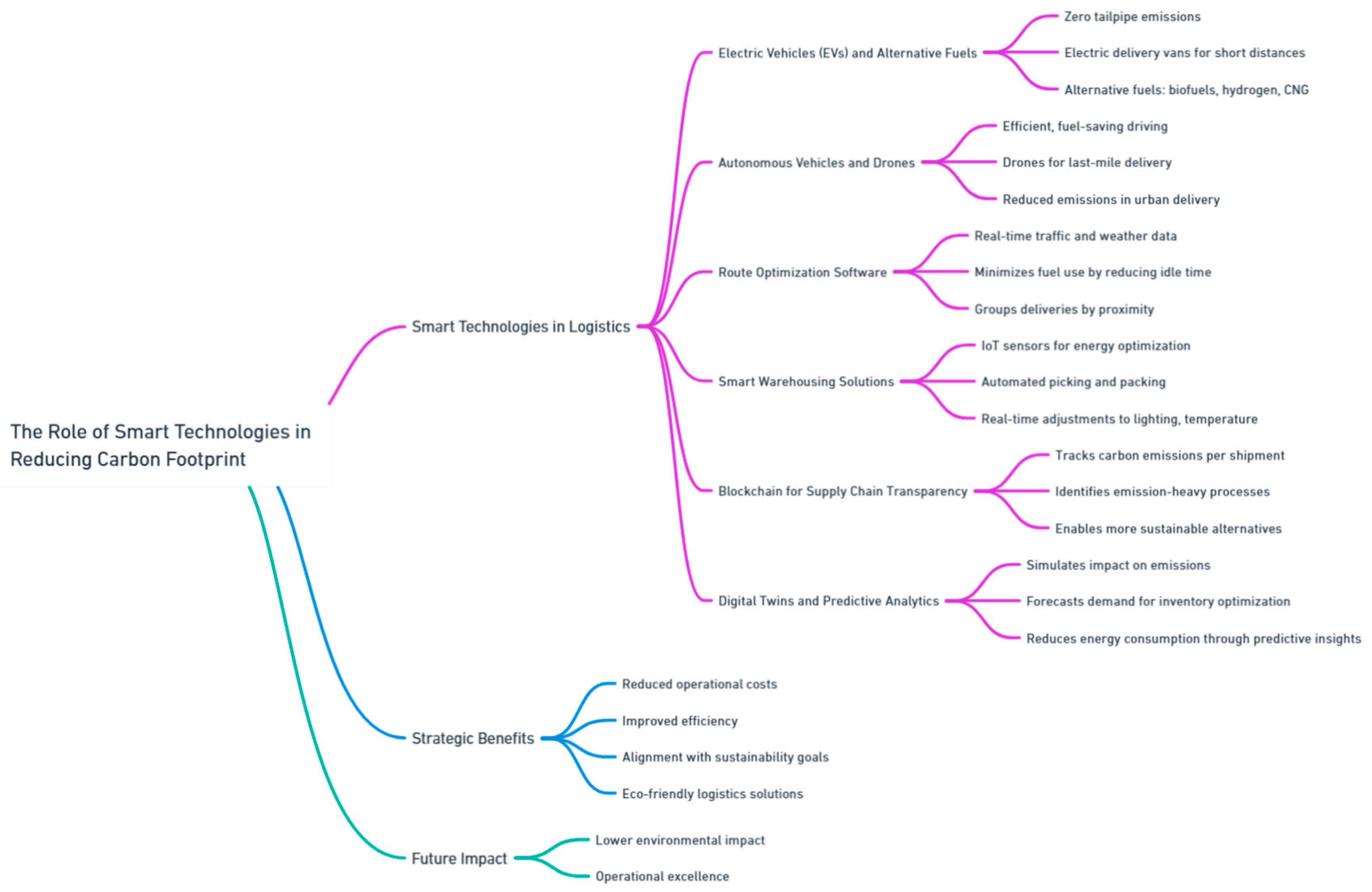
Preprints 139811 i004

4.1.2. Importance of Sustainability in Supply Chains
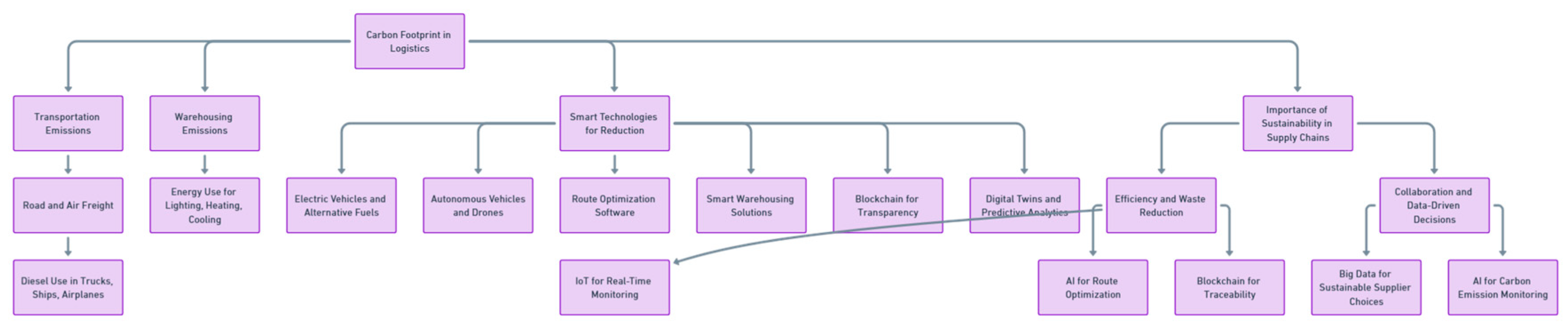
Sustainability in supply chains has become a critical focus for businesses worldwide, particularly in the context of reducing carbon footprints through the use of smart technologies. As global supply chains continue to grow in complexity and scale, the environmental impact of these operations has increased, making it essential for companies to adopt sustainable practices. Smart technologies, which include artificial intelligence (AI), the Internet of Things (IoT), big data analytics, and blockchain, offer powerful tools to enhance sustainability by optimizing processes, reducing waste, and minimizing carbon emissions. This integration of technology and sustainability in supply chains is crucial for meeting environmental goals while maintaining competitiveness in today’s market. One of the primary ways in which smart technologies can help reduce carbon footprints in supply chains is through enhanced efficiency. Logistics operations, such as transportation and warehousing, are often energy-intensive and contribute significantly to greenhouse gas emissions. IoT-enabled devices, for instance, can monitor and control energy usage in real-time, allowing companies to optimize their energy consumption and reduce unnecessary waste. Sensors placed in warehouses and vehicles can track temperature, lighting, and fuel usage, ensuring that resources are used as efficiently as possible. These technologies can also help prevent overuse of energy by alerting managers to potential inefficiencies or issues, such as excessive idle time in transportation fleets or malfunctioning equipment that consumes more energy than necessary. Transportation, a major component of supply chains, is one of the biggest contributors to carbon emissions. Smart technologies like AI and machine learning (ML) can be used to optimize transportation routes, reducing fuel consumption and emissions. For example, AI algorithms can analyze traffic patterns, weather conditions, and vehicle performance to determine the most efficient routes and schedules. This not only reduces the environmental impact of transportation but also cuts operational costs. Autonomous and electric vehicles, driven by advancements in AI and IoT, are also becoming more prevalent in supply chains, offering a greener alternative to traditional fossil fuel-powered vehicles. By adopting these technologies, companies can significantly reduce their carbon footprints while also benefiting from improved delivery times and reduced fuel expenses. Another important aspect of sustainability in supply chains is the reduction of waste, which smart technologies can effectively address. Blockchain technology, for example, provides end-to-end transparency in supply chains, enabling companies to track products from the point of origin to the final destination. This traceability helps prevent overproduction and ensures that goods are produced in an environmentally friendly manner. Additionally, blockchain can be used to verify the sustainability of raw materials and ensure that suppliers adhere to environmentally responsible practices. In industries such as food and retail, where wastage is often high due to perishable goods, blockchain helps reduce waste by improving demand forecasting and inventory management. Better forecasting allows companies to align production with demand, preventing overproduction and reducing the risk of unsold inventory going to waste. Sustainability is also about fostering collaboration across the entire supply chain, and smart technologies provide the tools needed for better coordination between different stakeholders. Big data analytics can be used to analyze vast amounts of information, from supplier performance to customer demand trends, enabling companies to make data-driven decisions that support sustainability goals. This can lead to the development of more sustainable supply chain strategies, such as choosing suppliers with lower carbon footprints or opting for greener packaging materials. Furthermore, digital platforms powered by smart technologies facilitate collaboration between suppliers, manufacturers, and logistics providers, ensuring that sustainability efforts are aligned across the entire supply chain. This collaborative approach is essential for maximizing the positive environmental impact of sustainability initiatives. Moreover, smart technologies enable companies to measure and monitor their carbon emissions accurately, a key step in reducing their overall carbon footprint. AI and IoT devices can provide real-time data on emissions at every stage of the supply chain, from manufacturing to transportation and distribution. With this data, companies can identify the most carbon-intensive parts of their operations and take targeted action to reduce emissions. For instance, if data shows that a particular supplier or transportation method generates excessive emissions, the company can switch to a more sustainable alternative. In conclusion, sustainability in supply chains is increasingly important as companies face pressure to reduce their environmental impact and meet regulatory requirements. Smart technologies offer a powerful solution to this challenge by enhancing efficiency, reducing waste, and optimizing energy use. By adopting these technologies, companies can significantly reduce their carbon footprints, contribute to global sustainability goals, and improve their overall competitiveness in the marketplace. As the demand for greener supply chains continues to grow, the role of smart technologies in achieving sustainability will become even more vital (Pan, et al., 2020; Zhang et al., 2022; Pei and Sun, 2020; Budak, 2022).
Preprints 139811 i005

4.1.3. Introduction of Smart Technologies as a Solution
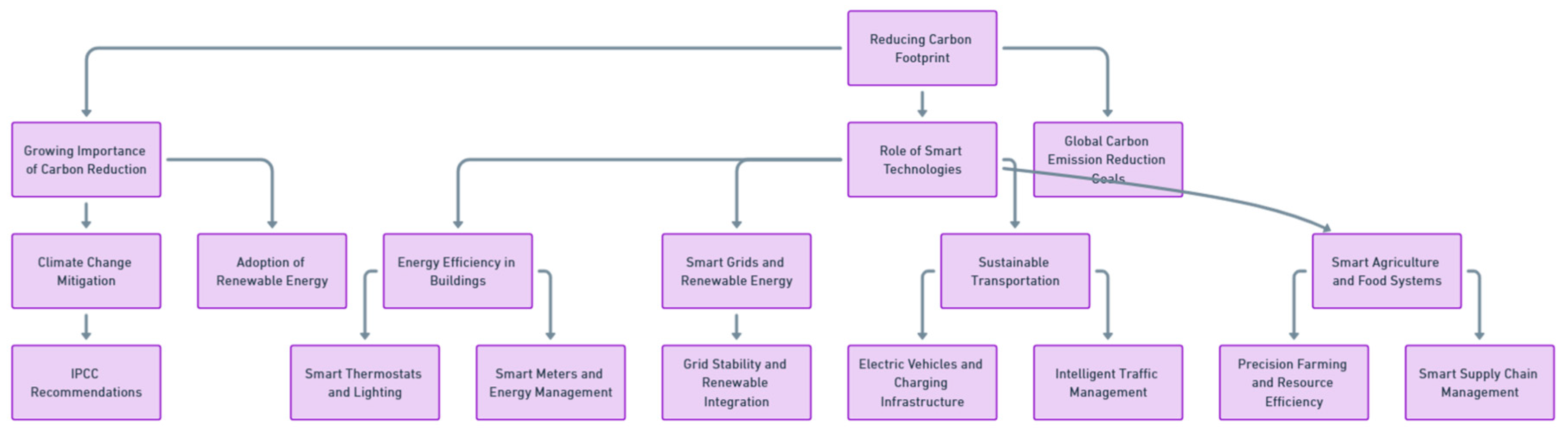
In an era marked by rapid industrialization, urbanization, and technological progress, the detrimental impact of human activity on the environment has become an urgent global concern. The carbon footprint, which represents the total amount of greenhouse gases (GHGs) emitted by human activities, has surged in recent decades, largely driven by fossil fuel consumption, deforestation, and wasteful resource use. As countries, organizations, and individuals strive to address this challenge, the integration of smart technologies has emerged as a powerful and sustainable solution. These advanced technologies are enabling unprecedented efficiency gains in various sectors, optimizing resource usage, and ultimately contributing to the reduction of global carbon emissions.
The Growing Importance of Reducing Carbon Footprint. Reducing the carbon footprint is essential for mitigating climate change and its associated risks, such as extreme weather events, sea-level rise, and biodiversity loss. Scientific evidence from the Intergovernmental Panel on Climate Change (IPCC) indicates that to limit global warming to 1.5°C above pre-industrial levels, worldwide carbon emissions must be reduced by 45% by 2030, compared to 2010 levels. Achieving such ambitious targets requires a multifaceted approach, including the adoption of renewable energy sources, energy efficiency measures, and behavioral changes at the individual and collective levels. However, these efforts can be significantly amplified through the implementation of smart technologies, which offer scalable and data-driven solutions to optimize energy use, reduce waste, and enhance sustainability across various industries.
The Role of Smart Technologies in Reducing Carbon Emissions. Smart technologies encompass a wide range of innovations, including the Internet of Things (IoT), artificial intelligence (AI), big data analytics, and advanced sensor systems. These technologies are fundamentally transforming how resources are managed and consumed, allowing for more precise monitoring, real-time adjustments, and long-term planning. The following sections highlight key areas where smart technologies are driving carbon footprint reduction.
Energy Efficiency in Buildings. Buildings account for nearly 40% of global energy consumption and a similar proportion of carbon emissions. Smart technologies are revolutionizing the way energy is used in residential, commercial, and industrial buildings by automating energy systems and optimizing consumption patterns. Smart thermostats, for example, use AI algorithms and sensors to adjust heating and cooling systems based on occupancy, weather conditions, and energy prices. By learning and adapting to user behavior, these systems can significantly reduce energy waste, leading to lower emissions. Moreover, smart lighting systems, powered by motion sensors and real-time data, ensure that lights are only in use when needed. Smart meters and energy management systems provide detailed insights into energy consumption patterns, allowing users to identify inefficiencies and make informed decisions to reduce their carbon footprint. Overall, integrating smart technologies into buildings can lead to energy savings of up to 30%, while also improving comfort and convenience.
Smart Grids and Renewable Energy Integration. The global transition to renewable energy sources, such as solar and wind power, is crucial for reducing reliance on fossil fuels and lowering carbon emissions. However, renewable energy sources are often variable and intermittent, posing challenges for grid stability and energy management. Smart grids, enhanced by IoT and AI, address these challenges by balancing supply and demand in real time and facilitating the integration of renewable energy into the grid. Smart grids enable utilities to monitor energy flow, predict demand fluctuations, and optimize energy distribution with minimal waste. Additionally, these grids allow for the seamless integration of distributed energy resources, such as rooftop solar panels and electric vehicles, into the energy ecosystem. By optimizing the use of renewable energy and reducing reliance on carbon-intensive power sources, smart grids play a pivotal role in lowering the carbon footprint of energy production.
Sustainable Transportation. Transportation is another major contributor to global carbon emissions, accounting for around 24% of global energy-related CO2 emissions. Smart technologies are transforming the transportation sector through innovations like electric vehicles (EVs), autonomous driving, and intelligent traffic management systems. EVs, powered by renewable energy, produce significantly lower emissions than traditional gasoline-powered vehicles, and their adoption is on the rise as smart charging infrastructure becomes more widespread. Intelligent traffic management systems, enabled by IoT and AI, use real-time data to optimize traffic flow, reduce congestion, and minimize fuel consumption. These systems can also promote the use of public transportation by providing accurate arrival times and enhancing the overall efficiency of transit networks. Furthermore, autonomous vehicles have the potential to reduce emissions by improving fuel efficiency and reducing idle time in traffic. Collectively, these advancements contribute to more sustainable urban mobility and a reduced transportation-related carbon footprint.
Smart Agriculture and Food Systems. Agriculture is responsible for a significant share of global greenhouse gas emissions, primarily due to deforestation, methane emissions from livestock, and the use of synthetic fertilizers. Smart technologies are helping to create more sustainable agricultural practices by optimizing resource use and reducing waste. Precision farming, for example, uses sensors, drones, and data analytics to monitor soil conditions, water usage, and crop health. This enables farmers to apply fertilizers and water more efficiently, reducing the carbon footprint of agricultural production. Moreover, smart supply chain management systems are improving the efficiency of food distribution, reducing food waste, and minimizing the emissions associated with transportation and storage. By streamlining agricultural operations and reducing waste, smart technologies are contributing to the creation of a more sustainable food system.
The introduction of smart technologies as a solution for reducing carbon footprints represents a critical step toward a sustainable future. From energy-efficient buildings and smart grids to sustainable transportation and agriculture, these innovations offer scalable solutions to the global challenge of climate change. As governments, businesses, and individuals continue to embrace smart technologies, the potential for reducing carbon emissions and achieving a low-carbon economy will become increasingly attainable (Issa Zadeh and Garay-Rondero, 2023; Hurst et al., 2020; Almihat et al., 2022; Niu et al., 2022).
Preprints 139811 i006

4.1.4. Smart Technologies Offer Efficient, Scalable Methods to Reduce the Logistics Sector's Carbon Footprint, Contributing to Sustainable Development
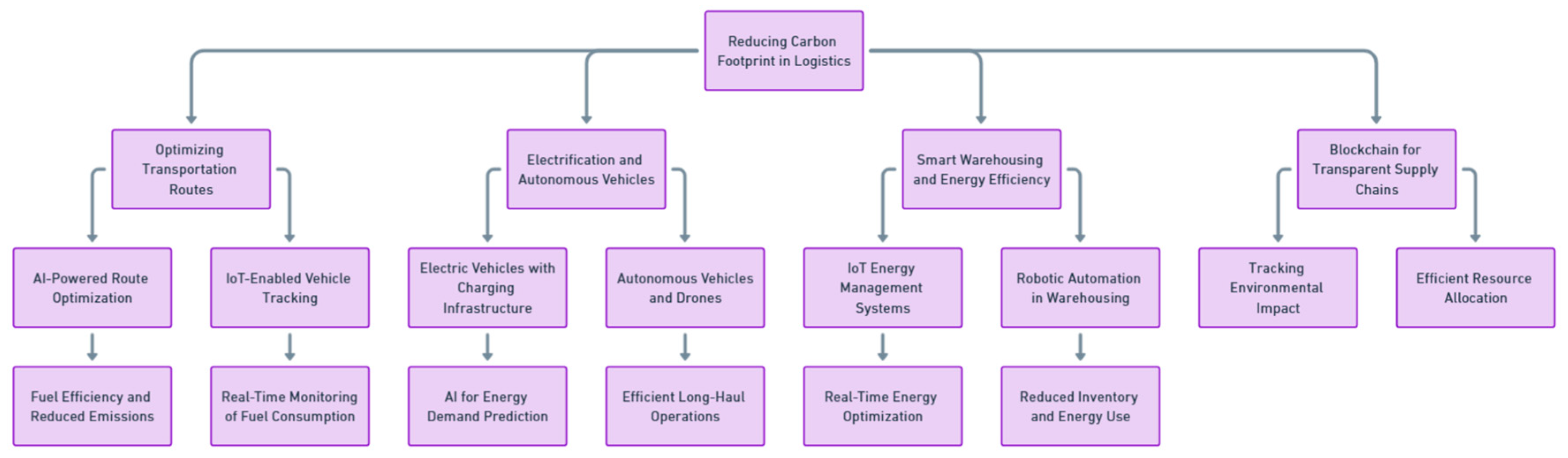
The logistics sector is a cornerstone of the global economy, responsible for the transportation, storage, and delivery of goods across continents. However, this vast network is also a significant contributor to greenhouse gas (GHG) emissions, leading to a substantial carbon footprint. With the increasing urgency to combat climate change, industries worldwide are under pressure to adopt sustainable practices. Smart technologies, which encompass advanced digital tools like artificial intelligence (AI), Internet of Things (IoT), big data analytics, and blockchain, offer efficient and scalable methods for reducing the carbon footprint of logistics. By optimizing operations, improving energy efficiency, and enabling smarter resource allocation, these technologies are paving the way for a more sustainable logistics industry, contributing to broader sustainable development goals.
Optimizing Transportation Routes and Reducing Emissions. One of the primary areas where smart technologies can significantly reduce the carbon footprint is in transportation. Logistics heavily depends on fuel-powered vehicles, which are responsible for a significant portion of GHG emissions. AI-powered route optimization and IoT-enabled vehicle tracking systems can play a critical role in minimizing fuel consumption. By using AI to analyze traffic patterns, road conditions, and weather data in real-time, logistics companies can optimize routes for fuel efficiency. This reduces the distance traveled and the time vehicles spend idling, directly cutting down on fuel consumption and emissions. For example, dynamic routing systems can identify the least congested paths, allowing trucks to avoid traffic jams, thus reducing the fuel wastage associated with stop-and-go driving. This technology also extends to maritime and air freight, where fuel-efficient routing can significantly lower emissions for long-distance transport. In addition, IoT sensors installed in vehicles enable real-time monitoring of fuel consumption and vehicle performance. Data collected from these sensors can provide insights into driving behavior, vehicle maintenance needs, and fuel efficiency, allowing companies to make informed decisions on how to optimize fleet operations. This proactive approach not only reduces emissions but also lowers operational costs, creating a win-win situation for businesses and the environment.
Electrification and Autonomous Vehicles. Another promising development facilitated by smart technology is the shift toward electrification in the logistics sector. Electric vehicles (EVs) are inherently more sustainable than their fossil fuel counterparts, as they produce zero tailpipe emissions. Smart technologies are essential in managing the large-scale adoption of EVs, especially through the development of efficient charging infrastructure and battery management systems. Advanced data analytics and AI are crucial in predicting energy demands and optimizing charging station placement, ensuring that EV fleets can be efficiently powered with minimal downtime. Moreover, smart grid integration allows logistics companies to charge their vehicles during off-peak hours, reducing strain on the energy grid and utilizing renewable energy sources more effectively. Autonomous vehicles (AVs) are another smart technology that holds potential for reducing the logistics sector’s carbon footprint. Self-driving trucks and drones, powered by AI and machine learning algorithms, are being tested for their ability to streamline delivery processes. AVs can optimize driving patterns, eliminate human error, and operate continuously without rest, making them more fuel-efficient and capable of reducing emissions on long-haul routes. While the technology is still in its early stages, its potential for emission reduction is significant.
Smart Warehousing and Energy Efficiency. Warehousing, another critical aspect of logistics, also contributes to the industry's carbon footprint, particularly through energy consumption for lighting, heating, cooling, and refrigeration. Smart technologies are revolutionizing how warehouses operate, making them more energy-efficient and environmentally friendly. IoT-based energy management systems can monitor and regulate energy use in real-time, optimizing heating, ventilation, and air conditioning (HVAC) systems to reduce energy wastage. By integrating smart sensors and automation, warehouses can adjust lighting and temperature based on occupancy and external conditions, ensuring that energy is only used when necessary. Furthermore, AI can predict energy consumption patterns and recommend adjustments, reducing overall energy use without compromising warehouse operations. Additionally, the implementation of robotic automation in warehouses can improve efficiency and reduce waste. Autonomous robots can quickly and accurately move goods, reducing the need for excess inventory space and minimizing the energy required to manage goods within a facility. The combination of smart warehousing technologies leads to a reduction in both energy consumption and operational costs, contributing to lower carbon emissions.
Blockchain for Transparent, Sustainable Supply Chains. Blockchain technology offers another avenue for reducing the logistics sector’s carbon footprint by enhancing transparency and accountability within supply chains. Blockchain provides an immutable record of transactions, enabling companies to track the environmental impact of their entire logistics process. With this technology, businesses can verify that their suppliers are adhering to sustainable practices, reducing their overall carbon footprint. Furthermore, blockchain can facilitate more efficient resource allocation by improving demand forecasting and inventory management. By ensuring that goods are transported and stored in a way that minimizes waste and inefficiency, companies can significantly reduce the environmental impact of their operations.
Smart technologies offer a powerful, scalable solution to reduce the logistics sector's carbon footprint. Through route optimization, electrification, autonomous vehicles, smart warehousing, and blockchain-enabled transparency, these technologies are reshaping the industry. As logistics companies continue to adopt and integrate these innovations, they not only improve operational efficiency but also make meaningful contributions to global sustainability efforts. The deployment of smart technologies is essential in achieving a greener, more sustainable future for the logistics sector and, by extension, the global economy (Pan et al., 2020; Zhang et al., 2022; Issa Zadeh and Garay-Rondero, 2023).
Preprints 139811 i007

4.2. Reducing Carbon Footprint Through Smart Technologies

4.2.1. Definition of Carbon Footprint in Logistics

A carbon footprint refers to the total amount of greenhouse gases (GHG), primarily carbon dioxide (CO₂), emitted directly or indirectly by human activities. In logistics, the carbon footprint specifically addresses the emissions resulting from the transportation, storage, and distribution of goods. Logistics involves multiple processes, such as freight transportation, warehousing, packaging, and the operation of logistics networks, all of which consume energy and contribute to greenhouse gas emissions. Logistics plays a crucial role in global trade and the movement of goods, but it also significantly impacts the environment. This sector relies heavily on fuel-powered vehicles, such as trucks, ships, planes, and trains, which are responsible for the majority of carbon emissions in the industry. Additionally, energy-intensive activities in warehouses and distribution centers, such as lighting, heating, and cooling, further add to the carbon footprint. Understanding and reducing the carbon footprint in logistics is essential for mitigating the negative effects of climate change and achieving more sustainable supply chain operations.
Key Sources of Carbon Emissions in Logistics. The carbon footprint in logistics comes from several key sources:
  • Transportation: This is the largest contributor to carbon emissions in logistics. The transportation of goods by trucks, ships, planes, and trains consumes vast amounts of fossil fuels. Among these, air freight is the most carbon-intensive, while ocean and rail transport tend to be more energy-efficient. However, road transportation is the most commonly used mode of transport for shorter distances and last-mile delivery, making it a significant contributor to overall emissions.
  • Warehousing: Logistics involves the storage of goods in warehouses or distribution centers before they reach their final destination. The operation of these facilities requires substantial energy, especially for lighting, climate control, and material handling equipment. Depending on the size and energy efficiency of the warehouse, the carbon footprint can vary significantly.
  • Packaging: Packaging is another significant factor in the carbon footprint of logistics. Excessive or non-recyclable packaging materials contribute to waste and require additional energy for production and disposal. Moreover, packaging affects the volume and weight of goods during transportation, influencing fuel consumption.
  • Inventory Management: Inefficient inventory management can lead to overstocking or underutilization of storage space, which increases energy use in warehouses. Poor management of goods can also result in additional transportation, further increasing emissions.
  • Reverse Logistics: The process of returning goods, also known as reverse logistics, generates additional transportation and handling, which can add to the carbon footprint. This often includes the transportation of defective or unwanted products back to manufacturers or sellers, as well as the recycling or disposal of packaging materials.
Reducing the Carbon Footprint in Logistics. Reducing the carbon footprint in logistics is crucial for both environmental sustainability and long-term cost savings. Companies are increasingly adopting green logistics practices to minimize their impact on the environment. Some key strategies include:
  • Optimizing Transportation Routes and Modes: One of the most effective ways to reduce emissions in logistics is by optimizing transportation routes and choosing more energy-efficient modes of transport. Route optimization software can help companies reduce the distance traveled by vehicles, leading to lower fuel consumption and emissions. Additionally, shifting from road transport to rail or sea for long-distance shipments can significantly cut emissions, as these modes are more energy-efficient per ton-mile of goods moved.
  • Using Alternative Fuels and Electric Vehicles: The adoption of alternative fuels, such as biofuels, hydrogen, and electricity, is gaining traction in the logistics sector. Electric vehicles (EVs), in particular, are being increasingly used for last-mile deliveries, which reduces emissions in densely populated urban areas. While the widespread adoption of EVs in logistics is still in its early stages, it holds significant potential for reducing the sector's carbon footprint.
  • Improving Warehouse Efficiency: Warehouses and distribution centers can reduce their carbon footprint by improving energy efficiency. Installing energy-efficient lighting, using renewable energy sources like solar panels, and implementing smart climate control systems can significantly reduce energy consumption. Additionally, automating warehouse operations with robotics and AI can optimize space utilization and minimize energy waste.
  • Sustainable Packaging Practices: Reducing the use of non-recyclable materials, minimizing packaging waste, and designing packaging to be lighter and more compact can help reduce emissions in logistics. Reusable packaging materials, such as crates and pallets, are also being used more widely to decrease waste and transportation emissions.
  • Collaborative Logistics: Companies can reduce their carbon footprint by collaborating with other businesses to share transportation resources and consolidate shipments. This approach, known as collaborative logistics, allows companies to maximize the use of transportation assets, such as trucks or shipping containers, thereby reducing the number of trips and lowering emissions.
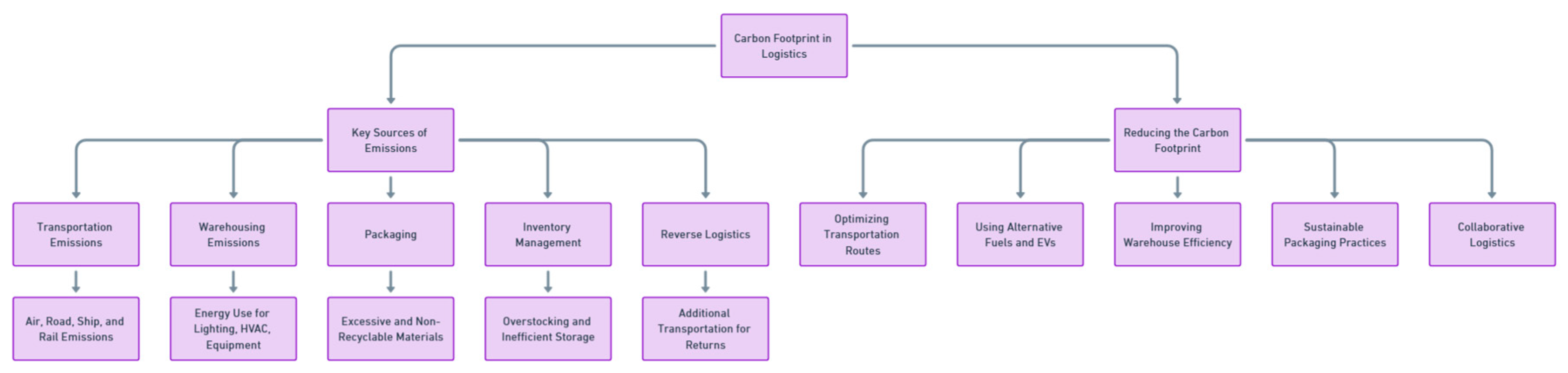
The carbon footprint in logistics is a significant environmental challenge that requires attention from businesses, governments, and consumers alike. By adopting sustainable practices, optimizing transportation, and improving energy efficiency in warehouses and packaging, the logistics industry can make substantial progress in reducing its carbon footprint. As the global economy continues to grow, finding ways to make logistics more environmentally friendly will be crucial in combating climate change and preserving natural resources for future generations (Budak, 2022; Kang et al. 2021; Patel, N., Feofilovs, M., & Romagnoli, F. (2023)
Preprints 139811 i008

4.2.2. Key Sources: Transportation, Warehousing, and Last-Mile Delivery

The logistics industry plays a crucial role in the global economy, enabling the efficient movement of goods and services across vast distances. However, this essential sector also has a significant environmental impact, with a substantial carbon footprint primarily driven by transportation, warehousing, and last-mile delivery. As businesses and consumers increasingly focus on sustainability, understanding the carbon emissions generated by these key sources is vital for developing strategies to mitigate climate change. Transportation is the largest contributor to carbon emissions in logistics. The movement of goods via trucks, ships, planes, and trains accounts for a significant portion of the logistics sector's overall carbon footprint. Each mode of transport has a different environmental impact depending on the fuel it consumes and the distances covered.
  • Trucks and Road Freight: Road freight, particularly through trucks, is one of the most widely used forms of transportation in logistics. This is especially true for domestic and regional shipments, where trucks are often relied upon for last-mile delivery and shorter routes. However, trucks are highly reliant on fossil fuels, particularly diesel, which results in significant greenhouse gas emissions. As trucks operate over long distances or in urban areas, their carbon footprint increases due to fuel consumption and traffic congestion.
  • Ships and Maritime Transport: Shipping is a more efficient mode of transport in terms of emissions per ton of cargo moved, making it a preferred option for international trade and long-distance shipping. However, due to the vast scale of global shipping operations, the total emissions from maritime transport are still substantial. Large container ships often burn heavy fuel oil, a particularly carbon-intensive fossil fuel, contributing to a significant portion of global emissions. There are ongoing efforts to reduce emissions in this sector by adopting cleaner technologies such as liquefied natural gas (LNG) or electric propulsion.
  • Air Freight: Air transportation is the most carbon-intensive mode of logistics transport. While air freight accounts for a smaller portion of total global trade by volume, it is responsible for a disproportionately high percentage of emissions. This is because jet fuel has a higher carbon output per ton-mile than other fuels, and planes are typically used for high-priority, long-distance shipments. The high speed of air transport comes with a steep environmental cost, and efforts to minimize air freight are critical to reducing the logistics industry's carbon footprint.
  • Rail Freight: Rail transport is considered one of the most environmentally friendly modes of transportation for moving goods over long distances. Trains, especially those powered by electricity or hybrid systems, produce significantly lower emissions than trucks or airplanes. As a result, many companies are exploring ways to shift freight from road to rail, particularly for bulk goods and raw materials.
Warehousing is another key source of carbon emissions in logistics. While less immediately visible than transportation, warehousing operations consume substantial energy, particularly for lighting, climate control, and equipment operation. Large distribution centers often operate 24/7, which means energy demand is consistently high.
  • Energy Use for Lighting and Climate Control: Warehouses require extensive lighting to ensure the safe and efficient handling of goods. Many older warehouses still rely on inefficient lighting systems, which consume large amounts of electricity. Climate control, such as heating, ventilation, and air conditioning (HVAC), is another major energy consumer. Warehouses dealing with perishable goods often require refrigeration, further increasing their carbon footprint. Transitioning to energy-efficient lighting systems, such as LED, and using renewable energy sources can help reduce emissions from warehousing operations.
  • Material Handling Equipment: Forklifts, cranes, and conveyor systems used to move goods within warehouses are typically powered by electricity or fossil fuels. While some facilities have shifted to electric forklifts, others still use diesel-powered equipment, contributing to carbon emissions. Automation and robotics in warehousing have the potential to improve efficiency, but they also require energy, which can increase the carbon footprint if not managed sustainably.
Last-mile delivery refers to the final stage of the logistics process, where goods are delivered from a distribution center or warehouse to the end customer. This is often the most carbon-intensive part of the logistics chain, especially in urban areas. The growing demand for e-commerce and rapid delivery services has put additional pressure on logistics providers, leading to increased emissions from frequent and small-scale deliveries.
  • Congestion and Inefficient Routing: Last-mile delivery vehicles often face traffic congestion, especially in densely populated cities. This not only slows down deliveries but also leads to higher fuel consumption and increased emissions. Inefficient routing can further exacerbate the problem, as vehicles may cover more distance than necessary. Optimizing delivery routes and using technology to plan more efficient paths can significantly reduce the carbon footprint of last-mile delivery.
  • Electric and Alternative Fuel Vehicles: To address the environmental challenges of last-mile delivery, many companies are turning to electric vehicles (EVs) and alternative fuel vehicles. EVs, in particular, are gaining popularity for urban deliveries as they produce zero emissions at the point of use. However, the overall carbon footprint depends on how the electricity is generated. In regions where renewable energy is used, EVs can dramatically reduce emissions, making them a key part of the solution for sustainable last-mile logistics.
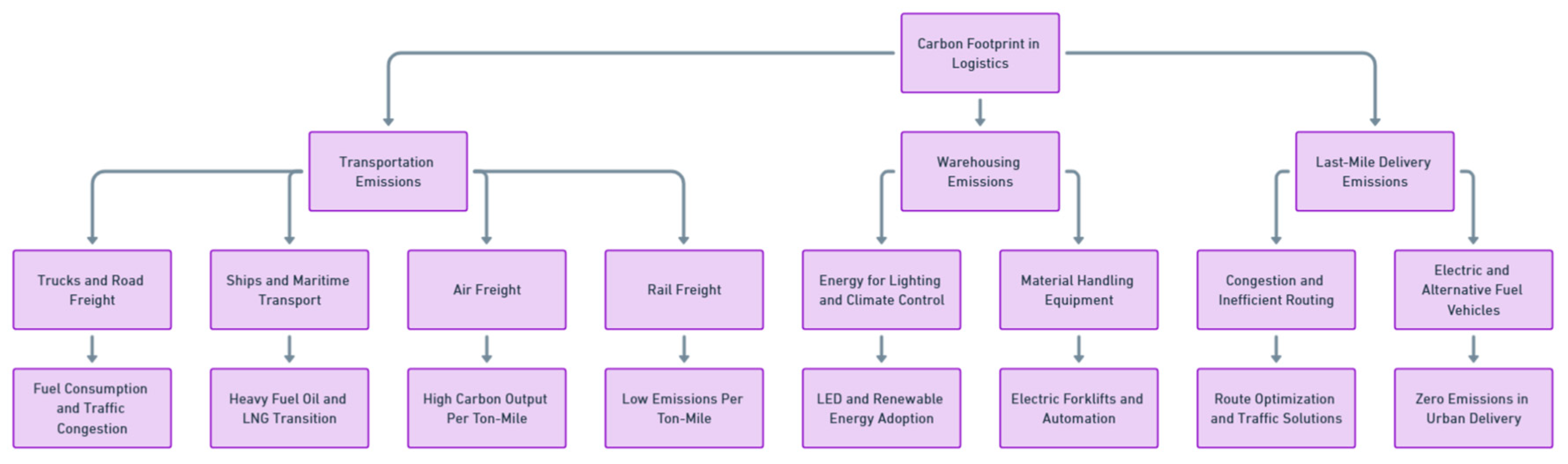
The carbon footprint in logistics is heavily influenced by transportation, warehousing, and last-mile delivery. Each of these components plays a critical role in the efficiency and sustainability of supply chains. As global demand for goods continues to rise, reducing emissions from these key sources is essential for mitigating the environmental impact of logistics. By adopting cleaner technologies, optimizing operations, and embracing sustainable practices, the logistics industry can take significant steps toward reducing its carbon footprint and contributing to a more sustainable future.
Warehousing is another key source of carbon emissions in logistics. While less immediately visible than transportation, warehousing operations consume substantial energy, particularly for lighting, climate control, and equipment operation. Large distribution centers often operate 24/7, which means energy demand is consistently high.
  • Energy Use for Lighting and Climate Control: Warehouses require extensive lighting to ensure the safe and efficient handling of goods. Many older warehouses still rely on inefficient lighting systems, which consume large amounts of electricity. Climate control, such as heating, ventilation, and air conditioning (HVAC), is another major energy consumer. Warehouses dealing with perishable goods often require refrigeration, further increasing their carbon footprint. Transitioning to energy-efficient lighting systems, such as LED, and using renewable energy sources can help reduce emissions from warehousing operations.
  • Material Handling Equipment: Forklifts, cranes, and conveyor systems used to move goods within warehouses are typically powered by electricity or fossil fuels. While some facilities have shifted to electric forklifts, others still use diesel-powered equipment, contributing to carbon emissions. Automation and robotics in warehousing have the potential to improve efficiency, but they also require energy, which can increase the carbon footprint if not managed sustainably.
Last-mile delivery refers to the final stage of the logistics process, where goods are delivered from a distribution center or warehouse to the end customer. This is often the most carbon-intensive part of the logistics chain, especially in urban areas. The growing demand for e-commerce and rapid delivery services has put additional pressure on logistics providers, leading to increased emissions from frequent and small-scale deliveries.
  • Congestion and Inefficient Routing: Last-mile delivery vehicles often face traffic congestion, especially in densely populated cities. This not only slows down deliveries but also leads to higher fuel consumption and increased emissions. Inefficient routing can further exacerbate the problem, as vehicles may cover more distance than necessary. Optimizing delivery routes and using technology to plan more efficient paths can significantly reduce the carbon footprint of last-mile delivery.
  • Electric and Alternative Fuel Vehicles: To address the environmental challenges of last-mile delivery, many companies are turning to electric vehicles (EVs) and alternative fuel vehicles. EVs, in particular, are gaining popularity for urban deliveries as they produce zero emissions at the point of use. However, the overall carbon footprint depends on how the electricity is generated. In regions where renewable energy is used, EVs can dramatically reduce emissions, making them a key part of the solution for sustainable last-mile logistics.
The carbon footprint in logistics is heavily influenced by transportation, warehousing, and last-mile delivery. Each of these components plays a critical role in the efficiency and sustainability of supply chains. As global demand for goods continues to rise, reducing emissions from these key sources is essential for mitigating the environmental impact of logistics. By adopting cleaner technologies, optimizing operations, and embracing sustainable practices, the logistics industry can take significant steps toward reducing its carbon footprint and contributing to a more sustainable future (Lauenstein and Schank, 2022; Scedrovs et al., 2023; Cano et al., 2022; Castillo and Álvarez, 2023).
Preprints 139811 i009

4.3. Reducing Carbon Footprint Through Smart Technologies

4.3.1. Definition and Types of Smart Technologies in Logistics

Smart technologies in logistics refer to the application of advanced digital tools, systems, and innovations designed to enhance efficiency, accuracy, and sustainability in the movement and management of goods. These technologies integrate real-time data collection, automation, artificial intelligence (AI), and communication systems to streamline logistics processes across the supply chain. By enabling better decision-making, reducing human errors, and optimizing resource use, smart technologies have become central to modern logistics operations. With the increasing complexity of global supply chains, the logistics industry faces numerous challenges, including managing costs, meeting customer demands for faster deliveries, and minimizing environmental impact. Smart technologies offer solutions to these challenges by providing greater visibility, improving operational efficiencies, and enabling more responsive and agile logistics systems. Below, we explore the key types of smart technologies being used in logistics today.

4.3.2. Types of Smart Technologies in Logistics

The logistics industry is undergoing a significant transformation driven by smart technologies that enable more efficient, cost-effective, and sustainable operations. Technologies like the Internet of Things (IoT), Artificial Intelligence (AI), robotics, blockchain, and big data analytics are reshaping the way companies manage and optimize their supply chains. By leveraging these advancements, logistics firms can enhance visibility, streamline processes, and offer more reliable, customer-focused services. In an increasingly competitive market, adopting these smart technologies is essential for companies aiming to stay ahead and meet the demands of a dynamic, data-driven world. The following technologies are applied:
  • Internet of Things (IoT). The Internet of Things (IoT) is a network of interconnected devices that collect and exchange data via the internet. In logistics, IoT devices can be embedded in vehicles, containers, warehouses, and cargo to monitor real-time conditions, including location, temperature, humidity, and movement. This constant flow of data helps companies track shipments, monitor inventory, and maintain product quality, especially for sensitive goods like food or pharmaceuticals. For example, IoT sensors can alert logistics managers if the temperature inside a refrigerated truck exceeds a certain threshold, allowing them to take immediate action and prevent spoilage. Additionally, IoT-based vehicle tracking systems provide real-time updates on delivery routes, enabling better route planning and reducing delays. This enhanced visibility and control lead to improved operational efficiency, cost savings, and customer satisfaction.
  • Artificial Intelligence (AI) and Machine Learning. Artificial intelligence (AI) and machine learning (ML) are transforming logistics by enabling smarter decision-making and process automation. AI algorithms can analyze vast amounts of data to identify patterns, predict demand, and optimize logistics networks. Machine learning, a subset of AI, allows systems to improve their performance over time by learning from historical data. In logistics, AI and ML are commonly used for demand forecasting, route optimization, and predictive maintenance. For instance, AI-powered systems can analyze past demand patterns and market trends to forecast future demand accurately. This helps logistics companies optimize inventory levels, reduce stockouts, and avoid overstocking. Additionally, AI-driven route optimization tools analyze real-time traffic, weather conditions, and fuel prices to determine the most efficient delivery routes, reducing transportation costs and carbon emissions. AI is also being used in predictive maintenance, where sensors on vehicles and machinery collect data on performance and condition. AI algorithms analyze this data to predict when equipment is likely to fail, allowing companies to schedule maintenance before breakdowns occur. This proactive approach reduces downtime, extends equipment lifespan, and minimizes repair costs.
  • Robotics and Automation. Robotics and automation are revolutionizing logistics by enhancing efficiency and reducing manual labor. In warehouses, automated systems and robots are used to perform tasks such as picking, packing, sorting, and inventory management. These technologies not only improve speed and accuracy but also reduce the risk of human error and workplace injuries. One common application of automation in logistics is the use of Automated Guided Vehicles (AGVs) or Autonomous Mobile Robots (AMRs) in warehouses. AGVs and AMRs are used to transport goods within a warehouse or distribution center, reducing the need for manual handling. These robots can navigate complex environments, avoid obstacles, and optimize their routes, leading to faster and more efficient operations. Robotic arms are also being employed for picking and packing tasks. These machines are equipped with sensors and AI algorithms that allow them to handle items of varying shapes, sizes, and weights. By automating these tasks, companies can increase throughput and reduce labor costs, particularly during peak seasons when demand surges.
  • Blockchain Technology. Blockchain technology is gaining traction in logistics due to its ability to enhance transparency, security, and traceability in supply chain transactions. Blockchain is a decentralized and immutable ledger that records transactions in a secure and transparent manner. In logistics, it can be used to track the movement of goods, verify authenticity, and ensure compliance with regulations. For instance, blockchain can provide a tamper-proof record of a product's journey from the manufacturer to the end customer, including all intermediaries such as transport providers, warehouses, and customs authorities. This transparency reduces the risk of fraud, counterfeiting, and disputes. Moreover, blockchain-based smart contracts can automate payment and verification processes, speeding up transactions and reducing administrative costs. Blockchain is particularly valuable in industries that require strict regulatory compliance, such as pharmaceuticals and food supply chains. It ensures that all parties involved in the logistics process have access to accurate and up-to-date information, improving accountability and trust.
  • Big Data and Data Analytics. The logistics industry generates vast amounts of data, from shipping schedules and inventory levels to customer preferences and fuel consumption. Big data and data analytics technologies allow companies to process and analyze this data to gain insights, make informed decisions, and improve operational performance. For example, data analytics can be used to optimize warehouse layouts by analyzing order patterns and item locations. By placing frequently ordered items closer to packing stations, companies can reduce the time it takes to fulfill orders. Similarly, big data analytics can be used to analyze fuel consumption patterns and identify areas where efficiency can be improved, such as by optimizing driving behaviors or selecting more fuel-efficient routes. In addition, customer data can be analyzed to identify trends and preferences, enabling companies to offer more personalized services and improve customer satisfaction. The ability to leverage big data for predictive analytics also helps companies anticipate demand, manage inventory levels, and respond more effectively to market fluctuations.
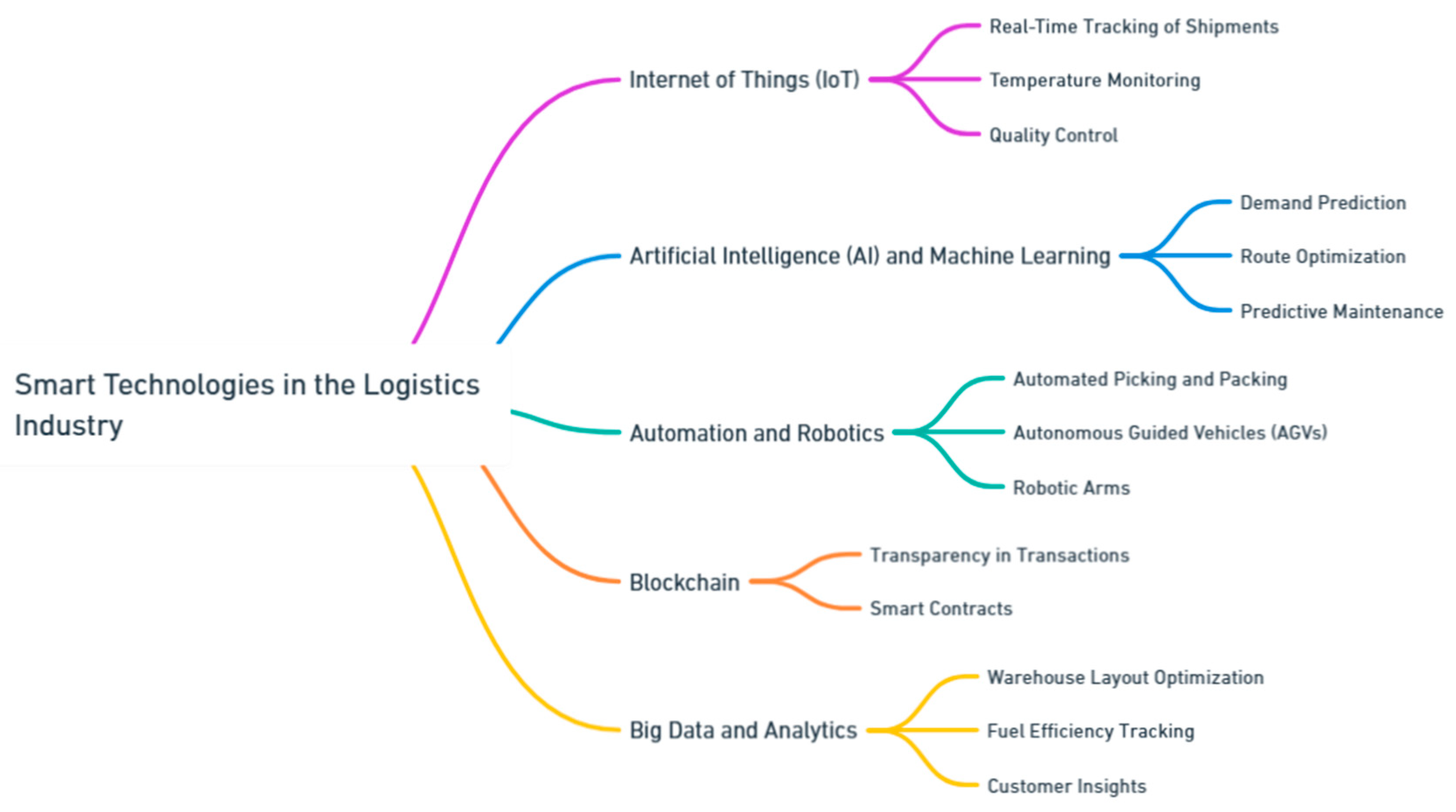
Smart technologies are transforming the logistics industry by improving efficiency, reducing costs, and enabling more sustainable operations. From IoT and AI to robotics and blockchain, these technologies offer new ways to optimize supply chain processes, enhance visibility, and provide better customer experiences. As the logistics sector continues to evolve, adopting and integrating smart technologies will be crucial for businesses seeking to stay competitive in a rapidly changing marketplace. By embracing innovation and leveraging the power of data, companies can streamline their logistics operations, reduce their carbon footprint, and ensure long-term sustainability in the face of growing demand and environmental concerns (Al-Sarawi et al., 2020; Firouzi et al., 2021, Wang, 2021; Talpur et al., 2023).
Preprints 139811 i010

4.3.3. Smart Technologies in Logistics

Smart Technologies in Logistics: Examples of IoT, AI, Big Data, and Blockchain. The logistics industry, essential to global trade and supply chains, is rapidly transforming due to the adoption of smart technologies. These advanced tools and systems are revolutionizing logistics by improving operational efficiency, reducing costs and enabling real-time tracking and data analysis. Among the key technologies driving these changes are the Internet of Things (IoT), Artificial Intelligence (AI), Big Data, and Blockchain. These technologies not only enhance visibility and control in logistics but also make processes more sustainable and responsive to market demands. Below is an exploration of how these technologies are being implemented in logistics and their impact.
Internet of Things (IoT). The Internet of Things (IoT) refers to a network of interconnected devices that can collect, transmit, and analyze data in real time. In logistics, IoT plays a critical role in providing end-to-end visibility of supply chains and optimizing the management of assets, from vehicles to goods in transit and storage. IoT devices, including sensors, RFID tags, and GPS trackers, enable real-time monitoring and control, which is essential for ensuring the efficient movement of goods.
Example of IoT in Logistics:
  • Real-Time Shipment Tracking: IoT sensors embedded in containers or vehicles allow companies to track shipments in real time. This technology provides updates on the location, condition, and estimated arrival time of goods. For example, a sensor in a refrigerated truck can monitor temperature and alert the driver or logistics manager if the temperature deviates from the required range, ensuring that perishable goods like food or pharmaceuticals remain in optimal condition.
  • Fleet Management: IoT-enabled GPS tracking systems are used to monitor vehicle routes, fuel consumption, and maintenance needs. By gathering data from fleet vehicles, companies can optimize routes to reduce fuel consumption, ensure timely maintenance, and minimize vehicle downtime.
The benefits of IoT in logistics include reduced delays, improved asset management, and increased customer satisfaction due to the real-time tracking capabilities that enhance transparency.
Artificial Intelligence (AI). Artificial Intelligence (AI) is one of the most transformative technologies in logistics. AI systems are capable of processing large amounts of data, identifying patterns, and making decisions with minimal human intervention. In logistics, AI can optimize processes such as demand forecasting, route planning, and inventory management. AI-powered automation is also becoming increasingly common in warehouses and distribution centers, improving efficiency and reducing human error.
Example of AI in Logistics:
  • Predictive Analytics and Demand Forecasting: AI algorithms can analyze historical data, customer behavior, and market trends to accurately forecast demand. This helps companies manage inventory levels more effectively, reducing the risk of overstocking or stockouts. By predicting when and where demand will spike, logistics providers can better allocate resources and streamline operations.
  • Autonomous Vehicles and Drones: AI is a key enabler of autonomous delivery systems, including self-driving trucks and drones. These technologies are being developed to automate last-mile deliveries, reduce labor costs, and improve delivery times. While still in the early stages, autonomous delivery systems have the potential to significantly disrupt the logistics industry by enhancing operational efficiency and reducing reliance on human labor.
AI’s ability to automate and optimize decision-making processes makes it an invaluable tool for improving logistics operations and reducing costs.
Big Data. Big Data refers to the massive volumes of structured and unstructured data generated by logistics operations. The challenge lies in analyzing this data to extract actionable insights that can improve decision-making and efficiency. By leveraging data analytics, logistics companies can gain deeper insights into their supply chains, enhance operational performance, and better meet customer needs.
Example of Big Data in Logistics:
  • Route Optimization: Big Data analytics tools can process vast amounts of data from multiple sources—such as traffic patterns, fuel prices, weather conditions, and delivery schedules—to identify the most efficient delivery routes. This helps reduce fuel consumption, shorten delivery times, and lower operational costs.
  • Customer Behavior Analysis: Big Data allows logistics companies to analyze customer purchasing patterns, preferences, and delivery expectations. By understanding customer behavior, companies can offer personalized services, optimize delivery schedules, and improve overall customer satisfaction. For instance, data on e-commerce purchasing trends can help companies prepare for peak periods, such as holiday shopping seasons, by optimizing inventory and staffing levels.
The ability to analyze Big Data allows logistics companies to operate more efficiently, predict future trends, and respond more dynamically to changes in the market.
Blockchain. Blockchain technology is a decentralized ledger that records transactions in a secure, transparent, and tamper-proof manner. In logistics, Blockchain has the potential to revolutionize supply chain management by enhancing transparency, traceability, and trust among all participants. Blockchain can streamline the sharing of information across different stakeholders, reduce fraud, and ensure the authenticity of goods and documents.
Example of Blockchain in Logistics:
  • Supply Chain Transparency: Blockchain can provide a digital ledger that tracks the movement of goods from the point of origin to the final destination. This is particularly useful in industries where product authenticity and regulatory compliance are critical, such as pharmaceuticals and food. For example, Blockchain technology can verify that a product was sourced ethically, manufactured according to regulatory standards, and delivered without tampering.
  • Smart Contracts: Blockchain enables the use of smart contracts, which are self-executing contracts with predefined conditions. In logistics, smart contracts can automate processes such as payments, document verification, and customs clearance. For instance, once a shipment arrives at its destination and is confirmed by IoT sensors, a smart contract could automatically trigger payment to the supplier, reducing administrative delays and costs.
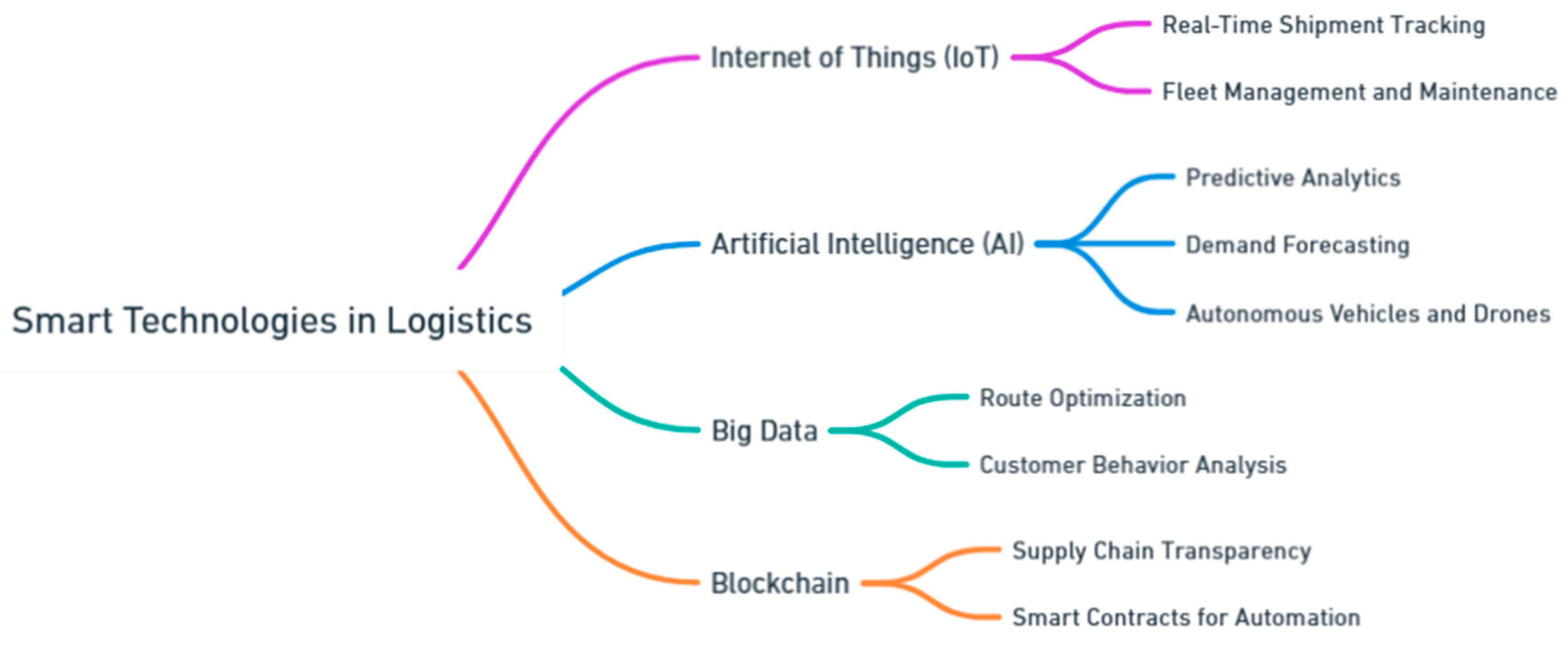
Blockchain enhances security, reduces paperwork, and provides an immutable record of transactions, making it a valuable tool for modernizing supply chain management. The integration of smart technologies such as IoT, AI, Big Data, and Blockchain is transforming the logistics industry, making it more efficient, transparent, and adaptable to the demands of modern commerce. IoT enables real-time tracking of assets and conditions, AI improves decision-making through automation and predictive analytics, Big Data provides actionable insights for optimizing operations, and Blockchain ensures transparency and trust in the supply chain. As logistics companies continue to adopt these technologies, they will not only achieve operational efficiencies but also address environmental sustainability concerns and improve customer service. The future of logistics lies in the seamless integration of these smart technologies, which will allow companies to remain competitive in an increasingly digital and fast-paced world (Kalkha et al., 2023; Ugochukwu et al., 2022; Chung, 2021; Balfaqih, 2023).
Preprints 139811 i011

4.4. Reducing Carbon Footprint Through Smart Technologies

The logistics industry, while essential to the global economy, is one of the largest contributors to carbon emissions. The use of fossil-fuel-powered vehicles for transportation, inefficient routing, and wasteful energy consumption in warehouses all contribute significantly to greenhouse gas (GHG) emissions. As concerns over climate change grow, companies are increasingly turning to innovative technologies to mitigate their environmental impact. One of the most promising solutions for reducing carbon emissions in logistics is the Internet of Things (IoT), particularly the use of smart sensors for route optimization.

4.4.1. IoT and Its Impact on Carbon Emissions in Logistics

The Internet of Things (IoT) refers to a network of interconnected devices that collect, share, and analyze data in real time. In logistics, IoT-enabled devices such as GPS trackers, sensors, and telematics systems provide real-time information on vehicles, cargo, and routes. These technologies allow logistics companies to monitor the status of their fleet, optimize transportation routes, and improve fuel efficiency. This, in turn, can significantly reduce fuel consumption and lower carbon emissions. The global push towards sustainability has led many logistics providers to integrate IoT solutions into their operations. These technologies help reduce the environmental footprint by enabling more efficient resource management, minimizing delays, and optimizing delivery schedules. Among the various applications of IoT, smart sensors for route optimization are particularly effective in reducing fuel consumption and cutting emissions.
Smart Sensors for Route Optimization. Route optimization is one of the most important areas where IoT can make a substantial difference in reducing carbon emissions. By utilizing smart sensors and real-time data, logistics companies can dynamically plan the most efficient routes for their vehicles, reducing fuel consumption, travel time, and emissions. Here’s how smart sensors contribute to route optimization:
  • Real-Time Traffic Monitoring: One of the key challenges in logistics is dealing with unpredictable traffic conditions. Traffic congestion leads to longer travel times, increased fuel consumption, and higher emissions. Smart sensors installed in vehicles can collect real-time data on traffic patterns, road conditions, and vehicle locations. This data is transmitted to route optimization systems, which use advanced algorithms to adjust routes on the fly, avoiding traffic bottlenecks and selecting the fastest and most fuel-efficient paths (Chen et al., 2021; Danchuk et al., 2023).
  • Fuel Efficiency Monitoring: Smart sensors in vehicles also monitor fuel consumption, providing data on driving behavior, engine performance, and vehicle load. By analyzing this data, logistics managers can identify inefficiencies in how vehicles are being operated. For example, sudden acceleration, excessive idling, and hard braking increase fuel consumption and emissions. Route optimization systems can recommend driving adjustments to minimize fuel use and suggest optimal routes that reduce the number of stops and starts, further improving fuel efficiency (Wickramanayake et al., 2020; Peppes et al., 2021).
  • Predictive Maintenance: IoT-enabled sensors also help optimize vehicle performance by monitoring the condition of critical components such as tires, brakes, and engines. Predictive maintenance systems use data from these sensors to predict when a vehicle might experience a breakdown or require maintenance. By addressing maintenance issues before they lead to breakdowns, companies can avoid unexpected delays and reduce the likelihood of vehicles taking longer or less efficient routes due to malfunctions. Properly maintained vehicles also run more efficiently, reducing fuel consumption and emissions (Massaro et al.,2020; Killeen, et al., 2022).
  • Dynamic Route Adjustments: Traditional route planning methods rely on static data, such as historical traffic patterns and distances. However, this approach doesn't account for real-time variables like accidents, weather conditions, or sudden road closures, all of which can lead to inefficient routes. Smart sensors, combined with real-time data analytics, enable dynamic route adjustments based on current conditions. For instance, if a vehicle encounters an unexpected road closure, the system can instantly reroute it to a faster, more fuel-efficient path, saving both time and fuel (Guo et al., 2020; Gmira et al., 2021).
  • Integration with Other Sustainable Technologies: IoT-based route optimization can be integrated with other green technologies to further reduce emissions. For example, smart sensors can coordinate with electric vehicles (EVs) to ensure that routes are optimized based on charging station locations and battery life. This allows logistics companies to maximize the use of EVs, which produce zero tailpipe emissions, for urban deliveries and short-distance routes (Li et al., 2024; Wang et al., 2022).
The Environmental and Business Benefits of IoT-Based Route Optimization. The use of IoT-enabled smart sensors for route optimization offers a dual benefit: reducing carbon emissions and improving operational efficiency. By optimizing routes, logistics companies can significantly lower fuel consumption, which in turn leads to a substantial reduction in GHG emissions. For example, studies have shown that route optimization can reduce fuel usage by as much as 10-20%, depending on the complexity of the routes and traffic conditions. This reduction directly translates into lower carbon emissions, making a positive impact on the environment. Additionally, optimized routes mean faster deliveries, reduced operational costs, and improved customer satisfaction. Companies save on fuel and maintenance costs, while customers benefit from quicker and more reliable deliveries. In competitive industries like e-commerce, where delivery speed and sustainability are increasingly important to consumers, these advantages can enhance a company’s reputation and market position. From a broader perspective, the widespread adoption of IoT-enabled smart sensors across the logistics sector could make a significant contribution to global efforts to reduce carbon emissions. According to the World Economic Forum, optimizing logistics operations through IoT could reduce global CO2 emissions by over 1 gigaton by 2030. As governments and industries set ambitious climate targets, IoT technologies will play a crucial role in helping the logistics sector meet its sustainability goals (Leng et al., 2020; Chen et al., 2021).
Smart sensors and IoT-based route optimization represent a powerful tool for reducing carbon emissions in logistics. By providing real-time data on traffic, vehicle performance, and route conditions, IoT technologies enable logistics companies to plan more efficient routes, reduce fuel consumption, and lower their environmental footprint. As the logistics industry continues to embrace digital transformation, the role of IoT in achieving sustainability goals will become even more significant. Ultimately, IoT not only helps logistics companies operate more efficiently but also plays a vital role in combating climate change by reducing carbon emissions on a global scale.
Monitoring vehicle performance and maintenance for fuel efficiency. Role of IoT in Reducing Carbon Emissions: Monitoring Vehicle Performance and Maintenance for Fuel Efficiency The Internet of Things (IoT) is playing an increasingly critical role in reducing carbon emissions across industries, including logistics and transportation. By enabling real-time data collection, analysis, and automation, IoT technologies are transforming how vehicles and fleets operate. One of the most impactful ways IoT contributes to lowering carbon footprints is through the monitoring of vehicle performance and maintenance, which directly enhances fuel efficiency and reduces emissions. As transportation remains a significant source of greenhouse gases (GHG), optimizing vehicle operations via IoT is key to achieving sustainability goals (Chhabra et al., 2021; Efimova and Saini, 2023).
IoT and Vehicle Performance Monitoring. IoT technology allows logistics companies to monitor vehicle performance in real time through a network of sensors and connected devices. These sensors are installed in various parts of the vehicle, such as the engine, tires, fuel system, and exhaust. They continuously collect data on vehicle performance metrics, including fuel consumption, engine temperature, tire pressure, speed, and braking patterns. This data is then transmitted to central systems, where it is analyzed to optimize performance and fuel efficiency.
  • Real-time Monitoring of Fuel Consumption: One of the primary contributors to carbon emissions in logistics is fuel consumption. IoT sensors track fuel usage in real time, giving fleet managers insight into how much fuel is being consumed by each vehicle during different driving conditions. By analyzing this data, managers can identify inefficient fuel usage patterns and adjust routes or driving behaviors accordingly. For example, if a particular vehicle consistently uses more fuel than others under similar conditions, it could indicate engine inefficiency or poor driving habits, both of which contribute to unnecessary fuel consumption and higher emissions.
  • Monitoring Driver Behavior for Efficiency: Driving behaviors such as harsh braking, rapid acceleration, and excessive idling can significantly impact fuel efficiency. IoT-enabled telematics systems provide real-time feedback to drivers and fleet managers about driving habits that waste fuel. Through constant monitoring, drivers can be alerted to adjust their behavior to minimize fuel consumption. For instance, smooth acceleration, maintaining steady speeds, and avoiding prolonged idling can reduce the amount of fuel burned, resulting in lower emissions. By promoting more eco-friendly driving practices, IoT helps logistics companies make substantial progress in reducing their carbon footprint (Mane et al., 2021; Sarmadi et al., 2022).
  • Tire Pressure Monitoring Systems (TPMS): Tire pressure is another crucial factor in fuel efficiency. Under-inflated tires create more rolling resistance, causing vehicles to use more fuel to maintain the same speed. IoT-enabled Tire Pressure Monitoring Systems (TPMS) alert drivers and fleet managers when tire pressure drops below the optimal level, allowing for timely maintenance. Properly inflated tires not only reduce fuel consumption but also extend tire life, contributing to both economic and environmental benefits. As fuel efficiency improves, carbon emissions are reduced (Yi et al., 2020; Szczucka-Lasota et al., 2021).
IoT and Predictive Maintenance for Reducing Emissions. Beyond real-time performance monitoring, IoT also plays a significant role in vehicle maintenance, which is crucial for fuel efficiency and emission reduction. Regular maintenance ensures that vehicles operate at peak efficiency, but traditional maintenance schedules may not account for actual vehicle wear and tear. IoT-based predictive maintenance, however, enables a more proactive and efficient approach.
  • Predictive Maintenance for Engine Efficiency: IoT sensors collect data on various aspects of vehicle health, including engine performance, oil levels, and exhaust emissions. Using this data, predictive maintenance systems can identify potential issues before they lead to major breakdowns or inefficiencies. For example, if sensors detect that an engine is running hotter than usual, it could indicate a developing problem such as clogged air filters or malfunctioning components. Addressing such issues early not only prevents costly repairs but also ensures that the engine operates at optimal efficiency, reducing fuel consumption and emissions (Kong et al., 2020)
  • Reducing Downtime and Unnecessary Trips: Unscheduled vehicle breakdowns often lead to delays, additional trips, or inefficient use of resources, all of which increase emissions. Predictive maintenance helps minimize vehicle downtime by scheduling maintenance only when necessary, based on actual data rather than predetermined intervals. This reduces the likelihood of unexpected breakdowns and ensures that vehicles are always running efficiently. By keeping vehicles in peak condition, logistics companies can reduce the number of additional trips or repairs, directly contributing to lower emissions (Kovaleva et al., 2020; Srebrenkoska et al., 2023).
  • Emission Control Systems and IoT: Many vehicles are equipped with emission control systems that reduce the output of harmful gases like carbon dioxide (CO₂), nitrogen oxides (NOx), and particulate matter. IoT sensors monitor the performance of these systems to ensure they are functioning properly. If an emission control component, such as a catalytic converter, starts to underperform, the system will alert fleet managers, allowing for timely repairs or replacements. This ensures that vehicles continue to meet emission standards, reducing their overall environmental impact (Ge et al., 2023).
Route Optimization for Fuel Efficiency. IoT’s impact on vehicle performance extends beyond the vehicle itself. By integrating IoT with GPS and telematics systems, logistics companies can optimize routes to improve fuel efficiency and reduce emissions.
  • Real-time Traffic and Route Data: IoT systems provide real-time data on traffic conditions, road closures, and weather, allowing fleet managers to adjust routes dynamically. By avoiding traffic congestion and selecting the most efficient routes, vehicles can reduce idling time, minimize distance traveled, and conserve fuel. Route optimization not only saves time and operational costs but also reduces the overall carbon footprint of logistics operations.
  • Dynamic Load Management: IoT technologies also enable more efficient load management. By collecting data on vehicle capacity, cargo weight, and delivery schedules, IoT systems can help optimize loading and reduce the number of trips required. Proper load distribution reduces the strain on engines, improving fuel efficiency and lowering emissions.
The integration of IoT in logistics is proving to be a powerful tool for reducing carbon emissions by optimizing vehicle performance and maintenance. Through real-time monitoring of fuel consumption, driver behavior, and vehicle health, IoT systems enable companies to operate more efficiently and sustainably. Predictive maintenance ensures that vehicles remain in peak condition, minimizing fuel wastage and emissions, while route optimization helps reduce unnecessary mileage and idling time. As logistics companies continue to adopt IoT technologies, the industry can make significant strides in reducing its environmental impact, moving toward a greener and more sustainable future. The continued development and deployment of IoT solutions will play a crucial role in the global effort to combat climate change and reduce greenhouse gas emissions (Jayapal et al., 2023; Chen et al., 2021).
Warehouse automation and energy management. The Internet of Things (IoT) is revolutionizing the logistics industry, offering new ways to enhance efficiency, transparency, and sustainability. One of its most critical impacts is in reducing carbon emissions, which are a major concern in logistics due to the energy-intensive nature of transportation, storage, and distribution. IoT technology is playing a central role in minimizing the carbon footprint of logistics operations, particularly through warehouse automation and energy management. Warehouses are essential nodes in supply chains, where goods are stored, processed, and dispatched to their final destinations. However, the operation of warehouses is energy-intensive, consuming significant amounts of electricity for lighting, heating, cooling, and running equipment. The inefficient use of resources in warehouses not only increases operational costs but also contributes to higher greenhouse gas emissions. By integrating IoT-enabled systems, logistics companies can significantly reduce energy consumption, optimize operations, and ultimately lower their carbon footprint (Carli et al., 2020; Zhang et al., 2022).
Warehouse Automation. Warehouse automation refers to the use of technology to manage and control various processes and tasks within a warehouse. IoT-enabled automation systems enhance efficiency by reducing manual labor, streamlining operations, and improving accuracy in inventory management. In addition to these operational benefits, warehouse automation also contributes to reducing carbon emissions in several key ways.
  • Smart Inventory Management: IoT-based inventory management systems enable real-time tracking and monitoring of goods as they move through the warehouse. RFID tags and sensors placed on products or storage racks communicate with centralized software to provide accurate, real-time data on stock levels, product location, and demand patterns. This data helps optimize warehouse layouts and reduce unnecessary movements, which in turn minimizes the energy required to operate machinery like forklifts or conveyor belts. For instance, automated systems can ensure that frequently moved products are stored closer to shipping areas, reducing the travel time and energy needed to pick and pack orders. By reducing the overall operational time and minimizing manual intervention, these smart systems reduce energy consumption and lower emissions (Soltanirad et al., 2022; Mishra and Mohapatro, 2020).
  • Automated Guided Vehicles (AGVs): Automated Guided Vehicles, which are equipped with IoT sensors, are used in warehouses to move goods from one location to another without human intervention. These vehicles follow optimized paths that reduce energy consumption by minimizing unnecessary movements and avoiding congestion. Unlike traditional forklifts or manual carts, AGVs can work 24/7, and their routes and tasks can be continually optimized in real-time, based on IoT data. AGVs are typically powered by electricity, and when combined with energy-efficient charging systems, they can significantly reduce the carbon emissions associated with goods movement inside the warehouse. Furthermore, their precision and efficiency result in fewer mistakes and less waste, further contributing to sustainability goals (Patricio and Mendes, 2020; Yu and Yang, 2022 ).
  • Robotic Systems: IoT-enabled robotic systems are increasingly used in warehouses for tasks such as picking, packing, and sorting goods. These systems rely on real-time data and AI algorithms to ensure optimal performance, reducing the need for human labor and cutting down on energy-intensive manual processes. Robotics systems can work around the clock without requiring breaks, making them more efficient in terms of energy use compared to traditional labor models. By reducing human intervention, these systems also minimize the need for heating, cooling, and lighting in specific areas of the warehouse, further contributing to energy savings. The precision and accuracy of these robotic systems help reduce errors and waste, further reducing the warehouse’s environmental footprint (Liu et al., 2022; Subrahmanyam et al., 2021).
Energy Management. Effective energy management is crucial for reducing carbon emissions in warehouses, where a significant amount of energy is used for lighting, climate control, and powering equipment. IoT systems offer real-time monitoring and control of energy use, enabling companies to optimize energy consumption and lower emissions.
  • Smart Lighting Systems: IoT-enabled lighting systems can reduce energy waste by using sensors to detect motion and adjust lighting accordingly. Instead of keeping all lights on 24/7, smart lighting systems only activate in areas where workers or equipment are present. Additionally, these systems can adjust brightness based on the time of day or the amount of natural light available, further reducing electricity consumption. By reducing unnecessary energy use, smart lighting systems lower both operational costs and the carbon footprint of warehouse facilities. The integration of LEDs, which consume significantly less energy than traditional lighting solutions, further amplifies these benefits.
  • Climate Control and HVAC Optimization: Heating, ventilation, and air conditioning (HVAC) systems are one of the largest energy consumers in warehouses, especially in facilities that store temperature-sensitive goods. IoT sensors can monitor temperature, humidity, and other environmental conditions in real-time, allowing the system to adjust HVAC operations as needed. For instance, climate control can be localized, so only specific areas of the warehouse that require heating or cooling are targeted, reducing the overall energy load. Moreover, IoT sensors can predict and preemptively adjust climate settings based on external weather conditions or anticipated changes in warehouse occupancy. This level of precision ensures that energy is not wasted on overcooling or overheating large spaces, thus reducing carbon emissions.
  • Predictive Maintenance: IoT also enables predictive maintenance for energy-intensive warehouse equipment. Sensors installed on machinery like conveyor belts, forklifts, and HVAC systems can collect data on equipment performance. By analyzing this data, IoT systems can predict when a piece of equipment is likely to fail or become inefficient, allowing for timely maintenance that prevents excessive energy consumption. Predictive maintenance ensures that machines operate at optimal efficiency, reducing energy waste. It also extends the lifespan of equipment, minimizing the environmental impact associated with manufacturing and transporting new machinery.
The integration of IoT in warehouse automation and energy management represents a significant step forward in reducing carbon emissions in logistics. Through real-time data collection, smart systems, and automated processes, IoT enables logistics companies to optimize resource use, minimize waste, and enhance operational efficiency. Warehouse automation powered by IoT not only reduces the need for manual labor but also lowers energy consumption by optimizing movements and operations. Meanwhile, IoT-based energy management systems ensure that lighting, climate control, and machinery are used as efficiently as possible, reducing the carbon footprint of warehouse operations. As sustainability becomes a priority for the logistics industry, IoT technology will play an increasingly important role in driving green initiatives and helping companies meet their carbon reduction goals (Füchtenhans et al., 2023; Carli et al., 2020).
Case study: DHL and its IoT-driven sustainability initiative. The logistics industry is one of the key contributors to global carbon emissions due to its heavy reliance on transportation, warehousing, and resource-intensive processes. With growing concerns over climate change and environmental sustainability, companies are increasingly adopting advanced technologies to minimize their carbon footprint. One such technology is the Internet of Things (IoT), which plays a significant role in optimizing logistics operations, reducing energy consumption, and cutting emissions. This article examines how IoT can be used to reduce carbon emissions, focusing on DHL, one of the world’s leading logistics companies, and its IoT-driven sustainability initiatives (Alharbi, 2023; Pei and Sun, 2020).
IoT’s Role in Reducing Carbon Emissions in Logistics. The Internet of Things (IoT) refers to a network of interconnected devices that communicate and share data in real time. These devices can monitor and control various aspects of logistics operations, from transportation and fleet management to warehousing and energy use. By providing real-time data and insights, IoT helps logistics companies optimize their operations, reduce inefficiencies, and, most importantly, cut down on carbon emissions. Below are some key areas where IoT plays a role in emission reduction:
  • Fleet Management and Route Optimization: IoT-enabled GPS trackers and sensors provide real-time data on vehicle locations, fuel consumption, and traffic conditions. This data allows logistics companies to optimize delivery routes, reducing unnecessary travel distances and fuel consumption. By cutting down on fuel usage, companies can significantly reduce their carbon emissions.
  • Energy-Efficient Warehousing: IoT systems can monitor and control energy use in warehouses by optimizing lighting, heating, and cooling systems. Smart sensors detect when certain areas are unoccupied and automatically adjust the energy use, thereby reducing electricity consumption and lowering the carbon footprint of warehousing operations.
  • Predictive Maintenance: IoT sensors installed in vehicles and machinery can monitor the condition of assets in real time, predicting potential failures before they happen. This reduces the need for emergency repairs and ensures that vehicles and equipment operate at peak efficiency, resulting in lower fuel consumption and reduced emissions.
  • Supply Chain Transparency and Efficiency: IoT devices can track products throughout the supply chain, providing insights into where delays or inefficiencies occur. By identifying these bottlenecks, logistics companies can streamline their operations, reducing unnecessary storage times and transportation legs, which, in turn, lowers energy consumption and emissions.
DHL’s IoT-Driven Sustainability Initiatives. DHL, as one of the largest logistics companies globally, has made significant strides in integrating IoT into its operations to enhance sustainability and reduce carbon emissions. DHL has recognized that IoT technology not only improves efficiency and customer satisfaction but also plays a crucial role in meeting the company’s environmental goals. DHL’s sustainability initiatives are aligned with its global goal to achieve zero emissions by 2050. Below are some of the key IoT-driven projects DHL has implemented to reduce its carbon footprint.
  • Smart Trucking and Fleet Optimization: One of DHL’s key sustainability initiatives is its use of IoT in smart trucking. DHL has implemented IoT-enabled GPS tracking and telematics systems in its delivery trucks to monitor real-time vehicle data such as fuel consumption, speed, engine performance, and route efficiency. By analyzing this data, DHL can optimize delivery routes to minimize travel distances, reduce fuel consumption, and lower emissions. Additionally, IoT-enabled fleet management helps DHL identify underperforming vehicles that may require maintenance or upgrades, further improving fuel efficiency. DHL’s smart trucking initiative is part of its GoGreen program, which aims to reduce logistics-related emissions through cleaner transport solutions and optimized operations. As a result of these efforts, DHL has reported a significant reduction in fuel usage and CO₂ emissions across its global fleet.
  • Smart Warehousing with IoT Sensors. DHL has also integrated IoT technology into its warehousing operations to reduce energy consumption. In several of its distribution centers, DHL has installed smart sensors that monitor temperature, lighting, and occupancy levels. These sensors automatically adjust the lighting and HVAC (heating, ventilation, and air conditioning) systems based on real-time data. For example, when certain areas of the warehouse are unoccupied, the IoT system reduces lighting and cooling in those areas, leading to significant energy savings. Moreover, IoT systems are used to optimize the layout of warehouses by analyzing the flow of goods. This reduces the amount of time forklifts and other machinery spend moving around the facility, cutting down on energy use and emissions from warehouse operations.
  • IoT for Predictive Maintenance: To further improve the efficiency of its operations, DHL has implemented IoT-driven predictive maintenance across its fleet and machinery. By installing IoT sensors on vehicles and equipment, DHL can monitor the performance and condition of assets in real time. These sensors detect early signs of wear and tear, allowing DHL to schedule maintenance proactively rather than reactively. This approach reduces downtime, increases the longevity of equipment, and ensures that vehicles and machinery operate at optimal efficiency.
By maintaining its fleet in peak condition, DHL reduces the risk of breakdowns and the associated environmental impact of emergency repairs or replacements. This predictive maintenance strategy also reduces fuel consumption and emissions by ensuring that vehicles run smoothly and efficiently (Inkinen and Hämäläinen, 2020; Zhang et al., 2022; Carli et al., 2020).
IoT in Supply Chain Transparency. DHL has also leveraged IoT to enhance transparency and efficiency throughout its supply chain. By using IoT sensors and tracking devices on shipments, DHL can provide real-time visibility into the location and condition of goods. This transparency allows DHL to identify inefficiencies, such as delays or excess inventory storage, and address them promptly. By optimizing supply chain processes, DHL reduces unnecessary energy use and emissions from prolonged storage or extra transportation legs. The Internet of Things (IoT) plays a crucial role in reducing carbon emissions in logistics by enabling companies like DHL to optimize their operations, improve efficiency, and reduce resource consumption. DHL’s IoT-driven initiatives, including smart trucking, energy-efficient warehousing, predictive maintenance, and supply chain transparency, demonstrate the significant potential of IoT in achieving sustainability goals. As the logistics industry continues to evolve, IoT technology will be essential for companies seeking to reduce their carbon footprint and contribute to a more sustainable future. Through continued investment in IoT and other smart technologies, DHL is leading the way toward a greener logistics industry, with the ultimate goal of achieving zero emissions by 2050 (Luo et al., 2022; Reddy et al., 2023; Gupta and Singh, 2022).
Predictive analytics for demand and route optimization. Artificial Intelligence (AI) and Machine Learning (ML) are revolutionizing the logistics industry, providing new ways to optimize supply chain operations. Among the most impactful applications of AI and ML in logistics are predictive analytics for demand forecasting and route optimization. These technologies enable companies to make more accurate predictions, reduce costs, improve customer service, and minimize waste, thus enhancing overall efficiency.
Predictive Analytics for Demand Forecasting. Demand forecasting is a crucial part of logistics and supply chain management. Accurate predictions allow companies to prepare for future demand, avoid stockouts, reduce overstocking, and ensure that the right products are available at the right time. Traditional methods of demand forecasting relied on historical data and manual calculations, but AI and ML have dramatically improved the accuracy and speed of this process by incorporating a wider array of data inputs and identifying patterns that humans might miss.
  • How Predictive Analytics Works in Demand Forecasting: Predictive analytics involves the use of AI and ML algorithms to analyze large datasets and identify patterns. These algorithms process historical sales data, current market trends, customer behavior, seasonality, and external factors such as economic conditions or even weather forecasts. By analyzing these complex relationships, AI-powered systems can generate highly accurate demand forecasts, allowing companies to anticipate changes in demand and adjust their logistics and inventory strategies accordingly. For instance, a retail company can use predictive analytics to anticipate which products will be in high demand during peak seasons, such as holidays or back-to-school periods. This helps logistics providers ensure that enough inventory is available in warehouses and distribution centers ahead of time, minimizing the risk of delays or stock shortages.
  • Benefits of AI and ML in Demand Forecasting: Improved Accuracy: AI and ML can process much larger volumes of data and analyze complex variables that traditional forecasting methods cannot. This results in more precise demand predictions, helping businesses avoid costly errors such as overstocking or understocking. Real-Time Adaptation: AI-driven demand forecasting systems can update predictions in real-time based on new data inputs, such as sudden shifts in consumer behavior or unexpected supply chain disruptions. This allows companies to respond dynamically to changing market conditions, improving flexibility and resilience. Enhanced Supply Chain Coordination: Accurate demand forecasting enables better coordination between different parts of the supply chain, from suppliers and manufacturers to distribution centers and retailers. This results in smoother operations and fewer disruptions, ultimately improving customer satisfaction.
  • AI-Driven Inventory Management: With predictive demand analytics, logistics managers can optimize inventory management by ensuring that products are available where they are needed most. For example, AI algorithms can suggest which warehouses should stock specific products based on forecasted regional demand, helping reduce storage costs and ensuring faster delivery times. Additionally, predictive analytics can help reduce the costs associated with unsold goods by better aligning inventory levels with actual market demand.
AI and ML in Route Optimization. In logistics, route optimization is critical for reducing fuel consumption, improving delivery times, and minimizing transportation costs. AI and ML technologies enhance route planning by analyzing a wide range of data, including traffic patterns, weather conditions, road closures, fuel prices, and delivery schedules, to determine the most efficient routes for transporting goods.
  • How AI and ML Enhance Route Optimization: Traditional route planning typically relies on static maps and pre-determined delivery schedules. However, AI-powered systems can process real-time data and adapt routes dynamically to changing conditions. Machine learning algorithms use historical data to predict traffic congestion, road hazards, or weather delays, enabling logistics managers to reroute vehicles in real-time to avoid disruptions. For example, an AI-based route optimization system can detect a traffic jam ahead on a delivery route and immediately suggest an alternative path, helping the driver avoid delays and reduce fuel consumption. This flexibility not only improves delivery times but also leads to more efficient fuel usage, which is both cost-effective and environmentally friendly.
  • Dynamic Route Planning and Real-Time Adjustments: AI and ML allow logistics companies to plan delivery routes more intelligently, taking into account multiple variables simultaneously. In addition to traffic conditions, these systems can factor in vehicle capacity, delivery time windows, and customer preferences to create highly optimized delivery plans. Moreover, real-time adjustments can be made if conditions change, such as unexpected weather events or customer cancellations, ensuring that routes remain efficient and cost-effective throughout the day.
  • Benefits of AI-Driven Route Optimization: AI-driven route optimization systems enhance fuel efficiency by optimizing routes and reducing the number of miles driven, significantly lowering fuel consumption. This not only reduces operational costs but also contributes to sustainability efforts by minimizing the logistics industry's carbon footprint. Additionally, faster and more efficient delivery routes lead to improved delivery times, which are crucial for meeting customer expectations, especially in e-commerce and last-mile delivery sectors. Cost savings are another benefit of AI-based route optimization, as it reduces the need for excess transportation resources, such as drivers and vehicles. Fewer miles traveled mean less wear and tear on vehicles, lower fuel costs, and a decreased need for additional personnel. Moreover, AI and machine learning provide increased flexibility, enabling logistics companies to respond to real-time events, such as last-minute orders or sudden changes in delivery schedules, without sacrificing efficiency. This flexibility allows businesses to remain agile in a highly competitive market.
  • Autonomous Vehicles and Drones: AI and ML are also playing a key role in the development of autonomous vehicles and drones for logistics. These technologies use real-time data from sensors and cameras to navigate complex environments and deliver goods without human intervention. Autonomous vehicles and drones have the potential to further reduce costs, improve safety, and enhance the efficiency of last-mile deliveries.
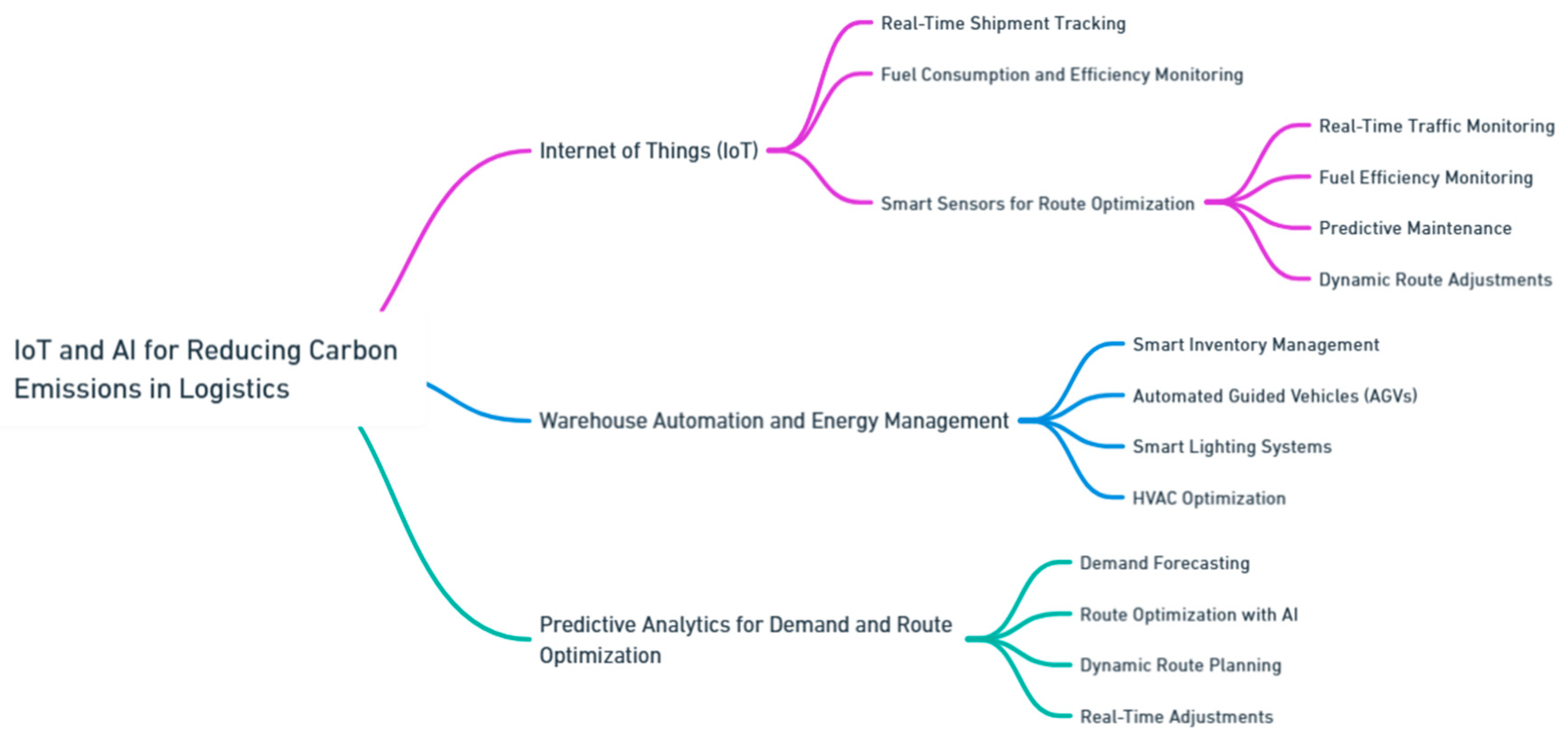
AI and Machine Learning are driving major advancements in logistics by improving predictive analytics for demand forecasting and route optimization. By leveraging these technologies, logistics companies can reduce operational costs, enhance customer satisfaction, and improve their ability to adapt to dynamic market conditions. Predictive analytics enables better inventory management and ensures that supply chains are better equipped to meet demand fluctuations. Simultaneously, AI-driven route optimization improves fuel efficiency, delivery times, and flexibility, making logistics operations more sustainable and cost-effective. As AI and ML continue to evolve, their impact on logistics will only grow, enabling businesses to stay competitive in an increasingly fast-paced and complex global marketplace. The ability to forecast demand and optimize routes in real time represents a significant competitive advantage for logistics providers aiming to deliver high-quality services while minimizing costs and environmental impact (Thatcher et al., 2022; Abouelrous et al., 2023; Dikshit et al., 2023; Zong et al., 2023).
Preprints 139811 i012

4.4.2. Artificial Intelligence and Machine Learning in Logistics: Autonomous Vehicles and Drones for Low-Emission Deliveries

Artificial Intelligence (AI) and Machine Learning (ML) are transforming the logistics industry, enabling more efficient and sustainable operations. One of the most exciting developments in this space is the use of autonomous vehicles and drones for low-emission deliveries. These technologies not only enhance delivery efficiency but also significantly reduce the environmental impact of logistics operations, addressing concerns about greenhouse gas emissions and the carbon footprint.
AI and ML in Autonomous Vehicles. Autonomous vehicles (AVs), often referred to as self-driving or driverless vehicles, are equipped with AI-powered systems that allow them to navigate without human intervention. These systems use a combination of sensors, cameras, radar, and LiDAR to detect their surroundings, interpret traffic conditions, and make real-time decisions to safely reach their destinations. Machine learning plays a key role in this process by enabling the vehicle to learn from vast amounts of data, improving its performance and decision-making over time. In logistics, AVs are being developed to handle various transportation needs, from long-haul freight to last-mile deliveries. By removing the need for human drivers, AVs can operate continuously without breaks, reducing delivery times and costs. More importantly, autonomous vehicles are expected to be instrumental in achieving low-emission deliveries, as many are being designed to run on electric power rather than traditional fossil fuels (Jin and Xi, 2024; Singh et al., 2021).
Key Benefits of Autonomous Vehicles in Low-Emission Deliveries:
  • Reduced Carbon Emissions: Many autonomous delivery vehicles are designed to be electric, contributing to a significant reduction in greenhouse gas emissions. Electric vehicles (EVs) produce zero tailpipe emissions, making them an environmentally friendly alternative to conventional fuel-powered delivery trucks. As the global logistics industry faces increasing pressure to reduce its carbon footprint, AVs powered by clean energy will play a vital role in creating more sustainable supply chains.
  • Fuel Efficiency: Even when autonomous vehicles use hybrid or conventional fuel systems, their AI-driven navigation and driving systems optimize fuel usage. AVs are capable of selecting the most fuel-efficient routes, reducing idling times in traffic, and maintaining optimal speeds, all of which contribute to improved fuel efficiency. Over time, these incremental improvements in fuel consumption can lead to significant reductions in overall emissions.
  • Reduced Traffic Congestion: Autonomous vehicles can communicate with one another through Vehicle-to-Vehicle (V2V) communication, enabling more efficient traffic flow and reducing congestion. When delivery vehicles can coordinate their movements, fewer stops and starts occur, lowering fuel consumption and emissions. AI-driven route optimization systems also allow AVs to avoid traffic hotspots and congestion, ensuring that deliveries are made faster and more sustainably.
Drones for Low-Emission Deliveries. Drones, or unmanned aerial vehicles (UAVs), represent another innovative application of AI and ML in logistics. These flying devices are increasingly being used for last-mile deliveries, particularly in remote or densely populated urban areas where traditional ground-based delivery methods can be slow, costly, and environmentally harmful. Drones offer the potential for faster, more flexible deliveries while reducing emissions. Drones equipped with AI-powered systems can autonomously navigate through the air, avoiding obstacles, and identifying safe delivery zones. Machine learning enhances this capability by allowing drones to continuously improve their navigation skills based on real-time data and previous delivery experiences (Rodrigues et al., 2022; Gunaratne et al., 2022; Sahu et al., 2023).
Key Benefits of Drones for Low-Emission Deliveries:
  • Zero Emissions: Drones are typically powered by electricity, meaning they produce zero direct emissions. In urban areas where delivery trucks contribute to air pollution and traffic congestion, drones offer a cleaner, more environmentally friendly alternative. By reducing the reliance on fuel-powered vehicles for short-distance deliveries, drones help reduce the overall carbon footprint of the logistics sector.
  • Energy Efficiency: Drones require significantly less energy than traditional delivery vehicles to transport lightweight goods over short distances. Their ability to bypass roads and traffic further increases their efficiency, allowing them to make quick, energy-efficient deliveries. For instance, delivering a small package via drone is far more energy-efficient than using a truck, which consumes more fuel and emits more CO₂ during stop-and-go urban deliveries.
  • Faster Delivery Times: Drones can deliver goods more quickly than traditional ground-based methods, especially in areas with heavy traffic or limited road access. By providing rapid and direct delivery routes, drones can minimize the time spent on each delivery, reducing fuel consumption and emissions. Additionally, faster delivery times can lead to higher customer satisfaction, which is increasingly important in the era of e-commerce and on-demand services.
  • Access to Remote Areas: Drones are particularly useful for delivering goods to remote or hard-to-reach locations where traditional vehicles cannot easily go. This capability not only improves delivery efficiency but also reduces the need for long and energy-intensive trips by fuel-powered trucks or vans, further lowering emissions (Rejeb et al., 2023; Li et al., 2020).
Challenges and Future Prospects. While autonomous vehicles and drones hold great promise for reducing emissions in logistics, several challenges must be addressed to fully realize their potential.
  • Regulatory and Legal Hurdles: The widespread adoption of autonomous vehicles and drones for deliveries is currently limited by regulatory and legal restrictions. Governments and regulatory bodies are still developing the frameworks needed to ensure the safe and ethical use of these technologies. Concerns about safety, privacy, and airspace control need to be addressed before AVs and drones can become mainstream in logistics.
  • Infrastructure Development: The deployment of autonomous vehicles and drones requires substantial infrastructure development, including charging stations for electric AVs and drone delivery hubs. Cities and logistics providers must invest in this infrastructure to enable the widespread use of these technologies.
  • Public Acceptance: Gaining public trust and acceptance is another challenge for autonomous delivery vehicles and drones. People may have concerns about safety, data privacy, and job displacement as these technologies become more prevalent in logistics.
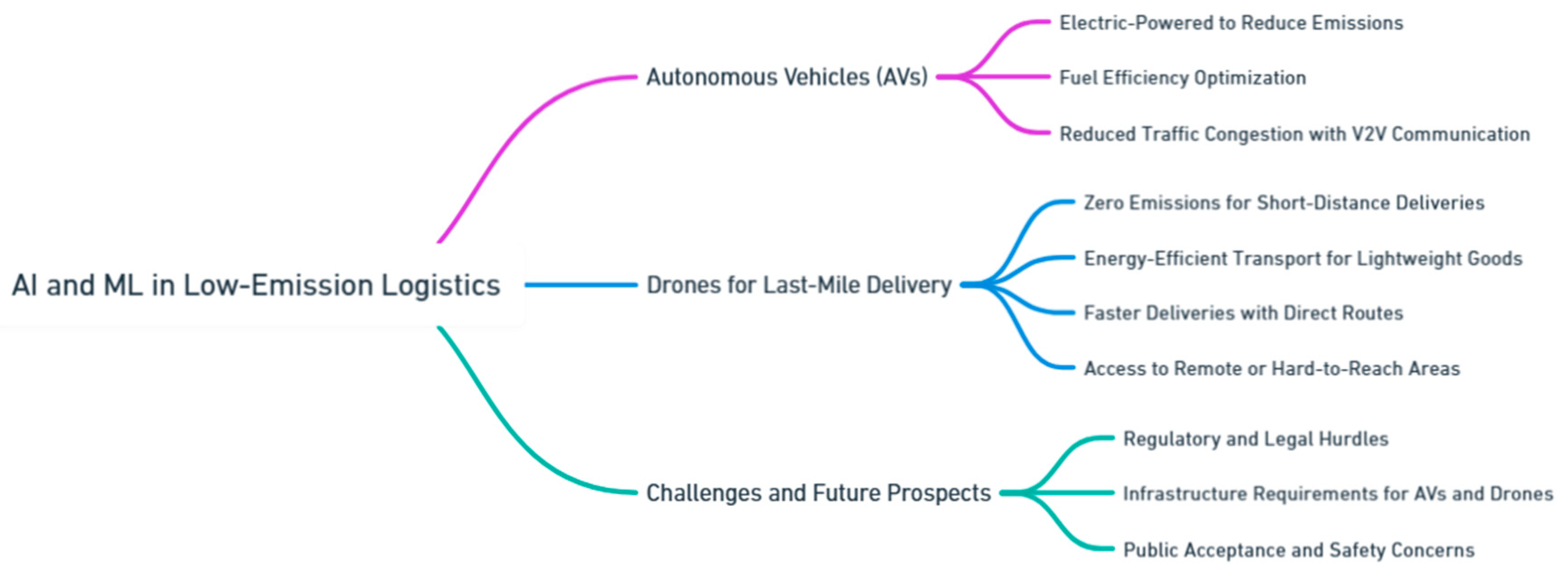
Despite these challenges, the future of low-emission deliveries powered by autonomous vehicles and drones is bright. As AI and ML technologies continue to advance, and as regulations evolve to support their use, autonomous vehicles and drones will play an increasingly important role in reducing the environmental impact of logistics. They represent a critical component of the logistics industry's transition toward sustainability, offering faster, cleaner, and more efficient delivery solutions for a rapidly growing global demand. Autonomous vehicles and drones, driven by AI and machine learning, are at the forefront of innovation in logistics, providing solutions for low-emission deliveries. By reducing reliance on fossil fuels, optimizing routes, and offering energy-efficient alternatives for last-mile deliveries, these technologies are transforming the logistics industry into a more sustainable and environmentally conscious sector. As the world seeks to combat climate change and reduce greenhouse gas emissions, the adoption of AI-driven autonomous vehicles and drones will be critical for shaping the future of logistics (Nurgaliev et al., 2023; Rejeb et al., 2023).
Preprints 139811 i013

4.4.3. AI’s Impact on Reducing Energy Consumption in Warehouses

Artificial Intelligence (AI) and Machine Learning (ML) are reshaping the logistics industry by streamlining operations, improving efficiency, and enabling smarter decision-making. One of the most significant areas where AI is making a difference is in the reduction of energy consumption in warehouses. Warehousing is an energy-intensive aspect of logistics, with operations requiring lighting, climate control, and material handling systems. By applying AI and ML technologies, logistics companies can optimize energy use, reduce costs, and lower their environmental impact. Below, we explore how AI-driven innovations are transforming warehouse energy management.
The Challenge of Energy Consumption in Warehouses. Warehouses are critical hubs in the logistics process, serving as storage, distribution, and order-fulfillment centers. However, they are also major consumers of energy, driven by activities such as lighting, heating, ventilation, air conditioning (HVAC), and the use of equipment like conveyors, forklifts, and robotic systems. The energy demand is even higher for temperature-controlled warehouses used for cold storage, where precise climate control is essential. Traditionally, managing energy consumption in warehouses has been a challenging task due to the complexity and scale of operations. Many warehouses operate 24/7, and energy-intensive processes like refrigeration, material handling, and HVAC systems are constantly running, resulting in high energy costs and substantial carbon footprints. This challenge has prompted logistics companies to look for solutions to optimize energy use and reduce their environmental impact. AI and ML have emerged as powerful tools to address these challenges (Domingues et al., 2023; Yayla et al., 2022).
How AI and Machine Learning Reduce Energy Consumption in Warehouses:
  • Optimizing Climate Control Systems: One of the most energy-consuming aspects of a warehouse is the climate control system. Heating, cooling, and ventilation are necessary to maintain a stable environment, especially in cold storage facilities. AI and ML can help optimize the performance of these systems by analyzing large amounts of data from sensors placed throughout the warehouse. These sensors track temperature, humidity, airflow, and energy use in real time. Using this data, AI-driven systems can learn patterns of energy consumption and identify opportunities to reduce waste. For instance, AI can adjust HVAC systems based on external weather conditions, the time of day, and occupancy levels. It can also predict when certain areas of the warehouse will be less active, allowing for selective climate control rather than maintaining the same temperature across the entire facility. These dynamic adjustments reduce unnecessary energy use, improve efficiency, and maintain optimal conditions for the goods stored inside (Domingues et al., 2023; Yayla et al., 2022).
  • Smart Lighting Systems: Lighting is another significant contributor to energy consumption in warehouses, especially in large facilities that operate around the clock. Traditionally, warehouses have relied on manual or time-based lighting systems that may not always align with actual usage patterns. AI-powered smart lighting systems can revolutionize this by automating lighting control based on real-time data. AI systems can use sensors and cameras to detect human presence and activity levels in different parts of the warehouse. By integrating with ML algorithms, these systems can learn usage patterns and predict when certain areas are likely to be occupied, allowing them to adjust lighting accordingly. For example, AI could dim or turn off lights in areas that are not in use and increase brightness in areas with high activity. This level of precision helps reduce energy consumption while ensuring that the warehouse remains safe and well-lit during operations. Additionally, AI-driven systems can leverage natural light by adjusting artificial lighting based on the amount of sunlight entering the warehouse. This dynamic control further reduces energy consumption, particularly during daylight hours (Vaidya et al., 2021; Elkhoukhi et al., 2022).
  • Predictive Maintenance for Energy-Efficient Equipment: Material handling equipment such as conveyors, forklifts, and automated storage and retrieval systems (AS/RS) are critical for warehouse operations, but they also consume significant energy. Inefficient or poorly maintained equipment can lead to excessive energy use and higher operational costs. AI and ML can play a vital role in ensuring that equipment operates at peak efficiency through predictive maintenance. Predictive maintenance involves using AI algorithms to analyze data from sensors embedded in warehouse equipment. These sensors monitor the performance of machinery, such as motor speed, temperature, and energy consumption, and detect patterns that may indicate a future breakdown or efficiency loss. By predicting when a piece of equipment is likely to fail or operate less efficiently, AI systems can alert warehouse managers to schedule maintenance proactively. This approach reduces downtime, extends the life of the equipment, and ensures that machines are operating at optimal energy efficiency. Moreover, by avoiding unexpected equipment failures, AI-driven predictive maintenance minimizes disruptions in warehouse operations, leading to smoother workflows and less energy waste associated with inefficient processes or machinery breakdowns (Bermeo-Ayerbe et al., 2022; Çınar et al., 2020).
  • AI-Powered Warehouse Management Systems (WMS): AI-powered Warehouse Management Systems (WMS) are increasingly being used to optimize warehouse operations, including energy consumption. These systems can analyze vast amounts of data related to inventory levels, order fulfillment, and equipment usage, allowing warehouse managers to make smarter decisions about how to allocate resources. AI-driven WMS can help reduce energy consumption by optimizing storage layouts, reducing the distance that forklifts and other equipment must travel to retrieve items. By streamlining these processes, AI-powered WMS reduce the energy required for material handling and order picking, further contributing to overall energy savings. Additionally, AI can predict peaks in demand and suggest energy-saving measures during periods of lower activity, ensuring that energy use is proportional to the actual needs of the warehouse at any given time (Khan et al., 2023).
  • Autonomous Robots and Energy Efficiency: Autonomous robots are increasingly being used in warehouses for tasks such as picking, packing, and transporting goods. These robots, powered by AI and ML, are designed to work efficiently with minimal energy use. Unlike traditional manual equipment, which may be left running idle between tasks, autonomous robots can power down or enter energy-saving modes when not in use. Furthermore, AI algorithms can optimize the paths taken by robots to reduce the distance traveled and the energy consumed. For instance, AI systems can calculate the most efficient routes for robots to pick and deliver items, minimizing both time and energy usage. This not only improves operational efficiency but also significantly reduces energy consumption, particularly in large warehouses with high volumes of daily activity (Song and Xin, 2021).
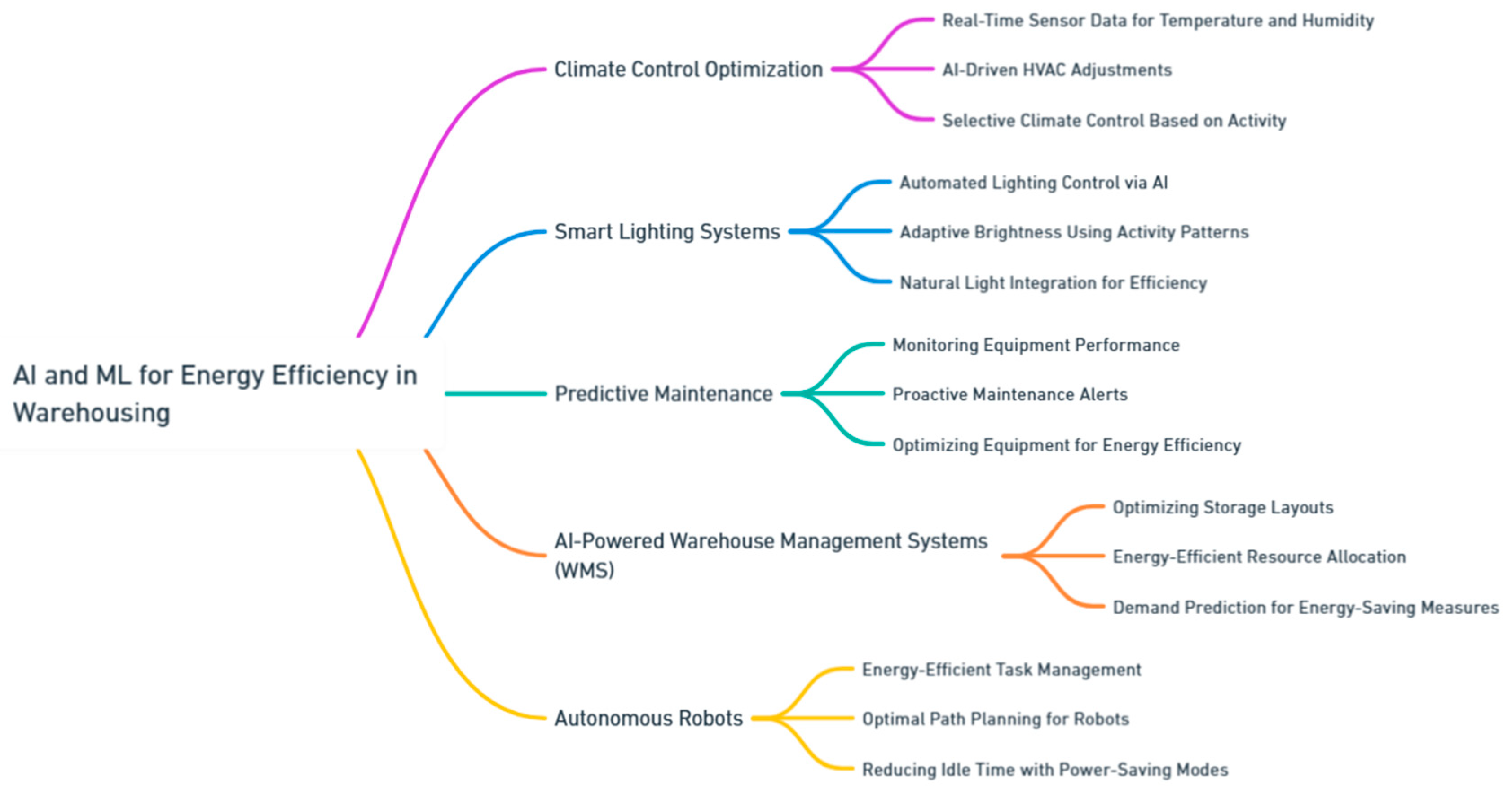
AI and machine learning are transforming energy management in warehouses, offering logistics companies the ability to optimize energy use, reduce costs, and minimize their environmental impact. By leveraging AI to optimize climate control, smart lighting, predictive maintenance, and warehouse management systems, companies can significantly reduce energy consumption without compromising operational efficiency. These advancements are crucial for modern warehouses seeking to operate more sustainably and cost-effectively in an increasingly competitive and eco-conscious marketplace (Ribeiro et al., 2022; Ohalete et al., 2023; Dadras Javan et al., 2023; Chen and Liao, 2023).
Preprints 139811 i014

4.4.4. Case Study: Amazon's AI-Powered Logistics Solutions

In recent years, Artificial Intelligence (AI) and Machine Learning (ML) have revolutionized the logistics industry, transforming how goods are managed, stored, and delivered. Companies are now leveraging AI to enhance operational efficiency, cut costs, and provide faster, more reliable services. Amazon, a global leader in e-commerce, is at the forefront of utilizing AI and ML in logistics, employing these technologies to streamline its supply chain, optimize delivery routes, and manage vast networks of warehouses. This case study explores how Amazon uses AI-powered logistics solutions to maintain its competitive edge and set new standards for the logistics industry.
AI in Logistics: An Overview. Artificial Intelligence refers to the simulation of human intelligence in machines, allowing them to perform tasks such as learning, problem-solving, and decision-making. Machine Learning, a subset of AI, involves using algorithms and statistical models to enable computers to learn from data without being explicitly programmed. In the logistics sector, AI and ML have found widespread applications. Key areas include demand forecasting, inventory management, route optimization, and warehouse automation. By automating these tasks, AI reduces human error and ensures more efficient operations. For example, AI can predict demand trends, enabling better stock management, while ML algorithms help optimize delivery routes based on traffic patterns, weather conditions, and customer locations.
Amazon's AI-Powered Logistics Solutions. Amazon is a prime example of how AI and ML can transform logistics. The company has integrated AI into nearly every aspect of its supply chain, from warehouse management to last-mile delivery. Some of Amazon’s most notable AI-powered solutions include:
  • Demand Forecasting and Inventory Management: Amazon uses sophisticated AI algorithms to predict customer demand accurately. By analyzing past purchase data, browsing patterns, and even external factors like market trends and seasonal changes, Amazon can anticipate which products will be in demand in specific regions. This predictive accuracy ensures that warehouses are stocked efficiently, reducing the need for excess inventory and minimizing stockouts.
  • Robotics and Automation in Warehouses: One of Amazon’s hallmark AI innovations is its use of robots in fulfillment centers. In 2012, Amazon acquired Kiva Systems, now known as Amazon Robotics, which produces robots that automate tasks such as picking, packing, and sorting products. These robots, powered by AI, move shelves of products to human workers, drastically reducing the time and effort required for order fulfillment. AI also helps these robots navigate warehouses without collisions, improving efficiency and safety.
  • AI-Powered Route Optimization for Last-Mile Delivery: Last-mile delivery, the final leg of the shipping process, is often the most complex and expensive part of logistics. Amazon uses AI to optimize this phase, analyzing data from GPS, traffic conditions, delivery preferences, and weather forecasts to determine the most efficient delivery routes. This AI-driven approach reduces delivery times, cuts fuel costs, and enhances customer satisfaction by providing more accurate delivery windows.
  • Data Analytics and Machine Learning Algorithms : Amazon collects massive amounts of data from its operations, and AI-powered analytics tools sift through this data to uncover patterns, predict trends, and make real-time decisions. For instance, machine learning models help in determining the most efficient warehouse locations, optimizing packaging for minimal shipping costs, and identifying bottlenecks in the supply chain (Gandhi et al., 2021; Tang et al., 2022).
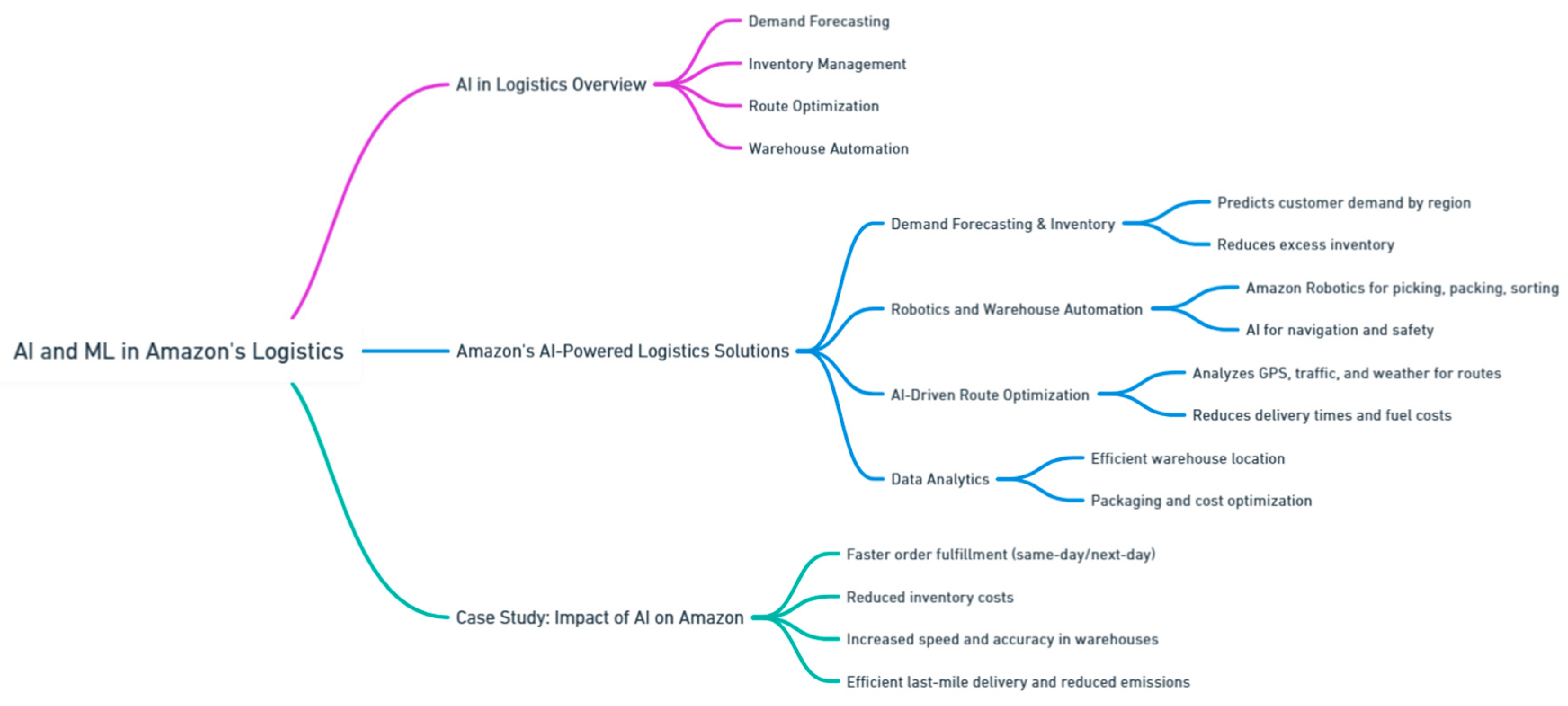
Case Study: Impact of AI on Amazon’s Logistics. The impact of AI on Amazon’s logistics operations has been profound. AI-driven solutions have enabled Amazon to achieve rapid order fulfillment, often offering same-day or next-day delivery. The integration of AI in demand forecasting has significantly reduced inventory costs, while warehouse automation has improved processing speed and accuracy. AI-powered route optimization has led to more efficient delivery, minimizing delays and reducing carbon emissions. However, implementing AI comes with challenges, such as the high cost of technology adoption and the need for continuous innovation to stay ahead of competitors. Amazon has addressed these challenges by investing heavily in research and development, ensuring that its AI systems are always evolving and adapting to new logistics demands.
AI and Machine Learning are transforming the logistics landscape, and Amazon stands as a testament to the power of these technologies. By integrating AI into various stages of its supply chain, Amazon has set new benchmarks for efficiency, speed, and cost-effectiveness in logistics. As AI technology continues to evolve, the future holds even more potential for Amazon and the logistics industry, paving the way for smarter, more agile supply chain solutions (Singh et al., 2020; Xie and Qiao 2022; Raparthi and Balasubramanian, 2023; Vanoy, 2023).
Preprints 139811 i015

4.4.5. Tracking and Optimizing Supply Chain Emissions Using Big Data

The global supply chain is a complex web of activities involving the movement, storage, and management of goods, which significantly contributes to greenhouse gas (GHG) emissions. As businesses and governments increasingly focus on sustainability, reducing emissions across the supply chain has become a key priority. Big Data and advanced analytics play a critical role in achieving this goal by providing the tools and insights necessary to track, measure, and optimize emissions. By leveraging vast amounts of data generated across the supply chain, companies can develop strategies to minimize their environmental impact while improving efficiency and reducing costs.
The Role of Big Data in Supply Chain Emissions Tracking. Big Data refers to the vast volumes of structured and unstructured data generated by supply chain activities, including transportation, warehousing, production, and procurement. Traditionally, tracking supply chain emissions was a challenging and resource-intensive task, but with the advent of Big Data technologies, companies now have the ability to collect, process, and analyze data in real time. Key sources of data in the supply chain include GPS and telematics systems in vehicles, IoT (Internet of Things) sensors in warehouses, energy consumption meters in factories, and software systems that monitor production and transportation activities. This data provides valuable information on fuel consumption, energy use, vehicle idling times, and other factors that directly contribute to emissions (Zhang et al., 2022; Goodarzian et al., 2021).
Examples of how Big Data can track supply chain emissions:
  • Real-Time Monitoring of Transportation Emissions: Big Data analytics tools can collect real-time information from GPS devices and vehicle telematics systems to monitor fuel consumption, driving patterns, and vehicle performance. By tracking data such as miles traveled, fuel efficiency, and idle times, companies can calculate the carbon emissions of each trip and identify inefficiencies in the transportation network. For example, a logistics company could use this data to optimize routes, reduce fuel consumption, and minimize unnecessary trips, resulting in lower emissions.
  • Energy Consumption in Warehouses: IoT sensors installed in warehouses can monitor energy consumption for lighting, heating, cooling, and equipment usage. Big Data analytics can then process this data to identify areas where energy efficiency improvements can be made, such as optimizing HVAC systems, using energy-efficient lighting, or automating equipment to reduce idle times. By tracking energy use in real time, companies can reduce emissions associated with warehouse operations.
  • Supply Chain Transparency and Scope 3 Emissions: One of the most difficult aspects of tracking supply chain emissions is calculating Scope 3 emissions, which include indirect emissions from activities such as supplier production, purchased goods, and transportation services. Big Data enables companies to collect information from their suppliers and third-party logistics providers, giving them better visibility into the environmental impact of their entire supply chain. For example, a manufacturer can track the energy use of its suppliers and transportation providers, allowing them to work together to reduce emissions (Goodarzian et al., 2021; Guzman et al., 2023).
Optimizing Supply Chain Emissions Using Advanced Analytics. While Big Data provides the necessary information to track emissions, advanced analytics enable companies to optimize their supply chain operations to reduce their carbon footprint. Advanced analytics tools use machine learning, predictive analytics, and optimization algorithms to analyze historical data, identify patterns, and recommend strategies for improving efficiency. Key ways advanced analytics optimize supply chain emissions:
  • Route Optimization: One of the most effective ways to reduce transportation emissions is through route optimization. Advanced analytics tools can process data from multiple sources, including traffic patterns, weather conditions, fuel prices, and delivery schedules, to determine the most efficient routes for vehicles. By minimizing the distance traveled and avoiding congested areas, companies can significantly reduce fuel consumption and emissions. For example, delivery companies like UPS use route optimization algorithms to reduce miles driven, resulting in lower emissions and operational costs.
  • Inventory and Demand Forecasting: Excess inventory and poor demand forecasting can lead to unnecessary transportation and warehousing, both of which contribute to emissions. Advanced analytics tools can analyze historical sales data, market trends, and customer behavior to predict demand more accurately. This enables companies to optimize their inventory levels, reduce the need for rush shipments, and avoid overstocking, all of which help lower emissions associated with transportation and storage.
  • Energy Efficiency Improvements: Advanced analytics can analyze energy consumption data across warehouses and factories to identify inefficiencies and recommend energy-saving strategies. For example, predictive maintenance tools can analyze data from equipment sensors to predict when machines are likely to fail or become inefficient. By addressing maintenance issues proactively, companies can improve energy efficiency and reduce emissions associated with equipment breakdowns or inefficient operations.
  • Supplier and Partner Collaboration: Supply chains involve multiple stakeholders, including suppliers, manufacturers, and logistics providers. Big Data and advanced analytics tools can facilitate collaboration by sharing emissions data and identifying areas for improvement across the entire supply chain. For example, companies can work with suppliers to adopt cleaner production methods or collaborate with logistics providers to use alternative fuels. This data-driven collaboration can help reduce emissions at every stage of the supply chain.
  • Carbon Footprint Calculation and Reporting: Advanced analytics can calculate the carbon footprint of products or supply chain activities by processing data from multiple sources and providing detailed reports on emissions. This is especially important for companies that need to meet regulatory requirements or achieve sustainability goals. These tools allow businesses to accurately report their emissions, monitor progress toward emission reduction targets, and identify opportunities for improvement (Sharifani et al, 2022; ALLAHHAM et al., 2023).
Benefits of Using Big Data and Advanced Analytics for Supply Chain Emissions Optimization. The integration of Big Data and advanced analytics into supply chain management offers several key benefits, including:
  • Increased Efficiency: By using data to optimize routes, inventory, and energy consumption, companies can improve the overall efficiency of their supply chain operations, leading to lower emissions and cost savings.
  • Enhanced Visibility and Transparency: Big Data enables companies to track emissions across their entire supply chain, including Scope 3 emissions, providing a clear picture of their environmental impact.
  • Sustainability and Competitive Advantage: Companies that optimize their supply chain emissions can achieve sustainability goals, comply with regulations, and enhance their brand reputation as environmentally responsible organizations.
  • Cost Reduction: Reducing emissions often goes hand-in-hand with cost savings, as optimizing fuel consumption, energy use, and inventory levels leads to lower operational costs.
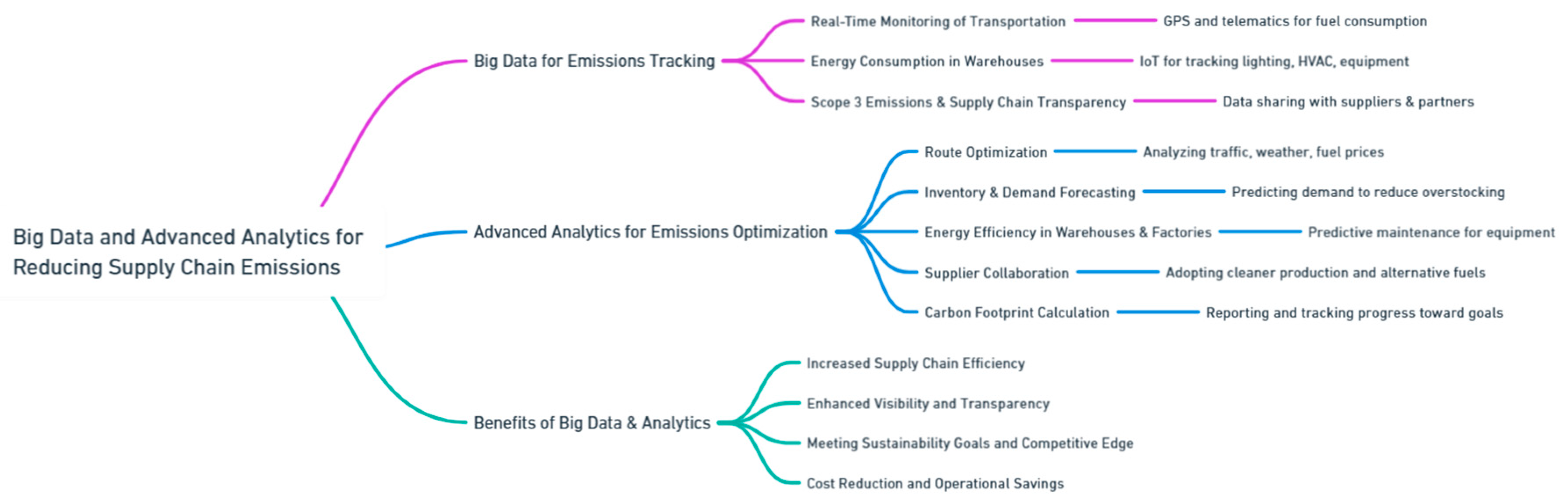
Big Data and advanced analytics have transformed the way companies track and optimize supply chain emissions. By providing real-time insights and data-driven strategies, these technologies enable businesses to reduce their carbon footprint, improve operational efficiency, and meet sustainability targets. As global demand for sustainable supply chains continues to grow, companies that leverage these tools will be better positioned to succeed in a competitive and environmentally conscious market (Goodarzian et al., 2021; Zhang and Li, 2020; Villacis et al., 2024).
Preprints 139811 i016

4.4.6. Big Data and Advanced Analytics: Forecasting Demand and Reducing Overproduction
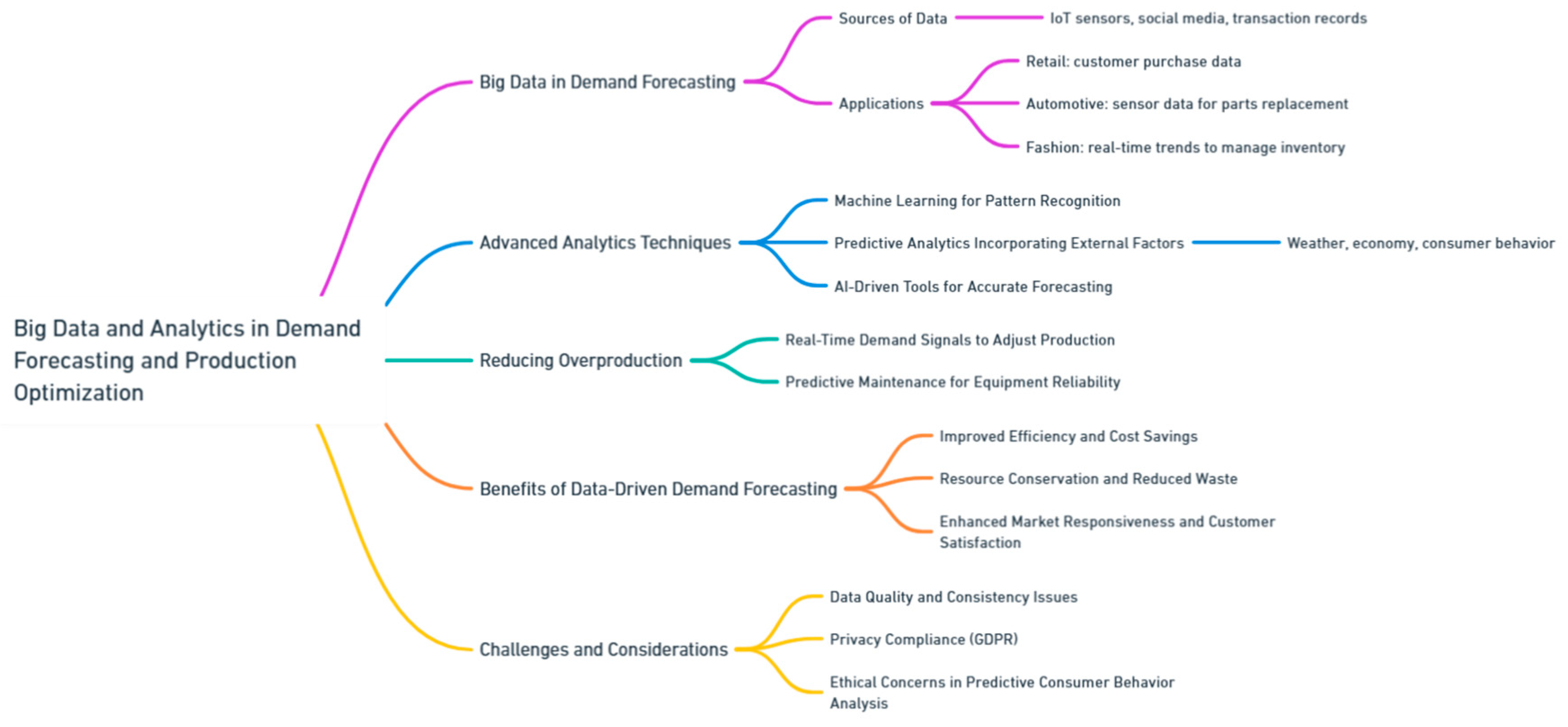
In an era marked by the rapid proliferation of information, big data and advanced analytics have revolutionized various industries, enabling companies to harness large volumes of data to make informed decisions. This data-driven approach is particularly valuable for forecasting demand and managing production processes, where even minor inefficiencies can lead to overproduction or stock shortages. Companies that utilize big data and analytics can optimize production cycles, align with market needs, and significantly reduce waste, enhancing both economic performance and environmental sustainability.
Big Data in Forecasting Demand. Big data encompasses vast amounts of structured and unstructured information collected from various sources, such as IoT sensors, social media platforms, and historical transaction records. These data sets offer insights into customer behavior, market trends, and external factors like economic shifts or seasonal variations. For instance, retailers use data from customer purchases, social media interactions, and online browsing behaviors to predict product demand. In the fashion industry, real-time data on what consumers are buying or searching for allows brands to tailor production to meet immediate demand, thereby avoiding excess inventory. Similarly, the automotive industry uses data from vehicle sensors and maintenance logs to predict when parts will need to be replaced, enabling manufacturers to adjust production schedules (Arguelles and Polkowski, 2023; Kharfan et al., 2021).
Advanced Analytics Techniques. Advanced analytics involves the use of sophisticated algorithms and statistical models to analyze historical data and predict future outcomes. Techniques such as machine learning, artificial intelligence (AI), and predictive modeling are integral to demand forecasting. Machine learning algorithms, for instance, can identify patterns in past sales data and anticipate future demand with high accuracy. Predictive analytics not only forecasts demand but also factors in external influences like weather patterns, economic conditions, or even changes in consumer preferences. In agriculture, for example, predictive models use climate data to estimate crop yields, helping farmers adjust planting and harvesting schedules. AI-driven forecasting tools are employed by companies like Amazon and Walmart, enabling them to stock inventory based on projected sales while minimizing the risk of overproduction (Aamer et al., 2020; Punia et al., 2020).
Reducing Overproduction through Analytics. Overproduction occurs when supply outstrips demand, leading to excess inventory, waste, and unnecessary resource consumption. This is particularly problematic in industries like fashion and food production, where unsold goods have a short shelf life or quickly become obsolete. Big data and analytics help mitigate overproduction by providing real-time demand forecasts, allowing businesses to produce just enough to meet consumer needs. For example, real-time sales data can signal a drop in demand for a particular product, prompting manufacturers to scale back production. Conversely, a surge in demand can trigger an increase in production, ensuring that supply meets customer expectations without unnecessary surplus. Furthermore, predictive maintenance is another application that helps reduce overproduction. By analyzing equipment performance data, companies can anticipate machine failures and prevent downtime, thereby ensuring that production schedules are not disrupted due to equipment malfunctions (Ibrahima et al., 2021; Kayali and Turgay, 2023).
Benefits of Data-Driven Demand Forecasting. The implementation of data-driven demand forecasting has several key benefits, including improved efficiency, reduced operational costs, and enhanced sustainability. Accurate demand predictions allow companies to optimize their inventory management, minimizing the need for large safety stocks and reducing the risk of obsolescence or spoilage. In addition, aligning production with real-time demand helps reduce resource consumption, contributing to a more sustainable supply chain. For instance, in the food industry, precise demand forecasting reduces food waste by enabling producers to adjust production based on actual consumption patterns. Moreover, companies that use big data analytics to forecast demand are better positioned to respond to market fluctuations and customer preferences, improving their competitive edge and customer satisfaction.
Challenges and Considerations. While the benefits of big data and advanced analytics are clear, there are also significant challenges to consider. Data quality is paramount for accurate demand forecasting, but many organizations struggle with incomplete or inconsistent data sets. Additionally, the infrastructure required to collect, process, and analyze large volumes of data can be costly and complex to implement. Privacy concerns are another critical issue, as companies must ensure that they comply with regulations such as GDPR when collecting and utilizing customer data. Furthermore, the ethical implications of using predictive analytics to influence consumer behavior raise questions about the potential for manipulation or unintended consequences (Iftikhar and Khan, 2022; Arguelles and Polkowski, 2023; Feizabadi, 2022).
Big data and advanced analytics offer powerful tools for forecasting demand and reducing overproduction. By leveraging vast amounts of data and sophisticated algorithms, companies can optimize their production processes, reduce waste, and align more closely with consumer needs. However, addressing challenges related to data quality, privacy, and infrastructure will be crucial for businesses seeking to fully realize the potential of these technologies.
Preprints 139811 i017

4.4.7. Big Data and Advanced Analytics in Streamlining Supply Chains to Minimize Carbon-Heavy Activities
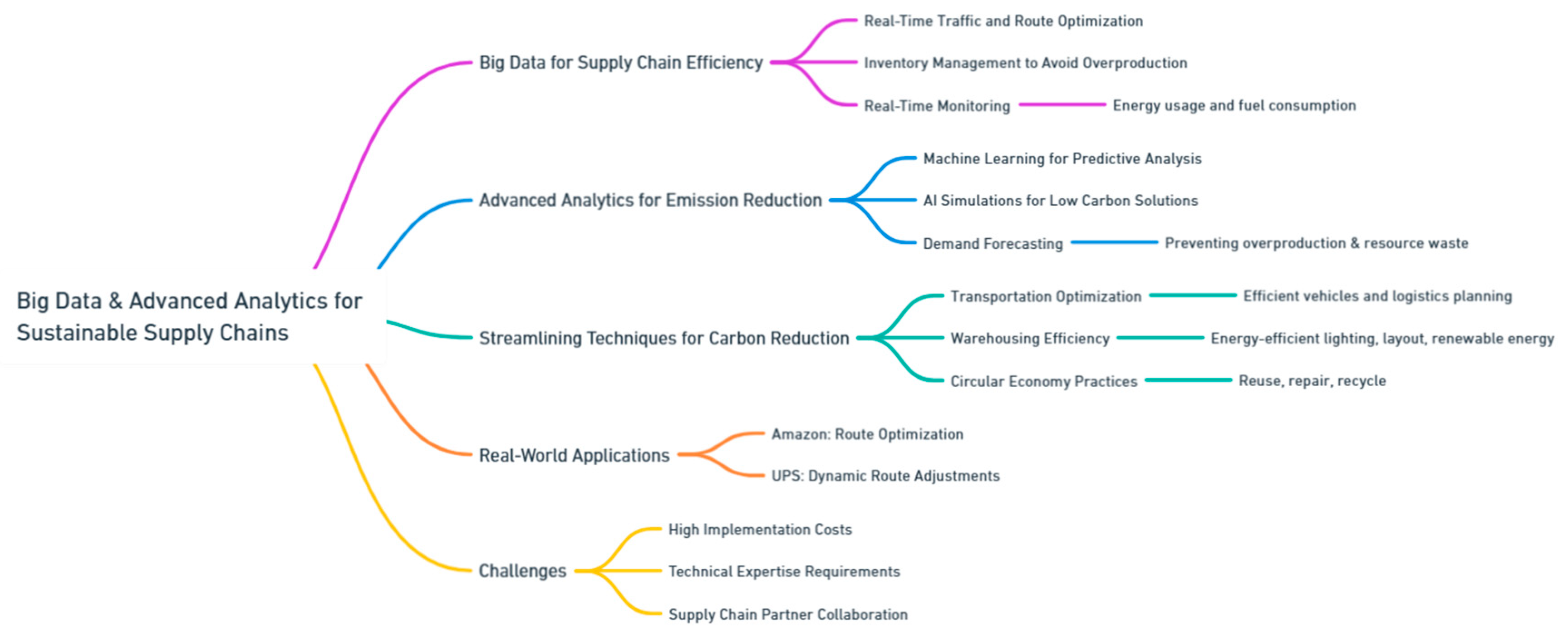
In today’s rapidly evolving global economy, supply chains play a crucial role in ensuring the efficient movement of goods and services. However, they are also a significant contributor to carbon emissions due to activities such as transportation, manufacturing, and warehousing. With the increasing demand for environmental sustainability, companies are turning to Big Data and Advanced Analytics to streamline supply chains, reducing inefficiencies and minimizing carbon-heavy activities. These technologies enable firms to analyze vast amounts of data, make informed decisions, and implement strategies to reduce their carbon footprints while maintaining operational efficiency.
Impact of Big Data on Supply Chain Efficiency. Big Data refers to the collection, processing, and analysis of large datasets from various sources, such as IoT devices, sensors, and transactional records. In supply chain management, the use of Big Data allows companies to gain insights into all aspects of their operations. By using predictive analytics, companies can optimize transportation routes, reduce idle times, and cut down fuel consumption, all of which contribute to lowering emissions. For example, logistics companies can analyze real-time traffic data to choose the most efficient routes, avoiding congested areas that cause unnecessary fuel usage. This not only reduces operational costs but also significantly cuts carbon-heavy activities. Additionally, Big Data allows for better inventory management by predicting demand patterns, ensuring that goods are not overproduced or transported unnecessarily—both of which contribute to excess emissions. Moreover, Big Data enables real-time monitoring of supply chains, identifying bottlenecks and inefficiencies. For instance, advanced sensors placed on delivery vehicles or in warehouses can track energy usage and fuel consumption, alerting managers to potential energy waste. This real-time insight helps companies adjust their processes to be more sustainable, reducing their overall carbon footprint.
Advanced Analytics for Carbon Emission Reduction. Advanced Analytics, including machine learning (ML) and artificial intelligence (AI), further enhance the ability of companies to reduce carbon emissions. These technologies can analyze historical and real-time data to pinpoint the most carbon-heavy activities in the supply chain, such as excessive transportation, energy-intensive manufacturing, or wasteful packaging. By running simulation models, firms can test different carbon reduction strategies before implementing them in the real world. For instance, AI can simulate alternative routes, warehouse layouts, or manufacturing techniques to determine the most energy-efficient options. This proactive approach to carbon reduction helps companies streamline their operations without sacrificing productivity. Additionally, demand forecasting is a crucial area where Advanced Analytics plays a pivotal role. By accurately predicting consumer demand, companies can ensure they produce and transport only what is needed, preventing overproduction and overstocking, which lead to resource waste and higher emissions (Pal, 2023; Wu and Zuo, 2023).
Streamlining Supply Chains: Techniques for Minimizing Carbon Footprint. To streamline supply chains and reduce carbon-heavy activities, companies employ various techniques. One common method is optimizing transportation networks. By consolidating shipments, using energy-efficient vehicles, and adopting smarter logistics planning, companies can significantly reduce the fuel needed to move goods. Another approach is improving warehousing efficiency. Energy-efficient lighting, temperature control, and layout design can minimize energy consumption. Some companies are even turning to renewable energy sources to power their warehouses, further reducing carbon emissions. Moreover, embracing the circular economy can help minimize carbon-heavy activities. This involves designing products and packaging for reuse, repair, and recycling, which reduces the need for new raw materials and cuts down on manufacturing-related emissions. Advanced Analytics can help identify areas where circular practices can be most effectively implemented, from sourcing materials to designing more sustainable supply chains (Iqbal et al., 2020; Patil et al., 2024).
Real-World Applications. Several companies are already leveraging Big Data and Advanced Analytics to achieve sustainability in their supply chains. For example, Amazon uses machine learning algorithms to optimize its delivery routes, reducing fuel consumption and delivery times. Similarly, UPS employs real-time traffic data to make dynamic route adjustments for its fleet, minimizing idle time and carbon emissions. However, the adoption of these technologies is not without challenges. Many companies face barriers such as the high cost of implementation, lack of technical expertise, and the need for collaboration across multiple supply chain partners. Overcoming these obstacles is essential for scaling up the use of Big Data and Advanced Analytics for carbon reduction on a global scale.
Conclusion. Big Data and Advanced Analytics are transforming supply chain management by providing companies with the tools they need to minimize carbon-heavy activities and improve operational efficiency. Through predictive analytics, AI-driven models, and real-time monitoring, firms can optimize transportation, reduce energy consumption, and implement more sustainable practices. As more companies adopt these technologies, the future of supply chain management will likely become more aligned with global sustainability goals, ensuring a balance between economic growth and environmental responsibility (Hasan et al., 2024; Mangina et al., 2020).
Preprints 139811 i018

4.4.8. Big Data and Advanced Analytics: UPS Case Study
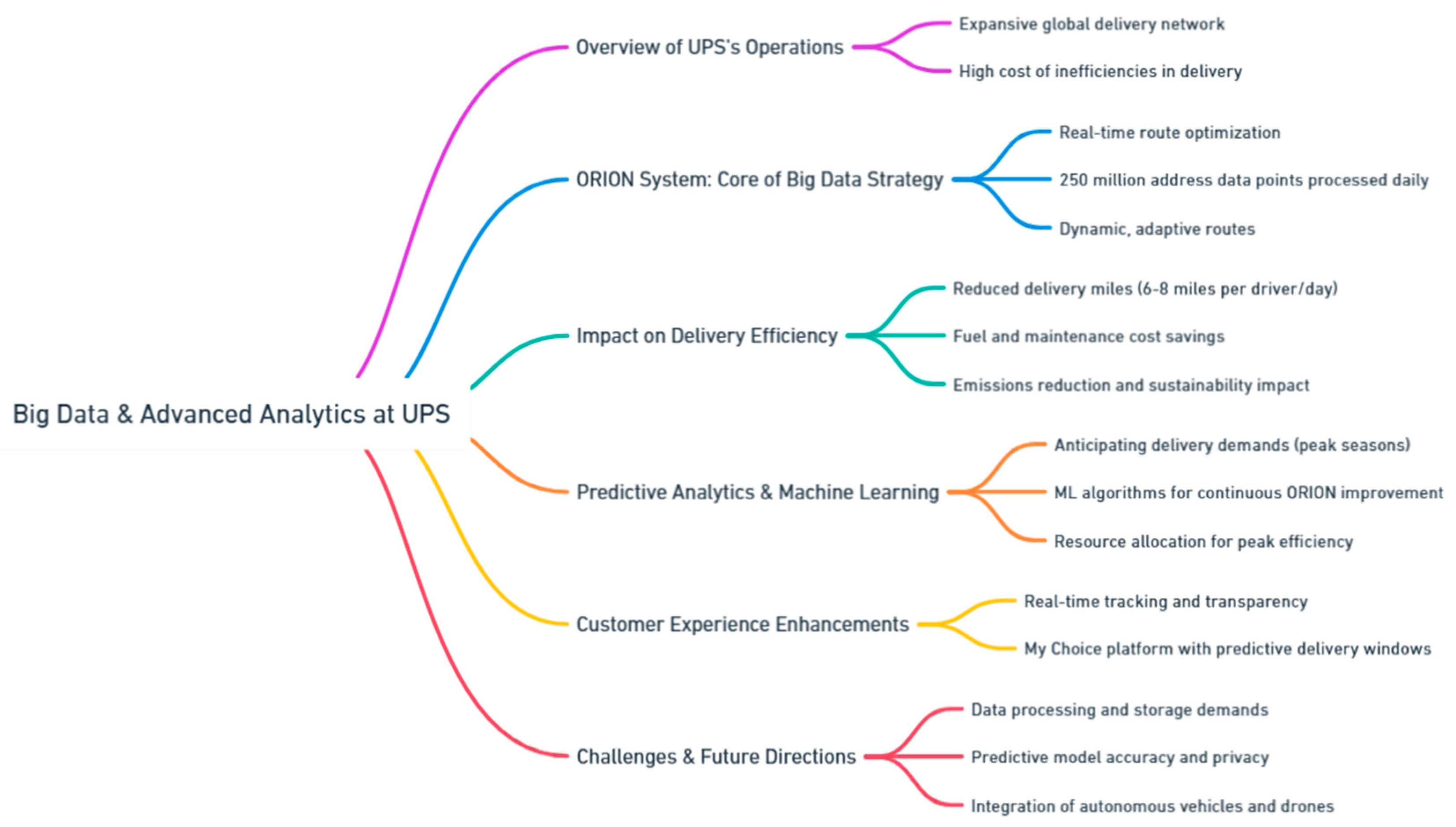
Big data and advanced analytics have become vital tools in optimizing operations across various industries. The sheer volume, velocity, and variety of data produced in today’s digital world demand sophisticated analytics to harness actionable insights. These data-driven approaches empower organizations to enhance efficiency, reduce costs, and improve decision-making. One remarkable example is United Parcel Service (UPS), which has used big data and advanced analytics to revolutionize its delivery processes, significantly cutting costs, improving service, and enhancing sustainability.
Overview of UPS's Operations. UPS is one of the largest package delivery companies in the world, handling millions of deliveries daily across more than 220 countries. With such an expansive network, even minor inefficiencies in its delivery system can result in significant costs. In this context, big data and advanced analytics offer UPS the opportunity to optimize routing, reduce fuel consumption, and improve customer service. The company’s approach involves collecting vast amounts of data from various sources, including GPS, sensors in delivery trucks, customer orders, and traffic reports. These data are then processed using advanced analytics to guide decision-making in real-time (Zhang et al., 2020; He et al., 2022).
The ORION System: UPS’s Big Data Initiative. A cornerstone of UPS’s big data and advanced analytics strategy is its On-Road Integrated Optimization and Navigation (ORION) system. Launched in 2013, ORION is an advanced algorithm-based platform designed to optimize delivery routes for drivers. It takes into account multiple factors, including traffic conditions, road networks, customer locations, delivery windows, and fuel efficiency. By analyzing massive amounts of real-time data, ORION is capable of determining the most efficient routes for each driver. Prior to the implementation of ORION, UPS drivers would rely on static routes, which were not always optimized for changing conditions. ORION revolutionized this approach by creating dynamic routes that adapt to real-world variables. This system processes over 250 million address data points daily to create optimal routes, reducing the number of miles driven by each driver (Darbanian et al., 2024; Pandolfi et al., 2023).
Impact on Reducing Delivery Miles and Costs. One of the most impressive achievements of UPS’s use of big data is its reduction in delivery miles. By leveraging ORION and advanced analytics, UPS has been able to cut millions of miles from its routes annually. For example, the company has reported that ORION helps reduce delivery miles by an average of 6 to 8 miles per driver per day. Given the company’s vast fleet of more than 100,000 vehicles, these savings accumulate quickly. In financial terms, every mile reduced saves the company around $50 million in fuel and maintenance costs each year. Moreover, fewer miles driven mean fewer emissions, enhancing UPS’s sustainability efforts. The company estimates that ORION helps save approximately 10 million gallons of fuel annually, contributing to a significant reduction in its carbon footprint (Castillo and Álvarez, 2023; Liu et al., 2020).
The Role of Predictive Analytics and Machine Learning. In addition to route optimization, UPS utilizes predictive analytics and machine learning to anticipate delivery demands and optimize resource allocation. By analyzing historical data on package volumes, delivery locations, and customer preferences, UPS can predict future trends and adjust its operations accordingly. For instance, during peak seasons like the holidays, predictive analytics helps UPS anticipate surges in deliveries, allowing the company to allocate the necessary workforce and vehicles to meet demand efficiently. Machine learning algorithms are also integrated into UPS’s systems to continuously refine the performance of the ORION system. These algorithms analyze historical data on route performance, driver behavior, and external conditions, such as weather and traffic patterns, to make real-time adjustments and improve the accuracy of the system over time (Latorre-Biel et al., 2021; El Filali et al., 2022).
Enhancing Customer Experience Through Data. Big data and advanced analytics have not only improved operational efficiency but also enhanced customer experience. UPS has implemented a range of tools that allow customers to track their packages in real time, providing greater transparency and reducing uncertainty. The company’s “My Choice” platform, for example, uses predictive analytics to give customers an estimated delivery window, allowing them to plan accordingly. This improves customer satisfaction by providing flexibility and minimizing missed deliveries.
Challenges and Future Directions. While UPS’s use of big data and advanced analytics has been largely successful, there are still challenges to address. The sheer volume of data collected daily requires substantial computing power and sophisticated storage solutions. Additionally, maintaining the accuracy of predictive models and ensuring data privacy are ongoing concerns. However, as technology evolves, UPS continues to invest in advanced analytics, including the exploration of artificial intelligence (AI) and the Internet of Things (IoT) to further enhance its logistics operations. Looking forward, UPS aims to integrate autonomous vehicles and drones into its delivery fleet, leveraging big data to manage these new technologies efficiently. By continuing to innovate in its use of data, UPS is poised to remain a leader in the logistics industry for years to come.
Conclusion. The case of UPS demonstrates the transformative power of big data and advanced analytics in optimizing operations and reducing costs. Through the ORION system, UPS has successfully reduced delivery miles, cut fuel consumption, and improved its environmental sustainability. Moreover, predictive analytics and machine learning enable UPS to continuously refine its processes and enhance customer satisfaction. As UPS continues to embrace new technologies, the potential for further improvements in efficiency and service delivery is immense (Kosen et al., 2019; Yang et al., 2020; He et al., 2020).
Preprints 139811 i019

4.5. Reducing Carbon Footprint Through Smart Technologies

4.5.1. Blockchain for Green Supply Chains: Enhancing Transparency in Sourcing and Delivery Processes

As global industries move toward more sustainable practices, the concept of a "green supply chain" has emerged as a critical component of business strategies. A green supply chain focuses on reducing the environmental impact of production, transportation, and logistics operations. Transparency plays a pivotal role in ensuring the success of green supply chains, as consumers, regulators, and companies themselves demand accountability in sourcing, manufacturing, and delivery processes. One of the most promising technologies to enhance transparency in this area is blockchain. By leveraging blockchain, companies can create a more sustainable and transparent supply chain that tracks environmental impact, enforces ethical sourcing, and ensures sustainable delivery practices.
The Role of Blockchain in Supply Chain Transparency. Blockchain is a decentralized, distributed ledger technology that allows for the secure, transparent, and tamper-proof recording of transactions across multiple parties. Every transaction or piece of information entered into a blockchain is stored in blocks and linked to the previous one, forming a chain of records that cannot be altered without consensus from all participants. This makes it a powerful tool for maintaining trust and transparency across complex supply chains. In the context of green supply chains, blockchain can provide visibility into every step of the supply chain process—from raw material extraction to final product delivery. By making data immutable and accessible to all stakeholders, blockchain ensures that companies can track the environmental and ethical impact of their supply chains. This level of transparency is essential for ensuring that green supply chain initiatives are not just promises but are backed by verifiable data (Saberi et al., 2019).
Saberi, S., Kouhizadeh, M., Sarkis, J., & Shen, L. (2019). Blockchain technology and its relationships to sustainable supply chain management. International journal of production research, 57(7), 2117-2135.
Enhancing Transparency in Sourcing with Blockchain. One of the most significant applications of blockchain in green supply chains is improving transparency in sourcing raw materials and products. Many industries, such as agriculture, mining, and textiles, are scrutinized for their sourcing practices, which can have significant environmental and social impacts. Blockchain can ensure that materials are sourced sustainably and ethically by providing an unchangeable record of their origin and journey through the supply chain (Kouhizadeh et al., 2021; Koplik, 2003).
  • Ethical Sourcing and Sustainability Verification: Blockchain allows companies to verify that raw materials, such as minerals, cotton, or timber, are sourced from environmentally responsible and ethically sound suppliers. For example, a diamond company can use blockchain to track every diamond from the mine to the retailer, verifying that it was sourced from a conflict-free area. Similarly, a coffee company can use blockchain to trace coffee beans back to farms that use sustainable agricultural practices, ensuring that consumers are buying environmentally friendly products.
  • Certification and Compliance: Blockchain can also facilitate compliance with environmental regulations and certifications. For instance, companies that are required to meet certain sustainability standards, such as the Forest Stewardship Council (FSC) for paper products or Fair Trade for agricultural goods, can use blockchain to record certifications at each stage of the supply chain. This not only provides proof of compliance but also reassures consumers and regulators that sustainability claims are legitimate. Each participant in the supply chain, from farmers to manufacturers, can upload certification information, which is securely stored and accessible for verification at any time.
  • Reducing Environmental Impact in Sourcing: Blockchain technology helps identify and track the carbon footprint associated with sourcing materials. By recording every step of a product's journey—from the extraction of raw materials to transportation and processing—blockchain can give companies insight into the environmental costs of their supply chain. Armed with this data, businesses can make informed decisions to minimize waste, reduce emissions, and optimize sourcing strategies for a greener footprint.
Enhancing Transparency in Delivery Processes. Beyond sourcing, blockchain can also enhance transparency in the delivery processes of green supply chains. Delivery logistics, especially in the "last-mile" stage, are often associated with significant carbon emissions and inefficiencies (Cui et al., 2024; Li et al., 2023; Bernards et al., 2024).
Blockchain's transparency features help ensure that environmentally friendly practices are followed throughout the transportation and delivery stages of the supply chain.
  • Green Logistics Tracking: Blockchain can be integrated with Internet of Things (IoT) devices to track the environmental impact of transportation, such as fuel consumption and emissions. Each vehicle in the delivery network can be equipped with IoT sensors that monitor emissions, and this data can be securely logged in the blockchain. By analyzing this data, logistics managers can optimize routes, reduce unnecessary fuel consumption, and transition to more sustainable transportation modes, such as electric vehicles. This helps ensure that the delivery process aligns with the company’s green supply chain goals.
  • Carbon Offsetting and Reporting: In cases where logistics inevitably result in carbon emissions, blockchain can provide transparency for carbon offsetting programs. If a company chooses to invest in carbon credits to neutralize its emissions, blockchain can verify that these offsets are legitimate and ensure that the funds go toward certified environmental projects. The immutable nature of blockchain ensures that companies cannot falsely claim to offset emissions, fostering trust among consumers and environmental groups.
  • Waste Reduction in Packaging and Delivery: Packaging waste is a significant environmental challenge in logistics. Blockchain can help track and verify sustainable packaging practices by recording the materials used and ensuring compliance with environmental standards. Moreover, blockchain can enable a circular economy by facilitating reverse logistics processes, such as product returns and recycling efforts. With blockchain, customers and companies can track how returned products or packaging materials are recycled or disposed of in an environmentally responsible manner (Kouhizadeh et al., 2021; Munir et al., 2022).
The Benefits of Blockchain for Green Supply Chains. The adoption of blockchain in green supply chains offers multiple benefits for businesses, consumers, and the environment:
  • Increased Trust and Accountability: Blockchain’s transparency allows all stakeholders to verify sustainability claims, making it easier for companies to build trust with consumers who are increasingly concerned about the environmental and ethical impact of their purchases.
  • Improved Efficiency: By streamlining processes and reducing the need for intermediaries, blockchain can make supply chains more efficient, leading to cost savings and reduced environmental impact.
  • Enhanced Regulatory Compliance: Blockchain helps businesses comply with environmental laws and regulations by providing a verifiable record of their sustainability efforts and certifications.
  • Better Decision-Making: With greater visibility into every step of the supply chain, businesses can make more informed decisions about sourcing, manufacturing, and logistics to minimize their environmental impact.
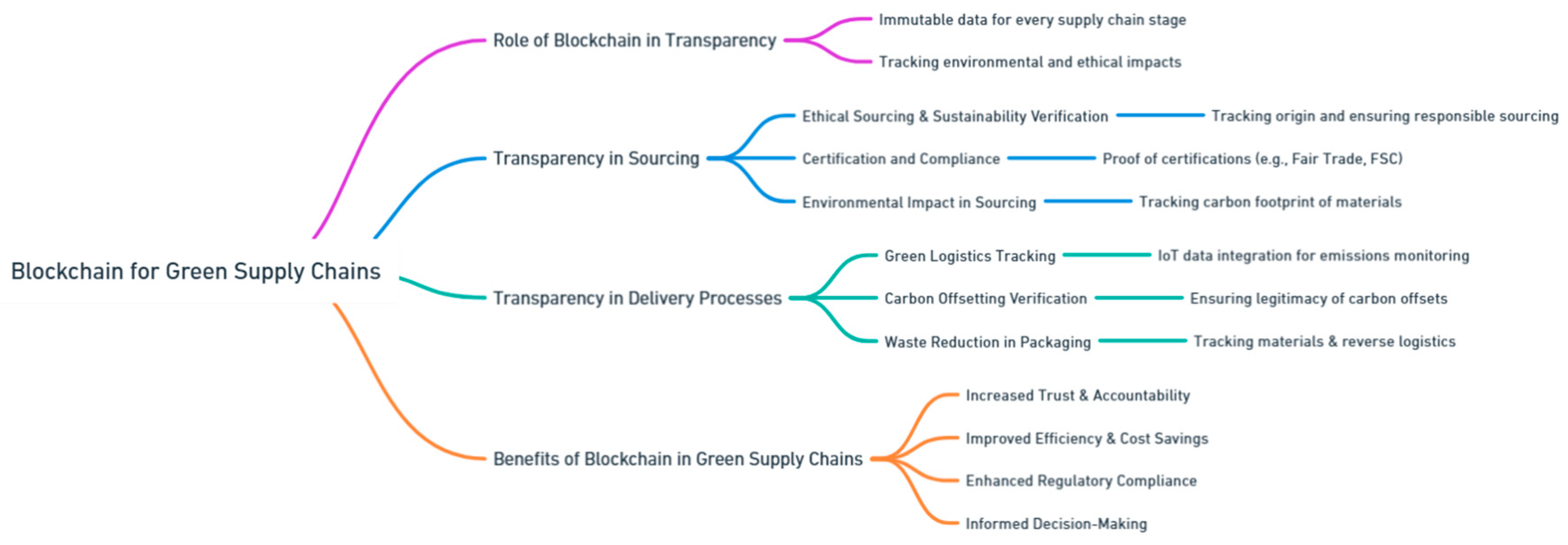
Blockchain is a game-changer for green supply chains, offering unprecedented transparency and accountability in sourcing and delivery processes. By leveraging blockchain, companies can track the origin and sustainability of materials, ensure compliance with environmental standards, and optimize their logistics to reduce their carbon footprint. As sustainability becomes a top priority for businesses and consumers alike, blockchain technology will play an increasingly vital role in creating greener, more transparent, and more responsible supply chains (Cui et al., 2024; Kouhizadeh and Sarkis, 2020; Park and Li, 2021).
Preprints 139811 i020

4.5.2. Blockchain for Green Supply Chains: Verifying Sustainable Practices in Logistics Operations
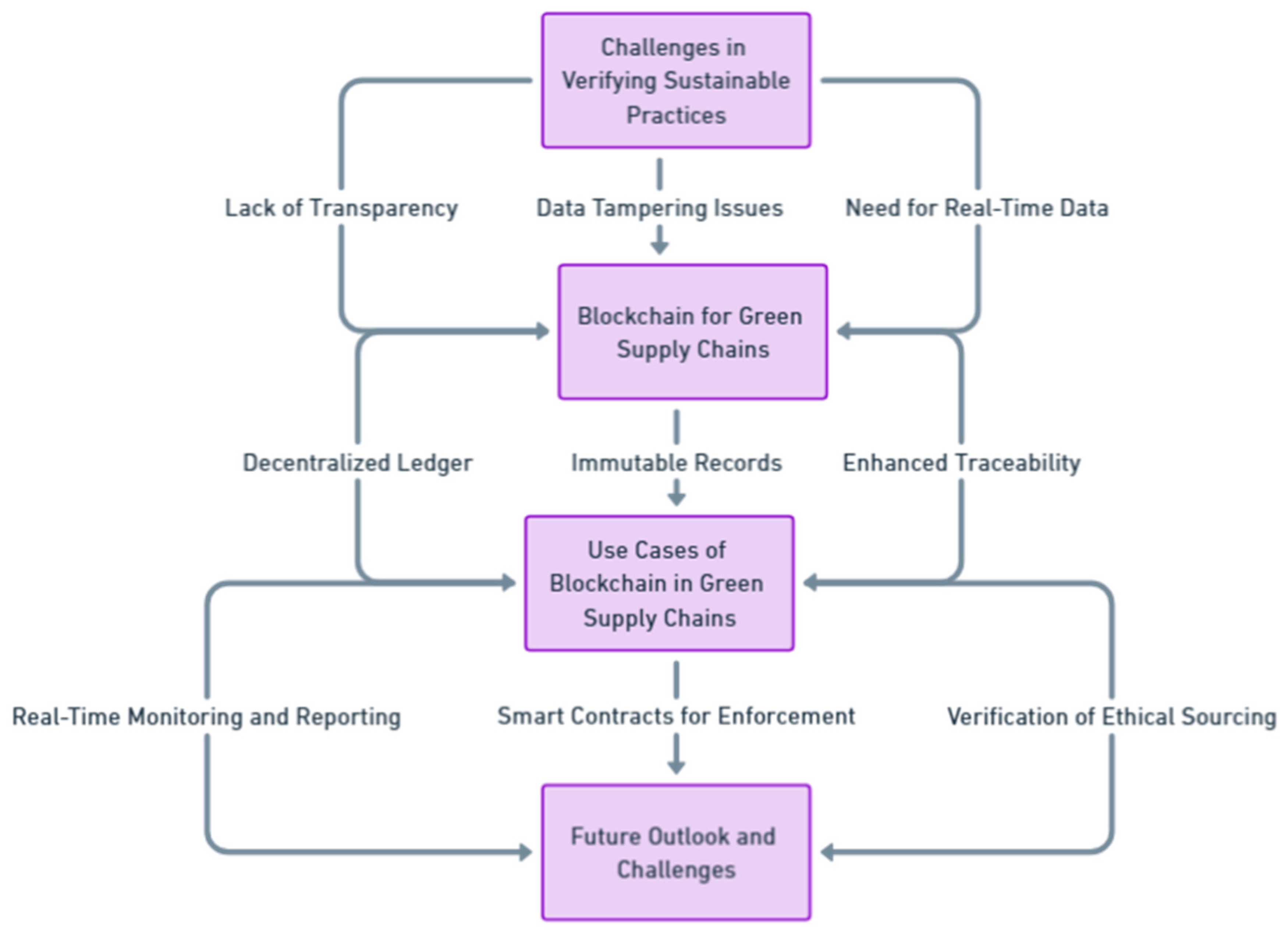
In today's rapidly evolving global economy, the pressure to adopt sustainable practices in logistics and supply chain operations has become a priority. Businesses and consumers alike are demanding more environmentally friendly practices, yet verifying the sustainability of supply chain operations remains a significant challenge. Traditional systems often lack transparency, making it difficult to track whether companies are genuinely adhering to green standards. Blockchain technology, with its decentralized, transparent, and tamper-proof features, offers a transformative solution to these challenges, creating more trustworthy and efficient green supply chains.
Challenges in Verifying Sustainable Practices. One of the main obstacles to ensuring sustainability in supply chains is the lack of transparency. Traditional systems rely on manual reporting and fragmented data across multiple stakeholders, which can lead to inaccuracies, data silos, and even fraud. For instance, a company might claim to follow environmentally friendly practices, but without reliable verification mechanisms, there is no way to guarantee these claims are accurate. This is particularly problematic in complex supply chains involving numerous parties, such as manufacturers, logistics providers, and retailers. Moreover, data tampering is another critical issue in conventional supply chain systems. Unsustainable practices can be concealed or falsified, making it difficult for consumers or regulators to hold companies accountable. There is also a need for real-time data collection and verification, which traditional systems are often unable to provide. In this context, blockchain technology can play a pivotal role in ensuring transparency and trust across the supply chain (Kouhizadeh et al., 2021; Munir et al., 2022).
Blockchain as a Solution for Green Supply Chains. Blockchain is a decentralized digital ledger technology that enables secure and transparent recording of transactions across multiple participants. It has the potential to revolutionize green supply chains by providing an immutable, time-stamped, and verifiable record of every transaction or action in the logistics process. This technology can help track the environmental impact of products from the moment they are sourced until they reach the end consumer. The core feature of blockchain is its immutability, meaning once a record is added to the blockchain, it cannot be altered or deleted. This ensures that all participants in the supply chain can trust the accuracy of the data, reducing the risk of fraudulent claims regarding sustainability. For example, blockchain can be used to track the carbon emissions of each stage of a product’s journey, ensuring that companies cannot underreport or manipulate data. Additionally, blockchain enhances traceability, which is critical for verifying sustainable practices. Companies can trace raw materials to their origin, ensuring they are sourced from environmentally friendly suppliers. Blockchain can also monitor waste management processes and ensure adherence to recycling or disposal protocols (Park and Li, 2021; Radmanesh et al., 2023).
Use Cases of Blockchain in Green Supply Chains. One of the most practical applications of blockchain in green supply chains is real-time monitoring and reporting. By using blockchain, companies can continuously track and document environmental metrics such as energy consumption, carbon footprint, and waste generation throughout the supply chain. This real-time data can be shared with all stakeholders, including regulators and consumers, enhancing trust and transparency. Smart contracts, another feature of blockchain, can automate the enforcement of sustainability standards. These self-executing contracts contain predefined rules and can automatically penalize or reward companies based on their adherence to agreed-upon sustainability metrics. For instance, a logistics provider might only receive full payment if they meet certain emissions targets, incentivizing greener operations. Several industries have already begun exploring the benefits of blockchain for sustainable supply chains. In the fashion industry, companies use blockchain to ensure that materials like organic cotton or recycled fabrics are sourced and processed sustainably. In the food industry, blockchain is employed to track the journey of products from farm to table, ensuring that they meet sustainability and ethical standards. Similarly, electronics manufacturers can use blockchain to verify that rare minerals are sourced from conflict-free and environmentally responsible suppliers (Mukherjee et al. 2022).
Future Outlook and Challenges. While blockchain presents immense potential for verifying sustainable practices in supply chains, its adoption is not without challenges. Technological barriers, such as the energy consumption of blockchain networks and the need for scalable infrastructure, must be addressed. Moreover, regulatory frameworks need to evolve to support the standardization of blockchain applications in logistics. Collaboration between businesses, regulators, and technology providers will be crucial in overcoming these challenges. By developing standardized blockchain protocols and integrating them into existing supply chain systems, the industry can pave the way for more widespread adoption. As blockchain technology continues to mature, it is likely to become an indispensable tool for verifying and enforcing sustainable practices in global supply chains.
Blockchain offers a promising solution to the challenges of verifying sustainability in supply chains. Its transparency, immutability, and ability to facilitate real-time monitoring make it an ideal tool for green logistics operations. As industries move toward more sustainable practices, blockchain can play a key role in ensuring that these efforts are genuine, measurable, and impactful. By leveraging blockchain, companies can create more trustworthy supply chains that meet the growing demand for environmental responsibility (Park and Li, 2021; Rejeb and Rejeb, 2020; Kouhizadeh et al., 2021).
Preprints 139811 i021

4.5.3. Reducing Fraud in Carbon Offset Programs

In the quest for sustainability, green supply chains have become a critical strategy for reducing environmental impacts across industries. As part of these initiatives, carbon offset programs are designed to mitigate greenhouse gas emissions by investing in projects that reduce or capture carbon. However, the effectiveness of these programs often comes under scrutiny due to fraud, lack of transparency, and accountability issues. This is where blockchain technology can play a pivotal role. Blockchain’s decentralized, immutable ledger system promises to bring greater transparency, traceability, and security to the carbon offset market, reducing instances of fraud and making green supply chains more reliable.
Challenges of Carbon Offset Programs. Carbon offset programs aim to counterbalance emissions by financing projects such as reforestation, renewable energy installations, or carbon capture technologies. While the concept is valuable in addressing climate change, the system is not without its flaws. Fraud and dishonesty are significant issues. One of the most common types of fraud is double counting, where the same carbon credits are sold multiple times to different buyers, leading to inflated claims of emission reductions. Another challenge is greenwashing, where companies overstate their environmental benefits without real evidence of their carbon reductions. Furthermore, the lack of standardization and independent verification in these programs can lead to manipulation, making it difficult for stakeholders to assess the true impact of their investments. Additionally, the complexity of global supply chains and the involvement of multiple intermediaries complicate the verification of carbon offset claims. Without a reliable system to track these offsets, it becomes challenging to ensure that emissions reductions are genuinely achieved and accounted for correctly (Haya et al., 2020; Badgley et al., 2022).
Blockchain Solutions for Carbon Offset Programs. Blockchain offers a unique opportunity to address these challenges. As a distributed ledger technology, blockchain allows for the creation of a transparent and immutable record of transactions. This can be applied to carbon offset programs in several ways:
  • Transparency and Traceability: Blockchain creates a digital ledger that records every transaction and cannot be altered once it is verified. In the context of carbon offsets, this ensures that each credit is traceable from its origin to its retirement, reducing the risk of fraud. The use of smart contracts can automate verification processes and ensure that carbon credits are only sold once.
  • Authenticity: By providing a verifiable, tamper-proof record of emissions reductions, blockchain helps in ensuring that the carbon credits being traded are legitimate. This means companies cannot falsely claim to have reduced their emissions when they haven’t, and it also prevents the reuse or reselling of expired or fraudulent carbon credits.
  • Decentralization: Unlike traditional carbon offset systems that rely on central authorities or intermediaries, blockchain operates in a decentralized manner. This eliminates the need for trust in a single organization, as all transactions are verified by the network, reducing the potential for manipulation and corruption.
  • Real-time Monitoring: With the integration of Internet of Things (IoT) devices, blockchain can enable real-time monitoring of carbon offset projects. For instance, sensors can measure the amount of carbon being sequestered by a forest restoration project and upload that data directly to the blockchain. This real-time verification improves accuracy and reduces the chances of data manipulation.
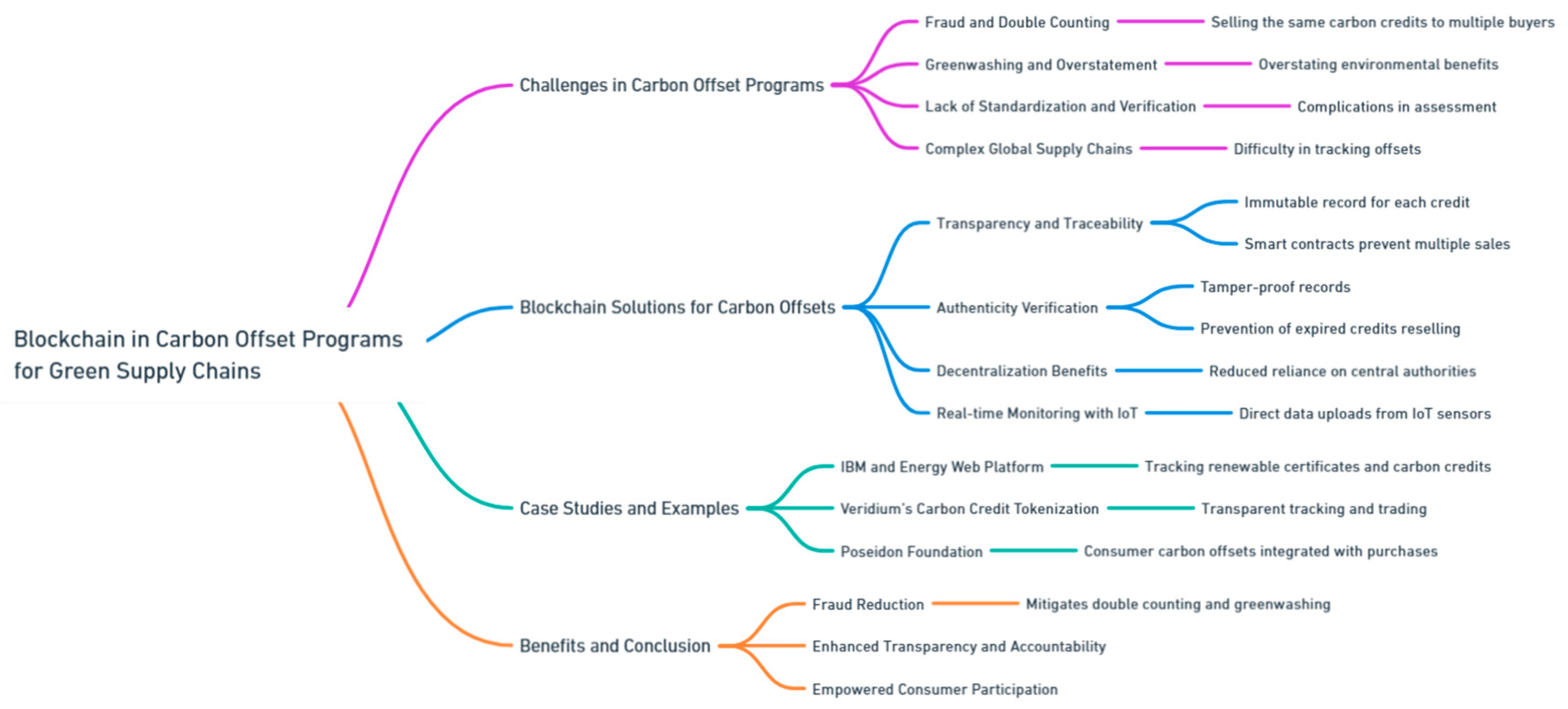
Case Studies and Examples. Several organizations and companies are already leveraging blockchain to enhance the reliability of their carbon offset programs. For instance, IBM and Energy Web have developed a blockchain platform that tracks renewable energy certificates and carbon credits, ensuring that they are not double-counted. Similarly, Veridium, a technology firm, is using blockchain to tokenize carbon credits, allowing businesses to track and trade carbon offsets with greater transparency. These examples highlight the growing role of blockchain in making carbon markets more trustworthy. In another example, Poseidon Foundation has created a blockchain-based system that integrates with consumer products, allowing customers to offset their carbon footprints by contributing to verified reforestation projects every time they make a purchase. This adds a new layer of transparency and engagement, empowering consumers to actively participate in carbon offsetting (Vilkov and Tian, 2023; Zhou et al., 2023: Nielsen et al., 2021).
Conclusion. Blockchain technology offers a powerful tool for reducing fraud in carbon offset programs by enhancing transparency, traceability, and authenticity. By ensuring that every carbon credit is accounted for and can only be sold once, blockchain mitigates risks of double counting and greenwashing. As global supply chains continue to evolve toward greener practices, the integration of blockchain could play a crucial role in ensuring that carbon offset programs deliver on their promises, helping businesses and consumers contribute more effectively to the fight against climate change (Atluri et al., 2022; Basu et al., 2023; Zhu et al., 2023; Munir et al., 2022).
Preprints 139811 i022

4.5.4. Case Study: IBM’s Blockchain Solution for Sustainable Supply Chains
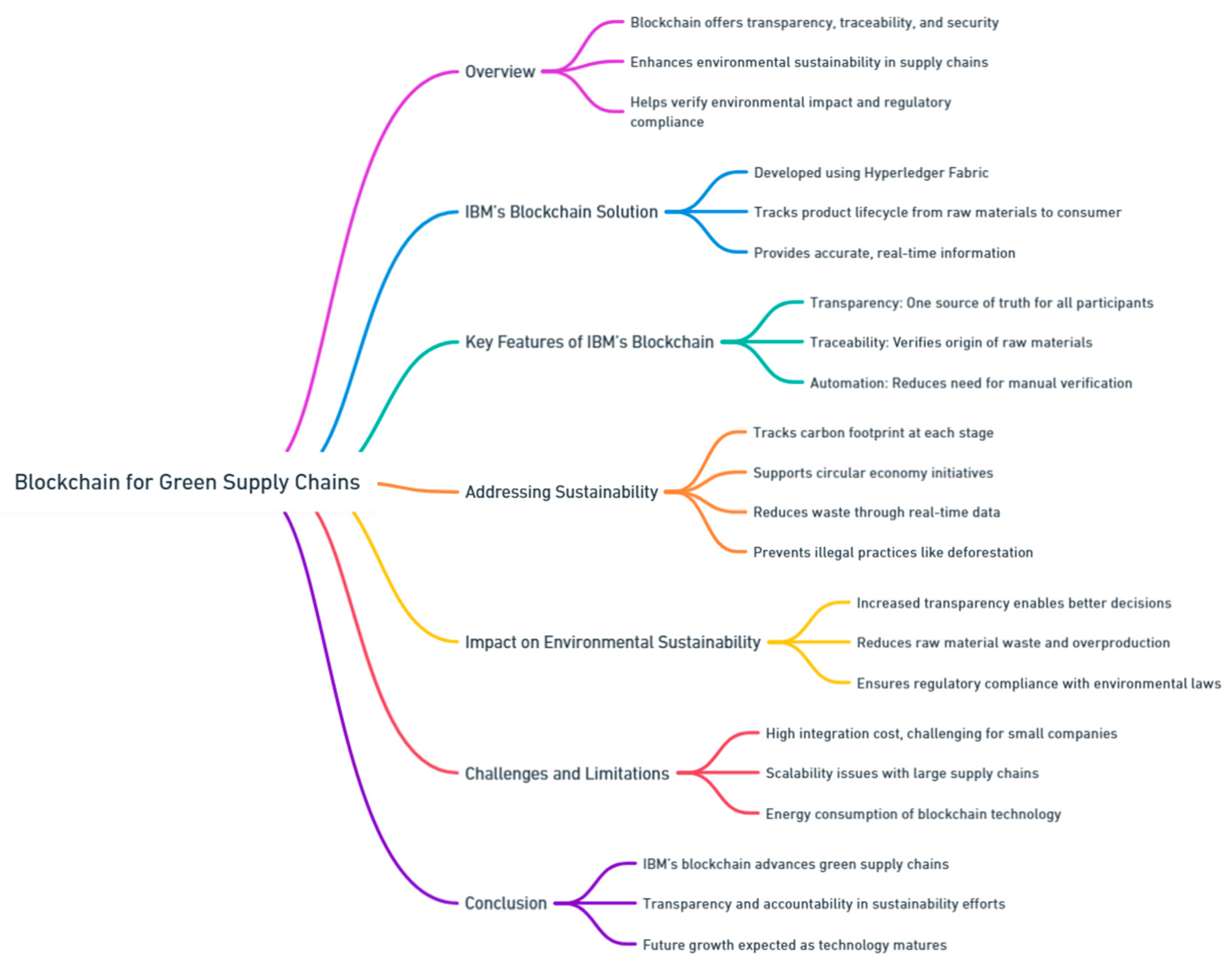
Blockchain for Green Supply Chains. Blockchain technology is transforming various industries, and one of its most promising applications lies in the optimization of supply chains for sustainability. The technology provides an immutable, decentralized ledger that records transactions transparently and securely, offering enormous potential for enhancing environmental sustainability. In green supply chains, blockchain can significantly improve the traceability and accountability of products, helping companies verify their environmental impact and achieve regulatory compliance. IBM, a leader in the development of enterprise blockchain solutions, has pioneered several initiatives to integrate blockchain into sustainable supply chain management, offering a practical case study of how this technology can support environmental goals (Park and Li, 2021; Munir et al., 2022).
IBM’s Blockchain Solution for Sustainable Supply Chains. IBM has been at the forefront of blockchain development, and its solutions are increasingly being applied to supply chain management, especially in the context of sustainability. The company’s blockchain platform, powered by Hyperledger Fabric, provides a robust infrastructure for tracking the entire lifecycle of products—from raw materials to the end consumer. IBM’s blockchain solution is designed to ensure that each participant in the supply chain, including manufacturers, suppliers, retailers, and even consumers, has access to accurate and real-time information about a product's journey.
Key Features of IBM’s Blockchain. IBM’s blockchain solution offers several critical features that align with sustainability objectives. Firstly, it ensures data transparency by enabling all participants in the supply chain to access a single, immutable version of the truth regarding product information. This transparency helps prevent issues such as fraud or misrepresentation, which are common in traditional supply chains. Secondly, IBM’s platform focuses on traceability, allowing companies to verify the origin of raw materials, ensuring they meet environmental and ethical standards. This feature is crucial in industries like food, fashion, and electronics, where concerns about the environmental impact of raw material sourcing are paramount. Additionally, IBM’s blockchain solution enhances automation, reducing the need for manual verification processes, which helps cut down on administrative inefficiencies and resource waste (Trautmann and Lasch, 2021; Moosavi et al., 2021).
Addressing Sustainability with Blockchain. One of the core benefits of IBM’s blockchain technology in the context of green supply chains is its ability to promote sustainability through enhanced traceability and accountability. For instance, companies can track the carbon footprint of their products at each stage of the supply chain, from production to distribution, allowing them to identify and mitigate high-emission processes. Moreover, blockchain can support circular economy initiatives, where products are designed to be reused, refurbished, or recycled, by ensuring the authenticity and quality of returned materials.
IBM’s blockchain is also instrumental in reducing waste. By providing real-time data, companies can better manage their inventory, reducing overproduction and minimizing waste. This is particularly important in industries like fashion, where unsold inventory often ends up in landfills. Furthermore, the traceability offered by IBM’s blockchain can help combat illegal practices such as deforestation or mining in protected areas, as companies can verify the ethical sourcing of materials like wood or minerals.
Impact on Environmental Sustainability. Blockchain technology, as demonstrated by IBM, plays a pivotal role in improving environmental sustainability in supply chains. One of the primary benefits is increased transparency, which ensures that all stakeholders can access reliable data about the environmental impact of a product. This transparency can lead to better decision-making, enabling companies to choose suppliers that meet higher environmental standards. Additionally, waste reduction is another significant benefit, as blockchain helps optimize supply chain processes, reducing the excess use of raw materials and preventing overproduction. Blockchain also facilitates compliance with environmental regulations. With increasingly stringent environmental laws being implemented globally, companies must prove that they adhere to sustainability practices. IBM’s blockchain provides the necessary infrastructure to maintain compliance records, ensuring that companies meet regulatory requirements (Park et al., 2021; Munir et al., 2022).
Challenges and Limitations. While IBM’s blockchain solution offers numerous advantages for green supply chains, its adoption is not without challenges. One of the primary barriers to widespread implementation is the cost of integrating blockchain technology into existing supply chain systems. Smaller companies, in particular, may struggle to justify the initial investment. Moreover, blockchain, while highly secure, can suffer from scalability issues, especially when dealing with complex global supply chains that require processing large volumes of data. Another limitation is the energy consumption associated with blockchain technology itself. Although IBM’s blockchain operates on permissioned networks that are more energy-efficient than public blockchains like Bitcoin, there is still a concern about the energy required to maintain the technology. As sustainability is the primary goal, this could present a contradiction in the long-term unless further innovations reduce blockchain’s environmental footprint.
IBM’s blockchain solution illustrates the potential of blockchain technology to revolutionize green supply chains. By improving transparency, traceability, and accountability, blockchain offers a powerful tool for companies seeking to enhance their sustainability efforts. While challenges remain in terms of cost, scalability, and energy consumption, the future outlook for blockchain in promoting sustainable supply chains is promising. As the technology matures and more companies adopt blockchain, its role in driving environmental sustainability is likely to grow (Park and Li, 2021; Khanfar et al., 2021; Chandan et al., 2023; Centobelli et al., 2022).
Preprints 139811 i023

4.5.5. Reducing Carbon Footprint Through Smart Technologies

Sustainable Warehousing and Energy Efficiency. In the modern logistics and supply chain industry, the demand for more sustainable and energy-efficient practices is growing rapidly. Warehousing plays a crucial role in the storage, management, and distribution of goods, and it also contributes significantly to a company's overall environmental footprint. To meet sustainability goals and reduce operational costs, companies are increasingly focusing on energy efficiency and incorporating renewable energy sources into their warehouse operations. Solar panels, in particular, have emerged as one of the most effective solutions for reducing carbon emissions and improving energy efficiency in warehouses. This article explores the role of renewable energy in sustainable warehousing, with a special emphasis on solar energy.
The Importance of Sustainable Warehousing. Sustainable warehousing refers to the practices and technologies used to minimize the environmental impact of warehouse operations. Warehouses are typically large facilities that consume significant amounts of energy, primarily for lighting, climate control, material handling equipment, and other operational processes. Unsustainable energy practices can lead to high greenhouse gas (GHG) emissions, contributing to global warming and climate change.
To address these concerns, sustainable warehousing focuses on several key areas:
-
Energy efficiency: Reducing the energy consumption of warehouses through better design, more efficient equipment, and smarter management systems.
-
Renewable energy integration: Shifting from fossil fuels to renewable energy sources such as solar, wind, and geothermal energy.
-
Resource optimization: Minimizing waste, optimizing space usage, and utilizing environmentally friendly materials in construction and operations.
By adopting sustainable practices, companies can not only reduce their environmental impact but also realize significant cost savings through lower energy bills and improved operational efficiency.
Role of Renewable Energy in Warehouses. One of the most effective ways to make warehouses more sustainable is by incorporating renewable energy sources. Among the various renewable energy options, solar power has become the most widely adopted in warehouses due to its feasibility, cost-effectiveness, and scalability. Solar energy systems can be easily installed on the large, flat roofs of warehouses, turning these facilities into energy-generating sites. Additionally, renewable energy offers several benefits for warehouse operations:
  • Reducing Carbon Footprint: The primary reason for using renewable energy in warehouses is to reduce carbon emissions. Traditional warehouses rely heavily on electricity generated from fossil fuels, which produce a large amount of carbon dioxide (CO₂) and other greenhouse gases. By switching to solar power or other renewable sources, warehouses can dramatically reduce their reliance on non-renewable energy and lower their overall carbon footprint. This is especially important in meeting global sustainability goals, such as the reduction of GHG emissions set by international agreements like the Paris Climate Accord. For example, a warehouse equipped with solar panels can significantly reduce its need for grid electricity, which is often generated using coal, natural gas, or oil. As a result, the warehouse’s operations become cleaner and greener, contributing to a more sustainable supply chain ( Lewczuk et al., 2021; Boztepe and Çetin, 2020).
  • Cost Savings and Energy Independence: Another critical advantage of using renewable energy, particularly solar power, in warehouses is the potential for cost savings. Solar energy systems can generate electricity on-site, reducing the need to purchase electricity from the grid. Over time, this leads to substantial cost reductions, especially as solar panel technology becomes more affordable and efficient. Although there is an upfront investment required for installing solar panels, the long-term financial benefits often outweigh the initial costs. Additionally, solar energy can help warehouses achieve a degree of energy independence. With solar power systems in place, warehouses are less susceptible to energy price fluctuations and potential shortages, ensuring a more stable and predictable energy supply. In areas where electricity costs are high, solar energy can provide a competitive advantage by lowering operating expenses and improving profit margins (Farthing et al., 2021; Boztepe and Çetin, 2020).
  • Net-Zero and Energy-Positive Warehouses: By incorporating renewable energy technologies, warehouses can move closer to achieving net-zero energy consumption. A net-zero warehouse produces as much energy as it consumes over a year, effectively offsetting its energy needs with renewable energy generation. This is a significant step toward sustainability, as it allows warehouses to operate without contributing to the growing demand for non-renewable energy. Some warehouses have even become energy-positive, meaning they generate more energy than they consume. This excess energy can be stored in batteries for later use, sold back to the grid, or used to power other parts of the supply chain. Energy-positive warehouses not only reduce their environmental impact but also create new revenue streams through the sale of surplus electricity (Mavrigiannaki et al., 2021; Wei et al., 2021).
  • Sustainability Certifications and Corporate Image: Using renewable energy in warehouses also helps companies achieve sustainability certifications such as Leadership in Energy and Environmental Design (LEED) or ISO 14001. These certifications can enhance a company's reputation, demonstrating a commitment to environmental responsibility. Additionally, many consumers and clients are increasingly favoring businesses that prioritize sustainability, which can provide a competitive advantage in the marketplace. Solar-powered warehouses signal a company’s commitment to reducing its environmental impact, appealing to environmentally conscious consumers and investors. As corporate sustainability becomes a more critical factor in business success, companies that invest in renewable energy can strengthen their brand image and market position (Boztepe and Çetin, 2020; Khan et al., 2020).
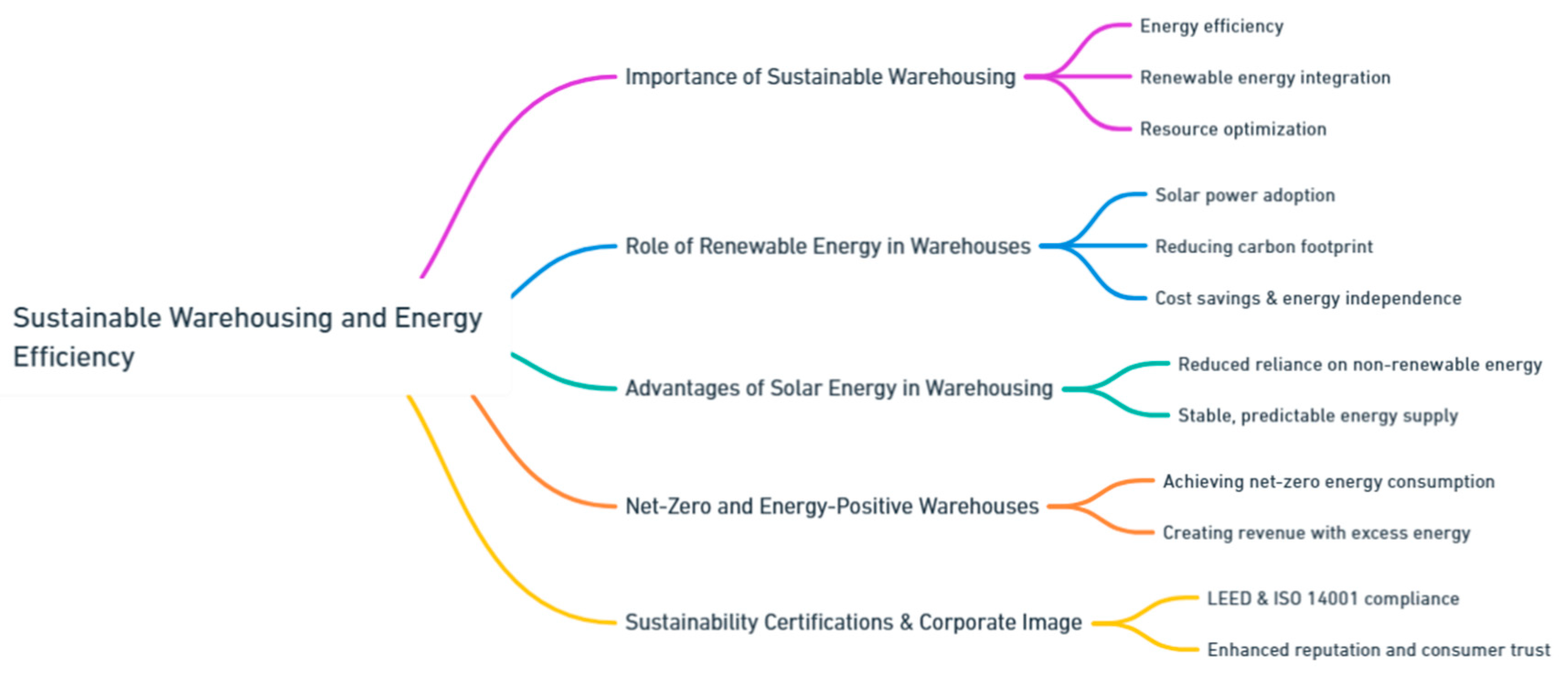
Renewable energy, particularly solar power, plays a vital role in sustainable warehousing. By reducing reliance on fossil fuels, solar panels help lower carbon emissions, cut operational costs, and improve energy independence for warehouses. As the logistics industry continues to grow and evolve, sustainable warehousing practices, including the use of renewable energy, will be essential for minimizing environmental impacts and achieving long-term business success. By investing in renewable energy technologies, companies can not only meet their sustainability goals but also improve operational efficiency, enhance their corporate image, and gain a competitive edge in an increasingly eco-conscious world (Boztepe and Çetin, 2020; Vasileva et al., 2022; Perotti and Colicchia, 2023; Satpathy et al., 2025).
Preprints 139811 i024

4.5.6. Use of Smart Grids and Energy-Efficient Machinery

Sustainable warehousing has become a key focus area for businesses as they strive to reduce their environmental footprint while maintaining operational efficiency. Warehousing, a critical element of supply chain logistics, can be energy-intensive due to the constant movement of goods, lighting, and temperature control. This has pushed companies to explore various methods to improve energy efficiency. Two major approaches to achieving this are the use of smart grids and the adoption of energy-efficient machinery. These technologies not only help reduce operational costs but also contribute to broader environmental sustainability goals.
  • The Role of Smart Grids in Warehousing: Smart grids refer to advanced electrical grids that use digital technology to monitor and manage the production, distribution, and consumption of electricity. When applied to warehousing, smart grids can enhance energy efficiency by optimizing how and when electricity is used. This is especially important in facilities that require constant lighting, HVAC systems, and the operation of energy-intensive machinery such as forklifts, conveyor belts, and robotics. Smart grids allow warehouses to integrate renewable energy sources, such as solar panels, and optimize the use of energy storage systems like batteries. For instance, a warehouse can generate solar energy during the day and store excess energy for use during peak demand periods, when electricity from the grid is more expensive. Moreover, smart grids enable warehouses to participate in demand response programs, where they can reduce or shift energy use during high-demand periods in exchange for financial incentives. This not only lowers operational costs but also reduces strain on the overall energy grid. One of the key advantages of smart grids is their ability to provide real-time data on energy consumption. By using data analytics, warehouse managers can identify inefficiencies in energy use and take corrective actions, such as adjusting HVAC settings or replacing inefficient equipment. Additionally, smart grids facilitate predictive maintenance by signaling when machinery is drawing more power than usual, indicating that repairs or replacements may be needed to prevent energy wastage (Khan et al., 2020; Khare and Namekar, 2020).
  • Energy-Efficient Machinery in Warehousing: The use of energy-efficient machinery in warehousing is another essential component of sustainable operations. Advances in technology have led to the development of machinery that consumes less power while maintaining or even improving performance. This includes everything from energy-efficient lighting systems to electric forklifts and conveyor systems designed to minimize energy usage. Lighting systems are one of the largest sources of energy consumption in warehouses. By switching to LED lighting, which uses significantly less energy and lasts longer than traditional incandescent or fluorescent bulbs, warehouses can achieve substantial reductions in their energy bills. Moreover, LED lighting systems can be integrated with motion sensors or smart controls to ensure that lights are only on when needed, further reducing unnecessary energy use. In terms of material handling, electric forklifts are increasingly replacing diesel-powered models. Electric forklifts produce zero emissions, require less maintenance, and are cheaper to operate than their diesel counterparts. The integration of energy-efficient motors in other types of material handling equipment, such as conveyors and automated guided vehicles (AGVs), can also significantly reduce energy consumption. Energy-efficient machinery often incorporates variable frequency drives (VFDs), which allow motors to operate at different speeds depending on the workload. This contrasts with traditional motors that run at full speed regardless of demand, wasting energy. VFDs can be applied to various equipment in a warehouse, such as fans, pumps, and conveyor belts, optimizing energy use during periods of low activity (Denkena et al., 2020; Lewczuk et al., 2021).
  • Benefits of Sustainable Warehousing: The adoption of smart grids and energy-efficient machinery brings multiple benefits beyond energy savings. First, these technologies can improve the resilience of warehouse operations by reducing reliance on external power sources and minimizing the risk of disruptions caused by power outages. For example, a warehouse that uses renewable energy and energy storage systems can continue operating even during grid failures. Second, sustainable warehousing practices contribute to carbon footprint reduction, helping companies meet regulatory requirements and improve their reputation among environmentally conscious consumers. This can be particularly important for businesses that want to position themselves as leaders in corporate social responsibility (CSR). Finally, the long-term cost savings from reduced energy consumption and participation in demand response programs can free up capital for other investments. Although the initial investment in smart grid technology or energy-efficient machinery can be significant, the return on investment (ROI) is often realized through lower utility bills and maintenance costs over time (Vasileva et al., 2022; Brem et al., 2020).
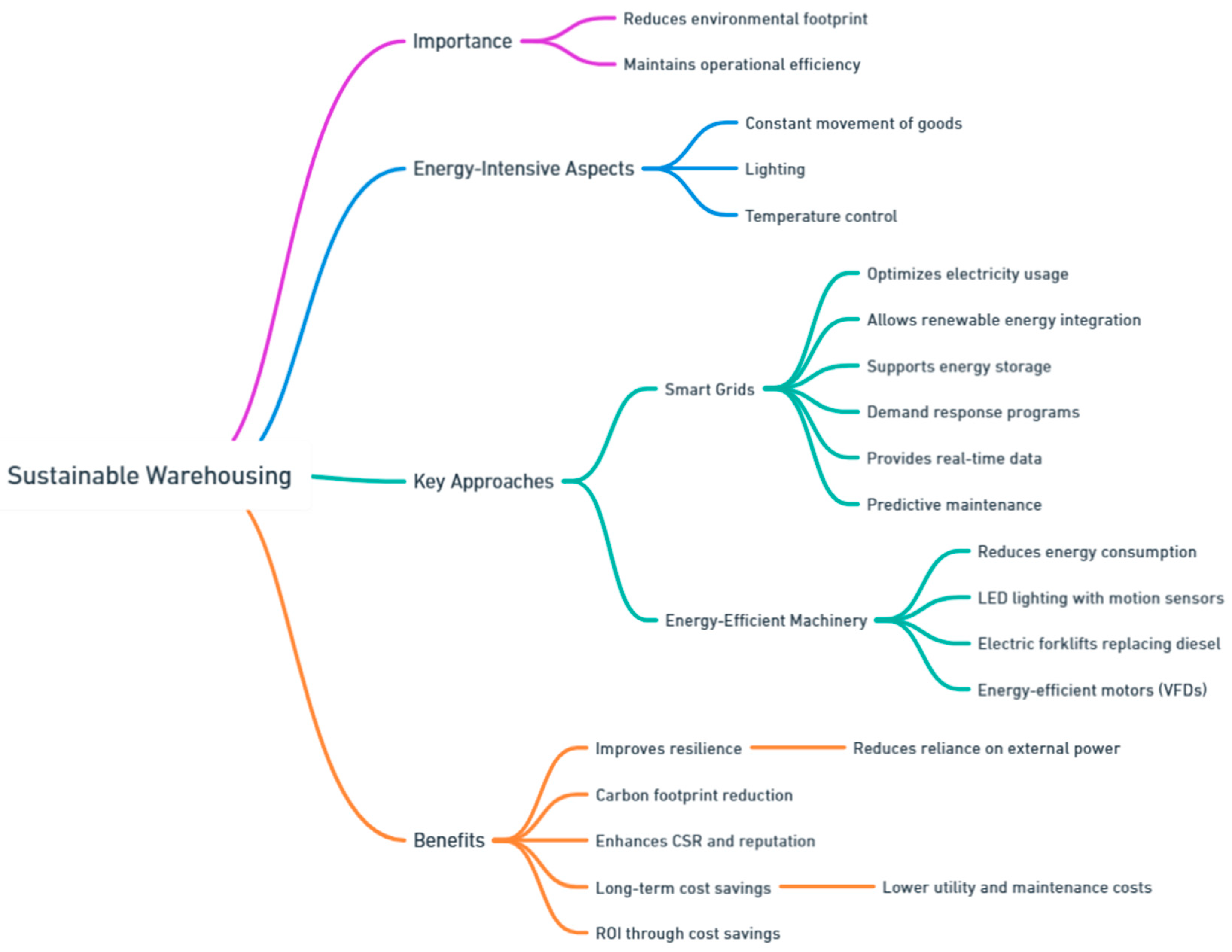
Sustainable warehousing and energy efficiency are increasingly important in today’s business landscape, as companies seek to align with environmental goals and reduce operational costs. Smart grids provide real-time energy management and integration with renewable energy sources, while energy-efficient machinery reduces the power needed for essential warehouse functions. Together, these technologies offer a pathway toward more sustainable, cost-effective, and resilient warehousing operations. Investing in these innovations not only benefits the bottom line but also supports the global shift toward a more sustainable future (Tiwari, 2022; Khalil et al., 2021; Ponnusamy et al., 2021; Vasileva et al., 2022).
Preprints 139811 i025

4.5.7. Role of AI and IoT in Warehouse Energy Management

Warehousing plays a crucial role in supply chain management, acting as a key intermediary between manufacturers and consumers. However, traditional warehousing operations are often energy-intensive, leading to increased carbon footprints and higher operational costs. In recent years, sustainability has become a major priority, prompting businesses to adopt more energy-efficient strategies. Advanced technologies such as Artificial Intelligence (AI) and the Internet of Things (IoT) have emerged as vital enablers in transforming conventional warehouses into sustainable, energy-efficient hubs. This paper explores the significant role of AI and IoT in optimizing energy consumption within warehouses, contributing to both environmental and economic benefits.
Overview of Warehouse Energy Challenges. Warehouses face numerous energy-related challenges, including lighting, heating, ventilation, and air conditioning (HVAC), along with the operation of energy-intensive equipment such as forklifts and conveyor systems. These systems typically run on outdated, inefficient schedules, wasting substantial energy when not in active use. Additionally, most warehouses lack real-time data on energy consumption patterns, making it difficult to implement targeted interventions. Without adequate energy management strategies, warehouses contribute significantly to greenhouse gas emissions and incur higher operational costs.
The Role of AI in Warehouse Energy Management. AI-driven solutions have gained prominence as powerful tools for managing warehouse energy consumption efficiently. AI systems can analyze vast amounts of data from warehouse operations, optimize processes, and predict future energy needs (Rojek et al., 2023; Likhouzova and Demianova, 2022; Moraliyage et al., 2023).
Some of the key applications of AI in warehouse energy management include:
  • Predictive Analytics: AI systems use historical data and real-time inputs to predict energy demands based on operational patterns. This allows warehouses to optimize energy consumption by scheduling energy-intensive activities during off-peak hours or when renewable energy is abundant.
  • Energy Optimization Algorithms: AI can identify inefficiencies in energy usage and suggest corrective measures. For example, AI-powered algorithms can determine the optimal temperature settings for HVAC systems to balance comfort and energy savings, reducing unnecessary power usage.
  • Automation and Robotics: AI-driven robotics can optimize the movement of goods, reducing energy consumption in material handling. Autonomous mobile robots (AMRs) and automated guided vehicles (AGVs) can minimize the distance traveled within warehouses, lowering energy use.
  • Intelligent Lighting Systems: AI systems integrated with IoT sensors can control lighting based on occupancy, natural light availability, and time of day. This dynamic approach can significantly reduce energy waste associated with traditional lighting schedules.
The Role of IoT in Warehouse Energy Efficiency. The Internet of Things (IoT) enables the interconnection of various devices and systems, providing real-time data that is crucial for energy management in warehouses. IoT devices, such as smart meters and sensors, can monitor energy consumption across different operations, providing warehouse managers with detailed insights into where energy is being used inefficiently (Fatima et al., 2022; Jarašūnienė et al., 2023; Hossein et al., 2020).
The following are key IoT applications in warehouse energy efficiency:
  • Energy Monitoring and Analytics: IoT sensors can track energy consumption in real time, providing granular data on the performance of equipment such as HVAC systems, conveyor belts, and lighting. With this data, warehouse operators can pinpoint areas of excessive energy use and take corrective action.
  • Temperature and Humidity Control: IoT devices can monitor and regulate the internal environment of warehouses, ensuring that energy-intensive HVAC systems are only used when necessary. This is particularly important in temperature-sensitive warehouses that store perishable goods.
  • Smart Lighting: IoT-enabled lighting systems can detect motion and adjust brightness levels accordingly. For instance, in areas with little activity, lighting can be dimmed or turned off entirely, conserving energy without compromising operational efficiency.
  • Predictive Maintenance: IoT sensors installed on warehouse equipment can detect wear and tear, predicting when maintenance is needed. This prevents breakdowns that could lead to energy inefficiencies, such as equipment running at reduced efficiency or malfunctioning altogether.
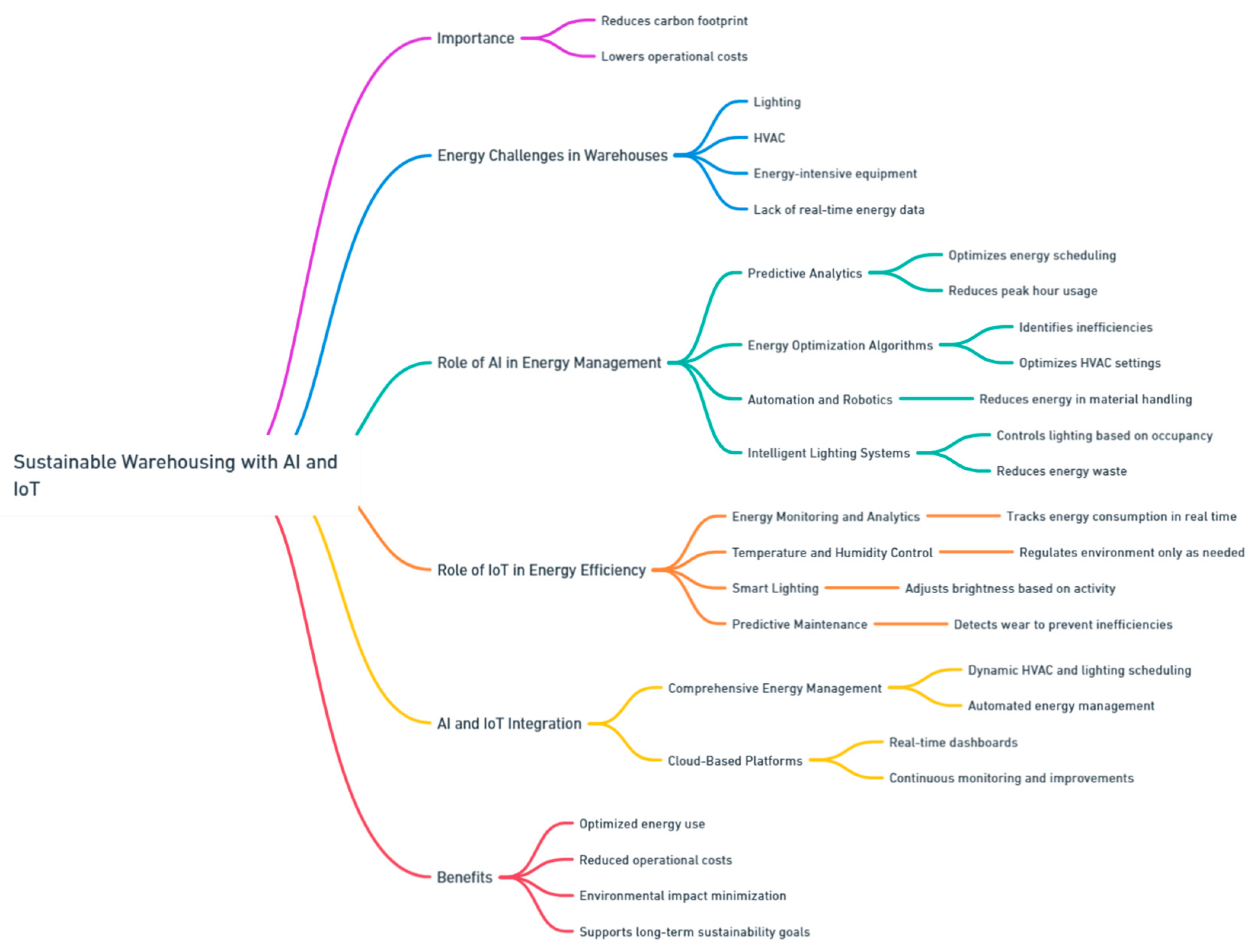
Integration of AI and IoT for Comprehensive Energy Management. The synergy between AI and IoT creates a powerful framework for comprehensive energy management in warehouses. IoT devices continuously collect real-time data on energy consumption, while AI systems analyze this data to identify patterns, optimize operations, and implement predictive energy-saving measures. For example, AI can use IoT sensor data to create dynamic schedules for HVAC and lighting systems, adjusting them based on warehouse occupancy, weather conditions, and peak energy pricing. Furthermore, AI and IoT integration enables the automation of energy management processes, reducing the need for manual intervention. This not only improves energy efficiency but also allows warehouse managers to focus on strategic decision-making. Cloud-based platforms, powered by AI and IoT, can provide real-time dashboards that give insights into energy consumption, enabling continuous monitoring and improvement. The application of AI and IoT technologies in warehousing offers substantial potential for enhancing energy efficiency and sustainability. By leveraging predictive analytics, automation, and real-time monitoring, AI and IoT enable warehouse operators to optimize energy use, reduce operational costs, and minimize their environmental impact. As businesses strive toward greener operations, the integration of these technologies will be crucial in achieving long-term sustainability goals in the warehousing sector (Jarašūnienė et al., 2023; Zhu, et al., 2021; Fatima et al., 2022; Jagadeesan et al., 2023).
Preprints 139811 i026

4.5.8. Case Study: Tesla’s Gigafactories and Their Energy-Efficient Logistics

Sustainable warehousing has become a critical aspect of supply chain management, with increasing emphasis on reducing the environmental impact of storage, distribution, and logistics operations. One of the leading companies spearheading this transition is Tesla, which has incorporated energy-efficient practices in its Gigafactories. These facilities are not just manufacturing hubs; they also represent Tesla's commitment to minimizing its carbon footprint through innovative energy-efficient logistics and warehousing strategies. This case study examines how Tesla's Gigafactories embody the principles of sustainable warehousing and energy efficiency, serving as a model for future industrial practices.
Overview of Sustainable Warehousing. Sustainable warehousing involves minimizing environmental impacts through energy-efficient practices, waste reduction, and sustainable material use in storage, handling, and distribution processes. Traditional warehouses are significant energy consumers, often contributing to the carbon footprint of a company. Common sources of energy consumption include lighting, HVAC (Heating, Ventilation, and Air Conditioning), equipment operation, and logistics activities. Sustainable warehousing addresses these challenges by implementing renewable energy sources, efficient space management, green building designs, and energy-conscious logistics (Perotti and Colicchia, 2023; Vasileva et al., 2022).
Tesla's Gigafactories: A Benchmark for Sustainable Warehousing. Tesla's Gigafactories are at the forefront of industrial innovation, not only in terms of electric vehicle (EV) production but also through their commitment to sustainability and energy efficiency. Tesla operates multiple Gigafactories globally, with its first and most well-known facility in Nevada, USA. These Gigafactories are designed with sustainability in mind, incorporating cutting-edge technologies and practices that align with Tesla’s broader mission of accelerating the world’s transition to sustainable energy (Cooke, 2020; Maradin et al., 2022).
Key Energy-Efficient Features of Tesla's Gigafactories:
  • Solar-Powered Infrastructure: The Gigafactories are designed to run on renewable energy, particularly solar power. Tesla's Nevada Gigafactory, for instance, aims to be fully powered by on-site solar panels, reducing reliance on external electricity sources and minimizing carbon emissions.
  • Battery Storage Systems: Tesla's energy storage solutions, such as the Powerwall and Powerpack, are used to store excess energy generated by solar panels. This stored energy is utilized during peak demand times, ensuring consistent energy efficiency while avoiding the consumption of non-renewable energy.
  • Efficient Space Utilization: Tesla’s Gigafactories utilize advanced space management techniques to optimize storage capacity while minimizing energy usage. Efficient storage layouts reduce the energy needed for material handling and transportation within the facility.
  • Automated Material Handling Systems: Automation plays a significant role in Tesla's warehousing operations. By using robotic systems to manage inventory and materials, Tesla reduces manual labor requirements, which subsequently reduces energy consumption related to human-operated equipment.
  • Green Building Certifications: Tesla's Gigafactories are built to meet LEED (Leadership in Energy and Environmental Design) standards, ensuring that the buildings themselves are constructed with sustainable materials and designs that enhance energy efficiency.
Energy-Efficient Logistics. Tesla's logistics operations are deeply integrated with its sustainability goals. The company's approach to logistics not only focuses on reducing transportation costs and improving delivery efficiency but also on minimizing its environmental footprint. Energy-efficient logistics is achieved through several strategies:
  • Electric Vehicles for Transportation: Tesla’s logistics system incorporates its own electric vehicles, reducing the emissions associated with traditional fuel-based transport. This is a significant step in decarbonizing logistics operations, especially for long-distance transportation between Gigafactories and distribution centers.
  • Optimized Route Planning: Tesla uses advanced software for route optimization, ensuring that goods are transported using the most energy-efficient routes. This reduces fuel consumption, emissions, and overall transportation time.
  • Local Sourcing of Materials: Wherever possible, Tesla sources raw materials from local suppliers, reducing the need for long-distance transportation. This not only supports regional economies but also minimizes the environmental impact of material transportation.
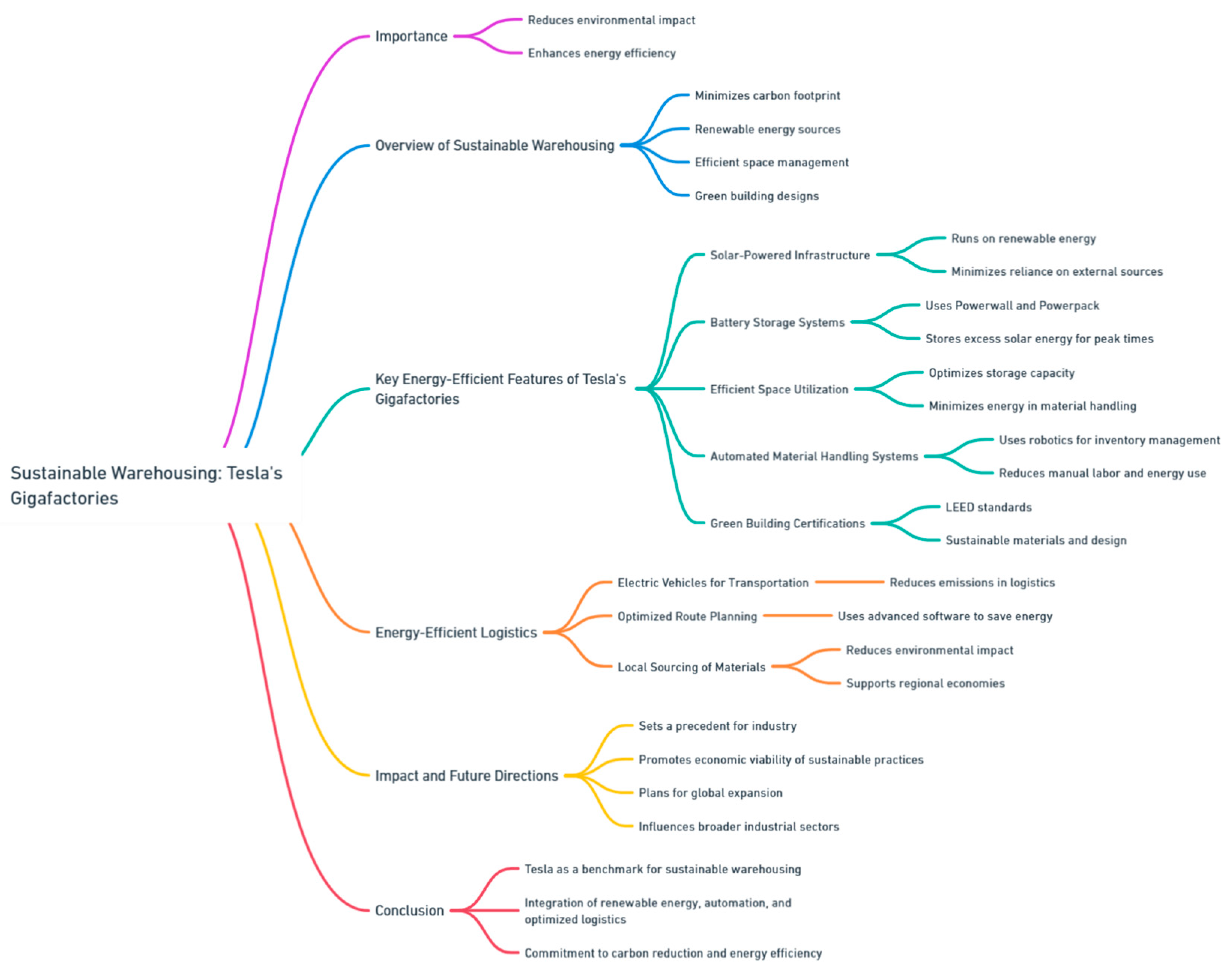
Impact and Future Directions. Tesla’s energy-efficient practices within its Gigafactories and logistics operations set a precedent for other manufacturers and industries to follow. By combining renewable energy, advanced storage systems, and sustainable logistics, Tesla showcases how large-scale production facilities can operate in harmony with environmental objectives. The reduction of greenhouse gas emissions and operational costs achieved through these practices further highlights the economic viability of sustainable warehousing and logistics. Moving forward, Tesla aims to scale up its Gigafactories globally, with plans for new facilities in Europe and Asia. As Tesla expands, its sustainability initiatives are likely to influence the broader industrial and logistics sectors, encouraging more companies to adopt energy-efficient practices.
Tesla’s Gigafactories exemplify the potential of sustainable warehousing and energy-efficient logistics in the 21st century. Through the integration of renewable energy sources, advanced automation, and optimized logistics operations, Tesla not only reduces its environmental footprint but also sets a benchmark for industrial sustainability. The company's commitment to reducing carbon emissions and promoting energy efficiency provides a clear path for the future of sustainable warehousing (Cooke, 2020; Liu et al., 2023; Ali and Phan, 2022).
Preprints 139811 i027

4.5.9. Transitioning from Fossil Fuel-Powered Fleets to Electric Vehicles (EVs)

The logistics industry is rapidly evolving, driven by advancements in technology and increasing environmental awareness. One of the most significant changes taking place is the transition from fossil fuel-powered fleets to electric vehicles (EVs) in last-mile delivery. This shift represents a major opportunity for logistics companies to reduce their carbon footprint, cut operational costs, and improve efficiency in delivering goods to customers. Last-mile delivery refers to the final stage of the delivery process, where goods are transported from a distribution center or local hub to the customer’s doorstep. As e-commerce continues to grow, the demand for last-mile delivery services has surged, putting pressure on logistics companies to find more sustainable and efficient solutions. The adoption of electric and autonomous vehicles in this sector is seen as a critical step toward meeting these demands while minimizing the environmental impact (Anosike et al., 2023; Castillo and Álvarez, 2023).
The Need for Transitioning to Electric Vehicles (EVs). Traditional last-mile delivery fleets are largely powered by internal combustion engines (ICEs) that run on gasoline or diesel. These fossil fuel-powered vehicles contribute significantly to air pollution and greenhouse gas emissions, particularly in urban areas where last-mile deliveries are concentrated. According to the International Energy Agency (IEA), the transport sector is responsible for around 24% of global CO₂ emissions, with road transport accounting for a large portion of these emissions. Last-mile delivery trucks and vans, which frequently navigate city streets and congested traffic, are key contributors to this problem. The environmental and economic drawbacks of fossil fuel-powered fleets have prompted logistics companies to explore alternative solutions. Electric vehicles (EVs) have emerged as a viable alternative, offering lower emissions, reduced operating costs, and improved energy efficiency. Governments and regulatory bodies are also increasingly implementing stricter emissions regulations and offering incentives to encourage the adoption of EVs, making the transition even more appealing for businesses (Siragusa et al., 2022; Anosike et al., 2023; Castillo and Álvarez, 2023).
Benefits of Electric Vehicles in Last-Mile Delivery
  • Environmental Sustainability: One of the primary drivers of the shift to EVs is the environmental benefit. Electric vehicles produce zero tailpipe emissions, which drastically reduces air pollution in urban areas. By replacing traditional delivery vehicles with EVs, logistics companies can significantly reduce their carbon footprint, contributing to global efforts to combat climate change. Moreover, as the electricity grid becomes increasingly powered by renewable energy sources like wind and solar, the overall environmental impact of operating EVs will continue to decrease.
  • Lower Operating Costs: EVs offer lower operating costs compared to traditional ICE vehicles. Electric motors are more efficient than internal combustion engines, resulting in lower energy consumption per mile. Additionally, EVs have fewer moving parts, which translates to lower maintenance costs. For example, EVs do not require oil changes, and their brakes last longer due to regenerative braking systems that capture energy during deceleration. Over time, these reduced maintenance and fuel costs make EVs a cost-effective choice for last-mile delivery fleets.
  • Improved Efficiency in Urban Areas: Last-mile deliveries often involve navigating congested urban areas, where stop-and-go driving is common. EVs perform well in these conditions due to their ability to deliver instant torque and their regenerative braking systems, which help recapture energy during frequent stops. This makes EVs particularly well-suited for urban delivery routes, where efficiency is key to meeting delivery deadlines while minimizing fuel consumption.
  • Noise Reduction: Electric vehicles operate much more quietly than traditional fossil fuel-powered vehicles. This is an important advantage in urban areas, especially for early morning or late-night deliveries, as it reduces noise pollution and enhances the quality of life for residents. The quiet operation of EVs also enables logistics companies to expand their delivery hours without disturbing neighborhoods.
Challenges in the Transition to Electric Vehicles. Despite the clear benefits of EVs in last-mile delivery, the transition from fossil fuel-powered fleets presents several challenges that logistics companies must address (Alanazi, 2023; Kalakanti and Rao, 2023).
  • High Initial Costs: The upfront cost of purchasing electric delivery vehicles is still higher than that of traditional vehicles. Although EVs offer lower operating and maintenance costs over their lifespan, the initial investment can be a barrier for many companies, especially smaller logistics providers. However, with advancements in battery technology and increasing economies of scale, the cost of EVs is expected to decline in the coming years. Furthermore, many governments offer incentives such as tax credits and subsidies to offset the initial cost of EVs.
  • Limited Range and Charging Infrastructure: One of the most significant challenges facing the adoption of EVs in last-mile delivery is range limitation. While modern electric delivery vans and trucks are capable of covering typical last-mile routes, longer routes or high-demand delivery days may push the limits of an EV’s battery capacity. Moreover, the availability of charging infrastructure, especially in urban areas, remains a concern. Companies need to plan for charging stations at depots and along delivery routes to ensure vehicles can recharge quickly and efficiently.
  • Battery Technology: Battery technology is improving, but current limitations on range and charging speed can still pose operational challenges. Advances in battery technology, such as solid-state batteries, promise to deliver longer ranges and faster charging times, which will help overcome these obstacles. In the meantime, logistics companies need to carefully plan their delivery routes and charging schedules to avoid disruptions.
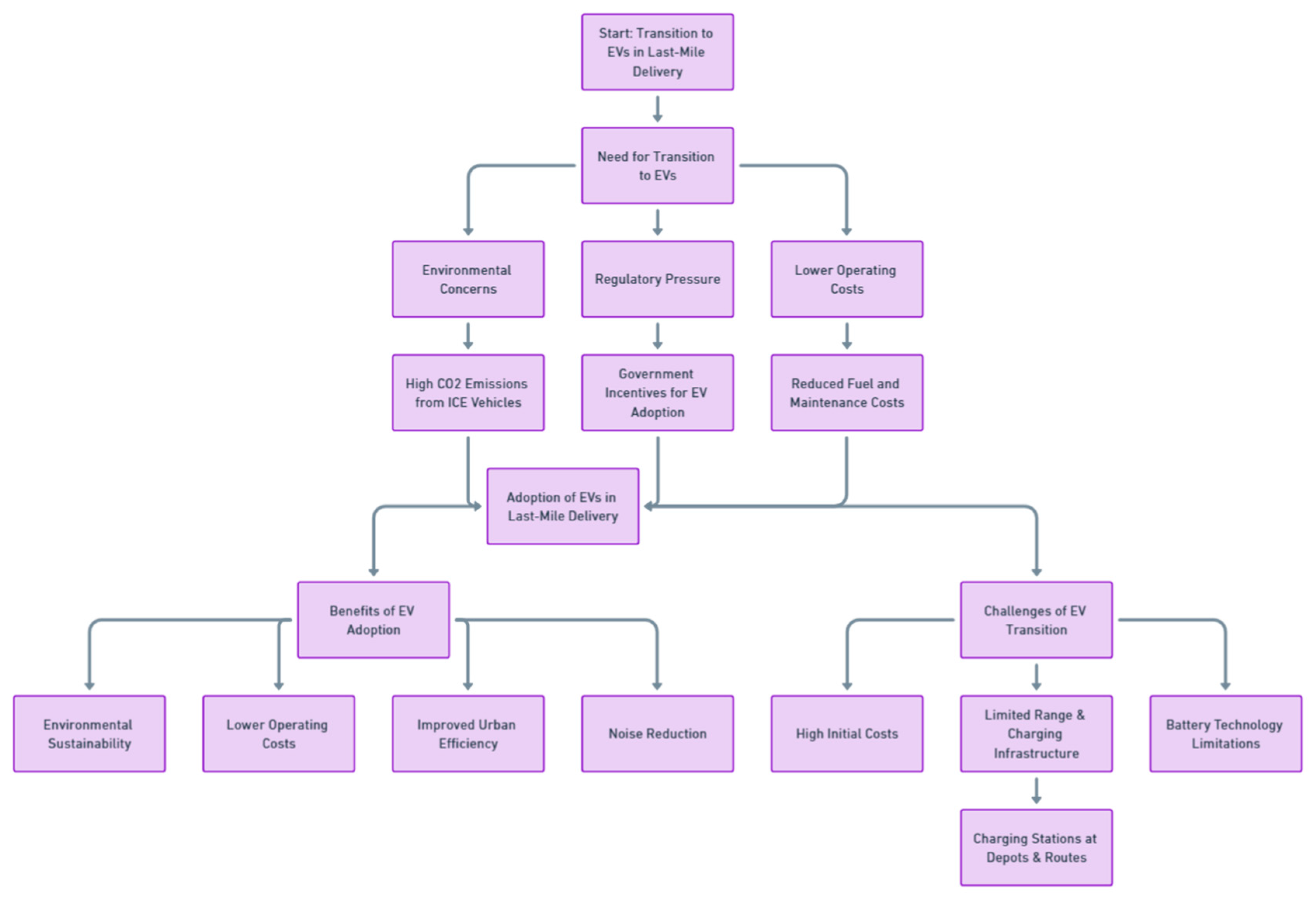
Autonomous Vehicles and the Future of Last-Mile Delivery. The next step in the evolution of last-mile delivery is the integration of autonomous vehicles (AVs) with electric powertrains. Autonomous electric delivery vehicles have the potential to revolutionize logistics by reducing labor costs, improving efficiency, and further reducing environmental impact. Self-driving EVs can operate continuously, without the need for rest breaks, and can optimize routes in real time, leading to faster and more efficient deliveries. Several companies are already testing autonomous delivery vehicles for last-mile services. These vehicles, equipped with sensors, cameras, and AI-powered navigation systems, can safely navigate urban environments and deliver packages without human intervention. While widespread adoption of autonomous vehicles is still in the future, ongoing advancements in AI and vehicle technology are steadily bringing this vision closer to reality.
The transition from fossil fuel-powered fleets to electric vehicles in last-mile delivery represents a critical step toward a more sustainable and efficient logistics industry. With the growing demand for faster deliveries and increasing environmental concerns, EVs offer a promising solution that reduces emissions, lowers operating costs, and improves urban delivery efficiency. Although challenges remain, such as high upfront costs and limited charging infrastructure, ongoing technological advancements and government incentives are helping to accelerate the adoption of electric vehicles in logistics. Looking ahead, the combination of electric and autonomous vehicles promises to reshape last-mile delivery, driving further innovations and creating a more sustainable future for the logistics industry (Anosike et al., 2023; Siragusa et al., 2022; Castillo and Álvarez, 2023).
Preprints 139811 i028

4.5.10. Benefits of Autonomous Delivery Systems for Reducing Emissions

Benefits of Autonomous Delivery Systems for Reducing Emissions. In recent years, electric and autonomous vehicles (EAVs) have emerged as transformative technologies, particularly in the field of last-mile delivery—the final step in a product’s journey from a distribution center to the customer. The potential of autonomous delivery systems to reduce emissions is a significant advantage, addressing both environmental concerns and operational efficiency. Last-mile delivery is typically the most costly and environmentally detrimental segment of the supply chain, and integrating autonomous and electric vehicles can alleviate many of these issues. Below are some key benefits of autonomous delivery systems, particularly in reducing emissions (Eyo-Udo, 2024; Figliozzi and Jennings, 2020, Neufville et al., 2022).
  • Optimized Delivery Routes: One of the main advantages of autonomous delivery systems is their ability to optimize delivery routes. Traditional delivery methods often involve human drivers who may follow inefficient paths or be unable to adjust routes in real time based on traffic or road conditions. Autonomous systems, however, are programmed to calculate the most efficient route in real-time, reducing the number of miles driven. Since the algorithm governing the vehicle is designed to find the quickest, least congested, and most fuel-efficient path, this results in a direct reduction in fuel consumption and, consequently, lower emissions. Over time, these optimized routes significantly cut down the overall carbon footprint of delivery fleets. Moreover, route optimization can also reduce instances of idling, which is a major source of emissions in traditional delivery vehicles. Autonomous vehicles, equipped with advanced sensors and AI-powered algorithms, can avoid unnecessary stops and reduce idle time in traffic. This efficiency extends not just to one vehicle, but entire fleets, creating a compounded environmental benefit (Liu et al., 2020; Li et al., 2022).
  • Integration with Electric Vehicles: Another crucial factor in the emission reduction potential of autonomous delivery systems is their compatibility with electric vehicles (EVs). Since autonomous systems are typically designed with EV technology in mind, these vehicles do not rely on fossil fuels. By using electricity instead of gasoline or diesel, autonomous EVs produce zero direct emissions. As countries shift toward greener energy grids, the environmental impact of charging EVs will also decrease, making these systems even more sustainable in the long run. Autonomous electric vehicles further contribute to emission reductions through their regenerative braking systems, which allow the vehicle to convert some of the energy lost during braking back into stored electrical power. This increases energy efficiency and helps extend the vehicle's range on a single charge, thereby lowering the overall energy consumption per delivery. When scaled across large fleets, the cumulative reduction in emissions is substantial (Obaid et al., 2021; Woody et al., 2022).
  • Reduced Fleet Size and Increased Efficiency. The adoption of autonomous vehicles in last-mile delivery also allows companies to reduce the number of vehicles in their fleets. A single autonomous vehicle can often complete deliveries faster and more efficiently than human-driven vehicles, meaning fewer vehicles are needed to meet the same demand. Reducing the total number of vehicles on the road directly contributes to lower greenhouse gas emissions. This also lessens road congestion, which indirectly lowers emissions as other vehicles on the road can move more freely and efficiently. Additionally, autonomous delivery systems can operate continuously, unlike human drivers who require rest periods. This leads to faster turnaround times and less wasted energy. Autonomous fleets can be programmed to operate during off-peak hours, avoiding traffic and reducing energy consumption. With more efficient fleet management and decreased vehicle numbers, the environmental benefits become even more pronounced (Huang and Feng, 2021; Reed et al., 2022).
  • Smaller, Purpose-Built Vehicles. Autonomous delivery vehicles are often smaller and more purpose-built compared to traditional delivery trucks. Many companies are designing electric autonomous delivery robots or compact vehicles specifically for last-mile delivery, which are more energy-efficient than larger vehicles designed for multiple purposes. These smaller vehicles require less energy to operate and take up less space on the road, contributing further to reduced emissions. For instance, companies like Nuro and Starship Technologies have developed autonomous delivery pods that are fully electric and emit zero tailpipe emissions. These vehicles are also designed to carry lighter loads, which increases their energy efficiency per mile compared to traditional trucks (Toraman et al., 2024; Lu et al., 2023).
  • Reduction in Delivery Frequency. Autonomous delivery systems are well-positioned to facilitate more efficient logistics planning. By integrating artificial intelligence, companies can schedule fewer delivery trips by consolidating orders and optimizing delivery times. Reducing the number of delivery trips means fewer emissions overall, especially when multiple deliveries can be handled in a single, streamlined trip (Arcaini et al., 2023; Shaklab et al., 2023).
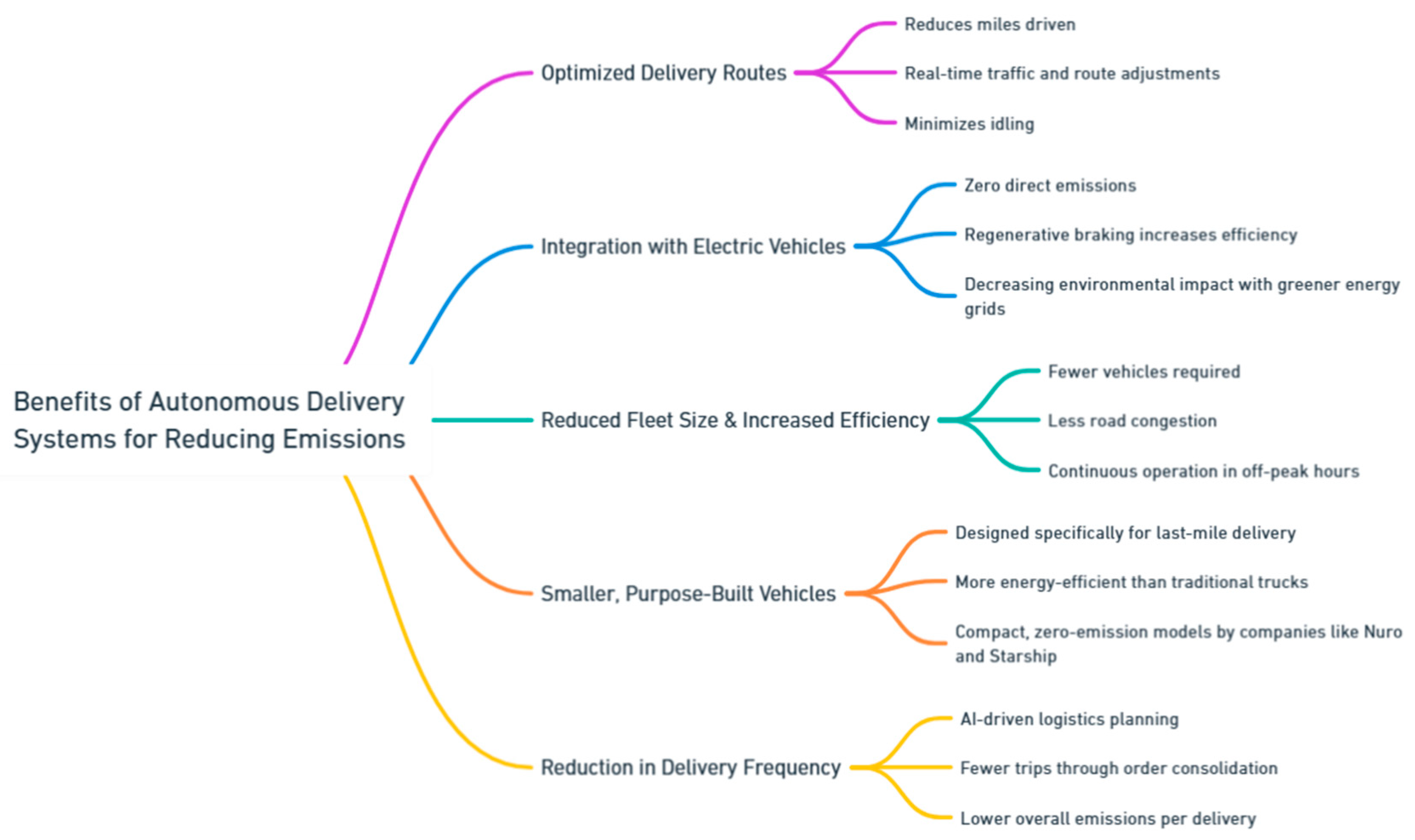
The integration of autonomous delivery systems with electric vehicles has the potential to drastically reduce emissions in last-mile delivery. From route optimization and reduced idling to the use of energy-efficient electric fleets, autonomous systems provide a pathway for more sustainable logistics. As the technology advances and becomes more widely adopted, its environmental benefits will likely expand, helping to mitigate the carbon footprint of the delivery sector. For companies seeking to reduce their environmental impact while maintaining operational efficiency, autonomous electric delivery vehicles offer a promising solution (Elsayed and Mohamed, 2020; Figliozzi, 2020).
Preprints 139811 i029

4.5.11. Electric and Autonomous Vehicles in Last-Mile Delivery
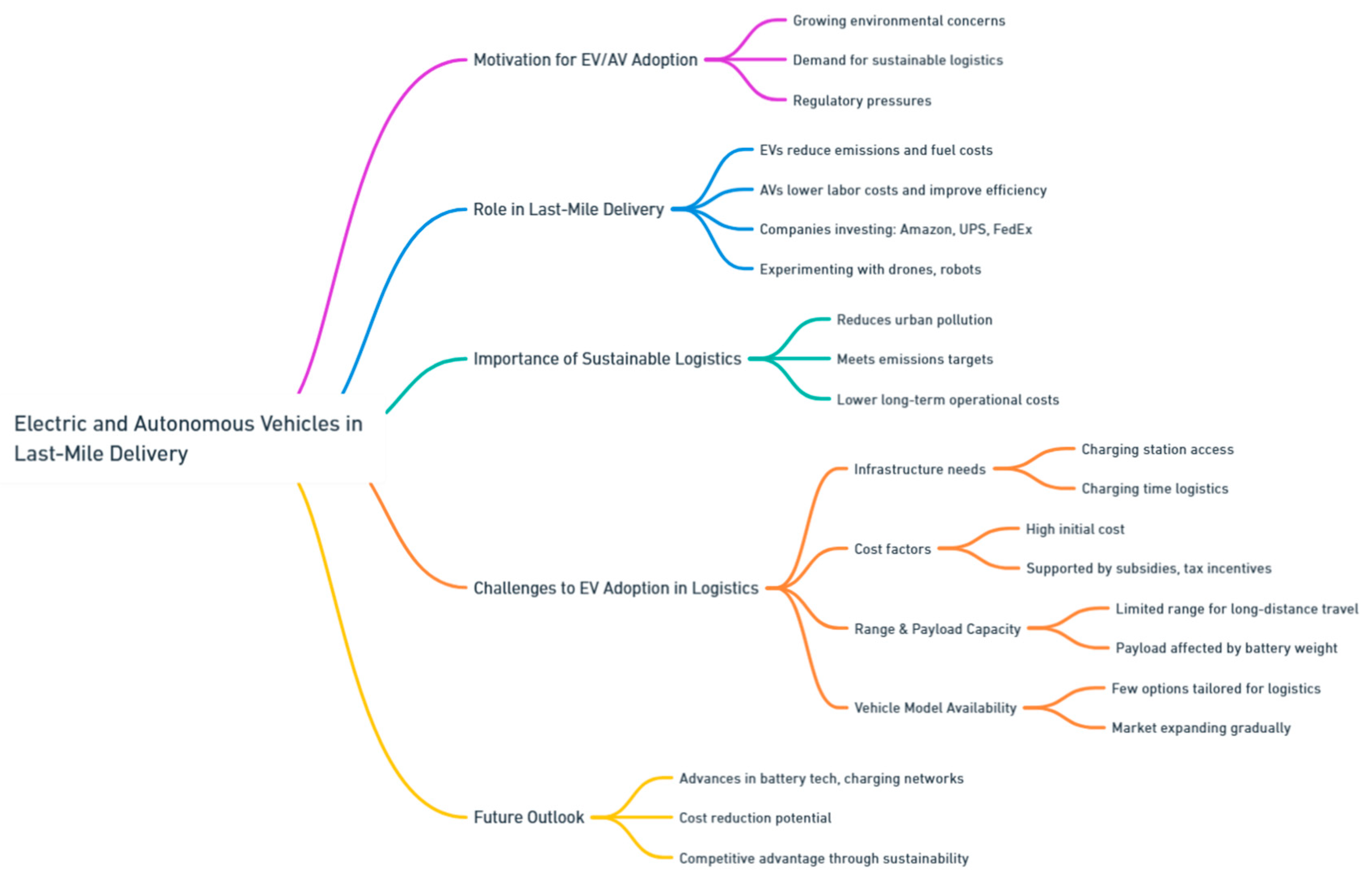
In recent years, the logistics industry has experienced rapid advancements driven by technological innovations and increasing environmental concerns. Among these developments, electric vehicles (EVs) and autonomous vehicles (AVs) are playing an increasingly pivotal role, particularly in the context of last-mile delivery. This trend is largely motivated by the urgent need for sustainable logistics solutions that address growing consumer demand for fast, reliable delivery while minimizing the sector's environmental impact. As such, the deployment of EVs and AVs in last-mile delivery is no longer a distant prospect but a growing reality, as major logistics companies and governments invest in these technologies. However, despite the significant potential of EVs to transform logistics, their widespread adoption remains challenged by various barriers. This section will delve into the key factors contributing to the growing role of electric and autonomous vehicles in logistics, the importance of sustainable logistics practices, and the challenges that must be overcome to accelerate the adoption of EVs in the sector (Anosike et al., 2023; Engesser et al., 2023).
The Growing Role of Electric and Autonomous Vehicles in Last-Mile Delivery. Electric vehicles have emerged as a key solution to the environmental and operational challenges facing the logistics industry, especially in last-mile delivery, the final stage of the delivery process from a transportation hub to the customer’s doorstep. This stage is often the most complex and resource-intensive, accounting for up to 50% of total shipping costs in urban areas. As cities become more congested and consumers demand faster, more reliable deliveries, traditional fuel-powered vehicles are struggling to keep up. EVs, with their lower emissions, reduced fuel costs, and quieter operation, offer a promising alternative for companies looking to streamline last-mile logistics. Autonomous vehicles, on the other hand, are poised to revolutionize last-mile delivery in a different way. By removing the need for human drivers, AVs could significantly reduce labor costs and improve efficiency, particularly in high-demand areas where deliveries are frequent and time-sensitive. Companies such as Amazon, UPS, and FedEx are already investing in autonomous vehicle technology to explore its potential for transforming last-mile delivery. In addition to AVs, companies are also experimenting with autonomous delivery drones and robots, further expanding the possibilities for automating last-mile logistics. Together, EVs and AVs represent a transformative shift in how goods are transported in urban environments. Their integration into last-mile delivery has the potential to significantly reduce emissions, cut costs, and improve delivery times, benefiting both businesses and consumers. However, the transition to these new technologies is not without its challenges, particularly when it comes to the widespread adoption of EVs in logistics (Engesser et al., 2023; Sindi and Woodman, 2020).
Importance of Sustainable Logistics and Technological Advances. Sustainability has become a central concern for the logistics sector, driven by both regulatory pressure and growing consumer awareness of environmental issues. The logistics industry is a major contributor to global greenhouse gas emissions, accounting for about 7% of global CO2 emissions. As governments and corporations alike strive to meet increasingly stringent emissions targets, the need for greener logistics solutions has never been more urgent. Electric vehicles are seen as one of the most viable solutions to the environmental challenges of the logistics sector. Unlike internal combustion engine vehicles, EVs produce zero tailpipe emissions, helping to reduce air pollution and greenhouse gases in urban areas where last-mile deliveries are most concentrated. This is particularly important as cities around the world implement low-emission zones and stricter environmental regulations aimed at curbing air pollution. Moreover, EVs offer significant cost savings over the long term. While the initial purchase price of electric delivery vehicles is higher than that of traditional diesel or gasoline-powered vehicles, the total cost of ownership is often lower due to reduced fuel and maintenance costs. Electricity is generally cheaper than diesel, and electric vehicles have fewer moving parts, which means less wear and tear and lower maintenance expenses. These savings can be particularly beneficial for companies operating large fleets of vehicles, where even small reductions in operating costs can have a significant impact on the bottom line. The rise of autonomous vehicle technology also represents a major technological advancement with sustainability implications. Autonomous vehicles, especially when electric, can optimize delivery routes in real-time, further improving efficiency and reducing fuel consumption. In the long run, these technological innovations could play a crucial role in creating a more sustainable and cost-effective logistics industry (Kovačić et al., 2022; Campisi et al., 2022).
Challenges and Barriers to the Adoption of Electric Vehicles in Logistics. While electric vehicles offer significant benefits in terms of sustainability and cost savings, their adoption in the logistics industry faces several key challenges. These barriers include issues related to infrastructure, cost, vehicle range, and the availability of suitable EV models for logistics purposes. One of the most significant challenges to the widespread adoption of EVs in logistics is the lack of charging infrastructure. While progress has been made in developing charging networks, many regions still lack the necessary infrastructure to support large-scale EV adoption, particularly for commercial fleets. This is especially problematic for last-mile delivery, where vehicles may need to make multiple stops throughout a day. Without adequate access to fast and reliable charging stations, logistics companies may find it difficult to keep their vehicles operational and meet delivery demands. Additionally, the time required for charging can be a logistical hurdle, as it may delay deliveries and reduce overall efficiency. The higher upfront cost of electric vehicles is another barrier to adoption, particularly for smaller logistics companies that may not have the financial resources to invest in new technology. While the total cost of ownership is often lower for EVs, the initial purchase price can be prohibitive. Governments and regulatory bodies have begun offering subsidies and tax incentives to offset these costs, but for many companies, the financial burden remains a significant obstacle. Vehicle range is another challenge, especially for logistics operations that require long-distance travel. While advances in battery technology have extended the range of electric vehicles, many EVs still cannot match the range of traditional fuel-powered vehicles. This limitation is less of an issue for last-mile delivery in urban areas, where distances are shorter, but it can be a significant drawback for companies that need to cover larger geographic areas. Additionally, the payload capacity of electric vehicles may also be a concern, as the weight of batteries can reduce the amount of cargo an EV can carry compared to traditional vehicles. Another barrier to the adoption of EVs in logistics is the availability of suitable vehicle models. While passenger EVs have seen significant growth in recent years, the market for electric delivery vehicles is still relatively nascent. Companies may struggle to find electric vehicles that meet their specific needs in terms of size, range, and payload capacity. However, this is changing as more automakers and start-ups enter the electric commercial vehicle market, offering a wider variety of options (Anosike et al., 2023; Qasim and Csaba, 2021).
The logistics industry is undergoing a profound transformation, driven by the twin forces of technological innovation and the need for sustainability. Electric and autonomous vehicles are at the forefront of this change, offering the potential to reduce emissions, lower costs, and improve the efficiency of last-mile delivery. However, the widespread adoption of electric vehicles in logistics is not without its challenges. Issues related to infrastructure, cost, vehicle range, and the availability of suitable models must be addressed for EVs to become a viable solution for logistics companies. Despite these challenges, the long-term benefits of electric vehicles are clear. As battery technology improves, charging infrastructure expands, and costs come down, the barriers to EV adoption will diminish. For logistics companies, adopting electric vehicles represents an opportunity not only to reduce their environmental impact but also to enhance their competitiveness in an increasingly demanding market (Anosike et al., 2023; Patella et al., 2020; Campisi et al., 2022; Engesser et al., 2023).
Preprints 139811 i030

4.5.12. High Initial Costs of EVs

The shift to electric vehicles (EVs) in the logistics industry is often framed as an essential step toward a sustainable and eco-friendly future. Governments worldwide are setting ambitious targets to curb carbon emissions, and the transportation sector is a major focus of these efforts. Electric vehicles, particularly in logistics, offer a promising solution to reducing pollution, improving fuel efficiency, and lowering long-term operational costs. However, despite these benefits, the upfront investment required to transition from traditional internal combustion engine (ICE) vehicles to EVs remains significantly higher. This substantial initial cost acts as a deterrent, particularly for small- and medium-sized logistics companies, which often operate with tighter margins and limited financial flexibility.
Higher Initial Costs of Electric Vehicles. One of the key challenges with EV adoption in the logistics sector is the higher purchase price compared to traditional ICE vehicles. The production of electric vehicles requires advanced technologies, such as high-capacity batteries, electric motors, and specialized electronic systems. These components are expensive, and although the prices of electric vehicles have been decreasing over the years, they are still generally more costly upfront than their gasoline or diesel-powered counterparts. For logistics companies, this higher purchase price can significantly impact cash flow and capital investment decisions. The cost of an electric van or truck, for example, can be several times that of a similar ICE vehicle. In an industry where vehicles are the backbone of operations, this means a much larger financial outlay to electrify a fleet. Additionally, for small- and medium-sized enterprises (SMEs) that rely on keeping overheads low, the capital required to invest in electric vehicles can be prohibitive. Even though electric vehicles may offer savings in the long run through lower fuel and maintenance costs, the immediate financial strain of purchasing new electric vehicles is often too high for smaller companies to absorb (Džananović et al., 2022; Jang et al., 2016).
The Deterrent for Small and Medium-Sized Logistics Companies. Small- and medium-sized logistics companies face unique challenges when it comes to transitioning to electric vehicles. Unlike larger corporations that have access to extensive financial resources, SMEs often operate with much smaller profit margins. The logistics industry, particularly in sectors such as last-mile delivery, is highly competitive, and small companies are frequently under pressure to offer low prices while maintaining service quality. This means that every financial decision must be carefully weighed. The cost of purchasing an electric vehicle fleet can serve as a significant deterrent for these companies. For many SMEs, the priority is to invest in operational areas that provide immediate returns or cost savings. For example, upgrading warehouse technology, investing in software that optimizes routes, or expanding the workforce are seen as investments that provide tangible benefits quickly. In contrast, the cost of electric vehicles, with their higher initial price, may not provide the same immediate returns, especially if companies are not fully convinced of the long-term savings or if they face uncertainty regarding the maintenance of these vehicles over time. Moreover, for small- and medium-sized logistics firms, the investment in supporting infrastructure further exacerbates the financial burden. Transitioning to electric vehicles is not just about buying new trucks or vans; it also involves setting up charging stations, adapting operational workflows, and possibly even upgrading existing electrical systems at company depots. The cost of this infrastructure, alongside the purchase price of the vehicles, makes the shift to electric fleets even more daunting for companies with limited capital. The economic uncertainty surrounding battery technology is another point of hesitation. Battery prices have dropped significantly in recent years, and this trend is expected to continue, but the logistics industry operates in an environment where vehicle lifespans are measured over many years. SMEs that invest in electric vehicles today may fear that within a few years, a new generation of batteries or EV technology will render their current fleet obsolete, undermining the return on their substantial initial investment (Džananović et al., 2022; Osatis and Asavanirandorn, 2022).
Available Financial Incentives: Support with Limitations. In recognition of the challenges associated with the adoption of electric vehicles, many governments and regulatory bodies have introduced financial incentives aimed at making this transition more feasible. These incentives come in various forms, including tax breaks, grants, and subsidies designed to offset the higher purchase price of electric vehicles or the cost of necessary charging infrastructure. However, while these incentives can be beneficial, they often come with limitations in terms of coverage and accessibility, especially for smaller companies. Tax credits are among the most common forms of financial incentives for electric vehicles. These credits reduce the effective purchase price by allowing companies to deduct a portion of the vehicle's cost from their taxable income. In theory, this should make EVs more affordable. However, for small businesses that may not have significant tax liabilities, the benefits of such credits are limited. Many small logistics companies operate on narrow profit margins, and the tax savings from an EV credit may not be substantial enough to make a meaningful difference in the overall cost of the vehicle. Grants and subsidies are another form of financial support available to logistics companies looking to invest in electric vehicles. These programs often provide direct financial assistance to companies purchasing electric vehicles or installing charging infrastructure. While this can help reduce the financial burden, access to these programs is not always straightforward. Grants are often awarded on a competitive basis, meaning that not all applicants receive funding. Moreover, many of these programs have eligibility criteria that may exclude smaller companies or are limited to certain geographic regions. Additionally, while some subsidies may cover the cost of vehicles, they often do not extend to the required charging infrastructure, leaving businesses to cover that expense on their own. This becomes particularly problematic for logistics companies with multiple depots or warehouses spread across different locations, as they would need to invest in several charging stations to ensure their fleet's functionality. Another limitation of financial incentives is their temporary nature. Many tax credits, grants, and subsidies are designed to be phased out over time as the adoption of electric vehicles becomes more widespread. This creates uncertainty for companies considering the switch to EVs. A small logistics firm may hesitate to invest in electric vehicles now if there is a risk that the financial incentives they rely on could disappear in a few years, making future expansion or replacement of their fleet even more expensive (Zhyber and Ligonenko, 2022; Jaller et al., 2021).
For small- and medium-sized logistics companies, the upfront investment required for electric vehicles presents a significant barrier to entry. While the long-term benefits of EVs, including reduced fuel and maintenance costs, are appealing, the initial costs, including the purchase price of the vehicles and the installation of necessary infrastructure, are often too high for these companies to afford. Financial incentives, though helpful, come with their own set of limitations, including restricted coverage, accessibility, and the uncertainty of future support. To enable broader adoption of electric vehicles in the logistics sector, especially among smaller companies, more robust and accessible financial assistance programs are needed. These could include expanded grants, subsidies for both vehicles and infrastructure, and more flexible tax credits that better align with the financial realities of small businesses. Additionally, efforts to reduce the cost of electric vehicles through technological advancements and economies of scale must continue. Only with a combination of these measures can the logistics industry achieve widespread electrification and contribute to global sustainability goals (Qiang, et al., 2023; Aungkulanon et al., 2023; Qasim and Csaba, 2021).
Preprints 139811 i031

4.5.13. Charging Infrastructure Limitations
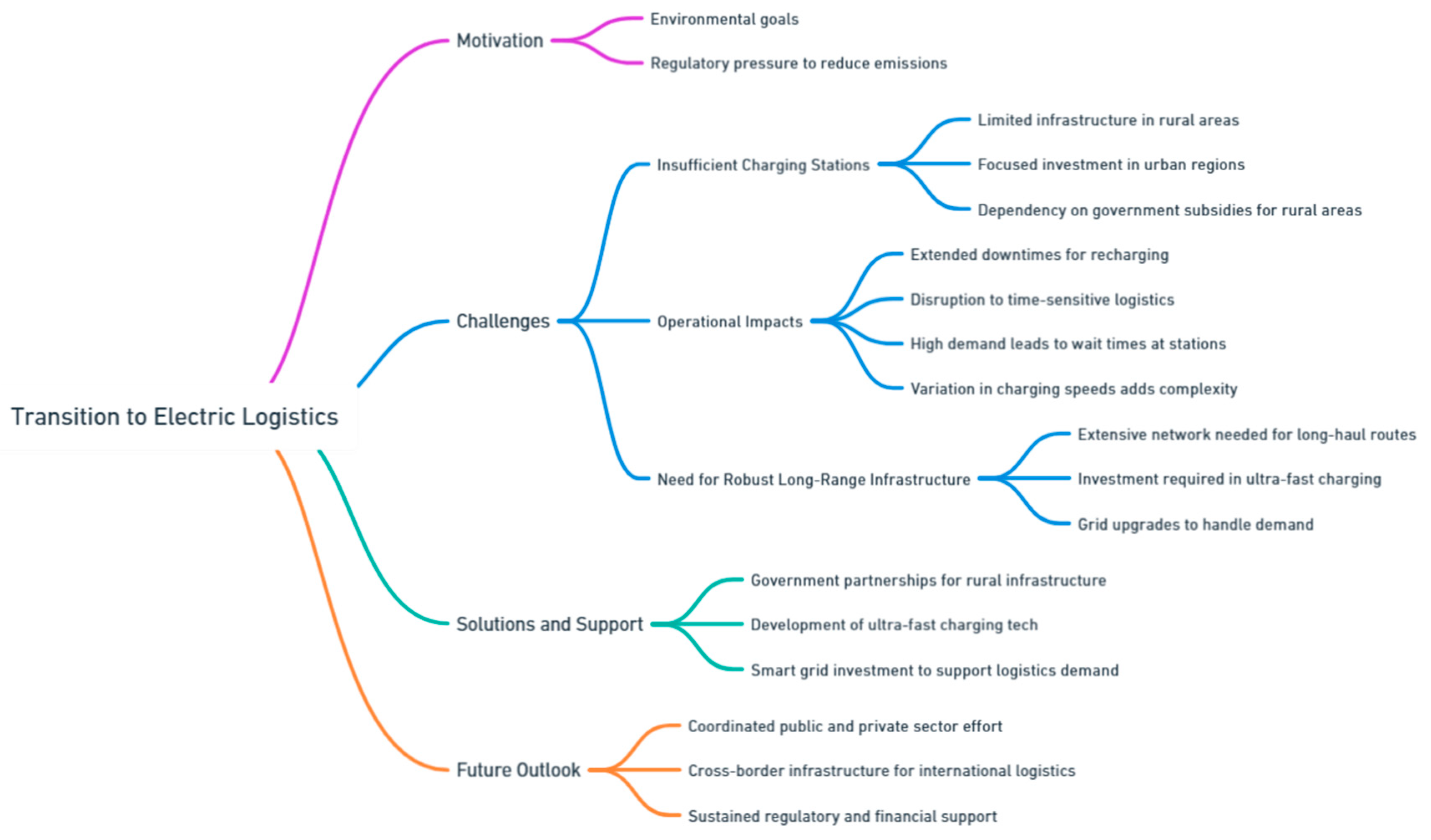
The logistics industry is undergoing a significant transformation, driven by the growing adoption of electric vehicles (EVs) in response to sustainability goals and increasing regulatory pressure to reduce carbon emissions. Despite the clear environmental benefits, the transition to electric logistics faces several formidable challenges. Among these are the insufficient number of charging stations, particularly in rural or less populated areas, the impacts on logistics operations due to extended downtimes for recharging, and the need for a robust and widespread infrastructure capable of supporting long-range deliveries. These issues must be addressed to ensure that electric vehicle adoption can support the logistics industry's operational demands and economic viability.
Insufficient Charging Stations in Rural or Less Populated Areas. One of the most significant obstacles to the widespread adoption of electric vehicles in logistics is the lack of sufficient charging infrastructure, particularly in rural or less populated areas. While metropolitan areas are seeing a growing number of charging stations to cater to both commercial and private vehicles, the expansion into rural regions has lagged behind. This gap in coverage presents a major hurdle for logistics companies that rely on long-haul transportation routes crossing less densely populated areas. In contrast to urban environments where vehicles can frequently recharge, long-distance delivery trucks traveling through rural regions often find themselves stranded, unable to access necessary charging facilities. The logistics industry, which requires vehicles to travel across vast distances, cannot rely on urban-centric charging networks alone. For a logistics operator covering the rural countryside, ensuring access to charging infrastructure along key transportation corridors is critical. However, the current electric vehicle charging infrastructure is heavily concentrated in cities, with little attention given to the needs of rural logistics. This lack of infrastructure disproportionately affects industries reliant on rural and long-distance transport. Agricultural products, natural resources like timber or minerals, and manufacturing goods often require transportation from rural production sites to urban processing centers or ports. The absence of charging stations in these areas complicates route planning and increases the risk of vehicles running out of charge mid-journey, which can cause significant delays and added costs for logistics providers. Furthermore, rural and less populated regions may not see significant investment in charging infrastructure due to economic considerations. Private charging network providers prioritize high-traffic urban areas where they can achieve a faster return on investment. Governments will need to step in, potentially with subsidies or public-private partnerships, to build charging infrastructure in these regions. Without intervention, the lack of access to charging stations in rural areas could delay the logistics industry's full-scale transition to electric vehicles and increase dependence on traditional fossil-fuel-powered vehicles in these regions (Badiei and do Prado, 2023; Mukherjee, 2023).
Impacts on Logistics Operations: Extended Downtimes Due to Recharging. Electric vehicles in logistics face another challenge: extended downtimes for recharging, which can severely impact operations. Unlike conventional fuel stations where refueling takes only a few minutes, even fast-charging electric stations require significantly more time to recharge a vehicle. This downtime can cause major disruptions in logistics schedules, particularly in time-sensitive industries where delivery speed is crucial. For logistics operations, time is a critical factor that directly influences efficiency, customer satisfaction, and overall costs. Trucks in the logistics sector are typically expected to maximize their operational hours, minimizing idle time to ensure timely deliveries. When electric vehicles need to stop for an hour or more to recharge during a long-distance route, this introduces an operational inefficiency that can affect delivery times, increase labor costs, and reduce the number of deliveries that can be completed within a given timeframe. This problem is exacerbated when charging stations are located far from optimal delivery routes or when there is high demand at a particular station, leading to even longer wait times. Moreover, logistics fleets often operate on tight schedules and contracts with penalties for late deliveries. Any disruption caused by the need to recharge can jeopardize these commitments. For example, in sectors like e-commerce, where same-day or next-day delivery expectations are the norm, logistics companies cannot afford to lose time on recharging breaks. Similarly, in the food and beverage sector, perishable goods require timely delivery, and any delay can lead to product spoilage and financial losses. The extended downtime for charging in electric vehicles, compared to refueling conventional vehicles, presents a barrier to adoption for logistics companies that prioritize operational efficiency and delivery speed. Another challenge is the variation in charging speeds. While fast chargers can provide a substantial charge in a short amount of time, they are not universally available, and many charging stations are equipped with slower Level 2 chargers, which take several hours to fully recharge a vehicle. This poses a significant challenge for logistics operations, especially those involving heavy-duty trucks that require large batteries with longer charging times. Additionally, the increased demand for electricity in logistics fleets could lead to grid strain, especially during peak hours, resulting in longer downtimes due to energy constraints. This further complicates the logistics planning process, as companies would need to account not only for vehicle charging times but also for potential power shortages or restrictions (Schneider et al., 2014; Sadati et al., 2022).
The Need for a Robust and Widespread Infrastructure for Long-Range Deliveries. For electric vehicles to become a viable solution in the logistics industry, there is an urgent need for a robust and widespread charging infrastructure that can support long-range deliveries. Current electric vehicle technology is not yet equipped to handle the same distances that traditional diesel-powered trucks can cover without stopping to recharge. This limitation becomes particularly pronounced in the context of long-haul logistics, where vehicles need to travel across multiple states or countries without frequent stops. To support the logistics sector’s transition to electric fleets, the infrastructure must extend beyond urban centers and cover key national and international transportation corridors. This would require a coordinated effort between governments, private sector companies, and electric vehicle manufacturers to establish a network of fast-charging stations strategically located along highways and other major transport routes. In the absence of such a network, logistics companies face operational challenges that could undermine the efficiency gains promised by electric vehicle adoption. One potential solution is the development of ultra-fast charging stations capable of replenishing large vehicle batteries in a matter of minutes rather than hours. These stations would need to be distributed across major logistics hubs, such as ports, rail yards, and distribution centers, to ensure minimal disruption to supply chains. However, the development of such technology is still in its infancy, and widespread implementation could take years. In addition to charging stations, the grid infrastructure itself must be upgraded to handle the increased demand for electricity. Heavy-duty trucks, which require large amounts of energy to operate, could overwhelm local power grids if several vehicles attempt to charge simultaneously. This would require substantial investments in grid capacity and smart grid technologies to ensure reliable access to power in both urban and rural areas. Without these upgrades, logistics companies could face power shortages or fluctuations that disrupt charging and extend delivery times. Governments will also play a critical role in enabling this infrastructure development. Regulatory policies and financial incentives will be essential in encouraging investment in charging networks, particularly in less profitable rural areas. International cooperation will be necessary to establish cross-border charging infrastructure, particularly for logistics companies operating in regions like the European Union, where cross-border deliveries are common (Kłos and Sierpiński, 2023; Golab, et al., 2022).
While the logistics industry stands to benefit significantly from the adoption of electric vehicles, several challenges must be addressed to ensure a smooth transition. The current lack of sufficient charging stations, particularly in rural or less populated areas, poses a significant obstacle to long-distance logistics operations. Extended downtimes due to recharging can severely impact operational efficiency, making it difficult for logistics companies to meet the time-sensitive demands of their customers. Furthermore, the need for a robust and widespread charging infrastructure capable of supporting long-range deliveries is critical for the logistics industry to fully embrace electric vehicles. Addressing these challenges through coordinated efforts between governments, private companies, and electric vehicle manufacturers will be essential for the successful integration of electric vehicles into logistics operations (Gemassmer et al., 2021; Mukherjee, 2023; Klein and Schiffer, 2023; Bertucci et al., 2024).
Preprints 139811 i032

4.5.14. Range Anxiety and Limited Battery Capacity
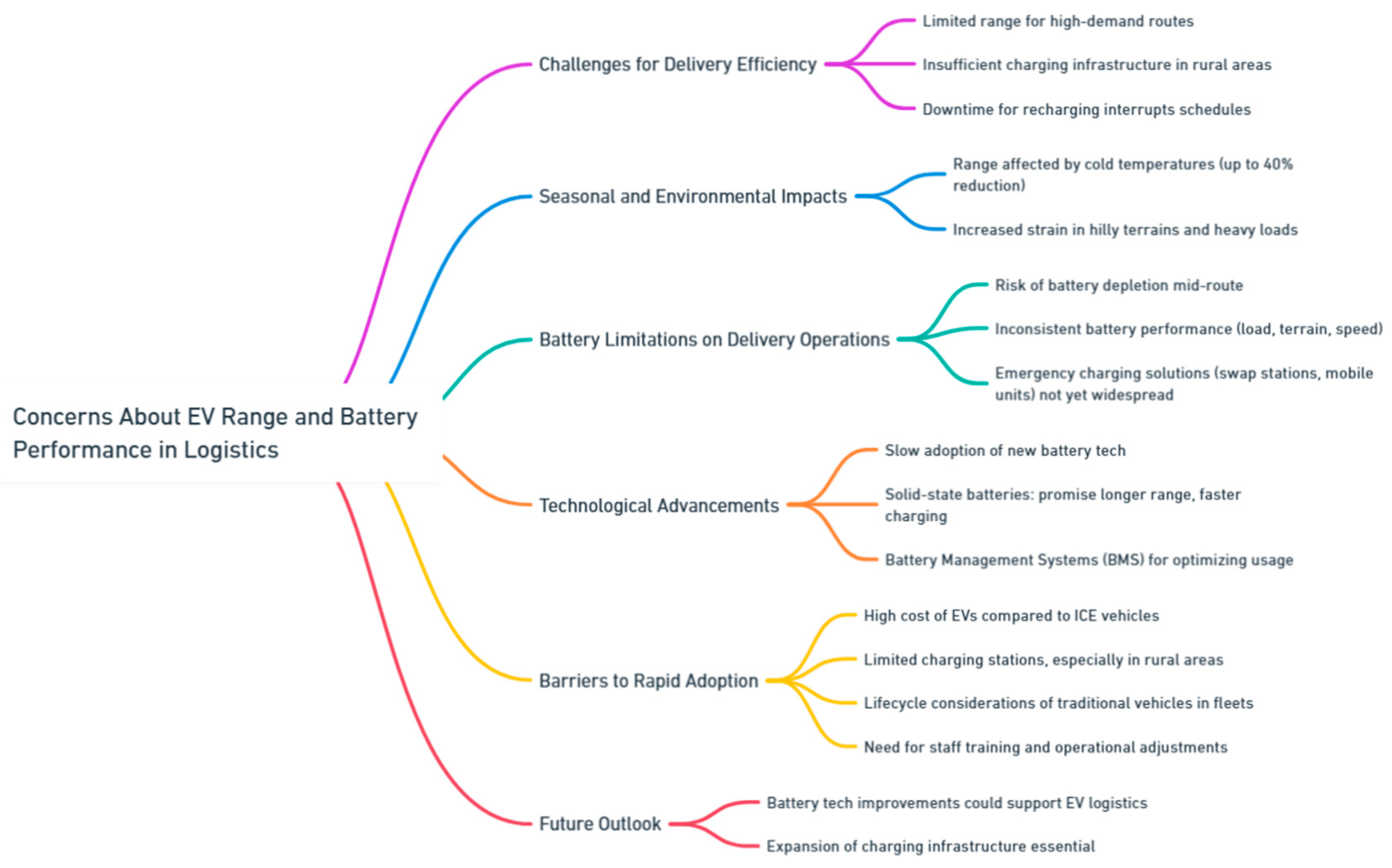
Concerns regarding electric vehicle (EV) range and battery performance have emerged as critical issues affecting delivery efficiency, particularly for longer or high-demand routes. While the logistics and delivery sectors are keen to embrace sustainability through the adoption of electric vehicles, several challenges remain. These include the limited range of EVs, the risk of battery depletion during extended use, and the slow pace of technological advancements in battery performance. This essay will delve into these concerns, exploring the impact on delivery operations and highlighting the broader implications for the logistics industry.
Concerns About EV Range and Delivery Efficiency. One of the primary concerns when integrating EVs into delivery fleets is the issue of range. Although the electric vehicle market has made significant progress in recent years, most commercial EVs still fall short of the range provided by their diesel or gasoline counterparts. This limitation is especially critical for logistics companies tasked with long-distance or high-demand delivery routes, where vehicles are required to cover vast distances without frequent opportunities for recharging. For delivery operations, efficiency is paramount, and any delay caused by the need to recharge mid-route can have a cascading effect on delivery schedules, reducing overall productivity. EV range concerns are particularly pressing for businesses that serve rural or less densely populated areas, where charging infrastructure may be sparse or non-existent. Unlike urban areas, where short-distance travel between multiple deliveries is feasible, long-haul routes demand more from vehicle batteries. The additional strain placed on EVs due to factors such as hilly terrain, heavy payloads, or adverse weather conditions can further reduce the vehicle’s range, complicating delivery schedules. Furthermore, seasonal variations can exacerbate range concerns. Cold weather, for instance, is known to affect battery performance negatively. Lithium-ion batteries, which are commonly used in EVs, lose efficiency in colder temperatures, reducing the vehicle’s range by as much as 40%. This poses significant challenges for logistics companies that operate in areas prone to cold winters, where delivery efficiency could be compromised during peak shopping seasons, such as the winter holidays. Additionally, the logistics sector is heavily reliant on tight delivery schedules to meet customer demands, particularly in the e-commerce and last-mile delivery sectors. In these cases, even small disruptions to the delivery process can lead to customer dissatisfaction. Since EVs may require longer downtime for charging compared to refueling a traditional vehicle, any interruption can put pressure on logistics companies to deliver on time. For larger delivery networks with multiple stops, limited EV range necessitates either more frequent recharging breaks or the inclusion of additional vehicles in the fleet to make up for lost time. Both options increase operational costs and reduce efficiency (Saldati et al., 2022; Tang et al., 2022).
Ensuring Uninterrupted Deliveries with Battery Limitations. Another significant challenge for logistics companies utilizing EVs is ensuring uninterrupted deliveries when battery capacity may not suffice for extended use. While charging infrastructure is expanding, it is still far from ubiquitous, particularly in remote or suburban areas. Logistics companies cannot afford to have their vehicles stranded mid-route due to depleted batteries, as this would result in significant delays, missed deliveries, and added costs for towing or alternative transportation methods. To mitigate this risk, companies must carefully plan routes and include contingency measures for recharging, which often involves incorporating time buffers in delivery schedules. However, adding these buffers can lead to longer overall delivery times, which is at odds with the increasing demand for faster deliveries. Same-day or next-day delivery options, for example, are already putting immense pressure on logistics operations, and battery limitations can hinder a company’s ability to meet these tight deadlines. The unpredictability of battery performance during deliveries is another factor that complicates operational planning. Various factors, such as the load weight, terrain, driving speed, and external conditions (like temperature), influence how quickly an EV's battery depletes. Inconsistent battery performance makes it difficult to forecast precise delivery times, which can cause inefficiencies in fleet management and route optimization. Moreover, even with advanced route planning algorithms, logistics companies may still struggle to account for all the variables that affect battery life during a delivery run. Emergency charging solutions, such as mobile charging units or swap stations, are being developed to address battery capacity limitations, but these options are not yet widespread. The idea of swapping out a depleted battery for a fully charged one sounds promising in theory, but it requires standardized battery designs across different vehicle models, which is not currently the case. Additionally, the logistics and infrastructure required to support battery swapping stations on a large scale would involve significant upfront investment and would likely take years to implement (Sadati et al., 2022; Peng et al., 2023).
Technological Advancements in Battery Performance and Their Slow Adoption. Technological advancements in EV batteries are crucial for addressing range concerns and improving delivery efficiency, but the slow pace of adoption is a major obstacle for the logistics industry. Battery technology has evolved steadily over the past decade, with research focusing on increasing energy density, reducing charging times, and extending battery lifespan. However, the adoption of these innovations in commercial fleets has been slow due to several factors, including cost, infrastructure, and the time required for new technologies to mature. One of the most promising advancements in battery technology is the development of solid-state batteries, which offer a higher energy density and faster charging capabilities than the lithium-ion batteries currently in use. Solid-state batteries could potentially increase the range of EVs while reducing the need for frequent charging stops. Despite the potential benefits, solid-state batteries are still in the early stages of commercialization, and it may take several years before they are widely available for use in commercial vehicles. Another area of research involves improving battery management systems (BMS), which monitor and optimize battery usage in real-time. An advanced BMS can help extend battery life by preventing overcharging or deep discharges, both of which degrade battery performance over time. However, while these systems are being integrated into some EV models, widespread adoption is limited by the cost and complexity of retrofitting existing vehicles with the latest BMS technologies. The slow pace of adoption is also attributable to the high cost of EVs compared to traditional diesel or gasoline-powered vehicles. For logistics companies with large fleets, the upfront cost of replacing vehicles is a significant barrier, even with government incentives aimed at promoting the switch to electric vehicles. Many companies are hesitant to invest heavily in EVs when the technology is still evolving, preferring to wait until battery performance improves further and costs come down. The availability of charging infrastructure is another factor that slows the adoption of technological advancements in battery performance. While urban areas are gradually building more public charging stations, rural regions lag behind, creating a patchy network that limits the viability of long-haul EV deliveries. Until charging infrastructure catches up with technological advancements, logistics companies will remain cautious about relying entirely on EVs for their delivery operation (Pesaran, 2023; Itani and De Bernardinis, 2023).
Finally, the long lifecycle of traditional internal combustion engine vehicles presents a barrier to the rapid adoption of EVs. Many logistics companies operate fleets with vehicles designed to last for several decades. Switching to EVs requires not only the replacement of these long-lasting assets but also the training of staff to maintain and operate the new vehicles, further complicating the transition. While the adoption of electric vehicles in the logistics sector promises environmental and economic benefits, concerns about EV range, battery capacity, and the slow pace of technological advancements . pose significant challenges to delivery efficiency. Limited range and battery depletion issues affect long-haul and high-demand delivery routes, while the lack of widespread charging infrastructure and slow adoption of advanced battery technologies hinder the transition to an all-electric fleet. Logistics companies must weigh these concerns against the growing pressure to embrace sustainability, and only time will tell how quickly the industry can overcome these obstacles and fully integrate EVs into their operations (Jiang and Guo, 2020; Baek et al., 2020; Daberkow et al., 2021; Sadati et al., 2022).
Preprints 139811 i033

4.5.15. Long Charging Times

The Challenge of EV Charging in Delivery Logistics. In the transportation and logistics sector, a critical operational factor is vehicle refueling or recharging time. As electric vehicles (EVs) become a prominent feature in many industries, a key concern arises from the comparison between the rapid refueling of traditional internal combustion engine (ICE) vehicles and the significantly longer time required to recharge electric vehicles. This time discrepancy can profoundly affect delivery schedules, fleet utilization rates, and the overall efficiency of logistics operations, particularly for large fleets that may face scalability issues. This argument explores these key issues and their implications for the logistics industry, which is heavily reliant on efficient, timely vehicle turnaround to maximize operational success.
Quick Refueling vs. Lengthy Charging Times. The primary advantage of traditional vehicles in logistics operations lies in the speed and convenience of refueling. Internal combustion engine vehicles can refuel within a matter of minutes at any one of the thousands of fuel stations available globally. This rapid turnaround allows logistics operators to maximize vehicle utilization, ensuring that downtime due to refueling is minimal. In contrast, electric vehicles, though lauded for their sustainability and lower long-term operational costs, require significantly more time to recharge. The time required to charge an EV depends on the type of charger used, with standard home chargers taking several hours to fully charge a vehicle, and even high-powered fast chargers taking anywhere from 30 minutes to over an hour to provide an adequate charge for long trips. For logistics operators, this disparity presents a considerable challenge. Delivery operations are typically time-sensitive, with tight schedules that rely on minimal downtime to meet customer expectations, especially in sectors like e-commerce where rapid delivery is paramount. The extended charging time required for electric vehicles can delay shipments, reduce the number of trips a vehicle can complete in a given time period, and ultimately impact customer satisfaction. Moreover, the availability of charging infrastructure is still limited compared to the ubiquitous presence of fuel stations, which adds another layer of complexity. While fast chargers are becoming more common, they are still far from universally available, particularly in rural or underdeveloped areas. This could potentially limit the range of logistics operations and increase downtime as vehicles need to travel out of the way to find suitable charging stations.
Impact on Delivery Schedules and Fleet Utilization. One of the most significant implications of the longer charging times required for electric vehicles is the impact on delivery schedules. Delivery schedules in logistics depend heavily on the quick turnaround of vehicles. In traditional fleets, vehicles can be refueled quickly and get back on the road with minimal delay. This quick refueling process is essential for high-utilization delivery schedules, where time is of the essence. In contrast, electric vehicles, especially those that rely on slower chargers, require considerable downtime for recharging. This downtime can disrupt delivery schedules, causing delays that ripple through the supply chain. For example, a fleet of delivery trucks may need to complete multiple trips within a day to meet demand, but if EVs are part of that fleet, the time spent recharging could reduce the number of trips each truck can complete. In highly competitive sectors, this could mean missed deadlines, unsatisfied customers, and lost business opportunities. Fleet utilization is another area affected by the longer charging times associated with electric vehicles. Fleet utilization refers to how efficiently a fleet of vehicles is being used to meet delivery and transportation demands. High fleet utilization is crucial for maximizing productivity and minimizing costs, as underutilized vehicles represent lost revenue. In the case of electric vehicles, the extended charging times can reduce the overall utilization rates of a fleet. If an EV is tied up for hours at a charging station, it is not generating revenue during that time. Over the course of a day, these hours can add up, leading to decreased fleet efficiency. To mitigate these impacts, logistics operators would need to carefully plan their schedules around charging times, possibly introducing longer breaks between delivery rounds or assigning backup vehicles to take over while others charge. However, such measures introduce additional operational complexities and costs, which may offset some of the financial and environmental benefits of transitioning to electric fleets.
Overnight Charging: A Solution with Scalability Challenges. One proposed solution to the problem of lengthy EV charging times is overnight charging. For delivery fleets that operate primarily during the day, overnight charging can offer a practical way to minimize the impact of charging downtime. Vehicles can be charged during off-hours, ensuring that they are fully charged and ready to go at the start of the next day. This approach works well for smaller fleets or operations where vehicles can be charged in a staggered manner without affecting overall operations. However, while overnight charging may work for smaller fleets, it presents significant scalability issues for larger fleets. Charging a large number of vehicles overnight requires substantial infrastructure investment, including the installation of multiple charging stations with sufficient power capacity to handle the increased demand. For large logistics companies with hundreds or even thousands of vehicles, the cost of building and maintaining such a charging infrastructure could be prohibitive. Furthermore, the electricity grid may not be equipped to handle the increased demand that would result from charging a large fleet of EVs simultaneously. This could lead to grid strain or even outages, particularly in areas where the electrical infrastructure is already under pressure. Additionally, overnight charging does not fully eliminate the downtime issue, as vehicles that are charged overnight may still need to be recharged during the day, particularly if they are required to complete long-distance deliveries. In such cases, the logistics operator may need to invest in fast-charging infrastructure or rely on public charging stations, both of which introduce additional costs and logistical challenges. Another consideration is that overnight charging assumes that vehicles have access to a centralized charging facility, which may not always be the case. In decentralized operations where vehicles are scattered across different locations, ensuring that every vehicle has access to an overnight charging station can be logistically challenging and costly to implement. The alternative, using public charging stations, adds another layer of unpredictability, as operators cannot always be certain that a charger will be available when needed. The comparison between the quick refueling times of traditional vehicles and the significantly longer charging times required for electric vehicles reveals a key challenge for the logistics industry. The extended downtime associated with EV charging can impact delivery schedules, reduce fleet utilization rates, and introduce operational inefficiencies that may offset some of the benefits of transitioning to electric fleets. While overnight charging offers a partial solution, it presents scalability issues for larger fleets, requiring significant infrastructure investment and creating potential strain on the electricity grid. As the logistics industry continues to explore the shift towards electric vehicles, it will need to address these challenges through a combination of strategic planning, infrastructure investment, and technological innovation. Only then can the industry fully realize the benefits of EVs without compromising the efficiency and reliability that customers have come to expect (Iwan et al., 2021; Kin et al., 2021; Zhao et al., 2021; Sadati et al.,2022).
Preprints 139811 i034

4.5.16. Limited Vehicle Models and Load Capacities

The Challenges and Limitations of Electric Vehicle Adoption in the Logistics Sector. Electric vehicles (EVs) have become a central focus in the global push toward reducing carbon emissions, largely driven by their application in the passenger vehicle market. However, the adoption of electric vehicles in the logistics sector remains limited, with a variety of challenges preventing wider integration. These challenges stem from three primary areas: the limited range of electric vehicle models available for logistics purposes, the inadequacies of current EV models in terms of payload and cargo space for large-scale deliveries, and the tendency of manufacturers to focus more on passenger EVs than on commercial vehicles specifically tailored for logistics needs.
  • Limited Range of Electric Vehicle Models Available for Logistics: The logistics industry is diverse, encompassing a wide array of activities ranging from last-mile delivery services in urban centers to long-haul freight transportation across vast distances. Despite the growing importance of sustainability and efficiency in logistics, the range of electric vehicle models available for commercial purposes remains narrow. This limitation creates a significant bottleneck for businesses seeking to transition to greener energy sources while maintaining operational effectiveness. Many of the electric vehicle models currently in production and available on the market are optimized for short-range urban delivery services, where the vehicles cover fewer miles and have access to charging infrastructure. However, logistics operations often require a much broader scope, including regional or interstate deliveries. In these cases, the limited range of available electric trucks, vans, and specialized vehicles falls short of meeting the needs of operators who rely on long-range capability. For example, many electric commercial vehicles today offer a range of about 100 to 300 miles per charge, which may be sufficient for small-scale or inner-city deliveries but becomes inadequate when considering long-distance freight operations. This limitation also affects rural deliveries, where charging stations may be sparse or non-existent. As a result, logistics companies face serious logistical and operational constraints if they rely on electric vehicles. While there are some efforts to develop long-range electric trucks, such as the Tesla Semi or the Volvo VNR Electric, these models are still either in the early stages of production or limited to small-scale adoption in select markets. This significantly hampers widespread EV integration in logistics. Furthermore, the lack of variety in electric vehicle models means that logistics operators cannot customize their fleets to suit diverse needs. In contrast to the wide selection of diesel-powered trucks, vans, and specialized vehicles that can be chosen based on size, payload, and range, electric vehicle options remain restricted. This lack of diversity is particularly detrimental for companies that require specialized vehicles, such as refrigerated trucks or heavy-duty haulers, which are either unavailable or prohibitively expensive in electric versions.
  • Inadequacies in Terms of Payload and Cargo Space for Large-Scale Deliveries. Another significant challenge in adopting electric vehicles for logistics is the inadequacy of current EV models in terms of payload and cargo space, particularly for large-scale deliveries. The primary issue stems from the weight and size of the batteries required to power these vehicles. Although electric vehicles are more efficient in terms of energy use compared to their internal combustion engine counterparts, the batteries are heavy and take up considerable space, which reduces the vehicle's payload capacity. For logistics companies that depend on maximizing the payload of each delivery to maintain efficiency and profitability, the weight of the battery becomes a critical issue. For instance, in heavy-duty trucks, the battery required to sustain a significant range adds considerable weight to the vehicle, thereby reducing the amount of cargo that can be carried. The reduction in payload capacity forces logistics companies to either make more trips or invest in more vehicles, both of which lead to higher operational costs and lower efficiency. In addition to payload concerns, the design of electric vehicle models often limits their cargo space. Many electric trucks and vans are retrofitted from existing models originally designed for diesel engines. As a result, these vehicles are not optimized for the unique requirements of electric drivetrains and batteries, leading to compromises in space and functionality. For instance, the placement of large batteries may reduce cargo space or alter the distribution of weight in a way that impacts the vehicle's performance or handling. For logistics operations that require large-scale or bulk deliveries, these limitations in cargo space and payload can be detrimental. Even smaller, last-mile delivery services, where electric vehicles are most often employed, can be hindered by these inadequacies. Although the reduced payload may not impact small, lightweight packages, logistics companies handling heavier or more voluminous goods may find themselves constrained by these factors. Until manufacturers can resolve the payload and cargo space challenges posed by electric vehicle designs, logistics companies may be reluctant to fully embrace EVs for large-scale operations, particularly when more efficient, fuel-based alternatives are available.
  • Manufacturers Focusing More on Passenger EVs Than Commercial Vehicles Tailored for Logistics: One of the primary reasons for the current limitations in the electric vehicle models available for logistics is the industry-wide focus on the passenger vehicle market. Since the early days of electric vehicle development, much of the attention and investment from manufacturers has been directed toward passenger EVs, such as the Tesla Model S or Nissan Leaf. This focus has led to rapid advancements in the passenger EV market, but it has also left the commercial vehicle sector underdeveloped by comparison. This imbalance is driven by several factors. First, the passenger vehicle market is larger and more immediately profitable for manufacturers. The demand for personal electric vehicles has grown rapidly in recent years, fueled by consumer interest in sustainability, governmental incentives, and the advancement of EV infrastructure, such as public charging stations. As a result, automakers have prioritized the production and marketing of electric passenger vehicles, capitalizing on this growing demand. In contrast, the commercial vehicle market is more niche, with different requirements and longer development cycles. Developing electric commercial vehicles requires manufacturers to tackle more complex engineering challenges, such as designing batteries that can power heavy-duty vehicles for extended periods while managing the demands of cargo weight and space. Additionally, logistics operators are generally more cost-sensitive than individual consumers, making it harder for manufacturers to justify the higher costs of electric commercial vehicles, particularly when diesel or gasoline alternatives remain more affordable and practical in the short term. This prioritization of passenger vehicles has left a gap in the market for electric commercial vehicles specifically designed to meet the unique demands of logistics. While some manufacturers have recently begun to shift focus, such as Rivian's partnership with Amazon to develop electric delivery vans or Daimler's work on electric freight trucks, these initiatives remain in the early stages and far from achieving mass adoption. Until manufacturers dedicate more resources to addressing the needs of logistics companies, the growth of electric vehicle adoption in the sector will likely remain limited.
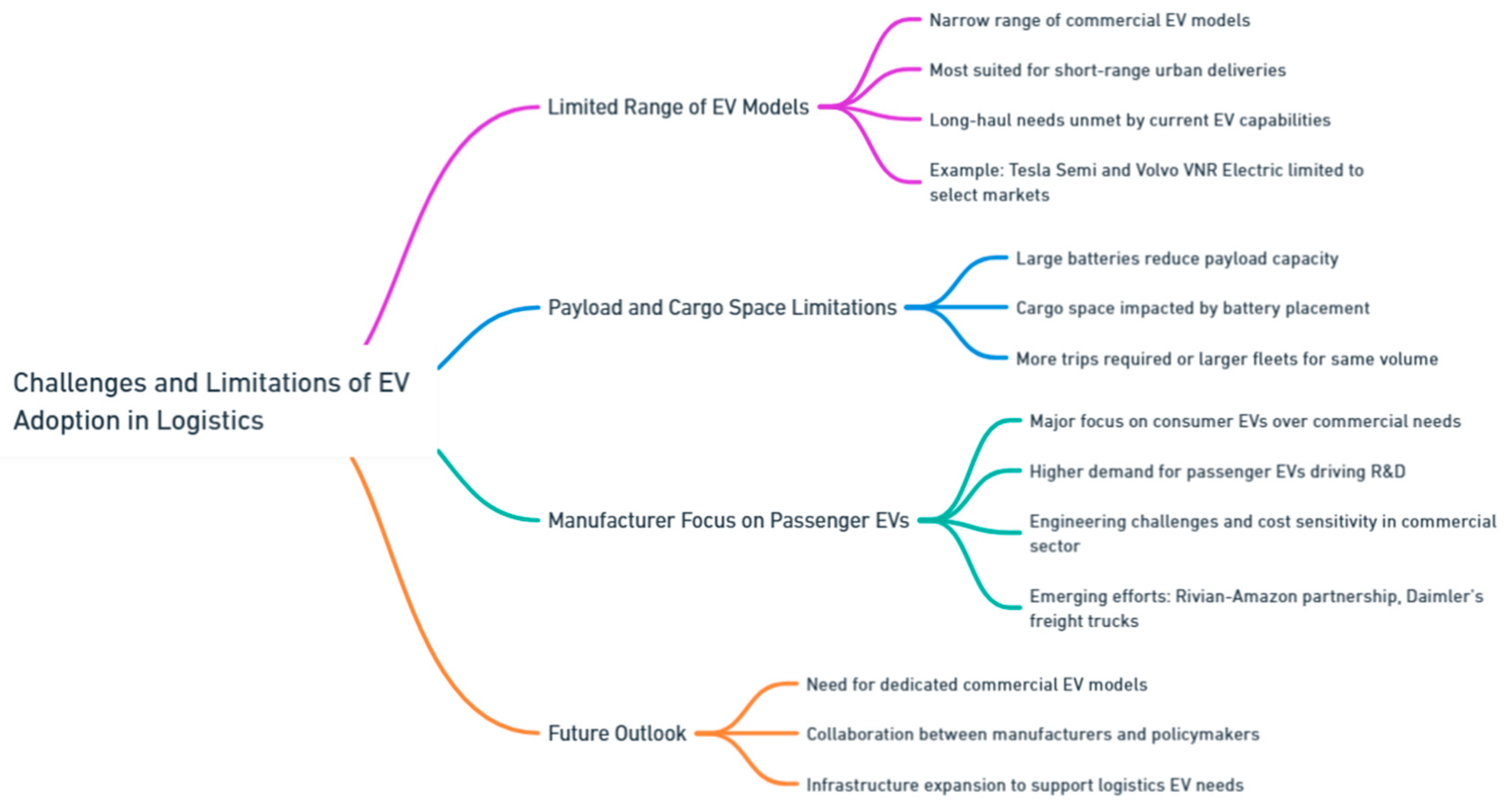
The integration of electric vehicles in the logistics sector presents a complex challenge due to the limited range of models available, the inadequacies of current EVs in terms of payload and cargo space for large-scale deliveries, and the automotive industry's historical focus on passenger EVs rather than commercial vehicles tailored to logistics. As the world pushes toward greener energy solutions, it is crucial that manufacturers and policymakers work together to address these issues, ensuring that the benefits of electric vehicles can be realized across all sectors, including logistics. Without significant advancements in EV model variety, payload capacity, and infrastructure development, the transition to electric vehicles in logistics will remain slow, impeding progress toward sustainability goals (Peng et al., 2023; Roy et al., 2022; Sadati et al., 2022; Džananović et al., 2022).
Preprints 139811 i035

4.5.17. Battery Performance Deterioration over Time and Its Implications on the Total Cost of Ownership (TCO)
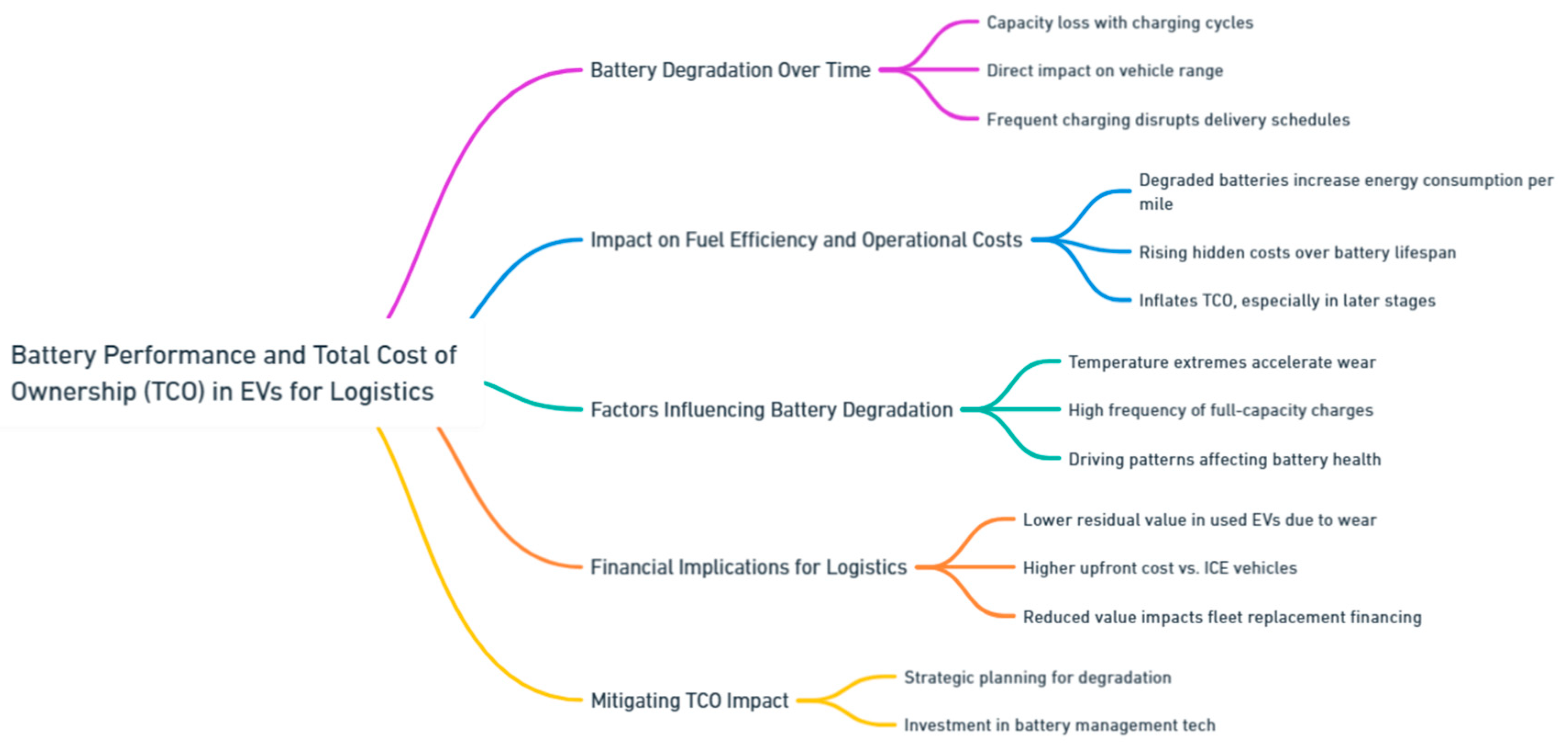
Battery performance is a key concern for businesses that rely heavily on electric vehicles (EVs) and other battery-powered technologies, especially in the logistics industry. One of the most significant challenges with battery-operated vehicles is the deterioration of battery performance over time. This degradation has profound implications for the total cost of ownership (TCO), a critical metric for evaluating the financial sustainability of adopting electric fleets. Lithium-ion batteries, the most common power source for EVs, degrade gradually as they undergo charging and discharging cycles. Over time, these cycles result in a reduction of the battery's capacity to hold a charge, which directly affects the range of the vehicle. For logistics companies that depend on predictable vehicle range to ensure timely deliveries, this presents a logistical challenge. As battery performance declines, vehicles may require more frequent charging, which can disrupt delivery schedules and reduce overall fleet efficiency. The deterioration of battery performance also impacts fuel efficiency—an area where EVs are generally expected to outperform their internal combustion engine (ICE) counterparts. As a battery degrades, the vehicle consumes more energy per mile, effectively increasing operational costs over time. These increased costs are usually not apparent at the point of purchase, but they accumulate, particularly during the latter stages of the battery’s lifespan. This hidden cost inflates the TCO for logistics companies, making EV adoption less attractive unless these factors are carefully planned for and mitigated. To further complicate matters, the rate of battery degradation can vary significantly depending on various factors such as temperature, driving patterns, and how frequently the battery is charged to its full capacity. In regions with extreme weather conditions, for example, batteries tend to degrade faster, and this can have a more profound impact on the overall fleet’s performance. For businesses operating in harsh climates, this creates an additional financial burden that must be factored into long-term planning. As battery performance deteriorates, there is also a potential loss in residual vehicle value. EVs are already more expensive upfront than traditional vehicles, and if the used market begins to value them lower due to battery wear and tear, the overall financial picture becomes less favorable. For logistics companies that rely on selling off older vehicles to help finance newer acquisitions, this creates another layer of financial complexity, further impacting TCO (Xiao et al., 2021; Fanoro et al., 2022; Esfandiari et al., 2023).
Preprints 139811 i036

4.5.18. The High Cost of Battery Replacement and Its Impact on Long-Term Financial Planning
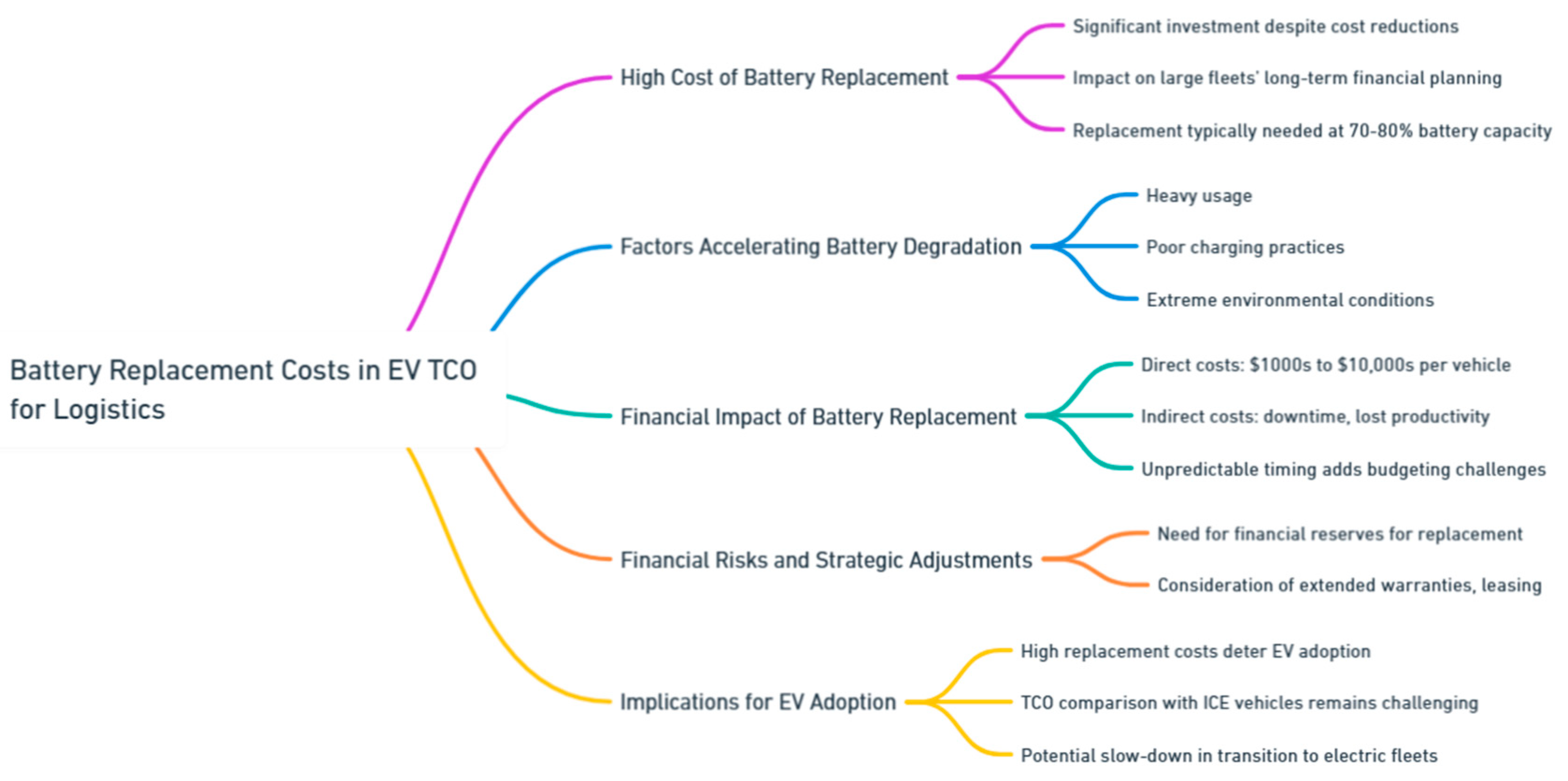
One of the most significant factors contributing to the TCO of electric vehicles in the logistics industry is the cost of battery replacement. While the price of lithium-ion batteries has decreased significantly over the past decade, the cost of replacing a battery still represents a substantial investment. For logistics companies with large fleets, the expense of replacing batteries in multiple vehicles can be financially daunting. Battery replacement typically occurs after the battery's capacity has fallen to a level that is no longer operationally viable, often around 70-80% of the battery's original capacity. Depending on the model of the vehicle, the cost of replacing the battery can range from several thousand to tens of thousands of dollars. For a logistics company, this means that battery replacement costs could quickly add up, significantly affecting the company's long-term financial planning. Moreover, the timing of battery replacements can be unpredictable, adding uncertainty to budgeting. Batteries may degrade faster than expected due to various factors, such as heavy usage, poor charging practices, or operating in extreme environmental conditions. This unpredictability makes it difficult for logistics companies to plan for replacement costs over the vehicle’s lifetime, creating potential cash flow issues, especially for smaller operators. In addition to the direct costs of battery replacement, there are indirect financial implications to consider. For instance, the downtime associated with battery replacements can result in lost productivity. Depending on the logistics company’s operational demands, having a vehicle out of commission for even a short period can disrupt delivery schedules, lead to missed deadlines, and negatively impact customer satisfaction. These operational disruptions add another layer of cost, further affecting the overall financial stability of the business. The need for battery replacement also introduces a new element of financial risk into the logistics industry’s transition to electric fleets. Traditionally, logistics companies budget for routine vehicle maintenance, fuel, and other predictable costs. Battery replacements, however, represent a more significant, and less predictable, expense. As such, logistics companies may need to adjust their financial strategies to account for these new costs. This could involve setting aside funds specifically for battery replacements or exploring financial products, such as extended warranties or leasing options, that can help mitigate these risks. Moreover, the high upfront cost of battery replacements can deter companies from fully embracing electric vehicle technology. While EVs are typically cheaper to operate than traditional vehicles due to lower fuel and maintenance costs, the prospect of needing to replace the battery several years into the vehicle's lifespan can make the TCO of electric vehicles appear less competitive when compared to ICE vehicles. This could slow the transition to greener fleets, which has implications for both company profitability and environmental sustainability (Xiao et al., 2021; Rajagopal et al., 2024; Lyu, et al., 2023).
Preprints 139811 i037

4.5.19. Environmental Considerations Tied to the Disposal and Recycling of Lithium-Ion Batteries
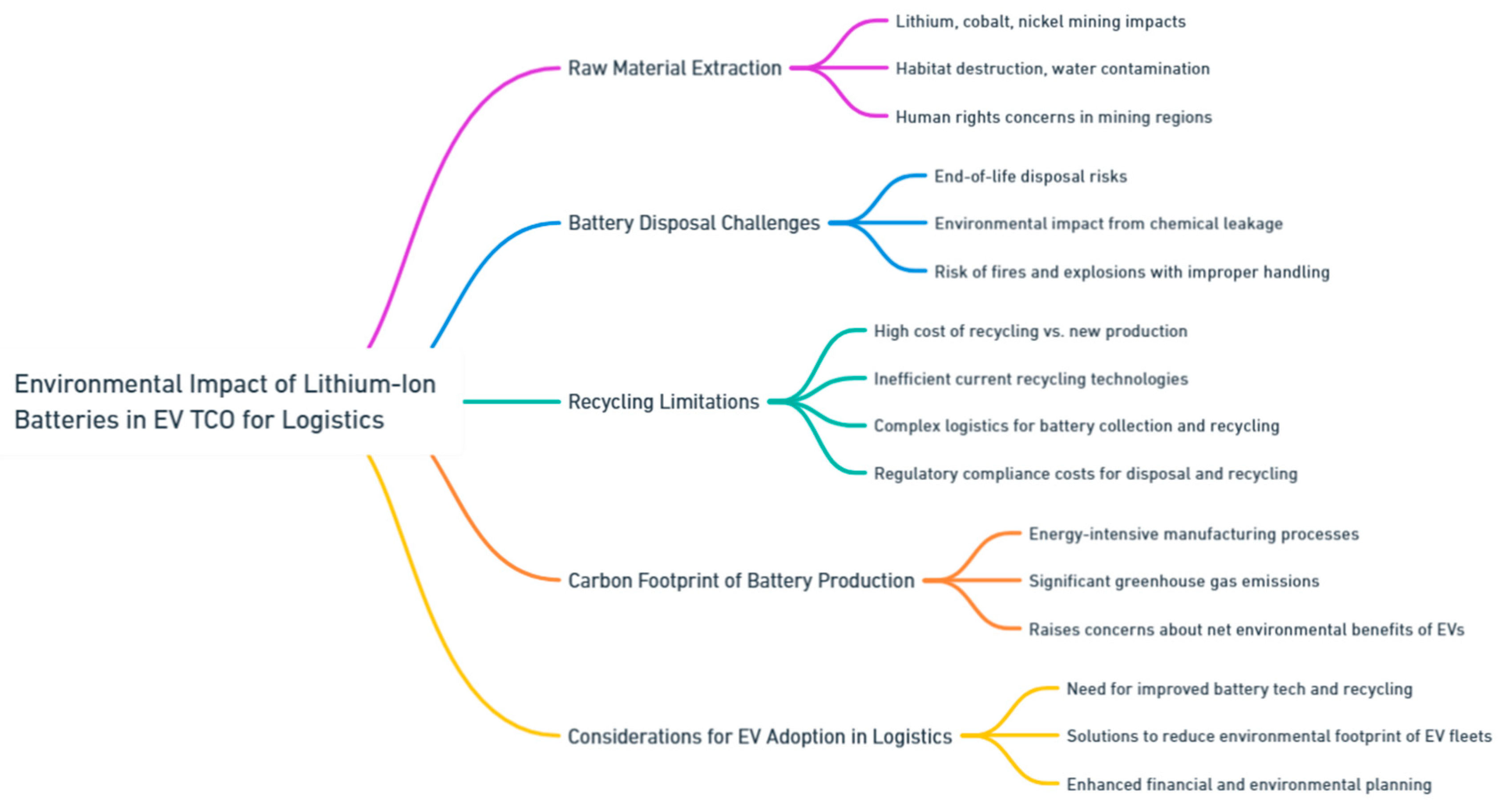
The environmental impact of lithium-ion batteries is another critical issue that logistics companies must consider when evaluating the TCO of electric vehicles. While EVs are often touted as a more sustainable alternative to traditional vehicles, the production, disposal, and recycling of lithium-ion batteries raise significant environmental concerns. First, the production of lithium-ion batteries requires the extraction of raw materials, such as lithium, cobalt, and nickel. The mining of these materials has been linked to various environmental and ethical issues, including habitat destruction, water contamination, and human rights abuses in mining communities. As demand for electric vehicles grows, so too does the demand for these materials, raising concerns about the long-term sustainability of lithium-ion battery production. Second, the disposal of used lithium-ion batteries presents a significant environmental challenge. When batteries reach the end of their usable life, they must be disposed of or recycled. However, improper disposal of lithium-ion batteries can lead to the release of harmful chemicals into the environment, contributing to soil and water pollution. Moreover, the improper handling of battery waste poses safety risks, including fires and explosions. Recycling lithium-ion batteries is one potential solution to mitigate these environmental risks. However, battery recycling is not yet widely practiced, and current recycling technologies are not as efficient as they could be. In many cases, it is cheaper to produce new batteries than to recycle old ones. This creates a disincentive for companies to invest in recycling programs, which exacerbates the environmental issues associated with battery disposal. Moreover, the logistics of collecting, transporting, and recycling used batteries are complex and costly. For logistics companies, this adds another layer of operational challenge, as they must figure out how to manage their used battery waste responsibly. Some jurisdictions have implemented regulations requiring the proper disposal and recycling of lithium-ion batteries, but compliance with these regulations can be costly, especially for companies operating across multiple regions with different environmental laws. In addition to the environmental risks associated with battery disposal, there is also the issue of the carbon footprint of battery production. While EVs produce zero tailpipe emissions, the manufacturing process for lithium-ion batteries is energy-intensive and generates significant greenhouse gas emissions. For logistics companies aiming to reduce their carbon footprint, this raises the question of whether the environmental benefits of EVs outweigh the environmental costs of battery production and disposal. Battery performance deterioration, the high cost of battery replacement, and the environmental challenges tied to lithium-ion batteries are critical issues that logistics companies must address as they transition to electric vehicle fleets. While electric vehicles offer many benefits, including lower operating costs and reduced emissions, these challenges add complexity to the total cost of ownership and long-term financial planning. For the logistics industry to fully embrace electric vehicles, solutions to these challenges—such as improved battery technologies, more efficient recycling processes, and better financial planning tools—must be developed (Sambamurthy et al., 2021; Zhou et al., 2020; Costa et al., 2021).
Preprints 139811 i038

5. Autonomous Technology Integration

5.1. Challenges in Integrating Autonomous Technologies into EVs for Last-Mile Logistics
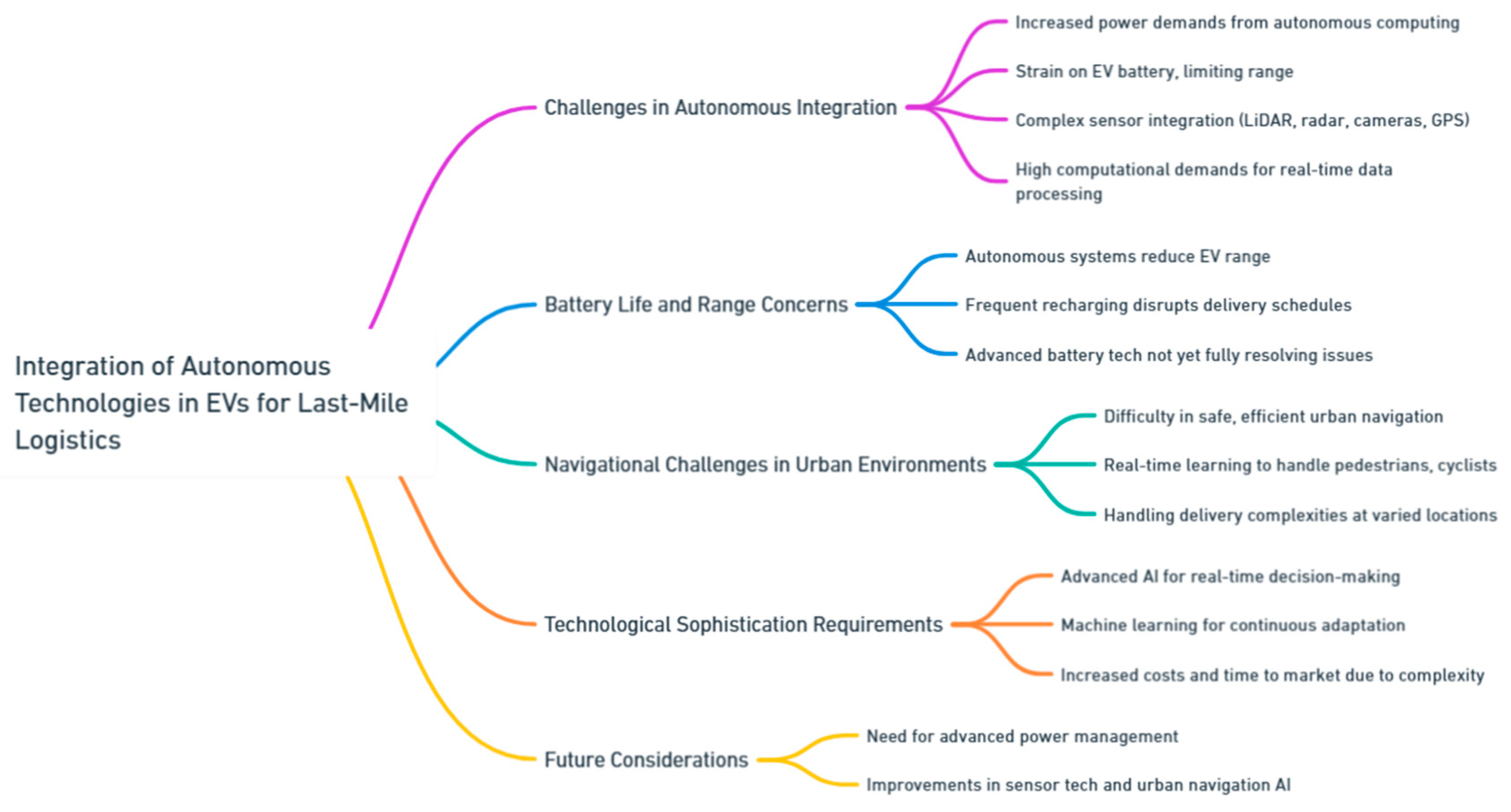
The integration of autonomous technologies into electric vehicles (EVs) for last-mile logistics has the potential to revolutionize the transportation and delivery sectors. However, there are significant challenges that companies and developers must overcome before this potential can be fully realized. These challenges span technological, regulatory, and societal domains, and must be addressed to ensure the successful deployment of autonomous vehicles (AVs) in urban environments. One of the primary challenges lies in the inherent complexity of integrating autonomous systems into electric vehicles. Unlike traditional combustion engine vehicles, EVs operate on a different set of mechanical and electrical principles, including battery management, regenerative braking, and powertrain efficiency. Autonomous systems require a significant amount of computing power to process sensor data, make real-time decisions, and interact with their environments. This computing power increases the strain on the vehicle’s battery, potentially limiting the range and operational time of EVs. Given the already limited range of many electric vehicles, balancing the power demands of autonomous driving systems with the vehicle's ability to complete its last-mile delivery routes is a substantial technical hurdle. Moreover, autonomous technologies require robust and reliable sensors, including LiDAR, radar, cameras, and GPS systems, all of which must be seamlessly integrated into EVs without compromising their design or functionality. These sensors generate vast amounts of data that must be processed in real-time to ensure safe navigation in complex urban environments. The processing of this data is computationally expensive and requires advanced machine learning algorithms, which must be developed, tested, and refined over time. This level of technological sophistication adds layers of complexity to the development process, increasing both costs and time to market. Battery life and range anxiety present an additional concern. Because autonomous systems require constant power to operate their computing systems and sensors, they place added demand on EV batteries, which could reduce the vehicle's overall range and operational efficiency. For last-mile logistics, where the vehicles are required to perform multiple short trips, the frequent need to recharge could disrupt delivery schedules and reduce the effectiveness of the logistics operation. While advancements in battery technology are being made, they have yet to fully resolve this concern, and until such breakthroughs occur, integrating autonomous systems into EVs will remain a significant challenge. Another key technological challenge is developing autonomous systems that can navigate urban environments safely and efficiently. Unlike highway driving, which is relatively straightforward for AVs due to fewer obstacles and a more predictable traffic flow, urban environments present a maze of potential hazards, including pedestrians, cyclists, and other unpredictable elements. For last-mile logistics, AVs must be capable of navigating crowded city streets, parking in tight spaces, and interacting with various delivery points, such as apartment buildings, retail stores, and residential homes. These tasks are particularly difficult for autonomous systems due to the unpredictability of human behavior and the complexity of city infrastructure. This requires the development of advanced AI systems capable of real-time learning and adaptation, but these technologies are still in the early stages of deployment and face numerous challenges in terms of safety, reliability, and scalability (Engesser et al., 2023; Campisi et al., 2022; Sindi and Woodman, 2020).
Preprints 139811 i039

5.2. Regulatory Uncertainties Surrounding the Deployment of Autonomous Vehicles in Public Spaces
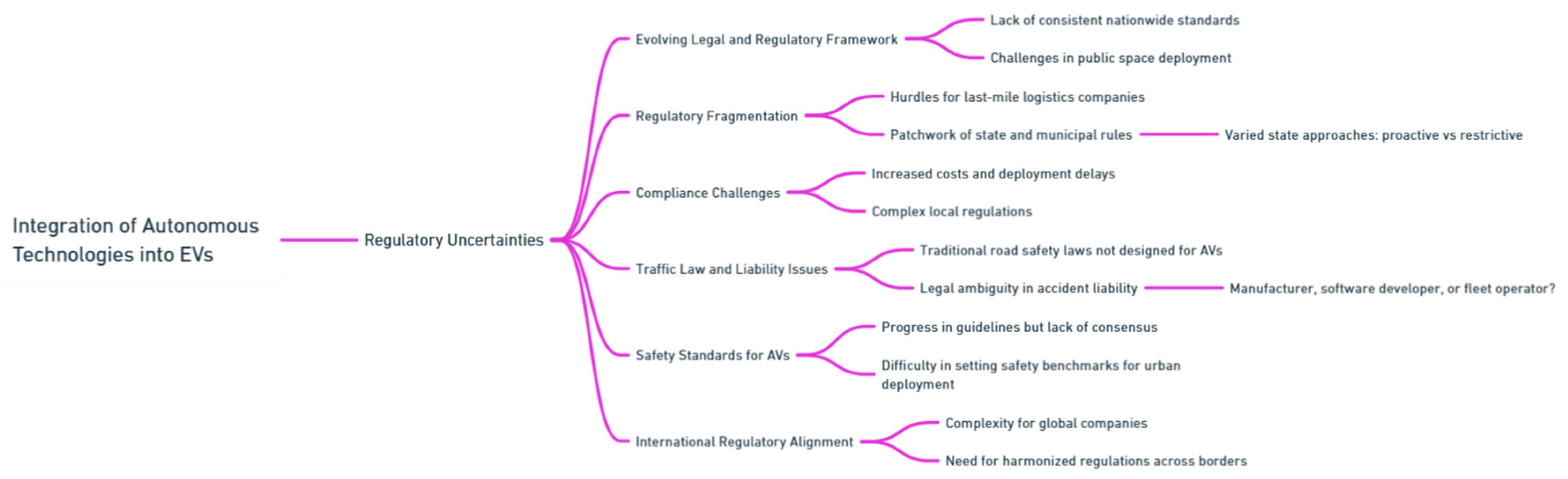
The integration of autonomous technologies into EVs is further complicated by regulatory uncertainties. The legal and regulatory framework for AVs is still evolving, and there is a lack of consistent, nationwide standards governing the deployment of autonomous vehicles, particularly in public spaces. This regulatory fragmentation presents significant hurdles for companies seeking to develop and deploy AVs for last-mile logistics. At present, autonomous vehicle regulations vary greatly between different states and municipalities, leading to a patchwork of rules that make it difficult for companies to scale their operations. Some states have been more proactive in developing autonomous vehicle testing and deployment frameworks, while others have imposed stricter limitations on where and how these vehicles can be used. This regulatory uncertainty can delay deployment and increase costs, as companies must navigate a complex legal landscape to ensure compliance with varying local regulations. Furthermore, there are concerns about how existing traffic laws and vehicle standards apply to AVs. For instance, traditional road safety regulations are designed with human drivers in mind and may not account for the unique characteristics of autonomous vehicles. This creates legal ambiguity regarding liability in the event of accidents involving AVs. In cases where an autonomous system is responsible for a collision, it is not always clear who should be held liable—the vehicle’s manufacturer, the software developer, or the fleet operator. Resolving these legal questions is crucial to building public trust and ensuring that companies have the legal clarity needed to deploy AVs at scale. Regulatory bodies also face the challenge of developing safety standards for AVs. While some progress has been made in creating guidelines for testing and deployment, there is still a lack of consensus on what constitutes "safe" autonomous driving. Determining when AVs are sufficiently safe for widespread use is a difficult task, especially given the complex and unpredictable nature of urban environments. Without clear and consistent safety benchmarks, it will be difficult for companies to gain regulatory approval for large-scale deployment, further delaying the adoption of AVs in last-mile logistics. In addition to these national and local regulations, there is the broader issue of international regulatory alignment. For companies operating globally, compliance with the diverse regulations of different countries presents an additional layer of complexity. Until a more harmonized approach to autonomous vehicle regulation is developed, these companies will face significant hurdles in scaling their operations across borders (Koopman and Wagner, 2017; London and Danks, 2018; Mordue et al., 2020).
Preprints 139811 i040

5.3. Trust and Safety Concerns, and the Technological Complexity of Implementing AVs
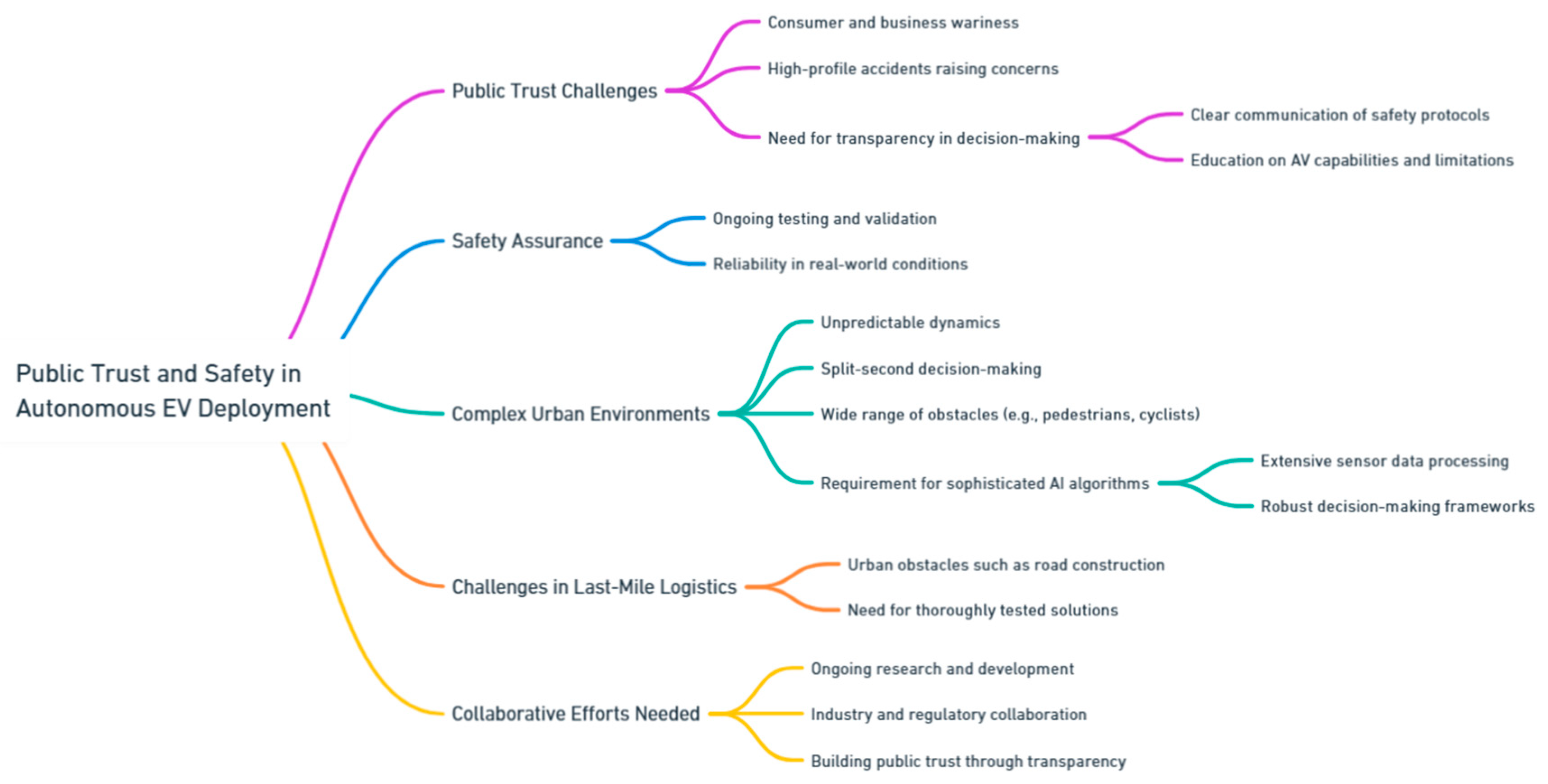
Even if the technical and regulatory challenges of integrating autonomous technologies into EVs can be overcome, there remains the question of public trust and safety. Autonomous vehicles are still a relatively new technology, and many consumers and businesses are understandably wary of their safety and reliability, particularly in complex urban environments. Public trust is a crucial component of the successful deployment of AVs. High-profile accidents involving autonomous vehicles have already raised concerns about their safety, and these incidents have highlighted the limitations of current autonomous driving systems. While these systems are designed to reduce human error, which is responsible for the majority of traffic accidents, they are not infallible and can still be prone to errors, particularly in unfamiliar or complex driving conditions. Ensuring the safety of AVs will require ongoing testing and validation to demonstrate their reliability in real-world conditions. Building public trust will also require transparency from companies developing AV technology. Consumers need to understand how these vehicles make decisions and what safety protocols are in place to protect them in the event of system failure. Without clear communication and education about the capabilities and limitations of AVs, it will be difficult to gain the public's confidence in the technology. Moreover, the complexity of implementing AVs, particularly in the context of last-mile logistics, is a significant challenge. Urban environments are dynamic and unpredictable, requiring autonomous systems to make split-second decisions in the face of constantly changing conditions. These systems must be capable of recognizing and responding to a wide range of obstacles, from pedestrians and cyclists to road construction and delivery obstacles. This level of complexity requires sophisticated AI algorithms, extensive sensor data processing, and robust decision-making frameworks, all of which must be thoroughly tested and validated before they can be deployed at scale. In conclusion, while the integration of autonomous technologies into electric vehicles for last-mile logistics offers significant potential benefits, it also presents numerous challenges. These challenges span technical, regulatory, and societal domains, and must be addressed before AVs can be successfully deployed at scale. Solving these problems will require ongoing research, collaboration between regulators and industry stakeholders, and a focus on building public trust in autonomous vehicle technology. Only then can the full potential of AVs for last-mile logistics be realized (Ehsani, et al., 2020; Widen, 2021; Fowler, 2021).
Preprints 139811 i041

5.4. Regulatory and Policy Challenges
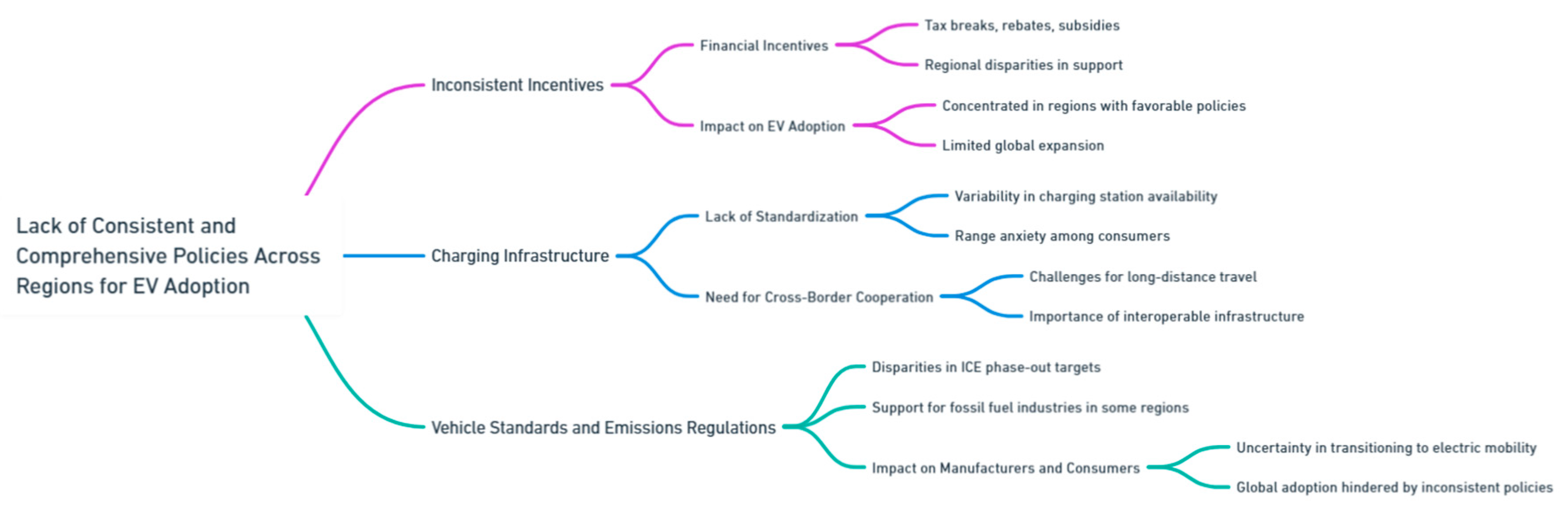
The Challenges to Electric Vehicle (EV) Adoption and Autonomous EV Deployment: A Call for Coordinated Efforts. The transition to electric vehicles (EVs) and autonomous electric vehicles (AEVs) has garnered widespread attention as an essential step toward reducing carbon emissions and addressing climate change. However, despite the promise of cleaner and more efficient transportation, several critical barriers remain. Among the most pressing are the lack of consistent and comprehensive policies across regions for EV adoption, regulatory hurdles slowing down the deployment of autonomous EVs, and the need for coordinated efforts among governments, logistics companies, and vehicle manufacturers. Addressing these issues is crucial for the successful transition to a sustainable, electric, and autonomous transportation system (Wang et al., 2021; Wang et al., 2023).
Lack of Consistent and Comprehensive Policies Across Regions for EV Adoption. One of the most significant barriers to the widespread adoption of electric vehicles is the absence of uniform policies across regions. While many countries and states have implemented measures to encourage EV adoption, these policies are often inconsistent, leading to uneven progress and confusion among stakeholders. A global shift to EVs requires more than just the technological advancements in batteries and vehicle design—it demands a coordinated policy framework that promotes adoption at every level. Firstly, incentives for EV adoption vary dramatically across regions. Some countries and states offer substantial financial incentives, such as tax breaks, rebates, or subsidies for purchasing EVs, while others provide little to no support. For instance, countries like Norway and the Netherlands offer generous subsidies for EV buyers, significantly reducing the cost and making EVs more attractive to consumers. However, in many other regions, these incentives are either absent or insufficient, discouraging potential buyers from making the switch to electric vehicles. Without consistent incentives, EV adoption will remain concentrated in regions with favorable policies, rather than expanding globally. Moreover, the lack of standardized regulations regarding charging infrastructure further complicates EV adoption. The availability and accessibility of charging stations are critical to addressing range anxiety, one of the key concerns for potential EV buyers. However, charging infrastructure development is uneven across regions, with some areas boasting well-established networks while others lag behind. A lack of cross-border or interstate cooperation in infrastructure planning means that long-distance travel with an EV remains challenging, limiting the appeal of electric vehicles to consumers who require reliable charging options. For EV adoption to become widespread, governments and private entities must collaborate to develop standardized, interoperable charging infrastructure that transcends regional boundaries. The disparity in policy frameworks also extends to vehicle standards and emissions regulations. While some countries have set aggressive targets for phasing out internal combustion engine (ICE) vehicles and promoting EVs, others continue to support the fossil fuel industry or lack clear timelines for transitioning to electric mobility. This lack of alignment creates uncertainty for manufacturers, logistics companies, and consumers, ultimately hindering the progress of EV adoption on a global scale (Galati et al., 2023; Brückmann et al., 2021).
Preprints 139811 i042
Regulatory Hurdles Slowing the Deployment of Autonomous EVs. The introduction of autonomous electric vehicles (AEVs) presents an even greater regulatory challenge. The deployment of AEVs promises to revolutionize transportation, reducing traffic congestion, increasing safety, and lowering emissions. However, the regulatory landscape for autonomous vehicles is complex, fragmented, and often outdated, making it difficult for manufacturers and developers to bring these vehicles to market. One of the primary obstacles to AEV deployment is the lack of comprehensive regulations governing the testing and deployment of autonomous vehicles. While some regions, such as California and parts of Europe, have established frameworks for testing autonomous vehicles on public roads, many others have yet to introduce any legislation. This patchwork of regulations creates uncertainty for manufacturers and developers, who must navigate a complex web of legal requirements that differ from one jurisdiction to another. The absence of a cohesive regulatory framework also slows down innovation, as companies are forced to limit their testing and deployment efforts to regions with favorable regulations. Moreover, the current regulatory environment often fails to account for the unique challenges posed by autonomous vehicles. For example, existing traffic laws are designed with human drivers in mind and may not be applicable to autonomous systems. Questions about liability, insurance, and data privacy further complicate the regulatory landscape. In the event of an accident involving an autonomous vehicle, determining fault—whether it lies with the vehicle manufacturer, the software developer, or another party—remains a gray area that regulators have yet to fully address. These legal uncertainties are a major deterrent to the widespread deployment of AEVs. Regulatory hurdles also extend to the technology itself. Autonomous vehicles rely on sophisticated sensor systems, machine learning algorithms, and vast amounts of data to navigate and make decisions. However, data privacy and security concerns have emerged as significant challenges in the deployment of autonomous vehicles. Ensuring that autonomous systems are secure from cyberattacks and that data collected by these vehicles is handled responsibly is critical. Yet, current regulations often lack clear guidelines on these issues, leaving both consumers and manufacturers vulnerable to potential risks. For AEVs to become a reality, governments must work together to create a unified regulatory framework that addresses the unique challenges posed by this emerging technology. This framework should not only facilitate the testing and deployment of autonomous vehicles but also ensure that these vehicles are safe, secure, and capable of operating in diverse environments (Liao et al., 2021; Songkin and Jaafar, 2023).
Preprints 139811 i043
The Need for Coordinated Efforts Among Governments, Logistics Companies, and Vehicle Manufacturers. The successful adoption of electric and autonomous vehicles requires more than just technological advancements and regulatory frameworks—it demands coordinated efforts among key stakeholders, including governments, logistics companies, and vehicle manufacturers. These actors must work together to overcome the barriers to EV and AEV adoption and ensure a smooth transition to a sustainable transportation future. Governments play a crucial role in setting the stage for EV and AEV adoption by implementing policies that encourage investment in clean technologies and creating the necessary infrastructure. However, governments alone cannot drive this transition. Logistics companies, which stand to benefit significantly from the deployment of AEVs, must also be involved in the process. These companies can provide valuable insights into the real-world challenges of deploying electric and autonomous vehicles, from optimizing routes to managing large fleets. By collaborating with governments and manufacturers, logistics companies can help shape policies that are not only forward-thinking but also practical and grounded in industry experience. Vehicle manufacturers are another key player in this coordinated effort. While they have made significant strides in developing electric and autonomous vehicles, manufacturers must work closely with both governments and logistics companies to ensure that these vehicles meet the needs of the market. This includes developing vehicles that are affordable, efficient, and capable of operating in diverse environments. Manufacturers also have a role to play in addressing the infrastructure challenge by investing in charging networks and working to standardize vehicle technology across regions. Furthermore, the development of public-private partnerships can accelerate the transition to EVs and AEVs. By pooling resources and expertise, governments, logistics companies, and manufacturers can overcome the financial and logistical challenges associated with large-scale vehicle deployment and infrastructure development. These partnerships can also help address the skills gap by providing training and education programs to prepare the workforce for the demands of the electric and autonomous vehicle industries.The transition to electric and autonomous vehicles is essential for reducing carbon emissions and creating a more sustainable transportation system. However, this transition is hampered by a lack of consistent policies across regions, regulatory hurdles that slow down the deployment of autonomous EVs, and the need for coordinated efforts among key stakeholders. By addressing these challenges through collaborative action, we can accelerate the adoption of electric and autonomous vehicles, ultimately paving the way for a cleaner, safer, and more efficient future (Yu et al., 2024; Nizami et al., 2020).
Preprints 139811 i044
Recap of Key Challenges in Logistics and Route Optimization. The logistics industry plays a critical role in the global economy, responsible for moving goods efficiently and reliably. However, it faces several significant challenges that hinder its ability to optimize operations and meet the ever-increasing demand for fast, reliable delivery. One of the key issues revolves around inefficiencies in transportation networks, exacerbated by traffic congestion, fragmented supply chains, and outdated infrastructure. These factors increase delivery times and operating costs, making it difficult for logistics companies to maintain profitability while meeting consumer expectations for rapid deliveries. Fuel consumption is another major challenge, with logistics operations being one of the primary consumers of fossil fuels. The industry's heavy reliance on diesel-powered trucks contributes significantly to greenhouse gas emissions, placing pressure on companies to find sustainable alternatives. Rising fuel costs also strain operating budgets, forcing companies to prioritize fuel efficiency measures, such as route optimization and fleet upgrades, in order to remain competitive. Moreover, the growing complexity of last-mile delivery is a pressing concern. As e-commerce continues to expand, consumers increasingly demand same-day or next-day delivery, particularly in urban areas where traffic congestion can slow down deliveries. Traditional logistics networks are not well-equipped to handle these demands efficiently, leading to bottlenecks and delivery delays. Without real-time visibility and flexibility in delivery routes, companies struggle to meet the heightened expectations of customers while maintaining operational efficiency. Another key challenge is the shortage of skilled labor, particularly drivers. The trucking industry is facing an aging workforce, with fewer younger workers entering the field. This shortage, compounded by the increasing demands on transportation networks, has created an imbalance between supply and demand for labor. Additionally, regulatory challenges, such as changes in labor laws, environmental standards, and safety regulations, add complexity to logistics operations, requiring companies to continuously adapt to new compliance requirements.
Preprints 139811 i045
The Need for Ongoing Collaboration Between the Public and Private Sectors. Addressing the challenges in logistics and transportation requires a concerted effort between the public and private sectors. Neither sector alone can effectively tackle the issues related to infrastructure, regulation, and technological adoption, which are all critical to optimizing logistics operations. First, the public sector plays a vital role in providing and maintaining infrastructure that supports efficient transportation. Governments must invest in upgrading roads, bridges, and ports, as well as expanding rail networks to reduce traffic congestion and improve the flow of goods. Modernizing infrastructure can alleviate bottlenecks that currently hinder the movement of goods, particularly in urban areas where traffic congestion is most severe. Without substantial public investment in infrastructure, logistics companies will continue to face difficulties in optimizing their delivery routes and improving fuel efficiency. In addition to infrastructure, the public sector is responsible for setting regulatory standards that impact the logistics industry. Policymakers need to work closely with private companies to create a regulatory environment that encourages innovation while ensuring safety and environmental sustainability. For example, regulations that promote the adoption of cleaner vehicles and alternative fuels can help the industry reduce its carbon footprint. However, these regulations must be implemented in a way that is practical and achievable for logistics companies, ensuring they have sufficient time and resources to transition to greener technologies without jeopardizing their operations. The private sector, on the other hand, must take the lead in implementing innovative technologies that can address the inefficiencies in logistics. One area where private companies are already making significant strides is in AI-driven route optimization. These systems enable logistics providers to reduce fuel consumption, improve delivery times, and enhance operational flexibility by leveraging real-time data on traffic patterns, weather conditions, and delivery schedules. Private companies must continue to invest in such technologies, collaborating with public entities to ensure that these innovations are effectively integrated into broader transportation systems. Another key area for collaboration is in the development and adoption of autonomous vehicles. While autonomous delivery vehicles and drones have the potential to revolutionize logistics, their deployment on public roads requires a coordinated effort between the public and private sectors. Governments must establish clear regulatory frameworks for the safe operation of autonomous vehicles, while private companies must work to ensure that these technologies are reliable and scalable. Collaboration is also needed to address the public's concerns about safety and job displacement, ensuring that the benefits of autonomous technologies are shared across society. Collaboration is equally important in addressing the shortage of skilled labor in the logistics industry. Public-private partnerships can help to create training programs that equip workers with the skills needed to operate advanced logistics technologies, such as AI and autonomous systems. Governments can also support workforce development by offering incentives to companies that invest in employee training and development, helping to close the skills gap and ensure that the logistics workforce is prepared for the future (Javato-Martín et al., 2017; Arvianto et al., 2021).
Future Opportunities as Technologies and Infrastructure Evolve. Despite the significant challenges facing the logistics industry, there are numerous opportunities for growth and improvement as technologies and infrastructure continue to evolve. One of the most promising developments is the ongoing advancement of AI and machine learning technologies. As these technologies become more sophisticated, they will enable logistics companies to further optimize their operations by predicting demand, identifying inefficiencies in the supply chain, and automating routine tasks. AI-driven systems will be able to make real-time adjustments to delivery routes based on changing conditions, such as traffic congestion or weather, ensuring that goods are delivered as efficiently as possible. The expansion of the Internet of Things (IoT) is another exciting opportunity for the logistics industry. IoT devices, such as sensors and GPS trackers, can provide real-time data on the location and condition of goods as they move through the supply chain. This visibility will enable logistics providers to improve inventory management, reduce the risk of theft or damage, and ensure that goods are delivered on time. As IoT technology continues to evolve, it will become an increasingly valuable tool for logistics companies seeking to enhance their operational efficiency. The future of transportation infrastructure also presents significant opportunities for the logistics industry. Governments around the world are beginning to invest in smart city technologies, which use data and automation to improve the efficiency of urban transportation networks. These technologies, such as intelligent traffic management systems and smart parking solutions, can help reduce congestion and improve the flow of goods through cities. As smart city initiatives expand, logistics companies will be able to take advantage of these innovations to optimize their delivery routes and reduce fuel consumption. Another key opportunity lies in the continued development of green transportation technologies. Electric vehicles (EVs) and hydrogen-powered trucks have the potential to significantly reduce the logistics industry's reliance on fossil fuels. As these technologies become more affordable and charging infrastructure expands, logistics companies will be able to transition their fleets to cleaner alternatives, reducing their environmental impact while also lowering operating costs. Finally, the increasing use of autonomous vehicles presents a transformative opportunity for the logistics industry. While there are still many regulatory and technological hurdles to overcome, the potential benefits of autonomous delivery vehicles are immense. Autonomous trucks and drones could operate around the clock, reducing delivery times and increasing efficiency. These technologies could also help address the labor shortage in the logistics industry by reducing the need for human drivers. The logistics industry faces several key challenges, including inefficient transportation networks, rising fuel costs, and a shortage of skilled labor. However, these challenges can be addressed through ongoing collaboration between the public and private sectors. Governments must invest in infrastructure and create regulatory environments that encourage innovation, while private companies must continue to develop and implement advanced technologies. Looking to the future, there are numerous opportunities for the logistics industry to improve its efficiency and sustainability as AI, IoT, green transportation, and autonomous vehicle technologies evolve. Through continued collaboration and innovation, the logistics industry can overcome its current challenges and seize these future opportunities (Frias et al., 2023; Campisi et al., 2022).
Electric and Autonomous Vehicles in Last-Mile Delivery: Challenges and Barriers to EV Adoption in Logistics. The rapid rise of e-commerce has transformed the logistics sector, especially in the context of last-mile delivery. With increasing consumer demand for fast, efficient, and environmentally friendly delivery services, the use of electric vehicles (EVs) and autonomous vehicles (AVs) in logistics has garnered significant attention. However, despite the potential benefits, the adoption of electric vehicles in last-mile delivery faces several challenges and barriers that hinder widespread implementation. These obstacles range from high initial costs to infrastructure limitations, posing hurdles for logistics companies aiming to embrace greener and more efficient transportation solutions.
  • High Initial Costs of EVs: One of the primary barriers to the adoption of electric vehicles in logistics is the high upfront cost. Electric vehicles typically require a greater initial investment compared to their conventional, fuel-powered counterparts. For logistics companies, especially small- and medium-sized enterprises (SMEs), the capital outlay for purchasing or leasing electric delivery vehicles can be prohibitive. Although financial incentives, tax credits, and subsidies exist in some regions to offset these costs, they are often insufficient to fully bridge the gap. As a result, many logistics companies remain hesitant to transition to electric fleets, particularly in competitive markets where profit margins are already slim (Nguyen et al., 2021; BC and BS, 2022).
  • Charging Infrastructure Limitations: The availability of charging infrastructure is another critical challenge to EV adoption. While charging stations are becoming more prevalent in urban centers, they are still sparse in rural or less densely populated areas. This inconsistency in infrastructure can lead to operational challenges for logistics companies, especially those that serve diverse geographical regions. Extended downtimes due to the need to recharge vehicles can disrupt delivery schedules, impacting both efficiency and customer satisfaction. To overcome this barrier, a comprehensive and widespread network of charging stations is essential, along with the development of fast-charging technologies that can reduce vehicle downtime (Straka et al., 2020; Ashfaq et al., 2021).
  • Range Anxiety and Limited Battery Capacity: Range anxiety—concerns about the distance an electric vehicle can travel on a single charge—is a persistent issue in logistics. Many EVs have limited battery capacities, which may not be sufficient for long delivery routes or high-volume delivery schedules. This concern is particularly relevant in the context of last-mile delivery, where timely deliveries are crucial. Logistics companies often need to ensure that vehicles can complete multiple delivery routes without frequent recharging, a challenge for EVs with current battery technologies. Although advancements in battery capacity are being made, their adoption remains slow, further hindering widespread EV integration into logistics fleets (Zhang et al., 2021; Pevec et al., 2020).
  • Long Charging Times: In comparison to the quick refueling of traditional vehicles, EVs require significantly longer charging times. Even with the fastest chargers available today, it can take hours to fully recharge a vehicle's battery. This prolonged downtime can be a major inconvenience for logistics companies that rely on tight delivery schedules and high fleet utilization rates. While overnight charging is a potential solution for some businesses, it may not be scalable for larger fleets or for companies that operate around the clock. Fast-charging solutions are needed to mitigate this issue, but their implementation is not yet widespread.
  • Limited Vehicle Models and Load Capacities: Another barrier to EV adoption in logistics is the limited availability of electric vehicle models that are suitable for commercial use. Many EVs on the market today are designed primarily for passenger transport, with few options tailored to the specific needs of logistics operations. Additionally, existing electric commercial vehicles often have limited load capacities, making them less suitable for large-scale deliveries that require significant cargo space. As manufacturers continue to prioritize passenger EVs, the development of electric delivery vehicles with sufficient payload and cargo space remains an area in need of greater attention and investment.
Case Study: FedEx’s Move Towards an All-Electric Fleet. The logistics and transportation sector is witnessing a transformative shift with the advent of electric and autonomous vehicles (EVs and AVs). As sustainability becomes a global priority, companies are exploring innovative solutions to reduce carbon emissions and improve operational efficiency, particularly in last-mile delivery. The last mile, defined as the final step of the delivery process where goods reach the customer, is both costly and environmentally impactful due to the high frequency of deliveries in urban areas. This section examines FedEx’s efforts to transition to an all-electric fleet as a leading case study in how electric vehicles (EVs) are shaping the future of last-mile logistics.
  • FedEx’s Sustainability Goals: FedEx has long recognized the importance of reducing its environmental footprint. As part of its sustainability strategy, the company set ambitious goals to achieve carbon-neutral operations globally by 2040. A critical aspect of this plan is the transition of its delivery fleet to all-electric vehicles. FedEx announced its intention to invest $2 billion toward sustainability initiatives, with $100 million specifically allocated to electric vehicle research and infrastructure. This transition aligns with broader industry trends, as more logistics companies aim to balance operational efficiency with environmental responsibility.
  • Benefits of Electric Vehicles in Last-Mile Delivery: Electric vehicles offer numerous advantages over traditional internal combustion engine (ICE) vehicles in the context of last-mile delivery. The most notable benefit is the reduction of greenhouse gas emissions, a key contributor to climate change. Since last-mile delivery often occurs in densely populated urban areas, electric vehicles also help mitigate air pollution, improving public health. From an operational perspective, electric delivery vans are quieter than their ICE counterparts, contributing to less noise pollution in cities. This quietness can facilitate nighttime deliveries in residential areas, expanding delivery windows without disturbing local communities. Furthermore, the lower maintenance requirements of electric vehicles compared to diesel-powered ones can reduce long-term operational costs for logistics companies. With fewer moving parts, electric vehicles experience less wear and tear, minimizing downtime for repairs and service. Moreover, advancements in battery technology are making electric vehicles more practical for logistics operations, allowing for greater range and faster charging times. These developments are crucial for FedEx, given the high daily mileage that many of its delivery vehicles cover (Siragusa et al., 2022; Iwan et al., 2021).
  • Challenges in Implementing Electric Fleets: Despite the advantages, there are several challenges to implementing an all-electric fleet for last-mile delivery. The primary hurdle is the initial capital investment required to purchase electric vehicles, which are typically more expensive than traditional delivery trucks. However, FedEx anticipates that these costs will be offset over time through lower fuel costs and reduced maintenance expenses. Another significant challenge is the need for charging infrastructure. Urban delivery operations require a network of charging stations that can support rapid charging, ensuring that vehicles can be quickly recharged between deliveries. FedEx has already begun installing charging infrastructure at its hubs and delivery centers to address this issue, with plans to expand these efforts globally. Additionally, the availability of renewable energy sources to power the charging stations will be critical in maximizing the environmental benefits of the electric fleet (Nazir et al., 2023; Pardo-Bosch et al., 2021).
  • Autonomous Vehicles and FedEx’s Future Vision: In addition to electric vehicles, FedEx is exploring the potential of autonomous vehicles to revolutionize last-mile delivery. Autonomous vehicles could further improve efficiency by optimizing delivery routes, reducing labor costs, and enabling 24/7 operations. FedEx has partnered with companies like Nuro and Aurora to develop and test autonomous delivery technologies. Nuro’s small autonomous delivery robots, for instance, have been deployed in several pilot programs across the U.S. to handle small parcel deliveries. Similarly, Aurora’s self-driving technology is being tested on FedEx trucks in long-haul routes. While fully autonomous delivery is still several years away from widespread adoption, FedEx’s investment in this area highlights the company’s commitment to staying at the forefront of innovation in logistics. FedEx’s move towards an all-electric fleet is a significant step toward sustainability in last-mile delivery. By reducing greenhouse gas emissions, lowering operating costs, and improving urban air quality, electric vehicles offer a promising future for the logistics industry. However, challenges such as high upfront costs and the need for extensive charging infrastructure remain. FedEx’s proactive approach, combined with advancements in autonomous vehicle technology, positions the company as a leader in the evolving landscape of last-mile delivery. As electric and autonomous technologies continue to develop, FedEx’s case will likely serve as a benchmark for other logistics companies seeking to balance efficiency with environmental responsibility (Kalakanti and Rao, 2023; Singh et al., 2022; Lokhandwala and Cai, 2020).
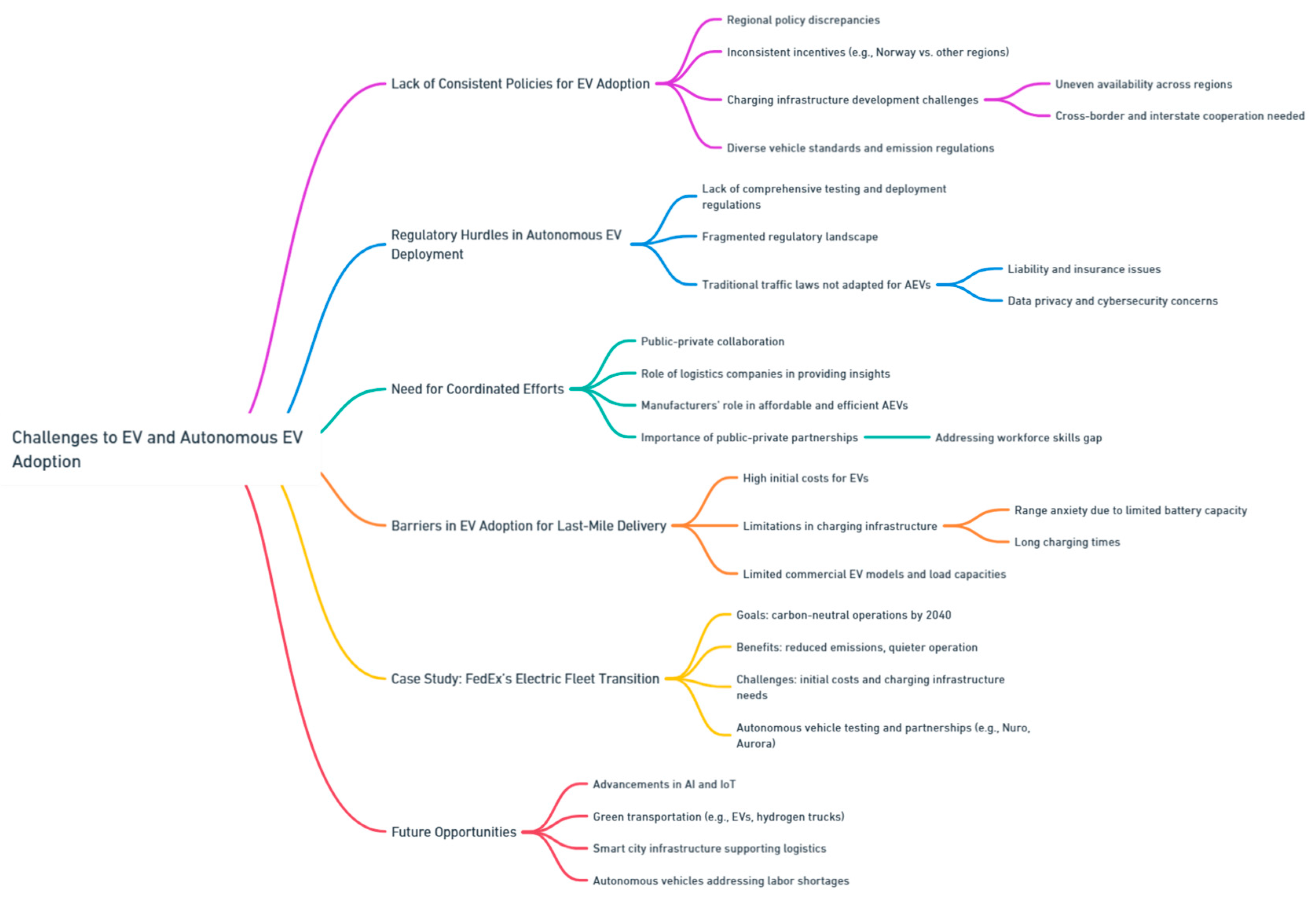
Preprints 139811 i046

6. Challenges and Barriers in Implementing Smart Technologies

6.1. Challenges and Barriers in Implementing Smart Technologies: High Initial Investment Costs

The logistics industry is undergoing a profound transformation with the adoption of smart technologies such as the Internet of Things (IoT), Artificial Intelligence (AI), Big Data, and Blockchain. These technologies promise to enhance efficiency, reduce operational costs, improve decision-making, and create a more sustainable supply chain. However, while the benefits of smart technologies are clear, the path to implementation is not always smooth. One of the most significant challenges that companies face when adopting smart technologies is the high initial investment costs. These costs can pose substantial barriers, particularly for small and medium-sized enterprises (SMEs), limiting their ability to remain competitive in an increasingly technology-driven industry.
Understanding the High Initial Investment Costs. Implementing smart technologies in logistics requires considerable upfront capital investment. The cost can vary depending on the type and scale of technology being integrated, but generally includes several key components:
  • Hardware and Infrastructure: The deployment of IoT devices, AI-driven machinery, robotics, and automated systems often requires specialized hardware and supporting infrastructure. For example, outfitting a warehouse with robots, sensors, and communication devices for IoT connectivity can be expensive. Similarly, setting up advanced data analytics platforms or blockchain networks necessitates investment in powerful servers, cloud storage, and other infrastructure components.
  • Software and Licensing: Implementing smart technologies also requires sophisticated software systems that enable data collection, processing, and analysis. In many cases, companies need to purchase software licenses, which can be costly, particularly for AI and machine learning tools. Additionally, specialized software systems may require frequent updates and upgrades, further increasing the long-term financial burden.
  • Integration Costs: Another major cost associated with adopting smart technologies is integrating new systems with existing operations. Companies often have legacy systems in place that are not designed to communicate with modern technologies. Retrofitting these systems to work with IoT devices, AI algorithms, or blockchain platforms can be complex and expensive. This integration often requires hiring consultants, purchasing middleware, or even overhauling entire systems, adding to the overall cost.
  • Training and Workforce Adaptation: The implementation of smart technologies requires training employees to effectively use new tools and systems. This can be both time-consuming and costly. The workforce needs to develop new skills, from operating advanced robotics in warehouses to interpreting data generated by IoT devices. This retraining may involve hiring external experts, providing specialized education, and potentially disrupting normal operations, which can translate into additional indirect costs.
  • Maintenance and Operational Costs: After the initial investment, ongoing maintenance and operational costs can add up. Smart technologies require regular upkeep, including software updates, hardware maintenance, and cybersecurity measures. Without proper maintenance, these technologies can quickly become obsolete or inefficient, which can negate the long-term cost-saving benefits they offer.
Barriers to Investment in Smart Technologies. The high initial investment costs create several barriers for companies looking to adopt smart technologies, particularly for smaller logistics providers:
  • Limited Access to Capital: SMEs often struggle to secure the necessary capital to invest in smart technologies. Banks and investors may view these investments as risky, given the uncertain return on investment (ROI) in the early stages of implementation. Without access to loans or venture capital, many small companies are left behind in the technological revolution, creating a growing divide between large enterprises and smaller logistics providers.
  • Uncertainty Over ROI: While smart technologies promise long-term cost savings and efficiency gains, the exact return on investment is often difficult to quantify. Companies may be hesitant to invest in expensive technologies without clear data on how quickly they can recoup their costs. This uncertainty is especially pronounced in industries like logistics, where the complexity of operations makes it challenging to predict the full impact of technology adoption.
  • Risk of Obsolescence: Another concern for companies is the rapid pace of technological advancement. There is a fear that after making a significant investment in a particular technology, newer and more advanced solutions could render their investment obsolete in just a few years. This risk of obsolescence makes companies cautious about committing large sums of money to technologies that may not have long-term viability.
  • Disruption to Existing Operations: Implementing smart technologies often requires companies to temporarily disrupt their existing operations. This can lead to delays, inefficiencies, and even revenue loss during the transition period. For companies that operate with tight margins, such as those in the logistics industry, this disruption can pose a serious financial risk. As a result, many companies are reluctant to adopt smart technologies, even if they recognize the potential long-term benefits.
  • Lack of Technical Expertise: Implementing smart technologies requires not only financial investment but also technical expertise. Many logistics companies, particularly smaller ones, lack the in-house expertise to oversee the deployment and management of complex systems like AI, IoT, or blockchain. Hiring external consultants or specialists can add to the already high costs, creating another barrier to entry.
Strategies to Overcome Investment Challenges. While high initial investment costs are a major barrier, several strategies can help companies overcome these challenges and adopt smart technologies in logistics:
  • Government Incentives and Subsidies: Governments around the world are increasingly recognizing the importance of digital transformation in industries like logistics. As a result, many governments offer subsidies, tax breaks, and grants to encourage companies to invest in smart technologies. By taking advantage of these programs, companies can offset some of the initial costs.
  • Collaboration and Shared Investment: Companies can reduce costs by collaborating with other firms in their industry to share the investment in smart technologies. For example, logistics providers can pool resources to implement IoT-based tracking systems across multiple supply chains, reducing the burden on individual companies.
  • Leasing and Subscription Models: To lower the upfront capital requirements, companies can explore leasing equipment or subscribing to cloud-based software solutions instead of purchasing them outright. This reduces the initial financial burden and allows companies to spread costs over time while benefiting from the latest technologies.
  • Incremental Implementation: Rather than adopting smart technologies all at once, companies can take an incremental approach by starting with smaller pilot projects. This allows them to assess the benefits of the technology on a smaller scale and gradually expand their investment as they see positive returns.
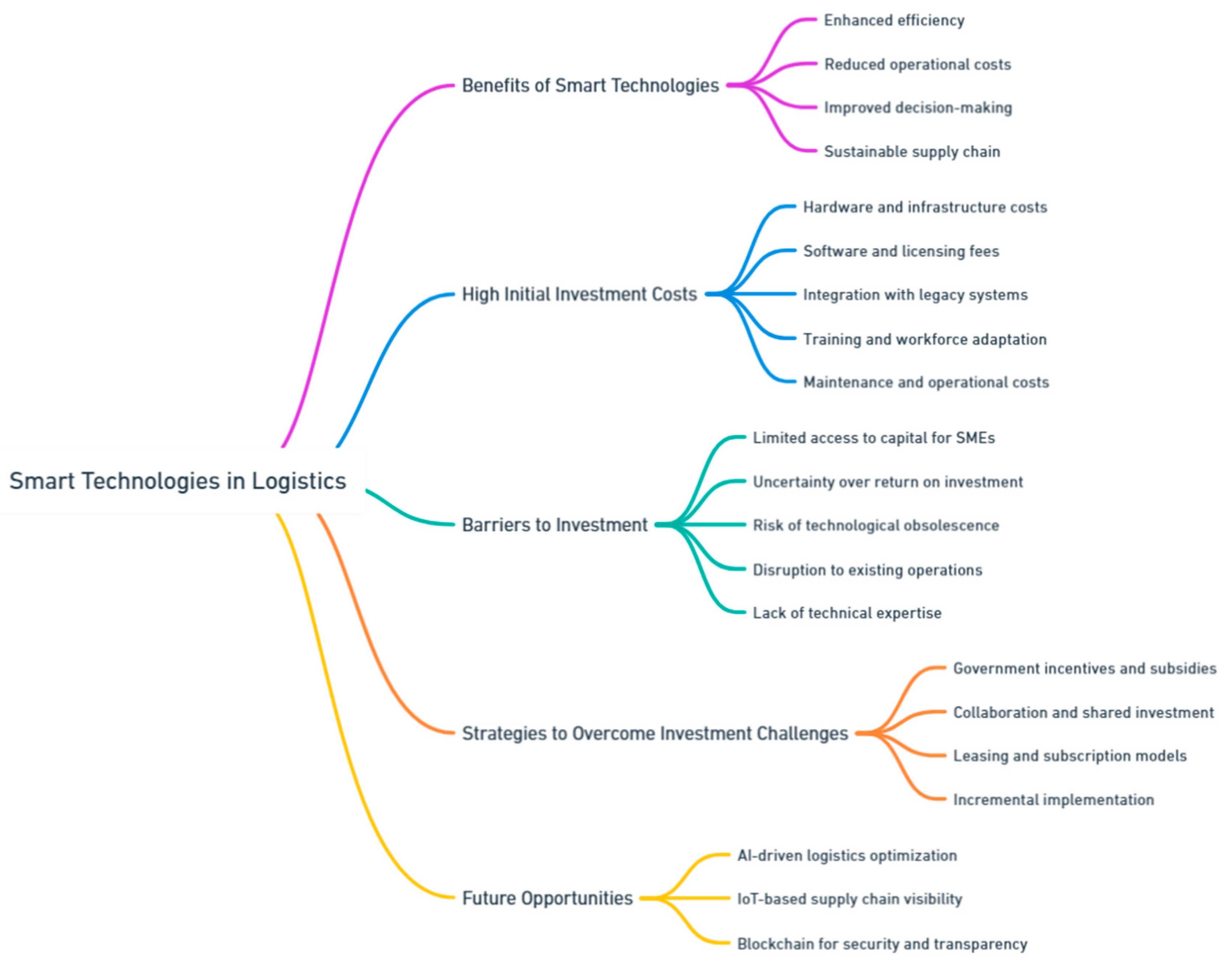
High initial investment costs remain one of the most significant challenges in implementing smart technologies in logistics. These costs include hardware, software, integration, training, and ongoing maintenance, and they can be prohibitive, particularly for smaller companies. However, by leveraging government incentives, exploring shared investment opportunities, and adopting incremental approaches, logistics companies can overcome these barriers and reap the long-term benefits of smart technologies (Kalkha et al., 2023; Kopylova et al., 2023; Ding et al., 2021).
Preprints 139811 i047

6.2. Challenges and Barriers in Implementing Smart Technologies: Need for Infrastructure Upgrades

The rapid development and adoption of smart technologies across various sectors, including transportation, healthcare, energy, and urban planning, have highlighted the transformative potential of these innovations. However, despite their promise, implementing smart technologies is fraught with significant challenges, with infrastructure upgrades standing out as a critical barrier. This section delves into the need for infrastructure upgrades as a key challenge in realizing the full potential of smart technologies.
  • Outdated Physical Infrastructure: One of the most significant barriers to implementing smart technologies is the prevalence of outdated physical infrastructure. Many cities, particularly in older urban environments, were not designed with modern technology in mind. Roads, buildings, and public utilities in these areas often rely on legacy systems that cannot seamlessly integrate with the advanced digital and sensory technologies required for smart solutions. For instance, the integration of smart traffic management systems demands sensors, communication devices, and control centers, all of which rely on physical infrastructure that may need to be replaced or upgraded entirely. The retrofitting of old infrastructure, while necessary, presents considerable challenges. These upgrades often require substantial financial investments, time, and coordination between public and private sectors. Municipalities might also face logistical problems, such as service disruptions during the upgrade process. Therefore, although cities and regions might aspire to embrace smart technologies, the scale of necessary upgrades can impede progress and increase resistance among stakeholders, particularly when the benefits are long-term and the costs are immediate.
  • Integration of Digital Infrastructure: In addition to outdated physical infrastructure, there is a growing need for robust digital infrastructure. Smart technologies thrive on the ability to collect, transmit, and analyze massive amounts of data in real-time. This requires a digital backbone consisting of high-speed internet connections, extensive fiber optic networks, and 5G wireless networks, which many regions, especially rural or underdeveloped areas, lack. Without this underlying digital infrastructure, the deployment of smart technologies, such as Internet of Things (IoT) devices, cloud-based systems, and real-time data analytics, becomes impractical. For instance, smart energy grids rely on real-time communication between energy producers, consumers, and distribution networks. The absence of reliable digital infrastructure can result in delays or inaccuracies in this communication, undermining the effectiveness of these systems. This is particularly relevant in developing countries, where the lack of basic digital infrastructure, such as stable internet and communication networks, can significantly delay the adoption of smart technologies, exacerbating the digital divide.
  • Financial Constraints: Upgrading infrastructure, whether physical or digital, requires significant financial resources, which many governments and organizations struggle to secure. In many cases, the cost of overhauling legacy infrastructure exceeds the available budget for technology projects, especially in regions with competing priorities such as healthcare, education, and social services. In addition, the cost of maintaining existing infrastructure can consume a large portion of the available funds, leaving limited resources for new investments in smart technology integration. Public-private partnerships (PPPs) have emerged as a potential solution to mitigate financial barriers, allowing governments to collaborate with private entities to share costs and expertise. However, PPPs also come with their own challenges, including complex negotiations, varying priorities between sectors, and concerns about data privacy and security. Additionally, securing long-term investments for large-scale infrastructure projects can be challenging due to political uncertainty or fluctuating economic conditions, which can deter potential investors.
  • Lack of Skilled Workforce: Beyond the need for physical and digital infrastructure upgrades, there is a substantial requirement for a skilled workforce capable of planning, implementing, and maintaining smart technologies. Infrastructure upgrades demand not only engineers and construction workers but also specialists in data science, cybersecurity, and artificial intelligence (AI). In many regions, the workforce may not have the technical expertise required to manage these advanced systems, thereby slowing down the adoption and optimization of smart technologies. Training and development programs are necessary to address this skills gap. However, creating these programs can be expensive and time-consuming, and they may face resistance from industries or workers who feel threatened by automation or technological advancements. Additionally, regions with lower education levels may struggle to develop a workforce that can support such initiatives, further exacerbating the challenges of implementing smart technologies in those areas.
  • Regulatory and Policy Barriers: The successful deployment of smart technologies also depends on the establishment of supportive regulatory and policy frameworks. Many regions face outdated or restrictive regulations that do not account for the complexities of smart technologies. For instance, data privacy laws may limit the ability of smart cities to collect and analyze personal data, while outdated building codes may not accommodate the installation of necessary smart devices and sensors. Governments and regulatory bodies must work to update these frameworks to enable infrastructure upgrades. However, this process can be slow, particularly in countries with bureaucratic legal systems or where there is resistance to change from interest groups. Aligning regulatory and policy changes with technological advancements is a complex, but crucial, step toward enabling smart infrastructure upgrades.
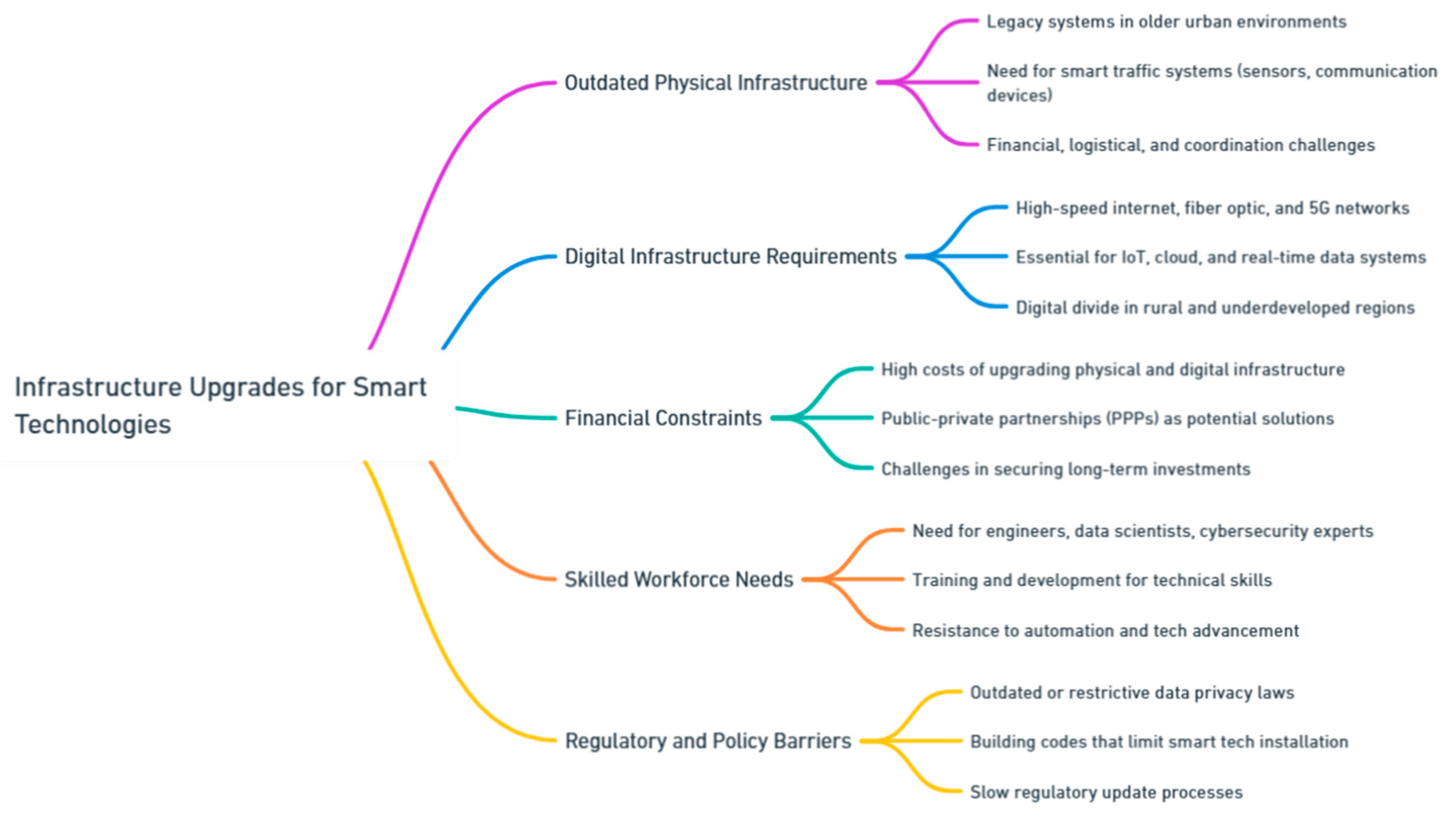
Implementing smart technologies requires more than just a vision; it demands a comprehensive approach to upgrading both physical and digital infrastructure. The challenges are significant, from outdated systems and the need for a skilled workforce to financial limitations and regulatory barriers. Overcoming these hurdles will require strategic planning, collaboration across sectors, and long-term investments in infrastructure to ensure that smart technologies can thrive and deliver their promised benefits (Wu et al., 2020; Rahman et al., 2021; Ishaq and Farooq, 2023).
Preprints 139811 i048

6.3. Resistance to Change and Adoption of New Technologies

The integration of smart technologies into various industries and sectors presents numerous opportunities for enhanced efficiency, data-driven decision-making, and innovation. However, these benefits do not come without challenges. Organizations face a multitude of barriers that impede the smooth implementation and adoption of these technologies. Among these challenges, resistance to change and adoption hesitancy stand out as significant obstacles, influencing the success or failure of smart technology projects.
  • Technological Complexity and Integration Issues: One of the primary challenges in implementing smart technologies is their inherent complexity. These technologies, such as IoT (Internet of Things), AI (Artificial Intelligence), and big data analytics, often require sophisticated infrastructure and integration with existing systems. Many organizations struggle to find the resources, both in terms of expertise and financial investment, necessary to ensure that these technologies work seamlessly with legacy systems. Compatibility issues and the need for extensive customization can delay projects and add to costs. Additionally, organizations often face a lack of skilled professionals who can manage and operate these advanced systems. The steep learning curve required for employees to understand and use smart technologies effectively can contribute to delays in implementation. Training programs are often necessary but can be time-consuming and costly, further discouraging rapid adoption.
  • Financial Barriers: The cost of adopting smart technologies can be prohibitive for many organizations, especially small and medium-sized enterprises (SMEs). The initial capital outlay required to purchase and install the necessary hardware, software, and supporting infrastructure can be daunting. Moreover, the ongoing costs associated with maintenance, updates, and cybersecurity measures often lead to hesitation, especially when the return on investment (ROI) is not immediately clear. Furthermore, many organizations are uncertain about the long-term financial implications of smart technologies. The rapid pace of technological advancement means that investments made today may become obsolete within a few years, requiring further expenditure on upgrades or replacements. This uncertainty makes it difficult for decision-makers to justify the financial commitment required to implement these systems.
  • Cybersecurity Concerns: With the increased connectivity that smart technologies offer comes the heightened risk of cyber-attacks. Organizations adopting smart systems must address security vulnerabilities in their networks, particularly when integrating IoT devices, which can often serve as entry points for hackers. The potential for data breaches, theft, and other forms of cybercrime deters many businesses from fully embracing smart technologies, as they fear that their valuable data or operational infrastructure could be compromised. Ensuring the privacy and security of data generated by smart technologies is another significant challenge. Many industries, particularly those dealing with sensitive customer information like healthcare and finance, must comply with strict regulations regarding data protection. The risk of non-compliance, coupled with the fear of reputational damage following a cyber-incident, makes some organizations reluctant to fully invest in smart technologies.
  • Resistance to Change and Adoption of New Technologies: Resistance to change is a common and often underestimated barrier when it comes to the implementation of smart technologies. Employees, managers, and even customers may resist new systems due to various psychological, social, and organizational factors. Organizations often have established ways of doing things, and introducing smart technologies can disrupt existing workflows and job roles. Employees who are comfortable with traditional methods may view new technologies as a threat to their job security or professional competence. This fear of redundancy or the need to acquire new skills can result in pushback, leading to delays or even the abandonment of smart technology initiatives. Many individuals within organizations may not fully understand the benefits that smart technologies can offer. Without adequate education and communication about how these systems can improve efficiency, productivity, and overall job satisfaction, employees may resist their implementation. A lack of awareness about the potential for long-term gains often leads to short-sighted opposition. In some cases, resistance comes from upper management. Leaders who are risk-averse or lack a forward-looking vision may be hesitant to embrace the disruptive potential of smart technologies. They may prefer to stick with traditional practices that have proven effective in the past, even if those methods are no longer optimal in the face of technological advancements. Another source of resistance can stem from generational differences in the workforce. Younger employees may be more adaptable and eager to embrace new technologies, while older employees may feel overwhelmed or resistant to change. This disparity can create tensions within teams and slow down the adoption process.
  • Ethical and Social Concerns: The implementation of smart technologies also raises several ethical and social concerns. For example, the increased automation of tasks through AI and robotics may lead to job losses, particularly in industries where manual labor is prevalent. This fear of unemployment can fuel resistance among workers and unions, creating additional barriers to adoption. Moreover, the use of smart technologies in surveillance and data collection has sparked concerns about privacy and individual rights. In sectors such as retail and public safety, the collection of large amounts of data from customers or citizens can lead to backlash if not managed responsibly. Organizations must address these ethical issues and ensure that their use of smart technologies aligns with societal values and legal frameworks.
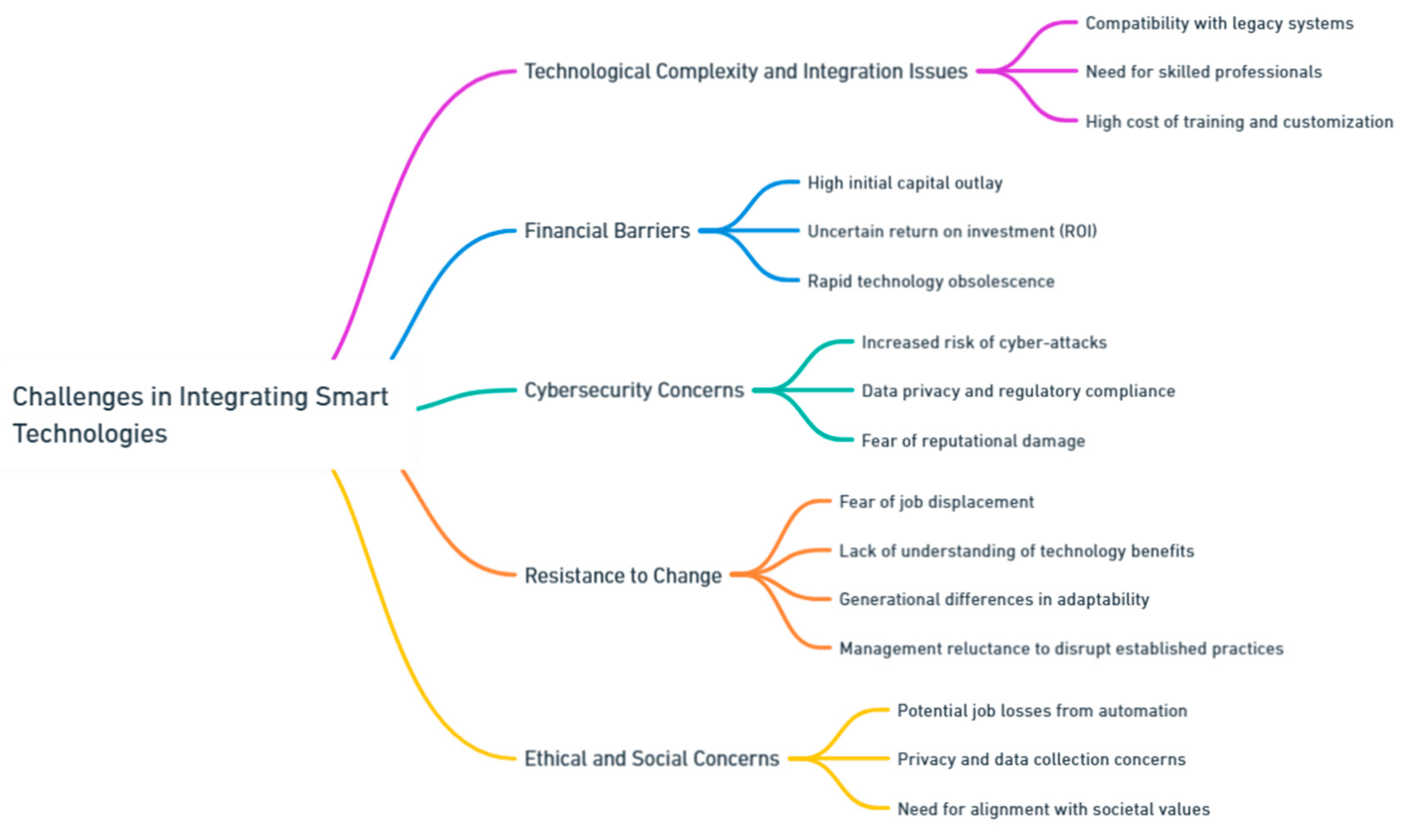
In conclusion, while smart technologies offer immense potential for innovation and efficiency, their successful implementation is hindered by several challenges. These include technological complexity, financial concerns, cybersecurity risks, and perhaps most notably, resistance to change. Overcoming these barriers requires a combination of strategic planning, transparent communication, and a commitment to addressing the concerns of all stakeholders involved (Alhalafi and Veeraraghavan, 2023; Cann, 2021; Kamali Saraji et al., 2021).
Preprints 139811 i049

6.4. Regulatory Issues and Lack of Standardization

The adoption of smart technologies promises numerous benefits across various sectors, from improving efficiency in industries to enhancing daily life for individuals. However, despite the advantages, several significant challenges and barriers hinder their widespread implementation. These hurdles include technological limitations, data privacy concerns, high initial costs, integration complexities, and a lack of expertise. Understanding these barriers is crucial for developing solutions that enable smoother adoption of smart technologies.
  • Technological Limitations: Smart technologies rely heavily on robust infrastructures such as sensors, connectivity networks (e.g., 5G), and advanced data processing capabilities. However, in many regions, especially in developing countries, the lack of adequate infrastructure can severely limit the effective deployment of these technologies. For instance, IoT devices require fast and reliable internet connections, which may not be available in remote or underserved areas. Moreover, the performance and scalability of existing smart systems may not always meet the growing demands for real-time data processing and analytics. Smart technologies often need to operate in real-time, with minimal latency, to deliver value in industries like healthcare, transportation, and manufacturing. However, current technologies, including cloud computing and network infrastructures, can experience latency issues and bandwidth constraints that hinder real-time operations. These limitations create obstacles to the seamless implementation of smart technologies in critical applications (You et al., 2021).
  • High Initial Costs and Investment: While smart technologies promise long-term benefits such as operational efficiency, they often require significant upfront investment. The costs of deploying IoT sensors, advanced computing systems, and upgrading legacy infrastructure can be prohibitively high for smaller organizations or governments with limited budgets. Moreover, the maintenance and upgrade of smart systems come with ongoing costs, which can further deter potential adopters. In addition to the technological expenses, businesses must often retrain their workforce or hire specialized personnel to manage and operate smart systems. This can add to the overall financial burden, especially for industries that are already operating on tight margins. The high cost of implementation remains a significant barrier, particularly in developing economies or small-scale businesses where investment capital is scarce (Ali et al., 2020; Ciuffoletti, 2018).
  • Integration Complexities: Smart technologies typically need to be integrated with existing legacy systems, and this process can be fraught with difficulties. Many organizations have invested heavily in legacy systems that are not easily compatible with newer technologies. The challenge lies in integrating these older systems with modern IoT networks, AI algorithms, and data analytics tools without causing significant disruptions to daily operations. Furthermore, the integration of smart technologies often requires changes to organizational workflows and structures. This can result in resistance from employees who may feel threatened by the automation or see it as a disruption to their established routines. Additionally, the lack of standardized interfaces and protocols across different smart technologies can make it challenging for systems to communicate effectively with each other, resulting in inefficiencies and increased implementation time.
  • Data Privacy and Security Concerns: One of the most pressing concerns associated with the implementation of smart technologies is the issue of data privacy and security. Smart systems collect vast amounts of data from users, and ensuring the protection of this data is crucial to maintaining trust in these technologies. The risk of data breaches, cyber-attacks, and unauthorized access to sensitive information poses a significant threat to the adoption of smart technologies, particularly in sectors like healthcare and finance where data security is paramount. Moreover, the collection of personal data by smart devices raises ethical concerns about privacy. Users may be uncomfortable with the idea of being constantly monitored by smart technologies, especially in cases where they feel they have little control over how their data is used. Without robust data protection measures and transparent policies, the fear of privacy invasion can deter individuals and organizations from adopting these technologies (Kardos et al., 2020; Tsai et al., 2022).
The regulatory landscape surrounding smart technologies is still evolving, and a lack of clear regulations and standards poses a major challenge to their implementation. Without a standardized framework, it is difficult to ensure the interoperability, safety, and security of smart technologies across different regions and industries.
  • Inconsistent Regulations: One of the main regulatory challenges is the inconsistency in laws and regulations across different countries and regions. Smart technologies often operate across borders, but the legal frameworks governing their use can vary significantly. This lack of regulatory alignment creates difficulties for companies that wish to deploy smart solutions globally, as they must navigate a patchwork of laws that may not always align with each other. For instance, data protection laws such as the European Union's General Data Protection Regulation (GDPR) may impose stringent requirements on data collection and storage, while other regions may have more lenient regulations. This inconsistency can lead to compliance issues, increased costs for businesses, and delays in implementation. Companies may need to adapt their smart technologies to meet the regulatory requirements of each region they operate in, which can be time-consuming and expensive. Furthermore, regulatory uncertainty can discourage investment in smart technologies, as companies may be hesitant to invest in systems that could later be subject to restrictive regulations.
  • Lack of Standardization: The lack of standardization is another critical barrier to the widespread adoption of smart technologies. Currently, there is no universally accepted set of standards governing the development and deployment of smart devices, IoT networks, or data protocols. This absence of standardization leads to compatibility issues, as different manufacturers may develop systems that cannot easily communicate with each other. For example, in the case of IoT devices, different vendors often use proprietary communication protocols, making it difficult to integrate devices from different manufacturers into a cohesive system. This fragmentation can result in inefficiencies, increased costs, and a slower pace of innovation.
  • Regulatory Lag: Lastly, the rapid pace of technological advancement often outstrips the ability of regulatory bodies to keep up. Smart technologies are evolving at a fast rate, and it can be difficult for regulators to anticipate the challenges and risks that these technologies may pose. This regulatory lag can create a gap between the deployment of new technologies and the establishment of the legal frameworks needed to govern them effectively (Ullah et al., 2021; Padyab et al., 2019; Narwane et al., 2022).
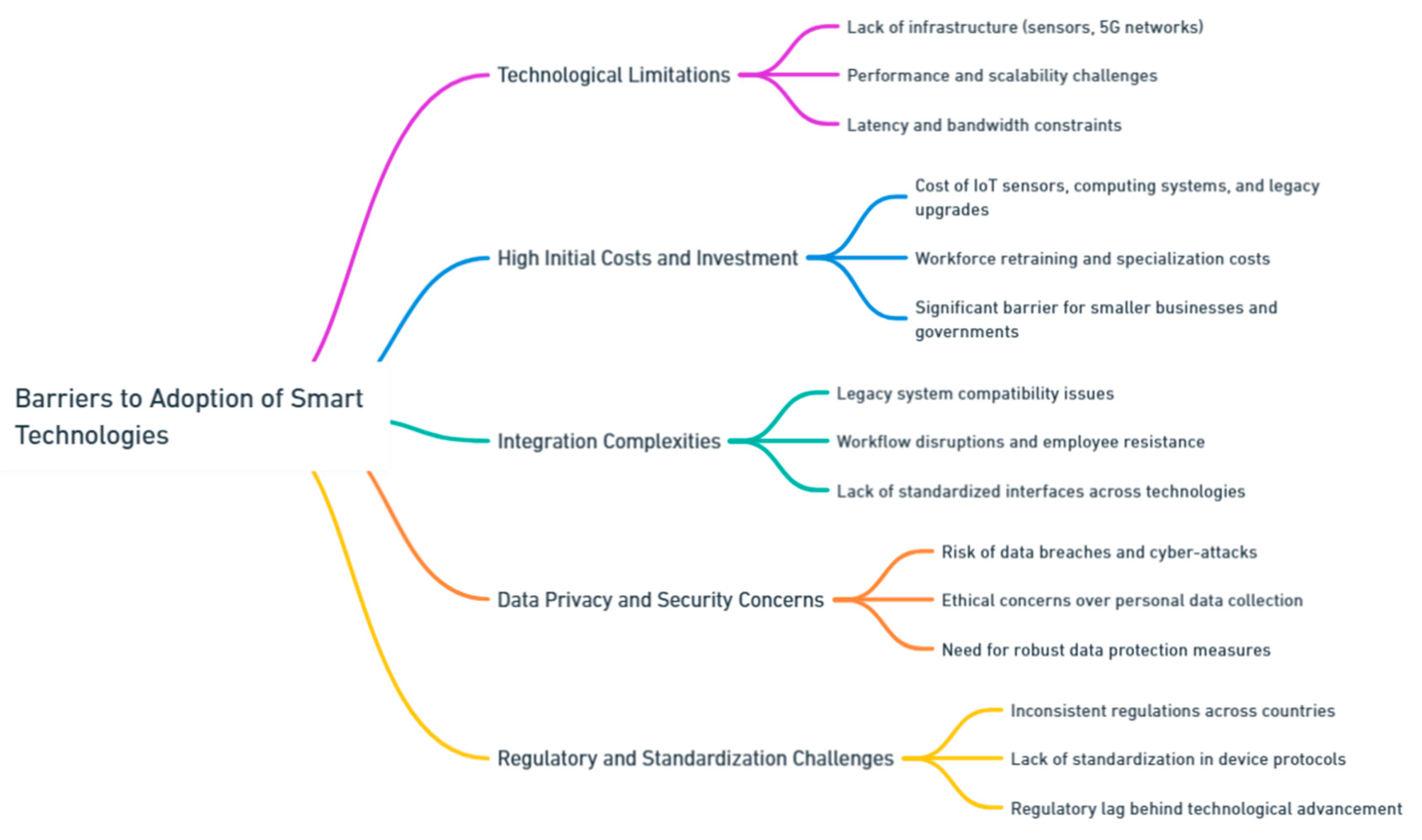
Preprints 139811 i050

6.5. The Future of Smart Technologies in Green Logistics

The Future of Smart Technologies in Green Logistics:
  • Emerging Trends: Drone Delivery and Hydrogen-Powered Trucks: Green logistics, which aims to minimize the environmental impact of the supply chain, is becoming an increasingly critical focus as companies and governments work to reduce carbon emissions and address climate change. Smart technologies are at the forefront of this shift, enabling logistics providers to improve efficiency while reducing their environmental footprint. Among the most promising emerging trends in green logistics are drone delivery and hydrogen-powered trucks. These innovations are set to transform the logistics landscape in the coming years, providing sustainable alternatives to traditional modes of transportation and distribution.
  • Drone Delivery: The Future of Last-Mile Logistics: Drone delivery is one of the most talked-about innovations in the logistics industry, particularly for last-mile delivery—the final leg of the supply chain where goods are delivered to the customer’s doorstep. This stage is often the most costly and environmentally taxing, especially in urban areas where traffic congestion and inefficient routing can lead to significant emissions. Drone technology presents an exciting opportunity to address these issues by offering an eco-friendly, fast, and efficient solution for last-mile logistics.
  • How Drone Delivery Works: Drones, also known as unmanned aerial vehicles (UAVs), are autonomous or remotely piloted aircraft capable of carrying packages from distribution centers directly to consumers. They typically rely on electric power, making them a much cleaner alternative to traditional delivery trucks, which often run on fossil fuels. Drone delivery can bypass road congestion and deliver goods quickly over short distances, significantly reducing the time and fuel consumption associated with conventional transportation methods.
  • Environmental Benefits of Drone Delivery: The use of drones in logistics has the potential to drastically reduce the carbon footprint of deliveries. Since drones are powered by electricity, they emit zero emissions during operation, assuming the electricity is sourced from renewable energy. This can be especially impactful in densely populated cities, where road traffic contributes heavily to air pollution and greenhouse gas emissions. Moreover, drones can perform multiple deliveries in a single flight, optimizing delivery routes in ways that trucks cannot. By avoiding traffic and selecting the shortest possible aerial routes, drones can lower the overall energy expenditure required for deliveries. This makes drone delivery a key innovation for sustainable urban logistics.
  • Challenges and Future Outlook: While the environmental advantages of drone delivery are clear, there are still regulatory and technical challenges to overcome before widespread adoption is possible. These include airspace regulations, safety concerns, and the need for robust infrastructure to support drone operations on a large scale. However, with major companies such as Amazon, UPS, and Google already investing heavily in drone technology, it is likely that drone delivery will become more commonplace in the near future (Das et al., 2020; Bányai, 2022; Borghetti et al., 2022).
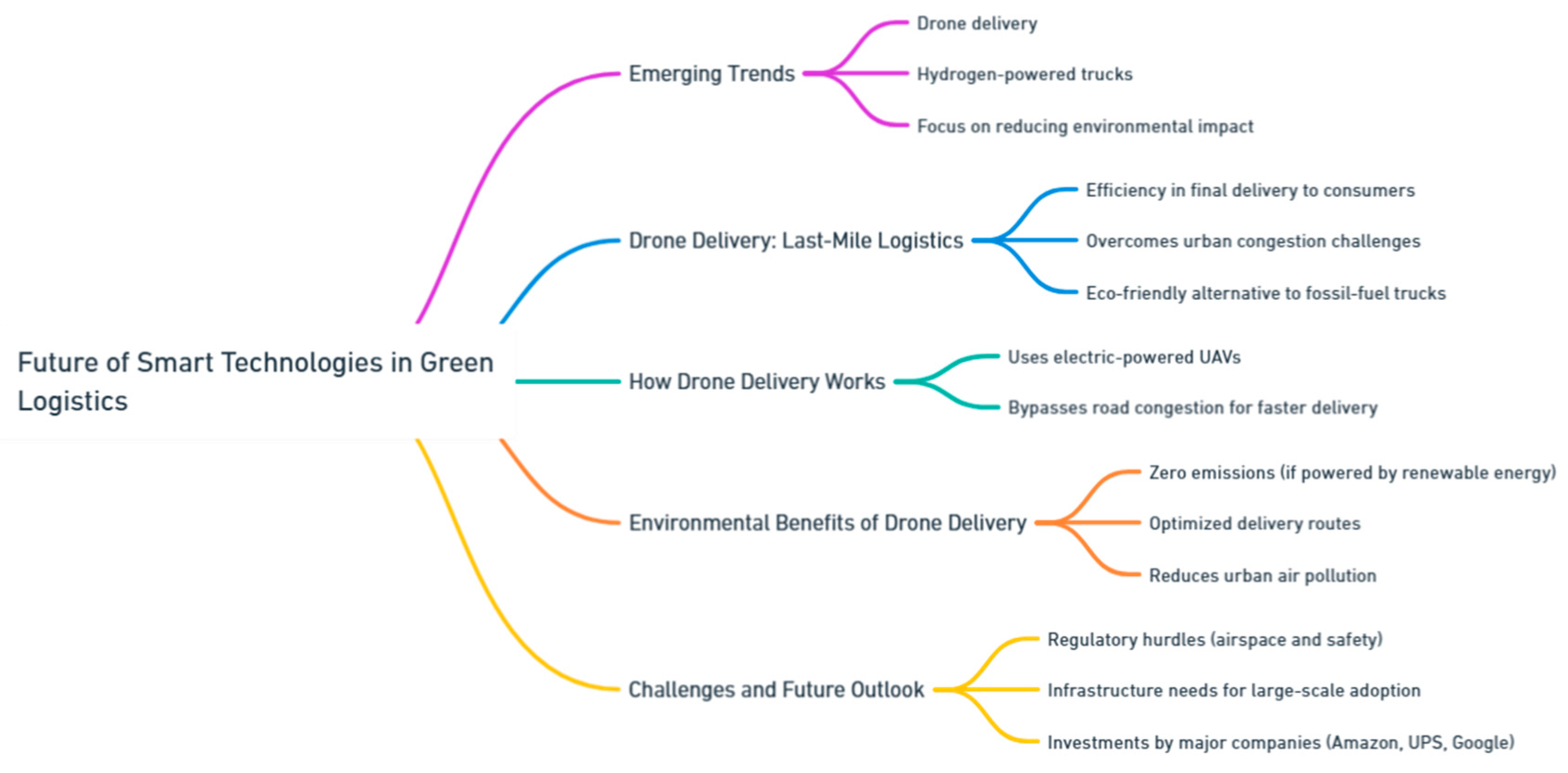
Preprints 139811 i051

6.5.1. Hydrogen-Powered Trucks: Revolutionizing Freight Transport

Another transformative trend in green logistics is the development of hydrogen-powered trucks. Long-haul freight transport is a significant source of carbon emissions, with diesel-powered trucks contributing a substantial share of global greenhouse gases. Hydrogen fuel cell technology offers a promising alternative, enabling trucks to operate with zero emissions while providing the range and power needed for long-distance transport.
  • How Hydrogen-Powered Trucks Work: Hydrogen-powered trucks use fuel cells to convert hydrogen into electricity, which powers an electric motor. The only byproduct of this process is water vapor, making hydrogen-powered vehicles a truly zero-emission alternative to diesel trucks. These vehicles offer several advantages over traditional battery-electric trucks, particularly for long-haul freight. Hydrogen fuel cells are lighter than large battery packs, allowing for a greater payload capacity. In addition, refueling hydrogen trucks takes only a few minutes, similar to refueling a diesel truck, whereas battery-electric trucks require longer charging times.
  • Environmental Benefits of Hydrogen-Powered Trucks: The primary environmental benefit of hydrogen-powered trucks is the elimination of tailpipe emissions. Unlike diesel trucks, which emit harmful pollutants such as carbon dioxide, nitrogen oxides, and particulate matter, hydrogen trucks produce no pollutants during operation. This makes them an ideal solution for reducing the carbon footprint of long-distance logistics. Moreover, hydrogen fuel can be produced using renewable energy sources, such as wind, solar, or hydroelectric power, further reducing the overall environmental impact. When green hydrogen (hydrogen produced through electrolysis using renewable energy) is used, the entire supply chain from fuel production to transportation can be virtually emission-free.
  • Challenges and Future Outlook: Despite the potential of hydrogen-powered trucks, there are still several hurdles to overcome before they can become a mainstream solution in logistics. The infrastructure for hydrogen refueling stations is still underdeveloped, particularly in rural and remote areas where long-haul trucks often operate. Additionally, the production of green hydrogen remains expensive, although costs are expected to decrease as technology advances and economies of scale are realized. However, several major truck manufacturers, such as Daimler, Volvo, and Toyota, are actively developing hydrogen-powered models, and governments are increasingly supporting the deployment of hydrogen technology through subsidies and infrastructure investments. As these developments progress, hydrogen-powered trucks could play a crucial role in decarbonizing freight transport, particularly for long-haul routes that are less suited to battery-electric trucks.
  • The Future of Green Logistics: The integration of drone delivery and hydrogen-powered trucks into the logistics industry represents a significant step toward achieving sustainable, green logistics. While both technologies face challenges, their potential to reduce carbon emissions, improve efficiency, and address the environmental impact of logistics is undeniable. As these technologies mature and infrastructure expands, they will likely play a key role in the future of logistics. In the coming years, we can expect to see more widespread adoption of these innovations as companies prioritize sustainability and governments implement stricter environmental regulations. Together with other smart technologies, such as the Internet of Things (IoT), Artificial Intelligence (AI), and Blockchain, drone delivery and hydrogen-powered trucks will help shape a greener, more efficient logistics industry (Yaïci and Longo, 2022; Wilson, 2023).
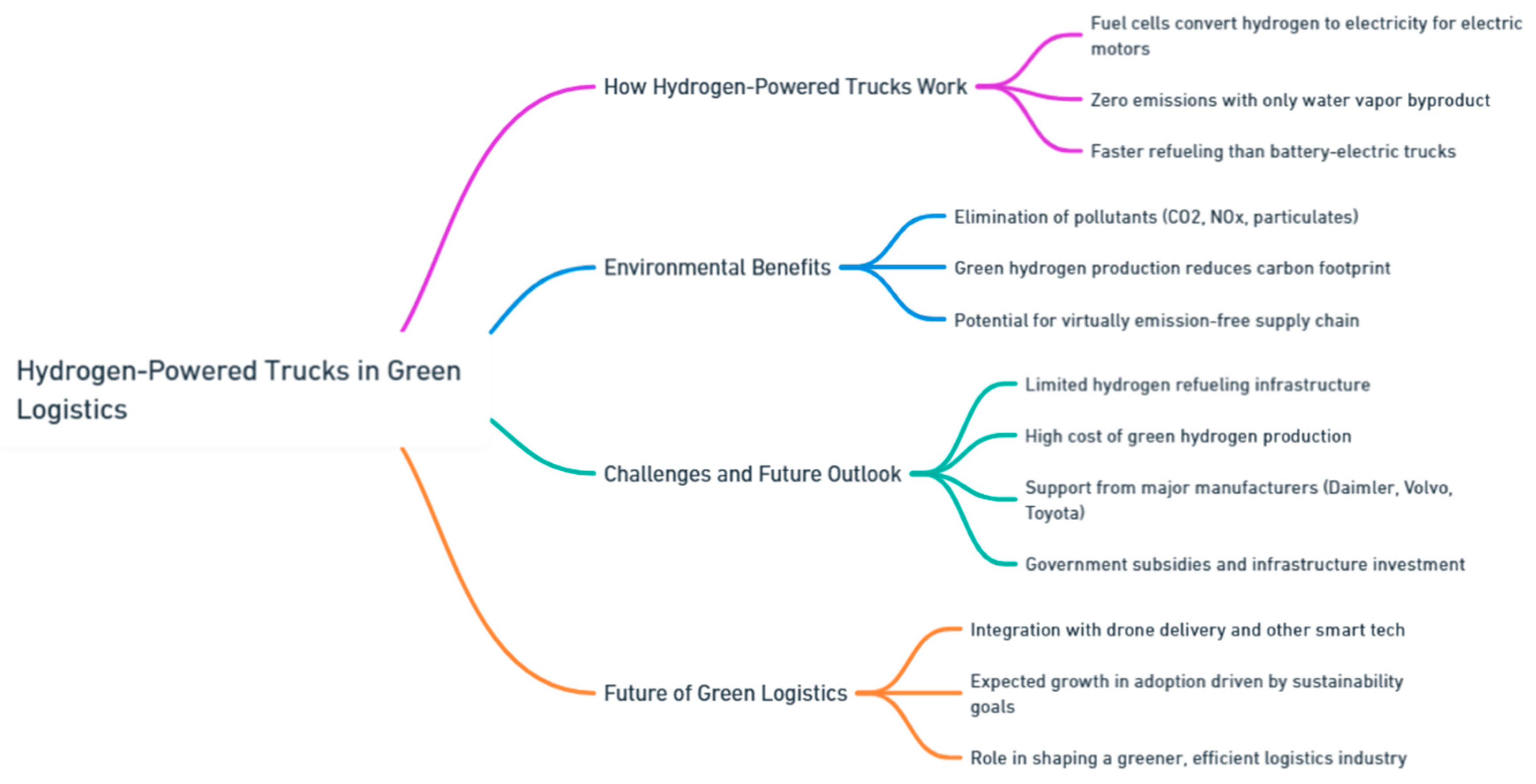
Preprints 139811 i052

6.5.2. The Future of Smart Technologies in Green Logistics

Green logistics has emerged as a critical aspect of sustainable development, aiming to minimize the environmental impact of transporting goods. As businesses and governments strive to reduce carbon emissions, smart technologies are increasingly viewed as essential in making logistics more eco-friendly. These technologies, including the Internet of Things (IoT), artificial intelligence (AI), and automation, hold the potential to transform traditional logistics practices, paving the way for more sustainable and carbon-neutral operations. With global climate goals intensifying, the long-term potential of these smart technologies in achieving carbon neutrality within the logistics sector cannot be underestimated.
  • The Role of Smart Technologies in Green Logistics: Smart technologies play a pivotal role in optimizing logistics operations. IoT, for example, enables real-time tracking of shipments, providing visibility into the supply chain and allowing for more efficient routing decisions. Through AI-powered systems, logistics companies can optimize delivery routes, reducing fuel consumption and emissions. Automation in warehouses improves energy efficiency by minimizing human error and streamlining operations, resulting in fewer resource requirements and reduced waste. One of the most significant contributions of smart technology to green logistics is its impact on fuel efficiency. Technologies like telematics can analyze driver behavior, monitor fuel consumption, and suggest optimal driving techniques to minimize energy use. Moreover, smart sensors and data analytics enable companies to predict demand more accurately, allowing them to consolidate shipments and reduce the number of trips, directly lowering greenhouse gas emissions. In addition to operational efficiencies, smart technologies increase supply chain transparency. Consumers today are more environmentally conscious and demand greater visibility into how goods are transported. By utilizing blockchain technology, for instance, companies can provide end-to-end visibility into the carbon footprint of each shipment, fostering a more sustainable supply chain and empowering customers to make informed choices.
  • Challenges and Opportunities : While the benefits of integrating smart technologies into green logistics are numerous, there are also challenges to overcome. The initial investment in these technologies can be prohibitive, particularly for smaller logistics companies. Additionally, existing infrastructure may not be conducive to adopting advanced technologies, and regulatory hurdles in different regions may slow down their implementation. However, the opportunities presented by smart technologies far outweigh these challenges. Increased fuel efficiency, lower emissions, and streamlined operations offer significant cost savings in the long term. For companies willing to invest in this transformation, the shift towards smart technologies in logistics represents a win-win scenario: reduced environmental impact alongside improved business performance. Moreover, as consumer demand for sustainable products grows, early adopters of green logistics practices can gain a competitive edge in the market.
  • Long-term Potential for Carbon Neutrality in Logistics: Carbon neutrality, the balance between emitting and offsetting carbon, is a critical target for the logistics industry. Achieving this goal will require a combination of smart technologies and green innovations. Electric vehicles (EVs), powered by renewable energy, are expected to play a significant role in reducing the carbon footprint of transportation. Many logistics companies are already transitioning to electric delivery fleets and using renewable energy sources in their warehouses. Moreover, alternative fuels such as hydrogen and biofuels present long-term solutions for decarbonizing logistics. These technologies are still in the early stages of development, but their potential to replace fossil fuels is significant. Global initiatives, such as the Paris Agreement and corporate pledges to reduce carbon emissions, are driving the adoption of green technologies in the logistics sector. Governments are also enacting policies that encourage carbon-neutral practices, such as tax incentives for companies using electric vehicles or renewable energy.
  • Future Outlook: Looking ahead, smart technologies will continue to advance, further reducing the environmental impact of logistics. AI and machine learning are expected to improve predictive analytics, enabling even greater efficiency in logistics planning and operations. The deployment of autonomous vehicles, drones, and more efficient battery technologies will likely accelerate the transition to carbon-neutral logistics. Furthermore, collaboration between governments, businesses, and technology providers will be essential in achieving large-scale carbon neutrality. Industry leaders like Amazon and DHL are already making strides towards green logistics by investing in smart technology solutions. If these trends continue, the logistics industry will likely achieve substantial emissions reductions over the next few decades.
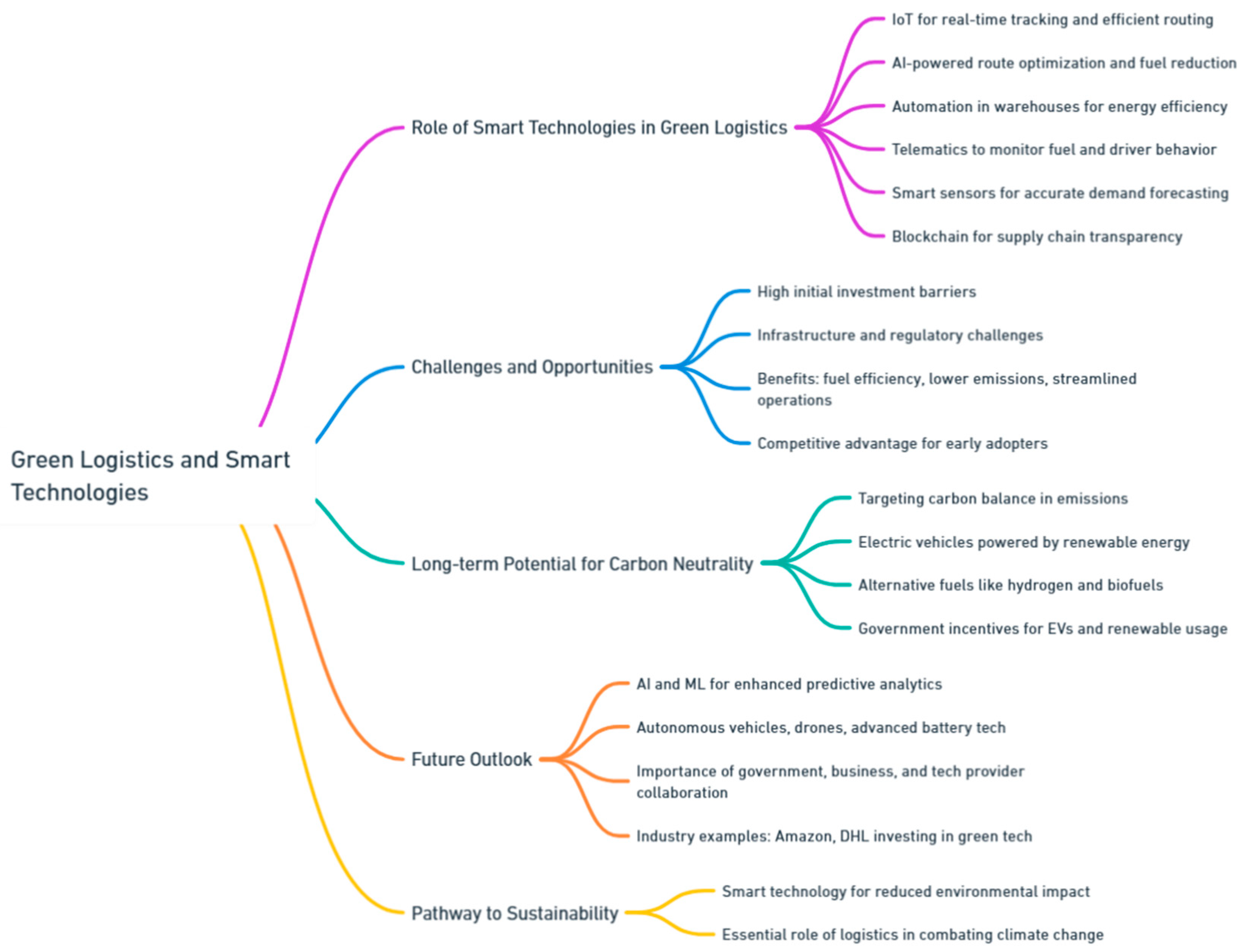
The integration of smart technologies into logistics offers a clear path toward sustainability. From improving fuel efficiency to enabling carbon-neutral transportation options, these innovations will be essential in reducing the environmental impact of the logistics industry. While challenges remain, the long-term potential of smart technologies in green logistics is vast, positioning the sector to play a pivotal role in the global effort to combat climate change (D’Amico et al., 2021; Wu et al., 2022; Nahr et al., 2021).
Preprints 139811 i053

6.5.3. Role of Governments and Policies in Facilitating Green Logistics

Green logistics refers to the strategies and processes designed to minimize the environmental impact of the logistics industry. This involves optimizing transportation, warehousing, and distribution to reduce carbon emissions, waste, and energy consumption. In recent years, smart technologies have emerged as powerful tools in achieving these goals, transforming the logistics landscape. At the same time, governments and policies play a crucial role in driving the adoption of sustainable practices by setting standards, offering incentives, and facilitating public-private partnerships. This essay will explore the future of smart technologies in green logistics and the essential role of governments in supporting this shift towards sustainability.
The Future of Smart Technologies in Green Logistics:
  • Smart Technologies Revolutionizing Green Logistics: Smart technologies are set to revolutionize green logistics by enabling more efficient and environmentally friendly operations. The Internet of Things (IoT) allows real-time tracking of goods, vehicles, and emissions, giving logistics companies the ability to monitor and reduce their carbon footprint. Sensors and connected devices provide data on fuel consumption, temperature control in warehouses, and optimal routes for transportation. Autonomous vehicles, including electric trucks and drones, are expected to play a pivotal role in the future of logistics. These vehicles not only reduce reliance on fossil fuels but also optimize delivery routes, reducing fuel consumption and emissions. Electric vehicles (EVs) are becoming increasingly common, and with advancements in battery technology, their range and efficiency are improving. Artificial Intelligence (AI) and machine learning algorithms help logistics companies optimize their operations, from route planning to warehouse management. AI-driven systems can predict traffic patterns, suggest the most fuel-efficient routes, and reduce idle times, all of which contribute to lowering emissions. Moreover, the integration of renewable energy solutions, such as hydrogen fuel cells and solar-powered vehicles, is making logistics operations cleaner and more sustainable.
  • Data-Driven Decision-Making: Data has become a key driver of sustainability in logistics. Big Data analytics allows companies to make informed decisions that minimize environmental impact. By analyzing data on vehicle performance, traffic conditions, and fuel consumption, logistics companies can optimize their fleets and reduce emissions. Predictive analytics helps anticipate demand, ensuring that vehicles are not underutilized or overworked, leading to fewer emissions and lower energy consumption. Smart warehouses, equipped with automated systems, use data to manage energy efficiently. These warehouses are designed to optimize space, reduce energy use through smart lighting, and use robotics to minimize the need for manual labor. Additionally, by leveraging data to predict peak periods, companies can adjust their energy usage accordingly, further contributing to sustainability.
  • Blockchain for Transparency and Sustainability: Blockchain technology is poised to enhance sustainability in logistics by providing transparent and tamper-proof records of supply chain activities. This technology allows stakeholders to track the origin, movement, and environmental impact of goods throughout the supply chain. By ensuring transparency, blockchain helps reduce inefficiencies and waste, ultimately minimizing the carbon footprint of logistics operations.
  • Government Regulations and Standards: Governments play a vital role in promoting green logistics through regulations and standards that incentivize sustainable practices. Policies such as carbon emission caps, fuel efficiency standards, and pollution taxes encourage logistics companies to adopt cleaner technologies and reduce their environmental impact. Governments can also provide subsidies or tax breaks for companies investing in electric vehicles, renewable energy, and green infrastructure.
  • Public-Private Partnerships (PPP): Public-private partnerships (PPP) are crucial for advancing green logistics. Governments can collaborate with the private sector to invest in research and development (R&D) of clean technologies, such as hydrogen-powered vehicles and advanced battery systems. Through these partnerships, governments can also support the construction of eco-friendly infrastructure, such as charging stations for electric vehicles or energy-efficient logistics hubs.
  • Urban Planning and Sustainable Transportation: Governments also influence green logistics through urban planning and transportation policies. By designing cities with sustainable transportation systems, such as electric public transport, dedicated bike lanes, and smart traffic management, governments can reduce congestion and emissions. In smart cities, logistics can be integrated with eco-friendly systems, ensuring that goods are transported using low-emission vehicles and minimizing the environmental impact of last-mile delivery.
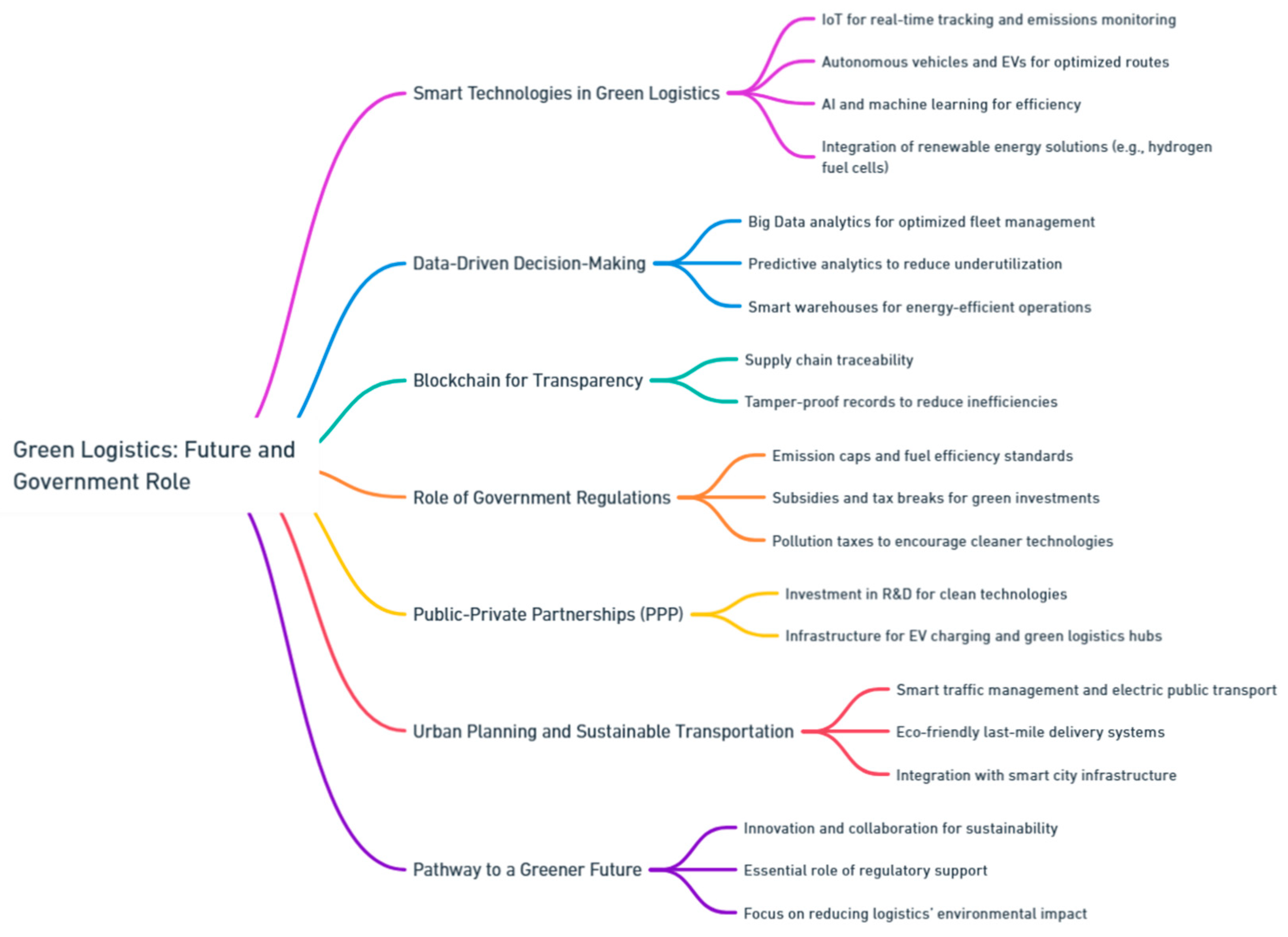
The future of green logistics is inseparable from the rise of smart technologies and the supportive role of government policies. IoT, AI, blockchain, and renewable energy solutions are transforming the logistics industry, making it more efficient and sustainable. Meanwhile, governments provide the regulatory frameworks, incentives, and infrastructure needed to accelerate the adoption of these technologies. A greener future in logistics will require continued innovation, strong public-private partnerships, and the political will to prioritize environmental sustainability (D’Amico et al., 2021; Kalkha et al., 2023; Sun, et al., 2023).
Preprints 139811 i054

6.5.4. Call for More Research and Collaboration Between Logistics Companies and Tech Developers
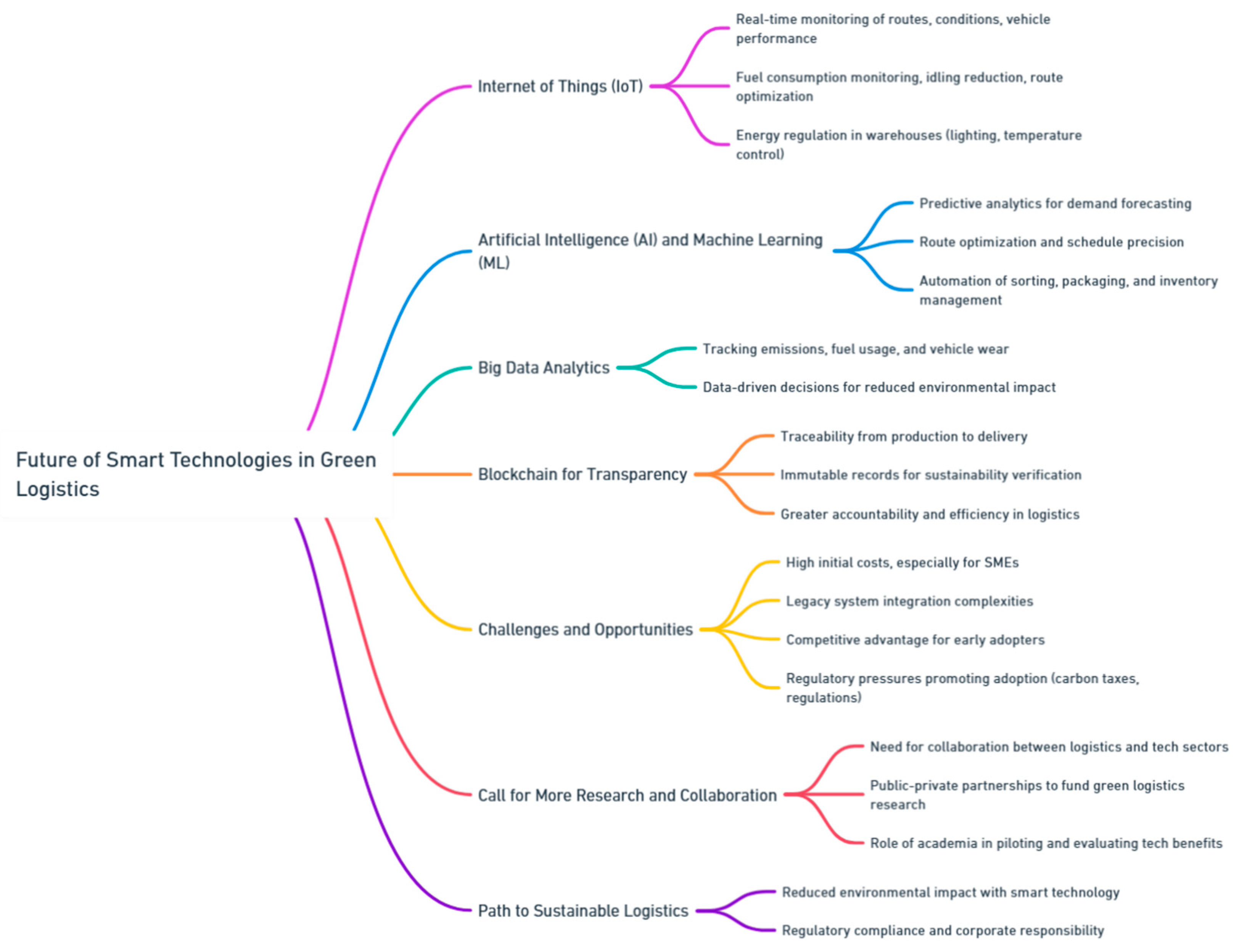
As global environmental concerns intensify, the logistics sector is under increasing pressure to reduce its carbon footprint. Green logistics, which emphasizes environmentally friendly supply chain practices, has emerged as a critical focus area. In parallel, smart technologies like artificial intelligence (AI), the Internet of Things (IoT), and big data analytics are transforming industries worldwide. The convergence of these trends presents significant opportunities to revolutionize logistics operations by making them more efficient and sustainable. This paper explores the future of smart technologies in green logistics, emphasizing their potential to optimize supply chains, reduce waste, and enhance environmental performance.
Internet of Things (IoT). IoT-enabled devices have immense potential to improve logistics efficiency and sustainability. These interconnected systems allow real-time monitoring of transportation routes, warehouse conditions, and vehicle performance. By integrating IoT with green logistics, companies can monitor fuel consumption, reduce idling times, and optimize delivery routes, thereby lowering emissions. Sensors in smart warehouses can also regulate energy usage, controlling lighting and temperature based on real-time occupancy, which minimizes unnecessary energy expenditure.
Artificial Intelligence (AI) and Machine Learning (ML). AI and ML are transforming the way logistics companies handle supply chain management. These technologies can predict demand, optimize routes, and enhance the precision of delivery schedules. AI algorithms are also able to analyze vast amounts of data to identify inefficiencies, recommend more sustainable transportation methods, and even automate tasks such as sorting and packaging. The future of AI in green logistics lies in predictive analytics, which can reduce resource wastage by anticipating market demand, minimizing overproduction, and improving inventory management.
Big Data Analytics. Big data is a powerful tool for understanding the complexities of modern supply chains. In green logistics, it plays a crucial role in identifying patterns that contribute to inefficiencies. By leveraging big data, companies can track emissions, fuel usage, and vehicle wear and tear across their entire logistics network. This information can then be used to make data-driven decisions that reduce environmental impacts, such as optimizing delivery schedules or switching to more energy-efficient vehicles.
Blockchain for Transparency and Efficiency. Blockchain technology has been increasingly recognized as a means to enhance transparency in supply chains. In the context of green logistics, blockchain can provide an immutable record of a product's journey, from production to delivery. This traceability allows logistics companies to verify that their supply chains meet sustainability standards, ensuring that products are sourced, manufactured, and delivered in the most environmentally friendly manner. By enabling greater accountability and efficiency, blockchain can help to eliminate redundancies and reduce carbon emissions throughout the logistics process.
Challenges and Opportunities. While the integration of smart technologies into green logistics holds great promise, there are several challenges that need to be addressed. The first is the cost of implementing advanced technologies. Small and medium-sized enterprises (SMEs) may struggle to afford the initial investments required for IoT devices, AI systems, and other smart technologies. Furthermore, the complexity of integrating these technologies into existing logistics frameworks can pose significant challenges, particularly for companies with legacy systems. On the other hand, the opportunities are vast. As the costs of smart technologies continue to decrease and their capabilities expand, companies that adopt these solutions early will likely gain a competitive advantage. Moreover, regulatory pressures, such as carbon taxes and stricter environmental regulations, will further incentivize the adoption of green logistics practices. The future of smart technologies in logistics is therefore not just a matter of competitive strategy, but of regulatory compliance and corporate social responsibility.
Call for More Research and Collaboration. To fully realize the potential of smart technologies in green logistics, there is a need for more research and collaboration between logistics companies and technology developers. Research should focus on refining technologies to ensure they meet the unique needs of the logistics sector, while also minimizing environmental impacts. Additionally, collaboration between tech developers and logistics firms will be crucial for creating tailored solutions that integrate seamlessly into existing systems. Government and industry bodies can play a significant role in fostering this collaboration. Initiatives such as public-private partnerships (PPPs) could help fund research and development projects aimed at advancing green logistics technologies. Similarly, academic institutions and logistics companies should work together to pilot new technologies and gather data on their environmental and operational benefits.
Smart technologies hold the key to the future of green logistics. By leveraging innovations such as IoT, AI, big data, and blockchain, logistics companies can drastically reduce their environmental impact while enhancing efficiency. However, to fully unlock these benefits, more research and collaboration are needed between logistics firms and tech developers. Together, these efforts can lead to a more sustainable and efficient global logistics network, one that benefits both businesses and the environment (Dutta et al., 2023; Zhang, 2022; Wu et al., 2022).
Preprints 139811 i055

6.5.5. Reducing Carbon Footprint Through Smart Technologies
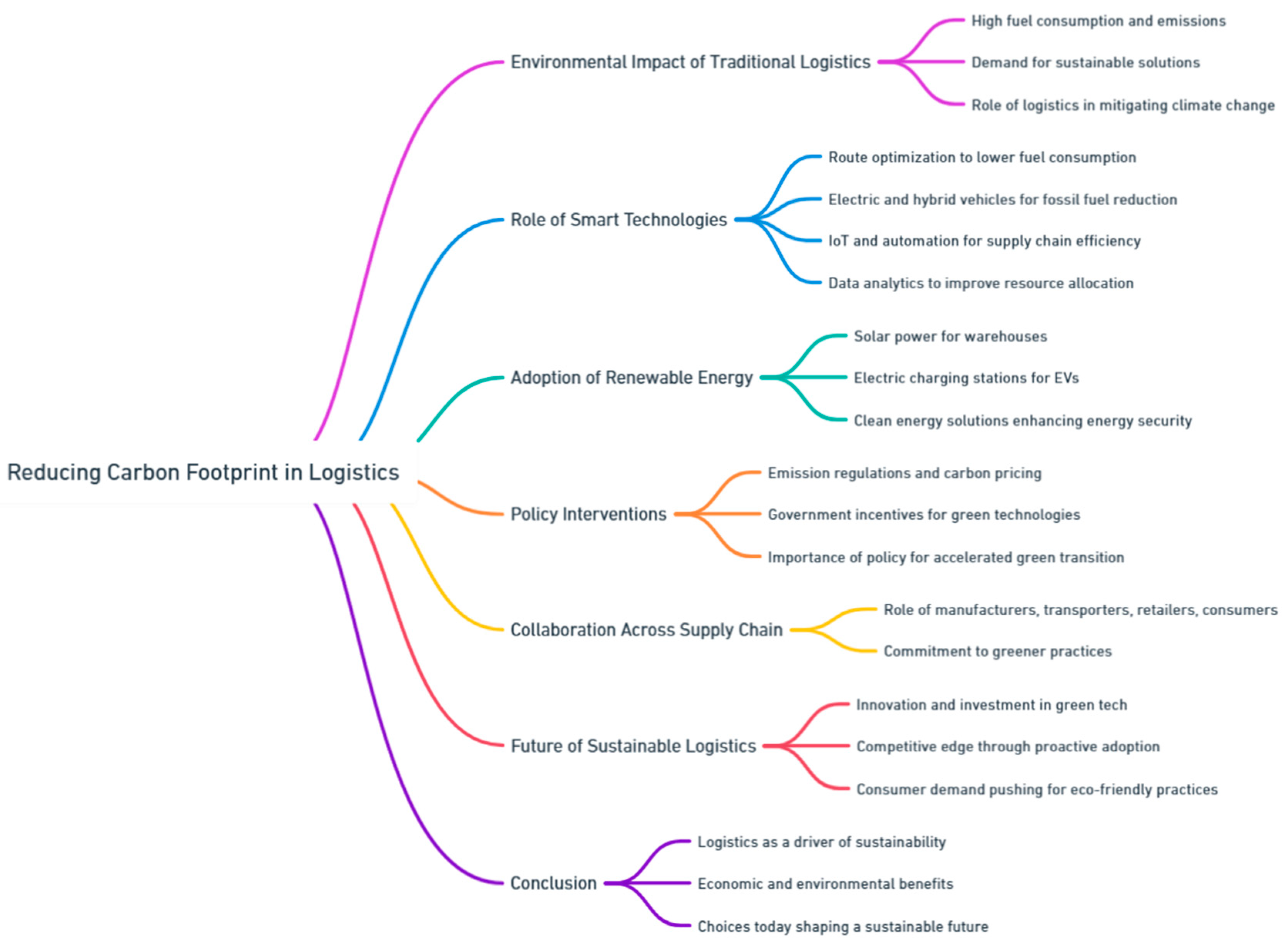
The reduction of carbon footprint in logistics is both a challenge and an opportunity for businesses and societies worldwide. This paper has explored various aspects of this critical issue, highlighting the importance of addressing environmental concerns within the logistics industry. The key points discussed include the significant environmental impact of traditional logistics practices, the role of fuel consumption in greenhouse gas emissions, and the rising demand for more sustainable solutions. As companies and governments increasingly prioritize sustainability, logistics plays a pivotal role in mitigating climate change. One of the central themes has been the crucial role of smart technologies in driving down carbon emissions. Technologies such as route optimization, electric vehicles, automation, Internet of Things (IoT), and advanced data analytics all provide powerful tools to make logistics more efficient while simultaneously reducing environmental impact. Route optimization, for instance, reduces fuel consumption by planning the most efficient routes, thereby lowering carbon emissions. Electric and hybrid vehicles help transition away from fossil fuels, while IoT and automation improve supply chain visibility and efficiency, ensuring fewer unnecessary trips and better resource allocation. These technologies not only decrease emissions but also lead to cost savings for businesses, illustrating how sustainability and profitability can align. Furthermore, the adoption of renewable energy sources within the logistics infrastructure—such as solar power for warehouses and electric charging stations—marks a crucial step toward carbon neutrality. The use of clean energy in warehouses, distribution centers, and transportation systems not only lowers carbon emissions but also enhances energy security. Renewable energy solutions create a more resilient and sustainable logistics network, which can adapt to the growing pressures of climate change while maintaining operational efficiency. However, while technology plays a critical role in reducing the carbon footprint, it is essential to recognize that achieving sustainable logistics requires a holistic approach. Policy interventions, such as stricter emission regulations, carbon pricing, and government incentives for green technologies, are necessary to accelerate the transition toward greener logistics. Additionally, collaboration between stakeholders across the supply chain—manufacturers, transporters, retailers, and consumers—is vital for the success of sustainability initiatives. Each player must be committed to lowering emissions, adopting greener technologies, and encouraging environmentally conscious practices. Looking ahead, the future of sustainable logistics hinges on continued innovation and investment in smart technologies. As the logistics industry evolves, it is clear that businesses that proactively adopt green solutions will gain a competitive edge, as customers, investors, and regulators increasingly prioritize sustainability. Companies that integrate sustainable practices into their core operations not only contribute to environmental protection but also future-proof their business against potential regulatory and market changes. Furthermore, the evolving consumer demand for environmentally friendly products and services will continue to push the logistics sector toward sustainability. As consumers become more aware of the carbon footprint associated with the goods they purchase, companies will be under greater pressure to ensure that their logistics operations align with these expectations. This shift in consumer behavior will likely spur more widespread adoption of green logistics technologies and practices. In closing, the reduction of carbon footprint in logistics is not merely an environmental responsibility but also an economic opportunity. The logistics sector is poised to become a driving force for global sustainability through the integration of smart technologies and renewable energy sources. By embracing innovation and collaboration, the industry can meet the growing demand for sustainable solutions while ensuring long-term operational efficiency and resilience. The future of logistics will be shaped by the choices made today, and those who invest in sustainability will lead the way toward a cleaner, greener, and more efficient global supply chain (Zhang et al., 2022; D’Amico et al., 2021; Pan et al., 2020).
Preprints 139811 i056

7. Energy Efficiency and Waste Management in Logistics

7.1. Brief Overview of the Importance of Energy Efficiency and Waste Management in Logistics
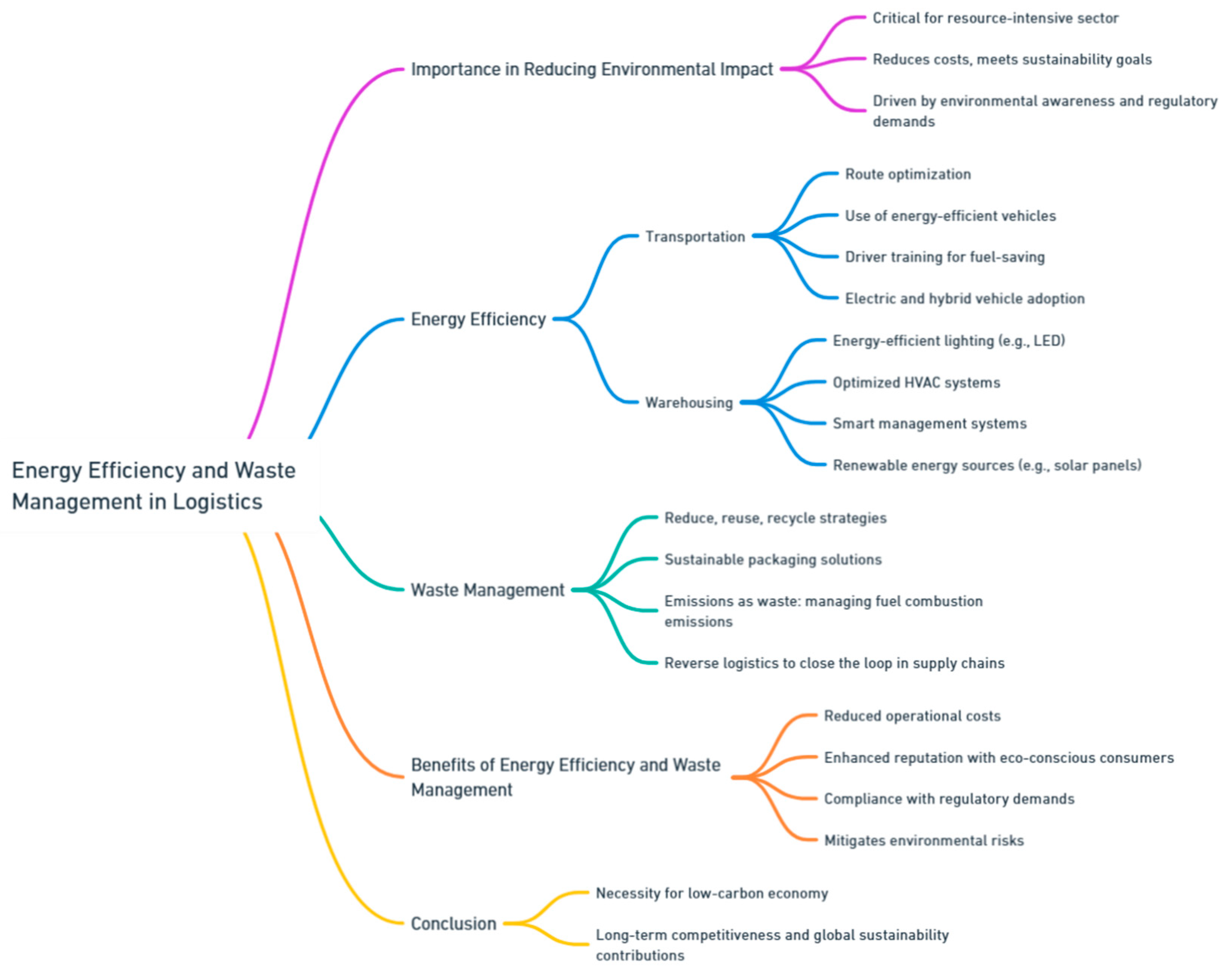
Energy efficiency and waste management are increasingly important in the logistics industry, playing a critical role in reducing environmental impacts and improving operational efficiency. As logistics is a resource-intensive sector, optimizing energy use and minimizing waste not only reduce costs but also help companies meet sustainability goals and regulatory requirements. The drive for more sustainable logistics operations is being fueled by growing environmental awareness, consumer demand for eco-friendly products, and stricter government policies aimed at curbing greenhouse gas emissions and resource waste. Understanding the significance of energy efficiency and waste management is crucial for businesses aiming to enhance both their environmental and economic performance. Energy efficiency in logistics refers to the optimization of fuel and energy consumption across the supply chain. This includes transportation, warehousing, and distribution processes. One of the most significant contributors to carbon emissions in logistics is transportation, where fuel consumption has a direct impact on both operational costs and environmental degradation. Improving energy efficiency in transport can be achieved through several strategies, such as route optimization, the use of energy-efficient vehicles, and driver training programs focused on fuel-saving techniques. Electric and hybrid vehicles, as well as alternative fuels like biofuels, are becoming increasingly common as companies seek to reduce their carbon footprint and dependence on fossil fuels. In warehousing and distribution, energy efficiency is also paramount. Warehouses are large facilities that consume significant amounts of electricity, especially for lighting, heating, cooling, and powering equipment. Implementing energy-efficient lighting systems, such as LED technology, and optimizing heating, ventilation, and air conditioning (HVAC) systems can greatly reduce energy consumption. Moreover, automation and smart warehouse management systems help ensure that energy is used only when necessary, further enhancing overall efficiency. The integration of renewable energy sources, such as solar panels on warehouse roofs, is also becoming a popular strategy for reducing dependency on non-renewable energy sources and lowering overall energy costs. Waste management, on the other hand, focuses on reducing, reusing, and recycling materials throughout the logistics process. The logistics industry generates significant amounts of waste, particularly in the form of packaging materials, fuel emissions, and unused resources. Efficient waste management practices not only help in minimizing environmental damage but also reduce costs associated with waste disposal and resource procurement. For instance, companies are increasingly adopting sustainable packaging solutions, such as biodegradable or recyclable materials, to reduce the environmental impact of their operations. In addition to material waste, emissions are a form of waste that needs to be managed within logistics operations. Fuel combustion in transportation results in the emission of carbon dioxide (CO2) and other pollutants, contributing to climate change. Companies can reduce these emissions by improving vehicle fuel efficiency, transitioning to cleaner fuels, and reducing empty miles—where trucks travel without cargo. Moreover, waste management strategies such as reverse logistics—where products and materials are returned and reused—can help businesses close the loop in their supply chains, minimizing waste and promoting resource efficiency. Ultimately, energy efficiency and waste management in logistics are essential for achieving a sustainable supply chain. These practices not only reduce operational costs by conserving energy and minimizing waste disposal fees but also enhance a company's reputation among increasingly environmentally conscious consumers and stakeholders. As global supply chains expand and environmental concerns grow, companies that prioritize energy efficiency and waste management will be better positioned to meet regulatory demands, mitigate environmental risks, and achieve long-term sustainability. In conclusion, the logistics sector must continue to adopt and refine energy-efficient practices and effective waste management strategies. As the world moves toward a low-carbon economy, logistics companies that invest in these areas will not only improve their competitiveness but also contribute to global efforts to combat climate change and preserve natural resources (Rehman Khan et al., 2022; Wang and Tian, 2023; Scrioșteanu and Criveanu, 2023).
Preprints 139811 i057

7.2. Role of Logistics in Environmental Sustainability
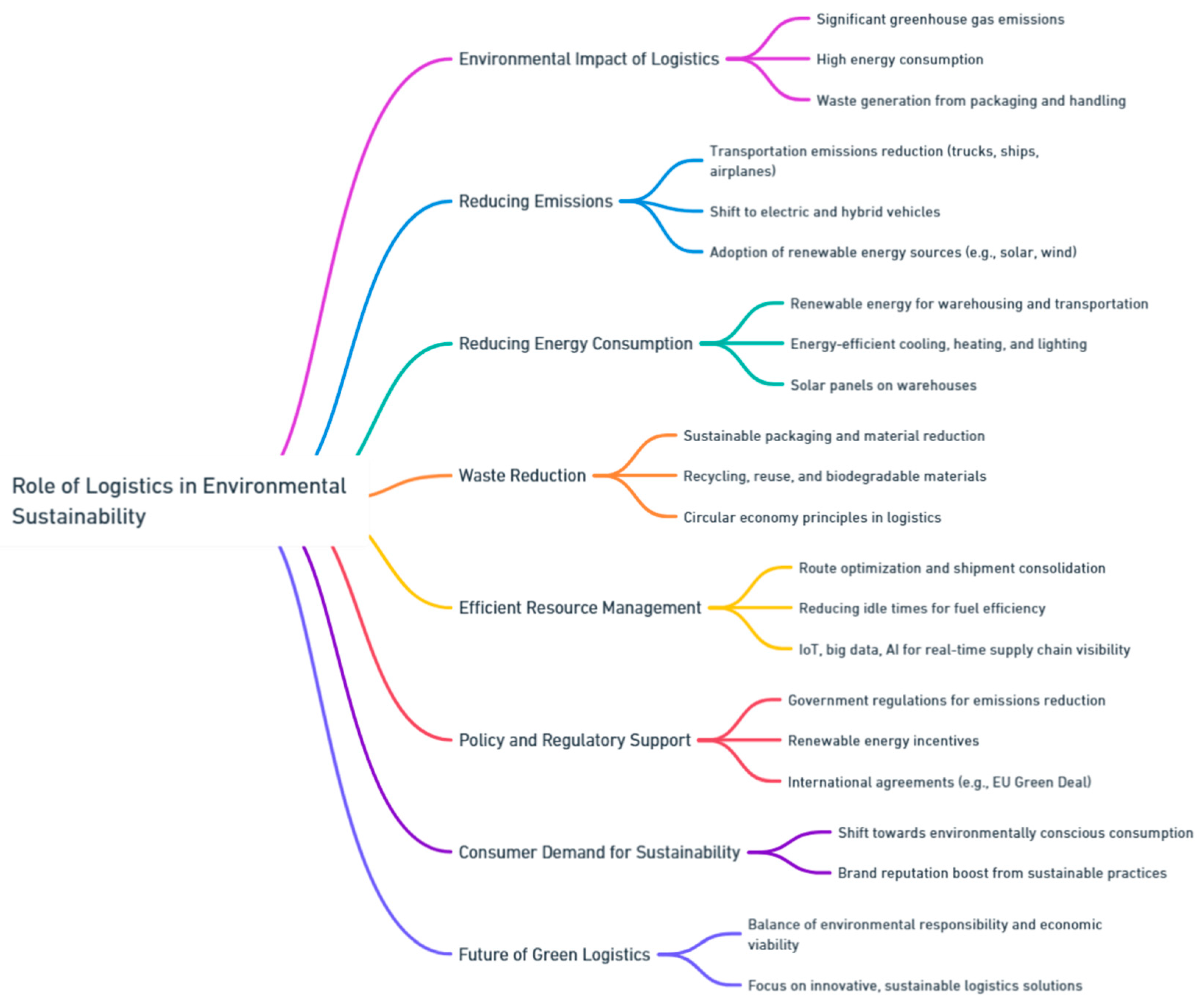
The role of logistics in environmental sustainability has become a critical area of focus as industries and governments worldwide strive to reduce their ecological footprint. Logistics, the management of the flow of goods from the point of origin to the point of consumption, plays a pivotal role in the global economy. However, its impact on the environment is significant, primarily through greenhouse gas emissions, energy consumption, and waste generation. As environmental sustainability becomes a top priority for businesses and society, the logistics sector must adopt greener practices to mitigate its environmental impact. One of the main contributions of logistics to environmental degradation is the emission of carbon dioxide and other greenhouse gases. Transportation, which is a major component of logistics, accounts for a significant share of global emissions. Heavy reliance on fossil fuels for trucks, ships, airplanes, and trains results in high levels of carbon emissions. These emissions contribute to climate change, air pollution, and health problems in urban areas. Therefore, reducing carbon emissions from transportation is a critical step toward achieving environmental sustainability in logistics. Another environmental challenge in logistics is energy consumption. The logistics sector is energy-intensive, with transportation and warehousing accounting for significant portions of global energy use. This high energy demand, often met by non-renewable sources, exacerbates environmental concerns. However, adopting renewable energy sources and energy-efficient technologies in logistics operations can help reduce the sector’s energy consumption and dependence on fossil fuels. For instance, solar panels on warehouses, the use of electric or hybrid vehicles, and energy-efficient cooling and heating systems can significantly reduce the carbon footprint of logistics operations. Sustainability in logistics also involves reducing waste generation. The packaging and handling of goods contribute to significant waste, much of which ends up in landfills or the ocean. Implementing more sustainable packaging solutions, reducing material usage, and promoting recycling and reuse within the supply chain can help minimize waste and its harmful environmental impact. Companies are increasingly turning to biodegradable packaging materials, reducing single-use plastics, and adopting circular economy principles to minimize waste in logistics processes. Furthermore, logistics plays a vital role in promoting environmental sustainability through the efficient use of resources. Smart logistics strategies, such as optimizing transportation routes, consolidating shipments, and reducing idle times, can greatly improve fuel efficiency and lower emissions. By leveraging digital technologies like the Internet of Things (IoT), big data analytics, and artificial intelligence (AI), companies can gain real-time visibility into their supply chains, allowing for more efficient resource management. This not only reduces operational costs but also minimizes environmental impacts by ensuring that logistics processes are as streamlined and efficient as possible. The shift towards greener logistics practices is further supported by policy and regulatory frameworks. Governments and international bodies are increasingly introducing regulations to curb emissions, encourage the use of renewable energy, and promote sustainable practices within the logistics industry. For example, the European Union’s Green Deal and similar initiatives worldwide set ambitious targets for reducing emissions from transportation and encourage businesses to adopt more sustainable logistics solutions. These policies provide a roadmap for companies to follow in their efforts to reduce their environmental footprint while staying competitive in a changing regulatory landscape. The future of logistics is intertwined with the broader push for sustainability. As consumers become more environmentally conscious, they expect businesses to demonstrate a commitment to sustainability, including in their logistics operations. Companies that integrate sustainable practices into their logistics processes not only reduce their environmental impact but also enhance their brand reputation and appeal to eco-conscious consumers. In conclusion, logistics has a significant role to play in environmental sustainability. By adopting energy-efficient technologies, reducing waste, optimizing transportation, and embracing renewable energy sources, the logistics sector can reduce its environmental footprint. As both regulatory pressure and consumer demand for sustainable practices grow, the future of logistics will increasingly revolve around green, innovative solutions that balance environmental responsibility with economic viability (Harsono, 2023;Wang and Tian, 2023; Khan et al., 2019).
Preprints 139811 i058

7.3. Definition and Importance of Energy Efficiency in Logistics
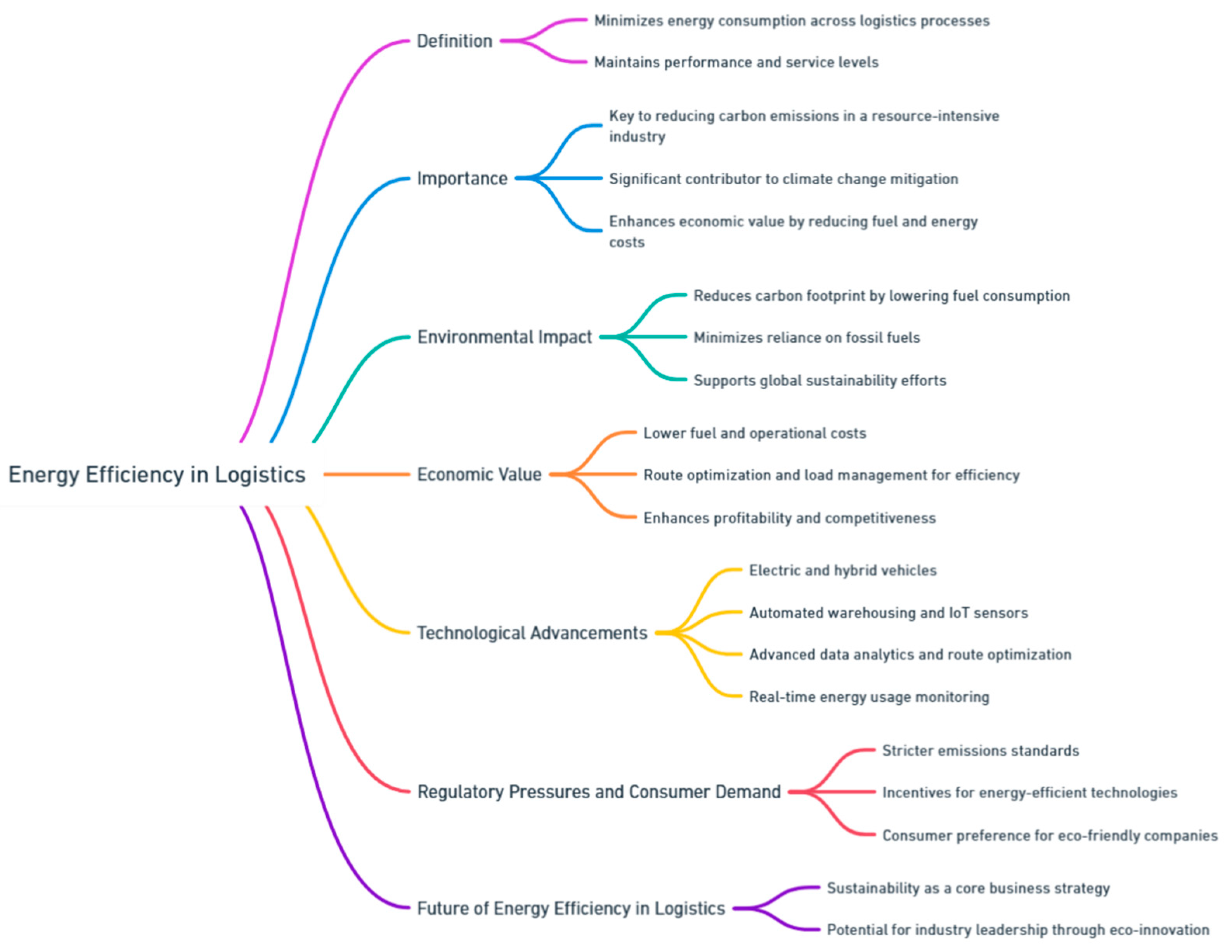
Energy efficiency in logistics refers to the ability of logistics systems, processes, and infrastructure to minimize energy consumption while maintaining optimal performance and service levels. In the context of the logistics industry, energy efficiency involves the reduction of energy inputs—such as fuel for transportation, electricity for warehouses, and energy used in production and packaging processes—without compromising the speed, reliability, or quality of deliveries and services. It encompasses a range of practices, technologies, and strategies aimed at optimizing the use of energy resources throughout the supply chain, from the movement of goods to their storage and distribution. The importance of energy efficiency in logistics cannot be overstated. As logistics is a key driver of global trade and economic growth, it is also one of the most significant contributors to energy consumption and, consequently, to carbon emissions. In an era where climate change is a pressing global concern, reducing the environmental impact of logistics operations has become essential. Energy efficiency offers a way for companies to reduce their overall carbon footprint by lowering fuel consumption and minimizing energy waste. This is critical, as the logistics sector, particularly transportation, is heavily reliant on fossil fuels, which are major sources of greenhouse gas emissions. By improving energy efficiency, logistics companies can play a crucial role in addressing environmental challenges, contributing to broader sustainability goals, and aligning with global efforts to combat climate change. Energy efficiency also holds substantial economic value. Fuel and energy costs are some of the largest operational expenses in logistics, particularly in the transportation sector. As fuel prices fluctuate and energy resources become scarcer, improving energy efficiency can significantly reduce these costs. Efficient logistics operations, such as through route optimization, better vehicle load management, and the use of energy-efficient equipment, can help companies save money while maintaining high levels of productivity. In this sense, energy efficiency is not just an environmental imperative but also a practical business strategy that enhances profitability and competitiveness. Companies that prioritize energy efficiency are often better positioned to withstand energy price volatility and remain competitive in the market. Technological advancements have been key to enhancing energy efficiency in logistics. Innovations such as electric and hybrid vehicles, automated warehousing systems, advanced data analytics, and Internet of Things (IoT) technology allow for more precise and efficient use of energy throughout the supply chain. For example, route optimization software enables logistics providers to calculate the most efficient paths for delivery trucks, reducing fuel consumption by minimizing unnecessary travel. Similarly, IoT sensors in warehouses can monitor energy usage in real time, allowing for adjustments to lighting, heating, and cooling systems to conserve energy when full capacity is not needed. Electric vehicles, powered by renewable energy, represent another leap toward reducing dependence on fossil fuels and achieving greater energy efficiency in logistics operations. Moreover, energy efficiency is becoming increasingly important as regulatory pressures and consumer demand for environmentally friendly practices grow. Governments around the world are implementing stricter emissions standards and incentivizing companies to adopt energy-efficient technologies. Consumers, too, are becoming more environmentally conscious and are increasingly choosing to do business with companies that demonstrate a commitment to sustainability. As a result, energy efficiency in logistics is not just about cost savings and environmental responsibility; it is also a key differentiator that can enhance a company's reputation and market share. In conclusion, energy efficiency in logistics is a crucial aspect of creating a more sustainable and cost-effective supply chain. By minimizing energy consumption, logistics companies can reduce their environmental impact, lower operational costs, and improve overall business performance. As technological innovation continues to evolve and global awareness of environmental issues intensifies, energy efficiency will remain a core focus for the logistics industry. Those who invest in energy-efficient technologies and strategies will be well-positioned to lead the industry into a more sustainable and efficient future (Mangina et al., 2020; Yang and Wei, 2023; Wang and Tian, 2023).
Preprints 139811 i059

7.4. Strategies to Improve Energy Efficiency in Logistics

Energy efficiency is crucial for modern logistics, not only because of its economic benefits but also due to its environmental impact. By focusing on reducing energy consumption, logistics operations can lower costs, improve sustainability, and reduce greenhouse gas emissions, contributing to the global fight against climate change. This discussion will explore key strategies to improve energy efficiency, including optimizing transportation modes, implementing fuel-efficient technologies, smart routing and network planning, and green warehousing. Each of these strategies plays a vital role in creating a more sustainable and energy-efficient logistics network.
A. Optimizing Transportation Modes. One of the most significant opportunities for improving energy efficiency in logistics lies in optimizing transportation modes. Transportation is the largest contributor to energy consumption in logistics, and careful selection and optimization of transport methods can have a major impact on overall energy efficiency.
  • Multimodal Transportation: This strategy involves using different transportation modes, such as combining rail, road, and sea transport to optimize routes and minimize energy consumption. Rail and sea freight are generally more energy-efficient than road transport for long distances because they can move larger quantities of goods at lower energy costs per unit. By leveraging multimodal transportation, companies can significantly reduce their carbon footprint and fuel consumption.
  • Shifting from Air to Sea Freight: Air transport is one of the most energy-intensive modes of freight, with higher emissions per ton-kilometer than other methods. Whenever possible, shifting goods from air transport to sea freight, which is considerably more energy-efficient, can dramatically reduce energy usage. Although sea freight takes longer, businesses can balance time constraints and energy efficiency by planning ahead and using faster modes only when necessary.
  • Consolidation of Shipments: Another optimization strategy involves consolidating shipments. Rather than shipping small batches frequently, consolidating goods into larger loads can reduce the number of trips and lower fuel consumption. Efficient use of vehicle capacity is a key way to maximize energy efficiency in transportation.
  • Use of Alternative Transportation Fuels: Optimizing transportation modes also includes transitioning to cleaner fuels such as natural gas, hydrogen, or biofuels, which can offer lower emissions and energy consumption compared to traditional diesel. Electric vehicles (EVs), which have become more prevalent in recent years, are also promising options for improving energy efficiency, especially for short-haul deliveries.
B. Implementing Fuel-Efficient Technologies. In addition to optimizing transport modes, investing in fuel-efficient technologies is another powerful strategy for improving energy efficiency in logistics.
  • Fuel-Efficient Engines: Modern engines equipped with advanced fuel-efficient technologies can significantly reduce energy consumption. For instance, hybrid engines combine traditional combustion with electric power, reducing fuel consumption during low-speed driving. Diesel engines with high-efficiency turbochargers and advanced fuel injection systems can also improve fuel efficiency for long-haul trucks.
  • Aerodynamic Enhancements: Reducing drag on vehicles can lead to substantial fuel savings, especially for trucks. Modifications such as aerodynamic side skirts, low-resistance tires, and optimized trailer designs can minimize air resistance, thereby improving fuel efficiency. Studies have shown that these improvements can lead to fuel savings of up to 10% on long-distance trips.
  • Lightweight Materials: Reducing the weight of transport vehicles through the use of lightweight materials like aluminum or carbon fiber can also help reduce fuel consumption. Lighter vehicles require less energy to move, improving overall energy efficiency. This approach is particularly effective for both trucks and airplanes.
  • Telematics Systems: Telematics is a technology that allows for real-time monitoring of vehicles' performance and driving behavior. By tracking metrics such as fuel consumption, idle time, and speed, companies can identify inefficiencies and areas where drivers can adopt more fuel-efficient practices, such as smoother acceleration and braking. These systems can provide insights that lead to better energy management and reduce overall fuel consumption.
C. Smart Routing and Network Planning. Smart routing and network planning are crucial strategies for improving energy efficiency in logistics. These approaches ensure that transport routes are optimized and that logistics networks operate at maximum efficiency.
  • Route Optimization Software: Route optimization tools use algorithms to calculate the most energy-efficient routes, taking into account factors like traffic, road conditions, delivery schedules, and fuel consumption. By selecting the optimal route, companies can minimize unnecessary mileage, reduce fuel consumption, and lower emissions. These tools can be particularly effective when integrated with real-time data from GPS systems and traffic reports.
  • Dynamic Routing: In addition to static route planning, dynamic routing allows logistics operations to adjust in real-time based on changing conditions, such as traffic jams, weather, or last-minute customer requests. This adaptability ensures that vehicles always follow the most efficient route, saving both time and energy.
  • Load Optimization: Efficiently filling vehicles is key to reducing energy consumption. By using load optimization techniques, companies can ensure that vehicles are fully utilized before dispatch. Combining multiple deliveries into one route and using fewer, fully-loaded trucks can reduce the total number of trips and fuel usage. Software solutions that manage and optimize vehicle load capacities can significantly enhance overall energy efficiency.
  • Strategic Network Planning: Another critical component of smart routing is designing logistics networks that are energy-efficient from the ground up. By positioning warehouses, distribution centers, and fulfillment hubs closer to major customer bases or supply lines, companies can minimize the distance between goods and consumers. Reducing the length of transport routes is a straightforward way to cut fuel consumption and enhance energy efficiency.
D. Green Warehousing. Green warehousing is an essential strategy for improving energy efficiency in the logistics sector. Warehousing operations, including storage, handling, and distribution, require substantial energy. Implementing sustainable practices and technologies in these facilities can make a significant difference in overall energy consumption.
  • Energy-Efficient Building Design: Green warehouses are often designed with energy-efficient features such as enhanced insulation, natural lighting, and energy-efficient heating, ventilation, and air conditioning (HVAC) systems. Improved insulation helps regulate indoor temperatures, reducing the need for heating and cooling. Skylights and large windows reduce reliance on artificial lighting, cutting energy consumption.
  • Renewable Energy Sources: Many green warehouses incorporate renewable energy sources such as solar or wind power to reduce dependence on fossil fuels. Solar panels can be installed on rooftops, generating clean energy that can power warehouse operations. Warehouses that integrate renewable energy can significantly reduce their carbon footprint while lowering energy costs in the long term.
  • Automation and Energy Management Systems: Implementing automation technologies in warehouses, such as robotic picking systems, automated conveyors, and smart energy management systems, can drastically improve energy efficiency. Automation allows for more precise and energy-efficient use of equipment, reducing wastage. Smart energy management systems can also optimize energy consumption by controlling lighting, heating, and cooling systems based on occupancy and operational needs.
  • Sustainable Materials and Waste Reduction: Green warehousing also involves using sustainable materials in construction and operation, such as recycled or low-impact building materials. Additionally, implementing waste reduction and recycling programs within warehouses can further contribute to energy efficiency. By reducing waste and recycling materials, warehouses can minimize the energy required for waste disposal and production of new materials.
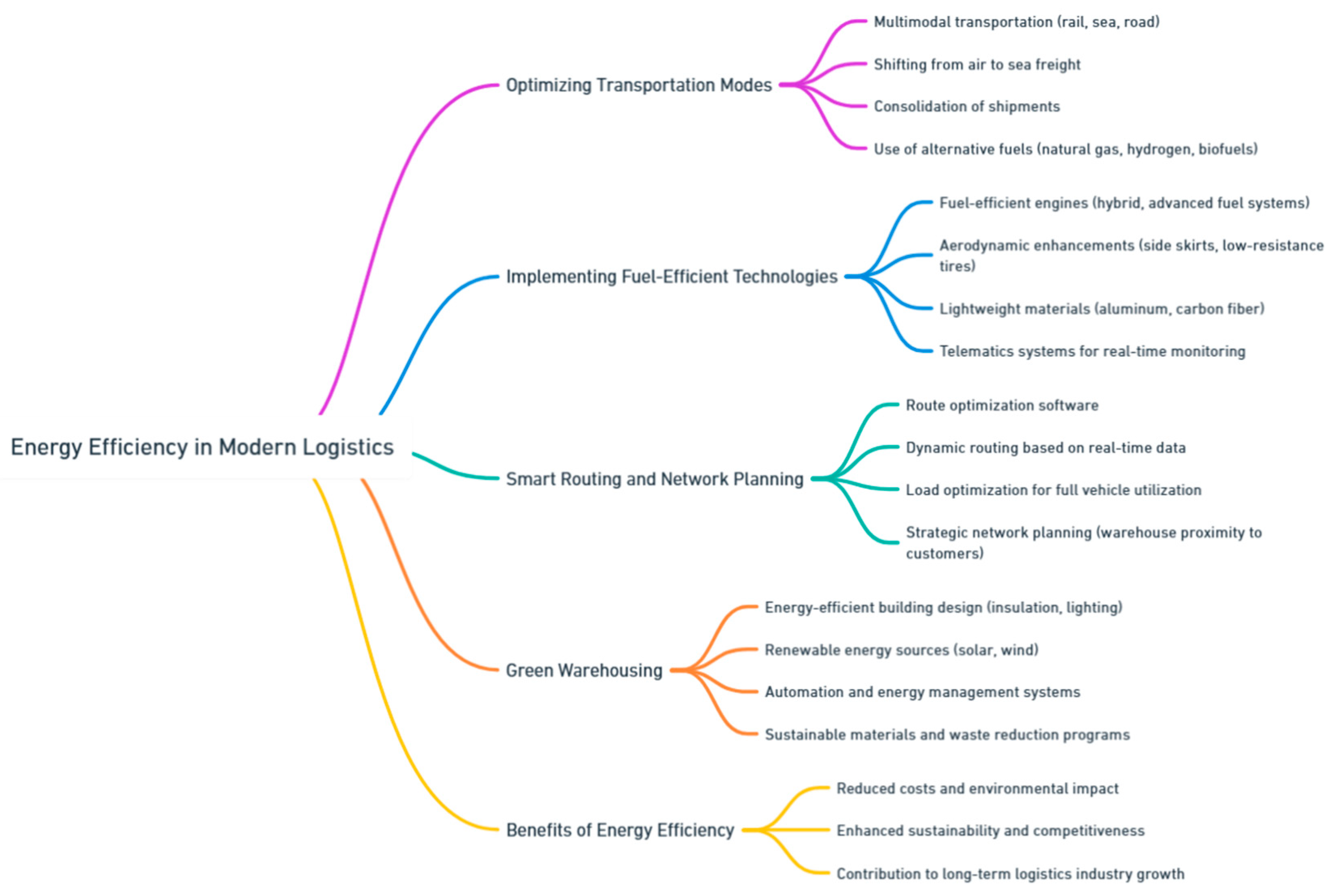
Improving energy efficiency in logistics is a multifaceted challenge that requires a combination of strategies targeting transportation, technology, routing, and warehousing. By optimizing transportation modes, companies can reduce fuel consumption and emissions. Implementing fuel-efficient technologies and leveraging smart routing systems further enhances efficiency by minimizing unnecessary energy use. Green warehousing practices, such as using renewable energy and automation, help create more sustainable logistics operations. Together, these strategies contribute to a logistics network that is not only more energy-efficient but also more cost-effective and environmentally friendly. As the logistics industry continues to grow, adopting these strategies will be essential to achieving long-term sustainability (Furneaux, 2021; Perotti and Colicchia, 2023; Peng et al., 2023).
Preprints 139811 i060

7.5. Case Studies or Examples of Energy-Efficient Practices in Logistics Companies

Energy efficiency is a crucial focus for logistics companies striving to reduce their environmental impact and improve operational performance. Implementing energy-efficient practices not only helps reduce greenhouse gas emissions but also drives cost savings, making it a win-win solution for both the environment and businesses. This section explores several case studies and examples of how logistics companies have successfully adopted energy-efficient practices, showcasing the tangible benefits of such initiatives.
  • UPS – Route Optimization and Fleet Efficiency: United Parcel Service (UPS) is a leader in the logistics industry and has long been committed to improving its energy efficiency. One of the key initiatives implemented by UPS is the use of advanced route optimization software, known as ORION (On-Road Integrated Optimization and Navigation). This system analyzes delivery routes in real-time and generates the most fuel-efficient paths for drivers, minimizing unnecessary driving and reducing fuel consumption. UPS estimates that ORION has helped reduce over 100 million miles driven annually, resulting in significant fuel savings and lower emissions. In addition to route optimization, UPS has invested heavily in alternative fuel vehicles. Their fleet includes electric, hybrid-electric, and compressed natural gas (CNG) vehicles, which contribute to reducing the company’s carbon footprint. As of recent years, UPS operates one of the largest private fleets of alternative fuel vehicles in the logistics sector. By adopting these technologies and optimizing routes, UPS has significantly improved its overall energy efficiency, setting an example for the industry (Holland et al., 2017; Comello et al., 2020).
  • DHL – Green Freight and Sustainable Solutions: DHL, a global logistics company, has been a pioneer in developing sustainable logistics practices. Their “GoGreen” initiative focuses on reducing carbon emissions and improving energy efficiency across their operations. One notable example is DHL’s focus on green freight, where the company emphasizes optimizing load capacities, using more fuel-efficient vehicles, and collaborating with partners to reduce empty truck miles. DHL’s adoption of electric delivery vehicles in urban areas has also contributed to its energy efficiency goals. In large cities, where traffic congestion and stop-and-go driving are common, electric vehicles offer significant advantages in reducing fuel consumption and emissions. Moreover, DHL has been experimenting with bicycle deliveries and drones to minimize the energy required for last-mile delivery, particularly in congested or hard-to-reach areas. DHL’s efforts extend beyond transportation; they have also implemented energy-efficient practices in their warehouses. For example, DHL has retrofitted many of its distribution centers with energy-efficient lighting and optimized their HVAC systems to reduce energy consumption. These measures have contributed to DHL’s goal of achieving zero emissions by 2050 (Saha et al., 2022; Robichet et al., 2022).
  • Maersk – Energy Efficiency in Shipping: Maersk, one of the world’s largest shipping companies, has made substantial strides toward improving energy efficiency in its fleet. The shipping industry is notorious for its high energy consumption, but Maersk has implemented several initiatives to address this. One of their most notable efforts is the introduction of more fuel-efficient ships and the implementation of slow steaming, a practice where vessels operate at lower speeds to reduce fuel consumption. By operating at slower speeds, Maersk has been able to reduce the amount of fuel used per journey, leading to significant cuts in greenhouse gas emissions. Furthermore, Maersk has incorporated energy-efficient technologies on its vessels, such as waste heat recovery systems, which capture and reuse energy from exhaust gases to power other systems on board. These innovations have allowed Maersk to improve its energy efficiency and align with global efforts to reduce emissions in the shipping industry (Theotokatos et al., 2020; Feng et al., 2020).
  • FedEx – Sustainable Transportation and Smart Technologies. FedEx is another logistics giant that has embraced energy efficiency as a core component of its sustainability strategy. The company has set ambitious goals to reduce its fuel consumption and increase the energy efficiency of its operations. One key initiative is the integration of electric and hybrid vehicles into its fleet. FedEx has made significant investments in alternative fuel technologies, aiming to make 50% of its global pickup and delivery vehicle purchases electric by 2025. In addition to its vehicle strategy, FedEx has leveraged smart technologies to enhance energy efficiency in its logistics operations. For example, the company uses advanced analytics and real-time tracking to optimize delivery routes, ensuring that fuel is used efficiently and deliveries are made on time. By combining alternative fuel vehicles with smart technologies, FedEx has reduced its energy consumption while maintaining high levels of service (Husain et al., 2021; Petrauskienė et al., 2021).
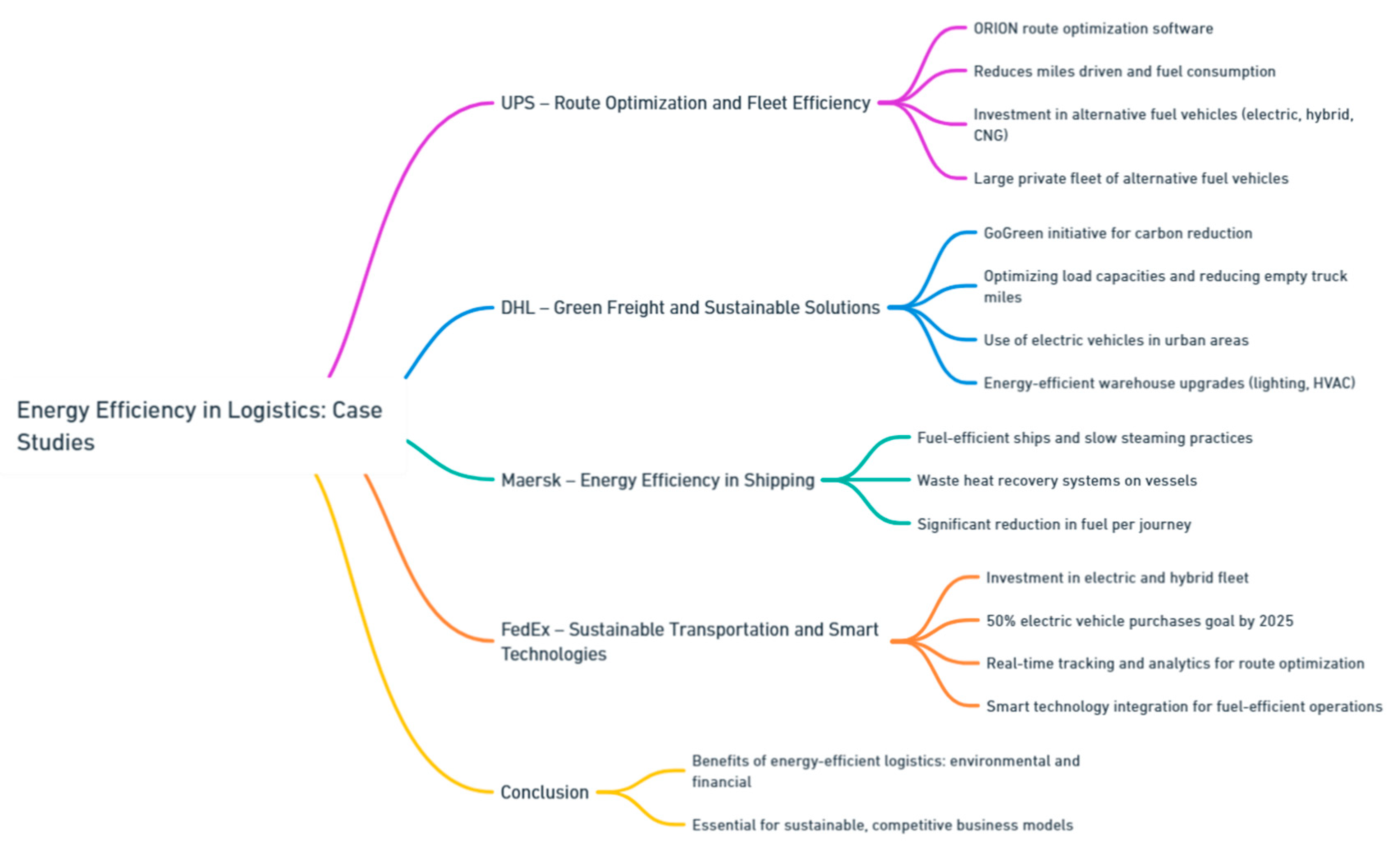
These case studies from UPS, DHL, Maersk, and FedEx illustrate the broad range of energy-efficient practices that logistics companies can adopt. From route optimization and alternative fuel vehicles to slow steaming in shipping and energy-efficient warehousing, these companies have demonstrated that energy efficiency not only reduces environmental impact but also brings operational and financial benefits. As the logistics industry continues to evolve, energy-efficient practices will remain essential for building sustainable and competitive businesses (Karam et al., 2020; Wehner et al., 2021; Ammar and Seddiek, 2020).
Preprints 139811 i061

7.6. Definition of Waste Management in the Logistics Context
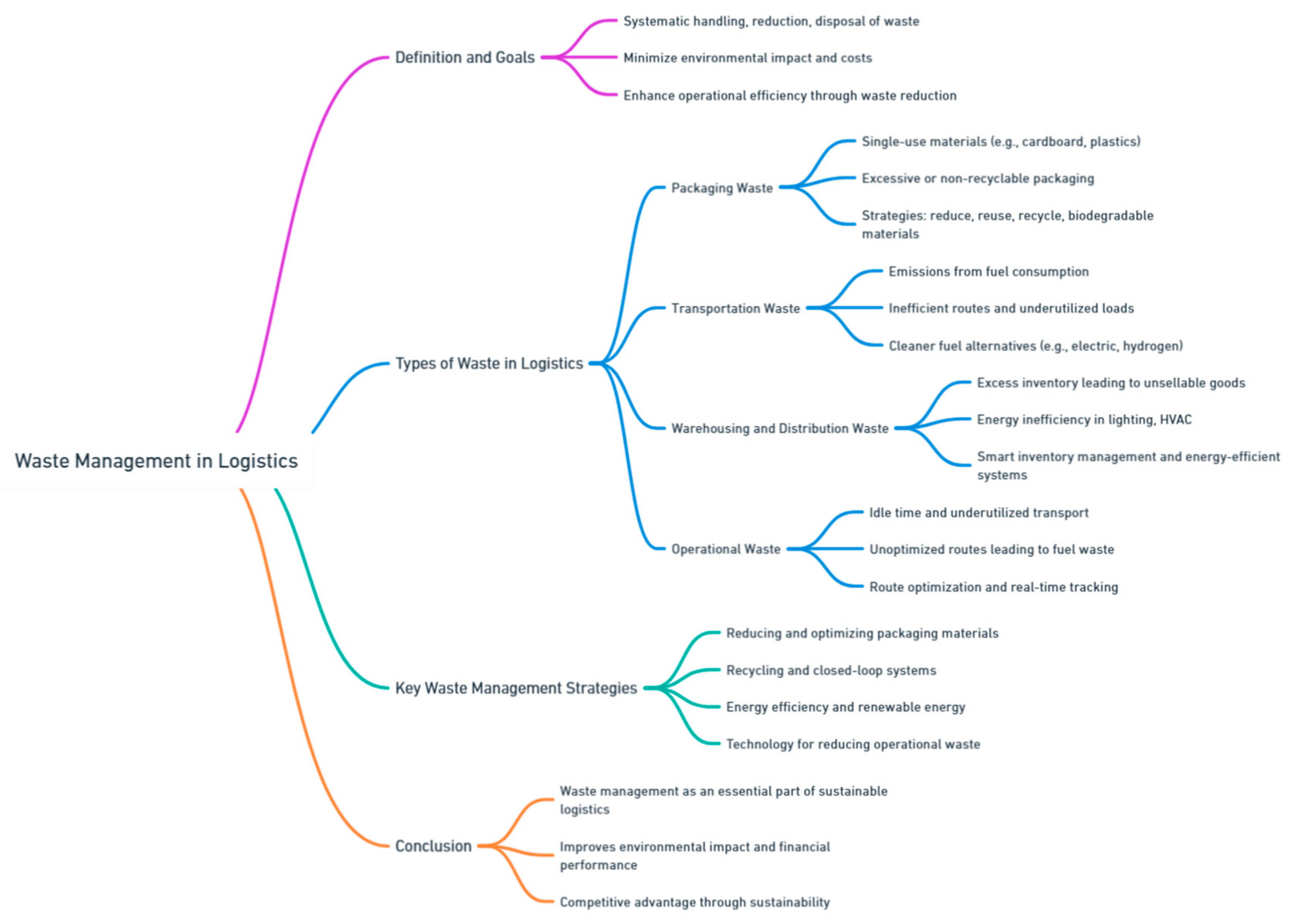
In the context of logistics, waste management refers to the systematic handling, reduction, and disposal of waste materials generated throughout the supply chain. This encompasses a wide array of processes and activities, including transportation, warehousing, distribution, and packaging. The goal of waste management in logistics is to minimize environmental impact, reduce costs, and enhance operational efficiency by effectively managing the waste produced during logistics operations. It involves strategies for reducing, reusing, recycling, and responsibly disposing of waste, in line with the principles of sustainability. Logistics is a key component of the global supply chain, moving goods from manufacturers to consumers. However, in this process, significant amounts of waste can be generated. This waste takes various forms, such as packaging materials, expired or damaged goods, fuel emissions, and even inefficiencies like idle time, underutilized transport, and excess inventory. Waste management in logistics, therefore, addresses not only physical waste but also wasted resources, time, and energy that can be optimized to improve both environmental and financial outcomes. One of the most common forms of waste in logistics is packaging waste. Goods being shipped require protective materials to prevent damage, but excessive or non-recyclable packaging contributes to environmental pollution. Cardboard, plastics, foam, and other materials are frequently discarded after a single use, filling landfills and adding to the growing problem of solid waste. Effective waste management seeks to optimize packaging, whether through reducing material usage, shifting to reusable or recyclable materials, or adopting biodegradable alternatives. This reduces the volume of waste generated, minimizes disposal costs, and reduces the overall carbon footprint of logistics operations. In addition to packaging waste, transportation in logistics also produces significant environmental waste, primarily in the form of emissions. Every mile traveled by trucks, planes, or ships burns fuel and emits greenhouse gases, contributing to climate change. Effective waste management in this context focuses on reducing fuel consumption through more efficient route planning, optimizing load capacities, and shifting to alternative, cleaner fuels such as electricity or hydrogen. By reducing emissions, logistics companies can lower their environmental impact and contribute to the global effort to mitigate climate change. Warehousing and distribution centers also generate considerable waste, including both physical and operational waste. Improper inventory management can lead to excess stock that eventually becomes unsellable or expired, creating waste. Additionally, energy inefficiency within warehouses, such as excessive electricity consumption for lighting and climate control, can also be viewed as a form of waste. Implementing waste management strategies in warehousing may involve adopting smart inventory systems to prevent overstocking, improving energy efficiency through the use of renewable energy sources, and reducing energy waste with more efficient technologies and designs. Moreover, waste in logistics isn’t just about physical materials; operational waste, such as time and fuel wasted due to inefficient practices, is equally important. For instance, vehicles traveling with empty loads or taking inefficient routes contribute to unnecessary fuel consumption and emissions. By adopting technologies like real-time tracking, route optimization, and advanced logistics management systems, companies can significantly reduce operational waste and improve overall efficiency. Recycling is another crucial aspect of waste management in logistics. Many materials, especially those used in packaging, can be recycled and reintroduced into the supply chain, reducing the need for virgin materials. Establishing closed-loop systems where materials are reused or recycled within the logistics process can greatly reduce the environmental impact and conserve resources. In conclusion, waste management in logistics is an essential aspect of modern supply chain management, focusing on reducing both physical and operational waste. By optimizing packaging, improving transportation efficiency, and recycling materials, logistics companies can reduce their environmental impact and improve their financial performance. In a world increasingly focused on sustainability, effective waste management in logistics is not just a corporate responsibility but a competitive advantage that can enhance both profitability and environmental stewardship (Scrioșteanu and Criveanu, 2023; Fidlerová et al., 2021; Hao, 2021).
Preprints 139811 i062

7.7. Types of Waste Generated in Logistics

Types of Waste Generated in Logistics. Waste management within logistics is a critical factor in enhancing both sustainability and operational efficiency. The types of waste in logistics can be broadly categorized into two key areas: material waste and process waste. Each category presents distinct challenges and opportunities for improvement. Addressing these forms of waste can significantly reduce costs, improve productivity, and minimize environmental impact. Let's take a closer look at the two categories:
A. Material Waste. Material waste refers to physical by-products or unnecessary materials generated throughout the logistics process. This category primarily includes packaging waste and broken or damaged items, both of which contribute to higher costs and environmental degradation.
  • Packaging Waste: Packaging plays an essential role in logistics, ensuring the protection and safe transport of goods. However, excessive or inefficient packaging leads to significant material waste. This waste can occur at various stages, from production and shipping to receiving and warehousing. The key issues related to packaging waste include the following:
    Overpackaging: Often, companies use more packaging materials than necessary for fear of damage or to comply with certain standards. This excessive use of materials like plastic, cardboard, foam, and shrink wrap generates considerable waste, particularly in e-commerce, where small items are frequently shipped in oversized boxes.
    Single-use packaging: A large portion of packaging used in logistics is designed for one-time use, contributing to landfill accumulation. Plastic wraps, Styrofoam inserts, and other disposable materials are common examples that contribute to waste pollution.
    Improper disposal and recycling: Many packaging materials, such as plastic films, bubble wraps, and certain types of foams, are difficult to recycle. Inadequate recycling programs or lack of facilities for certain materials means that much of this waste ends up in landfills.
To address packaging waste, companies are increasingly adopting more sustainable practices. These include using recyclable or biodegradable packaging materials, optimizing packaging design to use fewer resources, and exploring reusable packaging options. Furthermore, advancements in technology, such as smart packaging that can monitor the condition of goods in transit, could reduce the need for excessive protective materials.
2.
Broken or Damaged Items: Another source of material waste in logistics is broken or damaged goods. This issue can occur during handling, transport, or storage, often due to improper packaging, rough handling, or accidents. The result is not only a financial loss but also an environmental one, as these items frequently become non-recyclable waste.
  • Transportation damages: Poor handling practices during loading, unloading, or transportation can lead to product damage, especially in fragile goods industries like electronics or glassware. Insufficient protection or inadequate stacking can cause items to break or spoil.
  • Storage damages: Improper storage conditions—such as unsuitable temperature, humidity, or organization—can lead to damage, spoilage, or deterioration of goods, especially perishable items like food and pharmaceuticals.
Solutions to mitigate this type of material waste include improving handling protocols, using smarter and more durable packaging solutions, and enhancing warehouse storage conditions. Employing technologies like real-time tracking and sensors for temperature and moisture can also prevent spoilage, especially for sensitive products.
B. Process Waste. Process waste in logistics refers to inefficiencies or non-value-adding activities that lead to wasted time, energy, or resources. It encompasses issues such as time delays and inventory waste, both of which can cause significant disruptions and inefficiencies in the supply chain.
  • Time Delays: Time delays represent a significant form of process waste in logistics. Delays can occur at any stage of the logistics process, from production and warehousing to transportation and delivery. They often result in higher operational costs, reduced customer satisfaction, and wasted resources. The primary causes of time delays include:
    Poor route planning: Inefficient transportation routes lead to longer delivery times and increased fuel consumption, contributing to both financial losses and environmental impact.
    Customs and regulatory delays: In international logistics, customs clearance issues, inadequate documentation, and non-compliance with regulations can cause significant delays.
    Inefficient warehousing: Poor organization or outdated warehouse management systems can lead to longer processing times for picking, packing, and shipping items.
    Labor shortages: A lack of skilled workers in warehouses or transportation can slow down processes, leading to time wastage and potential delivery delays.
To minimize time delays, companies can invest in route optimization software, streamline customs procedures, and implement more efficient warehouse management systems. Automation, through the use of robots for picking and packing or autonomous vehicles for transport, can also reduce time-related inefficiencies.
2.
Inventory Waste: Inventory waste occurs when companies hold excess stock or when goods are not managed efficiently, leading to spoilage, obsolescence, or overstocking. Inventory waste contributes to increased storage costs, the risk of product expiration, and lost sales opportunities due to mismanaged stock levels. The main causes of inventory waste include:
Overstocking: Holding excess inventory due to inaccurate demand forecasting or fear of stockouts results in higher holding costs and the risk of spoilage or obsolescence.
Understocking: Insufficient stock levels can lead to stockouts, causing missed sales opportunities and customer dissatisfaction.
Perishable goods: For industries dealing with perishable goods, improper inventory management can lead to spoilage or expiration, resulting in waste.
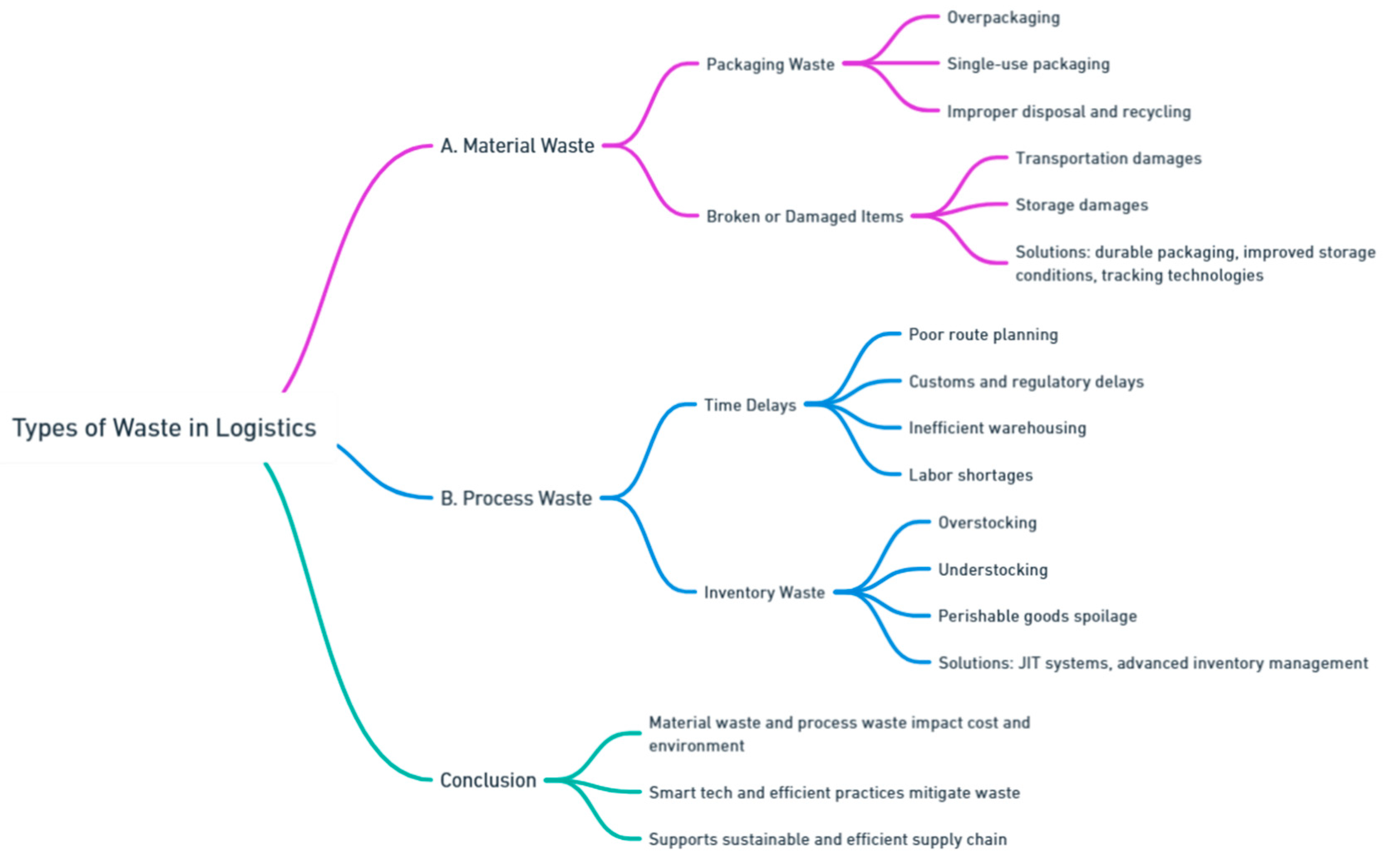
To address inventory waste, businesses can adopt more advanced inventory management systems that use real-time data analytics, demand forecasting, and automated stock replenishment. Just-in-time (JIT) inventory systems can also help reduce excess stock, while better inventory rotation practices can prevent spoilage and obsolescence.
In conclusion, both material waste and process waste in logistics present significant challenges for businesses. Material waste, particularly from packaging and damaged goods, contributes to environmental degradation and higher costs, while process waste, such as time delays and inventory inefficiencies, undermines productivity. By addressing these waste streams through the adoption of smarter technologies, improved logistics practices, and sustainable solutions, companies can achieve both environmental and operational benefits, contributing to a more efficient and sustainable supply chain (Pečman et al., 2023; Khair et al., 2023; Naziihah et al., 2022).
Preprints 139811 i063

7.8. Waste Reduction Strategies

Effective waste reduction strategies are essential for businesses and industries striving to become more sustainable and environmentally conscious. In the logistics and supply chain sector, which handles vast quantities of goods, materials, and resources, waste generation can be a significant challenge. Addressing this challenge requires innovative approaches that not only reduce waste but also improve operational efficiency and cost-effectiveness. Three critical strategies for waste reduction in logistics and supply chains are Circular Supply Chains, Reverse Logistics, and Recycling and Reuse of Packaging Materials. These approaches emphasize sustainability by minimizing waste at different stages of the supply chain, maximizing resource utilization, and promoting a circular economy.
A. Circular Supply Chains. Circular supply chains are designed to reduce waste by keeping materials and products in use for as long as possible. Unlike traditional linear supply chains that follow a "take, make, dispose" model, circular supply chains prioritize resource recovery and the continuous use of materials through reuse, remanufacturing, and recycling. In a circular supply chain, products are designed with their end-of-life in mind, enabling materials to be easily reclaimed and reintegrated into the production process. This shift from a linear to a circular model reduces the need for virgin materials, lowers waste generation, and decreases environmental impact.
Key components of circular supply chains include:
  • Product Design for Longevity and Recyclability: Products are designed to last longer and be easily disassembled at the end of their lifecycle. This enables the recovery of valuable materials and components that can be reused or recycled. For instance, modular designs allow parts to be replaced or upgraded without discarding the entire product, extending the product's lifespan.
  • Resource Efficiency and Closed-Loop Systems: Circular supply chains aim to close the loop on materials by using them in multiple cycles. This is achieved by reclaiming materials from used products and feeding them back into the production process. For example, companies in industries such as electronics, textiles, and automotive manufacturing are increasingly adopting circular strategies, including remanufacturing parts and components.
  • Collaboration Across the Supply Chain: A circular supply chain requires collaboration between suppliers, manufacturers, retailers, and consumers. Businesses need to work together to design products that are easier to recycle or repurpose and develop systems for collecting and processing end-of-life products. This collaborative approach ensures that valuable resources are kept in circulation and waste is minimized.
The benefits of circular supply chains are significant. They reduce dependency on raw materials, lower production costs, and contribute to environmental sustainability. By adopting circular principles, businesses can improve their resilience to supply chain disruptions, such as material shortages, while simultaneously reducing their carbon footprint.
B. Reverse Logistics. Reverse logistics refers to the process of managing the flow of goods and materials from the end user back to the manufacturer or supplier for the purpose of reuse, recycling, refurbishment, or proper disposal. Unlike traditional logistics, which focuses on delivering goods to customers, reverse logistics deals with product returns, recalls, and the recovery of used products.
Key elements of reverse logistics include:
  • Product Returns and Recalls: One of the most common forms of reverse logistics involves managing product returns from customers. This includes handling returns for defective, unwanted, or expired products. Efficient reverse logistics systems allow companies to quickly assess returned items and determine whether they can be repaired, resold, or recycled.
  • Refurbishment and Remanufacturing: Reverse logistics supports the refurbishment and remanufacturing of products. Instead of discarding used or damaged products, companies can refurbish them to bring them back to a like-new condition, or remanufacture parts for use in new products. This reduces waste and extends the lifecycle of products. For instance, the electronics industry often uses reverse logistics to manage the return of used devices, which are then refurbished or harvested for valuable components.
  • Recycling and Disposal: For products that cannot be reused or remanufactured, reverse logistics ensures that they are recycled or disposed of in an environmentally responsible manner. This includes setting up systems for the collection and recycling of packaging materials, electronics, and hazardous waste.
  • Take-Back Programs: Many companies now offer take-back programs, where consumers can return used products to the retailer or manufacturer. These programs enable businesses to recover valuable materials and components, reduce waste, and promote responsible disposal practices.
The benefits of reverse logistics extend beyond waste reduction. By recovering and repurposing products, companies can reduce their reliance on raw materials, lower costs, and create new revenue streams through the resale of refurbished goods. Additionally, reverse logistics can enhance customer satisfaction by providing convenient return and recycling options, which also contributes to brand loyalty.
C. Recycling and Reuse of Packaging Materials. Packaging waste is a significant environmental concern, particularly in industries that rely heavily on transportation and shipping. The recycling and reuse of packaging materials is a critical strategy for reducing waste in the supply chain. This approach focuses on minimizing the use of single-use packaging, promoting the use of recyclable materials, and encouraging the reuse of packaging where possible. Key components of recycling and reuse of packaging materials include:
  • Design for Recyclability: Packaging materials should be designed with recyclability in mind. This means using materials that are easy to recycle, such as cardboard, paper, aluminum, and certain types of plastics. Companies are increasingly adopting eco-friendly packaging materials that have a lower environmental impact. For example, many businesses are switching to biodegradable or compostable packaging to reduce plastic waste.
  • Reusable Packaging Solutions: Reusable packaging is an effective way to reduce waste in logistics. This includes durable containers, pallets, and crates that can be used multiple times before they need to be replaced. Reusable packaging is particularly useful in closed-loop supply chains, where products are regularly shipped between the same locations. For example, some companies have implemented reusable plastic pallets that can be used for hundreds of shipments, significantly reducing the need for single-use pallets.
  • Recycling Programs: Companies can implement recycling programs to ensure that used packaging materials are properly collected and recycled. This includes providing recycling bins, partnering with recycling facilities, and educating employees and customers on the importance of recycling. In industries such as e-commerce and retail, where large volumes of packaging are generated, recycling programs can significantly reduce the environmental impact.
  • Reducing Packaging Waste: Reducing the amount of packaging used in shipping and transportation is another effective strategy for waste reduction. Companies can minimize packaging waste by optimizing the size and weight of their packages, using less material, and eliminating unnecessary packaging. Advances in packaging design, such as lightweight materials and minimalist packaging, help reduce the amount of waste generated during transportation.
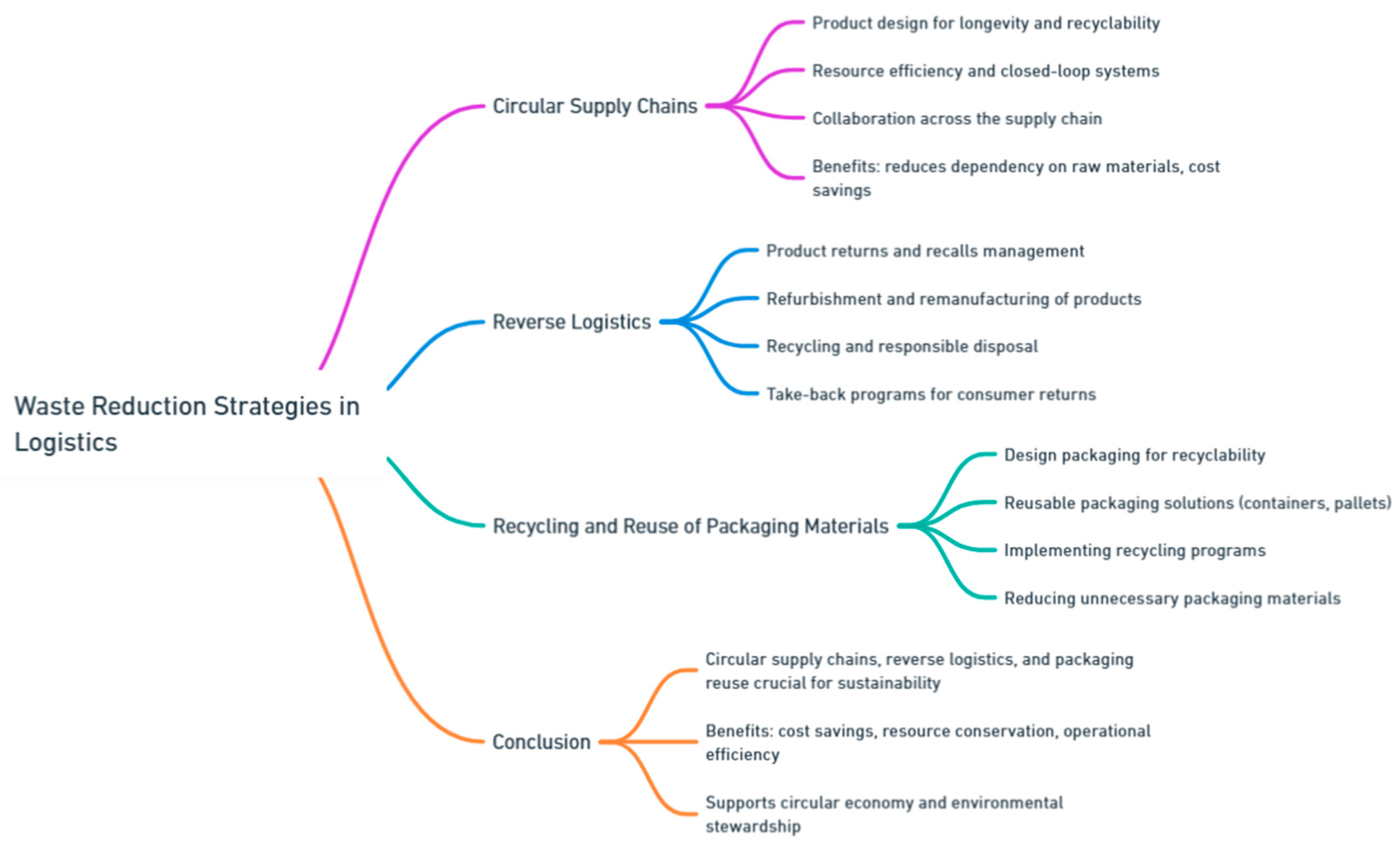
Recycling and reuse of packaging materials offer several benefits. They reduce the demand for virgin materials, lower waste disposal costs, and contribute to a company's sustainability goals. Additionally, by adopting eco-friendly packaging practices, businesses can enhance their brand reputation and appeal to environmentally conscious consumers.
In conclusion, waste reduction strategies such as Circular Supply Chains, Reverse Logistics, and Recycling and Reuse of Packaging Materials play a vital role in creating more sustainable and efficient supply chains. These strategies not only minimize waste but also contribute to cost savings, resource conservation, and improved operational performance. By adopting these approaches, companies can move toward a circular economy, where resources are used more efficiently, and waste is significantly reduced. This shift is essential for addressing the environmental challenges facing the logistics and supply chain industry and ensuring a more sustainable future (Lai et al., 2022; Scrioșteanu and Criveanu, 2023; Betts et al., 2022).
Preprints 139811 i064

8. Waste Management in Logistics

8.1. Technological Advancements in Waste Management
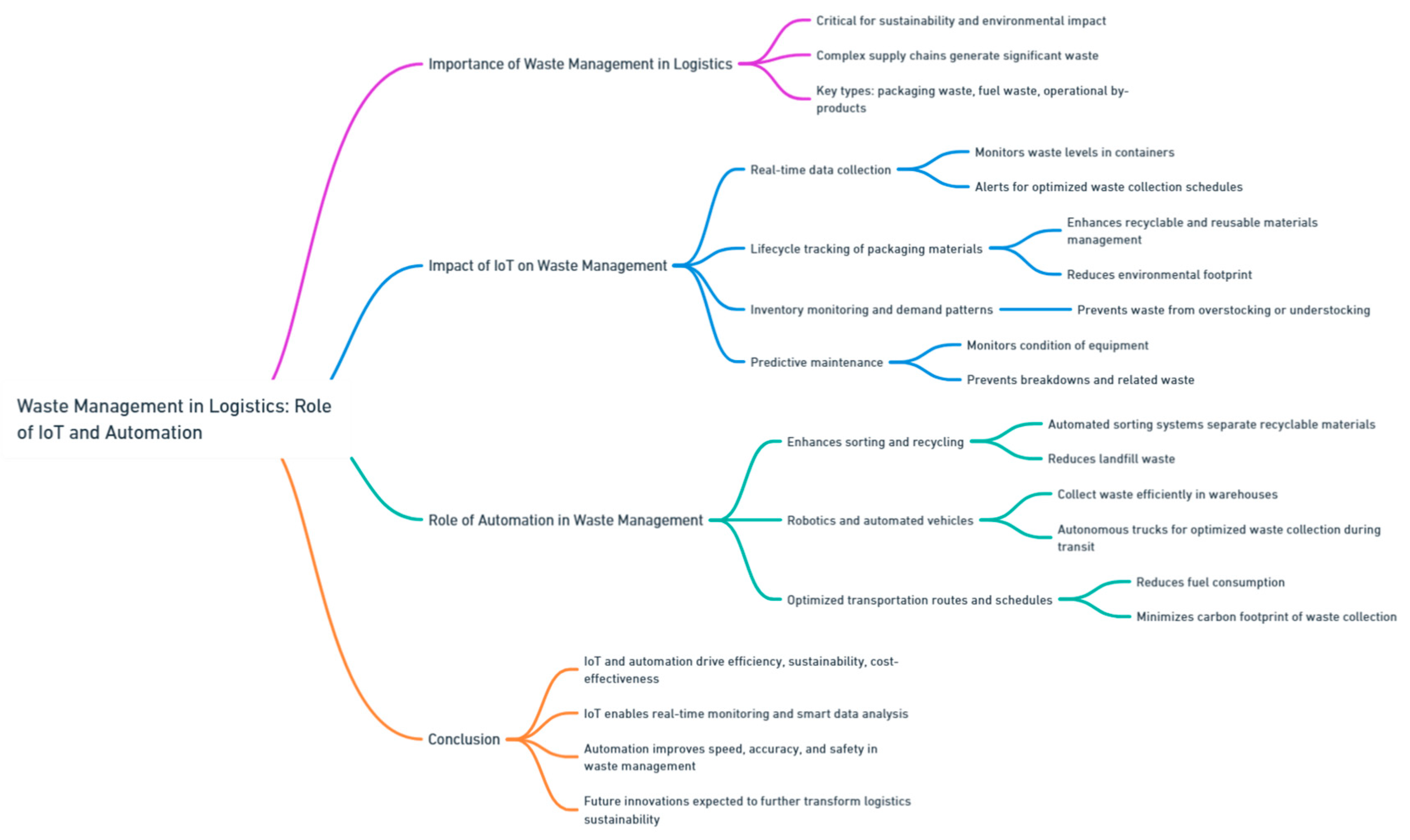
Waste management has become a critical aspect of logistics, especially in a world that is increasingly focused on sustainability and reducing environmental impact. The logistics industry, with its complex supply chains, packaging materials, and transportation requirements, generates a significant amount of waste. This includes packaging waste, fuel waste, and other by-products of logistical operations. However, recent advancements in technology, particularly in the areas of the Internet of Things (IoT) and automation, have revolutionized waste management processes in logistics, offering new ways to minimize waste, reduce costs, and improve operational efficiency. The Internet of Things (IoT) has significantly impacted waste management in logistics by enhancing monitoring, tracking, and decision-making capabilities. IoT devices are able to collect real-time data from various points in the supply chain, providing valuable insights into waste generation and management. For example, sensors can be used to monitor the levels of waste in containers or bins, alerting logistics managers when they are full and need to be emptied. This helps prevent overflow and unnecessary waste generation while optimizing waste collection schedules, reducing fuel consumption for waste collection vehicles. Additionally, IoT technology can track the lifecycle of packaging materials, allowing for better management of recyclable and reusable materials, reducing the overall environmental footprint of logistics operations. IoT’s ability to provide real-time data also extends to inventory management, where it plays a critical role in reducing waste due to overstocking or understocking. By continuously monitoring stock levels and analyzing demand patterns, IoT systems help logistics managers maintain optimal inventory levels. This prevents the wastage of perishable goods and minimizes the need for excess storage space, which can lead to additional waste from damaged or expired products. Furthermore, IoT-enabled predictive maintenance systems can monitor the condition of equipment such as trucks, conveyors, and storage facilities. This helps prevent breakdowns that could lead to operational delays, spoilage, or additional waste. Automation is another significant technological advancement transforming waste management in logistics (Pardini et al., 2020; Aytaç and Korçak, 2021).
Automated systems streamline processes, reduce human error, and enhance overall efficiency in waste management practices. In warehouses, for example, automated sorting systems can separate recyclable materials from general waste, ensuring that more materials are recycled rather than sent to landfills. These systems can identify different types of materials based on their composition, size, or shape, significantly improving the speed and accuracy of sorting processes. Automation also reduces the need for manual handling of waste, minimizing the risk of contamination and improving the safety of workers in logistics environments. Robotics and automated vehicles have also emerged as key technologies in waste management. Autonomous robots can be deployed in warehouses and distribution centers to collect waste more efficiently. These robots can navigate large spaces and identify waste materials, ensuring that waste is collected and processed in a timely and efficient manner. In transportation, autonomous trucks equipped with waste-sorting capabilities can collect and separate waste from multiple sources during transit, improving the overall efficiency of waste collection and disposal processes. Additionally, automation helps reduce fuel waste by optimizing transportation routes and schedules. Automated route-planning systems, for instance, take into account real-time traffic data, fuel efficiency, and waste collection needs, ensuring that vehicles take the most efficient routes. This minimizes fuel consumption and reduces the carbon footprint of waste collection activities. In conclusion, the integration of IoT and automation into waste management practices in logistics is driving significant improvements in efficiency, sustainability, and cost-effectiveness. IoT technologies enable real-time monitoring and data analysis, allowing logistics managers to make informed decisions that reduce waste generation and improve the handling of recyclable materials. Automation streamlines waste management processes, reducing human error and enhancing the speed and accuracy of waste sorting and collection. Together, these technologies are helping the logistics industry move toward more sustainable practices, contributing to a cleaner environment and more efficient supply chains. As these technologies continue to evolve, we can expect even greater innovations in waste management that will further transform logistics into a more sustainable and eco-friendly sector (Szpilko et al., 2023; Mastos et al., 2020; Zhang et al., 2021).
Preprints 139811 i065

8.2. The Intersection of Energy Efficiency and Waste Management
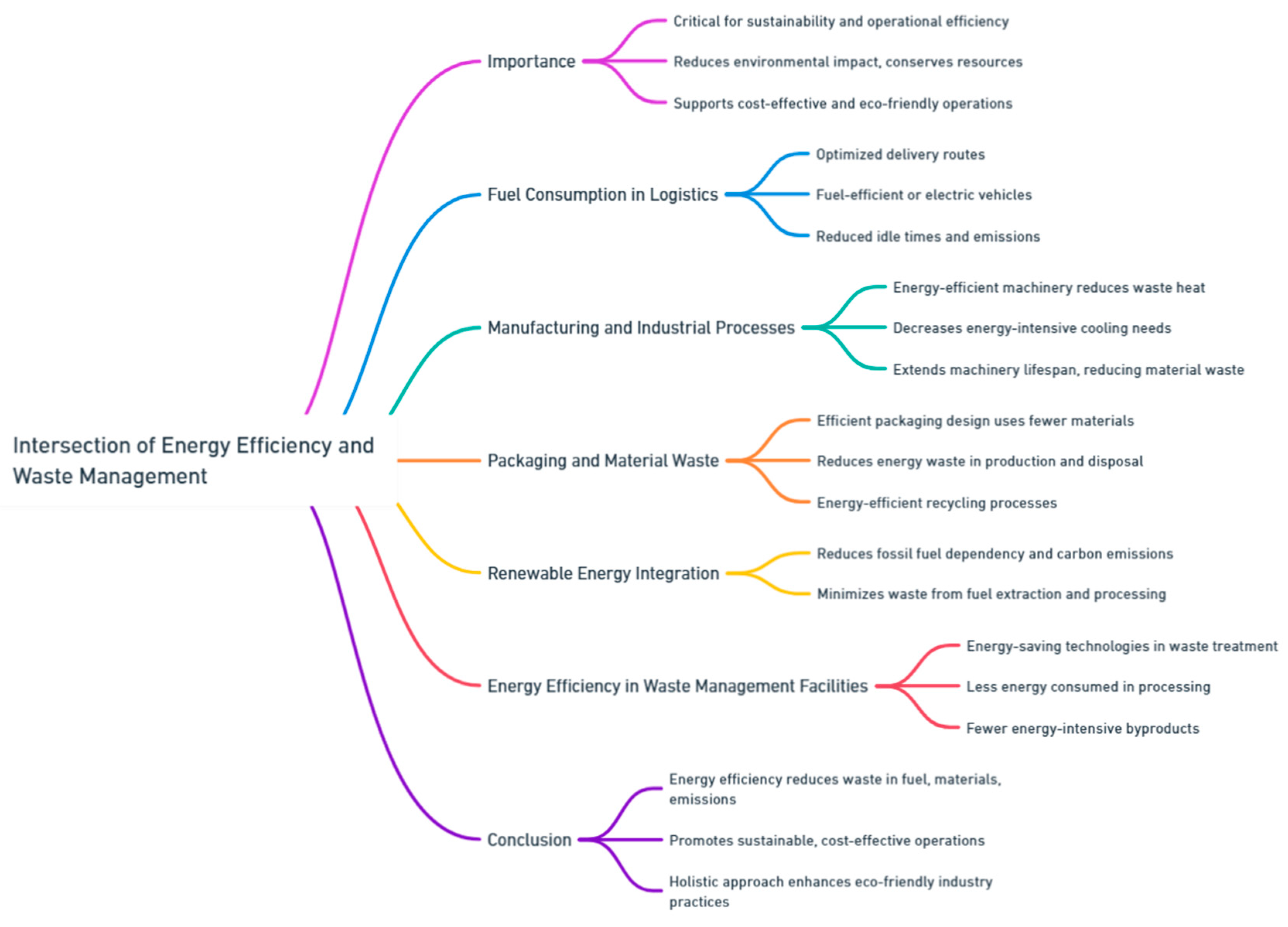
Energy efficiency and waste management are two critical pillars of sustainability, and their intersection is particularly relevant for industries striving to reduce environmental impact and increase operational efficiency. Improving energy efficiency not only conserves valuable resources but also plays a key role in minimizing waste across various domains, including fuel, materials, and production processes. By understanding how these two areas are interconnected, businesses can develop comprehensive strategies that address both energy use and waste generation, contributing to a more sustainable and cost-effective operation. One of the clearest examples of the link between energy efficiency and waste management is found in fuel consumption. Transportation and logistics, for instance, are significant contributors to both energy consumption and waste generation in the form of emissions. By improving energy efficiency through measures such as optimizing delivery routes, using fuel-efficient or electric vehicles, and reducing idle times, companies can significantly decrease fuel consumption. This reduction in fuel use not only cuts costs but also reduces emissions and fuel waste. By adopting energy-efficient practices in logistics, companies effectively reduce the environmental impact of their operations while improving their bottom line. In manufacturing and industrial processes, the link between energy efficiency and waste management becomes even more apparent. Factories and production facilities that optimize their energy use often find that they also reduce waste in terms of materials and byproducts. For example, energy-efficient machinery tends to produce less waste heat, which can be a byproduct of inefficient systems. This waste heat often requires additional cooling and ventilation, which consumes more energy and increases operational costs. By upgrading to more energy-efficient equipment, businesses can minimize both energy consumption and the generation of excess heat, reducing waste in the form of energy and the need for energy-intensive cooling systems. Furthermore, energy-efficient practices often extend the lifespan of machinery and equipment, indirectly reducing material waste. Machines that operate more efficiently and with less strain require fewer repairs and replacements over time. This reduces the waste associated with broken or outdated parts, as well as the raw materials needed to manufacture replacements. Consequently, improving energy efficiency not only conserves energy but also helps decrease the overall consumption of materials within a company’s operations. Waste management in the form of product packaging also intersects with energy efficiency. Producing excessive or inefficient packaging consumes energy and materials, leading to both energy waste in manufacturing and physical waste in disposal. By improving the efficiency of packaging design—using fewer materials or more energy-efficient production processes—companies can reduce both the energy required for production and the waste generated after the product reaches consumers. Additionally, energy-efficient recycling processes for packaging materials can significantly decrease the overall energy footprint of a company. Renewable energy sources such as solar and wind power offer a valuable opportunity to improve energy efficiency and reduce waste in industrial and commercial operations. These sources reduce the dependency on fossil fuels, which are energy-intensive to extract and often generate waste in the form of greenhouse gas emissions. By integrating renewable energy into their operations, businesses can not only reduce their overall energy consumption but also decrease the waste associated with traditional energy production, such as carbon emissions and the byproducts of fuel extraction. Incorporating energy-efficient strategies in waste management facilities themselves can also lead to significant improvements. Waste treatment plants that implement energy-saving technologies can process waste more efficiently, using less energy to achieve the same or better results. This results in a dual benefit: less energy is consumed in waste management, and the waste byproducts of energy-intensive processing are minimized. In conclusion, improving energy efficiency has a direct and significant impact on reducing waste, whether in the form of fuel, materials, or emissions. By adopting energy-efficient practices, companies can decrease their resource consumption, lower operating costs, and contribute to broader environmental sustainability goals. The intersection of energy efficiency and waste management offers a holistic approach to achieving more sustainable industrial and commercial operations, where the reduction of one form of waste can lead to savings and benefits in many other areas (Vertakova and Plotnikov, 2019; Amaral et al., 2020; Chaturvedi et al., 2023).
Preprints 139811 i066

8.3. Integration of Energy and Waste Management Strategies
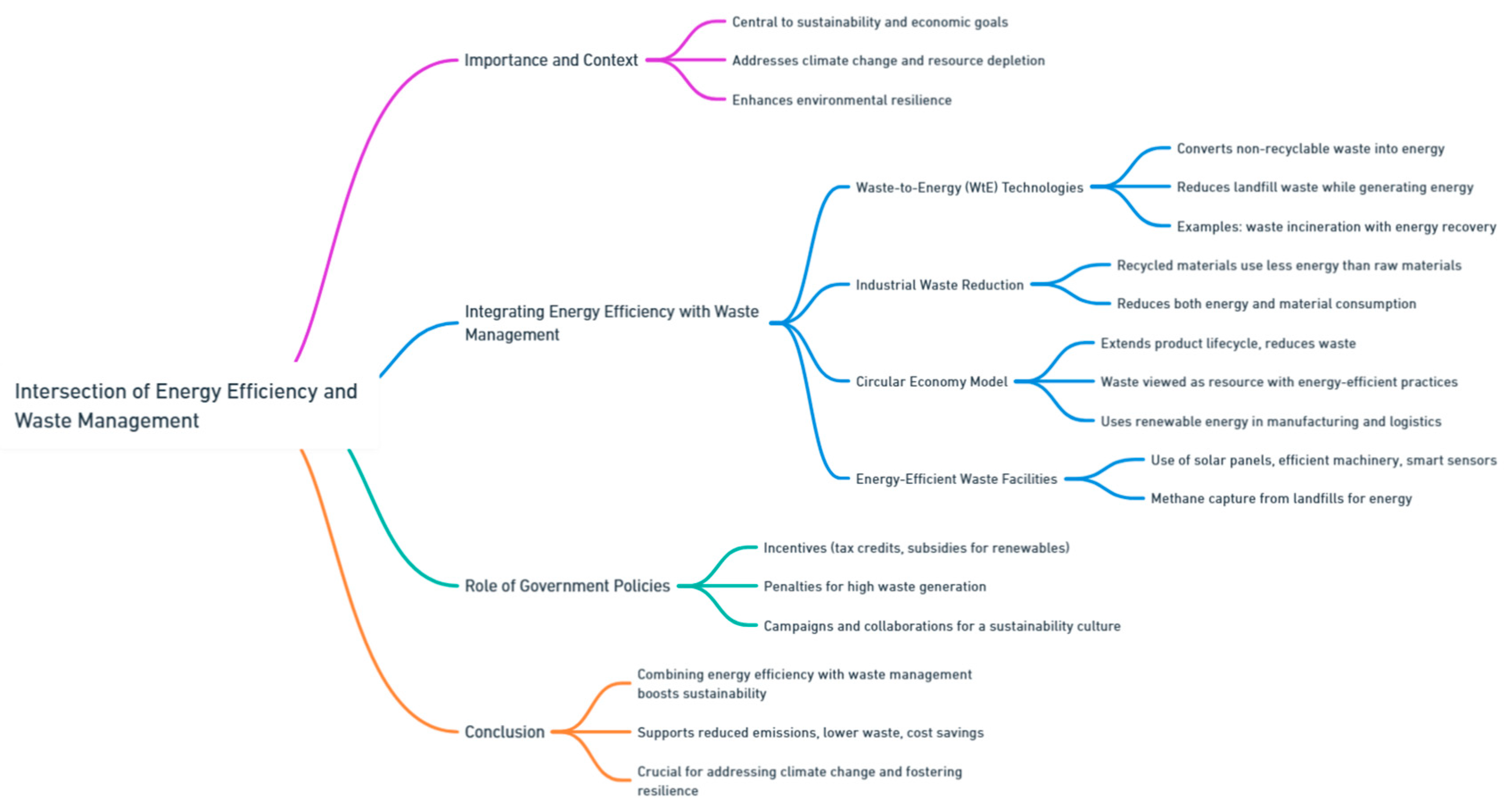
The intersection of energy efficiency and waste management presents a critical opportunity for organizations, industries, and governments to enhance environmental sustainability while simultaneously driving economic benefits. As concerns around climate change and resource depletion intensify, the need to address energy consumption and waste generation has become a central focus of sustainable development strategies. By integrating energy efficiency initiatives with waste management systems, organizations can create closed-loop processes that minimize resource usage, reduce emissions, and generate cost savings. This synergy not only advances sustainability goals but also fosters resilience in a rapidly changing economic and environmental landscape Energy efficiency and waste management are traditionally seen as distinct fields, but there is significant potential for their integration to amplify sustainability outcomes. Energy efficiency refers to the optimal use of energy resources to perform tasks while minimizing energy wastage, whereas waste management focuses on reducing, reusing, recycling, and appropriately disposing of materials to prevent environmental harm. When combined, these strategies can yield significant environmental and economic benefits by addressing two critical aspects of resource use—energy consumption and material waste. One of the most effective ways to integrate energy efficiency with waste management is through the adoption of waste-to-energy (WtE) technologies. Waste-to-energy processes involve converting waste materials, especially non-recyclable waste, into usable forms of energy such as electricity, heat, or fuel. These processes help reduce the volume of waste sent to landfills while also generating energy, thereby addressing both waste reduction and energy efficiency goals. For example, incineration facilities equipped with advanced energy recovery systems can harness heat from waste combustion to produce electricity, reducing reliance on fossil fuels and enhancing overall energy efficiency. Additionally, industrial processes can benefit from waste reduction strategies that incorporate energy-saving practices (Vertakova and Plotnikov, 2019; Dastjerdi et al., 2021).
For instance, industries can use recycled materials in production processes, which often requires less energy compared to using virgin raw materials. The recycling of metals, plastics, and paper, for example, can lead to substantial energy savings, as the energy required to process recycled materials is significantly lower than that required to extract and process new raw materials. This integration reduces both waste and energy consumption, contributing to a more sustainable industrial ecosystem. Another important approach to integrating energy efficiency and waste management is through the circular economy model. The circular economy emphasizes the reuse of materials in production and consumption, extending the lifecycle of products and reducing waste generation. In this model, waste is viewed as a resource, and energy-efficient practices are applied throughout the product lifecycle—from design and production to usage and disposal. By designing products that require less energy to manufacture, use, and recycle, companies can significantly reduce their overall environmental impact. For example, using renewable energy sources in manufacturing processes and adopting energy-efficient logistics can help minimize the energy footprint of the entire supply chain. The intersection of energy efficiency and waste management also includes the optimization of energy use in waste handling and processing facilities. Many waste treatment plants are now incorporating energy-efficient technologies such as solar panels, energy-efficient machinery, and smart sensors to monitor and reduce energy consumption. For example, landfill sites can capture methane emissions, a potent greenhouse gas, and use it to generate energy, effectively reducing both waste and energy-related emissions. Government policies and regulations play a key role in encouraging the integration of energy efficiency and waste management strategies. Incentives such as tax credits, subsidies for renewable energy projects, and penalties for excessive waste generation can drive businesses to adopt more sustainable practices. In addition, public awareness campaigns and collaborations between governments, businesses, and non-governmental organizations can help create a culture of sustainability where energy efficiency and waste management are prioritized. In conclusion, the integration of energy efficiency and waste management strategies offers a powerful pathway toward achieving environmental sustainability. By combining these two approaches, organizations and industries can reduce resource consumption, lower greenhouse gas emissions, and decrease waste generation. The adoption of waste-to-energy technologies, recycling practices, and circular economy principles, alongside the implementation of energy-efficient technologies in waste treatment facilities, highlights the potential for substantial environmental and economic gains. As society continues to address the challenges of climate change and resource scarcity, the intersection of energy efficiency and waste management will play an increasingly pivotal role in shaping a more sustainable future (Timofei, 2022; Tomić and Schneider, 2020; Elroi et al., 2023)
Preprints 139811 i067

8.4. Challenges and Barriers in Energy Efficiency and Waste Management in Logistics: Cost Implications
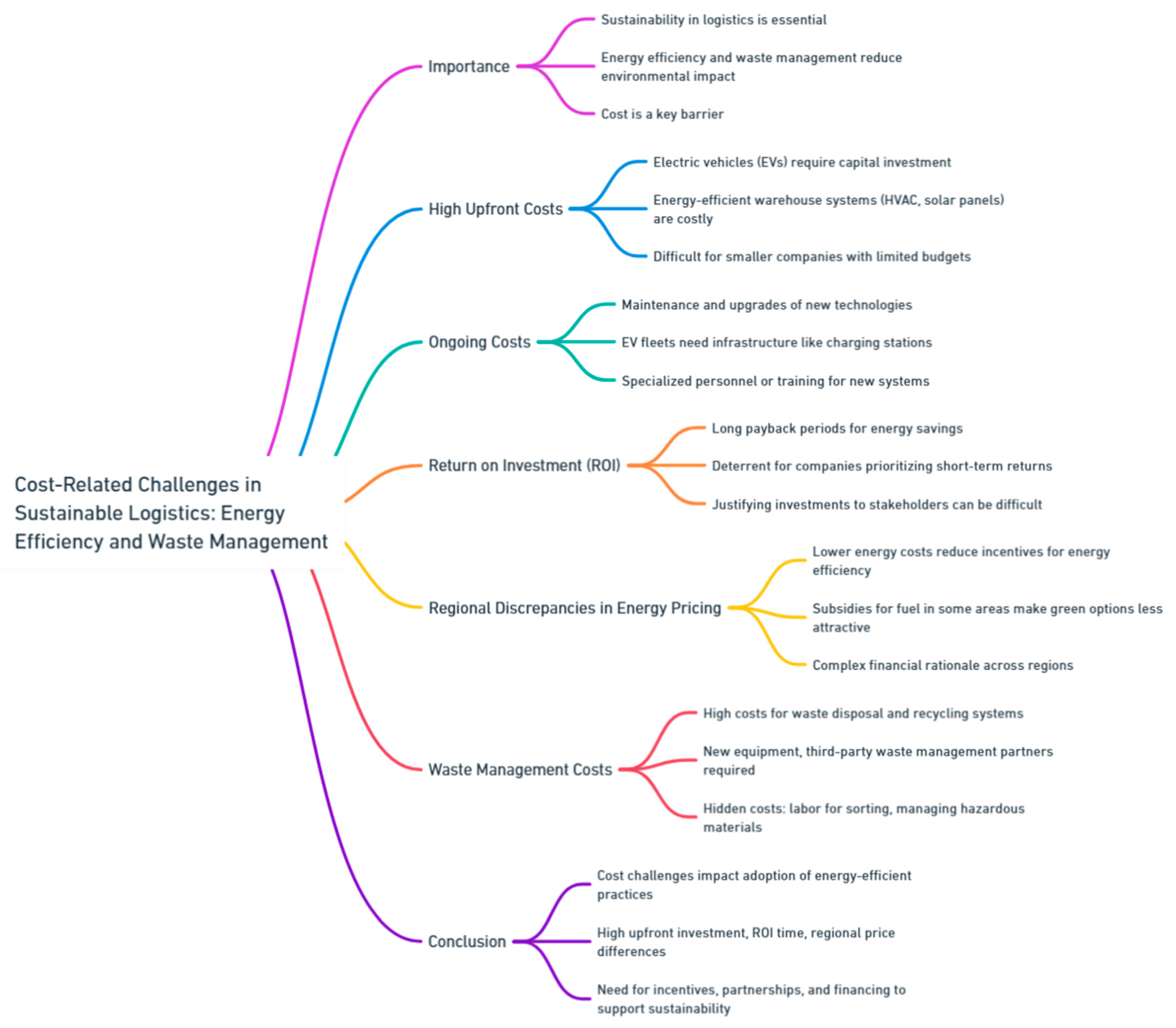
Energy efficiency and waste management are critical components in making logistics more sustainable. However, despite the recognized benefits, there are significant challenges and barriers to implementing these initiatives, particularly in terms of cost implications. This essay explores the cost-related challenges faced by logistics companies in enhancing energy efficiency and improving waste management practices. One of the most significant barriers is the high upfront costs associated with adopting energy-efficient technologies. Transitioning to electric vehicles, for instance, requires substantial capital investment, as electric trucks and vans are generally more expensive than their diesel counterparts. Similarly, integrating energy-efficient solutions, such as automated lighting, heating, ventilation, and cooling systems, or installing solar panels in warehouses, also entails high initial costs. For smaller logistics companies with tight budgets, these upfront expenditures may seem prohibitive, even though these technologies promise long-term savings in fuel, energy costs, and maintenance. Moreover, many of the energy-efficient technologies and waste management systems come with ongoing costs for maintenance, upgrades, and operation. The shift to electric or hybrid vehicle fleets, for example, often requires investment in specialized infrastructure, such as electric charging stations, which must be installed and maintained. Additionally, these new technologies may require specialized personnel or training, adding another layer of cost. This creates a challenge, especially for small and medium-sized enterprises (SMEs) that may not have the financial flexibility to absorb these costs in the short term. Another cost-related challenge is the issue of return on investment (ROI). Energy-efficient technologies and waste management systems often provide financial returns over a longer period, which can be a deterrent for companies that prioritize short-term financial performance. Although the long-term savings from energy efficiency—such as reduced fuel consumption and lower energy bills—are substantial, the benefits might not be immediately visible. This can make it difficult for logistics companies to justify the investment to stakeholders who are focused on quarterly or annual returns. As a result, the long payback period associated with these initiatives can become a barrier to implementation. Additionally, companies operating in regions where energy costs are relatively low may not perceive immediate financial benefits from improving energy efficiency. In some cases, the cost of electricity or fuel is subsidized, reducing the financial incentive to invest in energy-efficient technologies. For example, in countries with lower fuel costs, the potential savings from electric or hybrid vehicles may not be substantial enough to justify the higher purchase price. This discrepancy in energy pricing across different regions complicates the financial rationale for logistics companies to adopt greener, more energy-efficient solutions. In terms of waste management, the costs of implementing advanced waste disposal and recycling systems can also be substantial. Many logistics operations generate significant volumes of waste, including packaging materials, excess stock, and byproducts of warehouse operations. Managing this waste sustainably—through recycling, reuse, or energy recovery—often requires investment in new equipment, processes, and partnerships with third-party waste management companies. These costs, combined with potential regulatory fees for non-compliance, can be a heavy burden on logistics companies. Moreover, there are hidden costs associated with transitioning to more sustainable waste management practices. For example, separating different types of waste, managing hazardous materials, or dealing with reverse logistics for products that need to be returned or recycled can increase labor and administrative costs. Additionally, the logistical challenges of managing waste across dispersed locations and facilities can complicate the process, leading to inefficiencies that add further to the cost burden. In conclusion, while energy efficiency and waste management are essential for reducing the environmental impact of logistics, the cost implications pose significant challenges. High upfront investment, long payback periods, ongoing maintenance costs, and regional discrepancies in energy pricing all act as barriers to adopting more sustainable practices. For logistics companies to overcome these financial hurdles, it will be necessary to explore solutions such as government incentives, public-private partnerships, and innovative financing models that can offset the initial costs and make sustainable logistics a more economically viable option (Tomić and Schneider, 2018; Marciniuk-Kluska and Kluska, 2023).
Preprints 139811 i068

8.5. Technological Barriers

The logistics industry faces a growing demand for energy efficiency and waste management improvements due to increasing environmental concerns and stricter regulations. However, despite significant advancements, various technological barriers hinder the progress toward achieving sustainable logistics practices. These barriers, which encompass both the adoption of new technologies and the limitations of existing ones, present challenges that must be addressed to meet energy efficiency and waste management goals. One of the primary technological barriers in logistics is the high initial cost of implementing energy-efficient technologies. Innovations such as electric trucks, hybrid vehicles, and renewable energy systems for warehouses often require substantial upfront investment. Many logistics companies, especially small and medium-sized enterprises (SMEs), may find these costs prohibitive. This economic hurdle slows down the widespread adoption of technologies that could significantly reduce fuel consumption and greenhouse gas emissions. While long-term savings are a key incentive, the initial financial burden remains a major challenge for companies aiming to implement more energy-efficient solutions. Additionally, the integration of smart technologies, such as Internet of Things (IoT) devices and advanced data analytics, into logistics systems presents its own set of challenges. While these technologies can greatly improve energy efficiency through route optimization, real-time tracking, and predictive maintenance, their successful implementation requires a sophisticated IT infrastructure. Many logistics companies may lack the technical expertise or resources to integrate these advanced systems seamlessly into their operations. Furthermore, the process of retrofitting existing infrastructure with IoT sensors and other digital tools can be complex and time-consuming, posing an additional barrier to their adoption. Another technological barrier is the limited availability of energy-efficient alternatives, particularly in transportation. While electric and hybrid vehicles offer promise, their widespread use is constrained by factors such as limited charging infrastructure, range limitations, and the higher cost of these vehicles compared to traditional diesel-powered trucks. In many regions, especially in developing countries, the lack of a robust charging network for electric vehicles makes it difficult for logistics companies to transition away from fossil fuels. Moreover, current battery technology still faces challenges related to energy density, cost, and lifecycle, further limiting the scalability of electric vehicles in logistics. In waste management, technological barriers also play a significant role. The logistics industry generates substantial waste, including packaging materials and fuel emissions. However, many logistics companies lack access to advanced waste management technologies, such as recycling facilities or waste-to-energy systems. Even when these technologies are available, the infrastructure to support their widespread use, such as sorting systems or energy recovery plants, may not be fully developed. This results in continued reliance on traditional waste disposal methods, which are less sustainable and often more expensive in the long run. Moreover, the logistics sector faces challenges in developing and adopting technologies that enhance reverse logistics, which involves the return of products and materials for reuse, recycling, or disposal. Reverse logistics is crucial for reducing waste, but many logistics companies struggle to implement efficient systems for tracking and managing the return flow of goods. This is often due to technological gaps, such as inadequate data integration between supply chain partners, limited automation in returns processing, and insufficient coordination between logistics service providers and recyclers. Cybersecurity concerns also create technological barriers, particularly with the increasing reliance on digital platforms for energy efficiency and waste management. As logistics companies adopt smart technologies, they become more vulnerable to cyberattacks, which can disrupt operations and compromise sensitive data. This risk discourages some companies from fully embracing digital solutions, particularly in the context of energy-efficient technologies and waste management systems that rely on interconnected devices. In conclusion, while technology holds great potential for improving energy efficiency and waste management in logistics, several barriers impede its full adoption. High upfront costs, the complexity of integrating advanced systems, limited infrastructure, and technological gaps in transportation and waste management are significant challenges that logistics companies must overcome. Addressing these technological barriers will require continued innovation, investment, and collaboration across the logistics industry to drive progress toward more sustainable practices (Akkad et al., 2022; Ye et al., 2022; Park and Lee, 2015).
Preprints 139811 i069

8.6. Regulatory and Market Pressures

Energy efficiency and waste management are essential components in reducing the carbon footprint of logistics operations. However, there are numerous challenges and barriers that logistics companies face when attempting to implement energy-efficient and sustainable waste management practices. One of the most significant hurdles is navigating the complex regulatory landscape, coupled with market pressures that influence decision-making in the logistics industry. This section explores these challenges and provides insights into how they affect the implementation of more sustainable logistics practices.
  • Regulatory Challenges: One of the key barriers to energy efficiency and waste management in logistics is the complexity and inconsistency of regulations across different regions. Logistics operations often span multiple countries or regions, each with its own set of environmental laws and standards. Inconsistent regulations across these jurisdictions create difficulties for companies trying to adopt a uniform approach to energy efficiency or waste reduction. For instance, emissions standards and waste management regulations may vary significantly between the European Union, North America, and Asia, making it challenging for global logistics firms to comply with a coherent set of rules. This patchwork of regulations can lead to increased operational costs and inefficiencies. Moreover, some regulatory frameworks are slow to adapt to new technologies that can enhance energy efficiency. For example, emerging technologies like electric trucks or hydrogen-powered vehicles may face hurdles in regions where infrastructure, such as charging stations or fueling hubs, is underdeveloped. Regulatory delays in approving or encouraging the adoption of these technologies further hinder the logistics sector's efforts to become more energy efficient. Additionally, government support in the form of incentives or tax breaks for adopting greener technologies is often inconsistent or insufficient, making it difficult for companies to justify large capital investments in sustainable technologies (Zhang et al., 2021).
  • Market Pressures: Market pressures also play a crucial role in creating challenges for energy efficiency and waste management in logistics. The logistics sector is highly competitive, with companies often operating on slim profit margins. The pressure to reduce costs can lead companies to prioritize short-term profitability over long-term sustainability. For example, while electric vehicles and renewable energy sources can reduce emissions and energy consumption in the long run, their initial costs are often much higher than traditional, fossil-fuel-based alternatives. This cost disparity can dissuade companies from adopting greener technologies, especially if immediate returns on investment are not apparent. Another significant market pressure comes from consumer expectations. In an era of rapid e-commerce growth, there is increasing demand for faster and cheaper delivery options. The rise of same-day or next-day delivery services has led to increased fuel consumption, more vehicle trips, and greater emissions. Balancing the need for speedy logistics with energy-efficient practices remains a considerable challenge. Meeting consumer demands while maintaining sustainable operations requires logistical innovations, such as route optimization and improved warehouse management, but these are not always easy or cost-effective to implement. Furthermore, while there is a growing market for green logistics, the consumer base willing to pay a premium for sustainable services remains limited. Many companies face the challenge of convincing their clients and consumers to choose eco-friendly options, which may come at a slightly higher cost or slower delivery speed. As such, companies that want to invest in energy-efficient and waste-reducing technologies may find it difficult to pass these costs on to consumers, limiting their ability to implement widespread changes (Brdulak and Brdulak, 2021; Baah et al., 2020).
  • Infrastructure and Technological Barriers: Aside from regulatory and market pressures, logistical infrastructure itself presents a significant barrier to improving energy efficiency and waste management. Many existing logistics networks, from roads to warehouses, are not optimized for modern energy-efficient technologies. Retrofitting infrastructure to accommodate electric vehicles, for example, or upgrading warehouses to use renewable energy, can be prohibitively expensive. Furthermore, the lack of widespread recycling and waste management facilities in certain regions complicates the process of minimizing waste and managing it efficiently.
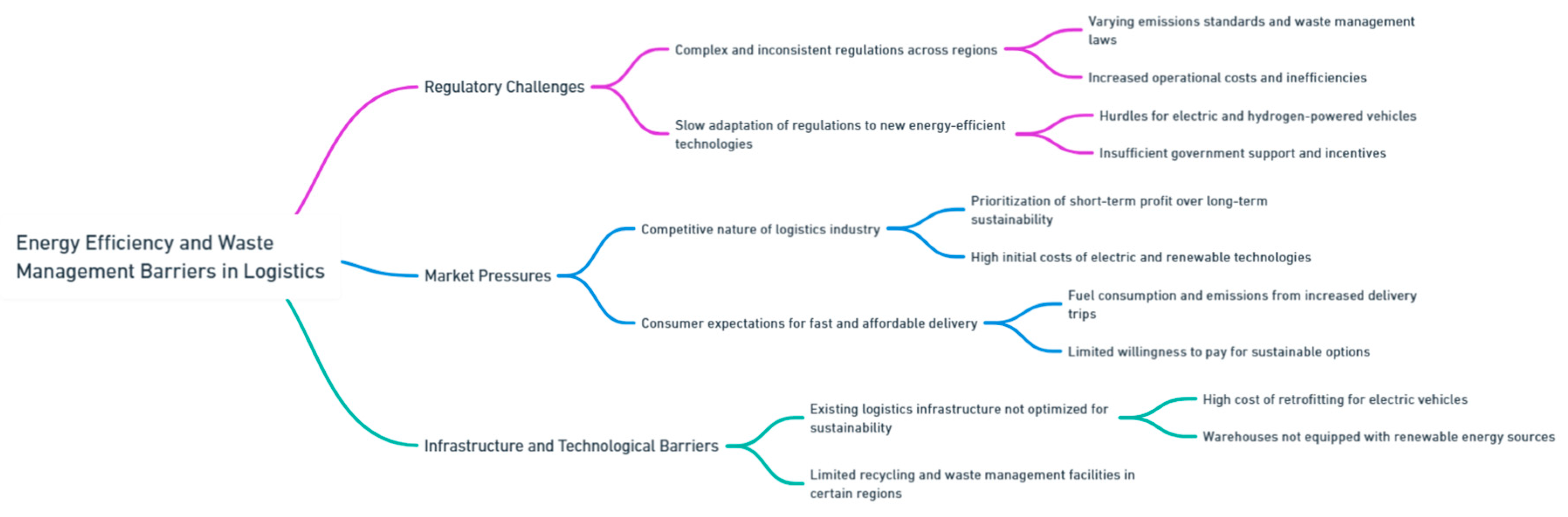
In conclusion, the challenges and barriers to energy efficiency and waste management in logistics stem from a combination of regulatory complexities, market pressures, and infrastructural limitations. The inconsistencies in regulations, the high upfront costs of new technologies, and the consumer demand for fast, low-cost logistics all make it difficult for companies to prioritize sustainability. However, overcoming these barriers is essential for the future of sustainable logistics. As governments, businesses, and consumers become more aware of the need for greener practices, the logistics industry will need to adapt, innovate, and invest in the technologies and policies that promote energy efficiency and waste reduction (Akkad and Bányai, 2020; Mukhtarov, 2023; Gerstlberger et al., 2014).
Preprints 139811 i070

8.7. Conclusion in Energy Efficiency and Waste Management in Logistics
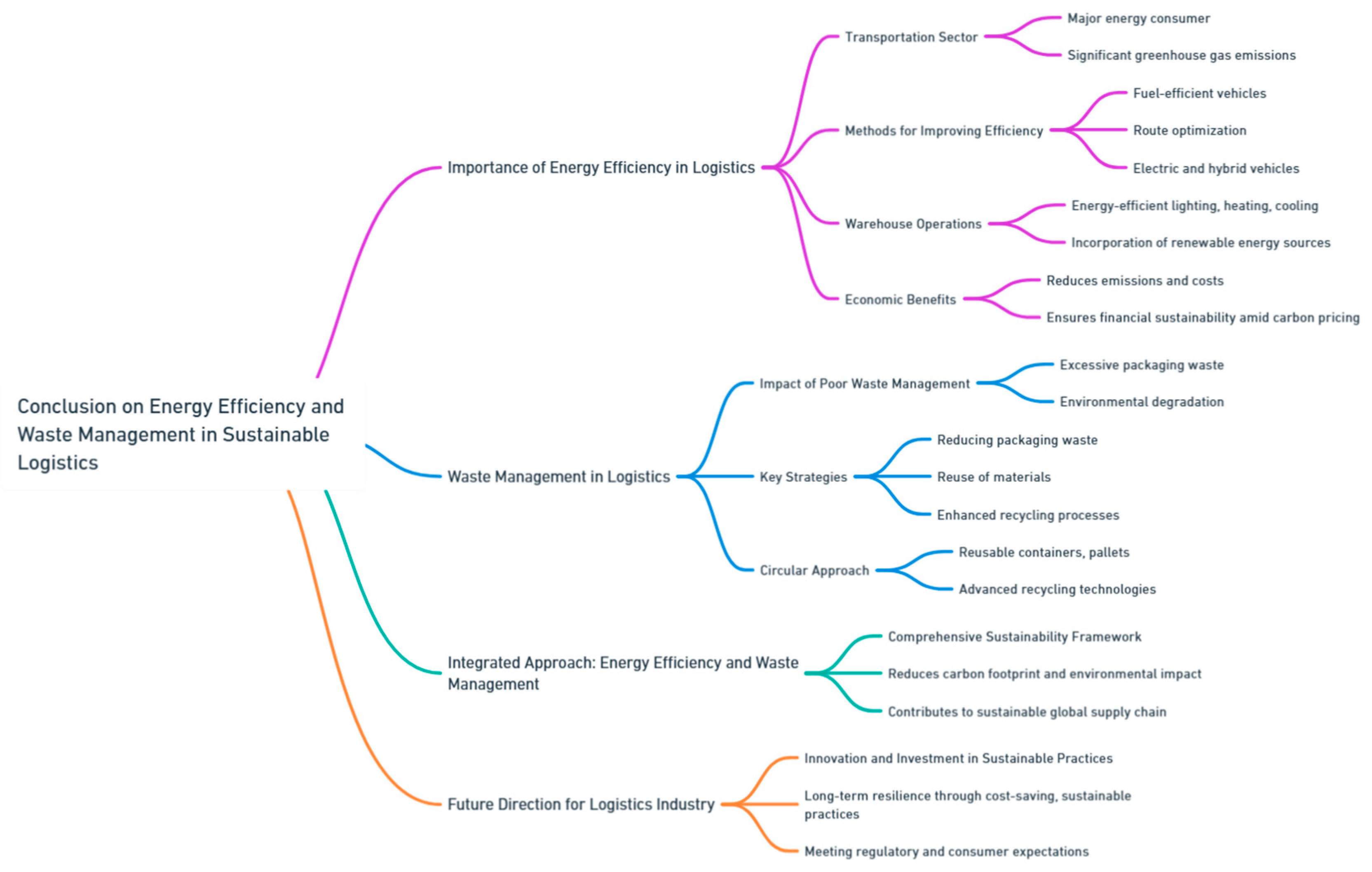
Energy efficiency and waste management are two critical pillars in the journey toward sustainable logistics. This paper has emphasized the importance of integrating these practices into logistics operations, demonstrating how they contribute to reducing environmental impacts, lowering operational costs, and enhancing overall supply chain efficiency. With the increasing pressure to address climate change and the depletion of natural resources, the logistics industry has a pivotal role to play in driving forward more sustainable practices. Through this conclusion, we summarize the key points and underscore the long-term significance of these initiatives. The importance of energy efficiency in logistics cannot be overstated. The transportation sector, a core component of logistics, is a major consumer of energy and a significant contributor to greenhouse gas emissions. Improving energy efficiency, therefore, becomes essential in reducing the environmental footprint of logistics operations. Methods such as using fuel-efficient vehicles, optimizing routes, and adopting alternative energy sources like electric or hybrid vehicles play a significant role in this. Moreover, upgrading warehouse operations with energy-efficient lighting, heating, ventilation, and cooling systems, as well as incorporating renewable energy sources, greatly enhances the sustainability of logistics facilities. Energy-efficient technologies not only reduce emissions but also help logistics companies lower costs. By cutting down on fuel and energy consumption, businesses can achieve long-term savings, making energy efficiency a strategic economic advantage. As the cost of energy continues to fluctuate and carbon pricing becomes more prevalent, companies that proactively invest in energy efficiency will not only reduce their environmental impact but also ensure their financial sustainability. Waste management is another critical area that logistics companies must address to achieve sustainability goals. Poor waste management in logistics, such as excessive packaging, inefficient recycling practices, and wasteful use of resources, contributes significantly to environmental degradation. However, by implementing better waste management strategies, logistics companies can minimize their environmental footprint, conserve resources, and meet increasingly stringent regulations on waste reduction. Key strategies for improving waste management include reducing packaging waste, reusing materials where possible, and enhancing recycling processes. For instance, adopting reusable containers and pallets in the supply chain reduces the need for single-use packaging. Furthermore, advanced recycling technologies allow logistics companies to recover valuable materials from waste, transforming what was once discarded into resources that can be reintroduced into the production cycle. This circular approach to waste management not only reduces the environmental impact but also promotes resource efficiency across the logistics sector. Integrating both energy efficiency and waste management in logistics operations ensures a comprehensive approach to sustainability. While energy efficiency focuses on reducing the consumption of energy resources, waste management seeks to minimize the negative impacts associated with waste generation and disposal. Together, they provide a powerful framework for reducing the carbon footprint of logistics operations and contributing to a more sustainable global supply chain. Looking forward, the logistics industry must continue to innovate and invest in sustainable practices that integrate both energy efficiency and waste management. These practices are not only crucial for reducing the environmental impact of logistics but also offer significant cost-saving opportunities and enhance long-term resilience. As governments and consumers increasingly demand sustainable solutions, logistics companies that prioritize energy efficiency and waste management will be better positioned to meet these evolving expectations and remain competitive in the global marketplace. In conclusion, the integration of energy efficiency and waste management in logistics is fundamental to achieving sustainability goals. Both practices reduce environmental harm, lower operational costs, and enhance overall supply chain performance. As the logistics industry moves toward a greener future, the adoption of these strategies will be key to creating a more sustainable, efficient, and resilient global supply chain (Wehner, et al., 2021; Akkad and Bányai, 2020; Akkad et al., 2022).
Preprints 139811 i071

8.8. The Future Outlook: Trends, Policies, and Global Goals for Sustainable Logistics
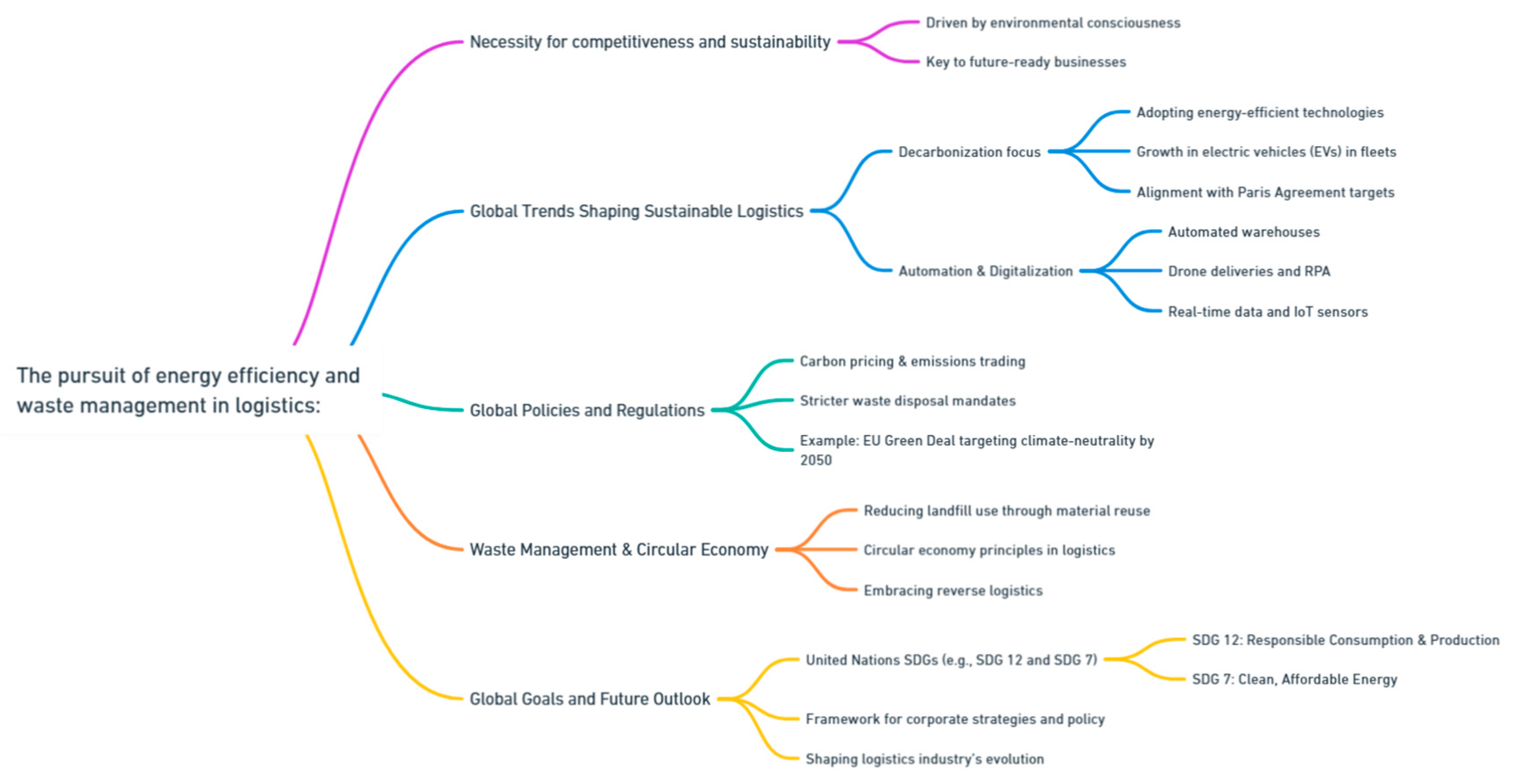
The pursuit of energy efficiency and effective waste management in logistics is no longer a choice but a necessity for businesses aiming to remain competitive and sustainable in an increasingly environmentally conscious world. This conclusion ties together the key trends, policies, and global goals that are shaping the future of sustainable logistics, emphasizing how the industry must evolve to address critical environmental challenges. The future outlook for energy efficiency and waste management in logistics is shaped by several global trends and technological advancements. One of the most significant trends is the shift toward decarbonization. With growing concerns about climate change, reducing carbon emissions is a key focus for logistics companies. The adoption of energy-efficient technologies—such as electric vehicles (EVs), fuel-efficient engines, and renewable energy sources—will continue to gain momentum. EVs, in particular, are set to become a staple in logistics fleets, driven by advances in battery technology, government incentives, and the declining cost of ownership. This shift is essential for meeting international climate targets such as those outlined in the Paris Agreement. In addition, automation and digitalization are playing transformative roles in making logistics more energy-efficient. Automated warehouses, drone deliveries, and robotic process automation (RPA) streamline operations and reduce energy consumption by optimizing workflows, reducing idle times, and minimizing waste. Digital tools, such as real-time data analytics and Internet of Things (IoT) sensors, enable companies to better monitor energy usage, waste production, and resource allocation. These technologies provide greater visibility into supply chain processes, allowing logistics managers to identify inefficiencies and make more informed decisions that contribute to energy savings and waste reduction. Global policies are also driving energy efficiency and waste management in logistics. Governments around the world are implementing stricter regulations on emissions, energy consumption, and waste disposal (Khanna et al., 2021; Ghobadi et al., 2022).
Policies like carbon pricing, emissions trading systems, and waste reduction mandates are incentivizing logistics companies to invest in cleaner technologies and adopt more sustainable practices. The European Union’s Green Deal, for example, aims to make the continent climate-neutral by 2050, with a strong focus on transforming transport and logistics through decarbonization and circular economy principles. Similar policies are being adopted in other regions, pushing companies to meet higher environmental standards. Waste management in logistics is increasingly tied to the concept of the circular economy, where materials are reused, recycled, or repurposed to minimize waste generation. In the future, logistics companies will need to embrace more circular practices, such as designing supply chains that prioritize reverse logistics, where returned or discarded products are collected for recycling or reuse. This not only reduces landfill waste but also conserves energy by minimizing the need for new raw materials. Advances in recycling technologies will further enhance the ability to recover valuable materials from waste, turning it into a resource rather than a burden. Looking ahead, the global goals for sustainable logistics, such as the United Nations’ Sustainable Development Goals (SDGs), provide a clear framework for the future. SDG 12, which focuses on responsible consumption and production, directly ties into waste management by encouraging the reduction of waste and the promotion of recycling. SDG 7, which promotes affordable and clean energy, underscores the importance of energy efficiency in all sectors, including logistics. These global goals will continue to influence corporate sustainability strategies and government policies, shaping the logistics industry for years to come. In conclusion, energy efficiency and waste management in logistics are critical pillars of sustainable logistics. The future of the industry will be defined by the widespread adoption of cleaner technologies, the implementation of policies that encourage sustainable practices, and the achievement of global environmental goals. Logistics companies that invest in energy efficiency and waste management will not only reduce their environmental impact but also enhance their long-term competitiveness and resilience in a rapidly changing world. By embracing innovation and sustainability, the logistics sector can drive meaningful progress toward a more sustainable future (Wang and Tian, 2023; Bai et al., 2022; Seroka-Stolka, 2014).
Preprints 139811 i072

9. Case Studies Examples of Green Logistics Initiatives

Green logistics refers to the collective efforts within the logistics and supply chain sectors to minimize environmental impact while maintaining operational efficiency and profitability. As global industries face increasing pressure from regulators, consumers, and environmental advocacy groups to reduce their carbon footprints, logistics companies have had to adopt sustainable practices to keep pace. These pressures are driven by heightened awareness of climate change and the urgent need to reduce emissions across all sectors. Green logistics initiatives encompass a wide array of strategies, including reducing greenhouse gas emissions, optimizing transportation routes, improving energy efficiency, and integrating renewable energy sources into operations. These efforts not only aim to protect the environment but also contribute to long-term business resilience, improving both economic performance and corporate responsibility. The role of sustainability is particularly critical in logistics due to its integral position in global commerce. Logistics systems facilitate the movement of goods worldwide, making them a cornerstone of trade and business. However, the sector is also responsible for significant greenhouse gas emissions, particularly from road and maritime transport, which are among the most carbon-intensive industries globally. The rise of e-commerce and globalization has only exacerbated these challenges, as it has led to greater demand for transportation, warehousing, and distribution services. The rapid growth of e-commerce has added more vehicles to the road, more shipping vessels to the seas, and more warehouses to the landscape, all of which contribute to increased energy use and emissions. To address these environmental impacts, leading logistics providers have implemented green initiatives aimed at reducing their carbon footprint while maintaining sustainable growth. These green logistics strategies are driven not only by regulatory requirements but also by growing consumer demand for environmentally responsible products and services. Consumers today are more likely to support companies that demonstrate a genuine commitment to sustainability. Consequently, businesses in the logistics sector are increasingly adopting green solutions as a competitive differentiator, aligning with both customer values and corporate social responsibility goals. In this essay, we will examine four notable case studies of companies that have implemented green logistics initiatives: DHL, UPS, Maersk, and IKEA. These companies have emerged as leaders in sustainable logistics through innovative approaches to energy efficiency, emission reductions, and the use of renewable energy (Kurbatova et al., 2020; Karia and Asaari, 2016).
  • DHL: A Leader in Green Logistics: DHL, one of the largest logistics companies in the world, has made significant strides in its efforts to reduce carbon emissions and enhance sustainability. The company’s "Mission 2050: Zero Emissions" initiative is one of the most ambitious green logistics strategies in the sector. DHL aims to achieve zero emissions across all its operations by 2050, aligning with global climate targets. To reach this goal, DHL has invested heavily in electric vehicles, sustainable aviation fuels, and route optimization technologies. Additionally, the company has implemented green warehousing solutions, such as the use of solar panels on warehouse roofs and energy-efficient lighting systems. DHL's emphasis on electrifying its fleet is particularly notable. The company has introduced electric delivery vans in urban areas to reduce air pollution and decrease reliance on fossil fuels. This initiative has not only contributed to lowering carbon emissions but has also helped DHL reduce operating costs by minimizing fuel expenses and maintenance requirements. The company’s commitment to green logistics has positioned it as a leader in sustainability within the industry, setting a high standard for other logistics providers (von Storch, 2020; DeWeerdt et al., 2022).
  • UPS: Sustainable Innovation in Logistics: UPS is another logistics giant that has embraced green logistics as a core part of its strategy. The company has developed a comprehensive approach to reducing emissions, focusing on fleet optimization, alternative fuel use, and the expansion of its carbon-neutral delivery options. UPS’s "Rolling Laboratory" initiative is a notable example of its commitment to sustainability. Through this program, UPS tests various alternative fuel vehicles, including electric, hybrid, and natural gas-powered trucks, to determine the best technologies for reducing emissions in its fleet. UPS has also invested in advanced technologies to improve the efficiency of its operations. The company uses data analytics and artificial intelligence to optimize delivery routes, reducing fuel consumption and emissions. By minimizing the number of miles traveled and avoiding unnecessary stops, UPS has been able to reduce its overall carbon footprint while maintaining high levels of service (Treyman and Kopanskaj, 2024; Teixeira et al., 2021).
  • Maersk: Leading the Way in Maritime Sustainability: Maersk, one of the largest container shipping companies in the world, has taken significant steps to reduce the environmental impact of maritime logistics. The shipping industry is a major contributor to global carbon emissions, and Maersk has committed to achieving net-zero emissions by 2040. To achieve this ambitious target, the company is investing in alternative fuels, such as biofuels and ammonia, which produce fewer emissions compared to traditional marine fuels. Maersk is also exploring the use of zero-carbon vessels, which are powered by renewable energy sources like wind and solar. These vessels have the potential to revolutionize the shipping industry by dramatically reducing its carbon footprint. Additionally, Maersk has implemented measures to improve the energy efficiency of its existing fleet, including hull modifications and the use of advanced engine technologies that reduce fuel consumption (Lin et al., 2023).
  • IKEA: Sustainable Logistics from Production to Delivery: IKEA, known for its commitment to sustainability in its products and operations, has extended its green initiatives to its logistics network. The company has implemented a range of strategies to reduce its carbon footprint, including the use of electric vehicles for last-mile deliveries and the optimization of its global supply chain. IKEA's goal is to achieve 100% zero-emission home deliveries by 2025, making it a frontrunner in sustainable logistics among retailers. In addition to its transportation initiatives, IKEA is also focused on waste reduction in its supply chain. The company has implemented circular economy principles, which involve designing products that can be easily recycled or repurposed, reducing the amount of waste generated during production and distribution. By incorporating sustainability into every aspect of its logistics operations, IKEA has set a strong example for other companies to follow. Green logistics is an essential component of modern supply chains as industries grapple with the need to reduce their environmental impact. Companies like DHL, UPS, Maersk, and IKEA have demonstrated that it is possible to achieve sustainability while maintaining efficiency and profitability. Through initiatives like fleet electrification, alternative fuels, route optimization, and circular economy principles, these companies are leading the way toward a more sustainable future in logistics. As consumer demand for green products and services continues to grow, logistics companies that prioritize sustainability will be well-positioned to thrive in a rapidly changing market (Anosike et al., 2023; Pilati et al., 2020).
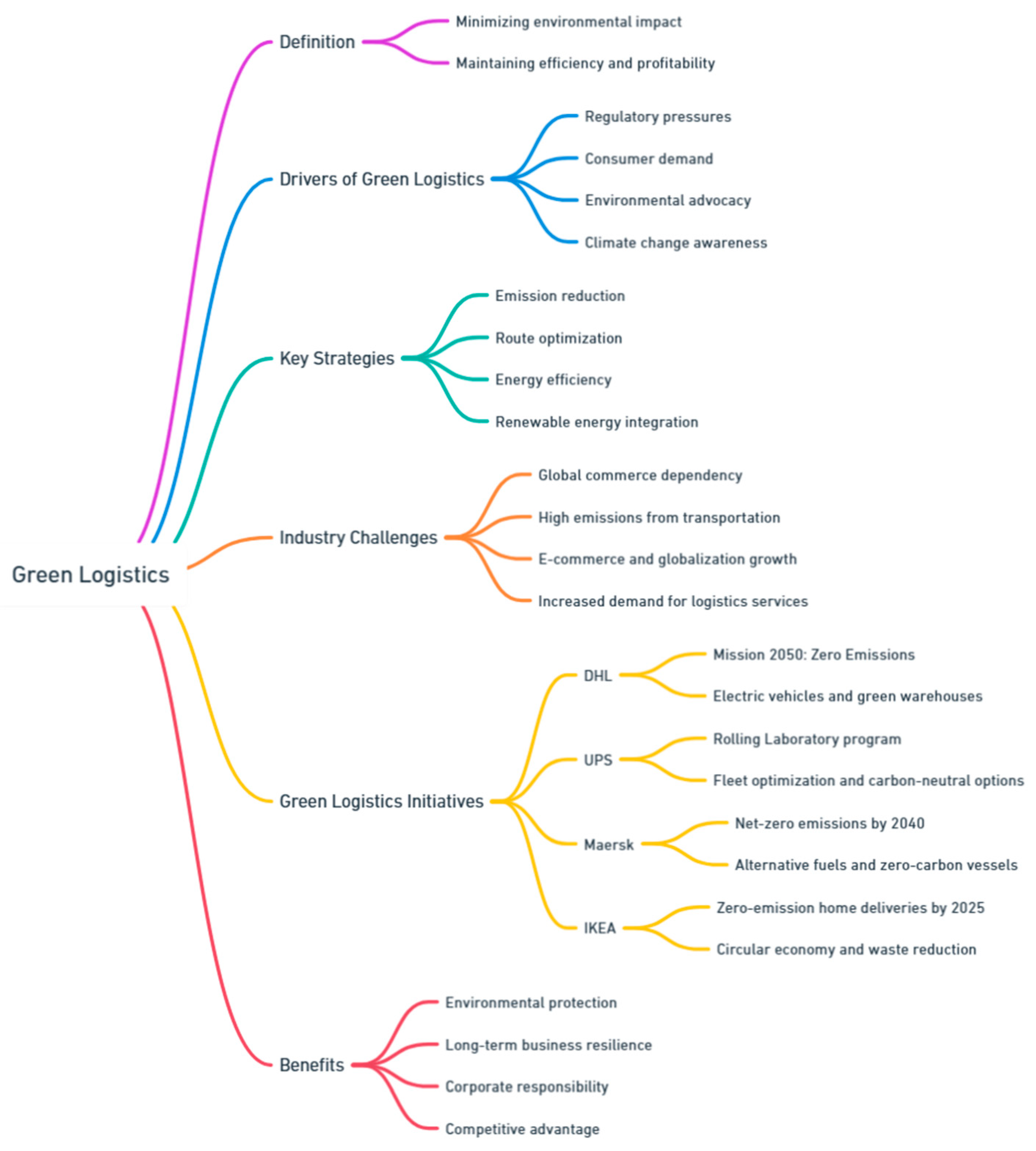
Preprints 139811 i073

9.1. Case Study 1: DHL’s GoGreen Program

DHL, one of the world’s leading logistics companies, has positioned itself as a pioneer in the realm of sustainable logistics through its comprehensive GoGreen program. Launched in 2008, the GoGreen initiative was designed with a primary focus on reducing the company’s environmental impact by enhancing energy efficiency, investing in green technologies, and adopting more sustainable transportation methods. As part of the Deutsche Post DHL Group, DHL’s strategy underscores the company’s commitment to making logistics operations more environmentally responsible while maintaining profitability. This dual focus on sustainability and business performance makes DHL a model for other logistics companies seeking to align economic goals with environmental responsibility. By actively integrating sustainability into its core operations, DHL showcases how logistics companies can reduce their carbon footprint while enhancing operational efficiency. This comprehensive approach has led DHL to make significant strides toward reducing its environmental impact, as it looks to set the standard for green logistics in the global supply chain (von Storch, 2020; DeWeerdt et al., 2022).
Specific Initiatives Under GoGreen:
  • Carbon Efficiency: One of the main pillars of DHL’s GoGreen program is improving carbon efficiency across its operations. DHL has set an ambitious long-term goal of achieving zero emissions by 2050, a target that underscores the company’s commitment to combatting climate change. To reach this objective, DHL has implemented a wide range of measures aimed at reducing the carbon footprint of its global operations. One of the key strategies involves optimizing delivery routes. By using advanced route planning software, DHL reduces fuel consumption and greenhouse gas emissions by finding the most efficient paths for its vehicles. This minimizes both the distance traveled and the time spent idling, which are major contributors to fuel wastage in logistics. Additionally, DHL has worked to reduce empty runs—trips where vehicles travel without cargo—which further decreases unnecessary emissions. In its facilities, DHL has focused on increasing energy efficiency through smart building technology. The company has introduced energy management systems that monitor and optimize energy use in real-time, reducing energy consumption in warehouses and distribution centers. DHL has also invested in renewable energy sources, such as solar panels and wind turbines, to power its facilities. These renewable energy investments help reduce the carbon footprint associated with logistics infrastructure while enhancing energy security (Yuan et al., 2023; Meneghetti and Ceschia, 2020).
  • Alternative Fuel Technologies: DHL’s commitment to sustainability is also evident in its investment in alternative fuel technologies. The company recognizes that traditional fossil fuels are a major contributor to carbon emissions, particularly in the transport sector, and has made significant efforts to transition to cleaner energy sources. Electric vehicles (EVs) have become a key component of DHL’s fleet, especially for urban deliveries. EVs produce zero tailpipe emissions, making them an ideal solution for reducing pollution in densely populated areas where air quality is a major concern. By integrating EVs into its delivery network, DHL is not only reducing its environmental impact but also setting a precedent for the logistics industry in terms of sustainable urban transportation. In addition to EVs, DHL is exploring hydrogen-powered trucks for long-haul transport. Hydrogen fuel cells offer a promising alternative to conventional diesel trucks, especially for longer-distance routes where battery-powered vehicles may not yet be practical. Hydrogen trucks emit only water vapor, making them a highly sustainable option for reducing emissions in the freight sector. By testing and potentially deploying hydrogen-powered vehicles, DHL aims to push the boundaries of what is possible in green logistics (Li et al., 2022; Qian and Li, 2023).
  • Green Transport Solutions: Beyond vehicle electrification, DHL has explored other innovative green transport solutions as part of its GoGreen program. For example, the company employs bicycles for last-mile deliveries in urban areas. This not only cuts down on emissions but also helps reduce traffic congestion in cities, providing an efficient and eco-friendly solution for short-distance deliveries. Additionally, DHL has expanded its use of rail freight as a lower-carbon alternative to road and air transport for longer distances. Rail systems produce significantly fewer emissions than trucks or planes, making them a more sustainable option for transporting goods across large geographical areas. By shifting more of its freight to rail networks, DHL is reducing its reliance on carbon-intensive transportation methods and lowering its overall environmental impact (Vasiutina et al., 2021; Sun, 2020).
  • Results and Impact: DHL’s GoGreen program has yielded substantial results in both environmental and business performance. By 2023, the company had achieved a 35% improvement in carbon efficiency compared to its baseline year of 2007. This progress is the result of its continued investment in energy-efficient technologies, alternative fuel vehicles, and green transportation methods. In urban areas, the adoption of electric vehicles and bicycles for last-mile deliveries has not only reduced emissions but also improved delivery times. This is particularly important in densely populated cities, where traffic congestion and pollution are major challenges. DHL’s commitment to greener logistics has enhanced its reputation as a socially responsible company, strengthening customer loyalty and brand value. Consumers and businesses alike are increasingly prioritizing sustainability when choosing logistics partners, and DHL’s proactive approach to environmental responsibility positions it as a leader in this space. DHL’s green initiatives have also helped the company reduce operational costs. By optimizing routes and increasing energy efficiency, DHL has been able to lower fuel consumption and utility expenses. These cost savings, combined with the long-term benefits of investing in renewable energy and alternative fuel technologies, demonstrate how sustainability can also contribute to business profitability (DeWeerdt et al., 2022; Trinks et al., 2020).
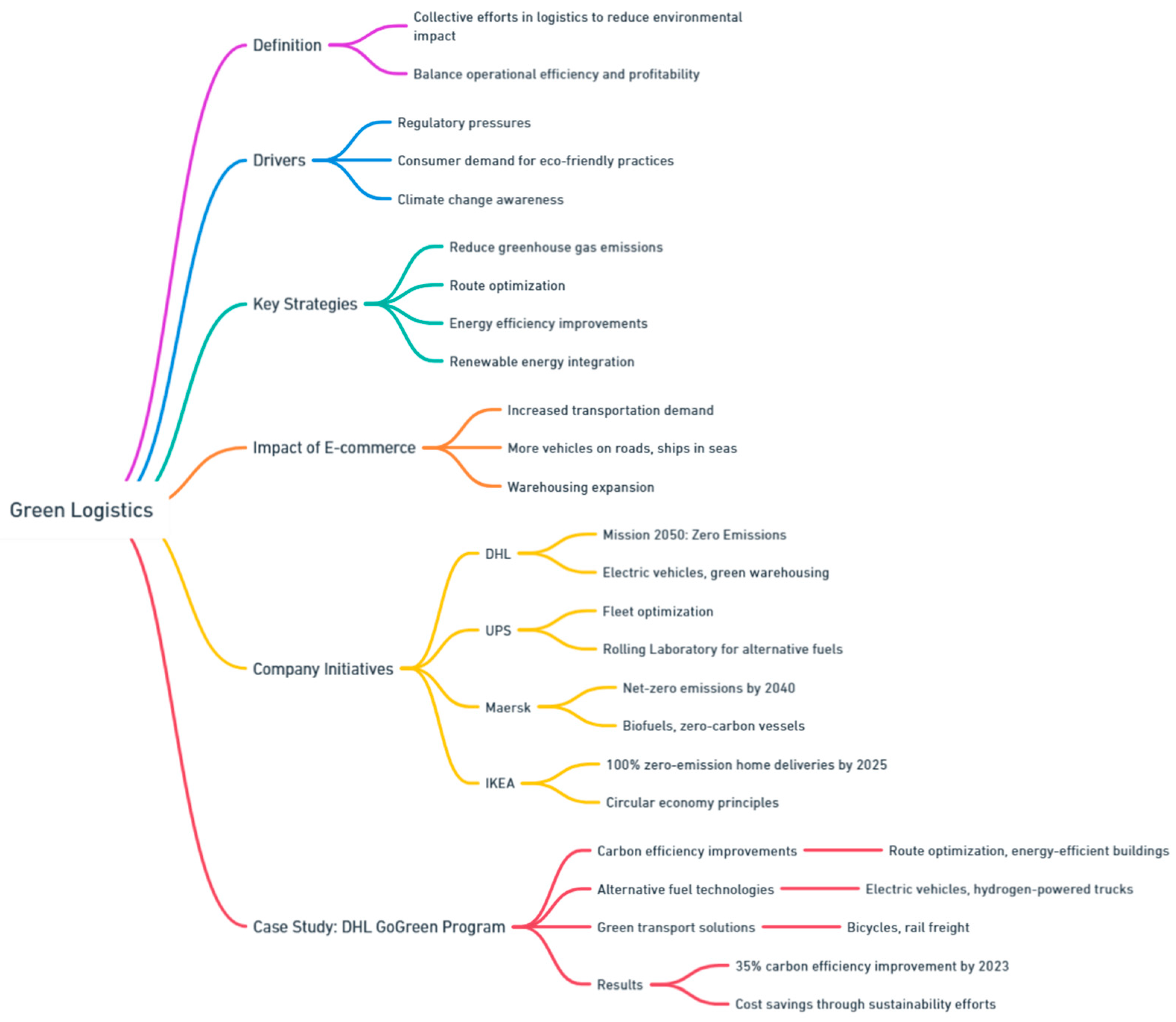
DHL’s GoGreen program exemplifies how logistics companies can successfully balance environmental responsibility with operational efficiency and profitability. Through initiatives aimed at improving carbon efficiency, investing in alternative fuel technologies, and adopting green transport solutions, DHL has made significant strides in reducing its carbon footprint and promoting sustainability in the logistics industry. Its ambitious goal of achieving zero emissions by 2050 highlights the company’s commitment to long-term environmental stewardship. As DHL continues to innovate and lead in green logistics, it sets an important example for other companies in the sector to follow, proving that sustainability and business success can go hand in hand (Dudin et al., 2016; Wehner et al., 2021; Iqbal et al., 2020).
Preprints 139811 i074

9.2. Case Study 2: UPS’s Global Sustainability Efforts

United Parcel Service (UPS) is one of the largest and most recognized logistics companies in the world, providing a wide range of services that include package delivery, freight transportation, and supply chain management. As global logistics has expanded due to the rise of e-commerce, UPS has faced increasing challenges to meet the demand for fast, efficient deliveries while minimizing its environmental impact. Recognizing the significant carbon footprint associated with logistics, UPS has implemented a broad range of sustainability initiatives to address these concerns. UPS’s sustainability strategy revolves around three key objectives: reducing greenhouse gas emissions, improving fuel efficiency, and embracing the circular economy to reduce waste. This forward-thinking approach not only helps mitigate the company’s environmental impact but also ensures that UPS remains competitive in a world where consumers and businesses are increasingly conscious of their carbon footprints. With its extensive global network, UPS’s actions in sustainable logistics have the potential to drive significant environmental improvements across the entire supply chain (Mohapatra, 2023; Jakubelskas and Skvarciany, 2023).
Key Green Initiatives:
  • Renewable Energy Use: A central pillar of UPS’s sustainability strategy is its commitment to renewable energy. The company has made substantial investments in clean energy to power its logistics infrastructure, particularly its distribution centers and other operational facilities. UPS has installed solar panels on many of its facilities, which generate renewable electricity and reduce its dependence on fossil fuels. By doing so, UPS contributes to the global effort to decarbonize energy production while working toward its own corporate sustainability goals. UPS’s renewable energy investments align with its broader environmental targets, including its long-term goal of achieving carbon neutrality. The transition to renewable energy not only reduces greenhouse gas emissions but also helps mitigate the volatility of fossil fuel prices, offering the company a more stable and sustainable energy supply. Furthermore, UPS’s use of renewable energy serves as a blueprint for other companies in the logistics industry, demonstrating that large-scale adoption of clean energy is feasible and beneficial. Beyond solar power, UPS has explored other renewable energy sources, such as wind and biofuels, to further diversify its energy portfolio. By integrating renewable energy into its operations, UPS is reducing its environmental impact while showcasing leadership in corporate sustainability (Potrč et al., 2021; Boztepe and Çetin, 2020).
  • Electric Vehicle (EV) Fleet: One of the most visible components of UPS’s sustainability efforts is its rapidly growing fleet of electric vehicles (EVs). Transportation accounts for a significant portion of carbon emissions in logistics, and UPS has recognized that transitioning to EVs is essential for reducing its environmental footprint. The company has made substantial investments in light-duty EVs for package delivery in urban areas, where the density of deliveries and shorter distances make electric vehicles particularly effective. UPS’s electric fleet is designed to minimize emissions in congested urban environments, where traffic and frequent stops often lead to higher fuel consumption in traditional vehicles. EVs offer a cleaner alternative, as they produce no tailpipe emissions, which improves air quality and reduces the company’s carbon footprint. In addition to reducing emissions, EVs also lower operational costs over time due to the reduced need for fuel and maintenance. Beyond light-duty vehicles, UPS is also exploring electric and hybrid solutions for its larger, heavy-duty trucks, which traditionally have been responsible for a significant portion of its transportation-related emissions. These heavy-duty vehicles are used for longer hauls and heavier loads, which pose greater challenges for electrification. However, UPS has been at the forefront of testing and adopting new technologies that can help bridge this gap, such as electric-assisted trucks and hybrid systems that combine electric power with traditional fuel engines to reduce overall emissions. UPS has set ambitious targets for expanding its EV fleet, with the goal of making a significant portion of its vehicle fleet electric by the coming decades. As the technology continues to improve and become more cost-effective, the company will be well-positioned to lead the logistics industry toward a more sustainable future (Anosike et al., 2023; Mohammed and Villegas, 2023).
  • Circular Economy Partnerships: In addition to reducing emissions, UPS has embraced the principles of the circular economy to minimize waste and promote sustainability throughout its supply chain. The circular economy focuses on keeping products, materials, and resources in use for as long as possible, reducing waste and the need for new raw materials. UPS has forged partnerships with organizations like TerraCycle to support these initiatives, providing innovative solutions that encourage recycling and waste reduction. Through its collaboration with TerraCycle, UPS offers zero-waste shipping solutions, allowing customers to return used packaging materials for recycling rather than discarding them. This initiative is part of UPS’s broader effort to minimize the environmental impact of its packaging and promote a more sustainable approach to shipping. The company has also introduced reusable packaging options for businesses and consumers, further reducing waste in the logistics chain. UPS’s commitment to the circular economy extends beyond packaging. The company is actively involved in optimizing reverse logistics, which focuses on returning, refurbishing, and recycling products that have reached the end of their life cycle. This approach not only minimizes waste but also creates new opportunities for recycling and repurposing materials that would otherwise be discarded. By integrating circular economy principles into its logistics operations, UPS is helping to reduce the environmental impact of global supply chains and promoting a more sustainable business model (Khan et al., 2022; Lai et al., 2022).
  • Impact on Environmental Performance and Business Growth: UPS’s sustainability initiatives have had a profound effect on both its environmental performance and business growth. The company has made significant strides in reducing its carbon footprint, cutting its carbon emissions per package by 14% since 2010. This progress is a direct result of its investments in renewable energy, electric vehicles, and circular economy partnerships. As UPS continues to expand these initiatives, it is likely to see further reductions in its overall environmental impact. Beyond the environmental benefits, UPS’s green initiatives have also contributed to the company’s business success. In a world where consumers and businesses are increasingly prioritizing sustainability, UPS’s commitment to reducing its carbon footprint has positioned it as a leader in sustainable logistics. This reputation has helped the company attract eco-conscious customers and partners, strengthening its competitive position in the market. Many businesses are seeking logistics partners that align with their own sustainability goals, and UPS’s proactive approach makes it an appealing choice for these companies. Moreover, UPS’s sustainability initiatives have also driven operational efficiencies. By adopting electric vehicles and optimizing its delivery routes through data analytics, the company has been able to reduce fuel costs and improve delivery times. These improvements not only lower costs but also enhance customer satisfaction, further solidifying UPS’s reputation as a leader in logistics (Liu et al., 2020; Tang et al., 2022).
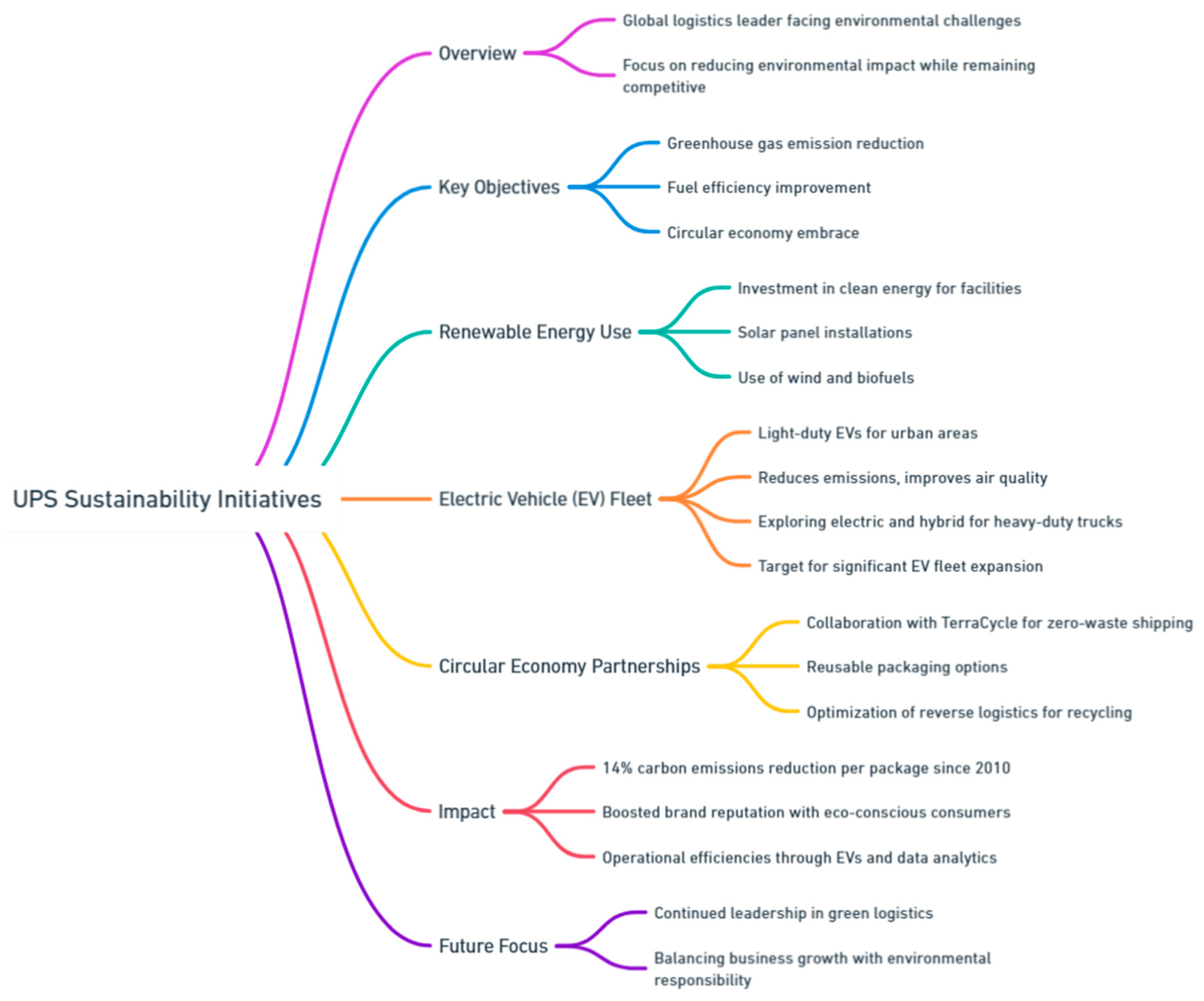
UPS’s role in logistics is more than just delivering packages—it is about driving the industry toward a more sustainable future. Through its key initiatives in renewable energy use, electric vehicle adoption, and circular economy partnerships, UPS has demonstrated its commitment to reducing its environmental impact while continuing to grow its business. The company’s investments in sustainability are paying off in terms of reduced emissions, operational efficiencies, and enhanced brand reputation. As the logistics industry continues to evolve, UPS’s focus on sustainability will remain a critical driver of its success. By positioning itself as a leader in green logistics, UPS is not only helping to protect the environment but also ensuring that it remains at the forefront of the industry. The company’s commitment to sustainability serves as a model for other logistics companies, illustrating that it is possible to balance business growth with environmental responsibility. Through continued innovation and collaboration, UPS is paving the way for a greener, more efficient global logistics network (Bonsu, 2020; Cao et al., 2021).
Preprints 139811 i075

9.3. Case Study 3: Maersk's Carbon Neutral Shipping Strategy

Moller–Maersk, headquartered in Copenhagen, Denmark, is the world’s largest container shipping company, playing a critical role in global trade. As a leader in the maritime industry, Maersk operates across 130 countries, facilitating the movement of goods on a global scale. The company has long recognized its influence on the global economy and the environmental footprint that comes with its operations. The maritime shipping sector accounts for approximately 3% of global carbon emissions, and as global trade continues to expand, that percentage could rise if the industry does not implement more sustainable practices. Recognizing this, Maersk has positioned itself as a leader in sustainability by embracing a comprehensive green logistics strategy. The company is taking active steps to mitigate the environmental impacts of its operations, focusing particularly on decarbonizing maritime transport. Through the use of alternative fuels, energy-efficient technologies, and innovative logistical practices, Maersk aims to significantly reduce its carbon emissions, setting ambitious goals that are reshaping the shipping industry.
Maersk's green logistics strategy is centered on several key initiatives aimed at decarbonizing its shipping operations. These initiatives underscore the company’s commitment to addressing climate change and leading the way for the global shipping industry.
  • Biofuels and Alternative Energy: One of the most critical components of Maersk’s sustainability strategy is the adoption of biofuels and alternative energy sources. Traditional marine fuels, such as heavy fuel oil, are notorious for their high carbon content and negative environmental impacts. Maersk has taken a significant step toward reducing its reliance on fossil fuels by investing in advanced biofuels. These biofuels are typically derived from waste materials such as used cooking oil, agricultural residues, and other non-food biomass, making them a more sustainable option. When used in place of conventional fuels, these biofuels can reduce carbon emissions by up to 85%. In addition to biofuels, Maersk is actively exploring other alternative fuels, such as ammonia and methanol. Both ammonia and methanol hold great potential as low-carbon fuel alternatives in the maritime industry. Ammonia, in particular, is an attractive option because it does not emit CO2 when burned. However, there are still technical and safety challenges to overcome before ammonia can be widely adopted, such as the need for new engine designs and infrastructure for fuel storage and distribution. Methanol, on the other hand, offers a more immediate solution since it can be used with minor modifications to existing ship engines, and it produces fewer emissions than traditional fuels. By exploring these alternative energy sources, Maersk is preparing itself for the future of shipping, which will likely rely on a diversified energy mix rather than a single solution. The company's investments in these technologies not only reduce its carbon footprint but also signal a broader shift in the industry toward more sustainable fuel sources (Xing et al., 2021; Al-Aboosi et al., 2021).
  • Decarbonizing Maritime Transport: A key component of Maersk's decarbonization strategy is its commitment to achieving net-zero carbon emissions from its shipping operations by 2040. This goal is particularly ambitious, as it is set a full decade ahead of the broader maritime industry's target of achieving net-zero emissions by 2050. To meet this goal, Maersk is implementing a variety of measures designed to improve the energy efficiency of its fleet and reduce overall emissions. One of these measures is the design of more energy-efficient ships. Maersk is investing in new ship designs that reduce drag and improve fuel efficiency. These ships are built with more hydrodynamic hull shapes, energy-saving technologies like air lubrication systems, and advanced propulsion methods that reduce energy consumption. Additionally, Maersk is deploying vessels that can be retrofitted to run on alternative fuels, ensuring they are prepared for future fuel transitions as new technologies become available. Another key initiative is route optimization. By using advanced data analytics and artificial intelligence, Maersk can plan more efficient shipping routes that reduce fuel consumption. These optimized routes take into account variables such as weather conditions, currents, and port congestion to minimize delays and ensure the most efficient use of fuel. This not only reduces emissions but also lowers operating costs, creating a win-win scenario for both the environment and Maersk’s bottom line. Maersk has also embraced the practice of slow steaming, where ships reduce their speed to cut fuel consumption. While this practice lengthens transit times, the fuel savings are significant. By slowing down its vessels, Maersk can dramatically cut emissions, as fuel consumption and CO2 emissions increase exponentially with higher speeds. Slow steaming has become a common practice across the industry, but Maersk's adoption of it on a wide scale underscores its commitment to sustainability (Pelić et al., 2023; Goicoechea and Abadie, 2021).
  • Challenges and Outcomes: While Maersk's green logistics initiatives represent a significant step forward for the maritime industry, the company still faces considerable challenges in its efforts to decarbonize shipping. One of the primary challenges is the global scale of shipping operations. Maersk operates over 700 vessels worldwide, and transitioning such a large fleet to alternative fuels and more energy-efficient technologies will require substantial investment and time. Furthermore, the global shipping industry is reliant on a vast infrastructure of ports, refueling stations, and supply chains that are not yet equipped to handle new fuel types such as ammonia and methanol. Another challenge is the current technological limitations of alternative fuels. While biofuels, ammonia, and methanol show promise, they are still in the early stages of adoption. Significant research and development are needed to scale these technologies, reduce costs, and ensure they can be safely and efficiently integrated into existing maritime operations. There is also the issue of fuel availability. For alternative fuels to become widely adopted, there must be a global supply network capable of supporting them. Despite these challenges, Maersk has already made impressive progress. Since 2008, the company has reduced its emissions intensity by 41%, a significant achievement that sets a benchmark for the entire industry. This reduction has been made possible through the combined efforts of energy-efficient ship designs, alternative fuels, and operational changes such as route optimization and slow steaming (Farrukh et al., 2023; Curran et al., 2024).
  • The Future of Sustainable Shipping: Looking ahead, Maersk’s leadership in green logistics is likely to have a ripple effect across the global shipping industry. As one of the largest players in the market, Maersk’s sustainability initiatives set a high standard for other shipping companies, encouraging them to adopt similar measures to reduce their carbon footprint. The company’s commitment to net-zero emissions by 2040 also aligns with broader global sustainability goals, such as those outlined in the Paris Agreement and the United Nations’ Sustainable Development Goals (SDGs). Furthermore, as consumers and businesses alike become more conscious of their environmental impact, the demand for green shipping solutions will continue to grow. Companies like Maersk that invest in sustainability will be better positioned to meet this demand, gaining a competitive edge in the marketplace. In conclusion, Maersk’s green logistics initiatives represent a bold and forward-thinking approach to reducing the environmental impact of maritime shipping. By investing in alternative fuels, energy-efficient technologies, and innovative operational practices, Maersk is leading the way toward a more sustainable future for the shipping industry. While challenges remain, the company’s progress to date demonstrates that decarbonizing shipping is not only achievable but also essential for the future of global trade (Bullock et al.,2022).
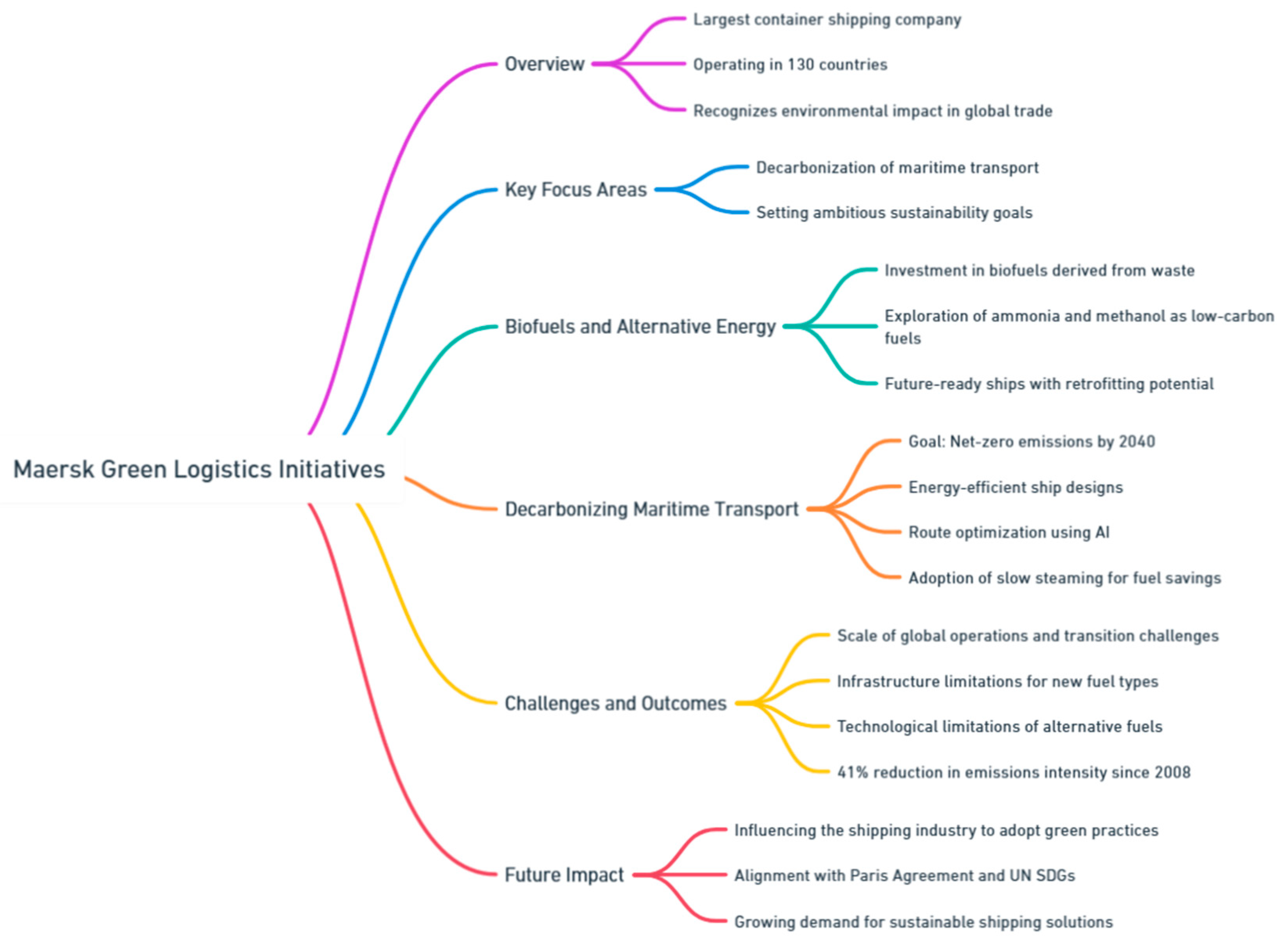
Preprints 139811 i076

9.4. Case Study 4: IKEA’s Sustainable Supply Chain

IKEA, the Swedish furniture giant, has long been recognized not only for its affordable and innovative home furnishings but also for its strong commitment to sustainability. As part of its broader business strategy, IKEA has integrated sustainability into its logistics and supply chain operations, making it a central focus of its mission to reduce its environmental footprint. Given the company’s global network of suppliers, distribution centers, and customer touchpoints, sustainable logistics plays a crucial role in reducing the company’s overall impact on the environment. IKEA’s sustainability efforts span the entire product lifecycle, from sourcing raw materials to the transportation and delivery of products, embodying a holistic approach to sustainability. IKEA’s commitment to sustainability within its logistics and supply chain operations is grounded in several key initiatives that target different stages of the logistics process, each designed to reduce the company’s environmental impact while simultaneously promoting efficiency (Chusnia, 2022).
  • Sustainable Sourcing: One of the core pillars of IKEA’s sustainability strategy is the sustainable sourcing of materials. IKEA has committed to sourcing 100% of its wood, paper, and cardboard from more sustainable sources, with certification from organizations like the Forest Stewardship Council (FSC). This is an important step toward reducing deforestation and preserving biodiversity, both of which are critical for maintaining ecological balance and fighting climate change. By prioritizing sustainable sourcing, IKEA not only ensures that its supply chain is environmentally friendly, but it also sets a standard for ethical business practices across industries. IKEA's approach to sustainable sourcing also extends beyond wood and paper to other raw materials, including cotton and plastics. The company aims to use only sustainably sourced cotton by partnering with initiatives like the Better Cotton Initiative (BCI), which promotes better standards in cotton farming. Furthermore, IKEA is committed to phasing out single-use plastics in its products and packaging by 2025, aligning its material choices with broader sustainability goals (Petrescu et al., 2020; Munoz et al.,2021).
  • Low-Emission Transport: Transportation is one of the largest contributors to greenhouse gas emissions in the logistics industry, and IKEA is tackling this issue head-on by implementing low-emission transport solutions. A key initiative in this area is the use of electric trucks for last-mile delivery in urban areas, which helps to significantly reduce the carbon footprint associated with product transportation. Last-mile delivery often accounts for a disproportionate share of logistics emissions due to the short, frequent trips required to bring products to customers’ homes. By transitioning to electric vehicles (EVs) for these deliveries, IKEA is addressing a critical area of environmental impact. In addition to EVs, IKEA has focused on optimizing its transportation methods by shifting from road and air transport to rail and sea freight wherever possible. Rail and sea transportation have significantly lower carbon footprints compared to air and road transport, which helps to reduce the overall emissions associated with long-distance freight. For instance, sea freight is more energy-efficient, transporting large quantities of goods over long distances using less fuel per item. Rail transport, similarly, is a low-emission option for overland transport that can reduce the carbon intensity of IKEA’s logistics network. To further improve transport efficiency, IKEA is also working closely with logistics providers to enhance load factors and reduce empty miles. This involves optimizing routes and ensuring that delivery trucks and containers are fully loaded during transportation to maximize efficiency and minimize the energy used per item transported. These steps not only help IKEA reduce its environmental impact but also contribute to cost savings through improved fuel efficiency and optimized transport operations (Vajihi and Ricci, 2021; Pilati et al., 2020).
  • Circular Economy and Waste Reduction: Another important element of IKEA’s sustainability efforts in logistics is its commitment to the circular economy. The circular economy concept involves designing products and systems in a way that minimizes waste, promotes reuse, and ensures that materials can be recycled at the end of a product’s life. For IKEA, this means designing products that are easier to disassemble, repair, or recycle. The company has also introduced take-back and recycling programs, allowing customers to return used furniture, which can then be refurbished, resold, or recycled. This focus on circularity is closely linked to IKEA’s broader waste reduction goals. In its logistics operations, the company is working to minimize packaging waste by using more sustainable materials and reducing the amount of packaging used in transporting products. Furthermore, IKEA aims to achieve zero waste to landfill across its entire supply chain, using innovative waste management techniques to ensure that by-products from manufacturing and logistics processes are recycled or reused (Scrioșteanu and Criveanu, 2023; Golinska-Dawson, 2020).
  • Performance and Results: IKEA’s green logistics initiatives have yielded significant results in reducing its overall environmental impact. Since the implementation of its sustainability program, IKEA has reduced its greenhouse gas (GHG) emissions by 15%, which is a substantial achievement considering the scale and complexity of its global operations. This reduction has been made possible through the combination of energy-efficient technologies, smarter logistics planning, and the adoption of low-emission transport solutions. One of the most significant areas of progress has been in the use of electric vehicles for last-mile delivery. As of 2021, IKEA had implemented electric vehicles in several of its key markets, including China, where it has committed to 100% electric deliveries in major cities. This transition to EVs has not only reduced the company’s carbon emissions but has also positioned IKEA as a leader in sustainable logistics innovation. Moreover, IKEA’s efforts to create a circular supply chain have resulted in more sustainable use of resources and a reduction in waste. By designing products that can be reused, refurbished, or recycled, IKEA is making strides toward closing the loop in its supply chain and minimizing the environmental impact of its products even after they leave the store (Cao et al., 2021; Oliveri et al., 2023).
  • The Future of Sustainable Logistics at IKEA: Looking ahead, IKEA’s commitment to sustainability in logistics is set to deepen as the company continues to invest in new technologies and innovative solutions. By 2030, IKEA aims to be climate positive, meaning that it will reduce more emissions than its value chain emits. This ambitious goal will require further integration of renewable energy sources, both in its logistics operations and in its broader business model. IKEA’s vision for the future includes expanding its use of electric vehicles, increasing the share of renewable energy used in its logistics facilities, and enhancing the circularity of its products and processes. The company is also exploring new logistics models, such as urban distribution centers and collaboration with third-party logistics providers, to further optimize its operations and reduce its environmental footprint. In conclusion, IKEA’s focus on sustainability in its logistics operations is a vital part of its overall business strategy. By prioritizing sustainable sourcing, low-emission transport, and circular economy principles, IKEA is not only reducing its environmental impact but also setting a benchmark for sustainability in the global logistics industry. As the company continues to innovate and evolve, it serves as a model for how businesses can integrate sustainability into every aspect of their operations, from the sourcing of materials to the delivery of products to customers’ doorsteps (Stoian, 2023; Pintilie, 2021).
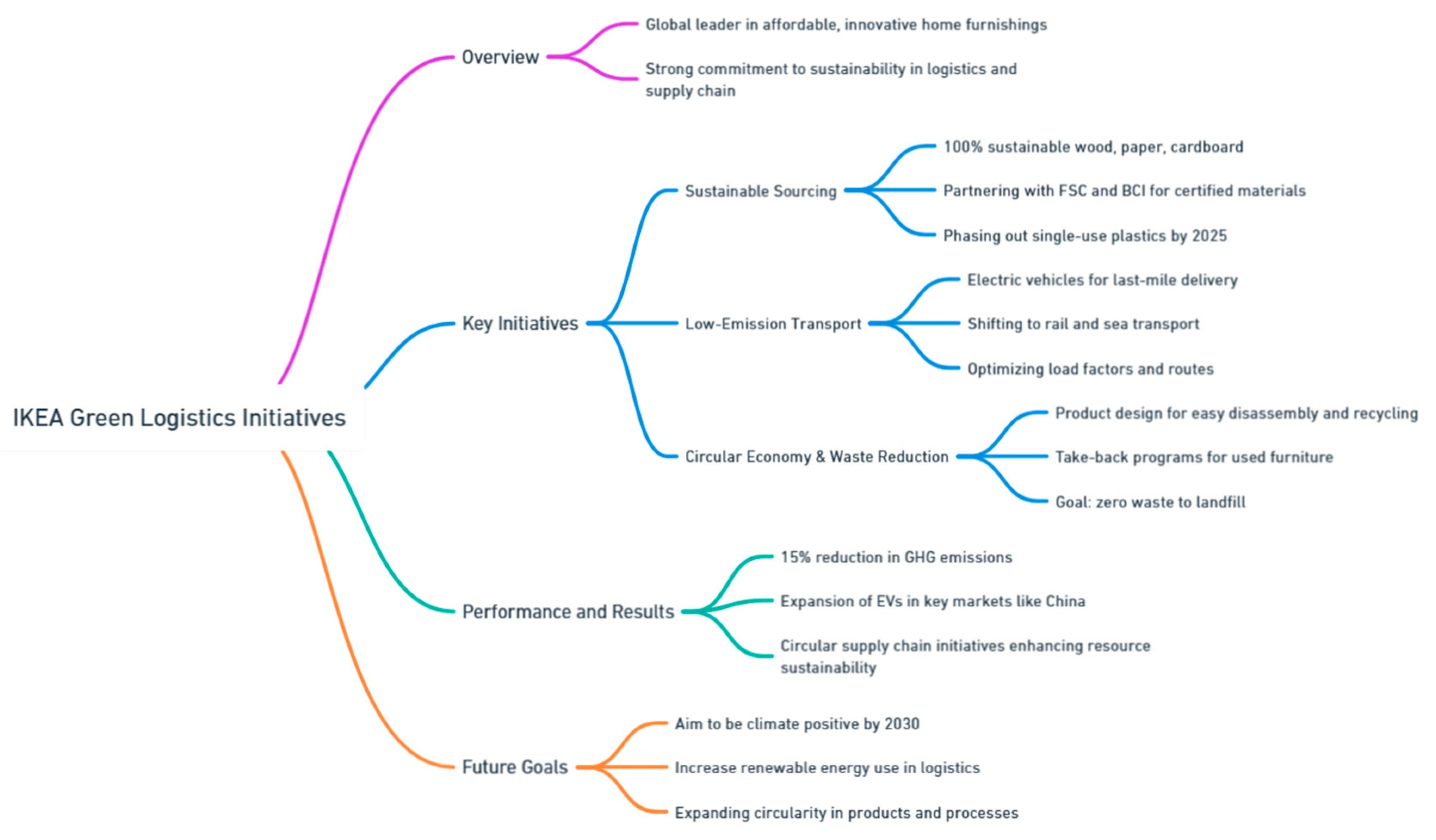
Preprints 139811 i077

9.4. Conclusion

Across the various case studies, several common themes emerge regarding the efforts of logistics companies to reduce their environmental impact. Leading global firms such as DHL, UPS, Maersk, and IKEA are at the forefront of this movement, leveraging technological innovation, alternative fuels, and strategic partnerships to transform their operations and become more sustainable. These companies exemplify how the logistics industry is shifting towards greener practices, with electrification of transport fleets, investment in renewable energy, and the adoption of circular economy principles standing out as key drivers of change.
Technological Innovation and Electrification of Transport Fleets. One of the most significant trends among these logistics giants is the electrification of transport fleets. DHL, UPS, and Maersk, for instance, have invested heavily in electric vehicles (EVs) to replace traditional diesel-powered trucks and ships. This shift is driven by the need to reduce greenhouse gas (GHG) emissions and improve fuel efficiency. EVs not only eliminate tailpipe emissions but also reduce noise pollution, which is particularly beneficial in urban areas. Companies are also adopting hybrid vehicles and exploring hydrogen fuel cell technology to complement their electrification strategies. DHL’s ambitious environmental strategy, known as “GoGreen,” aims to achieve zero-emissions logistics by 2050. A core component of this strategy involves transitioning to an entirely electric vehicle fleet for last-mile delivery, a crucial step in reducing the company’s carbon footprint. Similarly, UPS has committed to purchasing thousands of electric delivery trucks and is piloting the use of electric vertical takeoff and landing (eVTOL) aircraft for small package deliveries. These investments demonstrate that leading logistics firms recognize the potential of electrification to address climate change, reduce operational costs, and meet the growing demand for sustainable transportation solutions. However, the transition to an electric fleet is not without challenges. The high upfront cost of electric vehicles, coupled with the need for extensive charging infrastructure, presents significant barriers. While the total cost of ownership for EVs is expected to decrease as battery technology advances and economies of scale are achieved, these factors currently slow widespread adoption. Additionally, the limited range of many electric trucks compared to diesel-powered alternatives means that companies must carefully plan routes to ensure vehicles can complete deliveries efficiently. Despite these hurdles, the case studies illustrate that electrification is a critical component of long-term sustainability efforts in logistics (Qian and Li, 2023; Atilhan et al., 2021).
Investment in Renewable Energy. In addition to electrifying their fleets, logistics companies are investing in renewable energy sources to power their operations. Renewable energy, such as solar, wind, and bioenergy, offers a sustainable alternative to fossil fuels, which are the primary source of GHG emissions in the logistics industry. By integrating renewable energy into their operations, companies not only reduce their carbon footprints but also decrease reliance on volatile energy markets, which can lead to long-term cost savings. For example, IKEA, known for its environmental leadership, has integrated renewable energy across its supply chain and distribution centers. The company has invested heavily in wind and solar power to run its logistics hubs, warehouses, and stores. It has even gone further by producing more renewable energy than it consumes in certain regions, underscoring its commitment to climate-positive logistics. Maersk, the global shipping giant, has also invested in renewable fuels such as biofuels and green methanol, which it is using to power some of its shipping vessels. These alternative fuels have the potential to significantly reduce emissions from the notoriously carbon-intensive shipping industry. These case studies highlight the importance of renewable energy as part of a comprehensive sustainability strategy. As renewable energy technologies become more cost-effective and scalable, logistics companies are expected to expand their reliance on these sources, particularly in regions where policy incentives and infrastructure support green energy adoption (Khan et al., 2020).
Adoption of Circular Economy Principles. Another common theme across the case studies is the adoption of circular economy principles. The circular economy aims to eliminate waste and promote the continuous use of resources through practices such as recycling, reusing, and refurbishing materials. In logistics, the circular economy manifests through strategies like reverse logistics, where companies take back products for recycling or repurposing, thus reducing waste and conserving resources. IKEA is a notable example of a company implementing circular economy principles in logistics. Through its take-back program, IKEA encourages customers to return used furniture, which is then refurbished or recycled into new products. This approach not only reduces the environmental impact of waste but also aligns with the company’s broader sustainability goals. DHL has also embraced circular logistics by offering specialized services that help companies manage the return and refurbishment of goods, from electronics to clothing, thereby reducing waste and encouraging the reuse of materials. Circular economy principles are becoming increasingly integral to the logistics industry as consumers and regulators demand greater sustainability. These practices not only contribute to environmental goals but also open new revenue streams and cost-saving opportunities for companies. By extending the life cycle of products and minimizing waste, logistics firms can reduce the environmental impact of their operations while enhancing customer loyalty and brand reputation (Scrioșteanu and Criveanu, 2023; Suzanne et al., 2020).
Challenges and Barriers to Green Logistics. Despite the progress made by these leading companies, the logistics industry continues to face several challenges in fully transitioning to sustainable practices. One of the most significant barriers is the high cost associated with adopting new technologies. Electric vehicles, renewable energy infrastructure, and circular economy programs all require substantial upfront investments, which can be prohibitive for smaller companies or those operating on thin margins. Additionally, technological limitations, such as the range and load capacity of electric trucks and the availability of renewable fuels, present further obstacles. Another critical challenge is the need for stronger regulatory support. While many governments have introduced policies to incentivize green logistics, such as subsidies for EVs and renewable energy, more comprehensive frameworks are needed to accelerate the transition. Carbon pricing, stricter emissions standards, and increased funding for research and development in green technologies would all help overcome existing barriers. International cooperation is also essential, given the global nature of logistics networks. Harmonizing standards and regulations across borders would provide a more conducive environment for sustainable logistics practices to flourish (Patyal et al. 2021; Panghal et al., 2024).
Sustainability and Profitability: A Balanced Approach. A key takeaway from the case studies is that sustainability and profitability are not mutually exclusive. In fact, companies that embrace sustainable logistics practices are likely to gain a competitive edge in the long term. As consumer awareness of environmental issues grows, there is increasing demand for products and services that minimize ecological impact. Companies that lead in sustainability are often perceived more favorably by consumers, which can translate into increased customer loyalty and market share. Furthermore, sustainable practices often result in cost savings over time. Energy-efficient technologies, such as electric vehicles and renewable energy, reduce fuel and energy costs, while circular economy strategies reduce waste disposal expenses and create new revenue streams from recycled materials. Additionally, as governments introduce stricter emissions regulations and carbon pricing mechanisms, companies that have already invested in green logistics will be better positioned to comply with these requirements, avoiding potential fines and penalties (Ozbekler and Ozturkoglu, 2020; Tufail and Akhtar, 2022).
The case studies of DHL, UPS, Maersk, and IKEA highlight the transformative potential of green logistics. Through the adoption of technological innovation, investment in renewable energy, and the application of circular economy principles, these companies are reducing their environmental impact while positioning themselves as leaders in sustainable business practices. While challenges such as high costs, technological limitations, and the need for regulatory support remain, the future of logistics is undeniably green. As sustainability becomes central to corporate strategy, companies that embrace green logistics will not only contribute to global environmental goals but also enhance their competitiveness and profitability. The case studies demonstrate that sustainability and profitability are not only compatible but mutually reinforcing. As the logistics industry continues to evolve, those that lead the charge toward sustainability will be well-positioned to thrive in a rapidly changing global economy (Trushkina et al., 2022; Jayarathna et al., 2024; Mak et al., 2022).
Preprints 139811 i078

10. Social Implications of Smart Logistics

10.1. Worker Safety and Labor Conditions in Automated Supply Chains
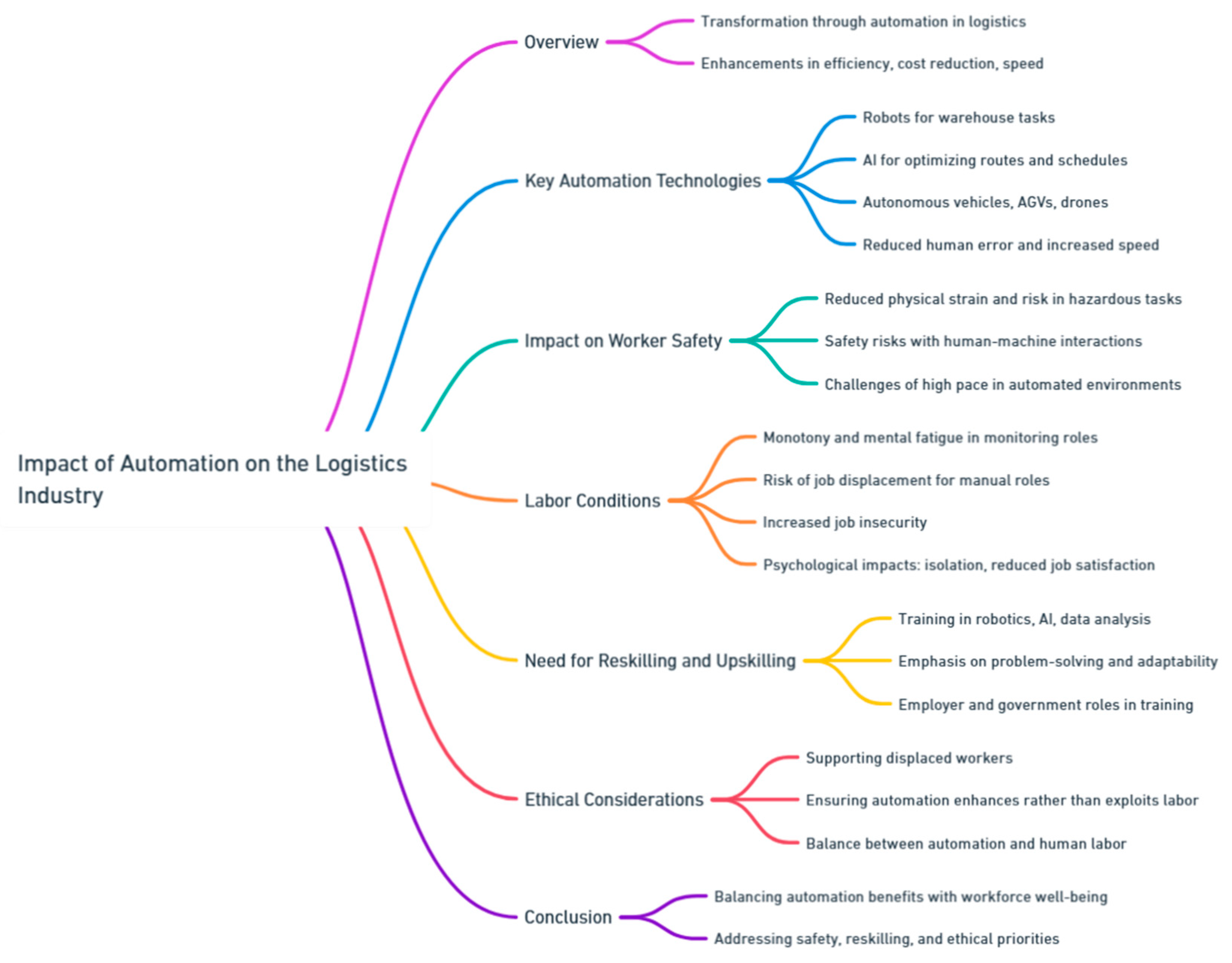
The logistics industry has undergone a significant transformation in recent years, driven by the widespread adoption of automation technologies. From robots handling warehouse operations to artificial intelligence (AI) optimizing transportation routes, automation has revolutionized the logistics sector, improving efficiency, reducing costs, and accelerating delivery times. These advancements have made it possible for companies to meet the growing demands of global trade and e-commerce, where speed and precision are critical. However, this increasing reliance on automation brings both opportunities and challenges, particularly concerning the workforce. While many manual tasks have been replaced by machines, human workers remain crucial in overseeing, maintaining, and collaborating with automated systems. As automation continues to reshape supply chains, concerns regarding worker safety and labor conditions are growing. Workers must now navigate a new landscape where they interact with machines, robots, and AI-driven systems, raising questions about safety protocols, the psychological effects of automation, and the need for reskilling. This paper explores how automation impacts worker safety and labor conditions in logistics, addressing the risks, benefits, and ethical considerations involved. Automation technologies in logistics take many forms, from robotic arms picking and packing items in warehouses to autonomous vehicles transporting goods. AI systems optimize routes and schedules, ensuring that deliveries are made more efficiently. These technologies have transformed how goods are stored, processed, and transported, making logistics operations faster, more reliable, and scalable. For example, automated guided vehicles (AGVs) are increasingly used in warehouses to transport goods without human intervention. Drones and autonomous trucks are being tested for deliveries, while AI-powered algorithms help manage inventory, forecast demand, and optimize supply chain operations. The integration of these technologies reduces human error, increases operational speed, and enables logistics companies to handle larger volumes of goods. However, with these advancements come challenges for the workforce. While automation reduces the need for manual labor in some areas, it creates new roles that require workers to manage and maintain these systems. This shift in job responsibilities presents both opportunities for upskilling and potential risks for those unable to adapt to the new demands. One of the most significant concerns surrounding automation in logistics is worker safety. Automation can reduce the physical strain on workers by taking over repetitive and dangerous tasks, such as heavy lifting or operating machinery in hazardous environments. For instance, in a highly automated warehouse, robots handle tasks that would typically expose workers to potential injuries, such as lifting heavy boxes or working in close proximity to machinery. This can lead to fewer workplace accidents and injuries. However, the introduction of automation also brings new safety risks. As workers increasingly interact with robots and automated systems, the potential for accidents involving these technologies grows. For example, if a robot malfunctions or if there is a lack of clear communication between human workers and machines, accidents can occur. These risks necessitate the development of stringent safety protocols to ensure that workers are protected while operating alongside automated systems. Another area of concern is the pace at which automation operates. Automated systems can work continuously without the need for breaks, which may lead to unrealistic productivity expectations for human workers who must collaborate with machines. This can result in increased pressure and stress, potentially leading to accidents or injuries due to fatigue. Ensuring that human workers are not overworked or forced to keep up with the relentless pace of automation is a critical safety consideration (Bogue, 2022; Lee et al., 2022).
Labor Conditions in an Automated Environment. While automation brings efficiency gains, it also raises questions about the quality of labor conditions in logistics. With machines taking over many manual tasks, there is a growing concern that human workers may be relegated to roles that require constant monitoring of automated systems, potentially leading to monotonous and mentally exhausting work environments. Workers may experience stress or anxiety as they adapt to the new demands of an automated workplace, where their primary role is to manage machines rather than perform traditional tasks. Additionally, the integration of automation can result in job displacement. As machines replace certain manual roles, workers may face the threat of unemployment if they lack the skills to transition to new positions. While automation creates opportunities for upskilling and new job roles, such as robotics maintenance or AI system management, there is a risk that some workers will be left behind if they are unable to adapt to the changing landscape. This can lead to increased job insecurity and contribute to labor dissatisfaction. The psychological impact of working in an automated environment is another important consideration. Studies have shown that workers who constantly interact with machines may experience feelings of isolation or reduced job satisfaction. The lack of social interaction in highly automated environments can affect mental well-being, particularly for workers who value teamwork and interpersonal connections in the workplace (Escanciano, 2020; Mirković, 2023).
The Need for Reskilling and Upskilling. To address the challenges posed by automation, there is a growing need for reskilling and upskilling in the logistics workforce. Workers must be trained to operate and maintain automated systems, as well as develop the technical skills necessary to collaborate with AI and robotics. This shift requires significant investment from both employers and governments to provide workers with the tools they need to succeed in an increasingly automated industry. Training programs that focus on technical skills, such as programming, data analysis, and robotics maintenance, will be essential in preparing workers for the jobs of the future. Additionally, soft skills such as problem-solving, critical thinking, and adaptability will become increasingly valuable as workers are required to manage complex automated systems and respond to unexpected challenges. Employers must also prioritize continuous learning and professional development to ensure that their workforce can keep pace with technological advancements. This may involve partnerships with educational institutions or the development of in-house training programs that focus on the skills needed for automation (Wahab et al., 2021; Morandini et al., 2023).
Ethical Considerations. As automation continues to reshape the logistics industry, ethical considerations surrounding worker treatment, job displacement, and the future of work must be addressed. One of the primary ethical concerns is ensuring that workers who are displaced by automation are provided with opportunities for reskilling and are not left behind in the transition to an automated workforce. Employers have a responsibility to support their workers through this change, whether by offering retraining programs, severance packages, or other forms of assistance. Furthermore, ensuring that automated systems are used to enhance, rather than exploit, the workforce is crucial. Automation should be leveraged to improve working conditions, reduce manual labor, and increase safety, rather than to push workers beyond their limits or replace them entirely. Striking a balance between automation and human labor is essential for creating a sustainable and ethical logistics industry (Danaher, 2021; Semenova, et al., 2023).
In conclusion, the rise of automation in logistics has brought significant improvements in efficiency, cost reduction, and speed. However, it has also introduced new challenges for worker safety, labor conditions, and job security. As the industry continues to evolve, it is essential to address these challenges by prioritizing worker safety, providing opportunities for reskilling, and ensuring that ethical considerations are at the forefront of automation strategies. By striking a balance between human labor and automated systems, the logistics industry can harness the full potential of automation while protecting the well-being and livelihoods of its workforce (Ferreira and Reis, 2023; Gruchman et al., 2021; Ali and Kaur, 2022).
Preprints 139811 i079

10.2. The Evolution of Automation in Logistics
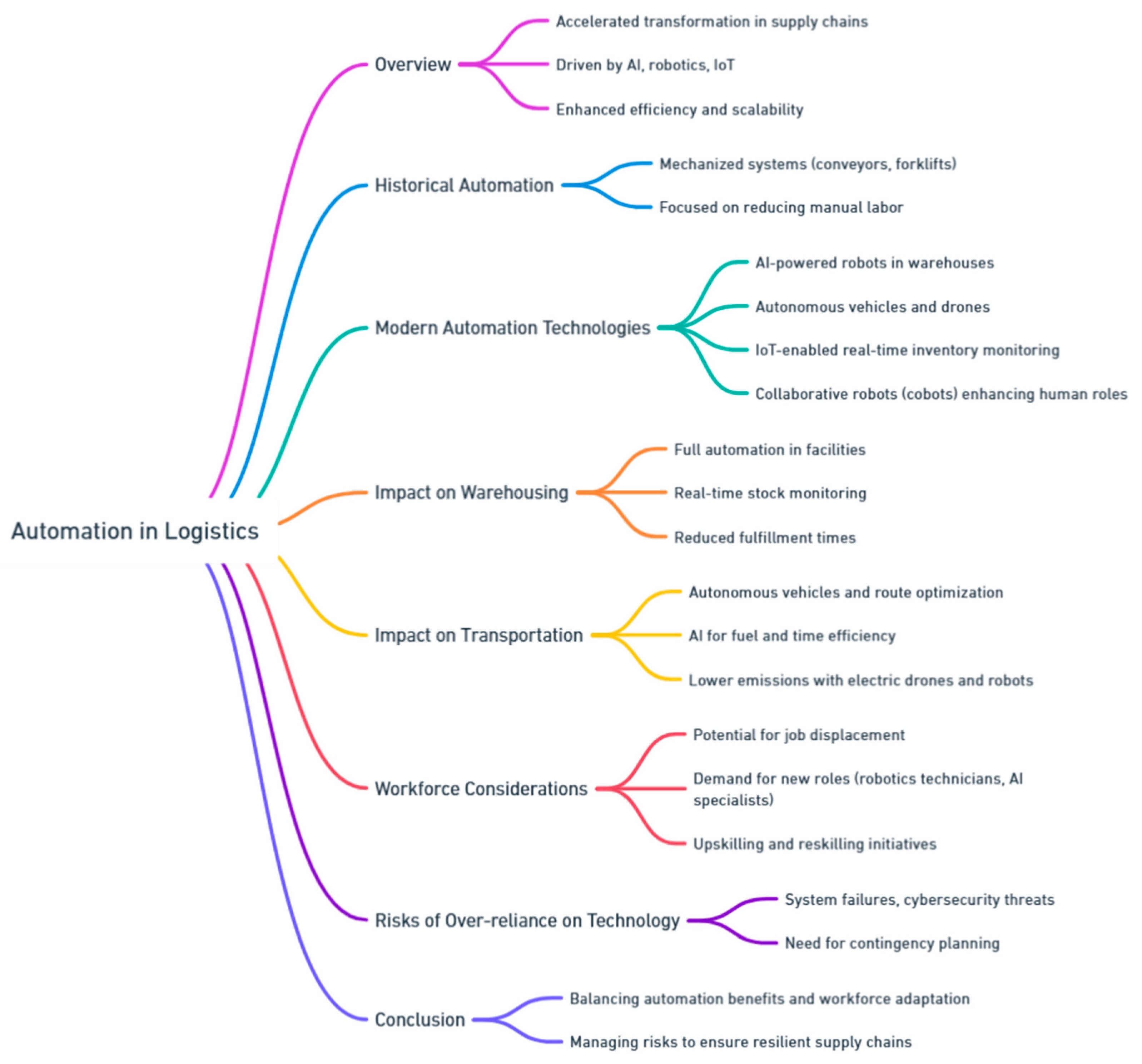
Automation in logistics is not a recent phenomenon but has rapidly accelerated in the past decade, fundamentally transforming how supply chains and distribution networks operate. Historically, mechanized systems such as conveyor belts, forklifts, and automated storage systems were introduced to reduce manual labor and improve efficiency. These early forms of automation represented a shift towards reducing the need for human intervention in routine, repetitive tasks, allowing for greater throughput in logistics operations. However, as technological advancements have progressed, modern logistics has entered a new era of sophisticated automation that leverages cutting-edge technologies like artificial intelligence (AI), robotics, and the Internet of Things (IoT). These innovations are revolutionizing every aspect of logistics, from warehousing and inventory management to transportation and delivery, offering unprecedented efficiency, precision, and scalability. In warehousing, for example, fully automated facilities are becoming increasingly common. Companies like Amazon have been at the forefront of this revolution, deploying AI-powered robots in their fulfillment centers. These robots are capable of sorting, storing, and retrieving products with minimal human intervention. The use of AI enables these robots to learn and adapt to changing warehouse environments, optimizing their operations to reduce bottlenecks and increase efficiency. These robots can navigate warehouse floors, pick items from shelves, and transport them to packing stations, reducing the time it takes to fulfill an order. The automation in these fulfillment centers is also supported by IoT-enabled systems that monitor inventory in real time, providing warehouse managers with up-to-date information on stock levels and enabling just-in-time replenishment. This high level of automation allows companies to manage vast amounts of inventory with minimal human oversight, leading to faster and more accurate order fulfillment. Moreover, advancements in robotics have led to the development of more versatile and intelligent machines capable of performing a wider range of tasks. For example, collaborative robots, or "cobots," are designed to work alongside human workers, enhancing productivity without entirely replacing the human element (Mikušová et al., 2017; Wu, 2023).
These cobots can assist in tasks such as picking, packing, and sorting, making the workflow smoother and more efficient. In addition, they are equipped with advanced sensors and AI algorithms that allow them to work safely in close proximity to human workers, adapting to their movements and reducing the risk of accidents. This kind of collaboration between humans and robots is particularly valuable in situations where human judgment and dexterity are still essential but can be augmented by the speed and precision of automation. Beyond the walls of warehouses, automation is also making significant strides in the transportation sector. Autonomous vehicles and drones, once considered futuristic concepts, are becoming increasingly viable for logistics operations. Companies like FedEx and UPS are experimenting with autonomous delivery robots and AI-driven route optimization systems to improve the efficiency of last-mile delivery. Last-mile delivery, which refers to the final stage of the delivery process from a distribution center to the customer’s doorstep, is one of the most expensive and inefficient aspects of logistics. Autonomous delivery robots are designed to navigate urban environments and deliver packages directly to customers, reducing the need for human drivers and minimizing delivery times. In rural or remote areas, drones are being tested for their ability to deliver packages over long distances, bypassing traffic and other logistical hurdles. In addition to reducing labor costs and improving delivery times, autonomous transportation systems have the potential to significantly reduce the environmental impact of logistics operations. Electric-powered drones and delivery robots produce fewer emissions than traditional delivery vehicles, contributing to a more sustainable supply chain. Furthermore, AI systems used for route planning can optimize delivery routes to minimize fuel consumption, reducing both costs and carbon emissions. These AI systems analyze vast amounts of data, including traffic patterns, weather conditions, and delivery schedules, to determine the most efficient routes for deliveries. As a result, logistics companies can reduce their fuel consumption and carbon footprint while ensuring timely deliveries. Despite the many benefits of automation in logistics, these advancements also raise important concerns about the human element in this rapidly evolving industry. One of the most significant concerns is the potential for job displacement as automated systems take over tasks traditionally performed by human workers. For instance, the widespread adoption of robots in warehouses and autonomous vehicles in transportation could lead to a reduction in demand for manual labor, potentially resulting in job losses (Fager et al., 2021; Das et al., 2020).
This shift towards automation could disproportionately affect lower-skilled workers, who may find it more challenging to transition to new roles in an increasingly automated logistics industry. However, while some jobs may be displaced by automation, it is also important to recognize that new roles are emerging in response to these technological advancements. As logistics companies adopt more sophisticated automation systems, there is a growing demand for workers with expertise in managing, maintaining, and programming these systems. For example, roles such as robotics technicians, AI specialists, and data analysts are becoming more critical to logistics operations. These jobs require a different skill set than traditional logistics roles, emphasizing the need for upskilling and retraining programs to help workers transition to new opportunities in the automated logistics landscape. Furthermore, automation in logistics does not necessarily mean the complete elimination of human workers. As mentioned earlier, collaborative robots (cobots) are designed to work alongside humans, enhancing productivity while preserving the human element in logistics operations. In many cases, humans and machines can complement each other, with automation taking over repetitive and physically demanding tasks, allowing human workers to focus on more complex and strategic activities. This hybrid approach can lead to a more efficient and productive workforce, where humans and machines collaborate to achieve higher levels of performance. Another concern related to automation in logistics is the potential for over-reliance on technology. While automation can improve efficiency and reduce costs, it also introduces new risks, such as system failures, cybersecurity threats, and technological obsolescence. For example, a malfunction in an AI-driven route optimization system could lead to delayed deliveries or misrouted shipments, causing disruptions in the supply chain. Similarly, as logistics operations become more reliant on IoT-enabled systems, the risk of cyberattacks targeting these systems increases. To mitigate these risks, logistics companies must invest in robust cybersecurity measures and develop contingency plans to address potential system failures or technological disruptions. In conclusion, automation is transforming the logistics industry at an unprecedented pace, driven by advancements in AI, robotics, and IoT. Fully automated warehouses, autonomous delivery systems, and AI-powered route optimization are revolutionizing logistics operations, offering significant benefits in terms of efficiency, cost savings, and sustainability. However, these developments also raise important concerns about the potential displacement of human workers and the risks associated with over-reliance on technology. As the logistics industry continues to evolve, it will be essential to strike a balance between leveraging the benefits of automation and addressing the challenges it presents. By investing in upskilling programs for workers, embracing collaborative automation solutions, and implementing robust risk management strategies, the logistics industry can navigate the transition to a more automated future while preserving the critical role of human workers in this dynamic and essential field (Schwabe and Castellacci, 2020; Lambrechts et al., 2021).
Preprints 139811 i080

10.3. Impact of Automation on Worker Roles

Automation is fundamentally reshaping the logistics sector, driving a transformation in how tasks are completed and redefining the roles of human workers. As technological advancements such as artificial intelligence (AI), robotics, and data analytics become more prevalent, the logistics industry is witnessing a shift from traditional labor-intensive processes to more automated and streamlined operations. While this brings about increased efficiency, it also has profound implications for the workforce. In this expanded discussion, we will explore how automation is reshaping human roles in logistics, the challenges posed by job displacement, and the opportunities created for workers equipped with new skills. We will also examine the critical need for reskilling and upskilling in this rapidly changing environment and the responsibilities of companies, governments, and educational institutions in facilitating this transition.
Automation in Logistics: From Repetition to Innovation. In the logistics industry, many repetitive and physically demanding tasks have long been carried out by human workers, particularly in areas such as warehousing, transportation, and order fulfillment. These tasks often involve activities such as picking, packing, sorting, and loading goods—labor-intensive processes that are both time-consuming and prone to human error. However, automation technologies are increasingly being integrated into these processes, replacing or augmenting human labor with machines that can perform these tasks faster, more accurately, and without fatigue. For example, automated guided vehicles (AGVs) and robots are now common in warehouses, where they can navigate storage facilities, retrieve products, and move them to designated areas for packaging and shipping. Automated systems can handle these tasks around the clock, enhancing operational efficiency and reducing the reliance on human labor for routine, low-skill activities. As a result, logistics companies can increase their throughput, minimize costs, and improve customer satisfaction by speeding up order fulfillment times (Chi et al., 2021; Bormann et al., 2019).
The Emergence of New Roles for Human Workers. While automation has taken over many repetitive tasks, it has also created new opportunities for human workers to take on roles that require higher levels of expertise and oversight. For instance, workers are now needed to manage and maintain automated systems, ensuring that they function smoothly and efficiently. This requires a different skill set than traditional logistics roles, as workers must be familiar with robotics, AI, and data analytics to troubleshoot problems, optimize system performance, and prevent downtime. Additionally, the growing use of data-driven technologies in logistics has increased the demand for workers skilled in analyzing and interpreting large volumes of data. Automated systems generate vast amounts of operational data, such as tracking shipments, monitoring inventory levels, and predicting demand patterns. Human workers play a crucial role in using this data to make informed decisions that enhance logistics performance. Data analysts, for example, are responsible for identifying trends, uncovering inefficiencies, and providing actionable insights to optimize supply chain operations. Furthermore, the deployment of AI and machine learning in logistics has opened up new roles in programming, system integration, and the development of advanced algorithms. AI systems are increasingly being used to optimize route planning, forecast demand, and predict maintenance needs for vehicles and machinery. Workers with expertise in AI programming and machine learning are essential for designing, implementing, and refining these systems to ensure they meet the specific needs of the logistics sector (Vasiliki and Apostolos, 2023; Chien et al., 2020).
Job Displacement in the Age of Automation. While automation is creating new job opportunities, it is also causing significant job displacement, particularly for workers in lower-skilled roles. Jobs that involve routine, manual tasks, such as order picking, packing, and sorting, are the most vulnerable to automation. These tasks can be easily replicated by machines, which can operate more efficiently and with fewer errors than human workers. Consequently, many workers in these roles are at risk of losing their jobs as logistics companies adopt automated solutions. A report by McKinsey estimates that automation could displace up to 800 million jobs globally by 2030, with the logistics industry being one of the most affected sectors. This displacement is particularly concerning for workers who may not have the skills or qualifications to transition to more technical roles. For many, the loss of a job in logistics could mean a difficult path to reemployment, especially in regions where opportunities for retraining or reskilling are limited. The challenge for the logistics industry, therefore, is not only to manage the transition to automation but also to address the social and economic consequences of job displacement. While automation brings about significant benefits in terms of efficiency and cost savings, it is essential to consider the human impact and ensure that workers are supported in adapting to the new demands of the industry (Broady et al., 2023; Gruetzemacher et al., 2020).
The Demand for Reskilling and Upskilling. As automation reshapes the logistics sector, the demand for reskilling and upskilling the workforce has become critical. Workers who have been displaced by automation need access to training programs that equip them with the skills necessary to thrive in new, more technical roles. This includes training in areas such as robotics maintenance, data analysis, and AI programming, which are increasingly in demand as logistics companies integrate more advanced technologies into their operations. Reskilling involves teaching workers new skills that enable them to transition into entirely new roles, while upskilling focuses on enhancing their existing skills to adapt to changing job requirements. Both approaches are essential for preparing the workforce for the future of logistics, where automation and digitalization will play an even more prominent role. Logistics companies must take an active role in supporting their employees through reskilling and upskilling initiatives. By investing in training programs, companies can ensure that their workers are prepared for the evolving demands of automated supply chains. This not only benefits the employees by providing them with new career opportunities but also helps companies retain talent and maintain a skilled workforce capable of managing the complexities of modern logistics operations (Wahab et al., 2021; Morandini et al., 2023).
The Role of Governments and Educational Institutions. While companies bear significant responsibility for providing training and support to their workers, governments and educational institutions also play a crucial role in ensuring that the workforce is prepared for the changes brought about by automation. Governments can implement policies that encourage reskilling and upskilling, such as offering tax incentives for companies that invest in employee training or funding vocational programs that provide workers with the technical skills needed in automated industries. Educational institutions, including universities and technical schools, must adapt their curricula to meet the changing needs of the logistics sector. This may involve developing specialized programs in areas such as robotics, AI, and data analytics, as well as offering flexible learning options for workers who are already employed and looking to gain new skills. Collaboration between industry, government, and educational institutions is essential for ensuring that workers have access to the training and resources they need to succeed in a rapidly evolving job market (Tripathi and Tandon, 2022; Bashynska et al., 2021).
Automation is reshaping the logistics sector in profound ways, replacing many routine tasks while creating new roles that require technical expertise and human oversight. While job displacement remains a significant concern, particularly for lower-skilled workers, automation also presents opportunities for those who are equipped with the right skills. The demand for reskilling and upskilling is critical as the workforce adapts to the changing landscape of automated logistics. To ensure a smooth transition, companies must invest in training programs that prepare employees for the new roles created by automation. At the same time, governments and educational institutions must provide the necessary support for workers transitioning to more technical roles. By working together, these stakeholders can help workers navigate the challenges of automation and ensure that the logistics sector continues to thrive in an increasingly automated world.

10.4. Worker Safety in Automated Supply Chains
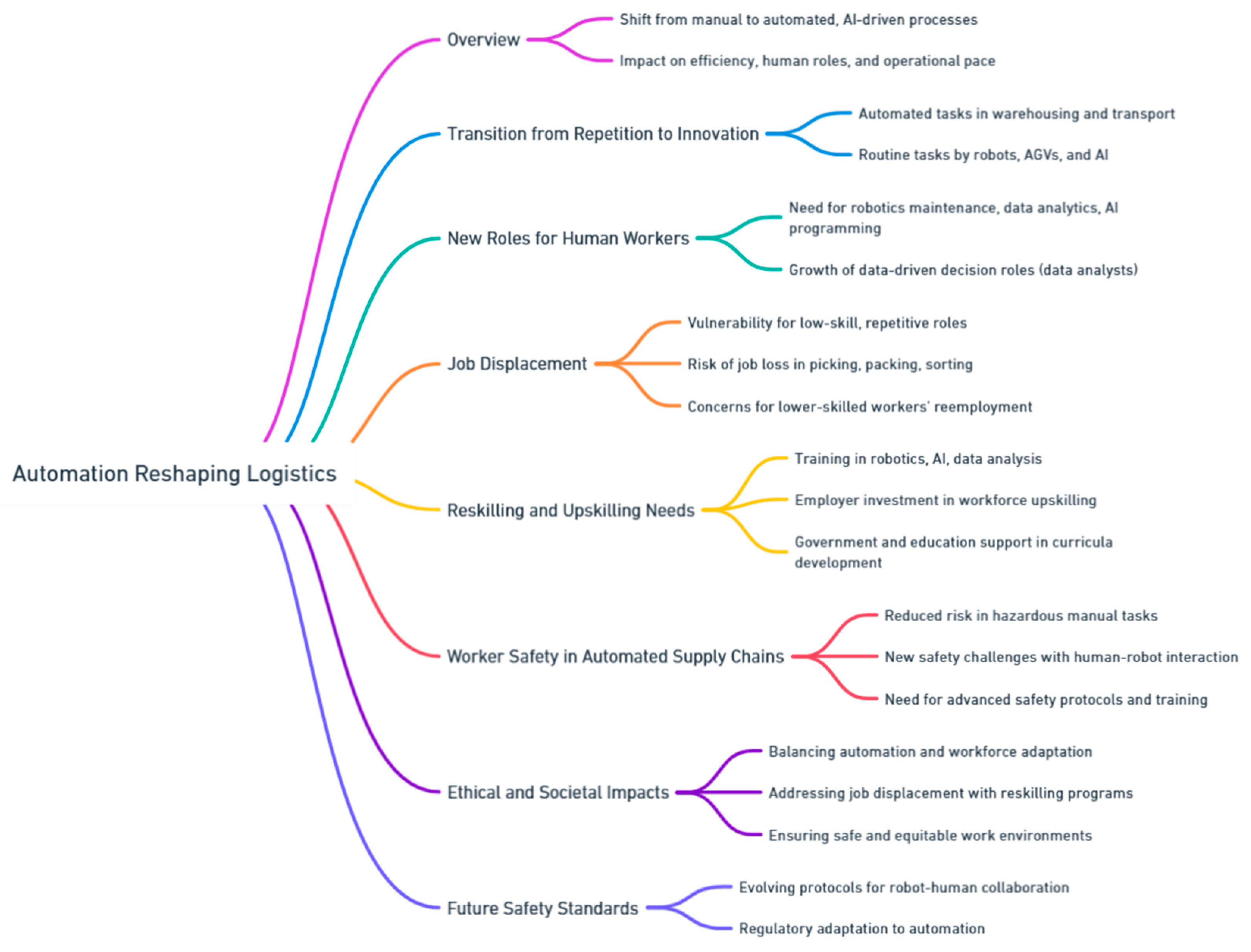
The rise of automation in the workplace, especially in industries like logistics and manufacturing, promises significant benefits, from increased efficiency to reduced operational costs. One of the key advantages of automation is its potential to reduce the risk of workplace injuries by taking over dangerous tasks traditionally performed by humans. For instance, robots can handle repetitive, physically demanding, or hazardous jobs such as lifting heavy objects, working with toxic materials, or operating machinery in high-risk environments. However, alongside these benefits, automation introduces a new set of safety challenges that require careful management. The integration of robots, autonomous vehicles, and artificial intelligence (AI) systems in warehouses and distribution centers, while improving efficiency, creates a complex environment where human workers and automated systems must coexist safely. A major concern in these environments is the potential for collisions between robots and human workers. Robots, while programmed to follow specific tasks and routes, may malfunction or encounter unforeseen obstacles. Autonomous vehicles, such as forklifts or delivery drones, similarly pose collision risks. If the systems guiding these machines are improperly programmed, or if sensors fail to detect a human presence, accidents can occur. These incidents may not only result in injuries but also disrupt operations and damage property, emphasizing the need for robust safety protocols. In addition to collision risks, there are potential issues arising from system malfunctions and software errors. Automated systems, such as robotic arms or conveyor belts, rely on complex programming and interconnected networks to function properly. A software glitch or failure in one part of the system can have cascading effects, leading to unanticipated movements or actions by machines, putting workers in danger. For instance, if a robot tasked with moving heavy packages suddenly malfunctions, it could drop or hurl objects unexpectedly, creating a hazardous situation for nearby employees. Thus, maintaining these systems’ operational integrity through regular maintenance, software updates, and contingency planning is essential to prevent such incidents. Furthermore, the introduction of automation has not eliminated traditional safety risks, such as lifting injuries or accidents from operating machinery. Instead, these risks are now compounded by new challenges associated with interacting with automated systems. Workers may still need to manually handle heavy objects when automated systems are unable to do so or during machine maintenance. The transition to automation can also create unfamiliarity or complacency among workers, who may not fully understand how to operate or respond to malfunctions in automated systems, leading to mistakes that could cause accidents (Lowe et al, 2023; Gihleb et al., 2022).
The complexity of these environments demands that safety protocols be updated to reflect the new dynamics of human-robot interaction. Traditional safety measures, such as wearing protective gear, adhering to safe lifting practices, and receiving training on operating machinery, remain important. However, these must now be complemented by measures that address the specific risks posed by automation. For instance, companies must establish clear guidelines on how workers should interact with robots, when they can enter robot zones, and how to handle emergencies involving automated systems. Moreover, workers need to be trained not only on the technical aspects of working alongside robots but also on recognizing and responding to potential hazards posed by these systems. To address these challenges, companies are increasingly adopting advanced safety monitoring systems that leverage AI, the Internet of Things (IoT), and machine learning to track potential hazards and prevent accidents before they occur. These systems can monitor real-time data from sensors embedded in robots, machinery, and the workplace environment, identifying abnormal patterns that may signal an impending malfunction or safety risk. For example, AI-powered monitoring systems can detect when a robot is operating outside its designated parameters or when a human worker is approaching a dangerous area. By alerting workers or triggering emergency stop mechanisms, these systems help prevent accidents and ensure a safer work environment. Amazon’s automated warehouses serve as a prime example of how these safety technologies are being implemented in highly automated environments. The company employs thousands of robots in its fulfillment centers, working alongside human employees to pick, pack, and ship products. To ensure worker safety, Amazon has established strict safety protocols that rely heavily on technology. One key measure is the physical separation of human workers and robots through designated robot zones. Human workers are generally not allowed in these areas unless robots are deactivated, reducing the risk of collisions. Additionally, Amazon’s warehouses are equipped with sensors that detect human presence in robot zones, automatically stopping robots if a worker enters. AI systems also monitor warehouse operations in real-time, predicting potential safety risks based on factors such as robot movements, worker activity, and historical incident data. Despite these safety measures, Amazon has faced criticism for the high injury rates reported in its automated warehouses. Investigative reports and employee accounts have highlighted concerns over the physical and mental demands placed on workers in these environments (Mohammadi Amin et al., 2020; Magrini et al., 2020).
Critics argue that the fast-paced nature of work in Amazon's fulfillment centers, combined with the pressure to meet productivity targets, contributes to higher injury rates. Workers often need to move quickly to keep up with the speed of automated systems, which can increase the likelihood of accidents. Moreover, repetitive tasks and long hours spent working alongside machines can lead to physical strain, while the constant monitoring by AI systems may contribute to stress and fatigue. These factors illustrate that while automation can enhance efficiency, it also introduces new challenges in maintaining worker safety and well-being. The criticisms of Amazon’s safety record underscore the broader challenge facing companies that are adopting automation. As businesses integrate more robots, autonomous vehicles, and AI into their operations, they must ensure that safety measures keep pace with technological advancements. This requires not only investment in safety technologies but also a commitment to fostering a culture of safety where human workers are valued and their well-being is prioritized. Companies must strike a balance between productivity and safety, recognizing that over-reliance on automation without adequate safety oversight can lead to negative outcomes for both workers and the business. Looking to the future, the increasing sophistication of AI and robotics will likely continue to shape the workplace, and with it, the approach to safety. As automation becomes more prevalent, safety standards and regulations will need to evolve. Regulatory bodies may introduce new guidelines specific to automated environments, and companies will need to remain proactive in updating their safety practices. In particular, the development of collaborative robots, or “cobots,” which are designed to work directly alongside humans, will require new approaches to ensure safe interaction. These cobots are typically equipped with advanced sensors and AI systems that allow them to respond to human movements, potentially reducing the risk of accidents. However, as with any new technology, their safety performance will need to be closely monitored and continuously improved. In conclusion, while automation presents an opportunity to reduce workplace injuries by taking over dangerous tasks, it also introduces new safety challenges that must be addressed through careful planning and the adoption of advanced safety technologies. The integration of robots, autonomous vehicles, and AI systems in logistics and other industries requires updated safety protocols, comprehensive worker training, and the use of AI-powered safety monitoring systems to prevent accidents. The case of Amazon’s automated warehouses illustrates both the potential and the challenges of maintaining safety in highly automated environments. As automation continues to evolve, companies must remain vigilant in ensuring that their safety measures keep pace with technological advancements, prioritizing the well-being of their workers in the process (Ibrahim et al., 2021; Sgarbossa et al., 2020; Vural et al., 2024).
Preprints 139811 i081

10.5. Human-Robot Interaction: Opportunities and Challenges
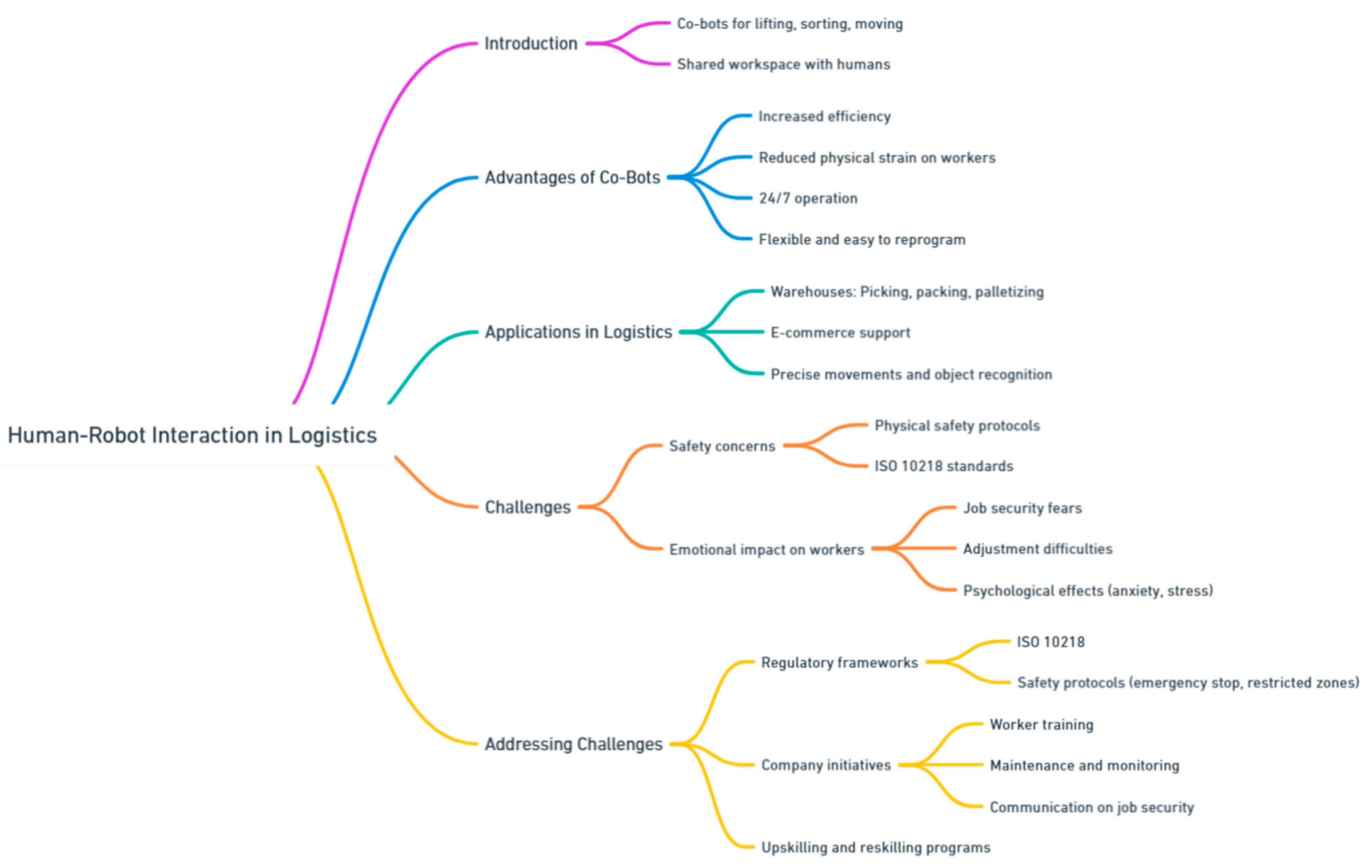
As automation continues to revolutionize the logistics industry, human-robot interaction is becoming an increasingly integral part of daily operations. Robots designed to work alongside humans, commonly known as collaborative robots or co-bots, are being integrated into various logistics tasks such as lifting, sorting, and moving goods. Unlike traditional industrial robots, which often operate in isolated environments, co-bots are designed to work in close proximity to human workers, sharing the same workspace. This unique feature allows for enhanced productivity and efficiency while reducing the physical strain on workers. However, as the deployment of co-bots becomes more widespread, it also introduces several challenges, particularly in the areas of safety, emotional well-being, and job security. Co-bots represent a new frontier in automation, specifically designed to complement human workers rather than replace them entirely. In logistics, co-bots are being used to streamline repetitive and physically demanding tasks. For example, in warehouses, co-bots assist with picking, packing, and palletizing items, allowing human workers to focus on more complex tasks that require decision-making and cognitive skills. These robots are equipped with sensors, cameras, and advanced software that allow them to navigate around obstacles, recognize objects, and perform precise movements. This level of automation not only increases efficiency but also reduces the risk of human error, particularly in tasks that require high levels of accuracy, such as sorting and organizing inventory. Co-bots can also work continuously without needing breaks, thus helping logistics companies meet the growing demands of e-commerce and fast delivery expectations. Their ability to operate 24/7, alongside humans, ensures that logistics processes can run more smoothly, with fewer bottlenecks and interruptions. Moreover, co-bots are designed to be relatively easy to program and reprogram, allowing them to be quickly adapted to new tasks or environments. This flexibility makes them particularly valuable in dynamic logistics settings where tasks and priorities can change frequently (Mohammadi Amin et al., 2020; Villani et al., 2018).
Advantages of Co-Bots in Logistics. The integration of co-bots in logistics provides a range of benefits, both for businesses and workers. From an operational perspective, co-bots help improve efficiency by speeding up routine tasks and reducing downtime. This increased efficiency can result in cost savings for companies, as robots can perform tasks more quickly and consistently than human workers. Additionally, co-bots can help optimize the use of space in warehouses and distribution centers, as they are capable of working in tight spaces and maneuvering around human workers with ease. For workers, co-bots offer the advantage of reducing physical strain. In logistics, many tasks involve heavy lifting, repetitive motions, and awkward body postures, all of which can lead to musculoskeletal injuries. Co-bots can take over these physically demanding tasks, allowing workers to avoid injuries and focus on less strenuous activities. This, in turn, can lead to a safer work environment and potentially lower absenteeism due to injury. Furthermore, co-bots enable a higher degree of precision in tasks such as sorting and organizing products. Robots are capable of performing repetitive actions with a level of accuracy that human workers may struggle to maintain over long periods. This can lead to fewer errors in logistics processes, improving overall quality control and customer satisfaction. The ability of co-bots to work collaboratively with humans also allows for a more fluid workflow, where human intuition and robot precision complement each other to enhance productivity (Liu et al., 2024; Cherubini et al., 2016).
Challenges and Concerns. While co-bots offer numerous advantages, they also pose several challenges, particularly in ensuring the safety and well-being of workers who collaborate with these machines. One of the primary concerns is the physical safety of workers. Although co-bots are equipped with sensors and programmed to avoid collisions, accidents can still occur, especially if the robot malfunctions or if a worker inadvertently enters a restricted zone. The presence of moving machinery in a shared workspace inherently introduces risks, and companies must implement stringent safety protocols to mitigate these risks. The safety of human workers in environments where co-bots are present is a key focus of regulatory bodies and industry standards. The International Organization for Standardization (ISO) has developed safety standards (ISO 10218) for industrial robots, which include specific requirements for robot design, protective measures, and risk assessment. These standards aim to ensure that robots can operate safely alongside humans by outlining measures such as speed limits, force thresholds, and emergency stop mechanisms. Despite these guidelines, continuous monitoring and updates to safety protocols are necessary as robotic technology evolves and becomes more integrated into logistics processes. Beyond physical safety, there are also concerns about the psychological impact of working alongside robots. The introduction of co-bots into the workplace can create feelings of job insecurity, as workers may fear that their roles will eventually be replaced by automation. While co-bots are designed to complement human labor, the broader trend toward automation has led to widespread concerns about job displacement. This fear can lead to anxiety, stress, and a decrease in morale among workers. Additionally, some workers may find it difficult to adapt to working with robots, particularly if they are not provided with adequate training or support. Moreover, the emotional and psychological toll of working in close proximity to robots extends beyond job insecurity. Human-robot interaction can feel impersonal and alienating for some workers, particularly those who are accustomed to more traditional, human-centered workplaces. As robots take on an increasing share of routine tasks, workers may feel less valued or disconnected from their work. Addressing these emotional challenges will require not only technological solutions but also thoughtful management practices that prioritize worker well-being (Lu et al., 2022; Valori et al., 2021).
Addressing the Challenges: Regulatory Frameworks and Industry Standards. To address the safety and emotional challenges posed by co-bots, regulatory frameworks and industry standards are being developed to govern human-robot collaboration. ISO 10218, the safety standard for industrial robots, outlines essential requirements for ensuring the safe operation of robots in environments where humans are present. These standards cover a wide range of safety considerations, including the design of robots, the implementation of protective measures (such as sensors and barriers), and the need for comprehensive risk assessments. By adhering to these standards, companies can reduce the likelihood of accidents and create safer working conditions for their employees. In addition to international standards, companies themselves play a crucial role in ensuring that human-robot collaboration is safe and effective. This involves providing workers with proper training on how to interact with co-bots, as well as implementing safety protocols such as emergency stop systems and restricted access zones. Regular maintenance and monitoring of robots are also essential to prevent malfunctions that could lead to accidents. Companies must foster a culture of safety by encouraging workers to report any concerns or near misses and by continuously evaluating the effectiveness of safety measures. On the emotional side, addressing workers' concerns about job security and the psychological impact of working with robots requires open communication and transparency. Employers should emphasize the role of co-bots as tools that enhance human productivity rather than replace human workers. Providing employees with opportunities for upskilling and reskilling can also help alleviate fears of job displacement, as workers can transition to new roles that require more complex skills, such as managing or programming robots. The rise of automation in logistics, particularly through the use of co-bots, offers significant advantages in terms of efficiency, precision, and worker safety. However, it also introduces challenges that must be carefully managed to ensure the well-being of workers. Ensuring physical safety through regulatory frameworks and industry standards is crucial, as is addressing the emotional and psychological impact of human-robot interaction. As automation becomes more prevalent, companies must strike a balance between leveraging the benefits of technology and maintaining a supportive and safe work environment for their human employees (Lorson et al., 2023; Pasparakis et al., 2023; Cassioli et al., 2021).
Preprints 139811 i082

10.6. Improving Worker Safety with Automation Technologies
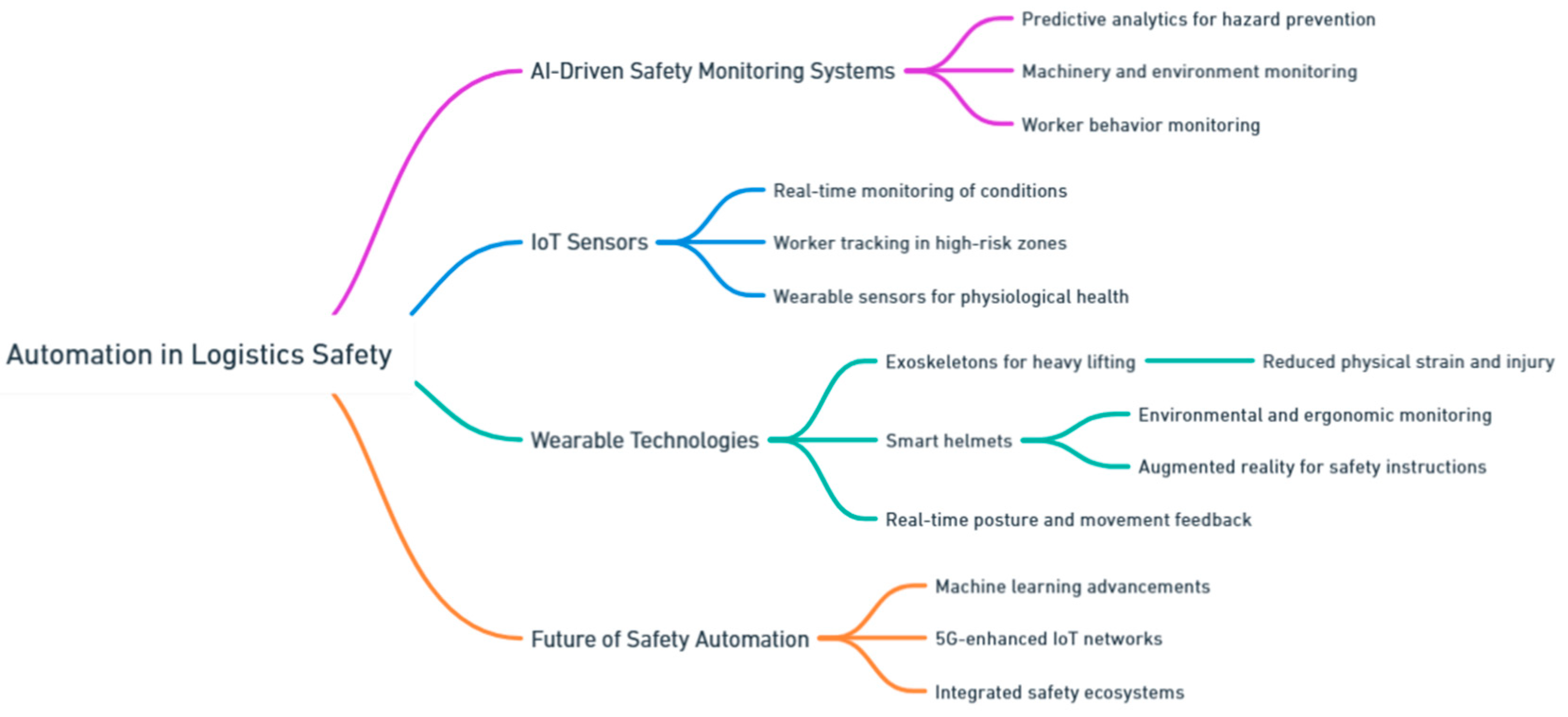
Automation technologies have become a cornerstone of modern logistics operations, offering numerous advantages ranging from increased efficiency and cost savings to enhanced worker safety. In particular, automation has proven instrumental in improving workplace safety, utilizing advanced technologies such as artificial intelligence (AI), the Internet of Things (IoT), and wearable devices to monitor and prevent accidents. As the logistics industry evolves, the integration of these technologies continues to play a critical role in ensuring that workers can operate in safer environments, reducing the risk of injury and promoting overall well-being.
AI-Driven Safety Monitoring Systems. One of the most transformative applications of automation in logistics is the deployment of AI-driven safety monitoring systems. These systems harness the power of predictive analytics to identify potential hazards before they result in accidents, helping companies take a proactive approach to workplace safety. By analyzing vast amounts of data collected from various sources, such as IoT sensors, cameras, and wearable devices, AI systems can detect patterns that suggest the emergence of a safety risk. This early identification allows for timely interventions, reducing the likelihood of accidents that could harm workers or disrupt operations. For instance, AI-driven systems can monitor environmental factors within warehouses or distribution centers. A sudden spike in temperature detected by IoT sensors may indicate the presence of malfunctioning machinery, which could pose a fire hazard if not addressed promptly. By alerting managers to such anomalies, AI systems enable quick responses, potentially preventing catastrophic events. Similarly, changes in the vibration or sound of a piece of equipment can signal mechanical failure, allowing maintenance teams to perform repairs before the issue escalates. These predictive capabilities not only minimize downtime but also create a safer working environment by addressing risks before they result in injury. Beyond monitoring machinery, AI-driven safety systems can also analyze worker behavior and movement patterns to detect dangerous practices or potential accidents. For example, if a worker consistently bypasses safety protocols—such as operating heavy machinery without the necessary protective gear or working in hazardous zones—AI can flag these behaviors for corrective action. In this way, AI doesn't just react to incidents but helps prevent them by fostering safer workplace practices (Resende et al., 2021).
IoT Sensors for Worker Health and Safety. In addition to AI, the widespread use of IoT sensors in logistics plays a vital role in improving worker health and safety. These sensors are embedded throughout warehouses, on vehicles, and even on workers themselves to monitor conditions in real time. By continuously collecting data on environmental factors like temperature, humidity, and the presence of harmful substances, IoT sensors can alert supervisors when conditions become unsafe, enabling swift action to protect workers. One of the most valuable applications of IoT sensors is in tracking worker locations within a facility. In large warehouses or complex logistics hubs, it can be challenging to ensure that every worker adheres to safety protocols, especially in high-risk areas. IoT sensors help address this issue by monitoring the movement of workers and detecting when they enter restricted zones or come too close to dangerous machinery. For example, if a worker steps into a loading bay where forklifts are operating without proper clearance, the system can send an immediate alert to both the worker and the safety manager, potentially preventing a collision. Additionally, IoT sensors can be used to monitor the physiological health of workers. Wearable devices equipped with sensors can track vital signs such as heart rate, body temperature, and fatigue levels. These devices are particularly useful in high-intensity work environments, where workers are exposed to physically demanding tasks. For instance, logistics companies can use this data to detect signs of exhaustion or dehydration in workers who are operating heavy machinery, ensuring that they take breaks as needed to avoid accidents caused by fatigue (Tsang et al., 2016; Aloini et al., 2021).
Wearable Technologies: Enhancing Safety and Reducing Fatigue. Wearable technologies are rapidly gaining popularity in the logistics industry as tools that enhance worker safety and productivity. Devices such as smart helmets, smart glasses, and exoskeletons not only provide protection but also augment workers' capabilities, reducing the physical strain associated with manual labor. These wearables are designed to assist workers in tasks that would otherwise be physically taxing, thereby reducing the risk of injuries related to overexertion or improper lifting techniques. One of the most innovative examples of wearable technology in logistics is the use of exoskeletons. These devices are worn by workers to provide additional support when lifting heavy objects, helping to distribute the load more evenly across the body and reduce strain on muscles and joints. DHL, a global leader in logistics, has already implemented wearable exoskeletons in its warehouses to assist workers in lifting and moving heavy packages. By reducing the physical strain on workers, these devices not only improve productivity but also significantly lower the risk of musculoskeletal injuries, which are among the most common types of workplace injuries in the logistics industry. Exoskeletons and other wearable technologies also contribute to worker safety by promoting better ergonomics. Poor posture and improper lifting techniques are major causes of workplace injuries, particularly in environments where manual labor is common. Wearable devices equipped with sensors can provide real-time feedback to workers on their posture and movements, alerting them if they are at risk of injury. For instance, if a worker is bending their back incorrectly while lifting a heavy box, the exoskeleton or smart wearable can vibrate or issue a warning, encouraging the worker to adjust their technique. In addition to exoskeletons, smart helmets equipped with sensors and augmented reality (AR) features are being used in logistics to enhance safety. These helmets can monitor environmental conditions such as air quality and noise levels, alerting workers if they are exposed to hazardous substances or high noise levels that could damage their hearing. AR features in smart helmets also allow workers to view important safety information in real-time, such as maps of the facility or instructions for safely handling dangerous materials, all without having to look away from their task (Ippolito et al., 2020; Riccò et al., 2022).
The Future of Safety Automation in Logistics. The future of worker safety in logistics will likely see even greater integration of automation technologies, with AI, IoT, and wearable devices continuing to evolve and offer new capabilities. Advances in machine learning will enable safety monitoring systems to become even more predictive and accurate, while improvements in wearable technology will allow workers to perform physically demanding tasks with even less risk of injury. Furthermore, as 5G networks become more widespread, IoT devices will be able to communicate and share data more efficiently, improving the real-time monitoring of workplace conditions. This enhanced connectivity will enable logistics companies to create fully integrated safety ecosystems, where all aspects of the work environment are continuously monitored and optimized to ensure the highest levels of safety. In conclusion, automation technologies are playing a transformative role in improving worker safety in logistics. AI-driven safety monitoring systems, IoT sensors, and wearable devices are all contributing to safer working environments by identifying and mitigating potential risks before they lead to accidents. As these technologies continue to advance, the logistics industry will be better equipped to protect its workforce, reduce injuries, and create safer, more efficient operations. By embracing automation, logistics companies can not only improve safety but also enhance worker productivity and overall operational success (Khadonova et al., 2020; Márquez-Sánchez et al., 2021; Tani et al., 2021).
Preprints 139811 i083

10.7. Labor Conditions in Automated Supply Chains
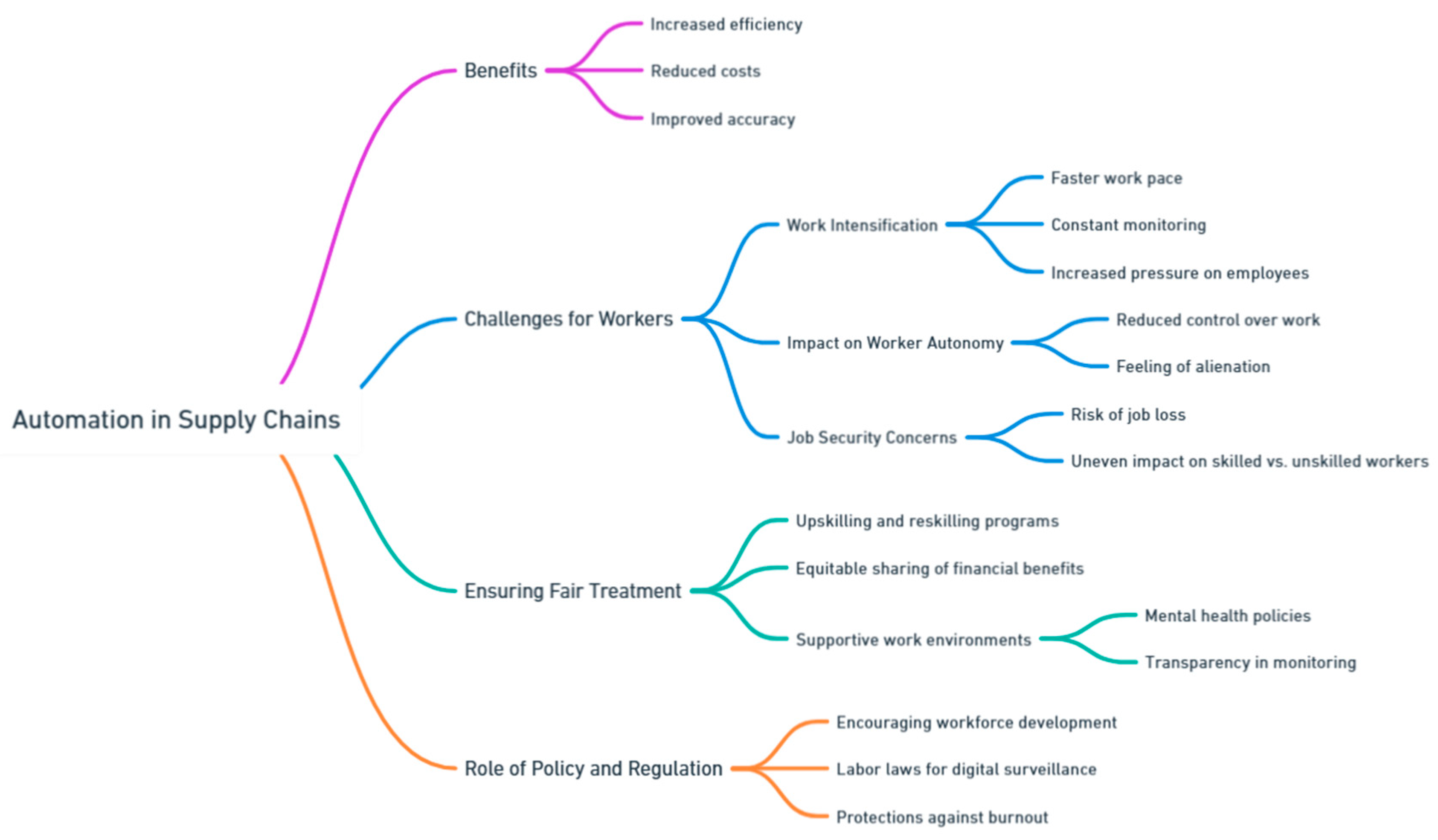
Automation in supply chains is transforming industries worldwide, offering significant benefits such as increased efficiency, reduced operational costs, and improved accuracy in inventory management. However, this technological shift also presents complex challenges, particularly for worker safety and broader labor conditions. Automation affects how work is organized, managed, and experienced, leading to both positive and negative outcomes for workers. A key concern is the potential for work intensification, where the introduction of automated systems leads to an increase in the pace of work and tighter monitoring of employee performance. This, coupled with the growing use of sophisticated surveillance technologies, can create a high-pressure work environment that negatively impacts workers' well-being. Additionally, automation raises concerns about job security and autonomy, with many workers fearing that their roles will eventually be replaced by machines. While automation is inevitable in many sectors, companies must address these concerns proactively, ensuring that workers are treated fairly and that the benefits of automation are distributed equitably (Lin, 2022; Esper, (2021).
Work Intensification and Increased Monitoring. One of the most immediate impacts of automation in supply chains is the intensification of work. Automated systems are designed to enhance productivity by speeding up processes, reducing downtime, and eliminating inefficiencies. For workers, however, this often translates into higher expectations for productivity. In automated environments, tasks are frequently designed to be completed at a faster pace, with less margin for error. This can lead to an increased physical and mental workload for employees, as they are expected to keep up with the demands of the automated systems. Moreover, automation often brings with it sophisticated monitoring technologies that track workers’ movements, productivity, and even their physical well-being in real time. These technologies, powered by artificial intelligence (AI) and machine learning algorithms, can include AI-powered cameras, wearable sensors, and software that monitors keystrokes or other digital activity. While these tools can help optimize performance and ensure safety standards are met, they also have the potential to create a work environment where employees feel constantly surveilled. The constant monitoring can lead to a sense of pressure and stress, as workers may feel they are always being judged or evaluated by the system. This "digital surveillance" can contribute to mental health issues such as anxiety, burnout, and stress. Workers may push themselves to meet the high standards set by automated systems, leading to fatigue and, in some cases, increased workplace accidents. Furthermore, the fear of being penalized for not meeting these standards can erode trust between workers and employers, creating a more adversarial work environment (Blanco-Donoso et al., 2023; Vitak and Zimmer, 2023).
Impact on Worker Autonomy and Job Security. Automation also affects workers' sense of autonomy in the workplace. In a traditional manual labor environment, workers typically have more control over how they perform their tasks, with opportunities to adjust their workflow or pace based on their judgment and experience. However, in an automated supply chain, many decisions are made by the system, reducing the scope for individual discretion. Workers are often required to follow predefined processes with little room for deviation, as automated systems are designed for maximum efficiency and standardization. This reduction in autonomy can be demoralizing for workers, particularly for those who take pride in their craftsmanship or problem-solving abilities. When a machine is dictating the terms of their work, employees may feel like "cogs in a machine," contributing to a sense of alienation and dissatisfaction. Over time, this lack of control can affect employee engagement and job satisfaction, leading to higher turnover rates and a less motivated workforce. Additionally, the fear of job loss is a significant concern for many workers in automated environments. As companies adopt more automated systems, there is a growing perception that machines will eventually replace human workers altogether. While automation does create new roles—such as positions related to maintaining and programming automated systems—it is inevitable that certain manual labor jobs will become obsolete. This can lead to widespread anxiety among workers, particularly those in low-skill positions that are most vulnerable to automation. The impact of automation on job security is not uniform across all sectors or roles. Highly skilled workers, such as technicians, engineers, and programmers, may find new opportunities in maintaining and improving automated systems. However, for workers with lower levels of education or technical expertise, the transition to automation can be more challenging. These workers may struggle to find new roles within the company or even within the broader job market, leading to long-term unemployment or underemployment (Schwabe and Castellacci, 2020; Choi and Kang, 2019).
Ensuring Fair Treatment and Equitable Distribution of Benefits. Given these challenges, it is crucial that companies take steps to ensure that workers are treated fairly as automation becomes more widespread. One of the primary ways to address the negative impacts of automation is through upskilling and reskilling programs. By providing workers with opportunities to learn new skills, companies can help them transition into new roles that are less likely to be affected by automation. This can include training in areas such as data analysis, machine operation, and maintenance, or even managerial roles that require a deeper understanding of automated systems. By investing in their workforce, companies can help mitigate the fear of job loss and ensure that employees feel more secure in their roles. Moreover, companies must ensure that the financial benefits of automation, such as increased productivity and reduced labor costs, are shared equitably among workers. One way to achieve this is by offering higher wages or bonuses tied to the increased efficiency brought about by automation. Profit-sharing schemes or other incentive programs can also help ensure that workers benefit from the productivity gains generated by automated systems. This can foster a sense of fairness and reduce resentment toward the introduction of automation. Beyond financial incentives, companies should also consider the importance of creating a positive and supportive work environment in automated settings. This includes implementing policies that protect workers’ mental health, such as limiting the use of surveillance technologies to ensure that they do not create an overly stressful environment. Employers can also promote a culture of transparency by clearly communicating how and why certain monitoring technologies are used and ensuring that workers have a voice in decisions related to automation (Saad and Zohair, 2023; Morandini et al., 2023).
The Role of Policy and Regulation. Government policies and labor regulations will also play a critical role in shaping how automation affects workers in supply chains. Policymakers must strike a balance between encouraging technological innovation and protecting workers' rights. This could include implementing regulations that require companies to invest in upskilling workers whose jobs are at risk of automation or offering tax incentives for businesses that prioritize workforce development alongside technological upgrades. Moreover, governments may need to introduce new labor laws that address the challenges of digital surveillance and work intensification. For example, regulations could be put in place to limit the use of AI-powered surveillance technologies in the workplace, ensuring that these tools are used responsibly and ethically. Additionally, policies aimed at protecting workers from excessive work demands or burnout in highly automated environments could help maintain worker well-being in the face of rapid technological change. Automation in supply chains offers undeniable benefits, including enhanced productivity, reduced operational costs, and improved accuracy. However, its impact on labor conditions cannot be overlooked. Work intensification, constant monitoring, reduced autonomy, and concerns about job security are all significant challenges that must be addressed as automation continues to evolve. To ensure a fair and equitable transition, companies must invest in upskilling workers, distribute the financial benefits of automation fairly, and create supportive work environments. Additionally, government policies will be crucial in regulating the use of surveillance technologies and protecting workers' rights. By addressing these issues proactively, companies and policymakers can help ensure that the future of work in automated supply chains is both productive and equitable for all workers (Danzer et al., 2024; Li, 2023; El Hijazi et al., 2020).
Preprints 139811 i084

10.8. Diversity, Inclusion, and Ethical Sourcing
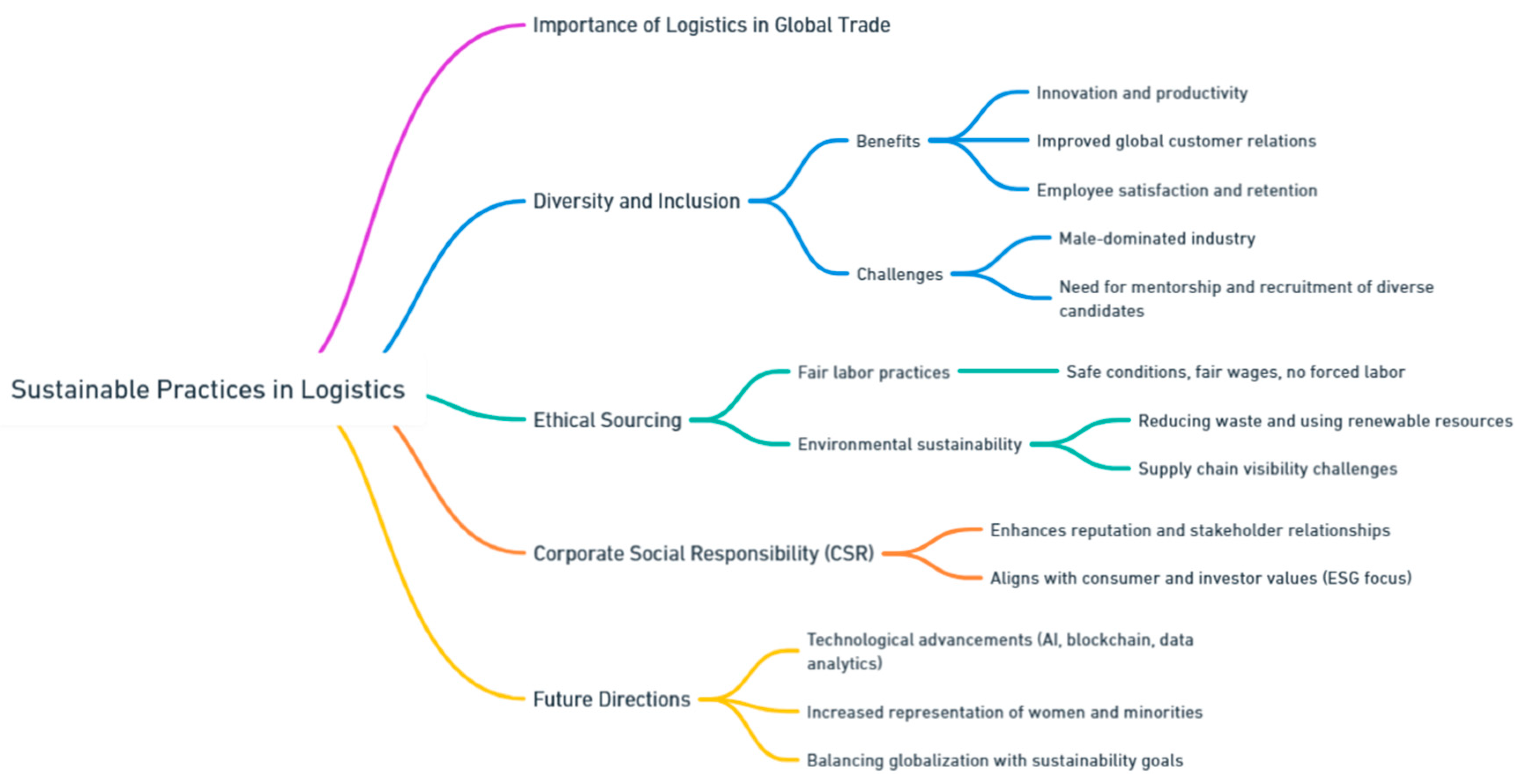
The logistics industry is the backbone of global trade, playing a critical role in the movement of goods across borders, ensuring the supply of raw materials, and facilitating the delivery of finished products to consumers around the world. As globalization continues to accelerate, the social and environmental impacts of logistics are becoming more prominent, requiring companies to adopt more sustainable and responsible practices. In recent years, a growing emphasis has been placed on diversity, inclusion, and ethical sourcing within the logistics sector, recognizing that these factors are essential not only for operational success but also for meeting the increasing demand for socially responsible business practices. Diversity and inclusion in the workforce have emerged as important aspects of the logistics industry, as they allow companies to harness a wide range of perspectives, experiences, and ideas. At the same time, ethical sourcing ensures that products and materials are acquired in ways that respect human rights and protect the environment, reinforcing the need for sustainable supply chains. These principles are closely linked to corporate social responsibility (CSR), which has become a central component of modern business strategies. This essay explores the significance of diversity, inclusion, and ethical sourcing in logistics, examining the benefits these practices offer, the challenges they present, and the future directions for the industry (Feng, et al., 2017; Mani et al., 2018).
The Role of Diversity and Inclusion in Logistics. Diversity and inclusion are increasingly recognized as key drivers of innovation, productivity, and overall success within the logistics industry. A diverse workforce brings together individuals with different backgrounds, skills, and experiences, enabling companies to approach challenges from multiple angles and develop more creative solutions. In the fast-paced and highly competitive logistics sector, this diversity of thought can be a significant advantage. One of the primary benefits of fostering diversity and inclusion in logistics is the ability to better understand and meet the needs of a global customer base. Logistics companies operate in a variety of cultural, economic, and geographic contexts, and having a workforce that reflects this diversity can enhance their ability to navigate different markets. Employees from diverse backgrounds can offer valuable insights into local customs, regulations, and consumer preferences, allowing companies to tailor their services and products more effectively to meet specific regional demands. In addition to improving customer relations and market adaptability, diversity and inclusion can also enhance employee satisfaction and retention. When employees feel that they are valued and respected, regardless of their race, gender, or background, they are more likely to be engaged and motivated in their work. Inclusive workplaces foster a sense of belonging and community, which can lead to higher levels of productivity and lower turnover rates. Moreover, companies that prioritize diversity and inclusion are often seen as more attractive employers, making it easier to attract top talent in a competitive job market. However, promoting diversity and inclusion in logistics is not without its challenges. The logistics industry has traditionally been male-dominated, particularly in roles such as truck driving, warehouse management, and supply chain operations. Breaking down these barriers and encouraging greater representation of women and minorities in the sector requires a concerted effort from both companies and industry leaders. This includes providing mentorship and development opportunities for underrepresented groups, actively recruiting diverse candidates, and implementing policies that support work-life balance, such as flexible scheduling and family-friendly benefits (Calderon, 2023; Dalessandro and Lovell, 2023).
Ethical Sourcing in the Logistics Industry. Ethical sourcing is another critical component of sustainable logistics, ensuring that products and materials are obtained in ways that respect human rights, labor standards, and environmental protection. As global supply chains become more complex, companies face increasing scrutiny regarding the ethical implications of their sourcing practices. Consumers, investors, and regulators are demanding greater transparency and accountability, and logistics companies are under pressure to ensure that their suppliers adhere to ethical standards. One of the key aspects of ethical sourcing is the promotion of fair labor practices. This involves ensuring that workers in the supply chain are treated fairly, receive adequate wages, work in safe conditions, and are not subjected to forced labor or child labor. Many companies have implemented supplier codes of conduct that outline the labor standards expected of their suppliers, and they conduct regular audits to ensure compliance. In addition to protecting workers' rights, ethical sourcing can also reduce the risk of supply chain disruptions, as companies that treat their workers well are more likely to have stable and reliable operations. Environmental sustainability is another critical dimension of ethical sourcing. Logistics companies must take into account the environmental impact of their supply chains, from the extraction of raw materials to the production, transportation, and disposal of goods. Ethical sourcing practices include minimizing the use of harmful chemicals, reducing waste, and ensuring that materials are sourced from suppliers who follow sustainable practices, such as using renewable resources or recycling materials. One of the challenges of implementing ethical sourcing practices in logistics is the complexity and length of global supply chains. It can be difficult for companies to trace the origins of materials or ensure that all suppliers in the chain adhere to the same ethical standards. This requires significant investment in supply chain visibility technologies, such as blockchain, which can provide real-time tracking and verification of goods as they move through the supply chain. Furthermore, companies must collaborate with suppliers, NGOs, and governments to promote ethical practices and encourage improvements in labor and environmental standards (LeBaron et al., 2017; Roberts, 2003).
The Connection to Corporate Social Responsibility (CSR). Both diversity and inclusion in the workforce and ethical sourcing practices are closely tied to corporate social responsibility (CSR). CSR refers to a company's commitment to operating in an economically, socially, and environmentally sustainable manner. In the context of logistics, CSR involves taking steps to minimize the industry's environmental footprint, treat employees and suppliers ethically, and contribute to the well-being of the communities in which companies operate. By integrating diversity, inclusion, and ethical sourcing into their CSR strategies, logistics companies can enhance their reputations, build stronger relationships with stakeholders, and achieve long-term success. Consumers are increasingly looking to support businesses that align with their values, and companies that demonstrate a commitment to social responsibility are more likely to attract and retain loyal customers. Similarly, investors are placing greater emphasis on environmental, social, and governance (ESG) factors when making investment decisions, and companies with strong CSR practices are often seen as lower-risk and more sustainable investments (Liudmyla, 2023).
Future Directions. The future of diversity, inclusion, and ethical sourcing in logistics is likely to be shaped by a combination of technological advancements, regulatory changes, and evolving consumer expectations. Automation, artificial intelligence, and data analytics will play an increasingly important role in improving supply chain transparency, enabling companies to monitor and manage their sourcing practices more effectively. These technologies can help logistics companies identify potential ethical risks in their supply chains, optimize operations to reduce waste and emissions, and ensure compliance with labor and environmental standards. In terms of diversity and inclusion, the logistics industry is expected to continue working toward greater representation of women and minorities in the workforce. This will require ongoing efforts to break down barriers, challenge stereotypes, and create more inclusive work environments. Companies that prioritize diversity and inclusion will be better positioned to navigate the challenges of a rapidly changing global economy and to innovate in ways that benefit both their employees and customers. In conclusion, the logistics industry is at a critical juncture as it seeks to balance the demands of globalization with the need for sustainable and socially responsible practices. Diversity, inclusion, and ethical sourcing are essential components of this shift, offering companies the opportunity to enhance their operations, meet stakeholder expectations, and contribute to a more sustainable future. By embracing these principles, the logistics industry can not only drive economic growth but also play a key role in advancing social and environmental goals on a global scale (Solovjova and Sivolapova, 2022; Govindan et al., 2021; Werner-Lewandowska and Golinska-Dawson, 2021).
Preprints 139811 i085

10.9. Diversity in Logistics: A Path Toward Innovation and Inclusivity

Diversity refers to the inclusion of various groups in a given setting, characterized by differences such as gender, race, ethnicity, age, sexual orientation, and cultural background. In the logistics industry, promoting diversity is crucial not only for ethical and social reasons but also for the tangible business benefits it brings. A diverse workforce enriches an organization by fostering innovation, improving decision-making, and ensuring that the workforce mirrors the diverse nature of global markets. As logistics grows increasingly globalized, diverse teams can offer insights and strategies that reflect the complexity of international supply chains and customer bases. This 1,000-word exploration will delve into how diversity impacts the logistics industry, examining its influence on innovation, decision-making, organizational reputation, customer alignment, and the challenges of achieving diversity in the sector.
  • Improved Decision-Making and Innovation: A diverse workforce brings together individuals with different perspectives, life experiences, and problem-solving approaches, fostering creativity and innovation. In the logistics sector—where the optimization of operations, problem-solving, and efficiency are paramount—diverse teams are better positioned to approach challenges from various angles and devise more comprehensive solutions. Research consistently shows that diverse teams are better at anticipating the needs of diverse customer bases and adapting to changing market conditions. They provide fresh perspectives that might not emerge in a homogenous group. For example, diverse teams can be more adept at identifying new market opportunities, especially in regions or demographics that might be unfamiliar to a more uniform workforce. In logistics, which spans numerous functions such as transportation, warehousing, supply chain management, and customer service, this diversity in problem-solving can significantly improve performance. A company with employees from different cultural backgrounds, for instance, can better navigate international customs regulations or address the logistics challenges of operating in multiple markets with distinct consumer preferences. FedEx is one prominent example of a company that has reaped the benefits of fostering diversity. Through initiatives aimed at recruiting from underrepresented groups, the company has cultivated a more inclusive internal culture, which in turn has enhanced its ability to serve a global customer base. The company's diverse workforce is better equipped to understand the unique preferences and needs of customers worldwide, leading to higher customer satisfaction and service quality. Moreover, innovation flourishes in environments where diverse ideas can be exchanged and debated. In logistics, technological advancements like automation, real-time data tracking, and the Internet of Things (IoT) are rapidly transforming the industry. Diverse teams are likely to be more agile and open to adopting new technologies because they bring a broad range of experiences and viewpoints. As a result, companies with a more inclusive workforce may find themselves ahead of competitors when it comes to embracing technological change (Kanchanabha and Badir, 2021; De Dreu and West, 2001).
  • Enhanced Organizational Reputation: Companies that prioritize diversity are often viewed more favorably by stakeholders, including customers, investors, and the public. In today’s socially conscious marketplace, organizations are expected to reflect the values of inclusivity, equality, and social justice. By fostering diversity, logistics companies can enhance their brand reputation and build stronger relationships with stakeholders. A diverse workforce sends a clear message to both internal and external audiences that the company values fairness and equality. This commitment can resonate particularly well with consumers and clients, who are increasingly scrutinizing companies’ ethical practices. For logistics companies operating in highly competitive markets, having a strong reputation for diversity can differentiate them from less inclusive competitors. Furthermore, many investors today are actively looking for companies that prioritize environmental, social, and governance (ESG) factors, with diversity being a key consideration. In addition to improving public perception, a diverse workforce also leads to greater employee satisfaction and retention. When employees feel respected and included, they are more likely to be engaged, productive, and loyal to the company. A positive internal culture, in turn, enhances the company’s reputation as an employer of choice, attracting top talent from diverse backgrounds. This creates a virtuous cycle, where diversity leads to stronger performance, which then reinforces the company’s commitment to inclusivity (Zumente and Bistrova, 2021; Liu, 2022).
  • Better Customer Alignment: As logistics companies serve increasingly diverse global markets, having a workforce that mirrors this diversity enables them to better understand and meet customer needs. A logistics provider that operates in multicultural regions, for example, can benefit from employees who are fluent in multiple languages, familiar with local customs, and sensitive to cultural nuances. This local expertise helps in building trust with customers, improving customer relationships, and enhancing service delivery. Customer alignment is critical in logistics, where effective communication and cultural understanding can make or break a deal. For example, logistics companies that work in regions with diverse linguistic and cultural backgrounds need team members who can navigate these differences with ease. This is particularly important for last-mile delivery, where a personalized, customer-centric approach is often required to meet client expectations. Multilingual staff members can bridge language barriers and offer localized solutions that build rapport with clients and improve customer loyalty. Additionally, having a workforce that reflects the diversity of its customer base can lead to more effective marketing and service strategies. When employees understand the cultural and social contexts of the customers they serve, they can tailor services to meet those customers’ specific needs. This alignment can help companies capture market share in regions where they previously struggled to gain traction, giving them a competitive edge (Paparoidamis et al., 2019; Canen and Canen, 1999).
  • Overcoming Challenges to Diversity in Logistics: Despite the clear benefits, the logistics industry has historically lagged in embracing diversity, particularly in leadership positions. Women, ethnic minorities, and other underrepresented groups are often absent in sectors such as transportation and warehousing, where the workforce is traditionally male-dominated. This disparity is particularly stark in leadership roles, where decision-making power is concentrated, and diversity can have the most significant impact. To address these gaps, many logistics companies are implementing targeted diversity hiring initiatives, mentoring programs, and partnerships with organizations that promote workplace equality. These programs aim to create a more inclusive pipeline of talent by actively recruiting individuals from underrepresented groups and supporting their development within the company. Mentorship and sponsorship programs are particularly important for advancing diversity in leadership. By pairing employees from diverse backgrounds with senior leaders, companies can provide guidance, exposure, and career development opportunities to help underrepresented groups progress into higher-level positions. Partnerships with organizations that advocate for workplace equality, such as the Women's Business Enterprise National Council (WBENC) or minority business associations, can also help logistics companies access a broader talent pool and foster greater inclusivity. In addition to internal initiatives, policy changes at the industry level are essential for promoting diversity. Governments and regulatory bodies can play a role by introducing guidelines or incentives that encourage companies to adopt diversity and inclusion practices. For instance, offering tax incentives or public recognition for companies that achieve diversity targets can motivate more logistics firms to prioritize inclusivity (Taylor et al., 2023; Capello et al., 2021).
In conclusion, diversity is a key driver of innovation, better decision-making, and enhanced organizational performance in the logistics industry. By fostering a diverse workforce, logistics companies can improve their ability to solve complex problems, align more closely with customer needs, and build a stronger reputation in the marketplace. Although challenges remain in achieving true diversity, particularly in leadership positions, ongoing efforts such as diversity hiring initiatives, mentorship programs, and industry-wide policy changes hold the potential to create a more inclusive and equitable future for logistics. As logistics companies continue to expand their global reach, embracing diversity will be crucial for staying competitive and relevant in a rapidly changing world. By valuing the unique perspectives and experiences that come from a diverse workforce, logistics firms can not only enhance their performance but also contribute to a more just and equitable society.
Inclusion in Logistics. In the logistics industry, inclusion is a critical factor that goes beyond just ensuring diversity. While diversity focuses on bringing different groups together, inclusion is about creating a work environment where every individual feels valued, respected, and empowered to contribute to the organization. It’s about cultivating a workplace culture where diverse employees can thrive, have equal opportunities for career growth, and feel that their contributions matter. This is especially important in logistics, a fast-paced, highly collaborative industry where employee retention, collaboration, and leadership diversity can significantly impact operational efficiency and innovation. This expanded discussion will delve into how inclusion influences employee engagement, teamwork, leadership development, and overall business success in logistics. (Sari and Prasetiawan, 2023; Campbell-Wray and Durham, 2022).
  • Employee Engagement and Retention: Employee engagement and retention are critical challenges in logistics, where the fast-paced nature of work, long hours, and physically demanding tasks can lead to burnout and high turnover. However, inclusive work environments have been shown to significantly enhance employee engagement and retention by fostering a culture where all individuals feel valued and respected. Employees who feel included are more likely to be invested in their work, leading to higher productivity, job satisfaction, and a stronger connection to the company. In an inclusive logistics workplace, every team member, from warehouse workers to drivers to management, is given the tools and support they need to succeed. For instance, companies like DHL have implemented comprehensive inclusion strategies that include diversity training, flexible working hours, and strong anti-discrimination policies. These initiatives ensure that employees from various backgrounds feel supported, reducing feelings of isolation or bias that might otherwise cause disengagement or turnover. Flexible working arrangements are especially critical in logistics, where the demands of the job often require employees to balance work and personal commitments. By fostering a sense of belonging, inclusive policies reduce turnover rates, which is a major concern in the logistics sector. High turnover not only disrupts operations but also increases recruitment and training costs. Inclusive environments where employees feel valued and supported help companies retain their workforce, leading to greater stability and lower operational disruptions. When employees feel that they have equal opportunities for growth and that their contributions are recognized, they are more likely to remain loyal to the organization, reducing turnover and fostering a more experienced, committed workforce (Willard-Grace et al., 2019; Gilmartin et al., 2022).
  • Fostering Collaboration and Teamwork: Inclusion plays a vital role in fostering collaboration and teamwork, which are essential in logistics, where seamless coordination across diverse teams is necessary for efficient operations. The logistics industry relies on the smooth functioning of complex supply chains, involving the cooperation of drivers, warehouse staff, managers, and external partners. A culture of inclusion encourages open communication, mutual respect, and the free exchange of ideas, which are essential for effective teamwork. When employees from diverse backgrounds feel included, they are more likely to engage in problem-solving and share ideas that can improve operational processes. Diverse teams bring varied perspectives, experiences, and ideas, which can drive innovation and lead to more effective solutions. For example, an inclusive logistics team may approach route planning from different cultural or geographical perspectives, potentially identifying more efficient delivery methods that others might not have considered. Moreover, inclusive environments reduce the barriers to communication that can arise from cultural or linguistic differences, ensuring that all employees feel comfortable contributing. In logistics, where small miscommunications can lead to significant delays or errors, the ability to foster clear, open communication among diverse teams is essential. By promoting inclusivity, logistics companies can create an environment where all team members feel empowered to speak up, suggest improvements, and collaborate more effectively. This leads to better decision-making, increased efficiency, and a stronger sense of camaraderie among employees (Strohkorb Sebo et al., 2020; Campbell-Wray and Durham, 2022).
  • Supporting Underrepresented Groups in Leadership Roles: Another key aspect of inclusion in logistics is the need to support underrepresented groups in leadership positions. Historically, the logistics industry has been male-dominated, particularly in senior management and executive roles. However, promoting diversity in leadership is not only a matter of fairness but also a business imperative. Companies that encourage the advancement of women, minorities, and other underrepresented groups into leadership roles benefit from a broader range of perspectives and ideas, which can drive innovation and business growth. One way logistics companies are addressing this is by implementing targeted leadership development programs for underrepresented groups. For example, XPO Logistics has launched initiatives specifically aimed at increasing the number of women in senior roles. These programs include mentorship opportunities, leadership training, and clear pathways for career advancement. By providing these opportunities, companies can ensure that leadership roles are accessible to all employees, regardless of their gender or background. Promoting inclusion in leadership also sends a powerful message to employees at all levels of the organization. It demonstrates a commitment to creating a workplace where everyone has the opportunity to succeed, regardless of their background. This not only helps to attract and retain top talent from diverse backgrounds but also fosters a culture of equality and fairness within the company. Leadership diversity is also critical in reflecting the increasingly diverse customer base that logistics companies serve, ensuring that management decisions are informed by a wide range of perspectives and experiences. Furthermore, diverse leadership teams have been shown to be more innovative and better equipped to navigate complex challenges. In logistics, where companies must constantly adapt to changing market conditions, new technologies, and evolving customer demands, the ability to think creatively and approach problems from different angles is invaluable. Inclusive leadership ensures that companies are drawing on the full spectrum of talent and ideas within their workforce, leading to better decision-making and a stronger competitive advantage (Powell et al., 2021; Valantine, 2020).
  • The Business Case for Inclusion in Logistics: Beyond the ethical imperative of creating inclusive workplaces, there is a strong business case for inclusion in logistics. Research consistently shows that companies with diverse and inclusive workforces outperform their less inclusive peers. A McKinsey study found that companies in the top quartile for gender diversity on executive teams were 25% more likely to have above-average profitability. Similarly, companies with higher levels of racial and ethnic diversity are more likely to outperform their industry peers in terms of financial returns. In the logistics industry, where efficiency and innovation are key drivers of success, the benefits of inclusion are clear. Diverse teams that feel included are more likely to innovate, find creative solutions to challenges, and improve operational efficiency. Inclusion also enhances the company’s reputation, making it more attractive to top talent and customers who prioritize working with socially responsible organizations. Moreover, as the logistics industry becomes increasingly global, the ability to navigate cultural differences and understand diverse markets will be critical to success. Inclusive companies are better positioned to operate in a global marketplace, as they can draw on the diverse perspectives of their workforce to understand the needs of different regions and customer segments (Calderon, 2023; Smith and De Leon, 2023).
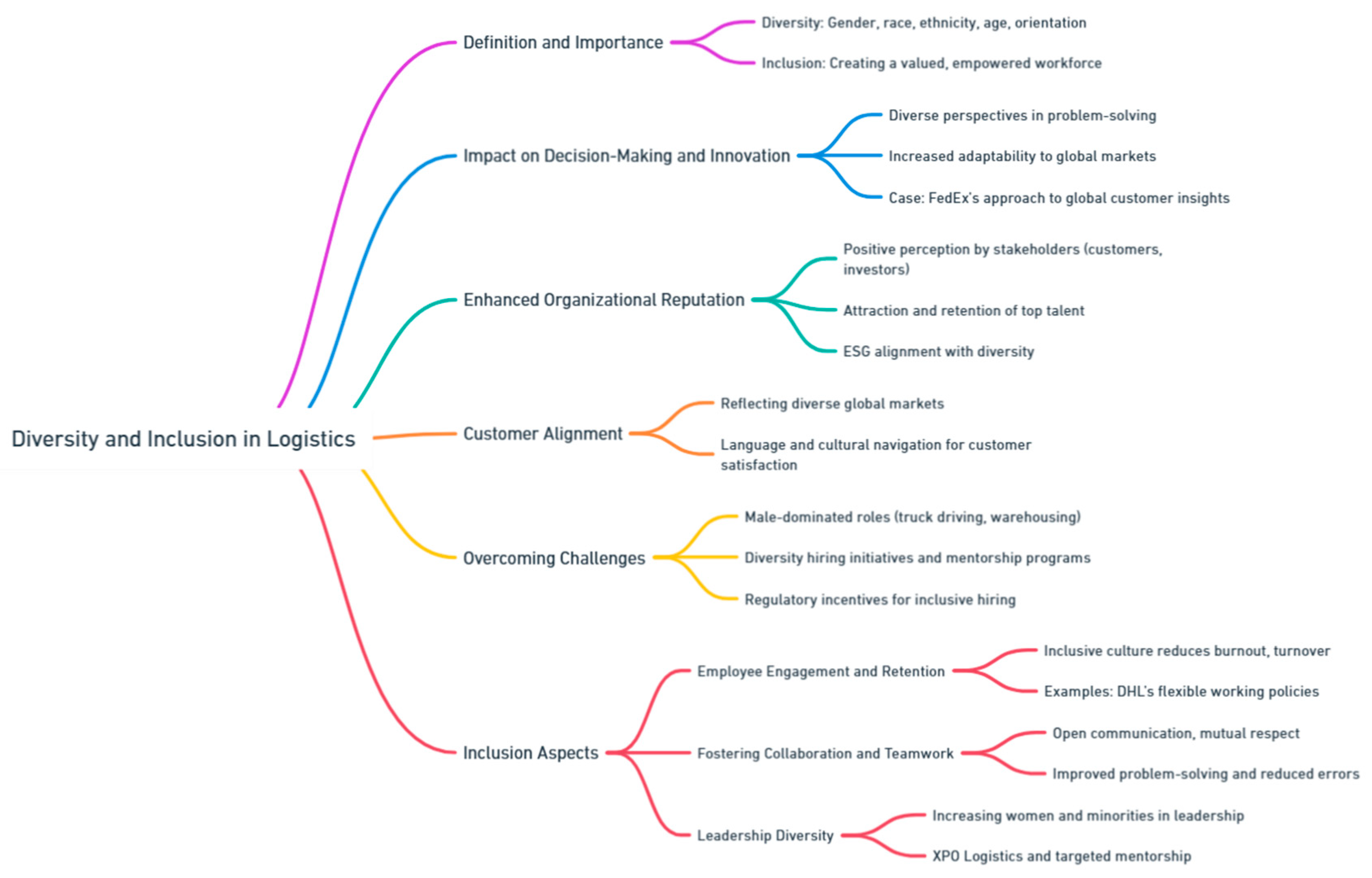
In conclusion, inclusion is a critical component of success in the logistics industry. By creating an environment where all employees feel valued, respected, and empowered, logistics companies can enhance employee engagement, foster collaboration, support the advancement of underrepresented groups, and ultimately improve their operational and financial performance. Inclusion is not just a moral imperative; it is a business strategy that can drive innovation, improve efficiency, and ensure long-term competitiveness in an increasingly global and diverse market. As the logistics industry continues to evolve, companies that prioritize inclusion will be better equipped to navigate the challenges and opportunities of the future (Sgarbossa et al., 2020; Winkelhaus and Grosse, 2020; Govindan et al., 2021).
Preprints 139811 i086

10.10. Ethical Sourcing in Logistics

Ethical sourcing involves the procurement of goods and services in a manner that ensures fairness, sustainability, and responsibility throughout the supply chain. In logistics, where the movement of goods often spans multiple countries and involves complex networks of suppliers, the importance of ethical sourcing is magnified. Ethical sourcing addresses not only the working conditions and human rights of those involved in production but also the environmental sustainability of sourcing practices and the fairness of trade practices. As consumers and regulatory bodies increasingly demand greater accountability from businesses, ethical sourcing in logistics has become essential for maintaining reputations, complying with laws, and ensuring smooth and sustainable operations.
  • Protecting Human Rights. One of the most important pillars of ethical sourcing in logistics is the protection of human rights. The global nature of modern supply chains means that goods are often produced in regions with differing labor laws and standards of worker protection. Ethical sourcing aims to ensure that workers are treated fairly, are paid reasonable wages, and work in safe and humane conditions, regardless of where they are located. Labor exploitation, including forced labor, child labor, and hazardous working conditions, remains a significant issue in global supply chains. Companies that fail to address these risks can face serious repercussions, ranging from reputational damage and consumer boycotts to legal sanctions and disruptions in their supply chains. For instance, in recent years, several high-profile companies have been embroiled in controversies related to poor labor practices in their supply chains, which has harmed their public image and led to calls for greater corporate responsibility. To prevent such issues, many companies have implemented rigorous ethical sourcing policies that mandate compliance with international labor standards. These policies often require suppliers to uphold the principles outlined by organizations such as the International Labour Organization (ILO), which include the prohibition of forced labor, the right to fair wages, and the provision of safe working conditions. Companies like Unilever, for example, have established stringent guidelines for their suppliers to ensure that products are sourced ethically, with a strong emphasis on safeguarding workers' rights. Beyond legal compliance, ethical sourcing fosters goodwill with stakeholders, including consumers, employees, and investors. Businesses that prioritize human rights in their sourcing practices are often seen as more trustworthy and socially responsible, which can enhance their brand reputation and strengthen consumer loyalty. Additionally, ethical sourcing practices help mitigate the risk of supply chain disruptions caused by labor disputes or non-compliance with labor laws (Hughes et al., 2019; Krajewski et al., 2021).
  • Reducing Environmental Impact: Ethical sourcing in logistics is also closely tied to environmental sustainability. In the context of logistics, this involves selecting suppliers and partners that take steps to reduce their environmental footprint, such as minimizing carbon emissions, using renewable resources, and following best practices for waste management. The logistics industry has historically been a significant contributor to environmental degradation, with its reliance on fossil fuels, excessive packaging, and wasteful production practices. Ethical sourcing aims to change this by promoting the use of sustainable materials and eco-friendly transportation methods. Logistics companies are increasingly recognizing the importance of environmental responsibility, not only because of growing consumer demand for sustainable products but also due to stricter environmental regulations. Ethical sourcing encourages companies to partner with suppliers that prioritize environmental sustainability, whether through reducing their energy consumption, using biodegradable materials, or adhering to sustainable farming practices. By aligning with suppliers that minimize their carbon footprint, logistics companies can significantly reduce the overall environmental impact of their supply chains. A prime example of a company leading the way in this regard is Patagonia, an outdoor apparel brand known for its commitment to sustainability. Patagonia ensures that all of its raw materials are sourced from suppliers that meet rigorous environmental and social standards, such as minimizing water usage, reducing chemical inputs, and using recycled materials wherever possible. This not only helps the company reduce its environmental impact but also sets a benchmark for other businesses to follow. Furthermore, logistics companies can implement sustainable transportation methods, such as using electric or hybrid vehicles, optimizing delivery routes to reduce fuel consumption, and adopting greener shipping options. By focusing on environmental sustainability as part of their ethical sourcing strategies, logistics companies not only contribute to the global effort to combat climate change but also meet the increasing demands of environmentally conscious consumers (Pei and Sun, 2020; Wan et al., 2022).
  • Maintaining Supply Chain Transparency: Transparency is a fundamental element of ethical sourcing. In today’s globalized economy, consumers, investors, and regulators are increasingly demanding full visibility into how and where products are sourced. Ethical sourcing frameworks, such as Fair Trade, the Global Reporting Initiative (GRI), and ISO standards like ISO 20400 (Sustainable Procurement), provide clear guidelines for ensuring supply chain transparency and sustainable practices. Incorporating transparency into the logistics process means that every step of the supply chain is visible, traceable, and accountable. This level of transparency is important not only for meeting regulatory requirements but also for building consumer trust. With heightened awareness around issues like labor exploitation and environmental harm, consumers are demanding more information about the origins of the products they purchase. They want assurances that the goods they buy are sourced responsibly, produced in humane conditions, and shipped in environmentally friendly ways. Blockchain technology has emerged as a powerful tool for ensuring supply chain transparency in logistics. Companies like Nestlé have already implemented blockchain solutions to track the sourcing and production of their products, ensuring that every step in the supply chain—from raw material procurement to final delivery—can be verified as ethical and sustainable. Blockchain allows for real-time tracking and immutable records, which helps build trust with consumers and regulators while reducing the risk of fraud and unethical practices within the supply chain. By maintaining transparency in sourcing practices, logistics companies can not only improve their reputation but also identify potential risks early and take corrective action before issues escalate. Transparency enables businesses to work more closely with suppliers to address any concerns related to labor rights, environmental practices, or other ethical issues, fostering long-term, sustainable partnerships (Ebinger and Omondi, 2020; Park and Li, 2021).
  • The Future of Ethical Sourcing in Logistics: As global supply chains continue to evolve, the importance of ethical sourcing in logistics will only grow. Consumers are increasingly demanding that the companies they support align with their values, and regulators are enacting stricter laws to ensure that businesses operate in a sustainable and socially responsible manner. These trends will compel logistics companies to continuously assess and improve their sourcing practices to meet ethical standards. Moreover, the integration of technology into logistics operations will play a crucial role in advancing ethical sourcing. As more companies adopt digital tools like blockchain, artificial intelligence, and data analytics, they will be better equipped to track and manage their supply chains, ensuring greater accountability and transparency at every stage. The drive toward sustainability and ethics in logistics is also aligned with broader global goals, such as the United Nations' Sustainable Development Goals (SDGs), which promote responsible consumption, environmental protection, and social equity. Logistics companies that embrace ethical sourcing will not only contribute to these goals but also position themselves as leaders in a rapidly changing industry. In conclusion, ethical sourcing in logistics is not just about adhering to laws or avoiding negative publicity—it is about taking responsibility for the social and environmental impacts of business operations. By protecting human rights, reducing environmental footprints, and maintaining transparency, logistics companies can create more sustainable and equitable supply chains, benefiting both their businesses and the wider global community (Franke and Fischer, 2023).
  • Intersection of Diversity, Inclusion, and Ethical Sourcing: Diversity, inclusion, and ethical sourcing are three core principles that, when integrated into a business model, foster a more responsible, sustainable, and equitable organization. In the context of logistics, these principles have a profound impact not only on the company itself but also on the supply chains that it operates within and across. The intersection of these values can enhance decision-making processes, strengthen supplier relationships, and ultimately promote a business culture that is both socially and environmentally conscious (Adobor and McMullen, 2007).
  • The Role of Diversity and Inclusion in Ethical Sourcing: At the heart of this intersection lies the idea that a diverse and inclusive workforce contributes to better ethical sourcing decisions. Ethical sourcing refers to the practice of ensuring that the products or services a company acquires are obtained in a manner that respects workers' rights, environmental sustainability, and community welfare. Companies with a diverse workforce benefit from having employees with varied backgrounds, experiences, and perspectives, which can help them better understand the complex social and environmental issues that are tied to their sourcing practices. For example, a logistics company with employees from various cultural backgrounds might be more attuned to the specific labor practices in different countries or regions where they source their materials. Such employees may be more sensitive to issues like child labor, wage exploitation, or unsafe working conditions that could otherwise be overlooked in a more homogenous workforce. As a result, these companies are more likely to implement stringent labor standards and monitor their supply chains for ethical compliance. This broader perspective, driven by a diverse and inclusive culture, ensures that decisions are made not just for the benefit of the business but also in consideration of the broader social and environmental implications (Mendoza-Lera and Knäbel, 2023; Odum, 2023).
  • Cultural Sensitivity and Ethical Sourcing: Cultural sensitivity is another key benefit that diversity and inclusion bring to ethical sourcing. A company with employees from a wide range of cultural and ethnic backgrounds is likely to be more aware of the potential cultural impacts of its sourcing practices. This sensitivity is particularly important when sourcing from countries with different social norms, labor laws, and environmental regulations. For instance, what may be considered ethical in one country could be seen as exploitative or harmful in another due to differences in local customs or socioeconomic conditions. A workforce that values diversity can help ensure that the company’s sourcing practices align with local ethical standards, respecting the rights and traditions of workers and communities involved in the supply chain. Additionally, this cultural awareness extends to environmental considerations. Many indigenous communities, for example, have a deep connection to their land and natural resources. Companies with a diverse and inclusive workforce may be more likely to recognize the importance of protecting these communities' environmental rights, avoiding exploitative practices such as deforestation or water contamination. By fostering a workplace culture that includes individuals from these or similar backgrounds, companies are more likely to make ethically responsible decisions that protect both people and the planet (Evangelista et al., 2017; Schilling-Vacaflor, 2021).
  • Extending Diversity and Inclusion to the Supply Chain: Companies that prioritize diversity and inclusion within their workforce often extend these values to their suppliers and partners. By doing so, they contribute to the creation of more equitable and sustainable supply chains. One way this happens is through partnerships with minority-owned businesses or suppliers that demonstrate a commitment to ethical labor practices. Engaging with minority-owned suppliers not only supports economic development in underrepresented communities but also brings diverse perspectives into the supply chain, promoting innovation and ethical sourcing at multiple levels. For logistics companies, partnering with diverse suppliers can mean more equitable distribution of economic opportunities and the empowerment of marginalized groups. Furthermore, suppliers from different backgrounds may offer insights into sustainable and ethical sourcing practices that can help logistics companies enhance their own operations. For instance, suppliers with expertise in sustainable agriculture, renewable energy, or fair-trade practices can provide products and services that align with a company’s commitment to ethical sourcing. By integrating diversity and inclusion into their supply chain management, companies can create a ripple effect that supports ethical practices throughout the entire network (Silva et al., 2024; Ruel and Fritz, 2021).
  • Ethical Sourcing and Environmental Impact: Another critical area where diversity, inclusion, and ethical sourcing intersect is environmental impact. Ethical sourcing is increasingly linked with sustainability, as companies seek to minimize their environmental footprint. A workforce that values diversity and inclusion may be more conscious of the need for environmentally sustainable practices in sourcing, particularly when it comes to understanding the specific environmental challenges faced by different regions. For example, a logistics company sourcing raw materials from a region prone to deforestation or water scarcity can leverage the diverse perspectives within its workforce to devise strategies that mitigate negative environmental impacts. Employees with a deep understanding of the local environmental context can offer valuable insights into how sourcing practices affect local ecosystems and communities, leading to more responsible and sustainable decisions. These employees can advocate for sourcing from suppliers that prioritize environmental stewardship, such as those using renewable resources or engaging in reforestation efforts. In this context, inclusion is crucial. When employees feel that their voices and perspectives are valued, they are more likely to contribute innovative ideas for sustainable sourcing solutions. This inclusive environment encourages collaboration, where individuals from different backgrounds work together to address complex environmental challenges associated with logistics and sourcing (Evangelista et al., 2017; Goebel et al., 2012).
  • Collaborative Efforts for Ethical Sourcing in Logistics: Collaborative industry efforts, such as the Global Logistics Emissions Council (GLEC), provide a platform for logistics companies to work together on promoting sustainable practices that align with ethical sourcing principles. The GLEC brings together a diverse range of stakeholders, including companies, policymakers, and non-governmental organizations (NGOs), to develop standardized methodologies for measuring and reducing emissions in logistics. These collaborative initiatives highlight the link between diversity, inclusion, and ethical sourcing, as they encourage companies to adopt more transparent and sustainable practices throughout their supply chains. By participating in such initiatives, logistics companies not only demonstrate their commitment to reducing their environmental impact but also show that they value ethical sourcing practices. The involvement of diverse and inclusive teams in these efforts is essential, as it allows for a broader range of ideas and approaches to be considered when developing sustainable solutions. Moreover, these collaborations foster knowledge sharing and innovation, enabling logistics companies to continuously improve their sourcing practices and reduce their carbon footprints (du Plessis et al., 2022; Centobelli et al., 2020).
  • The Business Case for Diversity, Inclusion, and Ethical Sourcing: From a business perspective, embracing diversity, inclusion, and ethical sourcing is not just a matter of corporate social responsibility but also a strategic advantage. Consumers are increasingly demanding transparency and sustainability from the companies they buy from, and businesses that can demonstrate a commitment to these values are likely to enjoy stronger customer loyalty and brand reputation. In fact, studies have shown that companies with diverse leadership teams are more innovative and financially successful, which further supports the business case for fostering diversity and inclusion. In the context of logistics, companies that prioritize ethical sourcing are better positioned to mitigate risks related to labor violations, environmental degradation, and reputational damage. By ensuring that their supply chains adhere to high ethical standards, these companies can avoid potential disruptions, such as boycotts, regulatory fines, or negative publicity. Additionally, investing in sustainable sourcing practices can lead to cost savings in the long run, particularly as renewable energy and resource-efficient technologies become more widely available and affordable. The intersection of diversity, inclusion, and ethical sourcing presents a powerful opportunity for logistics companies to create more responsible and sustainable supply chains. A diverse and inclusive workforce brings a wealth of perspectives that can enhance ethical decision-making, particularly in relation to labor practices, environmental sustainability, and supplier relationships. By extending these values to their supply chains and engaging in collaborative efforts, logistics companies can contribute to a more equitable and sustainable future. Embracing diversity, inclusion, and ethical sourcing is not only the right thing to do from a social and environmental standpoint, but it also makes good business sense, offering long-term benefits in terms of innovation, customer loyalty, and risk management (Kravchenko et al., 2023; Roy and Mohanty, 2024; Chukwu et al., 2023).
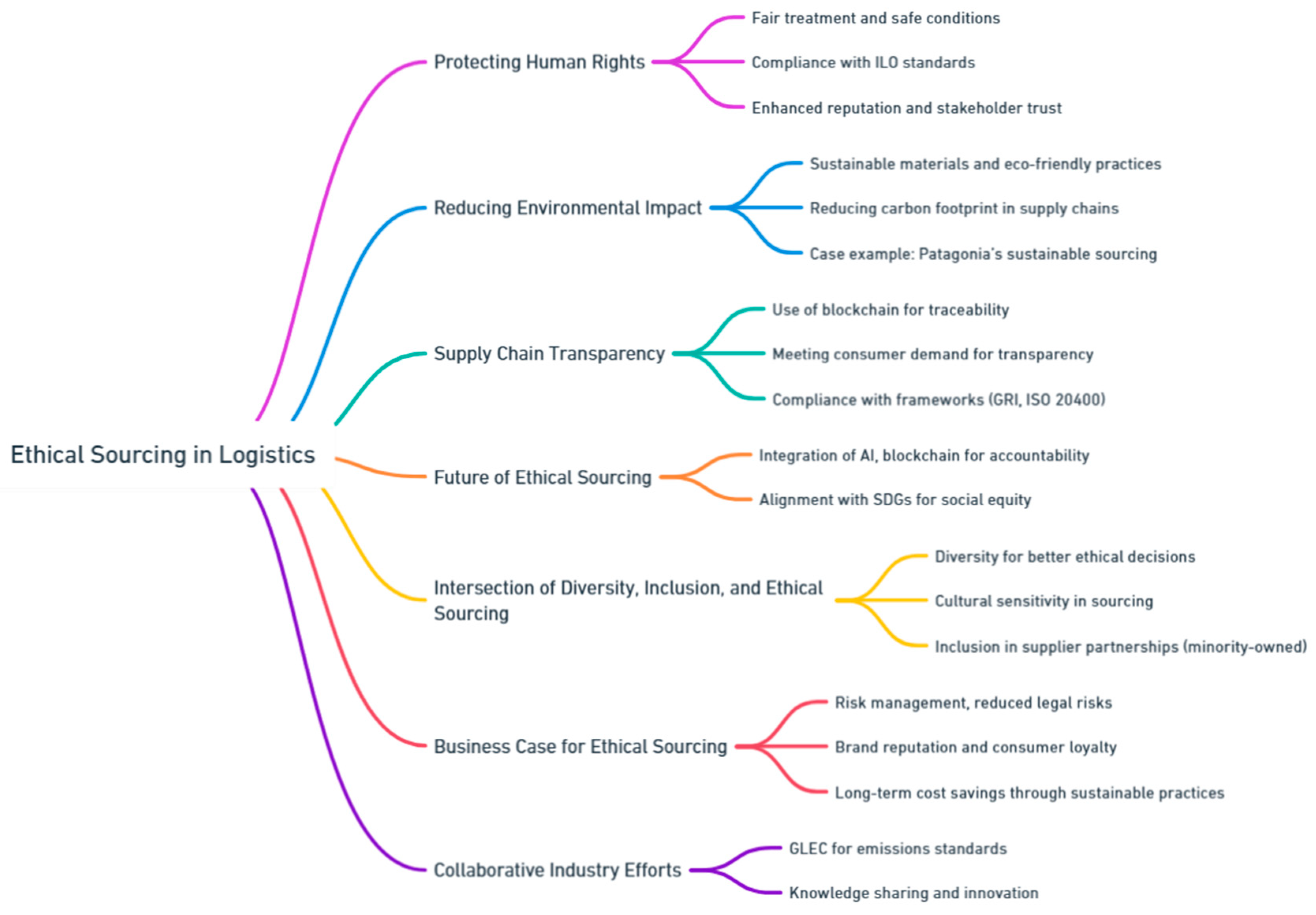
Preprints 139811 i087

10.11. Challenges and Barriers to Achieving Diversity, Inclusion, and Ethical Sourcing in Logistics

Despite recent progress, the logistics industry continues to face substantial challenges in promoting diversity, inclusion, and ethical sourcing. These challenges are deeply rooted in the industry's structure, culture, and historical practices, making it difficult for many organizations to implement meaningful change. Understanding and addressing these barriers is crucial for building a more sustainable, ethical, and inclusive logistics sector. Below is an expanded discussion of the key challenges in this area: structural barriers, cost and complexity, and resistance to change.
  • Structural Barriers: One of the most significant challenges to achieving diversity, inclusion, and ethical sourcing in logistics is the deep-rooted structural barriers that exist within the industry. Logistics has historically been a male-dominated field, with leadership roles overwhelmingly held by men. This gender imbalance is reflective of broader societal patterns but is particularly pronounced in sectors like logistics, which are often associated with manual labor, long working hours, and physically demanding tasks—jobs traditionally viewed as “male” roles. Overcoming these structural barriers requires a concerted and sustained effort. While many companies are beginning to prioritize diversity and inclusion, ingrained cultural attitudes and practices can be slow to shift. Efforts to hire more women and minorities into leadership positions, for example, may face resistance from existing power structures, which are often not designed to be inclusive. There is also a lack of role models for women and other underrepresented groups in logistics, which can perpetuate the cycle of exclusion. Additionally, structural barriers are not limited to gender. Racial and ethnic diversity in logistics remains a challenge as well, particularly in regions where certain demographics have been historically marginalized or excluded from opportunities. Many logistics companies operate in global markets, which brings the additional challenge of addressing diversity and inclusion across different cultural contexts. What constitutes inclusion in one country may differ significantly in another, making it difficult to create cohesive, global strategies for promoting diversity. To dismantle these structural barriers, companies must implement comprehensive diversity and inclusion programs that go beyond surface-level initiatives. This includes mentorship and sponsorship programs for underrepresented groups, bias training for employees, and policies that actively promote diversity in recruitment, retention, and promotion. More importantly, companies need to address these issues at the leadership level. Changing the face of leadership in logistics—ensuring it is more reflective of the diverse workforce—will be key to creating a more inclusive industry (Schollmeier and Scott, A. (2024).
  • Cost and Complexity of Ethical Sourcing: Another significant barrier to achieving ethical sourcing in logistics is the cost and complexity involved. Ethical sourcing refers to the practice of ensuring that a company’s supply chain is free from exploitative practices such as child labor, unsafe working conditions, and environmental harm. While this is a laudable goal, implementing these standards can be particularly challenging, especially for small and medium-sized enterprises (SMEs). For large multinational corporations, investing in ethical sourcing often involves conducting regular audits of suppliers, ensuring compliance with international labor standards, and working closely with partners to improve conditions throughout the supply chain. However, these practices are resource-intensive, requiring both financial investment and dedicated personnel. Many SMEs simply do not have the resources to implement such thorough oversight, and as a result, they may find it difficult to guarantee that their supply chains are ethically sound. Moreover, global supply chains are incredibly complex, often involving multiple tiers of suppliers across various countries, each with different legal and regulatory frameworks. Tracking materials and labor practices through these intricate networks is a daunting task. Companies may have limited visibility into the practices of their suppliers, especially when dealing with lower-tier vendors who are often located in regions with weak enforcement of labor laws. This lack of transparency makes it challenging to ensure compliance with ethical sourcing standards. The complexity of ethical sourcing is further exacerbated by the fact that supply chains in logistics are highly dynamic. Suppliers change frequently due to cost pressures, availability of materials, and shifts in demand, which adds to the difficulty of maintaining long-term relationships that facilitate ethical oversight. Furthermore, the logistics industry often relies on subcontracting and outsourcing, which can dilute responsibility for ensuring ethical practices. Addressing these challenges will require innovative solutions. Digital technologies such as blockchain can provide greater transparency in supply chains by allowing companies to trace the origin of products and verify the ethical practices of their suppliers. Additionally, industry-wide collaborations could help SMEs pool resources to conduct audits and enforce ethical standards. Governments and international bodies can also play a role by providing frameworks and incentives for ethical sourcing practices, ensuring that even smaller companies have the support they need to make ethical sourcing a reality (Cheng and Tongzon, 2014; Subramanian et al., 2015).
  • Resistance to Change: One of the most persistent barriers to achieving diversity, inclusion, and ethical sourcing in logistics is resistance to change, particularly at the cultural and leadership levels. Many companies in the logistics sector have long-standing traditions and operational models that are resistant to new ideas and progressive practices. This resistance is often driven by entrenched leadership that may not see the immediate financial benefit of diversity, inclusion, or ethical sourcing efforts, focusing instead on short-term profitability and operational efficiency. Resistance to change in traditional industries like logistics often stems from a fear of the unknown or the perceived costs associated with overhauling existing systems. For example, implementing a robust diversity and inclusion strategy may require significant investment in training, recruitment, and mentorship programs, all of which can seem like a distraction from core business operations. Leadership teams that are not fully committed to these goals may view them as non-essential or even detrimental to the bottom line. This resistance can manifest in various ways, from passive opposition to outright hostility towards diversity and inclusion initiatives. Employees at all levels of an organization may resist changes they feel threaten the status quo, and this can be particularly pronounced in industries that have traditionally been dominated by one demographic group. Cultural change is often met with skepticism, as it challenges long-held norms and power structures. In some cases, the introduction of diversity and inclusion initiatives can even create tension within the workforce, leading to pushback from employees who feel their positions or privileges are being undermined. To overcome this resistance, companies need to demonstrate that diversity, inclusion, and ethical sourcing are not just about meeting regulatory requirements or public relations goals, but about creating a more innovative, competitive, and resilient business. Research consistently shows that diverse teams are more innovative, that inclusive workplaces have higher employee satisfaction and retention, and that ethical sourcing can enhance a company’s reputation and customer loyalty. Leaders must champion these initiatives and integrate them into the company's broader strategic objectives, ensuring they are seen as a core part of the business rather than an optional add-on (Thomas et al., 2014; Rahaman et al., 2021).
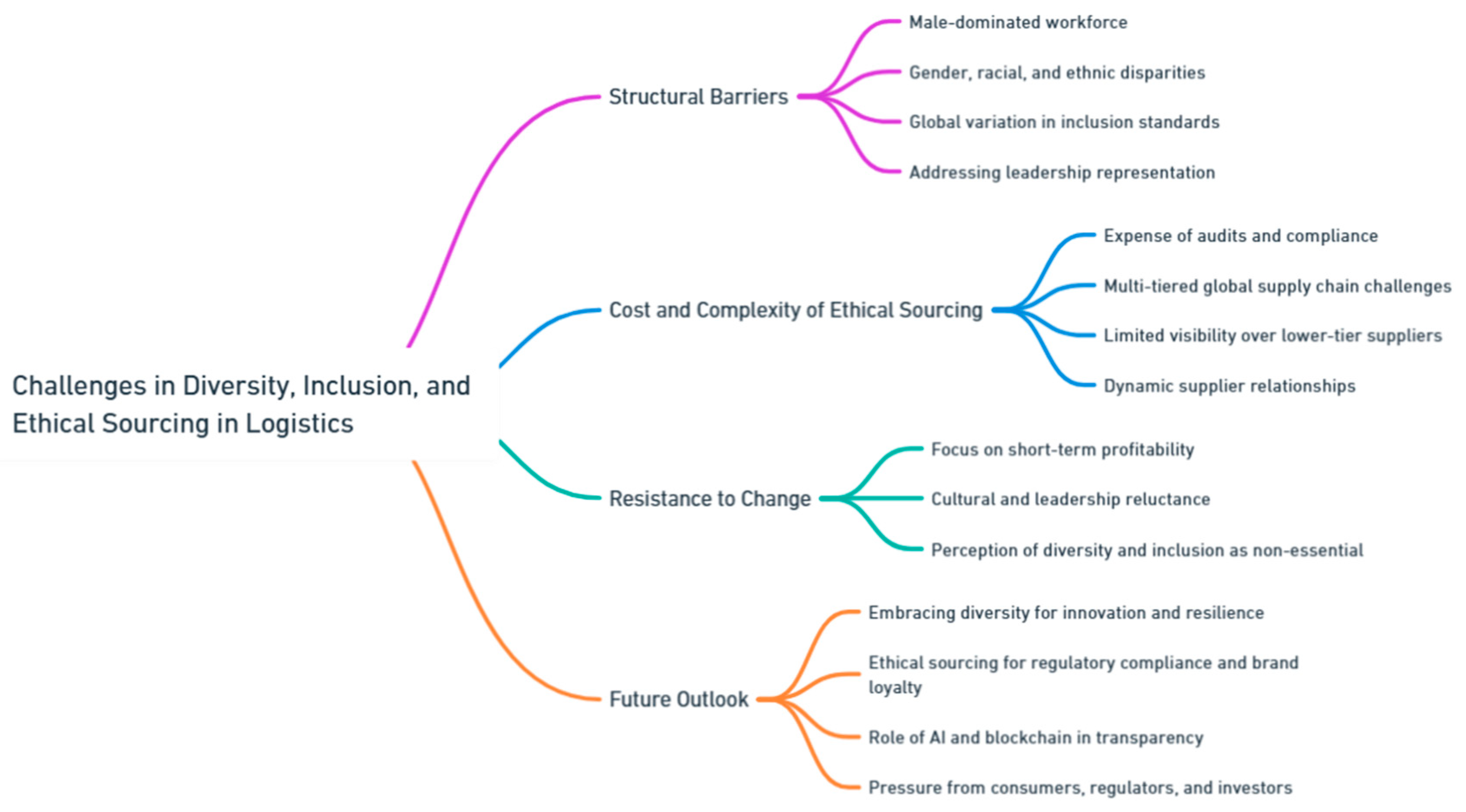
The logistics industry faces significant challenges in its efforts to become more diverse, inclusive, and ethically responsible. Structural barriers, cost and complexity, and resistance to change are major obstacles that must be addressed if meaningful progress is to be made. However, with sustained effort, investment in technology, and a commitment to cultural change, the logistics sector can overcome these barriers and move toward a more sustainable and equitable future. The road to diversity, inclusion, and ethical sourcing is not an easy one, but it is a necessary journey for an industry that plays such a vital role in the global economy. By tackling these challenges head-on, the logistics industry can not only meet the growing demand for responsible business practices but also unlock new opportunities for innovation, efficiency, and growth (Brdulak and Brdulak, 2021; Bielecki, et al., 2023).
Future Outlook. The future of logistics is set to be shaped by a range of dynamic trends, among which diversity, inclusion, and ethical sourcing are emerging as central pillars. As businesses recognize the growing importance of sustainability and corporate responsibility, these areas are no longer just moral imperatives but also key drivers of competitive advantage. Forward-thinking companies are realizing that adopting diverse, inclusive, and ethically responsible practices creates significant benefits, not just for society but also for long-term business success.
The Role of Diversity and Inclusion in Logistics. Diversity and inclusion are gaining traction in logistics due to their ability to foster innovation, improve decision-making, and create a more resilient workforce. Companies are increasingly valuing diverse perspectives as they seek to navigate the complexities of a global supply chain, which requires not only technical expertise but also a deep understanding of different cultures, markets, and regulatory environments. Logistics companies that embrace diversity can tap into a broader talent pool, ensuring that they attract the best candidates from all backgrounds. A diverse workforce brings together different viewpoints, which can be especially beneficial when solving complex logistical problems. Diverse teams are proven to be more innovative and agile, two qualities that are crucial in an industry where disruptions—whether caused by geopolitical tensions, natural disasters, or shifts in consumer demand—are increasingly common. Additionally, inclusivity fosters better communication and collaboration, reducing inefficiencies and misunderstandings within a global workforce. Inclusion in logistics also involves ensuring that all employees, regardless of their background, have equal opportunities to grow and succeed. This means creating an environment where differences are respected and valued, and where policies are designed to eliminate barriers to entry and advancement. For example, many companies are adopting policies that support gender equality in leadership positions, encourage hiring from underrepresented communities, and provide training programs that promote a more inclusive workplace. By fostering inclusion, companies can not only boost employee morale and retention but also enhance their reputation with customers and partners who increasingly value ethical and socially responsible businesses (Bratianu and Paiuc, 2023; Calderon, 2023).
Ethical Sourcing and Supply Chain Transparency. As consumer awareness of environmental and social issues grows, ethical sourcing is becoming a non-negotiable aspect of doing business. Ethical sourcing involves ensuring that materials and products are obtained in a responsible and sustainable manner, considering the social, environmental, and economic impacts of sourcing decisions. In logistics, this means that companies must ensure that their suppliers adhere to fair labor practices, minimize environmental harm, and respect human rights throughout the supply chain. Technological advancements, particularly in artificial intelligence (AI) and blockchain, are revolutionizing the way companies manage and track ethical sourcing. AI allows companies to analyze vast amounts of data, identifying potential risks in their supply chains—such as child labor, unsafe working conditions, or environmental degradation. AI-driven analytics can also help optimize procurement practices, ensuring that companies source materials in the most sustainable and cost-effective way. Blockchain, with its ability to provide transparent, immutable records, is another key technology transforming supply chain transparency. By using blockchain, companies can create a digital ledger of all transactions and movements within their supply chain, making it easier to verify the ethical credentials of suppliers. This transparency helps companies ensure compliance with regulations and respond to increasing consumer demands for ethically sourced products. For example, blockchain technology can be used to track the journey of raw materials, from the point of extraction to the final product, ensuring that all steps of the process meet ethical standards (Hong and Xiao, 2024; Paliwal, et. 2020).
Consumer, Regulatory, and Investor Pressure. The growing emphasis on diversity, inclusion, and ethical sourcing is being driven not only by companies themselves but also by external forces. Consumers, regulators, and investors are all playing a role in pushing businesses toward more inclusive and sustainable practices. Consumers: As sustainability becomes a top priority for many consumers, they are increasingly choosing to support companies that align with their values. Shoppers are more likely to buy from brands that are committed to ethical sourcing, environmental stewardship, and diversity in their operations. For example, studies show that Millennials and Gen Z consumers, in particular, are willing to pay a premium for products that are sourced sustainably and produced under fair labor conditions. This shift in consumer behavior is forcing logistics companies to rethink their sourcing strategies and ensure that their supply chains reflect these values. Regulators: Governments and regulatory bodies are also playing a crucial role in shaping the future of logistics by enforcing stricter guidelines around sustainability, diversity, and ethical sourcing. One notable regulatory development is the European Union’s Corporate Sustainability Reporting Directive (CSRD), which is set to transform the way companies report on their social and environmental impacts. Under the CSRD, companies will be required to disclose detailed information about their operations, including their approach to diversity, environmental practices, and ethical sourcing. This increased transparency will help hold companies accountable for their actions and encourage them to adopt more sustainable and inclusive practices. The CSRD, alongside other initiatives like the EU’s Green Deal and the United Nations’ Sustainable Development Goals (SDGs), is part of a broader push toward corporate responsibility. Companies that fail to comply with these regulations risk facing reputational damage, financial penalties, and exclusion from certain markets. On the other hand, businesses that proactively embrace these changes will be better positioned to succeed in a more regulated and sustainability-focused global market. Investors: Investors are increasingly factoring environmental, social, and governance (ESG) criteria into their decision-making processes. ESG investing, which takes into account a company’s impact on the environment, society, and its governance practices, has gained significant traction in recent years. Investors are looking for companies that not only deliver strong financial returns but also demonstrate a commitment to ethical business practices, including diversity, inclusion, and sustainability. For logistics companies, this means that adopting ESG principles is no longer just a matter of compliance but also a key driver of investment. Companies that prioritize ethical sourcing and diversity are likely to attract more investment from ESG-conscious investors, who see long-term value in businesses that are aligned with global sustainability goals. Furthermore, as more investors integrate ESG factors into their portfolios, companies with poor sustainability records may find it increasingly difficult to secure funding (Jazairy and von Haartman, 2020; Baah et al., 2020).
The Path Forward: Challenges and Opportunities. While the future of logistics looks promising in terms of diversity, inclusion, and ethical sourcing, there are challenges that companies must address to fully realize these benefits. Implementing these practices requires significant investment in technology, training, and organizational change. For example, adopting AI and blockchain technologies for supply chain transparency involves not only financial costs but also the need for skilled personnel to manage and interpret the data. Similarly, fostering an inclusive workplace requires ongoing efforts to address unconscious biases, provide equal opportunities, and create a supportive culture. Nevertheless, the opportunities for companies that succeed in these areas are immense. By integrating diversity, inclusion, and ethical sourcing into their core business strategies, logistics companies can enhance their brand reputation, build stronger relationships with consumers and investors, and mitigate risks associated with supply chain disruptions or regulatory non-compliance. Additionally, companies that prioritize sustainability will be better equipped to navigate the growing complexity of global markets, where environmental and social considerations are becoming as important as financial performance. The future of logistics will be increasingly defined by the integration of diversity, inclusion, and ethical sourcing into business operations. As technological advancements such as AI and blockchain make it easier to track and manage supply chains, and as pressure from consumers, regulators, and investors continues to rise, companies must adapt to meet these evolving expectations. By embracing these trends, logistics companies can not only contribute to a more sustainable and equitable global economy but also gain a competitive edge in an industry that is rapidly transforming. Diversity, inclusion, and ethical sourcing are increasingly recognized as critical elements that will shape the future of the logistics industry. As the global economy becomes more interconnected and consumers demand more transparency and accountability from businesses, logistics companies have a unique opportunity to lead the way in creating more responsible and equitable supply chains. By embracing these principles, companies can not only enhance their operational performance but also contribute to a more sustainable, ethical, and inclusive global economy. Diversity and inclusion within the logistics sector bring a multitude of benefits. Companies that foster diverse workforces are more likely to benefit from innovative ideas, broader perspectives, and improved problem-solving capabilities (Bielecki, 2023; Brdulak and Brdulak, 2021).
A diverse workforce, including individuals of different genders, ethnicities, cultures, and backgrounds, can approach challenges in more creative ways, which is crucial in an industry that must constantly adapt to changing global demands. Additionally, inclusive practices create a sense of belonging among employees, leading to higher engagement, better morale, and improved retention rates. When employees feel valued and respected, they are more likely to perform at their best, directly impacting the company’s productivity and success. Inclusion is also vital in ensuring that the logistics industry reflects the global communities it serves. As supply chains span multiple countries and regions, it is essential that logistics companies adopt inclusive practices that respect and value the diverse needs of their partners and customers. This includes creating opportunities for underrepresented groups, fostering inclusive workplace cultures, and ensuring equitable access to resources and career advancement for all employees. Companies that prioritize inclusion not only enhance their own competitiveness but also contribute to a more just and equitable global economy. Ethical sourcing is another essential component of sustainable logistics. As consumers become more socially and environmentally conscious, they are increasingly holding companies accountable for how and where they source their products. Logistics companies play a critical role in ensuring that goods are sourced ethically, meaning that they come from suppliers who meet high standards for labor practices, environmental stewardship, and human rights. By prioritizing ethical sourcing, companies can mitigate risks associated with supply chain disruptions, regulatory compliance, and reputational damage while also contributing to broader global efforts to combat issues such as forced labor, environmental degradation, and exploitation of vulnerable communities. Moreover, ethical sourcing aligns with the growing emphasis on sustainability in the logistics industry. Companies that source goods responsibly are better positioned to meet their sustainability goals, reduce their carbon footprints, and build long-term resilience into their supply chains. This is not only beneficial for the environment but also strengthens the company's reputation and builds trust with consumers who are increasingly looking for brands that align with their values. In conclusion, diversity, inclusion, and ethical sourcing are not just moral imperatives—they are strategic imperatives for the future of logistics. Companies that embrace these principles are likely to see improved operational performance, stronger customer loyalty, and a more resilient supply chain. As the logistics industry continues to evolve, those that lead the way in creating responsible, inclusive, and ethical supply chains will be well-positioned to thrive in the global marketplace (Rabl et al., 2020; Polavarapu et al., 2022).
Preprints 139811 i088

11. Smart Cities and Community Impact: The Social Role of Logistics Hubs
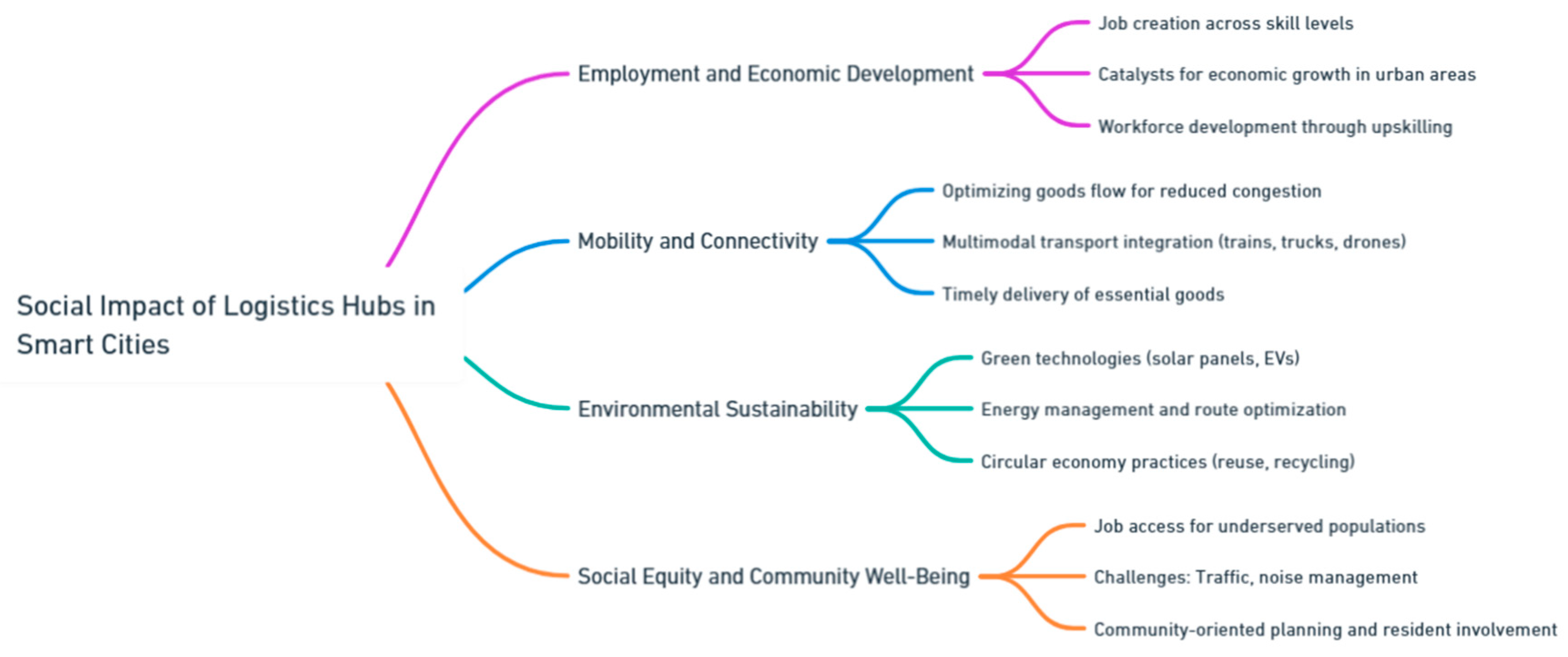
In the rapidly evolving landscape of urban development, smart cities have emerged as a response to the growing demands of urbanization, technological advancement, and environmental sustainability. Smart cities leverage digital technologies and data-driven solutions to optimize various aspects of urban life, from transportation and energy use to governance and public services. One of the core elements of smart city infrastructure is logistics, which plays a crucial role in connecting people, businesses, and governments through the efficient movement of goods and services. Within this framework, logistics hubs—centralized locations designed to streamline the distribution and transportation of goods—have become vital components of smart cities. These hubs serve as key infrastructure points that not only enhance operational efficiency but also drive social, economic, and environmental change. This essay explores the intersection of smart cities and logistics hubs, with a specific focus on the social impact of these hubs within urban environments. While logistics hubs are often seen primarily as centers for goods distribution, their influence extends far beyond the movement of products. These hubs shape employment opportunities, mobility, environmental sustainability, and community well-being, making them critical to the success of smart city initiatives. Understanding the social role of logistics hubs in smart cities can provide valuable insights into how urban planning can integrate economic growth with social equity and environmental consciousness (Shee et al., 2021; Pan et al., 2021).
Employment Opportunities and Economic Development. One of the most immediate and tangible social impacts of logistics hubs in smart cities is the creation of employment opportunities. As centralized points for the management and distribution of goods, logistics hubs require a wide range of workers, from warehouse staff and transport operators to IT professionals and management personnel. This diversity of roles can provide jobs to individuals with varying skill levels, making logistics hubs a significant contributor to local employment. In many urban areas, logistics hubs can act as economic catalysts, spurring development in surrounding neighborhoods and contributing to overall economic growth. By facilitating the efficient movement of goods, these hubs enable businesses to expand their operations and increase productivity, which can, in turn, lead to the creation of more jobs. Additionally, logistics hubs often attract related industries, such as retail, manufacturing, and technology firms, creating further economic opportunities within the urban ecosystem. The economic benefits of logistics hubs, however, are not limited to job creation. These hubs can also contribute to workforce development by providing opportunities for skills training and education. As smart cities increasingly adopt advanced technologies such as automation, artificial intelligence, and data analytics, the nature of work within logistics hubs is evolving. Workers are now required to develop new skills to manage and operate these technologies. This presents an opportunity for logistics hubs to partner with educational institutions and vocational training centers to provide upskilling and reskilling programs, ensuring that workers are prepared for the demands of a modern, technology-driven economy (Fang, 2023; Wang et al., 2020).
Enhancing Mobility and Connectivity. In addition to their economic contributions, logistics hubs play a crucial role in enhancing mobility and connectivity within smart cities. Efficient transportation systems are essential for the smooth functioning of urban areas, and logistics hubs are at the heart of these systems. By optimizing the flow of goods, logistics hubs help reduce traffic congestion and minimize delays in the delivery of goods and services, contributing to the overall efficiency of urban mobility. Moreover, logistics hubs can integrate with other transportation networks, such as public transit systems and freight rail, to create a more interconnected and efficient urban transport system. This integration can lead to the development of multimodal transportation solutions, where different modes of transport—such as trucks, trains, and even drones—are used in tandem to move goods more effectively. These innovations can improve the speed and reliability of deliveries while reducing the environmental impact of logistics operations, as they often result in fewer vehicle miles traveled and lower fuel consumption. The enhanced mobility provided by logistics hubs can also have a positive impact on the quality of life for urban residents. By ensuring the timely delivery of goods, particularly essential items such as food and medical supplies, logistics hubs contribute to the well-being of the community. Additionally, by reducing traffic congestion and improving air quality through the use of more sustainable transportation options, logistics hubs can help create healthier, more livable urban environments (Sihvonen and Weck, 2023; Pan et al., 2021).
Environmental Sustainability and Smart Logistics. Environmental sustainability is a key pillar of smart city development, and logistics hubs have a critical role to play in achieving sustainability goals. Traditional logistics operations are often associated with high levels of carbon emissions, air pollution, and waste generation. However, in smart cities, logistics hubs are designed to be more environmentally friendly, leveraging technology and innovation to minimize their environmental impact. One of the ways in which logistics hubs contribute to environmental sustainability is through the adoption of green technologies. For example, many logistics hubs are now equipped with renewable energy sources, such as solar panels, to power their operations. Additionally, the use of electric vehicles (EVs) for the transportation of goods is becoming more common, helping to reduce the carbon footprint of logistics activities. Advanced energy management systems, which optimize energy consumption and reduce waste, are also being implemented in logistics hubs to enhance their sustainability. Another important aspect of sustainability in logistics hubs is the promotion of circular economy principles. Smart logistics hubs can facilitate the efficient reuse, recycling, and disposal of materials, thereby reducing the amount of waste generated by urban logistics operations. This approach not only minimizes the environmental impact of logistics but also contributes to the creation of a more sustainable, resource-efficient urban economy. Moreover, smart logistics hubs often use advanced data analytics and IoT technologies to monitor and optimize their operations. These technologies enable logistics managers to track energy usage, vehicle emissions, and waste production in real time, allowing for more informed decision-making and the implementation of more sustainable practices. By optimizing routes, reducing empty miles, and improving load efficiency, logistics hubs can significantly reduce their environmental impact while maintaining high levels of operational efficiency (Richnák and Fidlerová, 2022; Seroka-Stolka, 2014).
Social Equity and Community Well-Being. The social impact of logistics hubs in smart cities extends beyond economic development and environmental sustainability to include social equity and community well-being. As logistics hubs are often located in or near urban centers, they have the potential to influence the development of the surrounding communities, both positively and negatively. On the positive side, logistics hubs can contribute to social equity by providing employment opportunities to underserved populations, such as low-income residents or individuals with limited access to education and training. By offering stable jobs and opportunities for skills development, logistics hubs can help reduce economic disparities within urban areas and promote social mobility. However, there are also potential challenges associated with the development of logistics hubs, particularly with regard to their impact on local communities. For example, the increased traffic and noise generated by logistics operations can negatively affect the quality of life for nearby residents. To mitigate these issues, smart cities must adopt community-oriented planning approaches that prioritize the well-being of residents. This could include the implementation of noise reduction technologies, the development of green spaces around logistics hubs, and the use of electric or low-emission vehicles to reduce air pollution. Additionally, smart cities should involve local communities in the planning and development of logistics hubs to ensure that their needs and concerns are addressed. By fostering dialogue between logistics operators, city planners, and residents, cities can create logistics hubs that are not only efficient and sustainable but also socially inclusive and responsive to the needs of the community (Shee et al., 2021; Pan et al., 2021).
In conclusion, logistics hubs are central to the functioning of smart cities, playing a crucial role in driving economic development, enhancing mobility, promoting environmental sustainability, and supporting community well-being. As smart cities continue to evolve, logistics hubs will become even more important in shaping the future of urban living. By integrating advanced technologies, sustainable practices, and community-oriented planning, logistics hubs can help create urban environments that are not only efficient and economically vibrant but also socially equitable and environmentally sustainable. The intersection of smart cities and logistics hubs presents a unique opportunity to reimagine urban development in a way that benefits both people and the planet (Shee et al., 2021; D’Amico et al., 2021; Fraske and Bienzeisler, 2020).
Preprints 139811 i089

11.1. Smart Cities and Logistics: A Symbiotic Relationship for Urban Efficiency and Sustainability

Smart cities represent a new paradigm in urban development, where advanced technologies like the Internet of Things (IoT), big data, and artificial intelligence (AI) are integrated into urban systems to improve the efficiency of services, enhance the quality of life for citizens, and promote environmental sustainability. These cities leverage digital solutions to manage resources, optimize infrastructure, and enable more informed decision-making by city officials. In this context, logistics plays a pivotal role, serving as a foundational pillar that ensures the seamless movement of goods and services, which is vital for the overall functioning of smart cities.
Smart cities are defined by several key characteristics that make them more efficient, sustainable, and livable:
  • Digital Connectivity: At the heart of smart cities is the concept of digital connectivity. The integration of sensors, data analytics, and cloud computing allows for real-time monitoring and management of urban systems such as transportation, energy, and waste management. For instance, smart sensors can track traffic flow, energy usage, and waste collection routes, providing city officials with valuable data to make more informed decisions. IoT devices embedded throughout a city collect and transmit data, which can then be analyzed using AI algorithms to identify patterns, predict future demands, and optimize urban services (Ali et al., 2020; Haghshenas et al., 2022).
  • Sustainability: A fundamental goal of smart cities is to reduce their environmental impact by promoting energy efficiency and sustainability. Through the use of smart grids, cities can balance energy supply and demand more effectively, integrating renewable energy sources like solar and wind power into the grid. Smart buildings equipped with energy-efficient systems and smart meters can monitor and control energy usage in real-time, reducing overall consumption. Additionally, the adoption of electric vehicles (EVs) and the development of EV charging infrastructure contribute to lowering greenhouse gas emissions in urban environments (Lazaroiu et al., 2020; Anthony Jnr, 2021).
  • Enhanced Mobility: Smart cities are also characterized by enhanced mobility, made possible through intelligent transportation systems (ITS). These systems include innovations like smart traffic lights that adjust in real-time based on traffic conditions, autonomous vehicles that reduce the need for human drivers, and dynamic public transit solutions that optimize routes based on passenger demand. These technologies not only reduce congestion but also lower emissions, making transportation systems more sustainable and efficient. In this framework, logistics and urban freight transport are integral to maintaining the flow of goods and services, further supporting the city's mobility needs (Golinska-Dawson and Sethanan, 2023; Monios and Bergqvist, 2020).
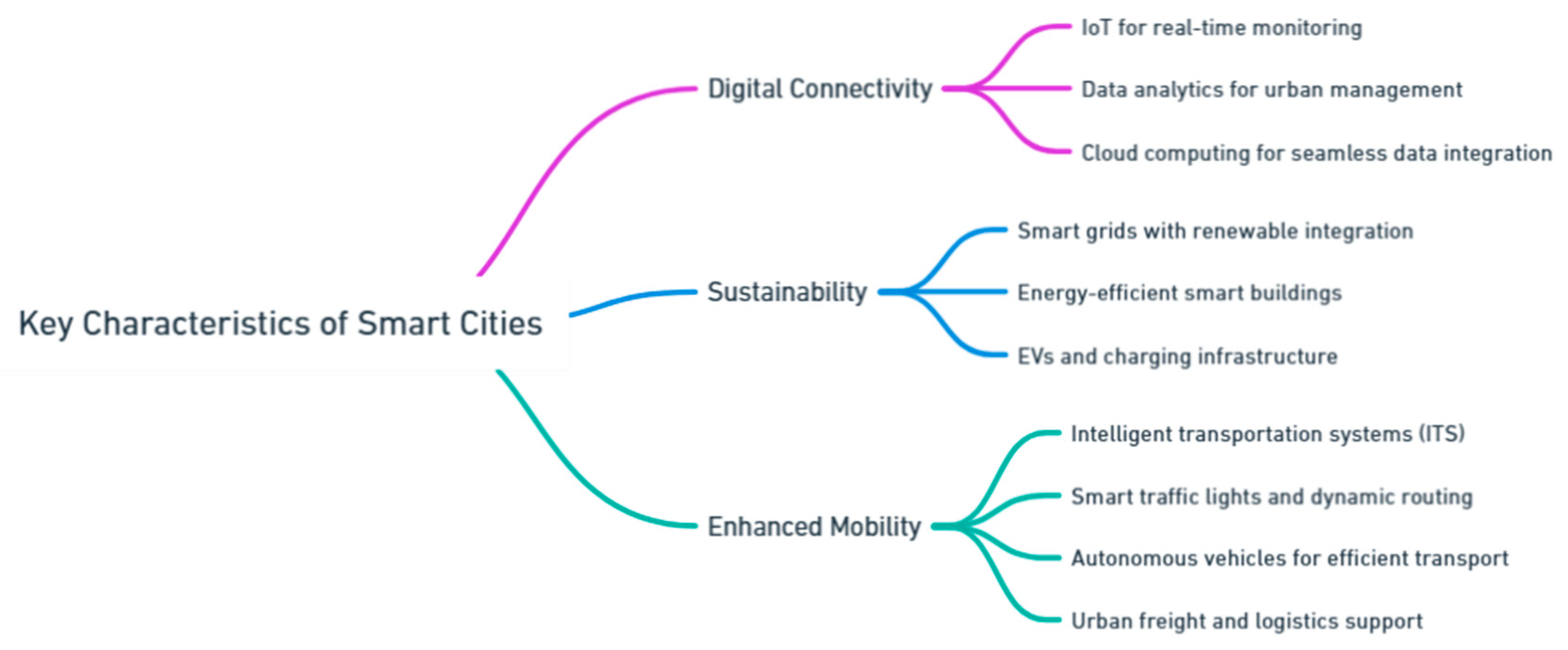
Preprints 139811 i090

11.2. Logistics: The Backbone of Smart Cities

Logistics is crucial to the smooth operation of any city, and in smart cities, it becomes even more critical due to the complex interconnections between various urban systems. Efficient logistics supports economic productivity, urban mobility, and the supply of essential resources, making it a foundational pillar of smart city development. Several aspects of logistics are particularly relevant in this context:
  • Urban Freight and Last-Mile Delivery: As urban populations grow, so does the demand for goods, which places increased pressure on urban freight systems. In smart cities, logistics providers leverage digital solutions such as route optimization algorithms, real-time traffic data, and autonomous delivery vehicles to streamline urban freight and last-mile delivery. The use of IoT devices in delivery vehicles and warehouses allows for more efficient tracking of goods, reducing delays and ensuring that deliveries are made on time. Drones and robots are also being tested for last-mile delivery in some smart cities, offering a potential solution to the challenge of navigating congested urban areas (Golinska-Dawson and Sethanan, 2023; Aslam et al., 2024).
  • Integrated Supply Chains: In a smart city, supply chains are more integrated and responsive to changes in demand. Sensors placed in warehouses, retail stores, and vehicles provide real-time data on stock levels and the location of goods in transit. This level of visibility enables supply chain managers to make quicker decisions, reducing inefficiencies and minimizing waste. AI algorithms can predict future demand based on historical data, ensuring that logistics providers can anticipate needs and adjust supply chains accordingly. This level of integration is essential for ensuring that smart cities can respond quickly to disruptions, such as natural disasters or pandemics, which may affect the supply of critical resources like food and medical supplies (He and Xiang, 2021; Nozari et al., 2022).
  • Green Logistics: Smart cities emphasize the importance of sustainability, and logistics is no exception. Green logistics involves reducing the environmental impact of transportation and distribution activities by adopting cleaner technologies and more efficient practices. In smart cities, logistics providers are increasingly using electric or hybrid vehicles for deliveries, reducing their reliance on fossil fuels. Additionally, many cities are encouraging the use of eco-friendly delivery methods such as bike couriers for shorter trips or in densely populated areas. Smart city logistics also involves minimizing waste through better packaging practices and promoting circular economy principles, where goods are reused, recycled, or repurposed rather than discarded (Golinska-Dawson and Sethanan, 2023; Oliveri et al., 2023).
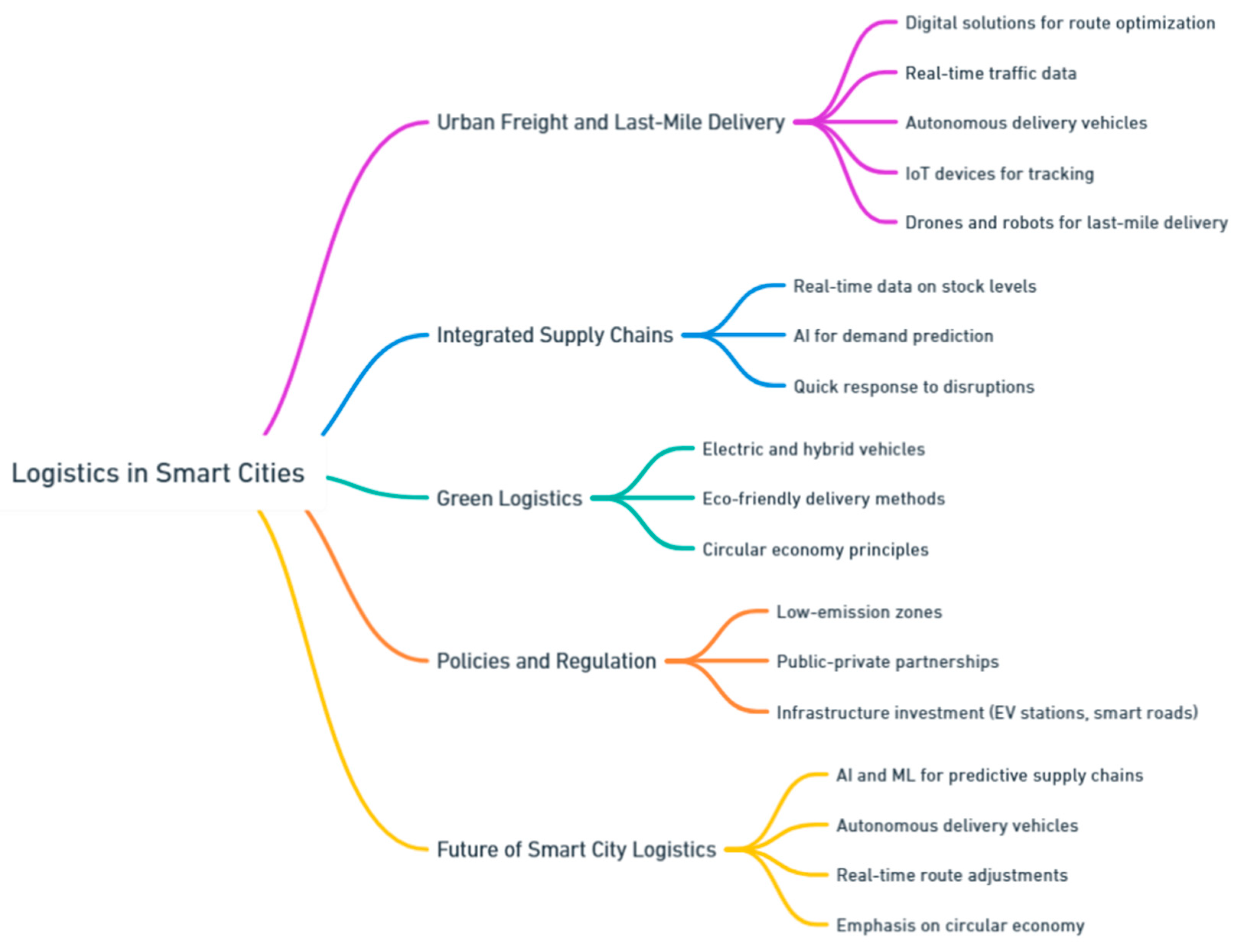
The Role of Policies and Regulation in Smart City Logistics. The successful integration of logistics into smart cities is not solely driven by technology; it also requires supportive policies and regulations that promote innovation and sustainability. Many cities are implementing policies that encourage the use of clean energy and low-emission vehicles in logistics operations. For example, some urban areas have introduced low-emission zones (LEZs), where only vehicles that meet certain environmental standards are allowed to enter. These zones incentivize logistics providers to adopt greener technologies, contributing to the city's overall sustainability goals. Moreover, governments are investing in the infrastructure necessary for smart logistics, such as EV charging stations, smart roads equipped with sensors, and dedicated lanes for autonomous vehicles. Public-private partnerships are also playing a crucial role in the development of smart city logistics. Collaboration between city governments, technology companies, and logistics providers allows for the sharing of resources and knowledge, ensuring that the latest innovations are implemented effectively (Alanazi et al., 2021; Juvvala and Sarmah, 2021).
The Future of Smart Cities and Logistics. The future of smart cities and logistics is intertwined, with each influencing the other’s development. As cities continue to grow and urbanize, the demand for efficient, sustainable logistics will only increase. To meet this demand, cities will need to adopt cutting-edge technologies that enhance the movement of goods while reducing environmental impacts. In the future, we can expect to see greater integration of AI and machine learning in logistics, enabling more predictive and automated supply chains. Autonomous delivery vehicles, including drones and self-driving trucks, are likely to become more common, reducing the need for human intervention in the logistics process. Additionally, the continued development of smart infrastructure—such as roads embedded with sensors that communicate with vehicles—will enable real-time adjustments to delivery routes based on traffic conditions, weather, and other factors. The role of the circular economy will also become more prominent in smart city logistics. As cities strive to reduce waste, logistics providers will need to adapt by incorporating reverse logistics into their operations, where products are collected, reused, or recycled at the end of their lifecycle. This shift toward a more circular approach to logistics will not only reduce waste but also conserve resources and energy, contributing to the overall sustainability of the city. Smart cities represent a new and exciting frontier in urban development, where advanced technologies are used to create more efficient, sustainable, and livable environments. Logistics, as a key component of urban systems, plays a central role in ensuring the smooth movement of goods and services within these cities. By leveraging digital connectivity, promoting sustainability, and enhancing mobility, smart cities can optimize logistics operations to meet the growing demands of urban populations. The future of smart city logistics will be defined by continued innovation in technologies such as AI, IoT, and autonomous vehicles, as well as supportive policies and regulations that promote sustainability and efficiency. Together, smart cities and smart logistics will shape the future of urban living, creating more sustainable and resilient communities for generations to come (Kuru and Khan, 2020; Gaber, et al., 2021; Patella et al., 2020; Gutierrez-Franco et al., 2021; Serrano-Hernandez et al., 2021).
Preprints 139811 i091

11.3. Logistics Hubs in Smart Cities

Logistics hubs, also known as distribution hubs, play a pivotal role in the movement of goods in modern supply chain management. They are large, centralized facilities designed to streamline the storage, sorting, processing, and distribution of goods to various destinations. Typically located at key strategic points, logistics hubs act as vital nodes that connect manufacturers, suppliers, retailers, and consumers in a highly coordinated system. These facilities usually encompass warehouses, transportation terminals, and distribution centers, which are optimized to ensure the efficient flow of products and materials. The primary purpose of logistics hubs is to optimize the overall efficiency of the supply chain. By consolidating goods in one central location before distributing them to final destinations, logistics hubs help reduce transportation costs, minimize delivery times, and improve overall logistics efficiency. Furthermore, these hubs often support a wide range of logistics functions, including inventory management, packaging, order fulfillment, and value-added services such as product customization and assembly. Ultimately, logistics hubs play a critical role in facilitating the smooth and timely delivery of goods in both domestic and international markets. In addition to their core logistics functions, modern logistics hubs are increasingly designed to support sustainable and energy-efficient operations. As global supply chains continue to evolve, there is growing recognition of the need for logistics hubs to contribute to the reduction of carbon emissions, traffic congestion, and other environmental impacts associated with traditional logistics practices. To achieve these goals, logistics hubs are adopting a range of innovative technologies and sustainable practices, which will be discussed further in relation to smart city planning (Lazar et al. 2021; Dutta et al., 2023, January).
How Logistics Hubs Fit into Smart City Planning. The concept of smart cities revolves around the use of advanced technologies, data analytics, and interconnected systems to improve the quality of life for urban residents. Smart city planning addresses critical urban challenges such as traffic congestion, air pollution, resource efficiency, and sustainable infrastructure. Logistics hubs are integral to smart city planning because they help optimize the movement of goods and materials within urban environments, reducing the strain on transportation networks and minimizing the environmental footprint of urban logistics activities. Incorporating logistics hubs into smart city planning provides several key advantages. First, by centralizing logistics activities in strategically located hubs, cities can reduce the number of delivery vehicles on the road, leading to lower levels of traffic congestion and reduced emissions. This is particularly important in dense urban areas where traffic-related pollution and congestion are major concerns. By optimizing delivery routes and consolidating goods at logistics hubs, cities can achieve more efficient urban freight systems, ultimately improving delivery times and reducing the overall environmental impact of logistics operations. For example, logistics hubs in smart cities are equipped with automated sorting systems that can process large volumes of goods quickly and accurately. These automated systems use robotics and artificial intelligence (AI) to sort and distribute products based on real-time data, allowing logistics hubs to respond rapidly to changes in demand and ensure that goods reach their destinations in the shortest time possible. Additionally, real-time tracking technologies, such as GPS and RFID, allow logistics managers to monitor the movement of goods throughout the supply chain, ensuring greater transparency and accountability. In smart cities, logistics hubs also play a role in optimizing last-mile delivery solutions. The "last mile" refers to the final leg of the delivery process, where goods are transported from a distribution center to the end consumer. Last-mile delivery is often the most expensive and logistically challenging part of the supply chain due to factors such as traffic congestion, limited delivery windows, and the need for precise delivery timing. By integrating logistics hubs into the urban landscape, cities can facilitate more efficient last-mile delivery solutions, such as the use of electric vehicles (EVs), bicycles, and even autonomous delivery robots. These solutions not only reduce delivery costs but also contribute to lower emissions and improved accessibility in urban areas (Golinska-Dawson and Sethanan, 2023; Charisis et al., 2020).
Integration of Renewable Energy in Logistics Hubs. Another important aspect of logistics hubs in smart cities is their integration with renewable energy sources. To promote sustainability and reduce the environmental impact of logistics operations, many logistics hubs are being designed to incorporate renewable energy technologies such as solar panels, wind turbines, and energy storage systems. These renewable energy sources can be used to power warehouse operations, transportation fleets, and other logistics infrastructure, reducing reliance on fossil fuels and lowering carbon emissions. For example, solar panels installed on the roofs of logistics hubs can generate clean energy to power lighting, heating, ventilation, and cooling systems within the facility. Additionally, logistics hubs that utilize electric vehicles (EVs) for transportation can benefit from on-site charging stations powered by renewable energy sources. This integration of renewable energy not only reduces operational costs but also contributes to a greener, more sustainable urban logistics ecosystem (Noorollahi et al. 2020; Al Wahedi and Bicer, 2021).
Data Analytics and Smart Technologies in Logistics Hubs. The role of data analytics and smart technologies in logistics hubs cannot be overstated. In a smart city, logistics hubs are part of a larger network of interconnected systems that rely on real-time data to optimize logistics operations. Data analytics tools allow logistics managers to collect and analyze vast amounts of data related to supply chain performance, inventory levels, delivery routes, and customer demand. This data can then be used to make informed decisions, predict future trends, and identify areas for improvement. For instance, data analytics can help logistics hubs identify bottlenecks in the supply chain and adjust delivery schedules to avoid traffic congestion during peak hours. Predictive analytics can also forecast demand fluctuations, allowing logistics hubs to adjust inventory levels and allocate resources more efficiently. By leveraging these smart technologies, logistics hubs can enhance the overall efficiency of urban logistics operations and improve the customer experience. Moreover, the Internet of Things (IoT) plays a crucial role in the functionality of logistics hubs. IoT devices, such as sensors and connected devices, provide real-time data on the condition and location of goods as they move through the supply chain. This increased visibility allows logistics hubs to track shipments, monitor temperature-sensitive goods, and ensure that deliveries are made on time. IoT technology also supports the automation of processes within logistics hubs, reducing the need for manual labor and improving operational efficiency (Hrynchak, 2019; Proto et al., 2020).
Sustainable Urban Mobility and Traffic Management. Logistics hubs in smart cities also contribute to sustainable urban mobility and traffic management. By consolidating logistics activities and reducing the number of delivery vehicles on the road, logistics hubs help alleviate traffic congestion and improve the flow of goods and people within the city. In addition, the use of data-driven traffic management systems allows cities to optimize delivery routes, reducing the amount of time vehicles spend on the road and lowering fuel consumption. The integration of logistics hubs into smart city planning also supports the use of alternative transportation modes for urban deliveries. For example, cargo bikes, electric scooters, and drones are being increasingly used for last-mile deliveries in smart cities. These alternative modes of transport are well-suited for navigating congested urban areas, reducing emissions, and providing flexible delivery options for businesses and consumers. In conclusion, logistics hubs play a central role in the development of smart cities by optimizing the flow of goods, improving delivery efficiency, and reducing the environmental impact of logistics operations. By integrating smart technologies, data analytics, and renewable energy sources, logistics hubs can contribute to more sustainable and efficient urban logistics systems. Moreover, their incorporation into smart city planning helps address key challenges such as traffic congestion, air pollution, and inefficient delivery systems, ultimately enhancing the quality of life for urban residents. As cities continue to grow and evolve, logistics hubs will remain a critical component of the urban infrastructure, supporting the development of sustainable and resilient supply chains. The future of logistics hubs lies in their ability to adapt to new technologies and innovations, ensuring that they remain at the forefront of sustainable urban logistics solutions (Proto et al., 2020; Hrynchak, 2019).
Social Role of Logistics Hubs. Logistics hubs play a crucial role in the development of modern cities, especially within the context of smart cities. They impact various social dimensions, including employment, mobility, environmental health, and overall community development. The social implications of logistics hubs can be both positive and negative, influencing the prosperity of a community or exacerbating challenges such as inequality and congestion. As cities continue to grow and evolve, the role of logistics hubs in shaping urban life becomes even more significant.
Job Creation and Economic Development. One of the most immediate and tangible social benefits of logistics hubs is job creation. Logistics hubs require a wide range of workers, from warehouse operators and delivery drivers to IT specialists and logistics planners. This diverse workforce supports a variety of skill sets and educational backgrounds, offering employment opportunities to both low- and high-skilled workers. In many cases, the establishment of logistics hubs stimulates local economies by attracting new businesses and fostering the growth of ancillary services, such as maintenance, retail, and food services. Moreover, logistics hubs are often catalysts for broader economic development. When strategically located, they enhance the attractiveness of a city or region to businesses that rely on efficient supply chains. As hubs optimize the flow of goods and reduce transportation costs, they help to boost the competitiveness of local industries. This in turn can lead to further investment in the area, fostering a cycle of economic growth and opportunity. Additionally, as logistics hubs evolve to incorporate more advanced technologies, they often create higher-paying jobs in fields like automation, data analytics, and sustainable supply chain management. However, it is important to acknowledge that while logistics hubs create jobs, they may also contribute to disparities in income and working conditions. Low-skilled workers in logistics hubs, such as warehouse laborers, may face job insecurity, lower wages, and demanding physical conditions compared to their higher-skilled counterparts. Therefore, it is crucial for policymakers and businesses to ensure that logistics hubs contribute to equitable job growth, offering fair wages, job security, and opportunities for career advancement (Fang, 2023; Bahsri and Zakaria, 2023).
Enhancing Urban Mobility and Accessibility. Logistics hubs are critical to improving urban mobility and accessibility, especially in the context of smart cities where efficient transportation is a priority. By consolidating deliveries into central locations, logistics hubs reduce the need for multiple delivery trucks to navigate through densely populated urban areas. This consolidation minimizes traffic congestion, which is a major concern in cities with growing populations and limited space for infrastructure expansion. Fewer delivery vehicles on the road not only ease congestion but also improve road safety and reduce the risk of traffic-related accidents. In smart cities, logistics hubs are often integrated with intelligent transportation systems (ITS). These systems use real-time data, sensors, and advanced algorithms to optimize delivery routes, ensuring that goods are transported as efficiently as possible. By minimizing the distance traveled and reducing idle time in traffic, logistics hubs working in tandem with ITS can significantly reduce disruptions to daily urban life, allowing for smoother and more reliable transportation of goods. Moreover, logistics hubs improve accessibility, particularly in underserved or remote urban areas. With the rise of e-commerce, timely delivery of goods has become essential to the quality of life for urban residents. Logistics hubs play a pivotal role in enabling last-mile delivery systems that ensure essential goods—such as groceries, medical supplies, and e-commerce purchases—reach even the most isolated or underserved communities. This can be particularly beneficial for individuals with limited mobility or those living in areas where transportation infrastructure is lacking. Efficient logistics can also promote inclusivity, as improved access to goods and services directly enhances the overall well-being of disadvantaged groups in urban settings (Faugère et al., 2020; Sihvonen and Weck, 2023).
Environmental Benefits and Reduction of Urban Congestion. The environmental impact of logistics hubs is a critical social consideration, particularly as cities strive to become more sustainable. Urban logistics are traditionally associated with high levels of emissions, air pollution, and traffic congestion. Logistics hubs, however, offer a solution to some of these environmental challenges. By centralizing and optimizing deliveries, they reduce the number of vehicles on the road, leading to a significant decrease in carbon emissions and air pollution. In densely populated urban areas, air quality is often a pressing concern. Poor air quality has direct implications for public health, contributing to respiratory diseases, heart conditions, and other health problems. Logistics hubs, by optimizing delivery routes and reducing the overall number of vehicles, can help improve air quality and mitigate the negative health effects of pollution. Furthermore, logistics hubs that incorporate green technologies—such as electric delivery vehicles, solar-powered facilities, and energy-efficient systems—can further reduce their environmental footprint, contributing to the broader sustainability goals of smart cities. These environmental benefits extend beyond air quality. By decreasing the need for numerous delivery vehicles, logistics hubs also help reduce noise pollution, which is another significant issue in urban areas. Less traffic on city streets means fewer loud engines and honking horns, resulting in quieter, more peaceful neighborhoods. This contributes to an improved quality of life for urban residents, particularly those living in high-density areas where noise pollution can negatively affect mental health and well-being. Moreover, the shift towards greener logistics hubs aligns with global efforts to combat climate change. Many smart cities are adopting ambitious sustainability targets, such as the European Union’s Green Deal or the United Nations Sustainable Development Goals (SDGs), which aim to reduce carbon emissions, promote clean energy, and foster sustainable urban growth. Logistics hubs that adopt green technologies and practices contribute directly to these global goals, helping cities to become more resilient in the face of environmental challenges (Sihvonen and Weck, 2023).
Addressing Social Inequality and Community Development. While logistics hubs bring numerous benefits to cities, they also have the potential to exacerbate social inequality if not implemented thoughtfully. For instance, the placement of logistics hubs in lower-income neighborhoods may bring economic opportunities but also risks increasing traffic congestion, pollution, and noise in these communities. This can lead to a decrease in the quality of life for residents in those areas, particularly if they do not directly benefit from the jobs and economic growth generated by the hubs. To mitigate these challenges, city planners and policymakers must ensure that logistics hubs are designed and located in ways that benefit the entire community, rather than just certain groups. This includes investing in infrastructure improvements, such as better roads and public transportation, to support the increased traffic associated with logistics hubs. Additionally, cities should work to ensure that the jobs created by logistics hubs are accessible to local residents, providing training programs and other resources to help them take advantage of these opportunities. Logistics hubs can also play a key role in supporting broader community development initiatives. For example, they can be designed as multipurpose facilities that serve not only as logistics centers but also as hubs for community engagement, education, and innovation. By incorporating spaces for training programs, co-working areas, or even retail outlets, logistics hubs can become integral parts of the community, fostering social interaction and providing new opportunities for residents. In conclusion, logistics hubs are essential to the social fabric of smart cities. They create jobs, improve mobility, and contribute to environmental sustainability. However, their full social potential can only be realized if they are developed with careful consideration of their impacts on all segments of society. By addressing issues related to inequality, congestion, and environmental health, logistics hubs can foster more equitable and sustainable urban growth, making cities better places to live for everyone. Through innovative technologies and inclusive planning, logistics hubs can play a transformative role in the development of modern urban communities (Cociña, et al., 2022; Kırmızı, 2023; Bhagwat et al., 2023; Wang et al. 2023; Faugère et al., 2020).
Preprints 139811 i092

11.4. Case Studies: Logistics Hubs in Smart Cities
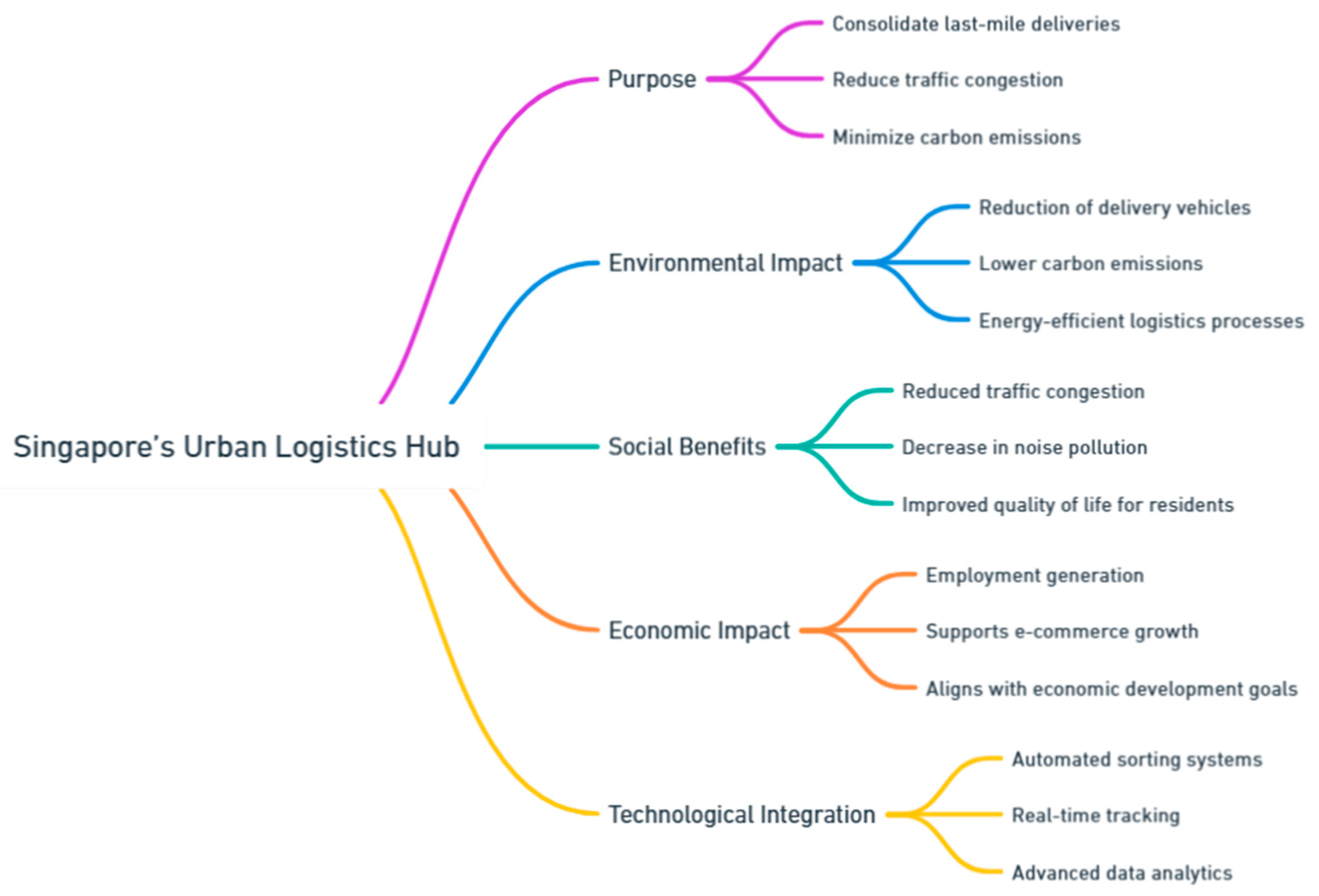
Singapore is a global leader in smart city innovations, and its Urban Logistics Hub project is a testament to how urban infrastructure can integrate logistics in a way that benefits both the environment and the economy. The main aim of Singapore’s Urban Logistics Hub is to consolidate last-mile deliveries into centralized hubs, which streamlines the delivery process, reduces traffic congestion, and minimizes carbon emissions. In large cities, last-mile delivery—the final step of the logistics process where goods are delivered to their final destination—tends to be inefficient. This inefficiency leads to a proliferation of delivery vehicles on the road, contributing to traffic jams, air pollution, and increased fuel consumption. By creating centralized hubs, Singapore has reduced the number of delivery vehicles required for last-mile deliveries, thus significantly cutting down on emissions. These logistics hubs leverage cutting-edge technology, such as automated sorting systems, real-time tracking, and advanced data analytics, to ensure the efficient distribution of goods across the city. From an environmental perspective, Singapore’s Urban Logistics Hub project has a profound impact. Reducing the number of delivery vehicles on the road directly translates into lower carbon emissions. Furthermore, the hub reduces the overall energy consumption of the logistics process by optimizing the delivery routes and consolidating shipments. On the social front, this initiative offers multiple benefits. One of the most visible impacts is the reduction in traffic congestion, which not only improves travel times for other road users but also contributes to a safer and more pleasant urban environment. Furthermore, by optimizing delivery routes and reducing vehicle numbers, the noise pollution often associated with heavy freight traffic is mitigated, improving the quality of life for city residents. Additionally, the faster, more efficient delivery of goods supports businesses by ensuring that they can meet customer demands in a timely manner. This is particularly important for e-commerce, which has seen explosive growth in recent years. The logistics hubs help maintain the efficiency of these businesses by ensuring that products are delivered quickly and with minimal environmental impact. From an economic perspective, Singapore’s Urban Logistics Hub project also generates employment opportunities. The logistics hubs require a workforce to manage operations, including individuals skilled in the management of automated systems, logistics coordination, and technology maintenance. As such, the project not only supports the economy by providing jobs but also aligns with Singapore’s broader economic development goals, which include fostering innovation and technological advancement. Overall, Singapore’s Urban Logistics Hub demonstrates how logistics can be effectively integrated into urban planning in a way that benefits the environment, economy, and society as a whole. By consolidating last-mile deliveries and utilizing smart technologies, Singapore is leading the way in creating a sustainable logistics model for cities of the future (Novotná et al., 2022; Büttgen et al., 2021; Castillo et al., 2024; Pahwa and Jaller, 2023).
Preprints 139811 i093

11.5. Case Study 2: New York City’s Sustainable Delivery Hubs
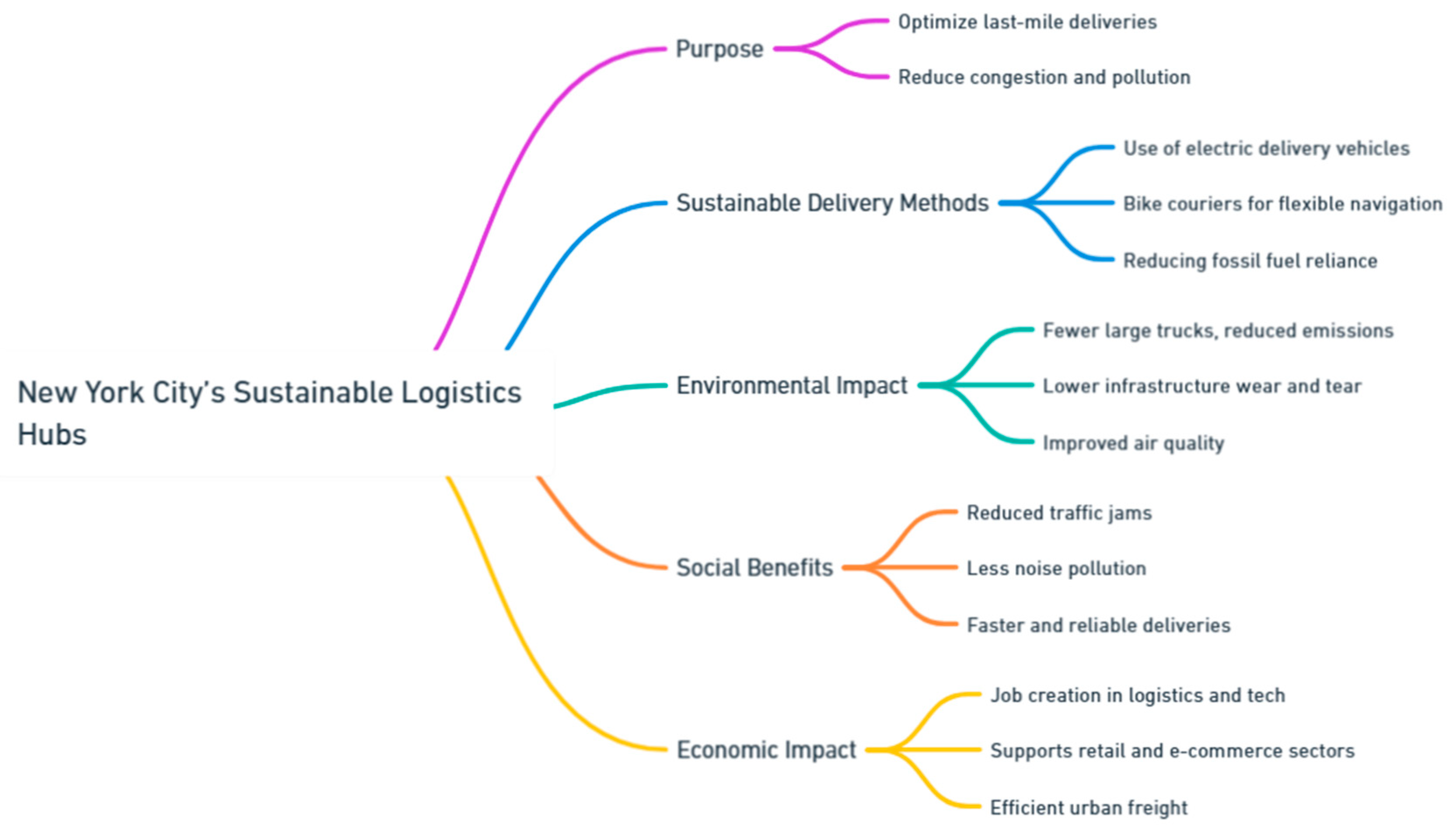
New York City, one of the busiest and most densely populated cities in the world, faces significant challenges when it comes to urban freight. To address these challenges, the city has implemented a series of micro-distribution centers designed to optimize last-mile deliveries while reducing congestion and pollution. These logistics hubs, which are smaller and more localized than traditional distribution centers, are strategically placed throughout the city to minimize the distance that delivery vehicles need to travel. One of the key features of New York City’s logistics hubs is their reliance on sustainable delivery methods. The hubs are equipped with electric delivery vehicles and bike couriers, which help reduce the city’s carbon footprint. By replacing traditional delivery trucks with electric vehicles and bicycles, New York City is able to reduce harmful emissions and decrease its reliance on fossil fuels. Additionally, the use of bikes and smaller electric vehicles allows for more flexible and efficient navigation of the city’s often congested streets. The environmental benefits of this approach are substantial. By reducing the number of large delivery trucks on the road, New York City not only cuts down on greenhouse gas emissions but also reduces the wear and tear on its infrastructure. This leads to longer-lasting roads and lower maintenance costs for the city. Moreover, the reduction in vehicle traffic contributes to improved air quality, which has a direct positive impact on public health. From a social perspective, the introduction of sustainable delivery hubs improves the overall quality of urban life. The reduction in delivery trucks means fewer traffic jams and less noise pollution, creating a quieter and cleaner environment for residents. Furthermore, these hubs enable faster and more reliable deliveries, which benefits both consumers and businesses. For residents, this means less time spent waiting for packages, while businesses can better meet customer demands and maintain competitive delivery times. Economically, the logistics hubs in New York City create job opportunities in the logistics, transportation, and technology sectors. These jobs range from bike couriers and electric vehicle drivers to technicians who maintain the fleet of electric vehicles. Additionally, the hubs support the city’s economy by enhancing the efficiency of urban freight, which is critical to New York City’s vast retail and e-commerce sectors. In conclusion, New York City’s sustainable delivery hubs represent a forward-thinking approach to urban logistics. By incorporating electric vehicles and bike couriers into its last-mile delivery network, the city is not only reducing its environmental impact but also improving the quality of life for its residents and creating jobs. This model of sustainable logistics can serve as a blueprint for other cities looking to address the challenges of urban freight in an eco-friendly way (Arrieta-Prieto et al., 2022; Settey et al., 2021; Novotná et al., 2022; Comi and Savchenko, 2021).
Preprints 139811 i094

11.6. Case Study 3: Barcelona’s Smart Logistics Network
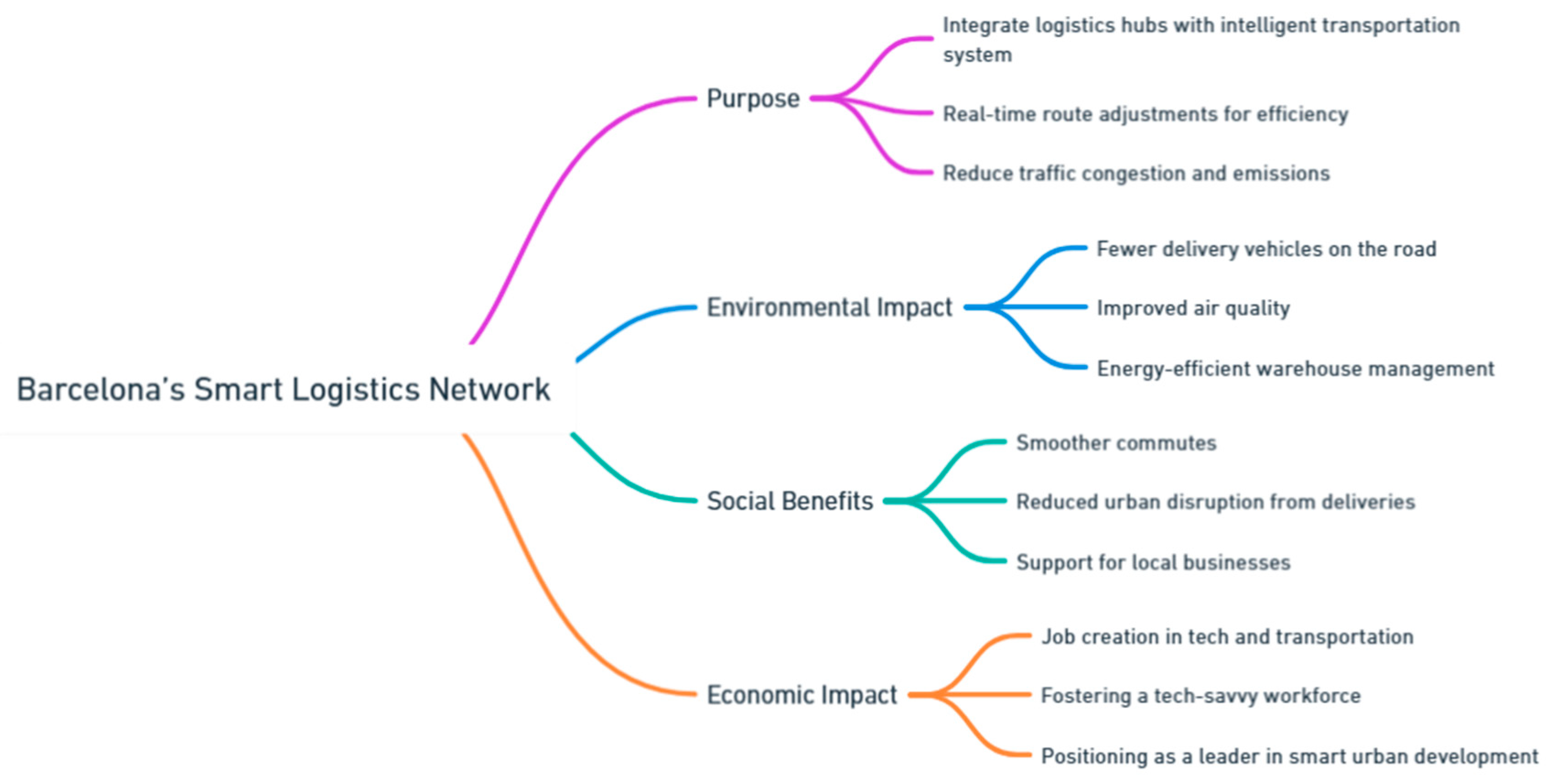
Barcelona is another city that has embraced the concept of smart logistics as part of its broader smart city initiative. The city’s logistics hubs are integrated with its intelligent transportation system, which allows for real-time monitoring and optimization of goods movement. This integration ensures that delivery routes are constantly adjusted based on traffic patterns, road conditions, and other variables, leading to more efficient and less energy-intensive logistics operations. By reducing the number of delivery vehicles on the road, Barcelona’s smart logistics network directly addresses the issues of traffic congestion and air pollution. Fewer vehicles on the road mean fewer emissions, which is crucial for improving air quality in a city that, like many others, is grappling with the challenges of urbanization and increased vehicle use. The smart logistics hubs also optimize warehouse management and reduce the need for multiple delivery trips, further contributing to energy efficiency. The social impact of Barcelona’s logistics hubs is significant. By improving the efficiency of deliveries, the hubs ensure that goods reach their destinations with minimal disruption to daily life. This is particularly important in densely populated urban areas, where delivery trucks can often block roads and cause delays. The reduction in traffic congestion also means that residents can enjoy smoother commutes and a less stressful urban environment. Moreover, Barcelona’s logistics network supports local businesses by providing them with more reliable and efficient delivery services. This is particularly beneficial for small businesses, which may not have the resources to manage their own logistics operations but can still benefit from the streamlined services offered by the smart logistics hubs. Economically, the logistics hubs provide jobs in various sectors, from technology to transportation. The integration of the hubs with Barcelona’s intelligent transportation system also highlights the city’s commitment to innovation, fostering a tech-savvy workforce and positioning the city as a leader in smart urban development. In summary, Barcelona’s smart logistics network is an example of how technology can be leveraged to create a more sustainable and efficient logistics system. By integrating logistics hubs with the city’s transportation network, Barcelona is reducing emissions, improving air quality, and enhancing the quality of life for its residents. This approach not only addresses the environmental challenges of urban freight but also supports local businesses and contributes to the city’s economic development (Rodriguez-Rey et al., 2021; Soriano-Gonzalez et al., 2023; Oltra et al., 2021).
Preprints 139811 i095

11.7. Community Engagement and Challenges
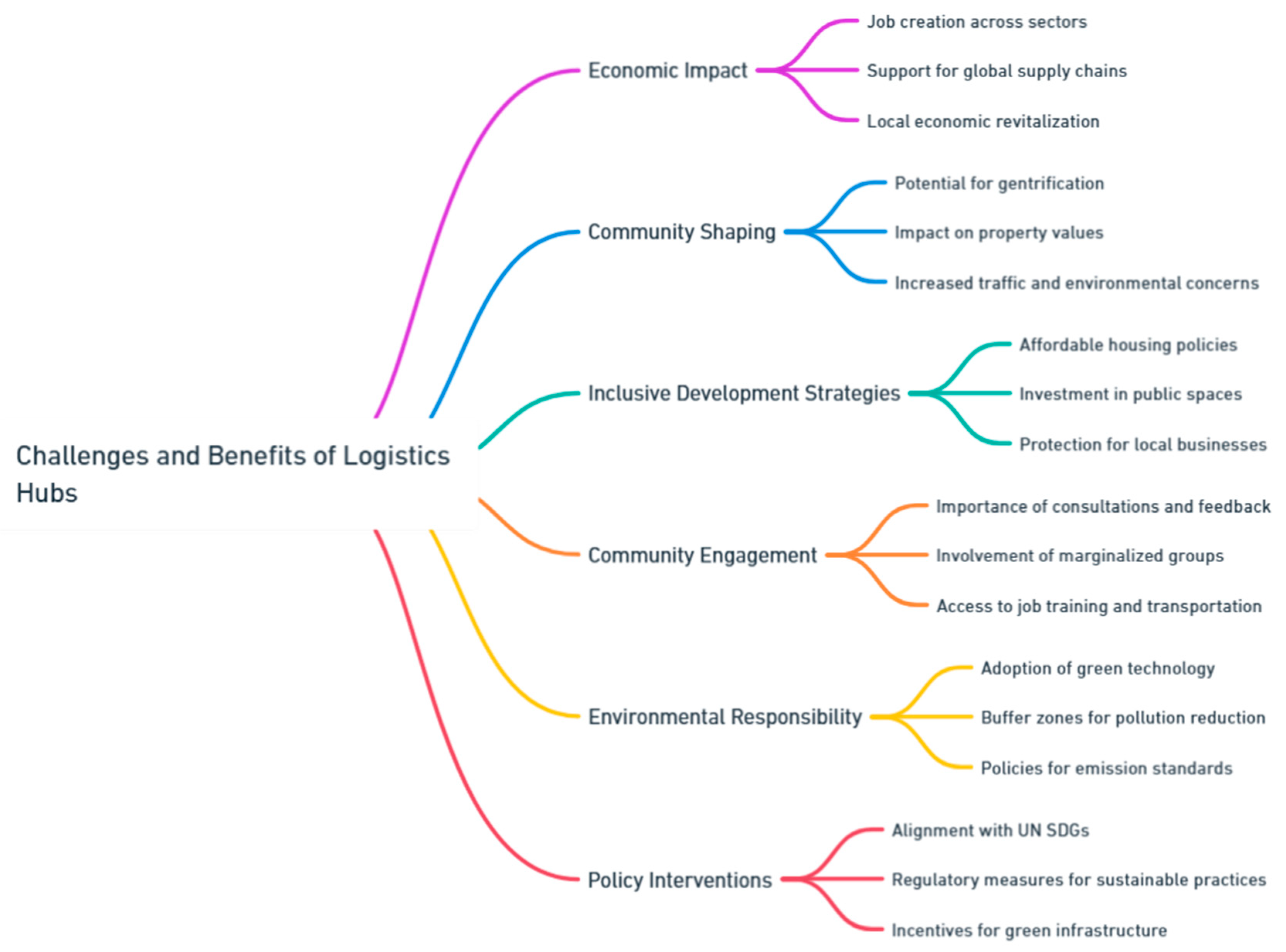
While logistics hubs offer numerous social and economic benefits, they also present challenges that need to be carefully managed. These hubs play a crucial role in the global supply chain by facilitating the movement of goods, enhancing trade, and supporting economic growth. However, their presence can significantly affect the social and physical landscape of the communities in which they are located. To ensure that logistics hubs contribute positively to urban development and do not exacerbate social inequalities, community engagement and inclusive development are essential.
How Logistics Hubs Shape Community Spaces. Logistics hubs are often large, strategically located infrastructure developments that include distribution centers, warehouses, and transport facilities. Their construction can transform underdeveloped or neglected areas into bustling economic zones, attracting businesses and creating employment opportunities. This revitalization can benefit communities by improving infrastructure, increasing tax revenue, and fostering economic growth. For instance, logistics hubs can provide a wide range of jobs, from warehouse workers to administrative staff, which can help reduce local unemployment rates and improve the standard of living for residents. However, the development of logistics hubs can also bring significant challenges. One of the most prominent concerns is the potential for gentrification, where rising property values and living costs push out long-term, low-income residents. As logistics hubs attract new businesses and increase the demand for housing and services, surrounding areas often experience a surge in real estate prices. This can make it difficult for lower-income residents to afford housing, leading to displacement and the erosion of established communities. Gentrification not only disrupts the social fabric of neighborhoods but can also limit access to resources and amenities for marginalized groups. The physical impact of logistics hubs on communities is another critical factor. The construction of large-scale industrial facilities can lead to increased traffic congestion, noise pollution, and environmental degradation. Trucks and other heavy vehicles used for transporting goods contribute to air pollution, which can negatively affect the health of local residents, particularly those living in close proximity to the hubs. Additionally, logistics hubs may consume valuable land that could otherwise be used for green spaces, housing, or community-oriented developments, potentially reducing the quality of life for local inhabitants (Viu-Roig and Alvarez-Palau, 2020; Brusselaers et al., 2022).
Addressing Concerns over Gentrification and Inequality. To mitigate these challenges, city planners and policymakers must adopt inclusive development strategies that prioritize both economic growth and social equity. This means taking a holistic approach to logistics hub development, ensuring that the benefits are distributed fairly and that the negative impacts on vulnerable populations are minimized. Inclusive development should involve comprehensive planning that considers not only the economic outcomes but also the social and environmental well-being of the community. One way to address the risks of gentrification is by implementing affordable housing policies. As logistics hubs drive up demand for real estate, local governments should introduce measures to protect existing residents from being priced out of their homes. This can include rent control policies, subsidies for low-income housing, and incentives for developers to build affordable housing units. By ensuring that housing remains accessible to all income levels, policymakers can help maintain the social diversity and cohesion of the community. In addition to housing, the development of logistics hubs should be accompanied by investments in public spaces and amenities that benefit the entire community. Public parks, recreation centers, and cultural spaces can help offset some of the negative impacts of industrial development by providing residents with areas to relax, socialize, and engage in community activities. These spaces also contribute to the physical and mental well-being of residents, helping to create a more livable and inclusive urban environment. Local businesses also need protection from the potential displacement caused by logistics hub development. As large corporations and industries move into the area, small businesses may struggle to compete with rising rents and increased competition. To prevent this, policymakers can offer support through grants, tax incentives, and low-interest loans to help local businesses thrive. Encouraging partnerships between logistics hubs and local suppliers can also create opportunities for small businesses to integrate into the supply chain, ensuring that the economic benefits of the hubs are shared more broadly (Kim and Wu, 2022; Cole et al., 2021).
The Importance of Community Engagement. Community engagement is a critical component of ensuring that logistics hubs are developed in a way that benefits all residents. Engaging with the local population from the outset of the planning process helps ensure that their needs and concerns are taken into account. Community consultations, public hearings, and stakeholder meetings allow residents to voice their opinions on issues such as housing affordability, environmental impact, and job opportunities. By actively involving the community, planners can design logistics hubs that align with the priorities of the local population and foster a sense of ownership over the development process. Moreover, engaging with community leaders and advocacy groups can help ensure that marginalized populations, such as low-income residents and ethnic minorities, are not left behind. These groups often bear the brunt of the negative impacts of urban development, and their inclusion in the decision-making process is essential for achieving equitable outcomes. Ensuring that logistics hubs provide job training programs, access to affordable housing, and improved public transportation options can help uplift these communities and reduce inequality. Incorporating community feedback into the design and operation of logistics hubs can also lead to innovative solutions for minimizing environmental impact. For example, logistics hubs can adopt green technologies such as electric vehicles, energy-efficient buildings, and renewable energy sources to reduce their carbon footprint and mitigate air pollution. Creating buffer zones of green space around the hubs can further protect residents from noise and air pollution, while also contributing to the overall sustainability of the development (Rześny-Cieplińska and Szmelter-Jarosz, 2020; Viu-Roig and Alvarez-Palau, 2020). ).
Policy Interventions and Global Goals. On a broader scale, national and international policies aimed at promoting sustainable urban development can support efforts to manage the social and environmental impacts of logistics hubs. Many countries have established guidelines for sustainable land use, environmental protection, and social equity that can serve as a framework for local governments. The United Nations Sustainable Development Goals (SDGs), particularly SDG 11 (Sustainable Cities and Communities) and SDG 10 (Reduced Inequalities), provide a valuable roadmap for balancing economic growth with social inclusion in urban areas. Governments can also introduce regulatory measures to ensure that logistics hubs meet environmental standards and contribute to the well-being of local communities. This might include stricter emissions standards for vehicles, mandatory community impact assessments for large-scale developments, and incentives for companies to invest in green infrastructure. By creating a policy environment that encourages responsible development, governments can help ensure that logistics hubs contribute positively to both the economy and society (Macmillan et al., 2020; Ling et al., 2022).
While logistics hubs play a vital role in driving economic growth and enhancing global supply chains, their development must be carefully managed to avoid exacerbating social inequalities and environmental degradation. By prioritizing inclusive development strategies, policymakers and planners can ensure that logistics hubs benefit all residents, including those in low-income communities. Addressing concerns over gentrification, housing affordability, and local businesses is essential to creating a more equitable urban landscape. Community engagement is a cornerstone of successful logistics hub development, ensuring that the needs and concerns of residents are heard and addressed. By adopting policies that protect vulnerable populations and promote sustainable practices, logistics hubs can be developed in a way that enhances the social, economic, and environmental well-being of communities. Ultimately, balancing the benefits of logistics hubs with the preservation of social equity and environmental sustainability is key to creating resilient, inclusive urban spaces for the future (Ozbalci, 2021; Lazar et al., 2021; Faugère et al., 2020; Arvianto et al., 2021; Charisis et al., 2020).
Preprints 139811 i096

11.8. Future Directions for Smart Cities and Logistics Hubs

As urbanization accelerates and technology continues to advance at a rapid pace, the future of logistics hubs in smart cities is set to undergo significant transformation. These logistics hubs, which are essential to the movement of goods and services within and between cities, will be heavily influenced by emerging technologies and shifting social priorities. The integration of automation, artificial intelligence (AI), robotics, and renewable energy into logistics operations is expected to redefine efficiency, reduce environmental impact, and improve service delivery. However, these advancements also bring forth new challenges, such as the risk of job displacement, concerns over data privacy, and the need for policies that ensure equitable development.
Automation, AI, and Robotics in Logistics Hubs. Automation, AI, and robotics are becoming key players in the operation of logistics hubs. These technologies are being used to streamline operations, reduce costs, and improve the speed and accuracy of logistical processes. AI, for example, enables predictive analytics and real-time data processing, which helps logistics hubs optimize their operations by predicting demand, managing inventory, and coordinating delivery routes. Robotics, on the other hand, is being deployed in warehouses to handle repetitive tasks such as sorting, packing, and moving goods, reducing the reliance on human labor while increasing efficiency and productivity. In the future, we can expect a deeper integration of these technologies in logistics hubs, with AI systems taking on more complex decision-making roles and robotics being employed for more advanced tasks. The rise of automation also has the potential to make logistics hubs more resilient to disruptions, such as labor shortages or supply chain disruptions caused by pandemics or natural disasters. By reducing the need for human intervention in certain tasks, logistics hubs can operate more smoothly and efficiently, even under challenging conditions. However, while automation, AI, and robotics offer numerous benefits, they also raise important questions about job displacement. As machines and algorithms take over more tasks, there is a risk that human workers may be pushed out of their jobs, particularly in low-skill positions. To address this challenge, it will be essential for policymakers and businesses to invest in reskilling and upskilling programs that help workers transition into new roles within the evolving logistics industry. Additionally, a balanced approach must be adopted to ensure that technology complements human labor rather than replaces it entirely (Soumpenioti and Panagopoulos, 2023; Karangutkar, 2023).
Electric and Autonomous Delivery Vehicles. Electric and autonomous delivery vehicles are poised to play a major role in the future of logistics hubs in smart cities. The growing adoption of electric vehicles (EVs) for delivery fleets is driven by the need to reduce greenhouse gas emissions and combat air pollution in urban areas. EVs offer a cleaner and more sustainable alternative to traditional internal combustion engine vehicles, helping cities meet their climate goals while reducing operational costs for logistics companies. Furthermore, advancements in battery technology are making EVs more affordable and practical for long-haul and last-mile deliveries, further driving their adoption. Autonomous vehicles (AVs) present another transformative trend in logistics. AVs, which are capable of navigating and delivering goods without human intervention, have the potential to revolutionize last-mile delivery. By reducing the need for drivers, AVs can lower labor costs, improve delivery efficiency, and reduce traffic congestion in cities. Moreover, autonomous drones and ground vehicles are already being tested for use in urban environments, offering a glimpse of the future where deliveries can be made quickly and autonomously, even in densely populated areas. However, the widespread deployment of electric and autonomous vehicles also presents challenges. The shift to electric fleets requires significant investments in charging infrastructure, both within logistics hubs and across urban areas. Governments and private companies must work together to build this infrastructure, ensuring that it is accessible and efficient. Additionally, AVs raise important concerns about safety, liability, and regulation. Policymakers will need to develop comprehensive regulatory frameworks to govern the use of autonomous delivery vehicles, ensuring that they are safe, reliable, and equitable for all residents (Sadati et al., 2022; Campisi et al., 2022).
Trends in Smart Logistics. Several key trends are shaping the future of smart logistics in cities, each with the potential to revolutionize the logistics industry and improve urban living. Among these trends are the increasing use of drones and autonomous vehicles for last-mile delivery, the expansion of micro-distribution centers, and the integration of renewable energy sources into logistics infrastructure.
  • Drones and Autonomous Vehicles for Last-Mile Delivery: Last-mile delivery, the final step in the delivery process, is one of the most challenging and costly aspects of logistics operations. Drones and autonomous vehicles offer innovative solutions to this challenge by enabling faster, more efficient deliveries, particularly in congested urban environments. Drones can bypass traffic and deliver goods directly to consumers’ doorsteps, while autonomous vehicles can operate around the clock, reducing delivery times and costs (Lemardelé et al., 2021; Aslam et al., 2024).
  • Expansion of Micro-Distribution Centers: Another key trend is the rise of micro-distribution centers, small-scale warehouses located close to urban centers. These centers enable faster delivery times by shortening the distance between goods and consumers, reducing the need for large central warehouses located far from city centers. Micro-distribution centers can also support the growth of e-commerce by enabling same-day or next-day delivery, catering to the growing demand for faster and more convenient delivery options (Settey et al., 2021; Arrieta-Prieto et al., 2022).
  • Integration of Renewable Energy Sources: The integration of renewable energy sources, such as solar and wind power, into logistics infrastructure is becoming increasingly common. Solar panels on warehouse rooftops, for example, can provide a sustainable source of energy for logistics operations, reducing reliance on fossil fuels and lowering carbon emissions. In the future, we can expect to see more logistics hubs powered by renewable energy, further contributing to the development of sustainable cities (Arraño-Vargas et al., 2022; Boulakhbar et al., 2020).
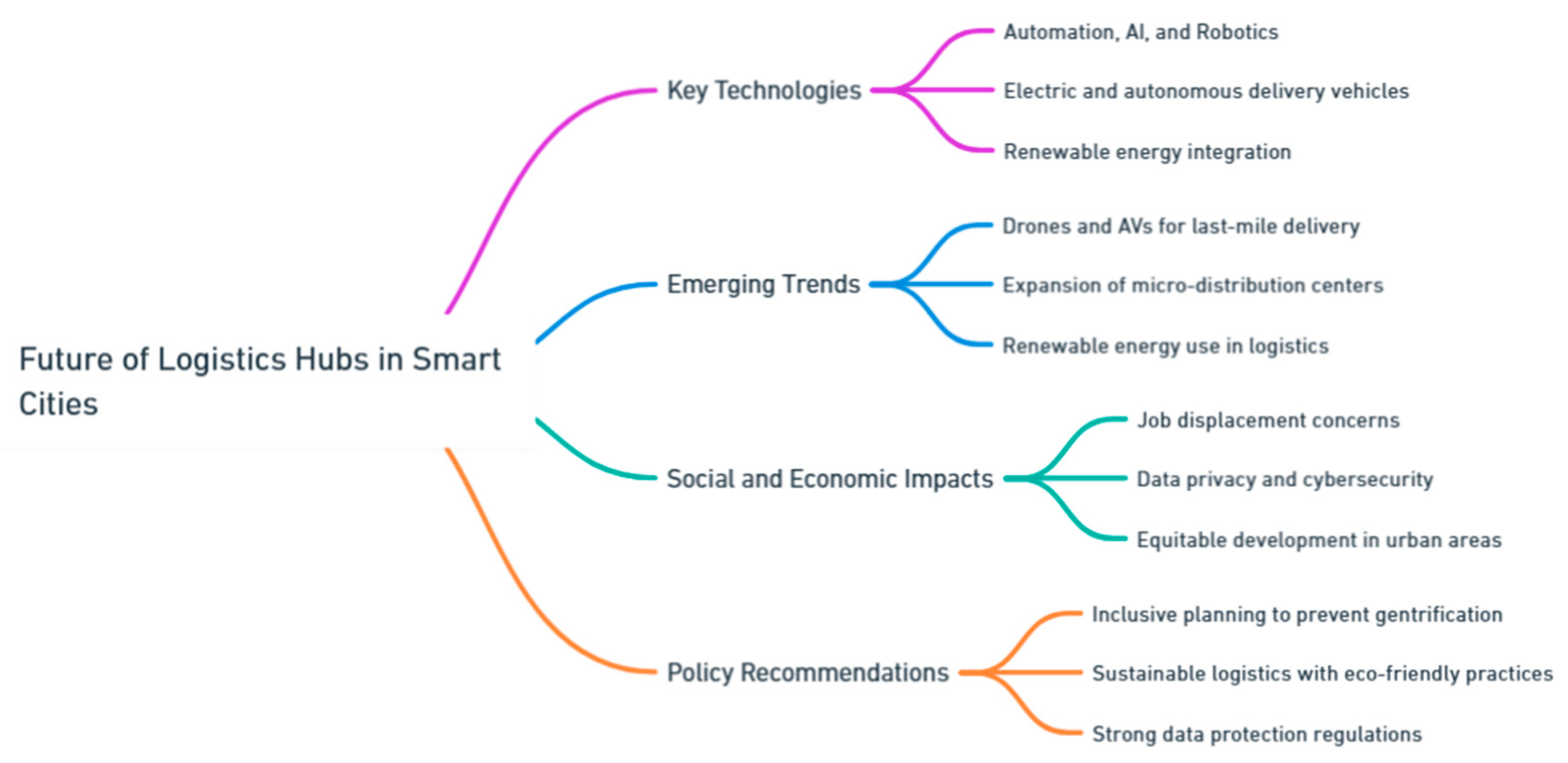
While these trends offer exciting opportunities for the logistics industry, they also raise important questions about job displacement, data privacy, and the equitable distribution of resources. As drones, AVs, and micro-distribution centers become more prevalent, policymakers and businesses must address concerns about how these technologies impact employment and how they ensure that the benefits of smart logistics are shared equitably among all residents.
Policy Recommendations for Inclusive Logistics Planning. To ensure that the development of logistics hubs in smart cities benefits all residents, policymakers should adopt an inclusive approach to urban planning. This involves engaging with local communities to understand their needs and concerns, particularly those related to gentrification, inequality, and environmental justice. Logistics hubs, if not carefully planned, can contribute to rising property values and displacement of low-income residents, exacerbating inequality in cities. Policymakers should also prioritize the development of logistics hubs that promote social equity and sustainability. This includes ensuring that logistics hubs are located in areas that do not disproportionately burden marginalized communities with pollution and traffic. Instead, these hubs should be designed with sustainability in mind, incorporating green spaces, renewable energy sources, and eco-friendly transportation options. Governments should incentivize logistics companies to adopt environmentally friendly practices, such as using electric delivery vehicles, installing solar panels, and reducing waste. Furthermore, data privacy and cybersecurity must be key considerations in the development of smart logistics. As logistics hubs become increasingly digitized, vast amounts of data will be collected and processed, raising concerns about how this data is used and protected. Policymakers should establish strong regulations that protect consumer data and ensure transparency in how logistics companies collect, store, and use information. In conclusion, the future of logistics hubs in smart cities is filled with promise, driven by advancements in technology and a growing focus on sustainability. However, realizing this potential will require careful planning, inclusive policies, and collaboration between governments, businesses, and communities. By addressing the challenges of job displacement, data privacy, and social equity, we can ensure that the logistics hubs of tomorrow are not only efficient and sustainable but also equitable and inclusive for all residents (Pan et al., 2021; Beretta et al., 2023; Liu et al., 2021; Oran and Cezayirlioglu, 2021).
Preprints 139811 i097

11.9. Conclusion

Logistics hubs are increasingly recognized as critical components of smart cities, offering a wide range of functional benefits, including improved urban mobility, reduced environmental impact, and enhanced economic development. However, their social impact extends far beyond these operational advantages. Logistics hubs play a transformative role in reshaping urban environments, benefiting all residents through job creation, improved accessibility, and cleaner, more efficient cities. To fully harness the potential of logistics hubs, policymakers and urban planners must adopt a holistic approach that balances economic growth, social equity, and environmental sustainability. This approach can help ensure that the benefits of logistics hubs are widely shared, contributing to more inclusive, prosperous, and sustainable urban communities.
The Role of Logistics Hubs in Smart Cities. In smart cities, logistics hubs act as central nodes that facilitate the efficient movement of goods within and between urban areas. They integrate various forms of transportation—such as trucks, trains, ships, and airplanes—into a streamlined system that enhances mobility and reduces congestion. As cities grow and urban populations expand, the demand for goods and services increases, making efficient logistics more important than ever. Smart cities aim to leverage technology and data-driven solutions to manage these logistical challenges more effectively, and logistics hubs are at the core of this effort. By optimizing transportation routes, logistics hubs reduce travel times and fuel consumption, leading to lower greenhouse gas emissions and a smaller environmental footprint. Additionally, logistics hubs contribute to reducing traffic congestion in densely populated areas by consolidating deliveries and managing freight movement more efficiently. This not only benefits the environment but also improves the overall quality of life for urban residents by reducing noise pollution and increasing the availability of road space for other forms of transportation, such as public transit, cycling, and walking (Faugère et al., 2020; Sheee t al., 2021).
Economic Development and Job Creation. One of the most significant contributions of logistics hubs to smart cities is their role in driving economic growth. By acting as major centers for the storage, sorting, and distribution of goods, logistics hubs attract businesses and industries that rely on efficient supply chain management. These businesses, in turn, create a range of employment opportunities, from high-skilled positions in technology and management to jobs in warehousing, transportation, and maintenance. As a result, logistics hubs can become key drivers of job creation, providing employment to a diverse workforce and supporting the economic vitality of urban areas. Furthermore, the development of logistics hubs often spurs investment in surrounding infrastructure, such as roads, railways, and energy systems, which further stimulates economic growth. These infrastructure improvements benefit not only businesses but also local communities by enhancing connectivity and accessibility. For example, better transportation links between logistics hubs and urban areas can reduce commute times for workers, improve access to goods and services for residents, and support the growth of local businesses that rely on efficient logistics. In addition to direct job creation, logistics hubs also generate indirect employment opportunities in related sectors, such as construction, technology development, and retail. This multiplier effect helps to bolster the local economy and increase the overall prosperity of urban areas. Moreover, as logistics hubs become more technologically advanced, there is a growing demand for skilled workers who can operate and maintain automated systems, manage complex supply chains, and analyze data. This presents an opportunity for cities to invest in education and training programs that equip residents with the skills needed to participate in the evolving logistics industry (Hu, 2020).
Social Equity and Improved Accessibility. While the economic benefits of logistics hubs are significant, it is essential to ensure that these benefits are distributed equitably among all residents. Smart cities must prioritize social equity by ensuring that logistics hub development creates opportunities for people from diverse socioeconomic backgrounds and communities. This can be achieved by promoting inclusive hiring practices, offering training and education programs to underrepresented groups, and ensuring that logistics hubs are located in areas that are accessible to all residents, including those in marginalized or low-income neighborhoods. Improved accessibility is another important social benefit of logistics hubs. By enhancing the efficiency of goods distribution, logistics hubs help ensure that essential products—such as food, medical supplies, and consumer goods—are readily available to all urban residents. This is particularly important in large, densely populated cities where logistical inefficiencies can lead to delays in the delivery of goods and higher prices for consumers. Logistics hubs enable more reliable and cost-effective access to these essential products, contributing to greater social welfare and improved quality of life. Additionally, logistics hubs can play a role in improving access to employment for residents in underserved areas. By strategically locating logistics hubs in or near low-income neighborhoods, cities can provide job opportunities to residents who may otherwise have limited access to employment due to geographic or transportation barriers. This can help reduce income inequality and promote more inclusive economic development within urban areas (Vecchio et al., 2020; Allen and Farber, 2020).
Vecchio, G., Tiznado-Aitken, I., & Hurtubia, R. (2020). Transport and equity in Latin America: a critical review of socially oriented accessibility assessments. Transport reviews, 40(3), 354-381.
Allen, J., & Farber, S. (2020). Planning transport for social inclusion: An accessibility-activity participation approach. Transportation Research Part D: Transport and Environment, 78, 102212.
Environmental Sustainability and Cleaner Cities. One of the most pressing challenges facing modern cities is the need to reduce their environmental impact. Logistics hubs, when designed and managed with sustainability in mind, can significantly contribute to this goal. By optimizing supply chains and utilizing more energy-efficient transportation methods, logistics hubs can reduce the carbon footprint of urban freight systems. For example, the increased use of electric vehicles (EVs) and alternative fuels in logistics operations can help lower emissions, contributing to cleaner air and a healthier urban environment. Moreover, logistics hubs can incorporate sustainable design features, such as energy-efficient buildings, renewable energy sources (e.g., solar panels), and green spaces, which further reduce their environmental impact. Smart cities that prioritize sustainability in logistics hub development can create urban environments that are not only more efficient but also more livable for residents. Cleaner air, reduced noise pollution, and the preservation of green spaces all contribute to the overall well-being of urban populations. Waste management is another critical aspect of environmental sustainability in logistics hubs. By implementing circular economy principles—such as reducing, reusing, and recycling materials—logistics hubs can minimize waste and promote more sustainable consumption patterns. This approach not only reduces the environmental burden of logistics operations but also helps cities achieve their broader sustainability goals, such as reducing landfill use and conserving natural resources (Faugère et al., 2020; Dutta et al., 2020).
A Holistic Approach to Logistics Hub Development. As cities continue to grow and evolve, it is essential that policymakers and urban planners take a holistic approach to logistics hub development—one that balances economic growth with social equity and environmental sustainability. This requires careful consideration of the long-term impacts of logistics hubs on both urban environments and their residents. Policymakers must work to ensure that logistics hubs are designed and managed in ways that maximize their benefits while minimizing potential negative effects, such as traffic congestion, pollution, and social inequality. To achieve this, collaboration between the public and private sectors is crucial. Governments, businesses, and community organizations must work together to develop logistics hubs that align with the broader goals of smart cities. This includes investing in sustainable infrastructure, promoting inclusive economic development, and adopting policies that encourage environmentally friendly practices in logistics operations. Moreover, cities must engage with local communities to ensure that residents have a voice in the planning and development of logistics hubs. This can help build public trust and ensure that the benefits of logistics hubs are shared equitably among all residents. By adopting a participatory approach to urban planning, cities can create logistics hubs that not only support economic growth but also enhance social cohesion and environmental sustainability (Wang et al., 2020; Shahparvari et al., 2020; Shee et al., 2021; D’Amico et al., 2021; Fraske and Bienzeisler, 2020).
Logistics hubs are essential components of smart cities, offering numerous benefits that extend beyond their functional roles in improving mobility and economic growth. When designed and managed with a focus on sustainability and social equity, logistics hubs can help create cleaner, more inclusive, and more prosperous urban environments. By adopting a holistic approach to logistics hub development, cities can ensure that the benefits of these critical infrastructure components are shared by all residents, contributing to the creation of more sustainable and equitable urban communities.
Preprints 139811 i098

12. Governance in Smart Logistics

12.1. Transparency, Compliance, and Risk Management
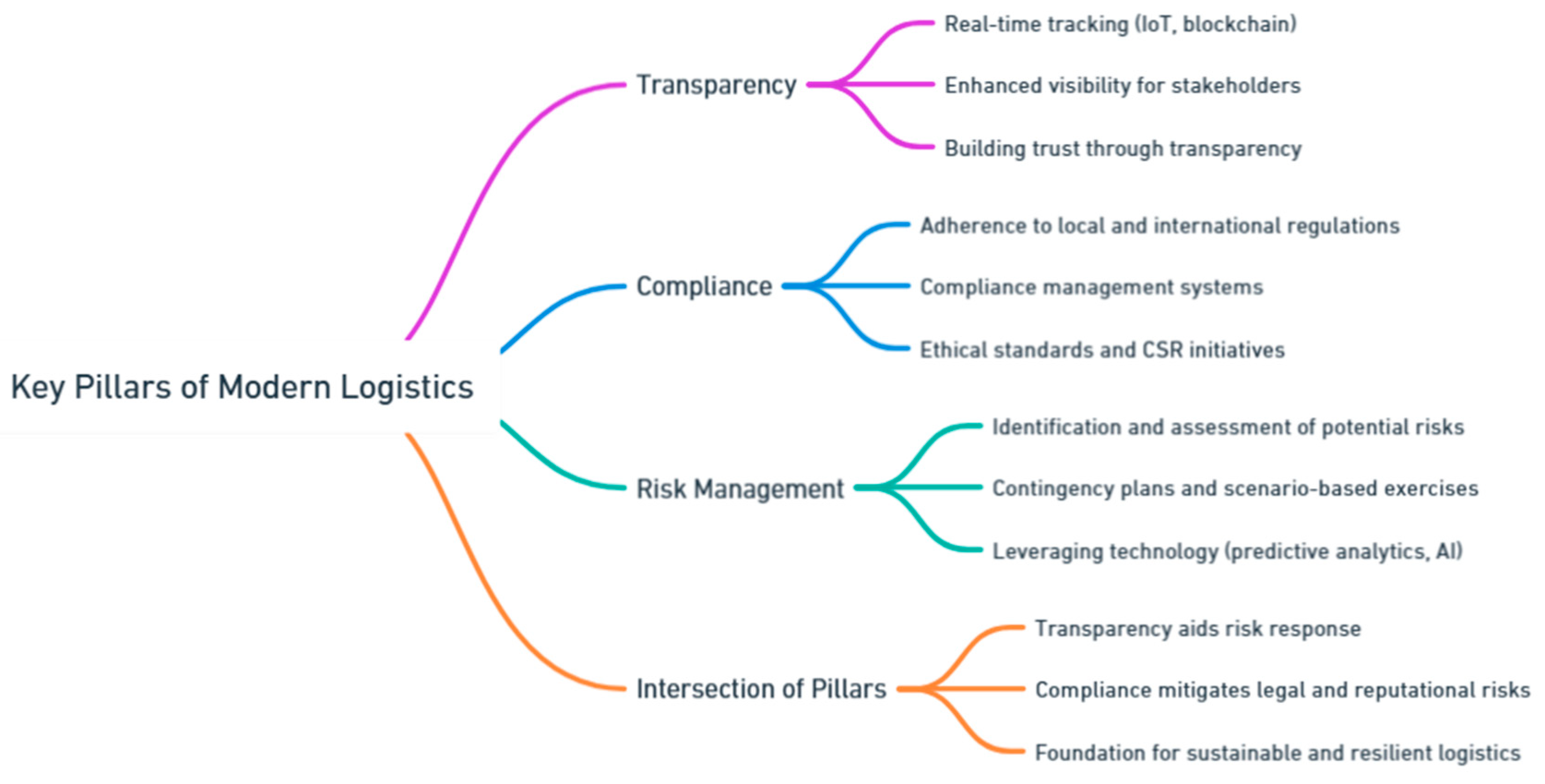
The logistics industry plays a vital role in global trade, functioning as the backbone that ensures the seamless movement of goods from manufacturers to consumers across borders. This intricate network of transportation, warehousing, and distribution enables businesses to deliver products to various markets, supporting economic growth and development worldwide. However, as supply chains become more complex and globalized, they also become more vulnerable to challenges such as regulatory changes, operational risks, and the growing demands for ethical and sustainable practices. In this context, three key pillars—transparency, compliance, and risk management—have emerged as essential components for building resilient, efficient, and sustainable logistics operations in the modern world.
Transparency in Logistics. Transparency is a critical element in modern logistics, ensuring that all stakeholders—manufacturers, suppliers, carriers, and customers—have real-time visibility into the movement of goods throughout the supply chain. In today’s interconnected world, customers and businesses alike demand increased transparency regarding the status and location of shipments. This heightened demand for visibility is driven by several factors, including the need to improve accountability, meet customer expectations, and address sustainability concerns. The adoption of advanced technologies, such as the Internet of Things (IoT), blockchain, and artificial intelligence (AI), has enabled logistics companies to provide greater transparency in their operations. IoT devices, for instance, allow for real-time tracking of shipments, enabling companies to monitor the location, condition, and status of goods in transit. This level of transparency helps improve decision-making, optimize routes, and minimize delays by providing valuable insights into potential bottlenecks or inefficiencies in the supply chain. Blockchain technology also plays a crucial role in enhancing transparency by creating a secure and immutable ledger of transactions. In logistics, blockchain can be used to track the entire lifecycle of a product, from the sourcing of raw materials to the delivery of the finished product. This technology not only improves visibility but also ensures accountability by preventing fraud, counterfeiting, and unauthorized changes to shipment records. As businesses increasingly prioritize sustainability, transparency becomes essential for verifying the ethical sourcing of materials and compliance with environmental standards. Moreover, transparency helps build trust among supply chain partners and customers. Companies that provide clear and accurate information about their operations can foster stronger relationships with their stakeholders. For example, transparency in pricing, delivery times, and product origins can enhance customer satisfaction and loyalty, as consumers are more likely to support businesses that demonstrate openness and honesty. In the long run, greater transparency can lead to improved operational efficiency, reduced costs, and a more sustainable logistics ecosystem (Bø and Baxter, 2020; Khan et al., 2022).
Compliance in Logistics. Compliance is another critical pillar of modern logistics operations. The logistics industry is subject to a wide range of local and international regulations that govern various aspects of the supply chain, including customs procedures, transportation safety, environmental standards, and labor practices. Ensuring compliance with these regulations is essential for logistics companies to avoid legal risks, financial penalties, and reputational damage. In an increasingly globalized world, supply chains often span multiple countries and regions, each with its own regulatory frameworks. Navigating these complex regulatory environments can be challenging, especially as laws and regulations continue to evolve. For instance, customs regulations can vary significantly from one country to another, and logistics companies must ensure that they adhere to the specific requirements of each jurisdiction in order to avoid delays and fines at border crossings. Environmental regulations have also become more stringent in recent years, reflecting the growing global concern about climate change and sustainability. Logistics companies are now required to reduce their carbon footprint, minimize waste, and adopt more sustainable practices in order to comply with environmental standards. Failure to comply with these regulations can result in significant financial penalties, as well as damage to a company’s reputation. To address these challenges, logistics companies are increasingly turning to compliance management systems and software solutions that help them monitor and manage their regulatory obligations. These tools can automate the process of tracking regulatory changes, ensuring that companies remain up to date with the latest requirements. In addition, compliance management systems can help logistics providers maintain accurate records, facilitate audits, and demonstrate their commitment to ethical and legal standards. Furthermore, compliance extends beyond regulatory requirements to include adherence to ethical standards and corporate social responsibility (CSR) initiatives. As consumers and investors place greater emphasis on sustainability and ethical business practices, logistics companies must ensure that their operations align with these values. This includes complying with labor laws, ensuring fair working conditions, and sourcing materials from suppliers that adhere to ethical and environmental standards (Kalubanga and Mbekeka, 2024; Zhongmin, 2021).
Risk Management in Logistics. Risk management is the third pillar of a resilient logistics operation, providing a structured approach to identifying, assessing, and mitigating potential disruptions in the supply chain. The logistics industry is inherently vulnerable to a wide range of risks, including natural disasters, geopolitical tensions, cyberattacks, and supply chain disruptions. Effective risk management strategies are essential for logistics companies to minimize the impact of these risks and maintain continuity of operations. One of the key components of risk management in logistics is the identification and assessment of potential risks. This involves analyzing the entire supply chain to identify vulnerabilities and assess the likelihood and potential impact of various risk scenarios. For example, a company might assess the risk of a natural disaster disrupting its transportation network or the risk of a cyberattack compromising its data security. Once risks have been identified, logistics companies can develop mitigation strategies to minimize their impact. This may involve diversifying suppliers, securing alternative transportation routes, or investing in redundant infrastructure to ensure business continuity in the event of a disruption. Risk management also includes developing contingency plans and conducting regular scenario-based exercises to test the effectiveness of these plans. In recent years, technology has played an increasingly important role in enhancing risk management capabilities. Predictive analytics, for instance, can help logistics companies anticipate potential disruptions by analyzing historical data and identifying patterns that may indicate future risks. Similarly, AI-powered tools can provide real-time insights into supply chain operations, allowing companies to respond more quickly to emerging threats. The COVID-19 pandemic highlighted the importance of robust risk management strategies in logistics. The sudden and widespread disruption caused by the pandemic exposed vulnerabilities in global supply chains, leading to delays, shortages, and increased costs. Companies that had already implemented comprehensive risk management strategies were better equipped to navigate these challenges, while those that lacked adequate planning faced significant operational disruptions.
The Intersection of Transparency, Compliance, and Risk Management. While transparency, compliance, and risk management are distinct concepts, they are interconnected and mutually reinforcing. For example, greater transparency can enhance risk management by providing real-time visibility into potential disruptions, allowing logistics companies to respond more quickly and effectively. Similarly, compliance with regulations and ethical standards can help mitigate legal and reputational risks, while also demonstrating a company’s commitment to responsible business practices. Together, these three pillars form the foundation of a resilient and sustainable logistics operation. Companies that prioritize transparency, compliance, and risk management are better positioned to navigate the complexities of modern supply chains, reduce operational risks, and meet the growing demands for ethical and sustainable practices. In conclusion, the logistics industry is facing increasing pressure to adapt to the challenges posed by globalized supply chains, regulatory requirements, and the demand for sustainability. Transparency, compliance, and risk management are essential components of a modern logistics strategy, providing the foundation for building resilient, efficient, and ethical operations. By adopting new technologies, adhering to regulations, and proactively managing risks, logistics companies can enhance their competitiveness, reduce their environmental impact, and contribute to a more sustainable global supply chain (Rodriguez et al., 2023; Ebinger and Omondi, 2020; Zhang and Shankar, 2023).
Preprints 139811 i099

12.2. Understanding Transparency in Logistics
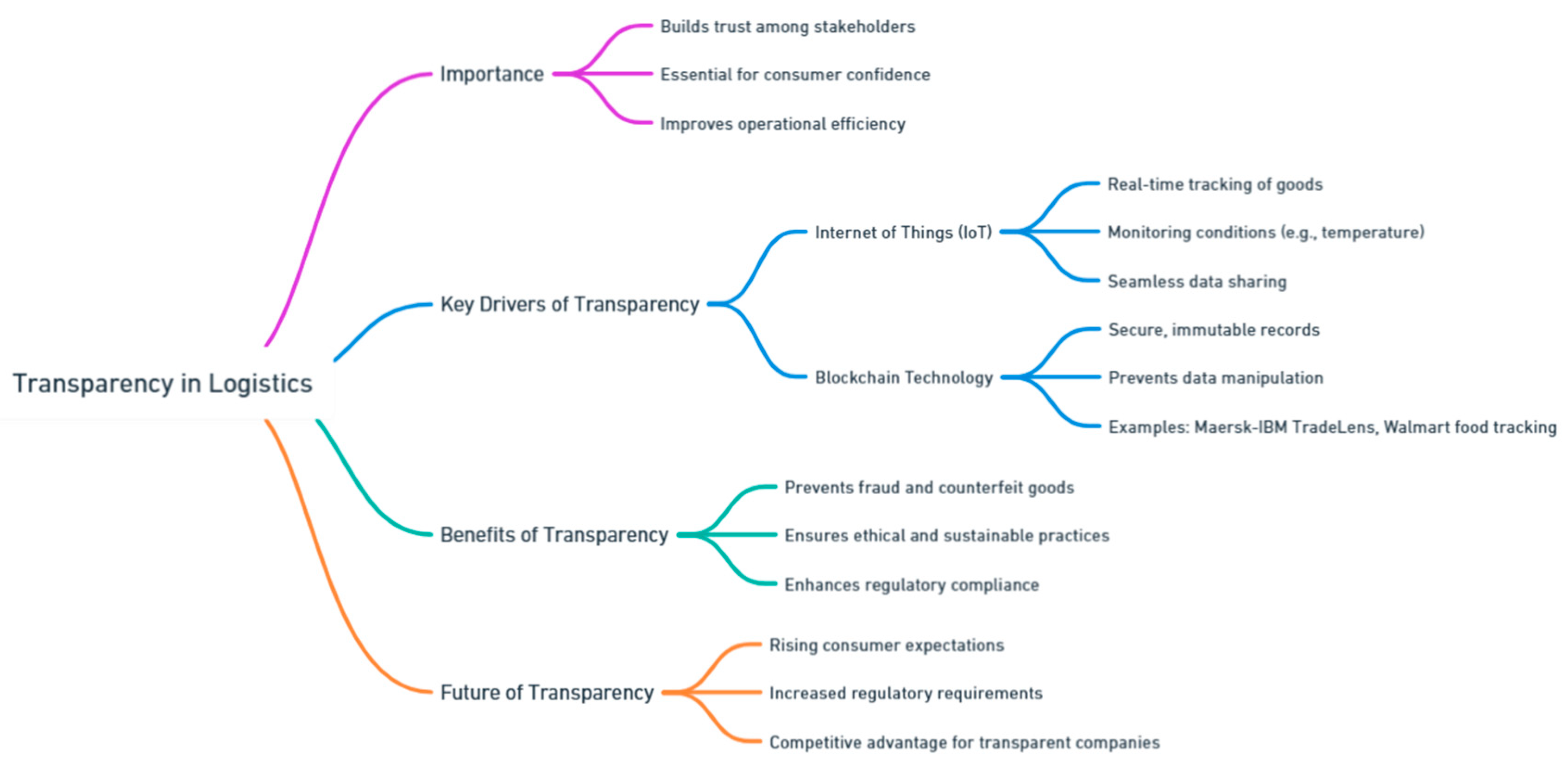
Transparency in logistics refers to the ability of all stakeholders in the supply chain—manufacturers, suppliers, logistics providers, and customers—to access accurate, real-time information about the movement of goods and materials. In a transparent supply chain, companies can trace the journey of products from their origin to their final destination, providing visibility into every step of the process. This transparency has become a cornerstone of modern logistics, especially as global supply chains grow increasingly complex and interconnected.
Why Transparency is Essential. Transparency in logistics serves multiple purposes, but the most important is trust-building among stakeholders. As consumers become more conscious about where their products come from, they demand greater visibility into the supply chain. They want assurances that products are ethically sourced, produced in a sustainable manner, and that companies are operating responsibly. For businesses, being able to provide this level of visibility is not only a competitive advantage but a necessity in maintaining customer loyalty. This has become especially important in industries such as food, fashion, and electronics, where sustainability and ethical production are central to the purchasing decision. For suppliers and logistics providers, transparency offers operational benefits. It helps in identifying bottlenecks, inefficiencies, or disruptions in the supply chain, allowing for quicker and more agile responses. This is crucial in an era where disruptions due to natural disasters, political instability, or global pandemics are becoming more frequent and impactful. With better visibility into the supply chain, logistics providers can optimize their operations, reducing costs and improving the overall efficiency of the supply chain. Additionally, transparency helps businesses comply with increasingly stringent regulatory requirements. Governments worldwide are enacting regulations that require companies to demonstrate that their supply chains are free from unethical practices such as forced labor, human rights abuses, and environmental degradation. Supply chain transparency helps companies track compliance with these regulations, avoiding fines and damage to their reputations (Bø and Baxter, 2020; Khan et al., 2022).
Key Drivers of Transparency: Technology's Role. Technological advancements have been key to enabling greater transparency in logistics. Two technologies in particular—Internet of Things (IoT) and blockchain—are transforming how companies monitor and manage their supply chains.
Internet of Things (IoT). The IoT refers to a network of interconnected devices that communicate and share data over the internet. In logistics, IoT devices such as GPS trackers, RFID tags, and smart sensors can provide real-time data about the location, condition, and status of goods. These devices make it possible to track shipments across every leg of their journey, offering unparalleled visibility into the supply chain. For example, a logistics provider can use IoT sensors to monitor the temperature of perishable goods in transit, ensuring they remain within a safe range. If the temperature deviates, alerts can be sent to notify the appropriate personnel, allowing them to take corrective action before the goods spoil. Similarly, GPS tracking devices can provide real-time updates on the location of shipments, allowing companies and customers to know exactly where their products are at any given time. The result is a more efficient, predictable, and transparent supply chain, where information flows seamlessly between stakeholders. This leads to greater trust, fewer delays, and a reduction in waste due to spoilage or damage during transportation (Kumar et al., 2024; Song et al., 2021).
Blockchain Technology. Blockchain technology is another key driver of transparency in logistics. A blockchain is a decentralized, immutable digital ledger that records transactions across a network of computers. Once data is entered into a blockchain, it cannot be altered or deleted, ensuring the integrity of the information. This feature makes blockchain particularly useful for creating a transparent and trustworthy supply chain. Blockchain enables the secure sharing of data among all parties involved in the supply chain—from manufacturers to logistics providers to retailers—without the need for a centralized authority to verify the information. Each party can access and verify the same set of data, making it impossible for any one participant to manipulate the records. A prominent example of blockchain’s use in logistics is the Maersk-IBM initiative, known as TradeLens. TradeLens is a blockchain-based platform that allows shipping companies to share data about the movement of goods across global supply chains. By using blockchain, Maersk and IBM have been able to reduce inefficiencies, improve visibility, and lower the risk of fraud. The platform provides a transparent and secure way to track shipments, ensuring that all parties involved have access to accurate and real-time information. In the food industry, blockchain technology is being used to track the journey of food products from farm to table. This ensures that food safety standards are met at every stage of the supply chain, providing consumers with greater confidence in the safety and quality of their food. For example, Walmart has partnered with IBM to use blockchain for tracking the origin of food items such as leafy greens, allowing the company to quickly trace the source of contamination in the event of a foodborne illness outbreak (Zhang, 2022; Wen, 2021).
Preventing Fraud and Counterfeit Goods. One of the biggest challenges in global supply chains is the risk of fraud and counterfeit goods. In industries such as pharmaceuticals, fashion, and electronics, counterfeit goods not only lead to financial losses but can also pose serious health and safety risks to consumers. Transparency in the supply chain can help mitigate these risks by ensuring that every step of the process is verifiable and that goods are authentic. Blockchain, in particular, offers a solution to the problem of counterfeit goods. Because blockchain records are immutable, they provide a trustworthy way to track the movement of goods from the point of origin to the end customer. For example, in the pharmaceutical industry, blockchain can be used to track the movement of drugs through the supply chain, ensuring that they are genuine and have not been tampered with. Similarly, in the fashion industry, luxury brands can use blockchain to verify the authenticity of their products, giving customers confidence that they are purchasing genuine items. By providing a secure, transparent way to track goods, blockchain and other transparency-enhancing technologies reduce the risk of fraud and help protect both businesses and consumers (Quzmar et al., 2021; Lo and Tan, 2023).
The Future of Transparency in Logistics. As the logistics industry continues to evolve, transparency will become even more critical. Consumer expectations are rising, and businesses are under increasing pressure to provide greater visibility into their supply chains. In addition, governments and regulatory bodies are likely to introduce more stringent requirements for supply chain transparency, particularly as concerns about sustainability, ethical sourcing, and labor practices grow. The adoption of transparency-enhancing technologies such as IoT and blockchain will continue to accelerate. These technologies will not only improve the efficiency and security of supply chains but also provide companies with valuable insights into their operations, allowing them to make more informed decisions and better serve their customers. Looking ahead, transparency will be a defining feature of the logistics industry. Companies that embrace transparency will gain a competitive advantage, build stronger relationships with customers, and reduce their exposure to risks such as fraud and regulatory non-compliance. In an increasingly complex and interconnected world, transparency is not just a desirable trait—it is a necessity for success. In conclusion, transparency in logistics fosters trust, improves operational efficiency, and reduces risks. Technological innovations like IoT and blockchain are key drivers of this shift, providing real-time visibility and secure, trustworthy data across the supply chain. As the demand for ethical and sustainable practices continues to rise, transparency will be essential for companies to meet these expectations and thrive in a rapidly changing global market (Khan et al., 2021; Zhang, 2022; Cui et al., 2024; Franke et al., 2023; Al Qatbi and Rathinam, 2023).
Preprints 139811 i100

12.3. Compliance in Logistics

Compliance in logistics refers to the adherence to a vast and complex web of laws, regulations, and standards that govern the movement of goods across national and international borders. Logistics companies must navigate a myriad of regulations related to customs, environmental sustainability, labor laws, and data protection, among others. The importance of compliance in logistics cannot be overstated, as failure to adhere to these rules can result in severe penalties, operational disruptions, and significant reputational damage. This expanded discussion explores the key regulations affecting logistics operations and the critical need for compliance in ensuring a smooth, efficient, and sustainable supply chain.
  • Customs Regulations: Customs regulations are perhaps the most fundamental compliance challenge in logistics, governing the legal import and export of goods. These regulations involve a wide array of requirements, including proper documentation, tariff classifications, duties, and taxes. Customs regulations vary from country to country, making international logistics particularly complex. Logistics companies must ensure that all goods moving across borders comply with the specific rules of each country, including the proper classification of goods, the calculation and payment of duties, and adherence to import/export restrictions. For instance, goods must be accurately classified using harmonized system (HS) codes, which determine the applicable tariffs. Incorrect classification can lead to underpayment or overpayment of duties, delays in shipments, or even confiscation of goods. Additionally, specific goods may be subject to import/export restrictions based on the country of origin or destination, necessitating the acquisition of special licenses or permits. Failure to comply with customs regulations can result in significant penalties, including fines, shipment delays, and the seizure of goods. Moreover, delays caused by non-compliance can disrupt supply chains, affecting customer satisfaction and increasing costs (Nifatova, 2020; Yaremenko, 2021).
  • Environmental Regulations: Environmental regulations have become increasingly important in logistics as global awareness of climate change and sustainability grows. These regulations aim to reduce the carbon footprint of logistics operations, encompassing emission standards for vehicles, energy usage in warehouses, and waste management practices. Many countries have introduced stringent laws to limit greenhouse gas emissions from the transportation sector, which accounts for a significant portion of global emissions. For example, the European Union has implemented strict emission standards for commercial vehicles, known as the Euro standards, which set limits on the amount of harmful pollutants that trucks and other heavy-duty vehicles can emit. Logistics companies must ensure that their fleets meet these standards, or they risk being fined or restricted from operating in certain regions. In addition to vehicle emissions, environmental regulations also affect the design and operation of warehouses and distribution centers. Many countries require logistics facilities to adopt energy-efficient technologies, such as LED lighting, solar panels, and electric forklifts, to reduce their environmental impact. Failure to comply with these regulations can result in penalties, increased operational costs, and reputational damage, as consumers and business partners increasingly prioritize sustainability (Perotti et al., 2022; Jaller et al., 2020).
  • Labor Laws: Logistics is a labor-intensive industry, with millions of workers employed in warehousing, transportation, and delivery services around the world. Ensuring compliance with labor laws is critical for logistics companies, as violations can lead to legal actions, strikes, and reputational damage. Labor laws govern various aspects of employment, including wages, working hours, health and safety conditions, and the rights of workers to form unions. For example, in many countries, there are strict regulations on the maximum number of hours that truck drivers can work in a day to prevent accidents caused by driver fatigue. Logistics companies must carefully monitor and manage the working hours of their drivers to ensure compliance with these laws, which are designed to protect both the workers and the public. Health and safety regulations are also crucial in logistics, particularly in warehousing and transportation. Warehouses must adhere to strict safety standards to prevent accidents, such as falls or injuries caused by heavy machinery. In addition, logistics companies must provide proper training to workers to ensure they can operate equipment safely and effectively. Non-compliance with labor laws can result in significant legal and financial penalties, as well as damage to the company's reputation (Davidov and Eshet, 2022; Red and Teng-Calleja,).
  • Data Protection Laws: With the rise of digital platforms and data analytics in logistics, data protection has become a critical compliance issue. Logistics companies collect and process vast amounts of sensitive data, including personal information from customers and business partners, as well as proprietary data related to supply chains and operations. Ensuring compliance with data protection laws is essential to safeguarding this information from unauthorized access, theft, or misuse. One of the most important data protection laws is the General Data Protection Regulation (GDPR), which was introduced in the European Union in 2018. GDPR sets strict requirements for how companies collect, store, and process personal data, with hefty fines for non-compliance. Logistics companies operating in the EU or handling data from EU citizens must ensure that their data management practices comply with GDPR, including obtaining proper consent from individuals, ensuring data security, and providing mechanisms for individuals to access or delete their data. In addition to GDPR, many other countries have introduced their own data protection laws, making compliance a global concern for logistics companies. As logistics operations become increasingly digital, ensuring compliance with data protection laws will become even more critical to maintaining trust with customers and partners (Wang et al., 2023; Labadie and Legner, 2023).
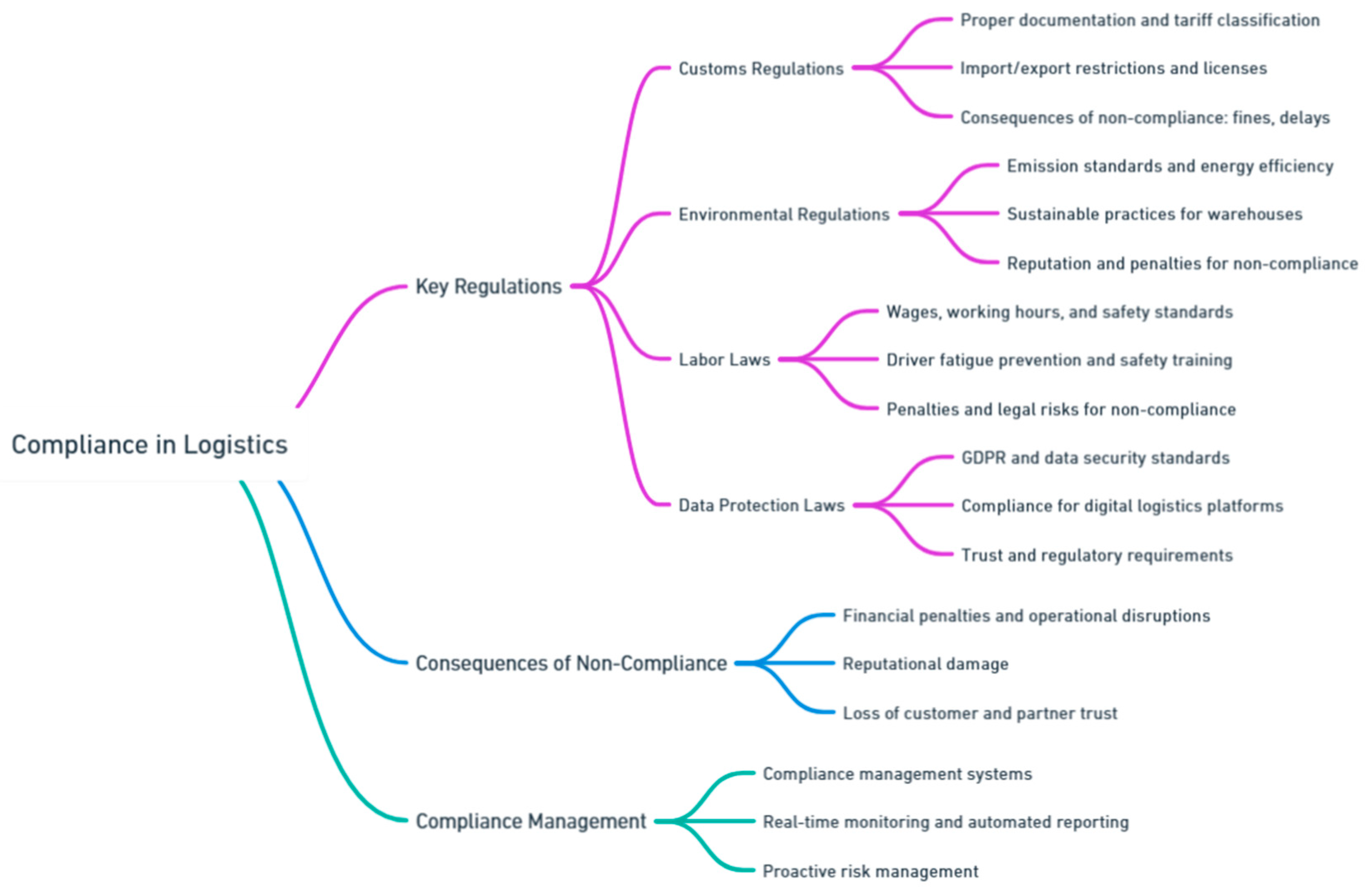
The Consequences of Non-Compliance. Non-compliance with any of these regulations can have far-reaching consequences for logistics companies. Financial penalties are one of the most immediate and tangible consequences, with fines often reaching substantial amounts for serious violations. For example, non-compliance with customs regulations can result in the confiscation of goods, leading to significant financial losses. Similarly, failure to meet environmental or labor standards can result in hefty fines that affect a company's bottom line. Beyond financial penalties, non-compliance can also lead to operational disruptions. For instance, shipments delayed due to incorrect customs documentation can cause supply chain bottlenecks, leading to missed delivery deadlines and dissatisfied customers. Strikes or labor disputes caused by non-compliance with labor laws can halt operations entirely, resulting in lost revenue and damaged client relationships. Perhaps most critically, non-compliance can severely damage a company's reputation. In today's business environment, where consumers and partners are increasingly focused on ethical and sustainable practices, a company that is found to be in violation of environmental, labor, or data protection regulations can face significant reputational damage. This can result in the loss of business, as customers and partners seek out more compliant and responsible competitors (Balon and Roszak, 2020; Kalubanga and Mbekeka, 2024).
Compliance Management in Logistics. Given the complexity and scope of the regulations affecting logistics, companies must adopt robust compliance management systems to ensure they remain compliant with all applicable laws and standards. Compliance management systems use advanced technology, such as real-time monitoring, automated reporting, and data analytics, to track regulatory changes, ensure proper documentation, and identify potential compliance risks. These systems also provide transparency across the supply chain, allowing logistics companies to monitor their operations in real-time and take proactive steps to address compliance issues before they lead to penalties or disruptions. For example, a compliance management system can automatically flag shipments that may not meet customs requirements, allowing the company to correct the issue before the goods reach the border. In an increasingly globalized world, where regulations are constantly evolving, logistics companies must remain vigilant and adaptable. The implementation of compliance management systems is essential for maintaining smooth and efficient operations while avoiding the risks associated with non-compliance (Zhongmin, 2021; Coglianese and Nash, 2020).
Compliance in logistics is a critical component of a successful and sustainable supply chain. By adhering to customs regulations, environmental laws, labor standards, and data protection requirements, logistics companies can avoid costly penalties, protect their reputation, and ensure the smooth operation of their global supply chains. In an ever-evolving regulatory landscape, the adoption of compliance management systems will be crucial for logistics companies to stay ahead of the curve and navigate the complexities of modern logistics (Wang et al., 2022; Habib et al., 2022).
Preprints 139811 i101

12.4. Risk Management in Logistics

Risk management in logistics plays a critical role in maintaining smooth operations and ensuring that the supply chain remains resilient against potential disruptions. Logistics operations face a wide range of risks that can affect everything from daily activities to long-term strategic goals. These risks can be categorized into operational, financial, environmental, and geopolitical risks. To effectively manage these, logistics companies must adopt a proactive approach that anticipates risks and implements measures to mitigate them before they become serious issues. The following sections explore the various types of risks in logistics and provide insights into strategies for managing them effectively.
  • Operational Risks: Operational risks in logistics refer to those that arise from the day-to-day activities involved in managing the supply chain. These include equipment failures, human errors, or mismanagement that can lead to significant delays, accidents, or quality control issues. For instance, a malfunctioning conveyor belt in a distribution center could cause delays in processing shipments, while mistakes in inventory management could result in stockouts or overstocking, both of which negatively affect service levels and customer satisfaction. To manage operational risks, logistics companies need to invest in reliable infrastructure and adopt standardized operating procedures that minimize the potential for errors. Regular maintenance schedules for equipment, thorough training programs for employees, and technology solutions such as warehouse management systems (WMS) can reduce the likelihood of operational failures. Additionally, real-time monitoring of operations, enabled by technologies such as the Internet of Things (IoT), allows for immediate detection and resolution of issues before they escalate into major disruptions (Zheng et al., 2021; Shi et al., 2022)
  • Financial Risks: Financial risks in logistics stem from factors that can affect the cost of operations. These include currency fluctuations, rising fuel prices, unexpected tariffs, or changing trade agreements. For instance, a sudden spike in fuel prices can increase the cost of transportation, directly impacting the profitability of logistics operations. Similarly, fluctuations in exchange rates can affect the cost of importing or exporting goods, making it more expensive to procure materials or deliver products to international markets. To mitigate financial risks, companies can adopt several strategies. One common approach is to use hedging tools, such as futures contracts, to lock in fuel prices or exchange rates, reducing exposure to market volatility. Additionally, companies can diversify their supplier base to minimize the impact of changes in trade agreements or tariffs. By sourcing from multiple suppliers across different regions, logistics companies can reduce their dependence on any single market and maintain operational flexibility in the face of changing financial conditions. Another important aspect of managing financial risks is building financial resilience through cost control and efficient resource management. Optimizing routes to reduce fuel consumption, investing in energy-efficient vehicles, or adopting more accurate demand forecasting techniques can help logistics companies reduce unnecessary expenditures and operate more cost-effectively (Ji et al., 2023; Wang et al., 2020).
  • Environmental Risks: Environmental risks pose a significant threat to logistics operations, particularly as climate change leads to more frequent and severe natural disasters. Floods, hurricanes, wildfires, and other extreme weather events can disrupt transportation networks, damage infrastructure, and delay shipments. For example, a major hurricane could render a key port or airport inoperable, halting the movement of goods in and out of that region and causing significant supply chain bottlenecks. In addition to immediate disruptions, environmental risks also encompass longer-term challenges posed by climate change, such as rising sea levels or changing weather patterns that could render existing transportation routes less reliable. These risks can have far-reaching effects on supply chain stability, making it critical for logistics companies to develop strategies for dealing with such uncertainties. To manage environmental risks, logistics companies can adopt several measures. Investing in resilient infrastructure, such as flood-proof warehouses or alternative transportation routes, helps protect operations from weather-related disruptions. Additionally, using real-time data and predictive analytics allows companies to track weather patterns and anticipate disruptions, giving them the opportunity to reroute shipments or adjust delivery schedules before problems arise. Moreover, environmental risks can also be mitigated through the use of sustainable logistics practices, such as reducing emissions by optimizing routes, using electric vehicles, or switching to cleaner forms of energy. These practices not only minimize the impact of logistics operations on the environment but also help companies meet regulatory requirements related to carbon emissions and sustainability goals (Tesfai et al., 2020; Piciullo and Eidsvig, 2020).
  • Geopolitical Risks: Geopolitical risks in logistics arise from political instability, trade disputes, regulatory changes, or other government actions that can disrupt cross-border trade. For example, political instability in a key trading partner could lead to the closure of borders, impeding the movement of goods. Similarly, trade disputes between major economies can result in tariffs, trade restrictions, or supply chain delays, increasing costs and uncertainty for businesses engaged in international trade. Effective risk management in the face of geopolitical risks requires logistics companies to closely monitor political and regulatory developments in the regions where they operate. By staying informed about potential risks, such as upcoming trade negotiations or changes in customs regulations, companies can take proactive steps to mitigate the impact of these changes. For example, companies may diversify their supplier base or adjust their sourcing strategies to avoid over-reliance on a single country that could be affected by trade disputes or political instability. Additionally, establishing strong relationships with customs authorities and ensuring compliance with all applicable regulations can help logistics companies navigate complex geopolitical environments more effectively. Having contingency plans in place, such as alternative shipping routes or backup suppliers, is also essential to maintaining operational continuity when faced with political disruptions (Atacan and Açık, 2023).
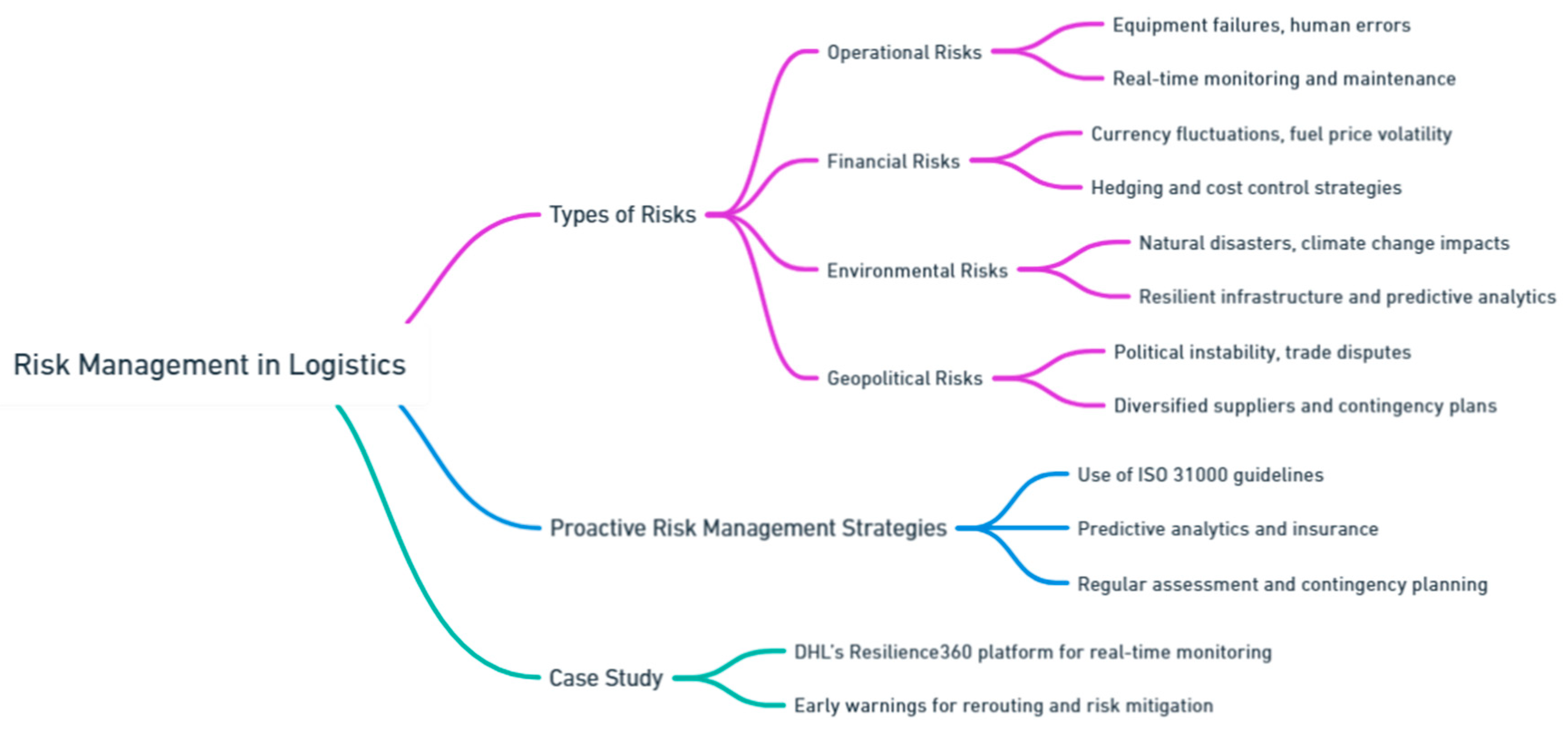
Proactive Risk Management Strategies. Effective risk management in logistics requires a proactive approach that goes beyond simply reacting to disruptions after they occur. Logistics companies need to anticipate potential risks and develop contingency plans to minimize their impact. A structured approach to risk management often involves the use of established frameworks, such as ISO 31000, which provides guidelines on risk identification, assessment, and treatment. ISO 31000 emphasizes the importance of a systematic and integrated approach to managing risks, ensuring that risk management becomes an integral part of an organization’s overall decision-making processes. By following these guidelines, logistics companies can better identify potential risks, assess their likelihood and impact, and implement appropriate mitigation strategies. One key tool for mitigating risks is the use of insurance, which provides financial protection against specific disruptions such as natural disasters, equipment failures, or accidents. Additionally, many logistics companies invest in predictive analytics to forecast demand fluctuations and adjust inventory levels accordingly, reducing the risk of stockouts or overstocking.
Case Study: DHL’s Risk Management Strategy. A real-world example of successful risk management in logistics is DHL’s comprehensive risk management strategy, which relies on advanced analytics and real-time monitoring to track potential supply chain disruptions. DHL’s Resilience360 platform is designed to identify risks such as natural disasters, geopolitical tensions, or transportation bottlenecks. This platform provides early warnings to logistics managers, enabling them to reroute shipments, adjust delivery schedules, or engage alternative suppliers as necessary to avoid delays and maintain service levels. By adopting advanced risk management strategies, DHL has been able to minimize the impact of disruptions on its global operations, ensuring that its supply chains remain resilient and responsive to changing conditions.
In conclusion, risk management in logistics is essential to ensuring the continuity and efficiency of supply chain operations in an increasingly uncertain world. By identifying, assessing, and mitigating risks across operational, financial, environmental, and geopolitical domains, logistics companies can reduce their vulnerability to disruptions and maintain competitiveness. The use of technology, such as predictive analytics and real-time monitoring, combined with proactive strategies like supplier diversification and contingency planning, enables logistics companies to effectively navigate the complex risk landscape. As global trade continues to evolve, risk management will remain a critical aspect of sustainable and resilient logistics operations (Dong et al., 2024; Marouf, 2024).
Preprints 139811 i102

12.5. The Role of Technology in Enhancing Transparency
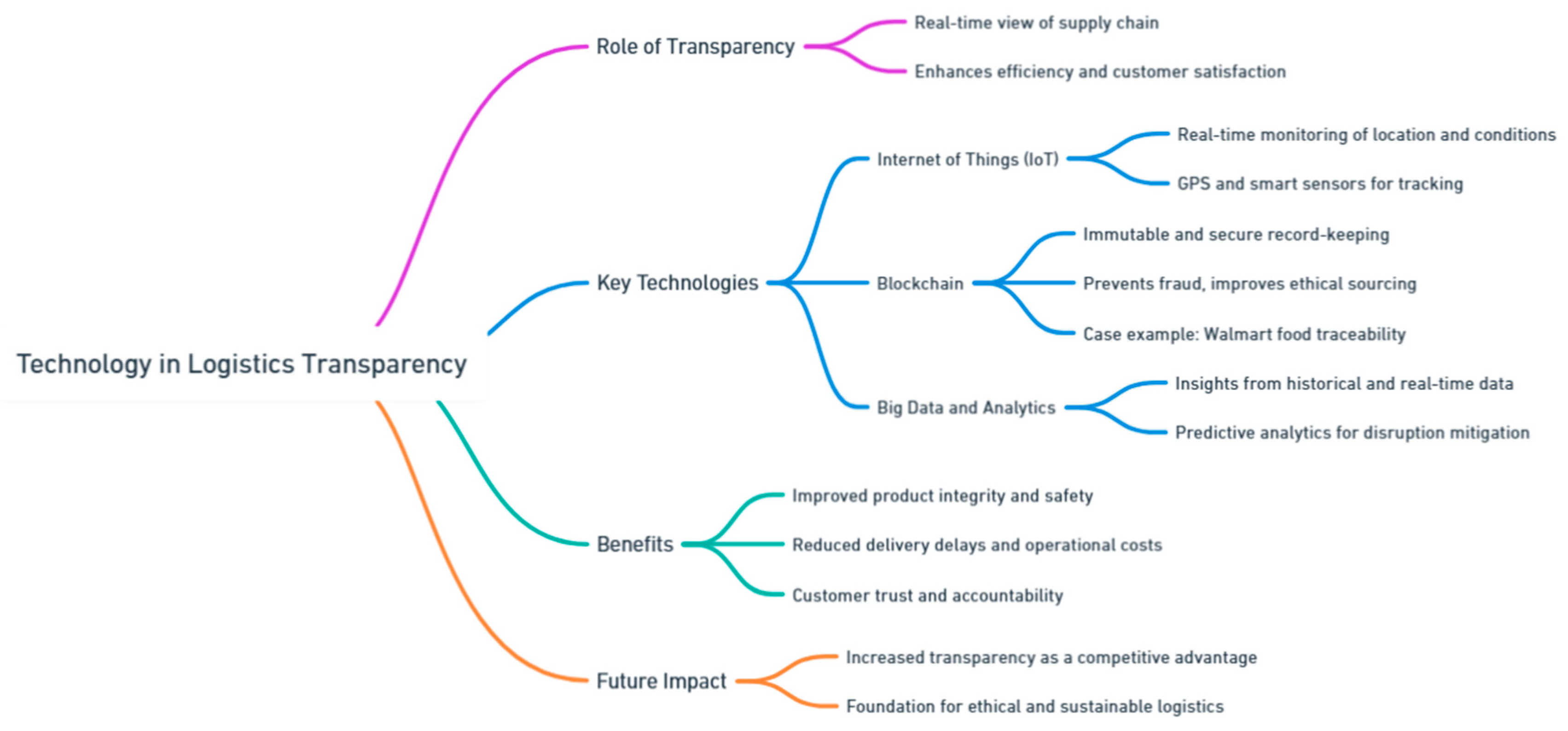
Technology has revolutionized the logistics industry by enhancing transparency at every stage of the supply chain. In today’s globalized economy, where goods are transported across vast distances and through multiple intermediaries, ensuring that all stakeholders have a clear, real-time view of the supply chain is essential for efficiency, accountability, and customer satisfaction. The adoption of cutting-edge technologies such as the Internet of Things (IoT), blockchain, and big data analytics has significantly improved supply chain visibility, transforming how logistics operations are managed. These innovations offer not only transparency but also increased control over key logistics processes, which leads to greater efficiency, safety, and sustainability. One of the most significant advancements in transparency comes through the integration of the Internet of Things (IoT) into logistics operations. IoT refers to a network of interconnected devices, such as GPS-enabled trackers and smart sensors, that communicate with each other to share data. In logistics, IoT devices are often used to monitor the location, status, and condition of goods in transit, providing real-time updates to stakeholders throughout the supply chain. This capability is especially valuable in industries where product integrity is critical, such as pharmaceuticals, food, and high-value electronics. For example, in the transportation of perishable goods like food or medicine, maintaining a stable temperature is crucial to ensure the quality and safety of the products. IoT-enabled sensors can monitor environmental factors like temperature, humidity, and exposure to light, ensuring that conditions remain within the required parameters throughout the journey. If the sensors detect any deviation from the acceptable conditions, such as a sudden rise in temperature in a refrigerated truck, an alert can be sent in real-time to the relevant parties, allowing them to take immediate action to prevent spoilage. This level of visibility is essential in supply chains where product safety and quality are paramount, such as those involving vaccines or fresh produce. Additionally, the ability to track the precise location of goods through GPS-enabled IoT devices allows logistics providers and their customers to monitor shipments in real-time. This transparency minimizes uncertainty, as customers no longer have to rely on estimates of delivery times. Real-time location tracking can also improve efficiency by allowing logistics companies to optimize routes, avoiding traffic jams, delays, or other potential disruptions. This not only reduces transportation costs but also enhances customer satisfaction by providing more accurate delivery times and reducing the likelihood of lost or delayed shipments. While IoT is central to real-time tracking and monitoring, blockchain technology has emerged as a game-changing tool for ensuring the integrity of the data shared throughout the supply chain. Blockchain, a decentralized and tamper-proof digital ledger, allows for the recording and verification of each transaction in the supply chain. This means that every step, from the procurement of raw materials to the final delivery of finished goods, can be securely logged, creating an immutable and transparent record that all parties can access. In the logistics industry, blockchain offers enormous potential for enhancing transparency, particularly in sectors where ethical sourcing, sustainability, and regulatory compliance are critical concerns. For instance, the use of blockchain in tracking the sourcing of raw materials can help ensure that products are ethically sourced and free from practices such as child labor or environmental degradation. This is especially relevant in industries like fashion and electronics, where supply chains are often complex and involve multiple layers of suppliers and subcontractors. Walmart’s use of blockchain to track the origin of food products is a prime example of how this technology can improve transparency and accountability in logistics. By implementing a blockchain-based system, Walmart can trace the journey of food products from the farm to the shelf. In the event of a foodborne illness outbreak, this system allows the company to quickly identify the source of contamination, reducing the time needed to recall affected products and preventing further harm to consumers. This level of transparency not only protects public health but also builds trust with consumers, who are increasingly demanding greater accountability from the brands they support. Furthermore, blockchain can play a crucial role in ensuring the authenticity of products, particularly in industries where counterfeiting is a major concern, such as pharmaceuticals and luxury goods. By providing an unalterable record of a product's journey through the supply chain, blockchain can verify that the goods received by consumers are genuine and have not been tampered with during transit. This enhanced transparency helps companies protect their brand reputation and assures customers of the authenticity of the products they purchase. In addition to IoT and blockchain, big data and advanced analytics are becoming increasingly important tools for enhancing transparency in logistics. The logistics industry generates vast amounts of data daily, from shipping schedules and delivery routes to inventory levels and customer feedback. By leveraging big data and analytics, logistics companies can gain valuable insights into their operations, enabling them to make data-driven decisions that enhance transparency and efficiency. Predictive analytics, in particular, allows logistics providers to anticipate potential disruptions before they occur. By analyzing historical data alongside current trends, companies can identify patterns that may indicate a forthcoming delay, such as seasonal demand surges, extreme weather events, or traffic congestion. With this information, logistics providers can take proactive steps to mitigate the impact of these disruptions, such as rerouting shipments, adjusting delivery schedules, or increasing inventory in high-demand areas. This level of foresight not only minimizes delays but also helps companies optimize their resources, reducing fuel consumption and lowering operational costs. Moreover, the integration of big data analytics into logistics platforms can improve decision-making across the entire supply chain. For instance, real-time data from IoT sensors can be analyzed to optimize routes, ensuring that vehicles take the most efficient path to their destination. Analytics can also help companies monitor the performance of their logistics partners, identifying any bottlenecks or inefficiencies that may be affecting delivery times or service quality. By providing greater visibility into these areas, big data analytics enables logistics companies to fine-tune their operations and deliver more consistent, reliable service. The increasing demand for faster, more reliable delivery services has made transparency a key differentiator in the logistics industry. Consumers today expect to have full visibility into the status of their orders, from the moment they are placed to the point of delivery. By providing real-time tracking information and ensuring that products are delivered in optimal condition, logistics companies can enhance customer satisfaction and loyalty. In an era of heightened competition and rising consumer expectations, transparency is not only a driver of operational efficiency but also a critical component of a company's value proposition. In conclusion, technology plays a pivotal role in enhancing transparency in logistics, offering businesses and consumers unprecedented visibility into the movement and condition of goods throughout the supply chain. The Internet of Things enables real-time tracking and monitoring, blockchain ensures the integrity and accountability of supply chain data, and big data analytics provides predictive insights that optimize operations and minimize disruptions. Together, these technologies are transforming logistics into a more transparent, efficient, and customer-centric industry, setting the stage for a future where supply chains are not only faster and more reliable but also more ethical and sustainable. As these technologies continue to evolve, the logistics industry will undoubtedly see further improvements in transparency, benefiting businesses, consumers, and the planet alike (Song et al., 2022; Khan et al., 2021; Shoomal et al., 2024).
Preprints 139811 i103

13. Digital Governance and Data Privacy in Supply Chain Operations
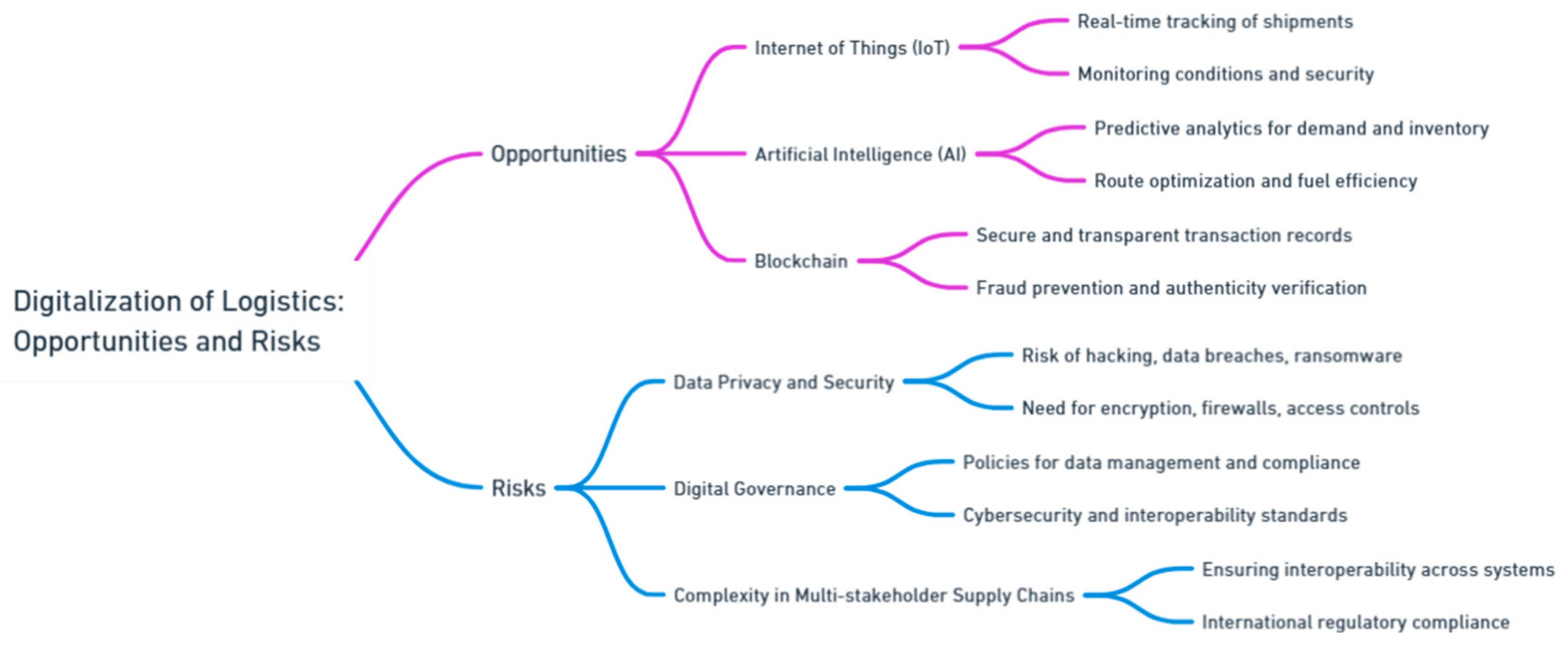
The logistics industry has undergone a profound transformation in recent years, largely driven by the advent and rapid adoption of digital technologies. These technologies have revolutionized supply chain operations, leading to greater efficiency, enhanced visibility, and improved decision-making. From real-time tracking of goods to the use of predictive analytics for demand forecasting, the integration of data and technology into logistics has made supply chains more agile and responsive to market demands. However, as the digitalization of supply chains accelerates, it has also introduced a host of new challenges, particularly in the realms of digital governance and data privacy.
Digitalization of Logistics: Opportunities and Risks. Digital technologies such as the Internet of Things (IoT), artificial intelligence (AI), blockchain, and big data analytics have become cornerstones of modern logistics management. IoT devices allow for the continuous tracking of goods across the supply chain, providing real-time data on the location, condition, and security of shipments. AI and machine learning algorithms can analyze vast amounts of data to predict demand fluctuations, optimize routes, and reduce fuel consumption. Blockchain technology offers a secure and transparent way to record transactions and ensure the integrity of supply chain data. These innovations have vastly improved operational efficiency and transparency within the logistics sector. Real-time tracking enables companies to monitor their shipments closely, minimizing delays and ensuring on-time deliveries. Predictive analytics allows businesses to anticipate changes in demand and adjust their inventory levels accordingly, reducing costs and waste. Furthermore, blockchain technology enhances trust among stakeholders by ensuring the authenticity of transactions and preventing fraud. However, with these opportunities come significant risks, particularly concerning the management and protection of data. The vast amounts of data generated by these digital systems—ranging from operational metrics to sensitive customer information—must be carefully managed to ensure both efficiency and compliance with regulatory requirements. This is where the concepts of digital governance and data privacy come into play. Understanding Digital Governance in Logistics. Digital governance refers to the set of policies, procedures, and frameworks that guide the management of digital systems and data. In the context of logistics, digital governance is crucial for ensuring that supply chain operations are not only efficient but also secure, compliant, and aligned with broader business goals. Proper digital governance ensures that data is collected, stored, and used in a manner that respects both regulatory obligations and organizational standards. In supply chains that span multiple countries and involve numerous stakeholders—such as suppliers, manufacturers, retailers, and logistics providers—digital governance becomes even more complex. The vast number of systems, platforms, and stakeholders involved in the modern supply chain requires a well-coordinated governance structure to ensure that all parties adhere to the same standards. This includes ensuring that the data shared across the supply chain is accurate, secure, and compliant with international regulations. One of the key components of digital governance in logistics is ensuring the security of IT systems and data. Cybersecurity threats, such as hacking, data breaches, and ransomware attacks, pose a serious risk to supply chains that rely on digital technologies. A cyberattack on a logistics provider, for instance, could disrupt operations, lead to the loss of sensitive data, and harm the company’s reputation. Therefore, robust cybersecurity measures, such as encryption, firewalls, and access controls, are essential components of any digital governance framework. Another critical aspect of digital governance is ensuring the interoperability of systems. In a highly interconnected supply chain, different stakeholders may use different systems and platforms to manage their operations. Ensuring that these systems can communicate with one another and share data seamlessly is essential for maintaining efficiency. Standardizing data formats, protocols, and communication channels can help overcome interoperability challenges, allowing for smoother collaboration between stakeholders (Kalkha et al., 2023; Enache, 2023; Wamba and Queiroz, 2022).
Preprints 139811 i104
The Importance of Data Privacy in Logistics. While digital governance focuses on the management and security of IT systems, data privacy specifically addresses the protection of personal and sensitive information. In logistics, data privacy is of paramount importance because supply chain operations often involve the collection and processing of a wide range of data, including customer information, shipment details, and payment records. Data privacy concerns have come to the forefront in recent years, particularly with the introduction of stringent regulatory frameworks such as the General Data Protection Regulation (GDPR) in the European Union and the California Consumer Privacy Act (CCPA) in the United States. These regulations require companies to protect the privacy of individuals by limiting the amount of personal data they collect, ensuring that data is stored securely, and providing individuals with the right to access and control their own information. In logistics, data privacy is particularly challenging due to the global nature of supply chains. Shipments often cross multiple borders, involving a wide range of stakeholders, each of whom may have different legal obligations concerning data privacy. Ensuring that data is protected throughout its journey—from the moment it is collected to the point of delivery—requires careful coordination and adherence to a range of legal and regulatory requirements. For example, a logistics company operating in Europe must comply with GDPR, which mandates that personal data be collected only for specific purposes and that individuals have the right to request access to or deletion of their data. If the same company operates in California, it must also comply with CCPA, which grants similar rights to consumers. Ensuring compliance with these overlapping regulations requires a comprehensive approach to data governance and privacy (Dasgupta et al., 2020; Balkin, 2020).
Preprints 139811 i105
Challenges in Digital Governance and Data Privacy. One of the primary challenges in implementing effective digital governance and data privacy policies in logistics is the sheer complexity of modern supply chains. With so many different stakeholders involved, ensuring that everyone follows the same standards and procedures can be difficult. This complexity is further compounded by the global nature of supply chains, which means that companies must navigate a patchwork of regulations across different jurisdictions. Another challenge is the rapid pace of technological change. As new technologies such as AI, blockchain, and IoT continue to evolve, logistics companies must constantly update their digital governance frameworks to ensure that they remain effective and secure. This requires ongoing investment in technology, as well as continuous training and education for employees to ensure they understand how to manage and protect data in this evolving landscape. Finally, cybersecurity threats pose a constant risk to digital governance and data privacy in logistics. As supply chains become more digital, they become more vulnerable to cyberattacks. Hackers may target logistics companies to steal sensitive data, disrupt operations, or demand ransom payments. Ensuring robust cybersecurity measures are in place is essential to mitigating these risks and protecting both company and customer data (Simion et al., 2023; Chen and Liao, 2023).
Preprints 139811 i106
Future Trends in Digital Governance and Data Privacy. Looking to the future, several trends are likely to shape digital governance and data privacy in logistics. One such trend is the increasing use of AI and machine learning to manage and protect data. These technologies can help companies analyze large amounts of data in real-time, identifying potential security threats and ensuring that data is used in compliance with regulatory requirements. Another trend is the growing emphasis on transparency and accountability in supply chains. Consumers and regulators are increasingly demanding greater visibility into how companies collect, store, and use data. Companies that can provide this transparency—by implementing clear data governance policies and ensuring compliance with privacy regulations—will have a competitive advantage. In conclusion, digital governance and data privacy are critical components of modern supply chain operations within the logistics industry. As supply chains become more digital and interconnected, companies must invest in robust governance frameworks to manage data effectively, protect against cybersecurity threats, and comply with evolving regulatory requirements. By prioritizing digital governance and data privacy, logistics companies can ensure that they remain competitive and secure in an increasingly digital world (Simion et al., 2023; Guo et al., 2022).
Preprints 139811 i107
Digital Governance in Supply Chain Operations. Digital governance in logistics involves establishing structured policies and frameworks that manage the use of digital systems and data within supply chain operations. With the increasing reliance on technology for managing shipments, inventory, and communication, digital governance has become essential for logistics companies. It ensures compliance with regulatory requirements, mitigates risks such as cybersecurity threats and data breaches, and minimizes operational inefficiencies. In a world where digital systems are integral to global supply chains, robust governance practices are crucial for maintaining the integrity, security, and efficiency of logistics operations.
  • A IT Infrastructure Management. At the heart of digital governance in logistics is the management of IT infrastructure. Logistics companies increasingly rely on digital tools for everything from fleet management to real-time inventory tracking, warehouse management, and customer relationship management. Proper IT infrastructure management ensures that these systems are secure, scalable, and efficient, facilitating smooth data flow and uninterrupted system functionality. To manage this vast infrastructure effectively, logistics companies must implement scalable IT architectures that can grow with their operational needs. As supply chains expand globally, logistics providers must ensure that their IT systems can handle increased data loads, varying regulatory requirements, and the complexity of international shipping routes. For example, large logistics providers such as DHL and UPS have heavily invested in upgrading their IT infrastructure to enhance real-time data collection, improve tracking accuracy, and provide more reliable delivery timelines. However, managing complex IT environments brings challenges, particularly around system security. The increased use of interconnected devices, cloud-based systems, and Internet of Things (IoT) solutions exposes logistics operations to potential cyberattacks and system failures. Ensuring cybersecurity measures are in place, such as encryption, regular security audits, and incident response strategies, helps prevent malicious attacks that could cripple supply chain operations. Moreover, having backup systems and disaster recovery plans allows logistics companies to maintain continuity in case of IT failures. Scalability is also a key consideration for logistics providers. As companies grow and enter new markets, their IT infrastructure needs to accommodate larger volumes of data, more complex processes, and additional regulatory requirements. Cloud-based solutions and artificial intelligence (AI) are increasingly used in logistics to manage these complexities. For instance, AI-powered predictive analytics helps companies forecast demand, optimize routes, and predict potential disruptions, making the supply chain more agile and responsive to change (Nekrasov and Sinitsyna, 2020; Li et al., 2022).
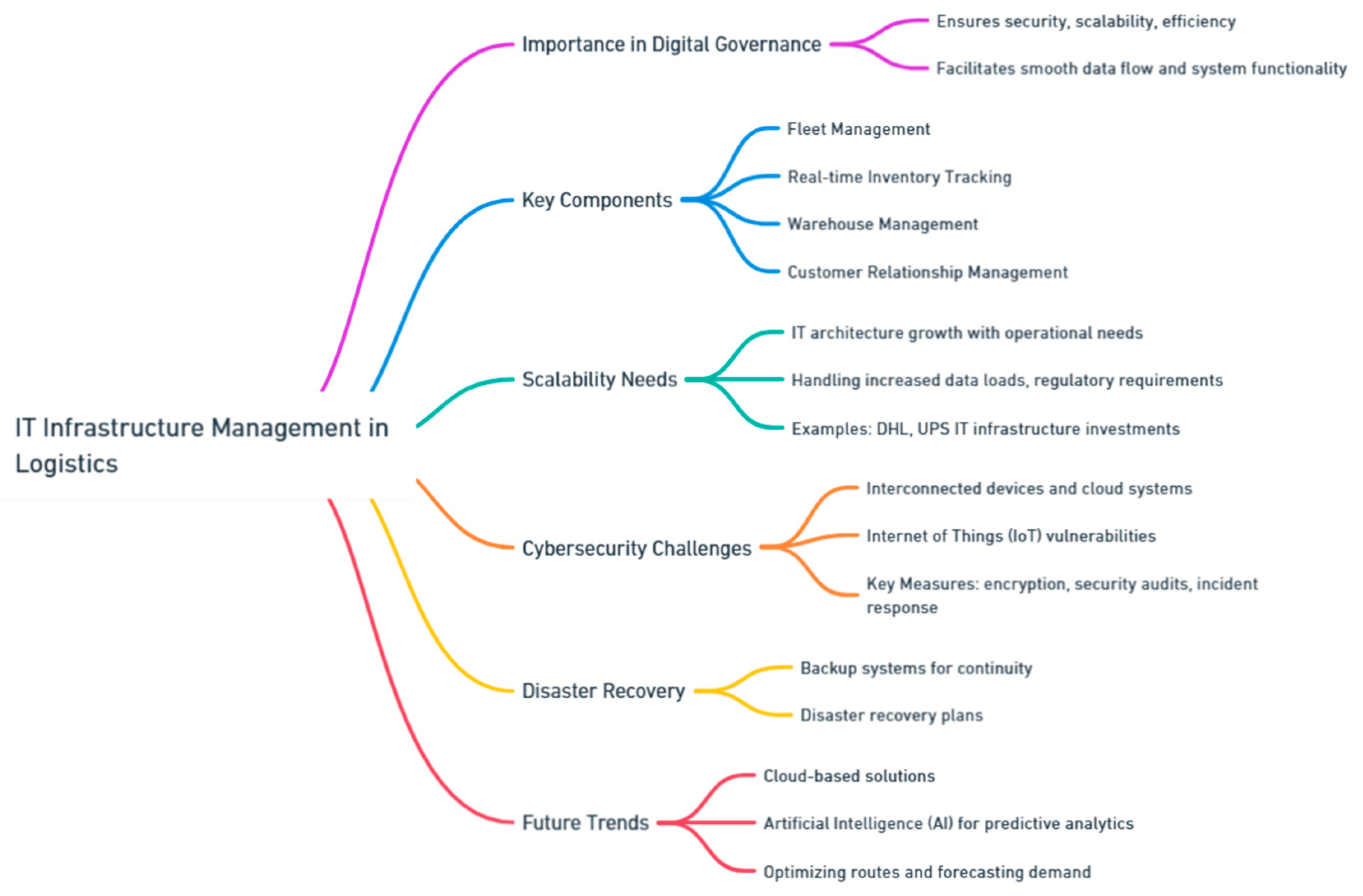
Preprints 139811 i108
  • B. Data Governance Frameworks. Data is the lifeblood of modern logistics operations. From tracking shipments to managing inventory and analyzing customer preferences, logistics companies depend on data-driven insights to optimize performance. A robust data governance framework is essential to ensure that this data is reliable, accurate, and accessible only to authorized personnel. Data governance frameworks outline the procedures and rules for collecting, storing, processing, and sharing data within the logistics supply chain. These frameworks ensure data integrity and security, which is critical for preventing disruptions and maintaining customer trust. In logistics, the sheer volume of data generated from tracking systems, IoT devices, and enterprise resource planning (ERP) systems can be overwhelming. A well-structured data governance framework helps manage this complexity by establishing clear guidelines for data quality and accessibility. One of the most pressing challenges in data governance is compliance with data privacy regulations. As logistics companies operate across multiple jurisdictions, they must adhere to various local and international laws, such as the General Data Protection Regulation (GDPR) in Europe and the California Consumer Privacy Act (CCPA) in the United States. These regulations govern how personal data is collected, stored, and shared, requiring logistics companies to implement stringent privacy policies and ensure that they comply with different regulatory frameworks. Effective data governance also involves regular audits and updates to ensure that policies remain aligned with changing regulations and business needs. For example, real-time data monitoring can help identify and address data inaccuracies or inconsistencies, preventing issues such as misdirected shipments or inaccurate delivery estimates. Additionally, access controls must be in place to restrict data access to authorized personnel only, reducing the risk of data breaches or misuse (Tsohou et al., 2020; Wang et al.,2023).
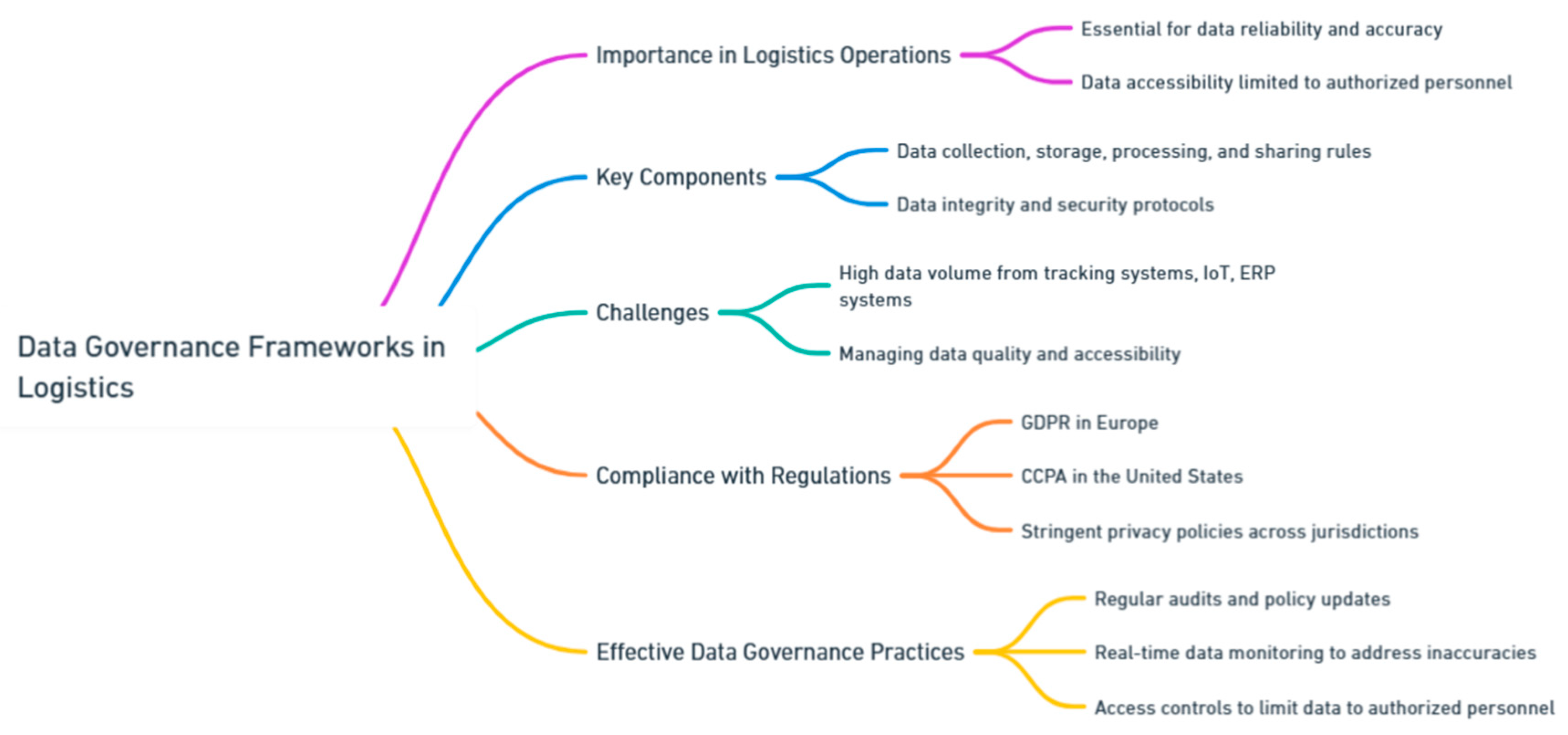
Preprints 139811 i109
  • C. Risk Management and Compliance. Risk management is a cornerstone of digital governance in logistics. As supply chains become more digitized, they are increasingly vulnerable to cyber threats, data breaches, and operational disruptions. A comprehensive risk management strategy helps logistics companies identify, assess, and mitigate these risks, ensuring the continuity and security of their operations. Cybersecurity is one of the most significant risks facing modern logistics operations. Supply chains often involve a complex network of vendors, suppliers, and partners, making them attractive targets for cybercriminals. Cyberattacks on logistics companies can result in the theft of sensitive customer information, disruption of operations, and significant financial losses. For example, the 2017 cyberattack on Maersk, a global shipping company, caused widespread disruptions to its shipping and port operations, leading to losses estimated at $300 million. To mitigate these risks, logistics companies must implement cybersecurity best practices, such as multi-factor authentication, data encryption, and regular security audits. A proactive approach to risk management also involves conducting regular risk assessments to identify potential vulnerabilities in the digital infrastructure. By continuously monitoring and addressing risks, logistics companies can reduce the likelihood of disruptions and ensure that their operations remain secure. Compliance with regulatory standards is another critical component of risk management in logistics. As mentioned earlier, logistics companies must adhere to a growing number of local and international regulations governing data privacy, environmental impact, and operational safety. Non-compliance with these regulations can result in hefty fines, reputational damage, and legal action. Therefore, logistics companies must have systems in place to ensure that they remain compliant with evolving regulations and industry standards. For instance, FedEx has implemented a risk-based governance approach that focuses on identifying and mitigating potential risks in its digital systems. This includes monitoring data access, conducting regular audits, and implementing robust cybersecurity measures to protect against data breaches and cyberattacks. FedEx’s approach demonstrates how companies can integrate risk management into their overall digital governance framework to safeguard their operations (Cortez and Dekker, 2022; Li et al., 2022).
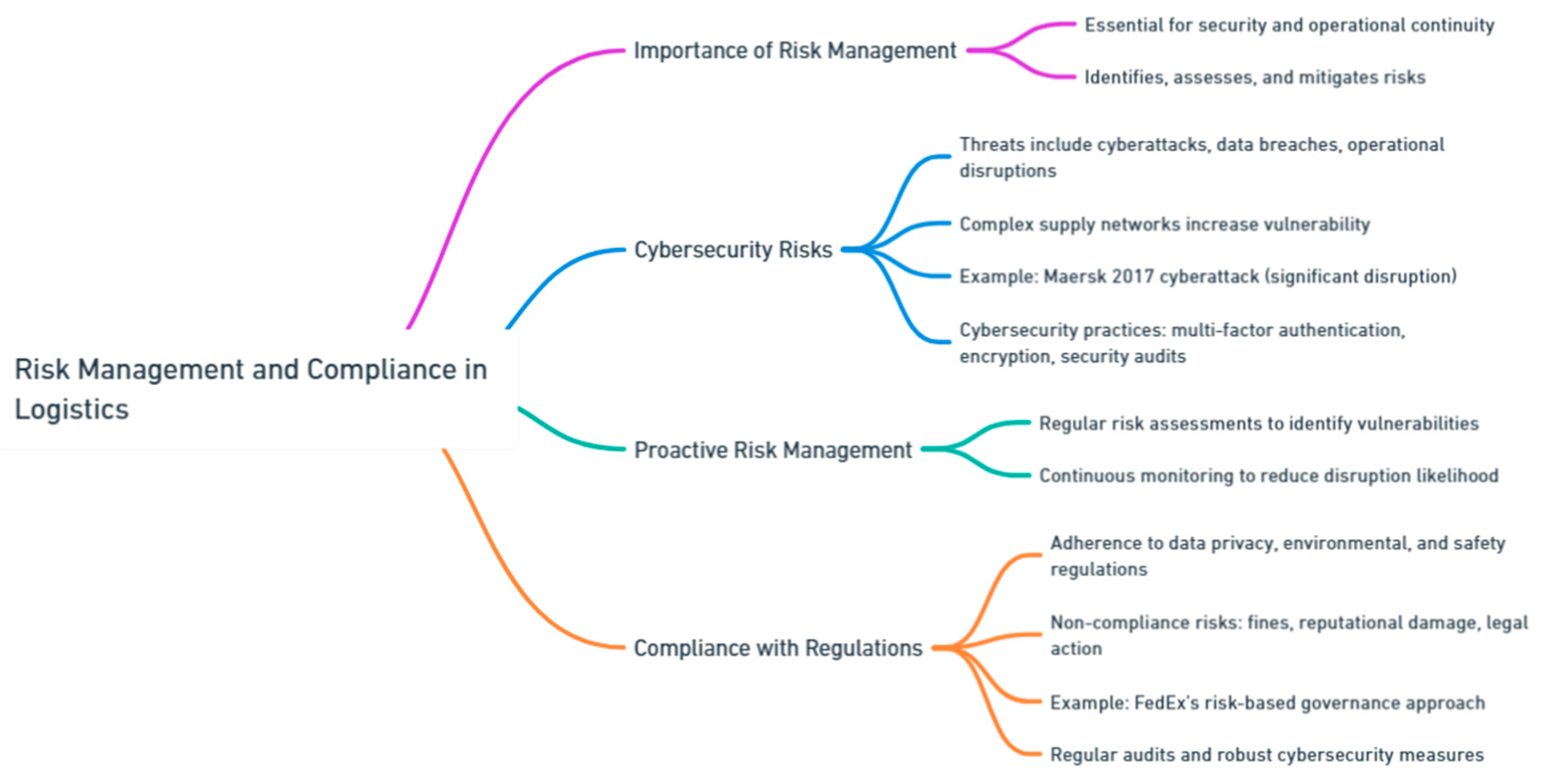
Preprints 139811 i110
  • D. The Future of Digital Governance in Supply Chain Operations. The future of digital governance in logistics will be shaped by continued advancements in technology and evolving regulatory requirements. Emerging technologies such as blockchain, AI, and IoT will play an increasingly prominent role in improving transparency, security, and efficiency within supply chains. Blockchain, for example, can provide a decentralized and immutable ledger for tracking shipments and verifying transactions, reducing the risk of fraud and ensuring greater accountability. As digital systems become more sophisticated, logistics companies will need to adapt their governance frameworks to address new challenges and opportunities. This includes staying ahead of regulatory changes, investing in cutting-edge cybersecurity measures, and continuously improving data management practices. In conclusion, digital governance is a critical aspect of modern supply chain operations. It encompasses the management of IT infrastructure, data governance frameworks, risk management, and compliance with regulatory standards. By implementing robust digital governance practices, logistics companies can enhance their operational efficiency, protect against cyber threats, and ensure compliance with evolving regulations. As technology continues to evolve, digital governance will remain essential for ensuring the resilience and sustainability of global supply chains (Franke and Fischer, 2023; Hong and Xiao, 2024; Dutta et al., 2023).
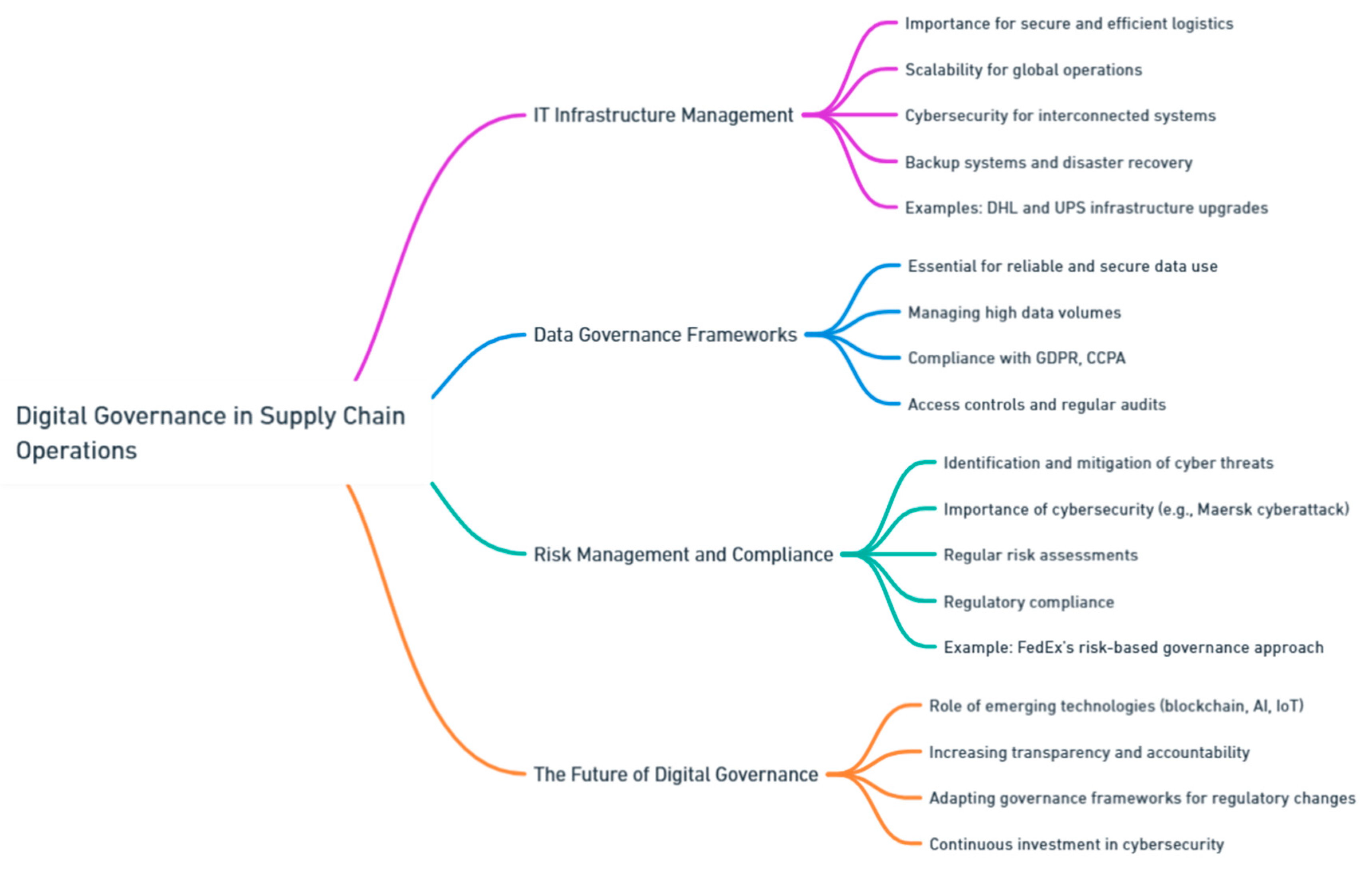
Preprints 139811 i111
The Role of Data in Supply Chain Logistics. Data has transformed supply chain logistics into a more dynamic and responsive industry, with the ability to collect, analyze, and utilize information in real-time becoming a key differentiator for leading logistics companies. In today’s highly competitive and complex market environment, the effective use of data is critical to optimizing operations, improving decision-making, and meeting customer expectations. Data-driven logistics has proven to be not only more efficient but also more adaptive to fluctuations in demand, regulatory changes, and environmental pressures. In this expanded discussion, we will examine the types of data utilized in logistics, the role of Big Data and predictive analytics, and how data supports enhanced collaboration and operational efficiency across the supply chain.
Types of Data Used in Logistics. Data in supply chain logistics comes from a multitude of sources and is used to streamline processes, ensure timely deliveries, and maintain customer satisfaction. Broadly speaking, logistics companies rely on four key categories of data: transportation data, inventory data, customer and supplier data, and operational data. Each of these categories plays a vital role in ensuring that logistics operations run smoothly and efficiently.
  • Transportation Data: Transportation data refers to all the information collected during the movement of goods. This includes delivery times, fuel consumption, vehicle maintenance records, and route efficiency. By collecting and analyzing transportation data, logistics companies can optimize their delivery routes, reduce fuel costs, and minimize delays. For example, GPS tracking and route optimization software allow companies to monitor their fleet in real-time and make adjustments based on traffic conditions, weather disruptions, or unforeseen events, leading to more reliable and cost-effective deliveries. Additionally, transportation data helps companies comply with regulations regarding driver hours and vehicle emissions, ensuring both safety and sustainability (Tarapata et al., 2020; Ağbulut, 2022).
  • Inventory Data: Inventory data encompasses real-time information on stock levels, turnover rates, storage conditions, and warehouse capacity. Efficient inventory management is critical to meeting customer demand without overstocking or running out of products. Data collected from warehouse management systems (WMS) enables logistics companies to maintain optimal inventory levels, track products through the supply chain, and avoid costly stockouts or surpluses. Advanced systems can also use data to manage the movement of goods within the warehouse, minimizing the time and effort required to retrieve products for shipping. Automation in inventory management, driven by data, reduces human error, improves order accuracy, and speeds up the fulfillment process.
  • Customer and Supplier Data: Customer and supplier data provides insights into purchasing behaviors, payment histories, and preferred delivery schedules. This data is critical for maintaining strong relationships with both ends of the supply chain. For customers, logistics companies can use this data to tailor services, such as offering more accurate delivery windows or recommending complementary products. For suppliers, data helps in demand forecasting, ensuring that the right materials are procured at the right time. By having access to this information, logistics companies can maintain efficient workflows and prevent disruptions due to miscommunication or misalignment with suppliers.
  • Operational Data: Operational data is gathered from various logistics systems, including warehouse management systems (WMS), fleet tracking devices, and order management systems. This data gives logistics managers insights into the day-to-day performance of their operations, helping them identify inefficiencies, bottlenecks, or areas for improvement. Fleet tracking, for example, offers data on vehicle usage, driver performance, and route deviations, enabling managers to optimize fleet utilization and reduce maintenance costs. Additionally, operational data from warehouse and distribution centers can be used to streamline processes, reduce waste, and increase throughput.
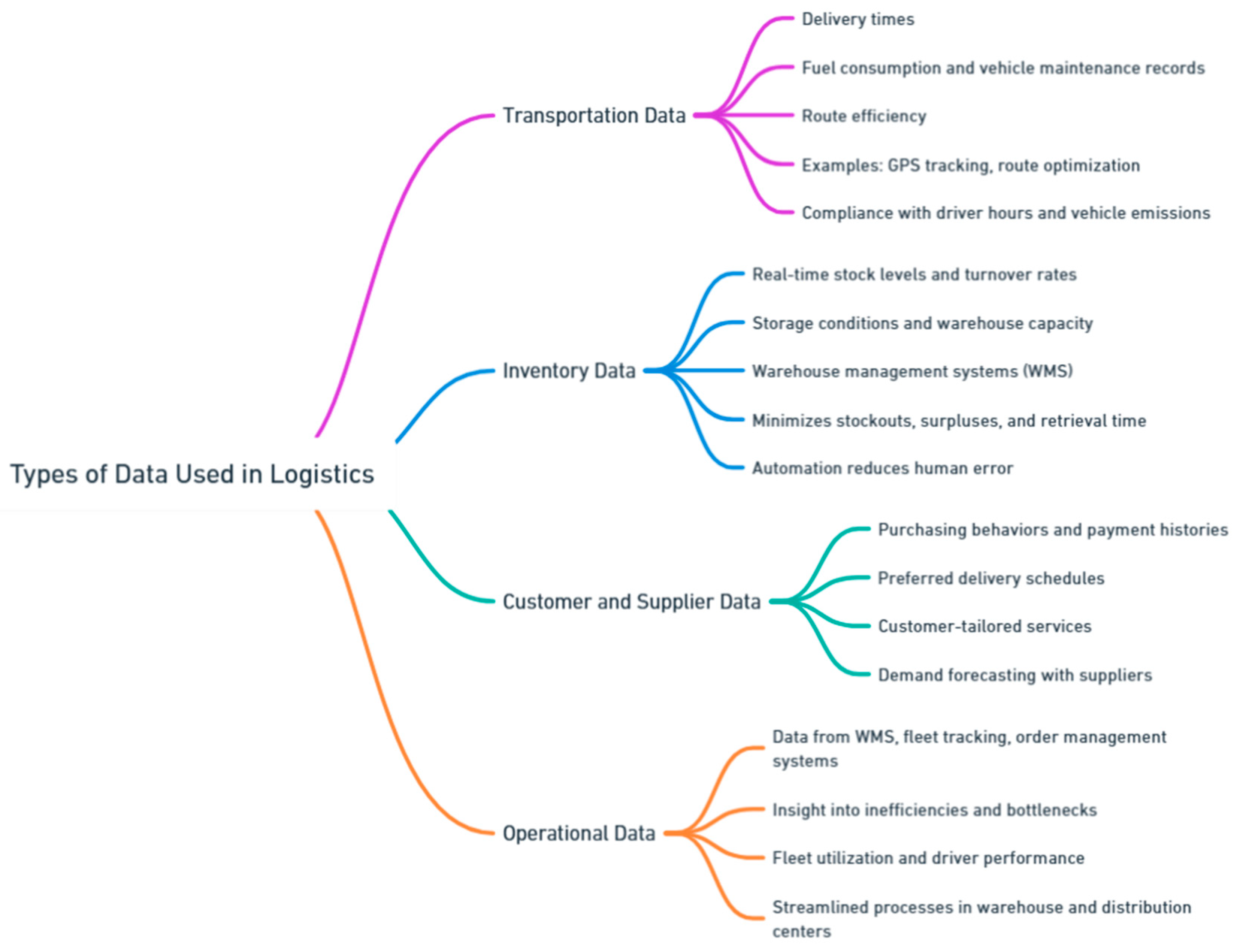
All these types of data are interconnected, providing a holistic view of the supply chain. By analyzing them collectively, logistics companies can make smarter decisions, increase operational efficiency, and deliver a higher level of service to their customers.
Preprints 139811 i112
Big Data and Predictive Analytics in Logistics. Big Data and predictive analytics have revolutionized logistics by providing companies with the ability to leverage large datasets and generate actionable insights. This combination allows for more accurate forecasting, improved resource allocation, and proactive management of potential disruptions in the supply chain.
Big Data in Logistics. Big Data refers to the vast volumes of structured and unstructured data generated from various sources across the supply chain, including IoT devices, GPS systems, social media, and enterprise resource planning (ERP) systems. This data can provide valuable insights into customer preferences, market trends, and supply chain performance. By analyzing this data, logistics companies can improve decision-making processes, optimize routes, and even predict future demand. For example, data from IoT devices installed in delivery vehicles can provide real-time information on fuel consumption, vehicle wear and tear, and driver behavior. This information can then be used to improve fleet management and reduce operational costs. Similarly, analyzing data from social media or online reviews can help logistics companies better understand customer sentiment and identify areas for improvement in service delivery (Zhang and Zheng, 2020; Chen and Liao, 2023).
Predictive Analytics. Predictive analytics takes Big Data one step further by using machine learning algorithms and historical data to forecast future outcomes. In logistics, predictive analytics can help companies anticipate changes in demand, identify potential bottlenecks, and optimize inventory levels. For example, by analyzing historical sales data and current market trends, a logistics company can predict which products will experience higher demand during a specific season or event, allowing them to adjust their inventory accordingly. Moreover, predictive analytics can help logistics managers identify risks and disruptions before they occur. By analyzing data on weather patterns, geopolitical events, or supplier performance, companies can proactively make adjustments to their supply chain, such as rerouting shipments or sourcing materials from alternative suppliers. This level of foresight helps companies maintain operational continuity and prevent costly delays. In addition to forecasting demand and managing risk, predictive analytics also plays a key role in optimizing maintenance schedules for vehicles and equipment. By analyzing historical maintenance data and performance metrics, companies can predict when a vehicle or piece of equipment is likely to fail and schedule maintenance before a breakdown occurs, reducing downtime and extending the lifespan of their assets (Tang et al., 2022; Eldred et al., 2023).
Enhancing Communication and Collaboration with Data. Data also plays a crucial role in improving communication and collaboration between the various stakeholders in the supply chain, including suppliers, manufacturers, distributors, and customers. Real-time data sharing enables better coordination, faster response times, and more transparent relationships. For instance, when suppliers and manufacturers share data on production schedules, order statuses, and inventory levels, it allows logistics companies to plan deliveries more effectively and ensure that products are delivered on time. Similarly, real-time data sharing between logistics companies and customers enhances customer service by providing more accurate delivery estimates and allowing customers to track their shipments in real-time. Additionally, data-driven platforms and cloud-based solutions facilitate collaboration across the supply chain by providing a single source of truth that all stakeholders can access. This reduces the likelihood of miscommunication or delays due to outdated or inaccurate information (Ghazal and Alzoubi, 2022; Valashiya and Luke, 2023).
The Future of Data-Driven Logistics. As technology continues to advance, the role of data in supply chain logistics will only grow in importance. The proliferation of IoT devices, artificial intelligence, and machine learning will enable even more precise and real-time data collection and analysis, further optimizing logistics operations. Blockchain technology also holds promise for enhancing data security and transparency in the supply chain. By providing a decentralized and immutable ledger, blockchain can ensure that data shared between stakeholders is accurate, up-to-date, and tamper-proof. This is particularly important in industries with strict regulatory requirements, such as pharmaceuticals or food logistics. In conclusion, data is the backbone of modern supply chain logistics. It provides the insights and tools needed to optimize operations, improve decision-making, and enhance collaboration between stakeholders. As Big Data, predictive analytics, and other advanced technologies continue to evolve, the logistics industry will become even more efficient, resilient, and responsive to the changing needs of the global market. Companies that invest in data-driven solutions will be better equipped to meet customer expectations, reduce costs, and maintain a competitive edge in an increasingly complex and dynamic environment (Abideen et al., 2021; Chen and Liao, 2023).
Data Privacy in Supply Chain Operations. Data privacy refers to the rights of individuals and organizations to have their data protected and used responsibly. In logistics, ensuring data privacy is increasingly important due to the vast amounts of sensitive information being collected, shared, and stored. With the rise of Internet of Things (IoT) devices, which allow for real-time tracking and monitoring of goods, the amount of personal and operational data involved in supply chain operations has grown exponentially.
  • Customer and Supplier Data Security: Customer and supplier data often contain sensitive information, such as contact details, payment information, and personal identifiers. Unauthorized access or data breaches involving this information can lead to significant reputational damage, legal penalties, and financial losses for logistics companies. For instance, Maersk experienced a major cyberattack in 2017 that disrupted its global operations and exposed the vulnerability of digital systems to data privacy breaches. This highlighted the need for robust cybersecurity measures in the logistics industry.
  • Privacy Issues with IoT and Connected Devices: The increasing use of IoT devices in logistics—such as GPS trackers, temperature sensors, and RFID tags—raises new privacy concerns. These devices continuously collect and transmit data about the location and condition of goods. If not properly secured, IoT devices can become entry points for cybercriminals to access sensitive data or disrupt supply chain operations.
  • Cross-Border Data Flow and Jurisdictional Challenges: Global supply chains often involve the movement of data across national borders, leading to potential conflicts with local data privacy laws. For example, the General Data Protection Regulation (GDPR) in Europe imposes strict requirements on how companies handle personal data, even if the company operates outside the EU. Similarly, the California Consumer Privacy Act (CCPA) places limits on how businesses collect and share data about California residents. These regulations can create compliance challenges for logistics companies operating in multiple regions, as they must navigate different privacy laws and ensure that data is handled appropriately in each jurisdiction.
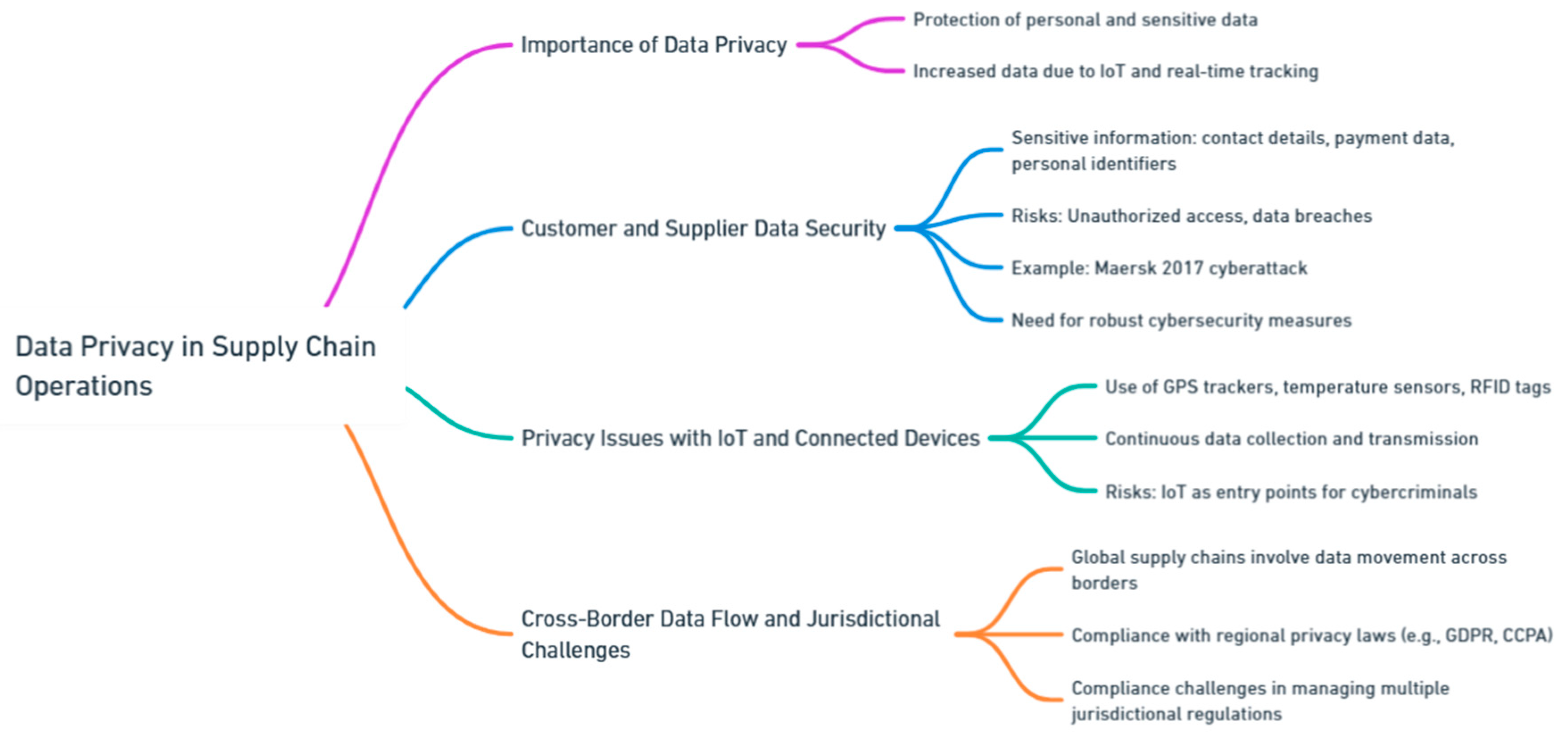
Preprints 139811 i113
Challenges in Implementing Digital Governance and Data Privacy in Logistics. The logistics industry is undergoing a rapid digital transformation, with companies increasingly relying on advanced technologies such as the Internet of Things (IoT), artificial intelligence (AI), and big data to optimize operations and enhance supply chain efficiency. However, as the logistics sector becomes more digital, it faces significant challenges in implementing effective digital governance and ensuring data privacy. These challenges are compounded by the complexity of global supply chains, varying regional regulations, and the growing threat of cyberattacks. This section explores the major obstacles logistics companies face when it comes to digital governance and data privacy, with a focus on the lack of standardized governance frameworks, cybersecurity risks, and the complexity of compliance with privacy regulations.
  • Lack of Standardized Governance Frameworks. One of the most significant challenges facing logistics companies is the absence of standardized governance frameworks that can be consistently applied across global supply chains. Logistics networks often span multiple countries and regions, each with its own set of rules and regulations governing data privacy and security. This lack of standardization makes it difficult for companies to develop and implement uniform governance policies that ensure compliance while maintaining operational efficiency. Different regions may have contrasting definitions of what constitutes sensitive data, as well as varying requirements for data collection, storage, and sharing. For example, while the European Union's General Data Protection Regulation (GDPR) imposes stringent requirements for protecting personal data, other regions may have less rigorous privacy laws. This variation complicates the task of creating a unified governance framework that can operate seamlessly across borders. Moreover, logistics companies often work with a wide range of third-party partners, including suppliers, transport companies, and warehouses. Ensuring that all these stakeholders adhere to consistent data governance practices becomes a significant challenge when there is no standardized framework to guide their actions. As a result, logistics firms may struggle to ensure that data privacy and security are adequately maintained throughout the entire supply chain. The absence of a global digital governance framework also increases the risk of regulatory non-compliance, as companies may inadvertently violate local laws due to a lack of clarity or understanding of regional requirements. This can result in significant legal and financial penalties, as well as reputational damage, making it imperative for the industry to work toward establishing more standardized governance practices. In the absence of a global framework, companies must invest considerable resources into developing customized compliance strategies for each region in which they operate, which can be both time-consuming and costly (Ismail et al., 2022; Voss, 2020).
  • Cybersecurity Risks and Vulnerabilities. As logistics companies adopt more digital tools and interconnected systems, they become increasingly vulnerable to cyberattacks. Cybersecurity has emerged as a critical concern for the industry, with hackers targeting logistics firms to exploit weaknesses in their digital infrastructure. Many logistics companies still operate on legacy systems that were not designed to withstand modern cyber threats, leaving them susceptible to breaches that could compromise sensitive data. One of the main reasons logistics companies are vulnerable to cyberattacks is the increasing reliance on IoT devices and AI-driven solutions. These technologies, while beneficial for improving operational efficiency, also introduce new points of entry for cybercriminals. IoT devices, such as sensors and trackers, collect and transmit large amounts of data in real time, often over unsecured networks. If these devices are not properly secured, hackers can intercept or manipulate the data, leading to breaches or disruptions in the supply chain. Furthermore, AI systems, which are becoming more prevalent in logistics for tasks such as demand forecasting and route optimization, often require access to sensitive customer and operational data. The more data these systems process, the greater the risk of exposure in the event of a cyberattack. Another factor contributing to cybersecurity vulnerabilities is the lack of awareness and preparedness among logistics companies. Many firms may underestimate the scale of the threat or lack the necessary expertise to protect their digital infrastructure adequately. Additionally, the logistics industry is often seen as a soft target for cybercriminals, as it involves numerous stakeholders, third-party vendors, and interconnected systems. Each of these elements can present potential vulnerabilities that hackers can exploit to gain access to valuable data or disrupt operations. The consequences of a cyberattack on a logistics company can be severe. A successful breach can result in the theft of sensitive customer information, financial loss, disruption of supply chain operations, and damage to a company’s reputation. Furthermore, recovering from a cyberattack often requires significant investment in forensic analysis, system restoration, and compensation for affected stakeholders. To mitigate these risks, logistics companies must prioritize cybersecurity as a core aspect of their digital governance strategy. This involves investing in modern cybersecurity technologies, such as firewalls, encryption, and intrusion detection systems, as well as ensuring that all IoT devices and AI systems are adequately secured. Additionally, companies must implement robust cybersecurity protocols, conduct regular security audits, and provide training to employees on how to recognize and respond to potential threats (Enache, 2023; Junejo et al., 2023).
  • Complexity of Compliance with Privacy Regulations. Complying with privacy regulations is one of the most complex challenges for logistics companies, particularly those operating across multiple jurisdictions. As governments around the world introduce stricter data privacy laws, logistics firms must ensure that they are meeting the requirements of each region's regulatory framework. This often involves navigating a complex web of privacy regulations, such as the GDPR in Europe, the California Consumer Privacy Act (CCPA) in the United States, and various other regional laws. Each of these regulations has its own set of requirements regarding data collection, processing, storage, and sharing. For example, the GDPR mandates that companies obtain explicit consent from individuals before collecting their personal data, while the CCPA gives consumers the right to opt out of data sharing and request the deletion of their data. Failing to comply with these regulations can result in substantial fines, legal penalties, and reputational damage. The complexity of compliance is further compounded by the need for logistics companies to handle large volumes of data, often in real-time. Ensuring that data privacy is maintained across the entire supply chain—especially when working with multiple third-party vendors—requires significant investment in compliance technology, legal expertise, and staff training. Logistics companies must implement data governance policies that include privacy-by-design principles, meaning that data protection is considered at every stage of the data lifecycle.
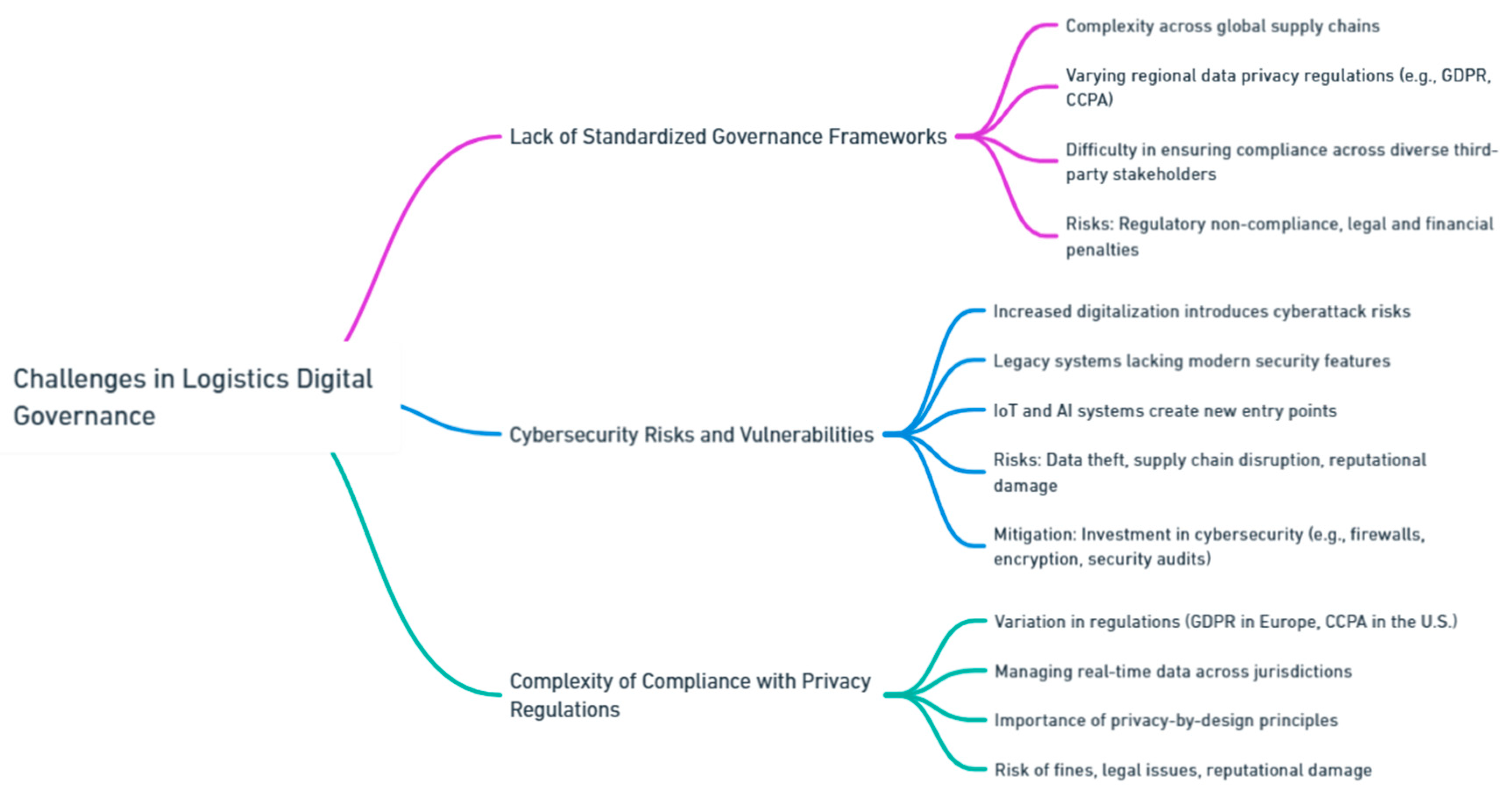
Preprints 139811 i114
In addition to complying with established regulations, logistics companies must also be prepared for the introduction of new privacy laws, which are continuously evolving in response to changing technologies and consumer expectations. Keeping up with these changes requires a proactive approach to data governance, including regular assessments of compliance protocols and staying informed about emerging legal requirements. One of the potential solutions to this challenge is the use of compliance management software, which can help logistics companies track and manage their obligations under different privacy laws. These tools can automate processes such as data mapping, consent management, and incident reporting, reducing the administrative burden of compliance. However, implementing these systems requires substantial investment, which can be a barrier for smaller logistics firms.
The implementation of digital governance and data privacy in logistics presents numerous challenges, including the lack of standardized governance frameworks, cybersecurity risks, and the complexity of complying with privacy regulations. As the industry continues to embrace digital transformation, logistics companies must prioritize the development of robust governance structures that address these challenges and ensure the protection of sensitive data. This will require significant investment in modern technologies, legal expertise, and employee training to navigate the evolving regulatory landscape and mitigate the risks posed by cyber threats. While the road to effective digital governance may be complex, it is essential for logistics firms to remain competitive, protect their reputation, and build trust with customers and stakeholders in a data-driven world.
Strategies for Effective Digital Governance and Data Privacy in Logistics. In today’s digital age, logistics companies are increasingly reliant on data-driven technologies to streamline operations, improve efficiency, and meet customer demands. However, this growing dependency on digital tools also exposes these companies to various challenges related to data governance and privacy. Cybersecurity threats, data breaches, and regulatory compliance issues are just a few of the concerns that logistics companies must address to protect both their operations and their customers’ data. To effectively navigate these challenges, logistics companies need to adopt a comprehensive approach to digital governance and data privacy. This includes building resilient IT infrastructure, adopting privacy-by-design principles, and leveraging advanced technologies such as blockchain and encryption.
  • Building Resilient IT Infrastructure. A resilient IT infrastructure is the backbone of any successful digital governance strategy in logistics. The increasing complexity of supply chains and the integration of technologies such as the Internet of Things (IoT), artificial intelligence (AI), and machine learning (ML) demand robust systems that can handle vast amounts of data securely and efficiently. To achieve this, logistics companies must invest in modern, scalable IT infrastructure. Legacy systems that are outdated and not equipped to handle the demands of today’s data-intensive operations pose significant risks, including vulnerabilities to cyberattacks and operational inefficiencies. Modern IT infrastructure should be designed with cybersecurity as a priority, ensuring that data is protected from external and internal threats. Advanced cybersecurity measures are critical in securing this infrastructure. Encryption ensures that sensitive data is unreadable to unauthorized users, while multi-factor authentication (MFA) adds an additional layer of security by requiring users to verify their identity through multiple channels before accessing systems. Firewalls act as a barrier between a company’s internal network and external threats, while regular system updates and patch management help protect against known vulnerabilities. Moreover, logistics companies should also consider incorporating cloud-based systems into their IT infrastructure. Cloud platforms offer flexibility, scalability, and enhanced security features such as real-time data backups and distributed networks, reducing the risk of data loss and downtime. By building a resilient IT infrastructure, logistics companies can ensure that their digital governance framework is robust, agile, and secure (Tagarev et al., 2020; Zhou, 2023).
  • Adoption of Privacy-by-Design Principles. The concept of privacy-by-design is increasingly becoming a cornerstone of effective digital governance in logistics. Privacy-by-design refers to the practice of embedding privacy and data protection principles into the design and architecture of IT systems, business processes, and technological applications from the outset, rather than treating privacy as an afterthought. This proactive approach to data privacy not only ensures compliance with data protection regulations but also builds trust with customers and partners. By integrating privacy-by-design into logistics operations, companies can ensure that data privacy is a core consideration at every stage of the supply chain. This means that from the moment data is collected—whether it's customer information, shipment details, or inventory data—privacy is factored into how that data is stored, processed, and shared. For example, logistics companies can implement strict data minimization practices, where only the necessary amount of data is collected and retained for a specific period. They can also ensure that access to sensitive data is restricted to only those who need it for their roles, reducing the likelihood of internal breaches. Additionally, logistics firms can use anonymization techniques to remove personally identifiable information (PII) from datasets, further safeguarding individual privacy. The adoption of privacy-by-design not only ensures regulatory compliance but also serves as a competitive advantage. Customers are increasingly concerned about how their data is being handled, and companies that can demonstrate a strong commitment to privacy protection are likely to earn customer loyalty and trust. Furthermore, by embedding privacy into their systems from the start, logistics companies can reduce the cost and complexity of complying with future regulations, as their operations will already be aligned with privacy best practices (Rajagopal et al., 2024; Bu et al., 2020).
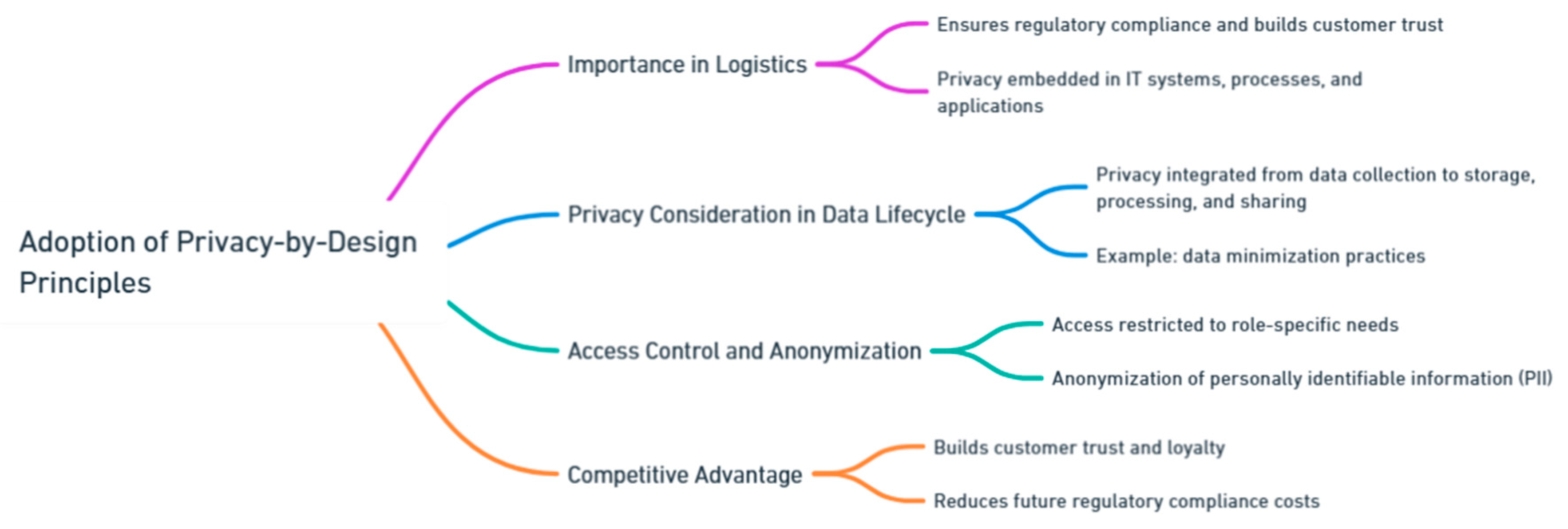
Preprints 139811 i115
  • Blockchain and Encryption in Enhancing Data Privacy. Blockchain and encryption technologies hold immense potential for enhancing data privacy and security in logistics. These technologies offer solutions to some of the most pressing challenges in digital governance, including data transparency, traceability, and protection against unauthorized access. Blockchain technology is a decentralized digital ledger that records transactions in a secure, transparent, and tamper-proof manner. Each transaction, or "block," is encrypted and linked to the previous block in the chain, making it nearly impossible for anyone to alter the information without detection. This level of security makes blockchain an ideal solution for protecting sensitive data in logistics, where the integrity and authenticity of information are paramount. One of the most significant benefits of blockchain in logistics is its ability to enhance supply chain transparency. By recording every transaction and movement of goods on a blockchain, companies can create a transparent and auditable record of their supply chain activities. This improves accountability and allows for real-time tracking of shipments, reducing the risk of fraud, theft, or tampering. For instance, Walmart has successfully implemented blockchain technology to track the movement of food products from farm to table. By using blockchain, Walmart can ensure the transparency and security of its supply chain, enabling the company to quickly identify and address any issues, such as contamination or delays, while also protecting sensitive data from unauthorized access. Encryption is another critical tool for enhancing data privacy in logistics. Encryption involves converting data into a code to prevent unauthorized access. Only authorized parties with the correct decryption key can access and read the data. In logistics, where large volumes of sensitive information such as customer details, financial records, and shipment information are regularly transmitted and stored, encryption is essential to protecting this data from cyber threats. End-to-end encryption, which ensures that data is encrypted at all stages of its journey—from the sender to the receiver—can significantly enhance data privacy in logistics. This level of protection ensures that even if a cybercriminal intercepts the data, they will be unable to read or use it without the correct decryption key. By implementing encryption alongside blockchain technology, logistics companies can create a highly secure data governance framework that safeguards sensitive information throughout the supply chain (Du et al., 2020; Aljabhan, and Obaidat, 2023).
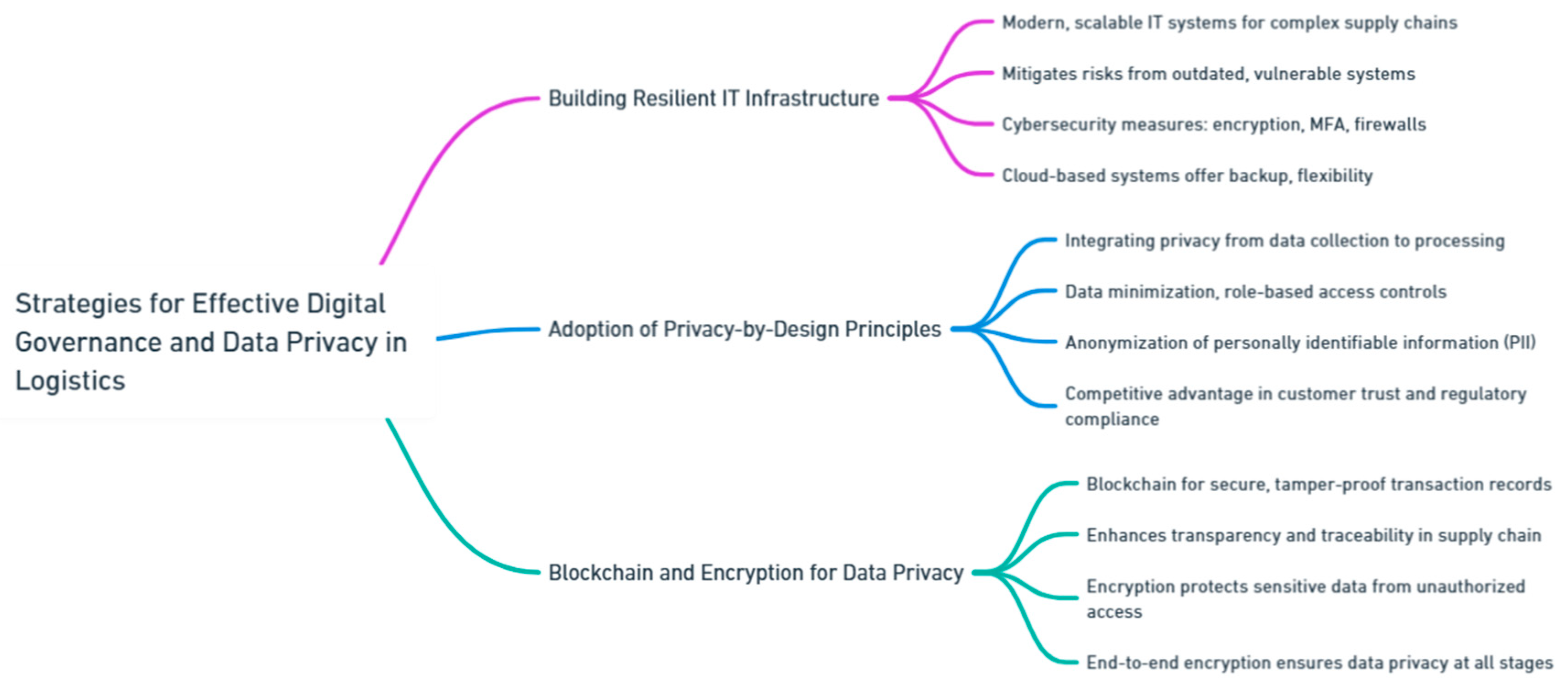
Preprints 139811 i116
The Role of Regulations and Compliance. Effective digital governance and data privacy strategies in logistics are not just about technology and infrastructure; they must also align with global data protection regulations. With data protection laws such as the General Data Protection Regulation (GDPR) in the European Union, the California Consumer Privacy Act (CCPA) in the United States, and similar laws in other jurisdictions, logistics companies must ensure that they are compliant with these regulations to avoid hefty fines and reputational damage. Compliance with these regulations involves more than simply meeting minimum legal requirements. It requires logistics companies to develop comprehensive data protection policies, conduct regular privacy impact assessments, and ensure that their data handling practices are transparent and accountable. Implementing a strong governance framework that incorporates the principles of privacy-by-design, blockchain, encryption, and resilient IT infrastructure will not only help companies comply with these regulations but also position them as leaders in digital governance and data privacy.
In conclusion, the logistics industry must embrace a comprehensive approach to digital governance and data privacy to protect against the growing risks of cyber threats and data breaches. Building resilient IT infrastructure, adopting privacy-by-design principles, and leveraging advanced technologies like blockchain and encryption are critical strategies for enhancing data privacy and security in logistics. Additionally, logistics companies must stay abreast of evolving data protection regulations to ensure compliance and maintain the trust of their customers and stakeholders. By implementing these strategies, logistics companies can not only safeguard their operations but also position themselves for success in an increasingly data-driven and privacy-conscious world.

13.1. Future Trends in Digital Governance and Data Privacy in Supply Chains
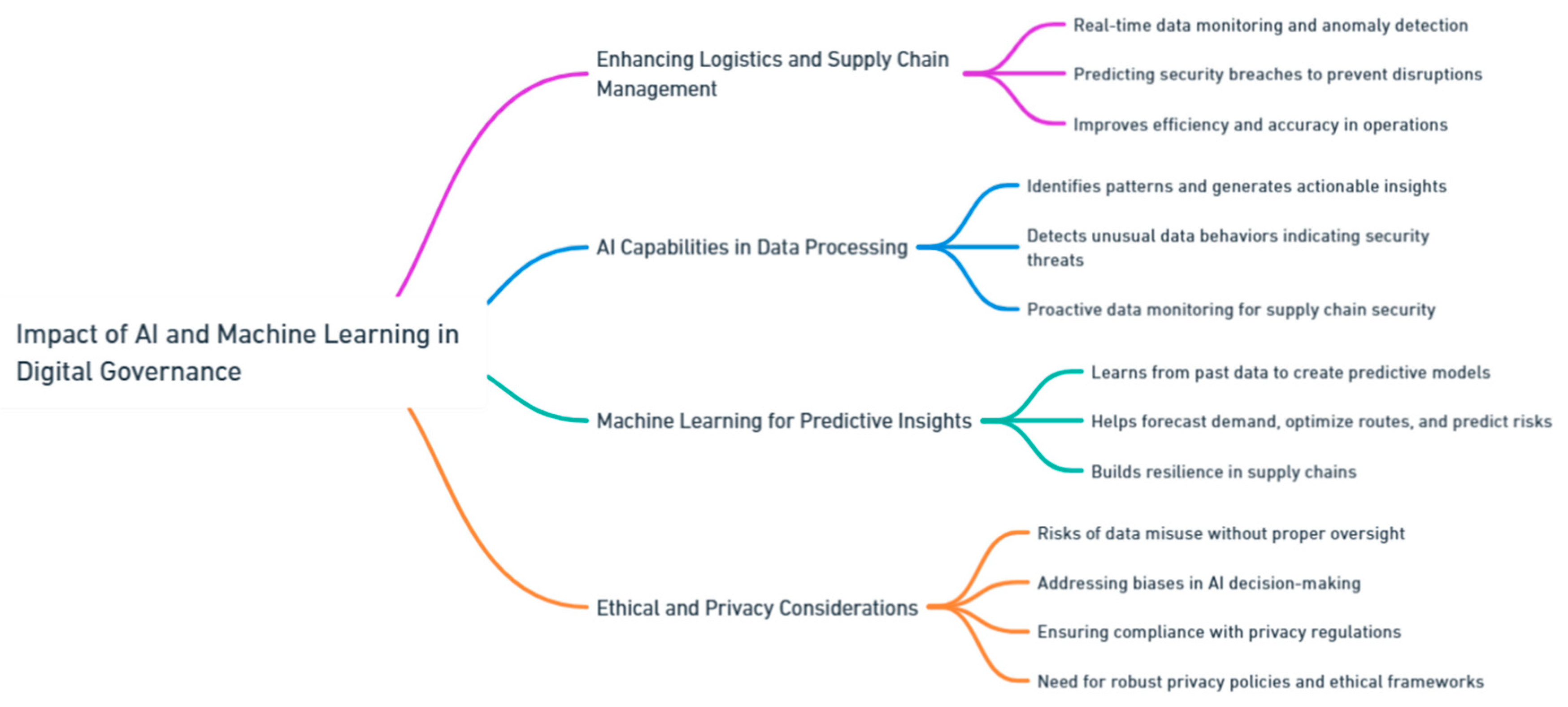
Impact of AI and Machine Learning. Artificial intelligence (AI) and machine learning (ML) are revolutionizing the way digital governance operates, particularly in logistics and supply chain management. These technologies are being increasingly integrated into operations to monitor data usage, detect anomalies, and predict potential security breaches, which greatly enhances the efficiency and accuracy of logistics management. In the context of digital governance, AI systems provide valuable capabilities in processing massive volumes of data, identifying patterns, and generating actionable insights that are difficult or impossible for humans to discern in real time. For instance, AI-driven algorithms can detect unusual behaviors or anomalies in data flow that may indicate security threats, enabling logistics companies to address issues before they escalate into full-blown crises. This proactive approach to monitoring and safeguarding data enhances the security of supply chains and minimizes the risk of disruptions caused by cyberattacks or system failures. Machine learning, a subset of AI, takes this a step further by improving with experience. Over time, ML models can learn from past data and develop predictive models that help logistics companies forecast demand, optimize routes, and even predict potential risks or breaches based on historical patterns. This predictive power improves operational efficiency and enhances decision-making, making supply chains more resilient to external shocks or unexpected events. However, as AI becomes more integrated into logistics and digital governance, it is imperative to ensure that these systems are governed by robust privacy policies and ethical frameworks. AI systems rely heavily on data to function effectively, and without proper oversight, there is a risk that sensitive information could be misused, either intentionally or inadvertently. Additionally, biases inherent in the training data could result in biased decision-making, leading to ethical concerns around fairness and transparency. Logistics companies must implement clear guidelines and governance mechanisms to ensure that AI-driven systems operate within the bounds of ethical and legal standards, particularly when handling personal or sensitive data. Moreover, privacy concerns will become increasingly pressing as AI systems are deployed more widely across logistics operations. Companies must ensure that the data used by AI systems is collected, stored, and processed in accordance with the highest data privacy standards. This includes obtaining proper consent from individuals whose data may be processed and ensuring that all AI systems comply with existing data protection regulations (Chen and Liao, 2023; Xie and Qiao, 2022).
Preprints 139811 i117
Data Sovereignty and Localization Requirements. As countries around the world implement stricter data privacy regulations, issues surrounding data sovereignty and localization requirements are gaining importance. Data sovereignty refers to the principle that data is subject to the laws and regulations of the country in which it is collected, regardless of where the data is processed or stored. For logistics companies operating in a global market, this presents a unique challenge as they must comply with a patchwork of data sovereignty laws across different jurisdictions. One key issue related to data sovereignty is the requirement that certain types of data must be stored and processed within the borders of the country where it was collected. This is often referred to as data localization, and it is becoming increasingly common as governments seek to protect the privacy of their citizens and maintain control over sensitive data. Countries such as China, India, and Russia have introduced strict data localization laws that require companies to store personal or sensitive data within their borders. This poses logistical challenges for companies operating globally, as they must invest in local data centers and infrastructure to comply with these regulations. Data sovereignty also has implications for cross-border data transfers. Many countries, particularly in the European Union (under the General Data Protection Regulation, or GDPR), impose restrictions on the transfer of personal data to countries that do not offer an equivalent level of data protection. This means that logistics companies must carefully assess the data protection standards of the countries they operate in and ensure that they have appropriate safeguards in place to facilitate cross-border data transfers. Logistics companies must adapt their digital governance strategies to address these challenges. This may involve building or partnering with data centers in different countries to comply with data localization requirements, ensuring that data transfers are conducted in a compliant manner, and maintaining transparency with consumers and business partners regarding how data is collected, processed, and stored. Failure to comply with data sovereignty laws can result in significant financial penalties, as well as reputational damage (Taylor, 2020; Singi et al., 2020).
Preprints 139811 i118
Digital Twins, 5G, and IoT. The logistics landscape is being reshaped by the rapid advancement of several emerging technologies, including digital twins, 5G networks, and the Internet of Things (IoT). While these technologies offer tremendous benefits in terms of operational efficiency, transparency, and real-time monitoring, they also present new challenges for digital governance, particularly in relation to data collection, security, and privacy. Digital twins, which are virtual replicas of physical supply chains, allow companies to simulate and optimize operations in a digital environment. By using real-time data from IoT devices, logistics companies can model different scenarios and make more informed decisions regarding supply chain management. This can lead to significant efficiency gains, such as reducing fuel consumption, optimizing delivery routes, and minimizing delays. However, the vast amount of data required to create and maintain digital twins raises concerns about data security and privacy. Companies must ensure that the data used to power these simulations is protected from unauthorized access and that sensitive information is anonymized where necessary. The rollout of 5G networks further enhances the capabilities of digital twins and IoT devices, offering faster data transmission speeds and lower latency. This allows for real-time tracking and monitoring of goods, vehicles, and inventory, providing greater visibility across the entire supply chain. However, with this increased connectivity comes the risk of cyberattacks, as more devices are connected to the network, each representing a potential entry point for hackers. Ensuring the security of 5G networks and IoT devices is a critical component of digital governance in logistics. IoT devices, such as sensors and tracking devices, are already widely used in logistics to monitor the condition of goods, track shipments in real time, and optimize warehouse management. These devices generate massive amounts of data, which can be analyzed to improve operational efficiency. However, the collection of such large volumes of data raises privacy concerns, particularly when it comes to the tracking of individual shipments or the monitoring of employees. Logistics companies must implement strong data governance frameworks to ensure that the data collected by IoT devices is used ethically and in compliance with data privacy regulations. In conclusion, the integration of AI, machine learning, digital twins, 5G, and IoT into logistics presents significant opportunities for improving efficiency, transparency, and decision-making. However, these technologies also introduce new challenges for digital governance, particularly in terms of data privacy, security, and compliance with data sovereignty laws. As logistics companies continue to adopt these technologies, they must prioritize the development of robust digital governance frameworks that address these challenges and ensure that operations remain compliant with local and global regulations. The future of logistics will be shaped by how well companies navigate the complex landscape of digital governance while leveraging these emerging technologies to drive innovation and sustainability (Ali et al., 2023; Ramirez et al., 2022).
Preprints 139811 i119
In conclusion, digital governance and data privacy have become indispensable elements of modern supply chain operations in the logistics industry. As logistics systems increasingly rely on advanced technologies like automation, artificial intelligence (AI), Internet of Things (IoT), and big data analytics, the importance of a well-defined governance framework and strict adherence to data privacy principles is paramount. These measures are not only necessary for safeguarding sensitive information but are also critical for complying with a range of international regulations designed to protect consumers, businesses, and governments in the digital age. As supply chains become more interconnected and reliant on digital technologies, logistics companies face the growing responsibility of securing their operations against cyber threats, data breaches, and privacy violations. A well-implemented digital governance framework enables companies to manage their IT infrastructure, ensure compliance with relevant regulations, and maintain operational efficiency. Digital governance involves establishing protocols and guidelines for how digital assets are managed, how decisions are made regarding technology adoption, and how data is collected, stored, and shared. It also involves creating clear accountability mechanisms to oversee the entire digital infrastructure, ensuring that it operates in a secure, compliant, and efficient manner. In logistics, where data flows continuously between suppliers, manufacturers, distribution centers, and end consumers, strong governance becomes essential to maintain the integrity of the entire supply chain. The increasing digitalization of supply chains has brought to light the importance of data privacy. In logistics, vast amounts of data are generated and transmitted, including sensitive information about products, customers, routes, and transactions. If improperly managed, this data can become vulnerable to cyberattacks, theft, and misuse. For this reason, logistics companies must adopt best practices for data privacy to protect not only their own operations but also the trust and privacy of their customers and partners. This involves establishing clear policies around data handling, storage, and sharing, as well as ensuring that all employees and stakeholders understand their roles and responsibilities in maintaining data privacy. One of the key aspects of data privacy in logistics is compliance with global regulations. Various regions and countries have established stringent data protection laws, such as the European Union's General Data Protection Regulation (GDPR), the California Consumer Privacy Act (CCPA), and other emerging regulations across the globe. These laws are designed to give individuals greater control over their personal data and impose heavy fines on companies that fail to comply with the requirements. For logistics companies, ensuring compliance with these regulations is critical, especially as supply chains often span multiple regions and involve cross-border data flows. Non-compliance can lead to significant financial penalties, reputational damage, and loss of customer trust. To address these challenges, logistics companies must invest in secure IT infrastructure that can support their digital operations while ensuring data protection. This includes implementing strong encryption measures, multi-factor authentication, and network security protocols to prevent unauthorized access to sensitive data. Cloud computing, for instance, offers logistical companies a way to store and manage data securely while allowing for scalability. However, ensuring that cloud platforms are properly secured and comply with data privacy regulations is essential. Additionally, companies should conduct regular security audits and risk assessments to identify potential vulnerabilities in their systems and ensure that appropriate measures are in place to mitigate them. Another critical strategy for safeguarding data privacy in logistics is adopting the "privacy-by-design" principle. This approach involves embedding privacy considerations into the design and development of new technologies and processes from the outset, rather than treating privacy as an afterthought. By integrating data privacy measures into the very fabric of their IT infrastructure and operational workflows, logistics companies can create more resilient systems that are better equipped to handle the complexities of modern supply chains. This proactive approach reduces the likelihood of data breaches and ensures that privacy considerations are prioritized in every aspect of digital operations. Moreover, emerging technologies such as blockchain offer promising solutions for enhancing both governance and data privacy in logistics. Blockchain, a decentralized and immutable ledger technology, can be used to securely record and track every transaction, shipment, and data exchange within a supply chain. This level of transparency and security makes it much harder for malicious actors to tamper with data or commit fraud. Additionally, blockchain's decentralized nature means that no single entity controls the data, making it more secure from potential breaches. By leveraging blockchain, logistics companies can ensure the accuracy and integrity of their data while also providing real-time visibility into their supply chains. However, as technology continues to evolve, so do the regulatory frameworks surrounding data privacy. Logistics firms must stay informed about emerging regulations and standards to remain compliant and avoid potential legal issues. Governments around the world are paying increased attention to data privacy, and new laws are regularly being introduced to address the growing complexities of digital business operations. Companies that fail to stay ahead of these developments risk falling behind in their compliance efforts, which could lead to costly consequences. To stay competitive in the global marketplace, logistics firms must invest in ongoing training and education for their employees on data privacy best practices and legal requirements. In addition to regulatory compliance, logistics companies need to be prepared for the increasing expectations of their customers regarding data privacy. With rising awareness of data privacy issues, consumers and business partners are becoming more selective about the companies they trust with their personal and business information. Companies that can demonstrate a commitment to data privacy will be better positioned to build long-lasting relationships with customers and maintain their reputations in a competitive market. Implementing transparency initiatives, such as providing clear and accessible privacy policies, giving customers control over their data, and promptly responding to data-related inquiries, can enhance trust and customer satisfaction. In conclusion, the importance of digital governance and data privacy in logistics cannot be overstated. As the logistics industry becomes more reliant on digital technologies and data-driven operations, companies must establish robust governance frameworks that ensure compliance, protect sensitive data, and maintain operational efficiency. By adopting best practices in data privacy, such as investing in secure IT infrastructure, applying privacy-by-design principles, and leveraging emerging technologies like blockchain, logistics companies can mitigate risks and improve the overall efficiency and security of their supply chains. The future of logistics will be defined by its ability to adapt to evolving regulatory landscapes and technological advancements, and companies that proactively prioritize digital governance and data privacy will be well-positioned to thrive in this dynamic environment. Maintaining the integrity and privacy of data-driven operations is not only a legal requirement but also a strategic advantage in an increasingly interconnected and digitalized world (Dasgupta et al., 2020; Ismail et al., 2022; Pournader et al., 2020).
Preprints 139811 i120

14. Regulatory Frameworks and ESG Reporting Standards
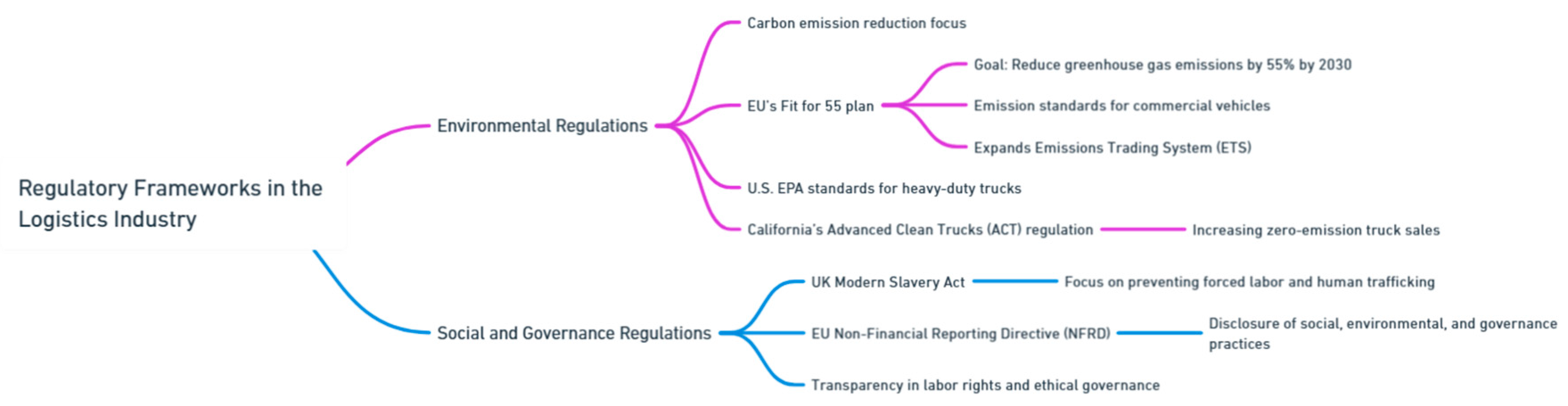
Environmental, Social, and Governance (ESG) factors have become central to corporate responsibility, and their importance is particularly pronounced in the logistics industry. Logistics companies operate at the heart of global supply chains, managing the movement of goods on a large scale, which inevitably impacts the environment through emissions, energy consumption, and waste generation. With increasing pressure from governments, investors, consumers, and advocacy groups, these companies must adopt more sustainable practices. To guide them in this transformation, regulatory frameworks and ESG reporting standards provide essential guidelines and accountability mechanisms. These not only ensure compliance with environmental and social regulations but also help businesses manage risks, improve operational efficiency, and enhance their reputations. In this essay, we will examine the importance of regulatory frameworks and ESG reporting in logistics, focusing on key regulations, reporting frameworks, the challenges businesses face, and emerging trends shaping the future of sustainable logistics.
Regulatory Frameworks in the Logistics Industry. Governments around the world have implemented various regulatory frameworks to promote sustainability in logistics. These regulations are aimed at reducing the environmental impact of logistics activities, ensuring responsible labor practices, and encouraging ethical corporate governance. A primary focus for governments is on curbing carbon emissions, as the logistics sector is a major contributor to greenhouse gas emissions, primarily through transportation and warehousing operations. One key regulation in this area is the European Union's (EU) "Fit for 55" plan, which aims to reduce greenhouse gas emissions by 55% by 2030, relative to 1990 levels. This regulatory framework includes provisions that target the transport sector, such as tightening CO₂ emissions standards for commercial vehicles and expanding the Emissions Trading System (ETS) to cover shipping and aviation. The plan incentivizes logistics companies to adopt cleaner technologies and improve fuel efficiency to meet these goals. In the United States, the Environmental Protection Agency (EPA) has established emissions standards for heavy-duty trucks and off-road equipment, which play a significant role in logistics operations. Additionally, California’s Advanced Clean Trucks (ACT) regulation, which requires manufacturers to increase the sales of zero-emission trucks, signals the growing trend toward electrification in logistics fleets. Regulatory frameworks extend beyond environmental concerns to include social and governance issues. For example, the UK’s Modern Slavery Act requires businesses, including those in logistics, to report on efforts to prevent forced labor and human trafficking in their supply chains. Similarly, the EU’s Non-Financial Reporting Directive (NFRD) mandates large companies to disclose information on how they address social and environmental challenges, as well as their corporate governance practices. These regulations underscore the importance of transparency in how logistics companies manage labor rights, community impacts, and ethical governance (Abbasi and Erdebilli, 2023; Trautrims et al., 2021).
Preprints 139811 i121
ESG Reporting Standards. ESG reporting standards have emerged as an essential tool for logistics companies to track, measure, and disclose their sustainability efforts. These standards provide a framework for consistent and transparent reporting, allowing companies to benchmark their performance, identify areas for improvement, and communicate their sustainability commitments to stakeholders. One of the most widely used ESG reporting standards is the Global Reporting Initiative (GRI), which provides detailed guidelines on environmental, social, and governance disclosures. The GRI framework helps logistics companies report on key sustainability metrics, such as emissions, energy consumption, waste management, labor practices, and supply chain transparency. By using GRI standards, logistics companies can present comprehensive reports that highlight their progress in addressing ESG issues and their alignment with global sustainability goals. Another important framework is the Task Force on Climate-related Financial Disclosures (TCFD), which focuses on climate-related risks and opportunities. For logistics companies, TCFD reporting is particularly relevant due to the industry’s high exposure to climate risks, such as extreme weather events and shifting regulatory landscapes. The TCFD framework encourages companies to assess the financial impacts of climate change on their operations and to develop strategies for resilience. The Sustainability Accounting Standards Board (SASB) also provides industry-specific ESG metrics, including for transportation and logistics. SASB’s standards focus on material ESG issues that are likely to affect financial performance, such as fuel efficiency, emissions reductions, and worker safety. By adhering to SASB standards, logistics companies can provide investors with the information they need to make informed decisions about the long-term sustainability of their business. Finally, the Carbon Disclosure Project (CDP) is a widely recognized reporting platform that focuses on environmental performance, particularly carbon emissions and water use. Many logistics companies participate in CDP reporting to demonstrate their commitment to reducing their environmental footprint and to align with investor expectations regarding climate action (Frecautan and Nita, 2022; Pizzi et al., 2023; Zenkina, 2023).
Preprints 139811 i122
Challenges in ESG Reporting for Logistics. Despite the clear benefits of ESG reporting, logistics companies face several challenges in implementing and adhering to these standards. One of the main difficulties is the complexity of the logistics sector itself, which involves numerous actors, including shippers, carriers, freight forwarders, and warehousing providers. This makes it challenging to collect and aggregate data across the entire supply chain, particularly in areas such as emissions tracking and labor practices. Another challenge is the lack of standardization across different ESG reporting frameworks. While there are several widely recognized frameworks, such as GRI, TCFD, SASB, and CDP, they each have different reporting requirements and metrics. This can create confusion for logistics companies trying to navigate which standards to follow, especially those with operations in multiple countries that are subject to varying regulatory requirements. Furthermore, smaller logistics companies often lack the resources and expertise to develop comprehensive ESG reporting systems. Many of these companies operate on thin margins, and investing in sustainability initiatives and reporting infrastructure can be financially burdensome. However, as ESG reporting becomes more mainstream, logistics companies of all sizes will likely face growing pressure from customers and investors to demonstrate their commitment to sustainability (Zenkina, 2023; Cort and Esty, 2020).
Preprints 139811 i123
Future Trends in ESG Reporting and Sustainable Logistics. Looking ahead, several key trends are likely to shape the future of ESG reporting and sustainability in the logistics industry. One important trend is the increasing integration of digital technologies, such as blockchain, artificial intelligence (AI), and the Internet of Things (IoT), into ESG reporting processes. These technologies can help logistics companies improve data accuracy, streamline reporting workflows, and enhance transparency in their supply chains. For instance, blockchain can provide real-time visibility into the movement of goods and the environmental impact of each stage in the supply chain. Another emerging trend is the growing importance of Scope 3 emissions reporting, which focuses on indirect emissions that occur throughout the value chain, including upstream and downstream activities. For logistics companies, addressing Scope 3 emissions is critical, as a significant portion of their carbon footprint comes from subcontracted transportation services, fuel suppliers, and other external partners. As investors and regulators increasingly demand comprehensive emissions reporting, logistics companies will need to collaborate closely with their suppliers and customers to reduce emissions throughout the supply chain. Finally, as global sustainability goals such as the Paris Agreement and the United Nations Sustainable Development Goals (SDGs) continue to influence corporate strategies, logistics companies will need to align their ESG reporting with these global targets. This means not only reducing their own environmental impact but also contributing to broader societal goals, such as improving labor rights, promoting diversity and inclusion, and fostering economic development in the communities where they operate (Wang and Sarkis, 2021; Kwon and So, 2023).
Preprints 139811 i211
In conclusion, regulatory frameworks and ESG reporting standards are becoming indispensable tools for logistics companies seeking to enhance their sustainability performance. By adhering to these frameworks, logistics companies can ensure compliance with environmental and social regulations, manage risks, and improve their reputation in a competitive global market. While there are challenges in implementing ESG reporting, such as data collection complexities and resource constraints, the benefits of transparency and accountability far outweigh these difficulties. As the logistics industry continues to evolve, the integration of digital technologies, the focus on Scope 3 emissions, and alignment with global sustainability goals will be critical in driving meaningful progress toward a more sustainable future.

14.1. Understanding ESG in Logistics
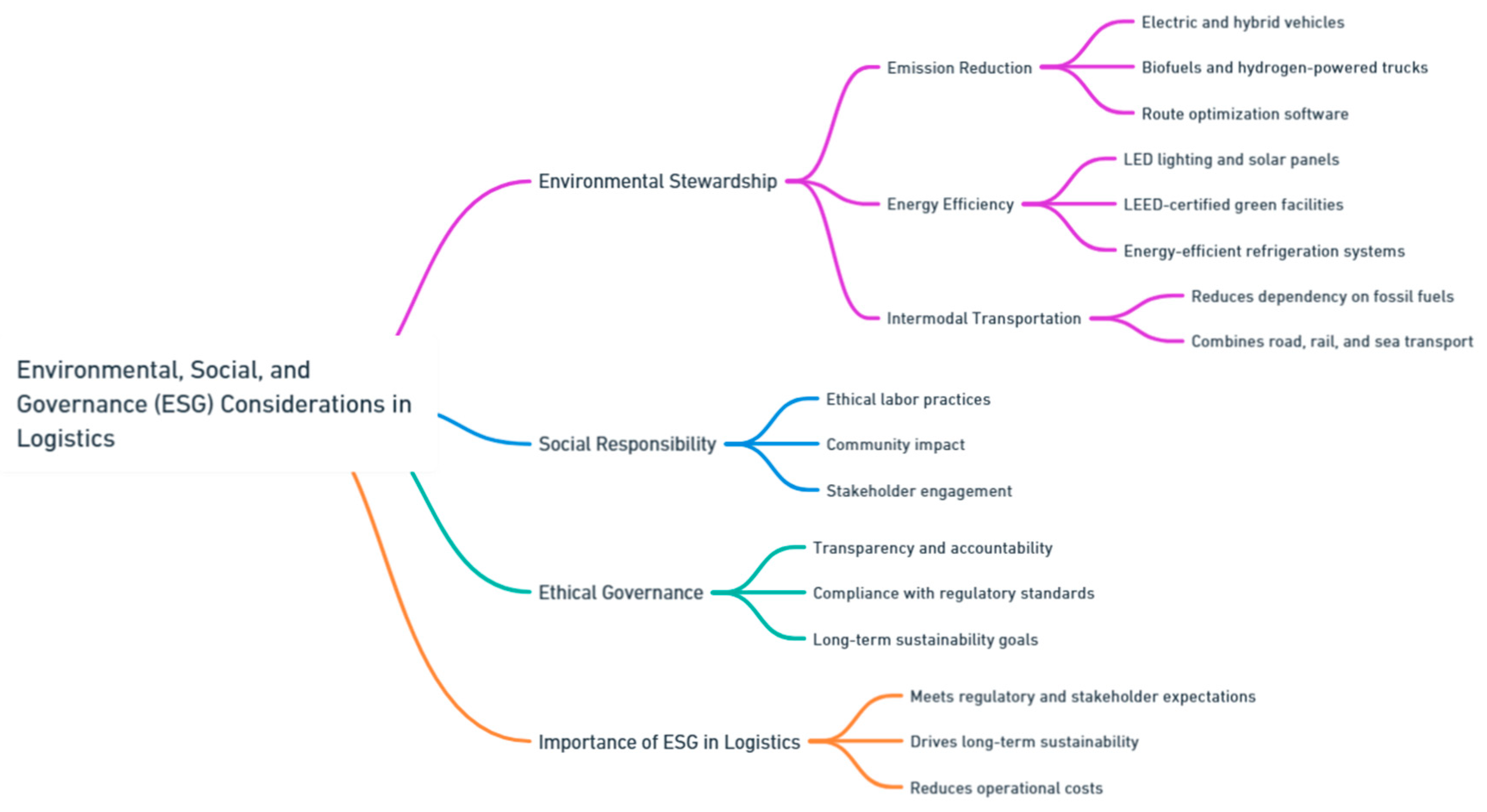
Environmental, Social, and Governance (ESG) considerations are becoming increasingly central to business operations across industries, and logistics is no exception. The ESG framework provides a holistic approach to assessing a company’s performance in areas that go beyond financial metrics, encompassing environmental stewardship, social responsibility, and ethical governance. For logistics companies, these factors are crucial as they operate in a sector that plays a pivotal role in global trade and supply chains. The integration of ESG principles into logistics not only helps companies meet regulatory requirements and stakeholder expectations but also drives long-term business sustainability.
Logistics is a highly emissions-intensive industry, particularly when it comes to transportation. Road, sea, and air freight operations account for a significant portion of global greenhouse gas (GHG) emissions. As consumer demand increases and globalization expands, the logistics sector faces mounting pressure to mitigate its carbon footprint. Various measures are being adopted to address this challenge. The transition to electric and hybrid vehicles, as well as the use of biofuels and hydrogen-powered trucks, is a growing trend among logistics companies aiming to lower carbon emissions. Companies are also exploring ways to optimize their supply chains through route optimization software, which reduces fuel consumption by finding the most efficient paths for delivery. Additionally, the increasing use of intermodal transportation—combining road, rail, and sea transport—is helping reduce dependency on fossil fuel-intensive transportation modes, particularly in long-haul logistics.
Energy Efficiency. Energy efficiency in logistics goes beyond transportation to encompass the operations of warehouses, distribution centers, and other facilities. Warehousing is an energy-intensive activity, given the need for lighting, heating, cooling, and the operation of material handling equipment. To address this, many logistics companies are investing in energy-efficient technologies such as LED lighting, solar panels, and energy management systems to reduce their energy consumption. Some companies are designing new facilities to meet green building standards, such as LEED certification, which focuses on sustainable construction, energy efficiency, and reduced waste. Furthermore, renewable energy is playing a larger role in logistics. Solar-powered warehouses and electric vehicle (EV) charging stations are becoming increasingly common. Companies are also investing in energy-efficient refrigeration systems and automated storage systems to optimize operations and reduce the energy required for temperature-sensitive goods, such as food and pharmaceuticals. By prioritizing energy efficiency, logistics companies not only reduce their environmental impact but also lower operational costs (Rodionova et al., 2022; Strimovskaya et al., 2023).
Preprints 139811 i124
Waste Management. Waste management is another critical environmental factor in logistics, given the vast amount of packaging, materials handling, and product disposal that occurs throughout supply chains. Packaging waste, in particular, is a significant issue. Many logistics companies are now rethinking their packaging strategies to reduce the amount of single-use plastics and other non-recyclable materials. There is a growing shift toward using biodegradable, recyclable, and reusable packaging materials that minimize environmental impact. Reverse logistics is also a key component of waste management, focusing on the return, reuse, and recycling of products. This includes managing product recalls, returns from customers, and the disposal of outdated or obsolete goods. By implementing efficient reverse logistics processes, companies can recover value from returned products while minimizing waste and environmental degradation (Scrioșteanu and Criveanu, 2023; Pečman et al., 2023).
Labor Practices. The logistics industry is labor-intensive, particularly in areas such as warehousing, distribution, and transportation. Ensuring fair labor practices is a key ESG consideration. This includes providing fair wages, offering safe working conditions, and promoting employee well-being. Many logistics companies face scrutiny over the treatment of workers in large distribution centers, where the physical demands of the job can be high, and conditions may be challenging. To address these concerns, companies are increasingly focusing on improving working conditions, offering health benefits, and ensuring that employees have access to appropriate training and development opportunities. Additionally, logistics companies are adopting labor standards that ensure workers are treated fairly, particularly in regions where labor laws may be weaker. These standards often include commitments to fair pay, safe working environments, and protections against forced or child labor (Schollmeier and Scott, 2024; Bahsri and Zakaria, 2023).
Health and Safety. The logistics sector poses various health and safety risks, from transportation accidents to injuries in warehouses and distribution centers. Ensuring the safety of workers is not only a legal requirement but also a core component of social responsibility. Companies are now investing in advanced safety technologies and protocols to mitigate these risks. This includes the use of automated systems in warehouses that reduce the need for manual labor in potentially hazardous situations and the adoption of real-time monitoring systems to track vehicle and driver safety. Training programs aimed at improving worker safety are also essential. These programs provide workers with the knowledge they need to avoid accidents and operate machinery safely. Companies are also adopting technology such as wearable devices that monitor workers' physical condition, helping prevent injuries related to fatigue or overexertion (Schollmeier and Scott, 2024; Bahsri and Zakaria, 2023).
Community Impact. The logistics industry can have a significant impact on local communities, particularly when it comes to the development of new logistics hubs or distribution centers. These large facilities can bring jobs and economic growth, but they can also lead to concerns about increased traffic, noise, and environmental degradation. Therefore, logistics companies must engage in responsible development practices that consider the needs and concerns of local residents. Many companies are adopting community engagement strategies, where they involve local stakeholders in the planning and development process. This ensures that any potential negative impacts are addressed, and positive benefits—such as job creation and infrastructure improvements—are maximized. Additionally, companies are focusing on minimizing their environmental impact on local communities by adopting greener building practices and reducing emissions from transportation (Jaller et al., 2020; Ding et al., 2021).
Transparency. In the logistics sector, transparency is key to maintaining trust with stakeholders, including investors, customers, employees, and regulators. Logistics companies are increasingly being called upon to provide clear, transparent reporting on their ESG initiatives, including carbon emissions, labor practices, and waste management. This transparency is crucial for maintaining accountability and building trust with stakeholders who are concerned about the environmental and social impacts of their operations. Sustainability reporting frameworks, such as the Global Reporting Initiative (GRI) and the Sustainability Accounting Standards Board (SASB), provide logistics companies with guidelines for reporting their ESG performance. By adhering to these frameworks, companies can provide stakeholders with the information they need to make informed decisions (Martto et al., 2023; Maurya et al., 2023).
Ethical Practices. Ethical governance in logistics involves ensuring that operations across the supply chain are conducted responsibly and ethically. This includes avoiding practices such as forced labor, corruption, and environmental degradation. Logistics companies must take a proactive approach to supply chain governance by conducting thorough audits and ensuring that suppliers and partners adhere to high ethical standards. Additionally, companies are increasingly required to address issues such as human rights and environmental sustainability in their supply chains. This involves working closely with suppliers to ensure that materials are sourced responsibly and that workers are treated fairly.
Stakeholder Engagement. Good governance also involves active engagement with stakeholders across the supply chain, including employees, suppliers, customers, and regulators. By maintaining open lines of communication, logistics companies can address stakeholder concerns and build more resilient, sustainable operations. Stakeholder engagement is particularly important when it comes to implementing new ESG initiatives, as these often require collaboration across different areas of the business.
By addressing environmental, social, and governance factors, logistics companies can reduce risks, improve their reputations, and contribute to broader sustainability goals such as the United Nations Sustainable Development Goals (SDGs). ESG in logistics is not only about compliance with regulations but also about ensuring long-term business sustainability and resilience. As ESG principles become increasingly integrated into business operations, logistics companies that embrace these practices will be better positioned to thrive in a world where sustainability and ethical governance are paramount.

14.2. Global Regulatory Frameworks in Logistics

The logistics sector is crucial to the functioning of the global economy, but it also has a significant environmental footprint. To mitigate its negative impact, the logistics industry is subject to numerous regulations aimed at controlling emissions, resource use, and energy efficiency. These regulations are increasingly strict and cover various aspects of logistics operations, including transportation, warehousing, and packaging. Given the global nature of logistics, companies often face complex regulatory frameworks that span multiple jurisdictions, requiring compliance with both international agreements and local regulations. This expanded discussion will explore these regulatory frameworks in greater detail, focusing on international, national, and regional regulations that are reshaping the logistics landscape.
  • The Paris Agreement: One of the most influential international frameworks that impact the logistics sector is the Paris Agreement, a legally binding treaty aimed at combatting climate change by limiting global warming to well below 2°C above pre-industrial levels, with efforts to limit the increase to 1.5°C. Signed by nearly 200 countries, the Paris Agreement sets binding targets for the reduction of greenhouse gas (GHG) emissions, which directly affect logistics companies. Logistics firms, especially those engaged in global trade, are indirectly and directly influenced by national policies crafted to meet these international climate goals. For instance, countries may impose carbon taxes, limit emissions from transportation, or require companies to disclose their carbon footprints. Carbon taxes increase the cost of fossil fuel-based logistics operations, encouraging companies to invest in greener technologies such as electric vehicles (EVs) or hydrogen-powered transport. Moreover, the Paris Agreement also encourages countries to adopt market-based mechanisms like carbon trading systems, where companies exceeding their carbon reduction targets can sell carbon credits to those that fall short. This creates a financial incentive for logistics companies to reduce emissions, as achieving lower carbon levels could potentially generate revenue (Reilly et al., 2021; Liu et al., 2020).
  • European Union (EU) Green Deal: The EU Green Deal is a comprehensive plan designed to make Europe the first climate-neutral continent by 2050. For the logistics industry, the Green Deal introduces strict environmental regulations that require companies operating in the EU to reduce their emissions, shift to renewable energy, and implement greener logistics practices across the supply chain. Key initiatives under the EU Green Deal that impact logistics include the "Fit for 55" package, which aims to reduce net GHG emissions by at least 55% by 2030. This entails regulations targeting various modes of transportation, including road, rail, and maritime logistics. Companies are required to transition to cleaner fleets, with increased adoption of electric vehicles, fuel-efficient trucks, and the use of alternative fuels like biofuels and hydrogen. The Green Deal also promotes the concept of "green logistics hubs," where transportation, warehousing, and distribution centers adopt sustainable practices such as the use of renewable energy, energy-efficient buildings, and low-emission transport solutions. The development of such hubs is supported by EU funding and financial incentives for companies that invest in green technologies and sustainable infrastructure (Von Homeyer et al., 2022; Rządkowska, 2022).
  • International Maritime Organization (IMO) Regulations. The IMO, a specialized agency of the United Nations, is responsible for regulating emissions from maritime transport. Since shipping is a major component of global logistics, these regulations are particularly significant for companies involved in international trade. The IMO 2020 regulation, which came into force on January 1, 2020, mandates a reduction in the sulfur content of marine fuel from 3.5% to 0.5%. This has had a profound impact on the global shipping industry, requiring companies to invest in cleaner fuels or install scrubbers to remove sulfur from exhaust gases. Failure to comply with these regulations can result in fines, sanctions, or restricted access to certain ports, creating both financial and operational challenges for logistics companies. In addition to sulfur emissions, the IMO is also targeting a reduction in greenhouse gas emissions from shipping. The IMO’s strategy aims to reduce the carbon intensity of international shipping by at least 40% by 2030 and 70% by 2050, compared to 2008 levels. This long-term strategy will likely push the shipping industry toward even greater use of alternative fuels, energy-efficient technologies, and zero-emission vessels, reshaping the future of maritime logistics (Inkinen and Hämäläinen, 2020; Tong et al., 2021).
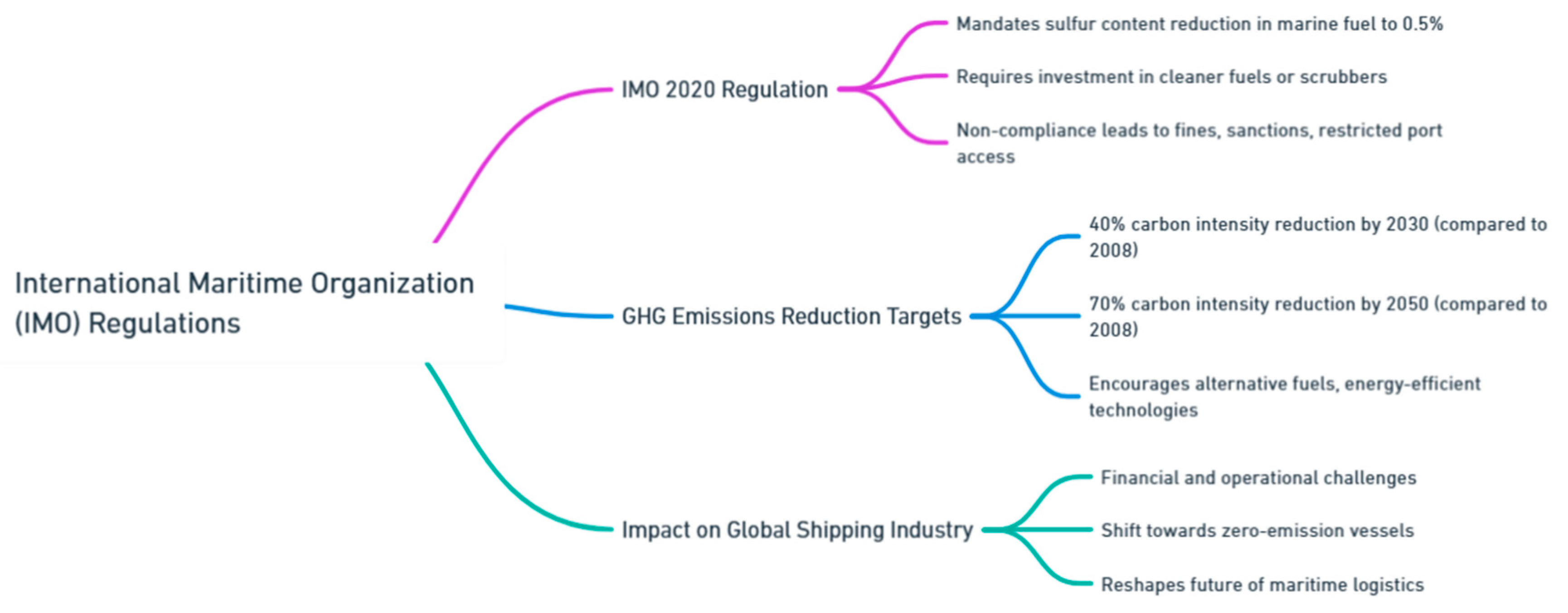
Preprints 139811 i125
4.
United States Environmental Protection Agency (EPA) Standards. In the United States, logistics companies must comply with various environmental regulations enforced by the Environmental Protection Agency (EPA), particularly in regard to emissions from freight vehicles and transportation infrastructure. The EPA has established stringent standards for greenhouse gas emissions from heavy-duty trucks, which are a significant source of pollution in the logistics industry. The EPA’s Clean Trucks Plan aims to reduce emissions from new heavy-duty vehicles by 90% by 2030. This regulation will drive the logistics industry toward the adoption of cleaner technologies, including electric trucks, hybrid vehicles, and fuel-efficient engines. In addition to vehicle emissions standards, the EPA also enforces regulations on fuel quality, requiring logistics companies to use cleaner, low-sulfur fuels that reduce air pollution. The U.S. government also offers various incentives to encourage companies to transition to sustainable logistics practices. Tax credits, grants, and loans are available for companies investing in renewable energy, energy-efficient buildings, and electric vehicle fleets, helping to offset the costs of adopting green technologies (Inkinen and Hämäläinen, 2020; Ruehl et al., 2021).
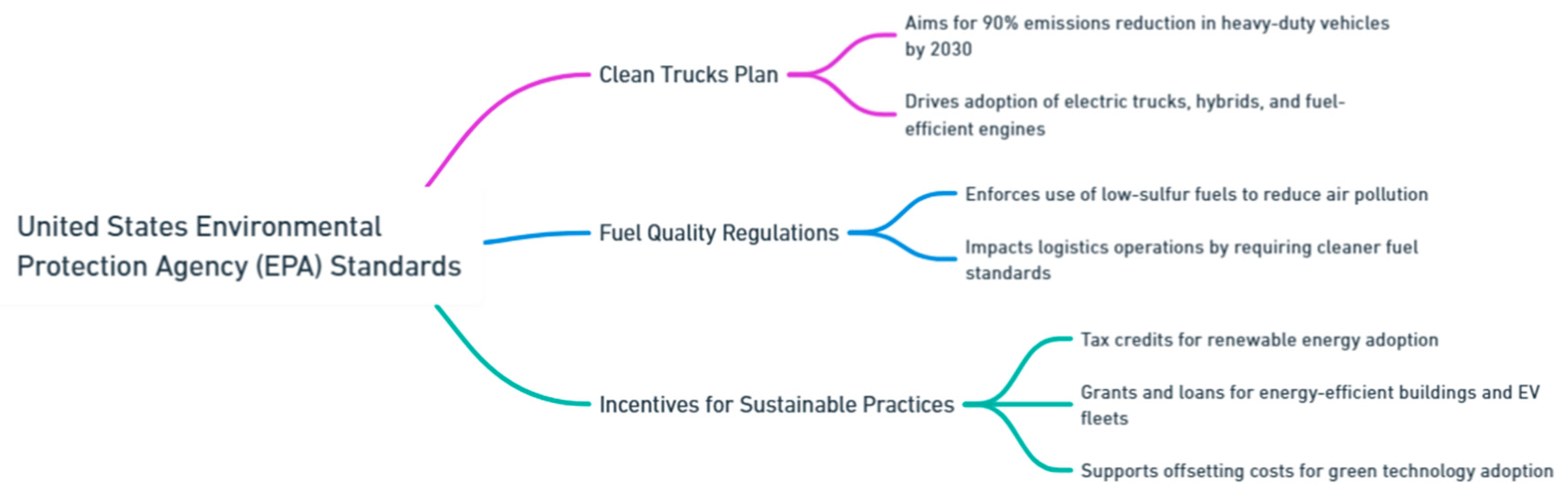
Preprints 139811 i126
5.
China’s Carbon Neutrality Plan. As one of the largest logistics markets in the world, China’s efforts to achieve carbon neutrality by 2060 will have a profound impact on the global logistics industry. China’s carbon neutrality plan sets ambitious goals to reduce emissions across all sectors, including transportation and logistics. Under this plan, China is implementing stricter regulations on emissions from vehicles, particularly in urban areas where air pollution is a major concern. The government is also promoting the use of electric vehicles and alternative fuels in logistics, with targets for phasing out internal combustion engine (ICE) vehicles in favor of electric and hydrogen-powered trucks. China is also investing heavily in green logistics infrastructure, including the development of energy-efficient warehouses, smart logistics hubs, and clean energy-powered transportation networks. These initiatives are part of China’s broader goal to create a low-carbon economy and reduce the environmental impact of its rapidly growing logistics sector (Wang et al., 2021; Dong, 2022).
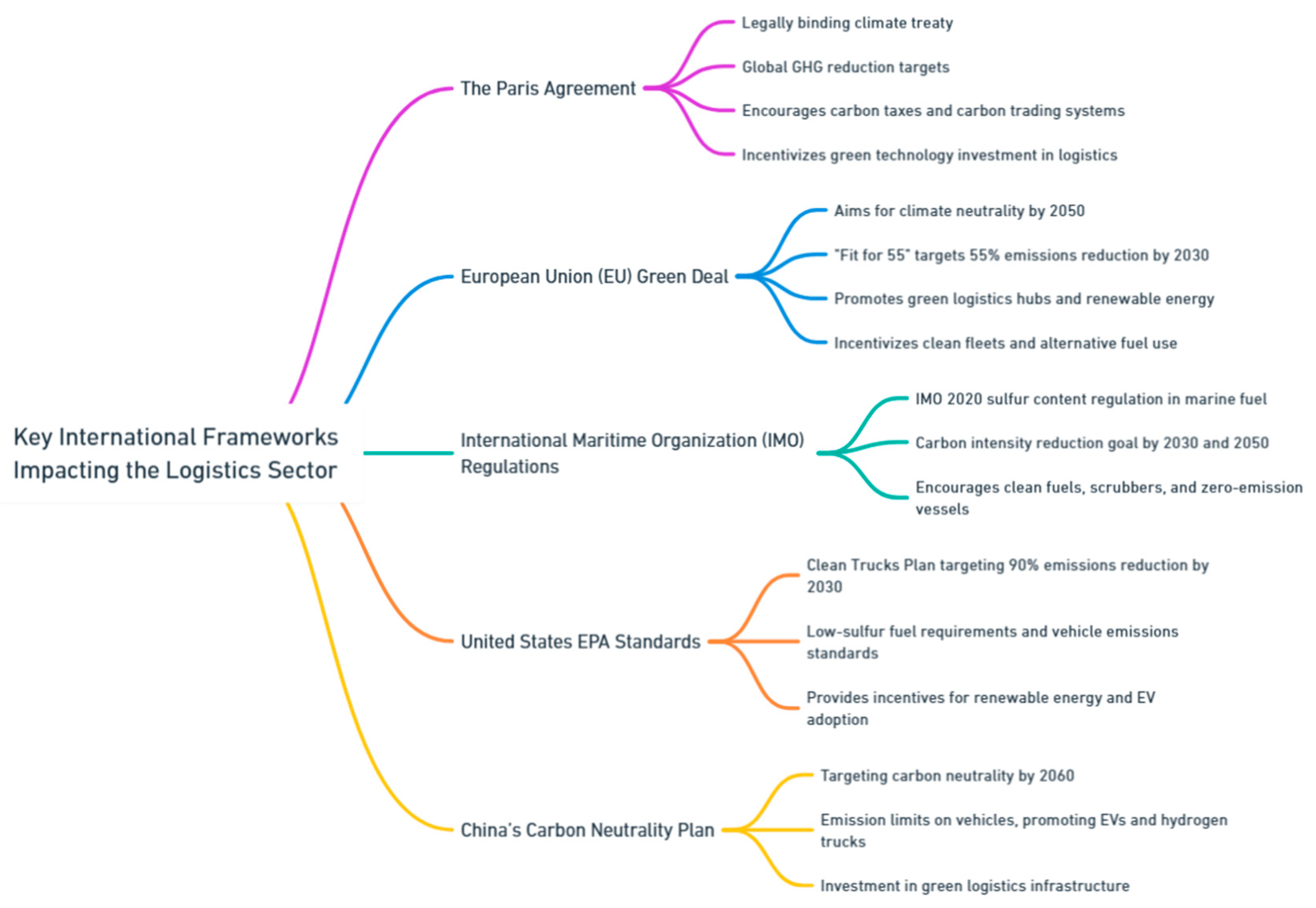
Preprints 139811 i127
In addition to regulatory mandates, many governments offer incentives to encourage companies to adopt sustainable logistics practices. These incentives include tax breaks, grants, and subsidies for businesses that invest in energy-efficient technologies, renewable energy, and low-emission vehicles. For example, the European Union provides funding for companies participating in the development of green logistics hubs, while the U.S. offers tax credits for the purchase of electric vehicles and the installation of solar panels at distribution centers. Incentives play a crucial role in helping logistics companies offset the initial costs associated with transitioning to sustainable practices. By reducing the financial burden of adopting green technologies, these incentives accelerate the shift toward a more sustainable logistics sector. The logistics sector is subject to an increasingly complex array of regulations aimed at reducing its environmental impact. International frameworks such as the Paris Agreement, regional initiatives like the EU Green Deal, and national regulations in countries like the U.S. and China are all driving the logistics industry toward greater energy efficiency and reduced emissions. At the same time, governments are offering incentives to encourage the adoption of sustainable practices. As regulatory frameworks continue to evolve, logistics companies must adapt by investing in cleaner technologies, renewable energy, and more efficient supply chain practices. Compliance with these regulations is not only a legal requirement but also an opportunity for businesses to reduce their environmental footprint and enhance their competitiveness in a rapidly changing global market. By embracing sustainability, the logistics sector can play a key role in addressing the global challenges of climate change and resource depletion, while ensuring long-term success in a low-carbon economy.

14.3. ESG Reporting Standards and Frameworks

Environmental, Social, and Governance (ESG) reporting standards play a crucial role in helping companies across all industries, including logistics, to track, measure, and report their sustainability performance. These standards offer transparency and accountability, enabling companies to communicate their environmental and social impact to stakeholders such as investors, customers, regulators, and employees. Given the growing demand for sustainability and responsible business practices, adhering to ESG reporting standards has become an essential part of corporate strategy for logistics companies. The logistics industry, with its significant environmental footprint from transportation and warehousing, faces increasing pressure to reduce its carbon emissions, optimize energy usage, and improve worker welfare. Several major ESG reporting frameworks provide specific guidelines on how logistics companies can report their ESG metrics accurately, helping them comply with regulatory requirements and demonstrate their commitment to sustainability.
  • Global Reporting Initiative (GRI): The Global Reporting Initiative (GRI) is one of the most widely used and comprehensive frameworks for ESG reporting. Established in 1997, GRI provides standards that cover a wide range of sustainability topics, including environmental impact, labor practices, and governance. It is designed to give companies a robust set of tools to report on both positive and negative impacts on the economy, environment, and society. For logistics companies, the GRI framework is especially useful in reporting key environmental metrics, such as carbon emissions from transportation activities, energy consumption in warehouses, and waste management practices. Given that transportation is responsible for a significant portion of global carbon emissions, logistics firms need to monitor and disclose their carbon footprint, fuel consumption, and efforts to reduce emissions. The GRI’s reporting guidelines allow logistics companies to measure and publicly report these factors, demonstrating their efforts to meet sustainability goals. In addition to environmental factors, GRI also covers social aspects, such as labor practices and worker welfare, which are increasingly important in the logistics sector. Companies can use the GRI framework to report on employee turnover, working conditions, safety incidents, and compliance with labor rights. This level of detail is crucial for improving transparency and building trust with stakeholders (Kariyawasam et al., 2022).
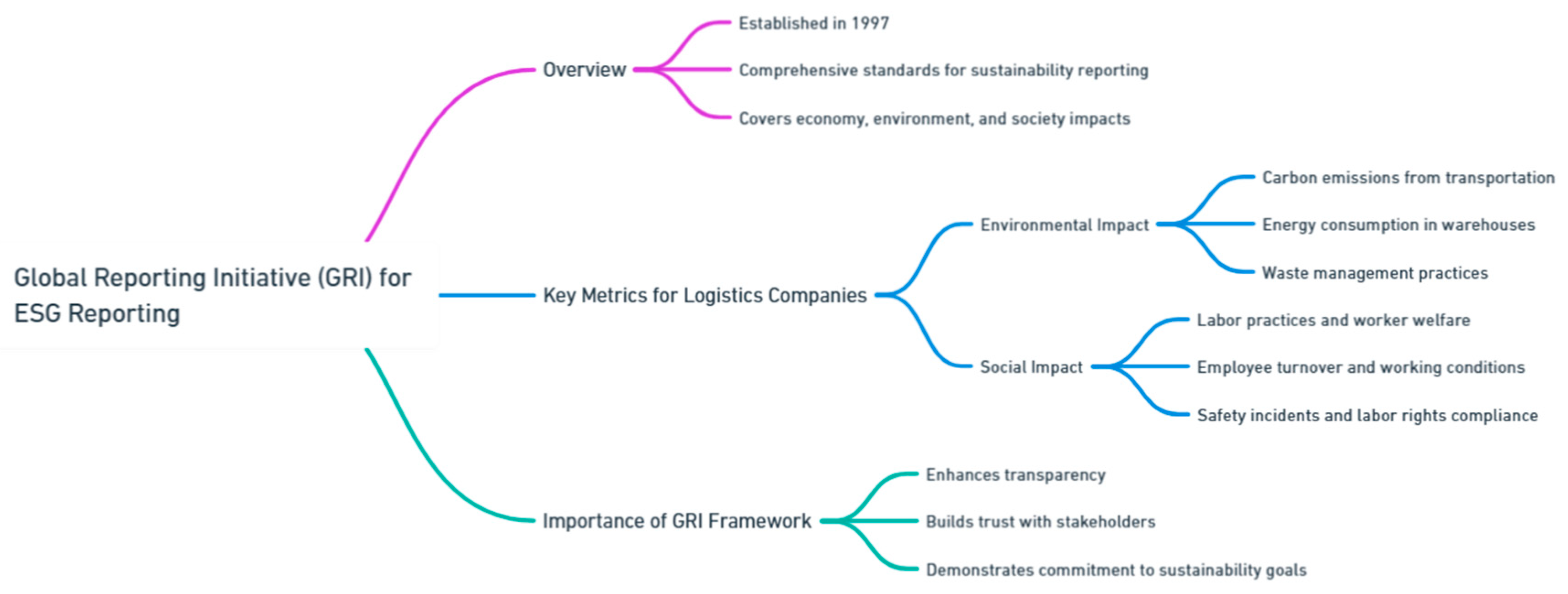
Preprints 139811 i128
2.
Sustainability Accounting Standards Board (SASB). The Sustainability Accounting Standards Board (SASB) takes a more industry-specific approach, providing reporting standards tailored to different sectors. For the transportation and logistics industry, SASB focuses on the sustainability issues that are most relevant to the sector, such as fuel efficiency, emissions intensity, and worker safety. SASB’s standards for the logistics industry provide clear metrics for companies to report on their energy use and emissions. For example, it guides companies to disclose their fuel efficiency, measured as the amount of fuel used per ton of goods transported, and their emissions intensity, which refers to the greenhouse gas emissions per mile traveled or per unit of freight moved. These metrics are crucial for logistics firms that are striving to reduce their environmental impact while maintaining operational efficiency. In addition to environmental metrics, SASB also highlights the importance of worker safety in the logistics industry. Given the physical demands and risks involved in logistics operations, companies must monitor and report on incidents such as injuries, accidents, and safety violations. By adhering to SASB standards, logistics firms can demonstrate their commitment to protecting the health and well-being of their employees, which is an increasingly important factor in attracting and retaining talent (Busco et al., 2020; Pizzi et al., 2023).
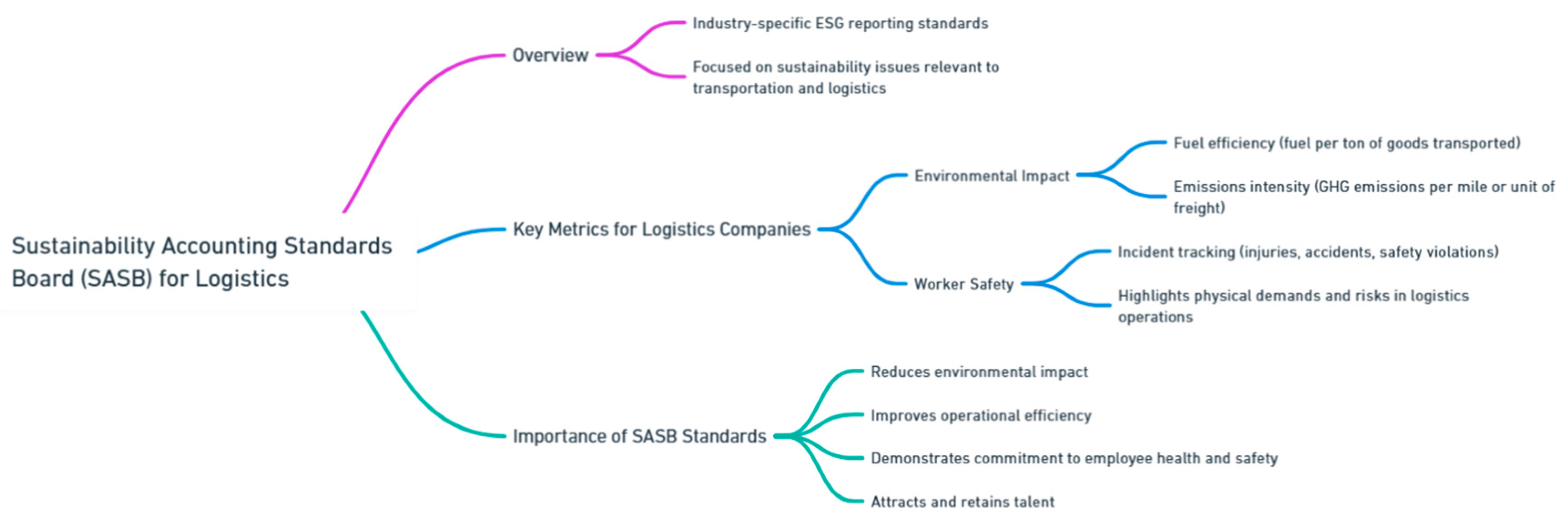
Preprints 139811 i129
3.
Task Force on Climate-related Financial Disclosures (TCFD). The Task Force on Climate-related Financial Disclosures (TCFD), established by the Financial Stability Board in 2015, provides guidelines for reporting on climate-related risks and opportunities. Unlike GRI and SASB, which focus more on measuring sustainability performance, TCFD is particularly concerned with how climate risks can affect a company’s financial health and long-term viability. Logistics companies, especially those with complex and global supply chains, face various climate-related risks, such as extreme weather events, regulatory changes, and shifts in customer preferences toward greener options. For example, rising sea levels and more frequent storms could disrupt global shipping routes, while stricter emissions regulations may increase costs for companies that have not yet transitioned to low-carbon technologies. The TCFD framework enables logistics companies to disclose how they assess and manage these risks, providing greater transparency to investors and other stakeholders. TCFD encourages companies to incorporate climate-related risks into their financial reporting by analyzing the potential impact of climate change on revenue, costs, and asset values. For logistics firms, this might include assessing the long-term financial implications of transitioning to electric fleets, investing in renewable energy for warehouses, or adapting supply chains to mitigate the effects of climate change (Achenbach, 2021; Shahidan and Saat, 2023).
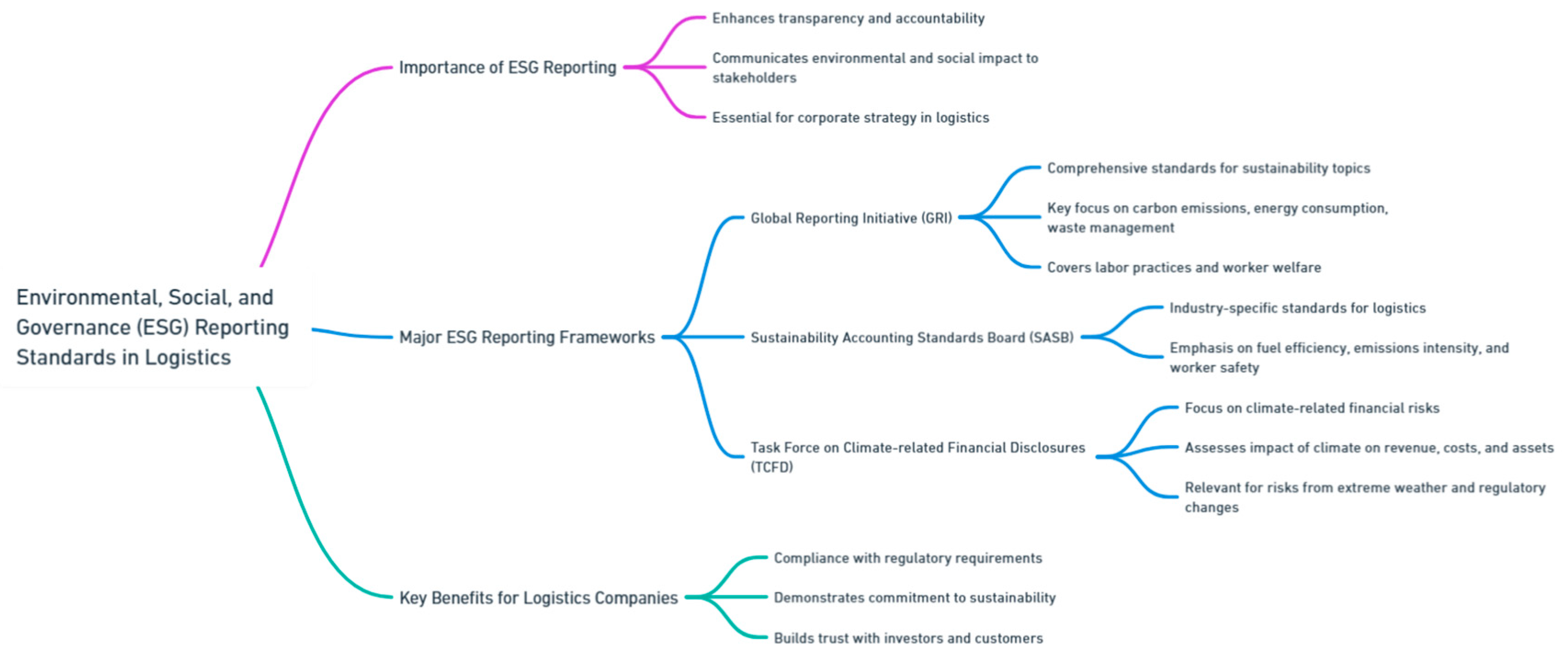
Preprints 139811 i130
In the logistics industry, certain ESG metrics are particularly relevant for tracking sustainability performance. These metrics help companies report on their environmental and social impact while aligning with the reporting frameworks mentioned above (Zeng et al., 2022; Kim et al., 2021).
  • Carbon Intensity: Carbon intensity measures the amount of carbon dioxide (CO2) emitted per ton of goods transported. Reducing carbon intensity is a key focus for logistics companies, as transportation is one of the largest contributors to global emissions. By tracking and reporting this metric, companies can demonstrate their progress toward meeting emissions reduction targets and transitioning to more sustainable transportation methods
  • Fleet Electrification: As logistics companies move away from diesel-powered trucks to electric vehicles (EVs), fleet electrification has become a critical metric for tracking decarbonization efforts. EVs not only reduce carbon emissions but also lower fuel and maintenance costs over time. Reporting on the number of electric vehicles in operation, the percentage of the fleet that is electrified, and the reduction in emissions from fleet electrification can show stakeholders that the company is actively working toward a greener future.
  • Worker Welfare: Logistics companies need to track and report on metrics related to worker welfare, such as health and safety incidents, employee turnover rates, and compliance with labor rights standards. Given the physical demands of logistics operations, ensuring safe working conditions is essential. Reporting on worker welfare not only improves transparency but also demonstrates the company’s commitment to social sustainability.
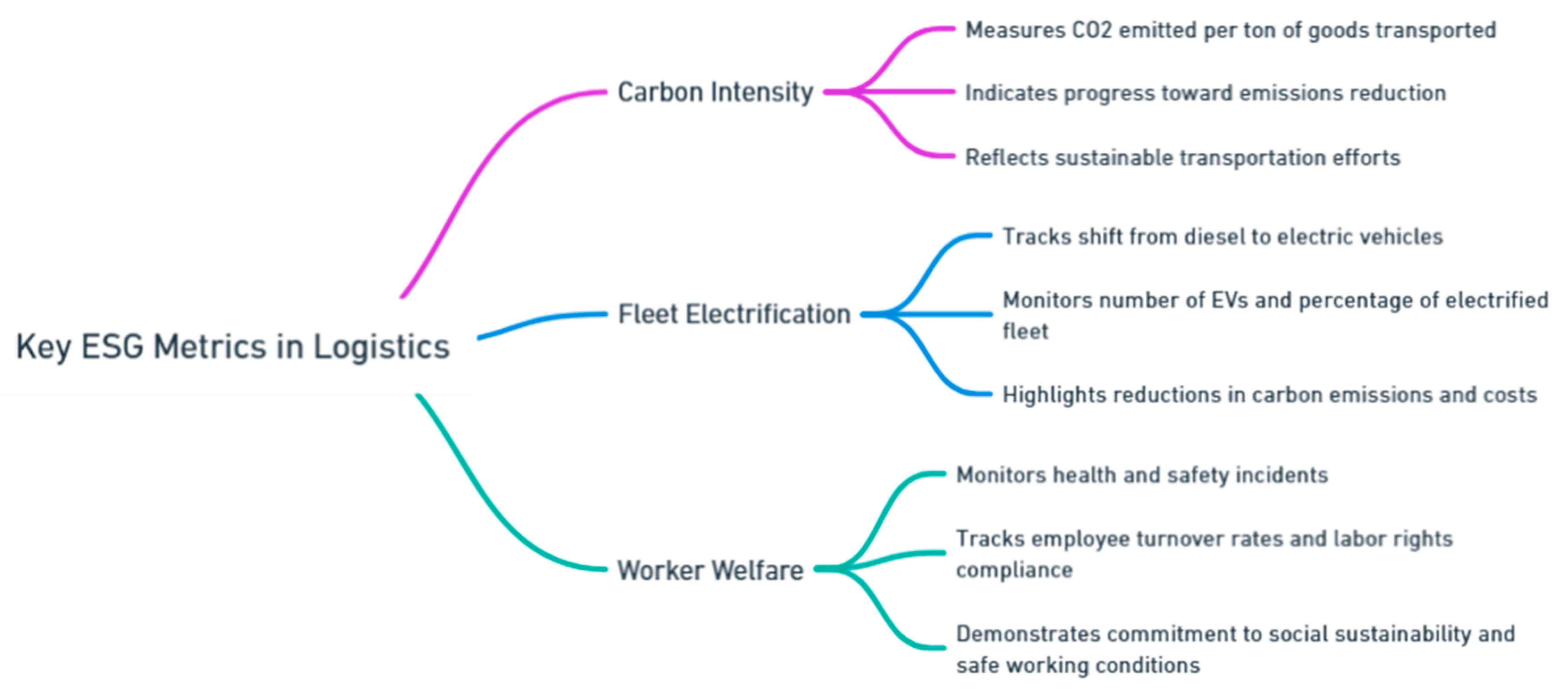
Preprints 139811 i131

14.4. Future Trends and Importance of ESG Reporting in Logistics
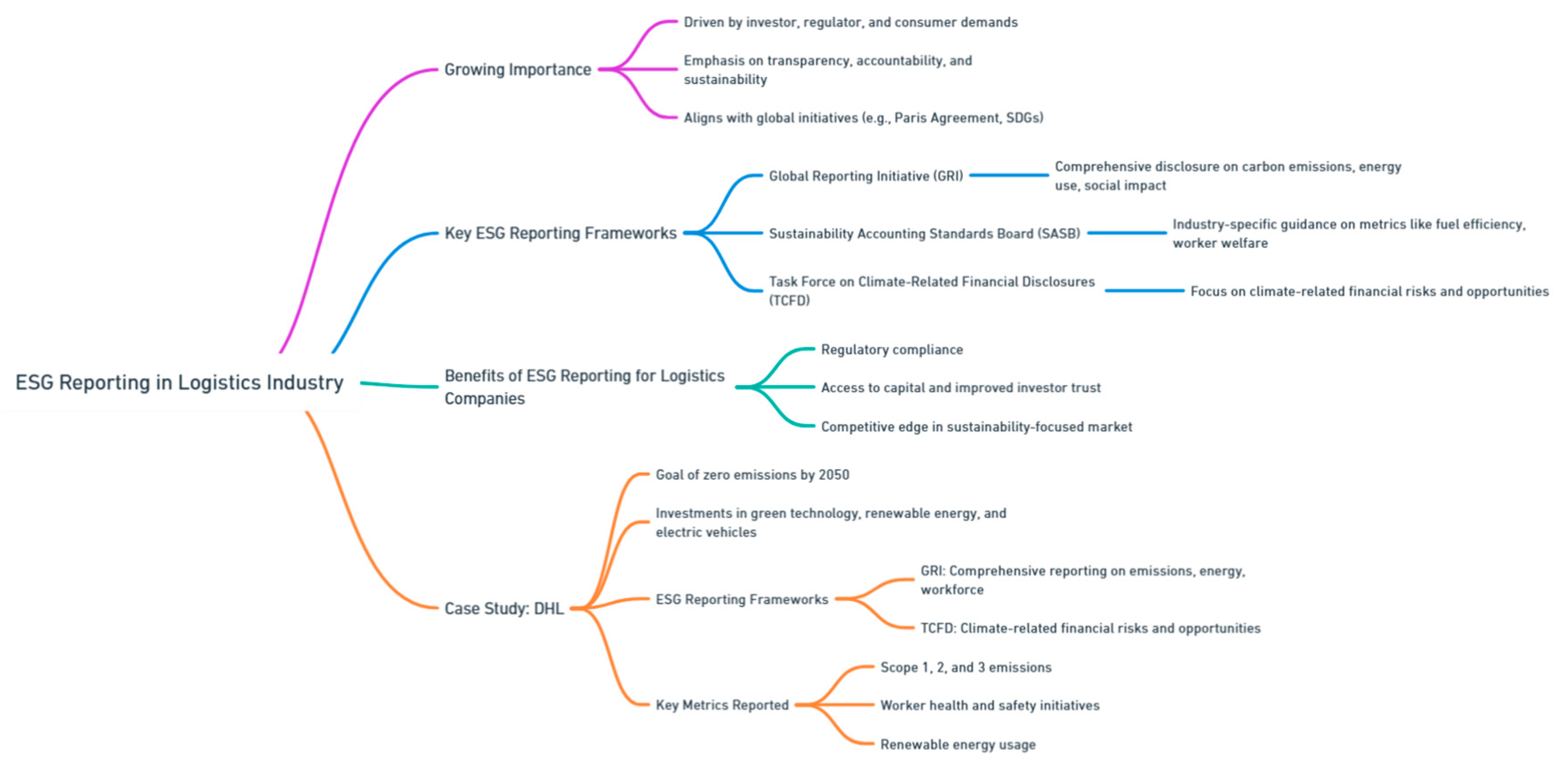
As sustainability becomes an ever-more critical component of corporate strategy, ESG reporting will continue to gain prominence in the logistics industry. Investors, regulators, and consumers are demanding more transparency from companies, particularly in high-impact industries like logistics. With the growing pressure to reduce emissions and improve sustainability, companies that fail to embrace ESG reporting standards may face reputational damage, regulatory penalties, and reduced access to capital. Moreover, global goals such as the Paris Agreement and the United Nations’ Sustainable Development Goals (SDGs) are shaping the future of ESG reporting. Logistics companies are increasingly aligning their strategies with these global initiatives, setting ambitious targets for emissions reductions, waste management, and social responsibility. By adhering to ESG reporting frameworks like GRI, SASB, and TCFD, logistics companies can not only comply with these international goals but also demonstrate their leadership in sustainability. ESG reporting is a vital tool for logistics companies to track their sustainability performance, mitigate risks, and communicate their environmental and social impact to stakeholders. Frameworks such as GRI, SASB, and TCFD provide industry-specific guidance on how to report key metrics, including carbon emissions, energy efficiency, and worker welfare. As sustainability continues to shape the future of logistics, companies that embrace ESG reporting will be better positioned to meet regulatory requirements, attract investors, and maintain their competitive edge in a rapidly evolving industry. As the global logistics sector grows in complexity, it faces increasing pressure to address environmental, social, and governance (ESG) concerns. These challenges are driven by rising consumer and regulatory demands for sustainability, transparency, and accountability. Leading logistics companies have responded by embedding ESG principles into their core business strategies, demonstrating their commitment through ambitious goals, technological innovations, and detailed reporting. This expanded analysis looks into the ESG strategies of three major players in the logistics industry—DHL, Maersk, and UPS—providing insights into their approaches and the frameworks they use for ESG reporting. DHL, one of the largest and most well-known logistics companies in the world, has taken significant strides in embedding sustainability into its corporate strategy. The company's Environmental, Social, and Governance (ESG) commitments are primarily driven by its GoGreen initiative, which sets ambitious goals for reducing environmental impact and promoting social responsibility. DHL’s ESG strategy centers on achieving zero emissions by 2050. This is not just a long-term aspiration, but an actionable plan with interim targets and a series of initiatives designed to reduce the company's carbon footprint. DHL has committed to investing in green technologies, such as electric vehicles, alternative fuels, and energy-efficient warehouses. As part of its strategy, the company has also integrated renewable energy sources into its global operations, with a focus on expanding the use of solar and wind power in its logistics hubs. In terms of reporting, DHL aligns its ESG disclosures with globally recognized frameworks, such as the Global Reporting Initiative (GRI) and the Task Force on Climate-Related Financial Disclosures (TCFD). The GRI framework ensures that DHL reports its sustainability impacts comprehensively, covering issues such as carbon emissions, energy consumption, and the social aspects of its workforce management. Meanwhile, the TCFD framework helps the company report on climate-related financial risks and opportunities, providing transparency to investors and stakeholders on how climate change might impact its business in the future. In its ESG reports, DHL provides detailed disclosures on several key metrics, including its carbon emissions, renewable energy use, and worker health and safety initiatives. The company monitors and reports on its scope 1, 2, and 3 emissions, which include direct emissions from its vehicles and facilities, as well as indirect emissions from its energy suppliers and value chain partners. Moreover, DHL’s focus on worker health and safety reflects its commitment to improving employee well-being, a key pillar of its social responsibility agenda. This focus is crucial in the logistics industry, where operational safety and employee welfare are top priorities. DHL’s comprehensive approach to ESG reporting not only strengthens its brand as a sustainability leader but also increases its transparency and accountability. By aligning with global standards like GRI and TCFD, DHL enhances its ability to communicate effectively with investors, regulators, and other stakeholders who are increasingly focused on corporate sustainability performance (Rodionova, et al., 2022; Zeng, et al., 2022).
Preprints 139811 i132
Case Study 2: Maersk’s Carbon-Neutral Ambitions and ESG Disclosures. A.P. Moller-Maersk, one of the largest shipping and logistics companies in the world, has similarly embedded sustainability into the heart of its operations, with a particular focus on decarbonizing its shipping fleet. As the shipping industry is one of the largest contributors to global greenhouse gas emissions, Maersk’s leadership in setting carbon-neutral targets is particularly significant. Maersk has set a goal of achieving net-zero emissions by 2040, a decade earlier than the 2050 target set by many other logistics and shipping companies. To reach this ambitious target, Maersk is investing heavily in new technologies and alternative fuels. The company is exploring the use of biofuels, ammonia, and hydrogen as potential fuel sources for its ships. Additionally, Maersk is leading the charge in designing and developing energy-efficient vessels that consume less fuel, thereby reducing emissions. Maersk’s fleet modernization strategy is crucial in driving the company toward its carbon-neutral goals. Like DHL, Maersk aligns its ESG reporting with the GRI and TCFD frameworks. The GRI framework ensures comprehensive disclosures on Maersk’s sustainability initiatives, including emissions reduction, energy efficiency, and social responsibility. Meanwhile, the TCFD framework enables Maersk to disclose climate-related risks and opportunities, particularly as they pertain to the financial implications of decarbonizing its fleet and transitioning to cleaner energy sources. Maersk’s ESG disclosures provide detailed insights into the company’s progress toward its carbon-neutral goals. The company reports on the carbon intensity of its shipping operations, tracking emissions per container transported. This metric is particularly important for Maersk, as it allows the company to demonstrate how it is reducing emissions relative to the volume of goods it transports, a key performance indicator for the shipping industry. Maersk’s commitment to sustainability is not limited to environmental initiatives; the company also focuses on social responsibility and governance practices. Maersk is committed to improving the working conditions of its seafarers and port workers, ensuring that its employees operate in a safe and supportive environment. In addition, Maersk is dedicated to promoting diversity and inclusion within its workforce, recognizing the importance of social sustainability alongside its environmental goals (Hille et al., 2023; Hu et al., 2023).
Preprints 139811 i133
Case Study 3: UPS’s Social Responsibility and Governance Practices. United Parcel Service (UPS), a global leader in logistics and parcel delivery, has integrated ESG principles into its corporate strategy, with a focus on reducing emissions, improving energy efficiency, and promoting social responsibility. UPS’s sustainability initiatives are driven by a recognition that the logistics industry has a significant environmental impact, and that addressing these impacts is crucial for the company’s long-term success. UPS has made significant investments in electrifying its fleet and reducing emissions from its air and road transport operations. The company’s goal is to reduce its greenhouse gas emissions by 50% by 2035, with a long-term vision of achieving net-zero emissions by 2050. UPS is investing in electric vehicles, alternative fuels, and energy-efficient technologies to meet these targets. The company’s “Rolling Laboratory” initiative, for example, focuses on testing and deploying various alternative fuel and advanced technology vehicles to reduce its carbon footprint. In terms of governance, UPS has adopted rigorous ESG reporting standards to ensure transparency and accountability. UPS follows the Sustainability Accounting Standards Board (SASB) framework, which provides industry-specific reporting guidelines for the logistics and transportation sector. The SASB framework allows UPS to report on key issues such as transportation emissions, fleet electrification, and worker safety in a way that is relevant and meaningful to its stakeholders. Social responsibility is a key component of UPS’s ESG strategy. The company is committed to ensuring the health, safety, and well-being of its employees, recognizing that a motivated and engaged workforce is essential for long-term success. UPS has implemented numerous initiatives aimed at improving workplace safety, reducing employee injury rates, and fostering a culture of inclusion and diversity. Moreover, the company’s community outreach programs focus on promoting education, supporting disaster relief efforts, and enhancing economic opportunities in the communities where it operates. UPS’s ESG disclosures provide comprehensive insights into the company’s sustainability initiatives. By aligning its reporting with the SASB framework, UPS ensures that it provides stakeholders with relevant, industry-specific information on its environmental and social performance. This transparency enhances UPS’s reputation as a responsible corporate citizen and strengthens its relationships with customers, investors, and regulators (Gillan et al., 2021; Zeng et al., 2022).
Preprints 139811 i134
The ESG strategies of DHL, Maersk, and UPS illustrate the growing importance of sustainability in the logistics industry. These companies have taken significant steps to reduce their environmental impact, improve energy efficiency, and promote social responsibility. By aligning their ESG reporting with globally recognized frameworks such as GRI, TCFD, and SASB, these industry leaders demonstrate their commitment to transparency, accountability, and sustainability. As the global logistics sector continues to evolve, companies that embrace ESG principles will be better positioned to navigate the challenges of climate change, regulatory pressures, and changing consumer expectations. Through ongoing innovation and investment in sustainability, DHL, Maersk, and UPS are leading the way toward a more sustainable future for the logistics industry.

14.5. Challenges in ESG Reporting for Logistics

Despite the growing adoption of Environmental, Social, and Governance (ESG) reporting standards, logistics companies face numerous challenges when trying to implement and maintain effective ESG reporting practices. As sustainability becomes a key priority for stakeholders, regulators, and consumers, logistics companies are under increasing pressure to measure and report on their environmental, social, and governance performance. However, the complex nature of logistics operations and supply chains introduces several hurdles that make ESG reporting particularly difficult in this sector. Below, we examine three major challenges in depth: the complexity of logistics networks, data collection and standardization, and the balancing of cost and investment.
  • Complexity of Logistics Networks: One of the most significant challenges for logistics companies in implementing effective ESG reporting practices is the inherent complexity of their networks. Logistics operations involve various stakeholders, including suppliers, manufacturers, transporters, warehouses, retailers, and third-party logistics (3PL) providers. Each of these parties contributes data that must be aggregated and standardized to create a comprehensive ESG report. However, many logistics companies struggle to track ESG metrics across such fragmented supply chains due to differences in operational standards, reporting capabilities, and data transparency. Suppliers and 3PL providers often operate in different regions with varying levels of regulatory oversight and technological infrastructure. For instance, a logistics company working with suppliers in developing countries may find it difficult to gather accurate data on emissions, energy usage, or labor practices, as these suppliers may not have robust reporting systems in place. In addition, the global nature of logistics means that different countries have their own ESG regulations and standards, further complicating efforts to produce consistent and comparable ESG reports across the entire supply chain. Moreover, logistics companies typically work with a wide variety of transport modes, such as air, sea, road, and rail. Each mode has its own environmental footprint, making it challenging to create a unified approach to tracking emissions and other ESG metrics. For example, emissions from shipping routes vary depending on fuel types, vessel sizes, and route distances, making it difficult to apply a one-size-fits-all approach to reporting. The complexity of logistics networks, therefore, necessitates highly sophisticated tracking systems, which many companies lack, resulting in incomplete or inconsistent ESG data (Adhikary et al., 2020; Zeng et al., 2022).
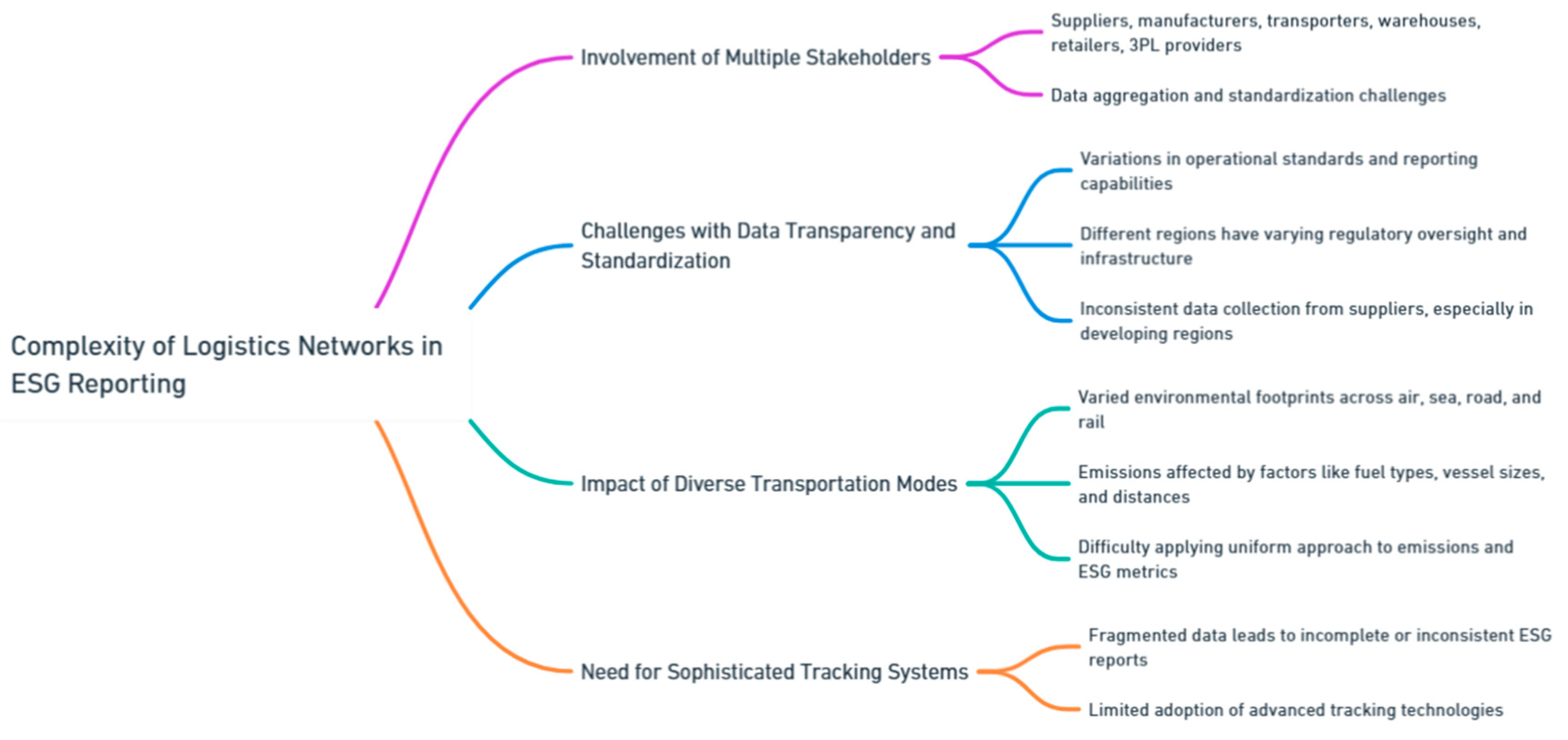
Preprints 139811 i135
2.
Data Collection and Standardization: Accurate and timely data collection is a cornerstone of effective ESG reporting. However, gathering reliable data across complex logistics operations presents another formidable challenge. ESG metrics such as carbon emissions, energy consumption, and social impact require comprehensive and precise data, yet many logistics companies do not have the infrastructure to track these metrics consistently. The lack of standardized data collection processes across the supply chain adds to the difficulty of reporting on ESG performance. For instance, monitoring carbon emissions from a global shipping fleet requires sophisticated sensors and tracking technologies that not all logistics companies possess. Similarly, energy consumption in warehouses, distribution centers, and offices must be tracked using real-time energy management systems. Smaller logistics firms, in particular, may lack the financial resources to invest in these technologies, leading to incomplete or inaccurate data reporting. Furthermore, suppliers and other partners may not use standardized reporting formats or may be unable or unwilling to share data, further complicating the ability to track ESG performance across the entire value chain. Additionally, the absence of universal ESG reporting frameworks in logistics adds to the confusion. While there are several widely recognized ESG frameworks, such as the Global Reporting Initiative (GRI), the Sustainability Accounting Standards Board (SASB), and the Task Force on Climate-related Financial Disclosures (TCFD), logistics companies often struggle to choose the most appropriate one. Each framework has its own set of reporting guidelines and key performance indicators (KPIs), which may not align perfectly with the unique characteristics of the logistics sector. This can result in discrepancies in the data collected and reported, making it difficult for logistics companies to present a clear and accurate picture of their ESG performance. The lack of standardization is especially problematic when it comes to measuring Scope 3 emissions, which include indirect emissions from the entire value chain, such as those from suppliers and customers. Logistics companies often face difficulties in obtaining this data from upstream and downstream partners, leading to gaps in their ESG reports. Without standardized methods of data collection and reporting, logistics companies may find it challenging to compare their ESG performance with industry peers, identify areas for improvement, or meet investor expectations for transparency (Hertwich, 2021; Fancello et al., 2023)
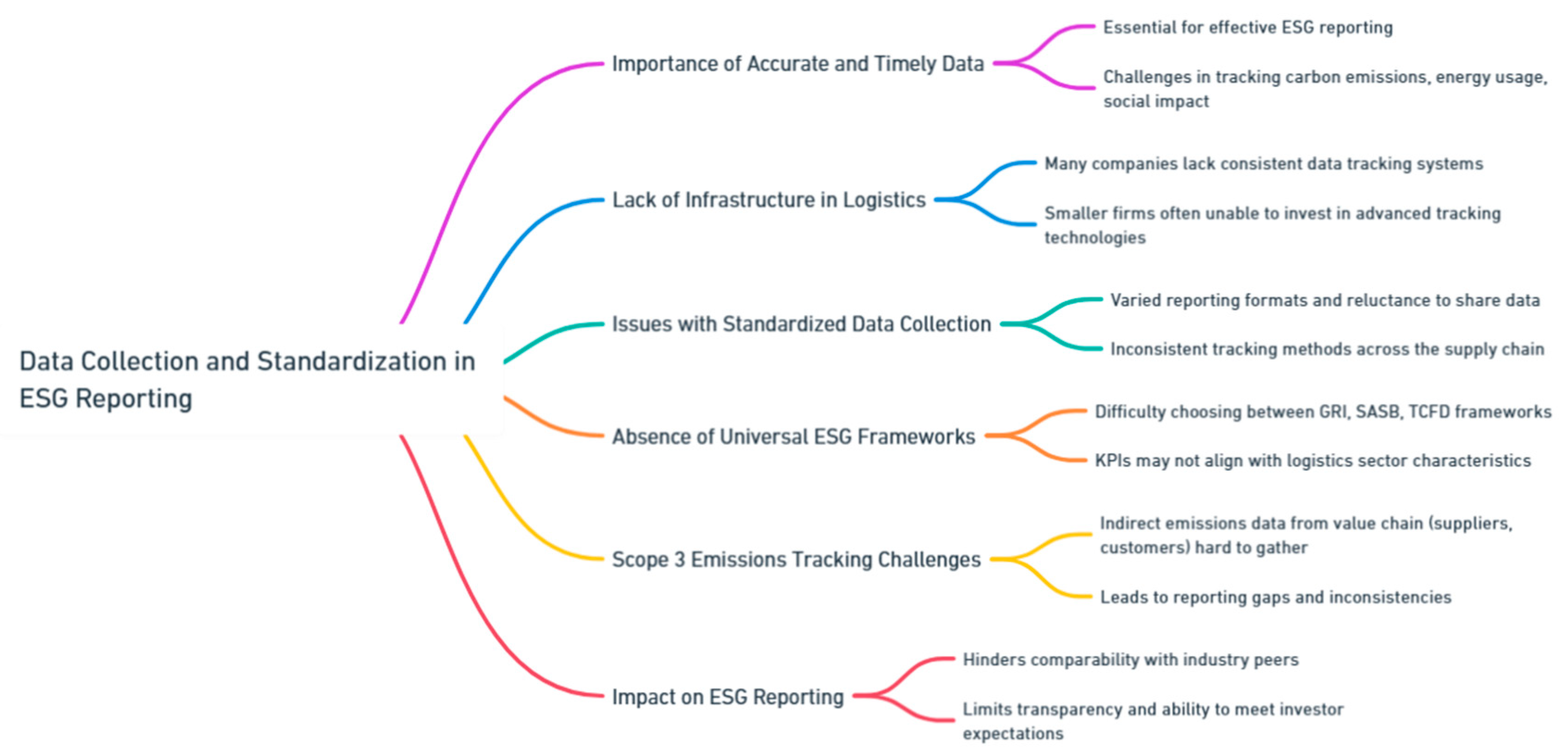
Preprints 139811 i136
3.
Balancing Cost and Investment: A third major challenge for logistics companies in implementing effective ESG reporting practices is balancing the cost of sustainability initiatives with their financial performance. Many ESG initiatives, such as fleet electrification, renewable energy infrastructure, and sustainable packaging, require significant upfront investment. For some logistics companies, particularly small and medium-sized enterprises (SMEs), the cost of implementing these initiatives may outweigh the short-term financial benefits, making it difficult to justify these expenses to shareholders or investors. For instance, transitioning from diesel-powered trucks to electric vehicles (EVs) involves high capital expenditure, not only for purchasing the vehicles but also for installing the necessary charging infrastructure. Although EVs can reduce emissions and offer long-term cost savings in terms of fuel and maintenance, the initial investment may be prohibitive for smaller logistics companies. Similarly, installing solar panels or other renewable energy systems at warehouses or distribution centers requires considerable financial resources, and the return on investment may take years to materialize. Moreover, logistics companies often operate in a highly competitive market where profit margins are slim. As a result, many firms are reluctant to invest in ESG initiatives that may temporarily reduce profitability. This tension between short-term financial performance and long-term sustainability goals creates a significant barrier to the widespread adoption of ESG reporting practices. While larger companies may have the resources to absorb the costs of sustainability initiatives, smaller firms often struggle to balance the need for immediate financial returns with the long-term benefits of ESG investments. Additionally, logistics companies face pressure from multiple stakeholders, including investors, customers, and regulators, to improve their ESG performance. However, meeting these expectations often requires diverting resources away from other areas of the business, such as operational efficiency or customer service, which can further strain financial performance. Balancing the cost of ESG initiatives with other business priorities is a complex challenge that requires careful planning and strategic decision-making (Rodionova et al., 2022; Woody et al., 2022).
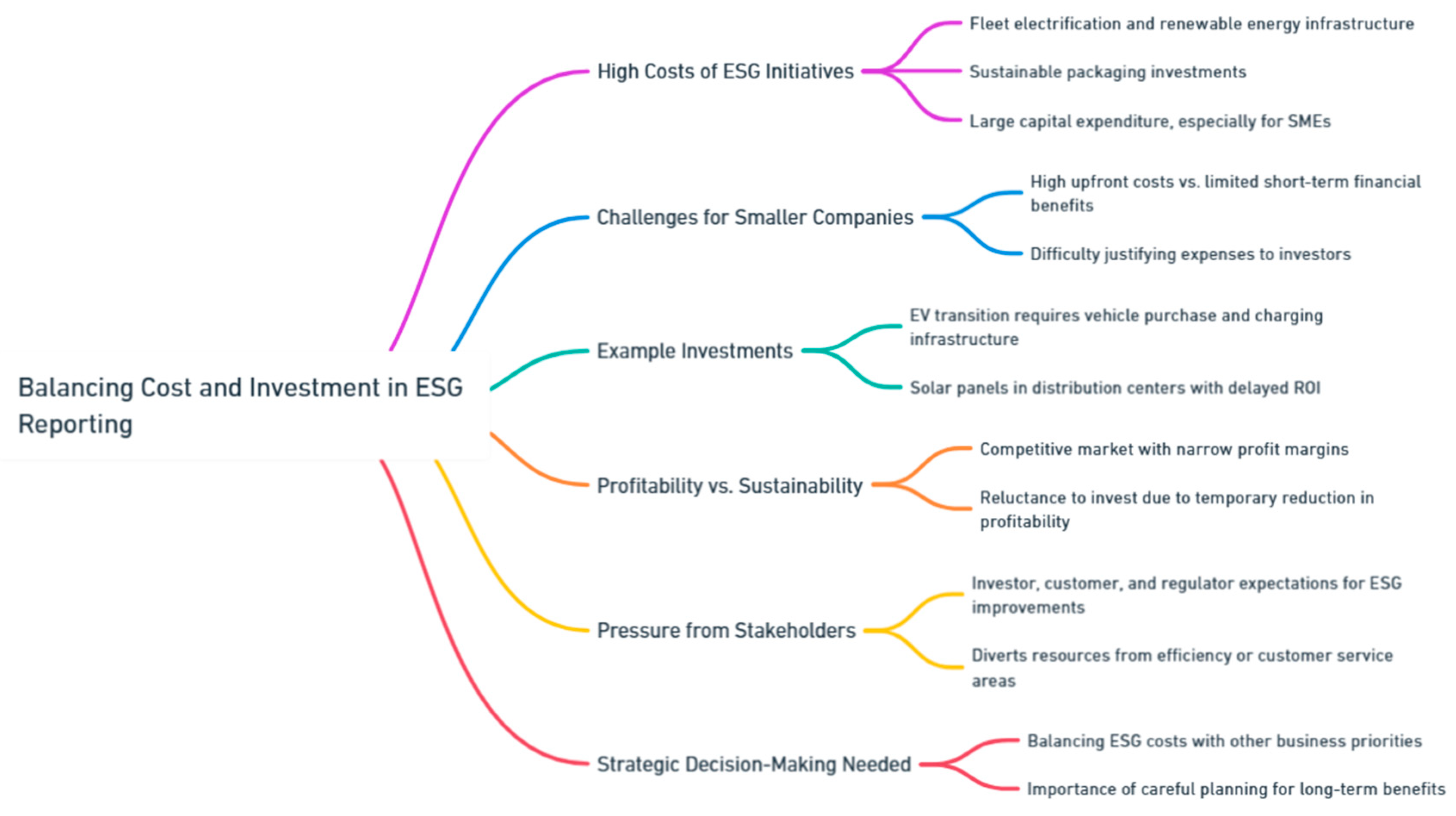
Preprints 139811 i137
In conclusion, while the adoption of ESG reporting standards is gaining traction in the logistics industry, companies face several significant challenges in implementing and maintaining effective ESG reporting practices. The complexity of logistics networks, the difficulties of data collection and standardization, and the need to balance cost and investment all present substantial barriers to accurate and consistent ESG reporting. However, overcoming these challenges is crucial for logistics companies that want to stay competitive in a rapidly evolving market where sustainability is increasingly valued by stakeholders. To achieve this, logistics firms must invest in advanced tracking technologies, collaborate with suppliers and partners to improve data transparency, and find ways to balance the costs of ESG initiatives with their financial performance. As global demand for sustainability continues to rise, logistics companies that successfully navigate these challenges will be well-positioned to thrive in the future.

14.6. The Role of Technology in ESG Reporting
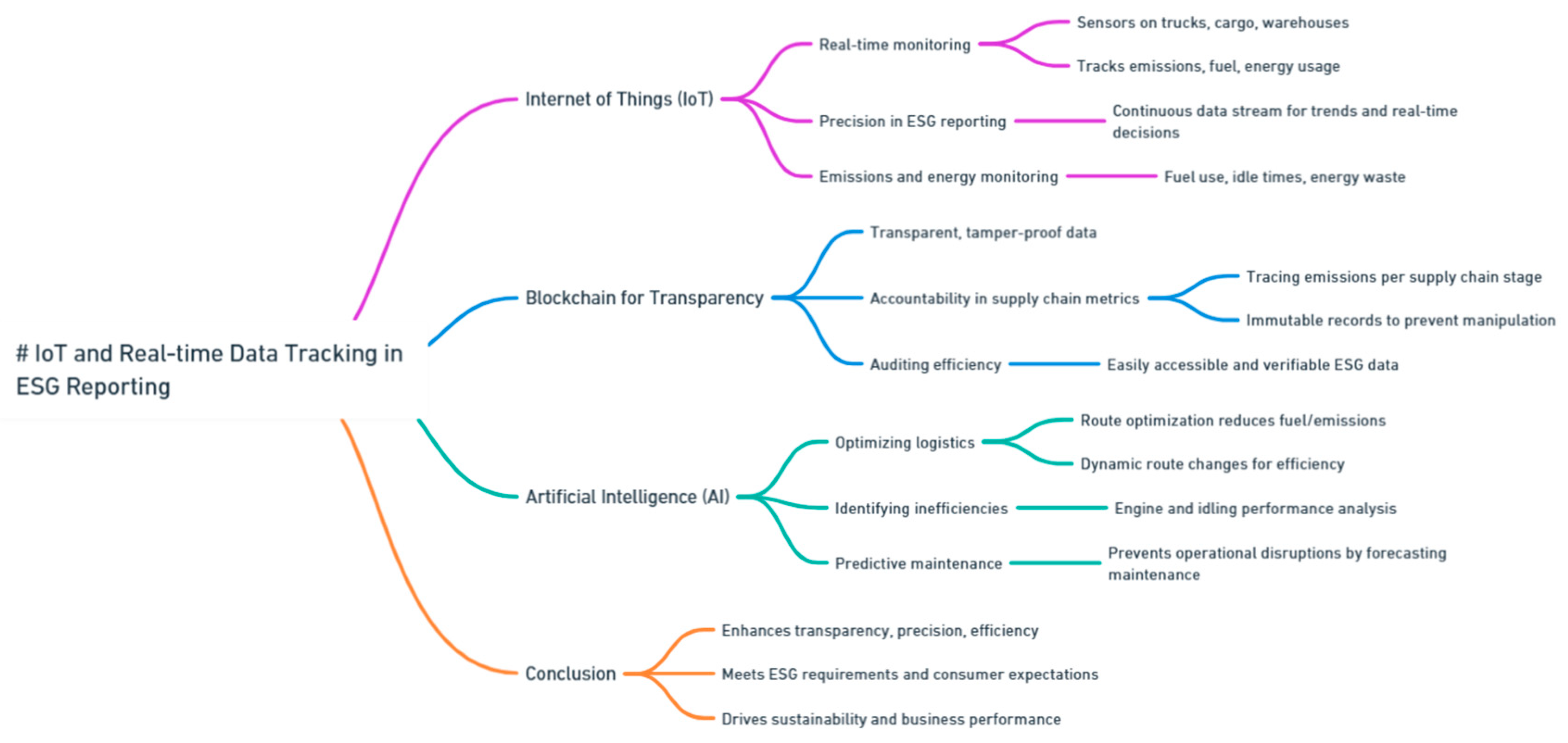
In the contemporary business environment, Environmental, Social, and Governance (ESG) reporting has become a critical factor for organizations, particularly in logistics, where the environmental impact is significant. Logistics companies face increasing pressure to meet ESG standards, driven by both regulatory requirements and consumer expectations for sustainable business practices. However, reporting on ESG metrics presents several challenges, including the need for precise data collection, transparency, and operational efficiency. Fortunately, technological advancements offer powerful solutions to these challenges, enabling companies to streamline and improve ESG reporting processes. This section explores how three key technological solutions—IoT, blockchain, and AI—are revolutionizing ESG reporting in logistics.
IoT and Real-time Data Tracking. The Internet of Things (IoT) plays a pivotal role in transforming how logistics companies collect and report data on their environmental performance. IoT involves the use of sensors and devices that collect and transmit data in real time, allowing for the continuous monitoring of various metrics such as emissions, fuel consumption, and energy usage. In logistics, IoT can be used extensively on delivery trucks, cargo fleets, and warehouses, providing valuable insights that are crucial for accurate ESG reporting.
Real-time Data for Emissions and Energy Consumption. One of the significant challenges in ESG reporting is the accurate measurement of environmental impact, particularly greenhouse gas emissions and energy usage. Logistics companies operate vast fleets of vehicles and manage large warehouses, both of which are major contributors to carbon emissions. With IoT sensors installed on vehicles, logistics companies can monitor real-time fuel consumption and emissions data, providing a more accurate and detailed picture of their environmental footprint. For instance, IoT sensors can track when vehicles are idling or operating inefficiently, providing opportunities for intervention to reduce fuel consumption and emissions. Similarly, smart energy management systems can be installed in warehouses to monitor electricity usage, helping to identify opportunities for reducing energy waste.
Enhanced Precision in ESG Reporting. The real-time nature of IoT data collection allows for more precise ESG reporting, as companies can generate accurate, up-to-date information on their environmental performance. This contrasts with traditional reporting methods, which often rely on estimates or historical data that may not reflect the current situation. Furthermore, the continuous stream of data provided by IoT devices enables logistics companies to track trends and assess the effectiveness of their sustainability initiatives over time. By having access to real-time data, logistics managers can make data-driven decisions that improve their sustainability performance while ensuring compliance with ESG reporting requirements.
Blockchain for Transparency and Accountability. Blockchain technology is emerging as a powerful tool for enhancing transparency and accountability in ESG reporting. At its core, blockchain is a decentralized, tamper-proof ledger that records transactions across a network of computers. This inherent transparency and security make blockchain an ideal solution for tracking sustainability metrics throughout the supply chain.
Improving Supply Chain Transparency. One of the biggest challenges in ESG reporting, particularly in logistics, is tracing the environmental and social impacts of products throughout their lifecycle. Supply chains are often complex and involve multiple stakeholders, each contributing to the overall sustainability performance of the product. By implementing blockchain technology, logistics companies can track every stage of the supply chain, from raw material extraction to final delivery. For example, blockchain can record the carbon emissions generated at each stage of the supply chain, providing a comprehensive and verifiable record of the product's environmental impact. This level of transparency is crucial for ensuring that ESG reports accurately reflect the sustainability credentials of the entire supply chain, not just the company’s operations.
Ensuring Accountability in ESG Metrics. Blockchain’s ability to provide an immutable record of transactions ensures accountability in ESG reporting. Once data is entered into the blockchain, it cannot be altered, which prevents companies from manipulating or misreporting their sustainability metrics. This is particularly important in industries like logistics, where ESG reporting is subject to increasing scrutiny from regulators, investors, and consumers. By using blockchain, logistics companies can provide stakeholders with verifiable proof of their environmental and social performance, thereby enhancing their credibility and reputation as responsible corporate citizens. Furthermore, blockchain can streamline the process of auditing ESG reports, as the data is readily accessible and tamper-proof, reducing the time and resources needed for verification.
AI for Optimizing Logistics Efficiency. Artificial intelligence (AI) is playing an increasingly critical role in optimizing logistics operations, which in turn contributes to improved sustainability and ESG reporting. AI algorithms can analyze vast amounts of data to identify inefficiencies and recommend changes that reduce environmental impact, particularly in terms of fuel consumption and emissions.
Optimizing Delivery Routes. One of the most impactful ways AI can improve sustainability in logistics is by optimizing delivery routes. Traditionally, route planning has relied on manual methods or static data, which often leads to inefficiencies such as longer travel distances or vehicles spending time in traffic. AI-powered route optimization systems, on the other hand, can analyze real-time data on traffic patterns, weather conditions, and road closures to determine the most efficient routes. By reducing unnecessary mileage, these systems help logistics companies lower fuel consumption and decrease carbon emissions, leading to more accurate and favorable ESG reports. Additionally, AI systems can dynamically adjust routes in response to changing conditions, further enhancing efficiency.
Identifying Operational Inefficiencies. Beyond route optimization, AI can be used to analyze other aspects of logistics operations to identify inefficiencies that contribute to environmental impact. For instance, AI algorithms can monitor vehicle performance to detect issues such as engine inefficiencies or excessive idling, both of which lead to higher fuel consumption and emissions. By identifying these inefficiencies, AI systems provide actionable insights that enable logistics companies to take corrective measures, such as scheduling vehicle maintenance or training drivers on more efficient driving practices. These improvements not only enhance sustainability but also reduce operational costs, demonstrating how technology can align ESG goals with business performance.
Predictive Maintenance. Another way AI contributes to sustainability is through predictive maintenance. By analyzing data from IoT sensors installed on vehicles and equipment, AI systems can predict when maintenance is needed before a breakdown occurs. This reduces the risk of equipment failures that can lead to operational disruptions and inefficiencies, such as the need for emergency deliveries or the use of additional vehicles. Predictive maintenance helps ensure that logistics operations run smoothly and efficiently, further contributing to reduced emissions and more accurate ESG reporting.
Conclusion. Technology is revolutionizing how logistics companies approach ESG reporting by improving data collection, transparency, and efficiency. IoT enables real-time monitoring of emissions and energy consumption, providing the precise data needed for accurate ESG reports. Blockchain enhances transparency and accountability by offering a tamper-proof ledger of sustainability metrics throughout the supply chain. AI optimizes logistics operations by identifying inefficiencies and recommending improvements that reduce environmental impact. Together, these technologies are helping logistics companies overcome the challenges associated with ESG reporting, positioning them to meet regulatory requirements, satisfy consumer expectations, and contribute to a more sustainable future. As these technologies continue to evolve, they will play an even more significant role in shaping the future of ESG reporting in logistics, driving both environmental and business benefits (Yu et al., 2023; Rodionova et al., 2022).
Preprints 139811 i138

14.7. Future of ESG Reporting in Logistics

As the regulatory landscape continues to evolve, logistics companies are facing increasing pressure to meet stricter Environmental, Social, and Governance (ESG) reporting requirements, driven by both regulatory bodies and rising stakeholder expectations. These developments are creating a more complex environment where companies must not only operate efficiently but also demonstrate their commitment to sustainability, transparency, and ethical practices. Several emerging trends are poised to shape the future of ESG reporting in logistics, demanding new strategies and approaches to meet these evolving demands.
  • Circular Economy: Pushing Sustainability Forward. The concept of the circular economy is gaining momentum across multiple industries, and logistics is no exception. A circular economy aims to minimize waste by keeping materials in use for as long as possible, whether through recycling, reusing, or repurposing. This approach contrasts sharply with the traditional linear economy, where products are made, used, and discarded. In logistics, adopting circular economy principles means reducing packaging waste, optimizing resources, and designing supply chains that prioritize product life-cycle extension. ESG reporting in logistics will increasingly require companies to disclose their contribution to circular economy goals. For instance, companies will need to report on initiatives such as using recyclable or biodegradable packaging materials, reducing plastic usage, and partnering with manufacturers that produce durable, repairable, or upgradable products. Reverse logistics, which focuses on the return, recycling, or repurposing of goods, will also become a critical element of ESG reports. The shift toward a circular economy in logistics will not only reduce waste but also lower carbon emissions, as fewer raw materials will need to be extracted, manufactured, and transported. Companies that adopt this model will not only improve their ESG performance but also achieve cost savings by reducing material waste and resource inefficiencies. However, this transformation will require significant investments in new technologies, processes, and partnerships. As stakeholders demand more transparency, logistics companies will need to develop comprehensive systems to track and report on their circular economy initiatives, including metrics like waste reduction, recyclability rates, and the environmental impact of their packaging choices (Kudryashov, 2023; Marco-Fondevila et al., 2021; Pasinovych and Myskiv, 2023; Marco-Fondevila et al., 2021).
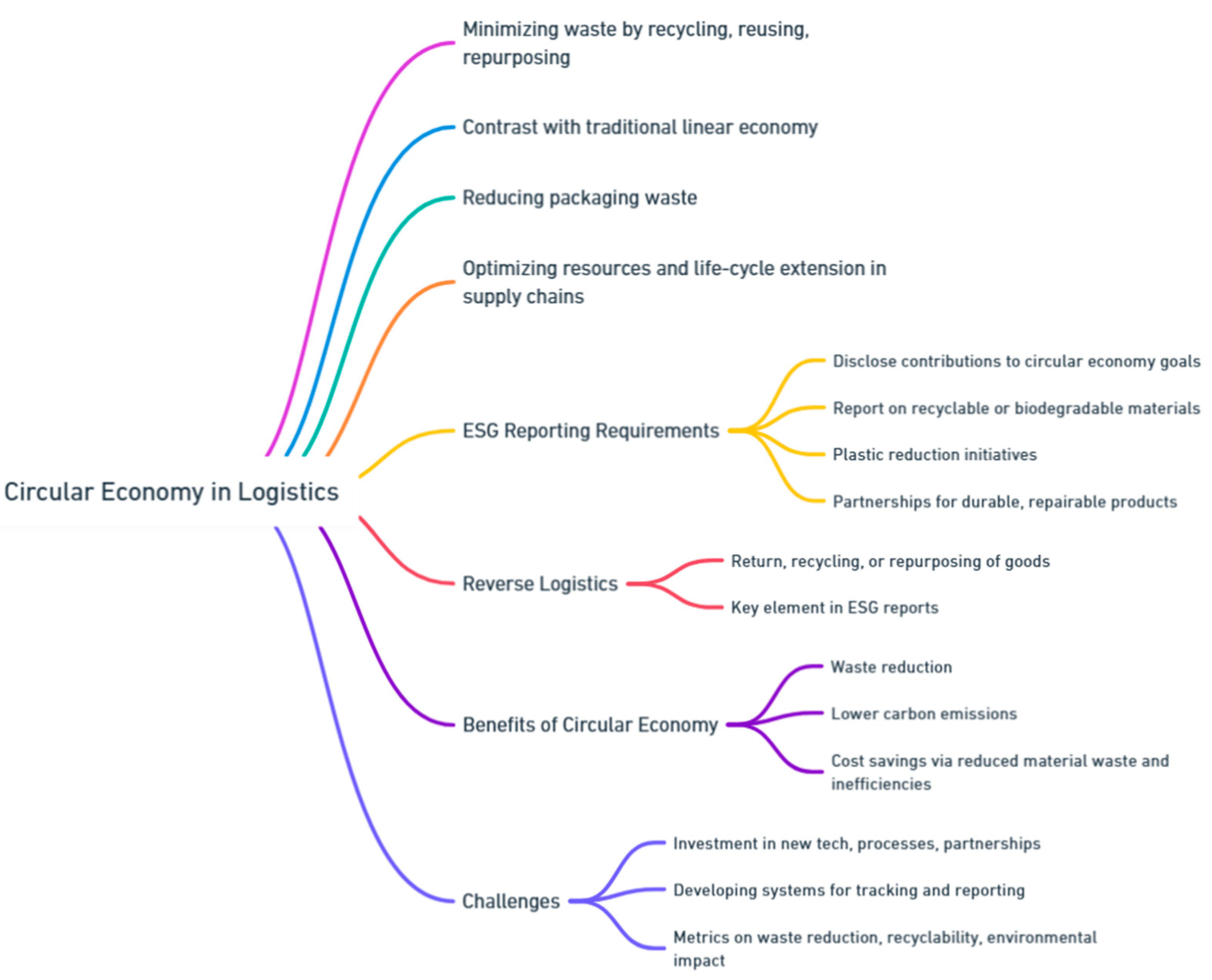
Preprints 139811 i139
2.
Net-Zero Commitments: Moving Toward Carbon Neutrality. In response to growing concerns about climate change, an increasing number of logistics companies are committing to net-zero targets, pledging to eliminate or offset their carbon emissions by a specific date. These net-zero commitments are becoming a cornerstone of corporate sustainability strategies, with logistics firms recognizing their responsibility in addressing one of the most carbon-intensive sectors—transportation. Achieving net-zero emissions involves a comprehensive overhaul of operations, including transitioning to electric or hydrogen-powered vehicles, optimizing transportation routes to reduce fuel consumption, and incorporating renewable energy sources in logistics facilities. ESG reporting will play a crucial role in ensuring that companies are held accountable for their net-zero promises. Transparency will be critical, with stakeholders expecting detailed reports on how companies are progressing toward their goals, including specific emissions reduction strategies, timelines, and performance against targets. As regulations tighten and consumer expectations grow, companies that fail to make substantial progress toward net-zero goals risk reputational damage and potential financial penalties. Investors, in particular, are increasingly scrutinizing ESG performance when making investment decisions, and the ability to demonstrate progress toward net-zero will be a key differentiator in securing capital. In this context, the robustness of ESG reporting frameworks is critical. Reports must not only provide accurate data on emissions but also convey the broader strategic plan for achieving net-zero, including investments in green technologies, partnerships with sustainability-focused suppliers, and efforts to offset remaining emissions through carbon credits or other means (Hale et al., 2022).
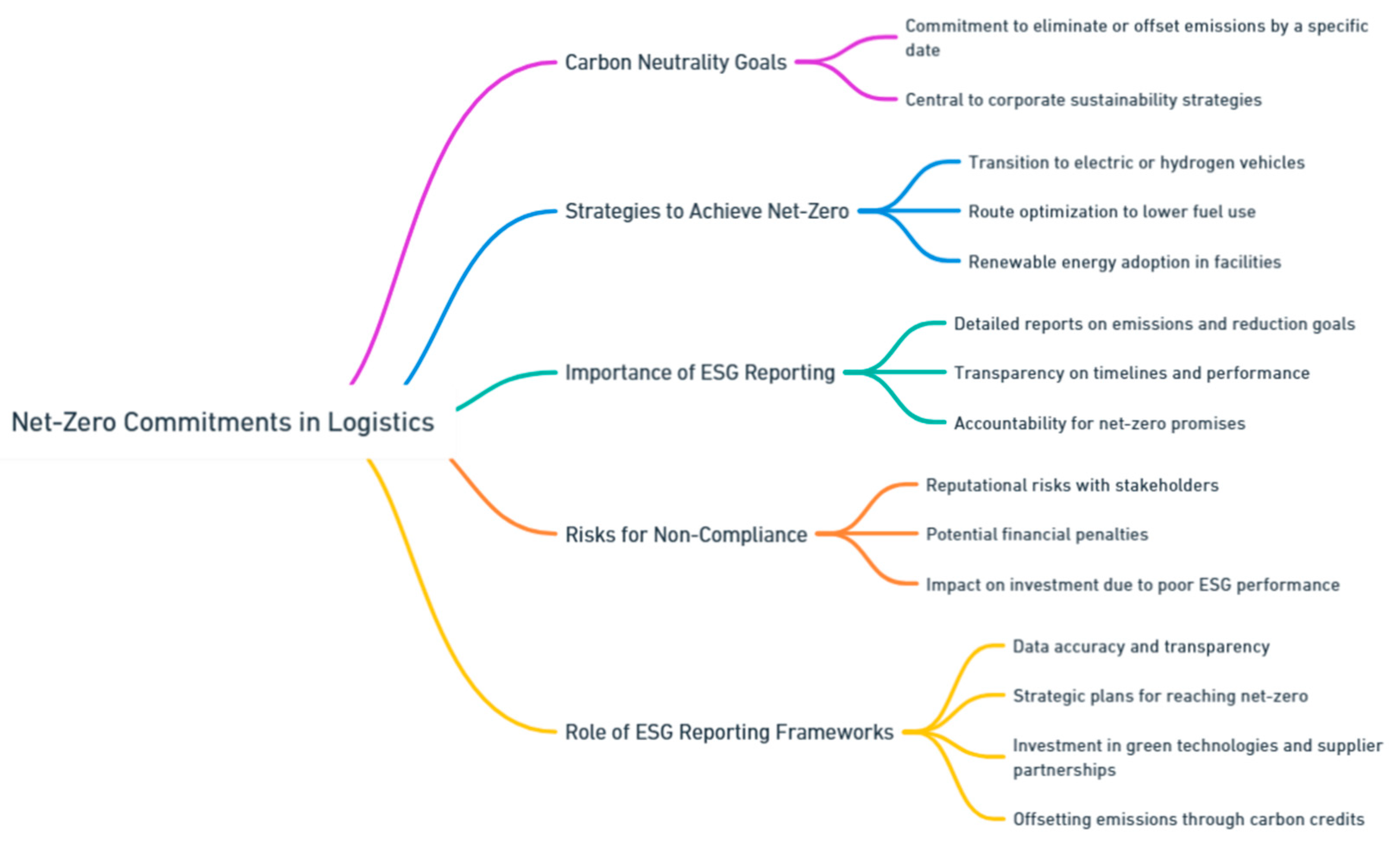
Preprints 139811 i140
3.
Green Financing: Aligning ESG Performance with Financial Incentives. As the importance of ESG performance grows, logistics companies are increasingly exploring green financing options to support their sustainability initiatives. Green financing includes financial products, such as sustainability-linked loans and green bonds, which are tied to a company’s ESG performance. These financing instruments offer incentives for companies to meet specific ESG targets—such as reducing carbon emissions or improving energy efficiency—by providing lower interest rates or more favorable loan terms. Green financing is rapidly becoming a critical tool for logistics companies seeking to fund the transition to more sustainable operations. With significant investments required to implement energy-efficient technologies, transition to electric vehicle fleets, and upgrade infrastructure to meet circular economy and net-zero goals, green financing can help alleviate some of the financial burden. Moreover, these financing mechanisms align corporate financial goals with sustainability objectives, creating a win-win scenario where companies can reduce their environmental impact while also improving their access to capital. ESG reporting is central to the success of green financing initiatives. Investors and financial institutions rely on detailed ESG reports to assess the sustainability performance of potential borrowers. This means logistics companies will need to strengthen their ESG reporting capabilities to demonstrate their ability to meet the targets associated with green financial products. Additionally, companies that successfully leverage green financing will benefit from enhanced reputations, as both consumers and investors increasingly favor organizations that prioritize sustainability in their operations (Sun, et al., 2023; Liu and Song, 2023).
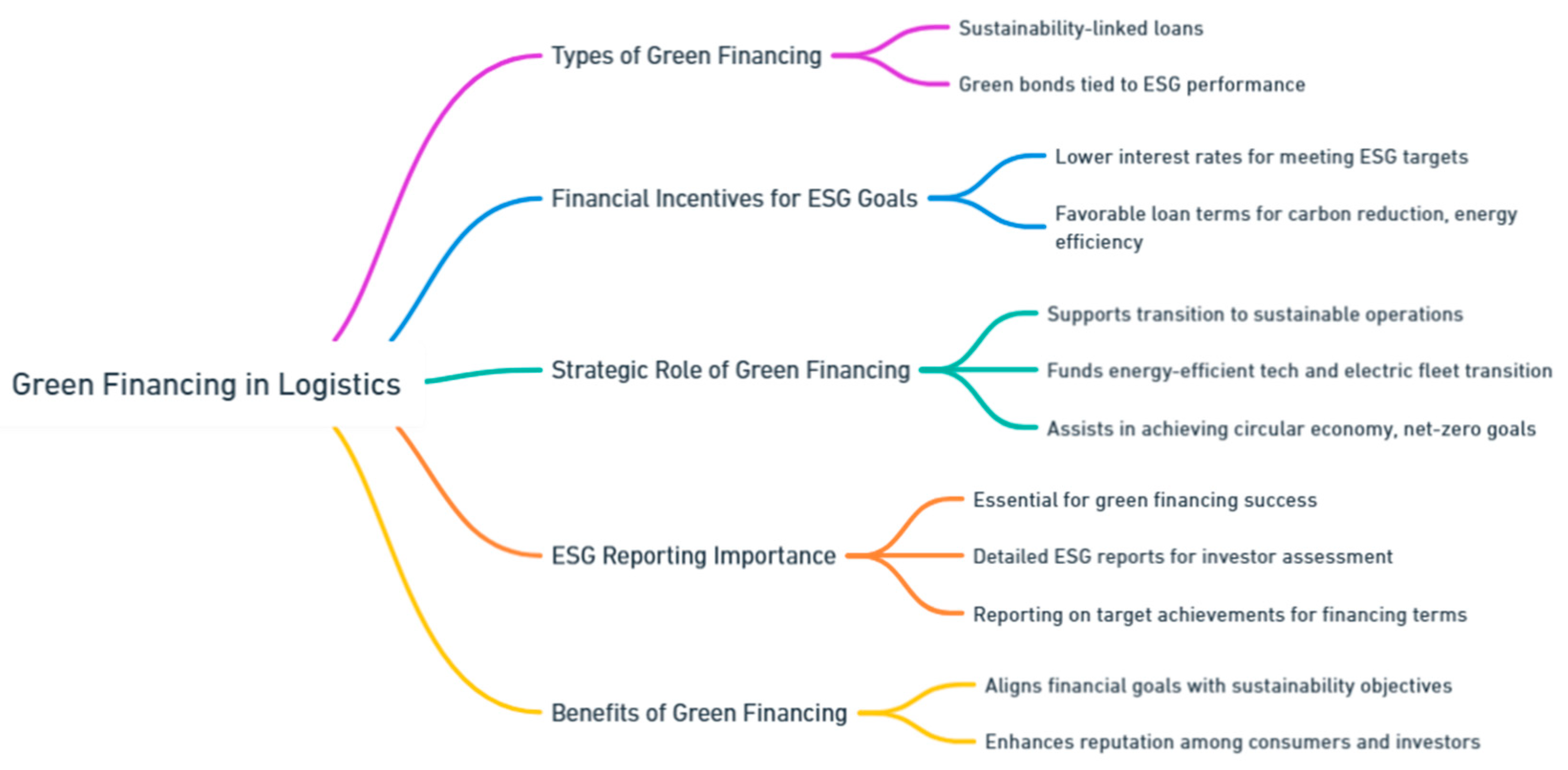
Preprints 139811 i141
4.
Evolving Regulatory Landscape: Meeting New Environmental Standards. Governments around the world are introducing stricter environmental regulations aimed at reducing emissions, improving energy efficiency, and promoting sustainable business practices. These regulations are particularly relevant in logistics, where the transportation of goods contributes significantly to global carbon emissions. For example, the European Union’s Green Deal sets ambitious targets for emissions reductions, while similar regulations are being enacted in other regions, including North America and Asia. As regulatory requirements become more stringent, ESG reporting will become increasingly important for logistics companies. Reports will need to demonstrate compliance with both local and international regulations, as well as provide transparency on how companies are going beyond regulatory requirements to address climate risks. Companies that fail to comply with these evolving standards risk facing fines, reputational damage, and loss of business opportunities, as more customers and partners choose to work with companies that are committed to sustainability (Vorontsova et al., 2023; Lee et al., 2023).
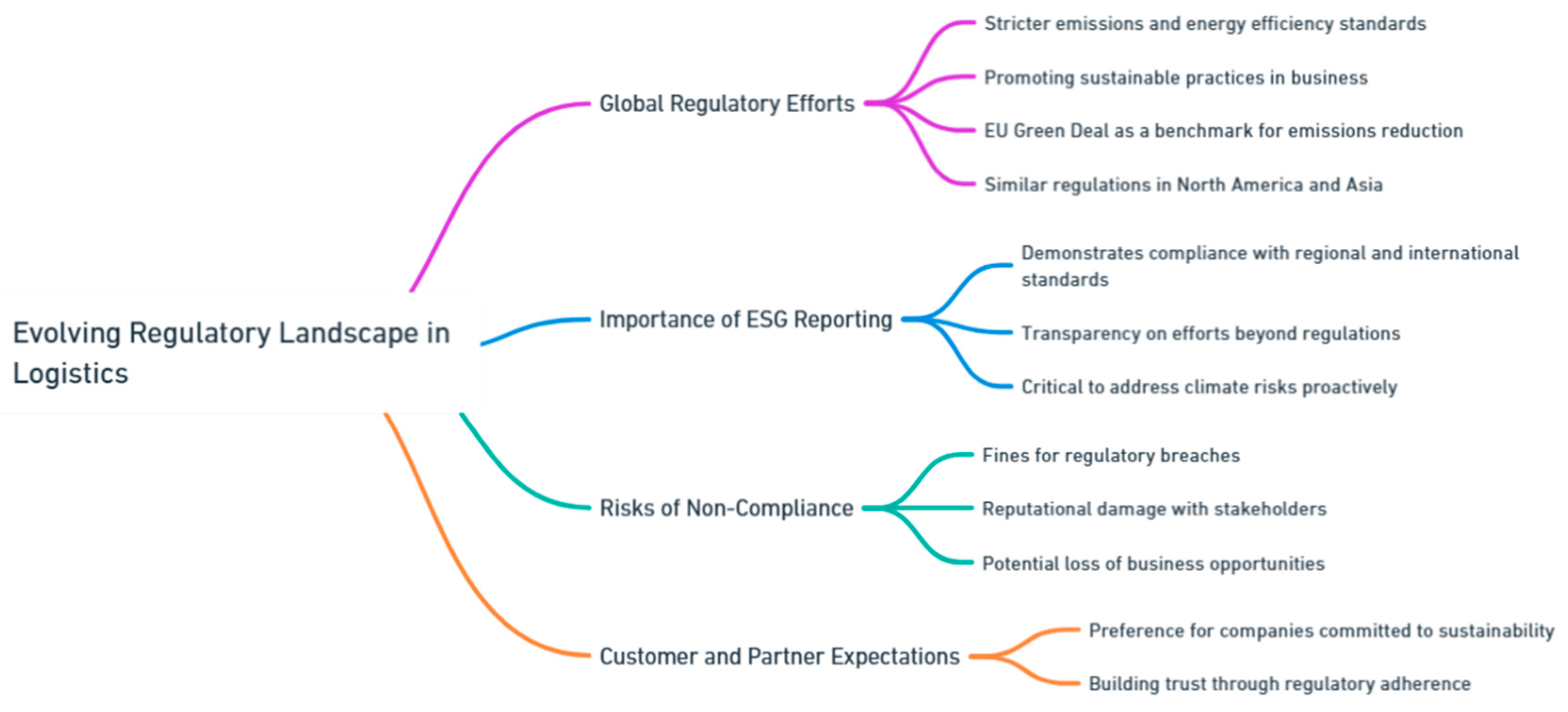
Preprints 139811 i142
The Future of ESG Reporting in Logistics. The future of ESG reporting in logistics will be characterized by increasing complexity, driven by the need to meet stricter regulatory requirements, rising stakeholder expectations, and evolving global sustainability goals. As stakeholders demand more transparency and accountability, logistics companies will need to invest in robust ESG reporting frameworks that track and disclose their progress on key sustainability initiatives, including circular economy goals, net-zero commitments, and compliance with environmental regulations. Moreover, the integration of digital tools such as data analytics, IoT, and blockchain will play an increasingly important role in improving the accuracy and transparency of ESG reporting. These technologies will enable logistics companies to track their environmental performance in real time, identify inefficiencies, and make data-driven decisions to improve their sustainability outcomes. In turn, this will provide stakeholders with more reliable and actionable insights into the company’s ESG performance, fostering greater trust and engagement. In conclusion, the logistics industry is at a pivotal moment in its journey toward sustainability. As ESG reporting becomes more comprehensive and sophisticated, companies that proactively embrace sustainability practices and reporting frameworks will be well-positioned to thrive in a rapidly changing regulatory and market landscape. The integration of circular economy principles, net-zero commitments, green financing, and regulatory compliance into ESG reporting will not only enhance transparency and accountability but also drive long-term value creation for companies and their stakeholders alike.
Preprints 139811 i143

14.8. Conclusion

Regulatory frameworks and ESG (Environmental, Social, and Governance) reporting standards are essential tools for guiding the logistics industry toward more sustainable and socially responsible practices. As the global emphasis on sustainability grows, logistics companies are under increasing pressure from governments, investors, and consumers to demonstrate their environmental and social commitments. ESG reporting has become a crucial mechanism for showcasing these efforts, providing transparency, and ensuring accountability in sustainability initiatives. By adopting established global frameworks, such as the Global Reporting Initiative (GRI), Sustainability Accounting Standards Board (SASB), and Task Force on Climate-related Financial Disclosures (TCFD), logistics companies can enhance their ESG performance and better position themselves for future challenges. In recent years, sustainability has become a critical concern for all industries, and logistics is no exception. Governments are enacting stricter regulations to mitigate the environmental impact of industrial activities, and logistics companies are often key targets due to the significant greenhouse gas emissions generated by transportation and distribution networks. Investors are also demanding greater transparency from companies about their sustainability practices to evaluate long-term financial risks, especially concerning climate change. Similarly, consumers are increasingly opting for products and services from companies that demonstrate a commitment to environmental and social responsibility. Logistics companies that fail to address these growing pressures could face reputational risks, regulatory penalties, and even financial losses. Thus, ESG reporting is becoming an indispensable tool for logistics firms to demonstrate their commitment to sustainability, communicate progress to stakeholders, and ensure compliance with regulatory requirements. Beyond risk management, ESG reporting also provides opportunities for companies to improve their operational efficiency and attract environmentally conscious investors and customers. To standardize sustainability reporting and ensure it is both comprehensive and comparable across industries, several global ESG reporting frameworks have emerged. Three of the most recognized frameworks are the Global Reporting Initiative (GRI), the Sustainability Accounting Standards Board (SASB), and the Task Force on Climate-related Financial Disclosures (TCFD) (Vorontsova et al., 2023; Tang, 2023).
Preprints 139811 i144
  • Global Reporting Initiative (GRI): The GRI is one of the oldest and most widely used ESG reporting frameworks. It offers a comprehensive set of guidelines for companies to report on their environmental, social, and governance performance. The GRI standards are designed to help companies communicate their sustainability impacts to a wide range of stakeholders, including governments, investors, and communities. For logistics companies, GRI reporting can cover topics such as greenhouse gas emissions from transportation, energy usage, waste management, and labor practices in supply chains. By adopting GRI standards, logistics companies can provide a holistic view of their sustainability efforts, ensuring transparency and accountability in their operations (Grujić et al., 2023; Shaikh, 2022).
  • Sustainability Accounting Standards Board (SASB): SASB provides industry-specific ESG standards that are focused on financially material issues—those that are most likely to impact a company’s financial performance. For logistics and transportation companies, SASB’s standards emphasize key areas such as fuel efficiency, emissions reduction, and labor conditions, all of which are critical for sustainable logistics operations. SASB’s industry-focused approach enables logistics firms to identify the ESG issues most relevant to their sector and report on them in a way that resonates with investors and financial stakeholders. The framework’s emphasis on financial materiality makes it particularly appealing to companies looking to link their ESG performance with their overall business strategy (Busco et al., 2020; Pizzi et al., 2023).
  • Task Force on Climate-related Financial Disclosures (TCFD): The TCFD framework focuses specifically on climate-related risks and opportunities. It encourages companies to disclose information about how they are managing the financial risks associated with climate change, including the potential impacts of regulatory changes, shifts in market demand, and physical risks like extreme weather events. For logistics companies, TCFD reporting is essential for addressing climate-related risks such as the increasing regulation of carbon emissions, rising fuel costs, and supply chain disruptions caused by climate events. By adopting the TCFD framework, logistics firms can better understand and communicate the financial risks posed by climate change, positioning themselves as resilient and forward-thinking companies in the eyes of investors and stakeholders (Maji and Kalita, 2022; Aversa, 2023).
The future of ESG reporting in logistics will be significantly shaped by technological advancements that enhance data collection, analysis, and reporting capabilities. Digitalization is transforming the logistics industry, with new tools like the Internet of Things (IoT), big data analytics, and artificial intelligence (AI) playing a pivotal role in improving operational efficiency and sustainability.
  • Data Collection and IoT: IoT devices, such as GPS trackers and sensors, are revolutionizing logistics by providing real-time data on vehicle performance, fuel consumption, and cargo conditions. These technologies enable logistics companies to track key performance indicators (KPIs) related to energy efficiency and environmental impact. For example, IoT-enabled fleet management systems can optimize routes to reduce fuel consumption and emissions, contributing to more accurate ESG reporting. This real-time data allows companies to monitor their environmental footprint and provide precise, up-to-date information in their ESG reports (Lv, 2022; Wang et al., 2018).
  • Big Data and AI. The logistics sector generates vast amounts of data, from vehicle movements to supply chain operations. Advanced data analytics and AI can help companies analyze this data to identify patterns, optimize processes, and forecast future trends. For ESG reporting, big data and AI are invaluable in measuring sustainability performance over time, identifying areas for improvement, and enhancing the accuracy of disclosures. For instance, AI can be used to analyze a company's energy consumption patterns and suggest strategies for reducing carbon emissions, improving the quality and depth of ESG reports (Saxena et al., 2022; Lee et al., 2022).
  • Blockchain for Transparency. Blockchain technology has the potential to bring greater transparency and traceability to logistics operations. By creating immutable records of transactions and activities, blockchain can help logistics companies provide verifiable data on their ESG performance, particularly in areas such as supply chain transparency and waste management. For instance, companies can use blockchain to trace the lifecycle of products from manufacturing to end-of-life disposal, ensuring that ESG claims about sustainable sourcing or waste reduction are credible and trustworthy (Wamba et al., 2020; Bai and Sarkis, 2020).
Regulatory requirements related to sustainability and ESG reporting are becoming stricter across the globe, pushing logistics companies to align their operations with environmental and social standards. Governments are introducing new regulations on carbon emissions, energy efficiency, and waste management, all of which directly impact logistics operations. In Europe, for example, the European Green Deal aims to make the continent climate-neutral by 2050, with significant implications for the logistics industry. The introduction of carbon pricing, stricter emissions limits, and incentives for green technologies will push logistics companies to adopt more sustainable practices and report on their progress. Similarly, in the United States, the Securities and Exchange Commission (SEC) is considering mandatory climate-related disclosures, which would require companies to report on their carbon footprint and climate risks in their financial filings. These evolving regulations will make ESG reporting not only a competitive advantage but also a compliance requirement for logistics companies operating in different regions. Companies that proactively adopt global ESG frameworks and improve their sustainability practices will be better prepared to meet these regulatory demands (Zeng et al., 2023; Sun, 2023).
ESG Reporting and the Future of Sustainable Supply Chains. As sustainability becomes increasingly important in global supply chains, logistics companies will need to embrace ESG reporting as a critical component of their operations. Companies that integrate ESG considerations into their supply chain management will be able to reduce their environmental impact, improve social outcomes, and strengthen their governance practices. Sustainability in supply chains is no longer a secondary concern. Consumers and investors are demanding more transparency from companies about how their products are sourced, manufactured, and transported. ESG reporting enables logistics companies to demonstrate their commitment to sustainable supply chain management, building trust with stakeholders and contributing to a more sustainable global economy (Zeng et al., 2022; Das, 2023).
In conclusion, regulatory frameworks and ESG reporting standards are becoming indispensable for logistics companies seeking to navigate the growing demands for sustainability and social responsibility. By adopting global ESG frameworks such as GRI, SASB, and TCFD, logistics firms can improve transparency, manage risks, and enhance their long-term competitiveness. The future of ESG reporting in logistics will be shaped by technological advancements, stricter regulatory requirements, and the increasing importance of sustainability in global supply chains. Companies that embrace these trends and invest in robust ESG reporting practices will be well-positioned to thrive in a more sustainable and socially responsible world.

15. Developing an ESG Evaluation Model for Smart Logistics

15.1. Key ESG Metrics for Smart Logistics
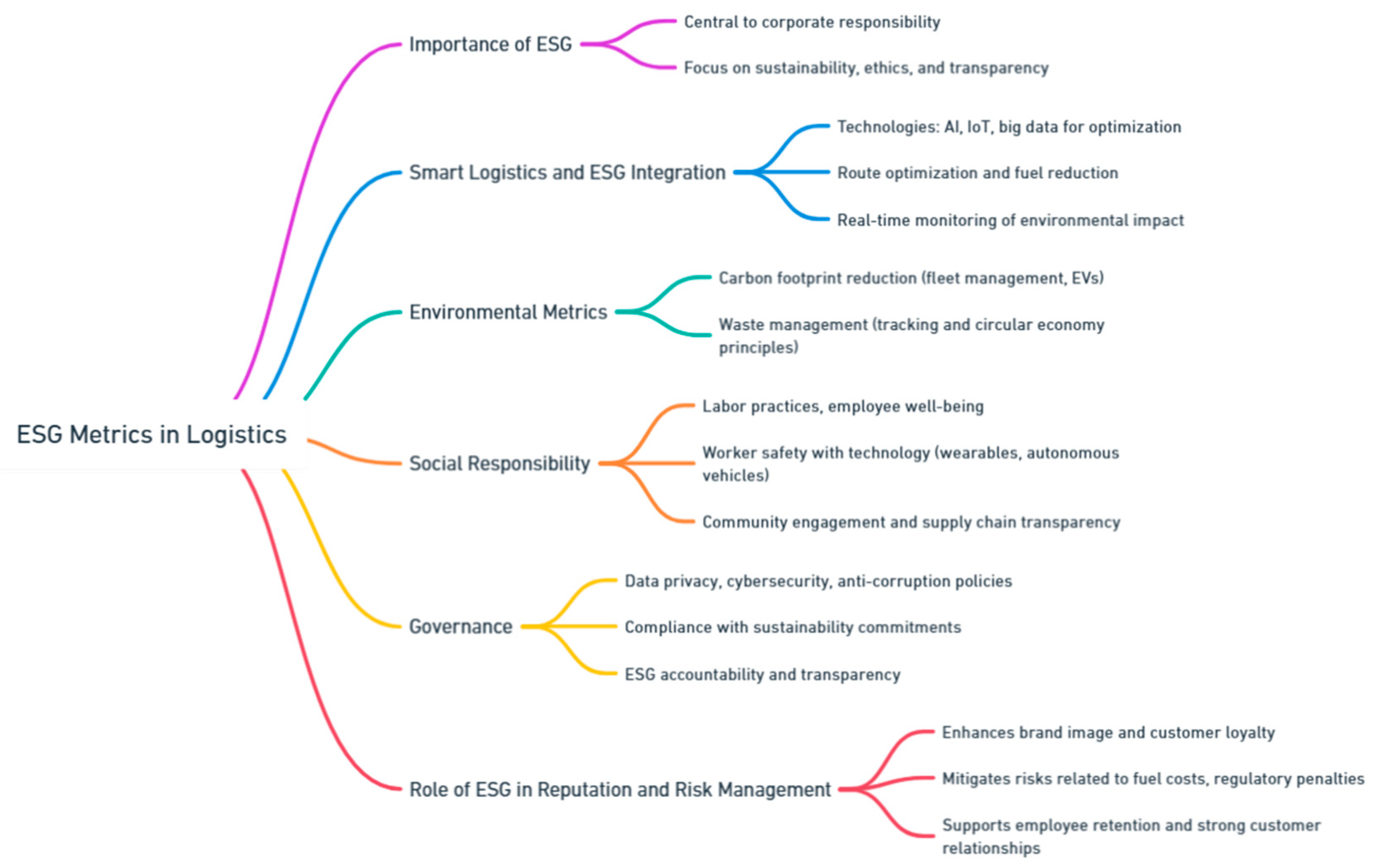
Environmental, Social, and Governance (ESG) metrics have become central to corporate responsibility across industries, and the logistics sector is no exception. The increasing focus on sustainability, ethical practices, and corporate transparency has made ESG performance a vital aspect of business strategy, especially for companies in logistics. As logistics firms embrace smart logistics—the use of technology to optimize the movement of goods, improve operational efficiency, and reduce environmental impacts—ESG metrics serve as essential benchmarks to measure their progress toward sustainability goals. This comprehensive integration of ESG into logistics operations offers companies an opportunity to not only enhance their business performance but also align with the growing demands of investors, consumers, and regulatory bodies.
Smart Logistics and ESG Integration. Smart logistics refers to the application of advanced technologies such as artificial intelligence (AI), the Internet of Things (IoT), and big data analytics to streamline supply chain operations. These technologies enable companies to monitor and optimize various aspects of logistics, such as transportation routes, fuel consumption, and warehouse operations. The ability to leverage real-time data helps reduce inefficiencies, lower operational costs, and minimize the environmental footprint of logistics activities. Given the pressing need to reduce carbon emissions and other environmental impacts, the integration of ESG principles with smart logistics is a natural progression. By using smart logistics, companies can reduce their environmental footprint, which directly impacts the "Environmental" pillar of ESG metrics. For example, route optimization algorithms powered by AI can help reduce fuel consumption by identifying the most efficient delivery paths, thus cutting down on emissions. Similarly, IoT-enabled sensors can monitor the energy consumption of warehouses and other logistics infrastructure, providing real-time data that can inform decisions about energy efficiency and renewable energy adoption. This level of detail and accuracy in measuring environmental performance is crucial, as it allows logistics companies to set tangible sustainability goals and track their progress over time (Zeng et al., 2022; Das, 2023).
Environmental Metrics: Reducing the Carbon Footprint. One of the most significant areas of focus within the logistics sector, from an ESG perspective, is the reduction of the carbon footprint. Transportation, which is at the core of logistics, is one of the largest contributors to greenhouse gas emissions globally. According to the International Energy Agency (IEA), transportation accounts for nearly 24% of global CO₂ emissions. Therefore, minimizing these emissions is a critical ESG objective for logistics companies. Smart logistics plays a crucial role in addressing this challenge. AI-powered predictive analytics can anticipate demand fluctuations and optimize fleet management, ensuring that vehicles are fully loaded and reducing the number of trips required. Electric vehicles (EVs) are another key development, offering a cleaner alternative to traditional fossil fuel-powered trucks. Many logistics companies are already transitioning to electric or hybrid fleets, which helps reduce their carbon footprint and aligns with broader ESG targets focused on climate action. In addition to transportation, waste management is another area where smart logistics can help companies improve their environmental metrics. The use of big data and IoT can assist in tracking and managing waste generated throughout the supply chain, such as packaging waste or excess inventory. By adopting more circular economy principles—where resources are reused and recycled—logistics companies can reduce the amount of waste they produce, contributing to a more sustainable operation (Wang et al., 2023; Khanna et al., 2021).
Social Responsibility in Logistics. Beyond environmental metrics, the "Social" aspect of ESG is increasingly important in the logistics sector. Social responsibility covers a broad range of issues, including labor practices, employee well-being, community engagement, and customer satisfaction. As the logistics sector becomes more automated and reliant on technology, companies must ensure that they are balancing efficiency gains with social responsibility. Labor practices in logistics are often scrutinized, particularly as the industry experiences a shift towards greater automation. While automation can improve efficiency, there are concerns about its impact on employment. Logistics companies must navigate this challenge by ensuring that they provide upskilling and reskilling opportunities for workers whose roles may be displaced by technology. Investing in employee development not only improves the company's ESG score but also enhances workforce morale and loyalty, contributing to long-term success. Moreover, worker safety is a key social responsibility issue in logistics, particularly for those involved in physically demanding jobs such as warehousing and transportation. Companies that invest in technologies to improve worker safety—such as wearable devices that monitor health metrics or autonomous vehicles that reduce the risk of accidents—demonstrate a strong commitment to social responsibility. By prioritizing the well-being of their workforce, logistics companies can foster a culture of care and responsibility, which is an important component of their overall ESG performance. In terms of community engagement, logistics companies have a unique opportunity to make a positive social impact by improving supply chain transparency. Consumers and stakeholders increasingly demand to know how goods are sourced and transported, especially concerning human rights issues such as fair labor practices and ethical sourcing. Smart logistics technologies, such as blockchain, enable companies to provide greater transparency in their supply chains, ensuring that their operations adhere to ethical standards and contribute positively to the communities they serve (Govindan et al., 2021; Uyar et al., 2020).
Governance in the Logistics Sector. The "Governance" pillar of ESG focuses on how companies are managed, including their leadership structures, ethical practices, and compliance with regulations. For logistics companies, strong governance is essential to ensure that their operations are not only efficient but also ethical and legally compliant. This involves everything from anti-corruption policies to data privacy protections, particularly as companies handle increasing amounts of data through smart logistics technologies. One area where governance intersects with smart logistics is in the realm of data management. As logistics companies adopt AI, IoT, and big data analytics, they must also ensure that they are complying with regulations around data privacy and cybersecurity. Strong governance frameworks that protect customer and partner data will become increasingly important as the logistics sector becomes more digitized. By adhering to best practices in data governance, logistics companies can mitigate risks associated with data breaches or misuse, which could damage their reputation and lead to regulatory penalties. Furthermore, governance is crucial for ensuring that logistics companies meet their sustainability commitments. Investors and regulators are increasingly holding companies accountable for their ESG performance, and strong governance frameworks ensure that companies are transparent in reporting their progress toward sustainability goals. This includes disclosing their carbon emissions, waste reduction efforts, and social responsibility initiatives in annual sustainability reports, which are essential for maintaining the trust of stakeholders (Govindan et al., 2021; Inawati and Rahmawati, 2023).
The Role of ESG in Enhancing Reputation and Reducing Risks. One of the key benefits of integrating ESG metrics into logistics operations is the potential for enhancing a company's reputation. Consumers, investors, and partners are increasingly aligning themselves with companies that demonstrate a commitment to sustainability and ethical practices. By focusing on ESG metrics, logistics companies can improve their brand image and attract customers who prioritize sustainability. In addition to reputation, tracking and improving ESG metrics helps companies mitigate risks. For example, reducing dependence on fossil fuels not only aligns with environmental goals but also helps logistics companies hedge against the risks of fluctuating fuel prices or regulatory changes such as carbon taxes. Similarly, strong governance practices reduce the risk of legal challenges or regulatory penalties, while socially responsible practices improve employee retention and customer satisfaction, reducing turnover and fostering long-term relationships. In conclusion, ESG metrics have become indispensable for logistics companies aiming to improve their sustainability performance and meet the demands of a changing business landscape. Smart logistics technologies, such as AI, IoT, and big data, offer powerful tools to enhance operational efficiency and reduce environmental impacts. By focusing on key ESG metrics—such as reducing carbon emissions, ensuring responsible labor practices, and maintaining strong governance frameworks—logistics companies can improve their operational efficiency, reduce risks, and enhance their reputation as responsible global citizens. In a world where sustainability is increasingly linked to business success, the integration of ESG principles in logistics is not just a strategy for the future, but a requirement for long-term competitiveness and resilience (Al-Qaruty et al., 2022; Rodionova et al., 2022).
Preprints 139811 i145

15.2. Environmental Metrics for Smart Logistics

The environmental dimension of ESG (Environmental, Social, and Governance) in logistics is one of the most pressing and visible concerns within the industry. Given the scale of logistics operations—encompassing transportation, warehousing, packaging, and distribution—this sector is a significant contributor to environmental degradation, including greenhouse gas (GHG) emissions and resource consumption. Consequently, smart logistics companies are focusing on reducing their environmental footprint by integrating sustainable practices and employing technology to enhance energy efficiency, reduce emissions, and manage resources more effectively. This expansion will delve deeper into the key components of environmental sustainability in logistics, highlighting how these efforts contribute to ESG goals.
  • Carbon Emissions and Carbon Intensity: Carbon emissions are a critical environmental metric in logistics, particularly due to the carbon-intensive nature of transportation, which is central to this industry. Road freight and aviation, in particular, are significant contributors to global CO₂ emissions. These transportation modes account for a large percentage of the logistics industry's carbon footprint, making it imperative for companies to address carbon emissions systematically. Logistics companies measure their carbon impact through two primary metrics: absolute emissions and carbon intensity. Absolute emissions refer to the total amount of CO₂ emitted during operations, while carbon intensity measures the amount of carbon emitted per ton-kilometer or per unit of cargo transported. Carbon intensity is a crucial efficiency metric that reflects how efficiently goods are being moved in relation to the environmental impact. To achieve smart logistics, companies must closely monitor both these metrics. By reducing carbon intensity, companies can maintain or even increase their operational output while minimizing their carbon footprint. This can be accomplished through strategies such as optimizing transport routes, adopting more fuel-efficient vehicles, and investing in lower-carbon transportation modes, such as rail or sea freight, which are less carbon-intensive than road or air freight. Smart logistics companies are also adopting carbon offset programs to neutralize the emissions they cannot reduce directly (Zhang et al., 2021; Li et al., 2023).
  • Energy Efficiency and Use of Renewable Energy. Energy efficiency plays a pivotal role in reducing the environmental impact of logistics operations. Improving energy efficiency involves optimizing the amount of energy consumed in proportion to the output of logistics activities—whether it's the number of packages delivered, miles traveled, or goods stored. In the context of warehousing, energy efficiency measures can include improving insulation, upgrading to energy-efficient lighting (such as LED systems), and optimizing HVAC (heating, ventilation, and air conditioning) systems to reduce unnecessary energy consumption. Additionally, transportation energy efficiency is achieved by reducing fuel consumption through various methods, including route optimization, driver behavior monitoring, and regular vehicle maintenance. These measures ensure that logistics companies minimize fuel waste and use energy as efficiently as possible. The shift toward renewable energy is another critical trend in smart logistics. Companies are increasingly investing in renewable energy sources, such as solar and wind power, to supply energy for warehouses, distribution centers, and even vehicle charging stations. Solar panels on the roofs of warehouses and distribution centers, for instance, can significantly reduce the reliance on grid electricity, which may come from fossil fuels. Moreover, some logistics providers are also experimenting with integrating renewable energy into their transportation networks by using biofuels or green hydrogen as alternative fuels. This transition to renewable energy not only reduces the environmental impact but also contributes to long-term cost savings and energy independence (Rehman Khan et al., 2022; Milewski and Milewska, 2023).
  • Fleet Electrification and Fuel Efficiency. The electrification of logistics fleets is one of the most promising avenues for reducing carbon emissions in the sector. Electric vehicles (EVs) have become a key component of sustainable logistics strategies because they have a significantly lower carbon footprint compared to traditional internal combustion engine vehicles. This shift toward fleet electrification is driven by technological advances, government incentives, and growing consumer demand for greener services. Many logistics companies are transitioning to electric delivery vans and trucks, particularly for last-mile deliveries in urban areas where emissions regulations are becoming stricter. EVs not only produce zero tailpipe emissions, but they also contribute to lower noise pollution, making them ideal for urban logistics. To track their progress, companies measure metrics such as the percentage of their fleet that is electrified, the average miles per charge of EVs, and fuel efficiency across their fleet. In addition to electrification, improving fuel efficiency in traditional vehicles remains a priority for companies that are unable to fully transition to electric fleets. This includes adopting fuel-efficient driving practices, investing in aerodynamic vehicle designs, and using advanced telematics systems to monitor and reduce fuel consumption. These efforts not only reduce carbon emissions but also result in significant cost savings by lowering fuel expenses (Ou et al., 2021; Husain et al., 2021).
  • Waste Reduction and Circular Economy Initiatives: Waste management is another critical aspect of the environmental dimension of ESG in logistics, particularly with regard to packaging and end-of-life product disposal. Logistics companies handle vast amounts of packaging materials, much of which is single-use and contributes to landfill waste. To address this, many smart logistics companies are embracing the principles of the circular economy—a system designed to minimize waste and make the most of available resources by recycling, reusing, and designing products for longer life cycles. Circular economy initiatives in logistics focus on several key areas. First, companies are working to reduce the amount of packaging used in shipping goods, opting for more sustainable alternatives such as biodegradable materials or packaging that can be easily recycled. Second, businesses are investing in reverse logistics systems, which allow them to collect and recycle or repurpose products at the end of their life cycle. For example, returned items or outdated products can be refurbished, resold, or broken down into raw materials for reuse. Metrics such as waste diversion rates (the percentage of waste diverted from landfills) and packaging waste reduction help logistics companies measure their progress in waste management. By implementing circular economy principles, companies not only reduce their environmental impact but also create new revenue streams from recycled materials and refurbished products (Scrioșteanu and Criveanu, 2023; Guarnieri et al., 2020).
  • Water Consumption and Conservation: While water consumption in logistics is less significant than emissions and energy use, it remains an important environmental consideration, especially in warehouse and facility management. Logistics operations, particularly in large distribution centers, require significant water resources for maintenance, cleaning, and cooling purposes. Smart logistics companies are implementing water conservation measures to reduce their water footprint. This can involve installing water-efficient fixtures, recycling water used in operations, and using rainwater harvesting systems to supply non-potable water for irrigation or cleaning. Monitoring water use in logistics facilities enables companies to identify inefficiencies and implement conservation strategies that align with their broader sustainability goals.The environmental dimension of ESG in logistics is a multifaceted challenge, but it also presents significant opportunities for innovation and growth. By focusing on key areas such as carbon emissions, energy efficiency, fleet electrification, waste management, and water conservation, logistics companies can drastically reduce their environmental impact. Smart logistics practices, supported by technology and a commitment to sustainability, are essential in meeting the growing demands of consumers, regulators, and stakeholders for more sustainable operations. As the logistics industry continues to evolve, companies that prioritize environmental sustainability will gain a competitive advantage by reducing costs, improving operational efficiency, and building stronger relationships with environmentally conscious customers. Moreover, their efforts will contribute to the global fight against climate change, making logistics a key player in the transition toward a greener, more sustainable future (Feizizadeh et al., 2021).
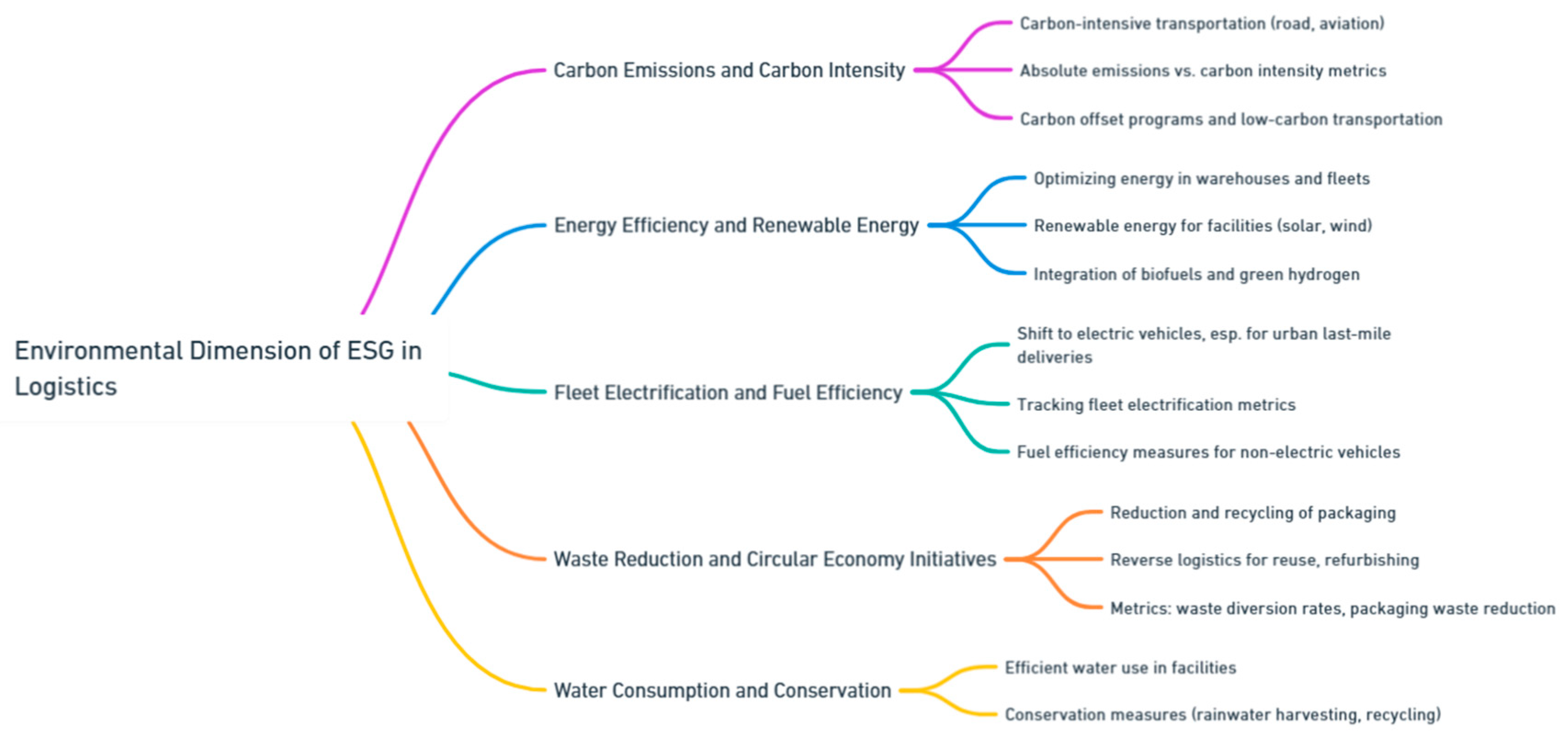
Preprints 139811 i146

15.3. Social Metrics for Smart Logistics

The social dimension of Environmental, Social, and Governance (ESG) focuses on how companies manage relationships with their employees, customers, and communities. For the logistics industry, which often deals with large and diverse workforces, complex global supply chains, and substantial community interactions, this aspect of ESG is crucial for building trust, improving operations, and ensuring long-term sustainability. Social responsibility is not just an ethical obligation but also a strategic imperative for logistics companies seeking to remain competitive in an era of growing consumer and regulatory demand for transparency and accountability. Social metrics are instrumental in helping logistics companies evaluate their performance across key areas such as labor practices, health and safety, community impact, diversity, equity, and inclusion (DEI), and human rights.
  • Labor Practices and Employee Welfare. The logistics sector is labor-intensive, relying on a wide range of employees, from warehouse workers to truck drivers. Employee welfare is therefore a critical social metric. Companies need to track wages, benefits, job security, and opportunities for career advancement to ensure they are providing a fair and supportive work environment. Fair compensation and comprehensive benefits not only support worker satisfaction but also reduce turnover rates, which are often high in the logistics industry. Beyond compensation, logistics companies are increasingly monitoring employee engagement and satisfaction. Engagement surveys and feedback mechanisms help companies gauge how employees feel about their work environment, which can impact productivity, morale, and retention. A stable and satisfied workforce is essential for maintaining efficiency and service quality, as high turnover and disengaged employees can lead to disruptions in operations. Companies that prioritize employee welfare are also better positioned to attract top talent in a competitive job market, which is vital for sustaining growth in the long term (Davydenko et al., 2023; Feizizadeh et al., 2021).
  • Health and Safety Standards. Health and safety standards in logistics are critical due to the inherent risks associated with many of its operations. The industry presents various occupational hazards, from heavy lifting in warehouses to long hours spent on the road by truck drivers. Companies must comply with health and safety regulations and often go beyond compliance by adopting proactive measures to safeguard their workforce. Tracking safety metrics, such as incident rates, injury frequency, and lost-time injury rates, allows logistics companies to evaluate their health and safety performance. These metrics help identify areas where improvements can be made, ensuring that the workplace remains as safe as possible. Implementing health and safety training programs, regular safety audits, and risk assessments are crucial elements in reducing workplace accidents. Moreover, innovative technologies are playing a transformative role in improving safety in logistics. Autonomous machinery in warehouses, wearable devices that monitor worker health, and telematics for drivers are some examples of how technology is helping to reduce risks. By investing in advanced safety solutions, logistics companies can protect their workers while also improving operational efficiency by minimizing downtime due to accidents (Marhavilas et al., 2022; Rikhotso et al., 2021).
  • Community Impact and Stakeholder Engagement. Logistics companies often operate in or near densely populated areas, making their community impact a key social metric. The development and operation of large logistics hubs can affect local traffic patterns, contribute to noise pollution, and impact air quality. These factors can generate tension between logistics companies and the communities they serve, making it essential for companies to proactively manage their community footprint. Stakeholder engagement is a vital component of building positive relationships with the communities around logistics operations. Companies can track the number of community outreach programs they sponsor, the partnerships they build with local organizations, and their involvement in addressing community concerns. For example, logistics companies can work with local governments to mitigate traffic congestion around their facilities, invest in noise-reduction technologies, or engage in efforts to improve local air quality through the adoption of cleaner transportation methods. Engaging with stakeholders not only enhances a company’s reputation but also contributes to its social license to operate. A company that is seen as a responsible neighbor is more likely to enjoy long-term support from the community, local governments, and customers. Furthermore, effective stakeholder engagement can provide valuable feedback that helps companies improve their operations and address potential issues before they escalate (Shearston et al., 2020; Wallace and Riegert, 2023).
  • Diversity, Equity, and Inclusion (DEI) in Logistics. Diversity, equity, and inclusion (DEI) are increasingly recognized as critical components of social responsibility in the logistics sector. Companies that prioritize DEI are better positioned to build a dynamic and innovative workforce. In logistics, DEI metrics often focus on the representation of women, minorities, and other underrepresented groups within the workforce, particularly in leadership roles. Tracking the percentage of women and minority employees in leadership positions and monitoring equal pay statistics help ensure that companies are fostering an inclusive environment. Logistics companies can also implement initiatives aimed at promoting diversity, such as mentorship programs, diversity training, and recruitment strategies that prioritize underrepresented groups. These efforts are not just about social justice but also about enhancing business performance. Research has shown that diverse teams bring a wider range of perspectives, which can lead to better decision-making, increased creativity, and improved problem-solving capabilities. In an industry as competitive and dynamic as logistics, companies that embrace DEI are more likely to attract and retain a talented workforce, fostering a culture of inclusion that drives long-term success (Smith and Leon, 2023; Fernandez et al., 2023).
  • Human Rights in Supply Chains: Global logistics networks often involve suppliers and partners in regions where human rights abuses, such as forced labor and unsafe working conditions, are a concern. As such, ensuring ethical supply chain management is a critical social responsibility for logistics companies. Human rights violations within supply chains can cause significant reputational damage and lead to legal consequences, making it imperative for companies to monitor and audit their suppliers closely. Human rights metrics track supplier audits, certifications, and compliance with international labor standards, such as those outlined by the International Labour Organization (ILO). Regular audits and certifications help ensure that suppliers adhere to ethical labor practices, such as providing safe working conditions, fair wages, and prohibiting child or forced labor. In addition to compliance, companies can build long-term relationships with suppliers that share their commitment to ethical labor practices. By working collaboratively with suppliers to improve labor standards, logistics companies can contribute to positive social change in the regions where they operate. This not only protects the company’s reputation but also aligns with the growing consumer demand for ethically produced goods. The social dimension of ESG in logistics encompasses a wide range of critical issues that are essential for building sustainable and responsible operations. From labor practices and employee welfare to health and safety, community impact, DEI, and human rights in supply chains, logistics companies must prioritize social metrics to maintain trust and foster long-term growth. In an industry where people are at the heart of operations, addressing these social responsibilities is not only an ethical imperative but also a key driver of business success. Companies that lead in social responsibility by investing in their workforce, engaging with communities, promoting diversity, and ensuring ethical supply chains will be better positioned to thrive in a future where sustainability and accountability are central to business operations. As the logistics sector continues to evolve, the social dimension of ESG will play an increasingly vital role in shaping the industry’s trajectory toward a more responsible and equitable future (Hammond 2021; Wheeler, 2022).
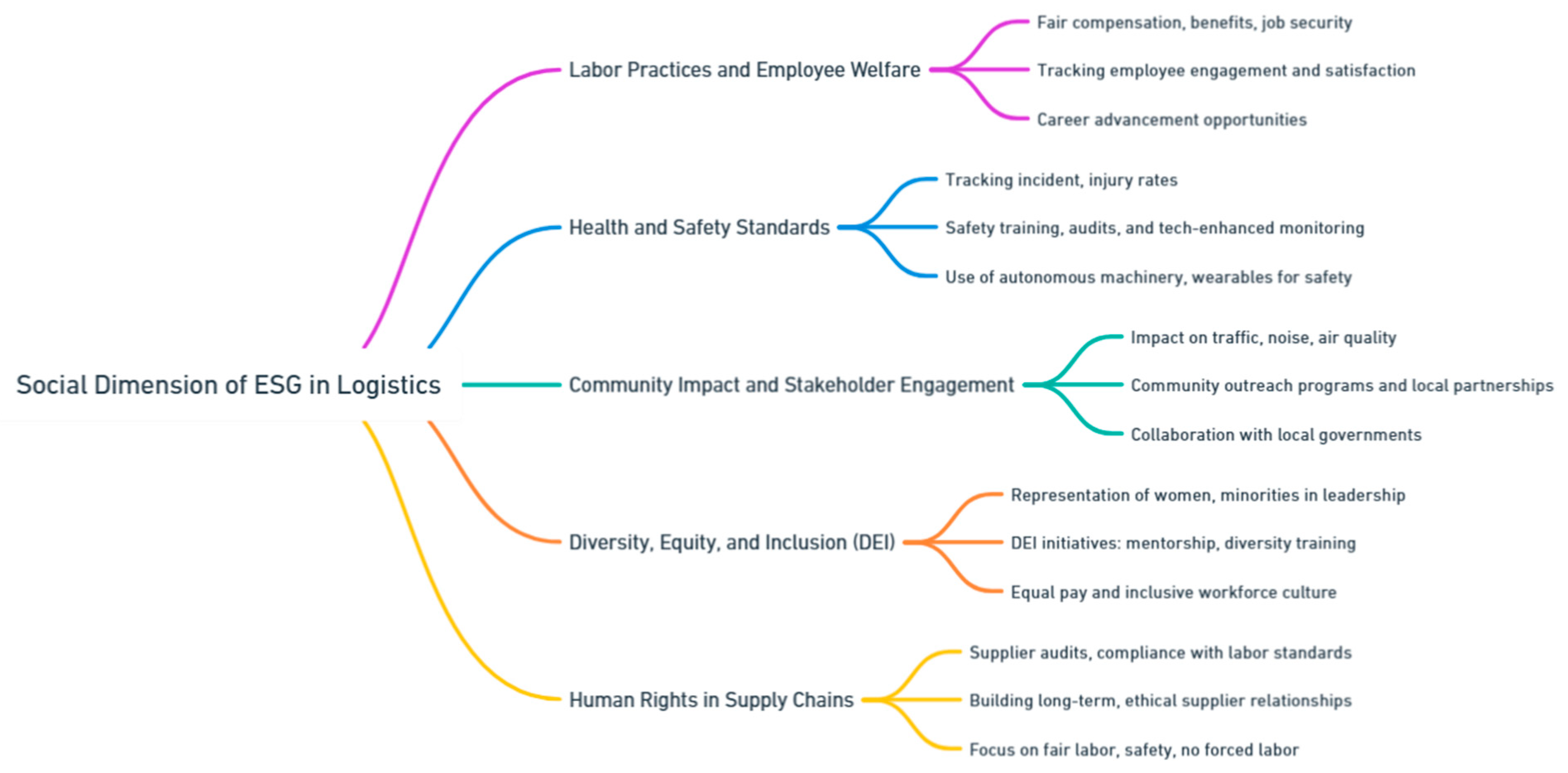
Preprints 139811 i147

15.4. Governance Metrics for Smart Logistics

Governance metrics are critical for assessing the quality of a company's leadership, transparency, and adherence to ethical standards, all of which are essential for maintaining the trust of investors, regulators, and the public. These metrics play an increasingly important role in today’s business environment, where sustainability is a key focus, and companies are held accountable for their environmental, social, and governance (ESG) practices. For logistics companies, effective governance is particularly crucial due to the global scope and complexity of their operations. Good governance ensures that environmental and social goals are met responsibly, safeguarding both the company’s reputation and long-term success.
Transparency and Ethical Practices. Transparency in business practices has become a cornerstone of good governance, especially as stakeholders increasingly demand openness about a company’s environmental and social impacts. Transparency metrics evaluate how openly a logistics company communicates its operations, challenges, and progress toward sustainability goals to stakeholders such as investors, customers, employees, and regulators. One of the primary ways logistics companies demonstrate transparency is through regular ESG reporting. These reports offer a comprehensive look at how the company is addressing key issues such as emissions, labor practices, energy use, and governance structures. High-quality ESG reports are detailed and adhere to international reporting standards like the Global Reporting Initiative (GRI) or the Sustainability Accounting Standards Board (SASB), ensuring that the information is both reliable and comparable across industries. Additionally, transparency includes the willingness to disclose challenges as well as successes. This means that logistics companies must be honest about their sustainability setbacks, such as supply chain disruptions or failures to meet emissions targets. By openly discussing these issues, companies not only build trust but also show a commitment to continuous improvement. Transparency also extends to ethical practices, which involves being upfront about labor practices, sourcing, and supplier relationships. Disclosing information on working conditions, fair wages, and anti-discrimination policies is an important aspect of building ethical, sustainable supply chains. Furthermore, logistics companies must ensure that their suppliers are adhering to similar ethical standards, particularly in regions where labor and environmental laws may be less stringent (Bulyga et al., 2023; Pizzi, et al., 2023).
  • Corporate Governance Structure and Leadership Accountability. Effective governance requires strong leadership structures that are designed to hold decision-makers accountable. In logistics, where decisions often impact global supply chains, having a robust governance framework ensures that companies can respond swiftly and responsibly to challenges while maintaining their ethical obligations. Key governance metrics include evaluating the composition and diversity of a company's board of directors. A diverse and independent board is essential for fostering well-rounded decision-making, which can better address the broad array of challenges faced by logistics companies. Metrics such as the percentage of independent board members and the presence of women or other underrepresented groups on the board are indicators of a company’s commitment to inclusive governance. Research shows that more diverse boards tend to make better decisions, as they bring a wider range of perspectives to the table. Another critical governance factor is leadership accountability. This is often reflected in the establishment of dedicated ESG committees or similar structures within the board that specifically focus on overseeing environmental and social initiatives. These committees ensure that sustainability efforts are not merely token gestures but are integrated into the company’s strategic decision-making processes. Moreover, clear accountability structures mean that executives and senior leaders are held responsible for the outcomes of these initiatives, further reinforcing the company’s commitment to good governance (Yadav and Jain, 2023; Bhat et al., 2024).
  • Anti-Corruption and Compliance Standards. Given the global scope of logistics operations, compliance with anti-corruption laws and regulations is another vital governance metric. Logistics companies, due to their international networks and interactions with various governmental and regulatory bodies, are particularly vulnerable to corruption risks. Failing to adhere to anti-corruption standards not only jeopardizes a company’s legal standing but also risks damaging its reputation and eroding stakeholder trust. Metrics that track the number of compliance violations, bribery incidents, and supplier adherence to ethical standards are essential for maintaining transparency and avoiding legal risks. A robust compliance program typically includes regular audits, employee training on anti-corruption laws, and mechanisms for whistleblowers to report unethical behavior. Logistics companies must also ensure that their suppliers, especially those in regions with higher corruption risks, are held to the same ethical standards. Having strict compliance and anti-corruption policies in place is not only a matter of legality but also a critical element of corporate responsibility. By establishing and enforcing these standards, logistics companies demonstrate their commitment to operating ethically and in line with global best practices (Ghazwani et al., 2024; Siahaan et al., 2023).
  • Data Privacy and Cybersecurity in Logistics Systems. As logistics companies increasingly adopt digital technologies such as Internet of Things (IoT) devices, artificial intelligence, and blockchain, data privacy and cybersecurity have emerged as key governance metrics. These technologies, while making logistics operations more efficient, also expose companies to new risks related to the protection of sensitive data. For logistics companies, this can include data related to customer shipments, operational schedules, and even proprietary business information. Data privacy metrics evaluate how well companies comply with regulations like the General Data Protection Regulation (GDPR) in Europe or other data protection laws in different regions. These metrics track the effectiveness of a company’s data protection measures, such as encryption, secure data storage, and access controls, to ensure that sensitive information is safeguarded against unauthorized access or breaches. Cybersecurity incidents can have significant financial and reputational consequences. As a result, logistics companies must monitor and report on cybersecurity breaches or vulnerabilities within their systems. A comprehensive governance framework will include regular cybersecurity audits, incident response protocols, and continuous monitoring to detect potential threats. Given the increasing reliance on digital platforms, companies that invest in robust cybersecurity measures will be better positioned to protect their operations and maintain stakeholder trust (Li et al., 2021; Aliahmadi and Nozari, 2023).
  • ESG-Related Risk Management and Oversight: The logistics industry faces a variety of ESG-related risks, including those associated with climate change, labor shortages, and supply chain disruptions. As such, effective governance includes the capacity to identify, assess, and mitigate these risks through proactive risk management strategies. Climate-related risks, such as extreme weather events, pose a direct threat to logistics operations by disrupting transportation routes or damaging infrastructure. Companies must track their exposure to such risks and develop contingency plans to ensure business continuity. Metrics that measure a company's preparedness for these disruptions, such as having alternative transport routes or resilient supply chain networks, are vital for long-term sustainability. Similarly, governance in logistics also involves managing social risks, such as labor shortages or ethical concerns related to working conditions. Companies must develop robust strategies to address these challenges, ensuring that their operations remain sustainable and compliant with social and labor standards. An essential component of risk management is the oversight provided by the company’s governance structure. The board of directors, along with dedicated ESG or risk committees, must regularly review the company’s risk exposure and ensure that the necessary resources and strategies are in place to mitigate potential impacts. In summary, governance metrics play a crucial role in ensuring that logistics companies are not only meeting their financial goals but also fulfilling their environmental and social responsibilities. By focusing on transparency, corporate governance structures, anti-corruption standards, data privacy, and ESG-related risk management, companies can build trust with stakeholders while safeguarding their long-term sustainability. As the logistics industry continues to evolve, good governance will be indispensable in navigating the complexities of global operations, meeting regulatory requirements, and achieving meaningful progress toward sustainability.
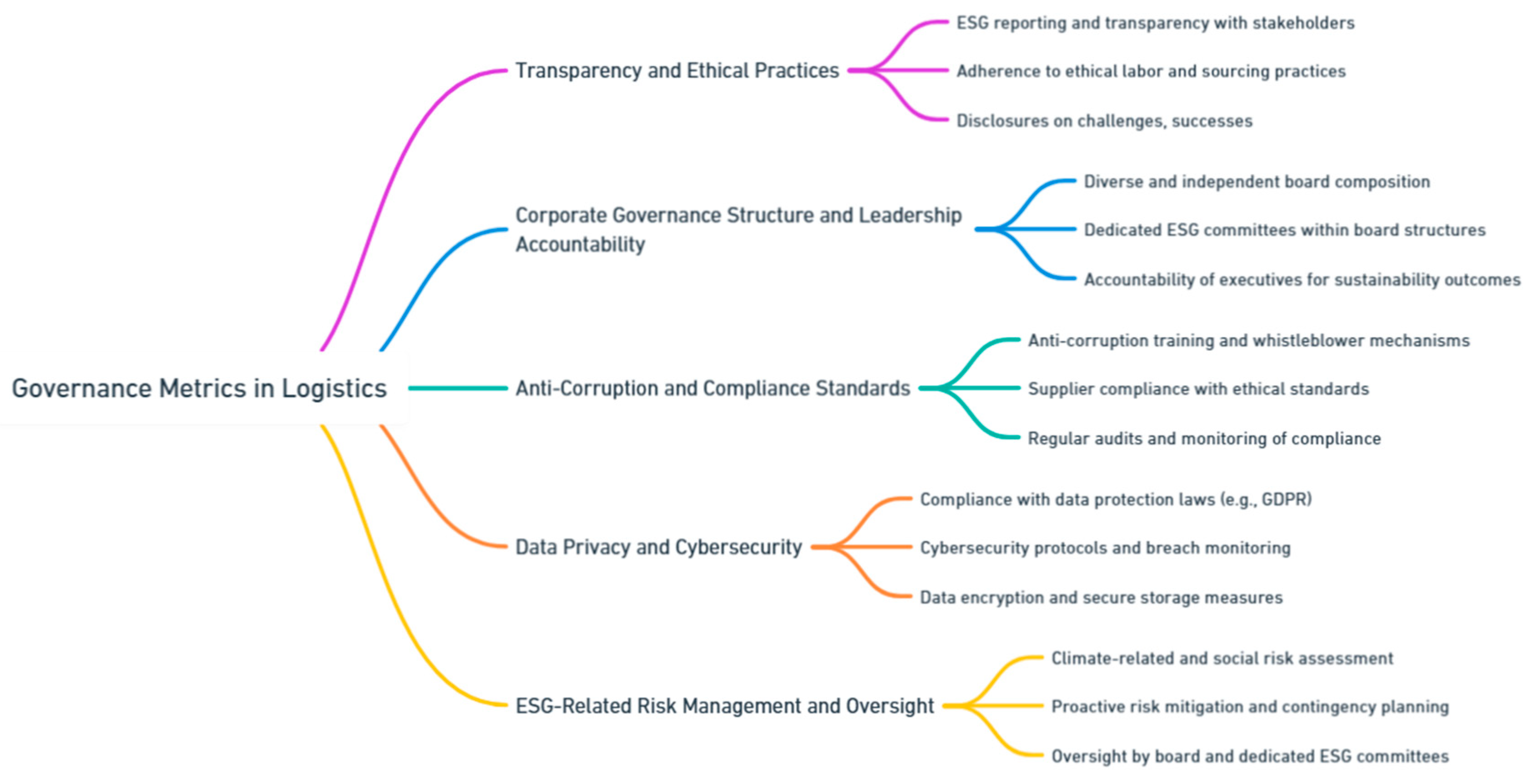
Preprints 139811 i148

15.5. ESG Metrics Across the Logistics Value Chain

Environmental, Social, and Governance (ESG) metrics are becoming increasingly important in evaluating the sustainability and ethical performance of companies across all industries, including logistics. As sustainability pressures grow, both from regulatory frameworks and consumer expectations, logistics companies are finding that integrating ESG metrics into their operations is essential for long-term success. These metrics apply to various aspects of the logistics value chain, from warehousing and transportation to supply chain management, providing companies with comprehensive insights into their environmental impact, social responsibility, and governance practices. By focusing on these key areas, logistics companies can not only improve their sustainability performance but also reduce risks, increase operational efficiency, and create value for stakeholders.
  • Warehouse and Facility Management: Warehouses and logistics facilities are foundational components of the logistics value chain. ESG metrics in this area typically revolve around energy use, water consumption, and waste management. Energy use per square foot is a common metric, as logistics facilities, especially large distribution centers, can consume significant amounts of electricity for lighting, heating, cooling, and operational processes. By monitoring and reducing energy consumption, companies can lower their greenhouse gas (GHG) emissions and cut operational costs. Water consumption is another key metric. Many warehouses use water for maintenance, cooling, and sanitation, and excessive use or waste of water can contribute to environmental degradation. Measuring water use and implementing water-saving technologies, such as low-flow fixtures or recycling systems, can help companies mitigate their impact on local water supplies. Waste management practices are also critical for evaluating a facility's environmental footprint. Metrics in this area may include the percentage of waste diverted from landfills through recycling or the volume of hazardous waste generated. Companies are increasingly adopting circular economy principles to reduce waste, recycling materials whenever possible or finding new uses for them within the supply chain. Technological innovation is playing a significant role in improving facility sustainability. Smart warehouses, equipped with Internet of Things (IoT) technologies, can track energy use, water consumption, and waste generation in real time. For example, IoT sensors can monitor heating, ventilation, and air conditioning (HVAC) systems, optimizing their performance based on real-time conditions and usage patterns. This not only reduces energy consumption but also helps companies identify inefficiencies before they result in wasted resources. By continuously monitoring these ESG metrics, logistics companies can make data-driven decisions that reduce their environmental footprint while increasing operational efficiency. (Davydenko et al., 2023; Lewczuk et al., 2021).
  • Transportation and Fleet Management: Transportation is one of the most emissions-intensive aspects of logistics, contributing significantly to the industry's carbon footprint. As such, transportation and fleet management are central to sustainability efforts, and several ESG metrics are used to assess environmental performance in this area. These include fuel efficiency, emissions per mile, and the percentage of fleet electrification. Fuel efficiency is a primary concern for logistics companies, as reducing fuel consumption directly correlates with lower emissions and operational costs. Companies can track fuel efficiency in terms of miles per gallon or fuel use per ton-mile, providing insights into how effectively resources are being used. Similarly, emissions per mile or ton-mile are important metrics, as they measure the environmental impact of moving goods across distances. Reducing these emissions is crucial for meeting sustainability goals, particularly as global supply chains become more complex and longer. Fleet electrification is another growing area of focus. As governments and businesses alike set ambitious carbon reduction targets, many logistics companies are investing in electric or hybrid vehicles. Tracking the percentage of fleet electrification is an important ESG metric, as it signals a company’s commitment to reducing its reliance on fossil fuels and cutting emissions. Additionally, electrification can lead to cost savings over time, as electric vehicles (EVs) typically have lower maintenance and fuel costs than traditional combustion engines. Advanced technologies such as artificial intelligence (AI) and IoT are critical enablers of improved transportation sustainability. AI algorithms can optimize delivery routes in real-time, reducing fuel use by minimizing distance traveled and avoiding traffic congestion. IoT-enabled telematics systems monitor vehicle performance and fuel consumption, helping fleet managers identify inefficiencies or maintenance issues that could lead to excess fuel consumption or higher emissions. By integrating these technologies and tracking relevant ESG metrics, logistics companies can achieve substantial reductions in both their carbon footprint and operational costs (Pašagić Škrinjar et al., 2020; Scedrovs et al., 2023).
  • Supply Chain Transparency and Traceability. In addition to improving their own operations, logistics companies must ensure that their supply chains are aligned with ESG standards. Supply chain transparency and traceability have become increasingly important in today’s globalized economy, where goods often travel through numerous suppliers and intermediaries before reaching their final destination. ESG metrics in this area include the percentage of suppliers audited for human rights violations, the proportion of sustainable sourcing in procurement, and the overall traceability of goods. Auditing suppliers for human rights violations, environmental compliance, and ethical practices is crucial for ensuring that the entire supply chain meets high ESG standards. Companies that fail to monitor their suppliers risk being associated with unethical practices such as forced labor, deforestation, or unsafe working conditions, which can lead to reputational damage and legal consequences. By regularly auditing their suppliers and reporting on these audits, logistics companies can mitigate these risks and demonstrate their commitment to social responsibility. Sustainable sourcing is another critical ESG metric. This refers to the proportion of goods or raw materials that are sourced from sustainable, ethical suppliers. For example, companies may prioritize suppliers that use renewable energy, practice sustainable agriculture, or adhere to fair labor standards. Tracking the proportion of sustainable sourcing in procurement helps companies assess their overall impact on the environment and society, while also promoting long-term supply chain resilience. Supply chain traceability, often enabled by blockchain technology, is essential for verifying the origin and sustainability of goods. Blockchain provides a decentralized, immutable ledger that can record every transaction and movement of a product throughout the supply chain. This ensures that companies can trace the origins of their products and verify that they comply with ESG standards. Tracking metrics related to supply chain transparency and traceability can provide logistics companies with the information they need to make more sustainable choices, mitigate risks, and ensure compliance with ESG regulations (Paliwal et al., 2020; Hong and Xiao, 2024).
  • Technology and Innovation as Enablers of ESG Goals. Technology is a key enabler of ESG performance in logistics. Investments in advanced technologies such as AI, IoT, and blockchain can help logistics companies improve their energy efficiency, reduce waste, and enhance supply chain transparency. Metrics that track the adoption of these technologies provide insights into how companies are leveraging innovation to meet their sustainability goals. For example, AI can be used to optimize operations across the logistics value chain, from route optimization in transportation to inventory management in warehouses. By tracking the percentage of logistics operations managed by AI or other smart systems, companies can assess the extent to which they are benefiting from these efficiency gains. Similarly, IoT can be used to monitor real-time conditions in warehouses, vehicles, and throughout the supply chain, enabling companies to reduce resource waste and improve sustainability. Metrics that track the use of IoT in logistics operations can provide insights into the company’s ability to manage resources more effectively. Blockchain technology is particularly valuable for enhancing supply chain transparency. By tracking the adoption of blockchain for traceability purposes, logistics companies can demonstrate their commitment to verifying the sustainability and ethical practices of their suppliers. This not only strengthens their ESG performance but also builds trust with consumers and investors (Hong and Xiao, 2024; Paiva et al., 2021).
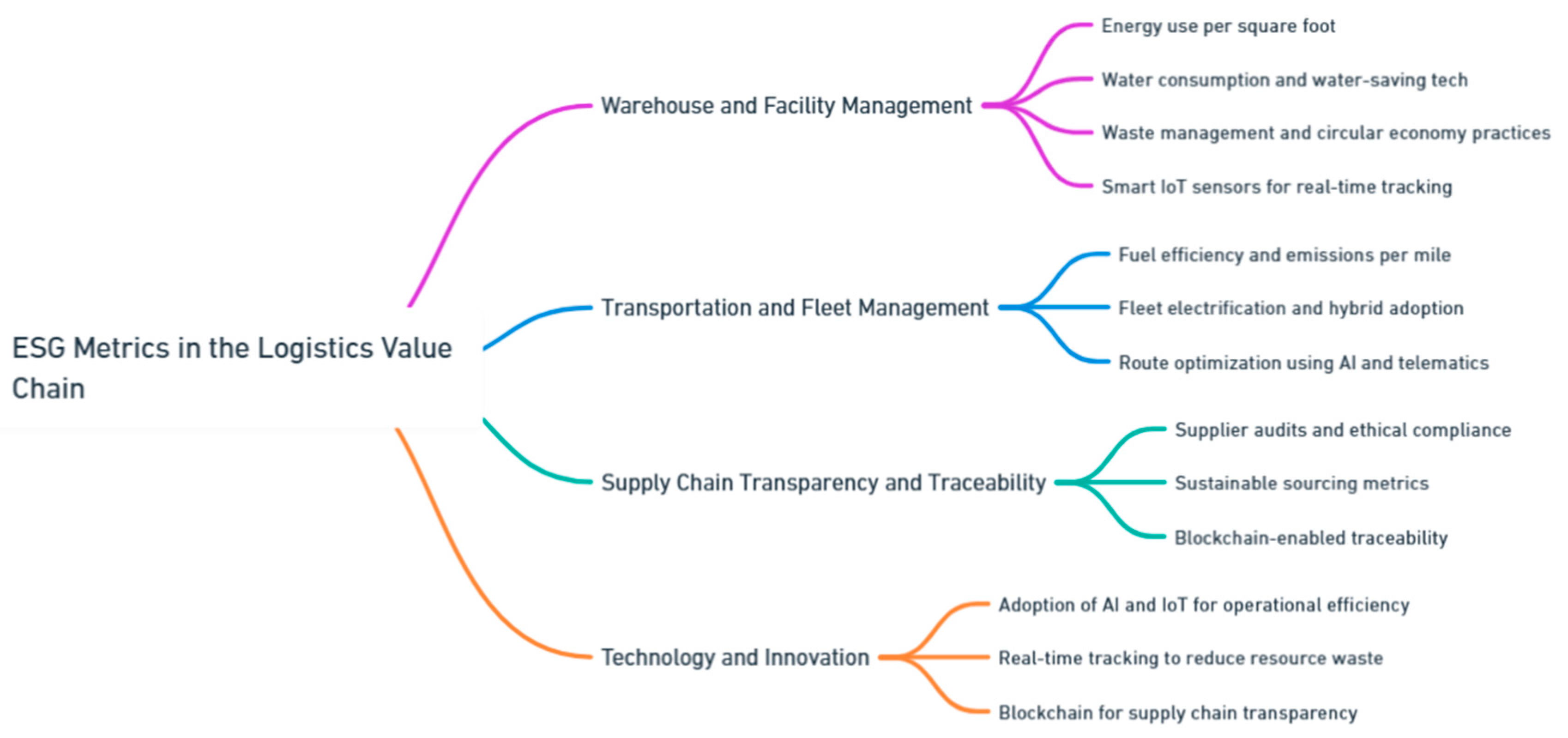
Incorporating ESG metrics into the logistics value chain is essential for improving sustainability performance and ensuring long-term success. By focusing on key areas such as warehouse and facility management, transportation and fleet management, supply chain transparency, and the adoption of advanced technologies, logistics companies can reduce their environmental impact, improve social responsibility, and enhance governance practices. As global sustainability standards continue to evolve, companies that invest in ESG performance will be better positioned to meet regulatory requirements, mitigate risks, and create value for their stakeholders.
Preprints 139811 i149

15.6. Case Studies: ESG Metrics in Leading Smart Logistics Companies
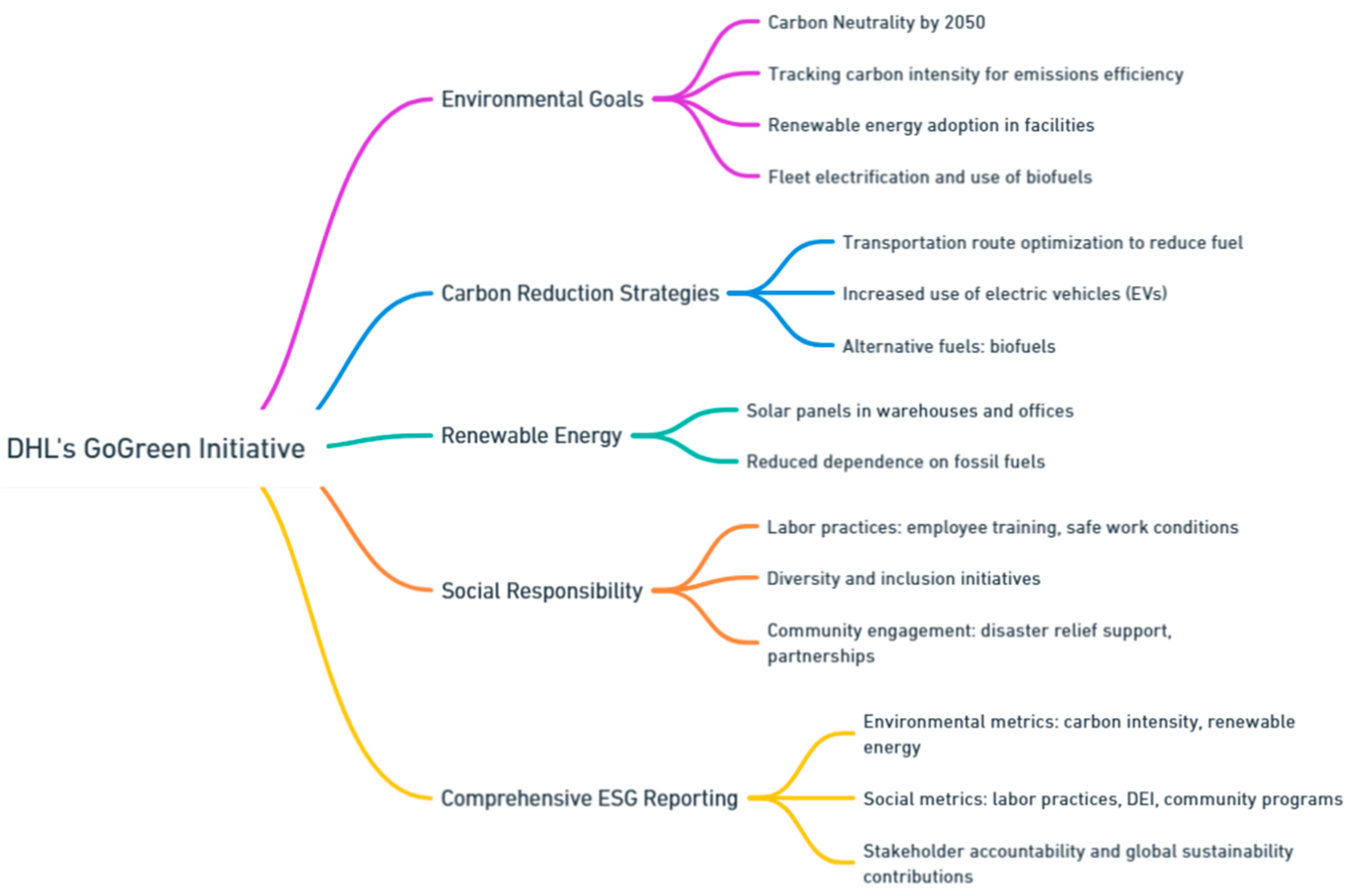
DHL, a global leader in logistics, has been a pioneer in sustainability through its GoGreen initiative, which is central to its environmental and social responsibility strategy. GoGreen was established to tackle the growing environmental impact of the logistics industry by setting ambitious targets for reducing carbon emissions and improving overall environmental performance. DHL's multifaceted approach to sustainability includes tracking key environmental metrics such as carbon intensity, renewable energy usage in its facilities, and fleet electrification. In addition to environmental efforts, the company places a strong emphasis on social reporting, which includes labor practices, diversity, inclusion, and community engagement initiatives. The GoGreen initiative aims to reduce carbon emissions across DHL’s operations by promoting greater energy efficiency and integrating low-carbon technologies into its logistics and supply chain processes. A key aspect of this strategy is the company’s commitment to carbon-neutral logistics. By 2050, DHL has set a goal to reduce all logistics-related emissions to zero. To achieve this, the company has implemented numerous carbon reduction measures, including optimizing transportation routes to minimize fuel consumption, increasing the use of electric vehicles (EVs), and adopting alternative fuels, such as biofuels, for its fleet. DHL’s environmental reporting tracks carbon intensity, which measures the amount of carbon dioxide emissions produced relative to its overall logistics output. This metric allows the company to assess how efficiently it is using energy and identify areas for improvement. Another significant focus is the use of renewable energy in DHL’s facilities. The company has invested in solar panels and other renewable energy technologies to power its warehouses, sorting centers, and administrative offices, helping to reduce reliance on fossil fuels and lower its carbon footprint. In addition to environmental performance, DHL’s reporting also covers social metrics that reflect the company’s commitment to corporate responsibility. This includes labor practices such as employee training and development, ensuring safe working conditions, and promoting diversity and inclusion across its workforce. DHL also actively engages with communities where it operates, providing disaster relief logistics support and partnering with local organizations to promote sustainable development. Through its comprehensive environmental and social reporting, DHL demonstrates that sustainability in logistics is not just about reducing carbon emissions but also about creating a positive social impact. By tracking both environmental and social metrics, the company ensures that it remains accountable to its stakeholders while also contributing to global sustainability goals (von Storch, 2020; DeWeerdt et al., 2022; Strimovskaya et al., 2023).
Preprints 139811 i150
Case Study 2: UPS’s Fleet Electrification and Carbon Tracking. UPS, one of the largest package delivery and supply chain management companies in the world, has integrated sustainability into its business model through significant investments in fleet electrification and advanced carbon tracking tools. UPS's sustainability strategy focuses on reducing its environmental footprint, particularly through electrifying its vast fleet of delivery vehicles and improving fuel efficiency across its operations. The company has also developed sophisticated carbon tracking tools that provide real-time data on its environmental performance, helping it meet its long-term sustainability goals. Fleet electrification is a cornerstone of UPS’s environmental strategy. The company has committed to reducing its reliance on fossil fuels by increasing the number of electric vehicles (EVs) in its delivery fleet. UPS has made significant investments in acquiring and deploying EVs, including electric vans, trucks, and even electric bicycles for last-mile deliveries in urban areas. By integrating EVs into its operations, UPS aims to reduce greenhouse gas (GHG) emissions and improve air quality in the cities where it operates. Fleet electrification not only helps the company achieve its environmental targets but also reduces operational costs in the long run due to lower fuel and maintenance expenses associated with electric vehicles. Another key component of UPS's sustainability strategy is its carbon tracking tools, which provide real-time data on the company's environmental performance. UPS tracks metrics such as emissions per delivery, fuel efficiency, and the total number of electric and hybrid vehicles in its fleet. This data allows the company to monitor progress toward its sustainability goals and make data-driven decisions to improve efficiency. For example, UPS uses its carbon tracking tools to optimize delivery routes, reduce idle times, and minimize fuel consumption, all of which contribute to lower emissions. UPS has also set ambitious sustainability targets, including a goal to achieve carbon neutrality by 2050. To reach this target, the company is focusing not only on fleet electrification but also on other areas such as renewable energy use in its facilities, improving energy efficiency in its operations, and promoting sustainable packaging solutions. Additionally, UPS actively engages with its customers and partners to promote sustainable supply chain practices, encouraging them to adopt low-carbon logistics solutions. Through its investments in fleet electrification and advanced carbon tracking, UPS is positioning itself as a leader in sustainable logistics. The company’s approach demonstrates how technology and data can be leveraged to improve environmental performance, reduce emissions, and create more efficient logistics operations. By focusing on both operational efficiency and environmental impact, UPS is contributing to the global effort to combat climate change (Scedrovs et al., 2023; Zamasz et al., 2021).
Preprints 139811 i151
Case Study 3: Maersk’s Sustainable Shipping Practices. Maersk, a global leader in shipping and logistics, has set ambitious goals for reducing its environmental impact, with a specific focus on achieving carbon-neutral shipping by 2040. As the world's largest container shipping company, Maersk plays a critical role in the global supply chain, and its efforts to promote sustainability have far-reaching implications for the shipping industry as a whole. Maersk’s sustainability strategy is centered on improving fuel efficiency, adopting alternative fuels, and ensuring compliance with environmental and social standards throughout its supply chain. One of Maersk’s primary sustainability goals is to reduce the carbon emissions associated with its shipping operations. The company has committed to achieving net-zero emissions by 2040, a target that involves significant investments in low-carbon technologies and alternative fuels. Maersk is actively exploring the use of biofuels, methanol, and hydrogen as alternatives to traditional marine fuels, which are responsible for a significant portion of global greenhouse gas emissions. The company is also testing the feasibility of using wind-assisted propulsion systems and other innovative technologies to reduce fuel consumption and improve the energy efficiency of its ships. Fuel efficiency is a key metric that Maersk tracks as part of its sustainability reporting. By measuring the amount of fuel used per container shipped, the company can assess the environmental impact of its operations and identify areas for improvement. Maersk has implemented a range of measures to improve fuel efficiency, including optimizing shipping routes, upgrading its fleet to more energy-efficient vessels, and adopting advanced technologies such as hull coatings that reduce drag and improve fuel economy. These efforts have enabled the company to significantly reduce its carbon emissions per container, contributing to its overall sustainability goals. In addition to its environmental efforts, Maersk is committed to upholding high standards of social responsibility throughout its supply chain. The company monitors its suppliers for compliance with human rights standards, labor practices, and environmental regulations. Maersk’s commitment to responsible sourcing ensures that its suppliers adhere to ethical practices and contribute to the overall sustainability of the supply chain. This holistic approach to sustainability—encompassing both environmental and social dimensions—demonstrates Maersk’s leadership in promoting responsible business practices in the shipping industry. Maersk’s focus on sustainable shipping practices is aligned with global efforts to reduce the environmental impact of the shipping sector, which is responsible for a significant share of global carbon emissions. The company’s commitment to carbon-neutral shipping by 2040 sets a high standard for the industry and highlights the importance of innovation, collaboration, and investment in achieving sustainability goals. These case studies of DHL, UPS, and Maersk demonstrate how leading companies in the logistics and shipping industries are taking significant steps to reduce their environmental impact through sustainability initiatives. DHL’s GoGreen initiative focuses on carbon reduction, renewable energy, and social responsibility. UPS’s investments in fleet electrification and carbon tracking tools showcase the role of technology in improving environmental performance. Maersk’s commitment to carbon-neutral shipping by 2040 highlights the importance of fuel efficiency and alternative fuels in the quest for sustainable shipping. Together, these companies illustrate the critical role that sustainability plays in the future of logistics. By adopting low-carbon technologies, improving operational efficiency, and promoting responsible business practices, the logistics industry can make significant contributions to global sustainability goals and combat climate change (Xing et al., 2021; Ammar, 2023; Law et al., 2022).
Preprints 139811 i152

15.7. Challenges in Measuring ESG Metrics in Smart Logistics

Environmental, Social, and Governance (ESG) metrics have become increasingly important for logistics companies as they aim to align their operations with sustainability goals and respond to regulatory and market pressures. However, measuring ESG performance in smart logistics—an industry that spans vast, global supply chains—is fraught with challenges. These difficulties stem from the complexity of data collection and standardization, balancing sustainability with financial goals, the intricacies of global supply chains, and the growing burden of regulatory compliance.
  • Data Collection and Standardization: One of the most significant challenges logistics companies face when measuring ESG metrics is data collection and standardization. Smart logistics, by definition, leverages digital technologies to streamline operations, but collecting accurate and consistent ESG-related data across the entire global supply chain remains a complex task. The logistics industry deals with a variety of activities that generate emissions, including transportation, warehousing, and packaging. Measuring the carbon footprint of each activity requires not only sophisticated tracking technologies but also cooperation from all stakeholders across the supply chain, including suppliers, transportation providers, and customers. The difficulty in data collection is compounded by the fact that logistics operations span multiple regions with different regulatory frameworks and technological capabilities. For example, a company might have advanced carbon tracking tools in its European operations, but its suppliers in other parts of the world may lack such capabilities. This discrepancy leads to inconsistent data quality and challenges in reporting accurate ESG metrics. Standardization of ESG metrics is another hurdle. Different countries, regions, and even industries have varying definitions of what constitutes sustainability, which complicates efforts to create a unified approach to ESG reporting. For instance, emissions reporting requirements may differ between the European Union, the United States, and Asian countries, creating an additional layer of complexity for logistics companies that operate globally. Achieving consistent and comparable ESG data across these disparate frameworks is difficult, yet essential for transparent and effective sustainability reporting (Cort and Esty, 2020; Zeng et al., 2022).
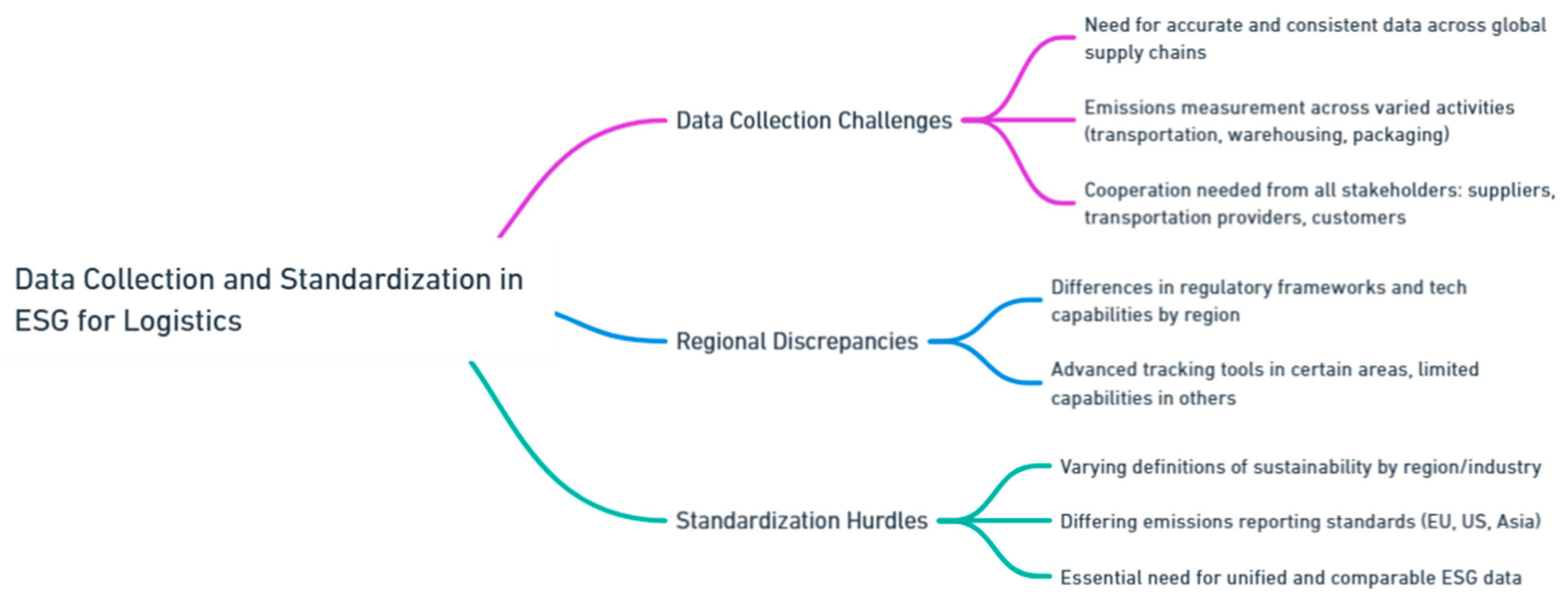
Preprints 139811 i153
2.
Balancing Cost and Investment with Sustainability Goals: Another major challenge for logistics companies is balancing the cost of sustainability initiatives with their short-term financial goals. Achieving meaningful progress in ESG performance often requires significant upfront investment. For instance, the electrification of vehicle fleets, installation of renewable energy infrastructure in warehouses, or the adoption of energy-efficient technologies can be expensive. While these investments may yield long-term benefits in terms of cost savings and improved ESG performance, the initial financial outlay can be prohibitive for some companies, particularly those with tight profit margins or those in highly competitive markets. Fleet electrification, for example, can reduce greenhouse gas emissions, but the cost of purchasing electric vehicles (EVs) is significantly higher than traditional diesel or gasoline-powered vehicles. Additionally, the infrastructure to support EVs, such as charging stations, is not universally available, adding to the challenge. Although logistics companies understand that investing in sustainability is critical to remaining competitive in the long term, balancing these investments with the need to maintain short-term profitability is often a difficult decision. Similarly, renewable energy investments for warehousing and logistics facilities require substantial upfront costs. While solar panels or wind turbines can significantly reduce a company’s carbon footprint, the financial payback can take years to materialize, making it a tough sell to stakeholders focused on quarterly financial performance. This tension between short-term financial pressures and long-term sustainability goals is a critical challenge for logistics companies that want to improve their ESG metrics while remaining financially viable (Schiffer et al., 2021; Woody et al., 2022).
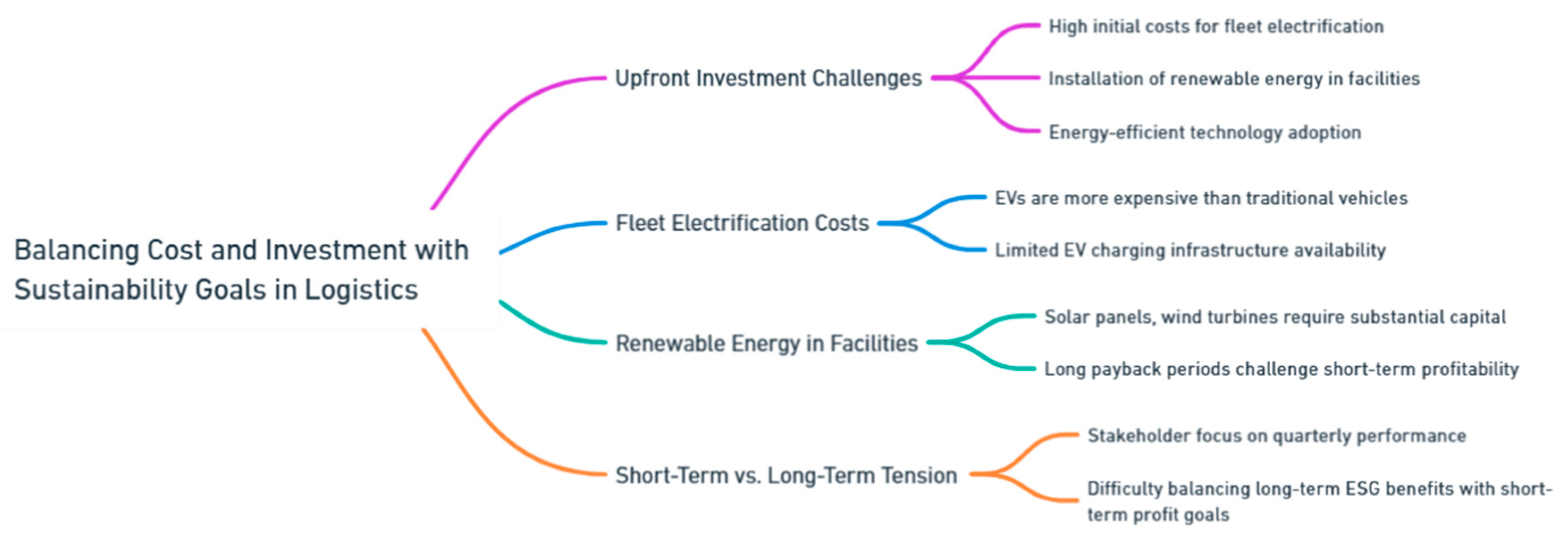
Preprints 139811 i154
3.
Supply Chain Complexity and Global Scope: The global nature of modern logistics makes maintaining high ESG standards throughout the supply chain a significant challenge. Supply chains are inherently complex, often involving multiple parties across different geographies, each with its own ESG practices, regulatory environment, and operational constraints. The further removed a logistics company is from a particular supplier or service provider, the harder it becomes to ensure that ESG metrics are being accurately tracked and reported. For example, a company may have strict ESG guidelines for its transportation providers within its home country, but it may rely on third-party logistics providers or suppliers in other regions where regulations are more lenient, or where ESG practices are not prioritized. This lack of control over every link in the supply chain can result in gaps in ESG data, making it difficult to measure overall sustainability performance accurately. Additionally, social and governance aspects of ESG metrics, such as labor practices, ethical sourcing, and human rights compliance, are particularly challenging to track across global supply chains. Logistics companies need to ensure that their partners comply with ethical labor standards, which requires continuous monitoring and verification. However, differences in labor regulations across countries make it difficult to standardize social ESG metrics. Ensuring compliance across a diverse and globalized network of suppliers adds an extra layer of complexity to ESG measurement efforts (Hammond, 2021; Zeng et al., 2022).
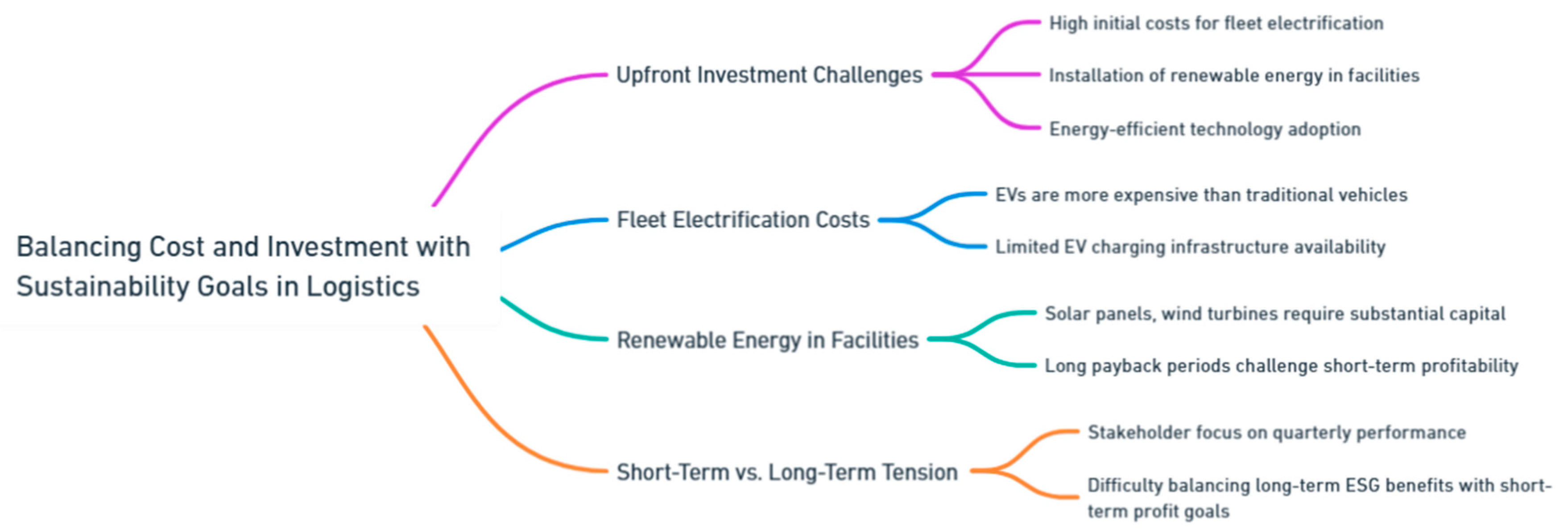
Preprints 139811 i155
4.
Regulatory Pressures and Industry-wide Compliance. The increasing regulatory pressure on ESG reporting is another significant challenge for logistics companies, particularly those operating on a global scale. In regions such as the European Union, companies are facing stricter regulations regarding emissions reporting, waste management, and sustainable practices. The EU Green Deal and the Corporate Sustainability Reporting Directive (CSRD) are examples of initiatives that are pushing logistics companies to adopt more stringent ESG reporting measures. However, regulatory requirements vary widely between different regions. For instance, while the EU may mandate detailed emissions reporting, other regions may have less stringent requirements, creating challenges for companies that need to adhere to multiple regulatory frameworks. Ensuring compliance with these evolving and sometimes conflicting regulations can be a time-consuming and resource-intensive task for logistics companies, particularly those with operations in multiple countries. Moreover, there is a growing expectation from investors, customers, and other stakeholders for companies to demonstrate high ESG standards. Failing to meet these expectations can lead to reputational damage and a loss of business, making compliance with ESG regulations not just a legal obligation but a critical business necessity. Logistics companies are under increasing pressure to keep pace with regulatory changes while also ensuring that their operations meet industry-wide standards for sustainability and ethical practices (Lin, 2022; Dănilă et al., 2022).
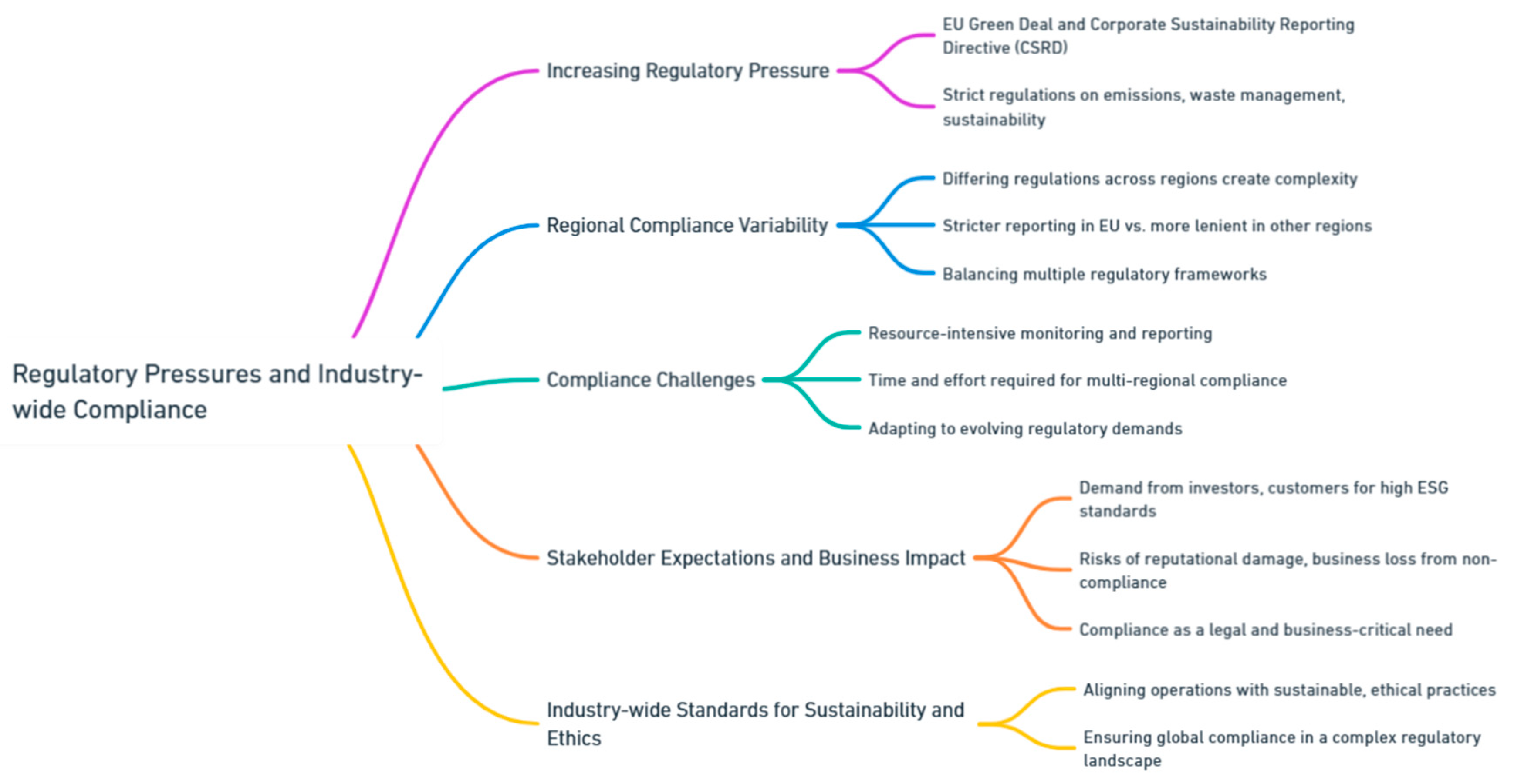
Preprints 139811 i156
Measuring ESG metrics in smart logistics is a complex and multifaceted challenge that requires logistics companies to navigate numerous hurdles, including data collection and standardization, balancing sustainability investments with financial goals, managing the complexity of global supply chains, and keeping up with evolving regulatory requirements. These challenges underscore the need for logistics companies to adopt more sophisticated technologies and processes to improve the accuracy and consistency of ESG data. Despite these difficulties, logistics companies must recognize the importance of ESG metrics in shaping the future of the industry. As regulatory pressures increase and consumer expectations shift toward more sustainable practices, companies that fail to adapt may find themselves at a competitive disadvantage. On the other hand, those that successfully overcome these challenges will not only enhance their sustainability credentials but also position themselves as leaders in the rapidly evolving logistics landscape. By embracing digitalization, fostering collaboration across the supply chain, and investing in sustainability initiatives, logistics companies can improve their ESG performance, meet regulatory demands, and drive long-term business success. As the industry continues to evolve, overcoming these challenges will be crucial for ensuring the future sustainability of global logistics operations.

15.8. The Role of Technology in Enabling ESG Metrics for Smart Logistics

In today's rapidly evolving logistics landscape, Environmental, Social, and Governance (ESG) metrics have become critical for businesses seeking to enhance their sustainability, operational transparency, and social responsibility. The increasing demand for sustainable and ethical business practices has put pressure on logistics companies to adopt new strategies and technologies that support their ESG goals. Technology plays a pivotal role in enabling companies to track, measure, and optimize ESG metrics in real-time, improving both operational efficiency and environmental performance. This section explores how various technological advancements, including the Internet of Things (IoT), artificial intelligence (AI), blockchain, and advanced analytics, are transforming the logistics industry by helping companies meet their ESG objectives.
  • IoT and Real-Time Data Tracking for Environmental Performance. The Internet of Things (IoT) is a foundational technology in smart logistics that allows companies to monitor and track environmental performance metrics in real-time. IoT sensors, embedded in vehicles, warehouses, and other logistical assets, can gather and transmit data on fuel consumption, emissions, temperature, energy usage, and vehicle maintenance needs. By capturing this data, logistics companies can gain granular insights into their environmental impact and identify opportunities to optimize operations for greater sustainability. For example, IoT sensors in fleet vehicles can monitor fuel efficiency and greenhouse gas emissions, allowing companies to track progress towards emission reduction targets. These sensors can detect inefficiencies such as excessive idling, underinflated tires, or suboptimal driving behaviors that lead to higher fuel consumption. With real-time data, logistics managers can take immediate action to rectify these issues, such as optimizing driving routes, maintaining vehicles more regularly, or providing drivers with training to improve fuel efficiency. This not only lowers the carbon footprint but also reduces operational costs associated with fuel consumption. Additionally, IoT sensors can improve energy efficiency in warehouses and distribution centers by monitoring lighting, heating, and cooling systems. Automated systems can adjust these environmental controls based on real-time data, ensuring that energy is only used when necessary. By reducing energy waste, logistics companies can minimize their environmental impact while lowering costs. The ability to continuously track and measure environmental performance is a crucial advantage for logistics firms striving to improve their ESG metrics (Chhabra, et al., 2021; Kan et al., 2018).
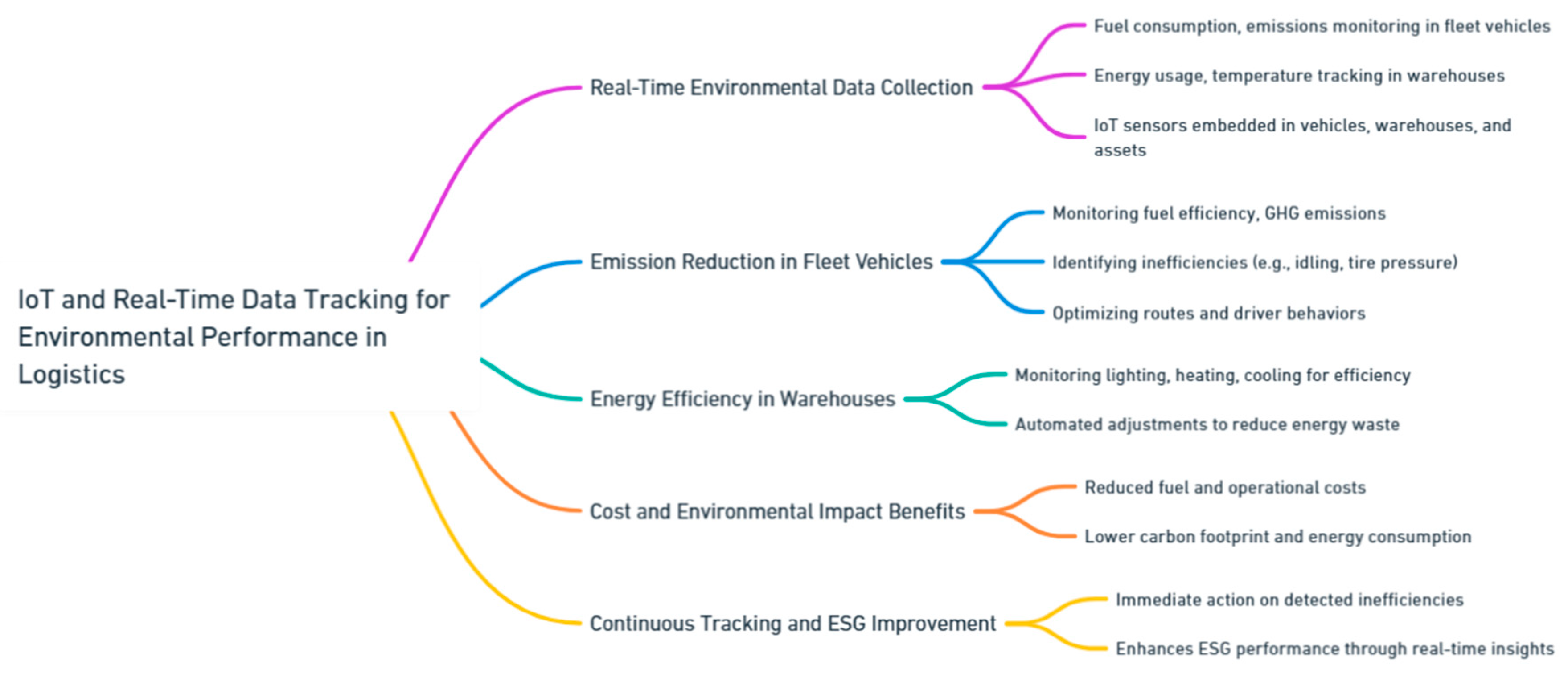
Preprints 139811 i157
2.
AI and Machine Learning for Optimizing Logistics Operations. Artificial intelligence (AI) and machine learning are powerful tools that can analyze vast amounts of data to identify inefficiencies in logistics operations and optimize them for sustainability. AI algorithms can process complex datasets collected from IoT devices, vehicles, and supply chains to reveal patterns and insights that would be difficult for humans to detect manually. By optimizing routes, reducing fuel consumption, and minimizing waste, AI enables logistics companies to improve their environmental performance and overall ESG standing. One of the primary applications of AI in logistics is route optimization. AI systems can analyze traffic data, weather conditions, and delivery schedules to determine the most efficient routes for vehicles, reducing unnecessary fuel consumption and emissions. This type of dynamic route planning allows companies to avoid traffic congestion, minimize travel distances, and reduce delivery times. As a result, logistics companies can not only improve their environmental performance but also enhance customer satisfaction by providing faster and more reliable deliveries. Moreover, AI-driven predictive maintenance systems can monitor the health of vehicles and other logistical equipment, predicting when maintenance is needed before a breakdown occurs. This reduces the likelihood of equipment failure, which can lead to costly delays and additional emissions from backup vehicles or equipment. By ensuring that all assets are operating at peak efficiency, logistics companies can further minimize their environmental footprint. In addition to optimizing environmental performance, AI can also help logistics companies address social and governance issues. For instance, AI-powered workforce management tools can ensure that labor practices are in line with ESG standards, such as fair wages, appropriate working conditions, and diversity and inclusion policies (Perrotta, F., Parry and Neves, 2017; Kaklis et al., 2022).
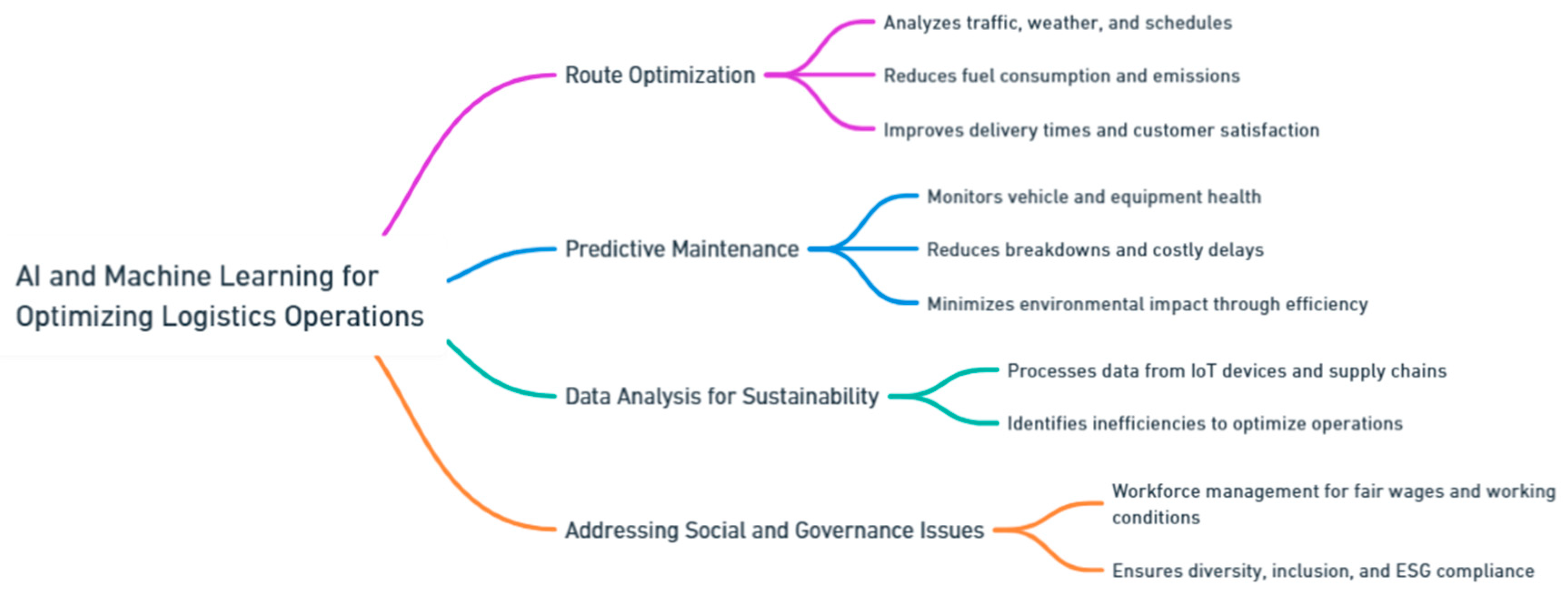
Preprints 139811 i158
3.
Blockchain for Supply Chain Transparency and Ethical Sourcing. Blockchain technology is another game-changing innovation that is enhancing the ability of logistics companies to meet ESG standards, particularly in the areas of supply chain transparency and ethical sourcing. Blockchain is a decentralized digital ledger that records transactions securely and transparently, making it possible for logistics companies to track goods throughout the supply chain from origin to destination. By leveraging blockchain technology, logistics companies can verify that products are sourced from ethical and sustainable suppliers, ensuring compliance with ESG standards. For instance, blockchain can provide immutable records of where raw materials are sourced, how they are transported, and whether the suppliers adhere to environmental and labor regulations. This transparency is essential for businesses committed to eliminating unethical practices such as forced labor, illegal deforestation, or excessive resource extraction from their supply chains. Furthermore, blockchain's traceability capabilities can help companies meet regulatory requirements and provide consumers with greater confidence in the sustainability and ethical integrity of their products. For example, a logistics company using blockchain can easily verify whether the suppliers of a particular product are certified by relevant environmental or social standards, such as Fair Trade or Forest Stewardship Council (FSC). This allows companies to make more informed decisions about their sourcing partners and ensures that they are aligned with the company's ESG goals. Blockchain can also enhance governance by reducing the risk of fraud and corruption within supply chains. By providing a transparent and tamper-proof record of all transactions, blockchain ensures that all parties involved in the supply chain adhere to agreed-upon terms, reducing the likelihood of dishonest or unethical practices (Hong and Xiao, 2024; Paliwal, et al., 2020).
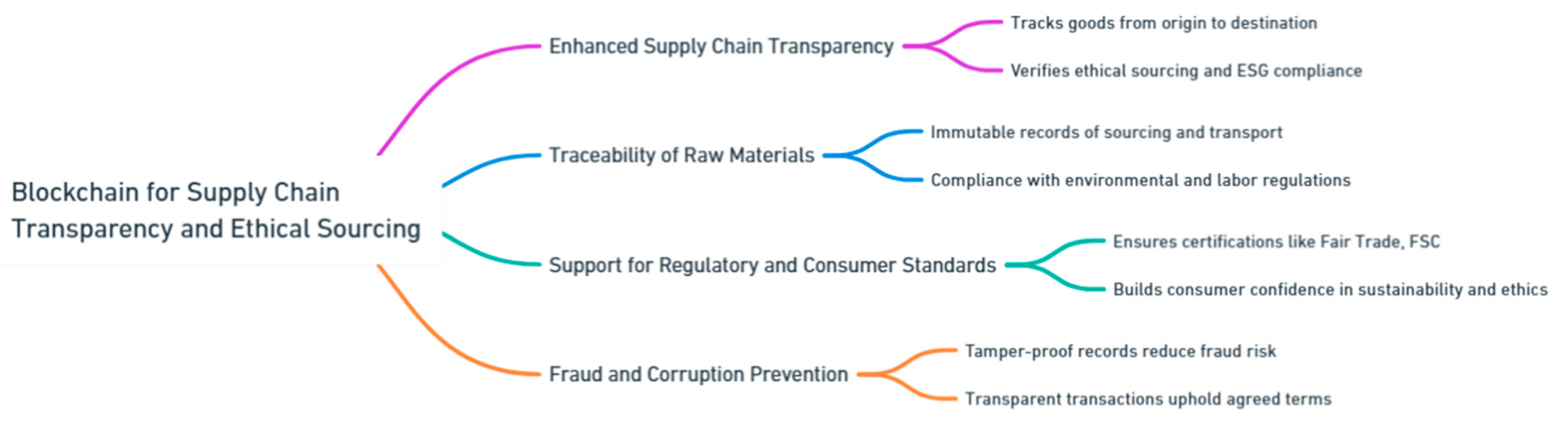
Preprints 139811 i159
4.
Advanced Analytics for ESG Reporting and Decision-Making. Advanced analytics tools play a crucial role in enabling logistics companies to track, report, and optimize their ESG performance. These tools aggregate data from various sources, including IoT sensors, AI algorithms, and blockchain systems, and generate actionable insights that help companies make data-driven decisions to improve their sustainability and social impact. ESG reporting has become a priority for companies across industries, as stakeholders—including investors, regulators, and customers—increasingly demand transparency and accountability regarding environmental and social performance. Advanced analytics platforms can automate the collection and analysis of ESG data, allowing companies to track key metrics such as carbon emissions, waste generation, energy consumption, and labor practices in real-time. These platforms can also benchmark performance against industry standards, helping companies identify areas where they can improve. Moreover, advanced analytics can forecast future ESG performance based on current trends, enabling companies to set realistic and achievable sustainability targets. By analyzing historical data, companies can predict the potential environmental impact of various operational decisions, such as fleet expansion, new warehouse locations, or changes in sourcing strategies. This foresight allows logistics companies to plan more effectively and ensure that they remain on track to meet their ESG goals. In addition to environmental performance, advanced analytics can help companies address social and governance issues. For instance, analytics tools can track workforce diversity, employee satisfaction, and compliance with labor laws, ensuring that the company maintains high standards in these areas. By providing a comprehensive view of ESG performance, advanced analytics empower logistics companies to make informed decisions that benefit both the business and society (Collier et al., 2021; Zeng et al., 2022).
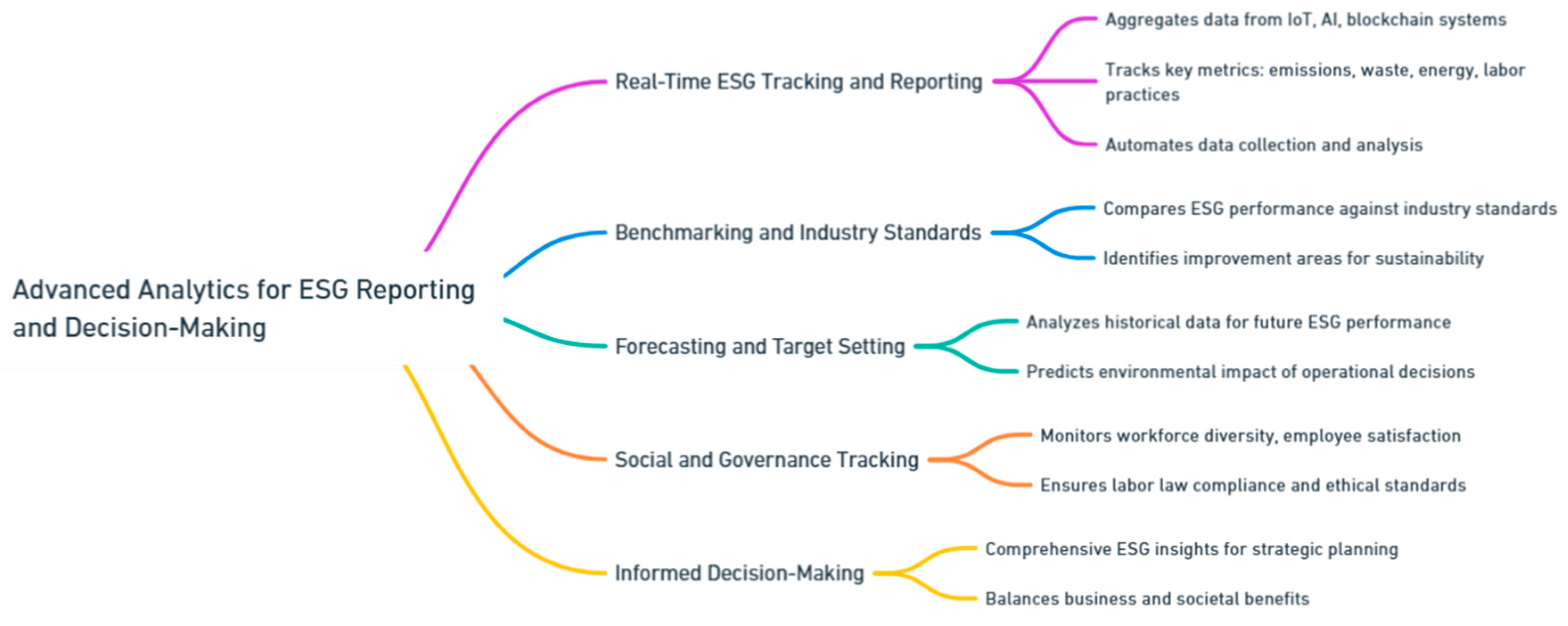
Preprints 139811 i160
In conclusion, technology is an essential enabler of ESG metrics in smart logistics, providing the tools and capabilities needed to track, measure, and optimize environmental, social, and governance performance. IoT enables real-time monitoring of environmental metrics, while AI optimizes logistics operations for sustainability. Blockchain ensures transparency and ethical sourcing across supply chains, and advanced analytics support data-driven ESG reporting and decision-making. As the demand for sustainable and responsible business practices grows, logistics companies that leverage these technologies will be well-positioned to meet their ESG goals and thrive in an increasingly competitive and regulated marketplace.

15.9. Future Trends in ESG Metrics for Smart Logistics

As environmental, social, and governance (ESG) considerations take center stage in business strategy, logistics companies are increasingly finding themselves at the crossroads of sustainability and efficiency. The integration of ESG metrics into smart logistics is a crucial step toward a more sustainable and responsible supply chain. Several emerging trends are likely to shape the future of ESG metrics in this industry, focusing on areas such as waste elimination, carbon neutrality, regulatory requirements, and investor expectations. These trends not only reflect the evolving landscape of sustainable logistics but also underscore the growing importance of data-driven insights in achieving ESG goals.
  • Circular Economy Integration and Waste Elimination: A significant trend shaping the future of ESG metrics in logistics is the integration of circular economy principles. The circular economy aims to eliminate waste through more sustainable design, manufacturing, and product lifecycle management. Unlike the traditional linear economy—based on a "take, make, dispose" model—the circular economy focuses on reducing material usage, reusing resources, and recycling waste back into production. For logistics companies, this shift toward circularity presents new opportunities to improve ESG performance. Metrics related to waste reduction, recycling rates, and product longevity will play a pivotal role in assessing how well logistics operations align with circular economy principles. For instance, companies will need to track how much packaging is being recycled, how efficiently products are returned for remanufacturing, and the overall reduction of materials used in the supply chain. Additionally, reverse logistics, the process of collecting and managing returned goods, will become a vital component of circular logistics. Companies will increasingly focus on optimizing reverse logistics processes to minimize waste, extend product life cycles, and maximize resource efficiency. ESG metrics will likely evolve to measure the efficiency of these processes, including how much waste is diverted from landfills, how resources are reused or recycled, and how circular logistics impacts overall sustainability performance (Scrioșteanu and Criveanu, 2023; Geissdoerfer et al., 2018).
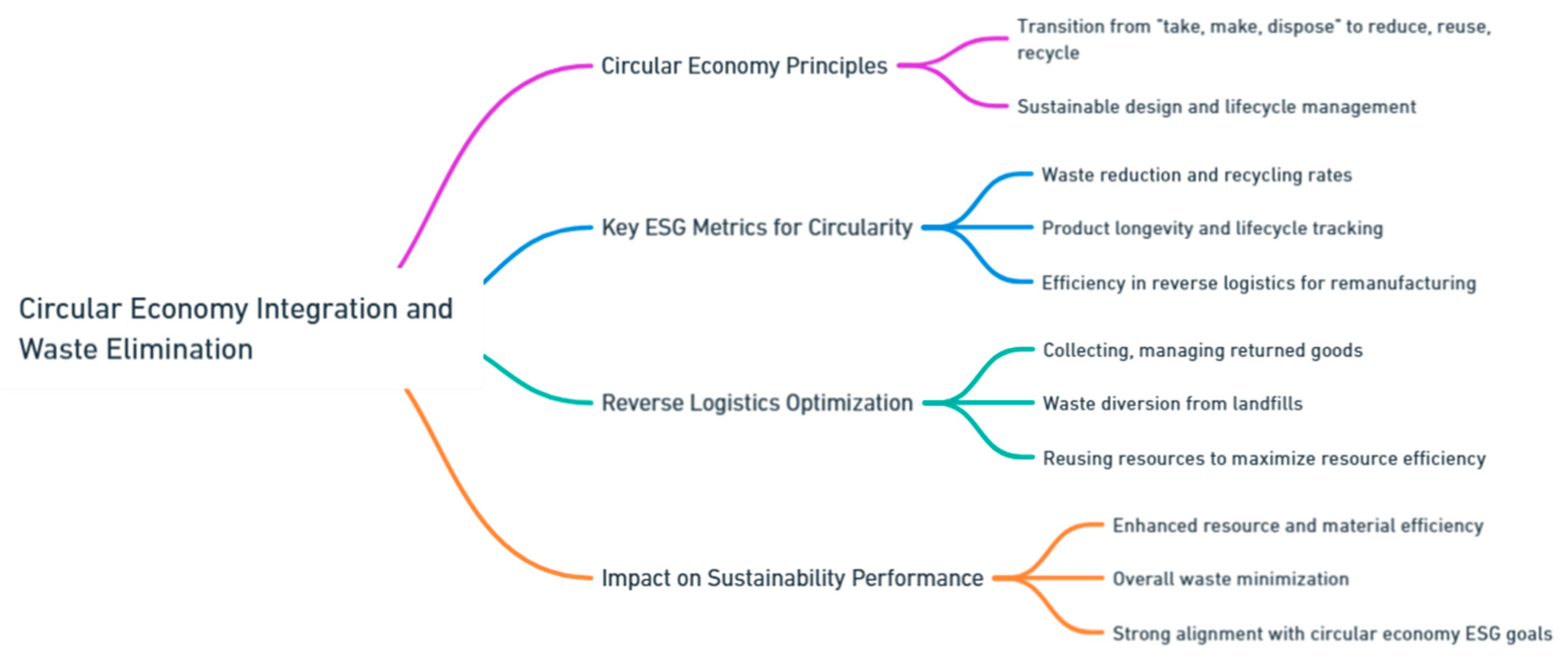
Preprints 139811 i161
2.
Net-zero Emissions and Carbon Neutrality Commitments. The global push for net-zero emissions and carbon neutrality is another powerful trend driving changes in ESG metrics for logistics. As businesses, industries, and countries commit to reducing their carbon footprints, logistics companies face mounting pressure to track and lower their greenhouse gas (GHG) emissions. Carbon intensity—emissions per unit of activity, such as per mile or per ton of goods transported—will become a key metric for logistics companies striving to meet their net-zero goals. Electrification of logistics fleets is one of the most promising avenues for reducing carbon emissions. With the advent of electric trucks, delivery vehicles, and drones, logistics companies can significantly lower their reliance on fossil fuels. Fleet electrification will be tracked through metrics such as the percentage of electric vehicles (EVs) in use, the overall reduction in fuel consumption, and the related decrease in emissions. Moreover, renewable energy usage will also be a critical ESG metric. Whether powering warehouses, distribution centers, or charging stations for electric vehicles, the adoption of renewable energy sources like solar, wind, or bioenergy will play a major role in carbon reduction strategies. Metrics will need to capture the proportion of energy from renewable sources and the corresponding decrease in the company’s carbon footprint. To meet carbon neutrality commitments, companies must also consider the role of carbon offsetting, through which emissions that cannot be eliminated are compensated by investing in environmental projects such as reforestation or renewable energy initiatives. ESG metrics will thus expand to include both direct reductions in emissions and contributions to offset projects, giving companies a holistic view of their progress toward net-zero (Han et al., 2023; Du et al., 2023).
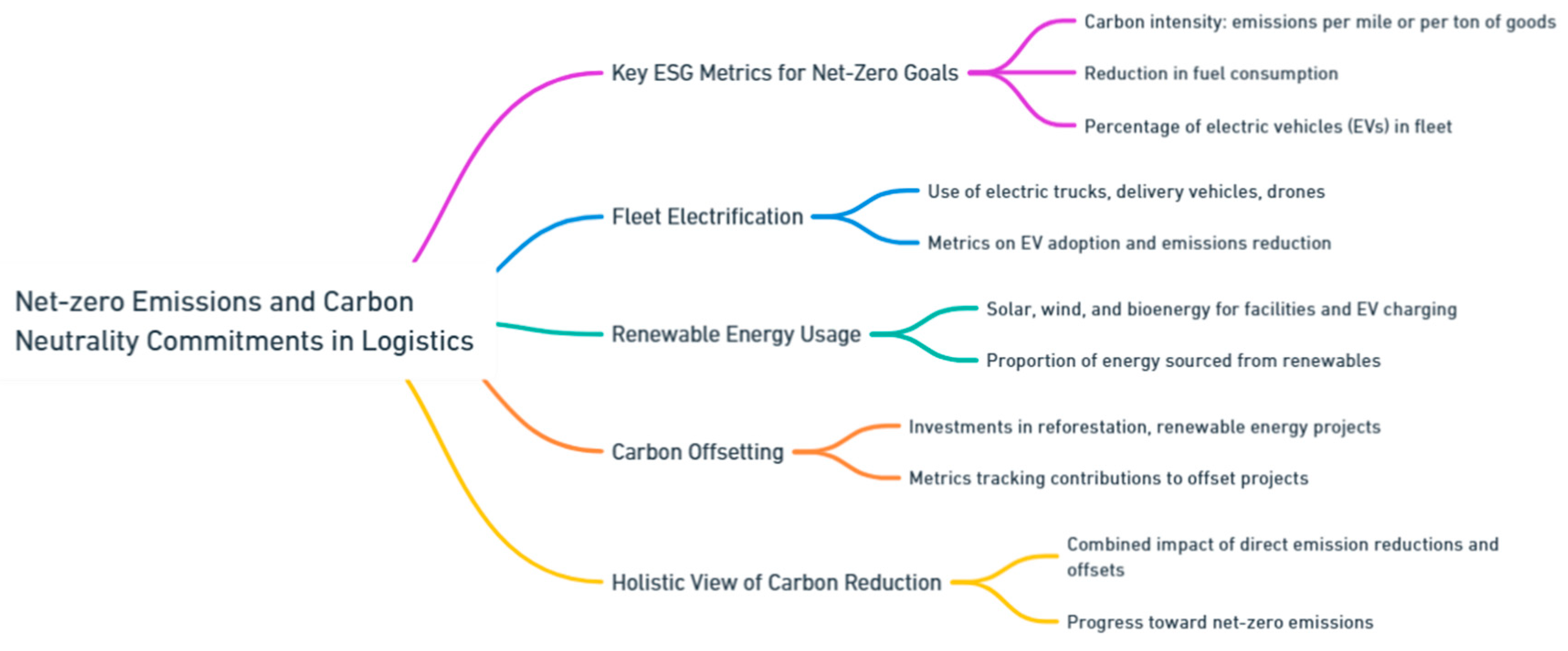
Preprints 139811 i162
3.
Evolving Regulatory Requirements for ESG Reporting: The regulatory landscape surrounding ESG reporting is rapidly evolving, with governments and international bodies implementing stricter guidelines and standards. As ESG criteria become a focal point for policymakers, logistics companies must develop more sophisticated systems for tracking and reporting their sustainability performance. Compliance with regulatory requirements will become essential not only for avoiding penalties but also for maintaining a positive reputation in the marketplace. Regulatory frameworks such as the European Union’s Corporate Sustainability Reporting Directive (CSRD) and the Task Force on Climate-related Financial Disclosures (TCFD) are driving the need for greater transparency and accountability in ESG reporting. These frameworks require companies to disclose detailed information on their environmental, social, and governance impacts, including carbon emissions, energy consumption, waste management practices, and social responsibility initiatives. For logistics companies, this means that ESG metrics will need to be standardized and integrated into existing reporting structures. Companies will have to track a wide array of data points, from energy usage and emissions to labor practices and community engagement, to ensure they meet regulatory requirements. The ability to aggregate, analyze, and report on ESG data in real time will be crucial for staying ahead of these evolving regulations. Furthermore, as regulatory scrutiny increases, companies that fail to comply with ESG reporting standards may face reputational damage, legal penalties, and exclusion from major markets. As such, developing robust ESG reporting mechanisms will not only help logistics companies avoid these risks but also enable them to proactively demonstrate their commitment to sustainability and social responsibility (Beerbaum, 2021).
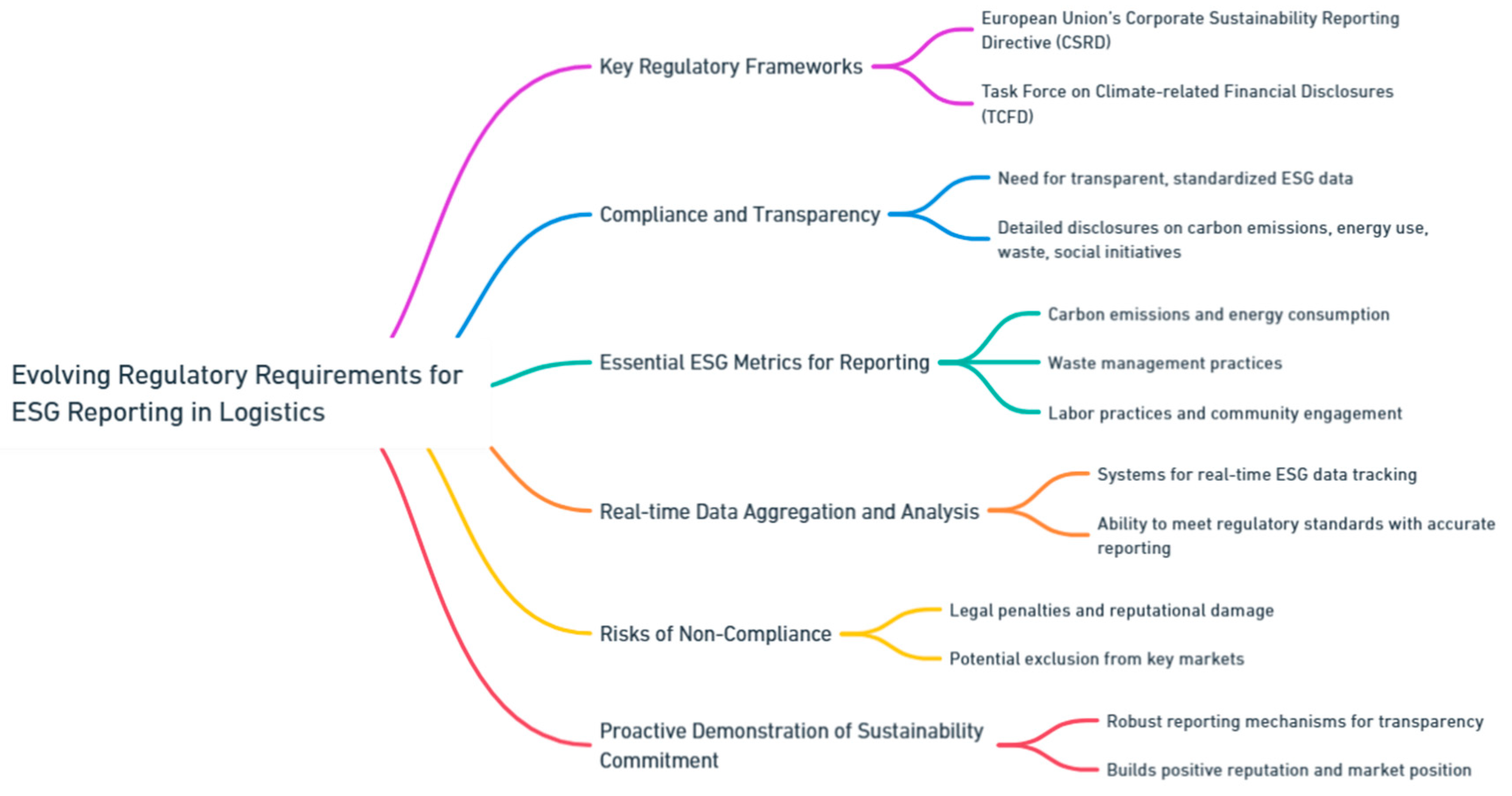
Preprints 139811 i163
Stakeholder Pressure and the Growing Role of Investors: The growing influence of investors on ESG performance is another trend shaping the future of ESG metrics in logistics. Investors are increasingly looking at ESG criteria as a key factor in assessing the long-term viability and profitability of companies. This shift reflects a broader recognition that sustainable business practices are essential for mitigating risks and ensuring resilience in the face of environmental, social, and economic challenges. For logistics companies, this means that ESG performance will become a critical factor in attracting investment. Investors are particularly focused on metrics that demonstrate a company’s commitment to reducing its environmental impact, fostering social responsibility, and maintaining strong governance practices. This includes not only tracking emissions and waste reduction but also ensuring fair labor practices, promoting diversity and inclusion, and implementing ethical supply chain management. Companies that excel in ESG performance are more likely to attract investors who are aligned with sustainable business models. This is particularly relevant in the context of impact investing, where investors seek to generate positive social and environmental outcomes alongside financial returns. Metrics such as a company’s carbon reduction achievements, labor practices, community engagement, and governance structures will be scrutinized by investors to ensure that the companies they invest in are actively working toward sustainability goals. Moreover, stakeholder pressure extends beyond investors. Consumers, employees, and business partners are increasingly holding companies accountable for their ESG performance. Companies that fail to meet stakeholder expectations risk losing market share, damaging their brand reputation, and facing increased scrutiny from the public. ESG metrics will thus serve as a vital tool for companies to communicate their sustainability efforts to all stakeholders, building trust and fostering long-term relationships (Rodionova et al., 2022; Jia et al., 2022)
Preprints 139811 i164
The future of ESG metrics in smart logistics is being shaped by several key trends, from the integration of circular economy principles and the pursuit of net-zero emissions to evolving regulatory requirements and growing investor pressure. As logistics companies navigate this complex landscape, the ability to track and report on ESG performance will be essential for achieving sustainability goals and maintaining a competitive edge. Companies that embrace these trends and invest in the necessary tools and technologies to track their ESG performance will be well-positioned to succeed in the future. The development of robust ESG metrics will not only help companies reduce their environmental impact but also enhance their resilience, improve stakeholder relationships, and unlock new opportunities for growth and innovation. Ultimately, ESG metrics will serve as a critical driver of sustainable transformation in logistics, helping companies align their operations with global sustainability goals while delivering long-term value to their stakeholders.

15.10. Conclusion

ESG (Environmental, Social, and Governance) metrics are becoming increasingly vital for driving sustainable practices in the logistics industry. These metrics provide a framework for assessing a company's overall impact on the environment, its social responsibility toward employees and communities, and the quality of its governance practices. By focusing on key ESG factors, logistics companies can make informed decisions that not only contribute to sustainability but also enhance long-term competitiveness. From an environmental perspective, ESG metrics help companies monitor and reduce their carbon footprint, energy consumption, and waste generation. This is particularly important in logistics, where transportation and warehouse operations contribute significantly to greenhouse gas emissions. Companies that incorporate ESG metrics can track their energy usage, implement cleaner technologies, and adopt practices like route optimization and electrification of fleets, which reduce emissions and conserve resources. The social dimension of ESG focuses on employee welfare, labor practices, and community engagement. In the logistics sector, ensuring fair labor conditions, promoting diversity and inclusion, and supporting local communities can have a direct impact on operational efficiency and reputation. By prioritizing the well-being of their workforce and fostering a positive corporate culture, logistics companies can improve employee retention and productivity, which ultimately drives better business outcomes. Governance, the third pillar of ESG, involves establishing transparent decision-making processes, ethical business practices, and strong leadership. Logistics companies with strong governance structures are better equipped to manage risks, comply with regulations, and foster trust with stakeholders. Good governance ensures that the company operates responsibly and is accountable to its investors, customers, and society. As regulatory frameworks and stakeholder expectations continue to evolve, the importance of ESG metrics will only increase. Companies that proactively integrate ESG principles into their operations will be better positioned to meet regulatory requirements, attract investment, and thrive in a market that increasingly values sustainability and social responsibility (Jia et al., 2022).
Preprints 139811 i165

16. Designing a Comprehensive ESG Scorecard for Logistics Companies

16.1. Introduction
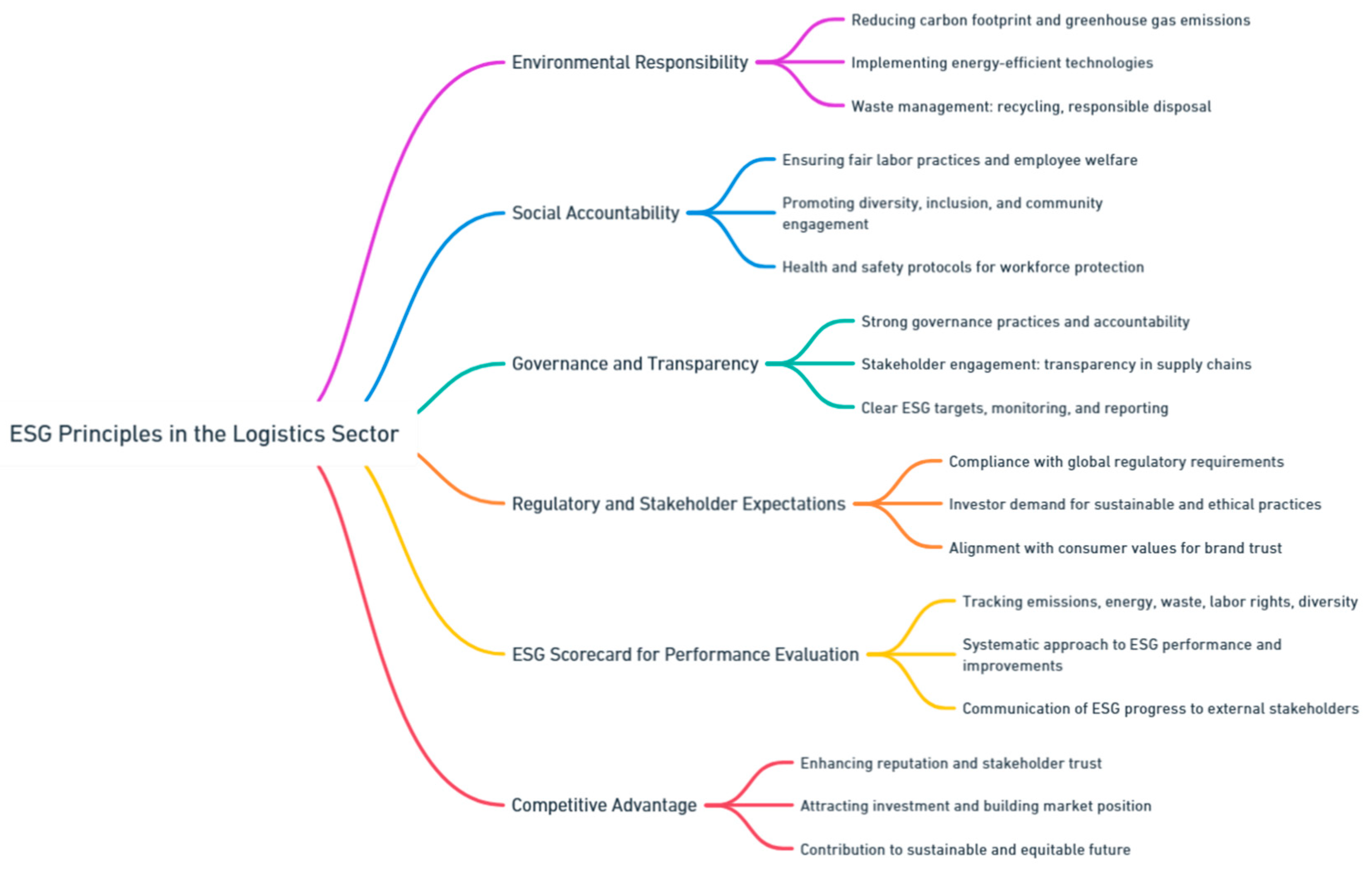
Environmental, Social, and Governance (ESG) principles have become an integral part of corporate accountability, serving as a comprehensive framework for companies to evaluate their environmental footprint, societal contributions, and governance effectiveness. Initially, ESG considerations were often perceived as a niche concern, embraced primarily by a small subset of companies that were either forward-thinking or compelled by regulatory pressures. However, in recent years, ESG has evolved into a core measure of corporate performance. This transformation is driven by a convergence of factors, including regulatory scrutiny, heightened investor expectations, and increasing consumer demand for transparency and ethical business practices. Today, businesses across various industries are prioritizing sustainability, ethical governance, and social responsibility, recognizing these elements not only as moral imperatives but also as strategic advantages in a highly competitive global marketplace. The shift toward embracing ESG principles reflects the growing awareness of sustainability, ethics, and transparency. Companies are increasingly judged not just on their financial performance, but also on how they manage their environmental impact, contribute to society, and uphold good governance practices. This is particularly true in industries that have significant environmental and social footprints, such as logistics. As a sector with a vast influence on global supply chains, logistics is under increasing pressure to align with ESG principles, particularly in light of the industry's role in facilitating the movement of goods across the world. The carbon-heavy nature of transportation, along with the complex and often fragmented nature of global supply chains, makes logistics a critical area for ESG evaluation. Moreover, logistics companies employ a diverse and often mobile workforce, which brings social considerations like labor rights, worker safety, and employee welfare to the forefront. One of the most pressing ESG challenges in the logistics industry is the need to reduce carbon emissions and minimize the environmental impact of transportation. The transportation sector is a major contributor to greenhouse gas emissions, and logistics companies are uniquely positioned to either exacerbate or mitigate these impacts. As global concerns about climate change intensify, logistics companies are facing mounting pressure from regulators, customers, and investors to adopt more sustainable practices. This includes investing in fuel-efficient technologies, optimizing delivery routes to reduce mileage, and exploring alternative, cleaner modes of transportation such as electric vehicles or rail. Companies are also increasingly looking at ways to reduce their energy consumption in warehouses and distribution centers by implementing energy-efficient lighting, heating, and cooling systems, and utilizing renewable energy sources where feasible. In addition to reducing carbon emissions, waste management is another critical environmental consideration for logistics companies. The sector generates significant amounts of waste, from packaging materials to end-of-life vehicles and equipment. Effective waste management strategies, such as reducing packaging waste, recycling, and ensuring the responsible disposal of obsolete equipment, are essential components of a logistics company’s ESG strategy. Companies that prioritize waste reduction not only minimize their environmental footprint but also often realize cost savings and operational efficiencies, making it a win-win for both the planet and the business. While environmental considerations are often the most visible component of ESG, the social aspect is equally important, particularly in the logistics sector. Logistics is a labor-intensive industry that relies on a large, diverse, and often mobile workforce. This workforce includes truck drivers, warehouse employees, and logistics planners, many of whom work under challenging conditions. Ensuring employee welfare, promoting health and safety, and upholding fair labor practices are critical social considerations that logistics companies must address. This is particularly true in regions where labor standards may be less stringent or where the workforce is composed of vulnerable populations, such as migrant workers. Companies that fail to uphold high social standards risk not only reputational damage but also operational disruptions, as poor working conditions can lead to higher employee turnover, absenteeism, and even strikes or legal action. Health and safety in the logistics sector are paramount, given the physically demanding nature of many logistics jobs and the inherent risks associated with transportation. Companies must invest in training programs, safety protocols, and protective equipment to ensure that employees can perform their duties safely and efficiently. Additionally, promoting diversity and inclusion within the workforce is becoming an increasingly important social consideration. A diverse workforce brings a range of perspectives and ideas, which can enhance problem-solving and innovation, while also fostering a more inclusive and equitable workplace culture. Logistics companies that prioritize diversity and inclusion are likely to find themselves better positioned to attract and retain talent in a competitive labor market. Governance, the third pillar of ESG, is perhaps the most foundational aspect of corporate accountability, as it underpins the entire framework of how a company is run. Good governance practices ensure transparency, accountability, and ethical decision-making, which are essential for building trust with stakeholders and managing risks. For logistics companies, strong governance structures are crucial for maintaining compliance with a myriad of regulations, from environmental standards to labor laws. Additionally, governance plays a key role in ensuring that ESG goals are not merely aspirational but are integrated into the company’s strategic objectives and operational practices. This requires setting clear ESG targets, monitoring progress, and reporting on performance in a transparent and accountable manner. The importance of governance is further underscored by the growing trend of stakeholder engagement. Logistics companies operate in complex ecosystems involving a wide range of stakeholders, including customers, employees, suppliers, investors, and regulators. Engaging with these stakeholders in a meaningful and transparent way is essential for understanding their expectations and ensuring that the company’s ESG strategies align with stakeholder values. This is particularly important in the logistics sector, where supply chain transparency is often a major concern. Companies that fail to engage with their stakeholders risk alienating key partners and customers, which can have a detrimental impact on both their reputation and their bottom line. One way logistics companies can systematically evaluate their ESG performance is through the use of an ESG scorecard. A well-designed ESG scorecard tailored specifically to the logistics sector allows companies to track their progress across the three dimensions of environmental, social, and governance performance. The scorecard can include a range of metrics, such as carbon emissions, energy efficiency, waste management, employee well-being, labor rights, diversity, corporate governance practices, and stakeholder engagement. By adopting a scorecard approach, logistics companies can gain a holistic view of their ESG performance, identify gaps, and implement targeted improvements. This systematic evaluation not only helps companies meet regulatory requirements and stakeholder expectations but also enables them to drive sustainability and responsible business practices across their supply chain. Moreover, the adoption of an ESG scorecard allows logistics companies to communicate their progress to external stakeholders, such as investors and customers, in a clear and transparent manner. This transparency is particularly important as investors increasingly use ESG criteria to inform their investment decisions, and customers are becoming more selective in choosing companies that align with their values. By demonstrating a commitment to ESG principles and providing tangible evidence of their efforts through an ESG scorecard, logistics companies can enhance their reputation, build stakeholder trust, and ultimately gain a competitive edge in the market. In conclusion, ESG principles are no longer a peripheral concern but have become a central component of corporate strategy, particularly in the logistics sector. The industry’s vast environmental footprint, diverse workforce, and complex supply chains make it uniquely positioned to benefit from a structured ESG framework. By addressing environmental, social, and governance considerations in a systematic way, logistics companies can not only reduce their impact on the planet but also improve employee welfare, strengthen governance practices, and enhance their overall performance. As ESG continues to grow in importance, companies that embrace these principles will be better equipped to meet the demands of regulators, investors, and consumers, while also contributing to a more sustainable and equitable future (Yeoh, 2021; Szóka, 2022).
Preprints 139811 i166

16.2. Understanding ESG in the Context of Logistics
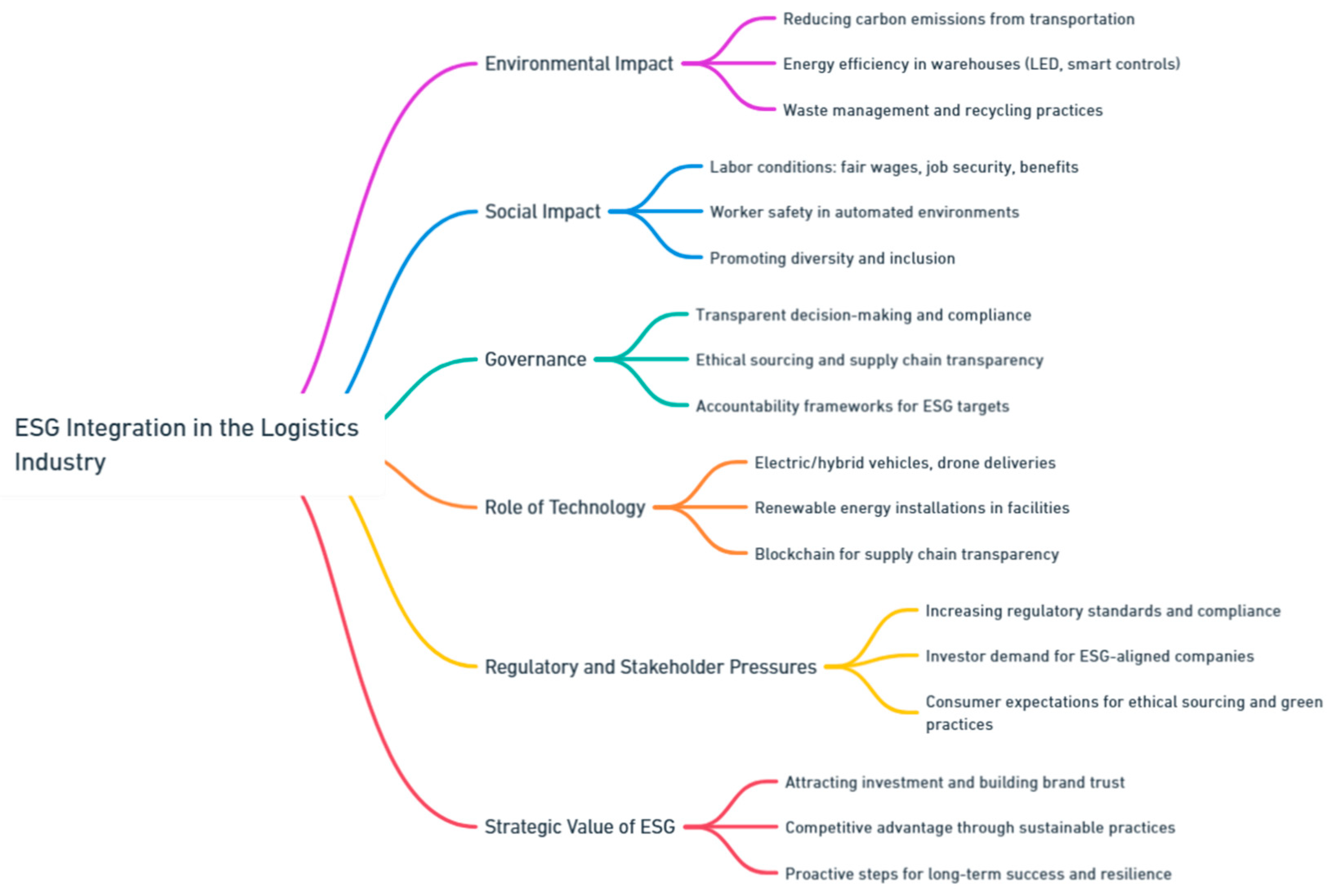
The incorporation of Environmental, Social, and Governance (ESG) principles in the logistics industry has become increasingly important as the sector grapples with its substantial role in both environmental and social challenges. This integration spans a wide array of issues, including efforts to mitigate carbon emissions linked to freight transportation and ensuring fair and safe labor practices, particularly for warehouse workers in a rapidly automating environment. Given that logistics serves as the backbone of global trade, the industry finds itself at the forefront of addressing the pressing need for sustainability, ethical labor practices, and strong governance structures. One of the most pressing environmental concerns in the logistics industry is its substantial contribution to global greenhouse gas (GHG) emissions. Transportation, a core component of logistics, accounts for approximately 24% of global CO2 emissions, according to the International Energy Agency (IEA). This statistic highlights the industry's immense impact on the environment. The transportation of goods, whether by road, air, or sea, relies heavily on fossil fuels, contributing significantly to carbon emissions. This reality has spurred both regulatory bodies and consumers to demand more sustainable logistics practices. To address this, logistics companies are increasingly exploring and implementing a variety of solutions, such as the adoption of electric or hybrid vehicles, investing in renewable energy sources for transportation fleets, and optimizing delivery routes to minimize fuel consumption. Furthermore, innovations like drone deliveries and the development of more efficient freight technologies also hold promise for reducing the environmental footprint of the logistics sector. In addition to transportation, warehouse operations within the logistics industry are another critical area where environmental sustainability efforts are being applied. Warehouses are energy-intensive facilities that often require significant heating, cooling, and lighting to maintain optimal conditions for stored goods. As a result, logistics companies are investing in energy-efficient technologies, such as LED lighting, smart temperature controls, and renewable energy installations like solar panels to reduce their carbon footprint. Additionally, many logistics providers are rethinking their facility designs to incorporate more environmentally friendly materials and sustainable building practices. By constructing green warehouses and utilizing eco-friendly materials, these companies are striving to minimize their environmental impact while still meeting the demands of a growing global supply chain. Another significant dimension of ESG in the logistics industry is the social impact, particularly concerning labor conditions in warehouses. As companies increasingly rely on automation and robotics to streamline operations and improve efficiency, there has been growing scrutiny over the working conditions in these highly automated environments. Workers in these facilities often face challenges related to safety, job security, and the fairness of their working conditions. The rise of automation has led to concerns about job displacement, as machines take over tasks that were once performed by humans. However, even in facilities where human labor is still essential, issues like long working hours, high productivity demands, and limited job security are prevalent. Worker safety is another area of concern. Warehouses, especially those handling a high volume of goods, can pose significant physical risks to workers. Injuries from heavy lifting, accidents with machinery, and fatigue from long shifts are common challenges. To address these issues, logistics companies must ensure that they implement robust safety protocols, provide adequate training, and invest in technologies that enhance worker safety, such as ergonomic equipment and automated systems designed to reduce the risk of accidents. Furthermore, fair labor practices, including offering reasonable wages, ensuring job security, and providing benefits such as healthcare and paid leave, are critical to meeting ESG standards. Companies that fail to address these issues may not only face reputational damage but also suffer from decreased worker morale and increased turnover, both of which can have a negative impact on overall operational efficiency. The demand for transparency and ethical sourcing in supply chains is another major aspect of ESG in the logistics industry. Modern consumers are becoming increasingly conscientious about the ethical implications of the products they purchase. They expect transparency not only in how their products are sourced but also in how they are delivered. Consumers want assurance that the goods they buy are transported through green and ethical supply chains, free from exploitative labor practices and with minimal environmental impact. This growing demand for transparency has led logistics companies to adopt more sophisticated tracking systems, such as blockchain technology, to provide consumers with real-time insights into the journey of their products from source to delivery. By using these technologies, companies can ensure the traceability of goods, helping to verify that products have been sourced ethically and transported in a sustainable manner. At the same time, the logistics industry faces increasing pressure from investors who are placing more emphasis on ESG factors in their investment decisions. Investors recognize that companies that prioritize sustainability and ethical governance are more likely to minimize risks associated with environmental regulations, labor disputes, and reputational damage. As a result, they are increasingly favoring companies that demonstrate a commitment to ESG principles, as these companies are seen as more resilient and better positioned for long-term success. For logistics companies, this means that developing and implementing robust ESG strategies is not just a matter of regulatory compliance or meeting consumer expectations, but also a way to attract investment and ensure the company’s future growth. In terms of governance, logistics companies are tasked with creating frameworks that ensure accountability, transparency, and ethical decision-making across all aspects of their operations. This includes everything from maintaining compliance with environmental regulations to ensuring fair labor practices, and from managing relationships with suppliers and partners to engaging with local communities. Strong governance structures are essential for ensuring that ESG goals are not only established but also met. Companies that fail to prioritize good governance risk falling short of their ESG targets, which can lead to negative consequences such as legal penalties, loss of consumer trust, and decreased investor confidence. To develop a robust ESG strategy, logistics companies must adopt a holistic approach that addresses all three components—environmental sustainability, social impact, and governance integrity. This means setting measurable targets for reducing carbon emissions, improving energy efficiency, and transitioning to more sustainable modes of transportation. On the social front, it involves creating safer, fairer working conditions for employees, particularly in warehouse environments, and ensuring that all workers are treated with dignity and respect. In terms of governance, logistics companies must establish clear policies and procedures to ensure that ESG principles are embedded in every level of the organization and that there is accountability for meeting these goals. As ESG becomes increasingly integrated into the logistics industry, companies that fail to prioritize these issues may find themselves at a competitive disadvantage. Consumers are more likely to support brands that align with their values, and investors are increasingly rewarding companies that demonstrate a commitment to sustainability and ethical practices. Therefore, logistics companies must recognize that ESG is not just a passing trend, but a critical factor in ensuring long-term success in a rapidly evolving global market. Those that take proactive steps to address their environmental impact, improve labor conditions, and implement strong governance structures will be better positioned to thrive in the future, while those that lag behind may struggle to keep pace with the growing demands of both consumers and investors (Baratta et al., 2023; Shapsugova, 2023; Nowlan et al., 2021).
Baratta, A., Cimino, A., Longo, F., Solina, V., & Verteramo, S. (2023). The impact of ESG practices in industry with a focus on carbon emissions: Insights and future perspectives. Sustainability, 15(8), 6685.
Shapsugova, M. (2023). ESG principles and social responsibility. In E3S Web of Conferences (Vol. 420, p. 06040). EDP Sciences.
Nowlan, A., Fine, J., O’Connor, T., & Burget, S. (2021). Pollution accounting for corporate actions: Quantifying the air emissions and impacts of transportation system choices case study: Food freight and the grocery industry in los angeles. Sustainability, 13(18), 10194.
Preprints 139811 i167

16.3. Core Components of an ESG Scorecard for Logistics Companies

16.4. Environmental Metrics for a Logistics ESG Scorecard
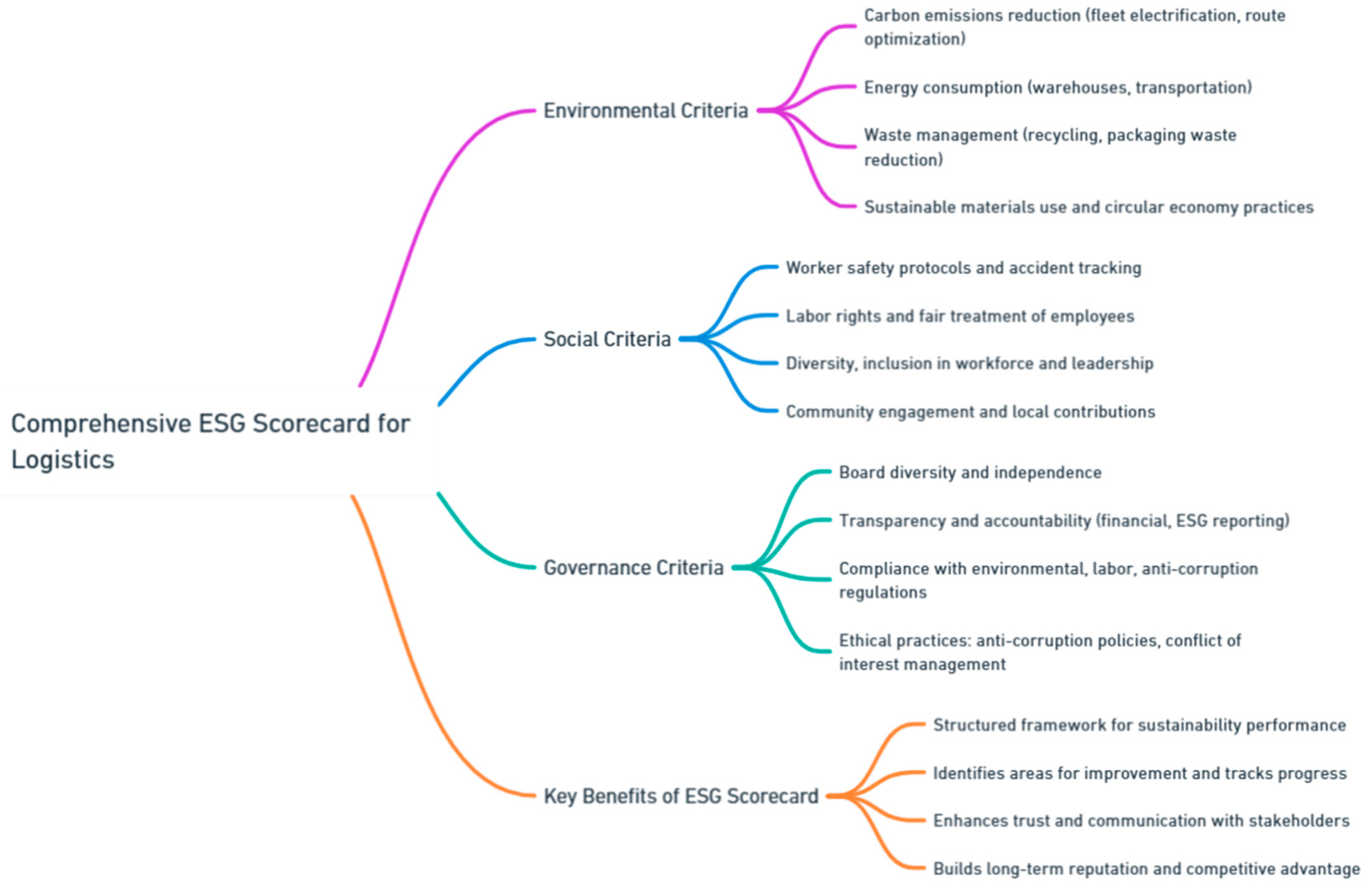
The logistics industry plays a pivotal role in the functioning of global supply chains and economies, but its environmental impact is substantial and growing. This impact is particularly pronounced in the form of carbon emissions from the transportation sector and the high energy consumption required to operate warehouses and distribution centers. As global concerns about climate change intensify, businesses in this industry are under increasing pressure to adopt environmentally sustainable practices. One way to measure and manage these environmental challenges is through a comprehensive Environmental, Social, and Governance (ESG) scorecard, which can provide logistics companies with a clear framework to evaluate and improve their environmental footprint. One of the most critical aspects of this ESG scorecard is the metric of carbon emissions. Transportation is the backbone of logistics, and unfortunately, it is also a significant contributor to greenhouse gas emissions, particularly CO2. This metric tracks the total carbon emissions generated by a company’s transportation fleet, whether it includes trucks, ships, airplanes, or even drones in some cases. Reducing carbon emissions in logistics requires a multi-pronged approach. Companies can achieve this by adopting electric vehicles (EVs), which are powered by electricity rather than fossil fuels, thereby reducing their dependence on oil and gas. Additionally, optimizing delivery routes can help cut down unnecessary miles, reduce fuel consumption, and minimize the overall carbon footprint. This can be achieved using advanced route optimization software, which calculates the most efficient routes by considering traffic, delivery schedules, and fuel efficiency. Another promising avenue for reducing carbon emissions is through investment in alternative fuels, such as biofuels, hydrogen, and liquefied natural gas (LNG). These fuels can significantly lower emissions compared to traditional diesel or gasoline-powered engines. In this regard, the logistics industry is poised for transformation, as more companies are beginning to recognize that lowering their carbon emissions is both an environmental necessity and a business imperative. Energy efficiency is another essential environmental metric that needs to be considered in the ESG scorecard. While carbon emissions are mostly associated with transportation, energy consumption in warehouses and distribution centers can also have a large environmental impact. These facilities typically require substantial amounts of energy for lighting, heating, cooling, and the operation of equipment such as conveyor belts and forklifts. To enhance energy efficiency, logistics companies are increasingly turning to renewable energy sources, such as solar and wind power, which can significantly reduce the reliance on non-renewable, carbon-intensive energy. Solar panels can be installed on the rooftops of warehouses to generate clean electricity, while wind turbines can be placed in strategic locations to harness wind energy. Additionally, the adoption of energy-efficient technologies, such as LED lighting and smart HVAC systems, can play a key role in minimizing energy consumption. LED lights use considerably less energy than traditional incandescent bulbs, while smart HVAC systems can regulate heating, ventilation, and air conditioning based on occupancy and weather conditions, ensuring that energy is not wasted. Furthermore, logistics companies can employ energy management systems that monitor and optimize the energy usage of their facilities in real time. This shift towards energy efficiency not only helps reduce the environmental impact but also results in substantial cost savings for businesses, further underscoring its importance in the ESG scorecard. Another critical environmental metric in logistics is waste management. In a world that is becoming increasingly conscious of the impact of waste on the environment, logistics companies are expected to adopt practices that minimize waste in their operations. Waste in logistics can arise from a variety of sources, including packaging materials, discarded products, and excess inventory. Sustainable packaging is one area where companies can make a significant difference. By adopting biodegradable, recyclable, or reusable packaging materials, companies can reduce the amount of plastic and other harmful materials that end up in landfills or the oceans. Implementing recycling programs within logistics facilities can further reduce waste by ensuring that packaging materials, paper, and other recyclable items are properly disposed of and reprocessed for future use. Additionally, logistics companies can adopt waste minimization strategies, such as optimizing inventory management to avoid overstocking and reducing the likelihood of unsellable products. Excess inventory often leads to waste, especially in industries where products have short shelf lives or are susceptible to becoming obsolete. Therefore, reducing waste in logistics requires a comprehensive approach that addresses packaging, recycling, and inventory management. Although it receives less attention than carbon emissions, water usage is another important environmental metric, particularly in regions where water scarcity is a pressing concern. The logistics industry, especially companies that operate large warehouses and distribution centers, uses significant amounts of water for a variety of purposes, including cleaning, cooling, and employee sanitation. Therefore, monitoring and reducing water consumption should be a priority for logistics companies aiming to improve their environmental sustainability. One way to achieve this is by implementing water-efficient technologies, such as low-flow faucets, waterless urinals, and high-efficiency cooling systems, which use less water than conventional systems. Companies can also adopt water recycling systems that capture and reuse water for non-potable purposes, such as irrigation and cooling. Additionally, logistics companies operating in water-stressed regions should develop water conservation plans that outline specific measures to reduce water consumption and ensure the sustainable use of this valuable resource. Water conservation not only helps protect the environment but also reduces operational costs, making it an important component of a comprehensive ESG scorecard. An example of a logistics company that has successfully implemented environmental metrics is UPS. UPS is a global leader in the logistics industry, and it has taken significant steps to reduce its environmental impact. One of the key initiatives implemented by UPS is the use of route optimization software, which helps the company reduce the number of miles driven by its delivery vehicles. This software analyzes various factors, such as traffic patterns, delivery schedules, and fuel efficiency, to determine the most efficient routes for drivers. By reducing the number of miles driven, UPS is able to cut fuel consumption and lower its carbon emissions. In addition to route optimization, UPS has also invested in alternative fuel vehicles, such as electric delivery trucks and hybrid vehicles, which further contribute to its efforts to reduce carbon emissions. The company has also taken steps to improve energy efficiency in its distribution centers by installing solar panels, upgrading to energy-efficient lighting, and implementing smart HVAC systems. These initiatives have not only helped UPS reduce its environmental footprint but have also resulted in significant cost savings. In conclusion, the logistics industry faces significant environmental challenges, particularly in the areas of carbon emissions, energy consumption, waste management, and water usage. However, by adopting a comprehensive ESG scorecard that tracks these environmental metrics, logistics companies can measure their impact, implement sustainable practices, and reduce their environmental footprint. The successful implementation of these metrics, as demonstrated by companies like UPS, highlights the importance of sustainability in the logistics industry and the potential benefits for both the environment and business operations. As the world continues to prioritize sustainability, it is imperative that logistics companies take proactive steps to address their environmental impact and contribute to a more sustainable future (Liu et al., 2021; Baah et al., 2021; Carli et 2020).
Preprints 139811 i168

16.5. Social Metrics for a Logistics ESG Scorecard
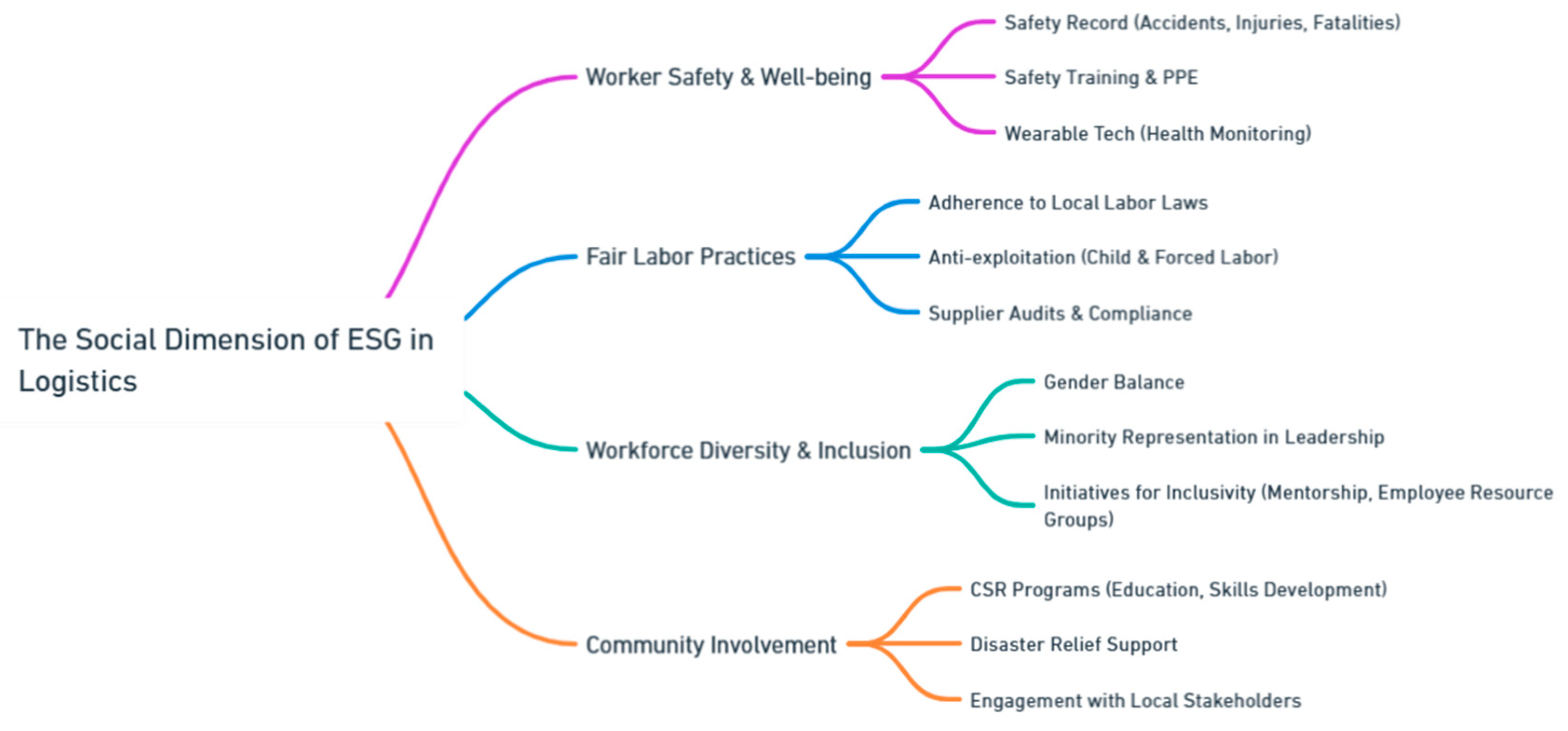
The social dimension of Environmental, Social, and Governance (ESG) considerations in logistics focuses on how companies manage the well-being of their workforce, supply chain relationships, and interactions with local communities. In the context of ESG, the social aspect is crucial as it directly impacts employee satisfaction, community trust, and ultimately a company’s operational efficiency and reputation. Companies in the logistics sector, such as transport providers, warehouse operators, and supply chain managers, are increasingly being held accountable for their social responsibilities by investors, regulators, and consumers. The social aspect of ESG encompasses a wide range of issues, from worker safety to community involvement, all of which influence a company’s long-term sustainability and ability to create shared value for all stakeholders. One of the primary social metrics in the logistics sector is worker safety and well-being. Given the physical nature of logistics work, which often involves the handling of heavy machinery, long hours, and physically strenuous tasks, the safety of workers is a critical concern. Companies are responsible for ensuring that their employees are not only safe but are also supported by policies and practices that promote their overall well-being. A logistics company’s safety record, which includes the number of accidents, injuries, and fatalities, is a direct reflection of how seriously it takes its duty of care toward its workforce. High accident rates or worker injuries indicate negligence, which can damage a company’s reputation and result in significant financial losses due to compensation claims, downtime, and legal penalties. To mitigate these risks, companies are encouraged to implement comprehensive safety training programs. These programs often focus on teaching employees proper techniques for handling equipment and materials, encouraging a culture of safety within the organization, and ensuring compliance with safety regulations. In addition to training, personal protective equipment (PPE) is essential to safeguard workers from workplace hazards. Providing workers with the necessary PPE, such as helmets, gloves, and high-visibility clothing, reduces the likelihood of accidents. Moreover, advances in technology have enabled companies to introduce wearable devices that monitor worker health in real-time. For instance, wearable sensors can detect fatigue levels, monitor posture, and track physical exertion, helping to prevent injuries caused by overexertion or poor ergonomics. By proactively addressing worker health and safety, companies can not only reduce accident rates but also foster a work environment where employees feel valued and protected, contributing to higher morale and productivity. Fair labor practices are another key aspect of the social dimension of ESG in logistics. The logistics industry often operates in environments where workers are vulnerable to exploitation, especially in warehouses and transportation hubs. This vulnerability can arise from long working hours, low wages, and inadequate working conditions. Therefore, ensuring that logistics companies adhere to fair labor practices is paramount. Companies must comply with local labor laws and regulations, which mandate fair wages, reasonable working hours, and the protection of labor rights. Furthermore, companies must avoid unethical practices such as child labor or forced labor, not only within their own operations but also across their supply chains. Ensuring that all suppliers and subcontractors adhere to fair labor practices is a critical element of responsible supply chain management. In this context, fair treatment of workers throughout the supply chain is crucial. Logistics companies should conduct regular audits and assessments of their suppliers to ensure compliance with labor standards. These audits can help identify areas where suppliers may be falling short in terms of labor rights, enabling logistics companies to take corrective action. By promoting fair labor practices across the supply chain, logistics companies can reduce the risk of reputational damage and potential legal liabilities while also contributing to broader social goals of reducing inequality and improving working conditions for all. Workforce diversity and inclusion are also significant components of the social aspect of ESG in logistics. A diverse and inclusive workforce is not only a reflection of social responsibility but also a strategic advantage for companies. Diversity in the workforce, particularly in leadership positions, can drive innovation, improve decision-making, and increase adaptability in a rapidly changing global market. Metrics related to workforce diversity include the gender balance within the workforce, the representation of minority groups in leadership roles, and the presence of programs and initiatives aimed at promoting inclusivity. Companies that prioritize diversity are better positioned to attract and retain top talent, as they create an environment where individuals from all backgrounds feel valued and included. In the logistics sector, where traditionally male-dominated roles such as truck driving and warehouse operations prevail, achieving gender balance and fostering inclusivity can be particularly challenging. However, some companies are taking active steps to address these challenges by implementing recruitment and retention strategies that target underrepresented groups. These strategies might include offering mentorship programs for women and minority employees, creating pathways for career advancement, and establishing employee resource groups that support diversity and inclusion initiatives. By fostering an inclusive workplace, logistics companies can enhance employee satisfaction, reduce turnover rates, and improve overall organizational performance. Community involvement is another important aspect of the social dimension of ESG in logistics. Logistics companies are often deeply embedded within local communities, particularly in areas where they operate large distribution centers or transportation hubs. As such, these companies have a responsibility to contribute positively to the social and economic well-being of the communities in which they operate. Community involvement can take many forms, from corporate social responsibility (CSR) programs and charitable donations to initiatives that promote education, skills development, and environmental stewardship. Many logistics companies are increasingly recognizing the importance of engaging with local communities in meaningful ways. For instance, they may partner with local schools to offer job training programs or sponsor initiatives that improve infrastructure and public services in underserved areas. Additionally, companies can participate in disaster relief efforts by providing logistical support for the delivery of essential goods and services. By actively engaging with local communities, logistics companies can build strong relationships with stakeholders, enhance their social license to operate, and contribute to the long-term sustainability of the regions in which they do business. A notable example of social metrics in action can be seen in the case of Amazon, one of the world’s largest logistics and e-commerce companies. Amazon has faced criticism in the past for its labor practices, particularly regarding working conditions in its warehouses. In response to these criticisms, Amazon has implemented a range of initiatives aimed at improving labor conditions and promoting worker safety. For instance, the company has introduced ergonomic training programs to help workers avoid injuries caused by repetitive strain, a common issue in fast-paced warehouse environments. Additionally, Amazon has invested in automation technologies, such as robotic systems, to reduce the physical burden on workers and minimize the risk of injuries. In terms of fair labor practices, Amazon has committed to raising wages and providing benefits for its workforce. The company has also taken steps to address concerns related to working hours and the pace of work, particularly during peak periods such as holiday seasons. While Amazon continues to face scrutiny from labor advocates, these initiatives demonstrate the company’s recognition of the importance of social responsibility within its operations. Overall, the social dimension of ESG in logistics is critical for ensuring that companies operate in a manner that is not only financially sustainable but also socially responsible. By focusing on worker safety, fair labor practices, diversity and inclusion, and community involvement, logistics companies can enhance their ESG performance and contribute to the well-being of their employees, suppliers, and the broader community. As ESG considerations continue to shape the business landscape, logistics companies that prioritize social responsibility will be better positioned to navigate the challenges and opportunities of a rapidly evolving global market (do Amaral et al., 2023; Govindan et al., 2021; Uyar et al., 2020).
Preprints 139811 i169

16.6. Governance Metrics for a Logistics ESG Scorecard
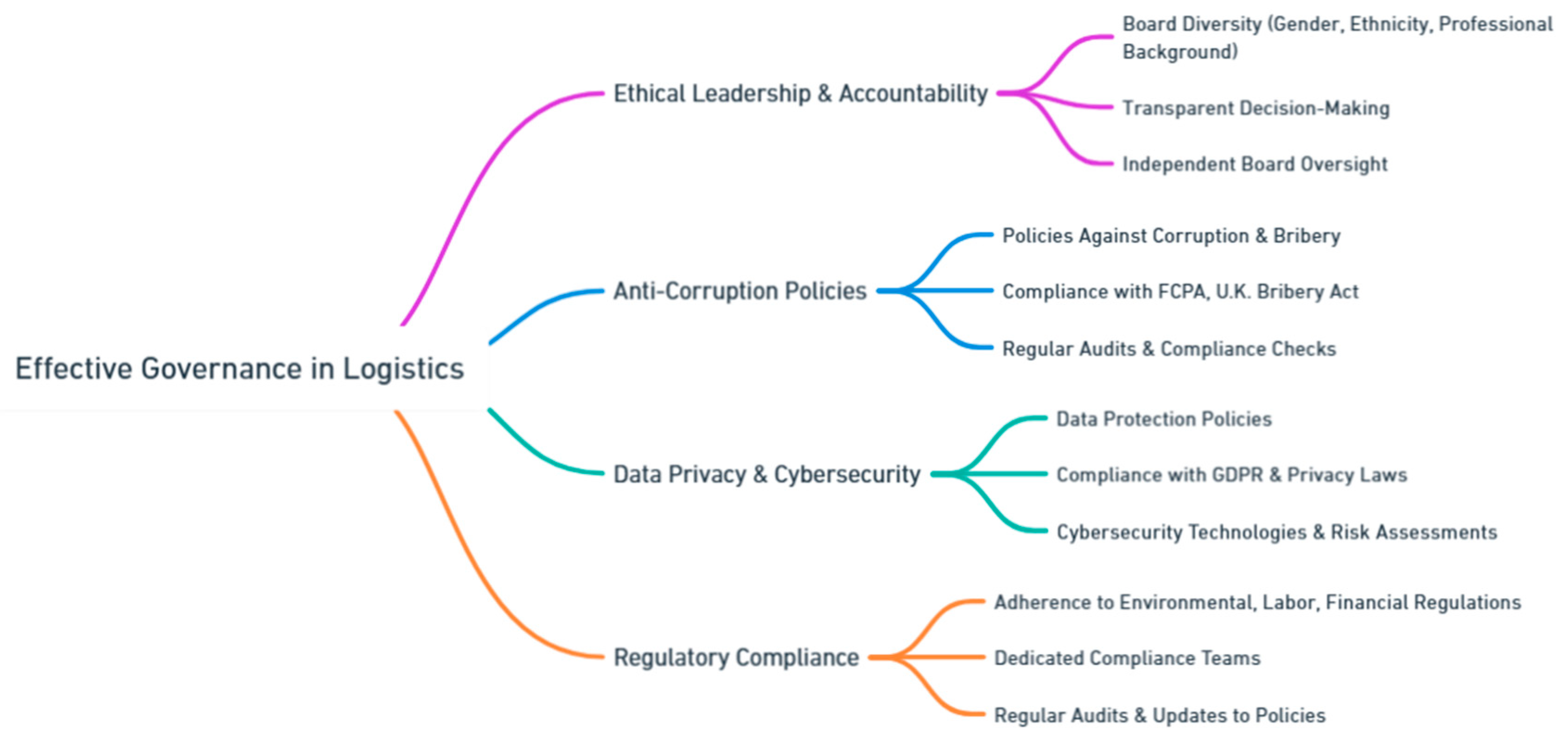
Effective governance plays a crucial role in maintaining the trust of stakeholders and ensuring that a company adheres to ethical standards. For companies, particularly in the logistics sector, governance is not just a formal requirement but a cornerstone of sustainable and responsible business practices. The governance aspect of Environmental, Social, and Governance (ESG) scorecards has gained increasing importance in recent years, driven by the growing demand from investors, regulators, and the public for companies to be more accountable and transparent. Logistics companies, given their significant role in global supply chains, have a particular responsibility to adopt strong governance frameworks that ensure operational integrity, uphold ethical values, and mitigate risks. When we think about governance in the context of a logistics ESG scorecard, we must look at several key metrics that comprehensively address how well the company is governed. These include ethical leadership and accountability, anti-corruption policies, data privacy and cybersecurity, and regulatory compliance. Each of these components contributes to the overall health and sustainability of a company and helps protect its reputation while fostering long-term value creation. The first key metric for governance in logistics is ethical leadership and accountability. Leadership plays a pivotal role in shaping the company’s direction, values, and ethical stance. The quality of leadership within an organization is often reflected in its board composition and oversight structures. A board that lacks diversity or independence may be less effective in ensuring proper checks and balances on the executive leadership team. Diversity, in terms of gender, ethnicity, and professional background, brings a variety of perspectives that can help in making better, more informed decisions. Companies should strive to build diverse boards not only because it is ethically responsible but because research shows that diversity improves corporate performance. Ethical leadership also means ensuring that those in leadership positions are held accountable for their decisions and actions. Shareholders, employees, customers, and other stakeholders must have confidence that the leadership is working in their best interests and is not engaging in activities that could harm the company or the broader community. Accountability structures, such as transparent decision-making processes and independent board oversight, are crucial for maintaining trust and ensuring that leadership actions align with the company's values and objectives. Another critical aspect of governance is the presence of anti-corruption policies. Corruption can be a significant risk for logistics companies due to the global nature of their operations, which often involve dealings with multiple regulatory environments, suppliers, contractors, and customs officials. Corruption and bribery not only undermine the integrity of a company but can lead to severe legal consequences, financial penalties, and reputational damage. For logistics companies, it is vital to implement strict anti-corruption policies that clearly define acceptable and unacceptable behaviors. These policies should be supported by robust internal control mechanisms, including regular audits and compliance checks, to detect and prevent any unethical activities. Furthermore, companies must ensure that all employees, from top leadership to operational staff, are well-informed about the company’s anti-corruption policies and understand the consequences of violating these policies. Compliance with international anti-corruption laws, such as the U.S. Foreign Corrupt Practices Act (FCPA) and the U.K. Bribery Act, is essential for logistics companies, particularly those operating in high-risk regions where corruption may be more prevalent. In the modern digital landscape, data privacy and cybersecurity are integral to the governance frameworks of any company, including those in logistics. With the rise of digitalization in the logistics sector—encompassing everything from warehouse management systems to the use of artificial intelligence and machine learning—companies are collecting and processing vast amounts of data, including customer information, operational data, and financial records. The importance of protecting this data cannot be overstated. Breaches in data privacy or cybersecurity can not only lead to regulatory fines and legal liabilities but also erode the trust of customers and partners. Ensuring that a logistics company has strong data protection measures in place is vital for maintaining stakeholder confidence. Companies must establish clear data protection policies, implement state-of-the-art cybersecurity technologies, and ensure compliance with relevant regulations such as the General Data Protection Regulation (GDPR) in Europe or other national and international privacy laws. Moreover, logistics companies must regularly assess and update their cybersecurity strategies to address evolving threats and vulnerabilities. This includes conducting regular risk assessments, training employees on cybersecurity best practices, and preparing incident response plans to mitigate the impact of potential breaches. Lastly, regulatory compliance is a fundamental metric that logistics companies must consider within their governance frameworks. The logistics industry is highly regulated, with companies required to adhere to a variety of local and international laws, including environmental regulations, labor standards, and financial reporting requirements. Failing to comply with these regulations can lead to legal penalties, operational disruptions, and reputational damage. For instance, environmental regulations may require logistics companies to minimize their carbon footprint by adopting more sustainable practices, such as using electric vehicles or optimizing delivery routes to reduce emissions. Similarly, labor standards ensure that the company treats its employees fairly, providing safe working conditions, fair wages, and protection from exploitation. Regulatory compliance also extends to financial reporting, where companies are expected to provide accurate and transparent financial statements to their shareholders and the public. In this regard, logistics companies must establish strong internal control systems to ensure that they are consistently complying with all applicable laws and regulations. This may involve setting up dedicated compliance teams, conducting regular audits, and keeping abreast of any changes in the regulatory environment. Governance is not a static concept; it evolves over time as the business landscape changes, new regulations emerge, and stakeholder expectations shift. Therefore, logistics companies must regularly review and update their governance practices to ensure that they remain relevant and effective in addressing current and future challenges. In particular, the increasing focus on sustainability means that companies must now consider the broader societal and environmental impacts of their operations when developing governance frameworks. This includes integrating ESG factors into corporate strategies, ensuring that the board has oversight of sustainability issues, and setting clear goals for improving the company’s performance in areas such as carbon emissions, resource use, and social responsibility. In conclusion, effective governance is essential for logistics companies to build and maintain the trust of their stakeholders. It provides the foundation for ethical business practices, ensures compliance with laws and regulations, and helps companies navigate the complexities of the global marketplace. By focusing on key governance metrics—such as ethical leadership and accountability, anti-corruption policies, data privacy and cybersecurity, and regulatory compliance—logistics companies can create value for their stakeholders while safeguarding their reputation and long-term success. Governance is not just about meeting minimum legal requirements; it is about embedding a culture of responsibility, transparency, and ethical behavior across all levels of the organization. In doing so, logistics companies will be better positioned to thrive in an increasingly complex and interconnected world (Govindan et al., 2021; Previtali and Cerchiello, 2023; Karaman et al. 2020).
Preprints 139811 i170

16.7. Application of the Model in Real-World Scenarios
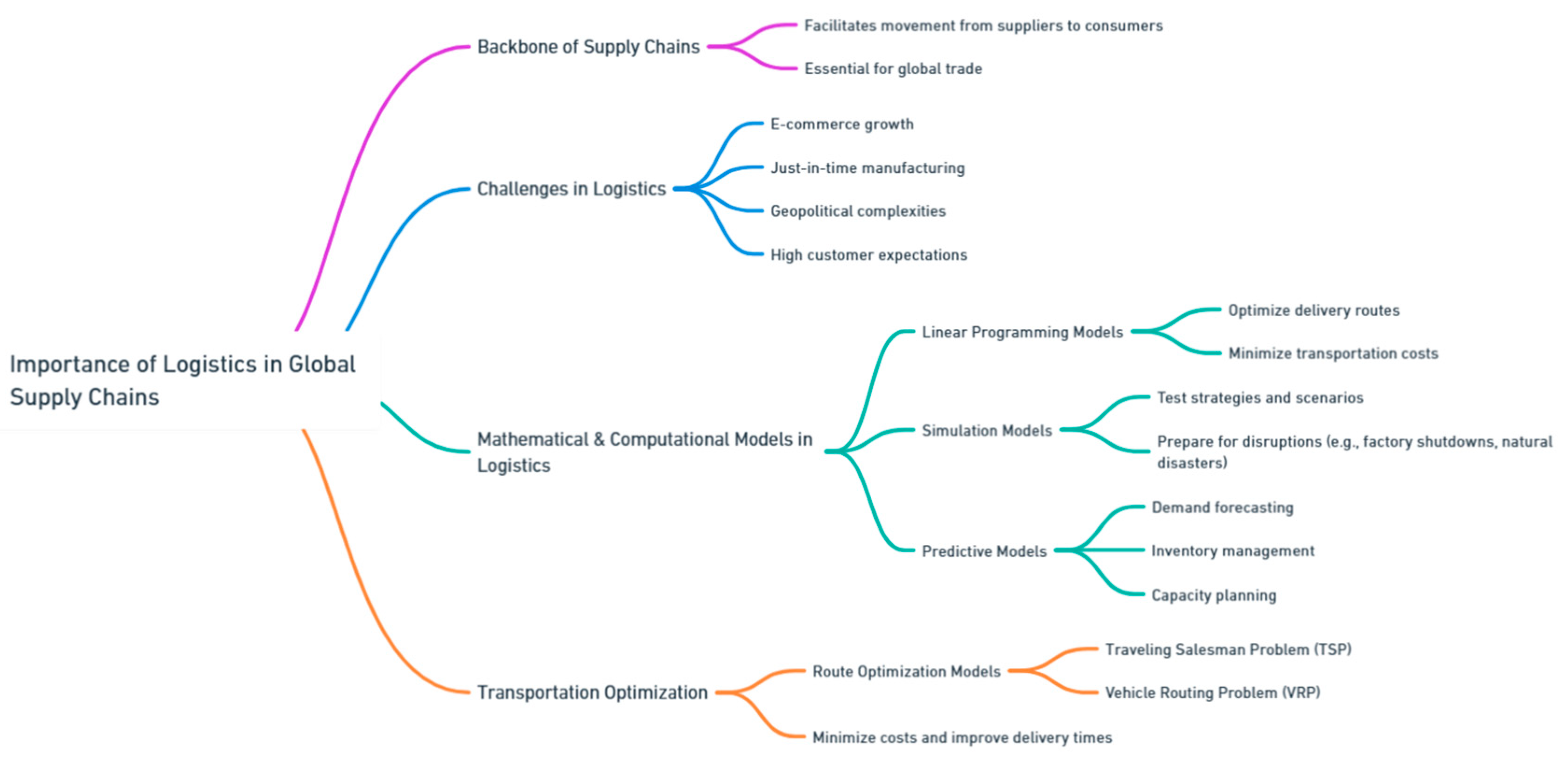
In an increasingly globalized and interconnected world, the importance of logistics has never been more evident. Logistics serves as the backbone of modern supply chains, facilitating the movement of goods from suppliers to consumers across vast distances and through numerous intermediaries. The efficiency and reliability of logistics systems are essential for the smooth functioning of global trade and commerce. Without effective logistics operations, supply chains would experience bottlenecks, leading to delays, increased costs, and inefficiencies. This is especially true today, as supply chains become more intricate, driven by diverse consumer demands, geopolitical complexities, and technological advancements. In response to these growing challenges, logistics professionals are turning to various mathematical and computational models to improve operational efficiency and maintain a competitive edge in the market. The complexity of contemporary supply chains presents significant challenges to logistics operations. With the growth of e-commerce, global trade, and just-in-time manufacturing, logistics professionals must now manage a greater volume of goods, often with tighter delivery windows and higher customer expectations. This requires a strategic approach to planning and executing logistics operations. Decision-makers must find ways to optimize routes, minimize transportation and operational costs, and ensure that goods are delivered on time, all while balancing a host of variables such as fluctuating demand, fuel prices, and labor availability. The need to handle such complexities efficiently has led to the development of numerous mathematical and computational models. These models provide a structured framework for decision-making by allowing logistics managers to simulate different scenarios, predict outcomes, and make data-driven decisions. By leveraging these models, organizations can streamline operations, reduce inefficiencies, and improve overall supply chain performance. Among the simplest yet most effective tools used in logistics are linear programming models. Linear programming is a mathematical optimization technique that helps decision-makers determine the best outcome given certain constraints. In logistics, this might involve finding the optimal route for a delivery truck, minimizing transportation costs, or determining the most efficient way to allocate resources. For example, a logistics manager might use linear programming to decide how to distribute goods from multiple warehouses to various retail outlets, taking into account factors such as distance, shipping costs, and inventory levels. By solving this optimization problem, the manager can ensure that goods are transported in the most cost-effective manner while meeting demand. However, as supply chains grow more complex, so too do the models used to manage them. Advanced computational models, such as simulation and predictive models, are increasingly being employed to address the dynamic nature of modern logistics operations. Simulation models allow logistics professionals to test various strategies and scenarios before implementing them in the real world. For instance, a company might use a simulation model to predict the impact of a sudden increase in demand or a disruption in the supply chain, such as a factory shutdown or a natural disaster. By running different scenarios, decision-makers can develop contingency plans and make informed choices about how to respond to unforeseen events. Predictive models, on the other hand, use historical data and statistical algorithms to forecast future trends. In logistics, these models are particularly useful for demand forecasting, inventory management, and capacity planning. By analyzing past sales data, customer behavior, and market trends, predictive models can help logistics managers anticipate demand and adjust their operations accordingly. This is crucial in industries such as retail, where fluctuations in consumer demand can have a significant impact on supply chain performance. For example, a predictive model might forecast a spike in demand for a particular product during the holiday season, prompting the logistics team to increase inventory levels and allocate additional resources to ensure timely deliveries. Transportation, a key component of logistics, benefits greatly from the application of these models. The optimization of transportation routes is critical to minimizing costs and ensuring timely delivery. With fuel prices, labor costs, and traffic congestion all influencing transportation efficiency, logistics professionals must find ways to optimize routes while considering multiple variables. In this context, route optimization models, often based on algorithms like the Traveling Salesman Problem (TSP) and Vehicle Routing Problem (VRP), are widely used. These models help logistics managers identify the most efficient routes for delivery vehicles, taking into account factors such as distance, delivery windows, and vehicle capacity. By optimizing routes, companies can reduce fuel consumption, lower transportation costs, and improve delivery times, leading to higher customer satisfaction (Akkad et al., 2020; Nagy-Bota et al, 2023; Barykin et al., 2020).
Preprints 139811 i171
In addition to transportation, inventory management is another critical area where mathematical models play a pivotal role. Inventory management involves determining how much stock to keep on hand, where to store it, and when to reorder supplies. Poor inventory management can lead to stockouts, which result in lost sales, or overstocking, which ties up capital and increases storage costs. To avoid these issues, logistics managers use inventory models to balance supply and demand effectively. One common approach is the Economic Order Quantity (EOQ) model, which calculates the optimal order quantity that minimizes the total cost of inventory, including ordering and holding costs. By using this model, companies can ensure that they have the right amount of stock at the right time, reducing the risk of overstocking or stockouts. Warehousing is another critical element of logistics that benefits from the application of mathematical and computational models. Warehousing involves the storage of goods before they are transported to their final destination. Efficient warehouse management is essential for ensuring that goods are readily available when needed and that they can be picked, packed, and shipped in a timely manner. To improve warehouse operations, logistics professionals use models that optimize warehouse layout, storage allocation, and order picking strategies. For instance, a warehouse manager might use a model to determine the most efficient way to store products based on their size, weight, and frequency of retrieval. By optimizing warehouse operations, companies can reduce labor costs, minimize the time required to fulfill orders, and improve overall efficiency. Demand forecasting, an essential aspect of logistics planning, is also enhanced by the use of predictive models. Accurate demand forecasting allows companies to anticipate customer needs and adjust their supply chain operations accordingly. This is particularly important in industries where demand is highly variable or seasonal. Predictive models can help companies forecast future demand based on historical data, market trends, and external factors such as economic conditions or consumer preferences. By improving the accuracy of demand forecasts, companies can reduce the risk of stockouts or overproduction, leading to more efficient supply chain operations. Finally, network design is a critical aspect of logistics that can benefit significantly from the application of mathematical and computational models. Network design involves determining the optimal configuration of a company's supply chain, including the location of suppliers, manufacturing facilities, warehouses, and distribution centers. A well-designed logistics network can minimize transportation costs, reduce lead times, and improve overall supply chain performance. To achieve this, logistics professionals use models that take into account various factors, such as transportation costs, facility operating costs, and customer demand patterns. By optimizing the design of their logistics network, companies can ensure that they can meet customer demand efficiently and cost-effectively (Sanni et al., 2020; Huo and Zhan, 2024; Billah et al., 2020).
In conclusion, the application of mathematical and computational models has become an integral part of modern logistics operations. These models provide decision-makers with the tools they need to handle the complexities of global supply chains, optimize operations, and maintain competitiveness. From linear programming and route optimization to predictive models and network design, these tools enable logistics professionals to make data-driven decisions that improve transportation efficiency, inventory management, warehousing, demand forecasting, and overall supply chain performance. As supply chains continue to evolve, the use of these models will remain essential for companies seeking to stay competitive in an increasingly interconnected world.
Types of Models Used in Logistics. In today’s increasingly globalized and interconnected world, logistics has become a crucial component of economic and business success. Logistics encompasses the planning, implementation, and management of the flow of goods, services, and information between the point of origin and the point of consumption. It plays a pivotal role in ensuring that products are transported efficiently and effectively across vast distances, whether domestically or internationally. As industries and supply chains grow in size and complexity, the demands placed on logistics professionals have significantly increased. Their responsibilities now extend beyond simple transportation management to include a wide array of logistical operations such as warehousing, inventory management, demand forecasting, and network design. One of the major challenges faced by logistics professionals in this evolving environment is the need to optimize routes, reduce costs, and guarantee the timely delivery of goods. With supply chains stretching across continents, involving numerous stakeholders and crossing borders, the logistics landscape has become more intricate than ever before. Each of these factors must be carefully coordinated to ensure that goods are moved in a cost-effective and timely manner, while minimizing disruptions and delays. In order to address these challenges, mathematical and computational models have become essential tools for logistics managers and decision-makers. These models are designed to handle the vast amounts of data and numerous variables involved in modern logistics. They provide decision-makers with the ability to analyze complex scenarios, forecast demand, manage inventory levels, optimize transportation routes, and design efficient supply chain networks. The use of these models has grown exponentially in recent years, driven by the need for greater efficiency, cost reductions, and improved service levels in an increasingly competitive market. In this essay, we will explore how different types of mathematical and computational models are applied in real-world logistics scenarios, and the benefits they provide in terms of transportation, inventory management, warehousing, demand forecasting, and network design. Transportation is one of the key elements of logistics, and optimizing the movement of goods is a central concern for any organization involved in supply chain management. The transportation sector is responsible for the physical movement of products from manufacturers to distribution centers, and eventually to retailers or end consumers. Given the global nature of today’s economy, the transportation of goods often involves multiple modes, such as trucks, trains, ships, and airplanes. The choice of the most efficient mode of transport, the best routes, and the most cost-effective scheduling are all challenges that logistics professionals face. To streamline transportation operations, mathematical models such as linear programming, dynamic programming, and network flow models are commonly used. Linear programming, for example, is a powerful optimization technique that can help decision-makers allocate resources in the most efficient way. In logistics, it can be used to minimize transportation costs by determining the best combination of routes, vehicles, and shipment sizes. By considering constraints such as capacity limits, delivery times, and fuel consumption, linear programming helps logistics managers achieve the most cost-effective transportation plan. Additionally, network flow models can be used to optimize the flow of goods through transportation networks, ensuring that goods are moved along the most efficient paths. These models take into account factors such as traffic congestion, transportation delays, and the availability of alternative routes, helping logistics professionals mitigate risks and improve overall transportation efficiency. In addition to transportation, inventory management is another critical area where mathematical and computational models are applied. Inventory management involves determining the optimal levels of stock to hold at different points in the supply chain in order to meet customer demand while minimizing holding costs. Too much inventory can lead to excessive storage costs, while too little inventory can result in stockouts and lost sales. Balancing these competing concerns is a key challenge for logistics professionals, especially in industries where demand can fluctuate significantly. Mathematical models such as the Economic Order Quantity (EOQ) model and the Newsvendor model are commonly used to optimize inventory management decisions. The EOQ model helps logistics managers determine the optimal order quantity that minimizes the total costs associated with ordering and holding inventory. It takes into account factors such as demand rates, ordering costs, and holding costs, providing decision-makers with the information they need to place orders at the right time and in the right quantities. The Newsvendor model, on the other hand, is used in situations where demand is uncertain, and managers must make decisions based on forecasts. This model helps logistics professionals strike a balance between the cost of holding excess inventory and the cost of running out of stock, improving overall inventory efficiency. Warehousing, another important component of logistics, is also an area where models play a significant role. Warehousing involves the storage of goods before they are shipped to their final destinations. The efficient management of warehouses is critical to ensuring that products are readily available when needed and that inventory is properly tracked and organized. Warehouse management models focus on optimizing the layout and operations of warehouses, including the placement of goods, the scheduling of workers, and the use of automation and technology. Simulation models, in particular, are widely used in warehouse management to analyze and improve warehouse operations. These models allow logistics professionals to create virtual representations of warehouse environments and test different strategies for improving efficiency. For example, simulation models can be used to evaluate the impact of different warehouse layouts on order fulfillment times, or to test the effectiveness of automation technologies such as robotic picking systems. By using simulation models, logistics managers can identify potential bottlenecks and inefficiencies in warehouse operations, allowing them to make informed decisions about how to improve performance. Demand forecasting is another area where mathematical and computational models are invaluable in logistics. Accurate demand forecasts are essential for ensuring that the right amount of inventory is available to meet customer needs. If demand is overestimated, companies may end up with excess inventory, while underestimating demand can lead to stockouts and lost sales. Forecasting models, such as time series analysis and regression models, help logistics professionals predict future demand based on historical data and other relevant factors. Time series analysis, for instance, allows decision-makers to identify patterns and trends in historical demand data, which can be used to predict future demand. Regression models, on the other hand, use statistical techniques to analyze the relationship between different variables, such as sales, economic conditions, and consumer behavior, in order to forecast demand. These models are critical for helping companies make informed decisions about inventory levels, production schedules, and transportation planning, ensuring that they can meet customer demand while minimizing costs. Finally, network design is a critical aspect of logistics that involves determining the most efficient way to structure supply chains. Network design models help logistics professionals decide where to locate distribution centers, warehouses, and manufacturing facilities in order to minimize transportation costs, reduce lead times, and improve service levels. These models take into account factors such as transportation costs, customer locations, and facility capacities, providing decision-makers with the information they need to design efficient and cost-effective supply chain networks. In conclusion, mathematical and computational models are essential tools for logistics professionals in today’s complex and competitive global economy. From optimizing transportation and inventory management to improving warehousing operations and forecasting demand, these models provide decision-makers with the insights they need to streamline operations, reduce costs, and ensure timely delivery. As supply chains continue to grow in complexity, the importance of these models will only increase, enabling companies to remain competitive and meet the challenges of the modern logistics landscape (Tang and Thelkar, 2023; Gupta et al., 2022; Rahmaty and Nozari, 2023).
Preprints 139811 i172
Real-World Application of Models in Logistics. Transportation optimization, inventory management, warehousing simulations, demand forecasting, and network design are all essential pillars in the field of logistics. In a rapidly evolving world with fluctuating fuel costs, increasing environmental concerns, and growing customer expectations, logistics companies rely heavily on mathematical models and algorithms to streamline their operations, improve efficiency, and maintain a competitive edge. Each of these areas, from optimizing transportation routes to designing supply chain networks, presents unique challenges and opportunities for optimization. To understand the crucial role that models play in logistics, it's important to delve deeper into how these models are applied in real-world scenarios and the measurable benefits they bring to companies.
  • Transportation Optimization Models. One of the most critical applications of modeling in logistics is the optimization of transportation routes, a task that has become increasingly important as fuel costs rise and concerns about the environmental impact of transportation grow. In logistics, transportation costs typically constitute a significant portion of overall expenses, so finding ways to reduce travel distances without compromising service levels is essential. Optimization models, particularly the Vehicle Routing Problem (VRP), are widely used to address these challenges. The VRP helps companies determine the most efficient routes for a fleet of vehicles to take, ensuring that deliveries are completed within designated time windows and that vehicle capacities are not exceeded, all while minimizing total travel distance or time. An exemplary real-world application of transportation optimization is seen in UPS's use of the On-Road Integrated Optimization and Navigation (ORION) system. ORION is a sophisticated system that uses advanced algorithms to plan the most efficient delivery routes for UPS drivers. By taking into account factors like traffic conditions, customer locations, vehicle capacity, and fuel efficiency, ORION helps reduce the number of miles driven, the amount of fuel consumed, and overall delivery time. UPS has reported saving millions of miles each year through the use of this system, which also contributes to significant reductions in fuel consumption and emissions. ORION is a prime example of how transportation optimization models can not only cut costs for companies but also reduce their environmental footprint, aligning with broader sustainability goals (Azad et al., 2022; Meng et al., 2021).
  • Inventory Management Models. Inventory management is another vital area where optimization models have a significant impact. Companies must carefully balance the costs of holding inventory against the need to meet customer demand promptly, which requires a delicate and often complex calculation. Inventory management models like the Economic Order Quantity (EOQ) model and the Just-in-Time (JIT) system provide companies with strategies to minimize costs while ensuring that they have the right amount of stock on hand to meet demand. The EOQ model helps companies determine the optimal order size that minimizes the combined costs of ordering and holding inventory. By calculating factors such as the cost of placing an order, the demand rate, and the holding cost per unit, businesses can arrive at an optimal order quantity that reduces their overall inventory costs. This model is especially useful for companies with relatively stable demand patterns, as it enables them to maintain an adequate stock of goods while avoiding the costs associated with overstocking or stockouts. In contrast, the JIT system takes a more dynamic approach, focusing on reducing waste by keeping inventory levels as low as possible. A standout example of this model's application is Toyota's renowned JIT system, which has been a key factor in the company’s success. By receiving goods only when they are needed for the production process, Toyota is able to minimize the costs associated with holding large quantities of inventory. This system requires precise coordination with suppliers and relies heavily on predictive models that forecast demand and ensure that materials are delivered in a timely manner. The JIT system not only reduces inventory holding costs but also helps improve overall efficiency by eliminating excess inventory that could otherwise become obsolete or take up valuable warehouse space (Taraja, 2021; Reza and Silalahi, 2021).
  • Simulation Models in Warehousing. Warehousing is a critical component of logistics operations, as it involves the storage, organization, and movement of goods within a company's supply chain. Optimizing warehouse operations is essential for ensuring that products can be stored and retrieved efficiently, reducing order processing times, and ultimately improving customer satisfaction. Simulation models offer a powerful tool for optimizing warehouse layouts, processes, and technologies by allowing companies to create virtual representations of their warehouses and experiment with different configurations before making changes in the real world. Amazon is a prime example of a company that has embraced simulation models to enhance its warehousing operations. The company's fulfillment centers rely heavily on robotic automation to move products from storage areas to packaging stations, and simulation models play a critical role in optimizing these processes. By creating digital twins of its warehouses and running simulations of both robot and human movements, Amazon is able to identify potential bottlenecks, improve the efficiency of picking and packing operations, and reduce order processing times. The use of simulation models enables Amazon to experiment with different warehouse configurations, such as changes to shelving layouts or the placement of robots, to determine the most efficient setup for each fulfillment center. Through these simulations, Amazon can continuously refine its warehouse operations, resulting in faster order fulfillment, lower operational costs, and a better overall customer experience. The company’s use of digital twins and robotic simulations is a testament to the power of simulation models in enhancing logistics efficiency (Kolesnyk et al., 2023; Saderova et al., 2022).
  • Predictive Models in Demand Forecasting. Accurate demand forecasting is essential for managing inventory levels, optimizing production schedules, and ensuring that customers receive their products when they need them. Predictive models, which leverage historical data and advanced algorithms, have become indispensable tools for logistics companies seeking to improve the accuracy of their demand forecasts. These models analyze a wide range of data, including past sales patterns, market trends, and external factors such as economic conditions or weather events, to predict future demand more accurately. Walmart has demonstrated the effectiveness of predictive models in improving its demand forecasting capabilities. By analyzing vast amounts of sales data from its stores, Walmart is able to identify trends and patterns that inform its inventory decisions. In addition to historical sales data, Walmart incorporates external factors such as weather forecasts and economic indicators into its predictive models, allowing the company to adjust its inventory levels in real-time. This proactive approach helps Walmart avoid stockouts, reduce excess inventory, and ensure that products are available to customers when and where they are needed. The use of predictive models in demand forecasting has allowed Walmart to improve its overall supply chain efficiency, reduce costs, and enhance customer satisfaction (Bousqaoui et al., 2021; Hayta et al., 2023).
  • Network Design Models for Supply Chain Optimization. The design of a company's supply chain network, which includes the location of warehouses, distribution centers, and production facilities, is a crucial factor in ensuring that products are delivered to customers efficiently and at the lowest possible cost. Network design models are used to optimize the placement of these facilities, taking into account factors such as transportation costs, lead times, and service requirements. By strategically designing their supply chain networks, companies can reduce transportation costs, minimize delays, and improve overall supply chain efficiency. DHL, a global leader in logistics, has successfully applied network design models to optimize its distribution network. By analyzing data on transportation costs, customer demand patterns, and service level requirements, DHL is able to determine the optimal locations for its distribution centers and hubs. This strategic placement of facilities enables DHL to minimize transportation costs while ensuring that it can meet customer expectations for timely deliveries. The use of network design models has been instrumental in helping DHL maintain its competitive advantage in a highly dynamic and globalized market (Tordecilla et al., 2021; Dang et al., 2021).
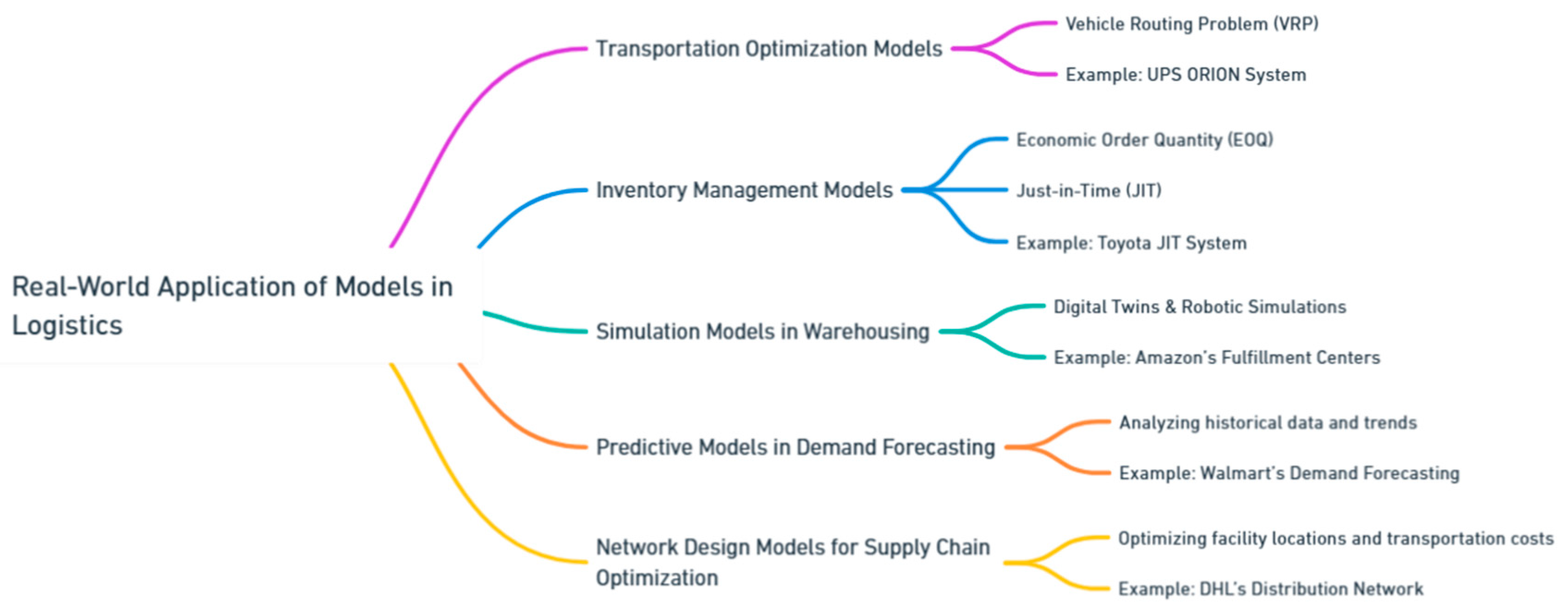
In conclusion, transportation optimization, inventory management, warehousing simulations, demand forecasting, and network design are all areas where models and algorithms play a transformative role in logistics. By leveraging these models, companies can reduce costs, improve efficiency, and enhance customer satisfaction, ultimately positioning themselves for long-term success in an increasingly competitive marketplace.
Preprints 139811 i173
Challenges and Considerations in Applying Models. While models offer numerous benefits, their application in real-world logistics scenarios is not without challenges. The use of logistics models to streamline operations, enhance decision-making, and improve efficiency is well-documented. However, like any technological solution, models in logistics come with a set of inherent challenges that can affect their performance, usability, and overall success in practical settings. These challenges, while surmountable, must be carefully considered to ensure that the benefits of logistics models are fully realized. The challenges that emerge from using logistics models typically revolve around issues of data accuracy, implementation complexity, cost, and human expertise. A critical component that determines the success of logistics models is the accuracy and quality of the data used to feed them. Models, no matter how advanced or sophisticated, are only as good as the data they are built upon. Data accuracy in logistics is paramount because the decisions generated by the models directly affect key aspects such as inventory management, route planning, demand forecasting, and supply chain optimization. If the data provided to the model is incomplete, inaccurate, or outdated, the outcomes will likely lead to suboptimal decisions. For instance, a logistics model based on incorrect demand forecasts could result in overstocking or understocking inventory, both of which can be costly for businesses. Inaccurate data can stem from a variety of sources. Human errors in data entry, outdated systems that do not capture real-time information, or fragmented data from multiple sources can all contribute to inaccuracies. Additionally, logistics operations often involve various stakeholders, such as suppliers, carriers, and customers, each contributing different datasets. Discrepancies between these datasets can further lead to inaccuracies that complicate the decision-making process. In such cases, the outputs of logistics models may be unreliable, potentially exacerbating inefficiencies instead of mitigating them. Another major challenge in the application of logistics models is the complexity associated with their implementation. Large-scale logistics operations, in particular, are often built on legacy systems that may not easily accommodate modern, data-driven models. Integrating advanced models into these existing systems can pose significant technical hurdles. Compatibility issues between old and new systems may arise, necessitating costly upgrades or even full system overhauls. Additionally, data integration is a major concern. As companies scale, they often use different platforms for managing different aspects of logistics, such as warehousing, transportation, and order fulfillment. Consolidating these platforms to feed accurate, real-time data into a unified model is not always straightforward. Beyond technical issues, there are organizational and human factors to consider. Employees who are accustomed to traditional logistics practices may resist the adoption of new technologies, particularly when they require a significant learning curve. Advanced logistics models often involve sophisticated algorithms, machine learning techniques, or simulations that may not be immediately intuitive to logistics professionals who have not been trained to understand these tools. As a result, companies must invest in employee training to ensure that their workforce is capable of effectively using and interpreting the outputs of these models. This not only requires time but also resources to develop training programs that align with the company’s specific logistics challenges. The complexity of implementation can also affect the speed at which logistics models are adopted. Even if a company recognizes the long-term benefits of using such models, the short-term challenges of implementation may lead to delays. In industries where competition is fierce, such delays can result in missed opportunities for optimization and cost savings. To mitigate these challenges, companies can take a phased approach to model implementation, gradually integrating new systems and ensuring that each step is fully functional before moving on to the next. This can help reduce disruptions to operations while still allowing the company to benefit from the improved decision-making that logistics models offer. The financial cost of implementing advanced logistics models is another significant barrier for many companies. Models that incorporate artificial intelligence, machine learning, or complex simulations require substantial upfront investment in both technology and expertise. These costs include not only the development and customization of the model itself but also the infrastructure needed to support it, such as high-performance computing systems, data storage solutions, and software licenses. Furthermore, ongoing maintenance and updates are often required to keep the model running efficiently and to adapt to changing business needs. For large corporations with extensive logistics networks, the long-term benefits of these models may justify the initial investment. Improved efficiency, cost savings, and enhanced decision-making can quickly outweigh the financial outlay required to implement such models. However, for smaller companies or those operating on tighter margins, the cost of implementing advanced logistics models can be prohibitive. These companies may struggle to justify the expenditure, even if they recognize the potential benefits. In such cases, companies may opt for less advanced, more affordable models, which may not offer the same level of optimization but are still an improvement over manual or traditional methods. One way to address the cost challenge is through partnerships with technology providers or by adopting a subscription-based model for accessing advanced logistics software. This can help spread the cost over time and make it more manageable for smaller companies. Additionally, cloud-based logistics solutions have emerged as a more cost-effective alternative to on-premise systems, as they allow companies to scale their use of models according to their needs without the need for significant infrastructure investments. By carefully weighing the costs and benefits, companies can make informed decisions about how best to implement logistics models in a way that aligns with their financial capabilities. Despite the increasing use of automation and artificial intelligence in logistics, human expertise remains indispensable. Logistics models, no matter how advanced, cannot function in isolation. They require human input to ensure that they are properly configured and that the data being used is accurate. Moreover, the outputs generated by these models often need to be interpreted by skilled professionals who understand the broader context in which the decisions are being made. For example, a model may suggest an optimal route for a shipment based on historical data and current traffic patterns, but a logistics manager must consider additional factors, such as weather conditions, customer preferences, or unexpected disruptions, before making a final decision. Human expertise is also essential when it comes to fine-tuning logistics models. As business environments evolve, models need to be updated and adjusted to reflect new realities. This requires a deep understanding of both the underlying algorithms and the specific logistics challenges that the company is facing. Without human oversight, even the most advanced models can produce recommendations that are technically sound but practically infeasible. Therefore, logistics professionals must be trained not only to use these models but also to critically evaluate their outputs and make informed decisions based on a combination of model insights and real-world experience. In conclusion, while logistics models offer a wide range of benefits, their application in real-world scenarios is not without challenges. Data accuracy, implementation complexity, cost, and the need for human expertise are all factors that must be carefully considered when deploying these models. By addressing these challenges, companies can ensure that their logistics models are not only effective but also practical, enabling them to achieve greater efficiency and competitiveness in the marketplace (Trstenjak et al., 2022; Moldagulova et al., 2020; Potapova et al., 2022; Birkel et al., 2020).
Preprints 139811 i174
The Future of Models in Logistics. As the logistics industry continues to evolve at a rapid pace, the role of advanced models in shaping its future will become increasingly significant. The integration of various cutting-edge technologies is transforming the way logistics functions are managed, planned, and executed. In this context, logistics modeling, which involves creating mathematical and computational representations of logistics systems to optimize processes, will play a critical role. This is especially true as several emerging trends and technologies stand to revolutionize the field, pushing logistics modeling to become even more integral to business strategies. The most influential technologies set to shape the future of logistics modeling include artificial intelligence (AI), machine learning (ML), blockchain, 5G connectivity, the Internet of Things (IoT), and autonomous logistics. Each of these technologies contributes to the creation of more sophisticated, responsive, and efficient logistics models, thereby enhancing overall supply chain management (Chung, 2021; El Akram et al., 2023).
Preprints 139811 i175
Artificial Intelligence and Machine Learning. AI and ML technologies are already transforming industries, and logistics is no exception. As logistics involves complex operations with many interdependent processes, it benefits immensely from the predictive and analytical capabilities that AI and ML offer. AI, in its broadest sense, enables machines and systems to mimic human intelligence and decision-making processes, while ML, a subset of AI, allows systems to learn from data patterns and improve over time. Together, these technologies offer logistics companies the ability to create more sophisticated predictive models. These models can process vast amounts of data from multiple sources—such as inventory levels, customer demand, weather conditions, and fuel prices—to make accurate forecasts about future trends. This allows companies to adjust their operations proactively, optimizing routes, inventory management, and workforce allocation in real-time. One of the key areas where AI and ML have the potential to make a profound impact is in demand forecasting. Historically, predicting demand has been a challenging task due to the many variables at play, including economic conditions, customer preferences, and supply chain disruptions. However, AI-powered models can analyze historical data and detect patterns that human analysts might miss. These models can account for seasonality, promotions, and even external factors like global events, allowing for more precise forecasting. This helps companies prepare for demand fluctuations, minimizing stockouts and overstocking situations, which can be costly. AI and ML also support the optimization of route planning, an area of logistics that is often fraught with uncertainty. By using real-time data from GPS systems, traffic reports, and even weather forecasts, AI models can suggest the most efficient routes for shipments, minimizing delays and reducing fuel consumption. Additionally, machine learning algorithms improve these models continuously as more data becomes available, ensuring that logistics companies can respond to evolving conditions with greater accuracy and agility (Snoeck et al., 2020; Loske and Klumpp, 2021).
Preprints 139811 i176
Blockchain. Blockchain technology is another emerging trend that promises to revolutionize logistics modeling. Originally developed as the underlying technology for cryptocurrencies like Bitcoin, blockchain has since expanded into other areas due to its ability to create transparent, secure, and tamper-proof records of transactions. In the context of logistics, blockchain can be used to develop models that enhance data transparency and security across the supply chain. Supply chain management is inherently complex, involving multiple stakeholders, including manufacturers, suppliers, transporters, warehouses, and retailers. Each of these entities generates and manages a vast amount of data, much of which must be shared with others in the network. However, the current methods of data sharing are often inefficient and prone to error or manipulation. Blockchain addresses this challenge by creating a decentralized ledger that records transactions in a secure, tamper-resistant manner. Every participant in the supply chain can access the same data, ensuring that all parties have accurate, up-to-date information. In terms of logistics modeling, blockchain can enhance the reliability of models by providing trustworthy data. For instance, models that forecast demand or optimize routes depend on the accuracy of the data they use. If data is manipulated or incomplete, the models' predictions may be flawed. By using blockchain, logistics companies can ensure the integrity of their data, leading to more accurate and reliable models. Blockchain can also reduce the risk of fraud and counterfeiting, which is a significant concern in industries such as pharmaceuticals, where the authenticity of products is crucial. Additionally, blockchain can streamline processes such as contract management through smart contracts—self-executing contracts with terms directly written into code. Smart contracts can automatically trigger actions when certain conditions are met, such as releasing payment when a shipment reaches its destination. This further enhances the efficiency and accuracy of logistics operations, reducing the need for intermediaries and paperwork (Zhang, 2022; Cui et al., 2024).
Preprints 139811 i177
5G and IoT. The rollout of 5G networks, coupled with the continued growth of IoT devices, is set to be another game-changer for the logistics industry. 5G, the next generation of wireless technology, promises faster data speeds, lower latency, and the ability to connect more devices simultaneously. These features are crucial for enabling real-time communication and data sharing in logistics operations. Meanwhile, IoT refers to the network of interconnected devices that collect and exchange data, from sensors on delivery trucks to RFID tags on products in warehouses. Together, 5G and IoT provide logistics companies with real-time data on various aspects of their operations. For example, sensors on trucks can monitor vehicle performance, fuel consumption, and driver behavior, while RFID tags can track the location of goods as they move through the supply chain. This wealth of real-time data allows companies to develop dynamic logistics models that can respond to changes instantaneously. For instance, if a delay occurs due to traffic congestion, an IoT-enabled logistics model can automatically adjust the route of the delivery truck to avoid the bottleneck, ensuring that the shipment arrives on time. Similarly, in a warehouse, IoT sensors can monitor inventory levels in real-time, allowing for more accurate demand forecasting and inventory management. This minimizes the risk of stockouts or overstocking and improves overall supply chain efficiency. Moreover, the combination of 5G and IoT enables predictive maintenance of logistics assets such as trucks, drones, and warehouses. IoT sensors can detect early signs of wear and tear on equipment, while 5G ensures that this data is transmitted instantly to logistics managers. By incorporating this data into predictive maintenance models, companies can schedule repairs before a breakdown occurs, reducing downtime and ensuring that operations run smoothly (Khatib and Barco, 2021; Enache, 2023).
Preprints 139811 i178
Autonomous Logistics. The future of logistics is also set to include the widespread adoption of autonomous technologies, such as self-driving vehicles and drones. Autonomous logistics has the potential to significantly reduce labor costs, increase efficiency, and improve safety. However, the integration of autonomous technologies into logistics operations will require the development of new models to optimize their performance. One of the most exciting applications of autonomous logistics is in route planning for self-driving trucks. Autonomous trucks will need to navigate complex road networks, avoid obstacles, and adhere to traffic regulations—all without human intervention. To achieve this, logistics models will need to incorporate real-time data from sensors, cameras, and GPS systems to optimize routes. These models will also need to account for factors such as fuel efficiency, delivery windows, and road conditions to ensure that autonomous trucks operate as efficiently as possible. In addition to self-driving trucks, drones are expected to play a major role in the future of logistics, particularly for last-mile deliveries. Drones can deliver packages to remote or hard-to-reach areas, reducing delivery times and costs. However, managing a fleet of delivery drones presents its own set of challenges, such as airspace management and battery optimization. Logistics models will need to be developed to address these challenges, ensuring that drones are used in the most efficient and safe manner possible. In conclusion, as logistics continues to evolve, the role of advanced models will become even more significant. Technologies such as AI, ML, blockchain, 5G, IoT, and autonomous logistics are transforming the industry, enabling the development of more sophisticated and responsive models. These models will be essential for optimizing operations, improving efficiency, and enhancing decision-making, ensuring that logistics companies remain competitive in an increasingly complex and fast-paced world (Das et al., 2020; Qu, 2023)
Preprints 139811 i179
In the realm of modern logistics, the efficient and timely movement of goods has become increasingly complex. The success of logistics operations hinges on the ability to manage various interconnected processes, such as transportation, inventory management, and demand forecasting. To navigate this complexity, logistics companies rely heavily on models—abstract representations of real-world systems that help decision-makers understand, predict, and optimize operations. These models serve as essential tools that enable businesses to streamline their operations, enhance efficiency, reduce costs, and ultimately meet the ever-growing expectations of their customers. One of the primary ways in which models contribute to logistics operations is through the optimization of transportation routes. With the rise of e-commerce and globalization, logistics networks have grown more intricate, often spanning vast geographical areas. Ensuring that goods are delivered on time, while minimizing fuel consumption and labor costs, is a critical challenge for logistics companies. This is where transportation models come into play. By using advanced algorithms and mathematical models, logistics companies can analyze various factors, such as traffic patterns, fuel prices, delivery time windows, and vehicle capacities, to determine the most efficient routes for their fleets. These models take into account real-time data and can adjust dynamically to changes in traffic conditions or unforeseen disruptions, such as weather events or road closures. The result is not only a reduction in transportation costs but also faster delivery times, which translates into higher customer satisfaction. Inventory management is another area where models have a profound impact on logistics operations. The balance between having enough inventory to meet customer demand and avoiding excess stock that ties up capital is delicate. Holding too much inventory can lead to high storage costs and the risk of obsolescence, while having too little can result in stockouts and lost sales. To manage this balance effectively, logistics companies employ inventory models that forecast demand, optimize reorder points, and determine the ideal amount of stock to keep on hand. These models rely on historical data, market trends, and other variables to provide insights into how much inventory should be ordered and when. By using these models, companies can reduce the amount of money tied up in excess stock while ensuring they have enough products available to meet customer demand. This not only leads to cost savings but also improves the overall efficiency of the supply chain. Demand forecasting models are equally crucial in logistics operations. Accurately predicting customer demand is a fundamental aspect of ensuring that the right products are available at the right time and in the right place. Demand forecasts are used to inform decisions about production, inventory levels, and distribution, all of which are critical to maintaining a smooth supply chain. These models use historical sales data, market trends, and external factors such as seasonality or economic conditions to predict future demand. The more accurate the forecast, the better a company can plan its logistics operations to avoid both stockouts and overstock situations. In addition, these models allow logistics companies to better allocate resources and make informed decisions about where to focus their efforts in order to meet customer expectations efficiently. As new technologies such as artificial intelligence (AI), blockchain, and the Internet of Things (IoT) continue to emerge, the role of models in logistics is set to become even more significant. AI-powered models, for instance, have the ability to analyze massive amounts of data and identify patterns that humans may not be able to detect. This can lead to more accurate demand forecasts, better route optimization, and more efficient warehouse management. AI models can also learn from past experiences, improving their accuracy and efficiency over time. For example, machine learning algorithms can be used to predict maintenance needs for vehicles and equipment, reducing downtime and ensuring that logistics operations run smoothly. Blockchain technology also has the potential to revolutionize logistics by providing a transparent and immutable record of transactions. This can enhance the accuracy and reliability of models used in logistics by ensuring that the data being fed into these models is trustworthy. For instance, blockchain can be used to track the movement of goods through the supply chain, providing real-time information about their location and condition. This data can then be used to improve inventory management and demand forecasting models. By integrating blockchain into logistics operations, companies can reduce the risk of errors and fraud, while also improving transparency and trust among stakeholders. The Internet of Things (IoT) is another technology that is transforming logistics operations. IoT devices, such as sensors and GPS trackers, provide real-time data on the location, condition, and status of goods as they move through the supply chain. This data can be used to enhance the accuracy of models, enabling logistics companies to make more informed decisions about transportation routes, inventory levels, and demand forecasts. For example, IoT sensors can monitor the temperature of perishable goods during transit, ensuring that they remain within the required temperature range. If the temperature deviates from the acceptable range, the system can trigger an alert, allowing the logistics company to take corrective action before the goods are spoiled. This not only reduces waste but also ensures that customers receive their products in optimal condition. The integration of AI, blockchain, and IoT into logistics operations underscores the growing importance of models in managing the complexities of modern supply chains. However, as these technologies continue to evolve, logistics companies must ensure that their workforce is equipped with the skills needed to interpret and apply these models effectively. This requires investment in training and development programs that focus on building expertise in data analysis, model interpretation, and the use of advanced technologies. Employees need to be able to understand how models work, what assumptions they are based on, and how to use the insights generated by these models to make informed decisions. Without the necessary skills, even the most advanced models will not deliver the desired results. In addition to investing in employee training, logistics companies must also prioritize the continuous development and refinement of their models. The competitive nature of the logistics industry means that companies cannot afford to rely on outdated models or methodologies. Instead, they must be proactive in seeking out new ways to improve their models and stay ahead of the competition. This may involve collaborating with academic institutions, technology providers, or other industry stakeholders to develop cutting-edge models that incorporate the latest advancements in AI, blockchain, and IoT. By doing so, logistics companies can ensure that their models remain relevant and effective in an increasingly dynamic and competitive market. In conclusion, models are indispensable tools for managing the complexities of modern logistics operations. Whether optimizing transportation routes, managing inventory, or forecasting demand, the application of models enables logistics companies to improve efficiency, reduce costs, and meet customer expectations. As new technologies such as AI, blockchain, and IoT continue to emerge, the role of models in logistics will only become more critical. To remain competitive in this rapidly evolving industry, logistics companies must continue to invest in the development and application of advanced models, while also ensuring that their workforce is equipped with the skills needed to interpret and apply these models effectively. By doing so, they can navigate the complexities of modern logistics and deliver value to their customers in a cost-effective and efficient manner (He and Yin, 2021; Ma and Luo, 2021; Kmiecik, 2022; Singh and Adhikari, 2023; Tang et al., 2022).
Preprints 139811 i180

17. Applications of ESG in Logistics

17.1. Challenges in Implementing ESG in Smart Logistics
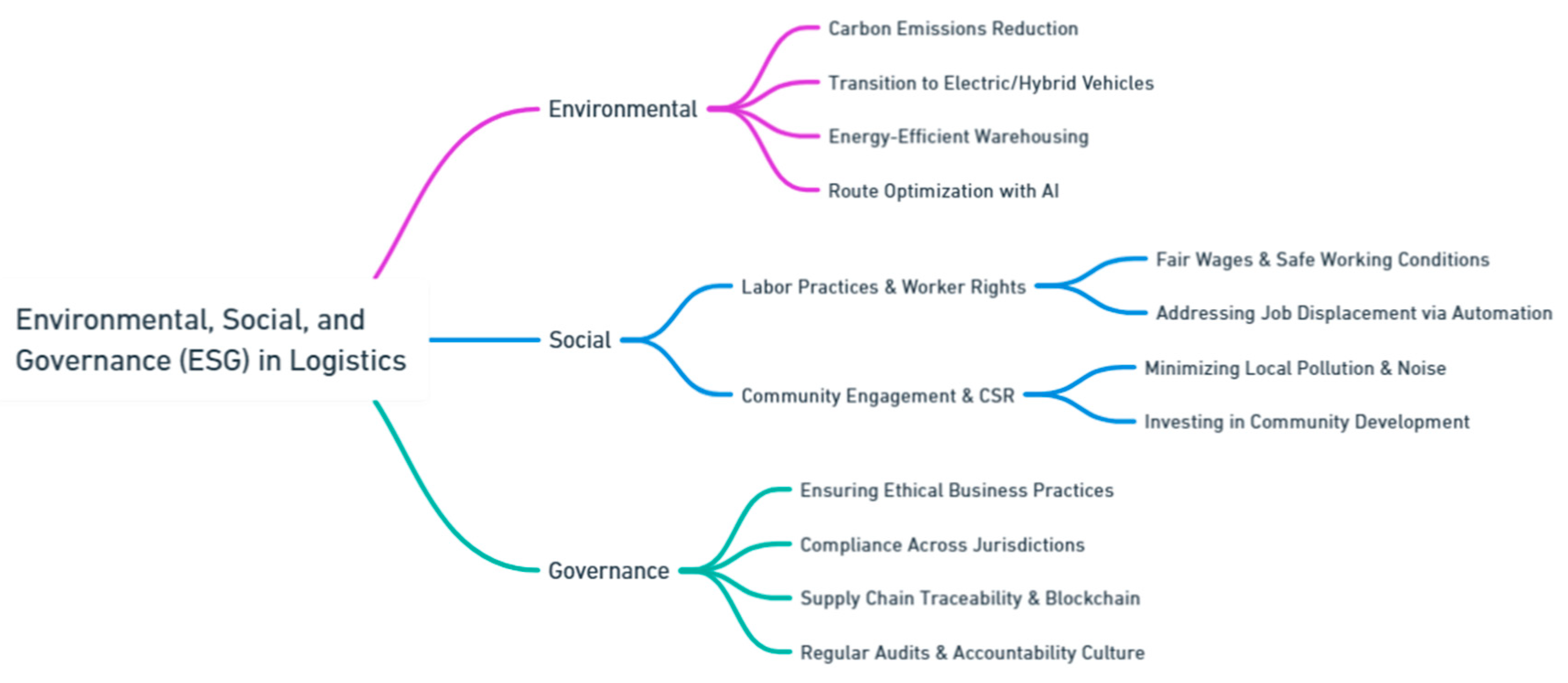
Environmental, Social, and Governance (ESG) principles have emerged as essential benchmarks for sustainability and ethical business practices across numerous industries. Among these industries, logistics holds a significant position due to its critical role in global supply chains. The logistics sector involves the movement, storage, and coordination of goods across vast distances, and its operations have far-reaching consequences, particularly in terms of environmental impact, labor conditions, and governance. As industries worldwide increasingly prioritize sustainability, the implementation of ESG principles in logistics has gained heightened importance. This shift is particularly evident as logistics companies transition toward "smart logistics"—a term that refers to the integration of advanced technologies such as the Internet of Things (IoT), artificial intelligence (AI), and automation into their operations. However, aligning logistics operations with ESG goals presents a series of challenges that companies must navigate. These challenges range from mitigating environmental impacts, such as reducing carbon emissions, to addressing social concerns related to labor practices and ensuring governance structures that promote transparency and regulatory compliance. This essay delves into the critical issues that logistics companies face when integrating ESG principles into their operations and explores potential strategies to overcome these challenges. The environmental aspect of ESG is perhaps the most prominent concern for the logistics sector. Logistics operations, especially those reliant on fossil fuels for transportation, are significant contributors to greenhouse gas emissions. The sector's environmental impact is multifaceted, extending beyond carbon emissions to include air pollution, noise pollution, and land use concerns. As governments and international organizations intensify efforts to combat climate change, logistics companies are under increasing pressure to reduce their carbon footprints and adopt more sustainable practices. Transitioning to electric or hybrid vehicles, investing in energy-efficient warehouses, and optimizing routes using AI are among the measures that logistics companies are beginning to explore. However, these solutions often come with substantial upfront costs and require a long-term commitment to infrastructure development and technological integration. Despite these challenges, reducing the environmental impact of logistics is becoming non-negotiable. Companies that fail to adapt to evolving environmental regulations risk facing penalties, losing contracts, or suffering reputational damage. Additionally, consumers are increasingly factoring in a company's environmental performance when making purchasing decisions. This trend is particularly pronounced among younger generations, who are more likely to support businesses that demonstrate a genuine commitment to sustainability. As a result, logistics companies are not only required to meet regulatory standards but also to respond to the demands of a more environmentally conscious market. However, mitigating environmental impact through ESG integration is a complex task. Logistics companies must balance the need for efficiency and profitability with the necessity of reducing emissions and energy consumption. For example, while adopting electric vehicles can significantly reduce a company’s carbon footprint, the current lack of widespread charging infrastructure and the high cost of electric trucks pose significant barriers. Furthermore, logistics companies must consider the environmental impact of the entire supply chain, including upstream and downstream activities. This involves working closely with suppliers and customers to ensure that sustainability is embedded at every stage of the logistics process. Implementing robust tracking and reporting mechanisms to monitor environmental performance is crucial for ensuring accountability and transparency. The social aspect of ESG focuses on the well-being of employees and communities impacted by business operations. In the logistics sector, labor practices and worker rights are a central concern. The nature of logistics work often involves long hours, physically demanding tasks, and exposure to hazardous conditions, especially for those working in warehouses or driving trucks. Ensuring fair wages, safe working conditions, and reasonable working hours is essential to align logistics operations with social ESG principles. Furthermore, as the logistics sector becomes more reliant on automation and AI, there is a growing concern about job displacement. While smart logistics technologies can improve efficiency and reduce costs, they also threaten to displace a significant portion of the workforce, particularly in roles that are easily automated, such as warehouse operations and delivery driving. Addressing these social challenges requires a careful balance between leveraging technology for efficiency and ensuring that workers are treated fairly. One potential solution is to invest in retraining programs that help workers transition to new roles within the logistics sector. For instance, as automation becomes more prevalent, workers could be trained to manage, maintain, or operate these new technologies. Additionally, companies can focus on creating more value-added roles that require human oversight, such as customer service, supply chain management, and complex problem-solving tasks that cannot easily be automated. By investing in the upskilling of their workforce, logistics companies can not only mitigate the negative social impact of automation but also foster a more engaged and skilled labor force. In addition to addressing labor concerns, the social dimension of ESG in logistics also extends to broader community engagement and corporate social responsibility. Many logistics companies operate in or near urban areas, where their activities can have a significant impact on local communities. For example, truck traffic can contribute to air pollution and noise in residential neighborhoods, while large distribution centers can strain local infrastructure and resources. Logistics companies must take these factors into account and work to minimize their negative impact on communities. Engaging with local stakeholders, investing in community development projects, and contributing to local economies through job creation are all strategies that can help logistics companies align their operations with social ESG principles. The governance aspect of ESG is equally important, as it pertains to the structures and processes that ensure accountability, transparency, and compliance with laws and regulations. In the logistics sector, governance challenges include ensuring ethical business practices, preventing corruption, and adhering to regulatory requirements across multiple jurisdictions. Given the global nature of logistics, companies often operate in numerous countries with varying legal frameworks, making compliance a complex and resource-intensive task. Ensuring transparency in supply chain operations is also a key governance challenge. Customers, investors, and regulators are increasingly demanding greater visibility into how goods are sourced, transported, and delivered. This has led to a growing emphasis on supply chain traceability and the use of technologies such as blockchain to provide an immutable record of transactions and movements within the logistics chain. Achieving robust governance in logistics requires the development of clear policies and practices that promote ethical conduct and compliance. This includes establishing codes of conduct for suppliers and partners, implementing regular audits to ensure compliance with ESG standards, and fostering a culture of accountability within the organization. Additionally, logistics companies must ensure that their governance structures are adaptable to the rapidly changing regulatory landscape. As governments introduce new regulations related to environmental performance, labor rights, and data privacy, logistics companies must be proactive in ensuring that their governance frameworks remain up-to-date and responsive to these changes. In conclusion, the integration of ESG principles into logistics operations is a complex but essential task as the sector transitions toward smart logistics. The environmental challenges of reducing carbon emissions and optimizing resource use, the social challenges of ensuring fair labor practices and managing the impact of automation, and the governance challenges of maintaining transparency and compliance all require careful consideration and strategic planning. While the implementation of ESG in logistics is not without its obstacles, it also presents significant opportunities. By aligning their operations with ESG goals, logistics companies can not only contribute to a more sustainable and equitable global economy but also enhance their competitiveness and reputation in an increasingly ESG-conscious market (Barykin et al., 2023; Lee et al., 2023; Martto et al., 2023).
Preprints 139811 i181

17.2. The Role of Smart Logistics in ESG
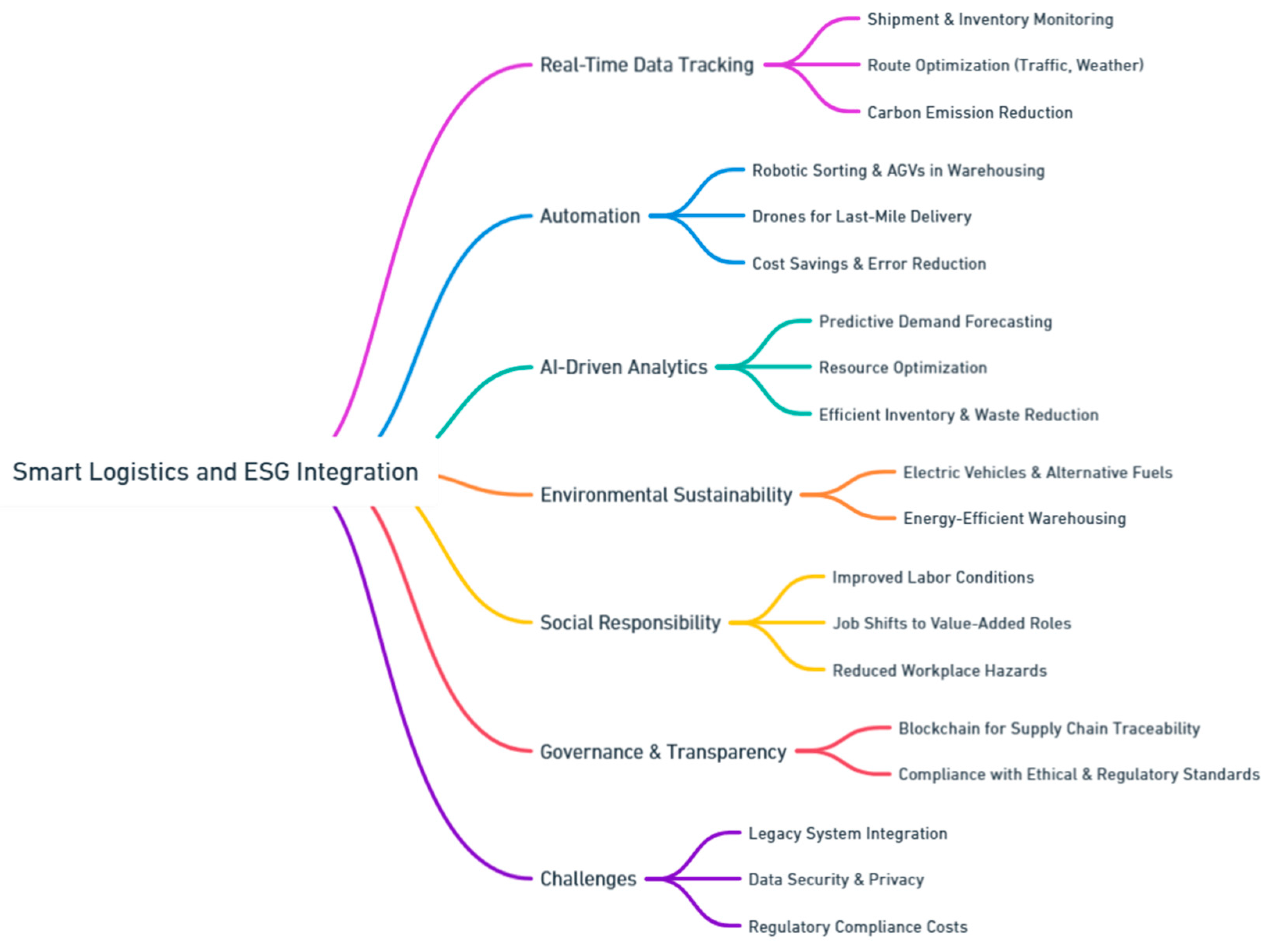
Smart logistics is a transformative approach to supply chain management that leverages advanced technology to streamline operations, increase efficiency, and reduce both operational and environmental costs. At its core, smart logistics involves integrating real-time data tracking, automation, and artificial intelligence (AI)-driven analytics to manage supply chains in a more sustainable and efficient manner. The use of these innovations not only improves business performance but also offers a framework for achieving Environmental, Social, and Governance (ESG) goals. These goals, increasingly important in today's business landscape, require companies to balance financial performance with their responsibilities toward the environment, social equity, and transparent governance practices. At the heart of smart logistics is the utilization of real-time data. The ability to track shipments, inventory levels, and transportation routes in real time enables logistics companies to make decisions that optimize resource usage. For example, by monitoring traffic patterns and weather conditions, companies can adjust their delivery routes to avoid delays and reduce fuel consumption. This type of real-time adaptability not only minimizes operational disruptions but also significantly reduces emissions. By optimizing routes and ensuring vehicles carry fuller loads, logistics companies can lower their carbon footprint, thereby contributing to environmental sustainability. This reduction in emissions is particularly crucial as the logistics industry has traditionally been a significant contributor to greenhouse gas emissions, largely due to the extensive use of transportation and energy in warehousing. Automation also plays a key role in smart logistics. Automated systems, such as robotic sorting in warehouses, automated guided vehicles (AGVs), and drones for last-mile delivery, can reduce the reliance on human labor for repetitive tasks, while increasing operational efficiency. This automation not only speeds up processes but also reduces errors, leading to cost savings. By using AI and machine learning, logistics companies can also predict demand more accurately, manage inventory more effectively, and optimize the use of their resources. Predictive analytics, powered by AI, enables companies to forecast customer demand and plan accordingly, reducing waste and ensuring that products are delivered more efficiently. These innovations collectively contribute to a logistics system that operates with less environmental impact and improved resource management. Aligning smart logistics with ESG objectives is not just an operational advantage but a strategic one. Environmental sustainability, a core component of ESG, can be significantly enhanced through the adoption of smart logistics technologies. By using real-time data to optimize transportation routes, companies can reduce the number of trips required to deliver goods, thereby lowering emissions. Additionally, energy-efficient practices can be implemented in warehouses through the use of automation and renewable energy sources, further reducing the environmental footprint. Many logistics companies are exploring the use of electric vehicles (EVs) and alternative fuels as part of their smart logistics strategies. These changes not only reduce dependency on fossil fuels but also mitigate the harmful effects of transportation on the environment. As consumers become more environmentally conscious, businesses that can demonstrate their commitment to sustainability will have a competitive edge in the market. Beyond environmental considerations, smart logistics also aligns with the social aspect of ESG. The logistics industry has long been criticized for poor labor practices, including long working hours, unsafe working conditions, and inadequate pay. Smart logistics can address some of these issues by improving working conditions and safeguarding labor rights. For instance, automated systems can take over dangerous and physically demanding tasks, reducing the risk of workplace injuries. Improved working conditions can also result from better labor scheduling and workload management, both of which can be achieved through data-driven approaches. Moreover, automation does not necessarily displace workers but can allow them to shift to more value-added roles that require decision-making, problem-solving, and supervision. Thus, smart logistics can help create safer, more fulfilling jobs while protecting workers' rights and promoting social equity. Transparency is another key component of ESG, particularly in the realm of governance. Smart logistics enhances governance through better tracking and reporting capabilities. With the use of blockchain technology, for example, logistics companies can create transparent and immutable records of every transaction and movement of goods along the supply chain. This transparency is critical for ensuring that companies comply with ethical business practices and regulatory requirements. In addition, having a more transparent supply chain can help businesses avoid risks such as counterfeit goods, fraud, and unethical sourcing of materials. As consumers and investors increasingly demand accountability from companies, the ability to provide clear, verifiable data about supply chain operations becomes a significant advantage. However, despite the clear benefits, transitioning to a smart logistics system that aligns with ESG expectations presents several challenges. First, there are operational challenges related to the integration of new technologies. Many logistics companies still rely on legacy systems that are not compatible with the latest digital tools. Upgrading these systems requires significant investment in both technology and training. Additionally, the implementation of smart logistics technologies, such as AI, automation, and blockchain, can be complex and time-consuming. Companies need to ensure that their workforce is adequately trained to use these new technologies effectively. Moreover, the deployment of such technologies may require a complete overhaul of existing infrastructure, which can disrupt daily operations and lead to short-term losses. From a technological perspective, smart logistics requires the development and integration of sophisticated systems capable of handling vast amounts of data. Logistics operations involve multiple stakeholders, from suppliers to retailers, and the systems used must be able to communicate seamlessly across these different entities. Ensuring data integrity and security is also a significant challenge, particularly as supply chains become more global and interconnected. The use of blockchain and other digital tools can help address some of these concerns by providing secure, transparent records, but the widespread adoption of such technologies is still in its early stages. Moreover, there are concerns about the environmental impact of some technologies, such as the energy consumption associated with blockchain and AI systems. Regulatory challenges also play a crucial role in the transition to smart logistics. Governments around the world are increasingly enacting regulations aimed at reducing emissions and promoting sustainability in the logistics sector. While these regulations can drive positive change, they can also impose additional costs on companies that are not yet prepared to meet the new standards. For instance, the adoption of electric vehicles in logistics fleets may be hindered by a lack of charging infrastructure in certain regions. Additionally, different countries have varying regulations regarding data privacy and cybersecurity, which can complicate the implementation of global smart logistics systems. In conclusion, smart logistics represents a significant opportunity for logistics companies to improve their operational efficiency, reduce costs, and contribute to sustainability goals. By leveraging real-time data tracking, AI-driven analytics, and automation, companies can create more resilient and efficient supply chains. Aligning smart logistics with ESG objectives allows companies to not only meet regulatory requirements but also enhance their brand reputation, attract environmentally and socially conscious consumers, and gain a competitive advantage. However, the transition to smart logistics is not without its challenges. Companies must navigate operational, technological, and regulatory hurdles to fully realize the potential of smart logistics. Those that successfully overcome these challenges will be well-positioned to thrive in an increasingly sustainability-driven business environment (Kalkha et al., 2023; Nozari et al., 2022; Woschank et al., 2021; Foster and Rhoden, 2020; Chen, 2020).
Kalkha, H., Khiat, A., Bahnasse, A., & Ouajji, H. (2023). The rising trends of smart e-commerce logistics. IEEE Access, 11, 33839-33857.
Preprints 139811 i182

17.3. Environmental Challenges in Implementing ESG in Smart Logistics
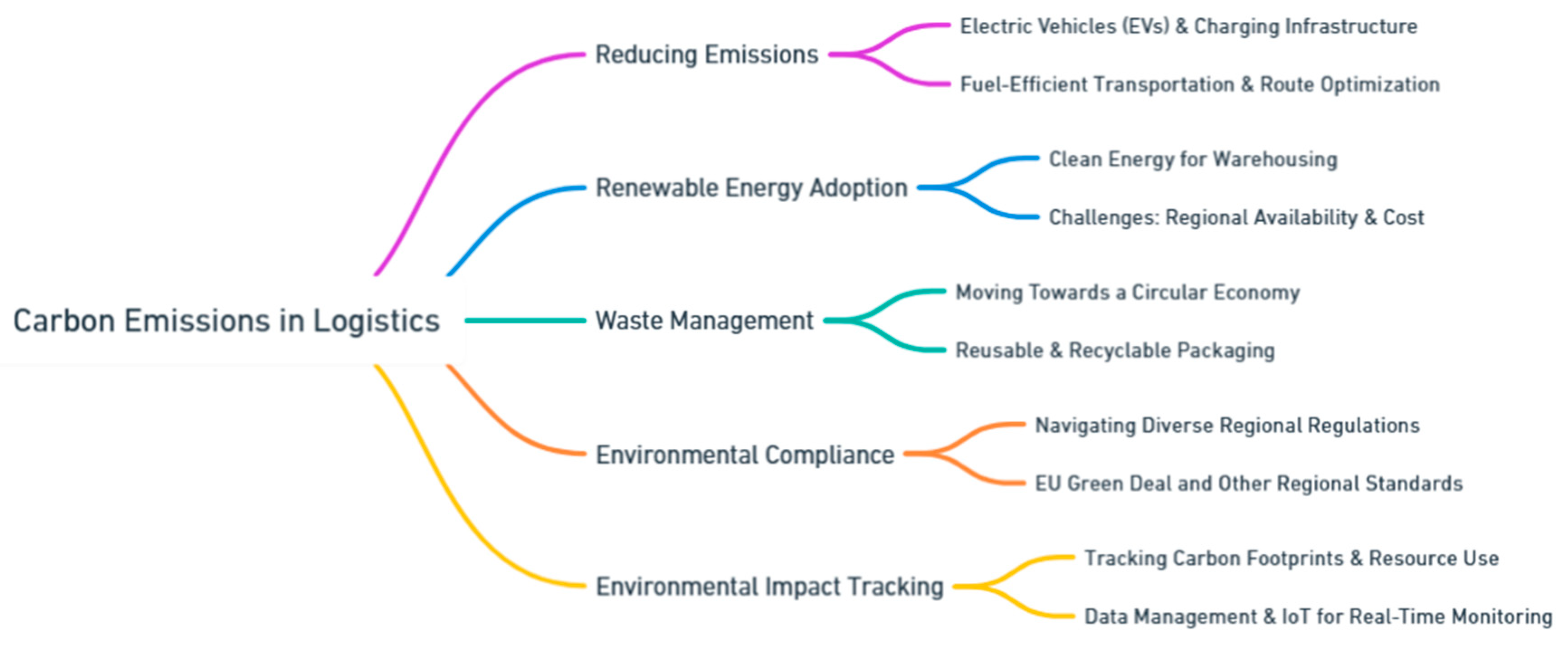
Carbon emissions have become one of the most pressing concerns in today's world, and logistics companies play a significant role in contributing to greenhouse gas emissions. Transportation and logistics, particularly those involving the movement of goods across large distances, are major contributors to global greenhouse gas (GHG) emissions. These emissions not only accelerate climate change but also degrade air quality and harm public health. Reducing the carbon footprint of logistics operations is, therefore, a priority for both companies and governments aiming to meet climate goals. Smart logistics companies are increasingly expected to implement measures that reduce their carbon emissions through the adoption of electric vehicles (EVs), more fuel-efficient transportation methods, and the integration of renewable energy sources. However, transitioning to these more sustainable options is no simple task. The logistics industry is characterized by complex global networks that involve multiple forms of transportation, from cargo ships to trucks, and optimizing such a large system takes considerable effort and resources. Electric vehicles, for example, have the potential to drastically reduce emissions from road transport, but the infrastructure to support widespread EV adoption is not yet in place in many parts of the world. While companies in more developed regions may have access to charging stations and government incentives, logistics hubs in developing regions often lack even the basic infrastructure needed to electrify fleets. The transition to EVs also involves high upfront costs for purchasing electric trucks and installing charging stations, which are barriers for many companies. Additionally, optimizing routes to reduce fuel consumption is another area that companies are exploring, but it requires sophisticated technology and real-time data management systems that are not always available or affordable, particularly for small and medium-sized enterprises (SMEs). Similarly, adopting renewable energy solutions to power logistics operations is a goal for many in the industry, but the global nature of logistics presents its own set of challenges when it comes to accessing clean energy. The transition to renewable energy in logistics facilities, as well as the use of clean transportation fleets, is seen as crucial for reducing carbon footprints. Renewable energy sources, such as wind and solar power, can significantly lower emissions if they are used to power warehouses, distribution centers, and transport fleets. However, not all regions have reliable access to renewable energy. In some parts of the world, wind and solar power generation may be insufficient due to local climate conditions, or the energy grid may not be set up to support renewable energy integration. For logistics companies that operate across multiple regions, this creates a challenge in uniformly implementing clean energy solutions throughout their global operations. Even where renewable energy is available, the cost of developing and maintaining the necessary infrastructure can be prohibitively expensive, especially for smaller logistics companies. Solar panels, wind turbines, and battery storage systems all require significant investment, and many companies are unable to absorb these costs without passing them on to consumers. In addition to carbon emissions, waste management is another significant environmental challenge for logistics operations. Logistics companies generate considerable waste, particularly in the areas of packaging, transportation, and storage. Single-use packaging materials, such as plastic wrap, cardboard boxes, and wooden pallets, contribute to the growing global waste problem. A key goal for many logistics companies is to move towards a circular economy, where waste is minimized, and materials are reused or recycled. However, implementing the principles of a circular economy requires fundamental changes to the way logistics companies operate. Existing processes must be overhauled, and products must be redesigned to facilitate reuse and recycling. This involves not only changes to logistics operations but also collaboration with manufacturers and suppliers to ensure that products and packaging are designed with sustainability in mind. Developing new recycling infrastructure is also time-consuming and capital-intensive. Many regions lack the facilities needed to recycle certain types of materials, particularly in developing countries. Logistics companies operating in these areas may find it difficult to implement circular economy practices without the necessary local infrastructure. Furthermore, the transition to a circular economy requires a cultural shift within organizations, as well as the development of new business models that prioritize sustainability over short-term profitability. These changes can take years to implement and require significant investment in research and development, as well as staff training and education. Environmental compliance is another area where logistics companies face challenges. Environmental regulations vary widely across regions, and logistics companies that operate globally must navigate a complex web of regulations in order to remain compliant. For example, the European Union has implemented stringent regulations under the EU Green Deal, which requires logistics companies to drastically reduce their emissions and meet other sustainability targets. In contrast, other regions may have more lenient environmental standards, making it difficult for logistics companies to develop a uniform strategy for environmental compliance. Navigating these regulatory differences adds complexity and costs to logistics operations, as companies must invest in legal expertise and develop region-specific strategies to ensure they meet all local regulations. Non-compliance can result in hefty fines, legal penalties, and reputational damage, so logistics companies must be diligent in staying up-to-date with changing regulations in every region where they operate. Measuring and tracking the environmental impact of logistics operations is a challenge in itself. In order to meet environmental goals and comply with regulations, logistics companies must monitor data on a wide range of factors, including fuel consumption, carbon emissions, water use, and energy consumption across multiple facilities and transportation networks. However, many logistics firms struggle with outdated systems that do not provide the level of detail or accuracy needed for effective environmental tracking. Data fragmentation is another issue, as logistics operations often span multiple countries and involve numerous third-party contractors. Gathering reliable data from all parts of the logistics chain is a daunting task, particularly for companies that rely on manual reporting or lack centralized data management systems. Without accurate data, it is difficult for companies to set realistic sustainability targets or track their progress towards meeting these goals. Moreover, the demand for Environmental, Social, and Governance (ESG) reporting is growing, as investors, customers, and governments increasingly expect companies to demonstrate their commitment to sustainability. ESG reporting requires companies to provide detailed information on their environmental impact, including their carbon emissions and waste management practices. However, the lack of standardized reporting frameworks makes it difficult for logistics companies to provide consistent data across regions. Many companies are now investing in technology solutions, such as Internet of Things (IoT) devices and data analytics platforms, to improve their ability to measure and track their environmental impact. These technologies can provide real-time data on fuel consumption, emissions, and energy use, helping companies to identify areas where they can improve their sustainability practices. However, adopting these technologies requires significant investment, and many smaller companies may struggle to keep up with the rapid pace of technological change. In conclusion, while the logistics industry is under increasing pressure to reduce its environmental impact, the transition to more sustainable practices is a complex and costly process. Carbon emissions, waste management, renewable energy adoption, regulatory compliance, and environmental tracking all present significant challenges for logistics companies. However, the growing demand for sustainability from customers, investors, and governments means that companies must continue to push forward with these initiatives. The logistics industry will need to invest in new technologies, infrastructure, and business models to overcome these challenges and achieve long-term sustainability goals (Pei and Sun, 2020; Zhang and Kang, 2022; Pan et al., 2020).
Preprints 139811 i183

17.4. Social Challenges in Implementing ESG in Smart Logistics
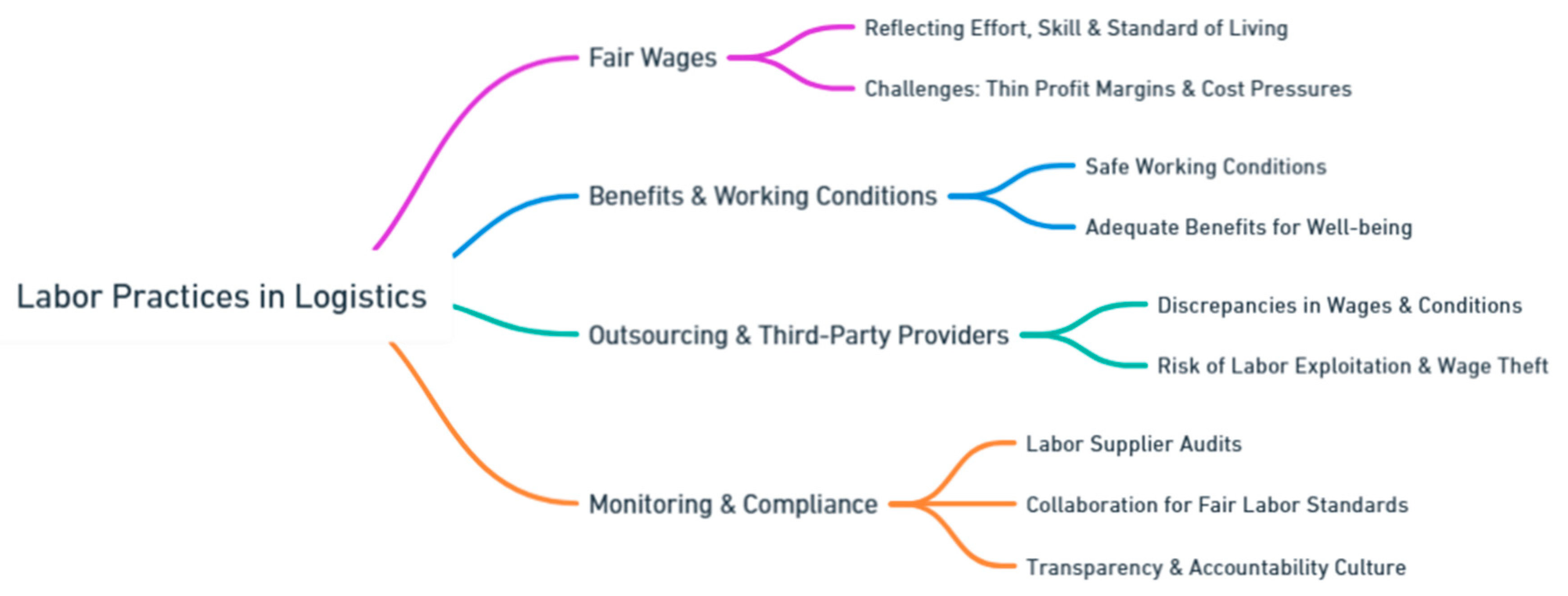
The logistics industry is among the most labor-intensive sectors globally, employing millions of workers across various functions such as warehouse operations, transportation, and distribution. Workers in this field often engage in physically demanding jobs, making their labor contributions essential to ensuring that goods are delivered on time. Given the significant reliance on human labor, one of the critical social challenges that companies face in this industry is ensuring fair labor practices, which include offering fair wages, ensuring adequate benefits, and maintaining safe working conditions. Fair wages, at their core, are wages that reflect the effort, skill, and time that workers invest in their jobs, while also providing them with a decent standard of living. However, the logistics industry often operates on thin profit margins due to intense competition, cost pressures, and the need to deliver high-volume services at minimal cost. This competitive nature can make it difficult for companies to prioritize wage increases or benefit expansions, especially when those costs could impact pricing and service delivery timelines. Additionally, the industry's widespread reliance on third-party labor providers complicates the enforcement of fair wage standards. These third-party providers may employ their workforce under different conditions than those directly managed by logistics firms, leading to discrepancies in wages, benefits, and working conditions. The outsourcing of labor creates an added challenge in monitoring and enforcing labor standards across complex supply chains. Logistics companies that rely on external partners often lack visibility into the day-to-day realities of workers who are technically employed by contractors or subcontractors. This disconnect increases the risk of labor exploitation, wage theft, and substandard working conditions, all of which pose a significant threat to a company’s ability to meet its environmental, social, and governance (ESG) commitments. To address these challenges, companies need to implement rigorous monitoring systems, conduct audits of their labor suppliers, and work collaboratively with their partners to ensure compliance with fair labor practices. Only by fostering a culture of accountability and transparency can logistics companies ensure that workers are treated fairly and that their well-being is prioritized (Schollmeier and Scott, 2024; Liu et al., 2024).
Preprints 139811 i184
Occupational Health and Safety Concerns. In addition to fair wages and worker welfare, occupational health and safety are paramount concerns in the logistics industry. The sector has one of the highest rates of workplace accidents and injuries, especially in areas such as warehousing and transportation, where workers are exposed to a variety of hazards. Workers in warehouses may face risks related to operating heavy machinery, handling large volumes of goods, and engaging in repetitive manual tasks that can cause physical strain. Transportation workers, particularly truck drivers, often face long hours on the road, exposure to dangerous driving conditions, and fatigue, all of which increase the risk of accidents. Ensuring worker safety requires logistics companies to implement robust health and safety protocols, which can include providing appropriate training, investing in personal protective equipment (PPE), and using automated machinery to reduce the physical burden on workers. Safety protocols need to be clear and consistently enforced to reduce the risk of workplace injuries. However, the implementation of these safety measures can vary greatly across regions, particularly in countries where labor regulations are less stringent or where smaller logistics companies may lack the financial resources to invest in state-of-the-art safety technologies. For large, well-resourced logistics firms, implementing cutting-edge safety protocols may be easier due to the availability of capital for technological upgrades such as automated robotics, which can reduce the need for manual labor in warehouses. Smaller firms, on the other hand, often struggle to meet these safety standards due to limited budgets and tighter operational constraints. These smaller companies may not have the means to invest in advanced safety technologies, which can leave their workers more vulnerable to accidents and injuries. As a result, industry-wide efforts are needed to standardize safety practices and ensure that all logistics companies, regardless of size, are able to maintain safe working environments (Lovas et al., 2021; Stefanov, 2023).
Preprints 139811 i185
Addressing Human Rights in Complex Global Supply Chains. The logistics industry operates within an interconnected global supply chain that often stretches across multiple countries and regions. This globalization presents significant human rights challenges, as companies must navigate supply chains that may pass through regions with poor labor practices, such as forced labor, child labor, or unsafe working conditions. Many countries, particularly in developing regions, lack the regulatory frameworks necessary to protect workers’ rights effectively. This raises the risk that logistics companies, even inadvertently, may become complicit in human rights abuses by engaging suppliers or subcontractors that exploit workers. Ensuring that all parts of the supply chain adhere to human rights standards is a major challenge for logistics firms. The sheer complexity and opacity of global supply chains make it difficult to have full visibility into every stage of production and distribution. In many cases, logistics companies may have multiple layers of subcontracting, each with its own labor practices and working conditions. This fragmentation complicates efforts to monitor and enforce human rights standards consistently across the entire supply chain. To mitigate the risk of human rights violations, logistics companies must invest in comprehensive supply chain audits and implement strict due diligence processes to ensure that all suppliers are compliant with international labor standards. Companies may also need to collaborate with non-governmental organizations (NGOs), labor unions, and other stakeholders to promote better working conditions in regions where labor regulations are weak or poorly enforced. Additionally, some companies are turning to digital tools such as blockchain technology to increase transparency within their supply chains, allowing them to track goods from origin to destination and ensure that human rights are respected at every stage of the process (Zaharatos et al., 2020; LeBaron, 2021).
Preprints 139811 i186
Impact of Smart Logistics on Local Communities. The rise of smart logistics, characterized by the integration of advanced technologies such as automation, data analytics, and artificial intelligence, has the potential to significantly enhance efficiency in the logistics sector. However, the expansion of logistics hubs and distribution centers can have negative social impacts on local communities. For example, the construction of large logistics facilities can lead to increased traffic, noise pollution, and the displacement of local residents, particularly in densely populated urban areas. One of the main concerns associated with the expansion of logistics hubs is the strain they place on local infrastructure. The constant flow of trucks and delivery vehicles can lead to congestion on roads, contributing to air pollution and increasing the risk of accidents. This can negatively impact the quality of life for residents in nearby areas, particularly those living in economically disadvantaged communities that may already be struggling with environmental and health challenges. Moreover, the development of logistics facilities can contribute to gentrification, as the influx of capital and development projects can drive up property prices and displace long-standing residents. This creates a tension between the economic benefits of logistics expansion, such as job creation and increased tax revenues, and the social costs borne by local communities. Logistics companies must, therefore, carefully consider the social impact of their operations and work closely with local governments and community organizations to develop strategies that mitigate negative consequences while promoting sustainable growth (Özbekler and Karaman Akgül, 2020; Shee et al. 2021).
Preprints 139811 i187
Integrating Diversity, Equity, and Inclusion (DEI) Practices. In recent years, there has been a growing emphasis on the importance of diversity, equity, and inclusion (DEI) within the logistics sector. Historically, logistics has been a male-dominated industry, particularly in roles such as transportation and warehouse work. However, as companies recognize the value of creating inclusive workplaces, many are taking steps to incorporate DEI practices into their operations. This includes developing recruitment strategies that attract a diverse workforce, ensuring that promotion and career progression processes are equitable, and fostering a work environment where all employees feel valued and respected. Achieving meaningful DEI progress in logistics requires a concerted effort, as many companies are still in the early stages of developing comprehensive DEI programs. Companies must focus not only on hiring diverse candidates but also on retaining and promoting them within the organization. This may involve implementing mentorship programs, offering leadership training, and addressing systemic biases that may exist within the workplace. By building a more inclusive workforce, logistics companies can benefit from diverse perspectives, which can drive innovation and improve decision-making across the business. In conclusion, the logistics industry faces a wide range of social challenges, from ensuring fair labor practices and worker safety to addressing human rights concerns in global supply chains, mitigating the social impacts of smart logistics on local communities, and integrating DEI practices into their operations. Addressing these challenges requires a holistic approach, involving collaboration with stakeholders, investment in technology, and a commitment to fostering a more equitable and sustainable industry (Sherman et al., 2021; Husar Holmes et al., 2023).
Preprints 139811 i188

17.5. Governance Challenges in Implementing ESG in Smart Logistics
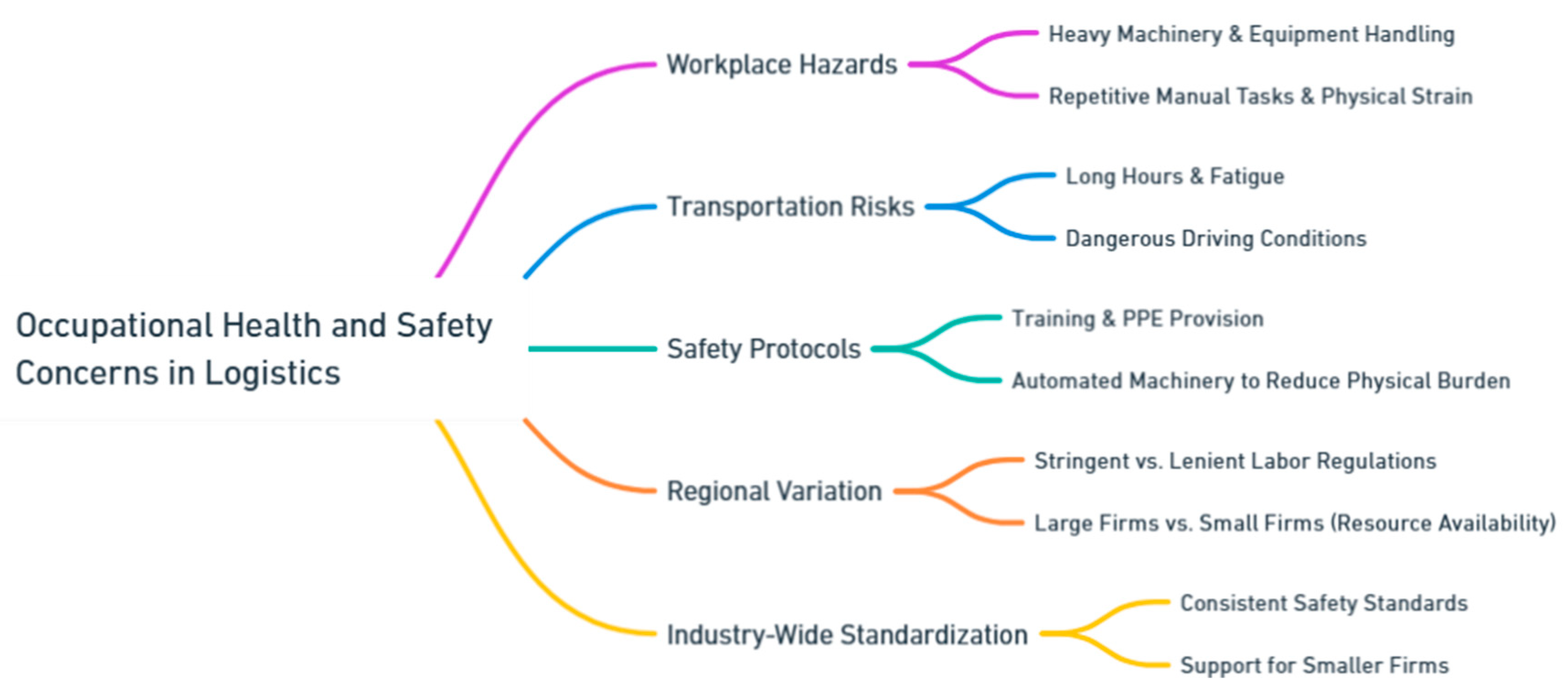
Governance in Environmental, Social, and Governance (ESG) initiatives is a critical component that organizations must focus on to ensure they are operating responsibly and sustainably. This is especially true for logistics companies, which face numerous challenges related to transparency, regulatory compliance, ethical decision-making, and the risks associated with technological advancements. Governance, in the context of ESG, is all about establishing processes that ensure that the company is accountable for its actions, operates with transparency, and makes ethical decisions that consider the long-term impacts on the environment, society, and the business itself. The following expanded discussion will explore the core aspects of governance in ESG for logistics companies, touching on transparency and accountability, global ESG reporting standards, regulatory compliance, ethical decision-making, and managing risks in a digital and automated logistics landscape. Ensuring transparency and accountability is one of the most significant governance challenges for logistics companies. The logistics industry is inherently complex, with global operations often involving numerous third-party contractors and suppliers. Many logistics companies rely on a highly fragmented supply chain, which can make it incredibly difficult to gather accurate data on labor practices, environmental impacts, and the overall governance standards being upheld by all parties involved. Transparency in this context means having a clear view of the entire supply chain, from the sourcing of raw materials to the delivery of goods to consumers. This can include understanding how each contractor treats its workers, the environmental footprint of each stage of the supply chain, and the ethical practices of each supplier. However, due to the complex nature of global supply chains and the involvement of multiple parties, ensuring that governance standards are maintained across the board can be challenging. To address this challenge, logistics companies need to establish robust mechanisms for monitoring and reporting on their supply chain activities. This could involve the use of advanced technologies such as blockchain, which can provide an immutable record of transactions and processes across the supply chain. Blockchain can help logistics companies track the movement of goods, verify the sustainability claims of suppliers, and ensure that governance standards are being adhered to at every step. Additionally, companies can implement strict supplier vetting processes and regular audits to ensure that their partners are complying with ESG standards. The goal of these measures is to foster a culture of accountability, where every participant in the supply chain is held to the same high standards of transparency and ethical behavior. Navigating global ESG reporting standards is another major governance challenge for logistics companies. Unlike financial reporting, which is governed by standardized frameworks like Generally Accepted Accounting Principles (GAAP) or International Financial Reporting Standards (IFRS), there is no single universal standard for ESG reporting. This means that companies must often navigate a patchwork of different frameworks, each with its own set of criteria and requirements. Some of the most prominent ESG reporting frameworks include the Global Reporting Initiative (GRI), the Sustainability Accounting Standards Board (SASB), and the Task Force on Climate-related Financial Disclosures (TCFD). Each of these frameworks focuses on different aspects of ESG performance, and companies must often report in accordance with multiple frameworks to meet the expectations of various stakeholders, including investors, regulators, and customers. For logistics companies that operate across multiple jurisdictions, this can be particularly challenging. Different countries and regions may have their own reporting requirements, and companies must ensure that they are in compliance with local regulations while also adhering to global ESG frameworks. This can be a resource-intensive process, requiring significant investments in data collection, analysis, and reporting. Furthermore, the lack of standardization in ESG reporting can lead to confusion and inconsistencies in how companies report their performance, making it difficult for stakeholders to compare the ESG performance of different companies. To address this challenge, logistics companies should consider adopting a standardized approach to ESG reporting that aligns with the most widely recognized frameworks. This will not only help to ensure compliance with regulatory requirements but also provide greater clarity and consistency in how the company’s ESG performance is communicated to stakeholders. Regulatory compliance is another critical aspect of governance in ESG, particularly for logistics companies that operate on a global scale. These companies must adhere to a wide range of regulations in each country they operate in, covering areas such as emissions, labor practices, safety standards, and anti-corruption measures (Armstrong, 2020; Moffitt et al., 2024; Thiart, 2023).
The complexity of navigating these regulations is compounded by the fact that they can vary significantly from one jurisdiction to another. For example, emissions standards in the European Union may be more stringent than those in other regions, requiring logistics companies to adopt different approaches to reduce their carbon footprint depending on where they operate. Similarly, labor laws and safety standards can vary from country to country, and logistics companies must ensure that they are in compliance with local regulations to avoid legal penalties, reputational damage, and disruptions to their operations. Failure to comply with these regulations can have serious consequences. In addition to the legal and financial penalties that companies may face, non-compliance can also result in reputational damage, which can harm a company’s relationships with customers, investors, and other stakeholders. To mitigate these risks, logistics companies must implement comprehensive governance structures that ensure compliance with all relevant regulations. This may involve establishing dedicated compliance teams, conducting regular audits, and implementing training programs to ensure that employees and contractors are aware of the regulatory requirements they must adhere to. By taking a proactive approach to regulatory compliance, logistics companies can not only avoid the risks associated with non-compliance but also demonstrate their commitment to ethical and responsible business practices. Integrating ethical practices into decision-making is a key component of governance in ESG. For logistics companies, this means balancing profitability with social and environmental responsibility. The logistics industry is known for operating on thin margins, and the pressure to reduce costs and improve efficiency can sometimes lead to ethical dilemmas. For example, companies may be tempted to cut corners when it comes to labor practices or environmental sustainability in order to save money. However, such short-term gains can come at the expense of long-term sustainability and can damage a company’s reputation and relationships with stakeholders. To ensure that ethical practices are integrated into decision-making, logistics companies must establish governance structures that prioritize long-term sustainability over short-term profitability. This may involve setting clear ESG goals and ensuring that these goals are embedded in the company’s strategic decision-making processes. Companies can also establish codes of conduct and ethics committees to oversee decision-making and ensure that ethical considerations are taken into account. By fostering a culture of ethical decision-making, logistics companies can build trust with their stakeholders and ensure that their business practices align with their ESG commitments. Finally, the rise of digital technologies and automation in the logistics industry presents new governance challenges related to risk management. As logistics companies increasingly adopt digital technologies such as artificial intelligence (AI), the Internet of Things (IoT), and automation, they must also address the risks associated with these technologies. Data privacy and cybersecurity are two major concerns, as logistics companies collect and store vast amounts of sensitive data, including customer information and proprietary business data. Ensuring that this data is protected from cyber threats and is handled ethically is essential for maintaining stakeholder trust. In addition to data privacy and cybersecurity risks, automation also raises concerns about the social impact of job displacement. As logistics companies increasingly turn to automation to improve efficiency and reduce costs, there is a risk that jobs will be lost, particularly in roles that are traditionally labor-intensive, such as warehouse operations and transportation. To address this challenge, logistics companies must implement governance structures that consider the social impact of automation and ensure that measures are in place to support displaced workers. This could include providing retraining programs and support for workers transitioning to new roles within the company. In conclusion, governance in ESG for logistics companies is a multifaceted challenge that requires a proactive and holistic approach. By ensuring transparency and accountability, navigating global ESG reporting standards, complying with international regulations, integrating ethical practices into decision-making, and managing the risks associated with digital technologies and automation, logistics companies can build a strong foundation for long-term sustainability and responsible business practices (Zhao, 2022; Govindan et al., 2021; Forcellati et al., 2020; Wahyudin et al., 2023).
Preprints 139811 i189

17.6. Technology-Related Challenges in ESG Implementation
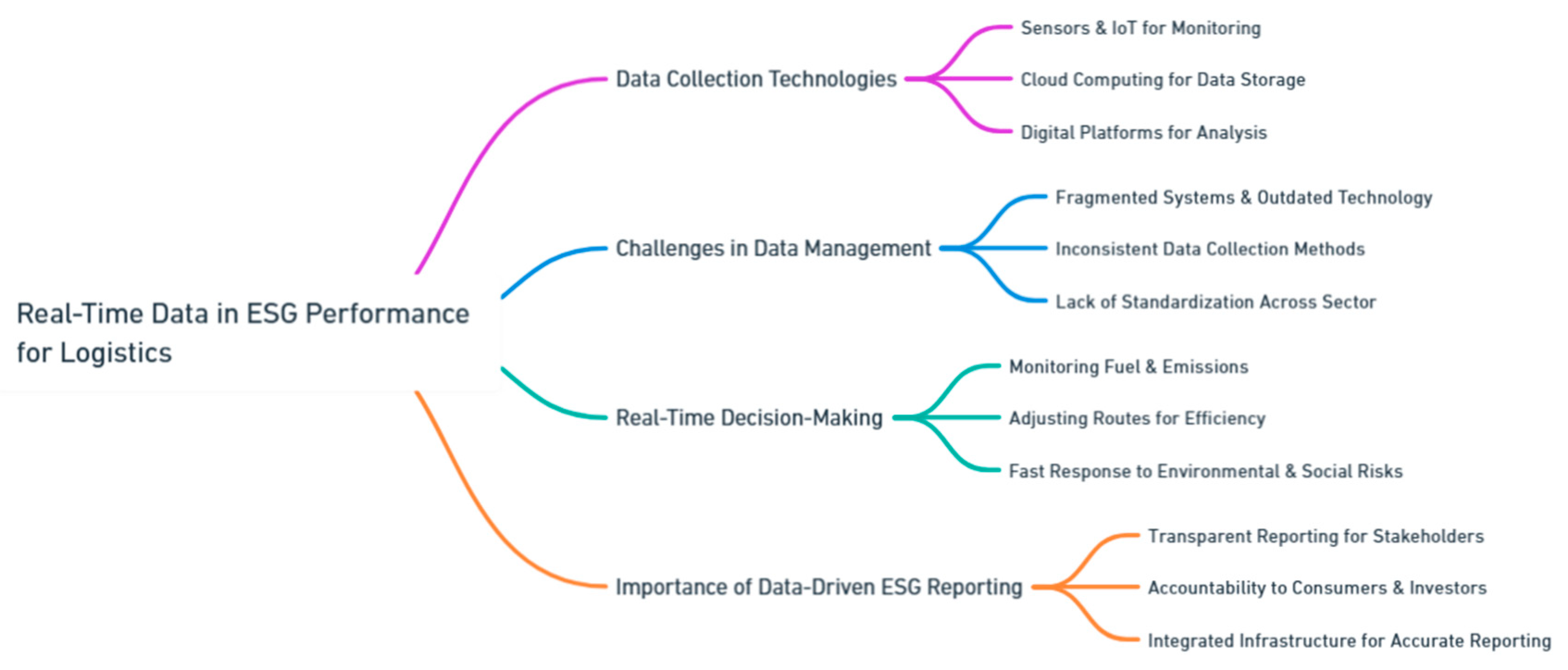
In today’s business environment, one of the transformative developments within the logistics industry is the capability to collect and analyze vast amounts of data in real-time. This has a particularly significant impact on how logistics companies monitor and improve their performance in the areas of environmental, social, and governance (ESG) criteria. By utilizing advanced technologies such as sensors, cloud computing, and digital platforms, companies can gather valuable information on every aspect of their operations. This ranges from energy consumption and greenhouse gas emissions to labor practices and governance policies. Such data can provide valuable insights that help companies improve their ESG performance while also meeting regulatory standards and stakeholder expectations. However, collecting this data is only the first step in the process. The real challenge lies in managing and analyzing the overwhelming volume of information effectively. Many logistics companies still struggle with fragmented systems, outdated technology, and poor digital infrastructure, which makes it difficult to harness the potential of data analytics. Without an integrated data management system, these companies often find it hard to collate information from different parts of their operations, leading to inaccuracies in reporting and analysis. This, in turn, affects their ability to generate actionable insights for their ESG strategies. Furthermore, the lack of standardization across data collection methods in the logistics industry also poses challenges. Different companies may collect ESG data in varying formats, and this inconsistency hinders comparisons and benchmarking across the sector. The importance of harmonizing data collection efforts is vital, especially when it comes to transparent ESG reporting. Companies are increasingly being held accountable not just by regulators but also by consumers and investors, who demand transparency in how companies address their environmental and social impacts. In addition to these technological and structural challenges, the pace at which companies collect and process data can significantly impact real-time decision-making. Logistics operations, especially those dealing with supply chains, often require fast and accurate responses to emerging situations. Being able to monitor ESG metrics in real time can help companies quickly address environmental or social risks before they escalate into larger problems. For example, real-time monitoring of fuel consumption in a fleet of delivery trucks can help logistics companies adjust routes to reduce emissions and operational costs. However, without the proper systems in place, this kind of real-time optimization is difficult to achieve. Lastly, improving data collection and monitoring practices can also help companies achieve more effective ESG reporting. ESG reporting has become a crucial part of corporate responsibility and investor relations. Accurate and comprehensive data allows companies to provide stakeholders with a clear picture of their ESG performance and progress. Therefore, investing in technologies and infrastructure that enable seamless data collection and real-time monitoring is essential for companies aiming to excel in ESG performance (Enache, 2023; Chen et al., 2021).
Ensuring Data Security and Privacy in Digital Logistics Systems. As logistics companies embrace digital transformation and automation, they face an equally pressing concern: ensuring the security and privacy of their data. With the advent of digital logistics systems comes the increasing vulnerability to cyberattacks and data breaches, which can compromise sensitive information related to customers, suppliers, and employees. These risks pose not only operational threats but also significant reputational damage and legal repercussions. In today’s regulatory landscape, protecting data is not just a good business practice but a legal obligation. For instance, the European Union’s General Data Protection Regulation (GDPR) enforces strict requirements for companies on how they collect, store, and process personal data. Logistics companies must ensure that they comply with these regulations while continuing to digitize and automate their systems. Failure to comply with such regulations can result in hefty fines and sanctions, further straining the financial and operational resources of these companies. Ensuring data security goes beyond regulatory compliance. In an industry as interconnected as logistics, a breach in one part of the supply chain can have cascading effects on the entire network. This means that logistics companies must adopt robust cybersecurity measures to protect their digital systems from external threats. This includes using encryption, firewalls, and multi-factor authentication to safeguard their systems from unauthorized access. Furthermore, companies need to be proactive in identifying vulnerabilities in their digital infrastructure and regularly updating their cybersecurity protocols to stay ahead of potential threats. Moreover, maintaining a balance between data transparency and privacy is crucial for logistics companies pursuing ESG goals. While transparency in data is essential for reporting ESG performance, especially in areas like labor practices and environmental impacts, companies must also ensure that they do not compromise the privacy of individuals or sensitive business information. Finding this balance can be particularly challenging, as logistics companies often work with large amounts of data from various sources and stakeholders. Finally, cybersecurity risks are not limited to external threats. Insider threats, whether intentional or accidental, also pose significant risks to data security. As companies rely more on digital systems, employee training and awareness about data security practices become even more critical. Companies need to ensure that employees understand the importance of data protection and follow the necessary protocols to safeguard sensitive information (Al Mulahiwaish, 2004).
Preprints 139811 i190
Integration of Advanced Technologies for ESG Goals. The integration of advanced technologies such as the Internet of Things (IoT), artificial intelligence (AI), and blockchain has the potential to significantly enhance ESG performance in the logistics industry. These technologies can improve transparency, efficiency, and decision-making processes, helping companies meet their ESG goals more effectively. For example, IoT sensors can provide real-time data on energy usage and emissions, enabling companies to make more informed decisions about reducing their environmental impact. AI can help optimize logistics operations by improving route planning, reducing fuel consumption, and minimizing waste, while blockchain can enhance transparency in supply chains by providing an immutable record of transactions and product origins. However, integrating these technologies into existing logistics systems presents its own set of challenges. Many logistics companies, particularly smaller ones, may find it difficult to justify the initial investment required to implement these advanced technologies. The cost of adopting and maintaining such systems can be prohibitive, especially for companies that operate on tight margins. Additionally, the complexity of integrating these technologies into existing infrastructure can be a daunting task, requiring specialized expertise and significant resources. Another challenge lies in ensuring that these technologies are used in ways that align with ESG goals. For instance, while AI and automation can improve operational efficiency, there is a risk that they could exacerbate social inequalities by displacing jobs or creating new forms of labor exploitation. Similarly, blockchain technology, while promising for enhancing transparency, also requires a significant amount of energy, raising concerns about its environmental impact. Therefore, companies must carefully plan and oversee the implementation of these technologies to ensure that they contribute to ESG objectives rather than creating new challenges. In addition to the technical and ethical challenges, there is also the issue of scalability. Implementing advanced technologies on a small scale may be manageable, but scaling these solutions across a global logistics network is a far more complex undertaking. Different regions may have varying levels of technological infrastructure and support, making it difficult to implement uniform solutions across an entire company (Barykin et al., 2023; Ugochukwu et al., 2022).
Preprints 139811 i191
Costs and Scalability of ESG-Compliant Technology Solutions. Implementing ESG-compliant technology solutions can be a costly endeavor, particularly for logistics companies that operate on a global scale. The costs associated with purchasing and maintaining electric vehicles, developing renewable energy infrastructure, and integrating advanced technologies like IoT and AI can be prohibitive for many companies, especially smaller firms. Additionally, the ongoing costs of maintaining and upgrading these technologies can further strain resources. Beyond the initial investment, there is the challenge of scaling these solutions across a global network. Different regions may have different levels of technological infrastructure, regulatory requirements, and support, making it difficult for companies to implement uniform ESG solutions. For example, while some regions may have access to renewable energy sources, others may rely heavily on fossil fuels, making it difficult to achieve consistent ESG performance across the entire network. In conclusion, while smart logistics offer the potential to improve ESG performance, companies must navigate numerous challenges related to data collection, technology integration, security, and scalability to fully realize these benefits (Barykin et al., 2023; Khatib and Barco, 2021).
Preprints 139811 i192

7. Case Studies: Overcoming ESG Challenges in Smart Logistics
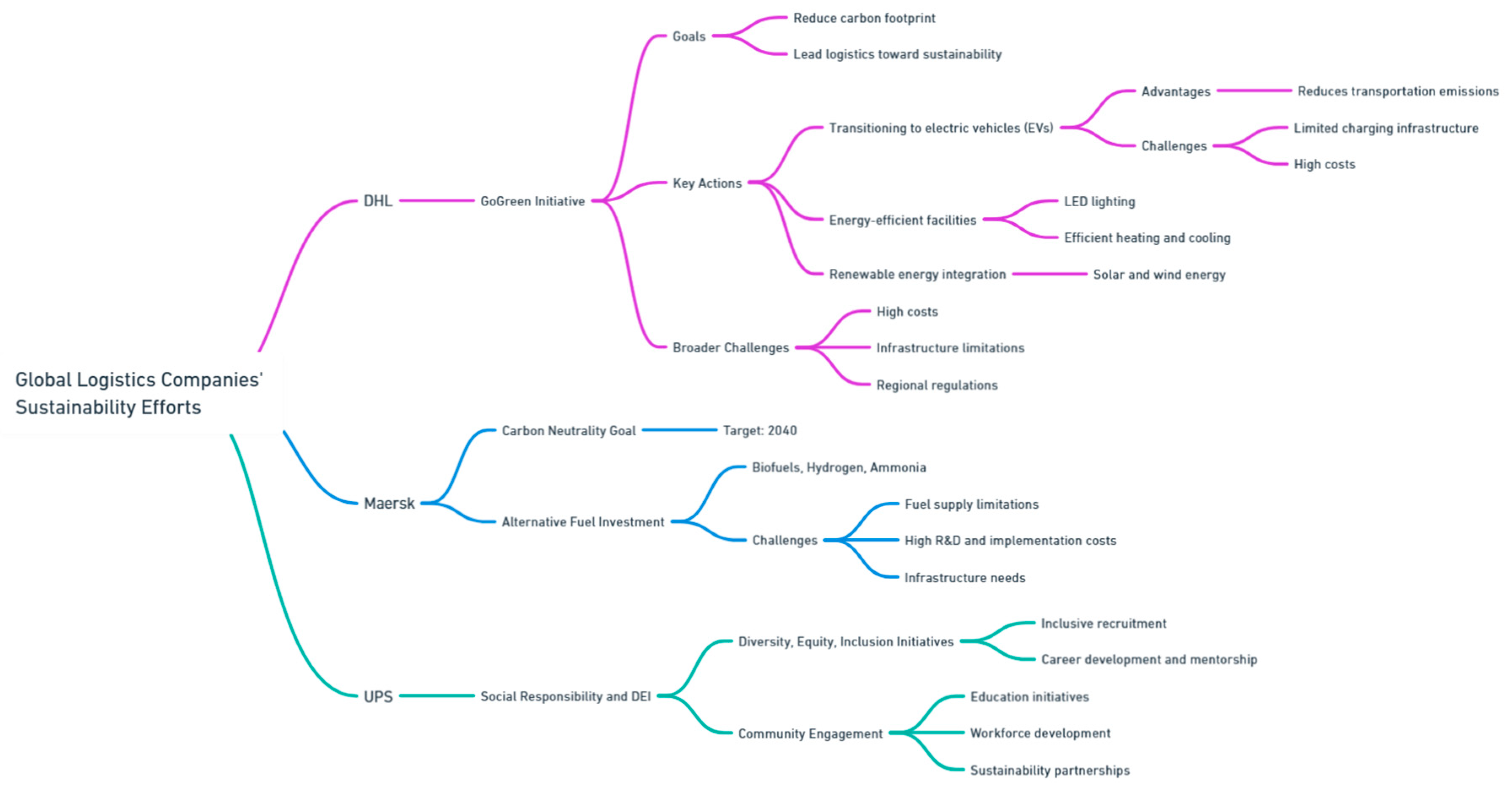
DHL, a global leader in the logistics sector, has been proactive in its efforts to address carbon emissions and promote sustainability through its ambitious GoGreen initiative. As one of the world's largest courier companies, DHL recognizes its responsibility to mitigate the environmental impact of its vast operations. With millions of deliveries and an expansive fleet of vehicles, the logistics industry is known for being a significant contributor to carbon emissions. To combat this, DHL has taken various measures, such as investing in electric vehicles (EVs), developing energy-efficient warehouses, and integrating renewable energy sources into its operations. The GoGreen program aims not only to reduce the company's carbon footprint but also to lead the logistics sector toward a more sustainable future. One of the core components of DHL's GoGreen initiative is its commitment to transitioning its vehicle fleet toward greener options. This includes replacing traditional diesel-powered delivery vans with electric vehicles. The adoption of EVs is crucial because transportation is one of the largest sources of carbon emissions. Electric vehicles offer a cleaner alternative by producing zero emissions during operation. DHL's investment in EVs is part of a broader strategy to make last-mile delivery more sustainable. Last-mile delivery, the final stage of the logistics process where packages are delivered to customers' doorsteps, is often the most inefficient and emission-intensive part of the supply chain. By using electric vehicles, DHL reduces the environmental impact of these deliveries and positions itself as a leader in the green logistics movement. However, while DHL has made notable progress in deploying electric vehicles in certain regions, the company faces significant challenges when it comes to scaling this effort globally. One of the main obstacles is the lack of charging infrastructure for electric vehicles, particularly in less developed regions. In many countries, the infrastructure required to support electric vehicles, such as charging stations, is still in its infancy. Without sufficient infrastructure, it becomes difficult for DHL to fully transition its fleet to EVs. Additionally, the high upfront cost of electric vehicles remains a barrier, especially in regions where profit margins in the logistics industry are tighter (Qian and Li, 2023; Anosike et al., 2023).
Despite these challenges, DHL remains committed to expanding its fleet of electric vehicles as part of its broader sustainability goals. In addition to electric vehicles, DHL is also focused on improving the energy efficiency of its warehouses and other facilities. The company has invested in modernizing its warehouses to minimize energy consumption. This includes implementing advanced lighting systems, such as LED lights, and installing energy-efficient heating and cooling systems. By optimizing energy use in its facilities, DHL aims to reduce its overall carbon footprint while also cutting operational costs. Furthermore, DHL has committed to using renewable energy sources to power many of its facilities. Solar panels and wind energy have been integrated into some of DHL's operations, allowing the company to generate clean energy and reduce its reliance on fossil fuels. These efforts reflect DHL's broader vision of creating a sustainable logistics network that can operate with minimal environmental impact. While DHL’s GoGreen initiative has made significant progress, the company still faces numerous hurdles. Scaling sustainable practices on a global level is a complex task that requires cooperation with local governments, suppliers, and customers. In regions where renewable energy is less accessible or where regulations are not supportive of green initiatives, DHL must navigate these challenges to maintain its commitment to sustainability. Additionally, the costs associated with transitioning to more sustainable practices, such as upgrading facilities and adopting new technologies, are substantial. However, DHL views these investments as necessary steps in achieving long-term environmental and economic sustainability. The company’s commitment to reducing carbon emissions and promoting sustainability highlights its role as a leader in the logistics industry’s green transformation. Maersk, a giant in the shipping and maritime logistics sector, has also made sustainability a central part of its strategy. As one of the largest container shipping companies in the world, Maersk has a significant environmental impact due to the nature of maritime transport. Recognizing this, Maersk has set ambitious goals to achieve carbon neutrality by 2040. This commitment places Maersk at the forefront of the shipping industry's efforts to reduce greenhouse gas emissions and transition to cleaner energy sources. To achieve its carbon neutrality target, Maersk is exploring various alternative fuel options that have the potential to significantly reduce emissions from its fleet of ships. Traditional shipping vessels rely heavily on fossil fuels, particularly heavy fuel oil, which is one of the dirtiest and most polluting energy sources. Maersk is investing in the development of alternative fuels, including biofuels, hydrogen, and ammonia. These fuels offer a cleaner alternative to traditional marine fuels by producing fewer carbon emissions or, in some cases, being entirely carbon-neutral. Maersk has already begun testing biofuels on some of its vessels, and the company is investing in research and development to explore the potential of hydrogen and ammonia as future fuel sources for its fleet. While Maersk's focus on alternative fuels is a significant step toward achieving carbon neutrality, the company faces several challenges in implementing these changes on a global scale. One of the primary challenges is the availability of alternative fuels in sufficient quantities to power the global shipping industry. For example, biofuels, while promising, are currently limited in supply and may not be available in the quantities needed to fuel Maersk's entire fleet. Similarly, hydrogen and ammonia technologies are still in the early stages of development and require significant investment to scale. Additionally, the cost of developing and adopting these new fuel technologies is high, posing financial challenges for Maersk (Saha et al., 2022; Džananović et al., 2022; Oliveri et al., 2023).
The company must balance the need to invest in cleaner energy sources with the economic realities of operating a global shipping business. Maersk also faces logistical challenges in transitioning its fleet to alternative fuels. The global shipping industry is vast, and retrofitting existing vessels or building new ones that can run on alternative fuels is a complex and time-consuming process. Furthermore, the infrastructure needed to support alternative fuels, such as hydrogen or ammonia refueling stations, is still in its infancy. Maersk must work with governments, fuel suppliers, and other stakeholders to develop the necessary infrastructure to support its transition to cleaner fuels. Despite these challenges, Maersk remains committed to achieving its carbon neutrality goals and is taking a leadership role in driving sustainability within the maritime logistics sector. UPS, another major player in the global logistics industry, has taken a different approach by focusing on diversity, equity, and inclusion (DEI) and social responsibility within its operations. UPS recognizes that sustainability is not only about reducing carbon emissions but also about creating a more equitable and inclusive work environment. To this end, UPS has implemented a range of DEI initiatives designed to promote diversity within its workforce and ensure that underrepresented groups have equal opportunities for career advancement. One of UPS's key DEI initiatives is its targeted recruitment program, which aims to attract talent from diverse backgrounds. UPS has made a concerted effort to recruit employees from underrepresented groups, including women, people of color, and individuals from low-income communities. In addition to recruitment, UPS has also implemented career development programs designed to support the professional growth of its employees. These programs offer mentorship, training, and leadership development opportunities to help employees from diverse backgrounds advance within the company. UPS is also deeply involved in community engagement and social responsibility initiatives. The company has established partnerships with local organizations and nonprofits to support community development efforts, particularly in underserved areas. This includes initiatives focused on education, workforce development, and environmental sustainability. Through these efforts, UPS aims to make a positive impact on the communities in which it operates while also enhancing its reputation as a socially responsible company (Gray et al., 2021).
Preprints 139811 i193
Despite these efforts, UPS faces challenges in ensuring the consistent implementation of its DEI practices across its global operations.

17.7. Strategies for Overcoming ESG Challenges in Smart Logistics
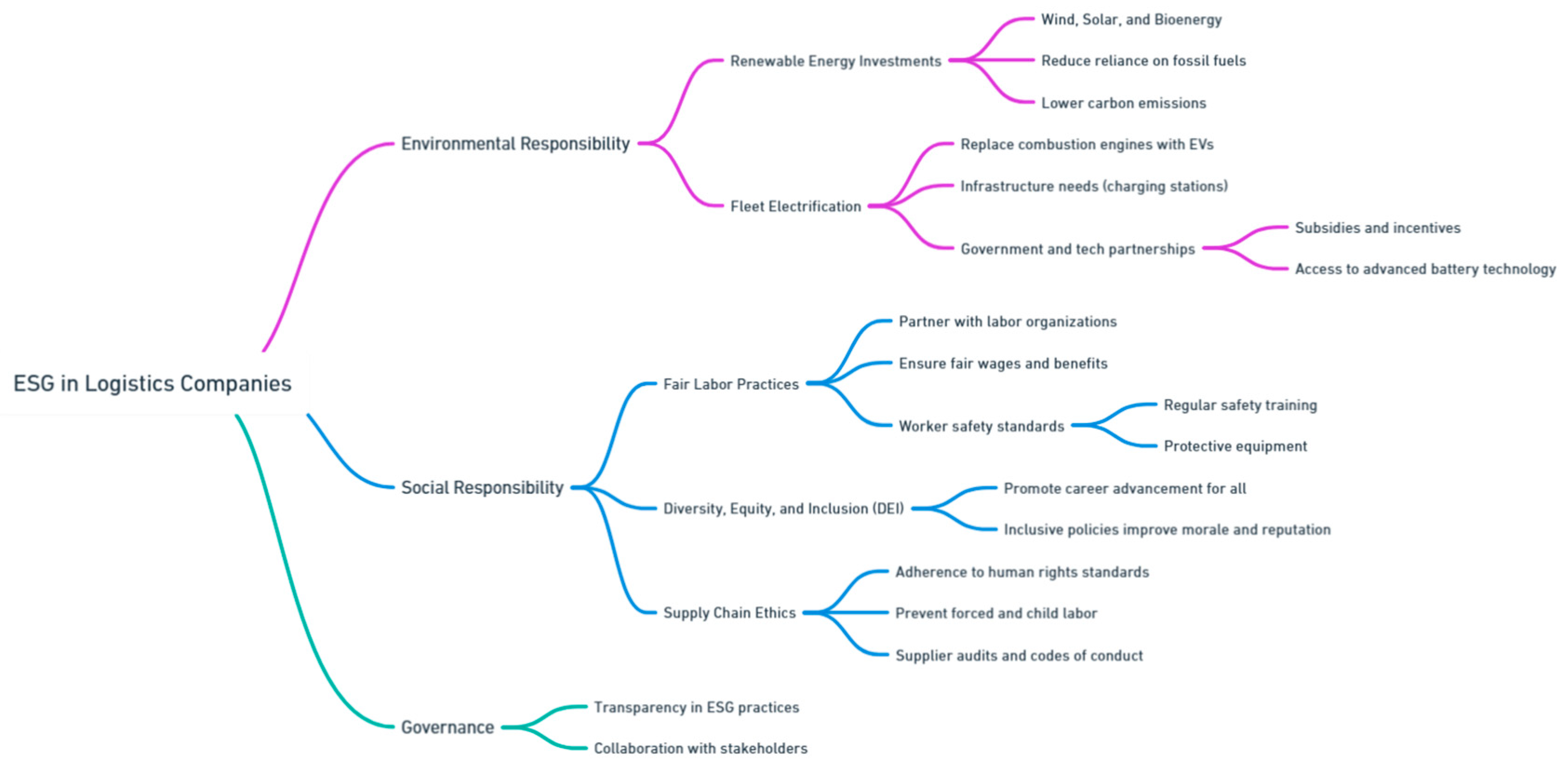
Logistics companies today face increasing pressure to balance operational efficiency with environmental and social responsibility. To meet these demands, many companies are focusing on Environmental, Social, and Governance (ESG) initiatives to ensure sustainable and ethical practices across the board. This is especially important in an era where climate change, resource depletion, labor issues, and governance failures are critically scrutinized. The logistics sector, which is integral to global trade and transportation, has the unique ability to make a significant impact on both environmental sustainability and social equity. Achieving these goals requires substantial investments, strategic planning, and collaboration with various stakeholders, from government entities to labor organizations. In this expanded discussion, we will explore the ways in which logistics companies can enhance their ESG efforts by focusing on renewable energy, labor practices, risk management, smart technologies, and stakeholder collaboration. First, investing in renewable energy and fleet electrification is one of the most impactful ways logistics companies can reduce their environmental footprint. Transportation is one of the largest contributors to global greenhouse gas emissions, and logistics companies are uniquely positioned to address this issue by transitioning to renewable energy sources and electrifying their fleets. Renewable energy, including wind, solar, and bioenergy, can power logistics operations more sustainably, helping companies cut down on the use of fossil fuels and reduce their carbon emissions. Fleet electrification, on the other hand, involves replacing traditional combustion engine vehicles with electric ones (EVs). Electric vehicles emit significantly fewer pollutants, improving air quality and helping combat climate change. Scaling up fleet electrification requires substantial infrastructure development, such as charging stations, which must be strategically located to support long-haul logistics. Companies cannot do this alone. Partnering with governments and technology providers is essential to ensure the development of adequate charging infrastructure. Governments play a crucial role in this transition by offering subsidies, tax incentives, and grants that can make the adoption of EVs more affordable for logistics companies. Moreover, collaborating with technology providers who specialize in EV and battery technology will enable logistics companies to access state-of-the-art innovations that improve the efficiency and performance of electric fleets. Globally, this type of public-private partnership will help expand renewable energy use and accelerate fleet electrification, allowing logistics companies to scale these solutions across different regions and reduce their environmental impact on a broader scale. Second, improving labor conditions and creating an inclusive workplace are fundamental aspects of the social responsibility component of ESG. Logistics companies operate with vast and complex supply chains, which involve thousands of workers in various roles. For a logistics company to demonstrate social responsibility, it must ensure fair labor practices and promote diversity, equity, and inclusion (DEI) within the workplace. Fair wages, worker welfare, and safe working conditions are critical concerns that should be prioritized. One effective approach to improving labor conditions is for logistics companies to partner with labor organizations and unions to establish fair wages and benefits for all workers. These organizations can provide valuable insight into the needs and challenges faced by workers, helping companies design labor policies that are both fair and effective. Furthermore, implementing rigorous safety standards is essential, especially in environments where workers may be handling heavy machinery or hazardous materials. Regular safety training and providing workers with appropriate protective equipment can go a long way in preventing workplace accidents and injuries. In addition to improving safety and welfare, logistics companies must also focus on creating an inclusive workplace where underrepresented groups have opportunities for career advancement. Ensuring that people from diverse backgrounds can advance in their careers within the company not only improves employee morale but also enhances the overall reputation of the company as a socially responsible organization. Moreover, logistics companies must extend their social responsibility practices across the entire supply chain. This means ensuring that all suppliers and partners adhere to basic human rights standards and do not engage in exploitative labor practices, such as forced labor or child labor. By conducting regular audits and implementing strict supplier codes of conduct, logistics companies can ensure that they are upholding ethical standards throughout the supply chain. This level of commitment to labor rights and inclusivity strengthens the social pillar of a company’s ESG strategy and enhances its corporate reputation (Trushkina et al., 2022; Khan et al., 2020; Jazairy et al., 2021).
Preprints 139811 i194
Third, implementing comprehensive risk management and governance frameworks is essential for improving governance and safeguarding against various risks, including cybersecurity threats, data privacy breaches, and ESG-related risks. The logistics sector, like many others, is becoming increasingly digitized, and with this digital transformation comes heightened exposure to cyber risks. As logistics companies handle vast amounts of sensitive data, from customer information to shipment details, ensuring that proper cybersecurity measures are in place is crucial. A comprehensive risk management framework must address cybersecurity by incorporating measures such as encryption, regular system updates, employee training on data security, and establishing incident response protocols. In addition to cybersecurity, logistics companies must also address ESG-related risks, including environmental risks like climate change, regulatory risks related to compliance with government regulations, and reputational risks stemming from poor governance or ethical failures. To manage these risks, companies should adopt global reporting standards, such as the Global Reporting Initiative (GRI) or the Sustainability Accounting Standards Board (SASB) frameworks, which provide guidelines for measuring and reporting ESG performance. Ensuring transparency in operations and regularly communicating ESG performance to stakeholders is another key aspect of strong governance. Furthermore, establishing ESG-focused committees at the board level can ensure that ESG considerations are incorporated into the company’s overall strategy and decision-making processes. Fourth, adopting smart technologies is a critical component of improving ESG reporting and transparency within logistics companies. Smart technologies like artificial intelligence (AI), the Internet of Things (IoT), and blockchain can significantly enhance ESG reporting by providing real-time data on various environmental and social metrics. For example, IoT devices can be used to track the energy consumption of warehouses or monitor emissions from transportation vehicles. By using AI to analyze this data, logistics companies can optimize their operations to reduce energy consumption and minimize their environmental impact. Blockchain, with its decentralized and immutable ledger, can be particularly useful for improving transparency across the supply chain. It allows logistics companies to verify the authenticity of products, track the movement of goods, and ensure that suppliers are adhering to ESG standards, such as fair labor practices or sustainable sourcing. These smart technologies enable logistics companies to monitor and report their ESG performance more accurately, providing stakeholders with reliable information about the company’s environmental and social impact. In the long run, investing in these technologies can also lead to cost savings through more efficient operations, reduced waste, and improved resource management. As ESG reporting becomes increasingly important for investors, customers, and regulators, logistics companies that adopt these smart technologies will be better positioned to demonstrate their commitment to sustainability and transparency. Finally, collaborating with regulators, communities, and stakeholders is essential for overcoming ESG challenges in the logistics sector. Governments and regulatory bodies play a crucial role in shaping the policies and regulations that logistics companies must comply with, particularly when it comes to environmental standards and labor laws. To ensure compliance, logistics companies must engage in regular dialogue with regulators and stay informed about new regulations that may affect their operations. Moreover, public-private partnerships can be a powerful tool for developing sustainable infrastructure, such as EV charging networks or renewable energy facilities. By working together, governments and logistics companies can accelerate the transition to a more sustainable transportation system. In addition to working with regulators, logistics companies must also engage with local communities and other stakeholders. Logistics operations often have a significant impact on the communities in which they operate, particularly in terms of traffic, noise, and pollution. By involving communities in decision-making processes and seeking their input, logistics companies can mitigate the social impacts of their operations and foster goodwill. This might involve hosting town hall meetings, conducting environmental impact assessments, or providing compensation or benefits to communities affected by logistics operations. Engaging with a diverse range of stakeholders, including customers, investors, and non-governmental organizations, can also provide valuable perspectives on how the company can improve its ESG performance. In conclusion, by focusing on renewable energy, labor conditions, risk management, smart technologies, and collaboration with stakeholders, logistics companies can enhance their ESG strategies and contribute to a more sustainable and equitable future. These efforts will not only benefit the environment and society but will also position companies to thrive in a world where sustainability and social responsibility are increasingly valued (Singh and Dadhich, 2023; Wen et al., 2021; Khan et al., 2021; Raja Santhi and Muthuswany, 2022).
Preprints 139811 i195

17.8. Future Directions and Trends in ESG Implementation for Smart Logistics
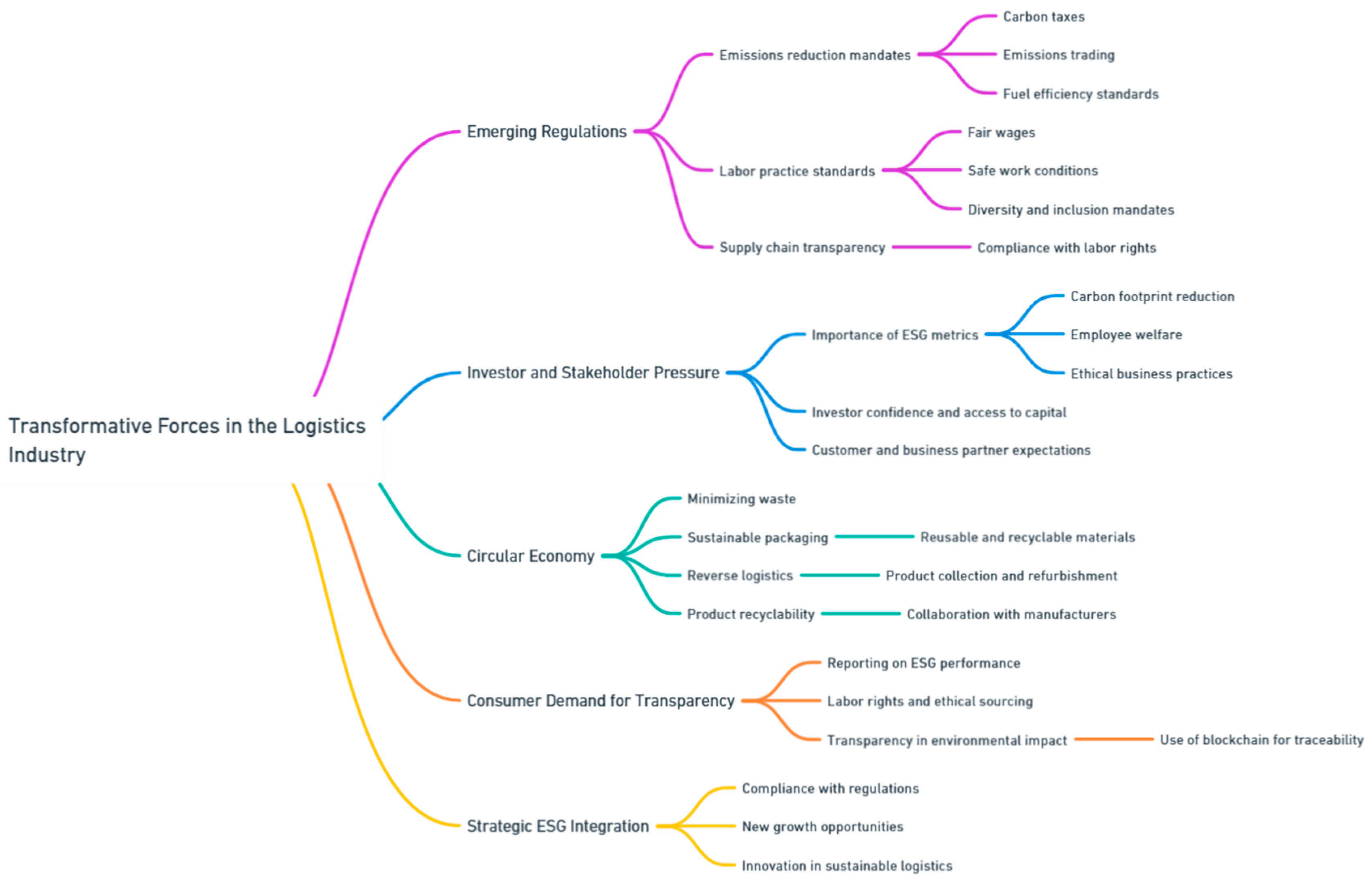
The landscape of the logistics industry is rapidly evolving, largely driven by emerging environmental, social, and governance (ESG) factors. As these changes continue to unfold, companies operating within the sector must navigate a series of challenges and opportunities brought about by new regulations, stakeholder demands, consumer preferences, and shifts in economic models. The industry’s future will likely be shaped by how well companies can integrate sustainable practices and adhere to stricter compliance frameworks. Let us explore these transformative forces in greater detail to understand how logistics companies can effectively address the pressing demands of today and tomorrow. Governments around the world are introducing stringent regulations aimed at reducing greenhouse gas emissions, promoting better labor practices, and enhancing transparency in supply chains. These regulations are rooted in a growing global consensus on the need to combat climate change, address social inequities, and foster responsible business operations. For the logistics sector, which contributes significantly to global carbon emissions, this translates into a direct imperative to reduce its environmental footprint. One area where regulations are becoming more robust is in emissions reduction. Logistics companies, particularly those involved in transportation and warehousing, have historically relied on fossil fuels, leading to significant carbon outputs. Governments are now mandating lower emissions through policies like carbon taxes, emissions trading schemes, and stringent fuel efficiency standards. In response, logistics companies must adopt greener technologies, such as electric or hydrogen-powered vehicles, and optimize their routing and delivery systems to minimize emissions. Additionally, regulations are pushing companies to reduce emissions across their entire supply chains, not just in their direct operations. This holistic approach requires logistics firms to engage with suppliers and partners who share the same commitment to sustainability. Labor practices represent another focal point of emerging regulations. Increasingly, governments are enforcing stricter standards to ensure fair wages, safe working conditions, and non-discriminatory practices in the workplace. For logistics companies, which often employ large numbers of workers in warehouses and transportation hubs, these regulations necessitate improved labor practices. Companies need to invest in better working environments, provide appropriate protective equipment, and foster diversity and inclusion within their workforce. Moreover, supply chain transparency is critical, as governments and consumers alike demand assurances that labor rights are upheld not just within the company, but throughout the entire supply chain. Companies that fail to meet these evolving regulatory expectations risk not only legal consequences but also reputational damage. Alongside governmental regulations, logistics companies face growing pressure from investors and stakeholders to demonstrate robust ESG performance. Investors, particularly institutional investors, are increasingly incorporating ESG metrics into their decision-making processes. They view strong ESG performance as an indicator of a company’s long-term viability and risk management capabilities. As a result, logistics firms that fail to align with ESG expectations could find themselves facing a loss of investor confidence, which may lead to diminished access to capital (Baah et al., 2020; Baratta et al., 2023).
The financial implications of weak ESG performance extend beyond investor relations. Stakeholders, including customers, employees, and business partners, are placing increasing value on companies that are committed to sustainability and social responsibility. Companies that ignore these expectations may suffer from reputational damage, losing business to competitors who better align with stakeholder values. In contrast, firms that actively improve their ESG metrics can differentiate themselves in the marketplace, attracting not only investors but also customers who prioritize sustainability. Consequently, logistics companies need to integrate ESG considerations into their core strategies, focusing on metrics like carbon footprint reduction, employee welfare, and ethical business practices. By doing so, they can enhance their competitive advantage while fostering long-term growth. The rise of the circular economy is another transformative trend in the logistics industry, reshaping how companies approach sustainability. The circular economy is based on the principle of minimizing waste and promoting the reuse of materials. This contrasts with the traditional linear economic model, which is characterized by a “take, make, and dispose” approach. In a circular economy, resources are used more efficiently, products are designed for durability and recyclability, and waste is minimized through recycling and reusing materials. For logistics companies, adopting circular economy principles requires a shift in how they manage supply chains, packaging, and product lifecycle processes. One of the most significant areas of impact is packaging. Traditionally, logistics operations generate large amounts of packaging waste, particularly in e-commerce, where items are individually packaged and shipped. To align with circular economy models, logistics firms need to reduce packaging waste by adopting more sustainable materials, using reusable packaging, and designing products that require less packaging altogether. Furthermore, logistics companies can play a crucial role in facilitating reverse logistics processes, where used products are collected, refurbished, and returned to the market. This not only reduces waste but also creates new business opportunities in the recycling and resale markets. In addition to packaging, logistics firms can integrate circular economy principles by designing products for recyclability. This involves working with manufacturers to ensure that products can be easily disassembled and recycled at the end of their lifecycle. By doing so, logistics companies contribute to a more sustainable supply chain, reducing the environmental impact of product disposal. The adoption of recycled materials in logistics operations, such as using recycled plastics in packaging or repurposed materials in warehouse construction, further enhances a company’s sustainability credentials. Embracing the circular economy is not only a regulatory necessity but also a means to improve operational efficiency and reduce costs, as waste reduction often leads to lower resource consumption and increased profitability. As consumers become more environmentally and socially conscious, they are demanding greater transparency from the companies they interact with, including those in the logistics sector. Consumers want to know where their products come from, how they are made, and under what conditions they are transported. They are particularly concerned with the environmental and social impacts of supply chains, including carbon emissions, labor rights, and ethical sourcing practices. To meet these demands, logistics companies need to provide detailed information about their ESG performance. This involves not only reporting on carbon emissions and other environmental metrics but also ensuring that labor rights are upheld and that suppliers adhere to ethical sourcing standards. Transparency is key, as consumers increasingly scrutinize companies for greenwashing or failing to meet their ESG commitments. To build consumer trust, logistics firms must adopt credible reporting practices, using third-party audits and certifications to verify their claims. Digital technologies, such as blockchain, can also play a role in enhancing supply chain transparency by providing real-time data on product origins and movement. In conclusion, the logistics industry is at a critical juncture, with emerging regulations, investor and stakeholder pressures, the rise of the circular economy, and increasing consumer demands all converging to reshape the sector. Companies that proactively adopt sustainable practices and align with ESG principles will be well-positioned to thrive in this new landscape. Conversely, those that fail to keep pace with these changes risk losing market share, investor confidence, and consumer trust. By integrating ESG considerations into their core strategies, logistics companies can not only ensure compliance with evolving regulations but also create new opportunities for growth and innovation in a rapidly changing world (Fidlerová et al., 2021; Betts et al., 2022).
Preprints 139811 i196

17.9. Conclusion

Implementing Environmental, Social, and Governance (ESG) principles in smart logistics involves tackling several complex challenges, making the process multifaceted and often difficult. The logistics industry, which is fundamental to global commerce, faces mounting pressure to reduce its environmental footprint, particularly in terms of carbon emissions. Transporting goods across vast distances, using fuel-intensive methods such as trucks, ships, and airplanes, contributes significantly to global greenhouse gas emissions. Reducing these emissions requires substantial investment in renewable energy sources, alternative fuel technologies, and electrification of transportation fleets. This is further complicated by the need to retrofit existing infrastructure or replace it with new systems, which is both costly and time-consuming. Another major challenge in implementing ESG in logistics is the need to improve labor practices, especially in regions where the logistics workforce may face poor working conditions or exploitation. The industry relies heavily on a global supply chain that spans numerous countries, often with varying labor regulations. Ensuring fair wages, safe working environments, and worker rights throughout this diverse supply chain is essential but also difficult to monitor and enforce. Companies must invest in technologies and processes that enhance transparency and allow for better tracking of labor conditions across all levels of the supply chain. These efforts not only improve worker welfare but also help build more resilient and ethical supply chains. Governance and transparency form the third major pillar of ESG in smart logistics. This involves establishing clear oversight mechanisms and accountability frameworks to ensure that companies adhere to high ethical and operational standards. Governance challenges are particularly pronounced in global logistics because of the complexity and scale of operations. The integration of smart technologies, such as blockchain, can help provide transparency by tracking shipments, verifying the authenticity of goods, and ensuring compliance with regulatory requirements. However, implementing these technologies on a large scale comes with its own set of technical and financial hurdles, as companies must overhaul legacy systems and train personnel to work with new technologies. Despite these significant challenges, the implementation of ESG in logistics is crucial for the long-term sustainability and success of the industry. Failure to adapt could result in not only regulatory penalties but also reputational damage and loss of business, as consumers and stakeholders increasingly demand more sustainable and ethical business practices. Logistics companies that invest in renewable energy, smart technologies, and better labor conditions will be better positioned to meet these demands and secure a competitive advantage in a rapidly changing market. Renewable energy investments, such as solar or wind power, can help reduce operational costs over time while also cutting emissions, making this a key strategy for aligning with ESG principles. Looking to the future, the continuous evolution of regulations related to environmental and labor practices will likely push the logistics industry toward even greater ESG compliance. Stakeholder expectations, including those of investors, will increasingly focus on sustainability metrics, prompting logistics companies to adopt more robust ESG frameworks. Consumer demands are also shifting, with many preferring to support companies that prioritize sustainability, ethical labor practices, and transparent governance. This confluence of regulatory, stakeholder, and consumer pressures means that logistics companies will need to remain adaptable and proactive in their ESG strategies to stay competitive. In conclusion, while implementing ESG in smart logistics is a complex and challenging task, it is also a necessary one for the future of the industry. By investing in renewable energy, improving labor practices, and leveraging smart technologies, companies can overcome these challenges and build more sustainable, ethical, and resilient supply chains (Martto et al., 2023; Barykin et al., 2023).
Preprints 139811 i197

18. Opportunities for Innovation and Competitive Advantage

18.1. Introduction
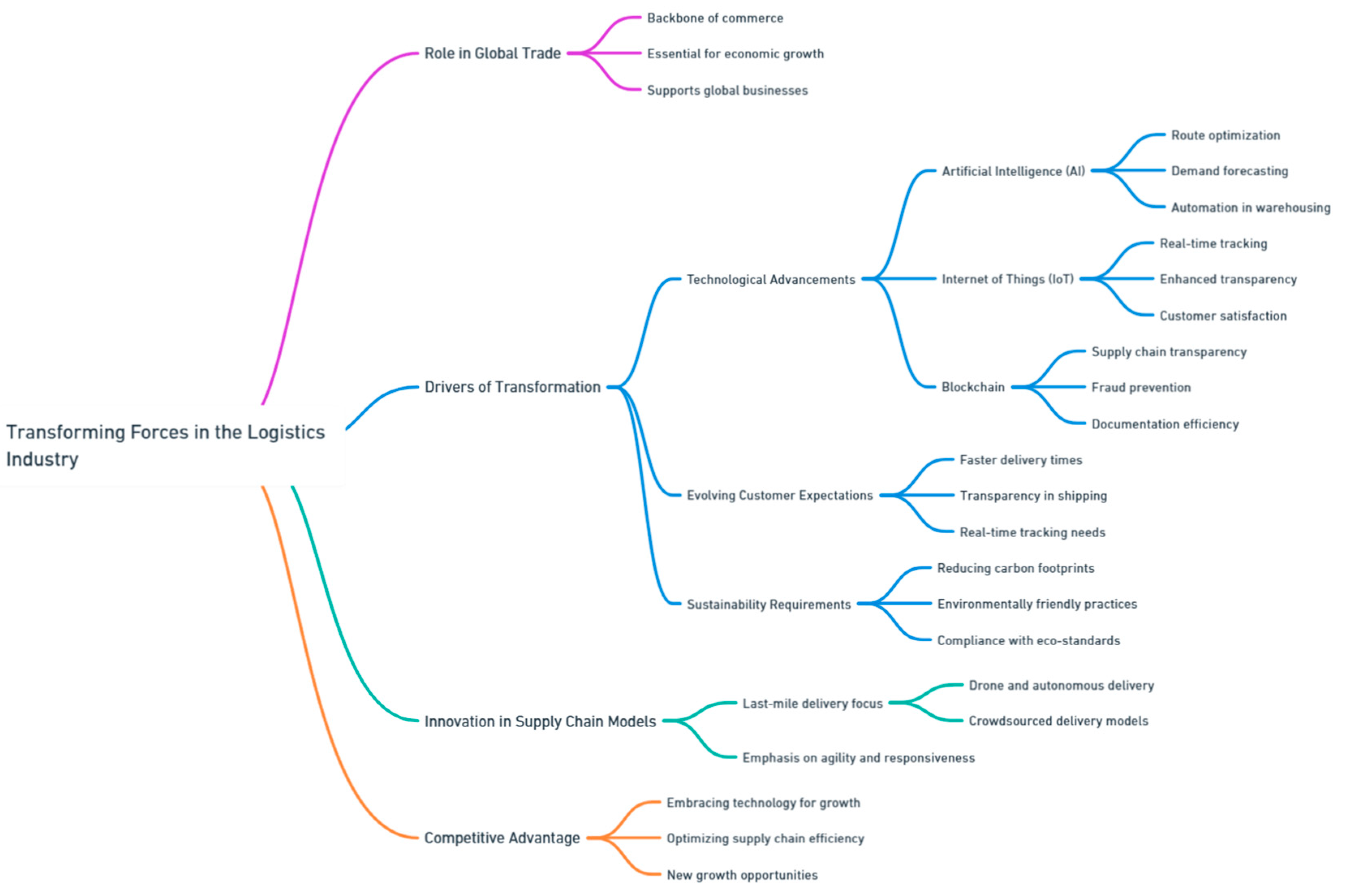
The logistics industry has historically been the backbone of global trade and commerce, playing an essential role in the efficient movement of goods from manufacturers to consumers across the globe. The seamless coordination and transportation of products form the core of this sector, supporting businesses of all sizes and fueling economic growth in virtually every part of the world. However, the logistics sector is currently undergoing a significant period of transformation, driven by rapid technological advancements, evolving customer expectations, and the growing necessity to address environmental sustainability concerns. These changes are reshaping the industry landscape, putting immense pressure on logistics companies to adapt, innovate, and improve their operations if they wish to remain competitive. In today’s increasingly dynamic and competitive market, innovation in logistics is no longer a mere option—it has become a critical requirement for survival and success. Companies must embrace new technologies and approaches to remain agile and responsive to changing market conditions. The evolution of customer demands, which now prioritize faster delivery times, transparency in shipping processes, and real-time tracking, necessitates that logistics firms rethink their traditional operating models. At the same time, the emphasis on sustainability and reducing carbon footprints has made environmentally friendly logistics practices a key consideration for many companies, both to comply with regulations and to meet the expectations of eco-conscious consumers. One of the most significant drivers of innovation in the logistics industry is technology. Advancements such as artificial intelligence (AI), blockchain, and the Internet of Things (IoT) are revolutionizing the way logistics companies manage their supply chains. AI, for instance, is being used to enhance route optimization, forecast demand, and automate warehousing processes. AI-powered predictive analytics can help logistics providers anticipate potential disruptions and make more informed decisions, thereby improving efficiency and reducing costs. Meanwhile, IoT technology allows for real-time tracking and monitoring of shipments, providing greater visibility and control throughout the supply chain. This level of transparency not only enhances operational efficiency but also improves customer satisfaction by offering detailed, up-to-the-minute information on the status of their deliveries. Blockchain technology, though still in its early stages of adoption within logistics, holds the potential to significantly improve security and transparency in the supply chain. By creating a decentralized ledger of transactions, blockchain can reduce the risk of fraud, ensure authenticity, and streamline documentation processes, particularly in international trade. This can result in faster processing times, reduced paperwork, and lower operational costs. Companies that leverage blockchain for supply chain management are better equipped to handle the complexities of global trade, giving them a competitive edge. In addition to adopting new technologies, logistics companies must also rethink traditional supply chain models to accommodate shifting market demands. The rise of e-commerce, for example, has led to an increased focus on last-mile delivery, where efficiency and speed are paramount. To meet these demands, many companies are exploring alternative delivery methods, such as drone deliveries, autonomous vehicles, and even crowdsourced delivery models. By reimagining the way goods are transported and delivered to customers, logistics firms can tap into new opportunities for growth while enhancing customer experiences. Ultimately, the logistics companies that are most successful in today’s market are those that prioritize innovation, sustainability, and efficiency. By embracing technological advancements, optimizing supply chain management, and responding to customer and environmental needs, these firms can unlock new growth opportunities and gain a significant competitive advantage. Innovation is not only transforming the logistics industry but also shaping the future of global commerce, creating a more interconnected, efficient, and sustainable system for the movement of goods across borders.
Preprints 139811 i198

18.2. The Role of Technology in Driving Innovation
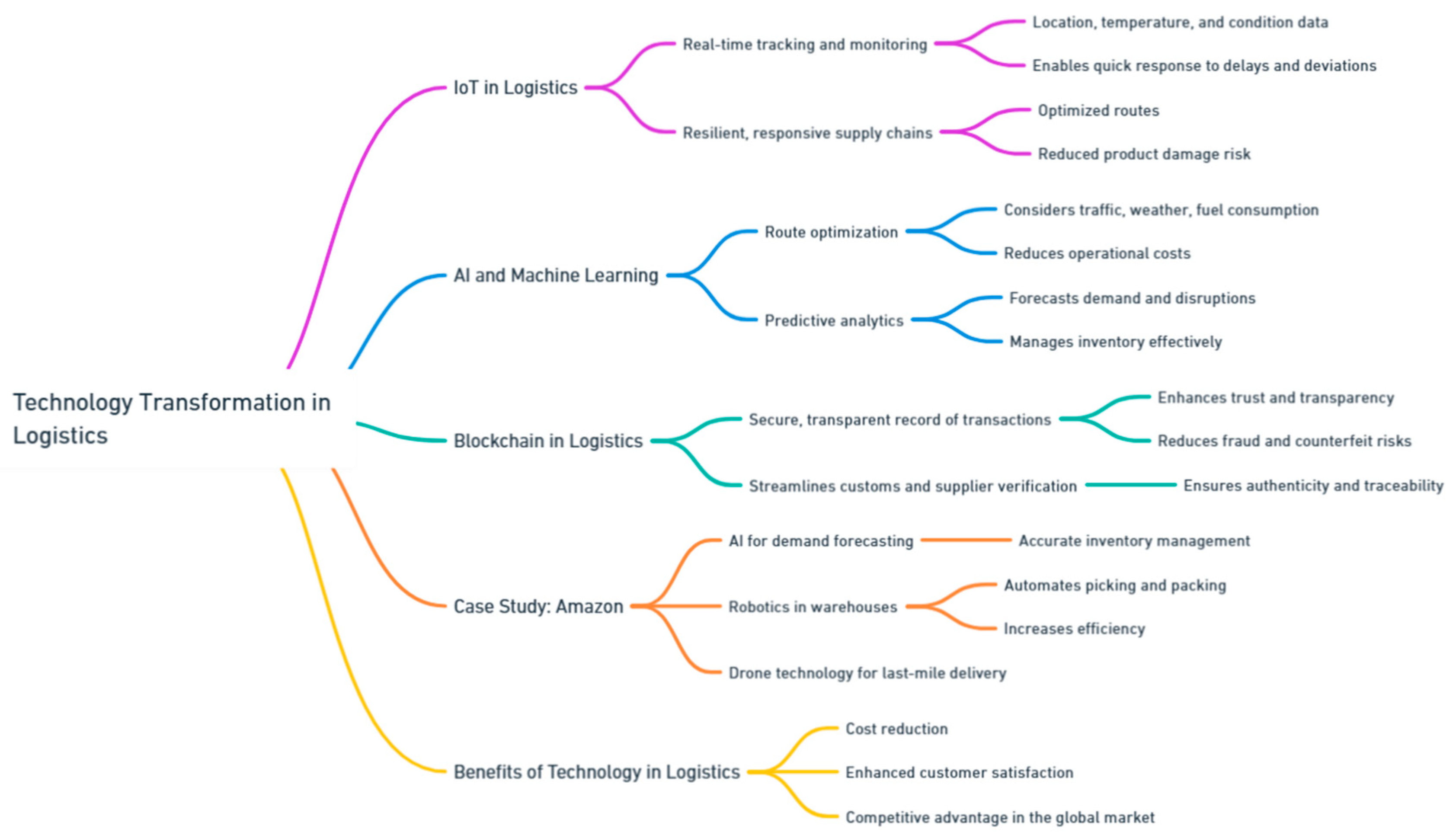
The logistics industry is undergoing a profound transformation, driven by rapid advancements in technology. As companies strive to meet the growing demands of global commerce, the integration of technologies such as data analytics, cloud computing, the Internet of Things (IoT), artificial intelligence (AI), and blockchain is revolutionizing operations, enhancing efficiency, and empowering better decision-making. One of the most significant developments in logistics is the widespread adoption of IoT technology. The IoT enables logistics companies to connect various devices and systems throughout the supply chain, providing greater visibility and control over operations. For instance, IoT sensors attached to shipping containers, trucks, and other vehicles can continuously transmit real-time data about the location, temperature, and condition of goods in transit. This stream of information helps companies monitor their assets more effectively and respond quickly to any potential issues, such as delays, route deviations, or temperature fluctuations that could spoil perishable goods. The result is a more resilient and responsive logistics network, reducing risks such as product damage or delivery delays, while also optimizing routes and improving overall efficiency. AI and machine learning are also playing a transformative role in logistics. These technologies are particularly valuable in optimizing transportation routes, forecasting demand, and managing inventory. AI-powered systems can analyze vast datasets, often in real-time, to identify patterns and trends that humans might overlook. For example, AI algorithms can predict the most efficient delivery routes, taking into account variables such as traffic conditions, weather, and fuel consumption. This not only leads to reduced operational costs by minimizing fuel usage but also results in faster delivery times and an overall smoother logistics process. Predictive analytics, another branch of AI, allows companies to anticipate demand fluctuations and potential disruptions, enabling them to prepare accordingly. By forecasting demand spikes, logistics companies can adjust inventory levels in advance, ensuring they have the necessary stock on hand without over-committing resources. Blockchain technology is another powerful innovation that is reshaping the logistics industry. Traditionally, supply chain processes have been fragmented, with multiple parties involved and a lack of transparency at various stages. Blockchain addresses these challenges by providing a secure, decentralized ledger that records transactions and interactions across the supply chain. This level of transparency helps build trust among participants, as every transaction is securely documented and can be easily traced back to its origin. Blockchain also simplifies processes such as customs clearance and supplier verification, reducing the likelihood of fraud or counterfeit products entering the supply chain. By ensuring the authenticity and traceability of goods, blockchain enhances overall security and efficiency in logistics operations. Amazon serves as a prime example of how technology can provide a competitive edge in the logistics industry. The company has leveraged a combination of advanced technologies to build one of the most sophisticated and efficient logistics networks in the world. Amazon’s use of AI for demand forecasting allows it to anticipate customer needs and manage its inventory with precision, ensuring that products are available when and where they are needed. In its warehouses, the company employs robotics to automate the picking and packing of goods, significantly increasing operational efficiency and reducing errors. Additionally, Amazon's exploration of drone technology for last-mile delivery demonstrates its commitment to innovation in logistics. By integrating these technologies, Amazon has positioned itself as a leader in e-commerce logistics, setting new standards for speed, accuracy, and efficiency. In conclusion, technology is revolutionizing the logistics industry by enabling companies to optimize their operations, reduce costs, and enhance customer satisfaction. IoT, AI, machine learning, and blockchain are just a few of the technologies that are driving this transformation, providing companies with the tools they need to stay competitive in a fast-paced global market.
Idrissi, Z. K., Lachgar, M., & Hrimech, H. (2022, May). Blockchain, IoT and AI revolution within transport and logistics. In 2022 14th International Colloquium of Logistics and Supply Chain Management (LOGISTIQUA) (pp. 1-7). IEEE.
Humayun, M., Jhanjhi, N. Z., Hamid, B., & Ahmed, G. (2020). Emerging smart logistics and transportation using IoT and blockchain. IEEE Internet of Things Magazine, 3(2), 58-62.
Preprints 139811 i199

18.3. Automation and Robotics in Warehousing and Transportation
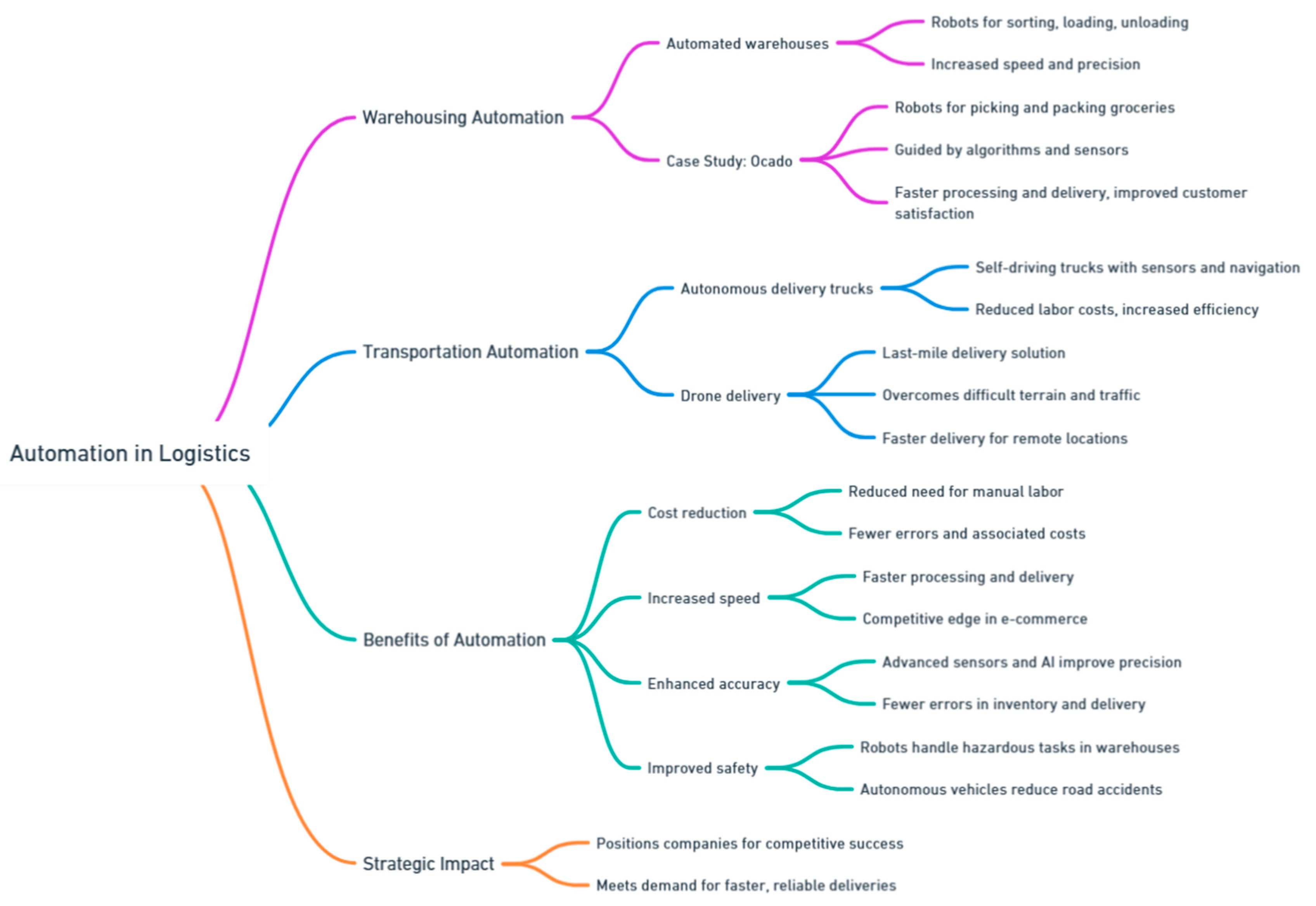
Automation has emerged as a fundamental force behind innovation in logistics, particularly in the areas of warehousing and transportation. As the demand for speed and efficiency in the movement of goods grows, companies are increasingly turning to advanced technologies to streamline their operations. Automation, including the use of robotics and autonomous systems, is revolutionizing the way goods are stored, handled, and delivered, ultimately transforming the logistics landscape. In the field of warehousing, automated systems are now playing a pivotal role in optimizing storage and processing activities. The introduction of automated warehouses, where robotics systems manage the movement of goods, has significantly altered traditional logistics operations. In these warehouses, robots are employed to handle repetitive and labor-intensive tasks, such as sorting, loading, and unloading goods. This shift toward automation has not only minimized the reliance on manual labor but also enhanced the speed and precision of these operations. Companies can now process higher volumes of goods at a faster rate, with fewer errors, contributing to more efficient supply chain management. A prime example of how automation is transforming warehouse logistics can be seen in the operations of Ocado, a UK-based online grocery retailer. Ocado has developed fully automated fulfillment centers where robots are responsible for picking and packing groceries. These robots, guided by advanced algorithms and sensors, navigate through warehouse aisles with remarkable speed and accuracy, selecting items based on customer orders and packing them efficiently for dispatch. By automating these critical tasks, Ocado has been able to ensure quicker order processing and delivery times, while also minimizing errors that could occur in manual operations. The result is an overall improvement in customer satisfaction, as customers receive their orders faster and with fewer mistakes. Beyond the confines of the warehouse, automation is also making significant strides in transportation, a key component of logistics. One of the most exciting developments in this area is the rise of autonomous vehicles and drones for delivery purposes. Leading logistics companies like UPS and FedEx are at the forefront of experimenting with autonomous delivery trucks, which have the potential to revolutionize the way goods are transported over long distances. These self-driving trucks could dramatically reduce the need for human drivers, which in turn could help companies save on labor costs while improving delivery efficiency. Autonomous trucks are equipped with cutting-edge sensors, cameras, and navigation systems that allow them to operate with greater precision and safety, reducing the likelihood of accidents and delays caused by human error. In addition to autonomous delivery trucks, drones are becoming an increasingly viable option for last-mile delivery—the final leg of the delivery process that often presents the most challenges in logistics. Drones offer a flexible and efficient solution, particularly in hard-to-reach areas where traditional delivery methods may be slower or impractical. For instance, drones can be deployed to deliver packages to remote locations, such as rural communities or areas with difficult terrain, ensuring that customers receive their deliveries promptly. By bypassing road traffic and other logistical hurdles, drones enable companies to offer faster delivery times and greater convenience to customers, further enhancing the overall logistics experience. The integration of automation into logistics offers a wide array of benefits that are transforming the industry. One of the most significant advantages is cost reduction. Automated systems allow companies to cut down on labor expenses by reducing the need for manual work, particularly for repetitive and physically demanding tasks. Additionally, automated systems can operate around the clock without the limitations of human workers, resulting in increased operational efficiency. By minimizing errors and streamlining processes, automation also reduces the costs associated with mistakes, such as damaged goods or incorrect shipments, which can have a negative impact on profitability. Speed is another critical benefit of automation in logistics. Automated warehouses and transportation systems enable faster processing and delivery of goods, helping companies meet the growing demand for quick turnaround times in e-commerce and other industries. As consumer expectations for rapid delivery continue to rise, businesses that can offer faster service gain a competitive edge in the marketplace. The ability to quickly process, pack, and ship orders not only enhances customer satisfaction but also allows companies to manage higher order volumes during peak periods without compromising on quality or accuracy. Accuracy is equally important in logistics, and automation plays a key role in improving the precision of operations. Automated systems, whether in warehouses or vehicles, are equipped with advanced sensors, artificial intelligence, and machine learning algorithms that allow them to perform tasks with a high degree of accuracy. This precision helps to reduce the occurrence of errors in inventory management, order fulfillment, and delivery, ensuring that customers receive the correct products in a timely manner. The increased accuracy provided by automation leads to fewer returns, fewer customer complaints, and a more streamlined logistics process overall. Finally, automation enhances safety in logistics operations. In warehouses, for example, robots can take on tasks that may pose risks to human workers, such as lifting heavy objects or working in hazardous environments. This reduces the likelihood of workplace injuries and creates a safer working environment for employees. On the road, autonomous vehicles are equipped with sophisticated safety features that can prevent accidents caused by human error, further improving the overall safety of logistics operations. In conclusion, the adoption of automation in logistics is transforming the industry by driving innovation and improving operational efficiency. From automated warehouses to autonomous vehicles and drones, automation is helping companies reduce costs, increase speed and accuracy, and enhance safety. As businesses continue to invest in these technologies, they are positioning themselves for success in an increasingly competitive market, where the demand for faster, more reliable deliveries shows no signs of slowing down.
Preprints 139811 i200

18.4. Sustainability as a Driver for Innovation
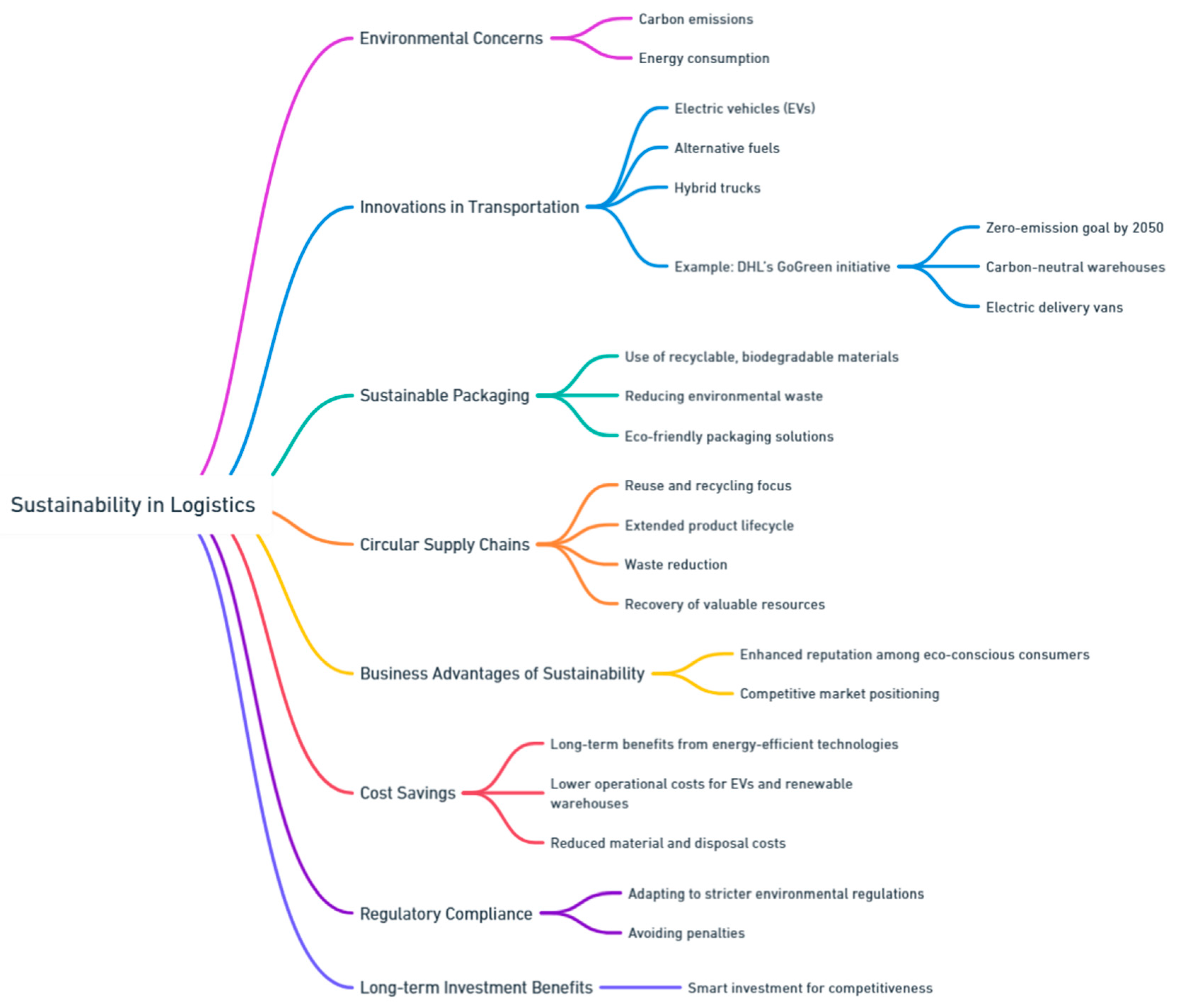
Sustainability has become a central focus for both consumers and businesses across various industries, including logistics. This growing emphasis on sustainability is fueled by the recognition that environmental degradation and climate change are critical issues that need immediate attention. Logistics companies, in particular, are under mounting pressure to address their environmental impact, specifically in terms of carbon emissions and energy consumption. As a result, sustainability is not only becoming a moral and ethical obligation but also a significant driver of innovation within the logistics sector. One of the primary areas where logistics companies can make meaningful progress in sustainability is in transportation. Traditional logistics operations rely heavily on fossil fuels, contributing to high levels of carbon emissions and environmental pollution. In response to these challenges, the logistics industry is increasingly adopting energy-efficient transportation solutions. The development of electric vehicles (EVs), alternative fuels, and hybrid trucks has become a critical step in reducing the carbon footprint associated with transportation activities. These innovations allow logistics companies to significantly lower their greenhouse gas emissions, which is a crucial aspect of mitigating the industry's environmental impact. For example, DHL, a global leader in logistics, has taken substantial steps towards achieving sustainability through its GoGreen initiative. The company's ambitious goal is to achieve zero-emission logistics by 2050. As part of this initiative, DHL has implemented several innovative practices to reduce its carbon footprint. These include the deployment of electric delivery vans, the establishment of carbon-neutral warehouses, and the development of sustainable packaging solutions. The use of electric vehicles in DHL’s fleet not only reduces emissions but also aligns with broader efforts to transition away from reliance on fossil fuels. Similarly, carbon-neutral warehouses are designed with energy efficiency in mind, often incorporating renewable energy sources like solar panels and advanced insulation technologies to minimize energy consumption. Another key area of innovation in logistics sustainability is packaging. Packaging materials, often made from plastics and other non-biodegradable substances, contribute significantly to environmental waste. However, in recent years, companies have started adopting sustainable packaging solutions that focus on using recyclable and biodegradable materials. These efforts aim to reduce the amount of waste generated from logistics operations, ensuring that packaging does not end up in landfills or oceans where it can cause long-term damage to ecosystems. By switching to eco-friendly packaging options, logistics companies are actively contributing to the reduction of their environmental impact. Additionally, waste reduction is not limited to packaging. Logistics companies are exploring new approaches to reduce overall waste within their operations through the development of circular supply chains. A circular supply chain operates on the principle of reusing and recycling products and materials instead of discarding them after a single use. This approach minimizes waste and extends the lifecycle of products, ultimately reducing the demand for new materials and the environmental strain caused by production and disposal processes. In a circular supply chain, products are designed to be easily disassembled, repaired, or recycled, enabling logistics companies to recover valuable materials and resources. As a result, this model helps create a more sustainable system that lessens the environmental impact of logistics operations. Beyond the environmental benefits, prioritizing sustainability in logistics offers significant business advantages. For companies that align their operations with sustainable practices, the rewards extend beyond reducing their carbon footprint. By adopting eco-friendly initiatives, logistics companies can enhance their reputation among consumers who are increasingly eco-conscious. Many consumers today prefer to do business with companies that share their environmental values, and sustainability has become a key factor in purchasing decisions. Businesses that demonstrate a commitment to sustainability are more likely to attract customers who prioritize environmental responsibility, giving them a competitive edge in the marketplace. In addition to reputational benefits, sustainability initiatives in logistics can lead to long-term cost savings. While the initial investment in energy-efficient technologies or sustainable materials may be high, the long-term benefits often outweigh the costs. Energy-efficient technologies, such as electric vehicles and renewable energy-powered warehouses, can significantly reduce operational expenses over time. For instance, electric vehicles typically have lower fuel and maintenance costs compared to traditional internal combustion engine vehicles. Similarly, implementing waste reduction strategies, such as using recyclable packaging or optimizing supply chain processes, can lead to reduced material costs and lower disposal fees. By minimizing waste and conserving energy, logistics companies can achieve greater efficiency and profitability in the long run. Furthermore, regulatory pressures are increasing on companies to adopt more sustainable practices. Governments and international organizations are implementing stricter environmental regulations to address climate change and resource depletion. Logistics companies that proactively integrate sustainability into their operations can stay ahead of regulatory changes and avoid potential penalties or disruptions. By taking the lead on sustainability, these companies are not only fulfilling their social responsibility but also positioning themselves to thrive in an increasingly regulated business environment. In conclusion, sustainability has emerged as a crucial concern in the logistics industry, driving innovation in areas such as energy-efficient transportation, sustainable packaging, and circular supply chains. Logistics companies are under pressure to reduce their environmental impact, and many are responding by embracing sustainable practices that benefit both the environment and their business operations. As companies like DHL demonstrate through initiatives like GoGreen, prioritizing sustainability not only helps to mitigate the effects of climate change but also provides a competitive advantage in the marketplace. Furthermore, the cost savings and regulatory compliance benefits associated with sustainability initiatives make them a smart long-term investment for logistics companies looking to remain competitive in a rapidly changing world.
Preprints 139811 i201

18.5. Customer-Centric Innovation in Logistics
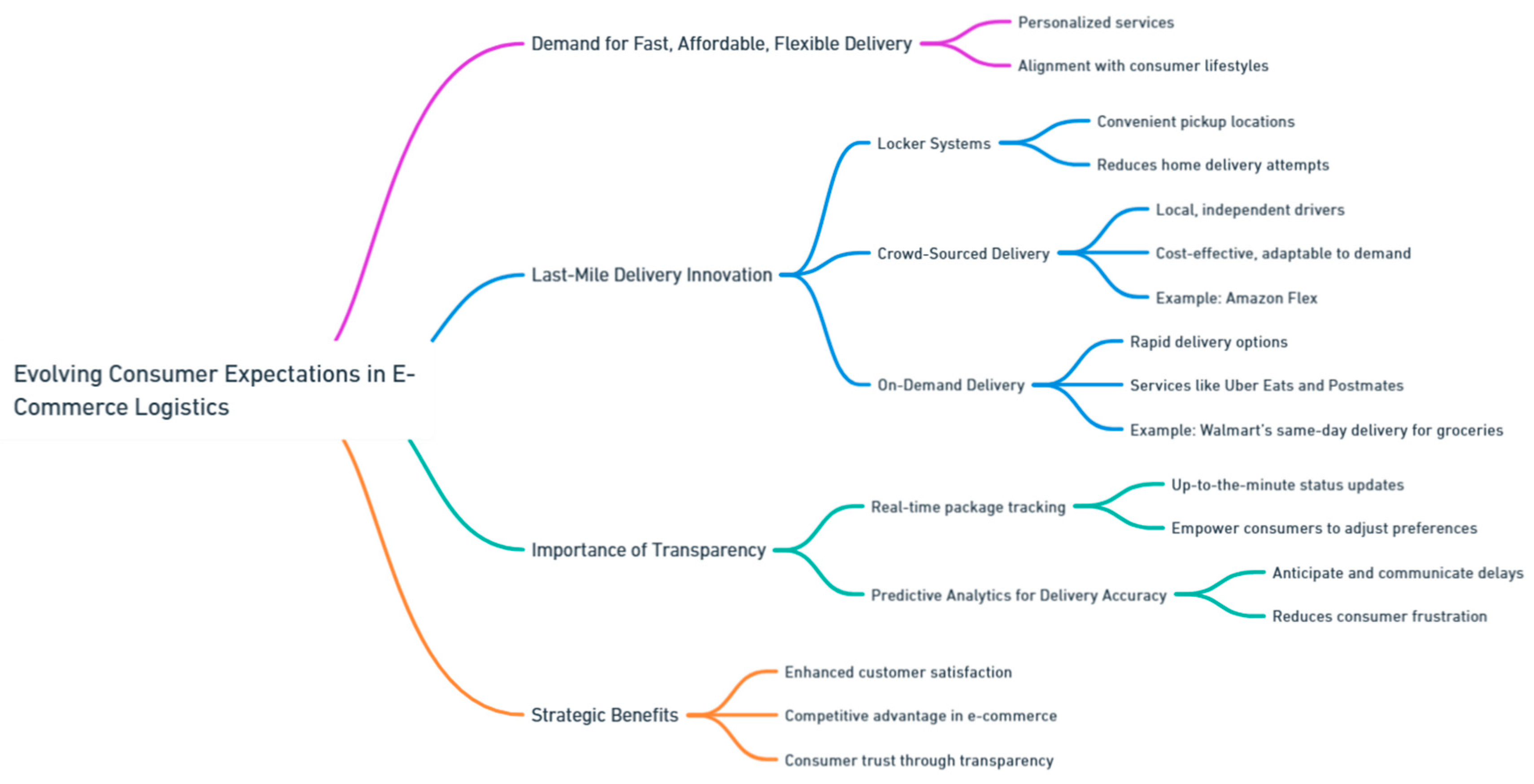
As e-commerce continues to grow at an unprecedented pace, consumer expectations have significantly evolved, particularly around the speed, cost, and convenience of delivery services. Modern consumers are no longer satisfied with just receiving their packages; they now demand deliveries that align with their busy lives, expecting fast, affordable, and flexible options that fit into their daily routines. This shift in consumer behavior presents both challenges and opportunities for logistics companies. To remain competitive in this rapidly changing landscape, logistics providers must prioritize customer-centric innovation, adopting strategies and technologies that cater to these rising expectations. Those companies that can successfully offer personalized, flexible, and transparent delivery services are poised to gain a significant competitive advantage over their peers. One area that has become a critical point of focus for innovation in logistics is last-mile delivery, the final stage of the delivery process where the package is transferred from a distribution center to the customer’s doorstep. This part of the delivery chain is particularly complex and costly, accounting for a large portion of logistics expenses. However, it is also the most visible and critical to the customer’s overall experience. As a result, companies are increasingly investing in solutions that can improve the efficiency and effectiveness of last-mile delivery while enhancing the customer experience. Among the innovative approaches to last-mile delivery are the use of locker systems, crowd-sourced delivery platforms, and on-demand delivery services. Locker systems, which allow customers to pick up their packages at a convenient location rather than waiting for home delivery, offer a level of flexibility that is particularly appealing to busy consumers. These lockers are typically placed in strategic locations, such as grocery stores, shopping malls, or public transportation hubs, making it easy for consumers to retrieve their packages at a time and place that suits them. By reducing the need for home delivery attempts and reattempts, locker systems also help logistics companies reduce costs and improve delivery efficiency. Crowd-sourced delivery platforms represent another innovative solution gaining traction in the logistics industry. These platforms enable independent drivers to deliver packages in their local areas, providing a flexible, decentralized delivery model that can adapt to fluctuating demand. Companies like Amazon have embraced this model through their Amazon Flex program, which allows everyday drivers to pick up and deliver packages in their spare time. This approach not only offers a cost-effective way for companies to meet growing delivery demands but also provides consumers with faster, more flexible delivery options. Furthermore, on-demand delivery services, such as Uber Eats and Postmates, have expanded beyond food delivery to include package deliveries, allowing consumers to receive their orders within hours rather than days. Walmart has been particularly proactive in embracing innovative delivery models to meet consumer demand for speed and convenience. One notable example is their same-day delivery service for groceries, which allows customers to select from a range of delivery windows based on their convenience. This service reflects a growing trend in the industry towards providing consumers with more control over the delivery process, ensuring that their packages arrive at a time that is convenient for them. By offering same-day delivery, Walmart has not only met consumer expectations for faster service but has also enhanced customer satisfaction by offering a more personalized delivery experience. In addition to flexibility and speed, transparency has emerged as a key factor in the delivery experience. Today’s consumers expect to be able to track their packages in real-time and receive regular updates on the status of their deliveries. The ability to monitor the delivery process from the moment a package is shipped to the moment it arrives at their door has become a standard expectation, and companies that fail to provide this level of transparency risk losing customer trust. Real-time tracking not only gives consumers peace of mind but also empowers them to make adjustments to their delivery preferences if necessary, such as rerouting a package to a different location or changing the delivery time. To meet these transparency expectations, logistics companies are increasingly investing in technologies that provide real-time visibility into their operations. Advanced tracking systems, powered by GPS and other location-based technologies, allow companies to offer consumers up-to-the-minute information about their deliveries. Moreover, predictive analytics tools can help companies anticipate and communicate potential delays, giving customers more accurate delivery estimates and reducing the frustration of waiting for a package that doesn’t arrive when expected. By providing this level of transparency, logistics providers can build trust with their customers and improve overall satisfaction. In conclusion, as e-commerce continues to reshape consumer expectations around deliveries, logistics companies must focus on innovation that enhances the customer experience. Personalized, flexible, and transparent delivery services are no longer optional; they are essential for companies looking to stay competitive in the e-commerce-driven marketplace. Last-mile delivery has emerged as a key area for innovation, with solutions like locker systems, crowd-sourced delivery platforms, and on-demand services offering new levels of convenience and flexibility. Real-time tracking and delivery transparency are also critical components of a positive customer experience, as consumers now expect to have visibility into their deliveries from start to finish. Companies that can successfully integrate these innovations into their logistics operations will not only meet but exceed consumer expectations, positioning themselves as leaders in the increasingly competitive world of e-commerce logistics.
Preprints 139811 i202

18.6. Digital Transformation in Logistics
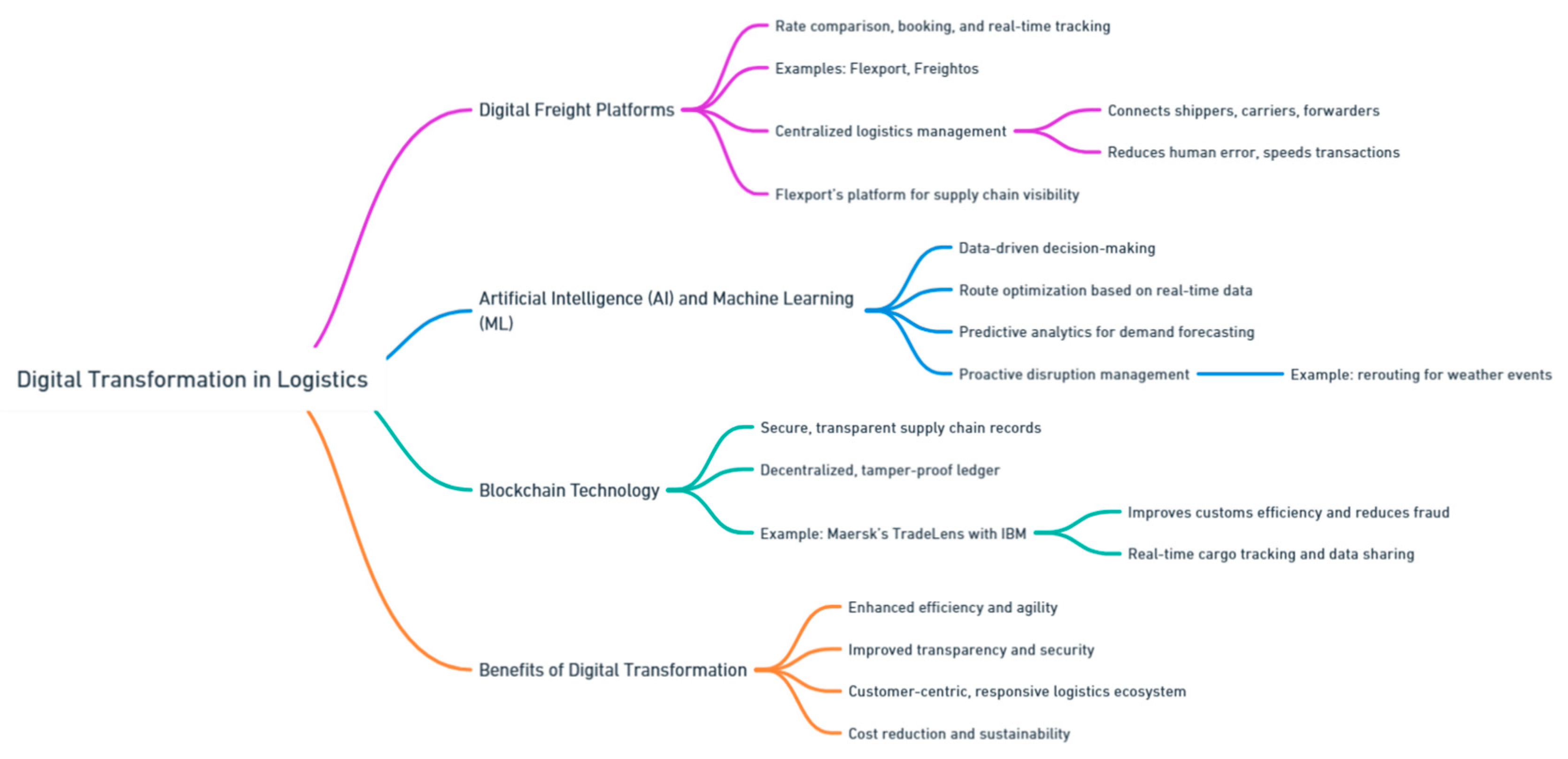
Digital transformation is fundamentally reshaping the logistics industry by introducing unprecedented levels of efficiency, agility, and transparency. With the advent of digital technologies, logistics companies are now able to streamline their operations, offering faster and more reliable services to meet the growing demands of global trade. The rise of digital freight platforms and marketplaces is at the heart of this transformation, revolutionizing the way logistics operations are managed. These platforms, such as Flexport and Freightos, have created an environment where shippers can easily compare rates, book shipments, and track cargo in real-time, offering significant improvements in operational efficiency and cost reduction. By digitizing what used to be manual and time-consuming processes, companies can now respond more quickly to market changes and offer customers a more seamless shipping experience. One of the key benefits of digital freight platforms is their ability to centralize the logistics process, bringing together various stakeholders on a single platform. This connectivity fosters better communication and coordination among shippers, carriers, freight forwarders, and other entities involved in the supply chain. Traditionally, managing logistics required countless emails, phone calls, and paperwork to ensure that cargo was shipped, tracked, and delivered on time. Now, digital platforms have automated much of this process, reducing the chances of human error and speeding up transactions. For instance, Flexport's platform allows users to visualize their supply chain, giving them insight into every step of the journey, from the warehouse to the final delivery point. This level of transparency not only improves decision-making but also enables companies to be more agile, adjusting their operations swiftly in response to any unforeseen circumstances. Artificial intelligence (AI) and machine learning (ML) are also playing a pivotal role in the ongoing digital transformation of the logistics industry. These technologies are empowering companies with the tools to make smarter, data-driven decisions throughout the supply chain. AI can process vast amounts of data in real time, analyzing patterns and trends that would be impossible for humans to detect manually. By doing so, AI helps to optimize routes, reduce delays, and anticipate future demand more accurately. This is especially useful for logistics companies that need to balance customer expectations with the realities of transport logistics. For example, AI-driven systems can recommend the most efficient shipping routes based on real-time traffic data, helping to reduce fuel consumption and delivery times. Machine learning algorithms are equally valuable in identifying and mitigating potential disruptions in the supply chain. In a global logistics network, factors such as weather events, geopolitical tensions, or unexpected market shifts can cause significant delays or even halt operations entirely. By analyzing historical data and real-time information, machine learning models can predict these disruptions before they occur, allowing companies to proactively adjust their logistics plans. For example, if a storm is forecasted in a key shipping lane, a machine learning model might suggest rerouting cargo through a different path to avoid delays. This predictive capability is becoming increasingly important as companies strive to build more resilient supply chains that can withstand the unpredictability of global events. Blockchain technology is another transformative force in the logistics industry, offering enhanced transparency and security across the supply chain. One of the key challenges in logistics has always been the complexity of tracking goods as they move across borders and through different hands. With so many intermediaries involved, there is a high risk of miscommunication, fraud, and delays. Blockchain addresses these issues by providing a decentralized, tamper-proof ledger that records every transaction in the supply chain. Once a transaction is recorded on the blockchain, it cannot be altered, which ensures the integrity of the data. Maersk, one of the largest shipping companies in the world, has embraced blockchain technology to streamline its supply chain operations. In collaboration with IBM, Maersk has developed a blockchain-based platform called TradeLens, which allows for the secure sharing of supply chain data among various participants, including shippers, customs authorities, and logistics providers. This platform has significantly improved the efficiency of customs clearance processes, reducing the time and cost associated with shipping goods internationally. For example, TradeLens enables real-time tracking of cargo and automates many of the manual processes involved in cross-border shipping. By doing so, it reduces the risk of fraud and ensures that all parties have access to the same accurate information, leading to faster, more secure transactions. The adoption of digital technologies like AI, machine learning, and blockchain is not just improving individual aspects of logistics; it is transforming the entire ecosystem. As companies continue to integrate these technologies into their operations, the logistics industry is becoming more interconnected, responsive, and customer-centric. For instance, the use of AI in demand forecasting allows logistics providers to better align their resources with market needs, ensuring that they have the right amount of inventory at the right place and time. Similarly, blockchain ensures that every transaction in the supply chain is secure and transparent, reducing the likelihood of disputes and delays. Ultimately, the digital transformation of logistics is enabling companies to meet the challenges of a rapidly evolving global marketplace. The integration of digital freight platforms, AI, machine learning, and blockchain is leading to more efficient, transparent, and agile logistics operations. As these technologies continue to advance, we can expect the logistics industry to become even more innovative, with companies able to offer faster, more reliable services while simultaneously reducing costs and improving sustainability. The future of logistics lies in digital transformation, and the companies that embrace these changes will be best positioned to thrive in the increasingly competitive global economy.
Preprints 139811 i203

19. Future Trends: Sustainability and Technology in Global Supply Chains
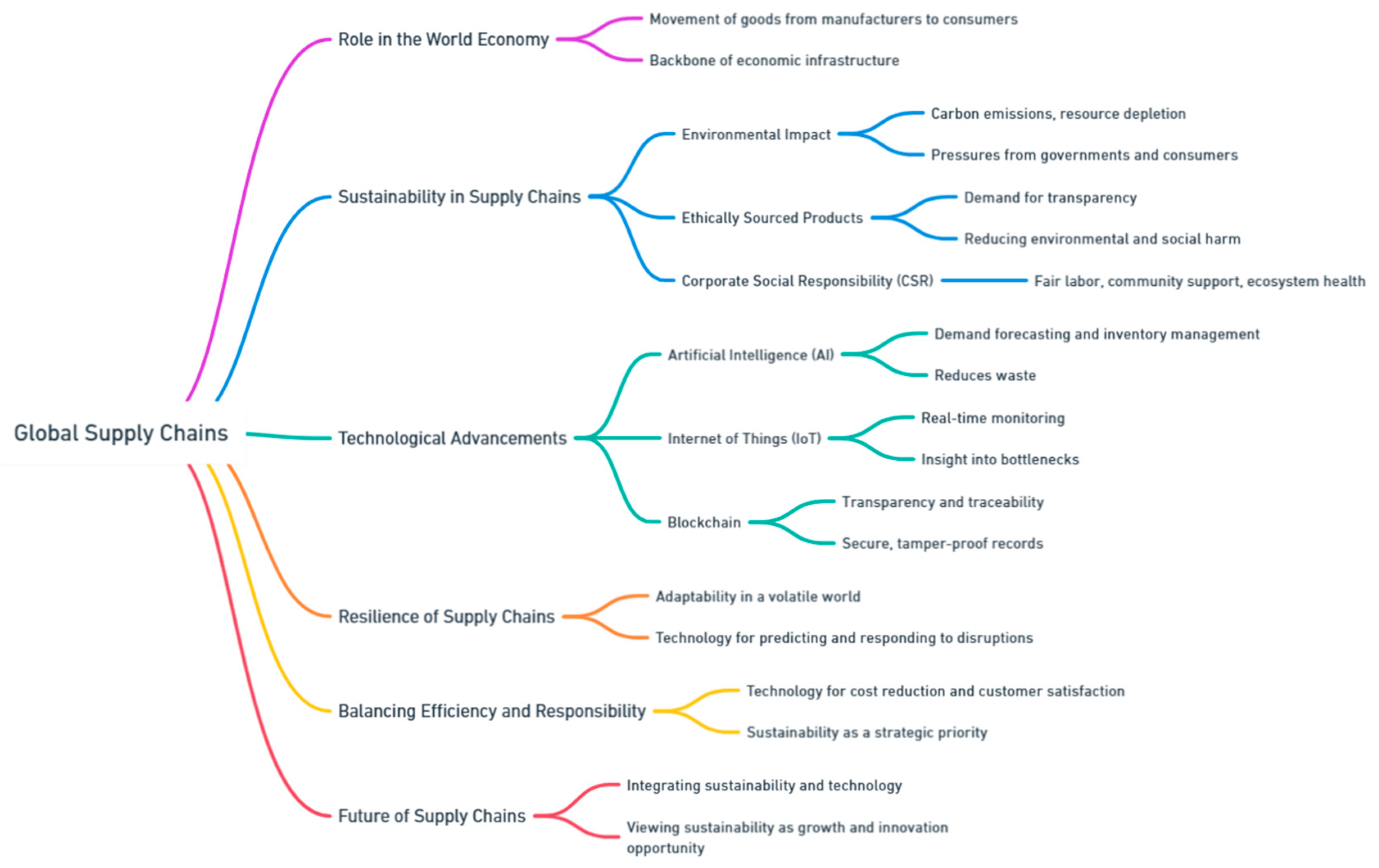
Global supply chains serve as the lifeblood of the world economy, functioning as intricate networks that ensure the movement of goods from manufacturers to consumers across vast distances. These networks are composed of a multitude of interconnected players, including suppliers, transporters, warehouses, and distributors, all working together to facilitate the smooth flow of products. The scale and complexity of global supply chains are immense, covering different industries and regions, making them a critical part of the global economic infrastructure. Without these networks, many of the products we rely on daily would not be available, highlighting their indispensable role in modern life. In recent years, there has been a growing recognition of the need to enhance both the sustainability and technological sophistication of these global supply chains. Several factors are driving this shift, one of which is the increasing concern for the environment. Governments, consumers, and advocacy groups are raising awareness about the impact that supply chains have on the planet. The extraction of raw materials, the transportation of goods across long distances, and the energy-intensive processes involved in manufacturing and distribution contribute to pollution and the depletion of natural resources. Consequently, there is a mounting pressure on companies to reduce their environmental footprint and adopt sustainable practices that help mitigate the adverse effects of their operations. Another force driving the push for sustainability is the growing demand for ethically sourced products. Consumers are becoming more conscious of the social and environmental implications of their purchases. They want to know that the products they buy are not contributing to environmental degradation or social injustice. This has led to a surge in demand for transparency in the sourcing and manufacturing of goods. Companies that fail to meet these expectations risk losing customers to competitors who are more transparent about their supply chains and committed to ethical sourcing. Sustainability in supply chains is not just about reducing emissions or using recycled materials; it also involves ensuring fair labor practices, supporting local communities, and maintaining the health of ecosystems. The rise of corporate social responsibility (CSR) as a guiding principle has influenced companies to go beyond profit-making and take into account the social and environmental consequences of their operations. Many businesses are now rethinking their supply chains from a holistic perspective, seeking to minimize their negative impact on the world while still meeting the needs of their customers. Simultaneously, technological advancements are playing a transformative role in reshaping global supply chains. The digital revolution, marked by innovations such as artificial intelligence (AI), blockchain, the Internet of Things (IoT), and big data analytics, is offering new tools for optimizing the efficiency, transparency, and resilience of supply chains. AI-powered algorithms can analyze vast amounts of data to forecast demand more accurately, allowing companies to better manage their inventory and reduce waste. The use of IoT devices enables real-time monitoring of goods as they move through the supply chain, providing valuable insights into potential bottlenecks or disruptions. Blockchain technology is another key innovation that is revolutionizing supply chain management. By creating immutable records of transactions, blockchain offers unprecedented levels of transparency and traceability. This is particularly important for companies that are committed to ethical sourcing, as it allows them to verify the origins of their raw materials and ensure that they meet certain environmental or social standards. Moreover, blockchain can enhance trust among stakeholders in the supply chain by providing a secure and tamper-proof system for recording transactions and sharing information. The integration of these technologies also contributes to the resilience of supply chains. In an increasingly volatile world, where natural disasters, pandemics, and geopolitical tensions can disrupt the flow of goods, having a supply chain that is resilient and adaptable is more important than ever. By leveraging technology to predict potential disruptions and respond to them quickly, companies can maintain the continuity of their operations and minimize the impact of unforeseen events. As companies navigate the intersection of sustainability and technology, they are faced with the challenge of balancing efficiency with responsibility. On one hand, technology offers the potential to streamline operations, reduce costs, and improve customer satisfaction. On the other hand, there is a growing imperative to ensure that these technological advances are implemented in a way that supports sustainability goals. For example, while autonomous vehicles and drones may offer more efficient delivery options, companies must also consider their environmental impact, such as the energy required to power them and their potential contribution to carbon emissions. The future of global supply chains lies in the ability of companies to integrate sustainability and technology in a way that creates value for all stakeholders—consumers, employees, shareholders, and the planet. This requires a paradigm shift in how companies approach supply chain management. Rather than viewing sustainability as a cost or a compliance issue, forward-thinking companies are recognizing it as an opportunity for innovation and growth. Similarly, they are not adopting technology for the sake of novelty but are using it strategically to enhance their operations and meet the evolving expectations of their customers. In conclusion, the evolution of global supply chains is being shaped by two powerful forces: sustainability and technology. As environmental concerns and social responsibility take center stage, companies are being called upon to adopt practices that minimize their negative impact on the world. At the same time, technological innovations are opening new avenues for optimizing the efficiency, transparency, and resilience of supply chains. The intersection of these two forces is creating a new landscape for supply chain management, where companies must balance the need for efficiency with the imperative to be ethically and environmentally responsible. In this evolving environment, those who can successfully integrate sustainability and technology will be well-positioned to thrive in the future.
Preprints 139811 i204
Sustainability in Global Supply Chains:
  • Definition and Importance of Sustainability: Sustainability in supply chains refers to the development and implementation of business practices that ensure the long-term viability of resources, while minimizing negative impacts on the environment, society, and economy. This involves an integrated approach where companies evaluate the entire lifecycle of a product, starting from sourcing raw materials to manufacturing, distribution, and eventual disposal. The growing awareness of environmental issues such as climate change, deforestation, and pollution has placed sustainability at the forefront of corporate strategies. Companies are now expected to take proactive measures to reduce their carbon footprint, limit resource consumption, and adhere to ethical labor practices. In today's global economy, sustainability has become increasingly critical for several reasons. Firstly, environmental concerns are mounting as industries deplete natural resources at an unsustainable rate, contributing to global crises like deforestation, climate change, and biodiversity loss. Without sustainable practices, these issues will only worsen, threatening the future availability of essential raw materials and destabilizing ecosystems. Secondly, social concerns like fair labor practices, workers’ rights, and community impacts have gained attention. Consumers and governments alike are demanding that companies avoid exploiting workers and prioritize human welfare in all aspects of production. Thirdly, economic sustainability is key for long-term business success, as efficient use of resources can lead to cost savings, risk reduction, and enhanced corporate reputation. Companies embracing sustainability are often better positioned to adapt to regulatory changes, attract investment, and maintain a competitive advantage.
  • Key Drivers of Sustainable Supply Chains: There are several critical drivers that push companies towards adopting sustainable supply chain practices. Among the most influential is regulatory pressure from governments and international organizations. Various nations are tightening environmental laws and regulations in response to the climate crisis. For instance, the European Union’s Green Deal and international agreements like the Paris Agreement are setting stricter requirements for reducing carbon emissions and adopting sustainable practices across industries. These regulations obligate companies to improve their environmental performance or face financial penalties, loss of business, or exclusion from lucrative markets. Consumer demand is another powerful driver of sustainability in supply chains. Increasingly, consumers are aware of the environmental and social impacts of their purchasing decisions, and this awareness has led to a preference for products and services that are ethically sourced and environmentally friendly. Many consumers are now willing to pay a premium for products that align with their values, supporting companies that prioritize sustainability. As a result, companies are more likely to adopt sustainable practices to meet consumer expectations and avoid reputational risks. Corporate social responsibility (CSR) is another key driver. Companies are beginning to understand the importance of demonstrating their commitment to sustainability and ethical practices. Through CSR initiatives, businesses can enhance their public image, build trust with stakeholders, and foster long-term customer loyalty. Furthermore, CSR initiatives often attract investors, especially those focused on sustainable and ethical investments. Companies that are seen as socially responsible are more likely to receive funding and investment from groups that prioritize environmental, social, and governance (ESG) criteria.
  • Sustainable Practices in Supply Chains: Sustainability in supply chains is facilitated through a variety of practices. One of the most prominent is sustainable sourcing, which involves procuring raw materials and goods in ways that minimize environmental damage while supporting fair labor practices. Many companies have committed to sustainable sourcing to reduce their environmental impact and avoid human rights violations. For instance, Unilever has committed to sourcing all agricultural raw materials sustainably, ensuring that its supply chains do not contribute to deforestation, land degradation, or exploitation of workers. Another common approach is the adoption of circular supply chains. In contrast to the traditional linear model of produce, use, and dispose, circular supply chains aim to recycle and reuse materials at the end of their lifecycle. By reintroducing materials into the production process, companies can significantly reduce waste, conserve resources, and extend the lifecycle of products. Circular supply chains also promote the development of innovative business models that focus on repair, refurbishment, and remanufacturing rather than disposal. Energy-efficient transportation and warehousing are also critical components of sustainable supply chains. Logistics companies are increasingly exploring methods to reduce their energy consumption and carbon emissions, such as by utilizing electric vehicles for transportation, optimizing routes to minimize fuel use, and installing solar panels or adopting other renewable energy sources for powering warehouses and distribution centers. These energy-efficient practices not only reduce operational costs in the long term but also contribute significantly to the overall sustainability goals of businesses.
  • Challenges of Implementing Sustainability: While the importance of sustainability is undeniable, implementing sustainable practices in global supply chains presents several challenges. One of the most significant challenges is cost. Transitioning to sustainable operations often requires substantial upfront investments, especially for companies in industries with complex and resource-intensive supply chains. For example, shifting to renewable energy sources, sourcing ethically, or developing a circular supply chain may entail higher initial costs, making it difficult for some companies to adopt sustainable practices, particularly in highly competitive or low-margin industries. Another challenge lies in balancing efficiency and sustainability. There is often a trade-off between these two objectives. For instance, sustainable transportation options like ships, which have lower carbon emissions compared to airplanes, often lead to longer delivery times. Companies may face difficulties in maintaining the balance between providing fast, cost-effective services and adhering to sustainable practices, especially in sectors where speed and convenience are key competitive factors. Monitoring and enforcing sustainability across global supply chains is another complex challenge. Large, multinational companies often work with suppliers and partners in regions with varying regulations, making it difficult to ensure that all parts of the supply chain adhere to the same sustainability standards. In areas where regulatory oversight is weak or nonexistent, enforcing sustainable practices and ensuring ethical labor conditions can be particularly challenging. Therefore, companies must invest in effective monitoring and compliance systems to ensure that their sustainability initiatives are implemented consistently across all levels of the supply chain.
Technological Innovations in Global Supply Chains:
  • Definition and Importance of Sustainability: Sustainability in supply chains refers to the development and implementation of business practices that ensure the long-term viability of resources, while minimizing negative impacts on the environment, society, and economy. This involves an integrated approach where companies evaluate the entire lifecycle of a product, starting from sourcing raw materials to manufacturing, distribution, and eventual disposal. The growing awareness of environmental issues such as climate change, deforestation, and pollution has placed sustainability at the forefront of corporate strategies. Companies are now expected to take proactive measures to reduce their carbon footprint, limit resource consumption, and adhere to ethical labor practices. In today's global economy, sustainability has become increasingly critical for several reasons. Firstly, environmental concerns are mounting as industries deplete natural resources at an unsustainable rate, contributing to global crises like deforestation, climate change, and biodiversity loss. Without sustainable practices, these issues will only worsen, threatening the future availability of essential raw materials and destabilizing ecosystems. Secondly, social concerns like fair labor practices, workers’ rights, and community impacts have gained attention. Consumers and governments alike are demanding that companies avoid exploiting workers and prioritize human welfare in all aspects of production. Thirdly, economic sustainability is key for long-term business success, as efficient use of resources can lead to cost savings, risk reduction, and enhanced corporate reputation. Companies embracing sustainability are often better positioned to adapt to regulatory changes, attract investment, and maintain a competitive advantage.
  • Key Drivers of Sustainable Supply Chains: There are several critical drivers that push companies towards adopting sustainable supply chain practices. Among the most influential is regulatory pressure from governments and international organizations. Various nations are tightening environmental laws and regulations in response to the climate crisis. For instance, the European Union’s Green Deal and international agreements like the Paris Agreement are setting stricter requirements for reducing carbon emissions and adopting sustainable practices across industries. These regulations obligate companies to improve their environmental performance or face financial penalties, loss of business, or exclusion from lucrative markets. Consumer demand is another powerful driver of sustainability in supply chains. Increasingly, consumers are aware of the environmental and social impacts of their purchasing decisions, and this awareness has led to a preference for products and services that are ethically sourced and environmentally friendly. Many consumers are now willing to pay a premium for products that align with their values, supporting companies that prioritize sustainability. As a result, companies are more likely to adopt sustainable practices to meet consumer expectations and avoid reputational risks. Corporate social responsibility (CSR) is another key driver. Companies are beginning to understand the importance of demonstrating their commitment to sustainability and ethical practices. Through CSR initiatives, businesses can enhance their public image, build trust with stakeholders, and foster long-term customer loyalty. Furthermore, CSR initiatives often attract investors, especially those focused on sustainable and ethical investments. Companies that are seen as socially responsible are more likely to receive funding and investment from groups that prioritize environmental, social, and governance (ESG) criteria.
  • Sustainable Practices in Supply Chains: Sustainability in supply chains is facilitated through a variety of practices. One of the most prominent is sustainable sourcing, which involves procuring raw materials and goods in ways that minimize environmental damage while supporting fair labor practices. Many companies have committed to sustainable sourcing to reduce their environmental impact and avoid human rights violations. For instance, Unilever has committed to sourcing all agricultural raw materials sustainably, ensuring that its supply chains do not contribute to deforestation, land degradation, or exploitation of workers. Another common approach is the adoption of circular supply chains. In contrast to the traditional linear model of produce, use, and dispose, circular supply chains aim to recycle and reuse materials at the end of their lifecycle. By reintroducing materials into the production process, companies can significantly reduce waste, conserve resources, and extend the lifecycle of products. Circular supply chains also promote the development of innovative business models that focus on repair, refurbishment, and remanufacturing rather than disposal. Energy-efficient transportation and warehousing are also critical components of sustainable supply chains. Logistics companies are increasingly exploring methods to reduce their energy consumption and carbon emissions, such as by utilizing electric vehicles for transportation, optimizing routes to minimize fuel use, and installing solar panels or adopting other renewable energy sources for powering warehouses and distribution centers. These energy-efficient practices not only reduce operational costs in the long term but also contribute significantly to the overall sustainability goals of businesses.
  • Challenges of Implementing Sustainability: While the importance of sustainability is undeniable, implementing sustainable practices in global supply chains presents several challenges. One of the most significant challenges is cost. Transitioning to sustainable operations often requires substantial upfront investments, especially for companies in industries with complex and resource-intensive supply chains. For example, shifting to renewable energy sources, sourcing ethically, or developing a circular supply chain may entail higher initial costs, making it difficult for some companies to adopt sustainable practices, particularly in highly competitive or low-margin industries. Another challenge lies in balancing efficiency and sustainability. There is often a trade-off between these two objectives. For instance, sustainable transportation options like ships, which have lower carbon emissions compared to airplanes, often lead to longer delivery times. Companies may face difficulties in maintaining the balance between providing fast, cost-effective services and adhering to sustainable practices, especially in sectors where speed and convenience are key competitive factors.
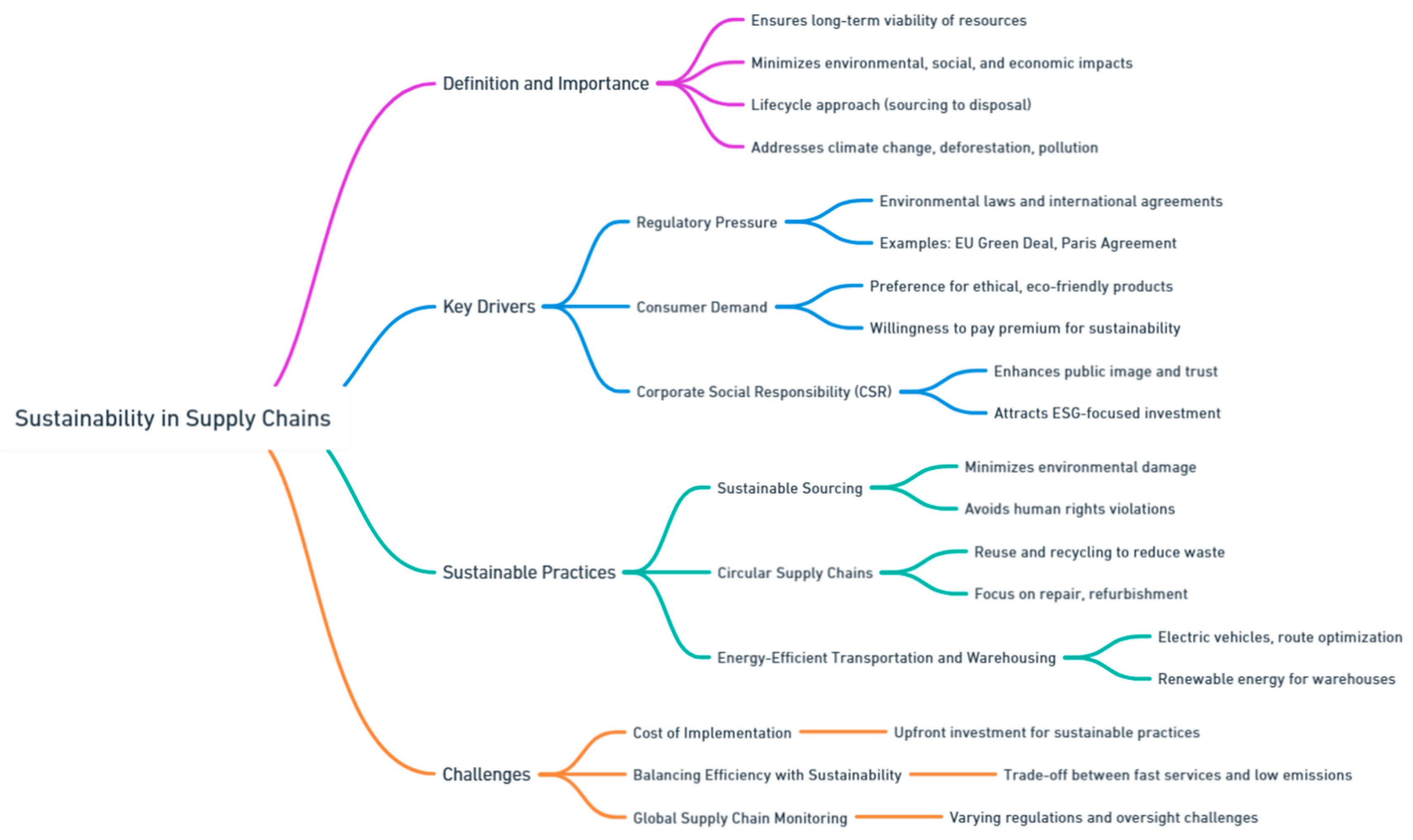
Preprints 139811 i205
Monitoring and enforcing sustainability across global supply chains is another complex challenge. Large, multinational companies often work with suppliers and partners in regions with varying regulations, making it difficult to ensure that all parts of the supply chain adhere to the same sustainability standards. In areas where regulatory oversight is weak or nonexistent, enforcing sustainable practices and ensuring ethical labor conditions can be particularly challenging. Therefore, companies must invest in effective monitoring and compliance systems to ensure that their sustainability initiatives are implemented consistently across all levels of the supply chain.
The Intersection of Sustainability and Technology in Supply Chains. Technology plays a pivotal role in supporting sustainability goals, especially as companies increasingly strive to reduce their environmental footprint while improving operational efficiency. Technological innovations have emerged as key enablers for industries seeking to meet their sustainability targets, offering solutions that optimize resource use, enhance transparency, and provide real-time data for decision-making. One of the most transformative technologies in this regard is artificial intelligence (AI) and big data analytics. These tools are becoming indispensable for companies aiming to streamline their operations and reduce their environmental impact. AI and big data analytics enable companies to optimize their supply chains, which is crucial for reducing fuel consumption and minimizing waste. With the help of these technologies, businesses can analyze vast amounts of data related to their production processes, logistics, and resource utilization, allowing them to make more informed decisions that lead to greater efficiency. For instance, AI can forecast demand more accurately, preventing overproduction and reducing waste. It can also help in identifying inefficiencies within supply chains, such as excessive energy use or unnecessary transportation routes, allowing companies to implement changes that save resources and reduce emissions. Moreover, big data allows for the tracking and monitoring of environmental metrics, giving businesses the ability to measure their progress toward sustainability goals more effectively. Blockchain technology is another innovation making waves in the realm of sustainability. By providing enhanced transparency and traceability, blockchain helps companies ensure that their products are ethically sourced and comply with environmental regulations. This is particularly important in industries such as agriculture, mining, and fashion, where concerns about labor practices, deforestation, and resource extraction are common. Blockchain allows companies to track the journey of their products from origin to the end consumer, ensuring that all processes adhere to sustainability standards. This level of transparency also helps build consumer trust, as customers are increasingly demanding ethically sourced products and are more likely to support companies that demonstrate commitment to sustainable practices. Blockchain can also assist with compliance by automatically verifying that each step in the supply chain meets environmental regulations, reducing the risk of violations and improving the overall accountability of companies. The Internet of Things (IoT) is another critical technological innovation supporting sustainability. IoT devices have the capacity to monitor energy consumption, track emissions, and provide real-time data on the environmental impact of logistics operations. For example, smart sensors placed in factories or transport vehicles can continuously monitor energy use, enabling companies to identify areas where consumption can be reduced. In logistics, IoT devices can track vehicle emissions and fuel use, allowing businesses to optimize routes and reduce carbon footprints. This real-time data is invaluable for companies striving to meet sustainability goals, as it allows for immediate corrective action if operations deviate from set environmental benchmarks. In addition, IoT devices can be integrated into waste management systems, enabling companies to monitor the amount of waste generated and find ways to recycle or reduce it.
These technologies thus contribute to more efficient and sustainable operations across various industries. Several companies have emerged as leaders in the integration of technology and sustainability, leveraging innovations like AI, blockchain, and IoT to transform their supply chains and reduce their environmental impact. Unilever, for instance, has made significant strides in making its supply chain fully transparent by 2030. The company has turned to blockchain technology to trace the sustainability of its sourcing practices, ensuring that its suppliers comply with strict environmental and labor standards. This traceability is critical for a company like Unilever, which operates in industries where sustainability concerns are particularly prominent, such as food production and personal care. By using blockchain, Unilever can verify that the materials and products it sources are produced ethically and in an environmentally responsible manner. In addition, the company has integrated IoT technology into its operations to monitor energy use and emissions throughout its supply chain. This allows Unilever to continually assess its progress toward its sustainability goals and make data-driven decisions to improve efficiency and reduce its environmental footprint. Similarly, Maersk, one of the largest container shipping companies in the world, has leveraged technology to enhance the sustainability of its logistics operations. Maersk uses AI and big data analytics to optimize its shipping routes, which has led to significant reductions in fuel consumption and carbon emissions. Given the scale of Maersk’s operations, these optimizations have a substantial impact on the company’s overall environmental performance. The ability to use AI to predict the most efficient routes helps Maersk minimize unnecessary fuel use, reduce shipping times, and lower its carbon footprint. Furthermore, the company has invested in alternative fuels, such as biofuels and liquefied natural gas, to power its ships. These initiatives demonstrate Maersk’s commitment to reducing its reliance on fossil fuels and transitioning toward more sustainable maritime logistics. In conclusion, technology is a powerful tool in the pursuit of sustainability goals. Innovations such as AI, big data, blockchain, and IoT are enabling companies to optimize their operations, reduce resource use, and improve transparency across supply chains. As companies like Unilever and Maersk demonstrate, the integration of technology and sustainability not only leads to more efficient business practices but also helps meet growing consumer and regulatory demands for environmentally responsible operations. These examples highlight how the application of technology can drive meaningful progress toward a more sustainable future.
Preprints 139811 i206
Challenges and Barriers to Adoption. Technology plays a pivotal role in supporting sustainability goals, especially as companies increasingly strive to reduce their environmental footprint while improving operational efficiency. Technological innovations have emerged as key enablers for industries seeking to meet their sustainability targets, offering solutions that optimize resource use, enhance transparency, and provide real-time data for decision-making. One of the most transformative technologies in this regard is artificial intelligence (AI) and big data analytics. These tools are becoming indispensable for companies aiming to streamline their operations and reduce their environmental impact. AI and big data analytics enable companies to optimize their supply chains, which is crucial for reducing fuel consumption and minimizing waste. With the help of these technologies, businesses can analyze vast amounts of data related to their production processes, logistics, and resource utilization, allowing them to make more informed decisions that lead to greater efficiency. For instance, AI can forecast demand more accurately, preventing overproduction and reducing waste. It can also help in identifying inefficiencies within supply chains, such as excessive energy use or unnecessary transportation routes, allowing companies to implement changes that save resources and reduce emissions. Moreover, big data allows for the tracking and monitoring of environmental metrics, giving businesses the ability to measure their progress toward sustainability goals more effectively. Blockchain technology is another innovation making waves in the realm of sustainability. By providing enhanced transparency and traceability, blockchain helps companies ensure that their products are ethically sourced and comply with environmental regulations. This is particularly important in industries such as agriculture, mining, and fashion, where concerns about labor practices, deforestation, and resource extraction are common. Blockchain allows companies to track the journey of their products from origin to the end consumer, ensuring that all processes adhere to sustainability standards. This level of transparency also helps build consumer trust, as customers are increasingly demanding ethically sourced products and are more likely to support companies that demonstrate commitment to sustainable practices. Blockchain can also assist with compliance by automatically verifying that each step in the supply chain meets environmental regulations, reducing the risk of violations and improving the overall accountability of companies. The Internet of Things (IoT) is another critical technological innovation supporting sustainability. IoT devices have the capacity to monitor energy consumption, track emissions, and provide real-time data on the environmental impact of logistics operations. For example, smart sensors placed in factories or transport vehicles can continuously monitor energy use, enabling companies to identify areas where consumption can be reduced. In logistics, IoT devices can track vehicle emissions and fuel use, allowing businesses to optimize routes and reduce carbon footprints. This real-time data is invaluable for companies striving to meet sustainability goals, as it allows for immediate corrective action if operations deviate from set environmental benchmarks.
In addition, IoT devices can be integrated into waste management systems, enabling companies to monitor the amount of waste generated and find ways to recycle or reduce it. These technologies thus contribute to more efficient and sustainable operations across various industries. Several companies have emerged as leaders in the integration of technology and sustainability, leveraging innovations like AI, blockchain, and IoT to transform their supply chains and reduce their environmental impact. Unilever, for instance, has made significant strides in making its supply chain fully transparent by 2030. The company has turned to blockchain technology to trace the sustainability of its sourcing practices, ensuring that its suppliers comply with strict environmental and labor standards. This traceability is critical for a company like Unilever, which operates in industries where sustainability concerns are particularly prominent, such as food production and personal care. By using blockchain, Unilever can verify that the materials and products it sources are produced ethically and in an environmentally responsible manner. In addition, the company has integrated IoT technology into its operations to monitor energy use and emissions throughout its supply chain. This allows Unilever to continually assess its progress toward its sustainability goals and make data-driven decisions to improve efficiency and reduce its environmental footprint. Similarly, Maersk, one of the largest container shipping companies in the world, has leveraged technology to enhance the sustainability of its logistics operations. Maersk uses AI and big data analytics to optimize its shipping routes, which has led to significant reductions in fuel consumption and carbon emissions. Given the scale of Maersk’s operations, these optimizations have a substantial impact on the company’s overall environmental performance. The ability to use AI to predict the most efficient routes helps Maersk minimize unnecessary fuel use, reduce shipping times, and lower its carbon footprint. Furthermore, the company has invested in alternative fuels, such as biofuels and liquefied natural gas, to power its ships. These initiatives demonstrate Maersk’s commitment to reducing its reliance on fossil fuels and transitioning toward more sustainable maritime logistics. In conclusion, technology is a powerful tool in the pursuit of sustainability goals. Innovations such as AI, big data, blockchain, and IoT are enabling companies to optimize their operations, reduce resource use, and improve transparency across supply chains. As companies like Unilever and Maersk demonstrate, the integration of technology and sustainability not only leads to more efficient business practices but also helps meet growing consumer and regulatory demands for environmentally responsible operations. These examples highlight how the application of technology can drive meaningful progress toward a more sustainable future.
Preprints 139811 i207
The Future Outlook for Sustainability and Technology in Global Supply Chains. Technology is increasingly becoming a cornerstone in helping companies achieve their sustainability goals, particularly in areas such as reducing environmental impact, optimizing resource usage, and creating transparent, ethical supply chains. As the world grapples with climate change and other environmental challenges, businesses are leveraging advanced technologies to not only enhance their operations but also align with global sustainability standards and expectations. One of the primary ways technology supports sustainability is through the use of artificial intelligence (AI) and big data. AI enables businesses to analyze vast amounts of data and extract meaningful insights that allow for better decision-making. For instance, companies can optimize their supply chains by identifying inefficiencies and areas where waste can be minimized. AI-powered systems can forecast demand more accurately, ensuring that products are manufactured and distributed in the most resource-efficient way possible. This reduces the excess production that often leads to wasted materials and energy. Furthermore, AI can enhance the efficiency of logistics networks by recommending optimal routes for transportation, cutting down on fuel consumption and lowering the overall carbon footprint. Big data, on the other hand, helps companies by providing a more comprehensive understanding of their operations and environmental impact. Data collected from multiple sources, such as sensors, IoT devices, and customer feedback, can be analyzed to monitor and manage energy use, track emissions, and assess the sustainability of various processes. This enables businesses to make data-driven decisions that lead to better resource management. For example, by analyzing data related to energy consumption, companies can implement strategies to reduce energy waste, invest in renewable energy sources, or adjust production schedules to lower their carbon output during peak hours. The application of AI and big data goes a long way in helping companies achieve sustainability goals without compromising operational efficiency. Another transformative technology in the realm of sustainability is blockchain. Blockchain, known primarily for its role in cryptocurrency, has broader applications, particularly in enhancing transparency and traceability across supply chains. With blockchain, companies can create immutable records of every transaction or process that takes place within their supply chain. This capability is crucial for ensuring that products are ethically sourced and that suppliers adhere to environmental regulations. For example, a company that sources raw materials can use blockchain to verify the origin of those materials, ensuring they come from environmentally sustainable sources.
Furthermore, blockchain enables real-time audits, allowing businesses to confirm that their supply chain partners meet the necessary sustainability and ethical standards, such as avoiding deforestation or using renewable energy. The Internet of Things (IoT) also plays a significant role in driving sustainability efforts. IoT devices, such as smart sensors and connected machinery, enable businesses to monitor and control various aspects of their operations in real time. In terms of sustainability, IoT can be used to track energy consumption, measure emissions, and assess the environmental impact of logistics and production processes. For instance, sensors installed in factories or warehouses can provide real-time data on energy usage, allowing companies to identify areas where consumption can be reduced. IoT can also be used in fleet management, where sensors track vehicle performance and fuel consumption, helping businesses adopt more sustainable practices such as reducing idle time or switching to alternative fuels. By integrating IoT technology into their operations, companies can enhance both efficiency and sustainability, reducing their overall environmental footprint. To see how these technologies work in practice, it's helpful to examine companies that are leading the way in creating tech-enabled, sustainable supply chains. Unilever is a prime example of a company that has committed to a more sustainable and transparent supply chain. The global consumer goods giant has set ambitious goals, including making its entire supply chain fully transparent by 2030. To achieve this, Unilever has integrated both blockchain and IoT technologies into its operations. Blockchain enables Unilever to track the sourcing of its raw materials, ensuring they meet the company's stringent environmental and labor standards. By using IoT devices, Unilever can monitor the environmental impact of its suppliers and make adjustments to ensure sustainability. These technologies help Unilever not only ensure compliance with environmental regulations but also build trust with consumers, who increasingly demand greater transparency regarding the products they buy. Another company making strides in sustainable logistics is Maersk, a leader in global container shipping. Maersk has embraced AI and big data analytics to optimize its shipping routes, significantly reducing fuel consumption and carbon emissions. By analyzing data from its fleet, Maersk can identify the most efficient routes and avoid unnecessary fuel use, which has a direct impact on its carbon footprint. In addition to optimizing routes, Maersk has also invested in alternative fuels, such as biofuels and green ammonia, which help power its ships with minimal environmental impact. These initiatives are part of Maersk’s larger strategy to achieve carbon neutrality by 2050, demonstrating how a combination of technological innovation and sustainability goals can drive significant change in one of the world’s most resource-intensive industries. In summary, technological advancements such as AI, big data, blockchain, and IoT are crucial in helping companies achieve their sustainability targets. These innovations allow businesses to optimize resource use, reduce waste, enhance supply chain transparency, and minimize their environmental footprint. Companies like Unilever and Maersk exemplify how integrating these technologies into their operations can lead to more sustainable practices, setting the stage for a greener and more responsible future across industries. As businesses continue to face pressure from consumers, regulators, and investors to adopt sustainable practices, technology will remain a key enabler in their efforts to meet these goals.
Preprints 139811 i208
Sustainability and technology have emerged as two of the most significant forces that are reshaping the future of global supply chains. In today's rapidly changing world, these two factors are no longer optional considerations but have become central to the survival and competitiveness of businesses across various industries. As the urgency surrounding environmental issues grows and technological advancements continue at a breakneck pace, companies are under increasing pressure to adapt their supply chains to meet these new realities. The intersection of sustainability and technology represents a powerful opportunity for companies to not only enhance their operational efficiency but also to contribute meaningfully to environmental preservation and social responsibility. Sustainability, once seen as a niche concern, has gained widespread recognition as a critical element of modern business strategy. As consumers, governments, and investors place greater emphasis on environmental responsibility, companies are being compelled to reevaluate their supply chains through the lens of sustainability. This shift is driven by the growing realization that businesses cannot afford to ignore the environmental impact of their operations. From the extraction of raw materials to the production, transportation, and eventual disposal of goods, every stage of the supply chain has significant environmental consequences. Climate change, resource depletion, and pollution are all pressing challenges that demand immediate and sustained action. In response, many companies are adopting sustainable practices that aim to reduce waste, conserve resources, and minimize carbon emissions. However, sustainability is not just about mitigating harm. It also presents an opportunity for businesses to create long-term value. Companies that proactively incorporate sustainability into their supply chains are better positioned to future-proof their operations. Regulatory frameworks around the world are becoming more stringent, and businesses that fail to comply with evolving environmental standards may face penalties, reputational damage, and loss of market share. On the other hand, those that lead the way in sustainable practices can enhance their brand reputation, gain a competitive edge, and foster stronger relationships with environmentally conscious consumers. Furthermore, sustainability can lead to cost savings by optimizing resource use, reducing energy consumption, and streamlining processes.
By thinking beyond short-term profits and focusing on long-term environmental and social goals, businesses can ensure their continued success in an increasingly eco-conscious market. Simultaneously, technology is playing a transformative role in the evolution of global supply chains. The rapid pace of technological innovation is enabling companies to operate more efficiently, predict and respond to disruptions more effectively, and provide greater transparency throughout the supply chain. Technologies such as artificial intelligence (AI), the Internet of Things (IoT), blockchain, and data analytics are revolutionizing how supply chains are managed. For instance, AI can be used to optimize inventory management, forecast demand with greater accuracy, and identify potential risks before they escalate into full-blown crises. IoT devices can track the movement of goods in real time, monitor environmental conditions such as temperature and humidity, and ensure the integrity of products, particularly in industries like pharmaceuticals and food where spoilage is a major concern. Blockchain technology is being employed to create immutable records of transactions, enhancing trust and transparency between supply chain partners, and helping to combat issues like counterfeiting and fraud. Moreover, technological advancements are driving a new level of connectivity across supply chains. Digital platforms and cloud-based solutions enable seamless collaboration between suppliers, manufacturers, and retailers, allowing for faster decision-making and more efficient communication. The integration of automation and robotics into production and distribution processes is further boosting productivity while reducing the reliance on human labor for repetitive tasks. These technologies not only improve operational efficiency but also reduce errors, lower costs, and shorten lead times. For example, automated warehouses equipped with robotics can operate 24/7, ensuring that products are stored, picked, and shipped with minimal human intervention. While sustainability and technology are powerful drivers on their own, it is the synergy between the two that holds the greatest potential for reshaping global supply chains. Companies that can successfully integrate sustainable practices with cutting-edge technologies will be best positioned to thrive in the future. For instance, the use of data analytics can help businesses track their carbon footprint in real time and identify areas where they can reduce their environmental impact. Renewable energy sources, such as solar and wind power, can be integrated into supply chain operations to reduce reliance on fossil fuels. Additionally, technologies like 3D printing can localize production, reducing the need for long-distance transportation and the associated emissions. In the coming years, the most successful companies will be those that can strike a delicate balance between profitability, sustainability, and technological innovation. These companies will recognize that these elements are not mutually exclusive but are, in fact, complementary. Profitability does not have to come at the expense of the environment, nor does sustainability have to be a costly endeavor that detracts from the bottom line. By embracing both sustainability and technology, businesses can achieve a harmonious alignment that supports long-term growth, resilience, and positive social impact. In conclusion, sustainability and technology are no longer just trends but essential pillars of the modern supply chain. Companies that fail to adapt to these forces risk being left behind, while those that embrace them will be well-positioned to lead in the future. By reimagining their supply chains with sustainability and technology at the forefront, businesses can not only improve their operational efficiency but also contribute to a more sustainable and equitable world. As the global landscape continues to evolve, the companies that thrive will be those that can navigate the complex interplay between environmental responsibility, technological innovation, and financial success.
Preprints 139811 i209

19.1. Conclusion

The integration of Environmental, Social, and Governance (ESG) principles into smart logistics marks a critical turning point in how global supply chains are managed, emphasizing sustainability, ethical labor practices, and corporate transparency. This shift is no longer seen as an optional add-on but as an essential component of a resilient, competitive, and sustainable business model. From an environmental perspective, smart logistics, supported by technologies such as AI, IoT, and blockchain, enables companies to optimize their operations while minimizing their carbon footprint. Tools like route optimization software and electric vehicles in last-mile delivery are already contributing to significant reductions in fuel consumption and greenhouse gas emissions. As climate change becomes a central global issue, companies are under increasing pressure from governments and stakeholders to adopt these greener practices. Smart warehouses utilizing IoT for energy monitoring, AI for predictive maintenance, and the use of renewable energy sources further enhance the environmental sustainability of logistics operations. The social dimension of ESG addresses labor conditions and ethical practices across global supply chains. As supply chains often involve suppliers from developing nations with varying labor standards, there is a growing expectation that companies ensure the protection of workers' rights and dignity. Technologies like blockchain enable greater transparency and traceability, ensuring that companies can guarantee the ethical sourcing of materials and fair treatment of workers throughout their supply chain. The use of AI and big data analytics for monitoring supplier compliance with labor standards also supports the enforcement of fair labor practices. Governance, the third pillar of ESG, plays a critical role in ensuring transparency, accountability, and ethical decision-making across supply chains. Good governance practices in smart logistics ensure that companies adhere to anti-corruption laws, engage in fair competition, and comply with regulatory standards. As global supply chains become increasingly complex, smart technologies like blockchain and AI offer companies the tools needed to enforce governance standards, mitigate risks, and respond quickly to potential ethical or compliance breaches. Investor and consumer expectations are significant drivers behind the rise of ESG in supply chains. Investors increasingly prioritize companies with sustainable and well-governed supply chains, recognizing that these businesses are better equipped to mitigate risks and ensure long-term profitability. Similarly, consumers are becoming more informed and concerned about the ethical and environmental implications of the products they purchase, pushing companies to offer greater transparency and align their practices with consumer values. In conclusion, integrating ESG principles into smart logistics represents a fundamental shift in global business practices. Companies that embrace this transformation not only reduce their environmental impact and improve labor conditions but also strengthen their competitiveness in an increasingly values-driven market. As regulatory frameworks tighten and stakeholder expectations grow, businesses that fail to integrate ESG into their logistics operations risk falling behind. Conversely, those that successfully implement these principles will not only thrive but also lead the way toward a more sustainable and ethical future in global supply chains.
Preprints 139811 i210

References

  1. Aamer, A., Eka Yani, L., & Alan Priyatna, I. (2020). Data analytics in the supply chain management: Review of machine learning applications in demand forecasting. Operations and Supply Chain Management: An International Journal, 14(1), 1-13. [CrossRef]
  2. Abbasi, S., & Erdebilli, B. (2023). Green closed-loop supply chain networks’ response to various carbon policies during COVID-19. Sustainability, 15(4), 3677. [CrossRef]
  3. Abdirad, M., & Krishnan, K. (2021). Industry 4.0 in logistics and supply chain management: a systematic literature review. Engineering Management Journal, 33(3), 187-201.
  4. Abideen, A. Z., Sundram, V. P. K., Pyeman, J., Othman, A. K., & Sorooshian, S. (2021). Digital twin integrated reinforced learning in supply chain and logistics. Logistics, 5(4), 84.
  5. Abouelrous, A., Bliek, L., & Zhang, Y. (2023). Digital twin applications in urban logistics: An overview. Urban, Planning and Transport Research, 11(1), 2216768.
  6. Achenbach, M. (2021). Transparency of climate-related risks and opportunities: determinants influencing the disclosure in line with the task force on climate-related financial disclosures.
  7. Adhana, D. (2023). Addressing Climate Change Through Environmental, Social, Governance (ESG) Initiatives: a Pragmatic Outlook in Present Era. International Journal of Research-GRANTHAALAYAH, 11(11), 10-29121. [CrossRef]
  8. Adhikary, A., Sharma, A., Diatha, K. S., & Jayaram, J. (2020). Impact of buyer-supplier network complexity on firms’ greenhouse gas (GHG) emissions: An empirical investigation. International Journal of Production Economics, 230, 107864. [CrossRef]
  9. Adobor, H., & McMullen, R. (2007). Supplier diversity and supply chain management: A strategic approach. Business Horizons, 50(3), 219-229. [CrossRef]
  10. Agalianos, K., Ponis, S. T., Aretoulaki, E., Plakas, G., & Efthymiou, O. (2020). Discrete event simulation and digital twins: review and challenges for logistics. Procedia Manufacturing, 51, 1636-1641.
  11. Agarwal, P., & Gupta, A. Harnessing the Power of Enterprise Resource Planning (ERP) and Customer Relationship Management (CRM) Systems for Sustainable Business Practices.
  12. Ağbulut, Ü. (2022). Forecasting of transportation-related energy demand and CO2 emissions in Turkey with different machine learning algorithms. Sustainable Production and Consumption, 29, 141-157.
  13. Ahad, A., Tahir, M., Aman Sheikh, M., Ahmed, K. I., Mughees, A., & Numani, A. (2020). Technologies trend towards 5G network for smart health-care using IoT: A review. Sensors, 20(14), 4047.
  14. Ahmad, A., Ikram, A., Rehan, M. F., & Ahmad, A. (2022). Going green: Impact of green supply chain management practices on sustainability performance. Frontiers in Psychology, 13, 973676.
  15. Ahmed, M. U., & Shafiq, A. (2022). Toward sustainable supply chains: impact of buyer's legitimacy, power and aligned focus on supplier sustainability performance. International Journal of Operations & Production Management, 42(3), 280-303.
  16. Akhigbe, B. I., Munir, K., Akinade, O., Akanbi, L., & Oyedele, L. O. (2021). IoT technologies for livestock management: a review of present status, opportunities, and future trends. Big data and cognitive computing, 5(1), 10. [CrossRef]
  17. Akkad, M. Z., & Bányai, T. (2020). Multi-objective approach for optimization of city logistics considering energy efficiency. Sustainability, 12(18), 7366. [CrossRef]
  18. Akkad, M. Z., Haidar, S., & Bányai, T. (2022). Design of cyber-physical waste management systems focusing on energy efficiency and sustainability. Designs, 6(2), 39. [CrossRef]
  19. Al Mulahiwaish, A. N. A. H. (2004). Environmental Impact on the Building Envelope: An Architectural Analytical Study of heat Exchange in New Mosque Design in Baghdad. University of Malaya (Malaysia).
  20. Al Qatbi, M. R. S., & Rathinam, G. (2023, September). Enhancing Supply Chain Management: A Blockchain-Based Approach for Data Privacy and Transparency in the IoT Era. In 2023 10th International Conference on Electrical Engineering, Computer Science and Informatics (EECSI) (pp. 667-671). IEEE.
  21. Al Wahedi, A., & Bicer, Y. (2021). Techno-economic assessment of a renewable energy-based electric vehicle fast-charging station in Qatar. In Computer Aided Chemical Engineering (Vol. 50, pp. 1629-1634). Elsevier.
  22. Al-Aboosi, F. Y., El-Halwagi, M. M., Moore, M., & Nielsen, R. B. (2021). Renewable ammonia as an alternative fuel for the shipping industry. Current Opinion in Chemical Engineering, 31, 100670.
  23. Alahi, M. E. E., Sukkuea, A., Tina, F. W., Nag, A., Kurdthongmee, W., Suwannarat, K., & Mukhopadhyay, S. C. (2023). Integration of IoT-enabled technologies and artificial intelligence (AI) for smart city scenario: recent advancements and future trends. Sensors, 23(11), 5206.
  24. Alanazi, B., Abdulaal, J. A. E., & Taki, H. M. (2021). Application of Sustainable City Logistics in Saudi Arabia. GEOSPATIAL INFORMATION, 5(2). [CrossRef]
  25. Alanazi, F. (2023). Electric vehicles: benefits, challenges, and potential solutions for widespread adaptation. Applied Sciences, 13(10), 6016. [CrossRef]
  26. Alhalafi, N., & Veeraraghavan, P. (2023). Exploring the Challenges and Issues in Adopting Cybersecurity in Saudi Smart Cities: Conceptualization of the Cybersecurity-Based UTAUT Model. Smart Cities. [CrossRef]
  27. Alharbi, H. A. (2023, August). Green and Network-Aware Smart IoT Logistics Applications. In 2023 International Conference on Information Technology (ICIT) (pp. 441-446). IEEE.
  28. Ali, I., & Phan, H. M. (2022). Industry 4.0 technologies and sustainable warehousing: A systematic literature review and future research agenda. The International Journal of Logistics Management, 33(2), 644-662.
  29. Ali, M., Youssef, T., & Mohamed, A. (2020). A cost-effective viable strategy for gradually transitioning Egypt’s cities into truly IOT-enabled smart cities. International Journal of Industry and Sustainable Development, 1(1), 1-5.
  30. Ali, S. S., & Kaur, R. (2022). Exploring the impact of technology 4.0 driven practice on warehousing performance: a hybrid approach. Mathematics, 10(8), 1252.
  31. Ali, W. A., Fanti, M. P., Roccotelli, M., & Ranieri, L. (2023). A review of digital twin technology for electric and autonomous vehicles. Applied Sciences, 13(10), 5871. [CrossRef]
  32. Aliahmadi, A., & Nozari, H. (2023, January). Evaluation of security metrics in AIoT and blockchain-based supply chain by Neutrosophic decision-making method. In Supply chain forum: an international journal (Vol. 24, No. 1, pp. 31-42). Taylor & Francis. [CrossRef]
  33. Aljabhan, B., & Obaidat, M. A. (2023). Privacy-preserving blockchain framework for supply chain management: Perceptive Craving Game Search Optimization (PCGSO). Sustainability, 15(8), 6905. [CrossRef]
  34. Alkaraan, F., Elmarzouky, M., Hussainey, K., & Venkatesh, V. G. (2023). Sustainable strategic investment decision-making practices in UK companies: The influence of governance mechanisms on synergy between industry 4.0 and circular economy. Technological Forecasting and Social Change, 187, 122187.
  35. ALLAHHAM, M., SHARABATI, A. A. A., HATAMLAH, H., AHMAD, A. Y. B., SABRA, S., & DAOUD, M. K. (2023). Big data analytics and AI for green supply chain integration and sustainability in hospitals. WSEAS Transactions on Environment and Development, 19, 1218-1230.
  36. Almihat, M. G. M., Kahn, M. T. E., Aboalez, K., & Almaktoof, A. M. (2022). Energy and sustainable development in smart cities: An overview. Smart Cities, 5(4), 1389-1408.
  37. Almuhaya, M. A., Jabbar, W. A., Sulaiman, N., & Abdulmalek, S. (2022). A survey on Lorawan technology: Recent trends, opportunities, simulation tools and future directions. Electronics, 11(1), 164.
  38. Aloini, D., Colladon, A. F., Gloor, P., Guerrazzi, E., & Stefanini, A. (2021). Enhancing operations management through smart sensors: measuring and improving well-being, interaction and performance of logistics workers. The TQM Journal, 34(2), 303-329.
  39. Al-Qaruty, T. M., Alhorani, A. M., Dabbaghia, M. N., & Alheet, A. F. (2022). The Impact of ESG Strategies Integration on the Operational and Reputational Risks: Literature Review for the Listed Insurance Companies AT Amman Stock Exchange. International journal of health sciences, 6(S9), 1803-1824;
  40. Alqoud, A., Schaefer, D., & Milisavljevic-Syed, J. (2022). Industry 4.0: a systematic review of legacy manufacturing system digital retrofitting. Manufacturing Review, 9, 32.
  41. Al-Sarawi, S., Anbar, M., Abdullah, R., & Al Hawari, A. B. (2020, July). Internet of things market analysis forecasts, 2020–2030. In 2020 Fourth World Conference on smart trends in systems, security and sustainability (WorldS4) (pp. 449-453). IEEE.
  42. Amaral, R. E., Brito, J., Buckman, M., Drake, E., Ilatova, E., Rice, P.,... & Abraham, Y. S. (2020). Waste management and operational energy for sustainable buildings: a review. Sustainability, 12(13), 5337.
  43. Ammar, N. R. (2023). Methanol as a Marine Fuel for Greener Shipping: Case Study Tanker Vessel. Journal of Ship Production and Design, 1-11.
  44. Ammar, N. R., & Seddiek, I. S. (2020). Enhancing energy efficiency for new generations of containerized shipping. Ocean Engineering, 215, 107887.
  45. Andronie, M., Lăzăroiu, G., Ștefănescu, R., Uță, C., & Dijmărescu, I. (2021). Sustainable, smart, and sensing technologies for cyber-physical manufacturing systems: A systematic literature review. Sustainability, 13(10), 5495. [CrossRef]
  46. Anosike, A., Loomes, H., Udokporo, C. K., & Garza-Reyes, J. A. (2023). Exploring the challenges of electric vehicle adoption in final mile parcel delivery. International Journal of Logistics Research and Applications, 26(6), 683-707. [CrossRef]
  47. Anthony Jnr, B. (2021). Integrating electric vehicles to achieve sustainable energy as a service business model in smart cities. Frontiers in sustainable cities, 3, 685716. [CrossRef]
  48. Apanaviciene, R., Vanagas, A., & Fokaides, P. A. (2020). Smart building integration into a smart city (SBISC): Development of a new evaluation framework. Energies, 13(9), 2190.
  49. Araújo, S. O., Peres, R. S., Barata, J., Lidon, F., & Ramalho, J. C. (2021). Characterising the agriculture 4.0 landscape—emerging trends, challenges and opportunities. Agronomy, 11(4), 667.
  50. Arcaini, P., Castellano, E., Ishikawa, F., Kawamoto, H., Sawai, K., & Muramoto, E. (2023, July). Incremental search-based allocation of autonomous robots for goods delivery. In 2023 IEEE Congress on Evolutionary Computation (CEC) (pp. 1-10). IEEE.
  51. Archer, M. (2021). Imagining impact in global supply chains: Data-driven sustainability and the production of surveillable space. Surveillance and Society, 19(3), 282-298.
  52. Arguelles JR, P., & Polkowski, Z. (2023). Impact of big data on supply chain performance through demand forecasting. International Journal of Computations, Information and Manufacturing (IJCIM), 3(1), 19-26.
  53. Arraño-Vargas, F., Shen, Z., Jiang, S., Fletcher, J., & Konstantinou, G. (2022). Challenges and mitigation measures in power systems with high share of renewables—the Australian experience. Energies, 15(2), 429.
  54. Arrieta-Prieto, M., Ismael, A., Rivera-Gonzalez, C., & Mitchell, J. E. (2022). Location of urban micro-consolidation centers to reduce the social cost of last-mile deliveries of cargo: A heuristic approach. Networks, 79(3), 292-313.
  55. Arvianto, A., Sopha, B. M., Asih, A. M. S., & Imron, M. A. (2021). City logistics challenges and innovative solutions in developed and developing economies: A systematic literature review. International Journal of Engineering Business Management, 13, 18479790211039723.
  56. Ashfaq, M., Butt, O., Selvaraj, J., & Rahim, N. (2021). Assessment of electric vehicle charging infrastructure and its impact on the electric grid: A review. International Journal of Green Energy, 18(7), 657-686.
  57. Asif, M., Searcy, C., & Castka, P. (2023). ESG and Industry 5.0: The role of technologies in enhancing ESG disclosure. Technological Forecasting and Social Change, 195, 122806. [CrossRef]
  58. Asl, M. G., Nie, P. Y., & Charkh, C. (2024). Cycles-specific benefits of smart transport for sustainable investing: Global and regional perspectives with different ethical paradigms. Technological Forecasting and Social Change, 208, 123707. [CrossRef]
  59. Aslam, I., Aniculaesei, A., Buragohain, A., Bamal, D., & Rausch, A. (2024). Runtime safety assurance of autonomous vehicles used for last-mile delivery in urban environments. In Next Chapter in Mobility: Technische und betriebswirtschaftliche Aspekte (pp. 399-414). Wiesbaden: Springer Fachmedien Wiesbaden.
  60. Atacan, C., & Açık, A. (2023). Impact of Geopolitical Risk on International Trade: Evidence from Container Throughputs. Transactions on Maritime Science, 12(02).
  61. Atilhan, S., Park, S., El-Halwagi, M. M., Atilhan, M., Moore, M., & Nielsen, R. B. (2021). Green hydrogen as an alternative fuel for the shipping industry. Current Opinion in Chemical Engineering, 31, 100668.
  62. Atkins, J., Doni, F., Gasperini, A., Artuso, S., La Torre, I., & Sorrentino, L. (2023). Exploring the effectiveness of sustainability measurement: which ESG metrics will survive COVID-19?. Journal of Business Ethics, 185(3), 629-646.
  63. Atluri, R. C., Pathak, P., & Bhatt, V. (2022, November). Implementation of Blockchain Technologies to Avoid Fraud in Supply Chain. In 2022 International Conference on Innovation and Intelligence for Informatics, Computing, and Technologies (3ICT) (pp. 687-692). IEEE.
  64. Attaran, M. (2020, July). Digital technology enablers and their implications for supply chain management. In Supply Chain Forum: An International Journal (Vol. 21, No. 3, pp. 158-172). Taylor & Francis. [CrossRef]
  65. Aungkulanon, P., Atthirawong, W., & Luangpaiboon, P. (2023). Fuzzy analytical hierarchy process for strategic decision making in electric vehicle adoption. Sustainability, 15(8), 7003. [CrossRef]
  66. Aurora Barbu, C., & Popa, A. (2023). Catalyzing Change: ESG Integration in the Global Economy for a Resilient and Responsible Future. Ovidius University Annals, Series Economic Sciences, 23(1). [CrossRef]
  67. Aversa, D. (2023). CLIMATE CHANGE AND CLIMATERELATED FINANCIAL DISCLOSURES IN THE BANKING SECTOR. Risk Governance & Control: Financial Markets & Institutions, 13(1).
  68. Aytaç, K., & Korçak, Ö. (2021). IoT based intelligence for proactive waste management in Quick Service Restaurants. Journal of Cleaner Production, 284, 125401.
  69. Azad, U., Behera, B. K., Ahmed, E. A., Panigrahi, P. K., & Farouk, A. (2022). Solving vehicle routing problem using quantum approximate optimization algorithm. IEEE Transactions on Intelligent Transportation Systems, 24(7), 7564-7573.
  70. Baah, C., Amponsah, K. T., Issau, K., Ofori, D., Acquah, I. S. K., & Agyeman, D. O. (2021). Examining the interconnections between sustainable logistics practices, environmental reputation and financial performance: a mediation approach. Vision, 25(1), 47-64.
  71. Baah, C., Jin, Z., & Tang, L. (2020). Organizational and regulatory stakeholder pressures friends or foes to green logistics practices and financial performance: investigating corporate reputation as a missing link. Journal of cleaner production, 247, 119125.
  72. Bade, C., Olsacher, A., Boehme, P., Truebel, H., Bürger, L., & Fehring, L. (2024). Sustainability in the pharmaceutical industry—An assessment of sustainability maturity and effects of sustainability measure implementation on supply chain security. Corporate Social Responsibility and Environmental Management, 31(1), 224-242.
  73. Badgley, G., Freeman, J., Hamman, J. J., Haya, B., Trugman, A. T., Anderegg, W. R., & Cullenward, D. (2022). Systematic over-crediting in California's forest carbon offsets program. Global Change Biology, 28(4), 1433-1445.
  74. Badiei, Y., & do Prado, J. C. (2023, April). Advancing Rural Electrification through Community-Based EV Charging Stations: Opportunities and Challenges. In 2023 IEEE Rural Electric Power Conference (REPC) (pp. 69-73). IEEE.
  75. Baek, D., Chen, Y., Chang, N., Macii, E., & Poncino, M. (2020). Battery-aware electric truck delivery route exploration. Energies, 13(8), 2096.
  76. Bag, S., & Pretorius, J. H. C. (2022). Relationships between industry 4.0, sustainable manufacturing and circular economy: proposal of a research framework. International Journal of Organizational Analysis, 30(4), 864-898.
  77. Bag, S., Gupta, S., & Kumar, S. (2021). Industry 4.0 adoption and 10R advance manufacturing capabilities for sustainable development. International journal of production economics, 231, 107844. [CrossRef]
  78. Bag, S., Yadav, G., Wood, L. C., Dhamija, P., & Joshi, S. (2020). Industry 4.0 and the circular economy: Resource melioration in logistics. Resources Policy, 68, 101776. [CrossRef]
  79. Bahsri, N. B., & Zakaria, A. B. (2023). Systematic literature review on the job satisfaction of employees in the logistics industry. International Journal of Industrial Management, 17(1), 1-6. [CrossRef]
  80. Bai, C., & Sarkis, J. (2020). A supply chain transparency and sustainability technology appraisal model for blockchain technology. International journal of production research, 58(7), 2142-2162.
  81. Bai, C., Dallasega, P., Orzes, G., & Sarkis, J. (2020). Industry 4.0 technologies assessment: A sustainability perspective. International journal of production economics, 229, 107776.
  82. Bai, D., Dong, Q., Khan, S. A. R., Chen, Y., Wang, D., & Yang, L. (2022). Spatial analysis of logistics ecological efficiency and its influencing factors in China: based on super-SBM-undesirable and spatial Dubin models. Environmental Science and Pollution Research, 1-19.
  83. Baid, V., & Jayaraman, V. (2022). Amplifying and promoting the “S” in ESG investing: the case for social responsibility in supply chain financing. Managerial Finance, 48(8), 1279-1297.
  84. Balafoutis, A. T., Evert, F. K. V., & Fountas, S. (2020). Smart farming technology trends: economic and environmental effects, labor impact, and adoption readiness. Agronomy, 10(5), 743.
  85. Balfaqih, H. (2023). Artificial Intelligence and Smart Logistics Systems in Industry 4.0. In Proceedings of the International Conference on Industrial Engineering and Operations Management.
  86. Balkin, J. M. (2020). The fiduciary model of privacy. Harv. L. Rev. F., 134, 11.
  87. Ballester Climent, A. R. (2022). Analysis of ESG practices integration in companies operations. Literary review.
  88. Balon, B., & Roszak, M. (2020). Cost-quantitative analysis of non-compliance in the internal logistics process. Production engineering archives, 26(2), 60-66.
  89. Bányai, T. (2022). Impact of the integration of first-mile and last-mile drone-based operations from trucks on energy efficiency and the environment. Drones, 6(9), 249.
  90. Baratta, A., Cimino, A., Longo, F., Solina, V., & Verteramo, S. (2023). The impact of ESG practices in industry with a focus on carbon emissions: Insights and future perspectives. Sustainability, 15(8), 6685.
  91. Barykin, S. E., Strimovskaya, A. V., Sergeev, S. M., Borisoglebskaya, L. N., Dedyukhina, N., Sklyarov, I.,... & Saychenko, L. (2023). Smart City logistics on the basis of digital tools for ESG goals achievement. Sustainability, 15(6), 5507.
  92. Barykin, S. Y., Kapustina, I. V., Sergeev, S. M., & Yadykin, V. K. (2020). Algorithmic foundations of economic and mathematical modeling of network logistics processes. Journal of Open Innovation: Technology, Market, and Complexity, 6(4), 189. [CrossRef]
  93. Bashynska, I., Garachkovska, O., Kichuk, Y., Podashevska, T., & Bigus, O. (2021). Smart education 4.0: Balancing dual-distance and reskilling revolution. Studies of Applied Economics, 39(6). [CrossRef]
  94. Basu, P., Deb, P., & Singh, A. (2023). Blockchain and the carbon credit ecosystem: sustainable management of the supply chain. Journal of Business Strategy, 45(1), 33-40. [CrossRef]
  95. BC, M., & BS, S. (2022). Analysis of cryptocurrency, bitcoin and the future. East Asian Journal of Multidisciplinary Research, 1(7), 1293-1302.
  96. Beretta, I., & Bracchi, C. (2023). Climate-neutral and Smart Cities: a critical review through the lens of environmental justice. Frontiers in Sociology, 8, 1175592.
  97. Bermeo-Ayerbe, M. A., Ocampo-Martinez, C., & Diaz-Rozo, J. (2022). Data-driven energy prediction modeling for both energy efficiency and maintenance in smart manufacturing systems. Energy, 238, 121691.
  98. Bernards, N., Campbell-Verduyn, M., & Rodima-Taylor, D. (2024). The veil of transparency: Blockchain and sustainability governance in global supply chains. Environment and Planning C: Politics and Space, 42(5), 742-760. [CrossRef]
  99. Bertucci, J. P., Hofman, T., & Salazar, M. (2024, July). Joint optimization of charging infrastructure placement and operational schedules for a fleet of battery electric trucks. In 2024 American Control Conference (ACC) (pp. 2995-3000). IEEE.
  100. Betts, K., Gutierrez-Franco, E., & Ponce-Cueto, E. (2022). Key metrics to measure the performance and impact of reusable packaging in circular supply chains. Frontiers in Sustainability, 3, 910215. [CrossRef]
  101. Bhagwat, K., Gujar, S., Rout, A. K., Natholia, R., Sanjay, S., Nulkar, G.,... & Pawar, S. (2023). Carbon Emissions in Pune Metropolitan Region (PMR) due to Logistics Industries. Australasian Accounting, Business and Finance Journal, 17(1), 111-126.
  102. Bhat, B. A., Makkar, M. K., & Gupta, N. (2024). Effect of board structure on stakeholders’ centric perspective of sustainable corporate world. Journal of Global Responsibility, 15(4), 388-408.
  103. Bhattacharya, A., & Bhattacharya, S. (2023). Integrating ESG pillars for business model innovation in the biopharmaceutical industry. Australasian Accounting, Business and Finance Journal, 17(1), 127-150.
  104. Bhushan, B., Khamparia, A., Sagayam, K. M., Sharma, S. K., Ahad, M. A., & Debnath, N. C. (2020). Blockchain for smart cities: A review of architectures, integration trends and future research directions. Sustainable Cities and Society, 61, 102360.
  105. Bielecki, M. (2023). Logistics 4.0: Challenges, Opportunities and Threats. Tehnički glasnik, 17(3), 455-461.
  106. Bigliardi, B., Bottani, E., & Casella, G. (2020). Enabling technologies, application areas and impact of industry 4.0: a bibliographic analysis. Procedia manufacturing, 42, 322-326. [CrossRef]
  107. Billah, M., Rizvia, M. M., & Das, L. C. (2020). The Economic Order Quantity Repair and Waste Disposal Model: Solution Approaches. GANIT: Journal of Bangladesh Mathematical Society, 40(2), 134-144. [CrossRef]
  108. Birkel, H., Kopyto, M., & Lutz, C. (2020, June). Challenges of applying predictive analytics in transport logistics. In Proceedings of the 2020 on Computers and People Research Conference (pp. 144-151).
  109. Bisetti, E., She, G., & Zaldokas, A. (2023). ESG shocks in global supply chains. Available at SSRN.
  110. Blanco-Donoso, L. M., Hodzic, S., Garrosa, E., Carmona-Cobo, I., & Kubicek, B. (2023). Work Intensification and Its Effects on Mental Health: The Role of Workplace Curiosity. The Journal of Psychology, 157(7), 423-450. [CrossRef]
  111. Błaszczyk, A., & Le Viet-Błaszczyk, M. (2023). The role of social media marketing of ESG in warehouse logistics. [CrossRef]
  112. Bø, E., & Baxter, J. (2020). Transparency as a driver for logistical efficiency in WEEE collection and transport. Logistics, 4(3), 14. [CrossRef]
  113. Boersma, M., Josserand, E., Kaine, S., & Payne, A. (2022). Making sense of downstream labour risk in global value chains: The case of the Australian cotton industry. Journal of Industrial Relations, 64(2), 200-222.
  114. Bogue, R. (2022). Warehouse robot market boosted by Covid pandemic and technological innovations. Industrial Robot: the international journal of robotics research and application, 49(2), 181-186.
  115. Bonsu, N. O. (2020). Towards a circular and low-carbon economy: Insights from the transitioning to electric vehicles and net zero economy. Journal of Cleaner Production, 256, 120659.
  116. Borghetti, F., Caballini, C., Carboni, A., Grossato, G., Maja, R., & Barabino, B. (2022). The use of drones for last-mile delivery: A numerical case study in Milan, Italy. Sustainability, 14(3), 1766.
  117. Bormann, R., de Brito, B. F., Lindermayr, J., Omainska, M., & Patel, M. (2019). Towards automated order picking robots for warehouses and retail. In Computer Vision Systems: 12th International Conference, ICVS 2019, Thessaloniki, Greece, September 23–25, 2019, Proceedings 12 (pp. 185-198). Springer International Publishing.
  118. Bosona, T. (2020). Urban freight last mile logistics—Challenges and opportunities to improve sustainability: A literature review. Sustainability, 12(21), 8769.
  119. Bouhia, G. (2022). Applying the circular economy concept to a sustainable business model for large retailers: the case of IKEA. International Journal of Competitiveness, 2(3), 212-233.
  120. Boulakhbar, M., Lebrouhi, B., Kousksou, T., Smouh, S., Jamil, A., Maaroufi, M., & Zazi, M. (2020). Towards a large-scale integration of renewable energies in Morocco. Journal of Energy Storage, 32, 101806. [CrossRef]
  121. Bousqaoui, H., Slimani, I., & Achchab, S. (2021). Comparative analysis of short-term demand predicting models using ARIMA and deep learning. International Journal of Electrical and Computer Engineering, 11(4), 3319. [CrossRef]
  122. Boysen, N., Fedtke, S., & Schwerdfeger, S. (2020). Last-mile delivery concepts: A survey from an operational research perspective. OR Spectrum, 43, 1-58. [CrossRef]
  123. Božić, V. (2023). ENVIRONMENTAL, SOCIAL, AND GOVERNANCE (ESG) & ARTIFICAL INTELLIGENCE (AI).
  124. Boztepe, R., & Çetin, O. (2020). Sustainable warehousing: Selecting the best warehouse for solar transformation. Alphanumeric Journal, 8(1), 97-110.
  125. Bradley, B. (2021). ESG investing for dummies. John Wiley & Sons.
  126. Bratianu, C., & Paiuc, D. (2023). Diversity and inclusion within multicultural leadership in the Covid years: A bibliometric study 2019-2022. Oradea Journal of Business and Economics, 8(1), 40-51.
  127. Brem, A., Adrita, M. M., O’Sullivan, D. T., & Bruton, K. (2020). Industrial smart and micro grid systems–A systematic mapping study. Journal of Cleaner Production, 244, 118828.
  128. Bril, H., Kell, G., & Rasche, A. (Eds.). (2022). Sustainability, technology, and finance: Rethinking how markets integrate ESG. Taylor & Francis.
  129. Broady, K., Booth Bell, D., Barr, A., & Perry, R. (2023). The covid-19 pandemic spurred growth in automation: What does this mean for minority workers? (No. WP 2023-06). Working Paper.
  130. Brückmann, G., Willibald, F., & Blanco, V. (2021). Battery Electric Vehicle adoption in regions without strong policies. Transportation Research Part D: Transport and Environment, 90, 102615.
  131. Brusselaers, N., Fufa, S. M., & Mommens, K. (2022). A sustainability assessment framework for on-site and off-site construction logistics. Sustainability, 14(14), 8573.
  132. Bu, F., Wang, N., Jiang, B., & Liang, H. (2020). “Privacy by Design” implementation: Information system engineers’ perspective. International Journal of Information Management, 53, 102124.
  133. Bubicz, M. E., Barbosa-Póvoa, A. P. F. D., & Carvalho, A. (2021). Social sustainability management in the apparel supply chains. Journal of Cleaner Production, 280, 124214.
  134. Budak, T. (2022). Carbon Footprint of Logistics and Transportation: A Systematic Literature Review. Kent Akad, 2, 916-930.
  135. Bueno-Pascual, F. E. (2024). Forces Transforming Transport and Logistics into Smarter Sustainable Systems.
  136. Bullock, S., Mason, J., & Larkin, A. (2022). The urgent case for stronger climate targets for international shipping. Climate Policy, 22(3), 301-309.
  137. Bulyga, R., Melnik, M., Safonova, I., & Gisin, V. (2023). A model of ESG-transparency index in corporate reporting. [CrossRef]
  138. Burnaev, E., Mironov, E., Shpilman, A., Mironenko, M., & Katalevsky, D. (2023). Practical AI cases for solving ESG challenges. Sustainability, 15(17), 12731. [CrossRef]
  139. Busco, C., Consolandi, C., Eccles, R. G., & Sofra, E. (2020). A preliminary analysis of SASB reporting: Disclosure topics, financial relevance, and the financial intensity of ESG materiality. Journal of Applied Corporate Finance, 32(2), 117-125. [CrossRef]
  140. Büttgen, A., Turan, B., & Hemmelmayr, V. (2021). Evaluating distribution costs and co2-emissions of a two-stage distribution system with cargo bikes: A case study in the city of innsbruck. Sustainability, 13(24), 13974.
  141. Calderon, C. (2023). An industry business case for diversity, equity, and inclusion. The APPEA Journal, 63(2), S44-S46.
  142. Calderon, C. (2023). An industry business case for diversity, equity, and inclusion. The APPEA Journal, 63(2), S44-S46.
  143. Calderon, C. (2023). An industry business case for diversity, equity, and inclusion. The APPEA Journal, 63(2), S44-S46.
  144. Campbell-Wray, J., & Durham, N. (2022). Fostering employee and community engagement through diversity, equity, and inclusion strategic goals. The APPEA Journal, 62(2), S230-S233.
  145. Campisi, T., Severino, A., & Al-Rashid, M. A. (2022). Introducing the benefits of autonomous vehicles to logistics during the COVID-19 era. International review of civil engineering, 13(2), 83-90.
  146. Canen, A. G., & Canen, A. (1999). Logistics and cultural diversity: hand in hand for organisational success. Cross cultural management: an international journal, 6(1), 3-10.
  147. Cann, G. (2021). The Business of AI Adoption. In Machine Learning and Data Science in the Oil and Gas Industry (pp. 153-179). Gulf Professional Publishing.
  148. Cano, J. A., Londoño-Pineda, A., & Rodas, C. (2022). Sustainable logistics for e-commerce: A literature review and bibliometric analysis. Sustainability, 14(19), 12247.
  149. Cano, J. A., Salazar-Arrieta, F., Gómez Montoya, R. A., & Cortés, P. (2021). Disruptive and conventional technologies for the support of logistics processes: a literature review. International Journal of Technology, 12 (3), 448-460.
  150. Cao, R. (2024). An ESG Evaluation System Based on New Quality Productivity and Blockchain Application. Academic Journal of Science and Technology, 11(1), 192-196. [CrossRef]
  151. Cao, S., Liao, W., & Huang, Y. (2021). Heterogeneous fleet recyclables collection routing optimization in a two-echelon collaborative reverse logistics network from circular economic and environmental perspective. Science of the Total Environment, 758, 144062. [CrossRef]
  152. Capello, M. A., Robinson-Marras, C., Dubay, K., Tulsidas, H., & Griffiths, C. (2021, September). Progressing the UN SDGs: Focusing on Women and Diversity in Resource Management Brings Benefits to All. In SPE Annual Technical Conference and Exhibition? (p. D031S047R005). SPE.
  153. Carli, R., Cavone, G., Ben Othman, S., & Dotoli, M. (2020). IoT based architecture for model predictive control of HVAC systems in smart buildings. Sensors, 20(3), 781.
  154. Carli, R., Dotoli, M., Digiesi, S., Facchini, F., & Mossa, G. (2020). Sustainable scheduling of material handling activities in labor-intensive warehouses: A decision and control model. Sustainability, 12(8), 3111.
  155. Cassioli, F., Fronda, G., & Balconi, M. (2021). Human–co-bot interaction and neuroergonomics: co-botic vs. robotic systems. Frontiers in Robotics and AI, 8, 659319.
  156. Castillo, C., Panadero, J., Alvarez-Palau, E. J., & Juan, A. A. (2024). Towards greener city logistics: an application of agile routing algorithms to optimize the distribution of micro-hubs in Barcelona. European Transport Research Review, 16(1), 44.
  157. Castillo, O., & Álvarez, R. (2023). Electrification of Last-Mile Delivery: A Fleet Management Approach with a Sustainability Perspective. Sustainability, 15(24), 16909. [CrossRef]
  158. Cek, K., & Ercantan, O. (2023). The Relationship between Environmental Innovation, Sustainable Supply Chain Management, and Financial Performance: The Moderating Role of Environmental, Social and Corporate Governance. International Journal of Organizational Leadership, 12(2). [CrossRef]
  159. Centobelli, P., Cerchione, R., & Esposito, E. (2020). Pursuing supply chain sustainable development goals through the adoption of green practices and enabling technologies: A cross-country analysis of LSPs. Technological Forecasting and Social Change, 153, 119920.
  160. Centobelli, P., Cerchione, R., Del Vecchio, P., Oropallo, E., & Secundo, G. (2022). Blockchain technology for bridging trust, traceability and transparency in circular supply chain. Information & Management, 59(7), 103508.
  161. Chandan, A., John, M., & Potdar, V. (2023). Achieving UN SDGs in food supply chain using blockchain technology. Sustainability, 15(3), 2109.
  162. Charisis, A., Spana, S., Kaisar, E., & Du, L. (2020). Logistics hub location-scheduling model for innercity last mile deliveries. Int J Traffic Transport Eng, 10, 169-186.
  163. Chaturvedi, R., Darokar, H., Patil, P. P., Kumar, M., Sangeeta, K., Aravinda, K., & Kadhim, A. A. (2023). Maximizing towards the Sustainability: Integrating Materials, Energy, and Resource Efficiency in revolutionizing Manufacturing Industry. In E3S Web of Conferences (Vol. 453, p. 01036). EDP Sciences.
  164. Chauhan, S., Singh, R., Gehlot, A., Akram, S. V., Twala, B., & Priyadarshi, N. (2022). Digitalization of supply chain management with industry 4.0 enabling technologies: a sustainable perspective. Processes, 11(1), 96.
  165. Chechenova, L. (2023). Ensuring the environmental safety of a transport company in the direction of achieving sustainable development goals. In E3S Web of Conferences (Vol. 460, p. 06028). EDP Sciences.
  166. Chen, A. P. S., Huang, Y. F., & Do, M. H. (2022). Exploring the challenges to adopt green initiatives to supply chain management for manufacturing industries. Sustainability, 14(20), 13516.
  167. Chen, H. M., Kuo, T. C., & Chen, J. L. (2022). Impacts on the ESG and financial performances of companies in the manufacturing industry based on the climate change related risks. Journal of Cleaner Production, 380, 134951.
  168. Chen, K. (2024). Strategies for Integrating ESG into a Large Organization-Case Study of a Large-scale Chinese High-Tech Manufacturing Enterprise (Doctoral dissertation, University of York).
  169. Chen, S., Leng, X., & Luo, K. (2024). Supply chain digitalization and corporate ESG performance. American Journal of Economics and Sociology, 83(4), 855-881.
  170. Chen, W., Wu, W., Ouyang, Z., Fu, Y., Li, M., & Huang, G. Q. (2024). Event-based data authenticity analytics for IoT and blockchain-enabled ESG disclosure. Computers & Industrial Engineering, 190, 109992.
  171. Chen, Y. (2020, February). Novel smart logistics pipeline based on cloud scheduling and intelligent interactive data center. In 2020 International Conference on Inventive Computation Technologies (ICICT) (pp. 467-470). IEEE.
  172. Chen, Y. T., Sun, E. W., Chang, M. F., & Lin, Y. B. (2021). Pragmatic real-time logistics management with traffic IoT infrastructure: Big data predictive analytics of freight travel time for Logistics 4.0. International Journal of Production Economics, 238, 108157. [CrossRef]
  173. Chen, Z., & Liao, Z. (2023). Impact of data technology on logistics industry business performance. Highlights in Business, Economics and Management, 16, 282-287. [CrossRef]
  174. Cheng, S. K., & Tongzon, J. (2014). Logistics outsourcing, contract complexity and performance of Australian exporters. Oxford Journal: An International Journal of Business & Economics, 7(1).
  175. Cherubini, A., Passama, R., Crosnier, A., Lasnier, A., & Fraisse, P. (2016). Collaborative manufacturing with physical human–robot interaction. Robotics and Computer-Integrated Manufacturing, 40, 1-13.
  176. Cheung, K. F., Bell, M. G., & Bhattacharjya, J. (2021). Cybersecurity in logistics and supply chain management: An overview and future research directions. Transportation Research Part E: Logistics and Transportation Review, 146, 102217.
  177. Chhabra, D., Singh, R. K., & Kumar, V. (2021). Developing IT-enabled performance monitoring system for green logistics: a case study. International Journal of Productivity and Performance Management, 71(3), 775-789.
  178. Chhabra, D., Singh, R. K., & Kumar, V. (2021). Developing IT-enabled performance monitoring system for green logistics: a case study. International Journal of Productivity and Performance Management, 71(3), 775-789.
  179. Chi, C., Wang, Y., Wu, S., & Zhang, J. (2021). Analysis and optimization of the robotic mobile fulfillment systems considering congestion. Applied Sciences, 11(21), 10446.
  180. Chiang, K. L. (2024). Delivering Goods Sustainably: A Fuzzy Nonlinear Multi-Objective Programming Approach for E-Commerce Logistics in Taiwan. Sustainability, 16(13), 5720.
  181. Chien, C. F., Dauzère-Pérès, S., Huh, W. T., Jang, Y. J., & Morrison, J. R. (2020). Artificial intelligence in manufacturing and logistics systems: algorithms, applications, and case studies. International Journal of Production Research, 58(9), 2730-2731.
  182. Chien, F. (2023). The role of corporate governance and environmental and social responsibilities on the achievement of sustainable development goals in Malaysian logistic companies. Economic research-Ekonomska istraživanja, 36(1), 1610-1630.
  183. Chiu, W. K., & Fong, B. Y. F. (2023). Recent trends of research and education in ESG and sustainability. In Environmental, social and governance and sustainable development in healthcare (pp. 99-112). Singapore: Springer Nature Singapore.
  184. Choi, D. Y., & Kang, J. H. (2019). Introduction: The future of jobs in an increasingly autonomous economy. Journal of Management Inquiry, 28(3), 298-299. [CrossRef]
  185. Chukwu, E., Adu-Baah, A., Niaz, M., Nwagwu, U., & Chukwu, M. U. (2023). Navigating ethical supply chains: the intersection of diplomatic management and theological ethics. International Journal of Multidisciplinary Sciences and Arts, 2(1), 127-139. [CrossRef]
  186. Chung, S. H. (2021). Applications of smart technologies in logistics and transport: A review. Transportation Research Part E: Logistics and Transportation Review, 153, 102455. [CrossRef]
  187. Chusnia, V. M. (2022). Analisis Implementasi Prinsip Sustainable Living Pada Perusahaan Ikea. Jurnal Bisnis Dan Kajian Strategi Manajemen, 6(2).
  188. Cichosz, M., Wallenburg, C. M., & Knemeyer, A. M. (2020). Digital transformation at logistics service providers: barriers, success factors and leading practices. The International Journal of Logistics Management, 31(2), 209-238.
  189. Çınar, Z. M., Abdussalam Nuhu, A., Zeeshan, Q., Korhan, O., Asmael, M., & Safaei, B. (2020). Machine learning in predictive maintenance towards sustainable smart manufacturing in industry 4.0. Sustainability, 12(19), 8211.
  190. Cioffi, R., Travaglioni, M., Piscitelli, G., Petrillo, A., & De Felice, F. (2020). Artificial intelligence and machine learning applications in smart production: Progress, trends, and directions. Sustainability, 12(2), 492.
  191. Ciuffoletti, A. (2018). Low-cost IoT: A holistic approach. Journal of Sensor and Actuator Networks, 7(2), 19.
  192. Clark, G. L., & Dixon, A. D. (2024). Legitimacy and the extraordinary growth of ESG measures and metrics in the global investment management industry. Environment and Planning A: Economy and Space, 56(2), 645-661.
  193. Cociña, C., Frediani, A. A., Butcher, S., Levy, C., & Acuto, M. (2022). Addressing urban inequalities: co-creating pathways through research and practice. Environment and Urbanization, 34(2), 269-277.
  194. Coglianese, C., & Nash, J. (2020). Compliance management systems: Do they make a difference?. Cambridge Handbook of Compliance (D. Daniel Sokol & Benjamin van Rooij eds., Cambridge University Press, Forthcoming), U of Penn, Inst for Law & Econ Research Paper, (20-35).
  195. Cole, H. V., Mehdipanah, R., Gullón, P., & Triguero-Mas, M. (2021). Breaking down and building up: gentrification, its drivers, and urban health inequality. Current environmental health reports, 8, 157-166.
  196. Collier, Z. A., Lambert, J. H., & Linkov, I. (2021). Advanced analytics for environmental resilience and a sustainable future. Environment Systems and Decisions, 41, 1-2.
  197. Comello, S., Glenk, G., & Reichelstein, S. (2020). Cost-efficient transition to clean energy transportation services.
  198. Comi, A., & Savchenko, L. (2021). Last-mile delivering: Analysis of environment-friendly transport. Sustainable Cities and Society, 74, 103213.
  199. Comoli, M., Tettamanzi, P., & Murgolo, M. (2023). Accounting for ‘ESG’under disruptions: a systematic literature network analysis. Sustainability, 15(8), 6633.
  200. Cooke, P. (2020). Gigafactory logistics in space and time: Tesla’s fourth gigafactory and its rivals. Sustainability, 12(5), 2044.
  201. Coqueret, G., & Tran, V. L. (2022). ESG news spillovers to (and from) the supply chain. SSRN Electron J.
  202. Cort, T., & Esty, D. (2020). ESG standards: Looming challenges and pathways forward. Organization & Environment, 33(4), 491-510. [CrossRef]
  203. Cortez, E. K., & Dekker, M. (2022). A corporate governance approach to cybersecurity risk disclosure. European Journal of Risk Regulation, 13(3), 443-463. [CrossRef]
  204. Costa, C. M., Barbosa, J. C., Gonçalves, R., Castro, H., Del Campo, F. J., & Lanceros-Méndez, S. (2021). Recycling and environmental issues of lithium-ion batteries: Advances, challenges and opportunities. Energy Storage Materials, 37, 433-465.
  205. Crawford, J., & Nilsson, F. (2023). Integrating ESG risks into control and reporting: Evidence from practice in Sweden. In Handbook of Big Data and Analytics in Accounting and Auditing (pp. 255-277). Singapore: Springer Nature Singapore.
  206. Cui, Y., Gaur, V., & Liu, J. (2024). Supply chain transparency and blockchain design. Management Science, 70(5), 3245-3263.
  207. Curran, S., Onorati, A., Payri, R., Agarwal, A. K., Arcoumanis, C., Bae, C.,... & Wermuth, N. (2024). The future of ship engines: Renewable fuels and enabling technologies for decarbonization. International Journal of Engine Research, 25(1), 85-110.
  208. D’Amico, G., Szopik-Depczyńska, K., Dembińska, I., & Ioppolo, G. (2021). Smart and sustainable logistics of Port cities: A framework for comprehending enabling factors, domains and goals. Sustainable Cities and Society, 69, 102801.
  209. da Costa Barros, Í. R., & Nascimento, T. P. (2021). Robotic mobile fulfillment systems: A survey on recent developments and research opportunities. Robotics and Autonomous Systems, 137, 103729.
  210. Daberkow, A., Groß, S., Fritscher, C., & Barth, S. (2021). An Energy Efficiency Comparison of Electric Vehicles for Rural–Urban Logistics. Small Electric Vehicles: An International View on Light Three-and Four-Wheelers, 85-96.
  211. Dadras Javan, F., Campodonico Avendano, I. A., Najafi, B., Moazami, A., & Rinaldi, F. (2023). Machine-learning-based prediction of hvac-driven load flexibility in warehouses. Energies, 16(14), 5407.
  212. Dai, T., & Tang, C. (2022). Frontiers in service science: integrating ESG measures and supply chain management: research opportunities in the postpandemic era. Service Science, 14(1), 1-12.
  213. Dalessandro, C., & Lovell, A. (2023). Influence and Inequality: Worker Identities and Assessments of Influence over Workplace Decisions. Social Sciences, 12(4), 205.
  214. D'Amato, D., Korhonen, J., & Toppinen, A. (2019). Circular, green, and bio economy: how do companies in land-use intensive sectors align with sustainability concepts?. Ecological economics, 158, 116-133.
  215. Danaher, J. (2021). Automation and the Future of Work.
  216. Danchuk, V., Comi, A., Weiß, C., & Svatko, V. (2023). The optimization of cargo delivery processes with dynamic route updates in smart logistics. Eastern-European Journal of Enterprise Technologies, 2(3 (122)), 64-73. [CrossRef]
  217. Dang, Y., Singh, M., & Allen, T. T. (2021). Network mode optimization for the DHL supply chain. INFORMS Journal on Applied Analytics, 51(3), 179-199. [CrossRef]
  218. Dănilă, A., Horga, M. G., Oprișan, O., & Stamule, T. (2022). Good practices on esg reporting in the context of the European Green Deal. Amfiteatru Economic, 24(61), 847-860. [CrossRef]
  219. Danzer, A., Feuerbaum, C., & Gaessler, F. (2024). Labor supply and automation innovation. Max Planck Institute for Innovation & Competition Research Paper, (20-09).
  220. Darbanian, F., Brandtner, P., Falatouri, T., & Nasseri, M. (2024). Data Analytics in Supply Chain Management: A State-of-the-Art Literature Review. Operations and Supply Chain Management: An International Journal, 17(1), 1-31.
  221. Das, A. (2023). Predictive value of supply chain sustainability initiatives for ESG performance: a study of large multinationals. Multinational Business Review, (ahead-of-print).
  222. Das, D. N., Sewani, R., Wang, J., & Tiwari, M. K. (2020). Synchronized truck and drone routing in package delivery logistics. IEEE Transactions on Intelligent Transportation Systems, 22(9), 5772-5782.
  223. Dasgupta, A., Gill, A. Q., & Hussain, F. (2020). A review of general data protection regulation for supply chain ecosystem. In Innovative Mobile and Internet Services in Ubiquitous Computing: Proceedings of the 13th International Conference on Innovative Mobile and Internet Services in Ubiquitous Computing (IMIS-2019) (pp. 456-465). Springer International Publishing.
  224. Dastjerdi, B., Strezov, V., Rajaeifar, M. A., Kumar, R., & Behnia, M. (2021). A systematic review on life cycle assessment of different waste to energy valorization technologies. Journal of Cleaner Production, 290, 125747.
  225. Dathe, T., Helmold, M., Dathe, R., & Dathe, I. (2024). Implementing Environmental, Social and Governance (ESG) Principles for Sustainable Businesses: A Practical Guide in Sustainability Management. Springer Nature.
  226. Datsii, O., Levchenko, N., Shyshkanova, G., Platonov, O., & Abuselidze, G. (2021). Creating a Regulatory Framework for the ESG-investment in the Multimodal Transportation Development. Rural Sustainability Research, 46(341), 39-52.
  227. Davidov, G., & Eshet, E. (2022). Improving compliance with labor laws: The role of courts. Comp. Lab. L. & Pol'y J., 43, 73.
  228. Davydenko, L., Davydenko, N., Deja, A., Wiśnicki, B., & Dzhuguryan, T. (2023). Efficient Energy Management for the Smart Sustainable City Multifloor Manufacturing Clusters: A Formalization of the Water Supply System Operation Conditions Based on Monitoring Water Consumption Profiles. Energies, 16(11), 4519.
  229. Davydenko, L., Davydenko, N., Deja, A., Wiśnicki, B., & Dzhuguryan, T. (2023). Efficient Energy Management for the Smart Sustainable City Multifloor Manufacturing Clusters: A Formalization of the Water Supply System Operation Conditions Based on Monitoring Water Consumption Profiles. Energies, 16(11), 4519.
  230. De Alwis, C., Kalla, A., Pham, Q. V., Kumar, P., Dev, K., Hwang, W. J., & Liyanage, M. (2021). Survey on 6G frontiers: Trends, applications, requirements, technologies and future research. IEEE Open Journal of the Communications Society, 2, 836-886.
  231. De Dreu, C. K., & West, M. A. (2001). Minority dissent and team innovation: the importance of participation in decision making. Journal of applied Psychology, 86(6), 1191.
  232. de Góes, B. B., Kotabe, M., & Geleilate, J. M. G. (2021). The diffusion of corporate sustainability in global supply networks: An empirical examination of the global automotive industry. In The multiple dimensions of institutional complexity in international business research (Vol. 15, pp. 435-458). Emerald Publishing Limited.
  233. de Hoyos Guevara, A. J., & Dib, V. C. (2022). ESG principles, challenges and opportunities. Journal on Innovation and Sustainability RISUS, 13(4), 18-31.
  234. De Lucia, C., Pazienza, P., & Bartlett, M. (2020). Does good ESG lead to better financial performances by firms? Machine learning and logistic regression models of public enterprises in Europe. Sustainability, 12(13), 5317.
  235. Denkena, B., Abele, E., Brecher, C., Dittrich, M. A., Kara, S., & Mori, M. (2020). Energy efficient machine tools. CIRP Annals, 69(2), 646-667. [CrossRef]
  236. DeWeerdt, T., Dargusch, P., & Hill, G. (2022). A case study of how DHL practices carbon management. Advances in Environmental and Engineering Research, 3(1), 010. [CrossRef]
  237. Di Paola, N., Cosimato, S., & Vona, R. (2023). Be resilient today to be sustainable tomorrow: Different perspectives in global supply chains. Journal of Cleaner Production, 386, 135674. [CrossRef]
  238. Dia, H., Ghaderi, H., Liyanage, S., Abduljabbar, R., & Matin, A. (2023). Creating our future transport and mobility workforce: understanding the workforce implications of transport digitalisation and automation in Australia.
  239. Díaz-Parra, O., Fuentes-Penna, A., Barrera-Cámara, R. A., Trejo-Macotela, F. R., Ramos-Fernández, J. C., Ruiz-Vanoye, J. A.,... & Rodríguez-Flores, J. (2022). Smart Education and future trends. International journal of combinatorial optimization problems and informatics, 13(1), 65.
  240. Dikshit, S., Atiq, A., Shahid, M., Dwivedi, V., & Thusu, A. (2023). The use of artificial intelligence to optimize the routing of vehicles and reduce traffic congestion in urban areas. EAI Endorsed Transactions on Energy Web, 10.
  241. Ding, H., Gao, R. X., Isaksson, A. J., Landers, R. G., Parisini, T., & Yuan, Y. (2020). State of AI-based monitoring in smart manufacturing and introduction to focused section. IEEE/ASME transactions on mechatronics, 25(5), 2143-2154.
  242. Ding, Y., Jin, M., Li, S., & Feng, D. (2021). Smart logistics based on the internet of things technology: an overview. International Journal of Logistics Research and Applications, 24(4), 323-345.
  243. Dinmohammadi, F. (2023, August). Adopting Artificial Intelligence in Industry 4.0: Understanding the Drivers, Barriers and Technology Trends. In 2023 28th International Conference on Automation and Computing (ICAC) (pp. 01-06). IEEE.
  244. do Amaral, M. R., Willerding, I. V. A., & Lapolli, É. M. (2023). ESG and sustainability: the impact of the pillar social: ESG e sustentabilidade: o impacto do pilar social. Concilium, 23(13), 186-199.
  245. Domingues, A., Barbosa, A., & Bartolomeu, P. C. (2023, October). Heat Pump Energy Consumption Optimization Using Machine Learning. In IECON 2023-49th Annual Conference of the IEEE Industrial Electronics Society (pp. 1-7). IEEE.
  246. Dong, D., Lin, B., & Dong, X. (2024). Logistics financial risk assessment based on decision tree algorithm model. Procedia Computer Science, 243, 1095-1104.
  247. Dong, J. (2022). Carbon emission scenario forecast and emission reduction path of China's logistics industry from the perspective of green supply chain management. Highlights in Science, Engineering and Technology, 25, 318-326.
  248. Dos Santos, M. C., & Pereira, F. H. (2022). ESG performance scoring method to support responsible investments in port operations. Case Studies on Transport Policy, 10(1), 664-673. [CrossRef]
  249. Dovolil, P., & Svítek, M. (2024, May). Integrating ESG into the Smart City Concept With Focus on Transport. In 2024 Smart City Symposium Prague (SCSP) (pp. 1-7). IEEE.
  250. Dranka, G. G., & Ferreira, P. (2020). Towards a smart grid power system in Brazil: Challenges and opportunities. Energy Policy, 136, 111033. [CrossRef]
  251. du Plessis, M. J., van Eeden, J., & Botha, M. (2022). Development of emission intensity factors for a South African road-freight logistics service provider. South African journal of industrial engineering, 33(3), 15-28.
  252. Du, J., Cheng, J., & Ali, K. (2023). Modelling the green logistics and financial innovation on carbon neutrality goal, a fresh insight for BRICS-T. Geological Journal, 58(7), 2742-2756.
  253. Du, M., Chen, Q., Xiao, J., Yang, H., & Ma, X. (2020). Supply chain finance innovation using blockchain. IEEE transactions on engineering management, 67(4), 1045-1058.
  254. Dudin, M. N., Frolova, E. E., Kuznetsov, M. N., Drobysheva, L. V. E., & Krasulya, E. V. (2016). " Green" Logistics as an Instrument for Putting Together a New Model for Professional and Career-Broadening Training in Global Economic Space. International journal of environmental and science education, 11(15), 8693-8705.
  255. Dutta, P., Chavhan, R., Gowtham, P., & Singh, A. (2023, January). The individual and integrated impact of Blockchain and IoT on sustainable supply chains: a systematic review. In Supply chain forum: An international journal (Vol. 24, No. 1, pp. 103-126). Taylor & Francis.
  256. Džananović, A., Dacić, S., & Muharemović, E. (2022). Key Evaluation Criteria for Assessing the Introduction of Electric Vehicles into the Logistics Operators Fleet. Science, Engineering and Technology, 2(2), 1-6.
  257. Ebinger, F., & Omondi, B. (2020). Leveraging digital approaches for transparency in sustainable supply chains: A conceptual paper. Sustainability, 12(15), 6129. [CrossRef]
  258. Edunjobi, T. E. (2024). Sustainable supply chain financing models: Integrating banking for enhanced sustainability. International Journal for Multidisciplinary Research Updates 2024, 7(02), 001-011. [CrossRef]
  259. Efimova, A., & Saini, M. (2023). Assessing carbon emissions reduction by incorporating automated monitoring system during transit: a case study. Acta Logistica. [CrossRef]
  260. Efthymiou, L., Kulshrestha, A., & Kulshrestha, S. (2023). A study on sustainability and ESG in the service sector in India: Benefits, challenges, and future implications. Administrative Sciences, 13(7), 165.
  261. Eggert, J., & Hartmann, J. (2023). Sustainable supply chain management–a key to resilience in the global pandemic. Supply Chain Management: An International Journal, 28(3), 486-507.
  262. Ehsani, J. P., Michael, J., & Igusa, T. (2020). Public health principles to inform testing and build trust in automated vehicles. Injury prevention, 26(5), 494-498.
  263. El Akrami, N., Hanine, M., Flores, E. S., Aray, D. G., & Ashraf, I. (2023). Unleashing the potential of blockchain and machine learning: Insights and emerging trends from bibliometric analysis. IEEE Access.
  264. El Filali, A., Lahmer, E. H. B., El Filali, S., Kasbouya, M., Ajouary, M. A., & Akantous, S. (2022). Machine Learning Applications in Supply Chain Management: A Deep Learning Model Using an Optimized LSTM Network for Demand Forecasting. International Journal of Intelligent Engineering & Systems, 15(2).
  265. El Hijazi, M., & El Amili, O. (2020, October). Supply Chain Performance and Occupational Health and Safety: The prevention of professional risks in the logistic professions. In 2020 5th International Conference on Logistics Operations Management (GOL) (pp. 1-6). IEEE.
  266. Eldred, M. E., Thatcher, J., Rehman, A., Gee, I., & Suboyin, A. (2023, January). Leveraging AI for inventory management and accurate forecast–an industrial field study. In SPE Middle East Intelligent Oil and Gas Symposium (p. D011S001R001). SPE.
  267. Elias, O., Awotunde, O. J., Oladepo, O. I., Azuikpe, P. F., Samson, O. A., Oladele, O. R., & Ogunruku, O. O. (2024). The evolution of green fintech: Leveraging AI and IoT for sustainable financial services and smart contract implementation. World Journal of Advanced Research and Reviews, 23(1), 2710-2723.
  268. Elkhoukhi, H., Bakhouya, M., El Ouadghiri, D., & Hanifi, M. (2022). Using stream data processing for real-time occupancy detection in smart buildings. Sensors, 22(6), 2371.
  269. Elroi, H., Zbigniew, G., Agnieszka, W. C., & Piotr, S. (2023). Enhancing waste resource efficiency: circular economy for sustainability and energy conversion. Frontiers in Environmental Science, 11, 1303792.
  270. Elsayed, M., & Mohamed, M. (2020). The impact of airspace regulations on unmanned aerial vehicles in last-mile operation. Transportation Research Part D: Transport and Environment, 87, 102480.
  271. Enache, G. I. (2023). Logistics Security in the Era of Big Data, Cloud Computing and IoT. In Proceedings of the International Conference on Business Excellence (Vol. 17, No. 1, pp. 188-199).
  272. Engel-Cox, J. A., Wikoff, H. M., & Reese, S. B. (2022). Techno-economic, environmental, and social measurement of clean energy technology supply chains. Journal of Advanced Manufacturing and Processing, 4(3), e10131.
  273. Engesser, V., Rombaut, E., Vanhaverbeke, L., & Lebeau, P. (2023). Autonomous delivery solutions for last-mile logistics operations: A literature review and research agenda. Sustainability, 15(3), 2774.
  274. Erhun, F., Kraft, T., & Wijnsma, S. (2021). Sustainable triple-A supply chains. Production and Operations Management, 30(3), 644-655.
  275. Escanciano, S. R. (2020). La promoción de la salud mental de los trabajadores ante la tecnificación de los procesos productivos: apunte sobre cuestiones pendientes. REJIE: Revista Jurídica de Investigación e Innovación Educativa, (22), 39-72.
  276. Esfandiari, M., Rafrafi, A., & Pirayesh, A. (2023, May). Optimal Operation of Lithium-Ion Batteries Considering Degradation Cost in Vehicle-to-Grid Systems. In 2023 31st International Conference on Electrical Engineering (ICEE) (pp. 172-176). IEEE.
  277. Eskantar, M., Zopounidis, C., Doumpos, M., Galariotis, E., & Guesmi, K. (2024). Navigating ESG complexity: An in-depth analysis of sustainability criteria, frameworks, and impact assessment. International Review of Financial Analysis, 103380.
  278. Esper, T. L. (2021). Supply chain management amid the coronavirus pandemic. Journal of Public Policy & Marketing, 40(1), 101-102.
  279. Evangelista, P., Colicchia, C., & Creazza, A. (2017). Is environmental sustainability a strategic priority for logistics service providers?. Journal of environmental management, 198, 353-362.
  280. Evjemo, L. D., Gjerstad, T., Grøtli, E. I., & Sziebig, G. (2020). Trends in smart manufacturing: Role of humans and industrial robots in smart factories. Current Robotics Reports, 1, 35-41. [CrossRef]
  281. Eyo-Udo, N. (2024). Leveraging artificial intelligence for enhanced supply chain optimization. Open Access Research Journal of Multidisciplinary Studies, 7(2), 001-015. [CrossRef]
  282. Fager, P., Sgarbossa, F., & Calzavara, M. (2021). Cost modelling of onboard cobot-supported item sorting in a picking system. International Journal of Production Research, 59(11), 3269-3284. [CrossRef]
  283. Fancello, G., Vitiello, D. M., & Serra, P. (2023, June). Evaluating the Environmental Sustainability of an Intermodal Freight Logistic Chain Using the GLEC Framework. In International Conference on Computational Science and Its Applications (pp. 563-576). Cham: Springer Nature Switzerland.
  284. Fang, Z. (2023). Research on layout optimization of logistics network of metropolitan area based on hub-and-spoke theory. In E3S Web of Conferences (Vol. 372, p. 02017). EDP Sciences.
  285. Fanoro, M., Božanić, M., & Sinha, S. (2022). A review of the impact of battery degradation on energy management systems with a special emphasis on electric vehicles. Energies, 15(16), 5889.
  286. Farrukh, S., Li, M., Kouris, G. D., Wu, D., Dearn, K., Yerasimou, Z.,... & Andrianos, K. (2023). Pathways to Decarbonization of Deep-Sea Shipping: An Aframax Case Study. Energies, 16(22), 7640.
  287. Farthing, A., Craig, M., & Reames, T. (2021). Optimizing solar-plus-storage deployment on public buildings for climate, health, resilience, and energy bill benefits. Environmental Science & Technology, 55(18), 12528-12538.
  288. Fatima, Z., Tanveer, M. H., Waseemullah, Zardari, S., Naz, L. F., Khadim, H.,... & Tahir, M. (2022). Production plant and warehouse automation with IoT and industry 5.0. Applied Sciences, 12(4), 2053.
  289. Fatimah, Y. A., Kannan, D., Govindan, K., & Hasibuan, Z. A. (2023). Circular economy e-business model portfolio development for e-business applications: Impacts on ESG and sustainability performance. Journal of Cleaner Production, 415, 137528.
  290. Faugère, L., White III, C., & Montreuil, B. (2020). Mobile access hub deployment for urban parcel logistics. Sustainability, 12(17), 7213.
  291. Feizabadi, J. (2022). Machine learning demand forecasting and supply chain performance. International Journal of Logistics Research and Applications, 25(2), 119-142.
  292. Feizizadeh, B., Omarzadeh, D., Ronagh, Z., Sharifi, A., Blaschke, T., & Lakes, T. (2021). A scenario-based approach for urban water management in the context of the COVID-19 pandemic and a case study for the Tabriz metropolitan area, Iran. Science of the Total Environment, 790, 148272.
  293. Feng, Y., Du, Z., Shreka, M., Zhu, Y., Zhou, S., & Zhang, W. (2020). Thermodynamic analysis and performance optimization of the supercritical carbon dioxide Brayton cycle combined with the Kalina cycle for waste heat recovery from a marine low-speed diesel engine. Energy conversion and management, 206, 112483. [CrossRef]
  294. Feng, Y., Zhu, Q., & Lai, K. H. (2017). Corporate social responsibility for supply chain management: A literature review and bibliometric analysis. Journal of Cleaner Production, 158, 296-307. [CrossRef]
  295. Fernández Llorca, D., Hernández Martínez, A., & Garcia Daza, I. (2021). Vision-based vehicle speed estimation: A survey. IET Intelligent Transport Systems, 15(8), 987-1005. [CrossRef]
  296. Fernandez, C. S., Taylor, M. M., Dave, G., Brandert, K., Mollenkopf, K., Larkin, S., & Corbie, G. (2023). Accelerating diversity, equity, and inclusion goals: a qualitative assessment from the lens of scientists at the 2020 Clinical Translational Science Awards Annual Meeting. Journal of Clinical and Translational Science, 7(1), e35.
  297. Ferreira, B., & Reis, J. (2023). A systematic literature review on the application of automation in logistics. Logistics, 7(4), 80.
  298. Fidlerová, H., Makyšová, H., Sklenárová, L., & Bajdor, P. (2021). Streamlining packaging as part of sustainable reverse logistics processes. Acta logistica, 8(4), 423-433.
  299. Figliozzi, M. A. (2020). Carbon emissions reductions in last mile and grocery deliveries utilizing air and ground autonomous vehicles. Transportation Research Part D: Transport and Environment, 85, 102443.
  300. Figliozzi, M., & Jennings, D. (2020). Autonomous delivery robots and their potential impacts on urban freight energy consumption and emissions. Transportation research procedia, 46, 21-28.
  301. Firouzi, F., Farahani, B., Daneshmand, M., Grise, K., Song, J., Saracco, R.,... & Luo, A. (2021). Harnessing the power of smart and connected health to tackle COVID-19: IoT, AI, robotics, and blockchain for a better world. IEEE Internet of Things Journal, 8(16), 12826-12846.
  302. Forcellati, C. L., Georgeson, C., Lind, M., Singh, S., Sjöberger, C., & Woxenius, J. (2020). Support for Financial Decision-Making. In Maritime Informatics (pp. 255-273). Cham: Springer International Publishing.
  303. Foster, M. N., & Rhoden, S. L. (2020). The integration of automation and artificial intelligence into the logistics sector: A Caribbean perspective. Worldwide Hospitality and Tourism Themes, 12(1), 56-68.
  304. Fowler, M. J. (2021). Assessing the Development of Operator Trust in Automation (Doctoral dissertation).
  305. Franke, P. D., & Fischer, F. (2023). Will Blockchain Technology Revolutionize Supply Chain Management?. Sri Lanka J. Mark., 9(1), 23-40.
  306. Fraske, T., & Bienzeisler, B. (2020). Toward smart and sustainable traffic solutions: a case study of the geography of transitions in urban logistics. Sustainability: Science, Practice and Policy, 16(1), 353-366.
  307. Fraske, T., & Bienzeisler, B. (2020). Toward smart and sustainable traffic solutions: a case study of the geography of transitions in urban logistics. Sustainability: Science, Practice and Policy, 16(1), 353-366.
  308. Frecautan, I., & NITA, A. (2022). WHO IS GOING TO WIN: THE EU ESG REGULATION OR THE REST OF THE WORLD?–A CRITICAL REVIEW. Annals of the University of Oradea, Economic Science Series, 31(2), 109-120.
  309. Frias, A., Simões-Marques, M., Água, P. B., & Correia, A. (2023). Logistics Future Trends and Their Transformative Impact. Human Factors and Systems Interaction, 217.
  310. Füchtenhans, M., Glock, C. H., Grosse, E. H., & Zanoni, S. (2023). Using smart lighting systems to reduce energy costs in warehouses: A simulation study. International Journal of Logistics Research and Applications, 26(1), 77-95. [CrossRef]
  311. Furneaux, A. (2021). Green Logistics: Advanced Methods for Transport Logistics Management Systems Including Platooning and Alternative Fuel Powered Vehicles. University of Kent (United Kingdom).
  312. Furtner, D., Hutas, G., Tan, B. J. W., & Meier, R. (2023). Journey from an enabler to a strategic leader: integration of the medical affairs function in ESG initiatives and values. Pharmaceutical Medicine, 37(6), 405-416.
  313. Gaber, H., Othman, A. M., & Fahad, A. H. (2021). Future of connected autonomous vehicles in smart cities. In Solving Urban Infrastructure Problems Using Smart City Technologies (pp. 599-611). Elsevier.
  314. Gad, A. G., Mosa, D. T., Abualigah, L., & Abohany, A. A. (2022). Emerging trends in blockchain technology and applications: A review and outlook. Journal of King Saud University-Computer and Information Sciences, 34(9), 6719-6742.
  315. Galati, A., Adamashvili, N., & Crescimanno, M. (2023). Sustainable Production and Consumption.
  316. Gandhi, A., Aakanksha, Kaveri, S., & Chaoji, V. (2021, September). Spatio-temporal multi-graph networks for demand forecasting in online marketplaces. In Joint European Conference on Machine Learning and Knowledge Discovery in Databases (pp. 187-203). Cham: Springer International Publishing.
  317. Gao, J., Hua, G., & Huo, B. (2024). Green finance policies, financing constraints and corporate ESG performance: Insights from supply chain management. Operations Management Research, 1-15.
  318. Gassmann, P. E. T. E. R., Herman, C. A. S. E. Y., & Kelly, C. O. L. M. (2021). Are you Ready for the ESG Revolution. PwC Strategy+ Business.
  319. Ge, Y., Hou, P., Lyu, T., Lai, Y., Su, S., Luo, W.,... & Xiao, L. (2023). Machine Learning-Aided Remote Monitoring of NOx Emissions from Heavy-Duty Diesel Vehicles Based on OBD Data Streams. Atmosphere, 14(4), 651.
  320. Geissdoerfer, M., Morioka, S. N., de Carvalho, M. M., & Evans, S. (2018). Business models and supply chains for the circular economy. Journal of cleaner production, 190, 712-721.
  321. Gemassmer, J., Daam, C., & Reibsch, R. (2021). Challenges in grid integration of electric vehicles in urban and rural areas. World Electric Vehicle Journal, 12(4), 206. [CrossRef]
  322. Gerstlberger, W., Praest Knudsen, M., & Stampe, I. (2014). Sustainable development strategies for product innovation and energy efficiency. Business Strategy and the Environment, 23(2), 131-144. [CrossRef]
  323. Ghahremani-Nahr, J., Aliahmadi, A., & Nozari, H. (2022). An IoT-based sustainable supply chain framework and blockchain. International Journal of Innovation in Engineering, 2(1), 12-21.
  324. Ghazal, T. M., & Alzoubi, H. M. (2022). Fusion-based supply chain collaboration using machine learning techniques. Intelligent Automation & Soft Computing, 31(3), 1671-1687.
  325. Ghazwani, M., Alamir, I., Salem, R. I. A., & Sawan, N. (2024). Anti-corruption disclosure and corporate governance mechanisms: insights from FTSE 100. International Journal of Accounting & Information Management, 32(2), 279-307.
  326. Ghobadi, A., Fallah, M., Tavakkoli-Moghaddam, R., & Kazemipoor, H. (2022). A fuzzy two-echelon model to optimize energy consumption in an urban logistics network with electric vehicles. Sustainability, 14(21), 14075.
  327. Gihleb, R., Giuntella, O., Stella, L., & Wang, T. (2022). Industrial robots, workers’ safety, and health. Labour economics, 78, 102205.
  328. Gillan, S. L., Koch, A., & Starks, L. T. (2021). Firms and social responsibility: A review of ESG and CSR research in corporate finance. Journal of Corporate Finance, 66, 101889. [CrossRef]
  329. Gilmartin, H. M., Hess, E., Mueller, C., Connelly, B., Plomondon, M. E., Waldo, S. W., & Battaglia, C. (2022). Learning environments, reliability enhancing work practices, employee engagement, and safety climate in VA cardiac catheterization laboratories. Health Services Research, 57(2), 385-391. [CrossRef]
  330. Gmira, M., Gendreau, M., Lodi, A., & Potvin, J. Y. (2021). Managing in real-time a vehicle routing plan with time-dependent travel times on a road network. Transportation Research Part C: Emerging Technologies, 132, 103379. [CrossRef]
  331. Goebel, P., Reuter, C., Pibernik, R., & Sichtmann, C. (2012). The influence of ethical culture on supplier selection in the context of sustainable sourcing. International Journal of Production Economics, 140(1), 7-17.
  332. Goicoechea, N., & Abadie, L. M. (2021). Optimal slow steaming speed for container ships under the EU emission trading system. Energies, 14(22), 7487.
  333. Golab, A., Zwickl-Bernhard, S., & Auer, H. (2022). Minimum-Cost Fast-Charging Infrastructure Planning for Electric Vehicles along the Austrian High-Level Road Network. Energies, 15(6), 2147.
  334. Golinska-Dawson, P. (Ed.). (2020). Logistics operations and management for recycling and reuse. Springer.
  335. Golpîra, H., Khan, S. A. R., & Safaeipour, S. (2021). A review of logistics internet-of-things: Current trends and scope for future research. Journal of Industrial Information Integration, 22, 100194.
  336. Gong, X., Tao, X., Zhang, M., Xu, Y., Kwok, H. H., Dai, J., & Cheng, J. C. (2024). Secure environmental, social, and governance (ESG) data management for construction projects using blockchain. Sustainable Cities and Society, 114, 105582.
  337. Goodarzian, F., Kumar, V., & Abraham, A. (2021). Hybrid meta-heuristic algorithms for a supply chain network considering different carbon emission regulations using big data characteristics. Soft Computing, 25, 7527-7557.
  338. Govindan, K., Kilic, M., Uyar, A., & Karaman, A. S. (2021). Drivers and value-relevance of CSR performance in the logistics sector: A cross-country firm-level investigation. International Journal of Production Economics, 231, 107835.
  339. Gray, N., McDonagh, S., O'Shea, R., Smyth, B., & Murphy, J. D. (2021). Decarbonising ships, planes and trucks: An analysis of suitable low-carbon fuels for the maritime, aviation and haulage sectors. Advances in Applied Energy, 1, 100008.
  340. Gruchmann, T., Mies, A., Neukirchen, T., & Gold, S. (2021). Tensions in sustainable warehousing: including the blue-collar perspective on automation and ergonomic workplace design. Journal of Business Economics, 91(2), 151-178.
  341. Gruetzemacher, R., Paradice, D., & Lee, K. B. (2020). Forecasting extreme labor displacement: A survey of AI practitioners. Technological Forecasting and Social Change, 161, 120323.
  342. Grujić, M., Cicvarić, K. S., & Štavljanin, V. (2023). ESG reporting of the most valuable brands: Unveiling topics significant for sustainable development. Marketing, 54(1), 3-16.
  343. Gualandris, J., Longoni, A., Luzzini, D., & Pagell, M. (2021). The association between supply chain structure and transparency: A large-scale empirical study. Journal of Operations Management, 67(7), 803-827.
  344. Guarnieri, P., Cerqueira-Streit, J. A., & Batista, L. C. (2020). Reverse logistics and the sectoral agreement of packaging industry in Brazil towards a transition to circular economy. Resources, conservation and recycling, 153, 104541.
  345. Gunaratne, K., Thibbotuwawa, A., Vasegaard, A. E., Nielsen, P., & Perera, H. N. (2022). Unmanned aerial vehicle adaptation to facilitate healthcare supply chains in low-income countries. Drones, 6(11), 321.
  346. Gundelakh, O. E., Gurieva, S. D., Kazantseva, T. V., & Mararitsa, L. V. (2023). Method for assessing structural gender barriers in an organization: Development and assessment of psychometric properties.
  347. Gündoğdu, H. G., Aytekin, A., Toptancı, Ş., Korucuk, S., & Karamaşa, Ç. (2023). Environmental, social, and governance risks and environmentally sensitive competitive strategies: A case study of a multinational logistics company. Business Strategy and the Environment, 32(7), 4874-4906.
  348. Guo, Y., Mao, H., Ding, H., Wu, X., Liu, Y., Liu, H., & Zhou, S. (2022). Data-driven coordinated development of the digital economy and logistics industry. Sustainability, 14(14), 8963.
  349. Guo, Z., Zhang, Y., Lv, J., Liu, Y., & Liu, Y. (2020). An online learning collaborative method for traffic forecasting and routing optimization. IEEE Transactions on Intelligent Transportation Systems, 22(10), 6634-6645.
  350. Gupta, A., & Singh, S. (2022, April). Application of Industry 4.0 Technologies in Sustaining Supply Chain. In 2022 3rd International Conference on Intelligent Engineering and Management (ICIEM) (pp. 396-402). IEEE.
  351. Gupta, S., Chaudhary, S., Chatterjee, P., & Yazdani, M. (2022). An efficient stochastic programming approach for solving integrated multi-objective transportation and inventory management problem using goodness of fit. Kybernetes, 51(2), 768-803.
  352. Gutierrez-Franco, E., Mejia-Argueta, C., & Rabelo, L. (2021). Data-driven methodology to support long-lasting logistics and decision making for urban last-mile operations. Sustainability, 13(11), 6230.
  353. Gutman, S. S., Egorova, M. M., Ibragimov, B. B., Nosirova, S. S., & Seytenova, V. (2024). The Relationship Between ESG Metrics and Financial Performance of an Enterprise in the Oil and Gas Sector. In E3S Web of Conferences (Vol. 574, p. 03004). EDP Sciences.
  354. Guzman, J. S., Fuenmayor-Gonzalez, D., Turrel, B., & Dauce, L. (2023, October). Leveraging real time operational data to reduce greenhouse gas emissions. In Abu Dhabi International Petroleum Exhibition and Conference (p. D021S062R002). SPE.
  355. Habib, N., Wati, L. N., & Wardini, A. K. (2022). Determinants Of Customs Regulations Compliance In Directorate General Of Customs And Excise Audit Result. Jurnal Reviu Akuntansi dan Keuangan, 12(1), 88-105.
  356. Haghshenas, S. S., Guido, G., Vitale, A., & Ghoushchi, S. J. (2022, September). Quantitative and qualitative analysis of internet of things (IoT) in smart cities and its applications. In 2022 IEEE Intl Conf on Dependable, Autonomic and Secure Computing, Intl Conf on Pervasive Intelligence and Computing, Intl Conf on Cloud and Big Data Computing, Intl Conf on Cyber Science and Technology Congress (DASC/PiCom/CBDCom/CyberSciTech) (pp. 1-6). IEEE.
  357. Hale, T., Smith, S. M., Black, R., Cullen, K., Fay, B., Lang, J., & Mahmood, S. (2022). Assessing the rapidly-emerging landscape of net zero targets. Climate Policy, 22(1), 18-29.
  358. Hammond, D. R. (2021). Modern Slavery, Human Trafficking, and Child Labor in Corporate Supply Chains: Creating Oppression-Free Portfolios. Human Trafficking, and Child Labor in Corporate Supply Chains: Creating Oppression-Free Portfolios (September 24, 2021).
  359. Han, J. W., Zuo, M., Zhu, W. Y., Zuo, J. H., Lü, E. L., & Yang, X. T. (2021). A comprehensive review of cold chain logistics for fresh agricultural products: Current status, challenges, and future trends. Trends in Food Science & Technology, 109, 536-551. [CrossRef]
  360. Han, J., Hu, R., Zhang, Q., & Zhang, H. (2023). Research on Green Technology Innovation in Manufacturing Firms from ESG Perspective. Academic Journal of Management and Social Sciences, 5(1), 18-22. [CrossRef]
  361. Han, Z., & Huo, B. (2020). The impact of green supply chain integration on sustainable performance. Industrial Management & Data Systems, 120(4), 657-674. [CrossRef]
  362. Han, Z., Meng, S., Feng, J., Li, M., Lyu, M., Zhang, J., & Chen, Q. (2023). Energy transformation propelled evolution of automotive carbon emissions (No. 2023-01-7006). SAE Technical Paper.
  363. Hao, Z. (2021). Analysis on pollution hazards and recycling strategies of logistics packaging wastes of e-commerce enterprises. Nature Environment and Pollution Technology, 20(3), 1209-1216.
  364. Hapsari, A. W., Prastowo, H., & Pitana, T. (2021). Real-Time Fuel Consumption Monitoring System Integrated With Internet Of Things (IOT). Kapal: Jurnal Ilmu Pengetahuan dan Teknologi Kelautan, 18(2), 88-100.
  365. Haque, A. B., Bhushan, B., & Dhiman, G. (2022). Conceptualizing smart city applications: Requirements, architecture, security issues, and emerging trends. Expert Systems, 39(5), e12753.
  366. Haroon, S., Wasif, M., Khalid, R., & Khalidi, S. (2021). Supply chain practitioners’ perception on sustainability: An empirical study. Sustainability, 13(17), 9872.
  367. Harsono, M. I. (2023). Logistics Performance And Other Factors As Antecedents Of The Sustainability Performance Of G-20 Countries. International Journal of Economic Research and Financial Accounting (IJERFA), 2(1). [CrossRef]
  368. Hasan, R., Kamal, M. M., Daowd, A., Eldabi, T., Koliousis, I., & Papadopoulos, T. (2024). Critical analysis of the impact of big data analytics on supply chain operations. Production Planning & Control, 35(1), 46-70. [CrossRef]
  369. Haya, B., Cullenward, D., Strong, A. L., Grubert, E., Heilmayr, R., Sivas, D. A., & Wara, M. (2020). Managing uncertainty in carbon offsets: insights from California’s standardized approach. Climate Policy, 20(9), 1112-1126. [CrossRef]
  370. HAYTA, E., GENCTURK, B., ERGEN, C., & KÖKLÜ, M. (2023). Predicting Future Demand Analysis in the Logistics Sector Using Machine Learning Methods. Intelligent Methods In Engineering Sciences, 2(4), 102-114.
  371. He, B., & Yin, L. (2021). Prediction modelling of cold chain logistics demand based on data mining algorithm. Mathematical Problems in Engineering, 2021(1), 3421478.
  372. He, L., Liu, S., & Shen, Z. J. M. (2022). Smart urban transport and logistics: A business analytics perspective. Production and Operations Management, 31(10), 3771-3787.
  373. He, L., Xue, M., & Gu, B. (2020). Internet-of-things enabled supply chain planning and coordination with big data services: Certain theoretic implications. Journal of Management Science and Engineering, 5(1), 1-22.
  374. He, W., & Xiang, H. (2021). Research on Collaborative Innovation Strategy of Smart Supply Chain in the Big Data Era. In E3S Web of Conferences (Vol. 235, p. 03073). EDP Sciences.
  375. Heidari, A., Navimipour, N. J., & Unal, M. (2022). Applications of ML/DL in the management of smart cities and societies based on new trends in information technologies: A systematic literature review. Sustainable Cities and Society, 85, 104089.
  376. Hernandez-de-Menendez, M., Escobar Díaz, C. A., & Morales-Menendez, R. (2020). Engineering education for smart 4.0 technology: a review. International Journal on Interactive Design and Manufacturing (IJIDeM), 14, 789-803.
  377. Hertwich, E. G. (2021). Increased carbon footprint of materials production driven by rise in investments. Nature Geoscience, 14(3), 151-155.
  378. Hille, E. M., Hummel, P., & Braun, M. (2023). Meaningful human control over AI for health? A review. Journal of Medical Ethics.
  379. Holland, C., Levis, J., Nuggehalli, R., Santilli, B., & Winters, J. (2017). UPS optimizes delivery routes. Interfaces, 47(1), 8-23.
  380. Hong, Z., & Xiao, K. (2024). Digital economy structuring for sustainable development: the role of blockchain and artificial intell Armstrong, A. (2020). Ethics and ESG. Australasian Accounting, Business and Finance Journal, 14(3), 6-17.
  381. Hossein Motlagh, N., Mohammadrezaei, M., Hunt, J., & Zakeri, B. (2020). Internet of Things (IoT) and the energy sector. Energies, 13(2), 494.
  382. Hryhorak, M. Y., Trushkina, N. V., & Kitrish, K. Y. (2022). Organizational and economic mechanism of strategic management of sustainability of supply chains of industrial enterprises. Electronic scientific and practical publication in economic sciences.
  383. Hrynchak, N. (2019). Analysis of the impact of the Internet of things technology on the development of the transport and logistics market. Scientific Bulletin of the National Academy of Statistics, Accounting and Audit, (4), 74-82.
  384. Hsu, B. X., Chen, Y. M., & Chen, L. A. L. (2022). Corporate social responsibility and value added in the supply chain: Model and mechanism. Technological Forecasting and Social Change, 174, 121302.
  385. Hu, H., Tu, Z., Chen, A., & Huang, J. (2023). Enterprises’ globalization and ESG performance. Finance Research Letters, 58, 104653.
  386. Hu, J. (2020, November). Research on the economic effect of logistics hubs based on Co-Integration Analysis. In 2020 2nd International Conference on Economic Management and Model Engineering (ICEMME) (pp. 705-710). IEEE.
  387. Hu, Z., Huang, Y., Sun, L., Qi, X., & Pan, X. (2023). Study on international carbon emission quota allocation of shipping industry-based on fairness and efficiency. Frontiers in Marine Science, 10, 1269643.
  388. Huang, Y., & Feng, X. (2021). Time and cost efficiency of autonomous vehicles in the last-mile delivery: a UK case. International Business Research, 14(3), 26-40.
  389. Hughes, A., Morrison, E., & Ruwanpura, K. N. (2019). Public sector procurement and ethical trade: Governance and social responsibility in some hidden global supply chains. Transactions of the Institute of British Geographers, 44(2), 242-255.
  390. Humayun, M., Jhanjhi, N. Z., Hamid, B., & Ahmed, G. (2020). Emerging smart logistics and transportation using IoT and blockchain. IEEE Internet of Things Magazine, 3(2), 58-62.
  391. Huo, Z., & Zhan, X. (2024). Revolutionizing Inventory Management: The Role of Data Mining in Industry 4.0. Advances in Economics, Management and Political Sciences, 109, 67-72.
  392. Hurst, W., Tekinerdogan, B., & Kotze, B. (2020). Perceptions on smart gas meters in smart cities for reducing the carbon footprint. Smart Cities, 3(4), 1173-1186.
  393. Husain, I., Ozpineci, B., Islam, M. S., Gurpinar, E., Su, G. J., Yu, W.,... & Sahu, R. (2021). Electric drive technology trends, challenges, and opportunities for future electric vehicles. Proceedings of the IEEE, 109(6), 1039-1059. [CrossRef]
  394. Husar Holmes, M., Elias, N. M., & D’Agostino, M. J. (2023). Inclusion in public-sector workplaces: charting a path for theory and practice. Public Personnel Management, 52(4), 491-497. [CrossRef]
  395. Ibrahim, S. E., Centeno, M. A., Patterson, T. S., & Callahan, P. W. (2021). Resilience in global value chains: A systemic risk approach. Global Perspectives, 2(1), 27658. [CrossRef]
  396. Ibrahima, C. S., Xue, J., & Gueye, T. (2021). Inventory management and demand forecasting Improvement of a forecasting model based on artificial neural networks. Journal of Management Science & Engineering Research, 4(2), 33-39.
  397. Iftikhar, R., & Khan, M. S. (2022). Social media big data analytics for demand forecasting: development and case implementation of an innovative framework. In Research Anthology on Big Data Analytics, Architectures, and Applications (pp. 902-920). IGI Global.
  398. Imoize, A. L., Adedeji, O., Tandiya, N., & Shetty, S. (2021). 6G enabled smart infrastructure for sustainable society: Opportunities, challenges, and research roadmap. Sensors, 21(5), 1709.
  399. Inawati, W. A., & Rahmawati, R. (2023). Dampak Environmental, Social, Dan Governance (ESG) Terhadap Kinerja Keuangan. Jurnal Akademi Akuntansi, 6(2), 225-241.
  400. Inkinen, T., & Hämäläinen, E. (2020). Reviewing truck logistics: Solutions for achieving low emission road freight transport. Sustainability, 12(17), 6714.
  401. Ippolito, D., Constantinescu, C., & Rusu, C. A. (2020). Enhancement of human-centered workplace design and optimization with Exoskeleton technology. Procedia CIRP, 91, 243-248.
  402. Iqbal, M. W., Kang, Y., & Jeon, H. W. (2020). Zero waste strategy for green supply chain management with minimization of energy consumption. Journal of Cleaner Production, 245, 118827.
  403. Ishaq, K., & Farooq, S. S. (2023). Exploring IoT in Smart Cities: Practices, Challenges and Way Forward. arXiv preprint arXiv:2309.12344.
  404. Ismail, S., Nazarudin, N., & Muhamad, M. Z. (2022). Governance of Halal Logistics Compliance. Journal of Contemporary Islamic Studies, 8(2).
  405. Issa Zadeh, S. B., & Garay-Rondero, C. L. (2023). Enhancing Urban Sustainability: Unravelling Carbon Footprint Reduction in Smart Cities through Modern Supply-Chain Measures. Smart Cities, 6(6), 3225-3250.
  406. Itani, K., & De Bernardinis, A. (2023). Review on new-generation batteries technologies: trends and future directions. Energies, 16(22), 7530.
  407. Iwan, S., Nürnberg, M., Bejger, A., Kijewska, K., & Małecki, K. (2021). Unloading Bays as Charging Stations for EFV-Based Urban Freight Delivery System—Example of Szczecin. Energies, 14(18), 5677.
  408. Iyer, L. S. (2021). AI enabled applications towards intelligent transportation. Transportation Engineering, 5, 100083.
  409. Jagadeesan, S., Malik, D. K., Bharti, S., Singh, S. P., Ibrahim, R. K., & Alazzam, M. B. (2023, May). Artificial Intelligence in Supply Chain Management in Industry 4.0. In 2023 3rd International Conference on Advance Computing and Innovative Technologies in Engineering (ICACITE) (pp. 2722-2726). IEEE.
  410. Jagtap, S., Bader, F., Garcia-Garcia, G., Trollman, H., Fadiji, T., & Salonitis, K. (2020). Food logistics 4.0: Opportunities and challenges. Logistics, 5(1), 2.
  411. Jakubelskas, U., & Skvarciany, V. (2023). Circular economy practices as a tool for sustainable development in the context of renewable energy: What are the opportunities for the EU?.
  412. Jaller, M., Otero-Palencia, C., & Yie-Pinedo, R. (2020, January). Inventory and fleet purchase decisions under a sustainable regulatory environment. In Supply Chain Forum: An International Journal (Vol. 21, No. 1, pp. 53-65). Taylor & Francis.
  413. Jaller, M., Pineda, L., Ambrose, H., & Kendall, A. (2021). Empirical analysis of the role of incentives in zero-emission last-mile deliveries in California. Journal of Cleaner Production, 317, 128353.
  414. Jaller, M., Qian, X., & Zhang, X. (2020). E-commerce, warehousing and distribution facilities in California: A dynamic landscape and the impacts on disadvantaged communities.
  415. Jang, Y. J., Jeong, S., & Lee, M. S. (2016). Initial energy logistics cost analysis for stationary, quasi-dynamic, and dynamic wireless charging public transportation systems. Energies, 9(7), 483.
  416. Jarašūnienė, A., Čižiūnienė, K., & Čereška, A. (2023). Research on impact of IoT on warehouse management. Sensors, 23(4), 2213.
  417. Javato-Martín, M., Sanz-Angulo, P., de Benito-Martín, J. J., & Galindo-Melero, J. (2017). A Study of the Innovative Applications of Intelligent Transport Systems Works to Logistics and Freight Transport: Public-Private Collaboration Projects. Advances in Management Engineering, 195-205.
  418. Javed, A. R., Hassan, M. A., Shahzad, F., Ahmed, W., Singh, S., Baker, T., & Gadekallu, T. R. (2022). Integration of blockchain technology and federated learning in vehicular (iot) networks: A comprehensive survey. Sensors, 22(12), 4394.
  419. Javed, A. R., Shahzad, F., ur Rehman, S., Zikria, Y. B., Razzak, I., Jalil, Z., & Xu, G. (2022). Future smart cities: Requirements, emerging technologies, applications, challenges, and future aspects. Cities, 129, 103794.
  420. Jayapal, C., Devadharshini, R., Praniis, R., & Nishanth, B. (2023, June). Enhancing Fleet Operations with a Vehicle Route Management Solution. In 2023 2nd International Conference on Advancements in Electrical, Electronics, Communication, Computing and Automation (ICAECA) (pp. 1-6). IEEE.
  421. Jayarathna, C. P., Agdas, D., & Dawes, L. (2024). Viability of sustainable logistics practices enabling circular economy: A system dynamics approach. Business Strategy and the Environment, 33(4), 3422-3439.
  422. Jazairy, A., & von Haartman, R. (2020). Analysing the institutional pressures on shippers and logistics service providers to implement green supply chain management practices. International Journal of Logistics Research and Applications, 23(1), 44-84.
  423. Jazairy, A., von Haartman, R., & Björklund, M. (2021). Unravelling collaboration mechanisms for green logistics: the perspectives of shippers and logistics service providers. International Journal of Physical Distribution & Logistics Management, 51(4), 423-448. [CrossRef]
  424. Jefroy, N., Azarian, M., & Yu, H. (2022). Moving from Industry 4.0 to Industry 5.0: what are the implications for smart logistics?. Logistics, 6(2), 26. [CrossRef]
  425. Jensen, T., Hedman, J., & Henningsson, S. (2019). How TradeLens delivers business value with blockchain technology. MIS Quarterly Executive, 18(4). [CrossRef]
  426. Ji, J., Zheng, H., Qi, J., Ji, M., Kong, L., & Ji, S. (2023). Financial and Logistical Service Strategy of Third-Party Logistics Enterprises in Cross-Border E-Commerce Environment. Sustainability, 15(8), 6874.
  427. Jia, F., Li, Y., Cao, L., Hu, L., & Xu, B. (2022). Institutional shareholders and firm ESG performance: Evidence from China. Sustainability, 14(22), 14674.
  428. Jia, F., Xu, Y., Chen, L., & Fernandes, K. (2024). Does supply chain concentration improve sustainability performance: the role of operational slack and information transparency. International Journal of Operations & Production Management, 44(10), 1831-1862.
  429. Jiang, X., & Guo, X. (2020). Evaluation of performance and technological characteristics of battery electric logistics vehicles: China as a case study. Energies, 13(10), 2455.
  430. Jin, Z., & Xi, H. (2024). Perception and Decision Optimization of Autonomous Driving System Driven by Internet of Things and Artificial Intelligence Algorithm.
  431. Jinga, P. (2021). The increasing importance of environmental, social and governance (ESG) investing in combating climate change. Environmental Management-Pollution, Habitat, Ecology, and Sustainability.
  432. Jónsdóttir, B. (2021). Sustainability Challenges in Business: Embracing ESG (Doctoral dissertation).
  433. Junejo, A. K., Breza, M., & McCann, J. A. (2023). Threat Modeling for Communication Security of IoT-Enabled Digital Logistics. Sensors, 23(23), 9500.
  434. Juvvala, R., & Sarmah, S. P. (2021). Evaluation of policy options supporting electric vehicles in city logistics: a case study. Sustainable Cities and Society, 74, 103209.
  435. Juvvala, R., Sangle, S., & Tiwari, M. K. (2024). Post-Covid challenges and opportunities: rethinking ESG performance in the logistics sector. International Journal of Production Research, 1-19.
  436. Kaklis, D., Eirinakis, P., Giannakopoulos, G., Spyropoulos, C., Varelas, T. J., & Varlamis, I. (2022, August). A big data approach for Fuel Oil Consumption estimation in the maritime industry. In 2022 IEEE Eighth International Conference on Big Data Computing Service and Applications (BigDataService) (pp. 39-47). IEEE.
  437. Kalakanti, A. K., & Rao, S. (2023). Computational challenges and approaches for electric vehicles. ACM Computing Surveys, 55(14s), 1-35.
  438. Kalinowski, T. B., & Rudnicka, A. (2024). Organisational Decision-Making in Water Reuse for Smart Cities (SMART-WaterDomain). SMART-WaterDomain Decision Support Tool.
  439. Kalkha, H., Khiat, A., Bahnasse, A., & Ouajji, H. (2023). The rising trends of smart e-commerce logistics. IEEE Access, 11, 33839-33857.
  440. Kaluarachchi, Y. (2022). Implementing data-driven smart city applications for future cities. Smart Cities, 5(2), 455-474.
  441. Kalubanga, M., & Mbekeka, W. (2024). Compliance with government and firm's own policy, reverse logistics practices and firm environmental performance. International Journal of Productivity and Performance Management, 73(5), 1427-1478.
  442. Kamali Saraji, M., Streimikiene, D., & Kyriakopoulos, G. L. (2021). Fermatean fuzzy CRITIC-COPRAS method for evaluating the challenges to industry 4.0 adoption for a sustainable digital transformation. Sustainability, 13(17), 9577.
  443. Kan, Z., Tang, L., Kwan, M. P., & Zhang, X. (2018). Estimating vehicle fuel consumption and emissions using GPS big data. International journal of environmental research and public health, 15(4), 566.
  444. Kanchanabha, B., & Badir, Y. F. (2021). Top management Team's cognitive diversity and the Firm's ambidextrous innovation capability: The mediating role of ambivalent interpretation. Technology in Society, 64, 101499.
  445. Kandpal, V., Jaswal, A., Santibanez Gonzalez, E. D., & Agarwal, N. (2024). Corporate social responsibility (CSR) and ESG reporting: redefining business in the twenty-first century. In Sustainable Energy Transition: Circular Economy and Sustainable Financing for Environmental, Social and Governance (ESG) Practices (pp. 239-272). Cham: Springer Nature Switzerland.
  446. Kang, A. S., & Arikrishnan, S. (2024). Sustainability reporting and total quality management post-pandemic: the role of environmental, social, governance (ESG), and smart technology adoption. Journal of Asia Business Studies.
  447. Kang, P., Song, G., Xu, M., Miller, T. R., Wang, H., Zhang, H.,... & Duan, H. (2021). Low-carbon pathways for the booming express delivery sector in China. Nature communications, 12(1), 450.
  448. Kannan, N., & Seki, Y. (2023). Textual evidence extraction for ESG scores. In Proceedings of the Fifth Workshop on Financial Technology and Natural Language Processing and the Second Multimodal AI For Financial Forecasting (pp. 45-54).
  449. Kaplan, R. S., & Ramanna, K. (2021). How to fix ESG reporting. Harvard Business School Accounting & Management Unit Working Paper, (22-005).
  450. Karam, A., Eltawil, A., & Hegner Reinau, K. (2020). Energy-efficient and integrated allocation of berths, quay cranes, and internal trucks in container terminals. Sustainability, 12(8), 3202. [CrossRef]
  451. Karaman, A. S., Kilic, M., & Uyar, A. (2020). Green logistics performance and sustainability reporting practices of the logistics sector: The moderating effect of corporate governance. Journal of Cleaner Production, 258, 120718. [CrossRef]
  452. Karangutkar, A. (2023). The Impact of Artificial Intelligence on Job Displacement and the Future of Work. International Journal of Advanced Research in Science, Communication and Technology, 1(2). [CrossRef]
  453. Kardos, P., Suter, B., Mullican, D., Nicol, J., Kline, M., York, E., & Salman, A. (2020, April). Smart Infrastructure: Solutions to Improve Privacy and Security. In 2020 Systems and Information Engineering Design Symposium (SIEDS) (pp. 1-6). IEEE.
  454. Karia, N., & Asaari, M. H. A. H. (2016, March). Transforming green logistics practice into benefits: a case of third-party logistics (3PLs). In Proceedings of the 2016 international conference on industrial engineering and operations management (No. s 179).
  455. Kariyawasam, V. M., Witharana, A., & Pallewatta, N. (2022, June). Climate Change Mitigation by Quantification of Greenhouse Gas Emissions from Office Operations of a Global Logistics Company. In Proceedings of International Forestry and Environment Symposium (Vol. 26).
  456. Karnik, N., Bora, U., Bhadri, K., Kadambi, P., & Dhatrak, P. (2022). A comprehensive study on current and future trends towards the characteristics and enablers of industry 4.0. Journal of Industrial Information Integration, 27, 100294.
  457. Kassaneh, T. C., Bolisani, E., & Cegarra-Navarro, J. (2021). Knowledge management practices for sustainable supply chain management: A challenge for business education. Sustainability.
  458. Kayali, S., & Turgay, S. (2023). Predictive Analytics for Stock and Demand Balance Using Deep Q-Learning Algorithm. Data and Knowledge Engineering, 1(1), 1-10.
  459. Kelly, M. J. (2022). ESG: The 5th Element of Corporate Risk Assessment. Mich. St. L. Rev., 811.
  460. Khadonova, S. V., Ufimtsev, A. V., & Dymkova, S. S. (2020, July). Wide application innovative monitoring system with personal smart devices. In 2020 Systems of Signal Synchronization, Generating and Processing in Telecommunications (SYNCHROINFO) (pp. 1-5). IEEE.
  461. Khair, F., Christhia, M. L., Sabani, R., & Pribadi, G. C. (2023, August). Fast-Moving Consumer Goods (FMCG) Sustainable Strategies: Minimizing Waste in Cereal Packaging Process. In 2023 International Conference on Information Management and Technology (ICIMTech) (pp. 579-584). IEEE.
  462. Khalil, M. I., Jhanjhi, N. Z., Humayun, M., Sivanesan, S., Masud, M., & Hossain, M. S. (2021). Hybrid smart grid with sustainable energy efficient resources for smart cities. sustainable energy technologies and assessments, 46, 101211.
  463. Khan, M. R., Khan, M. R., & Nallaluthan, K. (2023). Blockchain Supply Chain Management and Supply Chain Sustainability. In Blockchain Driven Supply Chain Management: A Multi-dimensional Perspective (pp. 155-180). Singapore: Springer Nature Singapore.
  464. Khan, M., Imtiaz, S., Parvaiz, G. S., Hussain, A., & Bae, J. (2021). Integration of internet-of-things with blockchain technology to enhance humanitarian logistics performance. IEEE Access, 9, 25422-25436.
  465. Khan, M., Parvaiz, G. S., Ali, A., Jehangir, M., Hassan, N., & Bae, J. (2022). A model for understanding the mediating association of transparency between emerging technologies and humanitarian logistics sustainability. Sustainability, 14(11), 6917.
  466. Khan, N., Solvang, W. D., & Yu, H. (2023, April). Customizing Smart Warehouse Management for Large Scale Production Industries. In 2023 IEEE Conference on Technologies for Sustainability (SusTech) (pp. 199-204). IEEE.
  467. Khan, S. A. R. (2022). Circular economy and digital technologies: An evolving trend in environmental research. Integrated Environmental Assessment and Management, 18(4), 853-854. [CrossRef]
  468. Khan, S. A. R., Godil, D. I., Jabbour, C. J. C., Shujaat, S., Razzaq, A., & Yu, Z. (2021). Green data analytics, blockchain technology for sustainable development, and sustainable supply chain practices: evidence from small and medium enterprises. Annals of Operations Research, 1-25. [CrossRef]
  469. Khan, S. A. R., Jian, C., Zhang, Y., Golpîra, H., Kumar, A., & Sharif, A. (2019). Environmental, social and economic growth indicators spur logistics performance: from the perspective of South Asian Association for Regional Cooperation countries. Journal of cleaner production, 214, 1011-1023. [CrossRef]
  470. Khan, S. A. R., Zhang, Y., Kumar, A., Zavadskas, E., & Streimikiene, D. (2020). Measuring the impact of renewable energy, public health expenditure, logistics, and environmental performance on sustainable economic growth. Sustainable development, 28(4), 833-843.
  471. Khan, S. A., Laalaoui, W., Hokal, F., Tareq, M., & Ahmad, L. (2022). Connecting reverse logistics with circular economy in the context of Industry 4.0. Kybernetes, 52(12), 6279-6320.
  472. Khanfar, A. A., Iranmanesh, M., Ghobakhloo, M., Senali, M. G., & Fathi, M. (2021). Applications of blockchain technology in sustainable manufacturing and supply chain management: A systematic review. Sustainability, 13(14), 7870.
  473. Khanna, N., Lu, H., Fridley, D., & Zhou, N. (2021). Near and long-term perspectives on strategies to decarbonize China’s heavy-duty trucks through 2050. Scientific reports, 11(1), 20414.
  474. Khare, S., & Namekar, S. (2020). Smart grid using renewable energy, IoT and HPES systems. International Journal of Engineering Applied Sciences and Technology, 4(12), 205-210.
  475. Kharfan, M., Chan, V. W. K., & Firdolas Efendigil, T. (2021). A data-driven forecasting approach for newly launched seasonal products by leveraging machine-learning approaches. Annals of Operations Research, 303(1), 159-174.
  476. Khatib, E. J., & Barco, R. (2021). Optimization of 5G networks for smart logistics. Energies, 14(6), 1758.
  477. Khoruzhy, L. I., Semenov, A. V., Averin, A. V., & Mustafin, T. A. (2022). ESG investing in the AI era: Features of developed and developing countries. Frontiers in Environmental Science, 10, 951646.
  478. Kiela, K., Barzdenas, V., Jurgo, M., Macaitis, V., Rafanavicius, J., Vasjanov, A.,... & Navickas, R. (2020). Review of V2X–IoT standards and frameworks for ITS applications. Applied sciences, 10(12), 4314.
  479. Killeen, P., Kiringa, I., & Yeap, T. (2022). Unsupervised dynamic sensor selection for iot-based predictive maintenance of a fleet of public transport buses. ACM Transactions on Internet of Things, 3(3), 1-36.
  480. Kim, H., Quan, Y. J., Jung, G., Lee, K. W., Jeong, S., Yun, W. J.,... & Ahn, S. H. (2023). Smart factory transformation using industry 4.0 toward ESG perspective: A critical review and future direction. International Journal of Precision Engineering and Manufacturing-Smart Technology, 1(2), 165-185.
  481. Kim, J. (2022). Smart city trends: A focus on 5 countries and 15 companies. Cities, 123, 103551.
  482. Kim, J., Kim, M., Im, S., & Choi, D. (2021). Competitiveness of E Commerce firms through ESG logistics. Sustainability, 13(20), 11548.
  483. Kim, S. K., & Wu, L. (2022). Do the characteristics of new green space contribute to gentrification?. Urban Studies, 59(2), 360-380.
  484. Kin, B., Hopman, M., & Quak, H. (2021). Different charging strategies for electric vehicle fleets in urban freight transport. Sustainability, 13(23), 13080.
  485. Kirimtat, A., Krejcar, O., Kertesz, A., & Tasgetiren, M. F. (2020). Future trends and current state of smart city concepts: A survey. IEEE access, 8, 86448-86467.
  486. Kırmızı, M. (2023). Transport Inequality in Today’s Cities at the Intersection of Mobility and Inequality. Trafik ve Ulaşım Araştırmaları Dergisi, 6(1), 17-43.
  487. Klein, P. S., & Schiffer, M. (2023). Electric vehicle charge scheduling with flexible service operations. Transportation Science, 57(6), 1605-1626.
  488. Kłos, M. J., & Sierpiński, G. (2023). Strategy for the Siting of Electric Vehicle Charging Stations for Parcel Delivery Service Providers. Energies, 16(6), 2553.
  489. Kmiecik, M. (2022). Logistics coordination based on inventory management and transportation planning by third-party logistics (3PL). Sustainability, 14(13), 8134.
  490. Kolasińska-Morawska, K., Sułkowski, Ł., Buła, P., Brzozowska, M., & Morawski, P. (2022). Smart logistics—Sustainable technological innovations in customer service at the last-mile stage: The Polish perspective. Energies.
  491. Kolesnyk, K., Khusnutdinov, M., Trochimczuk, R., & Artyshchuk, I. (2023). Simulation modeling of warehouse operations of a transport company. Computer Design Systems. Theory and Practice, 5(1).
  492. Kong, Q., Lu, R., Yin, F., & Cui, S. (2020). Privacy-preserving continuous data collection for predictive maintenance in vehicular fog-cloud. IEEE Transactions on Intelligent Transportation Systems, 22(8), 5060-5070.
  493. Koopman, P., & Wagner, M. (2017). Autonomous vehicle safety: An interdisciplinary challenge. IEEE Intelligent Transportation Systems Magazine, 9(1), 90-96.
  494. Koplik, S. B. (2003). The Demise of the Jewish Community in Afghanistan, 1933-1952. University of London, School of Oriental and African Studies (United Kingdom).
  495. Kopylova, O., Ivantsov, V., & Sorochan, V. (2023). Innovations financing risks in logistics companies. Ekonomichnyy analiz, 33(3), 266-275.
  496. Kosen, I., Huang, C., Chen, Z., Zhang, X., Min, L., Zhou, D.,... & Liu, Y. (2019). UPS: Unified PMU-data storage system to enhance T+ D PMU data usability. IEEE Transactions on Smart Grid, 11(1), 739-748.
  497. Kouhizadeh, M., & Sarkis, J. (2020). Blockchain characteristics and green supply chain advancement. In Global perspectives on green business administration and sustainable supply chain management (pp. 93-109). IGI Global.
  498. Kouhizadeh, M., Saberi, S., & Sarkis, J. (2021). Blockchain technology and the sustainable supply chain: Theoretically exploring adoption barriers. International journal of production economics, 231, 107831. [CrossRef]
  499. Kovačić, M., Mutavdžija, M., & Buntak, K. (2022). New paradigm of sustainable urban mobility: Electric and autonomous vehicles—A review and bibliometric analysis. Sustainability, 14(15), 9525. [CrossRef]
  500. Kovaleva, Y., Iliashenko, O., Iliashenko, V., & Anselm, R. (2020, November). Implementation of predictive maintenance in a railway logistics company. In Proceedings of the International Scientific Conference-Digital Transformation on Manufacturing, Infrastructure and Service (pp. 1-7).
  501. Krajewski, M., Tonstad, K., & Wohltmann, F. (2021). Mandatory human rights due diligence in Germany and Norway: Stepping, or striding, in the same direction?. Business and Human Rights Journal, 6(3), 550-558.
  502. Kravchenko, N. A., Ageeva, S. D., & Ivanova, A. I. (2023). Investments for Sustainable and Inclusive Development of the Regions of Asian Russia: Problems and Prospects. Regional Research of Russia, 13(3), 470-479.
  503. Kredina, A., Akhtanova, M., Bekturganova, M., Tsoy, A., & Spankulova, L. (2022). The relationship between logistics and information and communication technologies and their impact on the economy of Kazakhstan. Problems and Perspectives in Management, 20(4), 344.
  504. Krings, K., & Schwab, J. (2021). Blockchain technology in supply chains: What are the opportunities for sustainable development? (No. 2/2021). Briefing Paper.
  505. Krishnamoorthy, R. (2021). Environmental, social, and governance (ESG) investing: Doing good to do well. Open Journal of Social Sciences, 9(7), 189-197.
  506. Krishnamurthi, R., Kumar, A., Gopinathan, D., Nayyar, A., & Qureshi, B. (2020). An overview of IoT sensor data processing, fusion, and analysis techniques. Sensors, 20(21), 6076.
  507. Kudryashov, A. L. (2023). ESG Transformation: A Roadmap for Russia’s Sustainable Development/–Tallinn: OPEN EUROPEAN ACADEMY OF PUBLIC SCIENCES OÜ, 2023.
  508. Kuftinova, N. G., Ostroukh, A. V., Izmailova, D. K., & Pirozhkov, M. A. (2023, November). Environmental, Social, and Governance Factors in Transportation Planning. In 2023 Intelligent Technologies and Electronic Devices in Vehicle and Road Transport Complex (TIRVED) (pp. 1-6). IEEE.
  509. Kumar, M., Raut, R. D., Mangla, S. K., Chowdhury, S., & Choubey, V. K. (2024). Moderating ESG compliance between industry 4.0 and green practices with green servitization: Examining its impact on green supply chain performance. Technovation, 129, 102898.
  510. Kuntz, T. (2024). How ESG is weakening the business judgement rule. In Research Handbook on Environmental, Social and Corporate Governance (pp. 67-94). Edward Elgar Publishing.
  511. Kurbatova, S. M., Aisner, L. Y., & Mazurov, V. Y. (2020, August). Green logistics as an element of sustainable development. In IOP Conference Series: Earth and Environmental Science (Vol. 548, No. 5, p. 052067). IOP Publishing.
  512. Kuru, K., & Khan, W. (2020). A framework for the synergistic integration of fully autonomous ground vehicles with smart city. IEEE Access, 9, 923-948.
  513. Kusi-Sarpong, S., Gong, Y., Brown, S., Gupta, H., Bai, C., & Orji, I. J. (2023). Multi-tier sustainable supply chains management for global sustainability. International Journal of Production Research, 61(14), 4592-4602.
  514. Kuznetsov, N., Tyaglov, S., Rodionova, N., & Bukhov, N. (2023). Development of the large cities in the context of the implementation of the ESG framework. In E3S Web of Conferences (Vol. 435, p. 01004). EDP Sciences.
  515. Kwon, K., & So, J. (2023). Future Smart Logistics Technology Based on Patent Analysis Using Temporal Network. Sustainability, 15(10), 8159.
  516. Laari, S., Wetzel, P., Töyli, J., & Solakivi, T. (2022). Leveraging supply chain networks for sustainability beyond corporate boundaries: Explorative structural network analysis. Journal of Cleaner Production, 377, 134475.
  517. Labadie, C., & Legner, C. (2023). Building data management capabilities to address data protection regulations: Learnings from EU-GDPR. Journal of Information Technology, 38(1), 16-44.
  518. Labaran, M. J., & Masood, T. (2023). Industry 4.0 driven green supply chain management in renewable energy sector: a critical systematic literature review. Energies, 16(19), 6977. [CrossRef]
  519. Lagorio, A., Zenezini, G., Mangano, G., & Pinto, R. (2022). A systematic literature review of innovative technologies adopted in logistics management. International Journal of Logistics Research and Applications, 25(7), 1043-1066. [CrossRef]
  520. Lai, N. Y. G., Kuah, A. T., Kim, C. H., & Wong, K. H. (2022). Toward sustainable express deliveries for online shopping: Reusing packaging materials through reverse logistics. Thunderbird International Business Review, 64(4), 351-362. [CrossRef]
  521. Lambrechts, W., Klaver, J. S., Koudijzer, L., & Semeijn, J. (2021). Human factors influencing the implementation of cobots in high volume distribution centres. Logistics, 5(2), 32.
  522. Lamssaggad, A., Benamar, N., Hafid, A. S., & Msahli, M. (2021). A survey on the current security landscape of intelligent transportation systems. IEEE Access, 9, 9180-9208.
  523. Latorre-Biel, J. I., Ferone, D., Juan, A. A., & Faulin, J. (2021). Combining simheuristics with Petri nets for solving the stochastic vehicle routing problem with correlated demands. Expert Systems with Applications, 168, 114240.
  524. Lauenstein, S., & Schank, C. (2022). Design of a sustainable last mile in urban logistics—A systematic literature review. Sustainability, 14(9), 5501.
  525. Law, L. C., Mastorakos, E., & Evans, S. (2022). Estimates of the decarbonization potential of alternative fuels for shipping as a function of vessel type, cargo, and voyage. Energies, 15(20), 7468.
  526. Lazar, S., Klimecka-Tatar, D., & Obrecht, M. (2021). Sustainability orientation and focus in logistics and supply chains. Sustainability, 13(6), 3280.
  527. Lazaroiu, C., Roscia, M., & Saatmandi, S. (2020, June). Blockchain strategies and policies for sustainable electric mobility into Smart City. In 2020 International Symposium on Power Electronics, Electrical Drives, Automation and Motion (SPEEDAM) (pp. 363-368). Ieee.
  528. Le Tran, V., & Coqueret, G. (2023). ESG news spillovers across the value chain. Financial Management, 52(4), 677-710.
  529. LeBaron, G. (2021). Wages: An overlooked dimension of business and human rights in global supply chains. Business and Human Rights Journal, 6(1), 1-20.
  530. LeBaron, G., Lister, J., & Dauvergne, P. (2017). Governing global supply chain sustainability through the ethical audit regime. Globalizations, 14(6), 958-975.
  531. Lèbre, É., Owen, J. R., Kemp, D., & Valenta, R. K. (2022). Complex orebodies and future global metal supply: An introduction. Resources Policy, 77, 102696.
  532. Lee, H., Hong, J., & Jeong, J. (2022). MARL-based dual reward model on segmented actions for multiple mobile robots in automated warehouse environment. Applied Sciences, 12(9), 4703.
  533. Lee, J., Bazilian, M., Sovacool, B., & Greene, S. (2020). Responsible or reckless? A critical review of the environmental and climate assessments of mineral supply chains. Environmental Research Letters, 15(10), 103009.
  534. Lee, J., Lee, J., Lee, C., & Kim, Y. (2023). Identifying ESG trends of International container shipping companies using semantic network analysis and multiple case theory. Sustainability, 15(12), 9441.
  535. Lee, O., Joo, H., Choi, H., & Cheon, M. (2022). Proposing an integrated approach to analyzing ESG data via machine learning and deep learning algorithms. Sustainability, 14(14), 8745.
  536. Lee, S. U., Perera, H., Liu, Y., Xia, B., Lu, Q., & Zhu, L. (2024). Integrating ESG and AI: A Comprehensive Responsible AI Assessment Framework. arXiv preprint arXiv:2408.00965.
  537. Lee, V., Marasini, D., Dong, W., Lee, H. J., & Lee, D. (2021). Comparative study of key supply chain management elements in sustainability reports. Businesses, 1(3), 168-195.
  538. Leng, L., Zhang, J., Zhang, C., Zhao, Y., Wang, W., & Li, G. (2020). A novel bi-objective model of cold chain logistics considering location-routing decision and environmental effects. PLoS One, 15(4), e0230867.
  539. Leong, W. Y. ESG and green sustainable technology: catalysts for the next production revolution.
  540. Leong, W. Y. Leading the ESG and green sustainable technology transformation: a technology roadmap and standards.
  541. Leong, W. Y., Leong, Y. Z., & San Leong, W. (2023, October). Smart Manufacturing Technology for Environmental, Social, and Governance (ESG) Sustainability. In 2023 IEEE 5th Eurasia Conference on IOT, Communication and Engineering (ECICE) (pp. 1-6). IEEE.
  542. Lepetit, F., Le Guenedal, T., Ben Slimane, M., Cherief, A., Mortier, V., Sekine, T., & Stagnol, L. (2021). The Recent Performance of ESG Investing, the Covid-19 Catalyst and the Biden Effect. Available at SSRN 3946483.
  543. Lewczuk, K., Kłodawski, M., & Gepner, P. (2021). Energy consumption in a distributional warehouse: A practical case study for different warehouse technologies. Energies, 14(9), 2709.
  544. Li, A., Zhuang, S., Yang, T., Lu, W., & Xu, J. (2024). Optimization of logistics cargo tracking and transportation efficiency based on data science deep learning models.
  545. Li, C., Feng, W. X., Han, S., Gupta, S., & Kamble, S. (2022). Digital adaptive governance, digital transformation, and service quality in logistics enterprises. Journal of Global Information Management (JGIM), 30(1), 1-26.
  546. Li, H., Han, D., & Tang, M. (2021). A privacy-preserving storage scheme for logistics data with assistance of blockchain. IEEE Internet of Things Journal, 9(6), 4704-4720.
  547. Li, J. (2023). The diffusion of automation technology in global supply chains and its heterogeneous effects on the labor market. Law and Economy, 2(9), 15-30.
  548. Li, J., Niu, J., & Liu, Y. (2023, April). A Green Supply Chain Evaluation System Based on Blockchain. In 2023 8th International Conference on Computer and Communication Systems (ICCCS) (pp. 808-815). IEEE.
  549. Li, J., Pan, Z., Sun, Y., Zheng, W., Zhang, Z., & Wang, Z. (2024). From Compliance to Strategy: Paradigm Shift in Corporate ESG Practices. Academic Journal of Humanities & Social Sciences, 7(2), 185-193. [CrossRef]
  550. Li, L., Gong, Y., Wang, Z., & Liu, S. (2022). Big data and big disaster: a mechanism of supply chain risk management in global logistics industry. International Journal of Operations & Production Management, 43(2), 274-307. [CrossRef]
  551. Li, L., Zheng, X., & Wang, S. (2023). The Effect of Sustainability Information Disclosure on the Cost of Equity Capital: An Empirical Analysis Based on Gartner Top 50 Supply Chain Rankings. Journal of Risk and Financial Management, 16(8), 358. [CrossRef]
  552. Li, P., Liu, Q., Zhou, P., & Li, Y. (2023). Mapping global platinum supply chain and assessing potential supply risks. Frontiers in Energy Research, 11, 1033220.
  553. Li, R. Y. M., Li, B., Zhu, X., Zhao, J., Pu, R., & Song, L. (2022). Modularity clustering of economic development and ESG attributes in prefabricated building research. Frontiers in Environmental Science, 10, 977887.
  554. Li, S., Djilali, N., Rosen, M. A., Crawford, C., & Sui, P. C. (2022). Transition of heavy-duty trucks from diesel to hydrogen fuel cells: Opportunities, challenges, and recommendations. International journal of energy research, 46(9), 11718-11729.
  555. Li, T., He, Z., & Wu, Y. (2022). An integrated route planning approach for driverless vehicle delivery system. PeerJ Computer Science, 8, e1170.
  556. Li, W., & Liu, Z. (2023). Social, environmental, and governance factors on supply-chain performance with mediating technology adoption. Sustainability, 15(14), 10865.
  557. Li, W., & Yang, J. (2024). Exploring the Solutions of Sustainable Product Design: An ESG Perspective. In Design Studies and Intelligence Engineering (pp. 754-763). IOS Press.
  558. Li, X. Y., Chen, T., & Chen, B. (2023). Research on the Influencing Factors and Decoupling State of Carbon Emissions in China’s Transportation Industry. Sustainability, 15(15), 11871.
  559. Li, Y., Lim, M. K., Xiong, W., Huang, X., Shi, Y., & Wang, S. (2024). An electric vehicle routing model with charging stations consideration for sustainable logistics. Industrial Management & Data Systems, 124(3), 1076-1106.
  560. Li, Y., Yang, W., & Huang, B. (2020). Impact of UAV delivery on sustainability and costs under traffic restrictions. Mathematical Problems in Engineering, 2020(1), 9437605.
  561. Liao, H. T., & Pan, C. L. (2021, December). The role of resilience and human rights in the green and digital transformation of supply chain. In 2021 IEEE 2nd International Conference on Technology, Engineering, Management for Societal impact using Marketing, Entrepreneurship and Talent (TEMSMET) (pp. 1-7). IEEE.
  562. Liao, Z., Taiebat, M., & Xu, M. (2021). Shared autonomous electric vehicle fleets with vehicle-to-grid capability: Economic viability and environmental co-benefits. Applied Energy, 302, 117500. [CrossRef]
  563. Likhouzova, T., & Demianova, Y. (2022). Robot path optimization in warehouse management system. Evolutionary Intelligence, 15(4), 2589-2595. [CrossRef]
  564. Lin, C. Y., Wu, P. C., & Yang, H. (2023). Alternative gaseous fuels for marine vessels towards zero-carbon emissions. Gases, 3(4), 158-164. [CrossRef]
  565. Lin, W. (2022). Automated infrastructure: COVID-19 and the shifting geographies of supply chain capitalism. Progress in Human Geography, 46(2), 463-483.
  566. Lin, W. (2022). Corporate non-financial reporting in the UK: Diversions from the EU sustainability reporting framework. Sustainability, 14(15), 9134.
  567. Lin, X., She, G., Yoon, A., & Zhu, H. (2023). Shareholder value implications of supply chain ESG risk management: Evidence from negative incidents. Available at SSRN 4500888.
  568. Ling, Z., Jiang, W., Liao, C., Li, Y., Ling, Y., Peng, K., & Deng, Y. (2022). Evaluation of Production–Living–Ecological Functions in Support of SDG Target 11.a: Case Study of the Guangxi Beibu Gulf Urban Agglomeration, China.
  569. Liu, C., Feng, Y., Lin, D., Wu, L., & Guo, M. (2020). Iot based laundry services: an application of big data analytics, intelligent logistics management, and machine learning techniques. International Journal of Production Research, 58(17), 5113-5131.
  570. Liu, D. (2022). The impact of ESG on financial performance of listed companies-an analysis based on corporate reputation perspective. BCP Business & Management, 20, 1258-1273.
  571. Liu, D., Deng, Z., Mao, X., Yang, Y., & Kaisar, E. I. (2020). Two-echelon vehicle-routing problem: Optimization of autonomous delivery vehicle-assisted E-grocery distribution. IEEE Access, 8, 108705-108719.
  572. Liu, H., Zhou, L., Zhao, J., Wang, F., Yang, J., Liang, K., & Li, Z. (2022). Deep-learning-based accurate identification of warehouse goods for robot picking operations. Sustainability, 14(13), 7781.
  573. Liu, L., & Song, G. (2023). Green finance and the synergy of ESGGI performance of Chinese companies: Does green concern matter?. Plos one, 18(12), e0295706.
  574. Liu, L., Long, Z., Kou, C., Guo, H., & Li, X. (2023). Evaluation of the Environmental Cost of Integrated Inbound Logistics: A Case Study of a Gigafactory of a Chinese Logistics Firm. Sustainability, 15(15), 11520.
  575. Liu, L., Schoen, A. J., Henrichs, C., Li, J., Mutlu, B., Zhang, Y., & Radwin, R. G. (2024). Human robot collaboration for enhancing work activities. Human Factors, 66(1), 158-179.
  576. Liu, T., hai Liao, Q., Gan, L., Ma, F., Cheng, J., Xie, X.,... & Liu, M. (2021). The role of the hercules autonomous vehicle during the covid-19 pandemic: An autonomous logistic vehicle for contactless goods transportation. IEEE Robotics & Automation Magazine, 28(1), 48-58.
  577. Liu, W., Liang, Y., Bao, X., Qin, J., & Lim, M. K. (2022). China's logistics development trends in the post COVID-19 era. International Journal of Logistics Research and Applications, 25(6), 965-976.
  578. Liu, W., McKibbin, W. J., Morris, A. C., & Wilcoxen, P. J. (2020). Global economic and environmental outcomes of the Paris Agreement. Energy Economics, 90, 104838.
  579. Liu, X., Elgowainy, A., Vijayagopal, R., & Wang, M. (2020). Well-to-wheels analysis of zero-emission plug-in battery electric vehicle technology for medium-and heavy-duty trucks. Environmental Science & Technology, 55(1), 538-546.
  580. Liu, X., Wu, H., Wu, W., Fu, Y., & Huang, G. Q. (2021). Blockchain-enabled ESG reporting framework for sustainable supply chain. In Sustainable Design and Manufacturing 2020: Proceedings of the 7th International Conference on Sustainable Design and Manufacturing (KES-SDM 2020) (pp. 403-413). Springer Singapore.
  581. Liu, Y. (2023). The impacts and challenges of ESG investing. In SHS web of conferences (Vol. 163, p. 01015). EDP Sciences.
  582. Liu, Y., Kim, S., & Sun, J. (2024). The implications of smart logistics policy on corporate performance: Evidence from listed companies in China. Heliyon, 10(17).
  583. Liu, Z., Guo, H., Zhao, Y., Hu, B., Shi, L., Lang, L., & Huang, B. (2021). Research on the optimized route of cold chain logistics transportation of fresh products in context of energy-saving and emission reduction. Mathematical Biosciences and Engineering, 18(2), 1926-1940.
  584. Liudmyla, S. (2023, September). Performance Marketing in the Management of Supply Chains Sustainable Development. In International Conference on Intelligent Systems in Production Engineering and Maintenance (pp. 476-489). Cham: Springer Nature Switzerland.
  585. Lo, Y. X., & Tan, C. C. (2023, September). Blockchain-Based Anti-Counterfeit Product Identification System. In 2023 IEEE International Conference on Artificial Intelligence in Engineering and Technology (IICAIET) (pp. 200-205). IEEE.
  586. Lokhandwala, M., & Cai, H. (2020). Siting charging stations for electric vehicle adoption in shared autonomous fleets. Transportation Research Part D: Transport and Environment, 80, 102231.
  587. London, A. J., & Danks, D. (2018, December). Regulating autonomous vehicles: A policy proposal. In Proceedings of the 2018 AAAI/ACM Conference on AI, Ethics, and Society (pp. 216-221).
  588. López Sarabia, P., Rojas Padilla, S., & González Díaz, R. (2021). How Covid-19 Has Accelerated the Garment and Financial Investment Industries’ Adoption of Environmental, Social and Corporate Governance (ESG) Standards. The Future of Companies in the Face of a New Reality: Impact and Development in Latin America, 37-62.
  589. Lorson, F., Fügener, A., & Hübner, A. (2023). New team mates in the warehouse: Human interactions with automated and robotized systems. Iise Transactions, 55(5), 536-553. [CrossRef]
  590. Loske, D., & Klumpp, M. (2021). Human-AI collaboration in route planning: An empirical efficiency-based analysis in retail logistics. International Journal of Production Economics, 241, 108236. Zhang, Z. (2022, March). Blockchain technology in logistics. In Proceedings of the 2022 4th International Conference on Blockchain Technology (pp. 156-159). [CrossRef]
  591. Lovas, S., Nagy, K., Sándor, J., & Ádám, B. (2021). Presumed exposure to chemical pollutants and experienced health impacts among warehouse workers at logistics companies: a cross-sectional survey. International Journal of Environmental Research and Public Health, 18(13), 7052. [CrossRef]
  592. Lowe, B. D., Hayden, M., Albers, J., & Naber, S. (2023). Case studies of robots and automation as health/safety interventions in small manufacturing enterprises. Human Factors and Ergonomics in Manufacturing & Service Industries, 33(1), 69-103.
  593. Lu, H., Peng, Q., Shin, J. E., & Yu, L. (2023). Migration of global supply chains: A real effect of mandatory ESG disclosure. Available at SSRN 4581611.
  594. Lu, L., Xie, Z., Wang, H., Li, L., & Xu, X. (2022). Mental stress and safety awareness during human-robot collaboration-Review. Applied ergonomics, 105, 103832.
  595. Lu, Y., Liu, Y., Bu, Q., Lim, E. G., Devaraj, R., Zhang, Q., & Sun, J. (2023, August). An Autonomous Vehicle Platform for Parcel Delivery. In 2023 28th International Conference on Automation and Computing (ICAC) (pp. 1-7). IEEE.
  596. Luo, Z., Zhu, J., Sun, T., Liu, Y., Ren, S., Tong, H.,... & Yin, K. (2022). Application of the IoT in the food supply Chain─ From the perspective of carbon mitigation. Environmental Science & Technology, 56(15), 10567-10576.
  597. Luthra, S., Kumar, A., Zavadskas, E. K., Mangla, S. K., & Garza-Reyes, J. A. (2020). Industry 4.0 as an enabler of sustainability diffusion in supply chain: an analysis of influential strength of drivers in an emerging economy. International Journal of Production Research, 58(5), 1505-1521. [CrossRef]
  598. Lv, Z. (2022). Practical application of internet of things in the creation of intelligent services and environments. Frontiers in the Internet of Things, 1, 912388. [CrossRef]
  599. Lyu, Z., Pons, D., & Zhang, Y. (2023). Emissions and Total Cost of Ownership for Diesel and Battery Electric Freight Pickup and Delivery Trucks in New Zealand: Implications for Transition. Sustainability, 15(10), 7902. [CrossRef]
  600. Ma, H., & Luo, X. (2021). Logistics demand forecasting model based on improved neural network algorithm. Journal of Intelligent & Fuzzy Systems, 40(4), 6385-6395.
  601. Macmillan, A., Smith, M., Witten, K., Woodward, A., Hosking, J., Wild, K., & Field, A. (2020). Suburb-level changes for active transport to meet the SDGs: Causal theory and a New Zealand case study. Science of the Total Environment, 714, 136678.
  602. Magrini, E., Ferraguti, F., Ronga, A. J., Pini, F., De Luca, A., & Leali, F. (2020). Human-robot coexistence and interaction in open industrial cells. Robotics and Computer-Integrated Manufacturing, 61, 101846.
  603. Maji, S. G., & Kalita, N. (2022). Climate change financial disclosure and firm performance: empirical evidence from Indian energy sector based on TCFD recommendations. Society and Business Review, 17(4), 594-612.
  604. Mak, S. L., Wong, Y. M., Ho, K. C., & Lee, C. C. (2022). Contemporary green solutions for the logistics and transportation industry—with case illustration of a leading global 3PL based in Hong Kong. Sustainability, 14(14), 8777.
  605. Malevskaia-Malevich, E. (2024). Green Financing for Sustainable ESG Development of Smart City Industrial Ecosystems in the Circular Economy. In Digital Transformation: What are the Smart Cities Today? (pp. 63-72). Cham: Springer Nature Switzerland.
  606. Mane, A., Djordjevic, B., & Ghosh, B. (2021). A data-driven framework for incentivising fuel-efficient driving behaviour in heavy-duty vehicles. Transportation Research Part D: Transport and Environment, 95, 102845. [CrossRef]
  607. Mangina, E., Narasimhan, P. K., Saffari, M., & Vlachos, I. (2020). Data analytics for sustainable global supply chains. Journal of Cleaner Production, 255, 120300. [CrossRef]
  608. Mani, V., Gunasekaran, A., & Delgado, C. (2018). Enhancing supply chain performance through supplier social sustainability: An emerging economy perspective. International Journal of Production Economics, 195, 259-272. [CrossRef]
  609. Maradin, D., Malnar, A., & Kaštelan, A. (2022). Sustainable and clean energy: the case of Tesla company. Journal of economics, finance and management studies, 5(12), 3531-3542.
  610. Marciniuk-Kluska, A., & Kluska, M. (2023). Forecasting energy recovery from municipal waste in a closed-loop economy. Energies, 16(6), 2732.
  611. Marco-Fondevila, M., Llena-Macarulla, F., Callao-Gastón, S., & Jarne-Jarne, J. I. (2021). Are circular economy policies actually reaching organizations? Evidence from the largest Spanish companies. Journal of Cleaner Production, 285, 124858.
  612. Marhavilas, P. K., Pliaki, F., & Koulouriotis, D. (2022). International management system standards related to occupational safety and health: An updated literature survey. Sustainability, 14(20), 13282.
  613. Markopoulos, E., Zhao, K., Samkova, M., & Vanharanta, H. (2023). ESG and UN SDGs Driven Strategy Generation Process for Green and Pink Oceans. In Human Factors, Business Management and Society (Vol. 97, pp. 11-20). AHFE International.
  614. Marouf, A. A. (2024). Risk management strategies in global supply chains: a comparative strategy.
  615. Márquez-Sánchez, S., Campero-Jurado, I., Herrera-Santos, J., Rodríguez, S., & Corchado, J. M. (2021). Intelligent platform based on smart PPE for safety in workplaces. Sensors, 21(14), 4652.
  616. Martto, J., Diaz, S., Hassan, B., Mannan, S., Singh, P., Villasuso, F., & Baobaid, O. (2023, October). ESG Strategies in the Oil and Gas Industry from the Maritime & Logistics Perspective-Opportunities & Risks. In Abu Dhabi International Petroleum Exhibition and Conference (p. D041S129R004). SPE.
  617. Massaro, A., Selicato, S., & Galiano, A. (2020). Predictive maintenance of bus fleet by intelligent smart electronic board implementing artificial intelligence. IoT, 1(2), 12.
  618. Mastos, T. D., Nizamis, A., Vafeiadis, T., Alexopoulos, N., Ntinas, C., Gkortzis, D.,... & Tzovaras, D. (2020). Industry 4.0 sustainable supply chains: An application of an IoT enabled scrap metal management solution. Journal of cleaner production, 269, 122377.
  619. Maurya, A. M., Padval, B., Kumar, M., & Pant, A. (2023). To study and explore the adoption of green logistic practices and performance in manufacturing industries in India. IMIB Journal of Innovation and Management, 1(2), 207-232.
  620. Mavrigiannaki, A., Pignatta, G., Assimakopoulos, M., Isaac, M., Gupta, R., Kolokotsa, D.,... & Isaac, S. (2021). Examining the benefits and barriers for the implementation of net zero energy settlements. Energy and Buildings, 230, 110564.
  621. Mazumder, S. K., Kulkarni, A., Sahoo, S., Blaabjerg, F., Mantooth, H. A., Balda, J. C.,... & De La Fuente, E. P. (2021). A review of current research trends in power-electronic innovations in cyber–physical systems. IEEE Journal of Emerging and Selected Topics in Power Electronics, 9(5), 5146-5163.
  622. McLachlan, S., & Sanders, D. (2023). The Adventure of Sustainable Performance: Beyond ESG Compliance to Leadership in the New Era. John Wiley & Sons.
  623. Meindl, B., Ayala, N. F., Mendonça, J., & Frank, A. G. (2021). The four smarts of Industry 4.0: Evolution of ten years of research and future perspectives. Technological Forecasting and Social Change, 168, 120784.
  624. Meliani, M., Barkany, A. E., Abbassi, I. E., Darcherif, A. M., & Mahmoudi, M. (2021). Energy management in the smart grid: State-of-the-art and future trends. International Journal of Engineering Business Management, 13, 18479790211032920.
  625. Mendoza-Lera, C., & Knäbel, A. (2023). A Small Contribution to Achieving Diversity, Equity, Inclusion and Justice in Science—The Fair Science Taskforce. Limnology & Oceanography Bulletin, 32(1).
  626. Meneghetti, A., & Ceschia, S. (2020). Energy-efficient frozen food transports: The refrigerated routing problem. International Journal of Production Research, 58(14), 4164-4181.
  627. Meng, X., Li, Z., & Tang, J. (2021, December). A dynamic vrp with varying transportation costs and its solution strategy. In 2021 IEEE International Conference on Networking, Sensing and Control (ICNSC) (Vol. 1, pp. 1-6). IEEE.
  628. Metallidou, C. K., Psannis, K. E., & Egyptiadou, E. A. (2020). Energy efficiency in smart buildings: IoT approaches. IEEE Access, 8, 63679-63699.
  629. Metelenko, N., Nikitenko, V., & Meniailo, V. (2024). DEVELOPMENT OF THE SMART ECONOMY AS THE MAIN SOURCE OF COMPETITIVENESS AND SUSTAINABLE DEVELOPMENT. Baltic Journal of Economic Studies, 10(2), 187-195. [CrossRef]
  630. Micheli, G. J., Cagno, E., Mustillo, G., & Trianni, A. (2020). Green supply chain management drivers, practices and performance: A comprehensive study on the moderators. Journal of cleaner production, 259, 121024. [CrossRef]
  631. Mihai, S., Yaqoob, M., Hung, D. V., Davis, W., Towakel, P., Raza, M.,... & Nguyen, H. X. (2022). Digital twins: A survey on enabling technologies, challenges, trends and future prospects. IEEE Communications Surveys & Tutorials, 24(4), 2255-2291. [CrossRef]
  632. Mikušová, N., Čujan, Z., & Tomková, E. (2017). Robotization of logistics processes. In MATEC web of conferences (Vol. 134, p. 00038). EDP Sciences.
  633. Milewski, D., & Milewska, B. (2023). Efficiency of the Consumption of Energy in the Road Transport of Goods in the Context of the Energy Crisis. Energies, 16(3), 1257.
  634. Mirković, V. (2023). The Impact of Job Automation on Men and Women in the Digital Age. In Sinteza 2023-International Scientific Conference on Information Technology, Computer Science, and Data Science (pp. 147-152). Singidunum University.
  635. Mirza Alizadeh, A., Masoomian, M., Shakooie, M., Zabihzadeh Khajavi, M., & Farhoodi, M. (2021). Trends and applications of intelligent packaging in dairy products: A review. Critical Reviews in Food Science and Nutrition, 62(2), 383-397.
  636. Mishra, A., & Mohapatro, M. (2020, December). Real-time RFID-based item tracking using IoT & efficient inventory management using Machine Learning. In 2020 IEEE 4th Conference on Information & Communication Technology (CICT) (pp. 1-6). IEEE.
  637. Moffitt, J. S., Patin, J. C. A., & Watson, L. (2024). Corporate environmental, social, and governance (ESG) performance and the internal control environment. Accounting Horizons, 38(3), 103-124.
  638. Mohamed Riyath, M. I., & Inun Jariya, A. M. (2024). The role of ESG reporting, artificial intelligence, stakeholders and innovation performance in fostering sustainability culture and climate resilience. Journal of Financial Reporting and Accounting.
  639. Mohammadi Amin, F., Rezayati, M., van de Venn, H. W., & Karimpour, H. (2020). A mixed-perception approach for safe human–robot collaboration in industrial automation. Sensors, 20(21), 6347.
  640. Mohammed, J., & Villegas, J. (2023). Total impact of electric vehicle fleet adoption in the logistics industry. Frontiers in Sustainability, 4, 1158993.
  641. Mohapatra, R. R. (2023). Challenges for The Circular Economy in Manufacturing. MET Management Review, 10(1), 53-52.
  642. Mohieldin, M., Wahba, S., Gonzalez-Perez, M. A., & Shehata, M. (2022). How businesses can accelerate and scale-up SDG implementation by incorporating ESG into their strategies. In Business, Government and the SDGs: The Role of Public-Private Engagement in Building a Sustainable Future (pp. 65-104). Cham: Springer International Publishing.
  643. Moldagulova, A., Satybaldiyeva, R., & Kuandykov, A. (2020, September). Application of big data in logistics. In Proceedings of the 6th International Conference on Engineering & MIS 2020 (pp. 1-6).
  644. Monios, J., & Bergqvist, R. (2020). Logistics and the networked society: A conceptual framework for smart network business models using electric autonomous vehicles (EAVs). Technological Forecasting and Social Change, 151, 119824.
  645. Moosavi, J., Naeni, L. M., Fathollahi-Fard, A. M., & Fiore, U. (2021). Blockchain in supply chain management: a review, bibliometric, and network analysis. Environmental Science and Pollution Research, 1-15.
  646. Moraliyage, H., Haputhanthri, D., Samarajeewa, C., Mills, N., De Silva, D., Manic, M., & Jennings, A. (2023, June). Automated machine learning in critical energy infrastructure for net zero carbon emissions. In 2023 IEEE 32nd International Symposium on Industrial Electronics (ISIE) (pp. 1-7). IEEE.
  647. Morandini, S., Fraboni, F., De Angelis, M., Puzzo, G., Giusino, D., & Pietrantoni, L. (2023). The impact of artificial intelligence on workers’ skills: Upskilling and reskilling in organisations. Informing Science, 26, 39-68. [CrossRef]
  648. Mordue, G., Yeung, A., & Wu, F. (2020). The looming challenges of regulating high level autonomous vehicles. Transportation research part A: policy and practice, 132, 174-187. [CrossRef]
  649. Moreira, O. J., & Rodrigues, M. C. M. (2023). Sourcing third party logistics service providers based on environmental, social and corporate governance: a case study. Discover Sustainability, 4(1), 36. [CrossRef]
  650. Moshood, T. D., Nawanir, G., Sorooshian, S., & Okfalisa, O. (2021). Digital twins driven supply chain visibility within logistics: A new paradigm for future logistics. Applied System Innovation, 4(2), 29.
  651. Mourtzis, D., Angelopoulos, J., & Panopoulos, N. (2021). Smart manufacturing and tactile internet based on 5G in industry 4.0: Challenges, applications and new trends. Electronics, 10(24), 3175.
  652. Mphela, T., Savage, C. J., & Gutierrez, A. (2022). Enabling Sustainable Supply Chains in the Industrial 4.0 Era.
  653. Mugurusi, G., & Ahishakiye, E. (2022). Blockchain technology needs for sustainable mineral supply chains: A framework for responsible sourcing of Cobalt. Procedia Computer Science, 200, 638-647.
  654. Mukherjee, A. A., Singh, R. K., Mishra, R., & Bag, S. (2022). Application of blockchain technology for sustainability development in agricultural supply chain: Justification framework. Operations Management Research, 15(1), 46-61.
  655. Mukherjee, S. (2023, April). Challenges to Rural Service Transformers on Increased Electric Vehicle Charging Infrastructure. In 2023 IEEE Rural Electric Power Conference (REPC) (pp. 74-77). IEEE.
  656. Mukhtarov, A. (2023). Challenges and Optimisation Issues in Logistics and Truck Loading in the Connected States. Economics & Education, 8(3), 6-11.
  657. Munir, M. A., Habib, M. S., Hussain, A., Shahbaz, M. A., Qamar, A., Masood, T.,... & Salman, C. A. (2022).
  658. Munir, M., Habib, M. S., Hussain, A., Shahbaz, M., Qamar, A., Masood, T., et al. (2022). Blockchain Adoption for Sustainable Supply Chain Management: Economic, Environmental, and Social Perspectives. Frontiers in Energy Research, 10.
  659. Munoz, M. F., Zhang, K., Shahzad, A., & Ouhimmou, M. (2021, May). Loglog: A blockchain solution for tracking and certifying wood volumes. In 2021 IEEE International Conference on Blockchain and Cryptocurrency (ICBC) (pp. 1-9). IEEE.
  660. Müßigmann, B., von der Gracht, H., & Hartmann, E. (2020). Blockchain technology in logistics and supply chain management—A bibliometric literature review from 2016 to January 2020. IEEE transactions on engineering management, 67(4), 988-1007.
  661. Mutambik, I. (2024). Digital Transformation as a Driver of Sustainability Performance—A Study from Freight and Logistics Industry. Sustainability, 16(10), 4310.
  662. Nagy-Bota, S., Moldovan, L., Nagy-Bota, M. C., & Varga, I. E. (2023). Mathematical Models Used in the Optimizations of Supply Chains. Acta Marisiensis. Seria Technologica, 20(1), 27-31.
  663. Nahr, J. G., Nozari, H., & Sadeghi, M. E. (2021). Green supply chain based on artificial intelligence of things (AIoT). International Journal of Innovation in Management, Economics and Social Sciences, 1(2), 56-63.
  664. Nand, A., Menon, R. R., Bhattacharya, A., & Bhamra, R. (2022). A review of sustainability trade-offs affecting suppliers in developed and less developed countries. Journal of Business & Industrial Marketing.
  665. Nand, A., Sohal, A., Fridman, I., Hussain, S., & Wallace, M. (2023). An exploratory study of organisational and industry drivers for the implementation of emerging technologies in logistics. Industrial Management & Data Systems, 123(5), 1418-1439.
  666. Narwane, V. S., Raut, R. D., Gardas, B. B., Narkhede, B. E., & Awasthi, A. (2022). Examining smart manufacturing challenges in the context of micro, small and medium enterprises. International Journal of Computer Integrated Manufacturing, 35(12), 1395-1412.
  667. Naziihah, A., Arifin, J., & Nugraha, B. (2022). Identifikasi Waste Menggunakan Waste Assessment Model (WAM) di Warehouse Raw Material PT. XYZ. Jurnal Media Teknik Dan Sistem Industri, 6(1), 30-40.
  668. Nazir, N., Bruscas, V., Dvorkin, Y., Lidicker, J., Polunsky, S., Pugliese, P.,... & Kintner-Meyer, M. (2023). Transit Fleet Electrification Barriers, Resolutions and Costs. Findings.
  669. Nekrasov, A. G., & Sinitsyna, A. S. (2020, April). Digital transformation infrastructure and transportation logistics systems. In IOP Conference Series: Materials Science and Engineering (Vol. 832, No. 1, p. 012052). IOP Publishing.
  670. Neufville, R., Abdalla, H., & Abbas, A. (2022). Potential of connected fully autonomous vehicles in reducing congestion and associated carbon emissions. Sustainability, 14(11), 6910.
  671. Nguyen, R. T., Eggert, R. G., Severson, M. H., & Anderson, C. G. (2021). Global electrification of vehicles and intertwined material supply chains of cobalt, copper and nickel. Resources, Conservation and Recycling, 167, 105198.
  672. Nielsen, C. (2023). ESG Reporting and Metrics: From Double Materiality to Key Performance Indicators. Sustainability, 15(24), 16844.
  673. Nielsen, P., Johnston, S., & Black, P. (2021). Real time emissions monitoring: the foundation of a blockchain enabled carbon economy. The APPEA Journal, 61(2), 450-453.
  674. Nifatova, O. M. (2020). Insights into contemporary issues of customs logistics. Bulletin of the Kyiv National University of Technologies and Design. Series: Economic sciences, 147(3), 108-115.
  675. Nikitas, A., Michalakopoulou, K., Njoya, E. T., & Karampatzakis, D. (2020). Artificial intelligence, transport and the smart city: Definitions and dimensions of a new mobility era. Sustainability, 12(7), 2789. [CrossRef]
  676. Nikseresht, A., Golmohammadi, D., & Zandieh, M. (2024). Sustainable green logistics and remanufacturing: A bibliometric analysis and future research directions. The International Journal of Logistics Management, 35(3), 755-803. [CrossRef]
  677. Nitlarp, T., & Kiattisin, S. (2022). The impact factors of industry 4.0 on ESG in the energy sector. Sustainability, 14(15), 9198. [CrossRef]
  678. Niu, Z., Xiong, J., Ding, X., & Wu, Y. (2022). Analysis of China’s carbon peak achievement in 2025. Energies, 15(14), 5041.
  679. Nizami, M. S. H., Hossain, M. J., & Mahmud, K. (2020). A coordinated electric vehicle management system for grid-support services in residential networks. IEEE Systems Journal, 15(2), 2066-2077.
  680. Nižetić, S., Šolić, P., Gonzalez-De, D. L. D. I., & Patrono, L. (2020). Internet of Things (IoT): Opportunities, issues and challenges towards a smart and sustainable future. Journal of cleaner production, 274, 122877.
  681. Njoku, J. N., Nwakanma, C. I., Amaizu, G. C., & Kim, D. S. (2023). Prospects and challenges of Metaverse application in data-driven intelligent transportation systems. IET Intelligent Transport Systems, 17(1), 1-21.
  682. Noorollahi, Y., Golshanfard, A., Aligholian, A., Mohammadi-ivatloo, B., Nielsen, S., & Hajinezhad, A. (2020). Sustainable energy system planning for an industrial zone by integrating electric vehicles as energy storage. Journal of Energy Storage, 30, 101553.
  683. Novotná, M., Švadlenka, L., Jovčić, S., & Simić, V. (2022). Micro-hub location selection for sustainable last-mile delivery. Plos one, 17(7), e0270926.
  684. Nozari, H., Szmelter-Jarosz, A., & Ghahremani-Nahr, J. (2022). Analysis of the challenges of artificial intelligence of things (AIoT) for the smart supply chain (case study: FMCG industries). Sensors, 22(8), 2931.
  685. Nurgaliev, I., Eskander, Y., & Lis, K. (2023). The Use of Drones and Autonomous Vehicles in Logistics and Delivery. Logistics and Transport, 57.
  686. Obaid, M., Torok, A., & Ortega, J. (2021). A comprehensive emissions model combining autonomous vehicles with park and ride and electric vehicle transportation policies. Sustainability, 13(9), 4653.
  687. Odum, C. G. (2023). Corporate Board Diversity Effect on Environmental Sustainability Disclosure Evidence from Nigeria. Asian Journal of Economics, Business and Accounting, 23(16), 146-156.
  688. Ohalete, N. C., Aderibigbe, A. O., Ani, E. C., Ohenhen, P. E., & Akinoso, A. E. (2023). Data science in energy consumption analysis: a review of AI techniques in identifying patterns and efficiency opportunities. Engineering Science & Technology Journal, 4(6), 357-380.
  689. Olanrewaju, O. I. K., Daramola, G. O., & Babayeju, O. A. (2024). Harnessing big data analytics to revolutionize ESG reporting in clean energy initiatives. World Journal of Advanced Research and Reviews, 22(3), 574-585.
  690. Oliveri, L. M., D’Urso, D., Trapani, N., & Chiacchio, F. (2023). Electrifying green logistics: a comparative life cycle assessment of electric and internal combustion engine vehicles. Energies, 16(23), 7688.
  691. Olteanu, A. L., Barbu, C. A., & Popa, A. (2023). Catalyzing Change: ESG Integration in the Global Economy for a Resilient and Responsible Future. Ovidius University Annals, Economic Sciences Series, 23(1), 1022-1031.
  692. Oltra, C., Sala, R., López-Asensio, S., Germán, S., & Boso, À. (2021). Individual-level determinants of the public acceptance of policy measures to improve urban air quality: The case of the barcelona low emission zone. Sustainability, 13(3), 1168.
  693. Oran, I. B., & Cezayirlioglu, H. R. (2021). AI-Robotic Applications in Logistics Industry and Savings Calculation. Journal of Organizational Behavior Research, 6(1-2021), 148-165.
  694. Orji, I. J., Kusi-Sarpong, S., Huang, S., & Vazquez-Brust, D. (2020). Evaluating the factors that influence blockchain adoption in the freight logistics industry. Transportation Research Part E: Logistics and Transportation Review, 141, 102025.
  695. Osatis, C., & Asavanirandorn, C. (2022). An exploring human resource development in small and medium enterprises in response to electric vehicle industry development. World Electric Vehicle Journal, 13(6), 98. [CrossRef]
  696. Ou, S., Yu, R., Lin, Z., He, X., Bouchard, J., & Przesmitzki, S. (2021). Evaluating China’s passenger vehicle market under the vehicle policies of 2021–2023. World Electric Vehicle Journal, 12(2), 72. [CrossRef]
  697. Oyekanlu, E. A., Smith, A. C., Thomas, W. P., Mulroy, G., Hitesh, D., Ramsey, M.,... & Sun, D. (2020). A review of recent advances in automated guided vehicle technologies: Integration challenges and research areas for 5G-based smart manufacturing applications. IEEE access, 8, 202312-202353. [CrossRef]
  698. Ozbalci, S. (2021). Inclusive workplace, social mobility and logistics. LogForum, 17(4).
  699. Özbekler, T. M., & Karaman Akgül, A. (2020). Last mile logistics in the framework of smart cities: A typology of city logistics schemes. The International Archives of the Photogrammetry, Remote Sensing and Spatial Information Sciences, 44, 335-337.
  700. Ozbekler, T. M., & Ozturkoglu, Y. (2020). Analysing the importance of sustainability-oriented service quality in competition environment. Business Strategy and the Environment, 29(3), 1504-1516.
  701. Padyab, A., Habibipour, A., Rizk, A., & Ståhlbröst, A. (2019). Adoption barriers of IoT in large scale pilots. Information, 11(1), 23.
  702. Pahwa, A., & Jaller, M. (2023). Assessing last-mile distribution resilience under demand disruptions. Transportation Research Part E: Logistics and Transportation Review, 172, 103066.
  703. Paiva, S., Ahad, M. A., Tripathi, G., Feroz, N., & Casalino, G. (2021). Enabling technologies for urban smart mobility: Recent trends, opportunities and challenges. Sensors, 21(6), 2143.
  704. Paiva, S., Ahad, M. A., Tripathi, G., Feroz, N., & Casalino, G. (2021). Enabling technologies for urban smart mobility: Recent trends, opportunities and challenges. Sensors, 21(6), 2143.
  705. Pal, S. (2023). Integrating AI in sustainable supply chain management: A new paradigm for enhanced transparency and sustainability. International Journal for Research in Applied Science and Engineering Technology, 11(6), 2979-2984.
  706. Paliwal, V., Chandra, S., & Sharma, S. (2020). Blockchain technology for sustainable supply chain management: A systematic literature review and a classification framework. Sustainability, 12(18), 7638.
  707. Palmaccio, M., Dicuonzo, G., & Belyaeva, Z. S. (2021). The internet of things and corporate business models: A systematic literature review. Journal of Business Research, 131, 610-618.
  708. Pan, S., Zhou, W., Piramuthu, S., Giannikas, V., & Chen, C. (2021). Smart city for sustainable urban freight logistics. International Journal of Production Research, 59(7), 2079-2089.
  709. Pan, X., Li, M., Wang, M., Zong, T., & Song, M. (2020). The effects of a Smart Logistics policy on carbon emissions in China: A difference-in-differences analysis. Transportation Research Part E: Logistics and Transportation Review, 137, 101939.
  710. Pan, Z., Sun, Y., Feng, W., Zheng, W., Li, J., Zhang, Z.,... & Liu, K. (2024). Straddling mandatory standardisation and voluntary ESG practices: A sustainable innovation path for vehicle intelligence. Academic Journal of Engineering and Technology Science, 7(1), 44-53.
  711. Pandolfi, A., Adinolfi, E. A., Polverino, P., & Pianese, C. (2023). Real-Time Prediction of Fuel Consumption via Recurrent Neural Network (RNN) for Monitoring, Route Planning Optimization and CO2 Reduction of Heavy-Duty Vehicles (No. 2023-24-0175). SAE Technical Paper.
  712. Pandya, S., Srivastava, G., Jhaveri, R., Babu, M. R., Bhattacharya, S., Maddikunta, P. K. R.,... & Gadekallu, T. R. (2023). Federated learning for smart cities: A comprehensive survey. Sustainable Energy Technologies and Assessments, 55, 102987. [CrossRef]
  713. Panghal, A., P, A., Vern, P., & Mor, R. S. (2024). Adoption barriers to green logistics in the Indian food industry: A circular economy perspective. International Social Science Journal, 74(252), 519-538. [CrossRef]
  714. Paparoidamis, N. G., Tran, H. T. T., & Leonidou, C. N. (2019). Building customer loyalty in intercultural service encounters: the role of service employees’ cultural intelligence. Journal of International Marketing, 27(2), 56-75. [CrossRef]
  715. Pardini, K., Rodrigues, J. J., Diallo, O., Das, A. K., de Albuquerque, V. H. C., & Kozlov, S. A. (2020). A smart waste management solution geared towards citizens. Sensors, 20(8), 2380.
  716. Pardo-Bosch, F., Pujadas, P., Morton, C., & Cervera, C. (2021). Sustainable deployment of an electric vehicle public charging infrastructure network from a city business model perspective. Sustainable Cities and Society, 71, 102957.
  717. Park, A., & Li, H. (2021). The Effect of Blockchain Technology on Supply Chain Sustainability Performances. Sustainability, 13(4), 1726.
  718. Park, H. G., & Lee, Y. J. (2015). The efficiency and productivity analysis of large logistics providers services in Korea. The Asian Journal of Shipping and Logistics, 31(4), 469-476.
  719. Park, J., & Yang, B. (2020). GIS-enabled digital twin system for sustainable evaluation of carbon emissions: A case study of Jeonju city, south Korea. Sustainability, 12(21), 9186.
  720. Park, S. R., Kim, S. T., & Lee, H. H. (2022). Green supply chain management efforts of first-tier suppliers on economic and business performances in the electronics industry. Sustainability, 14(3), 1836.
  721. Pašagić Škrinjar, J., Abramović, B., Bukvić, L., & Marušić, Ž. (2020). Managing Fuel Consumption and Emissions in the Renewed Fleet of a Transport Company. Sustainability, 12(12), 5047.
  722. Pasinovych, I., & Myskiv, G. (2023). Ukrainian context of sustainable development and the role of business in its achievement. Regional Science Policy & Practice, 15(1), 161-181.
  723. Pasparakis, A., De Vries, J., & De Koster, R. (2023). Assessing the impact of human–robot collaborative order picking systems on warehouse workers. International Journal of Production Research, 61(22), 7776-7790.
  724. Patel, N., Feofilovs, M., & Romagnoli, F. (2023). Carbon Footprint Evaluation Tool for Packaging Marketplace. Environmental and Climate Technologies, 27(1), 368-378.
  725. Patella, S. M., Grazieschi, G., Gatta, V., Marcucci, E., & Carrese, S. (2020). The adoption of green vehicles in last mile logistics: A systematic review. Sustainability, 13(1), 6.
  726. Patil, A., Shardeo, V., Dwivedi, A., Moktadir, M. A., & Bag, S. (2024). Examining the interactions among smart supply chains and carbon reduction strategies: To attain carbon neutrality. Business Strategy and the Environment, 33(2), 1227-1246.
  727. Patil, R. A., Ghisellini, P., & Ramakrishna, S. (2021). Towards sustainable business strategies for a circular economy: environmental, social and governance (ESG) performance and evaluation. An introduction to circular economy, 527-554.
  728. Patricio, R., & Mendes, A. (2020). Consumption patterns and the advent of automated guided vehicles, and the trends for automated guided vehicles. Current Robotics Reports, 1(3), 145-149. [CrossRef]
  729. Patyal, V. S., Kumar, R., & Kushwah, S. (2021). Modeling barriers to the adoption of electric vehicles: An Indian perspective. Energy, 237, 121554. [CrossRef]
  730. Pawar, S. R., & Dawkhar, S. S. Strategies for Integrating Sustainability into Business Operations.
  731. Pech, M., Vrchota, J., & Bednář, J. (2021). Predictive maintenance and intelligent sensors in smart factory. Sensors, 21(4), 1470.
  732. Pečman, J., Vrábel, J., Mašek, J., Šedivý, J., Stopková, M., & Bartuška, L. (2023). Packaging Waste Research Responding to the Rise of Transport and Logistics Volumes during the Covid-19 Pandemic. Archiwum Motoryzacji, 101(3).
  733. Pei, X., & Sun, Z. (2020, February). Research on reducing carbon emissions from logistics. In IOP Conference Series: Earth and Environmental Science (Vol. 440, No. 4, p. 042013). IOP Publishing.
  734. Pelić, V., Bukovac, O., Radonja, R., & Degiuli, N. (2023). The impact of slow steaming on fuel consumption and CO2 emissions of a container ship. Journal of marine science and engineering, 11(3), 675.
  735. Peng, D., Wu, G., & Boriboonsomsin, K. (2023). Energy-efficient dispatching of battery electric truck fleets with backhauls and time windows. SAE International Journal of Electrified Vehicles, 13(14-13-01-0009).
  736. Peppes, N., Alexakis, T., Adamopoulou, E., & Demestichas, K. (2021). Driving behaviour analysis using machine and deep learning methods for continuous streams of vehicular data. Sensors, 21(14), 4704.
  737. Perdana, A., & Tan, S. (2024). Harnessing Technologies and Data to Accelerate and Operationalize Environmental, Social, and Governance (ESG) Initiatives. In Digital Transformation in Accounting and Auditing: Navigating Technological Advances for the Future (pp. 347-375). Cham: Springer International Publishing.
  738. Pérez, L., Hunt, V., Samandari, H., Nuttall, R., & Biniek, K. (2022). Does ESG really matter—and why. McKinsey Quarterly, 60(1).
  739. Perotti, S., & Colicchia, C. (2023). Greening warehouses through energy efficiency and environmental impact reduction: a conceptual framework based on a systematic literature review. The International Journal of Logistics Management, 34(7), 199-234.
  740. Perotti, S., Prataviera, L. B., & Melacini, M. (2022). Assessing the environmental impact of logistics sites through CO2eq footprint computation. Business Strategy and the Environment, 31(4), 1679-1694.
  741. Perrotta, F., Parry, T., & Neves, L. C. (2017, December). Application of machine learning for fuel consumption modelling of trucks. In 2017 IEEE International Conference on Big Data (Big Data) (pp. 3810-3815). IEEE.
  742. Pesaran, A. A. (2023). Lithium-ion battery technologies for electric vehicles: progress and challenges. IEEE Electrification Magazine, 11(2), 35-43.
  743. Petrauskienė, K., Galinis, A., Kliaugaitė, D., & Dvarionienė, J. (2021). Comparative environmental life cycle and cost assessment of electric, hybrid, and conventional vehicles in Lithuania. Sustainability, 13(2), 957.
  744. Petrescu, D. C., Bran, F., Radulescu, C. V., & Petrescu-Mag, R. M. (2020). Green procurement through Forest Stewardship Council (FSC) certification in the private sector: perceptions and willingness to buy of private companies from Romania. Amfiteatru Econ, 22(53), 42-56.
  745. Petrica Papuc, I. M., Caraiani, C., Iuliana Lungu, C., & Anica-Popa, L. E. (2024). The interconnectivity of ESG research within the realm of sustainability: A bibliometric analysis. Journal of Accounting & Management Information Systems/Contabilitate si Informatica de Gestiune, 23(1).
  746. Pevec, D., Babic, J., Carvalho, A., Ghiassi-Farrokhfal, Y., Ketter, W., & Podobnik, V. (2020). A survey-based assessment of how existing and potential electric vehicle owners perceive range anxiety. Journal of cleaner Production, 276, 122779.
  747. Piciullo, L., & Eidsvig, U. (2020, May). Identification of infrastructures prone to natural hazards with open source databases. In EGU General Assembly Conference Abstracts (p. 13253).
  748. Pilati, F., Zennaro, I., Battini, D., & Persona, A. (2020). The sustainable parcel delivery (SPD) problem: Economic and environmental considerations for 3PLs. IEEE Access, 8, 71880-71892.
  749. Pintilie, N. (2021). A Review of Europe's Transition from Fossil Fuels to Renewable Energy Using Circular Economy Principles. Business Excellence and Management, 11(2), 95-107.
  750. Pitsi, A. N. (2024). ESG in shipping and its impact (Master's thesis, Πανεπιστήμιο Πειραιώς).
  751. Pizzi, S., Principale, S., & De Nuccio, E. (2023). Material sustainability information and reporting standards. Exploring the differences between GRI and SASB. Meditari Accountancy Research, 31(6), 1654-1674.
  752. Polavarapu, A., Huynh, C., & Salter, N. P. (2022). Extending the ethical decision-making framework: Introducing the complexities and nuances of diversity and inclusion. Industrial and Organizational Psychology, 15(2), 255-258.
  753. Policy, F. L., Chain, O. V., Labor, F., & Smart, S. L. (2024). ABOUT THE REPORT.
  754. Ponnusamy, V. K., Kasinathan, P., Madurai Elavarasan, R., Ramanathan, V., Anandan, R. K., Subramaniam, U.,... & Hossain, E. (2021). A comprehensive review on sustainable aspects of big data analytics for the smart grid. Sustainability, 13(23), 13322. [CrossRef]
  755. Popova, E. V., & Strikh, N. I. (2022). The impact of ESG and personal environmental concern on performance of Russian companies. Управленец, 13(5), 2-16. [CrossRef]
  756. Potapova, N., Volontyr, L., & Zelinska, O. (2022). Mathematical and computer modeling of functioning logistics processes and systems. Herald of Khmelnytskyi National University. Technical sciences.
  757. Potrč, S., Čuček, L., Martin, M., & Kravanja, Z. (2021). Sustainable renewable energy supply networks optimization–The gradual transition to a renewable energy system within the European Union by 2050. Renewable and Sustainable Energy Reviews, 146, 111186.
  758. Pournader, M., Shi, Y., Seuring, S., & Koh, S. L. (2020). Blockchain applications in supply chains, transport and logistics: a systematic review of the literature. International Journal of Production Research, 58(7), 2063-2081.
  759. Powell, C., Yemane, L., Brooks, M., Johnson, C., Alvarez, A. A., Bandstra, B.,... & Blankenburg, R. (2021). Outcomes from a novel graduate medical education leadership program in advancing diversity, equity, and inclusion. Journal of Graduate Medical Education, 13(6), 774-784.
  760. Pratap, S., Jauhar, S. K., Gunasekaran, A., & Kamble, S. S. (2023). Optimizing the IoT and big data embedded smart supply chains for sustainable performance. Computers & Industrial Engineering, 109828.
  761. Previtali, P., & Cerchiello, P. (2023). Corporate governance and anti-corruption disclosure. Corporate Governance: The International Journal of Business in Society, 23(6), 1217-1232.
  762. Pria, S., Al Rubaie, I., & Prasad, V. (2024). Enhancing Business Intelligence Through AI-Driven Integration of Sustainability Metrics via ESG Factors. In Risks and Challenges of AI-Driven Finance: Bias, Ethics, and Security (pp. 57-89). IGI Global.
  763. Proto, S., Di Corso, E., Apiletti, D., Cagliero, L., Cerquitelli, T., Malnati, G., & Mazzucchi, D. (2020). REDTag: a predictive maintenance framework for parcel delivery services. IEEE Access, 8, 14953-14964.
  764. Przybysz, A. L., Lima, A. D., Sá, C. P. D., Resende, D. N., & Pagani, R. N. (2024). Integrating City Master Plans with Sustainable and Smart Urban Development: A Systematic Literature Review. Sustainability, 16(17), 7692.
  765. Punia, S., Nikolopoulos, K., Singh, S. P., Madaan, J. K., & Litsiou, K. (2020). Deep learning with long short-term memory networks and random forests for demand forecasting in multi-channel retail. International journal of production research, 58(16), 4964-4979.
  766. Qasim, M., & Csaba, C. (2021). Major barriers in adoption of electric trucks in logistics system. Promet-Traffic&Transportation, 33(6), 833-846.
  767. Qazi, S., Khawaja, B. A., & Farooq, Q. U. (2022). IoT-equipped and AI-enabled next generation smart agriculture: A critical review, current challenges and future trends. Ieee Access, 10, 21219-21235.
  768. Qian, C., Gao, Y., & Chen, L. (2023). Green supply chain circular economy evaluation system based on industrial internet of things and blockchain technology under ESG concept. Processes, 11(7), 1999.
  769. Qian, S., & Li, L. (2023). A Comparison of Well-to-Wheels Energy Use and Emissions of Hydrogen Fuel Cell, Electric, LNG, and Diesel-Powered Logistics Vehicles in China. Energies, 16(13), 5101.
  770. Qiang, H., Ou, R., Hu, Y., Wu, Z., & Zhang, X. (2023). Path Planning of an Electric Vehicle for Logistics Distribution Considering Carbon Emissions and Green Power Trading. Sustainability, 15(22), 16045.
  771. Qiu, T., Chi, J., Zhou, X., Ning, Z., Atiquzzaman, M., & Wu, D. O. (2020). Edge computing in industrial internet of things: Architecture, advances and challenges. IEEE Communications Surveys & Tutorials, 22(4), 2462-2488.
  772. Qu, R. (2023). The Implementation and Potential Ramifications of Autonomous Driving Technology in The Realm of Freight Transportation and Logistics. Academic Journal of Science and Technology, 7(3), 57-60.
  773. Quazi, H. A., & Shemwell, S. M. (2023). Smart manufacturing: integrating transformational technologies for competitiveness and sustainability. CRC Press.
  774. Quzmar, A., Qatawneh, M., & Al-Maaitah, S. (2021, July). Reducing counterfeit drugs with blockchains: A survey. In 2021 International Conference on Information Technology (ICIT) (pp. 143-148). IEEE.
  775. Rabl, T., del Carmen Triana, M., Byun, S. Y., & Bosch, L. (2020). Diversity management efforts as an ethical responsibility: How employees’ perceptions of an organizational integration and learning approach to diversity affect employee behavior. Journal of Business Ethics, 161(3), 531-550. [CrossRef]
  776. Radmanesh, S. A., Haji, A., & Fatahi Valilai, O. (2023). Blockchain-Based Architecture for a Sustainable Supply Chain in Cloud Architecture. Sustainability, 15(11), 9072. [CrossRef]
  777. Radu, L. D. (2020). Disruptive technologies in smart cities: a survey on current trends and challenges. Smart Cities, 3(3), 1022-1038. [CrossRef]
  778. Rahaman, H. S., Camps, J., Decoster, S., & Stouten, J. (2021). Ethical leadership in times of change: the role of change commitment and change information for employees’ dysfunctional resistance. Personnel Review, 50(2), 630-647.
  779. Rahman, W. F. W. A., Abdalla, A. H., & Islam, M. R. (2021, November). The proposed framework and challenges towards smart city implementation. In Journal of Physics: Conference Series (Vol. 2084, No. 1, p. 012025). IOP Publishing.
  780. Rahmaty, M., & Nozari, H. (2023). Optimization of the hierarchical supply chain in the pharmaceutical industry. Edelweiss Applied Science and Technology, 7(2), 104-123.
  781. Raja Santhi, A., & Muthuswamy, P. (2022). Influence of blockchain technology in manufacturing supply chain and logistics. Logistics, 6(1), 15.
  782. Rajagopal, D., Gopinathan, N., Khandekar, A., Karali, N., Phadke, A., & Abhyankar, N. (2024). Comparative Evaluation of Total Cost of Ownership of Battery-Electric and Diesel Trucks in India. Transportation Research Record, 2678(6), 235-247.
  783. Rajagopal, S., Popat, K., Meva, D., & Bajeja, S. (Eds.). (2024). ADVANCEMENTS IN SMART COMPUTING AND INFORMATION SECURITY: Second (Vol. 2039). Springer Nature.
  784. Ramirez, R., Huang, C. Y., & Liang, S. H. (2022). 5G digital twin: A study of enabling technologies. Applied Sciences, 12(15), 7794.
  785. Rane, N., Choudhary, S., & Rane, J. (2024). Artificial intelligence driven approaches to strengthening Environmental, Social, and Governance (ESG) criteria in sustainable business practices: a review. Social, and Governance (ESG) criteria in sustainable business practices: a review (May 27, 2024).
  786. Raparthi, M., & Balasubramanian, S. (2023). From Data to Decisions Leveraging Machine Learning in Supply-Chain Management. Tuijin Jishu/Journal of Propulsion Technology, 44, 4218-4225.
  787. Read, C. (2023). Understanding Sustainability Principles and ESG Policies: A Multidisciplinary Approach to Public and Corporate Responses to Climate Change. Springer Nature.
  788. Red, C. L., & Teng-Calleja, M. (2021). Examining the relationship between labor law compliance and employee perceptions, attitudes and behaviors. Employee Responsibilities and Rights Journal, 33(4), 337-357.
  789. Reddy, T. T., Devi, Y. R., & Kavita, G. (2023). Logistics, traceability in food supply chain management. In E3S Web of Conferences (Vol. 391, p. 01075). EDP Sciences.
  790. Reed, S., Campbell, A. M., & Thomas, B. W. (2022). Impact of autonomous vehicle assisted last-mile delivery in urban to rural settings. Transportation science, 56(6), 1530-1548.
  791. Rehman Khan, S. A., Hassan, S., Khan, M. A., Khan, M. R., Godil, D. I., & Tanveer, M. (2022). Nexuses between energy efficiency, renewable energy consumption, foreign direct investment, energy consumption, global trade, logistics and manufacturing industries of emerging economies: In the era of COVID-19 pandemic. Frontiers in Environmental Science, 10, 880200.
  792. Reig-Mullor, J., Garcia-Bernabeu, A., Pla-Santamaria, D., & Vercher-Ferrandiz, M. (2022). Evaluating ESG corporate performance using a new neutrosophic AHP-TOPSIS based approach. Technological and Economic Development of Economy, 28(5), 1242-1266.
  793. Reilly, J. M., Chen, Y. H. H., & Jacoby, H. D. (2021). The COVID-19 effect on the Paris agreement. Humanities and Social Sciences Communications, 8(1).
  794. Rejeb, A., & Rejeb, K. (2020). Blockchain and supply chain sustainability. Logforum, 16(3).
  795. Rejeb, A., Rejeb, K., Simske, S. J., & Treiblmaier, H. (2023). Drones for supply chain management and logistics: a review and research agenda. International Journal of Logistics Research and Applications, 26(6), 708-731. [CrossRef]
  796. Rejeb, A., Rejeb, K., Simske, S., & Treiblmaier, H. (2021). Blockchain technologies in logistics and supply chain management: a bibliometric review. Logistics, 5(4), 72. [CrossRef]
  797. Rejeb, A., Rejeb, K., Simske, S., Treiblmaier, H., & Zailani, S. (2022). The big picture on the internet of things and the smart city: a review of what we know and what we need to know. Internet of Things, 19, 100565. [CrossRef]
  798. Rejeb, A., Simske, S., Rejeb, K., Treiblmaier, H., & Zailani, S. (2020). Internet of Things research in supply chain management and logistics: A bibliometric analysis. Internet of Things, 12, 100318.
  799. Ren, Q. S., Fang, K., Yang, X. T., & Han, J. W. (2022). Ensuring the quality of meat in cold chain logistics: A comprehensive review. Trends in Food Science & Technology, 119, 133-151.
  800. Ren, R., Hu, W., Dong, J., Sun, B., Chen, Y., & Chen, Z. (2020). A systematic literature review of green and sustainable logistics: bibliometric analysis, research trend and knowledge taxonomy. International journal of environmental research and public health, 17(1), 261.
  801. Resende, C., Folgado, D., Oliveira, J., Franco, B., Moreira, W., Oliveira-Jr, A.,... & Carvalho, R. (2021). TIP4. 0: industrial internet of things platform for predictive maintenance. Sensors, 21(14), 4676.
  802. Reza, F., & Silalahi, I. V. (2021). The Influence of Organizational Culture on Organizational Performance. ArtComm: Jurnal Komunikasi dan Desain, 4(01), 48-54.
  803. Ribeiro, A. M. N., do Carmo, P. R. X., Endo, P. T., Rosati, P., & Lynn, T. (2022). Short-and very short-term firm-level load forecasting for warehouses: A comparison of machine learning and deep learning models. Energies, 15(3), 750.
  804. Riccò, M., Ranzieri, S., Vezzosi, L., Balzarini, F., & Bragazzi, N. L. (2022). Wearable Exoskeletons on the Workplaces: Knowledge, Attitudes and Perspectives of Health and Safety Managers on the implementation of exoskeleton technology in Northern Italy. Acta Bio Medica: Atenei Parmensis, 92(6), e2021310.
  805. Richnák, P., & Fidlerová, H. (2022). Impact and Potential of Sustainable Development Goals in Dimension of the Technological Revolution Industry 4.0 within the Analysis of Industrial Enterprises. Energies, 15(10), 3697.
  806. Rikhotso, O., Morodi, T. J., & Masekameni, D. M. (2021). Occupational health hazards: Employer, employee, and labour union concerns. International Journal of Environmental Research and Public Health, 18(10), 5423.
  807. Roberts, S. (2003). Supply chain specific? Understanding the patchy success of ethical sourcing initiatives. Journal of business ethics, 44(2), 159-170.
  808. Robichet, A., Nierat, P., & Combes, F. (2022). First and last miles by cargo bikes: ecological commitment or economically Feasible? The case of a parcel service company in Paris. Transportation research record, 2676(9), 269-278.
  809. Rodionova, M., Skhvediani, A., & Kudryavtseva, T. (2022). ESG as a booster for logistics stock returns—evidence from the us stock market. Sustainability, 14(19), 12356.
  810. Rodrigues, T. A., Patrikar, J., Oliveira, N. L., Matthews, H. S., Scherer, S., & Samaras, C. (2022). Drone flight data reveal energy and greenhouse gas emissions savings for very small package delivery. Patterns, 3(8). [CrossRef]
  811. Rodriguez, V. H. P., Huaman, E. T., Andrade, D. L. V., Becerra, E. L., & Gavidia, M. J. F. (2023). Relationship Between Logistics Management and Public Sector Transparency in Peru. International Journal of Professional Business Review: Int. J. Prof. Bus. Rev., 8(3), 18. [CrossRef]
  812. Rodriguez-Rey, D., Guevara, M., Linares, M. P., Casanovas, J., Salmerón, J., Soret, A.,... & García-Pando, C. P. (2021). A coupled macroscopic traffic and pollutant emission modelling system for Barcelona. Transportation Research Part D: Transport and Environment, 92, 102725. [CrossRef]
  813. Rojek, I., Mroziński, A., Kotlarz, P., Macko, M., & Mikołajewski, D. (2023). AI-Based Computational Model in Sustainable Transformation of Energy Markets. Energies, 16(24), 8059.
  814. Romagnoli, S., Tarabu', C., Maleki Vishkaei, B., & De Giovanni, P. (2023). The impact of digital technologies and sustainable practices on circular supply chain management. Logistics, 7(1), 1.
  815. Roy, H., Roy, B. N., Hasanuzzaman, M., Islam, M. S., Abdel-Khalik, A. S., Hamad, M. S., & Ahmed, S. (2022). Global advancements and current challenges of electric vehicle batteries and their prospects: a comprehensive review. Sustainability, 14(24), 16684.
  816. Roy, S., & Mohanty, R. P. (2024). Green logistics operations and its impact on supply chain sustainability: An empirical study. Business Strategy and the Environment, 33(2), 1447-1476.
  817. Ruehl, C., Misra, C., Yoon, S., Smith, J. D., Burnitzki, M., Hu, S.,... & Herner, J. (2021). Evaluation of heavy-duty vehicle emission controls with a decade of California real-world observations. Journal of the Air & Waste Management Association, 71(10), 1277-1291.
  818. Ruel, S., & Fritz, M. M. (2021, July). Gender diversity in supply chains: Towards more sustainable decisions? Evidence from interviews. In Supply Chain Forum: An International Journal (Vol. 22, No. 3, pp. 205-222). Taylor & Francis.
  819. Rządkowska, A. E. (2022). Quantitatively estimating the impact of the European Green Deal on the clean energy transformation in the European Union with a focus on the break through of the share of renewable energy in the electricity generation sector. Polityka Energetyczna-Energy Policy Journal, 45-66.
  820. Rześny-Cieplińska, J., & Szmelter-Jarosz, A. (2020). Environmental sustainability in city logistics measures. Energies, 13(6), 1303.
  821. Saad, A., & Zohair, A. (2023, October). Getting Practical About the Future of Work a Framework for Upskilling and Reskilling Based on Trends Impacting the Oil and Gas Industry. In Abu Dhabi International Petroleum Exhibition and Conference (p. D031S079R005). SPE.
  822. Sachin, N., & Rajesh, R. (2022). An empirical study of supply chain sustainability with financial performances of Indian firms. Environment, Development and Sustainability, 24(5), 6577-6601. [CrossRef]
  823. Sadati, M. E. H., Akbari, V., & Çatay, B. (2022). Electric vehicle routing problem with flexible deliveries. International Journal of Production Research, 60(13), 4268-4294. [CrossRef]
  824. Saderova, J., Rosova, A., Behunova, A., Behun, M., Sofranko, M., & Khouri, S. (2022). Case study: The simulation modelling of selected activity in a warehouse operation. Wireless Networks, 28(1), 431-440. [CrossRef]
  825. Saha, A., Simic, V., Senapati, T., Dabic-Miletic, S., & Ala, A. (2022). A dual hesitant fuzzy sets-based methodology for advantage prioritization of zero-emission last-mile delivery solutions for sustainable city logistics. IEEE Transactions on Fuzzy Systems, 31(2), 407-420.
  826. Sahu, V., O’Neil, R., Khatab, A., Venkatadri, U., & Diallo, C. (2023, October). Vertical Drone Delivery: A Multi-Depot VRP with Load-Dependent Energy Consumption. In 2023 IEEE International Conference on Networking, Sensing and Control (ICNSC) (Vol. 1, pp. 1-6). IEEE.
  827. Saini, N., Antil, A., Gunasekaran, A., Malik, K., & Balakumar, S. (2022). Environment-social-governance disclosures nexus between financial performance: A sustainable value chain approach. Resources, Conservation and Recycling, 186, 106571.
  828. Samans, R., & Nelson, J. (2022). Sustainable enterprise value creation: Implementing stakeholder capitalism through full ESG integration (p. 289). Springer Nature.
  829. Sambamurthy, S., Raghuvanshi, S., & Sangwan, K. S. (2021). Environmental impact of recycling spent lithium-ion batteries. Procedia Cirp, 98, 631-636.
  830. Sandul, M. (2023). Transformational Factors in the Development of Global Supply Chains. International Economic Policy, (38), 77-100.
  831. Sanni, S., Jovanoski, Z., & Sidhu, H. S. (2020). An economic order quantity model with reverse logistics program. Operations Research Perspectives, 7, 100133.
  832. Sardanelli, D., Bittucci, L., Mirone, F., & Marzioni, S. (2022). An integrative framework for supply chain rating: from financial-based to ESG-based rating models. Total Quality Management & Business Excellence, 1-20. [CrossRef]
  833. Sari, L. I., & Prasetiawan, A. (2023, October). The Qualifications Needed by Logistics Employees in the Future Industry and its Implications in Higher Education Institutions. In RSF Conference Series: Engineering and Technology (Vol. 3, No. 1, pp. 17-23). [CrossRef]
  834. Sarmadi, H., Nowaczyk, S., Prytz, R., & Simão, M. (2022). Attention horizon as a predictor for the fuel consumption rate of drivers. Sensors, 22(6), 2301. [CrossRef]
  835. Satpathy, I., Nayak, A., Jain, V., & Rai, B. (2025). Maximizing Energy Efficiency in Renewable Energy Projects Through Automated Demand Response Systems. In Digital Innovations for Renewable Energy and Conservation (pp. 219-240). IGI Global.
  836. Savin, G. V. (2021). The smart city transport and logistics system: Theory, methodology and practice. Upravlenec, 12(6).
  837. Saxena, A., Singh, R., Gehlot, A., Akram, S. V., Twala, B., Singh, A.,... & Priyadarshi, N. (2022). Technologies empowered environmental, social, and governance (ESG): An industry 4.0 landscape. Sustainability, 15(1), 309.
  838. Scedrovs, A., Feofilovs, M., & Mendzins, K. (2023). Bibliometric Review of Electrification of Enterprise and Last-Mile Delivery Fleet. In CONECT. International Scientific Conference of Environmental and Climate Technologies (p. 99).
  839. Schiffer, M., Klein, P. S., Laporte, G., & Walther, G. (2021). Integrated planning for electric commercial vehicle fleets: A case study for retail mid-haul logistics networks. European Journal of Operational Research, 291(3), 944-960.
  840. Schilling-Vacaflor, A. (2021). Integrating human rights and the environment in supply chain regulations. Sustainability, 13(17), 9666.
  841. Schneider, M., Stenger, A., & Goeke, D. (2014). The electric vehicle-routing problem with time windows and recharging stations. Transportation science, 48(4), 500-520.
  842. Schollmeier, R., & Scott, A. (2024). Examining the gender wage gap in logistics. Journal of Business Logistics, 45(1), e12363.
  843. Schwabe, H., & Castellacci, F. (2020). Automation, workers’ skills and job satisfaction. Plos one, 15(11), e0242929.
  844. Schwabe, H., & Castellacci, F. (2020). Automation, workers’ skills and job satisfaction. Plos one, 15(11), e0242929.
  845. Scrioșteanu, A., & Criveanu, M. M. (2023). Reverse Logistics of Packaging Waste under the Conditions of a Sustainable Circular Economy at the Level of the European Union States. Sustainability, 15(20), 14727.
  846. Semenova, A., Ozdamirova, E., & Zyryanova, S. (2023). The Future of Work: Automation, Artificial Intelligence and Information Technology. In E3S Web of Conferences (Vol. 451, p. 05011). EDP Sciences.
  847. Serafeim, G., & Yoon, A. S. (2022). Understanding the business relevance of ESG issues. Journal of Financial Reporting, 7(2), 207-212. [CrossRef]
  848. Seroka-Stolka, O. (2014). The development of green logistics for implementation sustainable development strategy in companies. Procedia-Social and Behavioral Sciences, 151, 302-309. [CrossRef]
  849. Serrano-Hernandez, A., Ballano, A., & Faulin, J. (2021). Selecting freight transportation modes in last-mile urban distribution in pamplona (Spain): An option for drone delivery in smart cities. Energies, 14(16), 4748. [CrossRef]
  850. Settey, T., Gnap, J., Beňová, D., Pavličko, M., & Blažeková, O. (2021). The growth of e-commerce due to COVID-19 and the need for urban logistics centers using electric vehicles: Bratislava case study. Sustainability, 13(10), 5357.
  851. Sgarbossa, F., Grosse, E. H., Neumann, W. P., Battini, D., & Glock, C. H. (2020). Human factors in production and logistics systems of the future. Annual Reviews in Control, 49, 295-305.
  852. Shafique, K., Khawaja, B. A., Sabir, F., Qazi, S., & Mustaqim, M. (2020). Internet of things (IoT) for next-generation smart systems: A review of current challenges, future trends and prospects for emerging 5G-IoT scenarios. Ieee Access, 8, 23022-23040.
  853. Shahidan, S. S. B. N., & Saat, N. A. M. (2023). Climate-Related Financial Disclosure in Supporting SDGs. International Journal of Research and Scientific Innovation, 10(1), 46-49.
  854. Shahparvari, S., Nasirian, A., Mohammadi, A., Noori, S., & Chhetri, P. (2020). A GIS-LP integrated approach for the logistics hub location problem. Computers & Industrial Engineering, 146, 106488.
  855. Shaikh, I. (2022). Environmental, social, and governance (ESG) practice and firm performance: an international evidence. Journal of Business Economics and Management, 23(1), 218-237.
  856. Shakil, M. H. (2021). Environmental, social and governance performance and financial risk: Moderating role of ESG controversies and board gender diversity. Resources Policy, 72, 102144.
  857. Shaklab, E., Karapetyan, A., Sharma, A., Mebrahtu, M., Basri, M., Nagy, M.,... & Dias, J. (2023). Towards Autonomous and Safe Last-mile Deliveries with AI-augmented Self-driving Delivery Robots. arXiv preprint arXiv:2305.17705.
  858. Sharifani, K., Amini, M., Akbari, Y., & Aghajanzadeh Godarzi, J. (2022). Operating machine learning across natural language processing techniques for improvement of fabricated news model. International Journal of Science and Information System Research, 12(9), 20-44.
  859. Sharma, M., Shah, J. K., & Joshi, S. (2023). Modeling enablers of supply chain decarbonisation to achieve zero carbon emissions: an environment, social and governance (ESG) perspective. Environmental Science and Pollution Research, 30(31), 76718-76734.
  860. Shearston, J. A., Johnson, A. M., Domingo-Relloso, A., Kioumourtzoglou, M. A., Hernández, D., Ross, J.,... & Hilpert, M. (2020). Opening a large delivery service warehouse in the South Bronx: impacts on traffic, air pollution, and noise. International journal of environmental research and public health, 17(9), 3208.
  861. Shee, H. K., Miah, S. J., & De Vass, T. (2021). Impact of smart logistics on smart city sustainable performance: an empirical investigation. The International Journal of Logistics Management, 32(3), 821-845.
  862. Shehadeh, M. (2024). Digital transformation: a catalyst for sustainable business practices. In Technological Innovations for Business, Education and Sustainability (pp. 29-45). Emerald Publishing Limited.
  863. Sherman, B. W., Kelly, R. K., & Payne-Foster, P. (2021). Integrating workforce health into employer diversity, equity and inclusion efforts. American Journal of Health Promotion, 35(5), 609-612.
  864. Shi, J., Rozas, H., Yildirim, M., & Gebraeel, N. (2022). A stochastic programming model for jointly optimizing maintenance and spare parts inventory for IoT applications. IISE Transactions, 55(3), 419-431.
  865. Shi, Y., Zhou, Y., Ye, W., & Zhao, Q. Q. (2020). A relative robust optimization for a vehicle routing problem with time-window and synchronized visits considering greenhouse gas emissions. Journal of Cleaner Production, 275, 124112.
  866. Shkalenko, A. V., & Nazarenko, A. V. (2024). Integration of AI and IoT into Corporate Social Responsibility Strategies for Financial Risk Management and Sustainable Development. Risks, 12(6), 87.
  867. Shoomal, A., Jahanbakht, M., Componation, P. J., & Ozay, D. (2024). Enhancing Supply Chain Resilience and Efficiency through Internet of Things Integration: Challenges and Opportunities. Internet of Things, 101324.
  868. Siahaan, M., Suharman, H., Fitrijanti, T., & Umar, H. (2023). Will the integrated GRC implementation be effective against corruption?. Journal of Financial Crime, 30(1), 24-34.
  869. Sihvonen, M., & Weck, M. (2023). CO2 free Smart Mobility Hub: MORE industrial park. In Human Factors, Business Management and Society. AHFE (2023) International Conference. AHFE Open Access (Vol. 97).
  870. Silva, M. E., Ruel, S., & Sousa-Filho, J. M. (2024). Measuring supplier diversity, equity and inclusion (DEI): scale development and empirical validation. Supply Chain Management: An International Journal, 29(2), 279-296.
  871. Simion, C. P., Verdeș, C. A., Mironescu, A. A., & Anghel, F. G. (2023). Digitalization in energy production, distribution, and consumption: A systematic literature review. Energies, 16(4), 1960.
  872. Sindi, S., & Woodman, R. (2020, September). Autonomous goods vehicles for last-mile delivery: Evaluation of impact and barriers. In 2020 IEEE 23rd international conference on intelligent transportation systems (ITSC) (pp. 1-6). IEEE.
  873. Singh, A. K., & Kumar, V. P. (2024). Establishing the relationship between the strategic factors influencing blockchain technology deployment for achieving SDG and ESG objectives during infrastructure development: an ISM-MICMAC approach. Smart and Sustainable Built Environment, 13(3), 711-736.
  874. Singh, A., Dwivedi, A., Agrawal, D., Bag, S., & Chauhan, A. (2024). Can sustainable and digital objectives synchronize? A study of ESG activities for digital supply chains using multi-methods. Business Strategy and the Environment.
  875. Singh, G. K., & Dadhich, M. (2023, May). Supply Chain Management Growth With the Adoption of Blockchain Technology (BoT) and Internet of Things (IoT). In 2023 3rd International Conference on Advance Computing and Innovative Technologies in Engineering (ICACITE) (pp. 321-325). IEEE.
  876. Singh, K., Goyal, S. B., & Bedi, P. (2020, December). The Role of Artificial Intelligence and Machine Learning in Supply Chain Management and its Task Model. In 2020 3rd International Conference on Intelligent Sustainable Systems (ICISS) (pp. 616-621). IEEE.
  877. Singh, N., & Adhikari, D. (2023). AI in inventory management: Applications, Challenges, and opportunities. International Journal for Research in Applied Science and Engineering Technology, 11(11), 2049-2053.
  878. Singh, P. P., Wen, F., Palu, I., Sachan, S., & Deb, S. (2022). Electric vehicles charging infrastructure demand and deployment: challenges and solutions. Energies, 16(1), 7.
  879. Singh, R., Gupta, A., & Kandpal, V. (2025). ESG Excellence in the Digital World: Circular Economy E-Business Solutions. Fintech for ESG and the Circular Economy, 193-204.
  880. Singh, V., Hari, S. K. S., Tsai, T., & Pitale, M. (2021). Simulation driven design and test for safety of ai based autonomous vehicles. In Proceedings of the IEEE/CVF Conference on Computer Vision and Pattern Recognition (pp. 122-128).
  881. Singi, K., Choudhury, S. G., Kaulgud, V., Bose, R. J. C., Podder, S., & Burden, A. P. (2020, June). Data sovereignty governance framework. In Proceedings of the IEEE/ACM 42nd International Conference on Software Engineering Workshops (pp. 303-306).
  882. Siragusa, C., Tumino, A., Mangiaracina, R., & Perego, A. (2022). Electric vehicles performing last-mile delivery in B2C e-commerce: An economic and environmental assessment. International Journal of Sustainable Transportation, 16(1), 22-33.
  883. Smith, K. T., & De Leon, J. A. (2023). The relationship between women and racial minority employees/managers and financial performance. Gender in Management: An International Journal, 38(8), 981-996.
  884. Snoeck, A., Merchán, D., & Winkenbach, M. (2020). Route learning: A machine learning-based approach to infer constrained customers in delivery routes. Transportation Research Procedia, 46, 229-236.
  885. Soderi, M., Kamath, V., Morgan, J., & Breslin, J. G. (2021, November). Ubiquitous system integration as a service in smart factories. In 2021 IEEE International Conference on Internet of Things and Intelligence Systems (IoTaIS) (pp. 261-267). IEEE.
  886. Solaimani, S. (2024). From Compliance to Capability: On the Role of Data and Technology in Environment, Social, and Governance. Sustainability, 16(14), 6061. [CrossRef]
  887. Solovjova, J., & Sivolapova, E. (2022). Corporate social responsibility in transport and logistics sector. Transportation Research Procedia, 63, 2039-2046. [CrossRef]
  888. Soltanirad, A., Ahmad, H., Yap, H., & Ismail, H. A. (2022, May). Implementation of active rfids in inventory systems. In Journal of Physics: Conference Series (Vol. 2222, No. 1, p. 012001). IOP Publishing. [CrossRef]
  889. Song, L., Luo, Y., Chang, Z., Jin, C., & Nicolas, M. (2022). Blockchain adoption in agricultural supply chain for better sustainability: A game theory perspective. Sustainability, 14(3), 1470.
  890. Song, M., & Xin, S. (2021, September). Robot autonomous sorting system for intelligent logistics. In 2021 IEEE International Conference on Computer Science, Electronic Information Engineering and Intelligent Control Technology (CEI) (pp. 80-83). IEEE.
  891. Song, Y., Yu, F. R., Zhou, L., Yang, X., & He, Z. (2020). Applications of the Internet of Things (IoT) in smart logistics: A comprehensive survey. IEEE Internet of Things Journal, 8(6), 4250-4274.
  892. Songkin, M., & Jaafar, M. Y. H. (2023, March). Electric Vehicle Readiness in Sabah: Overview of Market Forecast and Adoption Challenges. In 2023 6th International Conference on Energy Conservation and Efficiency (ICECE) (pp. 1-6). IEEE.
  893. Soriano-Gonzalez, R., Perez-Bernabeu, E., Ahsini, Y., Carracedo, P., Camacho, A., & Juan, A. A. (2023). Analyzing key performance indicators for mobility logistics in smart and sustainable cities: A case study centered on Barcelona. Logistics, 7(4), 75.
  894. Soumpenioti, V., & Panagopoulos, A. (2023, September). AI Technology in the Field of Logistics. In 2023 18th International Workshop on Semantic and Social Media Adaptation & Personalization (SMAP) 18th International Workshop on Semantic and Social Media Adaptation & Personalization (SMAP 2023) (pp. 1-6). IEEE.
  895. Sovacool, B. K., Hook, A., Sareen, S., & Geels, F. W. (2021). Global sustainability, innovation and governance dynamics of national smart electricity meter transitions. Global Environmental Change, 68, 102272.
  896. Srebrenkoska, S., Avramovska, I., & Krcheva, V. (2023). Analysis of Steel Construction, Construction of a Canopy in the Function of a Facility for Light Industry. International Journal of Research Publication and Reviews (IJRPR), 4(10), 216-220.
  897. Stan, S. E., Țîțu, M. A., Mănescu, G., Ilie, F. V., & Rusu, M. L. (2023). Measuring Supply Chain Performance from ESG Perspective. In International conference KNOWLEDGE-BASED ORGANIZATION (Vol. 29, No. 1, pp. 180-189).
  898. Stefanov, M. (2023). Current state and improvement prospects of warehouse workers health and safety practices in Bulgarian manufacturing and trading organizations. Acta Logistica (AL), 10(3).
  899. Stoian, E. (2023). The circular economy as a strategic option for increasing business sustainability. In Strategii și politici de management în economia contemporană (pp. 237-243).
  900. Stoicescu, V., Bițoiu, T. I., & Vrabie, C. (2023). The smart community: Strategy layers for a new sustainable continental framework. Smart Cities, 6(1), 410-444.
  901. Straka, M., De Falco, P., Ferruzzi, G., Proto, D., Van Der Poel, G., Khormali, S., & Buzna, L. (2020). Predicting popularity of electric vehicle charging infrastructure in urban context. IEEE Access, 8, 11315-11327.
  902. Strickland, T. L. (2022). On to Vict’ry, Strike Up the Band! A History of the Auburn University Band Program from 1991 to 2021. The University of Iowa.
  903. Strimovskaya, A., Barykin, S., Volkova, E., Tsyplakova, E., Sinko, G., Kuzmenkova, V., & Krasilnikov, A. (2023). Multi-level conceptual model of efficiency control in supply chain management. IFAC-PapersOnLine, 56(2), 1809-1814.
  904. Strohkorb Sebo, S., Dong, L. L., Chang, N., & Scassellati, B. (2020, March). Strategies for the inclusion of human members within human-robot teams. In Proceedings of the 2020 ACM/IEEE International Conference on Human-Robot Interaction (pp. 309-317).
  905. Stübinger, J., & Schneider, L. (2020). Understanding smart city—a data-driven literature review. Sustainability, 12(20), 8460. [CrossRef]
  906. Subrahmanyam, R. V., Kumar, M. K., Nair, S., Warrier, S., & Prashanth, B. N. (2021). Design and development of automatic warehouse sorting rover. Materials Today: Proceedings, 46, 4497-4503. [CrossRef]
  907. Subramanian, N., Rahman, S., & Abdulrahman, M. D. (2015). Sourcing complexity in the Chinese manufacturing sector: An assessment of intangible factors and contractual relationship strategies. International Journal of Production Economics, 166, 269-284. [CrossRef]
  908. Sun, C. (2023). Research on ESG Report from the Perspective of Sustainable Development: Taking Fuyao Group as an example. Frontiers in Business, Economics and Management, 11(3), 215-219.
  909. Sun, X., Kuo, Y. H., Xue, W., & Li, Y. (2024). Technology-driven logistics and supply chain management for societal impacts. Transportation Research Part E: Logistics and Transportation Review, 185, 103523.
  910. Sun, X., Yu, H., Solvang, W. D., Wang, Y., & Wang, K. (2022). The application of Industry 4.0 technologies in sustainable logistics: a systematic literature review (2012–2020) to explore future research opportunities. Environmental Science and Pollution Research, 1-32.
  911. Sun, X., Zhou, C., & Gan, Z. (2023). Green finance policy and ESG performance: evidence from Chinese manufacturing firms. Sustainability, 15(8), 6781.
  912. Sun, Y. (2020). Green and Reliable Freight Routing Problem in the Road-Rail Intermodal Transportation Network with Uncertain Parameters: A Fuzzy Goal Programming Approach. Journal of Advanced Transportation, 2020(1), 7570686. [CrossRef]
  913. Sun, Z., Xu, Q., & Liu, J. (2023). Dynamic Incentive Contract of Government for Port Enterprises to Reduce Emissions in the Blockchain Era: Considering Carbon Trading Policy. Sustainability, 15(16), 12148. [CrossRef]
  914. Sunny, J., Undralla, N., & Pillai, V. M. (2020). Supply chain transparency through blockchain-based traceability: An overview with demonstration. Computers & Industrial Engineering, 150, 106895. [CrossRef]
  915. Suzanne, E., Absi, N., & Borodin, V. (2020). Towards circular economy in production planning: Challenges and opportunities. European Journal of Operational Research, 287(1), 168-190.
  916. Szczucka-Lasota, B., Węgrzyn, T., Łazarz, B., & Kamińska, J. A. (2021). Tire pressure remote monitoring system reducing the rubber waste. Transportation Research Part D: Transport and Environment, 98, 102987.
  917. Szóka, K. (2022). Sustainability Accounting and Reporting in the Post-COVID Times. In 6th FEB International Scientific Conference (pp. 145-154).
  918. Szpilko, D., de la Torre Gallegos, A., Jimenez Naharro, F., Rzepka, A., & Remiszewska, A. (2023). Waste management in the smart city: current practices and future directions. Resources, 12(10), 115.
  919. Tagarev, T., Sharkov, G., & Lazarovc, A. (2020). Cyber Protection of Critical Infrastructures, Novel Big Data and Artificial Intelligence Solutions. Information & Security: An International Journal, 47(1), 7-10.
  920. Talpur, S. R., Abbas, A. F., Khan, N., Irum, S., & Ali, J. (2023). Improving Opportunities in Supply Chain Processes Using the Internet of Things and Blockchain Technology. Int. J. Interact. Mob. Technol., 17(8), 23-38.
  921. Tan, B. Q., Wang, F., Liu, J., Kang, K., & Costa, F. (2020). A blockchain-based framework for green logistics in supply chains. Sustainability, 12(11), 4656. [CrossRef]
  922. Tang, B., Xu, Y., & Wang, M. (2022). Life cycle assessment of battery electric and internal combustion engine vehicles considering the impact of electricity generation mix: a case study in China. Atmosphere, 13(2), 252. [CrossRef]
  923. Tang, H., & Thelkar, A. R. (2023). A fuzzy mathematical model for hybrid inventory and purchase optimization in a reverse logistics system considering shortage and warehouse capacity. Science Progress, 106(4), 00368504231201797. [CrossRef]
  924. Tang, H., Wang, J. B., & Ou, C. Y. (2024). How do smart city pilots affect the ESG performance of manufacturing firms? evidence from China. Frontiers in Environmental Science, 11, 1305539.
  925. Tang, K. H. D. (2023). A Review of environmental, social and governance (ESG) regulatory frameworks: Their implications on Malaysia. Tropical Aquatic and Soil Pollution, 3(2), 168-183.
  926. Tang, L., & Meng, Y. (2021). Data analytics and optimization for smart industry. Frontiers of Engineering Management, 8(2), 157-171.
  927. Tang, M., Li, B., Liu, H., Zhuang, W., Li, Z., & Peng, J. (2022, October). Energy-oriented routing strategy of electric vehicle: An end-to-end reinforcement learning approach. In 2022 6th CAA International Conference on Vehicular Control and Intelligence (CVCI) (pp. 1-7). IEEE.
  928. Tang, Y. M., Ho, G. T. S., Lau, Y. Y., & Tsui, S. Y. (2022). Integrated smart warehouse and manufacturing management with demand forecasting in small-scale cyclical industries. Machines, 10(6), 472.
  929. Tani, M., Parri, L., Fort, A., Mugnaini, M., Vignoli, V., Toccafondi, A.,... & Landi, E. (2021, May). Distributed IoT system to enhance worker safety in large open areas. In 2021 IEEE International Instrumentation and Measurement Technology Conference (I2MTC) (pp. 1-6). IEEE.
  930. Tao, N., Yumeng, H., & Meng, F. (2023). Research on cold chain logistics optimization model considering low-carbon emissions. International Journal of Low-Carbon Technologies, 18, 354-366.
  931. Taraja, A. L. (2021). Application of the Economic Order Quantity (EOQ) Method in Analyzing Rice Inventory Control. Jurnal Mandiri IT, 10(1), 1-8.
  932. Tarapata, Z., Nowicki, T., Antkiewicz, R., Dudzinski, J., & Janik, K. (2020). Data-driven machine learning system for optimization of processes supporting the distribution of goods and services–a case study. Procedia Manufacturing, 44, 60-67.
  933. Taş, Ü., & Tosun, H. B. (2022). Assessment of the highway logistics on carbon footprint. Environmental Research and Technology, 5(3), 241-248.
  934. Tassinari, V. (2020). Circular Economy, Sustainability, Retailers and Supply Chain Collaboration. Symphonya. Emerging Issues in Management, 129-135.
  935. Tasueva, T. S., & Borisova, V. V. (2022, February). Smart Contract as an Institutional Basis for Sustainable Development of the Region’s Economy. In International Scientific and Practical Conference Strategy of Development of Regional Ecosystems “Education-Science-Industry”(ISPCR 2021) (pp. 463-469). Atlantis Press.
  936. Tasueva, T. S., & Borisova, V. V. (2023). Ecological and Resource Potential of Interregional Commodity Exchange Logistics. In Smart Green Innovations in Industry 4.0 for Climate Change Risk Management (pp. 175-183). Cham: Springer International Publishing.
  937. Taylor, M. M., Fernandez, C. S., Dave, G., Brandert, K., Larkin, S., Mollenkopf, K., & Corbie, G. (2023). Implementing measurable goals for diversity, equity, and inclusion in Clinical and Translational Science Awards leadership. Equity in Education & Society, 2(2), 198-205.
  938. Taylor, R. D. (2020). “Data localization”: The internet in the balance. Telecommunications Policy, 44(8), 102003.
  939. Teixeira, A. C. R., Machado, P. G., Collaço, F. M. D. A., & Mouette, D. (2021). Alternative fuel technologies emissions for road heavy-duty trucks: a review. Environmental Science and Pollution Research, 28, 20954-20969.
  940. Tesfai, I., Napoli, G., Ferraro, S., Poggioli, A., & Speranza, M. (2020). Decision-Making Support System for Crisis Operations and Logistics Aspects in Extreme Weather-Induced Events. In Advances in Hydroinformatics: SimHydro 2019-Models for Extreme Situations and Crisis Management (pp. 53-64). Springer Singapore.
  941. Thatcher, J., Eldred, M., Suboyin, A., Rehman, A., & Maya, D. (2022, October). Optimizing Rig Scheduling Through AI. In Abu Dhabi International Petroleum Exhibition and Conference (p. D021S056R004). SPE.
  942. Theotokatos, G., Rentizelas, A., Guan, C., & Ancic, I. (2020). Waste heat recovery steam systems techno-economic and environmental investigation for ocean-going vessels considering actual operating profiles. Journal of cleaner production, 267, 121837.
  943. Thiart, C. (2023). The correlation between environmental, social and governance ratings and the transparency in Johannesburg Stock Exchange companies’ tax practices. South African Journal of Economic and Management Sciences, 26(1), 4886.
  944. Thomas, K. M., Plaut, V. C., & Tran, N. M. (Eds.). (2014). Diversity ideologies in organizations. New York: Routledge.
  945. Timofei, O. (2022). EFFICIENT WASTE MANAGEMENT: ECONOMIC ASPECTS. MEST Journal, 10(2).
  946. Tiwari, S. (2022, November). Applications of smart technologies regarding promoting energy efficiency and sustainable resource utilization. In 2022 International Conference on Futuristic Technologies (INCOFT) (pp. 1-8). IEEE.
  947. Tomić, T., & Schneider, D. R. (2018). The role of energy from waste in circular economy and closing the loop concept–Energy analysis approach. Renewable and Sustainable Energy Reviews, 98, 268-287. [CrossRef]
  948. Tomić, T., & Schneider, D. R. (2020). Circular economy in waste management–Socio-economic effect of changes in waste management system structure. Journal of environmental management, 267, 110564. [CrossRef]
  949. Tong, F., Jenn, A., Wolfson, D., Scown, C. D., & Auffhammer, M. (2021). Health and climate impacts from long-haul truck electrification. Environmental science & technology, 55(13), 8514-8523. [CrossRef]
  950. Toraman, Y., Bayirli, M., & Ramadani, V. (2024). New technologies in small business models: use of electric vehicles in last-mile delivery for fast-moving consumer goods. Journal of Small Business and Enterprise Development, 31(3), 515-531.
  951. Tordecilla, R. D., Juan, A. A., Montoya-Torres, J. R., Quintero-Araujo, C. L., & Panadero, J. (2021). Simulation-optimization methods for designing and assessing resilient supply chain networks under uncertainty scenarios: A review. Simulation modelling practice and theory, 106, 102166.
  952. Trahan, R. T., & Jantz, B. (2023). What is ESG? Rethinking the “E” pillar. Business strategy and the environment, 32(7), 4382-4391.4.
  953. Tran, M. K., Panchal, S., Khang, T. D., Panchal, K., Fraser, R., & Fowler, M. (2022). Concept review of a cloud-based smart battery management system for lithium-ion batteries: Feasibility, logistics, and functionality. Batteries, 8(2), 19.
  954. Tran-Dang, H., Krommenacker, N., Charpentier, P., & Kim, D. S. (2022). The Internet of Things for logistics: Perspectives, application review, and challenges. IETE Technical Review, 39(1), 93-121.
  955. Trautmann, L., & Lasch, R. (2021, December). Blockchain-driven Supply Chain Finance-A Structured Review. In 2021 IEEE International Conference on Industrial Engineering and Engineering Management (IEEM) (pp. 138-142). IEEE.
  956. Trautrims, A., Gold, S., Touboulic, A., Emberson, C., & Carter, H. (2021). The UK construction and facilities management sector's response to the Modern Slavery Act: An intra-industry initiative against modern slavery. Business strategy & development, 4(3), 279-293.
  957. Treyman, M. G., & Kopanskaj, A. A. (2024). Research of features of introduction of the principles of “green” logistics for the industrial enterprises of Russia. Scientific journal NRU ITMO. Series “Economics and Environmental Management”. 2020; 1: 86–94. http://doi. org/10.17586/2310-1172-2020-13-1-86-94 Вестник университета, (3).
  958. Trinks, A., Mulder, M., & Scholtens, B. (2020). An efficiency perspective on carbon emissions and financial performance. Ecological Economics, 175, 106632.
  959. Tripathi, D., & Tandon, S. (2022, October). Can MOOCs reskill and upskill the Indian Workforce for the Industrial Revolution 4.0?. In European Conference on e-Learning (Vol. 21, No. 1, pp. 417-424).
  960. Trstenjak, M., Opetuk, T., Đukić, G., & Cajner, H. (2022). Logistics 5.0 Implementation Model Based on Decision Support Systems. Sustainability, 14(11), 6514.
  961. Trushkina, N., Buhaieva, M., & Skoptsov, K. (2022). Modernization of Transport Infrastructure in the Context of Sustainable Development of the National Economy: European Practice and Ukrainian Realities. Innovations for Achieving the Sustainable Development Goals: Science. Innovations for Achieving the Sustainable Development Goals: Science, Education and Economics, 242-264.
  962. Tsai, S. B., Agrawal, D. P., & Deng, Y. (2022). Security and privacy of smart-X systems. Enterprise Information Systems, 16(3), 403-405.
  963. Tsang, Y. P., Choy, K. L., Poon, T. C., Ho, G. T. S., Wu, C. H., Lam, H. Y.,... & Ho, H. Y. (2016, November). An IoT-based occupational safety management system in cold storage facilities. In 6th International Workshop of Advanced Manufacturing and Automation (pp. 7-13). Atlantis Press.
  964. Tsang, Y. P., Fan, Y., & Feng, Z. P. (2023). Bridging the gap: Building environmental, social and governance capabilities in small and medium logistics companies. Journal of Environmental Management, 338, 117758.
  965. Tsang, Y. P., Fan, Y., Feng, Z. P., & Li, Y. (2024). Examining supply chain vulnerability via an analysis of ESG-Prioritized firms amid the Russian-Ukrainian conflict. Journal of Cleaner Production, 434, 139754. [CrossRef]
  966. Tsohou, A., Magkos, E., Mouratidis, H., Chrysoloras, G., Piras, L., Pavlidis, M.,... & Gallego-Nicasio Crespo, B. (2020). Privacy, security, legal and technology acceptance elicited and consolidated requirements for a GDPR compliance platform. Information & Computer Security, 28(4), 531-553. [CrossRef]
  967. Tufail, B., & Akhtar, S. (2022). The Impact of Sustainability on Logistics Excellence. Pakistan Journal of Humanities and Social Sciences, 10(4), 1522-1532. [CrossRef]
  968. Tzɩovannis, S., & Sarbaev, V. (2023). ESG concept as a tool for optimising spare parts stocks in car service centres in the Republic of Cyprus. In E3S Web of Conferences (Vol. 402, p. 10001). EDP Sciences.
  969. Uden, L., & Kumaresan, A. (2021, December). Sustainable smart city business model framework. In 2021 5th International Conference on Vision, Image and Signal Processing (ICVISP) (pp. 181-187). IEEE.
  970. Ugochukwu, N. A., Goyal, S. B., & Arumugam, S. (2022). Blockchain-Based IoT-Enabled System for Secure and Efficient Logistics Management in the Era of IR 4.0. Journal of Nanomaterials, 2022(1), 7295395.
  971. Ullah, F., Sepasgozar, S. M., Thaheem, M. J., & Al-Turjman, F. (2021). Barriers to the digitalisation and innovation of Australian Smart Real Estate: A managerial perspective on the technology non-adoption. Environmental Technology & Innovation, 22, 101527. [CrossRef]
  972. Unhelkar, B., Joshi, S., Sharma, M., Prakash, S., Mani, A. K., & Prasad, M. (2022). Enhancing supply chain performance using RFID technology and decision support systems in the industry 4.0–A systematic literature review. International Journal of Information Management Data Insights, 2(2), 100084. [CrossRef]
  973. Uyar, A., Karaman, A. S., & Kilic, M. (2020). Is corporate social responsibility reporting a tool of signaling or greenwashing? Evidence from the worldwide logistics sector. Journal of Cleaner Production, 253, 119997. [CrossRef]
  974. Vaidya, M., Chatterjee, P., & Bhopatkar, K. (2021). Energy Efficient Smart Lighting System for Rooms. In Smart Sensor Networks: Analytics, Sharing and Control (pp. 107-125). Cham: Springer International Publishing.
  975. Vajihi, M., & Ricci, S. (2021). Energy efficiency assessment of rail freight transport: Freight tram in Berlin. Energies, 14(13), 3982.
  976. Valantine, H. A. (2020). NIH's scientific approach to inclusive excellence. The FASEB Journal, 34(10), 13085-13090.
  977. Valashiya, M. C., & Luke, R. (2023). Enhancing supply chain information sharing with third party logistics service providers. The International Journal of Logistics Management, 34(6), 1523-1542.
  978. Valaskova, K., Nagy, M., Zabojnik, S., & Lăzăroiu, G. (2022). Industry 4.0 wireless networks and cyber-physical smart manufacturing systems as accelerators of value-added growth in Slovak exports. Mathematics, 10(14), 2452.
  979. Valori, M., Scibilia, A., Fassi, I., Saenz, J., Behrens, R., Herbster, S.,... & Nielsen, K. (2021). Validating safety in human–robot collaboration: Standards and new perspectives. Robotics, 10(2), 65.
  980. Van Assche, A., & Narula, R. (2023). Internalization strikes back? Global value chains, and the rising costs of effective cascading compliance. Journal of industrial and business economics, 50(1), 161-173.
  981. Van Geest, M., Tekinerdogan, B., & Catal, C. (2021). Design of a reference architecture for developing smart warehouses in industry 4.0. Computers in industry, 124, 103343. [CrossRef]
  982. Vanoy, R. J. A. (2023). Logistics 4.0: Exploring Artificial Intelligence Trends in Efficient Supply Chain Management. Data and Metadata, 2, 145-145. [CrossRef]
  983. Vasileva, A., Lazarevska, A. M., & Jakimovska, K. (2022). Appropriate criteria for a transition from conventional to sustainable warehousing. Logistics, Supply Chain, Sustainability and Global Challenges, 13(1), 19-31. [CrossRef]
  984. Vasiliki, S., & Apostolos, P. (2023). AI Technology in the Field of Logistics. In SMAP (pp. 1-6).
  985. Vasiutina, H., Szarata, A., & Rybicki, S. (2021). Evaluating the environmental impact of using cargo bikes in cities: A comprehensive review of existing approaches. Energies, 14(20), 6462.
  986. Venkatesh, V. G., Kang, K., Wang, B., Zhong, R. Y., & Zhang, A. (2020). System architecture for blockchain based transparency of supply chain social sustainability. Robotics and Computer-Integrated Manufacturing, 63, 101896.
  987. Vertakova, Y. V., & Plotnikov, V. A. (2019). The integrated approach to sustainable development: the case of energy efficiency and solid waste management. International Journal of Energy Economics and Policy, 9(4), 194-201.
  988. Vezér, M., Sengupta, P., Mitra, S., Richter, H., Yuryeva, A., Sridharan, V., & Rosi, V. (2022). An ESG Lens on Blockchain and Public Equities. In Morningstar Sustainalytics Report.
  989. Vilkov, A., & Tian, G. (2023). Blockchain’s scope and purpose in carbon markets: A systematic literature review. Sustainability, 15(11), 8495.
  990. Villacis, M. Y., Merlo, O. T., Rivero, D. P., & Towfek, S. K. (2024). Optimizing Sustainable Inventory Management using An Improved Big Data Analytics Approach. Journal of Intelligent Systems & Internet of Things, 11(1).
  991. Villani, V., Pini, F., Leali, F., & Secchi, C. (2018). Survey on human–robot collaboration in industrial settings: Safety, intuitive interfaces and applications. Mechatronics, 55, 248-266.
  992. Vitak, J., & Zimmer, M. (2023). Power, stress, and uncertainty: experiences with and attitudes toward workplace surveillance during a pandemic. Surveillance & Society, 21(1).
  993. Viu-Roig, M., & Alvarez-Palau, E. J. (2020). The impact of E-Commerce-related last-mile logistics on cities: A systematic literature review. Sustainability, 12(16), 6492.
  994. Vivoda, V., & Matthews, R. (2023). “Friend-shoring” as a panacea to Western critical mineral supply chain vulnerabilities. Mineral Economics, 1-14.
  995. Von Homeyer, I., Oberthür, S., & Dupont, C. (2022). Implementing the European Green Deal during the Evolving Energy Crisis. Journal of Common Market Studies, 60.
  996. von Storch, H. (2020). Mission 2050-Deutsche Post DHL's path to carbon neutral logistics (No. DKT-12-69). Copernicus Meetings.
  997. Vorontsova, A. S., Agafonova, E. O., & Bilan, S. A. (2023). НАПРЯМИ КООРДИНАЦІЇ НОРМАТИВНОГО РЕГУЛЮВАННЯ ВІДПОВІДАЛЬНОГО (ESG) ІНВЕСТУВАННЯ У СВІТІ: ФРАГМЕНТАЦІЯ ЧИ УНІФІКАЦІЯ?. Economics and Law, (3 (70)), 91-100.
  998. Voss, W. G. (2020). Cross-Border Data Flows, the GDPR, and Data Governance, 29 WASH. INT’LLJ, 485.
  999. Vural, C. A., Sanchez-Diaz, I., Halldórsson, Á., & Ait, L. T. (2024). Bridging the logistics divide with service inclusion for socially sustainable urban logistics services. European Journal of Transport and Infrastructure Research, 24(1), 30-58. [CrossRef]
  1000. Wahab, S. N., Rajendran, S. D., & Yeap, S. P. (2021). Upskilling and reskilling requirement in logistics and supply chain industry for the fourth industrial revolution. LogForum, 17(3), 399-410. [CrossRef]
  1001. Wahyudin, A., Bani, F. C. D., & Ibrahim, A. B. (2023). Development of big data analytics technology on sea freight operational performance using the agile model. International Journal of Multidisciplinary Approach Research and Science, 2(1), 216-228. [CrossRef]
  1002. Wallace, M., & Riegert, M. (2023, May). Unregulated Warehouse Truck Traffic and Mitigating Community Noise Impacts. In INTER-NOISE and NOISE-CON Congress and Conference Proceedings (Vol. 266, No. 2, pp. 986-990). Institute of Noise Control Engineering.
  1003. Wamane, G. V. (2023). A “new deal” for a sustainable future: enhancing circular economy by employing ESG principles and biomimicry for efficiency. Management of Environmental Quality: An International Journal.
  1004. Wamba, S. F., & Queiroz, M. M. (2022). Industry 4.0 and the supply chain digitalisation: a blockchain diffusion perspective. Production Planning & Control, 33(2-3), 193-210. [CrossRef]
  1005. Wamba, S. F., Queiroz, M. M., & Trinchera, L. (2020). Dynamics between blockchain adoption determinants and supply chain performance: An empirical investigation. International Journal of Production Economics, 229, 107791. [CrossRef]
  1006. Wan, B., Wan, W., Hanif, N., & Ahmed, Z. (2022). Logistics performance and environmental sustainability: Do green innovation, renewable energy, and economic globalization matter?. Frontiers in Environmental Science, 10, 996341. [CrossRef]
  1007. Wang, B., & Tian, Y. (2023). Green and Low-Carbon Efficiency Assessment of Urban Agglomeration Logistics Industry: Evidence from China’s Beijing-Tianjin-Hebei Metropolitan Area (2008–2020). Sustainability, 15(15), 11833. [CrossRef]
  1008. Wang, F., Zhang, S., Zhao, Y., Ma, Y., Zhang, Y., Hove, A., & Wu, Y. (2023). Multisectoral drivers of decarbonizing battery electric vehicles in China. PNAS nexus, 2(5), pgad123. [CrossRef]
  1009. Wang, H., Huang, M., & Wang, H. (2022). Fourth-party logistics environmental compliance management: investment and logistics audit. Sustainability, 14(16), 10106.
  1010. Wang, L., Guan, Z., Chen, Z., & Hu, M. (2023). Enabling Integrity and Compliance Auditing in Blockchain-Based GDPR-Compliant Data Management. IEEE Internet of Things Journal, 10(20), 20955-20968. [CrossRef]
  1011. Wang, L., Nian, V., Li, H., & Yuan, J. (2021). Impacts of electric vehicle deployment on the electricity sector in a highly urbanised environment. Journal of Cleaner Production, 295, 126386. [CrossRef]
  1012. Wang, S. (2021). Artificial intelligence applications in the new model of logistics development based on wireless communication technology. Scientific programming, 2021(1), 5166993. [CrossRef]
  1013. Wang, S. L. (2023). Digital technology-enabled governance for sustainability in global value chains: A framework and future research agenda. Journal of Industrial and Business Economics, 50(1), 175-192.
  1014. Wang, S., Wallace, S. W., Lu, J., & Gu, Y. (2020). Handling financial risks in crude oil imports: Taking into account crude oil prices as well as country and transportation risks. Transportation Research Part E: Logistics and Transportation Review, 133, 101824.
  1015. Wang, T., Kang, J. W., & Valentine, V. F. (2020). A holistic analysis of national e-commerce and logistics development. Maritime Economics & Logistics, 22, 500-513.
  1016. Wang, W., Yang, H., Zhang, Y., & Xu, J. (2018). IoT-enabled real-time energy efficiency optimisation method for energy-intensive manufacturing enterprises. International Journal of Computer Integrated Manufacturing, 31(4-5), 362-379.
  1017. Wang, X., Le, X., & Lu, Q. (2020, June). Analysis of china’s smart city upgrade and smart logistics development under the COVID-19 epidemic. In Journal of Physics: Conference Series (Vol. 1570, No. 1, p. 012066). IOP Publishing.
  1018. Wang, Y., & Sarkis, J. (2021). Emerging digitalisation technologies in freight transport and logistics: Current trends and future directions. Transportation Research Part E: Logistics and Transportation Review, 148, 102291. [CrossRef]
  1019. Wang, Y., Guo, C. H., Chen, X. J., Jia, L. Q., Guo, X. N., Chen, R. S.,... & Wang, H. D. (2021). Carbon peak and carbon neutrality in China: Goals, implementation path and prospects. China Geology, 4(4), 720-746. [CrossRef]
  1020. Wang, Y., Li, Y., & Lu, C. (2023). Evaluating the effects of logistics center location: An analytical framework for sustainable urban logistics. Sustainability, 15(4), 3091. [CrossRef]
  1021. Wang, Y., Zhang, Y., Zhang, C., Zhou, J., Hu, D., Yi, F.,... & Zeng, T. (2023). Genetic algorithm-based fuzzy optimization of energy management strategy for fuel cell vehicles considering driving cycles recognition. Energy, 263, 126112.
  1022. Wang, Y., Zhou, J., Sun, Y., Wang, X., Zhe, J., & Wang, H. (2022). Electric vehicle charging station location-routing problem with time windows and resource sharing. Sustainability, 14(18), 11681.
  1023. Wehner, J., Deilami, N. T. N., Vural, C. A., & Halldorsson, A. (2021). Logistics service providers' energy efficiency initiatives for environmental sustainability. The international journal of logistics management, 33(5), 1-26.
  1024. Wei, M., Lee, S. H., Hong, T., Conlon, B., McKenzie, L., Hendron, B., & German, A. (2021). Approaches to cost-effective near-net zero energy new homes with time-of-use value of energy and battery storage. Advances in Applied Energy, 2, 100018.
  1025. Wen, W., Ma, J., & Liu, S. (2021, September). Data security management of logistics network based on blockchain technology. In 2021 IEEE 4th International Conference on Information Systems and Computer Aided Education (ICISCAE) (pp. 30-34). IEEE.
  1026. Werner-Lewandowska, K., & Golinska-Dawson, P. (2021). Sustainable logistics management maturity—the theoretical assessment framework and empirical results from Poland. Sustainability, 13(9), 5102.
  1027. Wheeler, J. (2022). Expanding worker voice and labor rights in global supply chains: Standard setting, verification, and traceability. Global Social Policy, 22(2), 385-391.
  1028. Wickramanayake, S., Bandara, H. M., & Samarasekara, N. A. (2020). Real-Time Monitoring and Driver Feedback to Promote Fuel Efficient Driving. arXiv preprint arXiv:2007.02728.
  1029. Widen, W. H. (2021). Autonomous Vehicles, Moral Hazards & the'AV Problem'. University of Miami Legal Studies Research Paper, (3902217).
  1030. Wilburn, K., & Wilburn, R. (2020). ESG Reporting Using UN Sustainable Development Goals. Journal of Strategic Innovation & Sustainability, 15(2).
  1031. Willard-Grace, R., Knox, M., Huang, B., Hammer, H., Kivlahan, C., & Grumbach, K. (2019). Burnout and health care workforce turnover. The Annals of Family Medicine, 17(1), 36-41.
  1032. Wilson, S. (2023). Hydrogen-Powered Heavy-Duty Trucks: A review of the environmental and economic implications of hydrogen fuel for on-road freight.
  1033. Winkelhaus, S., & Grosse, E. H. (2020). Logistics 4.0: a systematic review towards a new logistics system. International Journal of Production Research, 58(1), 18-43.
  1034. Wöhrmann, A. (2022). ESG—A Transformational Journey for Asset Management, Industries, Technology, and Society. In Sustainability, Technology, and Finance (pp. 47-67). Routledge.
  1035. Wong, S., Yeung, J. K. W., Lau, Y. Y., & Kawasaki, T. (2023). A case study of how Maersk adopts cloud-based blockchain integrated with machine learning for sustainable practices. Sustainability, 15(9), 7305.
  1036. Wongsunopparat, S., & Yan, S. (2023). Study of Factors Influencing Sustainable Supply Chain Management (SSCM) in China. Business and Economic Research, 13(2), 138-154. [CrossRef]
  1037. Woody, M., Craig, M. T., Vaishnav, P. T., Lewis, G. M., & Keoleian, G. A. (2022). Optimizing future cost and emissions of electric delivery vehicles. Journal of Industrial Ecology, 26(3), 1108-1122. [CrossRef]
  1038. Woschank, M., Dallasega, P., & Kapeller, J. A. (2021). Investigation of the Potential to Use Real-Time Data in Production Planning and Control of Make to Order (MTO) Manufacturing Companies. In Implementing Industry 4.0 in SMEs: Concepts, Examples and Applications (pp. 165-185). Cham: Springer International Publishing.
  1039. Woschank, M., Rauch, E., & Zsifkovits, H. (2020). A review of further directions for artificial intelligence, machine learning, and deep learning in smart logistics. Sustainability, 12(9), 3760.
  1040. Wu, R. (2023). [Retracted] Optimization Path and Design of Intelligent Logistics Management System Based on ROS Robot. Journal of Robotics, 2023(1), 9505155.
  1041. Wu, S. R., Shirkey, G., Celik, I., Shao, C., & Chen, J. (2022). A review on the adoption of AI, BC, and IoT in sustainability research. Sustainability, 14(13), 7851.
  1042. Wu, S., Yang, Z., Bi, W., Yuan, H., Lu, A., Zhao, S.,... & Fang, Y. (2020, October). Evaluation of smart infrastructure systems and novel uv-oriented solution for integration, resilience, inclusiveness, and sustainability. In 2020 5th International Conference on Universal Village (UV) (pp. 1-45). IEEE.
  1043. Wu, T., & Zuo, M. (2023). Green supply chain transformation and emission reduction based on machine learning. Science Progress, 106(1), 00368504231165679. [CrossRef]
  1044. Wu, W., Fu, Y., Wang, Z., Liu, X., Niu, Y., Li, B., & Huang, G. Q. (2022). Consortium blockchain-enabled smart ESG reporting platform with token-based incentives for corporate crowdsensing. Computers & Industrial Engineering, 172, 108456. [CrossRef]
  1045. Wu, Y., Wu, Y., Guerrero, J. M., & Vasquez, J. C. (2021). Digitalization and decentralization driving transactive energy Internet: Key technologies and infrastructures. International Journal of Electrical Power & Energy Systems, 126, 106593.
  1046. Xiao, B., Walker, P. D., Zhou, S., Yang, W., & Zhang, N. (2021). A power consumption and total cost of ownership analysis of extended range system for a logistics van. IEEE Transactions on Transportation Electrification, 8(1), 72-81.
  1047. Xie, M. E., & Qiao, L. (2022, September). Exploring the Application of Computer Intelligence Algorithms in Logistics and Supply Chain Management. In Proceedings of the 7th International Conference on Intelligent Information Processing (pp. 1-7).
  1048. Xing, H., Stuart, C., Spence, S., & Chen, H. (2021). Alternative fuel options for low carbon maritime transportation: Pathways to 2050. Journal of Cleaner Production, 297, 126651.
  1049. Xu, X., & He, Y. (2024). Blockchain application in modern logistics information sharing: A review and case study analysis. Production Planning & Control, 35(9), 886-900.
  1050. Xu, Y., Li, X., Zeng, X., Cao, J., & Jiang, W. (2022). Application of blockchain technology in food safety control: current trends and future prospects. Critical reviews in food science and nutrition, 62(10), 2800-2819.
  1051. Yadav, P., & Jain, A. (2023). Sustainability disclosures and corporate boards: a stakeholder approach to decision-making. Journal of Applied Accounting Research, 24(5), 1027-1047. [CrossRef]
  1052. Yaïci, W., & Longo, M. (2022). Hydrogen gas refueling infrastructure for heavy-duty trucks: A feasibility analysis. Journal of Energy Resources Technology, 144(7), 070906. [CrossRef]
  1053. Yang, B., & Wei, J. (2023). Evaluation of Logistics Efficiency of Provinces and Cities Along the New Land-sea Passage Under the Constraint of Carbon Emission. Frontiers in Business, Economics and Management, 7(3), 282-288. [CrossRef]
  1054. Yang, C., Lan, S., Wang, L., Shen, W., & Huang, G. G. (2020). Big data driven edge-cloud collaboration architecture for cloud manufacturing: a software defined perspective. IEEE access, 8, 45938-45950.
  1055. Yang, C., Zha, M., Wang, W., Liu, K., & Xiang, C. (2020). Efficient energy management strategy for hybrid electric vehicles/plug-in hybrid electric vehicles: review and recent advances under intelligent transportation system. IET Intelligent Transport Systems, 14(7), 702-711.
  1056. Yang, L. (2023). An environmental, social, and governance strategic model for managing pharmaceutical supply chains with financial obstacles. Decision Analytics Journal, 7, 100203.
  1057. Yar, H., Imran, A. S., Khan, Z. A., Sajjad, M., & Kastrati, Z. (2021). Towards smart home automation using IoT-enabled edge-computing paradigm. Sensors, 21(14), 4932.
  1058. Yaremenko, O. F. (2021). Mytna lohistyka: poniattia, funktsii, osoblyvosti [Customs logistics: concepts, functions, features]. Visnyk Khmelnytskoho natsionalnoho universytetu, 1(6), 32-36.
  1059. Yayla, A., Świerczewska, K. S., Kaya, M., Karaca, B., Arayici, Y., Ayözen, Y. E., & Tokdemir, O. B. (2022). Artificial intelligence (AI)-based occupant-centric heating ventilation and air conditioning (HVAC) control system for multi-zone commercial buildings. Sustainability, 14(23), 16107. [CrossRef]
  1060. Ye, C., Chen, N., Weng, S., & Xu, Z. (2022). Regional Sustainability of Logistics Efficiency in China along the Belt and Road Initiative Considering Carbon Emissions. Sustainability, 14(15), 9506. [CrossRef]
  1061. Yeoh, P. (2021). The sustainability of environmental, social and governance (ESG) reporting in the US and the UK. Business Law Review, 42(6). [CrossRef]
  1062. Yi, Z., Yang, B., Zhang, W., Wu, Y., & Liu, J. (2020). Batteryless tire pressure real-time monitoring system driven by an ultralow frequency piezoelectric rotational energy harvester. IEEE Transactions on Industrial Electronics, 68(4), 3192-3201.
  1063. Yin, D. (2023). How Environmental, Social, and Governance (ESG) Impacts the Facility Managers and the Facilities Management Profession (Master's thesis, Pratt Institute).
  1064. YongFu, W., & JiYe, H. (2024). Research on Logistics Cost Management Strategy for Wood Processing Industry Based on Environmentally Conscious Supply Chain. Revista de Gestão Social e Ambiental, 18(1), e05711-e05711.
  1065. You, X., Wang, C. X., Huang, J., Gao, X., Zhang, Z., Wang, M.,... & Liang, Y. C. (2021). Towards 6G wireless communication networks: Vision, enabling technologies, and new paradigm shifts. Science China Information Sciences, 64, 1-74.
  1066. Yu, F., & Yang, L. (2022, May). Application of multiple automated guided vehicle path planning algorithm in IoT smart warehouse system. In International Conference on Algorithms, Microchips and Network Applications (Vol. 12176, pp. 515-519). SPIE.
  1067. Yu, K., Wu, Q., Chen, X., Wang, W., & Mardani, A. (2023). An integrated MCDM framework for evaluating the environmental, social, and governance (ESG) sustainable business performance. Annals of Operations Research, 1-32.
  1068. Yu, L., Xu, J., & Yuan, X. (2024). Sustainable Digital Shifts in Chinese Transport and Logistics: Exploring Green Innovations and Their ESG Implications. Sustainability, 16(5), 1877.
  1069. Yu, W., Gu, Y., & Dai, J. (2023). Industry 4.0-enabled environment, social, and governance reporting: A case from a Chinese energy company. Journal of Emerging Technologies in Accounting, 20(1), 245-258.
  1070. YU, Y., Zha, D., Zhou, D., & Wang, Q. (2024). Promoting the Adoption of Electric Vehicles Through Private Charging Infrastructure: Should Subsidies Be for the Builder or Non-Builder?. Available at SSRN 4861174.
  1071. Yuan, Y., Wang, X., Tong, L., Yang, R., & Shen, B. (2023). Research on multi-objective energy efficiency optimization method of ships considering carbon tax. Journal of Marine Science and Engineering, 11(1), 82. [CrossRef]
  1072. Zaharatos, G., Natta, P. M., Hok, D. C., & Acuff, O. (2020). Eradicating forced labour in global supply chains. Global Trade and Customs Journal, 15(8). [CrossRef]
  1073. Zamasz, K., Stęchły, J., Komorowska, A., & Kaszyński, P. (2021). The impact of fleet electrification on carbon emissions: A case study from Poland. Energies, 14(20), 6595. [CrossRef]
  1074. Zeng, H., Li, R. Y. M., & Zeng, L. (2022). Evaluating green supply chain performance based on ESG and financial indicators. Frontiers in Environmental Science, 10, 982828.
  1075. Zeng, Y., Yuan, X., & Hou, B. (2023). Analysis of Carbon Emission Reduction at the Port of Integrated Logistics: The Port of Shanghai Case Study. Sustainability, 15(14), 10914.
  1076. Zenkina, I. (2023). Ensuring the transparency of ESG reporting based on the development of its standardization. In E3S Web of Conferences (Vol. 371, p. 05077). EDP Sciences.
  1077. Zhang, A., Li, S., Tan, L., Sun, Y., & Yao, F. (2022). Intelligent measurement and monitoring of carbon emissions for 5g shared smart logistics. Journal of Sensors, 2022(1), 8223590.
  1078. Zhang, B., Niu, N., Li, H., Wang, Z., & He, W. (2021). Could fast battery charging effectively mitigate range anxiety in electric vehicle usage? Evidence from large-scale data on travel and charging in Beijing. Transportation Research Part D: Transport and Environment, 95, 102840.
  1079. Zhang, C., Zhang, W., Luo, W., Gao, X., & Zhang, B. (2021). Analysis of influencing factors of carbon emissions in China’s logistics industry: a GDIM-based indicator decomposition. Energies, 14(18), 5742.
  1080. Zhang, G., Yang, Y., & Yang, G. (2023). Smart supply chain management in Industry 4.0: the review, research agenda and strategies in North America. Annals of operations research, 322(2), 1075-1117. [CrossRef]
  1081. Zhang, M., & Huang, Z. (2024). The Impact of Digital Transformation on ESG Performance: The Role of Supply Chain Resilience. Sustainability, 16(17), 7621. [CrossRef]
  1082. Zhang, M., Shen, Q., Zhao, Z., Wang, S., & Huang, G. Q. (2024). Commitment or rent-seeking? Government incentive policies for ESG reporting in sustainable e-commerce logistics. International Journal of Production Economics, 268, 109134. [CrossRef]
  1083. Zhang, M., Yang, W., Zhao, Z., Pratap, S., Wu, W., & Huang, G. Q. (2023). Is digital twin a better solution to improve ESG evaluation for vaccine logistics supply chain: an evolutionary game analysis. Operations Management Research, 16(4), 1791-1813.
  1084. Zhang, N., & Zheng, K. (2020). Research and design of the architecture of the marine logistics information platform based on big data. Journal of Coastal Research, 106(SI), 628-632.
  1085. Zhang, S., Chen, J., Wan, Z., Yu, M., Shu, Y., Tan, Z., & Liu, J. (2021). Challenges and countermeasures for international ship waste management: IMO, China, United States, and EU. Ocean & Coastal Management, 213, 105836.
  1086. Zhang, X., Wang, J., Vance, J., Wang, Y., Wu, J., & Hartley, D. (2020). Data analytics for enhancement of forest and biomass supply chain management. Current Forestry Reports, 6, 129-142.
  1087. Zhang, X., Zou, B., Feng, Z., Wang, Y., & Yan, W. (2021). A review on remanufacturing reverse logistics network design and model optimization. Processes, 10(1), 84.
  1088. Zhang, Y., & Kang, Z. (2022). Research on the Countermeasures for the Low-Carbon Transformation of China’s Logistics Industry under the Goals of Carbon Peaking and Carbon Neutrality. Frontiers in Business, Economics and Management, 5(1), 40-43.
  1089. Zhang, Y., & Shankar, A. (2023). Enhancing Supply Chain Transparency and Risk Management Using CNN-LSTM With Transfer Learning. Journal of Organizational and End User Computing (JOEUC), 35(1), 1-22.
  1090. Zhang, Y., Wan, D., & Zhang, L. (2024). Green credit, supply chain transparency and corporate ESG performance: evidence from China. Finance Research Letters, 59, 104769.
  1091. Zhang, Z. (2022, March). Blockchain technology in logistics. In Proceedings of the 2022 4th International Conference on Blockchain Technology (pp. 156-159).
  1092. Zhang, Z., & Li, J. (2020). Big-data-driven low-carbon management. In Big Data Mining for Climate Change (Vol. 2020, pp. 287-299). Amsterdam, The Netherlands: Elsevier.
  1093. Zhao, D. (2022). ESG risk management and compliance practices in China. Law and Economy, 1(4), 27-32.
  1094. Zhao, Z., Wu, G., Boriboonsomsin, K., & Kailas, A. (2021, April). Vehicle dispatching and scheduling algorithms for battery electric heavy-duty truck fleets considering en-route opportunity charging. In 2021 IEEE Conference on Technologies for Sustainability (SusTech) (pp. 1-8). IEEE.
  1095. Zheng, C., Peng, B., & Wei, G. (2021). Operational risk modeling for cold chain logistics system: a Bayesian network approach. Kybernetes, 50(2), 550-567. [CrossRef]
  1096. Zheng, W., Liu, G., Wang, Z., Han, T., Pan, Z., Li, J.,... & Feng, W. (2024). ESG in Modern Corporate Strategy: An Analysis and Discussion on Impacts towards Sustainable Development. The Frontiers of Society, Science and Technology, 6(5). [CrossRef]
  1097. Zhongguancun Listed Companies Association zlca@ zlca. org. (2022). ESG Study of Zhongguancun Listed Companies. In The Competitiveness Report of Zhongguancun Listed Companies (2021) (pp. 135-149). Singapore: Springer Nature Singapore.
  1098. Zhongmin, L. (2021). Study on the Strategy of Constructing Compliance Management System in Large State-owned Logistics Enterprises. International Business Research, 14(5), 1-49.
  1099. Zhou, C., Chen, H., Wang, S., Sun, X., El Saddik, A., & Cai, W. (2023). Harnessing Web3 on Carbon Offset Market for Sustainability: Framework and A Case Study. IEEE Wireless Communications, 30(5), 104-111.
  1100. Zhou, L. F., Yang, D., Du, T., Gong, H., & Luo, W. B. (2020). The current process for the recycling of spent lithium ion batteries. Frontiers in chemistry, 8, 578044.
  1101. Zhou, Y. (2023). A Brief Introduction to Infrastructure Planning for Next-Generation Smart Computing Data Centers. Journal of World Architecture, 7(6), 12-18. [CrossRef]
  1102. Zhu, Q., Duan, Y., & Sarkis, J. (2023). Supply chain carbon transparency to consumers via blockchain: does the truth hurt?. The International Journal of Logistics Management, 35(3), 833-864. [CrossRef]
  1103. Zhu, S., Ota, K., & Dong, M. (2021). Green AI for IIoT: Energy efficient intelligent edge computing for industrial internet of things. IEEE Transactions on Green Communications and Networking, 6(1), 79-88. [CrossRef]
  1104. Zhu, Y., & Zhang, Z. (2024). Supply chain digitalization and corporate ESG performance: Evidence from supply chain innovation and application pilot policy. Finance Research Letters, 67, 105818. [CrossRef]
  1105. Zhyber, T. V., & Ligonenko, L. O. (2022). Green logistics as an object of green budgeting: the example of electric vans exploit incentivisation. Review of transport economics and management, (23), 90-98. [CrossRef]
  1106. Zioło, M., Bąk, I., & Spoz, A. (2023). Incorporating ESG risk in companies’ business models: State of research and energy sector case studies. Energies, 16(4), 1809. [CrossRef]
  1107. Zong, Z., Yan, H., Sui, H., Li, H., Jiang, P., & Li, Y. (2023, October). An AI-based Simulation and Optimization Framework for Logistic Systems. In Proceedings of the 32nd ACM International Conference on Information and Knowledge Management (pp. 5138-5142).
  1108. Zumente, I., & Bistrova, J. (2021). ESG importance for long-term shareholder value creation: Literature vs. practice. Journal of Open Innovation: Technology, Market, and Complexity, 7(2), 127. [CrossRef]
Disclaimer/Publisher’s Note: The statements, opinions and data contained in all publications are solely those of the individual author(s) and contributor(s) and not of MDPI and/or the editor(s). MDPI and/or the editor(s) disclaim responsibility for any injury to people or property resulting from any ideas, methods, instructions or products referred to in the content.
Copyright: This open access article is published under a Creative Commons CC BY 4.0 license, which permit the free download, distribution, and reuse, provided that the author and preprint are cited in any reuse.
Prerpints.org logo

Preprints.org is a free preprint server supported by MDPI in Basel, Switzerland.

Subscribe

Disclaimer

Terms of Use

Privacy Policy

Privacy Settings

© 2025 MDPI (Basel, Switzerland) unless otherwise stated