

Submitted:
30 September 2024
Posted:
01 October 2024
You are already at the latest version
Abstract
This scoping review explores the development and application of sustainability competence frameworks in secondary education globally, identifying key trends and challenges within the field. An initial sample of 2,659 peer-reviewed publications from 2003 to 2023 was subjected to a rigorous multi-stage screening process, refining the selection for in-depth analysis. Through qualitative clustering, the review identifies two primary perspectives on sustainability competencies. The first emphasizes transversal competencies, relevant across diverse educational settings, including national policies, global educational guidelines, various subject domains, and innovative teaching-learning approaches. The second perspective focuses on specific frameworks that address the cognitive, affective, and behavioral dimensions of sustainability. The review highlights a global consensus on the importance of key competencies such as critical thinking, systems thinking, and action competence, which are essential for preparing secondary students to tackle sustainability challenges. Additionally, it stresses the need for a holistic approach to competence development that integrates cognitive, affective, and behavioral aspects. Despite this consensus, the review reveals a research bias, with a predominance of studies from Europe, particularly Germany and Sweden, and calls for increased regional diversity and collaboration in future research.
Keywords:
sustainability competencies
; education for sustainable development
; secondary school education
; literature review
; scoping review
1. Introduction
1.1. Education for Sustainable Development
Sustainability is a widespread notion in several areas of human existence, including urban planning, agriculture, healthcare, housing, and social welfare. Worldwide authorities, global organizations, and community groups are increasingly acknowledging the need to change present trends in natural resource use. They are ready to create novel economic, social, cultural, and political approaches to attain sustainable solutions on societal and individual scales.
The changes are meant to affect all persons, hence the tools and methods for implementation should be universally applicable, regardless of geographical, cultural, or political differences. Education empowers individuals, fostering their personal achievement and their potential to contribute to the collective well-being and prosperity of the global society [1].
Since the early 1990s, decision-makers, educators, and academics across various levels have recognized education as essential for achieving sustainable development goals. This entails enabling learners to make well-informed choices and take responsible actions to preserve the environment, ensure economic sustainability, promote social justice, and protect cultural variety for present and future generations [2]. Education for Sustainability, also referred to as Education for Sustainable Development (ESD), has gained recognition and importance at global sustainability summits and key agreements, including the 2002 World Summit on Sustainable Development (WSSD) in Johannesburg, South Africa; the 2012 UN Conference on Sustainable Development (UNCSD) in Rio de Janeiro, Brazil, and the Paris Climate Agreement (Article 12) in 2014.
Unlike conventional input-focused education, early program documents on ESD and research articles emphasized learning outcomes and output orientation [3,4,5,6]. Among educational researchers and policymakers, the concept of competencies as intended learning outcomes has gained popularity. This concept gradually included various emerging ESD initiatives and programs targeting either student or teacher education, emphasizing competence-based approaches.
1.2. Competence-Based Approach in ESD
Interest in sustainability and ESD competencies among researchers and practitioners has been consistently growing from 2005 to 2008, as noted by Redman, Wiek and Barth [7]. Differences exist between sustainability competencies for learners and ESD competencies for teachers and educators, as highlighted by Cebrián, Junyent, and Mulà [8]. This research only examines sustainability competencies and aims to establish their definition and classification.
Scholars are increasingly intrigued by sustainability competencies for several reasons. An increasing number of sustainability science programs have been developed to meet the need for skilled professionals who can help facilitate societal transitions towards sustainability. Learning goals in various programs are more often being framed in relation to sustainability competencies, as discussed by Redman, Wiek and Barth [7]. The interest in developing and assessment of sustainability competencies in higher education has arisen from the need to prepare students for addressing sustainability issues [9]. Developing sustainability research competencies through undergraduate research experiences is essential due to the intricate nature of global challenges such as climate change and biodiversity loss, which require researchers with specific sustainability research skills [10].
Educators from various countries have been adhered to international policy guidelines on ESD by adjusting programs and learning settings to focus on acquiring the essential knowledge, skills, attitudes, and values needed to tackle sustainability challenges. They have been searching for appropriate competency frameworks and models, validating them through extensive programs, national curriculum frameworks, and school networking initiatives for ESD implementation. Since the late 1990s, numerous comprehensive programs have been initiated to implement ESD in schools. Examples include the German initiatives BLK “21” Programme (1999-2004) and Transfer-21 (2004-2008), as well as the German National Action Plan to support sustainability initiatives, the Danish National ESD Strategy (2009), National ESD Strategy in Ireland (2014) and other.
Some prominent ESD researchers used the OECD's concept of 'key competencies' as a reference framework for evaluating the outcomes of large and small-scale projects and networking activities [11,12,13]. Others referred to learning outcomes definitions from UNESCO and UN education policy documents [14,15,16]. Irrespective of the type of education system, such as secondary school, higher education, or vocational education, most researchers agree that key competencies include cognitive and practical skills, creative abilities, and psychosocial resources like attitudes, motivation, and values [17]. They disputed, however, on the definition of "sustainability competence" and which framework of sustainability competencies is suitable for a certain education level.
This is partially caused by the contextual nature of sustainability contents: in order to influence actions in the way that is intended, knowledge, values, and skills related to sustainability issues must be deeply ingrained in local social, economic, cultural, and environmental contexts [18]. Consequently, a variety of academic approaches are emerging with regard to the form and content of sustainability competencies. While some approaches are more deeply ingrained in the local cultural and educational contexts, others tend to cover the necessary knowledge, skills, and attitudes related to the concept of sustainability and its challenges as they are described in UNESCO and UN program documents, or emerged from specific conceptual research, such as competencies frameworks, developed by de Haan, Rieckmann, and Wiek [5,11,19,20].
"We understand the term 'sustainability competency' as the combination of cognitive skills, practical abilities, and ethical values and attitudes mobilized in a real situation or context related to sustainability" [21] (p. 2769). This definition is a crucial aspect that many researchers emphasize when shaping the concept of sustainability competencies. It highlights the importance of encouraging students to develop these competencies beyond the classroom, through community-based research projects, service-learning initiatives, or other experiential learning settings where they engage with contemporary ecological, social, and economic issues.
Although this scoping literature review presents a variety of approaches to sustainability competencies, it is important to note that many of them are based on F.E. Weinert's conceptual clarifications of the key competencies, which are described as "combinations of those cognitive, motivational, moral, and social skills available to (or potentially learnable by) a person or a social group [...] through appropriate understanding and actions of a range of demands, tasks, problems, and goals" [22] (p.2433). National educational frameworks and global education policy documents [23,24] as well as research works dealing with recognized and elaborated competencies approaches [11,12,13] adopted Weinert's definition when developing ESD learning outcomes. Waltner, Riess and Mischo define sustainability competencies as "the entirety of cognitive abilities and skills as well as related motivational, volitional, and social readiness in order to solve sustainability-related problems and to shape sustainable development in private, social, and institutional contexts." [25] (p.299). Researchers from the United States propose the following definition of sustainability competencies, which can also serve as a foundation for this study: "complexes of knowledge, skills, and attitudes that enable successful task performance and problem solving with respect to real-world sustainability problems, challenges, and opportunities" [20] (p.204).
1.3. ESD in Secondary School Education
A significant number of publications in recent years discuss competencies or learning outcomes in ESD in the context of higher education or vocational training. This is understandable given the pressing need for more professionals with a range of backgrounds, a sense of social and environmental responsibility, and the ability to support the growth of green economies [7,8,20,26,27,28,29,30]. In particular, it should be mentioned a considerable amount of research literature on sustainability competencies in teacher education or in teacher practice, including systematic literature reviews [31,32,33,34,35,36,37,38,39,40]. Research on teachers' ESD competencies in specific subject areas also received a noteworthy contribution [41,42,43,44]. A growing corpus of literature reveals a broad geographical extent and diversity of applied approaches with relation to the integration of ESD content and methodology in school practice and cultivating related competencies by students. Numerous ecological school certification programs and networks have been joined by hundreds of schools worldwide [45]. Several reports and collections of school practices at the national and international levels document their work, which is carried out as multi-stakeholder or small-scale local projects, as a whole-school approach or particular interdisciplinary activities [46,47,48,49]. Since the start of the UN Decade for ESD (2005–2014), there have been numerous conference proceedings, research papers, and related project outcomes published on the development of sustainability competencies in school contexts worldwide [50,51,52,53,54,55,56,57].
However, while there is a recent literature review on sustainability competencies in primary school education [58], there is no (up-to-date) study on the frameworks or models of sustainability competencies suitable for secondary school.
This scoping review aims to address this gap by defining a scope of literature focused on sustainability competencies and approaches within secondary school education across different social, cultural, and geographical contexts. This research focuses on the secondary school age (11-18 years) because this age group is at a stage of personality development where individuals are capable of informed decision-making and intentional actions in new situations and contexts [59]. There are obstacles associated with adolescence, such as a loss in enthusiasm and willingness to participate in citizen campaigns or school projects, known as the "adolescence dip" [60]. These issues inspire scholars to explore teaching methods that include the psychosocial factors related to the developmental characteristics of adolescents, e.g., holistic and pluralistic teaching techniques [61].
1.4. Research Aim
This article aims to address the gaps in existing research by identifying and assessing sustainability competencies ideas, models, and frameworks in the literature related to secondary school education. This study reviews worldwide research undertaken in the educational field and outlines procedures to assess the current state of approaches to sustainability competencies, which can be fostered among secondary school learners. The assessment offers comprehensive data to pinpoint overarching patterns and presumptions in the sector, along with particular methodologies, discrepancies, and deficiencies.
This paper aims to address the following research questions:
- Which types of competencies are discussed and evaluated in the selected articles?
- What settings or backgrounds influence the emergence of competency frameworks?
- How do competency frameworks for secondary schools differ from those in other areas such as higher education?
The findings from this study will assist in evaluating the existing knowledge in this field of research, providing a comprehensive summary of current studies on sustainability competencies at the secondary school level, and identifying areas for future research.
2. Materials and Methods
2.1. Procedure of the Scoping Literature Review
In order to address these research questions, we conducted a scoping review [62]. A scoping review is a type of literature review that explores literature to find knowledge gaps, clarify concepts, or investigate research trends and its characteristics [63,64]. Thereby, the overarching purpose is to determine “the coverage of a body of literature on a given topic” [62] (p. 2). As Armstrong et al. [65] point out, scoping reviews are especially useful if the questions under investigation are broad because it is still unclear what more specific questions can be posed. In contrast to systematic literature reviews, scoping reviews, thus, do not require specific quality standards from the identified literature to be included (e.g., a minimum number of participants in empirical studies) [63].
To ensure that the scoping review is conducted in a rigorous and transparent manner, we followed the Preferred Reporting Items for Systematic Reviews and Meta-Analyses Extension for Scoping Reviews (PRISMA-ScR) guidelines [63]. These guidelines provide a standardised approach for conducting and reporting on scoping reviews, ensuring that the study is transparent, systematic, and replicable.
In order to identify relevant studies for this review, from January 1995 to March 2024, we systematically searched the following databases: Web of Science, ERIC, and Google Scholar. The search was performed with the following terms:
Web of Science: sustainability competencies OR sustainability skills OR sustainability capabilities OR sustainability abilities OR ESD competencies AND education for sustainable development OR sustainability education OR education for sustainability OR ESD AND secondary school OR secondary education OR secondary students OR basic school. First sample included 1277 publications.
ERIC: (”secondary education" OR "secondary school" students) AND (”sustainability competencies" OR "competencies for sustainable development" OR "ESD competencies" OR "sustainability skills" OR "skills for sustainable development” OR “sustainability abilities” OR “sustainability capabilities” OR “abilities for sustainable development” AND “education for sustainable development”). First sample composed of 271 publications.
Google Scholar: “secondary education" OR "secondary school" students AND "sustainability competencies" OR "competencies for sustainable development" OR "ESD competencies" OR "sustainability skills" OR "skills for sustainable development” OR sustainability abilities” OR “sustainability capabilities” AND “education for sustainable development”. First sample included 1111 publications.
To conduct the initial screening of the literature, specific inclusion criteria were employed. These criteria were chosen with the aim of encompassing a comprehensive range of synonyms associated with the concept of "competence" within the scientific literature, particularly those relevant to the education domain. Additionally, they sought to narrow the focus of the search specifically to the field of secondary education. The selected criteria and filters are as follows:
1. Content or appropriate search terms: The chosen terms were intended to encompass a broad spectrum of synonyms commonly utilized in scientific literature to denote the concept of "competence." This includes terms such as skills, abilities, and capabilities within the context of education. Furthermore, these terms were specifically tailored to refine the search to the field of secondary education.
2. Publication date: To align with the study's objective of investigating sustainability competencies frameworks within secondary education, a temporal parameter was set from January 1995 to March 2024. This timeframe was selected considering the global impetus for sustainability policies and plans following the Earth Summit in Rio 1992, which subsequently led to the emergence of the first publications referencing learning outcomes in Education for Sustainable Development (ESD).
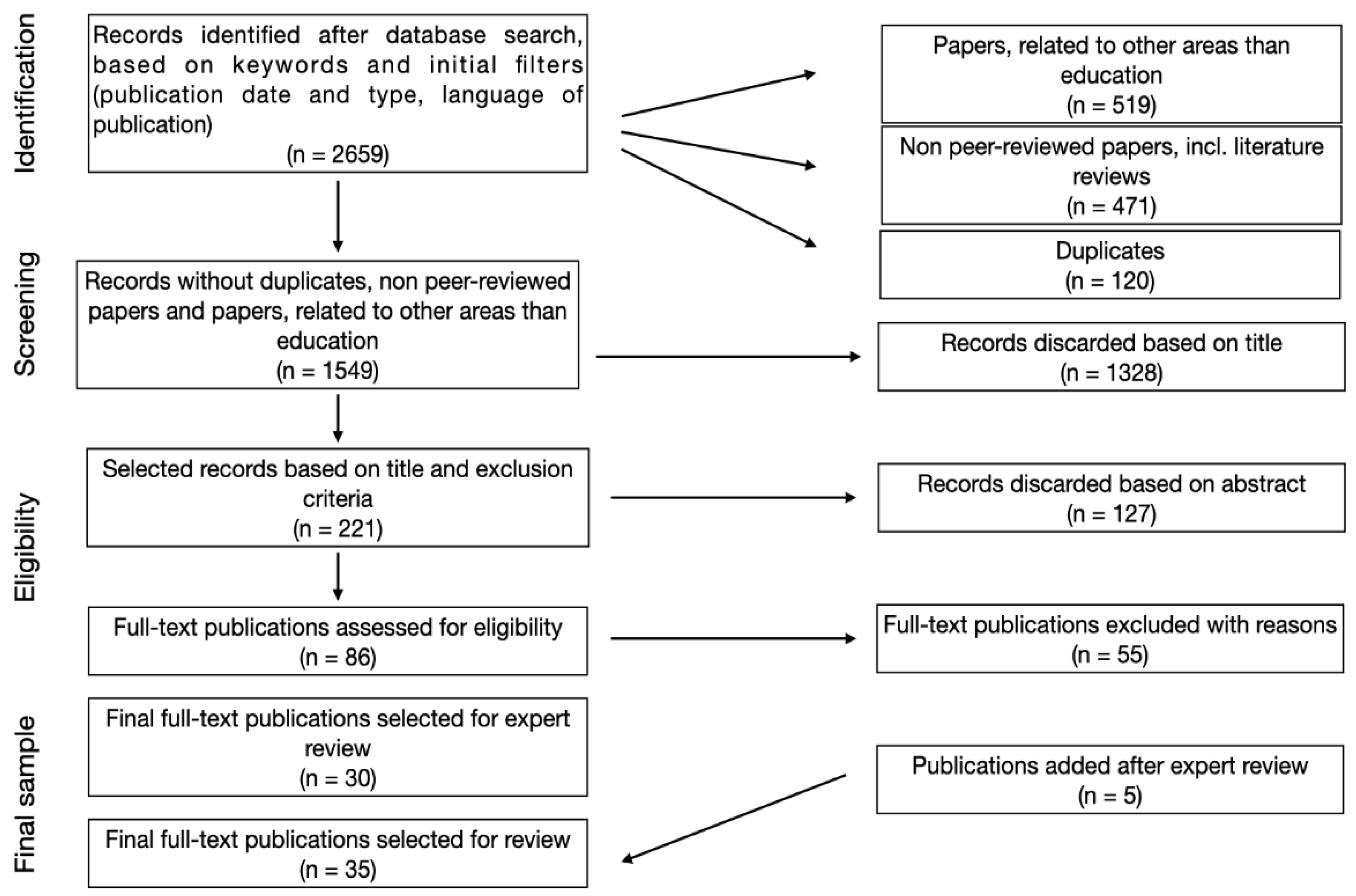
Figure 1.
The steps of the review process.
3. Language of publication: English and German were selected as the primary languages for the search, set within the search engine settings. English was chosen due to its dominance in academic discourse, while German was selected as the original language of many foundational works and authors in ESD competencies research studies. As a result, publications not available in English or German were excluded from consideration.
4. Type of publication: To ensure the reliability of the sources, the inclusion criteria stipulated that the selected papers must be peer-reviewed publications. Consequently, documents such as working papers, conference proceedings, or doctoral theses that did not meet the criteria of peer-reviewed publications were excluded from the sample. However, it is acknowledged that certain search engines may not consistently distinguish between various types of publications, necessitating a final manual review to ensure adherence to this criterion.
The initial sample, comprising of 2659 academic publications, was subjected to an initial selection process to refine its scope. In this first round of selection, all duplicate entries (n=120), non-peer-reviewed papers (including book chapters, master's and doctoral theses, and research reports) (n=424), literature, scoping or bibliometric reviews (n=47) and papers unrelated to pedagogy or education (n=519) were systematically removed from the initial sample. Following this refinement, the remaining set of 1549 papers underwent a preliminary screening based on their titles.
During this stage of screening, additional inclusion and exclusion criteria were employed to further refine the selection. The criteria applied were as follows:
1. Educational area: Articles addressing competence development within the domains of Education for Sustainable Development (ESD), Education for Sustainability, or closely related concepts such as Global Citizenship Education or Democracy Education (Politische Bildung in Germany) were considered for inclusion. This criterion is aligned with Target 4.7 of Sustainable Development Goal 4 — Education for sustainable development and global citizenship.
2. Level of education system: Given the specific focus of the current research on the development of sustainability competencies among secondary school students, articles dealing with sustainability competencies in higher education, teacher education, vocational education, or primary/elementary schools were excluded from the sample.
3. Type of sustainability competencies: Academic papers focusing on a singular competence, considered critical for addressing sustainability issues (such as creativity, ethical competence, emotional intelligence, futures literacy, or adaptive capacity), were excluded due to their specialized nature. Conversely, papers that discussed models or frameworks of sustainability competencies, specifically designed for secondary schools, were selected for inclusion in the sample.
This multi-step screening process aimed to systematically refine the initial sample, ensuring that the selected academic publications align with the research's targeted focus on sustainability competencies within the context of secondary school education.
Following the completion of the initial practical screening based on the examination of scientific paper titles, a substantial reduction occurred, with 1328 papers being excluded. Subsequently, a second practical screening was conducted, involving the scrutiny of keywords and abstracts for the remaining 221 publications. This stage further narrowed down the selection, leaving 86 papers for the conclusive round of screening, involving a thorough examination of the full text. The exclusion criteria applied at this stage were as follows:
1. Teacher-learner approach: Academic papers primarily concerned with conceptual considerations or experimental results related to knowledge, skills, and values in teaching Education for Sustainable Development (ESD)-related issues — specifically, teachers' competencies in teaching sustainability issues (ESD competencies) — were excluded from the final sample. The focus was on papers addressing students' sustainability competencies as learning outcomes rather than teacher competencies.
2. Focus on competencies: Publications exploring the development of sustainability competencies within specific school subjects, such as Science, Geography, or Life Skills, and across entire curricula or national education systems at the secondary level were considered for inclusion. However, papers primarily centered on ESD methods, topics, or approaches for integrating sustainability into the school environment, where sustainability competencies were only mentioned as part of the ESD approach, were not included in the final sample.
3. Students’ perceptions or perspectives: Papers that predominantly explored the opinions or perspectives of secondary school students on ESD/sustainability issues or topics without a primary focus on students' sustainability competencies as learning outcomes were excluded from the final sample.
As a result of two rounds of selection, 30 papers remained for expert review. The compilation of the chosen 30 papers, complete with their abstracts, was shared with two ESD experts. Through productive dialogue with these experts, five additional articles were included in the final selection to ensure its comprehensiveness and relevance. The final set for evaluation consisted of thirty papers in English and five in German (refer to List of selected papers_Supplementary materials).
2.2. Analysis Framework
This review study employs a methodological approach that combines a qualitative method with various quantitative approaches to categorize articles and discern patterns and trends in the field of sustainability competencies. The qualitative aspect endeavors to map the diverse concepts, sets, and frameworks of competencies mentioned in the selected articles. Most studies exploring sustainability competencies delineate various sets of key sustainability competencies/skills, often drawing from frameworks proposed in global/European, as well as national and regional education policies and program documents or the works of renowned ESD researchers, including de Haan, Wiek and Redman, and Rieckmann. Additionally, these studies incorporate concepts from the current discourse on sustainability competencies such as action competence [12,66], sustainability consciousness [60,61,67], and green skills [30,68] into their conceptualizations.
In outlining the articles for review, the narrative encompasses the interpretation of secondary characteristics of the studies. These include the year of publication, geographical distribution of research, the field of the journal, affiliation of the authors with specific institutions, and the type of research. These secondary characteristics are considered in relation to the main category, specifically the types of sustainability competencies.
It is noteworthy that not all selected papers concentrate exclusively on sustainability competencies for the secondary school level. Some propose competency frameworks that encompass both secondary school, vocational and higher education levels [13,30,69], while others research the indicators of sustainability in various learning environments [70,71,72] or evaluation tools for learning outcomes assessment [25,68,69] applicable to various target groups, including students from primary and secondary schools, teachers, and parents. Consequently, the competence frameworks and approaches used as guidelines in these studies extend beyond the secondary school level to encompass other educational levels.
3. Results
The information provided in this results section is organized according to a number of criteria, including the following: the temporal distribution of articles, their geographic origins, the key journals contributing to the field, and the affiliations of the authors. It includes descriptive statistics of the sets or types of sustainability competencies. Furthermore, the keywords, paper types, and a summary of the teaching-learning methodologies define the contents of the publications.
3.1. Methodological Qualitative Approach: Type of Sustainability Competencies
The study utilizes a qualitative methodology to categorize, explain, and analyze various methods and frameworks of sustainability competencies in secondary school as provided in the chosen publications. By thoroughly examining the selected full-text papers for this scoping review, certain characteristics were identified. These characteristics were utilized for the purpose of clustering, categorizing, and describing the sustainability competencies that researchers referred to in their respective papers. The sustainability competencies identified in the sample were studied from two perspectives:
- as a set of transversal competencies for curricula or a certain education area;
- as a structured framework model for development and assessment of sustainability-related knowledge, skills, attitudes and behavior in the educational process.
Both perspectives will be thoroughly discussed in the later sections of the results part.
3.1.1. The prevailing conceptual approaches
Among the aforementioned shared perspectives, the five most widely used conceptual approaches of sustainability competences for secondary school education were identified (Table 1). Not only do the authors of the selected publications examine these conceptual approaches, but other academics also refer to them as exemplary frameworks for sustainability competencies.
The following are the five conceptual approaches:
Table 1 encompasses these five approaches, each accompanied by a concise definition, the associated educational area or policy framework relevant to its development, and the number of papers directly addressing and citing each concept. Table 1 encapsulates more than a third of the selected papers (n=13) that directly investigate these concepts, along with references to these conceptual approaches in other selected papers (n=25).
3.1.2. Clustering Based on Shared Perspectives
The mentioned earlier categorization, based on two main shared perspectives of the researchers in the sample, includes shared similar views on incorporating sustainability competencies into secondary school curricula (Table 2).
The first perspective focuses mostly on various sets of cross-cutting sustainability competencies, for various education domains. These sets of competencies might be 1a) aligned with the priorities of national or regional education policies and curriculum frameworks or 1b) derived from global education guidelines from organizations such as the UN, UNESCO, OECD, or a Earth Charter initiative. Furthemore, the cross-cutting competencies sets were identified by authors of the publications for the specific purposes of their research, such as 1c) inclusion of sustainability contents into specific subjects (i.e. Geography or Economics) or into broader educational domains like Climate Change education; 1d) use of specific teaching-learning approaches for better understanding of sustainability issues; or 1.e) development of sustainability competencies frameworks, originated from authors’ specific conceptual research. The latter viewpoint has been mostly emerged and been established within concrete educational traditions, such as action competence [66] in Denmark, shaping competence (Gestaltungskompetenz) [11] in Germany, or transition skills [76] in Sweden. The researchers, who presented a second key perspective, concentrated mostly on educational tools for identification and measurement of cognitive abilities, skills, and attitudes necessary for engagement with sustainability issues, such as the concept of sustainability consciousness [61] from Sweden, or the structured framework model for sustainability sub-competencies [69] from German researchers.
The local context also influences the clustering process to some degree. The German national competencies framework, aligns with the approach of "Politische Bildung" (citizenship education) significant to the German educational heritage as outlined by Asbrand [77]. The case study from Maldives [78] demonstrates the significance of incorporating sustainability competencies into the National Curriculum Framework and implementing a community-based approach in local environments to address the disaster risks resulting from climate change within the economic and ecological context.
It should be noted that there were only several publications, were only one viewpoint or perspective was utilized. The majority of researchers, for instance, from South Korea, Malaysia, Maldives have researched sustainability competencies from various viewpoints, simultaneously in their studies [15,68,78] (Table 2). The table presented above is a simplified rendition. The complete version can be found in the Table 2.1_ Supplementary materials.
3.1.3. List of the Most Cited Sources
During the article clustering process, it became evident that multiple researchers reference concepts and approaches related to sustainability competencies that are widely recognized across all educational fields, particularly in higher education. Although these approaches were not included in the scoping review due to their broad applicability beyond our specific focus, it was clear that they played a crucial role in developing specific competencies frameworks for the secondary education sector. To provide a comprehensive overview, we have compiled a list of the most frequently cited sources that have influenced the research articles selected for our scoping review (Table 3).
Recognizing common conceptual approaches, shared perspectives on integrating sustainability competencies in secondary school curricula, and key sources that have shaped the design of competencies frameworks in various countries, offers valuable insights into the trends and issues influencing researchers' perspectives on sustainability competencies in secondary education. These insights highlight the interconnectedness of educational research across different levels and the importance of established frameworks in guiding the development of competencies in the secondary education context.
3.1.4. Word Cloud of All Mentioned Sustainability Competencies
To conclude the clustering process, a word cloud was generated from all sustainability competencies identified in the selected papers using the website www.wordclouds.com (Figure 2).
The objective of compiling all mentioned sustainability competencies into a single list was to gain a preliminary understanding of the most common competencies related to secondary education worldwide. In certain cases, we modified the author's wording and utilized synonyms to create a comprehensive list. This approach may have resulted in the loss of some contextual nuances that researchers implied in their competencies frameworks. For example, competencies such as "the competency to plan, implement, and evaluate consumption-related activities" or "the competency to critically take on one’s role as an active stakeholder in the market" in the concept "Key competencies framework for and beyond sustainable consumption" [13] were transformed into "planning and implementing competency" and "critical thinking competency," respectively.
Through the mapping and clustering of sustainability competencies, we generated a list of competencies/categories of competencies for secondary education, grounded in diverse views and approaches from researchers in twenty different countries worldwide. This list, consisting of 56 unique items and a total of 178 items, may serve as a foundation for further exploration, potentially through an international Delphi study.
The initial list of competencies/categories, extracted from the word cloud, highlights 15 of the most commonly mentioned sustainability competencies/skills or abilities applicable to secondary education worldwide. These competencies, mentioned five or more times, include critical thinking (critical reflection), foresighted thinking, system thinking, reflection, action competence, communication, creative thinking, planning and implementation, collaborative decision making (participatory skills), interdisciplinary work, cooperation, evaluating skills, empathy (compassion), problem solving and dealing with complexity. This list will be further utilized to assess compatibility with identified teaching-learning approaches and types of research presented in the publications.
3.2. Quantitative Analysis
3.2.1. Relevant Journals and Time Range of the Selected Articles
All publications included in the review have undergone peer-review processes. A significant proportion of the articles in the sample, accounting for over a quarter (26%), were published in the Sustainability journal, followed by Environmental Education Research (9%), GAIA — Ecological Perspectives on Science and Society (6%), and the International Journal of Academic Research in Business and Social Sciences (6%). The remaining 50% of publications were distributed across various other journals. The studies presented in this scoping review span from 2003 to 2023, depicting a steady increase in the number of publications over the years (Figure 3).
The earliest research papers in the sample date back to 2003 and 2010, coinciding with initial attempts to describe sustainability competencies into three areas: Recognising, Assessing, Acting (Erkennen, Bewerten, Handeln) [80] and the introduction of the concept of action competence by Danish researchers [12]. This period also saw the introduction of the "shaping competence" (Gestaltungskompetenz) concept in the German educational discourse [11]. Notably, in 2005, the OECD published "Key Competencies for Personal, Social, and Economic Well-Being" [17], laying the groundwork for subsequent research in various educational domains. The figure above clearly illustrates the growing interest among scholars in competencies research, particularly since 2010. This period coincides with the global spread of the UN Decade for ESD, mobilizing significant educational resources and emphasizing the importance of conceptualizing accumulated experiences. Additionally, in 2010, Wiek and his colleagues presented a set of key sustainability competencies, justifying their significance for ESD [20].
The last nine years (2014-2023) have witnessed substantial growth in scientific literature exploring and measuring sustainability competencies at the secondary school level, with publications (in English and German) increasing from 2 to 6 per year.
3.2.2. Geographical Distribution by Countries and Academic Institutions
The academic papers reviewed present a remarkably diverse geographical panorama. They encompass theoretical frameworks, models, experimental results, analyses of national curricula, and case studies in the realm of "sustainability competencies in secondary school education", sourced from sixteen different countries. This range emphasizes the growing global interest in the conceptualization, research, validation, and assessment of sustainability competencies, covering regions from Ukraine to Taiwan and the Maldives (Figure 4).
Germany and Sweden emerge as most frequently researched countries, followed by Spain and Malaysia, each with more than two publications. The rest of the sample comprises countries represented by a single article. This distribution not only highlights the locations where theoretical foundations of sustainability competencies at the secondary education level are being more thoroughly explored and academically supported but also affirms the broad geographical interest in this area of research.
Overall, the majority of articles, exceeding 60%, originate from European countries, while around 30% come from Asia, and less than 10% are from America. (Figure 5).
It is noteworthy to mention that in this categorization, as a country of the selected paper was considered the geographical location where the research was conducted. For instance, in cases of experiments or case studies, the countries where these activities took place were considered. In purely conceptual papers, the country was determined based on the geographical affiliation of the researcher or researchers.
Furthermore, the publications in the sample were analysed based on the total number of institutions presented by authors and the geographical distribution of these institutions.
This analysis revealed a similar trend to the geographical distribution of the research.
The majority of participating institutions, 28 out of 42 (60%), hail from Europe. Sweden, Germany and Spain take the lead with 7 institutions, respectively. In total, there are 17 countries represented among the research institutions, and one international network, such as the Global University Network for Innovation (Table 4).
In terms of leading academic institutions mentioned more than twice as affiliations of the researchers, the Universiti Pendidikan Sultan Idris from Malaysia, with 8 researchers, followed by Karlstad University from Sweden and University of Education Freiburg from Germany, with 5 researchers, are at the forefront. Among the fourteen universities and academies with the highest number of researchers, four different German universities, and two universities from Sweden and Spain respectively, are involved in research on various aspects of sustainability competencies.
The listed academic institutions primarily include universities, institutes, schools, and academies of postgraduate education. In total, there are 43 academic institutions, with Swedish and German universities leading in number.
However, interpreting the number of academic institutions of participating researchers combined with the type of researched sustainability competencies reveals a slightly different picture (Table 5).
The table indicates that the largest number of affiliated researchers, more than half of all presented in the sample authors (n = 45), are based in Germany, Sweden and Spain, showcasing a broad variety of approaches to sustainability competencies in the secondary school education. Researchers from these countries are suggesting, exploring, and validating various approaches to sustainability competencies [13,16,61,81], within school curricula [11,67,87] and at classroom level [76,82,84,86]. In contrast, Malaysian researchers, who follow the first three countries in Table 5 with ten researchers, predominantly engage with one competence approach, namely, Green skills. Works of Malaysian researchers frequently refer to international policies designed to promote green growth and vocational training [73,74] and Australian Green Skills Agreement as guidance for educators at the secondary school level [30,68]. This focused engagement with a specific competence approach contrasts with the broader spectrum of methodologies observed in European research, highlighting regional differences in the application and development of sustainability competencies. Similar trends are observed also in other Asian countries. Four out of six Asian countries in the survey tend to align sustainability competencies with the requirements of national curricula or global education guidelines.
It is noteworthy, that the concepts of sustainability consciousness and action competence have gained popularity beyond the educational traditions of Denmark and Sweden, where they originated, and have been applied in countries such as Taiwan and South Korea [15,60].
In comparing the geographical distribution by research place and academic affiliation of the researchers, it was observed that researchers who have gained authority as experts in certain areas were invited for co-authorship to assess quantitative experiments or case studies provided in other countries [14,60,89]. Therefore, we observe more researchers and research institutions from Sweden or Spain in the distribution by authors' affiliation than by geographical distribution regarding the place of research mentioned in papers.
3.2.3. Analysis of Authorship
In total, the sample includes contributions from 87 different authors, with the majority of articles (52%) being co-authored by three and four researchers. One-third of the selected articles (n = 13) were written by one researcher and in co-authorship of two researchers. Publications authored by five authors accounted for four, and only one article involved six authors (Table 6).
Nearly two-thirds of all contributors (65%) are affiliated with European academic institutions, one-fourth (25%) are connected to Asian institutions, and a few researchers work at institutions representing America (9%), or international structure such as Global University Network for Innovation.
It is worth noting that to some extent, the number of authors contributing to each publication is connected to the type of research, particularly concerning quantitative experiments. The majority of the six quantitative surveys in the sample (4 out of 6) were conducted in co-authorship of five authors, and two in co-authorship of four authors. In addition to the statement that a larger number of researchers is required for choosing the right measuring and assessment instrument, or to interpretate results, it was observed that groups of authors for quantitative experiments were sometimes international. This indicates attempts to check the validity and applicability of competence approaches and measurement instruments derived from European contexts, such as "action competence," in other cultural contexts, for example, in Taiwan [60]. More details on the type of research and its relation to the number of authors in co-authorship and their country's affiliation are provided in Table 6.
3.2.4. Type of Research
The academic papers in this sample were categorised according to the type of research applied to describe, interpret, assess or validate the chosen set or concept of competencies. All papers were distributed to five categories of pure and mixed research approaches (Figure 6).
Each research type was combined with the research methods used, names of the countries, the researchers were representing, and with a number of researchers worked in co-authorship over certain research (see Table 6 above). In total, the qualitative and conceptual research prevailed in this sample with 31% and 26% of articles focused on qualitative research design and conceptual considerations respectively. About 15% of all publications combined theoretical considerations with quantitative research. Among purely experimental articles, qualitative works prevailed over quantitative research works and made 31% and 15% of all publications correspondingly. A significant number of articles (35%) of the sample included a quantitative research, whereas 44% of all authors applied a qualitative research.
3.2.5. Teaching-Learning Methods
While the primary goal of this scoping review does not directly involve the assessment of learning outcomes in ESD at the secondary school level, the selection of teaching-learning methods and the design of learning environments significantly influence the efficacy of sustainability competencies set or a model as reference values for specific education systems or areas. Hence, the teaching-learning methods referenced in the articles of the sample were compiled, presented as a word cloud, and subjected to analysis using the website www.wordclouds.com.
The analysis of the word cloud indicates that educators and researchers highly value active learning methods aimed at fostering reflective, self-directed learning in the integration of ESD principles at the secondary school level. Notably, problem-based learning, project-based approach, interdisciplinary inquiry, participatory learning, real-world explorations, place-based learning, holistic and pluralistic approaches were among the most appreciated methods, mentioned more than three times in the publications (Figure 7).
Comparing this with the word cloud of the most cited sustainability competencies frameworks (Figure 2), it becomes evident that these teaching methods align well with desired competencies such as critical thinking, dealing with complexity, and participatory skills. Situated and place-based learning, real-world explorations, community-based and community-service learning — mentioned around 10 times in the selected papers—highlight the considerable awareness among researchers regarding the need to establish connections between classroom activities and local sustainability issues. Communication ability, cooperation, foresighted thinking, and planning and implementation skills emerge as crucial secondary school sustainability competencies in this context.
Holistic and pluralistic learning approaches stand out as among the most cited teaching methods. Nearly one-fifth of the papers in the sample emphasize holistic interdisciplinary perspectives on content and learner-centered teaching strategies [12,60,61,71,76,82,83]. The consecutive implementation of these strategies in ESD at the whole-school level may strengthen the development of sustainability competencies in secondary school students, potentially overcoming barriers influencing pro-social behavior during adolescence, often referred to as the "adolescence dip" [60,61].
3.2.6. Keywords Approach
The keyword analysis, visualized as a word cloud, reaffirms the effectiveness of the search strategy and selection process, emphasizing that the majority of keywords in the sample are related to ESD in terms of learning outcomes or competencies (Figure 8).
In line with expectations, "education for sustainable development" was the most frequently used term, with more than half of the papers using it as a keyword (n = 20), followed by "sustainable development" (n = 6) "sustainability competencies," (n = 5) "action competence" (n = 4) and "sustainable development goals" (n = 4). It is notable, that authors of publications have employed a number of synonymic keywords, including competency / competence; education for sustainable development / ESD / education for sustainability; sustainability awareness / sustainability commitment / sustainability consciousness / environmental awareness / sustainability thinking; environmental behavior / pro-environmental behavior. This observation underscores the constantly emerging concepts and ideas in the field and highlights the diversity of terminology employed to describe these concepts.
Table 7 provides insights into clusters of keywords in the sample. All 196 keywords were clustered into eight groups and analyzed afterward. Despite each item in the sample was focused on developing sustainability competencies at the secondary school level, only 11 keywords directly referenced this level of education, including terms like "secondary education" and "secondary school students." These keywords also encompassed expressions from the field of Educational Psychology, such as "adolescence dip," signifying the age group under consideration. In instances where the abstracts explicitly discussed qualitative or quantitative studies involving adolescents, the authors did not emphasize this aspect within the assigned keywords. This factor might have played a role in the comparatively smaller sample size for this scoping review, despite a substantial number of records identified through database searches. In other aspects, the identified keywords primarily belonged to the category of competencies and their aspects (27%), encompassing terms such as attitudes, skills, and behavior. This was followed by keywords associated with ESD areas (19%), as well as topic fields related to curricula, education standards, and the teaching process (17%). Approximately one-fourth of the keywords pertained to teaching (13%), while research methods and tools constituted 10% of the keywords (Table 7).
4. Discussion
The scoping review results offer insights into general trends in sustainability competencies research at the secondary school level globally. They also help identify achievements, gaps, and inconsistencies in research in this educational field.
4.1. Overview of Sustainability Competencies Research in Secondary Education
In addressing the first and second research questions, specifically, "What types of sustainability competencies were described and revealed in the selected articles?" and "Which contexts/backgrounds have an impact on developed frameworks of competencies?", Table 1 and Table 2 in the results section present a comprehensive overview of five most widely used concepts and two key perspectives, including five shared approaches within the first perspective, employed by researchers for describing and clustering sustainability competencies at the secondary school level.
The five most widely used concepts revealed in the scoping review — Action competence, Sustainability consciousness, Gestaltungskompetenz (shaping competence), Green skills, Key competencies for transformative action — have been highlighted due to their extensive coverage across a substantial number of papers directly addressing these concepts (n=13) and citing them in additional papers (25 citations). This underscores the relevance of these concepts for researchers worldwide, as evidenced by various research types in recent years, including systematic literature reviews [91,92,93], comparative studies [72,94,95], and operationalization of sustainability competencies within school curricula [25,60,61,69,81].
The total number of articles in the sample, however, that simultaneously cite more than one of the five concepts of sustainability competencies as influential research contexts, is only six, which is not very significant. The impact of several concepts — such as sustainability consciousness and action competence, action competence and Gestaltungskompetenz, and sustainability consciousness and action competence and key competencies for transformative action — is revealed in about 18% of papers, and some of these concepts are mentioned by authors as important background for the research.
There were identified two critical perspectives on interpreting sustainability competencies for the secondary school education. The first perspective involves tendencies, associating the sustainability competencies with a set of transversal competencies, which were categorized into five groups, based on the researchers’ priorities:
The second perspective, on the other hand, characterizes sustainability competencies as a framework model that emphasizes the development of cognitive, affective-motivational, and behavioral aspects [67,69] or highlights specific issues like agency [92] or collective decisions and action readiness [12].
It is important to mention that the first perspective, as outlined by five different viewpoints (refer to Table 2 and Table 2.1_Supplementary materials), is found in over two-thirds papers in the sample (n = 26), including researchers from 19 different countries. Conversely, the second perspective is mainly presented by researchers from three countries: Sweden, Germany and Denmark, with one exception, where researchers from Indonesia are also included. In one instance, researchers from Sweden, Belgium, and Taiwan collaborated on a paper presenting this perspective.
The importance of sustainability competencies in relation to national and global education policies, as well as their relevance to specific education areas and school subjects, is increasing on different continents and within various education fields. However, the focus on designing, measuring, and assessing sustainability competencies and the empirical outcomes of education for sustainable development (ESD) initiatives is particularly prominent in European countries, specifically Germany and Sweden. These countries have the necessary institutional resources and experienced research teams dedicated to these endeavors.
These perspectives were highlighted as a result of the observed patterns in the chosen papers regarding how academics strive to articulate sustainability competencies and incorporate them into local settings, such as national/regional curricula, specialized courses, or teaching methods.
As previously articulated, a notable portion of the selected papers (n = 15) draws upon the guidelines delineated in national curricula frameworks or global/European education program documents to substantiate their approaches towards sustainability competencies at the secondary school level. It is noteworthy that these perspectives are predominantly adopted by authors hailing from Asian countries, Eastern Europe, or Latin America (refer to Table 2). In contrast, approaches grounded in the synthesis of conceptual works by other researchers or scientific theories find more prevalence in European and American studies (refer to Table 1 and 2).
Turning to the types of research prevalent in the sample, two key takeaways emerge. Firstly, the abundance of conceptual publications reflects the ongoing growth in educational studies on sustainability competencies in secondary school education. The continual emergence of new framework models, evaluation tools, and teaching methods calls for thorough descriptions and validations. Secondly, the significant presence of experimental studies, comprising 69% of the papers, signals a positive development. It suggests a diminishing gap in the use of tools to measure and validates progress in fostering sustainability competencies in secondary schools [25,61,68,81,88].
In wrapping up this observation, it's important to consider some factors that might influence this situation. Firstly, most selected works come from European countries, where there are well-established academic research traditions and robust support for educational studies. Secondly, the language barrier could affect the quality of English-language research papers selected for this review. We do not have a clear picture of how extensive the body of academic literature is, including experimental works in researchers' native languages within the sample or those excluded due to language criteria. Lastly, it may not be straightforward to transfer competency approaches developed in different cultural and educational settings into national education systems, although there are some collaborative publications attempting this [14,60,89].
4.2. Consensus on sustainability competencies
It is worth mentioning, that the literature reviews on sustainability competencies at various education levels, which have emerged in recent years, take into account predominantly one specific sustainability competencies framework, for example the widely used conceptual framework model of Wiek, Withycombe & Redman [20] in regard of higher [93], secondary [72] or primary education [58]; or the action competence in regard of all school levels [91], or green competencies/green skills in regard of professional (engineering) education [93]. This scoping review, however, is focused on particular lenses or perspectives, which various scholars of sustainability competencies use to prioritize and address the needs of education for sustainable development in their own countries.
Despite the diverse concepts and "shared perspectives" regarding sustainability competencies at the secondary school level, authors largely converge on core key competencies. This alignment mirrors sustainability competencies frameworks proposed by highly cited authors and globally acknowledged policy documents (refer to Table 3), even when competencies/skills are occasionally formulated differently. The findings of this scoping review highlight a list of the most valued competencies at the secondary school level (mentioned five times and more in the selected publications), including critical thinking (or critical reflection), systems thinking, foresighted thinking, action competence, reflection, communication, planning and implementation, creative thinking, participatory skills (or collaborative decision making), empathy (compassion), cooperation, dealing with complexity, interdisciplinary work, problem solving and evaluating alternatives (see Figure 2). These competencies, identified in the analyzed publications, are deemed essential for secondary school students to navigate present and future situations characterized by uncertainty and sustainability challenges.
These key competencies for sustainability share a common structural and functional framework, as emphasized by the majority of authors when referring to competencies as desirable learning outcomes across various social and geographical contexts:
- The structure of sustainability competence is delineated into three main components: cognitive, emotional-motivational, and behavioral. It is also recognized as a cluster of cognitive and non-cognitive dimensions: knowledge, skills, values, emotions and attitudes [17]. In particular, these different dimensions are presented, e.g., in the concept of sustainability consciousness, which encompasses students’ knowingness, attitudes, and behavior in relation to the sub-themes to the environmental, social, and economic dimensions of sustainable development [61]. Researchers from South Korea categorize sustainability competencies into three domains based on this structure: intellect-oriented, personality-oriented, and relationship-oriented domains [15]. The methods mentioned in the selected papers, especially holistic and pluralistic learning, are also designed to foster all significant components of sustainability competencies simultaneously.
- The functional features of sustainability competence/competencies, particularly the potential ability of learners to contribute to the well-functioning society based on principles of human rights, social, economic, and ecological responsibility, and their capacity to "cope successfully with complex demands and challenges across a wide spectrum of relevant contexts and domains" [97] (p. 321), also find common understanding among the majority of researchers. Notably, the concept of shaping competence (Gestaltungskompetenz) is considered a "specific capacity to act and solve problems" [11] (p. 320) or "to change in future the social relationships, to empower the learners to contribute to the social development processes" [77] (p. 11). The concept of action competence includes the “capacity to be able to act, now and in the future, and to be responsible for one's actions” [66] (p.175).These concepts exemplify the inclusion of functional dimensions into the subsets of sustainability competencies. In essence, the functionality of sustainability competence lies in the disposition of knowledge, skills, values, and attitudes that empower learners to make informed decisions and take meaningful actions. This empowerment aims to shape the future of societies towards a fairer way of life for people and nature, aligning with the UNESCO Roadmap for the Global Action Programme on ESD [1].
- Another shared feature about sustainability competencies among the majority of researchers is their transversality or cross-cutting dimension, signifying the applicability of sustainability competencies across various education areas and subject domains starting from classroom level and up to the level of national education policies. Researchers are expanding the scope of sustainability competencies beyond the school curriculum and into the domain of engagement with school administrators, local partners, and the community by choosing and experimenting with different teaching-learning methodologies [72,78,85,89,95]. For secondary school education, this feature is crucial in preparing learners to consider and act effectively in various areas of life, where they may encounter challenges related to sustainability.
4.2. Gaps and inconsistencies in research within this educational field
The clustering method applied to various perspectives and approaches to sustainability competencies in the sample uncovered notable insights in this research field. A substantial number of papers cite or derive support from sources such as global/European policy documents or guidelines applicable to all education areas [1,4,24] or from research works, initially designed for higher education [20] rather than from papers, being directly tied to secondary education. Notably, some researchers underpin their educational constructs on 21st-century skills, OECD, and CEDEFOP skills frameworks, which, although not explicitly addressing sustainability competencies, are oriented towards lifelong skills or competencies pertinent to vocational training [73,74]. Authors often build upon these global contexts to formulate context-based sustainability competencies approaches, which are intended for secondary education purposes in the relevant learning environments.
Another noticeable trend that stands out is the predominance of European authors in developing and applying sustainability competencies concepts and assessment tools specifically tailored for secondary school education. Key frameworks such as those by de Haan [11] and Mogensen and Schnack [12,66], along with operationalization and assessment tools from Swedish [61,67] and German researchers [25,81], were predominantly cited or elaborated upon in papers by European researchers. Sweden and Germany, in particular, lead with innovative conceptual approaches that can be implemented in school environments and measured with practical assessment tools. This trend partly explains why researchers from Asian countries, Eastern Europe, and Latin America often draw on global or European education policies.
However, recent research on sustainability competencies in primary school education [58] highlights the growing interest of researchers from Eastern and Central Europe (Ukraine, Poland, Czech Republic) in exploring and assessing sustainability competencies at this educational level. Furthermore, a literature review on research regarding action competence since 2010 [91] suggests an increasing number of publications from America, though these findings encompass papers covering all educational levels, from primary school to higher education. In this regard, collaborative international publications should be mentioned, that explore and validate competency frameworks and concepts for secondary school education, e.g., researchers’ groups from Taiwan, Sweden, Belgium [60], Spain, Guatemala [14] and Chile, Spain [89]. These opportunities could influence the predominant focus on sustainability competencies frameworks in Western European studies.
It is notable that Latin America (two contributions), Eastern and Central Europe (two contributions), and Africa (none contributions) are either underrepresented in the sample or have very little representation. Other obstacles to fruitful academic exchanges are rising, even as language constraints that formerly prevented academics from these locations from fully participating in academic exchanges are gradually being overcome thanks to AI translation technologies and growing worldwide networks. Publications from the former Soviet Russian-speaking region (Russia, Belarus) are completely absent from the sample. Academic research on ESD and sustainability competencies is extremely rare in this region, despite the large number of school sustainability initiatives and local networks started by grassroots organizations and primarily funded by non-formal education institutions. Local educators and researchers have been further deprived of the advantages of worldwide academic and educational interactions by recent political trends in these countries toward isolation and indoctrination, notably in education and research.
5. Conclusions
The objective of this scoping review is to furnish academic communities with the current status of sustainability competencies frameworks and concepts in the realm of secondary school education. An analysis of the selected papers, encompassing key characteristics, revealed several findings. Firstly, there has been an increase in the number of papers since 2010, with contributions coming from nearly all continents. Secondly, a more detailed exploration of the data considers the affiliations of researchers with academic institutions. Notably, the leading academic institutions in this field are located in Sweden and Germany, followed by Spain. The prominence of Germany and Sweden is evident across various research types, including conceptual, quantitative, qualitative, and mixed approaches (refer to Table 6). Additionally, researchers from these countries are prevalent in joint international research teams (refer to Table 5) and prominently cited in this review (refer to Table 1). However, it should be noted that the considerable number of German authors in the sample emerged due to the inclusion of both German and English in the initial search criteria. While this may introduce a certain bias in the scoping review, it does not diminish the significance of German researchers' contributions to the field.
The qualitative clustering method applied to various approaches to sustainability competencies, as presented in this review, has revealed insights into two main shared perspectives on addressing sustainability competencies at the secondary school level. Notably, the first perspective, which centers around a set of transversal sustainability competencies, is presented in more than two-thirds of the papers in the sample (n = 26), involving researchers from 19 different countries. In contrast, the second perspective is primarily represented by researchers mostly from three countries: Sweden, Germany, and Denmark. Researchers presenting both perspectives demonstrate a tendency for conceptual work and thorough elaboration with respect to learning outcomes assessment and the development of measurement tools for the introduced sustainability competencies frameworks.
The main findings from the clustering approach include:
- broad diversity of approaches to conceptualization of sustainability competencies for the secondary school level worldwide;
- identification of shared perspectives among the researchers, despite of their geographical and cultural backgrounds;
- categorization of main approaches within shared perspectives based on priorities and research interests of various researchers;
- focus on certain foundational sustainability competencies that are considered relevant across various educational domains of sustainability education at secondary school level;
- emphasis on cognitive, affective, and behavioral aspects among almost all identified approaches which indicated a worldwide acknowledged holistic approach to competency development.
The findings underscore the significance of fostering agency, collective decision-making, and readiness for action among students, which are crucial for their active participation in sustainable practices.
Based on these findings, we propose that further international research is necessary to provide support for region-based researchers in developing their theoretical frameworks or refining their approaches. This collaborative effort can contribute to the diversity of theoretically and methodologically grounded approaches on a global scale.
The analysis indicates that, within the field of ESD for secondary schools the diversity of approaches resulting from context-dependent objectives and priorities of researchers is likely to remain heterogeneous in the foreseeable future, in other words, a one-size-fits-all solution is not applicable to sustainability competencies at the secondary school level. Instead, formulating these competencies in various contexts requires careful consideration at both macro and micro levels. At the macro level, attention to the teaching and learning of local social, cultural, and even political backgrounds is crucial. Simultaneously, at the micro level, employing appropriate pedagogical approaches such as cooperative and participatory learning, a place-based approach, and holistic and pluralistic learning becomes essential. These considerations will empower researchers and teachers to establish proper sustainability competencies or sets of competencies as their goals.
Supplementary Materials
The following supporting information can be downloaded at the website of this paper posted on Preprints.org
Funding
This research received no external funding.
Data Availability Statement
The datasets used and/or analyzed durring the current study are available from the corresponding author on reasonable request.
Conflicts of Interest
The authors declare no conflict of interest.
References
- UNESCO. Education for Sustainable Development: Roadmap; UNESCO: Paris, France, 2020; ISBN 978-92-3-100394-3. [Google Scholar]
- UNESCO. What do you need to know about education for sustainable development? UNESCO Homepage. Available online: https://www.unesco.org/en/sustainable-development/education/need-know?hub=72522 (accessed on 14 May 2023).
- Delors, J.; et al. Learning: The treasure within; Report to UNESCO of the International Commission on Education for the 21st Century; UNESCO: Paris, 1996; ISBN -92-3-103274-7. [Google Scholar]
- UNESCO. Education for Sustainable Development Toolkit; UNESCO: Paris, 2002; Available online: https://unesdoc.unesco.org/ark:/48223/pf0000152453 (accessed on 12 May 2023).
- De Haan, G. Gestaltungskompetenz als Kompetenzkonzept der Bildung für nachhaltige Entwicklung. In Kompetenzen der Bildung für nachhaltige Entwicklung: Operationalisierung, Messung, Rahmenbedingungen, Befunde; Bormann, I., de Haan, G., Eds.; VS Verl. für Sozialwissenschaften: Wiesbaden, 2008; pp. 23–43. ISBN 978-3-531-15529-6. [Google Scholar]
- UNESCO. Rethinking Education. Towards a global common good? UNESCO: Paris, France, 2015; Available online: http://unesdoc.unesco.org/images/0023/002325/232555e.pdf (accessed on 16 October 2023).
- Redman, A.; Wiek, A.; Barth, M. Current practice of assessing students’ sustainability competencies: A review of tools. Sustain Sci 2021, 16, 117–135. [Google Scholar] [CrossRef]
- Cebrián, G.; Junyent, M.; Mulà, I. Competencies in Education for Sustainable Development: Emerging Teaching and Research Developments. Sustainability 2020, 12, 579. [Google Scholar] [CrossRef]
- Scharenberg, K.; Waltner, E.-M.; Mischo, C.; Rieß, W. Development of Students’ Sustainability Competencies: Do Teachers Make a Difference? Sustainability 2021, 13, 12594. [Google Scholar] [CrossRef]
- Elder, S.; Wittman, H.; Giang, A. Building sustainability research competencies through scaffolded pathways for undergraduate research experience. Elem Sci Anth 2023, 11, 00091. [Google Scholar] [CrossRef]
- de Haan, G. The Development of ESD-Related Competencies in Supportive Institutional Frameworks. Int Rev Educ 2010, 56, 315–328. [Google Scholar] [CrossRef]
- Mogensen, F.; Schnack, K. The Action Competence Approach and the “New” Discourses of Education for Sustainable Development, Competence and Quality Criteria. Environ Educ Res 2010, 16, 59–74. [Google Scholar] [CrossRef]
- Fischer, D.; Barth, M. Key Competencies for and beyond Sustainable Consumption: An Educational Contribution to the Debate. GAIA - Ecological Perspectives for Science and Society 2014, 23, 193–200. [Google Scholar] [CrossRef]
- Carrascal, S.; Magro, M.; Anguita, J.M.; Espada, M. Acquisition of competences for sustainable development through visual thinking. A study in rural schools in Mixco, Guatemala. Sustainability 2019, 11, 2317. [Google Scholar] [CrossRef]
- Seo, E.; Ryu, J.; Hwang, S. Building key competencies into an environmental education curriculum using a modified Delphi approach in South Korea. Environ Educ Res 2020, 26, 890–914. [Google Scholar] [CrossRef]
- Napal, M.; Mendióroz-Lacambra, A.M.; Penalva, A. Sustainability teaching tools in the digital age. Sustainability 2020, 12, 3366. [Google Scholar] [CrossRef]
- Organisation for Economic Co-operation and Development (OECD). Definition and selection of key competencies. Executive summary; OECD: Paris, 2005; Available online: https://www.oecd.org/pisa/35070367.pdf (accessed on 16 October 2023).
- Laurie, R.; Nonoyama-Tarumi, Y.; Mckeown, R.; Hopkins, C. Contributions of Education for Sustainable Development (ESD) to Quality Education: A Synthesis of Research. J Educ Sustain Dev 2016, 10. [Google Scholar] [CrossRef]
- Rieckmann, M. Learning to transform the world: Key competencies in Education for Sustainable Development. In Issues and trends in education for sustainable development; Leicht, A., Heiss, J., Byun, W.J., Eds.; UNESCO: Paris, 2018; pp. 39–59. [Google Scholar]
- Wiek, A.; Withycombe Keeler, L.; Redman, C.L. Key competencies in sustainability: A reference framework for academic program development. Sustain Sci 2011, 6, 203–218. [Google Scholar] [CrossRef]
- Cebrián, G.; Junyent, M. Competencies in education for sustainable development: Exploring the student teachers’ views. Sustainability 2015, 7, 2768–2786. [Google Scholar] [CrossRef]
- Weinert, F. Competencies and Key Competencies: Educational Perspective. International encyclopedia of the social and behavioral sciences, 2001, 2433-2436. [CrossRef]
- Schreiber, J.R.; Siege, H. Orientierungsrahmen für den Lernbereich Globale Entwicklung im Rahmen einer Bildung für nachhaltige Entwicklung: Ein Beitrag zum Weltaktionsprogramm'Bildung für nachhaltige Entwicklung: Ergebnis des gemeinsamen Projekts der Kultusministerkonferenz (KMK) und des Bundesministeriums für wirtschaftliche Zusammenarbeit und Entwicklung (BMZ), 2. aktualisierte und erweiterte Auflage, 2016. Available online: https://www.globaleslernen.de/sites/default/files/files/link-elements/orientierungsrahmen_fuer_den_lernbereich_globale_entwicklung_barrierefrei.pdf (accessed on 19 May 2023).
- UNESCO. Education for Sustainable Development Goals. Learning Objectives; UNESCO: Paris, France, 2017; Available online: https://www.unesco.de/sites/default/files/2018-08/unesco_education_for_sustainable_development_goals.pdf (accessed on 10 May 2023).
- Waltner, E.-M.; Rieß, W.; Mischo, C. Development and validation of an instrument for measuring student sustainability competencies. Sustainability 2019, 11, 1717. [Google Scholar] [CrossRef]
- Barth, M.; Michelsen, G.; Rieckmann, M.; Thomas, I. Routledge handbook of higher education for sustainable development, 1st ed.; Routledge: London, 2015. [Google Scholar] [CrossRef]
- Lozano, R.; Merrill, M.Y.; Sammalisto, K.; Ceulemans, K.; Lozano, F.J. Connecting Competencies and Pedagogical Approaches for Sustainable Development in Higher Education: A Literature Review and Framework Proposal. Sustainability 2017, 9, 1889. [Google Scholar] [CrossRef]
- Brundiers, K.; Barth, M.; Cebrián, G.; Rieckmann, M.; Cohen, M.; Diaz, L.; Doucette, S.; Dripps, W.R.; Habron, G.; Harre, N.; et al. Key competencies in sustainability in higher education—Toward an agreed-upon reference framework. Sustain Sci 2021, 16, 13–29. [Google Scholar] [CrossRef]
- Rieckmann, M. Future-oriented higher education: Which key competencies should be fostered through university teaching and learning? Futures 2011, 44, 127–135. [Google Scholar] [CrossRef]
- Kamis, A.; Rus, R.C.; Rahim, M.B.; Yunus, F.A.N.; Zakaria, N.; Affandi, H.M. Exploring green skills: A study on the implementation of green skills among secondary school students. Int J Acad Res Bus Soc Sci 2017, 7, 327–345. [Google Scholar] [CrossRef]
- Corres, A.; Rieckmann, M.; Espasa, A.; Ruiz-Mallén, I. Educator Competencies in Sustainability Education: A Systematic Review of Frameworks. Sustainability 2020, 12, 9858. [Google Scholar] [CrossRef]
- Rieckmann, M.; Barth, M. Development. In Competencies in Education for Sustainable Development: Critical Perspectives; Vare, P., Lausselet, N., Rieckmann, M., Eds.; Springer International Publishing: Cham, 2022; pp. 19–26. ISBN 978-3-030-91055-6. [Google Scholar]
- Bürgener, L.; Barth, M. Sustainability competencies in teacher education: Making teacher education count in everyday school practice. J Clean Prod 2018, 174, 821–826. [Google Scholar] [CrossRef]
- Sleurs, W. Competencies for ESD Teachers: A Framework to Integrate ESD in the Curriculum of Teacher Training Institutes; Curriculum, Sustainable Development, Competencies, Teacher Training (CSCT) Comenious 2.1 Project; UN: Brussels, Belgium, 2008; Available online: https://www.unece.org/fileadmin/DAM/env/esd/inf.meeting.docs/EGonInd/8mtg/CSCT%20Handbook_Extract.pdf (accessed on 22 October 2022).
- Garcia, M.R.; Junyent, M.; Fonolleda, M. How to assess professional competencies in Education for Sustainability? An approach from a perspective of complexity. Int J Sustain High Educ 2017, 18, 772–797. [Google Scholar] [CrossRef]
- Rauch, F.; Steiner, R. Competencies for Education for Sustainable Development in Teacher Education. Cent. Educ. Policy Stud. J 2013, 3, 9–24. [Google Scholar] [CrossRef]
- Fischer, D.; King, J.; Rieckmann, M.; Barth, M.; Büssing, A.; Hemmer, I.; Lindau-Bank, D. Teacher Education for Sustainable Development: A Review of an Emerging Research Field. J Teach Educ 2022, 73, 509–524. [Google Scholar] [CrossRef]
- Brandt, J.O.; Bürgener, L.; Barth, M.; Redman, A. Becoming a competent teacher in education for sustainable development: Learning outcomes and processes in teacher education. Int J Sustain High Educ 2019, 20, 630–653. [Google Scholar] [CrossRef]
- Diep, P.C.; Hartmann, M. Green Skills in Vocational Teacher Education – a model of pedagogical competence for a world of sustainable development. TVET@ Asia 2016, 6, 1–19. [Google Scholar] [CrossRef]
- Alsina, Á.; Mulà, I. Advancing towards a transformational professional competence model through reflective learning and sustainability: The case of mathematics teacher education. Sustainability 2019, 11, 4039. [Google Scholar] [CrossRef]
- García-Rico, L.; Martínez-Muñoz, L.F.; Santos-Pastor, M.L.; Chiva-Bartoll, O. Service-learning in physical education teacher education: A pedagogical model towards sustainable development goals. Int J Sustain High Educ 2021, 22, 747–765. [Google Scholar] [CrossRef]
- Schuler, S.; Fanta, D.; Rosenkraenzer, F.; Riess, W. Systems thinking within the scope of education for sustainable development (ESD)–a heuristic competence model as a basis for (science) teacher education. J. Geogr. High. Educ 2018, 42, 192–204. [Google Scholar] [CrossRef]
- Ammoneit, R.; Turek, A.; Peter, C. Pre-service geography teachers’ professional competencies in education for sustainable development. Educ Sci. 2022, 12, 42. [Google Scholar] [CrossRef]
- Jegstad, K.M.; Sinnes, A.T. Chemistry teaching for the future: A model for secondary chemistry education for sustainable development. Int J Sci Educ 2015, 37, 655–683. [Google Scholar] [CrossRef]
- Gough, N.; Gough, A. The Green Schools Movement Around the World. Presented to Asian Studies faculty and students, University of Western Australia. Available online: https://www.researchgate.net/publication/332393660_The_Green_Schools_Movement_Around_the_World (accessed on 14 September 2022).
- UNESCO. Good practices in education for sustainable development in the UNECE region. Education for Sustainable Development in Action. Good Practices N° 2; UNESCO: Paris, 2007; Available online: https://unesdoc.unesco.org/ark:/48223/pf0000153319 (accessed on 12 May 2023).
- United Nations. The future we want. Outcome document of the United Nations Conference on Sustainable Development; UN: Rio de Janeiro, Brazil, 22 June 2012; Available online: https://sustainabledevelopment.un.org/futurewewant.html (accessed on 12 May 2023).
- UNECE. Engaging Young People in the Implementation of ESD in the UNECE Region: Good Practices in the Engagement of Youth; UNECE: Geneva, 2022; Available online: https://unece.org/sites/default/files/2022-09/Engaging_Young_People_web_final_05.09.2022.pdf (accessed on 12 August 2023).
- Deutsche UNESCO-Kommission. Praxisimpulse zur nachhaltigen Schulentwicklung. Beiträge der UNESCO-Projektschulen; Deutsche UNESCO-Kommission: Bonn, 2022; Available online: https://www.unesco.de/sites/default/files/2022- 03/Praxisimpulse_zur_nachhaltigen_Schulentwicklung_A4_Doppelseiten_web-final_0.pdf (accessed on 16 February 2023).
- Adomßent, M.; Hoffmann, T. The concept of competencies in the context of Education for Sustainable Development (ESD). ESD Expert Network: 2013. Available online: http://esd-expert.net/assets/130314-Concept-Paper-ESD-Competencies.pdf (accessed on 16 February 2023).
- Sund, P.; Gericke, N. Teaching contributions from secondary school subject areas to education for sustainable development – a comparative study of science, social science and language teachers. Environ Educ Res 2018, 26, 772–794. [Google Scholar] [CrossRef]
- Taylor, N.; Quinn, F.; Jenkins, K.; Miller-Brown, H.; Rizk, N.; Prodromou, T.; Taylor, S. Education for Sustainability in the Secondary Sector – a Review. J Educ Sustain Dev 2019, 13, 102–122. [Google Scholar] [CrossRef]
- Tejedor, G.; Segalas, J.; Barron, A.; Fernández, M.; Camacho, M.; Ruiz-Morales, J.; Blanco, I.; Esther, G.-G.; Aramburuzabala, P.; Hernández, À. Didactic Strategies to Promote Competencies in Sustainability. Sustainability 2019, 11, 2086. [Google Scholar] [CrossRef]
- Mathar, R. A whole school approach to sustainable development. In Schooling for Sustainable Development in Europe: Concepts, Policies and Educational Experiences at the End of the UN Decade of Education for Sustainable Development; Jucker, R., Mathar, R., Eds.; Springer International Publishing: Cham, 2014; pp. 15–30. ISBN 978-3-319-09548-6. [Google Scholar]
- Sass, W.; Boeve-de Pauw, J.; Olsson, D.; Gericke, N.; De Maeyer, S.; Van Petegem, P. Redefining action competence: The case of sustainable development. J Environ Educ 2020, 51, 292–305. [Google Scholar] [CrossRef]
- Wals, A.E. Mirroring, Gestaltswitching and transformative social learning: Stepping stones for developing sustainability competence. Int J Sustain High Educ 2010, 11, 380–390. [Google Scholar] [CrossRef]
- de Haan, G. The BLK ‘21’programme in Germany: A ‘Gestaltungskompetenz’-based model for Education for Sustainable Development. Environ Educ Res 2006, 12, 19–32. [Google Scholar] [CrossRef]
- Vesterinen, M.; Ratinen, I. Sustainability competences in primary school education –- a systematic literature review. Environ Educ Res 2024, 30, 56–67. [Google Scholar] [CrossRef]
- American Psychological Association (APA). Developing Adolescents: A Reference for Professionals. Washington: 2002. Available online: https://www.apa.org/pi/families/resources/develop.pdf (accessed on 14 April 2022).
- Olsson, D.; Gericke, N.; Boeve-de Pauw, J.; Berglund, T.; Chang, T. Green Schools in Taiwan: Effects on Student Sustainability Consciousness. Glob Environ Change 2019, 54, 184–194. [Google Scholar] [CrossRef]
- Boeve-de Pauw, J.; Gericke, N.; Olsson, D.; Berglund, T. The effectiveness of education for sustainable development. Sustainability 2015, 7, 15693–15717. [Google Scholar] [CrossRef]
- Munn, Z.; Peters, M.D.J.; Stern, C.; Tufanaru, C.; McArthur, A.; Aromataris, E. Systematic review or scoping review? Guidance for authors when choosing between a systematic or scoping review approach. BMC Med Res Methodol 2018, 18, 143. [Google Scholar] [CrossRef]
- Tricco, A.C.; Lillie, E.; Zarin, W.; O'Brien, K.K.; Colquhoun, H.; Levac, D.; Moher, D.; Peters, M.D.J.; Horsley, T.; McGowan; et al. PRISMA Extension for Scoping Reviews (PRISMA-ScR): Checklist and Explanation. Ann Intern Med 2018, 169, 467–473. [Google Scholar] [CrossRef] [PubMed]
- Gutierrez-Bucheli, L.; Reid, A.; Kidman, G. Scoping reviews: Their development and application in environmental and sustainability education research. Environ Educ Res 2022, 28, 645–673. [Google Scholar] [CrossRef]
- Armstrong, R.; Hall, B.J.; Doyle, J.; Waters, E. ‘Scoping the scope’ of a cochrane review. J Public Health 2011, 13, 147–150. [Google Scholar] [CrossRef] [PubMed]
- Jensen, B.B.; Schnack, K. The Action Competence Approach in Environmental Education. Environ Educ Res 1997, 3, 163–178. [Google Scholar] [CrossRef]
- Berglund, T.; Gericke, N.; Chang Rundgren, S. The implementation of education for sustainable development in Sweden: Investigating the sustainability consciousness among upper secondary students. Res Sci Technol Educ 2014, 32, 318–339. [Google Scholar] [CrossRef]
- Kamis, A.; Hussain, M.A.M.; Kob, C.G.C.; Yunus, F.A.N.; Rahim, M.B. Validity and reliability of green skills instrument. Sains Humanika 2018, 10. [Google Scholar] [CrossRef]
- Rieß, W.; Mischo, C.; Waltner, E.M. Ziele einer Bildung für nachhaltige Entwicklung in Schule und Hochschule: Auf dem Weg zu empirisch überprüfbaren Kompetenzen. GAIA Journal 2018, 27, 298–305. [Google Scholar] [CrossRef]
- Vysotska, O.; Rieznikov, S.; Rohova, E.; Vysotskyi, O.; Vatkovska, M. Philosophy and Practice of Education for Sustainable Development in Ukraine: On the Example of Secondary Education in the Dnipropetrovsk Region. Eur J Sustain Dev 2021, 10, 256. [Google Scholar] [CrossRef]
- Sinakou, E.; Donche, V.; Boeve-de Pauw, J.; Van Petegem, P. Designing powerful learning environments in education for sustainable development: A conceptual framework. Sustainability 2019, 11, 5994. [Google Scholar] [CrossRef]
- Chopra, A.; Banerjee, P. Authentic Learning for developing key competencies in Sustainability: A Review. J Posit Sch Psychol 2022, 6, 9021–9034. [Google Scholar]
- European Centre for the Development of Vocational Training. Future skill needs for the green economy; Publications Office of the European Union: Brussels, 2009; Available online: https://www.cedefop.europa.eu/files/5185_en.pdf (accessed on 14 May 2023).
- OECD. Towards green growth. Organisation for Economic Cooperation and Development (OECD): Paris, 2011. [CrossRef]
- Frisk, E.; Larson, K.L. Educating for Sustainability: Competencies & Practices for Transformative Action. J Sustain Educ 2011, 2. [Google Scholar]
- Nordén, B.; Avery, H.; Anderberg, E. Learning in global settings: Developing transitions for meaning-making. Res Comp Int Educ 2012, 7, 514–529. [Google Scholar] [CrossRef]
- Asbrand, B. Was sollen Schüler/-innen im Lernbereich "Globale Entwicklung" lernen? Ein Diskussionsbeitrag aus sozialwissenschaftlicher Perspektive. Zeitschrift für internationale Bildungsforschung und Entwicklungspädagogik 2014, 37, 10–15. [Google Scholar] [CrossRef]
- Di Biase, R.; Malatesta, S.; Schmidt di Friedberg, M. Promoting education for sustainable development in the Maldives: Exploring the link between theory and practice. Prospects 2022, 52, 529–544. [Google Scholar] [CrossRef]
- UNESCO. Roadmap for Implementing the Global Action Programme on Education for Sustainable Development; UNESCO: Paris, 2014; Available online: http://unesdoc.unesco.org/images/0023/002305/230514e.pdf (accessed on 14 May 2023).
- Raack, N.; Lauströer, A.; Rost, J. Kompetenzmodelle einer Bildung fuer Nachhaltigkeit. Praxis der Naturwissenschaften 2003, 8, 10–15. [Google Scholar]
- Mischo, C.; Rieß, W.; Scharenberg, K.; Waltner, E.-M. Schulische Bildung für Nachhaltige Entwicklung: Wie verändert sich die Nachhaltigkeitskompetenz von Schülerinnen und Schülern im Laufe eines Schuljahres? Psychologie in Erziehung und Unterricht (PEU) 2023, 70, 106–122. [Google Scholar] [CrossRef]
- Kater-Wettstädt, L. How secondary-school students deal with issues of sustainable development in class. Environ Educ Res 2018, 24, 1565–1580. [Google Scholar] [CrossRef]
- Bögeholz, S.; Barkmann, J.; Eggert, S.; Böhm, M. Evaluating Sustainable Development solutions quantitatively: Competence modelling for GCE and ESD. Citizsh Soc Econ Educ 2016, 15, 190–211. [Google Scholar] [CrossRef]
- Uhrqvist, O.; Carlsson, L.; Kall, A.S.; Asplund, T. Sustainability Stories to Encounter Competences for Sustainability. J Educ Sustain Dev 2021, 15, 146–160. [Google Scholar] [CrossRef]
- Öhman, J.; Sund, L. A didactic model of sustainability commitment. Sustainability 2021, 13, 3083. [Google Scholar] [CrossRef]
- Correa-González, J.; López-Díez, A.; Díaz-Pacheco, J.; Martín-Raya, N. Climate Change and Sustainability in Spanish Classrooms: State of the Art and Didactic Proposal. Soc Sci 2023, 12, 108. [Google Scholar] [CrossRef]
- Granados-Sanchez, J. Teaching geography for a sustainable world: A case study of a secondary school in Spain. Rev Int Geogr Educ Online 2011, 1, 158–182. [Google Scholar]
- Prabawani, B.; Hadi, S.P.; Zen, I.S.; Afrizal, T.; Purbawati, D. Education for sustainable development as diffusion of innovation of secondary school students. J Teacher Educ Sustain 2020, 22, 84–97. [Google Scholar] [CrossRef]
- Lasekan, O.A.; Méndez-Alarcón, C.M.; Mathew, B.S.; Campos, E.S. Exploring the potential of a popular EFL textbook to foster both sustainability awareness and competencies among ESD learners: A content analysis approach. Sustainability 2023, 15, 12640. [Google Scholar] [CrossRef]
- Vukić, T.; Jovanović, M.; Todorović, D. Goals and objectives of education for sustainable development as modern curriculum innovation in Serbia, Montenegro and Croatia. FU Phil Soc Psy Hist 2021, 20, 055–072. [Google Scholar] [CrossRef]
- Chen, S.Y.; Liu, S.Y. Developing students’ action competence for a sustainable future: A review of educational research. Sustainability 2020, 12, 1374. [Google Scholar] [CrossRef]
- Varela-Losada, M.; Vega-Marcote, P.; Pérez-Rodríguez, U.; Álvarez-Lires, M. Going to action? A literature review on educational proposals in formal Environmental Education. Environ Educ Res 2016, 22, 390–421. [Google Scholar] [CrossRef]
- Saputri, F.M.; Ediyono, S. Education Framework 2030: Do Vocational School Students Have Green Skills? .Jurnal Kependidikan: Jurnal Hasil Penelitian Dan Kajian Kepustakaan Di Bidang Pendidikan, Pengajaran Dan Pembelajaran 2022, 8, 605–616. [Google Scholar] [CrossRef]
- Berglund, T.; Gericke, N.; Boeve-de Pauw, J.; Olsson, D.; Chang, T.C. A cross-cultural comparative study of sustainability consciousness between students in Taiwan and Sweden. Environ Dev Sustain 2020, 22, 6287–6313. [Google Scholar] [CrossRef]
- Vare, P. Exploring the impacts of student-led sustainability projects with secondary school students and teachers. Sustainability 2021, 13, 2790. [Google Scholar] [CrossRef]
- Zoller, U. Research-based transformative science/STEM/STES/STESEP education for “sustainability thinking”: From teaching to “know” to learning to “think”. Sustainability 2015, 7, 4474–4491. [Google Scholar] [CrossRef]
- Rychen, D.S. An overarching conceptual framework for assessing key competencies in an international context. Lessons from an interdisciplinary and policy-oriented approach. In: The foundations of evaluation and impact research Third report on vocational training research in Europe: Background report. Luxembourg: Office for Official Publications of the European Communities, Cedefop Reference series. 2004, 58. P. 315-328.
Figure 2.
Word cloud for sustainability competencies.
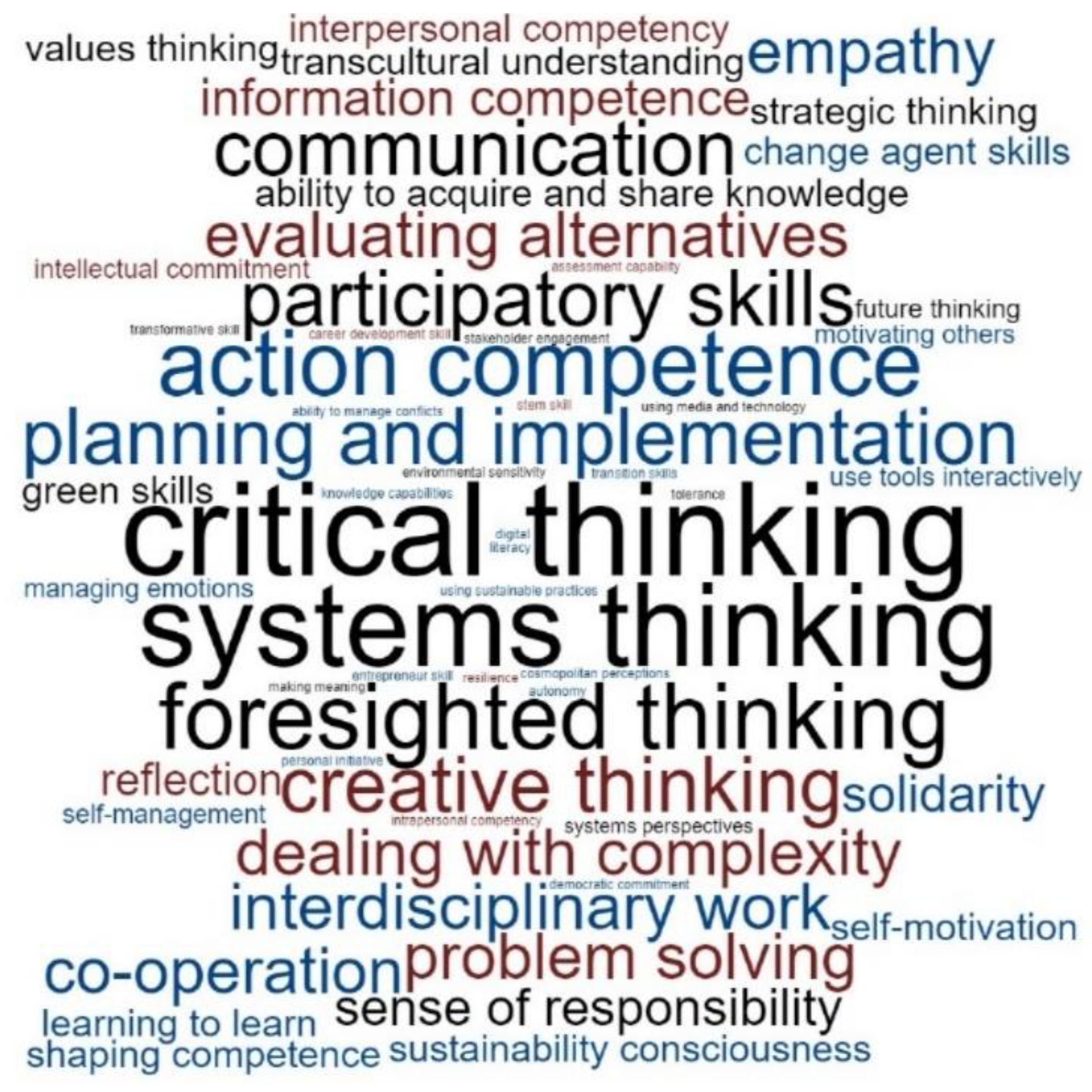
Figure 3.
Time range of the sample.
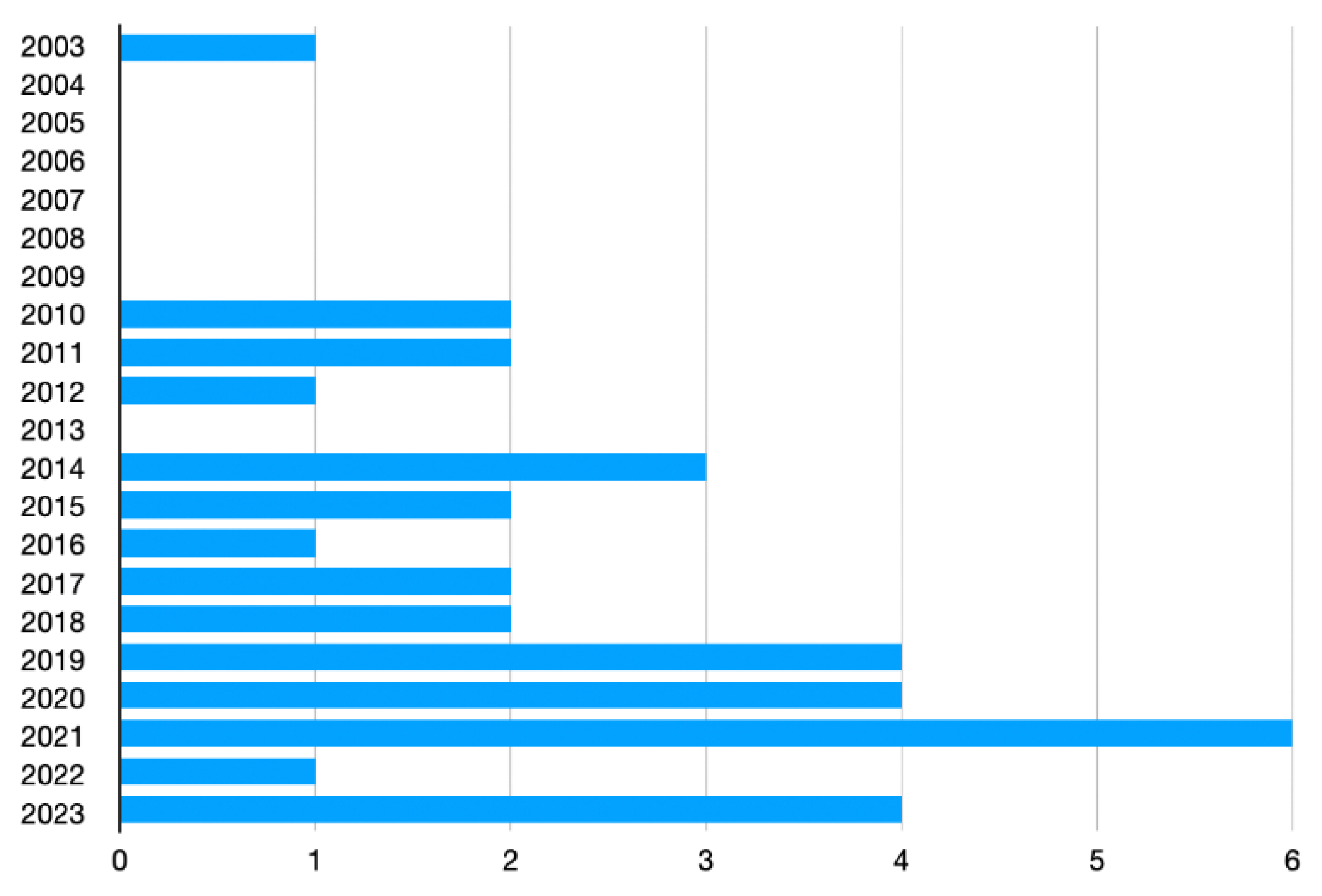
Figure 4.
Geographical distribution of papers (countries).
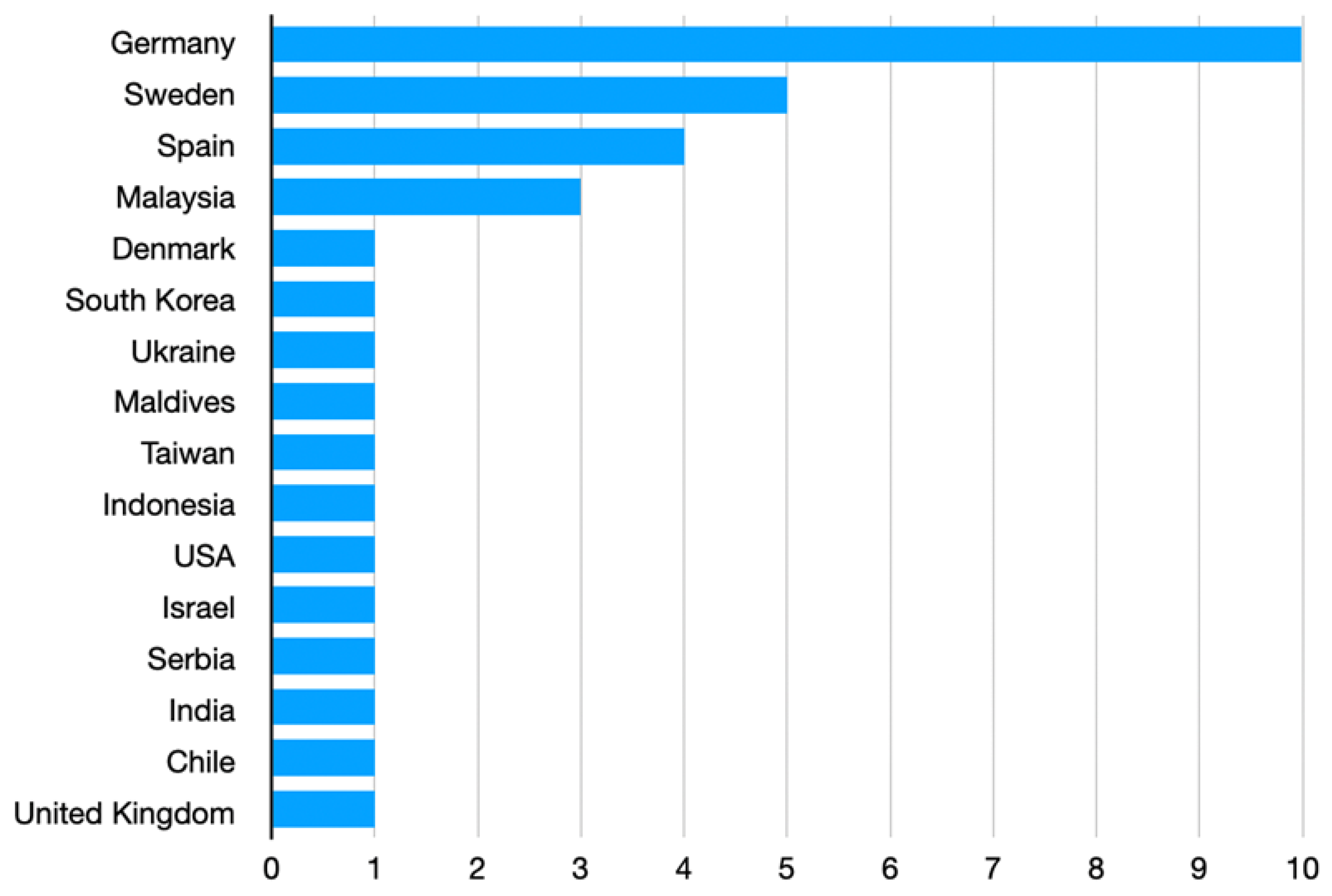
Figure 5.
Geographical distribution of papers (continents).
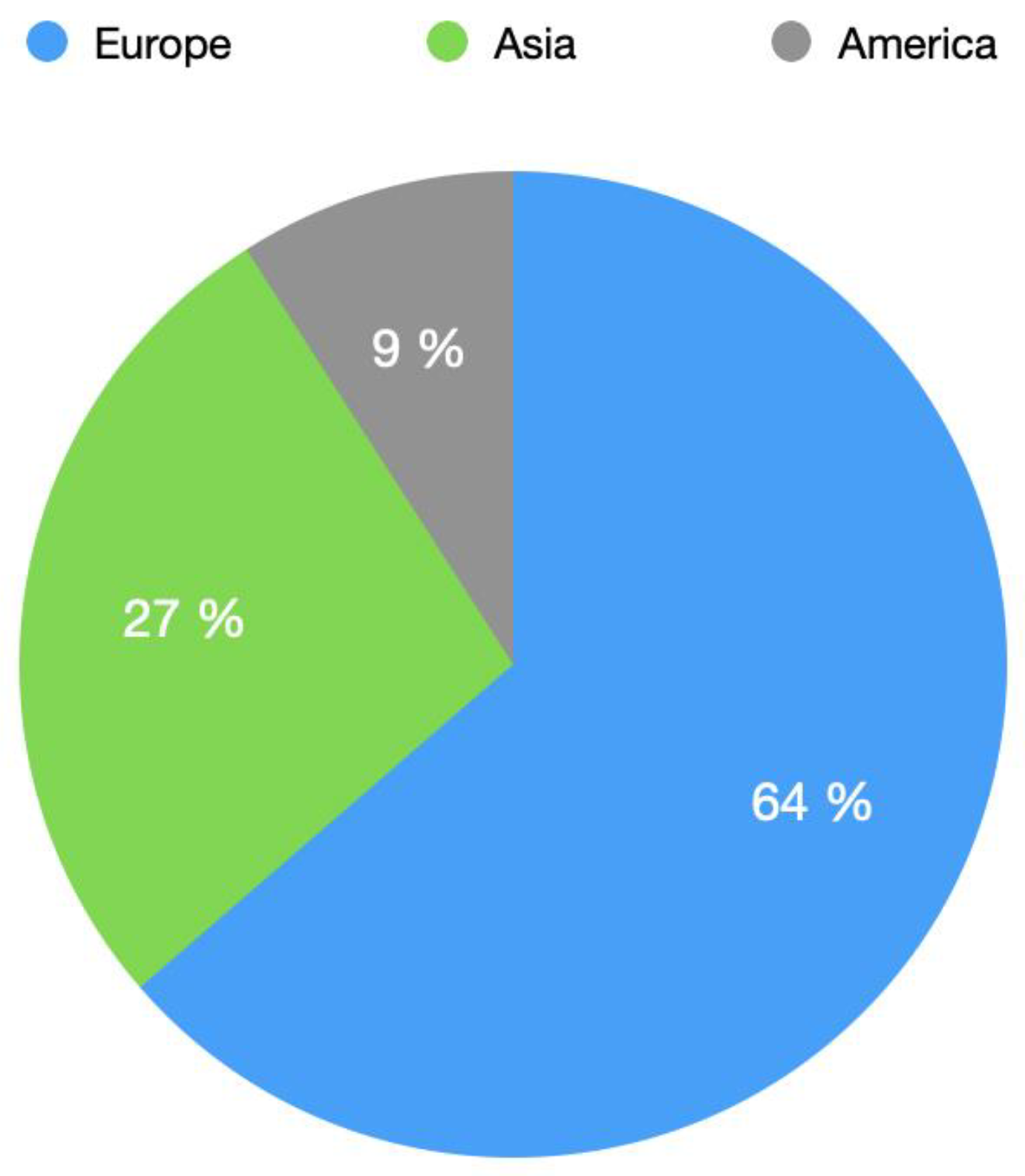
Figure 6.
Distribution of conceptual and experimental works.
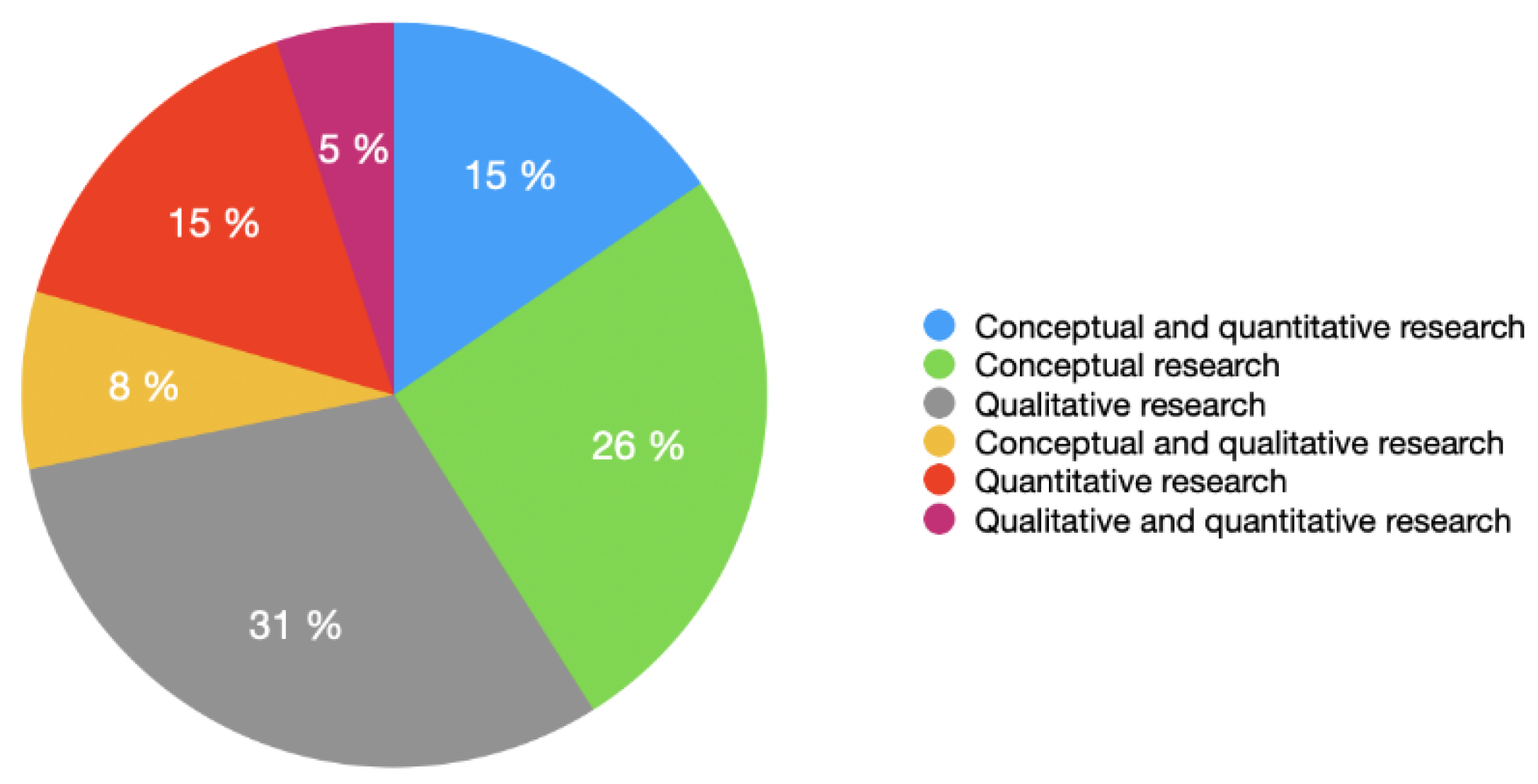
Figure 7.
Wordcloud of researched methods.
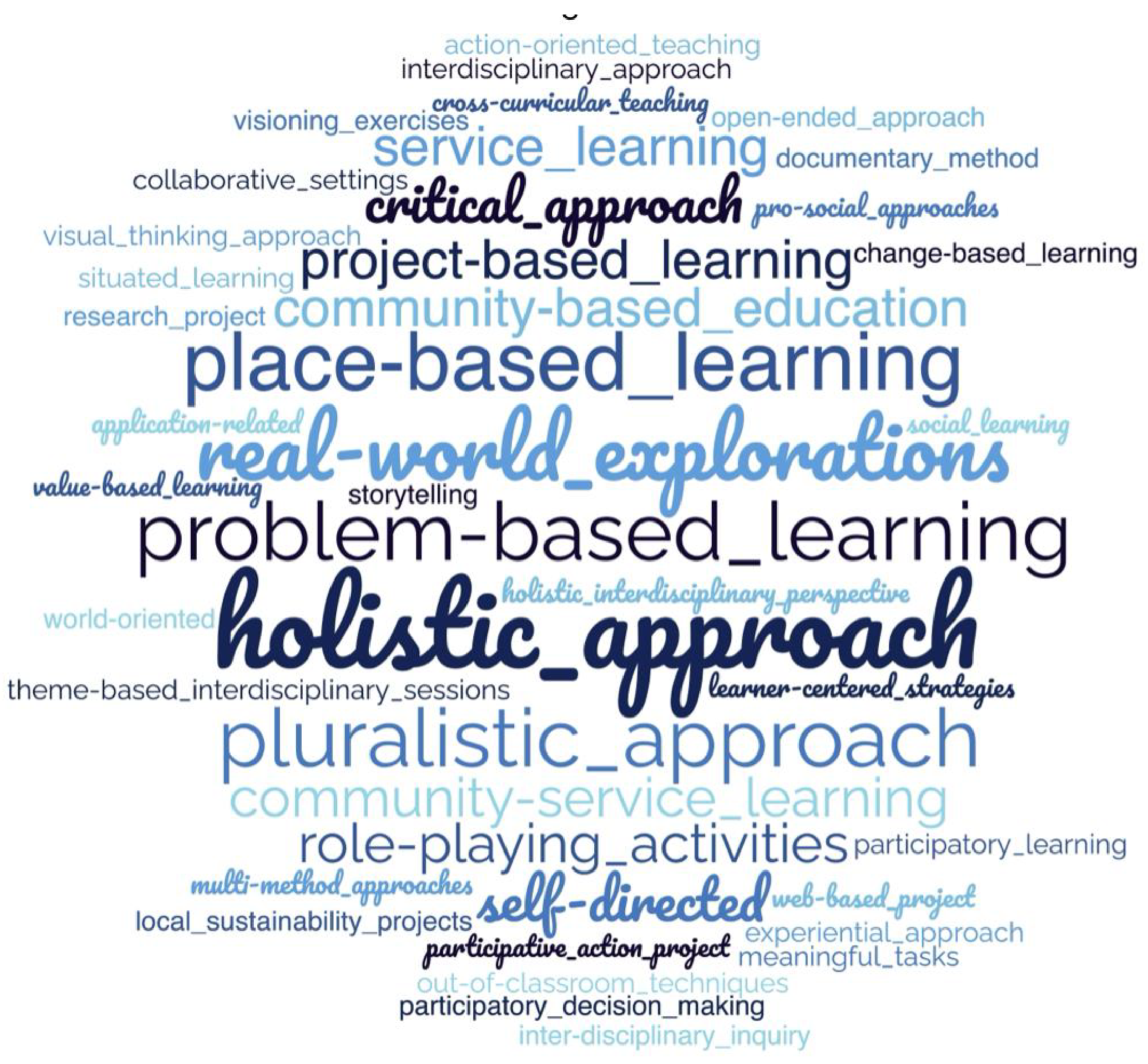
Figure 8.
Keywords word cloud.
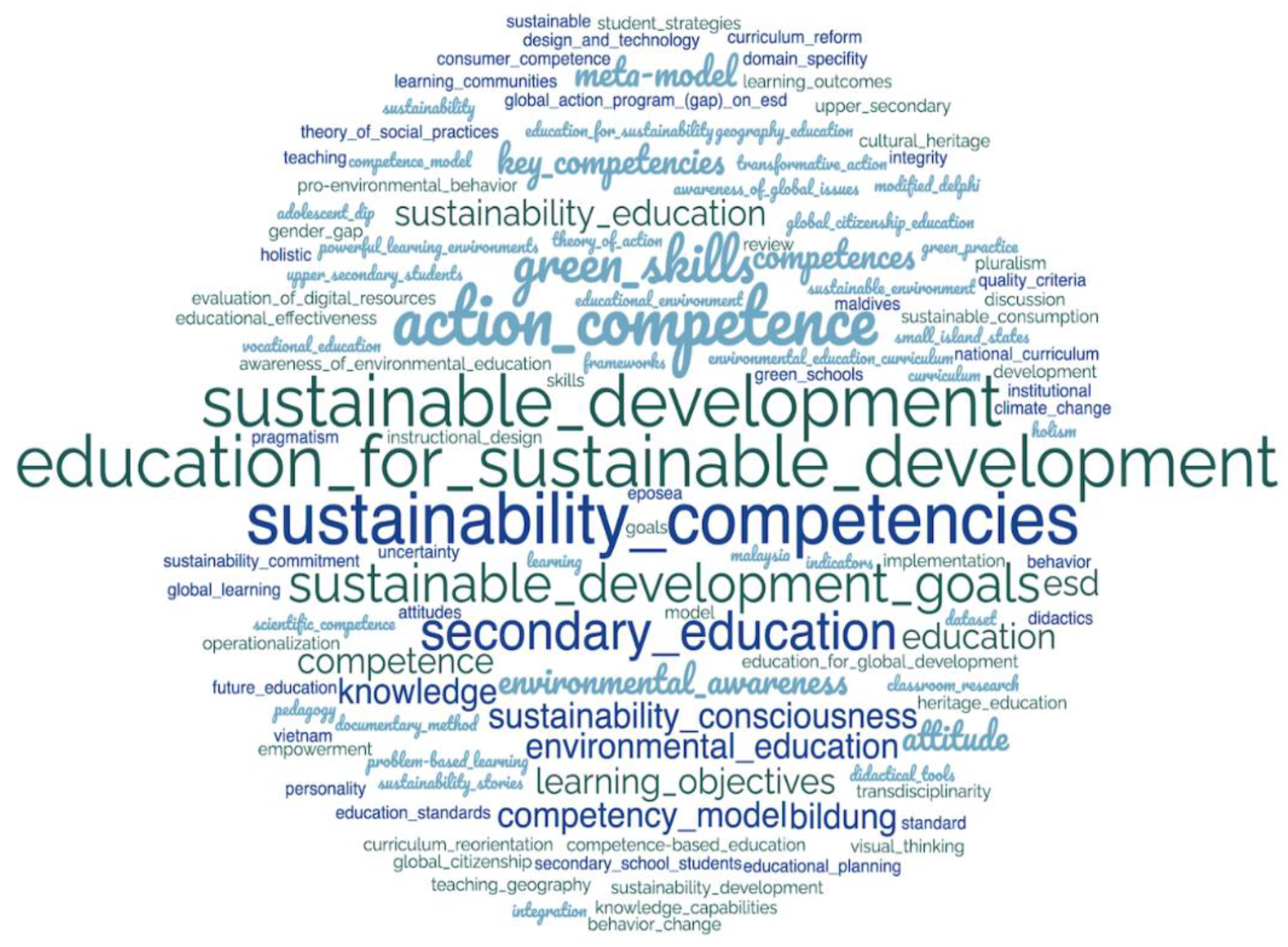

Table 1.
List of prevailing sustainability competencies frameworks for secondary education.
| Sustainability competencies concept | Definition | Related educational areas/ frameworks | Selected papers exploring the concept / citing the concept |
|---|---|---|---|
| Action competence | The concept of action competence includes the capacity to be able to act, now and in the future, and to be responsible for one's actions [66]. | Environmental Education | 5 / 9 |
| Gestaltungskompetenz (shaping competence) | Gestaltungskompetenz is a specific capacity to act and solve problems [5]. | Environmental Education;OECD’s DeSeCo project (2005) | 1 / 7 |
| Sustainability consciousness | The concept of sustainability consciousness taps into students’ knowingness, attitudes, and behavior in relation to the sub-themes to the environmental, social and economic dimensions of SD [61]. | Environmental Education, Democracy Education | 3 / 3 |
| Green skills | Green skills are the technical skills, knowledge, values and attitudes needed in the workforce to develop and support sustainable social, economic and environmental outcomes in business, industry and the community [68]. | TVET frameworks of CEDEFOP (2009) [73], OECD (2011) [74],Australian Green Skills Agreement | 3 / 3 |
| Competencies for transformative action | Sustainability “competencies” embody the concepts and skills that will enable students to understand and resolve complex sustainability problems by equipping them with the ability to become change agents [75]. | Theory of behavioral change | 1 / 2 |
Table 2.
List of shared researchers’ approaches, clustered around two key perspectives.
| Shared perspectives on sustainability competencies frameworks | Countries, to which the studies pertain | Number of papers, dealing with this approach | |
|---|---|---|---|
| 1. | Set of transversal competencies for curricula or a certain education area | ||
| 1a. | Aligned with the priorities of national or regional education curricula/policies | South Korea, Maldives, Indonesia, Germany, Serbia, Croatia, Montenegro, Malaysia, Spain | 10 |
| 1b. | Derived from global education guidelines (UN, UNESCO, OECD, Earth Charter) | Germany, Spain, South Korea, Chile, Guatemala | 6 |
| 1c. | Domain-specific competencies (through the lens of school subjects or education domain) | Spain, South Korea, Malaysia, Maldives, Israel, Germany, Chile | 12 |
| 1d. | Domain-specific competencies (through the lens of teaching-learning approach) | Germany, Sweden, Maldives, Belgium, Spain, Israel, UK, India, Guatemala | 11 |
| 1.e | Frameworks originated from relevant conceptual research | Sweden, Belgium, Ukraine, Germany, USA, UK, Spain, India | 10 |
| 2. | Structural model for the relevant cognitive abilities, skills and attitudes | Germany, Sweden, Taiwan, Denmark, Indonesia, Malaysia | 11 |
Table 3.
List of the most cited frameworks of sustainability competencies.
| Name of the source | Competencies framework | Number of papers, citing the framework |
|---|---|---|
| UNESCO. Education for Sustainable Development Goals. Learning Objectives. 2017 [24] | Systems thinking competencyAnticipatory competencyNormative competencyStrategic competencyCollaboration competencyCritical thinking competencySelf-awareness competencyIntegrated problem-solving competency | 9 |
| Wiek, A.; Withycombe, L.; Redman, C.L. Key competencies in sustainability: a reference framework for academic program development. 2011 [20] | Systems-thinking competenceAnticipatory competencyNormative competencyStrategic competenceInterpersonal competenceProblem-solving competence | 8 |
| OECD. Definition and selection of key competencies. Executive summary. 2005 [17] | Interactive use of media and methods Interacting in socially heterogeneous groups Acting autonomously |
5 |
| UNESCO. Roadmap for Implementing the Global Action Programme on ESD. 2014 [79] | Critical and systemic thinking,Collaborative decision-making,Taking responsibility for present and future generations. | 7 |
| CEDEFOP. Future skill needs for the green economy. 2009 [73] | Green skills supporting: resource efficiency, the low carbon industry, climate resilience, and skills to protect manage natural assets | 4 |
Table 4.
Leading academic institutions as researchers’ affiliations.
| Nr. | Institution | Country | Number of affiliated researchers |
|---|---|---|---|
| 1. | Universiti Pendidikan Sultan Idris | Malaysia | 8 |
| 2. | Karlstad University | Sweden | 5 |
| 3. | University of Education Freiburg | Germany | 5 |
| 4. | Dnipro Academy of Continuing Education | Ukraine | 4 |
| 5. | University of Antwerp | Belgium | 4 |
| 6. | Diponegoro University | Indonesia | 4 |
| 7. | Linköping University | Sweden | 4 |
| 8. | University of La Laguna | Spain | 4 |
| 9. | Arizona State University | USA | 3 |
| 10. | Leibniz Insitute for Science and Mathematics Education | Germany | 3 |
| 11. | University of Goettingen | Germany | 3 |
| 12. | University of Niš | Serbia | 3 |
| 13. | Universidad Pública de Navarra Pamplona, Navarra | Spain | 3 |
| 14. | Leuphana University Lüneburg | Germany | 3 |
Table 5.
Relationship of countries and researchers to identified competency frameworks.
| Country | Number of affiliated researchers | Type of researched frameworks of sustainability competencies |
|---|---|---|
| Germany | 17 |
|
| Sweden (Taiwan) | 15 |
|
| Spain | 13 |
|
| Malaysia | 10 |
|
| Ukraine | 5 | framework originated from conceptual research [70]; |
| Belgium | 4 | structural model for relevant knowledge/skills/attitudes (sustainability consciousness, action competence) [71]; |
| Indonesia | 4 |
|
| Chile (Spain / India) | 4 |
|
| USA | 3 | framework originated from conceptual research (key competencies for transformative action) [75]; |
| Serbia | 3 | transversal key sustainability competencies based on national curricula/education policy [90]; |
| Denmark | 2 | structural model for relevant knowledge/skills/attitudes (action competence) [12]; |
| South Korea | 2 |
|
| India | 2 |
|
| Maldives (Australia/Italy) | 2 |
|
Table 6.
Type of research paper.
| Type of research paper | Research methods used | Number of papers | Countries | Number of researchers in co-authorship |
|---|---|---|---|---|
| Conceptual and quantitative research | Description of a frame model + close-ended questionnaires | 6 | Sweden, Germany, India | 2 to 3 researchers |
| Conceptual research | Description of a frame model, teaching approach, critical reflection, evaluation tool | 10 | Spain, Sweden, Malaysia, Germany, USA, Denmark | 1 to 4 researchers |
| Qualitative research | Analysis of curriculum, interviews, case-studies, documentary study, modified Delphi study | 12 | Spain, Malaysia, Maldives, Sweden/Taiwan, Belgium, UK, Serbia, Guatemala Germany, South Korea | 1 to 6 researchers |
| Conceptual and qualitative research | Description of a frame model + case study, literature review, longitudinal study | 3 | Germany, Ukraine, Belgium | 2 to 5 researchers |
| Quantitative research | SEM, cluster sampling method, close-ended questionnaires, cross-sectional study | 6 | Sweden, Malaysia, Sweden/Taiwan, India, Indonesia, Germany | 4 to 5 researchers |
| Qualitative and quantitative research (mixed-method design) | Class observations and semi-structured interviews, longitudinal study, experiment, analysis of teaching materials | 2 | Israel, Chile | 1 to 4 researchers |
Table 7.
List of clustered keywords.
| Nr. | Groups of clustered keywords | Number of keywords | % |
|---|---|---|---|
| 1. | Learning outcomes, competencies aspects | 48 | 27% |
| 2. | Education areas, related to sustainability | 35 | 19% |
| 3. | Education standards, curricula | 29 | 17% |
| 4. | Teaching methods and didactical tools | 25 | 13% |
| 5. | Research methods and tools | 20 | 10% |
| 6. | Sustainability | 17 | 9% |
| 7. | Countries | 8 | 4% |
| 8. | Educational psychology | 4 | 2% |
Disclaimer/Publisher’s Note: The statements, opinions and data contained in all publications are solely those of the individual author(s) and contributor(s) and not of MDPI and/or the editor(s). MDPI and/or the editor(s) disclaim responsibility for any injury to people or property resulting from any ideas, methods, instructions or products referred to in the content. |
© 2024 by the authors. Licensee MDPI, Basel, Switzerland. This article is an open access article distributed under the terms and conditions of the Creative Commons Attribution (CC BY) license (http://creativecommons.org/licenses/by/4.0/).
Copyright: This open access article is published under a Creative Commons CC BY 4.0 license, which permit the free download, distribution, and reuse, provided that the author and preprint are cited in any reuse.


