

Submitted:
30 September 2024
Posted:
01 October 2024
You are already at the latest version
Abstract
In recent years, digital transformation has become a pivotal factor for Small and Medium-sized Enterprises (SMEs), empowering them to adopt emerging technologies for competitive advantage. This systematic literature review examines 60 research papers published between 2014 and 2024, using the Preferred Reporting Items for Systematic Reviews and Meta-Analyses (PRISMA) framework to explore the impact of digital technologies such as artificial intelligence, cloud computing, blockchain, and the Internet of Things (IoT) on SME performance. The review focuses on key drivers and barriers, including operational efficiency, customer engagement, and market expansion. Methodologies employed in the analyzed studies include quantitative approaches (60%), such as surveys and structural equation modelling, qualitative methods (25%), including interviews and case studies, and mixed methods approaches (15%) that combine both. A geographic distribution analysis highlights contributions from various countries, revealing regional research gaps. The results show that digital technologies have significantly improved SME operations, but challenges like limited resources and strategic focus persist. Additionally, the dominance of quantitative methods indicates a potential bias, suggesting the need for more diverse methodological approaches to fully understand the transformative potential of digital technologies for SMEs.
Keywords:
Digital Technologies
; Digital Transformation
; SMEs
; Competitive Advantage
; Small and Medium Enterprises
1. Introduction
Digitalization has proven to be a powerful tool in bringing forth innovation to multiple sectors like healthcare, education, manufacturing, and transportation to name a few, in the modern economy by transforming the manner in which corporations, establishments and communities at large operate [1]. This new advent has pushed SMEs to re-strategize the conventional ways in which they run their production processes this shift is motivated by digital transformations in the business setting, emerging technologies, financial prospects and new opportunities, for example, the retail sector has undergone a massive shift due to the rise of e-commerce and digital marketing channels while the advanced analytics allows companies to gain deeper insights into consumer choices while enhancing their personalized offerings [2]. This means that SMEs are moving away from the methods they previously relied on to outperform their average competitors by utilizing digital technologies as gateways to generate value [3]. In the business world, digital technologies can cause significant disruptions by reshaping how competition works. For instance, platforms like peer-to-peer (P2P) systems have transformed existing markets, leading to the emergence of the sharing economy. Through these platforms, people can easily exchange digital goods and services [4]. Technologies like artificial intelligence, big data analytics, cloud computing and social media have not only transformed consumer interactions but also reshaped internal processes and decision-making. Leveraging digital channels, including e-commerce platforms, has paved the way for unprecedented growth and innovation [5,6]. While the implementation of digital technologies offers various and significant advantages, it is accompanied by numerous challenges. Organizations often encounter high expenses; a lack of digital expertise and resistance to change which hinder the full utilization of these technologies. Additionally, integrating new digital solutions with existing legacy systems can be problematic, further delaying the implementation process [7]. Looking ahead, emerging technologies such as blockchain, 5G, and the Internet of Things (IoT), are anticipated to cause further distractions and drive innovation. Figure 1 illustrates the key steps involved in the digital transformation process for organizations seeking to leverage digital technologies for competitive advantage. By systematically assessing current capabilities, developing a targeted strategy, and implementing new technologies, businesses can adapt to the rapidly evolving market landscape. This visual representation serves as a guide for organizations navigating the complexities of digital transformation. Alongside this, Table 1 summarizes studies on how digital technologies contribute to business competitiveness, outlining each study’s key contributions, citation counts, publication dates, and strengths and weaknesses. By comparing these studies, we identify covered areas and potential gaps, providing a foundation for our review and offering new insights into Digital Technologies and Channels for competitive advantage in SMEs.
The current body of research on Digital Technologies and Channels for Competitive Advantage in SMEs highlights several areas that need further investigation. One major gap is the lack of industry-specific studies on digital transformation. While general overviews of digital strategies are available there is a need for more detailed analysis tailored to specific sectors like healthcare, finance, and manufacturing. These targeted insights could help businesses in these industries better understand how to implement digital strategies effectively within their unique contexts. Although some research emphasizes the importance of adopting digital technologies, practical challenges such as integrating new technologies with existing systems and overcoming resistance to change are not thoroughly addressed. This issue is particularly significant for small and medium-sized enterprises (SMEs), where limited resources make it even more crucial to overcome these barriers. These gaps indicate a need to provide practical solutions to help businesses tackle these challenges.
1.1. Research Questions
In this study, we examine the role of digital technologies and digital channels in enhancing the competitive advantage of small and medium-sized enterprises (SMEs). The research explores how the adoption of these technologies can improve SME performance, focusing on both the benefits and challenges associated with their implementation. The following research questions are designed to provide deeper insights into the effective use of digital technologies to drive SME competitiveness, helping to understand the strategies SMEs can adopt to leverage these technologies for sustained business growth and market positioning:
- How are digital technologies being used or adopted in different industries (such as manufacturing, healthcare, etc.)?
- What are the key digital technologies and channels that have significantly impacted competitive advantage in recent years?
- What are the obstacles preventing SMEs from adopting digital technologies?
- What are the measurable performance metrics used to evaluate the effectiveness of digital technologies?
- How will the long-term adoption of digital technologies impact societal structures, particularly in terms of workforce transformation, privacy, and digital inequality, and what regulatory measures are necessary to mitigate these challenges?
1.2. Research Motivation
This study is driven by the increasing significance of digital transformation in creating competitive advantages for companies in various sectors. Digital technologies like artificial intelligence (AI), the Internet of Things (IoT), and data analytics are changing consumer engagement, business operations, and market competition in today’s quickly changing technological landscape. Nevertheless, despite the enormous potential these technologies hold, there is still division in the scholarly and practical discourse regarding their successful application.
The need for a thorough and organized understanding of how digital technologies can be used to gain a competitive edge is what motivates this review, particularly considering real-world obstacles like resource constraints, resistance to change, and integration with legacy systems. The urgent need for SMEs to get through these barriers and adopt digital innovation feeds this investigation. Additionally, the increasing significance of sector-specific digital transformation—highlighted by the unique requirements and regulatory environments in industries such as healthcare and finance—motivates this review to offer more tailored insights.
1.3. Research Novelty
In contrast to numerous other research works that offer comprehensive summaries of digital transformation, this review highlights the necessity of conducting industry-specific studies, especially in the manufacturing, healthcare, and finance sectors. In doing so, it provides a new perspective and draws attention to the benefits and challenges different businesses have when implementing digital technologies. This study also highlights the practical difficulties that small and medium-sized businesses (SMEs), which are sometimes disregarded in favor of larger organizations, encounter. The paper advances the conversation on integration by offering a thorough understanding of the difficulties associated with integration, the review pushes forward the discourse on how businesses can effectively navigate digital transformation within their unique contexts.
Another innovative addition is the process-driven methodology, which is illustrated by means of a digital transformation flowchart. This flowchart gives decision-makers a useful tool by offering an organized, visual depiction of how companies can approach digital transformation methodically. This review provides an extensive road map for further research and the real-world application of digital strategies by bridging the gap between theoretical understanding and application.
The ultimate driving force behind the research is the aim to advance the field’s body of knowledge on digital transformation by advancing the agenda for workable, implementable solutions that support companies in their digital transformation, in addition to synthesizing previous findings.
2. Materials and Methods
The following subsection of the study presents the methodology employed to conduct a comprehensive systematic review of Digital Technologies and Channels for Competitive Advantage in SMEs. This study spans a decade, covering literature from 2014 to 2024, to provide a thorough understanding of how digital technologies have influenced SMEs over this period. The methodology provides guidelines for selecting studies, identifying data sources, and the techniques used to review the gathered literature, establishing a basis for a thorough analysis of each element in the following sections. Figure 2 displays the proposed structure for this study.
2.1. Eligibility Criteria
A comprehensive review of all peer-reviewed and published studies that are relevant to the analysis of digital technologies and their impact on the competitive advantage of SMEs. This study only considered studies that were published in the English language during the span from 2014 to 2024. A set of criteria was established to include only the most related academic papers and to exclude those that did not explicitly address the impact of digital technologies on the competitive advantage of SMEs. As a result, only peer-reviewed studies with a main focus on the analysis of the impact of these digital technologies on competitive advantage were included. The criteria for inclusion and exclusion that we made use of in this study are detailed in Table 2.
2.2. Information Sources
Three research repositories were consulted for this systematic analysis, namely, Google Scholar (GS), Scopus, and Web of Science. They were selected based on their comprehensive coverage of academic research in digital technologies and SME competitiveness. Each database was chosen for specific reasons: Google Scholar for its wide scope; Scopus for its extensive academic indexing and high citation standards; and Web of Science for its focus on high-impact journals, ensuring the credibility and relevance of the sources. To ensure the selection of relevant studies, specific inclusion and exclusion criteria were applied. Only research published between 2014 and 2024 was considered, with a focus on peer-reviewed journal articles, conference papers, and dissertations that addressed digital technology’s role in enhancing SMEs’ competitive advantage. Studies that focused exclusively on large corporations or were irrelevant to the subject matter were excluded. Various research papers were examined based on their titles, abstracts, and search tags to develop additional search terms. These terms or phrases were used to select published materials such as conference papers, journal articles, book articles, book chapters, and dissertations.
2.3. Search Strategy
Figure 3 provides a detailed overview of the systematic review process. It begins with formulating research questions, which guide the choice of methodology. The process involves planning the Systematic Literature Review (SLR), establishing criteria for including or excluding studies, selecting appropriate research resources, and defining search terms. Next, the search and evaluation of research articles ensure the inclusion of high-quality references. Data extraction focuses on maintaining data integrity, followed by compiling and analyzing the data to address the research questions.
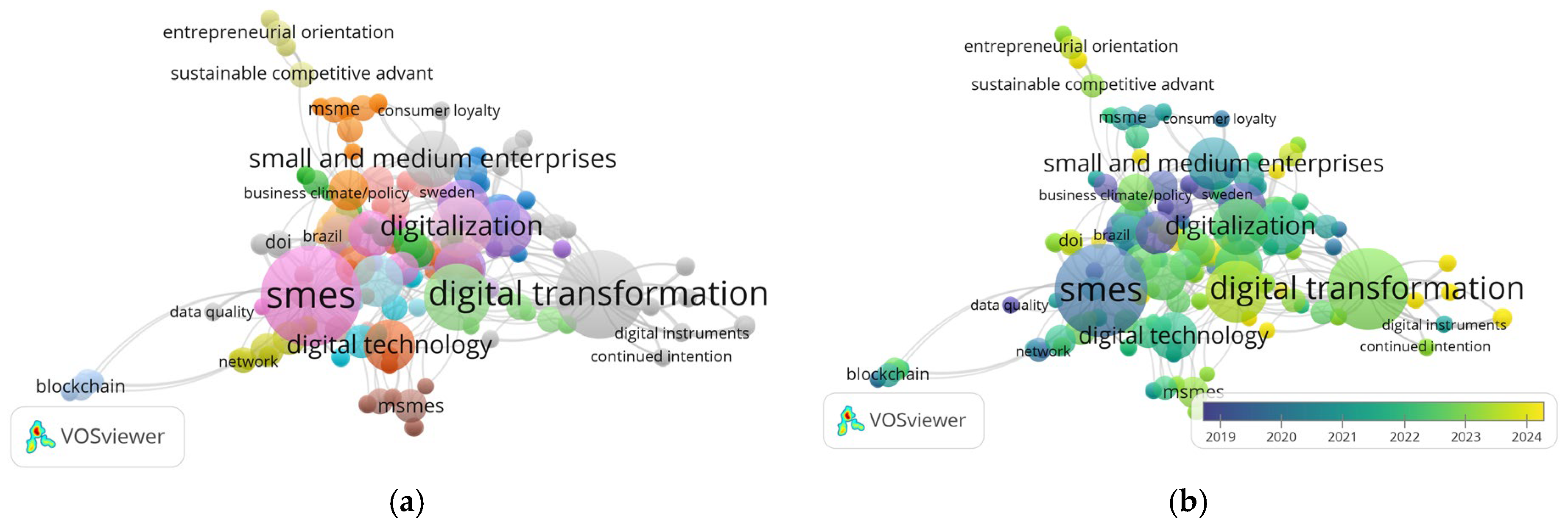
The keywords used to search for relevant research papers to conduct this literature review were developed to identify works that showcased the implications of adopting digital technologies on SME’s competitive advantage. To pick the key terms, experimental searches were done using the iterative approach. Keywords that did not produce research works meeting the inclusion criteria were removed. To make sure that similar terms related to the main keywords were included, equivalent terms for the specified keywords were identified. Therefore, synonyms for “digital technologies” include “digital tools,” and “digital platforms.” Keywords used to describe “competitive advantage” include “business advantage,” and “business strategy.” The term “SMEs” can also be referred to as “small and medium enterprises,” and “small businesses.” The term “digital channels “was removed as it did not bring forth many papers and limited the study. During the search process, the logical operators “AND” and “OR” were used to find relevant scholarly papers. The “AND” operator includes all selected keywords, while the “OR” operator includes any of the chosen keywords.
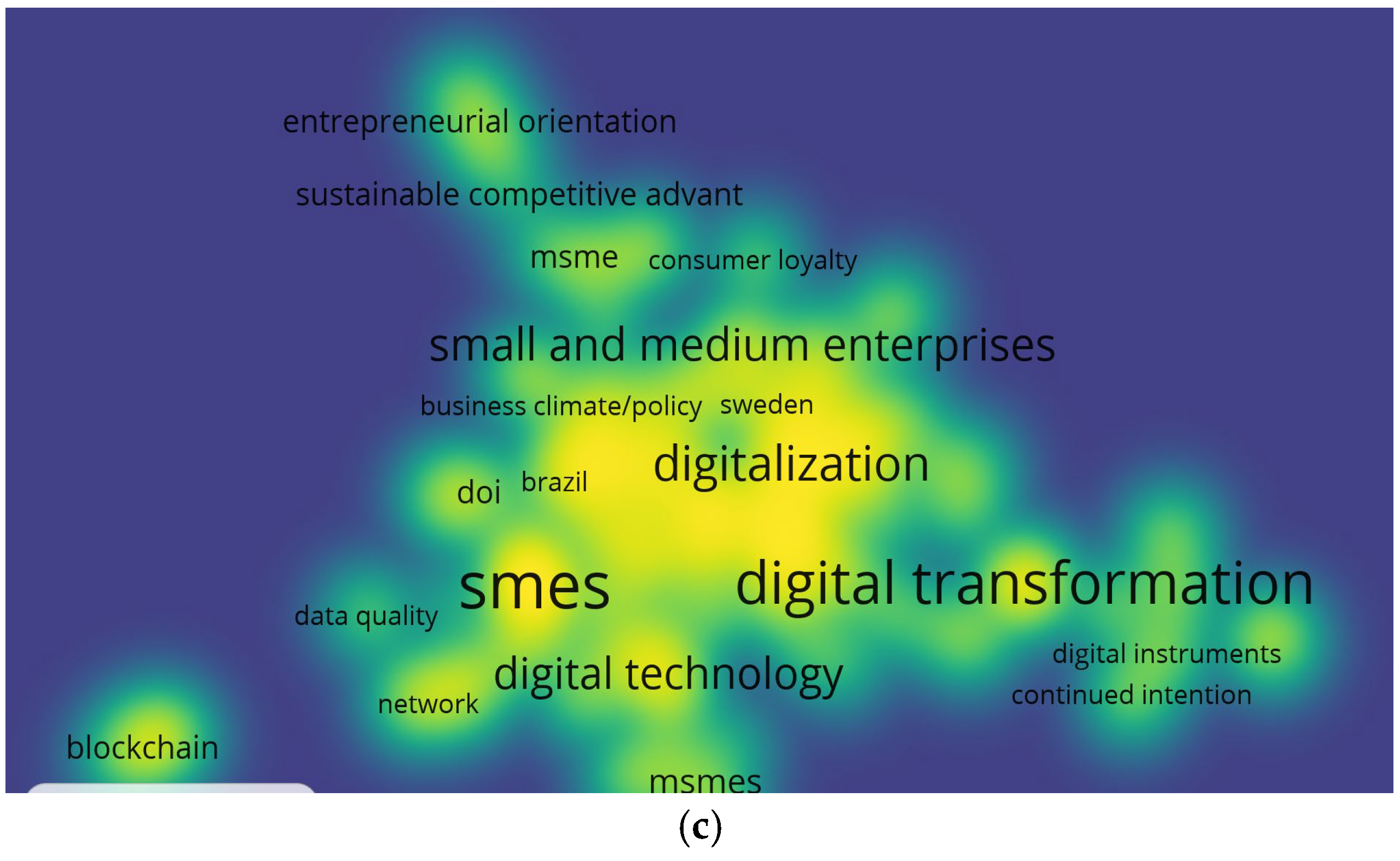
The final selection of papers was based on their relevance to Digital Technologies and Channels for competitive advantage in SMEs. To ensure the robustness of the search, bibliometric analysis was conducted to validate keyword selection and to assess the comprehensiveness of the search results. This thorough and iterative approach ensured a well-rounded and relevant set of literature for the review.
Figure 4.
Bibliometric Analysis of Study Search Keywords: (a) Networks Visualization. (b) Overlay Visualization. (c) Density Visualization.
Figure 4.
Bibliometric Analysis of Study Search Keywords: (a) Networks Visualization. (b) Overlay Visualization. (c) Density Visualization.
2.4. Selection Process
To ensure the collection of relevant papers for the review titled “Digital Technologies and Channels for Competitive Advantage in SMEs,” a rigorous selection process was applied. Reviewers followed a systematic method to identify appropriate studies, utilizing search codes with keywords such as “Digital Technologies,” “Digital Channels,” “SME Competitiveness,” and “Competitive Advantage.” Each reviewer was assigned to a specific research database—Web of Science, Scopus, or Google Scholar—to source studies. Initially, each reviewer gathered 60 papers, which were then filtered based on inclusion criteria such as relevance to the topic, presence of a research framework on digital technologies in SME competitiveness, publication in English, and publication dates between 2014 and 2024. Exclusion criteria were applied to eliminate non-relevant studies. The selected papers were recorded in an Excel sheet for assessment. A secondary review was conducted to verify that all papers met the inclusion criteria and to resolve any discrepancies by removing studies that did not align with the review’s objectives.
2.5. Data Collection Process
The data collection process used in this research paper was utilized to select the most relevant academic papers. Figure 5 showcases the phases that were undergone to classify research papers that are important to Digital Technologies and Channels for Competitive Advantage in SMEs. The first phase was the extensive search of three research repositories to select the pertinent research papers. The second phase was the selection of published material that included research papers relevant to Digital Technologies and Channels for Competitive Advantage in SMEs. Next, the reference list of all relevant research papers that met the inclusion criteria was reviewed. Each reference list was examined for extra citations that could lead to relevant research material. Finally, when no additional citations could be found the selection process began. The initial list of research papers was refined and reviewed to check for their relevance. The phases of the filtration process are as follows: Firstly, research titles are analyzed for relevance, the abstracts and contents of the papers were evaluated to ascertain their relevance and significance to the topic being studied. The research papers were subjected to a further analysis and scrutiny, this criterion included whether the papers were written in English and had a detailed methodology. Papers on similar topics and published in the last decade were also included.
2.6. Data Items
Table 3 outlines key data items and their descriptions in the context of research on the Digital Technologies and Channels for competitive advantage in SMEs. As digital transformation accelerates across industries, SMEs are increasingly adopting technologies like artificial intelligence (AI), Internet of Things (IoT), and cloud services to enhance their business models, operations, and customer engagement. This research explores various aspects of this transformation, from the types of digital technologies being leveraged, to the industry and economic contexts in which SMEs operate. The table also highlights the methodologies used in these studies, performance metrics, and long-term impacts such as business growth and competitive advantage, providing a comprehensive view of the research landscape in this domain.
2.7. Study Risk of Bias Assessment
Using the Newcastle-Ottawa Scale (NOS) as shown in Table 4, the quality of the studies reviewed in relation to Digital Technologies and Channels for competitive advantage in SMEs is evaluated in the following table. With a maximum score of nine stars, the Newcastle-Ottawa Scale (NOS) rates studies according to three criteria: selection (up to four stars), comparability (up to two stars), and outcome/exposure (up to three stars). Selection evaluates how well participants were selected and determines whether the desired outcome was not present from the beginning. Comparability looks at how well confounding variables were managed, while Outcome/Exposure assesses how reliable the study’s measurements were. Research with seven to nine stars is regarded as high-quality, seven to six to four stars as moderate-quality, and three stars or less as low-quality, suggesting possible methodological issues. This rating ensures the reliability of studies on digital technologies’ impact on SMEs.
2.8. Effect Measures
In our study on Digital Technologies and Channels for competitive advantage in SMEs, we utilized specific effect measures for each outcome to ensure a consistent and meaningful synthesis of results. For dichotomous outcomes, such as the adoption of digital technologies or the presence of specific performance improvements, we calculated risk ratios (RR) to compare the likelihood of achieving positive outcomes between different studies. This allowed us to understand the relative risk of success associated with adopting digital technologies in various contexts.
For continuous data, such as improvements in business performance metrics (e.g., revenue growth, customer satisfaction) across studies using different scales, we applied standardized mean difference (SMD) effect sizes (Cohen’s d) and their 95% confidence intervals (CIs). This enabled us to standardize results across studies, regardless of the original measurement scales, and allowed for a more coherent comparison of the effects of different digital technologies.
In some cases, we also re-expressed the synthesized results in absolute terms to provide practical insights for decision-makers, ensuring the results were relevant and easy to interpret within the broader business and technological context. This combination of effect measures allowed us to evaluate the impact of digital technologies on both categorical and continuous outcomes in a manner that was both statistically rigorous and practically applicable. Figure 6 visualizes the entire procedure for selecting effect measures.
2.9. Synthesis Methods
In synthesizing research on Digital Technologies and Channels for competitive advantage in SMEs, a structured approach ensures clarity and comprehensiveness. The synthesis process involves assessing study eligibility, preparing data, and presenting results in a way that accurately reflects the evidence. This process is crucial for drawing meaningful conclusions and providing actionable insights. Table 5 shows a summary of the methods used to synthesize the studies, detailing each step and the approaches applied.
The synthesis method in Table 5 outlines the structured approach used to evaluate and integrate findings from various studies on Digital Technologies and Channels for competitive advantage in SMEs. The eligibility assessment step involved coding and grouping studies based on predefined criteria to ensure relevance and comparability. Data preparation included standardizing and imputing data to address any gaps and facilitate uniform analysis. Results were tabulated and visually displayed using structured tables to highlight key findings and patterns. Finally, synthesis methods involved meta-analysis or alternative approaches where meta-analysis was not feasible, with appropriate testing for statistical heterogeneity. Figure 7 outlines this comprehensive approach which enables a clear understanding of Digital Technologies and Channels for competitive advantage in SMEs and supports the development of evidence-based strategies.
2.10. Reporting Bias Assessment
To address the risk of bias due to missing results in our synthesis of studies on digital technologies, we implemented a multifaceted approach designed to ensure a comprehensive and unbiased assessment. We began by employing several graphical and statistical methods to detect any potential biases. Specifically, contour-enhanced funnel plots were generated for meta-analyses involving digital technology studies with at least 10 trials of varying sizes. These plots allowed us to visually inspect for asymmetry, which might indicate publication bias or other forms of reporting bias. Complementing this, we conducted Egger’s test to statistically evaluate funnel plot asymmetry and determine if the observed data suggested missing results due to publication or other reporting biases.
To further validate our findings, we compared the outcomes specified in study protocols or registered study plans with those reported in the published results. In cases where study protocols were unavailable, we cross-referenced the outcomes reported in the methods and results sections of the publications. This comparison helped us identify discrepancies and potential biases related to outcome reporting. Our assessment process involved using established checklists and scales specifically tailored for bias evaluation in digital technology research. We reviewed these tools’ methodological components to ensure they were adequate for addressing aspects relevant to digital technologies, such as software-related biases and technological limitations. Notably, no significant adaptations were made to these existing tools, though considerations specific to the digital technology field were integrated into the evaluation.
The review team, consisting of three independent reviewers, conducted the risk of bias assessments. Each reviewer performed a separate evaluation to ensure a thorough and unbiased assessment. Any disagreements among reviewers were resolved through discussion and consensus, with a senior researcher conducting a final review to confirm the accuracy of the risk assessments. This process helped ensure that our synthesis was based on the most complete and accurate data available. No automation tools were used in our risk of bias assessment due to missing results, instead data were manually analysed and visualized using Microsoft Excel. This method included creating charts and plots to identify patterns and potential biases in the reporting, enabling a thorough examination of the data without relying on automated software tools. This approach was designed to minimize potential biases and enhance the overall validity of our synthesis on digital technologies.
2.11. Certainty Assessment
The quality assessment aimed to strengthen the credibility of the selected research papers in this study and to ensure the appropriateness and completeness of the findings. Each paper was evaluated using a scoring system to determine its reliability, relevance, and significance. The evaluations were based on a set of 6 criteria, as outlined in Table 6, considering the various research types represented among the collected papers.
The quality assessment questions were applied to all collected research papers. Each question was evaluated with one of three possible responses: “Yes” (scored 1), “Partially” (scored 0.5), or “No” (scored 0). This evaluation was based on a thorough review of each paper’s abstract, research framework, results, and conclusion. The total score from these responses was used to determine the overall quality of the relevant studies.

Table 7.
Research Quality Questions Results.
| Paper ID | Q1 | Q2 | Q3 | Q4 | Q5 | Q6 | Total | Percentage |
|---|---|---|---|---|---|---|---|---|
| [15] | 1 | 1 | 1 | 1 | 1 | 1 | 6 | 100% |
| [16] | 1 | 1 | 1 | 1 | 1 | 0.5 | 5.5 | 91.67% |
| [17] | 1 | 1 | 1 | 1 | 1 | 0.5 | 5.5 | 91.67% |
| [18] | 1 | 1 | 1 | 1 | 1 | 1 | 6 | 100% |
| [19] | 1 | 1 | 1 | 1 | 1 | 0.5 | 5.5 | 91.67% |
| [20] | 1 | 1 | 1 | 1 | 1 | 0.5 | 5.5 | 91.67% |
| [21] | 1 | 1 | 1 | 1 | 1 | 0.5 | 5.5 | 91.67% |
| [22] | 1 | 1 | 1 | 1 | 1 | 0.5 | 5.5 | 91.67% |
| [23] | 1 | 1 | 1 | 1 | 1 | 1 | 6 | 100% |
| [24] | 1 | 1 | 1 | 1 | 1 | 1 | 6 | 100% |
| …. | …. | …. | …. | …. | …. | …. | …. | …. |
| …. | …. | …. | …. | …. | …. | …. | …. | …. |
| [52] | 1 | 1 | 1 | 1 | 1 | 1 | 6 | 100% |
| [53] | 1 | 1 | 1 | 1 | 1 | 1 | 6 | 100% |
| [54] | 1 | 1 | 1 | 1 | 1 | 1 | 6 | 100% |
| [55] | 1 | 1 | 1 | 1 | 1 | 1 | 6 | 100% |
| [56] | 1 | 1 | 1 | 1 | 1 | 0.5 | 5.5 | 91.67% |
| [57] | 1 | 1 | 1 | 1 | 1 | 0.5 | 5.5 | 91.67% |
| [58] | 1 | 1 | 1 | 1 | 1 | 0.5 | 5.5 | 91.67% |
| [59] | 1 | 1 | 1 | 1 | 1 | 0.5 | 5.5 | 91.67% |
| [60] | 1 | 1 | 1 | 1 | 1 | 0.5 | 5.5 | 91.67% |
| [61] | 1 | 1 | 1 | 1 | 1 | 0.5 | 5.5 | 91.67% |
3. Results
The main conclusions from the reviewed studies are presented in this section, along with a thorough analysis of Digital Technologies and Channels for competitive advantage in SMEs. The results provide a succinct interpretation of the experimental data, with major themes and outcomes highlighted under subheadings. The results encompass a range of factors, including overall business performance, innovation agility, operational efficiency, and customer engagement. This section summarizes the findings and makes conclusions that emphasize the important role that digital technology plays in fostering sustainable growth and preserving competitiveness in the modern business environment.
3.1. Study Selection
The search was conducted across three major databases: Google Scholar, Scopus, and Web of Science. The search covered literature published between 2014 and 2024, and only studies written in English were included and the selection process is displayed in Figure 8. A total of 20,155 studies were identified across the three databases. As mentioned, a combination of keywords was used related to “digital technologies” “competitive advantage” and “SMEs”. Using the title and abstract screening, out of 20,155 papers, 19,799 were excluded for not meeting the inclusion and exclusion criteria particularly due to their focus on non-SME contexts or unrelated technological topics.
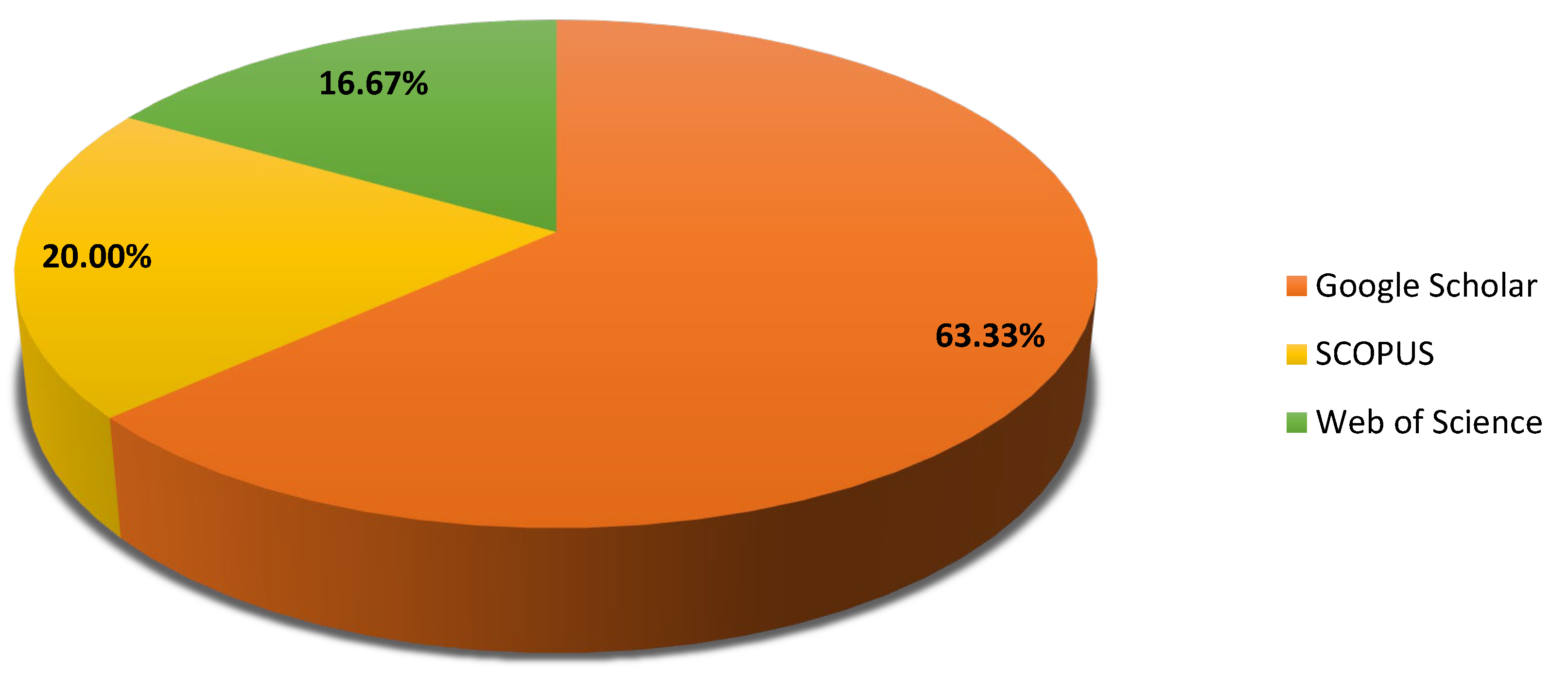
As demonstrated by Figure 8, the collected research papers comprised 60 research papers in total, of which, 63.33% were from Google Scholar, 20% from Scopus, and 16.67% from Web of Science. Out of the 60 research papers, 6 were conference papers, and 54 were article journals as illustrated in Figure 9. The process used for performing this SLR is a Preferred Reporting Items for Systematic Review and Meta-Analysis (PRISMA) flowchart, shown in Figure 8.
Figure 9.
Distribution of Online Data Sources.
3.2. Study Characteristics
A total of 60 eligible research studies were published between 2014 and 2024, comprising 0 book chapters, 6 conference papers, 0 dissertations, and 54 journal articles. Table 8 illustrates the distribution of research papers published by year within this period. The data highlights consistent growth in journal article publications, with a notable peak in 2021, where 9 journal articles were published. Conference papers contributed moderately, with 2 papers each in 2018, 2022, and 2023.
Although no book chapters or dissertations were recorded, the significant number of journal articles (54) demonstrates a strong preference for this publication type in the academic community, particularly for research related to emerging technologies, business innovation, and digital transformation. The increase in publications over recent years signals heightened interest in these fields. However, gaps remain, such as the absence of comprehensive reviews or comparative studies in specific areas.
Figure 10 shows the number of research papers published each year, indicating a steady growth in publications since 2014. This highlights the increasing research focus on digital technologies on SMEs over time.
According to Figure 11, the geographic distribution of the 60 research papers highlights contributions from a diverse set of countries, demonstrating global interest in technology and innovation. Indonesia stands out as the largest contributor with 7 papers (11.67%), followed by Italy and China with 6 papers each (10%). Germany has 4 papers (6.67%), and the United Kingdom and Malaysia each contribute 3 papers (5%). Other countries with multiple contributions include India and Pakistan with 2 papers each (3.33%), alongside Spain, Sweden, Nigeria, Bulgaria, Poland, and Zimbabwe. South Africa is represented with 1 paper (1.67%), showing Africa’s involvement in the global research community. Notably, several regions such as the United States, Jordan, and the UAE have modest participation with 1 paper each (1.67%). While these regions are influential in global technology and innovation, their relatively low representation in this dataset suggests potential for increased research output in these areas. The diversity in geographic locations reflects the global relevance of the topics covered, yet the varying levels of contributions point to potential research gaps in certain regions. These gaps could benefit from increased attention to ensure a more comprehensive understanding of technological impacts worldwide.
Figure 12 illustrates the distribution of research papers across various subject areas, emphasizing the prominence of digital transformation and digital technologies, which together account for nearly 60% of the papers analyzed. The broader business context also holds substantial focus, with over 20% of the papers exploring general business issues. However, niche topics like competitive advantage and the intersection of digital transformation with business are less explored, suggesting potential gaps in current research.
The analysis of the research papers reveals a clear emphasis on digital transformation and digital technologies, with 30% (18 papers) and 28.33% (17 papers) of the papers focusing on these topics, respectively. This significant interest highlights the importance of understanding digital transformation processes and the application of various digital technologies within contemporary research. The broader business context is also a notable area of focus, with 21.67% (13 papers) addressing general business issues. Additionally, there is some interest in the intersection of digital transformation and business, as seen in 8.33% (5 papers), which indicates a moderate exploration of how digital changes impact business operations. However, specific areas such as the impact of digital transformation on competitive advantage or the role of digital technologies in gaining a competitive edge are less explored, with only 1.67% (1 paper) dedicated to each of these niche topics. This limited focus suggests a gap in research regarding how digital advancements contribute to achieving competitive advantages in business contexts. Similarly, the combination of digital technologies with digital transformation and business is represented by only 3.33% (2 papers), indicating that while these topics are of interest, their intersections are less frequently examined.
3.3. Risk of Bias in Studies
In assessing risk of bias across various research designs, it’s important to understand how methodological shortcomings can affect study validity. The designs under consideration include surveys, which gather broad data through structured questionnaires and can be subject to biases in respondent selection and questionnaire design; case studies, which offer in-depth analysis of specific instances but may lack generalizability and face biases in case selection and reporting; experimental studies, which aim to establish causality through controlled interventions and randomization but may still encounter issues such as inadequate blinding or attrition; and quasi-experimental studies, which, while valuable for understanding causal relationships without random assignment, can be more prone to biases due to non-randomization.
In the context of assessing risk of bias as shown in Figure 13 above, the research types are distributed as follows: 17 (28%) case studies are the most prevalent, focusing on detailed examinations of individual cases. 10 (17%) experimental studies are included, which involve controlled experiments to establish causality. Additionally, 1 (2%) study does not specify its type. Surveys are represented by 24 (40%) instances, utilizing structured questionnaires to collect data from larger populations. 8 (13%) quasi-experimental studies examine causal relationships without random assignment. This distribution highlights a significant reliance on case studies and surveys, with fewer experimental and quasi-experimental studies, underscoring the need to account for risk of bias across these various research designs.
3.4. Results of Individual Studies
According to Figure 14, most of the studies reviewed focus on SMEs (Small and Medium-sized Enterprises), with 65% (39 papers) specifically addressing the adoption of digital technologies and digital channels for achieving competitive advantage within this group. This heavy emphasis on SMEs is likely due to their significant role in driving economic development and their need to adopt digital tools to stay competitive, particularly in dynamic markets. An additional 20% (12 papers) combine research on SMEs with a focus on Business Owners, highlighting the importance of understanding how the decisions and strategies of business owners directly influence the successful implementation of digital technologies within SMEs. This suggests that the digital transformation of SMEs often hinges on the leadership and decision-making of business owners.
Research focusing exclusively on Business Owners accounts for 8.33% (5 papers). While this is a smaller portion, it reflects a growing interest in how business leaders perceive and adopt digital tools to drive competitiveness. On the other hand, Entrepreneurs are represented in only 3.33% (2 papers), indicating that research specifically exploring entrepreneurs’ roles in digital technology adoption within SMEs is less prominent. This could be because entrepreneurship is often viewed as a subset of SME studies or because entrepreneurial ventures tend to focus on startups, which may differ from traditional SMEs. Additionally, 3.33% of studies do not specify their sample group, which could reflect a more generalized approach to investigating digital technologies and channels without focusing on a particular business type.
This distribution reveals a strong focus on understanding Digital Technologies and Channels for Competitive Advantage in SMEs, with relatively less emphasis on entrepreneurs and business owners as standalone subjects. The results may suggest that most research treats digital transformation within SMEs as a comprehensive topic, integrating leadership perspectives into the broader SME context.
3.5. Results of Synthesis
The Results of Syntheses section presents key findings from systematic reviews and meta-analyses, ensuring a transparent and unbiased reporting of evidence. This includes a summary of study characteristics and risk of bias, results from all statistical syntheses with meta-analysis details and measures of heterogeneity, investigations into possible causes of heterogeneity, and sensitivity analyses to assess the robustness of results. Clear reporting across these elements allows for informed decision-making and supports future research. The flowchart in Figure 15 illustrates the logical structure of this section.
3.5.1. Study Characteristics and Bias Assessment
Based on the study characteristics definition and the data presented in Figure 16, the data collection methods used across the studies vary significantly and reflect a mixed-methods approach tailored to the specific objectives of each synthesis. Surveys were the most used method, either alone or in combination with other tools, indicating a strong focus on gathering quantitative data. Interviews and document analysis were frequently employed, often together, to provide richer, qualitative insights. Questionnaires were used in conjunction with surveys for structured data collection, while observations were less common but included in some studies to offer contextual understanding. This variation in data collection methods is important to note as it influences the applicability and potential biases in each synthesis, with different methods addressing distinct aspects of the research questions.
Based on the data, the use of various methodological approaches helps mitigate bias in several ways. Surveys, being the most common method (36.67%), standardize data collection across a large sample, which helps reduce response bias and enhances reliability. Document analysis (11.67%) provides objective evidence from existing records, minimizing researcher-induced bias. Questionnaires (8.33%), often used alongside surveys, ensure consistency in responses, reducing interviewer bias. Interviews (6.67%), when combined with other methods like document analysis and surveys, offer deeper insights while balancing potential interviewer biases. Mixed methods integrate different approaches, such as surveys and interviews, to provide a more comprehensive view and validate findings through triangulation. The relatively lower use of observations and online surveys suggests these methods are less relied upon, possibly due to their specific limitations or the context of the studies.
Figure 17 highlights the significance of various digital technologies in business, with IoT (16.67%) leading in adoption due to its role in operational efficiency and real-time data collection. AI and Blockchain each account for 13.33%, reflecting their growing importance in enhancing decision-making and ensuring security in transactions. Big Data Analytics (11.67%) shows strong interest but may indicate that organizations are still developing their data capabilities. Combinations of technologies reveal less frequent integration, particularly between AI and Big Data, suggesting untapped potential in leveraging their synergy. Cloud Computing (6.67%) has a lower representation, possibly due to its maturity and widespread adoption. The 10% classified as “Not Specified” points to a broader focus on digital transformation rather than specific technologies.
3.5.2. Statistical Syntheses
According to Figure 18, the data analysis techniques used in the studies are predominantly statistical analysis, which accounts for 56.67% of the methods employed. Thematic analysis is used in 26.67% of the studies, focusing on qualitative data. Mixed methods are utilized in 13.33% of the studies, integrating both quantitative and qualitative approaches. In 3.33% of the cases, the data analysis method was not specified. This distribution highlights a strong emphasis on statistical analysis, with thematic and mixed methods also contributing to the overall analysis.
The data analysis techniques used in the studies demonstrate a strong preference for statistical analysis, which is the predominant method employed across most studies. This reflects a significant emphasis on quantitative data and aligns with the need for detailed reporting of statistical results. Thematic analysis is also frequently used, indicating a notable focus on qualitative data to identify and interpret patterns and themes. Additionally, a small number of studies did not specify their data analysis methods, highlighting a minor area for improvement in methodological transparency.
3.5.3. Statistical Syntheses
Figure 19 highlights the key factors contributing to result variability observed across different participant groups in this study, including SMEs, business owners, entrepreneurs, and unspecified entities. As shown, SMEs account for the largest share of variability, representing 65% of the total, followed by SMEs combined with business owners at 20%. Business owners independently contribute 8.33%, while entrepreneurs and unspecified groups both account for 3.33% each. This considerable dominance of SMEs underscores their pivotal role in shaping the outcomes of digital technology adoption and its impact on competitive business advantage. These findings emphasize the need to prioritize SME-specific considerations when addressing performance inconsistencies in digital strategies. The analysis of this variability further suggests that while other business groups contribute to result variation, SMEs, with their unique challenges and diverse applications, have a more pronounced influence.
3.5.4. Sensitivity Analyses
Sensitivity analysis is essential for evaluating the robustness of findings related to the types of digital technologies employed in the study. This analysis investigates how variations in technology adoption impact the overall results, offering insights into the effectiveness of various digital tools in enhancing competitive advantage.
Among the reviewed studies, the Internet of Things (IoT) emerged as the most prevalent technology, utilized by 16.67% of the studies, indicating its significant role in facilitating connectivity and data exchange. Artificial Intelligence (AI) was utilized in 13.33% of the studies, showcasing its application in automating processes and driving data-driven decision-making. Additionally, blockchain technology appeared in 13.33% of the studies, reflecting its growing importance in ensuring data security and transparency.
Big Data Analytics was utilized by 11.67% of the studies, emphasizing its critical role in analyzing vast amounts of data to uncover insights and trends that inform strategic decisions. Cloud computing was employed in 6.67% of the studies, indicating its relevance in providing scalable resources for data storage and processing.
The analysis also revealed a diverse range of technology combinations, with various studies integrating multiple digital technologies. For instance, 3.33% of the studies combined AI, IoT, blockchain, and cloud computing, illustrating a trend toward integrated technology solutions. However, 10% of the studies did not specify the technologies used, highlighting a gap in reporting transparency.
3.6. Reporting Biases
Figure 20 outlines a distribution of study types, revealing that quantitative studies are the most prevalent, with a total of 33 instances (52%). These studies primarily focus on numerical data and statistical analysis. In contrast, there are 15 qualitative studies (30%), which explore non-numerical data such as themes and subjective experiences. Additionally, 12 mixed-methods (18%) studies are represented, combining both quantitative and qualitative approaches to provide a more comprehensive understanding. This distribution highlights the dominance of quantitative research while also acknowledging the significant presence of qualitative and mixed-methods studies.
3.7. Certainty of Evidence
The data as shown in Figure 21 reflects the focus of various studies on digital technologies and channels, particularly e-commerce, mobile apps, and social media. Social media stands out as a dominant channel, representing 20% of the studies, indicating its significant role in customer engagement and digital marketing. This emphasis suggests that researchers and businesses alike recognize the value of social media in reaching and interacting with consumers. On the other hand, mobile apps are notably underrepresented, accounting for only 1.67% of the studies. Despite the growing reliance on mobile technology, the complexity and sector-specific use of mobile apps may contribute to their limited exploration in research. E-commerce, comprising 8.33% of the studies, is a critical channel in digital transformation, although it appears less frequently than social media. This could be due to the extensive research conducted on e-commerce in earlier phases of digital transformation, prompting a shift towards more emerging technologies or multi-channel strategies. Notably, a combination of channels such as “Social Media and E-Commerce” or “Social Media and Mobile Apps” makes up 13.33% of the studies, reflecting a growing interest in integrated digital strategies that leverage multiple platforms for enhanced customer experience.
Over half of the studies (56.67%) did not specify a particular channel. This large percentage suggests that many studies take a broad approach to digital transformation without focusing on specific digital channels, which may limit the precision of their findings. The general approach could also reflect a research gap where the specific roles of individual channels in driving business performance are not fully explored. The data highlights a strong focus on social media, limited attention to mobile apps, and a substantial number of studies that do not specify channels. Future research should aim to explore these channels in more detail, particularly mobile apps, and provide more granularity in analyzing the specific impacts of different digital technologies on business outcomes.
4. Discussion
- RQ 1: How are digital technologies being used or adopted in different industries (such as manufacturing, healthcare etc.)?
Digital technologies are being increasingly adopted across various industries, each leveraging these tools to enhance operational efficiency, innovation, and competitiveness. In manufacturing, technologies such as the Internet of Things (IoT), automation, and advanced robotics are transforming production processes, enabling real-time monitoring, predictive maintenance, and improved quality control. In healthcare, digital technologies like electronic health records (EHRs), telemedicine, and health analytics are revolutionizing patient care, streamlining administrative processes, and facilitating remote consultations as shown in Table 10. These advancements are driving industry-wide changes, enhancing capabilities, and creating new opportunities for growth.
- RQ 2: What are the key digital technologies and channels that have significantly impacted competitive advantage in recent years?
The key digital technologies and channels impacting competitive advantage in recent years include social media and IoT. Social media, representing 20% of the studies, plays a major role in customer engagement, marketing, and brand visibility, making it a critical driver of competitive advantage as shown in Figure 21. IoT, leading the technology category at 16.67%, enhances operational efficiency, real-time monitoring, and automation, contributing significantly to competitive success. Other important technologies include AI and Blockchain, each accounting for 13.33% of the studies. AI supports automation and data-driven decision-making, while Blockchain enhances data security and business transparency. Big Data Analytics (11.67%) plays a key role in providing insights that help businesses make strategic decisions, and Cloud Computing (6.67%) offers scalable, flexible solutions that improve business performance.
- RQ 3: What are the obstacles preventing SMEs from adopting digital technologies?
Small and Medium-sized Enterprises (SMEs) face several challenges in adopting digital technologies. Cost is a major barrier, as many SMEs struggle with the financial investment required for technology implementation. Lack of expertise and technical knowledge also hinder adoption, as SMEs may not have the necessary skills to manage and utilize advanced technologies effectively. Additionally, resistance to change and cultural factors within organizations can impede the integration of new technologies. Data security concerns and the perceived complexity of digital tools further contribute to the reluctance of SMEs to adopt digital innovations.
- RQ 4: What are the measurable performance metrics used to evaluate the effectiveness of digital technologies?
To evaluate the effectiveness of digital technologies, various performance metrics are employed. Technical performance metrics include system uptime, user engagement, and scalability, which assess the reliability and efficiency of the technology. Business performance metrics, such as revenue growth, market share, and customer base expansion, measure the impact of digital technologies on organizational success. Organizational outcomes, including employee satisfaction and customer satisfaction, are also crucial in determining the overall effectiveness of digital tools. These metrics provide a comprehensive view of how digital technologies contribute to achieving business objectives and enhancing operational performance.
- RQ 5: How will the long-term adoption of digital technologies impact societal structures, particularly in terms of workforce transformation, privacy, and digital inequality, and what regulatory measures are necessary to mitigate these challenges?
The long-term societal impact of digital technologies such as AI, IoT, blockchain, cloud computing, and 5G will dramatically transform industries and the workforce, while also raising significant privacy and inequality concerns. AI and IoT, for instance, will automate many routine jobs, leading to job displacement in sectors like manufacturing and transportation, but they will also create new roles that require advanced skills, demanding substantial reskilling efforts. Blockchain, cloud computing, and 5G will further reshape industries such as finance and healthcare by enabling secure, scalable, and real-time operations, though privacy and security risks will become more pressing as data becomes more pervasive and vulnerable. In addition to these challenges, the digital divide may deepen as access to these technologies remains uneven, particularly in underserved or rural areas, though blockchain could promote financial inclusion for unbanked populations. To address these concerns, regulatory frameworks are essential. Governments must implement measures to ensure ethical AI use, secure IoT devices, and enforce transparency in blockchain systems. Additionally, ensuring equitable access to cloud and 5G infrastructure will be crucial to prevent the widening of the digital divide.
5. Real-World Case Studies in Digital Transformation for SMEs and Large Enterprises
The digital transformation journey for businesses, whether small and medium-sized enterprises (SMEs) or large corporations, has become pivotal for long-term success in today’s fast-paced technological environment. Companies across various sectors are adopting emerging technologies such as cloud computing, artificial intelligence (AI), the Internet of Things (IoT), and blockchain to enhance operational efficiency, optimize customer engagement, and drive scalability. This section provides a series of real-world case studies that showcase how both SMEs and large enterprises have successfully integrated these technologies to gain a competitive advantage. By examining these concrete examples, we can better understand the practical applications of digital tools and the measurable benefits they bring to businesses in different regions and industries.
Case 1: Pakistan’s SME Adoption of IoT and Big Data Analytics for Value Creation
In Pakistan, SMEs, particularly in agriculture, have successfully adopted IoT and big data analytics to drive value creation. These technologies optimized supply chain management and resource usage, contributing to both economic and social growth. Using hybrid modeling techniques like SEM and ANN, SMEs in this region demonstrated how digital transformation can be a powerful tool for sustainability [75].
Case 2: AI-Driven Innovations in Indian SMEs
SMEs in India have embraced AI technologies to transform business operations, leading to improved operational efficiency. A logistics SME, for example, increased efficiency by 30% using AI-driven warehouse optimization, while an insurance firm saw similar gains by reducing claims processing time through AI-powered chatbots. These examples show how AI can significantly enhance SME performance in developing economies [76].
Case 3: Netflix and AWS for Scalability
Netflix transitioned its infrastructure to AWS, allowing the company to scale globally and manage large data volumes efficiently. The migration improved streaming quality and enabled Netflix to handle spikes in demand, solidifying its position as a global leader in the streaming industry [77].
Case 4: MakeMyTrip’s Cost Optimization Using AWS
MakeMyTrip utilized AWS’s containerization solutions (Amazon ECS and EKS) to reduce compute costs by 22% while maintaining scalability during high-demand periods. This example illustrates how cloud computing can optimize resources and improve financial efficiency in the travel industry [78].
Case 5: Domino’s Pizza and Azure Cloud for Customer Experience
Domino’s leveraged Microsoft Azure to overhaul its online ordering and delivery infrastructure, leading to enhanced customer satisfaction, faster delivery times, and streamlined IT processes. This case highlights the potential of cloud computing to improve customer experience in traditional industries [78].
Case 6: Airbnb’s Cloud-Based Infrastructure
Airbnb adopted AWS cloud technologies to handle its growing platform and international customer demands. This enabled the company to maintain a stable infrastructure, ensuring high availability, data processing, and efficient scaling as the company expanded its global presence [78].
Case 7: Zapier: A Remote Work Success with Cloud and Collaboration Tools
Zapier, a fully remote company with over 800 employees, uses cloud-based tools like Slack, Google Suite, and Zoom to manage its distributed workforce. This example showcases how cloud technology can support productivity and collaboration across global teams [79].
Case 8: Amazon’s IoT-Powered Warehousing
Amazon uses IoT to automate its warehouse operations, optimizing inventory management and reducing operational costs. By implementing IoT sensors, Amazon has been able to streamline its supply chain, ensuring faster deliveries and lower costs [80].
Case 9: General Electric’s Predix Platform on AWS
General Electric (GE) developed its Predix platform on AWS to transition from traditional manufacturing to a more digital, industrial model. By linking and analyzing data from industrial machines, GE improved operational efficiency, minimized downtime, and developed predictive maintenance strategies [81].
The case studies presented in this section illustrate the transformative power of digital technologies across a wide array of sectors, from agriculture and logistics to hospitality and manufacturing. By leveraging cloud computing, AI, IoT, and blockchain, businesses are not only improving operational efficiency and customer experience but are also positioning themselves for sustained growth and market leadership. Whether through the scalability provided by cloud platforms like AWS and Azure or through advanced AI applications driving efficiency in logistics and insurance, these examples demonstrate that digital transformation is essential for businesses of all sizes. For SMEs in particular, these technologies present an unprecedented opportunity to compete with larger enterprises and achieve long-term success in the global marketplace.
6. Practical Implications for Decision-Makers
The adoption of digital technologies is reshaping Small and Medium-sized Enterprises (SMEs) by offering them new avenues for growth, operational efficiency, and competitive advantage. Strategic business leaders must consider the intersection of technology adoption and key business drivers, such as customer engagement, operational efficiency, and market expansion. This section presents the findings from the literature and the strategic implications for SMEs, categorized by industry, with an emphasis on both challenges and opportunities as shown in Table 9. These findings provide insights into how digital transformation can position SMEs for sustainable success in highly competitive markets.
The strategic implications for business leaders across various SME industries are clear: the integration of advanced digital technologies such as AI, IoT, and blockchain presents significant opportunities to enhance operational efficiency, customer engagement, and market competitiveness. However, leaders must navigate barriers such as high costs, technical complexity, and data privacy concerns. To maximize these technologies’ potential, business leaders should focus on developing the technical skills of their workforce, prioritizing cybersecurity, and investing in scalable, integrated systems to achieve sustainable growth and long-term competitive advantages.
7. Decision-Making Framework for Implementing Proposed Study Topic
For SMEs to successfully implement digital technologies, strategic decision-making frameworks are necessary to guide technology adoption. These frameworks must be tailored to specific industry needs, weighing the cost, benefits, risks, and long-term advantages of each technology. This section proposes a comprehensive decision-making framework for implementing digital technologies such as AI, IoT, cloud computing, and blockchain specifically aimed at SMEs striving for competitive as shown in Table 10.
The proposed decision-making framework helps SMEs navigate the complexities of digital technology adoption by weighing the benefits and risks associated with each option. Retail SMEs must balance the need for customer personalization with process optimization, while healthcare SMEs must prioritize either real-time patient monitoring or data security. Finance SMEs, on the other hand, must decide between focusing on compliance or fraud detection technologies. By carefully evaluating key metrics such as customer satisfaction, compliance, and operational efficiency, business leaders can make informed decisions that align with both their short-term needs and long-term strategic goals.
8. Best Practices for Successful Implementation
Implementing digital technologies effectively can provide significant competitive advantages for Small and Medium-sized Enterprises (SMEs). However, the success of such implementations hinges on adhering to best practices that ensure operational efficiency, scalability, and market adaptability. As shown in Table 11, this section outlines best practices for implementing AI, IoT, cloud computing, blockchain, and other digital technologies for competitive advantage across various industries. The following table provides industry-specific guidance, categorizing best practices to support SMEs in navigating digital transformation.
The proposed best practices for implementing digital technologies and channels for competitive advantage in SMEs vary significantly by industry. In retail, the focus should be on personalizing customer experiences and optimizing inventory through AI and predictive analytics. Healthcare SMEs should prioritize secure patient data management through IoT and blockchain, while finance SMEs can benefit from AI-driven fraud detection and compliance automation. Manufacturing SMEs should focus on IoT and AI for operational efficiency, while logistics SMEs can optimize delivery routes through AI-powered systems. Energy SMEs will benefit from predictive energy management and renewable integration, and education SMEs can leverage AI for personalized learning experiences. By adhering to these best practices, SMEs can enhance their digital transformation initiatives, overcome industry-specific challenges, and unlock significant strategic benefits for long-term competitiveness.
9. Metrics and KPIs for Measuring Study Topic Performance
Measuring the performance of digital technologies and channels in Small and Medium-sized Enterprises (SMEs) is essential for understanding the impact of digital transformation efforts on business outcomes. The right metrics and Key Performance Indicators (KPIs) provide actionable insights that allow business leaders to refine strategies, optimize processes, and track progress toward competitive advantage. As shown in Table 12 this section outlines industry-specific metrics and KPIs for evaluating the performance of AI, IoT, cloud computing, blockchain, and other digital technologies in SMEs. These metrics are tailored to specific industries, focusing on operational efficiency, customer engagement, financial performance, and more.
The proposed metrics and KPIs for evaluating the performance of digital technologies and channels in SMEs reveal that each industry benefits from specific tools tailored to its operational, customer engagement, and regulatory needs. For instance, Retail SMEs can track customer conversion rates and inventory management metrics to evaluate the success of AI and predictive analytics tools. Healthcare SMEs should focus on patient outcomes and data security compliance metrics to ensure their IoT and blockchain systems are effective. By using these performance indicators, SMEs can ensure that digital transformation initiatives align with their business goals, driving long-term success and competitiveness.
11. Roadmap for SMEs Businesses and Policy Recommendations
The adoption of digital technologies by SMEs (Small and Medium-sized Enterprises) offers significant potential for achieving sustainable growth, operational efficiency, and competitive advantage. However, to fully realize these benefits a well-structured roadmap and supportive policy framework are necessary as shown in Table 13. This roadmap outlines the key stages that SMEs must follow to implement digital technologies, along with policy recommendations to support their journey. The roadmap is tailored to various industries, providing a strategic guide for business leaders and policymakers to foster the digital transformation of SMEs.
The roadmap for SMEs integrates digital technologies and channels into a structured progression from awareness to global competitiveness. For each stage, specific actions and technologies are identified, and policy recommendations are provided to support SMEs at different phases of their digital transformation journey. Retail SMEs must focus on omnichannel strategies and e-commerce, while healthcare SMEs prioritize patient care through IoT and AI technologies. Logistics SMEs should adopt AI and blockchain for supply chain optimization, and manufacturing SMEs can enhance operations through IoT and AI-driven production lines. Policy support in the form of grants, tax incentives, and regulatory frameworks is crucial for enabling SMEs to scale, compete globally, and achieve long-term sustainability.
5. Conclusion
The systematic review of digital technologies and channels for competitive advantage in SMEs has highlighted the transformative potential of technologies such as AI, blockchain, IoT, and cloud computing across various industries. These digital tools provide SMEs with the ability to improve operational efficiency, enhance customer engagement, and expand market reach, thus positioning them for long-term success in a rapidly evolving business landscape. However, the research also underscores the challenges that SMEs face, such as the high costs of technology adoption, regulatory compliance, and the need for upskilling the workforce.
Key findings reveal that digital transformation is not a one-size-fits-all process; instead, SMEs must adopt industry-specific strategies that align with their operational goals and competitive pressures. Retail SMEs benefit significantly from AI-driven marketing and omnichannel integration, while healthcare SMEs see improvements through IoT-based patient monitoring and blockchain for data security. Finance SMEs can enhance fraud detection and secure financial transactions with AI and blockchain, respectively, while manufacturing and logistics SMEs optimize production and supply chains through IoT and AI.
The comprehensive decision-making frameworks and best practices provided in this study guide SMEs in navigating the complexities of digital adoption, ensuring that technological investments are aligned with strategic business goals. Additionally, the proposed roadmap for SMEs and the accompanying policy recommendations offers actionable insights for both business leaders and policymakers. These include financial incentives for adopting emerging technologies, grants for upskilling the workforce, and regulatory frameworks to ensure compliance and data security.
Author Contributions
S.B., L.K., K.C., and L.M., carried out the data collection, and investigations, wrote, and prepared the article under supervision of B.AT. B.A.T. & L.M were responsible for conceptualization, reviewing, and editing the article. All authors have read and agreed to the published version of the manuscript.
Funding
This research received no external funding.
Informed Consent Statement
Not applicable.
Data Availability Statement
Not applicable.
Acknowledgments
The authors would like to thank all the researchers for their contribution in the database.
Conflicts of Interest
The authors declare no conflict of interest.
References
- Kraus, S.; Jones, P.; Kailer, N.; Weinmann, A.; Banegas, N.C.; Tierno, N.R. Digital Transformation: An Overview of the Current State of the Art of Research. SAGE Open 2021, 11, 1–15. [Google Scholar] [CrossRef]
- El-gharbawy, H.M.S.; Ragab, A.A.; Ragheb, M.A.; Farouk, M. The Effect of Information Technology on Innovative Performance with Mediation Role of Process Innovation Capability: Evidence from Egyptian SMEs. J. Bus. Manag. Sci. 2024, 12, 67–88. [Google Scholar] [CrossRef]
- Monge, E.C.; Soriano, D.R. The Role of Digitalization in Business and Management: A Systematic Literature Review. Rev. Manag. Sci. 2023, 18, 449–491. [Google Scholar] [CrossRef]
- Vial, G. Understanding Digital Transformation: A Review and a Research Agenda. J. Strateg. Inf. Syst. 2021, 28, 118–144. [Google Scholar] [CrossRef]
- Bharadwaj, A.; El Sawy, O.A.; Pavlou, P.A.; Venkatraman, N. Digital Business Strategy: Toward a Next Generation of Insights. MIS Q. 2013, 37, 471–482. [Google Scholar] [CrossRef]
- Datta, P.; Nwankpa, J.K. Digital Transformation and the COVID-19 Crisis Continuity Planning. ResearchGate Mar. 2021. Available online: https://www.researchgate.net/publication/350187882_Digital_transformation_and_the_COVID-19_crisis_continuity_planning.
- Behl, A.; Gaur, J.; Pereira, V.; Yadav, R.; Laker, B. Role of Big Data Analytics Capabilities to Improve Sustainable Competitive Advantage of MSME Service Firms during COVID-19 – A Multi-Theoretical Approach. J. Bus. Res. 2022, 148, 378–389. [Google Scholar] [CrossRef]
- Bughin, J.; Hazan, E.; Ramaswamy, S.; Allas, T.; Dahlstrom, P.; Henke, N.; Trench, M. Artificial Intelligence: The Next Digital Frontier. McKinsey Global Institute, 2017. Available online: https://www.scirp.org/reference/referencespapers?referenceid=3043572.
- Davenport, T.H. Competing on Analytics. ResearchGate. 2006. Available online: https://www.researchgate.net/publication/7327312_Competing_on_Analytics.
- Grewal, D.; Roggeveen, A.L.; Nordfält, J. The Future of Retailing. J. Retailing 2017, 93, 1–6. [Google Scholar] [CrossRef]
- Gurtner, S.; Reinhardt, R. Ambidextrous Idea Generation-Antecedents and Outcomes. J. Product Innov. Manag. 2016, 33, 34–54. [Google Scholar] [CrossRef]
- Wamba, S.F. Research Directions on the Adoption, Usage, and Impact of the Internet of Things through the Use of Big Data Analytics. 2015 48th Hawaii Int. Conf. Syst. Sci., 2015. Available online: https://www.academia.edu/29640377/Research_Directions_on_the_Adoption_Usage_and_Impact_of_the_Internet_of_Things_through_the_Use_of_Big_Data_Analytics (accessed on 6 September 2024).
- How Big Old Companies Navigate Digital Transformation. Available online: https://www.researchgate.net/publication/319929433_How_big_old_companies_navigate_digital_transformation (accessed on 14 September 2024).
- Teece, D.J. Business Models and Dynamic Capabilities. Long Range Planning 2018, 51, 40–49. [Google Scholar] [CrossRef]
- Wu, W.; Wang, H.; Lu, L.; Ma, G.; Gao, X. How Firms Cope with Social Crisis: The Mediating Role of Digital Transformation as a Strategic Response to the COVID-19 Pandemic. PLOS ONE 2023, 18, e0282854. [Google Scholar] [CrossRef]
- Yousaf, Z.; Radulescu, M.; Sinisi, C.I.; Serbanescu, L.; Păunescu, L.M. Towards Sustainable Digital Innovation of SMEs from the Developing Countries in the Context of the Digital Economy and Frugal Environment. Sustainability 2021, 13, 5715. [Google Scholar] [CrossRef]
- Rodriguez, F.M.S. Do Industry 4.0 Technologies Improve Cantabrian Manufacturing SMEs Performance? The Role Played by Industry Competition. Aug. 2022. Available online: https://www.sciencedirect.com/science/article/pii/S0160791X22001609?via%3Dihub.
- Alaskari, O.; Pinedo-Cuenca, R.; Ahmad, M.M. Framework for Implementation of Enterprise Resource Planning (ERP) Systems in Small and Medium Enterprises (SMEs): A Case Study. Procedia Manufacturing 2021, 55, 424–430. Available online: https://www.sciencedirect.com/science/article/pii/S2351978921002559. [CrossRef]
- Peretz-Andersson, E.; Tabares, S.; Mikalef, P.; Parida, V. Artificial Intelligence Implementation in Manufacturing SMEs: A Resource Orchestration Approach. Int. J. Inf. Manag. 2024, 77, 102781. [Google Scholar] [CrossRef]
- Marneros, S.; Papageorgiou, G.; Efstathiades, A. Sustainability Management, Technological Innovation and Corporate Social Responsibility for Social Media Small to Medium-Sized Enterprises (SMEs). Eur. Conf. Innov. Entrep. 2023, 18, 571–579. Available online: https://papers.academic-conferences.org/index.php/ecie/article/view/1848 (accessed on 6 September 2024). [CrossRef]
- Skare, M.; de las Mercedes de Obesso, M.; Ribeiro-Navarrete, S. Digital Transformation and European Small and Medium Enterprises (SMEs): a Comparative Study Using Digital Economy and Society Index Data. Int. J. Inf. Manag. 2023, 68, 102594. Available online: https://www.sciencedirect.com/science/article/pii/S0268401222001281. [CrossRef]
- Sjachriatin, E.; Riyadi, S.; Mujanah, S. The Effects of Knowledge-Oriented Leadership Style, Digital Transformation, and Human Resource Development on Sustainable Competitive Advantage in East Java MSMEs. Uncertain Supply Chain Manag. 2023, 11, 1685–1694. Available online: https://growingscience.com/beta/uscm/6305-the-effects-of-knowledge-oriented-leadership-style-digital-transformation-and-human-resource-development-on-sustainable-competitive-advantage-in-east-java-msmes.html (accessed on 6 September 2024). [CrossRef]
- Al-shanableh, N.; et al. The Adoption of Big Data Analytics in Jordanian SMEs: An Extended Technology Organization Environment Framework with Diffusion of Innovation and Perceived Usefulness. Int. J. Data Netw. Sci. 2024, 8, 753–764. Available online: https://growingscience.com/beta/ijds/6661-the-adoption-of-big-data-analytics-in-jordanian-smes-an-extended-technology-organization-environment-framework-with-diffusion-of-innovation-and-perceived-usefulness.html (accessed on 6 September 2024). [CrossRef]
- Shang, L.; Heckelei, T.; Gerullis, M.K.; Börner, J.; Rasch, S. Adoption and Diffusion of Digital Farming Technologies - Integrating Farm-Level Evidence and System Interaction. Agric. Syst. 2021, 190, 103074. [Google Scholar] [CrossRef]
- Teng, X.; Wu, Z.; Yang, F. Research on the Relationship between Digital Transformation and Performance of SMEs. Sustainability 2022, 14, 6012. [Google Scholar] [CrossRef]
- Pham Quang Huy; Vu, Phuc Kien. Big Data in Relation with Business Intelligence Capabilities and E-Commerce during COVID-19 Pandemic in Accountant’s Perspective. Fut. Bus. J. 2023, 9. [CrossRef]
- Belitski, M.; Liversage, B. E-Leadership in Small and Medium-Sized Enterprises in the Developing World. Technol. Innov. Manag. Rev. 2019, 9, 64–74. [Google Scholar] [CrossRef]
- Nawaz, S.S.; Samantha, T. Social Media Adoption: Small and Medium-Sized Enterprises’ Perspective in Sri Lanka. J. Asian Finance Econ. Bus. 2021, 8, 759–766. Available online: http://ir.lib.seu.ac.lk/bitstream/123456789/5249/1/Social%20Media%20Adoption-%20Small%20and%20Medium-sized%20Enterprises%27%20Perspective%20in%20Sri%20Lanka.pdf (accessed on 30 September 2022). [CrossRef]
- Hojnik, B.B.; Huđek, I. Small and Medium-Sized Enterprises in the Digital Age: Understanding Characteristics and Essential Demands. Inf. 2023, 14, 606. Available online: https://www.mdpi.com/2078-2489/14/11/606. [CrossRef]
- Makanyeza, C.; Dzvuke, G. The Influence of Innovation on the Performance of Small and Medium Enterprises in Zimbabwe. J. Afr. Bus. 2015, 16, 198–214. [Google Scholar] [CrossRef]
- Neri, A.; et al. The Role of Digital Technologies in Supporting the Implementation of Circular Economy Practices by Industrial Small and Medium Enterprises. Bus. Strat. Environ. 2023, 32. [Google Scholar] [CrossRef]
- IEEE.org. Available online: https://ieeexplore.ieee.org/stamp/stamp.jsp?tp=&arnumber=9765158 (accessed on 6 September 2024).
- IEEE.org. Available online: https://ieeexplore.ieee.org/stamp/stamp.jsp?tp=&arnumber=8372725 (accessed on 6 September 2024).
- Adam, M.; Ibrahim, M.; Ikramuddin, I.; Syahputra, H. The Role of Digital Marketing Platforms on Supply Chain Management for Customer Satisfaction and Loyalty in Small and Medium Enterprises (SMEs) at Indonesia. Int. J. Supply Chain Manag. 2020, 9, 1210–1220. [Google Scholar]
- Haseeb, M.; Hussain, H.I.; Kot, S.; Androniceanu, A.; Jermsittiparsert, K. Role of Social and Technological Challenges in Achieving a Sustainable Competitive Advantage and Sustainable Business Performance. Sustainability 2019, 11, 3811. [Google Scholar] [CrossRef]
- Tsiu, S.; Ngobeni, M.; Mathabela, L.; Thango, B. Applications and Competitive Advantages of Data Mining and Business Intelligence in SMEs Performance: A Systematic Review. Preprints 2024, 2024090940. [Google Scholar] [CrossRef]
- Eller, R.; Alford, P.; Kallmünzer, A.; Peters, M. Antecedents, Consequences, and Challenges of Small and Medium-Sized Enterprise Digitalization. J. Bus. Res. 2020, 112, 119–127. [Google Scholar] [CrossRef]
- Kraus, S.; Durst, S.; Ferreira, J.J.; Veiga, P.; Kailer, N.; Weinmann, A. Digital Transformation in Business and Management Research: An Overview of the Current Status Quo. Int. J. Inf. Manag. 2022, 63, 102466. [Google Scholar] [CrossRef]
- Foroudi, P.; Gupta, S.; Duda, M. Digital Technology and Marketing Management Capability: Achieving Growth in SMEs. Available online: https://www.emerald.com/insight/content/doi/10.1108/QMR-01-2017-0014/full/pdf (accessed on 10 February 2017).
- Radicic, D.; Petković, S. Impact of Digitalization on Technological Innovations in Small and Medium-Sized Enterprises (SMEs). Technol. Forecast. Soc. Change 2023, 191, 122474. Available online: https://www.sciencedirect.com/science/article/pii/S0040162523001592. [CrossRef]
- Cenamor, J.; Parida, V.; Wincent, J. How Entrepreneurial SMEs Compete through Digital Platforms: The Roles of Digital Platform Capability, Network Capability and Ambidexterity. J. Bus. Res. 2019, 100, 196–206. Available online: https://www.sciencedirect.com/science/article/pii/S0148296319302188?via%3Dihub. [CrossRef]
- Wu, Q.; Yan, D.; Umair, M. Assessing the Role of Competitive Intelligence and Practices of Dynamic Capabilities in Business Accommodation of SMEs. Econ. Anal. Policy 2022, 77. Available online: https://www.sciencedirect.com/science/article/abs/pii/S0313592622002089. [CrossRef]
- Martínez-Caro, E.; Cegarra-Navarro, J.G.; Alfonso-Ruiz, F.J. Digital Technologies and Firm Performance: The Role of Digital Organisational Culture. Technol. Forecast. Soc. Change 2020, 154, 119962. [Google Scholar] [CrossRef]
- Aziz, W.A. Digital Marketing Competencies as a Factor in the Success of E-Commerce Small Businesses in International Markets. IEEE Xplore 2022. Available online: https://ieeexplore.ieee.org/abstract/document/10041460 (accessed on 1 May 2023). [CrossRef]
- Rumengan, A.; Rumengan, J.; Wibisono, C.; Bambang, W.; Otok, B. Structural Equation Modeling in Business Performance through Competitive Advantage with Information Technology as Moderating. Int. J. Mech. Eng. Technol. (IJMET) 2018, 9, 632–644. Available online: https://iaeme.com/MasterAdmin/Journal_uploads/IJMET/VOLUME_9_ISSUE_10/IJMET_09_10_066.pdf (accessed on 7 September 2024).
- Chan, C.M.L.; Teoh, S.Y.; Yeow, A.; Pan, G. Agility in Responding to Disruptive Digital Innovation: Case Study of an SME. Inf. Syst. J. 2018, 29, 436–455. [Google Scholar] [CrossRef]
- Horváth, D.; Szabó, R. Zs. Driving Forces and Barriers of Industry 4.0: Do Multinational and Small and Medium-Sized Companies Have Equal Opportunities? Technol. Forecast. Soc. Change 2019, 146, 119–132. Available online: https://www.sciencedirect.com/science/article/pii/S0040162518315737. [CrossRef]
- Scuotto, V.; Nicotra, M.; Del Giudice, M.; Krueger, N.; Gregori, G.L. A Microfoundational Perspective on SMEs’ Growth in the Digital Transformation Era. J. Bus. Res. 2021, 129, 382–392. [Google Scholar] [CrossRef]
- Troise, C.; Corvello, V.; Ghobadian, A.; O’Regan, N. How Can SMEs Successfully Navigate VUCA Environment: The Role of Agility in the Digital Transformation Era. Technol. Forecast. Soc. Change 2022, 174, 121227. [Google Scholar] [CrossRef]
- Mkhize, A.; Mokhothu, K.; Tshikhotho, M.; Thango, B. Evaluating the Impact of Cloud Computing on SMEs Performance: A Systematic Review. Preprints 2024, 2024090882. [Google Scholar] [CrossRef]
- Li, L.; Su, F.; Zhang, W.; Mao, J.-Y. Digital Transformation by SME Entrepreneurs: A Capability Perspective. Inf. Syst. J. 2018, 28, 1129–1157. [Google Scholar] [CrossRef]
- Aulia, M.R. Digital Competencies and Experience in Partnership Program on SMEs Performance. J. Res. Soc. Sci. Econ. Manag. 2023, 2, 1416–1425. Available online: https://jrssem.publikasiindonesia.id/index.php/jrssem/article/view/385/1014 (accessed on 16 November 2023). [CrossRef]
- Wong, L.-W.; Leong, L.-Y.; Hew, J.-J.; Tan, G.W.-H.; Ooi, K.-B. Time to Seize the Digital Evolution: Adoption of Blockchain in Operations and Supply Chain Management among Malaysian SMEs. Int. J. Inf. Manag. 2019, 52, 101997. Available online: https://www.sciencedirect.com/science/article/pii/S0268401219304347. [CrossRef]
- Lee, V.-H.; Foo, A.T.-L.; Leong, L.-Y.; Ooi, K.-B. Can Competitive Advantage Be Achieved through Knowledge Management? A Case Study on SMEs. Expert Syst. Appl. 2016, 65, 136–151. [Google Scholar] [CrossRef]
- Farida, I.; Setiawan, D. Business Strategies and Competitive Advantage: The Role of Performance and Innovation. J. Open Innov. Technol. Mark. Complex. 2022, 8, 163. Available online: https://www.sciencedirect.com/science/article/pii/S2199853122007648. [CrossRef]
- Chinakidzwa, M.; Phiri, M. Impact of Digital Marketing Capabilities on Market Performance of Small to Medium Enterprise Agro-Processors in Harare, Zimbabwe. Bus. Theory Pract. 2020, 21, 746–757. [Google Scholar] [CrossRef]
- Masood, T.; Sonntag, P. Industry 4.0: Adoption Challenges and Benefits for SMEs. Comput. Ind. 2020, 121, 103261. [Google Scholar] [CrossRef]
- Stankovska, I.; Josimovski, S.; Edwards, C. Digital Channels Diminish SME Barriers: The Case of the UK. Econ. Res.-Ekon. Istraživanja 2016, 29, 217–232. Available online: https://www.tandfonline.com/doi/full/10.1080/1331677X.2016.1164926. [CrossRef]
- Pramono, R.; Sondakh, L.W.; Bernarto, I.; Juliana, J.; Purwanto, A. Determinants of the Small and Medium Enterprises Progress: A Case Study of SME Entrepreneurs in Manado, Indonesia. J. Asian Financ. Econ. Bus. 2021, 8, 881–889. Available online: https://www.koreascience.or.kr/article/JAKO202100569459356.page. [CrossRef]
- Priyono, A.; Moin, A.; Putri, V.N.A.O. Identifying Digital Transformation Paths in the Business Model of SMEs during the COVID-19 Pandemic. J. Open Innov. Technol. Mark. Complex. 2020, 6, 104. Available online: https://www.mdpi.com/2199-8531/6/4/104. [CrossRef]
- Kgakatsi, M.; Galeboe, O.; Molelekwa, K.; Thango, B. The Impact of Big Data on SME Performance: A Systematic Review. Preprints 2024, 2024090985. [Google Scholar] [CrossRef]
- Zhou, B. Lean Principles, Practices, and Impacts: A Study on Small and Medium-Sized Enterprises (SMEs). Ann. Oper. Res. 2012, 241, 457–474. [Google Scholar] [CrossRef]
- Borah. Linking Social Media Usage and SME’s Sustainable Performance: The Role of Digital Leadership and Innovation Capabilities. Technol. Soc. 2022, 68. Available online: https://ideas.repec.org/a/eee/teinso/v68y2022ics0160791x22000410.html (accessed on 9 September 2024).
- Bouncken, R.; Schmitt, F. SME Family Firms and Strategic Digital Transformation: Inverting Dualisms Related to Overconfidence and Centralization. J. Small Bus. Strateg. 2022, 32, 1–17. [Google Scholar]
- Saarikko, T.; Westergren, U.H.; Blomquist, T. Digital Transformation: Five Recommendations for the Digitally Conscious Firm. Bus. Horiz. 2020, 63, 825–839. Available online: https://www.sciencedirect.com/science/article/pii/S0007681320300975. [CrossRef]
- Molete, O.B.; Mokhele, S.E.; Ntombela, S.D.; Thango, B.A. The Impact of IT Strategic Planning Process on SME Performance: A Systematic Review. Preprints 2024, 2024091024. [Google Scholar] [CrossRef]
- Ardito, L.; Raby, S.; Albino, V.; Bertoldi, B. The Duality of Digital and Environmental Orientations in the Context of SMEs: Implications for Innovation Performance. J. Bus. Res. 2021, 123, 44–56. [Google Scholar] [CrossRef]
- Al-Adwan, S.; Saleem, A.; et al. The Adoption of Digital Technologies by Small and Medium-Sized Enterprises for Sustainability and Value Creation in Pakistan. Sustain. 2024. Available online: https://www.mdpi.com/2071-1050/16/17/7351.
- Vrontis, D.; Chaudhuri, R.; Chatterjee, S. Adoption of Digital Technologies by SMEs for Sustainability and Value Creation: Moderating Role of Entrepreneurial Orientation. Sustain. 2022. Available online: https://www.mdpi.com/2071-1050/14/13/7949. [CrossRef]
- Toromade, A.S.; Chiekezie, N.R. Driving sustainable business practices in SMEs: Innovative approaches for environmental and economic synergy. Int. J. Manag. Entrep. Res. 2024, 6, 2637–2647. Available online: https://fepbl.com/index.php/ijmer/article/view/1411 (accessed on 16 September 2024). [CrossRef]
- da Silva, A.; Marques, J. Value Creation in Technology-Driven Ecosystems: Role of Coopetition in Industrial Networks. J. Theor. Appl. Electron. Commerce Res. 2024, 19, 2343–2359. Available online: https://www.mdpi.com/0718-1876/19/3/113#:~:text=The%20Service%2DDominant%20Logic%20(S%2DD%20Logic)%20literature%2C%20which (accessed on 12 September 2024). [CrossRef]
- Mothapo, M.; Thango, B.; Matshaka, L. Tracking and Measuring Social Media Activity: Key Metrics for SME Strategic Success – A Systematic Review. Preprints 2024, 2024091757. [Google Scholar] [CrossRef]
- Gulati, S. The Role of Digital Marketing in Small Business Success in India. Tuijin Jishu/Journal Propulsion Technol. 2024, 45, 443–449. Available online: https://www.propulsiontechjournal.com/index.php/journal/article/view/7191 (accessed on 16 September 2024).
- Aslam, W.; Gasmi, S. The Role of Academic Technology Entrepreneurship in Technopreneur Development: A Focus on SMEs Adoption of E-Commerce Technologies. ResearchGate, Aug. 2024. Available online: https://www.researchgate.net/publication/383183536_The_Role_of_Academic_Technology_Entrepreneurship_in_Technopreneur_Development_A_Focus_on_SMEs_Adoption_of_E-Commerce_Technologies (accessed on 16 September 2024).
- Al-Adwan, S.; Saleem, A.; et al. The Adoption of Digital Technologies by Small and Medium-Sized Enterprises for Sustainability and Value Creation in Pakistan. Sustain. 2024. Available online: https://www.mdpi.com/2071-1050/16/17/7351.
- Ngcobo, K.; Bhengu, S.; Mudau, A.; Thango, B.; Matshaka, L. Enterprise Data Management: Types, Sources, and Real-Time Applications to Enhance Business Performance - A Systematic Review. Preprints 2024, 2024091913. [Google Scholar] [CrossRef]
- The Role of Cloud Computing in Digital Transformation: Case Studies and Success Stories. Studytonight. 2024. Available online: https://www.google.com/url?sa=t&source=web&rct=j&opi=89978449&url=https://vorecol.com/blogs/blog-the-role-of-cloud-computing-in-accelerating-digital-transformation-180497%23:~:text%3DCloud%2520computing%2520offers%2520a%2520treasure,i%2520into%2520a%2520dynamic%252C%2520adaptable%2520environment.&ved=2ahUKEwjT7K6UzL-IAxUz3wIHHRHYLYQQFnoECBYQAw&usg=AOvVaw2OyKtaIMrHaWKUkm505_oO.
- Cloud Computing Case Studies and Success Stories. Knowledgehut. 2024. Available online: https://www.google.com/url?sa=t&source=web&rct=j&opi=89978449&url=https://www.knowledgehut.com/blog/cloud-computing/cloud-computing-case-studies&ved=2ahUKEwjZwJnGzL-IAxXY3AIHHUbDLvsQFnoECBMQAQ&usg=AOvVaw1JncFcJHVe-1PXcp0dpV5s.
- Digital Transformation - 5 Success Stories Driven by IT Solutions. Business Computer Solutions. 2024. Available online: https://www.google.com/url?sa=t&source=web&rct=j&opi=89978449&url=https://perception-point.io/guides/digital-transformation/digital-transformation-for-business-5-big-success-stories/&ved=2ahUKEwip48LWzb-IAxUaywIHHZpSDVsQFnoECBwQAQ&usg=AOvVaw3eIqxXqbg4oAuqqd-RYtVH.
- Mohlala, T.T.; Mehlwana, L.L.; Nekhavhambe, U.P.; Thango, B.; Matshaka, L. Strategic Innovation in HRIS and AI for Enhancing Workforce Productivity in SMEs: A Systematic Review. Preprints 2024, 2024091996. [Google Scholar] [CrossRef]
- Cloud-Based Industrial Transformation. Studytonight. 2024. Available online: https://www.google.com/url?sa=t&source=web&rct=j&opi=89978449&url=https://www.technologyreview.com/2024/05/29/1092342/industry-and-ai-focused-cloud-transformation/&ved=2ahUKEwjkg4r4zr-IAxUT3AIHHf1-CSgQFnoECBQQAQ&usg=AOvVaw17FXo1NV5emWhbp2wLml76.
- McKinsey Global Institute. The Future of AI and the Global Economy: How AI Will Impact Business. 2023. Available online: https://www.mckinsey.com/capabilities/quantumblack/our-insights/the-state-of-ai-in-2023-generative-ais-breakout-year (accessed on 14 September 2024).
- PwC. Sizing the Prize: What’s the Real Value of AI for Your Business and How Can You Capitalize? 2023. Available online: https://www.pwc.com/gx/en/issues/analytics/assets/pwc-ai-analysis-sizing-the-prize-report.pdf (accessed on 14 September 2024).
- Gartner. IoT Projections for 2030: Market Growth and Technology Trends. 2023. Available online: https://www.linkedin.com/pulse/internet-things-iot-market-overview#:~:text=CAGR%20and%20Revenue%3A%20%E2%80%9CThe%20global,%2C%20during%20the%20forecast%20period.%E2%80%9D (accessed on 14 September 2024).
- IoT Analytics. Internet of Things – Global Forecast to 2030: Key Trends and Insights. 2023. Available online: https://data.gsmaintelligence.com/research/research/research-2023/iot-connections-forecast-to-2030 (accessed on 14 September 2024).
- Deloitte. Blockchain’s Role in the Future of Supply Chain and Finance. 2023. Available online: https://www2.deloitte.com/kz/en/pages/operations/articles/blockchain-supply-chain-innovation.html (accessed on 14 September 2024).
- World Economic Forum. Blockchain Technology for Inclusive Financial Systems. 2023. Available online: https://www.weforum.org/agenda/2023/05/setting-blockchain-on-a-net-zero-path/ (accessed on 14 September 2024).
- Accenture. Cloud Computing: A Roadmap for Accelerating Digital Transformation. 2023. Available online: https://www.accenture.com/us-en/insights/digital-transformation-index (accessed on 15 September 2024).
- Ericsson. The 5G Revolution: How It Will Transform Industries and Societies by 2030. 2023. Available online: https://www.ericsson.com/en/5g (accessed on 15 September 2024).
Figure 1.
Flowchart Showcasing Digital Transformation Process.
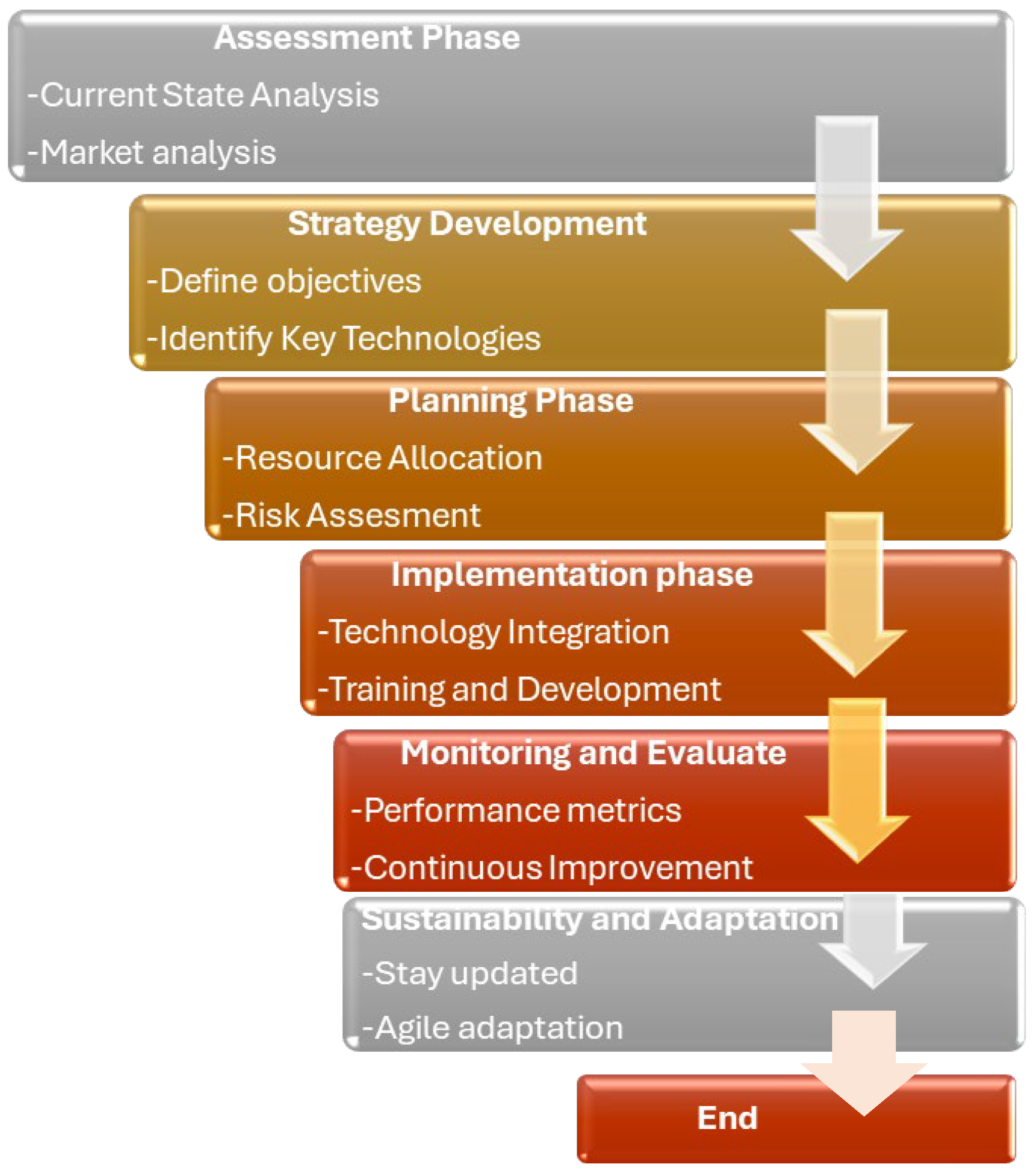
Figure 2.
SLR Flow Diagram.

Figure 3.
Simplified Systematic Review Process.
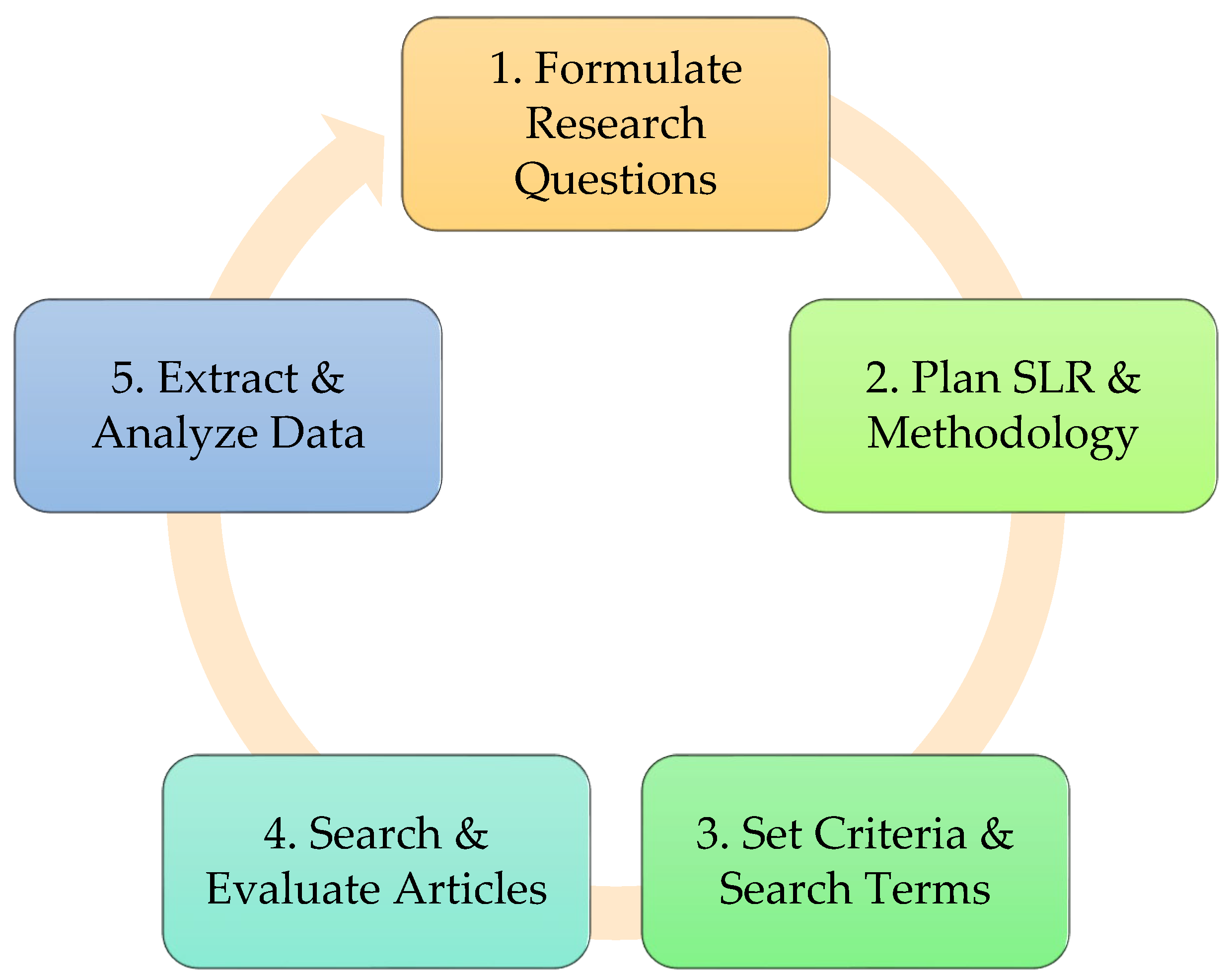
Figure 5.
Systematic Review Methodology Outline.
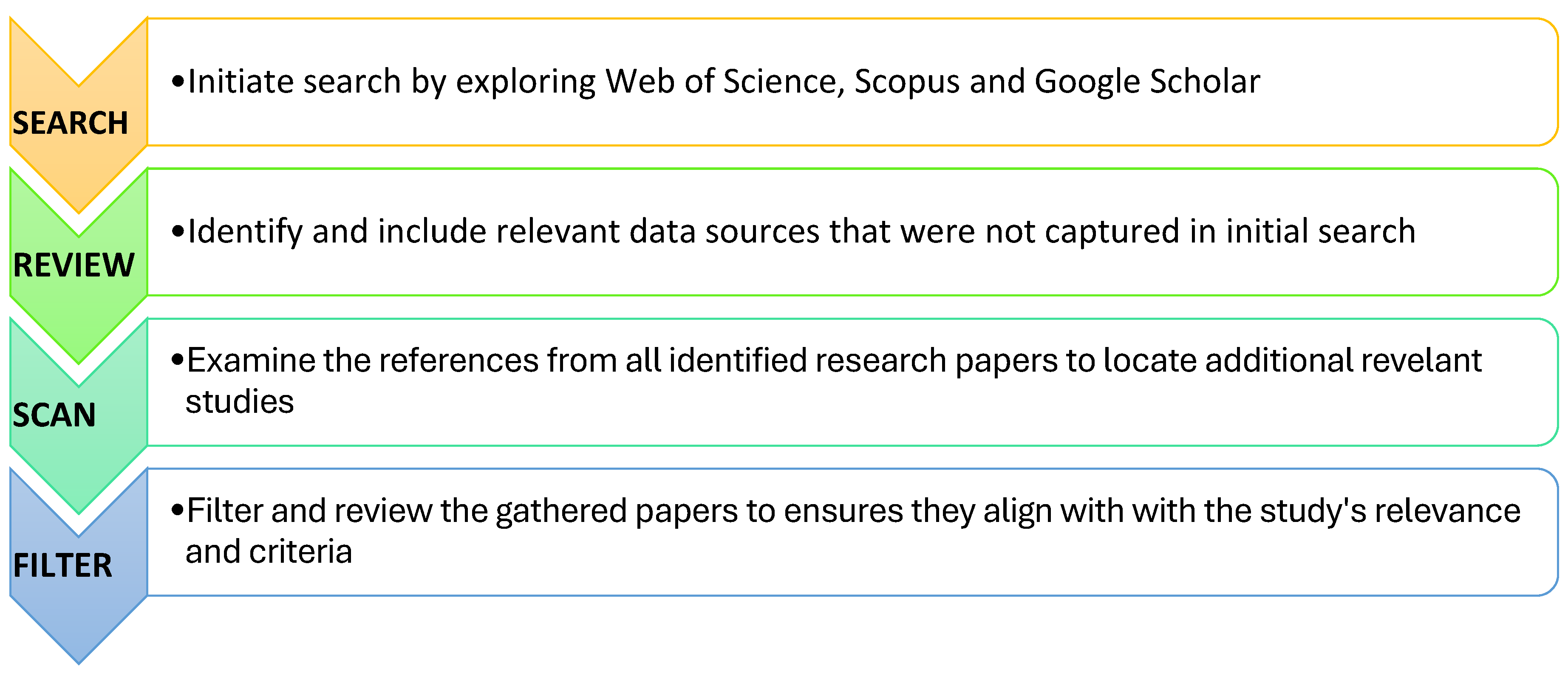
Figure 6.
Procedure for Selecting Effect Measures.
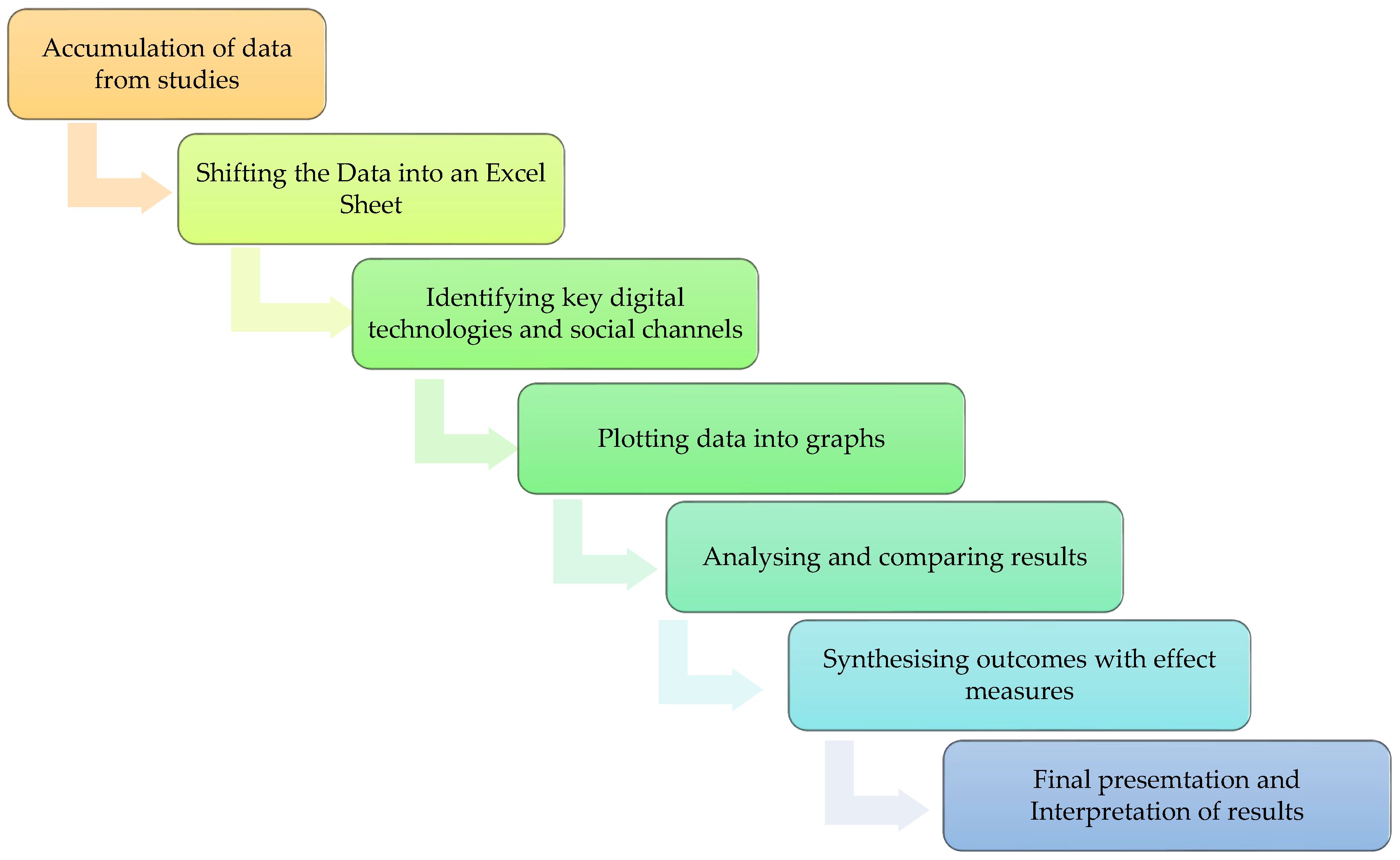
Figure 7.
Synthesis Method.

Figure 8.
Proposed PRISMA Flowchart.
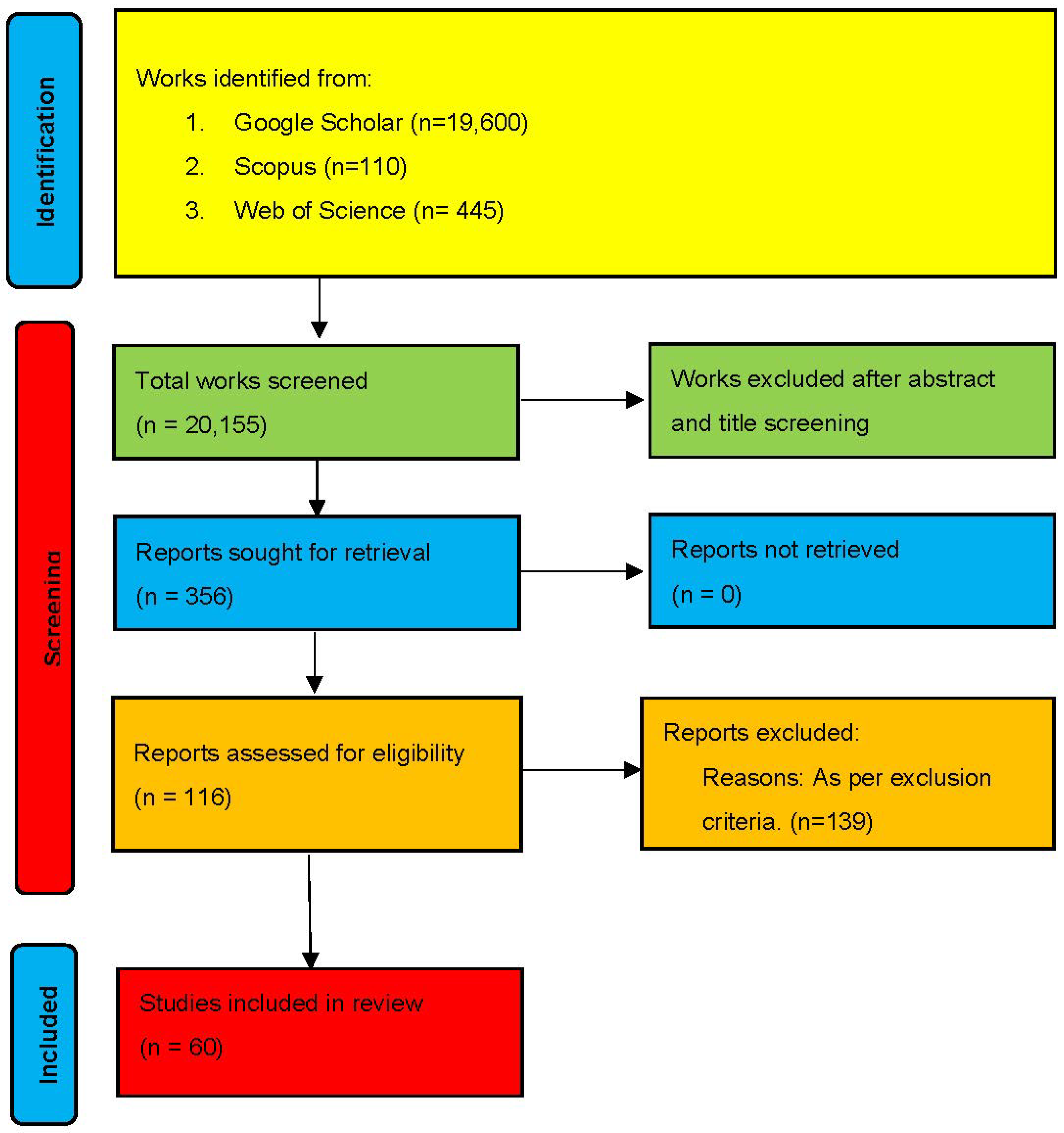
Figure 10.
Timeline of Literature Publications.
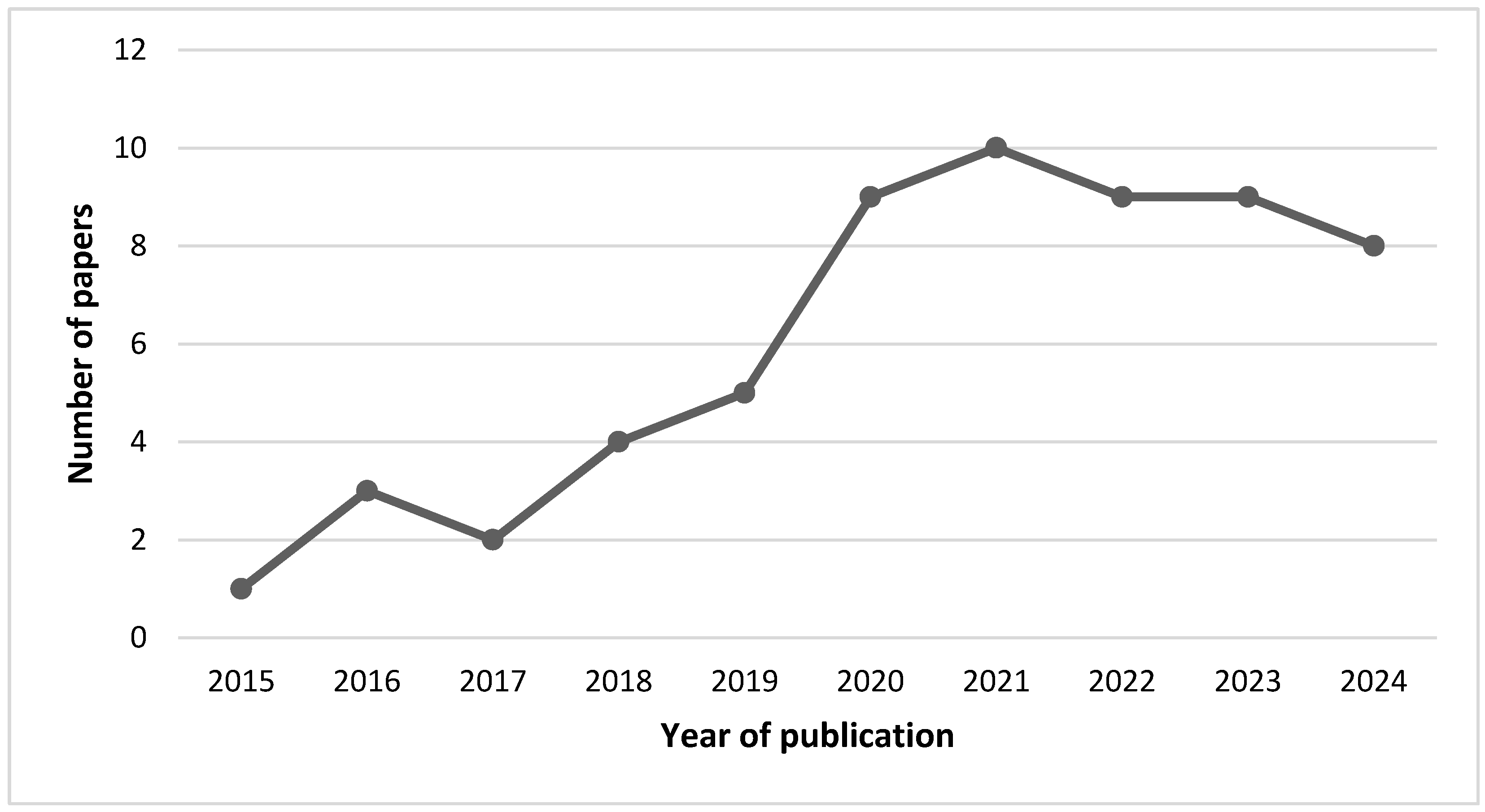
Figure 11.
Geographical Distribution of Research Papers.
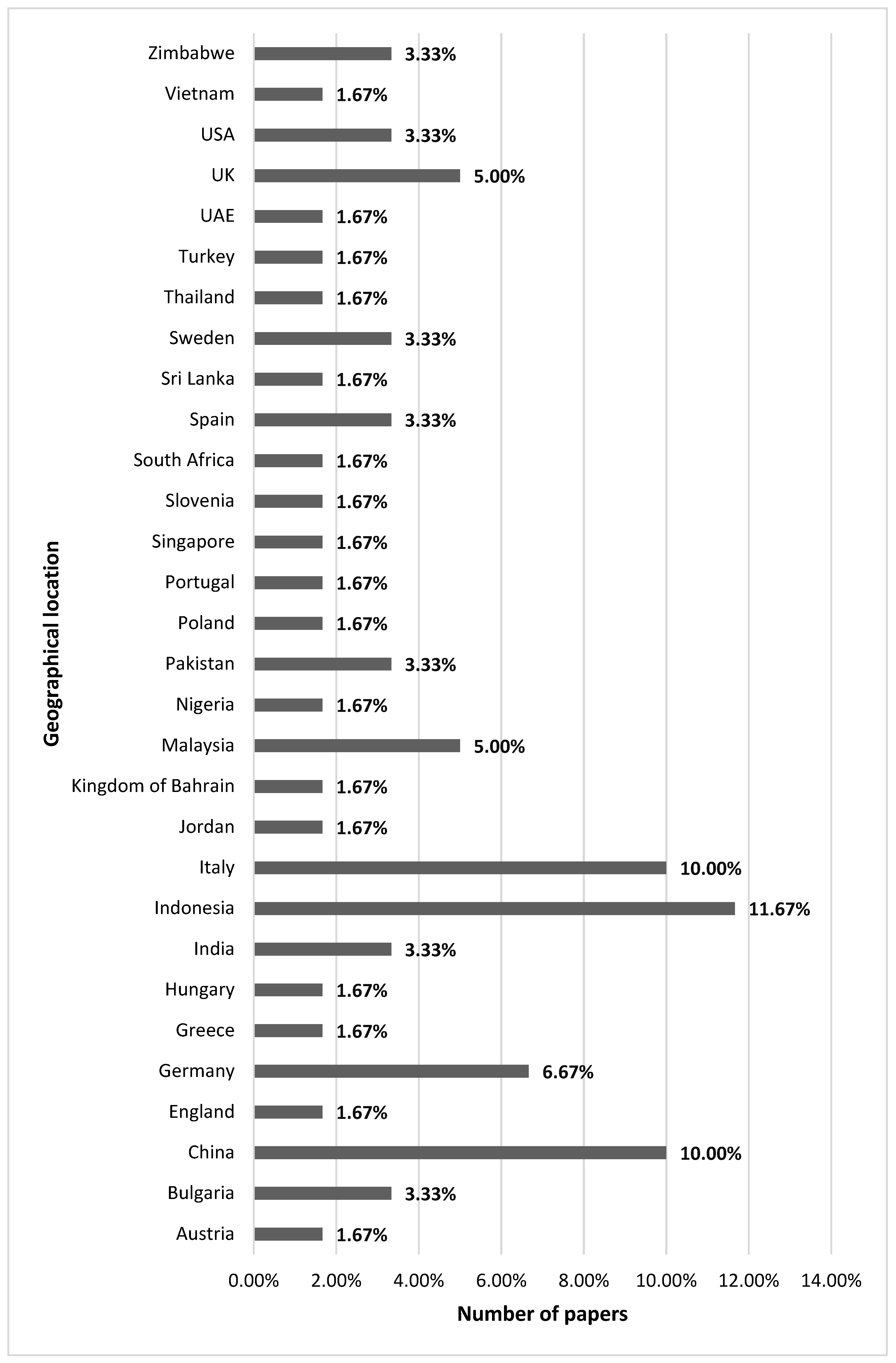
Figure 12.
Distribution of Research Papers by Discipline or Subject Area.
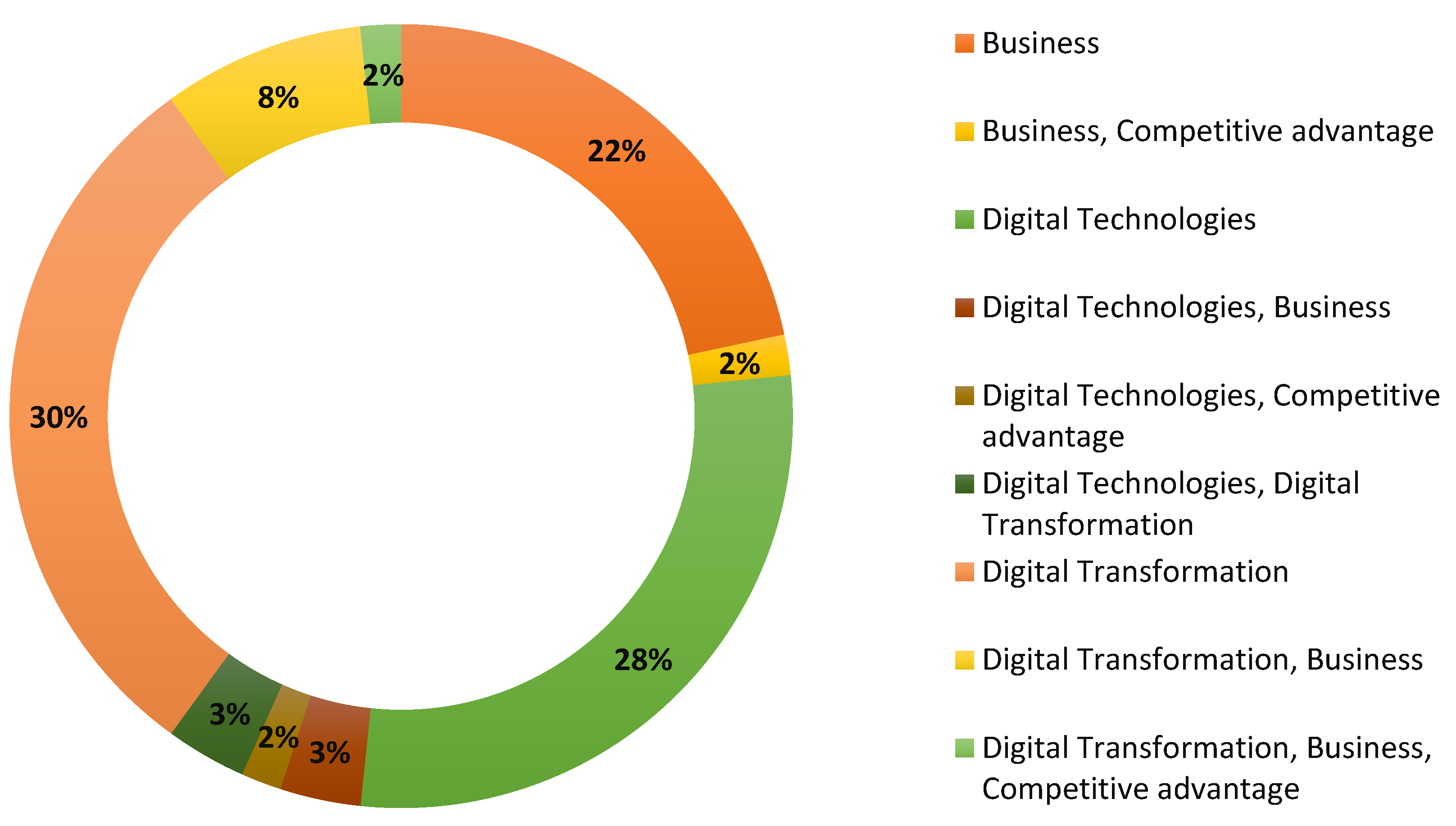
Figure 13.
Distribution of Research Papers by Research Design.
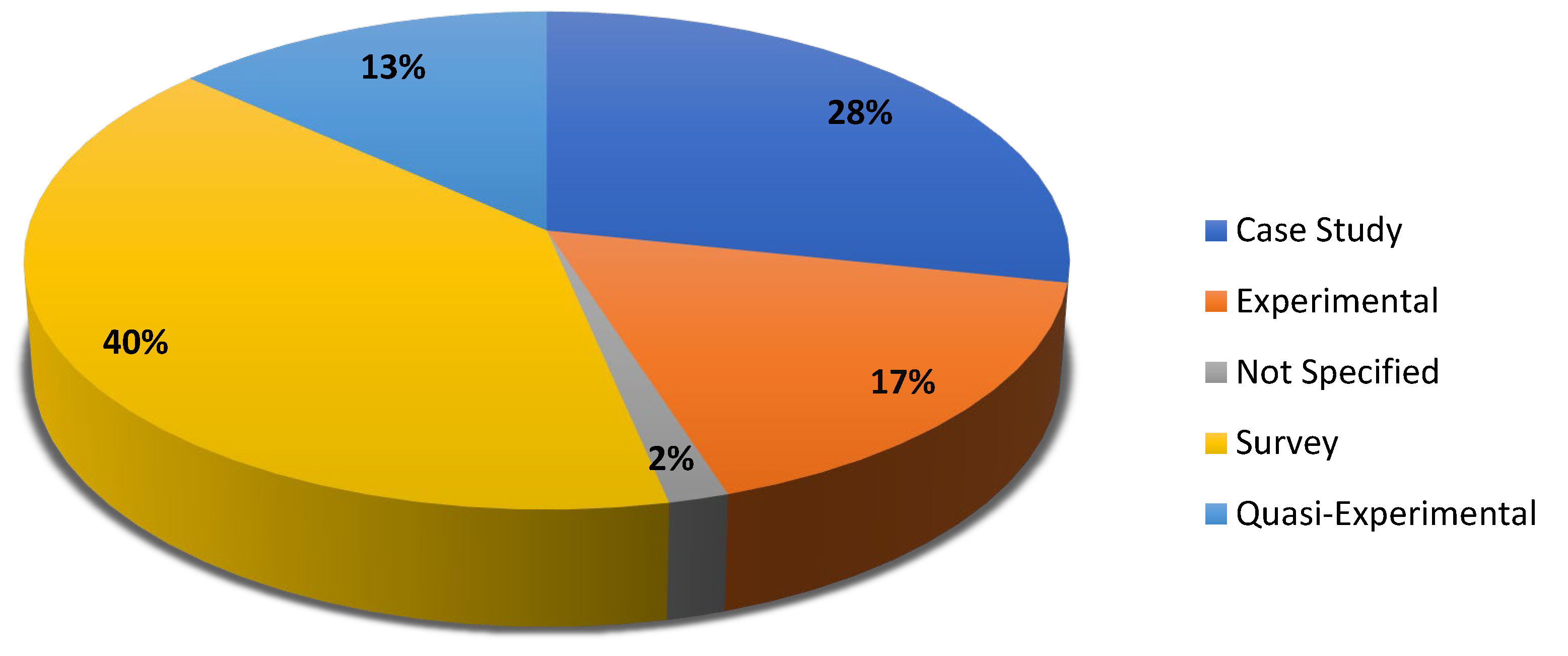
Figure 14.
Chart Showcasing Sample Characteristics.
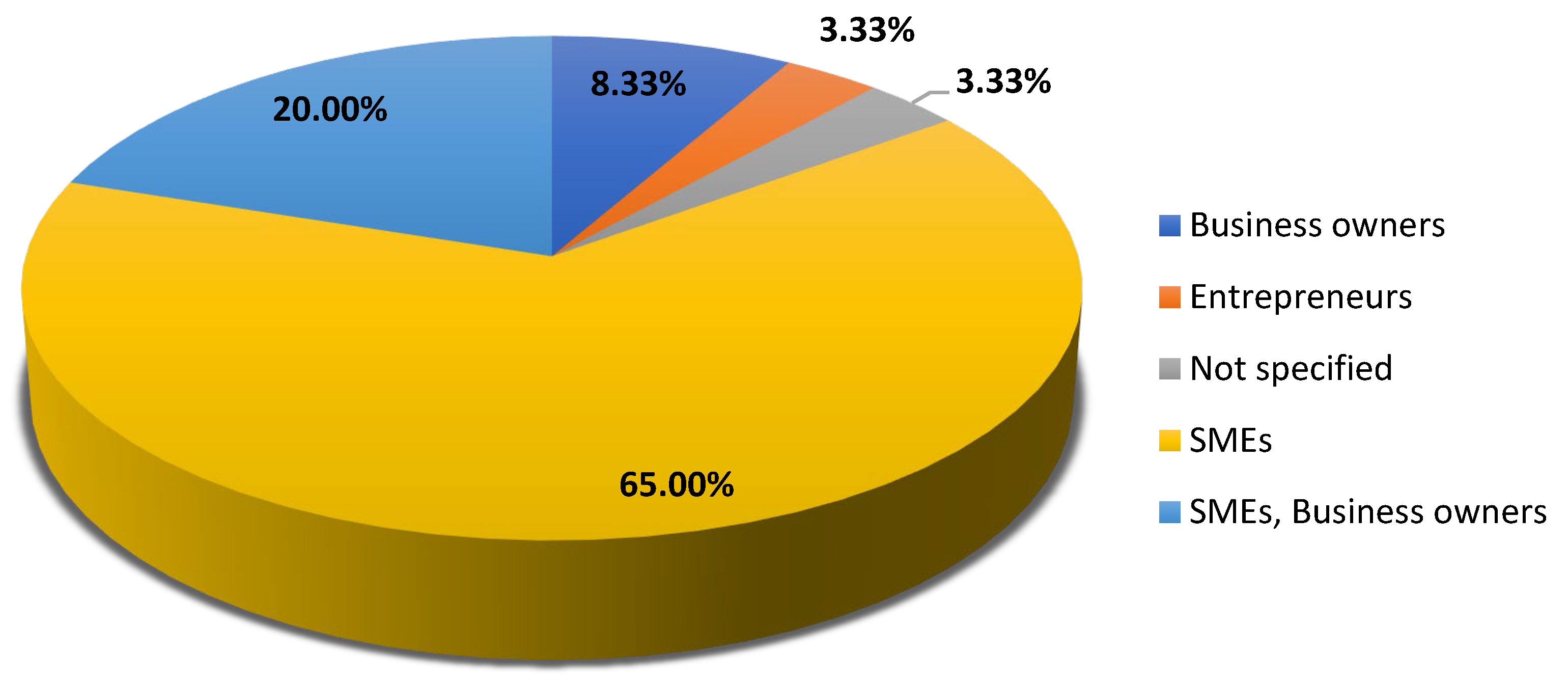
Figure 15.
Flowchart of Result of Syntheses.
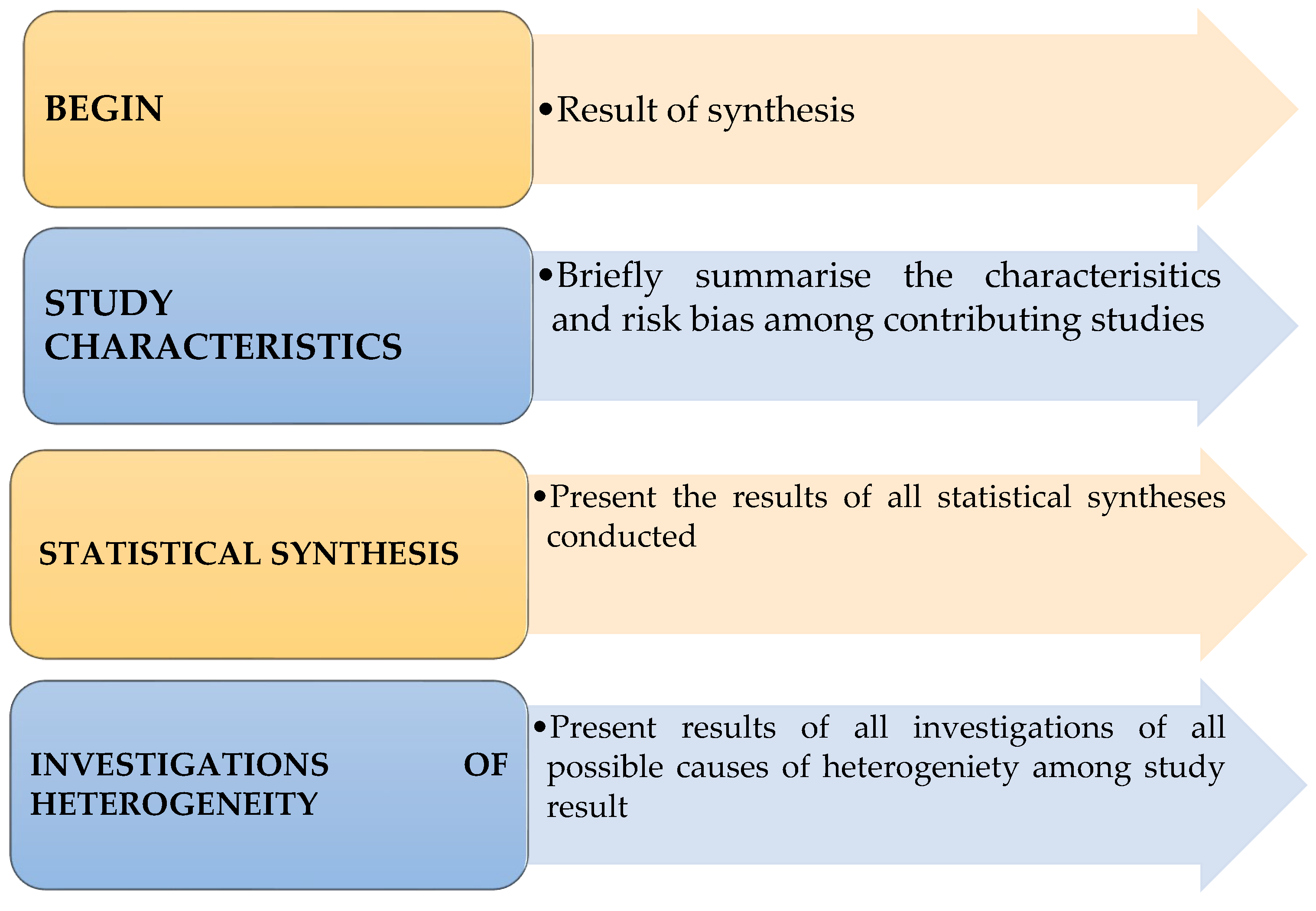
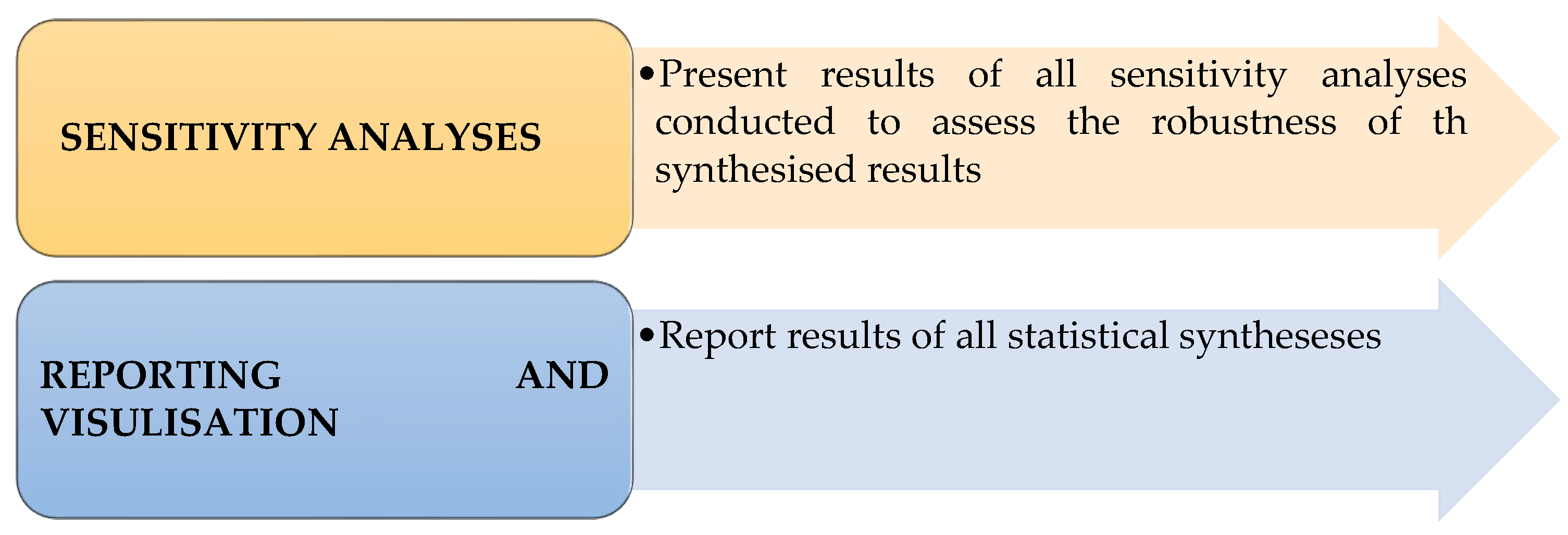
Figure 16.
Distribution of Study Collection Methods.
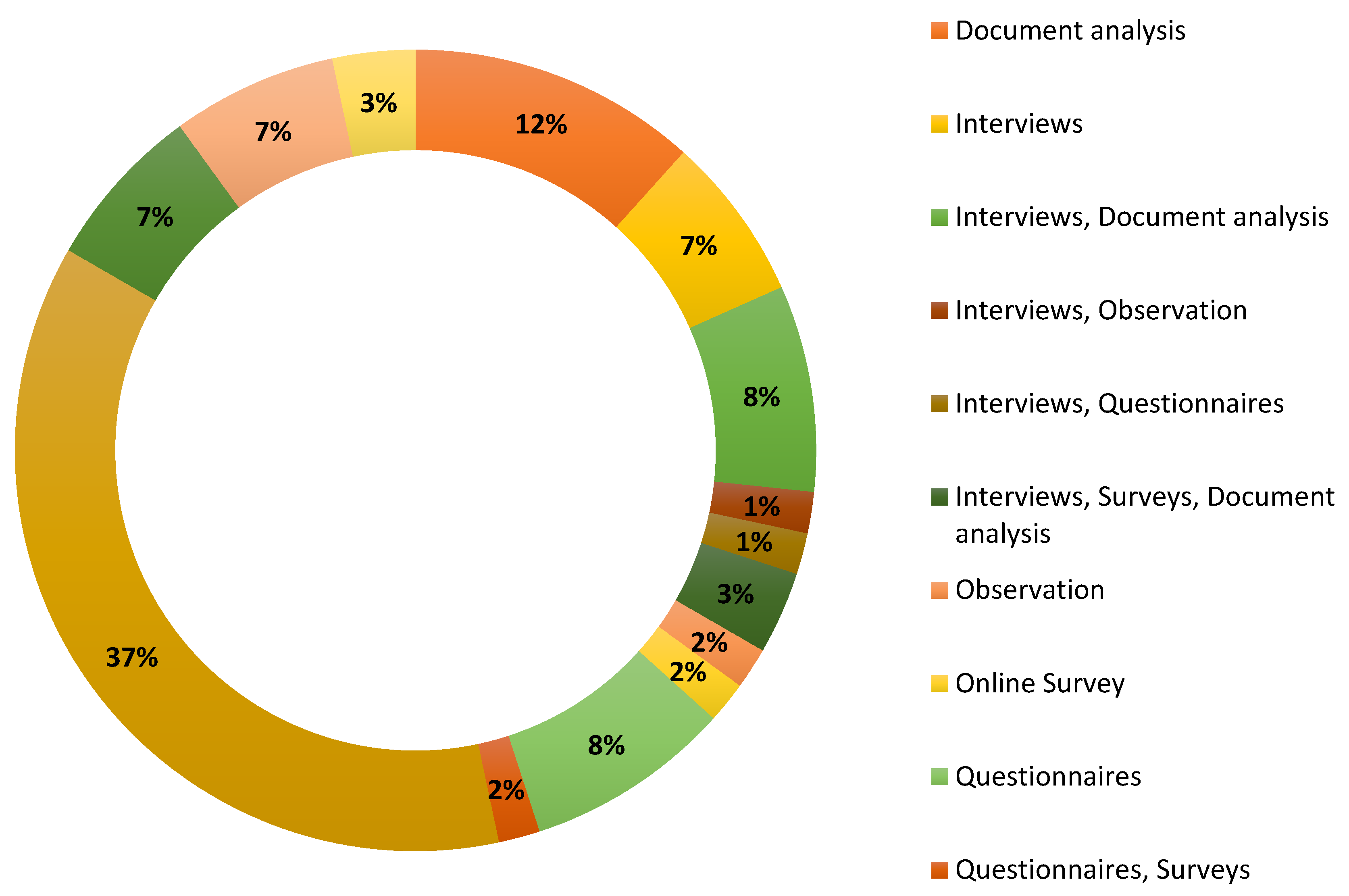
Figure 17.
Distribution of Types of Digital Technologies.
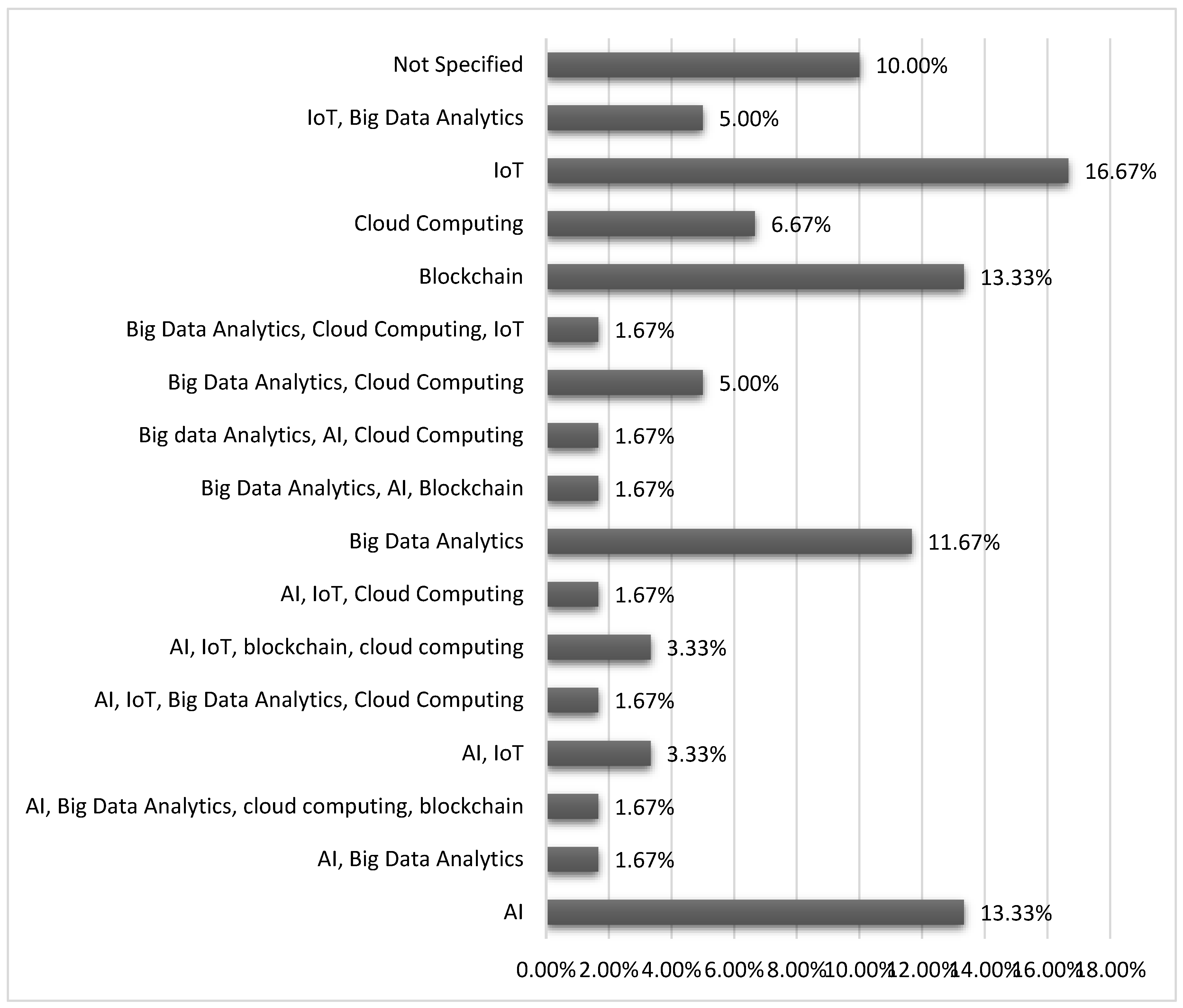
Figure 18.
Chart Showcasing Data Analysis Techniques.
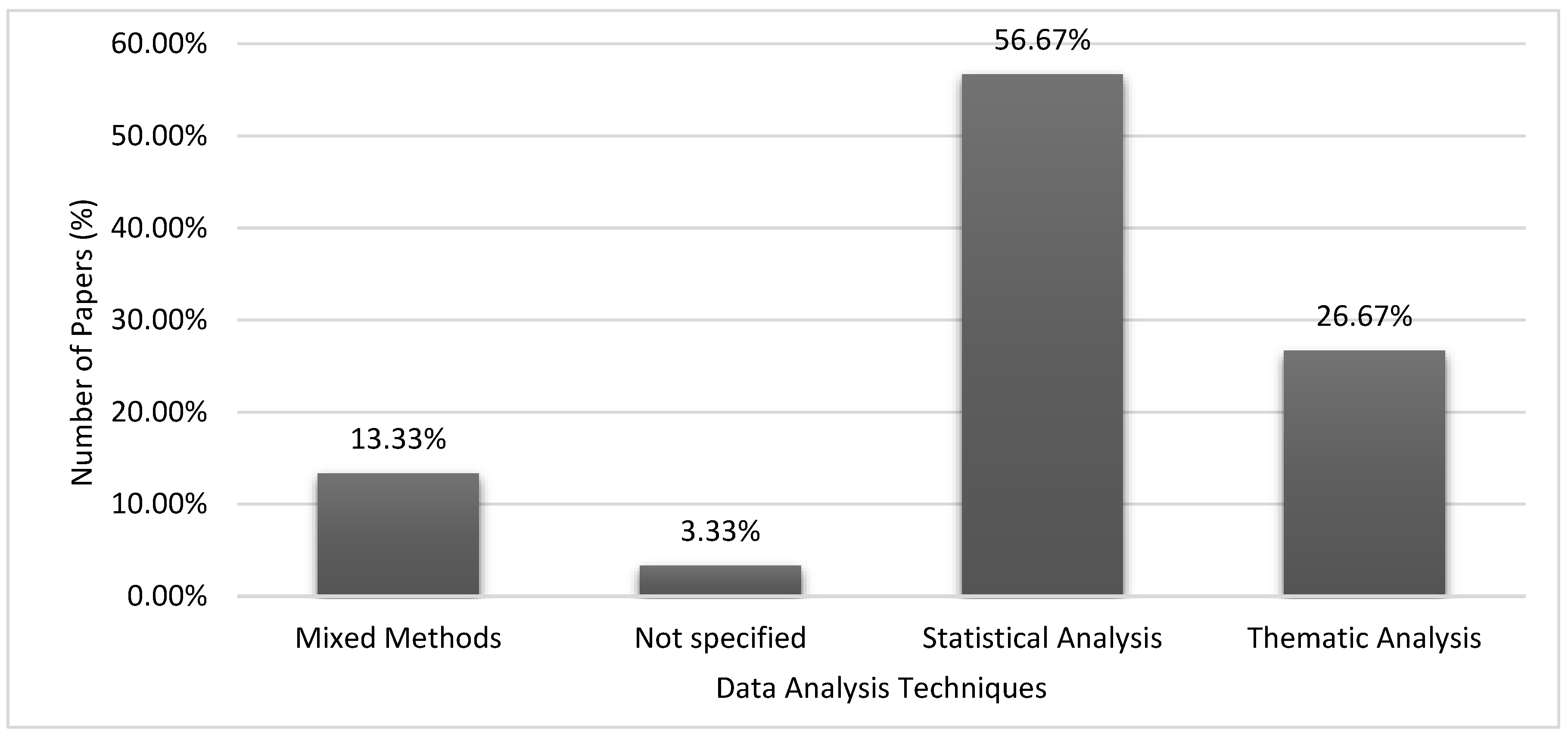
Figure 19.
Chart Showcasing Sample Characteristics.
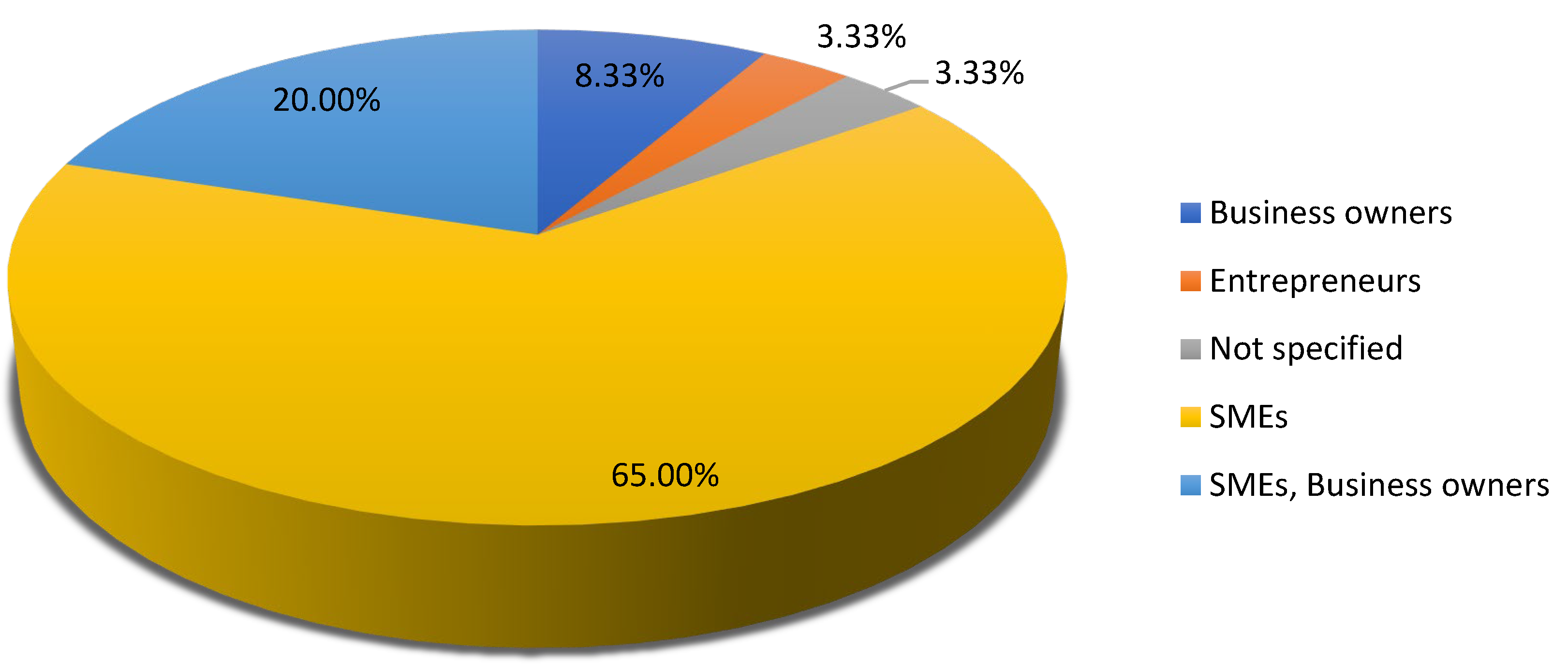
Figure 20.
Pie Chart Showcasing Distribution of Study Types.
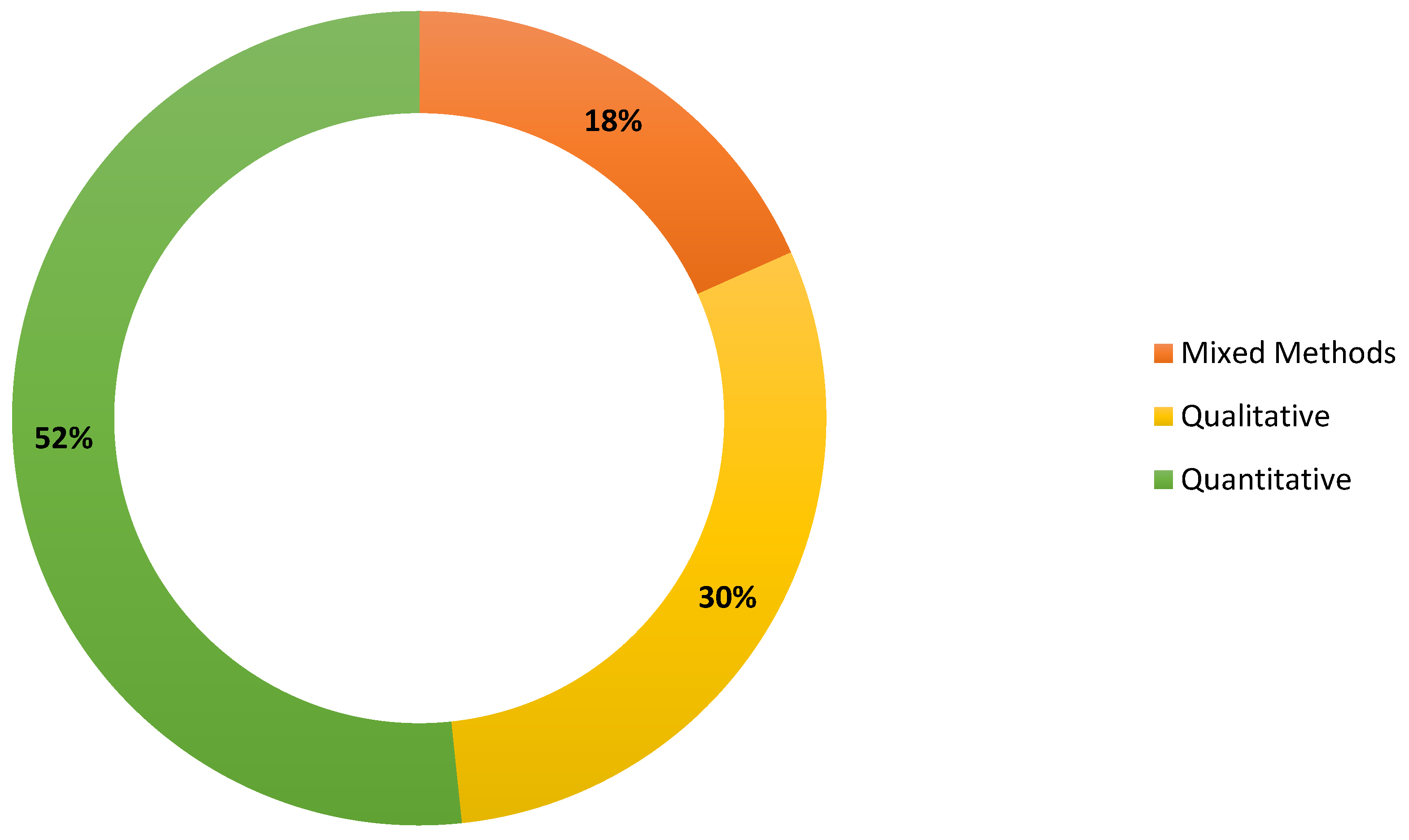
Figure 21.
Pie Chart Showcasing Types of Channels.
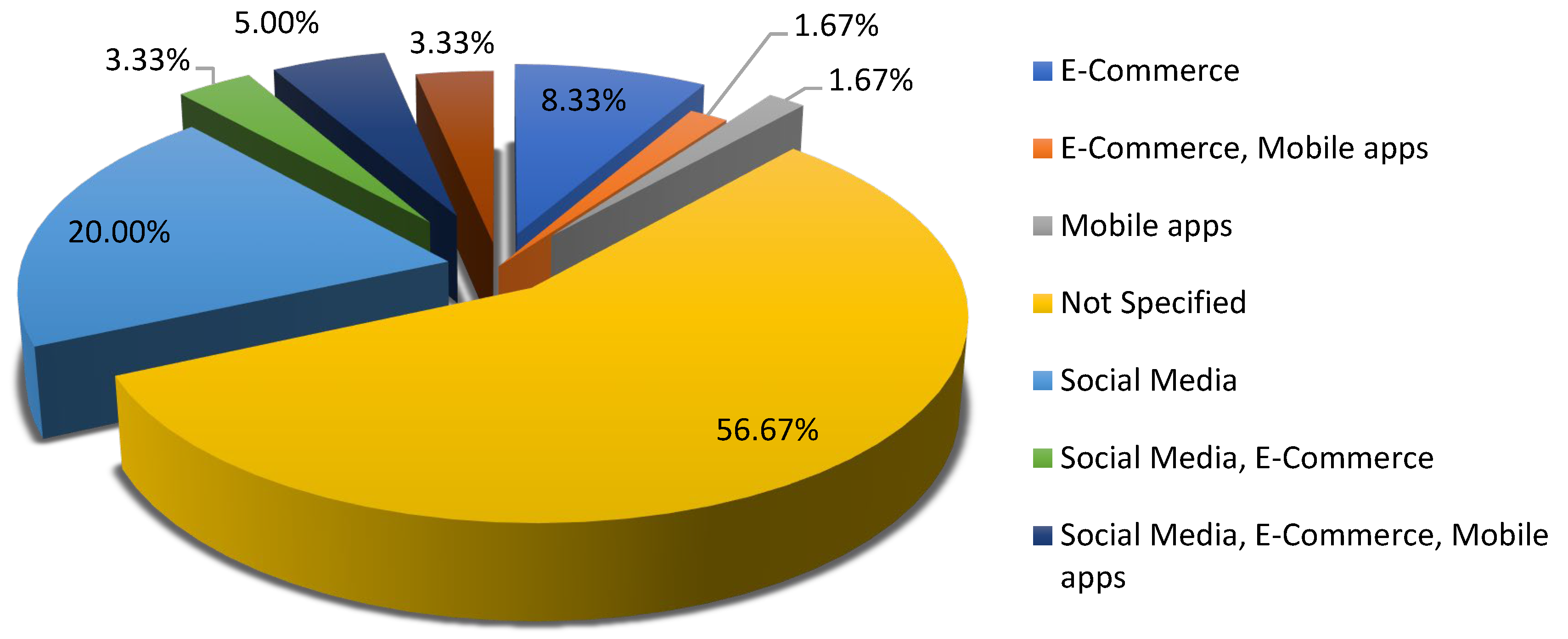
Table 1.
Comparative Analysis of the Existing Review Works and Proposed Systematic Review on Digital Technologies and Channels for Competitive Business Advantage.
Table 1.
Comparative Analysis of the Existing Review Works and Proposed Systematic Review on Digital Technologies and Channels for Competitive Business Advantage.
| Ref. | Cites | Year | Contribution | Pros | Cons |
|---|---|---|---|---|---|
| [8] | 1,523 | 2017 | Highlights the role of artificial intelligence in shaping digital transformation and business advantage. | Provides industry insights and practical applications. | The report focused on AI might overlook other technologies in digital transformation. |
| [9] | 12,362 | 2017 | Explores how analytics-driven strategies can lead to competitive advantages. | Focuses on real-world applications of data analytics for competitive success. | Primarily focuses on analytics, lacking discussion on other digital tools like AI or IoT.#break# |
| [10] | 527 | 2020 | Explores the future of retailing, focusing on how digital technologies shape retail experiences. | Industry-specific analysis for retail, with actionable insights for digital transformation | Limited to the retail industry, lacks broader cross-industry insights. |
| [11] | 235 | 2016 | Discusses how ambidextrous idea generation influences innovation and competitive advantage | Highlights the importance of ambidexterity in innovation. | Less focused on digital transformation, and more on innovation processes.#break# |
| [12] | 1,047 | 2015 | Explores the role of IoT and big data analytics in shaping business strategies | Combines two key emerging trends -IoT and big data offering a future-looking analysis | Focused on emerging technologies; practical implications may still be unclear for business.#break# |
| [13] | 987 | 2017 | Explores how large companies navigate digital transformation | Case studies of big firms provide practical insights. | Focuses on large organizations and may not be as relevant to SMEs or startups.#break# |
| [14] | 14,498 | 2018 | Discusses the role of business models and dynamic capabilities in driving competitive advantage | Provides a dynamic view of how companies can adapt their business models to capture value from technology. | More theoretical; lacks direct practical guidance for implementing specific digital strategies.#break# |
Table 2.
Proposed Inclusion and Exclusion Criteria.
| Criteria | Inclusion | Exclusion |
|---|---|---|
| Topic | Articles must focus on Digital Technologies and Channels for Competitive Business Advantage | Articles Unrelated to Digital Technologies and Channels for Competitive Business Advantage |
| Research Framework | Articles must include a research framework or methodology for digital technologies in SMEs | Articles lacking a clear research framework or methodology for digital technologies in SMEs |
| Language | Articles written in English | Articles published in languages other than English |
| Period | Publications between 2014 and 2024 | Publications outside 2014 and 2024 |
Table 3.
Data Items and Descriptions.
| Data Items | Description |
|---|---|
| Title | The title of research related to digital technologies as it channels for competitive advantage in SMEs |
| Year | The year in which the research on digital technologies and SMEs was published |
| #break#Online Database (Google Scholar, SCOPUS, Web of Science, IEEE Explore, ERIC) | The platform or database where the research on digital technology and SMEs is indexed or available. |
| Journal Name | The name of the journal where the study on digital technologies for SMEs was published.#break# |
| Research Type (Article Journal, Conference Paper, Book Chapter, Dissertation, Thesis) | The type of research publication focused on SMEs and digital technologies. |
| Discipline or Subject Area (e.g., digital technologies, competitive advantage, business) | The academic field, such as digital technology or competitive advantage, is related to the research in SMEs.#break# |
| Industry Context (e.g., SMEs, startups, small businesses) | The industry focus of the research, specifically on SMEs and how they leverage digital technologies.#break# |
| Geographic Location | The geographical focus of the research, such as specific regions or countries where SMEs are analyzed.#break# |
| Economic Context (e.g., developed vs. developing countries) | The economic setting, whether the research focuses on SMEs in developed or developing countries.#break# |
| Types of Digital Technologies (e.g., AI, IoT, blockchain) | The digital technologies like AI, IoT, and blockchain are explored as competitive channels for SMEs.#break# |
| Technology Providers (e.g., AWS, Microsoft Azure, Google Cloud) | The technology service providers offering platforms to SMEs, such as AWS or Microsoft Azure, for competitive advantage.#break# |
| Technology Implementation Model (e.g., on-premises, cloud-based, hybrid) | The deployment models for digital technologies, like cloud-based or hybrid, are used by SMEs.#break# |
| Research Design (experimental, quasi-experimental, case study, survey, etc.) | The research methodology is used to analyze the adoption and impact of digital technologies in SMEs.#break# |
| Type of Study (quantitative, qualitative, mixed methods) | The study approach, such as quantitative or mixed methods, is applied to research on digital technology and competitive advantage for SMEs.#break# |
| Sample Size | The number of SMEs or stakeholders surveyed or analyzed in the research.#break# |
| Sample Characteristics (e.g., SMEs, entrepreneurs, business owners) | Specific attributes of the participants, like entrepreneurs or business owners in the SME sector.#break# |
| Data Collection Methods (e.g., interviews, surveys, observations, document analysis) | The methods used to gather data, such as surveys or interviews, from SMEs regarding digital technology use.#break# |
| Data Analysis Techniques (e.g., statistical analysis, thematic analysis) | Techniques used to analyze data, such as statistical analysis or thematic analysis, in the context of digital technology in SMEs.#break# |
| Business Performance Metrics (e.g., revenue growth, market share, customer base) | Key performance indicators like revenue growth or market share used to measure competitive advantage from digital technology in SMEs.#break# |
| Technical Performance Metrics (e.g., system uptime, user engagement, scalability) | Metrics related to technical success, like scalability or user engagement, in the digital technology adopted by SMEs.#break# |
| Organizational Outcomes (e.g., employee satisfaction, customer satisfaction) | The impact of digital technologies on organizational outcomes like customer or employee satisfaction in SMEs.#break# |
| Long-term Impacts (e.g., business growth, competitive advantage) | The lasting effects of digital technologies, such as sustained competitive advantage or long-term business growth for SMEs. |
Table 4.
Quality Assessment of Non-Randomized Studies Using the Newcastle-Ottawa Scale (NOS).
| Study | Selection (Max 4 Stars) | Comparability (Max 2 stars) | Outcome/Exposure (Max 3 stars) | Total Score (Max 9 stars) | Quality Rating |
|---|---|---|---|---|---|
| [15] | ★★★ | ★★ | ★★ | 8 | High quality |
| [16] | ★★★ | ★★ | ★★ | 8 | High quality |
| [17] | ★★★ | ★★ | ★★ | 7 | High quality |
| [18] | ★★★ | ★★ | ★★ | 7 | High quality |
| [19] | ★★★★ | ★★ | ★★★ | 9 | High quality |
| [20] | ★★★★ | ★★ | ★★★ | 9 | High quality |
| [21] | ★★★★ | ★★ | ★★★ | 9 | High quality |
| [22] | ★★★ | ★★ | ★★★ | 8 | High quality |
| [23] | ★★★★ | ★ | ★★★ | 8 | High quality |
| [24] | ★★★★ | ★★ | ★★★ | 9 | High quality |
| [25] | ★★★★ | ★★ | ★★★ | 9 | High quality |
| [26] | ★★★★ | ★★ | ★★★ | 9 | High quality |
| [27] | ★★★★ | ★★ | ★★★ | 9 | High quality |
| [28] | ★★★★ | ★★ | ★★★ | 9 | High quality |
| [29] | ★★★ | ★★ | ★ | 6 | Moderate quality |
| [30] | ★★★ | ★ | ★★ | 6 | Moderate quality |
| [31] | ★★★ | ★★ | ★★ | 7 | High quality |
| [32] | ★★★ | ★★ | ★★ | 7 | High quality |
| [33] | ★★★★ | ★ | ★★ | 7 | High quality |
| [34] | ★★★★ | ★★ | ★★★ | 9 | High quality |
| [35] | ★★★★ | ★★ | ★★★ | 9 | High quality |
| [36] | ★★★ | ★★ | ★★ | 7 | High quality |
| [37] | ★★★★ | ★★ | ★★★ | 9 | High quality |
| [38] | ★★★★ | ★★ | ★★★ | 9 | High quality |
| [39] | ★★★★ | ★★ | ★★ | 8 | High quality |
| [40] | ★★★ | ★ | ★★ | 6 | Moderate quality |
| [41] | ★★★ | ★★ | ★★ | 7 | High quality |
| [42] | ★★★ | ★★ | ★★ | 7 | High quality |
| [43] | ★★★★ | ★★ | ★★★ | 9 | High quality |
| [44] | ★★★ | ★ | ★★ | 6 | Moderate quality |
| [45] | ★★★★ | ★★ | ★★★ | 9 | High quality |
| [46] | ★★★★ | ★★ | ★★★ | 9 | High quality |
| [47] | ★★★★ | ★★ | ★★★ | 9 | High quality |
| [48] | ★★★★ | ★★ | ★★★ | 9 | High quality |
| [49] | ★★★ | ★ | ★★ | 6 | Moderate quality |
| [50] | ★★★★ | ★★ | ★★★ | 9 | High quality |
| [51] | ★★★ | ★★ | ★★ | 7 | High quality |
| [52] | ★★★★ | ★★ | ★★ | 8 | High quality |
| [53] | ★★★ | ★ | ★★ | 6 | Moderate quality |
| [54] | ★★★★ | ★★ | ★★★ | 9 | High quality |
| [55] | ★★★★ | ★★ | ★★★ | 9 | High quality |
| [56] | ★★★ | ★★ | ★★ | 7 | High quality |
| [57] | ★★★ | ★★ | ★★★ | 8 | High quality |
| [58] | ★★★ | ★ | ★★ | 6 | Moderate quality |
| [59] | ★★★ | ★★ | ★★ | 7 | High quality |
| [60] | ★★★★ | ★★ | ★★★ | 9 | High quality |
| [61] | ★★★★ | ★★ | ★★★ | 9 | High quality |
Table 5.
Synthesis Method Table.
| Synthesis Step | Description | Methods Applied |
|---|---|---|
| Eligibility Assessment | Studies were evaluated based on relevance to SMEs and digital technologies, with characteristics coded for grouping. | Criteria coding, logical comparison, grouping by predefined criteria. |
| Data Preparation | Data was standardized and missing information was imputed or interpolated to ensure uniformity for synthesis. | Statistical conversions, imputation, interpolation. |
| Tabulation and Visual Display | Results were presented in structured tables and forest plots, ordered by study quality and relevance. | Structured tables, forest plots, graphical representation of effect estimates. |
| Synthesis Methods | Meta-analysis using fixed-effects or random-effects models, with heterogeneity testing. Alternative methods were used for non-meta-analyzed data. | Meta-analysis models, heterogeneity tests, alternative synthesis methods, statistical software. |
Table 6.
Proposed Research Quality Questions.
| Question (Q) | Research Quality Questions |
|---|---|
| Q1 | Are the research objectives clearly defined? |
| Q2 | Is the methodology of the study well-explained? |
| Q3 | Is the research model clearly presented? |
| Q4 | Are the data collection methods thoroughly described? |
| Q5 | Is the study’s context or discipline clearly identified? |
| Q6 | Do the results contribute to the existing body of literature? |
Table 8.
Momentary View of the Research Works Contained in this Paper by Published Year.
| Published Year | Book Chapter | Conference Paper | Dissertation | Journal article |
|---|---|---|---|---|
| 2014 | 0 | 0 | 0 | 0 |
| 2015 | 0 | 0 | 0 | 1 |
| 2016 | 0 | 0 | 0 | 3 |
| 2017 | 0 | 0 | 0 | 2 |
| 2018 | 0 | 1 | 0 | 3 |
| 2019 | 0 | 0 | 0 | 5 |
| 2020 | 0 | 0 | 0 | 9 |
| 2021 | 0 | 1 | 0 | 9 |
| 2022 | 0 | 2 | 0 | 7 |
| 2023 | 0 | 1 | 0 | 8 |
| 2024 | 0 | 1 | 0 | 7 |
Table 9.
Findings from the literature and the strategic implications for SMEs.
| Industry | Category | Subcategory | Findings | Strategic Drivers | Barriers | Opportunities | Strategic Implications for Business Leaders |
|---|---|---|---|---|---|---|---|
| Retail SMEs | Digital Marketing | AI-based Marketing Automation | 25% increase in customer engagement using AI-driven marketing automation | Personalization and real-time engagement critical for customer retention | High cost of implementing AI-driven tools, lack of expertise | AI can boost customer retention and ROI in marketing campaigns | Invest in AI-driven CRM systems that automate customer engagement and integrate inventory systems |
| Predictive Analytics | Inventory Management | 30% improvement in inventory management and forecasting | Real-time data analysis for adjusting stock levels | Lack of integration across digital platforms, siloed data | Optimized inventory reduces waste, prevents stockouts during peak seasons | Prioritize predictive analytics in supply chain management to reduce costs and optimize operations | |
| E-commerce | Omnichannel Integration | 40% sales increase with omnichannel integration | Seamless cross-channel integration improves customer experience | Difficulty in synchronizing data across physical, online, and mobile channels | Enhanced brand loyalty and revenue growth with omnichannel options | Invest in omnichannel platforms for a frictionless, consistent customer experience | |
| Healthcare SMEs | Patient Data Management | IoT-based Patient Monitoring | 25% reduction in emergency response times using IoT devices | Real-time data supports quick medical decisions | Data privacy concerns, compliance with regulations (HIPAA, GDPR) | IoT enhances early diagnosis and patient care through real-time monitoring | Ensure IoT systems comply with healthcare regulations and leverage real-time data for better outcomes |
| Data Security | Blockchain for Data Transactions | Blockchain improved data transparency and security | Secure, tamper-proof data transactions are essential | High implementation costs, technical complexity | Blockchain facilitates secure data sharing in healthcare collaborations | Leverage blockchain for regulatory compliance and secure data sharing among healthcare institutions | |
| Finance SMEs | Fraud Detection | AI-powered Fraud Detection | 50% reduction in fraudulent transactions using AI | Real-time fraud detection systems improve trust and compliance | High upfront investment, lack of skilled professionals | AI-powered fraud detection can reduce financial crimes | Prioritize AI systems for fraud detection to enhance trust and meet compliance standards |
| Data Security | Blockchain for Financial Records | 30% faster audits using blockchain for financial transactions | Blockchain secures tamper-proof transaction records | Limited knowledge of blockchain, high cost of implementation | Blockchain ensures transparency and security in international trade | Invest in blockchain to create tamper-proof transaction records and ensure compliance | |
| Manufacturing SMEs | Production Optimization | IoT for Predictive Maintenance | 20% reduction in machine downtime using IoT for predictive maintenance | Real-time machine monitoring ensures operational efficiency | High cost of IoT implementation, lack of technical expertise | IoT improves efficiency by reducing operational downtimes and optimizing production | Implement IoT for real-time production monitoring and predictive maintenance to reduce downtime and costs |
| Supply Chain Management | AI-Driven Supply Chain Analytics | 35% improvement in demand forecasting and supply chain optimization | AI-driven insights optimize supply chain management | Integration challenges across supply chain, lack of data standards | AI can optimize supply chain forecasting and inventory management | Adopt AI for optimizing supply chain management and improving overall operational efficiency | |
| Logistics SMEs | Fleet Management | IoT for Real-Time Fleet Tracking | 30% improvement in fleet efficiency through IoT-based tracking systems | Real-time vehicle monitoring ensures efficient fleet management | Integration with existing logistics systems, data privacy concerns | IoT can optimize fleet routes and reduce fuel consumption | Invest in IoT-based tracking systems to improve fleet management and optimize delivery schedules |
| Supply Chain Visibility | Blockchain for Transparency | 40% improvement in supplier trust and transparency using blockchain | Blockchain ensures secure, transparent supply chains | Lack of expertise, high blockchain adoption costs | Blockchain can enhance trust and visibility in supply chain management | Implement blockchain to secure and streamline the supply chain, improving transparency and efficiency | |
| Hospitality SMEs | Customer Engagement | AI-Powered Personalization | 30% increase in customer satisfaction through personalized services using AI | Personalization increases customer loyalty and brand differentiation | High cost of AI tools, lack of expertise | AI enhances guest experience through personalized recommendations | Invest in AI tools for personalized guest experiences and services, improving loyalty and satisfaction |
| Booking and Property Management | Cloud-Based Booking Systems | 25% improvement in booking efficiency through cloud-based management | Cloud systems enable seamless booking and property management | High implementation costs, lack of system integration | Cloud systems improve booking efficiency and streamline property management | Leaders should prioritize cloud-based booking systems to improve efficiency and customer experience | |
| Energy SMEs | Grid Performance Monitoring | IoT for Smart Grids | 15% improvement in grid performance with real-time IoT monitoring | Real-time grid monitoring enables energy efficiency improvements | High cost of IoT infrastructure, lack of skilled professionals | IoT enables predictive maintenance and energy efficiency in grid operations | Invest in IoT systems for smart grid monitoring and predictive maintenance to optimize energy use |
| Renewable Energy Adoption | AI for Energy Management | 20% reduction in energy costs through AI-based energy management systems | AI optimizes energy consumption and cost management | High cost of AI solutions, technical expertise required | AI can reduce energy costs and optimize resource allocation | Leaders should invest in AI-driven energy management systems to reduce costs and optimize resource use | |
| Education SMEs | Learning Management | Cloud-Based LMS Systems | 35% improvement in student engagement through cloud-based LMS | Cloud LMS systems improve learning outcomes and student accessibility | Integration challenges with existing platforms, data privacy concerns | Cloud-based LMS offers scalability and improved student engagement | Invest in cloud-based LMS platforms to enhance digital learning experiences and student outcomes |
| Research Data Management | AI for Research Analytics | 25% improvement in research output using AI for data analysis | AI accelerates research data processing and analysis | High cost of AI adoption, limited data integration capabilities | AI can improve research productivity and data analysis capabilities | Leaders should integrate AI systems into research platforms to enhance data analysis and research productivity |
Table 10.
Decision-Making Framework for Implementing Digital Technologies for Competitive Advantage in SMEs.
Table 10.
Decision-Making Framework for Implementing Digital Technologies for Competitive Advantage in SMEs.
| Industry | Key Decision Points | Sub-Decision Points | Technologies to Implement | Evaluation Metrics | Risks to Consider | Strategic Benefits | Long-term Implications |
|---|---|---|---|---|---|---|---|
| Retail SMEs | Personalization vs. Process Optimization | Should SMEs prioritize customer personalization over internal process optimization? | AI-driven CRM for personalized marketing, ERP for process optimization | Customer satisfaction, sales conversion rates, inventory turnover rates | High cost of AI implementation, data privacy concerns | AI improves personalized marketing, while ERP optimizes operational efficiency | Long-term improvements in customer loyalty and operational scalability |
| Mobile-First vs. Omnichannel Strategy | Is it better to invest in mobile-first technology or an omnichannel strategy? | Mobile-responsive platforms, omnichannel e-commerce integration | Customer acquisition cost (CAC), mobile engagement metrics, omnichannel conversion rates | Inconsistent customer experiences across channels | Omnichannel strategy provides flexibility across sales platforms, boosting customer retention | Strategic long-term growth through diversified sales channels and customer engagement | |
| Data-Driven Insights vs. Traditional Models | Should data analytics be prioritized over traditional retail forecasting methods? | AI-powered data analytics, predictive analytics for inventory management | Forecast accuracy, revenue growth, operational cost reduction | Risk of data misinterpretation, high setup costs | Predictive analytics improves demand forecasting, inventory optimization | Long-term operational efficiency and reduction of waste | |
| Healthcare SMEs | Real-Time Monitoring vs. Data Security | Should SMEs focus on real-time patient monitoring or improving data security? | IoT-based patient monitoring systems, blockchain for secure data sharing | Patient outcome metrics, HIPAA/GDPR compliance, emergency response times | High cost of compliance, regulatory and data privacy challenges | IoT-based monitoring improves patient outcomes, while blockchain secures data transactions | Enhanced patient care, data security, and long-term regulatory compliance |
| In-House Data Storage vs. Cloud Solutions | Should SMEs invest in in-house data storage or transition to cloud-based systems? | Cloud-based EHR systems, AI for medical diagnostics | Patient data accessibility, cost efficiency, system reliability | Data privacy concerns, ongoing cloud service costs | Cloud solutions offer scalable data storage and real-time access to patient records | Long-term cost savings, increased scalability, and improved patient care | |
| Patient Experience vs. Operational Efficiency | Should the focus be on improving patient experience or optimizing internal operations? | AI-driven patient care systems, ERP for hospital management | Patient satisfaction scores, operational cost reductions | Resistance to adopting new technologies, high cost of training healthcare professionals | AI-driven patient care systems improve healthcare experiences and outcomes | Long-term improvements in patient satisfaction, healthcare delivery efficiency | |
| Finance SMEs | Compliance vs. Fraud Detection | Should SMEs invest in compliance measures or fraud detection technologies first? | AI-driven fraud detection systems, blockchain for secure transactions | Fraud detection rates, compliance violations, customer trust metrics | High initial costs, complexity of implementation | AI systems reduce fraud, blockchain ensures regulatory compliance | Long-term cost savings from reduced fraud and increased customer trust |
| Automation vs. Customer Service | Should SMEs prioritize automating processes or improving customer service? | AI-powered customer service bots, robotic process automation (RPA) | Customer service response times, operational cost savings | Loss of personal touch with customers, complexity of automation | Automation improves operational efficiency, while AI enhances customer interactions | Long-term operational savings and customer satisfaction improvements | |
| Data Centralization vs. Decentralization | Should data be centralized for control or decentralized for security and flexibility? | Blockchain for decentralized ledgers, cloud-based financial systems | Transaction processing times, data security breaches, audit accuracy | High cost of blockchain implementation, integration challenges | Decentralized ledgers increase data security and transparency | Long-term trust and transparency in financial transactions | |
| Manufacturing SMEs | Automation vs. Workforce Expansion | Should SMEs automate processes or focus on workforce expansion? | IoT for smart manufacturing, AI-driven robotics | Production efficiency, labor cost reductions, downtime minimization | Resistance to automation, high upfront investment in robotics | Automation reduces costs, improves production rates, and minimizes errors | Long-term scalability and operational efficiency gains |
| Predictive Maintenance vs. Reactive Repair | Should SMEs adopt predictive maintenance technologies or continue with traditional repair strategies? | IoT-based predictive maintenance, AI-powered equipment monitoring | Machine downtime rates, maintenance cost savings, equipment lifespan | High cost of IoT and AI adoption, technical expertise requirement | Predictive maintenance improves uptime, reduces operational costs, and extends equipment life | Long-term reduction in maintenance costs and increased operational efficiency | |
| Global Supply Chain vs. Local Optimization | Should SMEs focus on global supply chain optimization or local market efficiencies? | AI for global supply chain management, blockchain for supply chain transparency | Delivery accuracy, supplier trust, cost savings from optimized logistics | High costs of blockchain and AI integration, complexity in global coordination | AI and blockchain improve supply chain transparency, trust, and efficiency | Long-term improvements in global logistics and operational transparency | |
| Logistics SMEs | Route Optimization vs. Delivery Speed | Should SMEs prioritize route optimization technologies over reducing delivery times? | AI-powered route optimization tools, IoT for real-time fleet tracking | Delivery time reduction, fuel cost savings, fleet efficiency | Data privacy concerns, high cost of AI and IoT tools | Route optimization reduces delivery times and fuel costs | Long-term fuel cost savings and operational efficiency improvements |
| Real-Time Tracking vs. Supply Chain Visibility | Should SMEs focus on real-time tracking of assets or improving supply chain visibility? | Blockchain for supply chain transparency, IoT for asset tracking | Supply chain efficiency, inventory accuracy, tracking system reliability | High blockchain implementation costs, integration challenges | Blockchain and IoT improve supply chain visibility and tracking accuracy | Long-term transparency and operational control in supply chain management | |
| Hospitality SMEs | Customer Personalization vs. Booking Efficiency | Should SMEs focus on personalizing guest experiences or improving booking processes? | AI-driven personalization, cloud-based booking systems | Guest satisfaction, booking conversion rates, occupancy rates | High cost of AI tools, integration challenges with legacy systems | AI improves customer engagement and personalized services | Long-term guest loyalty and increased occupancy rates |
| Dynamic Pricing vs. Standard Pricing Models | Should SMEs adopt dynamic pricing models or stick to traditional pricing strategies? | AI-driven dynamic pricing tools, revenue management systems | Revenue growth, occupancy rates, guest satisfaction | Resistance to dynamic pricing models, customer dissatisfaction with price fluctuations | Dynamic pricing optimizes revenue and ensures maximum occupancy | Long-term revenue optimization and pricing efficiency | |
| Energy SMEs | Energy Efficiency vs. Grid Expansion | Should SMEs focus on improving energy efficiency or expanding grid capacity? | IoT for energy usage monitoring, AI-driven energy management systems | Energy cost savings, grid reliability, operational efficiency | High cost of IoT and AI tools, regulatory challenges | IoT improves energy efficiency, while AI optimizes resource allocation | Long-term energy savings and grid reliability improvements |
| Renewable Energy vs. Traditional Sources | Should SMEs invest in renewable energy systems or continue with traditional energy sources? | Solar power systems, AI-driven energy forecasting | Carbon footprint reduction, energy cost savings, regulatory compliance | High initial cost of renewable energy systems, lack of technical expertise | Renewable energy reduces costs, improves sustainability, and ensures regulatory compliance | Long-term cost savings and regulatory compliance with sustainability standards | |
| Education SMEs | Remote Learning vs. In-Person Instruction | Should SMEs invest in remote learning platforms or maintain traditional in-person instruction models? | Cloud-based LMS platforms, AI for personalized learning | Student engagement metrics, learning outcomes, cost per student | Resistance to adopting new technology, high initial investment in platforms | Remote learning offers scalability and flexibility | Long-term improvements in learning accessibility and student engagement |
| Digital Resource Management vs. Traditional Systems | Should SMEs digitize resource management or continue with traditional systems? | Cloud-based research data management platforms, AI for research analysis | Research output, data accessibility, collaboration efficiency | Data security concerns, high cost of AI and cloud integration | Cloud systems and AI improve research collaboration and data analysis | Long-term improvements in research efficiency and collaboration |
Table 11.
Proposed Best Practices for Successful Implementation.
| Industry | Category | Sub-Category | Best Practices | Challenges to Overcome | Strategic Outcomes |
|---|---|---|---|---|---|
| Retail SMEs | Digital Marketing | Personalization | Leverage AI-driven marketing automation to personalize customer experiences across digital and physical channels. | High cost of AI tools, need for data-driven marketing strategy | Improved customer retention, higher conversion rates, and increased customer lifetime value through personalized interactions. |
| Customer Analytics | Predictive Analytics | Implement predictive analytics for demand forecasting and inventory optimization to reduce stockouts and overstocking. | Integration across sales platforms and data silos | Optimized inventory levels, reduced waste, and higher operational efficiency during peak seasons or sales events. | |
| Omnichannel Strategy | E-Commerce Integration | Ensure seamless integration across all customer touchpoints, including online, mobile, and in-store shopping experiences. | Data synchronization across channels, consistency in customer experiences | Increased customer satisfaction, improved sales performance across multiple platforms, and better customer loyalty. | |
| Healthcare SMEs | Patient Data Management | IoT and Blockchain Integration | Use IoT devices for real-time patient monitoring and blockchain for secure, transparent data sharing between healthcare providers. | Regulatory compliance (HIPAA/GDPR), security concerns, and high costs of IoT and blockchain adoption | Enhanced patient outcomes, improved efficiency in patient data sharing, and higher trust in data security protocols. |
| Compliance and Security | Data Privacy & Compliance Automation | Automate compliance management using AI-driven systems to handle patient data in line with healthcare regulations. | Ensuring AI-based compliance tools meet regulatory standards | Improved data security, reduced compliance risks, and a more streamlined approach to handling patient information. | |
| Operational Efficiency | Cloud-Based EHR | Deploy cloud-based Electronic Health Records (EHR) systems to improve real-time accessibility and reduce on-premise IT costs. | Data privacy concerns and potential for breaches during cloud migration | Cost savings on IT infrastructure, improved healthcare delivery through faster data access, and compliance with data privacy laws. | |
| Finance SMEs | Financial Security | AI-Driven Fraud Detection | Implement AI-driven fraud detection systems to monitor transactions and flag anomalies in real-time, ensuring compliance and reducing fraud risks. | High initial investment in AI systems and difficulty in integrating with legacy financial systems | Reduction in fraudulent activities, improved compliance with financial regulations, and stronger customer trust in the company’s security systems. |
| Data Transparency | Blockchain for Transactions | Use blockchain to create secure, tamper-proof financial ledgers for transparent transactions and streamlined auditing. | High cost and complexity of blockchain systems | Secure financial transactions, faster audits, and reduced risk of fraud, improving operational efficiency and trust in financial transactions. | |
| Regulatory Compliance | Automation of Regulatory Reporting | Automate compliance reporting using AI to ensure adherence to financial regulations (e.g., PCI DSS, AML). | High cost of setting up AI-based compliance systems and lack of internal expertise | Reduced risk of non-compliance, faster reporting times, and fewer penalties from regulatory bodies. | |
| Manufacturing SMEs | Operational Efficiency | IoT-Driven Automation | Leverage IoT to monitor real-time production data, track machine performance, and optimize production schedules through predictive maintenance. | Resistance to automation and high initial setup costs for IoT infrastructure | Reduced machine downtime, lower operational costs, and improved production efficiency through predictive maintenance systems. |
| Supply Chain Management | AI for Supply Chain Optimization | Implement AI to optimize supply chain logistics, demand forecasting, and real-time tracking of goods and inventory. | Complexity in integrating AI with existing supply chain systems | Enhanced supply chain visibility, reduced inventory holding costs, and improved delivery times, leading to higher customer satisfaction and operational savings. | |
| Digital Manufacturing | Cloud-Based ERP | Deploy cloud-based ERP systems to streamline production, inventory, and sales data management for better decision-making and resource allocation. | Integration issues with legacy systems and data migration challenges | Improved resource allocation, real-time production visibility, and seamless integration of various operational departments, leading to better decision-making and reduced operational bottlenecks. | |
| Logistics SMEs | Route Optimization | AI-Powered Route Optimization | Use AI-powered tools to optimize delivery routes, reducing delivery times and fuel costs while improving fleet management efficiency. | High cost of AI adoption, resistance to technological change among drivers | Lower fuel costs, improved delivery times, and higher fleet efficiency, resulting in reduced operational expenses and improved customer satisfaction. |
| Asset Tracking | IoT for Real-Time Tracking | Implement IoT systems to monitor real-time asset location and condition, ensuring better management of inventory and shipments. | High cost of IoT adoption, data privacy concerns regarding asset tracking information | Real-time visibility of goods in transit, improved inventory management, and faster identification of logistical bottlenecks, resulting in optimized delivery performance. | |
| Digital Supply Chain Management | Blockchain for Supply Chain Transparency | Use blockchain to create transparent, secure supply chain records, ensuring end-to-end tracking of goods from source to delivery. | Complexity in blockchain implementation and high setup costs | Improved transparency and security in the supply chain, reduced risk of fraud, and faster issue resolution, leading to higher trust among suppliers and customers. | |
| Hospitality SMEs | Customer Experience Management | AI for Personalized Guest Services | Use AI to personalize guest services, from customized room preferences to dynamic pricing based on guest behavior and preferences. | Data privacy concerns, cost of AI implementation in customer-facing systems | Increased guest satisfaction, higher retention rates, and optimized revenue through personalized guest experiences and dynamic pricing models. |
| Booking Systems | Cloud-Based Booking Systems | Implement cloud-based booking engines integrated with AI to predict demand and adjust pricing strategies in real-time. | Resistance to dynamic pricing models, integration challenges with legacy booking systems | Increased booking efficiency, improved pricing strategies, and enhanced guest satisfaction through real-time data-driven booking optimization. | |
| Sustainability | Energy-Efficient Smart Systems | Use IoT-driven smart energy management systems to optimize energy usage across properties, reducing operational costs and environmental impact. | High initial costs of IoT systems and reluctance to adopt energy-saving technologies | Reduced energy costs, compliance with sustainability regulations, and improved brand reputation as a sustainable hospitality provider. | |
| Energy SMEs | Energy Management | AI for Predictive Energy Management | Deploy AI-driven energy management systems to optimize energy consumption and predict future energy needs, improving grid efficiency. | High cost of AI and IoT implementation, need for technical expertise | Improved energy usage, lower operational costs, and increased grid efficiency, reducing the overall environmental footprint of energy usage. |
| Renewable Energy Integration | IoT and Smart Grids | Use IoT-enabled smart grids to manage and optimize renewable energy integration, ensuring real-time visibility into energy distribution networks. | Integration challenges with existing grids and high upfront costs for smart grid systems | Optimized renewable energy distribution, reduced energy loss, and better management of energy demand and supply, leading to greater sustainability and regulatory compliance. | |
| Regulatory Compliance | AI for Automated Reporting | Implement AI for automated reporting to regulatory bodies, ensuring compliance with environmental and energy regulations. | Complexity of AI tools and high setup costs | Faster regulatory reporting, reduced risk of penalties for non-compliance, and improved trust in energy reporting systems. | |
| Education SMEs | Remote Learning Systems | AI for Personalized Learning | Use AI to offer personalized learning experiences for students based on their performance, preferences, and learning styles. | High cost of AI tools and reluctance to transition fully from traditional methods | Improved student engagement, better learning outcomes, and increased scalability of educational resources. |
| Research Data Management | Cloud-Based Research Platforms | Implement cloud-based research platforms to manage and share research data securely and efficiently across academic institutions. | Data security concerns and integration with existing research management systems | Enhanced collaboration between researchers, better data management, and faster access to research findings, resulting in improved academic output and innovation. | |
| Learning Management Systems (LMS) | Cloud-Based LMS | Deploy cloud-based LMS to offer a scalable, flexible platform for both students and instructors, improving access to educational materials. | Resistance to online learning methods, data privacy concerns for student information | Increased flexibility in learning options, better access to educational resources, and improved student satisfaction with learning environments. |
Table 12.
Proposed Metrics and KPIs for Measuring Performance.
| Industry | Category | Sub-Category | KPIs | Metrics | Performance Insights |
|---|---|---|---|---|---|
| Retail SMEs | Digital Marketing | AI-Driven Personalization | Customer Conversion Rate, Return on Investment (ROI) on Marketing Campaigns, Customer Lifetime Value (CLV) | Percentage of customers engaging with personalized marketing, overall sales increases due to targeted campaigns | High customer conversion rates and increased CLV indicate that AI-driven personalization efforts are effective at driving sales and fostering long-term customer loyalty. |
| Inventory Management | Predictive Analytics | Inventory Turnover Rate, Stockout Rate, Inventory Holding Costs | Days inventory is held, percentage of stockouts during peak sales periods | A low stockout rate and high inventory turnover indicate efficient inventory management driven by predictive analytics, reducing waste and optimizing stock availability during high-demand periods. | |
| Sales Performance | Omnichannel Sales Integration | Sales Growth by Channel, Customer Satisfaction Scores, Average Order Value (AOV) | Sales contribution per channel (online, mobile, in-store), customer ratings on experience across channels | Higher customer satisfaction scores and sales growth per channel show the effectiveness of omnichannel strategies in delivering a seamless and satisfying customer experience. | |
| Healthcare SMEs | Patient Outcomes | IoT-Enabled Monitoring | Patient Readmission Rates, Response Time to Emergencies, Patient Satisfaction Scores | Time to respond to medical emergencies, reduction in patient readmission rates | Faster response times and lower readmission rates reflect the positive impact of IoT-enabled monitoring on healthcare outcomes, improving operational efficiency and patient care. |
| Data Security and Compliance | Blockchain for Data Transparency | Number of Data Breaches, Compliance Violation Reports, Time for Cross-Institutional Data Sharing | Percentage of data securely shared across healthcare providers, compliance audits | Fewer data breaches and faster data sharing across institutions show that blockchain technology is successfully enhancing data security and compliance with healthcare regulations like HIPAA and GDPR. | |
| Financial Performance | Cloud-Based EHR Implementation | Cost Savings from Reduced On-Premise IT Infrastructure, Time to Access Patient Records | IT infrastructure cost reductions, time to retrieve patient information | Reductions in IT infrastructure costs and faster access to patient data demonstrate the operational and financial benefits of adopting cloud-based EHR systems in healthcare SMEs. | |
| Finance SMEs | Fraud Detection and Prevention | AI-Driven Fraud Detection Systems | Fraud Detection Rate, Time to Detect Fraudulent Transactions, Customer Trust Metrics | Percentage of fraudulent transactions flagged in real-time, customer satisfaction scores related to security | Higher fraud detection rates and faster detection times signal that AI-driven fraud prevention systems are improving financial security and protecting customer trust in finance-related SMEs. |
| Financial Security | Blockchain for Secure Transactions | Reduction in Audit Time, Transaction Error Rate, Compliance with PCI DSS Standards | Percentage of secure blockchain transactions, audit time reductions | Lower transaction error rates and reduced audit times indicate that blockchain systems are streamlining transaction security and improving financial compliance in SMEs. | |
| Customer Retention | AI for Personalized Banking Services | Customer Churn Rate, Average Revenue Per User (ARPU), Customer Satisfaction with Personalization | Customer feedback on personalized banking services, revenue growth per user | A reduction in customer churn and an increase in ARPU demonstrate that personalized AI-driven banking services are successfully enhancing customer engagement and loyalty. | |
| Manufacturing SMEs | Operational Efficiency | IoT for Predictive Maintenance | Machine Downtime, Cost of Maintenance, Time Between Failures (MTBF) | Percentage reduction in downtime, cost savings from predictive maintenance efforts | Lower machine downtime and higher MTBF indicate that IoT-driven predictive maintenance systems are improving operational efficiency and reducing maintenance costs in manufacturing SMEs. |
| Supply Chain Management | AI for Supply Chain Optimization | Order Fulfillment Rate, Supply Chain Lead Time, Cost of Goods Sold (COGS) | Percentage of orders fulfilled on time, supply chain delays reduced by AI optimization | Improved order fulfillment rates and shorter lead times signal the effectiveness of AI-driven supply chain optimization in enhancing logistical efficiency and reducing the cost of goods sold. | |
| Production Performance | Cloud-Based ERP for Production | Production Cycle Time, Scrap Rate, Resource Utilization Efficiency | Percentage reduction in production times, scrap rate per production batch | Shorter production cycles and lower scrap rates show that cloud-based ERP systems are improving production planning, reducing waste, and optimizing resource utilization in manufacturing SMEs. | |
| Logistics SMEs | Delivery Optimization | AI-Powered Route Planning | Delivery Times, Fuel Consumption per Route, Customer Satisfaction with Delivery Experience | Percentage reduction in delivery times, fuel savings per delivery route | Faster deliveries and reduced fuel consumption reflect the success of AI-powered route planning in optimizing logistical operations for logistics SMEs. |
| Real-Time Shipment Tracking | IoT for Asset Monitoring | Shipment Accuracy, Percentage of Lost or Delayed Goods, Real-Time Shipment Visibility | Reduction in lost or delayed goods, real-time tracking visibility percentages | Higher shipment accuracy and increased visibility show that IoT-based asset monitoring systems are improving logistics management and reducing the number of lost or delayed shipments. | |
| Supply Chain Transparency | Blockchain for Supply Chain Security | Time to Resolve Supply Chain Disruptions, Supplier Trust Ratings, Percentage of Secure Transactions | Percentage reduction in supply chain disputes, number of secure blockchain transactions | Fewer disruptions and higher supplier trust ratings demonstrate that blockchain technology is enhancing supply chain transparency and security for logistics SMEs. | |
| Hospitality SMEs | Customer Satisfaction | AI for Guest Personalization | Guest Retention Rate, Average Customer Satisfaction Scores, Return Booking Rates | Percentage of repeat guests, guest satisfaction with personalized services | Higher guest retention rates and improved satisfaction scores highlight the effectiveness of AI-driven guest personalization in enhancing customer experiences and driving repeat bookings. |
| Booking System Performance | Cloud-Based Booking Systems | Booking Conversion Rate, System Uptime, Revenue Per Booking | Percentage uptime of booking systems, conversion rates across booking platforms | Higher booking conversion rates and consistent system uptime indicate that cloud-based booking systems are improving booking performance and revenue generation for hospitality SMEs. | |
| Sustainability and Energy Management | IoT for Smart Energy Monitoring | Energy Cost Savings, Percentage Reduction in Energy Usage, Compliance with Sustainability Goals | Percentage reductions in energy consumption, operational cost savings from smart energy systems | Lower energy usage and higher compliance with sustainability goals reflect the successful implementation of IoT-based smart energy systems in reducing operational costs and promoting eco-friendly practices in hospitality SMEs. | |
| Energy SMEs | Grid Efficiency | AI-Driven Energy Management Systems | Grid Downtime, Energy Efficiency Metrics, Renewable Energy Utilization Rate | Percentage improvement in grid uptime, energy efficiency gains | Reduced grid downtime and increased renewable energy utilization demonstrate the positive impact of AI-driven energy management systems in optimizing energy distribution for energy SMEs. |
| Renewable Energy Management | IoT for Smart Grids | Real-Time Monitoring Accuracy, Renewable Energy Integration Rate, Energy Loss Percentage | Percentage of renewable energy sources integrated into the grid, energy loss reduction metrics | Higher integration rates of renewable energy sources and lower energy losses show that IoT-based smart grids are enhancing energy management and promoting sustainability in energy SMEs. | |
| Regulatory Compliance | AI for Automated Compliance Reporting | Compliance Violation Rates, Time to Submit Regulatory Reports, Compliance Cost Savings | Percentage reduction in regulatory reporting times, compliance-related cost savings | Faster regulatory reporting and reduced compliance costs reflect the benefits of AI-driven automated compliance systems in ensuring that energy SMEs adhere to industry standards while minimizing operational costs. | |
| Education SMEs | Learning Outcomes | AI for Personalized Learning Systems | Student Satisfaction Scores, Completion Rates of Online Courses, Average Learning Performance Improvement | Percentage of students completing courses, improvement in student performance | Higher course completion rates and improved learning outcomes show that AI-driven personalized learning systems are increasing student engagement and success in education SMEs. |
| Research Collaboration | Cloud-Based Research Data Platforms | Data Sharing Speed, Number of Collaborative Research Projects, Research Publication Rates | Percentage reduction in time for data sharing, increase in collaborative research outputs | Faster research data sharing and increased collaborative projects reflect the positive impact of cloud-based research platforms in enhancing academic collaboration and research outputs for education SMEs. | |
| Operational Efficiency | Cloud-Based Learning Management Systems (LMS) | System Uptime, Student Engagement Metrics, Instructor Satisfaction Rates | Percentage of system availability during peak times, student and instructor satisfaction scores | Improved student engagement and higher system uptime indicate that cloud-based LMS systems are enhancing learning experiences and operational efficiency in education SMEs. |
Table 13.
Proposed Roadmap for SMEs businesses and Policy Recommendations.
| Stage | Industry | Category | Subcategories | Key Actions for SMEs | Policy Recommendations | Expected Outcomes |
| Stage 1: Digital Awareness | Retail SMEs | Digital Marketing Adoption | Basic CRM Implementation, Online Presence | Develop digital literacy and awareness programs. Implement basic customer relationship management (CRM) systems and establish a strong online presence via websites and social media. | Provide funding for digital literacy programs aimed at retail SMEs. Offer tax incentives for investments in basic digital marketing tools and e-commerce platforms. | Improved online presence, customer engagement, and sales through basic digital marketing channels. |
| Healthcare SMEs | Telemedicine and EHR Awareness | Telemedicine Integration, Cloud EHR | Conduct awareness campaigns about the potential of telemedicine and cloud-based electronic health records (EHR). Start implementing simple digital health solutions for remote care. | Provide subsidies for healthcare SMEs to adopt telemedicine platforms. Enforce data security policies to help SMEs comply with healthcare regulations such as HIPAA and GDPR. | Increased access to healthcare services through telemedicine, improved patient data management, and adherence to security standards. | |
| Finance SMEs | Financial Technology (FinTech) Adoption | Blockchain Basics, AI for Fraud Detection | Raise awareness of blockchain and AI technologies in finance. Start small-scale implementations of blockchain for secure transactions and AI for basic fraud detection. | Provide grants for SMEs in finance to experiment with AI and blockchain for secure transactions. Collaborate with regulatory bodies to ensure compliance with financial regulations during the digital transformation process. | Enhanced transaction security, early-stage adoption of fraud detection technologies, and increased regulatory compliance awareness. | |
| Stage 2: Digital Integration | Manufacturing SMEs | IoT and Automation Integration | IoT for Predictive Maintenance, ERP Systems | Implement IoT devices for predictive maintenance and begin integrating ERP systems for better supply chain and production management. | Provide financial support for SMEs to adopt IoT solutions, focusing on automation and predictive maintenance. Establish tax deductions for investments in ERP systems that improve supply chain transparency and operational efficiency. | Reduced operational downtime, optimized production processes, and improved supply chain visibility. |
| Logistics SMEs | Real-Time Data Integration | AI-Powered Route Planning, IoT Shipment Tracking | Integrate IoT-based real-time shipment tracking and use AI for optimizing delivery routes. Start using predictive analytics for demand forecasting. | Offer grants for logistics SMEs to invest in AI-powered route planning tools and IoT tracking systems. Encourage the development of smart logistics hubs with integrated real-time tracking capabilities. | Improved delivery times, enhanced route optimization, and reduced shipping costs. | |
| Hospitality SMEs | Customer Experience Transformation | AI for Personalized Services, CRM for Loyalty | Integrate AI for personalized guest experiences and advanced CRM systems for loyalty programs. Build multi-channel booking systems to improve customer experience. | Provide subsidies for SMEs in hospitality to implement AI for customer personalization and CRM tools. Offer incentives for cloud-based booking platforms that integrate with various customer engagement tools. | Enhanced customer satisfaction through personalized services, increased customer retention, and streamlined booking management systems. | |
| Stage 3: Digital Optimization | Retail SMEs | E-Commerce and Omnichannel Optimization | Inventory Management, Omnichannel Strategies | Implement advanced e-commerce systems with omnichannel integration. Use predictive analytics for inventory management to optimize stock levels and reduce waste. | Support SMEs with financial incentives for adopting omnichannel e-commerce platforms. Facilitate access to advanced data analytics tools for optimizing inventory and customer management. | Higher sales growth from omnichannel platforms, reduced stockouts, and better inventory management practices. |
| Healthcare SMEs | Data Security and Compliance | Blockchain for Data Security, AI for Diagnostics | Ensure full integration of blockchain for secure data management and AI for diagnostic tools. Improve patient data security while optimizing healthcare outcomes with AI solutions. | Offer financial assistance to healthcare SMEs for integrating blockchain technologies and ensuring full compliance with healthcare data regulations. Promote the use of AI diagnostics through government-funded research and development (R&D) initiatives. | Enhanced patient care, improved data security, and better diagnostic accuracy through AI and blockchain technologies. | |
| Finance SMEs | Advanced FinTech Implementation | AI for Risk Management, Cloud-Based Systems | Fully integrate AI tools for real-time risk management and fraud detection. Adopt cloud-based systems for flexible and scalable financial operations. | Provide tax incentives for SMEs adopting cloud-based financial management systems and AI tools for fraud detection. Collaborate with financial regulatory bodies to ensure cloud solutions comply with industry standards and regulations. | Improved fraud detection, enhanced scalability of financial operations, and better compliance with financial regulations. | |
| Stage 4: Digital Expansion | Manufacturing SMEs | AI for Production and Automation | AI-Driven Production Lines, IoT for Real-Time Monitoring | Scale the use of AI-driven production systems and IoT for real-time monitoring of equipment and production processes. | Governments should offer subsidies and grants for manufacturing SMEs adopting AI and IoT at scale. Provide regulatory frameworks for the safe integration of automation technologies that do not displace workers. | Scaled production lines with minimized downtime, increased productivity, and optimized resource allocation. |
| Logistics SMEs | Global Supply Chain Visibility | Blockchain for Supply Chain, AI for Global Route Optimization | Adopt blockchain for end-to-end supply chain visibility and use AI to optimize global logistics operations. | Encourage cross-border logistics hubs powered by blockchain technology for supply chain transparency. Offer export-related tax incentives for SMEs adopting AI-driven global supply chain management systems. | Increased transparency across global supply chains, reduced logistical inefficiencies, and enhanced scalability of operations. | |
| Education SMEs | Digital Learning Expansion | AI for Personalized Learning, Cloud-Based Research Platforms | Scale the use of AI for personalized learning and cloud platforms for collaborative research across institutions. | Governments should provide funding for SMEs in education to expand their digital learning systems. Offer grants for cloud-based research management tools that enable cross-institutional collaboration and data sharing. | Expanded reach of digital education programs, improved student outcomes through personalized learning, and increased academic collaboration. | |
| Stage 5: Sustainability and Global Competitiveness | Energy SMEs | Renewable Energy and IoT Integration | IoT-Enabled Smart Grids, AI for Energy Efficiency | Fully integrate IoT for smart energy grids and AI tools for optimizing energy usage and reducing waste. Ensure full compliance with sustainability standards. | Provide tax incentives for renewable energy investments and IoT adoption in energy management. Encourage public-private partnerships to accelerate the development of smart grid infrastructure for SMEs. | Reduced energy costs, improved grid efficiency, and enhanced compliance with sustainability goals. |
| Healthcare SMEs | Sustainable Healthcare Solutions | IoT for Remote Healthcare, AI for Sustainable Operations | Use IoT and AI for sustainable healthcare delivery, including remote patient care and energy-efficient hospital operations. | Governments should offer financial support for sustainable healthcare technologies and provide incentives for reducing operational carbon footprints in healthcare facilities. | Improved healthcare access through IoT-enabled remote care, reduced operational costs, and lower environmental impact. | |
| Finance SMEs | Global Competitiveness and Digital Payments | Blockchain for Cross-Border Transactions, AI for Global Financial Operations | Adopt blockchain for cross-border transactions and integrate AI for managing global financial operations and regulatory compliance. | Promote global financial collaboration through blockchain-based secure payment systems. Provide export financing and support for SMEs looking to expand their financial operations internationally. | Enhanced global financial competitiveness, reduced costs of cross-border transactions, and improved regulatory compliance. |
Disclaimer/Publisher’s Note: The statements, opinions and data contained in all publications are solely those of the individual author(s) and contributor(s) and not of MDPI and/or the editor(s). MDPI and/or the editor(s) disclaim responsibility for any injury to people or property resulting from any ideas, methods, instructions or products referred to in the content. |
© 2024 by the authors. Licensee MDPI, Basel, Switzerland. This article is an open access article distributed under the terms and conditions of the Creative Commons Attribution (CC BY) license (http://creativecommons.org/licenses/by/4.0/).
Copyright: This open access article is published under a Creative Commons CC BY 4.0 license, which permit the free download, distribution, and reuse, provided that the author and preprint are cited in any reuse.


