

Submitted:
26 December 2024
Posted:
02 January 2025
You are already at the latest version
Abstract
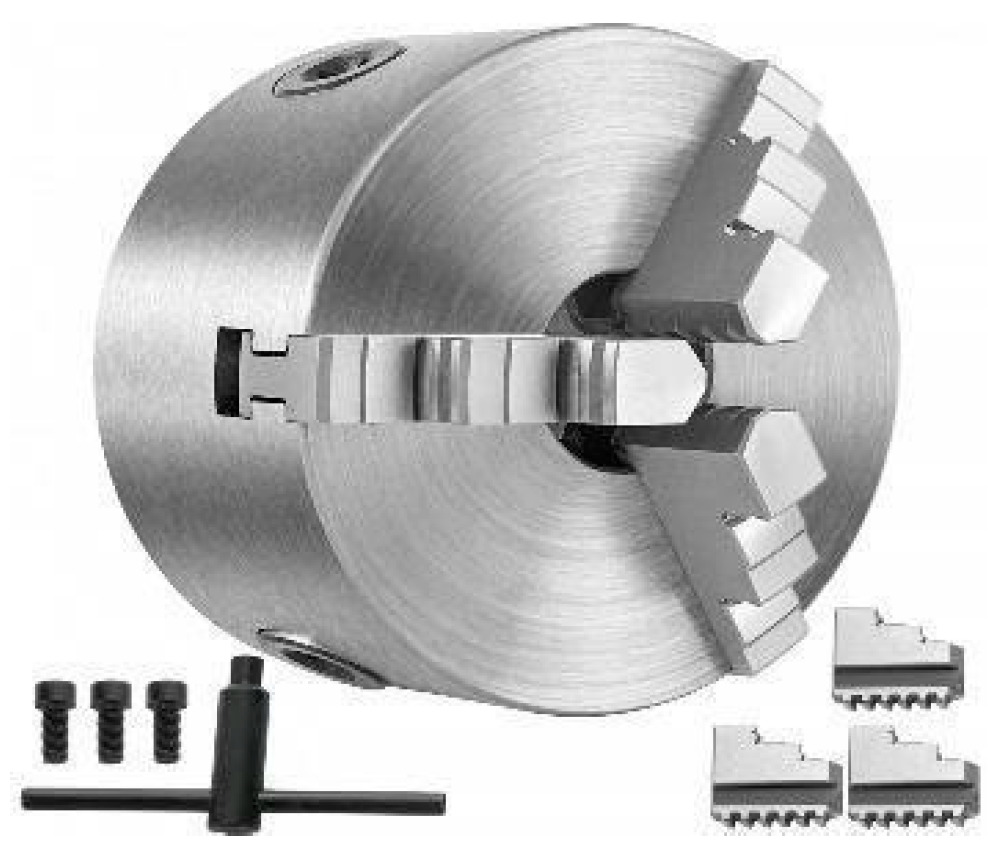
HTA introduced by Annett and Duncan is widely recognized for breaking down complex tasks into manageable subtasks, data, and quantitative analysis confirming its effectiveness are limited. By combining the HTA with the NASA Workload Index (NASA-TLX), a subjective workload assessment tool, this study aims to provide a comprehensive assessment of task performance and workload. The project involved assembling a three-jaw chuck with HTA for process definition and subtasks, while NASA-TLX was used for workload determination. Data were collected through questionnaires and observation forms and analyzed to determine the impact of HTA on task performance and workload distribution. The results show that HTA effectively identifies task complexity and bottlenecks, which facilitates task optimization and improves performance. The NASA-TLX integration provides critical insights into individuals' subjective workload and targets areas where task performance and resource allocation can be improved. This study shows that combining HTA and NASA-TLX provides a holistic approach to understanding and improving task performance, ultimately leading to better user experience and productivity.
Keywords:
1. Introduction
2. Problem Definition
3. Methodology
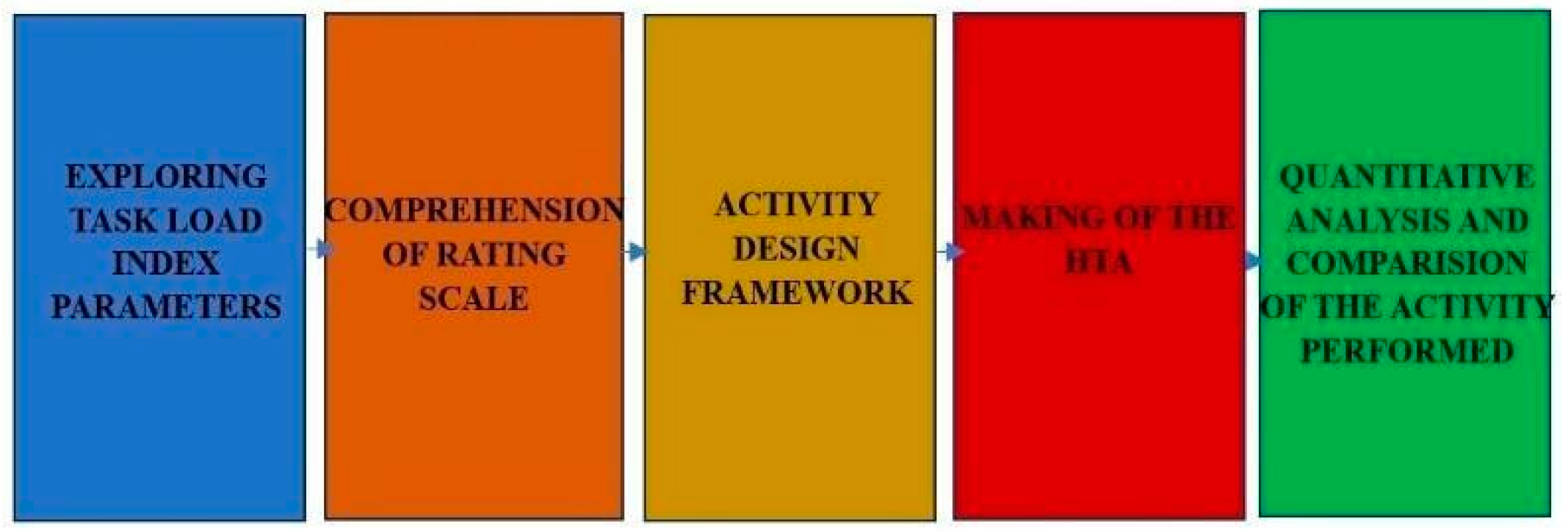
3.1. Exploring Task Load Index Parameters
- [i]
- Mental Demand:
- [ii]
- Physical Demand:
- [iii]
- Temporal Demand:
- [iv]
- Performance:
- [v]
- Effort:
- [vi]
- Frustration level:
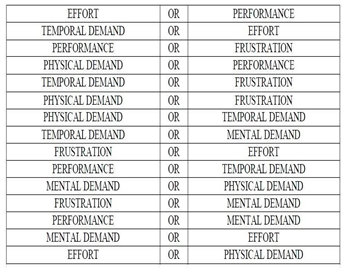
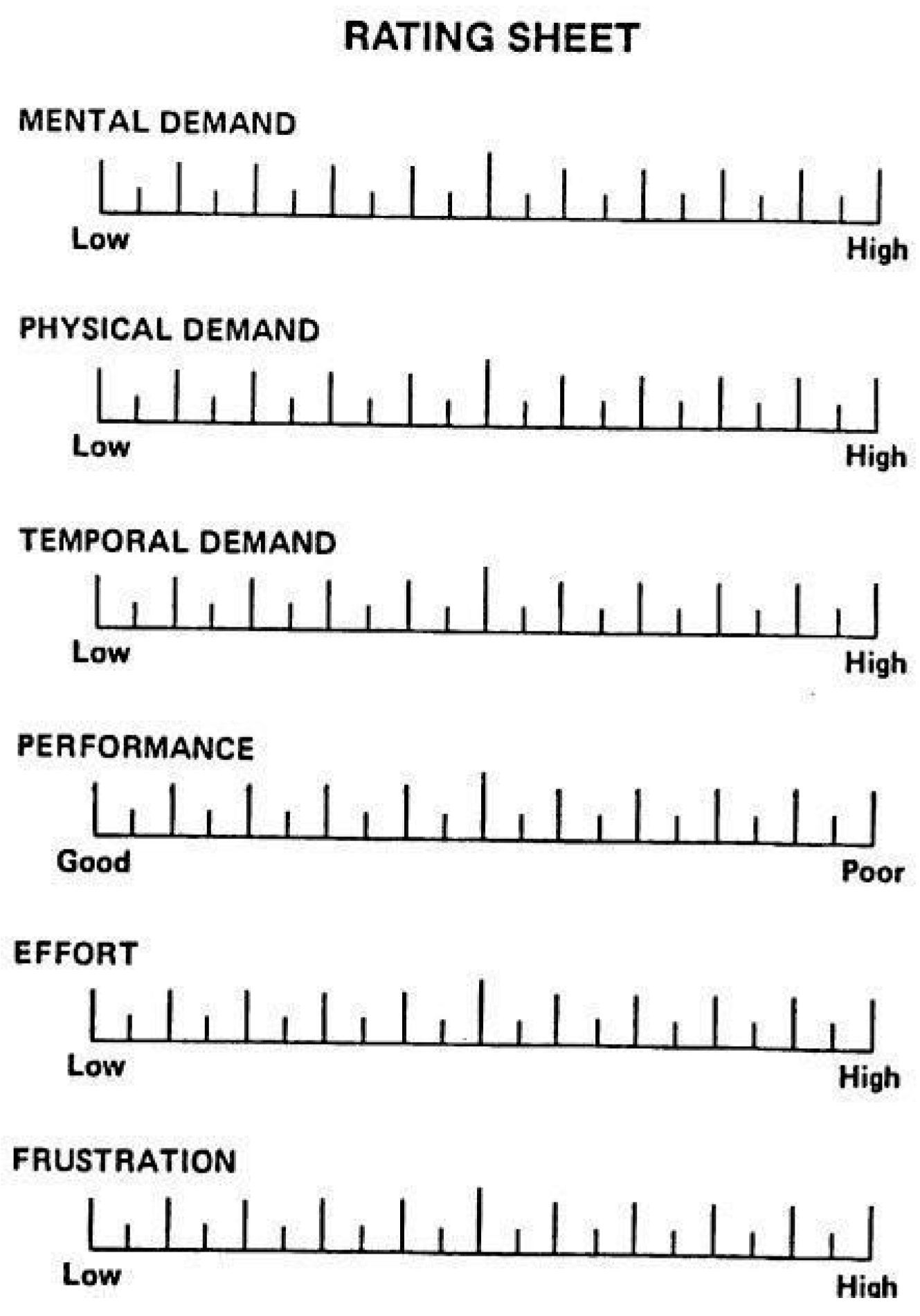
3.2. Comprehension of Rating Scale
3.3. Activity Design Framework

3.4. Making of the HTA
- i)
- Systematic Approach:
- ii)
- Interdisciplinary Collaboration:
- iii)
- Visualization of Task Structure:
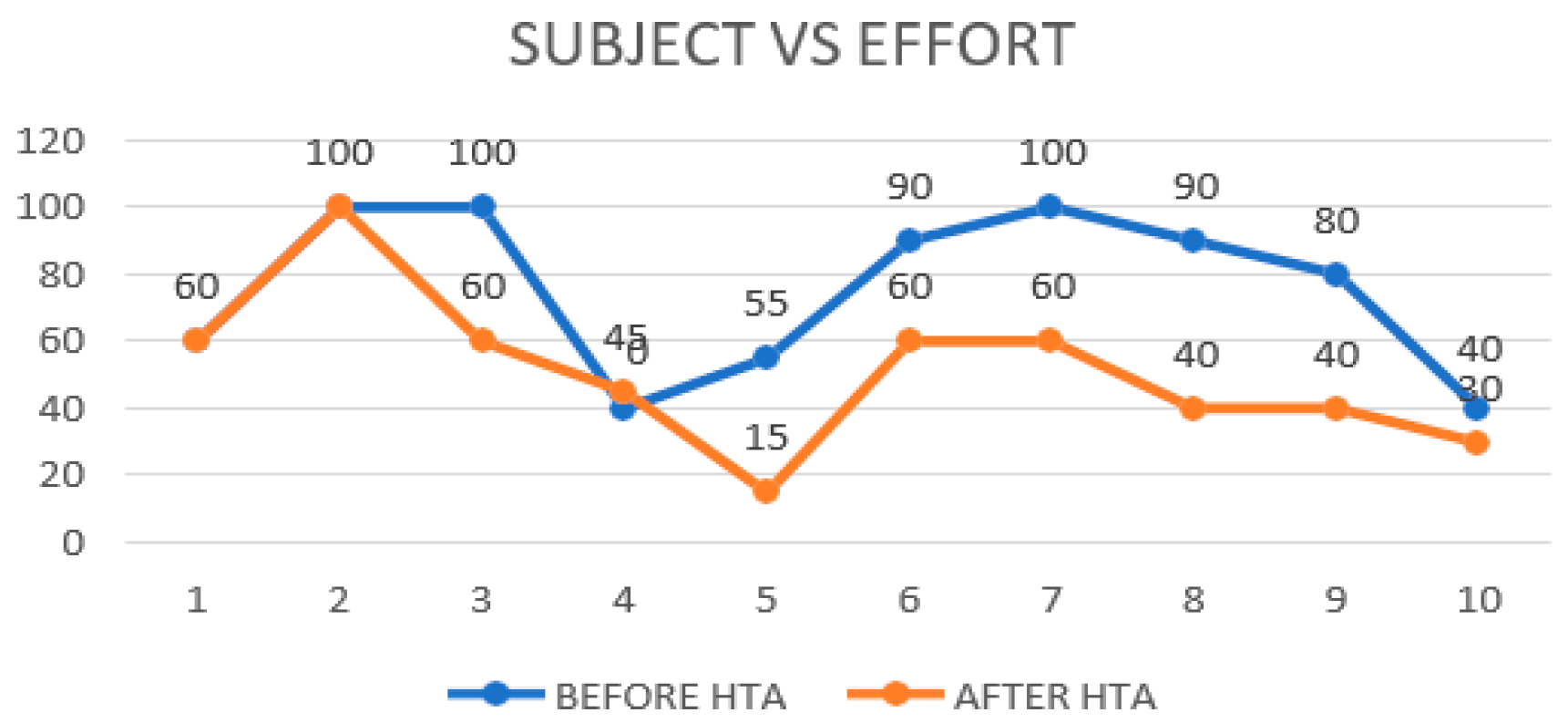
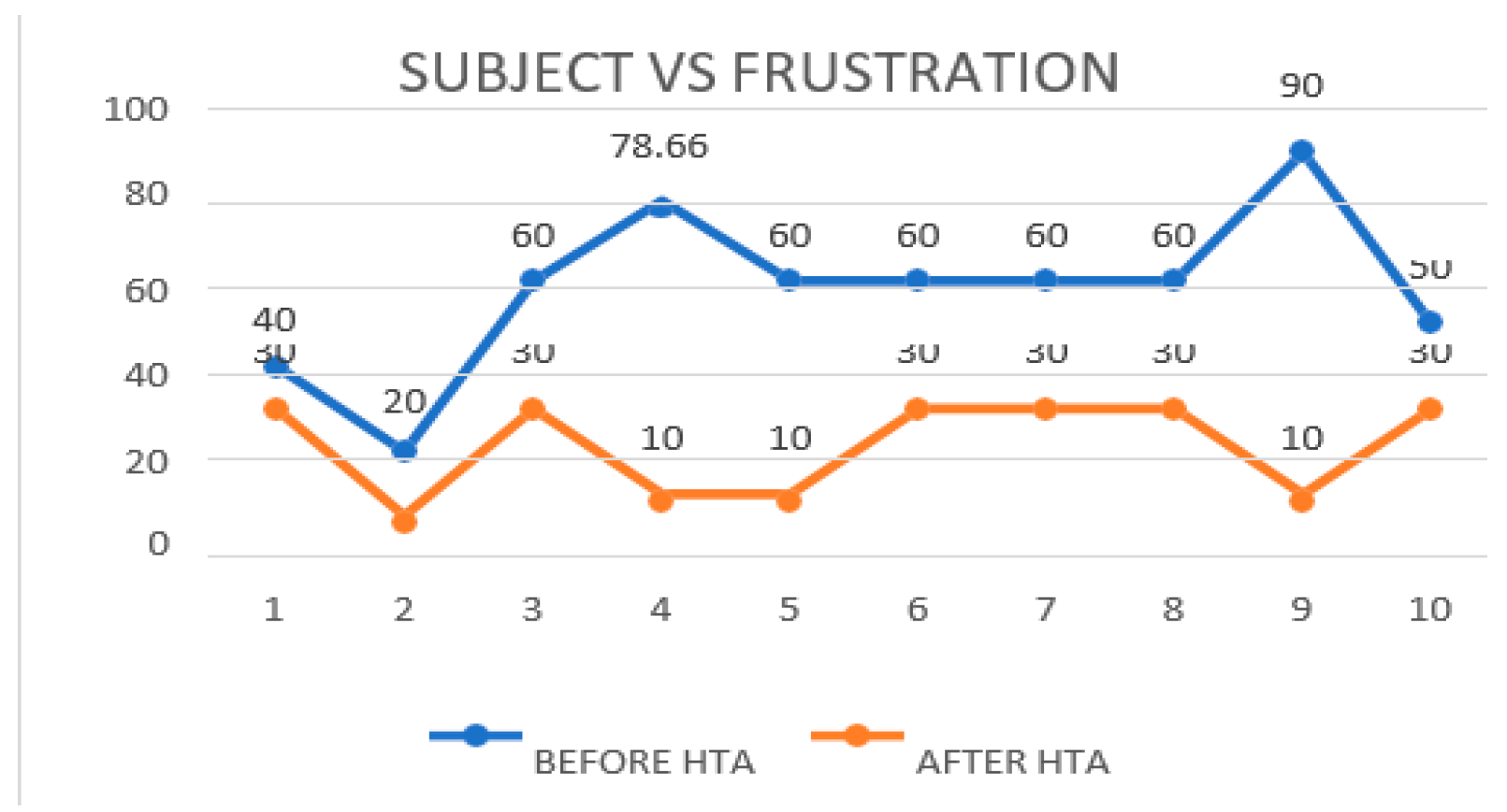
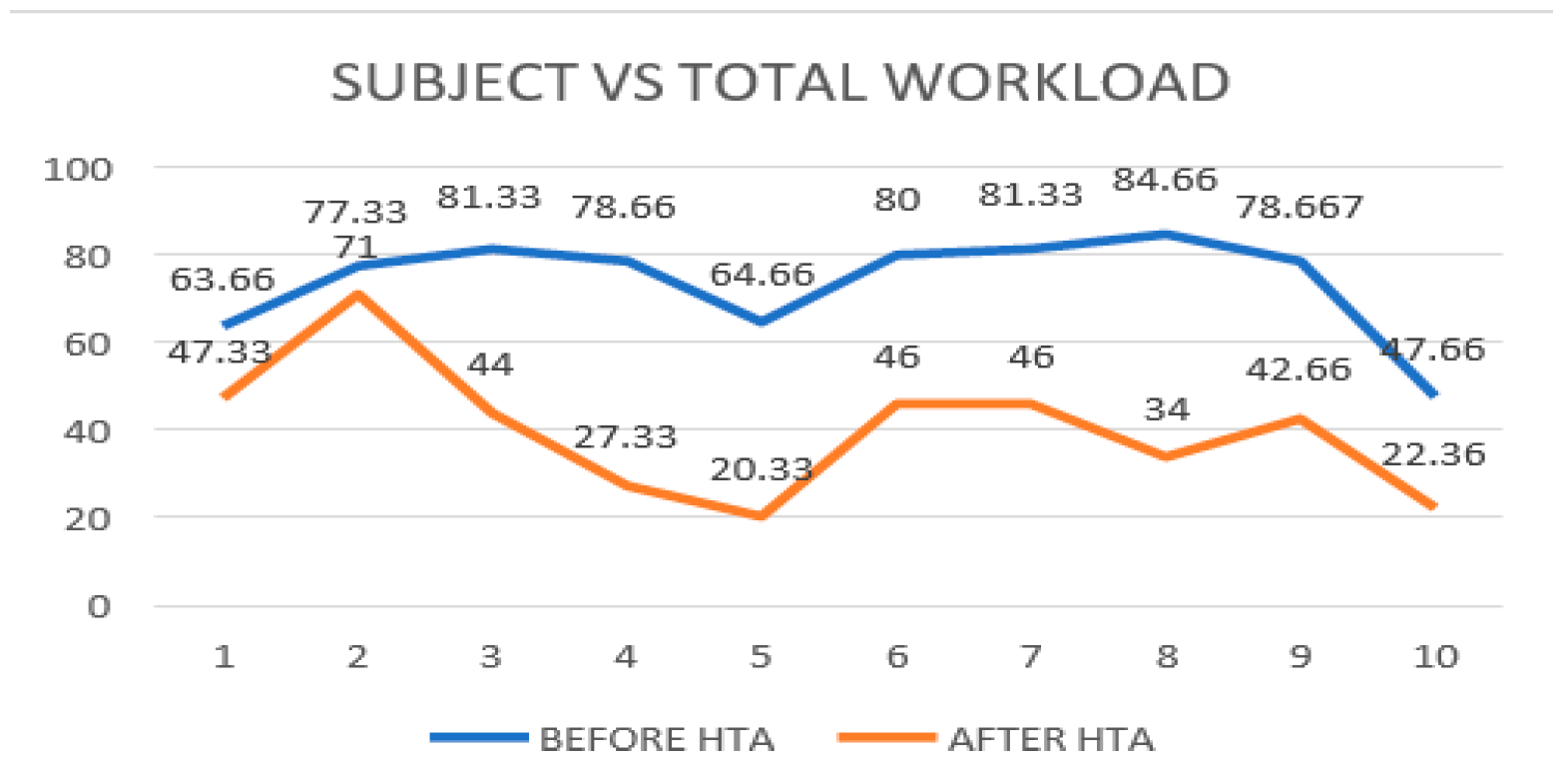
3.5. Quantitative Analysis & Comparison of the Activty Performed
4. Conclusion
References
- Hart, Sandra, et al. Development of NASA-TLX (Task LoadIndex )" Results of Empirical and Theoretical Research. 1988.
- W. Moroney, D.Biers, F.T Eggemeir, Jennifer A. Mitchell, 1992, “NASA TLX: from a time perspective”, Published in the proceedings of of the IEEE.
- Wierwille, W. W., and F. Thomas Eggemeier. “Recommendations for Mental Workload Measurement in a Test and Evaluation Environment.” Human Factors: The Journal of the Human Factors and Ergonomics Society, vol. 35, no. 2, June 1993, pp.263–281. [CrossRef]
- Neville A. Stanton, 2004, “Hierarchical Task Analysis: Developments, Applications and Extensions”, BITlab, Human Factors Integration Defence Technology centre, School of Engineering and Design, Brunei University.
- Hart, Sandra G. “Understanding of Environmental Conditions of NASA TLX” Proceedings of the Human Factors and Ergonomics Society Annual Meeting. 2006.
- Institute for Energy Technology, August 2007, “OECD Halden Reactor Project”, Institute for Energy Technology, PB 173, NO-1751, Halden, Norway.
- Matthew L. Bolton, February 2009, “NASA Task Load, Index: A Level of Measurement Analysis”, IEEE Transactions on Human-Machine Systems.
- Human Performance Research Group, March 2010,“NASA TASK LOAD INDEX:- Paper and Pencil Package”, NASA research centre.
- Trujillo, Anna. “Evaluation of Electronic Formats of the NASA Task Load Index.” 2011.
- Zheng, Bin, et al. “Workload Assessment of Surgeons: Correlation between NASA TLX and Blinks.” Surgical Endoscopy, vol. 26, no. 10, 24 Apr. 2012, pp. 2746–2750. [CrossRef]
- Rochman, Roy, and Rida Zuraida. Workload Assessment with NASA-TLX and Work Satisfaction as the Basis of Improvement of Work Systems. 2022.
- Helton, William & Jackson, Kenneth & Naswall, Katharina & Humphrey, Bonnie. (2022). The National Aviation and Space Agency Task Load Index (NASA-TLX): Does it Need Updating?. Proceedings of the Human Factors and Ergonomics Society Annual Meeting. 66. 1245-1249.
- S. Hart, October 2006, “Understanding of environmental conditions of NASA TLX”, Proceedings of the Human Factors and Ergonomics Society Annual Meeting.
- Biondi FN, Cacanindin A, Douglas C, Cort J. Overloaded and at Work: Investigating the Effect of Cognitive Workload on Assembly Task Performance. Hum Factors. 2021 Aug;63(5):813-820. [CrossRef] [PubMed]
- Mohammadian M, Parsaei H, Mokarami H, Kazemi R. Cognitive demands and mental workload: A filed study of the mining control room operators. Heliyon. 2022 Feb 5; 8(2):e08860. [CrossRef]
- Huggins, A. , & Claudio, D. (2018). A performance compar--sion between the subjective workload analysis technique & the NASATLX in a healthcare setting. IISE Transactions on Healthcare Systems Engineering, 8(1), 59-71. [CrossRef]
- Edwards, Tamsyn, et al. HWORKLOAD 2017 -the Relationship between Workload and Performance in Air Traffic Control: Exploring the Influence of Levels of Automation and Variation in Task Demand. 2017.
- Ha, Jun & Seong, Poong & Lee, Myeong Soo & Hong, Jin. (2008). Development of Human Performance Measures for Human Factors Validation in the Advanced MCR of APR- 1400. Nuclear Science, IEEE Transactions on. 54. 2687 - 2700. 10.1109/TNS.2007.907549.
- Braarud, P. Ø. (2024). Measuring cognitive workload in the nuclear control room: a review. Ergonomics, 67(6), 849–865. [CrossRef]
- Annett, J. (2003) Hierarchical Task Analysis. In: Hollnagel, E., Ed., Handbook of Cognitive Task Design, Lawrence Erlbaum Assoc. Inc., Mahwah, 17-35.
- Chung PH, Zhang J, Johnson TR, Patel VL. An extended hierarchical task analysis for error prediction in medical devices. AMIA Annu Symp Proc. 2003;2003:165-9. [PubMed]
- Dreger FA, Englund M, Hartsch F, Wagner T, Jaeger D, Björheden R, Rinkenauer G. Hierarchical Task Analysis (HTA) for Application Research on Operator Work Practices and the Design of Training and Support Systems for Forestry Harvester. Forests. 2023; 14(2):424. [CrossRef]
- MATSUSHITA, Kojiro & NIWA, Keita & ITO, Satoshi & Sasaki, Minoru. (2017). Effect of Instructions on Parts’ Positions during an Assembly Task on Efficiency and Workload. SICE Journal of Control, Measurement, and System.
- Y. Wang et al., "Hierarchical Task Analysis of Human- Robot Collaboration Scenario in Space Station," 2022 IEEE 17th Conference on Industrial Electronics and Applications (ICIEA), Chengdu, China, 2022, pp. 1640-1645. [CrossRef]
- G.P. Hodgkinson, C.M. Crawshaw, Hierarchical task analysis for ergonomics research: An application of the method to the design and evaluation of sound mixing consoles, Applied and Ergonomics, Volume 16, Issue 4, 1985, Pages 289-299, ISSN 0003-6870. [CrossRef]
- Ruan, Liuqing & Xiong, Zhiyong & Jiang, Lijun & Zhou, Xue. (2018). Comparison between Digital and Paper Note- taking based on NASA-TLX.
- Zidan, Muhammad & Apriani, Ratna & Basuki, Demas & Wibowo, Latifah & Mukarim, Rifki. (2024). Analysis of Mental Workload on Sugar Production Mechanical Workers Using the Nasa-TLX Method. Jurnal Teknik Industri: Jurnal Hasil Penelitian dan Karya Ilmiah dalam Bidang Teknik Industri. 10. 63.
- Mansikka, Heikki & Virtanen, Kai & Harris,Donald (2024). Comparison of In-Flight and Post-Flight Use of (NASA-TLX. Aviation Psychology and Applied Human Factors. 14. 50-57.
- Caiazzo, Carlo & Savkovica, Marija & Pusica, Milos & Nikolic, Nastasija & Macuzic, Ivan & Djapan, Marko. (2024). Comparative Analysis Of Mental Workload In Adaptive Human-Robot Collaboration During Assembly Tasks.
- Velasquez, Sharon & Medellín-Castillo, Hugo & Garcia- Barrientos, Abel. (2024). Evaluation of mental workload in haptic-enabled virtual assembly training operations. The International Journal of Advanced Manufacturing Technology. 132. 1-12. [CrossRef]
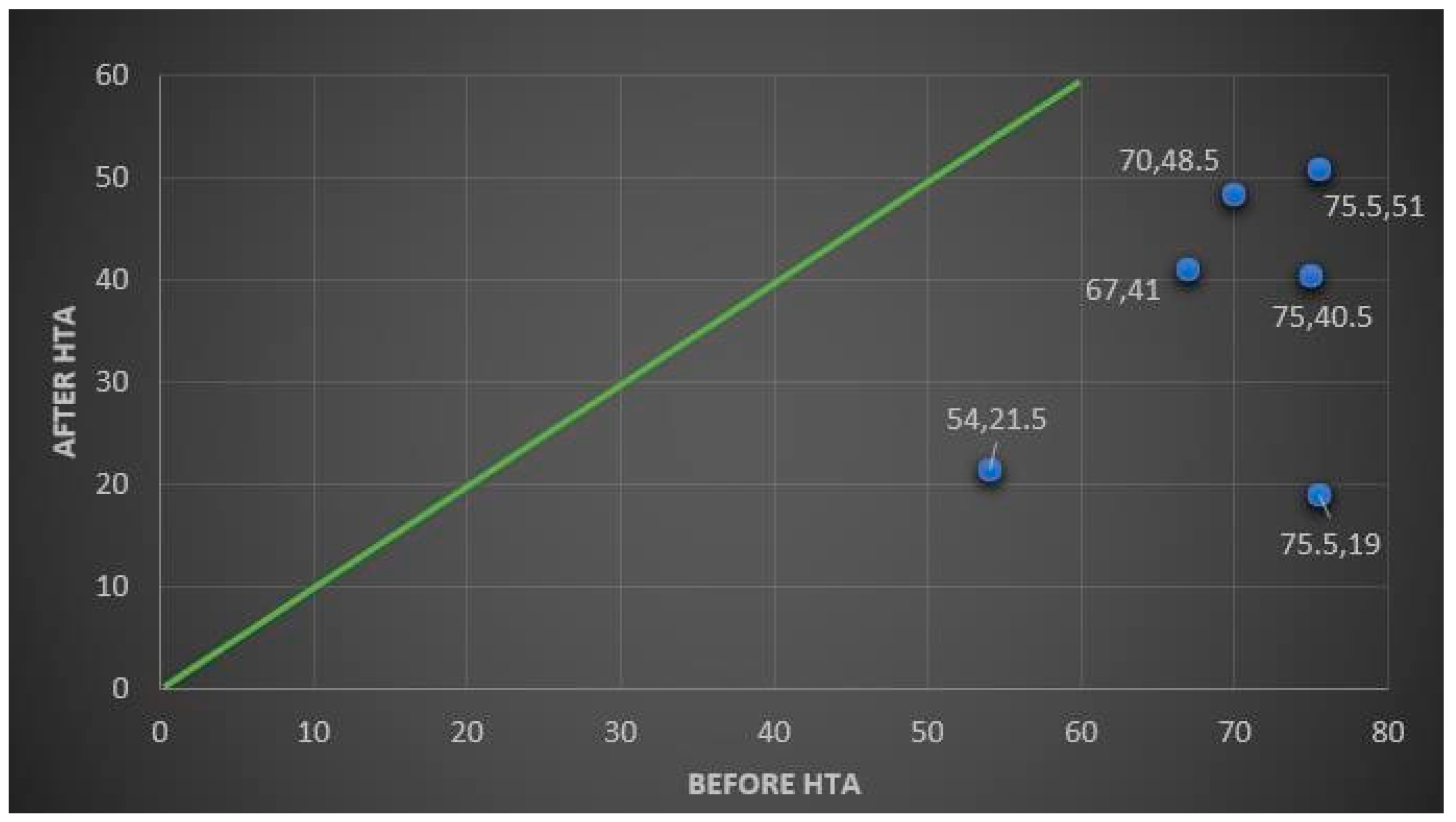
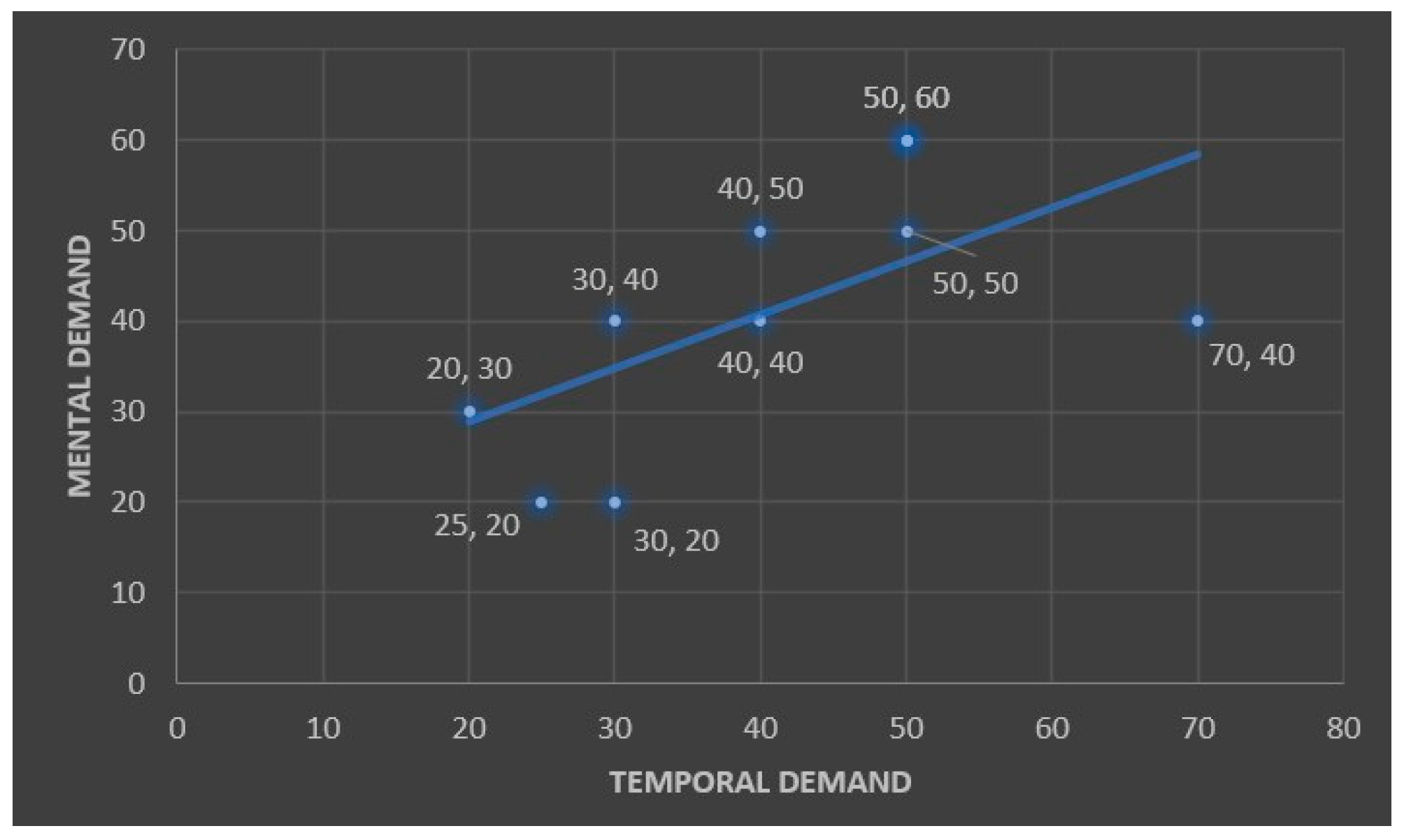
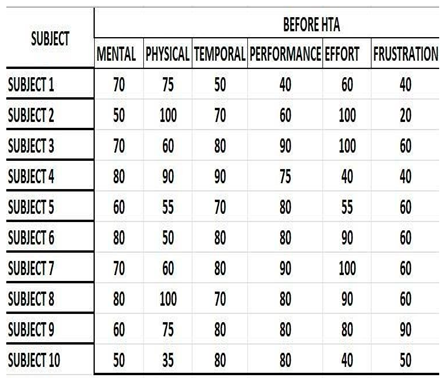
| Before HTA | ||||||
|---|---|---|---|---|---|---|
| Mental Demand | Physical Demand | Temporal Demand | Performance | Effort | Frustration | |
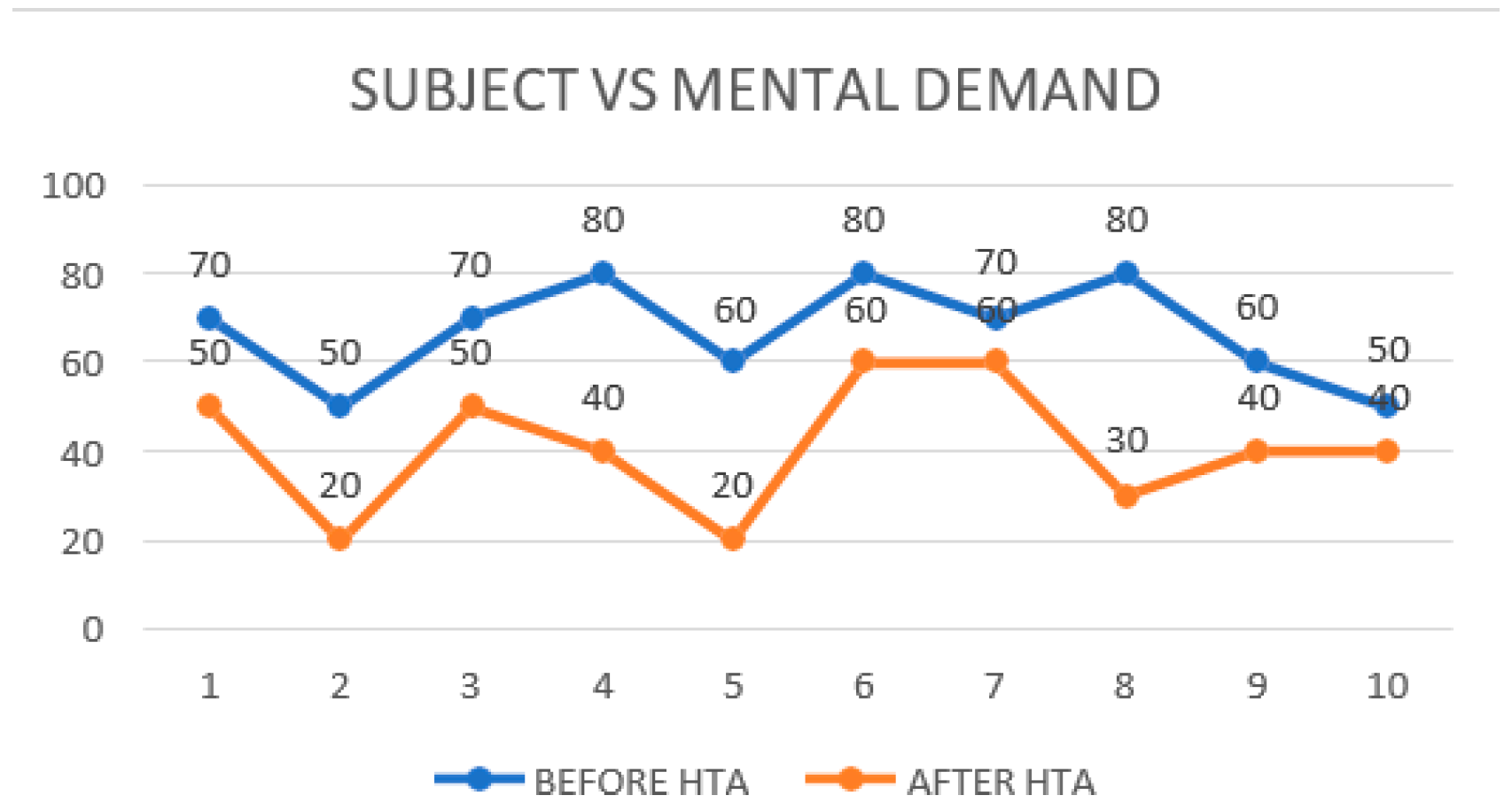
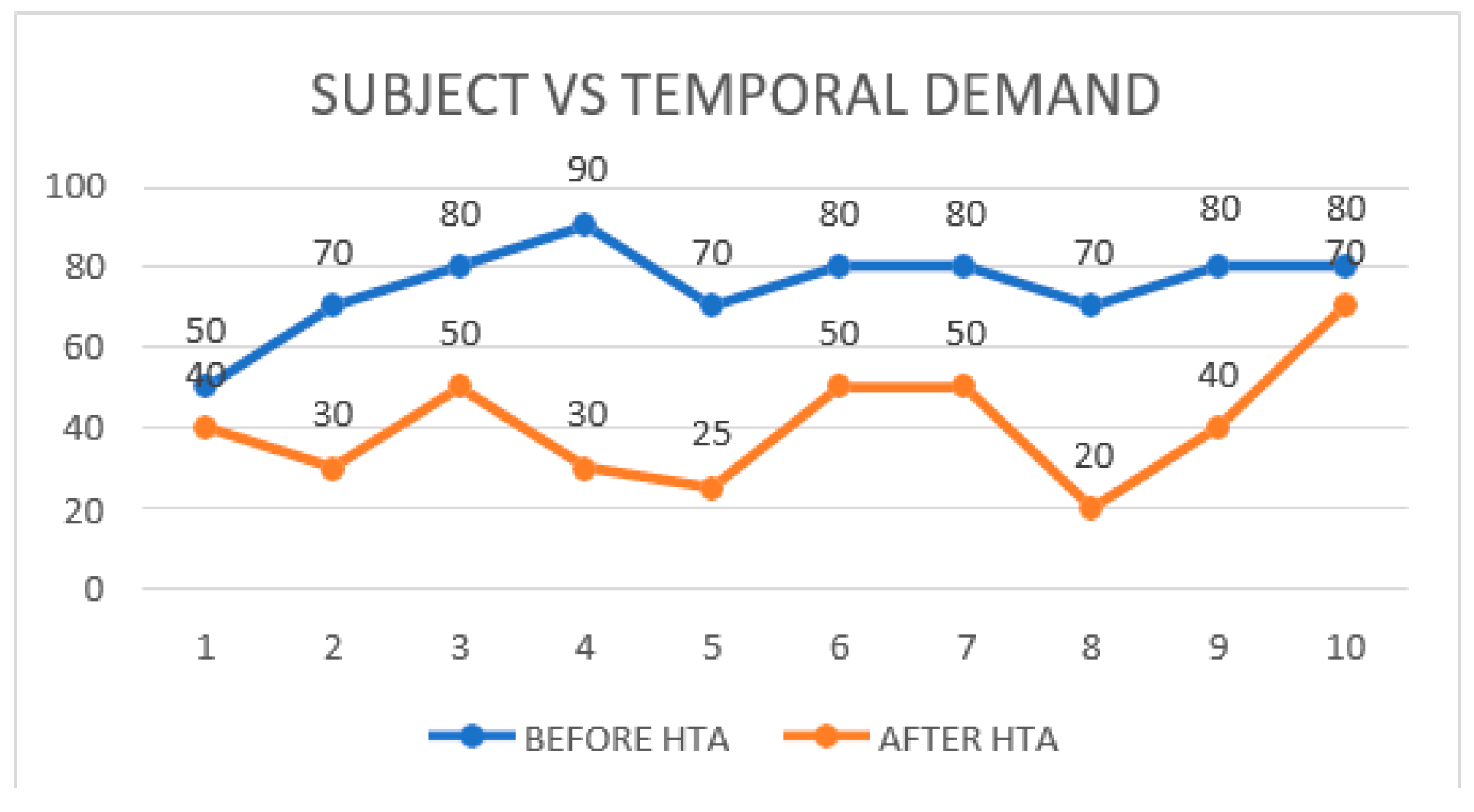
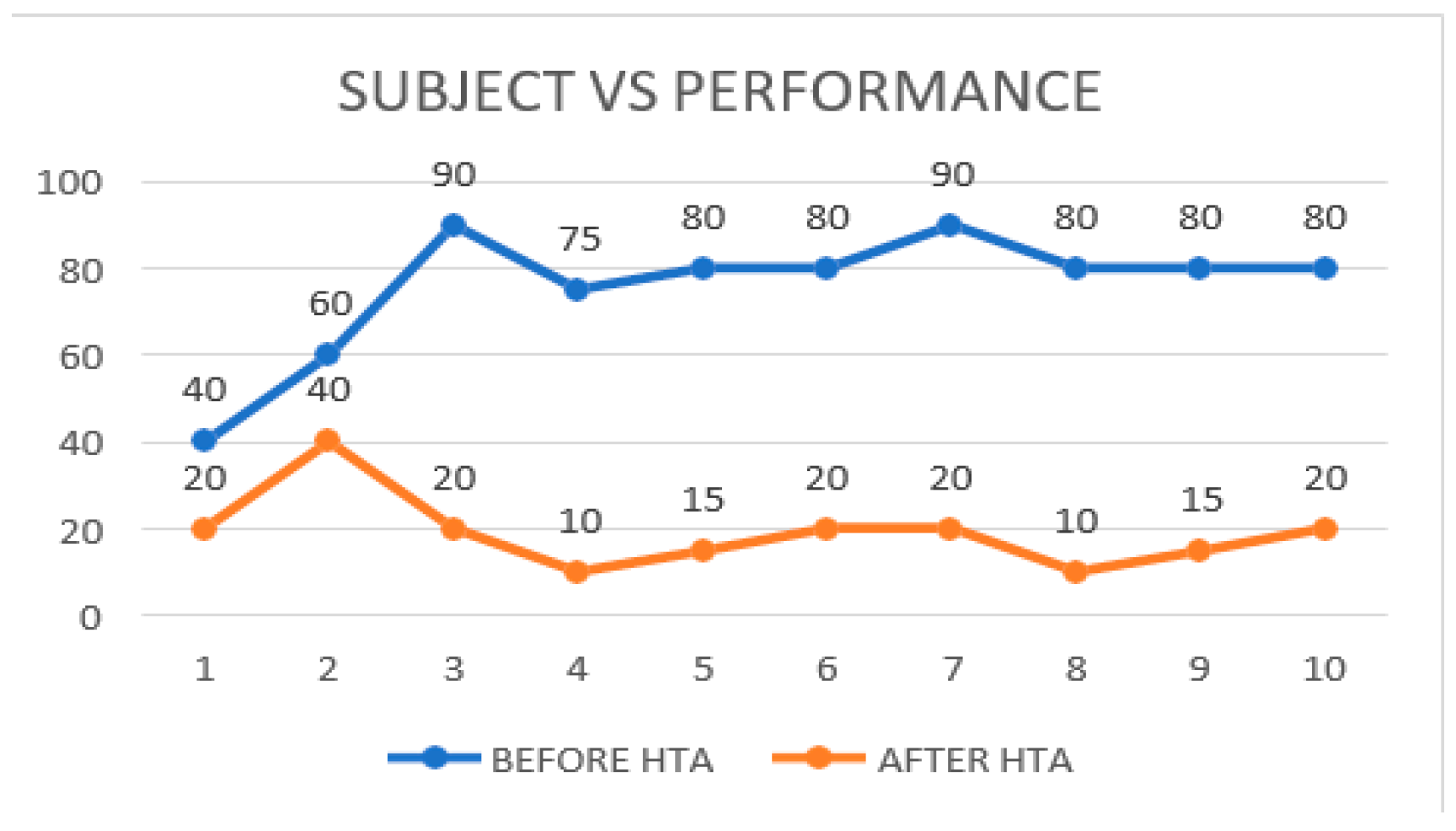
| Low | 50 | 35 | 50 | 40 | 40 | 20 |
| High | 80 | 100 | 90 | 90 | 100 | 90 |
| Average | 67 | 70 | 75 | 75.5 | 75.5 | 54 |
| Median | 70 | 67.5 | 80 | 80 | 85 | 60 |
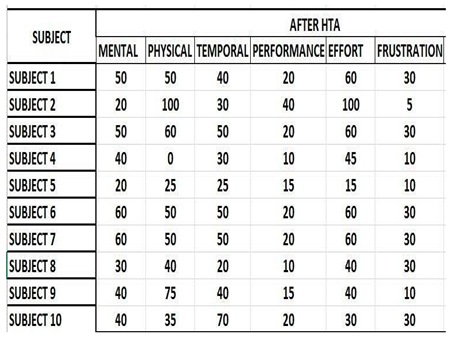
| After HTA | ||||||
|---|---|---|---|---|---|---|
| Mental Demand | Physical Demand | Temporal Demand | Performance | Effort | Frustration | |
| Low | 20 | 0 | 20 | 10 | 15 | 5 |
| High | 60 | 100 | 70 | 40 | 100 | 30 |
| Average | 41 | 48.5 | 40.5 | 19 | 51 | 21.5 |
| Median | 40 | 50 | 40 | 20 | 52.5 | 30 |
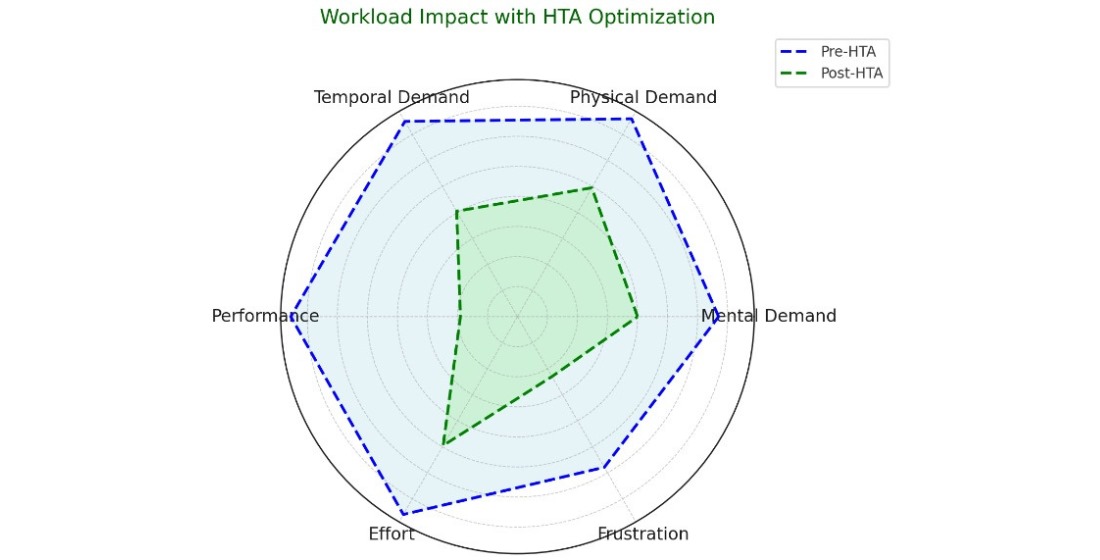
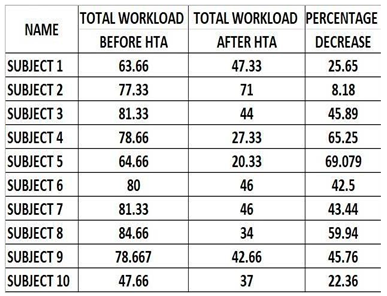
| % Decrease in average values | 38.80 | 30.71 | 46 | 74.83 | 32.45 | 60.18 |
Disclaimer/Publisher’s Note: The statements, opinions and data contained in all publications are solely those of the individual author(s) and contributor(s) and not of MDPI and/or the editor(s). MDPI and/or the editor(s) disclaim responsibility for any injury to people or property resulting from any ideas, methods, instructions or products referred to in the content. |
© 2025 by the authors. Licensee MDPI, Basel, Switzerland. This article is an open access article distributed under the terms and conditions of the Creative Commons Attribution (CC BY) license (http://creativecommons.org/licenses/by/4.0/).


