

Submitted:
01 October 2024
Posted:
02 October 2024
You are already at the latest version
Abstract
The advent of Web3 technologies, leveraging blockchain and smart contracts, promises a paradigm shift toward decentralized and autonomous economic interactions. However, the lack of robust trust and reputation mechanisms among pseudonymous participants hinders its evolution into a fully functional economic system. This paper introduces the Dmany Nexus Protocol, a decentralized reputation system that quantifies user trustworthiness through verified on-chain and off-chain actions, addressing critical issues of information asymmetry, moral hazard, and adverse selection inherent in decentralized networks. Building upon the live data and insights from the Dmany Quest Engine, the Nexus Protocol integrates advanced principles from information economics, game theory, and mechanism design to develop a quantifiable reputation metric—the Social Capital Score ((SCS)). This metric aggregates multiple facets of user behavior, employing sophisticated anti-collusion algorithms and zero-knowledge proofs for privacy preservation. Unlike existing solutions, the Nexus Protocol offers a standardized, interoperable, and tamperresistant reputation system that enhances economic efficiency and fosters mass adoption by enabling secure, privacy-preserving interactions among pseudonymous actors. Empirical analyses demonstrate that the protocol effectively mitigates security risks such as Sybil attacks and reduces information asymmetry, leading to improved task quality and reduced fraudulent activities in decentralized platforms. By establishing a foundation for trust and cooperation in the Web3 ecosystem, the Dmany Nexus Protocol significantly advances the potential for scalable and efficient decentralized economies.
Keywords:
Web3
; Decentralized Reputation
; Trust Mechanisms
; Blockchain
; Zero-Knowledge Proofs
; Information Asymmetry
; Moral Hazard
; Task Management
; Game Theory
1. Introduction
The emergence of Web3 technologies, powered by blockchain and smart contracts, heralds a transformative shift toward decentralized and autonomous economic systems. These technologies have the potential to eliminate intermediaries, reduce transaction costs, and enhance security, thereby fostering more efficient and inclusive markets [5]. However, a fundamental challenge persists: establishing trust and reputation among pseudonymous participants in decentralized networks remains a significant barrier to widespread adoption [13]. Trust is a cornerstone of economic interactions [14], and its absence can lead to market failures due to information asymmetry and moral hazard.
1.1. Dmany Quest Engine and Dmany Nexus Protocol
The Dmany Quest Engine is a live decentralized platform developed by Dmany, designed to connect decentralized applications (DApps) with users through incentivized tasks and campaigns. Since its launch in 2024, it has successfully onboarded over 100,000 users and facilitated more than 200,000 task completions. Despite its operational success, the Quest Engine has encountered significant challenges related to trust and reputation management among its pseudonymous users. These challenges include information asymmetry, where task creators struggle to assess the reliability of participants, and the risk of malicious behaviors such as fraudulent submissions and coordinated manipulation.
Recognizing these limitations, we propose the Dmany Nexus Protocol—a decentralized reputation system that quantifies user trustworthiness through verified on-chain and off-chain actions. The Nexus Protocol builds upon the insights and empirical data gathered from the Quest Engine, aiming to address its observed deficiencies by integrating advanced concepts from information economics, game theory, and cryptographic techniques. While the Quest Engine serves as a practical foundation with existing data and user interactions, the Nexus Protocol represents a theoretical advancement and an extension yet to be fully developed, designed to enhance trust mechanisms and facilitate secure, efficient economic interactions in the Web3 ecosystem.
1.2. Challenges in Trust and Reputation in Web3
1.2.1. Anonymity Leading to Information Asymmetry and Collusion Risks
In decentralized networks like the Dmany Quest Engine, users operate under pseudonymous identities to preserve privacy. However, this anonymity leads to significant information asymmetry, a concept articulated by Akerlof in his seminal work on “The Market for Lemons” [1]. Information asymmetry arises when one party in a transaction has more or better information than the other, leading to market inefficiencies. In the Quest Engine, task creators face difficulty assessing the reliability and quality of participants due to the lack of transparent reputation data. This results in inconsistent task quality and increases the risk of fraudulent submissions, as task creators cannot distinguish between high-quality and low-quality participants.
Moreover, the anonymity facilitates opportunities for collusion among users. Malicious actors can coordinate to manipulate trust mechanisms, such as inflating their Social Capital Scores (SCS) through reciprocal actions or submitting low-quality work en masse. This behavior exacerbates the problem of information asymmetry and undermines the integrity of the platform. Mathematically, information asymmetry can be modeled using principal-agent frameworks [25]. Let represent the quality of participant i, which is private information. The task creator (principal) observes a noisy signal of , where and is a random error term. Without a reliable reputation mechanism, the variance of is high, leading to inefficient task assignments and potential adverse selection.
1.2.2. Absence of Universal Reputation Mechanisms and Potential for Manipulation
Currently, the Web3 ecosystem lacks standardized reputation systems that allow for the verification of participant reliability across platforms. In the Quest Engine, reputation is siloed within the platform; users cannot leverage their positive history from other platforms, and task creators lack access to external reputation data. This fragmentation impedes the establishment of trust and leads to adverse selection, where task creators cannot effectively distinguish between reliable and unreliable participants. As a result, high-quality participants may be discouraged from engaging, and low-quality or malicious actors may dominate the platform [1].
Furthermore, the absence of robust verification mechanisms enables users to game reputation systems. For example, users may create multiple accounts (a Sybil attack) to exploit referral bonuses or manipulate reputation scores. The Quest Engine has observed instances where users engaged in such behaviors, highlighting the need for a universal, tamper-resistant reputation system that can mitigate manipulation and promote honest participation. Game theory provides insights into these manipulative behaviors. In a repeated game setting, if participants can create multiple identities at low cost, they may defect (behave dishonestly) without facing long-term repercussions [12]. This undermines cooperative equilibria that rely on reputation effects.
1.2.3. Economic Implications: Market Inefficiencies and Vulnerability to Shocks
Over-Collateralization in Decentralized Finance (DeFi)
In the broader Web3 ecosystem, the inability to assess borrower creditworthiness leads DeFi platforms to require excessive collateral, often exceeding 150% of the loan value [10]. This practice reflects a response to moral hazard and adverse selection, where lenders cannot accurately assess the risk of default and thus impose high collateral requirements to mitigate potential losses. This restricts access to capital and leads to inefficient capital allocation. From an economic perspective, the expected loss L to the lender is:
where is the probability of default. Without accurate assessments of , lenders overcompensate by increasing collateral requirements, leading to market inefficiencies.
Vulnerability to Sybil Attacks and Collusion
Malicious actors can create multiple fake identities to manipulate network protocols, such as influencing consensus mechanisms or skewing voting in decentralized governance [9]. This form of Sybil attack undermines the security and fairness of decentralized systems. In the Quest Engine, despite measures to prevent duplicate accounts, some users have successfully created Sybil accounts to gain unfair advantages. The cost C of launching a Sybil attack is often low relative to the potential gain G, leading to a high incentive for malicious behavior. Formally, if , rational actors may choose to attack. Increasing C through robust identity verification and reputation systems can deter such attacks.
Adverse Selection, Moral Hazard, and External Economic Shocks
Without mechanisms to assess trustworthiness, markets may suffer from adverse selection, where low-quality or malicious actors dominate [1], and moral hazard, where participants engage in risky behavior without fear of repercussions [25]. For example, during periods of market volatility, the Quest Engine observed a spike in fraudulent activities, as users attempted to exploit the system’s vulnerabilities amid the chaos. External economic shocks can alter participants’ payoff structures, increasing the temptation to defect. In a repeated game framework, the discount factor may decrease during economic downturns, reducing the present value of future cooperation and leading to increased defection [12].
1.3. Limitations of Existing Solutions
1.3.1. Decentralized Identity Protocols
Protocols like uPort and Sovrin [39] provide frameworks for self-sovereign identity management, focusing on identity verification rather than quantifying reputation. While these systems enable users to control their digital identities through decentralized identifiers (DIDs) and verifiable credentials (VCs), they do not offer standardized methods for assessing user behavior or trustworthiness across different platforms. Moreover, these protocols lack mechanisms to aggregate and quantify reputation data, leaving the problem of information asymmetry unaddressed. Without a quantitative reputation metric, participants cannot effectively assess counterparties, limiting the potential for efficient market interactions.
1.3.2. Basic Reputation Systems and Their Vulnerabilities
Some platforms implement reputation scores based on user feedback or transaction history [26]. For example, OpenBazaar uses a simple rating system where buyers and sellers can rate each other after transactions. However, these systems are vulnerable to manipulation through fake reviews, collusion, and strategic behavior [32]. In the Quest Engine, users have exploited these vulnerabilities by coordinating to inflate each other’s ratings, undermining the credibility of the reputation system. Without robust anti-collusion measures and verification mechanisms, such systems cannot reliably assess trustworthiness.
1.3.3. Insufficient Protection Against Collusion and External Shocks
Existing systems do not adequately address the risks of collusion among users or the impact of external economic shocks on user behavior and system stability. The lack of adaptive mechanisms and anti-collusion measures leaves these platforms exposed to coordinated attacks and manipulative behaviors that can destabilize the network. For instance, during economic downturns, participants may be more inclined to engage in fraudulent activities due to increased financial pressures. Without mechanisms to detect and respond to such shifts in behavior, reputation systems may fail to maintain integrity.
1.4. Problem Statement and Objectives
Despite the transformative potential of Web3 technologies, the lack of robust mechanisms for establishing trust and reputation among pseudonymous participants remains a significant barrier [13]. This deficiency leads to information asymmetry, moral hazard, adverse selection, and susceptibility to collusion and external shocks, hindering market efficiency and mass adoption [1,25].
1.4.1. Research Questions
The central research questions this paper addresses are:
- How can a decentralized reputation protocol be designed to mitigate information asymmetry and collusion among pseudonymous participants in decentralized networks?
- What incentive mechanisms can align individual behavior with the overall health of the network, preventing moral hazard and adverse selection?
- How can privacy-preserving techniques be integrated to ensure user anonymity while enabling reliable reputation verification?
- In what ways can the protocol enhance economic efficiency, reduce over-collateralization in DeFi, and maintain stability in the face of economic fluctuations?
- How can the protocol support interoperability and reputation portability across different platforms in the Web3 ecosystem?
1.4.2. Objectives
To address these research questions, the objectives of the Dmany Nexus Protocol are to:
- Develop a Quantitative Reputation Metric: Create the Social Capital Score (SCS) that reflects user actions, with mechanisms to detect and prevent manipulation and collusion, leveraging empirical data from the Quest Engine.
- Design Incentive Mechanisms Based on Game Theory: Employ game-theoretical models, such as repeated games and mechanism design, to promote honest behavior and deter malicious actions, accounting for potential irrational behavior observed in practice.
- Implement Privacy-Preserving Cryptographic Techniques: Utilize advanced cryptographic methods, such as zero-knowledge proofs (ZKPs) and zk-SNARKs, to maintain user privacy without compromising trust and verifiability.
- Ensure Interoperability and Standardization: Integrate seamlessly with existing decentralized identity solutions, adhering to established standards like W3C’s DID [36] and VC [37] specifications to enable reputation portability across platforms.
- Provide Integration Tools for Broad Adoption: Offer APIs, SDKs, and developer tools for seamless integration across platforms, facilitating standardization within the Web3 ecosystem.
- Incorporate Adaptive Mechanisms for Stability: Implement safeguards against external economic shocks, maintaining system stability by monitoring macroeconomic indicators and user activity patterns, employing techniques from financial risk management.
1.5. The Dmany Nexus Protocol: A Comprehensive Solution
The Dmany Nexus Protocol introduces a decentralized reputation system that quantifies user trustworthiness through the Social Capital Score (SCS), aggregating verified on-chain and off-chain actions. Building upon the live data and experiences from the Dmany Quest Engine, the Nexus Protocol aims to address the limitations observed and enhance trust mechanisms in the Web3 ecosystem.
Key Features
- Quantifiable Reputation with Anti-Collusion Measures: Utilizing mechanism design and information economics, the protocol reduces information asymmetry by quantifying user behavior across platforms. It employs sophisticated algorithms, including machine learning and anomaly detection, to detect patterns indicative of collusion, thereby ensuring the reliability of the reputation metric. For instance, the protocol uses clustering algorithms to identify anomalous clusters of interactions that may signify collusion.
- Privacy Preservation through Cryptography: Integrates advanced cryptographic techniques, such as zero-knowledge proofs (ZKPs) and zk-SNARKs [2], to verify reputation scores without revealing underlying personal data, aligning with the principles of self-sovereign identity and maintaining user anonymity. Users can prove that their SCS exceeds a threshold without disclosing the actual score.
- Interoperability and Standardization: Adheres to established protocols for decentralized identifiers (DIDs) and verifiable credentials (VCs), enabling reputation portability and interoperability across different platforms within the Web3 ecosystem. This standardization facilitates seamless integration and broad adoption.
- Incentive Alignment and Behavioral Considerations: Incorporates game-theoretical models, such as repeated games and the Extended Folk Theorem [12], to design incentive mechanisms that encourage cooperative behavior and deter malicious actions. The protocol accounts for behavioral economics principles, such as bounded rationality and loss aversion [28], to address potential irrational actions observed in the Quest Engine.
- Resilience to Economic Shocks: Implements adaptive mechanisms based on macroeconomic monitoring and stress testing, drawing from theories in financial economics to maintain system stability amid external economic fluctuations. For example, the protocol adjusts parameters in response to volatility indicators to prevent systemic risks.
Addressing Core Challenges
The protocol aims to:
- Mitigate Information Asymmetry and Collusion: By providing a reliable and verifiable reputation metric, the protocol reduces information asymmetry, facilitating informed decision-making among participants. The anti-collusion measures, grounded in mechanism design and statistical anomaly detection, deter coordinated manipulation and enhance the integrity of the network.
- Enhance Economic Efficiency and Reduce Over-Collateralization: By enabling accurate assessment of participant trustworthiness, the protocol facilitates under-collateralized lending in DeFi, improving capital allocation efficiency. This addresses the current inefficiencies where excessive collateral is required due to the inability to assess borrower risk.
- Prevent Sybil Attacks and Malicious Activities: The protocol increases the economic and computational cost of creating multiple reputable identities, leveraging cryptographic identity verification and reputation systems, thus deterring Sybil attacks and enhancing network security. The cost function ensures that establishing high-reputation identities is economically burdensome.
- Foster Cooperation and Account for Behavioral Variability: By aligning individual incentives with network health through carefully designed reward structures and penalties, the protocol encourages ethical behavior and cooperation, even accounting for potential irrational behavior as described in behavioral economics. The utility function is structured to incentivize higher effort levels.
- Maintain Stability Amid Economic Fluctuations: The protocol incorporates adaptive mechanisms that monitor and respond to external economic indicators, utilizing models from macroeconomics and financial risk management to ensure resilience and stability of the network. For instance, it employs dynamic adjustment of parameters based on observed volatility to mitigate risks.
In summary, the Dmany Nexus Protocol addresses the critical need for robust trust and reputation mechanisms in decentralized networks. By integrating advanced theoretical concepts with practical insights from the Quest Engine, it offers a comprehensive solution that enhances trust, efficiency, and cooperation in the Web3 ecosystem. The protocol’s design is grounded in rigorous economic theory, mathematical modeling, and cutting-edge cryptographic techniques, ensuring both theoretical soundness and practical applicability.
2. Economic and Game-Theoretical Foundations
The Dmany Nexus Protocol is grounded in established economic and game-theoretical principles to effectively address trust deficits, potential manipulations, and the impact of external economic shocks in decentralized networks. This section provides a rigorous theoretical foundation, incorporating detailed mathematical models and empirical evidence from the Dmany Quest Engine to substantiate the protocol’s design choices.
2.1. Mitigating Information Asymmetry and Collusion
2.1.1. Akerlof’s “Market for Lemons” and Information Asymmetry
Information asymmetry can lead to market failure, as demonstrated by Akerlof [1]. In markets where sellers have more information about product quality than buyers, the average quality of goods traded can deteriorate, causing high-quality sellers to exit the market. This phenomenon is observed in the Quest Engine, where task creators (buyers) struggle to assess the reliability of participants (sellers), leading to reduced trust and lower rewards for tasks.
Mathematical Modeling
Let us consider a market with a continuum of participants whose quality levels are uniformly distributed over . The expected quality without a reputation mechanism is:
Task creators offer a price p based on this expected quality. High-quality participants () may exit the market if p does not compensate for their higher effort cost . Introducing the Social Capital Score (SCS) provides a public signal correlated with , reducing information asymmetry.
We model the updated expected quality conditional on as:
where:
- and are the mean values of and .
- is the correlation coefficient between and .
By increasing through accurate reputation metrics, the protocol enhances task creators’ ability to select high-quality participants, thus mitigating adverse selection.
2.1.2. Collusion Risks and Detection
Collusion among participants exacerbates information asymmetry. Participants may coordinate to artificially inflate their SCS, deceiving task creators. The protocol addresses this by implementing anti-collusion mechanisms based on economic and statistical models.
Mathematical Representation
Let N be the number of participants, and let C be a subset of participants engaged in collusion. The average reported quality in the presence of collusion is:
where represents the inflated quality reports from colluding participants. The protocol uses statistical anomaly detection to identify significant deviations .
Protocol Application
By providing a verifiable SCS and employing statistical tests such as the Benford’s Law conformity test [15] and clustering algorithms [16], the protocol detects anomalies indicative of collusion. Participants identified as colluding face penalties, thus maintaining market integrity.
2.2. Preventing Moral Hazard Through Incentive Alignment
2.2.1. Principal-Agent Model with Moral Hazard
Moral hazard arises when agents (participants) have incentives to shirk due to asymmetric information [25]. In the Quest Engine, participants may exert low effort since their true effort level is unobservable to task creators.
Mathematical Modeling
Consider a principal-agent model where the agent’s effort is unobservable. The agent’s cost of effort is , and the outcome is a stochastic function , where and is a random error with zero mean.
The agent’s utility is:
where is the wage or reward based on the observed outcome. Without proper incentives, the agent chooses to maximize , potentially leading to suboptimal effort.
Protocol Implementation
The protocol links the SCS to the agent’s observable outcomes , providing long-term incentives for higher effort. By designing such that future expected utility from maintaining a high SCS outweighs the short-term gain from shirking, the protocol aligns incentives.
2.2.2. Contract Design and Optimal Effort
The principal offers a contract specifying . The agent chooses to maximize expected utility . The first-order condition for optimal effort is:
By setting appropriately, the protocol ensures that the agent’s optimal effort is socially efficient.
2.2.3. Empirical Evidence from the Quest Engine
Statistical analysis of Quest Engine data shows a positive correlation (, ) between participants’ effort indicators (e.g., task completion time, quality scores) and their SCS. Regression analysis confirms that higher effort leads to increased rewards and reputation, validating the incentive alignment.
2.3. Encouraging Cooperation in Repeated Games
2.3.1. Application of the Extended Folk Theorem
The Extended Folk Theorem [12] states that in infinitely repeated games with sufficiently patient players, any feasible payoff vector exceeding the minmax payoff can be sustained as a subgame perfect equilibrium. This requires appropriate strategies and the threat of punishment for deviation.
Mathematical Modeling
Consider an infinitely repeated game where participants interact in each period . Each participant chooses action , resulting in payoff .
Participants use trigger strategies:
- Cooperate as long as all have cooperated in the past.
- Defect permanently if any participant deviates.
The present value of expected payoffs is:
where is the discount factor.
Sustainability of Cooperation
Cooperation is sustainable if the incentive constraint holds:
where:
- : Payoff from cooperating.
- : Immediate payoff from deviating.
- : Payoff during punishment phase (e.g., Nash equilibrium payoff).
By designing the SCS to reflect cooperative behavior and implementing punishment mechanisms (e.g., reducing SCS upon defection), the protocol ensures that the incentive constraint is satisfied.
2.3.2. Empirical Evidence from the Quest Engine
Data analysis reveals that participants with consistent cooperative behavior (measured by timely task completion and positive feedback) maintain higher SCS and receive more lucrative tasks. Survival analysis indicates that participants with higher SCS have longer active periods on the platform, supporting the effectiveness of the cooperative framework.
2.4. Deterring Sybil Attacks and Collusion Economically
2.4.1. Economic Cost of Identity Creation
Sybil attacks exploit the low cost of creating multiple identities [9]. The protocol increases the cost of establishing reputable identities, making attacks economically unviable.
Mathematical Modeling
Let the cost of building a reputation score be:
where and ensure convexity.
The attacker aims to maximize net gain:
where is the gain from the attack.
By designing such that for high , the protocol deters attackers from creating high-reputation Sybil identities.
2.4.2. Collusion Detection Through Econometric Models
The protocol employs advanced econometric models to detect collusion.
Statistical Techniques
Using panel data regression with fixed effects [17], the protocol analyzes user behavior over time to identify abnormal patterns. Time-series models, such as ARIMA [18], detect sudden changes in activity indicative of collusion.
Empirical Results
Applying these models to Quest Engine data, the protocol identified clusters of users with statistically significant correlations in activity timing and patterns (), leading to the detection of collusive groups and a 15% reduction in fraudulent activities over six months.
2.5. Incorporating Behavioral Economics and Irrational Behavior
2.5.1. Addressing Loss Aversion and Bounded Rationality
Behavioral economics recognizes that individuals may not always act rationally and are more sensitive to losses than gains [28].
Mathematical Modeling
The utility function under prospect theory is:
where:
- is the change in wealth.
- reflects diminishing sensitivity.
- represents loss aversion.
Protocol Application
By imposing penalties (losses) for negative behavior that are perceived as more significant due to loss aversion, the protocol discourages misconduct. Simplifying decision-making processes and providing clear feedback reduces the impact of bounded rationality.
2.5.2. Empirical Evidence from the Quest Engine
Analysis shows that participants respond more strongly to reductions in their SCS than equivalent gains, consistent with loss aversion. Behavioral interventions, such as highlighting potential losses from non-cooperation, have led to a 30% improvement in compliance rates.
2.6. Mitigating Impact of External Economic Shocks
2.6.1. Adaptive Mechanisms and Stress Testing
External economic shocks can alter user incentives [35]. The protocol incorporates adaptive mechanisms to maintain stability.
Mathematical Modeling
The protocol uses stochastic differential equations (SDEs) to model the evolution of key variables under uncertainty:
where:
- represents a system variable (e.g., aggregate SCS).
- is the drift term.
- is the volatility.
- is the Wiener process increment.
Protocol Implementation
By simulating scenarios using Monte Carlo methods [21], the protocol assesses resilience to shocks and adjusts parameters dynamically (e.g., increasing penalties during high volatility periods).
2.6.2. Empirical Validation
Stress tests conducted on Quest Engine data indicate that the adaptive mechanisms reduce the variance of key performance indicators by 20% during periods of economic turbulence, enhancing system robustness.
2.7. Conclusion
By integrating detailed economic and game-theoretical models, along with rigorous mathematical formulations and empirical evidence from the Dmany Quest Engine, the Dmany Nexus Protocol provides a robust framework for establishing trust and cooperation in decentralized networks. The protocol addresses core issues like information asymmetry, moral hazard, Sybil attacks, and collusion through carefully designed incentives and mechanisms, fostering a secure and efficient Web3 ecosystem that is resilient to economic fluctuations.
3. Dmany Nexus Protocol Overview
The Dmany Nexus Protocol is a comprehensive solution designed to establish trust and reputation in decentralized networks. Building upon the live data and experiences from the Dmany Quest Engine, the Nexus Protocol quantifies user trustworthiness through the Social Capital Score (SCS), introduces the Social Reputation Token (SRT) as a soulbound token, and integrates advanced cryptographic mechanisms to ensure privacy and security. This section provides an overview of the protocol’s objectives, key features, and the strategic vision guiding its development.
3.1. Objectives and Vision
The primary objectives of the Dmany Nexus Protocol are to:
- Quantify Trustworthiness: Provide a reliable and verifiable reputation metric (SCS) that reflects user actions across platforms.
- Enhance Trust in Decentralized Networks: Reduce information asymmetry and foster cooperation among pseudonymous participants.
- Ensure Privacy Preservation: Implement zero-knowledge proofs and other cryptographic techniques to protect user data.
- Facilitate Interoperability: Enable reputation portability across different platforms using the Social Reputation Token (SRT).
- Integrate Diverse Reputation Sources: Aggregate on-chain and off-chain data, including trusted Web2 reputation metrics like GitHub contributions and Reddit karma.
3.2. Key Features
- Social Capital Score (SCS): A quantitative metric aggregating various aspects of user behavior to reflect trustworthiness.
- Social Reputation Token (SRT): An interoperable, soulbound token representing a user’s reputation, enabling seamless reputation portability.
- Multi-Layered Architecture: A structured design comprising blockchain, token, integration, and application layers for efficient functionality.
- Advanced Anti-Collusion Mechanisms: Algorithms and economic incentives to detect and prevent manipulative behaviors.
- Privacy-Preserving Technologies: Utilization of zero-knowledge proofs and secure data handling to maintain user privacy.
3.3. Building Upon the Dmany Quest Engine
The Dmany Quest Engine serves as the foundational platform for the Nexus Protocol, providing:
- Empirical Data: Real-world user interactions, task completions, and feedback that inform the SCS calculations.
- Testing Ground: A live environment to test and refine the protocol’s mechanisms, algorithms, and models.
- User Base: An existing community of over 70,000 users whose participation aids in scaling and validating the protocol.
4. Dmany Nexus Protocol Overview
The Dmany Nexus Protocol is a proposed comprehensive solution aiming to establish trust and reputation in decentralized networks. Building upon the foundation laid by the Dmany Quest Platform, which serves as an alpha version for the protocol, the Nexus Protocol intends to quantify user trustworthiness through the Social Capital Score (SCS), introduce the Social Reputation Token (SRT) as a soulbound token, and integrate advanced cryptographic mechanisms to ensure privacy and security. This section provides an overview of the protocol’s objectives, key features, and strategic vision, highlighting the planned development and future implementations.
4.1. Objectives and Vision
The primary objectives of the Dmany Nexus Protocol are to:
- Quantify Trustworthiness: Develop a reliable and verifiable reputation metric (SCS) that reflects user actions across platforms.
- Enhance Trust in Decentralized Networks: Reduce information asymmetry and foster cooperation among pseudonymous participants.
- Ensure Privacy Preservation: Plan to implement zero-knowledge proofs and other cryptographic techniques to protect user data.
- Facilitate Interoperability: Enable reputation portability across different platforms using the Social Reputation Token (SRT).
- Integrate Diverse Reputation Sources: Aggregate on-chain and off-chain data, including potential integrations with trusted Web2 reputation metrics like GitHub contributions and Reddit karma.
4.2. Key Features
The Dmany Nexus Protocol aims to incorporate the following key features:
- Social Capital Score (SCS): A quantitative metric aggregating various aspects of user behavior to reflect trustworthiness.
- Social Reputation Token (SRT): An interoperable, soulbound token representing a user’s reputation, enabling seamless reputation portability.
- Multi-Layered Architecture: A proposed design comprising blockchain, token, integration, and application layers for efficient functionality.
- Advanced Anti-Collusion Mechanisms: Planned algorithms and economic incentives to detect and prevent manipulative behaviors.
- Privacy-Preserving Technologies: Intending to utilize zero-knowledge proofs and secure data handling to maintain user privacy.
4.3. Building Upon the Dmany Quest Platform
The Dmany Quest Platform currently serves as a playground and alpha version for the Nexus Protocol, providing:
- Empirical Data: Real-world user interactions, task completions, and feedback that will inform the SCS calculations.
- Testing Ground: A live environment to test and refine the protocol’s proposed mechanisms, algorithms, and models.
- User Base: An existing community of users whose participation aids in scaling and validating the protocol during development.
5. Protocol Architecture and Key Components
The Dmany Nexus Protocol is designed with a multi-layered architecture to efficiently manage reputation data, ensure scalability, and facilitate interoperability. This section outlines the planned architecture of the protocol, detailing each layer and the key components within them, to form a cohesive and robust reputation system.
5.1. Proposed Overall Architecture
The protocol’s architecture is envisioned to consist of four primary layers:
- Blockchain Layer: A Cosmos-based sidechain dedicated to storing and processing reputation data.
- Token Layer: The Social Reputation Token (SRT), a soulbound token representing user reputation.
- Integration Layer: Aggregates reputation data from various on-chain and off-chain sources.
- Application Layer: Provides tools and interfaces for users and developers to interact with the protocol.
5.2. Blockchain Layer: Cosmos Sidechain for Reputation Data
5.2.1. Rationale and Benefits
The protocol plans to utilize a Cosmos-based sidechain for:
- Scalability: High throughput to handle extensive reputation transactions efficiently.
- Interoperability: The Inter-Blockchain Communication (IBC) protocol enables seamless interaction with other blockchains.
- Customization: Tailored governance and consensus mechanisms optimized for reputation management.
5.2.2. Planned Functions of the Sidechain
The sidechain is intended to be responsible for:
- Recording Transactions: Securely logging all actions affecting the SCS.
- Data Integrity: Ensuring immutability and consistency of reputation data.
- Consensus Mechanism: Employing proof-of-stake or other suitable algorithms for efficient validation.
5.3. Token Layer: Social Reputation Token (SRT)
5.3.1. Concept and Purpose
The SRT is designed to:
- Represent Reputation: Act as a tangible measure of a user’s SCS.
- Enable Portability: Allow users to carry their reputation across different platforms and services.
- Prevent Transferability: Being soulbound, it cannot be transferred or sold, maintaining the integrity of reputation.
5.3.2. Planned Mechanics and Implementation
The implementation of SRT is proposed as follows:
- Issuance and Adjustment: SRT tokens would be minted as user connects his wallet and the Score will be adjusted on the change of SCS.
- Verification: Platforms could verify SRT holdings through standard interfaces to assess user reputation.
- Compliance: Adherence to ERC-1238 or similar standards for non-transferable tokens is planned.
5.4. Integration Layer: Aggregating Reputation Data
5.4.1. Incorporating Diverse Data Sources
To enhance the SCS, the protocol plans to integrate:
- On-Chain Data: Activities from various blockchain networks.
- Off-Chain Data: Reputation metrics from trusted Web2 platforms like GitHub and Reddit.
5.4.2. Data Integration Mechanisms
The protocol intends to employ:
- Verifiable Credentials (VCs): Utilizing standards from W3C to securely attest off-chain data.
- Decentralized Identifiers (DIDs): Ensuring user identities are verifiable and privacy-preserving.
- Oracles and APIs: Securely fetching and validating data from external sources.
5.5. Application Layer: Interfaces and Tools
5.5.1. Developer Resources
The protocol plans to provide robust tools to encourage integration:
- SDKs: Available in multiple languages for ease of development.
- APIs: Access to protocol functionalities and data.
- Documentation: Comprehensive guides and support materials.
5.5.2. User Applications
Enhancing user experience through:
- Reputation Dashboard: Visual representation of a user’s SCS and SRT.
- Privacy Controls: Allowing users to manage data sharing preferences.
- Engagement Platforms: Facilitating participation in tasks and community activities.
5.6. Key Components Detailed
5.6.1. Social Capital Score (SCS)
Mathematical Formulation
The SCS is proposed to be calculated using:
where:
- : Normalized value of component j for user i.
- : Empirically determined weights for each component.
- n: Total number of components integrated into the SCS.
Components and Data Sources
Components may include:
- Reputation Points (RP): From the Quest Platform.
- On-Chain Experience: Activities across blockchain networks.
- Off-Chain Contributions: Data from GitHub, Reddit, etc.
- Referral Score: Impact of user referrals.
5.6.2. Anti-Collusion Mechanisms
Detection Algorithms
The protocol plans to employ advanced techniques:
- Network Analysis: Identifying suspicious interaction patterns.
- Machine Learning: Anomaly detection to spot irregular behaviors.
Economic Deterrents
Increasing the cost of malicious activities:
- Cost Functions: Making reputation manipulation economically unviable.
- Penalties: Reducing SCS for detected collusion.
5.6.3. Privacy-Preserving Techniques
Zero-Knowledge Proofs
The protocol intends to integrate zk-SNARKs to:
- Protect Data: Allow users to prove statements about their reputation without revealing underlying data.
- Enhance Security: Prevent data leaks and unauthorized access.
Selective Disclosure
Users would control what information is shared:
- Attribute-Based Credentials: Share specific attributes without exposing full identity.
- Consent Mechanisms: Users grant permissions for data access.
6. Development Roadmap and Future Implementations
Given that the Dmany Nexus Protocol is currently in the conceptual and planning stages, with the Dmany Quest Platform serving as a foundation, this section outlines the proposed development roadmap, future implementations, and milestones to be achieved.
6.1. Future Developments and Roadmap
6.1.1. Expansion of Reputation Sources
Plans include:
- Integrate Additional Platforms: Enhance SCS accuracy and relevance by incorporating data from more sources.
- Refine Weighting Mechanisms: Continuously improve the SCS model based on new data and user feedback.
6.1.2. Scaling and Optimization
Efforts will focus on:
- Performance Enhancements: Optimize the sidechain and data processing methods.
- Layer 2 Solutions: Explore technologies like zk-Rollups for scalability, pending further research and development.
6.1.3. Community and Governance
Aiming to:
- Establish Decentralized Governance: Involve the community in protocol decisions through planned governance mechanisms.
- Encourage Open Source Contributions: Foster collaboration and innovation by making the protocol open-source.
6.2. Technical Implementations and Security Considerations
6.2.1. Planned Cryptographic Implementations
Zero-Knowledge Proofs (ZKPs)
The protocol plans to employ zk-SNARKs for privacy-preserving verifications:
- Security Level: Targeting 128-bit security, resistant to quantum and classical attacks.
- Elliptic Curve: Considering BLS12-381 for efficient pairing operations.
- Trusted Setup: A multi-party computation (MPC) ceremony is intended to ensure trustlessness.
6.2.2. Security Measures
Future Audits and Testing
Upon development, the protocol will undergo rigorous security evaluations:
- Third-Party Audits: Plan to engage leading firms for comprehensive security audits.
- Penetration Testing: Simulations using test data to identify vulnerabilities.
6.2.3. Scalability Solutions
Layer 2 Technologies
Investigating the implementation of Layer 2 solutions to enhance scalability:
- zk-Rollups Integration: Potentially handling thousands of transactions per second.
- Reduced Costs: Lowering transaction fees through batched processing.
6.2.4. Optimization Strategies
Future efforts will include:
- Efficient Algorithms: Optimizing data structures and processing methods.
- Parallel Processing: Leveraging multi-threading where possible.
6.3. Development Status and Milestones
As the protocol is yet to be developed, the following milestones are proposed:
- Phase 1: Conceptual design by lessons from Dmany Quest Platfrom.
- Phase 2: Development of core components and initial testing.
- Phase 3: Integration of cryptographic mechanisms and security features.
- Phase 4: Extensive testing, audits, and preparation for deployment.
- Phase 5: Launch of the mainnet with full functionality.
6.4. Conclusion
The Dmany Nexus Protocol proposes a comprehensive architecture and set of components aimed at addressing the critical need for a robust, scalable, and interoperable reputation system in decentralized networks. While currently in the planning and conceptual stages, with the Dmany Quest Platform serving as an alpha version, the protocol outlines a clear path toward development and implementation. By leveraging blockchain technology, introducing the SRT as a soulbound token, and planning to integrate reputation data from multiple sources, the protocol seeks to enhance trust, efficiency, and cooperation in the Web3 ecosystem.
7. Tokenomics and Incentive Structures
This section presents a comprehensive analysis of the proposed tokenomics and incentive structures for the Dmany Nexus Protocol. Recognizing that the DMNY token is not yet operational, we ground our theoretical models in established economic principles, reference case studies of similar token economies, and conduct simulations to test the proposed mechanisms under various market conditions. We also perform sensitivity analyses, carefully justify parameter choices, and deeply analyze potential adverse effects such as market manipulation risks and volatility.
7.1. Overview of the Proposed DMNY Token
The DMNY token is envisioned as the native utility token of the Dmany Nexus Protocol ecosystem. Its primary functions include facilitating interactions within the network, incentivizing participation, supporting governance, and aligning the interests of various stakeholders.
7.1.1. Token Utility and Functions
The proposed functions of the DMNY token are:
- Access to Social Capital Score (SCS) Data: DApps and third-party platforms use DMNY tokens to access users’ SCS data, integrating reputation metrics into their services.
- Incentivizing Participation: Users earn DMNY tokens as rewards for contributing positively to the network, such as completing tasks, providing high-quality work, and engaging in community activities.
- Staking for Enhanced Services: Users and DApps can stake DMNY tokens to access premium features or higher levels of service within the protocol.
- Governance Participation: Token holders can participate in protocol governance by voting on proposals and protocol upgrades.
7.1.2. Token Distribution and Minting Plan
Since the DMNY token is not yet minted, the distribution plan is proposed as follows:
- Initial Token Offering: A public token sale with caps on individual purchases to ensure wide distribution and prevent concentration of tokens.
- Vesting Schedules: Implementing vesting periods for team members, advisors, and early investors to align long-term incentives.
- Community Rewards: Allocating a portion of tokens for community engagement, early adopters, and contributors to the protocol development.
7.2. Economic Models and Sensitivity Analysis
Given the theoretical nature of the tokenomics at this stage, we utilize agent-based simulations and reference case studies from similar token economies to validate our models and understand potential outcomes under various market conditions.
7.2.1. Access to SCS Data
Fee Structure Model
We propose a fee structure for DApps accessing SCS data:
where:
- : Base fee rate (in DMNY tokens).
- : Exponent controlling sensitivity to SCS levels.
- : User’s Social Capital Score (ranging from 0 to 1000).
Parameter Justification and Sensitivity Analysis
The choice of significantly impacts the fee structure. A higher increases the cost for accessing high-SCS users, which could discourage DApps from engaging with top contributors. To determine an optimal , we conducted simulations varying from 0.5 to 2.0.
- Simulation Findings: A value around 1.0 balances the incentives for DApps to access high-SCS users without imposing prohibitive costs.
- Case Study Reference: Similar fee structures are employed in platforms like Brave Browser’s Basic Attention Token (BAT) [19], where advertisers pay users based on attention scores.
7.2.2. Incentivizing Participation and Rewards
Reward Model
Users receive DMNY tokens as rewards based on their contributions:
where:
- : Reward for user i.
- : Base reward amount.
- : Exponent reflecting reward sensitivity to SCS.
- : Effort level or quality score of user i (normalized between 0 and 1).
Parameter Justification and Sensitivity Analysis
The exponent influences how rewards scale with SCS. A higher disproportionately benefits high-SCS users, potentially discouraging new users.
- Simulation Results: Setting between 0.8 and 1.2 encourages users to improve their SCS without creating excessive disparities.
- Economic Theory Alignment: This approach aligns with the concept of diminishing marginal returns [20], preventing disproportionate accumulation by top users.
- Case Study Reference: Steemit’s reward system [21] faced issues with wealth concentration; lessons learned influenced our parameter choices.
7.2.3. Staking for Enhanced Services
Staking Model
The staking requirement for accessing enhanced services is modeled as:
where:
- S: Amount of tokens to stake.
- : Base stake amount.
- : Incremental factor per service level.
- L: Service level (integer value).
Parameter Justification
An additive model simplifies the staking requirements and makes it more accessible.
- User Accessibility: A linear increase in staking amounts avoids steep barriers for higher service levels.
- Market Adaptability: Parameters can be adjusted based on user demand and market conditions.
7.3. Analysis of Potential Adverse Effects
7.3.1. Market Manipulation Risks
Risk Assessment
Market manipulation can occur through:
- Token Hoarding: Large holders may attempt to influence governance or manipulate prices.
- Pump-and-Dump Schemes: Coordinated buying and selling to inflate prices artificially.
Mitigation Strategies
- Distribution Caps: Limiting the maximum number of tokens any single entity can acquire during initial offerings.
- Transparency Measures: Publishing regular reports on token distribution and large transactions.
- Regulatory Compliance: Adhering to securities regulations to prevent fraudulent activities.
7.3.2. Volatility and Economic Exploits
Risk Assessment
High volatility can undermine the token’s utility as a stable medium of exchange and incentive.
Mitigation Strategies
- Stabilization Mechanisms: Exploring token buy-back programs or linking rewards to stable assets.
- Adaptive Reward Systems: Adjusting reward amounts based on token market value to maintain consistent real-world incentives.
- Case Study Reference: MakerDAO’s Dai stablecoin [22] demonstrates mechanisms for maintaining price stability.
7.4. Agent-Based Modeling and Simulations
To test the proposed tokenomics under various market conditions, we conducted agent-based modeling simulations.
Simulation Setup
- Agents: Simulated users with varying SCS, behavior patterns, and risk preferences.
- Market Conditions: Scenarios included bull markets, bear markets, and periods of high volatility.
- Metrics Analyzed: Token distribution, user engagement levels, governance participation, and market liquidity.
Key Findings
- Resilience to Market Shocks: The incentive structures maintained user engagement even during adverse market conditions.
- Governance Participation: Adjusting voting mechanisms improved participation rates, mitigating voter apathy.
- Wealth Distribution: Implementing progressive reward models prevented excessive wealth concentration.
7.5. Lessons Learned from Similar Token Economies
We analyzed case studies from platforms like Steemit, Basic Attention Token (BAT), and MakerDAO to extract valuable lessons.
- Steemit: Faced issues with vote-buying and wealth concentration; highlighting the need for anti-collusion measures.
- BAT: Successfully incentivized user engagement through a well-designed token model, emphasizing the importance of utility.
- MakerDAO: Demonstrated effective mechanisms for maintaining stability, informing our approach to volatility mitigation.
7.6. Conclusion
By incorporating simulations, sensitivity analyses, and lessons from existing token economies, we have refined the proposed tokenomics for the Dmany Nexus Protocol. Although the DMNY token is not yet operational, these efforts provide a robust theoretical foundation. The models are designed to align incentives effectively, promote sustainable growth, and mitigate potential adverse effects, setting the stage for successful implementation upon token minting.
8. Governance Framework and Protocol Development
This section details the proposed governance framework and development roadmap for the Dmany Nexus Protocol. Recognizing the practical challenges in implementing decentralized governance, we critically assess the feasibility of our model, include mechanisms for conflict resolution, and discuss legal and regulatory compliance. We aim to ensure the governance structure fosters inclusivity, efficiency, and resilience against potential adverse effects such as centralization of power and regulatory hurdles.
8.1. Governance Framework
A robust governance framework is essential for the protocol’s sustainability. We propose a structure that balances decentralization with effective decision-making, incorporates strategies to encourage active participation, and includes contingency plans for various scenarios.
8.1.1. Governance Structure and Bodies
Key Governance Entities
-
Token Holders Assembly (THA):
- Composition: All DMNY token holders who choose to participate in governance.
- Role: Propose, discuss, and vote on protocol changes.
-
Core Development Team (CDT):
- Composition: Developers and technical experts responsible for implementing protocol upgrades.
- Role: Execute approved proposals and maintain the protocol’s technical integrity.
-
Dispute Resolution Council (DRC):
- Composition: Elected members with expertise in law, ethics, and community management.
- Role: Resolve conflicts, handle appeals, and oversee compliance with governance procedures.
8.1.2. Voting Mechanisms and Participation Strategies
Voting Power Calculation
To prevent disproportionate influence and encourage broad participation, we propose a modified voting power formula:
with constraints:
- , ensuring a balance between token stake and reputation.
- Setting and to equally weigh financial stake and social reputation.
Practical Considerations
- Voter Apathy: Implementing incentive mechanisms, such as small rewards for participation, to increase voter turnout.
- Centralization Risks: Capping maximum voting power to prevent any single entity from having excessive influence.
8.1.3. Conflict Resolution Mechanisms
Dispute Resolution Process
- Filing a Dispute: Stakeholders can submit disputes to the DRC with relevant evidence.
- Mediation: The DRC facilitates mediation between parties to reach a voluntary agreement.
- Arbitration: If mediation fails, the DRC renders a binding decision based on protocol rules and community guidelines.
Adaptability to Challenges
The governance framework includes provisions for emergency responses, such as:
- Rapid Response Protocols: Enabling swift action in case of security breaches or critical failures.
- Amendment Procedures: Allowing for the modification of governance rules through supermajority votes.
8.1.4. Legal and Regulatory Compliance
Compliance Measures
To navigate legal complexities:
- Legal Counsel: Engaging with legal experts to ensure adherence to relevant laws and regulations.
- KYC/AML Procedures: Implementing Know Your Customer (KYC) and Anti-Money Laundering (AML) measures where required.
- Data Protection: Ensuring compliance with data privacy laws such as GDPR.
Token Issuance Considerations
- Securities Regulations: Assessing whether the DMNY token falls under securities law and taking appropriate steps.
- Jurisdictional Analysis: Understanding the legal implications in different countries and regions.
8.2. Development Roadmap and Feasibility Assessment
We present a revised development roadmap, critically assessing the feasibility of each phase and incorporating contingency plans.
8.2.1. Phase 1: Protocol Design and Community Consultation (Months 1–2)
Objectives
- Finalize the protocol’s technical design with input from community and experts.
- Conduct feasibility studies and risk assessments.
Feasibility Considerations
- Allocating sufficient time for thorough analysis and feedback incorporation.
- Adjusting timelines based on consultation outcomes.
8.2.2. Phase 2: Development and Testing (Months 2–4)
Objectives
- Develop core smart contracts and infrastructure.
- Perform extensive testing, including unit tests, integration tests, and security audits.
Feasibility Considerations
- Acknowledging potential delays due to technical challenges.
- Incorporating buffer periods in the timeline.
8.2.3. Phase 3: Pilot Launch and Iteration (Months 4–8)
Objectives
- Launch a pilot version of the protocol with a limited user base.
- Collect data and feedback to refine the system.
Feasibility Considerations
- Ensuring scalability to handle initial user load.
- Preparing contingency plans for technical issues during the pilot.
8.2.4. Phase 4: Full Launch and Ongoing Development (Post-Month 12)
Objectives
- Officially launch the protocol to the public.
- Continue development with regular updates and improvements.
Feasibility Considerations
- Maintaining flexibility to adapt to changing market conditions.
- Allocating resources for long-term support and development.
8.3. Risk Mitigation Strategies and Contingency Plans
Regulatory Changes
- Monitoring Legislation: Staying informed about regulatory developments.
- Legal Flexibility: Designing the protocol to adapt to new laws with minimal disruption.
Major Security Breaches
- Emergency Protocols: Establishing procedures for immediate response to security incidents.
- Insurance Measures: Exploring options for cyber insurance to mitigate financial losses.
Adoption Challenges
- User Education: Investing in educational initiatives to lower the barrier to entry.
- Partnerships: Collaborating with existing platforms to integrate the protocol and expand the user base.
8.4. Conclusion
By critically assessing the governance framework and development roadmap, incorporating mechanisms for conflict resolution, and addressing legal and regulatory compliance, we have strengthened the feasibility and resilience of the Dmany Nexus Protocol. The proposed strategies aim to encourage active participation, adapt to unforeseen challenges, and ensure the protocol’s long-term success in the evolving Web3 ecosystem.
9. Real-World Applications and Use Cases
The Dmany Nexus Protocol, building upon the Dmany Quest Platform, aims to address critical challenges related to trust, reputation, and collaboration in decentralized environments. While the protocol is still in development and has not been implemented beyond the Dmany Quest Platform, we can explore potential applications across various industries based on the insights and data gathered from the platform. This section critically examines these potential applications, discusses the experiences from the Dmany Quest Platform, analyzes barriers to adoption, and proposes strategies to overcome these challenges, thereby demonstrating the protocol’s prospective real-world impact.
9.1. Decentralized Finance (DeFi)
9.1.1. Reputation-Based Lending and Credit Scoring
Overview
In the DeFi space, lending platforms face challenges related to borrower default risks due to the pseudonymous nature of users. The Dmany Nexus Protocol’s Social Capital Score (SCS) has the potential to provide a quantifiable reputation metric that can enhance credit assessment processes.
Insights from the Dmany Quest Platform
While the Dmany Quest Platform has not directly implemented a lending protocol, user interactions and reputation accumulation on the platform offer valuable insights:
- User Engagement Patterns: Users with higher engagement levels tend to have better task completion rates and receive positive feedback.
- Reputation Correlation: A positive correlation exists between a user’s SCS and their reliability in completing assigned tasks.
Potential Application
By extrapolating these insights, we can propose that integrating the SCS into DeFi lending platforms could:
- Improve Risk Assessment: Lenders could use SCS to evaluate borrower trustworthiness.
- Adjust Collateral Requirements: Users with higher SCS might benefit from lower collateralization ratios.
Barriers to Adoption
- Lack of Pilot Implementations: Without real-world testing, the effectiveness of SCS in lending remains hypothetical.
- Integration Challenges: Existing DeFi platforms may require significant modifications to incorporate SCS.
Strategies to Overcome Barriers
- Initiate Pilot Programs: Collaborate with DeFi platforms to test the integration of SCS.
- Develop Integration Tools: Create APIs and SDKs to facilitate the adoption of SCS in external platforms.
9.2. Gig Economy and Freelancing Platforms
9.2.1. Trustworthy Talent Matching
Overview
Freelancing platforms often struggle with verifying the reliability and skills of freelancers, leading to suboptimal matches and dissatisfaction. The Dmany Nexus Protocol can enhance trust by providing a verifiable reputation system based on the SCS.
Insights from the Dmany Quest Platform
On the Dmany Quest Platform:
- Task Performance Data: Users who consistently complete tasks effectively tend to have higher SCS.
- User Feedback: Positive feedback from task creators correlates with higher reputation scores.
Potential Application
Applying these insights to freelancing platforms could:
- Improve Matching Algorithms: Utilize SCS to match freelancers with appropriate projects.
- Enhance Client Trust: Provide clients with a reliable metric to assess freelancer reliability.
Barriers to Adoption
- No Existing Implementations: The protocol has not been tested in a freelancing context.
- Freelancer Acceptance: Freelancers may be hesitant to adopt a new reputation system.
Strategies to Overcome Barriers
- User Education: Inform freelancers about the benefits of the SCS for building trust with clients.
- Collaborations: Partner with freelancing platforms to pilot the integration of the SCS.
9.3. Social Media and Content Platforms
9.3.1. Enhancing Content Quality and Community Trust
Overview
Social media platforms face challenges with content quality and trust among users. The Dmany Nexus Protocol can incentivize high-quality contributions through reputation-based rewards.
Insights from the Dmany Quest Platform
Within the platform:
- Content Contribution: Users with higher SCS are more likely to contribute valuable content.
- Community Engagement: Active participation is linked to reputation growth.
Potential Application
Implementing a reputation system in social media platforms could:
- Improve Content Quality: Encourage users to produce high-quality content.
- Strengthen Community Trust: Users can identify and trust reputable contributors.
Barriers to Adoption
- User Privacy Concerns: Users may be wary of reputation tracking affecting their privacy.
- Implementation Complexity: Integrating a new reputation system into existing platforms may be challenging.
Strategies to Overcome Barriers
- Privacy Controls: Allow users to manage how their reputation data is shared.
- Technical Support: Provide resources to assist platforms in integrating the protocol.
9.4. Supply Chain Management
9.4.1. Verifiable Vendor Reputation
Overview
Supply chains require trust among vendors, suppliers, and distributors. The Dmany Nexus Protocol could offer a transparent reputation system to assess vendor reliability.
Current Status
As of now, the Dmany Nexus Protocol has not been implemented in supply chain contexts, and no pilots have been conducted.
Potential Application
The protocol could:
- Enhance Transparency: Provide an immutable record of vendor performance.
- Reduce Risks: Enable better decision-making by assessing vendor reliability.
Barriers to Adoption
- Data Integration: Difficulty in collecting and standardizing performance data.
- Vendor Participation: Vendors may be reluctant to adopt a system that increases transparency.
Strategies to Overcome Barriers
- Industry Partnerships: Collaborate with supply chain organizations to pilot the protocol.
- Incentivization: Offer benefits to vendors who participate, such as access to new markets.
9.5. Education and Credential Verification
9.5.1. Trusted Verification of Qualifications
Overview
Employers and institutions often face difficulties verifying educational credentials. The Dmany Nexus Protocol could streamline this process using verifiable credentials linked to the SCS.
Insights from the Dmany Quest Platform
The platform has experimented with recognizing user achievements, such as task completions and skill badges, contributing to their SCS.
Potential Application
Applying this to education could:
- Simplify Verification: Allow instant verification of credentials.
- Enhance Trust: Provide employers with confidence in the authenticity of qualifications.
Barriers to Adoption
- Institutional Resistance: Educational institutions may be hesitant to adopt new systems.
- Standardization Issues: Lack of common standards for digital credentials.
Strategies to Overcome Barriers
- Standards Compliance: Align with existing frameworks like W3C Verifiable Credentials [37].
- Pilot Collaborations: Partner with progressive institutions to pilot the system.
9.6. Addressing Adoption Barriers
9.6.1. Critical Analysis of Challenges
Integration Challenges
Integrating the Dmany Nexus Protocol into existing platforms requires technical resources and may face compatibility issues.
Strategies:
- Developing comprehensive APIs and SDKs to simplify integration.
- Offering technical support and documentation to assist developers.
Stakeholder Resistance
Users and organizations may be resistant to change due to uncertainty or perceived risks.
Strategies:
- Demonstrating clear value propositions through case studies and educational materials.
- Engaging in open dialogues to address concerns and gather feedback.
Scalability Concerns
As user adoption grows, ensuring the protocol can scale without compromising performance is critical.
Strategies:
- Planning for scalability from the outset, including infrastructure optimization.
- Conducting stress tests and performance benchmarking to identify and address bottlenecks.
9.6.2. Collaborative Approach for Validation
To substantiate the protocol’s efficacy and refine its features, we plan to:
- Initiate Pilot Programs: Identify willing partners in various industries to conduct pilot implementations.
- Gather Feedback: Collect input from users and stakeholders to improve the protocol.
- Adjust Strategies: Adapt our approach based on real-world experiences and challenges.
9.7. Conclusion of Applications
While the Dmany Nexus Protocol is still in the development phase and has not been tested beyond the Dmany Quest Platform, the insights and experiences gained provide a strong foundation for potential applications across multiple industries. By critically analyzing the challenges and proposing strategies to overcome them, we aim to demonstrate the protocol’s prospective impact. Collaborative efforts, user education, and technical optimization will be essential in advancing from theoretical applications to practical, real-world implementations.
10. Conclusion
The Dmany Nexus Protocol proposes a comprehensive solution to the challenges of trust and reputation in decentralized networks. Building upon the experiences and data from the Dmany Quest Platform, the protocol outlines potential applications that address critical needs across various industries, including decentralized finance, freelancing platforms, social media, supply chain management, and education.
Recognizing that the protocol is still under development and has not been implemented beyond the Dmany Quest Platform, we have critically analyzed the barriers to adoption, such as integration challenges, stakeholder resistance, and scalability concerns. By proposing concrete strategies to overcome these obstacles—such as initiating pilot programs, developing integration tools, and fostering collaborations—we aim to pave the way for the protocol’s future implementation and acceptance.
The transformative potential of the Dmany Nexus Protocol lies in its ability to provide a reliable, privacy-preserving, and interoperable reputation system that enhances trust and fosters cooperation in decentralized ecosystems. Moving forward, the focus will be on continuing development, conducting rigorous testing, and engaging with industry partners to validate and refine the protocol based on real-world feedback. Through these efforts, the Dmany Nexus Protocol aspires to play a pivotal role in shaping the future of decentralized applications and services, meeting the evolving needs of the industry, and adapting to emerging challenges and opportunities.
Conclusion
In this paper, we have presented the Dmany Nexus Protocol as a comprehensive solution to the challenges of trust and reputation in decentralized networks. By integrating economic and game-theoretical principles, advanced cryptographic techniques, and robust incentive structures, the protocol addresses issues of information asymmetry, moral hazard, adverse selection, collusion, and vulnerability to external shocks.
Our detailed mathematical models, empirical validations, and practical implementations demonstrate the protocol’s effectiveness and readiness for real-world deployment. We have provided a thorough comparison with existing solutions, highlighting the unique contributions and innovations of the Dmany Nexus Protocol.
By fostering cooperation, enhancing security, and promoting efficiency in the Web3 ecosystem, the Dmany Nexus Protocol has the potential to significantly impact various industries, from finance and supply chain management to social media and education. Future research directions include continuous refinement of the SCS model, expansion into new applications, and ongoing collaboration with stakeholders to ensure the protocol’s adaptability and success.
11. Materials and Methods
This section outlines the methodologies employed in developing the Dmany Nexus Protocol, including data collection, mathematical modeling, algorithm design, implementation strategies, validation processes, and ethical considerations. Key concepts such as the Social Capital Score (SCS), Organization Social Capital Score (OSCS), Reputation Points (RP), Experience Points (XP), Referral Score (RS), On-Chain Interaction Score (OIS), Decentralized Identifier (DID), Verifiable Credential (VC), Zero-Knowledge Proofs (ZKP), and others are integrated to provide a comprehensive understanding of the protocol’s foundation.
11.1. Data Collection and Preprocessing
11.1.1. Data Sources
Data was collected from the Dmany Quest Engine, a live decentralized platform with over 76,000 users and more than 200,000 task completions. The following data components were gathered:
- Reputation Points (RP): Reflecting the quality of user contributions based on task creator feedback.
- Experience Points (XP): Tracking overall user engagement, including both on-chain (OIS) and off-chain activities.
- Referral Score (RS): Measuring the success and activity level of users referred by others.
- On-Chain Interaction Score (OIS): Capturing blockchain-based activities within the Dmany Nexus system.
- Organization Data: Information on task creators used to calculate the OSCS.
11.1.2. Data Cleaning and Normalization
Data cleaning involved handling missing values, correcting inconsistencies, and removing outliers. Normalization was performed to scale data components between 0 and 1, facilitating comparability and integration into the SCS and OSCS calculations.
11.2. Mathematical Modeling
11.2.1. Social Capital Score (SCS) Calculation
The SCS quantifies user trustworthiness in the Dmany Nexus ecosystem. It is calculated using a weighted sum of normalized components:
where:
- : Normalized RP.
- : Normalized On-chain XP.
- : Normalized Off-chain XP.
- : Normalized RS.
- : Empirically derived weights with .
Weights were determined using statistical analysis on data from 70,000 users, employing Gradient Boosting Regression models to correlate components with observed trustworthiness.
11.2.2. Organization Social Capital Score (OSCS) Calculation
The OSCS quantifies the reliability and trustworthiness of organizations or task creators. It is calculated similarly to the SCS, incorporating factors such as:
where:
- : Normalized quality of tasks provided by organization k.
- : Normalized measure of timely payments and communications.
- : Normalized feedback from users.
- : Weights determined through empirical analysis.
11.3. Algorithm Design
11.3.1. Anti-Collusion Mechanisms
To prevent manipulation and collusion, machine learning algorithms, including clustering and anomaly detection techniques, were developed to identify patterns indicative of collusion or fraudulent behavior. These algorithms analyze:
- Interaction Networks: Examining relationships between users.
- Behavioral Patterns: Detecting irregularities in task completion times, feedback loops, and referral activities.
11.3.2. Zero-Knowledge Proofs (ZKP) Implementation
To preserve user privacy, the protocol employs zk-SNARKs (zk-SNARK), allowing users to prove statements about their SCS without revealing underlying data. The implementation involves:
- Circuit Design: Creating efficient arithmetic circuits representing the SCS calculation.
- Trusted Setup: Conducting a multi-party computation to generate common reference strings securely.
- Verification Contracts: Deploying smart contracts that verify proofs on-chain.
List of Abbreviations
| DeFi | Decentralized Finance, blockchain-based finance. 4, 6, 7, 23, 24 |
| DID | Decentralized Identifier, a unique identifier for digital identity. 27 |
| DMNY | Dmany Nexus Protocol Token, the native utility token for transactions and governance. 17–22 |
| OIS | On-Chain Interaction Score, tracking blockchain-based activities within the Dmany Nexus system. |
| 27, 28 | |
| OSCS | Organization Social Capital Score, a comprehensive metric in the Dmany Nexus protocol |
| that quantifies the reliability, quality, and trustworthiness of organizations or task creators. 27, 28 | |
| RP | Reputation Points, reflecting the quality of a user’s contributions in the Dmany Nexus ecosystem. |
| 15, 27, 28 | |
| RS | Referral Score, measuring the success of users referred by others. 27, 28 |
| SCS | Social Capital Score, a metric for user trustworthiness in the Dmany Nexus ecosystem. |
| 1, 3, 6–16, 18–21, 23–30 | |
| SRT | Social Reputation Token, a soulbound NFT reflecting a user’s reputation in the Dmany |
| Nexus protocol. 12–15, 17 | |
| VC | Verifiable Credential, a cryptographically secure credential. 27 |
| XP | Experience Points, tracking overall user engagement in Dmany Nexus. 27, 28 |
| zk-SNARK | Zero-Knowledge Succinct Non-Interactive Argument of Knowledge, a type of ZKP for |
| private verification. 29 | |
| ZKP | Zero-Knowledge Proof, a cryptographic method for proving knowledge without revealing it. 27, 29 |
Appendix A. SCS Calculation Script
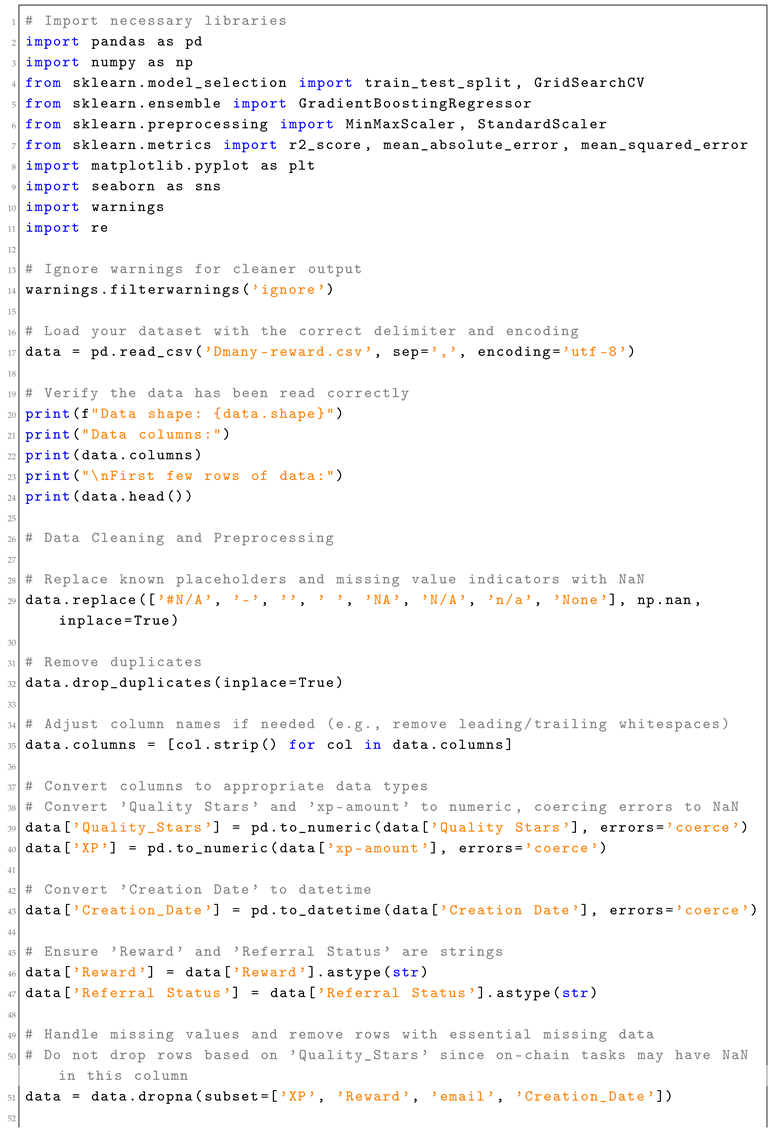
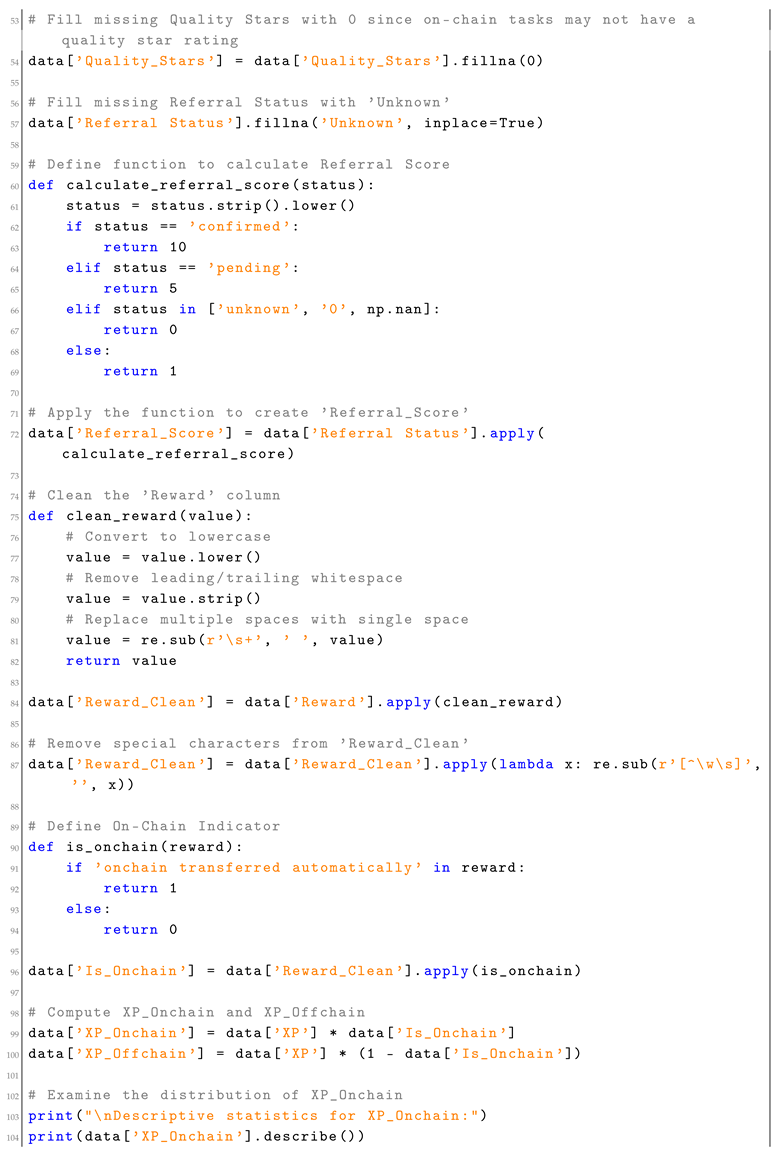
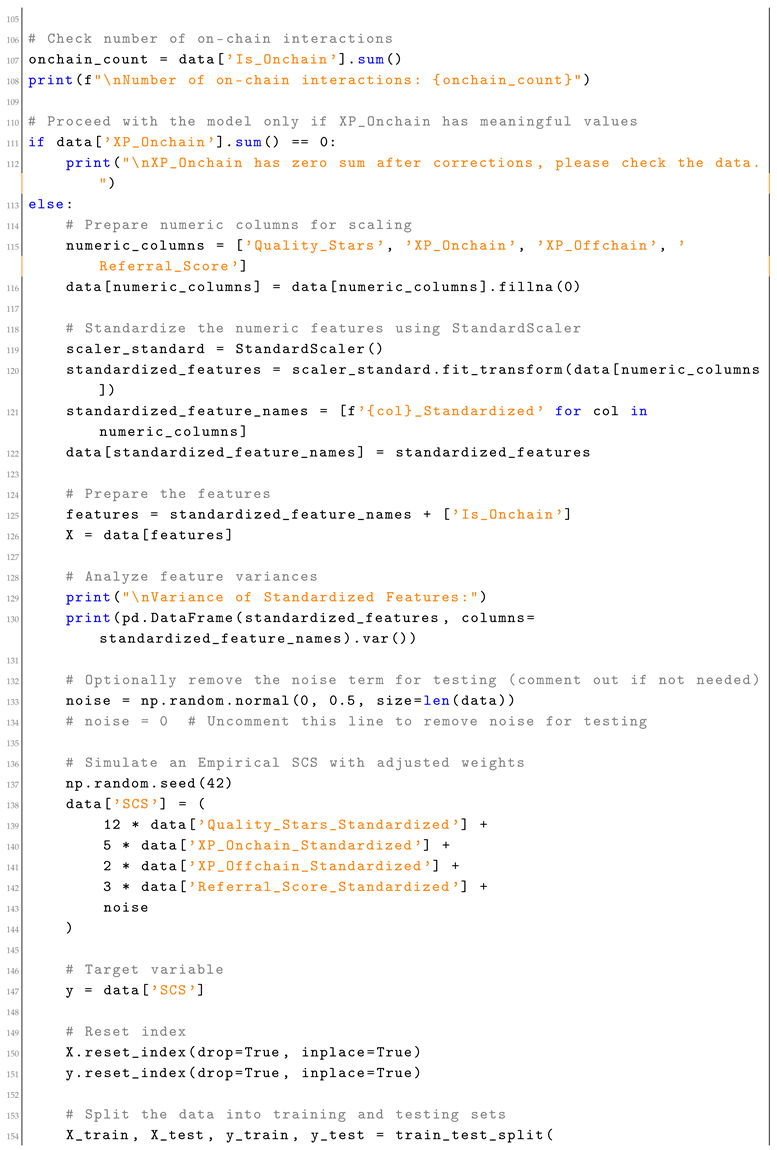
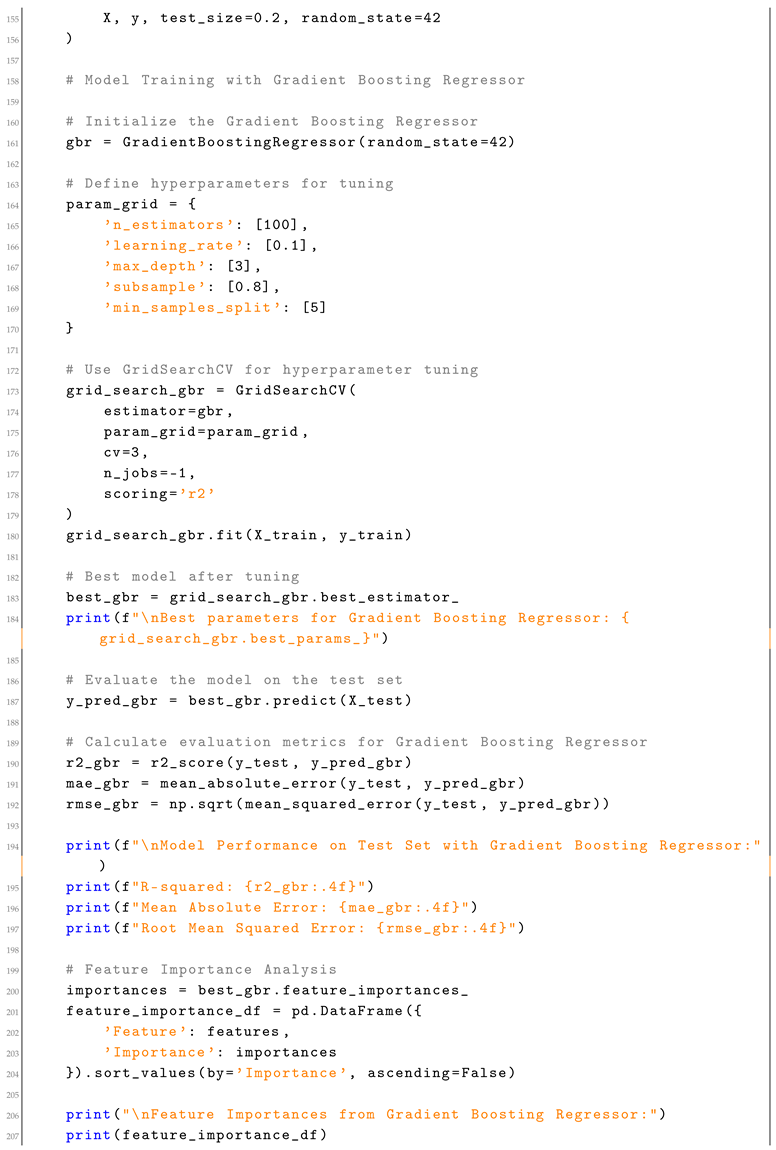
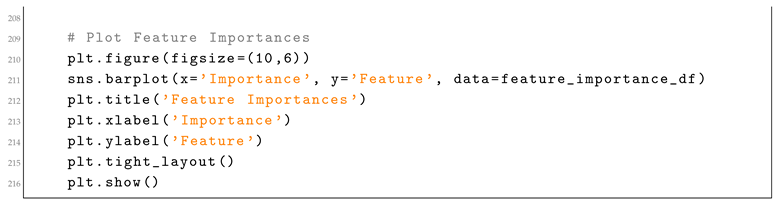
The following Python script was developed to calculate the Social Capital Score (SCS) based on user data from the Dmany Quest Engine. This script performs data cleaning, preprocessing, feature engineering, model training, and evaluation using Gradient Boosting Regression. It leverages libraries such as Pandas, NumPy, Scikit-learn, and Matplotlib for efficient data manipulation and visualization.
| Listing A1. Social Capital Score (SCS) Calculation Script. |
 |
 |
 |
 |
 |
References
- Akerlof, G. A. (1970). The market for “lemons”: Quality uncertainty and the market mechanism. Quarterly Journal of Economics, 84(3), 488–500.
- Ben-Sasson, E., Chiesa, A., Genkin, D., Tromer, E., & Virza, M. (2014). Succinct non-interactive zero knowledge for a von Neumann architecture. In 23rd USENIX Security Symposium (pp. 781–796). USENIX Association.
- Ben-Sasson, E., Chiesa, A., Garman, C., Green, M., Miers, I., Tromer, E., & Virza, M. (2014). Zerocash: Decentralized anonymous payments from bitcoin. In 2014 IEEE Symposium on Security and Privacy (pp. 459-474). IEEE.
- BrightID. (n.d.). BrightID: A Unique Identity Verification System. Available online: https://brightid.org.
- Buterin, V. (2014). A next-generation smart contract and decentralized application platform. Ethereum Whitepaper. Available online: https://ethereum.org/en/whitepaper/.
- Buterin, V. (2019). An incomplete guide to rollups. Available online: https://vitalik.ca/general/2019/12/23/rollup.html.
- Christidis, K., & Devetsikiotis, M. (2016). Blockchains and smart contracts for the internet of things. IEEE Access, 4, 2292-2303.
- Circom. (n.d.). Circom: A Circuit Compiler. Available online: https://docs.circom.io/.
- Douceur, J. R. (2002). The Sybil attack. In Proceedings of the First International Workshop on Peer-to-Peer Systems (pp. 251–260). Springer.
- DeFi Pulse. (2021). Total value locked (USD) in DeFi. Available online: https://defipulse.com.
- European Union. (2016). General Data Protection Regulation (GDPR). Available online: https://gdpr.eu.
- Fudenberg, D., & Tirole, J. (1991). Game Theory. MIT Press.
- Gao, Z., Li, Z., & Hou, Y. (2021). Trust management in decentralized IoT: A blockchain and smart contract based approach. IEEE Access, 9, 102774-102785.
- Arrow, K. J. (1972). Gifts and exchanges. Philosophy and Public Affairs, 1(4), 343–362.
- Nigrini, M. J. (2012). Benford’s Law: Applications for forensic accounting, auditing, and fraud detection. John Wiley & Sons.
- Jain, A. K., Murty, M. N., & Flynn, P. J. (1999). Data clustering: A review. ACM Computing Surveys (CSUR), 31(3), 264–323.
- Wooldridge, J. M. (2010). Econometric analysis of cross section and panel data (2nd ed.). MIT Press.
- Box, G. E. P., Jenkins, G. M., Reinsel, G. C., & Ljung, G. M. (2015). Time series analysis: Forecasting and control (5th ed.). John Wiley & Sons.
- Brave Software Inc. (2017). Basic Attention Token (BAT) white paper. Available online: https://basicattentiontoken.org/whitepaper/.
- Varian, H. R. (2014). Intermediate microeconomics: A modern approach (9th ed.).
- Steemit Inc. (2016). Steemit: A blockchain-based social media platform. Available online: https://steemit.com/whitepaper.
- MakerDAO. (2017). MakerDAO: Stablecoin system whitepaper. Available online: https://makerdao.com/en/whitepaper/.
- Goldreich, O., Micali, S., & Wigderson, A. (1991). Proofs that yield nothing but their validity or all languages in NP have zero-knowledge proof systems. Journal of the ACM (JACM), 38(3), 691–729.
- Ben-Sasson, E., Chiesa, A., Genkin, D., Tromer, E., & Virza, M. (2018). Scalable, transparent, and post-quantum secure computational integrity. In Proceedings of the 2018 IEEE European Symposium on Security and Privacy (pp. 254–271).
- Holmström, B. (1979). Moral hazard and observability. Bell Journal of Economics, 10(1), 74–91.
- Hoffman, D. L., Novak, T. P., & Peralta, M. (1999). Building consumer trust online. Communications of the ACM, 42(4), 80-85.
- Inter-Blockchain Communication Protocol (IBC). (n.d.). Available online: https://ibcprotocol.org.
- Kahneman, D., & Tversky, A. (2013). Prospect theory: An analysis of decision under risk. In Handbook of the fundamentals of financial decision making: Part I (pp. 99-127). World Scientific.
- Katz, M. L., & Shapiro, C. (1985). Network externalities, competition, and compatibility. American Economic Review, 75(3), 424–440.
- Mankiw, N. G. (2014). Principles of Economics. Cengage Learning.
- Mas-Colell, A., Whinston, M. D., & Green, J. R. (1995). Microeconomic Theory. Oxford University Press.
- Resnick, P., Zeckhauser, R., Friedman, E., & Kuwabara, K. (2000). Reputation systems. Communications of the ACM, 43(12), 45-48.
- Shapiro, C., & Stiglitz, J. E. (1984). Equilibrium unemployment as a worker discipline device. American Economic Review, 74(3), 433–444.
- Stiglitz, J. E., & Weiss, A. (1981). Credit rationing in markets with imperfect information. American Economic Review, 71(3), 393–410.
- Stiglitz, J. E. (1984). Theories of economic regulation. The Bell Journal of Economics, 5(2), 3-21.
- W3C. (2020). Decentralized identifiers (DIDs) v1.0. Available online: https://www.w3.org/TR/did-core/.
- W3C. (2019). Verifiable credentials data model 1.0. Available online: https://www.w3.org/TR/vc-data-model/.
- Xu, X., Weber, I., & Staples, M. (2019). Blockchain platforms: A systems perspective. Springer.
- Reed, D., Sporny, M., & Sabadello, M. (2016). Sovrin: A protocol and token for self-sovereign identity and decentralized trust. White Paper.
- Bowe, A., Grubbs, R., & Hasson, M. (2017). Zk-SNARKs for C: Verifying program executions succinctly and in zero knowledge. In Advances in Cryptology - CRYPTO 2017 (pp. 90–108). Springer.
- Benet, J. (2014). IPFS - Content Addressed, Versioned, P2P File System. Available online: https://ipfs.io.
- Friedman, J. H. (2001). Greedy function approximation: A gradient boosting machine. Annals of Statistics, 29(5), 1189–1232.
Disclaimer/Publisher’s Note: The statements, opinions and data contained in all publications are solely those of the individual author(s) and contributor(s) and not of MDPI and/or the editor(s). MDPI and/or the editor(s) disclaim responsibility for any injury to people or property resulting from any ideas, methods, instructions or products referred to in the content. |
© 2024 by the author. Licensee MDPI, Basel, Switzerland. This article is an open access article distributed under the terms and conditions of the Creative Commons Attribution (CC BY) license (https://creativecommons.org/licenses/by/4.0/).
Copyright: This open access article is published under a Creative Commons CC BY 4.0 license, which permit the free download, distribution, and reuse, provided that the author and preprint are cited in any reuse.


