

Submitted:
25 September 2024
Posted:
26 September 2024
You are already at the latest version
Abstract
This study examines the evolution of the tourism industry in Chile during the period 2013-2019, focusing on its contribution to the country's Gross Domestic Product (GDP). Using data from the National Tourism Service (SERNATUR) and the Undersecretariat of Tourism, it analyzes the approximation of tourism GDP and its share in the Chilean economy. The results indicate a sustained growth of the tourism sector, with a contribution to GDP that reached 3.3% in 2019. The main Tourism Characteristic Activities (TCAs) contributing to this growth are identified, highlighting administrative and support activities, food services and accommodation. The study reveals growth patterns, fluctuations in the contribution of different TCAs, and the impact of external factors on the sector's performance. This research provides valuable insights for the formulation of tourism development policies and strategies in Chile.
Keywords:
Tourism
; Tourism GDP
; Tourism characteristic activities
; Tourism economics
1. Introduction
Tourism has become one of the most dynamic and fastest growing economic sectors worldwide in recent decades. Its capacity to generate employment, attract investment and stimulate regional development has positioned it as a fundamental pillar in the economic growth strategies of many countries (World Tourism Organization [UNWTO], 2019). In this context, Chile has been no exception, and has experienced significant growth in its tourism industry, taking advantage of its geographic diversity, cultural richness and economic stability to attract visitors from all over the world.
The importance of quantifying and analyzing the economic impact of tourism on the national economy has become increasingly relevant to policy makers, investors and academics. However, the cross-cutting nature of tourism, spanning multiple sectors and economic activities, presents significant challenges to its accurate measurement (Dwyer et al., 2010). In response to this need, the National Tourism Service (SERNATUR) and the Chilean Undersecretariat of Tourism have developed a methodology for estimating tourism GDP, providing a valuable approximation of the sector's economic contribution.
This study focuses on analyzing the evolution of the tourism industry in Chile during the period 2013-2019, using the tourism GDP proxy as the main indicator. This approach allows not only to quantify the direct contribution of tourism to the Chilean economy, but also to identify trends, growth patterns and the most dynamic subsectors within the tourism industry.
The choice of the period 2013-2019 for this analysis is not arbitrary. The year 2013 marks the beginning of a new calculation methodology aligned with the Compilation of Reference (CoR) of the National Accounts prepared by the Central Bank of Chile. On the other hand, 2019 represents the last year before the global disruption caused by the COVID-19 pandemic, thus providing a complete picture of the development of the sector in a period of relative stability and growth.
2. Research Objectives
- To analyze the evolution of Chile's nominal tourism GDP between 2013 and 2019.
- Identify and evaluate the contribution of the main Tourism Characteristic Activities (TCA) to tourism GDP.
- Examine annual variations in tourism GDP and its components to identify trends and growth patterns.
- Contextualize the growth of the tourism sector within the broader framework of the Chilean economy.
- To provide insights on the factors that have influenced the performance of the tourism sector during the period studied.
The relevance of this study lies in its potential to inform decision making in tourism policy, strategic planning of the sector and resource allocation. It also contributes to the academic literature on the economics of tourism in Latin America by providing a detailed analysis of one of the region's most important tourism markets.
The article is structured as follows: after this introduction, a review of the relevant literature on the measurement of the economic impact of tourism and previous studies on the tourism sector in Chile is presented. Next, the methodology used for the estimation of tourism GDP is detailed and the data sources are described. The results section presents the main findings of the analysis, followed by a discussion that contextualizes these results within the existing literature and global trends in the sector. Finally, conclusions are offered, and future lines of research are suggested.
This study seeks not only to provide a comprehensive overview of the recent evolution of the tourism sector in Chile, but also to contribute to the broader debate on the measurement and analysis of the economic impact of tourism in emerging economies.
3. Literature Review
Measuring the economic impact of tourism has been the subject of extensive academic and practical research in recent decades. The complexity of this task lies in the cross-cutting nature of tourism, which involves multiple sectors and economic activities (Frechtling, 2013). This section reviews the relevant literature on methods of measuring the economic impact of tourism, with a particular focus on the estimation of tourism GDP, as well as previous studies on the tourism sector in Chile and Latin America.
3.1. Measuring the Economic Impact of Tourism
The World Tourism Organization (UNWTO) has played a crucial role in the development of standardized methodologies for measuring the economic impact of tourism. The introduction of the Tourism Satellite Account (TSA) in 2000 marked a significant milestone in this field (UNWTO, 2008). The TSA provides a conceptual and methodological framework for measuring the direct contribution of tourism to a country's economy, allowing international comparisons and a more accurate assessment of the sector (Frechtling, 2010).
Dwyer et al. (2010) argue that while TSA is a valuable tool, it has limitations, particularly in capturing the indirect and induced effects of tourism on the economy. To address these limitations, several researchers have proposed complementary methods. For example, Blake et al. (2008) used computable general equilibrium (CGE) models to assess the total impact of tourism on the economy, including feedback and displacement effects.
In the Latin American context, Brida et al. (2008) conducted a comprehensive review of studies on the economic impact of tourism in the region. They found that, although there is a consensus on the importance of tourism for economic growth, the magnitude of this impact varies significantly between countries and depends on factors such as economic structure, level of development and tourism policies implemented (Barra, 2022).
3.2. Estimated Tourism GDP
The estimation of tourism GDP, as a specific component of measuring the economic impact of tourism, has received considerable attention in the literature. Smeral (2006) argues that tourism GDP provides a more accurate measure of the direct contribution of tourism to the economy than other indicators, such as international tourism receipts. However, the estimation of tourism GDP presents significant methodological challenges. Hara (2008) notes that the main difficulty lies in identifying and quantifying the proportion of economic activities that can be directly attributed to tourism. To address this challenge, several countries have developed methodologies adapted to their specific contexts.
In this regard, the work of Jones et al. (2009) on the estimation of tourism GDP in the United Kingdom provides valuable insights on how to adapt international methodologies to specific national contexts. Their approach, which combines TSA data with detailed information on tourism expenditure, has influenced estimation practices in several countries.
3.3. Tourism Sector in Chile
Research on the tourism sector in Chile has grown significantly over the last two decades, reflecting the growing importance of tourism to the country's economy. Figueroa et al. (2015) provided an overview of tourism development in Chile since the 1990s, highlighting the role of public policies in promoting the sector and the challenges faced in terms of infrastructure and tourism product development.
Regarding the measurement of the economic impact of tourism in Chile, the work of Brida et al. (2014) is particularly relevant. Using econometric techniques, the authors analyzed the relationship between tourism and economic growth in Chile for the period 1986-2007, finding evidence of a positive causal relationship in the long run.
More recently, Gardella and Aguayo (2018) examined the evolution of Chile's tourism competitiveness compared to other Latin American countries. Their study revealed that while Chile has improved its competitive position in several aspects, it still faces challenges in areas such as tourism infrastructure and prioritization of the sector in government policies.
Regarding specifically the estimation of tourism GDP in Chile, the academic literature is more limited. The technical report by SERNATUR and the Undersecretariat of Tourism (2021) on the approximation of tourism GDP for the period 2013-2019 represents a significant advance in this regard, providing a detailed methodology and estimates based on official data.
3.4. Gaps in the Literature and Contribution of the Present Study
Despite the growing literature on tourism in Chile, there are several gaps that this study seeks to address:
- Detailed analysis of the recent evolution of tourism GDP: Although there are studies that analyze the economic impact of tourism in Chile, few have focused specifically on the evolution of tourism GDP in recent years.
- Disaggregation by Tourism Characteristic Activities (TCA): Most previous studies have analyzed the tourism sector, without delving into the contribution of the different TCAs to tourism GDP.
- Contextualization within broader economic trends: There is a need to analyze the evolution of the tourism sector in the context of broader economic trends in Chile during the period 2013-2019.
- Critical evaluation of the estimation methodology: While SERNATUR's technical report provides a detailed methodology, there is room for a critical evaluation of this methodology in the context of international best practices.
The present study seeks to address these gaps by providing a comprehensive and detailed analysis of the evolution of tourism GDP in Chile between 2013 and 2019. In doing so, it not only contributes to the academic literature on tourism economics in Chile, but also provides valuable insights for policymakers and practitioners in the sector.
4. Methodology and Data
This study uses a quantitative approach based on the analysis of secondary data provided by the National Tourism Service (SERNATUR) and the Chilean Undersecretariat of Tourism. The methodology used to estimate tourism GDP is based on the “origin or production method”, aligned with the recommendations of the World Tourism Organization (UNWTO) and adapted to the Chilean context.
Data Sources:
The data used in this study comes mainly from the report “Approximation of Chile's tourism GDP, Period 2013-2019” prepared by SERNATUR and the Subsecretary of Tourism (2021). This report is based on various sources of information, including:
- ▪
- Tourism expenditure surveys (SERNATUR, Subsecretary of Tourism)
- ▪
- Tourist movement statistics (SERNATUR, Subsecretary of Tourism)
- ▪
- National Accounts (Central Bank of Chile)
- ▪
- Price statistics CPI (National Institute of Statistics)
Study Period
The analysis focuses on the period 2013-2019. The choice of this period is justified for two main reasons:
- 2013 marks the beginning of a new calculation methodology aligned with the Compilation of Reference (CoR) of the National Accounts prepared by the Central Bank of Chile.
- 2019 represents the last year before the global disruption caused by the COVID-19 pandemic, thus providing a comprehensive view of the sector's development in a period of relative stability and growth.
Tourism GDP Estimation Methodology
The methodology used for the estimation of tourism GDP is based on the "origin or production method". This method considers the information available on the tourism sector and the economy in general, following the logic of the country's National Accounts. The main steps of this methodology are:
- Identification of Tourism Characteristic Activities (TCA): Some correspondence was established between the TCAs defined by the UNWTO and the economic activities used in Chile's National Accounts. This resulted in 12 main TCAs, including retail trade, accommodation services, food services, transportation, among others.
- Estimation of the Tourism Value Added (VAT): For each TCA, the Tourism Value Added (VAT) was estimated using the following formula:
VAT = VA * VT
VT: Tourism Vector (proportion of activity attributable to tourism)
- 3.
- Construction of the Tourism Vector: The tourism vector was constructed using information from tourism expenditure surveys, tourist movement statistics and other relevant data. This vector was updated annually to reflect changes in the structure of tourism expenditure.
- 4.
- Annual restatement: For years after 2013 (base year), a restatement method was used that considered both price and quantity effects:
VAT(t) = VAT(t-1) * (1 + ΔIP) * (1 + ΔIQ)
Prices ΔIQ: Variation of the Quantity Index.
- 5.
- Calculation of Tourism GDP: Tourism GDP was calculated as the sum of the VAT of all TCAs:
Tourism GDP = Σ VAT(i)
- 6.
- Estimated contribution of tourism to total GDP: This was calculated as the ratio of tourism GDP to total GDP of the economy:
Tourism GDP = (Tourism GDP / Total GDP) * 100
5. Data Analysis
The following techniques were used to analyze the evolution of tourism GDP and its composition:
- Trend analysis: The evolution of nominal tourism GDP and its share in total GDP over the period 2013-2019 was examined.
- Compositional analysis: The contribution of each TCA to the total tourism GDP and how this composition changed over time was analyzed.
- Analysis of year-on-year changes: Year-on-year changes in tourism GDP and each TCA were calculated and analyzed.
- Impact analysis: The impact of each TCA on the annual variation of tourism GDP was calculated to identify the main drivers of growth or decline.
Methodological Limitations
It is important to point out some limitations of this methodology:
- The estimate is in nominal terms, which means that it reflects both real growth and price changes.
- The methodology depends largely on the accuracy of tourism expenditure surveys and other primary data sources.
- The annual update of the tourism vector may not fully capture structural changes in the pattern of tourism spending.
- The methodology does not capture the indirect and induced effects of tourism on the economy.
Despite these limitations, this methodology represents a significant advance in the measurement of the economic impact of tourism in Chile and provides a solid basis for the analysis of the sector's evolution.
6. Main Findings
The analysis of Chile's tourism GDP data for the period 2013-2019 reveals several significant findings that provide a detailed view of the evolution of the tourism industry in the country. The main results are presented below:
Sustained growth of nominal tourism GDP
Chile's nominal tourism GDP showed sustained growth during the study period, increasing from COP4,307 billion in 2013 to COP6,489 billion in 2019. This represents a total increase of approximately 50.7% in six years.
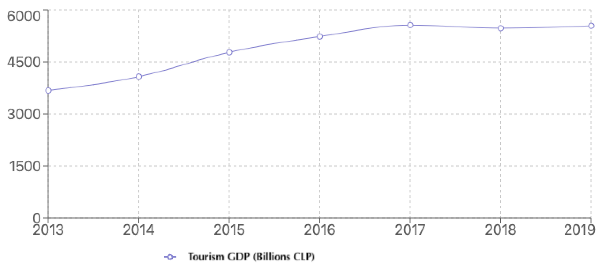
Graph 1. Nominal tourism GDP growth, 2013-2019. Source: Own elaboration based on SERNATUR statistics, 2021.
Average annual growth rate
The average annual growth rate of nominal tourism GDP during the 2013-2019 period was 7.3%. However, it is important to note that this growth was not uniform over the years.
Significant year-on-year changes
Significant year-on-year variations were observed in tourism GDP growth:
- ▪
- 2015 recorded the highest year-on-year growth with 17.3%.
- ▪
- 2016 also showed strong growth of 14.0%.
- ▪
- 2018 was the only year to record a contraction, with a decrease of 1.6%.
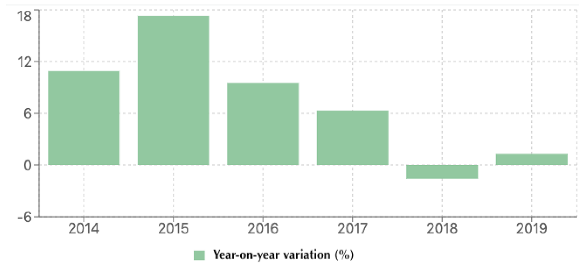
Graph 2. Year-on-year change in nominal tourism GDP, 2014-2019. Source: Own elaboration based on SERNATUR statistics, 2021.
Contribution to total GDP of the economy
The share of tourism in the total GDP of the Chilean economy (% tourism GDP) showed a general upward trend during the study period:
- ▪
- 2013: 3.1%
- ▪
- 2016: peaked at 3.6%.
- ▪
- 2019: maintained at 3.3%.
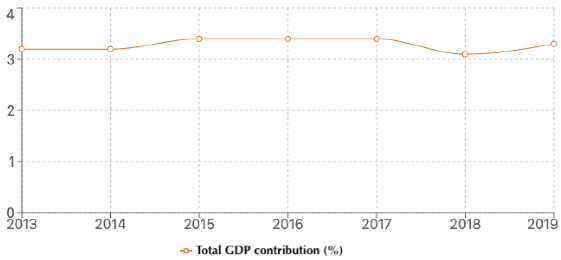
Graph 3. Evolution of the contribution of tourism to total GDP (% of tourism GDP), 2013-2019. Source: Own elaboration based on SERNATUR statistics, 2021.
Composition of tourism GDP by Tourism Characteristic Activities (TCA):
An analysis of the composition of tourism GDP reveals the relative importance of different TCAs:

Table 1.
Distribution of Tourism Value Added by TCA, 2019.
| ACT | VAT participation (%) |
|---|---|
| Administrative and support activities | 32.7% |
| Food services | 16.5% |
| Housing services | 10.5% |
| Land transportation support activities | 9.9% |
| Accommodation services | 9.3% |
| Air transportation | 6.9% |
| Other ACTs | 14.2% |
Source: Own elaboration based on SERNATUR statistics, 2021.
- Changes in the composition of tourism GDP:
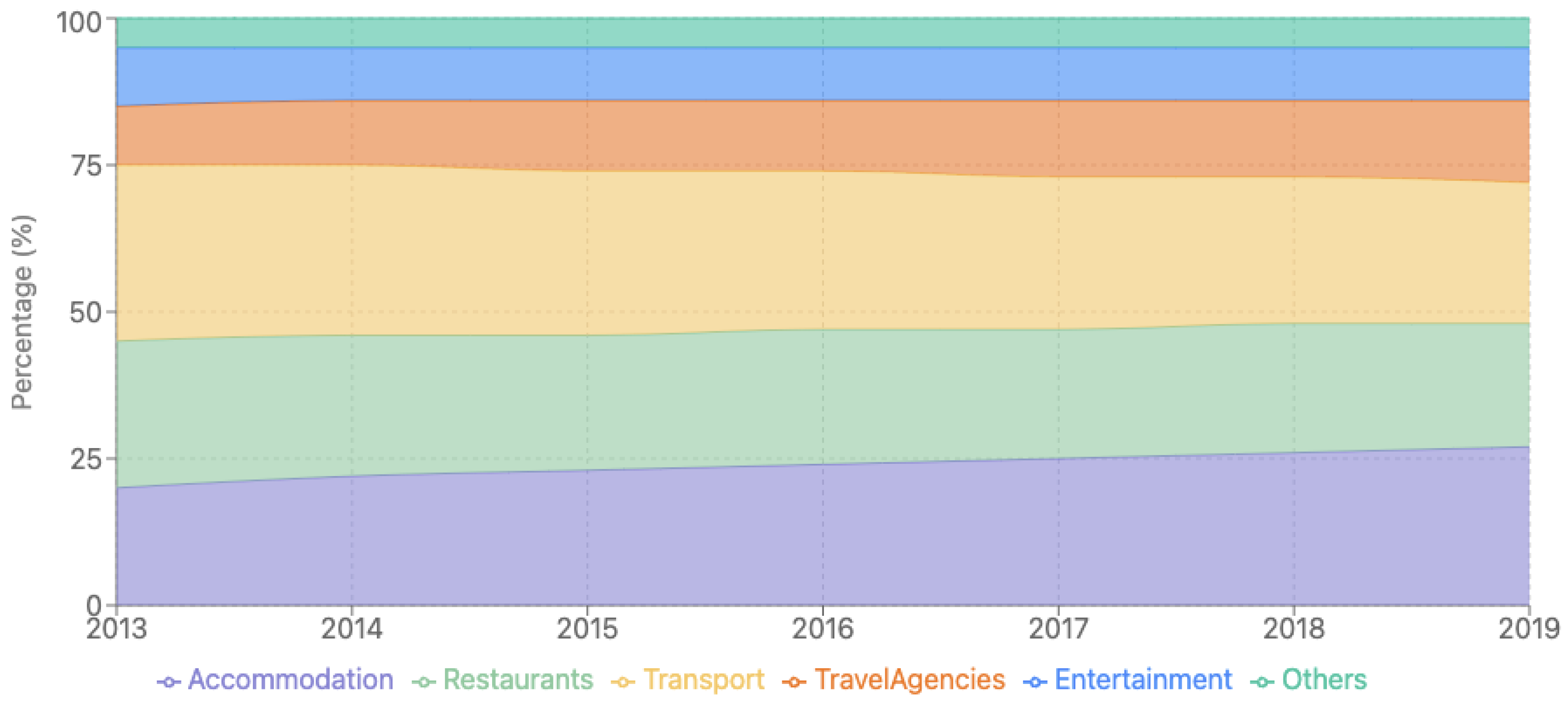
Significant changes were observed in the composition of tourism GDP during the study period:
- ▪
- Administrative and support activities increased their share from 26.5% in 2013 to 32.7% in 2019.
- ▪
- Food services also increased its share from 13.3% to 16.5%.
- ▪
- Air transport experienced a significant decrease from 17.9% in 2013 to 6.9% in 2019.
Figure 4.
Evolution of the composition of tourism GDP by TCA, 2013-2019. Source: Own elaboration based on SERNATUR statistics, 2021.
Figure 4.
Evolution of the composition of tourism GDP by TCA, 2013-2019. Source: Own elaboration based on SERNATUR statistics, 2021.
- Incidents in the annual variation
An analysis of the impact on the annual change in tourism GDP reveals the main drivers of growth:
- ▪
-
In 2015, the year of highest growth, the main positive incidences were:
- ▪
- Air transportation: +4.05 pp
- ▪
- Administrative and support activities: +2.69 pp
- ▪
- Food services: +2.58 pp
- ▪
-
In 2019, the last year of the study:
- ▪
- Administrative and support activities: +5.91 pp
- ▪
- Food services: +0.05 pp
Table 2.
Impact on the annual change in tourism GDP by ACT, 2019.
| ACT | Incidence (pp) |
|---|---|
| Administrative and support activities | +5.91 |
| Food services | +0.05 |
| Air transportation | -0.42 |
| Accommodation services | -0.43 |
| Other ACTs | -1.22 |
Source: Own elaboration based on SERNATUR statistics, 2021.
- Influential external factors
The analysis suggests that external factors had a significant impact on the performance of the tourism sector:
- Growth in 2015-2016 coincided with an increase in shopping tourism from Argentina, favored by foreign exchange conditions.
- The contraction in 2018 is associated with a 23% decrease in Argentine tourist arrivals, possibly due to the depreciation of the Argentine peso.
These findings provide a solid basis for further analysis of the evolution of the tourism industry in Chile and its implications for the overall economy.
7. Results
Based on the findings presented above, we can extract several significant results about the evolution of the tourism industry in Chile during the period 2013-2019:
- Sustained growth in the tourism sector
The tourism sector in Chile showed sustained growth during the study period, with total nominal tourism GDP increasing by 50.7% between 2013 and 2019. This growth outpaced the overall growth of the Chilean economy during the same period, which is reflected in the increase in tourism's share of total GDP from 3.1% in 2013 to 3.3% in 2019.
- Volatility in annual growth rates
Despite the overall growth trend, there was considerable volatility in annual growth rates. 2015 recorded exceptional growth of 17.3%, while 2018 experienced a contraction of 1.6%. This volatility suggests that the tourism sector is sensitive to external and conjunctural factors.
- Structural changes in the composition of tourism GDP
Significant changes were observed in the composition of tourism GDP during the study period. Administrative and support activities, which include travel agency and tour operator services, increased their share from 26.5% to 32.7%, becoming the most important component of tourism GDP. On the other hand, air transportation experienced a significant decrease in its share, from 17.9% to 6.9%.
- Growing importance of food services
Food services showed steady growth in its share of tourism GDP, increasing from 13.3% in 2013 to 16.5% in 2019. This suggests a shift in tourist spending patterns, with a higher share of spending directed to gastronomic experiences.
- Impact of external factors
The results suggest that the Chilean tourism sector is highly sensitive to external factors, particularly to economic conditions in the main tourist source markets. The boom in Argentine shopping tourism in 2015-2016 and its subsequent decline in 2018 due to the depreciation of the Argentine peso illustrate this sensitivity.
- Diversification of the tourism sector
The growth of various TCAs and changes in their relative share of tourism GDP indicate a diversification of the Chilean tourism sector. This diversification may contribute to greater resilience of the sector in the face of external shocks affecting specific activities.
- Contribution to economic growth
The sustained growth of tourism GDP and its increasing share of total GDP underscore the importance of tourism as an engine of economic growth in Chile. The sector has demonstrated its capacity to generate added value and contribute significantly to the national economy.
- Future growth potential
Despite the observed growth, tourism's share of Chile's total GDP (3.3% in 2019) remains relatively modest compared to some mature tourism destinations. This suggests that there is significant potential for further growth in the sector in the future.
- Need for adaptive policies
The observed changes in the composition of tourism GDP and the volatility in annual growth rates underscore the need for adaptive tourism policies that can respond quickly to changes in market trends and external factors.
8. Discussion
The results obtained in this study on the evolution of the tourism industry in Chile during the period 2013-2019 offer valuable insights into the development of the sector and its implications for the Chilean economy. These findings are discussed below in the context of existing literature and global tourism trends.
- Growth of the tourism sector and its economic contribution
The sustained growth of tourism GDP in Chile, with a total increase of 50.7% between 2013 and 2019, is in line with global growth trends in the tourism sector observed by the World Tourism Organization (UNWTO, 2020). This growth underscores the growing importance of tourism as a driver of economic development, as noted by several studies (e.g., Brida et al., 2014; Croes et al., 2018).
The share of tourism in Chile's total GDP, which reached 3.3% in 2019, is comparable to that of other Latin American countries, although it is still lower than that of more mature tourism destinations. For example, in 2019, the direct contribution of tourism to GDP in Mexico was 8.7% (WTTC, 2020), while in Costa Rica it was 5.5% (ICT, 2020).
This suggests that, despite the observed growth, there is still significant potential for the expansion of the tourism sector in Chile. As Gardella and Aguayo (2018) point out, Chile has competitive advantages in terms of geographic diversity and political stability that could be further leveraged to drive tourism growth.
- Volatility and sensitivity to external factors
The volatility observed in the annual growth rates of Chilean tourism GDP, particularly the growth peak in 2015 (17.3%) and the contraction in 2018 (-1.6%), reflects the sensitivity of the sector to external factors. This characteristic of tourism has been widely documented in the literature (Ritchie and Crouch, 2003; Dwyer et al., 2009).
The significant impact of fluctuations in Argentine tourism, influenced by economic and exchange rate conditions, underscores the importance of outbound market diversification. As suggested by Eugenio-Martin and Campos-Soria (2014), over-reliance on a single source market can increase the vulnerability of the tourism sector to external shocks.
- Structural changes in the composition of tourism GDP
The changes observed in the composition of tourism GDP, particularly the increase in the share of administrative and support activities (from 26.5% to 32.7%) and the decrease in the share of air transport (from 17.9% to 6.9%), reflect broader transformations in the global tourism industry.
The growth of administrative and support activities, which include travel agency and tour operator services, could be related to the growing importance of digital intermediaries in the tourism sector, a phenomenon observed globally (Buhalis and Law, 2008; Gretzel et al., 2015). This change suggests an adaptation of the Chilean tourism sector to global technological trends.
The decline in air transport share could reflect changes in travel patterns, with a possible increase in domestic or regional tourism using other modes of transport. However, this finding contrasts with global growth trends in air transport (IATA, 2019) and warrants further investigation.
- Growing importance of food services
The increase in the share of food services in tourism GDP (from 13.3% to 16.5%) is in line with the growing importance of food tourism globally (UNWTO, 2017). This phenomenon reflects a shift in tourists' preferences towards more authentic and local experiences, as noted by several studies (e.g., Kivela and Crotts, 2006; Okumus et al., 2007).
For Chile, this finding suggests an opportunity to further develop and promote its gastronomic offer as a distinctive tourist attraction, taking advantage of the country's rich culinary diversity.
- Resilience of the lodging sector
The relative stability in the share of accommodation services in tourism GDP (between 9% and 10%) suggests a steady demand and could indicate a certain resilience in this subsector. However, this finding contrasts with global trends towards the sharing economy and the growth of platforms such as Airbnb (Guttentag, 2015; Zervas et al., 2017).
The methodology used to estimate tourism GDP may not fully capture the impact of these new forms of accommodation, posing challenges to accurately measuring the economic value of tourism in the digital age.
9. Implications for Tourism Policy
The results of this study have important implications for tourism policy in Chile:
a) Market diversification: The observed sensitivity to fluctuations in the Argentine market underscores the need to diversify tourist source markets. This could involve marketing strategies aimed at new international markets and the promotion of domestic tourism.
b) Development of tourism products: The growth in food services and the stability in lodging suggest opportunities to develop tourism products that integrate gastronomic experiences and high-quality lodging.
c) Technological adaptation: The growth in administrative and support activities could indicate a need for policies that encourage technological innovation in the tourism sector, including support for tourism start-ups and the digitalization of services.
d) Sustainability: Although not directly addressed in the data, the sustained growth of the sector underscores the importance of implementing sustainable tourism policies to ensure the long-term viability of the sector (Bramwell and Lane, 2011).
e) Measurement and monitoring: The changes observed in the composition of tourism GDP highlight the need to constantly review and update measurement methodologies to accurately capture the economic value of tourism in a changing environment.
10. Conclusions
This study has provided a detailed analysis of the evolution of the tourism industry in Chile during the period 2013-2019, focusing on the approximation of tourism GDP and its contribution to the national economy. From the results obtained and the discussion presented, the following main conclusions can be drawn:
- Sustained growth and significant economic contribution: The tourism sector in Chile has experienced sustained growth during the study period, with total nominal tourism GDP increasing by 50.7% between 2013 and 2019. The contribution of tourism to the total GDP of the economy reached 3.3% in 2019, underscoring the growing importance of the sector as a driver of economic development. However, this share suggests that there is still significant potential for future growth in the sector.
- Volatility and sensitivity to external factors: The study revealed considerable volatility in annual tourism GDP growth rates, with a peak growth rate of 17.3% in 2015 and a contraction of 1.6% in 2018. This volatility reflects the sensitivity of the sector to external factors, particularly economic conditions in major tourist source markets. The strong influence of fluctuations on Argentine tourism underscores the need to diversify source markets to increase the resilience of the sector.
- Structural transformation of the sector: Significant changes were observed in the composition of tourism GDP during the study period. The increase in the share of administrative and support activities, and the decrease in the share of air transport, reflect broader transformations in the overall tourism industry. These changes suggest an adaptation of the Chilean tourism sector to technological trends and changing travel patterns.
- Emerging opportunities: The growth in the share of food services in tourism GDP indicates an opportunity to develop and promote gastronomic tourism in Chile. On the other hand, the relative stability in the share of accommodation services suggests a steady demand in this sub-sector, although it raises questions about capturing the impact of new forms of accommodation in the sharing economy.
- Implications for tourism policy: The results of the study have important implications for tourism policy formulation in Chile. These include the need for strategies to diversify source markets, develop innovative tourism products, encourage technological adaptation in the sector, implement sustainable tourism policies, and continuously improve methodologies for measuring the economic impact of tourism.
- Methodological challenges: The study has also highlighted methodological challenges in measuring the economic impact of tourism. The methodology used, based on the "origin or production method," provides a valuable approximation of tourism GDP, but may not fully capture all aspects of tourism's economic impact, particularly in a rapidly evolving digital environment.
- Overall positioning: Although growth in Chile's tourism sector has been significant, comparison with other tourism destinations suggests that there is still room for further development. Tourism's share of Chile's GDP (3.3% in 2019) is still lower than that of more mature tourism destinations, indicating future growth potential.
- Resilience and adaptability: Despite the observed volatility, the Chilean tourism sector has demonstrated resilience and adaptability. The diversification observed in the composition of tourism GDP suggests that the sector is evolving in response to changing market demands and global trends.
11. Future Lines of Research
Based on the findings and limitations of this study, several promising avenues for future research can be identified:
- Analysis of the impact of the COVID-19 pandemic: A crucial area for future research will be the analysis of the impact of the COVID-19 pandemic on the Chilean tourism sector (Barra, 2021). This could include a comparative study of the sector's performance before, during and after the pandemic, as well as an evaluation of the recovery strategies implemented.
- In-depth study of tourism GDP volatility: A more detailed analysis of the factors influencing tourism GDP volatility is required. This could include an econometric study that examines the relationship between tourism GDP and variables such as exchange rates, economic conditions in major source markets, and global events that affect travel patterns.
- Regional comparative analysis: A comparative study of the performance of the Chilean tourism sector in relation to other Latin American countries could provide valuable insights into the relative strengths and weaknesses of the sector in Chile.
- Domestic Tourism Study: A more detailed analysis of domestic tourism in Chile, including its patterns, economic contribution and growth potential.
- Impact of tourism on regional development: Investigate how the growth of the tourism sector is affecting the economic development of different regions of Chile.
- Improving measurement methodologies: Explore ways to improve methodologies for measuring the economic impact of tourism, particularly in terms of capturing new forms of tourism and digital services.
These lines of research would not only broaden our understanding of the tourism industry in Chile but would also provide valuable information for the formulation of policies and strategies for the development of the sector in Latin America.
References
- Barra Novoa, R. An appreciative theorizing approach to gazelle enterprises assisted by the Arica Business Center. Journal of Management & Business Studies 2022, 4, 1–19. [Google Scholar] [CrossRef]
- Barra Novoa, R. Nueva Economía en tiempos de crisis: Una aproximación teórica a la transformación tecnológica y social. Journal of Management & Business Studies 2021, 3, 1–13. [Google Scholar] [CrossRef]
- Barra Novoa, R. The new economy in times of crisis. International Journal of Business, Economics and Management 2021, 4, 149–156. [Google Scholar] [CrossRef]
- Bramwell, B.; Lane, B. Critical research on the governance of tourism and sustainability. Journal of Sustainable Tourism 2011, 19, 411–421. [Google Scholar] [CrossRef]
- Brida, J.G.; Cortes-Jimenez, I.; Pulina, M. Has the tourism-led growth hypothesis been validated? A literature review. Current Issues in Tourism 2014, 19, 394–430. [Google Scholar] [CrossRef]
- Buhalis, D.; Law, R. Progress in information technology and tourism management: 20 years on and 10 years after the Internet—The state of eTourism research. Tourism Management 2008, 29, 609–623. [Google Scholar] [CrossRef]
- Croes, R.; Ridderstaat, J.; van Niekerk, M. Connecting quality of life, tourism specialization, and economic growth in small island destinations: The case of Malta. Tourism Management 2018, 65, 212–223. [Google Scholar] [CrossRef]
- Dwyer, L., Forsyth, P., & Dwyer, W. (2009). Tourism economics and policy. Channel View Publications.
- Eugenio-Martin, J.L.; Campos-Soria, J.A. Economic crisis and tourism expenditure cutback decision. Annals of Tourism Research 2014, 44, 53–73. [Google Scholar] [CrossRef]
- Gardella, R.; Aguayo, E. Tourism demand and economic growth in Chile: A study based on panel data. Tourism Analysis 2018, 23, 387–396. [Google Scholar]
- Gretzel, U.; Sigala, M.; Xiang, Z.; Koo, C. Smart tourism: foundations and developments. Electronic Markets 2015, 25, 179–188. [Google Scholar] [CrossRef]
- Guttentag, D. Airbnb: disruptive innovation and the rise of an informal tourism accommodation sector. Current Issues in Tourism 2015, 18, 1192–1217. [Google Scholar] [CrossRef]
- International Air Transport Association (IATA). (2019). Annual Review 2019. Montreal, Canada: IATA.
- Instituto Costarricense de Turismo (ICT). (2020). Anuario Estadístico de Turismo 2019. San José, Costa Rica: ICT.
- Kivela, J.; Crotts, J.C. Tourism and gastronomy: Gastronomy's influence on how tourists experience a destination. Journal of Hospitality & Tourism Research 2006, 30, 354–377. [Google Scholar] [CrossRef]
- Okumus, B.; Okumus, F.; McKercher, B. Incorporating local and international cuisines in the marketing of tourism destinations: The cases of Hong Kong and Turkey. Tourism Management 2007, 28, 253–261. [Google Scholar] [CrossRef]
- Organización Mundial del Turismo (OMT). (2019). Panorama del turismo internacional, edición 2019. Madrid, España: OMT.
- Organización Mundial del Turismo (OMT). (2020). Barómetro OMT del Turismo Mundial y anexo estadístico, enero 2020. Madrid, España: OMT.
- Ritchie, J. R. B., & Crouch, G. I. (2003). The competitive destination: A sustainable tourism perspective. CABI Publishing.
- Servicio Nacional de Turismo (SERNATUR). (2013-2019). Anuario de Turismo. Santiago, Chile: SERNATUR.
- Subsecretaría de Turismo de Chile. (2013-2019). Informes de Turismo. Santiago, Chile: Ministerio de Economía, Fomento y Turismo.
- United Nations World Tourism Organization (UNWTO). (2017). Second Global Report on Gastronomy Tourism. Madrid, Spain: UNWTO.
- World Travel & Tourism Council (WTTC). (2020). Travel & Tourism Economic Impact 2020: Mexico. London, UK: WTTC.
- Zervas, G.; Proserpio, D.; Byers, J.W. The rise of the sharing economy: Estimating the impact of Airbnb on the hotel industry. Journal of Marketing Research 2017, 54, 687–705. [Google Scholar] [CrossRef]
- Archer, B.; Cooper, C.; Ruhanen, L. The positive and negative impacts of tourism. Global tourism 2005, 3, 79–102. [Google Scholar]
- Cárdenas-García, P.J.; Sánchez-Rivero, M.; Pulido-Fernández, J.I. Does tourism growth influence economic development? Journal of Travel Research 2015, 54, 206–221. [Google Scholar] [CrossRef]
- Dwyer, L.; Forsyth, P. Measuring the benefits and yield from foreign tourism. International Journal of Social Economics 1997, 24, 223–236. [Google Scholar] [CrossRef]
- Frechtling, D.C. The tourism satellite account: A primer. Annals of Tourism Research 2010, 37, 136–153. [Google Scholar] [CrossRef]
- Hall, C. M., & Williams, A. M. (2008). Tourism and innovation. Routledge.
- Ivanov, S.; Webster, C. Measuring the impact of tourism on economic growth. Tourism Economics 2007, 13, 379–388. [Google Scholar] [CrossRef]
- Khadaroo, J.; Seetanah, B. Transport infrastructure and tourism development. Annals of Tourism Research 2007, 34, 1021–1032. [Google Scholar] [CrossRef]
- Nunkoo, R.; Smith, S.L. Political economy of tourism: Trust in government actors, political support, and their determinants. Tourism Management 2013, 36, 120–132. [Google Scholar] [CrossRef]
- Pizam, A. A comprehensive approach to classifying acts of crime and violence at tourism destinations. Journal of Travel Research 1999, 38, 5–12. [Google Scholar] [CrossRef]
- Sinclair, M.T. Tourism and economic development: A survey. The Journal of Development Studies 1998, 34, 1–51. [Google Scholar] [CrossRef]
- Song, H.; Dwyer, L.; Li, G.; Cao, Z. Tourism economics research: A review and assessment. Annals of Tourism Research 2012, 39, 1653–1682. [Google Scholar] [CrossRef]
- Vanhove, N. (2005). The Economics of Tourism Destinations. Elsevier Butterworth-Heinemann.
Disclaimer/Publisher’s Note: The statements, opinions and data contained in all publications are solely those of the individual author(s) and contributor(s) and not of MDPI and/or the editor(s). MDPI and/or the editor(s) disclaim responsibility for any injury to people or property resulting from any ideas, methods, instructions or products referred to in the content. |
© 2024 by the authors. Licensee MDPI, Basel, Switzerland. This article is an open access article distributed under the terms and conditions of the Creative Commons Attribution (CC BY) license (https://creativecommons.org/licenses/by/4.0/).
Copyright: This open access article is published under a Creative Commons CC BY 4.0 license, which permit the free download, distribution, and reuse, provided that the author and preprint are cited in any reuse.


