
Submitted:
20 September 2024
Posted:
24 September 2024
You are already at the latest version
Abstract
There is an extensive body of research in the literature focusing on predicting the mechanical properties of concrete, such as compressive strength. Summarizing the current studies following the valuable contributions of researchers will serve as a guide for future studies and researchers. To this end, this study aims to identify the key authors, sources, institutions, and countries that have contributed to the prediction of concrete compressive strength. Additionally, it aims to provide researchers with comprehensive information on prominent research themes, trends, and gaps in the literature related to the prediction of concrete compressive strength. For this purpose, 2319 articles on the prediction of concrete compressive strength published from 2000 to 19th August 2024 were identified through the Scopus Database. The scientific measurement analyses were conducted using VOSviewer software. Upon reviewing the relevant research, it was found that machine learning methods are frequently used in predicting concrete compressive strength. In this context, the study will make significant contributions to the literature by examining leading institutions, countries, authors, and sources in the field, synthesizing data, and highlighting research areas, gaps, and trends related to concrete compressive strength prediction.
Keywords:
concrete
; compressive strength
; machine learning
; mechanical properties
; scientometric analysis
1. Introduction
With the increase in population, the rising demand for concrete has led to its widespread use in the construction of underground, surface, and water facilities [1]. Furthermore, parameters such as strength, durability, safety, service life, and cost-effectiveness contribute to concrete’s popularity as a building material [2,3,4,5] The widespread use of concrete especially necessitates the accurate determination of its compressive strength. Today, the compressive strength of concrete can be determined through destructive testing methods and predicted using non-destructive testing methods. The reliable method of destructive testing is generally performed in a laboratory setting. However, these tests are time-consuming, costly, and impractical [6]. or this reason, research focusing on the practical and reliable identification, prediction, and improvement of concrete compressive strength has become an important area of study. As seen in the literature, there is a growing interest in predicting the compressive strength of concrete without performing mechanical experiments.
In recent years, advances in artificial intelligence have contributed to the development of new solutions for predicting concrete compressive strength. Numerous studies conducted by researchers have predicted concrete compressive strength using various methods, making significant contributions to the literature [7,8,9,10,11,12,13,14,15,16,17,18,19,20,21,22,23,24,25,26,27,28,29,30,31,32,33,34,35,36,37,38,39,40,41,42,43,44,45,46,47,48,49,50,51,52,53,54,55,56,57,58]. Particularly, models that predict concrete compressive strength with high accuracy using datasets, without the need for laboratory tests, have been developed. However, due to the heterogeneous and complex nature of concrete, many limitations remain in this field. Notably, there is a lack of in-depth and comprehensive studies among the existing research. Therefore, this study aims to examine the existing literature on the prediction of concrete compressive strength to identify trends and challenges in the field.
To this end, studies on the prediction of concrete compressive strength from 2000 to 19th August 2024 were scanned in the Scopus Database. The artificial intelligence and machine learning methods used for predicting concrete compressive strength were examined in depth, and the most common keywords were identified. After searching for these relevant keywords in the Scopus Database, 6583 related articles were found. After a detailed examination, the most popular 2319 articles were selected. Subsequently, three scientific measurement analyses—Co-occurrence Analysis, Citation Analysis, and Bibliographic Coupling Analysis—were conducted using VOSviewer software to identify the most densely researched areas, trends, gaps, problems, relevant sources, institutions, and countries in the field of concrete compressive strength prediction.
This study, which focuses on identifying gaps in the prediction of compressive strength, thoroughly examines the existing research. The most accurate and rapid models for predicting concrete compressive strength are identified. In addition, leading studies, researchers, sources, institutions, and countries contributing to the field of concrete compressive strength prediction have been identified. Moreover, this study closely examines the limitations and recent developments in the field.
In conclusion, it is believed that efforts to improve prediction methods for concrete compressive strength, identify the most suitable prediction methods, and integrate these methods into the field are of paramount importance for improving both practical and theoretical applications. Therefore, by deepening the existing knowledge in the field of concrete compressive strength prediction, this study aims to guide future research.
2. Methodology
This study aims to identify trends, gaps, the most relevant sources, institutions, authors, and countries by examining research on the prediction of concrete compressive strength using the scientific mapping method. It also seeks to assist in making strategic decisions that will guide future research. The methodology of the study consists of several stages: data collection/selection, choosing the scientific mapping method, and applying the scientometric technique.
2.1. Detection of Keywords
A comprehensive literature review was carried out to identify commonly mentioned words in studies related to the prediction of concrete compressive strength by analyzing the abstract sections of manuscripts. Specifically, 52 SCI-indexed articles published after 1st January 2015, each having at least 50 citations as identified through the Web of Science, were examined to uncover these terms. These articles were thoroughly analyzed, and frequently mentioned keywords, which appeared more than four times, were identified and are presented in the table below.

Table 1.
The common words detected in abstract sections of manuscripts.
| Keywords | Number of Manuscript Containing Key Words |
|---|---|
| Compressive strength | 52 |
| Concrete | 52 |
| Predict | 52 |
| Artificial | 42 |
| ANN | 32 |
| Machine Learning | 25 |
| Adaptive Neuro Fuzzy Inference ANFIS | 10 |
| Multiple Linear Regression | 9 |
| Estimate | 8 |
| Support Vector Regression | 7 |
| Random Forest | 6 |
| Support Vector Machine | 6 |
| AI | 5 |
| Artificial intelligence | 5 |
| Decision Tree | 5 |
| Gene Expression Programming | 5 |
| Gradient Boosting Regression | 5 |
2.2. Detection of Relevant Documents
The following formulation is written in the advanced search engine of WoS to detect all related manuscripts fitting the formulation in the abstract section: ( ( TITLE-ABS-KEY ( concrete ) AND TITLE-ABS-KEY ( "compressive strength" ) ) AND ( ( TITLE-ABS-KEY ( predict ) OR TITLE-ABS-KEY ( estimate ) OR TITLE-ABS-KEY ( artificial ) OR TITLE-ABS-KEY ( "machine learning" ) OR TITLE-ABS-KEY ( "Multiple Linear Regression" ) OR TITLE-ABS-KEY ( "Support Vector Regression" ) OR TITLE-ABS-KEY ( "Random Forest" ) OR TITLE-ABS-KEY ( "Support Vector Machine" ) OR TITLE-ABS-KEY ( "Artificial intelligence" ) OR TITLE-ABS-KEY ( ai ) OR TITLE-ABS-KEY ( "Decision Tree" ) OR TITLE-ABS-KEY ( "Gene Expression Programming" ) OR TITLE-ABS-KEY ( "Gradient Boosting Regression" ) ) ) AND PUBYEAR > 1999 AND PUBYEAR < 2025 ). Later, manuscripts which are SCI and SSCI indexed, published from 2000 to 19th August 2024 and written in English, are filtered. Later, manuscripts having document types such as articles and early access are filtered to find the most prestigious research. A total of 6583 manuscripts were detected. Subsequently, obtained documents are screened to omit irrelevant documents from the list, and 2319 documents remained. The obtained documents in the list are analyzed via VOSviewer to obtain the current research trend, research gap, the most used machine learning method to shed light on future research directions, and the most relevant journals and authors to enhance scholar connections. The flowchart outlining the methodology of the study is provided in Figure 1.
2.3. The Selection of a Science Mapping Tool
To conduct an in-depth examination of a research topic, an appropriate science mapping tool must be selected [59]. Bibliometric and scientometric analysis are widely used scientific mapping methods. While bibliometric analysis is based on literature, scientometric analysis maps the development of research based on literature [60]. Therefore, in this study, scientific articles retrieved from the Web of Science database using relevant keywords were analyzed using the VOSviewer bibliometric and scientometric mapping tool.
2.4. Bibliometric and Scientometric Techniques
Through bibliometric and scientometric analysis methods, research on the prediction of concrete compressive strength was examined to identify trends, gaps, methodologies, and the most relevant countries, institutions, and authors in the field. These analyses were conducted using VOSviewer software. To detect the most frequently repeated words in titles and abstracts, several analyses were performed, including Co-occurrence Analysis, Text-based Mapping, Citation Analysis, Bibliographic Coupling, and Bibliographic Data Analysis. The authors, institutions, and citation counts of the most cited articles were identified, along with the countries that published the highest number of articles on concrete compressive strength prediction. A summary of the scientometric analysis used in this study is presented in Figure 2.
3. Findings
3.1. Density of Publications Concerning Studies on Concrete Compressive Strength Prediction
The earliest studies on the prediction of concrete compressive strength date back to the mid-20th century. From 2000 to 19th August 2024, a total of 6583 articles have been published on this topic. The distribution of the most popular 2319 articles by year is shown in Figure 3.
In the graph, the red line represents the cumulative trend, the numbers on the left axis indicate the number of documents published annually, and the numbers on the right axis represent the cumulative total. Upon reviewing the graph, it becomes clear that studies on concrete compressive strength prediction have increased over the years. In 2000, there were 9 articles, and this number rose to 49 by 2014. Therefore, the period from 2000 to 2014 can be considered the initial phase. The years 2015–2019 represent a period of acceleration in terms of the number of articles. In 2015, there were 58 articles, followed by 67 in 2016, 82 in 2017, and 136 in 2019.
The period from 2020 to 2023 marks a significant surge in publication numbers, with a noticeable increase starting in 2020. By 2023, the number of published articles peaked at 455. This indicates a marked increase in interest in the topic, particularly after 2020. It is clear that the number of articles published in 2024 will continue to grow, with 216 articles published by 1st January to 19th August 2024, which does not yet represent the full extent of publications for the year. This growth in publication numbers shows that the topic of concrete compressive strength prediction is receiving increasing attention and that this field is expanding rapidly.
The prediction of concrete compressive strength has become an increasingly important research area, and the rise in publication numbers is likely to continue in order to meet this growing demand [59]. Therefore, performing bibliometric analysis to analyze this rapidly increasing volume of data and obtain guiding insights is essential. Through such analysis, researchers and practitioners will be able to make more informed decisions regarding the prediction of concrete compressive strength.
3.2. Main Research Interests Predicting Compressive Strength
Based on the article data, the most frequently repeated keywords were extensively analyzed using VOSviewer software. During the analysis process, the minimum occurrence threshold for terms was set at 30 to identify the most commonly used keywords [59]. Among the terms that met this criterion, meaningful ones were selected, allowing for detailed evaluations of trends related to the prediction of concrete compressive strength. The relationships between the most frequently repeated keywords concerning the prediction of concrete compressive strength are illustrated in Figure 4.
The colors on the map represent thematic areas where specific keyword groups are concentrated. Green represents the fundamental concepts related to concrete compressive strength; red denotes the general properties of concrete, its durability, and the use of recycled materials; blue signifies applications of artificial intelligence and machine learning; yellow highlights the relationship between artificial intelligence and concrete strength; and purple corresponds to alternative concrete materials and methods such as artificial neural networks used in their analysis.
The term 'concrete' has been addressed across a wide range of engineering problems and research topics. It shows a strong relationship, particularly with topics like 'mechanical properties' and 'durability' [61,62,63,64,65,66,67,68,69,70,71,72,73]. Similarly, the term 'compressive strength' stands out as one of the most critical performance metrics in concrete studies [74,75,76,77,78,79,80,81,82,83,84,85]. The large nodes for main terms like 'concrete' and 'compressive strength' being connected to many subtopics indicate that these terms are supported by an extensive literature base in concrete research [86,87,88,89,90,91,92,93,94,95,96,97]. If we assess the connection lines in Figure 4, it is evident that the terms 'concrete types' and 'mechanical properties of concrete' are directly linked to terms like 'strength', 'compressive strength', 'flexural strength', and 'shear strength'. This is because different types of concrete exhibit different mechanical performance characteristics [98,99,100,101,102,103,104]. The size and subject areas of the repeated keywords in the articles, categorized by research field, are provided in Table 2.
As shown in Table 2, the subject areas can be categorized into six sections: mechanical properties of concrete, concrete types, modeling and analysis methods, pozzolanic additives, durability and sustainability, and other topics. These sections clearly illustrate which areas receive more attention in predicting concrete compressive strength and which methods are most frequently used.
3.3. Best Journals on Estimating Concrete Compressive Strength
For journals to be recognized as reputable and authoritative within their field, they must publish articles with a high capacity for citations. However, journals that produce a large number of articles and volumes cannot be considered authoritative in their field unless they are able to increase their citation counts. Therefore, citation analysis is important in quantifying the scientific impact of a study, journal, or researcher.
In this section of the study, the key journals publishing on the prediction of concrete compressive strength were identified through Journal, Document, and Citation analyses. For this purpose, the VOSviewer software was used, with the threshold for the number of documents per source set at 20. Out of 257 sources, 24 journals met the threshold. The mapping of journals based on citations is provided in Figure 5.
The journals in the red group on the map represent those focused on construction materials; the blue group represents journals on sustainable civil engineering; the green group includes journals covering composite materials; and the purple and yellow groups represent journals related to materials science. The 'Construction and Building Materials' journal holds a central position and stands out in terms of the number of documents, citations, and total link strength compared to other journals. The journals grouped by reference patterns are provided in Table 3.
The journal with the most articles published (370) and the highest number of citations (20553) is 'Construction and Building Materials'. In terms of total link strength, the three most important journals contributing to the field of concrete compressive strength prediction are 'Construction and Building Materials', 'Materials', and 'Case Studies in Construction Materials'. Although the 'Journal of Cleaner Production' and 'Journal of Building Engineering' have published fewer articles and received fewer citations compared to the top three journals, they stand out for their high total link strength. This indicates that the articles published in these journals have a strong interaction with other research in the field.
3.4. Key Researchers
Identifying the leading researchers in the field of concrete compressive strength prediction is of great importance, as they drive innovation and progress in this area. Therefore, in this study, analyses of Author, Document, Citation, Average Citation, and Total Link Strength were conducted to highlight the significance of authors working on concrete compressive strength prediction. To identify the most relevant sources using VOSviewer, a minimum threshold of 10 documents per author was set. Out of 6647 authors, 32 authors met the criteria, as shown in Table 4. The size of published documents by these authors is illustrated in Figure 6.
The colors represent the average years of publications. Authors highlighted in yellow represent those who have published more recent documents, while green, blue, and purple respectively indicate authors who contributed relatively earlier to the field, based on the citation delay analysis.
Clusters of different colors represent distinct groups of researchers in the field of concrete compressive strength prediction. For instance, researchers in the red and green groups have significant collaborations. Notably, names like Muhammad Faisal Javed and Muhammad Nasir Amin stand out. The lines in the visualization represent the intensity of collaboration, while researchers located at the node positions have more influence and a broader network. The blue group stands out as a more independent cluster compared to the others. The number of articles, citations, and average citations of the authors related to concrete compressive strength prediction are provided in Table 4.
Table 4 ranks the authors based on the number of articles they have published on the prediction of concrete compressive strength. Amin, Muhammad Nasir is the author with the highest number of articles, while Aslam, Fahid has the most citations. Although Asteris, Panagiotis G. has fewer publications, he holds the highest average citation count.
3.5. Leading Organizations
The number of citations is an important criterion for evaluating the academic impact of a publication. Similarly, institutions that produce highly cited papers are typically leading and recognized academic institutions in their field. However, institutions that publish a large number of papers but receive fewer citations may indicate that their publications have not attracted significant academic attention. Citation analysis is crucial for understanding which institutions are conducting more impactful research and raising awareness in the field. Therefore, in this study, the significance of organizations involved in predicting concrete compressive strength was highlighted through analyses of Organization, Document, Citation, and Total Link Strength. For this purpose, VOSviewer was used to identify the most relevant sources, setting a minimum threshold of 10 documents per organization. Out of 4879 sources, 18 organizations met the criteria. The mapping of organizations publishing documents on the prediction of concrete compressive strength is shown in Figure 7.
The connections visible on the map represent collaborations between different universities or engineering faculties. The lines illustrate the intensity of these collaborations. Universities within the green group (such as University of Transport Technology and Duy Tan University) are engaged in national collaborations, while universities in the red group (such as Instituto Superior Técnico, Portugal, and University of Sulaimani, Iraq) are involved in international collaborations. The yellow and purple groups (such as St. Petersburg Polytechnic University, Russia, and Prince Sattam Bin Abdulaziz University, Saudi Arabia) demonstrate collaborations between geographically distant regions. The grouping of organizations according to citations is provided in Table 5.
Table 5 shows that Prince Sattam Bin Abdulaziz University leads in both the number of articles (34) and citations (2150) in the field of concrete compressive strength prediction. Other highly cited institutions include Duy Tan University, Comsats University, University of Mazandaran, and University of Transport Technology.
3.6. Key Countries
Mapping the countries conducting research on predicting concrete compressive strength contributes to a better understanding of scientific production and interactions, as well as to promoting international collaborations. Therefore, in this study, analyses of Country, Document, Citation, Average Citation, and Total Link Strength were conducted to highlight the significance of countries involved in concrete compressive strength prediction research. For this purpose, VOSviewer was used to identify the most relevant countries, with a minimum threshold of 20 documents per country. Out of 100 countries, 33 countries met the criteria. The mapping of countries publishing documents on the prediction of concrete compressive strength is shown in Figure 8.
The map illustrates the network of scientific collaboration between countries. Notably, countries such as China, United States, and Iran are central to the network and maintain strong connections with many other countries. Countries within the same color group tend to collaborate intensively among themselves. The document and citation volumes by country are presented in Table 6.
Other prominent countries include India, Australia, and Turkey. These countries hold significant positions in terms of citation and publication numbers, although their total link strength is relatively lower compared to others. Countries like Saudi Arabia, Pakistan, Vietnam, Iraq, Canada, and Egypt rank in the middle in terms of total link strength and citation counts. Countries such as Taiwan, France, Hong Kong, and Italy have lower total link strength compared to other countries. Finally, countries like Bangladesh, Algeria, and Nigeria contribute less to the scientific literature on concrete compressive strength prediction.
4. Discussion
This study, aiming to identify trends and challenges in the prediction of concrete compressive strength, conducted a comprehensive literature review using bibliometric and scientometric analysis methods through VOSviewer.
The results show that concrete compressive strength prediction is a widely researched topic across many countries, with approximately half of the publications originating from China, Iran, United States, India, Australia, and Turkey. The size of the construction industries, investments in R&D, and academic infrastructure in these countries have enabled them to conduct significant research in this field and stand out in the international literature. Between 2000 and 19th August 2024, a total of 6583 articles have been published on the prediction of concrete compressive strength, with the ‘Construction and Building Materials’ journal being the most prominent in terms of both publications and citations.
Upon reviewing the articles within the scope of the study, six main research areas were identified: mechanical properties of concrete, concrete types, modeling and analysis methods, pozzolanic additives, durability and sustainability, and other topics. Each area contributes to enhancing the performance, safety, and sustainability of concrete. Research on the mechanical properties under different mixture ratios, materials, curing conditions, and periods is crucial for material science. Developing special concrete types promotes innovations that allow for selecting the most suitable concrete for specific structures and improving material performance. Modeling and analysis methods are essential for predicting and optimizing compressive strength. Pozzolanic additives have the potential to enhance concrete performance, reduce its carbon footprint, and make it more environmentally friendly. Emerging topics like the use of nanomaterials in concrete and 3D-printed concrete open new doors in durability and sustainability.
Researchers have generally employed a variety of AI and machine learning methods to predict concrete compressive strength, including Multiple Linear Regression (MLR), Random Forest (RF), Support Vector Regression (SVR), Decision Tree (DT), Gradient Boosting Regression (GBR), Artificial Neural Networks (ANN) for deep learning, Adaptive Neuro Fuzzy Inference System (ANFIS) as a hybrid method, and Gene Expression Programming (GEP) as an evolutionary algorithm [105,106,107,108,109,110,111,112,113,114,115,116,117,118,119,120].
Artificial Intelligence (AI), by imitating human intelligence and learning capabilities, integrates these abilities into computer systems [121]. To enable AI models to predict concrete compressive strength, large datasets are required, often consisting of parameters like cement type, cement dosage, water/cement ratio, aggregate type, aggregate amount, additive amount, and curing time. After data processing, AI models are trained and used to predict compressive strength for new concrete mixtures.
MLR is a simple, fast method commonly used for predicting concrete compressive strength [122]. This method models the linear relationship between multiple independent variables affecting concrete strength and the dependent variable (compressive strength). For example, the impact of an increase in cement curing time on concrete compressive strength can be clearly observed [123]. However, MLR cannot model nonlinear and complex relationships as it is sensitive to outliers.
The RF algorithm is used to predict the compressive strength of complex, nonlinear concrete mixtures and to optimize concrete formulations [18,48,61]. Multiple decision trees are independently trained to predict compressive strength, and the predictions are then combined to reduce individual errors, producing a more accurate prediction model. This process requires more computational power and time. Model performance is measured using metrics like Mean Squared Error (MSE) and R² [124]. Once validated, the model can be used to predict compressive strength for new concrete mixtures.
SVR is another algorithm that predicts concrete compressive strength for nonlinear, complex datasets [118]. It uses kernel functions to capture the intricate properties of concrete components, reducing the risk of overfitting [7]. In this way, it also minimizes the risk of overfitting. The model's performance is measured using performance metrics such as MSE and R² [124]. Since SVR is a method with low interpretability, it is difficult to understand the impact of concrete components on concrete compressive strength.
In the DT method, rules are created based on the data [125]. Each rule splits the data into nodes and branches, modeling the relationships between factors that affect compressive strength, and determining the impact of concrete parameters on strength [117]. If the DT becomes too branched, overfitting can occur.
GBR, unlike DT, trains multiple decision tree models sequentially to improve the prediction of compressive strength [61,126]. In large datasets, this process can become lengthy, and interpreting the influence of concrete parameters on strength becomes challenging.
ANN is a method that effectively determines the influence of complex, nonlinear concrete components on compressive strength [127]. t consists of three main layers: input layer, hidden layers, and output layer [128]. Performance is measured using MSE and R² metrics [124]. In large datasets, overfitting and cost increases may occur.
ANFIS is a hybrid model that combines the features of ANN and Fuzzy Logic (FL) [129]. ANN is used for learning, while FL handles nonlinear relationships. Concrete parameters are converted into FL rules, and fuzzy sets are defined for the inputs. The model is optimized using ANFIS, and performance is analyzed using MSE, Mean Absolute Error (MAE), and R² metrics [130]. This model can predict the effects of complex and nonlinear parameters on strength, though in large datasets, computational costs and processing time may increase. Additionally, understanding which parameters affect compressive strength can become difficult.
GEP is an evolutionary algorithm that uses mathematical models and functions to predict compressive strength [13,131,132]. It handles complex concrete parameters with ease. Concrete parameters are taken as input, mathematical models are created, and these models evolve. The model’s performance is evaluated through a fitness function, and its validation is checked using MSE, MAE, and R² metrics [130]. The trained models can more accurately predict compressive strength, allowing different concrete mix parameters to be modeled effectively. For GEP to work successfully, parameter tuning is essential, as improper tuning can lead to poor model performance.
5. Conclusions
The prediction of concrete compressive strength is a topic of significant global interest among researchers. Although many studies have been conducted on this subject, there has not been a comprehensive study that closely examines, summarizes, and monitors the latest developments while providing guidance for future research. Therefore, this study is believed to offer valuable insights for upcoming research in the field of concrete compressive strength prediction.
In the first stage of this study, the relevant keywords associated with predicting concrete compressive strength were identified. In the second stage, studies conducted between 2000 and 19th August 2024 related to concrete compressive strength prediction were retrieved from the Scopus Database. In the third stage, irrelevant studies were filtered out, and the most popular 2319 articles were selected. In the fourth stage, Co-occurrence Analysis, Citation Analysis, and Bibliographic Coupling Analysis were conducted. In the final stage, the research areas, gaps, and trends related to concrete compressive strength prediction were explained.
Moreover, the use of machine learning methods such as MLR, FL, ANN, ANFIS, SVM, SVR, RF, GBR, and GEP for predicting concrete compressive strength is crucial for understanding and correlating complex concrete parameters. Each method has its own unique advantages and disadvantages. The advantages of these models include their ability to model nonlinear relationships (ANN, SVR, and ANFIS), high accuracy and performance (ANN, RF, and GBR), simplicity and interpretability (MLR and DT), and the ability to correct errors while reducing overfitting risks (RF and GBR). On the other hand, the disadvantages include high computational costs (ANN, RF, GBR, ANFIS, and GEP), difficulty in interpretation (ANN and RF), risk of overfitting (ANN and DT), and sensitivity in parameter tuning (SVR, GBR, and GEP). For example, MLR is a fast and simple method, but it shows limited performance with complex parameters. ANN, RF, and SVR are high-performing models, but they come with high computational costs and limited interpretability of parameter relationships. GEP and ANFIS can model complex relationships with high accuracy but require more effort and time for parameter tuning.
In this context, all prediction models used to estimate concrete compressive strength have their own pros and cons. When selecting a prediction model, factors such as the size of the dataset, the complexity of the problem, computational resources, and interpretability should be considered.
In conclusion, this study is the first comprehensive work to review scientifically recognized research on predicting concrete compressive strength. It is believed that this study will guide future research in the field of concrete compressive strength prediction. Additionally, it has contributed to researchers’ understanding of prediction methods for concrete compressive strength. Researchers who are selecting prediction methods for concrete compressive strength should consider the advantages and disadvantages of each method. Special attention is recommended when dealing with complex and large datasets.
Funding
This research received no external funding.
Data Availability Statement
Data is contained within the article.
Conflicts of Interest
The authors declare no conflict of interest.
References
- Coffetti D, Crotti E, Gazzaniga G, Carrara M, Pastore T, Coppola L. Pathways towards sustainable concrete. Cem Concr Res. 2022;154:106718. [CrossRef]
- Ulucan M, Alyamac KE. A holistic assessment of the use of emerging recycled concrete aggregates after a destructive earthquake: Mechanical, economic and environmental. Waste Manag. 2022;146:53-65. [CrossRef]
- Zhang Y, Luo W, Wang J, Wang Y, Xu Y, Xiao J. A review of life cycle assessment of recycled aggregate concrete. Constr Build Mater. 2019;209:115-125. [CrossRef]
- Marinković S, Radonjanin V, Malešev M, Ignjatović I. Comparative environmental assessment of natural and recycled aggregate concrete. Waste Manag. 2010;30(11):2255-2264. [CrossRef]
- Kumar Tipu R, Panchal VR, Pandya KS. An ensemble approach to improve BPNN model precision for predicting compressive strength of high-performance concrete. Structures. 2022;45:500-508. [CrossRef]
- Ali-Benyahia K, Kenai S, Ghrici M, Sbartaï ZM, Elachachi SM. Analysis of the accuracy of in-situ concrete characteristic compressive strength assessment in real structures using destructive and non-destructive testing methods. Constr Build Mater. 2023;366:130161. [CrossRef]
- Shariati M, Mafipour MS, Ghahremani B, et al. A novel hybrid extreme learning machine–grey wolf optimizer (ELM-GWO) model to predict compressive strength of concrete with partial replacements for cement. Eng Comput. 2022;38(1):757-779. [CrossRef]
- Khademi F, Akbari M, Jamal SM, Nikoo M. Multiple linear regression, artificial neural network, and fuzzy logic prediction of 28 days compressive strength of concrete. Front Struct Civ Eng. 2017;11(1):90-99. [CrossRef]
- Zhou Q, Wang F, Zhu F. Estimation of compressive strength of hollow concrete masonry prisms using artificial neural networks and adaptive neuro-fuzzy inference systems. Constr Build Mater. 2016;125:417-426. [CrossRef]
- Al-Mughanam T, Aldhyani THH, Alsubari B, Al-Yaari M. Modeling of compressive strength of sustainable self-compacting concrete incorporating treated palm oil fuel ash using artificial neural network. Sustain. 2020;12(22):1-13. [CrossRef]
- Hoang ND, Pham AD, Nguyen QL, Pham QN. Estimating Compressive Strength of High Performance Concrete with Gaussian Process Regression Model. Adv Civ Eng. 2016;2016. [CrossRef]
- Farooq F, Czarnecki S, Niewiadomski P, et al. A comparative study for the prediction of the compressive strength of self-compacting concrete modified with fly ash. Materials (Basel). 2021;14(17). [CrossRef]
- Shishegaran A, Varaee H, Rabczuk T, Shishegaran G. High correlated variables creator machine: Prediction of the compressive strength of concrete. Comput Struct. 2021;247:106479. [CrossRef]
- Ashrafian A, Taheri Amiri MJ, Rezaie-Balf M, Ozbakkaloglu T, Lotfi-Omran O. Prediction of compressive strength and ultrasonic pulse velocity of fiber reinforced concrete incorporating nano silica using heuristic regression methods. Constr Build Mater. 2018;190:479-494. [CrossRef]
- Ahmad M, Hu JL, Ahmad F, et al. Supervised learning methods for modeling concrete compressive strength prediction at high temperature. Materials (Basel). 2021;14(8):1-19. [CrossRef]
- Behnood A, Verian KP, Modiri Gharehveran M. Evaluation of the splitting tensile strength in plain and steel fiber-reinforced concrete based on the compressive strength. Constr Build Mater. 2015;98:519-529. [CrossRef]
- Golafshani EM, Behnood A, Arashpour M. Predicting the compressive strength of normal and High-Performance Concretes using ANN and ANFIS hybridized with Grey Wolf Optimizer. Constr Build Mater. 2020;232:117266. [CrossRef]
- Vakharia V, Gujar R. Prediction of compressive strength and portland cement composition using cross-validation and feature ranking techniques. Constr Build Mater. 2019;225:292-301. [CrossRef]
- Nguyen-Sy T, Wakim J, To QD, Vu MN, Nguyen TD, Nguyen TT. Predicting the compressive strength of concrete from its compositions and age using the extreme gradient boosting method. Constr Build Mater. 2020;260:119757. [CrossRef]
- Asteris PG, Skentou AD, Bardhan A, Samui P, Pilakoutas K. Predicting concrete compressive strength using hybrid ensembling of surrogate machine learning models. Cem Concr Res. 2021;145:106449. [CrossRef]
- Güçlüer K, Özbeyaz A, Göymen S, Günaydın O. A comparative investigation using machine learning methods for concrete compressive strength estimation. Mater Today Commun. 2021;27:102278. [CrossRef]
- Ghanizadeh AR, Abbaslou H, Amlashi AT, Alidoust P. Modeling of bentonite/sepiolite plastic concrete compressive strength using artificial neural network and support vector machine. Front Struct Civ Eng. 2019;13(1):215-239. [CrossRef]
- Quan Tran V, Quoc Dang V, Si Ho L. Evaluating compressive strength of concrete made with recycled concrete aggregates using machine learning approach. Constr Build Mater. 2022;323:126578. [CrossRef]
- Van Dao D, Adeli H, Ly HB, et al. A sensitivity and robustness analysis of GPR and ANN for high-performance concrete compressive strength prediction using a monte carlo simulation. Sustain. 2020;12(3). [CrossRef]
- Feng DC, Liu ZT, Wang XD, et al. Machine learning-based compressive strength prediction for concrete: An adaptive boosting approach. Constr Build Mater. 2020;230:117000. [CrossRef]
- Ly HB, Nguyen MH, Pham BT. Metaheuristic optimization of Levenberg–Marquardt-based artificial neural network using particle swarm optimization for prediction of foamed concrete compressive strength. Neural Comput Appl. 2021;33(24):17331-17351. [CrossRef]
- Van Dao D, Ly HB, Trinh SH, Le TT, Pham BT. Artificial intelligence approaches for prediction of compressive strength of geopolymer concrete. Materials (Basel). 2019;12(6). [CrossRef]
- Tam VWY, Butera A, Le KN, Silva LCFD, Evangelista ACJ. A prediction model for compressive strength of CO2 concrete using regression analysis and artificial neural networks. Constr Build Mater. 2022;324:126689. [CrossRef]
- Xu Y, Ahmad W, Ahmad A, et al. Computation of high-performance concrete compressive strength using standalone and ensembled machine learning techniques. Materials (Basel). 2021;14(22). [CrossRef]
- Ashrafian A, Shokri F, Taheri Amiri MJ, Yaseen ZM, Rezaie-Balf M. Compressive strength of Foamed Cellular Lightweight Concrete simulation: New development of hybrid artificial intelligence model. Constr Build Mater. 2020;230:117048. [CrossRef]
- Nikoo M, Torabian Moghadam F, Sadowski Ł. Prediction of concrete compressive strength by evolutionary artificial neural networks. Adv Mater Sci Eng. 2015;2015. [CrossRef]
- Shafighfard T, Bagherzadeh F, Rizi RA, Yoo DY. Data-driven compressive strength prediction of steel fiber reinforced concrete (SFRC) subjected to elevated temperatures using stacked machine learning algorithms. J Mater Res Technol. 2022;21:3777-3794. [CrossRef]
- Yaseen ZM, Deo RC, Hilal A, et al. Predicting compressive strength of lightweight foamed concrete using extreme learning machine model. Adv Eng Softw. 2018;115:112-125. [CrossRef]
- Al-Shamiri AK, Kim JH, Yuan TF, Yoon YS. Modeling the compressive strength of high-strength concrete: An extreme learning approach. Constr Build Mater. 2019;208:204-219. [CrossRef]
- Kang MC, Yoo DY, Gupta R. Machine learning-based prediction for compressive and flexural strengths of steel fiber-reinforced concrete. Constr Build Mater. 2021;266:121117. [CrossRef]
- Bui DK, Nguyen T, Chou JS, Nguyen-Xuan H, Ngo TD. A modified firefly algorithm-artificial neural network expert system for predicting compressive and tensile strength of high-performance concrete. Constr Build Mater. 2018;180:320-333. [CrossRef]
- Dutta S, Samui P, Kim D. Comparison of machine learning techniques to predict compressive strength of concrete. Comput Concr. 2018;21(4):463-470. [CrossRef]
- Aslam F, Farooq F, Amin MN, et al. Applications of Gene Expression Programming for Estimating Compressive Strength of High-Strength Concrete. Adv Civ Eng. 2020;2020. [CrossRef]
- Behnood A, Golafshani EM. Predicting the compressive strength of silica fume concrete using hybrid artificial neural network with multi-objective grey wolves. J Clean Prod. 2018;202:54-64. [CrossRef]
- Khan MA, Zafar A, Farooq F, et al. Geopolymer Concrete Compressive Strength via Artificial Neural Network, Adaptive Neuro Fuzzy Interface System, and Gene Expression Programming With K-Fold Cross Validation. Front Mater. 2021;8(May):1-19. [CrossRef]
- Huynh AT, Nguyen QD, Xuan QL, et al. A machine learning-assisted numerical predictor for compressive strength of geopolymer concrete based on experimental data and sensitivity analysis. Appl Sci. 2020;10(21):1-16. [CrossRef]
- Farooq F, Amin MN, Khan K, et al. A comparative study of random forest and genetic engineering programming for the prediction of compressive strength of high strength concrete (HSC). Appl Sci. 2020;10(20):1-18. [CrossRef]
- Hammoudi A, Moussaceb K, Belebchouche C, Dahmoune F. Comparison of artificial neural network (ANN) and response surface methodology (RSM) prediction in compressive strength of recycled concrete aggregates. Constr Build Mater. 2019;209:425-436. [CrossRef]
- Kaloop MR, Kumar D, Samui P, Hu JW, Kim D. Compressive strength prediction of high-performance concrete using gradient tree boosting machine. Constr Build Mater. 2020;264:120198. [CrossRef]
- Ling H, Qian C, Kang W, Liang C, Chen H. Combination of Support Vector Machine and K-Fold cross validation to predict compressive strength of concrete in marine environment. Constr Build Mater. 2019;206:355-363. [CrossRef]
- Chithra S, Kumar SRRS, Chinnaraju K, Alfin Ashmita F. A comparative study on the compressive strength prediction models for High Performance Concrete containing nano silica and copper slag using regression analysis and Artificial Neural Networks. Constr Build Mater. 2016;114:528-535. [CrossRef]
- Zhang J, Li D, Wang Y. Predicting uniaxial compressive strength of oil palm shell concrete using a hybrid artificial intelligence model. J Build Eng. 2020;30:101282. [CrossRef]
- Zhang L V., Marani A, Nehdi ML. Chemistry-informed machine learning prediction of compressive strength for alkali-activated materials. Constr Build Mater. 2022;316:126103. [CrossRef]
- Elemam WE, Abdelraheem AH, Mahdy MG, Tahwia AM. Optimizing fresh properties and compressive strength of self-consolidating concrete. Constr Build Mater. 2020;249:118781. [CrossRef]
- Van Dao D, Trinh SH, Ly HB, Pham BT. Prediction of compressive strength of geopolymer concrete using entirely steel slag aggregates: Novel hybrid artificial intelligence approaches. Appl Sci. 2019;9(6):1-16. [CrossRef]
- Wu Y, Zhou Y. Hybrid machine learning model and Shapley additive explanations for compressive strength of sustainable concrete. Constr Build Mater. 2022;330:127298. [CrossRef]
- Chen H, Qian C, Liang C, Kang W. An approach for predicting the compressive strength of cement-based materials exposed to sulfate attack. PLoS One. 2018;13(1):1-17. [CrossRef]
- Asadi Shamsabadi E, Roshan N, Hadigheh SA, Nehdi ML, Khodabakhshian A, Ghalehnovi M. Machine learning-based compressive strength modelling of concrete incorporating waste marble powder. Constr Build Mater. 2022;324:126592. [CrossRef]
- Song H, Ahmad A, Farooq F, et al. Predicting the compressive strength of concrete with fly ash admixture using machine learning algorithms. Constr Build Mater. 2021;308:125021. [CrossRef]
- Cihan MT. Prediction of Concrete Compressive Strength and Slump by Machine Learning Methods. Adv Civ Eng. 2019;2019. [CrossRef]
- Ahmadi M, Naderpour H, Kheyroddin A. ANN Model for Predicting the Compressive Strength of Circular Steel-Confined Concrete. Int J Civ Eng. 2017;15(2):213-221. [CrossRef]
- Asteris PG, Mokos VG. Concrete compressive strength using artificial neural networks. Neural Comput Appl. 2020;32(15):11807-11826. [CrossRef]
- Shahmansouri AA, Yazdani M, Hosseini M, Akbarzadeh Bengar H, Farrokh Ghatte H. The prediction analysis of compressive strength and electrical resistivity of environmentally friendly concrete incorporating natural zeolite using artificial neural network. Constr Build Mater. 2022;317:125876. [CrossRef]
- Çevikbaş M, Işık Z. An overarching review on delay analyses in construction projects. Buildings. 2021;11(3). [CrossRef]
- Antwi-Afari MF, Li H, Chan AHS, et al. A science mapping-based review of work-related musculoskeletal disorders among construction workers. J Safety Res. 2023;85:114-128. [CrossRef]
- Migallón V, Penadés H, Penadés J, Tenza-Abril AJ. A Machine Learning Approach to Prediction of the Compressive Strength of Segregated Lightweight Aggregate Concretes Using Ultrasonic Pulse Velocity. Appl Sci. 2023;13(3). [CrossRef]
- Ankur N, Singh N. Performance of cement mortars and concretes containing coal bottom ash: A comprehensive review. Renew Sustain Energy Rev. 2021;149:111361. [CrossRef]
- Mejdi M, Saillio M, Chaussadent T, Divet L, Tagnit-Hamou A. Hydration mechanisms of sewage sludge ashes used as cement replacement. Cem Concr Res. 2020;135.
- Aytekin B, Mardani A, Yazıcı Ş. State-of-art review of bacteria-based self-healing concrete: Biomineralization process, crack healing, and mechanical properties. Constr Build Mater. 2023;378:131198. [CrossRef]
- Hamada HM, Al-Attar A, Abed F, et al. Enhancing sustainability in concrete construction: A comprehensive review of plastic waste as an aggregate material. Sustain Mater Technol. 2024;40:e00877. [CrossRef]
- Mashhadban H, Kutanaei SS, Sayarinejad MA. Prediction and modeling of mechanical properties in fiber reinforced self-compacting concrete using particle swarm optimization algorithm and artificial neural network. Constr Build Mater. 2016;119:277-287. [CrossRef]
- Monteiro H, Moura B, Soares N. Advancements in nano-enabled cement and concrete: Innovative properties and environmental implications. J Build Eng. 2022;56:104736. [CrossRef]
- Winnefeld F, Leemann A, German A, Lothenbach B. CO2 storage in cement and concrete by mineral carbonation. Curr Opin Green Sustain Chem. 2022;38:100672. [CrossRef]
- Habibi A, Ramezanianpour AM, Mahdikhani M. RSM-based optimized mix design of recycled aggregate concrete containing supplementary cementitious materials based on waste generation and global warming potential. Resour Conserv Recycl. 2021;167:105420. [CrossRef]
- Sultana I, Islam GMS. Potential of ladle furnace slag as supplementary cementitious material in concrete. Case Stud Constr Mater. 2023;18:e02141. [CrossRef]
- Zhang W, Zheng Q, Ashour A, Han B. Self-healing cement concrete composites for resilient infrastructures: A review. Compos Part B Eng. 2020;189:107892. [CrossRef]
- Kirthika SK, Singh SK, Chourasia A. Alternative fine aggregates in production of sustainable concrete- A review. J Clean Prod. 2020;268:122089. [CrossRef]
- Zhang X, Jin Z, Li M, Qian C. Effects of carrier on the performance of bacteria-based self-healing concrete. Constr Build Mater. 2021;305:124771. [CrossRef]
- Siamardi K. Optimization of fresh and hardened properties of structural light weight self-compacting concrete mix design using response surface methodology. Constr Build Mater. 2022;317:125928. [CrossRef]
- Habibi A, Ramezanianpour AM, Mahdikhani M, Bamshad O. RSM-based evaluation of mechanical and durability properties of recycled aggregate concrete containing GGBFS and silica fume. Constr Build Mater. 2021;270:121431. [CrossRef]
- Karaaslan C, Yener E, Bağatur T, Polat R. Improving the durability of pumice-fly ash based geopolymer concrete with calcium aluminate cement. J Build Eng. 2022;59:105110. [CrossRef]
- Burciaga-Díaz O, Escalante-García JI. Structural transition to well-ordered phases of NaOH-activated slag-metakaolin cements aged by 6 years. Cem Concr Res. 2022;156:106791. [CrossRef]
- Zeyad AM, Hakeem IY, Amin M, Tayeh BA, Agwa IS. Effect of aggregate and fibre types on ultra-high-performance concrete designed for radiation shielding. J Build Eng. 2022;58:104960. [CrossRef]
- Nasr MS, Shubbar AA, Abed ZAAR, Ibrahim MS. Properties of eco-friendly cement mortar contained recycled materials from different sources. J Build Eng. 2020;31:101444. [CrossRef]
- McDonald LJ, Carballo-Meilan MA, Chacartegui R, Afzal W. The physicochemical properties of Portland cement blended with calcium carbonate with different morphologies as a supplementary cementitious material. J Clean Prod. 2022;338:130309. [CrossRef]
- Jalal M, Arabali P, Grasley Z, Bullard JW, Jalal H. RETRACTED: Behavior assessment, regression analysis and support vector machine (SVM) modeling of waste tire rubberized concrete. J Clean Prod. 2020;273:122960. [CrossRef]
- Yang H, Long D, Zhenyu L, et al. Effects of bentonite on pore structure and permeability of cement mortar. Constr Build Mater. 2019;224:276-283. [CrossRef]
- Khan M, Cao M, Xie C, Ali M. Effectiveness of hybrid steel-basalt fiber reinforced concrete under compression. Case Stud Constr Mater. 2022;16:e00941. [CrossRef]
- Ata AA, Salem TN, Elkhawas NM. Properties of soil–bentonite–cement bypass mixture for cutoff walls. Constr Build Mater. 2015;93:950-956. [CrossRef]
- Pereira Dias P, Bhagya Jayasinghe L, Waldmann D. Machine learning in mix design of Miscanthus lightweight concrete. Constr Build Mater. 2021;302:124191. [CrossRef]
- Ma W, Sun D, Ma X, Cui S. Preparation and investigation of self-healing cementitious composite based on DMTDA - epoxy binary microcapsules system. J Build Eng. 2022;56:104779. [CrossRef]
- Rudžionis Ž, Adhikary SK, Manhanga FC, et al. Natural zeolite powder in cementitious composites and its application as heavy metal absorbents. J Build Eng. 2021;43:103085. [CrossRef]
- Oliva M, Vargas F, Lopez M. Designing the incineration process for improving the cementitious performance of sewage sludge ash in Portland and blended cement systems. J Clean Prod. 2019;223:1029-1041. [CrossRef]
- Tayeh BA, Hasaniyah MW, Zeyad AM, et al. Durability and mechanical properties of seashell partially-replaced cement. J Build Eng. 2020;31:101328. [CrossRef]
- Ho CM, Doh SI, Li X, Chin SC, Ashraf T. RSM-based modelling of cement mortar with various water to cement ratio and steel slag content. Phys Chem Earth, Parts A/B/C. 2022;128:103256. [CrossRef]
- Chakraborty S, Jo BW, Jo JH, Baloch Z. Effectiveness of sewage sludge ash combined with waste pozzolanic minerals in developing sustainable construction material: An alternative approach for waste management. J Clean Prod. 2017;153:253-263. [CrossRef]
- Gunning PJ, Hills CD, Antemir A, Carey PJ. Secondary aggregate from waste treated with carbon dioxide. Proc Inst Civ Eng Constr Mater. 2011;164(5):231-239. [CrossRef]
- Forth JP, Zoorob SE, Thanaya INA. Development of bitumen-bound waste aggregate building blocks. Proc Inst Civ Eng Constr Mater. 2006;159(1):23-32. [CrossRef]
- Ali MH, Atiş CD, Al-Kamaki YSS. Mechanical properties and efficiency of SIFCON samples at elevated temperature cured with standard and accelerated method. Case Stud Constr Mater. 2022;17:e01281. [CrossRef]
- Ateş KT, Şahin C, Kuvvetli Y, Küren BA, Uysal A. Sustainable production in cement via artificial intelligence based decision support system: Case study. Case Stud Constr Mater. 2021;15:e00628. [CrossRef]
- Adhikary SK, Rudžionis Ž, Tučkutė S. Characterization of novel lightweight self-compacting cement composites with incorporated expanded glass, aerogel, zeolite and fly ash. Case Stud Constr Mater. 2022;16:e00879. [CrossRef]
- Rahman F, Adil W, Raheel M, Saberian M, Li J, Maqsood T. Experimental investigation of high replacement of cement by pumice in cement mortar: A mechanical, durability and microstructural study. J Build Eng. 2022;49:104037. [CrossRef]
- Galan I, Baldermann A, Kusterle W, Dietzel M, Mittermayr F. Durability of shotcrete for underground support– Review and update. Constr Build Mater. 2019;202:465-493. [CrossRef]
- Altunci YT, Öcal C, Saplioglu K, İnce HH, Cevikbas M. Determination of Performance Characteristics of Screed Mortar with Expanded Glass Aggregate and Expanded Perlite Aggregate. El-Cezerî J Sci Eng. 2020;2021(1). [CrossRef]
- Saafan MA, Etman ZA, Jaballah AS, Abdelati MA. Strength and nuclear shielding performance of heavyweight concrete experimental and theoretical analysis using WinXCom program. Prog Nucl Energy. 2023;160:104688. [CrossRef]
- Ismail Ahmed Ali S, Lublóy E. Effect of elevated temperature on the magnetite and quartz concrete at different W/C ratios as nuclear shielding concretes. Nucl Mater Energy. 2022;33:101234. [CrossRef]
- Ababneh A, Alhassan M, Abu-Haifa M. Predicting the contribution of recycled aggregate concrete to the shear capacity of beams without transverse reinforcement using artificial neural networks. Case Stud Constr Mater. 2020;13:e00414. [CrossRef]
- Zhang Z, Yuvaraj A, Di J, Qian S. Matrix design of light weight, high strength, high ductility ECC. Constr Build Mater. 2019;210:188-197. [CrossRef]
- Elemam WE, Agwa IS, Tahwia AM. Reusing Ceramic Waste as a Fine Aggregate and Supplemental Cementitious Material in the Manufacture of Sustainable Concrete. Buildings. 2023;13(11). [CrossRef]
- AL-Bukhaiti K, Liu Y, Zhao S, Abas H. An Application of BP Neural Network to the Prediction of Compressive Strength in Circular Concrete Columns Confined with CFRP. KSCE J Civ Eng. 2023;27(7):3006-3018. [CrossRef]
- Zhou Y, Zhang Y, Pang R, Xu B. Seismic fragility analysis of high concrete faced rockfill dams based on plastic failure with support vector machine. Soil Dyn Earthq Eng. 2021;144:106587. [CrossRef]
- Kumar A, Arora HC, Kumar K, Garg H. Performance prognosis of FRCM-to-concrete bond strength using ANFIS-based fuzzy algorithm. Expert Syst Appl. 2023;216:119497. [CrossRef]
- Migallón V, Navarro-González F, Penadés J, Villacampa Y. Parallel approach of a Galerkin-based methodology for predicting the compressive strength of the lightweight aggregate concrete. Constr Build Mater. 2019;219:56-68. [CrossRef]
- Bober P, Zgodavová K, Čička M, Mihaliková M, Brindza J. Predictive Quality Analytics of Surface Roughness in Turning Operation Using Polynomial and Artificial Neural Network Models. Processes. 2024;12(1). [CrossRef]
- Duan J, Asteris PG, Nguyen H, Bui XN, Moayedi H. A novel artificial intelligence technique to predict compressive strength of recycled aggregate concrete using ICA-XGBoost model. Eng Comput. 2021;37(4):3329-3346. [CrossRef]
- Linka K, Kuhl E. A new family of Constitutive Artificial Neural Networks towards automated model discovery. Comput Methods Appl Mech Eng. 2023;403:115731. [CrossRef]
- Gao Y, Li Z, Li Y, Zhu Z, Zhu J. Development of chemistry-informed interpretable model for predicting compressive strength of recycled aggregate concrete containing supplementary cementitious materials. J Clean Prod. 2023;425:138733. [CrossRef]
- Li J, Yan G, Abbud LH, et al. Predicting the shear strength of concrete beam through ANFIS-GA–PSO hybrid modeling. Adv Eng Softw. 2023;181:103475. [CrossRef]
- Bushenkova A, Soares PMM, Johannsen F, Lima DCA. Towards an improved representation of the urban heat island effect : A multi-scale application of XGBoost for madrid. Urban Clim. 2024;55:101982. [CrossRef]
- Salami BA, Olayiwola T, Oyehan TA, Raji IA. Data-driven model for ternary-blend concrete compressive strength prediction using machine learning approach. Constr Build Mater. 2021;301:124152. [CrossRef]
- de-Prado-Gil J, Palencia C, Silva-Monteiro N, Martínez-García R. To predict the compressive strength of self compacting concrete with recycled aggregates utilizing ensemble machine learning models. Case Stud Constr Mater. 2022;16:e01046. [CrossRef]
- Munir MJ, Kazmi SMS, Wu YF, Lin X, Ahmad MR. Development of a novel compressive strength design equation for natural and recycled aggregate concrete through advanced computational modeling. J Build Eng. 2022;55:104690. [CrossRef]
- Ziyad Sami BH, Ziyad Sami BF, Kumar P, et al. Feasibility analysis for predicting the compressive and tensile strength of concrete using machine learning algorithms. Case Stud Constr Mater. 2023;18:e01893. [CrossRef]
- Xi B, Li E, Fissha Y, Zhou J, Segarra P. LGBM-based modeling scenarios to compressive strength of recycled aggregate concrete with SHAP analysis. Mech Adv Mater Struct. 2023;0(0):1-16. [CrossRef]
- Wang J, Xie Y, Guo T, Du Z. Predicting the Influence of Soil–Structure Interaction on Seismic Responses of Reinforced Concrete Frame Buildings Using Convolutional Neural Network. Buildings. 2023;13(2). [CrossRef]
- Zhang C, Lu Y. Study on artificial intelligence: The state of the art and future prospects. J Ind Inf Integr. 2021;23:100224. [CrossRef]
- Atici U. Prediction of the strength of mineral admixture concrete using multivariable regression analysis and an artificial neural network. Expert Syst Appl. 2011;38(8):9609-9618. [CrossRef]
- al-Swaidani AM, Khwies WT, al-Baly M, Lala T. Development of multiple linear regression, artificial neural networks and fuzzy logic models to predict the efficiency factor and durability indicator of nano natural pozzolana as cement additive. J Build Eng. 2022;52:104475. [CrossRef]
- Shakya D, Deshpande V, Safari MJS, Agarwal M. Performance evaluation of machine learning algorithms for the prediction of particle Froude number (Frn) using hyper-parameter optimizations techniques. Expert Syst Appl. 2024;256:124960. [CrossRef]
- Tipu RK, Batra V, Suman, Pandya KS, Panchal VR. Efficient compressive strength prediction of concrete incorporating recycled coarse aggregate using Newton’s boosted backpropagation neural network (NB-BPNN). Structures. 2023;58:105559. [CrossRef]
- Shi H yang, Wang S, Wang P yang. From simulation to reality: CFD-ML-driven structural optimization and experimental analysis of thermal plasma reactors. J Environ Chem Eng. 2024;12(3):112998. [CrossRef]
- Afshoon I, Miri M, Mousavi SR. Using the Response Surface Method and Artificial Neural Network to Estimate the Compressive Strength of Environmentally Friendly Concretes Containing Fine Copper Slag Aggregates. Iran J Sci Technol - Trans Civ Eng. 2023;47(6):3415-3429. [CrossRef]
- Ateş KT. Solar Power Estimation Methods Using ANN and CA-ANN Models for Hydrogen Production Potential in Mediterranean Region. IETE J Res. 2023;70(3):3280-3294. [CrossRef]
- Behery GM, El-Harby AA, El-Bakry MY. Anfis and neural networks systems for multiplicity distributions in proton-proton interactions. Appl Artif Intell. 2013;27(4):304-322. [CrossRef]
- Nafees A, Javed MF, Khan S, et al. Predictive modeling of mechanical properties of silica fume-based green concrete using artificial intelligence approaches: MLPNN, ANFIS, and GEP. Materials (Basel). 2021;14(24):1-28. [CrossRef]
- Yasmin M. Compressive strength prediction for concrete modified with nanomaterials. Case Stud Constr Mater. 2021;15:e00660. [CrossRef]
- Fakharian P, Rezazadeh Eidgahee D, Akbari M, Jahangir H, Ali Taeb A. Compressive strength prediction of hollow concrete masonry blocks using artificial intelligence algorithms. Structures. 2023;47:1790-1802. [CrossRef]
Figure 1.
Flowchart describing the methodology of the study.
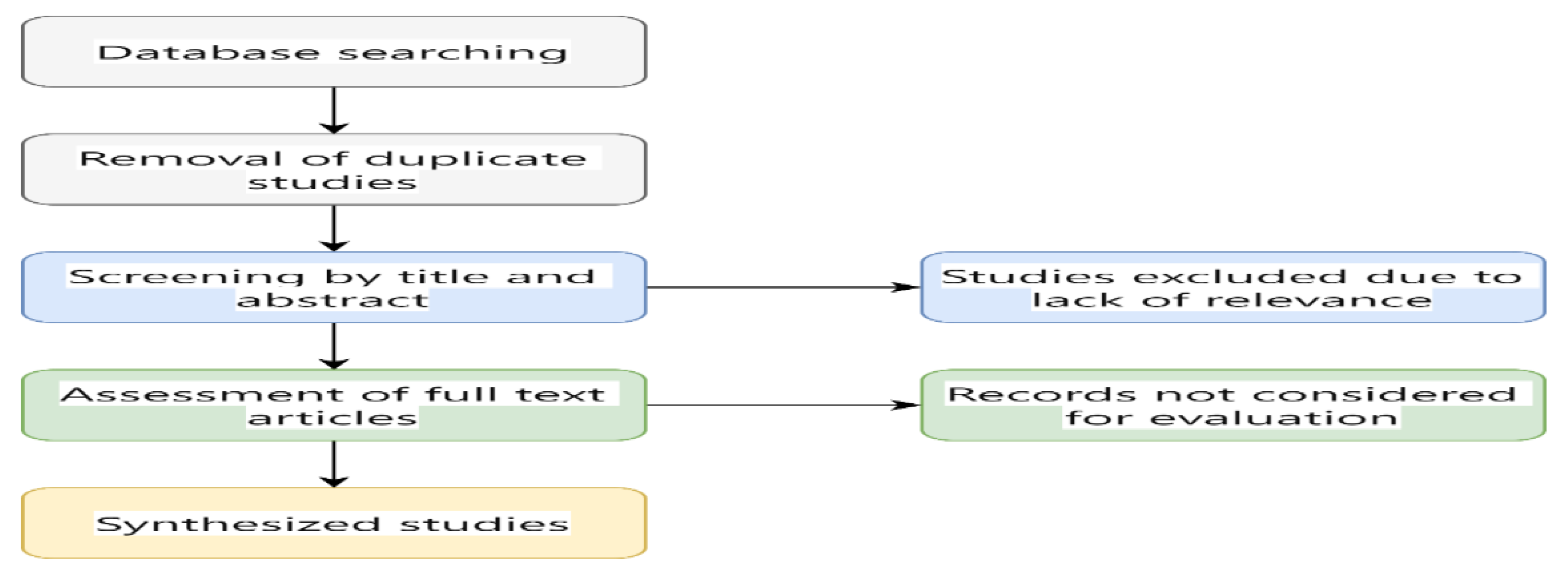
Figure 2.
Summary of Bibliometric and Scientometric Analyses.
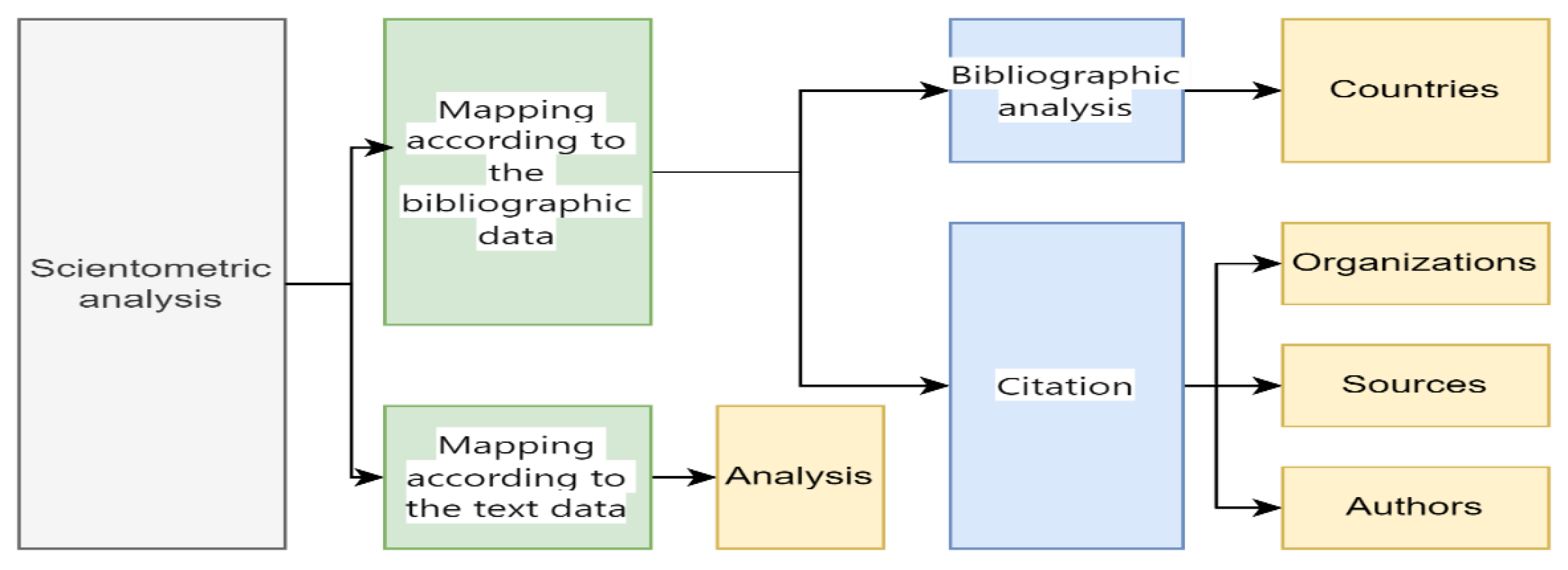
Figure 3.
Distribution of Studies on Concrete Compressive Strength Prediction by Year.
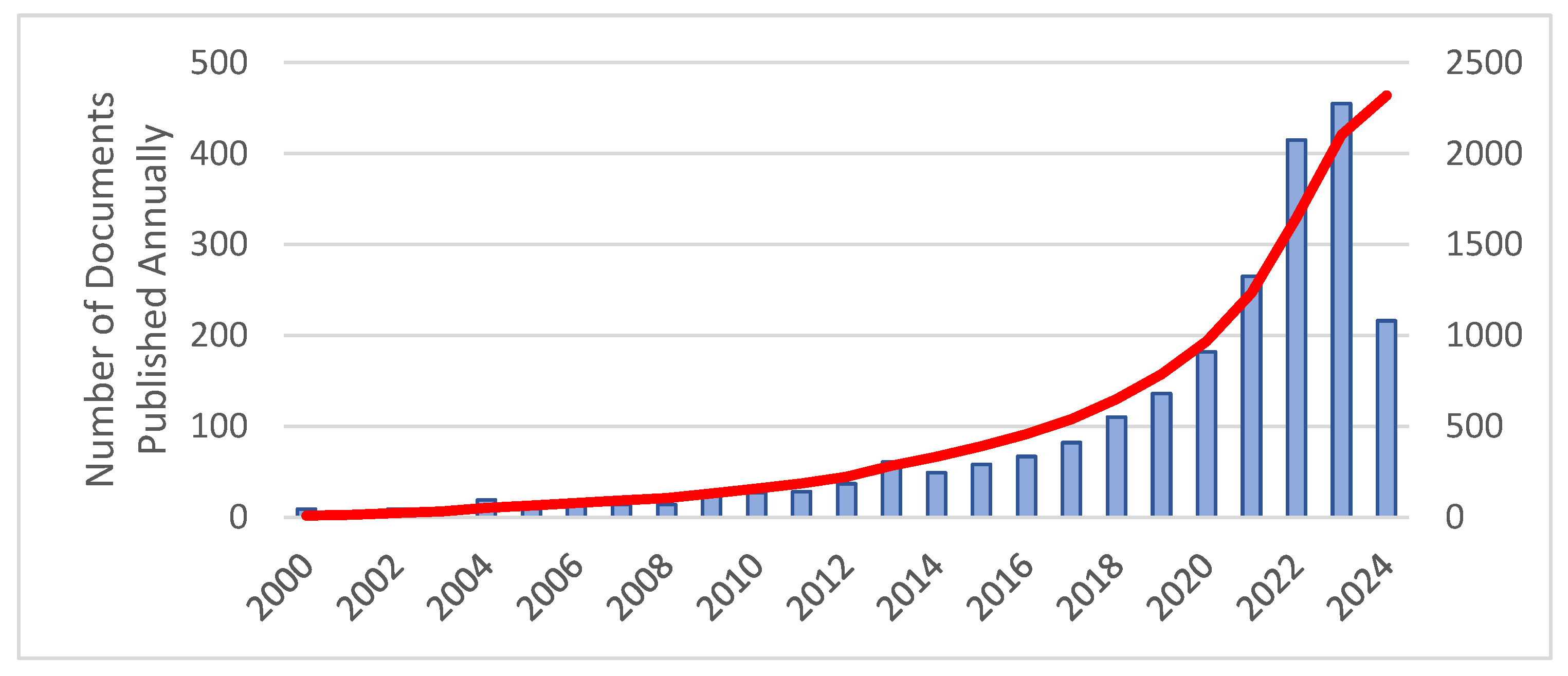
Figure 4.
Mapping the words repeated in documents.
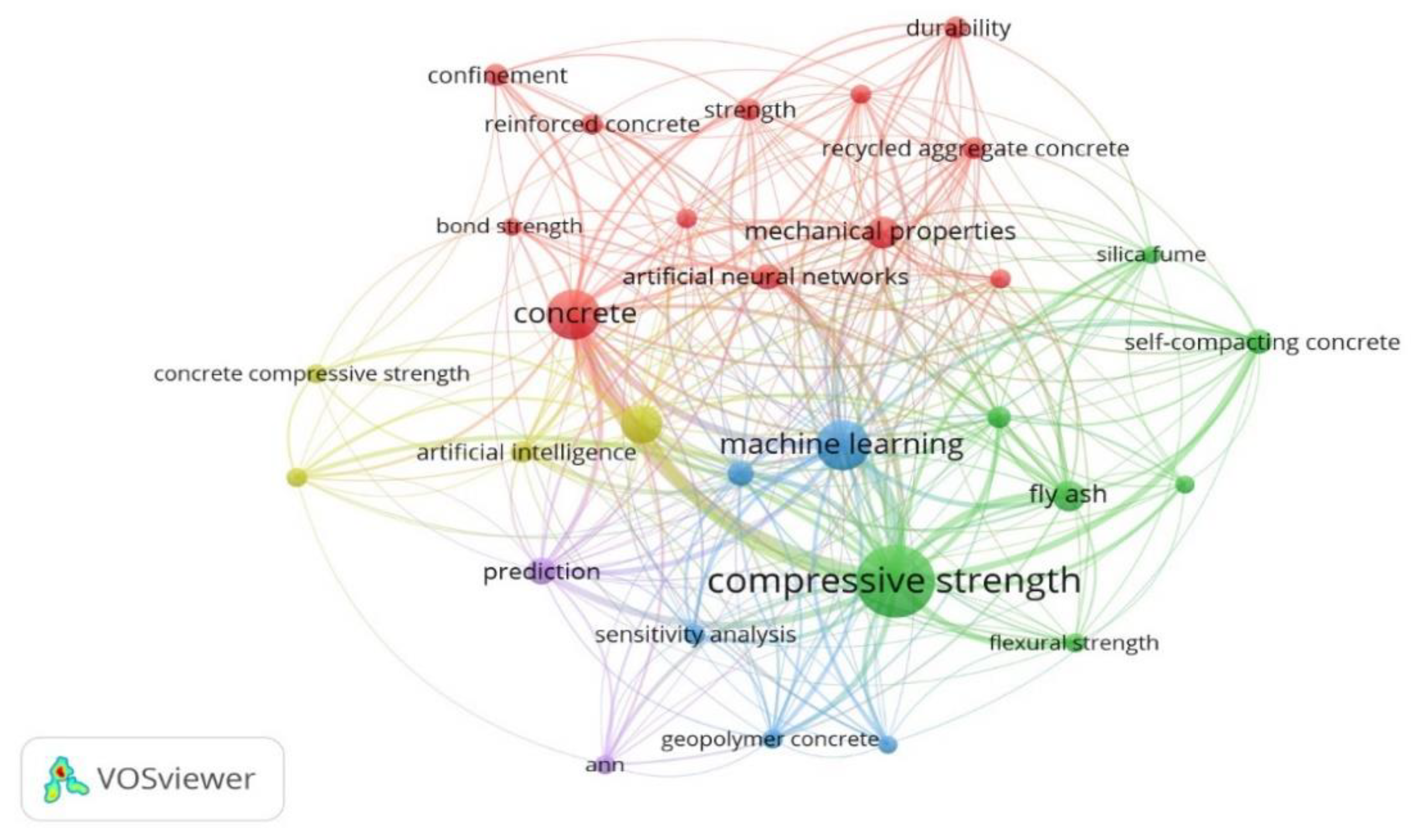
Figure 5.
Mapping of journals according to citations.
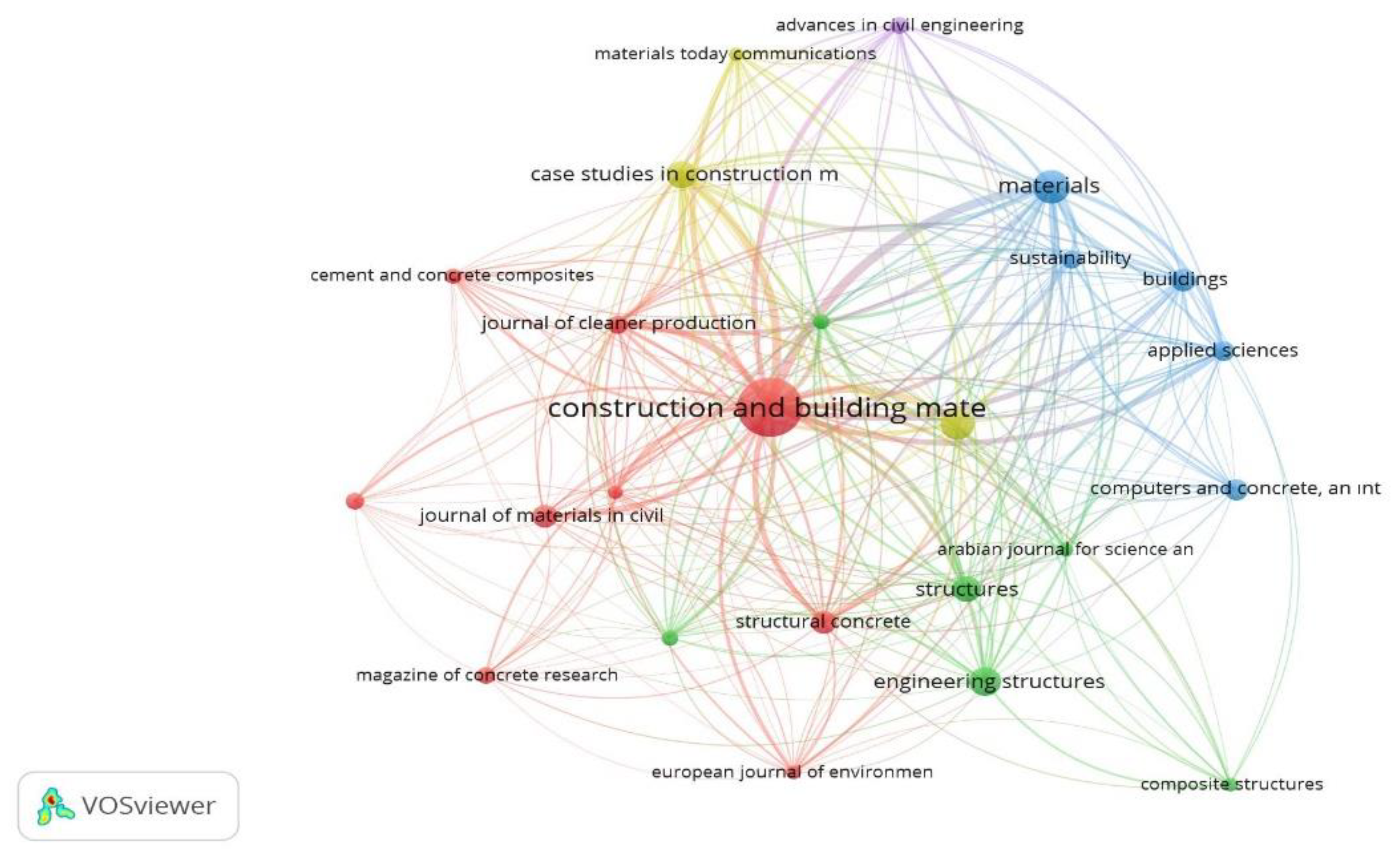
Figure 6.
Size of published documents by authors.
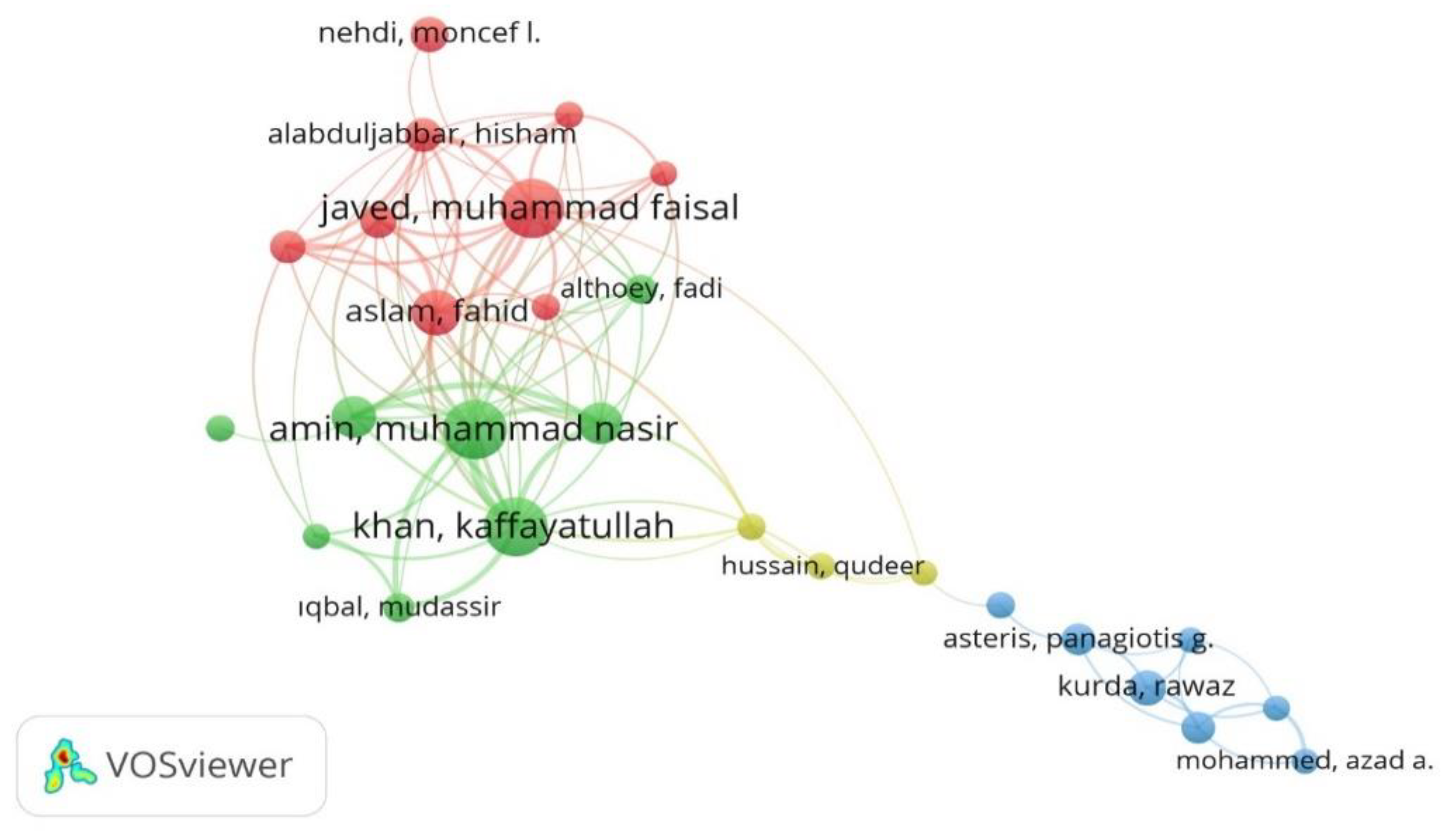
Figure 7.
Mapping of organizations publishing documents on the prediction of concrete compressive strength.
Figure 7.
Mapping of organizations publishing documents on the prediction of concrete compressive strength.
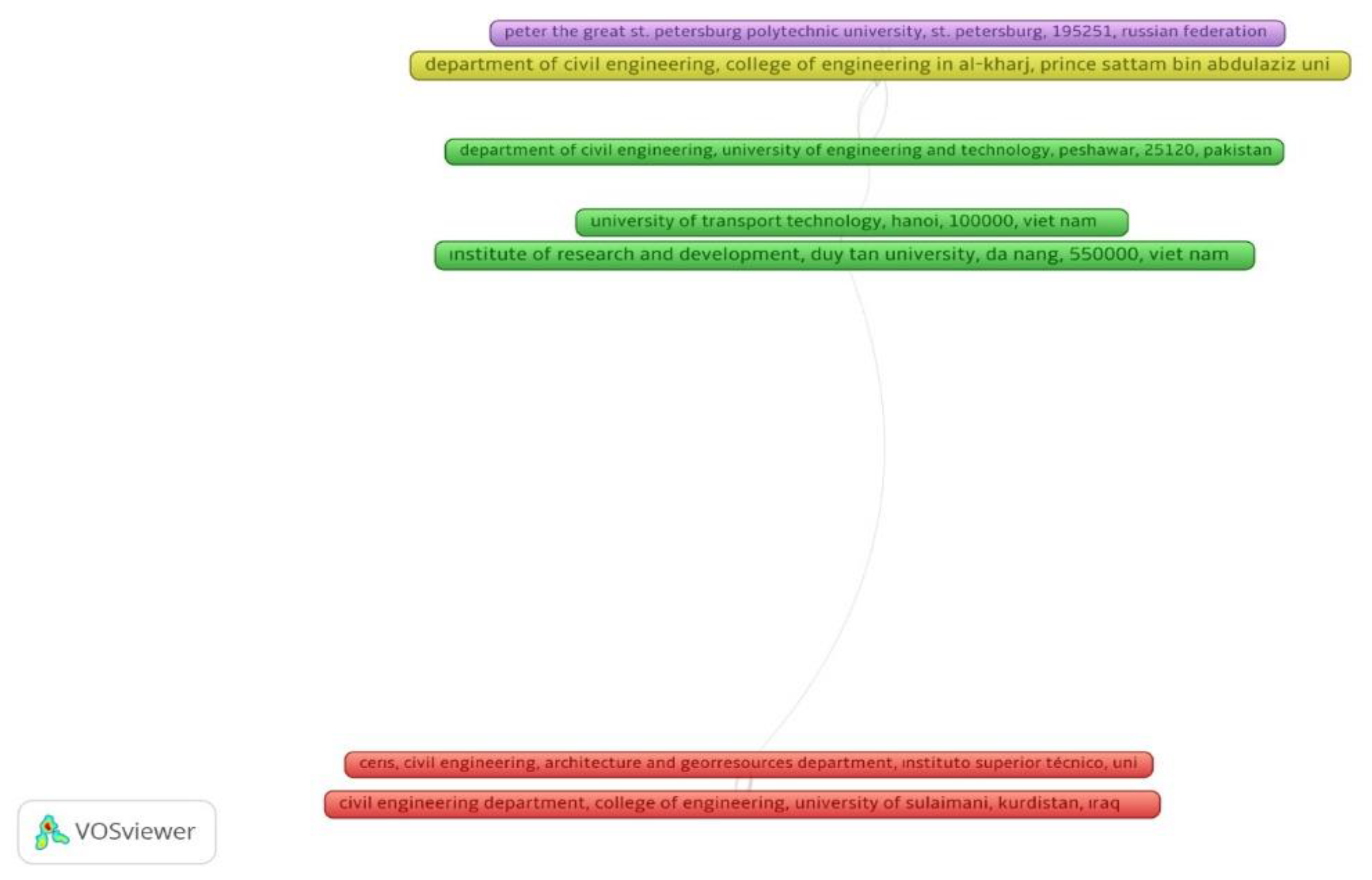
Figure 8.
Mapping of countries publishing documents.
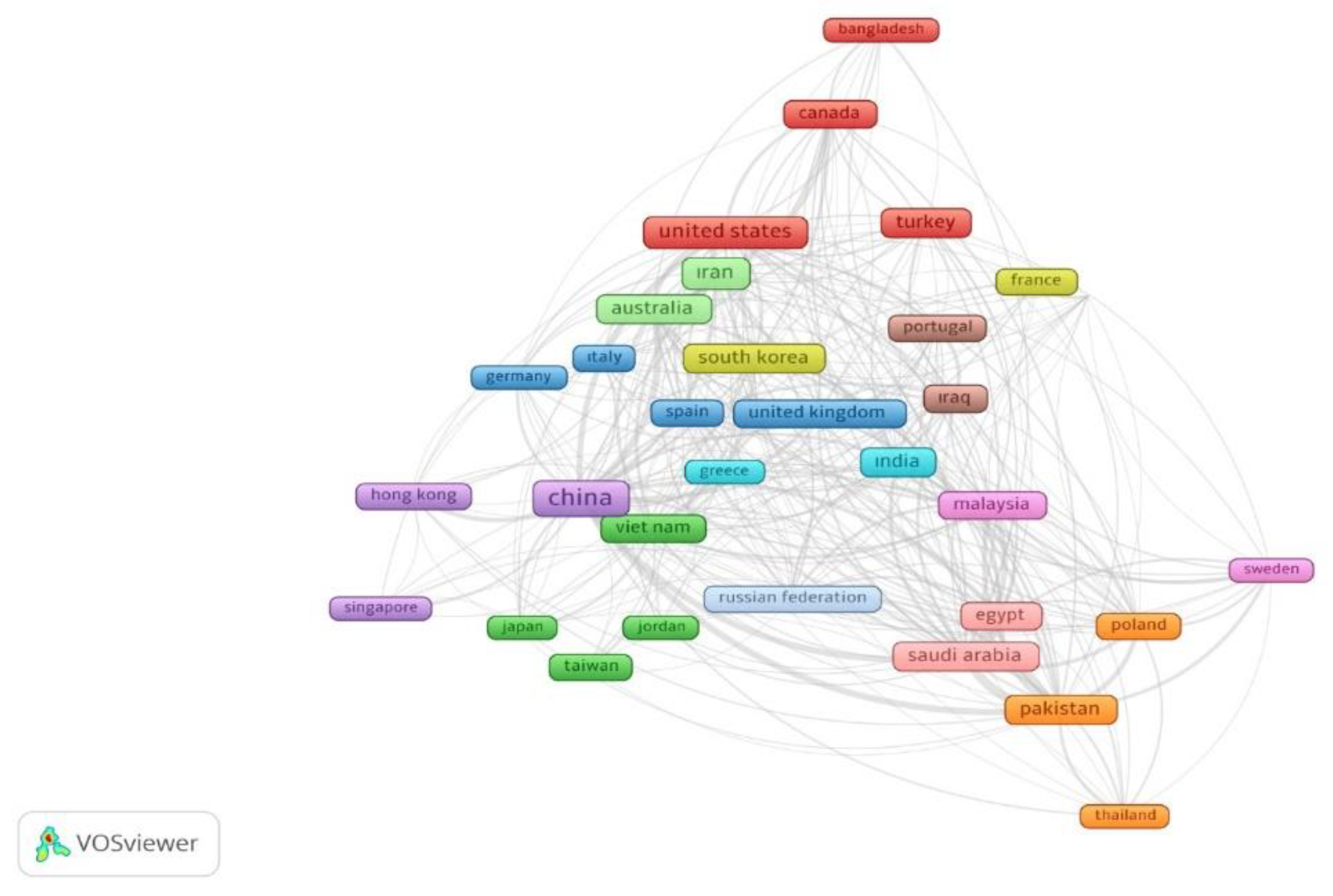
Table 2.
Grouping of repeated words in articles according to research field.
| ID | Keywords | Subject Areas | Occurrences | Rate (%) | Total Link Strength |
|---|---|---|---|---|---|
| 1 | Compressive strength | Mechanical properties of concrete | 641 | 36.00 | 699 |
| 2 | Mechanical properties | 110 | 77 | ||
| 3 | Strength | 49 | 48 | ||
| 4 | Flexural strength | 39 | 59 | ||
| 5 | Concrete compressive strength | 37 | 20 | ||
| 6 | Shear strength | 36 | 25 | ||
| 7 | Bond strength | 32 | 30 | ||
| 8 | Concrete | Concrete types | 285 | 20.82 | 355 |
| 9 | Self-compacting concrete | 63 | 89 | ||
| 10 | Recycled aggregate concrete | 48 | 55 | ||
| 11 | Reinforced concrete | 41 | 28 | ||
| 12 | Geopolymer concrete | 39 | 68 | ||
| 13 | Lightweight concrete | 36 | 31 | ||
| 14 | High-strength concrete | 34 | 31 | ||
| 15 | Machine learning | Modeling and Analysis Methods | 281 | 31.92 | 368 |
| 16 | Artificial neural network | 156 | 186 | ||
| 17 | Prediction | 72 | 127 | ||
| 18 | Artificial neural networks | 65 | 88 | ||
| 19 | Gene expression programming | 62 | 94 | ||
| 20 | Modeling | 48 | 72 | ||
| 21 | Artificial intelligence | 46 | 80 | ||
| 22 | Sensitivity analysis | 41 | 55 | ||
| 23 | Ann | 35 | 39 | ||
| 24 | Random forest | 31 | 46 | ||
| 25 | Fly ash | Pozzolanic additives | 100 | 5.00 | 147 |
| 26 | Silica füme | 31 | 52 | ||
| 27 | Durability | Durability and sustainability | 47 | 3.13 | 45 |
| 28 | Sustainability | 35 | 50 | ||
| 29 | Confinement | Other topics | 47 | 3.13 | 31 |
| 30 | Ultrasonic pulse velocity | 35 | 45 |
Table 3.
Journals grouped by reference patterns.
| ID | Journals | Documents | Citations | Total Link Strength |
|---|---|---|---|---|
| 1 | Construction and Building Materails | 370 | 20553 | 1781 |
| 2 | Materials | 122 | 3565 | 851 |
| 3 | Case Studies in Construction Materials | 81 | 1608 | 582 |
| 4 | Journal of Building Engineering | 99 | 2841 | 549 |
| 5 | Journal of Cleaner Production | 36 | 2252 | 501 |
| 6 | Applied Sciences | 45 | 1296 | 343 |
| 7 | Buildings | 54 | 701 | 309 |
| 8 | Structural Concrete | 56 | 816 | 290 |
| 9 | Neural Computing and Applications | 26 | 1480 | 280 |
| 10 | Structures | 73 | 1048 | 253 |
| 11 | Advances in Civil Engineering | 31 | 856 | 242 |
| 12 | Materials Today Communications | 21 | 313 | 240 |
| 13 | Engineering Structures | 89 | 3565 | 232 |
| 14 | Sustainability | 38 | 690 | 227 |
| 15 | Scientific Reports | 26 | 250 | 169 |
| 16 | Cement and Concrete Research | 21 | 2949 | 158 |
| 17 | Journal of Materials in Civil Engineering | 57 | 1669 | 157 |
| 18 | Arabian Journal for Science and Engineering | 23 | 310 | 145 |
| 19 | European Journal of Environmental and Civil Engineering | 22 | 424 | 128 |
| 20 | Computers and Concrete, an International Journal | 52 | 822 | 113 |
| 21 | Cement and Concrete Composites | 26 | 1893 | 108 |
| 22 | Composite Structures | 23 | 1118 | 76 |
| 23 | Magazine of Concrete Research | 29 | 473 | 56 |
| 24 | Materials and Structures | 34 | 930 | 48 |
Table 4.
Author citations and article information.
| ID | Author | Documents | Citations | Average Citiations | Total Link Strength |
|---|---|---|---|---|---|
| 1 | Amin, Muhammad Nasir | 36 | 859 | 23,86 | 96 |
| 2 | Javed, Muhammad Faisal | 35 | 1692 | 48,34 | 65 |
| 3 | Khan, Kaffayatullah | 35 | 1029 | 29,40 | 92 |
| 4 | Aslam, Fahid | 24 | 2019 | 84,13 | 62 |
| 5 | Ahmad, Ayaz | 21 | 1188 | 56,57 | 50 |
| 6 | Ahmad, Waqas | 21 | 919 | 43,76 | 56 |
| 7 | Nematzadeh, Mahdi | 20 | 640 | 32,00 | 0 |
| 8 | Ly, Hai-Bang | 18 | 981 | 54,50 | 0 |
| 9 | Behnood, Ali | 17 | 1109 | 65,24 | 9 |
| 10 | Kurda, Rawaz | 17 | 701 | 41,24 | 12 |
| 11 | Nehdi, Moncef L. | 17 | 752 | 44,24 | 2 |
| 12 | Alabduljabbar, Hisham | 16 | 697 | 43,56 | 32 |
| 13 | Farooq, Furqan | 16 | 1515 | 94,69 | 35 |
| 14 | Alyousef, Rayed | 15 | 1100 | 73,33 | 31 |
| 15 | Asteris, Panagiotis G. | 14 | 1828 | 130,57 | 8 |
| 16 | Mohammed, Ahmed Salih | 14 | 458 | 32,71 | 13 |
| 17 | Althoey, Fadi | 13 | 196 | 15,08 | 20 |
| 18 | Iqbal, Mudassir | 13 | 261 | 20,08 | 27 |
| 19 | Golafshani, Emadaldin Mohammadi | 12 | 503 | 41,92 | 9 |
| 20 | Deifalla, Ahmed Farouk | 11 | 222 | 20,18 | 14 |
| 21 | Gamil, Yaser | 11 | 81 | 7,36 | 15 |
| 22 | Huang, Jiandong | 11 | 185 | 16,82 | 1 |
| 23 | Hussain, Qudeer | 11 | 198 | 18,00 | 10 |
| 24 | Joyklad, Panuwat | 11 | 512 | 46,55 | 21 |
| 25 | Samui, Pijush | 11 | 683 | 62,09 | 3 |
| 26 | Yang, Keun-Hyeok | 11 | 99 | 9,00 | 0 |
| 27 | Ahmed, Hemn Unis | 10 | 530 | 53,00 | 12 |
| 28 | Ali, Mujahid | 10 | 147 | 14,70 | 18 |
| 29 | Bahrami, Alireza | 10 | 89 | 8,90 | 4 |
| 30 | Mohammed, Azad A. | 10 | 459 | 45,90 | 8 |
| 31 | Salami, Babatunde Abiodun | 10 | 213 | 21,30 | 16 |
| 32 | Sihag, Parveen | 10 | 390 | 39,00 | 5 |
Table 5.
Grouping of organizations according to citations.
| ID | Organization | Documents | Citations | Total Link Strength |
|---|---|---|---|---|
| 1 | Department of Civil Engineering, College of Engineering İn Al-Kharj, Prince Sattam Bin Abdulaziz University, Al-Kharj, 11942, Saudi Arabia | 34 | 2150 | 26 |
| 2 | Department of Civil and Environmental Engineering, College of Engineering, King Faisal University, Al-Ahsa, 31982, Saudi Arabia | 27 | 456 | 25 |
| 3 | Department of Civil Engineering, Comsats University Islamabad, Abbottabad, 22060, Pakistan | 25 | 790 | 26 |
| 4 | Institute of Research and Development, Duy Tan University, Da Nang, 550000, Viet Nam | 24 | 1815 | 10 |
| 5 | Department of Civil Engineering, Comsats University Islamabad, Abbottabad Campus, Abbottabad, 22060, Pakistan | 21 | 1164 | 13 |
| 6 | Department of Civil Engineering, University of Mazandaran, Babolsar, Iran | 16 | 1004 | 0 |
| 7 | Civil Engineering Department, College of Engineering, University of Sulaimani, Iraq | 15 | 566 | 17 |
| 8 | University of Transport Technology, Hanoi, 100000, Viet Nam | 15 | 932 | 5 |
| 9 | Department of Civil Engineering, College of Engineering, Najran University, Najran, Saudi Arabia | 14 | 164 | 15 |
| 10 | Faculty of Civil Engineering, Ton Duc Thang University, Ho Chi Minh City, Viet Nam | 13 | 772 | 5 |
| 11 | Department of Highway and Bridge Engineering, Technical Engineering College, Erbil Polytechnic University, Erbil, 44001, Iraq | 12 | 523 | 25 |
| 12 | Cerıs, Civil Engineering, Architecture and Georresources Department, Instituto Superior Técnico, Universidade De Lisboa, Av. Rovisco Pais, Lisbon, 1049-001, Portugal | 11 | 438 | 23 |
| 13 | Department of Civil Engineering, University of Engineering and Technology, Peshawar, 25120, Pakistan | 11 | 153 | 5 |
| 14 | Peter the Great St. Petersburg Polytechnic University, St. Petersburg, 195251, Russian Federation | 11 | 331 | 3 |
| 15 | School of Civil Engineering, Harbin Institute of Technology, Harbin, 150090, China | 11 | 441 | 0 |
| 16 | Department of Civil Engineering, College of Engineering, Nawroz University, Duhok, 42001, Iraq | 10 | 453 | 20 |
| 17 | School of Civil Engineering, Guangzhou University, Guangzhou, 510006, China | 10 | 143 | 2 |
| 18 | School of Civil Engineering, Southeast University, Nanjing, 211189, China | 10 | 664 | 0 |
Table 6.
Document and citation volumes by country.
| ID | Country | Documents | Citations | Total Link Strength |
|---|---|---|---|---|
| 1 | China | 659 | 16848 | 404 |
| 2 | Iran | 270 | 11289 | 199 |
| 3 | United States | 243 | 9484 | 207 |
| 4 | India | 205 | 5195 | 123 |
| 5 | Australia | 179 | 7548 | 205 |
| 6 | Turkey | 177 | 8781 | 62 |
| 7 | Saudi Arabia | 169 | 4860 | 356 |
| 8 | Pakistan | 151 | 4957 | 314 |
| 9 | South Korea | 138 | 4687 | 87 |
| 10 | Viet Nam | 103 | 4865 | 117 |
| 11 | Iraq | 91 | 3376 | 115 |
| 12 | Canada | 89 | 3723 | 96 |
| 13 | Egypt | 87 | 1727 | 170 |
| 14 | United Kingdom | 78 | 4773 | 99 |
| 15 | Malaysia | 77 | 2977 | 162 |
| 16 | Portugal | 57 | 2573 | 51 |
| 17 | Poland | 56 | 2113 | 114 |
| 18 | Taiwan | 47 | 3303 | 15 |
| 19 | Russian Federation | 43 | 1157 | 82 |
| 20 | Spain | 40 | 1361 | 40 |
| 21 | France | 39 | 745 | 32 |
| 22 | Hong Kong | 39 | 1562 | 43 |
| 23 | Italy | 39 | 1225 | 38 |
| 24 | Japan | 35 | 1289 | 37 |
| 25 | Greece | 31 | 2265 | 50 |
| 26 | Thailand | 31 | 1019 | 40 |
| 27 | Germany | 30 | 1006 | 43 |
| 28 | Jordan | 28 | 503 | 16 |
| 29 | Sweden | 28 | 386 | 68 |
| 30 | Singapore | 27 | 1038 | 21 |
| 31 | Nigeria | 23 | 366 | 33 |
| 32 | Algeria | 22 | 712 | 25 |
| 33 | Bangladesh | 22 | 492 | 26 |
Disclaimer/Publisher’s Note: The statements, opinions and data contained in all publications are solely those of the individual author(s) and contributor(s) and not of MDPI and/or the editor(s). MDPI and/or the editor(s) disclaim responsibility for any injury to people or property resulting from any ideas, methods, instructions or products referred to in the content. |
© 2024 by the authors. Licensee MDPI, Basel, Switzerland. This article is an open access article distributed under the terms and conditions of the Creative Commons Attribution (CC BY) license (http://creativecommons.org/licenses/by/4.0/).
Copyright: This open access article is published under a Creative Commons CC BY 4.0 license, which permit the free download, distribution, and reuse, provided that the author and preprint are cited in any reuse.


