

Submitted:
23 September 2024
Posted:
23 September 2024
You are already at the latest version
Abstract
Recent advancements have been observed in the global legal framework, particularly in the recognition of Indigenous peoples' rights, among which the right to self-determination stands out. This right encompasses the ability to define their political status and to pursue economic, social, and cultural development autonomously. The Inter-American Commission on Human Rights (IACHR) has identified six criteria to evaluate adherence to these rights. This study aims to assess the progress made by Chile, Colombia, and Mexico in meeting these criteria. Employing a non-experimental, cross-sectional, and exploratory research design, the study utilized a questionnaire based on a Likert scale to gather data from residents of Indigenous communities within the three countries under consideration. Findings suggest that the criterion most adequately met is that of cultural identity and non-discrimination, whereas the criterion pertaining to the right to prior, free, and informed consultation and consent is the least fulfilled. Through principal component analysis, it was noted that Colombia exhibits a higher level of compliance with the right to self-determination, followed by Mexico, with Chile demonstrating a divergence and lagging in progress. The study concludes that a significant challenge for these countries lies in continuing efforts to effectively meet these standards and ensure the right to self-determination for Indigenous and tribal peoples.
Keywords:
indigenous
; IACHR
; Latin America
; people
; self-determination
; standards
1. Introduction
Indigenous people in Latin America are diverse, living by their own principles, and possessing unique histories, cultures, identities, social organizations, and political structures. Even before European colonization, they maintained their languages, cultures, religions, worldviews, governance systems, justice administration, and economic development [1,2]1. In recent years, there has been an indigenous mobilization demanding the recognition of their rights. Castro [3] highlights that factors driving this activism include questioning modern law, the revitalization of the indigenous movement, the influence of international organizations, and the globalization of capitalism.
Among the demanded rights is the right to self-determination, understood as the ability of people to freely decide their future not only from a political perspective but also in economic, social, and cultural terms [4]. This right is enshrined in the United Nations Charter [5], the International Covenant on Economic, Social and Cultural Rights [6], International Labor Organization (ILO) Convention 169 concerning Indigenous and Tribal People [7], the Vienna Declaration and Program of Action [8], the United Nations Declaration on the Rights of Indigenous People [9], and the American Declaration on the Rights of Indigenous People [10].
In 2021 [11], the IACHR published a report on the right to self-determination of Indigenous and tribal people. Considering various international legal frameworks and jurisprudence, the report establishes the following standards to ensure the exercise of the right to self-determination: self-identification and recognition of Indigenous and tribal people; cultural identity and non-discrimination; collective ownership, lands, territories, and natural resources; political rights and participation; prior and informed free consent through consultation; and economic, social, cultural, and environmental rights.
While it is true that significant progress has been made in the regulation of the right to self-determination within the field of International Law, there remains a substantial gap between the legal framework and its actual implementation in the realm of justice. In Latin American countries, this is reflected in various dynamics that require careful analysis. Although Indigenous jurisdiction is constitutionally recognized, it lacks a clear framework for its exercise and effective recognition by the state. Furthermore, there are no specific legal mechanisms to guarantee rights such as consultation, political participation, or the right to territory, forcing Indigenous communities to frequently turn to the courts.
The absence of legal pluralism, exacerbated by the dominance of a positivist and monist legal perspective, creates significant barriers for Indigenous Peoples. Additionally, the lack of judicial independence from the Executive undermines the impartiality and efficiency of justice. Lastly, institutions are not designed to accommodate cultural and legal diversity, leading to a shortage of interpreters, translators, and the failure to address the inequalities and challenges faced by Indigenous Peoples [12].
Therefore, the objective of the research is to compare the progress in the exercise of the right to self-determination among Indigenous people and communities in three Latin American countries: Chile, Colombia, and Mexico.
- a.
- Self-Identification and Recognition of Indigenous and Tribal People
The recognition of self-identification is articulated in Article 1.2 of ILO Convention 169, Articles 9 and 33.1 of the United Nations Declaration on the Rights of Indigenous People, and Articles I, IX, X of the American Declaration on the Rights of Indigenous People. Self-identification is understood as the people's consciousness of their identity. While it does not necessarily require an official registration by the State, recognition facilitates the effective realization of their autonomy [13]. Without recognition, Indigenous people could be vulnerable to exclusion from norms and public policies [14]. It involves an individual exercise of determining one's own cultural identity; being Indigenous implies feeling an integral part of the legacy left by ancestors, acknowledging oneself as part of the indigenous cultural group, and asserting oneself as a member of that people while passing on that identity to future generations [15].
- b.
- Cultural Identity and Non-Discrimination
Cultural identity is the narrative through which an individual or group defines, expresses, and seeks recognition. It is the right of every group to belong to a particular culture and be accepted as different; to preserve its own culture and heritage; and not to be compelled to belong to a different one. Its basis can be found in Article 5 of ILO Convention 169, Articles 8, 9, 11, 12, 13, 31, and 34 of the UN Declaration on the Rights of Indigenous People, and Articles X, XII, XVI, and XXVIII of the American Declaration on the Rights of Indigenous People. It is the way in which Indigenous communities perceive and interact with the world around them, intimately connected to their territory and the resources within it. Thus, any public policy implemented must respect their way of life and unique characteristics, including their religion, beliefs, and ancestral knowledge [16].
Throughout history, the Indigenous population has been a victim of violence and racial discrimination, encompassing all forms of abuse against their ancestral practices. This ranges from cruel, inhuman, and degrading treatment to exploitation, improper appropriation of their lands, and even genocide [17]. Therefore, in order to exercise the right to cultural identity, it is crucial to eliminate any form of discrimination, The IACHR considers equality and non-discrimination as fundamental guiding principles, as rights, and as guarantees, with significant impact on all other rights recognized at the international level. Therefore, it reiterates the need for States to promptly and without delay adopt measures to address obstacles in the exercise, respect, and guarantee of the principle of equality as a cross-cutting axis for the full enjoyment and exercise of human rights .The principle of non-discrimination and equality is enshrined in Article 3 of ILO Convention 169, Article 2 of the UN Declaration on the Rights of Indigenous People, and Articles VII, VIII, and XII of the American Declaration on the Rights of Indigenous People.
- c.
- Self-Identification and Collective Ownership, Lands, Territories, and Natural Resources
An integral part of their ancestral heritage is the right to territory, recognized in Articles 13, 14, 16, 17, and 18 of ILO Convention 169; Articles 10, 25, 26, 27, 28, 29, 30, 31, and 32 of the UN Declaration on the Rights of Indigenous People; and Article XXV of the American Declaration on the Rights of Indigenous People. From the perspective of the Indigenous population, the land is not only their livelihood but also the foundation of their organization and the origin of their traditions and customs. Therefore, the concern lies in not altering their ecosystem and conserving resources for the benefit of future generations; otherwise, it would have negative effects on their identity, beliefs, and reason to be [18].
- d.
- Political Rights and Participation
Autonomy and self-government find their recognition in Articles 2, 7, 15, 18, 22, 23, and 27 of ILO Convention 169; Articles 5, 18, and 23 of the UN Declaration on the Rights of Indigenous People; and Articles XX and XXI of the American Declaration on the Rights of Indigenous People. This entails the recognition and maintenance of their own decision-making institutions, including the free election of their traditional authorities without external interference. It also involves participation in decision-making processes on matters affecting their rights IACHR [19].
- e.
- Consultation and Free, Prior, and Informed Consent
It is a fundamental principle of international law for Indigenous people, involving the right to give or deny their free, prior, and informed consent to any proposed measure that will affect them [20]. The legal framework supporting this right is found in Articles 6.1.a, 6.2, and 15.2 of ILO Convention 169; Articles 2, 17, 19, 32, 36, 38 of the UN Declaration on the Rights of Indigenous People; and Articles XX, XXIII, XXIX, and XXVIII of the American Declaration on the Rights of Indigenous People.
According to Zamora-Vázquez and Ormaza-Ávila [21], one of the main duties of each state is to protect and ensure the effective practice of fundamental rights. Therefore, this institution is framed within the proposal of the constitutional state of rights and justice, which addresses, as a transversal axis the rights of nature, the environment, and social participation. This is of great relevance in the analysis of one of the most important participatory mechanisms, namely, prior consultation. Countries must respect diversity and implement consultation before carrying out activities that may affect the collective interests and rights of indigenous people. Indigenous people should feel that their identity as historical descendants preserving their customs and traditions is being acknowledged. The consultation should involve the entire population, be formulated by the state, and be conducted when any of its measures may affect the rights of Indigenous communities.
- f.
- Economic, Social, Cultural, and Environmental Rights
Based on Articles XXVI and XXIX of the American Declaration on the Rights of Indigenous People, and Article 26 of the American Convention, these are human rights rooted in the dignity of human beings and are considered universal, indivisible, absolute, and interdependent [22]. They enclose fundamental aspects such as work, social security, health, education, food, water, housing, a suitable environment, and culture.
2. Materials and Methods
The study was designed as a non-experimental, cross-sectional exploratory research.
2.1. Design of the Instrument
To meet the study's objectives, a questionnaire was developed consisting of a demographic data section and six dimensions (refer to Table 1), resulting in 30 items. These items correspond to each of the standards established by the IACHR to practice the right to self-determination. They are presented using a “Likert type” scale, with a skills measurement level, where: 1 corresponds to "Totally Disagree"; 2 "Disagree"; 3 "Neither Agree nor Disagree"; 4 "Agree"; and 5 "Totally Agree."
Through the proposed questionnaire, the aim is to address the following research questions outlined in Table 2:
2.2. Population
The studied population consisted of 300 (100 applications from each country) individuals belonging to various indigenous ethnicities who responded to the questionnaire through an electronic link. The survey responses were collected with the assistance of different civil associations advocating for Indigenous Rights in Chile, Colombia, and Mexico. The participating communities included:
- Chile: Aymara, Chango, Diaguita, and Mapuche.
- Colombia: Awa, Inga, Quillasinga, Pueblo de los pastos, Resguardo indígena la laguna pejendino, Resguardo indígena de panan, and Kamentsa.
- Mexico: Acaponeta, Chol, Coyulita de Jazmines, Guayal, Huajicon, Huichol-Wixarika, Montegrande, Paramitas, Picachos, Puxcatan, Quiviquinta, Tseltal de los Altos, Tsotsil, Tzoque, and Zoque.
To determine the sample size using the simple random sampling method, with a 95% confidence interval and a variance of 0.1, 96 items should be surveyed (assuming an indigenous population of 20,000,000 across the 3 countries). However, 300 individuals were studied (100 per country). The calculated sample size is 96 individuals. This sample size is sufficient to achieve a 95% confidence level with a margin of error of 0.1. This calculation ensures that the study results will be both statistically significant and applicable to the general population.
2.3. Scenery
The instrument was directly implemented during the months of September, October, and November of the year 2023. The instrument was directly administered to individuals in a written format with the assistance of the National Corporation for Indigenous Development (CONADI) in Chile, research professors from the University of Mariana Pasto in Colombia, and graduates of the Master’s in Criminal Juridical Science from the University of Guanajuato who are indigenous individuals from Mexico. It is important to note that the data collection instrument was printed and directly administered by the aforementioned individuals to facilitate translation into the corresponding dialect and clarification of any relevant doubts.
2.4. Pilot Test
The pilot test involved the application of the previously designed instrument.
2.5. Analysis of Pilot Test Data
The Cronbach's Alpha coefficient of the test battery was calculated collectively, yielding a value of 0.948 (see Table 3).
Internal consistency is a measure of the correlation existing among the items that compose any “Likert” scale-type measuring instrument. Values are considered acceptable when they are equal to or greater than 0.70 and less than or equal to 0.90 [23], so for the present study, it is deemed acceptable.
2.6. Comparative Analysis
Following the review of the degree of perception for each of the six standards, a comparison will be conducted among the items and between the countries using multivariate analysis, specifically the technique of Principal Component Analysis (PCA). PCA is a statistical technique used to simplify the complexity of high-dimensional data sets while retaining as much information as possible. In summary, PCA aims to transform a set of correlated variables into a new set of uncorrelated variables called principal components.
3. Results
3.1. Overall Summary of Self-Perception by Standard
From the analysis of the results, it is evident that the Indigenous population of Chile, Colombia, and Mexico believes that the standard showing the most significant progress in exercising the right to self-determination is that of "Cultural Identity and Non-Discrimination". They perceive respect for their traditions, customs, dignified and equal treatment, and a non-discriminatory approach. On the other hand, the standard where countries must continue to make significant efforts is "Consultation and Free, Prior, and Informed Consent" because it remains an issue raised within the inter-American system, emphasizing the right to approval by indigenous communities regarding measures adopted by the State affecting the community (Figure 1).
3.2. ANOVA
The ANOVA (Table 4) decomposes the variance of the data into two components: a between-groups component and a within-groups component. The F-ratio, which in this case is equal to 16.5655, is the ratio between the estimated between-groups variance and the estimated within-groups variance. Since the p-value of the F-test is less than 0.05, there is a statistically significant difference among the means of the 6 variables with trust level of 95.0%.
3.3. Standard 1: Self-Identification and Recognition of Indigenous People
When asked, our population partially agrees that their country's government recognizes them as part of a pre-existing Indigenous society before the arrival of the Spaniards. A similar response is given when questioned about whether they believe the government creates programs in favor of the community they live in. Regarding whether they identify themselves as members of the community with unique characteristics distinct from other populations, they express agreement. All of this is evident in Figure 2. Therefore, we can infer that the first standard has made considerable progress as they recognize themselves as members of an Indigenous population, a collective that has existed since ancestral times, regardless of official recognition by the state.
Figure 3 breaks down the comparison of results for each country, showing a slight advantage for Mexico, followed by Colombia and Chile.
3.4. Standard 2: Cultural Identity and Non-Discrimination
As observed in Figure 4, the highest results in the exercise of the right to self-determination are found in this second standard. The population "agrees" that they can access other means of information opposed from those of the community, they are allowed to practice their own religion, and they can freely speak their own dialect. They are "neither in agreement nor in disagreement" with the government working to eliminate racism and respecting the community's way of life and its particularities. Regarding specific results by country (Figure 5), there is progress in Mexico, followed by Colombia, and lastly, Chile.
3.5. Standard 3: Collective Ownership, Territory, and Natural Resources
Survey respondents lean towards agreeing that their country has a legal framework to recognize the land of the Indigenous population. However, they are "neither in agreement nor in disagreement" regarding being free in the management of their own lands and natural resources. This result is significant as pointed out by the Inter-American Commission on Human Rights CIDH, the guarantee of lands and territories represents a necessary condition for the effective practice of the rights inherent to Indigenous people (Figure 6). Thus, the greater the implementation gap, the fewer possibilities there are to ensure other legally recognized rights. When comparing the three countries, Colombia shows the most progress, followed by Mexico, and then Chile (Figure 7).
3.6. Standard 4: Political Rights and Participation
International law and jurisprudence have recognized the right of Indigenous people to their own autonomy, participation, and self-government. Leaning towards being "neither in agreement nor in disagreement," we find that Indigenous community authorities participate in decision-making on matters affecting the rights of the population. They receive financial and technical assistance for the functioning of indigenous institutions and have the right to establish political and legal institutions in accordance with community laws (Figure 8). Meanwhile, close to being "in agreement," we find that the state allows them to have their own authorities, respects the decisions of the community, and the election of indigenous authorities takes place without pressure. Colombia shows a higher level of progress in exercising the standard, followed by Mexico, and finally Chile (Figure 9).
3.7. Standard 5: Free, Prior, and Informed Consent
This standard holds a significant place on the relationship agenda between the State and Indigenous people. As seen in Figure 10, it is the standard with the lowest results, indicating that countries must continue working to ensure this right is upheld. When questioned about whether the State promptly informs about measures that could affect the Indigenous community, respondents indicated being "neither in agreement nor in disagreement." When asked if the State seeks permission from the community for actions that could affect it, responses tended towards "disagreement." Colombia shows better progress in exercising this right, followed by Mexico and Chile (Figure 11).
3.8. Standard 6: Economic, Social, Cultural, and Environmental Rights
Finally, the last standard deals with rights related to the minimum satisfaction of communities, such as health, a healthy environment, education, among others. As observed in Figure 12, when asked if the Indigenous community is free to decide on their health, education, and natural resources, respondents consider themselves to be "neither in agreement nor in disagreement." Colombia shows greater progress in exercising this standard, followed by Mexico and Chile (Figure 13).
3.9. Analysis by Question Groups
Through the analysis by question groups, the hypotheses can be corroborated. In all groups, despite Mexico and Colombia being very similar, the latter country has an advantage in complying with the standards. Meanwhile, Chile is different, specifically in collective property, political rights and free consent, so it tends to have lower levels, indicating a lower level of progress in exercising the right to self-determination (Figure 14, Figure 15 and Figure 16).
3.10. Principal Component Analysis
The principal component analysis allowed transforming the original variables into a new set of variables characterized by correlation. Taking into account all the questions, it can be confirmed that Mexico and Colombia are very similar. However, Chile tends to be different, diverging from the fulfillment of self-determination (Figure 17).
4. Discussion
The results presented in the research are reliable, as a new data collection instrument was designed with reference to the report published by the IACHR , which, it’s based on various international legal frameworks and jurisprudence, established 6 standards for the practice of self-determination. To measure reliability, the Cronbach's alpha coefficient was used, yielding an indicator of .948, demonstrating its trustworthiness. This means that the instrument can be applied under similar conditions, and the results will consistently reflect the same pattern. Thus, the findings can be generalized to other contexts and countries.
Regarding limitations, the number of surveys and surveyed populations was restricted to 300. However, this sample size, being representative of the studied population, allowed for the generalization of the obtained results.
While there are existing studies on self-determination, there is none that measures compliance with the specified standards. Therefore, there is no way to directly compare the results obtained in this study with those of other researchers in the specific area presented.
All hypotheses were tested, and the results indicate that the countries of Chile, Colombia, and Mexico have made efforts to comply with the right to self-determination. The standard showing the most progress are those of cultural identity and non-discrimination, while the one facing the most challenges is the consultation and free, prior, and informed consent. Among the surveyed population, Colombia demonstrates the most advancement in exercising this right, followed by Mexico, and finally Chile. In the case of Colombia, it leads the two countries in four standards, which are: collective property, territory, and natural resources; political rights and participation; consultation and free, prior, and informed consent; and economic, social, cultural, and environmental rights. As for Mexico, it is superior in the remaining two standards: self-identification and recognition; cultural identity and non-discrimination. Finally, we can point out that in the case of Chile, it is at a slight disadvantage; however, one can appreciate the pending work to build the legal and constitutional framework for the full recognition of rights.
The use of Principal Component Analysis has enabled the transformation of the initial variables into a set of new variables that are interrelated. When considering all standards, it can be confirmed that Mexico and Colombia exhibit significant similarities, while Chile tends to stand out for its differences.
Some key findings regarding indigenous self-determination rights in Chile, Colombia, and Mexico include:
Advancements in the Incorporation of Legal Frameworks: There have been advances in the incorporation of international legal frameworks recognizing indigenous rights into national legislation, especially in Mexico. However, challenges persist in effectively realizing territorial rights, particularly in the face of economic interests.
Challenges in Prior Consultation: The process of prior, free, and informed consultation is often hindered by bureaucracy and obstructed by various sectors in Mexico. In Colombia, despite significant progress in recognizing indigenous rights, the continuity of armed conflicts and pressure from extractive activities jeopardize the effective implementation of the declaration.
Discrimination and Cultural Intolerance: Discrimination and cultural intolerance require ongoing attention in Chile. While progress is noted in the recognition of territorial rights and the dissemination of the possibility of consultation within indigenous communities, the emerging legal framework poses challenges in protecting traditional knowledge.
Varied Levels of Compliance: When comparing the three countries, Colombia shows the greatest progress in complying with indigenous self-determination standards, followed by Mexico, while Chile shows divergence and delays in progress. Colombia exhibits a higher level of compliance with the right to self-determination, especially in areas such as land ownership and prior consultation.
These findings highlight both the advancements and challenges in the implementation of indigenous self-determination rights in Chile, Colombia, and Mexico, emphasizing the need for continuous efforts to ensure the full recognition and respect of these rights.
4.2. Testimonial Analysis:
Individual responses were obtained freely in the following manner: Individual testimonials as examples:
”I am J, from the Wayúu community in the La Guajira region. We have made progress in the recognition of our rights, but we still face significant challenges. Often, decisions affecting our lands and resources are made without our consent, undermining our autonomy and well-being. It is essential that our right to prior consultation be respected and that we are meaningfully included in all processes related to our territory and culture.”
“My name is R, and I am part of the Nahua community in the state of Oaxaca. Despite our efforts to preserve our traditions, we face an ongoing struggle for our right to self-determination. The lack of prior consultation and free, prior, and informed consent is an affront to our dignity and our rights as an indigenous people. We need the government to recognize our voice and authority over our lands and resources, and to include us meaningfully in all decision-making processes that affect us.”
“My name is M, and I belong to the Mapuche community in southern Chile. Although we have managed to maintain our culture and traditions, we face constant barriers to exercising our right to self-determination. We feel ignored by authorities when it comes to decisions about our ancestral lands. Prior, free, and informed consultation is an illusion for us, and we often learn about projects affecting our territory after they are already underway. We need to be recognized as equal partners in decision-making processes that directly affect us.”
Here are the outstanding testimonies grouped and stratified:
Chile Testimony:
“While we have seen some progress in the recognition of our cultural rights and non-discrimination, we still face numerous challenges regarding prior, free, and informed consultation. We feel marginalized and excluded from decisions that directly affect our lands and natural resources. Greater commitment from the government is needed to ensure our right to self-determination.”
Colombia Testimony:
“In Colombia, we have observed greater respect for our rights, especially regarding prior consultation and the recognition of our cultural identity. However, we still face significant obstacles in terms of political participation and economic development. We need policies and programs that strengthen our autonomy and sustainable development.”
Mexico Testimony:
“Although we have made some progress in protecting our rights, we still face numerous challenges in terms of prior, free, and informed consultation. We feel sidelined and marginalized in decision-making processes that affect our lands and resources. It is crucial for the government to take concrete steps to ensure our meaningful participation in all processes concerning us.”
These testimonies underline the complexity of the situation and the need for concrete actions by governments to ensure the full exercise of the right to self-determination of indigenous and tribal peoples in Latin America.
Despite the progress made in the region over the past decades regarding the legal recognition of Indigenous peoples and their rights, numerous challenges remain in ensuring their effective implementation in practice [24]. The implementation of legislation is a more complex process than mere political will. In some countries, it has been observed that human rights laws can be adopted for various reasons, such as diplomatic, cultural, political, or other motives [25].
The Inter-American Commission on Human Rights (IACHR) has acted as an international body demonstrating great sensitivity to the demands of Indigenous and tribal communities. Its jurisprudence has established several criteria that represent significant contributions to the protection of these peoples [26]. However, in Latin America, significant challenges persist for the full recognition and exercise of the right to self-determination and related rights. Despite the existence of legal frameworks and policies favoring the rights of Indigenous and tribal peoples, many gaps remain in their implementation by various States in the region, as well as in meeting international and inter-American standards. Among the recurring issues is the lack of respect for and recognition of Indigenous peoples' representative institutions and decision-making processes, especially when they are affected by economic, commercial, political, or military interests in their lands and territories [11].
5. Conclusions
The American Declaration on the Rights of Indigenous People, issued by the Organization of American States, represents a significant milestone in the recognition and protection of the rights of Indigenous people in our continent. This study has identified common trends and challenges, as well as some specific characteristics of each country, by analyzing its implementation in Mexico, Chile, and Colombia.
Considerable progress has been made in incorporating the Declaration into national legislation in Mexico. However, obstacles persist in effectively realizing territorial rights, especially in the face of economic interests. The process of prior, free, and informed consultation is often hindered by bureaucracy and obstructed by various sectors. While there are positive examples of Indigenous participation in decision-making processes, there is still much work to be done. In Chile (despite being the last country to legislate on the matter), progress in recognizing territorial rights and disseminating the possibility of consultation within Indigenous people is noticeable. Discrimination and cultural intolerance require ongoing attention, and the fledgling legal framework hinders the protection of traditional knowledge.
Colombia has made significant strides in recognizing the rights of Indigenous people, particularly concerning land ownership and prior consultation. However, the continuity of armed conflicts and pressure from extractive activities jeopardize the effective implementation of the declaration.
As summary, while Mexico, Chile, and Colombia have made progress in incorporating the Declaration on the Rights’ principles of Indigenous People into their legal frameworks and policies, common challenges persist. These challenges include resistance to significant changes, lack of effective participation, and the need for enhanced implementation and monitoring mechanisms. The successful implementation of these principles requires long-term commitment from states, civil society, and Indigenous people themselves to overcome obstacles and move towards full recognition and respect for their rights.
As a result, from the above, there is a suggested need for future studies to address and improve various aspects. Some key areas for future research could include: evaluating the impact of achievements, reviewing the consultation mechanisms used by countries, studying the protection of traditional knowledge, analyzing indigenous people's conflicts and their resolution, as well as conducting regional comparisons to draw from successful experiences or shared challenges, among other topics.
| 1 | Indigenous communitys Kolla – Argentina, Mapuche– Chile, Tlauitoltepec – México. |
References
- Alemán, AA, (2002). Patrimonio de los pueblos indígenas. Cuadernos de la Facultad de Humanidades y Ciencias Sociales - Universidad Nacional de Jujuy, (18).
- Comisión Interamericana de Derechos Humanos. (2021, 15 de diciembre). Derecho a la libre determinación de los pueblos indígenas y tribales. OEA.
- Castro Lucic, M., (2010). Los pueblos indígenas en Latinoamérica: entre la movilización y el derecho. Revista del CESLA, 1 (13), 197-210.
- Bustos R., L. (2008). Los pueblos indígenas como sujetos de derecho internacional: ¿titulares del principio de libre determinación de los pueblos? Revista Venezolana de Ciencia Política, (33), 121+.
- Naciones Unidas. (1945). Carta de las Naciones Unidas. San Francisco, CA: Naciones Unidas.
- Naciones Unidas. (1966). Pacto Internacional de Derechos Económicos, Sociales y Culturales. Naciones Unidas, Serie de Tratados, vol. 993.
- OIT. (1989). Convenio 169 sobre Pueblos Indígenas y Tribales en Países Independientes. Organización Internacional del Trabajo. Recuperado de https://www.ilo.org/dyn/normlex/en/f?p=NORMLEXPUB:12100:0::NO::P12100_ILO_CODE:C169.
- Naciones Unidas. (1993). Declaración y Programa de Acción de Viena. Resolución 48/121 de la Asamblea General.
- Naciones Unidas. (2007). Declaración de las Naciones Unidas sobre los Derechos de los Pueblos Indígenas. Resolución 61/295 de la Asamblea General. Recuperado de https://www.un.org/development/desa/indigenouspeople/wp-content/uploads/sites/19/2018/11/UNDRIP_S_web.pdf.
- OEA. (2016). Declaración Americana sobre los Derechos de los Pueblos Indígenas. Washington, DC: Organización de los Estados Americanos.
- Comisión Interamericana de Derechos Humanos. (2021, 15 de diciembre). Derecho a la libre determinación de los pueblos indígenas y tribales. OEA.
- Cuenca Tovar, R. E., & Beltrán Ramírez, J. P. (2019). El Derecho a la autodeterminación de los pueblos y los movimientos independentistas. Criterio Libre Jurídico, 15(2), 111–136. [CrossRef]
- Martínez Martínez, J. C., Juan Martínez, V. L., & Hernández Andrés, V. (2018). Derechos indígenas, entre la norma y la praxis. Reflexiones a partir del Seminario Internacional: cerrando la brecha de implementación. Konrad Adenauer Stiftung.
- Comisión Interamericana de Derechos Humanos. (2021, 15 de diciembre). Derecho a la libre determinación de los pueblos indígenas y tribales. OEA.
- Aguilar Cavallo, Gonzalo. (2006). La aspiración indígena a la propia identidad. Universum (Talca), 21(1), 106-119. [CrossRef]
- Forno Flórez, G. (2003). Apuntes sobre el principio de la libre determinación de los pueblos. Agenda Internacional, 9(18), 91-120. [CrossRef]
- Mendieta Miranda, Maximiliano. (2018). El principio de igualdad y no discriminación. Aproximaciones a la discriminación estructural del estado paraguayo hacia los pueblos indígenas. Derecho global. Estudios sobre derecho y justicia, 4(10), 153-180. E pub 14 de octubre de 2020. [CrossRef]
- Iriarte Pamo, N. P. (2010). El derecho a la propiedad comunal de los pueblos indígenas en el Sistema Interamericano. Recuperado de http://hdl.handle.net/10016/18677.
- Comisión Interamericana de Derechos Humanos. (2021, 15 de diciembre). Derecho a la libre determinación de los pueblos indígenas y tribales. OEA.
- Colchester, M. (2014). Consentimiento libre, previo e informado: Cómo conseguir que el CLPI funcione para los bosques y los pueblos. Journal of Peasant Studies, 41(3), 607-626. [CrossRef]
- Zamora-Vázquez, A. F., & Ormaza-Ávila, D. A. (2019). El Derecho a la Consulta y al Consentimiento Previo, Libre e Informado. Killkana Social, 3(2), 73–78. [CrossRef]
- Sandoval Terán, A. (2001). Los derechos económicos, sociales y culturales. Una revisión del contenido esencial de cada derecho y de las obligaciones del Estado. Asociación Latinoamericana de Organizaciones de Promoción.
- Ñaupas, H., & Villagómez, A. (2014). Metodología de la investigación cuantitativa-cualitativa y redacción de la tesis. Ediciones de la U. Cuarta edición: Bogotá, Colombia.
- Aylwin, J. (2014). Los derechos de los pueblos indígenas en América Latina: Avances jurídicos y brechas de implementación. Derechos Humanos de los Grupos Vulnerables, dhes. Red de Derechos Humanos y Educación Superior.
- Stavenhagen, R. (2008). Los derechos de los pueblos indígenas: desafíos y problemas. En XXVI Curso Interdisciplinario en Derechos Humanos, Instituto Interamericano de Derechos Humanos, San José, Costa Rica, 18 al 29 de agosto de 2008.
- Paredes Paredes, F. I. (2021). Pueblos indígenas y tribales y derechos humanos en la jurisprudencia de la Corte Interamericana de Derechos Humanos: una mirada crítica. Anuario Mexicano de Derecho Internacional, 21, 167-196. [CrossRef]
Figure 1.
Global Concentration of Self-Perception of Standards. Note: The graph represents a concentrate of the responses of the indigenous communities of Chile, Colombia and Mexico to each of the standards.
Figure 1.
Global Concentration of Self-Perception of Standards. Note: The graph represents a concentrate of the responses of the indigenous communities of Chile, Colombia and Mexico to each of the standards.
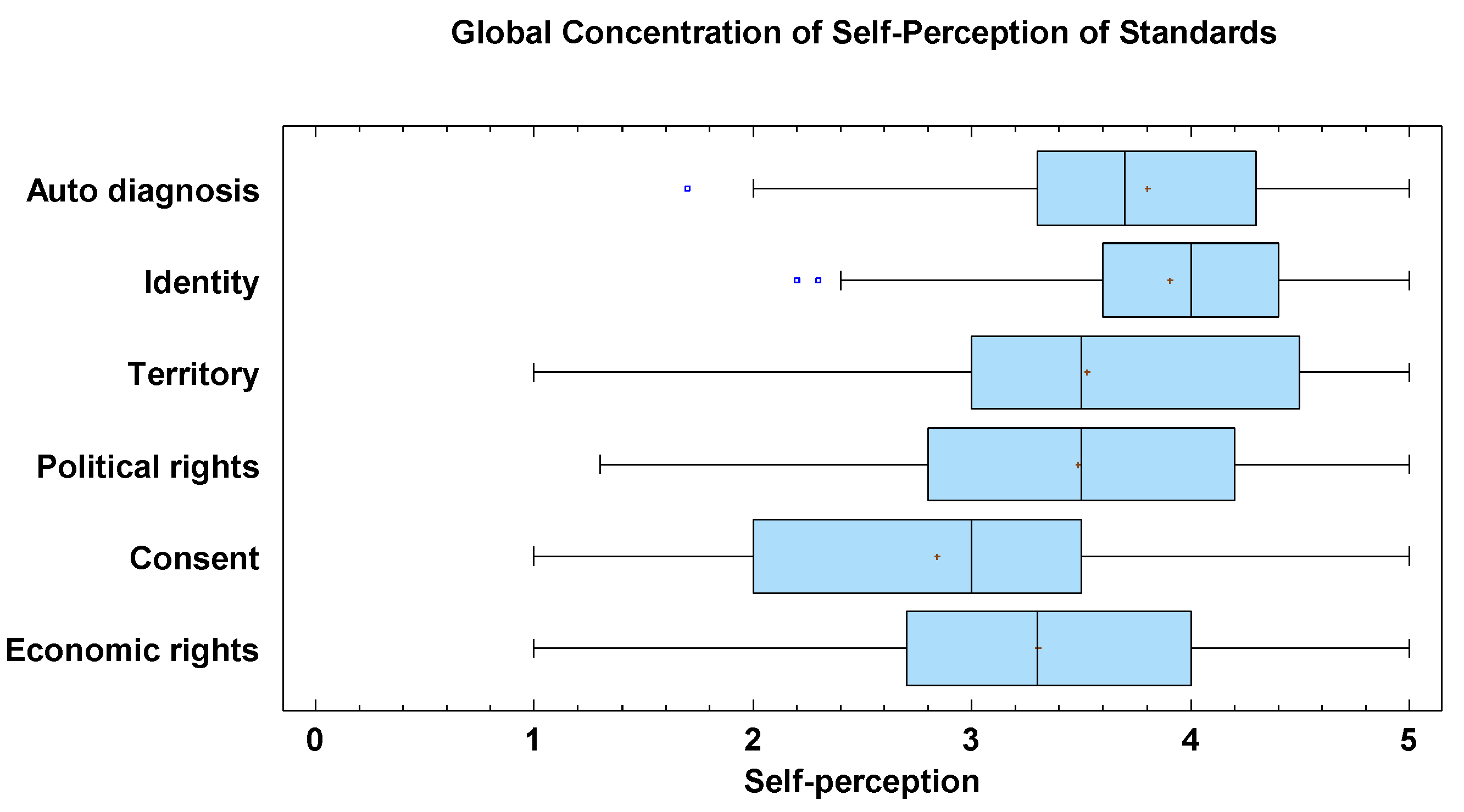
Figure 2.
Self-identification and Recognition of Indigenous People.
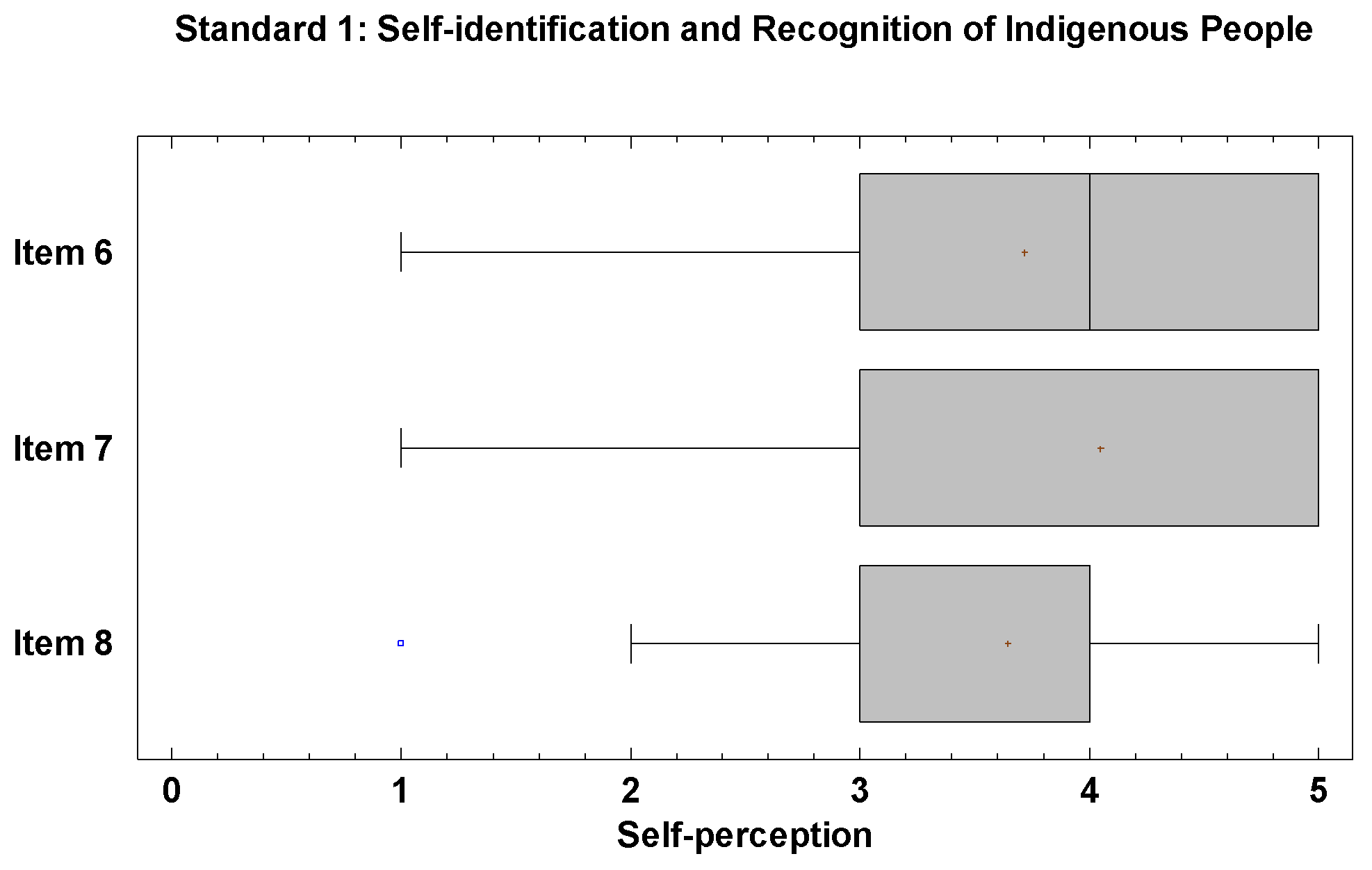
Figure 3.
Standard 1 comparison of results for each country.
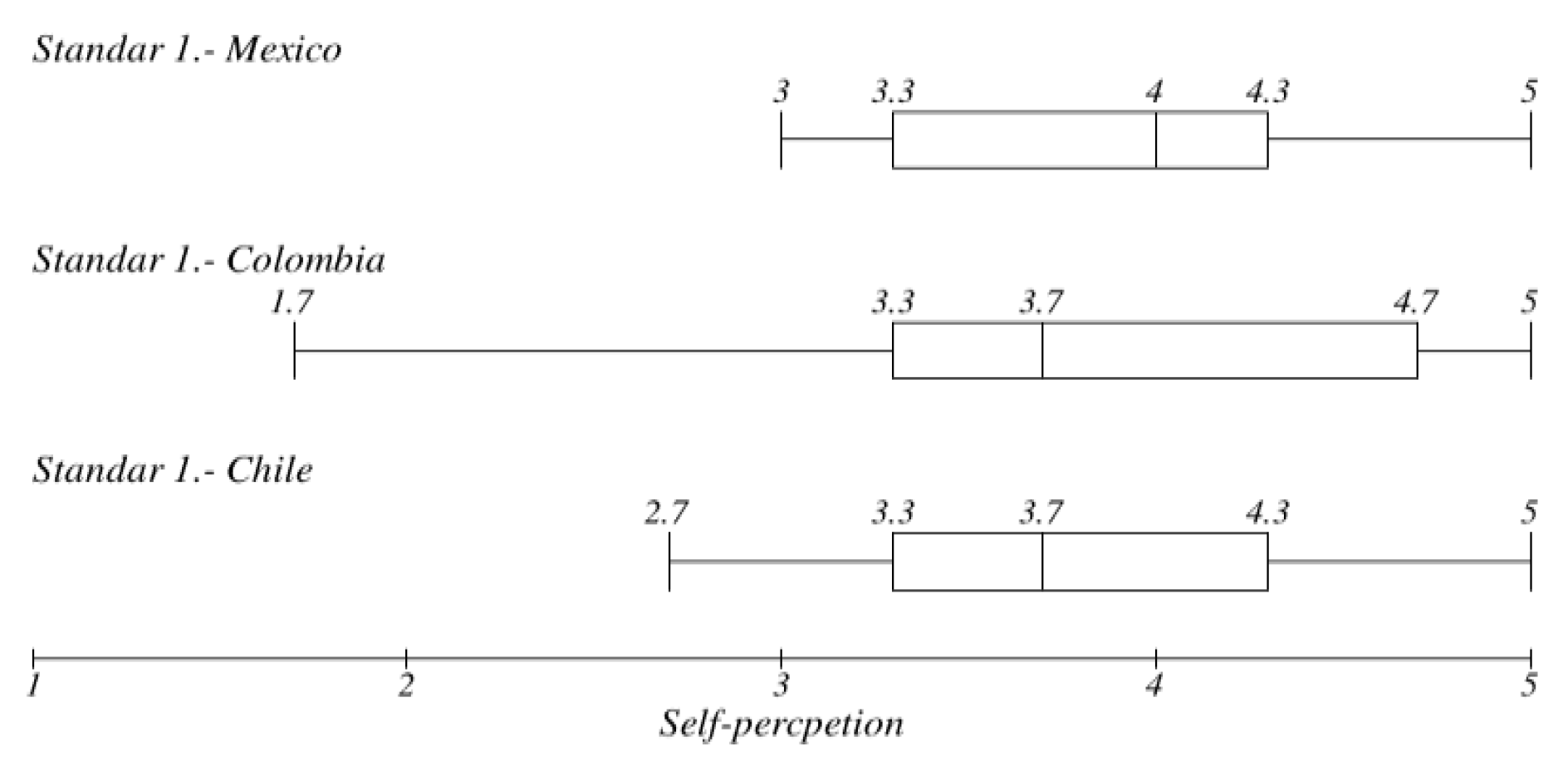
Figure 4.
Standard 2: Cultural Identity and Non-Discrimination.
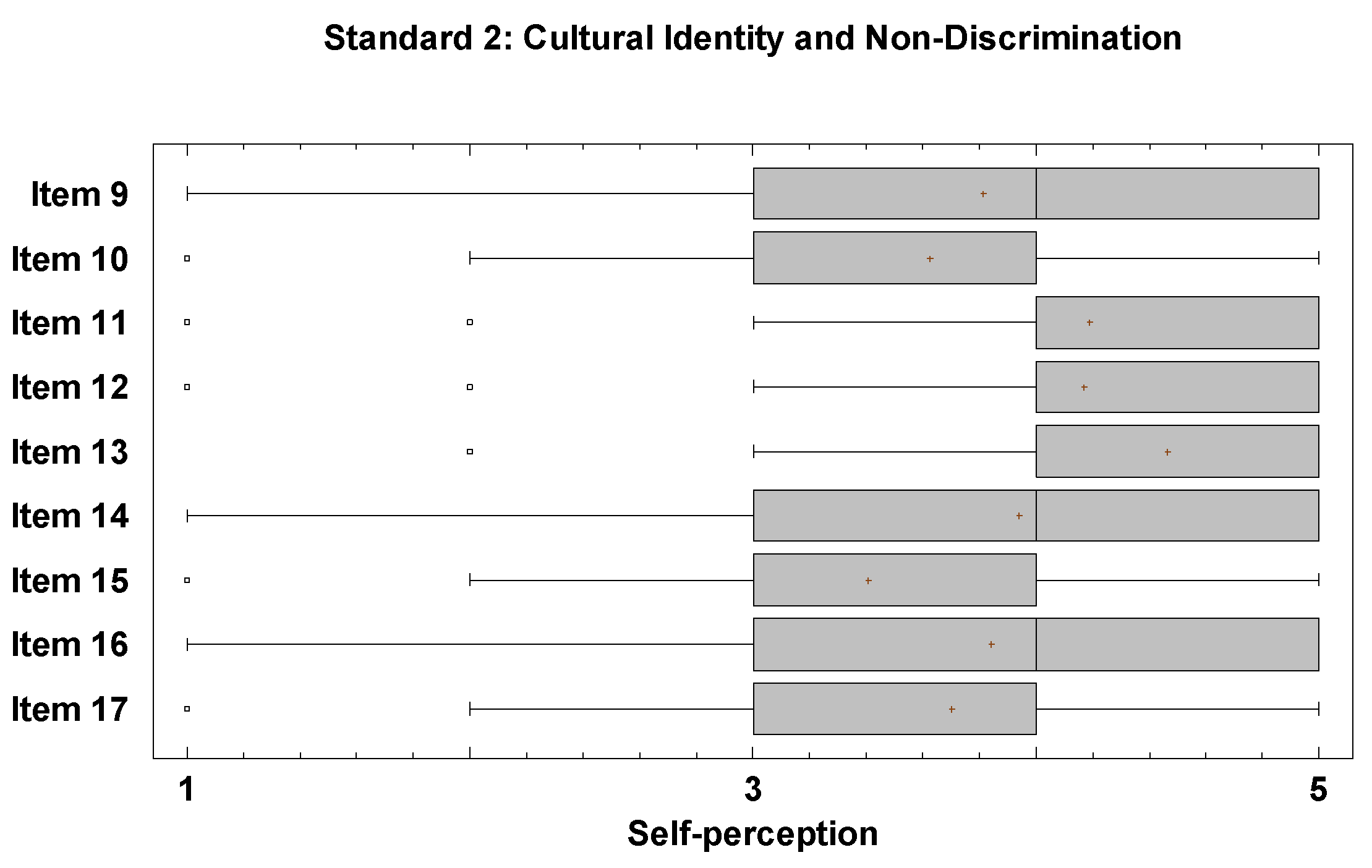
Figure 5.
Standard 2 comparison of results for each country.
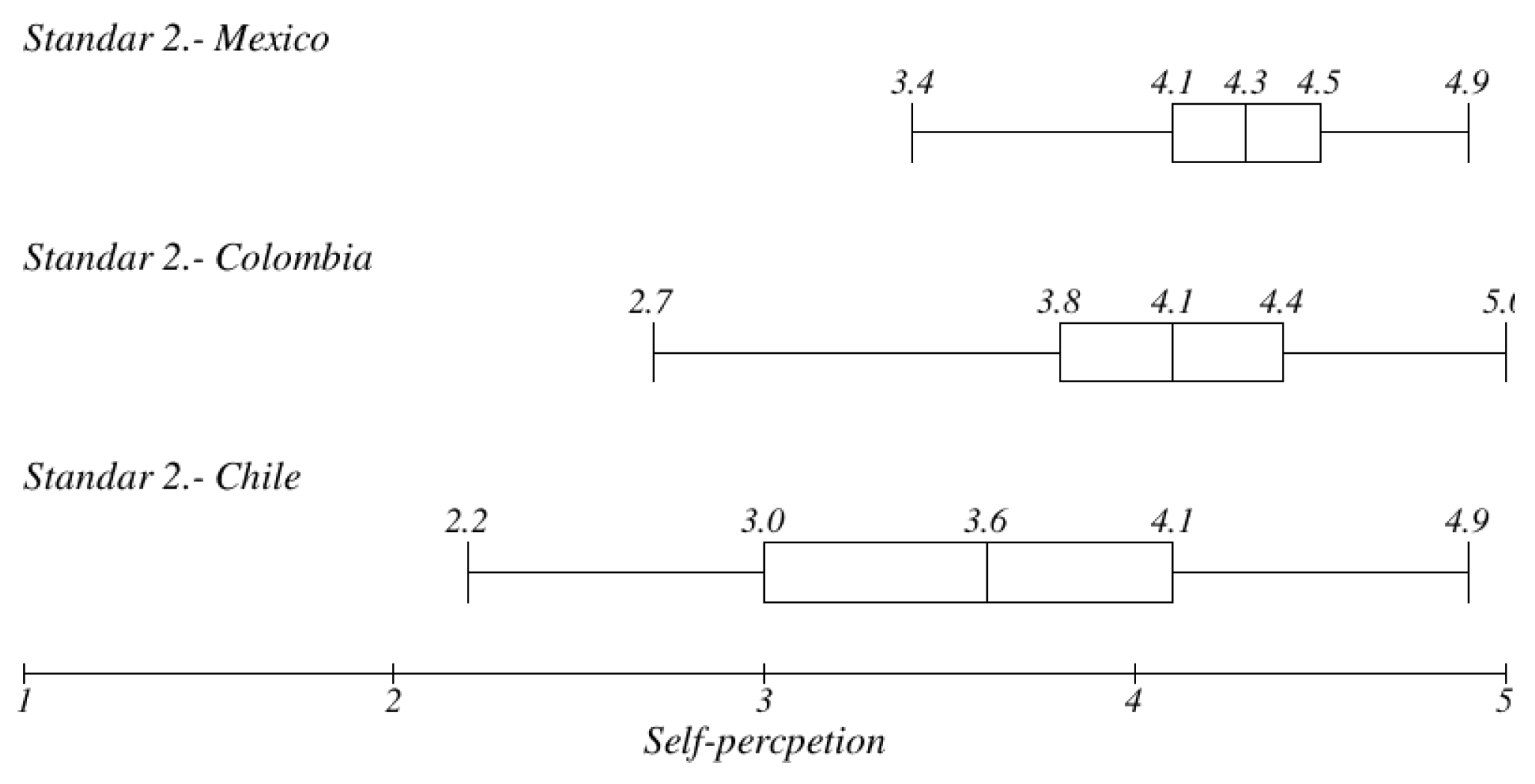
Figure 6.
Standard 3: Collective Ownership, Territory, and Natural Resources.
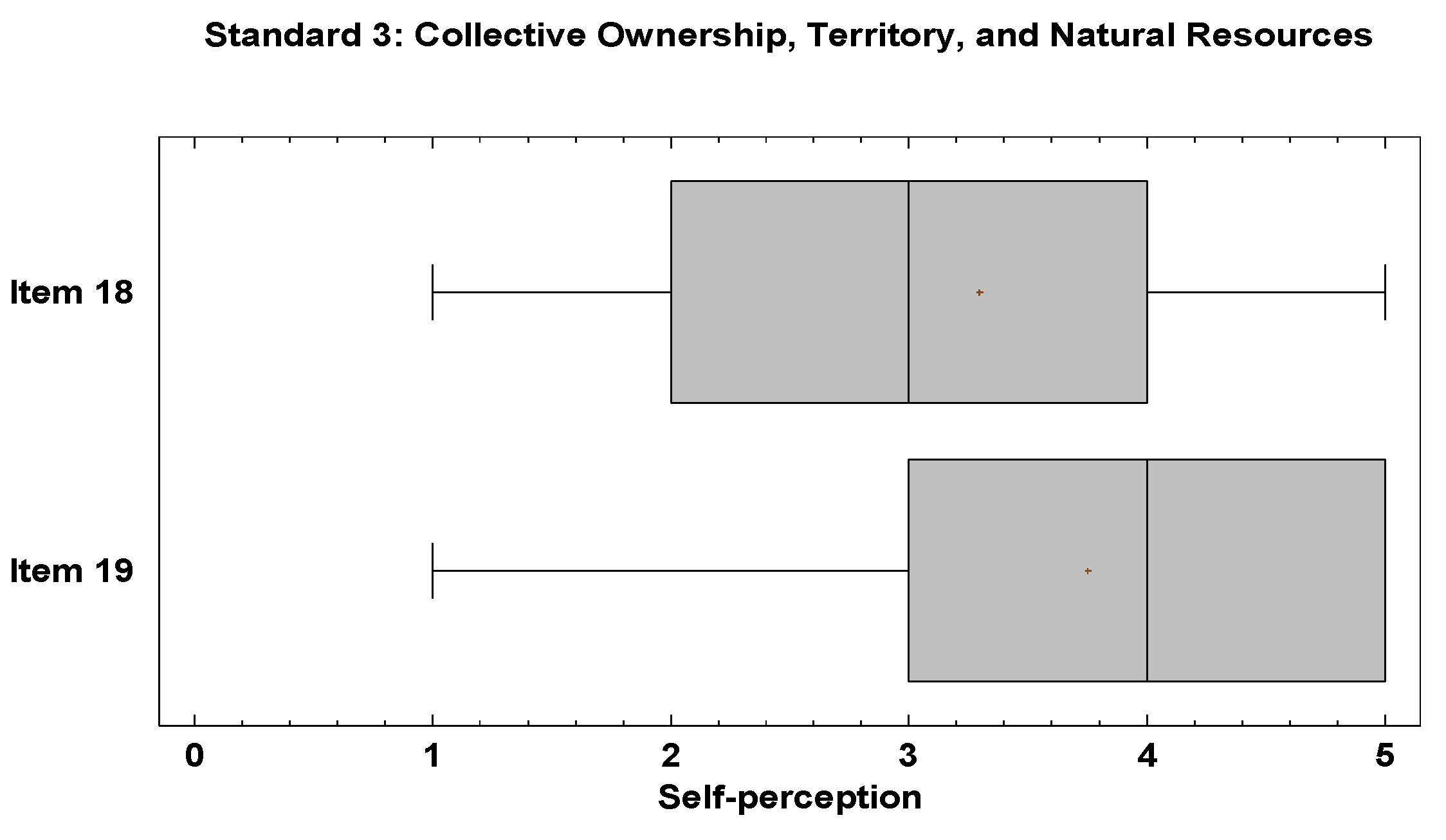
Figure 7.
Standard 3 comparison of results for each country.
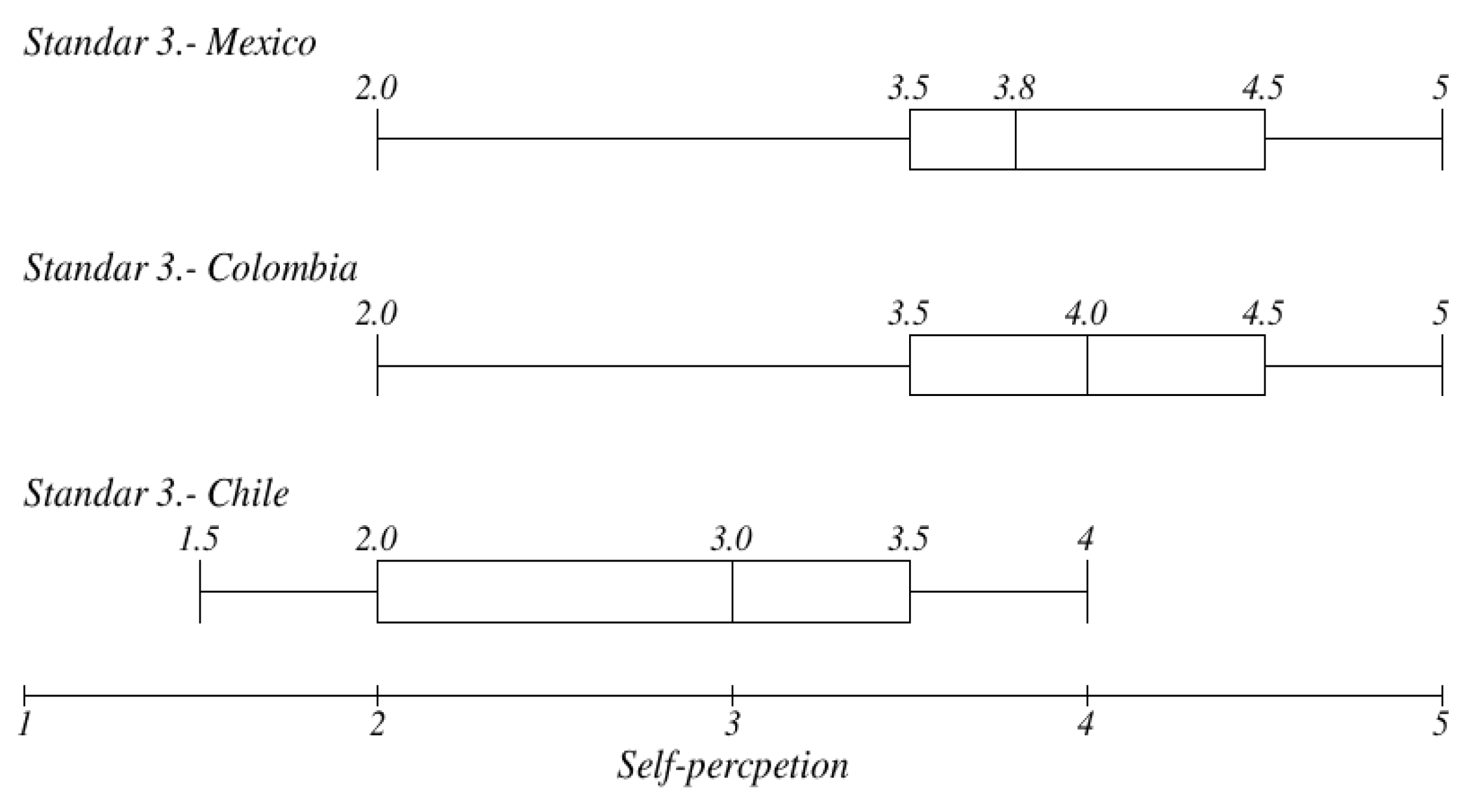
Figure 8.
Standard 4: Political Rights and Participation.
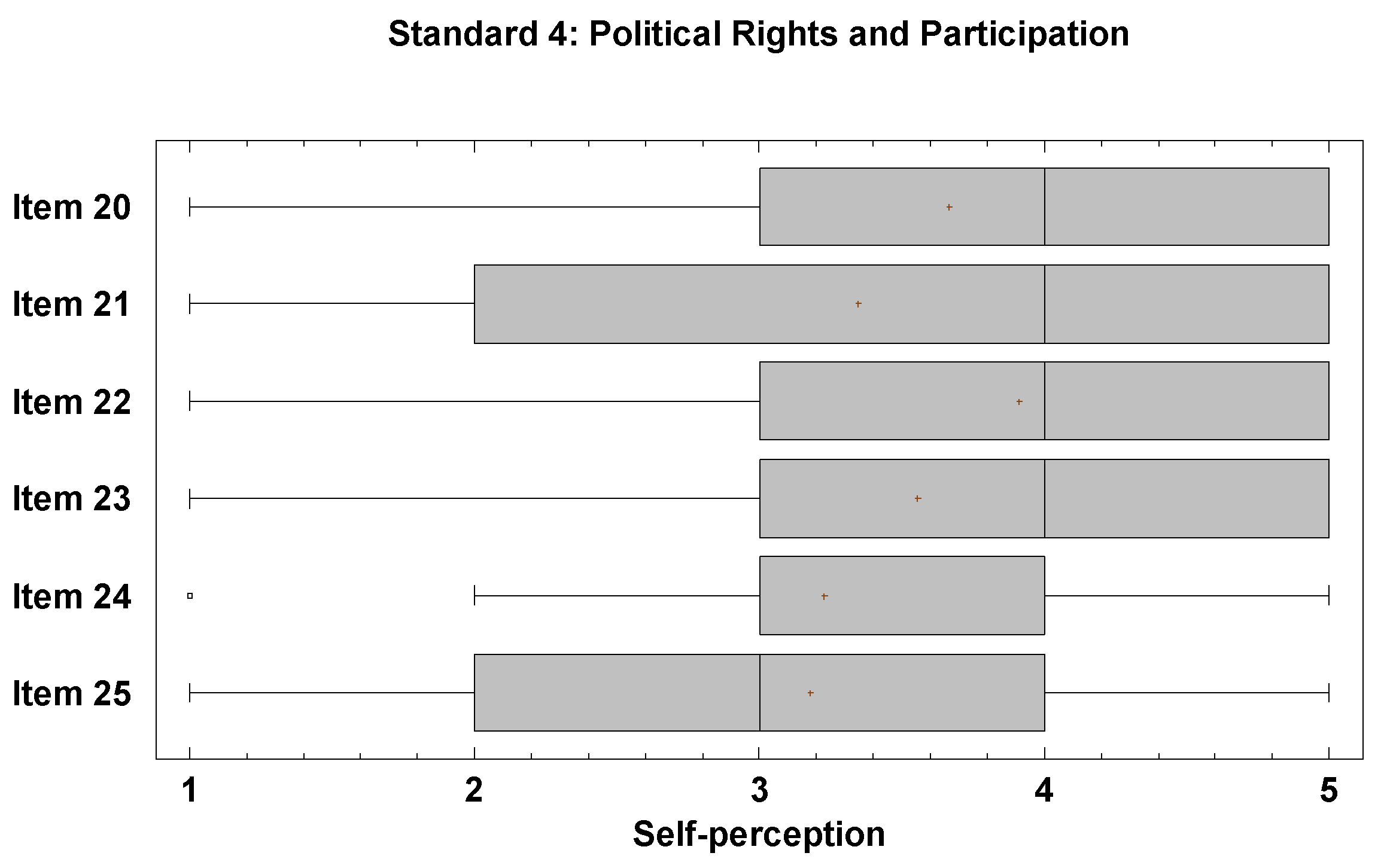
Figure 9.
Standard 4 comparison of results for each country.
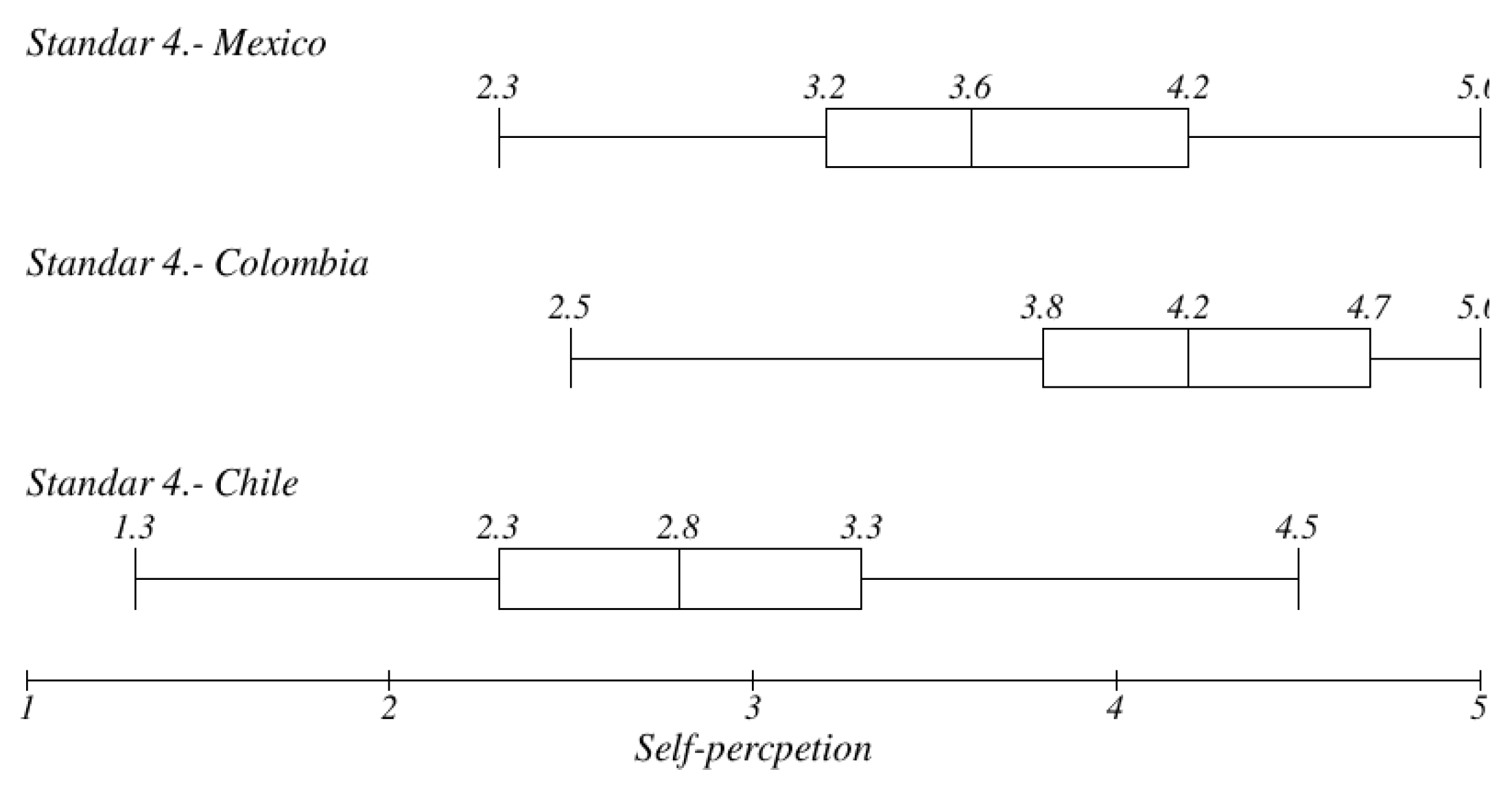
Figure 10.
Standard 5: Free, Prior, and Informed Consent.
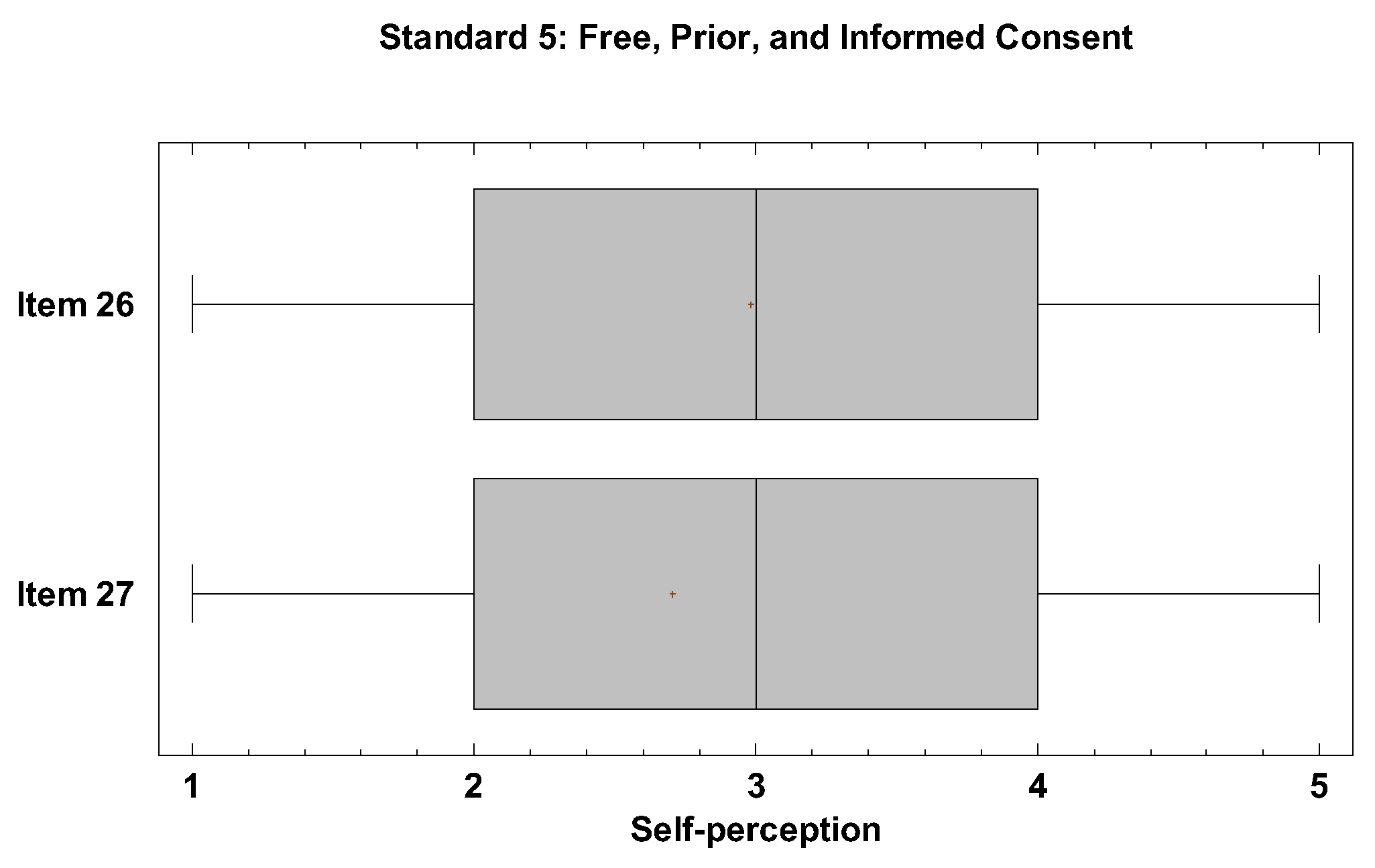
Figure 11.
Standard 5 comparison of results for each country.
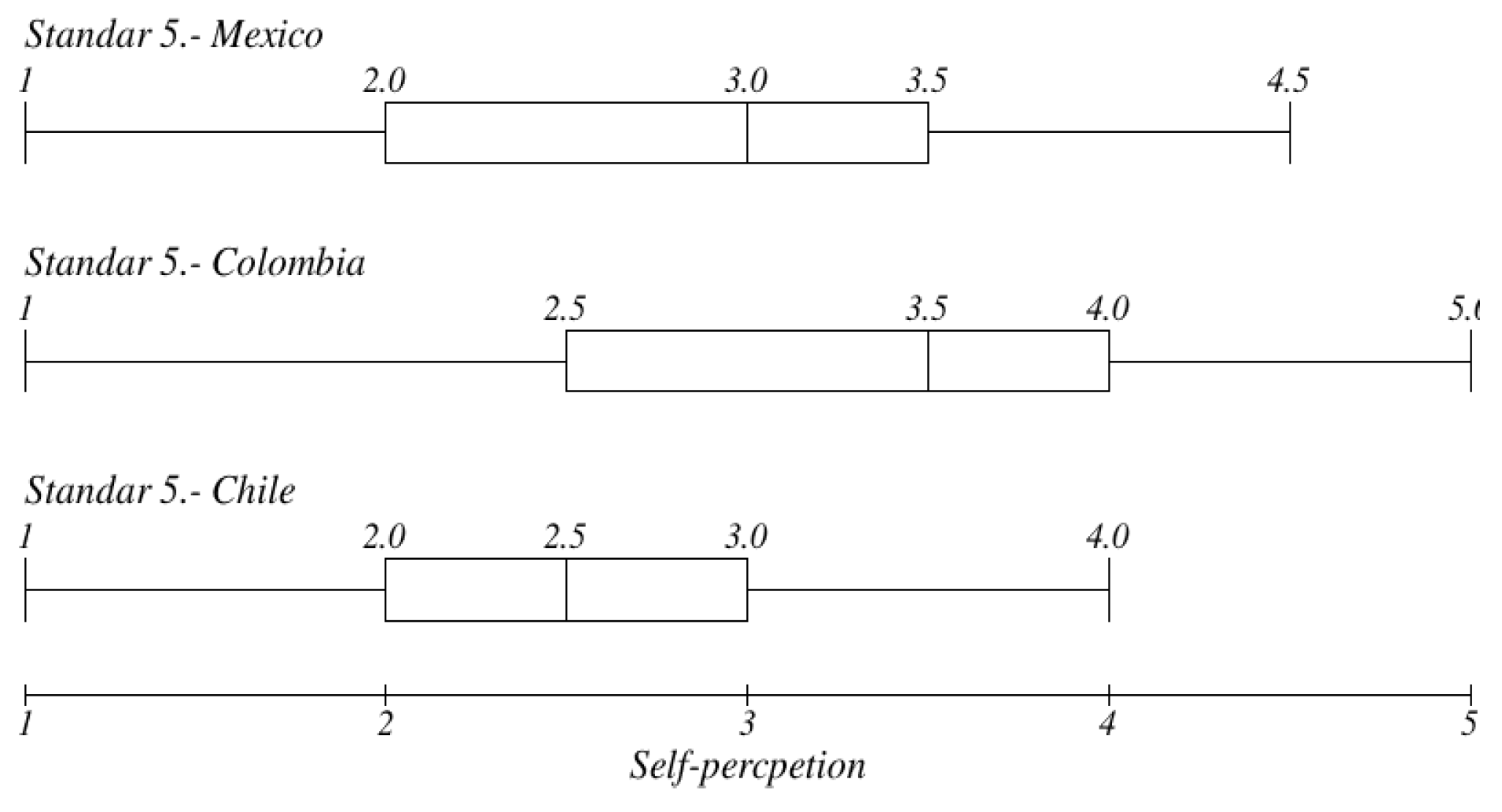
Figure 12.
Standard 6: Economic, Social, Cultural, and Environmental Rights.
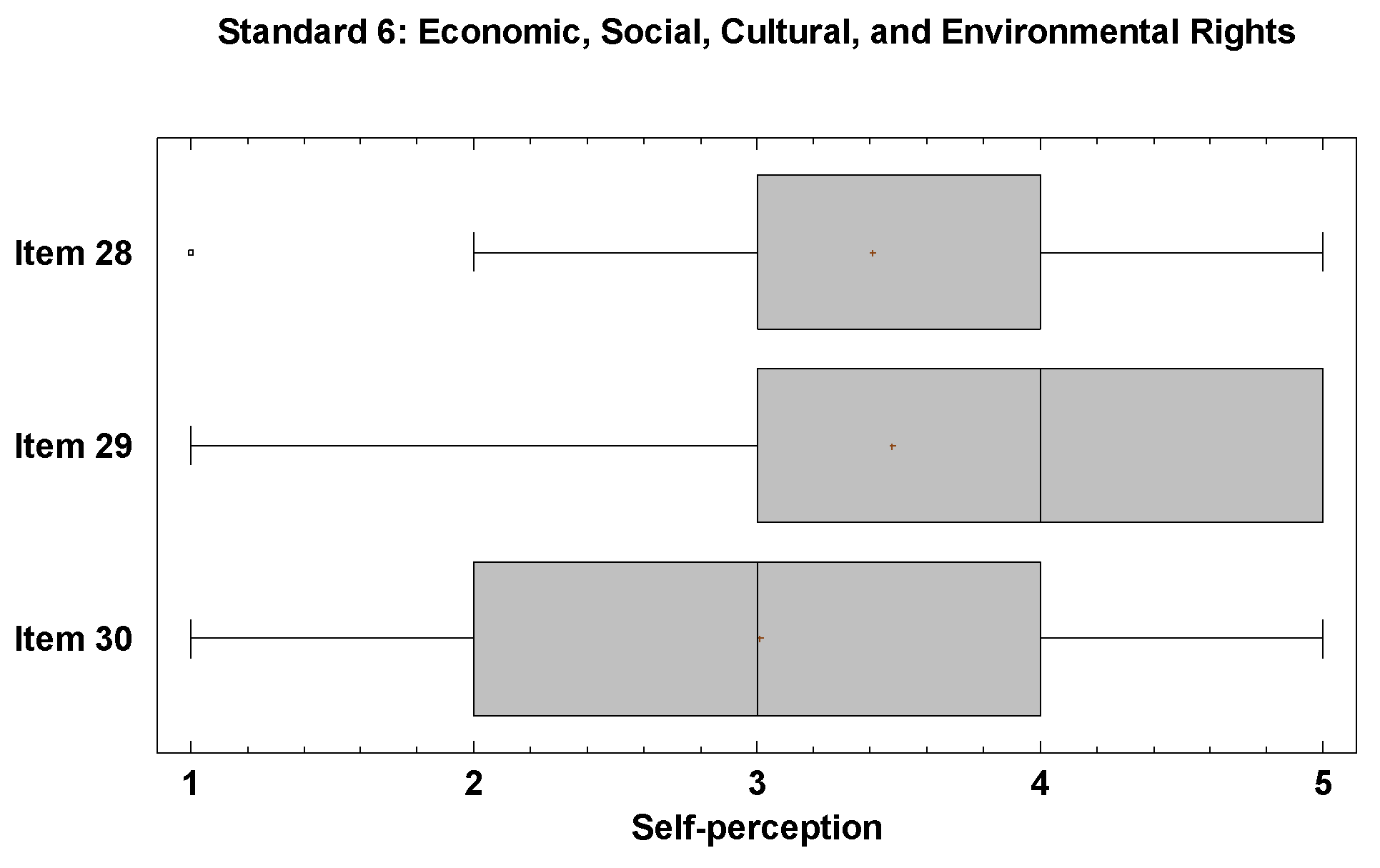
Figure 13.
Standard 6 comparison of results for each country.
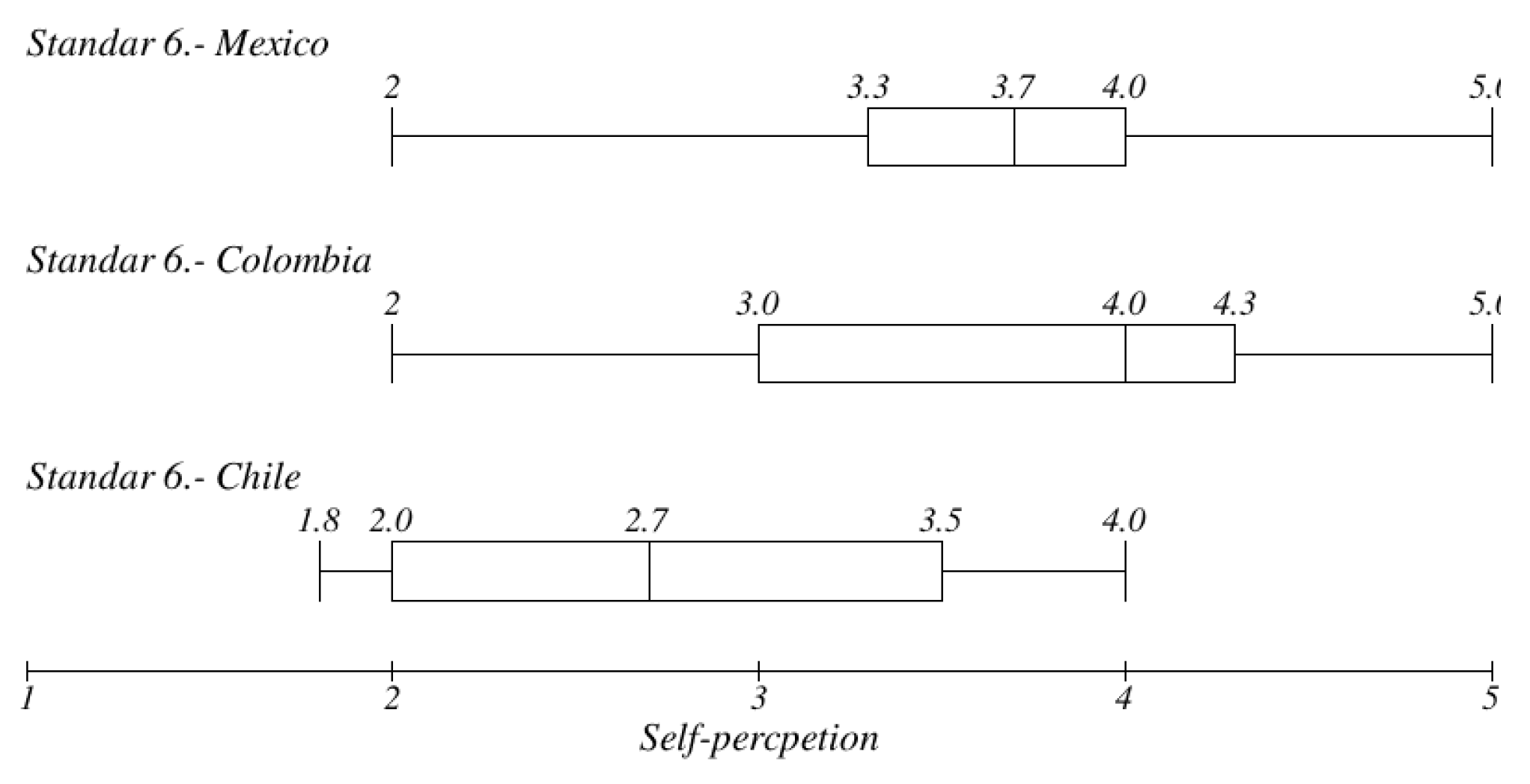
Figure 14.
Analysis from groups of questions. Items 6 to 17.
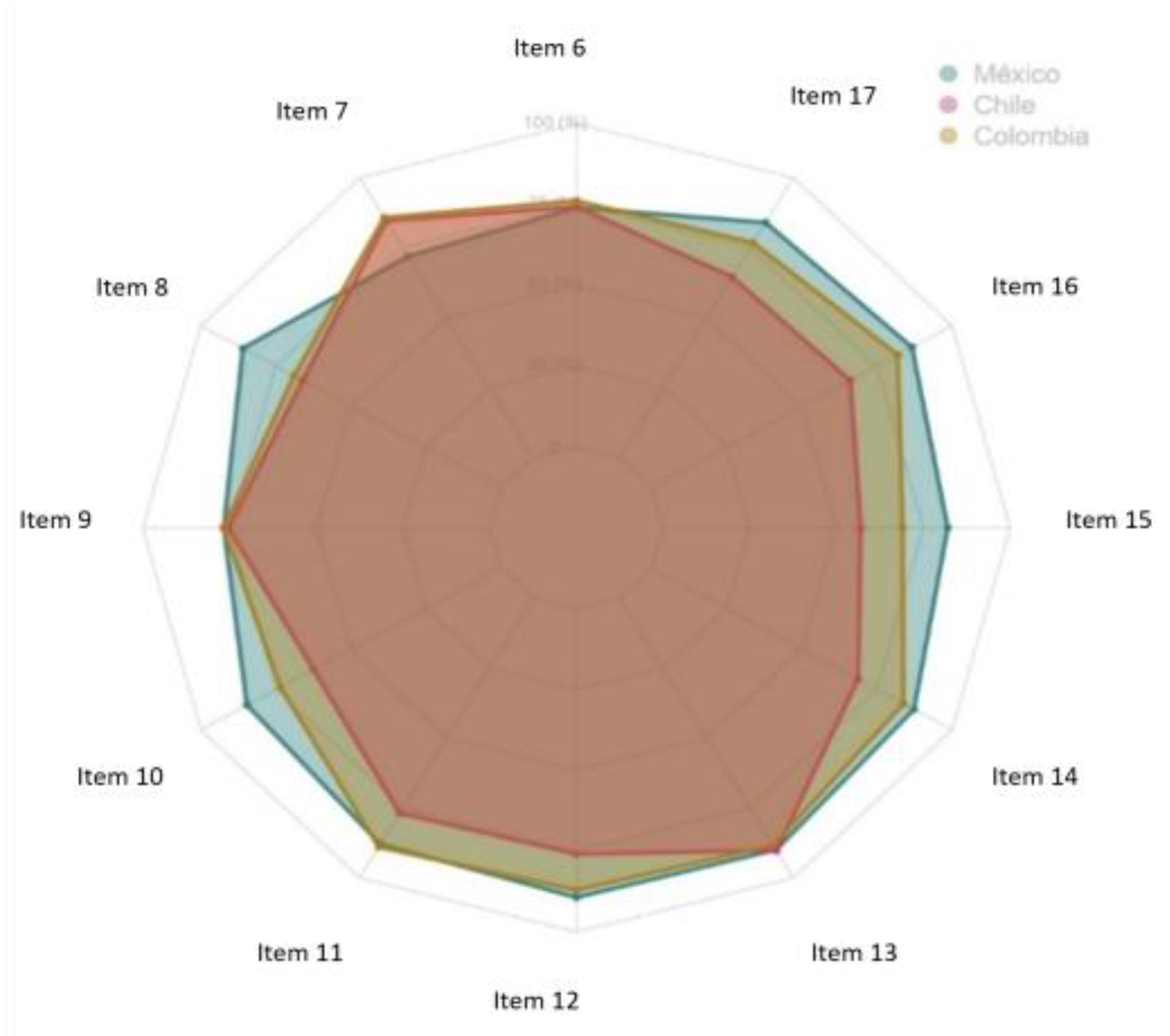
Figure 15.
Analysis from groups of questions. Items 18 to 27.
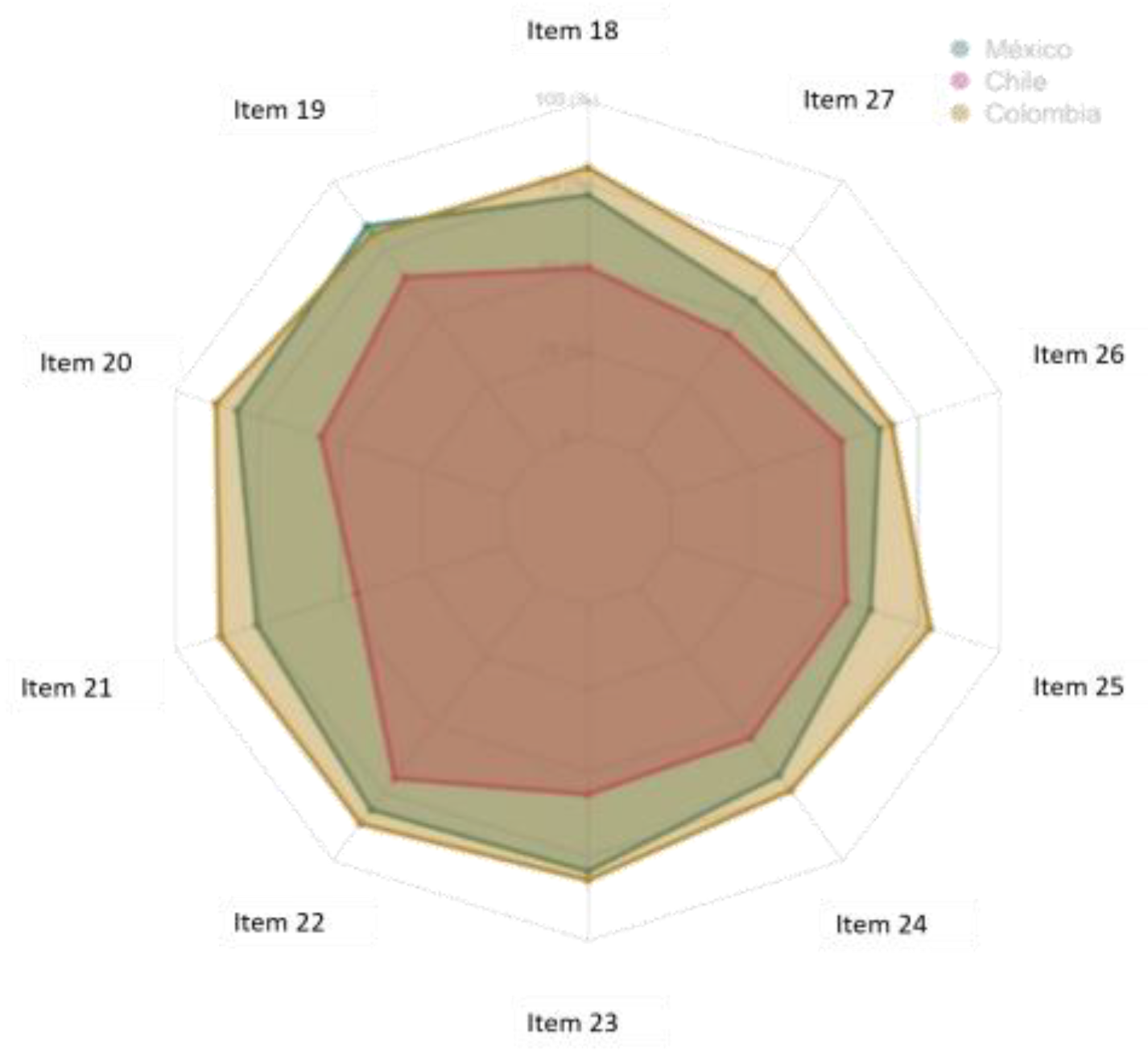
Figure 16.
Analysis from groups of questions. Items 28 to 30.
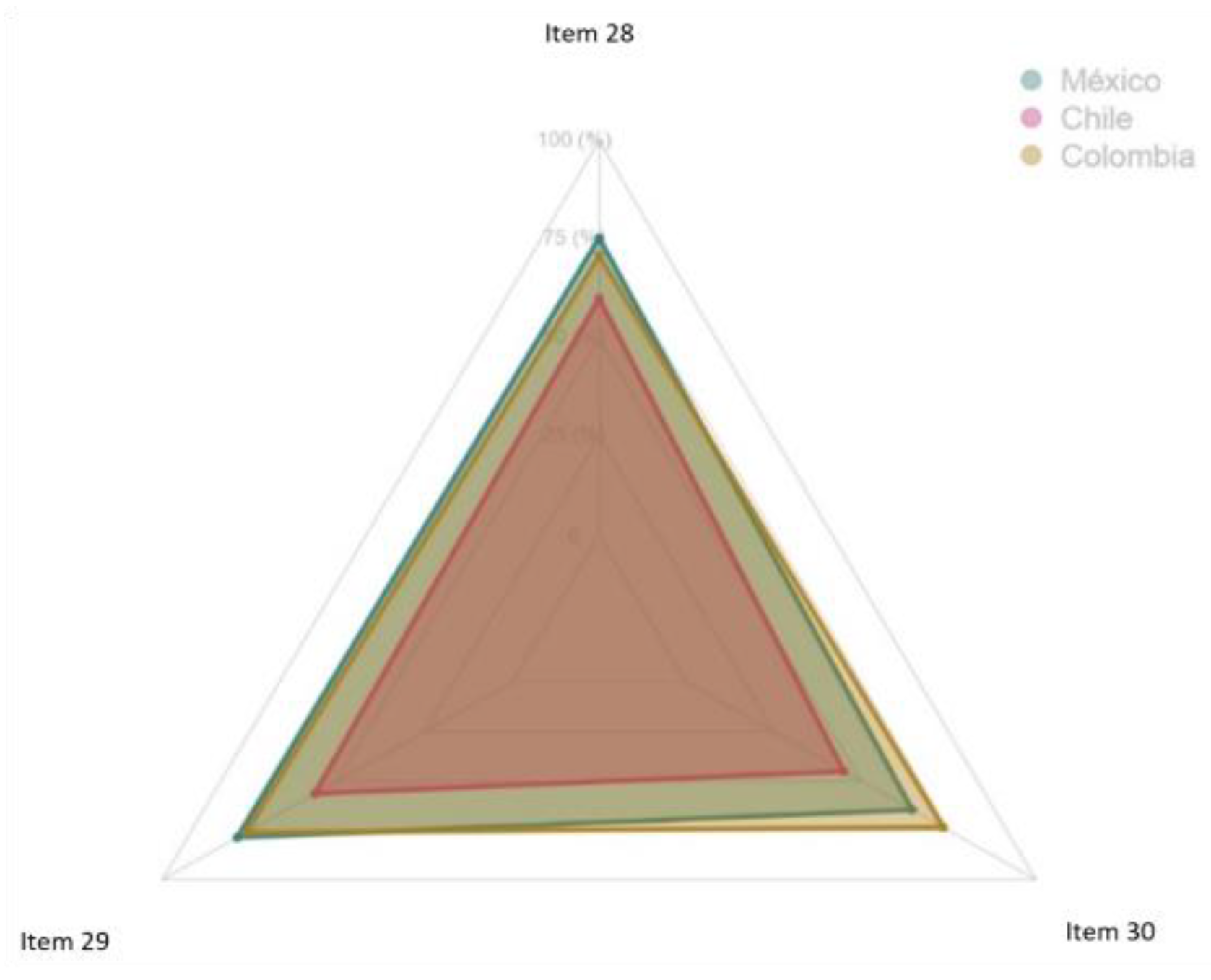
Figure 17.
Main components analysis. Note: The graph allows to observe the transformation of variables in a new set of variables.
Figure 17.
Main components analysis. Note: The graph allows to observe the transformation of variables in a new set of variables.
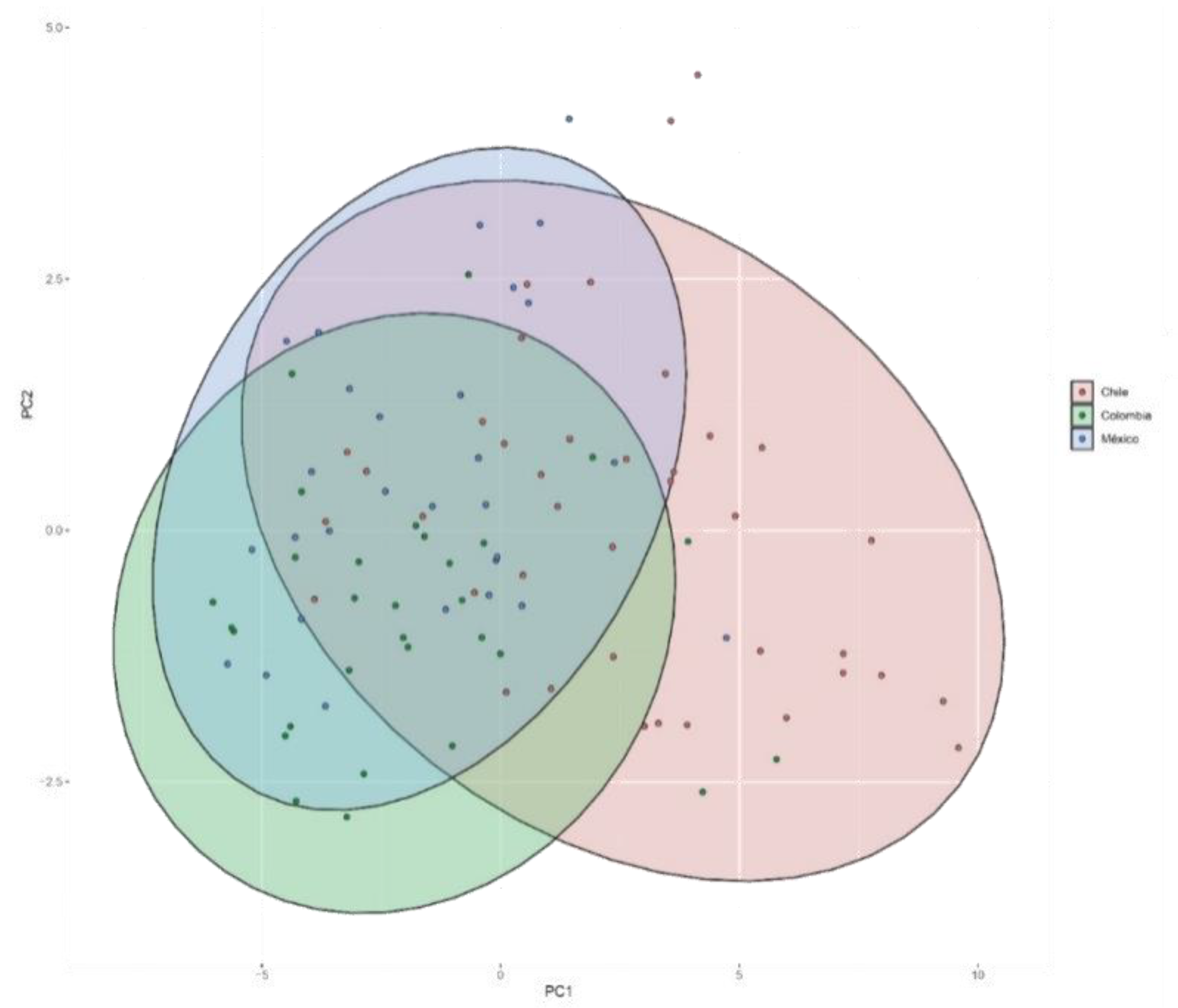

Table 1.
Questionnaire Dimensions.
| Questionnaire Dimensions | Indicators | Items |
|---|---|---|
| Self-identification and recognition communities of Indigenous and tribal people | They are considered as an original society preexisting the conquest. | 6,7 y 8 |
| Cultural identity and no discrimination | There is a narrow ancestral relation between territory and resources that are found in it. The state respects the way of living of the Indigenous communities. The state respects and preserves the traditional knowledge of the Indigenous people. The state has eliminated the racism and grants the same right to the entire population. |
9,10, 11, 12, 13, 14, 15, 16 y 17 |
| Collective property, land, territory and natural resources. | The community is free of handling their own land and natural resources | 18 y 19 |
| Political rights and participation | The have their own authorities. There are political and legal institutions in accordance with the laws of the community. Free election of community authorities Financial and technical assistance for the indigenous institutions’ operation |
20, 21, 22,23, 24 y 25 |
| Consultation and free, prior and informed consent | The states inform the measurements that could affect the indigenous community The state embraces measurements that affect the community with the consent of this one. |
26 y 27 |
| Economic, social, cultural and environmental rights. | The community determines, in free manner, about education, cultural, health and natural resources. | 28, 29 y 30 |
Note. This table show the dimensions used in the questionnaire, indicators and items.
Table 2.
Research Questions.
| Questions from investigation | Hypotheses |
|---|---|
| Q1: Does the Indigenous communities from Chile, Colombia and Mexico fully practice the rights to self-identification and recognition? |
H0: The Indigenous communities from Chile, Colombia and Mexico do not fully practice their rights to self-identification and recognition. H1: The Indigenous communities from Chile, Colombia and Mexico fully practice their rights to self-identification and recognition. |
| Q2: Does Indigenous communities from Chile, Colombia and Mexico fully practice the rights to cultural identity and non-discrimination? |
H0: The Indigenous communities from Chile, Colombia and Mexico do not fully practice their rights to cultural identity and non-discrimination. H1: The Indigenous communities from Chile, Colombia and Mexico fully practice their rights to cultural identity and non-discrimination |
| Q3: Does Indigenous communities from Chile, Colombia and Mexico fully practice the rights to collective territory property and natural resources? |
H0: The Indigenous communities from Chile, Colombia and Mexico do not fully practice their rights to collective territory property and natural resources. H1: The Indigenous communities from Chile, Colombia and Mexico fully practice their rights to collective territory property and natural resources |
| Q4: Does Indigenous communities from Chile, Colombia and Mexico fully practice their political rights and participation? |
H0: The Indigenous communities from Chile, Colombia and Mexico do not fully practice their political rights and participation. H1: The Indigenous communities from Chile, Colombia and Mexico fully practice their political rights and participation |
| Q5: Does Indigenous communities from Chile, Colombia and Mexico fully practice the rights to consultation and free prior and informed consent? |
H0: The Indigenous communities from Chile, Colombia and Mexico do not fully practice their rights to consultation and free prior and informed consent. H1: The Indigenous communities from Chile, Colombia and Mexico fully practice their rights to consultation and free prior and informed consent. |
| Q6: Does Indigenous communities from Chile, Colombia and Mexico fully practice the economic, social, cultural and environment rights? |
H0: The Indigenous communities from Chile, Colombia and Mexico do not fully practice their economic, social, cultural and environmental rights. H1: The Indigenous communities from Chile, Colombia and Mexico fully practice their economic, social, cultural and environmental right |
Note. This table shows the questions from the investigation and raised hypotheses.
Table 3.
Instrument Reliability.
| Reliability Statistics | |
|---|---|
| Cronbach’s Alpha | N of elements |
| .948 | 30 |
Note. The table represents the reliability of the test instrument.
Table 4.
ANOVA.
| Source | Addition of frames | DF | Middle frame | Reason-F | Value-P |
|---|---|---|---|---|---|
| Between groups | 73.3411 | 5 | 14.6682 | 16.57 | 0.0000 |
| Intra groups | 531.282 | 600 | 0.88547 | ||
| Total | 604.623 | 605 |
Note. The ANOVA proves the hypothesis that the measures of 2 or more communities are equal.
Disclaimer/Publisher’s Note: The statements, opinions and data contained in all publications are solely those of the individual author(s) and contributor(s) and not of MDPI and/or the editor(s). MDPI and/or the editor(s) disclaim responsibility for any injury to people or property resulting from any ideas, methods, instructions or products referred to in the content. |
© 2024 by the authors. Licensee MDPI, Basel, Switzerland. This article is an open access article distributed under the terms and conditions of the Creative Commons Attribution (CC BY) license (http://creativecommons.org/licenses/by/4.0/).
Copyright: This open access article is published under a Creative Commons CC BY 4.0 license, which permit the free download, distribution, and reuse, provided that the author and preprint are cited in any reuse.


