
Submitted:
14 September 2024
Posted:
16 September 2024
You are already at the latest version
Abstract
Seaports are critical hubs in global trade, facing increasing pressure to accelerate green transi-tions while navigating evolving economic and environmental landscapes. This research analyses the intricate relationship between port organizational ecosystem resilience and the successful implementation of green transitions, highlighting the challenges and opportunities in moving towards a more sustainable future. The research employed a combined focus group interview and participatory observation methodology to gather insights from experts. Analysis revealed that while technological advancements are a primary driver for greening port operations, a lack of managerial capacity is a significant impediment to the successful integration of these innova-tions. It was identified several challenges, including outdated infrastructure, cybersecurity threats, and the need for ongoing investments in new technologies, along with the need to foster a sustainable behaviour culture. Experts emphasized the importance of developing managerial competencies and continuous learning. The research also highlights the role of strong stake-holder partnerships, including collaboration with government agencies, industry associations, and environmental organizations. This research provides valuable insights for policymakers, port managers, and other stakeholders seeking to navigate the challenges for ensuring a sus-tainable future for the maritime sport organizational ecosystems and maritime industry.
Keywords:
port organizational ecosystem’s resilience
; green transitions
; managerial capacities
1. Introduction
As global trade faces unprecedented challenges such as climate change, economic volatility, and evolving regulatory standards, the resilience of seaports and the whole port organizational ecosystem (POE) has emerged as a critical focus for maintaining the stability and sustainability of ports and supply chains. POE serves as vital nodes in global commerce, facilitating the movement of goods and resources worldwide. However, to thrive in a rapidly changing environment, the whole POE must effectively address technological barriers, improve managerial capacities, and cultivate an organizational culture conducive to green policies which have more importance in a few years and became strategically significant for implementation in the conditions of climate change and sustainability transitions. Understanding these interconnected factors is essential for enhancing the resilience of POE and sustainable operational practices.
Numerous studies have identified the key obstacles that ports encounter on their journey toward greener operations, including outdated infrastructure, cybersecurity risks, and a lack of strategic managerial competencies. For instance, the International Maritime Organization (IMO) emphasizes the importance of aligning port operations with global greenhouse gas reduction goals, urging ports to adopt low-emission technologies and practices [1]. Furthermore, the digitization processes are called as the way to improve resilience and sustainability in ort organizational ecosystems, and the digital technologies and automation becomes specific forces to greening operations and management [2]. Green transitions refer to the systematic changes that ports implement to reduce their environmental impacts, primarily by adopting sustainable technologies and practices. This concept is closely tied to the guidelines and reports developed by various organizations aiming to promote sustainability in port operations. The European Commission’s actions for reducing emissions from shipping encourage sustainable practices and eco-friendly maritime transportations to meet both environmental and economic goals, pushing shipping processes toward innovation in energy use and resource management [3]. Similarly, the shipping, port operations and other port related activities became the statistical object from the perspectives of green ports perspectives and different measures of this criteria as the greenhouse gas emissions are analysed and presented in the newest reports [4]. So, it could be seen that POE became as the economical object negatively influencing the environment. But from another point of view POE felt these climate change and other uncertainties, so the researchers and international organizations payed more attention to keep the resilience for these uncertainties and some guidelines were prepare, how to manage resilience in the context of sustainable development of ports and their green transitions in the era of engineering innovations. In the realm of risk management, ports require robust strategies to mitigate potential threats. United nations published the 2030 agenda for sustainable development [5] where main transitions for sustainability could be found and main sustainable goals also are identified [6]. Deeper analysis of interactive sources for the implementation sustainable actions and for the keeping resilience of ports under the influence of uncertainties and under the influence of new engineering technologies implementing green transition processes could be found in the guidelines for ports, how to build capacity to manage risks and enhance resilience [7], how to enhance resilience during green transitions [8] and accelerate processes [9]. But as researches [10,11,12] found out the green transitions in POE are not very intensive even the digitization and other automation processes increase in their implementation actions. So, the main question is what ways to improve and fasten green transitions in the whole POE and provide more port operations friendly to the environment and urbanized areas around the ports through sustainable innovations and high resilience.
The research object is resilience of POE as the attribute for acceleration of green transitions and the main aim is to investigate how to accelerate green transitions in POE in the conditions of their resilience enhancement for moving toward more sustainable coastal regions, what is important for port cities and citizens living around the ports. The objectives of research are to describe the reasons and conditions for the green transitions in ports briefly and implement empirical research for the identification main challenges for POE resilience and to identify main possible managerial practices for the enhancement of resilience by fastening green transitions in port. By addressing these objectives, this study aims to deliver valuable insights that can assist port authorities and stakeholders in navigating the complexities of technological integration to enhance resilience and promote sustainability. In accordance with the defined objectives the methodology of this research is complex and consisted of literature analysis and qualitative empirical research where deep content analysis methodology and some visualization techniques such as word clouds and relationship diagrams were also applied.
Ultimately, the findings of this research contribute to a deeper understanding of how ports can adapt to environmental demands while strengthening their operational efficiencies through the green transitions and strengthening managerial capacities through understanding the factors stopping these transitions.
2. Materials and Methods
Upon this research aims to identify the key connections between the resilience of a POE and managerial actions related to green transitions, a previously established theoretical model that outlines resilience and highlights external factors that negatively affect it were used [13,14]. While green transitions serve as a latent variable within this model, they can both disrupt the balance of the POE and enhance resilience of POE [2,15]. These transitions involve various engineering innovations that push the maritime industry toward greater sustainability, such as autonomous shipping, which improves navigation and safety; green technologies like hybrid and liquefied natural gas (LNG) engines; advanced materials that promote fuel efficiency; and digitalization through Internet of Things (IoT) devices for real-time operational monitoring and predictive maintenance. Furthermore, innovations in navigation systems, energy storage, port automation, and cybersecurity support cleaner operations [16]. While these advancements contribute significantly to reducing emissions and promoting sustainable practices [16], effective implementation is often challenged by human behavioural risks [17]. The success of green transitions relies heavily on flexible managerial practices and strong leadership [18], enabling ports to adapt to new technologies and foster a culture of sustainability [14,19]. Aimed to identify challenges faced by POE it is important to explore effective managerial interventions to enhance resilience while accelerating green transitions within the maritime sector and the broader supply [17].
This research employs a combined methodology of focus group interviews and participatory observation. Focus group discussions gathered insights from participants about the research topic, providing valuable perspectives often overlooked in quantitative studies [20]. Participatory observation allowed the researcher to engage with stakeholders during various conferences and sessions, gaining first-hand insights and a deeper understanding of the subject [21]. Two focus groups were formed to encompass diverse stakeholders in the maritime field. The first group included experts from the maritime industry in Lithuania, while the second group comprised international experts from countries such as France, Slovenia, Germany, Latvia, Estonia, and Poland. This approach ensures representation from multiple shipping regions, including the Baltic Sea, Atlantic Ocean, North Sea, and Adriatic Sea, thus accounting for various climatic and geographical conditions. A total of 11 experts participated in each focus group, and an additional 15 responses were collected through participatory observation.
For the participant selection process, a combination of purposeful sampling and stratified sampling was used. Purposeful sampling [22] used for the selection of that participants which could be deliberately chosen for their expertise and relevance to the research from specific countries. Stratified sampling [22] used for representation of different groups within the POE, such as primary port services providers, management companies, government and non-government organizations, and others. According to the methodology of stratified sampling the structure of stakeholders of POE each expert focus group comprised key stakeholders from the POE. Previous research [23,24,25] identified the typical stakeholder distribution as follows: primary port services and operations providers - 44%; management companies and organizations - 15%; governmental and non-governmental organizations - 15%; hinterland logistics service providers and other entities invested in supply chain connectivity through maritime transport - 15%; and scientists and researchers - 1%. Reflecting the described stakeholder structure, the selected proportion closely aligned, with most experts coming from primary port activity sectors.
In the port governance domain, experts were chosen from various governance structures: a state-owned limited company in Klaipeda, a municipally owned limited company in Koper, and a consortium of three ports in France managed by a state-owned limited liability company Haropa. It is noteworthy that, considering the inclusion of Klaipeda, a middle-sized seaport, the research also engaged other port authorities from middle-sized or smaller ports due to their complex investment scenarios and ecosystem resilience challenges, as identified in previous studies [13,26,27]. The biggest stakeholder’s group was consisted of 5 experts in each group: in Lithuania group representatives from Lithuanian stevedoring companies’ association, shipowners’ association, agents and forwarders association, also representatives of the biggest port warehouse’s services providers, and container terminal; in international group representatives of the central association of Germany port operators, of Gdansk port container terminal, the association of Polish maritime industries, Estonian logistics & freight forwarding association, Latvian ship suppliers association were invited. Also, experts from other types of stakeholders were invited: representatives of Lithuanian transport safety administration, towage services’ providing company, of Slovenian maritime administration, Germany federal maritime and hydrographic agency, of Lithuanian national road carriers’ association “LINAVA”, Germany port technology association, Klaipeda university researcher, researcher from university of Normandy in Le Havre.
The structured agenda addresses the challenges of enhancing resilience within the POE and their manageability. The main questions guiding the agenda are as follows:
- What challenges within the POE resilience framework can be identified, and what are their factors and impacts?
- What managerial interventions can be utilized to withstand external uncertainties affecting the POE, and how can these interventions be managed?
As it could be seen in the agenda of focus group discussions, the primary focus of the study did not revolve around green transitions; but in the context of discussions the green transitions definition appeared as the technological challenge for POE and as the effectively working tool for the resilience enhancement and the research on green transitions could be implemented as it were mentioned in literature analysed previously [10,11,12].
Data collection was conducted through remote meetings using Zoom, facilitated by an international group using NVivo software, with a semi-structured discussion guide. A moderator facilitated the discussions, encouraged participation, and ensured that all relevant topics from the structured agenda were covered. The data collected provided rich qualitative information for subsequent analysis and all data are accessible through request for accessing to correspondent author of this research.
Thematic analysis was employed for the analysis the focus group data and data got during participatory observation. Transcripts were coded according to stakeholders’ functional and international types. Deep content analysis was oriented to the classification of different challenges according two classification models. One of them base on the PESTEL framework [28], uncertainties in different domains on the different globalization levels (Figure 1 b).
Second one is based on the definition of port organizational resilience [14] where the four main components of organizational resilience, focusing on internal aspects of the POE (Figure 1 a): critical infrastructure component (CI); human resources challenges (ILP); managerial capacities (OMC); and organizational culture’s (ROC) [13]. And all these components have to be managed by flexible leadership principles and decision making for the improving in adaptive capacity of all ecosystem for the keeping high resilience under the influence of uncertainties (Figure 1 (a)).
These classifications add an aim to identify possible relationships between different categories of challenges for POE resilience and to get some answers on the possible effective managerial interventions required for the enhancement of resilience of POE and acceleration of green transitions.
For analysis and visualization, the research employed word cloud methodology and cross-content analysis to identify relationships among different types of challenges. The word cloud method visually presents the most important terms from focus group discussions, allowing for an analysis of various attributes and categories related to the challenges. Before applying the word cloud technique, a detailed categorization and classification of the identified challenges was conducted. Cross-content analysis enables the identification of key relationships between different challenges in port organizational ecosystems (POE) and highlights the main drivers for accelerating green transitions. Descriptive statistics were used to calculate the frequency of various challenges, helping to determine which areas of POE management need the most improvement.
The research design utilized purposeful and stratified sampling to enhance validity and reliability. Participants were required to have at least five years of managerial experience and specific expertise relevant to their stakeholder type. This careful selection ensured rich and relevant data while stratification provided systematic representation of all key groups involved. The validity of conclusions was further strengthened through cross-verification, which involved checking for inconsistencies within responses among stakeholder groups and comparing answers across different fields. Additionally, remote discussions were held to gather feedback on the overall conclusions. In line with open data science principles, all research data can be shared upon request.
3. Results
Analysis of expert responses regarding the challenges faced by port organizational ecosystems (POE) indicates that most identified impediments are technological in nature (Table 1 (a)). A smaller portion of challenges relates to economic and environmental factors that affect the operational dynamics of the seaport ecosystem under uncertain conditions.
The analysis of experts’ opinions reveals that possibly technological challenges could be linked to managerial capacities (Table 1 (b)). It is hypothesized that the technological challenges confronting POE are closely related to managerial capabilities in technological innovation practices.
In the context of green transitions in POE, the primary challenge is associated with managerial practices. Experts suggest that neglecting these challenges could lead to significant economic losses (Table 1 (c)) and decreased competitiveness, which was identified as a moderate risk. Additionally, experts have assessed potential disruptions within the POE as risks of moderate to moderately high impact. In conclusion, effective management of technological innovation within green transitions presents considerable challenges related to the managerial capacities of the POE.
The analysis of challenges affecting the resilience of port organizational ecosystems (POE) highlights several key aspects illustrated in Figure 3 (a). Politically, ports confront issues related to technological standardization and cybersecurity threats that can disrupt operations. Technologically, outdated infrastructure poses significant barriers to technological advancement and green transitions. Experts identified the need for planned dynamic infrastructural development and modernization aligned with green technologies driven by digitization and automation. Notably, these challenges may also act as catalysts for accelerating green transitions in ports.
To improve the resilience of POE (Figure 3 (b)) and promote green transitions, experts recommend several effective managerial interventions. Key areas include sustainable development planning, investment in green technologies, stakeholder engagement, compliance and assessment, training and capacity building, and the adoption of green tools and strategies. Integrating environmentally friendly practices into strategic planning is essential for ensuring long-term coastal sustainability.
Additionally, technological challenges are closely linked to a lack of managerial competencies (Figure 3 (c)), affecting both green transitions and the overall resilience of coastal ecosystems. Expert analyses indicate that modern technologies require complex integration into existing systems, and without adequate managerial understanding, inefficiencies are likely to arise.
Experts note that the rapid pace of technological advancement demands continuous adaptation, particularly in implementing green technologies like renewable energy systems, crucial for sustainability, but more crucial management of these technologies during adaptation and integration into the processes and sharing the responsibilities of management within the organizational ecosystem.
The cross-content analysis found out that expert opinions highlight the critical relationship between technological challenges and the lack of knowledge, skills, and consumption culture (Figure 3 (d)) within POE.
Advanced technologies, crucial for sustainability, require sophisticated integration. However, without a skilled workforce, this integration can be inefficient and error-prone. Experts emphasize that the rapid pace of technological evolution demands continuous learning and adaptation, yet gaps in knowledge prevent timely adoption, leaving ports lagging. Additionally, implementing green technologies like renewable energies necessitates specific expertise, which is often lacking, making sustainable practices difficult to adopt effectively so declared green transitions move slowly or stop for some time because these reasons. By resuming research results and content analysis it could be mentioned that green transition of POE also can accelerate green transitions because enhancement of POE resilience for the resisting technological challenges influence more clear and fast implementations of engineering innovations and supports the green transitions. But for the effective green transitions’ acceleration it is very important to ensure high managerial competencies for the implementation managerial interventions at the time the uncertainties negatively influence POE functioning, And upskilled and reskilled workforce with the strongly developer sustainable consuming and sustainable organizational culture.
4. Discussion
This research highlights the crucial link between POE resilience and the successful implementation of green transitions. While acknowledging the importance of technological advancements, the study emphasizes that managerial competencies are critical for accelerating green transitions. The study identifies significant challenges within POEs, such as outdated infrastructure, cybersecurity threats, and a lack of managerial capacity, all of which hinder the integration and management of green technologies. These findings echo previous research highlighting the importance of leadership, human resource management, and stakeholder engagement in facilitating green transitions [7,8,9,14,15].
The research identifies several key implications for policymakers, port managers, and stakeholders. POE companies and organizations must invest in training and development programs to equip managers with the skills and knowledge necessary to effectively lead the transition process [10,14,24]. Cultivating a workplace environment that encourages innovation, embraces change, and promotes continuous learning is crucial for overcoming resistance to change and promoting the adoption of green practices and transitions [9]. POE must actively address the technological challenges associated with green transitions, including outdated infrastructure, cybersecurity threats, and the need for ongoing investment in new technologies [11,16]. Building strong partnerships with stakeholders, including government agencies, industry associations, and environmental organizations, is critical for creating a supportive environment for green transitions.
This research opens up several avenues for future research. A deeper investigation of the specific challenges and how they impact managerial decision-making could involve examining the specific managerial skills and competencies needed to overcome each technological challenge, as well as the factors that hinder the development of these skills. Further exploration of the specific roles and contributions of stakeholder partnerships could involve identifying the key stakeholders involved in green transitions, their respective roles and responsibilities, and the challenges they face in working together. The study identified several potential managerial interventions for accelerating green transitions. Future research could focus on evaluating the effectiveness of these interventions in practice. This could involve conducting case studies of ports that have implemented different managerial interventions and comparing their outcomes.
The study acknowledges limitations, such as the limited number of countries involved and potential for missing arguments and facts. Further research could address these limitations by incorporating a wider range of stakeholders and using multicriteria decision methodologies for a more robust evaluation of green transition frameworks.
5. Conclusions
In conclusion, research findings highlight the critical role of managerial capacity and cultural change in driving the successful implementation of green transitions within ports also it was identified critical relationship between technological and managerial challenges, which mean that technological progress influence the need for the improvement technological systems management competences in all levels of management within POE. By investing in these areas, ports can overcome the challenges and accelerate their journey towards a more sustainable future. The need for a comprehensive and collaborative approach, involving stakeholders from all sectors, is crucial for ensuring that ports play their part in shaping a greener and more resilient maritime industry.
Author Contributions
Conceptualization, E.V. and B.P. methodology, E.Z.; investigation, E.V.; data analysis, E.V., data curation, E.Z.; writing—original draft preparation, E.V.; writing—review and editing, E.Z. and B.P.; visualization, E.V. All authors have read and agreed to the published version of the manuscript.
Funding
this research received no external funding, but this research is partially use data of main research which is implemented under the project “Port organizational resilience enhancement framework on the basis of managerial interventions “funded by Research council of Lithuania, according to an agreement No. S-PD-22-54.
Informed Consent Statement
Not applicable.
Data Availability Statement
all data are accessible upon the request to the corresponding author later they will be published in an open data base but only under the request for sharing them
Conflicts of Interest
The authors declare no conflicts of interest.
References
- 2023 IMO GHG Strategy. Available online: https://www.imo.org/en/OurWork/Environment/Pages/2023-IMO-Strategy-on-Reduction-of-GHG-Emissions-from-Ships.aspx (assessed on 11 May 2024).
- Behdami, B. Port 4.0: a conceptual model for smart ort digitalization. Transp. Res. Proceedia 2023, 74, 345–353. [Google Scholar]
- Reducing emissions from the shipping, EU Action. Available online: https://climate.ec.europa.eu/eu-action/transport/reducing-emissions-shipping-sector_en (assessed on 30 April 2024).
- Review of maritime transport, 2022. Available online: https://unctad.org/system/files/official-document/rmt2022_en.pdf (assessed on 23 May 2024).
- Sustainable development goals. Available online: https://sdgs.un.org/goals (assessed on 30 April 2024).
- Transforming our world: the 2030 agenda for sustainable development. Available online https://sdgs.un.org/2030agenda (assessed on 30 May 2024).
- Building capacity to manage risks and enhance resilience: guidebook for ports. Available online: https://unctad.org/publication/building-capacity-manage-risks-and-enhance-resilience-guidebook-ports.
- Resilience4Ports: gateway to a resilient future. Available online: https://resiliencerisingglobal.org/publication/resilience4ports-gateways-to-a-resilient-future/ (assessed on 2024-05-15).
- Port resilience framework for action. Available online: https://www.arup.com/insights/port-resilience-framework-for-action/ (assessed on 30 April 2024).
- Damman, S.; Steen, M. A socio-technical perspective on the scope for ports to enable energy transition. Transp. Res. Part D: Transp. Environ. 2021, 91, 102691. [Google Scholar] [CrossRef]
- Oloruntobi, O.; Mokhtar, K.; Gohari,A. ; Asif, S. ; Chuah, L.F. Sustainable transition towards greener and cleaner seaborne shipping industry: Challenges and opportunities. Cleaner Engineering and Technology 2023, 13, 100628. [Google Scholar] [CrossRef]
- Tsvetkova, A.; Hellström, M.; Schwartz, H.; Rabetino, R.; Syed, H. A transition towards clean propulsion in shipping: The role of PESTLE drivers and implications for policy. Marine Policy 2024, 161, 106002. [Google Scholar] [CrossRef]
- Valionienė, E.; Župerkienė, E. Exploring the factors that affect the resilience of port organizational ecosystems through a survey of common uncertainties. Int. J. Mar. Navig. Saf. Sea Transp. TRANSNAV 2024, 18, 185–192. [Google Scholar] [CrossRef]
- Valionienė, E.; Kalvaitienė, G. Theoretical Modelling of Maritime Business’ Resilience Enhancement Possibilities in a Volatile, Uncertain, Complex and Ambiguous Environment. Proceedings of 13th International Scientific Conference “Business and Management 2023, 52–61. [CrossRef]
- Nguyen, T; Dung, T.M.T.; Truong, T.H.D.; Vinh, V.T. Managing Disruptions in the Maritime Industry – A Systematic Literature Review. Maritime Business Review, 2021; 2397–3757.
- Tsvetkova, A.; Gustafsson, M.; Wikstrom, K. The digitization of port infrastructure. Network industrial quarterly, 2020, 22, 7–10. [Google Scholar]
- Koukaki, Th.; Tei, A. Innovations and maritime transport: a systematic review. Case studies on transport policy, 2020, 8, 700–710. [Google Scholar] [CrossRef]
- Marikka, H. ; Saarni,J. ; Saurama, A. Innovation in Smart Ports: Future Directions of Digitalization in Container Ports. Journal of Marine Science and Engineering, 2022, 10, 1925. [Google Scholar] [CrossRef]
- Mudrona, G.; Aksentijevič, E.; Jugovič, A. An overview of innovations and technology for sustainable development of seaports. In Conference paper. In Proceedings of the MT’22. 9th International Conference on Maritime Transport Barcelona, 27-28 June 2022. [Google Scholar]
- Dilshad, R.M.; Latif, M.I. Focus group interviews as a tool for qualitative research: an analysis. Pak. J. Soc. Sci. 2013, 33, 191–198. [Google Scholar]
- Uwamusi, C.B.; Ajisebiyawo, A. Participatory observation as research methodology: assessing the defects of qualitative observational data as research tools. Asian Journal of social sciences and management technology, 2023, 5, 19–32. [Google Scholar]
- Makwana, D.; Engineer, P.; Dabhi, A.; Chudasama, H. Sampling methods in research: a review. International journal of trends in scientific research and development 2023, 7, 762–768. [Google Scholar]
- Ibrahimi, K. A theoretical framework for conceptualizing seaport as institutional and operational clusters. Transportation research proceedia 2017, 25, 261–278. [Google Scholar] [CrossRef]
- Lagoudis, I.N.; Madentzogolou, E.M.; Theotokas, I.N.; Yip, T.L. Maritime cluster attractiveness index. Maritime business review 2019, 4, 169–189. [Google Scholar] [CrossRef]
- Valionienė, E. Assessment of the Maritime Transport Sector Attractiveness on the Basis of Theoretical Seaport Governance Model. Doctoral thesis., Mykolas Romeris University, Vilnius, 2020.
- Daudet, B.; Loubet, L. ; Alix, Y; Serry, A. Gouvernance portuaire par le compromis : réflexions managériales et stratégiques. Logistique & Management 2024, 32, 82–96. [Google Scholar] [CrossRef]
- Bolevics, V. The impact of governance of the efficiency of the Baltic states’ major ports. Journal of business and management 2023, 17, 7–26. [Google Scholar]
- Valionienė, E.; Plačienė, B. Resilience of Seaport Ecosystem: Theoretical Approach and Future Research. Transport Means 2022 - proceedings of the 26th international scientific conference, 2022; 688–693. [Google Scholar]
Figure 1.
Theoretical model of POE’s resilience (a) [13] and for the uncertainties classified in theoretical model (b) [13,14].
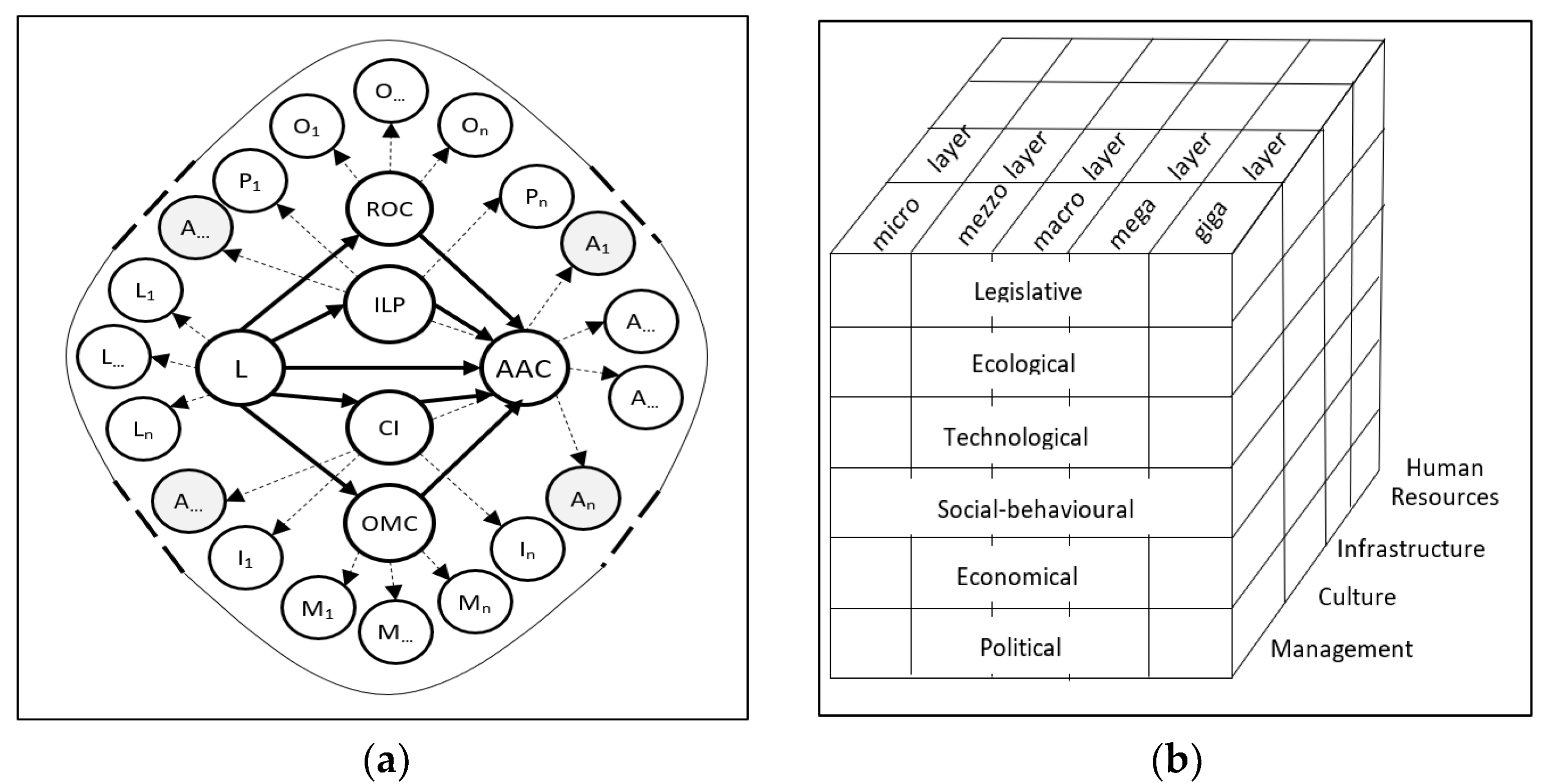
Figure 3.
Visualization diagrams for representing focus group interview results: (a) word cloud drawing presenting the dominant challenges for POE; (b) word cloud drawing presenting effective managerial interventions for the resisting challenges; (c) results of cross content analysis for the estimation the relationship between technological and managerial challenges; (d) results of cross content analysis for the estimation the relationship between technological and soft organizational challenges such as knowledge, skills and culture.
Figure 3.
Visualization diagrams for representing focus group interview results: (a) word cloud drawing presenting the dominant challenges for POE; (b) word cloud drawing presenting effective managerial interventions for the resisting challenges; (c) results of cross content analysis for the estimation the relationship between technological and managerial challenges; (d) results of cross content analysis for the estimation the relationship between technological and soft organizational challenges such as knowledge, skills and culture.
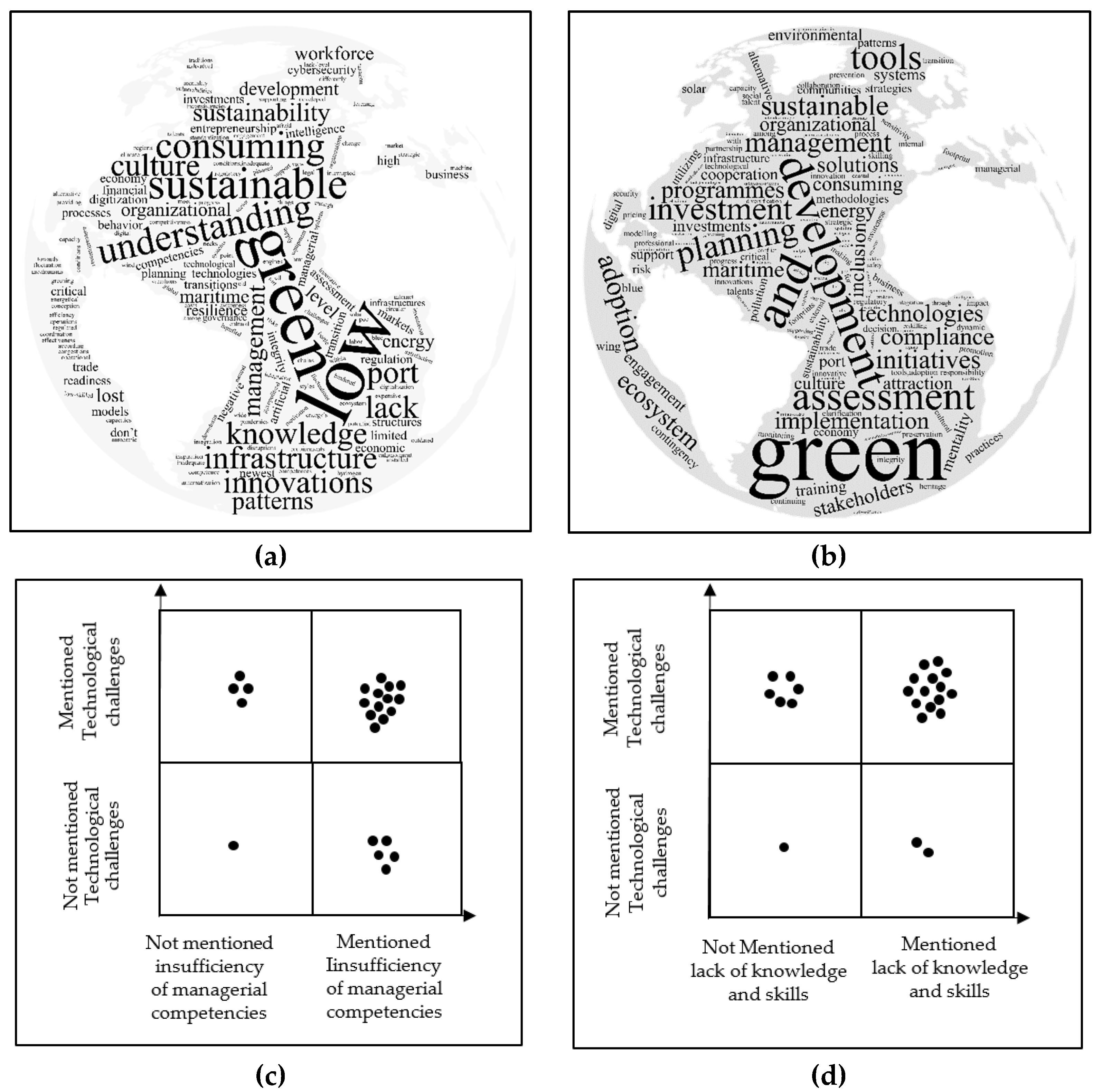

Table 1.
Frequency of challenges and impacts according to the results of focus group discussion on the identification of challenges in POE resilience framework in contemporary environment and their possible result on POE resilience.
Table 1.
Frequency of challenges and impacts according to the results of focus group discussion on the identification of challenges in POE resilience framework in contemporary environment and their possible result on POE resilience.
| a) classification by PESTEL, summarized frequency 63, length of interval 4, number of categories k=6 | b) classification by components of POE resilience, summarized frequency 63, length of interval 5, number of categories k=4 | c) classification by negative impact, summarized frequency 35, length of interval 5, number of categories k=3 | ||||||||||||||||
| Challenges | ≤4 | (4;8] | (8;12] | (12;16] | (16;20) | Challenges | ≤9 | (9;14] | (14;19] | (19;24] | Negative Impact | ≤4 | (4;9] | (9;14] | (14;19] | |||
| Political | 4 | Culture & behaviour | 9 | Stopped transitions | 4 | |||||||||||||
| Legislative | 6 | Human Resources | 11 | Disruptions | 12 | |||||||||||||
| Social | 9 | Critical infrastructure & technologies | 19 | Economical loses | 19 | |||||||||||||
| Environmental | 9 | Management | 24 | |||||||||||||||
| Economical | 15 | |||||||||||||||||
| Technological | 20 | |||||||||||||||||
Disclaimer/Publisher’s Note: The statements, opinions and data contained in all publications are solely those of the individual author(s) and contributor(s) and not of MDPI and/or the editor(s). MDPI and/or the editor(s) disclaim responsibility for any injury to people or property resulting from any ideas, methods, instructions or products referred to in the content. |
© 2024 by the authors. Licensee MDPI, Basel, Switzerland. This article is an open access article distributed under the terms and conditions of the Creative Commons Attribution (CC BY) license (http://creativecommons.org/licenses/by/4.0/).
Copyright: This open access article is published under a Creative Commons CC BY 4.0 license, which permit the free download, distribution, and reuse, provided that the author and preprint are cited in any reuse.


