

Submitted:
11 September 2024
Posted:
12 September 2024
You are already at the latest version
Abstract
The field of smart materials is attaining global industrial importance rapidly. The ionic polymer metal metaIl composites withheld there importance in this field. They are not only used as biocompatible devices but also in the field of thin and conformal bio coatings. The nafion 117 is unstable at elevated temperatures and its water intake resistance is low, so the nafion 117 is coated with the noble material to increase its thermal stability and water resistant property. The high cost of noble metal make its too costly to use in day to day applications so parylene has been used as substitute for noble metal in order to reduce the cost. The high thermal stability and water intake property if parylene make its suitable for the same. Multiple chemical treatments like plasma ionization and others have been done on the parylene coated nafion to increase its desirable properties considerably. The low adhesion rate between parylene and nafion 117 has been increased upto the certain extend by the use of ionized plasma. This paper reviewed the plasma chemical treatment of paryelene coatings for the biocompatible devices and provides an insight knowledge on classification, structure and thermal stability of the parylene coatings.
Keywords:
Nafion117
; actuators
; parylene
; plasma
1. Introduction
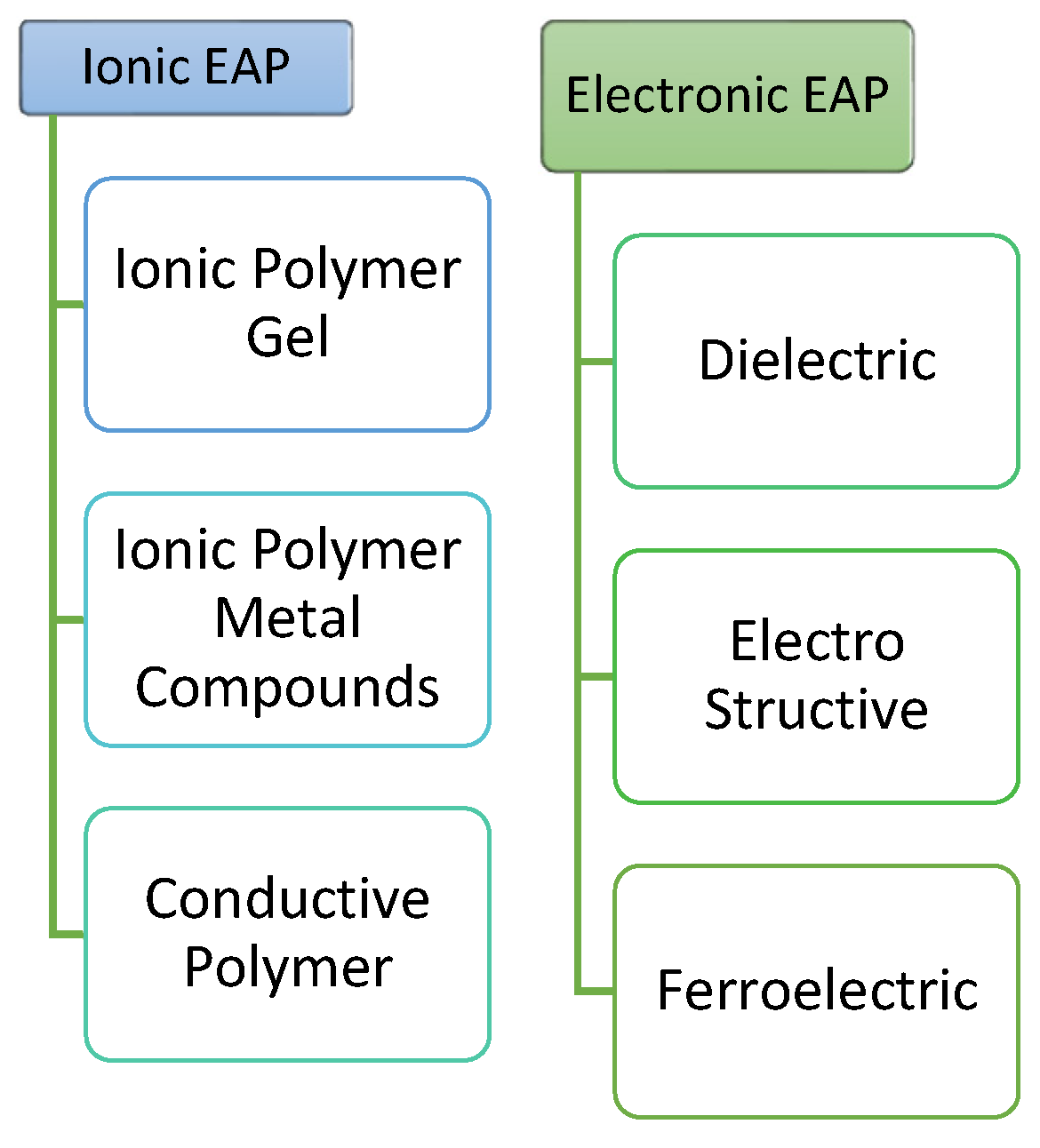
There are certain polymers that gives respond when stimulated by the inputs such as heat, light, pressure, electric or magnetic field. Those polymers stimulated by the electric field come under the category of electro active polymer. These EAP polymers can be further classified as electronic EAP or Ionic EAP as in Figure 1. Ionic EAP’s has the capability to mimic the artificial muscles behavior when applied the stimulated input [1]. EAP’s are resilient in nature with high fracture tolerance. These ionic polymers can also be termed as smart material when used under the certain circumstances. They exhibit the properties which are highly desirable in artificial muscles. The EAP’s can be classified into ionic and electronic EAP’s.
These EAP’s transducer have lesser density, very small driven voltage and high fatigue strength when compared with other materials of same category. The high actuation strain with small driven voltage is the most desirable property of them.

Table 1.
Comparison between Electroactive Polymers.
| Property | EAP | SMA | EAC | Reference |
|---|---|---|---|---|
| Force [MPa] | 0.1–25 | 200 | 30–40 | [3] |
| Actuation strain | Over 300% | <8% [short Typically 0.1–0.3 % fatigue life] |
Typically 0.1–0.3 % | [2,3] |
| Density | 1–2.5 g/cc | 5–6 g/cc | 6–8 g/c | [3] |
| Consumed power | m-Watts | Watts | Watts | [3] |
| Reaction speed | µsec to min | msec to min | µsec to sec | [2,3] |
| Drive voltage | Ionic EAP: 1–7 V 5-Volt 50–800 V Electronic EAP: 10–150 V/µm | 5-Volt | 50–800 V | [3] |
| Fracture behavior | Resilient, elastic | Resilient, Fragile elastic | Fragile | [3] |
There other transducer materials used are Electrostatic silicone elastomer [4], Polymer Electrostrictor [5], Single Crystal Electrostrictor [6] and Single Crystal Magnetostrictor [7]. The comparison between various transducer materials is presented in the table:
Table 2.
Comparison between various transducer materials.
| Property | Electrostatic silicone elastomer | Polymer Electrostrictor | Single Crystal Electrostrictor | Single Crystal Magnetostrictor | Reference |
|---|---|---|---|---|---|
| Actuation strain | 100% | 4% | 1.7% | 2% | [4,8] |
| Blocking area | 0.2 MPa | 0.8 MPa | 65 MPa | 100 MPa | [5,6] |
| Reaction speed | msec | µsec | µsec | µsec | [8] |
| Density | 1.5 g/cc | 3 g/cc | 7.5 g/cc | 9.2 g/cc | [8] |
| Drive field | 144 V/µm | 150 V/µm | 2 V/µm | 2500 Oe | [6] |
| Fracture toughness | Large | Large | Low | Large | [7] |
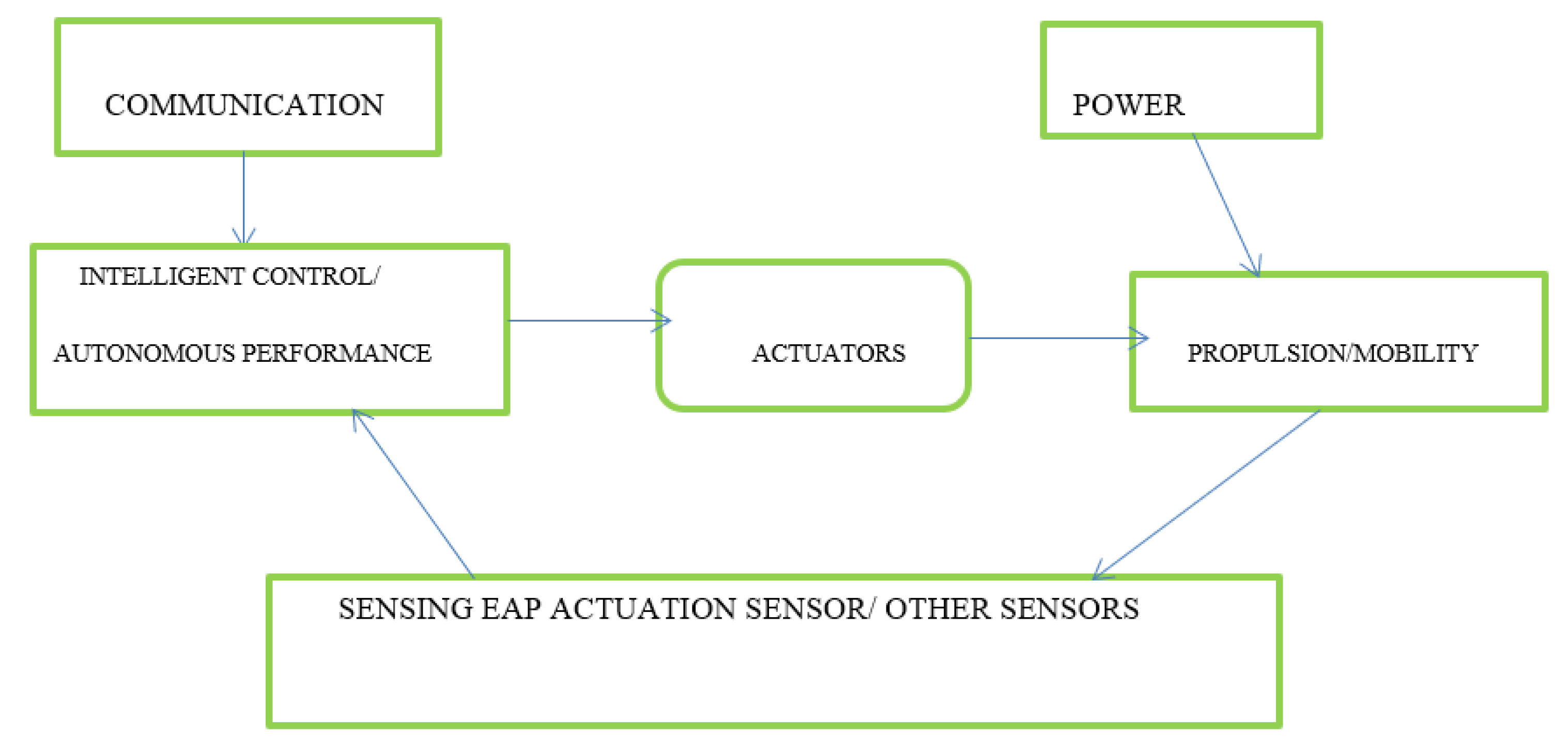
EAP actuated devices can perform multiple function when connected to the power sources. These devices can work both in wet as well as in dry environment. Their unique property enables them to use as sensors as well as mobility devices. The energy storage property of transducer materials make them suitable to use as a fuel cell and other energy storage devices.
Figure 2.
Elements of EAP Structure [9].
Figure 2.
Elements of EAP Structure [9].
1.1. Ionic Electroactive Polymers
The one form of electroactive polymers is ionic polymer metal composites. They have the advantages of large bending displacements and bilateral actuation as per voltage polarity. These ionic polymers are used in the form of ionic gel, ionic polymer metal composites, conductive polymers and carbon nanotubes. These material also exhibit certain disadvantages like slow response, low electromechanical efficiency and when acting in reverse they induce a low actuation force [10].
1.2. Ionic EAP Characterization
A comparative performance matrix has been developed to compare the EAP actuators with other materials including piezoelectric materials, shape memory alloys and simple motor also [11]. Key parameters will be identified and various methods have been developed to review its performance. The motion of cations at microscopic level will define their performance and can be visualized by high resolution cameras. The complexity of this mechanism will be due to water wavier rate, moisture content and hysteretic characteristics. According to their properties and this characterization the ionic EAPs are classified as follows:
Table 3.
Comparison between various Ionic EAP materials.
| Actuator | Working Principle | Advantages | Disadvantages | Example |
|---|---|---|---|---|
| Electrorheological fluids | In the presence of electric field their viscosity changes, inducing dipole moments. | Induce haptic mechanism | Requires high voltage | polymer particles in fluorosilicone base oil |
| Conductive Polymers | When voltage is applied due to oxidation or reduction reaction there is a flow of ion depending on the cell polarity. | With low voltage induce large force. Can be used as biocompatible device. | Under the fatigue loading a cyclic deformation is shown. | Polypyrrole, Polyethylenedioxythiophene, Poly[p-phenylene vinylene]s, Polyaniline, and Polythiophenes. |
| Ionic Gels | On applying a voltage movement of hydrogen ions is there which simulates with chemical reaction according to acid or base. | Low voltage required for operation. High compatibility for biological muscles. |
Very thin film required for operation. | Poly[vinyl alcohol] gel with dimethyl sulfoxide |
| IPMC | Movement of positive ions within fixed surface. | Low voltage. Provide all kind of bending on application of force. |
Low frequency response. Permanent displacement due to flow of DC current. |
Nafion® [perfluorosulfonate made by DuPont]. Flemion® [perfluorocaboxylate, made by Asahi Glass, Japan] |
1.4. Actuation of Ionic Polymer Metal Composites
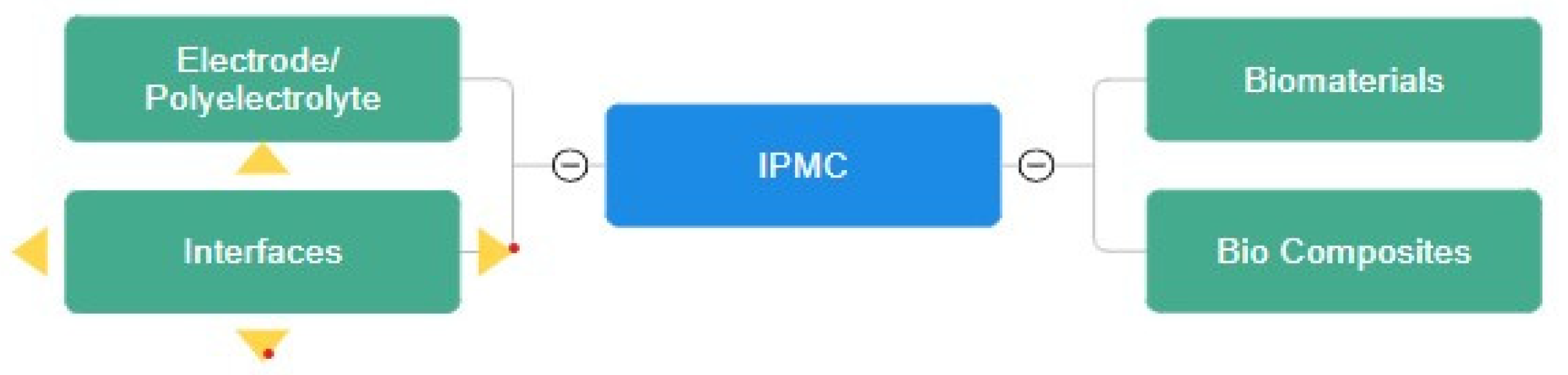
IPMC are mostly soft sensors actuator materials. The actuation response of IPMC is due to chemical structure of IPMC and morphology of its surface properties, water level of cations and its surface properties [12]. The bidirectional coupling in IPMC is created by the potential difference across the cathode. The flow of water ions are responsible for the flow of charge. The IPMC are coated with noble metal in order to hindrance the flow of water ions [13].
Figure 3.
Applications and Working of IPMC [14].
Figure 3.
Applications and Working of IPMC [14].
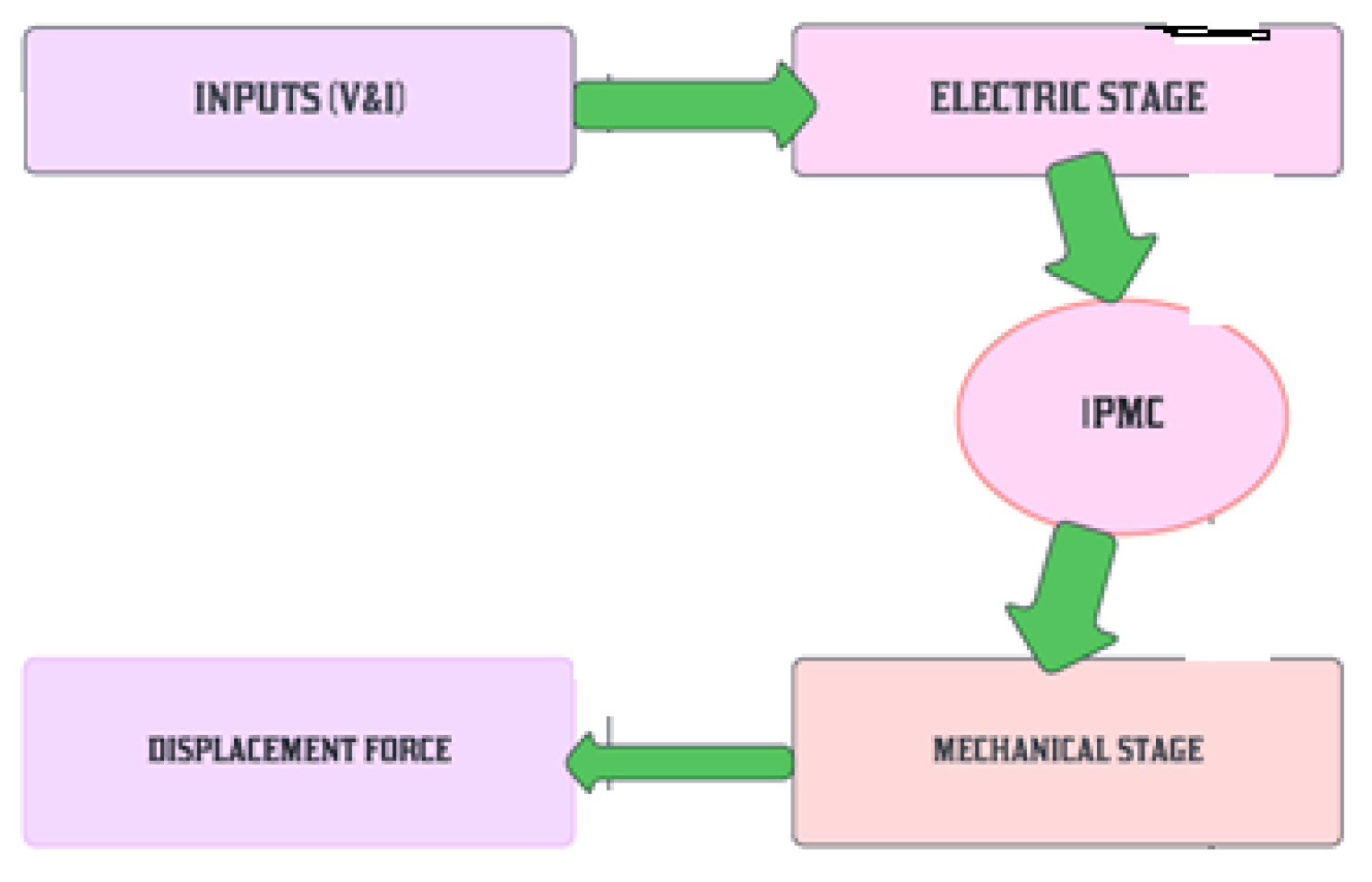
The electro mechanical response of IPMC has been noted to obtain optimized +actuation response. By using different combination of cations the different patterns of IPMC action can be obtained. The change alternating and direct current can also lead to the change of different bending patterns. In the case of nafion based IPMC its initial motion towards anode is minimized by introducing the slow voltage in opposite direction [15].
Figure 4.
Flow Diagram of IPMC Working [16].
Figure 4.
Flow Diagram of IPMC Working [16].
2. Electrode and Ionomer Morphology
The actuation of IPMC depends on the transportation of water ions. Therefore, an optimized form of ionomer with good ion exchange quality is recommended [17]. A large surface area with good capacitance and good bending stiffness is required to meet the high actuation rate of IPMC.
3. Electromechanical Analysis of Parylene Coated IPMC Electrode
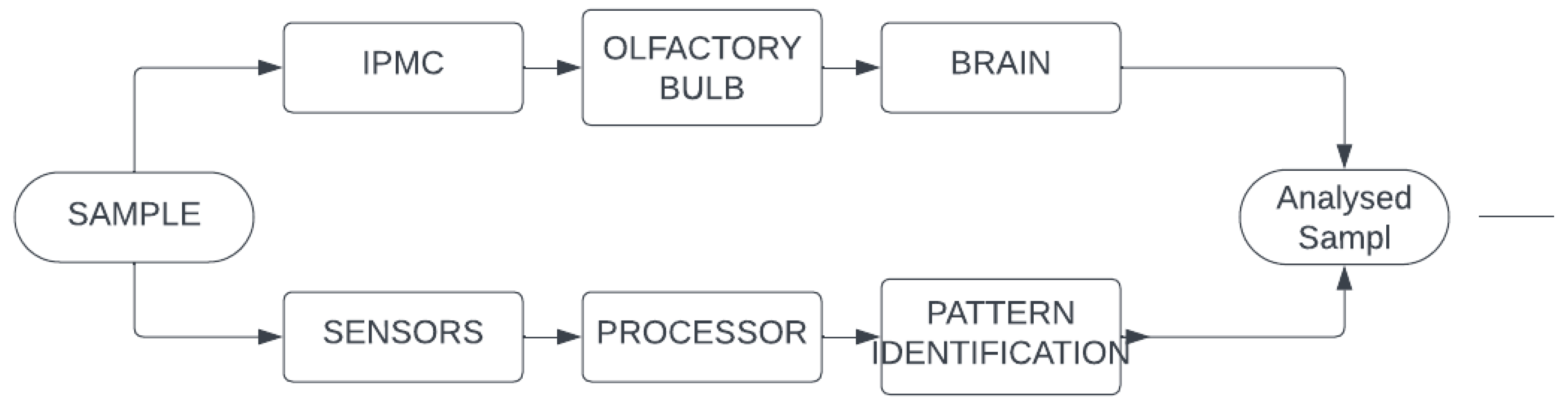
The analysis was done to test the capacity of IPMC working as capacitors to eliminate the battery from the desired systems [18]. The interrelation between capacitor and IPMC is also analyzed. On the application of voltage the energy stores in the form of electric energy which can be converted to mechanical output. The example of such appliances is electronic nose and electronic tongue [19]. TS-5000Z & SA402B are the example of electronic nose & tongue respectively. An interdisciplinary approach is applied along with the use of complex chemicals. Both quantative & qualitative analysis is done by the same [20].
In order to evaluate the electromechanical characteristics of IPMC the spectroscopy is conducted in which a unique dielectric properties have been shown under the tensile stress. The distance between electrodes influences the capacitance properties of the IPMC. It is inversely proportional to the distance between electrodes [21]. The dielectric phenomenon has been studied by two processes dielectric polarization & dielectric relaxation. On the lower frequencies the polarization takes place while at high frequencies relaxation occurs in the IPMC. In order to analyzed the application of IPMC in field of robots and other practical appliances. The frequency decrease along with the increasing the weight. The permittivity also decreases as the frequency decreases but the dielectric constant increases [22]. The most important characteristics of IPMC is the relation between applied electric field and various loading condition. Due to heterogenous structure most polymers display interfacial polymerization characteristics.
Figure 5.
Comparison between bio organs with electronic nose.
4. Electromechanical Non Linear Deformation of IPMC
4.1. Black Box Model
The IPMC shows the nonlinear or cantilever deformation under the DC excitation voltage. A approach known as BLACK BOX is used to study the nonlinear behavior of IPMC [23]. Black Box is neural network model developed based on human brain. Neural connections between the elements will be developed based on artificial intelligence [24]. The coupling behavior of IPMC for electrical. Mechanical and chemical propertied have also been analyzed through the same model. In the black box model the relationship between inputs and outputs of IPMC have been established through statistical equations. The final displacement is studied for its linear & nonlinear displacement [25]. The dynamics of black box model helps to predict the behavior of IPMC according to the feedback or transfer characteristics. The camera based measurement system is installed for output analysis [26]. This model relates the IPMC behavior of IPMC with temperature & frequency [10 to 100 Hz] [27].
4.2. Grey Box Model
This approach is done to investigate the electromechanical transducer characteristics of IPMC. These models deals with the system physics. This model compensates two types of models both white and black models [28]. The mathematical representation of model is written as:
where, v & I stands for voltage and current of the system. f & u are external loading force & tip displacement velocity. Z11 shows the electrical impedance of the immobile IPMC, Z22 defines mechanical impedance of the electrically disconnected IPMC, while Z12 and Z21 are the electrical ↔ mechanical coupling terms [30].
[𝑣[𝜔]𝑓[𝜔]]=|𝑍11𝑍21𝑍12𝑍22|·[𝑖[𝜔]𝑢˙[𝜔]] [29]
4.3. White Box Model
These models are used for macroscopic level analysis of the system to understand the sub processes taking place. In 1998 these models are used for analysis of Ionic Polymer Gels actuation phenomenon in mechanical, electrical & chemical field [31]. In 2000, Nemat-Nasser studied the bending stresses and suggested that bending occur due to the thickness gradient in the direction of applied voltage. For thermodynamic bending this model has been studied under irreversible static conditions. White box model proposed that bending occur due to the shifting of cations & anions which carry the mobile charge within the material [32]. The cluster of charge is shift to one direction results in formation of electrical dipole. Net electric field is set up due to dipole formation inside the membrane. Multiple mathematical equation were used to describe the sensing & bending phenomenon of IPMC. The equations for the polymers were as below:
where, E is the electric field, D is the electric displacement, ϕ is the electric charge, charge density ρ, ion concentrations C++ and C−−, and ion flux J [34].
𝐄=𝐃/𝜅𝑒=∇𝜙,
∇·𝐃=𝜌=𝐹[𝐶+−𝐶−]
∂𝐶+/∂𝑡+∇·𝐉=0, [33]
5. Coating Methods for IPMC
5.1. Chemical Vapor Deposition
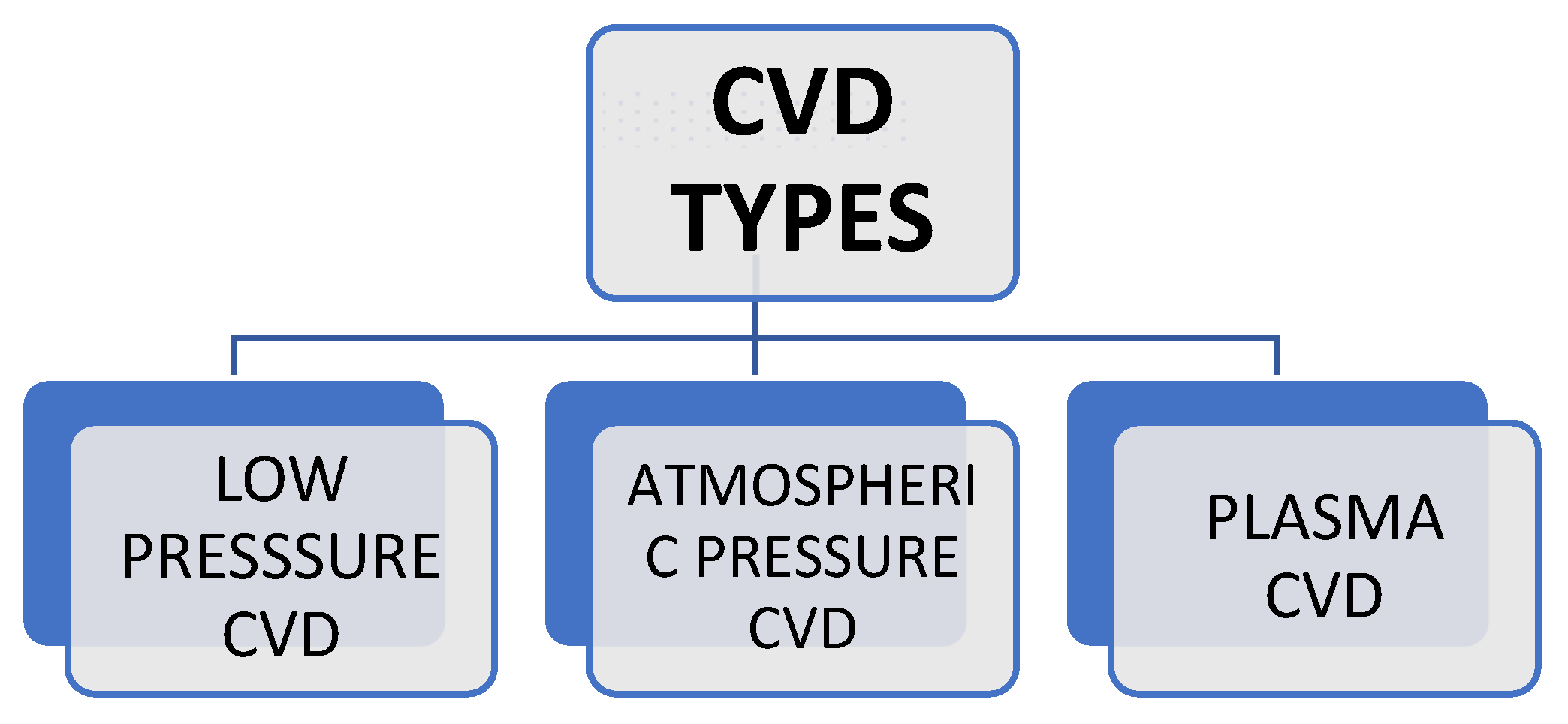
This is sublimation process where deposition takes place from solid to gaseous state. In this process a parylene precursor is used to start the reaction and deposition takes place in a vacuum chamber. The deposition chamber is heated to a suitable temperature and pressure [35]. The CVD consists of the following processes sublimation, pyrolysis, deposition and vacuum deposition in a cold trap. The parylene dimer is loaded in a sublimation chamber at 150°C-175°C. This dimer is converted & transferred to the pyrolysis chamber at approx. 650°C. At such a high temperature the parylene is converted to the vapor form directly from the solid form [36]. The deposition of parylene at nafion-117 takes place at room temperature at 25°C in the presence of vacum created by the liquid nitrogen [37].

The advantages of CVD lies in the flexibility of using variety of materials like glass, ceramics and polymeric substances. They can withstand the large variation of temperature ranging from extremely low to extremely high [10C-600C] without the occurrence of failure. The CVD coatings have high resistance to corrosion and extreme wear resistance [39]. The only disadvantage of CVD is limited film thickness due to the coating stress [40]. The other method for parylene deposition are PVD and PEVCD.
5.1.1. Parylene
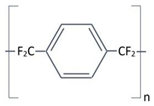
Parylene is an element of paraxylene group [41]. It provide a superior quality of barrier properties and provides corrosion free and chemically inert pin hole free coatings. The parylene coatings have high dielectric strength and act as a very powerful insulator compared to other materials [42]. The low coefficient of friction as compared to Teflon gives it better resistance and make these coating clean also. The three forms of parylene are parylene N, parylene C & parylene D. Parylene C has good barrier properties along with high dielectric strength but has its high processing cost. It has one chlorine atom. The parylene C exhibit very low permeability hence provide better moisture resistance and pin hole free coatings. Parylene N is a base material for parylene which shows high dielectric strength while Parylene D shows high temperature resistance and better resistance from UV rays.
Figure 7.
The Parylene & its Types.
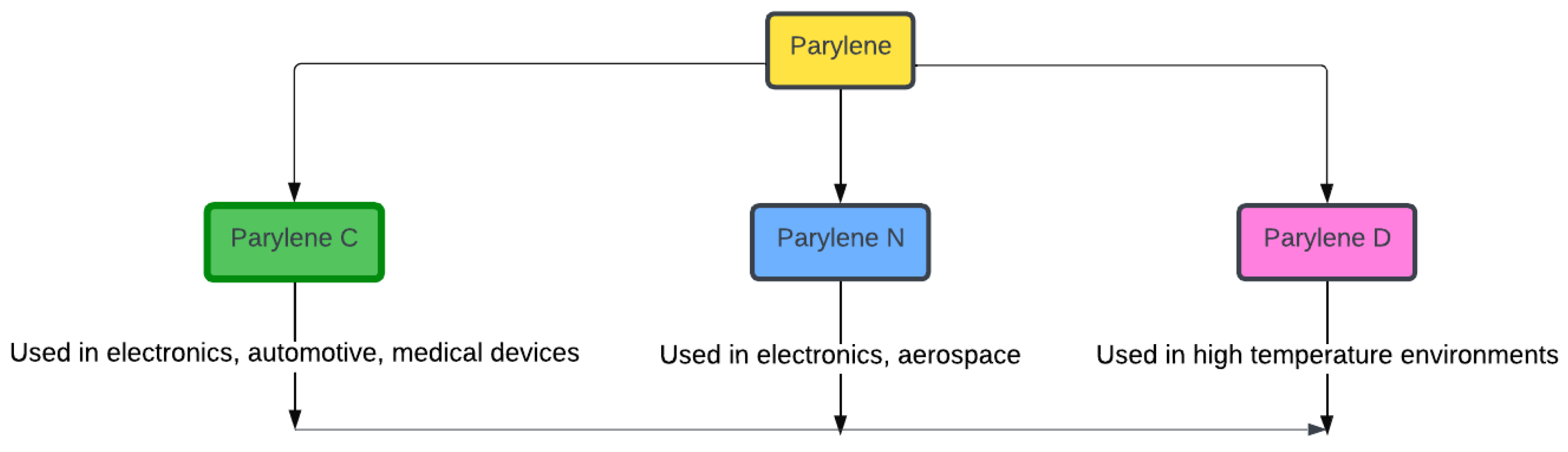
Table 4.
Comparison between Types of Parylene.
| Parylene C | Parylene D | Parylene N | Parylene HT | Reference | |
|---|---|---|---|---|---|
|
Structure |
Completely linear, high crystalline material, modified by a substitution of chlorine atom for one of the aromatic hydrogen’s. | Completely linear, high crystalline material, modified by a substitution of chlorine atom for two of the aromatic hydrogen’s. |
Completely linear, high crystalline material. |
Completely linear, high crystalline material and replaces the alpha hydrogen atom of parylene N with fluorine. | [43] |
|
Aromatic rings |
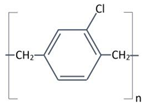
|
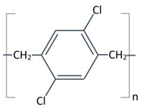
|
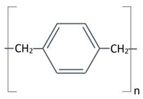
|
|
[42,43] |
|
Properties |
Useful combination of physical and electrical properties, low permeability to moisture and corrosive gases. | Useful combination of physical and electrical properties, low permeability to moisture and corrosive gases, withstand slightly higher Temperatures. |
Primary dielectric, low dissipation factor, high dielectric strength, low dielectric constant invariant with frequency. | Low coefficient friction, dielectric constant; withstand high temperature, long term UV stability and highest penetrating ability of the four variants. |
[43] |
5.2. Plasma Enhanced Chemical Vapor Deposition Process
PECVD is plasma enhanced process for organic & inorganic deposition of doped films. In the PECVD process the there is a cross linking between the thin films of polymer. The use of plasma gas helps in ionization of large group of atoms. A vacuum is created at approx. pressure of less than 0.1 torr. The temperature variation if from room temperature to 360°C. The low range of temperature in PECVD enables to control the thermal stresses therefore increase the bond strength of thin films [44].
The primary advantage of PECVD over CVD is the lesser range of temperature which is 600°C to 800°C in CVD while room temperature to 350°C in the PECVD which enables the coating of temperature sensitive devices at lower temperature [45].
Figure 8.
CVD & its Types.
5.3. Comparison between PECVD and CVD
| Property | CVD | PECVD |
|---|---|---|
| Coating Gas | Chemical reaction of precursor gas for deposition process. | The precursor gas is introduced in the deposition chamber for deposition purpose the ionized plasma gas is used. |
| Coating Direction | Multidirectional Deposition process. | Coatings occurs in line site process |
| Coating Adhesion | Good | Excellent |
| Layer thickness | Thicker [1-10 µm]. | Thinner [0.1-2µm] |
| Application | Cutting tools, wear parts & jewelry options. | Cutting parts & medical implants. |
| Coating Properties | Hard, water resistant & corrosion resistant. | Hard, water resistant & low friction. |
| Temperature | Higher deposition temperature. | Lower deposition temperature. |
5.4. PECVD Working & Equipment
Two parallel electrodes were used for deposition process and substrate is placed inside the deposition chamber. The heating range for substrate is between 250°C-350°C. The common precursor gasses used are silane and ammonia along with the mixture of inert gas [nitrogen or argon] [47]. Shower head is fixed upon the chamber which helps to spread gas along the substrate. For uniform mixing of gas the multiple orifice like outlet is provided. The ignition of plasma is done by placement of two parallel electrodes with an electric voltage between 100eV-300eV. Due to the presence of precursor gas highly ionized plasma gas collides with the energized electron. The deabsorption of extra chemicals will be done and final deposition will take place [48].
5.5. Plasma Treatment for Adhesion Property
The adhesion of parylene with the nafion 117 can be enhanced by the chemical treatment on parylene snd on substrate material. The surface of base material is roughened than the adhesion promoter in the form of primer will be introduced in the top layer of roughened surface [49]. The roughening of surface is done by the sand blast or by the plasma argon blast.
5.6. Plasma Treatment of Surface
Due to the low surface energies of polymers the wettability and adhesion properties of parylene are not good. The formation of oxide layer increases the surface energy hence resulting in better adhesion. The term for the above treatment is corona method. In this method a high voltage is applied at very high frequencies [50]. The plastic part is placed within the space between the electrodes. The electrical discharge converts the surrounding air into plasma. The plasma particles clean and oxidize the substrate surface increasing its surface energy.

5.7. Thermal Stability of Parylene Coated Nafion 117 Films
The low thermal stability of parylene films is main reason behind its limit use in various devices and services. The literature suggests copolymerization of parylene C and parylene F films for the increased thermal stability as well as increased adhesion of parylene films [52]. The adhesion property is 10.4 times increased and it is confirmed by the FTIR [53]. The higher thermal stability of 301.8 °C to 338.8 °C in a N2 atmosphere and from 232.2 °C to 273.3 °C in an O2 atmosphere hence enhancing the use of parylene in the field of bio MEMS devices [54].
Table 6.
Temperature stability and melting points of the parylenes based on industry literature [55].
Table 6.
Temperature stability and melting points of the parylenes based on industry literature [55].
| Parylene Types | Long-Term Temp [°C] Duration = ~10+ Years | Short Term Temperature Duration = ~1 Month | Melting Point Temperature | References |
|---|---|---|---|---|
| Parylene C | 80 | 115 | 290 | [55] |
| Parylene N | 60 | 95 | 420 | [55,56] |
| Parylene D | 100 | 135 | 380 | [55] |
6. Conclusion
The chemically treated and highly ionized plasma parylene is best suited for adhesion enhancement and is thermally stable at high temperatures in the presence of nitrogen and oxygen. The increase in the surface energy of parylene yields the best optimized results for the adhesion and thermal stability. The water intake property of parylene coated nafion 117 is also increased sufficiently. The high water absorption rate gives more free cations hence resulting in better conductivity therefore producing more energy. The better thermal stability makes the parylene compactible to the withstand high temperature and thermal stress. This also extends the application of parylene coated nafion in underwater robots and in other extreme climatic conditions.
Acknowledgements
I would like to extend my thanks to the Integral University, Lucknow for their cooperation and support. I also wish to extends my gratitude to my mother for her blessings and guidance. I would like to thank my guide Dr. K.M.Moeed & Dr. Mohammad Zain Khan for their support in content writing and making me exllence in subject insight knowledge.
References
- Bennett M. D. & Leo D. J. 2004. Ionic liquids as stable solvents for ionic polymer transducers. Sensors and Actuators A: Physical, 1151, 79-90.
- Inzelt, G. & Inzelt G. 2012. Classification of electrochemically active polymers. Conducting Polymers: A New Era in Electrochemistry, 7-82.
- Bar-Cohen Y. Xue, T. Joffe, B. Lih S. S., Shahinpoor, M., Harrison, J. S. & Willis, P. 1997, June. Electroactive polymers EAP low-mass muscle actuators. In Smart Structures and Materials 1997: Smart Structures and Integrated Systems Vol. 3041, pp. 697-701. SPIE.
- Goddard, N. J. Singh, K., Hulme, J. P. Malins, C., & Holmes, R. J. 2002. Internally-referenced resonant mirror devices for dispersion compensation in chemical sensing and biosensing applications. Sensors and Actuators A: Physical, 1001, 1-9.
- Zhu T. Zhang J. & Atluri S. N. 1998. A meshless local boundary integral equation LBIE method for solving nonlinear problems. Computational mechanics, 222, 174-186.
- Park, S. E. & Shrout, T. R. 1997. Characteristics of relaxor-based piezoelectric single crystals for ultrasonic transducers. IEEE Transactions on Ultrasonics, Ferroelectrics, and Frequency Control, 445, 1140-1147.
- Hathaway K. B. & Clark A. E. 1993. Magnetostrictive materials. MRS Bulletin, 184, 34-41.
- Ramadan K. S. Sameoto D. & Evoy S. 2014. A review of piezoelectric polymers as functional materials for electromechanical transducers. Smart Materials and Structures, 233, 033001.
- Januin, J. & Stephen, J. 2015. Exploring discourse competence elements in EAP class presentations through document and ethnographic analyses. Procedia-Social and Behavioral Sciences, 208, 157-166. [CrossRef]
- Bar-Cohen Y. 2004. EAP as artificial muscles: progress and challenges. Smart Structures and Materials 2004: Electroactive Polymer Actuators and Devices EAPAD, 5385, 10-16.
- Bar-Cohen Y. 2006. Biomimetics—using nature to inspire human innovation. Bioinspiration & biomimetics, 11, P1.
- Nemat-Nasser S. & Wu, Y. 2003. Comparative experimental study of ionic polymer–metal composites with different backbone ionomers and in various cation forms. Journal of Applied Physics, 939, 5255-5267.
- Jo, C., Pugal, D. Oh, I. K. Kim K. J. & Asaka, K. 2013. Recent advances in ionic polymer–metal composite actuators and their modeling and applications. Progress in Polymer Science, 387, 1037-1066.
- Lu, C. & Zhang X. 2023. Ionic Polymer–Metal Composites: From Material Engineering to Flexible Applications. Accounts of Chemical Research, 571, 131-139.
- Nemat-Nasser S & Wu Y. 2006. Tailoring the actuation of ionic polymer–metal composites. Smart Materials and Structures, 154, 909.
- Sun, A. B. Bajon, D. Moschetta, J. M., Benard E. & Thipyopas C. 2015. Integrated static and dynamic modeling of an ionic polymer–metal composite actuator. Journal of Intelligent Material Systems and Structures, 2610, 1164-1178.
- Mirvakili S. M. & Hunter I. W. 2018. Artificial muscles: Mechanisms, applications, and challenges. Advanced Materials, 306, 1704407.
- Napollion L. & Kim K. J. 2023. Electrochemical performance of ionic polymer metal composite under tensile loading. Smart Materials and Structures, 329, 095025.
- Khursheed S. Chaturvedi, S. & Moeed K. 2018, December. Comparative study of the use of IPMC as an artificial muscle in robots replacing the motors: a review. In Proceedings of TRIBOINDIA-2018 An International Conference on Tribology.
- Bhandari, B. Lee G. Y. & Ahn S. H. 2012. A review on IPMC material as actuators and sensors: fabrications, characteristics and applications. International journal of precision engineering and manufacturing, 13, 141-163.
- Liu, H., Xiong K. Bian K. & Zhu, K. 2017. Experimental study and electromechanical model analysis of the nonlinear deformation behavior of IPMC actuators. Acta Mechanica Sinica, 33, 382-393.
- Biswal D. K. Bandopadhya, D. & Dwivedy S. K. 2012. Preparation and experimental investigation of thermo-electro-mechanical behavior of Ag-IPMC actuator. International Journal of Precision Engineering and Manufacturing, 13, 777-782.
- Aabloo A. Belikov, J. Kaparin, V. & Kotta Ü. 2020. Challenges and perspectives in control of ionic polymer-metal composite IPMC actuators: a survey. IEEE access, 8, 121059-121073.
- Quang Truong D. & Kwan Ahn K. 2011. Design and verification of a non-linear black-box model for ionic polymer metal composite actuators. Journal of intelligent material systems and structures, 223, 253-269.
- Feng C. Rajapaksha C. H., & Jákli, A. 2021. Ionic elastomers for electric actuators and sensors. Engineering, 75, 581-602.
- He, C., Gu, Y., Zhang J. Ma L. Yan M. Mou J. & Ren Y. 2022. Preparation and modification technology analysis of ionic polymer-metal composites IPMCs. International Journal of Molecular Sciences, 237, 3522.
- Zhang C. Zhu P. Lin Y. Jiao Z. & Zou J. 2020. Modular soft robotics: Modular units, connection mechanisms, and applications. Advanced Intelligent Systems, 26, 1900166.
- Caponetto R. Graziani S. Pappalardo F. & Sapuppo F. 2014. Identification of IPMC nonlinear model via single and multi-objective optimization algorithms. ISA transactions, 532, 481-488.
- Kim, C. J. Park N. C. Yang H. S. Park Y. P. Park K. H. Lee H. K. & Choi N. J. 2009, April. A model of the IPMC actuator using finite element method. In Electroactive Polymer Actuators and Devices EAPAD 2009 Vol. 7287, pp. 709-715. SPIE.
- Nam D. N. C. & Ahn K. K. 2012. Identification of an ionic polymer metal composite actuator employing Preisach type fuzzy NARX model and particle swarm optimization. Sensors and Actuators A: Physical, 183, 105-114.
- Yang L. Yang Y. & Wang H. 2023. Modeling and control of ionic polymer metal composite actuators: A review. European Polymer Journal, 186, 111821.
- Takeda J. Takagi K. Zhu Z. & Asaka K. 2017 April. Study on simplification of a multi-physical model of IPMC sensor generating voltage as sensing signal. In Electroactive Polymer Actuators and Devices EAPAD 2017 Vol. 10163, pp. 552-559. SPIE.
- Nemat-Nasser S. & Li J. Y. 2000. Electromechanical response of ionic polymer-metal composites. Journal of applied physics, 877, 3321-3331.
- Eftekhari A. & Saito T. 2017. Synthesis and properties of polymerized ionic liquids. European Polymer Journal, 90, 245-272.
- Nguyen K. 2021. New materials for electronics applications: nafion-gated nanowire field-effect transistors and metal-organic framework MOF single crystals Doctoral dissertation, UNSW Sydney.
- Lebert M. Kaempgen M. Soehn M. Wirth T. Roth S. & Nicoloso N. 2009. Fuel cell electrodes using carbon nanostructures. Catalysis Today, 1431-2, 64-68.
- Wang, M. Wang X. Moni P. Liu A. Kim D. H. Jo W. J. ... & Gleason K. K. 2017. CVD polymers for devices and device fabrication. Advanced Materials, 2911, 1604606.
- Khursheed S. Moeed K. M. & Khan M. Z. 2024. Synthesis of Ionic Polymer Metal Composites for Robotic Application. In Sustainability of Green and Eco-friendly Composites pp. 153-165. CRC Press.
- Doll, G. L. Mensah B. A. Mohseni H. & Scharf T. W. 2010. Chemical vapor deposition and atomic layer deposition of coatings for mechanical applications. Journal of thermal spray technology, 19, 510-516.
- Rand M. J. & Roberts J. F. 1968. Preparation and properties of thin film boron nitride. Journal of the Electrochemical Society, 1154, 423.
- Golda-Cepa M. Engvall K. Hakkarainen M. & Kotarba A. 2020. Recent progress on parylene C polymer for biomedical applications: A review. Progress in Organic Coatings, 140, 105493.
- Fortin, J. B. Lu T. M. Fortin J. B. & Lu T. M. 2004. Step-by-step guide to depositing Parylene. Chemical Vapor Deposition Polymerization: The Growth and Properties of Parylene Thin Films, 23-26.
- Tan C. P. & Craighead H. G. 2010. Surface engineering and patterning using parylene for biological applications. Materials, 33, 1803-1832.
- Islam M. Achour A. Saeed K. Boujtita M. Javed S. & Djouadi M. A. 2018. Metal/Carbon hybrid nanostructures produced from plasma-enhanced chemical vapor deposition over Nafion-supported electrochemically deposited cobalt nanoparticles. Materials, 115, 687.
- Bhaskara S. Sakorikar T. Chatterjee S. Girishan K. S. & Pandya H. J. 2022. Recent advancements in Micro-engineered devices for surface and deep brain animal studies: A review. Sensing and Bio-Sensing Research, 36, 100483.
- Yota J. Janani M. Camilletti L. E. Kar-Roy A. Liu Q. Z. Nguyen C. ... & Liang M. S. 2000 June. Comparison between HDP CVD and PECVD silicon nitride for advanced interconnect applications. In Proceedings of the IEEE 2000 International Interconnect Technology Conference Cat. No. 00EX407 pp. 76-78. IEEE.
- Cavallotti, C. Di Stanislao M. & Carrà S. 2004. Interplay of physical and chemical aspects in the PECVD and etching of thin solid films. Progress in Crystal growth and characterization of Materials, 48, 123-165.
- Crose M. Kwon J. S. I. Tran A. & Christofides P. D. 2017. Multiscale modeling and run-to-run control of PECVD of thin film solar cells. Renewable Energy, 100, 129-140.
- Zeniieh, D. Bajwa A. Ledernez L. & Urban G. 2013. Effect of Plasma Treatments and Plasma-P olymerized Films on the Adhesion of Parylene-C to Substrates. Plasma Processes and Polymers, 1012, 1081-1089.
- Sathiaraj T. S. Thangaraj R. Al Sharbaty H. & Agnihotri O. P. 1991. Optical properties of selectively absorbing rf sputtered Ni Al2O3 composite films. Thin Solid Films, 1951-2, 33-42.
- Sathiaraj T. S. Thangaraj R. Al Sharbaty H. & Agnihotri O. P. 1991. Optical properties of selectively absorbing rf sputtered Ni Al2O3 composite films. Thin Solid Films, 1951-2, 33-42.
- Xu H. Yang Z. Guo Y. Xu Q. Dou S. Zhang P. ... & Wang W. 2023. Copolymerization of Parylene C and Parylene F to Enhance Adhesion and Thermal Stability without Coating Performance Degradation. Polymers, 155, 1249.
- Wu Y. Kanatzidis E. E. Avila R. Zhou M. Bai Y. Chen S. ... & Rogers J. A. 2023. 3D-printed epidermal sweat microfluidic systems with integrated microcuvettes for precise spectroscopic and fluorometric biochemical assays. Materials Horizons, 1011, 4992-5003.
- Kuo W. C. Wu T. C. Wu C. F. & Wang W. C. 2021. Bioperformance analysis of parylene C coating for implanted nickel titanium alloy. Materials Today Communications, 27, 102306.
- Kumar R. 2011. A High Temperature and UV Stable Vapor Phase Polymer for Electronics Applications. Additional Papers and Presentations 2011HITEN 000207-000214.
Figure 1.
Classification of Electroactive Polymers [2].
Figure 1.
Classification of Electroactive Polymers [2].
Disclaimer/Publisher’s Note: The statements, opinions and data contained in all publications are solely those of the individual author(s) and contributor(s) and not of MDPI and/or the editor(s). MDPI and/or the editor(s) disclaim responsibility for any injury to people or property resulting from any ideas, methods, instructions or products referred to in the content. |
© 2024 by the authors. Licensee MDPI, Basel, Switzerland. This article is an open access article distributed under the terms and conditions of the Creative Commons Attribution (CC BY) license (http://creativecommons.org/licenses/by/4.0/).
Copyright: This open access article is published under a Creative Commons CC BY 4.0 license, which permit the free download, distribution, and reuse, provided that the author and preprint are cited in any reuse.