

Submitted:
10 September 2024
Posted:
11 September 2024
You are already at the latest version
Abstract
This study quantitatively assessed the effectiveness of three main options for the adaptation of crop farming to climate change (i.e., shift of planting dates, increase/addition of irrigation, and resilient hybrids/cultivars) in a southern European country (Greece). The potential effect of each option on the yields of several crops in all Greek regions is estimated for 2021-2040 and 2041-2060 and compared with those under the historical local climate of 1986-2005, by using agronomic and statistical regression models, and data from different climatic simulations and climate change scenarios. Our results reveal that all the adaptation options examined have the potential to significantly reduce crop yield losses occurring under no adaptation, particularly during 2021-2040 when for many regions and crops more than half of the losses can be compensated for. Notably, in some cases during this period, the measures examined can lead to crop yields that are higher than those under the historic climate. However, the effectiveness of the measures was found to greatly diminish in 2041-2060 under very adverse climate change conditions, highlighting the dynamic nature of adaptation. The assessment of the effectiveness of combined adaptation options, and the evaluation of additional criteria (e.g., feasibility) represent main areas for future research.
Keywords:
agriculture
; crops
; climate change
; impacts
; risks
; adaptation
; assessment
; Europe
1. Introduction
In December 2023, more than 130 world leaders attending COP28 in Dubai, United Arab Emirates, signed a declaration on the need to urgently adapt agriculture and food systems to a changing climate, outlining efforts such as financial support for food producers, measures enhancing food security, and improvements in resource management [1]. The declaration included five key goals aimed at integrating agriculture and food systems into climate plans, making climate action in the sector a key element of the political agenda. The goals range from economic support to ecosystem conservation, aiming to protect vulnerable populations in the agricultural sector, three of which are directly related to climate change adaptation [2]. Specifically, the first goal gives priority to financial and technical support to farmers for the installation and use of early warning systems, and the other two goals focus on water conservation and on improving land use practices, aiming at strengthening integrated water management and maximizing the potential already available to use regenerative agricultural practices to restore land and ecosystems.
The Dubai Declaration on agriculture did not come out of blue. During the last decade, international policies have played a key role in stressing the importance of adapting agriculture to climate change, leading to international actions and important political initiatives, particularly in the European Union (EU) [3]. An important opportunity to address climate change concerns in the agricultural sector was created in 2015, with the simultaneous adoption of the 21st Climate Conference of the Parties (COP 21) decisions in Paris, the Sendai Framework for Natural Disaster Risk and Reduction, and the United Nations Sustainable Development Goals (SDGs). These policy tools form an important and coherent policy framework that aims to create an adaptive governance system at various administrative levels, with the overall goal of increasing resilience and reducing existing climate risks. Agriculture is at the core of the 2030 Agenda for Sustainable Development [4], with several SDGs being directly related to food, agriculture, and climate change, such as SDG 2 (end hunger, achieve food security and improved nutrition and promote sustainable agriculture); SDG 6 (ensuring availability and sustainable management of water and sanitation for all); SDG 12 (ensure sustainable consumption and production standards); SDG 13 (take urgent action to combat climate change and its impacts); SDG 15 (sustainable forest management, combating desertification, halting and reversing land degradation and halting biodiversity loss); and of course SDG1 (end poverty in all its forms everywhere) as agriculture is a main source of food, income, and employment in all regions and communities. To further link the SDGs to agriculture and food, the United Nations has published a guide for national policy makers that sets out a set of actions on how to transform the agricultural sector [5], which includes several actions that also support adaptation to climate change risks, such as water protection and water scarcity management through policies and measures for irrigation efficiency and crop diversification in production.
In the chapter on Europe which is included in the latest 6th Assessment Report (AR6) of the Intergovernmental Panel on Climate Change (IPCC) on Climate Change Impacts, Adaptation and Vulnerability, several key adaptation options for agriculture were identified and assessed in terms of their feasibility and effectiveness (Figure 1) based on the recent (i.e., after 2014) literature [6].
This assessment concluded that irrigation and changing sowing dates are particularly effective measures for reducing the adverse effects of climate change on crops in Europe. However, in the context of AR6, the Cross Chapter Paper on the Mediterranean (CCP4) [7] emphasizes that unwisely incentivizing and developing irrigation expansion actions can lead to the unsustainable use of water resources; in contrast, the careful improvement of existing irrigation practices in Mediterranean regions can lead to significant water savings. Additional adaptation actions other than irrigation, as suggested in CCP4, are as follows:
- Agroecological techniques that increase the capacity of agricultural soils to retain water (pulping/mulching, no/minimum plowing)
- Crop diversification
- Adjustment of sowing dates etc. of crops
- Use of new varieties adapted to evolving climatic conditions
- Indirect actions to limit the negative effects of climate change (e.g., changes in food demand, changes in eating habits, and reduction of food waste).
Recent surveys carried out among farmers in central and southern Europe also revealed that changes to water and soil management and the adoption of drought-tolerant cultivars are main options to adapt to increasing evapotranspiration, higher variability and lower predictability of rainfall due to climate change [8].
However, although the above-mentioned measures are widely recognized as important adaptation options in crop farming, there are still significant knowledge gaps for many of them regarding the quantification of their effectiveness in reducing the negative effects of climate change on crop yields, as in the case of irrigation [9]. In addition, most of the available quantitative findings in the literature on the effectiveness of an adaptation option refer to small-scale studies at a specific location or region [10], as quantitative assessments covering wider spatial scales are very data-demanding and require significant computational effort in terms of crop modelling.
In Greece, a country located in southern Europe and within the Mediterranean basin, agriculture represents an important economic sector, which generated 4.5% of the Greek Gross Value Added (GVA) in 2022 according to the data from the Hellenic Statistical Authority (ELSTAT), while at the level of some prefectures its contribution was much higher and reached 16-25% of the GVA. These figures, combined with the latest estimates on the rapidly increasing climate risks for agriculture in southern Europe and the Mediterranean [6,7], highlight the criticality of developing and implementing efficient adaptation measures in the Greek agricultural sector and make Greece a good case for studying the effectiveness of such measures.
Available studies on the expected benefits for crop yields in Greece from the implementation of adaptation options are scarce and often narrow in terms of scope and coverage. The first study on the environmental and socio-economic impacts of climate change in Greece was carried out by the Bank of Greece in 2011 [11]. This study provided semi-quantitative estimates of changes in future yields of some crops in Greek regions based mostly on findings from regional assessments outside Greece and the use of old climate change scenarios, and it comprised only a brief and literature-based analysis of some adaptation measures. Georgopoulou et al. (2017) [12] estimated future crop yields in various Greek regions under different Representative Concentration Pathway (RCPs) scenarios of climate change, and quantitatively assessed the effectiveness of main adaptation options; however, this analysis did not include many important cultivations (e.g., trees other than olive, orange, peach, and fodder plants), while input model data on soil qualities and agricultural practices were derived almost exclusively from international literature and not from Greek data sources. Other studies have provided even less input on the adaptation potential in Greece, limiting their analysis to specific crops such as vineyards [13] and olive trees [14] or regions such as Crete [15].
Our present study aims to fill these knowledge gaps and assess the effectiveness of three main adaptation options for crop farming, namely earlier planting (for annual crops), increase/addition of irrigation, and more resilient hybrids/cultivars to reduce or even completely avoid exposure to summer heat. This assessment is carried out for two future 20-year periods (2021-2040 and 2041-2060) under various climate change scenarios utilized in contemporary assessments and for all important cultivations in Greece to explore how the effectiveness of adaptation changes under different levels of climate change. It should be noted that our present study is the suite of another recent research work that we carried out recently [16] and which quantitatively assessed the effects of future climate change on the yields of 35 crops cultivated in all 13 administrative regions of Greece. Apart from its broad coverage in terms of crop types and geographical Greek regions, this previous study developed and applied risk modelling at the level of each of the 13 Greek administrative regions and used as much as possible input data from Greek data sources concerning local soil qualities and agricultural practices. These improvements were inherited in our present work which used similar methodological tools. Therefore, we consider the study presented in this paper as a useful tool that provides new knowledge to assist the design and implementation of adaptation policies and measures.
In the following sections, the proposed methodology is presented to assess climate risks and the effectiveness of adaptation options, followed by the relevant results obtained and a subsequent discussion and conclusions drawn.
2. Materials and Methods
2.1. Study Area
The assessment of the effects of climate change on future crop yields and the effectiveness of the selected adaptation options covered all 13 administrative regions in Greece (Figure 2).
As our assessment is performed through modelling at the regional level and for each crop (note: the modelling approach is described in detail in Section 2.2), the numerical effort to simulate the annual growth of 35 crops in 13 regions and for years up to 2060 would be too high and not necessary in all cases as the present share of some regions to the national production of some crops is very low and is not expected to change in the future. Therefore, an approach to select the cases to model (henceforth the ‘85% rule’) was developed. Specifically, for each crop, the regions were ranked first in descending order of their share to the national crop production. Then, the top-ranked region was selected, and if its contribution to the national total was less than 85%, the selection was extended to include the second-ranked region. If their cumulative contribution to the national total was still under 85%, the third-ranked region was also selected. This process was continued until the cumulative share of the selected regions reached at least 85%. In the case of grapevines, all 13 regions were selected as the modelling approach does not differ much from region to region. The selected combinations of crops-regions to be modelled in our present study are indicated with green shading in Figure 3, and the last column presents the cumulative share of the national production per crop that is covered by the application of our ‘85% rule’.
Official statistical data on the regional distribution of crop production in Greece are available only for years up to 2021, while the COVID-19 pandemic has greatly affected all economic activities including the production and demand of agricultural products. Thus, for the application of the ‘85% rule’, we decided to use production data from the Hellenic Statistical Authority (ELSTAT) and for the last year before the start of the pandemic, i.e., for 2019. The contribution of each region to the national production of each crop and the selected cases are presented in Figure 3.
The contribution of the regions to the Crop Output according to statistical data from the Economic Accounts for Greece published every year by the ELSTAT is presented in Figure 4. As shown, the combinations of crops-regions selected by applying the ‘85% rule’ correspond to 92% of the total Crop Output in Greece, that is, they cover all important production sites and crops. Almost 70% of the economic output of crop farming is concentrated in five out of 13 regions (Eastern Macedonia and Thrace, Central Macedonia, Thessaly, Peloponnese, and Western Greece), and is derived mainly from fruits (including grapes, olives, and their products), fresh vegetables, and industrial crops (e.g., cotton).
2.2. Climate Simulations
Adaptation options for crop farming were assessed for two future periods, 2021–2040 and 2041–2060. The period 1986–2005 was selected as the historical period to consider the climate change that has already occurred. To investigate the effect of different levels of future climate change on the effectiveness of adaptation, three RCP scenarios for the evolution of greenhouse gas emissions were explored (RCP2.6, RCP4.5, and RCP8.5).
The assessment of adaptation options was performed using simulation approaches linking crop growth, crop yields, and climatic conditions (described in Section 2.3). These approaches require input climatic data with sufficiently high spatial and temporal resolution. Daily values of climatic parameters (i.e., mean, maximum, and minimum daily air temperature, average daily solar radiation, and total daily precipitation) were collected from climate simulations within the ‘Coordinated Downscaling Experiment - European Domain’ (EURO-CORDEX) research program [17]. Five climate simulations that combined three regional climate models with horizontal analysis of 0.11° (i.e., approximately 10 km) and three global climate models were used (Table 1) to explore different climate futures, as climate projections represent a major source of uncertainty in climate change impact assessments for crop farming [18].
As data from climate models are available in grid format, the selection of representative locations within each region was necessary for the collection of climate data for future periods. Each Greek administrative region comprises many prefectures, while statistical crop production data from the ELSTAT are provided at the prefecture level. Thus, for each crop and region, the prefecture with the highest production in 2019 was identified, and its capital was assumed to be representative (in terms of climatic conditions) of crop production in the whole region.
Values of climate parameters from each climate simulation in Table 1, for each year of the three 20-year periods considered (i.e., 1986-2005, 2021-2040 and 2041-2060) and each of the three RCP scenarios for climate change explored (RCP2.6, RCP4.5, and RCP8.5) were collected for all these representative locations in Greece and were subsequently used in the simulations for the assessment of adaptation options (Section 2.3).
2.3. Methodology for the Assessment for Adaptation Options
The methodology for the quantitative assessment of adaptation options in this study originated from and is consistent with the approach for the estimation of climate change risks for crop farming in Greece which was developed and applied in the context of our previous research work [16]. In the present study, the following methods were applied to assess the expected effects on crop yields from the application of potential adaptation measures:
- For most annual crops (cereals, vegetables, cotton, rice, etc.), adaptation options were simulated using the Decision Support System for Agrotechnology Transfer (DSSAT, Ver 4.8.0.027, DSSAT Foundation, Gainesville, Florida, USA) [19]. DSSAT comprises a set of crop growth simulation (agronomic) models; in the context of our previous work mentioned above it was adjusted as much as possible to Greek conditions and calibrated based on historical regional crop yield data. In the present study, planting dates, irrigation management schemes, and hybrids/cultivars were adjusted appropriately in the context of relevant adaptation measures (Section 2.3.1).
- For vineyards, the assessment of adaptation options was conducted using the Agricultural Production Systems Simulator software tool (APSIM, Ver. 7.10, APSIM initiative, Queensland, AU) [20], which comprises a grape growth model that was adjusted and applied for the first time to Greek vines in the context of our previous work mentioned above. In the present study, adaptation options were assessed by appropriately modifying the input data on irrigation management and cultivar characteristics (Section 2.3.1).
- For crops that are not yet covered by the DSSAT crop growth models (mainly perennial and arboreal crops), statistical multi-variable regression models linking regional crop yields and climatic parameters were developed in the context of our previous work for all major crops cultivated in various Greek regions to assess climate change risks. In the present study, we utilized these statistical regression models and modified their inputs to assess the effectiveness of adaptation (Section 2.3.2).
The simulation approaches for various crops are summarized in Figure 5. The expected changes in crop yields in the absence of adaptation (‘No adaptation’ case) are shown in Figure 6 and derived from our previous research work [16]. These estimates represent the basis for assessing the effectiveness of adaptation measures, as the effects of climate change on crop yields under an adaptation option are compared with the effects under no adaptation (in Section 3). Models for the simulation of crop yields under the historical climate of 1986-2005 were developed and calibrated based on the ELSTAT statistical data on regional crop production and agricultural areas. These data inevitably integrate different agricultural practices at the farm level and thus the resulting crop yields, which form the basis for the quantitative assessment of climate change impacts without and with adaptation, represent ‘average’ farming practices followed at present and not optimal ones (e.g., some farmers may use minimal irrigation due to local technical or other constraints).
2.3.1. Simulation of Adaptation Options Using Agronomic Models
For most annual crops, the effects of adaptation options were simulated using DSSAT Ver 4.8.0.027 [21], which simulates the crop growth cycle and links crop development and hence crop yields at maturity with daily values of climate parameters (i.e., maximum and minimum temperatures, precipitation, and solar radiation) and agricultural practices (e.g., sowing, irrigation, fertilization, etc.).
In the context of our previous research [16], adjustments to the model inputs were made to integrate as much as possible Greek conditions and practices into the simulations, namely incorporation of Greek soil types, introduction of cultivars/varieties used in Greece, and introduction of agricultural practices applied in Greek regions.
To assess the effects of adaptation options in the context of the present study, the input data of the DSSAT tool were modified as follows:
- (a)
- For earlier planting, the sowing dates of the various crops in the DSSAT simulation files were shifted one month earlier, complemented where necessary by changes in the scheduling (but not in the total annual quantity) of irrigation/fertilization. As the numerical effort was already very high considering the number of crops, regions, years of periods, and RCP scenarios, a uniform shift of one month was applied in all regions and crops. For each crop, a shift of the sowing date alters its growth cycle due to the different climatic conditions compared to the ‘No adaptation’ case, and hence it affects the maturity date and crop yield at maturity. For example, for crops where maturity in the absence of adaptation typically occurs in summer, an earlier planting has the potential to reduce exposure to adverse summer conditions (e.g., extreme heat, drought) and consequently limit the adverse effects of climate change on yields.
- (b)
- For crops already irrigated under the ‘No adaptation’ case, the DSSAT simulation files were modified appropriately to include a 15-20% increase in irrigation volume. This percentage increase was applied uniformly to the existing irrigation scheduling except in cases where early simulation results revealed that a more time-targeted increase in irrigation was needed for the adaptation measure to lead to an improvement over ‘No adaptation’. For crops grown mostly in drylands in Greece, such as barley, wheat, and a small portion of cotton, irrigation was added to the DSSAT simulation files, with an irrigation schedule based on the relevant one for irrigated crops. An increase/addition of irrigation can significantly improve crop yields by providing consistent moisture levels to crops that are fundamental for plant growth.
- (c)
- The effects on crop yields from the introduction of hybrids/cultivars that are resilient to climate change are challenging to simulate because data on their physiological behavior (as expressed by their genetic coefficients) are rarely available in the literature so they can be used in the DSSAT simulations. Thus, it was decided to focus on two crops for which significant progress has already been made in the development of new hybrids/cultivars that are more resistant to climate change and are of particular importance in Greece, namely barley and maize. A special place among them is hybrids/cultivars with a short biological cycle that has the advantage of being able to complete their development before the very hot and dry summer days (which in the future, will be even hotter and drier). Thus, through a trial-and-error process, the DSSAT input files were modified so that the crop cycle resulting under this adaptation option is shorter compared to the one under ‘No adaptation’.
For each adaptation option, the simulation process was as follows: For each of the climate simulations of Table 1 and year of the future 20-year periods 2021-2040 and 2041-2060, the daily values of climate parameters (maximum and minimum temperature, precipitation, and solar radiation) were fed to the DSSAT tool. The simulations were carried out as in the ‘No adaptation’ case, that is, for the same set of cultivars (except for adaptation option (c)) and soil types. Thus, more than 600 simulations (i.e., 2 × 20 years × 3 RCP scenarios × 5 climate simulations × N combinations of hybrid/variety-soil type) per crop and region were performed. Next, for each crop in each region and for each climate simulation and RCP scenario, the average crop yield for each 20-year period was calculated, followed by the calculation of the percentage change in each future period relative to the historical climate reference period. Finally, these percentage changes were averaged across the climate simulations, resulting in the final estimate of crop yield change per crop and region under each RCP and future period and for the specific adaptation option.
Regarding vineyards, adaptation options (b) and (c) were assessed through the use of the APSIM (Agricultural Production Systems sIMulator) simulation model [22]. In the context of our previous research [16], APSIM was calibrated for a high- value-added foreign variety that is widely cultivated in Greece (i.e., Sauvignon Blanc) in representative wine-producing locations in northern and southern Greece. A simulation process similar to that of the DSSAT was applied to estimate the grape yields per region in the 20-year future periods under each adaptation option, to calculate the relevant changes from the historical climate reference period.
2.3.2. Assessment of Adaptation Options Using Statistical Models
As said above, the quantitative assessment of the effects on crop yields of increased/added irrigation for crops not yet covered by the DSSAT was carried out through the same statistical regression models developed for the ‘No adaptation’ case. The assessment of the effectiveness of adaptation in the present study using these models was performed by introducing into the equations of the regression models linking crop yields per region with the monthly values of statistically significant climatic parameters, a ‘pseudo’ precipitation to reflect the adaptation measure. Specifically, the amount of monthly precipitation (as projected by the climate simulations for future periods) in these equations was increased by the amount of additional irrigation whose effects on yields were to be quantitatively assessed. This process was possible only for those crops/regions for which (a) precipitation for one or more months was found to be statistically significant, and (b) precipitation for at least one month was found to have a positive correlation (i.e., an increase in precipitation will lead to an increase in annual crop yield). In addition, of these combinations, we retained only those with a medium/high reduction in crop yield under the ‘No adaptation’ case (Figure 6). The final set of crops/regions for which the effects of the increase/addition of irrigation were assessed is shown in Figure 7. It should be noted that, because of the form of the equations of the statistical regression models (i.e., crop yields are linked to climatic parameters and, for some crops/regions, to dummy variables reflecting the contribution of non-climatic parameters and extreme events), it was not possible to quantitatively assess the effectiveness of adaptation measures other than irrigation.
Furthermore, for this set of crops, we conducted sensitivity analyses on the effectiveness of irrigation by exploring the effects of different percentage increases of irrigation on crop yields. Such analyses were much easier to perform for these crops than for those in which the assessment of adaptation was performed using agronomic models because the utilized regression models require monthly and not daily values of irrigation supply. For any considered percentage increase in irrigation to be expressed in absolute figures (i.e., in mm of ‘additional rainfall’) so that it could be entered into the equation of the regression model, the required irrigation for each crop and region under the historical climate reference period 1986-2005 was calculated. This calculation was made considering the typical water needs of each crop, as recorded in the literature and current agricultural practices in Greece, and the rainfall in the years of the historical period, with any resulting deficit assumed to be fully covered by irrigation. In future periods where precipitation is expected to be lower than the historical climate reference period 1986-2005, an increase in the historical irrigation for a crop in a region can cover part (or the total) of this future water deficit due to climate change.
3. Results
3.1. Effectiveness of Earlier Planting
The estimated changes in crop yields in 2021-2040 and 2041-2060 from those under the historical climate of 1986-2005, when earlier planting was applied, are presented in Figure 8.
Figure 8 does not include estimates for cotton in Eastern Macedonia and Thrace and Central Macedonia as the temperatures in those regions at the beginning of March (when sowing should occur under the shift of planting by one month earlier) are quite low, even under the future climate, and therefore are not suitable for the smooth growth of plants and the achievement of satisfactory crop yields.
Our results reveal that earlier sowing, coupled with irrigation/fertilization timing modifications where necessary, is a very efficient adaptation measure in the period 2021-2040 as it can reduce crop yield losses by more than 50% in 60% of total cases (crops/regions/RCP scenarios), with a median reduction of yield losses across all crops, regions, and RCP scenarios by 58% during this period. In addition, in some cases of wheat and maize, earlier planting can even lead to yield increases (up to +10%) compared with yields under the historical climate. In 2041-2060 the effectiveness of the measure decreases considerably, with only 37% of the total cases showing reductions of yield losses by more than 50%, and a median reduction in yield losses by 42% across all crops, regions, and RCPs. These findings are consistent with those of other relevant studies on locations in Europe [23,24,25,26] and other areas in the Mediterranean [27,28].
3.2. Effectiveness of Increase/Addition of Irrigation
As mentioned in Section 2, this adaptation option was examined for both crops simulated with statistical regression models and for those simulated with the DSSAT and APSIM agronomic models. The expected effects on crop yields were estimated as follows:
3.2.1. Crops Simulated by Statistical Regression Models
The effectiveness of the measure is presented in Figure 9, where green shading indicates the cases where increased/added irrigation not only limits the reductions in crop yield in the absence of adaptation but also fully compensates for yield losses or even leads to crop yields higher than those under the historical climate of 1986-2005. Figure S1 in the Supplementary Material shows the percentage of the corresponding cumulative future precipitation during the months in which precipitation is statistically significant – to which each level of increase in irrigation corresponds. It is noted that for lentils that are grown on drylands at present, the percentage increase in irrigation in Figure 9 corresponds to the corresponding cumulative future precipitation.
The results show that an increase of irrigation by 15-20% from present levels is quite effective as a climate change adaptation measure as it significantly reduces (on average, by 51% in RCP2.6/2021-2040 to 31% in RCP8.5/2041-2060) the crop yield losses occurring under the ‘No adaptation’ case.
On the other hand, Figure 9 and Figure S1 reveal that fully compensating yield losses through irrigation requires very high increases in the quantities of irrigation water currently supplied to crop farming. Specifically, in 2021-2040, the necessary average increase ranges from 45% in RCP2.6 to 65% in RCP8.5, while in the 2041-2060 period from 62% in the RCP2.6 to 83% in the RCP8.5. Furthermore, these increases correspond to very high percentages of future precipitation, i.e., 47-59% in the period 2021-2040 and 58-79% in the period 2041-2060. Although irrigation during some specific months does not use precipitation water only during these months but also from the remaining months of the year, the high percentages of future precipitation mentioned above indicate that it will be very difficult (if not impossible) to fully compensate for the future losses of crop yields through increased irrigation as the necessary amounts of irrigation water will likely not be available, especially under moderate or severe climate change (RCP4.5 and RCP8.5).
3.2.2. Crops Simulated by the DSSAT and the APSIM Tools
The estimated changes in crop yields in 2021-2040 and 2041-2060 from those under the historical climate of 1986-2005, when irrigation was increased or added, are presented in Figure 10 for crops simulated using the DSSAT tool.
It is noted that for 2041-2060 the assessment of the measure using the DSSAT tool was performed only for RCP8.5 due to the heavy numerical effort required, as the enhancement of irrigation applies to all crops and crop simulations for each region and year of the two 20-year future periods.
As shown in Figure 10, the increase/addition of irrigation is very effective in the period 2021-2040 as it has the potential to reduce yield losses that occur in the ‘No adaptation’ case by more than 50% in 57% of total cases examined (crops/regions/RCP scenarios), with a median reduction of yield losses across all crops, regions, and RCP scenarios at the order of 57% during this period. In addition, for some rainfed crops such as barley, additional irrigation can fully offset crop yield losses under no adaptation, which agrees with the findings of other studies for locations in southern Europe [29]. However, it remains questionable whether these significant additional amounts of irrigation water will be available under future climatic conditions. In the period 2041-2060, however, the effectiveness of the adaptation measure appears to decrease significantly as it manages to reduce yield losses by more than 50% in only 22% of the cases (crops/regions) under the very adverse RCP8.5 scenario of climate change and provides a median reduction of yield losses by 27% across all crops and regions.
For vineyards simulated using the APSIM tool, during 2021-2040 an increase in the amount of irrigation water by 20% from the present levels was found to reduce yield losses by 5-10% in most regions and under all three RCP scenarios. However, in this period and under scenario RCP8.5, the required percentage increase of irrigation in the regions of Peloponnese and South Aegean was estimated at 50%, while in the region of Crete it was found to be even higher (i.e., 70%). Overall, during this first 20-year period, the reduction in yield losses through increased irrigation in all regions and the RCP scenarios did not exceed 10%. In the period 2041-2060, under the RCP2.6 scenario, an increase in irrigation by 20% resulted in reductions of yield losses’ by up to 5% in all regions, whereas under RCP4.5 the regions of Western Macedonia, Thessaly, Central Greece, and South Aegean required an increase in irrigation by 50% and the region of Crete by 70% to achieve the highest reduction in yield losses (which in any case remained lower than 10%). Finally, in the second 20-year period and under the RCP8.5 scenario, an additional irrigation of approximately 50% was found to be needed in five regions (i.e., Western Macedonia, Thessaly, Central Greece, Attica, and Peloponnese) and by 100% in two regions (i.e., South Aegean and Crete) to achieve the highest reduction in yield losses, which did not exceed 10%.
The large increases in water supply for many crops to effectively adapt to climate change estimated in the present study, combined with the unavoidable limitations of local water resources in southern European regions such as Greece due to climatic and non-climatic factors (e.g., competitive water uses and over-exploitation of water aquifers), highlight the importance of increasing the efficiency of irrigation systems to make better use of water resources for crop farming. Such improvements could cover, to some extent, the increasing future water demand because of to climate change and population growth [30].
3.3. Effectiveness of More Resilient Hybrids/Cultivars
Quantitative assessment of the effectiveness of this measure was possible only for the crops simulated using the DSSAT and APSIM tools.
Regarding crops simulated by the DSSAT, the assessment was performed for two of them, namely barley and maize where there is significant progress in the development of new hybrids/ cultivars that are more resilient to climate change. A special place among them is hybrids with a short biological cycle, which has the advantage of completing their development before the very hot and dry summer days, which in the future climate will be even hotter and drier in southern Europe where Greece is located. The effectiveness of such hybrids/ cultivars is shown in Figure 11.
The results obtained show that this adaptation measure can significantly reduce yield losses under no adaptation by 50% or more in 57% of the total cases considered (crops-regions-RCP scenarios-time periods), with a median reduction in yield losses across both crops and all regions and RCP scenarios by 65% and 51% in 2021-2040 and 2041-2060 respectively. The use of short-cycle hybrids/cultivars to adapt to climate change has been found to be particularly effective for maize. However, in the region of Thessaly where a significant increase in temperature and a decrease in precipitation are expected under the future climate, the reductions in maize yield losses are much lower than in the other regions and do not exceed 40% in 2041-2060. It should be noted that our results were obtained by assessing some short-cycle cultivars that currently exist in the market and are therefore only indicative of the large potential of new climate-tolerant and region-specific crop varieties to limit negative climate change impacts on crop yields, particularly under very adverse climate change scenarios such as RCP8.5 [31].
This adaptation measure was also examined for vineyards using the APSIM tool, and its effects on yields were assessed by simulating grapevine varieties with a growing season shorter than one month compared to the ‘No adaptation’ case. The results obtained showed that in most cases the measure led to low yield increases which did not exceed 5%. However, in 2041-2060 and under the RCP8.5, the use of varieties with a growing season shorter by one month gave an increase in yields between 5-10% in the regions of Peloponnese, South Aegean and Crete, while a similar effect under the RCP4.5 emerged for the regions of Western Macedonia, South Aegean, and Crete. It is noted that while in our present study we focused on international varieties with a high added value that are widely cultivated in Greece, other studies found that late-ripening indigenous varieties are less affected by future temperature increases [13] and thus their cultivation could be further supported as an adaptation measure in Greek regions.
3.4. Overall Picture of Effectiveness of Adaptation Measures
An overall picture of the effectiveness of the three adaptation measures as assessed in this study is presented in Figure 12. The figure shows the percentage reductions in crop yield losses (occurring in the absence of adaptation) that could be achieved for each adaptation option, each RCP scenario, and each future 20-year period, for all crops considered in our study. Gray shading marks the area of reductions up to 100%, which corresponds to the full compensation of yield losses. Reductions exceeding 100% correspond to cases where an adaptation measure led to an increase in crop yield under the future climate compared to the yield under the historical climate of the period 1986-2005.
Figure 12 reveals that all three adaptation options can significantly reduce crop yield losses occurring in the absence of adaptation, particularly during the period 2021-2040 where reductions in many cases exceed 50%. In addition, during this period when temperature increases and precipitation decreases are much smaller than in 2041-2060, an increase/addition of irrigation can even improve crop yields occurring under the historical climate of 1986-2005 and no adaptation. It is noted that this improvement is mostly because at present many small farmers do not fully exploit the potential for crop irrigation due to financial constraints, limited local water resources, and relevant infrastructure for the distribution of irrigation water, while under the modelling of this adaptation option it is assumed that such constraints are lifted. However, these positive adaptation effects diminish significantly under severe climate change as in 2041-2060 under the RCP8.5 scenario. In general., as we move from the first to the second 20-year period and from RCP2.6 to RCP8.5, crop yield reductions achieved from adaptation measures tend to ‘concentrate’ within the gray area and indeed towards its upper part, i.e., reductions of yield losses often do not exceed 25-30%. These findings are consistent with those of recent research on the benefits of adaptation for crop farming in southern Europe and the Mediterranean (e.g., see [26,32,33,34,35,36]). In conclusion, the effectiveness of adaptation measures depends significantly on the severity of climate change and decreases significantly as this change becomes more intense. This dynamic nature of adaptation must therefore be considered when designing a set of adaptation measures, and measures need to be prioritized and even combined according to the expected changes in the local climate.
4. Discussion
Our estimates of the effectiveness of the three adaptation options examined for crop farming in Greece were affected by several factors.
First, the magnitude of the potential reductions in crop yield losses to be achieved by adaptation measures directly depends on the quantitative estimates of those losses under no adaptation, as these form the baseline to which the performance of each adaptation measure is compared. The figures for the losses used in the present study were derived from our previous research, which provides a detailed discussion of the assumptions, uncertainties and limitations of these quantitative estimates [16]. Furthermore, as in our present study we followed a methodological approach consistent with that in our previous work to properly compare regional crop yields with and without adaptation; those assumptions, uncertainties and limitations are also ‘inherited’ in our present estimates of the effects of adaptation measures.
Moreover, our quantitative assessment of the effects of adaptation options on crop yields is largely based on crop simulations through agronomic models in the context of the DSSAT tool, which were carried out at the level of each of the 13 Greek administrative regions, under five climate simulations, three RCP scenarios, two 20-year periods, several cultivars for each crop, and many agricultural soil types. In addition, as mentioned, those simulations were first performed yearly, and then the calculated crop yields were averaged per period and . RCP scenario. This modelling process resulted in a significant numerical effort, particularly for the adaptation option of irrigation which was examined for all crops whose growth was simulated through the DSSAT (11 crops in total) and all Greek regions. To reduce the computational time, we applied specific software programming scripts which allowed us to automate to some extent the utilization of input data and the processing of output data, thus significantly reducing the computational time. However, the number of simulations needed for irrigation remained high; therefore, we limited the assessment of this adaptation option during the period 2041-2060 to the RCP8.5 scenario which is the most adverse in terms of the evolution of future climatic conditions. Therefore, our assessment of the effectiveness of irrigation as an adaptation option in this second 20-year period represents a conservative estimate. Additional climate change scenarios should be examined in future research, particularly for crops and regions where the effectiveness of the measure drops significantly from 2021-2040 to 2041-2060.
The significant computational effort due to the several crops, regions, climate simulations, RCP scenarios, hybrids/cultivars, and types of agricultural soils considered during simulations carried out by agronomic models limited the elaboration of sensitivity analyses regarding the amount and schedule of the additional irrigation water, the shifting of planting dates by less or more than one month and/or in a non-uniform manner for all crops, and the assessment of several short-cycle hybrids/cultivars. Such analyses were performed for irrigation applied to the crops simulated by statistical regression models, and only to a small extent for crops simulated by the DSSAT and APSIM tools. Elaboration of further sensitivity analyses for all crops represents another area for future research.
The use of statistical regression models in our assessment of adaptation allowed us to assess the effects of additional irrigation on the yields of several crops that are not yet covered by agronomic models in the context of the two simulation tools we utilized, and for many Greek regions, thus advancing the knowledge on the effectiveness of this measure as an adaptation option and complementing the picture of the adaptation solution space for crop farming in Greece. However, the form and content of the equations of these models did not allow us to examine the other two adaptation options, namely the shift of planting dates and the use of short-cycle hybrids/cultivars. Thus, in the context of future research, agronomic models for crop growth simulations that would allow the assessment of additional adaptation options should be developed, particularly for tree cultivations with a high added value in Greece such as olive trees and citrus fruit trees.
Finally, as the primary goal of the present study was to assess the effects on crop yields of three main adaptation options across all Greek regions and for all main crops cultivated in Greece, we did not undertake cost-benefit analyses of these options, and we did not examine the effects on future crop yields from combinations of these options. Though, available research highlights the economic, environmental., and other benefits of such combinations and scheduling of different adaptation options in the context of adaptation pathways that consider the evolution of future climate change [6,37,38]. In addition, we did not explore the interactions between climatic and non-climatic drivers at the local and regional scale, which are complex and create synergies and trade-offs in each adaptation option [39]. Furthermore, besides effectiveness, we did not explore other criteria when evaluating adaptation options, namely affordability, feasibility (e.g., technical., institutional., social., geospatial/ecological), flexibility, and environmental side effects, which are important determinants of successful adaptation [40,41,42]. All these topics represent major areas for future research.
5. Conclusions
In the present study we quantitatively assessed the effectiveness of three main options for the adaptation of Greek crop farming to climate change, namely shift of planting dates, increase/addition of irrigation, and use of more resilient hybrids/cultivars. We examined the performance of these options in terms of their effect on crop yields for 35 crops in 13 Greek regions using agronomic and statistical regression models, using climatic input data from five climatic simulations, three climate change scenarios comprehensively covering the range of potential evolution of climatic parameters, and two time periods by 2060.
Our results indicate that all three adaptation options examined have the potential to significantly reduce crop yield losses occurring under no adaptation, particularly during 2021-2040 when in many regions and crops more than half of the losses can be compensated through adaptation. In addition, during this period, the measures examined can even lead to crop yields that are higher than those under the historic climate. However, the effectiveness of adaptation measures was found to greatly diminish under very adverse climate change conditions such as those expected in 2041-2060 under the scenario RCP8.5. This indicates that beyond certain thresholds of climate change, adaptation measures undertaken at the farm level will have to be complemented with changes of a more systemic/transformative nature, such as diversification of cultivations and shifts of some crop cultivations to more climate-favorable regions. In addition, our results show that effective adaptation through irrigation will often require significant increases in water supply for crop farming, which may be very difficult, if not impossible, to provide due to increasing drought under future climatic conditions. Thus, using more efficient water supply technologies and systems, less water-demanding crop varieties, and soil management practices to enhance soil water availability is a priority in southern European countries [43]. Optimization of irrigation supply schemes based on regionally and crop-specific water needs and exploitation of measurement tools to monitor soil moisture can contribute to further savings in irrigation water under climate change [44]. Furthermore, as indicated by the climate change effects on crop yields per region in Figure 6, crop diversification/switching represents also an effective -in terms of crop yields- adaptation option that can be pursued at the regional level, as suggested also by other relevant research studies [45,46,47,48]. However, this latter measure, as well as a very high increase in irrigation water supply and a wide-scale change of cultivars/varieties, represent regional transformations with potentially high benefits but also significant financial., social and other constraints and implications that need to be considered and accounted for in decision making [49,50].
This study represents a systematic attempt to quantitatively assess the expected direct benefits of main adaptation options on crop productivity in Greece. Under appropriate adjustments of input data and models, our methodological approach can be applied to other regions and countries of southern Europe and beyond to enhance knowledge of the regional and local potential for adaptation to climate change, and to assist decision-makers in designing effective adaptation strategies.
Supplementary Materials
The following supporting information can be downloaded at: Preprints.org. Figure S1: Percentage of cumulative future precipitation – during the months in which precipitation is statistically significant in the statistical regression models linking crop yields with climatic parameters – to which each level of irrigation increase corresponds.
Author Contributions
Conceptualization: E.G. and D.V.; methodology: E.G., N.G., and D.V.; software: N.G. and M.D.; validation: E.G. and D.V.; data curation: Y.S., N.G., and M.D.; writing—original draft preparation: E.G., D.V., M.D., Y.S., and N.G.; writing—review and editing: E.G., D.V., D.P.L, and S.M.; visualization: E.G. and N.G.; supervision: E.G. and N.G.; project administration: N.G.; funding acquisition: S.M. All authors have read and agreed to the published version of the manuscript.
Funding
This research was fully funded by Piraeus Financial Holdings S.A.
Institutional Review Board Statement
Not applicable as the study does not involve humans or animals.
Data Availability Statement
Data are contained within the article. Specifically, this study used publicly available climate data from the EURO-CORDEX program which are available for free download at the Earth System Grid Federation (ESGF) Federated ESGF Nodes (https://esgf.llnl.gov/nodes.html, accessed on 15 January 2023). The study also used publicly available annual data on cultivated areas and production per crop and region from the ELSTAT Annual Agricultural Statistics reports (https://dlib.statistics.gr/portal/page/portal/ESYE/categoryyears?p_cat=10007963&p_topic=10007963, accessed on 15 June 2023) and the ELSTAT database for agriculture, livestock, and fisheries (https://www.statistics.gr/en/statistics/-/publication/SPG06/2018, 15 June 2023).
Acknowledgments
Acknowledgment is made to the APSIM Initiative which takes responsibility for quality assurance and a structured innovation program for APSIM’s modelling software, which is provided free for research and development use (see www.apsim.info for details. We also acknowledge DSSAT.net, which provides the DSSAT software tool and its user manuals.
Conflicts of Interest
Author Nikos Gakis, and Dimitris P. Lalas were employed by the company FACE3TS S.A. Author Dimitris Voloudakis and Markos Daskalakis were employed by the company RethinkAg S.P. The remaining authors declare that the research was conducted in the absence of any commercial or financial relationships that could be construed as a potential conflict of interest.
References
- Arora, P. COP28: ambitions, realities, and future. Environmental Sustainability 2024, 7, 107–113. [CrossRef]
- COP28-United Nations Climate Change. Available online: https://www.cop28.com/en/food-and-agriculture (accessed on 27 August 2024).
- European Environment Agency. Climate change adaptation in the agriculture sector in Europe; Publications Office of the European Union: Luxembourg, 2019; pp. 24–35. Available online: https://www.eea.europa.eu/publications/cc-adaptation-agriculture/ (accessed on 10 August 2024).
- United Nations. A/RES/70/1 - Transforming our world: the 2030 Agenda for Sustainable Development. United Nations, 2015. Available online: https://sdgs.un.org/2030agenda (accessed on 27 August 2024).
- Food and Agriculture Organization (FAO) of the United Nations. Transforming food and agriculture to achieve the SDGs - 20 interconnected actions to guide decision-makers; Food and Agriculture Organization of the United Nations: Rome, 2018. Available online: http://www.fao.org/3/I9900EN/i9900en.pdf (accessed on 27 August 2024).
- Bednar-Friedl, B.; Biesbroek, R.; Schmidt, D.N.; Alexander, P.; Børsheim, K.Y.; Carnicer, J.; Georgopoulou, E.; Haasnoot, M.; Le Cozzanet, G.; Lionello, P.; et al. Chapter 13: Europe. In Climate Change 2022: Impacts, Adaptation and Vulnerability. Contribution of Working Group II to the Sixth Assessment Report of the Intergovernmental Panel on Climate Change; Pörtner, H.-O., Roberts, D.C., Tignor, M., Poloczanska, E.S., Mintenbeck, K., Alegría, A., Craig, M., Langsdorf, S., Löschke, S., Möller, V., et al., Eds.; Cambridge University Press: Cambridge, UK; New York, NY, USA, 2022; pp. 1817–1927. [CrossRef]
- Ali, E.; Cramer, W.; Carnicer, J.; Georgopoulou, E.; Hilmi, N.J.M.; Le Cozannet, G.; Lionello, P. Cross-Chapter Paper 4: Mediterranean Region. In Climate Change 2022: Impacts, Adaptation and Vulnerability. Contribution of Working Group II to the Sixth Assessment Report of the Intergovernmental Panel on Climate Change; Pörtner, H.-O., Roberts, D.C., Tignor, M., Poloczanska, E.S., Mintenbeck, K., Alegría, A., Craig, M., Langsdorf, S., Löschke, S., Möller, V., et al., Eds.; Cambridge University Press: Cambridge, UK; New York, NY, USA, 2022; pp. 2233–2272. [CrossRef]
- Zhao, J.; Bindi, M.; Eitzinger, J.; Ferrise, R.; Gaile, Z.; Gobin, A.; Holzkämper, A.; Kersebaum, K.-C.; Kozyra, J.; Kriaučiūnienė, Z.; Loit, E.; Nejedlik, P.; Nendel, C.; Niinemets, U.; Palosuo, T.; Peltonen-Sainio, P.; Potopová, V.; Ruiz-Ramos, M.; Reidsma, P.; Rijk, B.; Trnka, M.; van Ittersum, M.; Olesen, J. Priority for climate adaptation measures in European crop production systems. European Journal of Agronomy 2022, 138, 126516. [CrossRef]
- Rosa, L. Adapting agriculture to climate change via sustainable irrigation: biophysical potentials and feedbacks. Environmental Research Letters 2022, 17(6), 063008. [CrossRef]
- Grigorieva, E.; Livenets, A.; Stelmakh, E. Adaptation of Agriculture to Climate Change: A Scoping Review. Climate 2023, 11, 202. [CrossRef]
- Bank of Greece - Committee on Climate Change Impacts. The Environmental, Economic, and Social Impacts of Climate Change in Greece; Bank of Greece: Athens, Greece, 2011; pp. 204–2016; ISBN 978-960-7032-49-2. Available online: https://www.bankofgreece.gr/BogEkdoseis/Πληρης_Εκθεση.pdf (accessed on 15 January 2023). (In Greek).
- Georgopoulou, E.; Mirasgedis, S.; Sarafidis, Y.; Vitaliotou, M.; Lalas, D.P.; Theloudis, I.; Giannoulaki, K.-D.; Dimopoulos, D.; Zavras, V. Climate change impacts and adaptation options for the Greek agriculture in 2021–2050: A monetary assessment. Clim. Risk Manag. 2017, 16, 164–182. [CrossRef]
- Koufos, G. C.; Mavromatis, T.; Koundouras, S.; Jones, G. V. Adaptive capacity of winegrape varieties cultivated in Greece to climate change: current trends and future projections. OENO One 2020, 54(4), 1201–1219. [CrossRef]
- Michalopoulos, G.; Kasapi, K.A.; Koubouris, G.; Psarras, G.; Arampatzis, G.; Hatzigiannakis, E.; Kavvadias, V.; Xiloyannis, C.; Montanaro, G.; Malliaraki, S.; Angelaki, A.; Manolaraki, C.; Giakoumaki, G.; Reppas, S.; Kourgialas, N.; Kokkinos, G. Adaptation of Mediterranean Olive Groves to Climate Change through Sustainable Cultivation Practices. Climate 2020, 8, 54. [CrossRef]
- Moriondo, M.; Bindi, M.; Brilli, L.; Costafreda-Aumedes, S.; Dibari, C.; Leolini, L.; Padovan, G.; Trombi, G.; Karali, A.; Varotsos, K.V.; Lemesios, G.; Giannakopoulos, C.; Papadaskalopoulou, C.; Merante, P. Assessing climate change impacts on crops by adopting a set of crop performance indicators. Euro-Mediterr J Environ Integr 2021, 6(45). [CrossRef]
- Georgopoulou, E.; Gakis, N.; Kapetanakis, D.; Voloudakis, D.; Markaki, M.; Sarafidis, Y.; Lalas, D.P.; Laliotis, G.P.; Akamati, K.; Bizelis, I.; Daskalakis, M.; Mirasgedis, S.; Tzamtzis, I. Climate Change Risks for the Mediterranean Agri-Food Sector: The Case of Greece. Agriculture 2024, 14, 770. [CrossRef]
- Jacob, D.; Petersen, J.; Eggert, B.; Alias, A.; Christensen, O.B.; Bouwer, L.M.; Braun, A.; Colette, A.; Déqué, M.; Georgievski, G.; et al. EURO-CORDEX (2014), new high-resolution climate change projections for European impact research. Reg. Environ. Chang. 2014, 14, 563–578. [CrossRef]
- Tao, F.; Rötter, R.P.; Palosuo, T., et al. Contribution of crop model structure, parameters and climate projections to uncertainty in climate change impact assessments. Glob Change Biol. 2018, 24, 1291–1307. [CrossRef]
- Jones, J.W.; Hoogenboom, G.; Porter, C.H.; Boote, K.J.; Batchelor, W.D.; Hunt, L.A.; Wilkens, P.W.; Singh, U.; Gijsman, A.J.; Ritchie, J.T. DSSAT Cropping System Model. Eur. J. Agron. 2003, 18, 235–265. [CrossRef]
- Zhu, J.; Parker, A.; Gou, F.; Agnew, R.; Yang, L.; Greven, M.; Raw, V.; Neal, S.; Martin, D.; Trought, M.C.; Huth, N. Developing perennial fruit crop models in APSIM Next Generation using grapevine as an example. In Silico Plants 2021, 3, diab021. [CrossRef]
- Hoogenboom, G.; Porter, C.H.; Boote, K.J.; Shelia, V.; Wilkens, P.W.; Singh, U.; White, J.W.; Asseng, S.; Lizaso, J.I.; Moreno, L.P.; et al. The DSSAT crop modeling ecosystem. In Advances in Crop Modeling for a Sustainable Agriculture; Boote, K.J., Ed.; Burleigh Dodds Science Publishing: Cambridge, UK, 2019; pp. 173–216. [CrossRef]
- Holzworth, D.P.; Huth, N.I.; deVoil, P.G.; Zurcher, E.J.; Herrmann, N.I.; McLean, G.; Chenu, K.; van Oosterom, E.J.; Snow, V.; Murphy, C.; et al. APSIM—Evolution towards a New Generation of Agricultural Systems Simulation. Environ. Model. Softw. 2014, 62, 327–350. [CrossRef]
- Bregaglio, S.; Hossard, L.; Cappelli, G.; Resmond, R..; Bocchi, S.; Barbier, J.-M.; Ruget, F.; Delmotte, S. Identifying trends and associated uncertainties in potential rice production under climate change in Mediterranean areas. Agricultural and Forest Meteorology 2017, 237–238, 219-232. [CrossRef]
- Parent, B.; Leclere, M.; Lacube, SW.; Tardieu, F. Maize yields over Europe may increase in spite of climate change, with an appropriate use of the genetic variability of flowering time. Agricultural Sciences 2018, 115(42), 10642-10647. [CrossRef]
- Marcinkowski, P.; Piniewski, M. Effect of climate change on sowing and harvest dates of spring barley and maize in Poland. International Agrophysics 2018, 32(2), 265-271. [CrossRef]
- Yang, C.; Fraga, H.; van Ieperen, W.; Trindade, H.; Santos, J.A. Effects of climate change and adaptation options on winter wheat yield under rainfed Mediterranean conditions in southern Portugal. Climatic Change 2019, 154, 159–178. [CrossRef]
- Brouziyne, Y.; Abouabdillah, A.; Hirich, A.; Bouabid, R.; Zaaboul, R.; Benaabidate, L. Modeling sustainable adaptation strategies toward a climate-smart agriculture in a Mediterranean watershed under projected climate change scenarios. Agricultural Systems 2018, 162, 154-163. [CrossRef]
- Belaqziz, S.; Khabba, S.; Kharrou, M.H.; Bouras, E.H.; Er-Raki, S.; Chehbouni, A. Optimizing the Sowing Date to Improve Water Management and Wheat Yield in a Large Irrigation Scheme, through a Remote Sensing and an Evolution Strategy-Based Approach. Remote Sensing 2021, 13, 3789. [CrossRef]
- Saretto, F.; Roy, B.; Encarnação Coelho, R.; Reder, A.; Fedele, G.; Oakes, R.; Brandimarte, L.; Capela Lourenço, T. Impacts of Climate Change and Adaptation Strategies for Rainfed Barley Production in the Almería Province, Spain. Atmosphere 2024, 15, 606. [CrossRef]
- Fader, M.; Shi, S.; von Bloh, W.; Bondeau, A.; Cramer, W. Mediterranean irrigation under climate change: more efficient irrigation needed to compensate for increases in irrigation water requirements. Hydrol. Earth Syst. Sci. 2016, 20, 953–973. [CrossRef]
- Zabel, F.; Müller, C.; Elliott, J.; Minoli, S.; Jägermeyr, J.; Schneider, J.M.; Franke, J.A.; Moyer, E.; Dury, M.; Francois, L.; Folberth, C.; Liu, W.; Pugh, T.A.M.; Olin, S.; Rabin, S.S.; Mauser, W.; Hank, T.; Ruane, A.C.; Asseng, S. Large potential for crop production adaptation depends on available future varieties. Global Change Biology 2021, 27, 3870-3882. [CrossRef]
- Abramoff, R. Z.; Ciais, P., Zhu, P.; Hasegawa, T., Wakatsuki, H.; Makowski, D. Adaptation strategies strongly reduce the future impacts of climate change on simulated crop yields. Earth's Future 2023, 11, e2022EF003190. [CrossRef]
- Lorite, I.J.; Cabezas, J.M.; Ruiz-Ramos, M.; de la Rosa, R.; Soriano, M.A.; León, L.; Santos, C.; Gabaldón-Leal., C. Enhancing the sustainability of Mediterranean olive groves through adaptation measures to climate change using modelling and response surfaces. Agricultural and Forest Meteorology 2022, 313, 108742. [CrossRef]
- Fraga, H.; Pinto, J.G.; Santos, J.A. Olive tree irrigation as a climate change adaptation measure in Alentejo, Portugal. Agricultural Water Management 2020, 237, 106193. [CrossRef]
- Ruiz-Ramos, M.; Ferrise, R.; Rodríguez, A.; Lorite, I.J. ; Bindi, M.; Carter, T.R. ; Fronzek, S.; Palosuo, T.; Pirttioja, N.; Baranowski, P.; Buis, S.; Cammarano, D.; Chen, Y.; Dumont, B; Ewert, F.; Gaiser, T.; Hlavinka, P.; Hoffmann, H.; Höhn, J.G.; Jurecka, F.; Kersebaum, K.C.; Krzyszczak, J.; Lana, M.; Mechiche-Alami, A.; Minet, J.; Montesino, M.; Nendel, C.; Porter, J.R.; Ruget, F.; Semenov, M.A.; Steinmetz, Z.; Stratonovitch, P.; Supit, I.; Tao, F.; Trnka, M.; de Wit, A.; Rötter, R.P. Adaptation response surfaces for managing wheat under perturbed climate and CO2 in a Mediterranean environment. Agricultural Systems 2018, 159, 260-274. [CrossRef]
- Bird, D.N.; Benabdallah, S.; Gouda, N.; Hummel, F.; Koeberl, J.; La Jeunesse, I.; Meyer, S.; Prettenthaler, F.; Soddu, A.; Woess-Gallasch, S. Modelling climate change impacts on and adaptation strategies for agriculture in Sardinia and Tunisia using AquaCrop and value-at-risk. Science of The Total Environment 2016, 543(B), 1019-1027. [CrossRef]
- Muccione, V., Haasnoot, M., Alexander, P., Bednar-Friedl, B., Biesbroek, R., Georgopoulou, E., Le Cozannet, G., & Schmidt, D. N. Adaptation pathways for effective responses to climate change risks. WIREs Climate Change 2024, 15(4), e883. [CrossRef]
- Naulleau, A.; Gary, C.; Prévot, L.; Hossard, L. Evaluating Strategies for Adaptation to Climate Change in Grapevine Production–A Systematic Review. Front. Plant Sci. 2021, 11, 607859. [CrossRef]
- Cradock-Henry, N.; Blackett, P.; Hall, M.; Johnstone, P.; Teixeira, E.; Wreford, A. Climate adaptation pathways for agriculture: Insights from a participatory process. Environmental Science & Policy 2020, 107, 66-79. [CrossRef]
- Zobeidi, T.; Yazdanpanah, M.; Komendantova, N.; Löhr, K.; Sieber, S. Evaluating climate change adaptation options in the agriculture sector: A PROMETHEE-GAIA analysis. Environmental and Sustainability Indicators 2024, 22, 100395. [CrossRef]
- Singh, C.; Ford, J.; Ley, D; Bazaz, A.; Revi, A. Assessing the feasibility of adaptation options: methodological advancements and directions for climate adaptation research and practice. Climatic Change 2020, 162, 255–277. [CrossRef]
- de Coninck, H., Revi, A.; Babiker, M.; Bertoldi, P.; Buckeridge, M.; Cartwright, A.; Dong, W.; Ford, J.; Fuss, S.; Hourcade, J.-C.; Ley, D.; Mechler, R.; Newman, P.; Revokatova, A.; Schultz, S.; Steg, L.; Sugiyama, T. Strengthening and Implementing the Global Response. In: Global Warming of 1.5°C. In An IPCC Special Report on the impacts of global warming of 1.5°C above pre-industrial levels and related global greenhouse gas emission pathways, in the context of strengthening the global response to the threat of climate change, sustainable development, and efforts to eradicate poverty; Masson-Delmotte, V., Zhai, P., Pörtner, H.-O., Roberts, D., Skea, J., Shukla, P.R., Pirani, A., Moufouma-Okia, W., Péan, C., Pidcock, R., Connors, S., Matthews, J.B.R., Chen, Y., Zhou, X., Gomis, M.I., Lonnoy, E., Maycock, T., Tignor, M., and Waterfield T., Eds.; Cambridge University Press, Cambridge, UK; New York, NY, USA, 2018; pp. 313-444. [CrossRef]
- Santillán, D.; Garrote, L.; Iglesias, A.; Sotes, V. Climate change risks and adaptation: new indicators for Mediterranean viticulture. Mitigation and Adaptation Strategies for Global Change 2020, 25, 881–899 (2020). [CrossRef]
- Kourgialas, N.N.; Koubouris, G.C.; Dokou, Z. Optimal irrigation planning for addressing current or future water scarcity in Mediterranean tree crops. Science of The Total Environment 2019, 654, 616-632. [CrossRef]
- Rising, J.; Devineni, N. Crop switching reduces agricultural losses from climate change in the United States by half under RCP 8.5. Nature Communications 2020, 11, 4991. [CrossRef]
- Marini, L.; St-Martin, A.; Vico, G.; Baldoni, G.; Berti, A.; Blecharczyk, A.; Malecka-Jankowiak, I.; Morari, F.; Sawinska, Z.; Bommarco, R. Crop rotations sustain cereal yields under a changing climate. Environmental Research Letters 2020, 15(12), 124011. [CrossRef]
- von Czettritz, H.J.; Hosseini-Yekani, S.-A.; Schuler, J.; Kersebaum, K.-C.; Zander, P. Adapting Cropping Patterns to Climate Change: Risk Management Effectiveness of Diversification and Irrigation in Brandenburg (Germany). Agriculture 2023, 13, 1740. [CrossRef]
- Costa, A.; Bommarco, R.; Smith, M. E.; Bowles, T.; Gaudin, A. C. M.; Watson, C. A.; Alarcón, R.; Berti, A.; Blecharczyk, A.; Calderon, F. J.; Culman, S.; Deen, W.; Drury, C. F.; Garcia y Garcia, A.; García-Díaz, A.; Hernández Plaza, E.; Jonczyk, K.; Jäck, O.; Navarrete Martínez, L.; Montemurro, F.; Morari, F.; Onofri, A.; Osborne, S.L.; Tenorio Pasamón, J.L.; Sandström, B.; Santín-Montanyá, I.; Sawinska, Z.; Schmer, M.R.; Stalenga, J.; Strock, J.; Tei, F.; Topp, C.; Ventrella, D.; Walker, R.L.; Vico, G. Crop rotational diversity can mitigate climate-induced grain yield losses. Global Change Biology 2024, 30, e17298. [CrossRef]
- de Frutos Cachorro, J.; Gobin, A.; Buysse, J. Farm-level adaptation to climate change: The case of the Loam region in Belgium. Agricultural Systems 2018, 165, 164-176. [CrossRef]
- Zagaria, C.; Schulp, C.J.E.; Zavalloni, M.; Viaggi, D.; Verburg, P.H. Modelling transformational adaptation to climate change among crop farming systems in Romagna, Italy. Agricultural Systems 2021, 188, 103024. [CrossRef]
Figure 1.
Evaluation of the effectiveness and possibility of implementing basic actions to adapt the agri-food sector to climate change - source: Figure 13.14 in the chapter on Europe in the 6th Assessment Report of the IPCC [6].
Figure 1.
Evaluation of the effectiveness and possibility of implementing basic actions to adapt the agri-food sector to climate change - source: Figure 13.14 in the chapter on Europe in the 6th Assessment Report of the IPCC [6].
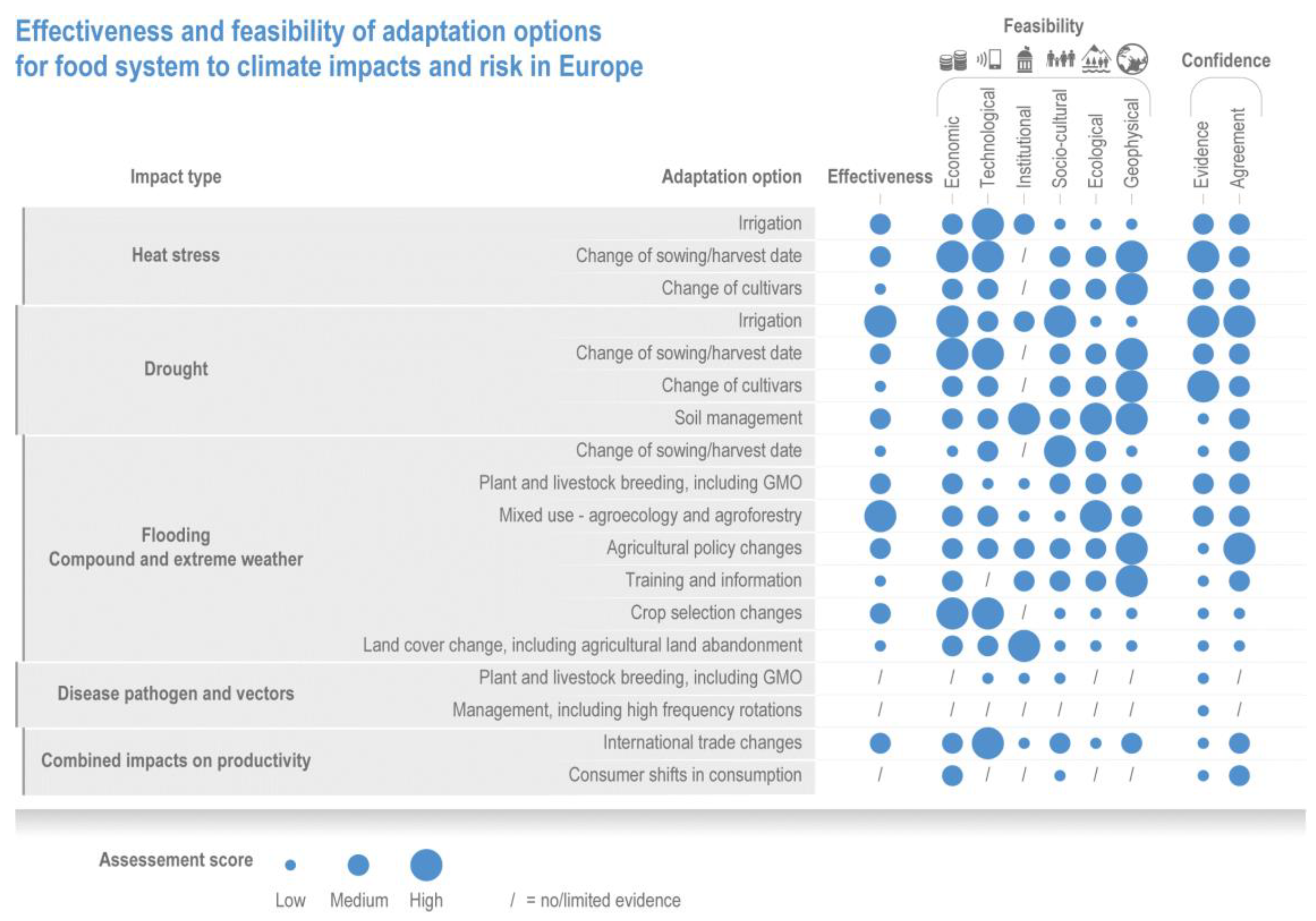
Figure 2.
Greek regions considered in the assessment of adaptation options for crop farming.
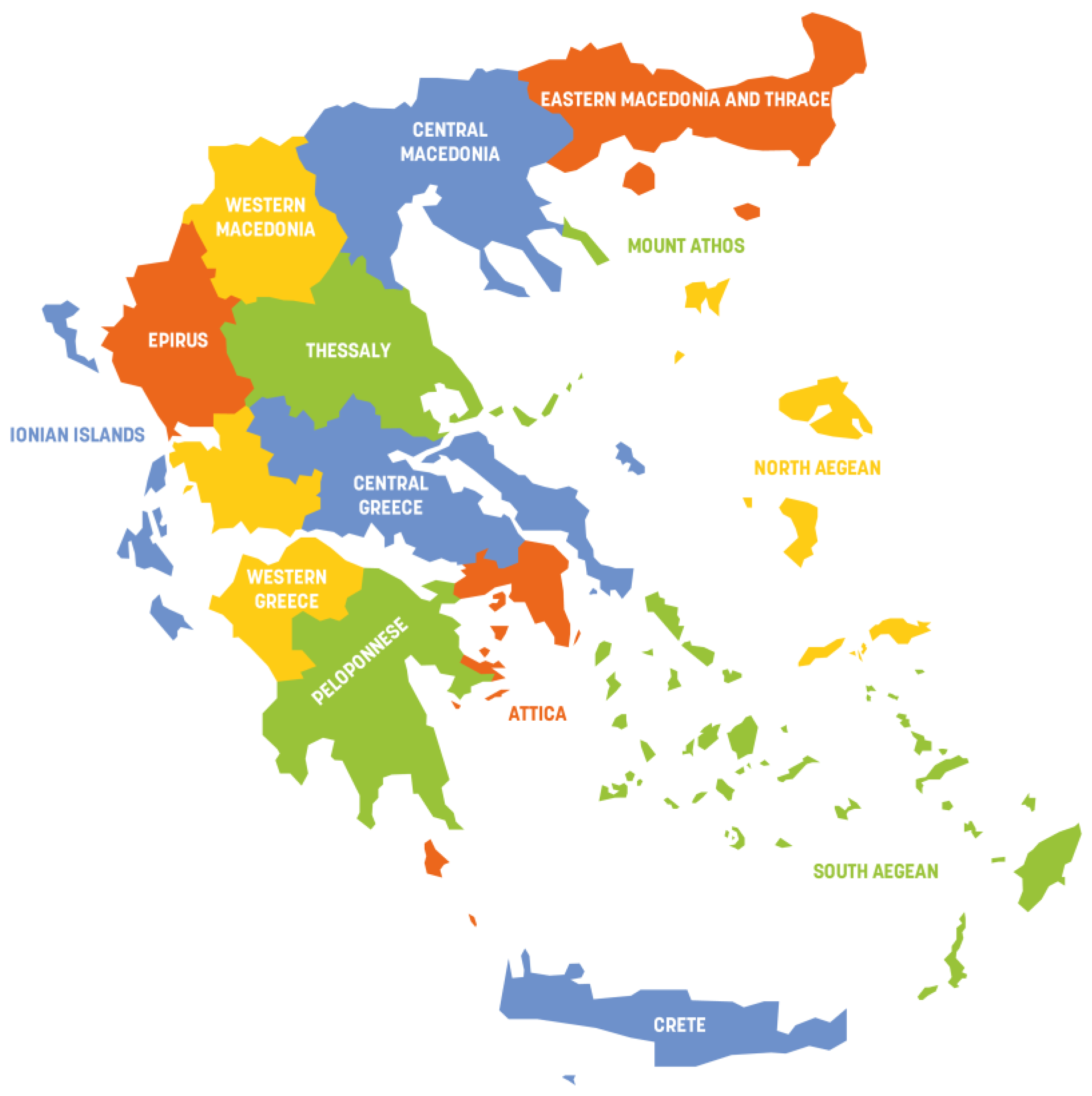
Figure 3.
Share of Greek regions to the national totals of crop production in the year 2019 (note: the cases indicated by green shading are those selected to be modelled in the context of our study).
Figure 3.
Share of Greek regions to the national totals of crop production in the year 2019 (note: the cases indicated by green shading are those selected to be modelled in the context of our study).
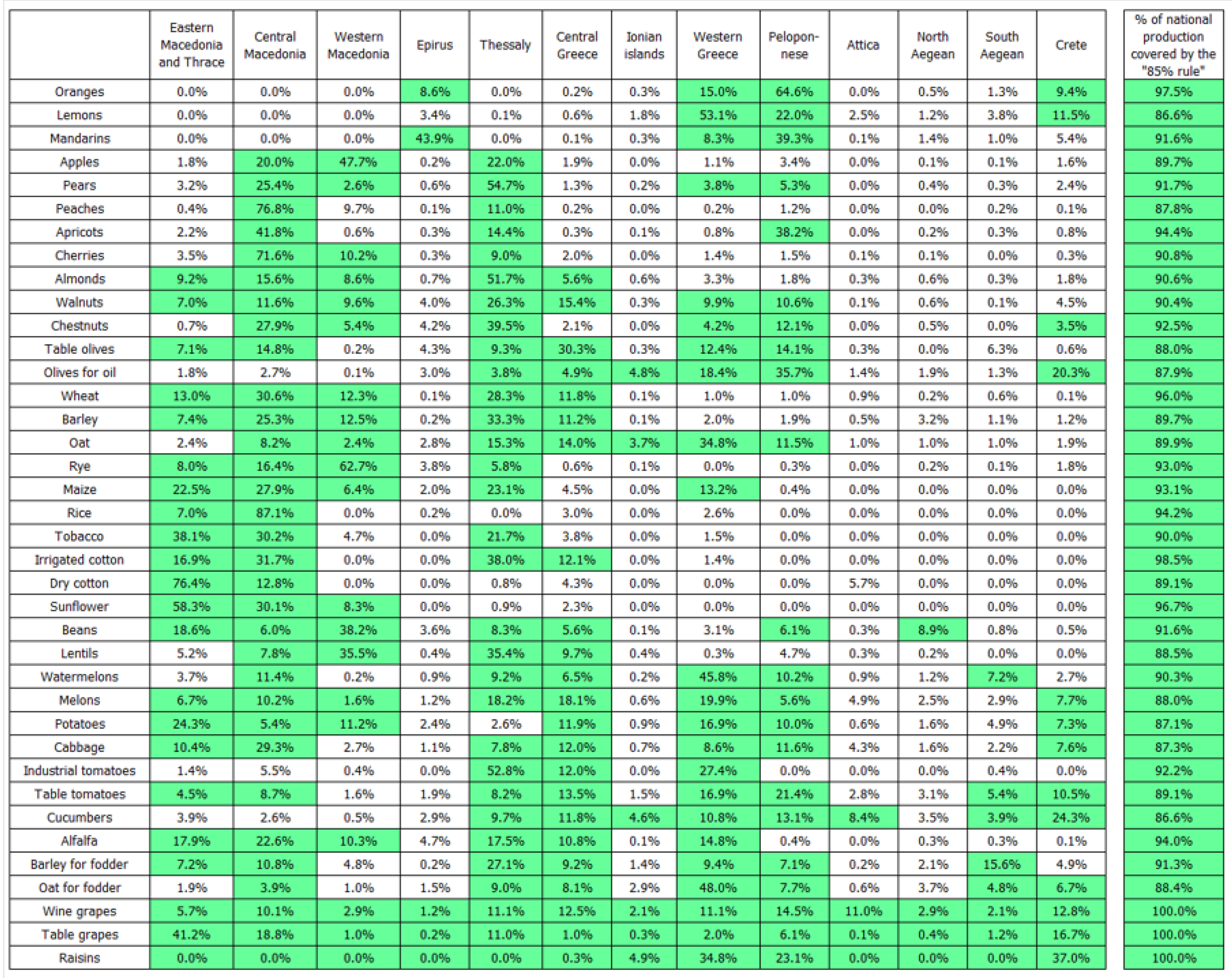
Figure 4.
Crop Output (in EUR) per agricultural product and per region in Greece in the year 2019 (note: the cases indicated by green shading are those selected to be modelled in the context of our study).
Figure 4.
Crop Output (in EUR) per agricultural product and per region in Greece in the year 2019 (note: the cases indicated by green shading are those selected to be modelled in the context of our study).
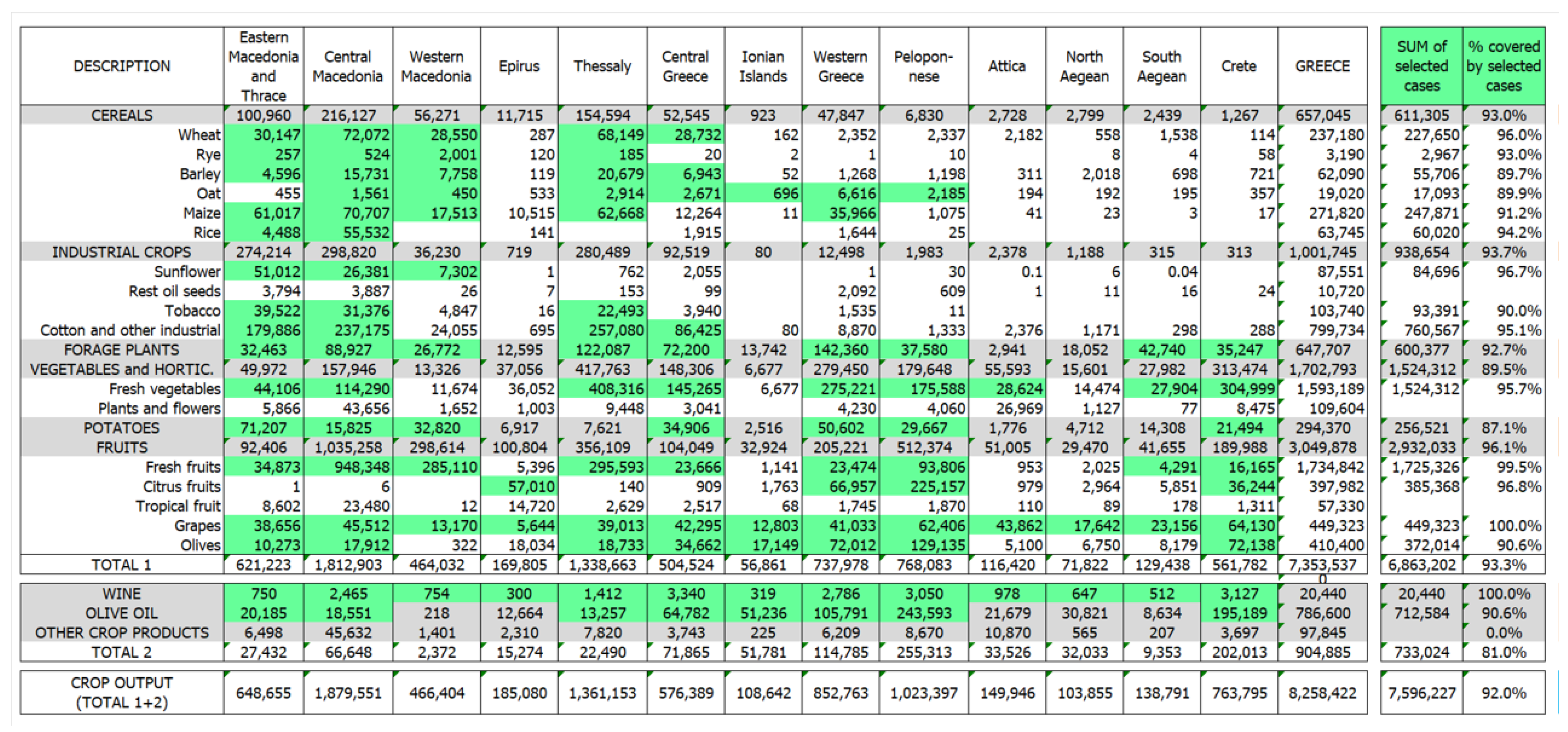
Figure 5.
Simulation approaches linking crop yields and climatic parameters, which were used to assess the effectiveness of adaptation options for the various crops in Greece (A: agronomic model (Decision Support System for Agrotechnology Transfer-DSSAT), B: grape model (Agricultural Production Systems Simulator software tool-APSIM), C: statistical regression model.
Figure 5.
Simulation approaches linking crop yields and climatic parameters, which were used to assess the effectiveness of adaptation options for the various crops in Greece (A: agronomic model (Decision Support System for Agrotechnology Transfer-DSSAT), B: grape model (Agricultural Production Systems Simulator software tool-APSIM), C: statistical regression model.
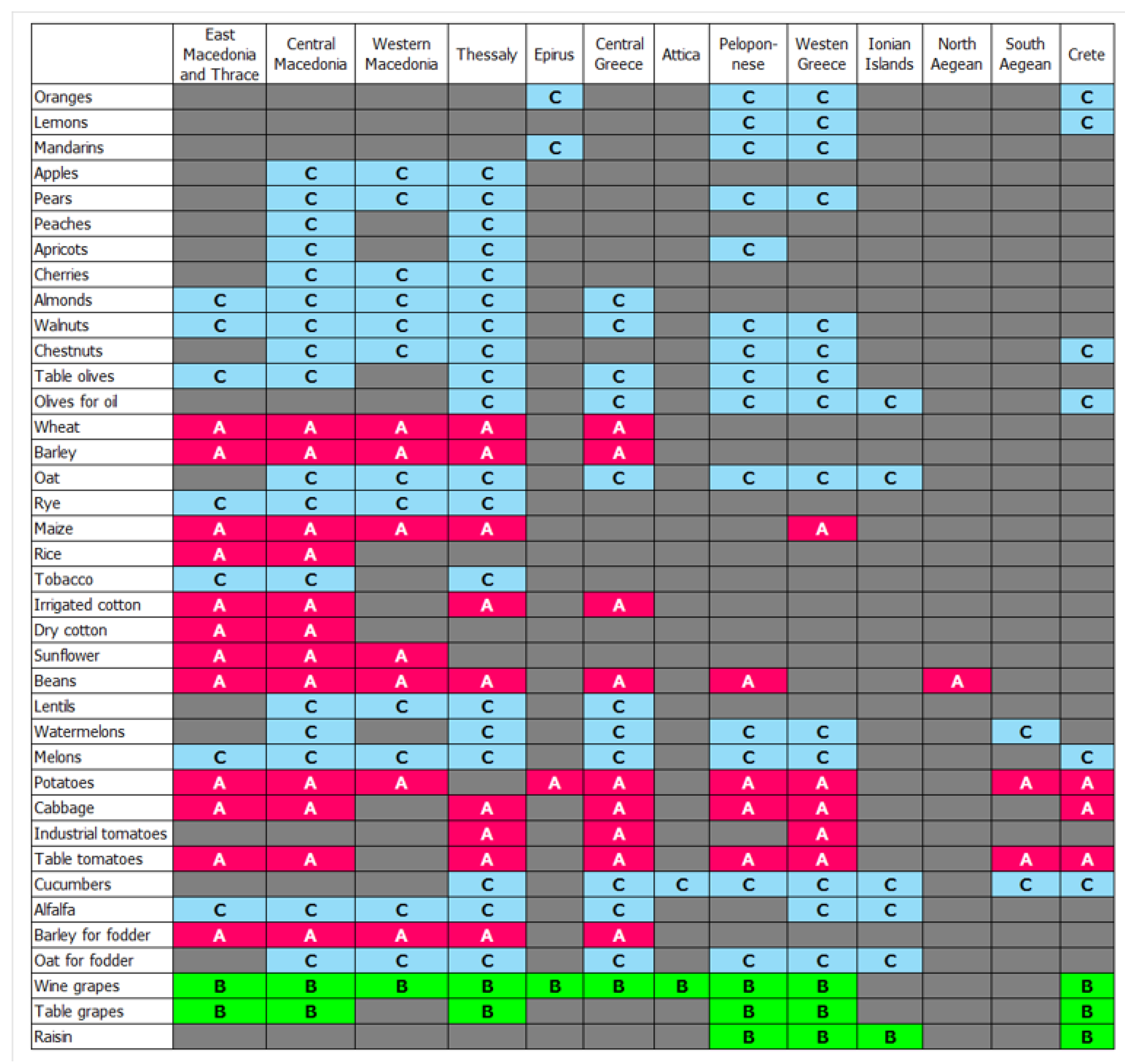
Figure 6.
Estimated changes (average of climate simulations) in crop yields due to climate change compared to those under the historical climate of 1986-2005 as estimated from our previous research [16], which correspond to the ‘No adaptation’ case in the present study.
Figure 6.
Estimated changes (average of climate simulations) in crop yields due to climate change compared to those under the historical climate of 1986-2005 as estimated from our previous research [16], which correspond to the ‘No adaptation’ case in the present study.
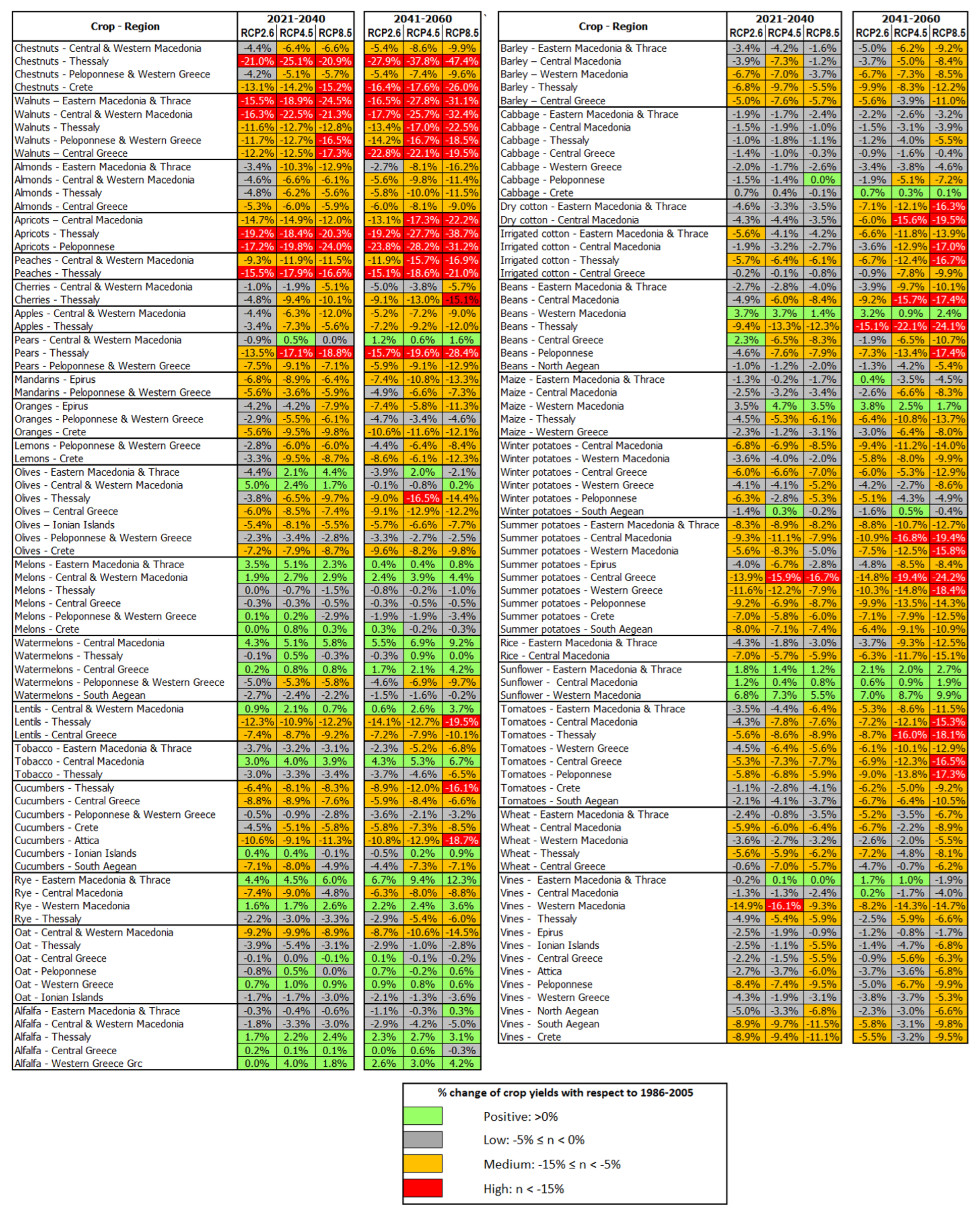
Figure 7.
Combinations of crops/regions whose climate change risks under ‘No adaptation’ had been assessed through statistical regression models in our previous study [16], and those for which the effects on crop yields from an increase/addition of irrigation option were assessed in the context of the present study.
Figure 7.
Combinations of crops/regions whose climate change risks under ‘No adaptation’ had been assessed through statistical regression models in our previous study [16], and those for which the effects on crop yields from an increase/addition of irrigation option were assessed in the context of the present study.
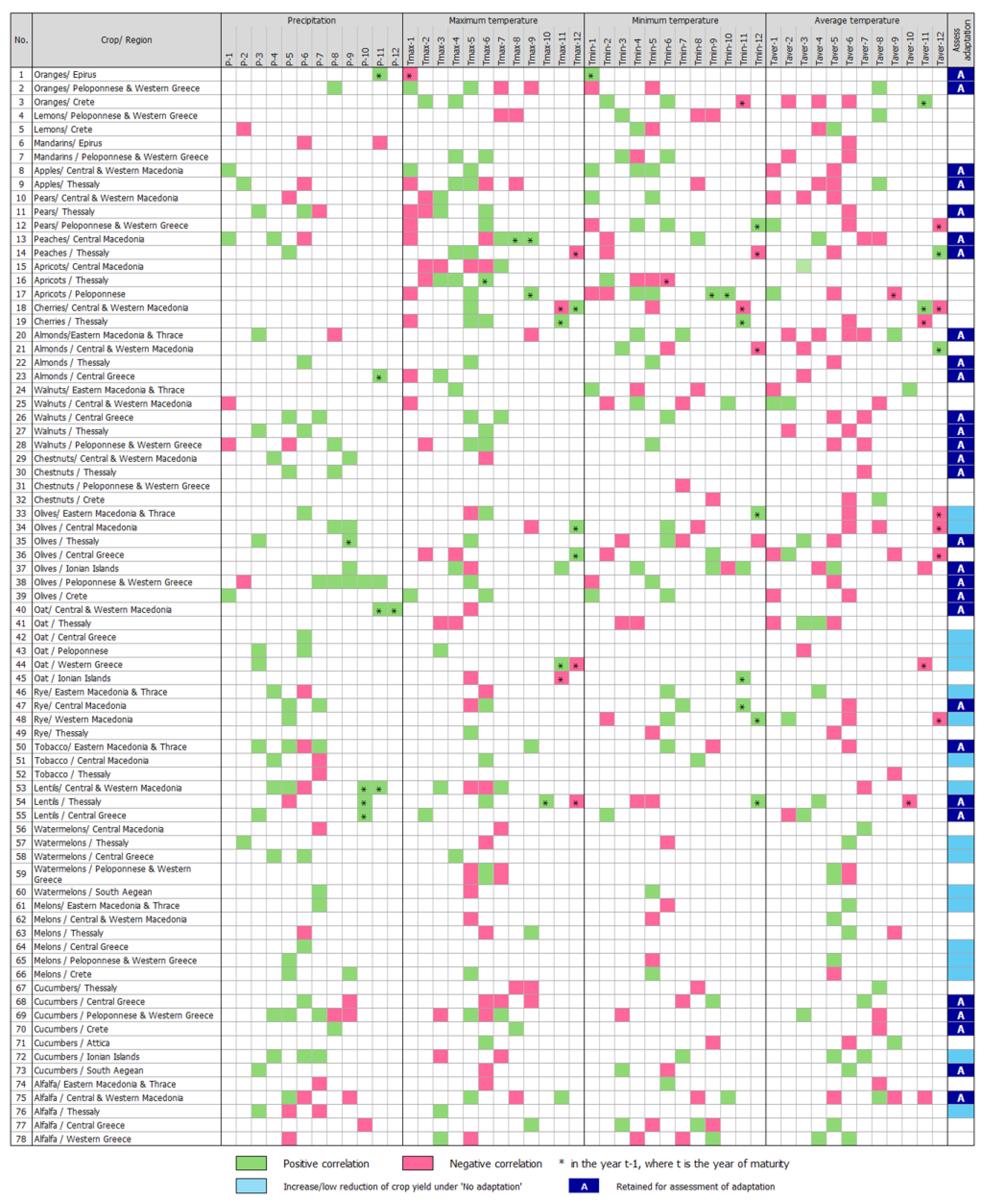
Figure 8.
Estimated changes (%) in crop yields in 2021-2040 and 2041-2060 from those under the historical climate of 1986-2005, under earlier planting (‘EP’) and under no adaptation (‘NA’).
Figure 8.
Estimated changes (%) in crop yields in 2021-2040 and 2041-2060 from those under the historical climate of 1986-2005, under earlier planting (‘EP’) and under no adaptation (‘NA’).
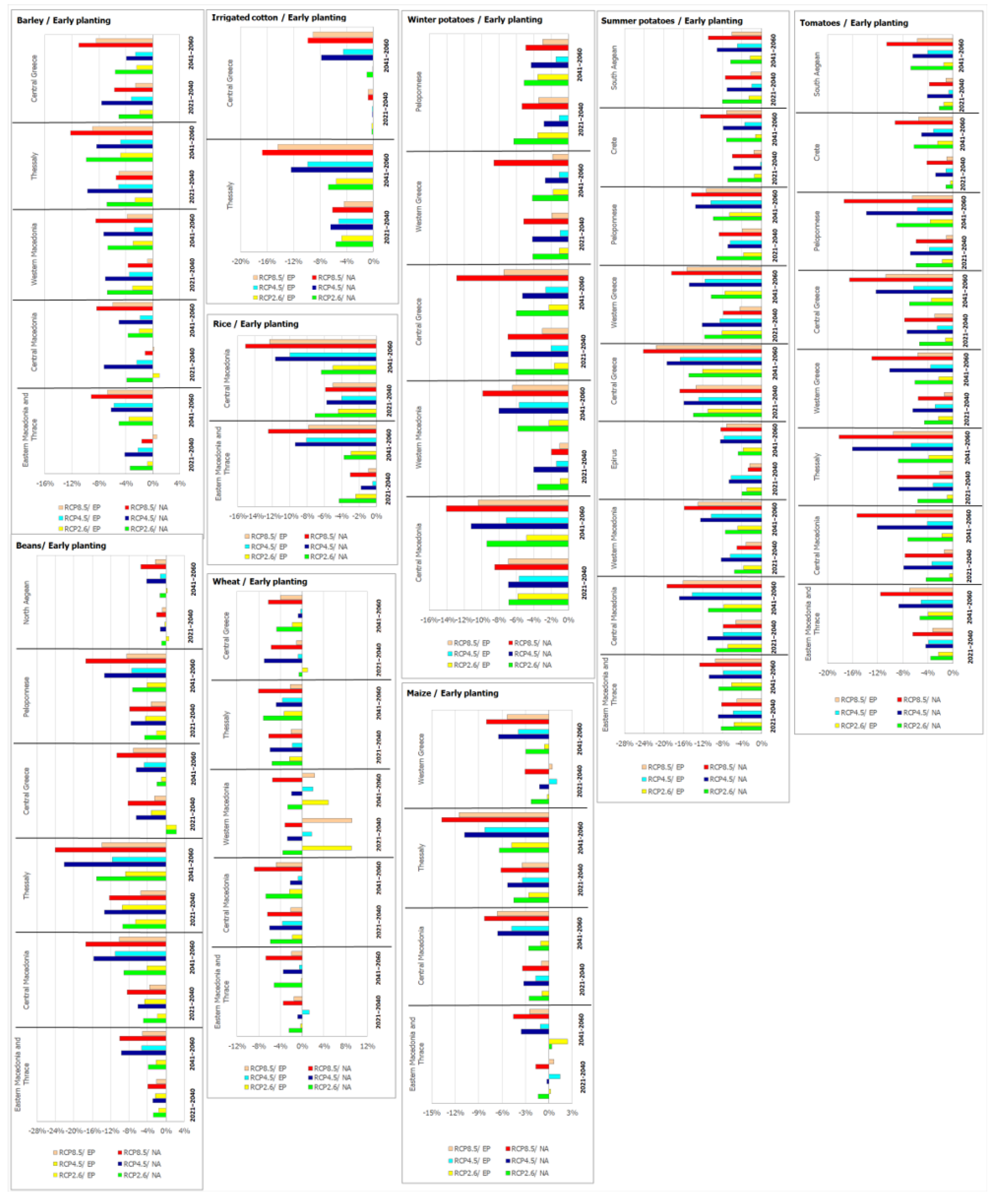
Figure 9.
Estimated changes (%) in future crop yields from those in the historical climate of 1986-2005, under increase/addition of irrigation, for crops simulated by statistical regression models. A 0% increase/added irrigation corresponds to the ‘No adaptation’ case.
Figure 9.
Estimated changes (%) in future crop yields from those in the historical climate of 1986-2005, under increase/addition of irrigation, for crops simulated by statistical regression models. A 0% increase/added irrigation corresponds to the ‘No adaptation’ case.
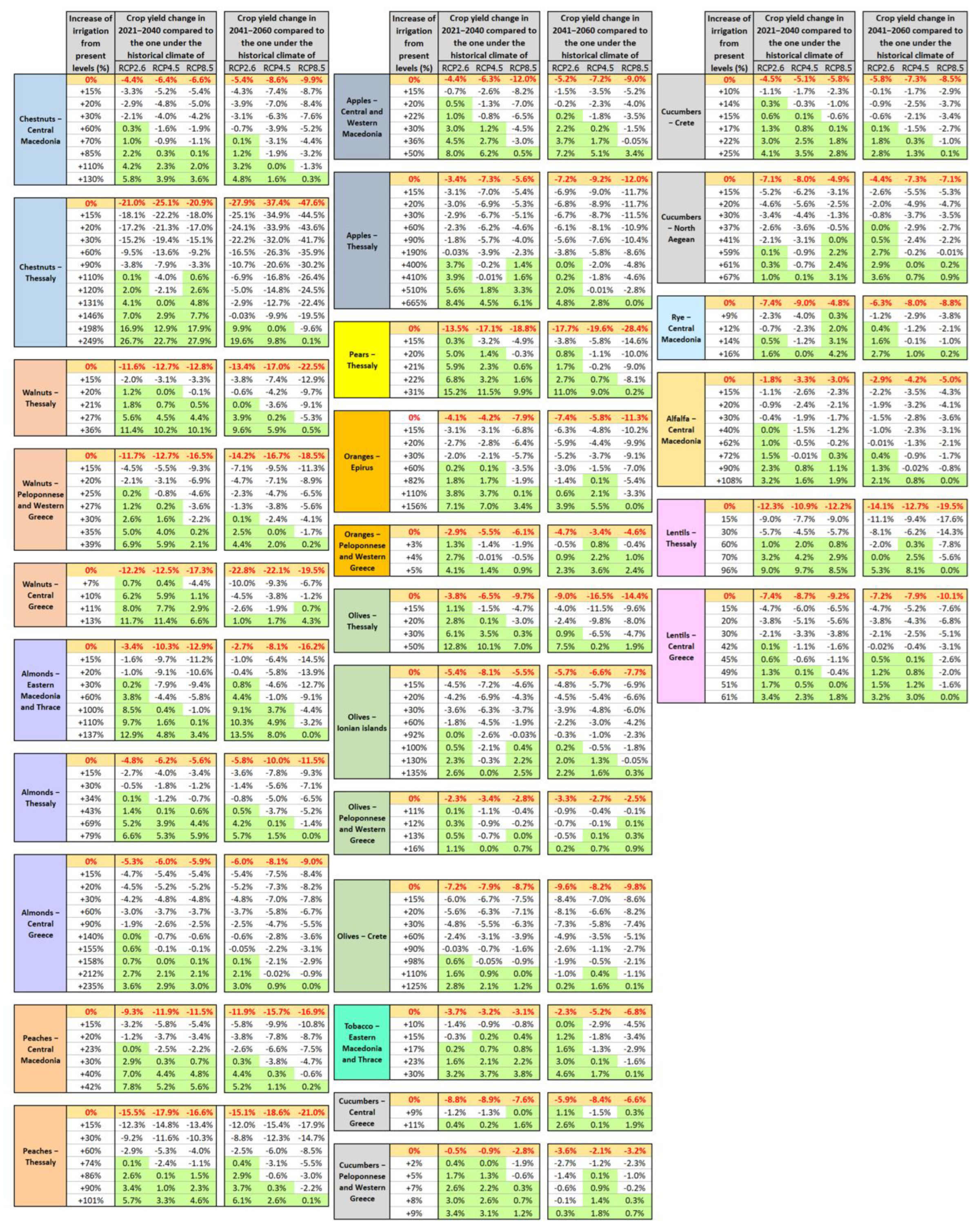
Figure 10.
Estimated changes (%) in crop yields in 2021-2040 and 2041-2060 from those under the historical climate of 1986-2005, under increase of irrigation (‘IoI’) / addition of irrigation (‘AoI’) and under no adaptation (‘NA’), for crops simulated with the DSSAT tool.
Figure 10.
Estimated changes (%) in crop yields in 2021-2040 and 2041-2060 from those under the historical climate of 1986-2005, under increase of irrigation (‘IoI’) / addition of irrigation (‘AoI’) and under no adaptation (‘NA’), for crops simulated with the DSSAT tool.
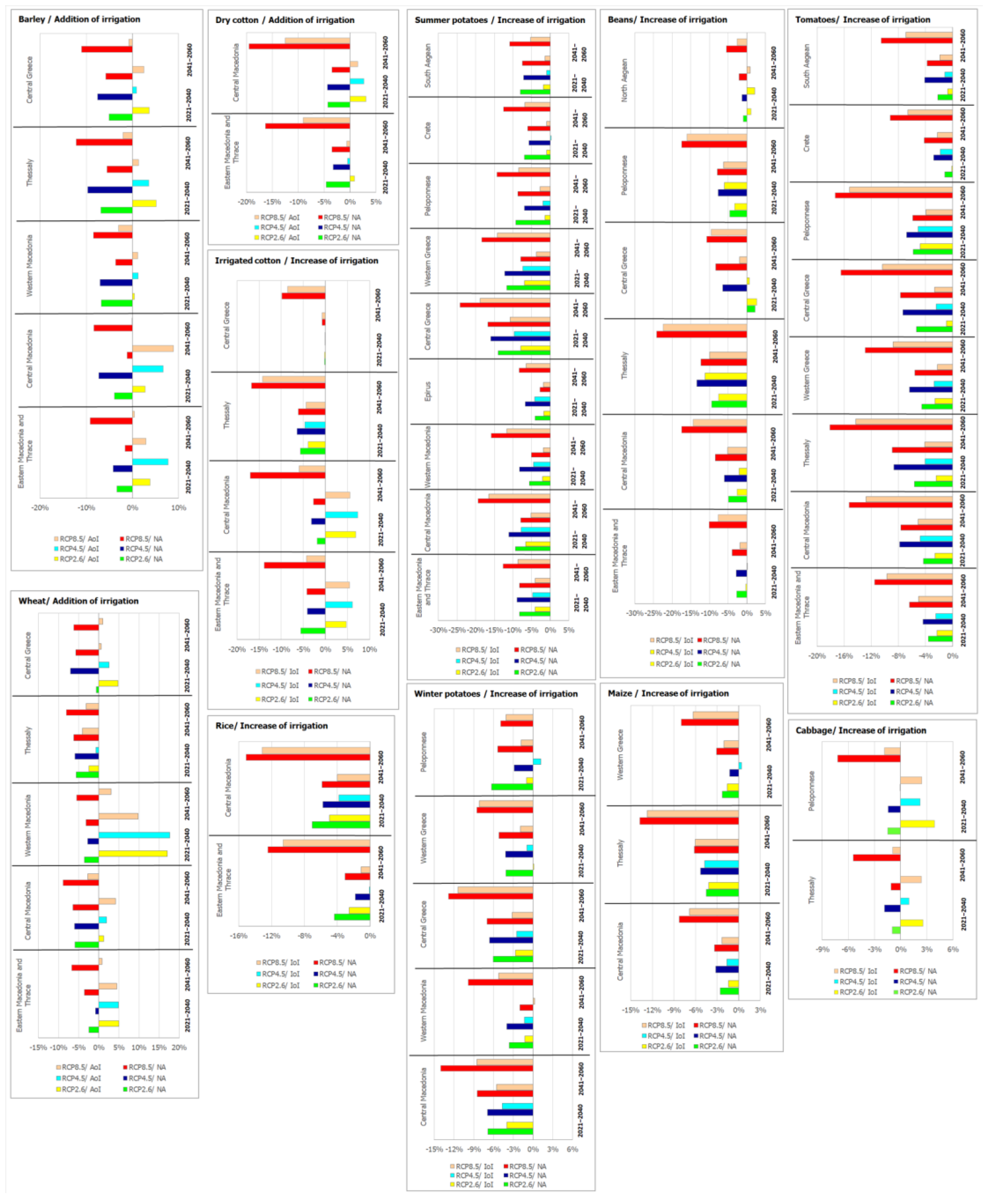
Figure 11.
Estimated changes (%) in crop yields in 2021-2040 and 2041-2060 from those under the historical climate of 1986-2005, under the use of short-cycle hybrids/cultivars (‘SCHC’) and under no adaptation (‘NA’), for crops simulated with the DSSAT tool.
Figure 11.
Estimated changes (%) in crop yields in 2021-2040 and 2041-2060 from those under the historical climate of 1986-2005, under the use of short-cycle hybrids/cultivars (‘SCHC’) and under no adaptation (‘NA’), for crops simulated with the DSSAT tool.
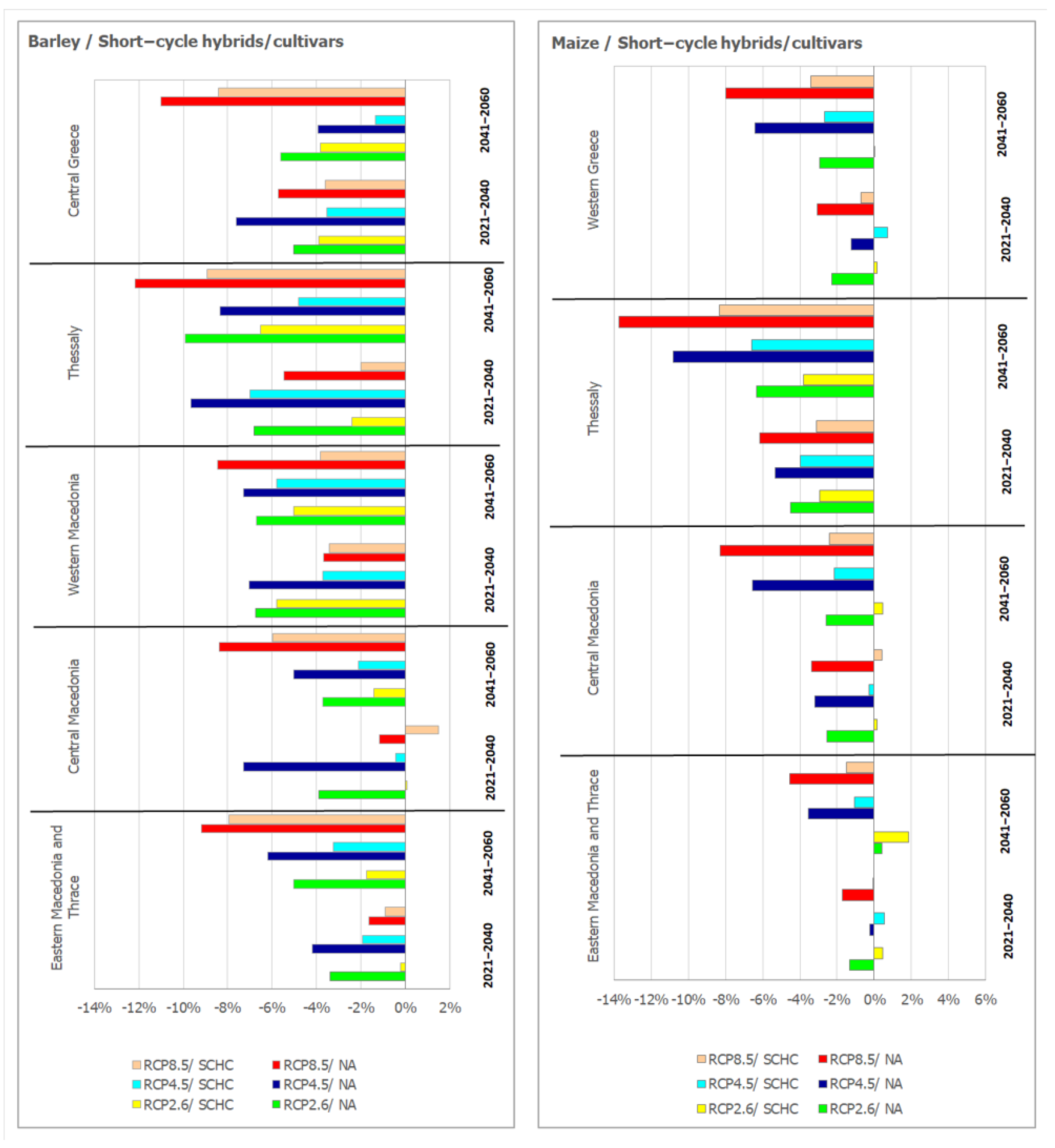
Figure 12.
Overall picture (i.e., all crops and regions examined in this study) of the estimated reductions (%) of crop yield losses occurring in the ‘No adaptation’ case that can be achieved by each of the three adaptation options (i.e., ‘EP’: early planting, ‘IoI-AoI’: increase/ addition of irrigation, ‘SCHC’: short-cycle hybrids/cultivars). For 2041-2060 (last part of the figure, after the thick vertical line), the effectiveness of options is shown only for RCP8.5 as the assessment by using the DSSAT tool was undertaken for this climate change scenario only.
Figure 12.
Overall picture (i.e., all crops and regions examined in this study) of the estimated reductions (%) of crop yield losses occurring in the ‘No adaptation’ case that can be achieved by each of the three adaptation options (i.e., ‘EP’: early planting, ‘IoI-AoI’: increase/ addition of irrigation, ‘SCHC’: short-cycle hybrids/cultivars). For 2041-2060 (last part of the figure, after the thick vertical line), the effectiveness of options is shown only for RCP8.5 as the assessment by using the DSSAT tool was undertaken for this climate change scenario only.
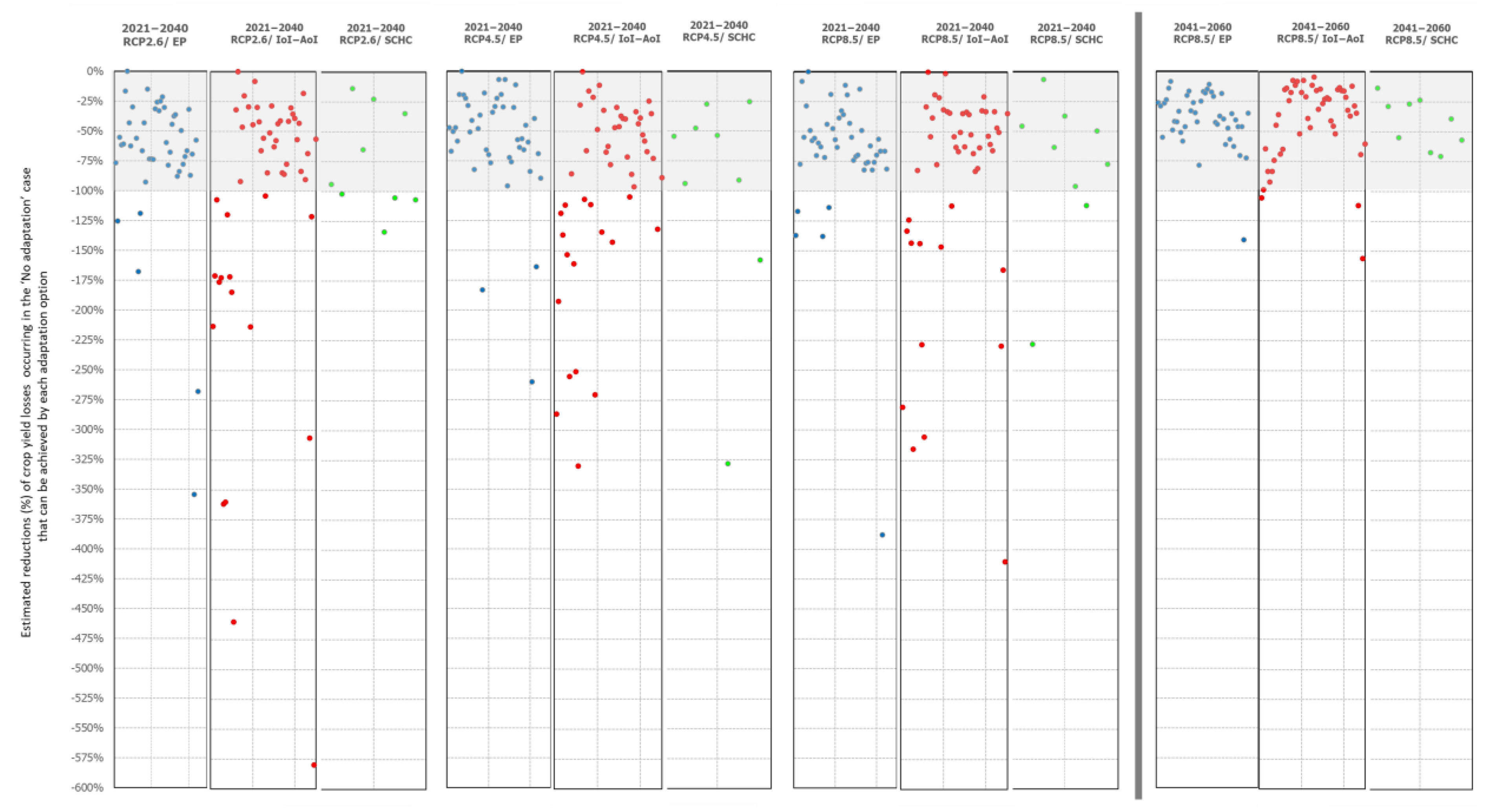

Table 1.
Climate simulations that were utilized in this study.
| Global Climate Models (GCMs) | Regional Climate Models (RCMs) 1 | ||
| DMI-HIRHAM5 | KNMI-RACMO22E | SMHI-RCA4 | |
| ICHEC-EC-EARTH | ✓ | ✓ | |
| MOHC-HadGEM2-ES | ✓ | ✓ | |
| MPI-M-MPI-ESM-LR | ✓ | ||
1 DMI-HIRHAM5: Fifth version of the climate model HIRHAM which was developed in a collaboration between the Danish Climate Center at the Danish Meteorological Institute (DMI) and the Potsdam Research Unit of the Alfred Wegener Institute Foundation for Polar and Marine Research. KNMI-RACMO22E: Regional Atmospheric Climate Model (RACMO) which has been developed by the Koninklijk Nederlands Meteorologisch Instituut (KNMI). SMHI -RCA4: fourth version of the Rossby Center Regional Atmospheric Climate Model (RCA) developed by the Swedish Meteorological and Hydrological Institute (SMHI).
Disclaimer/Publisher’s Note: The statements, opinions and data contained in all publications are solely those of the individual author(s) and contributor(s) and not of MDPI and/or the editor(s). MDPI and/or the editor(s) disclaim responsibility for any injury to people or property resulting from any ideas, methods, instructions or products referred to in the content. |
© 2024 by the authors. Licensee MDPI, Basel, Switzerland. This article is an open access article distributed under the terms and conditions of the Creative Commons Attribution (CC BY) license (http://creativecommons.org/licenses/by/4.0/).
Copyright: This open access article is published under a Creative Commons CC BY 4.0 license, which permit the free download, distribution, and reuse, provided that the author and preprint are cited in any reuse.


