

Submitted:
07 September 2024
Posted:
10 September 2024
You are already at the latest version
Abstract
The implementation of Emissions Trading System (ETS) poses significant challenges for the Indian maritime sector. This paper investigates the regulatory implications of ETS, focusing on how these regulations impact compliance and operational practices within the Indian shipping sector. It also analyzes the economic effects, including the financial burden and competitive dynamics faced by the Indian shipping companies in a global context. Additionally, the paper explores various adaptation strategies, emphasizing technological innovations and operational adjustments essential for navigating ETS requirements. By integrating recent industry data and case studies, this study offers a comprehensive overview of how the Indian shipping industry can effectively address the evolving regulatory landscape of ETS.
Keywords:
Emissions Trading System
; Indian Shipping
; Regulatory Impact
; Economic Effects
; Adaptation Strategies
1. Introduction
The global shipping industry accounts for nearly 3% of the total greenhouse gas (GHG) emissions, making it a prominent contributor to climate change. In recent years, maritime emissions have come under increasing scrutiny, with the International Maritime Organization (IMO) highlighting the need for stronger regulatory measures. In response, the European Union (EU) established the Emissions Trading System (ETS) in 2005 as a key component of its climate strategy. The ETS operated on a ‘cap-and-trade’ principle, setting a limit on total emissions while allowing companies to buy or sell emission allowances within this cap [1].
The involvement of shipping in the ETS presents significant regulatory challenges and economic implications for Indian maritime operations. This paper examines the impact of the ETS on Indian shipping, majorly focusing on the regulatory and economic challenges that arise from this system. It also explores strategic responses that can help the Indian shipping industry adapt to and thrive under the evolving global environmental regulations.
2. Regulatory Implications of ETS for the Indian Maritime Industry
As the maritime sector grows, the shipping industry has become a significant contributor to global greenhouse gas emissions, increasing by 20% over the last decade. In 2023, the EU expanded the ETS to cover the maritime sector, reducing emissions by 15.5% [2]. According to the 2024 report by the World Bank [3], ETS has covered emission by 24% of global emissions. This chapter provides an overview of the ETS regulatory framework, explores its implications for the Indian maritime sector, and highlights the need for adjusting to the EU's new regulations.
2.1. Overview of ETS Regulations
The ETS regulations are designed to reduce greenhouse emissions from the maritime sector within a timeline by setting a cap on the total amount of certain gases that can be emitted by the said entities, such as power plants and industries.
Figure 1.
The above figure illustrates the impact of EU ETS on various vessels with respect to different years.
Figure 1.
The above figure illustrates the impact of EU ETS on various vessels with respect to different years.
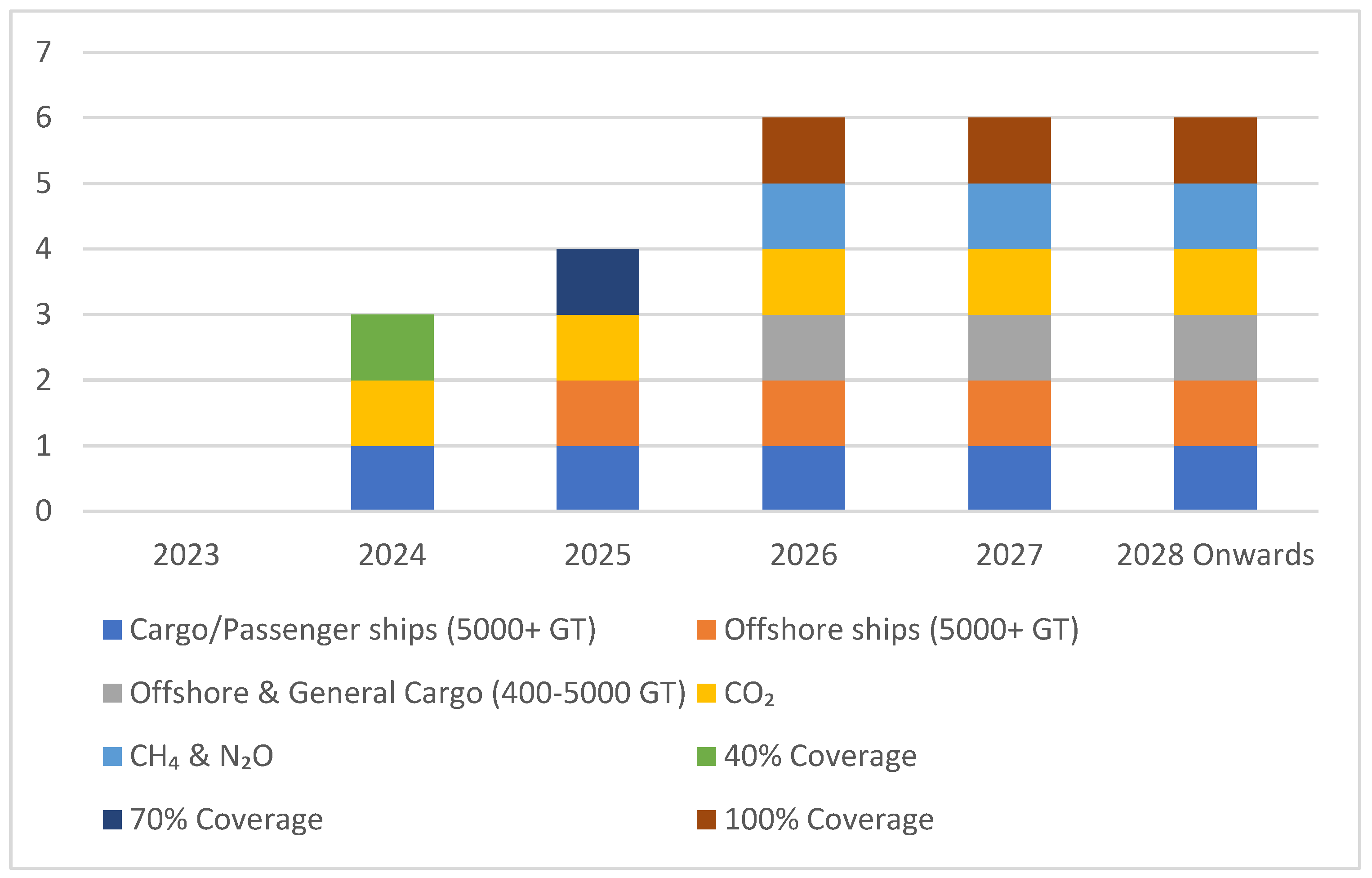
Following are some key regulatory aspects of EU ETS [4]:
- a.
- Applying EU ETS to cargo and passenger ships (5000+ GT) from 2024 and offshore ships (5000+ GT) from 2027 reduces the emissions from 40% in 2024 to 70% in 2025 and 100% in 2026.
- b.
- The emissions caused by greenhouse gases such as carbon dioxide (CO2), methane (CH4), and nitrous oxide (N2O) will also be reduced from 2024 and 2026, respectively.
- c.
- Under Section 34 of 2015/757 on the monitoring, reporting, and verification (MRV) of CO2 emissions from maritime shipping, and the Directive 2009/16/EC, require all vessels to annually report emissions for ships greater than 5000 GT [5].
- d.
- Under IMO MEPC.278(70), IMO adopted Data Collection System (DCS) which will report the fuel consumption data for vessels greater than 5000 GT [6].
2.2. Impact on Compliance Requirements
Before ETS came into account, the shipping sector was responsible for 2.5% of the world's total CO2 emissions. MARPOL Annex VI regulates the emission of sulphur oxide and nitrogen oxide from ships and was capable of reducing up to 77% globally and 15-30%, respectively [7].
After implementation, EU ETS was able to reduce the emissions by 15.5% in 2023, compared to 2022 levels, as discussed earlier. With various benefits, it comes up with various impact on shipping. Following is some of them.
- Increased Costs: In order to comply with ETS, shipping companies face additional costs. For instance, with carbon allowances priced €72.52 per tonne of CO2, a vessel emitting 1000 tonnes of CO2 annually would suffer costs of €72,520 per vessel per year.
- Operational Costs: Companies need to opt for greener technologies in order to achieve a target of 40% reduction in GHG emissions by 2030, which may cost high to the Indian maritime industry [8].
- Market Competitiveness: With an increase in fuel rates due to ETS, a 2017-built Supramax vessel is expected to see a rise of 13% compared to the fuel price in 2024, which may rise to 22% by 2026 [9]. This can affect global trade competitiveness, especially for older and less efficient vessels.
- Trade and Economic Impact: With higher shipping and freight rates, volume of trade also gets affected. For instance, a 10% increase in shipping costs may impact the competitiveness of exports from major shipping nations like India.
Although the ETS is successfully contributing to lower the GHG emissions, it imposes strict regulations on the Indian maritime industry with increased costs and the purchase of allowances. With the reduction in emissions come greater implications for the industry, to which companies shall adapt for greener and cleaner technologies.
3. Chapter 2: Economic Impacts of ETS on Indian Shipping Companies
The introduction of ETS posed economic challenges for Indian shipping companies. As per the World Bank’s “State and Trends of Carbon Pricing 2024” report [10], carbon prices set a record of $104 billion in 2023. Since January 2024, the carbon price reaches over €52, Indian companies face increased operational costs and disruption in global trade. This chapter will explore the economic impact of ETS before and after its implementation on shipping industry.
3.1. Cost Analysis and Revenue Impact
The intrusion of EU ETS in maritime industry introduces a wide range of direct and indirect costs for shipping companies. Direct costs include the purchase of carbon emission allowances, costing around €72.52 per metric ton [11]. For an average-sized Indian company, the additional expenses in operating could escalate the financial burdens. Indirect costs include administrative expenses such as that coming from MRV. Moreover, the social cost of carbon significantly for India costs around $86 per tonne of CO2 [12], which could worsen the economic market of Indian shipping companies.
Although the key regulatory aspects of ETS, as discussed earlier, help in reducing CO2 emissions to a greater extent, it comes with significant impacts on shipping companies. Apart from direct costs, operational costs also play an important role in how ETS has affected these after its introduction. In India, the operational costs are quite low because of labour costs, fuel costs, and port fees. After the ETS came into play, an increase in operational costs can be seen due to factors such as underdeveloped infrastructure, regulatory charges, and fuel quality and availability.
As per the 2020 Annual Report on CO2 emissions from maritime transport [13], the following are the key points based on the given graph illustrating the yearly increase in operational costs due to ETS per vessel.
Figure 2.
The above graph demonstrates the yearly increase in operational costs of vessels (in €) due to implementation of EU ETS in respective years, as shown.
Figure 2.
The above graph demonstrates the yearly increase in operational costs of vessels (in €) due to implementation of EU ETS in respective years, as shown.
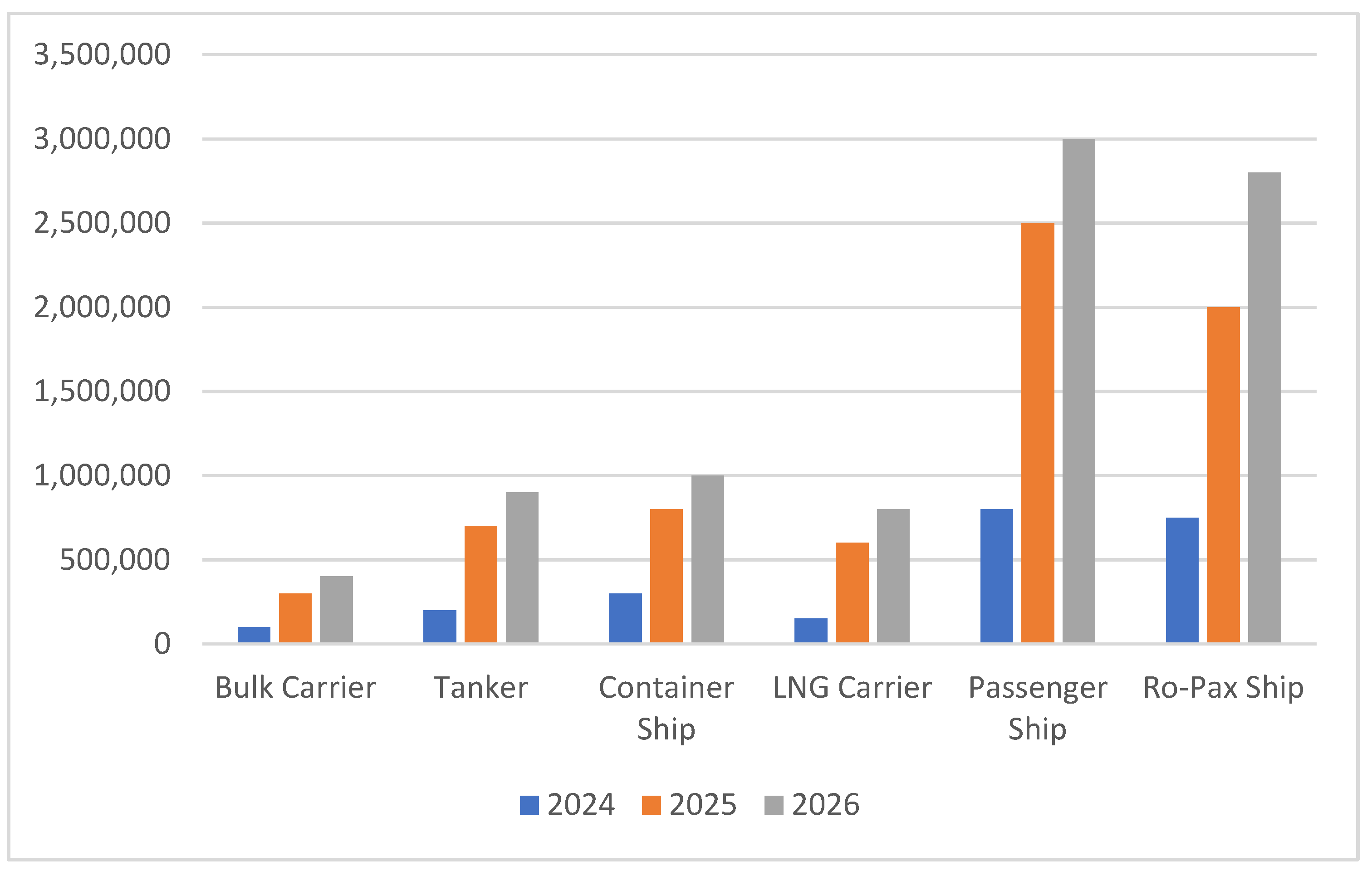
- Operational costs for all vessels significantly rise from 2024 to 2026 due to ETS, by €1.4m in 2026.
- Passenger ships and Ro-Pax ships showcase the highest increase in cost by €3 million by 2026.
- Increase in costs rise from €380,000 per tanker in 2024 to €1m per tanker in 2026, due to ETS.
3.2. Market Competitiveness
The EU ETS acts as a key tool to reduce emissions by 100% till 2050. In order to reach the set goal, many implications are faced, such as increased carbon costs, operational costs, and market competitiveness. Although the cement and steel sectors could lose productivity due to ETS, sectors such as the sustainable energy sector or green technology sector are expected to face a rise in productivity. Since in the Indian maritime market, labour employment is increasing day-by-day, ETS is able to create more job opportunities in the mentioned sectors due to market competitiveness.
Figure 3.
Increase in maritime market size due to digitization.

As seen in the above graph [14], the market size value is expected to rise from $144.4 bn in 2021 to $266.5 bn in 2028 in the forecast period due to digitization. Maritime digitization, the application of digital technology such as AI, IoT, etc. into the maritime sector, resulted in the market growth of 9.4% during the foresaid period. This digitization has helped create employment in these sectors, increasing operational effectiveness, increased safety, and cost savings.
The EU ETS has posed a significant amount of economic impact on the Indian industry, yet it has proved itself a useful tool to combat CO2 emissions. Although the indirect and additional costs have been rising yearly, the market is able to accept the changes and is increasing accordingly. ETS has forced the companies to opt for digitization and greener technologies, which in turn has helped in reducing emissions to a greater extent.
4. Adaptation Strategies for Indian Shipping under ETS Regulations
Over these years, many advancements have been made to reduce the emissions from vessels. Most of them have successfully helped to achieve the goal set by the IMO and the EU ETS. However, various technological innovations and operational adjustments are still required to ensure competitiveness in the global shipping market. This chapter explores the adaptation strategies for Indian shipping companies that might help to grow the Indian market size in the shipping industry.
- Hull Optimization: Hull optimization reduces emissions by minimizing water resistance thus decreasing the energy required to propel the vessel. This in turn, lowers the fuel consumption rate and CO2 emissions. Modification in bulbous bow such as X-Bow, leads to a smoother and more efficient way to reduce emissions, especially in rough seas. As per a report of Lloyd’s Register, 1-2% of fuel can be saved via hull modifications due to less resistance offered by the hull, which in turn helps to reduce the emissions [15].
- Air Lubrication: Air lubrication is a way of reducing the friction between the hull and water by creating a layer of air bubbles along its surface. This method is capable of reducing the emissions by 10% over last year [16]. The technique enhances energy efficiency and effectively reducing the fuel consumption rate.
- Electrification: Replacing traditional vessels with fully electric vessels can reduce carbon emissions by 100% due to less or no consumption of fuel oil. This shift reduces reliance on fossil fuels which also gets saved for future and better use. Electrification also contributes to less noisy operations and decreased operational costs.
- Hydrogen Fuel Cells: The hydrogen fuel cells generate electricity via a chemical reaction between hydrogen and oxygen, producing water and some amount of heat. This method significantly reduces greenhouse gas emissions by 100% and eliminates harmful pollutants such as NOx and Sox. Hydrogen fuel cells, in conjunction with electric vessels, can reduce the CO2 emissions by 30-40% [17].
- Slow steaming: Slow steaming, sailing at lower speed, can effectively reduce fuel consumption and CO2 emission by 19% [18]. If the speed is reduced to half the calculated speed, the fuel consumption and emissions can decrease up to 70% [19]. This approach can increase the time of a round trip by 10-20%, while reducing the fuel consumption and emissions simultaneously. However, slow streaming may alter the engine operating conditions, thus increasing fouling and corrosion due to low operating temperatures.
- Route Optimization: Route planning can significantly reduce emissions by optimizing the routes. Less time investment, less fuel oil consumption can effectively reduce the CO2 emissions by 30% [20].
Figure 4.
Maximum potential of various vessels in different areas in reducing CO2 emissions.
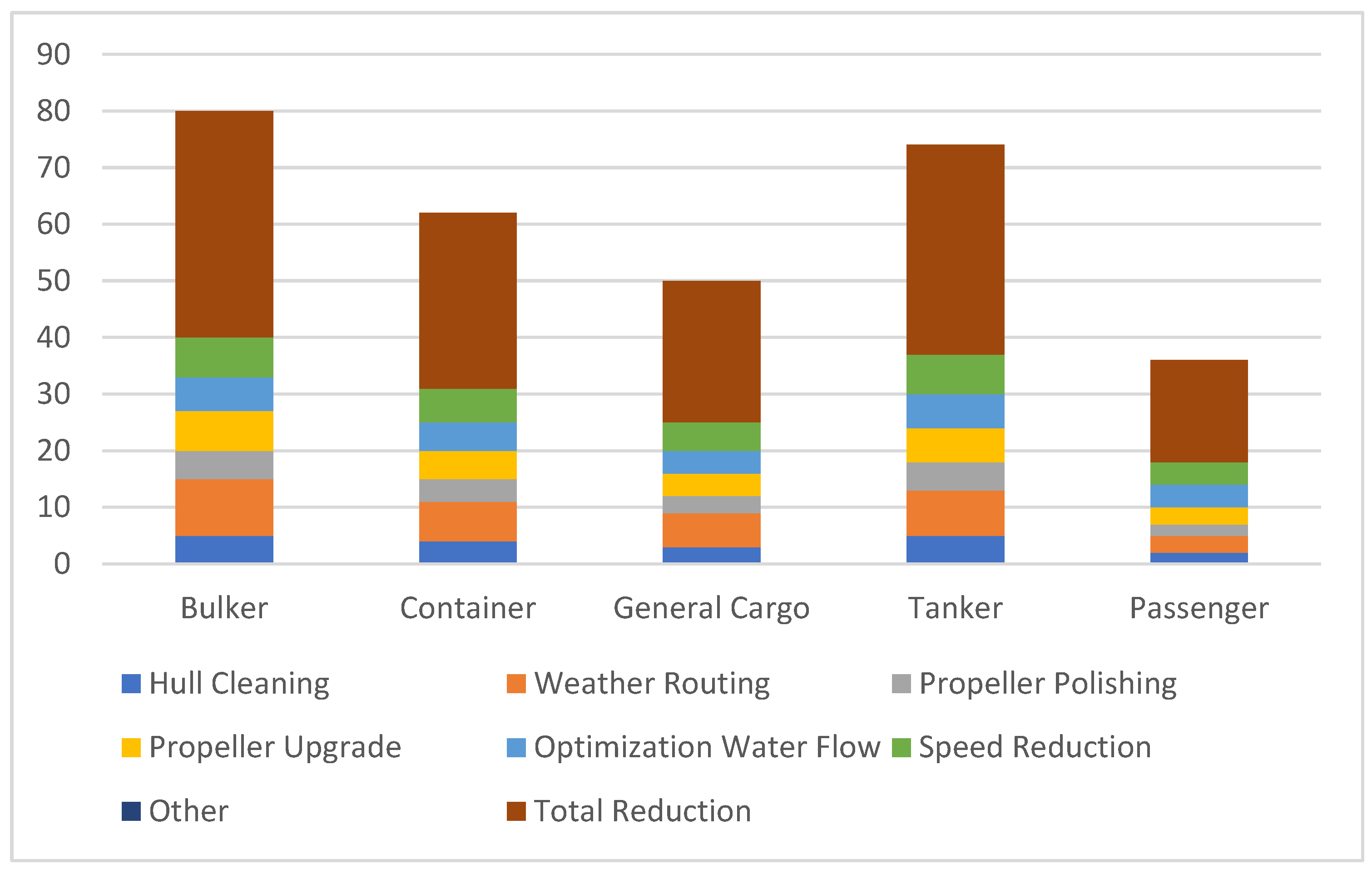
As it can be predicted from the graph, different types of vessels have different reduction potential in various areas which can greatly reduce the carbon emissions. There are various methods adopted by the shipping companies in order to decarbonise the vessels for its long-term use. Adopting the above strategies can effectively reduce the emissions and fuel oil consumption.
5. Discussion
The paper highlights significant challenges and opportunities shown by the EU ETS for the Indian maritime industry. The regulatory requirements under ETS, necessitate a needed framework within the shipping companies. The absence of domestic regulations could be a challenge for the Indian companies to comply with but the adoption of greener technologies has shown its effect to a better side. Economically, the ETS is likely to increase the operational costs, impacting freight rates and market competitiveness. The push towards decarbonization, has led Indian companies to adopt digitization which to a greater extent has reduced the emissions thereby increasing the market size and competitiveness as well.
6. Conclusions
The integration of the Indian shipping sector into the Emission Trading System (ETS) presents both challenges and opportunities. By adapting technological innovations, the industry can meet the regulatory demand of EU ETS in order to remain in the market competitiveness. The EU ETS has helped the Indian maritime market to grow in recent years, yet more modifications and additions are required to reduce the emission by 100% until 2050.
Author Contributions
All research, writing, and preparation of the manuscript were conducted solely by Tanuja.
Funding
This research received no external funding.
Institutional Review Board Statement
Not applicable.
Informed Consent Statement
Not applicable.
Data Availability Statement
Data are contained within this article.
Conflicts of Interest
Not applicable.
References
- https://www.lse.ac.uk/granthaminstitute/explainers/how-do-emissions-trading-systems-work/.
- News Article, Record reduction of 2023 ETS emissions due largely to boost in renewable energy, Directorate-General for Climate Action, 3 April 2024, https://climate.ec.europa.eu/news-your-voice/news/record-reduction-2023-ets-emissions-due-largely-boost-renewable-energy-2024-04-03_en.
- World Bank’s annual “State and Trends of Carbon Pricing 2024” report, https://www.worldbank.org/en/news/press-release/2024/05/21/global-carbon-pricing-revenues-top-a-record-100-billion.
- Dimerco, “The EU Emissions Trading System & its Impact on the Shipping Industry”, Blog Post, 5 December 2023, https://dimerco.com/eu-ets-impact-on-shipping-industry/.
- “REGULATION (EU) 2015/757 OF THE EUROPEAN PARLIAMENT AND OF THE COUNCIL OF 29 APRIL 2015 on the Monitoring, Reporting, and Verification of Carbon-dioxide Emissions from Maritime Transport, and Amending Directive 2009/16/EC”, Official Journal of the European Union, https://eur-lex.europa.eu/legal-content/EN/TXT/PDF/?uri=CELEX:32015R0757.
- Resolution MEPC.278(70), “AMENDMENTS TO THE ANNEX OF THE PROTOCOL OF 1997 TO AMEND THE INTERNATIONAL CONVENTION FOR THE PREVENTION OF POLLUTION FROM SHIPS, 1973, AS MODIFIED BY THE PROTOCOL OF 1978 RELATING THERETO”, https://wwwcdn.imo.org/localresources/en/KnowledgeCentre/IndexofIMOResolutions/MEPCDocuments/MEPC.278(70).pdf.
- Flodén, J., Zetterberg, L., Christodoulou, A., Parsmo, R., Fridell, E., Hansson, J., … Woxenius, J. (2024). Shipping in the EU emissions trading system: implications for mitigation, costs and modal split. Climate Policy, 24(7), 969–987. https://doi.org/10.1080/14693062.2024.2309167. [CrossRef]
- “Understanding EU ETS and its Impact on the Shipping Industry”, Blog, 6 August 2023, https://www.sertica.com/blog/understanding-eu-ets-and-its-impact-on-the-shipping-industry/#gref.
- Danish Ship Finance A/S (“DSF”), “Shipping Market Review”, May 2024, https://skibskredit.dk/wp-content/uploads/2024/03/shipping-market-review-may-2024.pdf.
- World Bank’s annual “State and Trends of Carbon Pricing 2024” report, https://www.worldbank.org/en/news/press-release/2024/05/21/global-carbon-pricing-revenues-top-a-record-100-billion.
- Ian Tiseo, “EU-ETS allowance prices in the European Union 2022-2024”, 19 August 2024, https://www.statista.com/statistics/1322214/carbon-prices-european-union-emission-trading-scheme/.
- “US, China and India: Top carbon emitters to face the biggest economic losses”, 28 September 2018, https://www.downtoearth.org.in/climate-change/us-china-and-india-top-carbon-emitters-to-face-the-biggest-economic-losses-61747.
- Friederike Hesse, “Up to €1.5m per year: understanding financial implications of the EU ETS”, News article, Seatrade Maritime News, 2 March 2023, https://www.seatrade-maritime.com/opinions-analysis/15m-year-understanding-financial-implications-eu-ets.
- “Global Maritime Digitization Market Size, Share & Industry Trends Analysis Report by Application, By End User (Ports & Terminals, Shipping Companies, and Maritime Freight Forwarders), By technology, By Regional Outlook and Forecast, 2022-2028”, KBV Research, Report ID: KBV-13961, https://www.kbvresearch.com/maritime-digitization-market/.
- Arastu Sajjad Husain, “Improving Hull Design for Better Efficiency and Environmental Protection”, https://isomase.org/OMAse/Vol.1-2014/Section-3/3-7.pdf.
- “Air lubrication can cut your fuel consumption and emissions”, https://www.wartsila.com/marine/products/propulsors-and-gears/energy-saving-technology/air-lubrication.
- Bruce Beaubouef, “More vessel owners looking to hydrogen fuel to reduce emissions”, 11 December 2023, https://www.offshore-mag.com/vessels/article/14301870/more-vessel-owners-looking-to-hydrogen-fuel-to-reduce-emissions.
- Balcombe, P.; Brierley, J.; Lewis, C.; Skatvedt, L.; Speirs, J.; Hawkes, A.; Staffell, I. How to decarbonise international shipping: Options for fuels, technologies and policies. Energy Convers. Manag. 2019, 182, 72–88. [CrossRef]
- Corbett, J.J.; Wang, H.; Winebrake, J.J. The effectiveness and costs of speed reductions on emissions from international shipping. Transp. Res. Part D 2009, 14, 593–598. [CrossRef]
- Jack Glenn, “Intelligent route optimization key to helping shippers achieve ESG goals”, https://www.freightwaves.com/news/intelligent-route-optimization-key-to-helping-shippers-achieve-esg-goals.
Disclaimer/Publisher’s Note: The statements, opinions and data contained in all publications are solely those of the individual author(s) and contributor(s) and not of MDPI and/or the editor(s). MDPI and/or the editor(s) disclaim responsibility for any injury to people or property resulting from any ideas, methods, instructions or products referred to in the content. |
© 2024 by the authors. Licensee MDPI, Basel, Switzerland. This article is an open access article distributed under the terms and conditions of the Creative Commons Attribution (CC BY) license (http://creativecommons.org/licenses/by/4.0/).
Copyright: This open access article is published under a Creative Commons CC BY 4.0 license, which permit the free download, distribution, and reuse, provided that the author and preprint are cited in any reuse.


