

Submitted:
09 September 2024
Posted:
10 September 2024
You are already at the latest version
Abstract
Extracting the economic value by integrated utilization of space in old communities is crucial for encouraging independent participation from enterprises and residents, reducing reliance on government leadership and fiscal investment. This study starts from the active perspective of spatial assets, constructs a value activation framework for old community spatial assets by balancing "endogenous demand" and "exogenous opportunities." By enhancing "economic value" through "use value," five methods for value extraction and overall project utilization paths are proposed, guided by a dynamic "cost-revenue" balance. Using multi-source data, we identify the spatial assets of 1,096 old communities in central Guangzhou and apply a market comparison method for economic value assessment. Additionally, the study offers recommendations on timing and project portfolios for regeneration efforts, along with strategies for establishing a coordinating implementation entity and fund account. This research provides strategic insights for advancing the regeneration of old communities by tapping into their macro-level economic potential.
Keywords:
old communities
; spatial assets
; value extraction
; integrated utilization
; Guangzhou
; China
1. Introduction
The regeneration of old communities is a key element of China's national strategy for "implementing urban regeneration actions" in the new era. This initiative focuses on urban residential buildings constructed before 2000, providing structural reinforcement, thermal insulation, waterproofing, as well as upgrading commercial and service facilities, and enhancing green spaces. According to China's Ministry of Housing and Urban-Rural Development, from 2012 to 2022, a total of 163,000 old communities have been targeted for regeneration [1]. By 2025, during the Fourteenth Five-Year Plan period, China aims to complete the regeneration of approximately 219,000 old communities, covering 3 billion square meters [2]. However, the lack of economic returns from these regeneration projects has resulted in limited motivation among enterprises and residents to participate [3]. Consequently, the process has primarily relied on government-led financial expenditures and administrative operations [4], placing significant pressure on public resources [5]. Attracting active participation from enterprises and investment from residents has thus become essential to ensure the sustainable regeneration of old communities [6].
Globally, achieving a balance between income and expenditure [7] and fostering multi-stakeholder cooperation [8] are core challenges in the practice and research of old community regeneration. Studies have shown that broad participation by enterprises and residents promotes the sustainable development of community regeneration across economic [9], social [10], and environmental [11,12] dimensions. In China, after the housing reform in the 1980s, housing began to serve both consumption and investment purposes. As a result, the regeneration of old communities now carries dual responsibilities of ensuring livelihood security and promoting economic development [13]. Historically, the focus of old community regeneration has been on meeting residents' needs, such as improving residential buildings, infrastructure, and the public environment [14], with little attention paid to the investment potential of these communities. This has been a key factor behind the heavy reliance on public funding and the limited involvement of enterprises. In fact, many old communities possess inefficient or underutilized "spatial assets" due to issues such as poor quality, idle facilities, or inappropriate functions—examples include vacant spaces, dark corners, and underused buildings. Reusing these assets can unlock economic value, creating opportunities to reinvest in the regeneration of these communities [15]. Increasingly, scholars are introducing financial and public administration models to address critical issues like fund balancing [16] and multi-stakeholder collaboration [17] in old community regeneration [18]. For instance, Zhao et al. [19] proposed a "cost-revenue" financial model for urban regeneration; Liu et al. [20] discussed a collaborative governance model based on Bayesian networks; and Shen et al. [21] developed a regeneration engine model involving both city governments and operators. However, most existing research focuses on micro-level case studies, theoretical frameworks, or summaries of challenges and best practices, with less emphasis on the macro-scale urban or regional context. Since old communities often have small-scale, scattered spatial assets, their potential can only be fully realized through large-scale, integrated utilization and orderly planning.
Therefore, from a macro-scale perspective, this study addresses the critical issue of exploring the economic value within the regeneration process of old communities and constructs a framework for the coordinated utilization of spatial assets. Using central Guangzhou as a case study, the research quantitatively identifies the spatial assets of old communities and assesses their value potential. It also offers recommendations on work arrangements and mechanisms for the regeneration of old communities in Guangzhou. This study aims to shift the focus of old community regeneration from a passive "demand-driven" approach to an active "value-driven" strategy, providing a reference for coordinated economic value exploration and strategic planning at the urban macro scale.
2. Materials and Methods
2.1. Study Area
Guangzhou has gained extensive experience in urban regeneration [22,23]. In 2017, it was selected as one of the 15 pilot cities for old community regeneration in China. However, the regeneration efforts in Guangzhou have predominantly relied on government initiatives and fiscal funding [24,25]. For instance, in 2019, over 87% of the funds for old community regeneration came from public finances [26]. Additionally, the current practice of implementing single projects by individual entities has hindered the comprehensive utilization of spatial resources within and around communities [27]. To address this, it is essential to adopt a municipal-level approach to regeneration, supported by systematic resource surveys and value assessments, to promote the coordinated use of spatial assets.
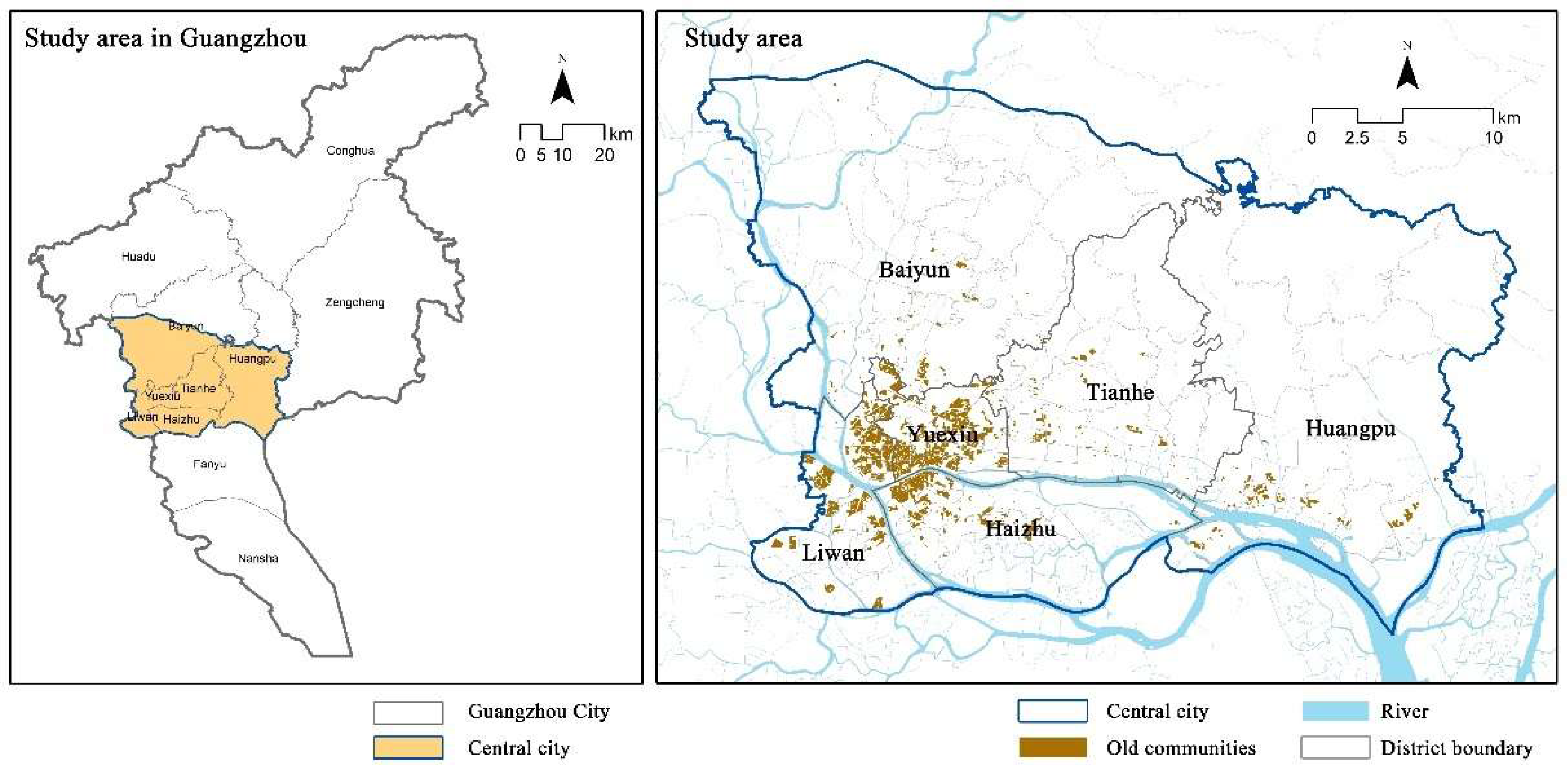
The list of old communities in this study was obtained from the Guangzhou Municipal Housing and Urban-Rural Development Bureau. Using this data, we refined and identified 1,096 old communities within central Guangzhou by comparing and correcting satellite imagery, data from the Third National Land Use Survey, and building outline data. These old communities cover a land area of 26 square kilometers within the 933 square kilometers of the central city, with a total building area of 67.6 million square meters and a population of approximately 1.4 million residents.
Figure 1.
Location of the study area.
2.2. Analytical Framework
2.2.1. Object Definition: Spatial Assets in Old Communities
Asset is an economic concept referring to valuable and scarce resources with specific ownership rights that can generate expected economic benefits [28]. The core idea behind "asset-based" community regeneration is to achieve profitability through the comprehensive exploration and effective utilization of various resources. This concept emerged in the 1960s when the U.S. federal government began to shift the leadership of community development to local governments and communities, while gradually reducing direct financial support [29]. In the 1990s, American scholars Kretzmann and McKnight recognized that relying excessively on external resources for community regeneration was unsustainable [30]. They proposed focusing on community assets to stimulate endogenous development [31]. This approach has since been widely adopted internationally, with strong support from the United Nations [32].
Scholars have proposed various classifications for community assets [33], including tangible assets such as spatial assets (land, buildings, etc.), vegetation, facilities, and equipment [34], as well as intangible assets like human resources, culture, and social capital [35]. Empirical studies by Huang [36], Kuang [37], and others in cities such as Chongqing and Shanghai have demonstrated that a comprehensive approach considering both tangible and intangible assets is effective for analyzing individual communities. However, intangible assets are significantly influenced by factors such as management practices, resident relationships, and historical and social contexts, making them difficult to quantify and compare uniformly across different communities. This limitation affects their applicability on a macro scale. Recently, advancements in geographic information technology and the availability of multi-source data have enhanced the accuracy of spatial resource identification [38,39], allowing for a more precise and in-depth analysis of tangible assets, particularly spatial assets, at a macro scale [40].
Therefore, this study focuses on analyzing the tangible spatial assets of old communities from a macro-scale planning and guidance perspective. These assets include land and building spaces that can be repurposed to generate economic benefits through reconstruction, functional upgrades, and changes in property rights. Key examples of such assets are idle facilities, unused spaces, inefficient shops, public housing, low-density housing, and low-rent housing, etc.
2.2.2. Dynamic logic: Leveraging "Endogenous Demand" and "Exogenous Opportunities" to Activate Spatial Asset Value
In China, old community regeneration projects fall into three categories: basic, improvement, and upgrading [41]. "Basic" regeneration projects, such as building insulation, waterproofing, and municipal pipeline replacement, are the most common and primarily funded by the government. In contrast, "improvement" and "upgrading" projects, which involve the transformation and utilization of inefficient spatial assets, are typically handled as individual initiatives, with large-scale coordinated efforts being notably lacking. Traditional regeneration often overlooks the unique conditions of different communities, including their location and urban environment, and lacks systematic, macro-level planning for the transformation and utilization of inefficient spatial assets. As a result, the economic value of spatial assets in old residential communities remains underutilized.
The reuse of spatial assets in old communities can enhance their economic value by leveraging the potential of use value while addressing both endogenous needs and exogenous opportunities (Figure 2). Endogenously, transforming inefficient spatial assets can address facility shortfalls, catering to diverse needs within the community, such as convenience services, parking, and leisure facilities. This transformation can generate economic benefits through facility operation, environmental maintenance, and community services. For instance, public housing units can be sold to residents, transferring ownership to the private sector, or expanded to improve living conditions. Fees can be charged to residents during the regeneration process [42]. Externally, the urban environment surrounding old communities influences how spatial assets are utilized [43]. For example, communities near office areas often experience higher rental demand from working individuals, while street shops near tourist attractions typically perform better [44]. Thus, regeneration efforts should capitalize on the influence of nearby facilities such as industrial zones, commercial centers, and subway stations to address residents' needs for work-life balance and commercial services [45].
2.2.3. Strategic Pathways: Five Approaches to Value Extraction and Coordinated Utilization of Spatial Assets in Old Communities
For individual communities, the focus of spatial asset utilization lies in maximizing both the continuous and one-time economic value through appropriate renovation strategies. Continuous economic value primarily refers to the income generated from operating spatial assets, such as rental income and service fees. In contrast, one-time economic value is derived from the proceeds obtained through the sale or disposal of spatial assets.
Comparing typical cases from the eight batches of "Replicable Policy Mechanisms for Urban Old Community Renovation" published by China's Ministry of Housing and Urban-Rural Development since 2020, alongside renowned renovation examples such as Beijing's Jinsong Community [46], Guangzhou's Liuyun Community [47], and Shanghai's Caoyang New Village [48,49], reveals that the current approaches to renovating and utilizing spatial assets in old communities in China generally fall into five main strategies (Table 1). In which, Asset extraction involves reusing idle facilities and spaces, such as boiler rooms and vacant lots, to meet resident service needs while generating economic value from operations and rental income. Neighborhood operation aims to enhance the commercial potential of old communities located near major commercial and cultural areas by upgrading the types and quality of operational assets. Tenancy operation involves professional agencies managing rental properties to better match supply with demand and maximize rental income through market-based methods. Public housing sale refers to selling designated public housing to meet housing needs and reduce maintenance pressures while generating revenue. Finally, Housing expansion and sale entails adding new construction where feasible to optimize residential layouts and improve living conditions, with the added space sold to offset renovation costs.
2.3. Data Acquisition and Processing
This study introduces an integrated analysis framework for multi-source data concerning the regeneration of old communities in central Guangzhou (Figure 3). The framework begins by classifying and identifying spatial assets in Guangzhou's old communities using data from land use, Points of Interest (POI), building outlines, and relevant urban planning standards. Next, the value potential of inefficient spatial assets is assessed using a market comparison method, which involves determining asset value by comparing similar cases and referencing comprehensive data such as rent and property prices. Finally, the "cost-revenue" analysis of regeneration funds for each community is performed to propose a coordinated regeneration plan, including the prioritization of projects.
2.3.1. Spatial Assets Identification and Economic Value Assessment
The study outlines methods for identifying and evaluating the economic value potential of five types of spatial assets in old communities.
- (1)
- Asset excavation of idle facilities and space
This study uses building outlines and POIs to identify vacant facilities and further calculates restricted building areas (Equation (1)). The selection criteria of idle facilities includes floors level is less than 2, the building structure is C or D in the four-level rating from A to D from best to worst, there is no POIs in the building outline. Besides, this study considers the space within the community other than necessary buildings and public space as idle space, and uses the community area, building base area and standard greening ratio for estimation.
This study identifies vacant facilities using building outlines and points of interest (POIs), and calculates restricted building areas (Equation (1)). Criteria for selecting idle facilities include buildings with fewer than two floors, structures rated C or D on a four-level scale (from A to D, with A being the best), and buildings lacking POIs within their outlines. Additionally, spaces within the community that are not occupied by necessary buildings or public areas are considered idle spaces. The estimation of these spaces uses the community area, building base area, and standard greening ratio (Equation (2)).
where Aib represents the area of idle facilites, Aba denotes the base area of the building, F indicates the number of floors.
where Ais is the area of idle space, Ac is the area of the community, Sgr is the standard green space rate from the 2019 "Guangzhou Urban and Rural Planning Technical Regulations" (25% for the old city and 30% for other urban areas), Aba is the base area of the building.
Aib = Aba×F
Ais = Ac×(1-Sgr) - Aba
Then, idle facilities are converted into commercial and service facilities to generate rental income, while idle spaces are repurposed as parking lots to collect parking fees. Consequently, we use data on shop rents and parking fees to assess their economic value potential (Equation (3)).
where Rae represents the revenue from asset excavation during a specific period, Rr is the shop rent from 58 Tongcheng (https://gz.58.com/), a widely used commercial rental information website in China, and Rp denotes the parking fee based on standards issued by the Guangzhou Municipal People's Government.
Rae = Aib×Rr+Ais×Rp
- (2)
- Neighborhood operation of operational facilities
This study utilizes POI data within the community to classify and calculate the total scale of various operational facilities. The average scale for each type of facility is determined through field surveys (Equation (4)).
where Aof represents the total area of operating facilities in communities, n denotes the number of types of operating facilities, Aai is the average area of each type, and Ni is the number of facilities of each type. Field surveys reveal that business facilities in Guangzhou's old communities fall into three categories, inclduing living and catering services (average area of about 30 m²), convenience and retail stores (average area of about 50 m²), and accommodation services and offices (average area of about 100 m²).
By considering development opportunities around the community to enhance business facility rents through the introduction of suitable functions and improved environmental quality, we calculated the economic potential. This was done using city, district, and cluster-level centers identified in urban planning to determine the scope of impact, with rent increases assessed based on interview data (Equation (5)).
where Rno represents the revenue from neighborhood operation mode during a specific period, Rr is the shop rent, and Rai is the annual growth rate of shop rents. The annual growth rates are based on the Guangzhou Territorial Spatial Master Plan (2018-2035), inclduing 8% within 1500m of city-level centers, 7% within 1000 m of district-level centers, and 6% within 500m of cluster-level centers.
Rno = Aof×Rr×(1+Rag)
- (3)
- Tenancy operation of low-rent housing
This study identified old communities with rents below the average within a 150-meter radius using housing rent data. Subsequently, occupancy rates and building area data were used to calculate the rentable building area (Equation (6)).
where Alr is the area of the low-rent housing available for rental, Aah is the total building area of the low-rent community, and Rr is the rental ratio of the community. This ratio, derived from the seventh census data for each district, is 0.46 for Liwan, 0.45 for Baiyun and Tianhe, 0.43 for Haizhu, 0.40 for Huangpu, and 0.38 for Yuexiu.
Alr = Aah×Rr
We further assessed the rental disparity between old communities and surrounding residential areas, focusing primarily on those old communities with rents lower than those in nearby areas (Equation (7)).
where Rto represents the revenue from tenancy operation mode during a specific period, Rsa is the average rent within 150 meters of the old communities, and Rag is the rent within the old communities.
Rto = Alr×(Rsa-Rag)
- (4)
- Public housing sale
This study utilized the public housing database from the Guangzhou Municipal Housing and Urban-Rural Development Bureau to measure the area of public housing in each community (Equation (8)).
where Aph represents the total area of public housing in the old communities, Aphi is the area of public housing i, and m denotes the number of public housing units.
According to Guangzhou regulations, public housing can be sold to residents at second-hand housing prices. Therefore, we use these prices to assess the economic potential (Equation (9)).
where Rps represents the revenue from the sale of public housing, and Psh is the second-hand house price, sourced from Beike (https://gz.ke.com/), a widely used housing transaction information website in China.
Rps = Aph×Psh
- (5)
- Expansion and sale of low-density housing
According to the "Guidelines for the Design of Micro-regeneration of Old Communities in Guangzhou 2019," Guangzhou’s old residential areas are classified into three types: courtyard-type, street-type, and commercial housing-type. Street-type areas are low-rise urban villages, and commercial housing-type areas are modern communities with full kitchen and bathroom facilities. These two types generally do not have potential or demand for increased density. In contrast, most courtyard-type communities, which consist of 4 to 6-story buildings with limited household space and lacking kitchen and bathroom facilities, do have the potential for reconstruction and increased building area. We first classified the communities based on building height, architectural form, and age. Then, we identified those with a floor area ratio (FAR) below the upper limit set by the "Technical Regulations on Urban and Rural Planning in Guangzhou 2019" and assessed the potential for increasing density in old courtyard-type communities. (Equation (10)).
where Adi represents the density-increasing potential of the old communities, Aah is the expansion area potential per household, and Nh is the number of households in the communities. In practice, some communities are significantly below the planned floor area ratio (FAR), making it challenging to achieve the planned FAR due to the extensive reconstruction required. Therefore, we adopted an increase of 7 m² per household to accommodate the addition of kitchen and bathroom facilities, based on the approach used in Caoyang New Village in Shanghai.
Adi = Aah×Nh
The additional buildings can be sold to residents at second-hand house prices. Therefore, we use these prices to estimate the economic potential (Equation (11)).
where Res is the revenue of expansion and sale, Psh is the second-hand house price.
Res = Aph×Psh
2.3.2. Project Regeneration Sequencing and Overall Coordination
- (1)
- Sequence of regeneration
The study used expert questionnaires and the Analytic Hierarchy Process (AHP) to determine the regeneration sequence. First, we selected five indicators across three categories—building characteristics, facility environment, and usage needs: building age, structure, density, facility completeness, and population density. We then distributed questionnaires to experts and scholars experienced in the planning, design, and research of old community regeneration in Guangzhou, asking them to compare the importance of these indicators in pairs. After conducting a consistency test, we used the AHP method to assign weights to each indicator. These weights were then used to calculate the urgency of regeneration for each community. Finally, we divided the regeneration tasks into a 5-year plan according to the overall goals set by the Guangzhou Municipal Government.
- (2)
- Surplus of regeneration
This study used a "cost-revenue" balance approach to propose a coordinated path for regenerating old communities across various scales and timelines. It is important to note that in actual financial calculations, factors such as exchange rates, taxes, and discount rates need to be considered. However, this study focused on a macro-level estimation of economic value and did not account for these factors, aiming for a clearer and more intuitive demonstration of the results [50].
For a single community, the surplus is calculated as the revenue minus the cost. Revenue includes income generated from the five types of spatial assets, while the cost encompasses the investment required for the regeneration of various old residential areas (Equation (12)).
where St is the surplus from the regeneration of a single community over a specified period, Rps, Res, Rae, Rno, and Rto represent the revenues from different regeneration modes outlined in section 2.3.1. Co denotes one-time costs, and Cc represents continuous costs. This study estimated these costs using the 2018 "General Rules for Construction Project Pricing in Guangdong Province" and the 2021 "Cost Accounting Method for Comprehensive Regeneration of Old Urban Villages in Guangzhou." One-time costs include data surveys, plan preparation, overall reconstruction, and unforeseen expenses, while continuous costs cover commercial and residential property management service fees, as well as the cost of renting houses from original owners in the unified rental operation model.
St = (Rps+Res–Co)+(Rae+Rno+Rto-Cc)×T
In practice, varying resource endowments often make it challenging to achieve financial balance within a single community's regeneration project. Therefore, it is essential to integrate different communities and achieve financial balance by combining various project types with different time sequences, including recent and future projects, as well as projects with both positive and negative profits, at the area level (Equation (13)).
where Sta is the surplus from regenerating old communities at the area level, j represents the number of communities in the area, and t denotes the time since regeneration. Rpsj, Resj, Rae, Rnoj, and Rtoj are the revenues from different regeneration modes for community j, Coj and Ccj represent the one-time and continuous costs for community j respectively, Ttj indicates the time elapsed since the regeneration of community j.
3. Results
3.1. Economic Potential of Spatial Assets in Old Communities
Estimates reveal that spatial assets are widely distributed across old communities in central Guangzhou. Specifically, approximately 80% of these communities have idle facilities, averaging around 185 m2 per community. About 90% of the old communities contain idle space, with an average area of about 5,000 m2 per community. Additionally, around 90% have business facilities, averaging about 1,850 m2 per community. Approximately 30% of the old communities include public housing, with an average area of 750 m2 per community. Around 50% have low-rent housing, totaling 32 million m2. Furthermore, about 10% of the old communities have potential for increased density, with an estimated potential of around 350,000 m2 (Figure 4).
If all these spatial assets are utilized, the old communities in central Guangzhou could generate a one-time revenue of approximately 16 billion yuan. This includes around 2.5 billion yuan from the sale of public housing and about 13 billion yuan from the sale of expanded residential buildings. Additionally, sustainable annual revenue could reach about 17.5 billion yuan, with approximately 5.5 billion yuan from asset excavation, 3 billion yuan from neighborhood operations, and 6.5 billion yuan from tenancy operations. Furthermore, providing property services to the regenerated communities could yield an additional 2.5 billion yuan annually (Figure 5).
3.2. Overall Arrangement of the Regeneration of Old Communities
In determining the regeneration sequence, the study distributed 35 questionnaires and collected 34 valid responses. Using the AHP method, the weights of the various indicators were as follows: building structure (0.248) and building age (0.122) under the building category; building density (0.102) and facility perfection (0.184) under facility environment; and population density (0.344) under usage needs. Based on these weights, the regeneration sequence for the old communities was established (Figure 6).
In estimating the costs for old communities in central Guangzhou, the one-time expenses amount to approximately 23 billion yuan, with continuous costs around 16 billion yuan per year. Factoring in both the costs and the revenue generated from spatial asset utilization, the one-time deficit is around 7 billion yuan, while the annual continuous surplus is about 1.8 billion yuan. As a result, the overall balance of profit and income at the central urban level is projected to be achieved by the sixth year (Figure 7).
The sub-district serves as both the basic administrative unit of the city and the fundamental governance entity for the regeneration of old communities in China. Therefore, this study uses sub-districts as the area unit to calculate the cost-revenue balance for community regeneration. The analysis shows that in the sixth year post-regeneration, when the central city achieves an overall positive surplus, 32 sub-districts will have positive surpluses, while 62 will still have negative surpluses. To address this, the study suggests combining sub-districts with positive and negative surpluses, as illustrated in Figure 8, to promote overall economic balance. Specifically, Yuexiu and Liwan districts can achieve a positive surplus by internal combination, whereas Tianhe, Haizhu, Baiyun, and Huangpu districts, which have negative surpluses, can balance their finances by combining with Yuexiu and Liwan.
4. Discussion
4.1. Research Reflection
This study addresses the core challenge of insufficient economic value in the regeneration of old communities. Building upon existing research methods that focus on individual communities or projects [46,47,48], we extend the analysis to the macro scale of city and district, integrating financial potential exploration with traditional spatial reconstruction design. Five methods for identifying and assessing the value potential of spatial assets are proposed. Furthermore, we refine the urban regeneration financial model put forth by scholars like Zhao [19], You [51], Lin [52], and Tang [53], applying it to the regeneration planning of old communities in Guangzhou's central city. This provides a technical framework and assessment method that can inform the regeneration efforts in other cities.
However, the macro-scale measurements in this study require further validation and refinement at the micro scale to enhance accuracy. In future research, expanding data sources and optimizing calculation methods will be essential. Improving the database structure for macro-scale spatial asset identification and value assessment, alongside conducting regeneration planning and funding estimates for individual communities at the micro level, can help create a mutual validation between macro guidance and micro application. This research framework could then be applied to other cities, promoting the advancement of asset identification and value assessment methods for the regeneration of old communities.
4.2. Implementation Recommendations
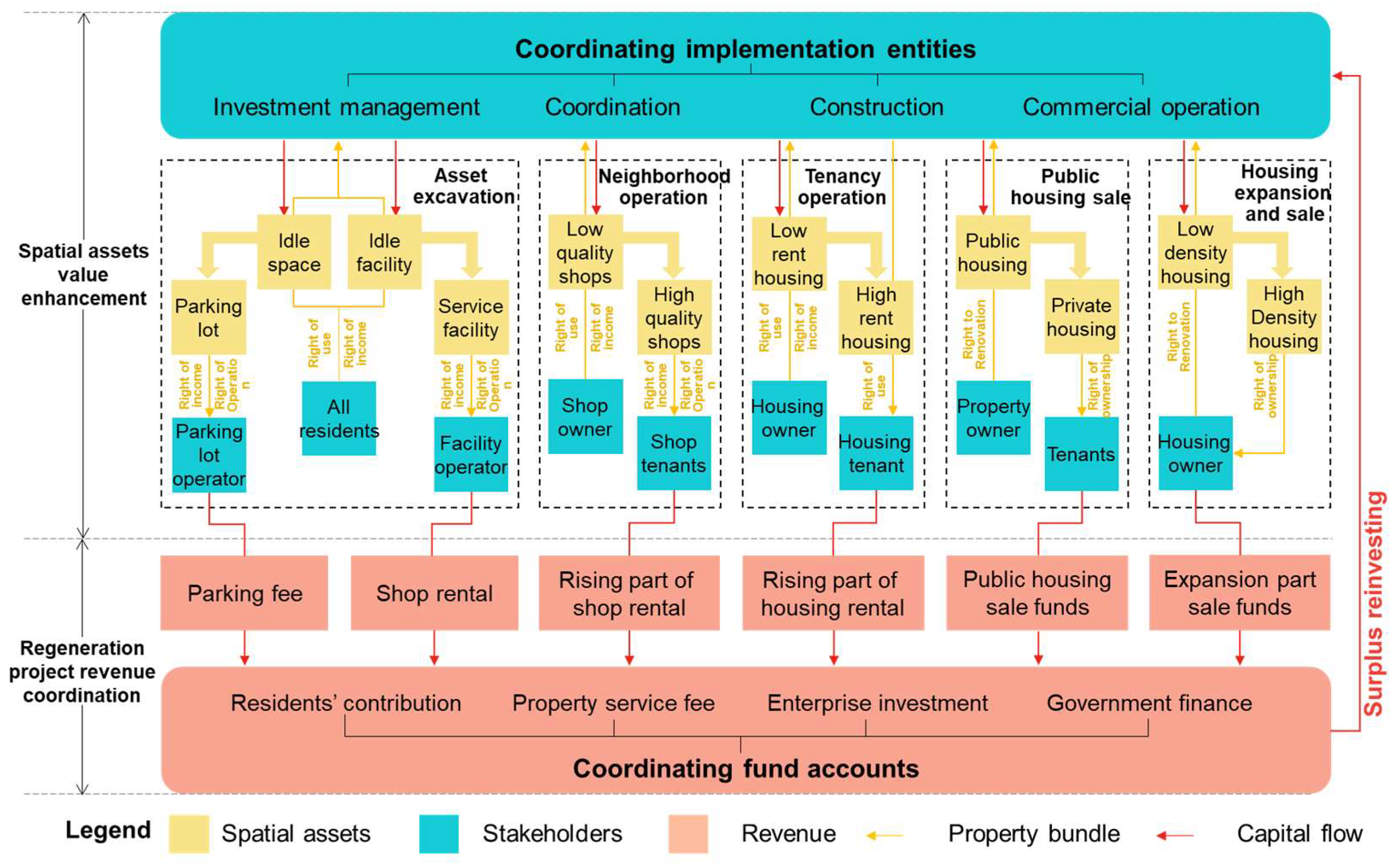
The study highlights that coordinated arrangement at the area level is key to the sustainable regeneration of old communities. However, challenges remain in managing scattered spatial assets and complex revenue relationships, which hinder the effective use of various assets and coordination of project benefits. The Community Land Trust system, used in the U.S. and U.K. [54,55], offers a useful reference by entrusting third-party enterprises to oversee the reconstruction, operation, and management of community assets. For Guangzhou, it is recommended to establish "coordinating implementation entities" and "coordinating fund accounts" at the sub-district level to enhance asset value and balance costs and revenues through better asset management and capital flow (Figure 8).
Figure 8.
Recommendations for enhancing the value of spatial assets and coordinating benefits in the regeneration of old communities.
Figure 8.
Recommendations for enhancing the value of spatial assets and coordinating benefits in the regeneration of old communities.
4.2.1. Coordinating Implementation Entities
We recommend improving the value of spatial assets by systematically allocating property rights bundles through coordinating implementation entities [56]. Currently, idle facilities and spaces in old communities are owned collectively by all residents, while shops and housing are privately owned, and public housing belongs to the government or enterprises. This fragmented ownership complicates the coordinated use of these assets [57]. A professional implementation entity could integrate and manage these diverse property rights. These entities, which can cover one or more sub-districts, would involve companies with expertise in construction, management, and commercial operations. They would be granted the rights to use, profit from, and manage various spatial assets, leveraging their expertise to ensure the effective regeneration and sustainable operation of the communities.
4.2.2. Coordinating Fund Accounts
We recommend establishing coordinated fund accounts to streamline the capital flow of regeneration projects and achieve surplus balance. Currently, various incomes—such as rents from commercial and residential properties, sales of public housing, and revenue from property services—are managed by different entities, making it hard to reinvest these funds into regeneration efforts. To address this, the coordinating fund accounts, managed by the implementation entity and overseen by the government, would centralize the income from spatial assets, government funds, and resident contributions. This ensures the necessary funding for regeneration projects and covers ongoing operational costs like facility maintenance, safety, and community activities.
5. Conclusions
Roger Trancik, in his book Finding Lost Space, argues that lost spaces represent both challenges and opportunities [58]. Urban regeneration involves rediscovering these lost spaces and revitalizing them. The case of Guangzhou illustrates that many old communities contain such spaces. By aligning residents' needs with urban development opportunities, these spaces can significantly increase in economic value through enhanced property use.
This study treats passive and inefficient spaces in old residential areas as active spatial assets. It introduces specific methods for identifying, valuing, and arranging these assets, applies them empirically in central Guangzhou, and offers practical recommendations. These approaches can shift old community regeneration from relying solely on government investment to a market-driven model that attracts private participation. Practically, this study provides a reference for old community regeneration worldwide, transitioning from investment and demand-oriented approaches to value-added, proactive, and systematic strategies. Theoretically, it advances the field by integrating asset identification and value assessment into urban planning and design, moving from a focus on physical reconstruction to sustainable urban governance and operation.
Author Contributions
Conceptualization, X.Y. and Y.T.; methodology, Y.T. and L.Y.; software, X.Y.; validation, Y.T. and L.Y.; formal analysis, X.Y.; investigation, Y.T. and Y.A.; resources, L.Y.; data curation, X.Y.; writing—original draft preparation, X.Y.; writing—review and editing, Y.T.; visualization, X.Y.; supervision, Y.T.; project administration, Y.A.; funding acquisition, Y.A. All authors have read and agreed to the published version of the manuscript.
Funding
This research was funded by China’s National Key Research and Development Program, grant number 2022YFC3800301, Guangzhou Urban Planning and Design Survey Research Institute Co., Ltd. “Research on the Micro-profit Sustainable Regeneration Model of Old Communities in Guangzhou”, grant number 2022 Research (Institute) 103 and School of Architecture, Tsinghua University -China Construction Jiuhe Joint Research Center Fund, grant number 2024-A1.
Data Availability Statement
The data presented in this study are available on request from the corresponding author. (please specify the reason for restriction, e.g., the data are not publicly available due to privacy or ethical restrictions.)
Acknowledgments
Special thanks to the experts from the Urban Regeneration Project Construction Management Office of the Guangzhou Municipal Housing and Urban-Rural Development Bureau for careful guidance on the project.
Conflicts of Interest
The authors declare no conflicts of interest.
References
- Xinhua News Agency: Build beautiful cities and towns together and realize the dream of a safe home -- "China in the past decade" series of thematic press conferences focus on the achievements of housing and urban and rural construction in the new era. Available online: http://www.gov.cn/xinwen/2022-09/15/content_5709861.htm (accessed on 6 September 2024).
- People's Daily: In the first 10 months, 52,100 old urban communities were newly renovated nationwide. Available online: https://www.gov.cn/xinwen/2022-12/11/content_5731326.htm (accessed on 6 September 2024).
- Li, W.; Li, Q.; Liu, Y.; Wang, S.; Jia, L. Decision-making factors for renovation of old residential areas in Chinese cities under the concept of sustainable development. Environmental Science and Pollution Research. 2023, 30, 39695–39707. [CrossRef]
- Liu, G.; Hu, W.; Xie, F. Exploration and practice of renovation models for old residential communities in cities: A comparative study based on Chengdu, Guangzhou, and Shanghai. Urban and Rural Construction. 584, 05, 54–57.
- Zhu, S.; Li, D.; Jiang, Y. The impacts of relationships between critical barriers on sustainable old residential neighborhood renewal in China. Habitat International. 2020, 103, 102232. [CrossRef]
- Liu, Y.; Li, H.; Li, W.; Wang, S. Renovation priorities for old residential districts based on resident satisfaction: An application of asymmetric impact-performance analysis in Xi’an, China. PLOS ONE. 2021. 16,7. [CrossRef]
- Gent, W. The Context of Neighbourhood Regeneration in Western Europe. 2008. http://hdl.handle.net/11245/2.62178.
- Mareeva, V. M.; Ferwati, M. S.; Garba, S. B. Sustainable Urban Regeneration of Blighted Neighborhoods: The Case of Al Ghanim Neighborhood, Doha, Qatar. Sustainability, 2022, 14(12), 6963; [CrossRef]
- Laska, S.B.; Spain, D. Back to the City: Issues in Neighborhood Renovation. Pergamon Press. 2016.
- Couch, C.; Fraser, C.; Percy, S. Urban Regeneration in Europe. Blackwell Science. 2008.
- Blanco, E.; Raskin, K.; Clergeau, P. Towards regenerative neighbourhoods: An international survey on urban strategies promoting the production of ecosystem services. Sustainable Cities and Society. 2022, 80, 103784. [CrossRef]
- Shahraki, A. Renovation Programs in Old and Inefficient Neighborhoods of Cities. City, Territory, and Architecture. 2022, 9, 28. [CrossRef]
- Tian, L.; Xia, J. A comparative study of international models for the supply and development of rental housing and its implications for China. Architectural Journal. 2022, 643, 06, 11–17.
- Peng, Z.; Zhao, S.; Shen, L.; Ma, Y.; Zhang, Q.; Deng, W. Retrofit or rebuild? The future of old residential buildings in urban areas of China based on the analysis of environmental benefits. International Journal of Low-Carbon Technologies. 2022, 16, 4, 1422–1434. [CrossRef]
- Tang, Y.; Zhang, L.; Yin, X. Urban regeneration system and Beijing’s exploration: Multiple Stakeholders-Capital Source-Physical Space-Operation Service. Beijing: China City Press, 2023.
- Zhao, Y.; Shen, J. The last opportunity for growth transformation: The financial trap of urban renewal. Urban Planning. 2023, 47, 10, 11–22.
- Liu, D. Theoretical prototype and solutions to the collaboration dilemma in old residential community renewal: An analytical framework based on public choice theory. Urban Planning. 2022, 46, 12, 57–66.
- Zhang, Z.; Pan, J.; Qian, J. Collaborative governance for participatory regeneration practices in old residential communities within the Chinese context: Cases from Beijing. Land. 2023, 12, 7, 1427. [CrossRef]
- Zhao, Y.; Song, T. Financial balance analysis of urban renewal: Models and practices. Urban Planning. 2021, 45, 9, 53–61.
- Liu, G.; Fu, X.; Han, Q.; Huang, R.; Zhuang, T. Research on the collaborative governance of urban regeneration based on a Bayesian network: The case of Chongqing. Land Use Policy. 2021, 109, 105640. [CrossRef]
- Shen, T.; Yao, X.; Wen, F. The Urban Regeneration Engine Model: An analytical framework and case study of the renewal of old communities. Land Use Policy. 2021, 108, 105571. [CrossRef]
- Li, X.; Hui, E. C. M.; Chen, T.; Lang, W.; Guo, Y. From Habitat III to the new urbanization agenda in China: Seeing through the practices of the “three old renewals” in Guangzhou. Land Use Policy. 2019, 81, 513–522. [CrossRef]
- Tang, Y.; Yang, D. Urban Regeneration in China: Institutional Innovation in Guangzhou, Shenzhen, and Shanghai. Routledge, 2022.
- Wan, L. Exploring the dilemmas and pathways of sustainable micro-renovation in old residential areas of Guangzhou. Urban Observation. 2019, 60, 2, 65–71.
- Zhang, L.; Lin, Y.; Hooimeijer, P.; Geertman, S. Heterogeneity of public participation in urban redevelopment in Chinese cities: Beijing versus Guangzhou. Urban Studies. 2019, 57, 9. [CrossRef]
- Liu, Y.; Zhou, K.; Chen, X. Evaluation and extended reflections on the micro-renovation implementation of old residential areas in Guangzhou: Practice, effectiveness, and dilemmas. Urban Development Studies. 2020, 27, 10, 116–124.
- Gu, Z.; Zhang, X. Framing social sustainability and justice claims in urban regeneration: A comparative analysis of two cases in Guangzhou. Land Use Policy. 2021, 102, 105224. [CrossRef]
- Ge, J. The essence, definition, and characteristics of the concept of assets. Economic Dynamics. 2005, 05, 8–12.
- Huang, L. From "demand-based" to "asset-based": Insights from contemporary American community development studies. Interior Design. 2012, 27, 5, 3–7.
- Kretzmann, J.; McKnight, J. Building Communities from the Inside Out: A Path Toward Finding and Mobilizing a Community's Assets. Chicago: ACTA Publications, 1993.
- Kretzmann, J.; McKnight, J. Assets-based community development. National Civic Review. 1996, 85, 4, 23–29.
- Zhou, C. Endogenous community development: "Asset-based" community development theory and practical pathways. Social Work. 2014, 253, 4, 41–49+153.
- Rainey, V. D.; Robinson, L. K.; et al. Essential forms of capital for sustainable community development. American Journal of Agricultural Economics. 2003, 85, 3, 708–715.
- Gare, P. G.; Anna, L. H. Asset Building & Community Development. Los Angeles: Sage Publications, 2008.
- Ronald, F. F.; William, T. D. Urban Problems and Community Development. Washington, DC: Brookings Institution Press, 1999.
- Huang, L.; Luo, J.; Shen, M. Asset-based urban community renewal planning: An empirical study of Yuzhong District, Chongqing. Urban Planning Journal. 2022, 269, 3, 87–95.
- Kuang, X.; Li, J.; Lu, Y. Paths and practices of old community renewal based on the "asset-based" theory. Planner. 2022, 38, 3, 82–88.
- Li, W. Mapping urban land use by combining multi-source social sensing data and remote sensing imagery. Earth Science Informatics. 2021, 14, 1537–1545. [CrossRef]
- Anugraha, A. S.; Chu, H. J.; Ali, M. Z. Social sensing for urban land use identification. ISPRS International Journal of Geo-Information. 2020, 9, 9, 550. [CrossRef]
- Alogayell, H. M.; Kamal, A.; Alkadi, I. I.; Ramadan, M. S.; Ramadan, R. H.; Zeidan, A. M. Spatial modeling of land resources and constraints to guide urban development in Saudi Arabia’s NEOM region using geomatics techniques. Frontiers in Sustainable Cities. 2024, 6. [CrossRef]
- General Office of the State Council: Guiding Opinions of the General Office of the State Council on Comprehensively Promoting the Renovation of Old Urban Residential Communities (Guobanfa [2020] No. 23). Available online: https://www.gov.cn/zhengce/content/2020-07/20/content_5528320.html (accessed on 6 September 2024).
- Sun, Y.; Luo, S. A study on the current situation of public service facilities’ layout from the perspective of 15-minute communities: Taking Chengdu of Sichuan Province as an example. Land. 2024, 13, 7, 1110. [CrossRef]
- Dai, X.; Li, Z.; et al. The spatio-temporal pattern and spatial effect of installation of lifts in old residential buildings: Evidence from Hangzhou in China. Land. 2022, 11, 9, 1600. [CrossRef]
- Tan, Y.; Song, J.; et al. The mechanism of street markets fostering supportive communities in old urban districts: A case study of Sham Shui Po, Hong Kong. Land. 2024, 13, 3, 289. [CrossRef]
- Tang, Y.; Yin, X.; Liu, S. Reconstructing the supply and dynamics of urban regeneration systems in China. Urban and Regional Planning Research. 2022, 14, 1, 1–19.
- Liang, Y.; Jiang, M.; Liu, C.; et al. Issues and strategies in the renovation of old residential communities in Beijing under a funding balance perspective: A case study of Jinsong North Community. Shanghai Urban Planning. 2022, 02, 86–92.
- Fei, Y.; Chen, M.; Lin, Z.; et al. Achieving diverse integration through spatial innovation: Reflections on the renewal path of Xinyun Community along the new central axis in Guangzhou. Urban Development Studies. 2022, 29, 11, 65–72.
- Yang, C.; Xin, L. Social performance evaluation of the Caoyang New Village community renewal: Based on social network analysis. Urban and Rural Planning. 2020, 01, 20–28.
- Zhang, Z.; Tang, X.;Wang, Y. Evaluation of the intergenerational equity of public open space in old communities: A case study of Caoyang New Village in Shanghai. Land. 2023, 12, 7, 1347. [CrossRef]
- Zhou, Y. Real Estate Pricing and Practice. Harbin Institute of Technology Press, 2021.
- You, H.; Wang, C. L. Suggestions for promoting rental housing development in major cities in the new era: Reflections on why, what, and how. Beijing Planning Review. 2021, 198, 3, 11–15.
- Wu, Z.; Wu, J.; Zhang, J.; et al. Academic discussion on the implementation mechanism of urban old community renewal and renovation. Urban Planning Journal. 2021, 263, 3, 1–10.
- Tang, Y. Financial challenges and pathways for multi-capital involvement in old residential community renovation. Beijing Planning Review. 2020, 195, 6, 79–82.
- Qiao, Z.; Qin, J.; Li, D.; et al. The community land trust system and its comparison with the affordable housing system. Urban Development Studies. 2009, 16, 9, 33–36.
- Chen, F.; Shen, Y. Analysis and lessons from the community land trust model in the United States. Business and Management. 2015, 04, 144–146.
- Liu, F.; Zhang, Y. Analysis of urban renewal systems in Shenzhen: A perspective on property rights restructuring and benefit-sharing. Urban Development Studies. 2015, 22, 2, 25–30.
- Du, J. Technical approach and commentary on the three-dimensional definition of land property rights. China Land Science. 2023, 37, 11, 11–18.
- Trancik, R. Finding Lost Space: Theories of Urban Design. John Wiley & Sons, Inc., 1991.
Figure 2.
The driving force behind spatial asset value enhancement in old communities: synergizing "endogenous demand" and "exogenous opportunities".
Figure 2.
The driving force behind spatial asset value enhancement in old communities: synergizing "endogenous demand" and "exogenous opportunities".
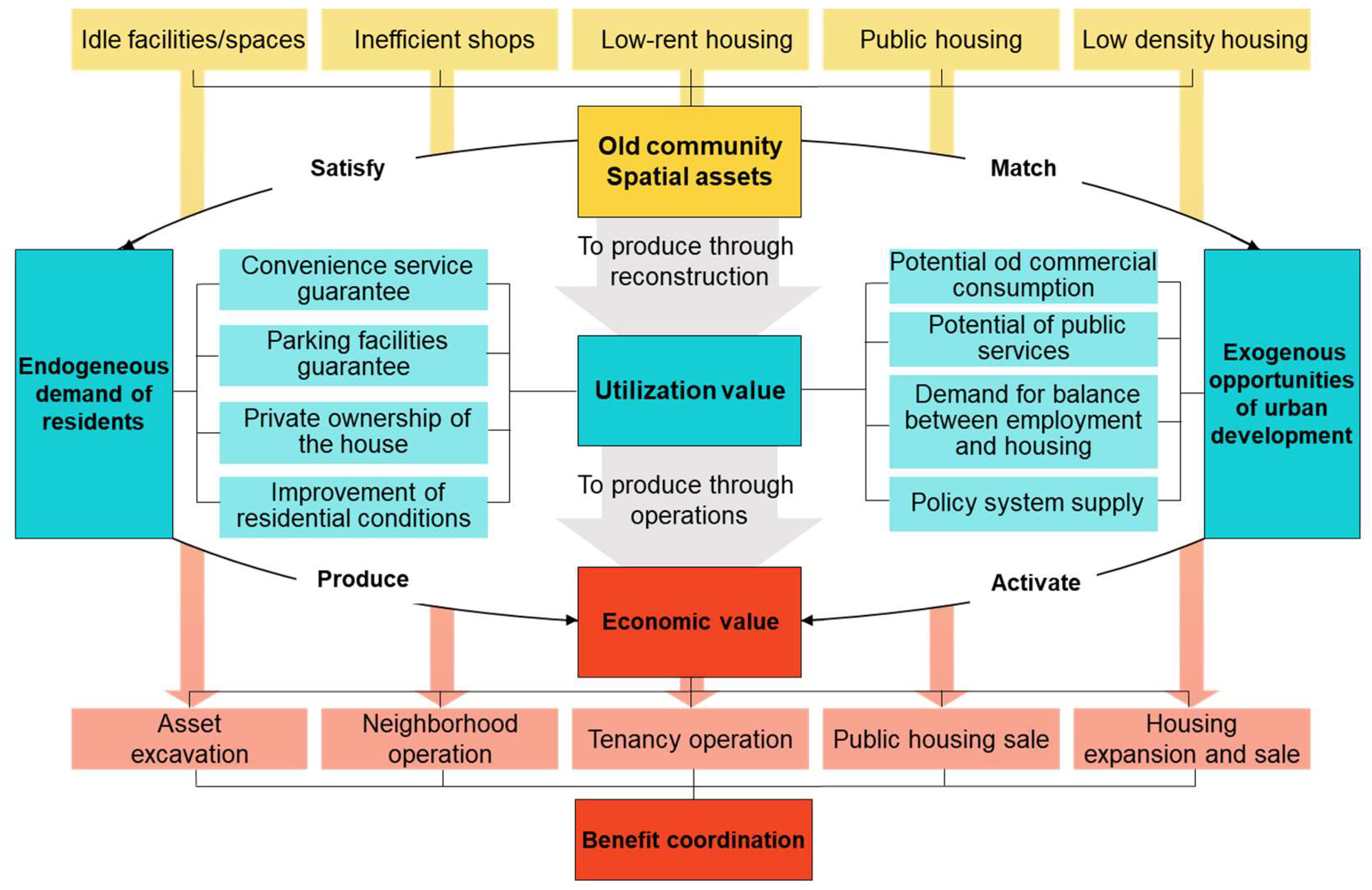
Figure 3.
Multi-source data analysis framework for the regeneration of old communities in central Guangzhou.
Figure 3.
Multi-source data analysis framework for the regeneration of old communities in central Guangzhou.
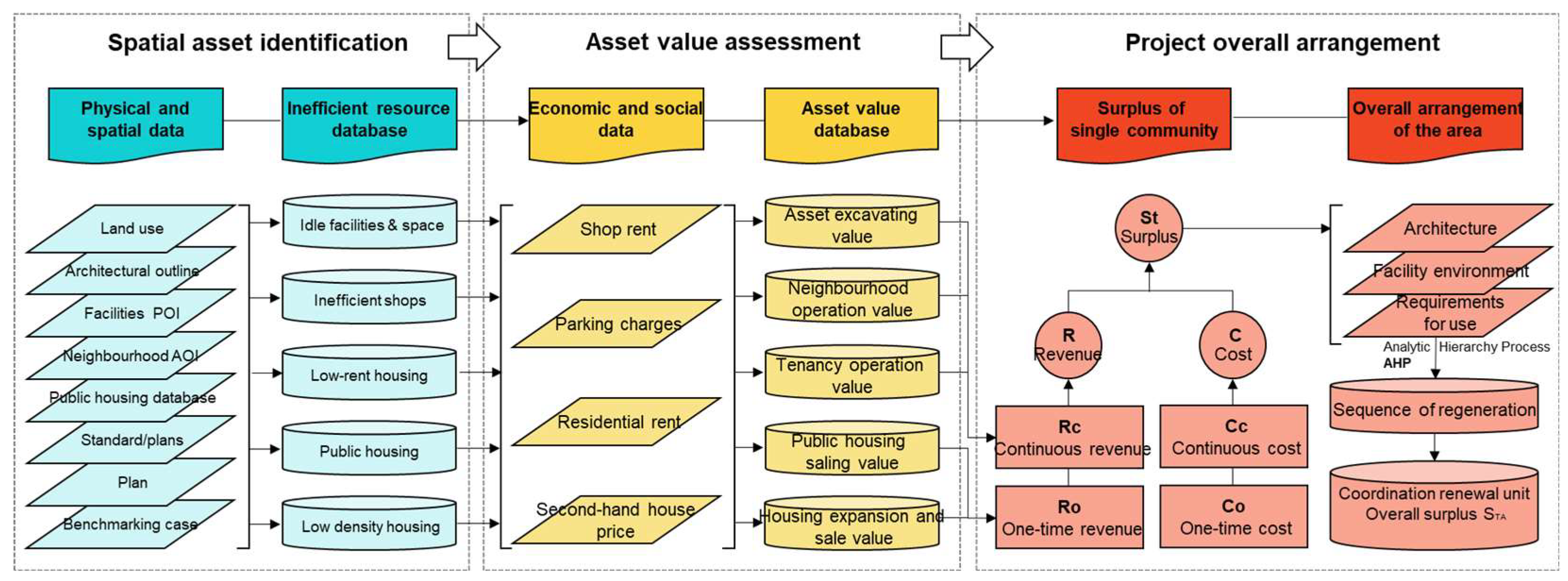
Figure 4.
Spatial assets in old communities of central Guangzhou. (a) idle facilities; (b) idle spaces; (c) inefficient shops; (d) low-rent housing; (e) public housing; (f) housing expansion potential.
Figure 4.
Spatial assets in old communities of central Guangzhou. (a) idle facilities; (b) idle spaces; (c) inefficient shops; (d) low-rent housing; (e) public housing; (f) housing expansion potential.
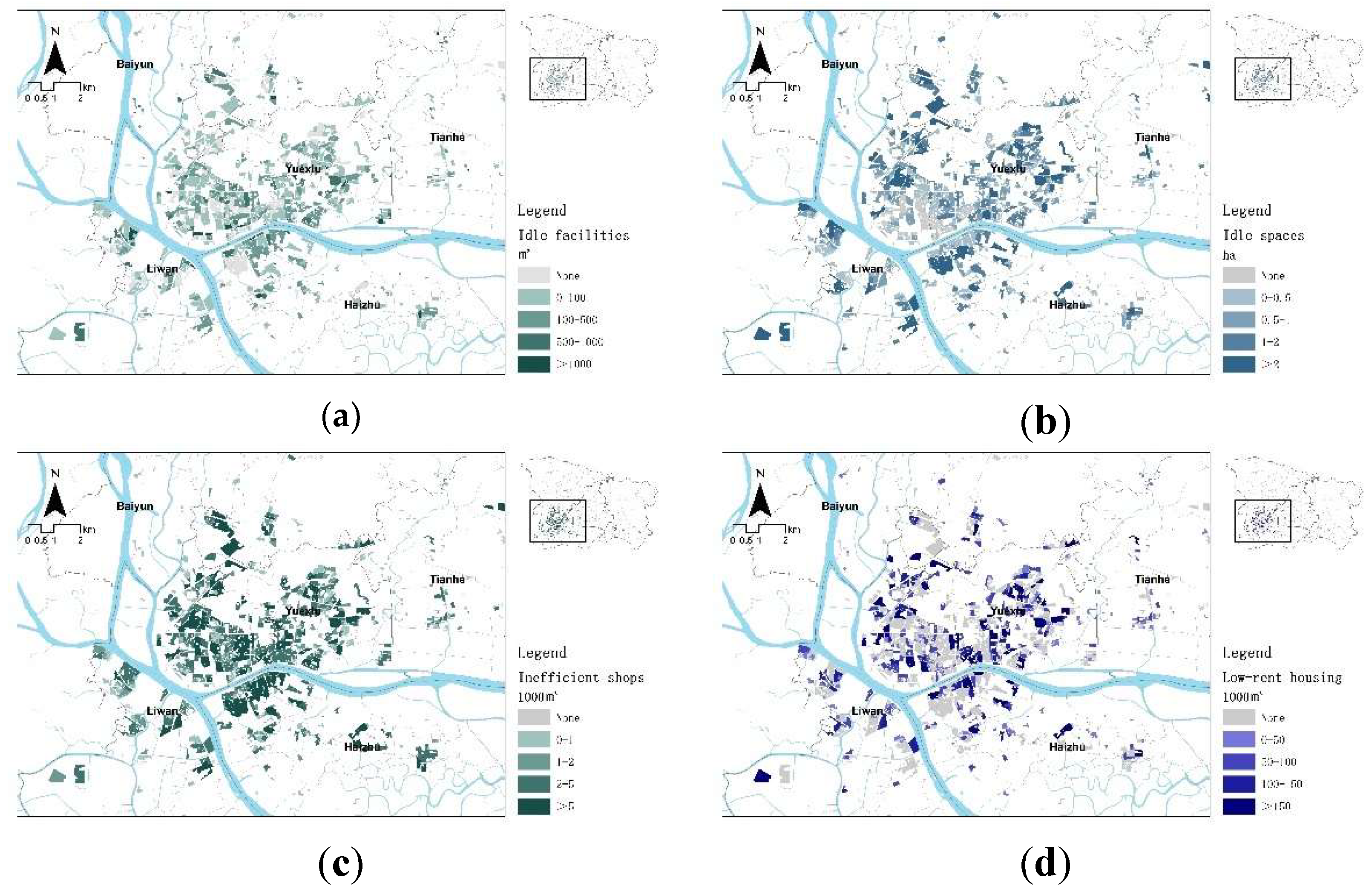
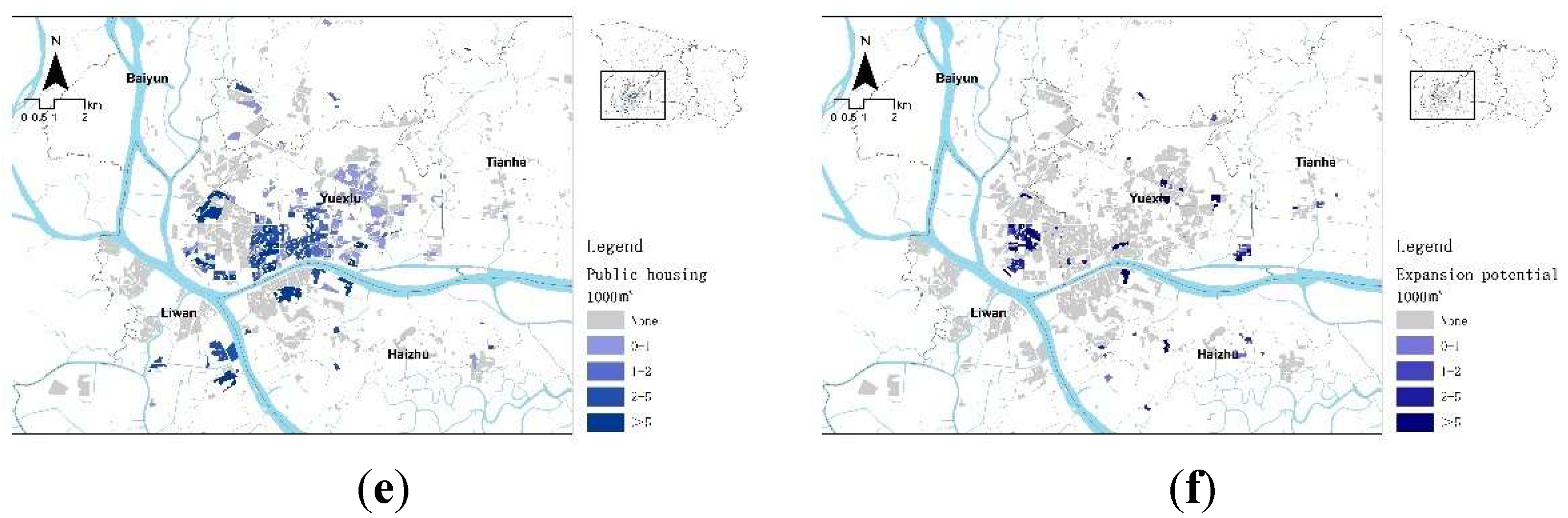
Figure 5.
Economic value of spatial assets in old communities of central Guangzhou. (a) asset excavation; (b) neighborhood operation; (c) tenancy operation; (d) public housing sale; (e) housing expansion and sale; (f) property services fee.
Figure 5.
Economic value of spatial assets in old communities of central Guangzhou. (a) asset excavation; (b) neighborhood operation; (c) tenancy operation; (d) public housing sale; (e) housing expansion and sale; (f) property services fee.
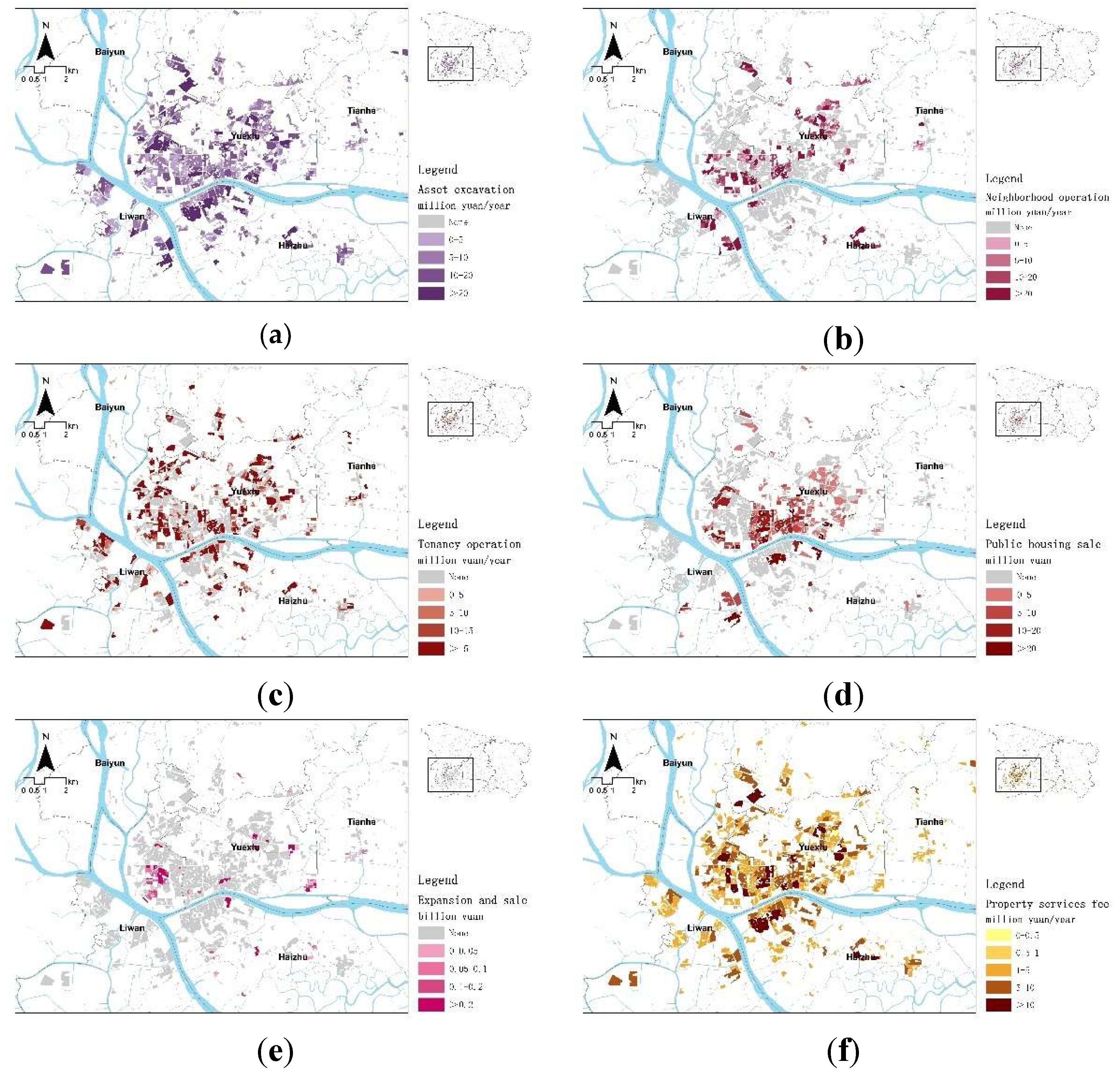
Figure 6.
Sequence arrangement for old community regeneration in the central Guangzhou.
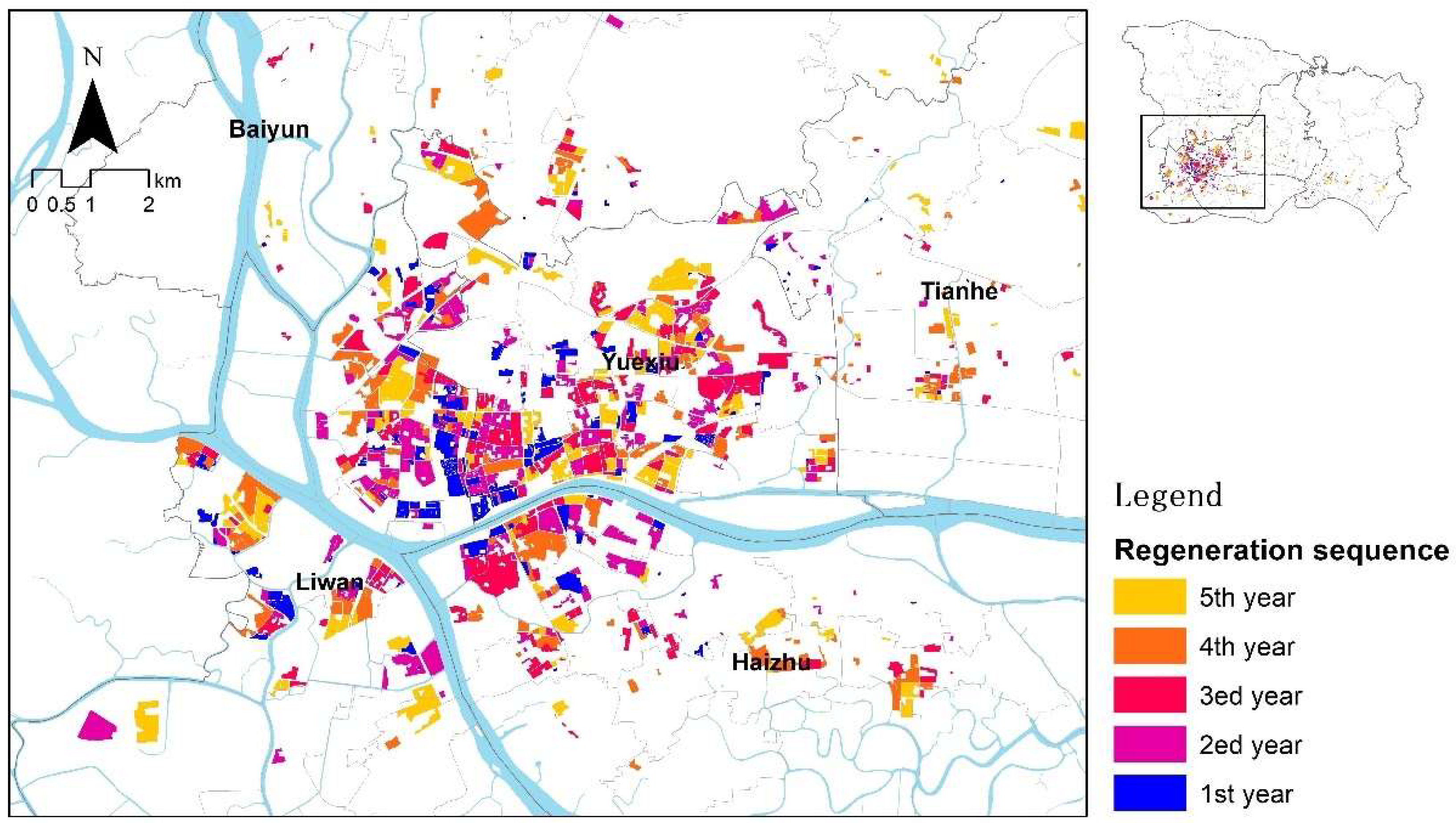
Figure 7.
Overall surplus for old community regeneration in the central Guangzhou.
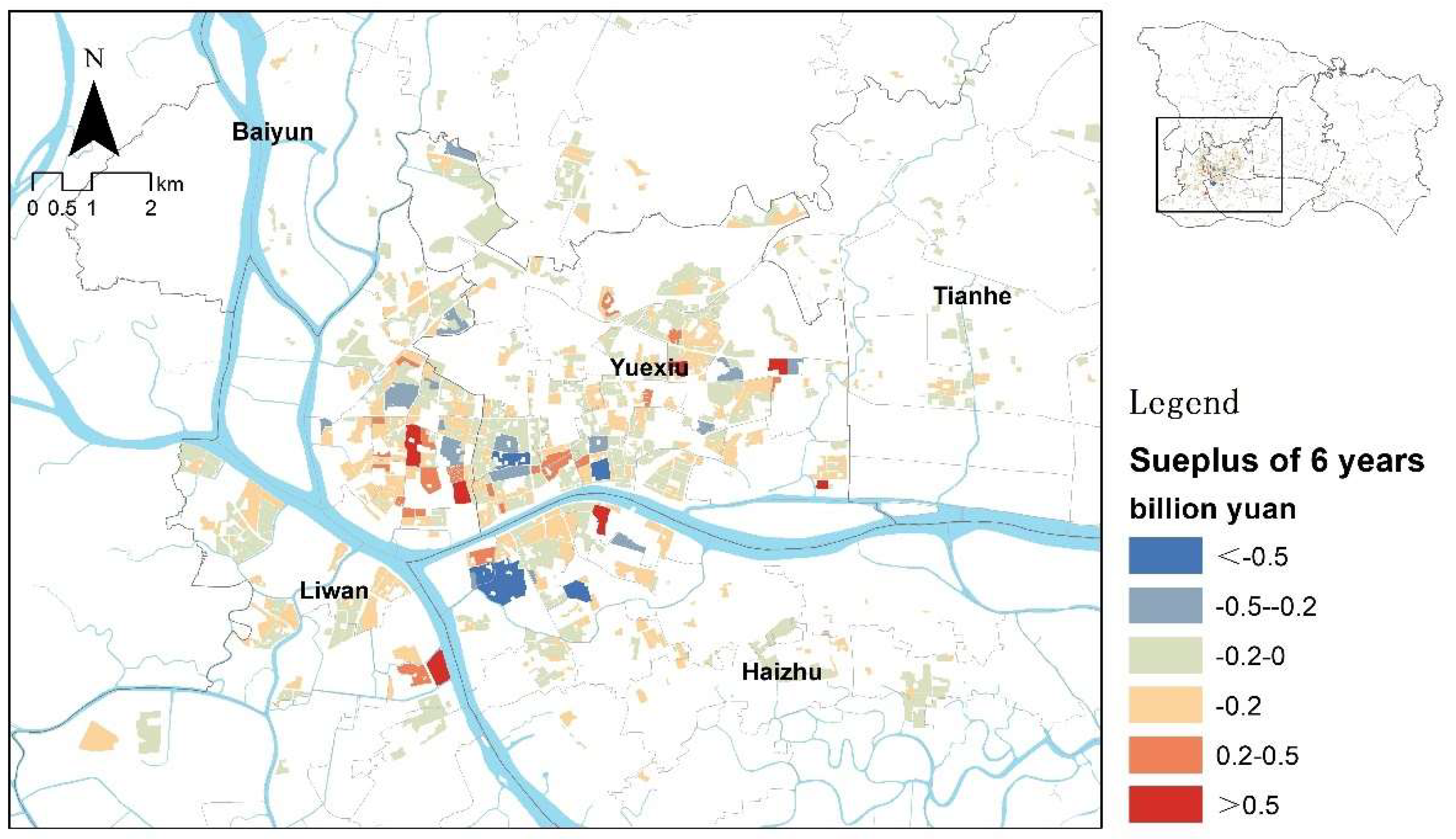
Figure 8.
Surplus of old communities in sub-districts of central Guangzhou.
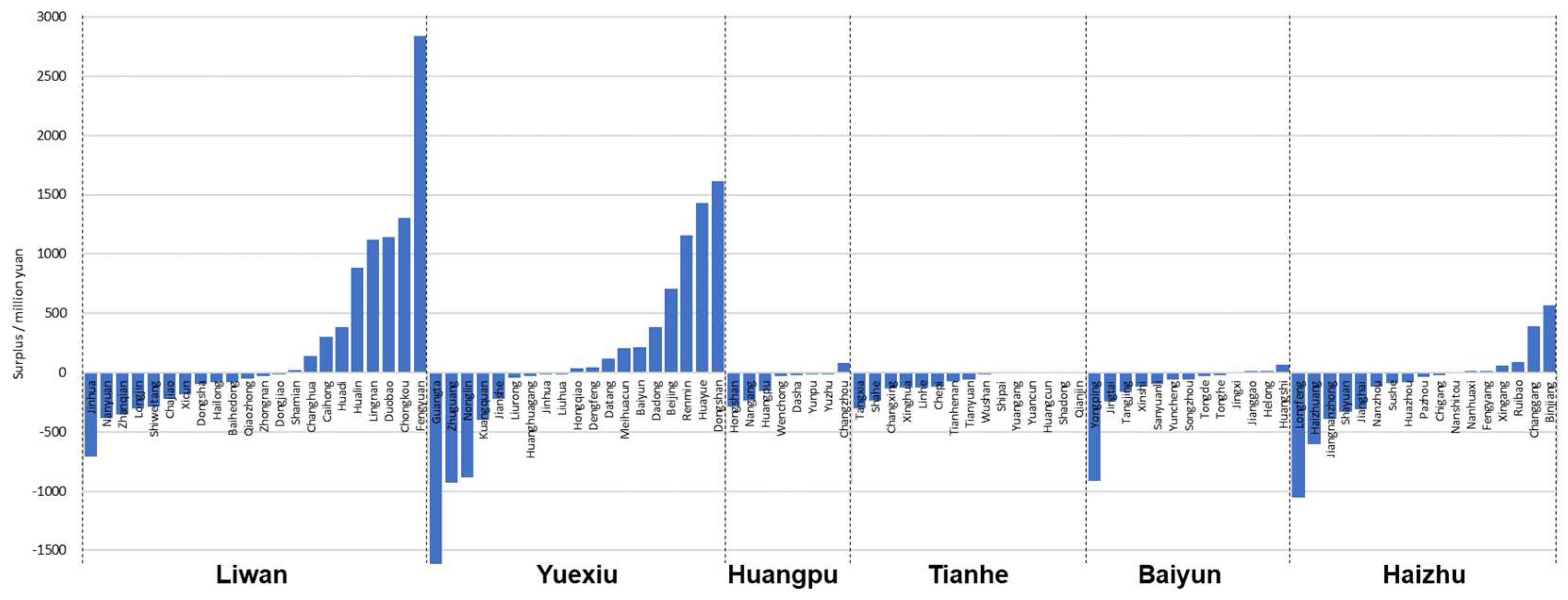

Table 1.
Five ways to tap the economic value of spatial assets.
| Way | Spatial assets | Endogeneous demand of residents | Exogenous opportunities for urban development | Economic benefits |
|---|---|---|---|---|
| Asset excavation |
Idle facilities & Idle space |
Requirements for service facilities, parking space, etc. | Continuous rental and operating income | |
| Neighborhood operation | Inefficient shops | Demand for upgrading of business forms | Guaranteed demand for facilities around scenic spots in the business district | |
| Tenancy operation | Low rent housing | Demand for rent increase & dwellings upgrading | Demand for employment and housing balance in employment agglomeration areas | |
| Public housing sale | Public housing | Residents' demand for obtaining property rights | Simplified management needs of the government | One-time asset sale funds |
| Housing expansion and sale |
Low density housing | Demand for expanding the area & add kitchen and bathroom facilities | Demand for people's livelihood and housing conditions | |
Disclaimer/Publisher’s Note: The statements, opinions and data contained in all publications are solely those of the individual author(s) and contributor(s) and not of MDPI and/or the editor(s). MDPI and/or the editor(s) disclaim responsibility for any injury to people or property resulting from any ideas, methods, instructions or products referred to in the content. |
© 2024 by the authors. Licensee MDPI, Basel, Switzerland. This article is an open access article distributed under the terms and conditions of the Creative Commons Attribution (CC BY) license (http://creativecommons.org/licenses/by/4.0/).
Copyright: This open access article is published under a Creative Commons CC BY 4.0 license, which permit the free download, distribution, and reuse, provided that the author and preprint are cited in any reuse.