

Submitted:
21 August 2024
Posted:
23 August 2024
Read the latest preprint version here
Abstract
There are many features of homeostasis worth investigating such as how it works (information pathways, set point processing), where its command and control processors are located in the cell, the language used and how homeostasis interacts with all aspects of an organism's functional maintenance and development. All are necessary and valid inquiries, but this paper examines the implications of ignoring it as a factor of disease causation. Alternatively when properly understood the homeostasis profile becomes a rational explanation for any individual’s range of health; where some areas are very resistant to disease (resilient) and other areas of homeostasis are dysfunctional leading to minor, moderate or very susceptible tendencies to disease (lack of resilience in homeostasis). An understanding of this phenomenon, its interactions with gene expression (epigenetics) is necessary in order to evaluate the solutions for acute and chronic diseases. By this method diseases can be defined more precisely as specific susceptibilities in homeostasis, leading to a method to restore specific homeostasis functions.
Keywords:
Medical model
; Homeostasis profile
; Set point reference images
; Resilience
; Susceptibility
; Stress/Reaction Dynamics
; Epigenetics
Discussion
Homeostasis is a term that describes all aspects of biological self regulation. Here is a quote from a modern textbook of medicine:
Just as we live in a constantly changing world, so do the cells and tissues survive in a constantly changing microenviron-ment. The "normal" or "physiologic" state then is achieved by adaptive responses to the ebb and flow of various stimuli permitting the cells and tissues to adapt and to live in harmony within their microenvironment. Thus, homeostasis is preserved. It is only when the stimuli become more severe, or the response of the organism breaks down, that disease results—a generalization as true for the whole organism as it is for the individual cell [1].
As is described above, homeostasis is a simple concept, usually maintaining health but also, allowing for a susceptibility to develop, depending on the severity of the stress and resilience of the response. There are some aspects of homeostasis that are easy to define, for example, hormonal feedback systems, but unfortunately other areas are extremely complicated, beyond our current technology, such as how set points are established, referenced and maintained. Homeostasis coordinates cell differentiation, then maintains all aspects of each cell's healthy function. Although not completely understood, homeostasis retains access to all the anatomical and functional physiological set points and end points:
Guyton introduced many students to the concept of homeostasis as an active regulatory mechanism that tended to minimize disturbances to the internal environment.1. It must contain a sensor that measures the value of the regulated variable <end point>. 2. It must contain a mechanism for establishing the “normal range” of values for the regulated variable <set point>. … In the next section, we further discuss the notion of a set point. 3. It must contain an “error detector” that compares the signal being transmitted by the sensor (representing the actual value of the regulated variable <end point>) with the set point [2].
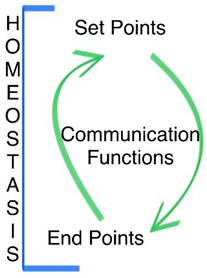
Some of these communication functions are well described in the literature, such as temperature regulation and blood sugar control systems, but many remain poorly understood. For example, the overall anatomy of an organism, the geographical location of each organ, are all defined endpoints and predetermined by the set points. How does the DNA access this ‘reference image’ which is a complete plan of how the body should be constructed. But the location of the set-points in a cell has not been determined; this makes it difficult to study them when homeostasis breaks down. As organisms develop, the homeostasis functions refer to the set points to create the endpoints. But it’s not just the placement of each organ that has a plan, it’s each cell in each organ, each organelle in each cell and each set of DNA profiles for each cell. Every structure down to the molecular level needs a set point - a set of plans or reference image. Homeostasis controls what genes to turn on and which ones to turn off, to create say a perfect heart cell or liver cell. We can now measure gene expression as a result of these epigenetic modifications to the DNA, but the mechanism by which homeostasis programs the epigenome is not yet determined. The same is true for every function, homeostasis can access the value for each endpoint (information about the value for each function), compare this to the ideal set point, then implement adjustments. Blood pressure at any moment in time, for example, has an end point value and an ideal set point. Through various hormonal, small molecule and neurological networks the actual state of each end point, such as blood pressure, body temperature or heart rate is compared with the ideal set point, so that they can be lowered or increased as needed. As stated by Torday:
Homeostasis is conventionally thought of merely as a synchronic (same time) servo-mechanism that maintains the status quo for organismal physiology. However, when seen from the perspective of developmental physiology, homeostasis is a robust, dynamic, intergenerational, diachronic (across-time) mechanism for the maintenance, perpetuation and modification of physiologic structure and function. The integral relationships generated by cell-cell signaling for the mechanisms of embryogenesis, physiology and repair provide the needed insight to the scale-free universality of the homeostatic principle, offering a novel opportunity for a Systems approach to Biology. Starting with the inception of life itself, with the advent of reproduction during meiosis and mitosis, moving forward both ontogenetically and phylogenetically through the evolutionary steps involved in adaptation to an ever-changing environment, Biology and Evolution Theory need no longer default to teleology [2].
As homeostasis is controlling all healthy structures and functions; the lack of it becomes the cause of many, if not all disease processes. When functions drift away from normal ranges due to environmental stresses, and there is a dysfunctional homeostasis and corrective action is not taken, the beginning of pathology is the result.
While modernization has dramatically increased lifespan, it has also witnessed the increasing prevalence of diseases such as obesity, hypertension and type 2 diabetes. Such chronic, acquired diseases result when normal physiologic control goes awry and may thus be viewed as failures of homeostasis [3].
Homeostasis when healthy, can perceive mistakes in physiological functions, correct them and as such is the self healing mechanism:
Simply put, homeostasis is a self-regulating process through which organisms remain stable and constantly adapt to the changing external environment, thus leading to better survival. Health and disease are opposites that are interrelated with each other, and homeostasis regulation is the key factor in their mutual transformation [4].
The lack of homeostasis functions is therefore central to understanding how diseases can be defined, but our current medical model is not focused on understanding individual homeostasis functions, or defining the exact profiles in order to correct them. Instead it is predicted on the assumption that everyone has basically the same homeostasis profile. For example, an antibiotic is chosen to treat tuberculosis or streptococcus based on the dose that has been most successful for that illness. The susceptibility profile of each individual with tuberculosis or streptococcus, or any disease, is never evaluated. Patients with chronic pain receive a set dose of an opioid, those with heartburn receive antacids in set doses. The same is true of every disease category and every drug. Small adjustments in dosages are made for the severity of the symptoms, age and weight but this is really just a refinement of the same concept. Everyone will receive the same dose per Kg or Lbs for a given diagnosis regardless of their homeostasis profile.
This approach is assumed to be correct for research purposes, leading to new drugs with the same objectives and this model is advertised to the public as the best solution medical science can offer. The patient with say eczema needs corticosteroids in dose xyz. This model has increasingly gained dominance over the past seventy years and is supported by government agencies, research institutions and the pharmaceutical industry. Symptoms and the chemistry responsible immediately or nearly immediately for the symptoms can be temporarily treated by these drugs and those who use them in this way are optimistic that the effects of the drugs will be permanent. Out of self interest, the drug companies encourage this optimism, and even unabashedly make promises that this method will actually lead to the cure of every disease. The spending on drugs for this purpose has also increased an average of about 8% per year since 1960.
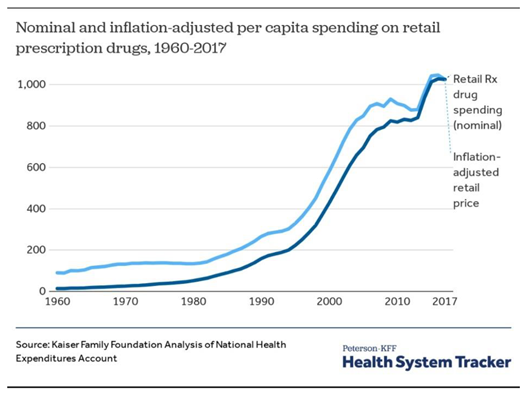
Prices began to skyrocket in the 1960's onward. From 1960 through 2013, health spending rose from $147 per person to $9,255 per person , an average annual increase of 8.1 percent [5].
If only nature would cooperate with this optimism, as this approach would then somehow lead to a cure where drugs were only needed initially for a short duration for any chronic disease. Unfortunately the opposite is true, treating symptoms uniformly (as if everyone was the same) usually leads to a dependence on the drugs and if the medication was removed the symptoms usually return the same or worse. As a result, nature is not cooperating - why should it, the drugs are not affecting the causative susceptibility factors, and have no effect on the homeostasis profile. Instead the incidence of chronic diseases worldwide is increasing [6].
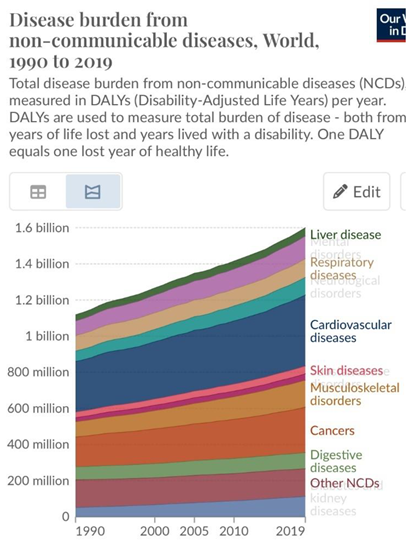
When the susceptibility causes are not diagnosed and treated, they are passed onto the next generation where once again they are neglected, more drugs are then needed, further overall weakening the individual and creating new areas of homeostasis susceptibility. Each generation as a result becomes more prone to chronic disease at an earlier age.
This approach of treating symptoms with set doses was never intended or designed to treat the cause of any illness. This model (treating everyone the same) is deeply ingrained into nearly all present modern global cultures and especially western thought. It is now an integral part of the mindset of everyday life, drug advertising, medical school teachings, research institutions and government policies.1 It is a model that supports whole industries such as pharmaceutical companies which are multi billion dollar enterprises. Researchers' careers, doctors and specialists of all kinds, hospital staff, government policy makers all base their livelihoods on this model. It’s a trillion dollar machine affecting and influencing our culture. The only problem is that it is scientifically incorrect and causes prolonged suffering, ineffective treatment over many years, unwanted side effects, drug resistance, failed treatment options, worsening emotional diseases, economic and cultural decay, dysfunctional communities and an ongoing degeneration in our population's overall health every generation it continues. Because it is an approach that is known to be incorrect, it is also a fraud, because the general public are not informed of its limitations and risks.
In summary, here is the incorrect model: Stressors (bacteria, viruses, toxins, work stress, emotional stress, physical stress)——> cause diseases (aberrant physiology) and symptoms that need drugs with the hope the chemistry can be forced back into a normal range. Sometimes the disease can be traced back to a genetic susceptibility, but again, the approach circles back to treating the local chemistry under the symptoms such as pain medication, anti inflammatories, antidepressants, antibiotics etc. Genetic diseases are another example of how homeostasis can breakdown because usually genetic mistakes are corrected immediately:
Because DNA is the repository of genetic information in each living cell, its integrity and stability are essential to life. DNA, however, is not inert; rather, it is a chemical entity subject to assault from the environment, and any resulting damage, if not repaired, will lead to mutation and possibly disease. Perhaps the best-known example of the link between environmental-induced DNA damage and disease is that of skin cancer, which can be caused by excessive exposure to UV radiation in the form of sunlight (and, to a lesser degree, tanning beds). Another example is the damage caused by tobacco smoke, which can lead to mutations in lung cells and subsequent cancer of the lung. Beyond environmental agents, DNA is also subject to oxidative damage from byproducts of metabolism, such as free radicals. In fact, it has been estimated that an individual cell can suffer up to one million DNA changes per day (Lodish et al., 2005)…. In fact, cells have evolved a number of mechanisms to detect and repair the various types of damage that can occur to DNA, no matter whether this damage is caused by the environment or by errors in replication [7].
The current model:
Stress ——-> Changes in chemistry —-> Symptoms - Name of Disease
Or:
Genetic diseases ———>Symptoms
Remove the stress and treat the chemistry under the symptoms.
What is neglected is an accurate definition of what a disease actually is. As a part of this cultural myth, when this model does not cure the illness for the individual patient, as is usually the case, that patient feels they are the exception and there must be some mistake because the model is most likely working for everyone else, and so they and their doctor continue to believe in this model and try new medications.2 But then over time the patient’s health declines further and a second, third or forth chronic disease is added. The patient as a result endures years of unnecessary chronic sickness and suffering. Eventually they succumb to one of their many illnesses, with their doctor adding as many drugs as possible to the end.
One in three adults lives with more than one chronic condition, or multiple chronic conditions (MCC) and accrue a disproportionate health and cost burden (Marengoni et al., 2011). This figure is closer to three out of four in older adults living in developed countries and is predicted to rise dramatically (Buttorff et al., 2017), with the proportion of patients with four+ diseases almost doubling between 2015 and 2035 in the UK (Kingston et al., 2018). Yet the area of MCCs remains grossly understudied[8].
If this is not the correct model, then what model is based on a more thorough scientific foundation? In this corrected model the functions of homeostasis [9] are placed into the equation. In this model, everyone is born with a unique homeostasis susceptibility, which eventually can be activated by a unique stress or stresses to match the susceptibility. This allows for or leads to a specific disease process with unique symptoms for each patient.
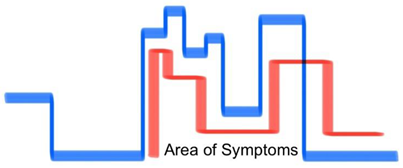
The blue line is the homeostasis susceptibility profile, indented areas show weaknesses. The red line is the stress and the area under that is the area where the pathophysiology and symptoms are going to develop. The symptoms develop in areas where the homeostasis is weak.
If there is a temporary or intermittent stress in the area where homeostasis is strong (red curve) the result will be an area of homeostasis that actually gets stronger. In this area an extra blue line is added to show how positive homeostasis can evolve:
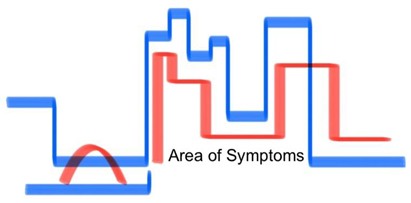
In this way, as life progresses, the areas of strength develop to their highest potential if they are challenged intermittently. Regular exercise, exposure to various bacteria/viruses and a rigorous education system are classical examples of stresses that produce a building-up of homeostasis functions in healthy people. The weak areas gradually allow diseases to get a foothold, leading to an ever worsening picture of symptoms. All diseases are tragic, but this is especially true for the young, when there are so many areas of potential to be developed, but one or two weak areas can undermine the whole organism. Our cultural bias to emphasize symptomatic diagnosis and treatments, neglecting to understand homeostasis profiles is preventable.
In order for a disease to occur there needs to be a stress that is significantly negative beyond the capacity of that individual's homeostasis capacity. It also needs to be sustained for long enough to not just put some pressure on it, but actually break an aspect of the homeostasis mechanism. Even the most healthy individuals cannot tolerate the trauma of a severe car accident, a poison at certain doses, near lethal virus or certain cold or hot temperatures. If a person survives this level of trauma, some can recover a hundred percent in time because the homeostasis functions were exceptionally resilient. Some develop lingering chronic symptoms such as, never well since the car accident, never well since the drug overdose or never well since acquiring a virus. There needs to be a match between a homeostasis susceptibility and a particular stress for symptoms to occur. This in turn leads to an individualized profile of symptoms affecting the whole person; partly physical symptoms, partly emotional symptoms and partly mental symptoms. Because the mind, emotions and physical aspects are interconnected on many levels there will always be some effect on all three levels no matter what the stress is. All three areas of symptoms help define the susceptibility. As we shall see it creates a whole image, a life story, with a few or many tendencies, characteristics and themes. In summary:
The homeostasis susceptibility
(Initial conditions)
<><><>~<><><>
Time passes, eventually a stress occurs which matches the susceptibility.
<><>~<><>
A disease process starts, it could be an acute illness such as the flu or infection or chronic like cancer, headaches, stomach issues or high blood pressure. It could be anything - it depends on the exact match.
Examples of Susceptibility - These fall into three categories.
One: The homeostasis processing center (central processor), does not receive the correct information about the problem. For example the skin is itching but the homeostasis functions are not made aware of this fact. Therefore there is no plan made to mitigate the itching and no implementation of the plan. The itching continues.
Two: The information is received but the processes to find a solution are only partially functional or not functioning at all. Therefore an incorrect, too weak, excessive/hyper response or no plan is implemented. Allergy reactions are an example of an excessive reaction, many infections are the result of an under performing reaction.
Three: The information is received correctly, the processing is correct but there is a mistake or mistakes in the implementation of the plan to correct the end points. The complete healing process is therefore not completed. Any one of these three possibilities or a combination of them leads to a susceptibility profile that can be activated or exploited by certain stresses and finally symptoms begin to develop. In any of these examples an acute illness may as a result be overly severe, and or the chronic disease process can be very severe. If the homeostasis mechanisms fail completely, there is as a result no self regulation and death can occur.
Each generation has the possibility of creating new areas of homeostasis dysfunction (homeo-tations), because certain stresses are overwhelming but not lethal. These are passed onto the next generation. The most common are the effects of war, poverty/starvation, drug use (prescription and recreational), toxins if in a high enough doses and physiological or psychological shock. As each generation is weaker, it takes less stress to create a new susceptibility. This is leading to an exponential increase in global disease incidence.
Example of Moderate Stresses That Can Overwhelm an Individual With a Homeostasis Susceptibility:
This is by far the most common reason illness occurs. Minor or moderate accidents and injuries. Exposure to bacteria, fungi, mold and viruses. Emotional shocks such as bereavement, divorce and childhood emotional trauma. Mental stress, such as from the workplace, poverty, lack of basic needs met etc. But these stresses will not necessarily activate an illness, there needs to be a weakness in a specific homeostasis function in the same exact area where the stress is being applied. If there is no susceptibility, the stress will actually make the person stronger. If the susceptibility in the homeostasis abilities is extremely compromised, then normal positive influences can become perceived as monumental stresses and cause near lethal symptoms such as when a person with paralysis tendency attempts to walk or a stomach condition where even water is rejected.
The stress has to match the susceptibility in order for an illness to be activated. In the diagram below the red marbles and cubes represent the stresses and holes in the green surface represent the susceptibility. For this example, the red marbles are pollen grains and the squares are pathological viruses.
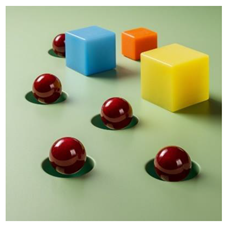
As you can see only the red marbles fit the susceptibility while the cubes although larger stresses do not fit and so can’t activate the defined susceptibility of this particular patient. This person will develop hay fever symptoms and not the symptoms from a viral infection. Even though the viruses are a major stress to many biological functions, in this patient there are no symptoms created from the virus, but the pollen, although in very low doses, is creating many annoying symptoms. According to statistics collected by the CDC, about 75 percent of people are immune to hay fever [10]. They are not susceptible to it, their homeostasis defense mechanisms are working in such a way to prevent the symptoms even though they are exposed to the same amount of pollen as others living in the same area.
In this next example the patient has a different susceptibility, as you can see the cubes/viruses, now can fit, match and activate this particular illness tendency. The red marbles/pollen have little or no effect. In this patient the pollen has no effect but the viruses have created flu like symptoms, fatigue, headaches, body aches, an inability to think clearly and emotional indifference.
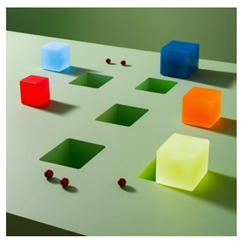
Patients with chronic diseases are often aware of the stress that they are susceptible to. They know what to avoid, because if they don’t the symptoms exacerbate. This stress is often minor (a change of weather, a food allergy, sitting in the wrong type of chair, a cool or stuffy room, noise, perceived negative body language and even though these stresses are in a ‘low-dose’, the stress can still easily activate symptoms, because the susceptibility is very strong. For the other 99.99 percent of the population these stresses have no negative effects. For everyone this matching is different, because the susceptibility profile, the weakness of homeostasis is unique to everyone.
Here are some different analogies of susceptibility. It is easy for the two horses, pulling in opposite directions, to break the frayed ropes:

When homeostasis is weak at a particular point, a particular stress on that point can easily break it further apart resulting in the development of symptoms. All the connections from every function, end point such as body temperature has to travel as information through many connections (hormones, nerves, messenger molecules) to reach the areas this information is processed and adjustments are made, by comparing the value of the end point with the ideal set point. If any of these connections are frayed, they can fall apart, resulting in information being corrupted or only partially communicated to the homeostasis control centers.
In this next diagram, the connections of homeostasis are very strong: the environmental stresses can’t break the chains holding them together and the person feels symptom free. There is no way to start a disease process.

This concept can be applied to every chronic disease. The connections provide accurate communication of information, as long as all the connections are robust then homeostasis can operate to prevent almost every disease process. When there is a break or breaks in communication of information, a unique susceptibility is created. There needs to be a stressor that matches a susceptibility for an illness to be activated. Life is full of stressors that try to break down certain areas of each individual. If the fibers and connections of homeostasis are strong they can’t be broken, if they are weak a disease process can start quite easily.
In some disease cases it can take a long time to identify the stress as it could be a common food item, some toxin in the air, slight changes in weather, a change in daily schedule which the patient is not aware of. In some cases the stressor is never identified.
In the diagram below the stars could represent a bacteria which the individual could carry but it’s not able to produce any symptoms. The bacteria yellow stars do not match any of the susceptibility shapes:
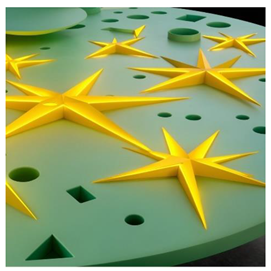
If there is no susceptibility, then the stress by itself can’t make one sick. For example Strep is a commonly associated with sore throats but:
The classical features of an individual said to be a carrier of Streptococcus pyogenes (Group A streptococcus) is the confirmed presence of the organism in their posterior pharynx, without any of the usual attendant clinical symptoms of acute pharyngitis… Pharyngitis due to S. pyogenes is very common in school-aged children. A meta-analysis based on a systematic review of 29 studies provides a prevalence of information about this condition…This analysis also demonstrated that the prevalence of S. pyogenes carriage among well children with no signs or symptoms of pharyngitis was 12% (95% CI 9–14%) (Shaikh, Leonard, & Martin, 2010). Several other studies support that 15–20% of asymptomatic school aged children are colonized with S. pyogenes, and that 25% of asymptomatic household contacts of children with streptococcal pharyngitis have throat cultures that revealed the presence of S. pyogenes (Schwartz, Wientzen, Pedreira, Feroli, Mella, & Guandolo, 1981; Shulman, 1994) [11].
Depending on the studies above it was found that from 12 to 25 percent of children had the bacteria for Strep in their throat but no symptoms.
Every infectious disease is the same, there are carriers of the virus or bacteria, but no symptoms. But they can still pass it onto others who are susceptible and the susceptible ones will come down with an illness. For example, all sexually transmitted diseases fall into this category.
Here is one more example: In the 1500’s the Black Death killed about 60 percent of those who were in contact with it, 40 percent were still immune to it.
One mutation, which occurred in a gene called ERAP2, gave people a 40% advantage of survival against the plague <Black Death> [12].
There is no one disease that everyone is afflicted with, why? Because everyone has a different homeostasis profile which was averaged out as a result of their many generations of inheritance. Each profile creates an ongoing dynamic for a person’s life. It creates a pattern that is persistent, leading to a psychological and physical profile. Here are three pictures to show how different these susceptibilities can be, but in fact there are thousands of these images. One for each person’s life.

If this young girl falls in the water and drowns, do we blame the cold deep water on her illness or do we blame her reckless nature? On the most superficial level we can blame the imminent danger on the cold deep water, but really it’s the whole psychological profile of this young person which is creating the danger. She is fearlessly skating on thin ice. A catastrophic event is imminent. As this is her life pattern, each fall will severely weaken her, she may survive or not, the accident will test her other strengths and weaknesses. Her physical homeostasis tendencies will most likely also eventually be overwhelmed and a disease process will result, depending on her genetic and epigenetic susceptibilities.
Here is another susceptibility image:

This individual was born with or acquired a grief susceptibility. At a certain point she met and fell very deeply in love with what seemed like a perfect person. After a time of intense emotional attachment the young woman was rejected, the young man had to leave for any number of reasons, such as perhaps his parents didn’t approve of the relationship, he died or was called away. Because these exact homeostasis functions for this woman were very weak to begin with, she was left to struggle with feelings of sadness for many years. In fact she never fully recovered from this experience and later the memories and grief are still very alive. She was never able to detach and heal from the grief. Over that forty years a number of physical symptoms are now prone to develop depending again on her genetic homeostasis susceptibility profile. In most cases each of these illnesses is treated symptomatically and over time the chronic ailments become worse. As no doctor makes a diagnosis of her homeostasis profile, the pathologies continue over the years. Unfortunately, this big picture is never recognized in our current medical model. Instead most doctors diagnosed one area at a time, trying to find a drug to treat each separate pathology. This woman perhaps had a stomach ulcer treated with acid blockers. This did nothing to help her homeostasis recover. Another doctor gives her sedatives to help her sleep, and her psychiatrist gives her antidepressants for the grief. If all the drugs are removed the various symptoms all express themselves again, the person is waiting for their homeostasis functions to be diagnosed but it never happens. She dies alone and depressed. Blaming the original problem on the man who left is very superficial. But in the media every day, the illness written about usually if not always blames the ‘cowboy’, the ‘virus cowboy’, the ‘toxin cowboy’, the ‘rotten childhood cowboy’. The virus or the traumatic life event can only trigger an already present homeostasis susceptibility profile.
In this next image is a common susceptibility of the person who feels overly responsible for others. He feels the need to worry about the welfare of everyone in his family and help them even when they don’t ask for help. He feels responsible and too empathetic toward others. Again, it is an accident waiting to happen, as in time the over-caring nature will lead to fatigue lending itself to other ailments.

In this profile there is usually loneliness, burn out, guilt for not doing enough for others, fear of criticism and a desolate environment that no longer nourishes the person. Typically doctors and counselors blame the conditions of childhood for these tendencies, such as a child who grew up with sickly parents or alcoholic parents. But there are many people who grow up under the same conditions and don’t become rescuers. The susceptibility in feeling the need to be a perfect helper for others, save others from every little inconvenience is a homeostasis susceptibility structure deep in the individual, they are usually born with it.
In every homeostasis psychological susceptibility profile the physical tendencies are inextricably connected. They are two sides of the same coin. In the example of the skater on thin ice, there could be a tendency to restlessness, lack of concentration, drug addiction, depression, any number of physical ailments and risk seeking behaviors. In the example of the man trying to save others, there could be a tendency to cancer, immune system dysfunction and chronic headaches.
For this reason it is better to define illness in terms of a diagnosis of the exact susceptibility profile. The totality of the symptoms define the susceptibility.
It is also important to note that homeostatic regulation is not merely the product of a single negative feedback cycle but reflects the complex interaction of multiple feedback systems that can be modified by higher control centers. This hierarchical control and feedback redundancy results in a finer level of control and a greater flexibility that enables the organism to adapt to changing environmental conditions. The health and vitality of the organism can be said to be the end result of homeostatic regulation. An understanding of normal physiology is not possible without an appreciation of this concept [13].
But because this is never done we are as a so-called ‘modern society’ trapped into a certain way of thinking, treating everyone the same, with a whole medical establishment and pharmaceutical industry reinforcing that view.
Homeostasis underlies many, if not all, disease processes…All in all, every medical condition can be traced back to failure at some point in the homeostatic control system, whether it be in the inability to detect the initial external change, failure of initiating a feedback loop, failure to enact a response to return to the setpoint, or failure in the setpoint itself. The goal of the health care provider must be to restabilize the internal milieu of the body without causing further harm and to do so promptly to avoid the death of cells from dysregulation, and irreparable failure of organ systems [14].
If homeostasis can be broken down, then it can be studied to determine ways of building it back up. There are many examples of traditional cultures and therapies which developed methods to accomplish this goal. Traditional Chinese Medicine, nutritional therapies, herbal medicines from different cultures are just a few therapies where the emphasis is on diagnosing susceptibility and supporting the healing functions. With funding of studies, a scientific approach could be used to uncover the full potential of these therapies. This subject is further explored in the following papers, with a discussion regarding the diagnosis and a method to rebuild the homeostasis functions:
A Method to Reverse Epimutations [15] https://www.preprints.org/manuscript/202312.1263/v1
Rebuilding Quantum Homeostasis.
Conflict of interest
The author declares no conflict of interest.
| 1 | This model has spread to most countries, replacing traditional forms of medicine. |
| 2 | Suppression of symptoms is not a cure, sometimes the symptoms can abate, but in time a worse group of symptoms presents themselves. |
References
- Robbins-Pathologic2005.pdf. Available online: https://www.ruseducation.in/books/Robbins-Pathologic2005.pdf (accessed on 6 August 2024).
- Modell, H.; Cliff, W.; Michael, J.; McFarland, J.; Wenderoth, M.P.; Wright, A. A physiologist’s view of homeostasis. Adv Physiol Educ. 2015, 39, 259–266. [Google Scholar] [CrossRef] [PubMed]
- Kotas, M.; Medzhitov, R. Homeostasis, Inflammation, and Disease Susceptibility - PMC. February 26, 2015. Available online: https://www.ncbi.nlm.nih.gov/pmc/articles/PMC4369762/ (accessed on 6 August 2024).
- Wang, S.; Qin, L. Homeostatic medicine: a strategy for exploring health and disease - PMC. September 26, 2022. Available online: https://www.ncbi.nlm.nih.gov/pmc/articles/PMC9510546/ (accessed on 6 August 2024).
- The Out-of-Pocket: Drug Pricing Special Edition. February 28, 2020. Available online: https://myemail.constantcontact.com/The-Out-of-Pocket--Drug-Pricing-Special-Edition.html?soid=1129897628906&aid=NHmrTDAbfEg (accessed on 6 August 2024).
- Roser, M.; Ritchie, H.; Spooner, F. Burden of Disease. Available online: https://ourworldindata.org/burden-of-disease (accessed on 6 August 2024).
- Clancy, S. DNA Damage & Repair: Mechanisms for Maintaining DNA Integrity. 2008. Available online: https://www.nature.com/scitable/topicpage/dna-damage-repair-mechanisms-for-maintaining-dna-344/ (accessed on 6 August 2024).
- Hajat, C.; Stein, E. The global burden of multiple chronic conditions: A narrative review - PMC. October 19, 2018. Available online: https://www.ncbi.nlm.nih.gov/pmc/articles/PMC6214883/ (accessed on 6 August 2024).
- Homeostasis | Anatomy and Physiology I. Available online: https://courses.lumenlearning.com/suny-ulster-ap1/chapter/homeostasis/ (accessed on 6 August 2024).
- FastStats - Allergies and Hay Fever. National Center for Health Statistics. Available online: https://www.cdc.gov/nchs/fastats/allergies.htm (accessed on 6 August 2024).
- Martin, J. The Streptococcus pyogenes Carrier State - Streptococcus pyogenes - NCBI Bookshelf. July 25, 2016. Available online: https://www.ncbi.nlm.nih.gov/books/NBK374206/ (accessed on 6 August 2024).
- Doucleff, M. How Black Death survivors gave their descendants a genetic edge : Goats and Soda : NPR. October 21, 2022. Available online: https://www.npr.org/sections/goatsandsoda/2022/10/19/1129965424/how-black-death-survivors-gave-their-descendants-an-edge-during-pandemics (accessed on 6 August 2024).
- Billman, G.E. Homeostasis: The Underappreciated and Far Too Often Ignored Central Organizing Principle of Physiology - PMC. March 10, 2020. Available online: https://www.ncbi.nlm.nih.gov/pmc/articles/PMC7076167/ (accessed on 6 August 2024).
- Libretti, S.; Puckett, Y. Physiology, Homeostasis. Available online: http://www.ncbi.nlm.nih.gov/books/NBK559138/ (accessed on 6 August 2024).
- Olsen, S. A Method to Reverse Epimutations [v1] | Preprints.org. Available online: https://www.preprints.org/manuscript/202312.1263/v1 (accessed on 6 August 2024).
Disclaimer/Publisher’s Note: The statements, opinions and data contained in all publications are solely those of the individual author(s) and contributor(s) and not of MDPI and/or the editor(s). MDPI and/or the editor(s) disclaim responsibility for any injury to people or property resulting from any ideas, methods, instructions or products referred to in the content. |
© 2024 by the author. Licensee MDPI, Basel, Switzerland. This article is an open access article distributed under the terms and conditions of the Creative Commons Attribution (CC BY) license (https://creativecommons.org/licenses/by/4.0/).
Copyright: This open access article is published under a Creative Commons CC BY 4.0 license, which permit the free download, distribution, and reuse, provided that the author and preprint are cited in any reuse.


