

Submitted:
15 September 2024
Posted:
17 September 2024
You are already at the latest version
Abstract
For a number of reasons, a curative treatment for most chronic diseases is still unrealized [2–4] and the incidence of many chronic diseases is rapidly increasing [5–9]. A new model is offered as a solution; that being the individualized diagnosis of homeostasis, leading to the correction of epimutations. Homeostasis diagnosis and epimutation correction, HDEC. Individuals with chronic diseases are increasingly being defined by their epimutation signatures [10,11]. Modern innovations in toxicogenomic studies are also becoming more accurate in their ability to identify the unique epigenetic signature of each toxin [12–14]. Hormesis studies (over 5,000) [15] suggest a universal principle, that a small dose is always a stimulant [16–18].These three facts present an opportunity; a method to diagnose and reverse chronic disease tendencies. This new model requires a paradigm shift in our understanding of disease origins: that dysfunctions in homeostasis [19,20] are the primary and deepest level of chronic disease causation. This is the level where the diagnosis needs to be made and where the corrections need to take place [21].
Keywords:
Homeostasis
; HDEC
; Hormesis
; Epimutations
; Susceptibility
; Toxicogenomics
Introduction
In theory, finding an exact match between a patient’s epimutation signature and that of a substance's epimutation signature provides the diagnosis of the constitutional deficit for that individual and the name of the medication to use in a small dose to stimulate a homeostasis reaction to correct the primary epimutations. This rebuilding of the self healing mechanism leads to an improved clinical picture and the elimination of symptoms.1
This concept is rather abstract; consider an example: a patient with the initial onset of blood cancer. He undergoes HDEC diagnosis and therapy: A blood test reveals a unique epimutation pattern. This same pattern is found to exist for the toxic effects of Cadmium sulfate. This drug is now used in an extremely small dose to trigger homeostasis against that exact cause. Over time the epimutations of the patient are found to be significantly reduced. This leads to corrected gene expression in the WBC’s, the immune system renews its ability to eliminate cancer cells and no further cancer develops.
In theory this cured epimutation pattern would not therefore be passed onto the next generation, leading to a gradual decline in chronic disease incidence and the rebuilding of resilience in our populations.
The ongoing technological developments in these areas presents an opportunity to develop a database of toxicology signatures which can be used to match against individual patients' epimutation patterns. If the database is accurate and complete, with over 10,000 substances tested, then this method should in theory prove successful in curing almost any chronic or epigenetic disease. Evidence is presented to support each one of these claims.
Another example is necessary to illustrate. A man in his 20’s suffers a near death in a car accident. After six months he mostly recovers except for recurring debilitating panic attacks. They can come on at any time but more often if a situation which reminds him of the accident. A blood test is performed and he is found to have an unusual epimutation that matches the epimutation which can be caused by Aconite napellus. On further study it is found that his symptoms also match the symptoms that can be caused by Aconite, that being sudden onset of anxiety with a fear of death. His doctor prescribes Aconite diluted twelve times or 12c, which he takes twice a day. After a month, in follow up he is found to be experiencing no anxiety attacks. He reports feeling like his old self again, as if the accident had not occurred. His blood is checked and the epimutation is 80% decreased. He is given one dose of Aconite 30c a week for six weeks. There is no recurrence of the anxiety. He remains well, no further medication is needed.
The database to determine all possible epimutations could be developed. It would include mineral, plant and animal substances. The more substances tested the greater the possibility a patient’s epimutation signature could be matched. What is the mechanism of action in HDEC therapy? See below.
What Category of Diseases Lend Themselves to this Type of therapy?
General Overview
Categories of Disease Causation and Treatment
Category One: The environment is toxic or extremely stressful - remove or avoid the morbific influence. In this category the toxic influence is the primary reason for the illness. Examples: Stop the excessive consumption of drugs and alcohol, decrease the amount of sugar in the diet, separate oneself from an abusive relationship, remove the lead from the water supply, improve safety standards at the workplace. Counseling a patient toward these types of goals is always a positive step, even if they don’t follow the advice right away. Countless scientific papers are written on these subjects in order to sort out what is toxic and what is not toxic. The best therapy is to remove the immediate stressful or toxic influence. HDEC therapy is not needed in this category.
Category Two: The environment is neutral - improve the lifestyle standards for the patient. In this category the environmental influences are positive or neutral, but diseases can be prevented by adopting an ideal lifestyle. Examples: Eat more fresh whole foods, supplement the diet with extra nutrients, engage in regular exercise and provide educational programs to bring out the highest potential of the individual. For example, how much of which type of nutritional oil is protective for what disease? Science is in the process of sorting out many of these questions in order for people to become healthier and live longer. HDEC is not needed, in order to gain the highest levels of health these factors such as nutrition and lifestyle factors need to be optimized.
Category Three: The chemistry of the body is out of balance - use of the primary action of a drug to reverse the chemistry. Examples: Insulin, cortisone, psychotropic drugs, antacids, pain medicines such as morphine and the tens of thousands of other drugs on the market or in the stages of being developed. This is the dominant method of modern pharmacology. Although seemingly necessary, none of these treatments (large doses of pharmaceuticals) are curative,2 - if the drug is removed the symptoms return and the disease tendency is still being passed onto the next generation. The chemistry immediately under or surrounding the symptoms is temporarily changed by the drug, but the unbalanced chemistry is a function of homeostasis, but there is no diagnosis of this cause. This is the category, the majority of acute and chronic diseases that lend themselves to HDEC therapy.
Category Four - Diagnosis of homeostasis and correction of epimutations. The underlying cause of most chronic diseases (not caused by category one or two above) is dysfunctional homeostasis. The rest of the paper deals with an in depth analysis of this approach, that being a discussion of drug action (how drugs used to correct HDEC work), and how to diagnose the exact drug needed for each patient. This requires us to make an indirect diagnosis of homeostasis.
In all three categories above, there are barriers which contribute to treatment failures. For example in Category One we are not yet able to take all the toxins out of the air, food, and water and unfortunately new toxins are added every year [22]. We are not able to provide children with an environment free of psychological trauma, and just telling alcoholics or addicts to stop using harmful substances often has little or no effect. Aggressive marketing of ultra processed foods is leading to an increased incidence of obesity and metabolic diseases.
In Category Two, modern transportation, television and the internet has increased the sedentary lifestyle in all age groups and urbanization has led to less access to fresh foods. It is becoming more difficult to access an optimal healthy lifestyle.
In Category Three the current pharmaceutical drug effects are temporary, they are not treating the cause, there is the problem of drug resistance3 and many drugs produce unwanted side effects.
In Category Four, affecting the self healing mechanisms is underutilized. Although new vaccines are being developed to increase immunity to various viruses and other communicable diseases, the vaccine is not individualized to each patient and the dose is sometimes still of sufficient concentration or ingredients are added that produce short term or long term side effects.
It is the topic of this paper, that being; how to diagnose the dysfunctional homeostasis pattern for each patient and how to correct the deficiencies of homeostasis for each patient. Once this is accomplished the markers on the DNA will in theory change, the epimutations will be eliminated, normal healthy gene expression once again established and the symptoms of the illness gradually fade away.
In the four categories above, there is hope of progress; doctors, research institutions, government and academics spend their whole lives on various unresolved issues such as what is the best sunblock to prevent skin cancer, or what is the most economical method to filter toxins and bacteria out of water or what is the optimal investment into universal education to optimize economic, emotional and mental health? Gradually one can say progress is made, there are those who are living longer healthier lives, reaching their potential and those who are not. Unfortunately it is the majority who are not getting healthier, even in wealthy countries sickness is occurring at an earlier age or patients are dying from an illness that others seem immune to. What is missing? Treating the causes of chronic disease susceptibility, determination of exact epimutations which can be passed on from generation to generation.
Background
A discussion of homeostasis, hormesis, toxicogenomics, epigenetics and possibly quantum biology is needed to build a model for this new approach.
Homeostasis is a fundamental survival strategy [23,24]. It is the ability to self heal, (G. Billman): The health and vitality of the organism can be said to be the end result of homeostatic regulation [20]. Healthy cell differentiation and whole organism development are under the control of homeostasis [25,26]. (Henry Jakubowski): Homeostasis shapes both form and function from the molecular to organismal levels [27]. The ongoing ability to gradually adapt to the environment and or resist toxicity from the environment is a function of homeostasis. The innate self correcting mechanism for every cell structure and function has five main components: stimulus, sensors, analysis functions - system controllers [21], effectors - the maintenance of endpoints and a feedback mechanism. (Henry Jakubowski): Homeostasis is maintained by a series of control mechanisms functioning at the organ, tissue, or cellular level. These control mechanisms include substrate supply, activation or inhibition of individual enzymes and receptors, synthesis and degradation of enzymes, and compartmentalization. The primary components responsible for the maintenance of homeostasis can be categorized as stimulus, receptor, control center, effector, and feedback mechanism [27]. Any one of these five mechanisms or a combination of them can be healthy and prevent illness or go wrong, leading to changes in gene expression, then chemical imbalances, then changes in anatomy, lesional diseases and finally recognizable fully developed disease processes that can end in early death.
Understanding homeostasis at the analysis or control center level is still unrealized. Consider the number of calculations needed to be made every second in order to receive all the information, as well as compare this information to the totality of the set points and then formulate a reaction for each of the following:
- -
- The development of each cell structure (how to arrange and maintain all the atoms, molecules, cell organelles etc).
- -
- The function of every cell, its purpose and objectives, are all the functions at the right levels of performance?
- -
- The map of how all the cells should be arranged into tissues and organ systems.
- -
- How to fold each protein correctly in about four seconds [28].
- -
- How to form each organ system into whole body functions; vascular, nervous, skeletal etc.
- -
- The overall anatomy of a mature whole organism.
- -
- The personality and instincts for each organism.
- -
- What genes to turn and off for each type of cell.
- -
- When and how to divide each cell.
- -
- How to repair a tissue or organelle after exposure to an injury or toxin.
- -
- How to best adapt to the slight changes in the environment.
- -
- How to differentiate stem cells when needed into new cells that are needed.
If we could visualize these mechanisms, presumably we could formulate a method to repair them. Unfortunately, there are no cellular structures to be found with the label: Control Center for Homeostasis, Language Used for Homeostasis, Mechanisms of Homeostasis, Set of Plans to Refer To (Set Points/Reference Image). For example the regulation of appetite requires about twenty different hormones and related receptors [29]. We can locate the receptors and hormones, leading to an understanding of the effect of each one but we can’t find any ‘CPU processors’ [30]. For example we can’t see how a cell can “remember or store the value” for each hormone’s set point. No doubt the set points for every hormone are there, as homeostasis has an intrinsic idea of what are the healthy levels for each one, and how to keep them in a normal range [21]. Homeostasis, one of the most important functions in the control center, to process information, has no discernable physical structure.
This homeostasis set of plans, with an intricate description of each biological structure; the totality of set points, was present in the first cell before it differentiated into, say, a pine tree, a cat or a human. How is this accomplished? The DNA is used by homeostasis to open the correct genes, but the DNA in humans is only made up of about 23,000 genes, templates to make proteins and cellular structures. A human has only 20,000 protein coding genes but we can make 6.13 million different protein species [31]. The DNA is more like a dictionary, a template to form words, as different genes are used to create parts of proteins and then the parts (words) are assembled to make sentences, whole peptides. A polypeptide is kind of like a long word that is "spelled out" in amino acid letters. The chemical properties and order of the amino acids are key in determining the structure and function of the polypeptide, and the protein it's part of [32].
The functions of homeostasis through mechanisms poorly understood control, mediate and maintain these processes. The homeostasis “identity - totality of set points” is one level of constraints above the DNA, it turns on all the genes it needs to make a perfect skin cell for example and turns off all the genes it has no use for in creating skin cells. But we have no idea how it connects to the DNA, whether it is actually a part of the DNA or some other construct? If certain genes are artificially (in a lab) knocked out, the homeostasis functions will find a work-a-round and use other genes to accomplish its task to make a certain needed protein.4 The homeostasis mechanism just found other letters and words to complete the sentence it needed.
Homeostasis receives signals (hormonal, electrical and small molecules) then processes this information. It is comparing what it can sense in the body, end points with an ideal image of itself, the totality of all the set points: - (Kotas et al) Regardless of whether a reference point is real or imaginary, the term ‘set point’, if nothing else, is a convenient shortcut by which to refer to the defended level of a regulated variable… [21]. Then continual adjustments are made as best it can to maintain the connections between the end points and set points, thus optimizing health in every part of every cell.
The mechanics of homeostasis on this level are extremely complex, but they are definitely present, as none of these processes or outcomes are random. (Davies): Homeostasis does not occur by chance …biological systems are continuously making short-term adaptations [23]. Pertinent to this discussion is to validate that when there is a dysfunction in one or more of the processing centers of the homeostasis cycle which determines the sensors, analysis and reactions, a disease will result either mildly or severely. Ultimately the goal is to diagnose and correct them at this level of origin, leading to healthy gene expression and resolution of the disease process.
Every disease is a result of dysfunctional homeostasis. There are so many ways that it can go wrong, giving us all the known diseases. This fact allows for the authors of this standard textbook, which most first year medical students read: The Pathological Basis of Disease, to make the following profound and far reaching statement:
Just as we live in a constantly changing world, so do the cells and tissues survive in a constantly changing microenvironment. The "normal" or "physiologic" state then is achieved by adaptive responses to the ebb and flow of various stimuli permitting the cells and tissues to adapt and to live in harmony within their microenvironment. Thus, homeostasis is preserved. It is only when the stimuli become more severe, or the response of the organism breaks down, that disease results—a generalization as true for the whole organism as it is for the individual cell .[33]
The next logical step in this textbook would be to investigate ways to diagnose the deficiencies of homeostasis and ways to correct them but this is never done. We have historically lacked the technological tools, but now a new tool is perhaps available; in our ability to define epimutations. The markers on the genes are in binary patterns which in theory can precisely define the dysfunctions of homeostasis pattern enough to give us an exact understanding of what is a normal epigenetic pattern and what is not normal or an epimutation.
Epigenetics and Epimutations
Epigenetics [34,35,36] is another function of homeostasis. The basic building blocks of the DNA are nucleic acids which code for different proteins; they are arranged in double stranded helical spirals, making up 23 chromosomes and about 23,000 individual genes. Although every cell in the human body has the same set of genes, why is it that different types of cells, such as those from heart or brain, look and behave differently? Homeostasis programs each cell's DNA with its own signature of molecular attachments on the DNA strands, such as methyl groups, giving it the instructions to individualize with certain anatomical and functional features. This is the individualized epigenetic modeling for every type of cell. These attachments are also called marks or markers, they change according to stages of development and react according to the conditions of the environment. Genes are continually being turned on and off by this homeostasis process depending on the needs of each cell and conditions in the environment.
Some epigenetic characteristics are positive and stable, lasting a lifetime, and may be passed on from one generation to the next, without changing. If homeostasis is strong, the epigenome stays healthy leading to healthy cellular functions. If not strong enough, a unique susceptibility is created that can be triggered by stress from environmental influences, such as toxins, heat, lack of nutrients, emotional trauma, and can then cause homeostasis to falter, leading to abnormal patterns called epimutations which can also be passed on to the next generation. Changes in the epigenome can lead to changes in gene expression that can be an advantage or the beginning of a disease process.
Epimutations
Epimutations are heritable changes in gene activity that are not associated with changes in the sequences of the base pairs, but rather with a gain or loss of DNA methylation or other heritable modifications of chromatin [37]. During the last twenty years it is becoming clear that epimutations account for many diseases, acute and chronic. As stated earlier, epigenetic susceptibility is defined by the strengths and weaknesses of homeostasis. It is becoming clear that many chronic diseases are associated with epimutations: including inflammatory diseases such as heart disease, diabetes and Alzheimer's disease [39]. Most likely all diseases start with an epimutation, or the epimutations are partly responsible for their progression.
A Mechanism of Action Is Needed to Explain HDEC. How is a Small Dose of a Substance Able to Correct an Epimutation?
Hormesis [17,40] is also a subcategory of homeostasis - that is, large doses of any substance eventually become toxic (homeostasis breaks down), or as the dose of the same substance becomes small enough, but not repeated too often, it becomes a stimulant (homeostasis is made stronger). This principle has been discovered many times over [41,42,43,44], given different names but never fully utilized into mainstream medicine.5 In the literature there have been two main areas of study into the hormesis phenomenon. The more recent studies demonstrate how any end-point can be stimulated from 30 to 60% [40]. For example, muscle strength, heat tolerance, longevity and immunity. In these examples, areas of homeostasis that are strong are made stronger. For example regular exercise is an example, the exercise is a stress in the heart, lungs, joints and muscles. The body responds with an adaptive reaction to prevent damage and in so doing improves the stew and function of all the tissues involved. This is an example of hormesis therapy.
The second area of study is to diagnose an exact susceptibility and correct it with the mechanism of hormesis. Every substance, mineral, plant or animal in a small dose is a stimulant to one specific set of genes, this is HDEC. As there are so many different substances, in theory every end-point in a healthy person can be made stronger by 30 to 60% [45,46]. If a substance can cause harm to immunity in a large dose, then in a small dose it can trigger feedback systems to increase immunity—the basic principle of vaccinations. In this way, hormesis can be used to treat almost any disease process at the causative level. Corrections of homeostasis lead to reversal of epimutations.
The mechanism of action of hormesis is based on the principle that if homeostasis can maintain healthy set points with say, 100% effectiveness when healthy, then for evolutionary reasons it can act at an efficiency level of 130-160% if stimulated. It is a generalized phenomenon and without this capacity life could not have evolved. (Calabrese et al.): Hormesis represents a central evolutionary strategy…[18]. Without this capacity living organisms could not make the necessary adjustments in order to cope with a changeable and sometimes toxic environment.
The second use of the hormesis principle is during an acute or chronic illness, where the functions of homeostasis are compromised mildly, moderately, or severely. In the past there were no laboratory technologies that could test for the exact deficiencies in homeostasis. In the last ten years we can now record the attachments on the DNA with greater accuracy. This has brought us to the possibility of measuring the deficiency patterns of homeostasis in terms of epimutations.
For example, when there is a chronic disease and the maintenance level of homeostasis for a certain function is at say, 1 to 8% of normal and the external environmental stress at 15% then a disease is inevitable, the body will not be able to regulate itself, the effects of the stressor will far exceed the ability of the body to maintain itself. The correct substance (toxin in a small dose) is needed to elicit a strong enough reaction to get homeostasis for that exact set point back above 15% or if healing is to be rapid, stimulate it to as near 100% as possible. The higher above 15% the faster the recovery. The study designed (see below) should be able to prove or disprove this theory. The first step is to demonstrate this principle, the second step is to show that it can work for any illness. Correction of homeostasis functions lead to correct and robust gene expression. Epimutations caused by the stress are reversed.
Toxicogenomics
Toxins can be defined by the epimutation patterns that a substance can cause. The resolution or definition of them is gradually becoming more exact. There are a number of toxicogenomic databases being developed [47], including: ToxSign [48], CTD [49] and ToxicoDB [50]. Every substance eventually at a certain dose becomes toxic, even substances that are helpful such as calcium, magnesium and potassium. All of them can be defined in terms of the epimutations they produce.
Which Patients Need Constitutional Hormesis Treatment, HDEC?
Case One - No epimutations. The environment is the primary factor in the disease process: The patient is born with homeostasis acting in all areas from say 100 to 130% and there are no epimutations (no inherited disease susceptibilities). The functions of homeostasis in these individuals is resistant to any illness and resilient because of inheritance and many other positive environmental influences. The stress from a superbug, car accident or emotional shock if severe enough could lead to a temporary cluster of symptoms, but they are transient and soon resolve on their own. Recommended treatment: Give general supportive, first aid, rest, nutrition or surgery if necessary etc, they will recover in time. There will be no lingering effect, the individuals in this group after each infection or trauma gradually acquire some additional homeostasis adaptations over time and can pass on these onto the next generation. (Another example of hormesis). Within our populations there is almost no one in this category (less than 10%), but many people with good health do have areas with these characteristics which means that stress in these areas makes them more resilient. For example individuals who can tolerate a certain ambient level of various toxins, those who can work up to fourteen hours a day with no ill effects, those who stay healthy when everyone around them is sich with an endemic virus, those who receive emotional trauma and bounce back quickly, those who can drink coffee in the evening and still fall asleep easily. This again demonstrates the basic principle of hormesis, that healthy individuals can be made stronger by moderate stresses or even severe ones that are not repeated too often. These individuals, who have no tendency to illness, do not need constitutional hormesis treatment, HDEC.
Case Two - Mild epimutations and therefore a mild susceptibility.
The environment in these types of cases plays less of a role in the disease process because there are some very minor dysfunctions in one or more of the functions of homeostasis. The severity and onset of the disease is now dependent on the amount of stress from the environment and if this stress happens to coincide with a weak area of homeostasis? If the environmental influence is always positive, then the person may never develop any disease. If there is some toxicity in the environment or mental emotional stresses which persist for long enough, then some minor functional symptoms may gradually develop. In these cases removing the stress may be enough to relieve them of their symptoms. Also, determining a constitutional hormesis treatment for the minor susceptibility would also be useful. If the environmental influence is very toxic over a long period of time, the patient can develop a very severe illness. Using pharmacy drugs in their typical large doses is often enough to suppress the symptoms, such as minor pain medications, antibiotics, antacids, etc. If the illness is too severe and goes on for too long, then the pharmacy drugs are of less benefit especially in the later stages. These people can definitely benefit from constitutional hormesis therapy. They will respond very quickly and easily overcome the obstacles in the environment.
Case Three - Moderate to severe epimutations.
Even a positive and supportive environment can’t keep these people healthy. The susceptibility to disease is moderate to severe. The functions of homeostasis have moderate to severe deficits in the connections in one or more of the following three areas: The sensors/receptors are not collecting or transferring correct information to the processing centers, the processing analysis functions are incorrect in how they transfer information to the set points or the final actions needed, final information is not implemented or completed back to the DNA leading to one or more epimutations leading to somatic end points being affected. The chemistry of the body begins to go off balance, and eventually there are anatomical changes. In these cases removing the stresses can help but the illness usually remains and becomes worse over time. All the known disease categories with their sub definitions are a part of this category, including cancers of all types, metabolic diseases, skin diseases, psychiatric diseases etc. Drugs in large doses can lessen the symptoms but even in larger and often dangerous dose schedules many symptoms persist. The underlying pathology continues and eventually the disease will dominate and the drugs will become ineffective. Others living in the same family or same community do not have the same symptoms and so it is clear that it’s their own unique inherited and acquired deficiencies in homeostasis that are primarily to blame for the illness and not the environment. The only effective treatment for these individuals is constitutional homeostasis therap. This is where the comprehensive and systematic use of this diagnosis and treatment method, HDEC offers the greatest benefit to society.
Conclusion of Concepts
If all of the following concepts are combined, a method is available to test for epimutations and permanently correct epimutations.
- -
- The concept of susceptibility at the causative level, that being homeostasis.
- -
- The mechanism of self healing, that being hormesis.
- -
- The building of an epimutation database of substances.
- -
- Exact matching of epimutation profiles between the drug and the patient.
- -
- Documentation of cured cases, adding symptoms to the profile of each defined type of epimutation pattern.
- -
- The correct treatment can then be based on the epimutation matching, lab tests, other biological markers and symptoms.
Collaboration
I am looking for any lab currently doing toxicogenomic studies with an interest in a method to reverse epimutations. Here is the proof of concept study design. After this step there are many other details to be worked out.
STUDY DESIGN - A method to test this theory:
Determine the unique epigenetic signatures of a toxin (sulfur for example) on peripheral blood cells. Use a toxin that is already known, like sulfur, to cause certain epimutation on certain genes. Any toxin can be used. Create a stable epimutation pattern on at least two genes that are persistent for at least one month and record that concentration of the toxin. Once this is established the same drug can be given in a hormesis dose of, for example a small dose of sulfur, as a primer for a month before the cells are exposed to the toxic dose. The small hormesis dose primer should prevent the epimutations from forming or only a few cells will show the epimutation. The groups can be compared and statistically analyzed for significance.
Part Two
In another group of cells that have been exposed to the toxin creating the epimutations on the same genes, the same drug, sulfur in a hormesis dose can be applied on a daily basis to determine if the epimutations can be reversed. Compared to the cells that were not given the hormesis antidote, there should be a significant reduction in epimutations found in the hormesis groups of cells. If these two studies can be shown to have significance then there is evidence that epimutations can be prevented and or reversed by this method.
Variation of this study
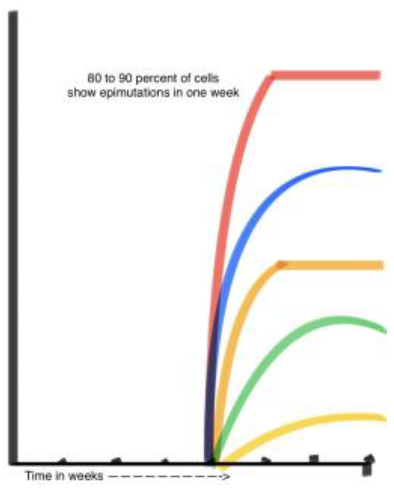
The toxicity of two different concentrations - of sulfur- 100 percent and 50 percent concentration. Showing epimutations in at least 80 percent of the cells in the 100 percent group and the second dose schedule at 50 percent concentration, shows epimutations in about 40 percent of cells exposed. Perform the same tests as stated above.
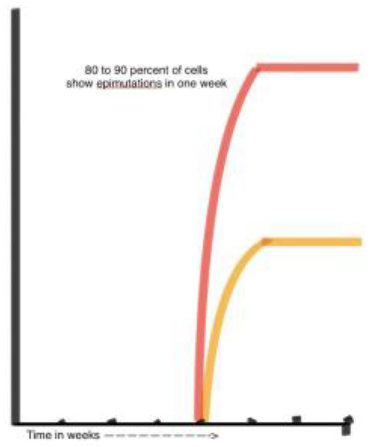
Divide the cells into five groups. Group one: red line: no primer, sulfur at the high concentration - result: the maximum number of epimutations. Blue line - a mild hormesis dose used as a primer for one month. Result: some epimutations are prevented. The orange line - the sulfur is used in a dose half of that of the red line dose: no primer is used. Result expected: half the number of epimutations. The green line represents a stronger hormesis dose for a month. the expected result: a further reduction in epimutations formed. The yellow line represents the strongest hormesis dose and the result is that in this group of cells the fewest number of epimutations are found. The blue, green and yellow are all applied to the cell groups for a month before the toxic doses of sulfur are applied.
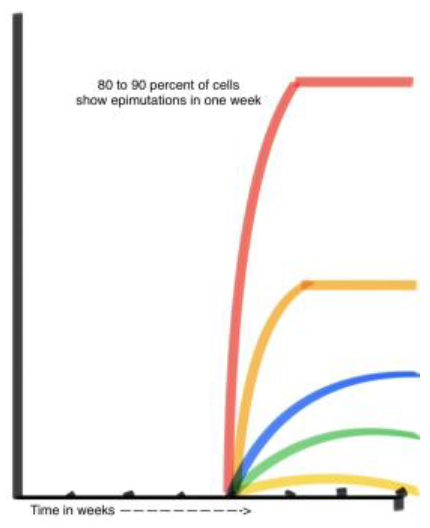
Here is the graph for the hormesis primer groups when the 50 percent concentrated toxin was added after one month: There are less epimutations than when a higher toxic dose of sulfur was used.
Here is the graph for the hormesis dilutions used after the epimutations were established:
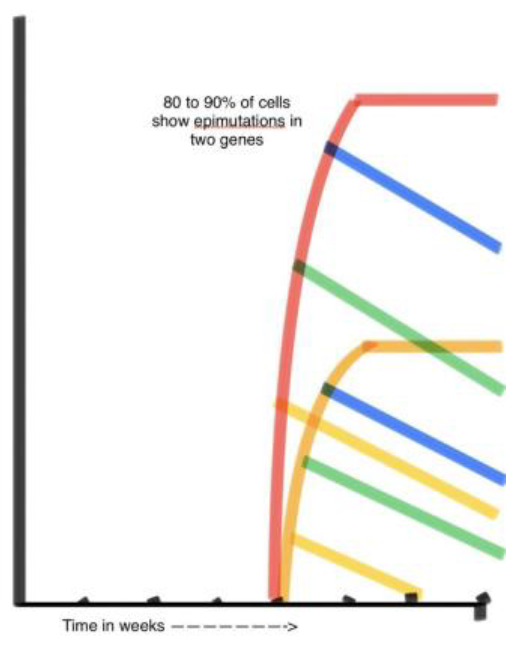
Compared to the controls, when the hormesis doses were applied the epimutations significantly reversed in the 100 percent toxic cell group and 50 percent toxic cell group. All the graphs above are the expected results, none of these studies have been completed yet.
Equipment
Illumina’s Infinium Methylation Array technology. Infinium EPIC Array v2.
Discussion
The effects of specific toxins on peripheral blood cell methylation patterns is not a very developed area of study. To start with, use at least two different concentrations of the toxin and compare them to find a dose that creates at least epimutations in 80 to 90 percent of the cells. Peripheral blood cells are relatively accessible and can be standardized into cell lines to limit variables. These cells contain all the epimutations that can be passed from one generation to the next, they are shown to contain the profiles of any chronic disease [51,52].
Confounding Factors
-
There is no such a thing as a healthy peripheral blood cell line. How can they be created to be healthy enough to not confound this study? If they contain too many previously acquired epimutations which are stronger than the new epimutation pattern from the toxin being studied then they can combine into a hybrid mutation pattern and the small dose antidote will not work. Answer: Find a way to create healthy hematopoietic stem cells with a minimum number of epimutations. Or take them from people who are healthy and who have a healthy family history. Use blood cells from at least 20 donors, men, women, and different races.The age of the cells studied produces a different epigenome. Answer: Expose the toxin to the peripheral blood cells of the same age. Or use the same toxin to study them at various ages. Study them at their most mature stage?
- Each type of cell produces a different epigenome. Answer: Use the same type of cells from peripheral blood.
- The pattern of the disease is spread (manifested) over many different cells. It is not easy or even possible to recognize the pattern in one specific cell. Answer: In the initial study the goal is to test the overall principle. This issue will have to be solved later.
- Layers of chronic diseases in the same person present patterns that are too complex to understand or recognize. Each parent will contribute a different pattern of chronic tendencies to the patient. They could be dominant at different times in the patient's life. Answer: The limits put on the initial study design remove this confounding factor. Later it will need to be addressed in patients with complicated chronic disease inheritances.
- Diseases present gradually, the pattern may not be recognizable in the beginning or even after a few years. Each pattern presents at a different rate. Answer: The limits put on the initial study design remove this confounding factor. Later it will need to be addressed in patients with complicated chronic diseases.
- Acute toxicity, chronic toxicity, such as smoking, the ingesting of heavy metals and or the exposure to a virus or bacteria will temporarily affect the epigenome. Answer: The limits put on the initial study design remove this confounding factor. Later it will need to be addressed in patients with complicated chronic diseases.
- Malnutrition at any stage of development and other physical influences such as injury, working conditions or ambient toxins produce confounding epimutation patterns that can muddle the disease that is most in need of treatment. Answer: The limits put on the initial study design remove this confounding factor. Later it will need to be addressed in patients with complicated chronic diseases.
- Acute emotional or mental stress at any stage of development can start to create new epimutation patterns: Answer: The limits put on the initial study design remove this confounding factor. Later it will need to be addressed in patients with complicated chronic diseases.
- As there is going to be more than one epimutation pattern affecting many genes, how to find the one that is primary? Or perhaps there will be only one expressed at one time? Answer: The limits put on the initial study design remove this confounding factor. Later it will need to be addressed in patients with complicated chronic diseases.
- Is the equipment able to produce sufficient resolution of the toxicity signature? Answer: Yes, we can choose a toxin that produces a reliable known epimutation and find out if homeostasis is able to resist it when given a primer.
- Genes that are off and should be on perhaps are not recognized as part of the toxicity image? Answer: As time goes on the image can be refined.
- Small doses don’t retain quantum information. Answer: This experiment can determine if this is true or false.
Final Conclusions
This technology to rebuild the self healing mechanisms within the homeostasis control center are within reach. Constitutional homeostasis therapy or, Homeostasis Diagnosis and Epimutation Correction - HDEC, to indirectly diagnose homeostasis disease susceptibilities and effect a cure of epimutations, is most likely a future branch of medicine. If successful, it will open up the potential to cure any epigenetically defined disease. These studies can in time overcome the confounding factors and lead to a successful treatment strategy. If homeostasis can create a healthy organism it can also, after epimutations develop, be rebuilt to cure or prevent many chronic diseases.
Funding
None yet secured.
| 1 | The small dose has to be 99 to 100% correct in order to stimulate homeostasis in the right direction. A drug used in a large dose to force changes at any point downstream, such as force markers on or off the DNA, force physiological functions such as suppress pain or inflammation will always be met with resistance. |
| 2 | None of these drugs were designed to be curative of any cause. They are the forced manipulation of chemistry that is downstream at least three steps from the internal cause. |
| 3 | By definition, every drug given in a large dose is resisted by the mechanisms of homeostasis. Drug tolerance and resistance is an ongoing dilemma for almost every class of pharmaceutical. For example accelerated metabolism can lead to a tolerance of opioids, a downgrading or receptors can lead to an intolerance of insulin. Antimicrobial drugs become less effective because the bacteria develop metabolic resistance. |
| 4 |
https://www.mpg.de/9331068/knockout-knockdown. Original paper: Andrea Rossi, Zacharias Kontarakis, Claudia Gerri, Hendrik Nolte, Soraya Hölper, Marcus Krüger & Didier Y. R. Stainier
|
| 5 | file:///C:/Users/Steve%20Olsen%20ND/Downloads/obm.icm.2103023.pdf . |
Registration
None to date.
Financial Sources
None to date.
References
- Wang, S.; Qin, L. Homeostatic medicine: a strategy for exploring health and disease. Curr Med Cham Switz. 2022, 1(1), 16. [Google Scholar] [CrossRef] [PubMed]
- Chronic Disease Data | CDC. Published April 28, 2021. Available online: https://www.cdc.gov/chronicdisease/data/index.htm (accessed on 9 September 2023).
- Chronic Diseases in America | CDC. Published December 13, 2022. Available online: https://www.cdc.gov/chronicdisease/resources/infographic/chronic-diseases.htm (accessed on 9 September 2023).
- Diseases- Statistics and Facts. 2070. (accessed on 9 September 2023).
- Keeping Education ACTIVE | Partnership to Fight Chronic Disease | Partneship to fight chronic disease. Available online: https://www.fightchronicdisease.org/ (accessed on 9 September 2023).
- Roser, M.; Ritchie, H.; Spooner, F. Burden of Disease. Our World Data. Available online: https://ourworldindata.org/burden-of-disease (accessed on 9 September 2023). Published online September 25, 2021.
- Global, regional, and national comparative risk assessment of 79 behavioural, environmental and occupational, and metabolic risks or clusters of risks in 188 countries, 1990–2013: a systematic analysis for the Global Burden of Disease Study 2013 - The Lancet. Available online: https://www.thelancet.com/journals/lancet/article/PIIS0140-6736(15)00128-2/fulltext (accessed on 9 September 2023).
- Beck, D.; Nilsson, E.E.; Ben Maamar, M.; Skinner, M.K. Environmental induced transgenerational inheritance impacts systems epigenetics in disease etiology. Sci Rep 2022, 12(1), 5452. [Google Scholar] [CrossRef] [PubMed]
- Chronic Disease in the United States: A Worsening Health and Economic Crisis. AAF. Available online: https://www.americanactionforum.org/research/chronic-disease-in-the-united-states-a-worsening-health-and-economic-crisis/ (accessed on 9 September 2023).
- Mancarella, D.; Plass, C. Epigenetic signatures in cancer: proper controls, current challenges and the potential for clinical translation. Genome Med 2021, 13(1), 23. [Google Scholar] [CrossRef] [PubMed]
- IJMS | Free Full-Text | Epigenetic Signatures in Arterial Hypertension: Focus on the Microvasculature. Available online: https://www.mdpi.com/1422-0067/24/5/4854 (accessed on 9 September 2023).
- Reamon-Buettner, S.M.; Mutschler, V.; Borlak, J. The next innovation cycle in toxicogenomics: environmental epigenetics. Mutat Res. 2008, 659, pp. 158–165. [CrossRef]
- Prospects for incorporation of epigenetic biomarkers in human health and environmental risk assessment of chemicals - Jeremias - 2020 - Biological Reviews - Wiley Online Library. Available online: https://onlinelibrary.wiley.com/doi/10.1111/brv.12589 (accessed on 9 September 2023).
- Genes | Free Full-Text | Imprinted Genes and the Environment: Links to the Toxic Metals Arsenic, Cadmium and Lead. Available online: https://www.mdpi.com/2073-4425/5/2/477 (accessed on 9 September 2023).
- Calabrese, E.J.; Blain, R.B. The hormesis database: The occurrence of hormetic dose responses in the toxicological literature. Regul Toxicol Pharmacol 2011, 61(1), 73–81. [Google Scholar] [CrossRef]
- Calabrese, E.J. Chapter 1 - The Dose–Response Revolution: How Hormesis Became Significant: An Historical and Personal Reflection. In The Science of Hormesis in Health and Longevity; Rattan, S.I.S., Kyriazis, M., Eds.; Academic Press, 2019; pp. 3–24. [Google Scholar] [CrossRef]
- Calabrese, E.J.; Iavicoli, I.; Calabrese, V. Hormesis: its impact on medicine and health. Hum Exp Toxicol. 2013, 32(2), 120–152. [Google Scholar] [CrossRef] [PubMed]
- Calabrese, E.J.; Mattson, M.P. How does hormesis impact biology, toxicology, and medicine? NPJ Aging Mech Dis 2017, 3, 13. [Google Scholar] [CrossRef] [PubMed]
- Torday, J.S. Homeostasis as the Mechanism of Evolution. Biology 2015, 4(3), 573–590. [Google Scholar] [CrossRef] [PubMed]
- Billman, G.E. Homeostasis: The Underappreciated and Far Too Often Ignored Central Organizing Principle of Physiology. Front Physiol. 2023, 11. Available online: https://www.frontiersin.org/articles/10.3389/fphys.2020.00200 (accessed on 9 September 2023). [CrossRef]
- Kotas ME, Medzhitov R. Homeostasis, Inflammation, and Disease Susceptibility. Cell 2015, 160(5), 816–827. [CrossRef]
- TOXsIgN: a cross-species repository for toxicogenomic signatures | Bioinformatics | Oxford Academic. Available online: https://academic.oup.com/bioinformatics/article/34/12/2116/4827679?login=false (accessed on 9 September 2023).
- Davies, K.J.A. Adaptive homeostasis. Mol Aspects Med 2016, 49, 1–7. [Google Scholar] [CrossRef]
- Vurusaner, B.; Leonarduzzi, G.; Gamba, P.; Poli, G.; Basaga, H. Oxysterols and mechanisms of survival signaling. Mol Aspects Med 2016, 49, 8–22. [Google Scholar] [CrossRef] [PubMed]
- Homeostasis (article) | Human body systems | Khan Academy. Available online: https://www.khanacademy.org/_render (accessed on 9 September 2023).
- Frontiers | Further Introduction of DNA Methylation (DNAm) Arrays in Regular Diagnostics. Available online: https://www.frontiersin.org/articles/10.3389/fgene.2022.831452/full (accessed on 9 September 2023).
- 14.5: Metabolism and Signaling: The Steady State, Adaptation and Homeostasis. Biology LibreTexts. Published April 22, 2023. Available online: https://bio.libretexts.org/Bookshelves/Biochemistry/Fundamentals_of_Biochemistry_(Jakubowski_and_Flatt)/02%3A_Unit_II-_Bioenergetics_and_Metabolism/14%3A_Principles_of_Metabolic_Regulation/14.5%3A_Metabolism_and_Signaling%3A__The_Steady_State_Adaptation_and_Homeostasis (accessed on 9 September 2023).
- Protein Homeostasis - an overview | ScienceDirect Topics. Available online: https://www.sciencedirect.com/topics/biochemistry-genetics-and-molecular-biology/protein-homeostasis (accessed on 9 September 2023).
- Austin, J.; Marks, D. Hormonal Regulators of Appetite. Int J Pediatr Endocrinol 2009, 2009, 141753. [Google Scholar] [CrossRef] [PubMed]
- Valastyan, J.S.; Lindquist, S. Mechanisms of protein-folding diseases at a glance. Dis Model Mech 2014, 7(1), 9–14. [Google Scholar] [CrossRef] [PubMed]
- Ponomarenko, E.A.; Poverennaya, E.V.; Ilgisonis, E.V.; et al. The Size of the Human Proteome: The Width and Depth. Int J Anal Chem 2016, 2016, 7436849. [Google Scholar] [CrossRef] [PubMed]
- Introduction to proteins and amino acids (article) | Khan Academy. Available online: https://www.khanacademy.org/_render (accessed on 9 September 2023).
- Robbins Basic Pathology - 10th Edition. Available online: https://shop.elsevier.com/books/robbins-basic-pathology/kumar/978-0-323-35317-5 (accessed on 12 September 2023).
- CDC. What is Epigenetics? | CDC. Centers for Disease Control and Prevention. Published August 15, 2022. Available online: https://www.cdc.gov/genomics/disease/epigenetics.htm (accessed on 9 September 2023).
- Epigenetics. Genome.gov. Available online: https://www.genome.gov/genetics-glossary/Epigenetics (accessed on 9 September 2023).
- Epigenetics. National Institute of Environmental Health Sciences. Available online: https://www.niehs.nih.gov/health/topics/science/epigenetics/index.cfm (accessed on 9 September 2023).
- Oey, H.; Whitelaw, E. On the meaning of the word “epimutation.”. Trends Genet TIG 2014, 30(12), 519–520. [Google Scholar] [CrossRef] [PubMed]
- Epimutation - an overview | ScienceDirect Topics. Available online: https://www.sciencedirect.com/topics/biochemistry-genetics-and-molecular-biology/epimutation (accessed on 9 September 2023).
- Epigenetics of chronic inflammatory diseases - PMC. Available online: https://www.ncbi.nlm.nih.gov/pmc/articles/PMC6304253/ (accessed on 9 September 2023).
- Calabrese, E.J. Hormesis: why it is important to toxicology and toxicologists. Environ Toxicol Chem 2008, 27(7), 1451–1474. [Google Scholar] [CrossRef] [PubMed]
- Henschler, D. The origin of hormesis: historical background and driving forces. Hum Exp Toxicol 2006, 25(7), 347–351. [Google Scholar] [CrossRef] [PubMed]
- Hormesis: a fundamental concept in biology - PMC. Available online: https://www.ncbi.nlm.nih.gov/pmc/articles/PMC5354598/ (accessed on 9 September 2023).
- Calabrese, E.J. Hormesis: Path and Progression to Significance. Int J Mol Sci. 2018, 19(10), 2871. [Google Scholar] [CrossRef] [PubMed]
- Opioid hyperalgesia and tolerance versus 5-HT1A receptor-mediated inverse tolerance - PubMed. Available online: https://pubmed.ncbi.nlm.nih.gov/14654304/ (accessed on 9 September 2023).
- Vaiserman, A.M. Hormesis, Adaptive Epigenetic Reorganization, and Implications for Human Health and Longevity. Dose-Response 2010, 8(1), dose-response.09-014.Vaiserman. [Google Scholar] [CrossRef]
- Vaiserman, A.M. Hormesis and epigenetics: Is there a link? Ageing Res Rev. 2011, 10(4), 413–421. [Google Scholar] [CrossRef]
- Comparative Toxicogenomics Database (CTD): update 2021 | Nucleic Acids Research | Oxford Academic. Available online: https://academic.oup.com/nar/article/49/D1/D1138/5929242?login=false (accessed on 9 September 2023).
- TOXsIgN. Available online: https://toxsign.genouest.org/ (accessed on 9 September 2023).
- The Comparative Toxicogenomics Database | CTD. Available online: https://ctdbase.org/ (accessed on 9 September 2023).
- Nair, S.K.; Eeles, C.; Ho, C.; et al. ToxicoDB: an integrated database to mine and visualize large-scale toxicogenomic datasets. Nucleic Acids Res. 2020, 48(W1), W455–W462. [Google Scholar] [CrossRef] [PubMed]
- A panel of DNA methylation signature from peripheral blood may predict colorectal cancer susceptibility - PMC. Available online: https://www.ncbi.nlm.nih.gov/pmc/articles/PMC7382833/ (accessed on 9 September 2023).
- Peripheral blood DNA methylation profiles are indicative of head and neck squamous cell carcinoma - PMC. Available online: https://www.ncbi.nlm.nih.gov/pmc/articles/PMC3335952/ (accessed on 9 September 2023).
Disclaimer/Publisher’s Note: The statements, opinions and data contained in all publications are solely those of the individual author(s) and contributor(s) and not of MDPI and/or the editor(s). MDPI and/or the editor(s) disclaim responsibility for any injury to people or property resulting from any ideas, methods, instructions or products referred to in the content. |
© 2024 by the authors. Licensee MDPI, Basel, Switzerland. This article is an open access article distributed under the terms and conditions of the Creative Commons Attribution (CC BY) license (http://creativecommons.org/licenses/by/4.0/).
Copyright: This open access article is published under a Creative Commons CC BY 4.0 license, which permit the free download, distribution, and reuse, provided that the author and preprint are cited in any reuse.


