

Submitted:
20 August 2024
Posted:
20 August 2024
You are already at the latest version
Abstract
Microplastics, plastic fragments smaller than 5 mm present in the environment due to the decomposition of larger plastics, can cause damage to various ecosystems and species of pollinating insects such as Apis mellifera bees. These bees play a crucial role in the ecology and production of honey and pollen, also serving as bioindicators of environmental quality as they are sensitive to contaminants such as microplastics. In this study, the presence of microplastics in these insects and their bee products, pollen, and honey, collected in August 2021 and August 2023 in rural areas (Tabio and Guasca) of Cundinamarca, Colombia, and urban areas (Universidad Nacional de Colombia) was evaluated. and Pontificia Universidad Javeriana) of Bogotá, Colombia. In each year, 24 bees, 10 grams of honey and 10 grams of pollen were collected per sampling point. Microplastics in bees and their products were identified and quantified by stereomicroscopy, with or without hydrogen peroxide digestion pretreatment. Microplastics were found in bees, pollen, and honey in both periods, with an increase in their quantity observed over time due to increasing environmental pollution. Blue fibers were the most common microplastics, with a greater amount recorded in 2023 compared to 2021.
Keywords:
Microplastics
; bees
; bee products
; Sabana de Bogotá
; Colombia
1. Introduction
The western honeybee (Apis mellifera) is a pollinating insect that has its origins in Europe and Africa, with adaptations over time in America, Asia, and Australia. This adaptation has been possible due to its exploitation for honey production and pollination of agricultural crops. Therefore, it is recognized as the most common individual pollinator species in crops worldwide [1,2]. They are insects that collect nectar and pollen, essential elements for the colony and for commercial use. Honey collection is carried out in colonies with a mated laying queen bee, and then collected in panels located in a machine with centrifugal force that makes the honey fall. On the other hand, pollen collection is done using pollen “traps.” These traps are placed at the entrance or under the hive and force the forager bees to pass through a metal or plastic mesh to enter the hive; In this way, loads of pollen come off their legs and fall into a collection tray [3]. However, honeybees not only play a vital role in honey production and pollination, but act as bioindicators of environmental pollution. Due to their flight behavior, high reproduction rate, and sensitivity to toxic substances, honeybees can accumulate contaminants present in the air, water, soil, and plants during their foraging flights [4]. In fact, bees, and their products, such as pollen and honey, are used as samplers to assess environmental quality in specific areas. Using techniques such as mass spectrometry, samples collected from hives can be analyzed for levels of heavy metals, pesticides, microplastics and other particles, providing valuable information on local contamination [4,15].
However, a reduction in bee colonies has been observed worldwide. This reduction is attributed to the use of pesticides, the fragmentation of habitats, climate change and the accumulation of plastics in the environment. The latter, when fragmented through photo- and thermo-oxidative degradation, produce polymeric particles known as microplastics (MP), with sizes between 1μm to 5 mm and nanoplastics (NP) with sizes <1 μm [5,6].
MPs are divided into two categories: primary and secondary. Primary MPs are produced with a specific size for application in the cosmetics and other commercial industries, while secondary MPs are derived from the degradation of larger plastic particles due to photochemical oxidation, hydrolysis, and mechanical forces. Furthermore, natural erosion processes such as tire wear and road particles, as well as sludge in wastewater, also contribute to the generation of secondary PM, thus representing significant sources of PM in the environment [4,7]. Both primary and secondary MPs are considered ubiquitous pollutants and resistant to natural degradation, in a wide variety of ecosystems, from soils, to urban, suburban, remote atmospheres, through aquatic systems, focusing on oceans where the presence has been demonstrated. of MP in seafood. However, MP contamination in terrestrial ecosystems may be greater than in aquatic systems since MPs have been found in beer, other beverages, fruits, and vegetables [5,7]. PM particles accumulate in ecosystems, where they influence soil processes and plant production, altering microbial composition. In this way, PM enter the food chain, acting as vectors for other contaminants [8].
Animals are exposed to MPs through ingestion of water and food, as well as contact with contaminated air and soil. In insects, MPs can have a significant impact, due to their prevalence in the environment and the key ecosystem services they provide. Due to their size, insects are subject to greater impact from MPs than larger organisms. Pollinating insects, such as honeybees, play an important role in ecosystems, supporting the genetic diversity of angiosperm flora, making them essential for food production. Furthermore, its products, such as honey, pollen, and beeswax, are used for human consumption [5,8]. Therefore, MPs significantly affect the diversity of the bees' intestinal microbiome and genes related to the immune system, making them more susceptible to viral infections that damage their intestinal tissues; Therefore, it has an impact on the ecological function of pollinators, which could eventually affect human health [4,5].
It is important to establish techniques to identify contaminating MPs to mitigate the irreversible damage they can cause. Various studies have been carried out to analyze and identify MPs, highlighting techniques such as Raman spectroscopy, Fourier transform infrared spectroscopy (FTIR), scanning electron microscopy (SEM) coupled to energy dispersive x-rays (EDX). and thermal analysis [9,10]. The Raman spectroscopy technique can detect MPs in the submicron size range, using a laser beam directed at a specific sample and producing a unique spectrum based on the chemical composition of the sample. Similarly, FTIR allows the quantitative and qualitative analysis of plastic polymers, producing unique spectra that differentiate plastics from other organic and inorganic particles, providing specific information about the composition of the polymer to determine its source or origin [10,11]. Scanning electron microscopy (SEM) allows the identification of nanoparticles, easily differentiating organic particles from microplastics by providing high-resolution images, while SEM coupled to EDX allows microplastics to be differentiated according to their elemental composition [10]. Thermal analysis is an alternative to spectroscopic techniques, which allows the measurement of any type of change in chemical and physical properties of substances based on their stability or thermal degradation [11].
To understand the impact of MPs on the environment, it is necessary to consider their presence in living organisms and in the products derived from them. Therefore, it is important to identify the presence of PM through analytical techniques in samples collected at different sampling points. The following study covered both rural areas (Guasca and Tabio) and urban areas (Pontificia Universidad Javeriana and Universidad Nacional), considering the climatic data and environmental quality of the same month in two different years (August 2021 – August 2023).
2. Materials and Methods
2.1. Collection of Specimens and Their Bee Derivatives
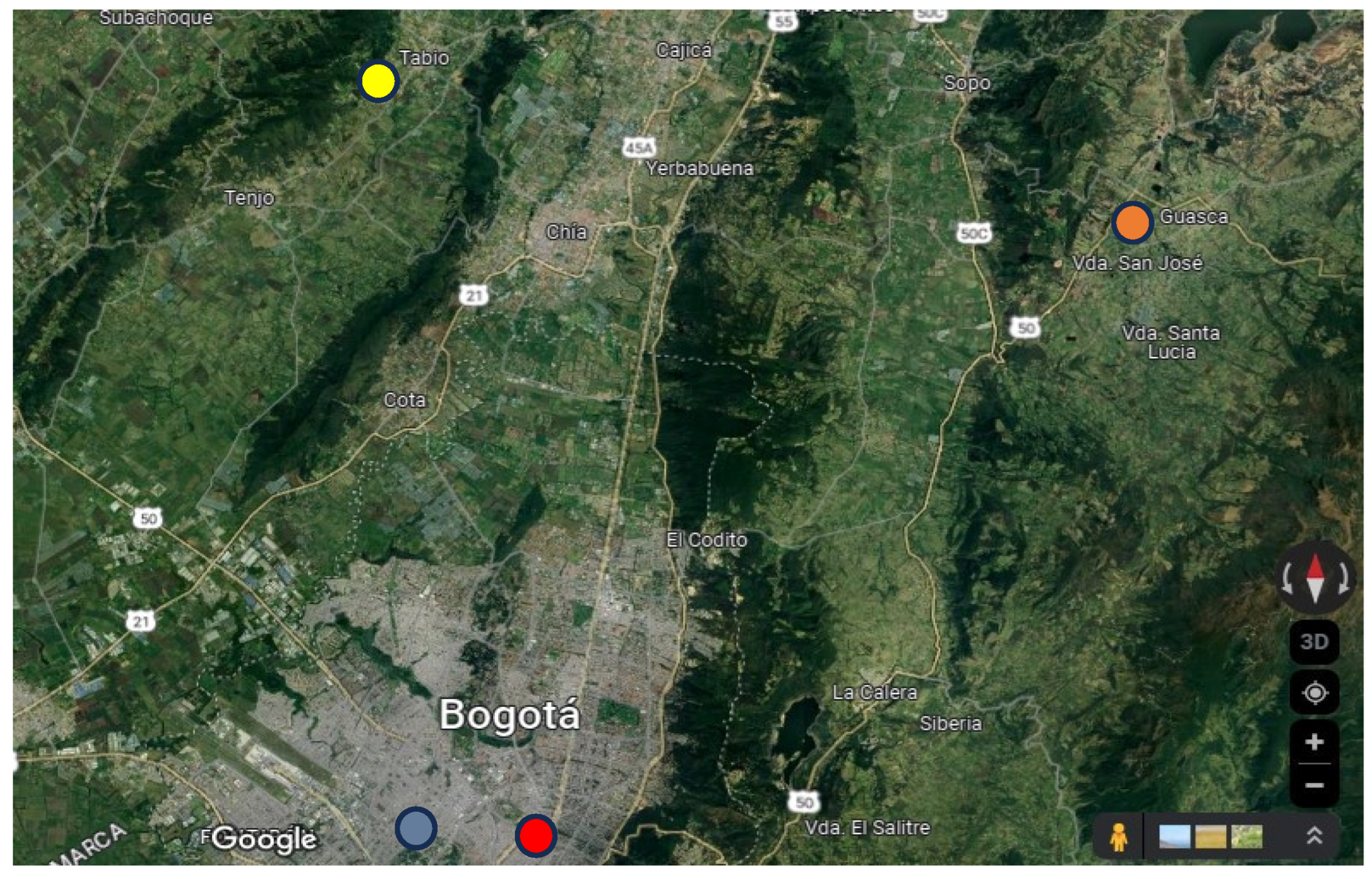
24 individuals of A. mellifera, 10 g of honey and pollen were collected from each sampling point in August 2021 and August 2023, in two rural areas (Tabio 4°54′57″ N, 74°5′54″ W and Guasca 4°51′57″ N, 73°52′38″ W) and two urban areas (LABUN Apiary, the National University of Colombia - UNAL 4°38′8″ N, 74°4′58″ W, and Apiario Javeriano of the Pontificia Universidad Javeriana – PUJ 4°37′44.2″ N, 74°3′53.46″ W). The study material was placed in a refrigerator and transported to the Microbiology laboratories of the PUJ for subsequent analysis.
Figure 1.
Location map of sampling points in rural areas: Tabio (yellow circle) and Guasca (orange circle), and urban areas: UNAL (blue circle) and PUJ (red circle).
Figure 1.
Location map of sampling points in rural areas: Tabio (yellow circle) and Guasca (orange circle), and urban areas: UNAL (blue circle) and PUJ (red circle).
2.2. MP Quantification in Bees
To determine the presence of MP attached to the body of the bees, the A. mellifera individuals obtained at each sampling point were observed under a Zeiss® Stemi 350 stereoscope, with 8x – 40x objectives. Then, the individuals were placed in beakers with 150 ml of distilled water and 50 ml of ethanol to wash them and thus remove particles from the bees' bodies. Subsequently, the individuals were filtered through 47 mm stainless steel filters and 2 mm sieves and subjected to digestion for 24 hours in 100 mL of 33% (v/v) hydrogen peroxide (H2O2), 60° C, 80 rpm, in a Brunswick Innova® 44/44R, to digest the remains of organic matter. After this time, the individuals were filtered in 20% NaCl (w/v) on Whatman® paper, placed in Petri dishes to observe them under a stereoscope and perform the quantification and characterization of the fibers found [4].
2.3. MP Quantification in Honey
For honey, samples with 10 g of honey were heated in a Memmert® thermostated bath at 70° C, until crystallization reversed. Then the samples were diluted 1:1 with distilled water and filtered using Whatman® # 2 paper on a 2 mm sieve. After this, digestion was carried out with 100 mL of 30% (v/v) H2O2, in a 250 mL Erlenmeyer, for 72 h. After that time, a second filtration was carried out with Whatman #2 paper on a 2 mm sieve and paper filters were immersed in absolute ethanol, sonicated for 15 minutes at 55° C in a Bransson® sonicator until the ethanol, the filters were washed and finally observed under a stereoscope with 8x – 40x objectives [5]
2.4. Quantification and Identification of MP in Pollen
5 g of pollen from each sampling point were weighed on an analytical balance and observed directly under a stereoscope Zeiss® Stemi 350 with 8x – 40x objectives.
3. Results
3.1. MP Quantification from Direct Observation of Individuals and Pollen
Through direct observation under a stereoscope, MPs present in A. mellifera individuals and pollen were quantified. The results obtained show a variation in the amount of MP found in bees between years and sampling points. At the UNAL sampling point, the amount increased in 2023 compared to 2021, while at the PUJ sampling point, the presence of MP was higher in 2021, but in 2023 it drastically decreased to zero. However, in 2021, a greater amount of MP was detected in A. mellifera individuals, with the PUJ being the sampling point with the highest presence of MP found in both years (Figure 3). Furthermore, the difference in MP found in city bees compared to rural bees is notable.
Regarding the quantification of MP in pollen, an increase in MP from 2021 to 2023 of 11.58% was observed, although there was no variation in the items found in the product, with UNAL being the point that had the most presence of MP in pollen both years (Figure 3).
3.2. MP Quantification in Honey
A variation was observed at the Tabio and Guasca sampling points. In 2021, Guasca recorded the highest presence of MP in honey, being the sampling point and the year with the highest amount of MP, while, in 2023, Tabio obtained the highest amount of MP.
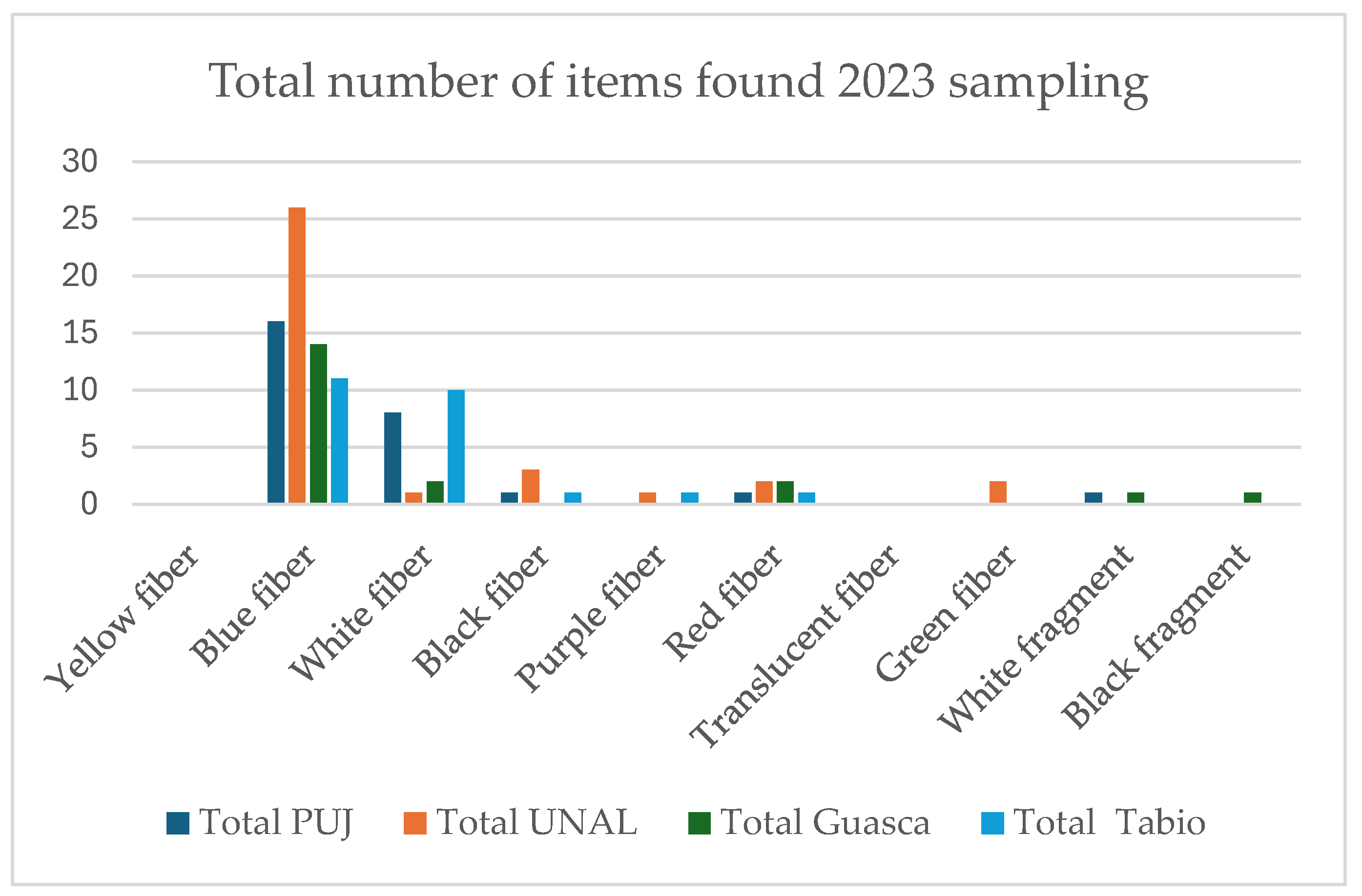
The quantification by items of both years showed an increase in the total number of items found, going from 95, in 2021, to 106 in 2023 (p= 0.581303). Blue fiber was the most frequent type of MP in both years (Figure 4 and Figure 5), while there was only the presence of yellow, green, translucent fibers and white fragments, in 2021 (Figure 4). The diversity of fibers and fragments suggests a varied composition and diverse sources of MP contamination in the bees, and their bee products.
3.3. MP Quantification in Digested Bee
Except for the 2021 PUJ sample, all the bees subjected to digestion with H2O2 presented MP, with the samples from UNAL (29 in total for the two years) and Guasca (21 in total) having more items. In 2023, the largest presence of items from the sampled areas were obtained from the intestinal tract of bees, apart from PUJ, which was obtained from honey. In 2021, only the intestinal tract of UNAL bees presented the largest number of items.
Figure 2.
Stereomicroscope images of the MP obtained in the analyzed samples.: (a-c) Recovered honey fragments, (d-f) Bee tissue digested with H2O2, (g-i) Pollen (j-l) bees.
Figure 2.
Stereomicroscope images of the MP obtained in the analyzed samples.: (a-c) Recovered honey fragments, (d-f) Bee tissue digested with H2O2, (g-i) Pollen (j-l) bees.
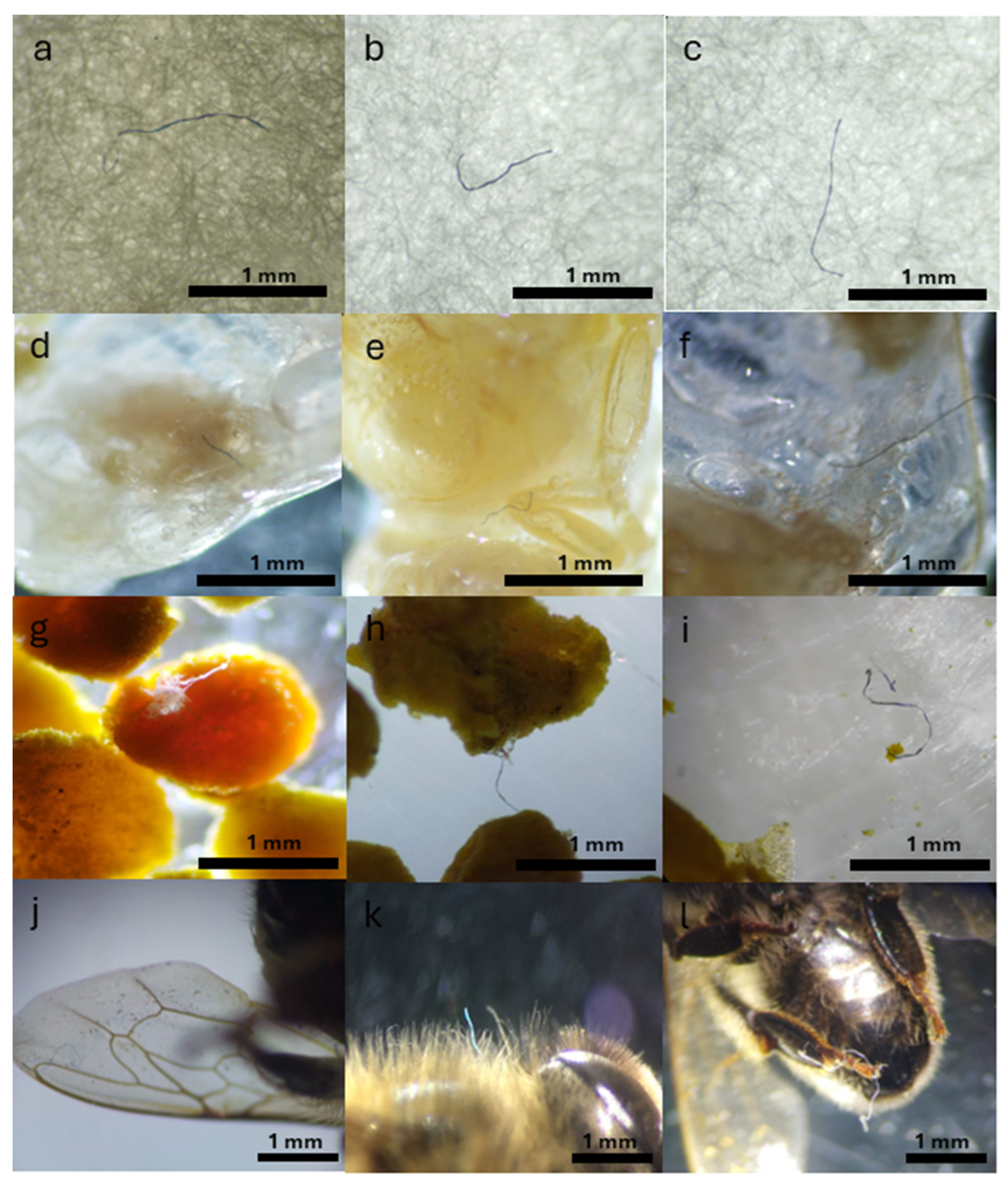
Figure 3.
Total number of items for sampling area.
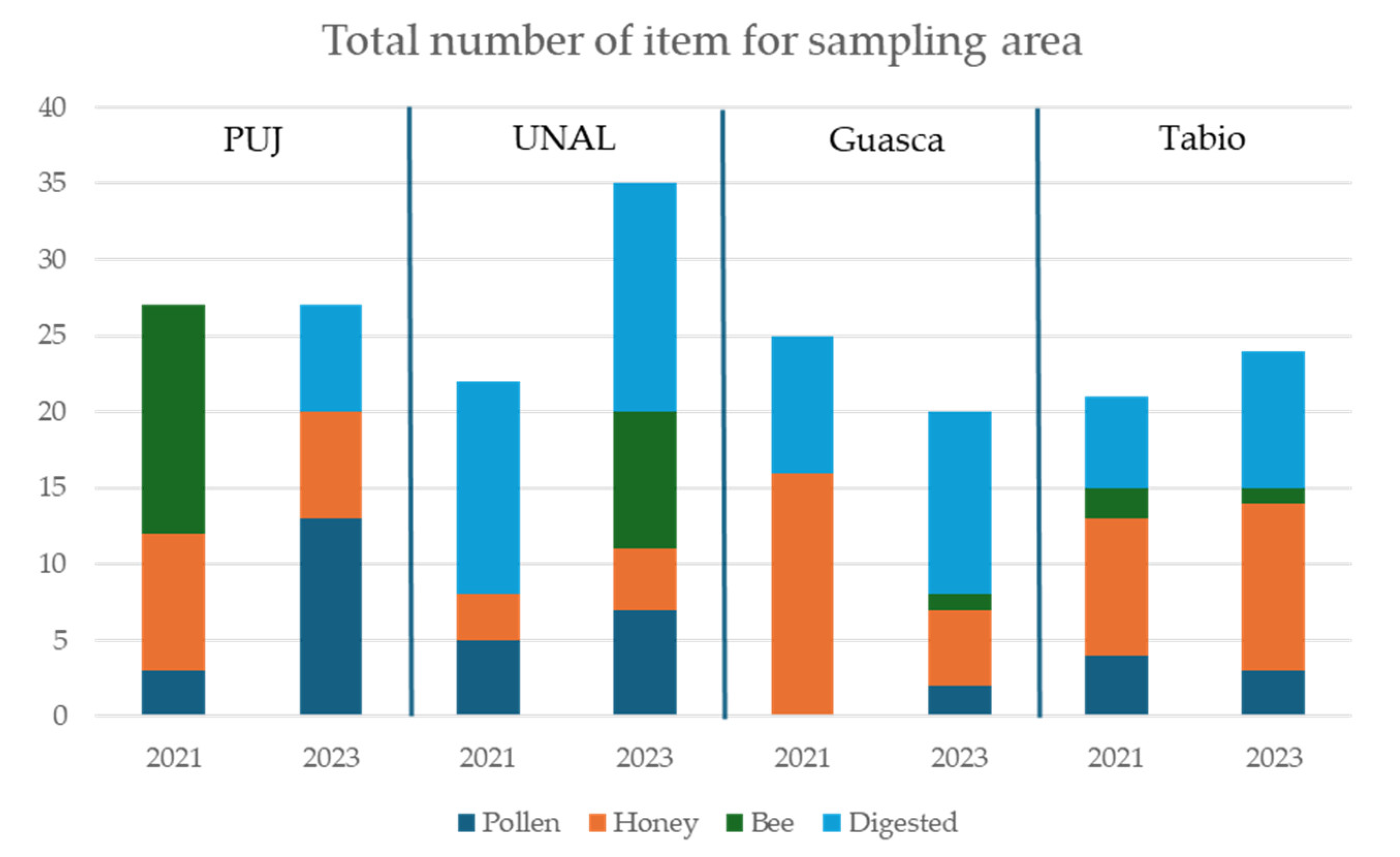
Figure 4.
Total number of items found 2021 sampling.
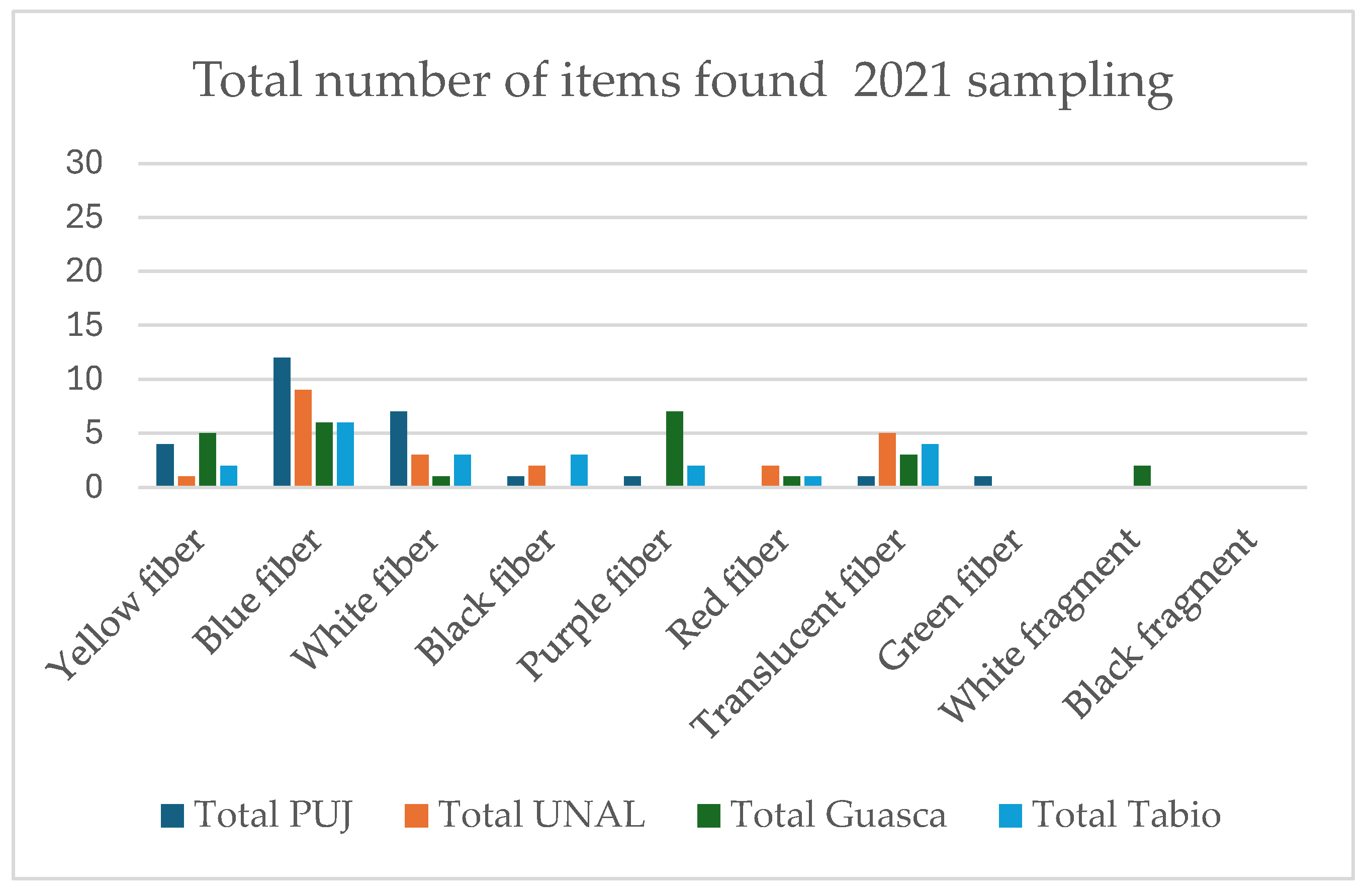
Figure 5.
Total number of items found 2023 sampling.
4. Discussion
The levels of environmental contamination in the study areas are an essential factor to analyze the presence of MP found in the collected bees, pollen, and honey. According to official data, the air quality in Bogotá city has decreased when comparing the years 2021 and 2023. The annual average of PM2.5 particulate matter in 2021 was 16 μ/mg3, this value being higher than the annual norm of 15 μ /mg3, so the air quality index ranged between “moderate” and “harmful for sensitive groups” during the year, considering that the main sources of pollution were industrial emissions and vehicular traffic. Meanwhile, the data until August 2023 indicate an average PM2.5 of 22 μ/mg3 where the environmental quality index recorded more days in the “harmful to health” category, which is attributed to the increase in vehicle emissions and conditions unfavorable climatic conditions [22,23]. In Cundinamarca, according to the Corporación Autónoma Regional (CAR) Monitoring Network, the Soacha, Chía and Zipaquirá stations recorded PM10 levels above the annual norm (50 μ/mg3) in both years [25,26], presenting a greater increase in 2023 and this is due to the increase in vehicular and industrial emissions [14,15]. Furthermore, the difference between environmental pollution levels between 2021 and 2023 is attributed to studies that confirm that the quality of the environment decreased after the COVID-19 contingency [27,28], which could have influenced the increase in the presence of microplastics in the samples analyzed.
Pollution levels with particulate matter can be related to the presence of MP and the foraging patterns of A. mellifera bees by actively interacting with plants, air, soil and water close to the hive, honeybees transfer contaminants such as PM, to their products [7]; this may explain the presence of different MP in the samples analyzed in this study.
This foraging pattern increases the probability that honeybees meet different potential sources of MP contamination in A. mellifera, demonstrating an impact of contamination on these pollinating insects. Alma et al. (2023) demonstrated that honeybees can incorporate MP from their food sources and subsequently transferring them to honey, wax, and larvae. This implies that upon returning to the hive after foraging in contaminated areas, bees can introduce these plastic contaminants to bee products intended for human consumption [7]. In the present study, MP were found in both honey and pollen.
It is important to mention the wide flight range that these pollinators have when obtaining resources, honey bees are collectors from central places that can search for food at certain distances from their nests, the method they use to collect food consists of a dance of wagging indicating foraging distances of up to 15 km from the nest for A. mellifera, however average foraging ranges rarely exceed 3 km and vary between seasons or environmental settings [20]. Honeybees actively interact with plants, air, soil, and water in the vicinity of the hive and, consequently, contaminants from these sources are transferred to the honeybees and hive products [7]. When bees collect nectar, honeydew, pollen, water, and other plant exudates such as propolis, they encounter almost all environmental contaminants, so PM contamination will eventually be introduced into the bee colony and its bee products. [7]. UNAL is an open field, larger and with less tree and flower density than PUJ, which would force the bees to fly farther and explore more points with anthropogenic intervention. This university is in a central area of the city surrounded by urban and industrial areas. In addition, PUJ is close to the eastern hills of the city, which would explain the greater presence of MP in the bees at UNAL.
According to the data obtained, Figure 3 shows that in 2021 a greater amount of MP was found in bees in the PUJ (urban area) with 15 items, compared to the rural areas and UNAL. For the year 2023, the observation of bees under digestion with H2O2 showed that UNAL had the largest amount with 15 items, followed by Guasca (12 items), Tabio (9 items) and PUJ (7 items. Thus Likewise, the observation of the filtration used for honey after digestion with H2O2, in the year 2023 Tabio recorded the highest number of items, then the PUJ (6 items), Guasca (4 items) and UNAL (4 item). Regarding pollen, the highest amount of MP was evident in the year 2023, in the PUJ, 13 items were evident, followed by the UNAL with 7 items, Tabio 3 items and Guasca 2 items show that urban areas (UNAL and PUJ) had a higher incidence of MP than in rural areas. This may be due to factors specific to each location such as the presence of particulate matter (PM2.5 and PM10) that can act as vectors of MP transport for microplastics, adhering to their surface and facilitating their atmospheric dispersion, as well as point sources of pollution such as a greater concentration of population, human activity, infrastructure, the use of chemical products and the lack of vegetation, in addition to the conditions climatic.
According to the number of fibers found per color, blue fibers were the most frequent type of PM in bees, pollen, and honey, both in 2021 and 2023 (Figure 4 and Figure 5). This predominance is linked to the preference of A. mellifera bees for shades in the visual range between 300 and 700 nm, with maximum peaks in ultraviolet (344 nm), blue (438 nm) and green (560 nm) [29]. These wavelengths correspond to the vibrant colors that bees prefer during pollination and collecting nectar and pollen. Therefore, the high prevalence of blue fibers in UNAL and PUJ urban areas could be due to several factors. Firstly, the green areas and gardens present in these places that could be contaminated due to their location. In these areas, vehicle pollution, garbage accumulation, and the deposition of plastic or synthetic materials could contribute to the presence of fibers [38]. On the other hand, the preference of bees for flowers of bright colors such as blue, yellow, red, and green, during foraging could influence their exposure to these fibers since they could transport them from the gardens and green areas present in that environment to the hive, which may explain its high prevalence in these areas. The translucent fibers could be related to proteins present in bees, while fibers of other colors are attributed to the incorporation of MP by bees during foraging. These notable differences in the types of MP found between the rural areas (Tabio and Guasca) and the urban areas sampled could be related to the presence of urban settlements within the feeding range of worker bees and the ease with which MP They can be dissipated by wind [7]. However, it has been shown that transparent, white, and black MP fibers are the most abundant in sediments and freshwater [20]. The prevalence of this type of fibers or fragments found could indicate the presence of sediments close to the sampling points, considering that the rural area possibly has a greater probability of nearby sediments due to its greater number of green areas, which, could also be contaminated due to the urbanization that has occurred in these areas over time [31]. However, blue MP and shades close to that color should not be ignored in rural areas close to the apiaries studied. Various polypropylene (PP) or polyethylene (PE) type plastics were observed in Guasca and Tabio used as enclosures (walls) of farms (Figure 6).
Figure 6.
Plastic enclosures observed in Tabio (a) and Guasca (b) farms, close to the apiaries studied.
Figure 6.
Plastic enclosures observed in Tabio (a) and Guasca (b) farms, close to the apiaries studied.

MPs found in bees and their bee products revealed the presence of fibers and fragments, including fibers of different colors such as blue, red, black, white, and translucent, as well as black and white but not in size, shape and, probably, not in polymeric composition. Some colored fibers could, with low probability, come from primary sources such as synthetic fabrics, clothing or ropes, while the blue, green, grey or black fragments and fibers could be remains of the degradation of larger plastics in the environment, such as those used as dividing nets, becoming secondary MP (Figure 6), which significantly affects their behavior and environmental impact [5]. In addition, some fibers may also have been formed by the fragmentation of larger plastics exposed to environmental processes such as UV-B rays [20,21,31]. Both primary and secondary MP are ubiquitous and persistent pollutants found in urban, suburban, and rural atmospheres far from their sources, indicating possible long-distance atmospheric transport [7]. Some of the polymers commonly found in MP include PP, PE, polystyrene (PS), polyvinyl chloride (PVC), polyurethane (PU) and terephthalate (PET) [28]. In this study, an attempt was made to determine the chemical composition of the MP found, but due to their size, the microscope coupled to the infrared spectrometer did not detect them.
Understanding the composition of MPs is essential to evaluate their persistence, distribution, transport and impacts on ecosystems, human and animal health. The confirmed presence of primary MPs and secondary effects in these reservoirs highlights the importance of continuing to investigate the sources, exposure routes and effects of these contaminating particles.
MPs found in bees, pollen, and honey, may represent a risk to the health and well-being of these pollinating insects. Fibers and plastic fragments could cause damage to the digestive system of bees, as well as alterations in their behavior and foraging capacity [7]. Furthermore, the presence of MP in pollen and honey could affect the nutritional quality of these products both for bees and for human consumption.
5. Conclusions
The presence of MP was confirmed in bees, pollen and honey collected in both urban (PUJ and UNAL) and rural (Tabio and Guasca) areas. MP varied in size, shape, colour and possible polymeric composition including fibres of different colours (mainly blue) and fragments. Both primary and secondary MP were present in the analysed samples. This finding demonstrates that MP contamination affects pollinators and their bee products regardless of geographical location.
Author Contributions
Conceptualization, L.D.G.M, J.E.R.C, R.V.B, A.R.A.S, A.M.M.N, C.A.D.C and R.O; methodology, L.D.G.M, Y.E; formal analysis, L.D.G.M, Y.E and M.C; investigation, L.D.G.M and Y.E; writing—original draft preparation, L.D.G.M, Y.E.; writing—review and editing, L.D.G.M; funding acquisition, A.R.A.S.
Funding
This research was funded by Pontificia Universidad Javeriana, grant number 20324.
Conflicts of Interest
The authors declare no conflicts of interest.
References
- Hagan, T.; Lim, J.; Buchmann, G.; Ding, G.; Oldroyd, B.P.; Gloag, R. The use of drone congregation behavior for population surveys of the honeybee Apis cerana. Apidologie (Celle) 2024, 55. [CrossRef]
- Hung, K.L.J.; Kingston, J.M.; Albrecht, M.; Holway, D.A.; Kohn, J.R. The worldwide importance of honeybees as pollinators in natural habitats. Proc Biol Sci 2018, 285:20172140. [CrossRef]
- Hoover, S.E.; Ovinge, L.P. Pollen collection, honey production, and pollination services: Managing honeybees in an agricultural setting. J Econ Entomol 2018, 111:1509–16. [CrossRef]
- Edo, C.; Fernández-Alba, A.R.; Vejsnæs, F.; van der Steen, J.J.M.; Fernández-Piñas, F.; Rosal, R. Honeybees as active samplers for microplastics. Sci Total Environ 2021, 767:144481. [CrossRef]
- Rengifo, E.A. Determinación de la presencia de microplásticos en miel artesanal e industrial. B.Sc. Thesis. Universidad Central del Ecuador, Quito, Ecuador, 03-06-2024.
- Buteler, M.; Alma, A.M.; Stadler, T.; Gingold, A.C.; Manattini, M.C.; Lozada, M. Acute toxicity of microplastic fibers to honeybees and effects on foraging behavior. Sci Total Environ 2022, 822:153320. [CrossRef]
- Prata, J.C.; Silva, A.L.P.; da Costa, J.P.; Mouneyrac, C.; Walker, T.R.; Duarte, A.C.; Rocha-Santos, T. Solutions and integrated strategies for the control and mitigation of plastic and microplastic pollution. Int J Environ Res Public Health 2019 ,16:2411. [CrossRef]
- Al Naggar Y, Brinkmann M, Sayes CM, AL-Kahtani SN, Dar SA, El-Seedi HR. Are honeybees at risk from microplastics? Toxics 2021, 9:109. [CrossRef]
- Alma, A.M.; de Groot, G.S.; Buteler, M. Microplastics incorporated by honeybees from food are transferred to honey, wax and larvae. Environ Pollut 2023, 320:121078. [CrossRef]
- Araujo CF, Nolasco MM, Ribeiro AMP, Ribeiro-Claro PJA. Identification of microplastics using Raman spectroscopy: Latest developments and future prospects. Water Res 2018,142:426–40. [CrossRef]
- Randhawa JS. Advanced analytical techniques for microplastics in the environment: a review. Bull Natl Res Cent 2023, 47. [CrossRef]
- Baruah A, Sharma A, Sharma S, Nagraik R. An insight into different microplastic detection methods. Int J Environ Sci Technol 2022,19:5721–30. [CrossRef]
- Hristov, P.; Neov, B.; Shumkova, R.; Palova, N. Significance of Apoidea as Main Pollinators. Ecological and Economic Impact and Implications for Human Nutrition. Diversity, 2020, 12(7), 280. [CrossRef]
- Capinera, J. L., Crist, T. O., Heppner, J. B., Tzanakakis, M. E., Gayubo, S. F., Tartar, A., Lawrence, P. O., Hangay, G., Shukle, R. H., Skevington, J. H., Maimala, S., Boucias, D. G., Fasulo, T. R., Shanower, T. G., Brown, S. J., Shippy, T. D., Denell, R. E., Beeman, R. W., Webster, T. C.; Hernández, S.. Honeybee, Apis mellifera (Hymenoptera: Apidae). In Encyclopedia of Entomology 2008 (pp. 1835–1840). Springer Netherlands. [CrossRef]
- Khalifa, S.A.M.; Elshafiey, E.H.; Shetaia, A.A.; El-Wahed, A.A.A.; Algethami, A.F.; Musharraf, S.G.; AlAjmi, M.F.; Zhao, C.; Masry, S.H.D.; Abdel-Daim, M.M.; Halabi, M.F.; Kai, G.; al Naggar, Y.; Bishr, M.; Diab, M.A.M.; El-Seedi, H.R. Overview of Bee Pollination and Its Economic Value for Crop Production. Insects, 2021, 12(8), 688. [CrossRef]
- Papa, G.; Maier, R.; Durazzo, A.; Lucarini, M.; Karabagias, I.K.; Plutino, M.; Bianchetto, E.; Aromolo, R.; Pignatti, G.; Ambrogio, A.; Pellecchia, M.; Negri, I. The Honeybee Apis mellifera: An Insect at the Interface between Human and Ecosystem Health. Biology, 2022, 11(2), 233. [CrossRef]
- Nayanathara, Thathsarani, Pilapitiya, P.G.C.; Ratnayake, A.S. The world of plastic waste: A review. Cleaner Materials 2024, 11, 100220. [CrossRef]
- Li, P.; Wang, X.; Su, M.; Zou, X.; Duan, L.; Zhang, H. Characteristics of Plastic Pollution in the Environment: A Review. Bull. Environ. Contam. Toxicol. 2021, 107(4), 577–584. [CrossRef]
- Upadhyay, S.; Sharma, P.K.; Dogra, K.; Bhattacharya, P.; Kumar, M.; Tripathi, V.; Karmakar, R. Microplastics in freshwater: Unveiling sources, fate, and removal strategies. Groundwater for Sustainable Development 2024, 26, 101185. [CrossRef]
- Wang, K.; Zhu, L.; Rao, L.; Zhao, L.; Wang, Y.; Wu, X.; Zheng, H.; Liao, X. Nano- and micro-polystyrene plastics disturb gut microbiota and intestinal immune system in honeybee. Sci. Total Environ. 2022, 842, 156819. [CrossRef]
- Shackleton, K.; Balfour, N.J.; al Toufailia, H.; James, E.; Ratnieks, F.L.W. Honeybee waggle dances facilitate shorter foraging distances and increased foraging aggregation. Animal Behaviour, 2023, 198, 11–19. [CrossRef]
- Shen, J.; Liang, B.; Jin, H. The impact of microplastics on insect physiology and the indication of hormesis. TrAC Trends in Analytical Chemistry 2023, 165, 117130. [CrossRef]
- Secretaria Distrital de Ambiente http://rmcab.ambientebogota.gov.co/Pagesfiles/informe%20anual%202021_.pdf. (accessed on 22-03-2024).
- Secretaria Distrital de Ambiente http://rmcab.ambientebogota.gov.co/Pagesfiles/informe%20anual%202023_.pdf (accessed on 21-03-2024).
- Corporación Autónoma Regional de Cundinamarca. Boletín mensual de calidad del aire mayo 2021. https://www.car.gov.co/uploads/files/60da5d338514d.pdf (accessed on 13-04-2024).
- Corporación Autónoma Regional de Cundinamarca. Boletín mensual de calidad del aire mayo 2023. https://www.car.gov.co/uploads/files/64a6c75e1da42.pdf (accessed on 16-04-2024).
- Ravindra, K.; Singh, T.; Vardhan, S.; Shrivastava, A.; Singh, S.; Kumar, P.; Mor, S. COVID-19 pandemic: What can we learn for better air quality and human health? J. Infect Public Health 2022, 15(2), 187–198. [CrossRef]
- Maniat, M.: Habibi, H.; Manshoorinia, E.; Raufi, P.; Marous, P.; Omraninaini, M. 2024. Correlation or Causation: Unraveling the Relationship between PM2.5 Air Pollution and COVID-19 Spread Across the United States. J. Environ. Sci. Economics, 3(1), 27–41. [CrossRef]
- Jain, R.; Gaur, A.; Suravajhala, R.; Chauhan, U.; Pant, M.; Tripathi, V.; Pant, G. Microplastic pollution: Understanding microbial degradation and strategies for pollutant reduction. Sci. Total Environ. 2023, 905, 167098. [CrossRef]
- Isozumi, Y.; Arai, R.; Fujimoto, K.; Koyama, T. Activation of Coagulation by Lenalidomide-Based Regimens for the Treatment of Multiple Myeloma. PLoS ONE 2013, 8(5), e64369. [CrossRef]
- Liu, L.; Xu, M.; Ye, Y.; Zhang, B. On the degradation of (micro)plastics: Degradation methods, influencing factors, environmental impacts. Sci. Total Environ. 2022, 806, 151312. [CrossRef]
- Cohen, Q. M.; Glaese, M.; Meng, K.; Geissen, V.; Huerta-Lwanga, E. Parks and Recreational Areas as Sinks of Plastic Debris in Urban Sites: The Case of Light-Density Microplastics in the City of Amsterdam. The Netherlands. Environments 2021, 9(1), 5. [CrossRef]
Disclaimer/Publisher’s Note: The statements, opinions and data contained in all publications are solely those of the individual author(s) and contributor(s) and not of MDPI and/or the editor(s). MDPI and/or the editor(s) disclaim responsibility for any injury to people or property resulting from any ideas, methods, instructions or products referred to in the content. |
© 2024 by the authors. Licensee MDPI, Basel, Switzerland. This article is an open access article distributed under the terms and conditions of the Creative Commons Attribution (CC BY) license (http://creativecommons.org/licenses/by/4.0/).
Copyright: This open access article is published under a Creative Commons CC BY 4.0 license, which permit the free download, distribution, and reuse, provided that the author and preprint are cited in any reuse.


