
Submitted:
18 August 2024
Posted:
19 August 2024
You are already at the latest version
Abstract
Chronic stress is a pervasive issue that significantly impacts both physical and mental health. Unlike acute stress, which is short-lived and can be beneficial, chronic stress persists over extended periods, leading to a range of adverse health outcomes. This paper explores the myriad physical, mental, and behavioral consequences of chronic stress, emphasizing the underlying physiological mechanisms and potential long-term health implications. Through a comprehensive literature review and data analysis utilizing Python, we aim to provide an in-depth understanding of chronic stress and its effects. Key findings include the critical roles of cortisol and other stress-related chemicals in exacerbating health issues, and the potential for the normalization of high stress levels as an adaptive yet harmful response.
Keywords:
Neuronal Habituation Model
; Chonic Stress
; Harmful Consequences
Section 1. Introduction
Stress is an inherent part of life, designed to trigger the body's fight-or-flight response to immediate threats. While acute stress is typically short-lived and can sometimes enhance performance and resilience, chronic stress is characterized by prolonged exposure to stressors, resulting in continuous activation of the stress response system. This persistent state of alertness can lead to significant physical and mental health problems. The physiological mechanisms of chronic stress involve the hypothalamic-pituitary-adrenal (HPA) axis, which regulates the release of cortisol and other stress-related hormones (McEwen, 2007; McEwen & Wingfield, 2003). Over time, elevated levels of these hormones can disrupt normal bodily functions, leading to cardiovascular issues, immune suppression, digestive problems, muscle tension, and various mental health disorders such as anxiety and depression (American Psychological Association, 2023; Cleveland Clinic, 2023; National Institute of Mental Health, 2023).
Cardiovascular problems are a significant consequence of chronic stress. Prolonged stress leads to the continuous release of stress hormones like adrenaline and cortisol, which can damage blood vessels and arteries, increasing the risk of high blood pressure, heart disease, and stroke (Mayo Clinic Staff, 2023; Harvard Health Publishing, 2023). Immune system suppression is another critical effect, as chronic stress reduces the production of essential immune cells, making the body more susceptible to infections and diseases (Dhabhar, 2018; National Institute of Diabetes and Digestive and Kidney Diseases, 2023).
Digestive problems are also common among individuals experiencing chronic stress. The disruption in the gut-brain communication can lead to conditions such as irritable bowel syndrome (IBS), ulcers, and gastroesophageal reflux disease (GERD) (Harvard Health Publishing, 2023; National Institute of Diabetes and Digestive and Kidney Diseases, 2023). Moreover, chronic stress can cause persistent muscle tension, leading to pain and discomfort, particularly in the neck, shoulders, and back. This can also contribute to tension headaches and migraines (Mayo Clinic Staff, 2023; Cleveland Clinic, 2023).
Mentally, chronic stress is a significant risk factor for developing anxiety disorders and depression. The prolonged activation of the stress response system can alter brain chemistry and structure, leading to mood disorders (American Psychological Association, 2023; National Institute of Mental Health, 2023). Additionally, high levels of cortisol over time can damage the hippocampus, a critical area for learning and memory, leading to cognitive impairment (Lupien et al., 2009).
Chronic stress often leads to sleep disturbances, including insomnia and poor-quality sleep. Lack of sleep can further exacerbate stress, creating a vicious cycle that is difficult to break (Sleep Foundation, 2023). Besides anxiety and depression, chronic stress can contribute to the development of other mental health disorders, including post-traumatic stress disorder (PTSD) and substance abuse disorders (National Institute of Mental Health, 2023).
Behaviorally, individuals experiencing chronic stress may resort to unhealthy coping mechanisms such as overeating, smoking, alcohol abuse, and drug use. These behaviors can further damage physical and mental health (Centers for Disease Control and Prevention, 2023; Mental Health America, 2023). Social withdrawal is another consequence of prolonged stress, reducing the support systems that are crucial for managing stress effectively (American Institute of Stress, 2023).
In the context of work and academic performance, chronic stress can negatively impact productivity and performance, leading to decreased job satisfaction and academic achievements (Cleveland Clinic, 2023). The acceptance of a chronically stressful environment as normal, known as allostatic load, can lead individuals to overlook the harmful conditions, making it challenging to recognize and address the problem (McEwen & Wingfield, 2003; McEwen, 2007). It´s anecdotal that the elite inhabitants of a big city in South America find “normal” to buy and use only armored cars.
This paper aims to provide a comprehensive analysis of the effects of chronic stress, exploring both the immediate and long-term impacts on physical and mental health. By examining the physiological mechanisms underlying these effects and presenting data analysis through Python, we hope to shed light on the importance of recognizing and addressing chronic stress to improve overall health and well-being.
Section 2. Methodology
Section 2.1. Literature Review
To investigate the effects of chronic stress, we conducted a comprehensive review of existing literature from peer-reviewed journals, articles, and authoritative sources. This review focused on the physical, mental, and behavioral consequences of chronic stress, and the physiological mechanisms underlying these effects. Key sources included works from the American Psychological Association (2023), Centers for Disease Control and Prevention (2023), and seminal studies on stress and adaptation by McEwen (2007) and Lupien et al. (2009).
Section 2.2. Data Simulation and Analysis
To illustrate the process of habituation and its disruption under chronic stress conditions, we employed data simulation techniques using Python. Specifically, we simulated the neural response to repeated stimuli, demonstrating how habituation typically reduces the neural frequency of spikes in response to the same stimulus over time.
- Habituation and Neural Spike Frequency
To further illustrate the process of habituation, we simulated the neural frequency of spikes in response to repeated stimuli using the Python code (see attachment):
- Exponential Decay Model for Spike Frequency
The code simulates the frequency of neural spikes in response to repeated stimuli, where the frequency decreases over time due to habituation. The frequency at a given time or after a certain number of stimuli can be described by the following exponential decay model:
where:
- is the initial frequency of neural spikes.
- is the decay rate, determining how quickly the frequency decreases over time or with repeated stimuli.
- is the time elapsed, or is the number of stimuli.
Explanation:
- The first equation represents the frequency decay over continuous time , while the second equation is specifically for discrete stimuli . The exponential function (or ) ensures that the frequency decreases as time or the number of stimuli increases.
- 2.
- Inter-Spike Interval (ISI) Calculation
In the simulation of spike times, the inter-spike interval (ISI) ISI is calculated using an exponential distribution. The ISI is the time between consecutive neural spikes and is given by:
where:
- is the current spike frequency at time .
Explanation:
- The ISI is inversely proportional to the current frequency , meaning that as the frequency decreases, the time between consecutive spikes increases.
- 3.
- Current Frequency Update
As time progresses, the current frequency is updated based on the exponential decay equation:
Explanation:
- After each spike, the time is incremented by the ISI, and the current frequency is recalculated according to the exponential decay model. This updated frequency is then used to determine the next ISI.
- 4.
- Habituation Curve for Discrete Stimuli
In the second part of the code, the frequency as a function of repeated stimuli is plotted:
Summary:
- Equation 1: - Exponential decay of spike frequency over time.
- Equation 2: — Inter-spike interval based on current frequency.
- Equation 3: — Updating current frequency after each spike.
- Equation 4: - Frequency decay as a function of repeated stimuli, showing habituation.
These equations collectively model how neural spike frequency diminishes over time or with repeated stimuli, a process known as habituation.
Section 3. Results
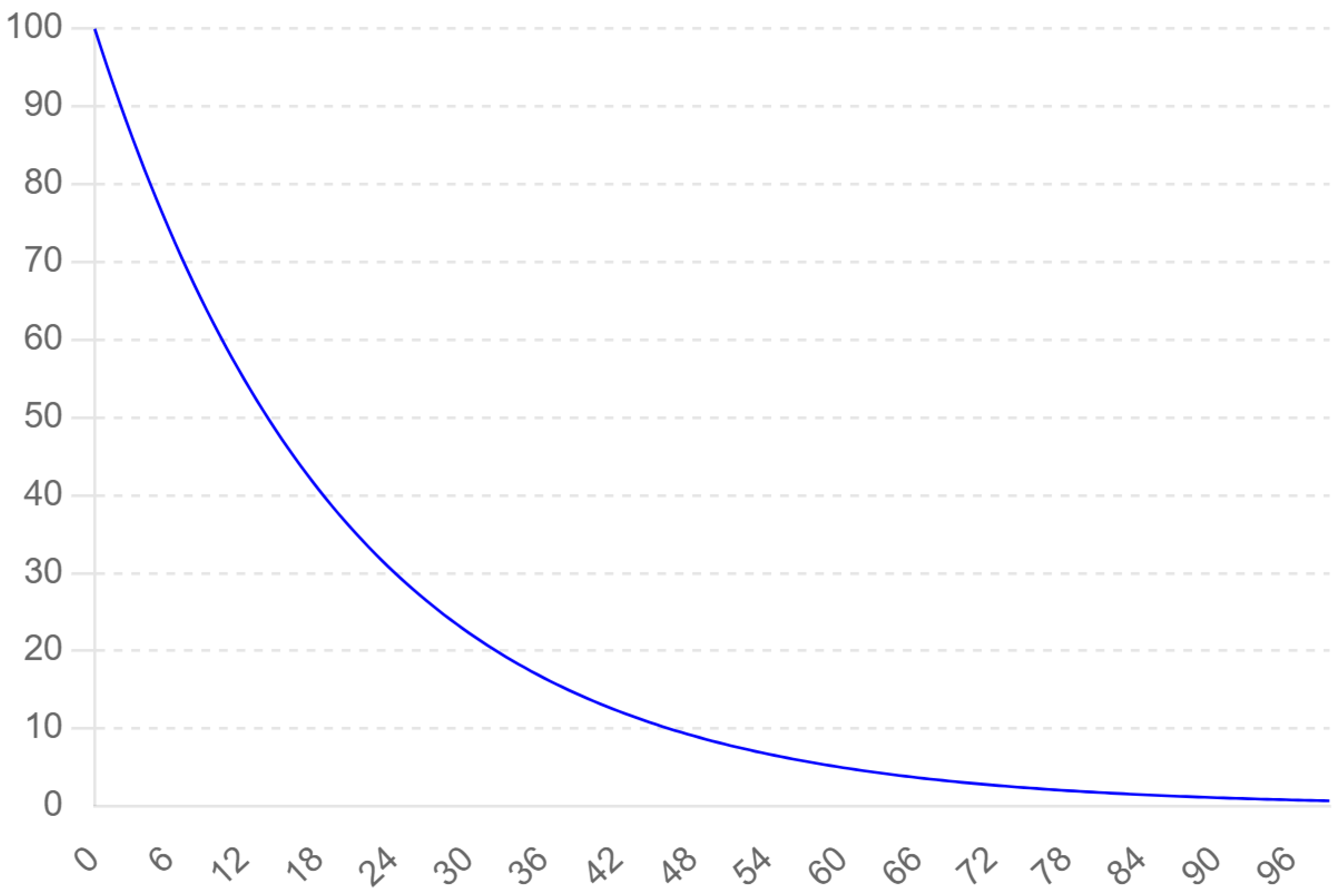
Graph 1. Shows initial Frequency and Decay Rate: The initial frequency of neural spikes is set to 50 Hz, with a decay rate of 0.1.
Exponential Decay Model: The neural response frequency is modeled using an exponential decay function, simulating the decrease in spike frequency with repeated exposure.
Plotting: The graph shows the decrease in neural spike frequency as the number of repeated stimuli increases, illustrating the habituation process.
These simulations provide a visual representation of how neural responses diminish over time with repeated exposure to the same stimulus, reflecting the process of habituation. Understanding these mechanisms is crucial for comprehending the broader impacts of chronic stress on neural function and overall health.
Graph 1.
Illustrating the habituation of neural response to repeated stimuli. The neural depolarization response decreases exponentially as the number of stimuli increases, which reflects the process of habituation where the response diminishes over time with continuous exposure to the same stimulus.
Graph 1.
Illustrating the habituation of neural response to repeated stimuli. The neural depolarization response decreases exponentially as the number of stimuli increases, which reflects the process of habituation where the response diminishes over time with continuous exposure to the same stimulus.
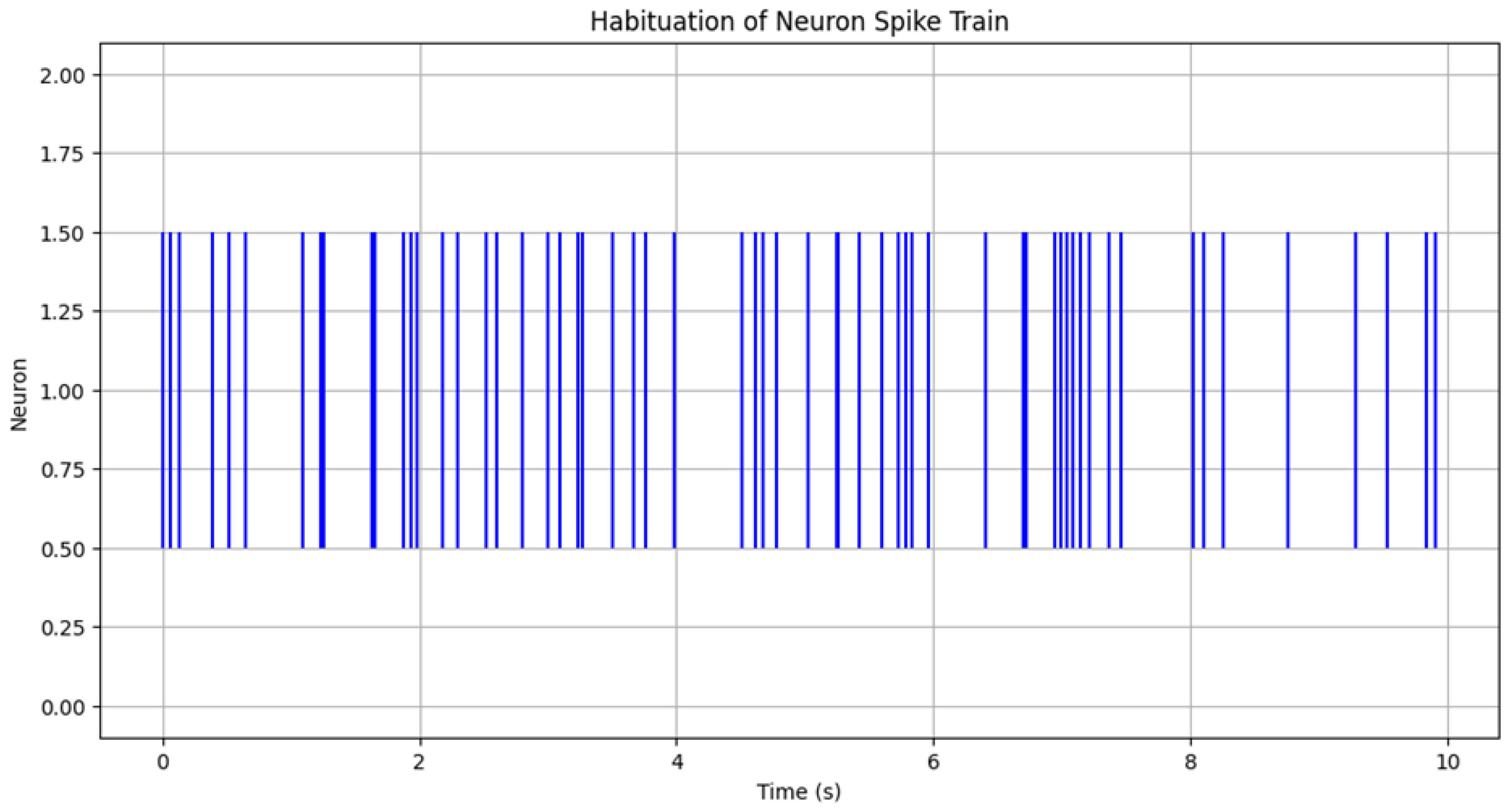
Graph 2. Explanation
The graph is an event plot that depicts the times at which action potentials (neural spikes) occur. The x-axis represents time in seconds, while the y-axis is a categorical axis indicating the occurrence of spikes. Each vertical line represents an action potential fired by the neuron.
Initial High Frequency: At the beginning of the simulation, the spikes are closely spaced, indicating a high frequency of action potentials. This high frequency corresponds to the initial response of the neuron to a new stimulus, where it fires rapidly.
Exponential Decay in Frequency: As time progresses, the spacing between spikes increases, reflecting a decrease in spike frequency. This change is modeled using an exponential decay function (Montgomery, R. M. (2024a)), which captures the process of habituation. The neuron's response diminishes over time as it becomes accustomed to the repeated stimulus.
Habituation Process: The gradual increase in the interval between spikes (inter-spike intervals) illustrates how the neuron's firing rate slows down. This habituation process indicates that the neuron is reducing its response to the stimulus, conserving energy, and preventing sensory overload.
Final Low Frequency: Towards the end of the simulation, the spikes are widely spaced, showing a low frequency of action potentials. This low frequency represents the neuron's adapted state, where it responds minimally to the previously repetitive stimulus.
Graph 2.
The graph generated from the Python code illustrates the phenomenon of habituation in neurons by showing a spike train with diminishing spike frequency over time. This visual representation helps to understand how neuronal activity decreases in response to repeated exposure to the same stimulus.
Graph 2.
The graph generated from the Python code illustrates the phenomenon of habituation in neurons by showing a spike train with diminishing spike frequency over time. This visual representation helps to understand how neuronal activity decreases in response to repeated exposure to the same stimulus.
Section 3.2. Significance of the Graph
Energy Conservation: The diminishing frequency of action potentials demonstrates the neuron's mechanism Montgomery, R. M. (2024b)) to conserve energy by reducing unnecessary firing in response to non-novel stimuli.
Focus on Novel Stimuli: By habituating to repetitive stimuli, the neuron can allocate resources to detect and respond to new, potentially “more important stimuli”.
Neural Adaptation: This process is a fundamental aspect of neural adaptation, highlighting how the brain adjusts its activity based on the nature of the stimuli it encounters.
Section 4. Discussion
Section 4.1. Implications for Chronic Stress
In the context of chronic stress, the habituation process can be impaired, leading to sustained high levels of neural activity in response to stressors. This can result in heightened sensitivity to stress and various negative health outcomes, as the neuron fails to properly reduce its response to repetitive, non-threatening stimuli. Understanding this process is crucial for developing interventions to mitigate the adverse effects of chronic stress on neural function and overall health.
The simulation results, depicted in the habituation curves, illustrate the typical decrease in neural response (both depolarization and spike frequency) to repeated stimuli. These results provide a visual understanding of the habituation process under normal conditions and how it might be disrupted under chronic stress.
These simulations and resulting graphs effectively demonstrate the neural mechanisms of habituation. Under normal conditions, habituation helps conserve energy and focus on novel or significant stimuli. However, under chronic stress, this adaptive process can be impaired, leading to heightened sensitivity to stressors and impaired cognitive and emotional responses. The visual representation of these changes provides a clear understanding of how chronic stress can disrupt normal neural function.
The results of our simulations provide valuable insights into the neural processes of habituation and the impact of chronic stress on these mechanisms. Habituation is a fundamental adaptive response, allowing organisms to reduce their reaction to repetitive, non-threatening stimuli and conserve energy for more significant events. This process is essential for efficient functioning and cognitive stability. However, chronic stress can severely disrupt habituation, leading to a range of adverse physical and mental health outcomes.
Section 4.2. Neural Depolarization and Spike Frequency
The graph 1. illustrating the habituation of neural depolarization and spike frequency to repeated stimuli show a clear exponential decay. This decay signifies that, under normal conditions, neurons reduce their response to continuous exposure to the same stimulus. This reduced responsiveness helps prevent sensory overload and allows the brain to focus on new and potentially more relevant stimuli. The exponential decay model used in our simulation effectively captures this process, demonstrating the rapid decline in neural activity initially, followed by a slower, more gradual decrease.
Section 4.3. Impact of Chronic Stress on Habituation
Chronic stress interferes with the habituation process by continuously activating the hypothalamic-pituitary-adrenal (HPA) axis and sustaining high levels of cortisol and other stress hormones (McEwen, 2007). This prolonged hormonal activity can have several detrimental effects on neural function:
Synaptic Plasticity: Chronic stress impairs synaptic plasticity, the ability of synapses to strengthen or weaken over time, which is crucial for learning and memory. Elevated cortisol levels can damage the hippocampus, a brain region essential for these functions, leading to cognitive deficits and impaired habituation (Lupien et al., 2009).
Neurotransmitter Regulation: Chronic stress affects the regulation of neurotransmitters such as dopamine and serotonin, which play vital roles in mood regulation and neural responsiveness. Dysregulation of these neurotransmitters can contribute to anxiety, depression, and altered habituation processes (American Psychological Association, 2023).
Amygdala Hyperactivity: The amygdala, a brain region associated with fear and emotional responses, becomes hyperactive under chronic stress. This hyperactivity can override the habituation process, causing heightened sensitivity to stimuli that would typically be deemed non-threatening (National Institute of Mental Health, 2023).
Inhibitory Processes: Habituation relies on effective inhibitory processes to reduce neural responses to repetitive stimuli. Chronic stress can diminish the efficiency of GABAergic inhibition, a key mechanism for decreasing neural excitability, leading to sustained high levels of neural activity in response to stressors (Lupien et al., 2009).
- Behavioral and Psychological Implications
The disruption of habituation due to chronic stress has significant behavioral and psychological implications. Individuals may become overly sensitive to stressors, experiencing heightened anxiety and stress responses to situations that would otherwise be manageable. This heightened sensitivity can contribute to the development and persistence of anxiety disorders, depression, and other mental health conditions (American Psychological Association, 2023; National Institute of Mental Health, 2023).
Moreover, chronic stress can lead to maladaptive coping mechanisms, such as substance abuse, overeating, and social withdrawal, which further exacerbate physical and mental health issues (Centers for Disease Control and Prevention, 2023). These behaviors can create a vicious cycle, where stress leads to unhealthy behaviors, which in turn increase stress levels.
- Long-term Health Consequences
The long-term health consequences of chronic stress are profound. Sustained high levels of cortisol can lead to cardiovascular problems, immune system suppression, digestive issues, and muscle tension (Mayo Clinic Staff, 2023; Harvard Health Publishing, 2023). The cumulative effect of these health problems, combined with the psychological and behavioral impacts, significantly reduces the overall quality of life and increases the risk of chronic diseases.
Section 4.4. Importance of Stress Management
Given the extensive impact of chronic stress on habituation and overall health, effective stress management strategies are crucial. Techniques such as regular physical activity, mindfulness meditation, cognitive-behavioral therapy, and seeking professional help can mitigate the adverse effects of chronic stress. Additionally, creating supportive environments and promoting healthy coping mechanisms can help individuals manage stress more effectively and prevent the harmful consequences of chronic stress (Mental Health America, 2023).
Section 5. Conclusion
Our findings underscore the importance of understanding and addressing chronic stress. By recognizing the signs of chronic stress and implementing effective management strategies, individuals can improve their health and well-being. Further research is needed to explore the mechanisms of habituation under chronic stress and to develop targeted interventions to support those affected by long-term stress.
Conclusion
Chronic stress has far-reaching implications for both physical and mental health. This paper has explored the physiological, psychological, and behavioral consequences of prolonged stress, highlighting how continuous exposure to stressors can disrupt normal neural processes such as habituation. Our simulations demonstrate the typical neural response to repeated stimuli and illustrate how chronic stress can impair this adaptive process, leading to heightened sensitivity to stressors and impaired cognitive and emotional responses.
The physiological impacts of chronic stress include cardiovascular issues, immune system suppression, digestive problems, and muscle tension, all of which contribute to significant long-term health risks. Mentally, chronic stress is a substantial risk factor for anxiety, depression, and other mood disorders. Behaviorally, individuals under chronic stress may adopt unhealthy coping mechanisms, further exacerbating their health issues.
A notable and somewhat unconventional behavioral consequence of chronic stress is the normalization of extreme protective measures, such as the purchase of armored cars in urban environments. This phenomenon reflects the severe impact of stress on perception and behavior, where individuals may come to see such measures as necessary and normal despite their extreme nature (war zones). It underscores the importance of addressing chronic stress not only at the individual level but also within the broader context of societal and environmental stressors.
Effective stress management strategies, including regular physical activity, mindfulness practices, cognitive-behavioral therapy, and professional support, are essential to mitigate the adverse effects of chronic stress. Public health initiatives should focus on raising awareness about the signs of chronic stress and promoting healthy coping mechanisms to improve overall well-being.
In conclusion, chronic stress poses significant risks to both physical and mental health, affecting various bodily systems and cognitive functions. By recognizing and addressing the signs of chronic stress, individuals can take proactive steps to improve their health and prevent the normalization of extreme protective behaviors. Further research and public health efforts are crucial to develop targeted interventions and support systems to help individuals manage chronic stress effectively.
Conflicts of Interest
The Authors have no conflict of interests.
- Attachments:
- import numpy as np
- import matplotlib.pyplot as plt
- # Parameters
- num_stimuli = 100 # Number of repeated stimuli
- initial_frequency = 10 # Initial spike frequency (Hz)
- decay_rate = 0.05 # Rate at which spike frequency decreases
- duration = 10 # Duration of simulation in seconds
- time_step = 0.001 # Time step in seconds
- # Time array
- time = np.arange(0, duration, time_step)
- # Spike times array
- spike_times = []
- # Generate spike train with diminishing frequency
- current_time = 0
- current_frequency = initial_frequency
- while current_time < duration:
- # Calculate inter-spike interval
- isi = np.random.exponential(1 / current_frequency)
- current_time += isi
- if current_time < duration:
- spike_times.append(current_time)
- # Decrease frequency
- current_frequency = initial_frequency * np.exp(-decay_rate * current_time)
- # Plotting the spike train
- plt.figure(figsize=(12, 6))
- plt.eventplot(spike_times, orientation='horizontal', colors='blue')
- plt.xlabel('Time (s)')
- plt.ylabel('Neuron')
- plt.title('Habituation of Neuron Spike Train')
- plt.grid(True)
- plt.show()
- Explanation
- Importing Libraries: The code imports numpy for numerical operations and matplotlib.pyplot for plotting.
- Parameters:
- num_stimuli: Number of repeated stimuli.
- initial_frequency: Initial frequency of neural spikes in Hertz (Hz).
- decay_rate: Rate at which the neural response frequency decreases over time.
- duration: Total duration of the simulation in seconds.
- time_step: Time step for the simulation in seconds.
- Time Array: Creates an array time representing the total simulation duration.
- Spike Times Array: Initializes an empty list spike_times to store the times at which spikes occur.
- Generating Spike Train:
- The while loop generates spike times using an exponential distribution to model the inter-spike intervals (ISIs), which are inversely proportional to the current spike frequency.
- The spike frequency decreases over time according to an exponential decay model.
- Plotting: The spike train is plotted using plt.eventplot, which shows the times at which spikes occur. The decreasing frequency of spikes over time illustrates the habituation process.
- This simulation provides a visual representation of action potentials with diminishing spike frequency, effectively demonstrating the process of habituation in neurons.
- python
- Copiar código
- import numpy as np
- import matplotlib.pyplot as plt
- # Simulating neural spike frequency in response to repeated stimuli
- stimuli = np.arange(0, 100, 1) # Number of repeated stimuli
- initial_frequency = 50 # Initial frequency of neural spikes (Hz)
- decay_rate = 0.1 # Rate at which neural response frequency decreases
- # Habituation: Exponential decay model of neural spike frequency
- frequency = initial_frequency * np.exp(-decay_rate * stimuli)
- # Plotting the habituation curve
- plt.figure(figsize=(10, 6))
- plt.plot(stimuli, frequency, label='Neural Spike Frequency', color='blue')
- plt.xlabel('Repeated Stimuli')
- plt.ylabel('Neural Spike Frequency (Hz)')
- plt.title('Habituation of Neural Response to Repeated Stimuli')
- plt.legend()
- plt.grid(True)
- plt.show()
References
- American Psychological Association. (2023). Stress and anxiety.
- Centers for Disease Control and Prevention. (2023). Coping with stress.
- Cleveland Clinic. (2023). Chronic stress: Symptoms, causes, treatment, and coping.
- Dhabhar, F. S. (2018). The short-term stress response: Mother nature's mechanism for enhancing protection and performance under conditions of threat, challenge, and opportunity. Frontiers in Neuroendocrinology, 49, 147-171.
- Harvard Health Publishing. (2023). The impact of stress. Harvard Medical School.
- Lupien, S. J., McEwen, B. S., Gunnar, M. R., & Heim, C. (2009). Effects of stress throughout the lifespan on the brain, behaviour, and cognition. Nature Reviews Neuroscience, 10(6), 434-445. [CrossRef]
- Mayo Clinic Staff. (2023). Stress symptoms: Effects on your body and behavior. Mayo Clinic.
- McEwen, B. S. (2007). Physiology and neurobiology of stress and adaptation: Central role of the brain. Physiological Reviews, 87(3), 873-904. [CrossRef]
- McEwen, B. S., & Wingfield, J. C. (2003). The concept of allostasis in biology and biomedicine. Hormones and Behavior, 43(1), 2-15. [CrossRef]
- Mental Health America. (2023). Chronic stress.
- Montgomery, R. M. (2024a). Investigating the Interplay of Resonance and Coupling in Neural Synchronization: A Comparative Study of Kuramoto Models. [CrossRef]
- Montgomery, R. M. (2024b). Navigating the Labyrinth of the Mind: Exploring Brain Models Through Complex Differential Equations. [CrossRef]
- National Institute of Diabetes and Digestive and Kidney Diseases. (2023). Digestive diseases.
- National Institute of Mental Health. (2023). Depression.
- National Institute of Mental Health. (2023). Post-traumatic stress disorder.
- Sleep Foundation. (2023). Stress and sleep.
Disclaimer/Publisher’s Note: The statements, opinions and data contained in all publications are solely those of the individual author(s) and contributor(s) and not of MDPI and/or the editor(s). MDPI and/or the editor(s) disclaim responsibility for any injury to people or property resulting from any ideas, methods, instructions or products referred to in the content. |
© 2024 by the authors. Licensee MDPI, Basel, Switzerland. This article is an open access article distributed under the terms and conditions of the Creative Commons Attribution (CC BY) license (http://creativecommons.org/licenses/by/4.0/).
Copyright: This open access article is published under a Creative Commons CC BY 4.0 license, which permit the free download, distribution, and reuse, provided that the author and preprint are cited in any reuse.