
Submitted:
13 August 2024
Posted:
14 August 2024
You are already at the latest version
Abstract
The construction industry is an important part of the national economic market of various countries; since 2013, the construction industry's added value in the gross domestic product has been more than 6%, reaching 6.89% in 2022, and is a pillar industry of the national economy. Intelligent construction is the realistic demand to promote the high-quality development of China's construction industry. It is the key focus of transforming and upgrading the traditional construction industry to information, digital, and intelligent. As a new production factor, construction robots have become the key to promoting intelligent construction. Under the guidance of various national and industry policies, thanks to China's huge construction market volume and rich application scenarios, many innovative and entrepreneurial entities have entered the field of construction robots. Architectural visualization is a crucial aspect of architectural design and communication. With the development of science and technology, artificial intelligence (AI) technology is increasingly becoming an essential tool for architectural visualization and communication. The emergence of AI technology has provided architects with more flexible and creative ways to present design ideas. All along, designers who love architecture have been passionate about exploring better solutions for architecture, but there is never an optimal solution for architectural design; AI is the fire of the future era; it brings us more opportunities but also forces us to face new challenges from the future.
Keywords:
visual architecture
; artificial intelligence
; future architecture
; skyscraper
1. Introduction
With the development of artificial intelligence (AI) technology, the construction industry is undergoing unprecedented change. The introduction of AI not only improves the efficiency of the design process but also plays a vital role in creative scheme generation, performance simulation, decision support, and so on. This paper discusses the application of AI in the architectural design industry, including concept generation in the early stage of design, the optimization of design parameters, and the role of design simulation and optimization. [1]Introduce the latest progress of AI-enabled automated design tools. Introducing the application of artificial intelligence technology developed by independent innovation and analyzing specific practical cases demonstrates the application achievements and potential of the latest AI technology in actual architectural design projects. Practice shows that artificial intelligence technology will bring a revolutionary impact to the engineering design industry and represents the new quality productivity of the engineering design industry. At the same time, artificial intelligence technology can only play its great value if it is combined with the industry and the specific scene of the industry.
2. Related Work
2.1. The Rapid Development of AI Technology in the Field of Construction
1. Artificial Intelligence: Thinking boundaries and creative potential
In 1956, the American mathematician John McCarthy first proposed the concept of artificial intelligence, which is "the use of the human brain as a model of machine logic." Once the "learning phase" is reached, the machine can generate solutions that answer a predefined set of parameters and create results by simulating the statistical distribution of information received during the learning phase. This concept is at the heart of the paradigm shift brought about by artificial intelligence. Thanks to generative adversarial networks (Gans), [2]AI has finally assumed the role of "image creation" as a fundamental medium in architectural design practice. Images have long been the core way of drawing and design in architecture. Therefore, it is a bridge of communication between artificial intelligence and architecture. Now that AI can create images and adequately measure their complexity, applying it to building production is a natural extension.
Makoto Watanabe, a famous Japanese designer of computer architecture, once argued that "robots are better than humans at solving complex problems where many conditions are intertwined, but only humans can create images that do not exist otherwise because machines have no dreams." As AI continues to evolve, it has triumphed over the best humans in many fields, yet it is still believed to lack the ability to think honestly. Humans, by contrast, have consciousness and can, therefore, use AI as an extension of their imagination to expand their capabilities. [3]2. The impact of artificial intelligence on architectural design at this stage is not difficult to imagine. In the not-too-distant future, artificial intelligence may be able to meet architectural design needs under complex conditions. Many architecture schools and firms worldwide are conducting "AI-assisted design" experiments. Here are a few examples of AI software related to recent building fires.
First, ChatGPT has recently emerged in various industries. [4]ChatGPT is a large-scale language modeling software based on artificial intelligence technology, which serves as a natural language processing technology. The application of ChatGPT in the field of architectural design is mainly reflected in the conception and concept planning of architectural design, as well as the preparation of general documents such as design concepts, architectural data processing, and architectural intention expression.
Secondly, Midjourney, a famous image painting AI, has overwhelmed the Internet with its simplicity, easy-to-use, and unique drawing effect. Fast and efficient Vincennes diagrams are Midiourney's most muscular strength. For those top-of-the-line buildings that seem to require a lot of workforce and material resources to create, Midiourney can quickly generate four or more images that satisfy logic and our fantasies with a few keywords. [5]In architectural design, Midiourney can not only produce high-quality renderings in a short time with less cost but also quickly turn sketch manuscripts into stylized renderings, which can help designers more easily try new styles and get new inspiration. However, in the current comparison, Midiourney's substantial divergence but weak directivity may make it more suitable for producing conceptual renderings and atmosphere drawings in the early architectural design stage.
Finally, stable diffusion (a potential diffusion model from text to images) is a more advanced AI that is more controllable than Midiourney, is open-source free and is more suitable for production. In contrast, StableDiffusion requires more time and effort to train the LoRa model (a way of "fine-tuning" the diffusion model) or to optimize the personalized model shared by other designers[6].
2.2. Research on the Application of Artificial Intelligence in the Construction Industry
Relevant experts such as Professor Oral Buyukozturk of MIT [7]have effectively used deep learning methods to identify images through many existing research conclusions and obtained the relationship between crack distribution and shape, deformation and displacement, and structural damage. "This technology greatly solves the problem of installing many sensors on Bridges." Su Guoxhao et al. proposed a machine learning method to solve the problem of reasonable evaluation of slope stability and established the corresponding prediction model. This method can accurately reflect the nonlinear mapping relationship between slope stability and various influencing factors and can accurately and reliably give the evaluation result of the slope stability state. Carnegie Mellon University in the United States has developed an expert system called HT-RISE[8] that can make many heuristic decisions about the initial structural design of buildings. H. Behzadan et al. made full use of AR technology, indoor and outdoor tracking technology using WLAN, RFID wireless LAN and Bluetooth, and CPS global positioning system tracking in the field to provide on-site personnel with the project plan schedule and budget information at the same time. Provide user roles with preferences for real-time help systems for specific tasks and conditions of existing projects. The construction environment of the T3A terminal building of Chongqing Jiangbei Airport has changed. The BIM-4D [9]platform has been applied to find the conflict between the construction face and the sliding construction of steel structure, and the construction scheme of long-span steel structure sliding has been optimized.
Iflytek's "City Super Brain Plan" and Xiaozhi Technology's AI intelligent drawing review tool "Xiaozhi Drawing Review" all involve using the latest AI technology to assist the construction industry drawing review personnel to conduct construction drawing reviews. Powerful computing will gradually take over simple, repetitive tasks, allowing industry designers to spend more time on creative and experiential work. [10]The current "smart site" is the concrete embodiment of artificial intelligence in construction. Through the use of big data and cloud computing to achieve accurate management and risk early warning, strengthen the digital, intelligent, and mobile construction management of construction enterprises, effectively solve the pain points of construction sites, and prevent risks so that urban and rural planning is more scientific and urban construction is more orderly. To promote the smooth development of smart cities.
Country Garden is already arranging the production of aluminum molds, roof frames, climbing frames, and wall panels suitable for robot use. It is going all out to build houses with robots.
2.3. Artificial Intelligence for Architectural Visualization
The benefits of Artificial Intelligence for Architectural visualization as new AI tools continue to evolve, architectural visualization continues to grow. These tools not only improve design efficiency but also stimulate creativity. Through AI, architects and designers can create more accurate, interactive, and visually appealing presentations of projects[11].
1. Realistic materials: The most crucial aspect of architectural visualization is the depiction of materials. Whether it's warm wood, the sheen of marble, or rough cement, AI algorithms analyze and enhance the material's texture in Enscape's rendering to improve depth and realism.
2. Enhanced lighting: Lighting can determine the quality of visualization. Ai-driven building tools precisely adjust lighting conditions to simulate natural sunlight, artificial lighting, and atmospheric effects. This level of control ensures that each shadow truly falls, thus enhancing the overall ambiance and atmosphere of the scene.
3. Elaborate details to inject vitality into architectural renderings so that the space is full of life and attraction. [12]AI algorithms identify and enhance complex information such as surface imperfections, foliage, furniture, and decorative elements to enrich the visual narrative of a design.
4. Streamline workflows by automating certain aspects of the rendering process; AI integration streamlines workflow efficiency, allowing artists to focus more on creativity and perfecting designs. Tasks that previously required human completion, such as texture mapping or post-adjustment, can be accelerated with the help of AI.
Figure 1.
AI tools speed up the rendering process and reduce the time to change without compromising quality.
Figure 1.
AI tools speed up the rendering process and reduce the time to change without compromising quality.
5. Save time in the fast-paced world of architectural visualization; time is of the essence. AI tools speed up the rendering process and reduce the time to change without compromising quality. This increase in efficiency allows artists to complete tasks in tight timelines and repeatedly revise designs.
6. Maintaining consistency across multiple renders is essential to tell a coherent story[13]. AI algorithms ensure consistency in materials, lighting, and detail handling, eliminating differences between different views or repeated modifications of the same project.
2.4. Artificial Intelligence (AI) Aided Architectural Visualization
1.Generative design
Artificial intelligence (AI) -assisted generative design refers to using algorithms to generate multiple design solutions in architectural design. For architects, this means AI is becoming a partner in design work and can quickly assess whether various building designs are beautiful and functional. When specific parameters are set, such as maximizing natural light, enhancing airflow, or minimizing the use of materials, these algorithms can develop more sustainable solutions[14]. AI can be an essential tool for architects, but only if they have solid decision-making skills and are not overwhelmed by AI's many alternatives.
2.Lighting and thermal modeling
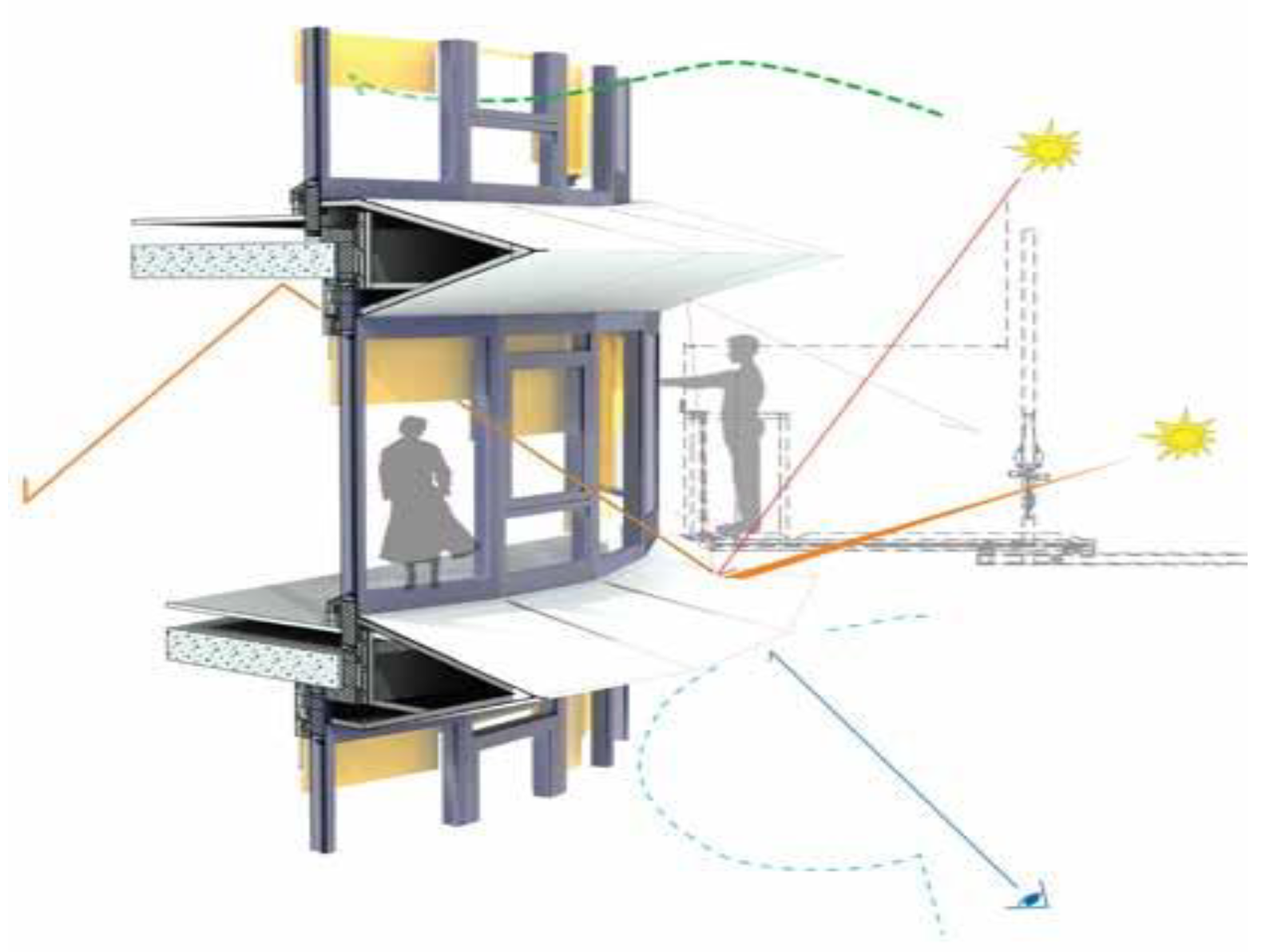
Carefully analyzed lighting methods can significantly reduce power consumption. Various tools and software can help architects take advantage of natural light, which also benefits the health of residents and reduces electricity demand at peak times, especially during the hot summer months. From the placement of walls to the selection of different types of Windows, the aim was to optimize the building's use of natural light[15].
Figure 2.
UNStudio Daylight redirection installation in an administrative building in Groningen, the Netherlands.
Figure 2.
UNStudio Daylight redirection installation in an administrative building in Groningen, the Netherlands.
3. 3D printing and robotics
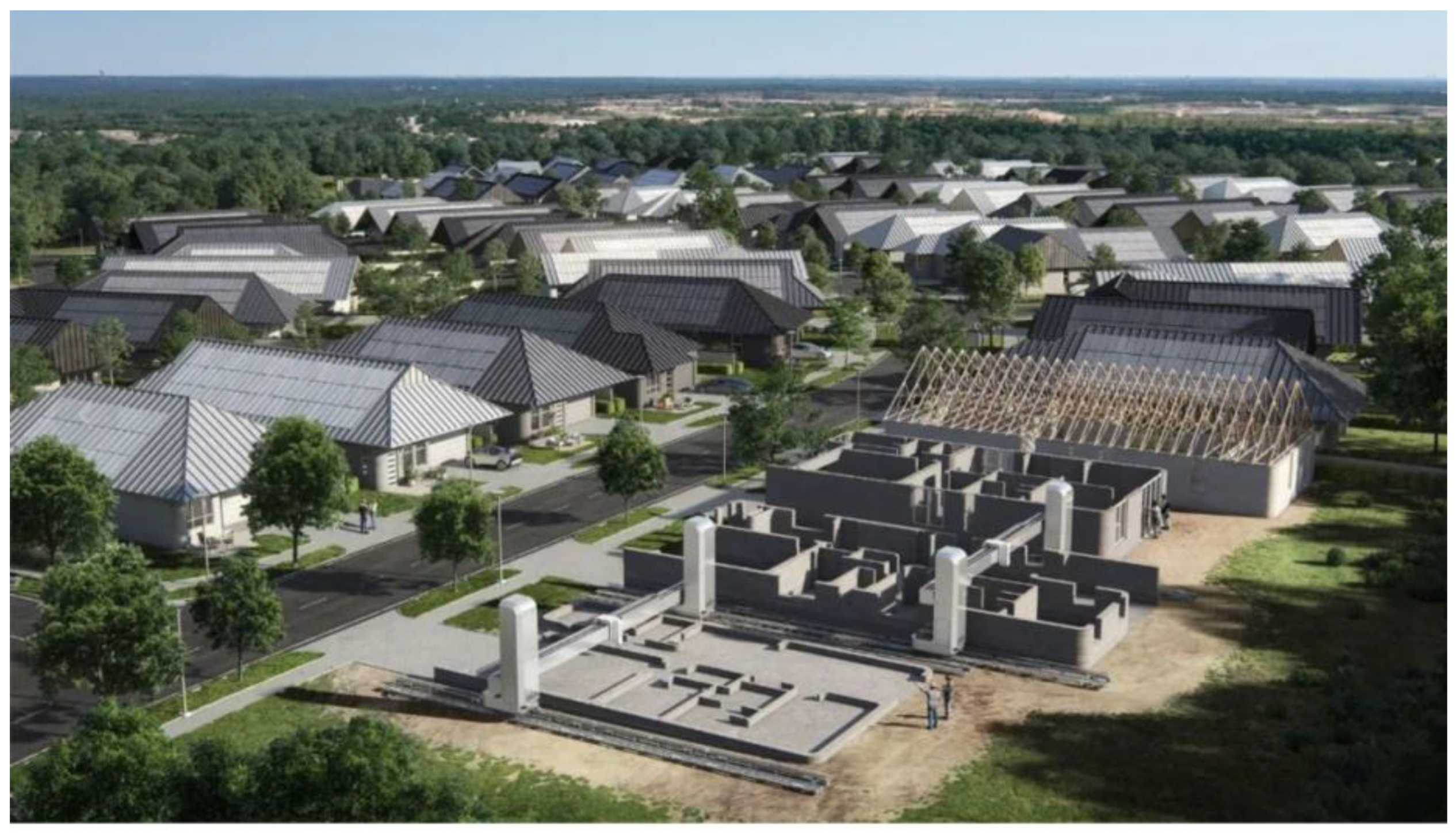
In 2017, the first 3D-printed pedestrian bridge created by the Catalan Institute of Advanced Architecture made a splash in Alcovendas, Spain. Automation technology has allowed people to experiment with new materials, aesthetics, and forms. [16]3D-printed buildings are affordable, flexible, and highly climate resilient. 3D printing technology still widely relied on carbon-intensive concrete materials, but introducing 3D printing into the construction field is expected to reduce material consumption by 40%. In addition, technology can meet the needs of rapid urbanization. Denmark-based Power2Build, for example, built Africa's largest 3D-printed building by volume - a 140-square-metre home - in Angola in just 30 hours in 2022.
4. Use digital twin buildings to simulate reality
Digital twin buildings are 3D visual replicas of physical buildings. With it, architects have a constantly evolving model to test their ideas in a virtual environment. Digital twin buildings allow long-term comparison of digital models with physical buildings. [17]This technology can also assist in selecting building materials and processes that reduce carbon emissions over the life of a building. The technology itself does require a lot of energy, but the application of this technology can significantly reduce the energy consumption of buildings. For example, Dutch architects used digital twins to reduce the energy consumption of the Hague City Hall by 39%.
Figure 3.
The world's largest automated 3D building project is being implemented in Georgetown, USA.
Figure 3.
The world's largest automated 3D building project is being implemented in Georgetown, USA.
5. Modular building
"Batch construction," also known as "modular building,” can significantly shorten the construction time and avoid mistakes, thereby reducing the excessive consumption and waste of materials. [18]This technology uses digital tools and modeling methods to manufacture completed or partially completed parts in a factory. The construction process can be speedy. In 2015, a 57-story skyscraper in Changsha, China, was built in just 19 days, with individual building components assembled like giant Lego bricks on the construction site. However, modular structures are not limited to large buildings. The ModSkool School in Delhi, India, was built using local building materials to disassemble and transfer quickly in the event of a flood.
6. New environmental protection building information model
Building Information Modeling (BIM) has been in use since the 1970s. It is a digital information management method that aims to improve the quality of buildings and infrastructure. Building information modeling software can digitally present the characteristics of buildings, allowing construction industry professionals to study the sustainability of materials and designs in a digital environment before a project is launched[19].
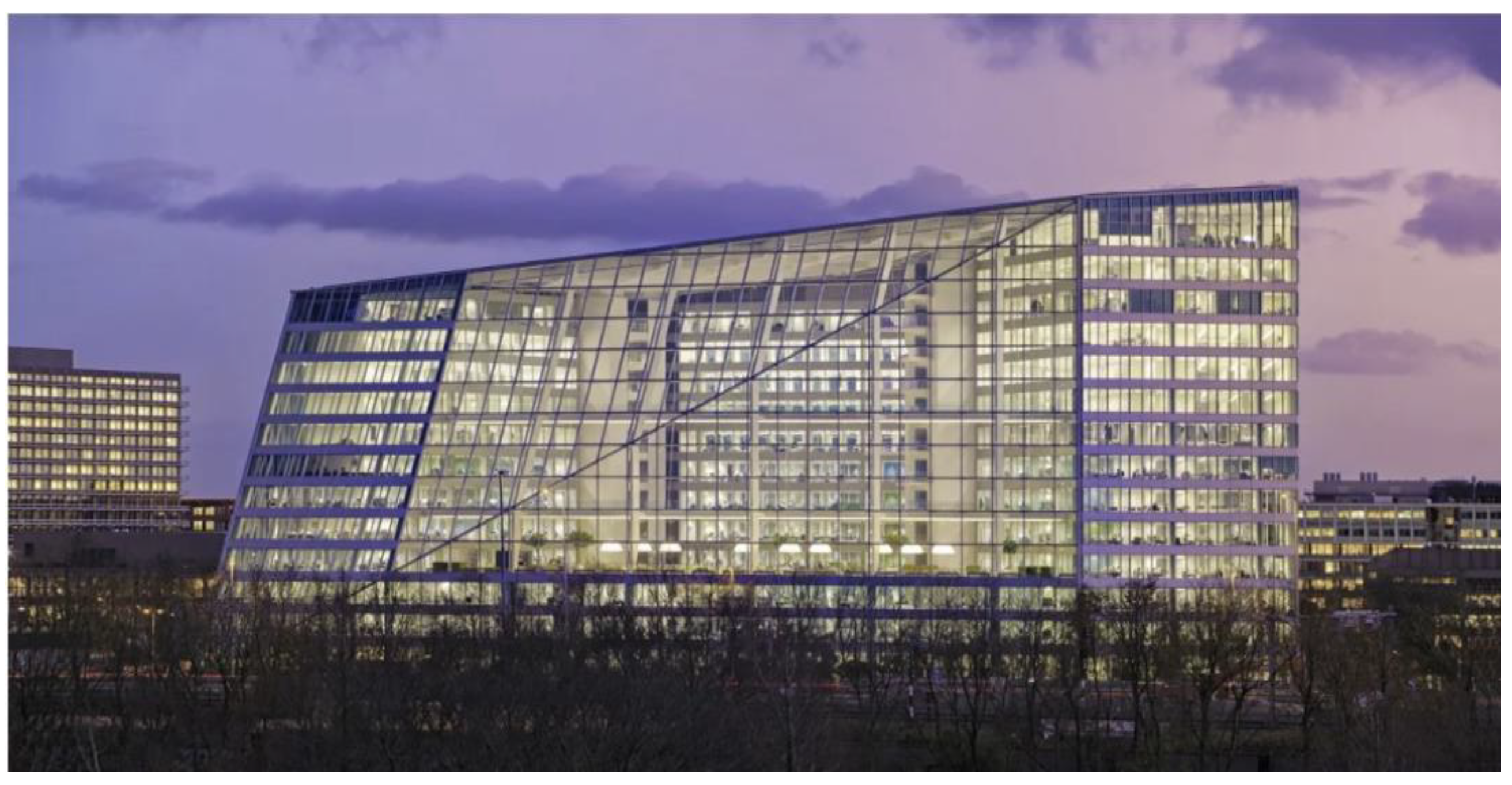
The UK is committed to the standardization of building information models. In 2019, the international standard ISO 19650, which the UK strongly promoted, was introduced, recognizing the need for strict standards and good governance locally and globally. The building information model also has "smart management" features, such as the Edge building in Amsterdam, dubbed "the world's smartest building," which allows users to interact with the building through a smartphone app, including reserving workspaces, controlling lights and adjusting the temperature of the space they are in.
Figure 4.
The Edge Building in Amsterdam, also known as the "Computer with a Roof.".
3. Visual AI Building Case - Skyscraper
3.1. Building AI Render Generator SnapRender
First, SnapRender integrates advanced intelligent features while maintaining a minimalist and intuitive interface, ensuring that a wide range of users can create stunning architectural designs. Whether you are a professional in architecture or an amateur passionate about architectural design, SnapRender will provide inspiration, support, and creativity to turn sketch ideas and vague semantics into accurate renderings.
The web-based generation platform allows users to easily create architectural visual effects across multiple design categories and project scales. Whether it is the majestic momentum of contemporary skyscrapers, the classical elegance of traditional manors, or the pursuit of minimalist modern architecture and the retro style rich in history, [20]SnapRender can meet your various design needs and visions and promote the infinite extension of creative boundaries. In this web version of the architectural renderer, upload a preliminary sketch or line drawing, and you can convert it into a realistic architectural rendering with one click. Its intuitive operating interface ensures a quick start and real-time imaging process efficiency, particularly suitable for design practices requiring high timeliness. We invite you to experience for yourself and explore new possibilities for unlimited creativity and visual expression.
SnapRender features include the following:
- Identify the graphic outline of the picture to provide multiple design inspiration
- Assist in the preliminary planning and present visual renderings
- Enrich the details of the model scene and deepen the expression of the overall scheme
3.2. AI x Future Cities Series of AI-Generated
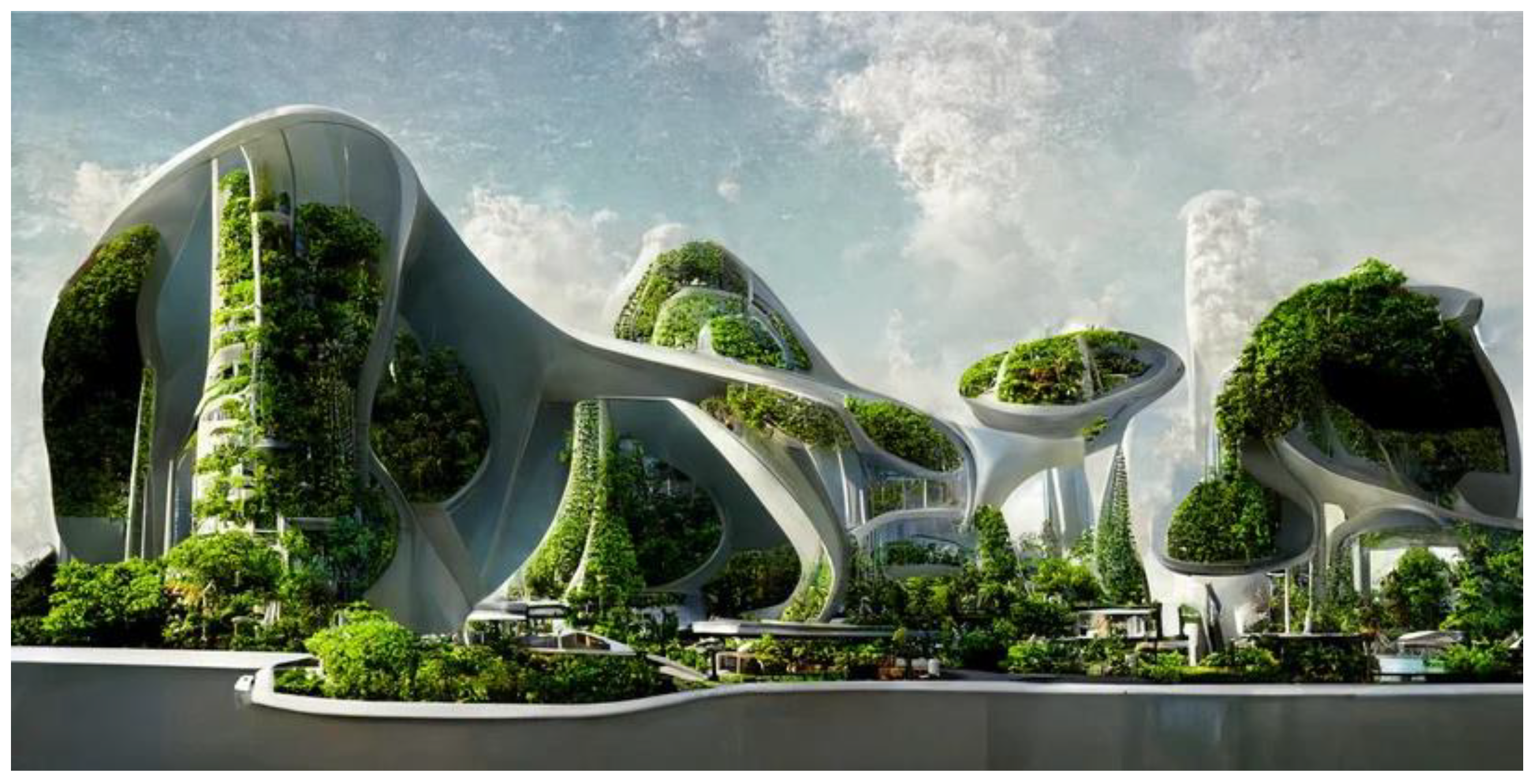
Manas Bhatia’s AI x Future Cities series of AI-generated images explores the possibilities of sustainable infrastructure following the rapid global increase in urbanization. Using artificial intelligence, the architect and designer imagine a sustainable utopian city of the future with towering skyscrapers enveloped with algae facades. [21]Visualized as futuristic biophilic air-purification towers, the green structures offer many benefits for modern society and infrastructure by reducing carbon emissions and minimizing artificial cooling. Manas Bhatia utilizes Midjourney to realize his vision, inputting text-based prompts into the AI program to generate this green, utopian architectural vision of the future.
Figure 5.
Skyscraper green vertical garden.
3.3. Future Sustainability
The AI x Future Cities project uses Midjourney to imagine sustainable architecture in a utopian future. Manas Bhatia's AI-generated series proposes tall, futuristic skyscrapers covered in algae that are both vertical gardens and biophilic air-purifying towers for the green cities they inhabit. To achieve striking visuals, Bhatia entered a combination of descriptive keywords and phrases, including symbiotic, bionic, fluid apartments made of algae and bioluminescent materials that act as air purification towers in the city of the future, [22]HD, headquarters, surreal and photo-grade. With the new trend of using AI in creative design, tools such as Midjourney and DALL·E are increasingly used by architects to visualize future Spaces. Manas Bhatia is now also exploring the world of artificial intelligence, adopting various text-to-image and text-to-article tools to create generative art and design.
The Indian architect and computing designer proposed that artificial intelligence programs could help better and more efficiently plan future buildings such as skyscrapers. Multiple solutions can be generated and tested simultaneously, saving time and money. "It is clear that as AI develops, AI will improve and generate detailed architectural drawings. This will significantly improve the effectiveness of the architectural design process and allow architects to explore novel design ideas without spending too much time developing their vision."
3.4. Using AI to Merge Math and Architecture
Beyond aesthetics, applying these principles provides architects with a versatile toolkit to create buildings and environments that create a sense of balance and well-being for residents, from optimizing spatial layout to improving structural stability and efficiency. However, interpretation and application can be subjective. [23]While some architects may explicitly incorporate these principles into their designs, others may prefer to draw inspiration from various sources, including cultural influences, historical context, and individual creativity.
The advent of computational design and artificial intelligence tools is revolutionizing the building process, enabling architects to explore complex geometry and complex forms with unprecedented precision and efficiency. [24]While these tools can undoubtedly facilitate the integration of mathematical ratios into architectural design, they also provide architects with greater freedom and flexibility to experiment with different design approaches.[25] "Ever wonder why we don't use sacred geometry in architecture, even though nature follows its principles?" [26]How can we achieve unity with nature? "Manas Bhatia asked. While the Golden Ratio and Fibonacci series can undoubtedly enhance the beauty of a structure, architects must also consider factors such as building codes, client preferences, budget constraints, and technological advances. In many cases, these practical considerations take precedence over purely mathematical principles.
3.5. Intelligent Building Source
The concept for this series comes from a recent study of a primitive intelligent organism called slime mold. Scientists now realize that this brainless, single-celled microbe can solve people's mobility, energy use, and planning of cities and transportation networks better than we can. This microbe has a unique survival intelligence. [27]Even though they don't have brains, they can build intelligent wayfinding strategies by creating networks and making decisions based on hunger levels and the quality of food pieces to find the shortest path to food. [28,29,30]This ability is so powerful that scientists harness this method to solve many real-world problems. In Japan, for example, Atsushi Tero and his scientists have successfully used slime molds to form a model for a railway system very similar to the railway networks in the Kanto region, centered in Tokyo, that thoughtful people designed. Thus, this slime network intelligence can be used more effectively in planning project zoning in complex vertical urban structures. We can combine this approach with artificial intelligence to develop an advanced computational algorithm to solve giant skyscrapers' [31]plans and entire structures. These future skyscrapers will function like vertical cities. So many items will be available to users so that people can get all the city's facilities in one large complex. In the future, people's schedules will become so busy that they won't have time to go to different places to meet their needs. [32]In addition, people may be more interested in traveling in a virtual world like the meta-universe rather than going to an actual place. Therefore, it can be imagined that in these future skyscrapers, in addition to residential units, there will be public projects such as hospitals, shopping malls, mini-stadiums, concert halls, exhibition halls, swimming pools, gymnasiums, theaters, and outdoor meeting squares on different floors. [33]A lot more. It will be a vast, complex network of programs and facilities. Therefore, effective vertical partitioning of all projects to improve the quality of users' lifestyles would be a big deal at the time.
4. Conclusion
As AI technology advances, its application in architectural visualization will also continue to advance. By embracing AI early on, artists can prove their skills and stay ahead of the evolving industry landscape. Integrating AI into architectural visualization workflows represents a paradigm shift in the pursuit of authenticity and efficiency. [34]By harnessing the power of artificial intelligence to enhance Enscape rendering, artists can achieve unmatched detail, realism, and efficiency while pushing the boundaries of creativity and innovation in architectural visualization. As we continue exploring the symbiotic relationship between human creativity and AI, the possibilities for improving architectural visualization are endless. In addition, through the continuous exploration and development of AIoT digital construction, we imagine the future: walking into a construction site under construction, there is no traditional scaffolding or crane. Instead, you'll see drones and robots autonomously performing various tasks in the air and on the ground. [35]These drones can carry materials and tools and precisely deliver them to their location, enabling efficient logistics management.
The robots work collaboratively, installing components with the elegance of a dancer and demonstrating their flexibility and accuracy stunningly. Architectural designers wear smart glasses and project virtual models into the real world through augmented reality. They can easily make design modifications, space layouts, and material selections by drawing in the air by hand. This interactive approach makes the expression of ideas more intuitive and fun. Artificial intelligence is changing every aspect of the construction industry in an irreversible trend. For construction companies, the development of artificial intelligence is bringing unprecedented changes to the construction industry. The active application of artificial intelligence technology can improve production efficiency and safety and occupy a favorable position in future competition. Through the deep mining and utilization of data, as well as the application of automation and robotics, the construction industry will occupy a better position in the future competition. Construction companies should actively embrace this trend and explore new development models to cope with future challenges and opportunities. With the continuous development of technology, artificial intelligence will create more miracles in the construction industry and push the industry to a higher level of development.
References
- Li, S.; Lin, R.; Pei, S. Multi-modal preference alignment remedies regression of visual instruction tuning on language model. arXiv 2024, arXiv:2402.10884. [Google Scholar]
- Li, S.; Tajbakhsh, N. Scigraphqa: A large-scale synthetic multi-turn question-answering dataset for scientific graphs. arXiv 2023, arXiv:2308.03349. [Google Scholar]
- Liu, H.; Xie, R.; Qin, H.; Li, Y. Research on Dangerous Flight Weather Prediction based on Machine Learning. arXiv 2024, arXiv:2406.12298. [Google Scholar]
- Liu, H.; Shen, F.; Qin, H.; Gao, F. Research on Flight Accidents Prediction based Back Propagation Neural Network. arXiv 2024, arXiv:2406.13954. [Google Scholar]
- Haowei, Ma, et al. CRISPR/Cas-based nanobiosensors: A reinforced approach for specific and sensitive recognition of mycotoxins. Food Bioscience 2023, 56, 103110. [Google Scholar]
- Li, J.; Wang, Y.; Xu, C.; Liu, S.; Dai, J.; Lan, K. Bioplastic derived from corn stover: Life cycle assessment and artificial intelligence-based analysis of uncertainty and variability. Science of The Total Environment 2024, 174349. [Google Scholar] [CrossRef] [PubMed]
- Lai, S.; Feng, N.; Sui, H.; Ma, Z.; Wang, H.; Song, Z. . & Yue, Y. FTS: A Framework to Find a Faithful TimeSieve. arXiv 2024, arXiv:2405.19647. [Google Scholar]
- Wang, H.; Li, J.; Li, Z. AI-Generated Text Detection and Classification Based on BERT Deep Learning Algorithm. arXiv 2024, arXiv:2405.16422. [Google Scholar] [CrossRef]
- Zhang, X.; Xu, L.; Li, N.; Zou, J. Research on Credit Risk Assessment Optimization based on Machine Learning. 2024.
- Huang, D.; Xu, L.; Tao, W.; Li, Y. (2024). Research on Genome Data Recognition and Analysis based on Louvain Algorithm.
- Huang, D.; Liu, Z.; Li, Y. Research on Tumors Segmentation based on Image Enhancement Method. arXiv 2024, arXiv:2406.05170. [Google Scholar] [CrossRef]
- Xiao, J.; Wang, J.; Bao, W.; Deng, T. and Bi, S.; Application progress of natural language processing technology in financial research.
- Fruehwirth, Jane Cooley, Alex Xingbang Weng, and Krista MPerreira."The effect of social media use on mental health ofcollege students during the pandemic." Health Economics 2024.
- Jin, Y.; Shimizu, S.; Li, Y.; Yao, Y.; Liu, X.; Si, H. . & Xiao, W. Proton therapy (PT) combined with concurrent chemotherapy for locally advanced non-small cell lung cancer with negative driver genes. Radiation Oncology 2023, 18, 189. [Google Scholar]
- Li, B.; Zhang, X.; Wang, X.A.; Yong, S.; Zhang, J.; Huang, J. (2019, April). A Feature Extraction Method for Daily-periodic Time Series Based on AETA Electromagnetic Disturbance Data. In Proceedings of the 2019 4th International Conference on Mathematics and Artificial Intelligence (pp. 215-219). [Google Scholar]
- Li, B.; Zhang, K.; Sun, Y.; Zou, J. Research on Travel Route Planning Optimization based on Large Language Model. 2024. [Google Scholar]
- Yang, J.; Qin, H.; Por, L.Y.; Shaikh, Z.A.; Alfarraj, O.; Tolba, A. ... & Thwin, M. Optimizing diabetic retinopathy detection with inception-V4 and dynamic version of snow leopard optimization algorithm. Biomedical Signal Processing and Control 2024, 96, 106501. [Google Scholar]
- Li, B.; Jiang, G.; Li, N.; Song, C. Research on Large-scale Structured and Unstructured Data Processing based on Large Language Model. 2024. [Google Scholar]
- Yang, J.; Qin, H.; Por, L.Y.; Shaikh, Z.A.; Alfarraj, O.; Tolba, A. ... & Thwin, M. Optimizing diabetic retinopathy detection with inception-V4 and dynamic version of snow leopard optimization algorithm. Biomedical Signal Processing and Control 2024, 96, 106501. [Google Scholar]
- Li, Y.; Matsumoto, Y.; Chen, L.; Sugawara, Y.; Oe, E.; Fujisawa, N. ... & Sakurai, H. Smart Nanofiber Mesh with Locally Sustained Drug Release Enabled Synergistic Combination Therapy for Glioblastoma. Nanomaterials 2023, 13, 414. [Google Scholar]
- Jin, Y.; Shimizu, S.; Li, Y.; Yao, Y.; Liu, X.; Si, H. ... & Xiao, W. Proton therapy (PT) combined with concurrent chemotherapy for locally advanced non-small cell lung cancer with negative driver genes. Radiation Oncology 2023, 18, 189. [Google Scholar]
- Nitta, H.; Mizumoto, M.; Li, Y.; Oshiro, Y.; Fukushima, H.; Suzuki, R. ... & Sakurai, H. An analysis of muscle growth after proton beam therapy for pediatric cancer. Journal of Radiation Research 2024, 65, 251–255. [Google Scholar]
- Nakamura, M.; Mizumoto, M.; Saito, T.; Shimizu, S.; Li, Y.; Oshiro, Y. ... & Sakurai, H. A systematic review and meta-analysis of radiotherapy and particle beam therapy for skull base chondrosarcoma: TRP-chondrosarcoma 2024. Frontiers in Oncology 2024, 14, 1380716. [Google Scholar]
- Li, Y.; Mizumoto, M.; Oshiro, Y.; Nitta, H.; Saito, T.; Iizumi, T. ... & Sakurai, H. A retrospective study of renal growth changes after proton beam therapy for Pediatric malignant tumor. Current Oncology 2023, 30, 1560–1570. [Google Scholar]
- Shimizu, S.; Mizumoto, M.; Okumura, T.; Li, Y.; Baba, K.; Murakami, M. ... & Sakurai, H. Proton beam therapy for a giant hepatic hemangioma: A case report and literature review. Clinical and Translational Radiation Oncology 2021, 27, 152–156. [Google Scholar]
- Kumada, H.; Li, Y.; Yasuoka, K.; Naito, F.; Kurihara, T.; Sugimura, T. ... & Sakae, T. Current development status of iBNCT001, demonstrator of a LINAC-based neutron source for BNCT. Journal of Neutron Research 2022, 24, 347–358. [Google Scholar]
- Shimizu, S.; Nakai, K.; Li, Y.; Mizumoto, M.; Kumada, H.; Ishikawa, E. ;... & Sakurai, H. Boron neutron capture therapy for recurrent glioblastoma multiforme: imaging evaluation of a case with long-term local control and survival. Cureus.
- Gupta, S.; Motwani, S.S.; Seitter, R.H.; Wang, W.; Mu, Y.; Chute, D.F. ... & Curhan, G.C. Development and validation of a risk model for predicting contrast-associated acute kidney injury in patients with cancer: evaluation in over 46,000 CT examinations. American Journal of Roentgenology 2023, 221, 486–501. [Google Scholar] [PubMed]
- Rosner, B.; Glynn, R.J.; Eliassen, A.H.; Hankinson, S.E.; Tamimi, R.M.; Chen, W.Y. ... & Tworoger, S.S. (2022). A multi-state survival model for time to breast cancer mortality among a cohort of initially disease-free women. Cancer Epidemiology, Biomarkers & Prevention 2022, 31, 1582–1592. [Google Scholar]
- Yaghjyan, L.; Heng, Y.J.; Baker, G.M.; Bret-Mounet, V.; Murthy, D.; Mahoney, M.B. ... & Tamimi, R.M. Reliability of CD44, CD24, and ALDH1A1 immunohistochemical staining: Pathologist assessment compared to quantitative image analysis. Frontiers in Medicine 2022, 9, 1040061. [Google Scholar] [PubMed]
- Zhou, Q. Portfolio Optimization with Robust Covariance and Conditional Value-at-Risk Constraints. arXiv 2024, arXiv:2406.00610. [Google Scholar]
- Zhou, Q. Application of Black-Litterman Bayesian in Statistical Arbitrage. arXiv 2024, arXiv:2406.06706. [Google Scholar]
- Chen, Z.; Ge, J.; Zhan, H.; Huang, S.; Wang, D. (2021). Pareto self-supervised training for few-shot learning. In Proceedings of the IEEE/CVF conference on computer vision and pattern recognition (pp. 13663-13672). [Google Scholar]
- Zhang, Y.; Qu, T.; Yao, T.; Gong, Y.; Bian, X. Research on the application of BIM technology in intelligent building technology. Applied and Computational Engineering 2024, 61, 29–34. [Google Scholar] [CrossRef]
- Weng, A. Depression and Risky Health Behaviors[J]. Available at SSRN 484 3979.
Disclaimer/Publisher’s Note: The statements, opinions and data contained in all publications are solely those of the individual author(s) and contributor(s) and not of MDPI and/or the editor(s). MDPI and/or the editor(s) disclaim responsibility for any injury to people or property resulting from any ideas, methods, instructions or products referred to in the content. |
© 2024 by the authors. Licensee MDPI, Basel, Switzerland. This article is an open access article distributed under the terms and conditions of the Creative Commons Attribution (CC BY) license (https://creativecommons.org/licenses/by/4.0/).
Copyright: This open access article is published under a Creative Commons CC BY 4.0 license, which permit the free download, distribution, and reuse, provided that the author and preprint are cited in any reuse.


