

Submitted:
13 August 2024
Posted:
14 August 2024
You are already at the latest version
Abstract
Sodium phenyl dithiocarbamate (pl-dtc) as a ligand was prepared from the reaction of aniline (C6H5-NH2) and carbon(IV) sulfide (CS2) in the presence of sodium hydroxide via method of one-pot synthesis. Two coordination compounds ([VO(sfz)(pl-dtc)] and [Zn(sfz)(pl-dtc)]) from respective oxovanadium (IV) sulfate hydrate and zinc (II) chloride were prepared with mixed ligands involving sodium sulfadiazine (sfz) and the synthesized pl-dtc crystals, also via the method of one-pot synthesis. Structural analyses of the ligand and coordination compounds were assessed using characterization techniques involving physicochemical parameters and spectral analysis ( FT-IR, UV-Vis and NMR (1H NMR and 13C NMR) to confirm their synthenses and structures. Additionally, pl-dtc crystals which grew from the pl-dtc solution when refrigerated after five days, has its structure confirmed and revealed when subjected to single crystal x-ray crystallography technique. Differences in results of spectral analysis between ligands and their respective coordination compounds confirmed the coordination between ligands and coordination compounds. The in vitro antibacterial studies showed that the ligands had modest activity against Gram positive bacteria: Staphylococcus aureus, while, the coordination compounds had modest activities against the Gram negative bacteria: Escherichia coli when compared with ligand of pl-dtc.
Keywords:
in vitro antibacterial studies
; one-pot synthesis
; oxovanadium(IV) and zinc(II) coordination compounds of mixed ligands
; single crystal x-ray crystallography
; spectroscopic studies
1. Introduction
Dithiocarbamates (dtcs) are versatile chelating ligands which are able to stabilize metals and transition metals with various oxidation states [1,2,3]. Other unique properties of dithiocarbamates are their less subjections to rapid hydrolysis, low charge of dithiocarbamato moiety, small bite-angle (ca 2.8-3.9 Ǻ) and decrease in the damaging side effects linked with metallo-drugs [1,2,3]. Dithiocarbamates (dtcs) are compounds which consist of carbon, nitrogen and sulfur atoms, and their biological activities were reported to have been widely utilized in medicine, metalloenzymes, fungicides, herbicides and insecticides [4,5,6,7,8]. Recently, dithiocarbamates were combined with heterocyclic compounds, such as sulfa drugs (sulphadiazine, sulphamethoxazole, and sulphamerazine) to enhance their biological activities [9].
On the other hand, sulfadiazine (sfz) is an approved antibacterial drug recognized by World Health Organization (WHO) [2]. It is used as a topical antibacterial agent in victims of burns [3], and acts as a twofold antibacterial agent against some Gram positive and Gram negative bacteria [4]. To control multi-drug resistance diseases (MDR), this paper reports sodium sulfadiazine (Na-sfz) and dithiocarbamate (pl-dtc) as the two ligands mixed to ligate aqueous solution of oxovanadium(IV) and zinc(II) ions to form oxovanadium(IV) and zinc(II) coordination compounds respectively. Coordination compounds play key roles in biochemical processes, which entail ligands and metals. For this study, the choice for vanadium and zinc metals was acquired from Rehder and Arafat et al.s’ studies [10,11]. Here, according to Rehder, he stated that, “vanadium compounds possess pharmaceutical activities to treat bacterial and viral infections” [10]. Additionally, Arafat et al avowed that zinc(II) compounds can be medically applied to treat parasitic diseases. They further stated that, “when ligands are coordinated to zinc(II) compounds, they gave enhanced structural and functional models” [11]. Other factors of moderate toxicities, essential metals in human bodies and cost effectiveness were considered for choices of vanadium and zinc metals. The synthesized oxovanadium(IV) and zinc(II) coordination compounds were assessed for antibacterial activities with four bacterial strains namely; Staphylococcus aureus, Enterococcus faecalis, Escherichia coli and Pseudomonas aeruginosa because they are the common bacteria which cause infections in humans. The aim of this research was to assess the potential antibacterial activities of studied compounds.
2. Experimental
2.1. Materials and Methods
2.1.1. Materials
Aniline was obtained from Merck (Germany), sodium hydroxide was bought from Merck, (Republic of South Africa), Sodium sulfadiazine salt (sfz) and Vanadium(IV) oxide hydrate were purchased from Sigma-Aldrich (USA), Anhydrous zinc(II) chloride(ZnCl2) and carbon(IV) sulfide (CS2) were supplied by Associated Chemical Enterprises (Pty) Ltd (RSA). Deionised water was produced in house. All the chemicals were of analytical reagent grade and were used as bought, without further purification.
2.1.2. Instrumentations
Open-end capillary tube melting point determination was carried out on a STUART SMP11 melting point apparatus and recorded uncorrected. Molar conductivity of compound was recorded on a CRINSON EC- Meter BASIC 30+ conductivity meter. The UV-Vis spectra were measured using a Perkin-Elmer Lambda 25 UV-Vis Spectrometer. The FT-IR spectra were recorded from a KBr disc in the range of 370-4000 cm-1 on a Perkin-Elmer 2000 FT-IR Spectrophotometer. The NMR spectra were recorded on a Varian Unity Inova 400 NMR spectrometer operating at frequencies of 400 MHz for 1H NMR and at 150 MHz for 13C NMR frequencies. The 1H NMR and 13C NMR were determined from solutions of the compounds in DMSO-d6 as internal standard of TMS. The chemical shifts were in ppm in relation to internal standard of TMS. The crystals were collected, unit cell determined, and data collected from a four circles diffractometer Gemini of Oxford Diffraction, using a graphite monochromated CuKα radiation (λ = 1.54184 Å) before solving and refining them.
2.1.3. Methods
Compounds of (pl-dtc, [VO(sfz)(pl-dtc)] and [Zn(sfz)(pl-dtc)] were synthesized using the method of one pot synthesis [5].
- Sodium sulfadiazine (C10H9N4NaO2S; sfz)
It was used as bought as the first ligand between the mixed ligands.
White solid. Assay: ≥ 98%. M. P.> 300 oC. Molar Conductivity: 8.16 Ω-1 cm2 mol-1, Selected FT-IR (KBr Pellets), v (cm-1): 3404 (NH2)as 3268 (NH2)s; 3237 (SO2NH); 1577 (C=N); 1229 (SO2)as; 1115 (SO2)s. Selected λmax in DMSO solvent (nm): 274 (π-π*, N-C=S);319 (π-π*, S-C=S); 322, (n- π*). 1H NMR (DMSO-d6, 400Hz, ppm): δ 8.10 (s, 1H, SO2-NH2); δ 7.47-7.48 (s, 1H, NH2) δ 6.87-7.19 (m, 1H, C6H5-H) δ 5.40 (s, 1H, C=N).13C NMR (DMSO-d6, 100.6 MHz, ppm) δ 164.19 (CSO2-NH2), δ 157.19 (13C-NH2); δ 149.17 (N=13CH);δ 105.10-135.20 (C6H5-).
- (i)
- Synthesis of sodium phenyl dithiocarbamate (pl -dtc)
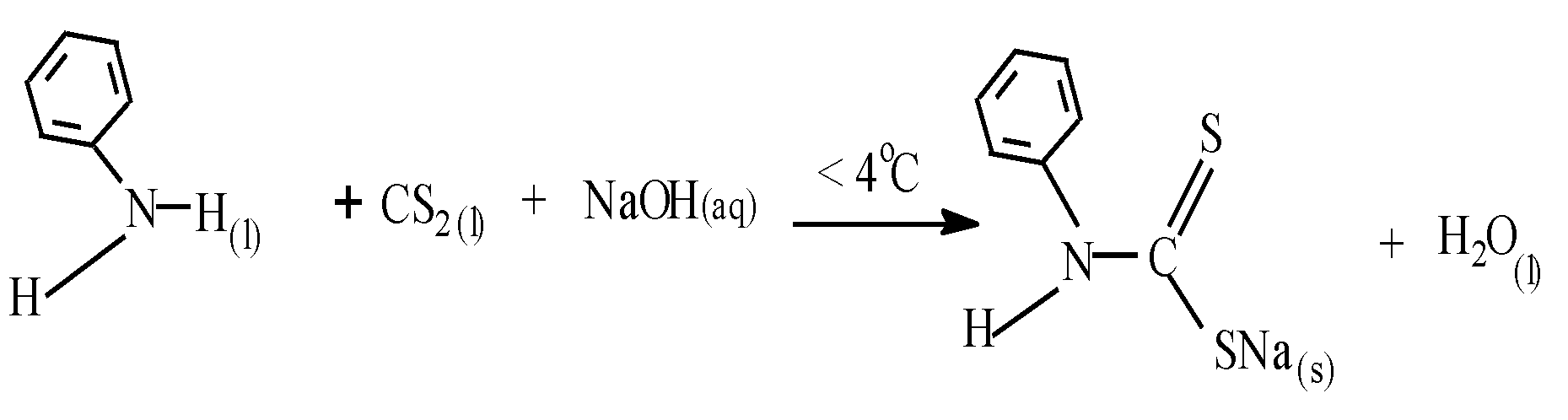
Aniline (9.11 mL, 0.10 mol), carbon(IV) sulfide (6.00 mL, 0.10mol) and sodium hydroxide (4.00 g, 0.10 mol) were used as starting materials. Whitish yellow crystals were obtained. Percentage Yield: 90%. M. P. 72 oC. Molar Conductivity: 1.09 Ω-1 cm2 mol-1.Selected FT-IR (KBr Pellets), v (cm-1): 3409 (NH2)as 3277 (NH2)s; 1517 (C-N), 981 (CS2). Selected λmax in DMSO solvent (nm): 246 (π-π*, N-C=S); 317 (π-π*, S-C=S); 381 (n- π*). 1H NMR (DMSO-d6, 400Hz, ppm) δ 10.00 (s, 1H, NCS2); δ 7.19-7.89(d, 2H NH2);δ 6.87-7.16; 7.16-7.19 (d, t, m, Ar-H). 13C NMR (DMSO-d6, 150 MHz, ppm) δ 214.93 (NCS2), δ 143.76(s 1H NH2), δ 137.23(s 1H HC-N), 125.68-128.85 (C6H5-H); The synthesis for pl-dtc is shown in Scheme 1.
Scheme 1.
Synthesis of sodium phenyl dithiocarbamate (pl-dtc).
- (ii)
- Synthesis of oxovanadium(IV) coordination compound of [VO(sfz)(pl-dtc)]
Vanadium (IV) oxide sulfate hydrate (0.25 g, 1.50 mmol), solution of sodium sulfadiazine, L1, (0.41 g, 1.50 mmol) in methanol (100.00 mL) and aniline dithiocarbamate L2pl-dtc, (0.29 g, 1.50 mmol) were magnetically stirred for 3 h at room temperature. A light green solid precipitate was formed, filtered, washed with deionized water (3 x 5 mL) and dried over silica gel in a desiccator. Percentage Yield: 75%. M. P. 250 oC. Molar Conductivity (DMSO): 0.74 Ω-1 cm2 mol-1.Selected FT-IR (KBr Pellets), v (cm-1): 3464 (NH2)as 3227 (NH2)s; 3150 (SO2NH), 1615 (C=N), 1528 (C-N), 1223 (SO2)as; 1145 (SO2)s1002(CS2) ; 934 (V=O), 395 (V-N) 466 (V-S). Selected λmax in DMSO solvent (nm): 319 (π-π*, N-C=S); 322 (π-π*, S-C=S); 355 (n- π*); Band I: 828, 738; Band II: 617; Band III: 396. The synthesis for oxovanadium(IV) coordination compound of [VO(sfz)(pl-dtc)] is shown in Equation 1.
Na-sfz(aq) + pl-dtc(l) + VOSO4.xH2O(s)→ [VO(sfz)(pl-dtc)](s) + Na2SO4. xH2O (aq)…. (i)
- (iii)
- Synthesis of zinc(II) coordination compound of [Zn(sfz)(pl-dtc)]
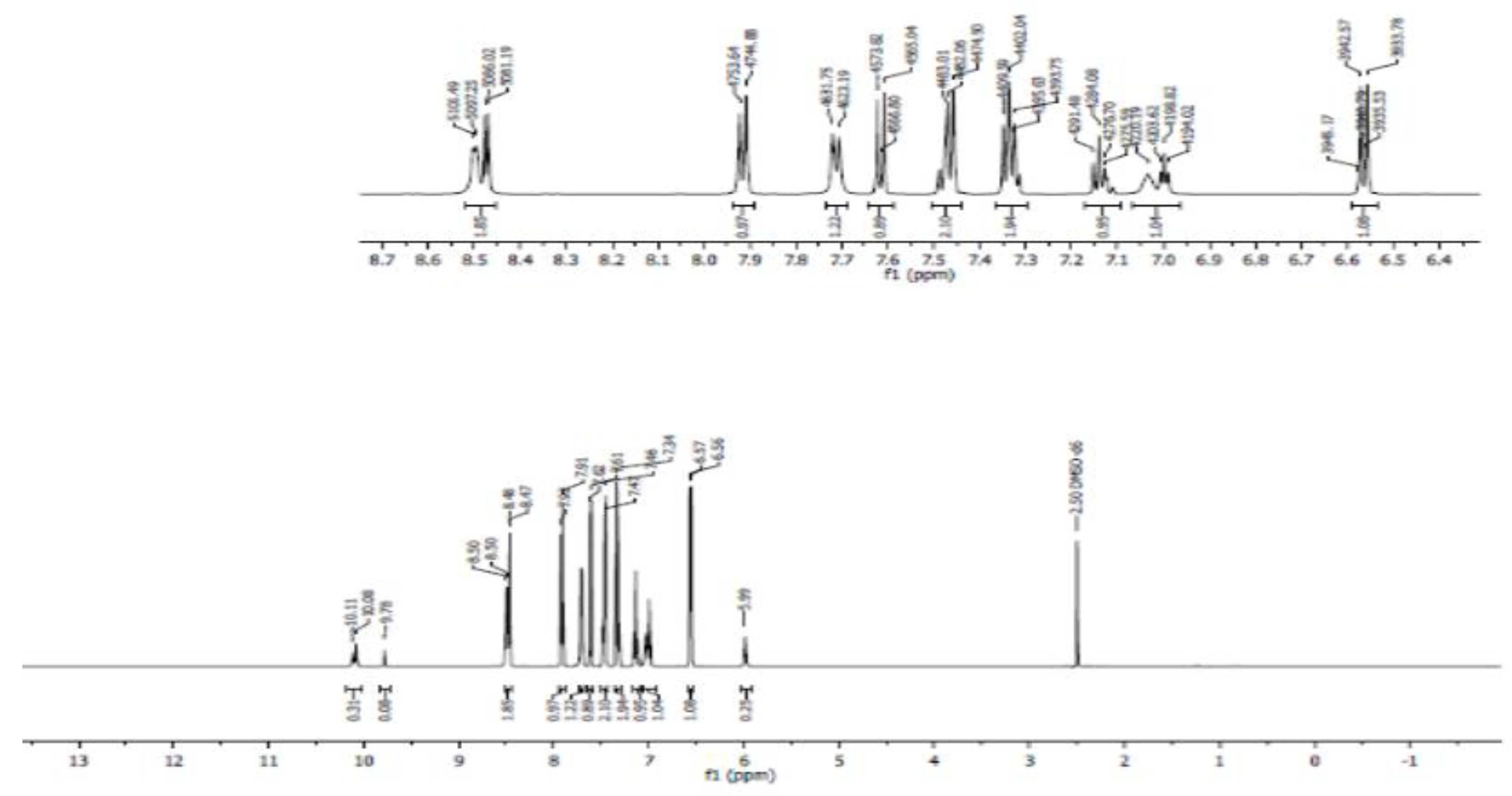
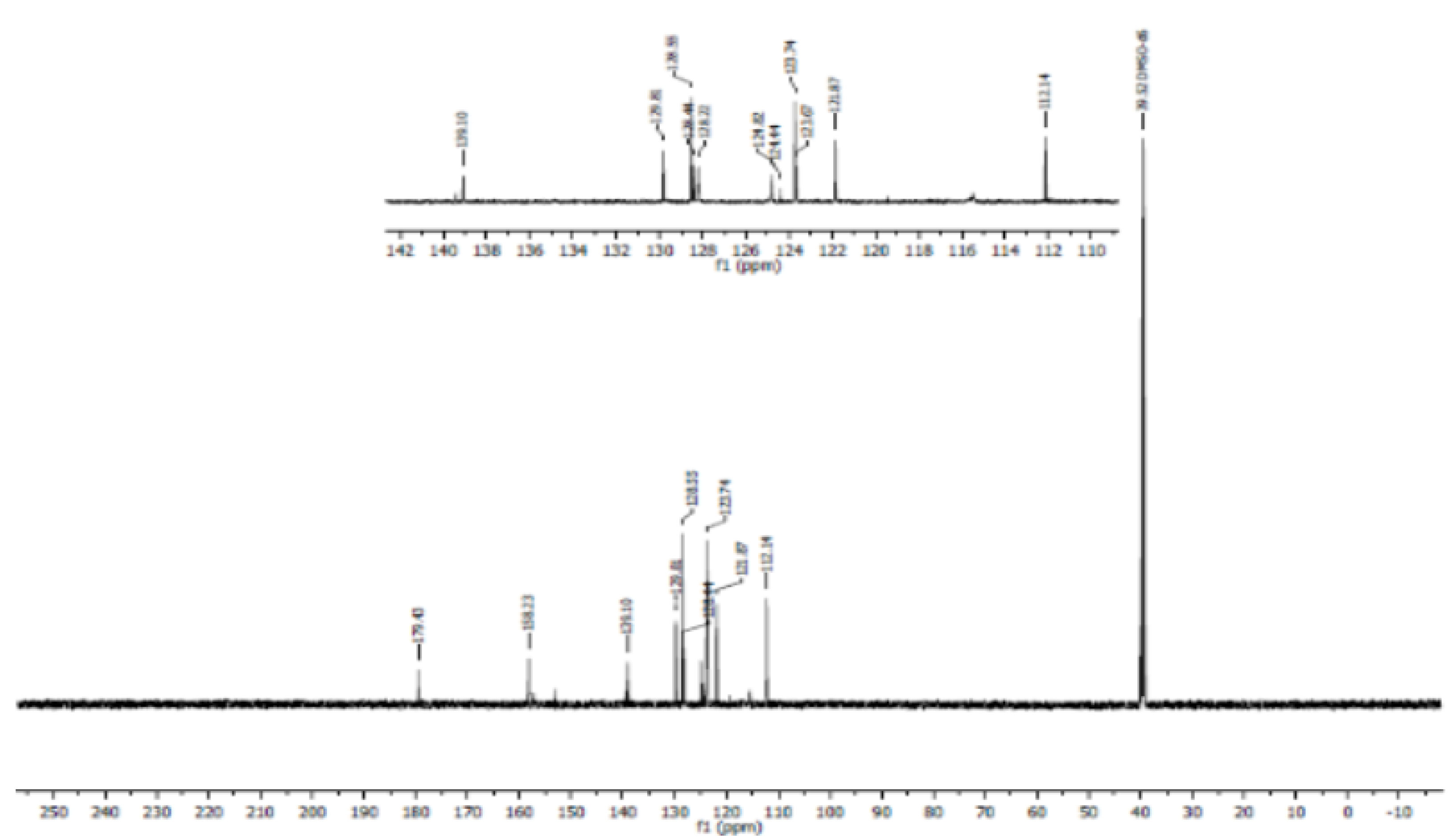
Sodium sulfadiazine (0.4085 g, 1.5 mmol), sodium phenyl dithiocarbamate (L2pl-dtc)(0.29 g, 1.50 mmol) and ZnCl2 (0.20 g, 1.5 mmol) were used. A white solid was formed, washed and dried over silica gel. Yield: 72%. M. P. 216-218oC. Molar Conductivity (DMSO): 0.01 Ω-1 cm2 mol-1.Selected FT-IR (KBr), v(cm-1): 3400 (NH2)as 3222 (NH2)s; 3090 (SO2NH), 1518 (C=N), 1487(C-N), 1246 (SO2)as; 1141 (SO2)s . 963(CS2)as, 391 (Zn-N), 434 (Zn-S). Selected λmax in DMSO solvent (nm): 235, 256 (π-π*, N-C=S); 292 (π-π*, S-C=S); 382, (n- π*). Selected1H NMR (DMSO-d6, 400Hz, ppm): δ 10.08-10.11 (d 1H, H-NCS2), δ 9.78; 8.47-8.50 (m, 1H, SO2NH2); δ 7.92 (-NH2); δ 6.56-7.92 (d, t, Ar-H); δ 5.99 (s, 1H, C=H). Selected 13C NMR (DMSO-d6, 150 MHz, ppm); δ 179.43 (NCS2), δ 158.23(-SO2N=C), 139.10 (NH2C); δ112.14-128.44(Ar-C) δ. The synthesis for zinc(II) coordination compound of [Zn(sfz)(pl-dtc)] is shown in Equation (ii).
Na-sfz(aq) + pl-dtc(l) + ZnCl2(s)→ [Zn(sfz)(pl-dtc)](s) + 2NaCl(aq)…. (ii)
2.2. Crystal Growth and Crystallographic Activities
Crystals of sodium phenyl dithiocarbamate, (C7H12NNaO3S2) were grown out of solution when refrigerated after the fifth day. Crystals were washed with diethyl ether and subjected to single crystal x-ray crystallography. The crystals were collected and mounted on four circles diffractometer Gemini of Oxford Diffraction, using a graphite monochromated CuKα radiation (λ = 1.54184 Å). Super flip program was used to solve the crystal structure [12]. Refinement was done using full matrix least-squares technique with the support of F2 with Jana 2006 [13]. Subsequent refinements were done with SHELXL-2018/3 [14] and the diagrams were drawn with ORTEP for Windows version 2020.1 [15]. All non-hydrogen atoms were refined anisotropically. Carbon-bound H atoms were placed in calculated positions and were included in the refinement in the riding model approximation, with Uiso(H) set to 1.2Ueq(C). The nitrogen and oxygen bound hydrogens were located on a difference map and allowed to refine freely. The crystal data, data collection, and refinements of sodium phenyl dithiocarbamate (pl-dtc) are shown in Table 1. Most bond lengths and angles are in good agreement with values have been deposited with the Cambridge Structural Database [16]

Table 1.
Crystal data and details of the structure determination.
| Crystal data | |
|---|---|
| Formula | C7 H12 N Na O3 S2 |
| Formula weight | 245.29 |
| Crystal system | orthorhombic |
| Space group | Pbcn (No. 60) |
| a (Å) | 28.6599(5) |
| b (Å) | 6.9376(1) |
| c (Å) | 11.3162(2) |
| V (Å3) | 2250.01(6) |
| Z | 8 |
| Dcalc (g cm-3) | 1.448 |
| μ(CuKa) (mm-1) | 4.552 |
| F(000) | 1024 |
| Crystal size (mm) | 0.14 x 0.20 x 0.27 |
| Crystal habit | Colourless polygon crystal |
| Temperature (K) | 120 |
| Radiation (Å) | CuKa 1.54184 |
| Theta Min-Max (°) | 3.1, 67.1 |
| Dataset | -29:34; -8:8; -11:13 |
| Tot. & unique data | 12884, 2001 |
| R(int) | 0.031 |
| Observed I > 2σ(I) | 1852 |
| Nref, Npar | 2001, 156 |
| R, wR2 | 0.0225, 0.0603 |
| S | 1.10 |
| Min, Max residual density (e/Å3) | -0.18, 0.28 |
| CCDC | 2237964 |
2.3. Antibacterial Screening and Mechanism of Action of Antibacterial Agents
The ligands of Na-sfz and pl-dtc, as well as, coordination compounds of oxovanadium(IV) and zinc(II) were screened against two Gram positive bacteria (Staphylococcus aureus MRSA252 and Enterococcus faecalis ATCC 19433) and two Gram negative bacteria (Escherichia coli MC4100 and Pseudomonas aeruginosa PAO1) species. The antibacterial screening method used was Kirby-Bauer Method [17]. The mechanism of action entails the biological effects of the antibacterial agents (studied compounds) on the four bacterial strains through interaction.
3. Results and Discussion
The two ligands (sfz and pl-dtc) were mixed and coordinated with oxovanadium(IV) and zinc(II) ions to yield coordination compounds of [VO(sfz)(pl-dtc)] and [Zn(sfz)(pl-dtc)] respectively. They were characterized to obtain their physicochemical, spectroscopic, nuclear magnetic resonance, crystals and antibacterial characteristics.
3.1. Physicochemical Properties
The chemical reaction of mixed ligands of white solids of sfz and pl-dtc with hydrated blue oxovanadium(IV) ion yielded a coordination compound of light green solid precipitate of [VO(sfz)(pl-dtc)]. For synthesized zinc(II) of coordination compound of [Zn(sfz)(pl-dtc)], a white solid was formed compared to the mixed ligands of sfz and pl-dtc. Ligands were soluble in deionized water, dimethylformamide (DMF), dimethylsulfoxide (DMSO), and methanol, while the two coordination compounds were stable at room temperature, insoluble in deionized water, but soluble in DMF and DMSO solvents. Ligand of sfz and the two coordination compounds have higher melting points than pl-dtc due to their higher molecular masses than pl-dtc compound [17]. All compounds have molar conductivities less than 20 Ω-1cm2 mol-1, which showed they are non electrolytic in nature [17]. The physicochemical parameters for all the compounds are shown in Table 2.
Table 2.
Physicochemical parameters for studied compounds.
| Compounds | Molecular formulae | Colour and state of matter | Assay/Yield (%) | Melting point (0°C) | Molar conductivity (Ω-1 cm2 mol-1) |
|---|---|---|---|---|---|
| Na-sfz | C10H9N4NaO2S | white solid | ≥ 98 | > 300 | 8.16 |
| pl-dtc | C7H6NS2Na | whitish yellow crystals | 90 | 72 | 1.09 |
| [VO(sfz)(pl-dtc)] | C17H15N5S3O3Na2V | green solid | 75 | 250 | 0.74 |
| [Zn(sfz)(pl -dtc)] | C17H15N5S3O2Na2Zn | white solid | 72 | 216-218 | 0.01 |
1.2. Infrared Spectroscopy
The changes before and after coordination of ligands to metal ions were observed in the two studied coordination compounds
- Coordination compound of [VO(sfz)(pl-dtc)]
Bellú et al. reported that the bands which appeared near 3500 and 3400 cm-1 were due to asymmetric amino group (NH2)asy and symmetric amino group (NH2)sy [18]. The FT-IR of asymmetric amino group in sfz at 3404 cm-1(m) shifted slightly to lower frequency in the coordination compound of [VO(sfz)(pl-dtc)] appearing with a sharp peak at 3401cm-1(s). Similarly, the FT-IR of symmetric amino group has a frequency of 3268 cm-1(m) in sfz and also shifted to lower frequency in coordination compound of [(VOsfz)(pl-dtc)] at 3227 cm-1(sh). In line with Bellú et al, the FT-IR wavelengths are within 3500 and 3400 cm-1 [18]. The slight differences between the ligand and the coordination compound indicated no involvement of the two amino groups in coordination [3,18].
For azomethine group (C=N), a medium band at 1584 cm-1(m) appeared in sfz, but shifted to higher and sharper frequency at 1615 cm-1(s) in [VO(sfz)(pl-dtc)]. This indicates a difference of 31 cm-1 compared with sfz. The shift to higher frequency is in support of Athar et al.’s study which confirmed the presence of the azomethine band in the coordination [19]. Medium bands at 1229 cm-1(m) and 1115 cm-1(m) were assigned to the assymmetric and symmetric v(SO2) in sfz respectively. Similarly, in [VO(sfz)(pl-dtc)] there are slight changes in SO2 at 1223 cm-1(m) and 1145 cm-1(m) which were assigned to the assymmetric and symmetric v(SO2)respectively [18,19]. The results due to slight difference agree with Bellú et al and Athar et al study that the sulfonamide oxygen (SO2NH) did not participate in the coordination to metal ion [18,19]. The stretching vibration of the terminal V=O bond in [VO(sfz)(pl-dtc)] appeared with a sharp signal at 937 cm-1(shp)[20], while the V-N band has a frequency of 395cm-1(m) [20].
According to Odularu and Ajibade, infrared spectra of coordination compounds of dithiocarbamates have three distinct regions, which are region of 1580-1450 cm-1 for the thioureide band ν(C-N), band, region of 1060-940 cm-1 for the ν(C=S), and region of 430-250 cm-1 for the ν(M-S) [1]. Ligand of pl-dtc stretching vibration for ν(C-N) appeared sharply at a frequency of 1453 cm-1, while shifted to higher frequency in [VO(sfz)(pl-dtc)] with a value of 65 cm-1 to obtain 1528 cm-1. The presence of the thioureide bond between double bond of ν(C=N) and single bond of ν(C-N) indicates partial delocalization of the π electron density of the thioureide bond [21]. Similarly, the ν(C=S) for pl-dtc appeared with a stretching vibration at 985 cm-1 which shifted to higher frequency in [VO(sfz)(pl-dtc)] with a difference of 17 cm-1 medium value of 1002 cm-1.The ν(V-S) wavenumber is 466 cm-1.
- Coordination compound of [Zn(sfz)(pl-dtc)]
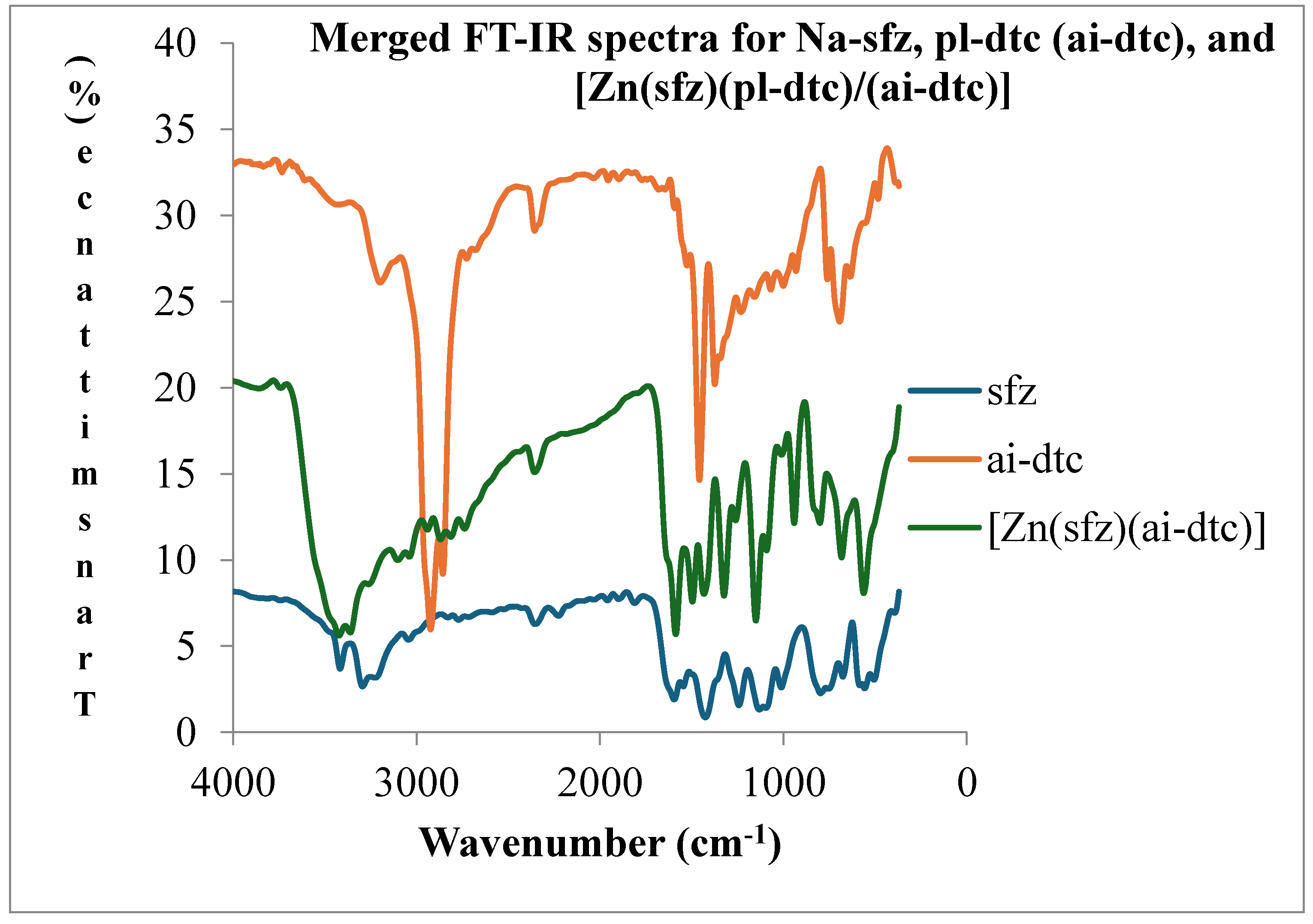
The FT-IR of asymmetric amino group in sfz still at 3404 cm-1(m) shifted slightly to lower frequency in the coordination compound of [Zn(sfz)(pl-dtc)] appearing with a medium peak at 3401cm-1(s). In the same way, the FT-IR of symmetric amino group has a frequency of 3277 cm-1(m) in sfz and also shifted to lower frequency in coordination compound of [Zn(sfz)(pl-dtc)] at 3266 cm-1(sh). Bellú et al reported that the FT-IR wavelengths were within 3500 and 3400 cm-1 [18]. The slight differences between the ligand and the coordination compound indicated no involvement of the two amino groups in coordination [3,18].
For azomethine group (C=N), a medium band at 1583 cm-1(m) appeared in sfz, but shifted with a difference of 5 cm-1 to lower and medium frequency at 1578 cm-1(s) in [Zn(sfz)(pl-dtc)]. This indicates a difference of 5 cm-1 compared with sfz. The shift to higher frequency is in support of Athar et al. study and confirmed the presence of the azomethine band in the coordination [19]. Medium bands at 1225 cm-1(m) and 1112 cm-1(m) are assigned to the assymmetric and symmetric v(SO2)respectively in Na-sfz but in [Zn(sfz)(pl-dtc)] there are slight changes of 1246 cm-1(m) and 1141 cm-1(m) which could be assigned to the assymmetric and symmetric v(SO2) respectively [18,19]. The results due to slight difference agree with Bellú et al. and Athar et al. that the sulfonamide oxygen (SO2NH) did not participate in the coordination to metal ion [18,19]. The Zn-N band has a frequency of 391cm-1(shd) [20].
Ligand of pl-dtc stretching vibration for ν(C-N) appeared sharply at a frequency of 1517 cm-1, while it shifted to lower frequency in [Zn(sfz)(pl-dtc)] with a difference of 30 cm-1 to give a medium value of 1487 cm-1. Similarly, the ν(C=S) for pl-dtc appeared with a stretching vibration at 981 cm-1 and also shifted to lower frequency in [Zn(sfz)(pl-dtc)] with a difference of 18 cm-1 to give a small value of 963 cm-1. The ν(Zn-S) wavenumber is 551 cm-1.
The FT-IR results showed that the coordination modes of sfz and pl-dtc litigated to oxidovanadium(IV) and zinc(II) ions respectively. The FTIR results for all studied compounds are shown in Table 3.
Table 3.
The FT-IR results for all studied compounds.
| ν(N-H)asy | ν(N-H)sy | ν(C=N) | ν(SO2)asy | ν(SO2)sy | ν(C-N) | ν(CS2) | ν(V=O) | ν(M-N) | ν(M-S) | |
|---|---|---|---|---|---|---|---|---|---|---|
| sfz | 3404(m) | 3268 (m) | 1577(m) | 1227(m) | 1115(m) | 1453(shp) | 985 (sm) | |||
| pl-dtc | 3409(m) | 3277(m) | 1225(m) | 1112(m) | 1517(sm) | 981(sm) | ||||
| [VO(sfz)(pl-dtc)] | 3401(shp) | 3227(shd) | 1615(m) | 1223(m) | 1145(m) | 1528(sm) | 1002(sm) | 937(shp) | 395(m) | 466(m) |
| [Zn(sfz)(pl-dtc)] | 3400(m) | 3266(sm) | 1578(m) | 1246(sm) | 1141(shp) | 1487(m) | 963(sm) | 391(shd) | 551(m) |
Key: sfz: sodium sulfadiazine, pl-dtc (ai-dtc): sodium salt of phenyl dithiocarbamate, [VO(sfz)(pl-dtc)/(ai-dtc)]: coordination compound of oxidovanadium(IV) ion, [Zn(sfz)(pl-dtc)/(ai-dtc)]: coordination compound of oxovanadium(IV) ion, m: medium, shd: shoulder, shp: sharp, sm: small.
Figure 2.
Merged spectra of Na-sfz, pl-dtc (ai-dtc) and [VO(sfz)(pl-dtc)/(ai-dtc)].
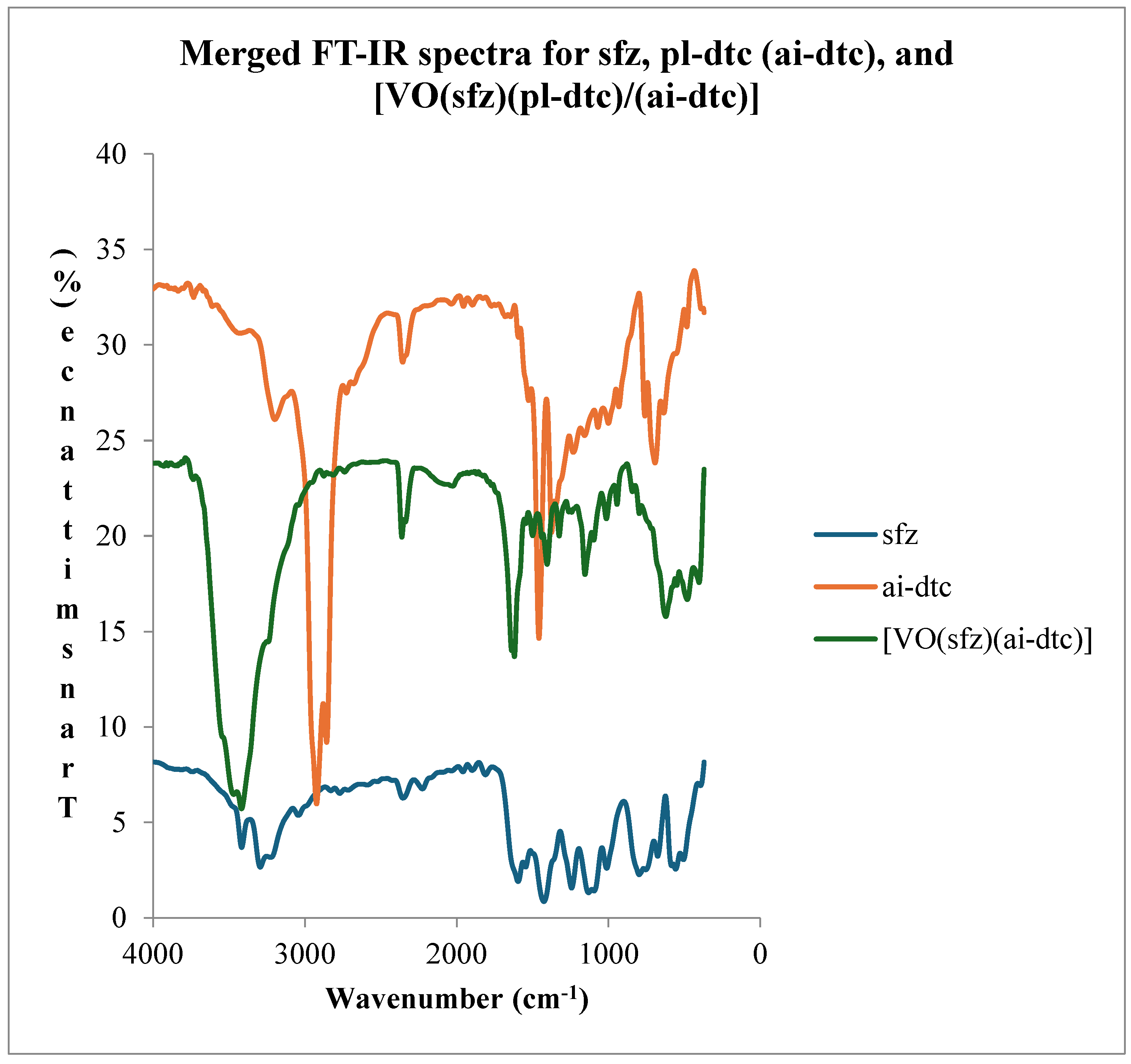
Figure 3.
Merged spectra of Na-sfz, pl-dtc (ai-dtc), and [Zn(sfz)(pl-dtc)/(ai-dtc)].
3.3. Electronic Spectroscopy
The electronic spectra for sfz, pl-dtc, [VO(sfz)(pl-dtc)] [Zn(sfz)(pl-dtc)] were recorded in the ultraviolet-visible range between 200 and 900 nm in 10-3 solution of DMSO solvent. The coordination processes of sfz and pl-dtc and their corresponding coordination compounds were assessed from their electronic spectra for coordination activities and geometries. Both ligands share similar electronic spectra’ regions to each other. In the ultraviolet-visible region, dithiocarbamates generally show three bands related to intramolecular charge transfer [22]. These bands are π-π* which corresponds to N-C=S, π-π* which corresponds to S-C=S and n-π* [22]. Another transition known as d-d transition was observed in the coordination compound of [VO (sfz)(pl-dtc)], which was due to excitation of the metal ions [22]. The chromophores of N-C=S and S-C=S were present in both ligands. Coordination compound of oxovanadium(IV) was red shifted with respect to Na-sfz and pl-dtc. The weak d-d transitions consist of Band I (828, 738 nm), Band II (617 nm) and Band III (396 nm) [20,23]. The red shift was due to the octahedral geometry of the coordination compound in line with Doadrio et al’s results [20]. In the case of [Zn(sfz)(pl-dtc)], it was blue shifted when compared with sfz and pl-dtc. The diamagnetic character of [Zn(sfz)(pl-dtc)] made it to be assumed to have tetrahedral geometry [24]. Results obtained from electronic spectra are shown in Table 4.
Table 4.
Results obtained from electronic spectra.
| π-π* (nm) | n-π* (nm) | d-d transitions (nm) | ||||
| N-C=S | S-C=S | |||||
| sfz | 274 | 319 | 322 | |||
| pl-dtc | 246 | 317 | 381 | |||
| Band I | Band II | Band III | ||||
| [VO (sfz)(pl-dtc)] | 319 | 322 | 355 | 828 738 |
617 | 396 |
| [Zn(sfz)(pl-dtc)] | 235 256 |
292 | 382 | |||
3.4. Nuclear Magnetic Resonance Spectroscopy (NMR)
This study used both proton NMR (1H NMR) and carbon 13 NMR (13C NMR) for structural determination of Na-sfz, pl-dtc and [Zn(sfz)(pl-dtc)]. The paramagnetic nature of [VO(sfz)(pl-dtc)] did not allow the use of 1H NMR and 13C NMR .
- Proton NMR (1H NMR)
The 1H NMR spectra for sfz, pl-dtc, and [Zn(sfz)(pl-dtc)] were recorded at room temperature. Deuterated dimethyl sulfoxide (dmso-d6) was used as the internal reference. The results obtained were in agreement with to literature [22]. The proton in sulfonamide nitrogen (SO2-NH2) of sfz appeared as singlet and has a signal at δ 8.10 ppm (Figure 4), which moved slightly downfield to δ 9.78, 8.50 ppm with doublet in [Zn(sfz)(pl-dtc)] (Figure 6) [25]. This indicates it was not involved in the coordination. The amino group of the sfz, which also appeared singlet at δ 7.47-7.48 ppm also deshielded slightly to δ 7.91 ppm as singlet in [Zn(sfz)(pl-dtc)] [25,26]. The amino groups are, as well not involved in the coordination. The aromatic protons appeared as doublet in sfz because of the presence of the two aromatic rings at δ 6.50 ppm and shifted downfield slightly to δ 6.60 ppm in [Zn(sfz)(pl-dtc)] [25]. The azomethine proton signaled as a singlet in sfz at δ 5.40 ppm and shifted downfield remaining singlet at δ 5.99 ppm in [Zn(sfz)(pl-dtc)] [26].
In the pl-dtc (Figure 5), the amino group of pl-dtc, appeared doublet at δ 7.19-7.89 ppm also deshielded slightly to δ 7.91 ppm (overlapping) also as doublet in [Zn(sfz)(pl-dtc)]. The dithiocarbamato proton (-HNCS2) as singlet at δ 10.00 ppm shifted downfield slightly to δ 10.11 ppm. The aromatic protons resonated as doublet and triplet at δ 6.87-7.16 and δ 7.16-7.19 and δ 7.19-7.89 ppm and became deshielded with multiple singlets at δ 6.56- 7.62 ppm in [Zn(sfz)(pl-dtc)] [27,28].
Figure 4.
The 1H NMR of sfz.
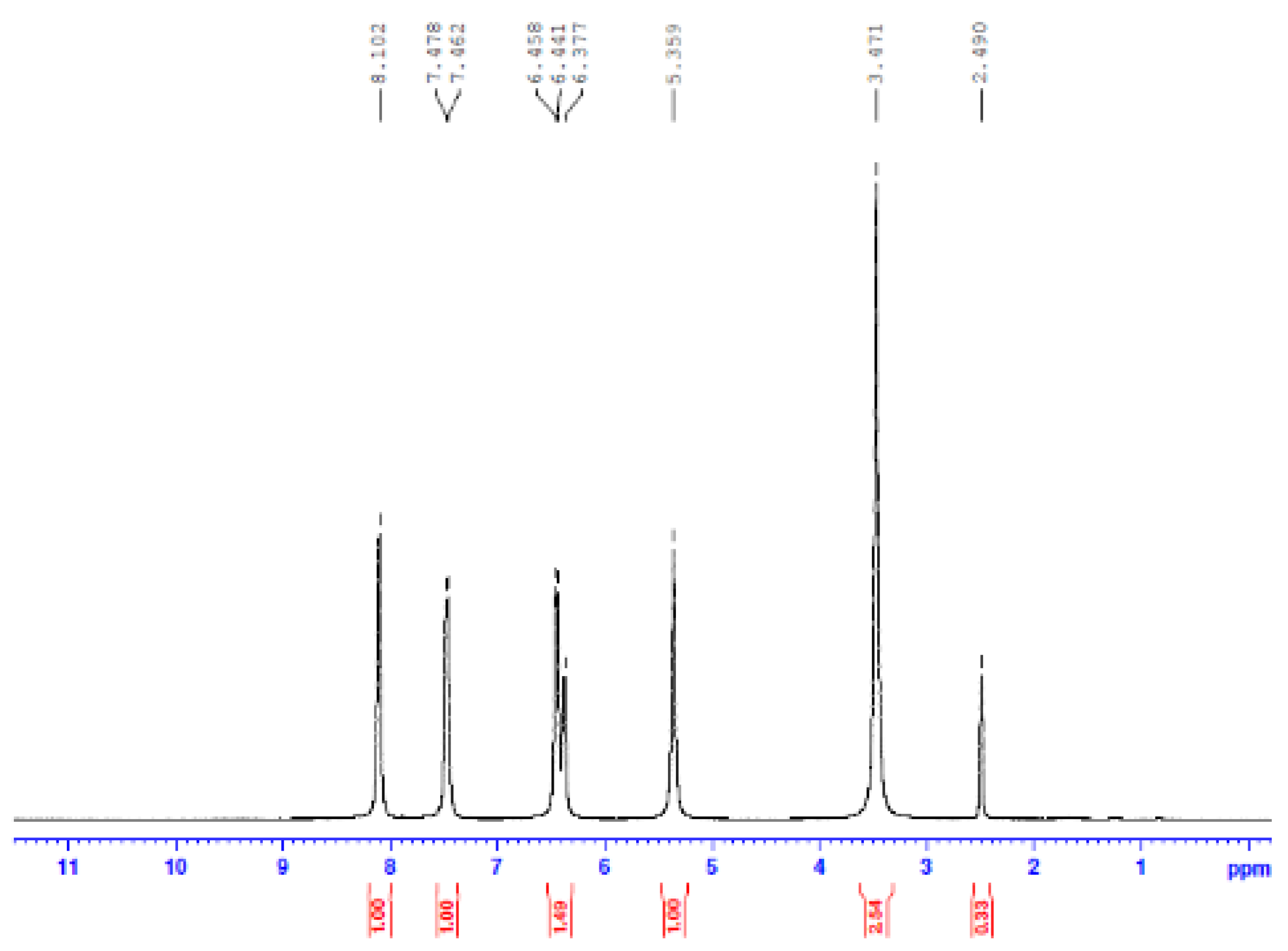
Figure 5.
The 1H NMR of pl-dtc.
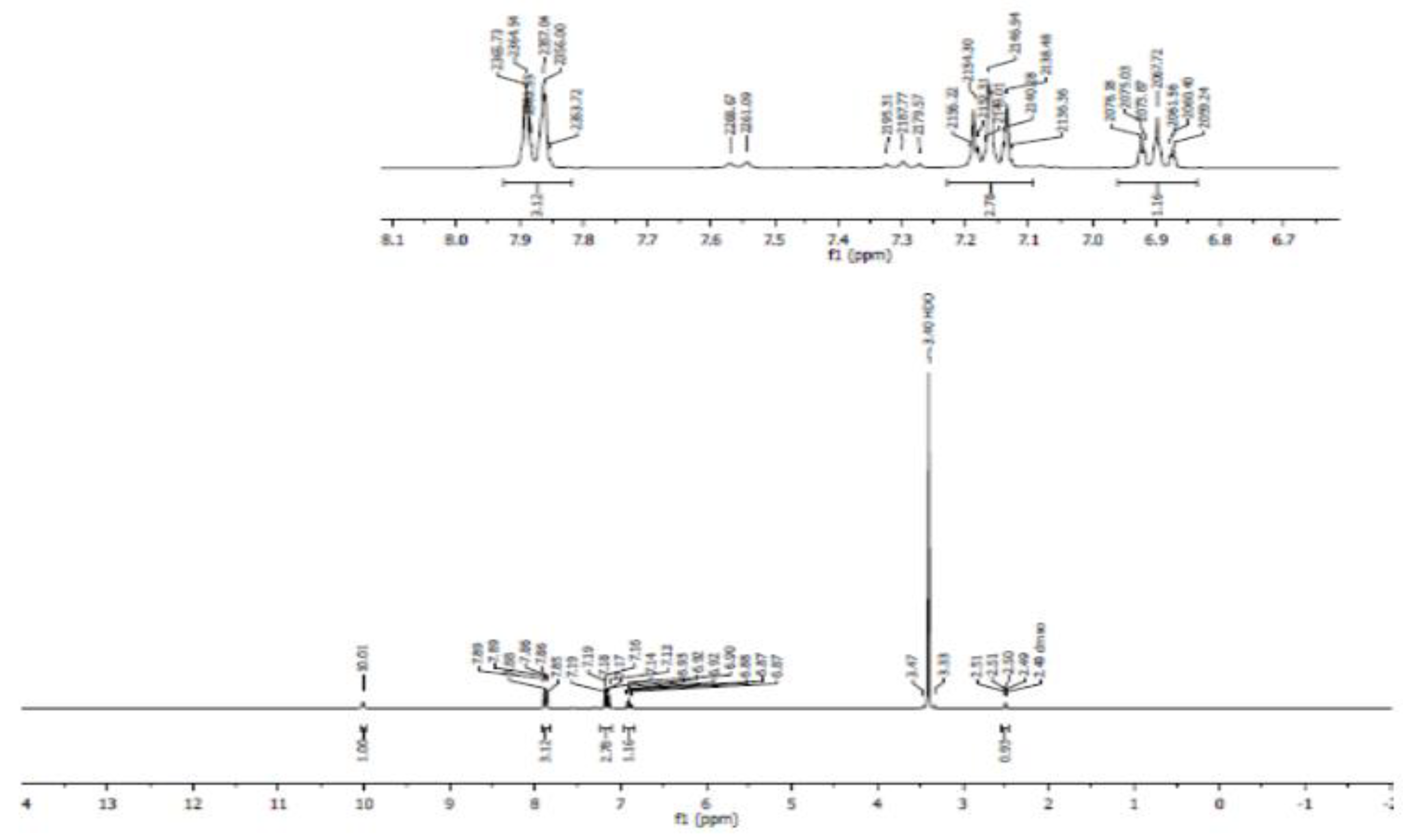
Figure 6.
The 1H NMR of [Zn(sfz)(pl-dtc)].
- Carbon 13 NMR (13C NMR) and hybridization
For the hybridization of the carbon atoms, sp3 hybridized carbon atoms resonate from 0 to 90 ppm, while sp2 hybridized carbon atoms resonate from 110 to 220 ppm. All the studied compounds possess both sp3 and sp2 hybridized carbon atoms, therefore, resonance occurred from 0 to 220 ppm. Differences in chemical shifts between ligands and coordination compounds indicate a ligation between ligands and metal ions [29].
Carbon of the of aromatic rings resonated in sfz (Figure 7) at δ105.10, δ 110.91, δ 120.25, δ 135.20 ppm coincided with the carbons in the aromatic rings of pl-dtc (Figure 8) δ (125.68, 125. 79, 127.94, 128. 85 and 137.23 ppm) for both to have signals which appeared at δ (112.14, δ 121.87, δ 123.74, δ 128.55, δ 128. 44 and δ 139.10 ppm) in [Zn(sfz)(pl-dtc)] (Figure 9) [26]. Carbons of the azomethine group and amino group resonated at δ 149.17 and δ 157.19 ppm respectively, but shifted downfield to δ 158.23 ppm by overlapping in [Zn(sfz)(pl-dtc)] [25].
The carbon of dithiocarbamato moiety resonated at δ 164. 19 ppm and became downshielded to 179.43 ppm in [Zn(sfz)(pl-dtc)] [28,29]. On the other hand, the thioureide carbon in pl-dtc resonated at 143.76 ppm and was downfielded to 158. 23 ppm in [Zn(sfz)(pl-dtc)] [28,29]. Dithiocarbamato moiety, (N13CS2) in pl-dtc resonated at δ 214.93 ppm and had a upfield shifting at δ 179.43 ppm in [Zn(SFZ)(pl-dtc)] [1,28,29,30].
Figure 7.
The 13C NMR of sfz.
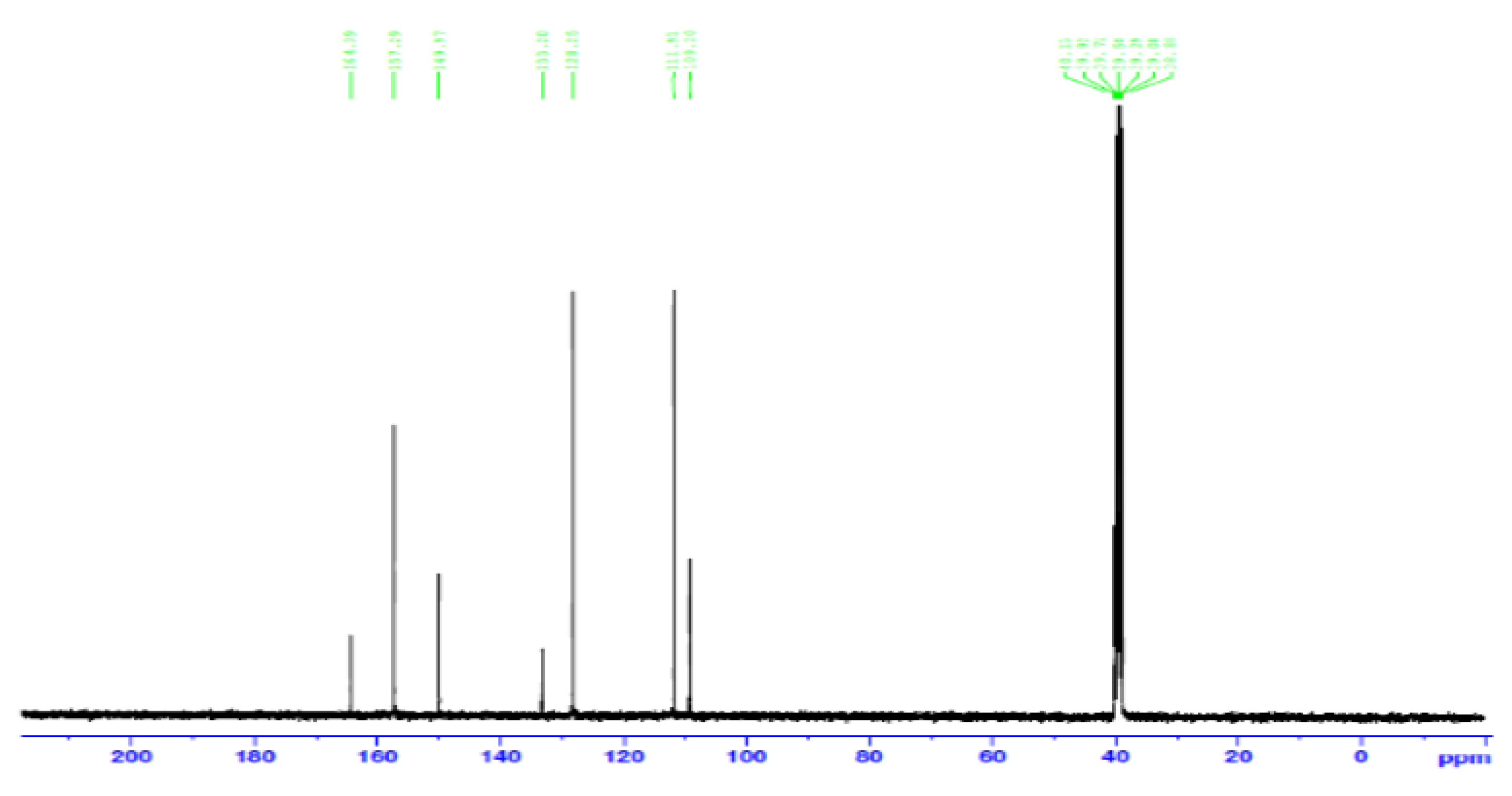
Figure 8.
The 13C NMR of pl-dtc.
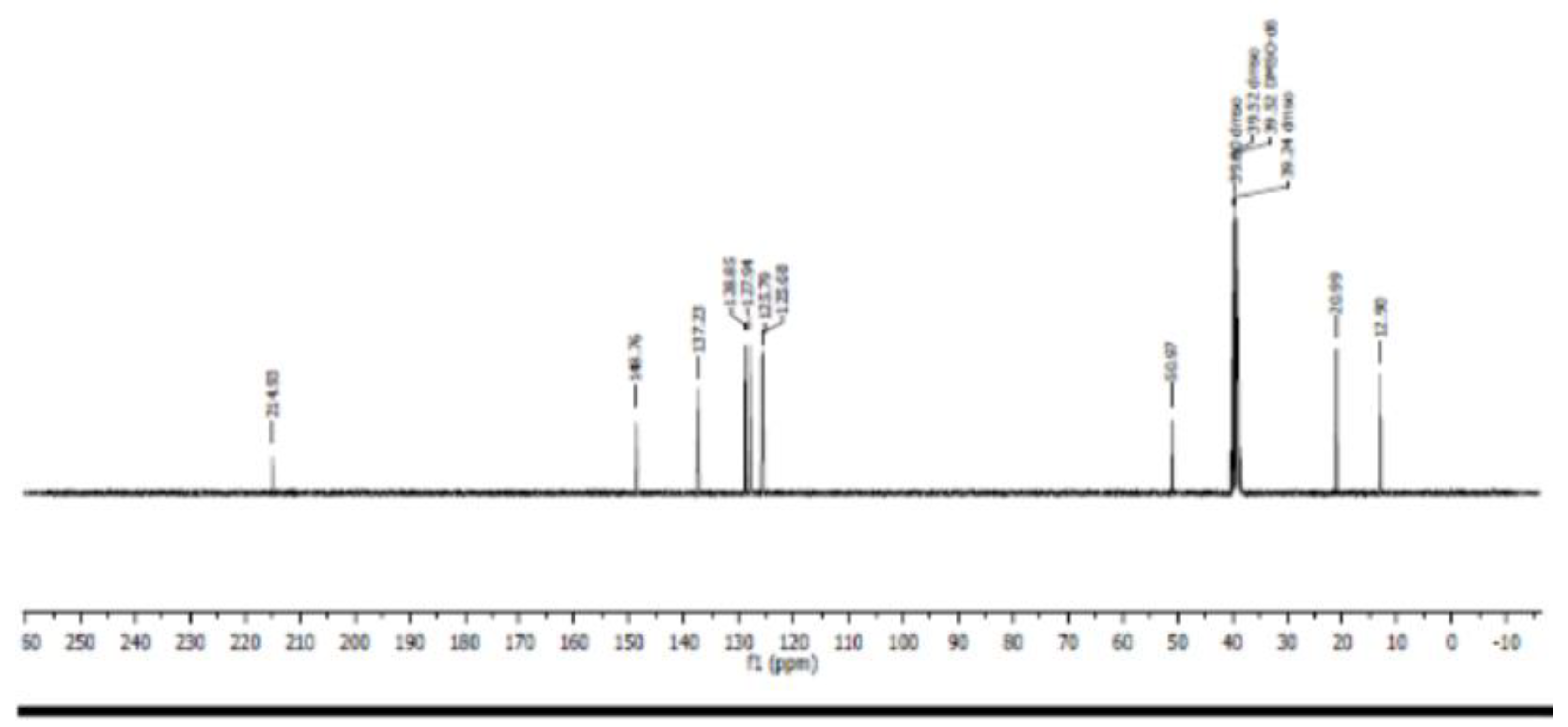
Figure 9.
The 13C NMR of [Zn(sfz)(pl-dtc).
3.5. Crystal Data, Data Collection and Refinements of pl-dtc
The crystal and packing structures of are shown in Figure 10 and Figure 11 respectively. The structure consists of a sodium atom with an octahedral geometry with five water molecules and one phenyl dithiocarbamate ligand coordinated via one of the sulphur atoms (Figure 10). The Na―O bond lengths vary from 2.3562(11) to 2.4247(13) Å and the Na―S bond is 3.0235(6) Å. Most bond lengths and angles are in good agreement with values for comparable compounds whose metrical parameters have been deposited with the Cambridge Structural Database (Table 5) [16]. The exception being the S2=C7 double bond of length 1.7102(13) Å which is longer than the average bond length of 1.65 Å.
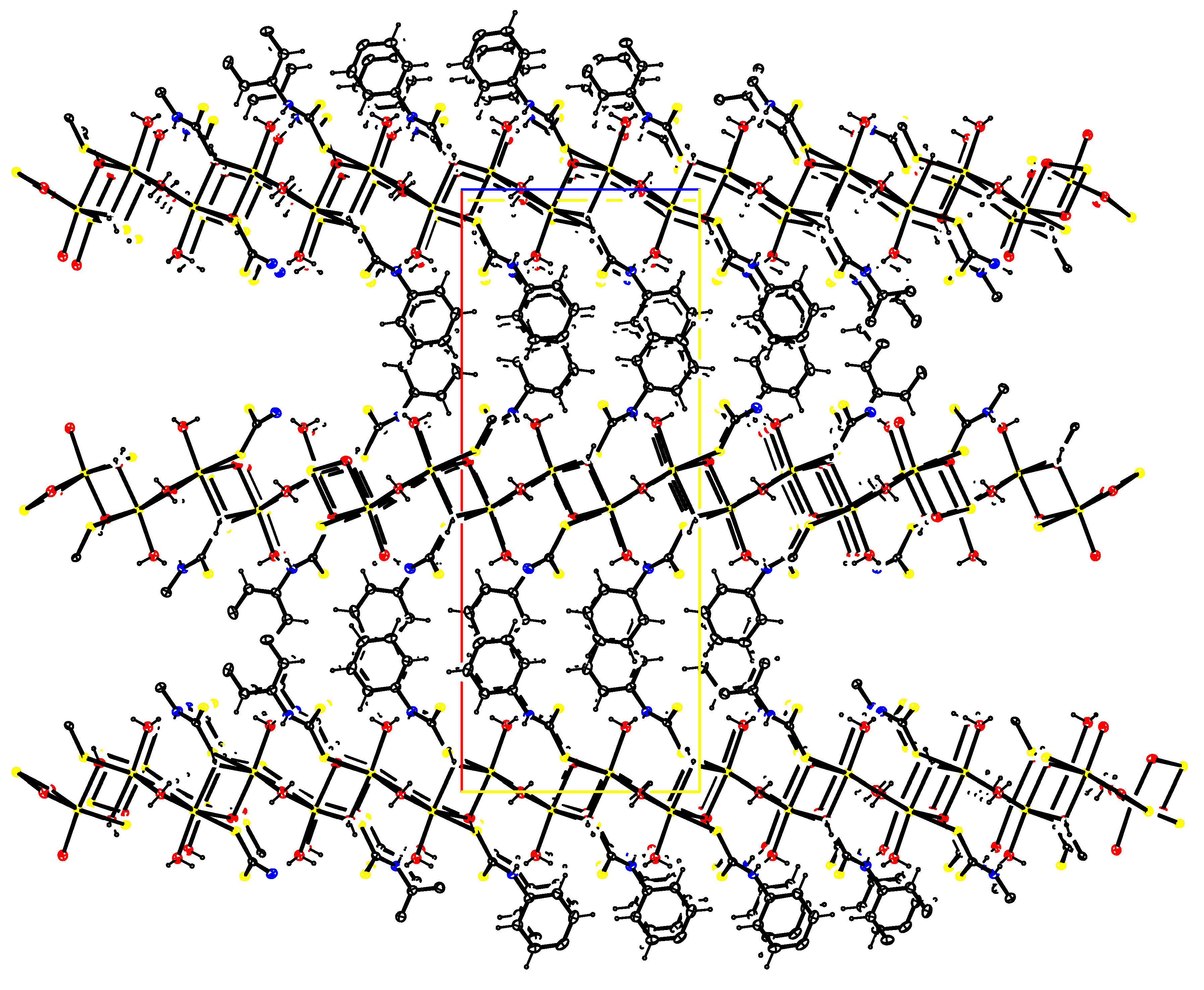
Two pairs of water molecules (O1 and O3; O2 and O2 [1-x, 1-y, 1-z]) form bridges with neighbouring sodium atoms forming a 1 D infinite polymeric chain (Figure 1) parallel to the c-axis. The Na to Na distances are 3.4378(8) and 3.5878(8) Å. These parallel polymeric chains form alternating sodium/water and phenyl dithiocarbamate layers parallel to the bc plane as can be seen in the packing diagram Figure 11.
Figure 10.
Crystal structure of ORTEP diagram of the sodium phenyl dithiocarbamate structure with ellipsoids drawn at the 50 % probability level. Symmetry codes: i) 1 – x, y, 3/2 – z; ii) 1 – x, 1 – y, 1 – z; iii) x, 1 – y, ½ + z; iv) x, 1 – y, -½ + z.
Figure 10.
Crystal structure of ORTEP diagram of the sodium phenyl dithiocarbamate structure with ellipsoids drawn at the 50 % probability level. Symmetry codes: i) 1 – x, y, 3/2 – z; ii) 1 – x, 1 – y, 1 – z; iii) x, 1 – y, ½ + z; iv) x, 1 – y, -½ + z.
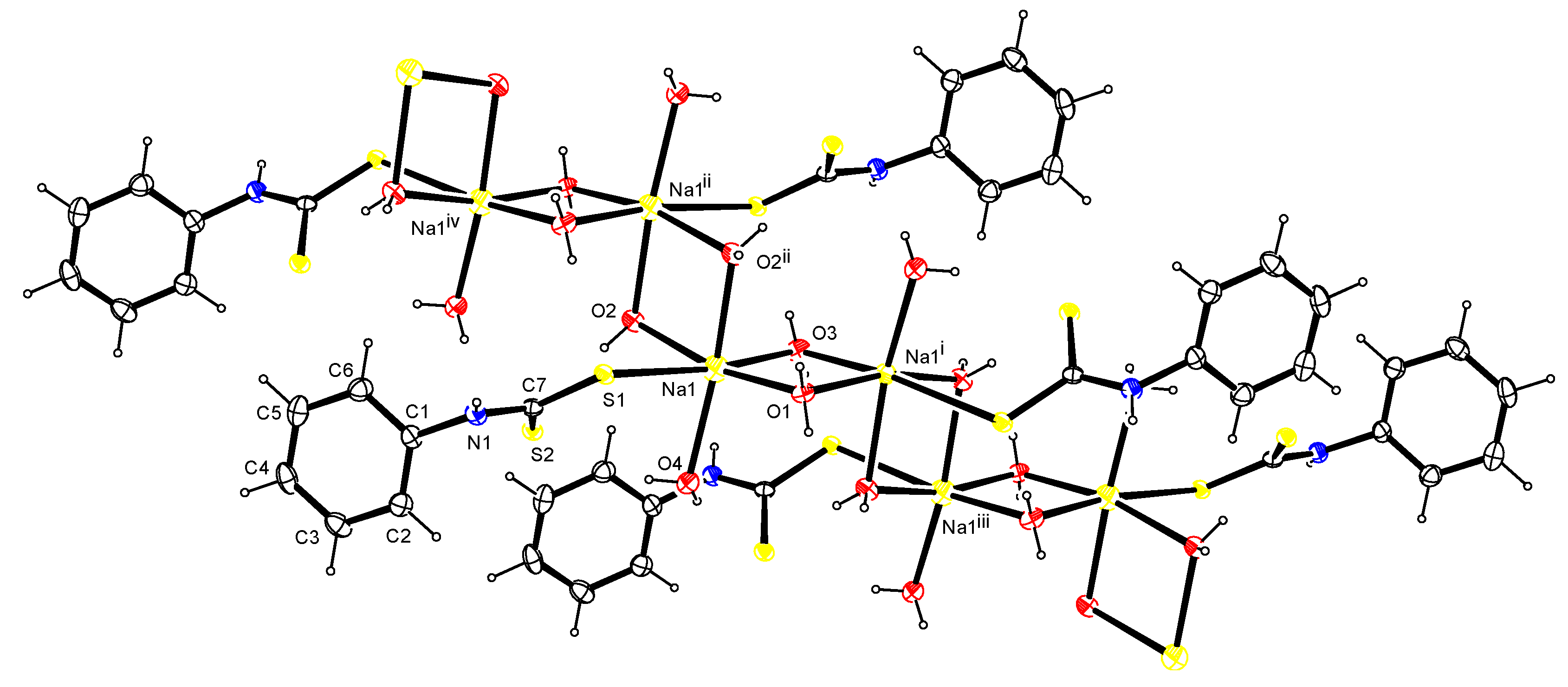
Figure 11.
Packing diagram of the sodium phenyl dithiocarbamate structure drawn normal to (0 1 0). Ellipsoids drawn at the 50% probability level.
Figure 11.
Packing diagram of the sodium phenyl dithiocarbamate structure drawn normal to (0 1 0). Ellipsoids drawn at the 50% probability level.
Most bond lengths and angles are in good agreement with values for comparable compounds whose metrical parameters have been deposited with the Cambridge Structural Database (Table 5) [16].
Within the polymeric chains there are four O―H…S interactions with S2 being trifurcated accepting (Table 5). S1 is also trifurcated accepting with one intramolecular interaction within the polymeric chain and two intermolecular interactions to a neighbouring chain. The S…H interaction lengths vary from 2.39(2) to 2.59(2) Å. There are also N―H…O interactions of 2.24(2) Å between chains. Pairs of phenyl π…π ring interactions of lengths 4.1918(8) and 4.1917(8) Å with dihedral angles of 4.16(7) ° and slippages of 2.436 and 2.661 Å respectively also occur between parallel chains.
Table 5.
Selected bond lengths and angles. Symmetry codes: i) 1 – x, y, 3/2 – z; ii) 1 – x, 1 – y, 1 – z.
Table 5.
Selected bond lengths and angles. Symmetry codes: i) 1 – x, y, 3/2 – z; ii) 1 – x, 1 – y, 1 – z.
| Lengths (Å) | Angles (°) | ||
|---|---|---|---|
| S1―Na1 | 3.0235(6) | Na1―S1―C7 | 109.73(5) |
| S1―C7 | 1.7353(15) | Na1―O1―Na1i | 93.70(5) |
| S2―C7 | 1.7102(13) | Na1―O2―Na1ii | 96.37(4) |
| Na1―O1 | 2.3562(11) | Na1―O3―Na1i | 92.83(5) |
| Na1―O2 | 2.3891(12) | S1―Na1―O1 | 94.73(3) |
| Na1―O3 | 2.3730(11) | S1―Na1―O2 | 84.96(3) |
| Na1―O4 | 2.3757(13) | S1―Na1―O3 | 172.90(3) |
| Na1―O2ii | 2.4247(13) | S1―Na1―O4 | 81.85(3) |
| N1―C1 | 1.4397(19) | S1―Na1―O2ii | 86.21(3) |
| N1―C7 | 1.3305(18) | O1―Na1―O2 | 167.50(4) |
| O1―Na1―O3 | 86.74(4) | ||
| O1―Na1―O4 | 91.95(3) | ||
| O1―Na1―O2ii | 83.88(3) | ||
| O2―Na1―O3 | 92.11(4) | ||
| O2―Na1―O4 | 100.36(4) | ||
| O2―Na1―O2ii | 83.63(4) | ||
| O3―Na1―O4 | 105.07(3) | ||
| O2ii―Na1―O3 | 87.04(3) | ||
| O2ii―Na1―O4 | 167.00(4) | ||
| C1―N1―C7 | 124.97(12) | ||
Table 6.
Hydrogen interactions. * indicates intramolecular interactions within the polymeric chain. Symmetry codes: i) x, -y, -½ + z; ii) 1-x, -y, 1 – z; iii) x, 1 + y, z; iv) x, 1 - y, ½ + z.
Table 6.
Hydrogen interactions. * indicates intramolecular interactions within the polymeric chain. Symmetry codes: i) x, -y, -½ + z; ii) 1-x, -y, 1 – z; iii) x, 1 + y, z; iv) x, 1 - y, ½ + z.
| D―H…A | D―H (Å) | H…A (Å) | D…A (Å) | D―H…A (°) |
|---|---|---|---|---|
| N1―H1…O4i | 0.84(2) | 2.24(2) | 3.0205(16) | 156.7(17) |
| O1―H1A…S1ii | 0.83(2) | 2.43(2) | 3.2446(9) | 169.3(18) |
| *O2―H2A…S2 | 0.84(2) | 2.39(2) | 3.2162(12) | 172.0(18) |
| O2―H2B…S1iii | 0.77(2) | 2.59(2) | 3.3478(11) | 167.2(18) |
| *O3―H3A…S1iv | 0.80(2) | 2.52(2) | 3.3152(9) | 177.5(17) |
| *O4―H4A…S2 | 0.80(2) | 2.54(2) | 3.3145(12) | 163(2) |
| *O4―H4B…S2iv | 0.80(2) | 2.52(2) | 3.2789(12) | 158(2) |
3.6. Antibacterial Studies and Mechanism of Action
The Kirby-Bauer method also referred to disc diffusion method or Kirby-Bauer disc diffusion method was used to assess how effective the antibacterial actvities of studied compounds were, against four bacterial strains [17,25]. The Mueller-Hinton agar was used to give a good batch-to-batch reproducibility [25]. The bacterial strains are first spread on the agar plate, followed by prepared paper disks of studied compounds. Plates were assessed for their zones of inhibition (ZOI) after incubation at 37oC at 24 h as shown in Table 7.
In general, the metallic compounds of vanadium(IV) sulfate. hydrate showed no activity against all the four bacterial strains (two Gram-negative bacterial strains of S.aureus and E. coli and two Gram-positive bacterial strains of E. faecalis and P. aeruginosa), while zinc(II) chloride showed towards the two Gram-negative bacterial strains of S.aureus and E. coli with ZOI of 14 mm and 9 mm respectively.
Both ligands (sfz and pl-dtc) were active against S. aureus with zone of inhibition of 17 mm and 8 mm respectively, but the corresponding coordination compounds of [VO(sfz)(pl-dtc)]and [Zn(sfz)(pl-dtc)] were inactive. None of the ligands and coordination compounds was active against E. faecalis. Ligand of sfz was active against E. coli with zone of inhibition of 16.3 mm and pl-dtc with no ZOI, but the corresponding coordination compounds were less active, where [VO(sfz)(pl-dtc)] has 8 mm and [Zn(sfz)(pl-dtc)] has 10 mm. Ligands of sfz and pl-dtc, as well as, coordination compound of [VO(sfz)(pl-dtc)] were not active against P. aeruginosa, but the biological activity of [Zn(sfz)(pl-dtc)] was enhanced when compared with individual ligands of sfz and pl-dtc as shown in Table 7. The enhanced activities of the coordination compounds compared with pl-dtc ligand could be explained on the basis of chelation theory [25]. Chelation theory states that a decrease in the polarizability of the metal could improve the lipophilicity of the coordination compounds [25]. This will result to a breakdown of the permeability of the cells, resulting in interruption with normal cell processes [25].
In summary, both ligands and coordination compounds have potentials as antibacterial agents
Table 7.
The zone of inhibition for studied compounds in mm.
| Compound | S.aureus MRSA252 | E.faecalis ATCC 19433 | E. coli MC4100 | P.aeruginosa PAO1 |
|---|---|---|---|---|
| VOSO4. H20 | 0 | 0 | 0 | 0 |
| ZnCl2 | 14 | 0 | 9 | 0 |
| sfz | 17 | ND | 16.3 | ND |
| pl-dtc | 8 | ND | 0 | ND |
| [VO(sfz)(pl-dtc)] | 0 | NA | 8 | NA |
| [Zn(sfz)(pl-dtc)] | 0 | NA | 10 | 10 |
| Meropenem | NA | NA | NA | 30 |
| Tetracycline | 30 | NA | 28 | NA |
| Vancomycin | NA | 22 | NA | NA |
| DMSO | 0 | 0 | 0 | 0 |
sfz = Sodium sulfadiazine; pl-dtc = Sodium phenyl dithiocarbamate; [VO(sfz)(pl-dtc)]= Coordination compound of oxovanadium(IV) ion; [Zn(sfz)(pl-dtc)] = Coordination compound of zinc(II) ion; ND=Non Detectable; NA= Not Active; Negative control: DMSO; Positive controls: Meropenem, Tetracycline and Vancomycin.
4. Conclusion and Future Perspective
All compounds were synthesized successfully as evident from results of characterization techniques. Crystals of pl-dtc were characterized and confirmed that the structure contains carbon, nitrogen, oxygen and sulfur. All studied compounds were non electrolytes. Spectroscopic studies of FT-IR, UV-Vis and NMR revealed differences between ligands and coordination compounds which proved the coordination of ligands to respective oxovanadium(IV) ion and zinc(II) ion. Both [VO(sfz)(pl-dtc)] and [Zn(sfz)(pl-dtc)] were active against Gram negative bacteria, but not against Gram positive bacteria due to the factor of mechanism of action. Future perspective will entail using the synthesized complexes to form adducts with 1, 10-phenanthroline so as to enhance the antibacterial potentials.
Appendix A. Supplementary material
CCDC 1027812 contains the supplementary crystallographic data for C7H6NS2Na. The data can be obtained free of charge via http://www.ccdc.cam.ac.uk/conts/retrieving html, or from Cambridge Crystallographic Data Centre, 12 Union Road, Cambridge CB2 1EZ, UK; fax: (+44) 1223 336 033; or e-mail: deposit@ccdc.cam.ac.uk.
Data availability
Authors confirm that all data generated or analysed during this study are included in the manuscript of this published article. In other words, the data in this document, data used to support the study’s findings is included within the research article.
Acknowledgements
The authors appreciate Govan Mbeki Research and Development Centre (GMRDC) for the financial support. Further appreciation and recognition go to Professor Luigi Casella, Professor Albeit Bolhuis, Professor Michal Dusek, and Dr. Margarida S. Henriques for their contributions.
Conflict of interest
The authors declare no conflict of interest.
References
- Odularu, A. T.; Ajibade, P. A. Dithiocarbamates: Challenges, Control, and Approaches to Excellent Yield, Characterization and Their Biological Applications. Bioinorg. Chem. Appl. 2019, 2019, 1–15. [Google Scholar] [CrossRef] [PubMed]
- Dou, Y.; Xu, S.; Wu, X. Synthesis, Characterization, and Anticancer Activity of Dithiocarbamate Ruthenium(II) Complexes. New Heteroleptic Palladium(II) Dithiocarbamates: Synthesis, Characterization, Packing and Anticancer Activity against Five Different Cancer Cell Lines. Phos. Sulf. Sil. 2017, 192, 1219–1223. [Google Scholar] [CrossRef]
- Ajibade, P. A.; Idemudia, O. G.; Okoh, A. I. Synthesis, Characterization and Antibacterial Studies of Metal Complexes of Sulfadiazine with N-Alkyl-N-Phenyldithiocarbamate. Bull. Chem. Soc. Ethiop. 2013, 27, 77–84. [Google Scholar] [CrossRef]
- Khan, S. Z.; Amir, M. K.; Ullah, I.; Aamir, A.; Pezzuto, J. M.; Kondratyuk, T.; Bélanger-Gariepy, F.; Ali, A.; Khan, S. Zia-ur-Rehman. Appl. Organometal. Chem. 2016, 30, 392–398. [Google Scholar] [CrossRef]
- Tarique, M. Coordination Aspects of Dimethyldithiocarbamate Ligand toward the First Series Transition Metal Ions. Chem. Sci. Trans. 2012, 1, 257–260. [Google Scholar] [CrossRef]
- Tarique, M. Cr(III), Mn(III), Fe(III), Co(II) and Zn(II) Complexes with Disobutyldithiocarbamato Ligand. E-J. Chem. 2011, 8, 2020–2023. [Google Scholar]
- Kanchi, S.; Singh, P.; Bisetty, K. Dithiocarbamates as Hazardous Remediation Agent: A Critical Review on Progress in Environmental Chemistry for Inorganic Species Studies of 20 th Century. Arab. J. Chem. 2014, 7, 11–25. [Google Scholar] [CrossRef]
- Sağlik, B. N.; Özkay, Y.; Özkay, U. D.; Genҫer, H. K. Synthesis and Biological Evaluation of Some Novel Dithiocarbamate Derivatives. J. Chem. 2014, 2014, 1–9. [Google Scholar] [CrossRef]
- Yurttas, L.; Özkay, Y.; Demirci, F.; Gӧger, G.; Yildirim, S. U.; Mohsen, U. S.; Öztürk, O.; Kaplancikli, Z. A. Synthesis, Anticandidal Activity and Cytotoxicity of Some Thiazole Derivatives with Dithiocarbamates Side Chains. Turk. J. Chem. 2014, 38, 815–824. [Google Scholar] [CrossRef]
- Rehder, D. The Role of Vanadium in Biology. Metallomics. 2015, 7, 730–742. [Google Scholar] [CrossRef]
- Arafat, Y.; Ali, S.; Shahzadi, S.; Shahd, M. Preparation, Characterization and Antimicrobial Activities of Bimetallic Complexes of Sarcosine with Zn(II) and Sn(IV). Bioinorg. Chem. Appl. 2013, 2013, 1–7. [Google Scholar] [CrossRef] [PubMed]
- Palatinus, L.; Chapuis, G. “Super flip- A Computer Program for the Solution of Crystal Structures by Charge Flipping in Arbitrary Dimensions,” J. Applied Crystal. 2007, 40, 780–790. [Google Scholar] [CrossRef]
- Petříček, V.; Dŭsek, M.; Palatinus, L. Structure Determination Software Programs, Institute of Physics, Praha, Czech Republic, 2007.
- Sheldrick, G.M. Crystal structure refinement with SHELXL. Acta Cryst. 2015, C71, 3–8. [Google Scholar]
- Farrugia, L.J. WinGX and ORTEP for Windows: an update. J. Appl. Cryst. 2012, 45, 849–854. [Google Scholar] [CrossRef]
- Groom, C.T.; Bruno, I.J.; Lightfoot, M.P.; Ward, S.C. The Cambridge Structural Database. Acta Cryst. 2016, B72, 171–179. [Google Scholar] [CrossRef] [PubMed]
- Hadjar, F.; Tahar, B.; Eddine, D. A.; Sofiane, D. Antioxidant and Antimicrobial Activity of Some Transition Metal Complexes with Non-Natural Amino Acids Used as Ligand. J. Mater. Environ. Sci. 2018, 9, 2153–2157. [Google Scholar]
- Bellú, S.; Hure, E.; Trapé, M.; Rizzotto, M. The Interaction between Mercury(II) and Sulfathiazole. Quím. Nova. 2003, 26, 188–192. [Google Scholar] [CrossRef]
- Athar, A.; Khan, A.; Khan, F.; Khan, S.; Zia-ul-Haq; Amanulla, M.; Khan, S. Synthesis, Spectral Characterization and Antibacterial Study of Novel Schiff Base Complexes Derived from 4-Nitrobenzenesulfonamide and 5-Chloro-2-Hydroxybenzaldehyde. Am-Eur. J. Agric. Ext. Sci. 2015, 15, 2263–2268. [Google Scholar]
- Doadrio, A. L.; Sotelo, J.; Fernández-Ruano, A. Synthesis and Characterization of Oxovanadium(IV) Dithiocarbamates with Pyridine. Quim. Nova. 2002, 25, 525–528. [Google Scholar] [CrossRef]
- Prakasam, B. A.; Lahtinen, M.; Peuronen, A.; Muruganandham, M.; Kolehmainen, E.; Haapaniemi, E.; Sillanpää. Synthesis, NMR Spectra and Structural Studies on Mixed Ligand Complexes of Pd(II) Dithiocarbamates: First Structural Report on Palladium(II) Dithiocarbamates with SCN Ligand. J. Mol. Str. 2016, 1108, 195–202. [Google Scholar] [CrossRef]
- Abbas, S. A. Synthesis, Characterization and Biological Activity of Some Nickel(II) Mixed Ligands Complexes of Dithiocarbamate and 1, 10-Phenanthroline. Eur. J. Chem. 2017, 8, 367–370. [Google Scholar] [CrossRef]
- Berto, S.; Alladio, E.; Daniella, P. G.; Laurenti, E.; Bono, A.; Sgarlata, C.; Valora, G.; Cappai, R.; Lachowicz, J. I.; Nurchi, V. M. Oxovanadium(IV) Coordination Compounds with Kojic Acid Derivatives in Aqueous Solution. Mole. 2019, 24, 1–18. [Google Scholar] [CrossRef] [PubMed]
- Tiwari, S.; Reddy, K. V.; Bajpai, A.; Khare, K.; Nagaraja, V. Synthesis and Characterization of Bisdithiocarbamates from Weak Nitrogen Bases and Its Metal Complexes. Int. Res. J. Pure App. Chem. 2015, 7, 78–91. [Google Scholar] [CrossRef]
- Khedr, F.; Saad, F. A. Synthesis, Structural Characterization, and Antimicrobial Efficiency of Sulfadiazine, Azomethine Dyes and Their Bi-Homonuclear Uranyl Complexes for Chemotherapeutic Use. Turk. J. Chem. 2015, 39, 267–280. [Google Scholar] [CrossRef]
- Athar, A.; Khan, A.; Khan, F. S.; Zia-ul-Haq; Amanulla, M.; Khan, S. Synthesis, Spectral Characterization and Antibacterial Study of Novel Schiff Base Complexes Derived from 4-Nitrobenzenesulfonamide and 5-Chloro-2-Hydroxybenzaldeyde. Amer-Euras. J. Agric. Environ. Sci. 2015, 15, 2263–2268. [Google Scholar]
- Kartina, D.; Wahab, A. W.; Ahmad, A.; Irfandi, R.; Raya, I. In vitro Antibacterial and Anticancer Activity of Zn(II) Valine dithiocarbamate Complexes. 3rd Int. Conf. Sci. J. Phys. 2019, 1341, 1–7. [Google Scholar]
- Sathiyaraj, E.; Peruma, M. V.; Nagarajan, E. R.; Ramalingan, C. Functionalized Zinc(II) Dithiocarbamates: Synthesis, Spectral and Molecular Structures of Bis(N-Cyclopropyl-N-4-Metoxybenzylditiocarbamato-S,S’)Zinc(II). J. Saudi Arab. Chem. Soc. 2018, 55, 527–537. [Google Scholar] [CrossRef]
- Haas, R. M.; Arshad, M.; Anthony, J.; Altmann, P. J.; Pöthig, A.; Köhler, F. H.; Hess, C. R. Six-and Seven-Coordinate Fe(II) and Zn(II) Compounds Ligated by Unsymmetrical Xanthene-Based Ligands: Characterization and Magnetic Properties. Inorg. Chem. Front. 2016, 3, 616–629. [Google Scholar] [CrossRef]
- Ahamad, M. M.; SureshKumar, E. V.; Rao, R. M.; Phebe, P. Synthesis, Characterization, Antifungal and Antibacterial Activity of Dithiocarbamate Metal Complexes. Arch. Appl. Sci. 2016, 8, 61–64. [Google Scholar]
Disclaimer/Publisher’s Note: The statements, opinions and data contained in all publications are solely those of the individual author(s) and contributor(s) and not of MDPI and/or the editor(s). MDPI and/or the editor(s) disclaim responsibility for any injury to people or property resulting from any ideas, methods, instructions or products referred to in the content. |
© 2024 by the authors. Licensee MDPI, Basel, Switzerland. This article is an open access article distributed under the terms and conditions of the Creative Commons Attribution (CC BY) license (http://creativecommons.org/licenses/by/4.0/).
Copyright: This open access article is published under a Creative Commons CC BY 4.0 license, which permit the free download, distribution, and reuse, provided that the author and preprint are cited in any reuse.


