
Submitted:
06 August 2024
Posted:
07 August 2024
You are already at the latest version
Abstract
Heating stage accounts for the largest proportion of building carbon emissions. In order to figure out heating situations of rural residential building in Gansu Province, Gannan region was selected to carry out on-site survey on heating condition including heating mode, energy used for heating, heating fees, residents’ satisfaction on heating and thermal environment of typical building. The results showed that local rural residents burnt scattered coal for heating with primitive heating stove with high heating cost and low efficiency, causing low air temperature and high heating fees. Besides carbon emissions caused by heating reached 5743.28 kgCO2em-2, Several strategies for improving the heating effect and reducing carbon were proposed taking economic benefits into consideration limited by rural economic development. A parameter of reduced carbon emissions per investment input was proposed to evaluate the carbon reduction strategies. Results showed that Biomass was the most economical way to reduce the carbon emissions, followed by thermal insulation design, natural gas furnace and air source heat pumps for heating, and it was not reasonable to blindly increase building insulation to reduce building carbon emissions. The optimum energy efficiency was 55% in Gannan. The results provided reference for building low-carbon design in rural areas, helped achieving low carbon goal with low investment.

Keywords:
rural residential building
; survey on heating condition
; thermal environment
; carbon reduction strategies
1. Introduction
In this century, energy and environmental issues have become increasingly prominent, global carbon emissions have been increasing to date, currently more and more countries have proposed carbon neutral targets [1]. The China government also promised to strive to achieve the goal of “double control” of carbon emission intensity and total amount, aiming for peak carbon emissions by 2030 and carbon neutrality by 2060 in 2020 [2]. As one of the three “major energy consumers” (industry, transport and building), building sector contributes about half of the total carbon emissions [3].
Rural buildings were built on the basis of previous experience, lacking scientific design guidance, resulting in poor thermal insulation and higher energy consumption compared to urban buildings, especially in northern rural heating regions [4]. Space heating in rural areas relied heavily on fossil fuels causing heavy air pollution and carbon emissions [2], reference [5] concluded that rural areas in Northern China consumed 200 million tons of standard coal, mostly from scattered coal. However due to different lifestyles of residents and different heating modes in rural and urban areas, the focus of carbon reduction could not copy from urban buildings, To achieve carbon neutrality in our country, studying the carbon emissions of rural buildings is an important way to explore a low carbon development [6].
It is urgent to conduct on-site survey and optimize rural heating. From a provincial perspective, household carbon emissions in Gansu province were relatively high [7]. So Zhuoni county in Gannan Tibetan Autonomous Prefecture of Gansu province was selected to conduct a survey on heating situations. It was found that in rural areas, economic factors must be taken into consideration when reducing building carbon emissions (BCEs), so it is the focus of the paper to improve heating effects and reduce carbon emissions considering economic benefits. A parameter of reduced carbon emissions per investment input was put forward to evaluate carbon reduction effects, so as to propose appropriate carbon reduction strategies (CRSs). Research framework was shown in Figure 1.
2 Literature Reviews
Although the average carbon emissions of urban households were higher than those of rural households [7,8], reducing carbon emissions of rural building and clarifying the influencing factors and mechanism have become an important issue [6]. Scholars have sought various carbon reduction strategies.
First of all, local ecological building materials, such as bamboo [9] and straw bale [10] have been employed in rural residential buildings to reduce the carbon emissions, both of which reduce the carbon emissions due to the carbon sequestration properties of materials. Li [11] concluded that low carbon straw bale buildings with wood-structure and light-steel structure reduced the net carbon emissions by 96.75% and 76.92% compared with reference buildings.
Secondly, carbon emissions are mainly influenced by heating [7], the heating optimizations for rural buildings have been conducted. The state proposed coal to electricity and coal to gas projects in 2017, which was first applied in Beijing-Tianjin -Hebei region [2]. It was concluded that the convenience and safety of electric heating have been highly recognized by the villagers [12]. As the most popular electric heating equipment, the air source heat pumps (ASHPs) were popular in Northern China with their low installation requirements, simple operation, and reliability [2], which were suitable for rural areas [13], and could be applied in severe cold areas with frost-free technologies for outdoor air heat exchangers solved [14]. It was verified by Wu [15] in Xinjiang that ASHPs could provide enough heating protection. Besides "coal to gas" heating scheme was considered more suitable in severe cold northeast China [16]. In the field of heating, solid biofuels were the most common sources, especially in rural areas [17]. Household biomass heating stove were commonly used for heating in remote rural areas because of their excellent fuel flexibility and high combustion efficiency [18], which were priced in the range of 2000-5000 CNY heating 60-120 m2 space [2].
Thirdly, renewable energy such as solar energy was commonly used in building heating design. Combined use of active and passive utilization of solar air collector and attached sunspace had better environmental benefits [19] and solar photovoltaic combined with heat pumps could reduce carbon emissions by up to 50% [20].
However, the above studies on CRSs did not take initial investment input into consideration, with residents’ low income, building investment could not be ignored. Gao [4] chose the optimum CRSs of envelope parameters and PV systems considering carbon emissions and cost-effectiveness. Tahsildoost [21] in Iran proposed optimal constructional parameters and the application of renewable energy technologies with low cost to reduce BCEs in rural areas. He [22] concluded the installation and operation cost of ASHPs were moderate and suitable for use in rural areas. Some scholars [23,24,25] found that the cost of current electric heating technology was relatively high due to poor economic benefits and insufficient government investment.
To sum up, some studies on carbon reduction strategies such as ecological materials, ASHPs, biomass heating stove and solar heating could effectively reduce BCEs effectively. Moreover, the economic aspects of CRSs need to be further studied. In this paper, CRSs of envelope structures optimization, heating efficiency and heating energy would be evaluated considering economic benefits.
3 Research Method
3.1. Field Investigation
A village in Zhuoni County was selected for field research. Annual average temperature in Zhuoni was 3.6°C with high altitude ranging from 2000 to 4900 meters above sea level, resulting in severe cold winter and cool summer with average temperature of -8.2°C in January and 14.9°C in July. On-site survey was conducted to investigate heating mode, energy used for heating, heating fees, residents’ satisfaction on heating, and factors considered in heating optimization. On-site survey was shown in Figure 2.
3.2 Thermal Environment Test
To verify building heating effect, a typical building was selected for field testing thermal environment on 6th to 8th of January, which included indoor and outdoor air temperature, outdoor solar radiation. Selected typical building was shown in Figure 3, the total covered areas of a building with two stories were 194.92 m2. Figure 3 depicts the design drawings with frame structure fabricated with block components. Table 1 showed the design details of the building. Thermal environment test layout was shown in Figure 4.
3.3. Numerical Calculation of Building Carbon Emission
According to Literature [26], life cycle assessment were divided into three stages: building material production and transportation, building construction and demolition, operation stage including HVAC, domestic hot water, lighting and elevators, renewable energy.
3.3.1 Building material production and transportation
- (1)
- Building material production
Carbon emissions from building material production CEmaterial can be calculated as follows:
Where mi was material amount i used in the building, unit; EFi presented carbon emission factor of material i, kgCO2e⋅unit-1; The carbon emission factors of various materials referred to references [10,26,27];αi denoted building material loss rate during construction.
- (2)
- Building material transportation
Carbon emissions during transportation process CEtrans was calculated as follows:
Where Li,j presented the transportation distance of material i transported by vehicle j, km; EFtrans,j denoted carbon emission factor of vehicle j, kgCO2e⋅t-1⋅km-1; mi was the quality of the materials transported, t. All building materials were assumed to be transported in the road mode, and the carbon emission factor of trucks was valued as 0.115 kgCO2e⋅t-1⋅km-1 [26] .
3.3.2. Construction and Demolition
- (1)
- Building construction
Carbon emissions during construction CEconstruction was calculated as follows:
Where EFi presented carbon emission factor of energy i, kgCO2e⋅MJ-1; Econstruction,i denotes energy consumption of Energy i during construction, MJ. Since there were few mechanical equipment details recorded in rural areas, carbon emissions during construction were calculated multiplied by carbon emission per unit area [10] and building areas.
- (2)
- Building demolition
The carbon emissions during demolition includd the carbon emissions generated in the process of demolition and waste transportation. The carbon emissions during demolition stage CEdemolition could be estimated as follows.
The carbon emissions generated during waste transportation referred to those generated during transportation process. The calculation method and results were the same as those in the transportation stage of building materials.
3.3.3. Building Operation Stage
Building operation stage included the following parts: building heating and cooling, domestic hot water, building lighting and elevators, renewable energy utilization. In Gannan there was no demand for cooling in summer, the rural residential buildings had no elevators. So carbon emissions during operation stage required calculation of building heating, domestic hot water and building lighting.
- (1)
- Heating
Carbon emission generated by heating could be calculated as follows:
Where CEheating presented carbon emissions of building heating, kgCO2e; Q presented energy consumed for heating, J; EFi denoted carbon emission factor of heating energy i,kgCO2e⋅J-1; 50 presented building life service limit of 50 years.
There were two methods of steady state calculation and dynamic simulation for calculating energy consumption for heating. In the paper the steady state calculation method was adopted, on one hand, the steady state method was easy for architects to understand; on the other hand, the research [28] showed that in Gansu province, difference between the steady state calculation and dynamic simulation was within rationality.
Where Q presented energy consumed for heating, J;qH denoted building heat consumption index, W·m-2, which was calculated according to literature [29]; Z was heating period, 192 days [29]; η presented heating equipment efficiency, which was recommended 0.75 in literature [10]; A0 presented building area, 192 m2.
- (2)
- Domestic hot water
Carbon emission generated by domestic hot water could be calculated as follows:
Where CEhotwater presented carbon emissions generated by hot water, kgCO2e; Qr presented annual consumption of hot water, kWh⋅a-1; ηr presented domestic hot water transmission and distribution efficiency, %; ηw presented average annual heat source efficiency of domestic hot water system, %; EF presented carbon emission factor of energy used to produce hot water, kgCO2e⋅kWh-1; m presented the number of residents, five persons; qr presented hot water quota, L·person-1, it was 20 L·person-1·d-1 according to the national standard GB50555 [30]; tr presented design hot water temperature, 55°C; tl presented design cold water temperature, 5°C; ρr presented hot water density, kg⋅L-1; T presented annual usage hours, h; 50 presented building life service limit of 50 years.
- (3)
- Building lighting
Carbon emissions generated by lighting was calculated as follows:
Where CElight presented annual energy consumption of lighting system, kWh⋅a-1; Pi,j denoted lighting density of room i on day j, W⋅m-2, which were recommended in literature [26], as shown in Table 2; Ai was lighting areas of room i, m2; ti,j presented lighting time of room i on day j, h; EFi denotes carbon emission factor of lighting energy, kgCO2e; 50 presented building life service limit of 50 years.
4. Results
4.1. On-Site Survey
4.1.1. Heating Conditions
An investigation of 45 households on heating situations were conducted on 6th to 8th in January, results were shown in Figure 5.
- (1)
- Heating mode
Results show that 84.4% of households adopted heating stove and Chinese kang for heating, and 11.11% residents used heating stove and electric blanket. For energy used for heating, 82.22% was scattered coal, and the rest was coal and straw.
- (2)
- Heating fees
It was concluded that the average heating cost was 2934 CNY, and 42.22% residents spent 2500-3000 CNY on heating, the other 17.78% spends 1500-2000 CNY. In addition, heating fees of 2000-2500 CNY, 3000-3500 CNY and above 4000 CNY accounted for 11.11% respectively. It was worth noting that the above heating fee was for only one room with area of 15m2. A key barrier to rural heating optimization was the high cost, which was unaffordable for most households. Therefore, investment input must be taken into consideration when reducing carbon emissions in rural areas.
- (3)
- Heating temperature and factors influencing heating optimization
It was found that indoor temperature of 53.3% surveyed rooms was below 10°C, which was lower than the minimum comfortable temperature of 14 °C recommended in standard [31,32], 84.4% households considered that the temperature was too low in winter and all the people considered heating costs were too high. Therefore, 82.2% residents were willing to change heating mode, and 98% people would consider economic benefits when changing heating mode.
4.1.2 Thermal environment
In order to Figure out outdoor climatic condition and indoor temperature changes in 48 hours, a typical building shown in Figure 3 was selected to conduct a test on outdoor solar radiation, temperature and indoor temperature. Results were depicted as follows.
- (1)
- Solar radiation
Solar radiation reached a maximum of 580W⋅m-2 at 13:00, and the solar radiation time exceeding 120 W⋅m-2 reached 7h. There was abundant solar energy resource.
- (2)
- Outdoor air temperature
The average and the lowest outdoor air temperatures were -3.6°C and -12.5°C respectively, coupling with large heating demand. The maximum temperature was 9°C at 14:30.
- (3)
- Indoor air temperature
Master bedroom on the first floor was equipped with a stove for heating and cooking, indoor air temperature was influenced by residents’ schedule, cooking time and heating needs. For sunspace, the average and the lowest temperature were only 3 °C and -4 °C respectively due to poor insulation performance of single glazing. The maximum temperature reached 16 °C at 13:30 and the temperature maintained above 12 °C when there was direct solar radiation from 11:00 to 14:30, which was higher than other rooms without any heating measures. However the temperature decreased sharply without sunshine because of poor insulation performance of single glazing, which needed better insulation strategies.
To sum up, heating in rural areas relied heavily on fossil fuels that caused heavy air pollution and high carbon emissions. The indoor temperature was low and distributed unevenly, heating fee was high with traditional and inefficient heating equipment, human thermal comfort could not be satisfied. Residents considered heating cost firstly when optimizing heating mode constrained by economic condition. Therefore, low-cost carbon reduction strategies were required to improve occupants living conditions while minimizing adverse environmental effects.
4.2. Carbon Reduction Strategies
4.2.1. Analysis on Carbon Emissions of Reference Building
- (1)
- Building energy consumption
The building energy consumption of reference building calculated based on equation (6) was 58.35 W⋅m-2, which was much higher than the specified value in standard [31]. The net heat loss of envelops was shown in Table 3. The net heat loss of wall and roof accounted for 46.93% and 22.79% of the entire heat loss respectively due to lack of thermal insulation, on which architectural thermal insulation design should focus.
- (2)
- Carbon emissions of reference building
BCEs were calculated according to formula (1-9), results were shown in Table 4. As could be seen from the above table, carbon emissions during building operation stage held the largest proportion of 79.93%, where carbon emissions of heating accounted for 89.34%, reaching 5743.28 kgCO2e⋅m-2. Then the carbon emissions generated by hot water ranked second to heating, which reached 552.75 kgCO2e⋅m-2, followed by the production phase. The transportation, construction, and disposal phases had a relatively minor impact on carbon emissions. Therefore, reducing the carbon emissions during heating stage should be further optimized.
4.2.2. Carbon Reduction Effects of Different Optimization Strategies
The heating effects were affected mainly building envelopes and heating conditions including heating energy and heating efficiency.
- (1)
- Building envelops
① Investment input of thermal insulation materials
EPS was selected as insulation material for walls, roof and ground, whose thermal conductivity was 0.039W⋅m-1⋅K-1 and the price was 400 CNY⋅m-3. For windows, double-glazed glasses and multi-cavity plastic window frames were selected to provide better thermal insulation performance, whose price was affected by heat transfer coefficient and shading coefficient of windows [33], as was shown below.
Where Y presented the costs of the windows per area, CNY⋅m-2; U presented the heat transfer coefficient of windows, W⋅m-2⋅K-1; SC presented the shading coefficient of windows.
Energy efficiency of 50%, 55%, 60%, 65%, 70% with different structures and heat transfer coefficients of building envelops were shown in Table 5.
② Result analysis
Cost analysis was a critical factor when deciding CRSs. A parameter of reduced carbon emission per investment was proposed and calculated with formula (11). The simple payback period could help select the appropriate retrofitting strategy, which referred to the period required to recoup the funds expended in an investment or to reach the break-even point.
Where RCE presented reduced carbon emissions per investment input, kgCO2e⋅CNY-1; CEr presented carbon emissions of reference building, kgCO2e; CE0 presented carbon emissions of optimized building, kgCO2e; Io presented the cost input increment of the windows and insulation layers relative to reference building;
Where P denoted payback period, y; Io presented the cost input increment of the windows and insulation layers relative to reference building; Fr presented heating fees of reference building; Fo presented heating fees of optimized building.
Reduced carbon emissions per investment input and payback period with various energy efficiency were obtained and results were shown in Figure 6. As could be seen from Figure 7, reduced carbon emissions per investment input reached the maximum value of 32.25 kgCO2e⋅CNY-1 when energy efficiency was 55%, then when energy efficiency exceed 55%, with the increase of thermal insulation thickness, the cost input significantly increased, while the carbon emissions did not reduce linearly, reduced carbon emissions per investment input gradually decreased, and the investment payback period also gradually increased. So it was not economic to blindly increase building insulation to reduce BCEs.
- (2)
- Heating mode and heating efficiency optimization
① Heating optimization
Nowdays low-cost electric heating devices were already commonly available. There was a growing attention being paid to heat pumps to decarbonize buildings via electrification. China has established a set of standards for installing ASHPs at different minimum ambient temperatures [34].
As a renewable energy source, biomass could significantly reduce carbon emissions, Household biomass heating stove were commonly used for heating in remote rural areas because of their low cost, high efficiency, and low emissions, which were priced in the range of 2000-5000 CNY and could heat up to 60-120 m2 space.
Natural gas fired for heating was considered as a low carbon method, Literature showed that compared with coal-fired and ASHP heating, annual carbon emissions could be reduced by 78.3% and 35.6% respectively.
So in this paper, household biomass heating stove, ASHPs and natural gas combustion furnace were selected to reduce heating carbon emissions, whose cost and carbon emission factors were shown in Table 6.
②Result analysis
Carbon emissions and economic effects of three optimized heating were analyzed, results are shown in Figure 7, Figure 8 and Figure 9, based on which the following results could be concluded.
(a) The carbon emissions generated by biomass energy were least, followed by natural gas, ASHPs, and traditional coal, and the annual heating fees of natural gas were the highest, followed by ASHPs, biomass and coal when supplying the same heat for buildings.
(b) Biomass was the most economical way to reduce carbon emissions due to low initial cost input and low carbon emission of biomass when optimizing heating modes based on reference building, followed by thermal insulation design, natural gas for heating and ASHPs used for heating. It should be particularly noted that initial investment of natural gas was large with pipeline layouts, which has reached 28,000 CNY per household. With government subside proportion of 0.5, the economic carbon efficiency of natural gas was higher than that of ASHPs.
6. Conclusions and Recommendations
The study presented a life cycle assessment of a rural residential building from the perspective of carbon-economic efficiency. Based on on-site surveys on heating and the analysis of optimized heating modes, the following conclusions could be concluded.
(1) According to the calculation of BCEs, the carbon emissions generated by heating accounted for about 90% of BCEs. Therefore, in this paper optimization design of heating was conducted to study optimum carbon reduction strategies considering economic benefits.
(2) Increasing building thermal insulation could effectively reduce carbon emissions, the optimum energy efficiency was 55%, so it is not economic to blindly increase building insulation to reduce BCEs.
(3) Traditional coal produced the maximum carbon emissions when providing the same heat, however it is currently the most commonly used due to its low heating costs, so optimizing burning efficiency of coal and reducing carbon emissions need further improvement.
(4) Biomass was the most economic way to reduce carbon emissions due to low initial investments annual carbon emissions when supplying the same heat.
(5) Natural gas for heating was another low-carbon heating method, whose pipeline layout and maintenance costs were relatively high. Therefore, more government investment was an important factor in popularizing natural gas in rural areas.
Based on the above conclusions, biomass heating was first recommended as the optimum carbon reduction strategy in rural areas, followed by thermal insulation optimization of envelops, natural gas furnace and then ASHPs.
Author Contributions
Jingjing Yang: Data curation, writing - original draft, review and editing; Xilong Zhang: Methodology, writing - review and editing, supervision. All authors have read and agreed to the published version of the manuscript.
Funding
The research was funded by Innovation Foundation of Gansu Provincial Department of Education (No: 2024B-064) and Science and Technology Project of Lanzhou Jiaotong University (No: 1200061319).
Data Availability Statement
Data are contained within the article.
Acknowledgements
This research was under the support of Xibao Wang, Fanhong Lin, Junbo Yang, Shanguo Shi; We appreciated their help in conducting on-site survey and we would like to thank the respondents and anonymous reviewers for their precious feedback and comments on heating optimization.
References
- Ke, Y.; Zhou, L.; Zhu, M. Scenario Prediction of Carbon Emission Peak of Urban Residential Buildings in China’s Coastal Region: A Case of Fujian Province. Sustainability 2023, 15, 2456. [Google Scholar] [CrossRef]
- Nie, Y.; Deng, M.; Shan, M.i.; Yang, X. Clean and low-carbon heating in the building sector of China: 10-Year development review and policy implications. Energy Policy 2013, 179, 113659. [Google Scholar] [CrossRef]
- Li, Y.; Wang, J.; Deng, B. Emission reduction analysis of China’s building operations from provincial perspective: Factor decomposition and peak prediction. Energy and Buildings. 2023, 296, 113366. [Google Scholar] [CrossRef]
- Gao, Y.; Luo, S.; Jiang, J. Environmental-thermal-economic performance trade-off for rural residence retrofiting in the Beijing–Tianjin –Hebei region, Northern China: A multi-objective optimization framework under different scenarios. Energy and Buildings 2023, 286, 112910. [Google Scholar] [CrossRef]
- Wu, S.; Zheng, X.; You, C. Household energy consumption in rural China: Historical development, present pattern and policy implication. Journal of Cleaner Production 2019, 211, 981–991. [Google Scholar] [CrossRef]
- Wang, J.; Xue, D.; Wang, M. Influencing Factors and Mechanism of Rural Carbon Emissions in Ecologically Fragile Energy Areas—Taking Ejin Horo Banner in Inner Mongolia as an Example. Sustainability 2022, 14, 7126. [Google Scholar] [CrossRef]
- Fan, J.; Ran, A.; Li, X. A Study on the factors affecting China’s direct household carbon emission and comparison of regional differences. Sustainability 2019, 11, 4919. [Google Scholar] [CrossRef]
- Guan, X.; Guo, S.; Xiong, J. Energy-related CO2 emissions of urban and rural residential buildings in China: A provincial analysis based on end-use activities. Journal of Building Engineering 2023, 64, 105686. [Google Scholar] [CrossRef]
- Liu, Y.; Zhang, J.; Xu, J. Carbon emission-based life cycle assessment of rural residential buildings constructed with engineering bamboo: A case study in China. Journal of Building Engineering 2023, 76, 107182. [Google Scholar] [CrossRef]
- Xu, X. Study on life cycle carbon emission of straw bale buildings based on Hybrid-LCA model. Xi’an University of Architecture and Technology, Xi’an, 2019. (In Chinese).
- Li, H.; Luo, Z.; Xu, X. Assessing the embodied carbon reduction potential of straw bale rural houses by hybrid life cycle assessment: A four-case study. Journal of Cleaner Production 2021, 303, 127002. [Google Scholar] [CrossRef]
- Chen, P. Assessment on electric heating in rural area of Beijing. North China electric power university. 2020. (In Chinese).
- Deng, M.; Ma, R.; Lu, F. Techno-economic performances of clean heating solutions to replace raw coal for heating in Northern rural China. Energy and Buildings 2021, 240, 110881. [Google Scholar] [CrossRef]
- Zhang, Y.; Zhang, G.; Zhou, D. Experimental study and performance evaluation of an air source heat pump (ASHP) system with a frost-free evaporator. Journal of Cleaner Production 2024, 448, 141469. [Google Scholar] [CrossRef]
- Wu, X.; Li, J. Experimental study on optical operation about solar energy assisted air source heat pump heating system in severe cold area. Journal of Engineering Thermophysics 2019, 40, 900–906. (In Chinese) [Google Scholar]
- Zhang, R. Research and analysis of rural heating mode under the background of "No Coalification" Transformation in Tianjin and Hebei. North China Electric Power University, Beijing, 2018. (In Chinese)
- Nie, Y.; Deng, M.; Shan, M.; Yang, X. Is there interaction between forestry residue and crop residue in co-pyrolysis? Evidence from wood sawdust and peanut shell. Journal of thermal analysis and calorimetry 2023, 148, 2467–2481. [Google Scholar] [CrossRef]
- Xu, Y.; Liu, X.; Qi, J. Characterization of fine particulate matter generated in a large woody biomass-firing circulating fluid bed boiler. Journal of the Energy Institute 2021, 96, 11–18. (In Chinese) [Google Scholar] [CrossRef]
- Tian, H.; Ma, L.; Li, Q. Energy saving retrofit of rural house based on the joint utilization of solar collector and attached sunspace. Energy and Buildings 2023, 299, 113591. [Google Scholar] [CrossRef]
- Padovani, F.; Sommerfeldt, N.; Longobardi, F. Decarbonizing rural residential buildings in cold climates: A techno-economic analysis of heating electrification. Energy and Buildings 2021, 250, 111284. [Google Scholar] [CrossRef]
- Tahsildoost, M.; Zomorodian, Z. Energy, carbon, and cost analysis of rural housing retrofit in different climates. Journal of Building Engineering 2020, 30, 101277. [Google Scholar] [CrossRef]
- He, L. Comparative study on energy supply of rural construction in Beijing. Beijing University of Civil Engineering and Architecture. North China Electric Power University, Beijing, 2018. (In Chinese).
- Zeng, H. Research on technical economic analysis and policy of electric energy replacement on rural areas of Beijing -Tianjin –Hebei. North China Electric Power University, Beijing, 2017. (In Chinese).
- Zhou, Q.; He, Q.; He, D. Assessment model of electrical energy replacement based on cost utility analysis. Electricity and Energy 2018, 39, 538–543+555. (In Chinese) [Google Scholar]
- Chen, J. Research on Cost Management of Rural “Coal to Electricity” Project in Certain Area in Beijing. North China Electric Power University, Beijing, 2017. (In Chinese).
- Ministry of Housing and Urban-Urban Development of the People’s Republic of China. Standard for building carbon emission calculation. GB/T 51366, China Building Industry Press, 2019. (In Chinese).
- Ministry of Housing and Urban-Rural Development of Jiangsu Province, Guidelines for carbon emission calculation of civil buildings in Jiangsu Province. 2023. (In Chinese).
- Zhang, S.; Liu, Y.; Hou, L. Comparative study on energy efficiency calculation methods of residential buildings in central heating areas of Northern China. Journal of Harbin Institute of Technology 2019, 51, 178–185. (In Chinese) [Google Scholar]
- Ministry of Housing and Urban-Urban Development of the People’s Republic of China. Design standards for energy efficiency of residential buildings in severe cold and cold areas. JGJ 26, China Building Industry Press, 2019. (In Chinese).
- Ministry of Housing and Urban-Urban Development of the People’s Republic of China. Standard for water saving design in civil building. GB50555, China Building Industry Press, 2010. (In Chinese).
- Ministry of Housing and Urban-Urban Development of the People’s Republic of China. Design standard for energy efficiency of rural residential buildings. GB/T 50824, China Building Industry Press, 2013. (In Chinese).
- Ministry of Housing and Urban-Rural Development of Gansu Province. Design standards for energy efficiency of residential buildings in severe cold and cold areas (75%). DB62/T 3151, China Building Industry Press, 2018. (In Chinese).
- Song, B.; Yang, L. Analysis of influence factors and economic efficiency of energy consumption of rural dwellings in cold regions. Building Science 2020, 36, 33–38. (In Chinese) [Google Scholar]
- Zhang, M.; Yang, Z.; Ma, J. Standard rating conditions based on two-side multi-grade method: Summary and analysis on the Chinese standards for air source heat pumps. International Journal of Refrigeration 2021, 131, 394–406. [Google Scholar] [CrossRef]
Figure 1.
Research framework.
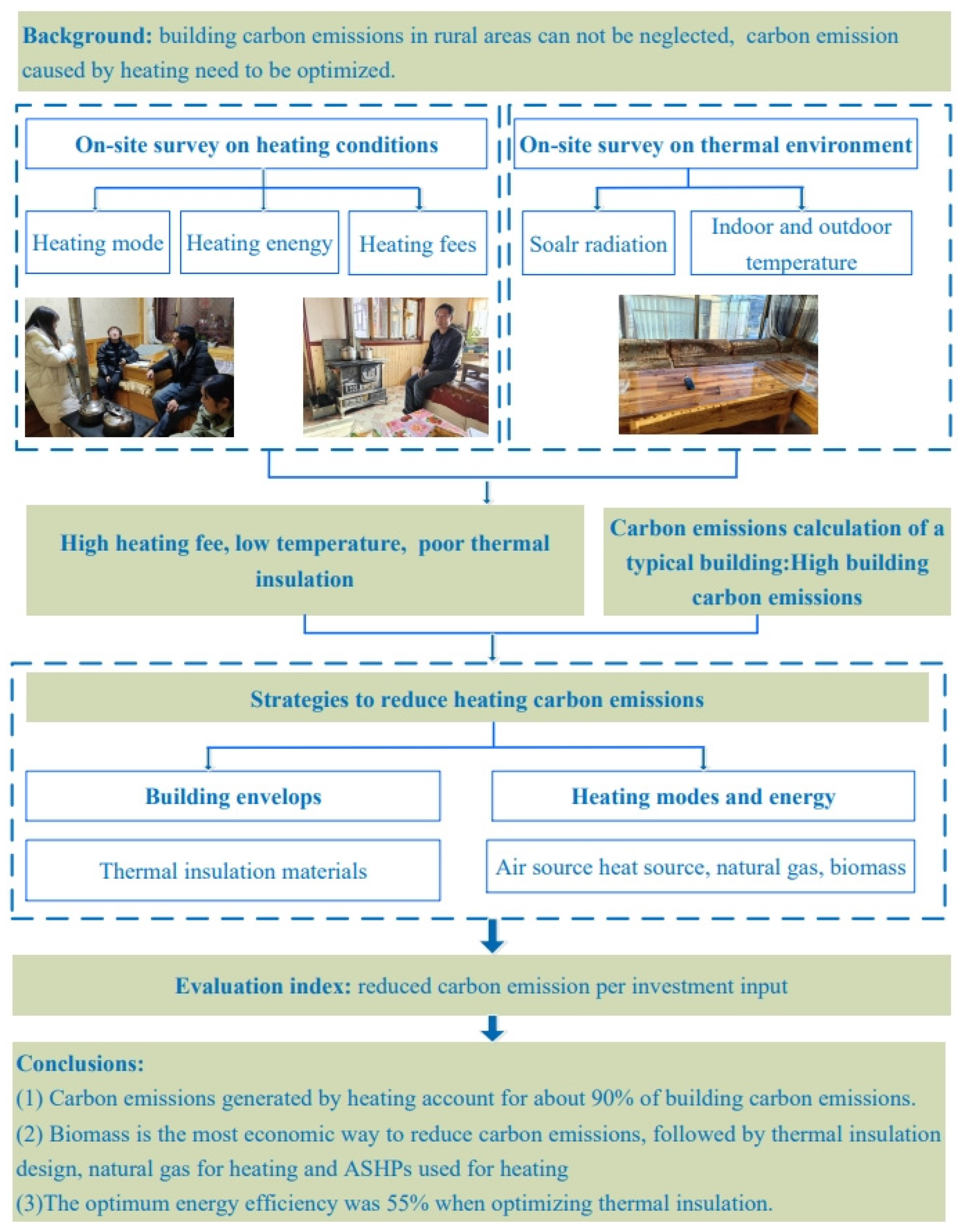
Figure 2.
On-site survey on heating.
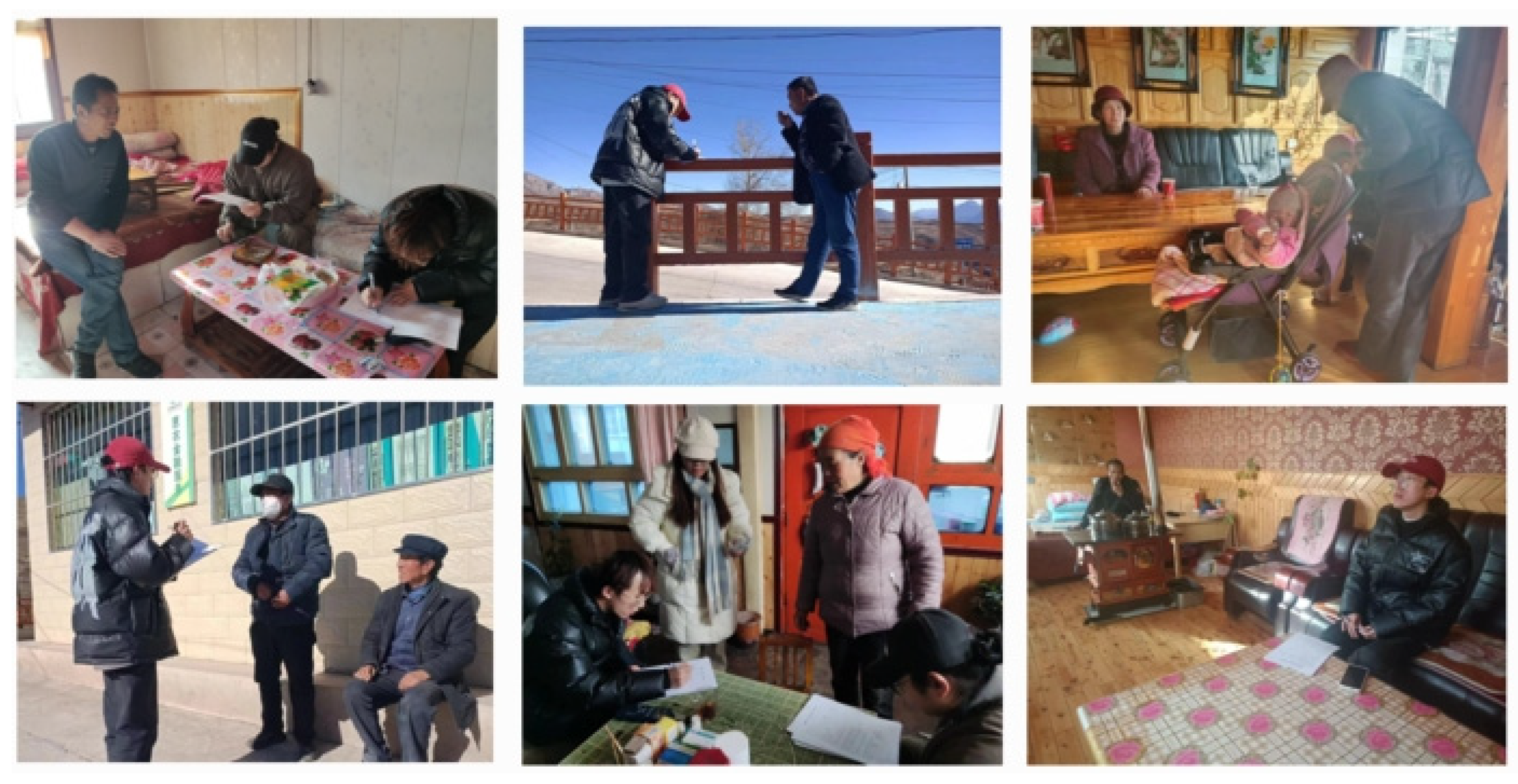
Figure 3.
Building plan.
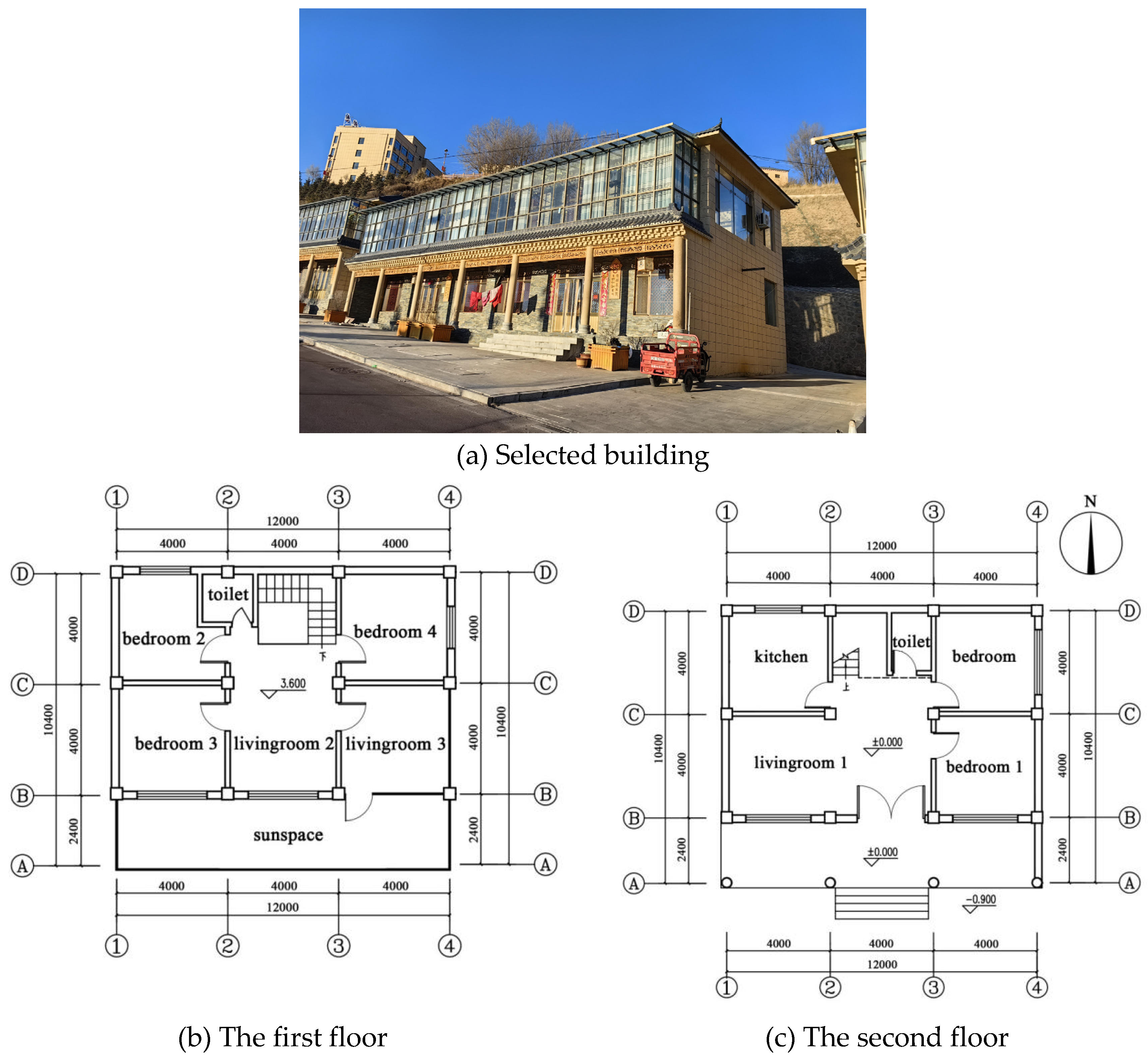
Figure 4.
Thermal environment test layouts.
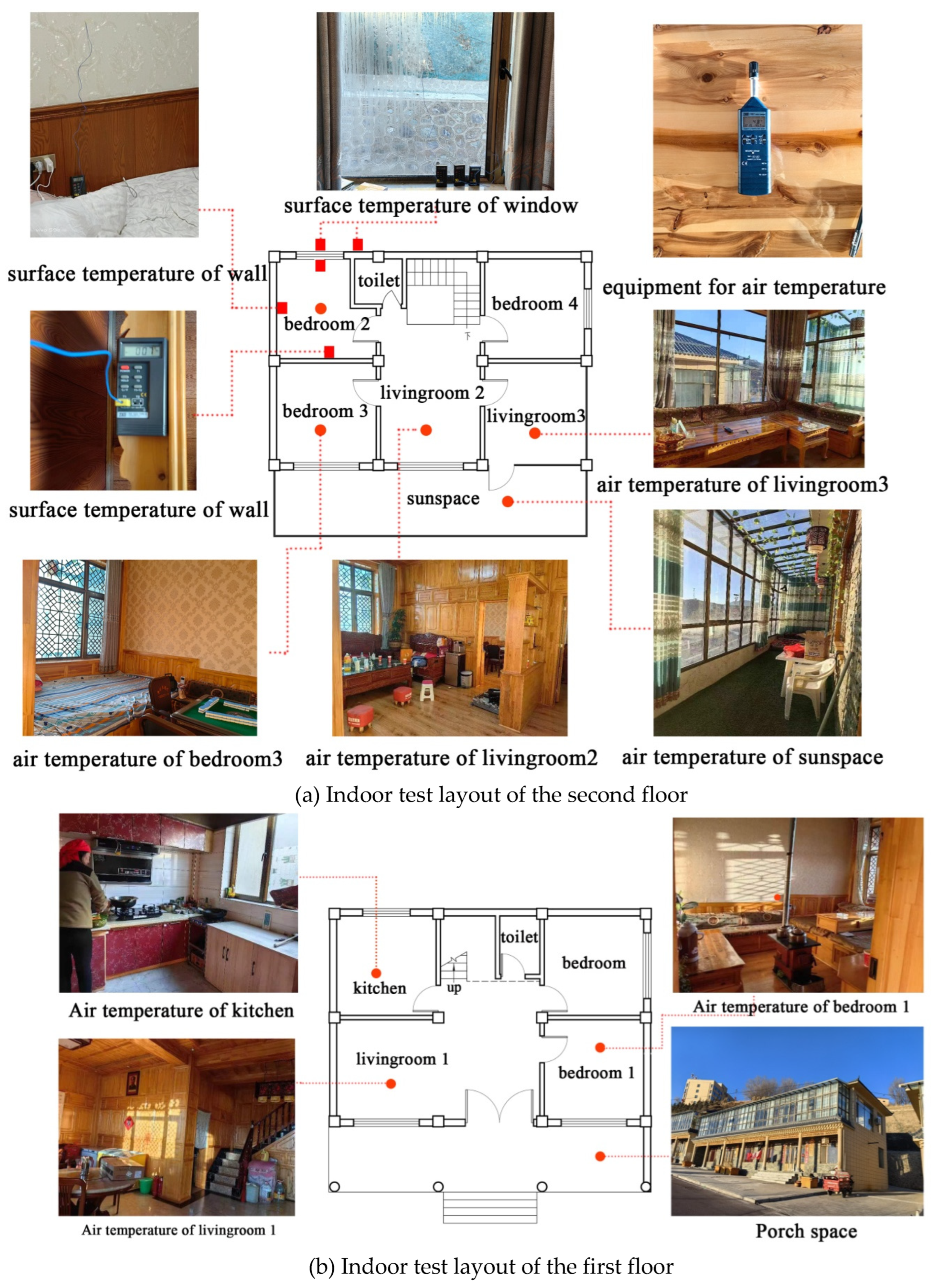
Figure 5.
Heating mode, heating fee and indoor air temperature.
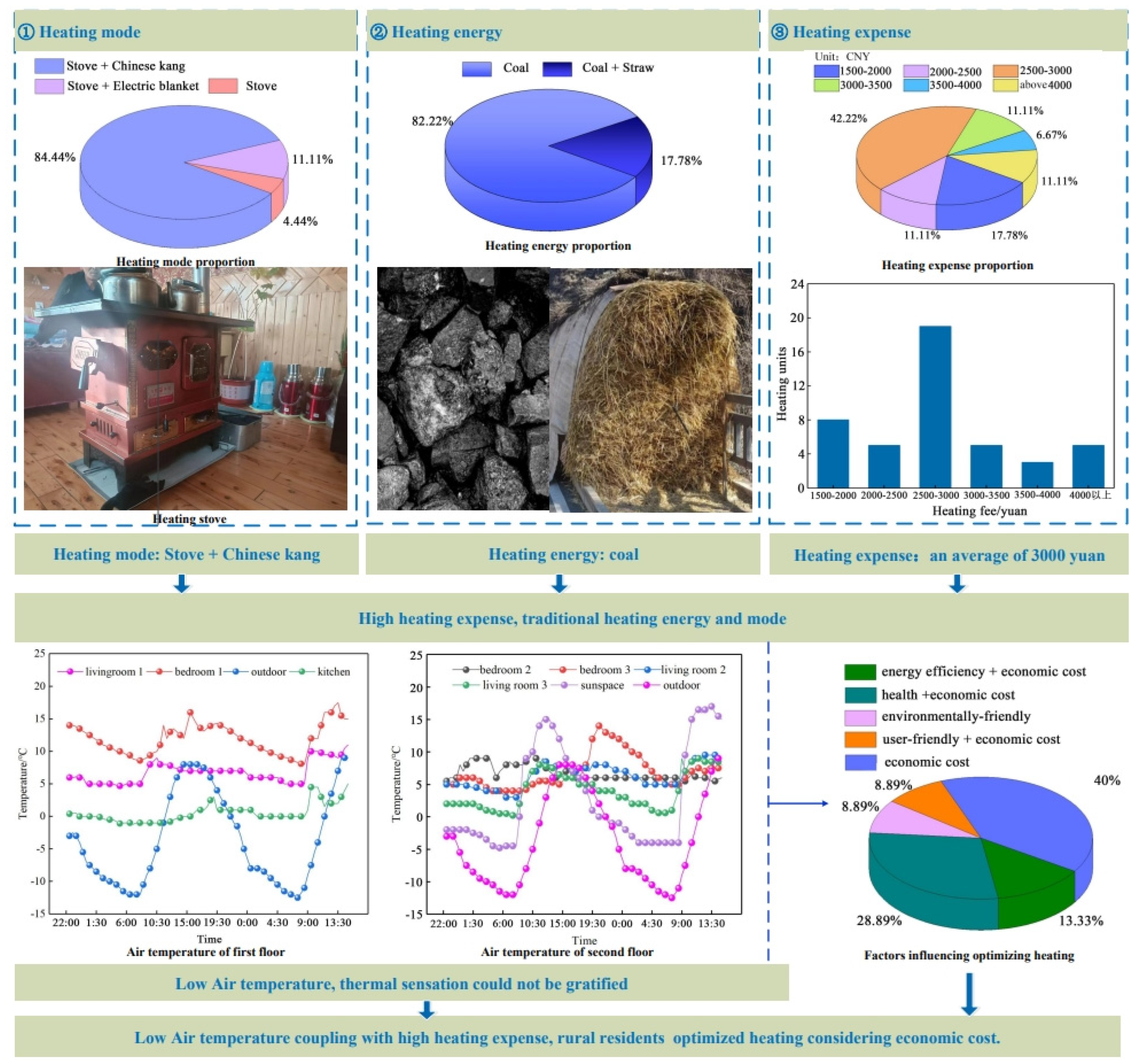
Figure 6.
Payback period of optimized thermal insulation.
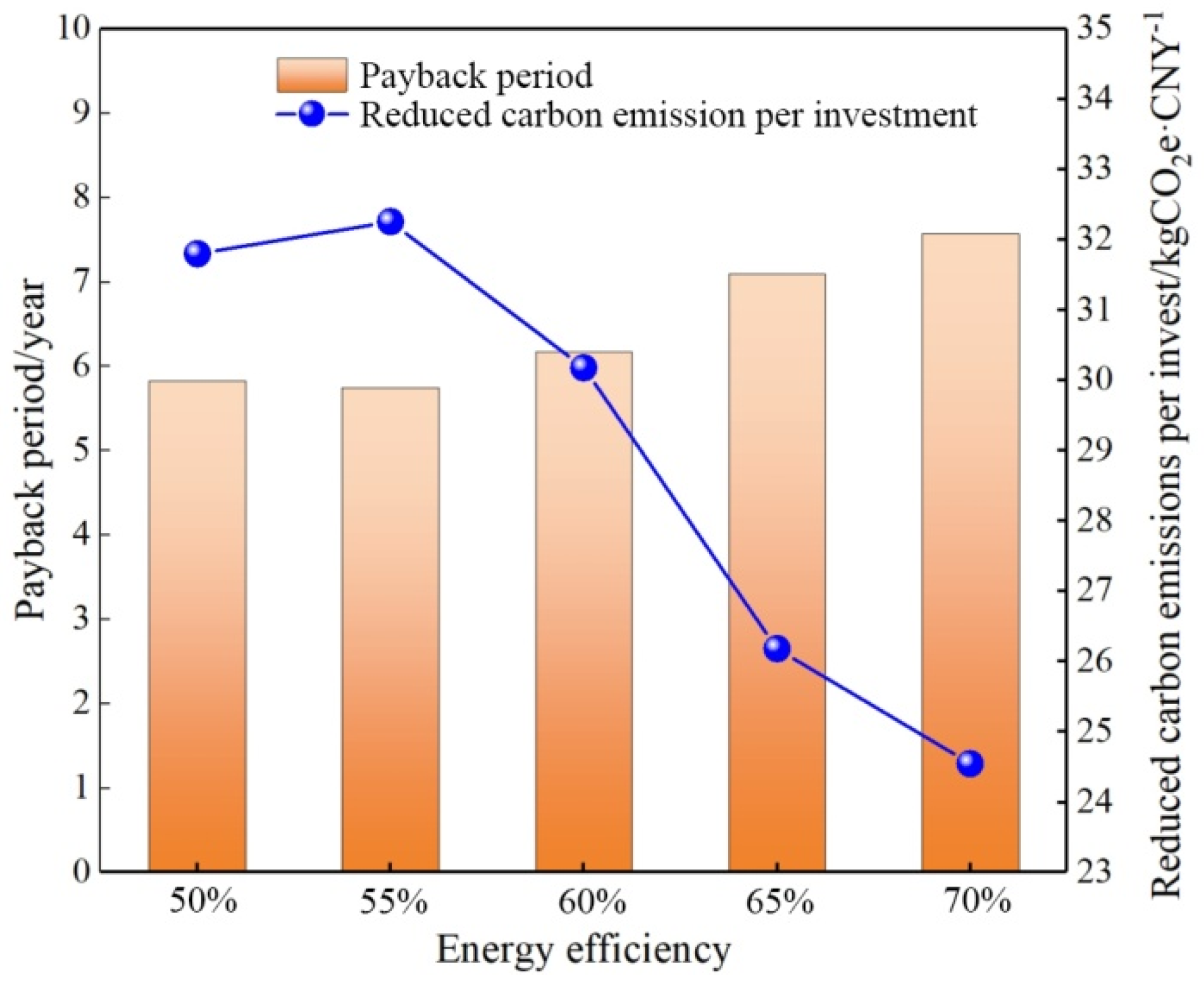
Figure 7.
Annual heating carbon emissions.
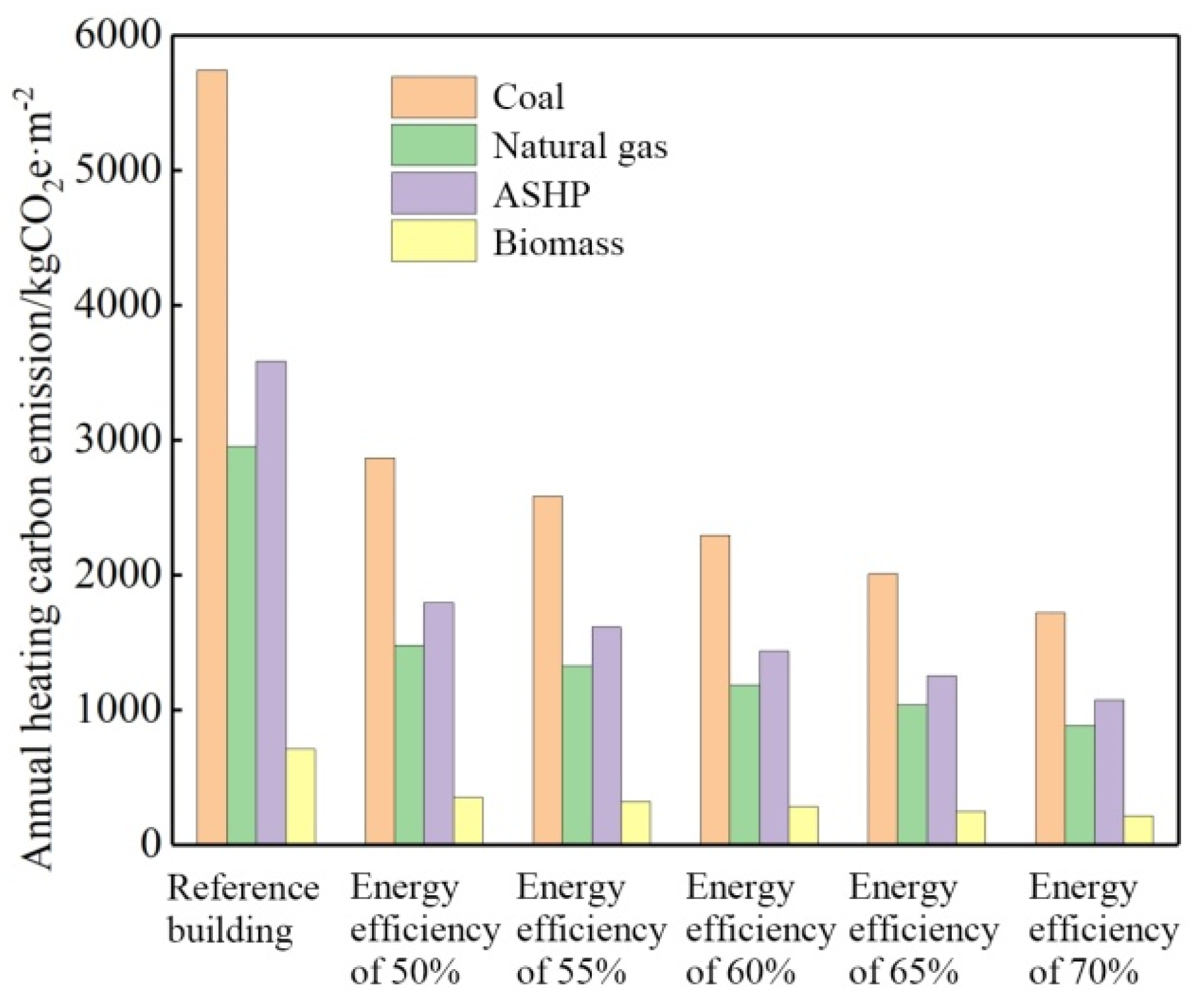
Figure 8.
Annual heating fees.
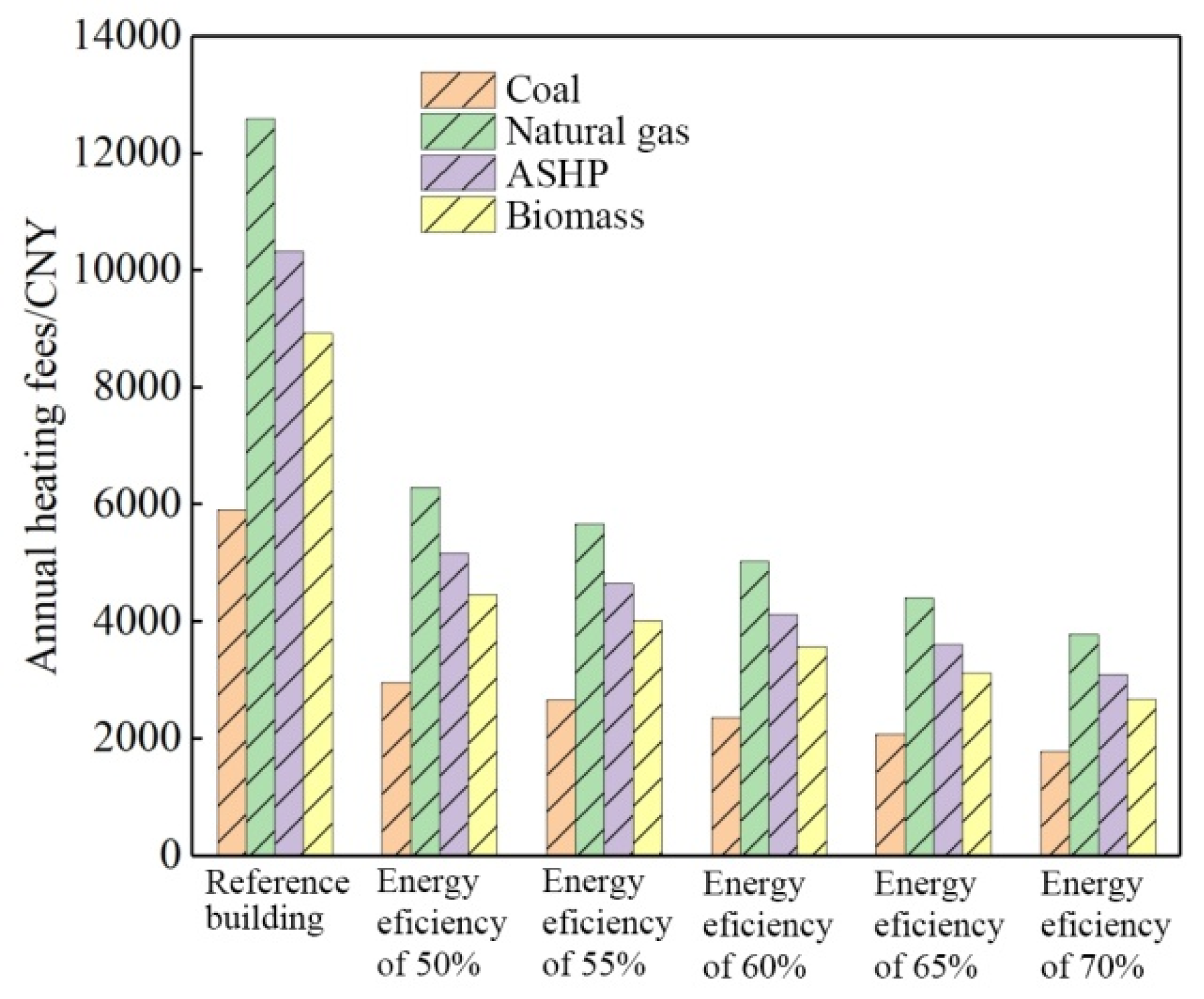
Figure 9.
Reduced carbon emission per investment.
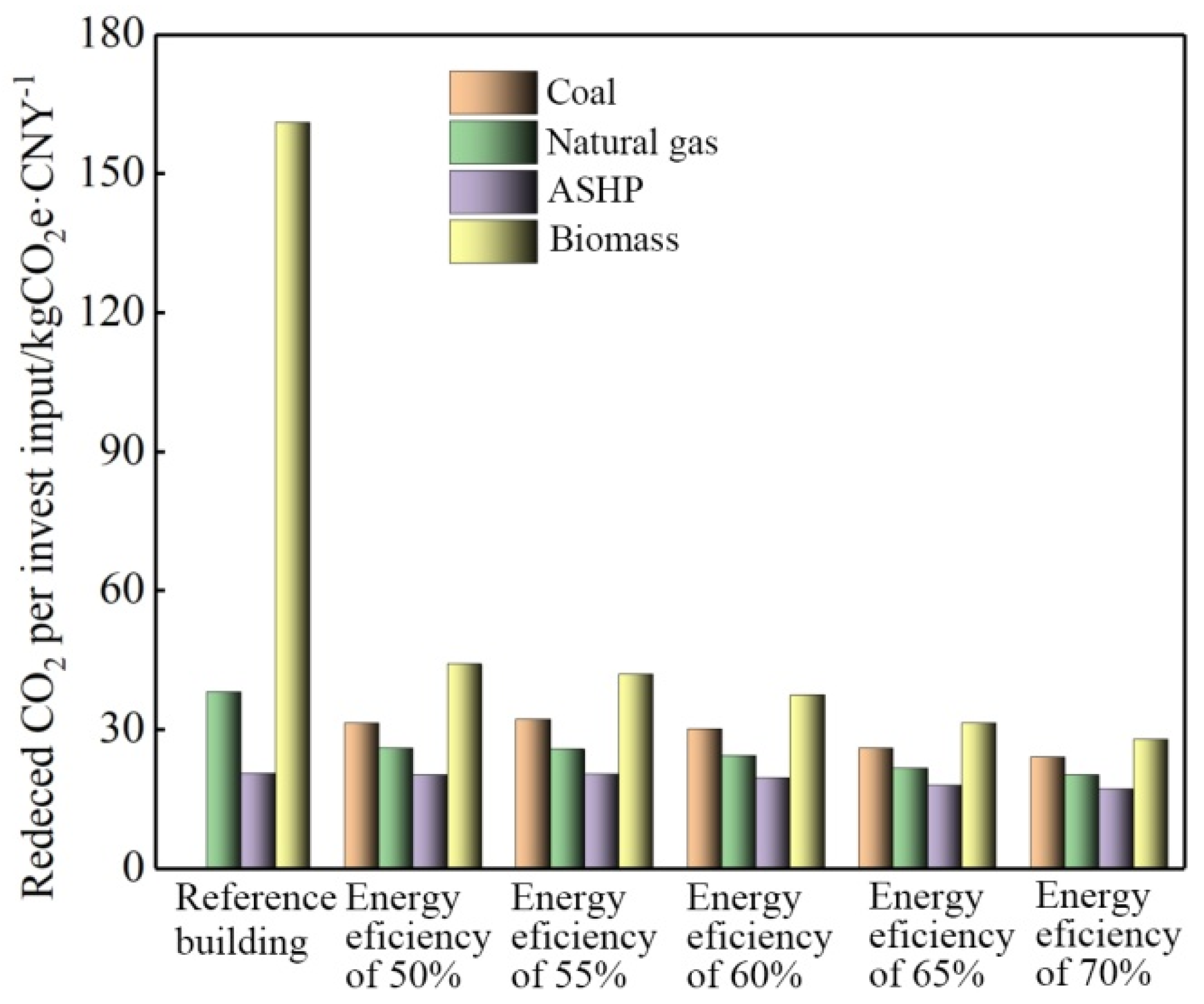

Table 1.
Structures of building envelops.
| Building envelops | Structures | U-values /W·m-2·K-1 |
|---|---|---|
| Wall | 20 mm cement plaster+300 mm fly ash block+20 mm cement plaster+5 mm limestone | 1.68 |
| Roof | Cement tile +waterproof +120 mm reinforced concrete floor+100 mm air +10 mm wooden ceiling | 1.70 |
| Ground | Compacted plain soil+120 mm crushed stone concrete +10mmwooden floor | 0.13(non-surrounding ground) 0.34(surrounding ground) |
| Windows | 6 mm glass+wooden +6 mm glass+wooden frame | 2.70 |
| 6mm glass+ aluminium alloy frame | 4.70 |
Table 2.
Lighting density of main rooms.
| Spaces | Lighting density/W⋅m-2 | Monthly lighting time/h |
|---|---|---|
| Living room | 6 | 165 |
| Bedroom | 6 | 135 |
| Dining room | 6 | 75 |
| Kitchen | 6 | 96 |
Table 3.
The net heat loss of envelops.
| Building envelop | Net heat loss /W | Percent |
|---|---|---|
| Walls | 5599.97 | 46.93% |
| Roof | 2719.17 | 22.79% |
| Ground | 490.68 | 3.66% |
| Windows | 1794.93 | 15.04% |
| Infiltration | 582.04 | 4.88% |
| Door | 490.68 | 4.11% |
| Balcony | 310.42 | 2.59% |
| Sum | 11933.61 | 100% |
Table 4.
Carbon emissions at all stages.
| Various stages | Carbon emissions / kgCO2e/m2 | Percent | |||
|---|---|---|---|---|---|
| Material production+ transportation | Production | 486.94 | 96.86% | 502.72 | 7.36% |
| Transportation | 15.78 | 3.14% | |||
| Construction +demolition |
Construction | 3.59 | 52.63% | 6.82 | 0.11% |
| Demolition | 3.23 | 47.36% | |||
| Operation | Hot water | 552.75 | 8.75% | 6318.11 | 92.53% |
| Heating | 5743.28 | 90.90% | |||
| Lighting | 22.07 | 0.35% | |||
| Sum | 6827.64 | 100% | |||
Table 5.
The structures and heat transfer coefficients of building envelops.
| Energy efficiency | Envelops | Thermal insulation thickness | U-Values/W⋅m-2⋅K-1 |
|---|---|---|---|
| 50% | wall | 30mm | 0.73 |
| roof | 50mm | 0.54 | |
| window | / | 3.00 | |
| 55% | wall | 40mm | 0.61 |
| roof | 60mm | 0.47 | |
| window | / | 3.00 | |
| 60% | wall | 50mm | 0.53 |
| roof | 60mm | 0.47 | |
| window | / | 2.70 | |
| 65% | wall | 60mm | 0.47 |
| roof | 80mm EPS | 0.38 | |
| window | / | 2.40 | |
| 70% | wall | 100mm | 0.32 |
| roof | 100mm | 0.32 | |
| window | / | 2.40 |
Table 6.
Cost analysis of various heating modes.
| Heating energy | Heating efficiency | investment | Carbon emission factor/kgCO2e⋅unit-1 |
| Coal | 0.75 | 700 CNY⋅t-1 | 29307 kg CO2e⋅t-1 |
| Natural gas | 0.91 | 2.4 CNY⋅m-3 | 55.54 tCO2e⋅TJ-1 |
| Biomass | 0.75 | 590 CNY⋅t-1 | 180 kgCO2e⋅t-1 |
| Air source heating pump | 2.5 | 0.5 CNY⋅kWh-1 | 0.66 kgCO2e⋅kWh-1 |
Disclaimer/Publisher’s Note: The statements, opinions and data contained in all publications are solely those of the individual author(s) and contributor(s) and not of MDPI and/or the editor(s). MDPI and/or the editor(s) disclaim responsibility for any injury to people or property resulting from any ideas, methods, instructions or products referred to in the content. |
© 2024 by the authors. Licensee MDPI, Basel, Switzerland. This article is an open access article distributed under the terms and conditions of the Creative Commons Attribution (CC BY) license (http://creativecommons.org/licenses/by/4.0/).
Copyright: This open access article is published under a Creative Commons CC BY 4.0 license, which permit the free download, distribution, and reuse, provided that the author and preprint are cited in any reuse.


