
Submitted:
06 August 2024
Posted:
07 August 2024
You are already at the latest version
Abstract
In this work, the properties of a composition based on synthetic rubber ethylene-propylene ter-polymer and polymers with functional groups of the mixture are studied. Low efficiency of some compositions based on ethylene and propylene copolymer limits their use in the production of tires and rubber products. Therefore, we conducted a study to improve the disadvantages of SREPT-60 using butyl rubber + choro polyisoprene + butadiene-nitrile + butadiene styrene rubber and adding a plasticizer to the composition = α, methacrylate-(bis-diethylene glycol phthalate) -(btegf-9) The data obtained showed that a number of its indicators of rubber based on them were improved. Tear resistance, resistance to repeated stretching increased, adhesion of the composition to metal, chemical resistance increased, the degree of swelling in benzene and gasoline-benzene mixture decreased. Compositions based on the mixture SREPT-60 using butyl rubber + choro polyisoprene + butadiene-nitrile + butadiene styrene rubber and adding a plasticizer to the composition = α, methacrylate-(bis-diethylene glycol phthalate) -(btegf-9) +Dioctyl phthalate: (70:20:10) have high resistance to swelling in an aggressive environment (Benzene, gasoline, alcohol, acid, oil, etc.) mixture.
Keywords:
SREPT-60
; butyl rubber (BR)
; choro polyisoprene (Chip)
; butadiene-nitrile rubber (BNR)
; butadiene-styrene rubber (BSR)
; contains plasticizer
; α
; methacrylate-(bis-diethylene glycol phthalate)-BTFP-9)
; Vulcanization
; modification
; rheology
Introduction
Preparation of BTFR-based nanocomposites.
Several authors [1,2,3,4] used laboratory rubber mixers as the research methodology [5,6,7,8] to prepare nanocomposites. First, BTFR BSK was plasticized in Banbury for 2 minutes to obtain rubber nanocomposites. In this work, a mill was used, which is used to obtain nanoparticles Then, the nanofiller selected in 1, 3, or 5 parts per hour was added to the plasticized BTFR and mixed in the same mixer for 1 minute. This compound was mixed with ZnO as an activator and SC as a lubricant for 0.5 minutes. Then, the stabilizers (TMQ, IPPD, and ozone wax) were combined for another 0.5 minutes [9,10,11,12,13,14] The rubber nanocomposites were
kept in an oven with air circulation for 70 hours at a temperature of 70 ° C to
study the effect of thermal aging [14,15,16,17,18].
Manufacturers of general-purpose
synthetic rubbers have devoted considerable effort to equipping such rubbers
with chemically functional groups along the polymer backbone. The goals have
ranged from improving green strength and tack to creating sites for new forms
of crosslinking, grafting, antioxidant activity, and even pharmacological
properties. The usual route to such functionalisms is to incorporate small
amounts of the monomer carrying the desired group during polymerization.
However, polymerization with different functional groups would be expensive, so
only a cheap reagent must be used to macro modify elastomers with entirely new
physical properties. If we use these polymers outdoors, then the rubber needs
to be protected from sunlight, and most types of these polymers have flammable
properties [5], although additives can reduce both the modification and the
flammability properties [26,27,28,29,30]. used for casings in construction, as connectors in automotive
manufacturing, and household applications, such as shower heads or irons. It is
also found incorporated into toothbrush fibers and false eyelashes and is used
in the keycaps of some high-end computer keyboards [31,32,33,34,35,36]
Yarn can also be made from PBT. It
has a similar natural elongation and can be incorporated into sportswear,
meaning that PBT is at the forefront of materials used in the production of
swimwear in chlorinated waters. In addition, recent studies have shown that
BTFR [37,38,39,40,41,42] is more durable than PET-based fabrics. had superior
characteristics [42,43,44,45,46,47,48].
Method
For the modification of the
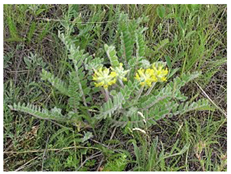
Butadiene terephthalate rubber, we used astragalus for the first time. It looks
like this:
The astragalus grown in the
Nakhchivan region of the Republic of Azerbaijan was collected from the seeds
collected from the upper and middle mountainous areas, mainly around the
villages of Kalaki and Dirnis.
Astragalus (in Azerbaijan it is
called Gavan) is a perennial herb 15-35 cm high, stem 4-20 cm long, elongated
and erect or erect, reddish. Except for the inner side of the crown, all parts
of the plant are covered with whitish or yellowish hairs. The color of the
stems is brown-gray, the leaves are gray-green, and the flowers are yellow. It
is a deciduous shrub, 20 cm high, with dense branches forming a cushion, prickly
leaves, all parts covered with thin, weak hairs. The leaves are 8–12 mm long,
feather-shaped, contiguous to half of the stem, linear-lanceolate. The leaves
are 6-9 pairs, elliptic or oblong-ovate, 10 mm long, with sharp tips. It is
bare above, sparsely or densely hairy below. The flowers form 2-3 short
clusters in the axils of the leaves. Inflorescences are flat sepal-shaped and
up to 13 mm long. The calyx is 10–16 mm long, tubular, thick, short, white
hairy. The teeth are serrated and greenish. Its crown is up to 13 mm long. The
sail is 7-8 mm wide and oblong-elliptical. The boat is shorter than the wing.
Females are elongated, downy hairy, up to 16 mm long, and the stem is bare
columnar. Beans are sessile, oblong, sharp, silky white hairy, single-celled,
manyseeded. It blooms in June-July.
When the composition of
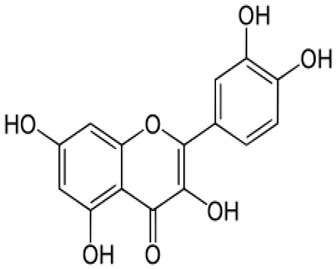
Astragalus used in the research is analyzed, its chemical composition is
Selenium 1.5mg%. There are macro and microelements (calcium, silicon, aluminum,
iron, magnesium, cobalt, zinc, copper, manganese, molybdenum, chromium).
Results and Discussions Results of Experemental Research
Study of Rheological Properties
: The
volume consumption of the mixture and the dependences of the displacement rates
of the binary mixtures on the stress (logo) was carried out in the ITER-4
device at temperatures of 100ºC, 130ºC, 150ºC, and 170ºC
: 100°C, 130°C, 150°C and 170°C
studies were conducted to determine the flow index of the alloy of the obtained
composition, and the results were calculated as follows
1 Cargo
P1=
=16.44 kg sec2
P2=
=29.18
P3=
38.84
P4=
=49.34
==
1
=0.5137*9.806104=5.037342
104 log4.70Pa
2==0.9118*9.806*104=8.9411108 104log4.95Pa
3==1.2137*9.806*104=11.901542*104log5.08Pa
4==1.5418*9.806*104=15.11889*104log5.18Pa
Q= = =
100
1 Cargo
Q1==0.000120 0.1210
Q2==0.000019969 0.19
2 Cargo
Q1==0.00038773 0.387
Q2==0.00072638 0.7263
3 Cargo
Q1==0.00078247 0.7824
Q2==0.0001259964 1.259
4 Cargo
Q1=0.00114763 1.1476
Q2==0.00177711 1.772
130C
1 Cargo
Q1==0.0000237066 0.237
Q2==0.000545345 0.545
2 Cargo
Q1==0.000077906 0.779
Q2==0.00174456 1.744
3 Cargo
Q1==0.00138853 1.3885
Q2==0.003020718 3.0207
4 Cargo Q1==0.00226434 2.264
Q2==0.00453587 4.5358
150C
1 Cargo
Q1=0.00053957 0.5395
Q2==0.00096345 0.9634
2 Cargo
Q1==0.00196534 1.965
Q2==0.00292188 2.9218
3 Cargo
Q1==0.00358095 3.5809
Q2==0.00587983 5.8798
4 Cargo
Q1==0.00509589 5.095
Q2==0.00915897 9.158
170C
1 Cargo
Q1==0.00092419 0.924
Q2==0.000168491 1.6849
2 Cargo
Q1=0.00303354 3.0335
Q2=0.00613218 6.1321
3 Cargo
Q1==0.00512115 5.12115
Q2==0.0100619 10.0619
4 Cargo
Q1==0.007144 7.114
Q22==0.0180861 18.0861
The dependences of displacement rates of binary mixtures on stress (logo) were performed at temperatures of 100ºC, 130ºC, 150ºC and 170ºC:
100º C
=
1
=0.30573248log-0.5146
2==0.5087643-0.2935
2
1==0.98784713-0.00531
2==1.850649680.2673
3
1==1.99355410.2996
2==.3.210099360.5065
4
1==2.92389810.4659
2==4.527660.6559
130
1
1=0.60398980.2189
2==1.3894140.1428
2
1==1.98486620.2977
2==4.4447380.6478
3
1==3.5376560.54878
2=7.6909680.8863
4
1==5.76901910.7611
2==11.553561.0628
150
1
1==1.37470060.1382
2==2.4546490.3899
2
1==5.0072360.6996
2==7.43640.8714
3
1==9.1234390.9602
2==14.9804581.1755
4
1==12.9831591.1134
2==23.3349551.3680
170
1 Cargo
1==2.35462420.3719
2==4.292764330.6327
Cargo 2
1==7.728764330.8881
2==15.6233881.1938
Cargo 3
1==13.0475151.1155
2==25.6354141.4088
Cargo 4
1==18.20127312601
2==46.0792351.6635
As a result of the analysis, it was determined that astragalus is compatible with butadiene terephthalate and can form a composition with it in different proportions. However, it was determined that the best result is obtained when the astragalus component in the composition is 10 parts by mass. Considering all this, we aim to improve the physical and mechanical properties of polybutadiene terephthalate. We took the amount of astragalius as 10 parts by mass. The indicators obtained as a result of the report are shown in Figure 1, Figure 2, Figure 3, Figure 4, Figure 5, Figure 6 and Figure 7
2. content compatibility
Rubber Mixture Based on BTFR and Astragalus
Based on BTFR and astragalus, using the flow index of mixtures, we adopt the optimal recipe shown in Table 1
Based on this recipe, after preparing a rubber mixture for 12 minutes in a laboratory roller at a temperature of 90 oC and vulcanizing it in a vulcanization press at a temperature of 155oC for 25 minutes, the physical and mechanical properties of the vulcanizate obtained were determined and the results are given in Table 2
The presence of functional groups formed by using astragals in the polymer can be clearly seen in Figure 9, which is confirmed by IKS-analysis. so it can be safely said that some of the properties of this polymer can be eliminated by modifying it with astragals.
In order to satisfy the chemical stability of the obtained polymer astragalus composition vulcanizate in aggressive environments, we determined the physical and mechanical properties of the vulcanizates by vulcanizing the rubber mixture we prepared in the laboratory at a temperature of 155°C for 15 minutes in accordance with the recipes we accepted (Table 3).
Results
1. By modifying polybutadiene terephthalate with astragalus, it was determined how the modification process affects its mechanical properties.
3. The ozone resistance of the received resins showed that they are chemically very stable. Taking this into account, the offered rubbers can be used in the preparation of products that are resistant to ozone, oil, and gasoline and can work in aggressive environments.
4. As a result of scientific research, it has been proven that resins based on polybutadiene terephthalate and astragalus nanomaterial can be a special-purpose product. These rubbers can work in a wide range of temperatures and different climates. Ours is a Polybutylene Terephthalate (PBT) based rubber that can be used for general-purpose optical cable.
5. The proposed composition allows to significantly increase the strength of the connection of rubber with metals (steel-3, brass), to increase the resistance to gasoline and to improve the tensile strength index.
References
- Ganbarov D.SH., İbrahimov A.Sh., Nabiyeva F. Geograpical areal types of Astracantha and Astragalus species spread in Nakhchivan Autonomus Republic // Kafkas Üniversitesi Fen bilimleri Enstitüsü Dergisi, 2011, pp.58-64.
- Ganbarov D.SH. Floristic analysis of the species of Astracantha and Astragalus spreadin the area of the Nakhchivan Autonomous Republic // European Academic Resears , 2013, İmpact Factor 0,485: p. 2586-2593.
- Ganbarov D.SH. Spreading of Astracantha and Astragalus species on the highland zones of the Nakhchivan autonomous republic // European Academic Research, 2014, İmpact Factor 3,1: p.-4153-4159 /.
- Ganbarov D.SH. Rear Astragalus species that spread in the NakhchivanAutonomous Republic territory // International Multidisciplinary Research Journal. Indian Streams Research Journal. 2014. P.1-4.
- Ganbarov D.SH. Astragalus Species and their Bioecological Features Spread in the Arajig Mountain of Julfa Region // European Academic Research, 2014, İmpact Factor 3,1: p. 3258-3265.
- Ganbarov D.SH. Systematic analysis of Astracantha species spread in the flora of Nakhchivan Autonomus Republic // International Journal of Scientific and Research Publications, 2014. p.1-2 17. 17.Ganbarov D.SH., Aliyeva S.E., Spreading of Astracantha and Astragalus species in the mountainous-cserophit plant zones of the Nakhchivan Autonomus Republic // e-Library Science Research Journal İmpact Factor 0,109: 2014. p.1-3.
- Ganbarov D.SH. Ecological groups of Astracantha and Astragalus species of Nakhchivan Autonomus Republic // European Academic Research, 2014, İmpact Factor 3,1: p.-1933-1937.
- Ganbarov D.SH. Spreading of Astracantha and Astragalus species of wild vegetation in the Nakhchivan Autonomus Republic flora // International Multidisciplinary e-Journal 2014, Scientific Journal İmpact Factor 3,5: ISRA Journal İmpact Factor 1,347, Universal İmpact Factor 1,0444 p.-50-55.
- Ganbarov D.SH., İbrahimov A.Sh. Astragalus dasyantus L. (Fabaceae) New species to the flora of Azerbaijan // International Journal of Multidisciplinary Research and Development 2015. p. 426-427.
- Seyfi, K.S.Modification of the used up polymeric materials and investigation thof e properties of the materials obtained Journal of Medical Pharmaceutical and Allied SciencesЭта ссылка oтключена., 2022, 11(2), pp 4697–4702.
- Seyfi, K.S.Development and implementation in industry technology of obtaining composite materials and products based on polyvinyl chloride Journal of Advanced Research in Dynamical and Control Systems, 2020, 12(2 Special Issue), pp 359–370.
- Seyfi, K.S.Paint and varnish materials based on epoxy novolac oligomers .Journal of Advanced Research in Dynamical and Control Systems, 2020, 12(Special Issue 2), pp 351–358.
- Maharamov TEYMUR. PHYSICO-MECHANICAL PROPERTIES OF PETROLEUM ROAD BITUMEN MODIFIED ON THE BASIS OF STYRENE-BUTADIENE BUTYL RUBBE XII international scientific conference. Philadelphia. USA. 21-22.03.2024.Pp34-40.
- Kerem Shixaliyev. Discontinued High-density and Low-density polyethylene purchase of environmentally friendly road surfaces, Journal of Harbin Engineering University ISSN: 1006-7043 Vol 45 No. 1 January 2024Page № 1: 422 – 430.
- Kerem Shixaliyev. DETERMINATION OF RUBBER-CORD CONNECTION ON THE BASIS OF LATEX SYNTHESIZED ON THE BASIS OF ETHYLENE-PROPYLENE RUBBER, China Petroleum Processing and Petrochemical Technology, Catalyst Research Volume 24, Issue 1, March 2024 Pp. 117-126 ISSN: 1008-6234.
- Kerem Shixaliyev. PROPERTIES OF THE COMPOSITION BASED ON MODIFIED POLYETHYLENES, Eur. Chem. Bull. ISSN 2063-5346, 2023; Volume -12, Special Issue-5 : Page: 242-258.
- Timofeev A.G. The effect of complex modification by processing products of secondary rubber materials and polymer waste (PET) on the properties of road bitumen // Vestnik TSTU. - Tver, -2017, - issue 4.-C.7-11.
- Zolotarev V.A. About quality indicators of bitumen modified with polymers - Kiiv, -2006 r - (Zbirnik of scientific articles); - sleep. 5; -C.200-231.
- Amirov Fariz Ali., Shixaliyev Kerem Sefi., Obtaning and application of rubber mixtures based on isopeene (SRI-3) and functional grup polimers. Austrian Journal of Technical and Natural Sciences Vienna. 2017.-№3-4.- P.274.
- Shikhaliev K.S. Modification of petroleum bitumen with polymer waste. Exact science and technology journal Kemerovo.-2017., - 46 p.
- Shykhaliev K. S. Alieva Z. N., Modification of petroleum bitumen with plastic waste. Problem of modern science and education 2017. 58p.
- Shixaliyev K.S. Exelolted thermoplastics based compositions. European science review. Scientific journal- No. 5-6, - 2017. -Vienna, -C. 89-94.
- Shykhaliev Karam Sefi. Compositions and products based on polyvinyl chloride. Sat. Articles of the X International Scientific and Practical Competition. Penza. -25 .07.2017.2017.-C.19-25.
- Shykhaliev Karam Sefi., Amirov Fariz Ali., Studies of the process of obtaining coated for various purposes on the basis of oil bitumen. Innovative development of science and education. (Monograph) .MTSS, science and education, Penza, 2017.-318 p.
- Amirov Fariz Ali., Shixaliyev Kerem Sefi., Obtaning and application of rubber mixtures based on isopeene (SRI-3) and functional grup polimers. Austrian Journal of Technical and Natural Sciences.-2017. - No. 3-4 Vienna - P.27-31.
- Kisina A.M. Polymer bituminous roofing and waterproofing material L .: Stroy published .1983. - 133 p.
- Zhenjun Zhang, Lina Zhang, Yang Li, Preparation and characterization of anionically polymerized butadiene-isoprene copolymer/clay nanocomposites, Journal of Applied Polymer Science, 10.1002/app.24400, 102, 2, (1167-1172), (2006). [CrossRef]
- Makoto Kato, Azusa Tsukigase, Hiromitsu Tanaka, Arimitsu Usuki, Isamu Inai, Preparation and properties of isobutylene–isoprene rubber–clay nanocomposites, Journal of Polymer Science Part A: Polymer Chemistry, 10.1002/pola.21233, 44, 3, (1182-1188), (2005). [CrossRef]
- Mroczkowska-Szerszeń M., Orzechowski M. Infrared Spectroscopy Methods in Reservoir Rocks Analysis—Semiquantitative Approach for Carbonate Rocks. Nafta-Gaz. 2018; 74:802–812. [CrossRef]
- Jarrahian K., Seiedi O., Sheykhan M., Sefti M.V., Ayatollahi S. Wettability Alteration of Carbonate Rocks by Surfactants: A Mechanistic Study. Colloids Surf. A Physicochem. Eng. Asp. 2012; 410:1–10. [CrossRef]
- Sönmez M., Juganaru M., Ficai A., Ficai D., Oprea O., Gurau D., Alexandrescu L., Stelescu M.D., Georgescu M., Nituica M., et al. Dolomite Surface Modification with Titanium and Silicon Precursors and Its Morphostructural and Thermal Characterisation; Proceedings of the 8th International Conference on Advanced Materials and Systems 2020; Bucharest, Romania. 1–3 October 2020;
- Shahraki B.K., Mehrabi B., Dabiri R. Thermal Behavior of Zefreh Dolomite Mine (Central Iran) J. Min. Metall. Sect. B Metall. 2009;45:35–44. [CrossRef]
- Gunasekaran S., Anbalagan G., Pandi S. Raman and Infrared Spectra of Carbonates of Calcite Structure. J. Raman Spectrosc. 2006;37:892–899. [CrossRef]
- Ji J., Ge Y., Balsam W., Damuth J.E., Chen J. Rapid Identification of Dolomite Using a Fourier Transform Infrared Spectrophotometer (FTIR): A Fast Method for Identifying Heinrich Events in IODP Site U1308. Mar. Geol. 2009;258:60–68. [CrossRef]
- Chen Y., Zhang X., Wang B., Lv M., Zhu Y., Gao J. Fabrication and Characterization of Novel Shape-Stabilized Stearic Acid Composite Phase Change Materials with Tannic-Acid-Templated Mesoporous Silica Nanoparticles for Thermal Energy Storage. RSC Adv. 2017;7:15625–15631. [CrossRef]
- Syed Bakar S.S., Zakaria N.S., Wahab J.A., Salleh M.A.A.M. Batu Reput Filled Recycled Polypropylene Eco-Polymer Composites. Bdg. Indones. Adv. Environ. Biol. 2013;7:3596–3600.
- Cepuritis R., Wigum B.J., Garboczi E.J., Mørtsell E., Jacobsen S. Filler from crushed aggregate for concrete: Pore structure, specific surface, particle shape and size distribution. Cem. Concr. Compos. 2014; 54:2–16. [CrossRef]
- Ganbarov D.SH. Ecological groups of Astracantha and Astragalus species of Nakhchivan Autonomous Republic // European Academic Research, 2014, Impact Factor 3.1: p.-1933-1937.
- Ganbarov D.SH. Spreading of Astracantha and Astragalus species of wild vegetation in the Nakhchivan Autonomous Republic flora // International Multidisciplinary e-Journal 2014, Scientific Journal Impact Factor 3.5: ISRA Journal Impact Factor 1.347, Universal Impact Factor 1.0444 p.-50-55.
- Ganbarov D.Sh. Bioecological features of species of the genus 35 Astragantha podlech in the Nakhchivan Autonomous Republic of Azerbaijan // Herald of the Altai State Agrarian University, Barnaul 2014. p.64-67.
- D.S. Qanbarov Distribution of Astracantha and Astragalus species in semi-desert vegetation in the territory of Nakhchivan Autonomous Republic // Nakhchivan State University Nakhchivan, 2014, No. 8, pp. 24-27.
- D.S. Qanbarov Distribution of Astragalus species in the middle mountainous zone in Nakhchivan Autonomous Republic // Nakhchivan State University Nakhchivan, 2014 #4, p. 57-61.
- Ganbarov D.SH., Ibrahimov A.Sh. Astragalus dasyantus L. (Fabaceae) New species to the flora of Azerbaijan // International Journal of Multidisciplinary Research and Development 2015. p. 426-427.
- Ganbarov D.SH., Ibrahimov A.Sh., New species and their bioecological features of Astragalus spread in the area of Nakhchivan Autonomous Republic // International Journal of Multidisciplinary Research and Development 2015. p. 696-697.
- Ganbarov D.SH. Spreading of Astracantha and Astragalus species in Nakhchivan AR subalpine and Alpine flora // European Academic Research, 2015, p. 15375-15379.
- Ganbarov D.SH., Gasumov H.Z. Useful features and usage methods of the herbs included in the Astragalus species // European Academic Research, 2015, p.-14306-14309.
- Ganbarov D.SH., Evaluation and productivity of the populations of Astracantha microcephala species // International Journal of Multidisciplinary Research and Development 2015. p. 104-107.
- Ganbarov D.Ş. Distribution of Astracantha and Astragalus species in the flora of Nakhchivan Autonomous Republic by altitude zones, phytocenological characteristics and significance // Nakhchivan State University, Gayret-2015 No. 4, pp. 44-53.
- Ganbarov D.S. Dye properties of some species belonging to the genera Astracantha and Astragalus distributed in the territory of Nakhchivan Autonomous Republic // Actual problems of modern biology and chemistry. Ganja State University, 2015, p. 32-36.
- Vagizova, R.R., Effect of the composition of rubbers based on radiation-induced butyl rubber reclaim on the properties / R.R. Vagizova, Yu.N. Khakimullin, P.A. Stepanov // Collection of scientific papers of young scientists and specialists Cheboksary, Chuvashia University - 2006 - pp. 185-190.
- Vagizova, R.R., Possibilities of using radiation-induced butyl rubber reclaim in roofing and waterproofing materials / R.R. Vagizova, Yu.N. Khakimullin, A. Stepanov // Construction materials - 2007 - No. 6 - pp. 2-4.
- Vagizova, R.R., Influence of the nature of cross-linking on radiation destruction of butyl rubber vulcanizates // Proceedings of the XIII International Conference of Students, Postgraduates and Young Scientists “Lomonosov” T IV M Publishing House of Moscow State University -2006 -pp406-407.
- Kharlov V.A., Radiation devulcanizate R-5 as a full-fledged substitute for butyl rubber in compositions / V. A. Kharlov, V. Yu. Saburov, R. R. Vagiyuva, P. A. Stepanov, Yu. N. Khakimullin // Proceedings of the XI All-Russian scientific and practical conference “Rubber industry raw materials, materials, technologies”, Moscow -2005 - pp. 213.
- Vagizova, R. R., Radiation destruction of rubbers based on radiation reclaimed butyl rubber / R. R. Vagizova, P. A. Stepanov, Yu. N. Khakimullin // Proceedings of the III All-Russian scientific conference “Physicochemistry of polymer processing processes”, - Ivanovo, IHTU - 2006 - pp. 92.
- Vagizova, R. R., Features of obtaining radiation reclaimed butyl rubber under γ-irradiation and under the action of accelerated electrons / R. R. Vagizova, Yu. N. Khakimullin // Abstracts of the IV All-Russian Karginsky Conference “Polymer Science in the 21st Century” Moscow - 2007.pp234-339.
- Harmful Substances in Industry. T. Z. Ed. by N. V. Lazarev and I. D. Gadaskina. - L.: Chemistry, 1977, pp. 303-307.
- Polymer Composite Materials: Structure, Properties, Technology: Textbook // M. L. Kerber et al.; Ed. by A. A. Berlin. St. Petersburg: Profession,2008. 560 .P.
- Jafarov V.D., Babaeva G.R., Veliyev I.V. Creation of highly filled compositions based on LDPE, kaolin and polymer dressing // Bulletin of the Azerbaijan Engineering Academy, 2013. Vol. 5. No. 2. pp. 83-87.
- Jafarov V.D. Study of the influence of fillers on the supramolecular structure and properties of polyethylene composites. // Processes of petrochemistry and oil refining, 2005. No. 2. pp. 63-81.
- Babaeva G.R., Bektashi S.A., Alkhazov T.I. and others. Influence of particle dispersion on the strength characteristics of highly filled polymer composites based on low-density polyethylene. / Collection of materials of the International scientific and practical conference dedicated to the 1150th anniversary of the Persian-Tajik scientist-encyclopedist, physician, alchemist and philosopher Abu Bakr Muhammad ibn Zakariya Razi, Dushanbe, May 27-28, 2015. pp.148-149.
- Andruz J., Brimblecombe P., Gickels T., Liss P. Introduction to Environmental Chemistry (translated from English) Moscow, Mir, 1999, 271 P.
- Man and His Environment. Reader. Edited by G. V. Lisichkin and N. N. Chernov. Moscow: Mir, 2003. 460 P.
- Shixaliyev K., Maharramov T., Alizade T., Mustafayev A. PHYSICO-MECHANICAL PROPERTIES OF PETROLEUM ROAD BITUMEN MODIFIED ON THE BASIS OF STYRENE-BUTADIENE BUTYL RUBBE, Journal “WORLD OF CONFERENCES” (Philadelphia, USA 2024), Page: 34-39.
Figure 1.
Dependence of volume consumption of BTFR and BTFR + astragalus binary mixtures at 100º C on the amount of astragalus in the mixture.
Figure 1.
Dependence of volume consumption of BTFR and BTFR + astragalus binary mixtures at 100º C on the amount of astragalus in the mixture.
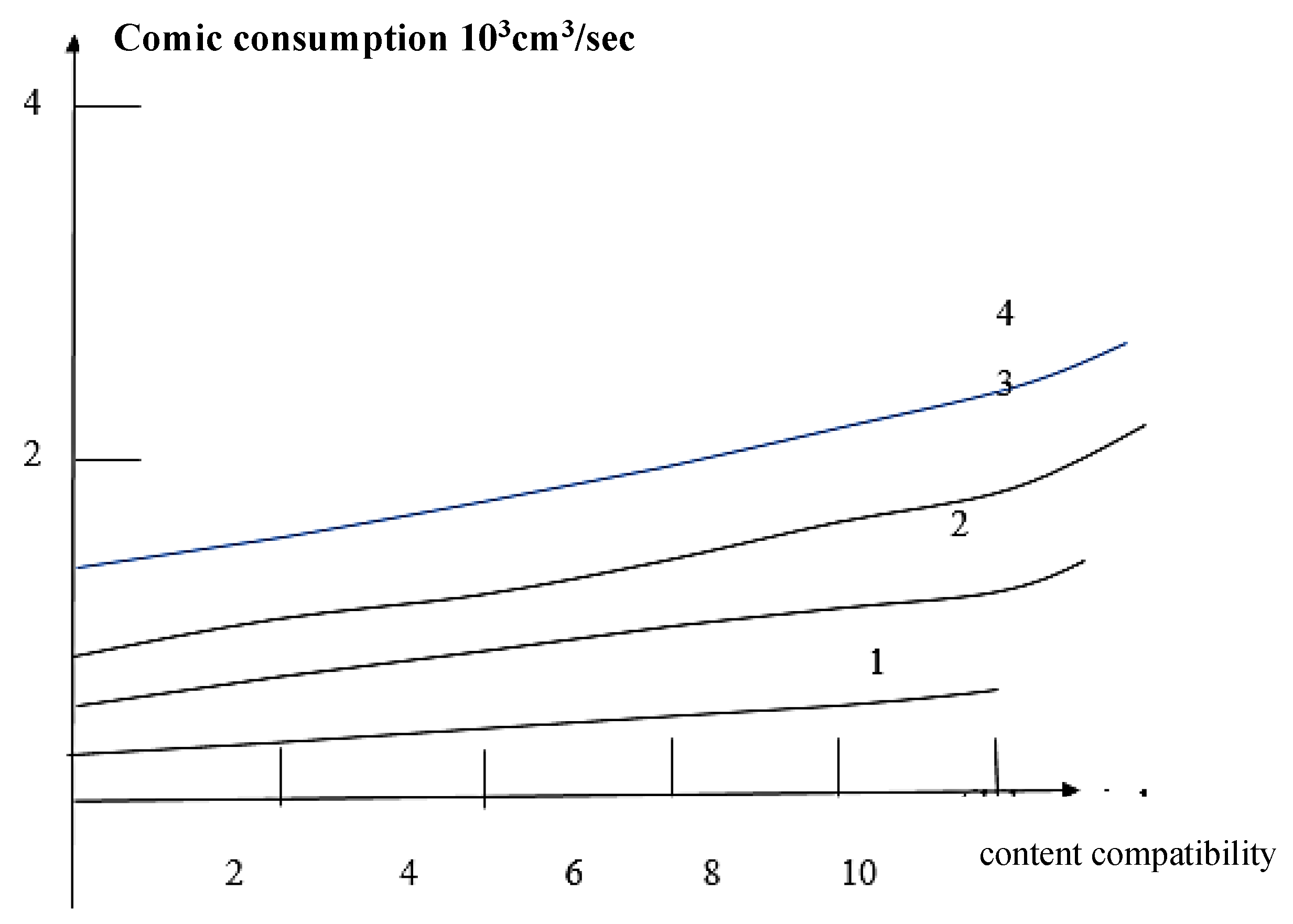
Figure 2.
Dependence of the volume consumption of BTFR and BTFR + astragalus binary mixtures at a temperature of 130º C on the amount of astragalus in the mixture.
Figure 2.
Dependence of the volume consumption of BTFR and BTFR + astragalus binary mixtures at a temperature of 130º C on the amount of astragalus in the mixture.
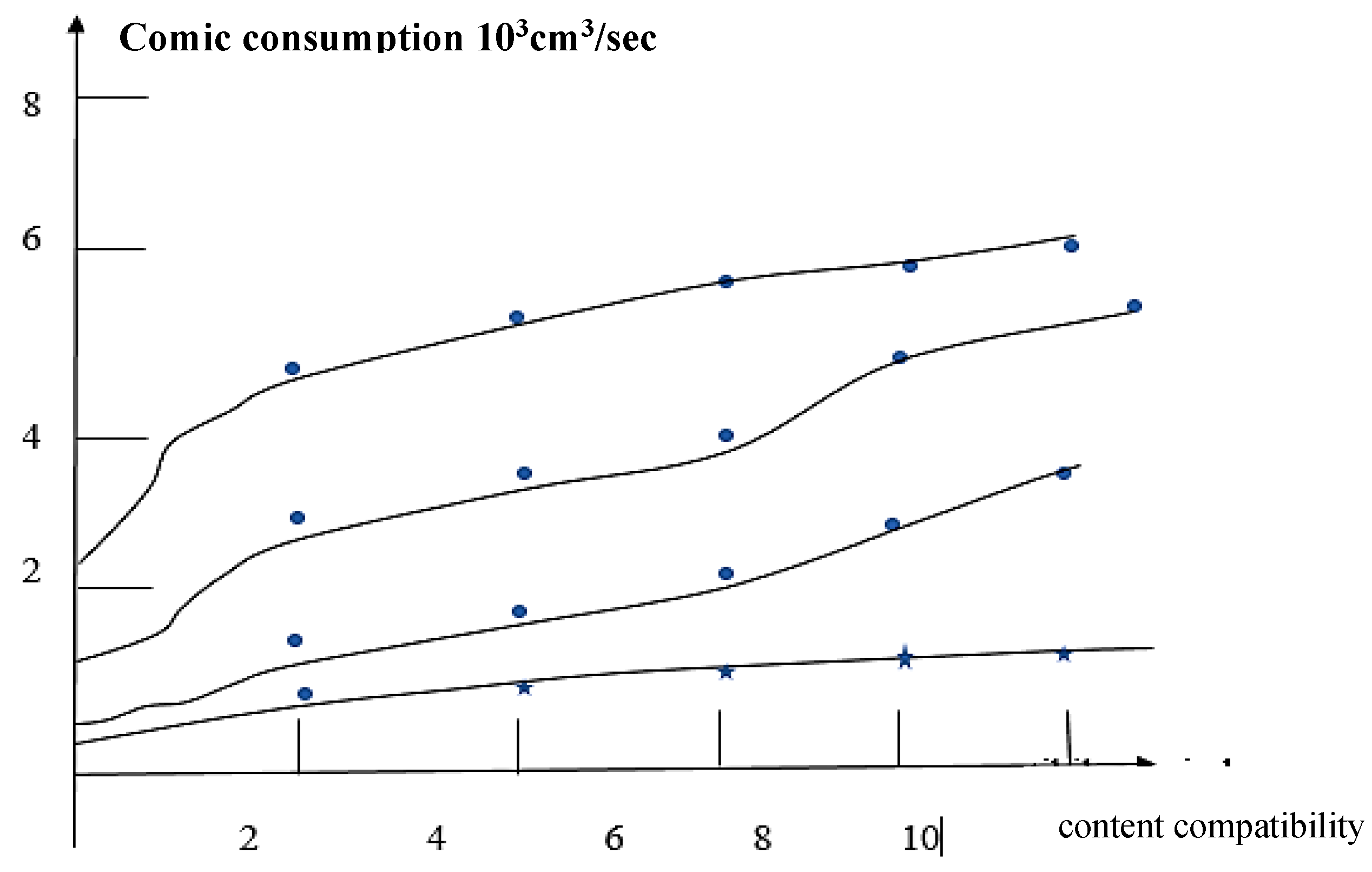
Figure 3.
Stress (logo) dependences of displacement rates of BTFR and BTFR +astragals binary mixtures at 100º C temperature.
Figure 3.
Stress (logo) dependences of displacement rates of BTFR and BTFR +astragals binary mixtures at 100º C temperature.
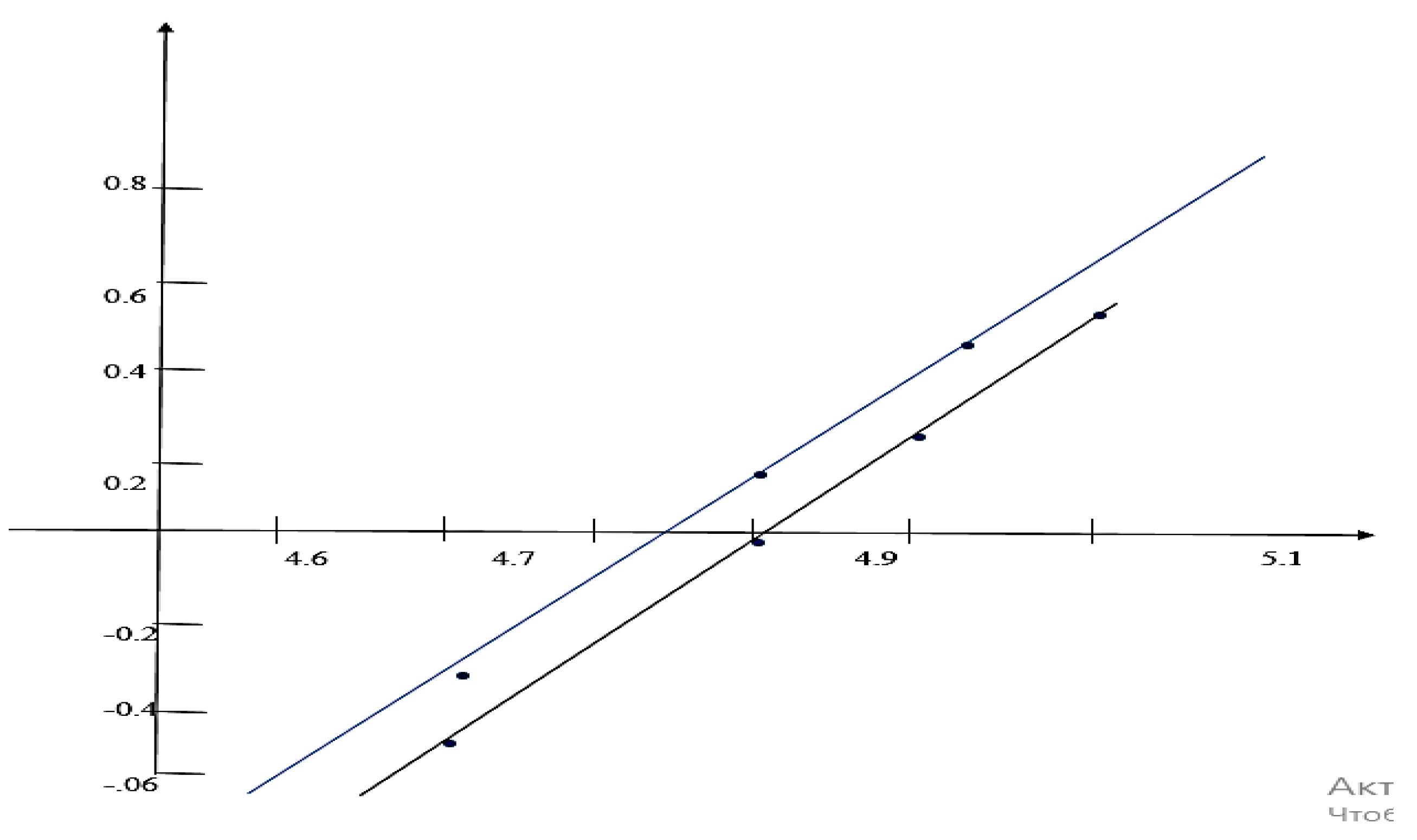
Figure 4.
Stress (logo) dependences of displacement rates of BTFR and BTFR +astragals binary mixtures at 130º C temperature.
Figure 4.
Stress (logo) dependences of displacement rates of BTFR and BTFR +astragals binary mixtures at 130º C temperature.
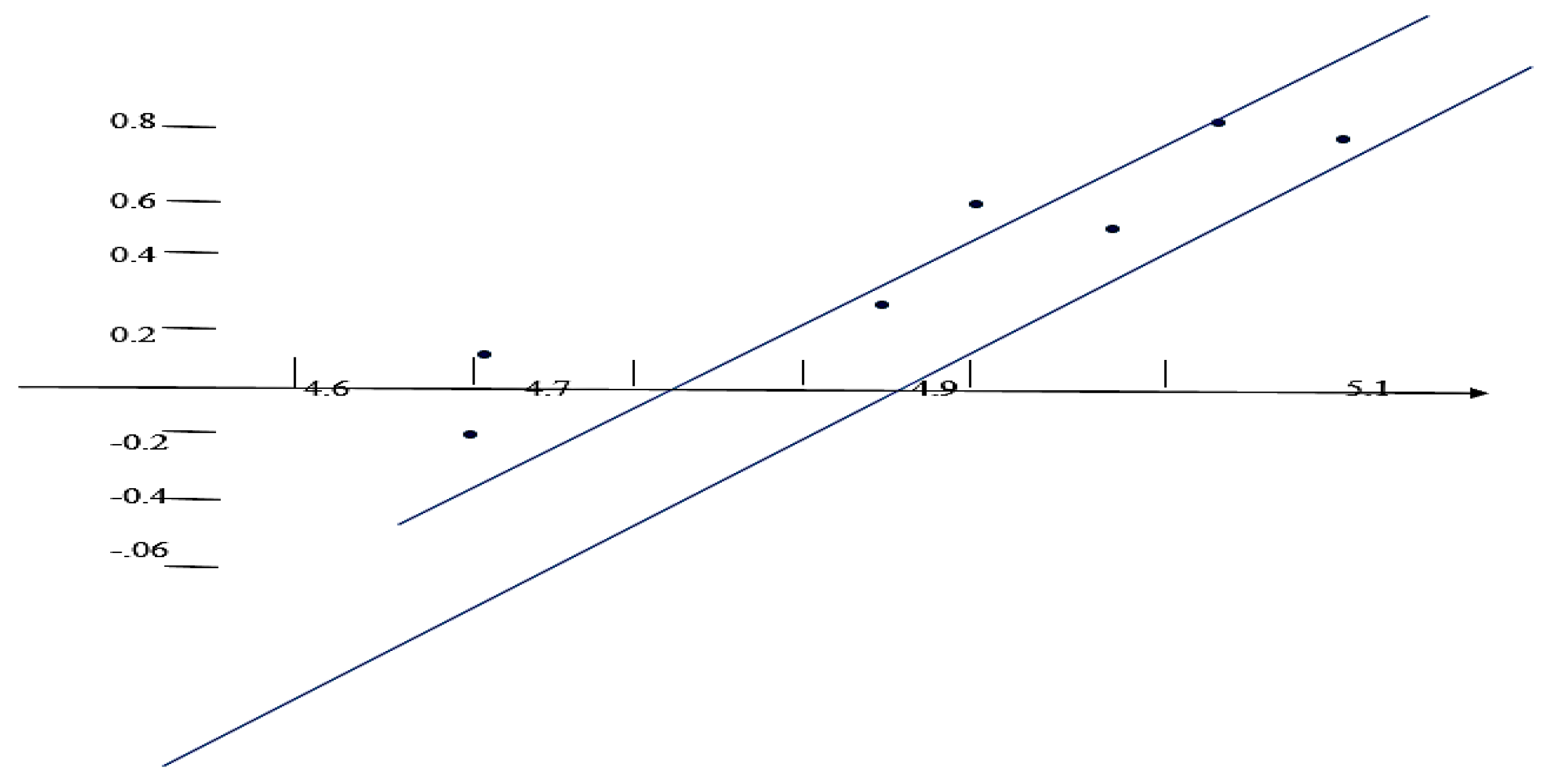
Figure 5.
Dependences of strain (logo) displacement rates of binary mixtures of BTFR and BTFR + astragalus at a temperature of 150º C.
Figure 5.
Dependences of strain (logo) displacement rates of binary mixtures of BTFR and BTFR + astragalus at a temperature of 150º C.
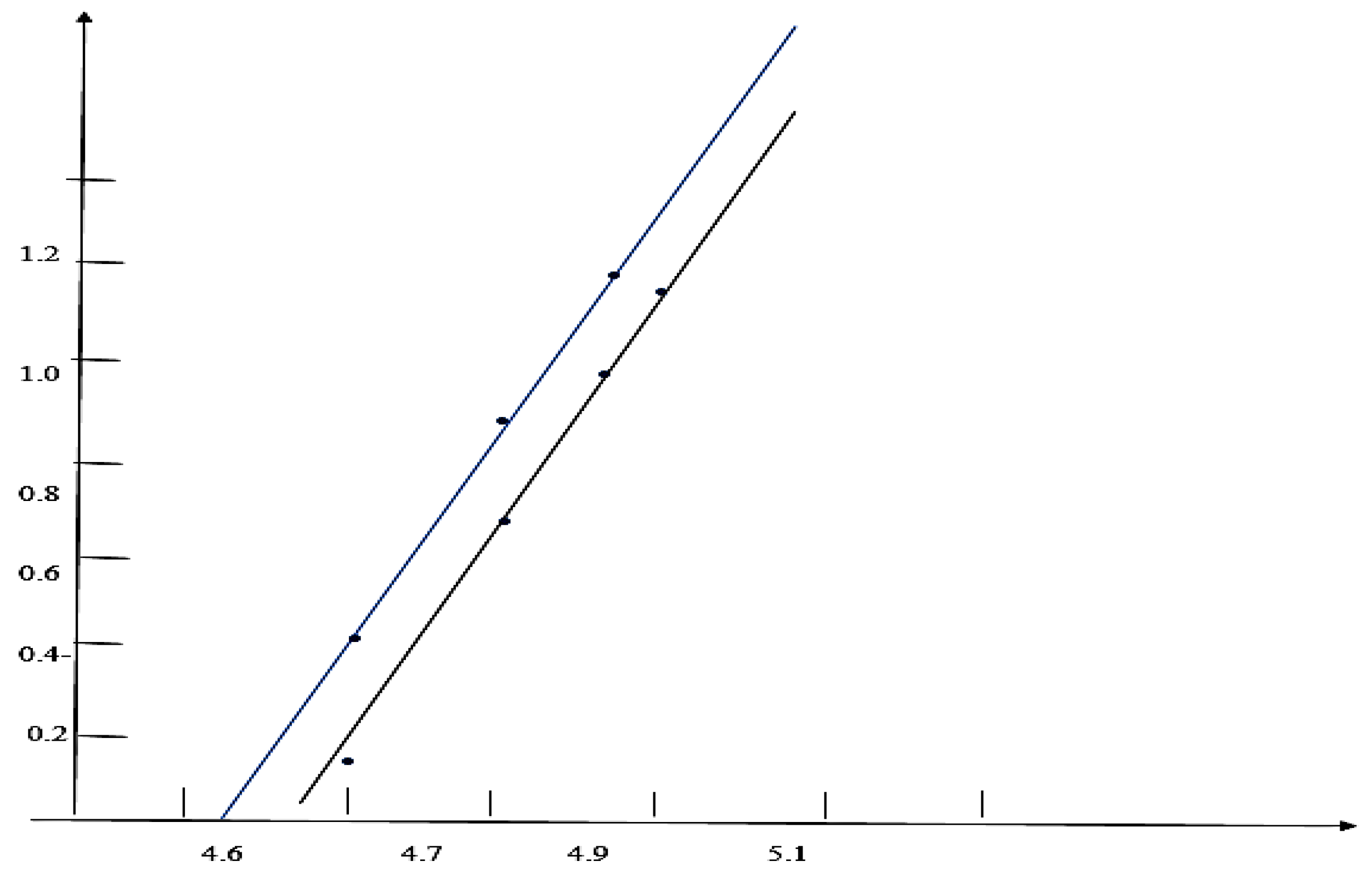
Figure 6.
170º Dependences of strain (logo) displacement rates of binary mixtures of BTFR and BTFR + astragalus at a temperature of 150º C.
Figure 6.
170º Dependences of strain (logo) displacement rates of binary mixtures of BTFR and BTFR + astragalus at a temperature of 150º C.
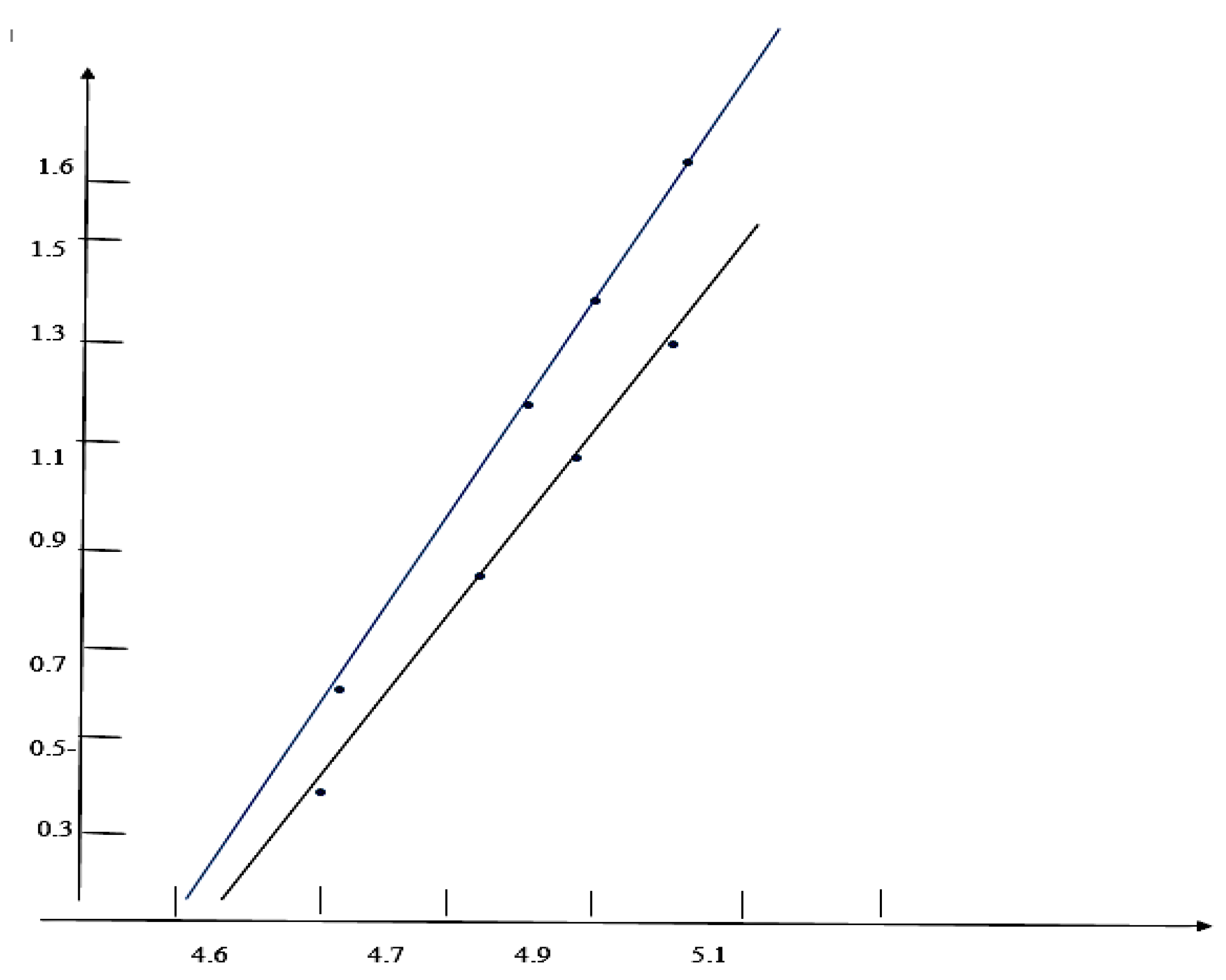
Figure 7.
The result of x-ray analysis of polymer with astragaus.
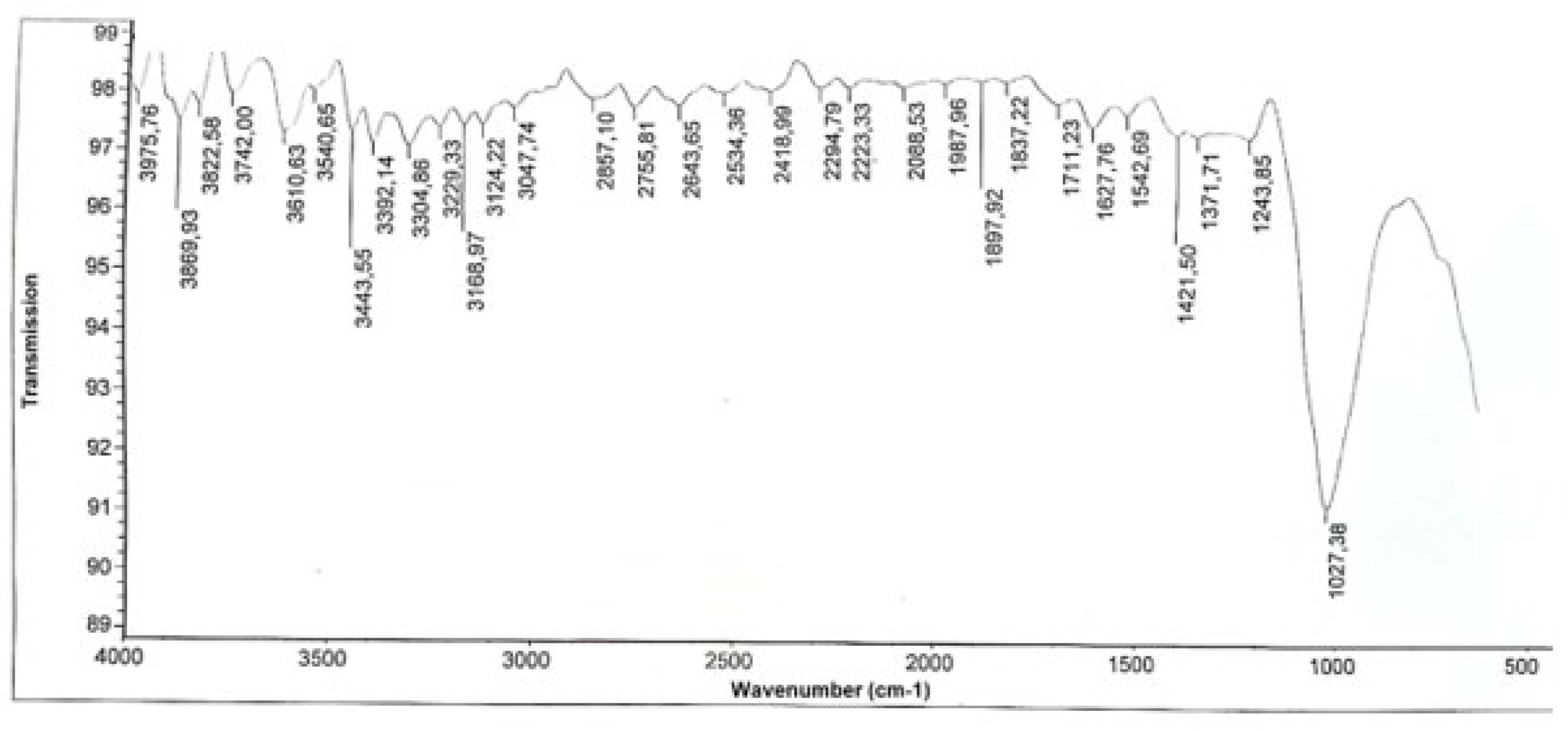

Table 1.
A rubber mixture made based on polybutylene terephthalate.
| RECIPE | ||
| Main components |
Standard resin mixture prepared based on polybutylene terephthalate (100 parts by mass, part by mass according to rubber) |
The rubber mixture prepared based on polybutylene terephthalate modified with nanomaterials (100 parts by mass, part by mass by rubber) |
| Polietilen tereftalat | 100 | 90 |
| tree resin | - | 2.5 |
| Astragalus | - | 10 |
| Petroleum bitumen | 5.0 | 5.0 |
| Zinc oxide | 3.0 | 3.0 |
| Stearic acid | 2.0 | 2.0 |
| Sulphur | 2.0 | 2.0 |
| Tiuram | 1.5 | 1.5 |
| Sulfenamide | 1.0 | 1.0 |
| Neazon-D Technical carbon H330 |
3.0 30 |
3.0 30 |
Table 2.
Physico-mechanical parameters of vulcanizate based on PBT.
| The main indicators of vulcanization | Death limit | Requirements of the standard | The result obtained in practice |
| Relative elongation | % | 300 | 500 |
| Relative residual deformation | % | 3,9 | 2,9 |
| Elasticity (Bending Modulus) | GPa | 3 | 4 |
| Hardness Rockwell M | GPa | 70 | 90 |
| Hardness Area D | GPa | 90 | 95 |
| Stiffness (bending modulus) | GPa | 3 | 4 |
| Ultimate breaking strength | MPa | 40 | 50 |
| Durability (At Room Temp Notched Izod Effect) |
J/m | 29 | 45 |
| Low Temperature Hardness | J/m | 45 | 87 |
| Yung’s Modulus | GPa | 2 | 3 |
| Electrical property | Electrical property of vulcanizate | Electrical property of vulcanizate | Electrical property of vulcanizate |
| Arc Resistance | sec | 123 | 180 |
| Dielectric constant | 2.9 | 4 | |
| Dielectric Strength | kV/mm | 23 | 31 |
| Dissipation factor | 10-200 x 10 -4 | 10-200 x 10 -4 | 10-200 x 10 -4 |
| Volume resistance | Ohm.sm | 15 x 10 15 | 18 x 10 15 |
| Shrinkage | % | 0,6 | 2,1 |
| Water absorption 24 hours | % | 0,11 | 0,24 |
| Density | q/sm 3 | 1,3 | 1,39 |
| Glass transition temperature | °C | 55 | 64 |
| Coefficient of linear thermal expansion | °C | 6 x 10 -5 | 10 x 10 -5 |
| Thermal conductivity | Vt/mK | 0,21 | 0,27 |
| Resistance to fire (LOI) | % | 20 | 23 |
| Learning class | HB | ||
| Brittle transition temperature | °C | -32 | -39 |
| HDT @0.46 MPa (67 psi) | °C | 123 | 148 |
| HDT @1.8 MPa (264 psi) | °C | 50 | 85 |
| Maximum Continuous Service | °C | 90 | 141 |
| Minimum Operating Temperature | °C | -34 | -40 |
Table 3.
Physico-mechanical indicators of vulcanizates of rubber mixtures.
| No | Name of key indicators | Key indicators | |||||
| 1 | Requirements of the standard | Results from the experiment | |||||
| 1 | 2 | 3 | 4 | 5 | 6 | ||
| Dartilmada şərti möhkəmlik, MPa | 17 | 16,7 | 16,6 | 18.1 | 18,9 | 17,9 | |
| 2 | Relative elongation, % | 320 | 330 | 300 | 360 | 380 | 395 |
| 3 | Relative residual deformation,% | 12 | 14 | 12 | 12 | 12,2 | 12,5 |
| 4 | Tensile strength, kN/m | 65 | 64 | 68 | 68,3 | 69,6 | 69,2 |
| 5 | Friction, cm3/Wh | 59 | 60 | 56 | 60 | 59 | 58,5 |
| 6 | Metal bond strength, MPa:steel-3brass | 5,8- | 5,4- | 5,53,6 | 85,1 | 9,26,2 | 9,86,9 |
| 7 | Brittleness temperature, oC | -11 | - | 28 | 26 | 25 | 24 |
| 8 | TM-2 üzrə möhkəmlik, şərti vahid | 82 | 80 | 78 | 82 | 81,6 | 82,1 |
| 9 | 2525oC for 24 hoursdegree of swelling at temperature, %:in an isooctane-toluene mixture(70:30)in gasoline-benzene mixture (3:1) | 12- | 14- | 14,523,5 | 10,114,7 | 10,213,9 | 10,914,1 |
| 10 | 25oC for 48 hoursheat aging at tempcoefficients | 0,850,64 | 0,870,62 | 1,030,88 | 0,920,83 | 0,940,86 | 0.950.90 |
| 11 | Elasticity on jump, % | 10 | 11 | 14 | 13,7 | 14 | 13.8 |
| 12 | 25oC for 27 hoursozone resistance at temp(deformation 20%, ozonehardness 0.015 %) | is falling apart | is falling apart | is falling apart | is falling apart | is falling apart | is falling apart |
Disclaimer/Publisher’s Note: The statements, opinions and data contained in all publications are solely those of the individual author(s) and contributor(s) and not of MDPI and/or the editor(s). MDPI and/or the editor(s) disclaim responsibility for any injury to people or property resulting from any ideas, methods, instructions or products referred to in the content. |
© 2024 by the authors. Licensee MDPI, Basel, Switzerland. This article is an open access article distributed under the terms and conditions of the Creative Commons Attribution (CC BY) license (http://creativecommons.org/licenses/by/4.0/).
Copyright: This open access article is published under a Creative Commons CC BY 4.0 license, which permit the free download, distribution, and reuse, provided that the author and preprint are cited in any reuse.