

Submitted:
01 August 2024
Posted:
02 August 2024
You are already at the latest version
Abstract
Açaí, a fruit from the Amazon, is valuable both economically and nutritionally. Its seeds, often discarded, can be transformed into bio-oil through pyrolysis (a thermochemical degradation process of residual biomass), providing a sustainable alternative to fossil fuels. This study investigates how temperature and molarity influence the antimicrobial, antioxidant, and cytotoxic activities of the produced bio-oil. Tests were conducted using Gas Chromatography-Mass Spectrometry (GC-MS) and assays to evaluate antimicrobial, antioxidant, and cytotoxic activities at different temperatures (350, 400, and 450 °C) and molarities (0.5 M, 1.0 M, and 2.0 M). Phenolic compounds were the most abundant in the bio-oil (55.70%), followed by cyclic and aromatic hydrocarbons (11.89%) and linear hydrocarbons (9.64%). Despite a reduction in oxygenated compounds, the bio-oil maintained bacteriostatic activity against Escherichia coli and Staphylococcus aureus across various temperature ranges, particularly at 350 °C. Antioxidant activity was highest at 350 °C and at lower molarities. Additionally, lower concentrations of acid impregnation exhibited cytotoxic effects at higher temperatures. Thus, bio-oil from açaí seeds produced via pyrolysis demonstrates potential for antioxidant and antimicrobial activities, suggesting viability for further testing at dilutions with lower cytotoxicity.
Keywords:
Açaí
; Bio-oil
; Pyrolysis
1. Introduction
The açaí (Euterpe oleracea) is a fruit typical of the Amazon region, valued for its nutritional properties and its role in the local economy. The seeds, often discarded after the pulp extraction, are an underutilized resource that can be harnessed through pyrolysis—a thermal process that transforms biomass into bio-oil, gas, and charcoal in the absence of oxygen. The bio-oil obtained from this process has great potential as a sustainable alternative to fossil fuels and can be used in various industrial and energy applications [1,2,3]. The bio-oil, a byproduct of biomass pyrolysis, has gained prominence in recent decades due to its potential as a renewable source of energy and bioactive compounds. Among the various biomass sources, açaí seeds (Euterpe oleracea Mart.) stand out as particularly promising, not only because of their abundance in the Amazon but also due to their rich chemical composition. [1,4,5,6,7,8]. The study of the properties of bio-oil derived from these seeds opens new perspectives for applications in various fields, especially in the pharmaceutical, food, and chemical industries. [2,3,9,10,11,12,13,14].
Temperature and molarity are fundamental parameters that significantly influence the composition and properties of bio-oil. The pyrolysis temperature plays a crucial role in biomass degradation and the formation of desirable compounds. In turn, molarity affects the solubility and reactivity of the extracted compounds. Understanding how these factors interact is essential for optimizing the production and use of bio-oil, especially in applications that require specific biological activities. This understanding can open new opportunities for harnessing this resource across various industries. [15,16,17,18,19,20,21,22].
The potential antimicrobial activities of bio-oil and other natural products derived from açaí biomass are highly relevant, especially in light of the growing issue of microbial resistance to conventional antibiotics. Studies show that natural compounds can provide an effective and less harmful alternative for treating infections. Therefore, investigating how temperature and molarity in the pyrolysis process influence these biological activities is crucial for developing new antimicrobial agents from natural sources, such as açaí bio-oil. [23,24,25,26,27,28].
In addition to antimicrobial properties, the cytotoxic activities of bio-oil are equally important. Evaluating cytotoxicity is essential to ensure the safety of compounds for potential therapeutic use. The relationship between temperature, molarity, and cellular toxicity is an aspect that deserves further investigation, ensuring that bio-oil derivatives are not only effective but also safe for consumption [24,25]. Another important point is the antioxidant activity of bio-oil. Given the increasing attention to antioxidant compounds and their health benefits, it is essential to understand how temperature and molarity influence this activity. Antioxidant compounds play a significant role in the prevention of chronic diseases, and effective extraction is crucial to maximize the benefits of bio-oil. [3,22,29].
Based on these principles, this article aimed to investigate in detail the effects of temperature and molarity on the antimicrobial, cytotoxic, and antioxidant activities of bio-oil extracted from açaí seeds. Through comprehensive analysis, it sought to contribute to the understanding of the interactions between these parameters, providing valuable information that can assist in the development of innovative and sustainable products in the pharmaceutical field
2. Results
2.1. Chemical Composition of Bio-Oil by Gas Chromatography-Mass Spectrometry (GC-MS)
The substances identified in the CG-MS are listed in Table 1. Phenolic compounds stand out as the major components of the bio-oil, representing 55.70%, followed by cyclic and aromatic hydrocarbons (11.89%) and linear hydrocarbons (9.64%). These findings align with those reported by Sousa et al. [30], who identified the following major compounds in the pyrolyzed bio-oils of acerola seeds at 550 ºC and 650 ºC, in descending order: 9-octadecenoic acid, palmitic acid, linoleic acid, phenol, and p-cresol.
Similar studies, such as those by Gois et al. [31], indicate that the composition of the aqueous fractions from pyrolysis includes a mixture of compounds, including ketones, acids, phenols, nitrogenous compounds, and alcohols, with phenols being the predominant class. The phenolic area percentages varied from 25% (bean pods) to nearly 70% (grape seeds) compared to other classes. The aqueous fractions from pine nut shells, guava seeds, and grape seeds showed the highest percentages, exceeding 50%. This outcome can be attributed to the higher lignin content relative to the holocellulose content in the biomass, a pattern also observed in the bio-oil from açaí.
The Table 2 presents the chemical composition in area% of the GC-MS chromatogram for both liquid phases (aqueous and organic) of the bio-oil obtained from the pyrolysis of KOH 2.0 M activated açaí seeds at 450 °C. As evidenced by Mahadevan et al. [32] and other authors, levoglucosan was not detected in the bio-oil or in the aqueous phase resulting from KOH-activated pyrolysis. Additionally, there was a significant reduction in the amount of carboxylic acids in the bio-oil, which decreased from 8.53% to 0.97%. According to these authors, an increase in carboxylic acids, such as acetic acid, was expected in the liquid fraction. [32,33,34]. Chen et al. [35] also did not find acetic acid and suggested that the acid-base neutralization of the alkaline additive could be the reason for this result.
On the other hand, there was an increase in the amount of ketone compounds, rising from 3.53% to 7.07%. Mahadevan et al. [32] noted that the concentration of acetic acid can be influenced by the ketonization reactions of carboxylic acids, leading to the formation of ketones. These ketones can, in turn, undergo deoxygenation into hydrocarbons through ketonic decarboxylation, contributing to the presence of hydrocarbons in the bio-oil. [36].
2.1.1. Effect of Temperature on the Chemical Composition of the Products
The Table 3 presents the chemical composition and acidity of the aqueous phase generated from açaí seed pyrolysis. Chemical components and acidity were determined using GC-MS analysis. Detailed information on chemical functionalities, sum of peak areas, CAS numbers, and retention times for all identified molecules can be found in supplementary tables.
The results show a significantly higher concentration of phenolic compounds at lower pyrolysis temperatures (350°C), indicating that temperature is a variable that influences the reduction of phenolic compounds and the increase of hydrocarbons in the solution. This can be observed in the studies conducted by De Castro et al. [2] and Valois et al. [3].
2.2. Evaluation of the Antioxidant Potential of the Bio-Oil
2.2.1. Effect of Temperature on the Antioxidant Activity of the Bio-Oil Using the TEAC Method
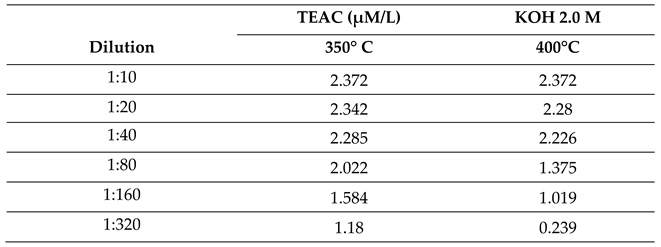
Figure 1 presents the total antioxidant capacity (TEAC) of the organic phase of bio-oil obtained by the pyrolysis of açaí seeds and fiber, chemically activated with 2M Potassium Hydroxide (KOH) solutions at temperatures of 350 and 400 °C on a laboratory scale. The results show that the total antioxidant capacity, measured by the TEAC method, decreases with increased dilution, following a first-order exponential decay pattern and presenting a determination coefficient (R²) of 0.99 for 350°C and 0.98 for 400°C. Furthermore, it was observed that, starting from a 1:80 dilution, the total antioxidant capacity in terms of Trolox equivalent significantly decreases, suggesting that, at this dilution, the antioxidant capacity stabilizes.

Table 4.
Antioxidant capacity of bio-oils obtained by pyrolysis of açaí seeds (Euterpe oleracea, Mart)
by the TEAC method.
Table 4.
Antioxidant capacity of bio-oils obtained by pyrolysis of açaí seeds (Euterpe oleracea, Mart)
by the TEAC method.
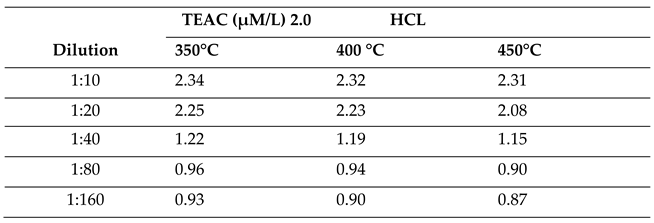
The Figure 2 shows the total antioxidant capacity (TEAC) of the aqueous phase obtained via pyrolysis of açaí seeds + fiber, chemically activated with 2M hydrochloric acid (HCl) solutions at temperatures of 350, 400, and 450°C on a laboratory scale. The experiments demonstrate that the total antioxidant capacity measured by the TEAC method decreases as dilution increases, following a pattern of first-order exponential decay. It was also observed that, starting from a dilution of 1:40, the total antioxidant capacity in trolox equivalents decreases considerably, indicating that, for this dilution ratio, the antioxidant capacity remains nearly constant.
Table 5.
Antioxidant capacity of bio-oils obtained from the pyrolysis of açaí seeds (Euterpe oleracea,
Mart) using the TEAC method.
Table 5.
Antioxidant capacity of bio-oils obtained from the pyrolysis of açaí seeds (Euterpe oleracea,
Mart) using the TEAC method.
2.2.2. Effect of Molar Concentration on the Antioxidant Activity of Bio-Oil Using the TEAC Method
Table 6 shows the antioxidant capacity of bio-oils obtained by pyrolysis of açaí seeds (Euterpe oleracea, Mart) using different concentrations of KOH (0.5 and 1.0 M) at a temperature of 450°C and atmospheric pressure, under laboratory conditions. These data are illustrated in Figure 3. The experimental results indicate that the antioxidant activity of the bio-oils decreases with increased dilution, following a first-order exponential decay pattern. It was observed that, with KOH impregnation at 0.5 M, the total antioxidant capacity, measured in Trolox equivalents, significantly decreases from a 1:80 dilution, suggesting that the antioxidant activity stabilizes from that point. In contrast, with KOH at 1.0 M, the antioxidant activity significantly dropped from a 1:40 dilution.
Table 7 presents the antioxidant capacity of bio-oils produced by the pyrolysis of açaí seeds (Euterpe oleracea, Mart), using different concentrations of KOH (0.5-2.0 M), at a temperature of 450°C and atmospheric pressure, on a laboratory scale. The data are graphically represented in Figure 4. The experimental results clearly demonstrate that bio-oils obtained from pyrolysis with KOH solutions of 0.5 and 1.0 M at 450°C exhibited higher antioxidant activity compared to those produced with a 2.0 M KOH solution. These findings suggest that the high antioxidant activity of the bio-oil from açaí seed residues, observed at lower KOH concentrations (0.5 and 1.0 M), follows a first-order exponential growth model and is associated with increased formation of oxygenated compounds under these conditions, particularly phenolic compounds, as illustrated in Figure 4.
2.2.3. Effect of Temperature on Antioxidant Activity of Bio-Oil Using the DPPH• Method
The Figure 5 illustrates the antioxidant capacity (DPPH•) of the aqueous phase obtained from the pyrolysis of açaí seeds and fiber, chemically activated with 2.0 M potassium hydroxide (KOH) solutions, at temperatures of 350°C and 400°C on a laboratory scale. The experiments reveal that the total antioxidant capacity, measured by the DPPH• method, increases as the capture of the DPPH• radical in the sample increases, reducing its concentration, following a pattern of first-order exponential decay. Additionally, it was observed that the temperature of 400°C favored greater capture of the DPPH• radical, as shown in Figure 5. At this temperature, the radical concentration in the solution decreases with an increase in antioxidant capacity at a 1:10 dilution. Although the antioxidant capacity increased, its variation compared to 350°C temperature was minimal, indicating that, for this dilution ratio, antioxidant capacity remains nearly constant.
Based on Table 8, an increase in antioxidant activity is observed as radical capture increases. At 350°C, the antioxidant capacity remained constant at lower dilutions (more concentrated samples), specifically at ratios of 1:10 and 1:20. In contrast, at 400°C, there was higher radical capture only at the 1:10 dilution, indicating that more concentrated samples exhibited higher antioxidant activity in this temperature range. These findings are consistent with previous studies by De Castro et al. [2] and Valois et al. [3], which demonstrate that increasing temperature promotes the reduction of phenolic compounds.
The Figure 6 illustrates the antioxidant capacity of the organic fraction of bio-oil obtained from the pyrolysis of açaí seeds and fiber, activated with 2.0 M Potassium Hydroxide (KOH) solutions, at temperatures of 350°C and 400°C on a laboratory scale. According to experimental results, the total antioxidant capacity, measured by the DPPH• method, increases as the concentration of DPPH• radicals in the sample decreases, following a first-order exponential decay pattern. The pyrolysis temperature proved crucial for this antioxidant activity, with significantly more efficient radical capture observed at 350°C. In this thermal range, there was a substantial reduction in radicals, indicating high efficacy in antioxidant capacity.
Based on Table 9, there was an increase in antioxidant activity as the scavenging of free radicals increased, resulting in a decrease of the compound in the samples. This pattern was consistent at higher concentrations, particularly in the less diluted samples treated at 350°C. Radical scavenging and the increase in antioxidant capacity were more pronounced at 350°C compared to 400°C. These findings highlight significant antioxidant activity across all dilutions of the aqueous fraction samples, with a particular emphasis on the less diluted samples at 350°C.
Similar results were observed in the study by Oliveira et al. [37], which analyzed the antioxidant activity of essential oils from different genotypes, along with their major compounds. The oils demonstrated antioxidant capacity using the DPPH free radical scavenging method. Essential oils from C. grewioides, CGR112 and CGR104, exhibited moderate activity, with 23.66% and 18.65% radical scavenging, respectively. On the other hand, essential oil CGR106 showed the highest radical scavenging activity, reaching 67.91%, followed by essential oil CGR126 with 61.98%. It was also noted that the major compound eugenol, a phenolic monoterpene, demonstrated higher activity compared to other tested compounds.
2.2.4. Effect of Molar Concentration on the Antioxidant Activity of Bio-Oil Using the DPPH Method
The Table 10 presents the antioxidant capacity results of the aqueous fraction of bio-oils obtained from the pyrolysis of açaí seeds (Euterpe oleracea Mart), using different concentrations of KOH ranging from 0.5 to 2.0 M. The experiment was conducted at a temperature of 450 °C under atmospheric pressure in a laboratory setting. The data obtained are graphically illustrated in Figure 7. The results demonstrate significant antioxidant capacity for all tested KOH concentrations following a first-order exponential decay model. Notably, the 2.0 M concentration stood out among the more diluted samples, showing remarkable free radical scavenging capacity, resulting in extremely high inhibition at dilutions of 1:10 and 1:20.
The data on the organic fraction of the bio-oil show similar results to the previously mentioned studies. As illustrated in Figure 8, the antioxidant capacity of bio-oils produced from acai seeds (Euterpe oleracea Mart) via pyrolysis was analyzed using different concentrations of KOH (0.5 M and 1.0 M) at a temperature of 450°C and atmospheric pressure on a laboratory scale. The results presented in Table 11 demonstrate that bio-oils obtained with KOH solutions at concentrations of 0.5 M and 1.0 M at 450°C showed higher antioxidant activity at dilutions of 1:10 and 1:20, with a notable emphasis on the 1.0 M concentration. A first-order exponential decay was observed, indicating a lower number of free radicals in the samples, suggesting a high antioxidant potential and greater radical scavenging capacity.
2.3. Evaluation of the Antimicrobial Activity of Bio-Oil
2.3.1. Activity against Escherichia Coli
Literature studies have indicated a growing concern regarding antibiotic resistance among bacteria, especially Escherichia coli, a major cause of bacterial infections in humans, particularly Gram-negative bacterial infections.[38] Currently, strains carrying Extended Spectrum β-lactamases (ESBLs) are highlighted for their resistance to third-generation cephalosporins. Additionally, these bacteria have shown resistance to fluoroquinolones and gentamicin [39]. In light of this concerning scenario, the potential antimicrobial activity of açaí seed bio-oil against these bacteria was evaluated.
Based on information regarding Escherichia coli strain ATCC 25922, various dilutions of the bio-oil were examined for their antimicrobial activity. The results of minimum inhibitory concentrations (MIC) and bactericidal concentrations (MBC) in relation to samples of wash water prior to the pyrolysis process are presented in Table 12.
The Table 12 shows that in the wash water samples (L1, L2, and L3), the lowest concentration with bacteriostatic effect for impregnation with 0.5 M KOH falls within a dilution range greater than 1:10. This pattern differs for higher molarities (1.0 M and 2.0 M), where dilutions for MIC and MBC were observed to be 1:40 for both. These results indicate that the bacteriostatic effect of the wash samples on Escherichia coli strain increases with higher molarities used in the chemical pretreatment of lignocellulosic biomass from açaí seeds. The consistency of these effects suggests that even at more diluted concentrations, these groups maintained bacteriostatic capability.
The Table 13 presents the various dilutions of açaí seed bio-oil (aqueous phase) evaluated for their antimicrobial activity against Escherichia coli, displaying the results of Minimum Inhibitory Concentration (MIC) and Minimum Bactericidal Concentration (MBC).In the analysis of samples from the aqueous fraction of bio-oil impregnated with KOH at 450°C, it can be observed that the lowest concentration exhibiting bacteriostatic effect in the impregnation with 0.5 M KOH lies within a dilution range of 1:40. These results vary for higher molarities (1.0 M and 2.0 M), where dilutions for MIC and MBC of 1:20 and 1:10, respectively, were observed. These data indicate that the bacteriostatic effect of the aqueous fraction of bio-oil on Escherichia coli strain decreases as the molarity used in the chemical pretreatment of lignocellulosic biomass from açaí seeds increases at 450°C [3]. However, even with the reduction of oxygenated compounds, especially phenolics, in the samples, the groups maintained bacteriostatic capacity due to the increased molarity at 450°C.
The Table 14 presents the various dilutions of açaí seed bio-oil (organic fraction) evaluated for their antimicrobial activity against Escherichia coli, showing the results of Minimum Inhibitory Concentration (MIC) and Minimum Bactericidal Concentration (MBC).
The results from samples of the organic fraction of bio-oil, subjected to impregnation with KOH under different temperature conditions (350°C, 400°C, and 450°C) and molarities (0.5 M, 1.0 M, and 2.0 M), revealed that the concentration exhibiting bacteriostatic effects in impregnation with 0.5 M KOH falls within a dilution range of 1:80. However, for higher molarities (1.0 M and 2.0 M), the results showed different dilution values for MIC (Minimum Inhibitory Concentration) and MBC (Minimum Bactericidal Concentration), namely 1:40 and 1:80, respectively.
These findings indicate that the bacteriostatic effect of the organic fraction of bio-oil, as well as the aqueous fraction, against Escherichia coli strain increases with higher molarity used in the chemical pretreatment of lignocellulosic biomass from açaí seeds. Surprisingly, the results showed satisfactory efficacy even at lower concentrations, maintaining bacteriostatic capacity despite the reduction of oxygenated compounds, especially phenolics, in the samples due to increased molarity and temperature during the pyrolysis process of lignocellulosic biomass [3,40].
The Figure 9 shows the visual results of the minimum bactericidal concentrations (MBC) of the açaí wash water samples, aqueous fraction, and organic fraction of bio-oil against E. coli strain. As depicted in the image, no bacterial growth was observed within the ranges established in the results of this study.
2.3.2. Activity Against Staphylococcus Aureus
The present study evaluated the antimicrobial capacity of acai seed bio-oil at different temperatures and molarities against Staphylococcus aureus strain ATCC 29213. The different dilutions of bio-oil were assessed for their antimicrobial activity, and the results of minimum inhibitory concentration and minimum biocidal concentration (MIC/MBC) concerning the samples of wash water prior to the acai seed pyrolysis process are shown in Table 15.
Based on the results described in Table 15, it can be observed that both the minimum inhibitory concentration (MIC) and minimum bactericidal concentration (MBC) for impregnation with 0.5 M KOH fall within a dilution range of 1:5 and 1:20, respectively. These values differ for higher molarities (1.0 M and 2.0 M), where the dilution values for MIC and MBC are >1:10 and 1:40, respectively. As discussed earlier, temperature was a variable that was absent because the corresponding wash water samples did not undergo high-temperature pyrolysis.
These results suggest that the present study on the antimicrobial activity of wash samples against the Staphylococcus aureus strain shows low MIC values, indicating high antimicrobial activity with dilutions greater than 1:5 (more concentrated samples) in accordance with the decrease in KOH treatment molarity
The values of Minimum Inhibitory Concentration (MIC) and Minimum Bactericidal Concentration (MBC) of products from different dilutions of acai seed bio-oil (aqueous phase) tested against the strain of S. aureus are presented in Table 16.
Based on the data from Table 16 , it is observed that in the impregnation with KOH at a constant molarity of 2.0M and varying temperatures (350°C, 400°C, and 450°C), both the minimum inhibitory concentration (MIC) and minimum bactericidal concentration (MBC) fall within a dilution range of 1:4. The molarities did not affect the results of the aqueous fraction samples as they were constant and equivalent to 2.0M. Temperature, therefore, emerges as the determining variable in the concentration of compounds present in the samples.
The results concerning the organic fraction samples of bio-oil can be seen in Table 17. The impregnation data with HCL at different temperatures (400°C and 450°C) and constant molarities equivalent to 2.0 M show that molarity did not alter the results, as it remained constant across samples. The determining factor is temperature, where at 450°C, the MIC and MBC values were observed at higher dilutions, indicating less concentrated samples. As discussed earlier, increasing temperature leads to a reduction in oxygenated compounds and consequently diminishes the antimicrobial capacity of the samples.
The Figure 10 shows the results of the minimum bactericidal concentrations (MBC) of wash water samples from acai, the aqueous fraction, and the organic fraction of bio-oil against the strain of Staphylococcus aureus. The image indicates that there was no bacterial growth in the areas specified by the findings of this study.
2.4. Cell Viability Assay
Based on the results shown in Figure 11, at the beginning of the process, the cell viability of the aqueous fraction from pyrolysis impregnated with 2.0 M hydrochloric acid (HCl) was investigated at different temperatures: 350ºC (HT1), 400ºC (HT2), and 450ºC (HT3). Increasing the pyrolysis temperature reduced cell viability at 1:160 dilutions (HT1, 97.5±0.7%; HT2, 56.5±12.0%; HT3, 8.5±0.7%), but significantly improved at 1:320 dilutions (HT1, 98±0%; HT2, 96.5±2.1%; HT3, 71.5±9.2%). Previous studies have shown that acidity of the impregnated aqueous fraction increases with pyrolysis temperature due to the presence of carboxylic acids and phenols [22].
At lower concentrations of acid impregnation (0.5 M - HM1; 1.0 M - HM2) and a pyrolysis temperature of 450ºC, a cytotoxic effect was observed at the tested dilutions, resulting in a reduction in both the number and appearance of viable cells compared to the 2.0 M HCl concentration at the same temperature (Figure 11.D and E). This finding suggests that both temperature and concentration of hydrochloric acid significantly influence the components present in the aqueous fractions obtained from acai pyrolysis.
The results from the untreated aqueous solution at 450°C (Figure 12.A) demonstrated a lesser impact on cell viability compared to samples HM1 and HM2 diluted at 1:320 (63±2.8%), as discussed earlier. However, a reduction in cell survival was still observed.
The untreated organic fraction (SP3) at 450°C showed lower cellular toxicity at dilutions of 1:80 (72.51±3.5%) and 1:160 (68±14.1%) (Figure 12.B). Nevertheless, there was a decrease in cell viability compared to sample HT1, indicating that temperature influences the compounds extracted during pyrolysis, as discussed previously.
3. Discussion
The chemical composition of bio-oil, as revealed by Silva et al. [41], demonstrates a significant presence of long-chain acids and phenolic compounds attributed to the thermal cracking process during acerola residue pyrolysis. These phenolic compounds are heavily influenced by the pyrolysis temperature, which promotes secondary thermal degradation reactions resulting in the transformation of these components into lower molecular weight substances.
Costa et al. [42], in their study, support that bio-oils are predominantly composed of phenols, ketones, aldehydes, and ethers, highlighting the prevalence of phenolic compounds across various biomass sources. In the specific context of acai bio-oil, lignin forms a complex network of phenylpropanoid units during pyrolysis, with depolymerization of cross-linked chains occurring at carbon-carbon and aryl-ether linkages. Furthermore, studies like Mahadevan et al. [32] indicate that ions such as K and Na play a crucial role in the production of phenols and the quantity of bio-oil generated through chemical activation. Contrary to previous expectations suggesting an increase in phenolic compound concentration in the presence of alkaline ions, a decrease from 55% to 43% was observed under certain conditions, indicating complexities in the phenol reaction during pyrolysis. [32,41,42].
Therefore, the precise identification of bio-oil components via GC-MS poses challenges, particularly due to the complex nature of molecules and organic matrices involved. These studies underscore not only the diversity in bio-oil composition but also the significant influence of variables such as temperature, ion presence, and biomass characteristics on the formation and chemical structure of these pyrolysis-derived products. Phenolic compounds, besides their antioxidant functions, are associated with various health benefits such as anti-inflammatory, anticancer, and cardioprotective properties [3,43,44]. These additional benefits make these compounds highly valued not only in basic nutrition but also as essential components in healthy diets and medical therapies.
During pyrolysis, temperature is a crucial parameter that determines both the quantity and quality of compounds present in bio-oil. Understanding the impact of temperature allows for optimizing the production of compounds like phenolics and hydrocarbons, ensuring that bio-oil meets specific requirements in diverse industries, from biofuels to high-value chemicals in the food, cosmetic, and pharmaceutical sectors [45,46].
The thermochemical degradation of biomass generally occurs at higher temperatures, leading to the decomposition of a greater amount of compounds in bio-oil, including phenolic compounds. In contrast, lower temperatures not only promote the formation of these compounds but also help preserve them in bio-oil [15]. These results are consistent with previous studies demonstrating that increased temperature reduces phenolic compounds [2,3]. The antioxidant potential results are in line with studies that assessed the antioxidant activity of essential oils from different C. grewioides genotypes. The essential oils showed antioxidant capacity using the DPPH free radical scavenging method. For instance, eugenol, a phenolic monoterpene, exhibited higher activity compared to other tested compounds [37].
Pyrolysis is a complex process involving the thermal degradation of biomass. Reaction conditions, especially temperature, are crucial in determining the chemical composition of bio-oil [22]. Different temperatures generate intermediate reactions leading to the formation of various chemical compounds in bio-oil, alongside gaseous and solid phases with specific characteristics [19]. The TEAC and DPPH methods demonstrated significant antioxidant activity of bio-oil (organic fraction) at various molalities, both with KOH and HCl at 450°C, in dilutions ranging from 1:80 to 1:160. This antioxidant activity can be attributed to the high concentration of oxygenated compounds, especially phenolics, present at this temperature.
Recent studies highlight that high temperatures (450°C) during the pyrolysis of activated acai seeds with 2.0 M KOH solution do not favor the production of oxygenated compounds in bio-oil, resulting in the predominance of hydrocarbons. In contrast, lower temperatures (350°C) promote the formation of oxygenated compounds, especially phenolics, in the bio-oil of these seeds, which are strongly associated with high antioxidant activity [22]. In summary, thermochemical degradation of biomass suggests that high temperatures lead to the loss of valuable compounds in bio-oil, such as phenolics. On the other hand, lower temperatures not only promote their formation but also help preserve these compounds [22]. Thus, bio-oil stands out as a product rich in important chemicals, especially relevant to the food, cosmetic, and pharmaceutical industries.
Phenolic compounds play a crucial role in bio-oil and have garnered significant interest due to their potential as natural sources of antioxidants, nutraceuticals, and preservatives in the food industry [46]. With significant antioxidant properties, these compounds help neutralize free radicals and reduce oxidative stress, inhibiting the oxidation of DNA, proteins, and lipids [43]. Furthermore, they offer various health benefits, including anti-inflammatory, anticancer, and cardioprotective properties [48].
The results of the antimicrobial activity of acai bio-oils are supported by studies highlighting phenolic compounds derived from lignin as antimicrobial agents. In various investigations, bio-oil has been evaluated as an alternative wood preservative due to its ability to inhibit the growth of deteriorating microorganisms.
Studies on the antimicrobial effects of essential oils encompass a variety of research. For example, Puvaca et al. [57] analyzed the antimicrobial activity of essential oils from Melaleuca alternifolia and Eucalyptus globulus against the E. coli strain. The results showed that antimicrobial efficacy is associated with the composition of the main phytoconstituents of these oils. Specifically, Melaleuca alternifolia oil, with a high terpinen-4-ol content (38.53%), and Eucalyptus globulus oil, rich in 1,8-cineole (64.71%), were effective in reducing bacterial growth. These findings highlight that the properties of bioactive compounds present in essential oils play a crucial role in the observed antimicrobial activity, providing a solid scientific basis for exploring their therapeutic potential against bacterial infections, such as those caused by E. coli.
Trajano et al. [58] observed that Gram-positive bacteria are generally more susceptible to inhibition by essential oils compared to Gram-negative bacteria. This difference can be attributed to the distinct structural characteristics of the cell walls and membranes of these bacterial types, which affect permeability and sensitivity to antimicrobial compounds present in essential oils. On the other hand, Mímica-Dukic et al. [59] investigated the antimicrobial and antioxidant activity of Mentha piperita and found that this plant exerts significant bacteriostatic action, especially against E. coli. This study highlights that certain essential oils may be effective against Gram-negative bacteria, partially contradicting the generalization made by Trajano et al. [59]. Additionally, Sagdic [60] investigated the action of Carum cyminum against the foodborne pathogen E. coli, demonstrating the ability of some essential oils to specifically combat pathogenic bacteria relevant to food safety.
These findings are consistent with Monteiro et al. [39], who also investigated the antimicrobial activity of various essential oils against the E. coli strain. In this study, it was observed that essential oils were able to induce significant susceptibility to antimicrobial action, with Minimum Inhibitory Concentration (MIC) values of 8.0 µL/ml. These results emphasize that the effectiveness of essential oils against E. coli is directly related to the concentration used. Adequate concentrations are necessary to achieve effective antimicrobial effects, while lower concentrations may not be sufficient to inhibit bacterial growth.
These results are consistent with the studies by De Castro et al. [2], Valois et al. [3], and Beker et al. [49], who investigated the pyrolysis bio-oil of lignocellulosic biomass at different temperatures and molarities, noting that higher chemical impregnation molarities with NaOH and KOH favored the formation of hydrocarbons at the expense of oxygenated compounds. These studies are directly related to the work of Brazil et al. [61], who found that phenolic compounds, part of oxygenated compounds, exhibit inhibitory action against various microorganisms, particularly noted for their antiviral, antiseptic, and antimicrobial activities [49].
The results indicate that the antimicrobial activity of the aqueous fraction of bio-oil against Staphylococcus aureus decreases as the temperature used in the chemical pretreatment of lignocellulosic biomass from acai seeds increases. This can be attributed to the reduction of oxygenated compounds, especially phenolics, in the samples due to high temperatures in the pyrolysis process, which consequently reduces the ability to inhibit bacterial growth. These findings are aligned with studies by Rocha et al. [62] and De Sousa et al. [63], where it was observed that the concentrations of cresols, phenols, and ketones decrease with increasing pyrolysis temperature, as a result of deoxygenation reactions that convert phenols, esters, and ketones into hydrocarbons, carbon monoxide, carbon dioxide, and water (decarboxylation and decarbonylation).
In the study by Ferenz et al. [64], S. aureus was sensitive to all investigated essential oils, with the lowest concentration showing inhibitory halo formation being 12.5% for Cymbopogon flexuosus essential oil. This study concluded that essential oils exhibited biological activity against S. aureus, particularly highlighting the potential antimicrobial activity of C. flexuosus oil against this bacterium.
The literature covers a wide range of studies investigating the antimicrobial effects of essential oils. For instance, Mashiba et al. [65] evaluated the antioxidant and antimicrobial activity of pyrolysis lignin fractions. The antimicrobial action of the samples showed similar results in inhibiting the growth of both E. coli and S. aureus. Pyrolysis lignin demonstrates antioxidant and antimicrobial properties, making it a promising material for use in smart packaging and pharmaceutical products [65].
The evaluation of oil quality often considers the acidity index, which reflects the amount of base needed to neutralize free fatty acids present [66]. This index may increase due to the hydrolysis of triglycerides, a process accelerated by heat and exposure to light [67]. High levels of free fatty acids and consequently a high acidity index have the potential to compromise the biological properties of the final compound [66]. In this context, chemical impregnation contributes to the formation of oxygenated compounds, while high temperature is responsible for the formation of free fatty acids, which can increase the cytotoxic effect of the sample due to the formation of toxic compounds and the increase in the acidity index.
The findings from the literature provide a detailed analysis of the effects of acai biomass pyrolysis and the impacts of acid and base treatments on the resulting by-products. According to Souza et al. [63], when pyrolysis by-products are not treated with acids or bases, the resulting liquids mainly contain hydrocarbons.
Studies indicate that the decomposition of acai biomass components varies with pyrolysis temperature: hemicellulose between 220 and 315 ºC, cellulose between 315 and 400 ºC, and lignin between 300 and 550 ºC [68]. Therefore, the analysis suggests that bio-oil produced at 450 ºC, without treatment, consists mainly of lignin-derived components, while temperatures below 400 ºC produce a significant proportion of hemicellulose and cellulose compounds.Furthermore, De Castro et al. [2] highlight that hemicellulose and lignin are highly soluble in acidic environments, influencing the chemical composition of pyrolysis products. Chemical pretreatment reduces the formation of organic acids during pyrolysis, thus reducing the number of oxygenated compounds in bio-oil.
On the other hand, Silva et al. [69] discuss that some hydrocarbons present in bio-oil can be harmful to health due to their ability to be readily absorbed by cells and interact with DNA, potentially causing cellular damage. Therefore, it is concluded that the more concentrated acid pretreatment (2M) facilitates the removal of structural compounds from biomass, which could increase the cytotoxic effect of the sample during pyrolysis, as observed in untreated samples.
4. Materials and Methods
4.1. Bio-Oil Production
The bio-oil extracted from açaí seed residue was provided by the Laboratory of Sanitary and Environmental Engineering (LAESA) at the Federal University of Pará. The samples underwent different temperature processes of 350, 400, and 450 °C, as well as chemical pretreatment with Potassium Hydroxide (KOH). The samples obtained were divided into groups according to the product generated in the pyrolysis process and can be referred to as Wash Water, Organic Liquid Product (OLP), and Aqueous Fraction.
4.2. Sample Preparation
4.2.1. Wash Water
The wash water was obtained prior to the pyrolysis process by adding distilled water after the acidic or basic impregnation of açaí biomass, followed by filtration. After collecting the wash water, samples were prepared by diluting them with distilled water in the following ratios: 1:5 (200 µL of sample in 800 µL of distilled water), 1:10 (100 µL: 900 µL), 1:20 (50 µL: 950 µL), 1:40 (25 µL: 975 µL), and 1:80 (12.5 µL: 987.5 µL).[3].
4.2.2. Aqueous Fraction
Considering their polar nature, the samples were diluted using only distilled water in ratios ranging from 1:5 to 1:80. The dilution of the aqueous fractions started at 1:5, where 200 µL of the sample was added to a 1.5 mL microcentrifuge tube (Kasvi) and then topped up to 1000 µL with 800 µL of distilled water. To prepare the dilutions of 1:10, 1:20, 1:40, and 1:80, 100 µL, 50 µL, 25 µL, and 12.5 µL of sample were added to each microcentrifuge tube (Kasvi), respectively, and the volume was adjusted to 1000 µL by adding distilled water.
4.2.3. Organic Fraction (PLO)
The samples of the Organic Fraction were categorized based on impregnation and temperature. Due to the non-polar nature of the sample, sample dilution (1:20 to 1:640) was performed according to a specific methodology. Initially, 800 µL of 10% Dimethyl sulfoxide (DMSO- Merck) in 1X PBS (ThermoFisher Scientific) was added to a 1.5 mL microcentrifuge tube, followed by the addition of 200 µL of the sample to prepare the first dilution, which was then vortexed. Subsequent dilutions of 1:40, 1:80, 1:160, 1:320, and 1:640 were prepared for viability, antioxidant, and antimicrobial tests.
4.3. Identification of Components by Gas Chromatography (GC-MS)
Identification of components present in the oily samples from pilot-scale experiments was performed using Gas Chromatography coupled with Mass Spectrometry (GC-MS). This analytical method involves volatilizing the sample and transporting it through a chromatographic column using a carrier gas (mobile phase) for separation. Chromatographic analyses were conducted on a chromatography system to separate and identify chemical compounds present in the bio-oils produced at semi-pilot and pilot scales. Component analysis was carried out using the Agilent Technologies system - Model CG-7890B coupled with a Mass Spectrometer model MS5977A, using a fused silica capillary column SLBTM-5ms (30m x 0.25mm x 0.2) [2].
4.4. Evaluation of the Antioxidant Potential of the Bio-Oil
4.4.1. Evaluation of Antioxidant Activity Using the ABTS•+ Radical Scavenging Method (TEAC)
The relationship of this activity to the reactivity of trolox as a standard under identical conditions will be calculated, and the final results will be expressed in micromoles per liter (µM/L), corresponding to the concentration of trolox with antioxidant capacity equivalent to that of the sample under study. This measurement standard is referred to as TEAC (Trolox Equivalent Antioxidant Capacity). The ABTS•+ radical was prepared by reacting 5.0 mL of a solution containing 3840 μg mL-1 ABTS (Thermo scientific) with 88 μL of a solution containing 37,840 μg mL-1 potassium persulfate (ÊXODO CIENTIFICA®), and the mixture was left in the dark for 16 hours. After radical formation, the mixture was diluted in ethanol (MERCK®) until an absorbance of 0.7±0.01 at 734 nm was reached. For the OE concentrations (5 to 150 μg mL-1), reaction mixtures were prepared with the ABTS•+ radical cation. In the dark, 30 μL aliquots of each OE concentration were withdrawn and transferred to test tubes containing 3.0 mL of the ABTS•+ radical cation, then homogenized on a tube shaker (KASVI® K45 2810). After 6 minutes, the reaction mixture's absorbance was measured using a spectrophotometer (GLOBAL TRADE TECHNOLOGY 190-1000 nm) at 734 nm.[70].
4.4.2. Evaluation of Antioxidant Activity by the DPPH● Radical Scavenging Method
The total antioxidant activity was analyzed by assessing the ability of antioxidants present in the sample to neutralize the stable DPPH● radical (2,2-diphenyl-1-picrylhydrazyl), following the method by Brand-Williams et al. [71]. Antioxidant activity quantification was expressed as mean ± standard deviation in μM Trolox.g-1 extract (antioxidant capacity equivalent to Trolox).
To determine the antioxidant capacity using the DPPH method of the essential oils (EO), the radical was prepared by dissolving 3.94 mg of DPPH● (2,2-Diphenyl-1-picrylhydrazyl) (SIGMA ALDRICH®) in 100 mL of ethanol. Reaction mixtures were prepared with EO concentrations ranging from 5 to 150 μg mL-1 along with the DPPH radical cation. Specifically, 50 μL of EO was mixed with 950 μL of ethanol (MERCK®), 2 mL of DPPH radical solution, and then brought to a total volume of 4 mL with ethanol, followed by thorough homogenization. The mixture was allowed to react in the dark for 30 minutes, and the absorbance of the reaction mixture was measured using a spectrophotometer at 517 nm. The scavenging of the free radical was expressed as a percentage of inhibition (%I) of the DPPH radical activity, a where Abs DPPH represents the absorption of the DPPH radical solution and Abs DPPH represents the absorption of the sample.[71].
4.5. Evaluation of the Antimicrobial Activity of Bio-Oil
The resuspension of the inoculum was performed 24 hours prior to seeding on Mueller Hinton Agar (MHA) (HIMEDIA®), a non-selective medium with minimal interference, and the seeding was incubated in an oven at 36°C. After this period, in a sterilized tube, 3 to 5 bacterial colonies were inoculated into 5 mL of sterile Mueller Hinton broth (MHB) (HIMEDIA®), and then adjusted spectrophotometrically to achieve a concentration of 1.10^8 colony-forming units (CFU)/mL. Once this concentration was reached, it was diluted with MHB to achieve a concentration of 5.10^5 CFU/mL. Samples were diluted with 10% dimethyl sulfoxide (DMSO) and MHB at concentrations of 1000 µg, 500 µg, 250 µg, 125 µg, and 62.5 µg. After inoculum and sample dilution, 100 µL of each was inoculated into a 96-well plate, along with positive and negative controls. This plate was then incubated in an oven for 24 hours. Following incubation, the minimum inhibitory concentration (MIC) was determined based on turbidity or using a redox reagent. The minimum bactericidal concentration (MBC) was determined by transferring 10 µL from selected wells and streaking them onto MHA plates by exhaustion. These plates were then incubated in an oven for 24 hours at 36°C, after which CFUs were counted to determine the minimum bactericidal concentration (MBC). [72].
4.6. Cell Viability Assay
4.6.1. Ethics Committee
To assess cell viability, venous blood was collected from healthy volunteers who signed the Informed Consent Form (ICF). This study was approved by the Institutional Review Board for Research Ethics Involving Human Subjects in the Health Sciences sector of UFPA (CEP-ICS/UFPA), under protocol number 3544380 and CAAE (Certificate of Presentation for Ethical Appreciation) number 12776619.0.0000.0018.
4.6.2. Obtaining Peripheral Blood Mononuclear Cells (PBMCs)
Blood samples (5 mL of venous blood) were collected with 5% ethylenediaminetetraacetic acid (EDTA) (New Prov). Subsequently, 5 mL of 0.9% saline solution was added and the mixture was homogenized. The homogenized sample was then transferred to another tube containing 3 mL of Histopaque®-1077 (SIGMA-ALDRICH®). The tube was centrifuged for 15 minutes at 1500 RPM to separate the mononuclear leukocyte layer. After centrifugation, the mononuclear leukocyte layer was collected and washed with RPMI 1640. The cells were then centrifuged to obtain the cell pellet. The pellet was resuspended in 1 mL of RPMI-1640 supplemented with 1% penicillin/streptomycin and 10% fetal bovine serum for viable cell counting, performed using 0.4% Trypan Blue staining.
4.6.3. Trypan Blue Exclusion Method and Cellular Morphology Evaluation
For the cell viability assay, 2x10^5 cells were incubated with the fractions at different dilutions for 30 minutes in a 5% CO2 incubator at 37°C. Subsequently, in a microcentrifuge tube, a 50 µL aliquot was mixed with 0.4% Trypan Blue at a 1:1 ratio and evaluated using a hemocytometer for cell counting. Stained cells were considered non-viable (blue) and unstained cells viable (translucent). The percentage of viable cells was calculated using the formula: number of viable cells/total number of cells counted x 100.For assessing cellular morphology, after the incubation period, a 60 µL aliquot was cytocentrifuged and subsequently stained with a panoptic stain (New Prov).
5. Conclusions
It is possible to conclude that both the aqueous fraction and the bio-oil demonstrated significant activity against the tested strains, especially at the 1:40 dilution. This indicates that even at low concentrations, the phenolic and oxygenated compounds present in the waste used in the matrix exhibit biological activity. However, further tests are necessary with strains of different natures and fungal species to broaden the understanding of the effects of these compounds on microorganisms.
The analysis of the DPPH and TEAC methods indicates that antioxidant activity is notably high in the organic fraction (PLO) of açaí, regardless of the tested dilution concentrations. This activity can be attributed to the high content of phenolic compounds found in the organic fraction of the açaí seed.
The research results indicate that lower concentrations of HCl (0.5M and 1.0M) at 450ºC cause significant cytotoxicity, reducing the number of cells and altering their morphology. This suggests that temperature and HCl concentration impact the composition of aqueous fractions from açaí pyrolysis. Increased acidity, associated with the hydrolysis of triacylglycerols, increases the production of free fatty acids, impairing biological properties. Thus, the combination of acid impregnation and high temperatures results in toxic compounds. However, açaí showed promising potential in cytotoxicity tests, allowing for further testing of antioxidant and antimicrobial activity at dilutions with less cytotoxic effect.
Author Contributions
Conceptualization, I.C.d.S., P.S.d.S.S., R.B.B.F., L.A.C., T.J.M.P. and M.C.M.; Data curation, I.C.d.S., K.C.N.L., L.H.H.G., N.T.M. and M.C.M.; Formal analysis, I.C.d.S., P.S.d.S.S., K.C.N.L., R.B.B.F., L.H.H.G., N.T.M and M.C.M.; Funding acquisition, N.T.M and M.C.M.; Investigation, I.C.d.S., P.S.d.S.S., K.C.N.L., R.B.B.F., A.L.P.d.S., A.C.d.S.M., G.Q.P., A.G.d.S.D., R.C.d.S.P., L.A.C., T.J.M.P., L.H.H.G. and M.C.M.; Methodology, P.S.d.S.S., K.C.N.L., R.B.B.F., A.L.P.d.S., A.C.d.S.M, G.Q.P., A.G.d.S.D., R.C.d.S.P., L.A.C., T.J.M.P. and M.C.M.; Project administration, N.T.M and M.C.M.; Resources, N.T.M. and M.C.M.; Software, I.C.d.S., K.C.N.L., L.H.H.G., N.T.M. and M.C.M.; Supervisation, N.T.M. and M.C.M.; Validation, N.T.M. and M.C.M.; Visualization, K.C.N.L., N.T.M. and M.C.M.; Writing—original draft, I.C.d.S., P.S.d.S.S., R.B.B.F. and M.C.M.; Writing—review & editing, I.C.d.S., P.S.d.S.S., K.C.N.L., R.B.B.F., N.T.M. and M.C.M. All authors have read and agreed to the published version of the manuscript.
Funding
This research was funded by the conselho nacional de desenvolvimento científico e tecnológico (CNPQ)
Institutional Review Board Statement
This study was approved by The Ethical Committee of the Federal University of Pará, Brazil (protocol 165/11 CEP-ICS/UFPA).
Informed Consent Statement
Informed consent was obtained from all subjects in the study prior to the sample collection and experiment commencement.
Data Availability Statement
The datasets generated for this study are available on request to the corresponding author.
Conflicts of Interest
The authors declare no conflicts of interest.
References
- Cedrim, Paula Cavalcante Amélio Silva; BARROS, Elenita Marinho Albuquerque; Nascimento, Ticiano Gomes do. Propriedades antioxidantes do açaí (Euterpe oleracea) na síndrome metabólica. Brazilian Journal of Food Technology, v. 21, p. e2017092, 2018.
- De Castro, D.A.R. Processo de Produção de Bio-Óleo e Bio-Adsorventes via Pirólise das Sementes do Açaí (Euterpe oleraceae, Mart). Ph.D. Thesis, PRODERNA, UFPa, Belém, Brazil, 2019.
- Valois, Flávio Pinheiro et al. Improving the Antioxidant Activity, Yield and Hydrocarbon Content of Bio-Oil from Açaí Seeds Pyrolysis by Chemical Activa-Tion: Effect of Temperature and Molarity. 2023.
- Bonomo, L. F.; Silva, D. N.; Boasquivis, P. F.; Paiva, F. A.; Guerra, J. F.; Martins, T. A.; Torres, Á. G. J.; Paula, I. T.; Caneschi, W. L.; Jacolot, P.; Grossin, N.; Tessier, F. J.; Boulanger, E.; Silva, M. E.; Pedrosa, M. L.; Oliveira, R. P. Açaí (Euterpe oleracea Mart.) modulates oxidative stress resistance in Caenorhabditis elegans by direct and indirect mechanisms. PLoS One, v. 9, n. 3, p. e89933, 2014, PMid:24594796. [CrossRef]
- Menezes, E. M. S.; Torres, A. T.; Srur, A. U. S. Valor nutricional da polpa de açaí (Euterpe oleracea Mart) liofilizada. Acta Amazonica, v. 38, n. 2, p. 311-316, 2008. [CrossRef]
- Bernaud, R. F. S.; Funchal, C. D. S. Atividade antioxidante do açaí. Nutrição Brasil, v. 10, n. 5, p. 310-316, 2011.
- Yamaguchi, K. K. L.; Pereira, L. F.; Lamarão, C. V.; Lima, E. S.; Veiga Junior, V. F. Amazon acai: chemistry and biological activities: a review. Food Chemistry, v. 179, p. 137-151, 2015, PMid:25722148. [CrossRef]
- Felipe Fernando da Costa Tavares, Marcos Danilo Costa de Almeida, João Antonio Pessoa da Silva, Ludmila Leite Araújo, Nilo 710 Sérgio Medeiros Cardozo and Ruth Marlene Campomanes Santana. Thermal treatment of açaí (Euterpe oleracea) fiber for com- 711 posite reinforcement. Polímeros, 30(1), e2020003, 2020, . [CrossRef]
- Bufalino, L.; Guimaraes, A.A.; de Silva, B.M.; de Souza, R.L.F.; de Melo, I.C.N.A.; de Oliveira, D.N.P.S.; Trugilho, P.F. Local variability of yield and physical properties of açaí waste and improvement of its energetic attributes by separation of lignocellulosic fibers and seeds. J. Renew. Sustain. Energy 2018, 10, 053102.
- Guerreiro, L.H.H.; Baia, A.C.F.; Assunção, F.P.D.C.; Rodrigues, G.D.O.; e Oliveira, R.L.; Junior, S.D.; Pereira, A.M.; de Sousa, E.M.P.; Machado, N.T.; de Castro, D.A.R.; et al. Investigation of the Adsorption Process of Biochar Açaí (Euterpea olerácea Mart.) Seeds Produced by Pyrolysis. Energies 2022, 15, 6234.
- Komaiko, J. S., & Mcclements, D. J. (2016). Formação de nanoemulsõesde grau alimentício usando métodos de baixa energia: uma revisão dos métodos disponíveis.Comprehensive Reviews in Food Science and Food Safety,15(2), 331–352.
- Dias Filho, Dário Gomes et al. Revisão de literatura sobre a atividade antioxidante do açaí. Revista Contemporânea, v. 3, n. 1, p. 240-248, 2023.
- Del Pozo-Insfran, D., Brenes, C.H., Talcottt, S.T., 2004. Phytochemical composition and pigment stability of acai (Euterpe oleracea Mart). J. Agr. Food Chem. 52, 1539 1545.
- Rocha, S. M. B. M.; Oliveira, A. G.; Costa, M. C. D. Benefícios funcionais do açaí na prevenção de doenças cardiovasculares. Journal of Amazon Health Science, v. 1, n. 1, p. 1-10, 2015.
- Zhang Qi; Chang Jie; Wang Tiejun; Xu Ying. Review of biomass pyrolysis oil properties and upgrading research. Energy Conversion and Management 48 (2007) 87-92.
- Gaurav Kumar; Achyut K. Panda; R. K. Singh. Optimization of process for the production of bio-oil from eucalyptus wood. J Fuel Chem Technol, 2010, 38(2), 162 – 167. [CrossRef]
- Hyeon Su Heo; Hyun Ju Park; Jong-In Dong; Sung Hoon Park; Seungdo Kim; Dong Jin Suh; Young-Woong Suh; Seung-Soo Kim; Young-Kwon Park. Fast pyrolysis of rice husk under different reaction conditions. Journal of industrial and Engineering Chemistry, Volume 16, Issue 1, 25 January 2010, 27-31.
- Kang, Jie et al. Anti-oxidant capacities of flavonoid compounds isolated from acai pulp (Euterpe oleracea Mart.). Food Chemistry, v. 122, n. 3, p. 610-617, 2010. [CrossRef]
- Serrão, A. C. M. et al. Process analysis of pyrolysis of Açaí (Euterpe Oleracea, Mart) seeds: Influence of temperature on the yield of reaction products and physico-chemical properties of Bio-Oil. Braz. J. Dev, v. 7, p. 18200-18220, 2021. [CrossRef]
- Sato, M.K.; de Lima, H.V.; Costa, A.N.; Rodrigues, S.; Pedroso, A.J.S.; de Freitas Maia, C.M.B. Biochar from Acai agroindustry waste: Study of pyrolysis conditions. Waste Manag. 2019, 96, 158–167. [CrossRef]
- Nascimento, B.F.D.; de Araujo, C.M.B.; Nascimento, A.C.D.; da Silva, F.L.H.; de Melo, D.J.N.; Jaguaribe, E.F.; Cavalcanti, J.V.F.L.; Sobrinho, M.A.D.M. Detoxification of sisal bagasse hydrolysate using activated carbon produced from the gasification of açaí waste. J. Hazard. Mater. 2020, 409, 124494. [CrossRef]
- Valdez, G. D.; Valois, F. P.; Bremer, S. J.; Bezerra, K. C. A.; Guerreiro, L. H.; Santos, M. C.; Machado, N. T. Improving the Bio-Oil Quality of Residual Biomass Pyrolysis by Chemical Activation: Effect of Alkalis and Acid Pre-Treatment. Energies, v. 16, n. 7, p. 3162, 2023. [CrossRef]
- Silva, Iago Castro da et al. Evaluation of the Antimicrobial Capacity of Bacteria Isolated from Stingless Bee (Scaptotrigona aff. postica) Honey Cultivated in Açai (Euterpe oleracea) Monoculture. Antibiotics, v. 12, n. 2, p. 223, 2023.
- Kuskoski, E. M.; Fett, P.; Asuero, A. G. Antocianos: un grupo de pigmentos naturales. Aislamiento, identificación y propriedades. Alimentaria, v. 2, n. 61, p. 61-74, 2002.
- Alasalvar, C.; Al-Farsi, M.; Quantick, P. C.; Shahidi, F.; Wiktorowicz, R. Effect of chill storage and modified atmosphere packaging (MAP) on antioxidant activity, anthocyanins, carotenoids, phenolics and sensory quality of ready-to-eat shredded orange and purple carrots. Food Chemistry, v. 89, p. 69–76, 2005. [CrossRef]
- Filho, André Luiz M.; Pereira, Maria Renata Rocha. Atividade antimicrobiana de óleos extraídos de açaí e de pupunha sobre o desenvolvimento de Pseudomonas aeruginosa e Staphylococcus aureus. Biosci. j.(Online), p. 598-603, 2012.
- Rogez, Hervé et al. Kinetic modeling of anthocyanin degradation and microorganism growth during postharvest storage of açai fruits (Euterpe oleracea). Journal of food science, v. 77, n. 12, p. C1300-C1306, 2012. [CrossRef]
- Abe Sato, Suenne Taynah et al. Isolation and genetic identification of endophytic lactic acid bacteria from the Amazonian açai fruits: Probiotics features of selected strains and their potential to inhibit pathogens. Frontiers in microbiology, v. 11, p. 610524, 2021.
- Barbosa, Andrezza de Melo et al. Caracterização de partículas de açaí visando seu potencial uso na construção civil. Matéria (Rio de Janeiro), v. 24, p. e12435, 2019.
- Gois, Antonia Regina dos Santos. Desenvolvimento de metodologia para quantificação de fenóis presentes em fração aquosa de pirólise por GC/MS e UHPSFC. 2021.
- Souza, rafael da silva. Avaliação da composição de bio-óleos produzidos empregando resíduos de acerola. (Trabalho de conclusão de curso). UEMGS, 2015.
- Mahadevan, R.; Adhikari, S.; Shakya, R.; Wang, K.; Dayton, D.; Lehrich, M.; Taylor, S.E. Effect of Alkali and Alkaline Earth Metals on in-Situ Catalytic Fast Pyrolysis of Lignocellulosic Biomass: A Microreactor Study. Energy Fuels 2016, 30, 3045–3056. [CrossRef]
- Yang, C.-Y.; Lu, X.-S.; Lin, W.-G.; Yang, X.-M.; Yao, J.-Z. TG-FTIR Study on Corn Straw Pyrolysis-influence of Minerals. Chem. Res. Chin. Univ. 2006, 22, 524–532. [CrossRef]
- Patwardhan, P.R.; Satrio, J.A.; Brown, R.C.; Shanks, B.H. Influence of inorganic salts on the primary pyrolysis products of cellulose. Bioresour. Technol. 2010, 101, 4646–4655. [CrossRef]
- Chen, W.; Li, K.; Chen, Z.; Xia, M.; Chen, Y.; Yang, H.; Chen, X.; Chen, H. A new insight into chemical reactions between biomass and alkaline additives during pyrolysis process. Proc. Combust. Inst. 2021, 38, 3881–3890. [CrossRef]
- Simakova, I.L.; Murzin, D.Y. Transformation of bio-derived acids into fuel-like alkanes via ketonic decarboxylation and hy drodeoxygenation: Design of multifunctional catalyst, kinetic and mechanistic aspects. J. Energy Chem. 2016, 25, 208–224.
- Oliveira, Sara Dayan da Silva. Atividade antioxidante dos óleos essenciais de genótipos de Croton grewioides Baill, Croton tetradenius Baill e seus compostos majoritários. 2018.
- Fair, R.J., Tor, Y. (2014). Antibiotics and Bacterial Resistance in the 21st Century. Perspectives in Medicinal Chemistry, volume 6. pp. 25–64. [CrossRef]
- Monteiro, Ana Rita Pinto. Atividade antimicrobiana de óleos essenciais. 2015. Tese de Doutorado. Universidade Fernando Pessoa (Portugal).
- Daniel Valdez, G.; Valois, F.P.; Bremer, S.J.; Bezerra, K.C.A.; Hamoy Guerreiro, L.H.; Santos, M.C.; Bernar, L.P.; Feio, W.P.; Moreira, L.G.S.; Mendonça, N.M.; et al. Improving the Bio-Oil Quality of Residual Biomass Pyrolysis by Chemical Activation: Effect of Alkalis and Acid Pre-Treatment. Energies 2023, 16, 3162. [CrossRef]
- Silva, Jefferson David Oliveira da. Pirólise da biomassa residual da acerola (Malpighia emarginata) e avaliação de seus produtos. Dissertação de Mestrado. UFS ,2019.
- Costa, Diego Magalhães. Estudo de bio-óleos de sorgo biomassa obtidos via pirólise catalítica rápida. 2016.
- Espíndola, K.M.M; Ferreira, R.G; Narvaez, L.E.M; Silva Rosario, A.C.R; Da Silva, A.H.M; Silva, A.G.B; Vieira, A.P.O; Monteiro, M.C. Chemical and Pharmacological Aspects of Caffeic Acid and Its Activity in Hepatocarcinoma. Front Oncol. 21; 9:541, 2019. [CrossRef]
- Albuquerque BR, Heleno SA, Oliveira MBPP, Barros L, Ferreira ICFR. Phenolic compounds: current industrial applications, 924 limitations and future challenges. Food Funct. 2021 Jan 7;12(1):14-29. [CrossRef]
- Del Pozo C, Bartrolí J, Alier S, Puy N, Fàbregas E. Production of antioxidants and other value-added compounds from coffee 813 silver skin via pyrolysis under a biorefinery approach. Waste Manag. 2020 May 15; 109:19-27.
- Patra, Jayanta Kumar et al. Volatile compounds and antioxidant capacity of the bio-oil obtained by pyrolysis of Japanese red pine (pinus densiflora siebold and zucc.). Molecules, v. 20, n. 3, p. 3986-4006, 2015. [CrossRef]
- De Freitas, Carlos Eduardo Pereira et al. Estudo in vitro da Atividade Antioxidante por captura do radical livre DPPH e análise da atividade fotoprotetora do óleo de castanha-do-Pará extraído com solvente alternativo. Brazilian Journal of Development, v. 7, n. 5, p. 52411-52423, 2021.
- Caleja, C. et al. Phenolic compounds as nutraceuticals or functional food ingredients. Current pharmaceutical design. v. 23, n. 19, p. 2787-2806, 2017. [CrossRef]
- Beker, Sabrina Anderson. Avaliação do potencial antimicrobiano de TBHQ (terc butil-hidroquinona) e de bio-óleo para uso em biodiesel de soja (B100) e óleo diesel B (B10). 2014.
- Mourant, D.; Yang, X. D.-Q.; et al. Anti-fungal properties of the pyroligneous liquor from the pyrolysis of softwood bark. Wood Fiber Sci., v. 73, p. 542–548, 2005.
- Mazela, B. Fungicidal value of wood tar from pyrolysis of treated wood. Waste Management, v. 27, p. 461–465, 2006. [CrossRef]
- Kim, K. H.; Jeong, H. S.; Kim, J. Y.; Han, G. S.; Choi, I. G.; Choi, J. W. Evaluation of the antifungal effects of bio-oil prepared with lignocellulosic biomass using fast pyrolysis technology. Chemosphere, v. 89, p. 688–693, 2012. [CrossRef]
- Lai, P. K.; Roy, J. Antimicrobial and chemo-preventive properties of herbs and spices. Curr. Med. Chem, v. 11, p. 1451–1460, 2004.
- Xue, J.; Davidson, P. M.; Zhong, Q. Thymol nanoemulsified with whey protein isolate-maltodextrin conjugate: the enhanced emulsifying capacity and anti-listerial properties in milk by propylene glycol. Journal of Agricultural and Food Chemistry. v. 61, n. 51, p. 12720–12726, 2013.
- Farag, R. S., Daw, Z. Y., Hewedi, F. M., & El-Baroty, G. S. A. Antimicrobial activity of some Egyptian spice essential oils. Journal of Food Protection, v.52, p. 665 667, 1989. [CrossRef]
- Chapman, J. S. Biocide resistence mechanisms. International Biodeterioration & Biodegradation, v. 51, n. 2, p. 133-138, 2003.
- Puvača, N., Milenković, J., Coghill, T. G., Bursić, V., Petrović, A., Tanasković, N., Pelić, M., Pelić, D. L., & Miljković, T. (2021). Antimicrobial Activity ofSelected Essential Oils against Selected Pathogenic Bacteria: In Vitro Study, Antibiotics, 10(5), 1-14. [CrossRef]
- Trajano, Vinicius Nogueira et al. Propriedade antibacteriana de óleos essenciais de especiarias sobre bactérias contaminantes de alimentos. Food Science and Technology, v. 29, p. 542-545, 2009. [CrossRef]
- Mímica-Dukić, Neda et al. Antimicrobial and antioxidant activities of three Mentha species essential oils. Planta médica, v. 69, n. 05, p. 413-419, 2003. [CrossRef]
- Sagdic, O. et al. Note: effect of some spice extracts on bacterial inhibition. Food science and technology international, v. 9, n. 5, p. 353-358, 2003. [CrossRef]
- Cataluña, R; Kuamoto, P; Petzhold, C.; Caramao, E.; Machado, M. E.; Silva, R. Using Bio-oil Produced by Biomass Pyrolysis as Diesel Fuel. Energy & Fuels, v. 27, p. 6831−6838, 2013. [CrossRef]
- RochadeCastro, D.A.; da Silva Ribeiro, H.J.; Hamoy Guerreiro, L.H.; Pinto Bernar, L.; Jonatan Bremer, S.; Costa Santo, M.; da Silva Almeida, H.; Duvoisin, S., Jr.; Pizarro Borges, L.E.; Teixeira Machado, N. Production of Fuel-Like Fractions by Fractional Distillation of Bio-Oil from Açaí (Euterpe oleracea Mart.). Seeds Pyrolysis. Energ. 2021, 14, 3713.
- De Sousa, J.L.; Guerreiro, L.H.H.; Bernar, L.P.; Ribeiro, H.J.D.S.; e Oliveira, R.L.; Santos, M.C.; Almeida, H.D.S.; Junior, S.D.; Borges, L.E.P.; Castro, D.A.R.; et al. Chemical Analysis of Bio-Oil Produced by Pyrolysis of Açaí (Euterpe oleracea, Mart) Seeds. Braz. J. Dev. 2021, 7, 15549–15565.
- Ferenz, Mariane et al. Ação Antimicrobiana de Óleos Essenciais Contra Staphylococcus Aureus e Pseudomonas Aeruginosa. Blucher Food Science Proceedings, v. 1, n. 1, p. 35-36, 2014.
- Mashiba, Leandro Nozomi; MAGALHÃES, Washington Luiz Esteves; MATOS, M. de. Determinação da atividade antioxidante e antimicrobiana das frações da lignina pirolítica. 2019.
- Pereira, R. R.; Gomes, A. T.; Testi, M.; Bianchera, A.; Ribeiro-Costa, R. M.; Padula, C.; Sonvico, F. Ucuùba Fat Characterization and Use to Obtain Lipid Nanoparticles by High-Pressure Homogenization with Full Factorial Design. Chemical Engineering & Technology, v. 44, n. 6, p. 1009-1016, 2021. [CrossRef]
- Costa, M.E.G.; da Costa Assunção, F.P.; Teribele, T.; Pereira, L.M.; de Castro, D.A.R.; Santo, M.C.; da Costa, C.E.F.; Shultze, M.; Hofmann, T.; Machado, N.T. Characterization of Bio-Adsorbents Produced by Hydrothermal Carbonization of Corn Stover: Application on the Adsorption of Acetic Acid from Aqueous Solutions.Enegies 2021, 14, 8154 . [CrossRef]
- Santos, Vanuza Oliveira et al. Pirólise da biomassa Amazônica: parâmetros cinéticos e termodinâmicos usando análise termogravimétrica, 2022.
- Silva, Jonas Joaquim Mangabeira da; ROGEZ, Hervé. Avaliação da estabilidade oxidativa do óleo bruto de açaí (Euterpe oleracea) na presença de compostos fenólicos puros ou de extratos vegetais amazônicos. Química Nova, v. 36, p. 400-406, 2013. [CrossRef]
- Re, R.; Pelegrini, N.; Proteggente, A.; Pannala, A.; Yang, M.; Riceevans, C. Antioxidant activity applying an improved ABTS radical cation decolorization assay. Free Radical biology & medicine, New York, v.26, n.9-10, p.1231-1237,1999. [CrossRef]
- Brand-Williams, Wendy; Cuvelier, Marie-Elisabeth; Berset, C. L. W. T. Use of a free radical method to evaluate antioxidant activity. LWT-Food science and Technology, v. 28, n. 1, p. 25-30, 1995. [CrossRef]
- CLSI, Clinical and Laboratory Standards Institute. Reference Method for Broth Dilution Antifungal Susceptibility Testing of Yeasts. Approved standar: M27, Four Edition, November, 2017.
Figure 1.
Total antioxidant capacity (TEAC) of the organic phase (Bio-oil) obtained via pyrolysis of açaí seeds + fiber, chemically activated with 2M Potassium Hydroxide (KOH) solutions at temperatures of 350 and 400°C on a laboratory scale.
Figure 1.
Total antioxidant capacity (TEAC) of the organic phase (Bio-oil) obtained via pyrolysis of açaí seeds + fiber, chemically activated with 2M Potassium Hydroxide (KOH) solutions at temperatures of 350 and 400°C on a laboratory scale.
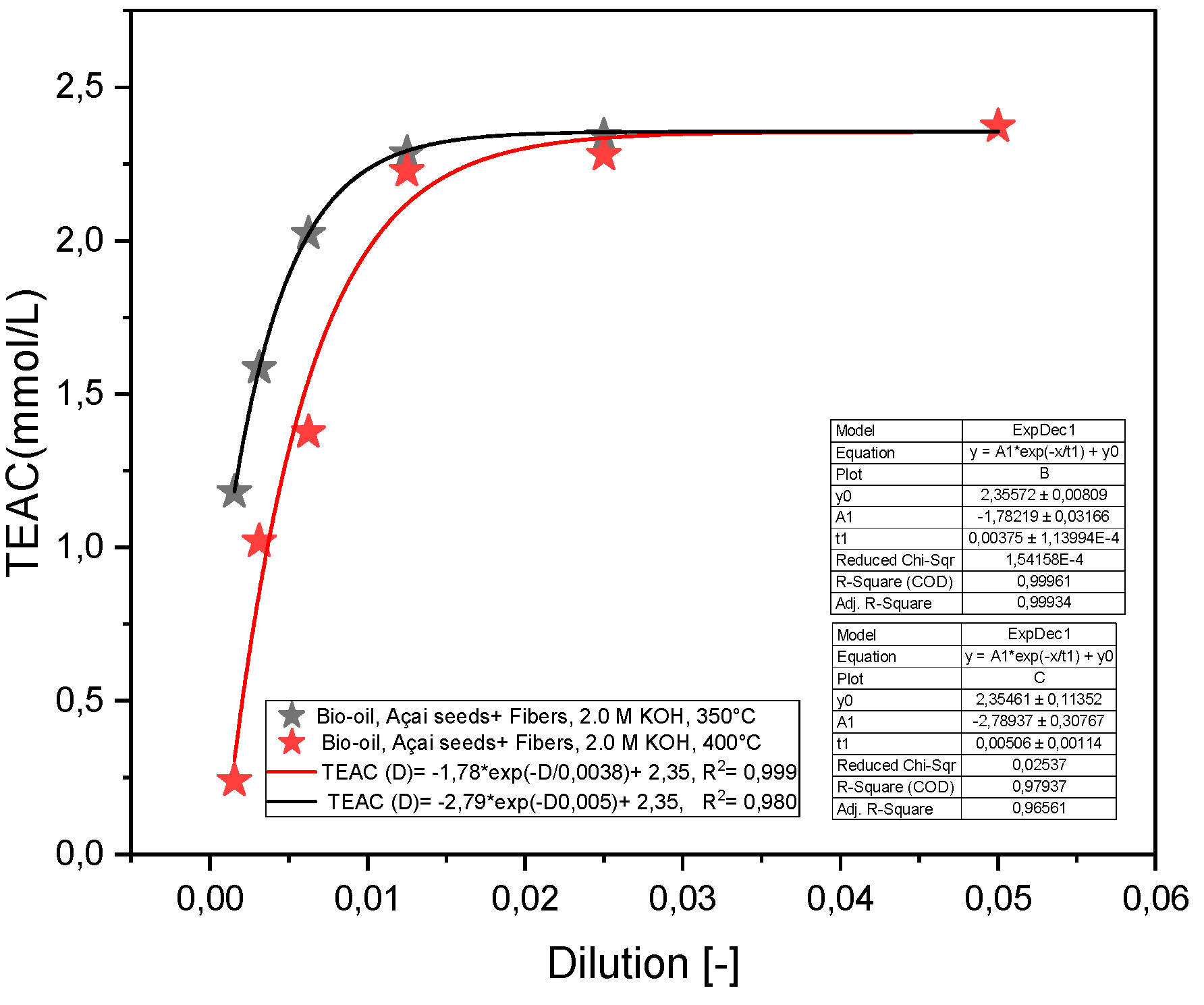
Figure 2.
Total antioxidant capacity (TEAC) of the aqueous phase obtained via pyrolysis of açaí seeds + fiber, chemically activated with 2M hydrochloric acid (HCl) solutions at temperatures of 350, 400, and 450°C on a laboratory scale.
Figure 2.
Total antioxidant capacity (TEAC) of the aqueous phase obtained via pyrolysis of açaí seeds + fiber, chemically activated with 2M hydrochloric acid (HCl) solutions at temperatures of 350, 400, and 450°C on a laboratory scale.
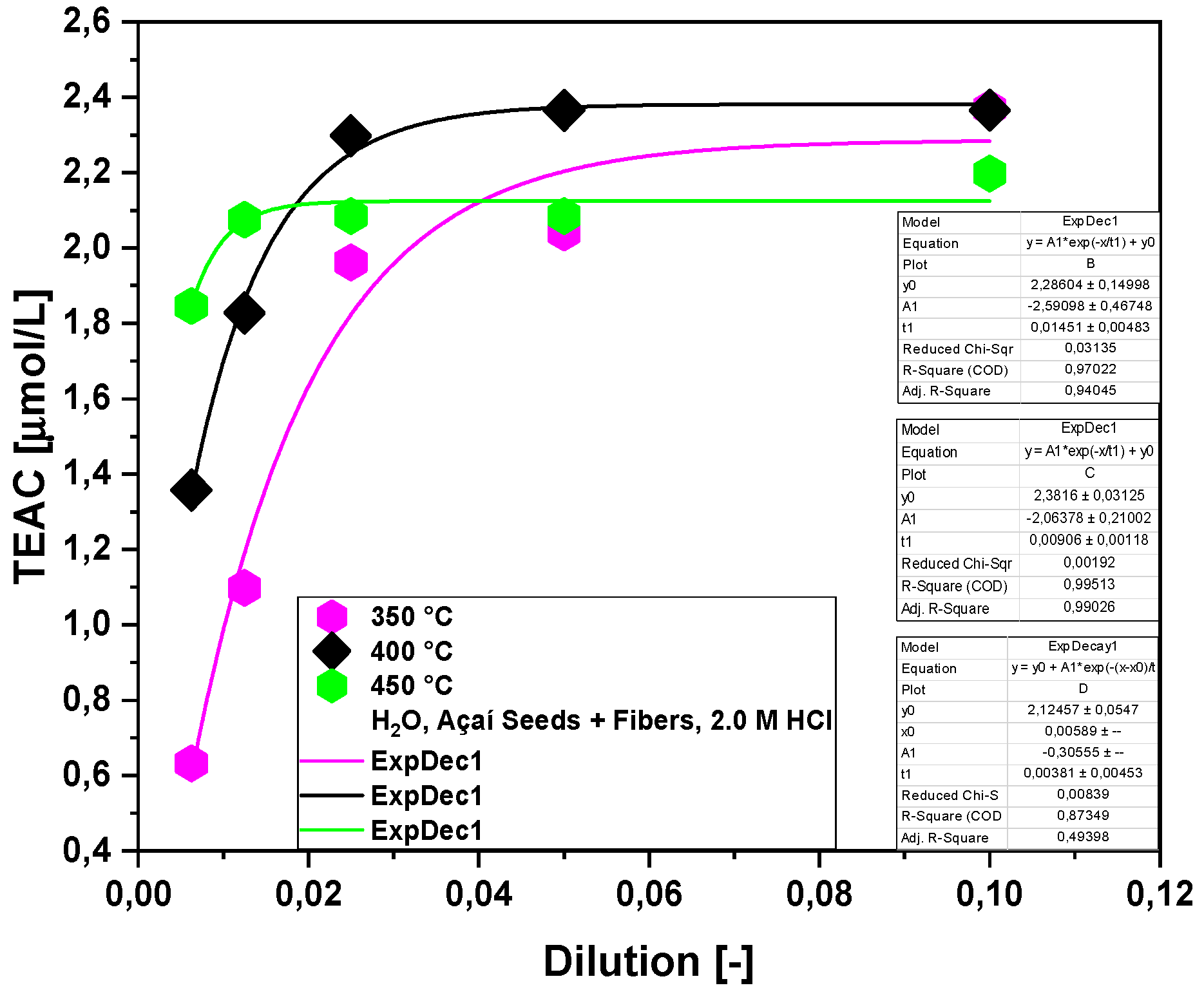
Figure 3.
Total antioxidant capacity (TEAC) of the organic phase (Bio-oil) obtained via pyrolysis of açaí seeds + fiber, chemically activated with 2M Potassium Hydroxide (KOH) solutions at a temperature of 450°C on a laboratory scale.
Figure 3.
Total antioxidant capacity (TEAC) of the organic phase (Bio-oil) obtained via pyrolysis of açaí seeds + fiber, chemically activated with 2M Potassium Hydroxide (KOH) solutions at a temperature of 450°C on a laboratory scale.
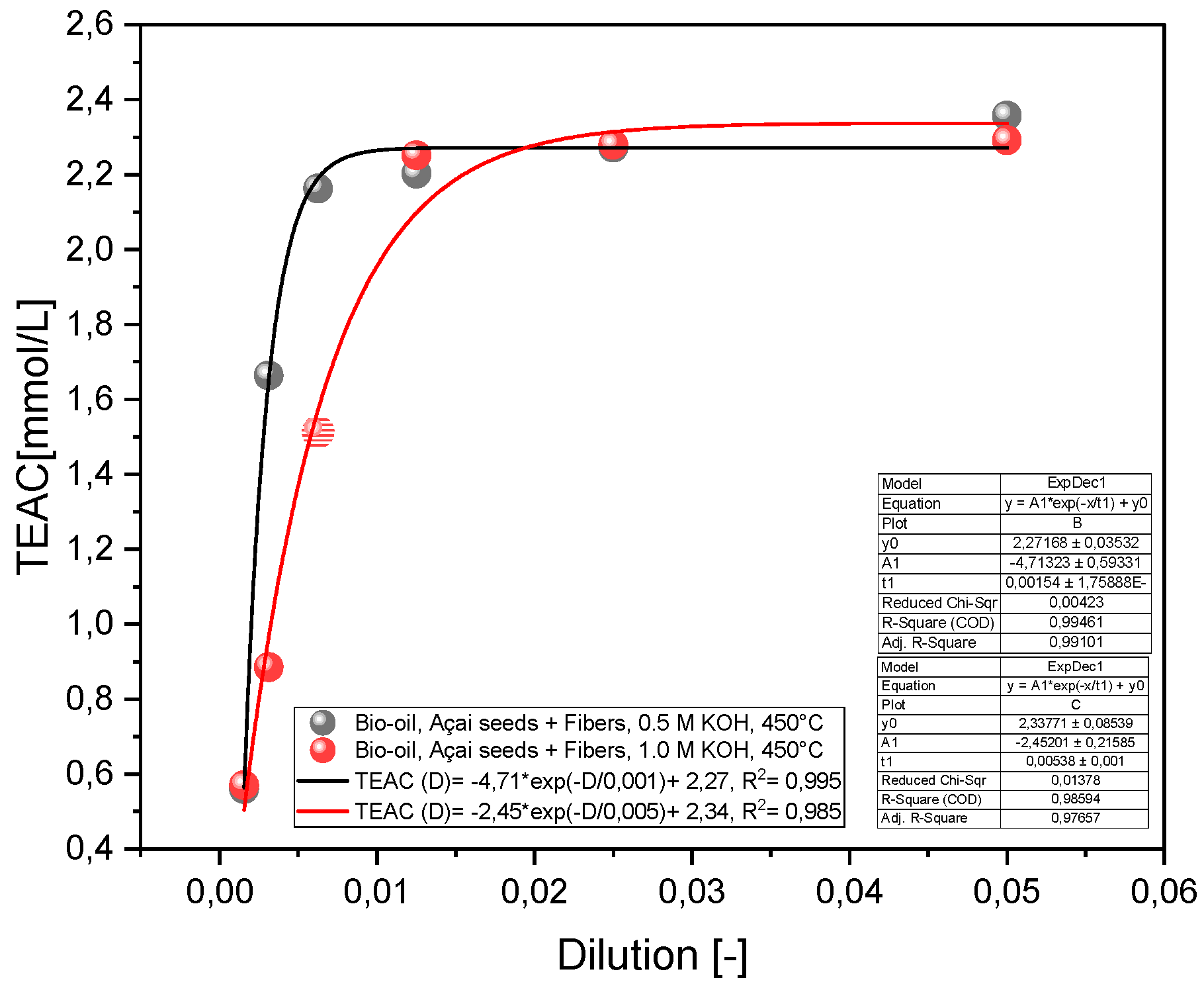
Figure 4.
Total Antioxidant Capacity (TEAC) of the aqueous phase obtained via pyrolysis of açaí seeds + fiber, chemically activated with potassium hydroxide (KOH) solutions at 450°C and molarities of 0.5 M, 1.0 M, and 2.0 M on a laboratory scale.
Figure 4.
Total Antioxidant Capacity (TEAC) of the aqueous phase obtained via pyrolysis of açaí seeds + fiber, chemically activated with potassium hydroxide (KOH) solutions at 450°C and molarities of 0.5 M, 1.0 M, and 2.0 M on a laboratory scale.
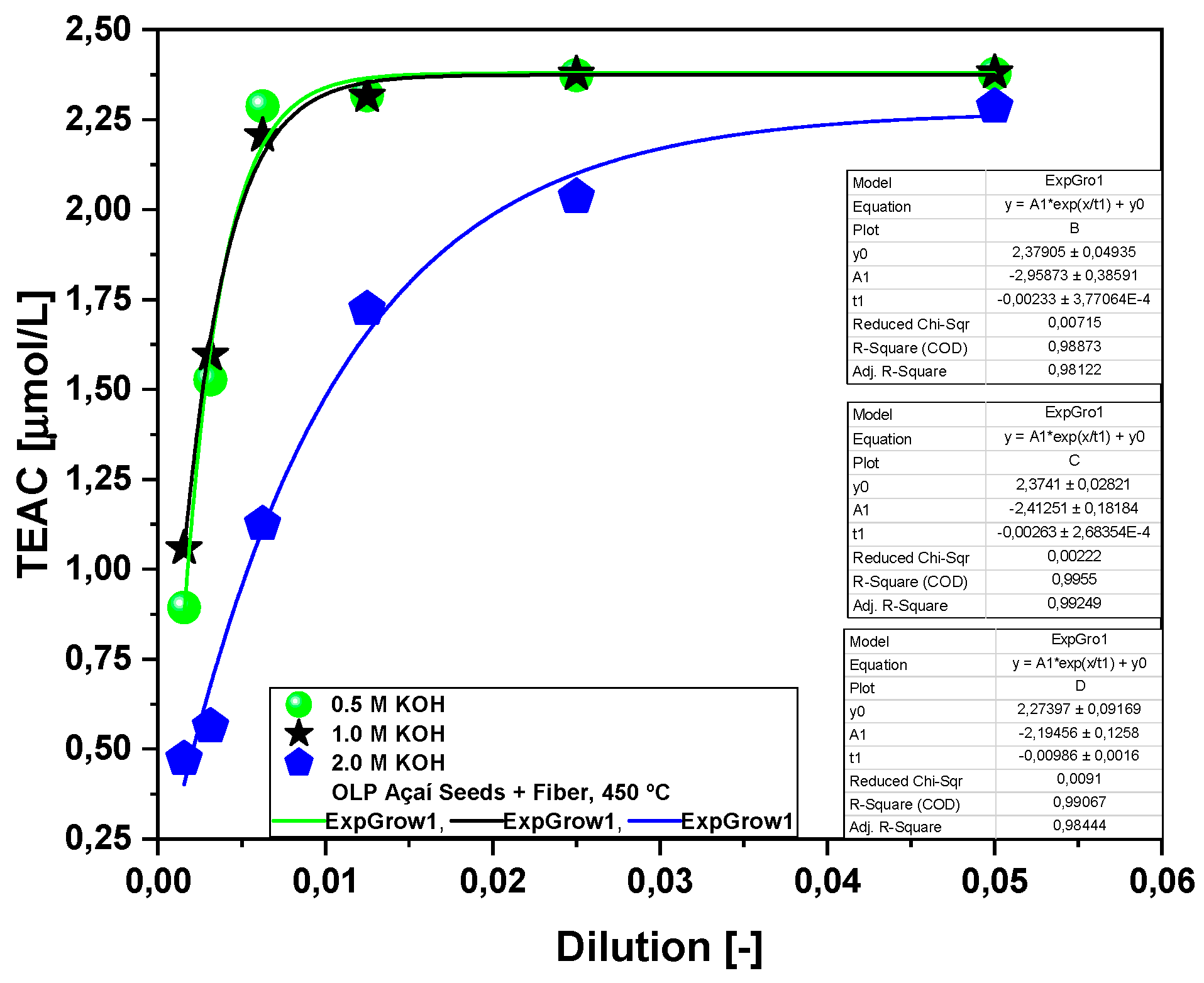
Figure 5.
Antioxidant capacity by the (DPPH•) method of the aqueous phase obtained via pyrolysis of açaí seeds + fiber, chemically activated with 2.0 M Potassium Hydroxide (KOH) solutions at temperatures of 350°C and 400°C.
Figure 5.
Antioxidant capacity by the (DPPH•) method of the aqueous phase obtained via pyrolysis of açaí seeds + fiber, chemically activated with 2.0 M Potassium Hydroxide (KOH) solutions at temperatures of 350°C and 400°C.
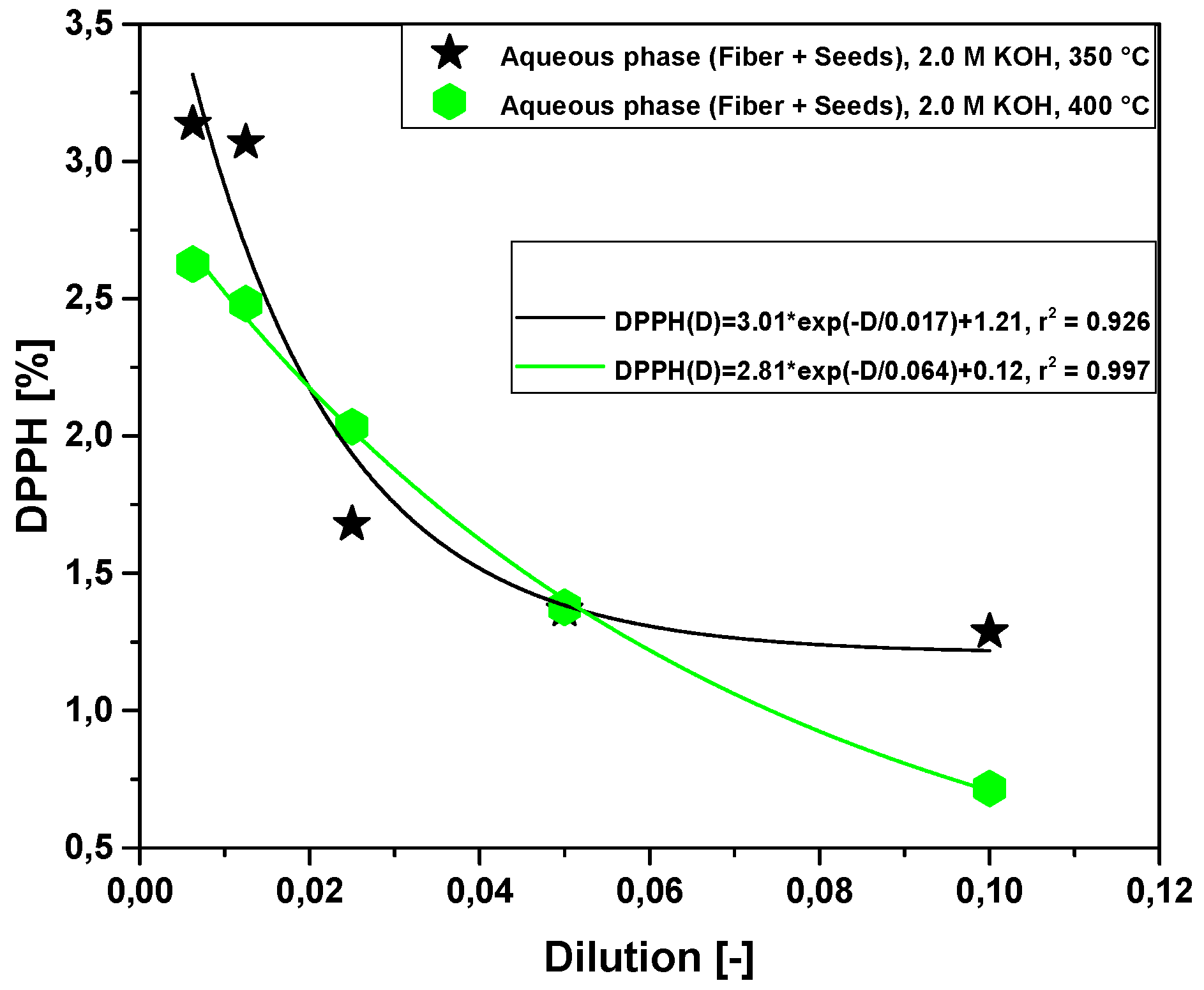
Figure 6.
Antioxidant capacity by the 1,1-diphenyl-2-picrylhydrazyl (DPPH•) method of the organic fraction of bio-oil obtained via pyrolysis of açaí seeds + fiber, chemically activated with 2.0 M Potassium Hydroxide (KOH) solutions at temperatures of 350°C and 400°C on a laboratory scale.
Figure 6.
Antioxidant capacity by the 1,1-diphenyl-2-picrylhydrazyl (DPPH•) method of the organic fraction of bio-oil obtained via pyrolysis of açaí seeds + fiber, chemically activated with 2.0 M Potassium Hydroxide (KOH) solutions at temperatures of 350°C and 400°C on a laboratory scale.
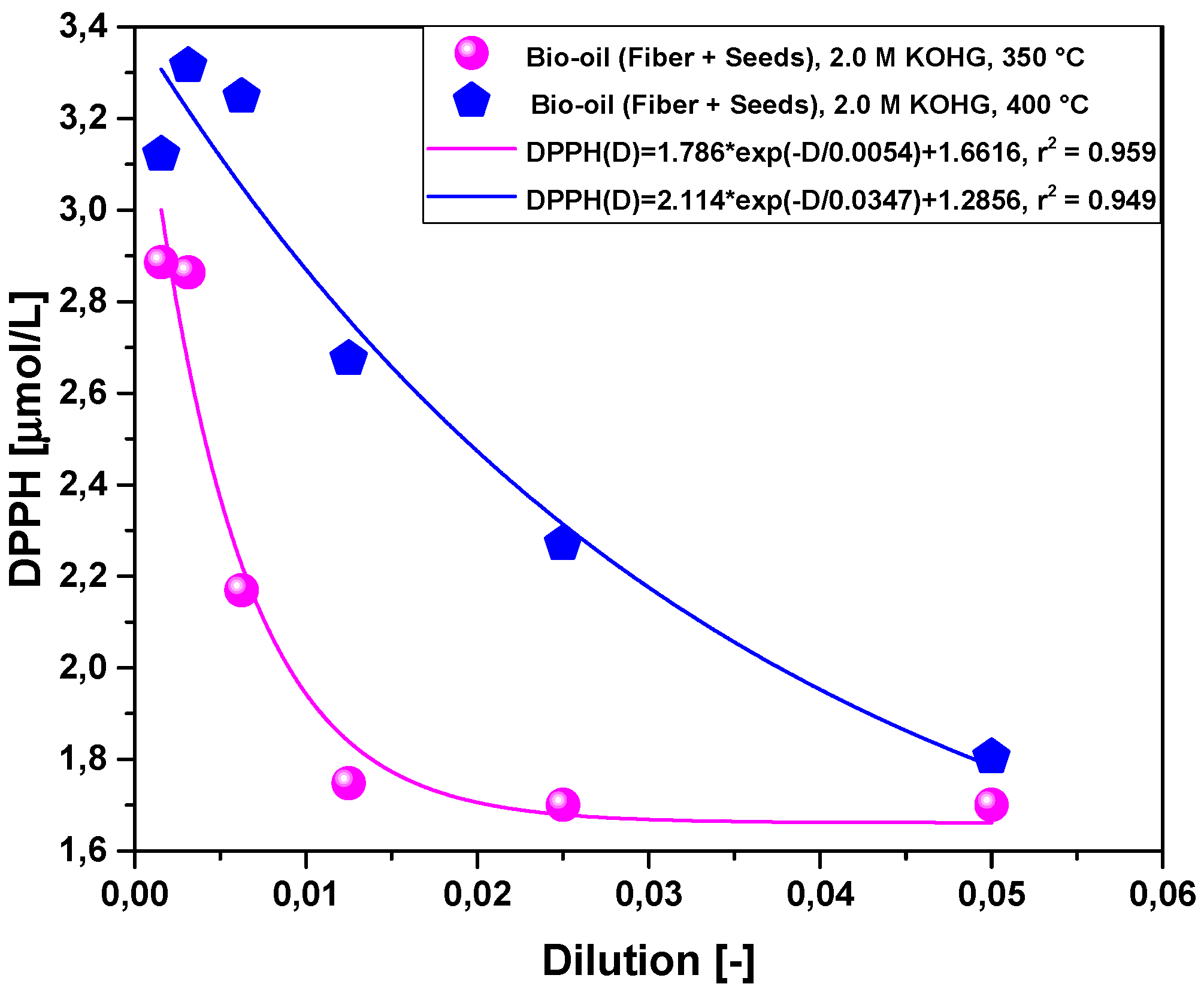
Figure 7.
Antioxidant capacity by the 1,1-diphenyl-2-picrylhydrazyl (DPPH•) method of the aqueous fraction of bio-oil obtained via pyrolysis of açaí seeds + fiber, chemically activated with potassium hydroxide (KOH) solutions at different molarities (0.5 M - 2.0 M) at a temperature of 450°C on a laboratory scale.
Figure 7.
Antioxidant capacity by the 1,1-diphenyl-2-picrylhydrazyl (DPPH•) method of the aqueous fraction of bio-oil obtained via pyrolysis of açaí seeds + fiber, chemically activated with potassium hydroxide (KOH) solutions at different molarities (0.5 M - 2.0 M) at a temperature of 450°C on a laboratory scale.
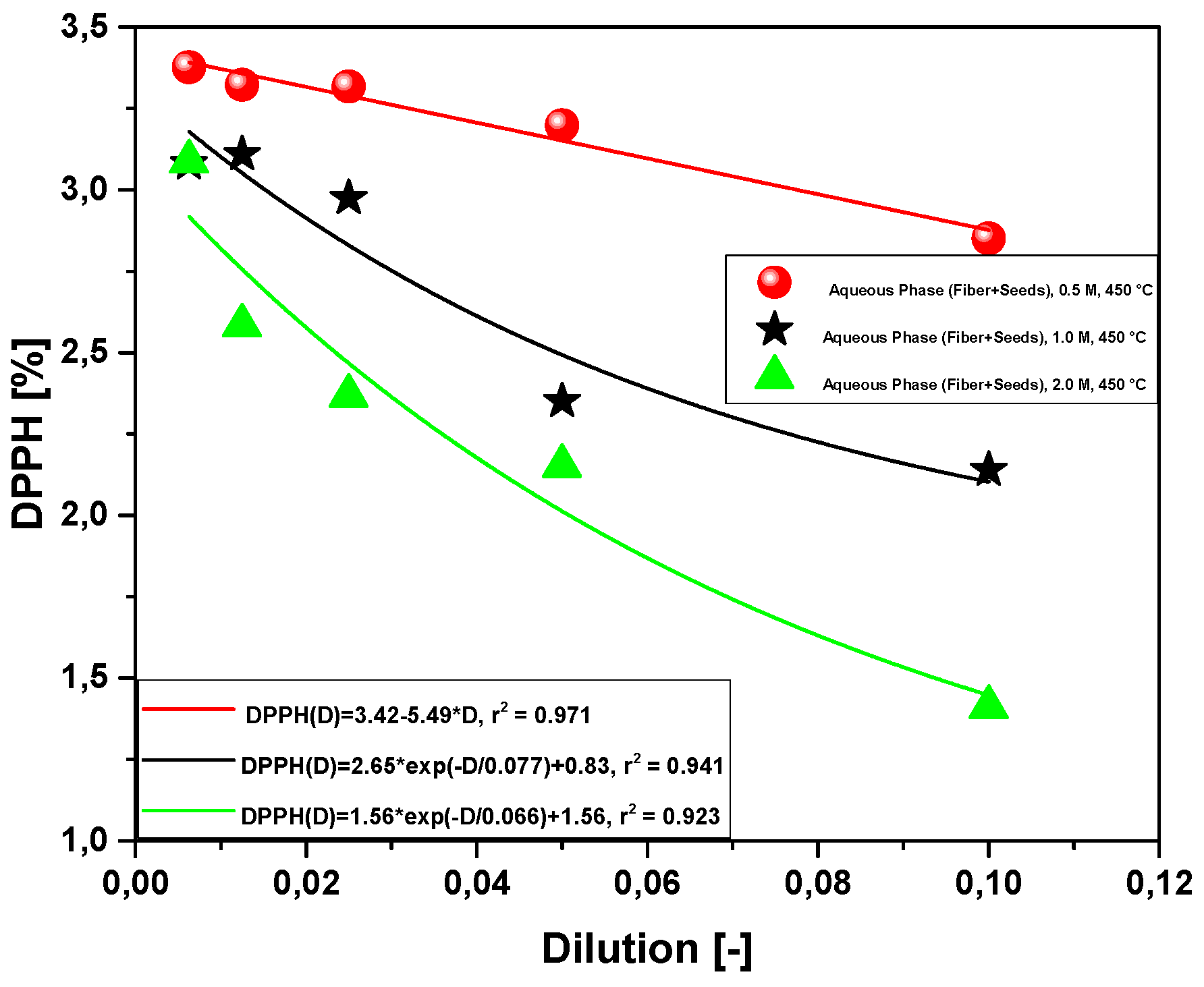
Figure 8.
Antioxidant capacity by the 1,1-diphenyl-2-picrylhydrazyl (DPPH•) method of the organic fraction of bio-oil obtained via pyrolysis of açaí seeds + fiber, chemically activated with potassium hydroxide (KOH) solutions at different molarities (0.5 M - 2.0 M) at a temperature of 450°C on a laboratory scale.
Figure 8.
Antioxidant capacity by the 1,1-diphenyl-2-picrylhydrazyl (DPPH•) method of the organic fraction of bio-oil obtained via pyrolysis of açaí seeds + fiber, chemically activated with potassium hydroxide (KOH) solutions at different molarities (0.5 M - 2.0 M) at a temperature of 450°C on a laboratory scale.
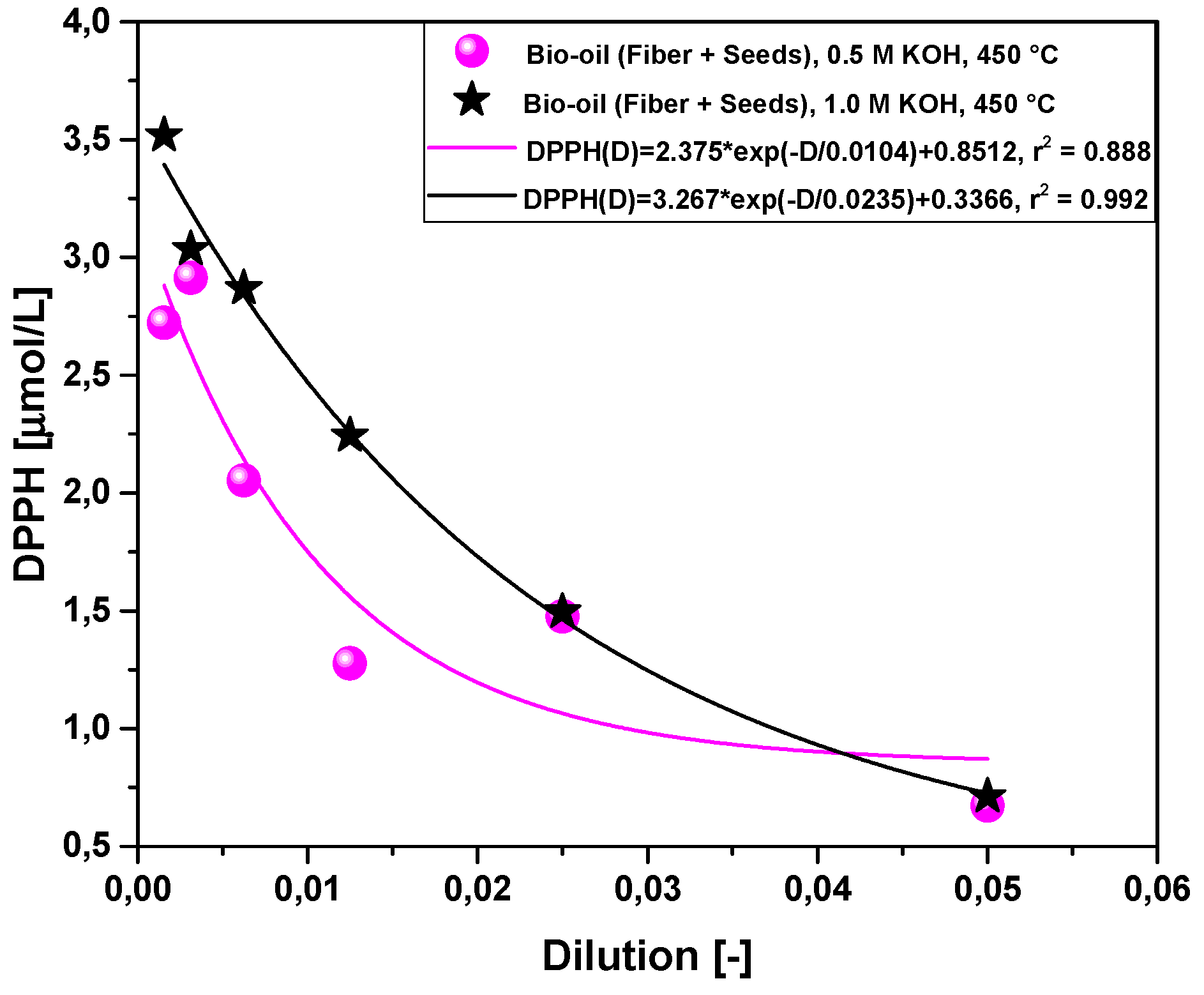
Figure 9.
Minimum bactericidal concentration (MBC): a) corresponding to wash water; b) Aqueous fraction; c) Organic fraction; against Escherichia coli strain.
Figure 9.
Minimum bactericidal concentration (MBC): a) corresponding to wash water; b) Aqueous fraction; c) Organic fraction; against Escherichia coli strain.
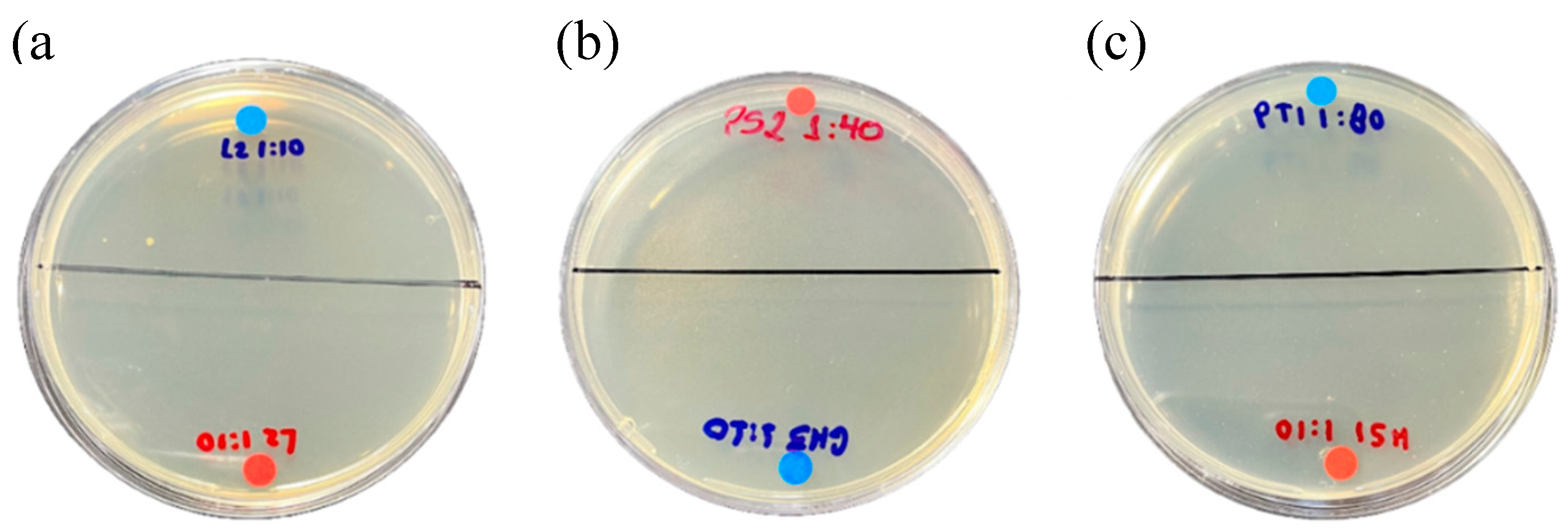
Figure 10.
Minimum bactericidal concentration (MBC): a) for wash water; b) for aqueous fraction; c) for organic fraction; against Staphylococcus aureus strain.
Figure 10.
Minimum bactericidal concentration (MBC): a) for wash water; b) for aqueous fraction; c) for organic fraction; against Staphylococcus aureus strain.
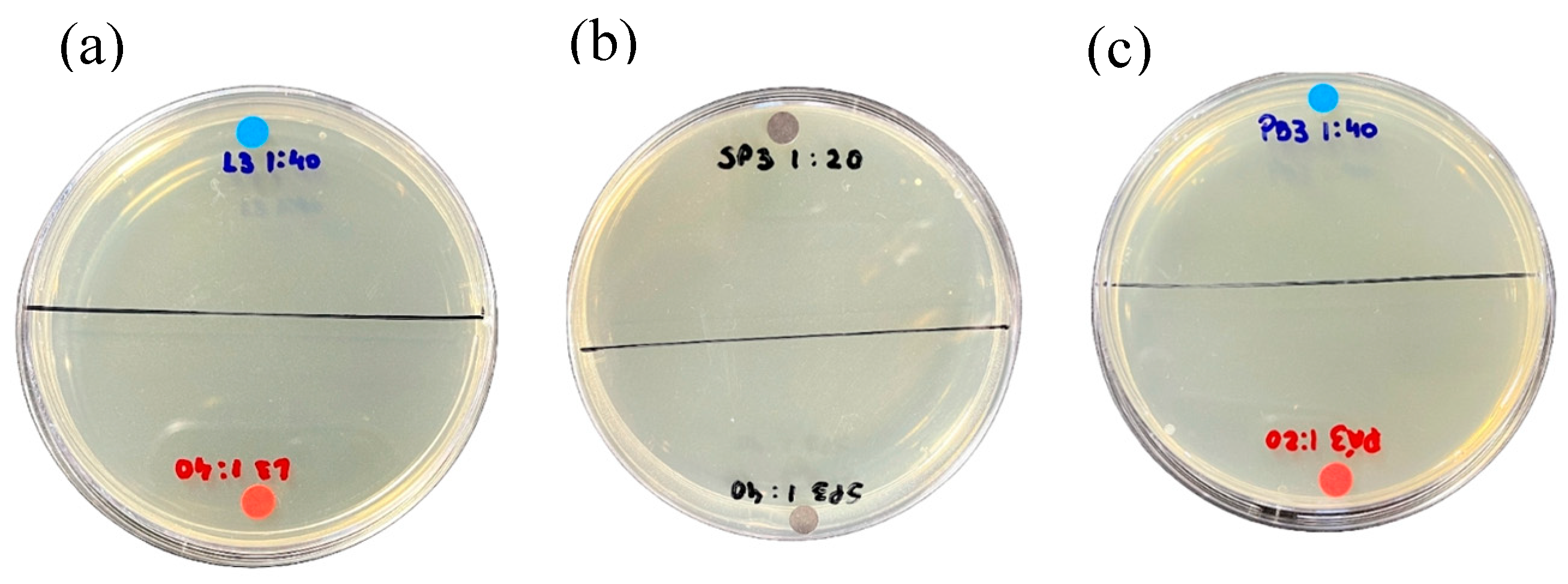
Figure 11.
Percentage cell viability of PBMC after incubation with aqueous fractions impregnated with or without HCl at different temperatures and dilutions. (A) Aqueous fraction impregnated with 2.0M HCl at 350ºC (B) Aqueous fraction impregnated with 2.0M HCl at 400ºC (C) Aqueous fraction impregnated with 2.0M HCl at 450ºC (D) Aqueous fraction impregnated with 0.50M HCl at 450ºC (E) Aqueous fraction impregnated with 1.0M HCl at 450ºC (F) Number of cells/mL in aqueous fractions HT1, HT2, and HC3. * p ≤ 0.05 ** p< 0.01 *** p< 0.00001.
Figure 11.
Percentage cell viability of PBMC after incubation with aqueous fractions impregnated with or without HCl at different temperatures and dilutions. (A) Aqueous fraction impregnated with 2.0M HCl at 350ºC (B) Aqueous fraction impregnated with 2.0M HCl at 400ºC (C) Aqueous fraction impregnated with 2.0M HCl at 450ºC (D) Aqueous fraction impregnated with 0.50M HCl at 450ºC (E) Aqueous fraction impregnated with 1.0M HCl at 450ºC (F) Number of cells/mL in aqueous fractions HT1, HT2, and HC3. * p ≤ 0.05 ** p< 0.01 *** p< 0.00001.
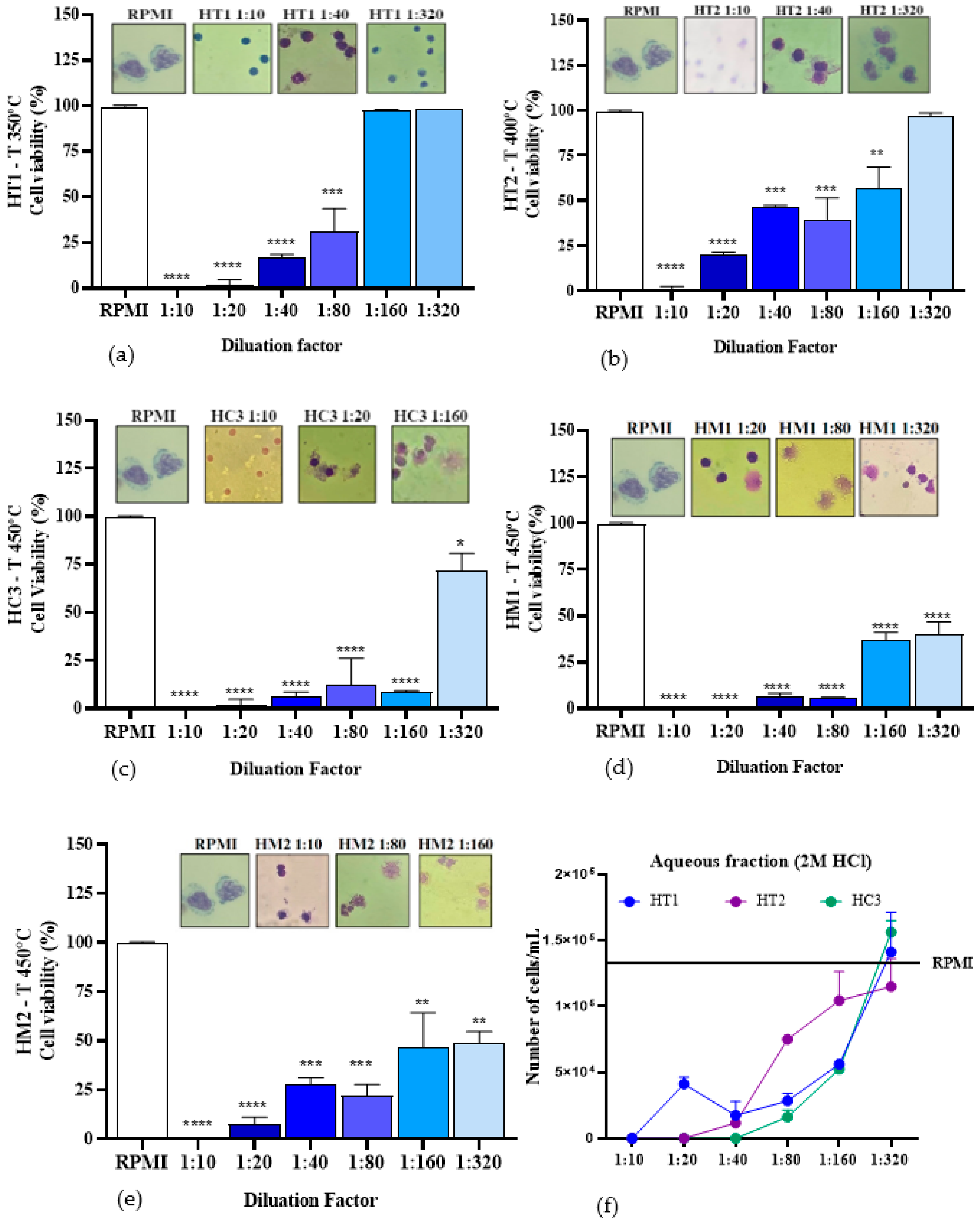
Figure 12.
Cell viability in percentage of PBMC after incubation with the non-impregnated organic fraction obtained via pyrolysis at 450°C. * p ≤ 0.05 ** p< 0.01 *** p< 0.00001.
Figure 12.
Cell viability in percentage of PBMC after incubation with the non-impregnated organic fraction obtained via pyrolysis at 450°C. * p ≤ 0.05 ** p< 0.01 *** p< 0.00001.
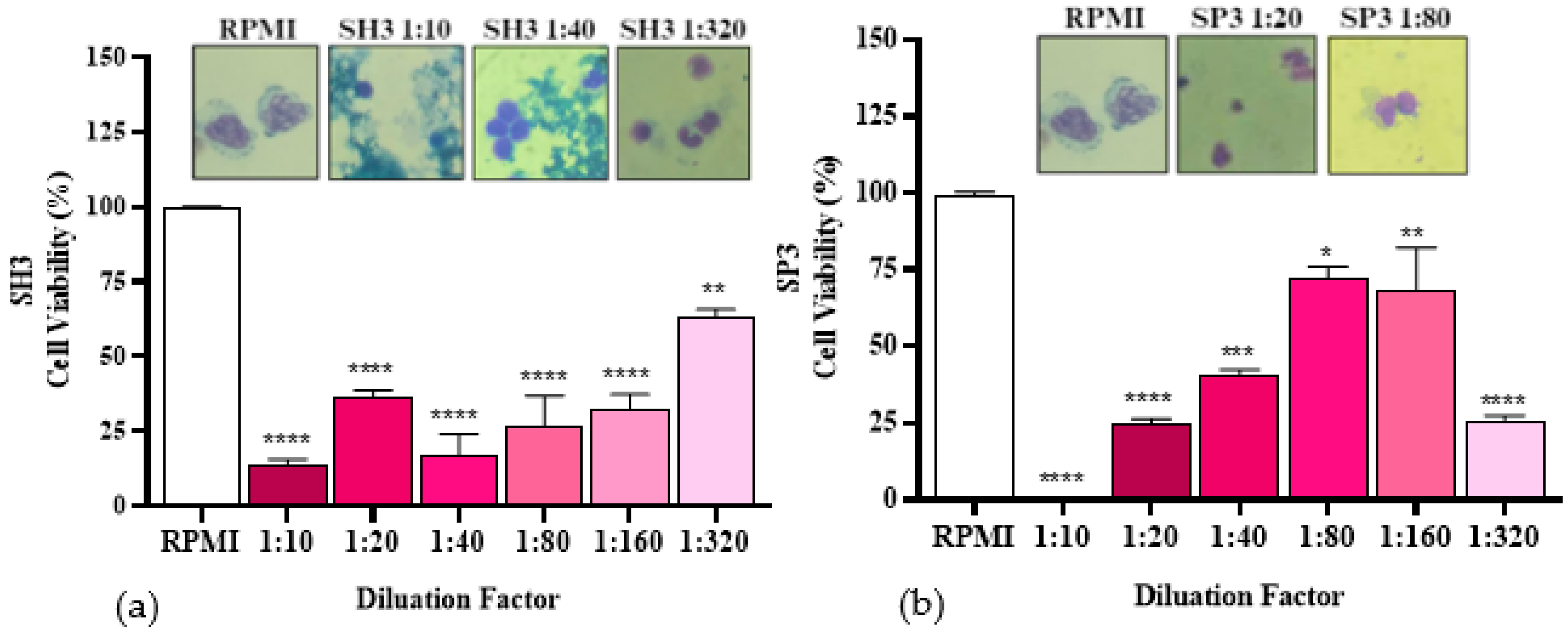
Table 1.
Chemical composition of bio-oil obtained through pyrolysis of açaí seeds at 450 °C.
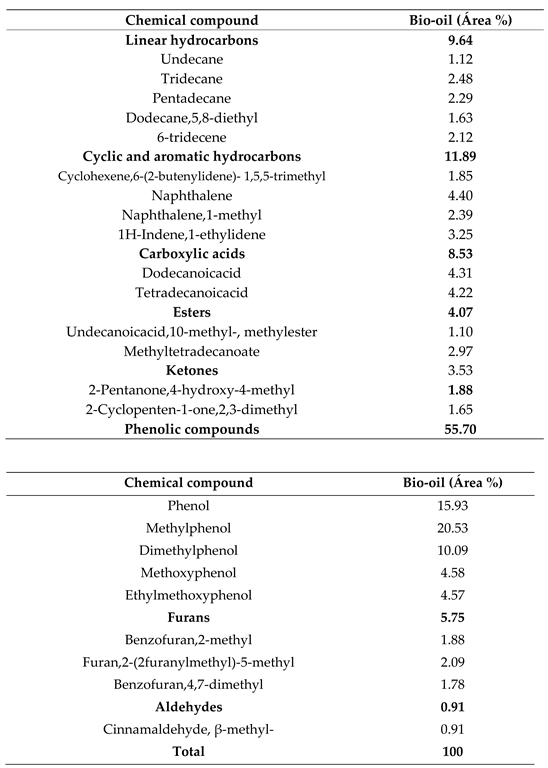
Table 2.
Chemical composition of the bio-oil and aqueous phase obtained through the pyrolysis of
chemically activated açaí with a 2.0M KOH solution at 450 °C.
Table 2.
Chemical composition of the bio-oil and aqueous phase obtained through the pyrolysis of
chemically activated açaí with a 2.0M KOH solution at 450 °C.
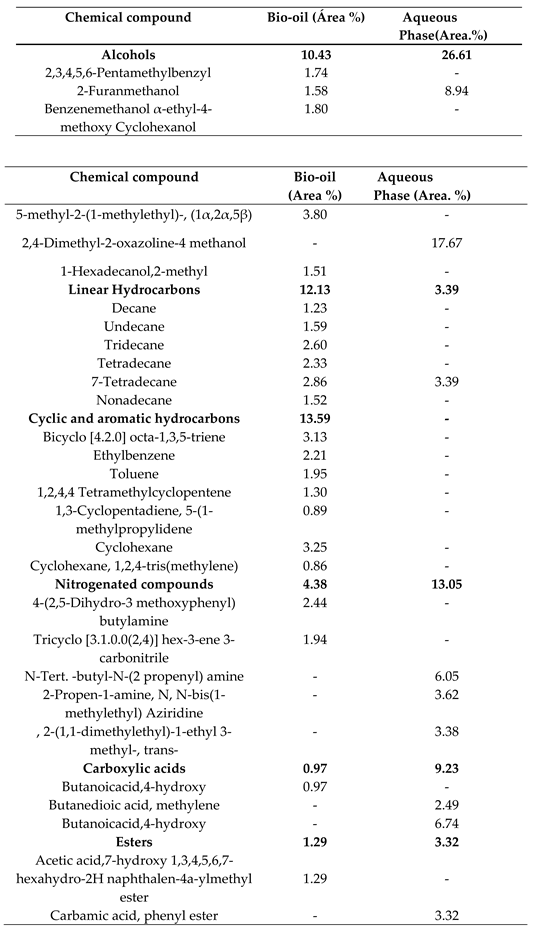
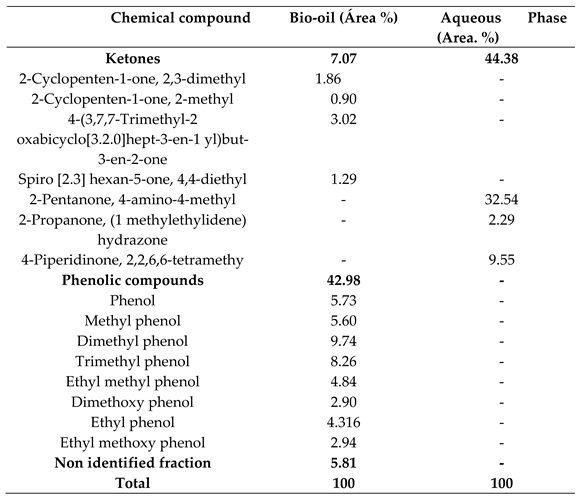
Table 3.
Chemical composition of the aqueous phase obtained by pyrolysis of açaí seeds (Euterpe
oleracea, Mart), identified by GC-MS.
Table 3.
Chemical composition of the aqueous phase obtained by pyrolysis of açaí seeds (Euterpe
oleracea, Mart), identified by GC-MS.
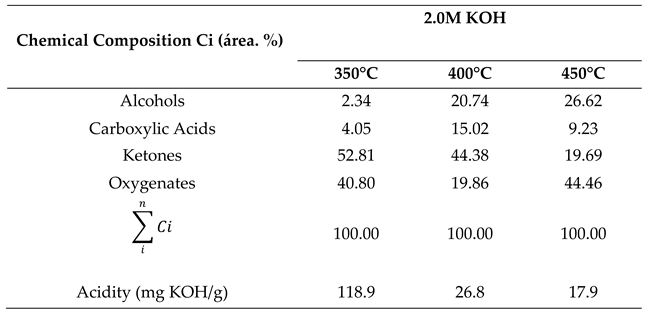
Table 6.
Antioxidant capacity of bio-oils obtained by pyrolysis of açaí seeds (Euterpe oleracea, Mart)
by the TEAC method.
Table 6.
Antioxidant capacity of bio-oils obtained by pyrolysis of açaí seeds (Euterpe oleracea, Mart)
by the TEAC method.
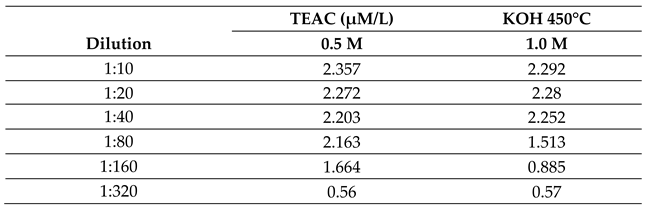
Table 7.
Antioxidant capacity of bio-oils obtained by pyrolysis of Açaí seeds (Euterpe oleracea, Mart),
using different molarities (KOH solution of 0.5-2.0 M), at 450 °C.
Table 7.
Antioxidant capacity of bio-oils obtained by pyrolysis of Açaí seeds (Euterpe oleracea, Mart),
using different molarities (KOH solution of 0.5-2.0 M), at 450 °C.
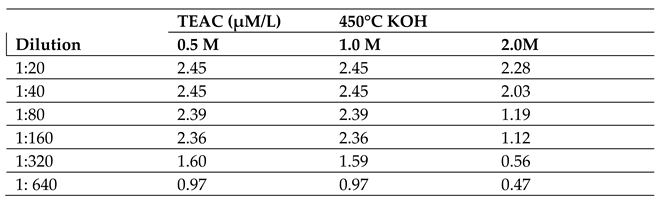
Table 8.
Antioxidant capacity of the aqueous phase of bio-oils obtained by pyrolysis of Açaí seeds (Euterpe oleracea, Mart), at different temperatures (350°C and 400°C), chemically activated with 2.0 M KOH on a laboratory scale.
Table 8.
Antioxidant capacity of the aqueous phase of bio-oils obtained by pyrolysis of Açaí seeds (Euterpe oleracea, Mart), at different temperatures (350°C and 400°C), chemically activated with 2.0 M KOH on a laboratory scale.
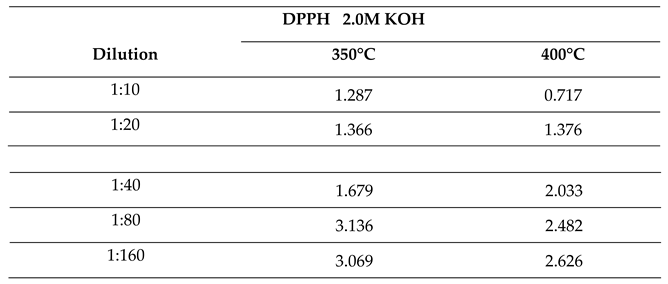
Table 9.
Antioxidant capacity of the organic fraction of bio-oils obtained by pyrolysis of Açaí seeds (Euterpe oleracea, Mart), at different temperatures (350°C and 400°C), chemically activated with 2.0 M KOH on a laboratory scale.
Table 9.
Antioxidant capacity of the organic fraction of bio-oils obtained by pyrolysis of Açaí seeds (Euterpe oleracea, Mart), at different temperatures (350°C and 400°C), chemically activated with 2.0 M KOH on a laboratory scale.
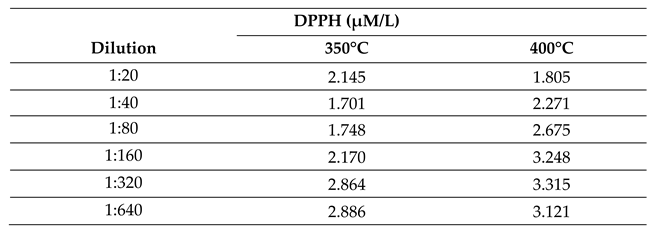
Table 10.
Antioxidant capacity of the aqueous fraction of bio-oils obtained by pyrolysis of Açaí seeds
(Euterpe oleracea, Mart), chemically activated with 2.0 M KOH at different molarities (0.5 M - 2.0 M) at 450°C on a laboratory scale.
Table 10.
Antioxidant capacity of the aqueous fraction of bio-oils obtained by pyrolysis of Açaí seeds
(Euterpe oleracea, Mart), chemically activated with 2.0 M KOH at different molarities (0.5 M - 2.0 M) at 450°C on a laboratory scale.
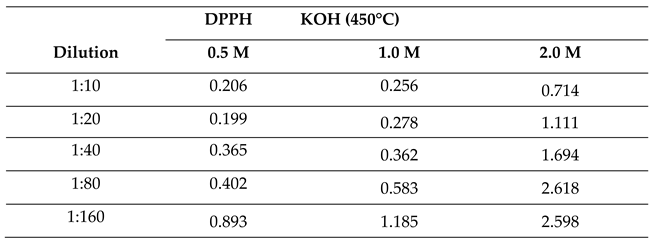
Table 11.
Antioxidant capacity of the aqueous fraction of bio-oils obtained by pyrolysis of Açaí seeds
(Euterpe oleracea, Mart), chemically activated with 2.0 M KOH at different molarities (0.5 M - 2.0 M) at 450°C on a laboratory scale.
Table 11.
Antioxidant capacity of the aqueous fraction of bio-oils obtained by pyrolysis of Açaí seeds
(Euterpe oleracea, Mart), chemically activated with 2.0 M KOH at different molarities (0.5 M - 2.0 M) at 450°C on a laboratory scale.
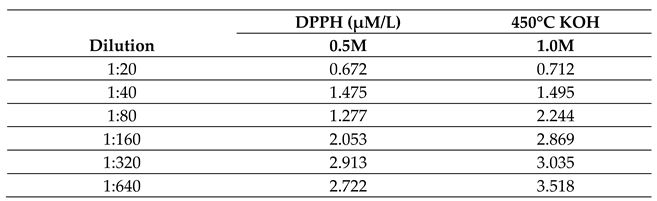
Table 12.
Minimum inhibitory and bactericidal concentrations of wash water from pyrolysis of açaí
seed impregnated with KOH against Escherichia coli strain.
Table 12.
Minimum inhibitory and bactericidal concentrations of wash water from pyrolysis of açaí
seed impregnated with KOH against Escherichia coli strain.
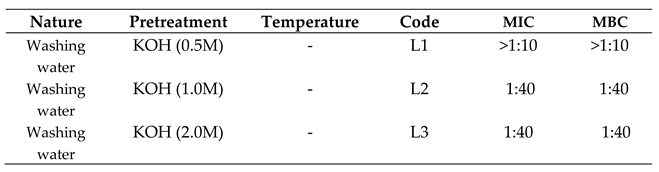
Table 13.
Minimum inhibitory concentrations (MICs) and bactericidal concentrations (MBCs) of the
aqueous fraction of bio-oil from the pyrolysis of açaí seeds impregnated with KOH and HCl against Escherichia coli strain.
Table 13.
Minimum inhibitory concentrations (MICs) and bactericidal concentrations (MBCs) of the
aqueous fraction of bio-oil from the pyrolysis of açaí seeds impregnated with KOH and HCl against Escherichia coli strain.
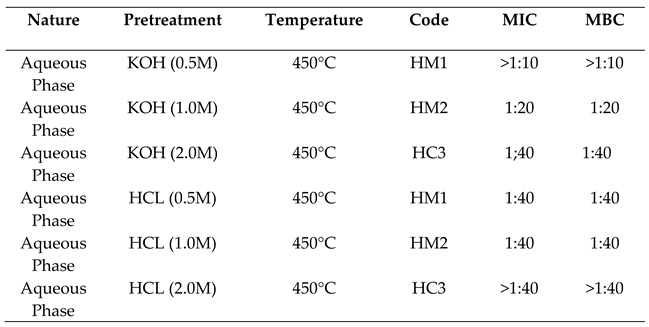
Table 14.
Minimum inhibitory concentrations (MICs) and bactericidal concentrations of the organic
fraction of bio-oil from pyrolysis of açaí seeds impregnated with KOH against Escherichia coli strain.
Table 14.
Minimum inhibitory concentrations (MICs) and bactericidal concentrations of the organic
fraction of bio-oil from pyrolysis of açaí seeds impregnated with KOH against Escherichia coli strain.
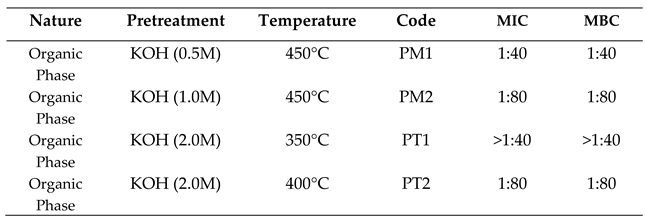
Table 15.
Minimum inhibitory and bactericidal concentrations of wash water from acai seed pyrolysis
impregnated with KOH against the Staphylococcus aureus strain.
Table 15.
Minimum inhibitory and bactericidal concentrations of wash water from acai seed pyrolysis
impregnated with KOH against the Staphylococcus aureus strain.
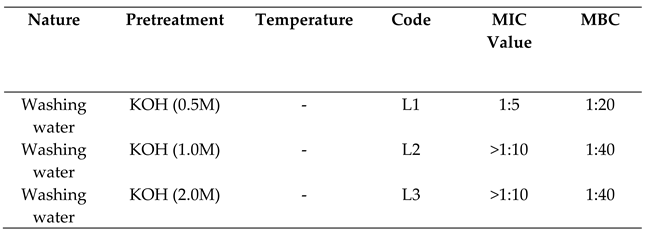
Table 16.
Minimum inhibitory and bactericidal concentrations of the aqueous fraction of bio-oil from
acai seed pyrolysis impregnated with KOH against the strain of Staphylococcus aureus.
Table 16.
Minimum inhibitory and bactericidal concentrations of the aqueous fraction of bio-oil from
acai seed pyrolysis impregnated with KOH against the strain of Staphylococcus aureus.
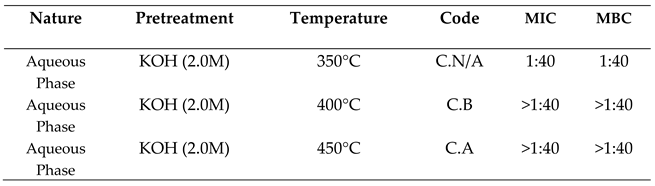
Table 17.
Minimum inhibitory and bactericidal concentrations of the organic fraction of bio-oil from
acai seed pyrolysis impregnated with HCL against the strain of Staphylococcus aureus.
Table 17.
Minimum inhibitory and bactericidal concentrations of the organic fraction of bio-oil from
acai seed pyrolysis impregnated with HCL against the strain of Staphylococcus aureus.
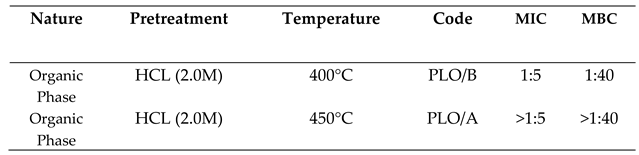
Disclaimer/Publisher’s Note: The statements, opinions and data contained in all publications are solely those of the individual author(s) and contributor(s) and not of MDPI and/or the editor(s). MDPI and/or the editor(s) disclaim responsibility for any injury to people or property resulting from any ideas, methods, instructions or products referred to in the content. |
© 2024 by the authors. Licensee MDPI, Basel, Switzerland. This article is an open access article distributed under the terms and conditions of the Creative Commons Attribution (CC BY) license (http://creativecommons.org/licenses/by/4.0/).
Copyright: This open access article is published under a Creative Commons CC BY 4.0 license, which permit the free download, distribution, and reuse, provided that the author and preprint are cited in any reuse.


